

Swipe left or right, or use the buttons. Tap image to zoom.
例句翻译
单词
Lesson 326Lesson 326 - 遮罩切换
|
表情符号
|
单词 | Images | 翻译 | 过去时 | 过去分词 | 第三人称单数 | 动名词 | 含义 | 例句 | 例句翻译 | 示例表达 | 示例表达含义 | 示例表达翻译 | 同义词 | 反义词 | 搭配词 | 助记符 |
|---|---|---|---|---|---|---|---|---|---|---|---|---|---|---|---|---|---|
|
#9745
😈
|
/ˈdɛv.əl/
noun
(dévīl)
••••••
|
- •••••• |
魔鬼
móguǐ
••••••
|
- •••••• | - •••••• | - •••••• | - •••••• |
An evil spirit or supernatural being often regarded as the embodiment of wickedness and harm.
••••••
|
The story warned children about making deals with the devil. |
这个故事警告孩子们不要与魔鬼做交易。
Zhège gùshì jǐnggào háizimen bùyào yǔ móguǐ zuò jiāoyì.
••••••
|
speak of the devil |
Used when the person being talked about unexpectedly appears.
••••••
|
谈论魔鬼
Tánlùn móguǐ
••••••
|
demon, fiend, monster, spirit, satan
••••••
|
angel, saint, god
••••••
|
devil worship, devil figure, fight the devil, devil smile
••••••
|
魔鬼 = Devil 在中文 — 说到魔鬼时,他总是突然出现在我们面前!
••••••
|
|
#9746
➗
|
/dɪˈvaɪd/
verb
••••••
|
|
- •••••• |
divided
••••••
|
divided
••••••
|
divides
••••••
|
dividing
••••••
|
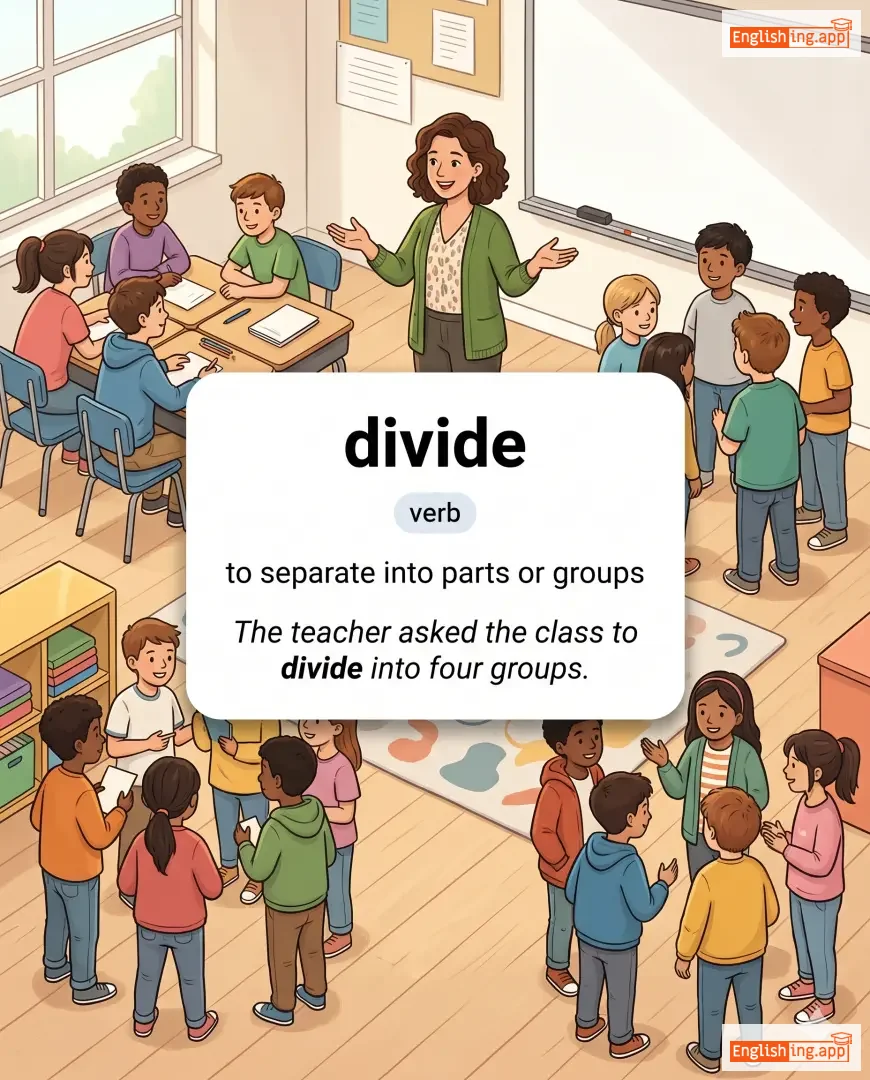
to separate into parts or groups
••••••
|
The teacher asked the class to divide into four groups. |
- •••••• |
divide and rule |
a strategy to gain power by causing divisions among people
••••••
|
- •••••• |
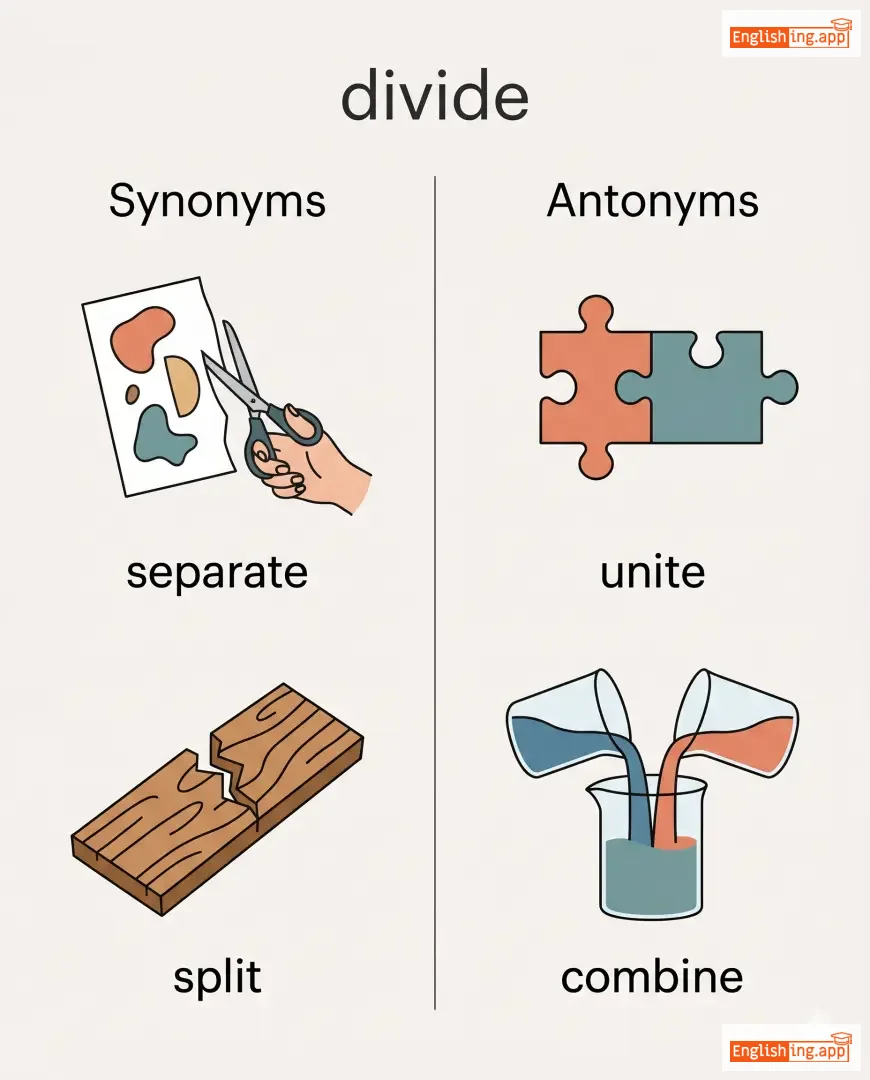
separate, split, partition, allocate, distribute
••••••
|
unite, combine, merge
••••••
|
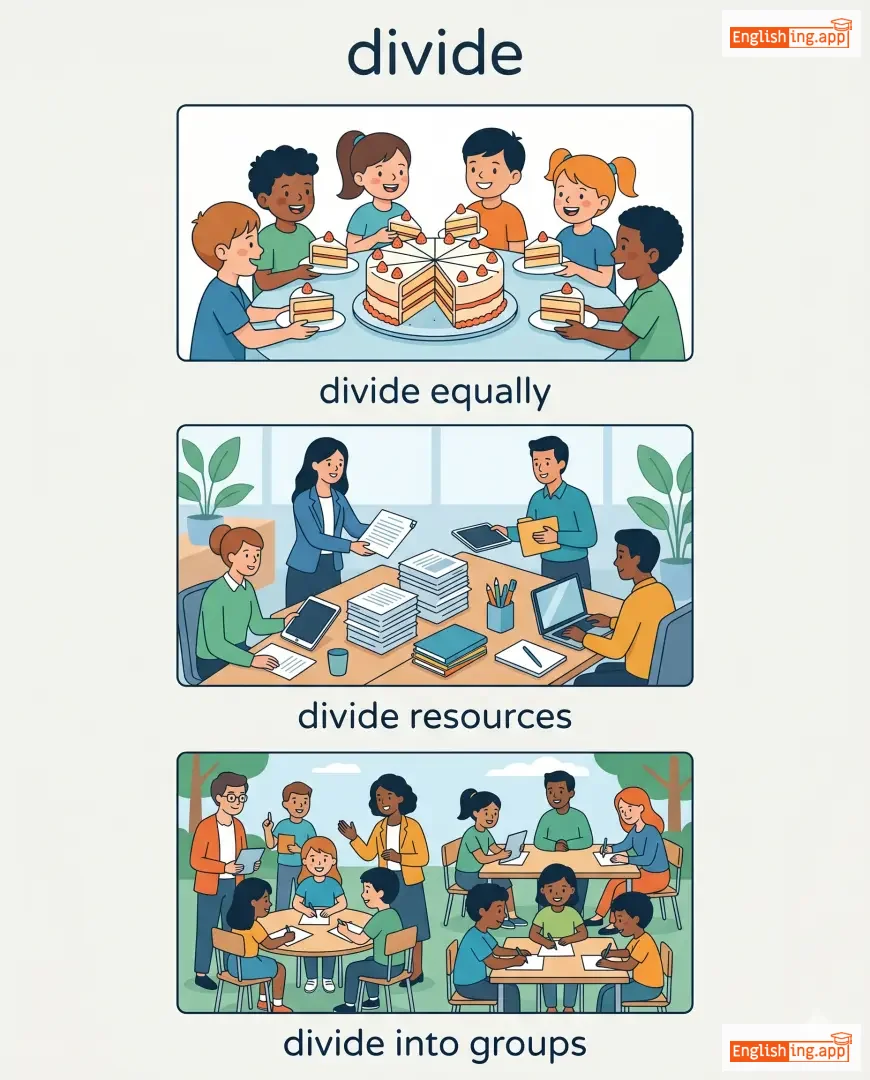
divide equally, divide resources, divide into groups, divide land
••••••
|
No •••••• |
|
#9747
📦
|
/dɪˈstrɪbjuːt/
verb
(分发)
••••••
|
|
分发
fēn fā
••••••
|
distributed
分发
••••••
|
distributed
分发
••••••
|
distributes
分发
••••••
|
distributing
分发
••••••
|
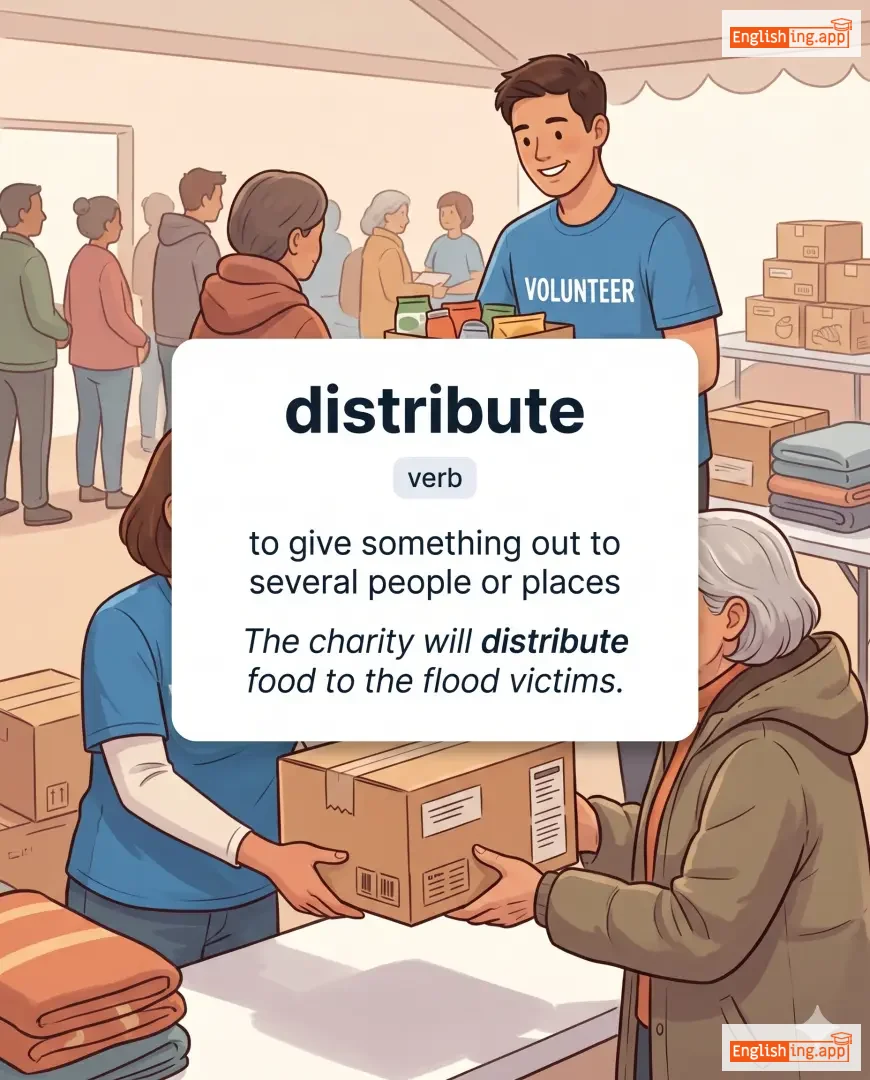
to give something out to several people or places
••••••
|
The charity will distribute food to the flood victims.
慈善机构将向洪水受害者分发食物。
••••••
|
慈善机构将向洪水受害者分发食物。
Císhàn jīgòu jiāng xiàng hóngshuǐ shòuhài zhě fēn fā shíwù.
••••••
|
fairly distribute
公平分发
••••••
|
to share something equally
••••••
|
公平分发
gōngpíng fēn fā
••••••
|
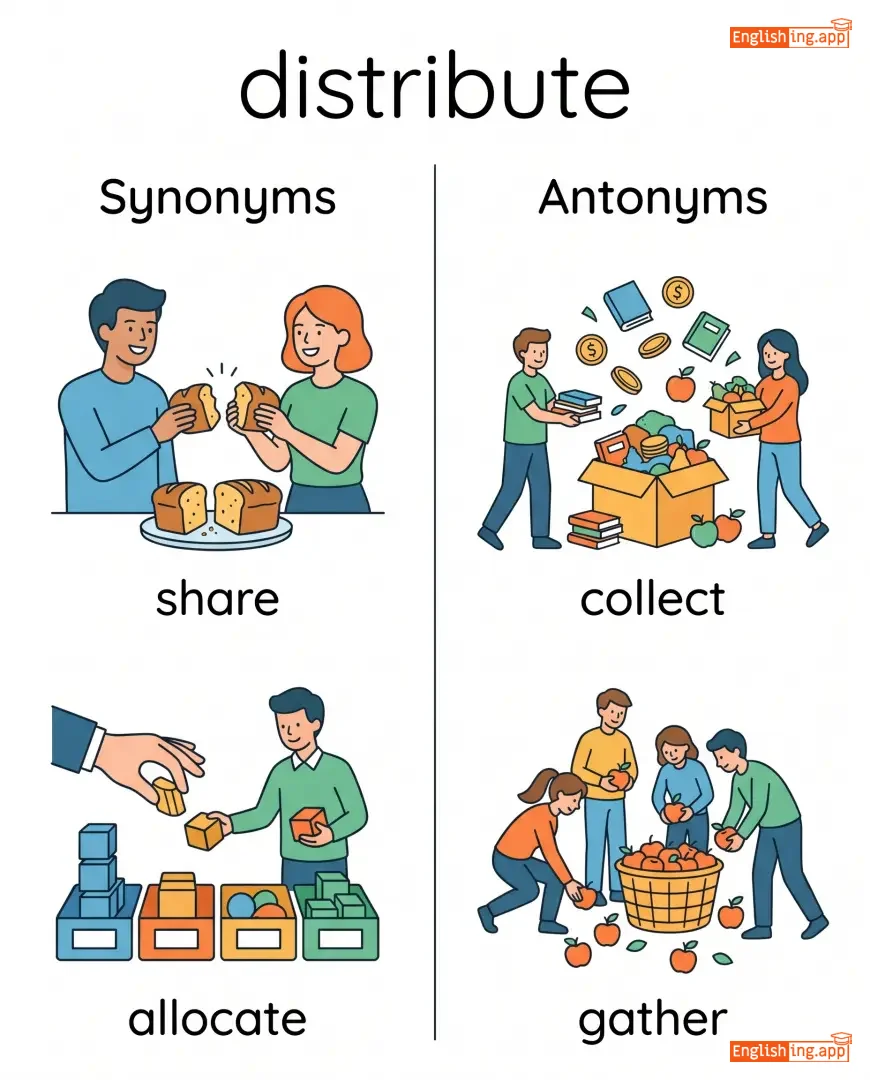
share, allocate, deliver, spread, hand out
••••••
|
collect, gather, withhold
••••••
|
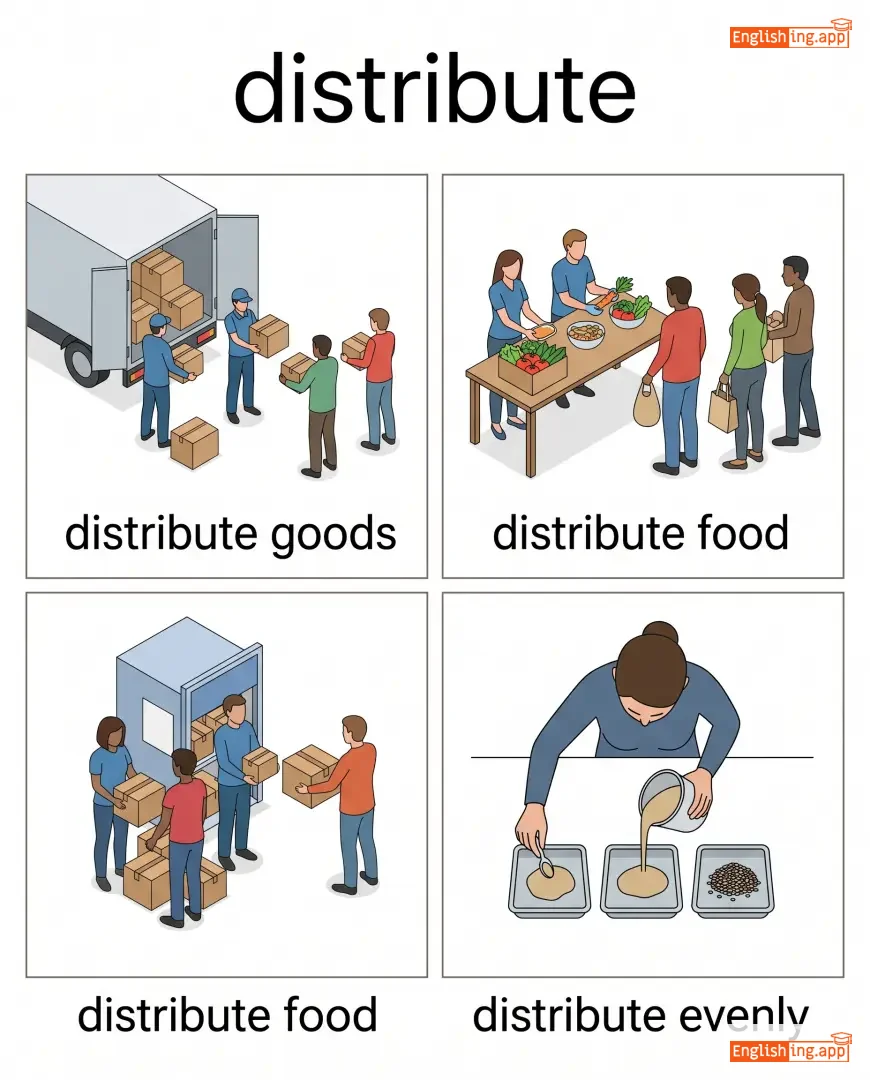
distribute goods, distribute food, distribute evenly, distribute wealth
••••••
|
Distribute 代表着在地区分发
••••••
|
|
#9748
🙉
|
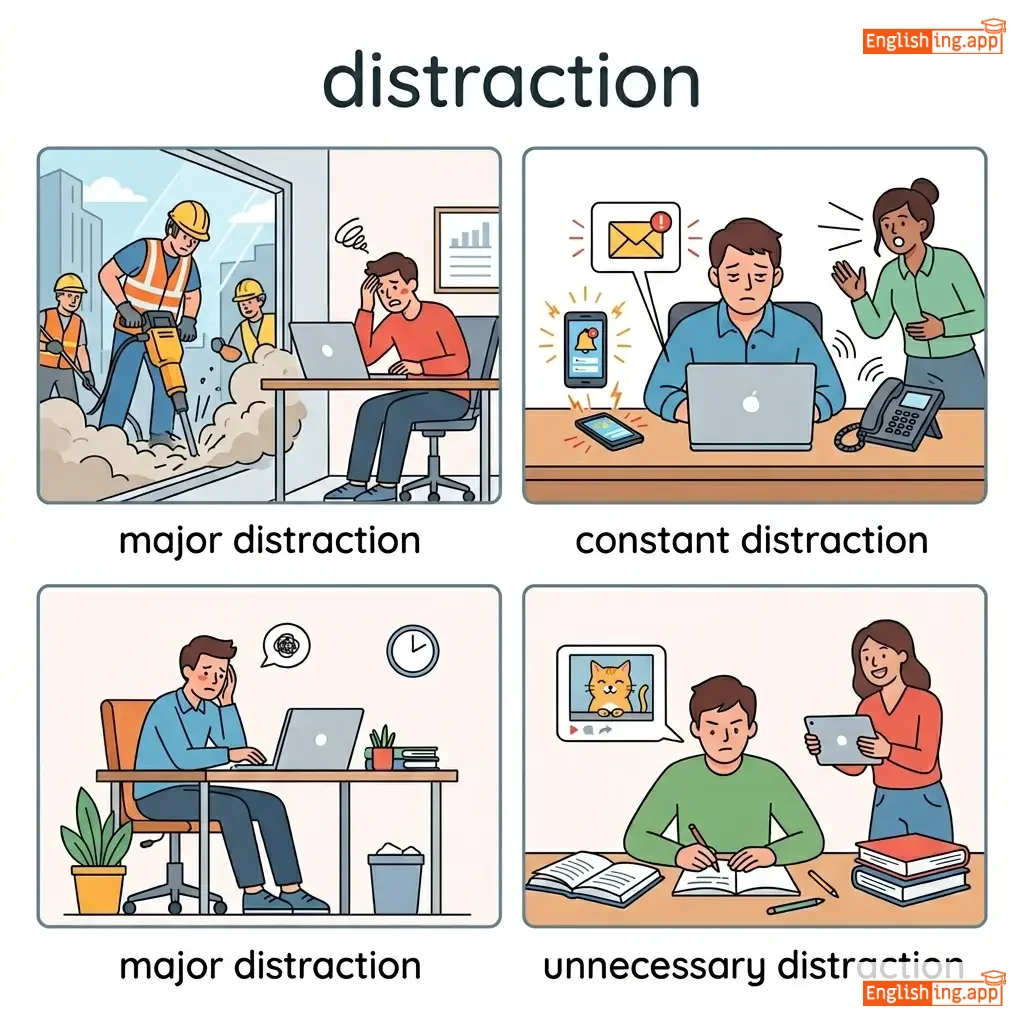
/dɪˈstrækʃən/
noun
(迪斯特拉克申)
••••••
|
|
干扰
ganrao
••••••
|
- •••••• | - •••••• | - •••••• | - •••••• |
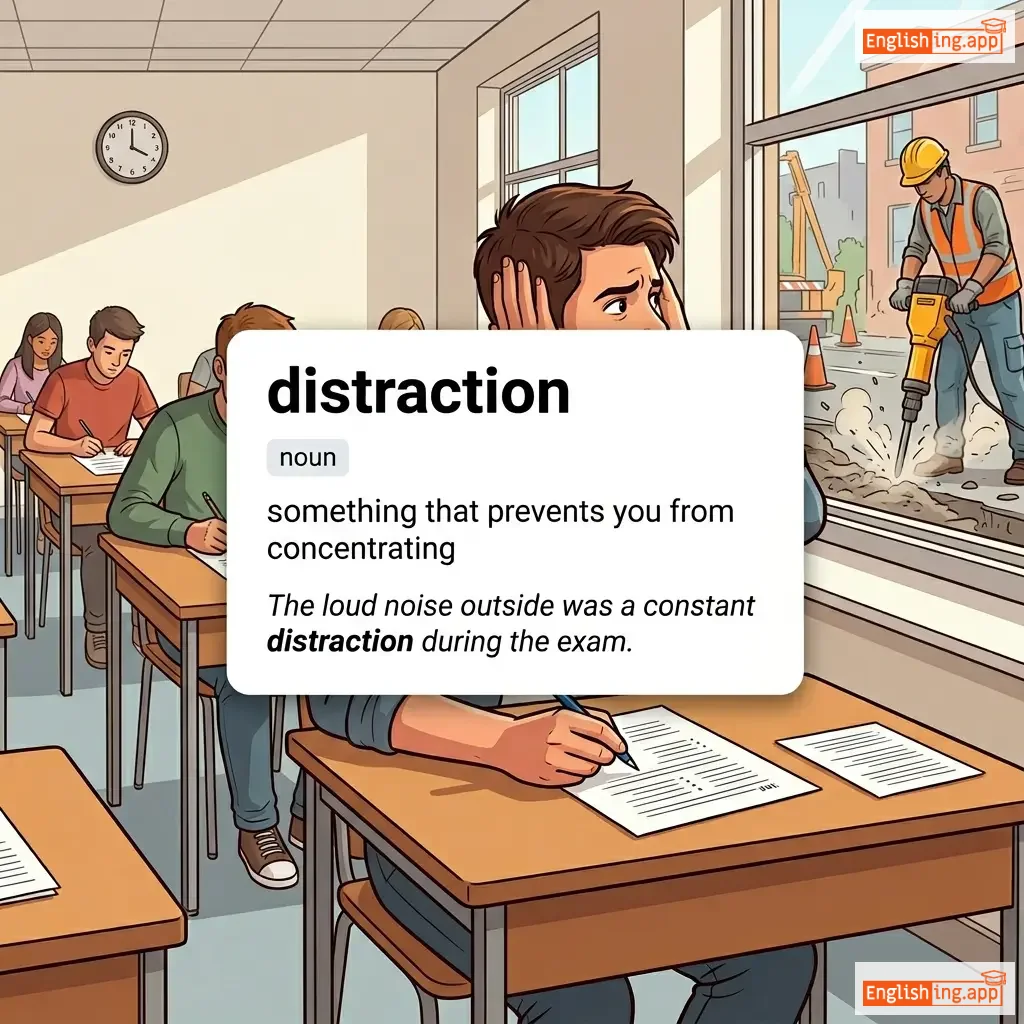
something that prevents you from concentrating
••••••
|
The loud noise outside was a constant distraction during the exam.
外面的喧闹声在考试期间是持续的干扰。
••••••
|
外面的喧闹声在考试期间是持续的干扰。
Wàimiàn de xuānnào shēng zài kǎoshì qíjiān shì chíxù de gānrǎo.
••••••
|
drive to distraction
使人分心
••••••
|
to make someone very annoyed or upset
••••••
|
让某人生气
ràng mǒu rén shēngqì
••••••
|
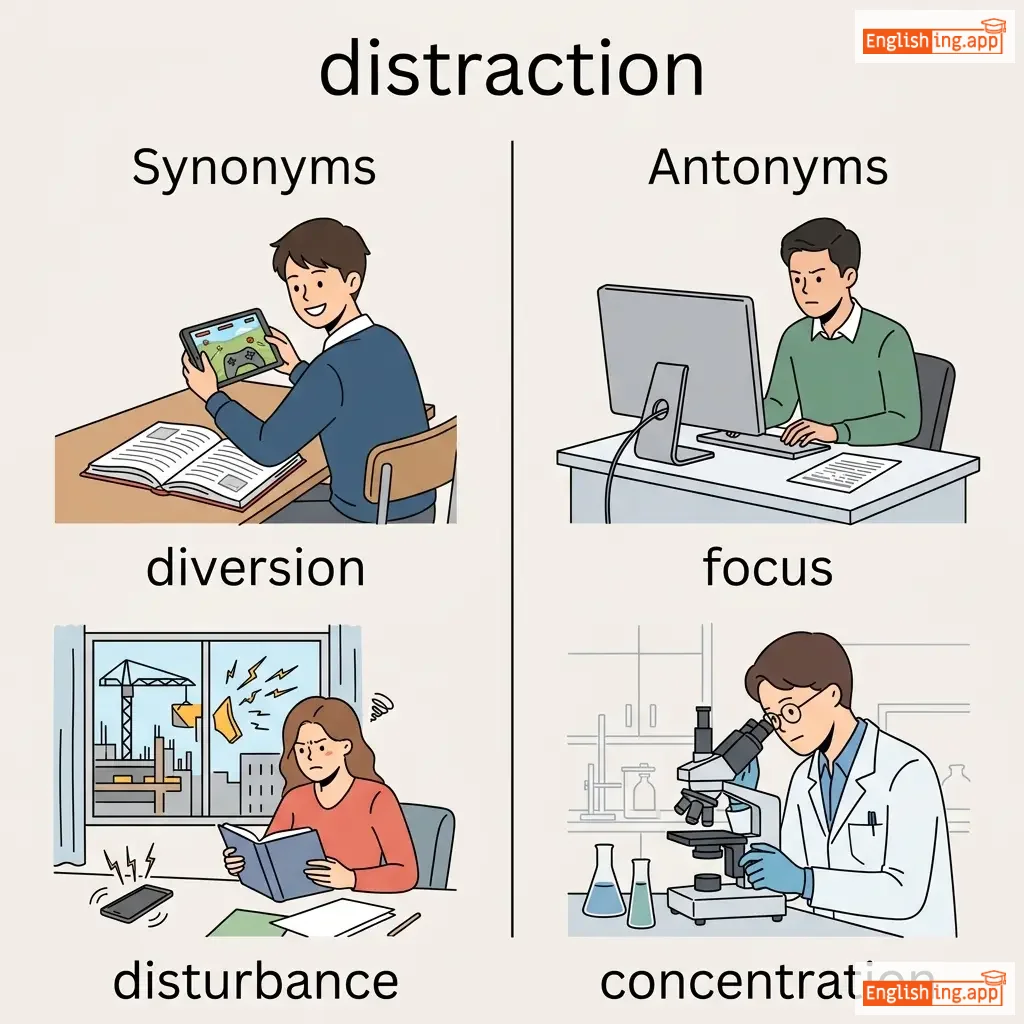
diversion, disturbance, interruption, interference
••••••
|
focus, concentration
••••••
|
major distraction, constant distraction, unnecessary distraction, source of distraction
••••••
|
干扰 = 干扰注意力
••••••
|
|
#9749
⚔️
|
/dɪˈspjuːt/
noun/verb
(迪斯普特)
••••••
|
- •••••• |
争议, 争论
zhēngyì, zhēnglùn
••••••
|
disputed
争议
••••••
|
disputed
争议
••••••
|
disputes
争议
••••••
|
disputing
争论
••••••
|
a disagreement or argument about something important
••••••
|
The two countries are in dispute over the border issue.
两个国家在边界问题上存在争议。
••••••
|
两个国家在边界问题上存在争议。
Liǎng gè guójiā zài biānjiè wèntí shàng cúnzài zhēngyì.
••••••
|
settle a dispute
解决争议
••••••
|
to resolve a disagreement
••••••
|
解决争议
jiějué zhēngyì
••••••
|
conflict, quarrel, argument, debate, disagreement
••••••
|
agreement, harmony, peace
••••••
|
trade dispute, legal dispute, border dispute, dispute resolution
••••••
|
Dispute 听起来像 'dis' + 'put' → 不在一起 → 意思是争论或争议
••••••
|
|
#9750
❌
|
/dɪsˈpruːv/
verb
(dìsīprūv)
••••••
|
- •••••• |
反驳
fǎnbó
••••••
|
disproved
dìsīprūvd
••••••
|
disproved
dìsīprūvd
••••••
|
disproves
dìsīprūvs
••••••
|
disproving
dìsīprūvɪng
••••••
|
to show that something is false or wrong
••••••
|
The scientist worked hard to disprove the old theory.
科学家努力工作以反驳旧理论。
••••••
|
科学家努力工作以反驳旧理论。
Kēxuéjiā nǔlì gōngzuò yǐ fǎnbó jiù lǐlùn.
••••••
|
- •••••• | - •••••• | - •••••• |
refute, debunk, invalidate, contradict, rebut
••••••
|
prove, confirm, verify
••••••
|
disprove a claim, disprove a theory, disprove an allegation, attempt to disprove
••••••
|
反驳: 反 (不) + 驳 (证明) → 不证明或证明某事是错误的
••••••
|
|
#9751
😞
|
/dɪsˈɡreɪs/
noun
(dīsīlè)
••••••
|
- •••••• |
耻辱
chirù
••••••
|
- •••••• | - •••••• | - •••••• | - •••••• |
Loss of respect, honor, or reputation due to shameful behavior.
••••••
|
He was dismissed in disgrace after the scandal. |
他在丑闻后以耻辱被解雇。
Tā zài chǒuwén hòu yǐ chǐrǔ bèi jiěgù.
••••••
|
fall from grace |
To lose approval, respect, or status.
••••••
|
从恩典中堕落
Cóng ēndiǎn zhōng duòluò
••••••
|
shame, dishonor, humiliation, degradation
••••••
|
honor, glory
••••••
|
bring disgrace, national disgrace, live in disgrace, utter disgrace
••••••
|
Disgrace 意味着 dis (没有) + grace (优雅) = 耻辱
••••••
|
|
#9752
🌪️
|
/dɪˈzæstər/
noun
(灾难)
••••••
|
- •••••• |
灾难
zainan
••••••
|
- •••••• | - •••••• | - •••••• | - •••••• |
A sudden event that causes great damage or loss of life.
••••••
|
The earthquake was a major disaster. |
地震是一场重大灾难。
Dìzhèn shì yī chǎng zhòngdà zāinàn.
••••••
|
a recipe for disaster |
Something that is very likely to result in a bad outcome.
••••••
|
灾难的食谱
zāinàn de shípǔ
••••••
|
catastrophe, calamity, tragedy, mishap
••••••
|
success, blessing
••••••
|
natural disaster, disaster relief, disaster management, prevent disaster
••••••
|
Disaster 是 'dis'(坏的) + 'aster'(星星),星星坏掉就是灾难。
••••••
|
|
#9753
🛠️
|
/ˌdɪsəˈsɛmbəl/
verb
(迪萨塞姆布尔)
••••••
|
- •••••• |
拆开
chaikai
••••••
|
disassembled
迪萨塞姆布尔德
••••••
|
disassembled
迪萨塞姆布尔德
••••••
|
disassembles
迪萨塞姆布尔斯
••••••
|
disassembling
迪萨塞姆布林
••••••
|
To take apart something into its separate pieces.
••••••
|
He had to disassemble the computer to repair it.
他必须拆开电脑来修理它。
••••••
|
他必须拆开电脑来修理它。
Tā bìxū chāikāi diànnǎo lái xiūlǐ tā.
••••••
|
- •••••• | - •••••• | - •••••• |
dismantle, take apart, break down, deconstruct
••••••
|
assemble, build
••••••
|
disassemble furniture, disassemble a machine, disassemble and repair, carefully disassemble
••••••
|
Disassemble 的意思是 dis (不) assemble (组装),即拆开。
••••••
|
|
#9754
😖
|
/ˌdɪsəˈɡriːəbl/
adjective
(迪萨格里布尔)
••••••
|
- •••••• |
令人不悦
lìng rén bù yuè
••••••
|
- •••••• | - •••••• | - •••••• | - •••••• |
Unpleasant or offensive; causing discomfort or annoyance.
••••••
|
The weather was cold and disagreeable.
天气寒冷且令人不悦。
••••••
|
天气寒冷且令人不悦。
Tiānqì hánlěng qiě lìng rén bù yuè.
••••••
|
- •••••• | - •••••• | - •••••• |
unpleasant, offensive, nasty, distasteful
••••••
|
pleasant, agreeable
••••••
|
disagreeable smell, disagreeable task, disagreeable person, highly disagreeable
••••••
|
Disagreeable 就是不能agree的,所以令人不悦。
••••••
|
|
#9755
🤲
|
/ˌdɪsədˈvæntɪdʒd/
adjective
(dísàdùwǎntèdǐ)
••••••
|
- •••••• |
贫困
pínkùn
••••••
|
- •••••• | - •••••• | - •••••• | - •••••• |
Lacking the basic resources or conditions needed for a good standard of living or equal opportunities.
••••••
|
The program provides support to disadvantaged children. |
该计划为贫困儿童提供支持。
Gāi jìhuà wèi pínkùn ér tóng tígōng zhīchí.
••••••
|
- •••••• | - •••••• | - •••••• |
underprivileged, deprived, poor, needy
••••••
|
privileged, wealthy
••••••
|
disadvantaged children, disadvantaged groups, socially disadvantaged, economically disadvantaged
••••••
|
Disadvantaged 就是 ‘dis’ (没有) 和 ‘advantage’ (优势) - 所以没有优势,贫困。
••••••
|
|
#9756
🧼
|
/ˈdɜːr.ti/
adjective
(dɜːrti)
••••••
|
- •••••• |
脏
zang
••••••
|
- •••••• | - •••••• | - •••••• | - •••••• |
Covered with or containing an unclean substance.
••••••
|
His shoes were dirty after walking in the mud. |
他走在泥泞中,鞋子变脏了。
Tā zǒu zài nínì zhōng, xiézi biàn zāngle.
••••••
|
dirty work |
Unpleasant or dishonorable tasks.
••••••
|
脏活
zāng huó
••••••
|
unclean, filthy, messy, grimy, polluted
••••••
|
clean, pure, tidy
••••••
|
dirty clothes, dirty hands, dirty joke, dirty tricks
••••••
|
Dirty 意味着脏 — 想象你鞋上的泥巴变脏了。
••••••
|
|
#9757
😓
|
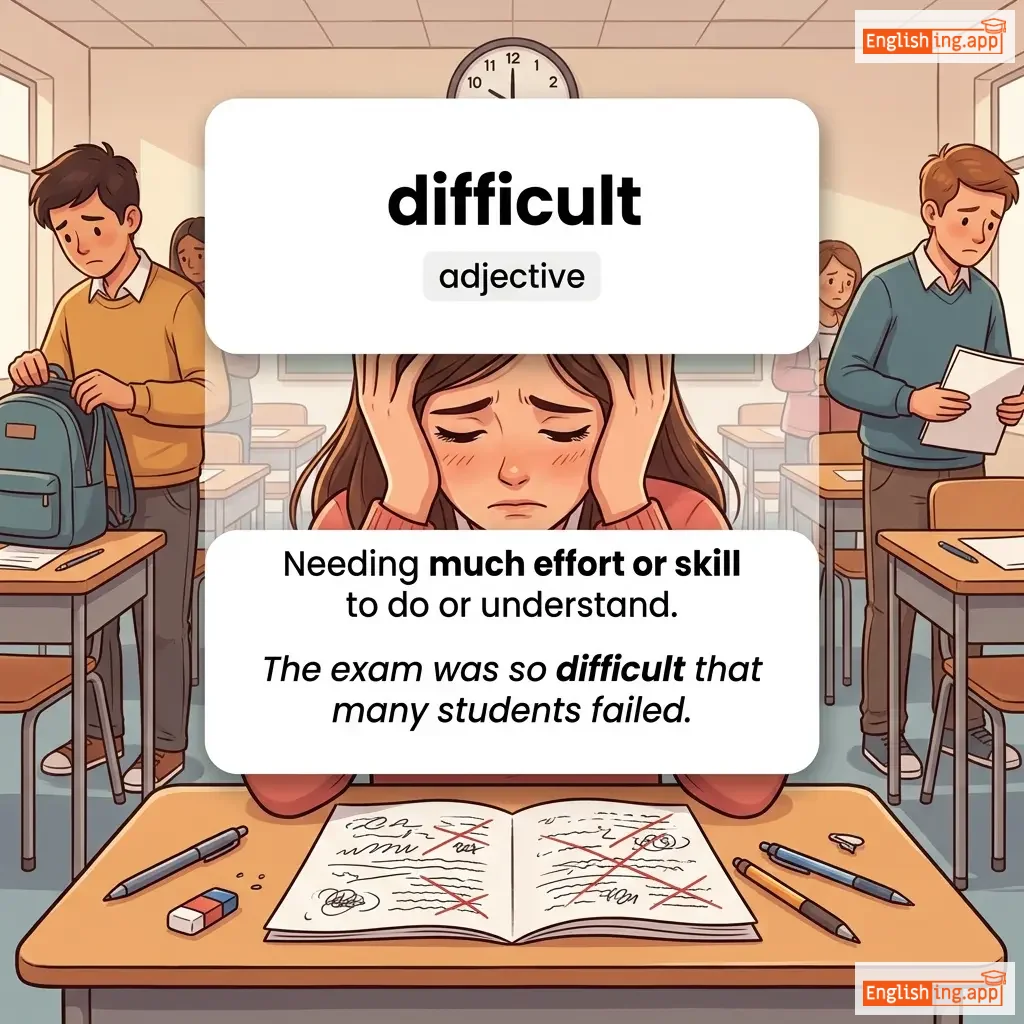
/ˈdɪf.ɪ.kəlt/
adjective
(difikalt)
••••••
|
|
困难
kunnan
••••••
|
- •••••• | - •••••• | - •••••• | - •••••• |
Needing much effort or skill to do or understand.
••••••
|
The exam was so difficult that many students failed. |
考试如此困难,以至于许多学生都没通过。
Kǎoshì rúcǐ kùnnán, yǐ zhì yú xǔduō xuéshēng dōu méi tōngguò.
••••••
|
difficult situation |
A situation that is hard to handle.
••••••
|
困难的局面
Kùnnán de júmiàn
••••••
|
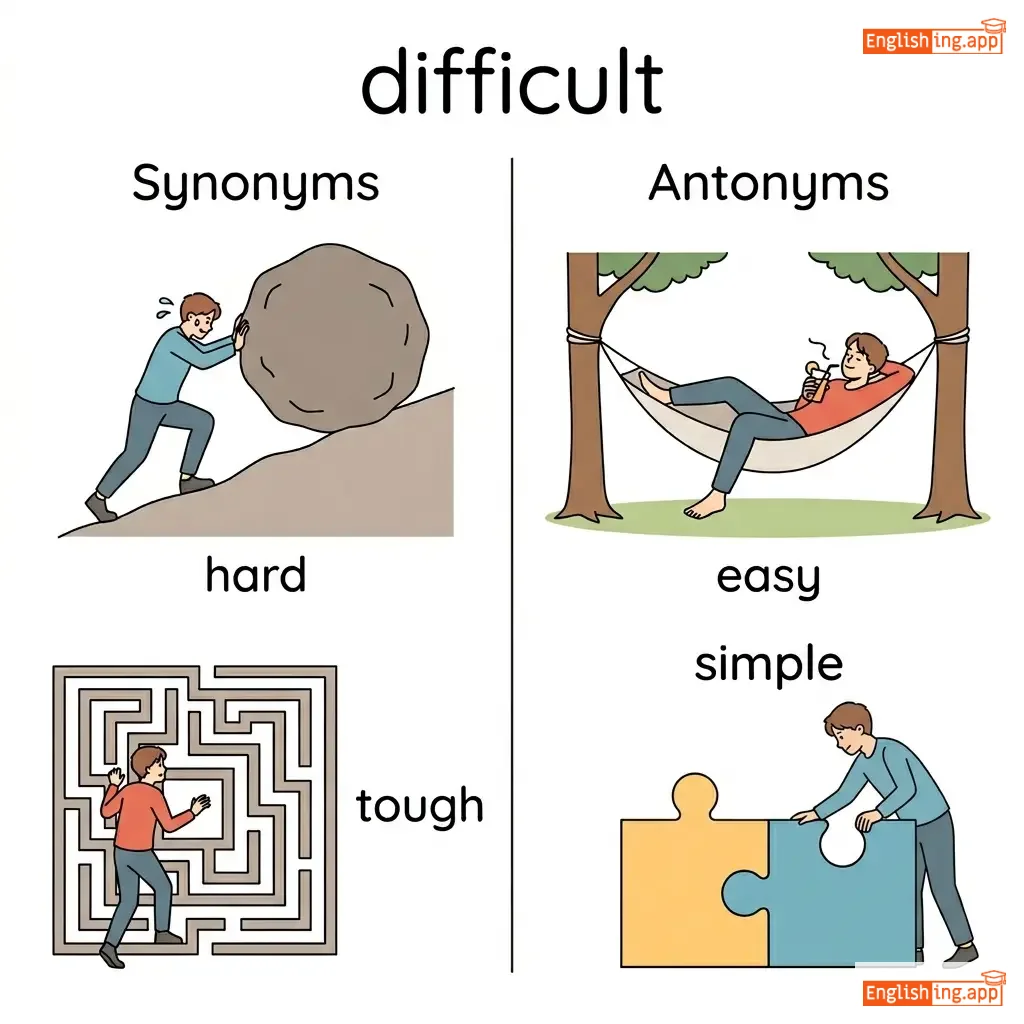
hard, tough, challenging, complicated, demanding
••••••
|
easy, simple, effortless
••••••
|
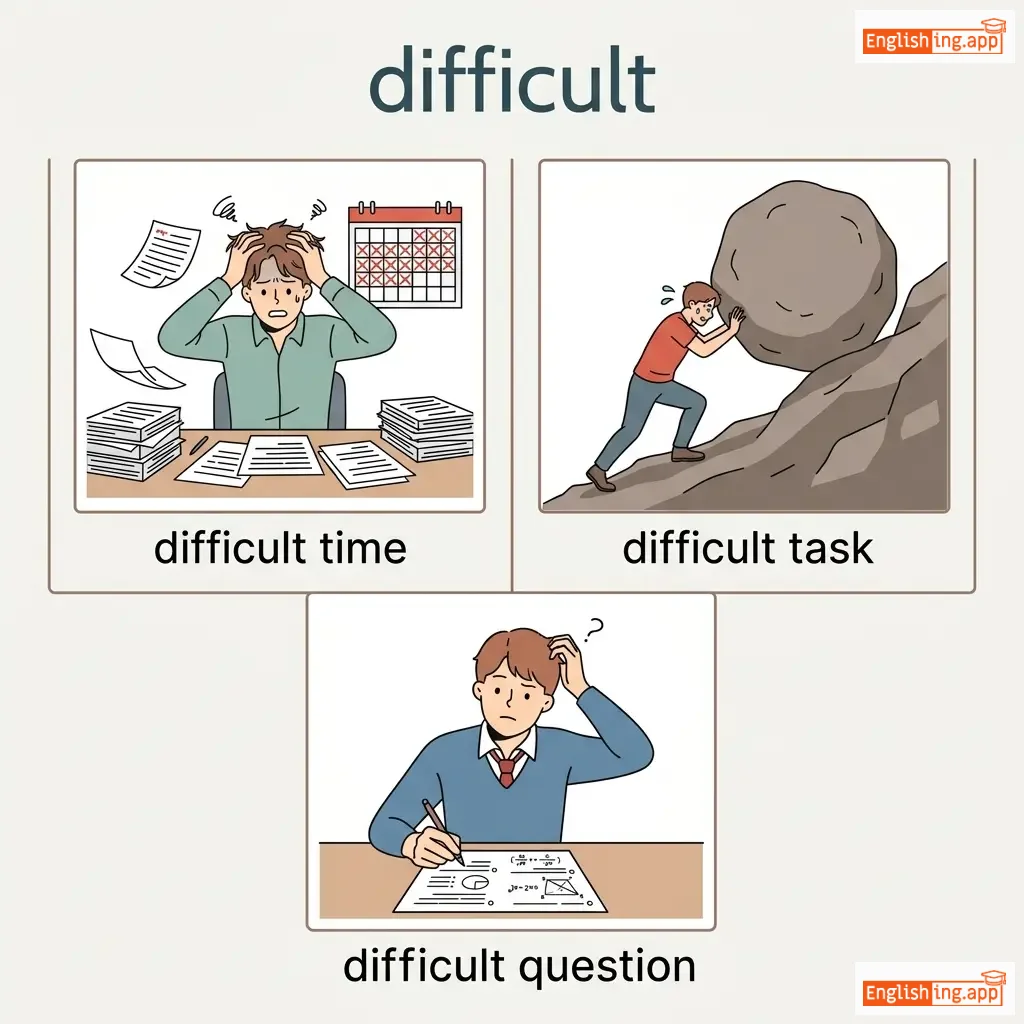
difficult time, difficult task, difficult question, difficult choice
••••••
|
Difficult 的意思是困难——想象一下,'Di' 就是困难,'full' 就是满的;做事情需要努力。
••••••
|
|
#9758
🔀
|
/ˈdɪf.ər.ənt/
adjective
(迪费伦特)
••••••
|
- •••••• |
不同的
bùtóng de
••••••
|
- •••••• | - •••••• | - •••••• | - •••••• |
Not the same as another; distinct or unlike.
••••••
|
Her opinion was completely different from mine. |
她的意见与我的完全不同。
Tā de yìjiàn yǔ wǒ de wánquán bùtóng.
••••••
|
world of difference |
A very big difference.
••••••
|
巨大的差异
jùdà de chāyì
••••••
|
distinct, unlike, diverse, varied, alternative
••••••
|
similar, same, identical
••••••
|
different types, different ways, different people, completely different
••••••
|
不同的意思是不同 — 'Bù' 就是分开,完全不同的意思。
••••••
|
|
#9759
🎲
|
/ˈdaɪ.si/
adjective
(dài-xī)
••••••
|
- •••••• |
冒险的
màoxiǎn de
••••••
|
- •••••• | - •••••• | - •••••• | - •••••• |
Risky or unpredictable; potentially dangerous.
••••••
|
Investing in that company looks pretty dicey right now.
投资该公司现在看起来非常冒险。
••••••
|
现在投资这家公司看起来非常冒险。
Xiànzài tóuzī zhè jiā gōngsī kàn qǐlái fēicháng màoxiǎn.
••••••
|
- •••••• | - •••••• | - •••••• |
risky, uncertain, dangerous, hazardous, unstable
••••••
|
safe, secure, reliable
••••••
|
dicey situation, dicey move, dicey plan, dicey deal
••••••
|
骰子 🎲 带来运气,但也有风险 — 'dicey' 意味着冒险的。
••••••
|
|
#9760
😋
|
/dɪˈlɪʃəs/
adjective
(happiness)
••••••
|
- •••••• |
幸福
xìngfú
••••••
|
- •••••• | - •••••• | - •••••• | - •••••• |
having a very pleasant taste or smell
••••••
|
The cake was so delicious that everyone asked for a second slice.
当她获得奖项时,她无法掩饰她的快乐。
••••••
|
当她获得奖项时,她无法掩饰她的快乐。
Dāng tā huòde jiǎngxiàng shí, tā wúfǎ yǎnshì tā de kuàilè.
••••••
|
look delicious
追求幸福
••••••
|
to appear very tasty or appealing
••••••
|
追求幸福
zhuīqiú xìngfú
••••••
|
tasty, appetizing, savory, delightful, yummy
••••••
|
bland, tasteless, unappetizing
••••••
|
delicious meal, delicious cake, delicious smell, look delicious
••••••
|
幸福是每一个朝阳下的追求,每一步都充满希望。
••••••
|
|
#9761
💪
|
/dɪˈtɜːrmɪnd/
adjective
(dɪˈtɜːrmɪnd)
••••••
|
- •••••• |
决心的
juéxīn de
••••••
|
- •••••• | - •••••• | - •••••• | - •••••• |
Having firmly decided to do something and not letting anything stop you.
••••••
|
She was determined to finish her studies despite many obstacles. |
尽管有许多障碍,她还是决心完成她的学业。
Jǐnguǎn yǒu xǔduō zhàng'ài, tā háishì juéxīn wánchéng tā de xuéyè.
••••••
|
strong-willed |
Having a strong determination to achieve something.
••••••
|
坚强的意志
jiānqiáng de yìzhì
••••••
|
resolute, steadfast, strong-willed, persistent, firm
••••••
|
indecisive, hesitant, weak
••••••
|
determined effort, determined face, determined spirit, determined to succeed
••••••
|
决定就像决定做的意思,强调坚决的决心。
••••••
|
|
#9762
🌀
|
/dɪˈstrʌktɪv/
adjective
(destruktiv)
••••••
|
- •••••• |
破坏性的
pohuai xing de
••••••
|
- •••••• | - •••••• | - •••••• | - •••••• |
Causing great and irreparable harm or damage.
••••••
|
Hurricanes are often destructive to coastal cities.
飓风常常对沿海城市造成破坏。
••••••
|
飓风常常对沿海城市造成破坏。
Jufeng changchang dui yanhai chengshi zaocheng pohuai.
••••••
|
destructive criticism
破坏性批评
••••••
|
Criticism that is harmful rather than helpful.
••••••
|
破坏性批评
Pohuai xing piping
••••••
|
damaging, harmful, devastating, ruinous, catastrophic
••••••
|
constructive, helpful, beneficial
••••••
|
destructive force, destructive behavior, destructive power, destructive effect
••••••
|
Destructive 意味着摧毁 – 破坏性的。
••••••
|
|
#9763
💥
|
/dɪˈstrɔɪ/
verb
(迪斯特罗伊)
••••••
|
|
摧毁
cuīhuǐ
••••••
|
destroyed
迪斯特罗伊德
••••••
|
destroyed
迪斯特罗伊德
••••••
|
destroys
迪斯特罗伊兹
••••••
|
destroying
迪斯特罗因
••••••
|
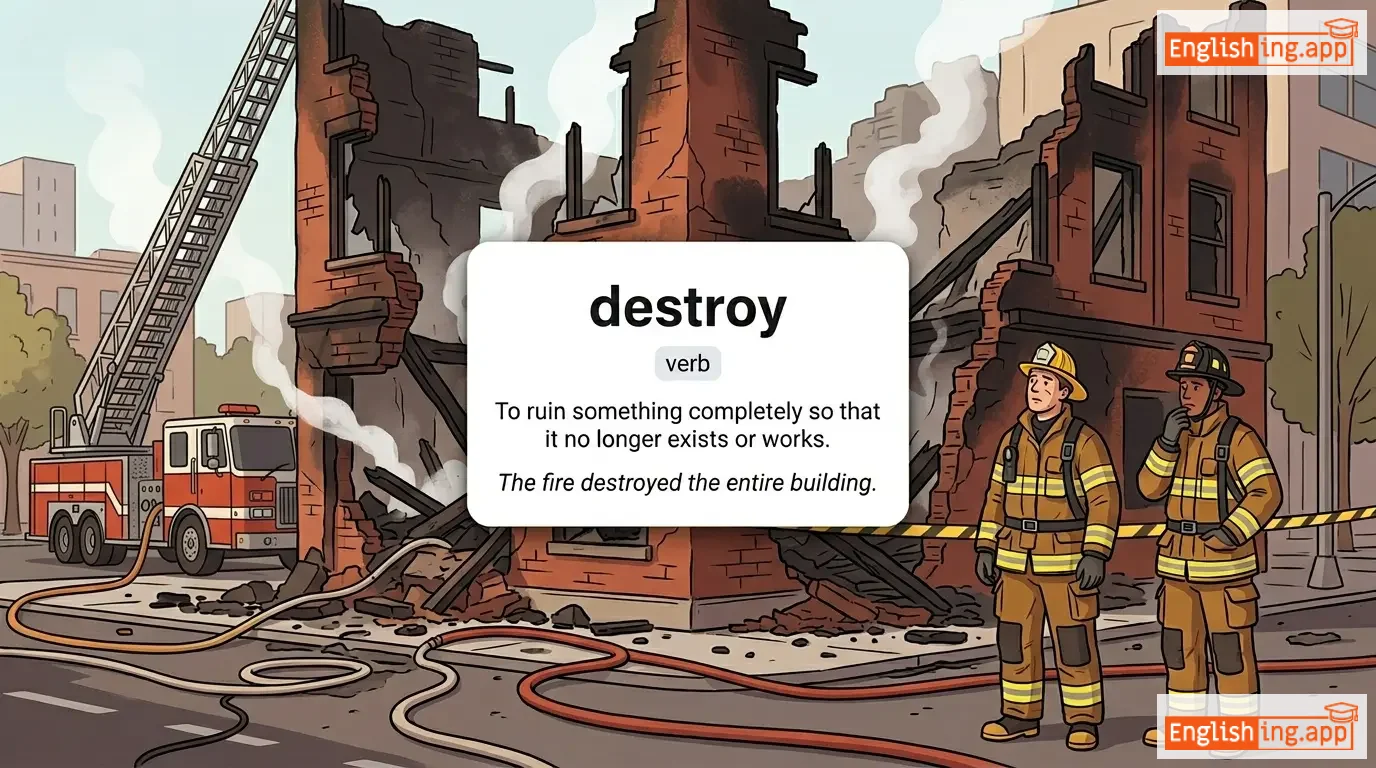
To ruin something completely so that it no longer exists or works.
••••••
|
The fire destroyed the entire building.
火灾摧毁了整个建筑。
••••••
|
火灾摧毁了整个建筑。
Huǒzāi cuīhuǐ le zhěnggè jiànzhú.
••••••
|
self-destroy
自毁
••••••
|
To cause one's own ruin.
••••••
|
自毁
zìhuǐ
••••••
|
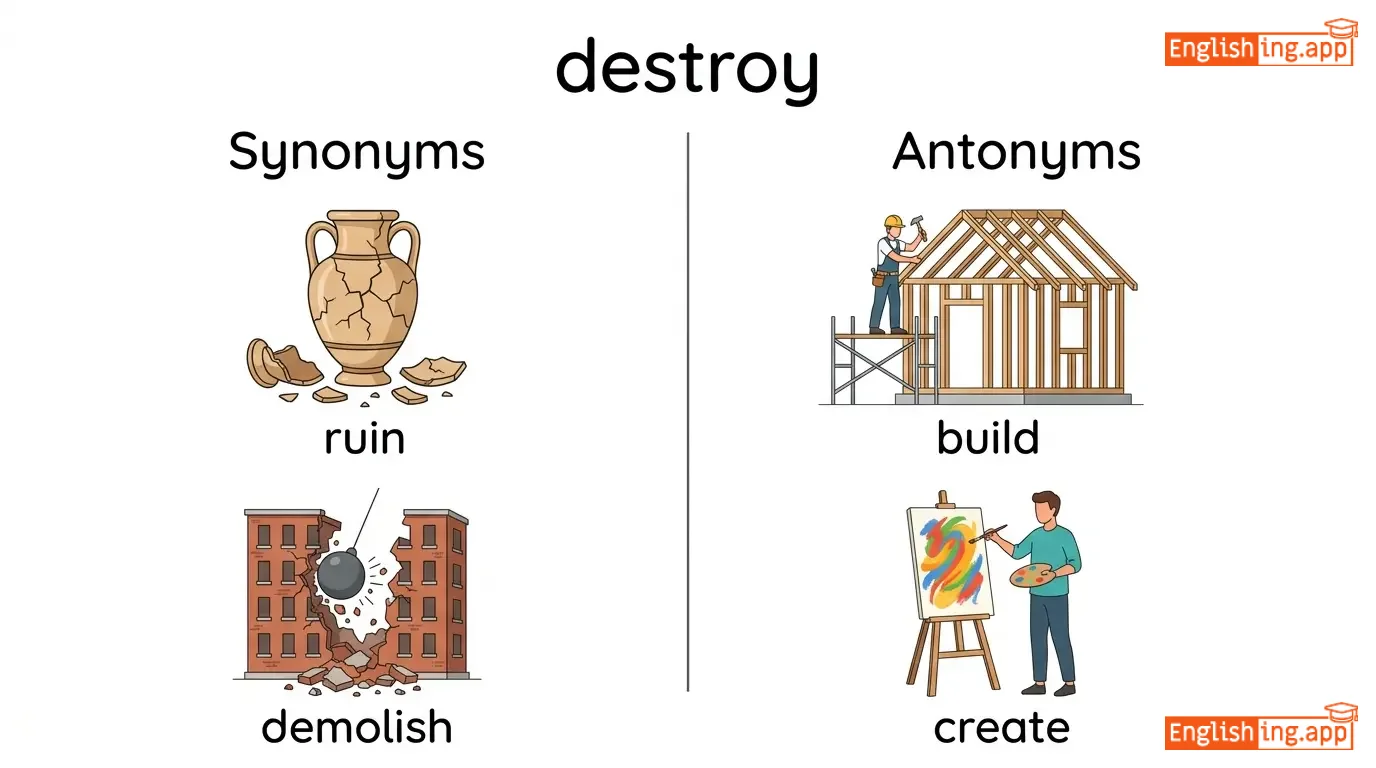
ruin, demolish, wreck, annihilate, obliterate
••••••
|
build, create, repair
••••••
|
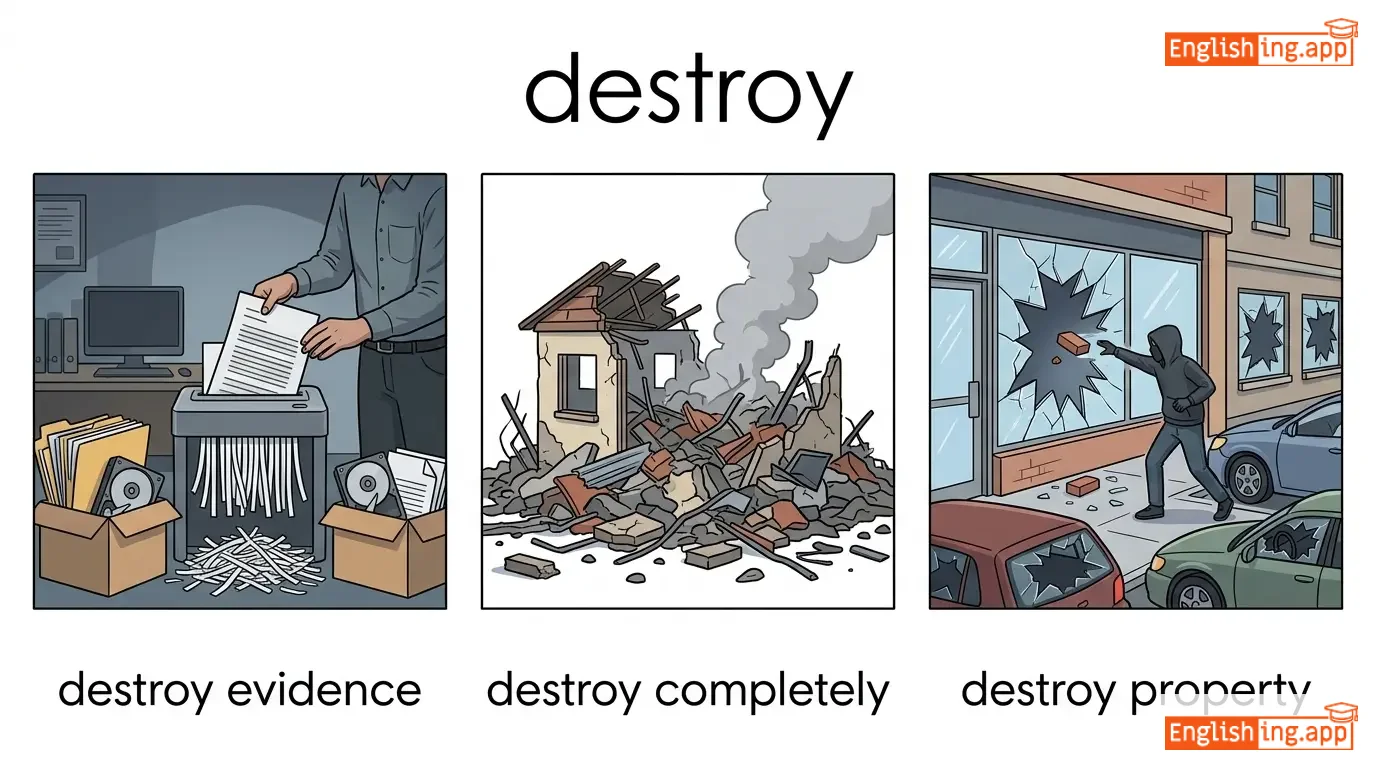
destroy evidence, destroy completely, destroy property, destroy reputation
••••••
|
摧毁意味着摧毁一切,就像火灾摧毁建筑物一样。
••••••
|
|
#9764
✨
|
/ˈdɛstəni/
noun
(dèstīní)
••••••
|
- •••••• |
命运
mìngyùn
••••••
|
- •••••• | - •••••• | - •••••• | - •••••• |
The events that will necessarily happen to a particular person or thing in the future; fate.
••••••
|
She believed it was her destiny to become a doctor. |
她相信成为医生是她的命运。
Tā xiāngxìn chéngwéi yīshēng shì tā de mìngyùn.
••••••
|
sealed destiny |
A future that is already decided and cannot be changed.
••••••
|
注定的命运
zhùdìng de mìngyùn
••••••
|
fate, fortune, lot, kismet, predestination
••••••
|
chance, accident, randomness
••••••
|
fulfill destiny, meet destiny, control destiny, shape destiny
••••••
|
Destiny意味着命运,已经注定,无法改变。
••••••
|
|
#9765
🏚️
|
/dɪˈzɜːrtɪd/
adjective
(dɪˈzɜːrtɪd)
••••••
|
- •••••• |
荒废的
huangfeide
••••••
|
- •••••• | - •••••• | - •••••• | - •••••• |
Empty of people; abandoned.
••••••
|
The village looked completely deserted after the storm. |
暴风雨过后,村庄看起来完全荒废了。
Baofengyu guo hou, cunzhuang kan qilai wanquan huangfeile.
••••••
|
- •••••• | - •••••• | - •••••• |
abandoned, empty, vacant, forsaken, uninhabited
••••••
|
populated, crowded, inhabited
••••••
|
deserted street, deserted house, deserted town, deserted beach
••••••
|
荒废的地方像沙漠一样空无一人。
••••••
|
|
#9766
🏜️
|
/ˈdez.ɚt/ (noun/adjective), /dɪˈzɜːrt/ (verb)
noun, verb
••••••
|
- •••••• | - •••••• |
deserted
••••••
|
deserted
••••••
|
deserts
••••••
|
deserting
••••••
|
as a noun, a barren sandy region; as a verb, to abandon someone or something
••••••
|
He deserted his friends in their time of need. |
- •••••• |
just deserts |
the punishment or reward that is deserved
••••••
|
- •••••• |
abandon, forsake, leave, wasteland, wilderness
••••••
|
support, stay, assist
••••••
|
desert storm, desert island, deserted place, desert someone
••••••
|
No •••••• |
|
#9767
📝
|
/dɪˈskraɪb/
verb
(dɪˈskraɪb)
••••••
|
- •••••• |
描述
miáoshù
••••••
|
described
dɪˈskraɪbd
••••••
|
described
dɪˈskraɪbd
••••••
|
describes
dɪˈskraɪbs
••••••
|
describing
dɪˈskraɪbɪŋ
••••••
|
to give an account of something in words, including details
••••••
|
She described the scene vividly.
她生动地描述了场景。
••••••
|
她生动地描述了场景。
Tā shēngdòng de miáoshù le chǎngjǐng.
••••••
|
describe in detail
详细描述
••••••
|
to explain with thorough information
••••••
|
详细描述
xiángxì miáoshù
••••••
|
explain, portray, depict, illustrate, narrate
••••••
|
confuse, obscure, distort
••••••
|
describe briefly, describe fully, describe process, describe situation
••••••
|
描述在中文里就是'miáoshù',类似于详细描述场景。
••••••
|
|
#9768
🚫
|
/dɪˈpraɪv/
verb
••••••
|
- •••••• | - •••••• |
deprived
••••••
|
deprived
••••••
|
deprives
••••••
|
depriving
••••••
|
to take something away from someone, or prevent them from having it
••••••
|
The new law may deprive people of their rights. |
- •••••• |
sleep-deprived |
lacking enough sleep
••••••
|
- •••••• |
deny, strip, remove, dispossess, rob
••••••
|
grant, give, provide
••••••
|
deprive of rights, deprive someone of, deprive freedom, sleep deprived
••••••
|
No •••••• |
|
#9769
😈
|
/dɪˈpreɪvd/
adjective
(dɪˈpreɪvd)
••••••
|
- •••••• |
堕落的
duòluò de
••••••
|
- •••••• | - •••••• | - •••••• | - •••••• |
morally corrupt or wicked
••••••
|
The film depicts the life of a depraved criminal. |
这部电影描述了一个堕落罪犯的生活。
Zhè bù diànyǐng miáoshùle yīgè duòluò zuìfàn de shēnghuó.
••••••
|
- •••••• | - •••••• | - •••••• |
corrupt, immoral, wicked, degenerate, sinful
••••••
|
moral, pure, virtuous
••••••
|
depraved mind, depraved acts, depraved behavior, depraved character
••••••
|
堕落的(duòluò de),像 ‘deep rave’,深刻的道德堕落。
••••••
|
|
#9770
🚆
|
/dɪˈpɑːrt/
verb
••••••
|
- •••••• | - •••••• |
departed
••••••
|
departed
••••••
|
departs
••••••
|
departing
••••••
|
to leave, especially to start a journey
••••••
|
The train will depart at 9 a.m. |
- •••••• |
depart this life |
a formal or euphemistic way to say 'die'
••••••
|
- •••••• |
leave, exit, go, withdraw, set off
••••••
|
arrive, stay, remain
••••••
|
depart early, depart station, flight departs, depart suddenly
••••••
|
No •••••• |
|
#9771
👖
|
/ˈdɛnɪmz/
noun
(丹宁布裤子)
••••••
|
- •••••• |
牛仔布裤
niuzaibu kuzi
••••••
|
- •••••• | - •••••• | - •••••• | - •••••• |
pants or clothes made from denim fabric, usually jeans
••••••
|
He wore blue denims with a white shirt. |
他穿着蓝色牛仔裤和白衬衫。
Ta chuanzhuo lanse niuzaiku he bai chenshan.
••••••
|
pair of denims |
a pair of jeans
••••••
|
一条牛仔裤
yi tiao niuzaiku
••••••
|
jeans, trousers, pants, blue jeans
••••••
|
formal wear, suit
••••••
|
blue denims, wear denims, pair of denims, faded denims
••••••
|
Denims代表牛仔布裤 - 容易记住像牛仔裤
••••••
|
|
#9772
🏦
|
/diːˈnæʃənəlaɪz/
verb
(去国有化)
••••••
|
- •••••• |
去国有化
qù guó yǒu huà
••••••
|
denationalized
去国有化了
••••••
|
denationalized
去国有化了
••••••
|
denationalizes
去国有化
••••••
|
denationalizing
去国有化中
••••••
|
to transfer ownership from the government to private individuals or companies
••••••
|
The government decided to denationalize the bank to encourage private investment.
政府决定将银行去国有化,以鼓励私人投资。
••••••
|
政府决定将银行去国有化,以鼓励私人投资。
Zhèngfǔ juédìng jiāng yínháng qù guó yǒu huà, yǐ gǔlì sīrén tóuzī.
••••••
|
- •••••• | - •••••• | - •••••• |
privatize, liberalize, deregulate
••••••
|
nationalize, socialize
••••••
|
denationalize industry, denationalize banks, government denationalize
••••••
|
De-nationalize 是指将政府控制转给私人
••••••
|
|
#9773
⬇️
|
/dɪˈmoʊt/
verb
(dɪˈmoʊt)
••••••
|
- •••••• |
降职
jiangzhi
••••••
|
demoted
dɪˈmoʊtɪd
••••••
|
demoted
dɪˈmoʊtɪd
••••••
|
demotes
dɪˈmoʊts
••••••
|
demoting
dɪˈmoʊtɪŋ
••••••
|
to reduce to a lower rank or position
••••••
|
The manager decided to demote the employee for poor performance.
经理决定因表现不佳而降职。
••••••
|
经理决定因表现不佳而降职。
Jingli jueding yin biaoxian bu jia er jiangzhi.
••••••
|
- •••••• | - •••••• | - •••••• |
downgrade, relegate, reduce, lower
••••••
|
promote, upgrade
••••••
|
demote someone, demote to, demote for misconduct
••••••
|
降职就是 demote,意思是职位降低。
••••••
|
|
#9774
🙂
|
/dɪˈmiːnər/
noun
(迪米诺)
••••••
|
- •••••• |
行为
xíngwéi
••••••
|
- •••••• | - •••••• | - •••••• | - •••••• |
a person's outward behavior or appearance
••••••
|
Her calm demeanour impressed everyone during the meeting. |
她平静的行为在会议中给大家留下了深刻印象。
Tā píngjìng de xíngwéi zài huìyì zhōng gěi dàjiā liú xiàle shēnkè yìnxiàng.
••••••
|
cool demeanour |
calm and composed behavior
••••••
|
冷静的行为
lěngjìng de xíngwéi
••••••
|
behavior, manner, attitude, conduct
••••••
|
agitation, disturbance
••••••
|
calm demeanour, serious demeanour, professional demeanour, cool demeanour
••••••
|
Demeanour 就是一个人的外在行为,记住它和'行为'有关。
••••••
|
Vocabulary Quiz
Test your vocabulary by matching words with their translations or meanings.
Login to take the quiz
Comments (0)
Share your thoughts and join the discussion.
Join the discussion by logging in
Login to CommentNo comments yet
Be the first to share your thoughts!