

Swipe left or right, or use the buttons. Tap image to zoom.
例句翻译
单词
Lesson 277Lesson 277 - 遮罩切换
|
表情符号
|
单词 | Images | 翻译 | 过去时 | 过去分词 | 第三人称单数 | 动名词 | 含义 | 例句 | 例句翻译 | 示例表达 | 示例表达含义 | 示例表达翻译 | 同义词 | 反义词 | 搭配词 | 助记符 |
|---|---|---|---|---|---|---|---|---|---|---|---|---|---|---|---|---|---|
|
#8280
🏇
|
/spɜːr/
verb
(espar)
••••••
|
- •••••• |
激励 / 鼓励
jili / guli
••••••
|
spurred
esparrd
••••••
|
spurred
esparrd
••••••
|
spurs
espars
••••••
|
spurring
esparring
••••••
|
To encourage or motivate someone to take action.
••••••
|
The teacher's praise spurred him to study harder.
教师的表扬激励他更加努力学习。
••••••
|
教师的表扬激励他更加努力学习。
Jiàoshī de biǎoyáng jīlì tā gèngjiā nǔlì xuéxí.
••••••
|
spur of the moment
spur of the moment
••••••
|
An impulsive or unplanned decision.
••••••
|
一时冲动的决定
yī shí chōngdòng de juédìng
••••••
|
encourage, motivate, inspire, prompt, stimulate
••••••
|
deter, discourage
••••••
|
spur action, spur growth, spur development
••••••
|
Spur就像马的鞭子,用来激励马跑得更快。
••••••
|
|
#8281
⚖️
|
/ˈsteɪ.bə.laɪz/
verb
(斯塔比利扎)
••••••
|
- •••••• |
稳定
wending
••••••
|
stabilized
斯塔比利扎德
••••••
|
stabilized
斯塔比利扎德
••••••
|
stabilizes
斯塔比利扎斯
••••••
|
stabilizing
斯塔比利扎英
••••••
|
to make something steady, secure, or unlikely to change suddenly
••••••
|
The government took measures to stabilize the economy.
政府采取措施以稳定经济。
••••••
|
政府采取措施以稳定经济。
zhèngfǔ cǎiqǔ cuòshī yǐ wending jīngjì.
••••••
|
stabilize the situation
稳定局势
••••••
|
to bring a situation under control or make it steady
••••••
|
稳定局势
wending jushi
••••••
|
steady, secure, balance, fix, support
••••••
|
destabilize, weaken, disrupt
••••••
|
stabilize economy, stabilize situation, stabilize prices, stabilize market
••••••
|
Stable + eyes → 眼睛 (eyes) 让一切变得稳定
••••••
|
|
#8282
😑
|
/skwɪnt/
verb
(sī kuínt)
••••••
|
- •••••• |
眯眼看
mī yǎn kàn
••••••
|
squinted
sī kuíntèd
••••••
|
squinted
sī kuíntèd
••••••
|
squints
sī kuínts
••••••
|
squinting
sī kuínting
••••••
|
to look with partly closed eyes
••••••
|
She squinted at the bright sunlight.
她因强烈的阳光而眯着眼睛。
••••••
|
她因强烈的阳光而眯着眼睛。
Tā yīn qiángliè de yángguāng ér mīzhe yǎnjīng.
••••••
|
squint at
眯眼看
••••••
|
to look at something with eyes partly closed
••••••
|
眯眼看
mī yǎn kàn
••••••
|
peer, glance, blink, peer closely
••••••
|
stare, gaze, look openly
••••••
|
squint eyes, squint hard, squint slightly
••••••
|
在阳光下,人们都会眯眼看
••••••
|
|
#8283
🌧️
|
/skwɛltʃ/
verb
••••••
|
- •••••• | - •••••• |
squelched
••••••
|
squelched
••••••
|
squelches
••••••
|
squelching
••••••
|
to make a soft sucking sound, such as when walking on mud; to suppress or silence
••••••
|
His boots squelched in the wet ground. |
- •••••• |
squelch a rumor |
to stop or silence a rumor quickly
••••••
|
- •••••• |
suppress, silence, smother, extinguish
••••••
|
encourage, spread, amplify
••••••
|
squelch noise, squelch rumor, squelch dissent
••••••
|
No •••••• |
|
#8284
🤢
|
/ˈskwiːmɪʃ/
adjective
(斯奎米什)
••••••
|
- •••••• |
容易感到恶心、头晕或反感
róngyì gǎndào ěxīn, tóuyūn huò fǎngǎn
••••••
|
- •••••• | - •••••• | - •••••• | - •••••• |
easily made to feel sick, faint, or disgusted
••••••
|
She felt squeamish at the sight of blood. |
她看到血时感到恶心。
Tā kàn dào xuè shí gǎndào ěxīn.
••••••
|
- •••••• | - •••••• | - •••••• |
sensitive, nauseated, delicate, faint
••••••
|
hardy, tough, unbothered
••••••
|
squeamish about, squeamish reaction, squeamish feeling
••••••
|
斯奎米什像 'scream-ish' - 看见血液就想大喊并感到恶心
••••••
|
|
#8285
🚷
|
/ˈskwɒtər/
noun
(skwàtè)
••••••
|
- •••••• |
非法占领者
fēi fǎ zhàn lǐng zhě
••••••
|
- •••••• | - •••••• | - •••••• | - •••••• |
a person who unlawfully occupies an uninhabited building or unused land
••••••
|
The police removed the squatters from the abandoned house. |
警方将非法占领者从废弃的房屋中驱逐了出去。
jǐngfāng jiāng fēifǎ zhànlǐng zhě cóng fèiqì de fángwū zhōng qūzhú le chūqù.
••••••
|
- •••••• | - •••••• | - •••••• |
occupant, settler, trespasser, intruder
••••••
|
owner, landlord, tenant
••••••
|
illegal squatter, squatter rights, squatter settlement
••••••
|
非法占领者是非法占用建筑物或土地的人。
••••••
|
|
#8286
🏋️
|
/skwɒt/
(sik wot)
••••••
|
- •••••• |
蹲下
dun xia
••••••
|
squatted
sik wot-ed
••••••
|
squatted
sik wot-ed
••••••
|
squats
sik wots
••••••
|
squatting
sik woting
••••••
|
to crouch or sit with knees bent and body close to the ground
••••••
|
He squatted down to tie his shoes.
他蹲下来系鞋带。
••••••
|
他蹲下来系鞋带。
Ta dun xia lai xi xie dai.
••••••
|
squat down
蹲下
••••••
|
to lower oneself into a squatting position
••••••
|
蹲下
dun xia
••••••
|
crouch, hunker, duck, bend, stoop
••••••
|
stand, rise, straighten
••••••
|
squat position, squat exercise, squat building, squat rack
••••••
|
在健身房,大家都蹲下做深蹲。
••••••
|
|
#8287
🦟
|
/skwɒʃ/
verb
(斯夸什)
••••••
|
- •••••• |
压扁
yābiǎn
••••••
|
squashed
斯夸什德
••••••
|
squashed
斯夸什德
••••••
|
squashes
斯夸什斯
••••••
|
squashing
斯夸什英
••••••
|
to crush or squeeze something with force so that it becomes flat or broken
••••••
|
She accidentally squashed the bug with her shoe.
她不小心用鞋子压死了虫子。
••••••
|
她不小心用鞋子压死了虫子。
Tā bù xiǎoxīn yòng xiézi yā sǐ le huǐzi.
••••••
|
squash the rumor
压制谣言
••••••
|
to stop a rumor from spreading
••••••
|
压制谣言
yāzhì yáoyán
••••••
|
crush, flatten, compress, squeeze
••••••
|
inflate, expand
••••••
|
squash a bug, squash the rumor, squash competition, squash against
••••••
|
Squash意味着用鞋子压扁虫子。
••••••
|
|
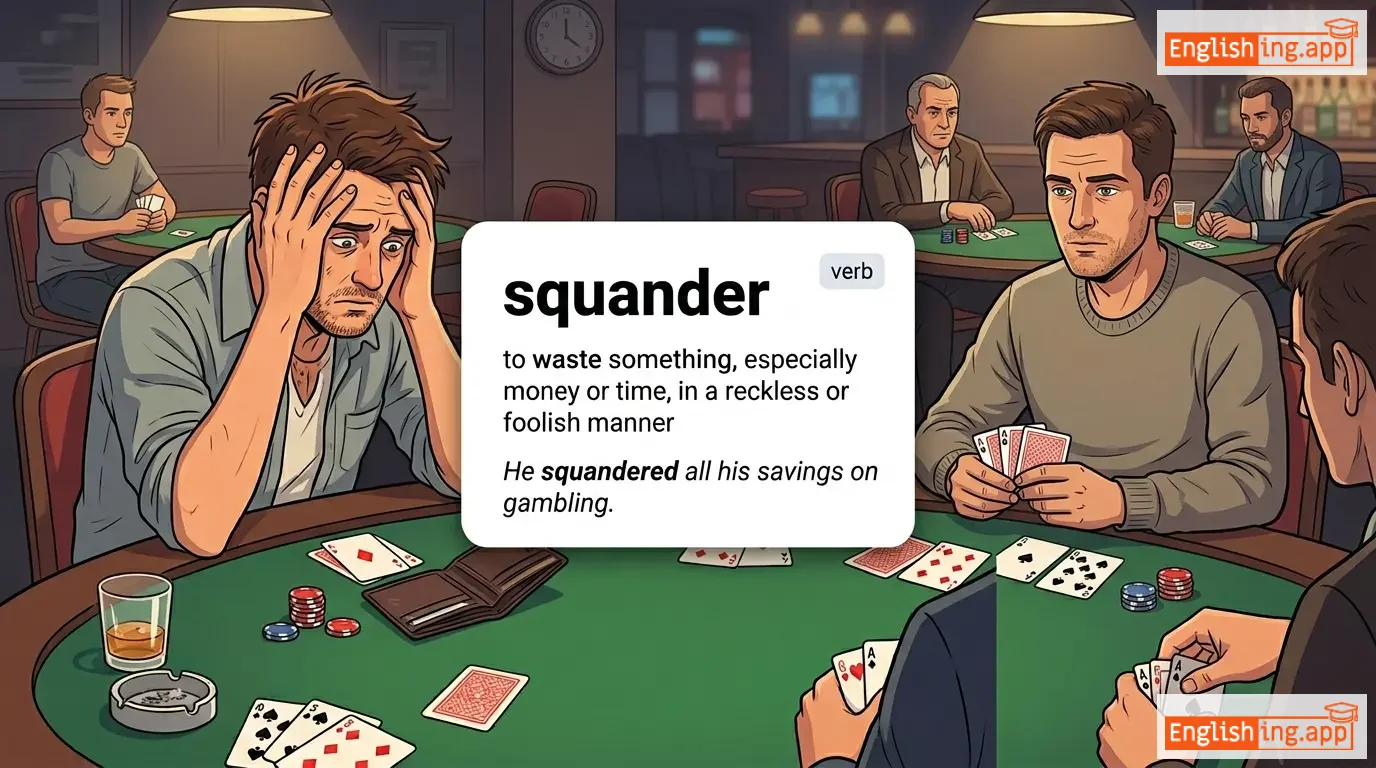
#8288
💸
|
/ˈskwɒndər/
verb
(skwɒndər)
••••••
|
|
浪费
làng fèi
••••••
|
squandered
skwɒndərd
••••••
|
squandered
skwɒndərd
••••••
|
squanders
skwɒndərz
••••••
|
squandering
skwɒndərɪŋ
••••••
|
to waste something, especially money or time, in a reckless or foolish manner
••••••
|
He squandered all his savings on gambling.
他把所有的积蓄都浪费在了赌博上。
••••••
|
他把所有的积蓄都浪费在了赌博上。
Tā bǎ suǒyǒu de jīxù dōu làng fèi zài le dǔbó shàng.
••••••
|
- •••••• | - •••••• | - •••••• |
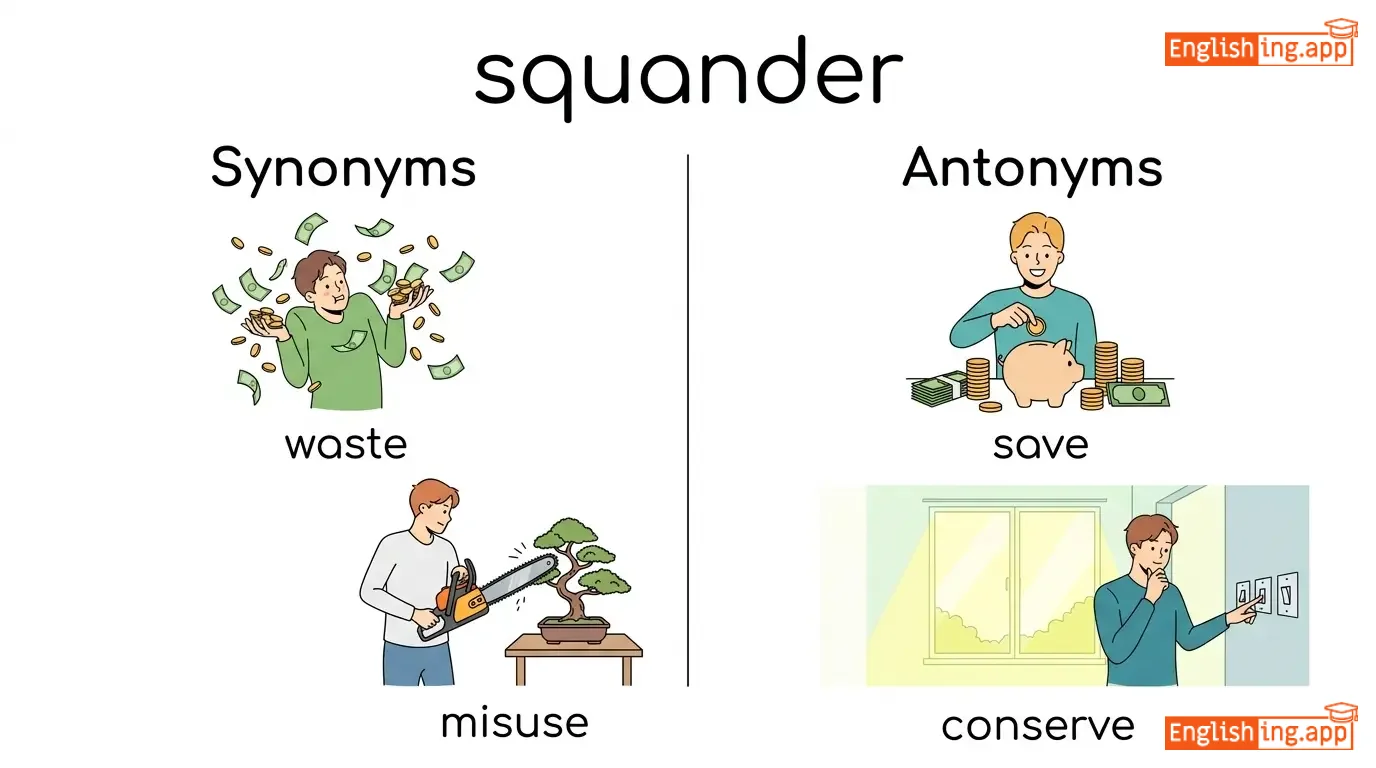
waste, misuse, dissipate, fritter
••••••
|
save, conserve, invest
••••••
|
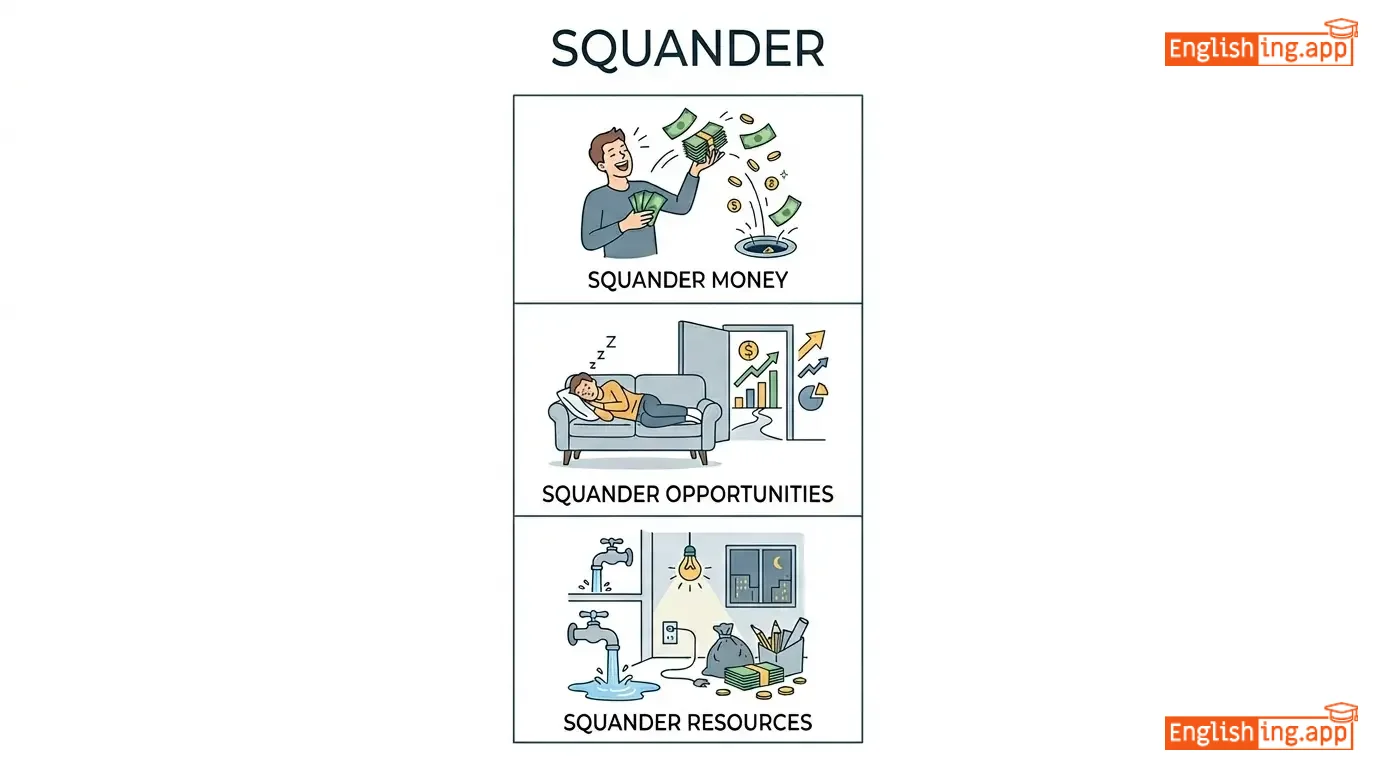
squander money, squander opportunities, squander resources, squander wealth
••••••
|
Squander 是把你辛苦赚来的钱浪费在无意义的事情上。
••••••
|
|
#8289
🗑️
|
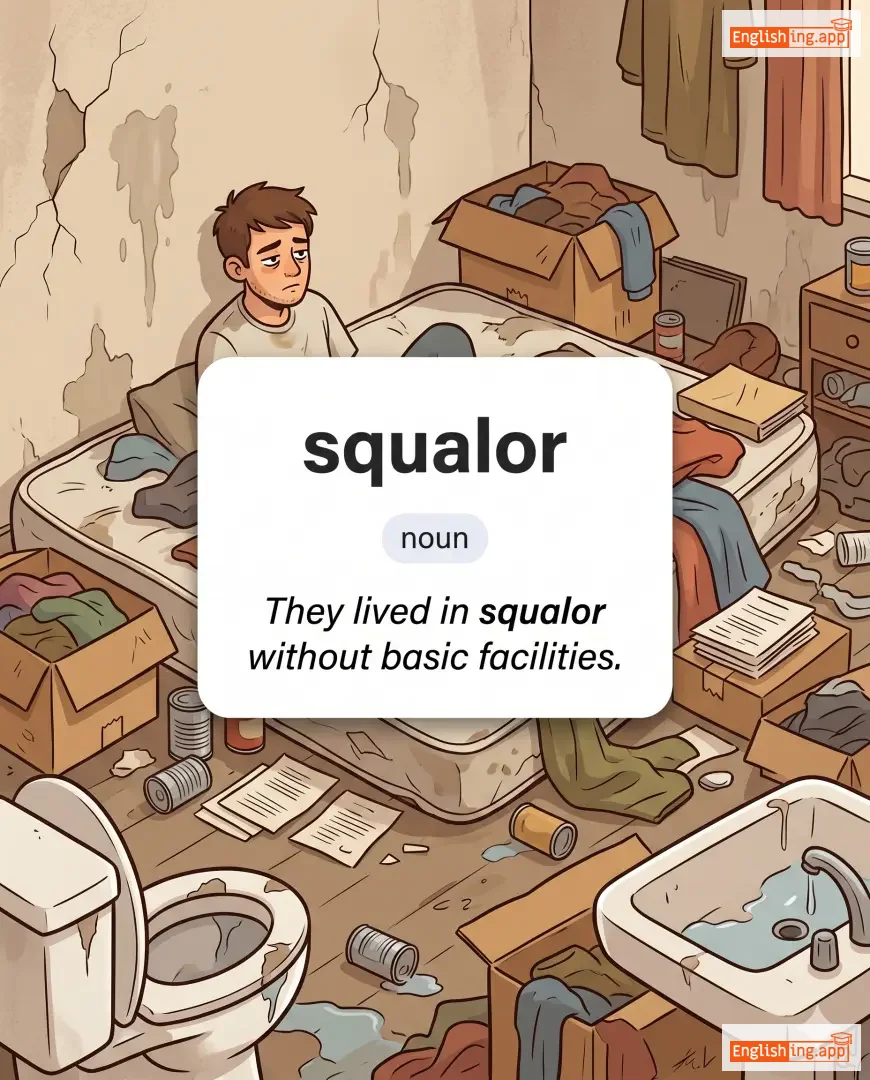
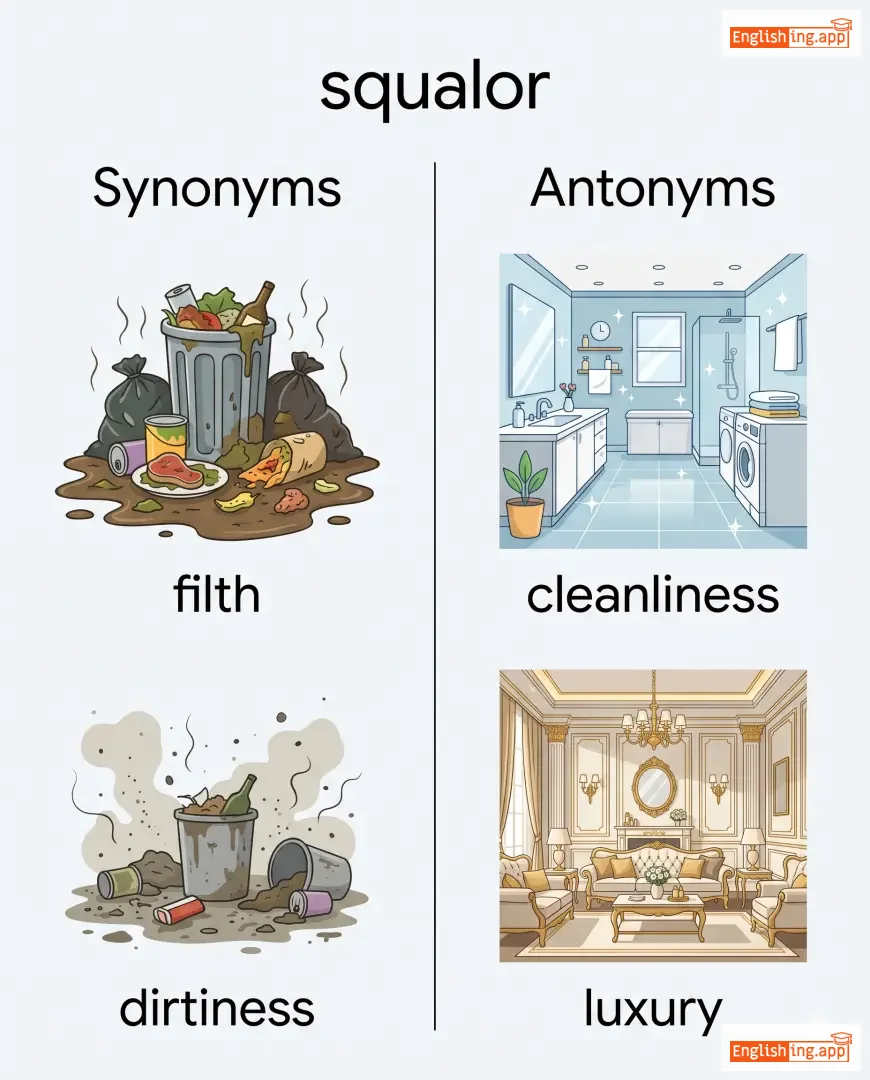
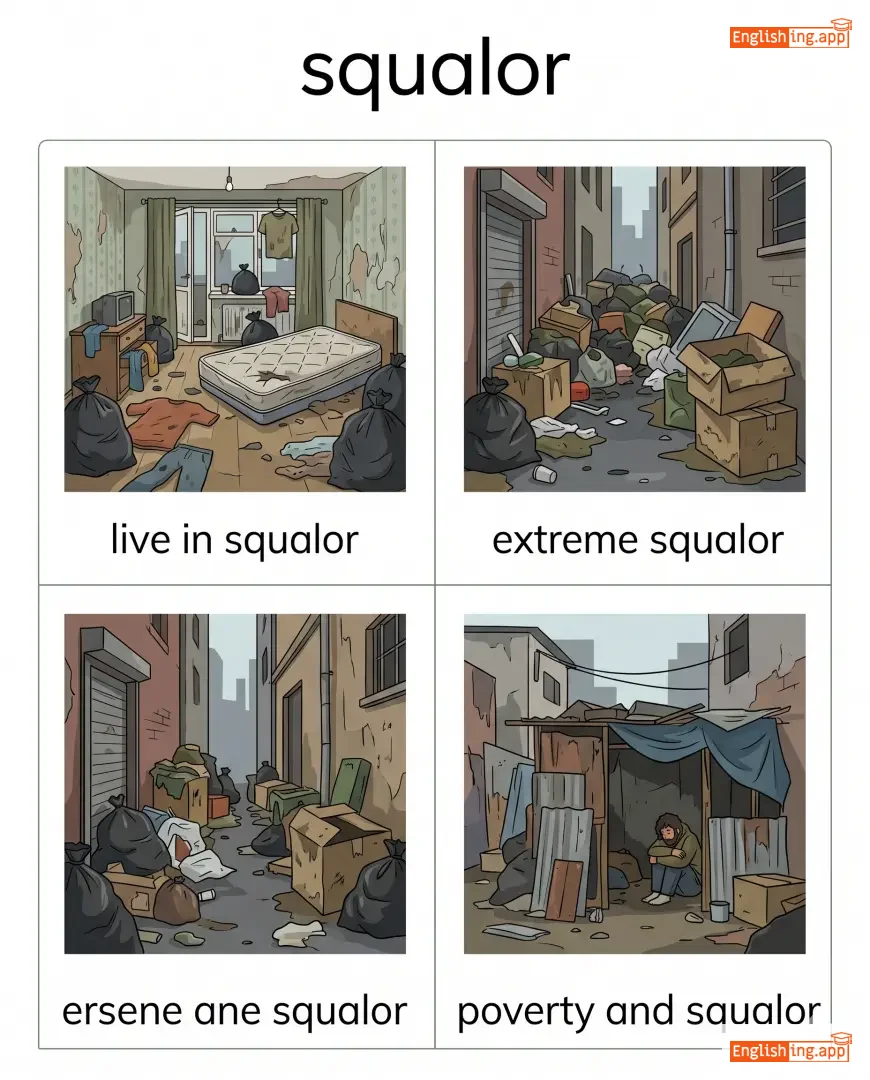
/ˈskwɒlər/
noun
(skwɑlɔr)
••••••
|
|
贫困
pínkùn
••••••
|
- •••••• | - •••••• | - •••••• | - •••••• |
the state of being extremely dirty and unpleasant, especially due to poverty or neglect
••••••
|
They lived in squalor without basic facilities.
他们在没有基本设施的贫困中生活。
••••••
|
他们在没有基本设施的贫困中生活。
Tāmen zài méiyǒu jīběn shèshī de pínkùn zhōng shēnghuó.
••••••
|
- •••••• | - •••••• | - •••••• |
filth, dirtiness, poverty, misery
••••••
|
cleanliness, luxury
••••••
|
live in squalor, extreme squalor, poverty and squalor
••••••
|
Squalor = 贫困,生活在极度贫困中
••••••
|
|
#8290
🌬️
|
/skwɔːl/
noun
(skwɔːl)
••••••
|
- •••••• |
暴风骤雨
baofeng zhouyu
••••••
|
- •••••• | - •••••• | - •••••• | - •••••• |
a sudden violent gust of wind, often accompanied by rain, snow, or sleet
••••••
|
A sudden squall caught the sailors off guard. |
一阵突如其来的暴风骤雨让水手们措手不及。
Yi zhen tu ru qi lai de baofeng zhouyu rang shuishou men cuoshou buji.
••••••
|
- •••••• | - •••••• | - •••••• |
gust, storm, outburst, gale
••••••
|
calm, stillness
••••••
|
sudden squall, snow squall, rain squall, violent squall
••••••
|
想象一阵暴风骤雨突然袭来,就像是一个 squall。
••••••
|
|
#8291
🏚️
|
/ˈskwɒlɪd/
adjective
(斯夸利德)
••••••
|
- •••••• |
极其脏乱
jíqí zāngluàn
••••••
|
- •••••• | - •••••• | - •••••• | - •••••• |
extremely dirty and unpleasant, often due to poverty or neglect
••••••
|
He lived in a squalid room with broken furniture. |
他住在一个脏乱的房间里,里面有坏掉的家具。
Tā zhù zài yīgè zāngluàn de fángjiān lǐ, lǐmiàn yǒu huài diào de jiājù.
••••••
|
- •••••• | - •••••• | - •••••• |
filthy, dirty, shabby, grimy, foul
••••••
|
clean, neat, tidy
••••••
|
squalid conditions, squalid room, squalid life, squalid environment
••••••
|
在学校看到脏乱的地方就是squalid的情况。
••••••
|
|
#8292
👶🍰
|
/ˈskwɒbəl/
verb
(skwɑbəl)
••••••
|
- •••••• |
为琐事争吵
wèi suǒ shì zhēngchǎo
••••••
|
squabbled
skwɑbəl'd
••••••
|
squabbled
skwɑbəl'd
••••••
|
squabbles
skwɑbəlz
••••••
|
squabbling
skwɑbəlɪŋ
••••••
|
To argue noisily over something small or unimportant.
••••••
|
The children squabbled over the last piece of cake.
孩子们争论最后一块蛋糕。
••••••
|
孩子们争论最后一块蛋糕。
Háizimen zhēnglùn zuìhòu yī kuài dàngāo.
••••••
|
- •••••• | - •••••• | - •••••• |
argue, quarrel, bicker, dispute, wrangle
••••••
|
agree, cooperate
••••••
|
squabble over, family squabble, childish squabble
••••••
|
Squabble 就是为了小事而争吵。
••••••
|
|
#8293
🚫
|
/spɜːrn/
verb
(斯潘)
••••••
|
- •••••• |
蔑视地拒绝
mièshì de jùjué
••••••
|
spurned
斯潘德
••••••
|
spurned
斯潘德
••••••
|
spurns
斯潘斯
••••••
|
spurning
斯潘宁
••••••
|
To reject something or someone with disdain or contempt.
••••••
|
She spurned his offer of help.
她拒绝了他的帮助提议。
••••••
|
她以蔑视的态度拒绝了他的帮助提议。
Tā yǐ mièshì de tàidu jùjuéle tā de bāngzhù tíyì.
••••••
|
- •••••• | - •••••• | - •••••• |
reject, refuse, decline, dismiss, scorn
••••••
|
accept, embrace, approve
••••••
|
spurn an offer, spurn a suggestion, spurn advances
••••••
|
SPURN 意味着 'Super NO' - 蔑视地拒绝。
••••••
|
|
#8294
⚠️
|
/ˈspjʊəriəs/
adjective
(spyuɹɪəs)
••••••
|
- •••••• |
虚假的 / 假冒的
xūjiǎ de / jiǎmào de
••••••
|
- •••••• | - •••••• | - •••••• | - •••••• |
Not genuine, authentic, or true; false or fake.
••••••
|
The report was based on spurious claims. |
报告基于虚假的声明。
Bàogào jīyú xūjiǎ de shēngmíng.
••••••
|
- •••••• | - •••••• | - •••••• |
false, fake, counterfeit, bogus, fraudulent
••••••
|
genuine, authentic, true
••••••
|
spurious claim, spurious argument, spurious reasoning
••••••
|
SPURious听起来像 Spur,但它不是实际的 Spur - 意味着虚假的。
••••••
|
|
#8295
🙅
|
/ˈspɔɪlˌspɔːrt/
noun
(斯波伊尔斯波特)
••••••
|
- •••••• |
扫兴的人
sǎo xìng de rén
••••••
|
- •••••• | - •••••• | - •••••• | - •••••• |
A person who ruins other people's enjoyment or fun.
••••••
|
Don't be a spoilsport and let us enjoy the party.
不要做扫兴的人,放我们享受派对吧。
••••••
|
不要做扫兴的人,放我们享受派对吧。
Bù yào zuò sǎo xìng de rén, fàng wǒmen xiǎngshòu pàiduì ba.
••••••
|
- •••••• | - •••••• | - •••••• |
killjoy, party pooper, wet blanket, grouch
••••••
|
cheerleader, encourager
••••••
|
act like a spoilsport, don't be a spoilsport, real spoilsport
••••••
|
Spoil + sport = 破坏运动的意思,扫兴的人。
••••••
|
|
#8296
🌊
|
/spjuːm/
noun
(spium)
••••••
|
- •••••• |
泡沫
paomo
••••••
|
- •••••• | - •••••• | - •••••• | - •••••• |
Froth or foam, especially found on waves or liquids.
••••••
|
The waves crashed against the rocks, leaving spume in the air. |
波浪撞击岩石,空气中留下泡沫。
Bolang zhuangji yanshi, kongqi zhong liuxia paomo.
••••••
|
- •••••• | - •••••• | - •••••• |
foam, froth, bubbles, spray, suds
••••••
|
calm, stillness
••••••
|
sea spume, spume of the waves, ocean spume
••••••
|
SPUME意味着海洋泡沫 - 记住,SPUME = 泡沫。
••••••
|
|
#8297
🏃
|
/spraɪ/
adjective
(su-pai)
••••••
|
- •••••• |
灵活
linghuo
••••••
|
- •••••• | - •••••• | - •••••• | - •••••• |
active and lively, especially in old age
••••••
|
The spry grandmother surprised everyone with her quick dance steps. |
灵活的奶奶用快速的舞步让所有人都惊讶不已。
Linghuo de nainai yong kuai su de wubu rang suoyou ren dou jingya bu yi.
••••••
|
- •••••• | - •••••• | - •••••• |
lively, agile, energetic, nimble
••••••
|
weak, sluggish, inactive
••••••
|
spry old man, spry movements, spry personality
••••••
|
Spry 意味着灵活,就像跳舞的奶奶一样。
••••••
|
|
#8298
🌲
|
/spruːs/
verb, adjective, noun
(sprús)
••••••
|
- •••••• |
整理 / 一种树
zhěnglǐ / yī zhǒng shù
••••••
|
spruced
sprúst
••••••
|
spruced
sprúst
••••••
|
spruces
sprúsa
••••••
|
sprucing
sprúsing
••••••
|
to make neat or tidy in appearance; also refers to an evergreen tree
••••••
|
He spruced up his room before the guests arrived.
他在客人到达之前整理了他的房间。
••••••
|
他在客人到达之前整理了他的房间。
Tā zài kèrén dào dá zhīqián zhěnglǐle tā de fángjiān.
••••••
|
spruce up
整理
••••••
|
to make something look cleaner or neater
••••••
|
整理
zhěnglǐ
••••••
|
tidy, groom, neaten, smarten
••••••
|
mess, dirty
••••••
|
spruce tree, spruce up, spruce forest
••••••
|
松树 🌲意味着美丽的树,整洁的地方。
••••••
|
|
#8299
🌱
|
/spraʊt/
verb, noun
(sprout)
••••••
|
- •••••• |
发芽
fā yá
••••••
|
sprouted
sprouted
••••••
|
sprouted
sprouted
••••••
|
sprouts
sprouts
••••••
|
sprouting
sprouting
••••••
|
to begin to grow; to produce new leaves or shoots
••••••
|
The seeds began to sprout after a few days of rain.
种子在几天的雨后开始发芽。
••••••
|
种子在几天的雨后开始发芽。
Zhǒngzǐ zài jǐ tiān de yǔ hòu kāishǐ fā yá.
••••••
|
sprout up
迅速发芽
••••••
|
to appear or grow quickly
••••••
|
迅速生长
xùnsù shēngzhǎng
••••••
|
grow, germinate, bud, shoot
••••••
|
wither, die
••••••
|
sprout leaves, sprout roots, bean sprout
••••••
|
发芽像是种子从土壤里快速长出来,像小树苗一样。
••••••
|
|
#8300
💃
|
/ˈspraɪtli/
adjective
(斯普赖特利)
••••••
|
- •••••• |
活泼
huó pō
••••••
|
- •••••• | - •••••• | - •••••• | - •••••• |
full of energy and life; lively
••••••
|
The sprightly old man danced with joy at the wedding. |
那位活泼的老人高兴地在婚礼上跳舞。
Nà wèi huó pō de lǎo rén gāo xìng de zài hūn lǐ shàng tiào wǔ.
••••••
|
- •••••• | - •••••• | - •••••• |
lively, energetic, spirited, vivacious, cheerful
••••••
|
dull, sluggish, lifeless
••••••
|
sprightly dance, sprightly mood, sprightly conversation
••••••
|
像Sprite那样充满活力,'sprightly'意味着充满活力和生动。
••••••
|
|
#8301
🤕
|
/spreɪn/
noun, verb
(esprein)
••••••
|
- •••••• |
扭伤
niǔ shāng
••••••
|
sprained
espreind
••••••
|
sprained
espreind
••••••
|
sprains
espreins
••••••
|
spraining
espreining
••••••
|
an injury to a joint in which the ligaments are stretched or torn
••••••
|
She sprained her ankle while running in the park.
她在公园跑步时扭伤了脚踝。
••••••
|
她在公园跑步时扭伤了脚踝。
Tā zài gōngyuán pǎobù shí niǔ shāng le jiǎohuái.
••••••
|
sprain an ankle
扭伤脚踝
••••••
|
to injure the ligaments of the ankle by twisting it
••••••
|
扭伤脚踝
niǔ shāng jiǎohuái
••••••
|
twist, wrench, strain, injury
••••••
|
heal, recovery
••••••
|
ankle sprain, wrist sprain, severe sprain, minor sprain
••••••
|
扭伤就像扭转时突然感觉到一种紧绷的痛感,好像它裂开了。
••••••
|
|
#8302
😄
|
/ˈspɔːrtɪv/
adjective
(运动)
••••••
|
- •••••• |
运动的
yùndòng de
••••••
|
- •••••• | - •••••• | - •••••• | - •••••• |
Playful, lively, or full of fun.
••••••
|
The children were in a sportive mood during the picnic.
孩子们在野餐时都很运动。
••••••
|
孩子们在野餐时都很运动。
Háizimen zài yěcān shí dōu hěn yùndòng.
••••••
|
- •••••• | - •••••• | - •••••• |
playful, lively, cheerful, frolicsome, jocular
••••••
|
serious, solemn, grave
••••••
|
sportive behavior, sportive spirit, sportive mood, sportive attitude
••••••
|
运动的意思是玩和快乐。
••••••
|
|
#8303
🌧️
|
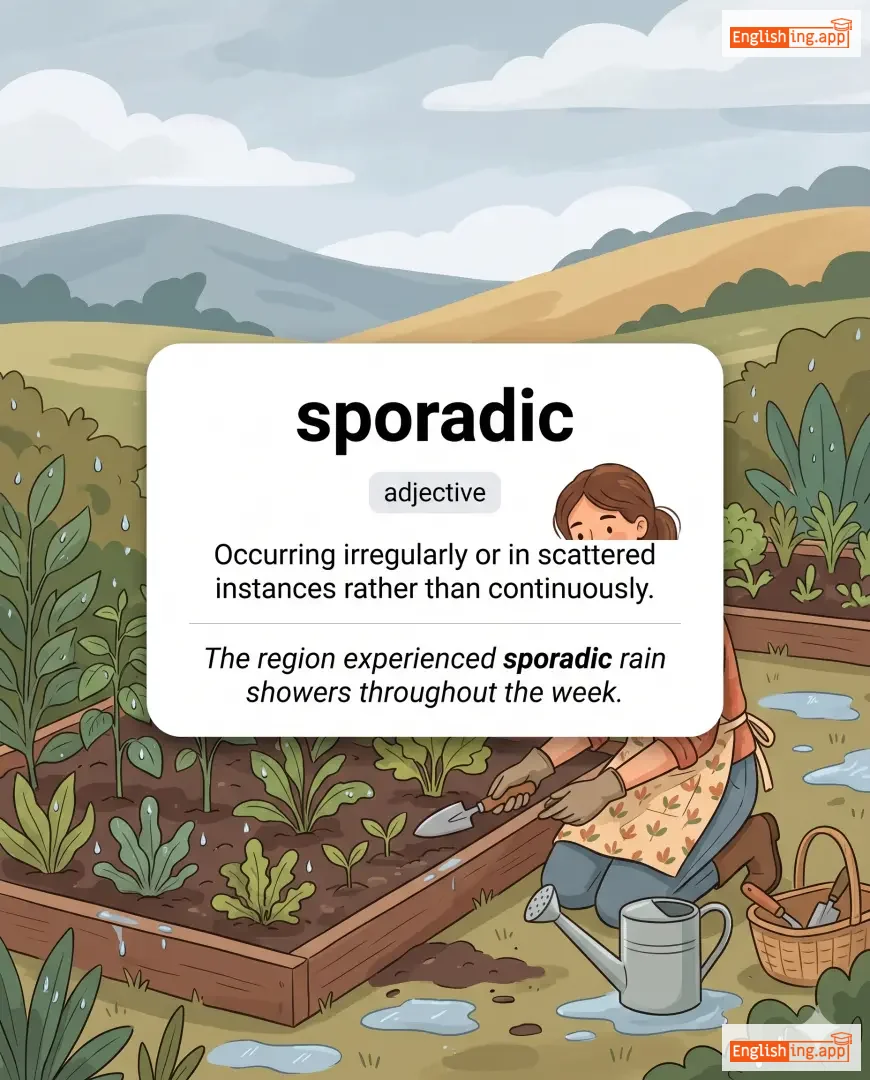
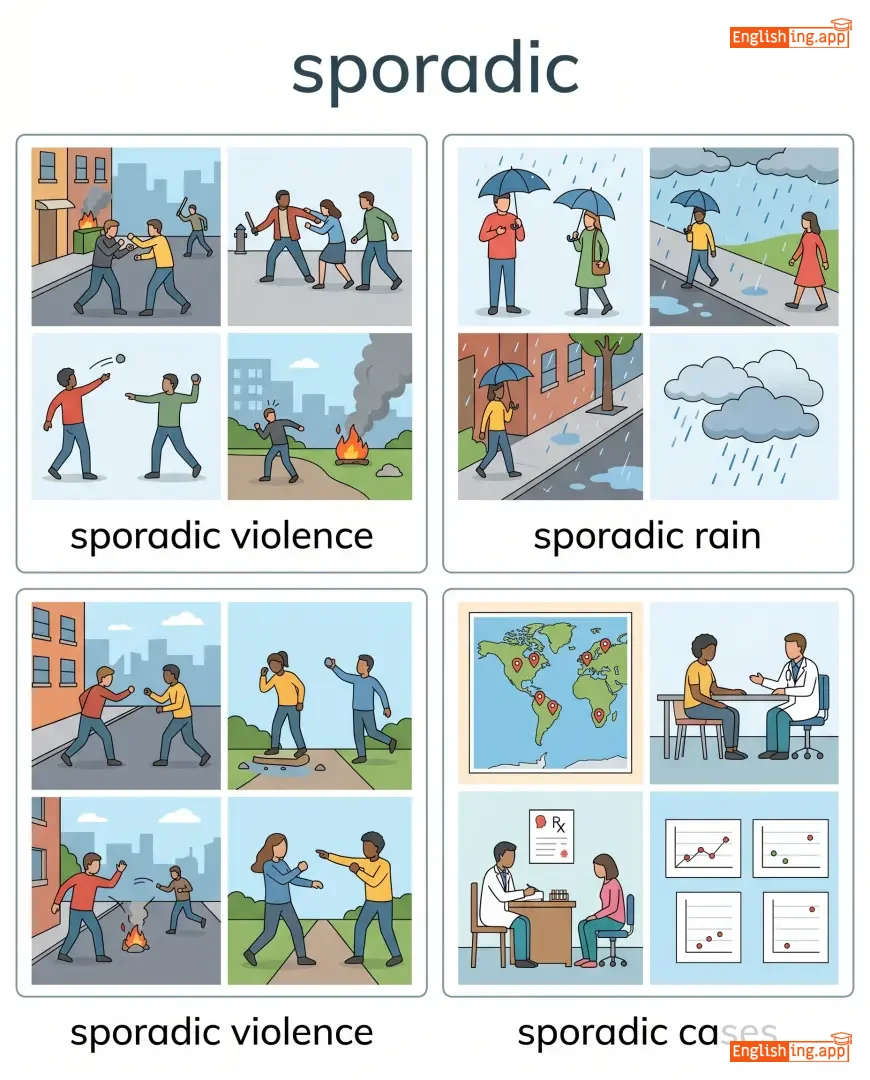
/spəˈrædɪk/
adjective
(sporadik)
••••••
|
|
零星
língxīng
••••••
|
- •••••• | - •••••• | - •••••• | - •••••• |
Occurring irregularly or in scattered instances rather than continuously.
••••••
|
The region experienced sporadic rain showers throughout the week.
该地区在一周内经历了零星降雨。
••••••
|
该地区经历了整整一周的零星降雨。
Gāi dìqū jīnglìle zhěngzhěng yī zhōu de língxīng jiàngyǔ.
••••••
|
- •••••• | - •••••• | - •••••• |
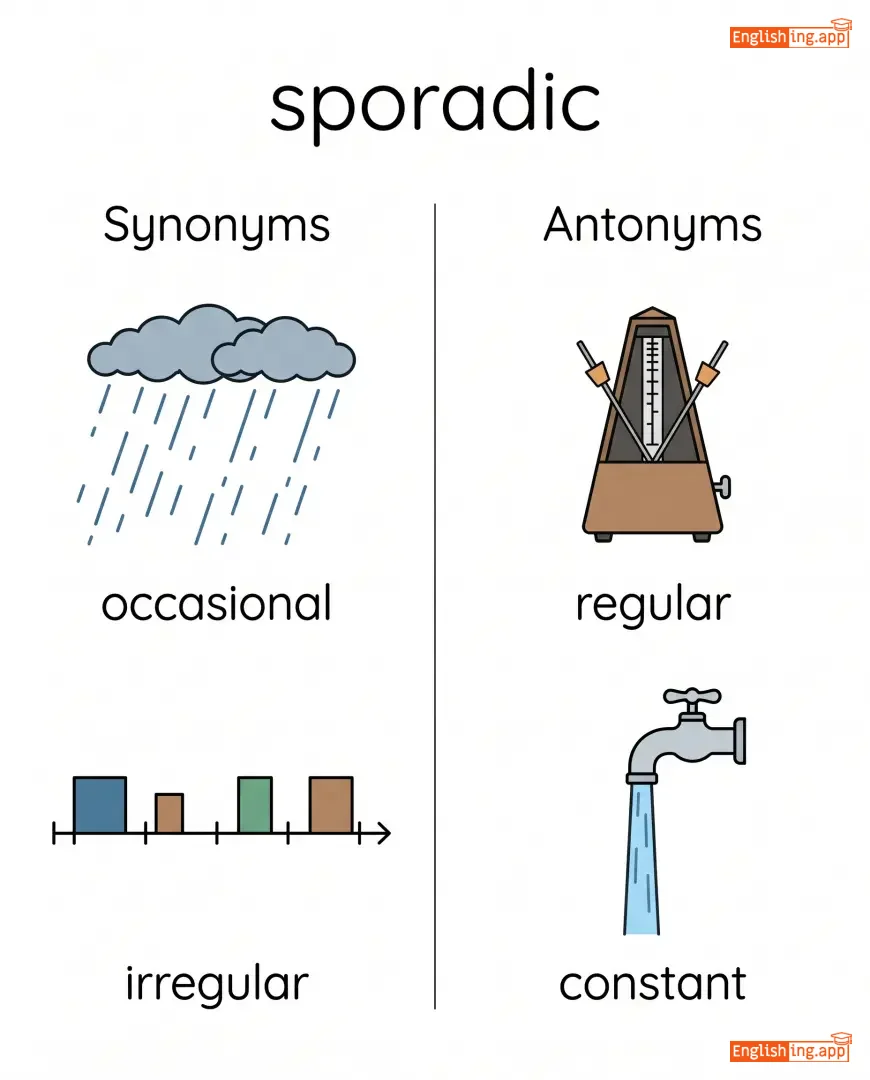
occasional, irregular, infrequent, scattered, random
••••••
|
regular, constant, continuous
••••••
|
sporadic violence, sporadic rain, sporadic cases, sporadic attacks
••••••
|
Sporadic 就像零星的小雨,不定期或不规律地出现。
••••••
|
|
#8304
😅
|
/ˈspuːnərɪzəm/
noun
(斯普内里兹姆)
••••••
|
- •••••• |
斯普内里兹姆
sipunelizimu
••••••
|
- •••••• | - •••••• | - •••••• | - •••••• |
A verbal error in which the initial sounds of words are swapped to create a humorous effect.
••••••
|
He made a spoonerism by saying 'queer old dean' instead of 'dear old queen'. |
他通过说'古怪的老院长'代替'亲爱的老皇后'来做了一个斯普内里兹姆。
Ta tongguo shuo 'guai de lao yuanzhang' daiti 'qin'ai de lao huanghou' lai zuo le yi ge sipunelizimu.
••••••
|
- •••••• | - •••••• | - •••••• |
slip of the tongue, wordplay, malapropism, error
••••••
|
clarity, accuracy, correctness
••••••
|
classic spoonerism, humorous spoonerism, accidental spoonerism
••••••
|
斯普内里兹姆就像用勺子(spoon)交换词语来创造幽默效果。
••••••
|
|
#8305
🎭
|
/spuːf/
noun/verb
(sī pū fú)
••••••
|
- •••••• |
幽默模仿
yōu mò mó fǎng
••••••
|
spoofed
sī pū fú de
••••••
|
spoofed
sī pū fú de
••••••
|
spoofs
sī pū fú sī
••••••
|
spoofing
sī pū fú yīng
••••••
|
A humorous imitation of something, or to trick or parody someone or something.
••••••
|
The comedian spoofed the politician’s speech to entertain the audience.
喜剧演员模仿政治家的演讲来娱乐观众。
••••••
|
喜剧演员模仿政治家的演讲来娱乐观众。
xǐ jù yǎn yuán mó fǎng zhèng zhì jiā de yǎn jiǎng lái yú lè guān zhòng.
••••••
|
email spoofing
电子邮件欺骗
••••••
|
The creation of email messages with forged sender addresses.
••••••
|
电子邮件欺诈
diàn zǐ yóu jiàn qī piàn
••••••
|
parody, satire, mockery, hoax, prank
••••••
|
seriousness, authenticity, truth
••••••
|
spoof movie, spoof comedy, spoof email, spoof character
••••••
|
Spoof = 模仿或恶搞。
••••••
|
|
#8306
🌟
|
/spɒnˈteɪniəs/
adjective
(spontaneous)
••••••
|
- •••••• |
自发的
zifa de
••••••
|
- •••••• | - •••••• | - •••••• | - •••••• |
Happening naturally without planning or external cause; impulsive or unplanned.
••••••
|
Their spontaneous trip to the mountains turned out to be the highlight of the summer. |
他们自发的山地旅行成了夏天的亮点。
Tamen zifa de shandi lüxing chengle xiatian de liangdian.
••••••
|
spontaneous combustion |
The sudden ignition of a substance without an external flame or spark.
••••••
|
自发性燃烧
zifa xing ranshao
••••••
|
impulsive, instinctive, unplanned, voluntary, automatic
••••••
|
planned, deliberate, calculated
••••••
|
spontaneous decision, spontaneous laughter, spontaneous action, spontaneous reaction
••••••
|
自发的就像一张自然而来的微笑。
••••••
|
|
#8307
✨
|
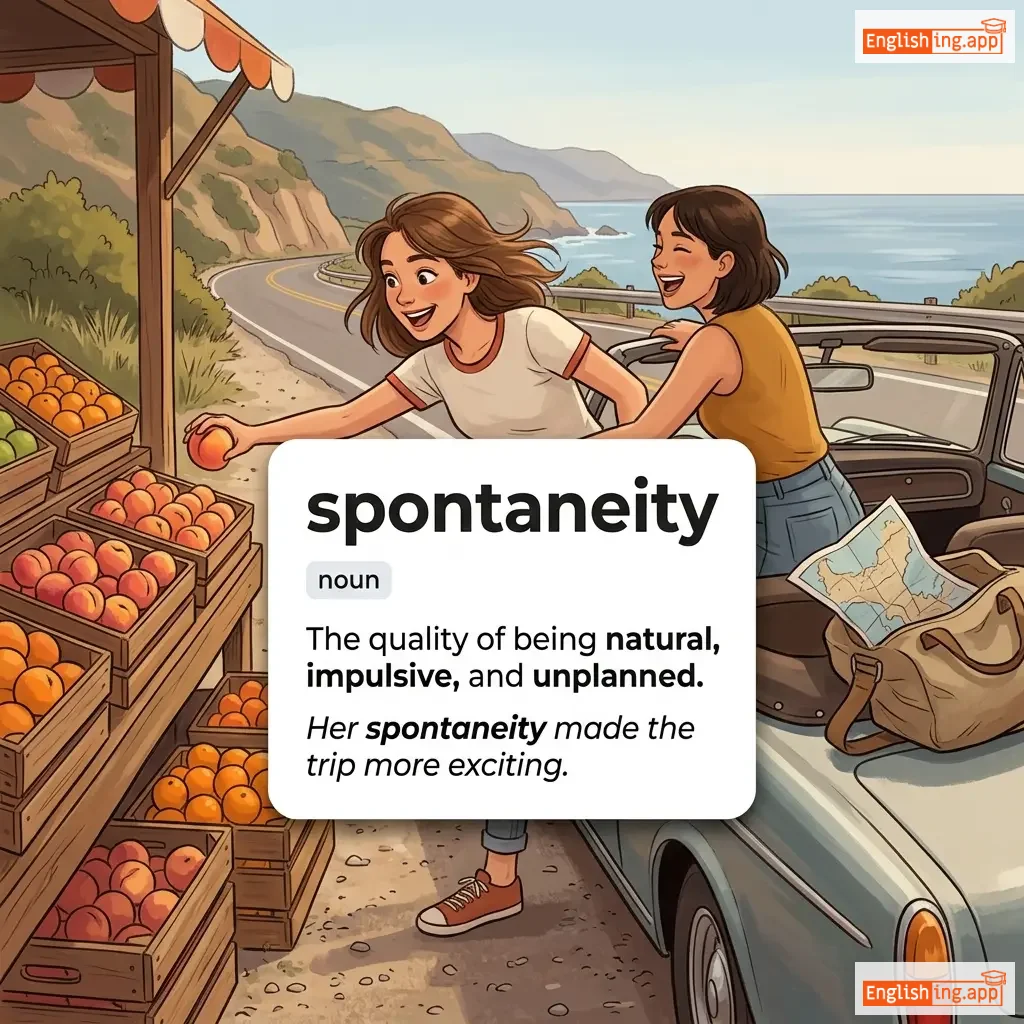
/ˌspɑːntəˈneɪəti/
noun
(斯邦特尼提)
••••••
|
|
自发性
zifaxing
••••••
|
- •••••• | - •••••• | - •••••• | - •••••• |
The quality of being natural, impulsive, and unplanned.
••••••
|
Her spontaneity made the trip more exciting.
她的斯邦特尼提让旅行更刺激。
••••••
|
她的自发性让旅行变得更加刺激。
ta de zifaxing rang lvxing biande gengjia ciji.
••••••
|
- •••••• | - •••••• | - •••••• |
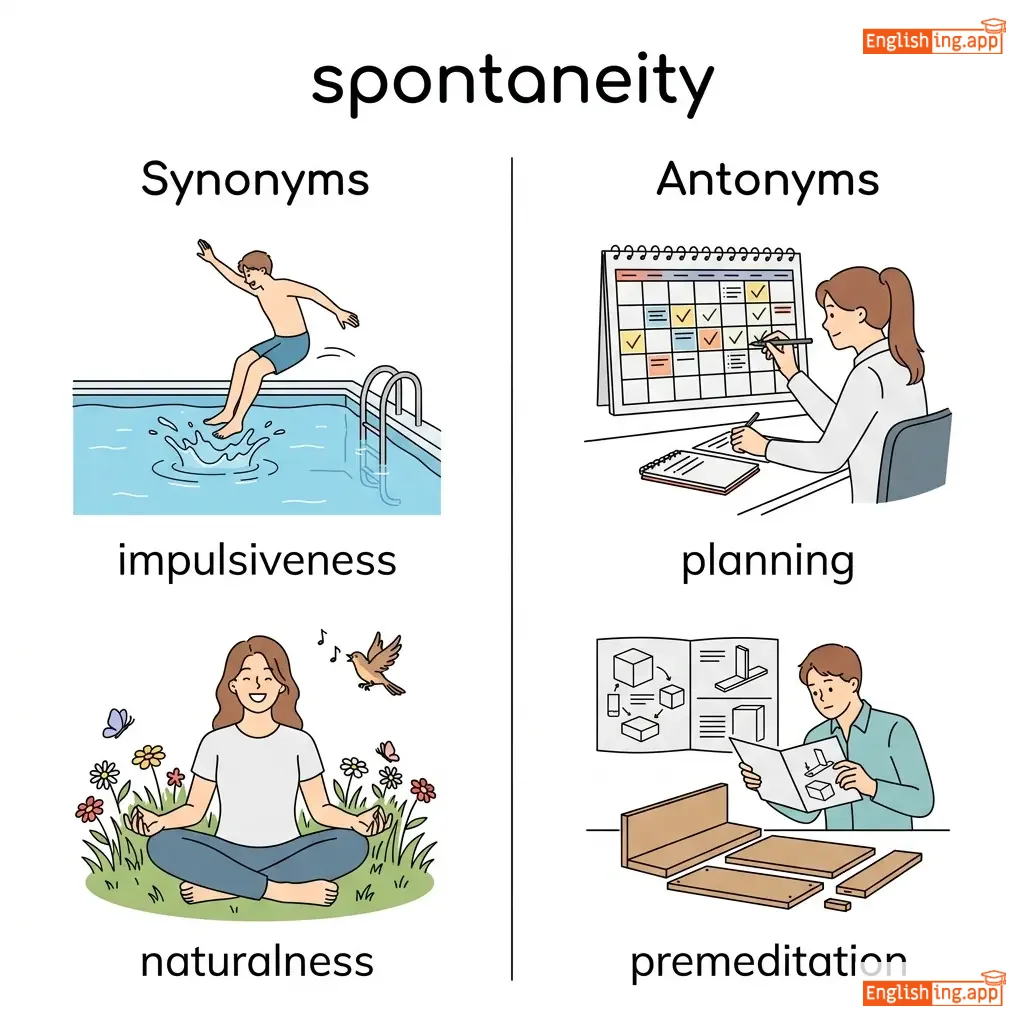
impulsiveness, naturalness, improvisation, freedom
••••••
|
planning, premeditation
••••••
|
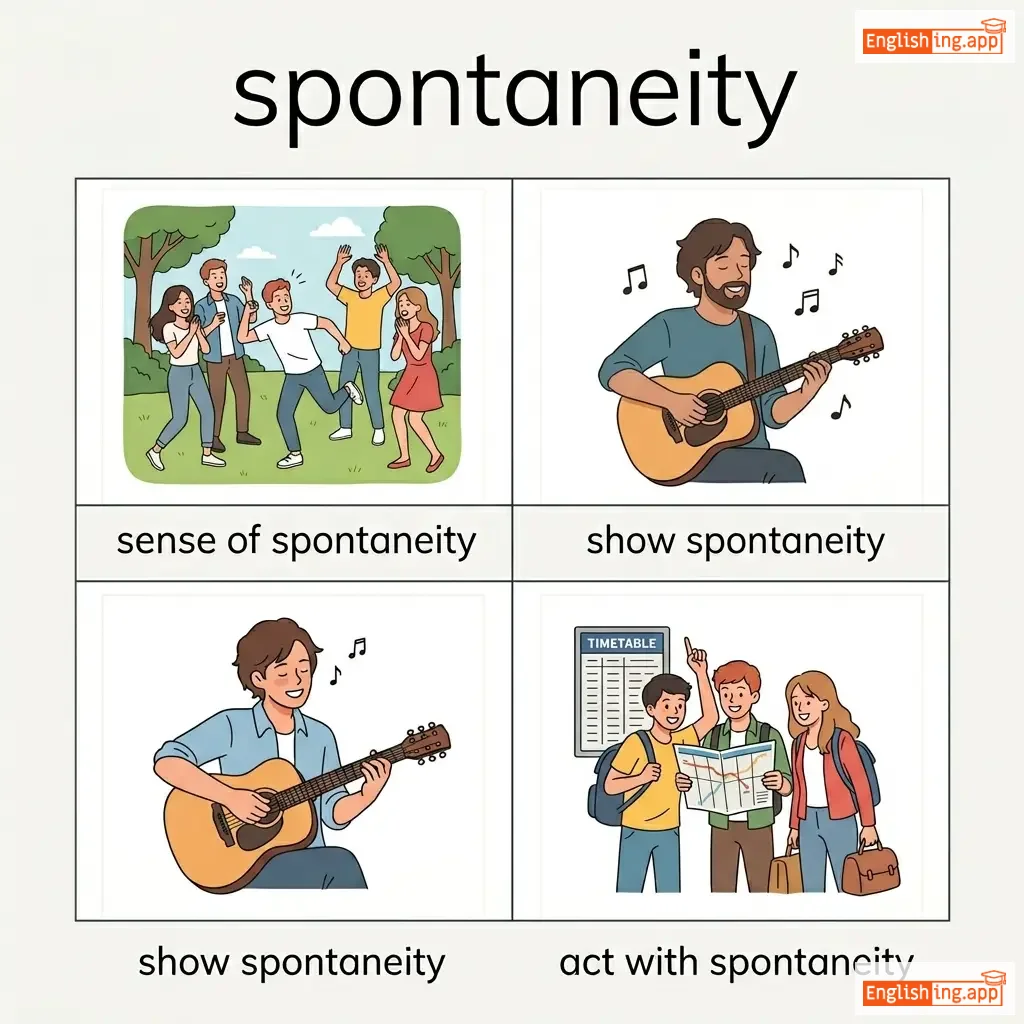
sense of spontaneity, show spontaneity, act with spontaneity
••••••
|
Zifaxing means spontaneity, like acting 'zi fa' (on own) without plan.
••••••
|
|
#8308
🔥
|
/ˌspoʊliˈeɪʃən/
noun
(掠夺)
••••••
|
- •••••• |
破坏
pohuai
••••••
|
- •••••• | - •••••• | - •••••• | - •••••• |
The act of destroying or ruining something, often evidence or property.
••••••
|
The court punished the company for the spoliation of evidence. |
法院因公司破坏证据而惩罚了该公司。
Fǎyuàn yīn gōngsī pòhuài zhèngjù ér chéngfále gāi gōngsī.
••••••
|
- •••••• | - •••••• | - •••••• |
destruction, ruin, devastation, obliteration
••••••
|
preservation, protection
••••••
|
spoliation of evidence, historical spoliation, spoliation claim
••••••
|
Spoil + nation = Spoliation 意味着破坏一个国家。
••••••
|
|
#8309
🚲
|
/spoʊk/
noun, verb
(spók)
••••••
|
- •••••• |
辐条 / 说
fútiáo / shuō
••••••
|
spoke
spók
••••••
|
spoken
spòkən
••••••
|
speaks
spīks
••••••
|
speaking
spīking
••••••
|
As a noun, a bar connecting the center of a wheel to its rim; as the past tense of 'speak'.
••••••
|
The bicycle's spoke was bent after the accident.
自行车的辐条在事故后弯曲了。
••••••
|
自行车的辐条在事故后弯曲了。
Zìxíngchē de fútiáo zài shìgù hòu wānqūle.
••••••
|
spoke out
公开表达
••••••
|
To express one's opinion openly and forcefully.
••••••
|
公开表达
gōngkāi biǎodá
••••••
|
rod, bar, strut, connector
••••••
|
hub, rim
••••••
|
wheel spoke, broken spoke, steel spoke, spoke out
••••••
|
Spoke 是 '说' 的过去式,也表示车轮的辐条。
••••••
|
Vocabulary Quiz
Test your vocabulary by matching words with their translations or meanings.
Login to take the quiz
Comments (0)
Share your thoughts and join the discussion.
Join the discussion by logging in
Login to CommentNo comments yet
Be the first to share your thoughts!