


Swipe left or right, or use the buttons. Tap image to zoom.
例句翻译
单词
Lesson 87Lesson 87 - 遮罩切换
|
表情符号
|
单词 | Images | 翻译 | 过去时 | 过去分词 | 第三人称单数 | 动名词 | 含义 | 例句 | 例句翻译 | 示例表达 | 示例表达含义 | 示例表达翻译 | 同义词 | 反义词 | 搭配词 | 助记符 |
|---|---|---|---|---|---|---|---|---|---|---|---|---|---|---|---|---|---|
|
#2581
😒
|
/dɪsˈrɛpjətəbl̩/
adjective
(dɪsˈrɛpjətəbl̩)
••••••
|
- •••••• |
声名狼藉
shengminglangji
••••••
|
- •••••• | - •••••• | - •••••• | - •••••• |
having a bad reputation; not considered respectable or trustworthy
••••••
|
The journalist avoided staying in the disreputable part of town. |
记者避免住在城市的声名狼藉地区。
Jizhe bimi zhu zai chengshi de shengminglangji diqu.
••••••
|
- •••••• | - •••••• | - •••••• |
notorious, infamous, dishonorable, shady, untrustworthy
••••••
|
respectable, reputable, honorable
••••••
|
disreputable inn, disreputable character, disreputable conduct
••••••
|
Dis + reputable = 声名狼藉,像是‘dis’代表坏名声。
••••••
|
|
#2582
📚
|
/ˌdɪsərˈteɪʃən/
noun
(dɪsərˈteɪʃən)
••••••
|
- •••••• |
学位论文
xuéwèi lùnwén
••••••
|
- •••••• | - •••••• | - •••••• | - •••••• |
A long piece of writing on a particular subject, usually written for a university degree.
••••••
|
She spent two years writing her doctoral dissertation.
她花了两年时间写她的博士论文。
••••••
|
她花了两年时间写她的博士论文。
Tā huāle liǎng nián shíjiān xiě tā de bóshì lùnwén.
••••••
|
- •••••• | - •••••• | - •••••• |
thesis, paper, essay, treatise, study
••••••
|
summary, note
••••••
|
doctoral dissertation, master's dissertation, dissertation topic, dissertation defense
••••••
|
学位论文 – 就像一个庞大的研究论文。
••••••
|
|
#2583
🔥
|
/dɪˈsɛnʃəs/
adjective
(dìshènxiūsī)
••••••
|
- •••••• |
引起分裂的
yǐnqǐ fēnliè de
••••••
|
- •••••• | - •••••• | - •••••• | - •••••• |
Causing or likely to cause disagreement and conflict.
••••••
|
His dissentious remarks divided the group further. |
他那具有分裂性的评论使得小组更加分裂。
Tā nà jùyǒu fēnliè xìng de pínglùn shǐdé xiǎozǔ gèngjiā fēnliè.
••••••
|
- •••••• | - •••••• | - •••••• |
argumentative, quarrelsome, discordant, divisive
••••••
|
peaceful, cooperative, agreeable
••••••
|
dissentious remarks, dissentious nature, dissentious debate
••••••
|
DISSENTIOUS源自分歧——制造争议和冲突。
••••••
|
|
#2584
🗣️
|
/dɪˈsɛnʃənt/
adjective
(díshēnshì'ēnt)
••••••
|
- •••••• |
持不同政见者
chí bù tóng zhèng jiàn zhě
••••••
|
- •••••• | - •••••• | - •••••• | - •••••• |
Expressing or holding opinions that are opposed to the majority or official view.
••••••
|
Only a few dissentient voices were heard during the debate. |
在辩论期间,只听到了少数持不同政见者的声音。
Zài biàn lùn qī jiān, zhī tīng dào le shǎo shù chí bù tóng zhèng jiàn zhě de shēng yīn.
••••••
|
- •••••• | - •••••• | - •••••• |
opposing, contrary, conflicting, resistant
••••••
|
supportive, compliant, agreeing
••••••
|
dissentient voices, dissentient opinion, dissentient view
••••••
|
DISSENTIENT意味着dissent + agent → 持不同政见的人
••••••
|
|
#2585
🙅
|
/dɪˈsɛnt/
verb
••••••
|
- •••••• | - •••••• |
dissented
••••••
|
dissented
••••••
|
dissents
••••••
|
dissenting
••••••
|
To hold or express opinions that are different from those officially accepted.
••••••
|
Several members dissented from the majority decision. |
- •••••• |
voice dissent |
to openly express disagreement
••••••
|
- •••••• |
disagree, oppose, protest, object, differ
••••••
|
agree, consent, approve
••••••
|
dissent strongly, political dissent, voice dissent, dissenting opinion
••••••
|
No •••••• |
|
#2586
⚡
|
/dɪˈsɛnʃən/
noun
(迪森申)
••••••
|
- •••••• |
分歧
fenqi
••••••
|
- •••••• | - •••••• | - •••••• | - •••••• |
Strong disagreement or difference of opinion, especially leading to discord within a group.
••••••
|
The meeting ended in dissension among the committee members. |
会议在委员会成员之间的分歧中结束。
Huiyi zai weiyuanhui chengyuan zhijian de fenqi zhong jieshu.
••••••
|
- •••••• | - •••••• | - •••••• |
discord, conflict, dispute, strife, disagreement
••••••
|
harmony, agreement, unity
••••••
|
internal dissension, political dissension, cause dissension, growing dissension
••••••
|
DISSENSION = dis + tension, 当有紧张时,必然会有分歧 (分歧意味着 dissension)
••••••
|
|
#2587
📢
|
/dɪˈsɛmɪˌneɪt/
verb
(散布)
••••••
|
|
传播
chuanbo
••••••
|
disseminated
散布了
••••••
|
disseminated
散布了
••••••
|
disseminates
散布
••••••
|
disseminating
散布中
••••••
|
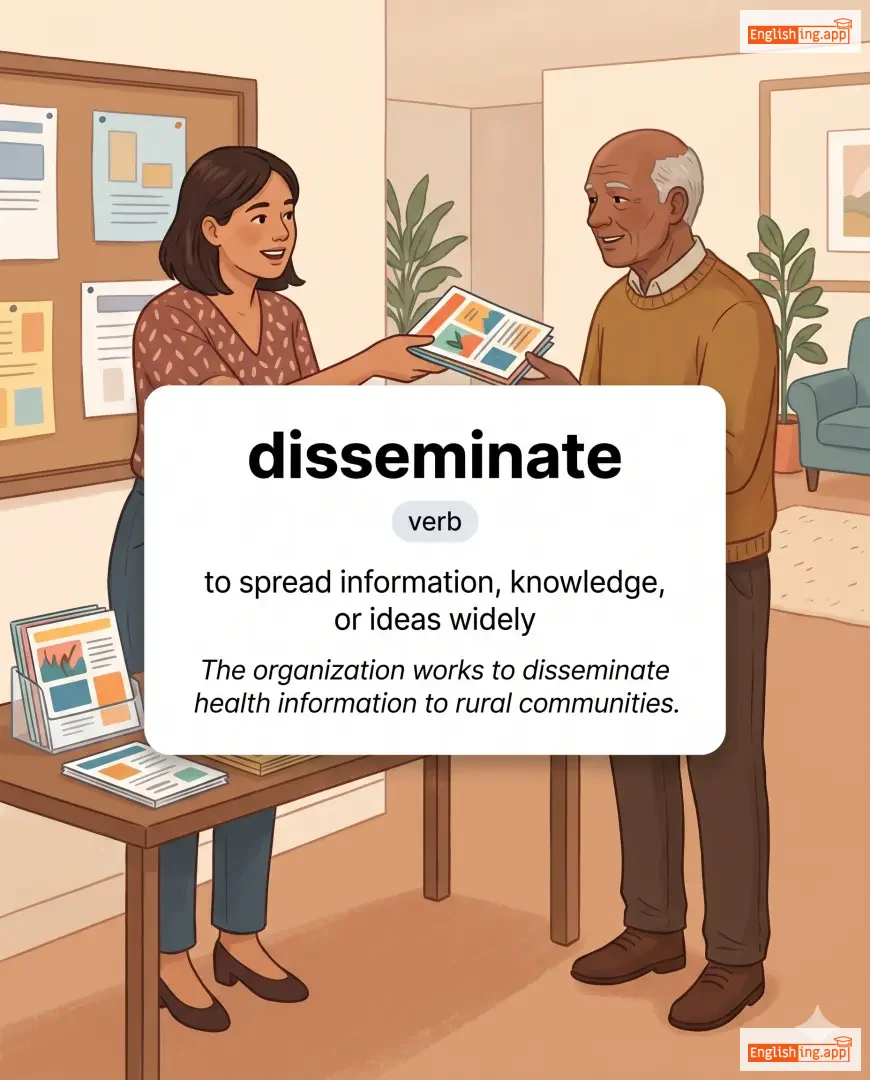
to spread information, knowledge, or ideas widely
••••••
|
The organization works to disseminate health information to rural communities.
该组织致力于向农村社区传播健康信息。
••••••
|
该组织致力于向农村社区传播健康信息。
Gai zuzhi zhiliyu xiang nongcun shequ chuanbo jiankang xinxi.
••••••
|
disseminate knowledge
传播知识
••••••
|
to distribute knowledge to many people
••••••
|
传播知识
chuanbo zhishi
••••••
|
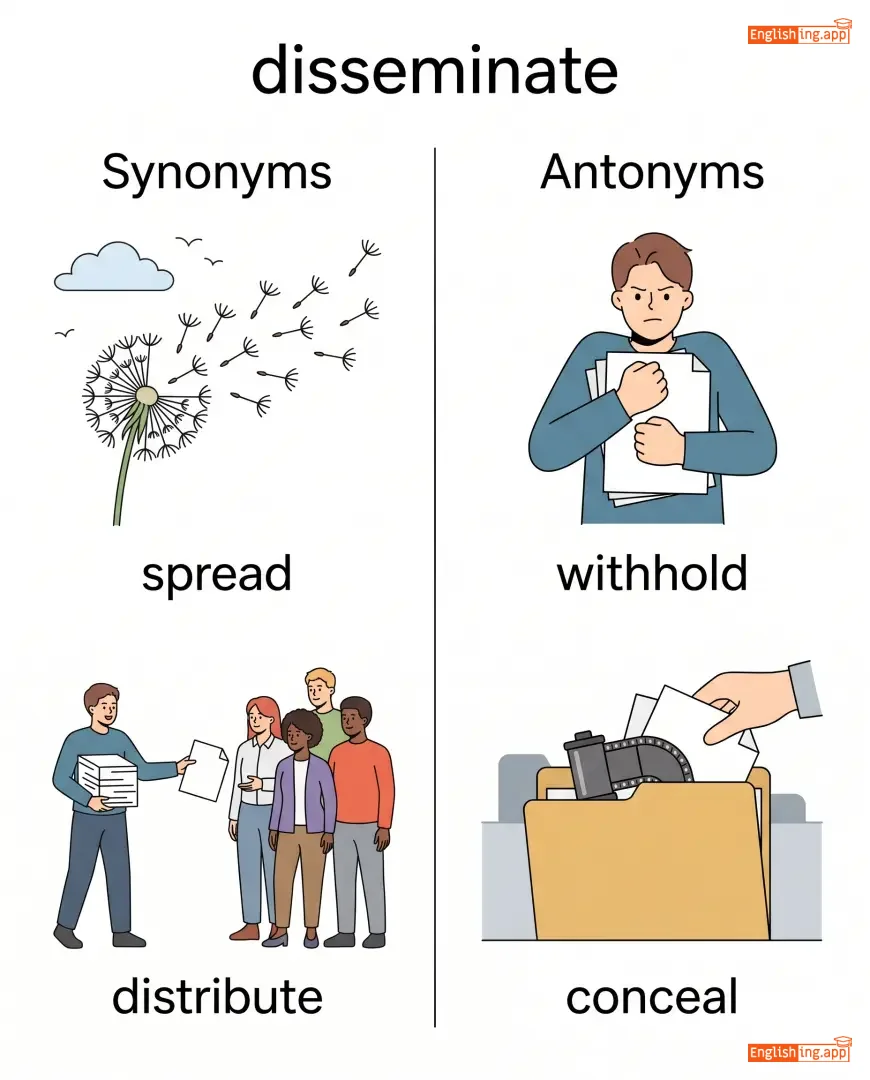
spread, distribute, circulate, broadcast, propagate
••••••
|
withhold, conceal, hide
••••••
|
disseminate knowledge, disseminate information, disseminate ideas, widely disseminate
••••••
|
Disseminate 就像传递信息,但它是大量传播知识或想法。
••••••
|
|
#2588
🤥
|
/dɪˈsɛmbələr/
noun
(迪瑟姆布勒)
••••••
|
- •••••• |
伪君子
wěi jūn zǐ
••••••
|
- •••••• | - •••••• | - •••••• | - •••••• |
a person who conceals their real feelings or intentions; a hypocrite or pretender
••••••
|
The politician was accused of being a dissembler who never revealed his true plans.
那位政治家被指控是一个从不透露自己真实计划的伪君子。
••••••
|
那位政治家被指控是一个从不透露自己真实计划的伪君子。
Nà wèi zhèng zhì jiā bèi zhǐ kòng shì yí gè cóng bù tòu lù zì jǐ zhēn shí jì huà de wěi jūn zǐ.
••••••
|
- •••••• | - •••••• | - •••••• |
pretender, hypocrite, faker, deceiver
••••••
|
truthful person, honest person
••••••
|
political dissembler, clever dissembler, dissembler of feelings
••••••
|
Dissembler = 伪君子演员,总是展示不同的角色。
••••••
|
|
#2589
🎭
|
/dɪˈsɛmbəl/
verb
(迪森布尔)
••••••
|
|
假装
jia zhuang
••••••
|
dissembled
迪森博尔德
••••••
|
dissembled
迪森博尔德
••••••
|
dissembles
迪森布尔斯
••••••
|
dissembling
迪森布林
••••••
|
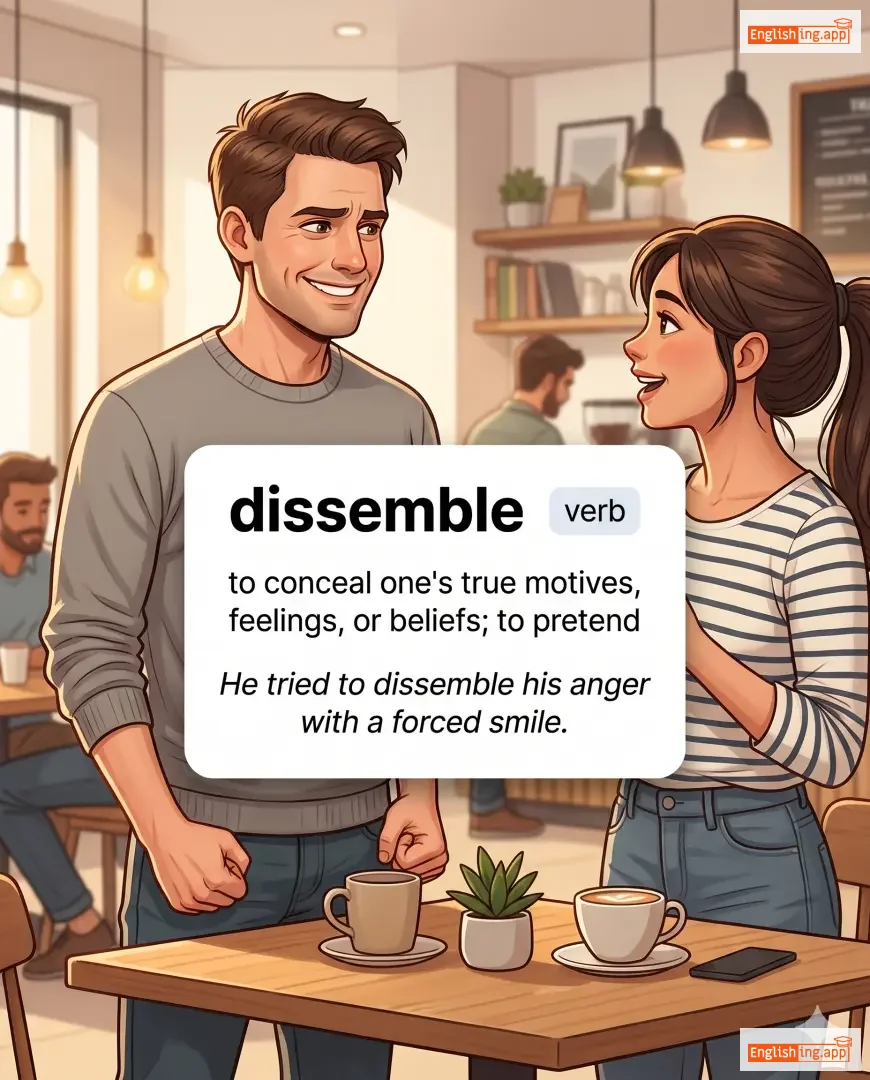
to conceal one's true motives, feelings, or beliefs; to pretend
••••••
|
He tried to dissemble his anger with a forced smile.
他试图用强颜欢笑来掩饰自己的愤怒。
••••••
|
他试图用强颜欢笑来掩饰自己的愤怒。
Ta shitu yong qiangyan huanxiao lai yanshi ziji de fennu.
••••••
|
- •••••• | - •••••• | - •••••• |
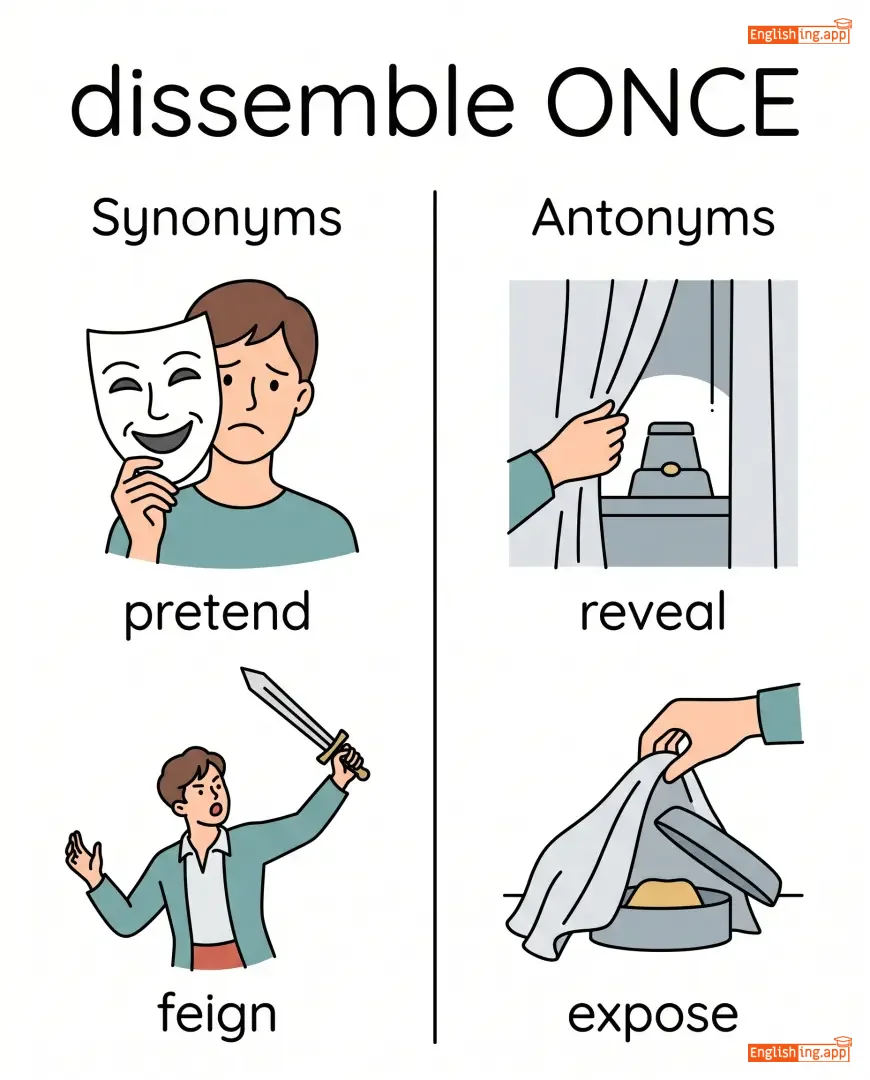
pretend, feign, fake, conceal, disguise
••••••
|
reveal, expose, disclose
••••••
|
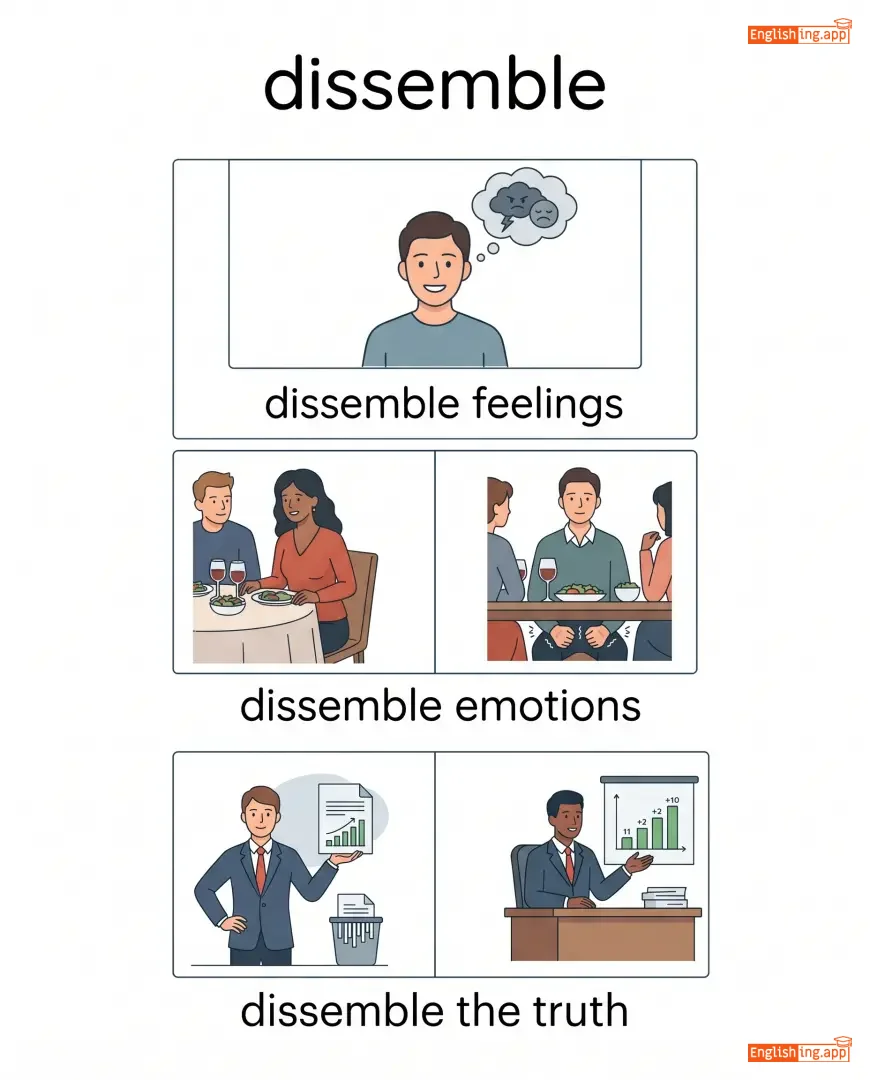
dissemble feelings, dissemble emotions, dissemble the truth
••••••
|
Dissemble = dis+assemble; 不汇聚真相,而是假装。
••••••
|
|
#2590
🩻
|
/daɪˈsɛkʃən/
noun
(dī sīkè xiān)
••••••
|
- •••••• |
解剖
jie po
••••••
|
- •••••• | - •••••• | - •••••• | - •••••• |
the act of cutting apart or analyzing something in detail, especially a body or structure
••••••
|
The dissection of the specimen revealed important details about its structure. |
样本的解剖揭示了关于其结构的重要细节。
Yangben de jiepo jieshi le guanyu qi jiegou de zhongyao xijie.
••••••
|
political dissection |
a thorough analysis of political events or situations
••••••
|
政治解剖
zhengzhi jiepo
••••••
|
analysis, examination, cutting, study, scrutiny
••••••
|
assembly, construction, synthesis
••••••
|
scientific dissection, detailed dissection, dissection of a text, dissection in class
••••••
|
解剖 = '解' (分析) + '剖' (切割), 如同解剖青蛙
••••••
|
|
#2591
🔪
|
/dɪˈsɛkt/
verb
••••••
|
- •••••• | - •••••• |
dissected
••••••
|
dissected
••••••
|
dissects
••••••
|
dissecting
••••••
|
to cut apart an animal, plant, or other organism to study its internal parts; to analyze something in detail
••••••
|
In biology class, students had to dissect a frog to learn about its anatomy. |
- •••••• |
dissect an argument |
to analyze an argument thoroughly, examining its components
••••••
|
- •••••• |
analyze, examine, cut, study, scrutinize
••••••
|
assemble, combine, integrate
••••••
|
dissect a frog, dissect the problem, dissect an argument, dissect a text
••••••
|
No •••••• |
|
#2592
😠
|
/dɪsˈsætɪsfaɪ/
verb
(迪萨提斯法伊)
••••••
|
- •••••• |
使不满
shi bumai
••••••
|
dissatisfied
迪萨提斯法伊德
••••••
|
dissatisfied
迪萨提斯法伊德
••••••
|
dissatisfies
迪萨提斯法伊兹
••••••
|
dissatisfying
迪萨提斯法伊恩
••••••
|
to fail to please or meet expectations; to make someone unhappy
••••••
|
The poor service dissatisfies many customers.
糟糕的服务让许多顾客不满意。
••••••
|
糟糕的服务让许多顾客不满意。
Zaogao de fuwu rang xuduo guke bu manyi.
••••••
|
- •••••• | - •••••• | - •••••• |
displease, disappoint, annoy, upset
••••••
|
satisfy, please, content
••••••
|
dissatisfy customers, dissatisfy workers, dissatisfy needs
••••••
|
Dis + satisfy 意味着未能达到期望,造成不满。
••••••
|
|
#2593
💥
|
/dɪsˈrʌpt/
verb
(迪斯鲁普特)
••••••
|
|
破坏
pohuai
••••••
|
disrupted
迪斯鲁普特德
••••••
|
disrupted
迪斯鲁普特德
••••••
|
disrupts
迪斯鲁普特斯
••••••
|
disrupting
迪斯鲁普廷
••••••
|
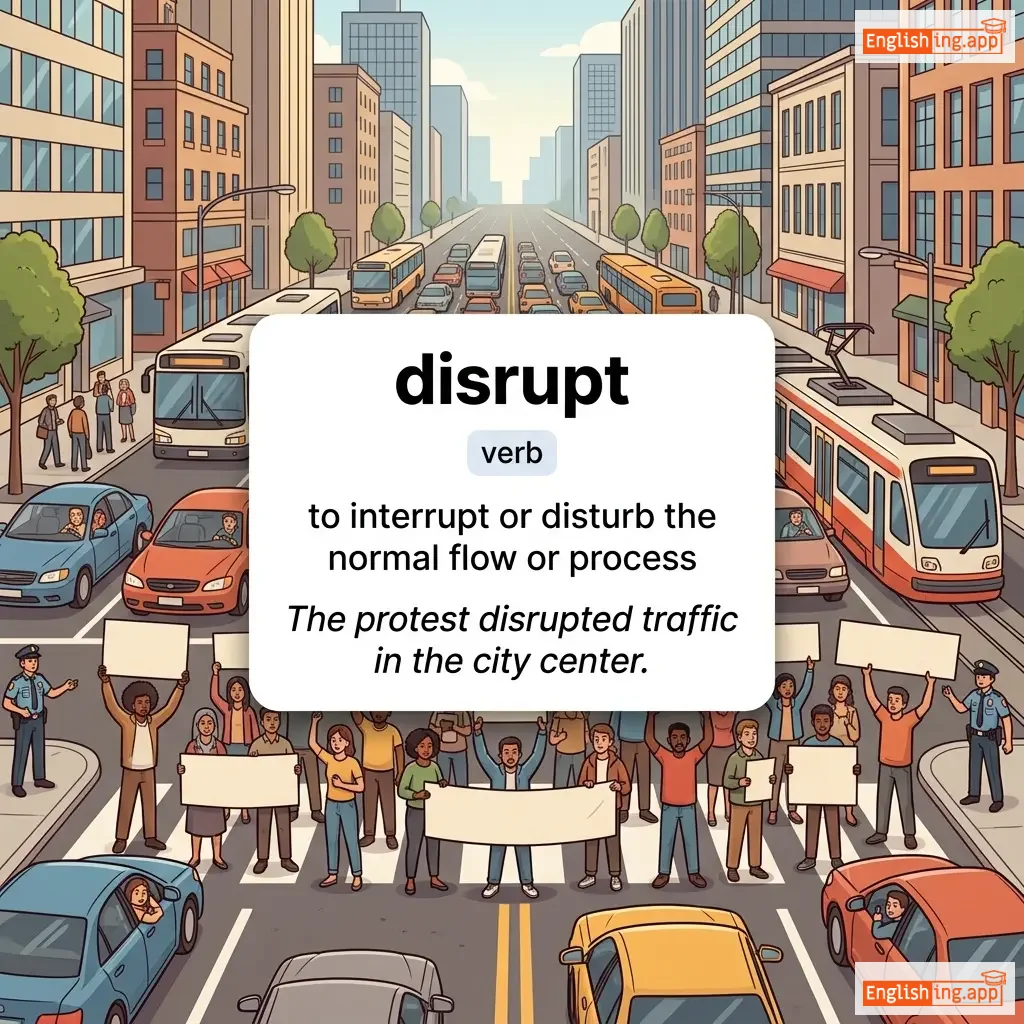
to interrupt or disturb the normal flow or process
••••••
|
The protest disrupted traffic in the city center.
抗议活动扰乱了市中心的交通。
••••••
|
抗议活动扰乱了市中心的交通。
Kàngyì huódòng rǎoluànle shì zhōngxīn de jiāotōng.
••••••
|
disrupt the status quo
打破现状
••••••
|
to change the established way of doing things
••••••
|
打破现状
dǎpò xiànzhuàng
••••••
|
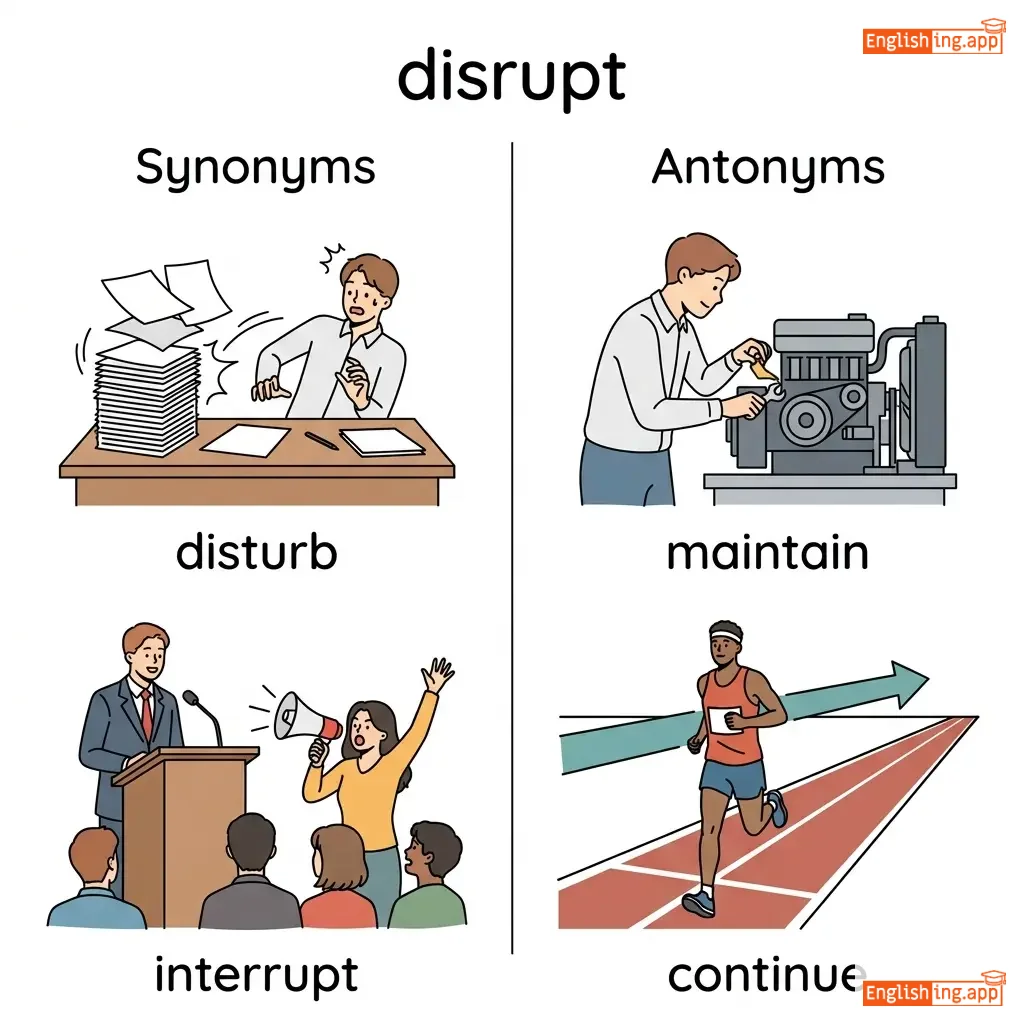
disturb, interrupt, interfere, derail, unsettle
••••••
|
maintain, continue, sustain
••••••
|
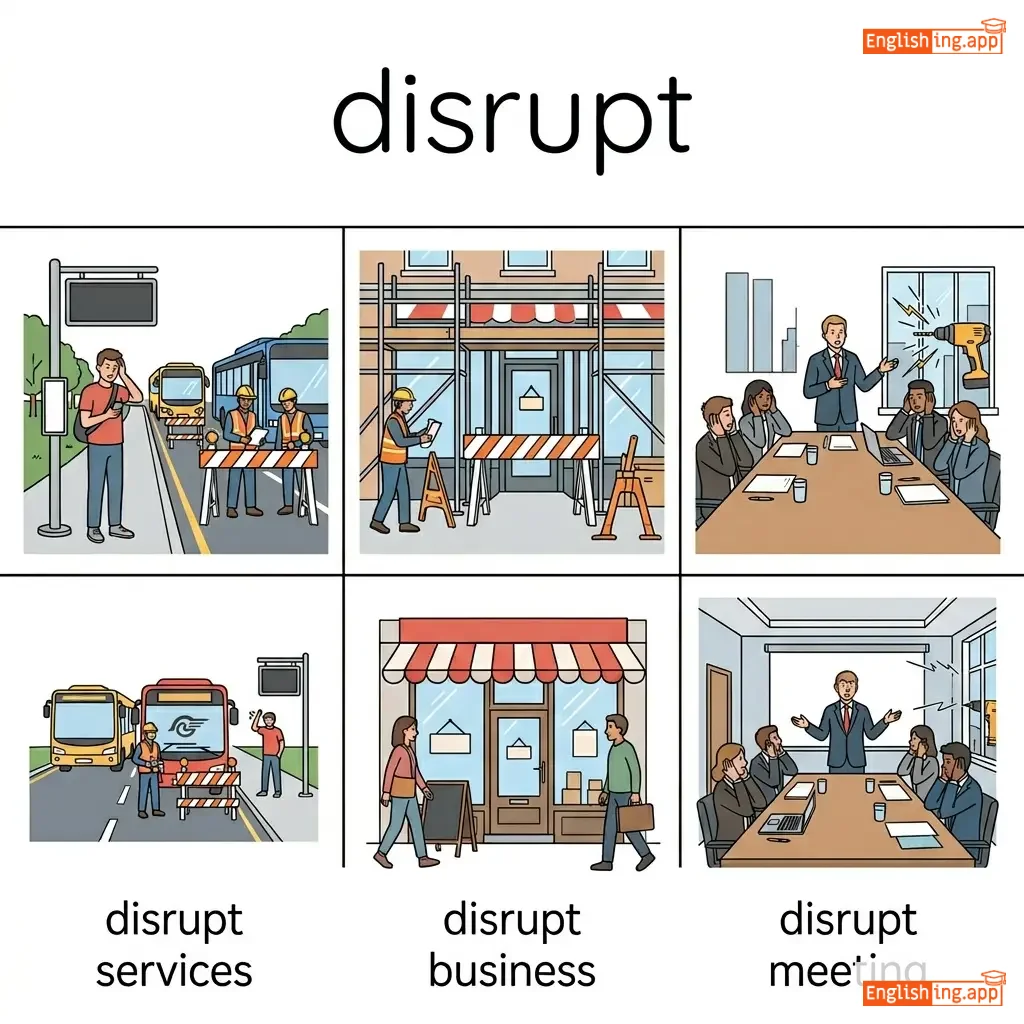
disrupt services, disrupt business, disrupt meeting
••••••
|
Disrupt 就像打破规则,抗议活动打破了正常交通。
••••••
|
|
#2594
👘
|
/dɪsˈroʊb/
verb
(dīsīróub)
••••••
|
- •••••• |
脱衣服
tuō yīfu
••••••
|
disrobed
dīsīróubd
••••••
|
disrobed
dīsīróubd
••••••
|
disrobes
dīsīróubs
••••••
|
disrobing
dīsīróubing
••••••
|
to remove one's clothes
••••••
|
The monk disrobed before entering the river.
僧侣在进入河流之前脱掉了衣服。
••••••
|
僧侣在进入河流之前脱掉了衣服。
Sēnglǚ zài jìnrù héliú zhīqián tuō diào le yīfú.
••••••
|
- •••••• | - •••••• | - •••••• |
undress, strip, unclothe, bare
••••••
|
dress, clothe, attire
••••••
|
disrobe completely, disrobe quickly, monk disrobe
••••••
|
Disrobe 意思是‘脱衣服’ — 脱掉衣服。
••••••
|
|
#2595
👎
|
/ˌdɪsrɪˈpjuːt/
noun
(disrèpút)
••••••
|
- •••••• |
恶名
èmíng
••••••
|
- •••••• | - •••••• | - •••••• | - •••••• |
the state of being held in low esteem or having a bad reputation
••••••
|
The scandal brought the politician into disrepute. |
丑闻使这位政治家名声扫地。
Chǒuwén shǐ zhè wèi zhèngzhìjiā míngshēng sǎodì.
••••••
|
fall into disrepute |
to lose respect or honor and gain a bad reputation
••••••
|
陷入恶名
xiànrù èmíng
••••••
|
dishonor, disgrace, notoriety, shame
••••••
|
honor, respect, prestige
••••••
|
into disrepute, fall into disrepute, bring disrepute
••••••
|
Dis + repute = 恶名
••••••
|
|
#2596
😞
|
/dɪˈspɪrɪtɪd/
adjective
(迪斯皮里特德)
••••••
|
- •••••• |
沮喪
jǔsàng
••••••
|
- •••••• | - •••••• | - •••••• | - •••••• |
Having lost enthusiasm, hope, or confidence; dejected.
••••••
|
After losing the match, the team looked dispirited. |
比赛失利后,团队看起来沮丧。
Bǐsài shīlì hòu, tuánduì kàn qǐlái jǔsàng.
••••••
|
- •••••• | - •••••• | - •••••• |
dejected, downcast, discouraged, gloomy, depressed
••••••
|
cheerful, hopeful, encouraged
••••••
|
look dispirited, feel dispirited, become dispirited, seem dispirited
••••••
|
沮喪的感觉就是失去精神 — dispirited 就是沮喪。
••••••
|
|
#2597
🙈
|
/ˌdɪsrɪˈɡɑːrd/
verb/noun
(迪斯里加德)
••••••
|
- •••••• |
蔑视
mie4shi4
••••••
|
disregarded
迪斯里加德德
••••••
|
disregarded
迪斯里加德德
••••••
|
disregards
迪斯里加德斯
••••••
|
disregarding
迪斯里加尔丁
••••••
|
To ignore something; lack of consideration or respect for something.
••••••
|
He disregarded the warning signs and kept driving.
他忽视了警告标志并继续开车。
••••••
|
他忽视了警告标志并继续开车。
Ta hu4shi4le jing3gao4 biao1zhi3 bing4 ji4xu4 kai1che1.
••••••
|
show disregard
显示蔑视
••••••
|
to behave without respect or concern
••••••
|
显示蔑视
xian3shi4 mie4shi4
••••••
|
ignore, neglect, overlook, dismiss
••••••
|
respect, heed, regard
••••••
|
show disregard, total disregard, blatant disregard, disregard for rules
••••••
|
蔑视就像是忽视,表示不关心的行为
••••••
|
|
#2598
📜
|
/ˌdɪskwɪˈzɪʃən/
noun
(dɪskwɪˈzɪʃən)
••••••
|
- •••••• |
论文
lunwen
••••••
|
- •••••• | - •••••• | - •••••• | - •••••• |
A long or elaborate discussion or written essay on a particular subject.
••••••
|
The professor gave a lengthy disquisition on ancient philosophy. |
教授就古代哲学进行了长篇论文。
Jiaoshou jiu gudai zhexue jinxingle changpian lunwen.
••••••
|
- •••••• | - •••••• | - •••••• |
treatise, essay, dissertation, discourse
••••••
|
summary, outline
••••••
|
long disquisition, detailed disquisition
••••••
|
Disquisition像是详细讨论的长篇论文。
••••••
|
|
#2599
😓
|
/dɪsˈkwaɪɪtjuːd/
noun
••••••
|
- •••••• | - •••••• | - •••••• | - •••••• | - •••••• | - •••••• |
A state of uneasiness, anxiety, or restlessness.
••••••
|
His constant pacing showed his inner disquietude. |
- •••••• | - •••••• | - •••••• | - •••••• |
anxiety, agitation, unease, restlessness
••••••
|
serenity, tranquility, calmness
••••••
|
state of disquietude, inner disquietude
••••••
|
No •••••• |
|
#2600
😰
|
/dɪsˈkwaɪətɪŋ/
adjective
(diskwaiting)
••••••
|
- •••••• |
令人不安
ling ren bu an
••••••
|
- •••••• | - •••••• | - •••••• | - •••••• |
Causing worry, unease, or anxiety.
••••••
|
The news report was deeply disquieting to the public. |
新闻报道对公众来说是深感不安的。
Xinwen baodao dui gongzhong lai shì shen gan bu an de.
••••••
|
- •••••• | - •••••• | - •••••• |
alarming, disturbing, unsettling, troubling
••••••
|
comforting, reassuring, calming
••••••
|
disquieting news, disquieting thought, disquieting trend
••••••
|
令人不安是让人不舒服的感觉,类似于'不安'。
••••••
|
|
#2601
😟
|
/dɪsˈkwaɪət/
noun/verb
••••••
|
- •••••• | - •••••• |
disquieted
••••••
|
disquieted
••••••
|
disquiets
••••••
|
disquieting
••••••
|
A feeling of worry or unease; to make someone feel anxious or uneasy.
••••••
|
The strange silence filled the room with disquiet. |
- •••••• |
cause disquiet |
to create worry or unease in people
••••••
|
- •••••• |
unease, anxiety, restlessness, concern, apprehension
••••••
|
calm, peace, tranquility
••••••
|
cause disquiet, deep disquiet, growing disquiet, public disquiet
••••••
|
No •••••• |
|
#2602
🚫
|
/dɪsˈkwɑːlɪfaɪ/
verb
(迪斯科瓦利法)
••••••
|
- •••••• |
取消资格
qǔxiāo zīgé
••••••
|
disqualified
迪斯科瓦利法德
••••••
|
disqualified
迪斯科瓦利法德
••••••
|
disqualifies
迪斯科瓦利法斯
••••••
|
disqualifying
迪斯科瓦利法英
••••••
|
to officially prevent someone from participating or being eligible
••••••
|
The referee decided to disqualify the player for cheating.
裁判决定因作弊而取消球员资格。
••••••
|
裁判决定因作弊而取消球员资格。
Cáipàn juédìng yīn zhòubì ér qǔxiāo qiúyuán zīgé.
••••••
|
- •••••• | - •••••• | - •••••• |
ban, exclude, prohibit, suspend, invalidate
••••••
|
qualify, permit, allow
••••••
|
disqualify a player, disqualify from competition, disqualify for cheating
••••••
|
Disqualify 就是 '不合格' - 所以取消资格。
••••••
|
|
#2603
🤺
|
/ˌdɪspjuːˈteɪʃəs/
adjective
(迪斯普尤特谢斯)
••••••
|
- •••••• |
爱争辩的
ài zhēngbiàn de
••••••
|
- •••••• | - •••••• | - •••••• | - •••••• |
fond of or given to argument and debate
••••••
|
His disputatious nature often led to heated conversations. |
他争辩的性格常常导致激烈的讨论。
Tā zhēngbiàn de xìnggé chángcháng dǎozhì jīliè de tǎolùn.
••••••
|
- •••••• | - •••••• | - •••••• |
argumentative, contentious, quarrelsome, combative
••••••
|
peaceful, agreeable, harmonious
••••••
|
disputatious character, disputatious style, disputatious debate
••••••
|
Disputatious就是爱争辩的,像中文的‘爱争辩的’。
••••••
|
|
#2604
🗣️
|
/ˌdɪspjuːˈteɪʃən/
noun
(dìsǐpǔtèshùn)
••••••
|
- •••••• |
争论
zhēnglùn
••••••
|
- •••••• | - •••••• | - •••••• | - •••••• |
a formal debate or argument
••••••
|
The disputation between the two scholars lasted for hours.
两位学者之间的争论持续了好几个小时。
••••••
|
两位学者之间的争论持续了好几个小时。
Liǎng wèi xuézhě zhījiān de zhēnglùn chíxùle hǎo jǐ gè xiǎoshí.
••••••
|
- •••••• | - •••••• | - •••••• |
debate, argument, controversy, discussion
••••••
|
agreement, harmony, accord
••••••
|
philosophical disputation, theological disputation, legal disputation
••••••
|
Disputation = 争论, 一个正式的争执
••••••
|
|
#2605
⚖️
|
/ˌdɪsprəˈpɔːrʃən/
noun
(迪斯普罗波申)
••••••
|
- •••••• |
不平衡
bù pínghéng
••••••
|
- •••••• | - •••••• | - •••••• | - •••••• |
a lack of balance or symmetry; an inequality
••••••
|
There is a clear disproportion between rich and poor in many societies.
在许多社会中,富人和穷人之间存在明显的不平衡。
••••••
|
在许多社会中,富人和穷人之间存在明显的不平衡。
Zài xǔduō shèhuì zhōng, fùrén hé qióngrén zhī jiān cúnzài míngxiǎn de bù pínghéng.
••••••
|
- •••••• | - •••••• | - •••••• |
imbalance, inequality, disparity, asymmetry
••••••
|
balance, proportion, equality
••••••
|
clear disproportion, economic disproportion, social disproportion
••••••
|
Disproportion 就是没有比例,不平衡
••••••
|
|
#2606
🏚️
|
/ˌdɪspəˈzɛs/
verb
(迪斯波塞斯)
••••••
|
- •••••• |
剥夺
bo2duo2
••••••
|
dispossessed
迪斯波塞德
••••••
|
dispossessed
迪斯波塞德
••••••
|
dispossesses
迪斯波塞斯
••••••
|
dispossessing
迪斯波塞辛
••••••
|
to deprive someone of land, property, or other possessions
••••••
|
The new law threatened to dispossess many farmers of their land.
新法律威胁着剥夺许多农民的土地。
••••••
|
新法律威胁着剥夺许多农民的土地。
Xin3 fa3lu4 wei1xie2 zhe5 bo1duo2 xu3duo1 nong2min2 de5 tu3di.
••••••
|
- •••••• | - •••••• | - •••••• |
deprive, divest, strip, oust, evict
••••••
|
endow, enrich, grant
••••••
|
dispossess someone, dispossess farmers, dispossess of property, dispossess of rights
••••••
|
剥夺 (bo1duo2) = 剥去 (bo1qu1) 所有的 (所有的) 所有物
••••••
|
|
#2607
🙂
|
/ˌdɪspəˈzɪʃən/
noun
••••••
|
- •••••• | - •••••• | - •••••• | - •••••• | - •••••• | - •••••• |
A person's usual attitude or temperament; arrangement or tendency.
••••••
|
She has a cheerful disposition despite the difficulties. |
- •••••• |
at someone's disposition |
available for someone's use or service
••••••
|
- •••••• |
temperament, character, nature, tendency, inclination
••••••
|
disinclination, unwillingness, resistance
••••••
|
cheerful disposition, friendly disposition, natural disposition, disposition to help
••••••
|
No •••••• |
|
#2608
🗑️
|
/dɪˈspoʊz/
verb
(迪斯波兹)
••••••
|
- •••••• |
丢弃
diuqi
••••••
|
disposed
迪斯波兹德
••••••
|
disposed
迪斯波兹德
••••••
|
disposes
迪斯波兹斯
••••••
|
disposing
迪斯波兹英
••••••
|
To get rid of something, or to arrange or incline towards something.
••••••
|
He disposed of the old furniture responsibly.
他负责任地处理了那些旧家具。
••••••
|
他负责任地处理了那些旧家具。
Ta fu zerende chuli le naxie jiu jiaju.
••••••
|
dispose of
处置
••••••
|
to throw away or get rid of something
••••••
|
处置
chuzhi
••••••
|
discard, throw away, eliminate, arrange, incline
••••••
|
keep, retain, preserve
••••••
|
dispose of waste, properly dispose, dispose quickly, dispose carefully
••••••
|
Dispose = 你要丢弃不需要的东西,就像清理垃圾。
••••••
|
|
#2609
🎉
|
/dɪsˈpɔːrt/
verb
(迪斯波特)
••••••
|
- •••••• |
玩乐
wanle
••••••
|
disported
迪斯波特过
••••••
|
disported
迪斯波特过
••••••
|
disports
迪斯波特
••••••
|
disporting
迪斯波特中
••••••
|
To amuse oneself in a lively or playful way.
••••••
|
The children disported themselves in the garden.
孩子们在花园里玩得很开心。
••••••
|
孩子们在花园里玩得很开心。
Haizimen zai huayuan li wan de hen kaixin.
••••••
|
- •••••• | - •••••• | - •••••• |
frolic, play, amuse, entertain, romp
••••••
|
work, labor, drudge
••••••
|
disport oneself, disport in the sun, disport happily
••••••
|
Disport = 玩乐 = 孩子们玩乐就是这么简单。
••••••
|
|
#2610
🏚️
|
/dɪsˈpleɪs/
verb
(dɪsˈpleɪs)
••••••
|
- •••••• |
驱逐
qūzhú
••••••
|
displaced
dɪsˈpleɪst
••••••
|
displaced
dɪsˈpleɪst
••••••
|
displaces
dɪsˈpleɪsɪz
••••••
|
displacing
dɪsˈpleɪsɪŋ
••••••
|
To force someone or something out of its usual place or position.
••••••
|
The flood displaced hundreds of families from their homes.
洪水将数百个家庭从他们的家中驱逐。
••••••
|
洪水将数百个家庭从他们的家中驱逐。
Hóngshuǐ jiāng shù bǎi gè jiātíng cóng tāmen de jiā zhōng qūzhú.
••••••
|
displaced person
流离失所的人
••••••
|
someone forced to leave their home, especially because of war or disaster
••••••
|
流离失所的人
Liúlí shīsuǒ de rén
••••••
|
remove, replace, shift, expel, oust
••••••
|
retain, keep, maintain
••••••
|
displace workers, displace people, displace water, displace families
••••••
|
Displace就像驱逐一样,意味着把某物从原来的地方带走。
••••••
|
Vocabulary Quiz
Test your vocabulary by matching words with their translations or meanings.
Login to take the quiz
Comments (0)
Share your thoughts and join the discussion.
Join the discussion by logging in
Login to CommentNo comments yet
Be the first to share your thoughts!