




Swipe left or right, or use the buttons. Tap image to zoom.
例句翻译
单词
Lesson 410Lesson 410 - 遮罩切换
|
表情符号
|
单词 | Images | 翻译 | 过去时 | 过去分词 | 第三人称单数 | 动名词 | 含义 | 例句 | 例句翻译 | 示例表达 | 示例表达含义 | 示例表达翻译 | 同义词 | 反义词 | 搭配词 | 助记符 |
|---|---|---|---|---|---|---|---|---|---|---|---|---|---|---|---|---|---|
|
#12265
🥦
|
/ˈvɛdʒ.tə.bəl/
noun
(海皮尼斯)
••••••
|
- •••••• |
幸福
xìngfú
••••••
|
- •••••• | - •••••• | - •••••• | - •••••• |
a plant or part of a plant used as food
••••••
|
I eat vegetables every day for health. |
当她获得奖项时,她无法掩饰自己的幸福。
Dāng tā huòdé jiǎngxiàng shí, tā wúfǎ yǎnshì zìjǐ de xìngfú.
••••••
|
- •••••• | - •••••• | - •••••• |
greens, produce, plant food, veggie
••••••
|
meat, animal products
••••••
|
eat vegetables, grow vegetables, fresh vegetables
••••••
|
幸福是得到奖赏时的感受,它是内心的满足和喜悦。
••••••
|
|
#12266
🔊
|
/ˈvɒl.juːm/
noun
(vó lù mǔ)
••••••
|
- •••••• |
体积
tǐ jī
••••••
|
- •••••• | - •••••• | - •••••• | - •••••• |
the amount of space that a substance or object occupies, or that is enclosed within a container
••••••
|
The volume of water in the tank increased after the rain. |
雨后水箱中的体积增加了。
Yǔ hòu shuǐ xiāng zhōng de tǐ jī zēng jiā le.
••••••
|
- •••••• | - •••••• | - •••••• |
amount, quantity, size, magnitude
••••••
|
smallness, limitation
••••••
|
high volume, volume control, sound volume, large volume
••••••
|
体积,就像测量水箱中的水。
••••••
|
|
#12267
🗣️
|
/vɔɪs/
noun
(wòis)
••••••
|
- •••••• |
声音
shengyin
••••••
|
- •••••• | - •••••• | - •••••• | - •••••• |
the sound produced by the vocal cords; the ability to speak or express oneself
••••••
|
She has a beautiful voice that captivates the audience. |
她有一个迷人的声音,吸引了观众。
Ta you yige miren de shengyin, xīyǐnle guānzhòng.
••••••
|
find your voice |
to begin expressing your thoughts or opinions
••••••
|
找到你的声音
zhǎodào nǐ de shēngyīn
••••••
|
sound, speech, tone, vocalization
••••••
|
silence, muteness
••••••
|
loud voice, soft voice, speak with voice
••••••
|
VOICE - 找到你的声音 (voice - zhaodao nide shengyin) 来表达自己
••••••
|
|
#12268
💪
|
/ˈvaɪtl/
adjective
(维塔尔)
••••••
|
- •••••• |
至关重要
zhìguān zhòngyào
••••••
|
- •••••• | - •••••• | - •••••• | - •••••• |
essential or necessary for life or success
••••••
|
It's vital to stay hydrated during the summer. |
在夏天保持水分非常重要。
Zài xiàtiān bǎochí shuǐfèn fēicháng zhòngyào.
••••••
|
- •••••• | - •••••• | - •••••• |
crucial, essential, necessary, important
••••••
|
unimportant, trivial
••••••
|
vital organs, vital information, vital role
••••••
|
VITAL - 对生命至关重要 (vital - duì shēngmìng zhìguān zhòngyào)
••••••
|
|
#12269
🚶♂️
|
/ˈvɪzɪtər/
noun
(vɪzɪtɔr)
••••••
|
- •••••• |
游客
youke
••••••
|
- •••••• | - •••••• | - •••••• | - •••••• |
a person who goes to see a place or someone for a short time
••••••
|
The museum had many visitors last weekend. |
博物馆上周末有很多游客。
Bówùguǎn shàng zhōumò yǒu hěn duō yóukè.
••••••
|
- •••••• | - •••••• | - •••••• |
guest, caller, tourist, attendee
••••••
|
resident, local
••••••
|
welcome visitors, regular visitor, museum visitor
••••••
|
VISITOR - 就像一个游客 (visitor),他来过然后离开。
••••••
|
|
#12270
🏠
|
/ˈvɪzɪt/
verb
(访问)
••••••
|
|
访问
fǎngwèn
••••••
|
visited
访问了
••••••
|
visited
访问了
••••••
|
visits
访问
••••••
|
visiting
访问中
••••••
|
to go to see someone or something for a short time
••••••
|
They plan to visit their grandparents next week.
他们计划下周去看望他们的祖父母。
••••••
|
他们计划下周去看望他们的祖父母。
Tāmen jìhuà xià zhōu qù kànwàng tāmen de zǔfùmǔ.
••••••
|
- •••••• | - •••••• | - •••••• |
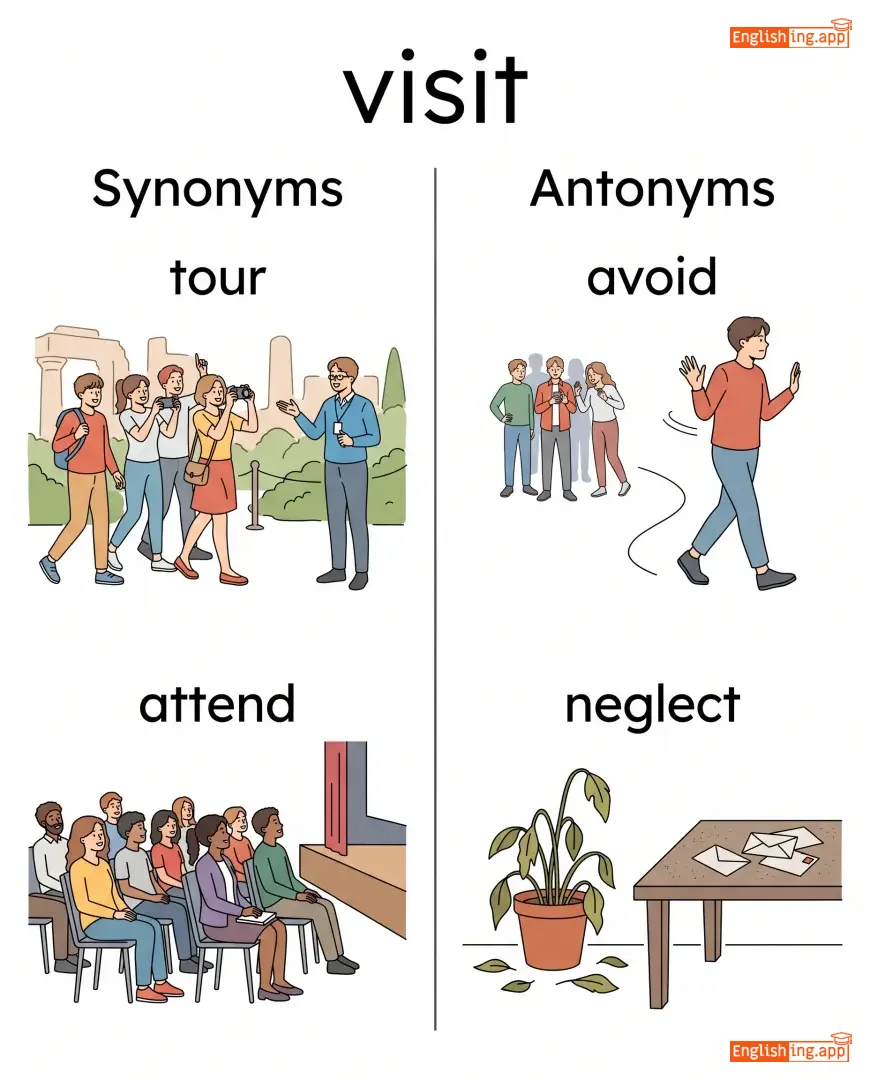
tour, attend, call on, stop by
••••••
|
avoid, neglect
••••••
|
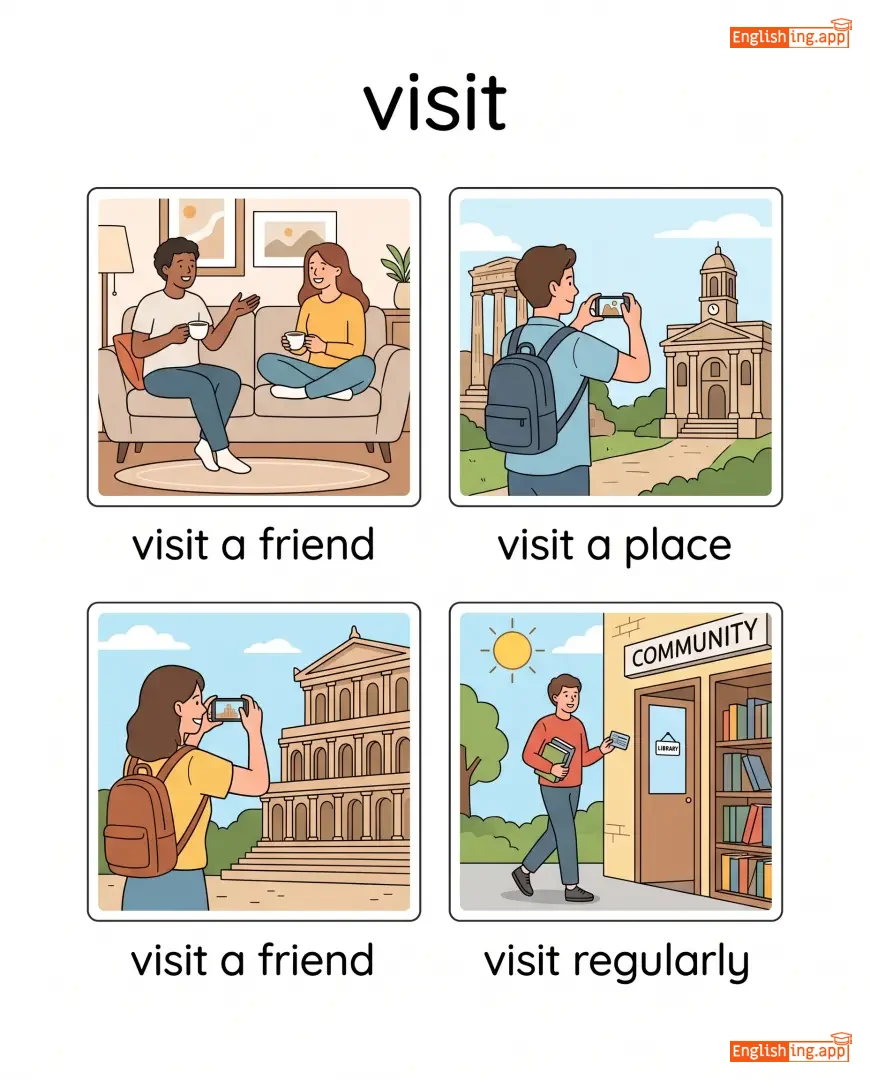
visit a friend, visit a place, visit regularly
••••••
|
VISIT - 访问 (旅行, 探访, 等等)
••••••
|
|
#12271
👁️
|
/ˈvɪʒən/
noun
(happiness)
••••••
|
|
幸福
xingfu
••••••
|
- •••••• | - •••••• | - •••••• | - •••••• |
the ability to see or a mental image of something
••••••
|
She had a clear vision of her future. |
当她收到奖项时,她无法掩饰她的幸福。
Dang ta shoudao jiangxiang shi, ta wu fa yanshi ta de xingfu.
••••••
|
- •••••• | - •••••• | - •••••• |
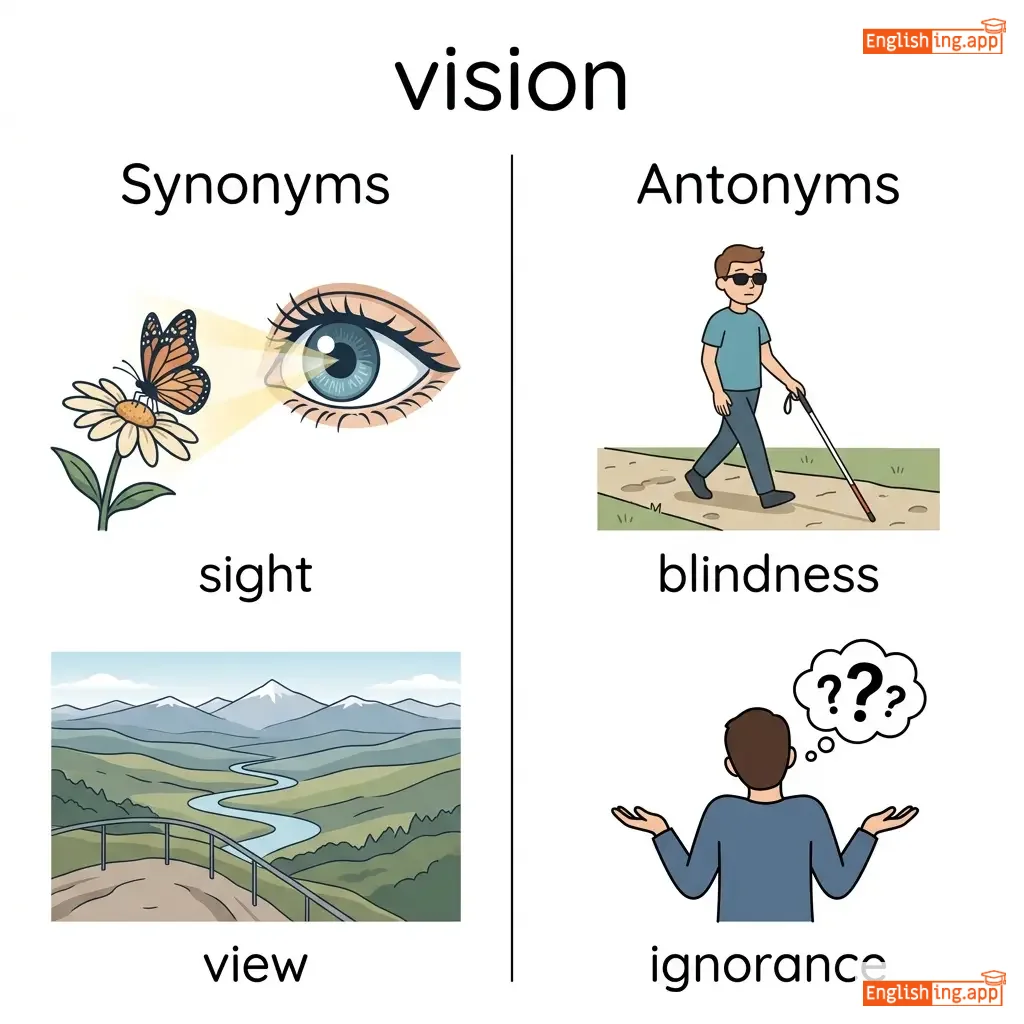
sight, view, perception, foresight
••••••
|
blindness, ignorance, darkness
••••••
|
clear vision, vivid vision, future vision
••••••
|
Happiness - 幸福是人生的目标
••••••
|
|
#12272
🏘️
|
/ˈvɪlɪdʒ/
noun
(维利奇)
••••••
|
- •••••• |
村庄
cunzhuang
••••••
|
- •••••• | - •••••• | - •••••• | - •••••• |
a small community or group of houses in a rural area
••••••
|
They live in a small village surrounded by mountains. |
他们住在一个被山脉环绕的小村庄里。
Tamen zhu zai yige bei shanmai huanrao de xiao cunzhuang li.
••••••
|
village green |
a grassy area in a village, often used for recreation
••••••
|
村庄绿地
cunzhuang ludi
••••••
|
hamlet, town, settlement, community
••••••
|
city, metropolis
••••••
|
village life, village community, small village, remote village
••••••
|
村庄是一个宁静、贴近自然的地方 (Cunzhuang shi yige ningjing, tiejin ziran de difang)
••••••
|
|
#12273
👁️
|
/ˈvɪərər/
noun
(维尤尔)
••••••
|
- •••••• |
观众
guānzhòng
••••••
|
- •••••• | - •••••• | - •••••• | - •••••• |
a person who watches something, especially television or video content
••••••
|
The viewer is able to switch channels with the remote control. |
观众可以使用遥控器切换频道。
Guānzhòng kěyǐ shǐyòng yáokòngqì qiēhuàn píndào.
••••••
|
- •••••• | - •••••• | - •••••• |
observer, watcher, spectator, audience
••••••
|
participant, actor
••••••
|
TV viewer, movie viewer, loyal viewer, viewer discretion
••••••
|
观众在看电视 (Guānzhòng zài kàn diànshì)
••••••
|
|
#12274
👀
|
/vjuː/
noun/verb
(viu)
••••••
|
- •••••• |
视图
shitu
••••••
|
viewed
viud
••••••
|
viewed
viud
••••••
|
views
vios
••••••
|
viewing
viwing
••••••
|
the act of seeing or observing something, or an area of sight
••••••
|
She had a great view of the sunset from her balcony.
她从阳台上看到了美丽的日落景象。
••••••
|
她从阳台上看到了美丽的日落景象。
Ta cong yangtai shang kandaole meili de riluo jingxiang.
••••••
|
in view of
视图
••••••
|
considering or due to something
••••••
|
视图
shitu
••••••
|
sight, observation, panorama, outlook
••••••
|
blindness, ignorance
••••••
|
take a view, have a view, beautiful view, view from the window
••••••
|
视图 - 当你从一个高处看(Shitu - dang ni cong yige gaochu kan)
••••••
|
|
#12275
🎥
|
/ˈvɪdiəʊ/
noun
(视频)
••••••
|
- •••••• |
视频
shipin
••••••
|
- •••••• | - •••••• | - •••••• | - •••••• |
a recording of moving visual images made digitally or on film
••••••
|
She watched the video of her favorite concert online. |
她在网上观看了她最喜欢的演唱会视频。
Ta zai wangshang guankanle ta zui xihuan de yanchanghui shipin.
••••••
|
- •••••• | - •••••• | - •••••• |
film, clip, recording, footage
••••••
|
audio, still image
••••••
|
watch a video, upload a video, video file, educational video
••••••
|
观看视频,享受动感影像! (Guankan shipin, xiangshou donggan yingxiang!)
••••••
|
|
#12276
😢
|
/ˈvɪktɪm/
noun
(维克蒂姆)
••••••
|
- •••••• |
受害者
shòuhài zhě
••••••
|
- •••••• | - •••••• | - •••••• | - •••••• |
a person who suffers harm, injury, or death due to an event or action
••••••
|
The victim of the accident was taken to the hospital immediately.
事故的受害者被立即送往医院。
••••••
|
事故的受害者被立即送往医院。
Shìgù de shòuhài zhě bèi lìjí sòngwǎng yīyuàn.
••••••
|
- •••••• | - •••••• | - •••••• |
casualty, sufferer, target, prey
••••••
|
survivor, winner
••••••
|
victim of violence, crime victim, innocent victim
••••••
|
受害者,遭受伤害的人 (Victim, a person who suffers harm)
••••••
|
|
#12277
😊
|
/ˈvɛri/
adverb
(韦里)
••••••
|
- •••••• |
非常
feichang
••••••
|
- •••••• | - •••••• | - •••••• | - •••••• |
used to emphasize an adjective or adverb
••••••
|
She is very happy with her results.
她对她的成绩感到非常高兴。
••••••
|
她对她的成绩感到非常高兴。
Tā duì tā de chéngjī gǎndào fēicháng gāoxìng.
••••••
|
- •••••• | - •••••• | - •••••• |
extremely, highly, particularly, really
••••••
|
not, hardly
••••••
|
very good, very important, very happy
••••••
|
Very means a lot - Think of it as emphasizing something!
••••••
|
|
#12278
⚔️
|
/ˈvɜːsəs/
preposition
(对抗)
••••••
|
- •••••• |
对抗
duìkàng
••••••
|
- •••••• | - •••••• | - •••••• | - •••••• |
against (in a competition or conflict)
••••••
|
The team is playing versus their biggest rivals. |
团队正在与他们最大的竞争对手对抗。
Tuánduì zhèngzài yǔ tāmen zuìdà de jìngzhēng duìshǒu duìkàng.
••••••
|
- •••••• | - •••••• | - •••••• |
against, in opposition to
••••••
|
- •••••• |
team versus team, player versus player, man versus nature
••••••
|
Versus means 'against' - Think of teams facing each other in a competition!
••••••
|
|
#12279
🚗
|
/ˈviːɪkəl/
noun
(wēi jī kè)
••••••
|
- •••••• |
车辆
cheliang
••••••
|
- •••••• | - •••••• | - •••••• | - •••••• |
a machine used for transporting people or goods
••••••
|
He drives a vehicle to work every day.
他每天开车去工作。
••••••
|
他每天开车去工作。
Tā měitiān kāichē qù gōngzuò.
••••••
|
- •••••• | - •••••• | - •••••• |
car, transport, automobile, motor vehicle
••••••
|
pedestrian, foot
••••••
|
drive a vehicle, vehicle maintenance, public vehicle
••••••
|
In Chinese, '车辆' refers to any vehicle used for transportation!
••••••
|
|
#12280
🤔
|
/ʌnˈlaɪkli/
adjective
(ʌnˈlaɪkli)
••••••
|
- •••••• |
不太可能
butai keneng
••••••
|
- •••••• | - •••••• | - •••••• | - •••••• |
not likely to happen or be true
••••••
|
It is unlikely that he will arrive on time. |
他不太可能准时到达。
Ta butai keneng zhunshi daoda.
••••••
|
- •••••• | - •••••• | - •••••• |
improbable, doubtful, far-fetched
••••••
|
likely, probable
••••••
|
unlikely event, unlikely outcome, highly unlikely
••••••
|
UNlikely - 'Un' (不) + likely, 不可能的事情。
••••••
|
|
#12281
🌈
|
/ˈvɛə.ri.əs/
adjective
(维里厄斯)
••••••
|
- •••••• |
各种各样的
ge zhong ge yang de
••••••
|
- •••••• | - •••••• | - •••••• | - •••••• |
different from one another; of several different kinds
••••••
|
She owns various kinds of books. |
她拥有各种各样的书籍。
Ta yongyou ge zhong ge yang de shūjí.
••••••
|
- •••••• | - •••••• | - •••••• |
diverse, numerous, varied, multiple
••••••
|
same, identical
••••••
|
various reasons, various types, various ways
••••••
|
Varying things are various - Different types of things.
••••••
|
|
#12282
🍇
|
/vəˈraɪəti/
noun
(wei la yi ti)
••••••
|
- •••••• |
多样性
duōyàngxì
••••••
|
- •••••• | - •••••• | - •••••• | - •••••• |
the quality or state of being different or diverse; a range of different things
••••••
|
There is a variety of fruits available in the market. |
市场上有各种各样的水果。
Shìchǎng shàng yǒu gè zhǒng gè yàng de shuǐguǒ.
••••••
|
- •••••• | - •••••• | - •••••• |
diversity, assortment, range, mixture
••••••
|
uniformity, sameness
••••••
|
wide variety, large variety, variety of, variety pack
••••••
|
选择不同的水果来展示多样性。
••••••
|
|
#12283
💰
|
/ˈvæljuː/
noun
(wèiyú)
••••••
|
- •••••• |
价值
jiàzhí
••••••
|
- •••••• | - •••••• | - •••••• | - •••••• |
the importance, worth, or usefulness of something
••••••
|
The value of education cannot be overstated. |
教育的价值不能被高估。
Jiàoyù de jiàzhí bùnéng bèi gāogū.
••••••
|
- •••••• | - •••••• | - •••••• |
worth, significance, merit, importance
••••••
|
worthlessness, insignificance
••••••
|
high value, low value, value of, add value
••••••
|
价值是对某物重要性的衡量
••••••
|
|
#12284
💎
|
/ˈvæljuːəbl/
adjective
(ˈvæljuːəbl)
••••••
|
- •••••• |
宝贵的
bǎo guì de
••••••
|
- •••••• | - •••••• | - •••••• | - •••••• |
worth a great deal of money or importance
••••••
|
The diamond ring is very valuable. |
这枚钻石戒指非常宝贵。
Zhè méi zuàn shí jiè zhǐ fēi cháng bǎo guì.
••••••
|
- •••••• | - •••••• | - •••••• |
precious, priceless, costly, valuable
••••••
|
worthless, insignificant
••••••
|
valuable item, valuable asset, valuable experience, valuable resource
••••••
|
就像钻石戒指一样宝贵,知识也同样宝贵
••••••
|
|
#12285
🌄
|
/ˈvæli/
noun
(wēilì)
••••••
|
- •••••• |
山谷
shangu
••••••
|
- •••••• | - •••••• | - •••••• | - •••••• |
a low area of land between hills or mountains, typically with a river or stream flowing through it
••••••
|
The valley was covered in lush green grass and flowers.
山谷覆盖着绿色的草和花。
••••••
|
山谷覆盖着绿色的草和花。
Shāngǔ fùgài zhe lǜsè de cǎo hé huā.
••••••
|
- •••••• | - •••••• | - •••••• |
glen, dale, gorge, hollow
••••••
|
hill, mountain, peak
••••••
|
wide valley, deep valley, valley floor, valley view
••••••
|
记住单词山谷,一个低洼的地方,在山丘之间,绿草如茵
••••••
|
|
#12286
🏖️
|
/vəˈkeɪʃən/
noun
(vēkèishēn)
••••••
|
- •••••• |
假期
jiàqī
••••••
|
- •••••• | - •••••• | - •••••• | - •••••• |
an extended period of leisure and recreation, especially one spent away from home or traveling
••••••
|
We went on vacation to the beach last summer. |
我们去年夏天去了海滩度假。
Wǒmen qùnián xiàtiān qùle hǎitān dùjià.
••••••
|
- •••••• | - •••••• | - •••••• |
holiday, break, getaway, retreat
••••••
|
work, labor
••••••
|
summer vacation, family vacation, go on vacation, take a vacation
••••••
|
假期意味着去海滩放松 - Vacation means going to the beach to relax.
••••••
|
|
#12287
📅
|
/ˈjuːʒəl/
adjective
(yúzhù)
••••••
|
- •••••• |
常见
changjian
••••••
|
- •••••• | - •••••• | - •••••• | - •••••• |
habitually or typically occurring or done
••••••
|
It’s our usual meeting spot. |
这是我们常见的会议地点。
Zhè shì wǒmen chángjiàn de huìyì dìdiǎn.
••••••
|
- •••••• | - •••••• | - •••••• |
customary, normal, regular
••••••
|
unusual, rare
••••••
|
usual routine, usual time, usual place
••••••
|
Usual - 常见的总是最好的!
••••••
|
|
#12288
👤
|
/ˈjuːzər/
noun
(yùzhě)
••••••
|
- •••••• |
用户
yonghu
••••••
|
- •••••• | - •••••• | - •••••• | - •••••• |
a person who uses or operates something
••••••
|
He is a frequent user of this app. |
他是这个应用程序的常用用户。
Ta shi zhege yingyongchengxu de changyong yonghu.
••••••
|
- •••••• | - •••••• | - •••••• |
consumer, customer, client
••••••
|
provider, seller
••••••
|
user interface, end user, registered user
••••••
|
User - 经常使用,成为用户!
••••••
|
|
#12289
🛠️
|
/ˈjuːsfəl/
adjective
(yūsīfú)
••••••
|
- •••••• |
有用的
you yong de
••••••
|
- •••••• | - •••••• | - •••••• | - •••••• |
having a practical or beneficial use
••••••
|
This tool is very useful. |
这个工具非常有用。
Zhège gōngjù fēicháng yǒuyòng.
••••••
|
- •••••• | - •••••• | - •••••• |
helpful, beneficial, practical
••••••
|
useless, impractical
••••••
|
useful information, useful tool, useful advice
••••••
|
USEFUL - 有用的,使用它,它充满好处!
••••••
|
|
#12290
🚗
|
/juːzd/
adjective
(yūzīd)
••••••
|
- •••••• |
二手
èr shǒu
••••••
|
- •••••• | - •••••• | - •••••• | - •••••• |
having already been used
••••••
|
This is a used car. |
这是一辆二手车。
Zhè shì yī liàng èr shǒu chē.
••••••
|
- •••••• | - •••••• | - •••••• |
pre-owned, secondhand, recycled
••••••
|
new, unused
••••••
|
used car, used clothes, used book
••••••
|
USED - You Should Expect Damage!
••••••
|
|
#12291
👫
|
/ʌs/
pronoun
(阿斯)
••••••
|
- •••••• |
我们
women
••••••
|
- •••••• | - •••••• | - •••••• | - •••••• |
used to refer to the speaker and one or more other people as the object of a verb or preposition
••••••
|
She gave us a gift. |
她给了我们一个礼物。
Tā gěi le wǒmen yīgè lǐwù.
••••••
|
- •••••• | - •••••• | - •••••• |
we, ourselves, our group
••••••
|
them, you
••••••
|
help us, give us, show us
••••••
|
我们 (women) 和其他人,我们就是 US,一起!
••••••
|
|
#12292
⬆️
|
/ˈʌpər/
adjective
(áper)
••••••
|
- •••••• |
上层
shàngcéng
••••••
|
- •••••• | - •••••• | - •••••• | - •••••• |
higher in position or rank
••••••
|
The upper floor of the building is under renovation.
建筑物的上层正在翻修。
••••••
|
建筑物的上层正在翻修。
Jiànzhúwù de shàngcéng zhèngzài fāngxiū.
••••••
|
- •••••• | - •••••• | - •••••• |
higher, top, superior
••••••
|
lower, bottom
••••••
|
upper floor, upper limit, upper part
••••••
|
Upper - 想象上面的位置,位置更高!
••••••
|
|
#12293
🕒
|
/əˈpɒn/
preposition
(阿蓬)
••••••
|
- •••••• |
之后
zhīhòu
••••••
|
- •••••• | - •••••• | - •••••• | - •••••• |
on or immediately after
••••••
|
Upon hearing the news, he rushed to the hospital. |
听到消息后,他赶到医院。
Tīng dào xiāoxī hòu, tā gǎn dào yīyuàn.
••••••
|
- •••••• | - •••••• | - •••••• |
on, following
••••••
|
before
••••••
|
upon arrival, upon hearing, upon request
••••••
|
Upon - zhīhòu, after the event, moving towards your goal!
••••••
|
|
#12294
⏳
|
/ʌnˈtɪl/
preposition/conjunction
(安提尔)
••••••
|
- •••••• |
直到
zhídào
••••••
|
- •••••• | - •••••• | - •••••• | - •••••• |
up to the time of
••••••
|
I will wait until you come back.
我会等到你回来。
••••••
|
我会等到你回来。
Wǒ huì děng dào nǐ huílái.
••••••
|
- •••••• | - •••••• | - •••••• |
till, up to
••••••
|
after
••••••
|
until now, until then, wait until
••••••
|
Until you leave the room, you wait until!
••••••
|
Vocabulary Quiz
Test your vocabulary by matching words with their translations or meanings.
Login to take the quiz
Comments (0)
Share your thoughts and join the discussion.
Join the discussion by logging in
Login to CommentNo comments yet
Be the first to share your thoughts!