


Swipe left or right, or use the buttons. Tap image to zoom.
例句翻译
单词
Lesson 69Lesson 69 - 遮罩切换
|
表情符号
|
单词 | Images | 翻译 | 过去时 | 过去分词 | 第三人称单数 | 动名词 | 含义 | 例句 | 例句翻译 | 示例表达 | 示例表达含义 | 示例表达翻译 | 同义词 | 反义词 | 搭配词 | 助记符 |
|---|---|---|---|---|---|---|---|---|---|---|---|---|---|---|---|---|---|
|
#2041
⚖️
|
/ˈkʌlpəbl̩/
adjective
(kʌlpəbl)
••••••
|
- •••••• |
有罪的
you zui de
••••••
|
- •••••• | - •••••• | - •••••• | - •••••• |
deserving blame or responsibility for a wrongdoing
••••••
|
The judge found him culpable for the accident. |
法官认定他对事故负有责任。
Fa guan ren ding ta dui shi gu fu you ze ren.
••••••
|
- •••••• | - •••••• | - •••••• |
blameworthy, guilty, responsible, liable, at fault
••••••
|
innocent, blameless, faultless
••••••
|
culpable negligence, culpable conduct, deemed culpable
••••••
|
有罪的 = culpable
••••••
|
|
#2042
😠
|
/kərˈmʌdʒən/
noun
(kərˈmʌdʒən)
••••••
|
- •••••• |
脾气暴躁的老人
píqì bàozào de lǎorén
••••••
|
- •••••• | - •••••• | - •••••• | - •••••• |
a bad-tempered, cranky, or irritable person, usually old
••••••
|
The old curmudgeon complained about everything in the neighborhood. |
那位脾气暴躁的老人抱怨着邻里的一切。
Nà wèi píqì bàozào de lǎorén bàoyuànzhe línlǐ de yīqiè.
••••••
|
- •••••• | - •••••• | - •••••• |
grouch, grump, crank, complainer
••••••
|
optimist, cheerful person
••••••
|
old curmudgeon, grumpy curmudgeon, neighborhood curmudgeon
••••••
|
Curmudgeon = Car + 木讷 (mù nè) → Car 上木讷,脾气暴躁的老人就来了。
••••••
|
|
#2043
🗝️
|
/ˈkjʊriˌoʊ/
noun
(kyoor-ee-oh)
••••••
|
- •••••• |
奇特物品
qite wupin
••••••
|
- •••••• | - •••••• | - •••••• | - •••••• |
a small unusual or interesting object, often collected for its rarity
••••••
|
She bought a curio from the antique shop. |
她从古董店买了一个奇特物品。
Ta cong gudong dian mai le yi ge qite wupin.
••••••
|
- •••••• | - •••••• | - •••••• |
antique, collectible, keepsake, artifact
••••••
|
common object, ordinary item
••••••
|
curio shop, curio cabinet, rare curio, antique curio
••••••
|
Curio → 奇特物品,罕见的有趣物品。
••••••
|
|
#2044
⏰
|
/ˈkɜːrfjuː/
noun
(kā fū yù)
••••••
|
- •••••• |
宵禁
xiaojin
••••••
|
- •••••• | - •••••• | - •••••• | - •••••• |
a rule requiring people to stay indoors after a certain time, usually at night
••••••
|
The city imposed a curfew during the unrest. |
城市在骚乱期间实施了宵禁。
Chéngshì zài sāoluàn qījiān shíshīle xiāojìn.
••••••
|
- •••••• | - •••••• | - •••••• |
restriction, lockdown, ban, regulation
••••••
|
freedom, liberty
••••••
|
impose a curfew, strict curfew, night curfew, citywide curfew
••••••
|
宵禁表示在夜间不能外出。
••••••
|
|
#2045
🛑
|
/kɜːrb/
verb
(克尔布)
••••••
|
- •••••• |
抑制 / 控制
yìzhì / kòngzhì
••••••
|
curbed
克尔布德
••••••
|
curbed
克尔布德
••••••
|
curbs
克尔布斯
••••••
|
curbing
克尔布ing
••••••
|
to restrain, control, or limit something
••••••
|
The government took steps to curb inflation.
政府采取了措施来遏制通货膨胀。
••••••
|
政府采取了措施来遏制通货膨胀。
Zhèngfǔ cǎiqǔle cuòshī lái èzhì tōnghuò péngzhàng.
••••••
|
curb your enthusiasm
控制你的热情
••••••
|
to control or restrain your excitement
••••••
|
控制你的热情
Kòngzhì nǐ de rèqíng
••••••
|
restrain, control, suppress, limit, check
••••••
|
encourage, promote, release
••••••
|
curb inflation, curb violence, curb pollution, curb spending
••••••
|
Curb 就是控制,就像控制车速一样。
••••••
|
|
#2046
🏛️
|
/kjʊˈreɪtər/
noun
(kiuˈreɪtə)
••••••
|
- •••••• |
策展人
cè zhǎn rén
••••••
|
- •••••• | - •••••• | - •••••• | - •••••• |
a person who is responsible for the care and management of a museum, gallery, or collection
••••••
|
The curator organized a new exhibition of ancient artifacts. |
策展人组织了一个新的古代文物展览。
Cè zhǎn rén zǔzhīle yīgè xīn de gǔdài wénwù zhǎnlǎn.
••••••
|
- •••••• | - •••••• | - •••••• |
keeper, custodian, manager, overseer, administrator
••••••
|
visitor, guest, spectator
••••••
|
museum curator, art curator, exhibition curator, chief curator
••••••
|
Curator = Care + tor → 策展人照顾博物馆的展品
••••••
|
|
#2047
💊
|
/ˈkjʊərəbl/
adjective
(kiúrèbù)
••••••
|
- •••••• |
可治愈的
ke zhi yu de
••••••
|
- •••••• | - •••••• | - •••••• | - •••••• |
Able to be cured or healed.
••••••
|
The doctor assured her that the disease was curable. |
医生向她保证,这种疾病是可治愈的。
Yi sheng xiang ta baozheng, zhe zhong ji bing shi ke zhi yu de.
••••••
|
- •••••• | - •••••• | - •••••• |
treatable, healable, remediable, solvable
••••••
|
incurable, untreatable, hopeless
••••••
|
curable disease, curable illness, curable condition, curable infection
••••••
|
可治愈的 = curable (中文和英语相似)。
••••••
|
|
#2048
💰
|
/kjuːˈpɪdəti/
noun
(kē yú pī dì tì)
••••••
|
- •••••• |
贪婪
tanlan
••••••
|
- •••••• | - •••••• | - •••••• | - •••••• |
Excessive desire for wealth or possessions; greed.
••••••
|
The king's downfall was caused by his cupidity. |
国王的衰落是由于他的贪婪。
Guówáng de shuāiluò shì yóuyú tā de tān lán.
••••••
|
- •••••• | - •••••• | - •••••• |
greed, avarice, lust, covetousness
••••••
|
generosity, selflessness, charity
••••••
|
cupidity of wealth, cupidity for power, cupidity and corruption
••••••
|
想象你喝着满是金币的杯子 = cupidity 意味着贪婪。
••••••
|
|
#2049
🦊
|
/ˈkʌnɪŋ/
adjective
(kaning)
••••••
|
- •••••• |
狡猾
jiaohua
••••••
|
- •••••• | - •••••• | - •••••• | - •••••• |
Having or showing skill in achieving one's ends by deceit or evasion; cleverness in a tricky way.
••••••
|
The cunning fox tricked the farmer. |
狡猾的狐狸欺骗了农夫。
Jiaohua de huli qipian le nongfu.
••••••
|
cunning plan |
a clever but often deceitful scheme
••••••
|
狡猾的计划
jiaohua de jihua
••••••
|
crafty, sly, clever, shrewd, devious
••••••
|
honest, naive, straightforward
••••••
|
cunning plan, cunning trick, cunning strategy, cunning move
••••••
|
狡猾的狐狸有一个狡猾的计划.
••••••
|
|
#2050
➕
|
/ˈkjuːmjələtɪv/
adjective
(kjuˈmjulətɪv)
••••••
|
- •••••• |
累积的
lěijī de
••••••
|
- •••••• | - •••••• | - •••••• | - •••••• |
Increasing gradually by addition; growing in quantity, force, or effect.
••••••
|
The cumulative effect of stress can harm your health. |
压力的累积效应可能对您的健康造成伤害。
Yālì de lěijī xiàoguǒ kěnéng duì nín de jiànkāng zàochéng shānghài.
••••••
|
- •••••• | - •••••• | - •••••• |
aggregate, total, combined, collective
••••••
|
individual, separate, isolated
••••••
|
cumulative effect, cumulative total, cumulative impact, cumulative result
••••••
|
CUMULATE 意味着积累,cumulative 意味着逐渐增长。
••••••
|
|
#2051
📦
|
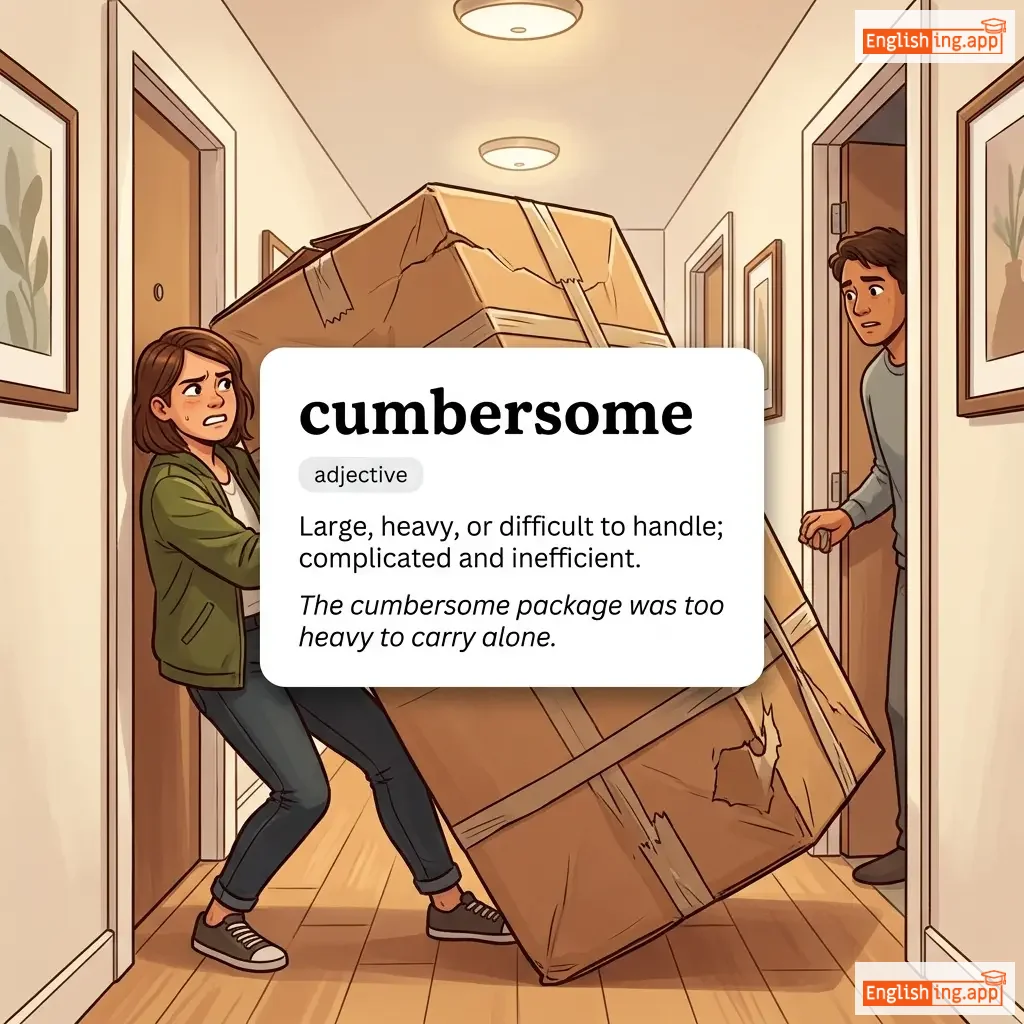
/ˈkʌmbərsəm/
adjective
(kāmbèrsām)
••••••
|
|
笨重的
bènzhòng de
••••••
|
- •••••• | - •••••• | - •••••• | - •••••• |
Large, heavy, or difficult to handle; complicated and inefficient.
••••••
|
The cumbersome package was too heavy to carry alone.
那个笨重的包裹太重,无法单独携带。
••••••
|
那个笨重的包裹太重,无法单独携带。
Nàgè bènzhòng de bāoguǒ tài zhòng, wúfǎ dān dú xiédài.
••••••
|
- •••••• | - •••••• | - •••••• |
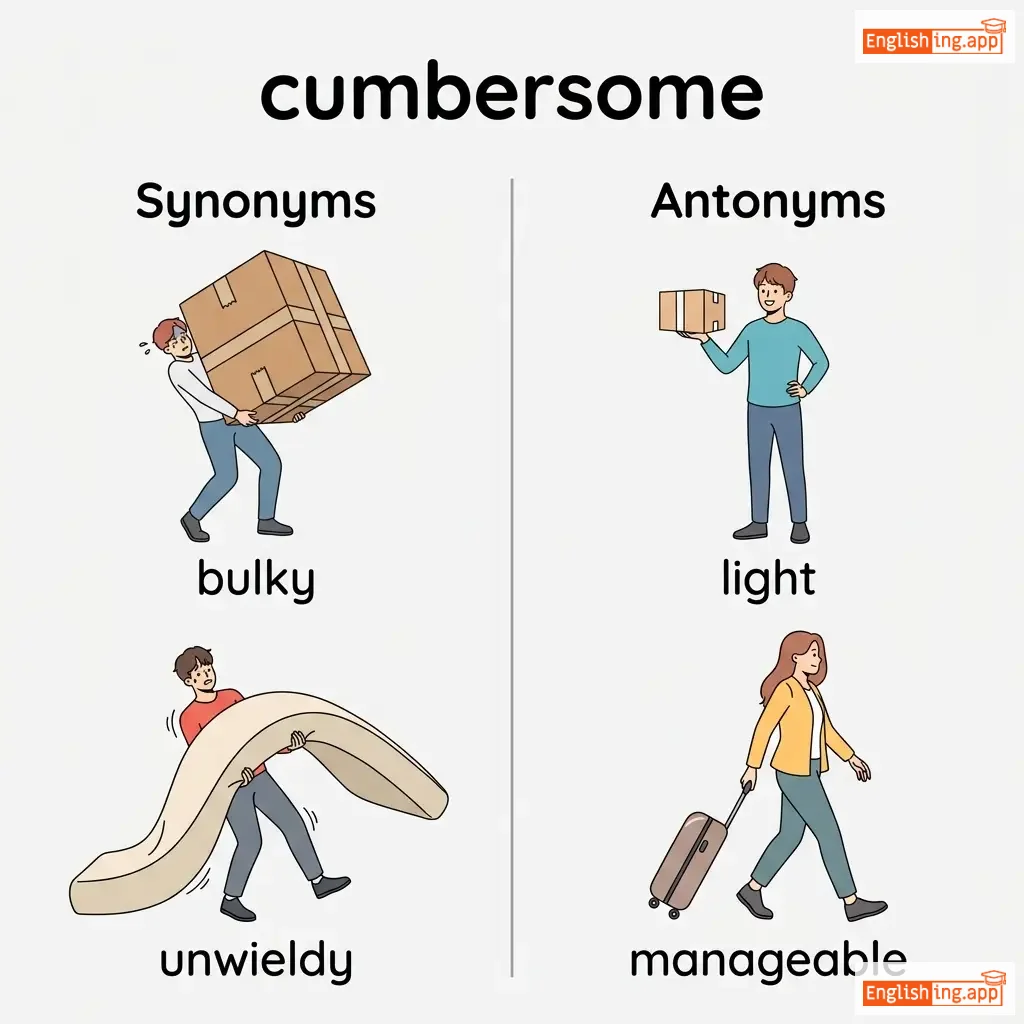
bulky, unwieldy, clumsy, awkward, heavy
••••••
|
light, manageable, convenient
••••••
|
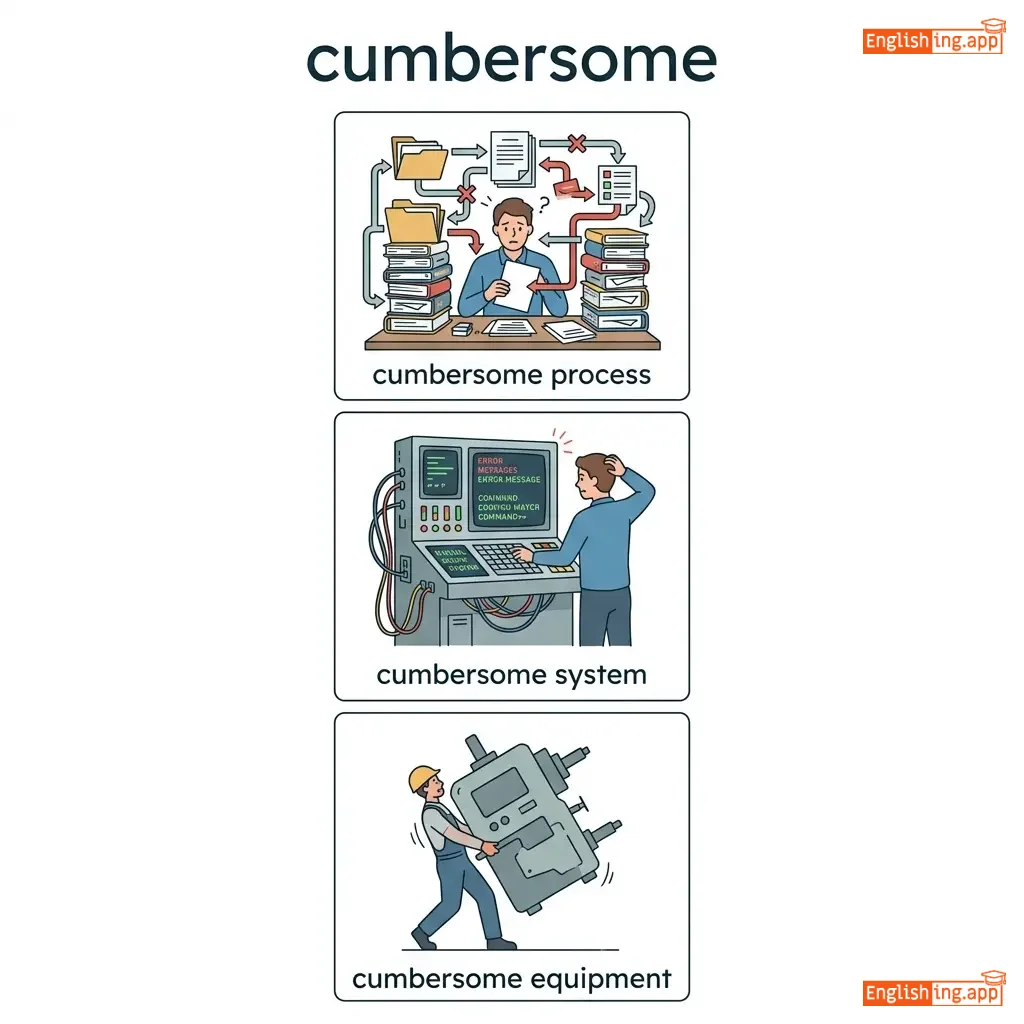
cumbersome process, cumbersome system, cumbersome equipment, cumbersome package
••••••
|
CUMber + some = 太笨重了,单独携带困难 (bènzhòng de).
••••••
|
|
#2052
🌊
|
/ˈkʌlvərt/
noun
(卡尔弗特)
••••••
|
- •••••• |
涵洞
handong
••••••
|
- •••••• | - •••••• | - •••••• | - •••••• |
a tunnel or drain that carries water under a road or railway
••••••
|
The heavy rainwater flowed through the culvert under the bridge.
沉重的雨水通过桥下的卡尔弗特流动。
••••••
|
沉重的雨水通过桥下的涵洞流动。
Chénzhòng de yǔshuǐ tōngguò qiáo xià de handong liúdòng.
••••••
|
- •••••• | - •••••• | - •••••• |
drain, channel, sewer, conduit
••••••
|
dam, barrier
••••••
|
concrete culvert, road culvert, culvert construction
••••••
|
涵洞像是排水管道,让水通过地下通道,桥下有这个涵洞。
••••••
|
|
#2053
🎨
|
/ˈkʌltʃəd/
adjective
(kʌltʃəd)
••••••
|
- •••••• |
有文化的
yǒu wénhuà de
••••••
|
- •••••• | - •••••• | - •••••• | - •••••• |
characterized by refined taste, manners, and education
••••••
|
She is a cultured woman who loves art and literature.
她是一个有文化的女人,喜欢艺术和文学。
••••••
|
她是一个有文化的女人,喜欢艺术和文学。
Tā shì yīgè yǒu wénhuà de nǚrén, xǐhuān yìshù hé wénxué.
••••••
|
- •••••• | - •••••• | - •••••• |
refined, educated, sophisticated, polished
••••••
|
uncultured, unrefined, ignorant
••••••
|
cultured background, cultured family, cultured taste
••••••
|
Cultured意味着有文化 – 精致和有教育
••••••
|
|
#2054
🌱
|
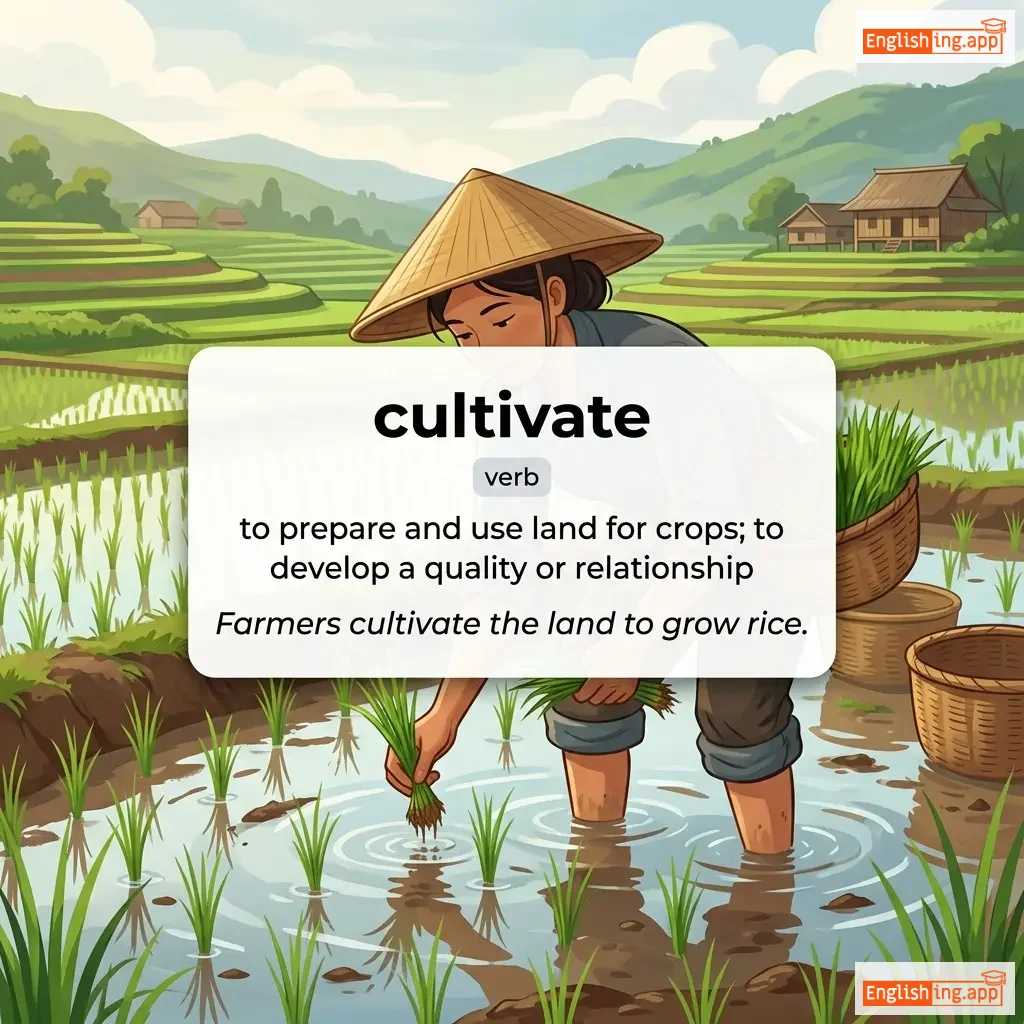
/ˈkʌltɪveɪt/
verb
(海皮尼斯)
••••••
|
|
幸福
xìng fú
••••••
|
cultivated
••••••
|
cultivated
••••••
|
cultivates
••••••
|
cultivating
••••••
|
to prepare and use land for crops; to develop a quality or relationship
••••••
|
Farmers cultivate the land to grow rice.
她无法掩饰她收到奖项时的幸福。
••••••
|
她无法掩饰她收到奖项时的幸福。
Tā wúfǎ yǎnshì tā shōu dào jiǎngxiàng shí de xìngfú.
••••••
|
cultivate friendship
追求幸福
••••••
|
to develop a good relationship with someone
••••••
|
追求幸福
zhuīqiú xìngfú
••••••
|
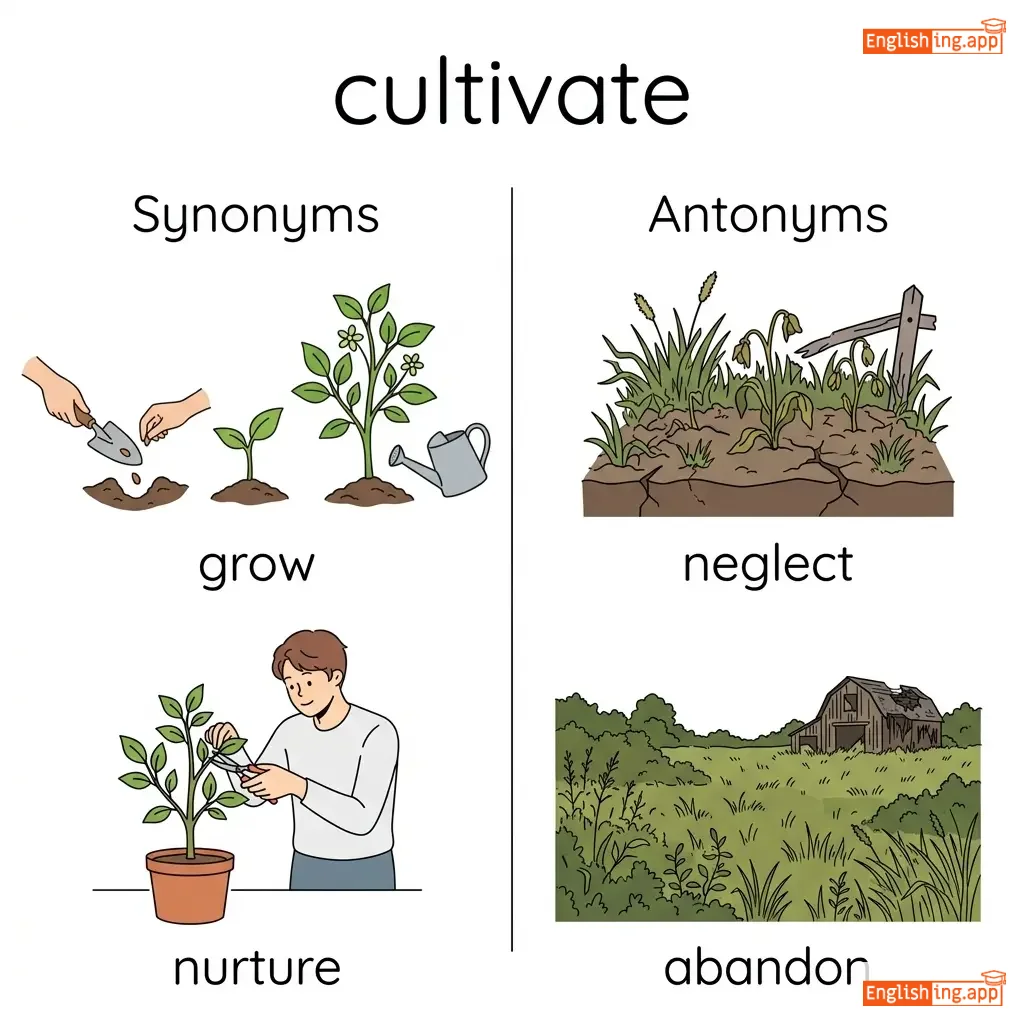
grow, nurture, develop, foster, promote
••••••
|
neglect, abandon
••••••
|
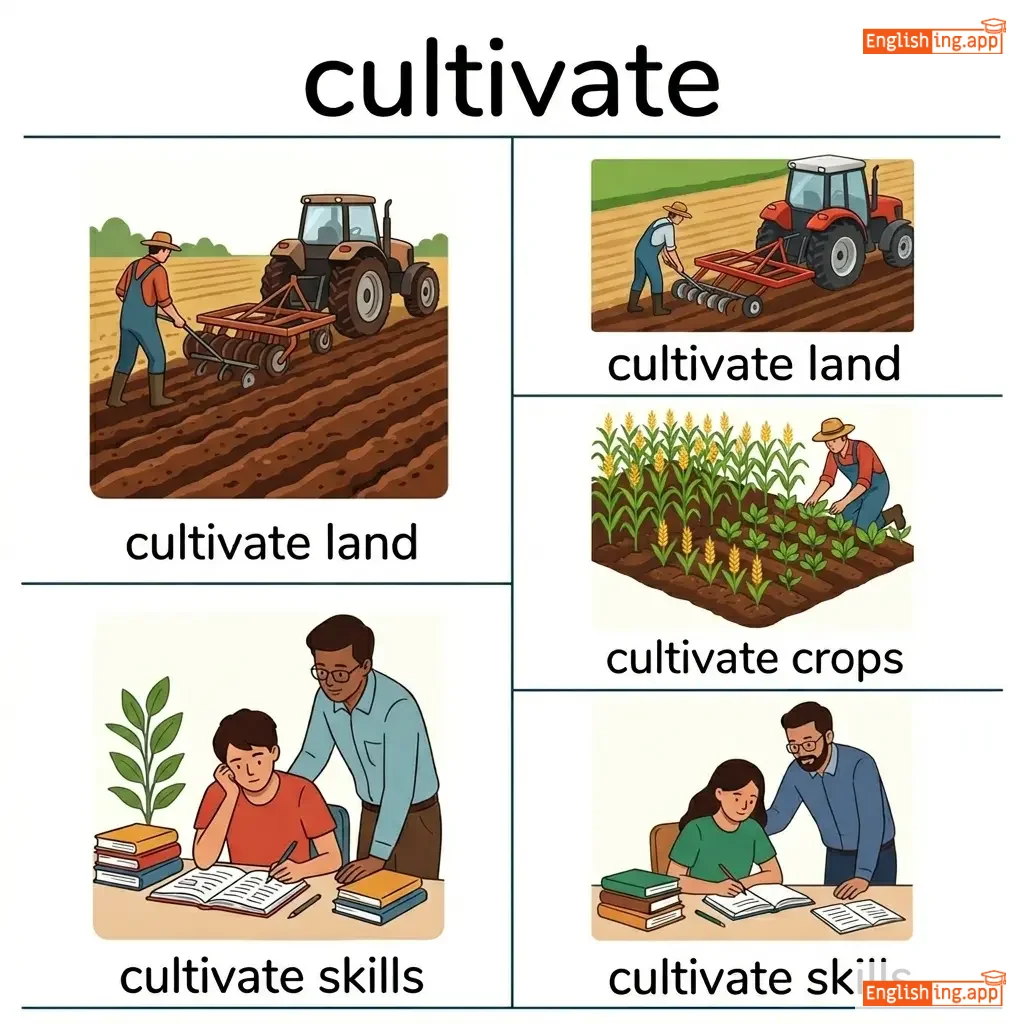
cultivate land, cultivate crops, cultivate skills, cultivate habits
••••••
|
幸福是在寻找它的过程中,就像追求幸福一样。
••••••
|
|
#2055
🚔
|
/ˈkʌlprɪt/
noun
(culprit)
••••••
|
- •••••• |
罪犯
zuìfàn
••••••
|
- •••••• | - •••••• | - •••••• | - •••••• |
a person who is responsible for a crime or misdeed
••••••
|
The police caught the culprit behind the robbery. |
警察抓住了抢劫案背后的罪犯。
Jǐngchá zhuāzhùle qiǎngjié àn bèihòu de zuìfàn.
••••••
|
- •••••• | - •••••• | - •••••• |
offender, wrongdoer, criminal, perpetrator, lawbreaker
••••••
|
victim, innocent, blameless
••••••
|
real culprit, find the culprit, main culprit
••••••
|
罪犯就是犯罪的人
••••••
|
|
#2056
🎯
|
/krʌks/
noun
(kruks)
••••••
|
- •••••• |
关键
guānjiàn
••••••
|
- •••••• | - •••••• | - •••••• | - •••••• |
the most important or decisive point of an issue
••••••
|
The crux of the problem lies in poor communication. |
问题的关键在于沟通不畅。
Wenti de guānjiàn zài yú gōutōng bùchàng.
••••••
|
the crux of the matter |
the most important or central aspect of an issue
••••••
|
事情的关键
shìqíng de guānjiàn
••••••
|
essence, core, heart, gist, nucleus
••••••
|
detail, trivia, unimportance
••••••
|
the crux of the issue, crux of the debate, the crux of the argument
••••••
|
CRUX意味着关键 — 就像关键的核心问题 🎯
••••••
|
|
#2057
⚖️
|
/ˌkʌl.pəˈbɪl.ɪ.ti/
noun
(卡尔帕比利提)
••••••
|
- •••••• |
罪责
zuìzé
••••••
|
- •••••• | - •••••• | - •••••• | - •••••• |
responsibility for a fault or wrong; blameworthiness
••••••
|
The jury considered his level of culpability in the crime. |
陪审团考虑了他在犯罪中的罪责程度。
Péishěntuán kǎolǜle tā zài fànzuì zhōng de zuìzé chéngdù.
••••••
|
- •••••• | - •••••• | - •••••• |
blame, guilt, fault, responsibility, accountability
••••••
|
innocence, blamelessness
••••••
|
legal culpability, moral culpability, degree of culpability, establish culpability
••••••
|
罪责听起来像是负有责任,如果你犯了错,就是有罪的。
••••••
|
|
#2058
🎓
|
/ˌkʌl.mɪˈneɪ.ʃən/
noun
(kē mǐ nà xiǎn)
••••••
|
|
高潮
gaochao
••••••
|
- •••••• | - •••••• | - •••••• | - •••••• |
the highest point or final result of something
••••••
|
Graduation day is the culmination of years of hard work. |
毕业典礼是多年辛勤工作的高潮。
Biye dianli shi duonian xinqin gongzuo de gaochao.
••••••
|
- •••••• | - •••••• | - •••••• |
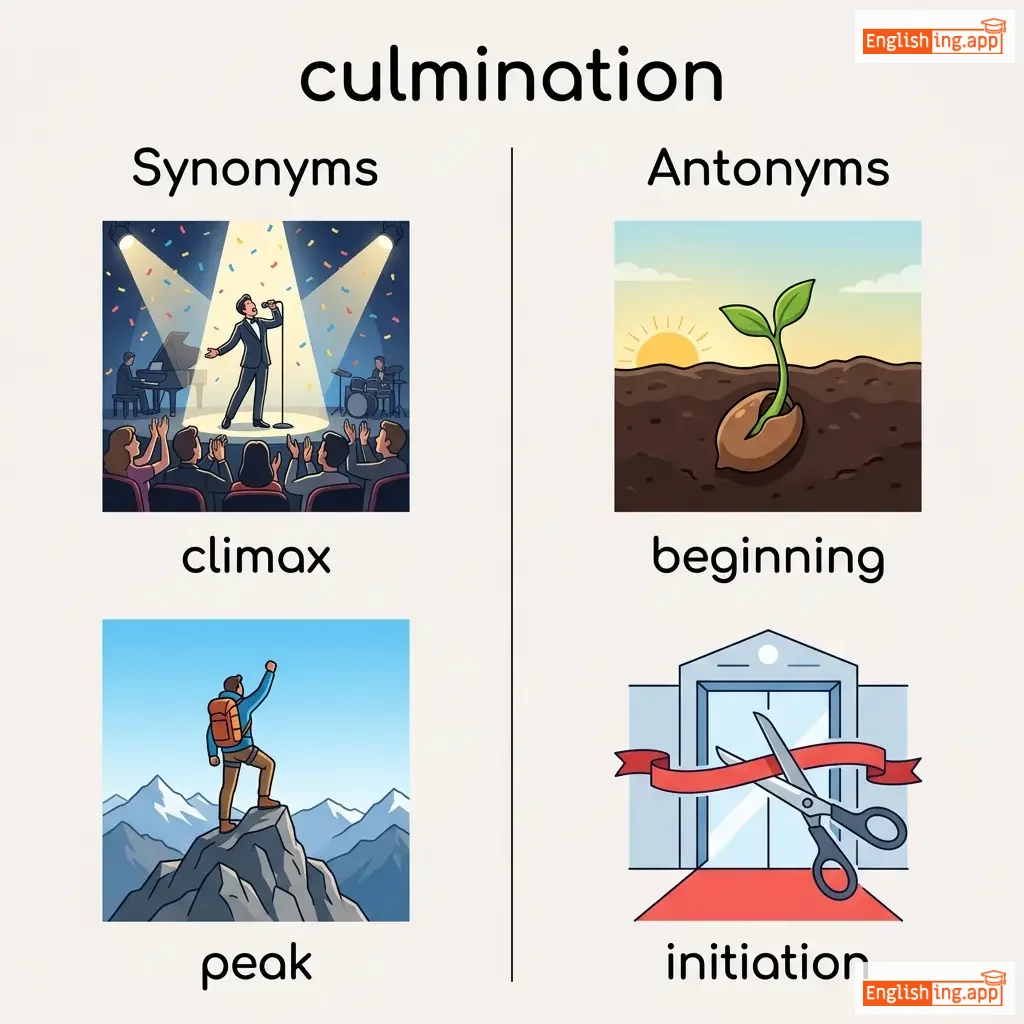
climax, peak, conclusion, finale, result
••••••
|
beginning, initiation, start
••••••
|
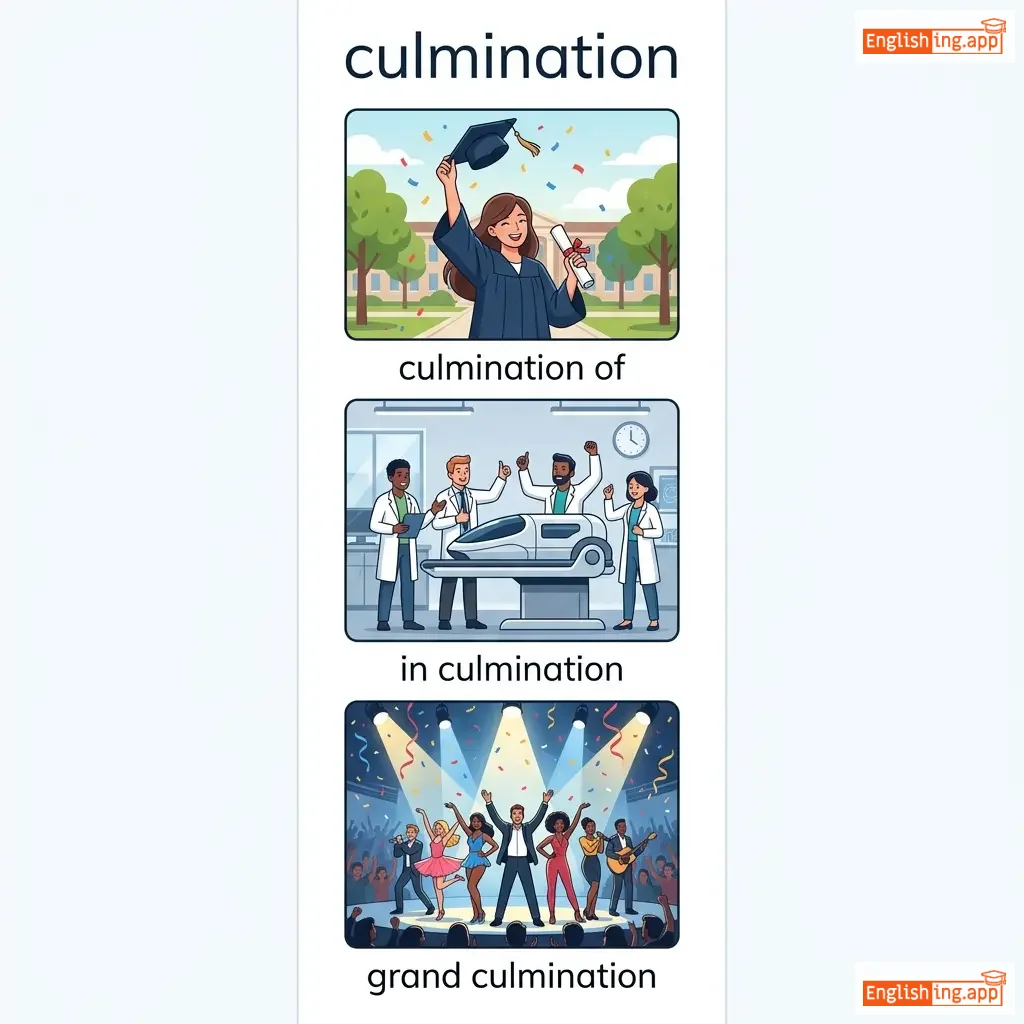
culmination of, in culmination, grand culmination, final culmination
••••••
|
高潮是实现目标的终点。
••••••
|
|
#2059
🏔️
|
/ˈkʌl.mɪ.neɪt/
verb
(kʊl.mɪ.neɪt)
••••••
|
|
达到高潮
dá dào gāo cháo
••••••
|
culminated
kʊl.mɪ.neɪtɪd
••••••
|
culminated
kʊl.mɪ.neɪtɪd
••••••
|
culminates
kʊl.mɪ.neɪts
••••••
|
culminating
kʊl.mɪ.neɪtɪŋ
••••••
|
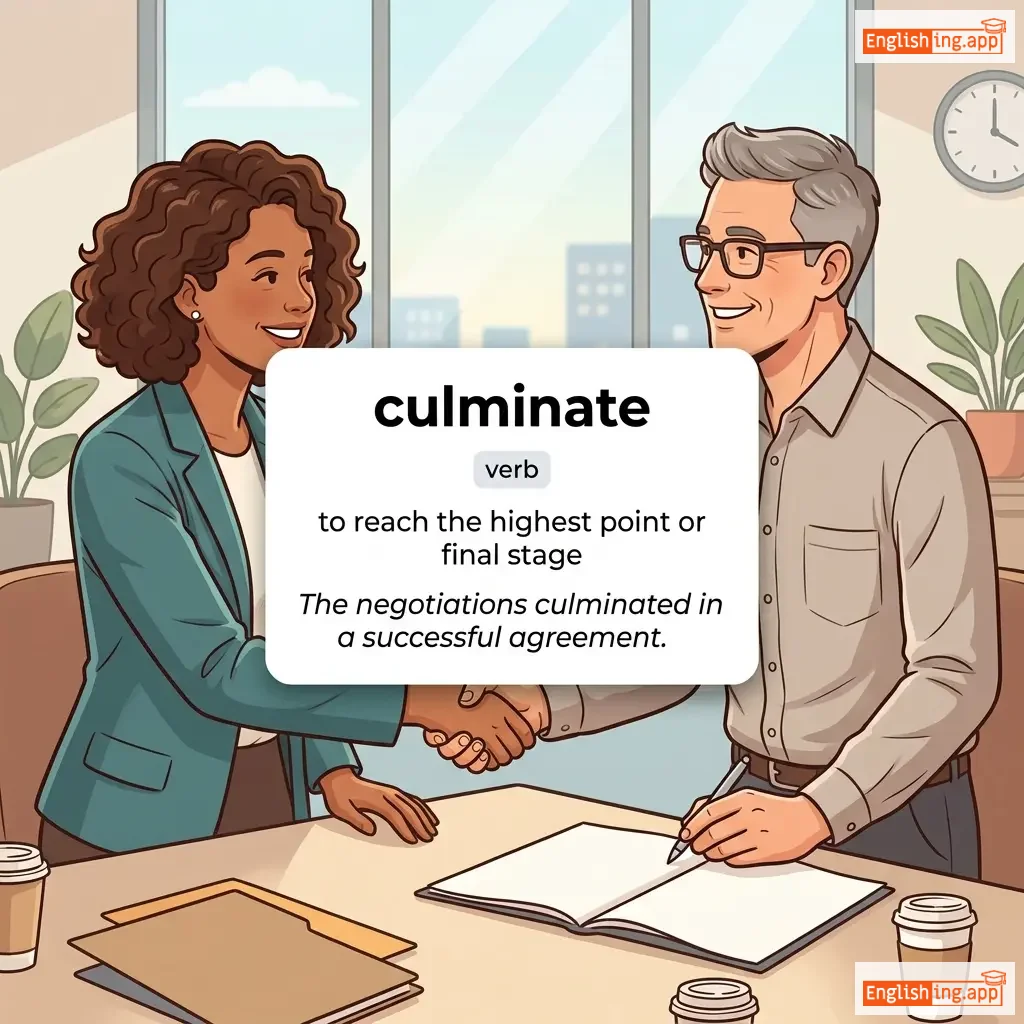
to reach the highest point or final stage
••••••
|
The negotiations culminated in a successful agreement.
ðə nɪˈɡəʊʃieɪʃəns kʊl.mɪ.neɪtɪd ɪn ə səkˈsɛsfʊl əˈɡriːmənt
••••••
|
谈判以成功协议告终。
Tánpàn yǐ chénggōng xiéyì gàozhōng.
••••••
|
- •••••• | - •••••• | - •••••• |
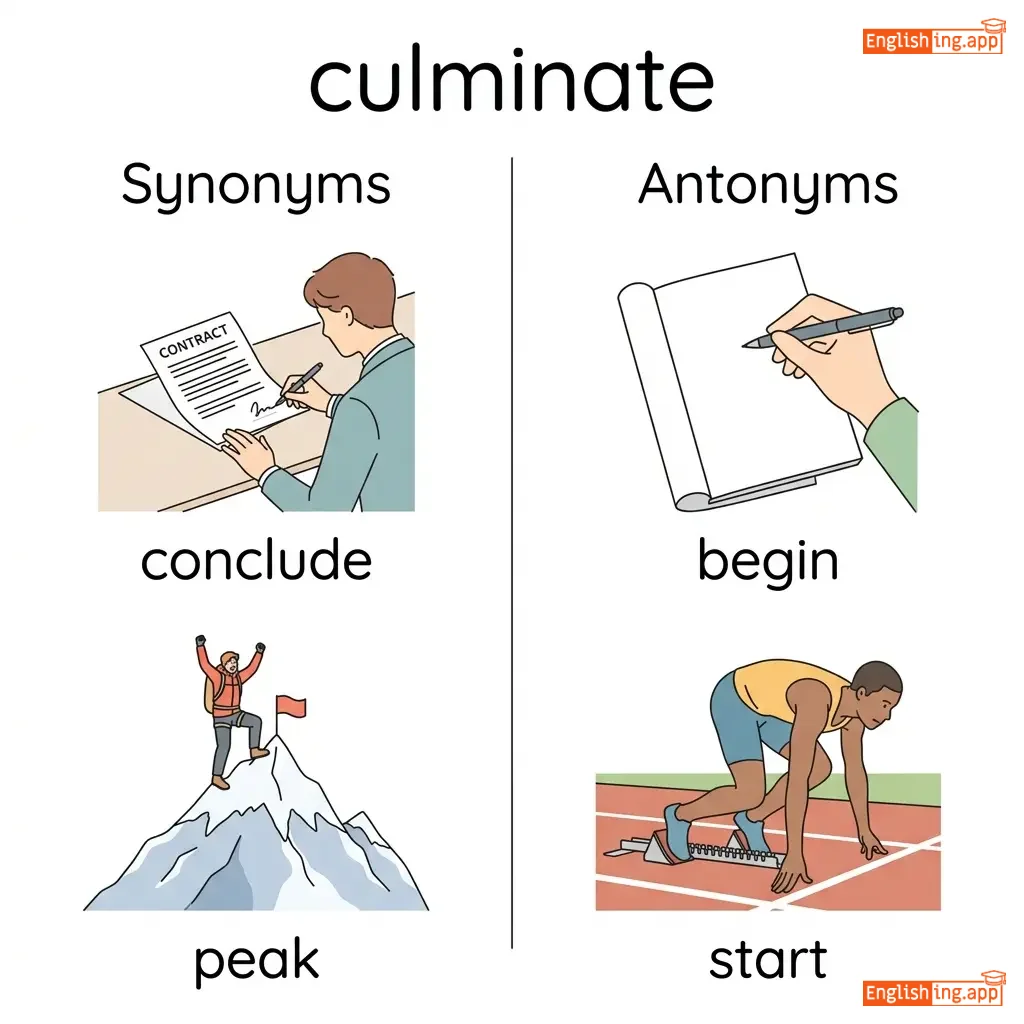
conclude, peak, climax, result, end
••••••
|
begin, start, initiate
••••••
|
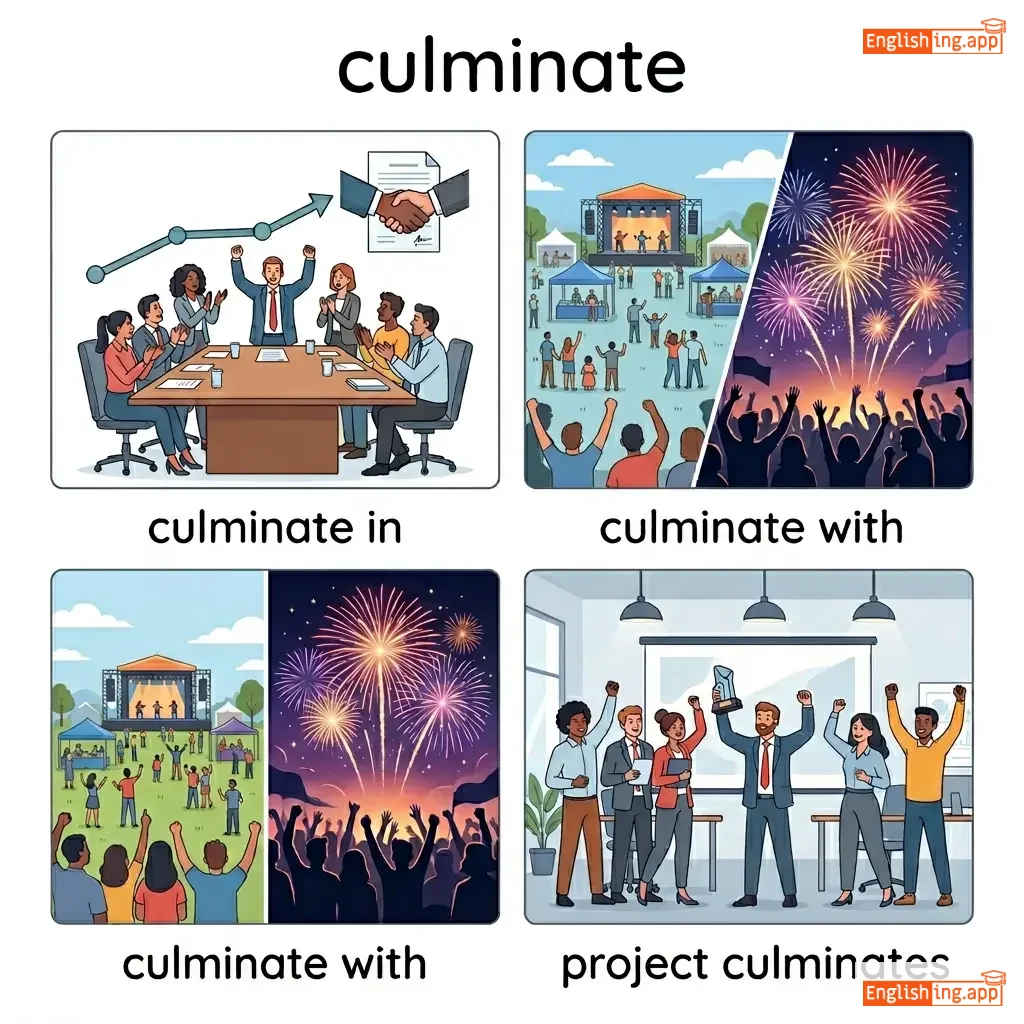
culminate in, culminate with, project culminates, efforts culminate
••••••
|
Culminate 就是达到顶点 - 终极目标!
••••••
|
|
#2060
✂️
|
/kʌl/
verb
••••••
|
- •••••• | - •••••• |
culled
••••••
|
culled
••••••
|
culls
••••••
|
culling
••••••
|
to select or remove from a larger group, often to reduce numbers
••••••
|
The farmers decided to cull the sick animals from the herd. |
- •••••• |
cull the herd |
to reduce a group by removing weaker members
••••••
|
- •••••• |
select, choose, pick, remove, eliminate
••••••
|
gather, accumulate, include
••••••
|
cull animals, cull list, cull ideas, cull population
••••••
|
No •••••• |
|
#2061
🍳
|
/ˈkʌl.ɪ.nɛr.i/
adjective
(厨房的)
••••••
|
|
烹饪的
pēngrèn de
••••••
|
- •••••• | - •••••• | - •••••• | - •••••• |
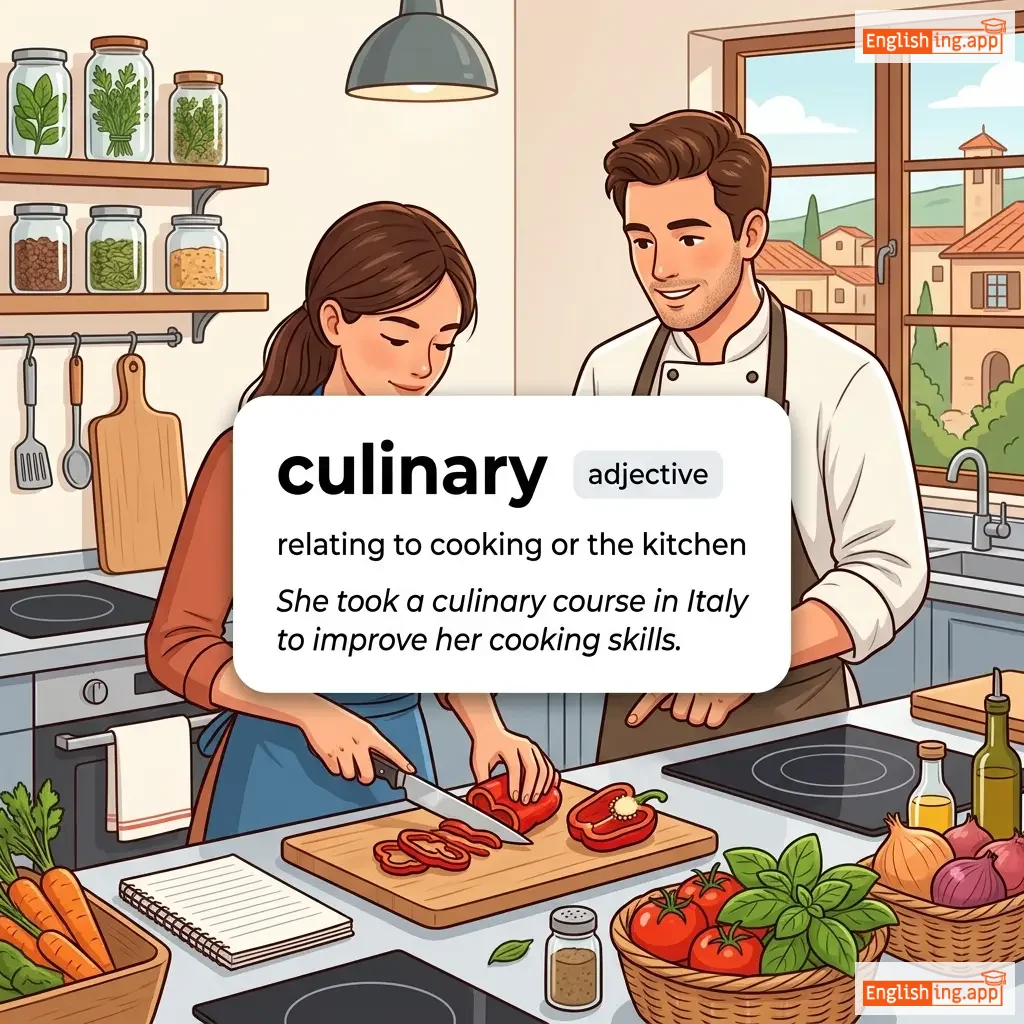
relating to cooking or the kitchen
••••••
|
She took a culinary course in Italy to improve her cooking skills.
她在意大利参加了一个烹饪课程,以提高她的烹饪技能。
••••••
|
她在意大利参加了一个烹饪课程,以提高她的烹饪技能。
Tā zài Yìdàlì cānjiāle yīgè pēngrèn kèchéng, yǐ tígāo tā de pēngrèn jìnéng.
••••••
|
- •••••• | - •••••• | - •••••• |
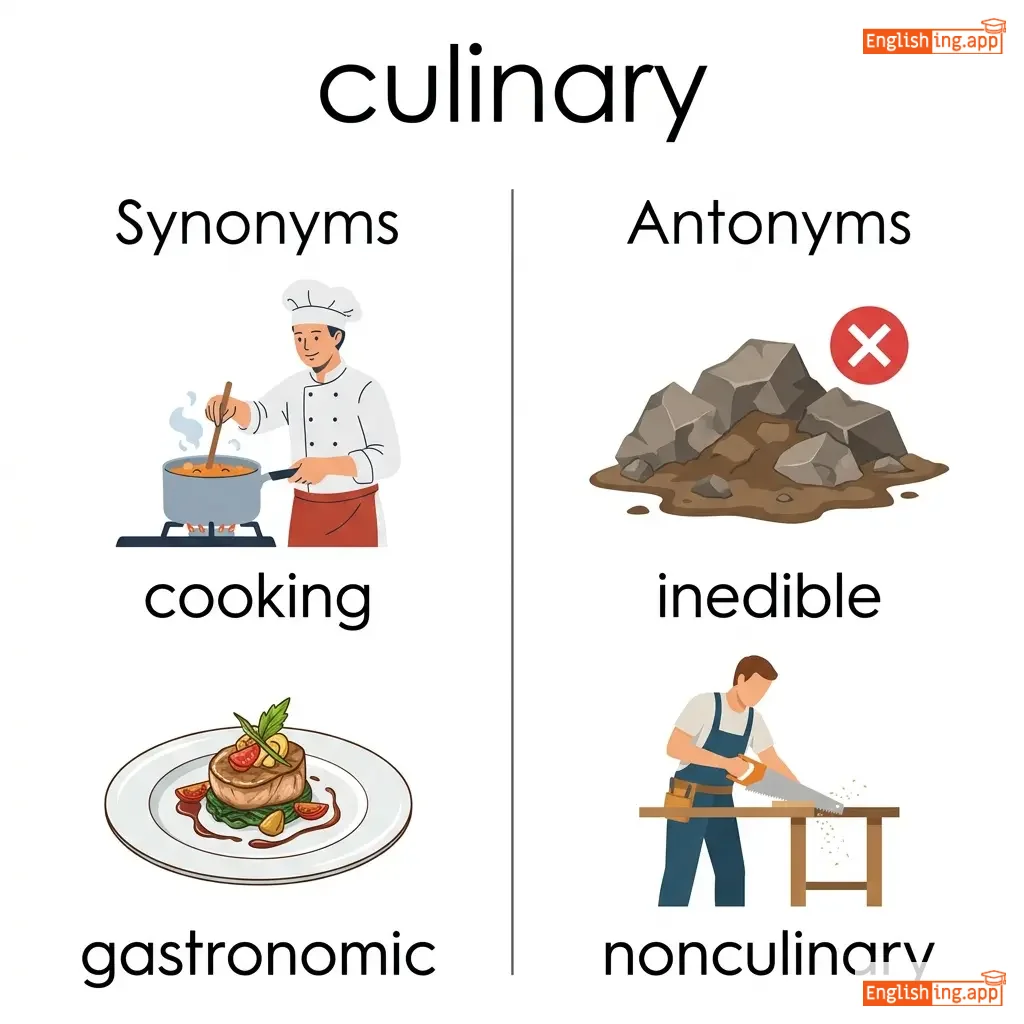
cooking, gastronomic, dietary, kitchen-related
••••••
|
inedible, nonculinary
••••••
|
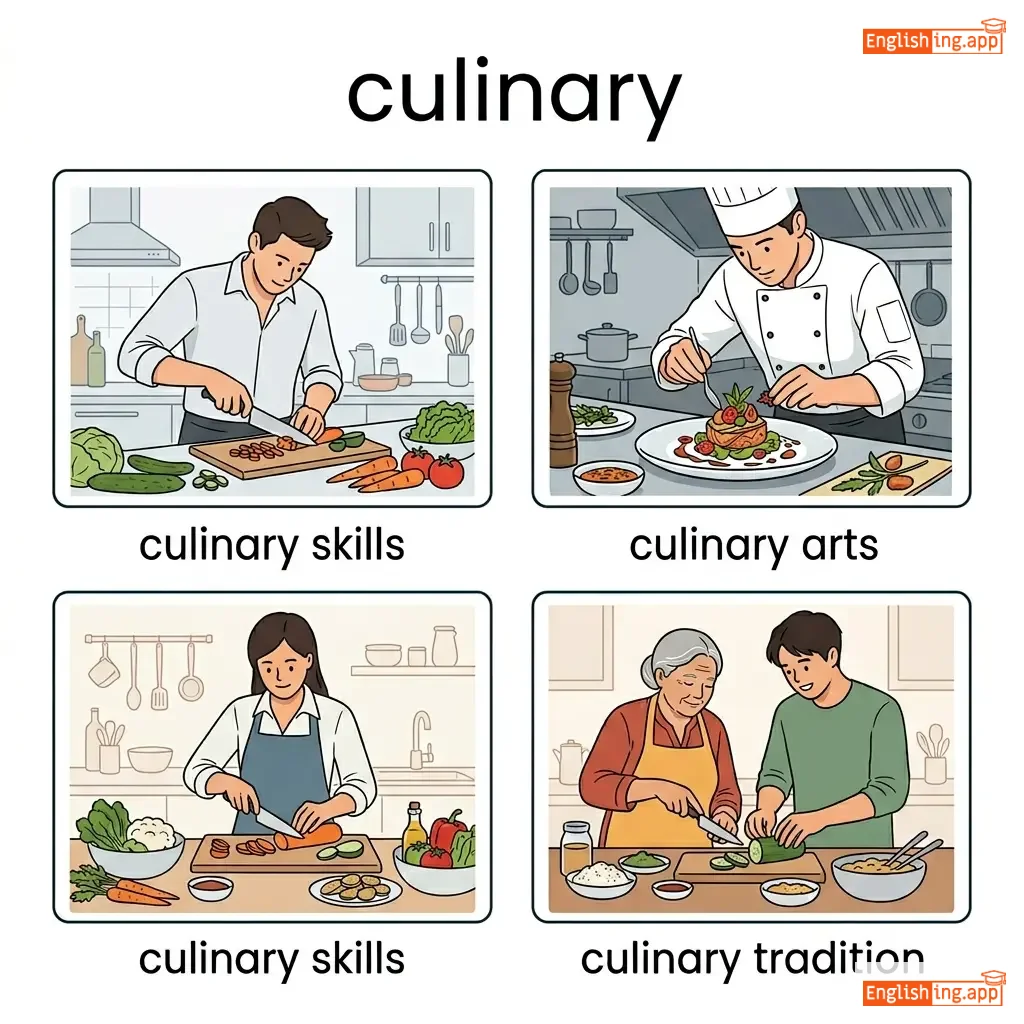
culinary skills, culinary arts, culinary tradition, culinary delight
••••••
|
Culinary 在中文是与厨房或烹饪相关的一切。
••••••
|
|
#2062
🚧
|
/ˌkʌl də ˈsæk/
noun
(kul de sak)
••••••
|
- •••••• |
死胡同
si hutong
••••••
|
- •••••• | - •••••• | - •••••• | - •••••• |
A street or passage closed at one end; a dead end.
••••••
|
They bought a house at the end of a quiet cul de sac. |
他们在一个安静的死胡同的尽头买了一栋房子。
Tamen zai yi ge anjing de si hutong de jintou mai le yi dong fangzi.
••••••
|
- •••••• | - •••••• | - •••••• |
dead end, blind alley, close, no-through road
••••••
|
highway, open road, main road
••••••
|
quiet cul de sac, residential cul de sac, end of cul de sac, cul de sac house
••••••
|
Cul de sac 就像一个袋子(sack)一样在街道的尽头封闭。
••••••
|
|
#2063
🍝
|
/kwɪˈziːn/
noun
(kwizin)
••••••
|
- •••••• |
美食
meishi
••••••
|
- •••••• | - •••••• | - •••••• | - •••••• |
A style or method of cooking, especially characteristic of a particular country or region.
••••••
|
Italian cuisine is famous all over the world.
意大利美食在全世界都很有名。
••••••
|
意大利美食在全世界都很有名。
Yidali meishi zai quan shijie dou hen you ming.
••••••
|
- •••••• | - •••••• | - •••••• |
food, cookery, gastronomy, fare, diet
••••••
|
fast food, junk food
••••••
|
Italian cuisine, French cuisine, traditional cuisine, local cuisine
••••••
|
Cuisine在中文是美食,表示各种国家的独特烹饪方法。
••••••
|
|
#2064
🎭
|
/kjuː/
noun/verb
(kiu)
••••••
|
- •••••• |
信号
xinhao
••••••
|
cued
kiud
••••••
|
cued
kiud
••••••
|
cues
kius
••••••
|
cueing
kiuing
••••••
|
A signal or prompt for action; to give a signal.
••••••
|
The actor waited for his cue before entering the stage.
演员在上台前等待他的信号。
••••••
|
演员在上台前等待他的信号。
Yǎnyuán zài shàngtái qián děngdài tā de xìnhào.
••••••
|
on cue
准时
••••••
|
At exactly the right moment, as expected.
••••••
|
准时
zhǔnshí
••••••
|
signal, prompt, hint, indication, trigger
••••••
|
silence, ignore, neglect
••••••
|
take a cue, give a cue, wait for a cue, cue card
••••••
|
Cue表示,队列(queue)开始——开始的信号。
••••••
|
|
#2065
🥢
|
/ˈkʌdʒ.əl/
noun/verb
(卡达杰尔)
••••••
|
- •••••• |
棍棒
gùn bàng
••••••
|
cudgeled
卡达杰尔了
••••••
|
cudgeled
卡达杰尔了
••••••
|
cudgels
卡达杰尔
••••••
|
cudgeling
卡达杰尔ing
••••••
|
A short, thick stick used as a weapon; to beat with a cudgel.
••••••
|
The guard used a cudgel to chase away the thief.
警卫用卡达杰尔把小偷赶走。
••••••
|
警卫用棍棒把小偷赶走。
Jǐngwèi yòng gùn bàng bǎ xiǎotōu gǎn zǒu.
••••••
|
take up the cudgels
拿起卡达杰尔
••••••
|
To defend or support someone or something strongly.
••••••
|
站在某一方
zhàn zài mǒu yī fāng
••••••
|
club, stick, baton, staff, bludgeon
••••••
|
caress, protect, support
••••••
|
wooden cudgel, heavy cudgel, wield a cudgel, take up the cudgels
••••••
|
Cudgel意味着cud (棍) + gel (打) = 用棍子打。
••••••
|
|
#2066
📦
|
/ˈkjuː.bɪ.kəl/
noun
(kjuːbɪkəl)
••••••
|
- •••••• |
办公隔间
bàngōng géjiān
••••••
|
- •••••• | - •••••• | - •••••• | - •••••• |
A small partitioned-off area of a room, typically in an office.
••••••
|
She works in a cubicle with three other colleagues. |
她和另外三位同事在一个办公隔间里工作。
Tā hé lìngwài sān wèi tóngshì zài yīgè bàngōng géjiān lǐ gōngzuò.
••••••
|
- •••••• | - •••••• | - •••••• |
booth, stall, cell, workspace, compartment
••••••
|
hall, open space, chamber
••••••
|
office cubicle, cubicle wall, small cubicle, work cubicle
••••••
|
办公隔间是工作空间的'隔间'。
••••••
|
|
#2067
💎
|
/ˈkrɪstəlaɪz/
verb
(krist-a-lái-z)
••••••
|
- •••••• |
结晶
jie-jing
••••••
|
crystallized
krist-a-lái-zuo
••••••
|
crystallized
krist-a-lái-zuo
••••••
|
crystallizes
krist-a-lái-zhi
••••••
|
crystallizing
krist-a-lái-xing
••••••
|
to form crystals; to make an idea or plan clear and definite
••••••
|
Her vague thoughts began to crystallize into a solid plan.
她模糊的思绪开始在一个明确的计划中结晶。
••••••
|
她模糊的思绪开始在一个明确的计划中结晶。
Ta mo-hu de si-xu kai-shi zai yi ge ming-que de ji-hua zhong jie-jing.
••••••
|
crystallize an idea
结晶一个想法
••••••
|
to make something clear and well-defined
••••••
|
使想法明确
Shi xiang-fa ming-que
••••••
|
solidify, clarify, materialize, shape
••••••
|
blur, confuse, dissolve
••••••
|
crystallize into, crystallize an idea, crystallize thoughts
••••••
|
像水晶一样清晰,结晶起来 💎
••••••
|
|
#2068
🔐
|
/ˈkrɪptəɡræm/
noun
(kè lì tè gē lā mǔ)
••••••
|
- •••••• |
秘密代码
mìmì dàimǎ
••••••
|
- •••••• | - •••••• | - •••••• | - •••••• |
a text written in code or cipher
••••••
|
The detective solved the cryptogram hidden in the letter. |
侦探解开了信中隐藏的密码图。
Zhēntàn jiěkāile xìn zhōng yǐncáng de mìmǎ tú.
••••••
|
- •••••• | - •••••• | - •••••• |
cipher, code, puzzle, enigma
••••••
|
plain text, clarity
••••••
|
solve cryptogram, hidden cryptogram, puzzle cryptogram
••••••
|
CRYPTO + GRAM = 秘密代码 🔐
••••••
|
|
#2069
🕵️
|
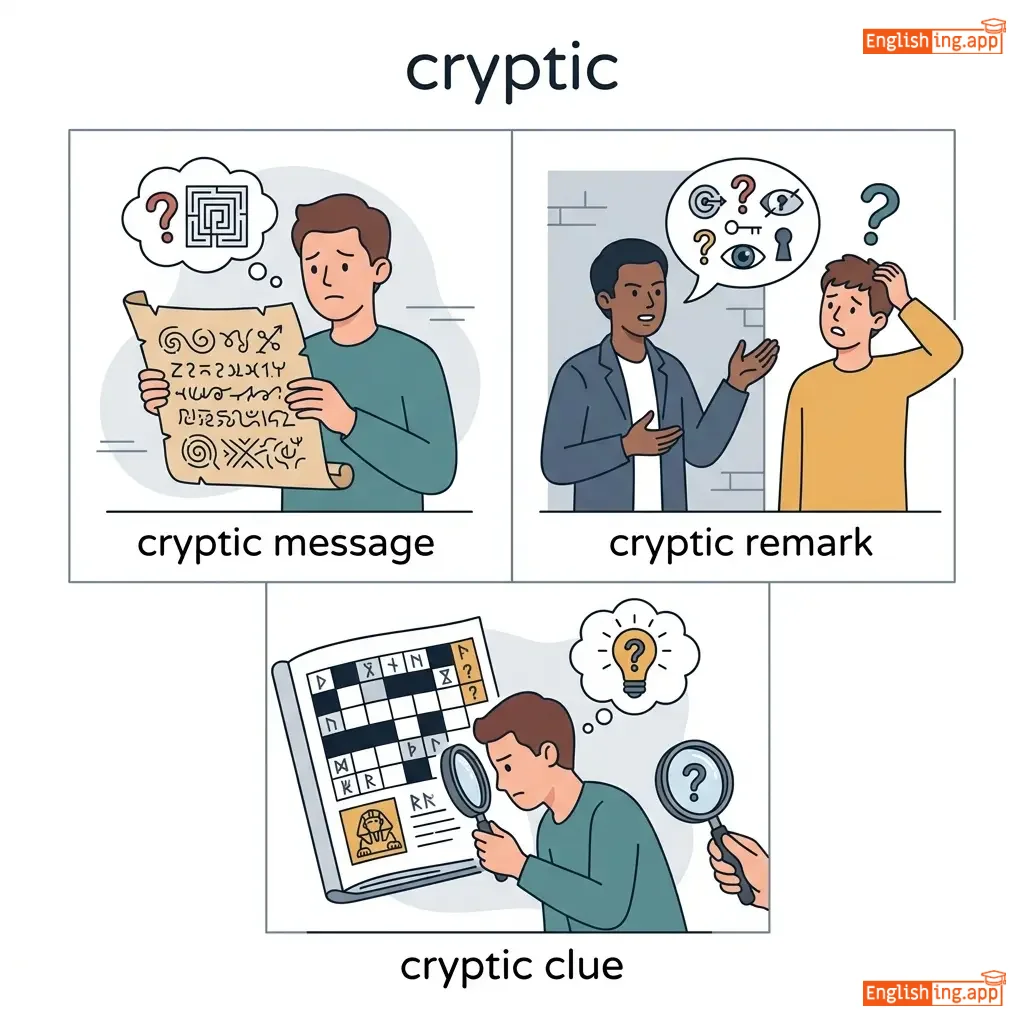
/ˈkrɪptɪk/
adjective
(krìptìk)
••••••
|
|
神秘
shénmì
••••••
|
- •••••• | - •••••• | - •••••• | - •••••• |
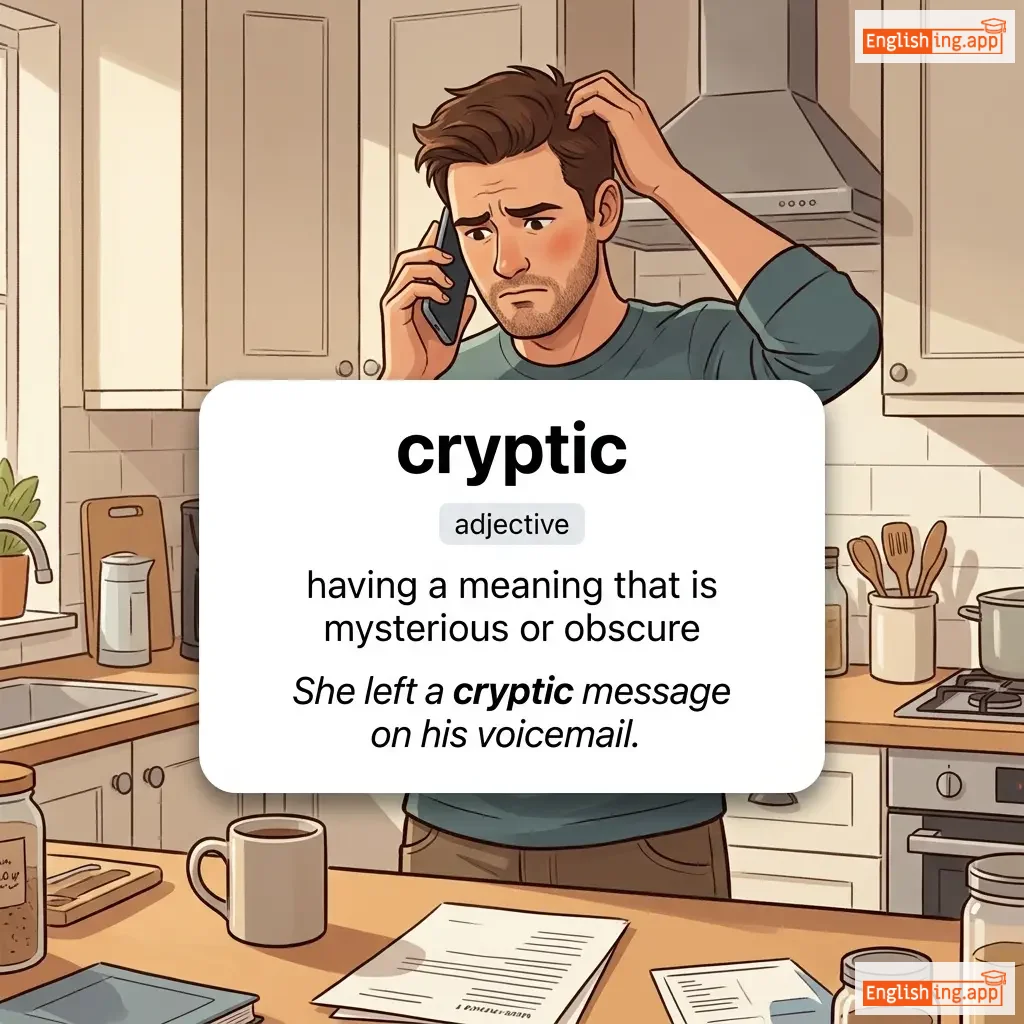
having a meaning that is mysterious or obscure
••••••
|
She left a cryptic message on his voicemail.
她在他的语音邮件中留下了一个神秘的信息。
••••••
|
她在他的语音邮件中留下了一个神秘的信息。
Tā zài tā de yǔyīn yóuxiàng zhōng liú xià le yīgè shénmì de xìnxī.
••••••
|
cryptic remark
神秘的评论
••••••
|
an intentionally vague or puzzling statement
••••••
|
神秘的评论
shénmì de pínglùn
••••••
|
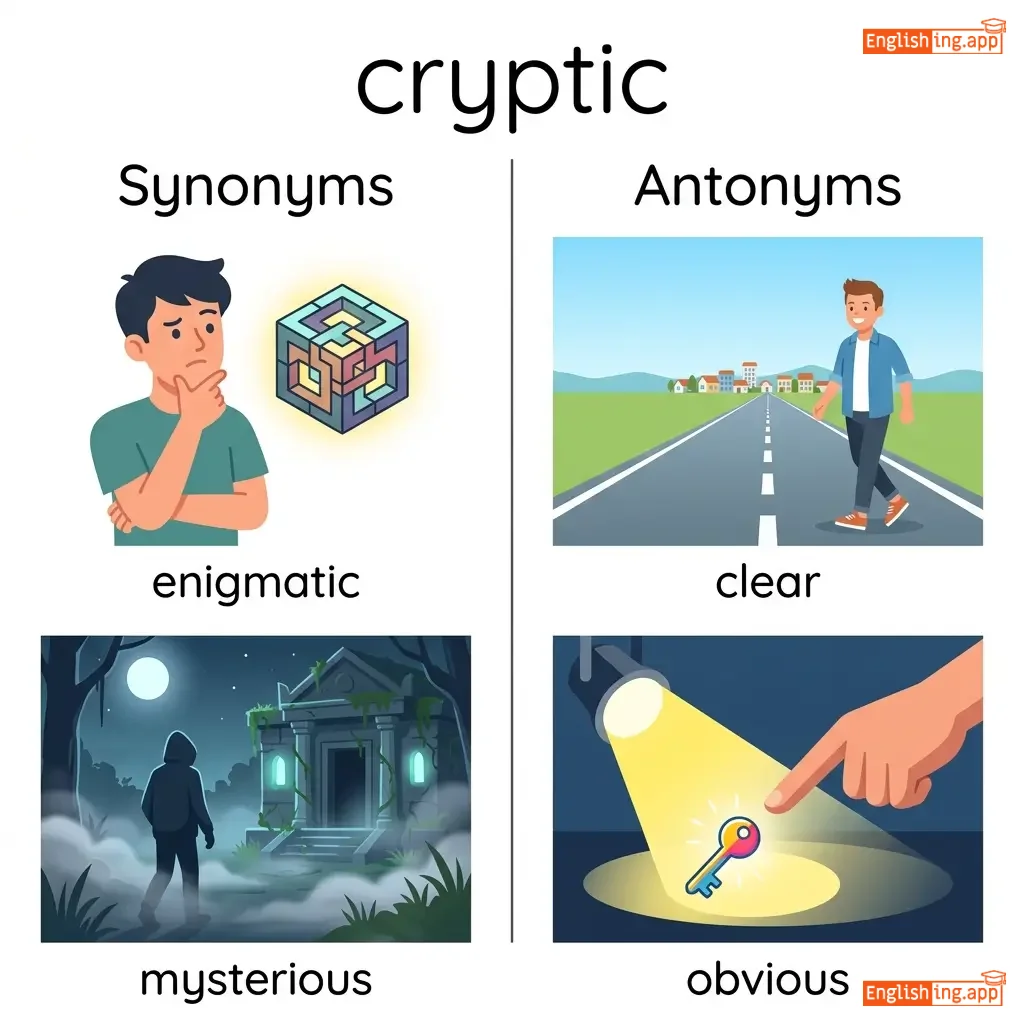
enigmatic, mysterious, obscure, puzzling, ambiguous
••••••
|
clear, obvious, straightforward
••••••
|
cryptic message, cryptic remark, cryptic clue
••••••
|
CRYPTIC 如同谜语或加密信息。
••••••
|
|
#2070
⚰️
|
/krɪpt/
noun
(krɪpt)
••••••
|
- •••••• |
墓室
mùshì
••••••
|
- •••••• | - •••••• | - •••••• | - •••••• |
an underground chamber, especially one beneath a church, used as a burial place
••••••
|
The tourists explored the ancient crypt beneath the cathedral.
游客们探索了大教堂下的古老地下室。
••••••
|
游客们探索了大教堂下的古老地下室。
Yóukè men tàn suǒle dà jiàotáng xià de gǔlǎo dìxiàshì.
••••••
|
- •••••• | - •••••• | - •••••• |
tomb, vault, catacomb, mausoleum
••••••
|
open ground, surface
••••••
|
ancient crypt, church crypt, burial crypt
••••••
|
墓室是埋葬地方,记得墓地⚰️
••••••
|
Vocabulary Quiz
Test your vocabulary by matching words with their translations or meanings.
Login to take the quiz
Comments (0)
Share your thoughts and join the discussion.
Join the discussion by logging in
Login to CommentNo comments yet
Be the first to share your thoughts!