



Swipe left or right, or use the buttons. Tap image to zoom.
例句翻译
单词
Lesson 455Lesson 455 - 遮罩切换
|
表情符号
|
单词 | Images | 翻译 | 过去时 | 过去分词 | 第三人称单数 | 动名词 | 含义 | 例句 | 例句翻译 | 同义词 | 反义词 | 搭配词 | 助记符 |
|---|---|---|---|---|---|---|---|---|---|---|---|---|---|---|
|
#1
⚙️
|
/ˈsɛtʌp/
noun
(设置)
••••••
|
- •••••• |
设置
shezhi
••••••
|
- •••••• | - •••••• | - •••••• | - •••••• |
an arrangement of things or the way in which something is organized or prepared
••••••
|
The setup of the event took hours to complete. |
事件的设置花了几个小时完成。
Shìjiàn de shèzhì huāle jǐ gè xiǎoshí wánchéng.
••••••
|
arrangement, configuration, organization, system
••••••
|
disorganization, disorder
••••••
|
event setup, setup process, setup time
••••••
|
在设置之前,确保一切都已妥善安排。
••••••
|
|
#1
🔧
|
/ˈspɛʃəˌlaɪzd/
adjective
(speshálaizd)
••••••
|
- •••••• |
专门的
zhuānmén de
••••••
|
- •••••• | - •••••• | - •••••• | - •••••• |
designed or developed for a particular purpose or function
••••••
|
He has a specialized knowledge of ancient civilizations.
他对古代文明有专门的知识。
••••••
|
他对古代文明有专门的知识。
Tā duì gǔdài wénmíng yǒu zhuānmén de zhīshì.
••••••
|
specialist, specific, expert
••••••
|
general, broad
••••••
|
specialized knowledge, specialized equipment, specialized skills
••••••
|
Specialized 意味着为特定目标 (mùdì) 开发的。
••••••
|
|
#1
🌉
|
/spæn/
noun
(span)
••••••
|
- •••••• |
跨度
kuandu
••••••
|
- •••••• | - •••••• | - •••••• | - •••••• |
the full extent or length of something from one end to another
••••••
|
The bridge has a span of over 500 meters.
这座桥的跨度超过了500米。
••••••
|
这座桥的跨度超过了500米。
Zhezuo qiao de kuandu chao guo le 500 mi.
••••••
|
range, stretch, extent
••••••
|
shortness, limit
••••••
|
span of time, span of control, wide span
••••••
|
记住Span就像桥梁的跨度。
••••••
|
|
#1
📧
|
/spæm/
noun
(垃圾邮件)
••••••
|
- •••••• |
垃圾邮件
laji youjian
••••••
|
- •••••• | - •••••• | - •••••• | - •••••• |
unsolicited or unwanted electronic communication, typically in the form of email
••••••
|
My inbox is full of spam emails that I need to delete.
我的收件箱里满是垃圾邮件,我需要删除它们。
••••••
|
我的收件箱里满是垃圾邮件,我需要删除它们。
Wo de shoujiankuang li man shi laji youjian, wo xuyao shanchu tamen.
••••••
|
junk, unsolicited mail, nuisance
••••••
|
legitimate mail, valid communication
••••••
|
spam email, spam message, spam filter
••••••
|
垃圾邮件,删除它,清理邮箱!
••••••
|
|
#1
🎓
|
/ˈsɑːfmɔːr/
noun
(索夫莫尔)
••••••
|
- •••••• |
大二学生
dà èr xuéshēng
••••••
|
- •••••• | - •••••• | - •••••• | - •••••• |
a student in their second year of study at a university or high school
••••••
|
He’s a sophomore in college, studying computer science. |
他是大学的二年级学生,学习计算机科学。
Tā shì dàxué de èr nián jí xuéshēng, xuéxí jìsuànjī kēxué.
••••••
|
second-year student
••••••
|
freshman, junior, senior
••••••
|
sophomore year, sophomore student, sophomore class
••••••
|
Sophomore让人想到'第二年',就像在大学的第二年一样。
••••••
|
|
#1
🎤
|
/ˈsoʊloʊ/
adjective
(索罗)
••••••
|
- •••••• |
独奏
du zou
••••••
|
- •••••• | - •••••• | - •••••• | - •••••• |
performed by one person alone; a single performance
••••••
|
She decided to perform a solo dance at the talent show. |
她决定在才艺表演中做独舞表演。
Ta jue ding zai cai yi biao yan zhong zuo du wu biao yan.
••••••
|
individual, single, soloist
••••••
|
group, ensemble
••••••
|
solo performance, solo act, solo artist
••••••
|
Solo演奏,独自展现自己的才华。
••••••
|
|
#1
💥
|
/smæʃ/
verb
(smash)
••••••
|
- •••••• |
打破
dǎ pò
••••••
|
smashed
smashd
••••••
|
smashed
smashd
••••••
|
smashes
smashes
••••••
|
smashing
smashing
••••••
|
to break something into pieces violently
••••••
|
She smashed the glass in frustration.
她因沮喪而摔碎了玻璃。
••••••
|
她因沮喪而摔碎了玻璃。
Tā yīn jǔ sàng ér shuāi suì le bō lí.
••••••
|
break, crush, shatter, demolish
••••••
|
repair, fix, preserve
••••••
|
smash into, smash up, smash down
••••••
|
沮喪時,摔碎它!
••••••
|
|
#1
🗣️
|
/ˈsloʊɡən/
noun
••••••
|
- •••••• | - •••••• | - •••••• | - •••••• | - •••••• | - •••••• |
a short and memorable phrase used to promote a cause or product
••••••
|
The campaign used a powerful slogan to inspire people. |
- •••••• |
catchphrase, motto, tagline, saying
••••••
|
silence, quiet
••••••
|
campaign slogan, popular slogan, catchy slogan
••••••
|
No •••••• |
|
#1
🗡️
|
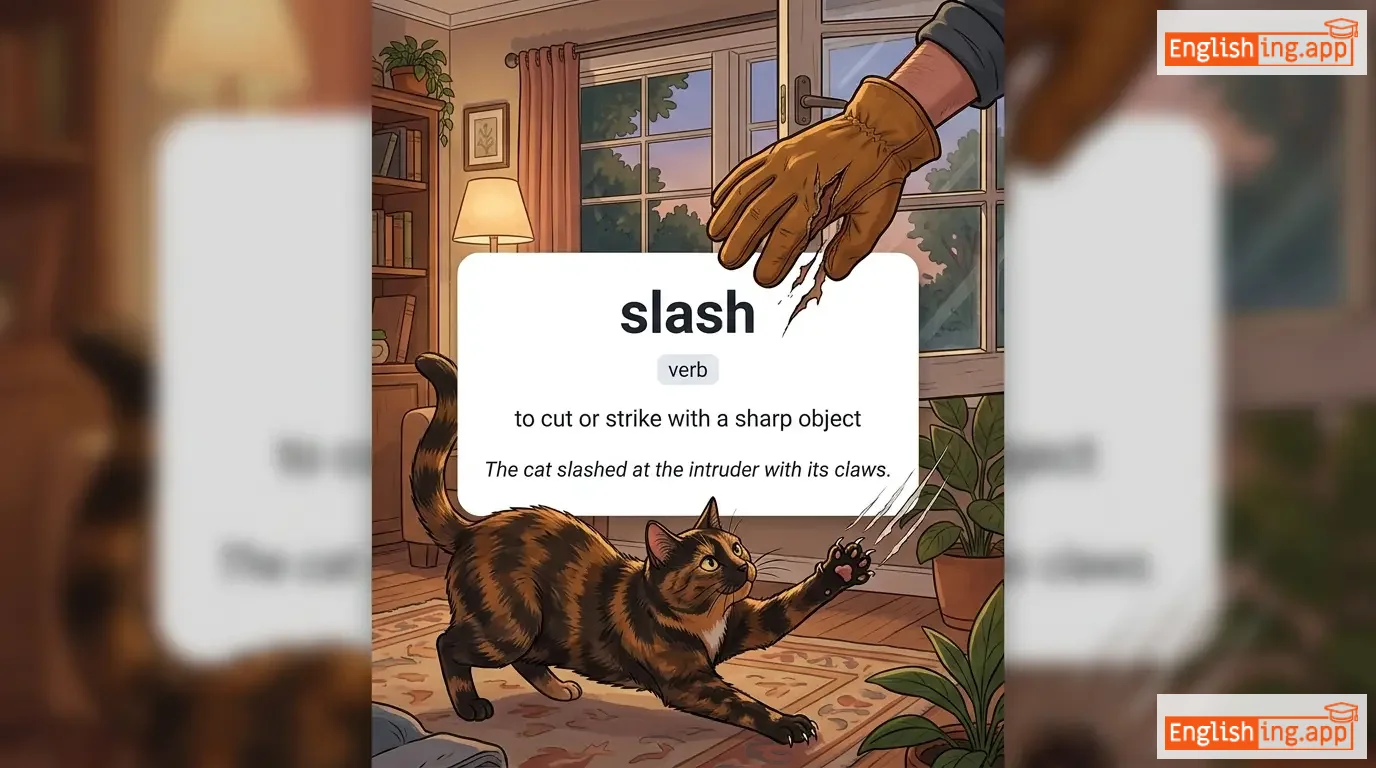
/slæʃ/
verb
(slash)
••••••
|
|
割
ge
••••••
|
slashed
slash de
••••••
|
slashed
slash de
••••••
|
slashes
slash es
••••••
|
slashing
slash ing
••••••
|
to cut or strike with a sharp object
••••••
|
The cat slashed at the intruder with its claws.
猫用爪子冲着入侵者劈砍。
••••••
|
猫用爪子向入侵者劈砍。
Māo yòng zhǎozi xiàng rùqīn zhě pī kǎn.
••••••
|
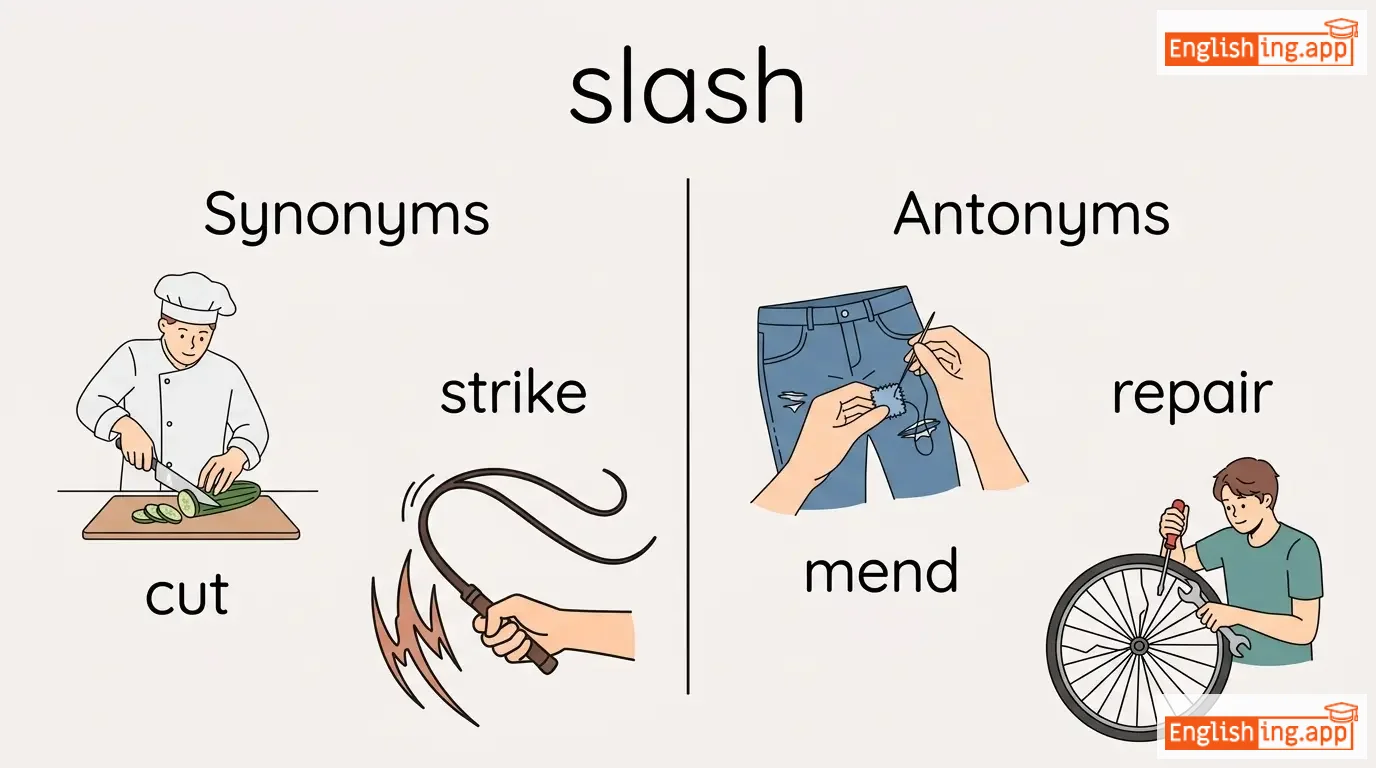
cut, strike, slice, hack
••••••
|
mend, repair, fix
••••••
|
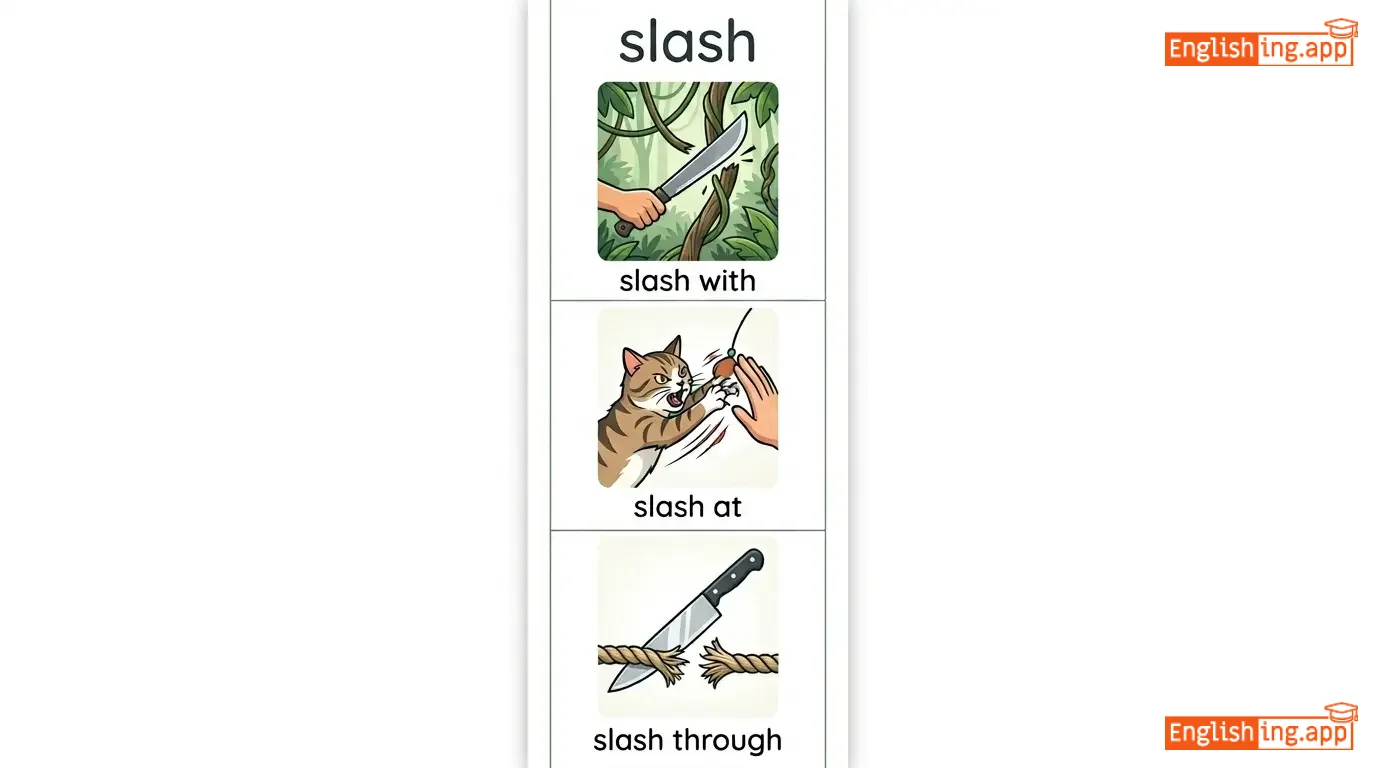
slash with, slash at, slash through
••••••
|
用割刀劈砍 (ge)
••••••
|
|
#1
✏️
|
/skɛtʃ/
noun
(sketch)
••••••
|
- •••••• |
素描
sumiao
••••••
|
- •••••• | - •••••• | - •••••• | - •••••• |
a simple, rough drawing or outline
••••••
|
He made a quick sketch of the landscape.
他画了一个快速的风景草图。
••••••
|
他画了一个快速的风景素描。
Ta hua le yige kuaisu de fengjing sumiao.
••••••
|
drawing, outline, draft, blueprint
••••••
|
finished work, masterpiece
••••••
|
quick sketch, pencil sketch, rough sketch
••••••
|
越简单越素描 (sumiao)
••••••
|
|
#1
📍
|
/ˈsɪtʃueɪtɪd/
adjective
(sɪtʃuˈeɪtɪd)
••••••
|
- •••••• |
位于
wei yu
••••••
|
- •••••• | - •••••• | - •••••• | - •••••• |
located in a particular place or position
••••••
|
The hotel is situated near the beach.
酒店位于海滩附近。
••••••
|
酒店位于海滩附近。
Jiudian wei yu haitan fujin.
••••••
|
located, positioned, placed, found
••••••
|
lost, misplaced, absent
••••••
|
situated near, situated in, centrally situated
••••••
|
酒店位于海滩附近,景色迷人。
••••••
|
|
#1
🎮
|
/ˌsɪmjuˈleɪʃən/
noun
(模拟)
••••••
|
- •••••• |
模拟
mó nǐ
••••••
|
- •••••• | - •••••• | - •••••• | - •••••• |
the imitation of a situation or process
••••••
|
The simulation helped the students understand the complex theory. |
模拟帮助学生理解复杂的理论。
Mónǐ bāngzhù xuéshēng lǐjiě fùzá de lǐlùn.
••••••
|
imitation, modeling, reproduction, emulation
••••••
|
reality, actuality
••••••
|
simulation model, simulation game, flight simulation
••••••
|
模拟即是对某事物的模仿
••••••
|
|
#1
😱
|
/ˈʃɒkɪŋ/
adjective
(shocking)
••••••
|
- •••••• |
令人震惊的
ling ren zhen jing de
••••••
|
- •••••• | - •••••• | - •••••• | - •••••• |
causing surprise or disbelief; startling
••••••
|
The news of the accident was shocking to everyone. |
事故的消息令所有人震惊。
Shigu de xiaoxi ling suoyouren zhenjing.
••••••
|
startling, surprising, astonishing, unexpected
••••••
|
expected, unsurprising
••••••
|
shocking news, shocking incident, shocking revelation
••••••
|
震惊的东西就是让你震惊的
••••••
|
|
#1
🚢
|
/ˈʃɪpɪŋ/
noun
(ˈʃɪpɪŋ)
••••••
|
- •••••• |
运输
yunshu
••••••
|
- •••••• | - •••••• | - •••••• | - •••••• |
the process of transporting goods
••••••
|
The shipping of the products was delayed due to weather conditions. |
由于天气原因,产品的运输被延迟了。
Yóuyú tiānqì yuányīn, chǎnpǐn de yùnshū bèi yánchíle.
••••••
|
delivery, transportation, freight, dispatch
••••••
|
receiving, reception
••••••
|
shipping company, international shipping, shipping cost
••••••
|
Shipping意味着通过海洋或陆路运输商品
••••••
|
|
#1
🛠️
|
/ʃeɪpt/
adjective
(ʃeɪpt)
••••••
|
- •••••• |
成形的
chengxing de
••••••
|
- •••••• | - •••••• | - •••••• | - •••••• |
having a particular form or appearance
••••••
|
The sculpture was shaped like a human figure. |
雕塑被塑造成一个人形。
Diaosu bei sushao chengwei yige renxing.
••••••
|
formed, molded, structured, sculpted
••••••
|
unshaped, formless
••••••
|
shaped like, well-shaped, beautifully shaped
••••••
|
成形的意味着有特定形状
••••••
|
|
#1
❌
|
/rɪˈdʒɛkʃən/
noun
(rì jiékè shēn)
••••••
|
- •••••• |
拒绝
jùjué
••••••
|
- •••••• | - •••••• | - •••••• | - •••••• |
the action of refusing or dismissing something or someone
••••••
|
Her rejection of the offer surprised everyone. |
她拒绝了这个提议,令所有人吃惊。
Tā jùjué le zhège tíyì, lìng suǒyǒu rén chījīng.
••••••
|
refusal, denial, dismissal, veto
••••••
|
acceptance, approval, approval
••••••
|
rejection of offer, rejection letter, rejection of idea
••••••
|
Rejection is saying 'no' when it’s the best option to move forward.
••••••
|
|
#1
🔄
|
/rəʊˈteɪʃən/
noun
(róu-téi-shēn)
••••••
|
- •••••• |
旋转
xuánzhuǎn
••••••
|
- •••••• | - •••••• | - •••••• | - •••••• |
the action of rotating or turning something around a center or axis
••••••
|
The rotation of the earth around the sun causes seasons. |
地球绕太阳的旋转导致季节变化。
Dìqiú rào tàiyáng de xuánzhuǎn dǎozhì jìjié biànhuà.
••••••
|
turning, spinning, revolving, gyration
••••••
|
stillness, stagnation
••••••
|
rotation of the earth, rotation of crops, job rotation
••••••
|
Rotation makes things turn around—'R' for Revolving!
••••••
|
|
#1
💣
|
/ˈrɒbəɹi/
noun
(rɔbəri)
••••••
|
- •••••• |
抢劫
qiǎngjié
••••••
|
- •••••• | - •••••• | - •••••• | - •••••• |
the crime of stealing from someone or somewhere using force or threat
••••••
|
The police are investigating the robbery at the local store. |
警方正在调查当地商店的抢劫事件。
Jǐngfāng zhèngzài diàochá dāngdì shāngdiàn de qiǎngjié shìjiàn.
••••••
|
theft, burglary, heist, mugging
••••••
|
donation, charity
••••••
|
armed robbery, robbery attempt, robbery suspect
••••••
|
Robbers commit robbery—'Q' is for '抢劫' in Chinese.
••••••
|
|
#1
💰
|
/rɒb/
verb
(罗布)
••••••
|
- •••••• |
抢劫
qiǎngjié
••••••
|
robbed
罗布德
••••••
|
robbed
罗布德
••••••
|
robs
罗布斯
••••••
|
robbing
罗布ing
••••••
|
to take something by force or threat, especially from a person or place
••••••
|
He was caught trying to rob the bank.
他在试图抢劫银行时被抓住了。
••••••
|
他在试图抢劫银行时被抓住了。
Tā zài shìtú qiǎngjié yínháng shí bèi zhuāzhùle.
••••••
|
steal, plunder, burgle, loot
••••••
|
give, donate
••••••
|
rob a bank, rob a person, rob a store
••••••
|
Robbers 'R'each for loot—robbed 'R'iches in their grip.
••••••
|
|
#1
🔄
|
/rɪˈvaɪvəl/
noun
(rīwáiwǎl)
••••••
|
- •••••• |
复兴
fuxing
••••••
|
- •••••• | - •••••• | - •••••• | - •••••• |
an improvement in the condition or strength of something
••••••
|
The revival of the old traditions brought a sense of nostalgia. |
老传统的复兴带来了怀旧的感觉。
Lao chuántǒng de fùxīng dàilái le huáijiù de gǎn jué.
••••••
|
restoration, rejuvenation, renewal, resurgence
••••••
|
decline, deterioration, collapse
••••••
|
revival of interest, revival of culture, cultural revival
••••••
|
通过 '复兴' 让过去复活,就像重振古老的传统一样!
••••••
|
|
#1
🔄
|
/rɪˈvɪʒən/
noun
(修订)
••••••
|
- •••••• |
修订
xiudìng
••••••
|
- •••••• | - •••••• | - •••••• | - •••••• |
the action of revising or updating something, typically in preparation for something else
••••••
|
She made some last-minute revisions to her report before submitting it. |
她在提交报告前做了一些最后的修订。
Ta zai tijiao baogao qian zuo le yixie zuihou de xiuding.
••••••
|
edit, update, modification, adjustment
••••••
|
unchanged, constant
••••••
|
revision notes, revision session, make revisions
••••••
|
修订是在最后时刻修改报告的一种方式。
••••••
|
|
#1
🛠️
|
/ˌrɛstəˈreɪʃən/
noun
(修复)
••••••
|
|
修复
xiūfù
••••••
|
- •••••• | - •••••• | - •••••• | - •••••• |
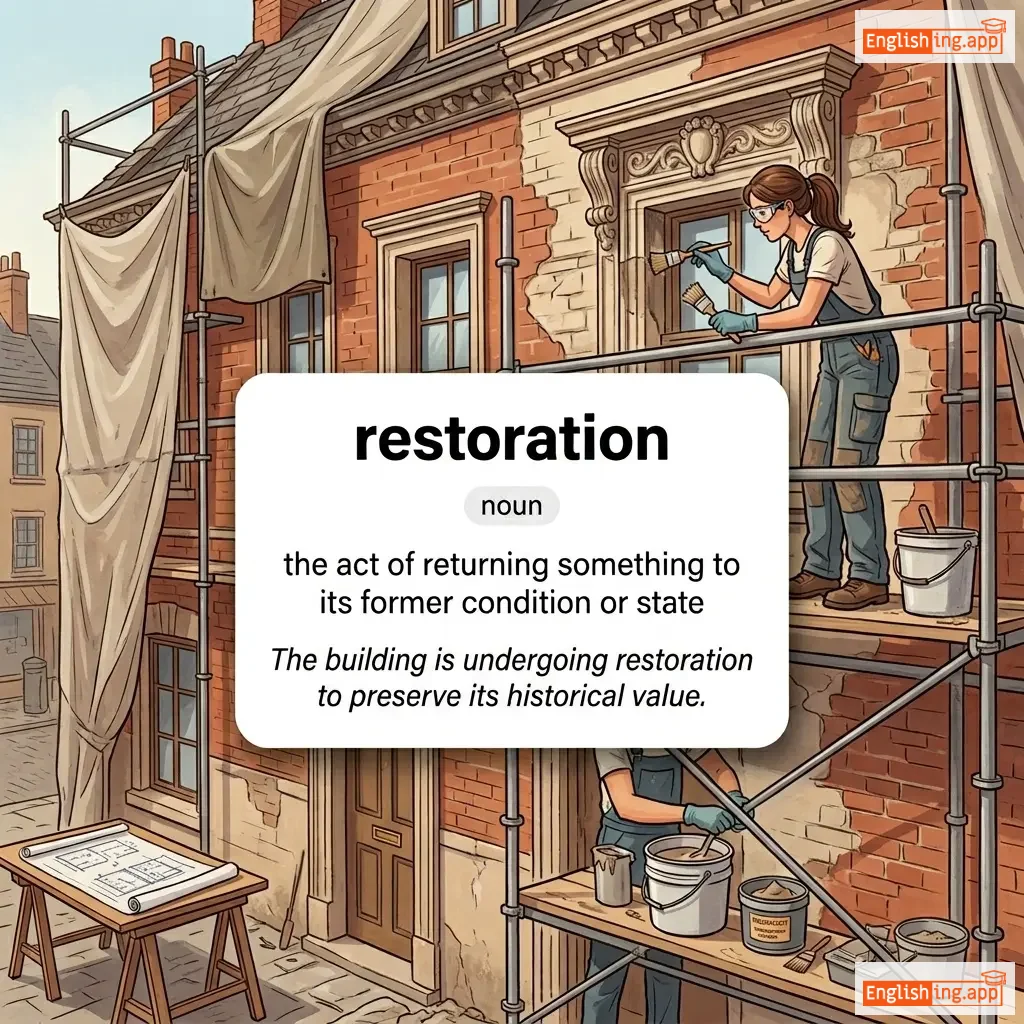
the act of returning something to its former condition or state
••••••
|
The building is undergoing restoration to preserve its historical value. |
这座建筑正在进行修复,以保护其历史价值。
Zhè zuò jiànzhú zhèngzài jìnxíng xiūfù, yǐ bǎohù qí lìshǐ jiàzhí.
••••••
|
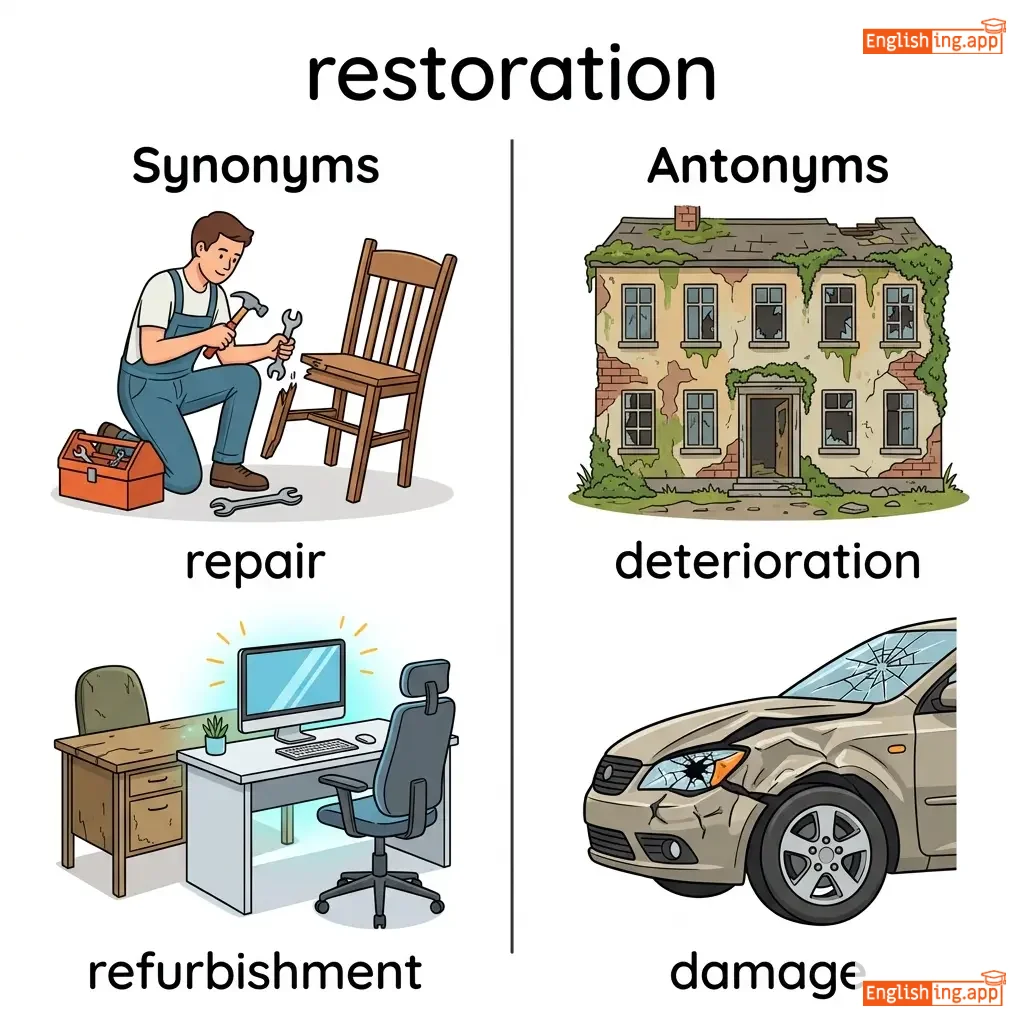
repair, refurbishment, renewal, revival
••••••
|
deterioration, damage, destruction
••••••
|
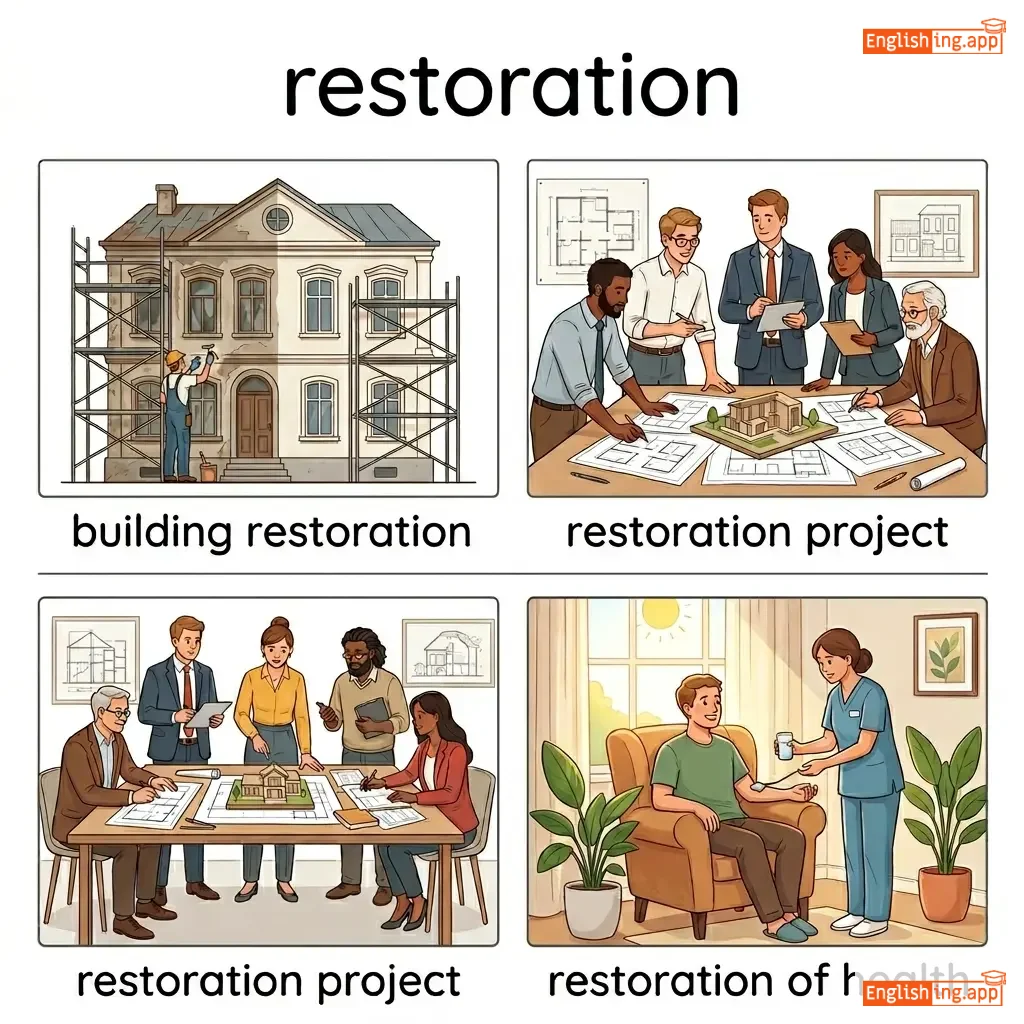
building restoration, restoration project, restoration of health
••••••
|
修复 sounds like restoration – it's the act of returning something to its original form.
••••••
|
|
#1
🔄
|
/rɪˈspɛktɪv/
adjective
(rɛspɛktɪv)
••••••
|
- •••••• |
各自的
gèzì de
••••••
|
- •••••• | - •••••• | - •••••• | - •••••• |
belonging or relating separately to each of the people or things already mentioned
••••••
|
The students were in their respective rooms.
学生们各自在各自的房间里。
••••••
|
学生们各自在各自的房间里。
Xuéshēngmen gèzì zài gèzì de fángjiān lǐ.
••••••
|
individual, separate, own, distinct
••••••
|
shared, collective, common
••••••
|
respective responsibilities, respective positions, respective roles
••••••
|
Respective 和 'respect' 发音相似 - 每个人都有自己的 '尊重' (房间,任务)。
••••••
|
|
#1
🏠
|
/rɪˈzaɪd/
verb
(瑞赛德)
••••••
|
- •••••• |
居住
jūzhù
••••••
|
resided
瑞赛德德
••••••
|
resided
瑞赛德德
••••••
|
resides
瑞赛德斯
••••••
|
residing
瑞赛丁
••••••
|
to live or dwell in a particular place
••••••
|
They reside in a large house near the river.
他们住在河边的一座大房子里。
••••••
|
他们住在河边的一座大房子里。
Tāmen zhù zài hébiān de yīzuò dà fángzi lǐ.
••••••
|
live, dwell, inhabit, stay
••••••
|
leave, depart, move
••••••
|
reside in, reside with, permanently reside
••••••
|
Reside rhymes with 'side' - to reside somewhere is to stay on that side.
••••••
|
|
#1
🌟
|
/rɪˈnaʊnd/
adjective
(rɪˈnaʊnd)
••••••
|
|
著名
zhùmíng
••••••
|
- •••••• | - •••••• | - •••••• | - •••••• |
famous or well-known for a particular skill or achievement
••••••
|
She is a renowned artist in the country.
她是国内著名的艺术家。
••••••
|
她是国内著名的艺术家。
Tā shì guónèi zhùmíng de yìshùjiā.
••••••
|
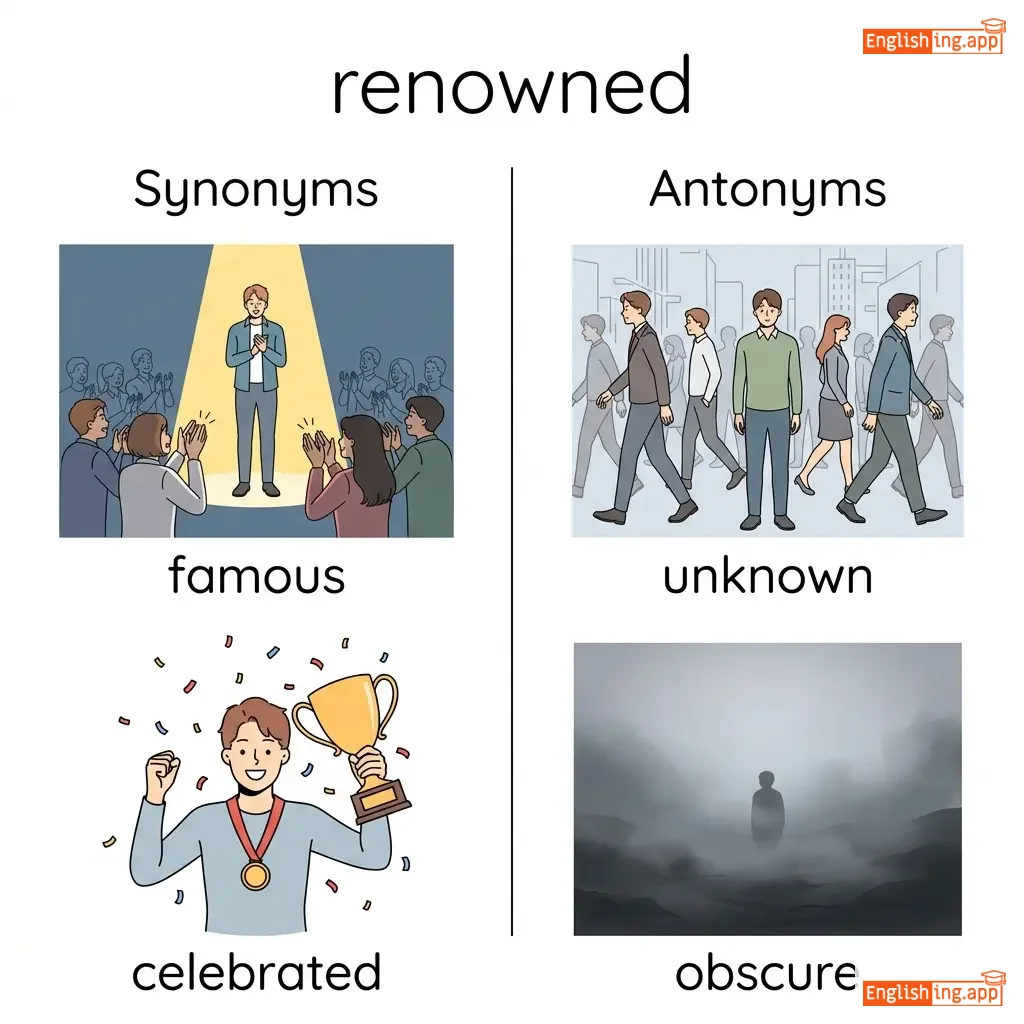
famous, celebrated, distinguished, acclaimed
••••••
|
unknown, obscure, anonymous
••••••
|
renowned author, renowned for, renowned artist, highly renowned
••••••
|
Renowned rhymes with 'known' - someone who's renowned is well-known.
••••••
|
|
#1
💊
|
/ˈrɛmɪdi/
noun
(雷梅迪)
••••••
|
- •••••• |
疗法
liaofa
••••••
|
- •••••• | - •••••• | - •••••• | - •••••• |
a treatment or solution for a problem or illness
••••••
|
The doctor prescribed a remedy for the cough. |
医生开了一种治疗咳嗽的疗法。
Yisheng kai le yizhong liaofa kesou de liaofa.
••••••
|
treatment, cure, solution, antidote
••••••
|
disease, problem, injury
••••••
|
home remedy, remedy for, effective remedy, herbal remedy
••••••
|
Remedy sounds like '疗法' - 我们使用疗法来治愈咳嗽。
••••••
|
|
#1
👏
|
/rɪˈmɑːrkəbli/
adverb
(rī-mǎ-kè-bù-lì)
••••••
|
- •••••• |
引人注目地
yǐn rén zhù mù dì
••••••
|
- •••••• | - •••••• | - •••••• | - •••••• |
in a way that is worthy of attention or notice; surprisingly
••••••
|
She did remarkably well in the competition. |
她在比赛中表现得引人注目。
Tā zài bǐsài zhōng biǎoxiàn dé yǐn rén zhù mù.
••••••
|
notably, extraordinarily, exceptionally, amazingly
••••••
|
unremarkably, ordinarily
••••••
|
remarkably good, remarkably well, remarkably strong
••••••
|
Remarkably is like 'remark' (re-marks) made in awe.
••••••
|
|
#1
💀
|
/rɪˈmeɪnz/
noun
(rìménsī)
••••••
|
- •••••• |
残留物
cánliúwù
••••••
|
- •••••• | - •••••• | - •••••• | - •••••• |
the parts, pieces, or substances that are left after the rest has been used or removed
••••••
|
The remains of the meal were left on the table. |
餐后剩余的食物被留在桌上。
Cānhòu shèngyú de shíwù bèi liú zài zhuō shàng.
••••••
|
leftovers, debris, remnants, fragments
••••••
|
whole, entirety, whole thing
••••••
|
remains of food, human remains, remains of the day
••••••
|
Remains are like 'remain' (cánliúwù) left after a meal.
••••••
|
|
#1
😌
|
/rɪˈliːvd/
adjective
(rɪˈliːvd)
••••••
|
- •••••• |
松了一口气
sōng le yī kǒu qì
••••••
|
- •••••• | - •••••• | - •••••• | - •••••• |
feeling happy and less worried after something stressful has been removed or resolved
••••••
|
She felt relieved after hearing the good news. |
听到好消息后,她感到松了一口气。
Tīng dào hǎo xiāoxī hòu, tā gǎndào sōng le yī kǒu qì.
••••••
|
comforted, relaxed, reassured, eased
••••••
|
worried, stressed, anxious
••••••
|
feel relieved, relieved to know, felt relieved
••••••
|
Relieved is like a 'relief' (releef) after a stressful day.
••••••
|
|
#1
📌
|
/ˈrɛlɪvəns/
noun
(rè-lé-wén-sī)
••••••
|
- •••••• |
相关性
xiāngguān xìng
••••••
|
- •••••• | - •••••• | - •••••• | - •••••• |
the quality or state of being closely connected or appropriate
••••••
|
The relevance of the information was clear to everyone. |
信息的相关性对每个人来说都很清楚。
Xinxi de xiangguan xing dui meige ren lai shuo dou hen qingchu.
••••••
|
importance, significance, pertinence, applicability
••••••
|
irrelevance, insignificance, unimportance
••••••
|
relevance to, relevance of topic, great relevance
••••••
|
Relevance is like the relevance of a topic everyone cares about.
••••••
|
Vocabulary Quiz
Test your vocabulary by matching words with their translations or meanings.
Login to take the quiz
Comments (0)
Share your thoughts and join the discussion.
Join the discussion by logging in
Login to CommentNo comments yet
Be the first to share your thoughts!