





Swipe left or right, or use the buttons. Tap image to zoom.
例句翻译
单词
Lesson 423Lesson 423 - 遮罩切换
|
表情符号
|
单词 | Images | 翻译 | 过去时 | 过去分词 | 第三人称单数 | 动名词 | 含义 | 例句 | 例句翻译 | 示例表达 | 示例表达含义 | 示例表达翻译 | 同义词 | 反义词 | 搭配词 | 助记符 |
|---|---|---|---|---|---|---|---|---|---|---|---|---|---|---|---|---|---|
|
#1
🧾
|
/ɪnˈroʊl/
verb
(恩罗尔)
••••••
|
- •••••• |
注册
zhuce
••••••
|
enrolled
恩罗尔德
••••••
|
enrolled
恩罗尔德
••••••
|
enrolls
恩罗尔斯
••••••
|
enrolling
恩罗林
••••••
|
to officially join or register in a school, course, or organization
••••••
|
He decided to enroll in a computer programming course.
他决定报名参加计算机编程课程。
••••••
|
他决定报名参加计算机编程课程。
Ta jueding baoming canjia jisuanji biancheng kecheng.
••••••
|
enroll in
报名参加
••••••
|
to sign up or register for something
••••••
|
报名参加
baoming canjia
••••••
|
register, join, sign up, enlist, admit
••••••
|
withdraw, leave, exclude
••••••
|
enroll in school, enroll students, enroll participants, enroll for a course
••••••
|
Enroll 就是报名参加,像是写下你的名字。
••••••
|
|
#1
🔒
|
/ɪkˈskluːsɪvli/
adverb
(ɪkˈskluːsɪvli)
••••••
|
- •••••• |
专门
zhuānmén
••••••
|
- •••••• | - •••••• | - •••••• | - •••••• |
only; not shared with others
••••••
|
This service is available exclusively to premium members. |
此服务仅限于高级会员。
Cǐ fúwù jǐn xiàn yú gāojí huìyuán.
••••••
|
- •••••• | - •••••• | - •••••• |
solely, only, entirely, uniquely, purely
••••••
|
jointly, commonly, generally
••••••
|
exclusively for, available exclusively, exclusively designed, exclusively produced
••••••
|
专门 - 仅为你而设!
••••••
|
|
#1
🚪
|
/ɪkˈskluːsɪv/
adjective
(独家)
••••••
|
- •••••• |
仅限于特定的人、团体或区域;不与他人共享
jǐn xiàn yú tèdìng de rén, tuántǐ huò qūyù; bù yǔ tārén gòngxiǎng
••••••
|
- •••••• | - •••••• | - •••••• | - •••••• |
restricted to a particular person, group, or area; not shared with others
••••••
|
The hotel offers exclusive access to a private beach. |
酒店提供专属通往私人海滩的通道。
Jiǔdiàn tígōng zhuānshǔ tōngwǎng sīrén hǎitān de tōngdào.
••••••
|
exclusive club |
a private club open only to select members
••••••
|
独家俱乐部
dújiā jùlèbù
••••••
|
restricted, limited, private, elite, unique
••••••
|
inclusive, common, public
••••••
|
exclusive interview, exclusive offer, exclusive rights, exclusive access
••••••
|
独家就像Ex (Ex) 只有你能获得线索 (clues)。
••••••
|
|
#1
🎉
|
/ɪkˈsaɪtmənt/
noun
(èksàitmént)
••••••
|
- •••••• |
兴奋
xīngfèn
••••••
|
- •••••• | - •••••• | - •••••• | - •••••• |
a feeling of great enthusiasm and eagerness
••••••
|
There was a lot of excitement before the concert began. |
音乐会开始前有很多兴奋。
Yīnyuè huì kāishǐ qián yǒu hěn duō xīngfèn.
••••••
|
in a state of excitement |
feeling or showing strong enthusiasm or agitation
••••••
|
处于兴奋状态
chǔyú xīngfèn zhuàngtài
••••••
|
thrill, joy, enthusiasm, eagerness, delight
••••••
|
boredom, calm, indifference
••••••
|
feel excitement, great excitement, cause excitement, full of excitement
••••••
|
Excitement在中文里是兴奋——等待音乐会时的激动!
••••••
|
|
#1
🤩
|
/ɪkˈsaɪtɪd/
adjective
(ɪkˈsɑɪtɪd)
••••••
|
- •••••• |
兴奋的
xīngfèn de
••••••
|
- •••••• | - •••••• | - •••••• | - •••••• |
very enthusiastic and eager about something
••••••
|
The children were excited to open their presents. |
孩子们迫不及待地打开了他们的礼物。
Háizimen pò bù jí dài de dǎkāi le tāmen de lǐwù.
••••••
|
get excited about |
to become enthusiastic or eager about something
••••••
|
对某事感到兴奋
duì mǒu shì gǎndào xīngfèn
••••••
|
thrilled, delighted, enthusiastic, eager, joyful
••••••
|
bored, indifferent, calm
••••••
|
feel excited, get excited, excited about, excited to see
••••••
|
Excited 意思是 ‘兴奋的’,就像你期待着一个令人兴奋的时刻。
••••••
|
|
#1
🚫
|
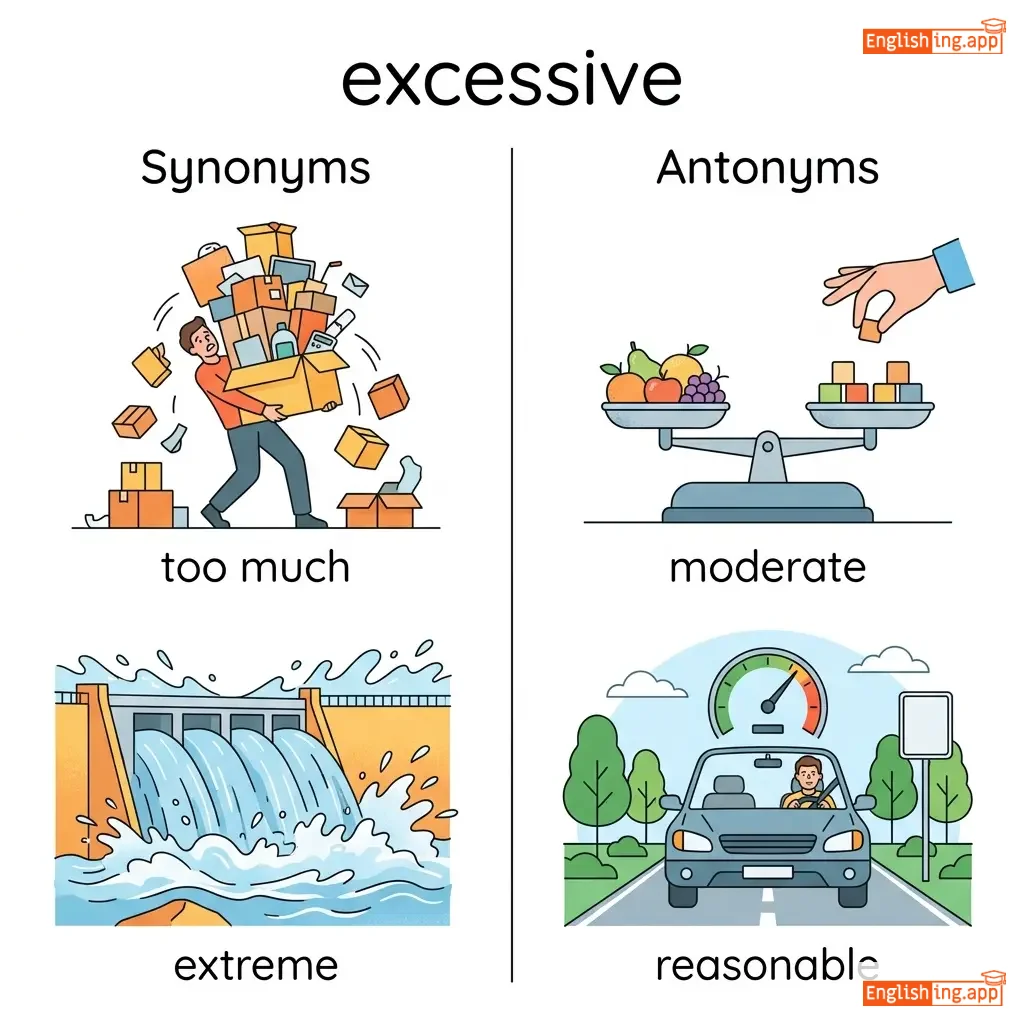
/ɪkˈsɛsɪv/
adjective
(ɪkˈsɛsɪv)
••••••
|
|
过度
guò dù
••••••
|
- •••••• | - •••••• | - •••••• | - •••••• |
more than is necessary, reasonable, or acceptable
••••••
|
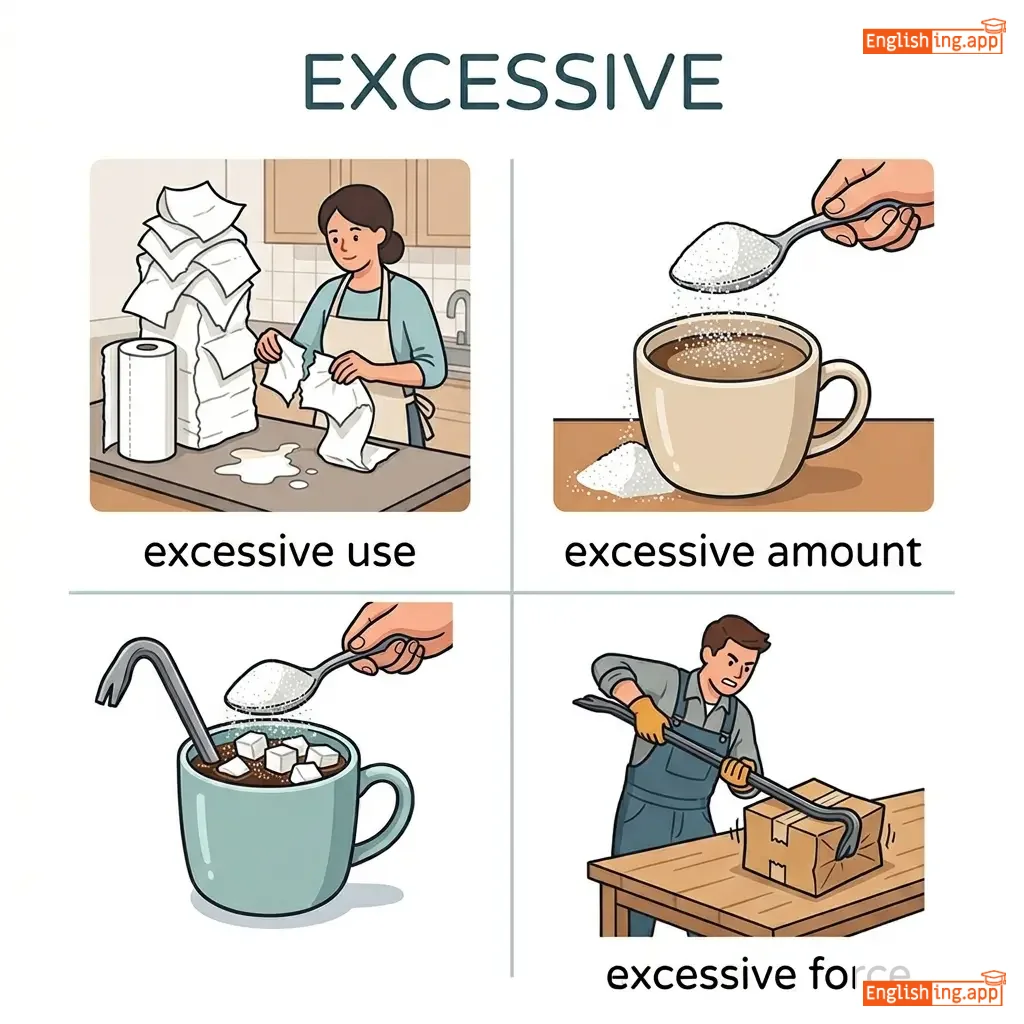
Eating excessive sugar can lead to health problems. |
过多的糖分摄入可能导致健康问题。
Guò duō de táng fèn shè rù kě néng dǎo zhì jiàn kāng wèn tí.
••••••
|
excessive force |
more physical power or effort than necessary
••••••
|
过度的力量
guò dù de lì liàng
••••••
|
too much, extreme, unreasonable, extravagant, overdone
••••••
|
moderate, reasonable, limited
••••••
|
excessive use, excessive amount, excessive force, excessive cost
••••••
|
过度 = Excess意味着更多, 所以它是过度的!
••••••
|
|
#1
📝
|
/ɪɡˈzæm/
noun
(èxám)
••••••
|
- •••••• |
考试
kaoshi
••••••
|
- •••••• | - •••••• | - •••••• | - •••••• |
a formal test of a person's knowledge or skill in a subject
••••••
|
She studied hard for her final exam. |
她为了最后的考试努力学习。
Tā wèile zuìhòu de kǎoshì nǔlì xuéxí.
••••••
|
cram for an exam |
to study intensively before an exam
••••••
|
临考前临时抱佛脚
línkǎo qián línshí bào fójiǎo
••••••
|
test, examination, assessment, quiz
••••••
|
break, vacation
••••••
|
take an exam, pass an exam, fail an exam, final exam, entrance exam
••••••
|
考试=测试,准备好接受挑战!
••••••
|
|
#1
⚖️
|
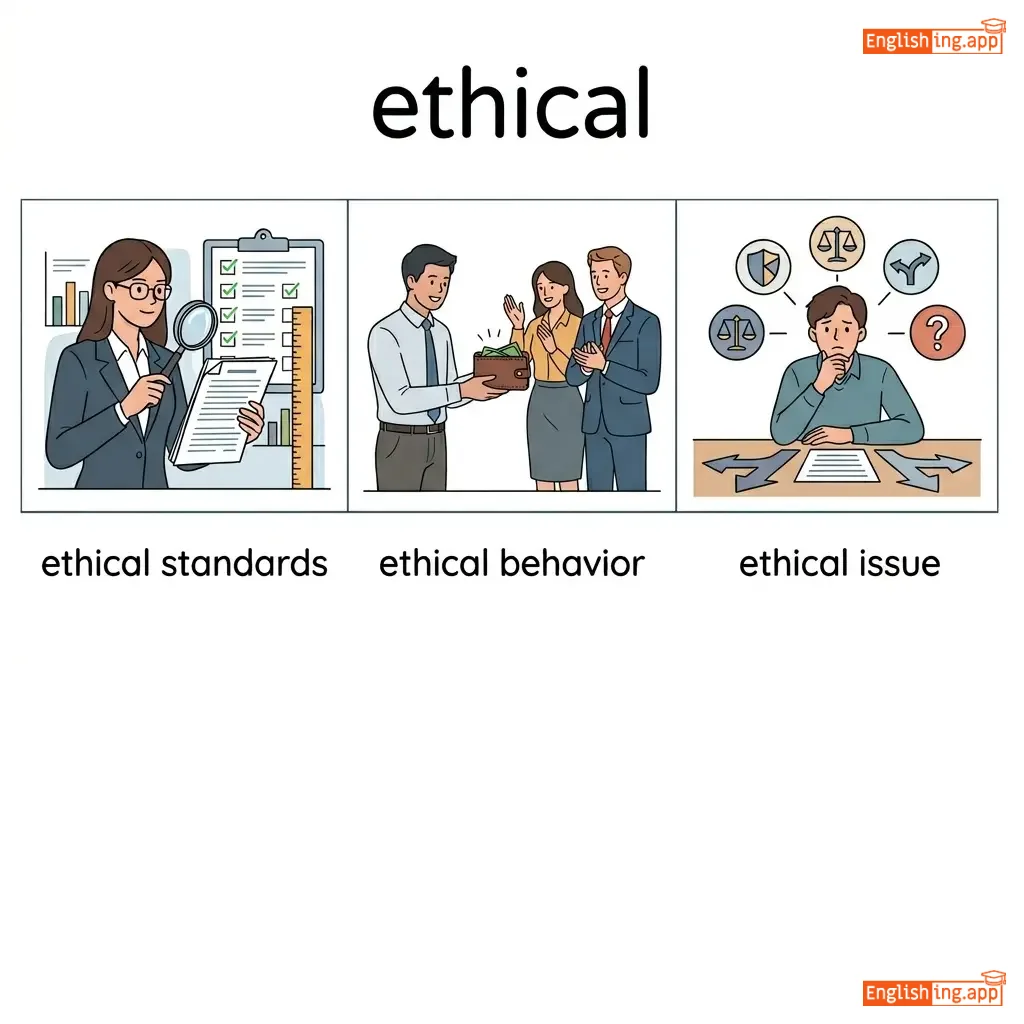
/ˈɛθɪkəl/
adjective
(以太卡尔)
••••••
|
|
道德的
daode de
••••••
|
- •••••• | - •••••• | - •••••• | - •••••• |
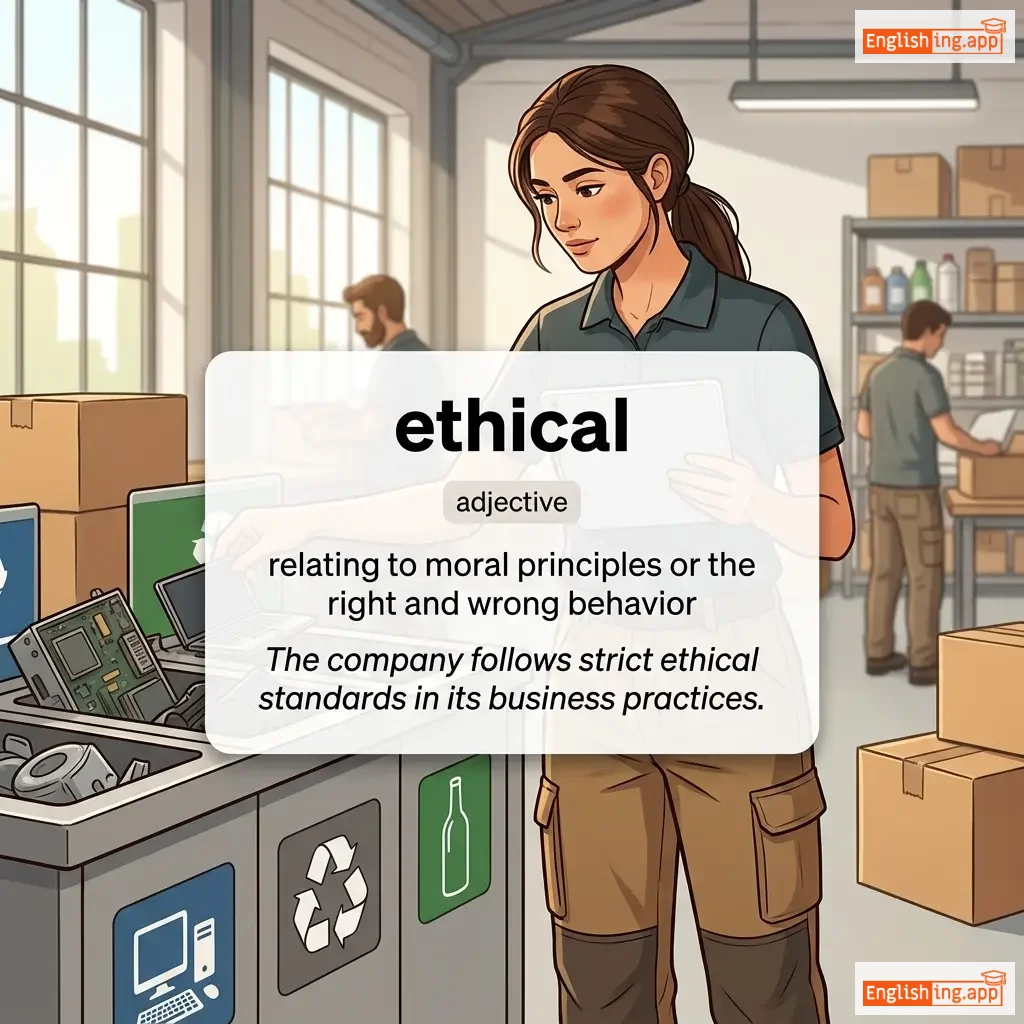
relating to moral principles or the right and wrong behavior
••••••
|
The company follows strict ethical standards in its business practices. |
公司在其商业实践中遵循严格的道德标准。
Gongsi zai qi shangye shijian zhong zunxun yange de daode biaozhun.
••••••
|
ethical dilemma |
a situation in which a difficult choice has to be made between two moral principles
••••••
|
道德困境
daode kunjing
••••••
|
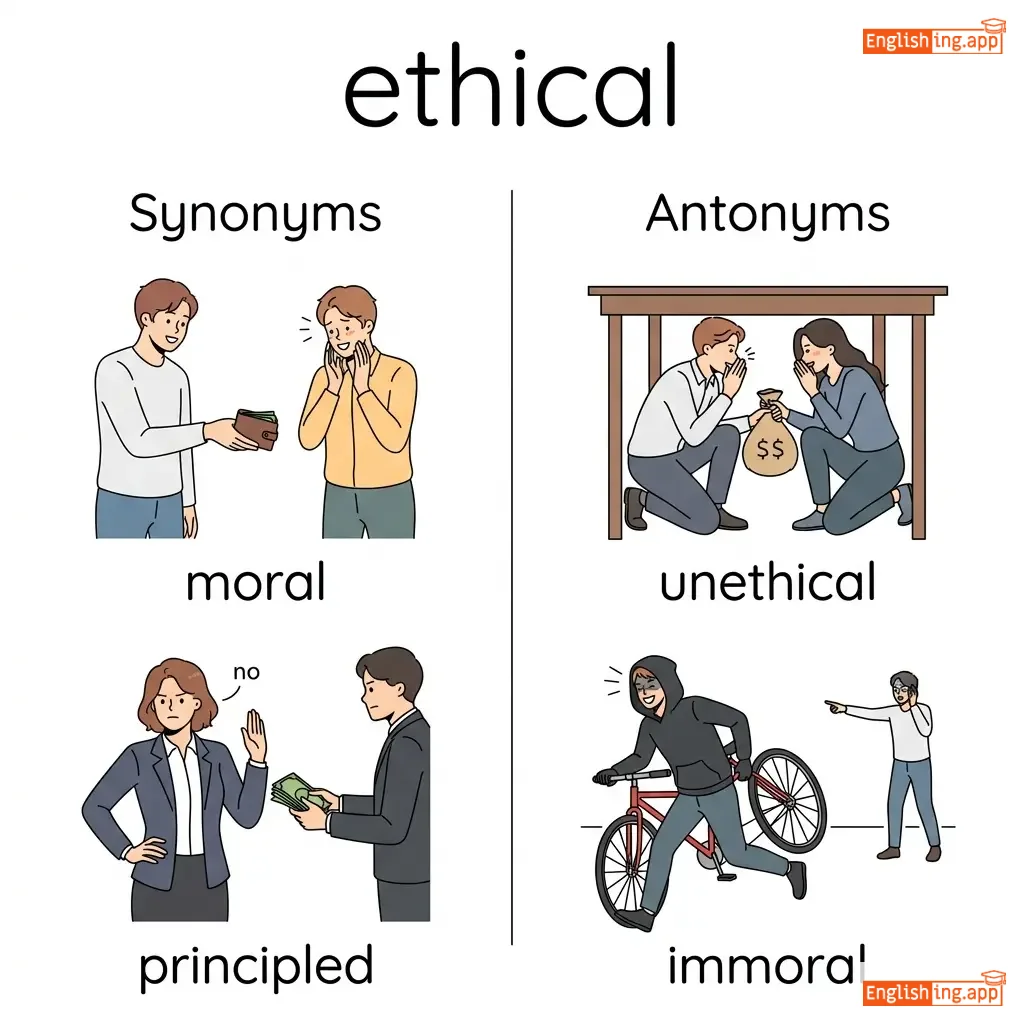
moral, principled, righteous, virtuous, honest
••••••
|
unethical, immoral, dishonest
••••••
|
ethical standards, ethical behavior, ethical issue, ethical dilemma, ethical decision
••••••
|
Ethical意味着道德的 — 就像'伦理'一词中暗示的道德原则。
••••••
|
|
#1
📊
|
/ˈɛstɪmeɪtɪd/
adjective
(es-ti-mei-ted)
••••••
|
- •••••• |
估计的
gū jì de
••••••
|
- •••••• | - •••••• | - •••••• | - •••••• |
roughly calculated or judged; an approximate value or amount
••••••
|
The estimated cost of the project is five million dollars. |
该项目的估计成本为五百万美元。
Gāi xiàngmù de gū jì chéngběn wèi wǔ bǎi wàn měiyuán.
••••••
|
- •••••• | - •••••• | - •••••• |
approximate, assumed, calculated, projected, expected
••••••
|
exact, precise, definite
••••••
|
estimated cost, estimated time, estimated value, estimated population
••••••
|
Estimate表示估算,估计的表示大致估算的值!
••••••
|
|
#1
🧰
|
/ɪˈkwɪp/
verb
(ìkùp)
••••••
|
- •••••• |
装备
zhuangbei
••••••
|
equipped
ìkùpī
••••••
|
equipped
ìkùpī
••••••
|
equips
ìkùps
••••••
|
equipping
ìkùpíng
••••••
|
to provide someone or something with the necessary items or skills for a task
••••••
|
The school equipped its students with modern technology.
学校为学生配备了现代科技。
••••••
|
学校为学生配备了现代科技。
Xuexiao wei xuesheng peibei le xiandai keji.
••••••
|
well-equipped
装备齐全
••••••
|
having all the necessary tools or resources
••••••
|
装备齐全
zhuangbei qiquan
••••••
|
supply, furnish, provide, prepare, arm
••••••
|
deprive, strip, disarm
••••••
|
equip with, properly equipped, equip someone for, equip team
••••••
|
装备就像是给你装备好一切!
••••••
|
|
#1
🧮
|
/ɪˈkweɪʒən/
noun
(方程)
••••••
|
- •••••• |
方程
fangcheng
••••••
|
- •••••• | - •••••• | - •••••• | - •••••• |
a mathematical statement that shows the equality of two expressions
••••••
|
He solved the equation to find the value of x. |
他解出了方程,找到了x的值。
Ta jiechu le fangcheng, zhaodao le x de zhi.
••••••
|
balance the equation |
to make both sides of an equation or situation equal
••••••
|
平衡方程
pingheng fangcheng
••••••
|
formula, expression, equality, calculation
••••••
|
inequality, imbalance
••••••
|
solve an equation, linear equation, quadratic equation, mathematical equation
••••••
|
方程代表平衡,当两个表达式平等时,方程成立。
••••••
|
|
#1
⚖️
|
/ɪˈkwɒləti/
noun
(ɪˈkwɒləti)
••••••
|
|
平等
pingdeng
••••••
|
- •••••• | - •••••• | - •••••• | - •••••• |
the state of being equal, especially in rights, status, and opportunities
••••••
|
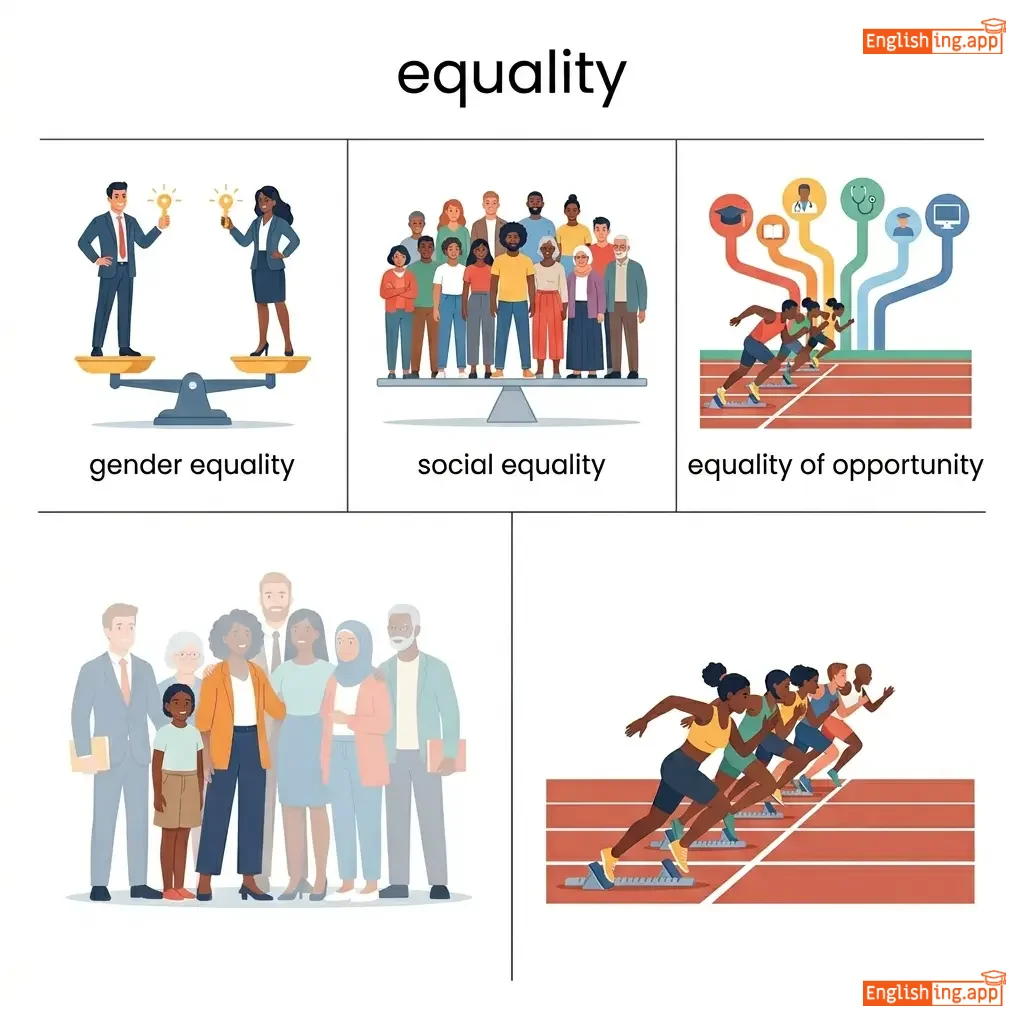
The organization works to promote gender equality in the workplace.
该组织致力于促进工作场所的性别平等。
••••••
|
该组织致力于促进工作场所的性别平等。
Gai zuzhi zhili yu cujin gongzuo changsuo de xingbie pingdeng.
••••••
|
- •••••• | - •••••• | - •••••• |
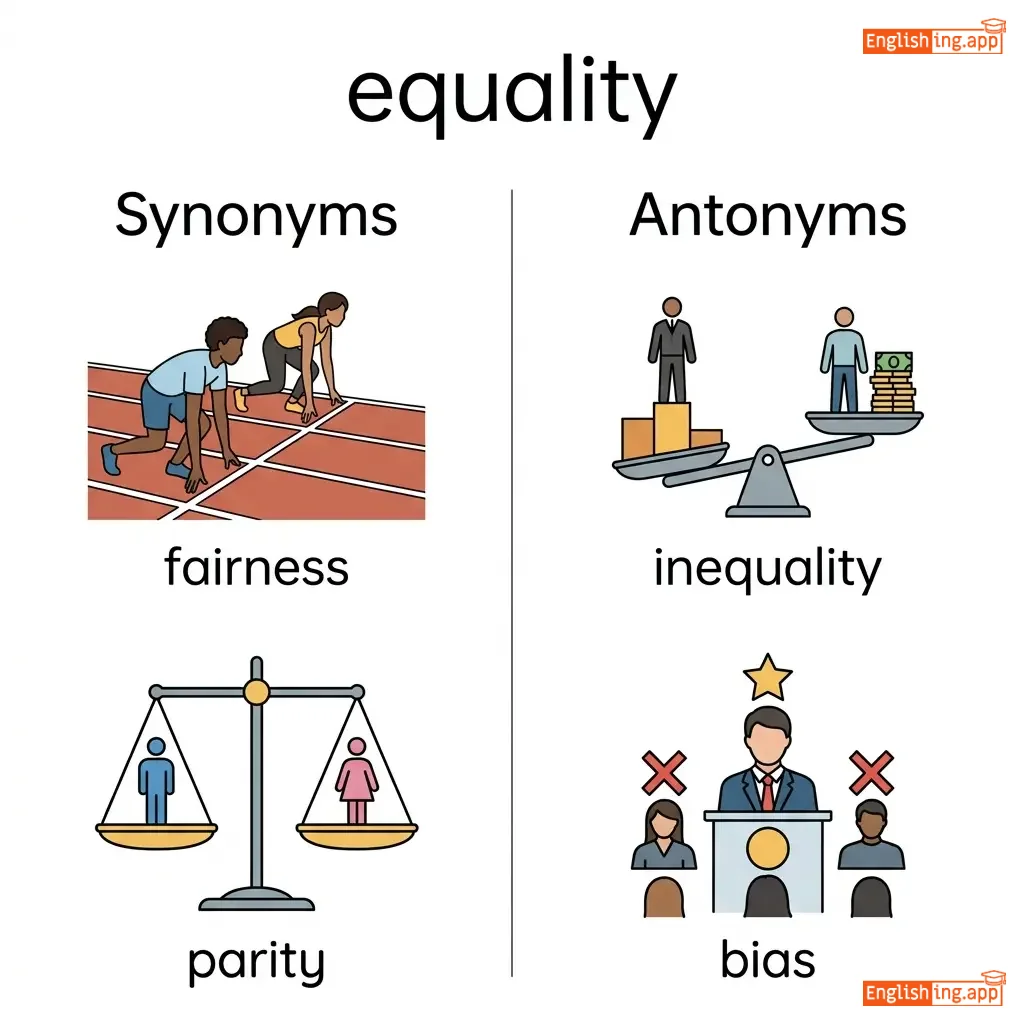
fairness, parity, balance, justice
••••••
|
inequality, bias, discrimination
••••••
|
gender equality, social equality, equality of opportunity, promote equality
••••••
|
Píng + děng = 平等 — 平等意味着所有人享有相同的权利和机会!
••••••
|
|
#1
🌅
|
/ɪnˈvɪʒən/
verb
(ɪnˈvɪʒən)
••••••
|
- •••••• |
想象
xiǎngxiàng
••••••
|
envisioned
ɪnˈvɪʒənd
••••••
|
envisioned
ɪnˈvɪʒənd
••••••
|
envisions
ɪnˈvɪʒənz
••••••
|
envisioning
ɪnˈvɪʒɪnɪŋ
••••••
|
to imagine or picture something in the future; to visualize a possibility or goal
••••••
|
She envisions a world where everyone has equal access to education.
她设想了一个每个人都能平等接受教育的世界。
••••••
|
她设想了一个每个人都能平等接受教育的世界。
Tā shèxiǎngle yīgè měi gèrén dōu néng píngděng jiēshòu jiàoyù de shìjiè.
••••••
|
- •••••• | - •••••• | - •••••• |
imagine, visualize, foresee, picture, conceive
••••••
|
ignore, overlook, disregard
••••••
|
envision a future, envision a plan, envision success, clearly envision
••••••
|
Envision = En (里面) + vision (看) — 就是用你的思想看世界。
••••••
|
|
#1
✉️
|
/ˈɛnvəloʊp/
noun
(ènvèlòp)
••••••
|
- •••••• |
信封
xìnfēng
••••••
|
- •••••• | - •••••• | - •••••• | - •••••• |
a flat paper container used to enclose a letter or document
••••••
|
She sealed the letter in an envelope and posted it. |
她把信封好,并寄出了。
Tā bǎ xìnfēng hǎo, bìng jì chūle.
••••••
|
push the envelope |
to go beyond normal limits; to innovate or take risks
••••••
|
超越界限
chāoyuè jièxiàn
••••••
|
wrapper, cover, packet, casing, container
••••••
|
uncovering, exposure
••••••
|
seal an envelope, open an envelope, address an envelope, brown envelope
••••••
|
Envelope 意味着信封 📬 — 记得把信‘放进信封里’。
••••••
|
|
#1
📜
|
/ɪnˈtaɪtəl/
verb
(ēntàitè)
••••••
|
- •••••• |
授予权利
shòuyǔ quánlì
••••••
|
entitled
ēntàitlíd
••••••
|
entitled
ēntàitlíd
••••••
|
entitles
ēntàitlès
••••••
|
entitling
ēntàitlíng
••••••
|
to give someone the right to have or do something
••••••
|
Employees are entitled to receive paid holidays.
员工有权享受带薪假期。
••••••
|
员工有权享受带薪假期。
yuángōng yǒu quánlì xiǎngshòu dàixīn jiàqī.
••••••
|
be entitled to
有权
••••••
|
to have a right or claim to something
••••••
|
有权
yǒu quán
••••••
|
authorize, allow, permit, empower, grant
••••••
|
forbid, deny, disqualify
••••••
|
entitle someone to, entitled to benefits, entitled to rights, entitled book
••••••
|
Title 意味着权利,所以 en-title 就是给权利
••••••
|
|
#1
⚡
|
/ɪˈlɛktrɪkəl/
adjective
(电的)
••••••
|
- •••••• |
电的
diàn de
••••••
|
- •••••• | - •••••• | - •••••• | - •••••• |
related to electricity or the use of electrical power
••••••
|
The electrical system in the house needs repair. |
房子的电力系统需要修理。
Fángzi de diànlì xìtǒng xūyào xiūlǐ.
••••••
|
- •••••• | - •••••• | - •••••• |
power, electric, electronic, voltage-related
••••••
|
non-electric, mechanical
••••••
|
electrical system, electrical engineer, electrical power, electrical circuit
••••••
|
电的 = 和电有关 ⚡
••••••
|
|
#1
💍
|
/ɪnˈɡeɪdʒmənt/
noun
(engagement)
••••••
|
|
订婚, 参与
dinghun, canyu
••••••
|
- •••••• | - •••••• | - •••••• | - •••••• |
a formal agreement to get married; or active involvement in an activity
••••••
|
Their engagement was announced last week. |
他们的订婚上周宣布了。
Tamen de dinghun shangzhou xuanbule.
••••••
|
social engagement |
a planned social event or meeting
••••••
|
社交参与
shejiao canyu
••••••
|
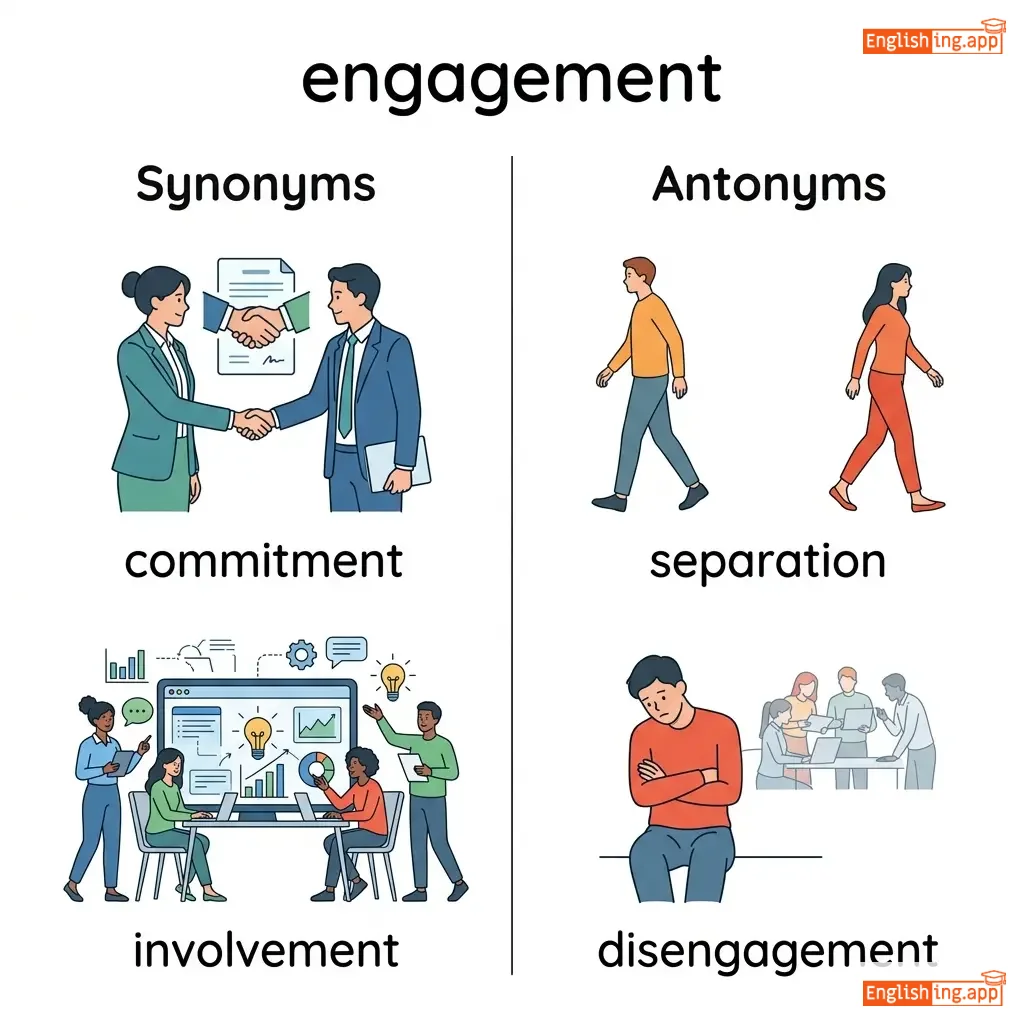
commitment, involvement, participation, appointment, betrothal
••••••
|
separation, disengagement, withdrawal
••••••
|
engagement ceremony, engagement ring, customer engagement, social engagement
••••••
|
Engage 意味着参与,因此 engagement 是指参与活动或事件 💍
••••••
|
|
#1
👮♂️
|
/ɪnˈfɔːrs/
verb
(enfores)
••••••
|
- •••••• |
执行
zhíxíng
••••••
|
enforced
enforesd
••••••
|
enforced
enforesd
••••••
|
enforces
enforcest
••••••
|
enforcing
enforceng
••••••
|
to make sure that a rule, law, or policy is obeyed
••••••
|
The police are responsible for enforcing the law.
警方负责执行法律。
••••••
|
警方负责执行法律。
Jǐngfāng fùzé zhíxíng fǎlǜ.
••••••
|
enforce the law
执行法律
••••••
|
to ensure laws are followed and obeyed
••••••
|
执行法律
zhíxíng fǎlǜ
••••••
|
implement, apply, uphold, execute, impose
••••••
|
ignore, neglect, abandon
••••••
|
enforce rules, enforce regulations, enforce discipline, enforce policy
••••••
|
执行 = 强制遵守规则
••••••
|
|
#1
🧘
|
/ɪnˈdjʊər/
verb
(恩迪尤尔)
••••••
|
- •••••• |
忍受
rěnshòu
••••••
|
endured
恩迪尤尔德
••••••
|
endured
恩迪尤尔德
••••••
|
endures
恩迪尤尔斯
••••••
|
enduring
恩迪尤灵
••••••
|
to suffer something difficult or unpleasant patiently
••••••
|
He had to endure years of hardship before achieving success.
他在成功之前必须忍受多年的困难。
••••••
|
他必须忍受多年的困苦,才能取得成功。
Tā bìxū rěnshòu duōnián de kùnkǔ, cáinéng qǔdé chénggōng.
••••••
|
endure the pain
忍受痛苦
••••••
|
to tolerate or bear pain without giving up
••••••
|
忍受疼痛
rěnshòu téngtòng
••••••
|
tolerate, withstand, suffer, persevere, bear
••••••
|
give up, quit, avoid
••••••
|
endure hardship, endure pain, endure suffering, endure stress
••••••
|
Endure就像‘end’,意味着忍耐直到最后。
••••••
|
|
#1
♾️
|
/ˈendləs/
adjective
(恩德雷斯)
••••••
|
- •••••• |
无尽
wújìn
••••••
|
- •••••• | - •••••• | - •••••• | - •••••• |
having or seeming to have no end or limit
••••••
|
They gazed at the endless desert stretching before them.
他们凝视着他们面前延展的无尽沙漠。
••••••
|
他们凝视着他们面前延展的无尽沙漠。
Tāmen níngshìzhe tāmen miànqián yánzhǎn de wújìn shāmò.
••••••
|
endless possibilities
无尽的可能性
••••••
|
many potential opportunities or options
••••••
|
无尽的可能性
wújìn de kěnéngxìng
••••••
|
infinite, boundless, perpetual, eternal, limitless
••••••
|
limited, finite, short-lived
••••••
|
endless love, endless possibilities, endless road, endless patience
••••••
|
Endless 意味着没有尽头 = 无尽 ♾️.
••••••
|
|
#1
💪
|
/ɪnˈkʌrɪdʒɪŋ/
adjective
(ɛnˈkʊrɪdʒɪŋ)
••••••
|
- •••••• |
鼓舞人心
gǔwǔ rénxīn
••••••
|
- •••••• | - •••••• | - •••••• | - •••••• |
giving someone support or confidence; optimistic
••••••
|
Her words were very encouraging during the hard times.
她在困难时期的话语非常鼓舞人心。
••••••
|
她在困难时期的话语非常鼓舞人心。
Tā zài kùnnán shíqī de huàyǔ fēicháng gǔwǔ rénxīn.
••••••
|
encouraging sign
鼓舞人心的迹象
••••••
|
a positive indication that something is improving
••••••
|
鼓舞人心的迹象
gǔwǔ rénxīn de jìxiàng
••••••
|
supportive, hopeful, reassuring, promising, positive
••••••
|
discouraging, depressing
••••••
|
encouraging news, encouraging sign, encouraging smile, encouraging words
••••••
|
鼓舞人心 = 能量 + 勇气 — 给予支持和信心。
••••••
|
|
#1
🏰
|
/ˈempaɪər/
noun
(ài mǐ ér)
••••••
|
- •••••• |
帝国
dìguó
••••••
|
- •••••• | - •••••• | - •••••• | - •••••• |
a group of countries or regions controlled by one ruler or government
••••••
|
The Roman Empire lasted for centuries. |
罗马帝国延续了几个世纪。
Luómǎ dìguó yánxùle jǐ gè shìjì.
••••••
|
build an empire |
to create a large and powerful organization or business
••••••
|
建立帝国
jiànlì dìguó
••••••
|
kingdom, realm, dominion, federation, sovereignty
••••••
|
colony, dependency
••••••
|
Roman empire, British empire, build an empire, vast empire
••••••
|
帝国像'帝'(帝王),控制所有领域的权利。
••••••
|
|
#1
💓
|
/ɪˈməʊʃənəli/
adverb
(情感上)
••••••
|
- •••••• |
情感上
qínggǎn shàng
••••••
|
- •••••• | - •••••• | - •••••• | - •••••• |
in a way that relates to a person's feelings or emotions
••••••
|
She became emotionally attached to her pet. |
她变得情感上依赖她的宠物。
Tā biàn dé qínggǎn shàng yīlài tā de chǒngwù.
••••••
|
emotionally drained |
feeling exhausted due to strong emotional experiences
••••••
|
情感上疲惫
qínggǎn shàng píbèi
••••••
|
feelingly, sensitively, passionately, sentimentally, affectively
••••••
|
coldly, indifferently
••••••
|
emotionally strong, emotionally stable, emotionally attached, emotionally drained
••••••
|
Emotion + ally = 与某人或某事建立情感上的联系。
••••••
|
|
#1
🌱
|
/ɪˈmɜːrdʒɪŋ/
adjective
(emerging)
••••••
|
- •••••• |
新兴
xinxing
••••••
|
- •••••• | - •••••• | - •••••• | - •••••• |
becoming known, developing, or starting to exist
••••••
|
Bangladesh is one of the fastest emerging economies in the world. |
孟加拉国是世界上发展最快的新兴经济体之一。
Mengjialaguo shi shijie shang fazhan zuikuai de xinxing jingjiti zhiyi.
••••••
|
emerging markets |
developing countries with growing economies
••••••
|
新兴市场
xinxing shichang
••••••
|
developing, growing, rising, evolving
••••••
|
declining, fading, disappearing
••••••
|
emerging trend, emerging talent, emerging market, emerging technology
••••••
|
Emerging = 新兴,就像太阳从地平线上升起。
••••••
|
|
#1
😳
|
/ɪmˈbærəst/
adjective
(embarrassed)
••••••
|
- •••••• |
尴尬
gan ga
••••••
|
- •••••• | - •••••• | - •••••• | - •••••• |
feeling awkward, ashamed, or self-conscious about something
••••••
|
He felt embarrassed when he forgot her name. |
当他忘记她的名字时,他感到尴尬。
Dang ta wangji tade mingzi shi, ta gandao gan ga.
••••••
|
embarrassed silence |
an uncomfortable quietness after something awkward happens
••••••
|
尴尬的沉默
gan ga de chen mo
••••••
|
ashamed, awkward, uneasy, flustered, humiliated
••••••
|
confident, proud, relaxed
••••••
|
feel embarrassed, look embarrassed, deeply embarrassed, embarrassed smile
••••••
|
Embarrassed 代表尴尬 - 你在做演讲时忘记名字,感到非常尴尬。
••••••
|
|
#1
1️⃣1️⃣
|
/ɪˈlɛvən/
number
(eleven)
••••••
|
- •••••• |
十一
shiyi
••••••
|
- •••••• | - •••••• | - •••••• | - •••••• |
the number after ten and before twelve; 11
••••••
|
There are eleven students in the classroom. |
教室里有十一名学生。
Jiaoshiru you shiyi ming xuesheng.
••••••
|
the eleventh hour |
the last possible moment to do something
••••••
|
第十一小时
di shiyi xiaoshi
••••••
|
11, elevenfold
••••••
|
ten, twelve
••••••
|
eleven o'clock, eleven people, eleven years old
••••••
|
Eleven 是 十一 — 足球队里有十一名球员!
••••••
|
|
#1
🛗
|
/ˈɛləˌveɪtər/
noun
(电梯)
••••••
|
- •••••• |
电梯
dianti
••••••
|
- •••••• | - •••••• | - •••••• | - •••••• |
a machine that carries people or goods up and down between floors in a building
••••••
|
We took the elevator to the tenth floor. |
我们乘坐电梯到达了第十层。
Wǒmen chéngzuò diàntī dàodále dì shí céng.
••••••
|
elevator pitch |
a brief, persuasive speech to spark interest in an idea or project
••••••
|
电梯推销
dianti tuixiao
••••••
|
lift, hoist, escalator, platform
••••••
|
stairs, descent
••••••
|
take the elevator, elevator door, elevator button, elevator ride
••••••
|
电梯就像 Elevator 一样,往上走,往下走,像 Elevator Pitch 一样激发兴趣!
••••••
|
|
#1
🐘
|
/ˈɛlɪfənt/
noun
(海皮尼斯)
••••••
|
- •••••• |
幸福
xìngfú
••••••
|
- •••••• | - •••••• | - •••••• | - •••••• |
a very large animal with a trunk, long curved tusks, and thick gray skin, found in Africa and Asia
••••••
|
The elephant sprayed water over itself with its trunk. |
当她收到奖项时,她无法隐藏自己的幸福。
Dāng tā shōudào jiǎngxiàng shí, tā wúfǎ yǐncáng zìjǐ de xìngfú.
••••••
|
the elephant in the room |
an obvious problem or issue that people avoid discussing
••••••
|
追求幸福
zhuīqiú xìngfú
••••••
|
mammal, giant, pachyderm, tusker
••••••
|
mouse, insect
••••••
|
herd of elephants, African elephant, elephant tusks, baby elephant
••••••
|
幸福就是持续追求满足和快乐的过程!
••••••
|
|
#1
💃
|
/ˈɛlɪɡənt/
adjective
(优雅)
••••••
|
- •••••• |
优雅且精致
yōuyǎ qiě jīngzhì
••••••
|
- •••••• | - •••••• | - •••••• | - •••••• |
pleasingly graceful and stylish in appearance or manner
••••••
|
She looked elegant in her evening gown. |
她在晚礼服中看起来优雅。
Tā zài wǎn lǐfú zhōng kàn qǐlái yōuyǎ.
••••••
|
simple yet elegant |
beautiful and stylish without being complicated
••••••
|
简单而优雅
jiǎndān ér yōuyǎ
••••••
|
graceful, stylish, classy, refined, sophisticated
••••••
|
clumsy, messy, crude
••••••
|
elegant dress, elegant design, elegant solution, elegant lady
••••••
|
优雅就是穿着漂亮衣服让人忍不住说'哇!'
••••••
|
|
#1
💻
|
/ɪˌlɛkˈtrɒnɪks/
noun
(电子学)
••••••
|
- •••••• |
电子学
dianzi xue
••••••
|
- •••••• | - •••••• | - •••••• | - •••••• |
the branch of physics and technology dealing with circuits and devices using transistors, microchips, and other components
••••••
|
He studied electronics at university. |
他在大学学习电子学。
Ta zai daxue xuexi dianzi xue.
••••••
|
- •••••• | - •••••• | - •••••• |
tech, circuitry, electrotechnology, computing
••••••
|
mechanics, manual systems
••••••
|
electronics engineer, consumer electronics, electronics lab, electronics industry
••••••
|
电子学是关于设备和电路的世界——电视、手机、电脑,统统在一起!
••••••
|
Vocabulary Quiz
Test your vocabulary by matching words with their translations or meanings.
Login to take the quiz
Comments (0)
Share your thoughts and join the discussion.
Join the discussion by logging in
Login to CommentNo comments yet
Be the first to share your thoughts!