



Swipe left or right, or use the buttons. Tap image to zoom.
例句翻译
单词
Lesson 374Lesson 374 - 遮罩切换
|
表情符号
|
单词 | Images | 翻译 | 过去时 | 过去分词 | 第三人称单数 | 动名词 | 含义 | 例句 | 例句翻译 | 示例表达 | 示例表达含义 | 示例表达翻译 | 同义词 | 反义词 | 搭配词 | 助记符 |
|---|---|---|---|---|---|---|---|---|---|---|---|---|---|---|---|---|---|
|
#11185
🤒
|
/ɪl/
adjective
(il)
••••••
|
- •••••• |
生病
shengbing
••••••
|
- •••••• | - •••••• | - •••••• | - •••••• |
Not in good health; sick or unwell.
••••••
|
He has been feeling ill since yesterday. |
他从昨天开始感觉不舒服。
Ta cong zuotian kaishi ganjue bushi fu.
••••••
|
ill at ease |
feeling uncomfortable or uneasy
••••••
|
不舒服
bushi fu
••••••
|
sick, unwell, unhealthy, ailing
••••••
|
healthy, well, fine
••••••
|
feel ill, fall ill, ill health, ill effects
••••••
|
Ill 就是生病,记住 'ill' 就是生病 🤒.
••••••
|
|
#11186
📍
|
/ɪn/
preposition
(in)
••••••
|
- •••••• |
在
zai
••••••
|
- •••••• | - •••••• | - •••••• | - •••••• |
expressing the situation of being enclosed or surrounded by something
••••••
|
She is in the kitchen preparing dinner. |
她在厨房准备晚餐。
Ta zai chufang zhunbei wancan.
••••••
|
in trouble |
to be in a difficult or problematic situation
••••••
|
陷入困境
xianru kunjing
••••••
|
inside, within, enclosed, into, surrounded
••••••
|
out, outside
••••••
|
in fact, in time, in charge, in need
••••••
|
在意味着在里面,就像‘在房子里’意味着在房子内部。
••••••
|
|
#11187
🔧
|
/ɪmˈpruːvmənt/
noun
(yímínpīrūvēmèn)
••••••
|
- •••••• |
改善
gǎishàn
••••••
|
- •••••• | - •••••• | - •••••• | - •••••• |
the act of making something better
••••••
|
There has been a significant improvement in his health.
zài tā de jiànkāng zhōng yǒu yī gè zhòngdà de gǎishàn.
••••••
|
他的健康有了显著改善。
tā de jiànkāng yǒu le xiǎnzhù gǎishàn.
••••••
|
continuous improvement
bùduàn gǎishàn
••••••
|
the ongoing effort to make things better
••••••
|
持续改善
chíxù gǎishàn
••••••
|
progress, enhancement, advancement, growth, development
••••••
|
decline, deterioration, regression
••••••
|
health improvement, significant improvement, gradual improvement, scope for improvement
••••••
|
Improvement 就是改善 – 改善就是 improvement
••••••
|
|
#11188
📈
|
/ɪmˈpruːv/
verb
(yīnpúlv)
••••••
|
- •••••• |
改善
gǎishàn
••••••
|
improved
yīnpúlv
••••••
|
improved
yīnpúlv
••••••
|
improves
yīnpúv
••••••
|
improving
yīnpúvīng
••••••
|
to make something better or become better
••••••
|
Regular practice will improve your skills.
定期的练习将改善你的技能。
••••••
|
定期的练习将改善你的技能。
dìngqī de liànxí jiāng gǎishàn nǐ de jìnéng.
••••••
|
room for improvement
改进的空间
••••••
|
a possibility or need for something to be made better
••••••
|
改进的空间
gǎijìn de kōngjiān
••••••
|
enhance, develop, refine, upgrade, boost
••••••
|
worsen, decline, degrade
••••••
|
improve performance, improve quality, improve skills, continuously improve
••••••
|
Improve 是用来改进的,做得更好
••••••
|
|
#11189
🏆
|
/ɪmˈprɛsɪv/
adjective
(yim-puh-reh-siv)
••••••
|
- •••••• |
令人印象深刻的,值得敬佩的
lìng rén yìn xiàng shēn kè de, zhí dé jìng pèi de
••••••
|
- •••••• | - •••••• | - •••••• | - •••••• |
causing admiration or respect; remarkable
••••••
|
The building is an impressive example of modern architecture.
这座建筑是现代建筑的一个令人印象深刻的例子。
••••••
|
这座建筑是现代建筑的一个令人印象深刻的例子。
Zhè zuò jiànzhú shì xiàndài jiànzhú de yīgè lìng rén yìnxiàng shēn kè de lìzi.
••••••
|
- •••••• | - •••••• | - •••••• |
remarkable, striking, extraordinary, admirable, notable
••••••
|
ordinary, unimpressive, dull
••••••
|
impressive achievement, impressive performance, impressive skills, impressive building
••••••
|
令人印象深刻的建筑总会让人铭记
••••••
|
|
#11190
🖼️
|
/ɪmˈprɛʃən/
noun
(印象)
••••••
|
- •••••• |
印象, 概念
yinxiang, gainian
••••••
|
- •••••• | - •••••• | - •••••• | - •••••• |
an idea, feeling, or opinion about something or someone
••••••
|
The book gave me a good first impression. |
这本书给我留下了很好的第一印象。
Zhe ben shu gei wo liuxia le hen hao de di yi yinxiang.
••••••
|
leave an impression |
to have a lasting effect on someone
••••••
|
留下印象
liuxia yinxiang
••••••
|
impact, effect, influence, perception, opinion
••••••
|
ignorance, indifference
••••••
|
first impression, strong impression, lasting impression, overall impression
••••••
|
First impression is last impression – 第一印象最重要
••••••
|
|
#11191
✨
|
/ɪmˈprɛs/
verb
(yǐmùlèssī)
••••••
|
- •••••• |
打动
dǎdòng
••••••
|
impressed
yǐmùlèssī dé
••••••
|
impressed
yǐmùlèssī dé
••••••
|
impresses
yǐmùlèssī
••••••
|
impressing
yǐmùlèssīng
••••••
|
to cause someone to feel admiration or respect
••••••
|
Her speech managed to impress the audience.
她的演讲成功地打动了观众。
••••••
|
她的演讲成功地打动了观众。
Tā de yǎnjiǎng chénggōng de dǎdòngle guānzhòng.
••••••
|
make an impression
留下深刻印象
••••••
|
to have a strong effect on someone
••••••
|
留下深刻印象
liú xià shēn kè yìnxiàng
••••••
|
amaze, astonish, inspire, move, influence
••••••
|
bore, disappoint, discourage
••••••
|
impress deeply, impress someone, impress with, fail to impress
••••••
|
打动你的人,总是让你说'感动!' – 打动
••••••
|
|
#11192
🚫
|
/ɪmˈpɑːsəbl/
adjective
(不可能)
••••••
|
- •••••• |
不可能
bù kěnéng
••••••
|
- •••••• | - •••••• | - •••••• | - •••••• |
not able to occur, exist, or be done
••••••
|
It is impossible to finish this work in one day.
一天之内完成这项工作是不可能的。
••••••
|
一天之内完成这项工作是不可能的。
Yītiān zhī nèi wánchéng zhè xiàng gōngzuò shì bù kěnéng de.
••••••
|
nothing is impossible
没有什么是不可能的
••••••
|
everything can be achieved with effort
••••••
|
没有什么是不可能的
Méiyǒu shénme shì bù kěnéng de
••••••
|
unachievable, unattainable, hopeless, impracticable
••••••
|
possible, achievable, feasible
••••••
|
seem impossible, make impossible, impossible task, impossible mission
••••••
|
不可能,意味着要努力去克服它!💪
••••••
|
|
#11193
📜
|
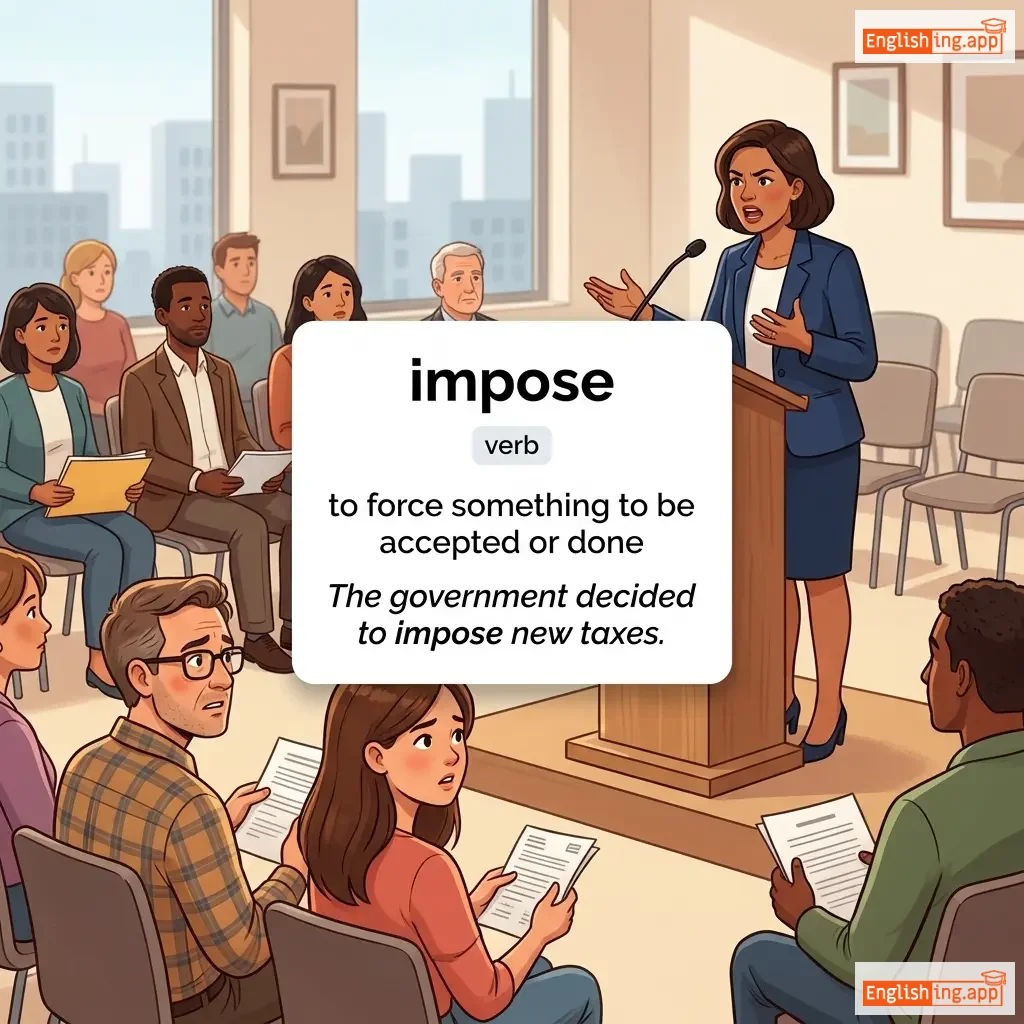
/ɪmˈpoʊz/
verb
(印波兹)
••••••
|
|
强加
qiángjiā
••••••
|
imposed
印波兹德
••••••
|
imposed
印波兹德
••••••
|
imposes
印波兹斯
••••••
|
imposing
印波兹英
••••••
|
to force something to be accepted or done
••••••
|
The government decided to impose new taxes.
政府决定征收新的税收。
••••••
|
政府决定征收新的税收。
Zhèngfǔ juédìng zhēngshōu xīn de shuìshōu.
••••••
|
impose a ban
实施禁令
••••••
|
to officially prohibit something
••••••
|
实施禁令
shíshī jìnlìng
••••••
|
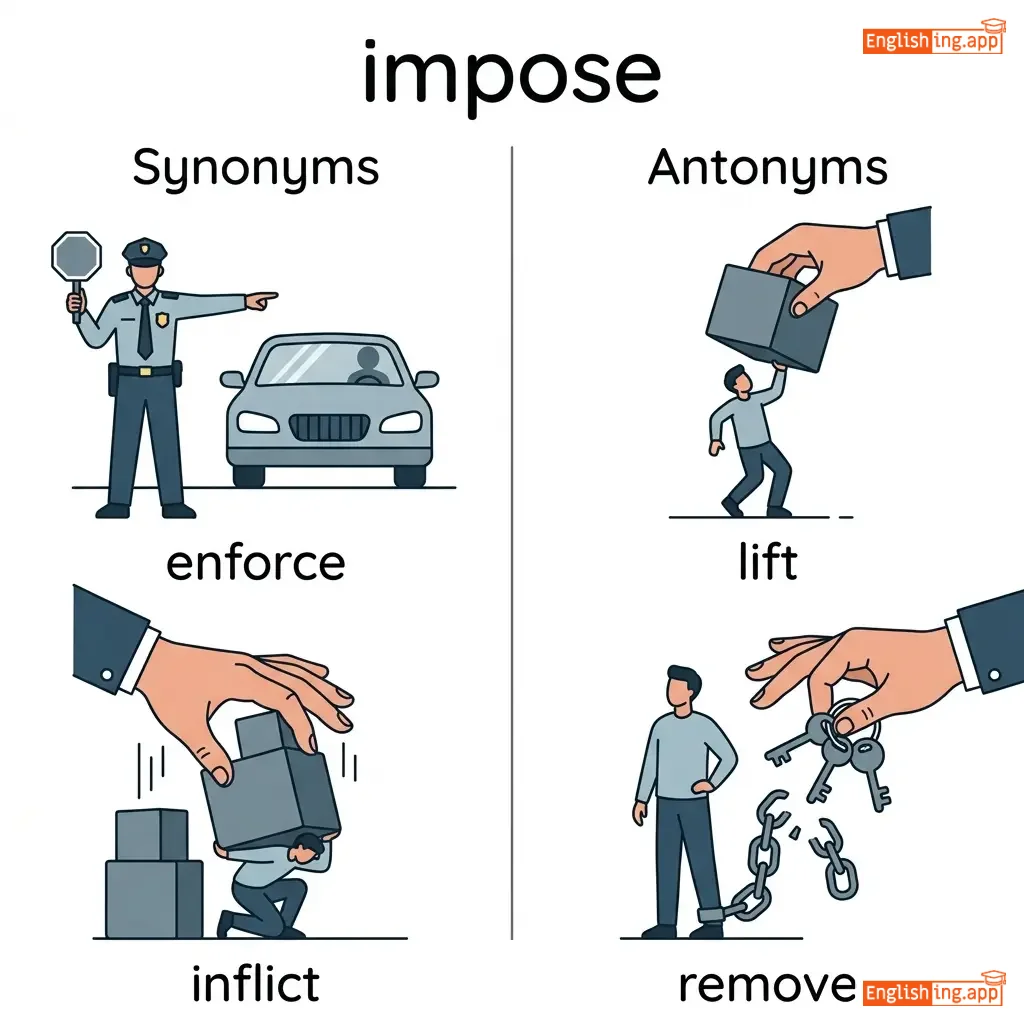
enforce, inflict, apply, establish, dictate
••••••
|
lift, remove, withdraw
••••••
|
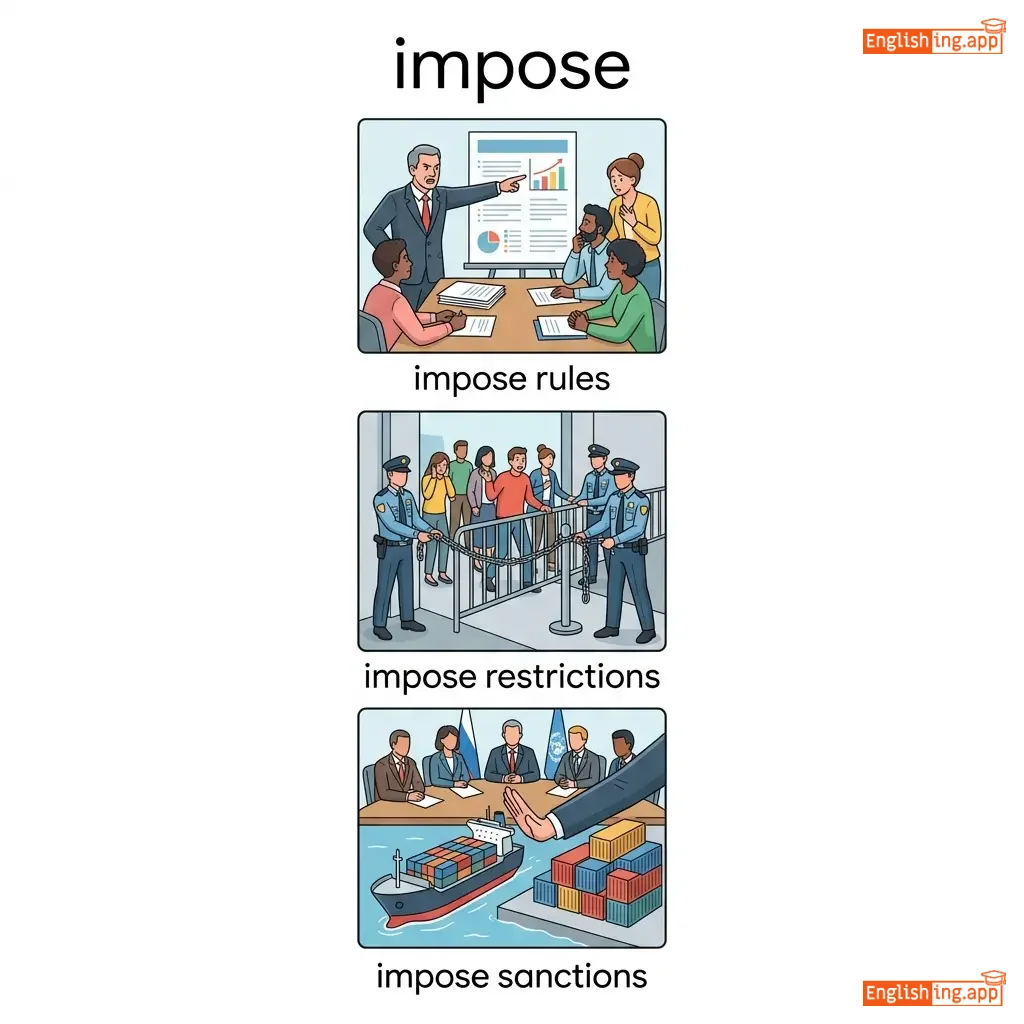
impose rules, impose restrictions, impose sanctions, impose fines
••••••
|
Impose 意思是强加 - 想像强加规则,施行限制!
••••••
|
|
#11194
⭐
|
/ɪmˈpɔːrtəns/
noun
(ɪmˈpɔːrtəns)
••••••
|
|
重要性
zhòng yào xìng
••••••
|
- •••••• | - •••••• | - •••••• | - •••••• |
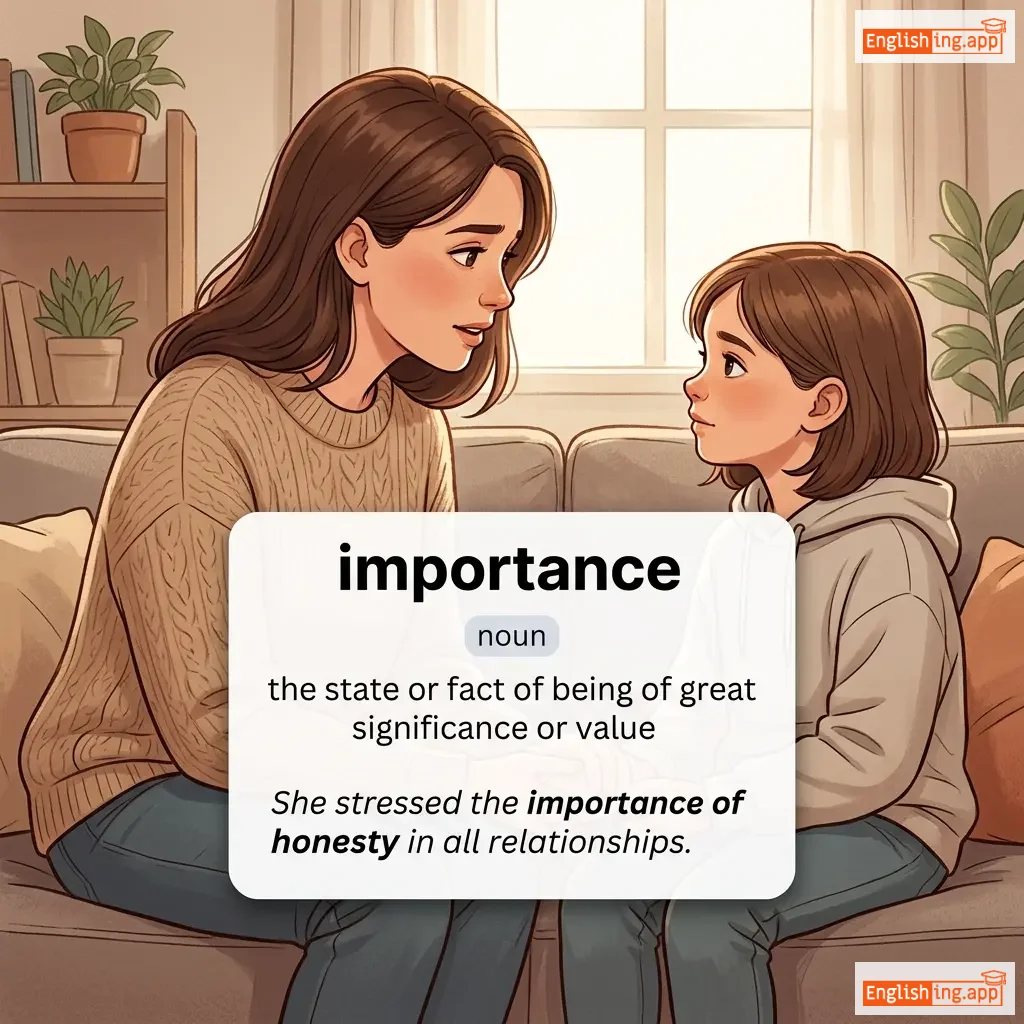
the state or fact of being of great significance or value
••••••
|
She stressed the importance of honesty in all relationships. |
她强调了诚实在所有关系中的重要性。
Tā qiángdiàole chéngshí zài suǒyǒu guānxì zhōng de zhòngyàoxìng.
••••••
|
of great importance |
extremely valuable or significant
••••••
|
极为重要
jí wèi zhòng yào
••••••
|
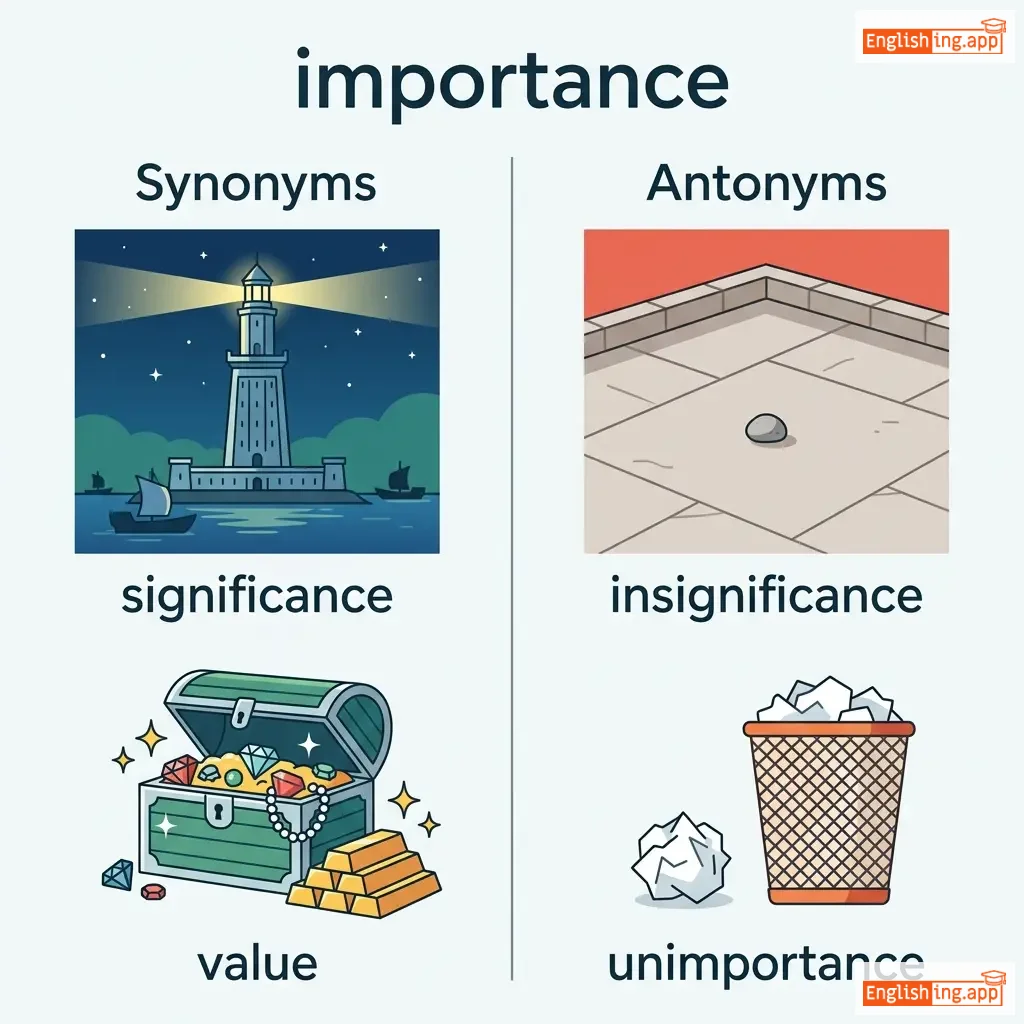
significance, value, weight, relevance, consequence
••••••
|
insignificance, unimportance
••••••
|
stress importance, highlight importance, importance of education, importance of health
••••••
|
重要性 = Importance, 一定要记住! 🌟
••••••
|
|
#11195
🛂
|
/ˌɪmɪˈɡreɪʃən/
noun
(移民)
••••••
|
- •••••• |
移民
yímín
••••••
|
- •••••• | - •••••• | - •••••• | - •••••• |
the action of coming to live permanently in a foreign country
••••••
|
Immigration policies vary from country to country.
移民政策因国家而异。
••••••
|
移民政策因国家而异。
Yímín zhèngcè yīn guójiā ér yì.
••••••
|
illegal immigration
非法移民
••••••
|
the act of entering a country without legal permission
••••••
|
非法移民
fēifǎ yímín
••••••
|
migration, settlement, relocation, entry
••••••
|
emigration, deportation
••••••
|
immigration policy, immigration law, illegal immigration, mass immigration
••••••
|
移民即 '移' + '民' - 迁往另一个国家.
••••••
|
|
#11196
⚡
|
/ɪˈmiːdiətli/
adverb
(immediately)
••••••
|
- •••••• |
立即
lìjí
••••••
|
- •••••• | - •••••• | - •••••• | - •••••• |
at once; without delay
••••••
|
She responded immediately to the emergency call. |
她立即响应了紧急电话。
Tā lìjí xiǎngyìngle jǐnjí diànhuà.
••••••
|
immediately after |
right after something happens
••••••
|
立即之后
lìjí zhīhòu
••••••
|
instantly, promptly, directly, quickly, right away
••••••
|
later, eventually, afterward
••••••
|
respond immediately, happen immediately, immediately after, immediately before
••••••
|
立即表示立刻做某事,例如立即回应电话。
••••••
|
|
#11197
🌈
|
/ɪˌmædʒɪˈneɪʃən/
noun
(imázhìnèishēn)
••••••
|
- •••••• |
想象力
xiǎngxiànglì
••••••
|
- •••••• | - •••••• | - •••••• | - •••••• |
The ability of the mind to create ideas or pictures not present to the senses.
••••••
|
Children often use their imagination while playing. |
孩子们在玩耍时经常使用他们的想象力。
Háizimen zài wánshuǎ shí jīngcháng shǐyòng tāmen de xiǎngxiànglì.
••••••
|
wild imagination |
an ability to think of ideas or scenarios that are unusual or unrealistic
••••••
|
丰富的想象力
fēngfù de xiǎngxiànglì
••••••
|
creativity, fantasy, vision, invention, ingenuity
••••••
|
reality, fact
••••••
|
use imagination, vivid imagination, spark imagination, fertile imagination
••••••
|
想象力 = imagination 🌈, 记住 'Image in nation' 意味着在国家中有图像,代表着想象力。
••••••
|
|
#11198
🖼️
|
/ˈɪmɪdʒ/
noun
(yímázhèn)
••••••
|
- •••••• |
图像
túxiàng
••••••
|
- •••••• | - •••••• | - •••••• | - •••••• |
A visual representation of something, such as a picture or likeness.
••••••
|
The magazine published a clear image of the celebrity.
杂志发布了名人的清晰图像。
••••••
|
杂志发布了名人的清晰图像。
Zázhì fābùle míngrén de qīngxī túxiàng.
••••••
|
public image
公众形象
••••••
|
the perception that people have of a person or organization
••••••
|
公众形象
gōngzhòng xíngxiàng
••••••
|
picture, photo, likeness, representation, figure
••••••
|
reality, truth
••••••
|
digital image, mental image, image quality, image editing
••••••
|
图像 = 你看到的图像,记住它!
••••••
|
|
#11199
🩺
|
/ˈɪlnəs/
noun
(ilness)
••••••
|
- •••••• |
疾病
jíbìng
••••••
|
- •••••• | - •••••• | - •••••• | - •••••• |
A condition of being unwell or suffering from a disease.
••••••
|
She missed school due to a serious illness.
她因为严重的疾病错过了学校。
••••••
|
她因为严重的疾病错过了学校。
Tā yīnwèi yánzhòng de jíbìng cuòguòle xuéxiào.
••••••
|
- •••••• | - •••••• | - •••••• |
sickness, disease, ailment, disorder
••••••
|
health, wellness
••••••
|
chronic illness, mental illness, recover from illness, illness symptoms
••••••
|
Illness = 疾病。 'Ill' 和 'ness' 表示生病。
••••••
|
|
#11200
❓
|
/haʊ/
adverb
(hào)
••••••
|
- •••••• |
如何
rúhé
••••••
|
- •••••• | - •••••• | - •••••• | - •••••• |
in what way or manner; by what means
••••••
|
How do you solve this problem?
你如何解决这个问题?
••••••
|
你如何解决这个问题?
Nǐ rúhé jiějué zhège wèntí?
••••••
|
how come
怎么回事?
••••••
|
used to ask why something has happened
••••••
|
怎么回事?
Zěnme huí shì?
••••••
|
in what way, by what means, in what manner
••••••
|
why not, never
••••••
|
how often, how much, how many, how long
••••••
|
How 的意思是如何,记住在中文里问如何时的发音。
••••••
|
|
#11201
ℹ️
|
/ˌaɪˈiː/
abbreviation
(ai i)
••••••
|
- •••••• |
即
ji
••••••
|
- •••••• | - •••••• | - •••••• | - •••••• |
That is to say; used to clarify or explain something more precisely.
••••••
|
Many amphibians, i.e., frogs and salamanders, can live both in water and on land.
许多两栖动物,即青蛙和蝾螈,能够同时在水中和陆地上生活。
••••••
|
许多两栖动物,即青蛙和蝾螈,能够同时在水中和陆地上生活。
Xu duo liangqi dongwu, ji qingwa he rongyan, nenggou tongshi zai shui zhong he ludi shang shenghuo.
••••••
|
- •••••• | - •••••• | - •••••• |
that is, namely, specifically, in other words
••••••
|
etc, for example
••••••
|
i.e. meaning, i.e. used, i.e. example
••••••
|
i.e. 即 - 记住'ie = 即' 总是用于澄清。
••••••
|
|
#11202
🪪
|
/aɪˈdɛntɪti/
noun
(aɪˈdɛntɪti)
••••••
|
|
身份
shenfen
••••••
|
- •••••• | - •••••• | - •••••• | - •••••• |
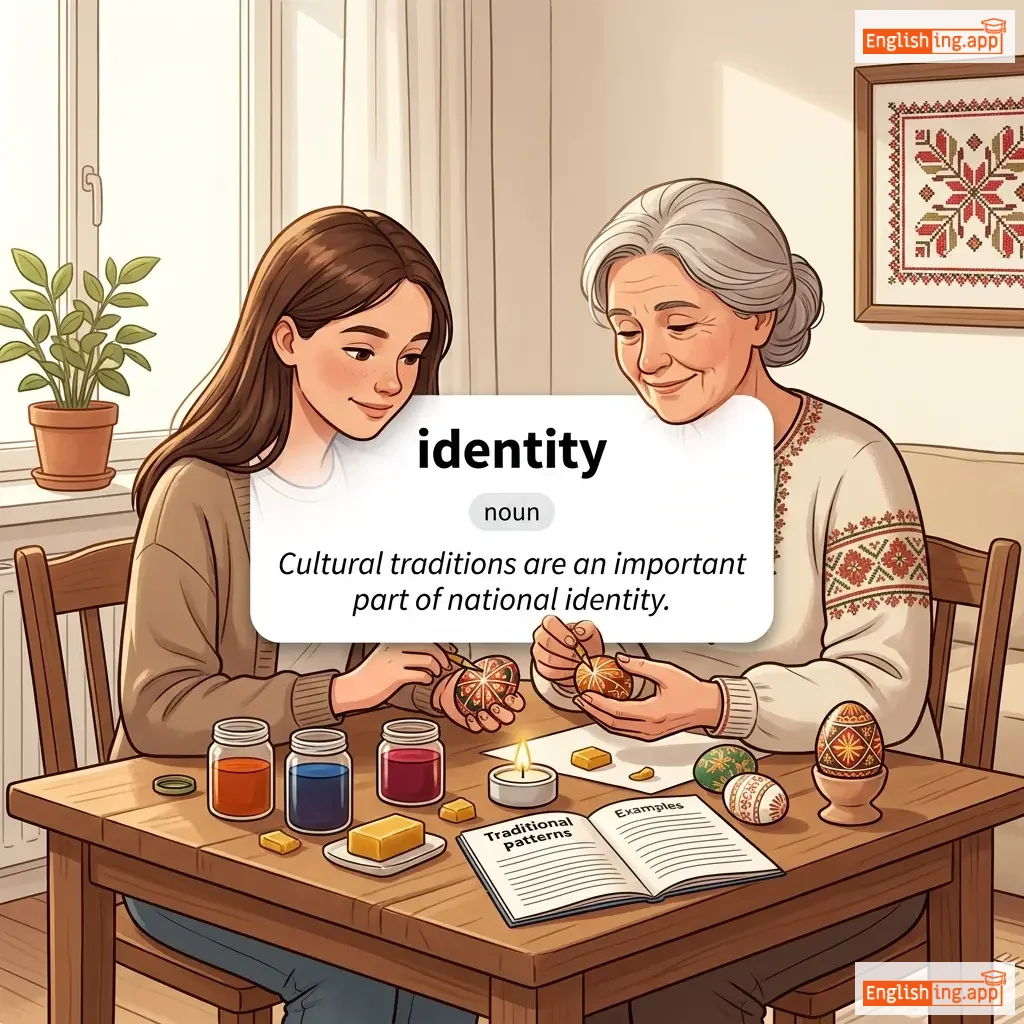
the characteristics, feelings, or beliefs that make a person or group different from others
••••••
|
Cultural traditions are an important part of national identity. |
文化传统是国家身份的重要组成部分。
wenhua chuantong shi guojia shenfen de zhongyao zuche bufen
••••••
|
identity crisis |
a period of uncertainty about one's sense of self
••••••
|
身份危机
shenfen weiji
••••••
|
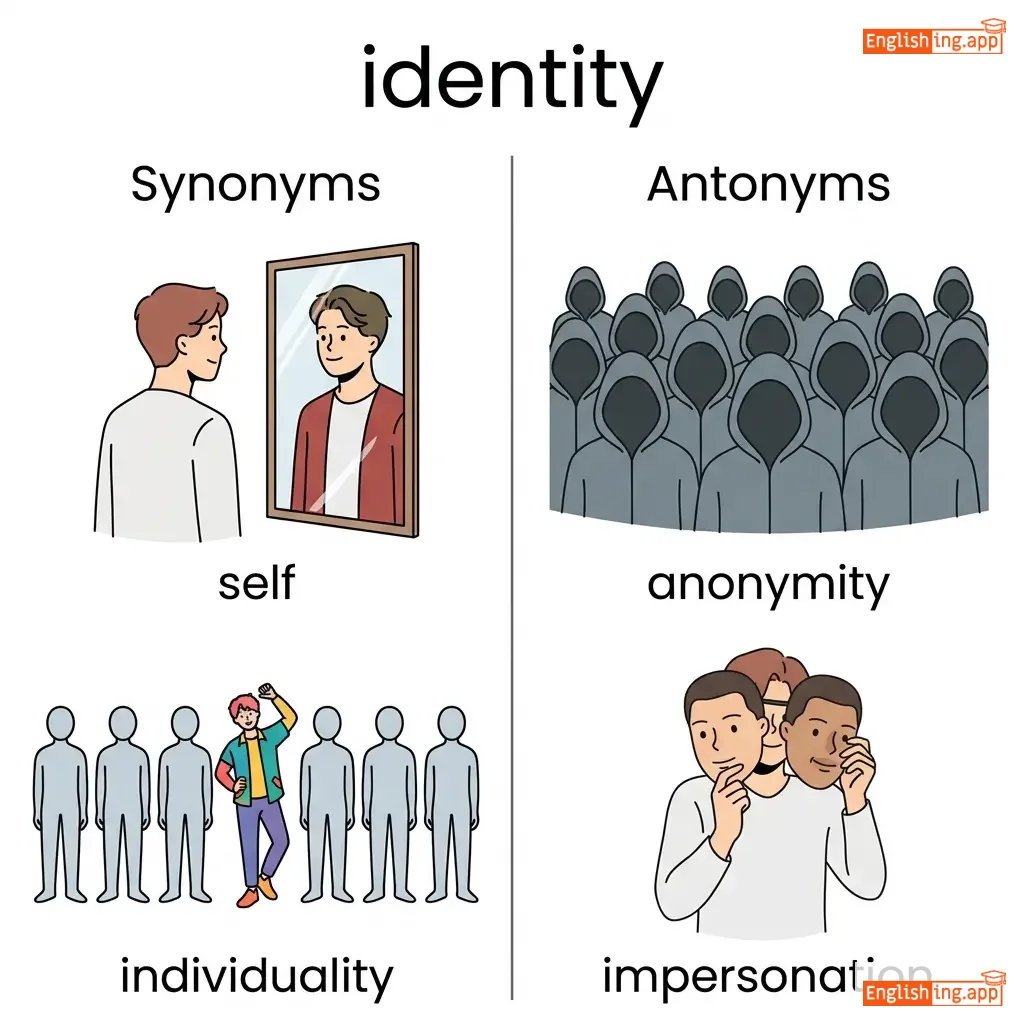
self, individuality, character, personality
••••••
|
anonymity, impersonation
••••••
|
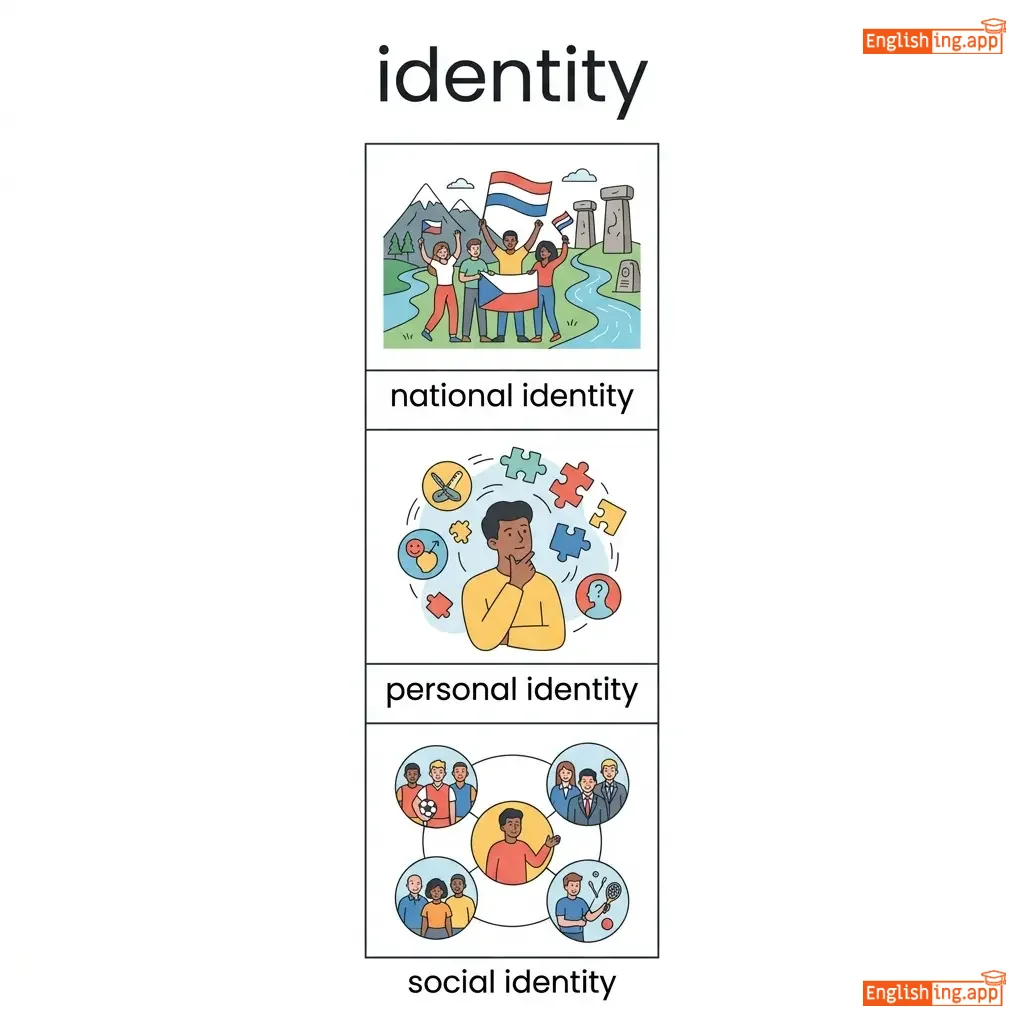
national identity, personal identity, social identity, identity card
••••••
|
身份意味着身份 - 身份证证明你的身份
••••••
|
|
#11203
🔍
|
/aɪˈdɛntɪfaɪ/
verb
(ài diǎn tì fāi)
••••••
|
|
识别
shìbié
••••••
|
identified
ài diǎn tì fāi dé
••••••
|
identified
ài diǎn tì fāi dé
••••••
|
identifies
ài diǎn tì fāi zī
••••••
|
identifying
ài diǎn tì fāi yīng
••••••
|
to recognize or establish what something or someone is
••••••
|
The police could not identify the suspect.
警察无法确认嫌疑人。
••••••
|
警察无法确认嫌疑人。
jǐngchá wúfǎ quèrèn xiányírén.
••••••
|
identify with
与……认同
••••••
|
to feel that you understand someone because you have had similar experiences
••••••
|
与某人认同
yǔ mǒu rén rèntóng
••••••
|
recognize, detect, determine, distinguish, verify
••••••
|
confuse, misidentify
••••••
|
identify problems, identify needs, identify the source, identify correctly
••••••
|
识别即为识别 - 就像身份证一样。
••••••
|
|
#11204
🪪
|
/aɪˌdɛntɪfɪˈkeɪʃən/
noun
(ài-diàn-tí-fí-ké-shēn)
••••••
|
- •••••• |
身份识别
shenfen shibie
••••••
|
- •••••• | - •••••• | - •••••• | - •••••• |
the process of recognizing or proving who or what someone or something is
••••••
|
You need proper identification to enter the building. |
您需要适当的身份证明才能进入大楼。
Nín xūyào shìdàng de shēnfèn zhèngmíng cáinéng jìnrù dàlóu.
••••••
|
- •••••• | - •••••• | - •••••• |
recognition, verification, authentication, validation
••••••
|
misidentification, confusion
••••••
|
identity card, identification number, personal identification, photo identification
••••••
|
Identification 就是身份的识别 - 出示身份证就能进大楼。
••••••
|
|
#11205
✨
|
/aɪˈdiːəl/
adjective
(āi dì ào)
••••••
|
- •••••• |
理想的
lǐxiǎng de
••••••
|
- •••••• | - •••••• | - •••••• | - •••••• |
the best possible; perfect for a situation
••••••
|
This place is ideal for a picnic. |
这个地方非常适合野餐。
Zhège dìfāng fēicháng shìhé yěcān.
••••••
|
- •••••• | - •••••• | - •••••• |
perfect, excellent, optimal, model, flawless
••••••
|
imperfect, flawed, unsuitable
••••••
|
ideal situation, ideal choice, ideal candidate, ideal time
••••••
|
理想的代表完美, 比如‘理想的工作’是最合适的工作。
••••••
|
|
#11206
🧊
|
/aɪs/
noun
(āi sī)
••••••
|
- •••••• |
冰
bing
••••••
|
- •••••• | - •••••• | - •••••• | - •••••• |
frozen water, a solid form of water
••••••
|
The lake was covered with thick ice in winter. |
湖面在冬天被厚厚的冰覆盖。
hú miàn zài dōng tiān bèi hòu hòu de bīng fù gài.
••••••
|
break the ice |
to start a conversation in a social situation
••••••
|
打破冰层
dǎ pò bīng céng
••••••
|
frost, snow, glacier, icicle
••••••
|
heat, fire
••••••
|
ice cubes, ice cream, ice skating, thin ice
••••••
|
Ice = 冰, 就像冰淇淋 🍦
••••••
|
|
#11207
🙋
|
/aɪ/
pronoun
(ài)
••••••
|
- •••••• |
我
wo
••••••
|
- •••••• | - •••••• | - •••••• | - •••••• |
used by a speaker to refer to himself or herself
••••••
|
I am learning English every day. |
我每天都在学习英语。
Wo měitiān dōu zài xuéxí yīngyǔ.
••••••
|
- •••••• | - •••••• | - •••••• |
me, myself
••••••
|
you, they
••••••
|
I think, I know, I want, I am
••••••
|
I 就是我 — 'ài' 听起来像 '我'。
••••••
|
|
#11208
🤕
|
/hɜːrt/
verb/adjective
(海皮尼斯)
••••••
|
- •••••• |
伤害
shānghài
••••••
|
hurt
海皮尼斯
••••••
|
hurt
海皮尼斯
••••••
|
hurts
海皮尼斯
••••••
|
hurting
海皮尼斯
••••••
|
to cause pain or injury; to feel pain
••••••
|
He hurt his knee while playing football.
他在踢足球时伤到了膝盖。
••••••
|
他在踢足球时伤到了膝盖。
Tā zài tī zúqiú shí shāng dào le xīgài.
••••••
|
hurt feelings
伤心的感觉
••••••
|
emotional pain caused by someone's words or actions
••••••
|
伤心的感受
shāngxīn de gǎnshòu
••••••
|
injure, wound, damage, bruise
••••••
|
heal, comfort, soothe
••••••
|
hurt badly, hurt someone, hurt feelings
••••••
|
伤害 — 就像割伤一样,痛苦无可避免。
••••••
|
|
#11209
🎯
|
/ˈhʌntɪŋ/
noun/verb
(hunting)
••••••
|
- •••••• |
狩猎
shòuliè
••••••
|
- •••••• | - •••••• |
hunts
hunting
••••••
|
hunting
hunting
••••••
|
the activity of chasing and killing wild animals
••••••
|
Hunting is strictly regulated in many countries.
狩猎在许多国家受到严格监管。
••••••
|
狩猎在许多国家受到严格监管。
Shòuliè zài xǔduō guójiā shòudào yángé jiānguǎn.
••••••
|
house-hunting
找房子
••••••
|
the act of searching for a house to live in
••••••
|
找房子
zhǎo fángzi
••••••
|
pursuing, tracking, chasing, stalking
••••••
|
protecting, preserving
••••••
|
go hunting, hunting season, hunting ground
••••••
|
Hunting 就是狩猎 — Hunt 就是狩猎。
••••••
|
|
#11210
🏹
|
/ˈhʌntər/
noun
(hàntè)
••••••
|
- •••••• |
猎人
liè rén
••••••
|
- •••••• | - •••••• | - •••••• | - •••••• |
a person or animal that hunts animals for food or sport
••••••
|
The hunter tracked the deer through the forest.
猎人追踪鹿穿越森林。
••••••
|
猎人追踪鹿穿越森林。
Liè rén zhuīzōng lù chuānyuè sēnlín.
••••••
|
- •••••• | - •••••• | - •••••• |
trapper, chaser, pursuer, stalker
••••••
|
prey, victim
••••••
|
skilled hunter, deer hunter, big-game hunter
••••••
|
Hunter 意味着猎人 - 打猎获取食物或运动。
••••••
|
|
#11211
🍽️
|
/ˈhʌŋɡri/
adjective
(hʌŋɡri)
••••••
|
- •••••• |
饥饿的
jī'è de
••••••
|
- •••••• | - •••••• | - •••••• | - •••••• |
feeling or showing the need for food
••••••
|
The children were hungry after playing outside all day. |
孩子们在外面玩了一整天后感到饥饿。
Háizimen zài wàimiàn wánle yī zhěng tiān hòu gǎndào jī'è.
••••••
|
hungry for success |
eager or ambitious to achieve something
••••••
|
渴望成功
kěwàng chénggōng
••••••
|
starving, famished, ravenous, peckish
••••••
|
full, satisfied, stuffed
••••••
|
very hungry, feel hungry, go hungry, hungry eyes
••••••
|
Hungry 意味着饥饿 — 当你饥饿时,肚子会发出像 '饥饿' 一样的声音。
••••••
|
|
#11212
💯
|
/ˈhʌndrəd/
noun, numeral
(hǎndèlì)
••••••
|
- •••••• |
一百
yī bǎi
••••••
|
- •••••• | - •••••• | - •••••• | - •••••• |
the number 100
••••••
|
There are a hundred students in the hall. |
大厅里有一百个学生。
Dàtīng lǐ yǒu yī bǎi gè xuéshēng.
••••••
|
hundred percent |
completely; fully
••••••
|
百分之百
bǎi fēn zhī bǎi
••••••
|
century, 100, large number
••••••
|
zero, none
••••••
|
one hundred, hundred percent, hundred times
••••••
|
一百 = 100,百分之百 = 完全地。
••••••
|
|
#11213
🧑
|
/ˈhjuːmən/
noun, adjective
(hūmàn)
••••••
|
|
人类
renlei
••••••
|
- •••••• | - •••••• | - •••••• | - •••••• |
a person; relating to people
••••••
|
Being human means having both strengths and weaknesses. |
成为人类意味着拥有强项和弱点。
Chéngwéi rénlèi yìwèi zhe yǒngyǒu qiángxiàng hé ruòdiǎn.
••••••
|
to err is human |
making mistakes is a natural part of being human
••••••
|
犯错是人类的特征
fàn cuò shì rénlèi de tèzhēng
••••••
|
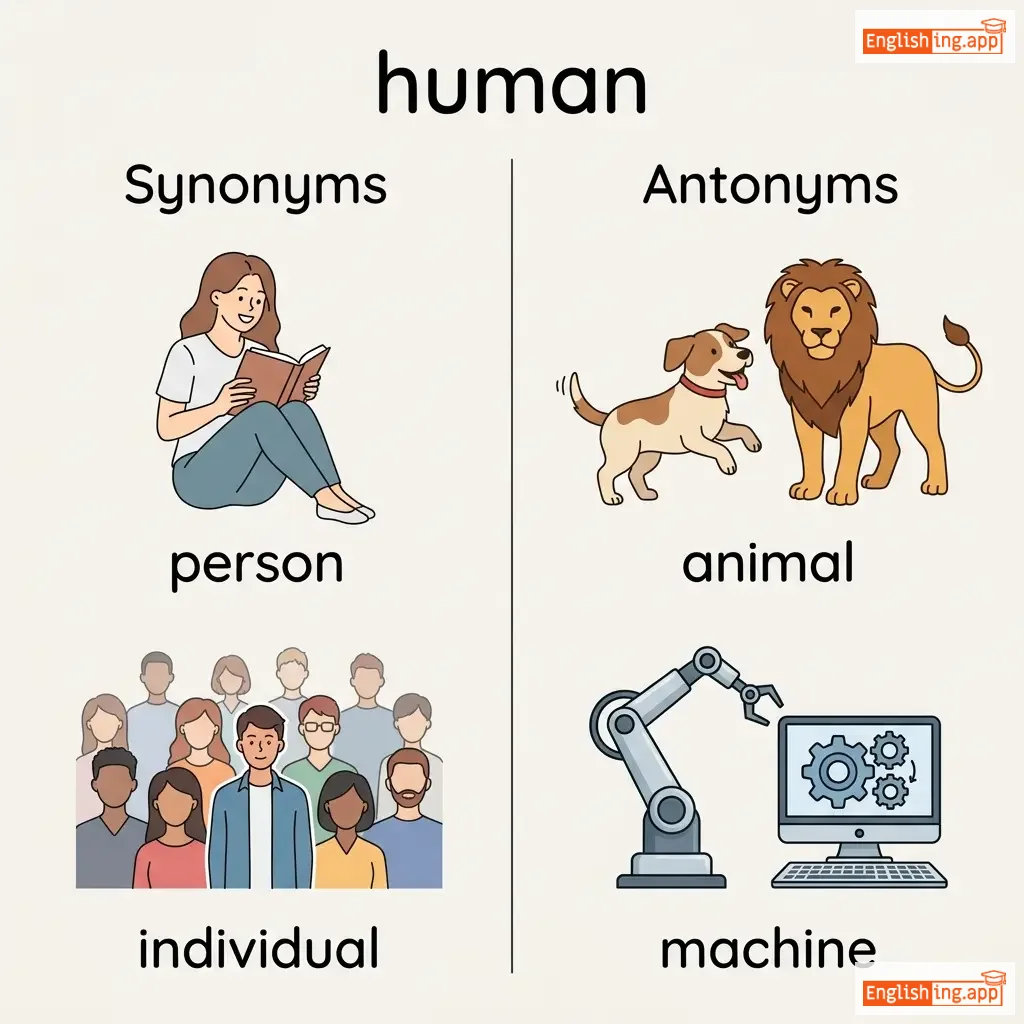
person, individual, mortal, man, woman
••••••
|
animal, machine, robot
••••••
|
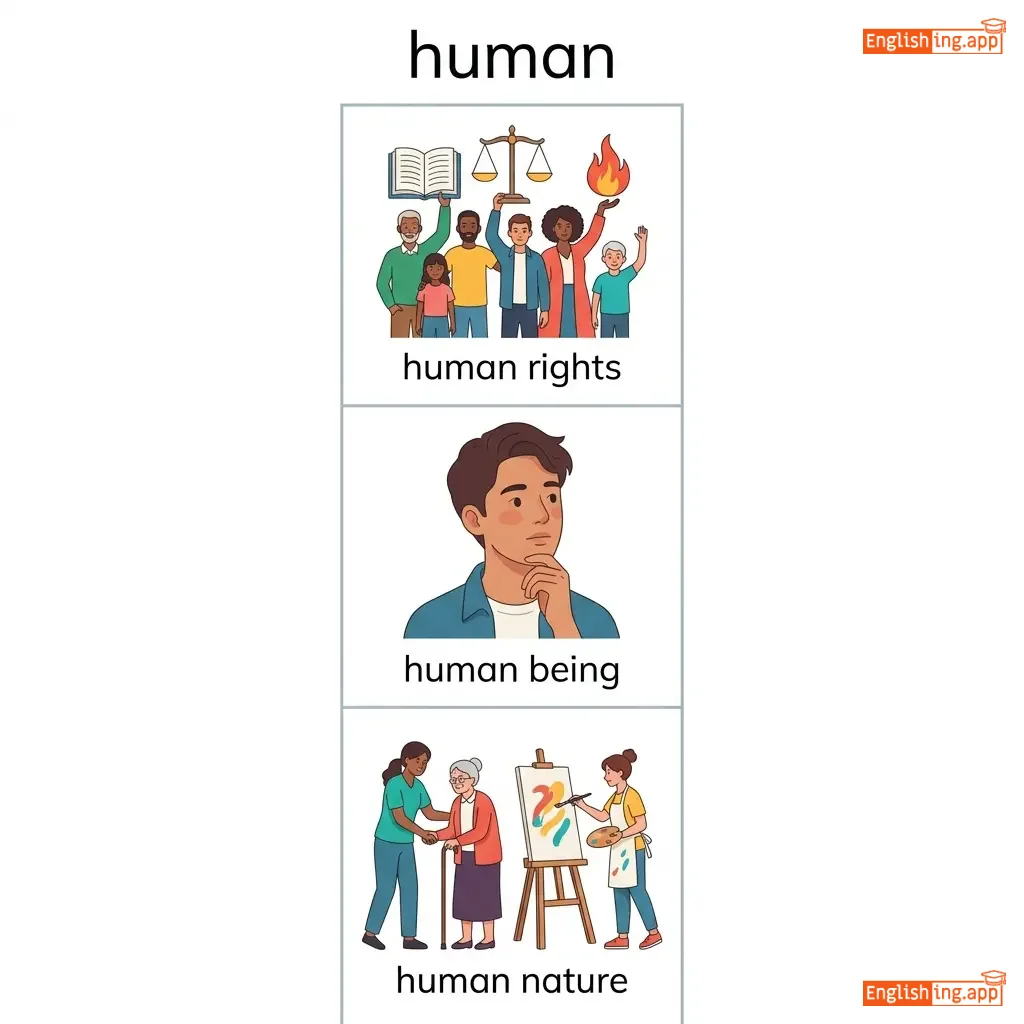
human rights, human being, human nature, human body
••••••
|
Human = 'rén' (人) + 'lèi' (类) → 人类是具有力量和弱点的生物。
••••••
|
|
#11214
⚖️
|
/haʊˈɛvər/
adverb, conjunction
(hāo'ēwò)
••••••
|
- •••••• |
然而
rán'ér
••••••
|
- •••••• | - •••••• | - •••••• | - •••••• |
used to introduce a statement that contrasts with or seems to contradict something previously said
••••••
|
The journey was long; however, it was enjoyable. |
旅程很长;然而,它是愉快的。
Lǚchéng hěn cháng; rán'ér, tā shì yúkuài de.
••••••
|
- •••••• | - •••••• | - •••••• |
nevertheless, but, still, yet
••••••
|
therefore, thus
••••••
|
however hard, however much, however difficult
••••••
|
However 在中文是然而,想象一次长途旅行,但仍然愉快。
••••••
|
Vocabulary Quiz
Test your vocabulary by matching words with their translations or meanings.
Login to take the quiz
Comments (0)
Share your thoughts and join the discussion.
Join the discussion by logging in
Login to CommentNo comments yet
Be the first to share your thoughts!