







Swipe left or right, or use the buttons. Tap image to zoom.
例句翻译
单词
Lesson 324Lesson 324 - 遮罩切换
|
表情符号
|
单词 | Images | 翻译 | 过去时 | 过去分词 | 第三人称单数 | 动名词 | 含义 | 例句 | 例句翻译 | 示例表达 | 示例表达含义 | 示例表达翻译 | 同义词 | 反义词 | 搭配词 | 助记符 |
|---|---|---|---|---|---|---|---|---|---|---|---|---|---|---|---|---|---|
|
#9690
😊
|
/kənˈtɛntɪd/
adjective
(肯腾的)
••••••
|
- •••••• |
满足的
manzu de
••••••
|
- •••••• | - •••••• | - •••••• | - •••••• |
Feeling or expressing happiness and satisfaction.
••••••
|
She was contented with her simple life. |
她对她简单的生活感到满足。
Tā duì tā jiǎndān de shēnghuó gǎndào mǎnzú.
••••••
|
- •••••• | - •••••• | - •••••• |
satisfied, pleased, fulfilled, happy, gratified
••••••
|
discontented, unhappy, dissatisfied
••••••
|
feel contented, look contented, be contented with, contented smile
••••••
|
Contented意味着幸福和满足,像看YouTube内容一样感到开心。
••••••
|
|
#9691
🦁
|
/ˈkʌrɪdʒ/
noun
(kùrèzhī)
••••••
|
|
勇气
yongqi
••••••
|
- •••••• | - •••••• | - •••••• | - •••••• |
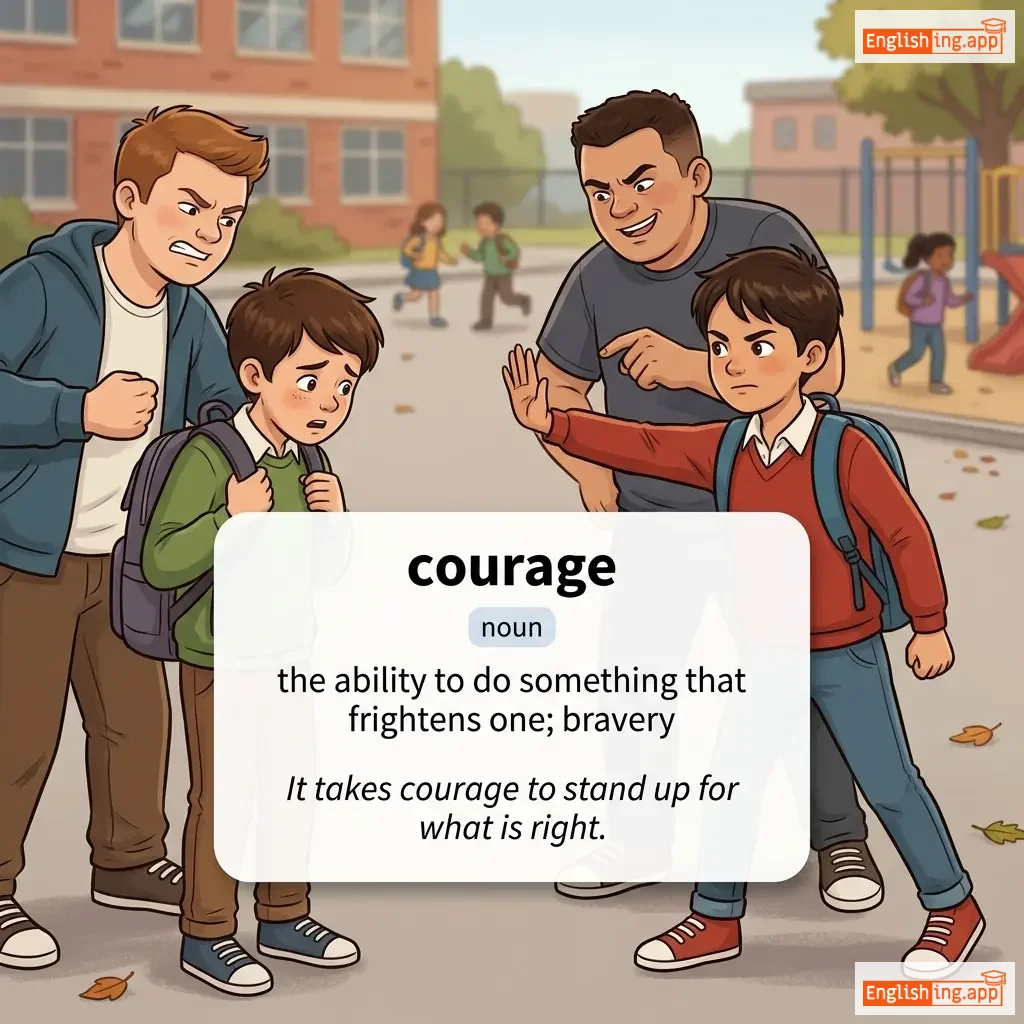
the ability to do something that frightens one; bravery
••••••
|
It takes courage to stand up for what is right. |
为了为正义站起来,需要勇气。
Wei le wei zhengyi zhan qilai, xuyao yongqi.
••••••
|
pluck up courage |
to force yourself to be brave enough to do something
••••••
|
鼓起勇气
guqi yongqi
••••••
|
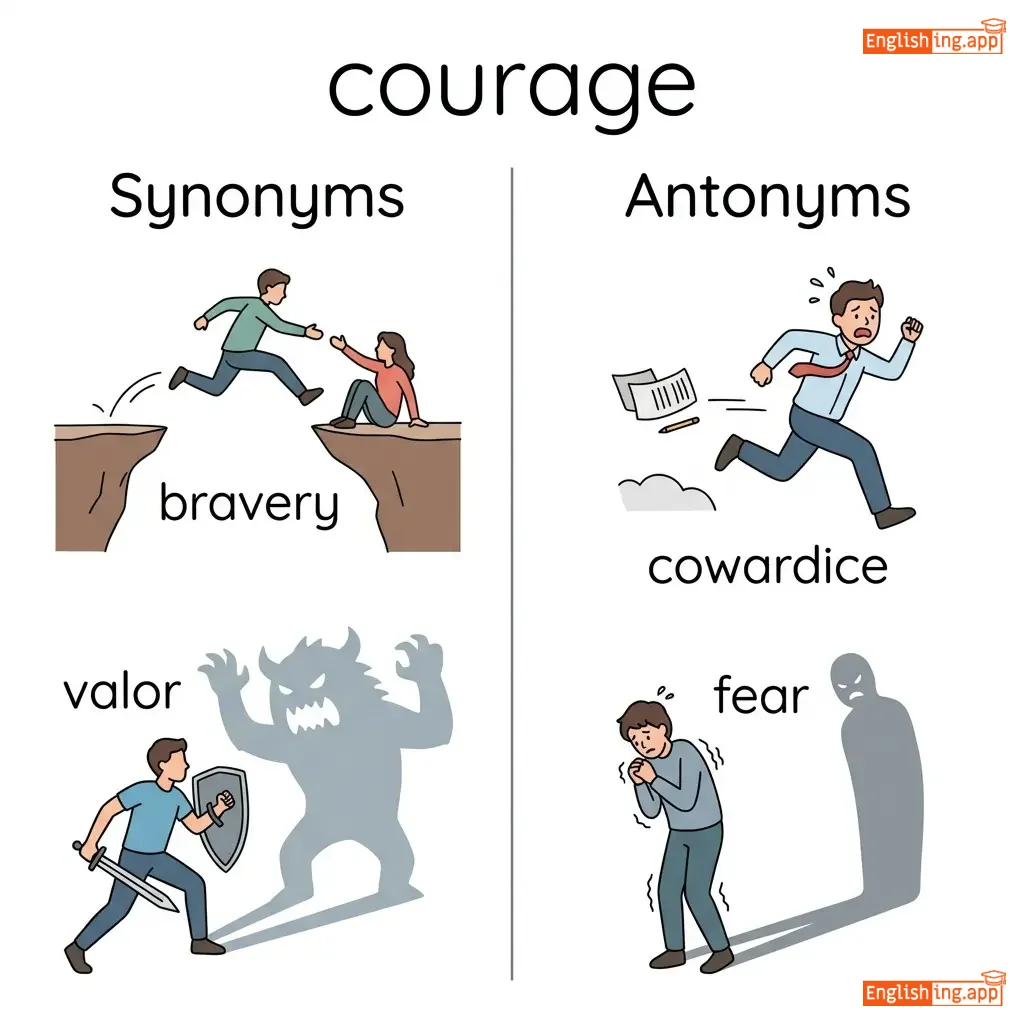
bravery, valor, boldness, fearlessness, spirit
••••••
|
cowardice, fear
••••••
|
show courage, great courage, moral courage
••••••
|
Courage 🦁 意味着勇气 - 拥有狮子的勇气,你可以做任何事情
••••••
|
|
#9692
🛋️
|
/kaʊtʃ/
noun
(kàu)
••••••
|
- •••••• |
沙发
shafa
••••••
|
- •••••• | - •••••• | - •••••• | - •••••• |
a comfortable seat for two or more people, typically upholstered
••••••
|
They sat on the couch and watched TV.
他们坐在沙发上看电视。
••••••
|
他们坐在沙发上看电视。
Tāmen zuò zài shāfā shàng kàn diànshì.
••••••
|
couch potato
沙发土豆
••••••
|
a person who spends a lot of time sitting and watching TV
••••••
|
沙发土豆
shāfā tǔdòu
••••••
|
sofa, settee, divan, lounge
••••••
|
chair, stool
••••••
|
comfortable couch, leather couch, couch cushions
••••••
|
Couch 🛋️ 是沙发 - Couch potato 是坐沙发看电视的懒人
••••••
|
|
#9693
✔️
|
/kəˈrɛkt/
adjective
(kǎo lè kè)
••••••
|
- •••••• |
正确
zhèngquè
••••••
|
- •••••• | - •••••• | - •••••• | - •••••• |
free from error; accurate
••••••
|
The answer she gave was correct. |
她给出的答案是正确的。
Tā gěi chū de dá'àn shì zhèngquè de.
••••••
|
politically correct |
language or behavior intended to avoid offense
••••••
|
政治正确
zhèngzhì zhèngquè
••••••
|
accurate, right, exact, true
••••••
|
wrong, incorrect, false
••••••
|
correct answer, correct behavior, correct form
••••••
|
正确意味着 correct ✔️ - 正确答案是正确的
••••••
|
|
#9694
💪
|
/koʊp/
verb
(科普)
••••••
|
- •••••• |
应对
yìng duì
••••••
|
coped
科普德
••••••
|
coped
科普德
••••••
|
copes
科普斯
••••••
|
coping
科普英
••••••
|
to deal effectively with something difficult
••••••
|
She had to cope with a lot of pressure at work.
她不得不应对工作中的巨大压力。
••••••
|
她不得不应对工作中的巨大压力。
Tā bùdé bù yìng duì gōngzuò zhōng de jù dà yālì.
••••••
|
cope with
应对
••••••
|
to manage or handle a difficult situation
••••••
|
应对
yìng duì
••••••
|
manage, handle, endure, survive
••••••
|
fail, collapse
••••••
|
cope with stress, cope with problems, cope alone
••••••
|
COPE意味着应对挑战 - cope = 应对
••••••
|
|
#9695
😎
|
/kuːl/
adjective
(kù'ěr)
••••••
|
- •••••• |
冷静, 凉爽, 印象深刻
lěngjìng, liángshuǎng, yìnxiàng shēnkè
••••••
|
- •••••• | - •••••• | - •••••• | - •••••• |
moderately cold; calm and composed; fashionable or impressive
••••••
|
She kept a cool head during the crisis.
她在危机中保持冷静。
••••••
|
她在危机中保持冷静。
Tā zài wēijī zhōng bǎochí lěngjìng.
••••••
|
cool as a cucumber
像黄瓜一样冷静
••••••
|
very calm and composed, especially in a difficult situation
••••••
|
像黄瓜一样冷静
Xiàng huángguā yīyàng lěngjìng
••••••
|
chilly, calm, composed, trendy, stylish
••••••
|
hot, warm, agitated
••••••
|
cool breeze, cool attitude, cool look, cool drink
••••••
|
Cool意味着冷静和清新,像黄瓜一样。
••••••
|
|
#9696
🔗
|
/kənˈvɜː.dʒəns/
noun
(kənˈvɜːdʒəns)
••••••
|
|
汇聚
huìjù
••••••
|
- •••••• | - •••••• | - •••••• | - •••••• |
the process of coming together or becoming similar
••••••
|
The convergence of technology and education is creating new opportunities. |
技术与教育的汇聚正在创造新的机会。
Jìshù yǔ jiàoyù de huìjù zhèngzài chuàngzào xīn de jīhuì.
••••••
|
- •••••• | - •••••• | - •••••• |
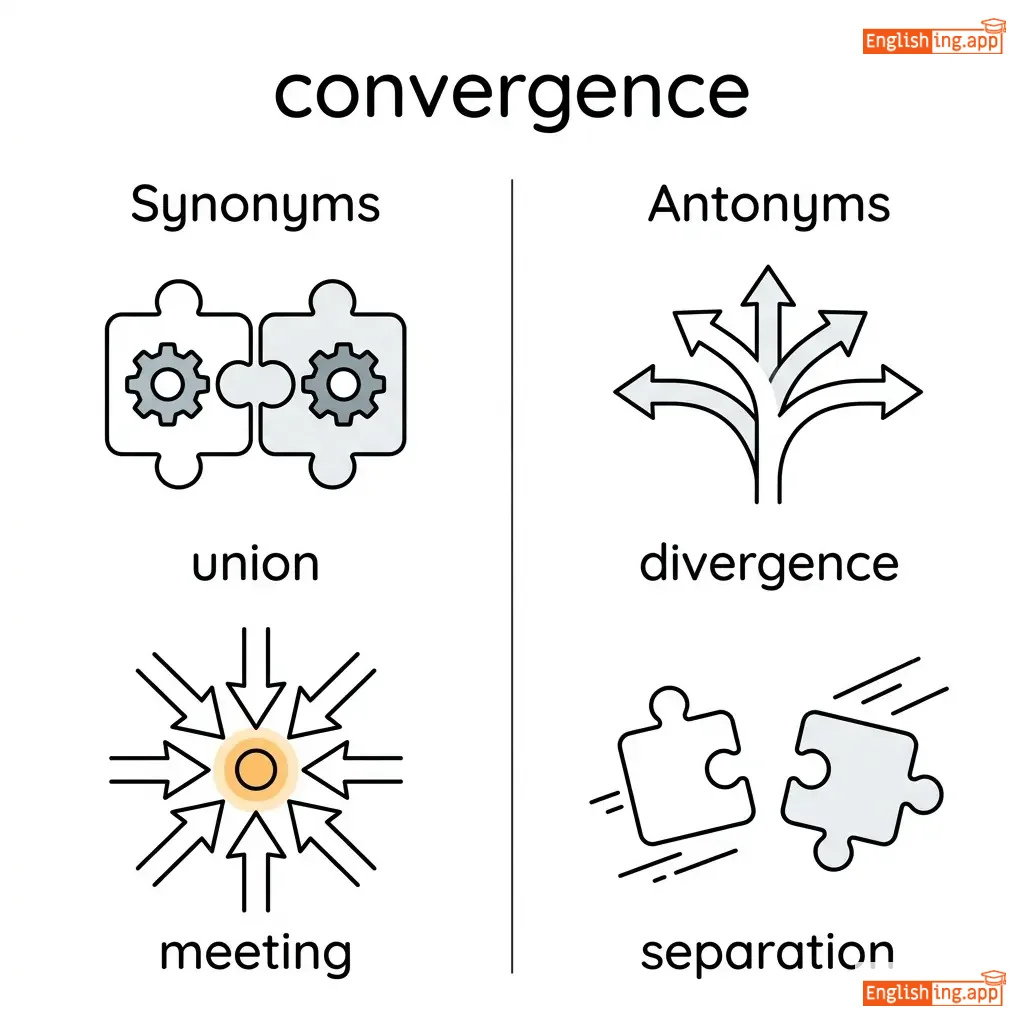
union, meeting, merging, intersection, combination
••••••
|
divergence, separation, split
••••••
|
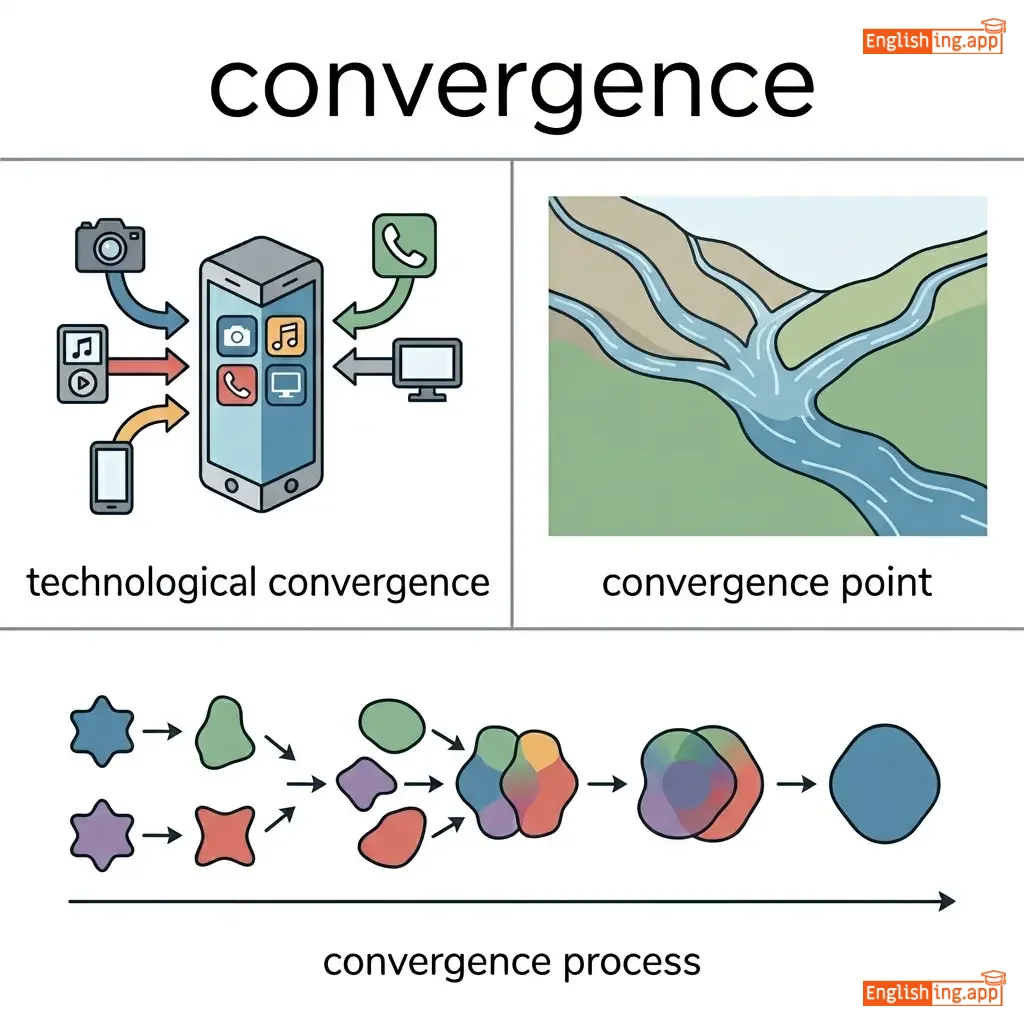
technological convergence, convergence point, convergence process, convergence of ideas
••••••
|
Converge意味着汇聚,convergence意味着汇聚的过程。
••••••
|
|
#9697
🛒
|
/kənˈviː.ni.ənt/
adjective
(kángwénniántè)
••••••
|
- •••••• |
方便
fāngbiàn
••••••
|
- •••••• | - •••••• | - •••••• | - •••••• |
suitable or easy to use; fitting in well with one's needs
••••••
|
This shop is convenient for my daily needs.
这家商店方便我的日常需求。
••••••
|
这家商店方便我的日常需求。
Zhè jiā shāngdiàn fāngbiàn wǒ de rìcháng xūqiú.
••••••
|
at your convenience
在您的方便时
••••••
|
whenever it is suitable for you
••••••
|
在您的方便时
zài nín de fāngbiàn shí
••••••
|
handy, suitable, practical, useful
••••••
|
inconvenient, unsuitable, difficult
••••••
|
convenient location, convenient time, convenient way, convenient shop
••••••
|
方便就像是一个方便的商店,能满足你的所有需求!
••••••
|
|
#9698
🔥
|
/ˌkɒn.trəˈvɜː.ʃəl/
adjective
(kòntròuérxiàol)
••••••
|
|
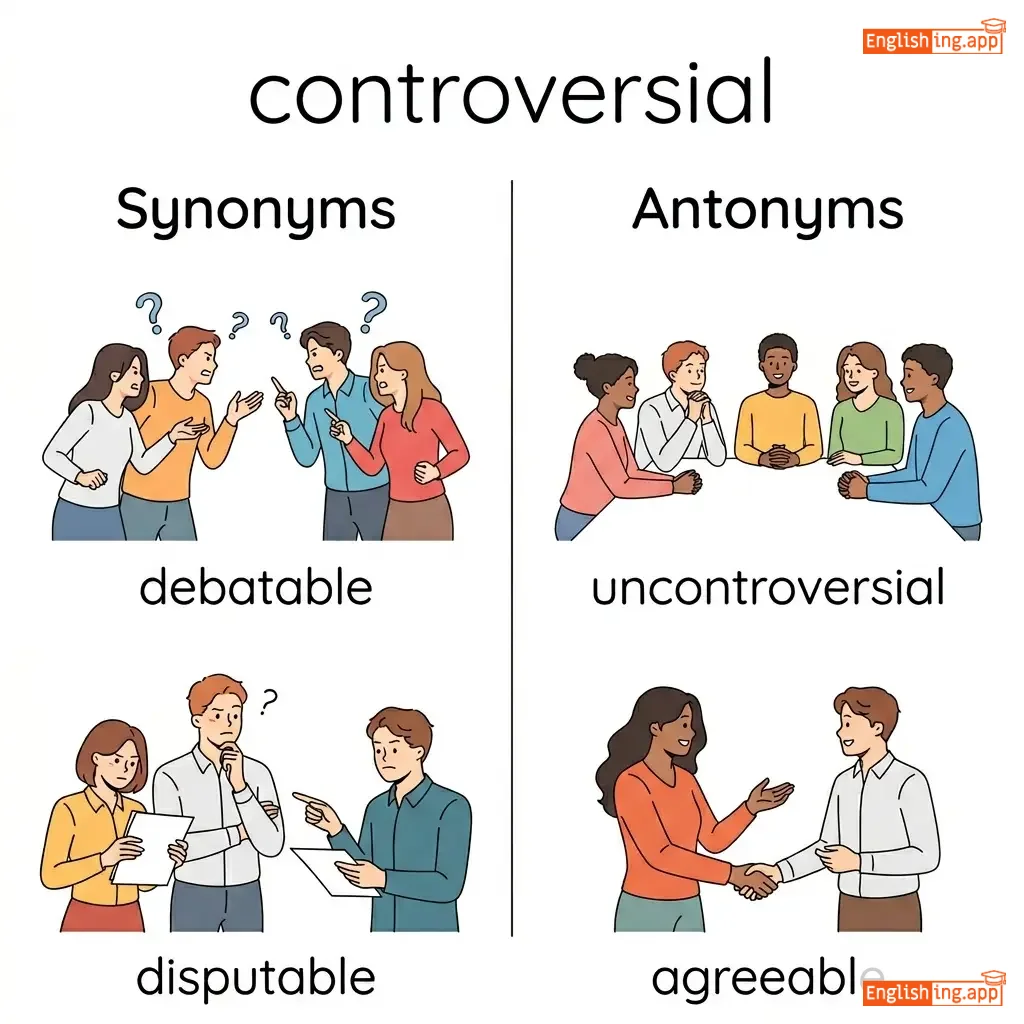
有争议的
yǒu zhēngyì de
••••••
|
- •••••• | - •••••• | - •••••• | - •••••• |
causing disagreement or discussion because people hold different opinions
••••••
|
The new law is highly controversial. |
这项新法律非常有争议。
zhè xiàng xīn fǎlǜ fēicháng yǒu zhēngyì
••••••
|
- •••••• | - •••••• | - •••••• |
debatable, disputable, contentious, divisive
••••••
|
uncontroversial, agreeable, accepted
••••••
|
controversial law, controversial issue, controversial figure, highly controversial
••••••
|
有争议的就意味着争议会一直存在。
••••••
|
|
#9699
↔️
|
/ˈkɒn.trəri/
adjective
(kòntrèrì)
••••••
|
- •••••• |
相反的
xiāngfǎn de
••••••
|
- •••••• | - •••••• | - •••••• | - •••••• |
opposite in nature, direction, or meaning
••••••
|
Her views are contrary to mine. |
她的观点与我相反。
tā de guāndiǎn yǔ wǒ xiāngfǎn.
••••••
|
on the contrary |
used to state that the opposite of what has been said is true
••••••
|
相反
xiāngfǎn
••••••
|
opposite, conflicting, opposed, inconsistent
••••••
|
similar, agreeing, consistent
••••••
|
contrary opinion, contrary evidence, contrary result, contrary to
••••••
|
Contrary 在中文里是相反的,相反就是反方向的意思。
••••••
|
|
#9700
⚡
|
/ˌkɒn.trəˈdɪkt/
verb
(反驳)
••••••
|
- •••••• |
反驳
fǎnbó
••••••
|
contradicted
反驳
••••••
|
contradicted
反驳
••••••
|
contradicts
反驳
••••••
|
contradicting
反驳
••••••
|
to say or show the opposite of something that has been said or believed
••••••
|
His actions contradict his words.
他的行为与他的言辞相矛盾。
••••••
|
他的行为与他的言辞相矛盾。
tā de xíngwéi yǔ tā de yáncí xiāng máodùn.
••••••
|
contradict oneself
自相矛盾
••••••
|
to say or do something that conflicts with what one has said or done before
••••••
|
自相矛盾
zì xiāng máodùn
••••••
|
oppose, deny, refute, dispute, challenge
••••••
|
agree, confirm, support
••••••
|
contradict evidence, contradict statement, contradict belief, contradict claim
••••••
|
反(对)+ 驳(驳斥),所以反驳就意味着说与所信的相反。
••••••
|
|
#9701
♾️
|
/kənˈtɪnjuəm/
noun
(kèntínúmù)
••••••
|
- •••••• |
连续体
liánxùtǐ
••••••
|
- •••••• | - •••••• | - •••••• | - •••••• |
A continuous sequence in which adjacent elements are not perceptibly different from each other, but the extremes are quite distinct.
••••••
|
Life and death are often seen as part of the same continuum. |
生与死常常被视为同一连续体的一部分。
Shēng yǔ sǐ chángcháng bèi shì wéi tóng yī liánxùtǐ de yī bùfen.
••••••
|
- •••••• | - •••••• | - •••••• |
sequence, progression, spectrum, range, succession
••••••
|
disruption, separation, break
••••••
|
time continuum, space-time continuum, cultural continuum, historical continuum
••••••
|
连续体就是指从生命到死亡的一个没有尽头的过程。
••••••
|
|
#9702
➡️
|
/kənˈtɪnjuː/
verb
(继续)
••••••
|
- •••••• |
继续
jixu
••••••
|
continued
继续了
••••••
|
continued
继续过
••••••
|
continues
继续
••••••
|
continuing
继续着
••••••
|
To keep happening, existing, or doing something without stopping.
••••••
|
The rain will continue throughout the night.
雨水会持续整晚。
••••••
|
雨水会持续整晚。
Yǔ shuǐ huì chíxù zhěng wǎn.
••••••
|
continue on
继续前进
••••••
|
to persist or move forward despite difficulties
••••••
|
继续前进
jìxù qiánjìn
••••••
|
persist, proceed, endure, carry on, keep going
••••••
|
stop, cease, quit
••••••
|
continue working, continue education, continue efforts, continue journey
••••••
|
Continue 意味着继续前行,像永不停歇的雨水。
••••••
|
|
#9703
⚔️
|
/ˈkɒnflɪkt/
noun
(kónflɪkt)
••••••
|
- •••••• |
冲突
chōngtū
••••••
|
- •••••• | - •••••• | - •••••• | - •••••• |
A serious disagreement or argument, often a prolonged one.
••••••
|
The two countries are trying to resolve the conflict through negotiations. |
这两个国家正在通过谈判解决冲突。
Zhè liǎng gè guójiā zhèngzài tōngguò tánpàn jiějué chōngtū.
••••••
|
conflict of interest |
A situation where someone's personal interest might influence their professional decisions.
••••••
|
利益冲突
lìyì chōngtū
••••••
|
clash, struggle, fight, dispute, battle
••••••
|
agreement, harmony, peace
••••••
|
armed conflict, internal conflict, conflict resolution, conflict management
••••••
|
冲突 – 就是意见的碰撞 – 在中国,'冲突'表示持续的争执或不和。
••••••
|
|
#9704
💬
|
/kənˈsʌlt/
verb
(kənˈsʌlt)
••••••
|
- •••••• |
咨询
zixun
••••••
|
consulted
kənˈsʌltɪd
••••••
|
consulted
kənˈsʌltɪd
••••••
|
consults
kənˈsʌlts
••••••
|
consulting
kənˈsʌltɪŋ
••••••
|
To seek advice or information from someone with expertise.
••••••
|
You should consult a doctor before starting the treatment.
在开始治疗之前,你应该咨询医生。
••••••
|
在开始治疗之前,你应该咨询医生。
Zai kaishi zhiliaozhiqian, ni yinggai zixun yisheng.
••••••
|
consult with
与...咨询
••••••
|
to discuss something with someone before making a decision
••••••
|
与...咨询
yu...zixun
••••••
|
advise, confer, discuss, recommend, counsel
••••••
|
ignore, neglect, disregard
••••••
|
consult a doctor, consult an expert, consult the lawyer, consult with colleagues
••••••
|
咨询就是寻求帮助 → 向医生询问治疗方案。
••••••
|
|
#9705
🏗️
|
/kənˈstrʌkʃən/
noun
(kēn sī truò kè shēn)
••••••
|
|
建筑
jian zhu
••••••
|
- •••••• | - •••••• | - •••••• | - •••••• |
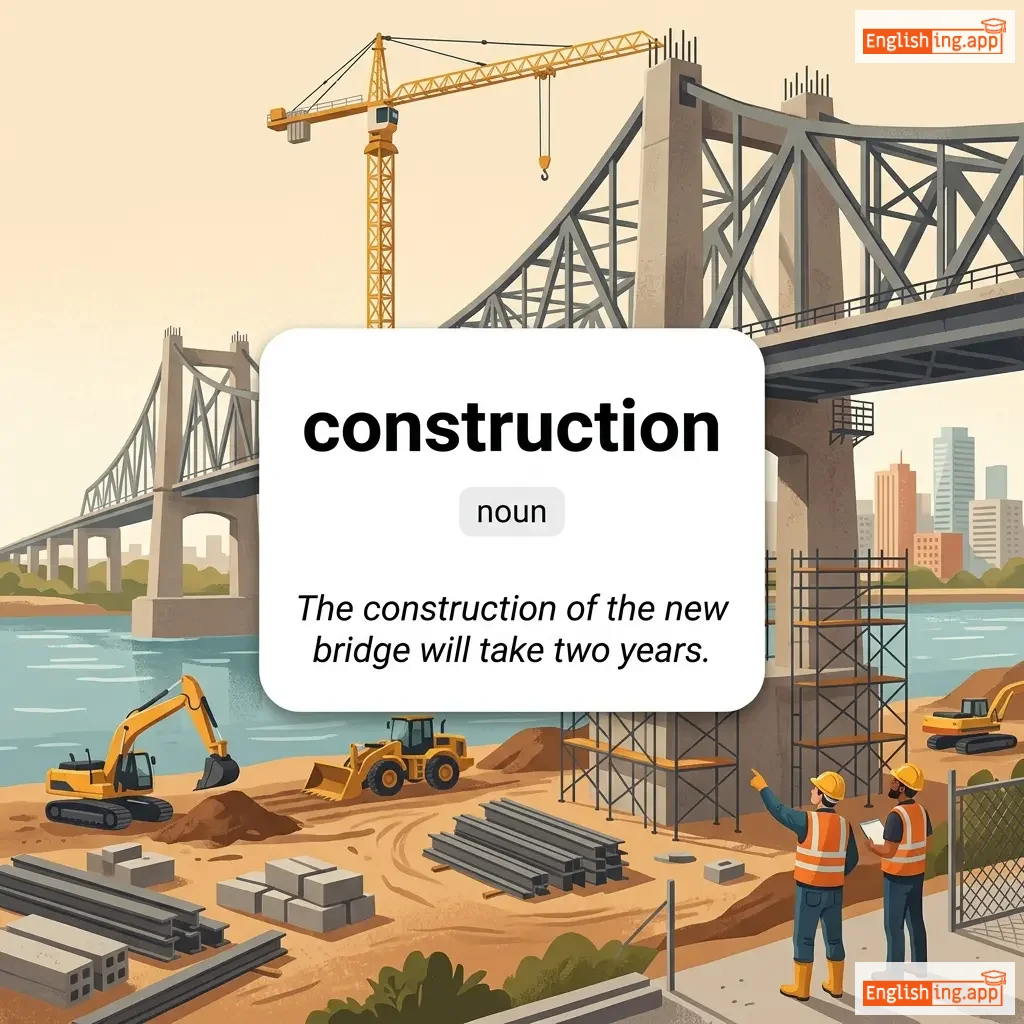
The process of building something, typically large structures such as houses, roads, or bridges.
••••••
|
The construction of the new bridge will take two years. |
新桥的建设将需要两年时间。
Xin qiao de jian she jiang xu yao liang nian shi jian.
••••••
|
under construction |
in the process of being built or repaired
••••••
|
正在建设中
zhèngzài jiànshè zhōng
••••••
|
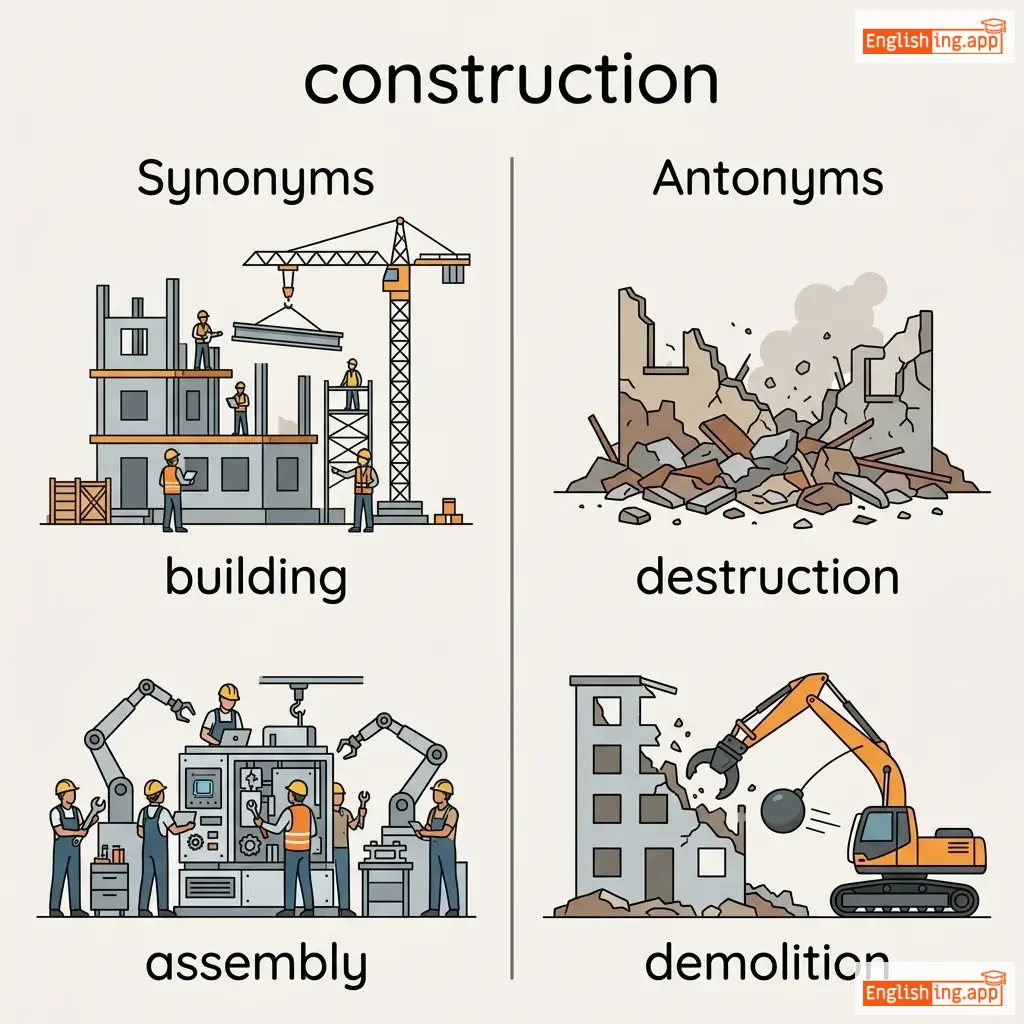
building, assembly, creation, development, erection
••••••
|
destruction, demolition, dismantling
••••••
|
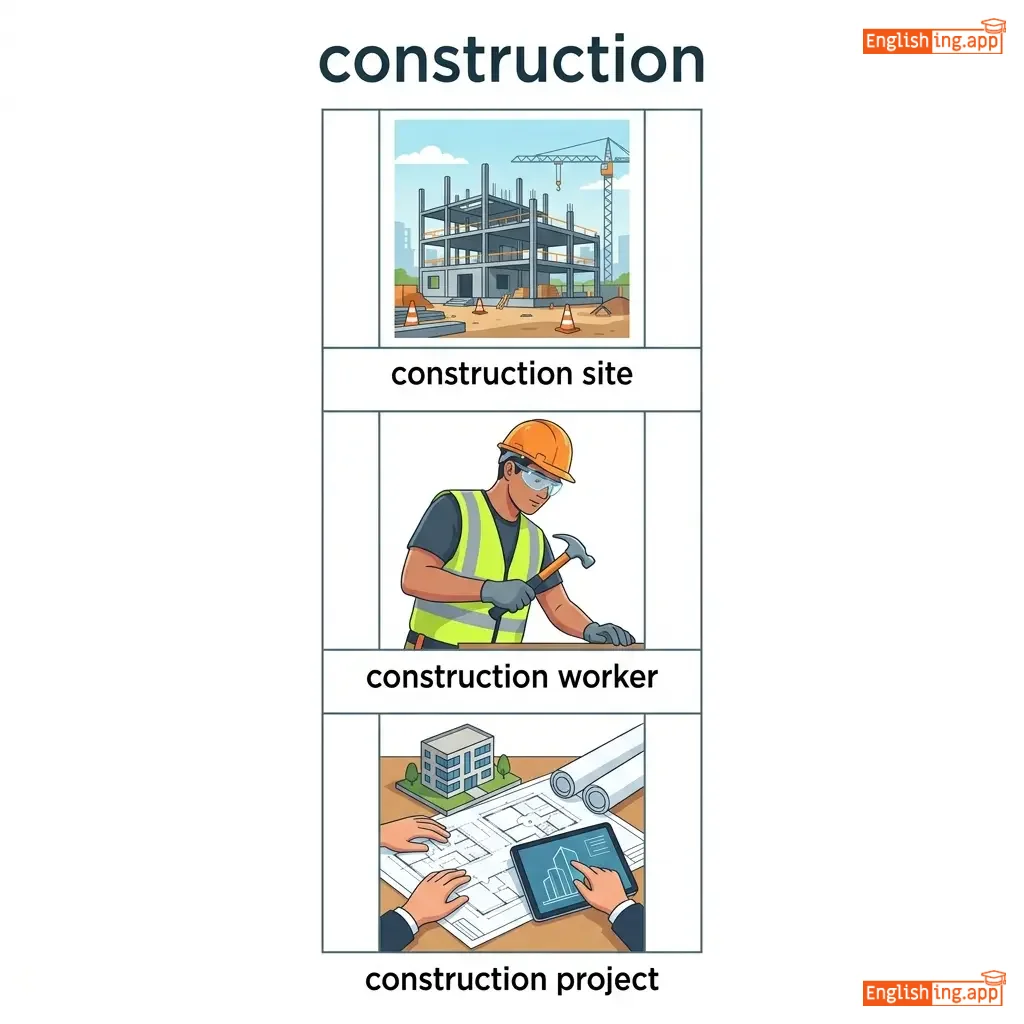
construction site, construction worker, construction project, construction materials
••••••
|
建筑 = 建立伟大结构,让世界变得更坚固。
••••••
|
|
#9706
♾️
|
/ˈkɒnstəntli/
adverb
(kónstàntli)
••••••
|
- •••••• |
不断
bùduàn
••••••
|
- •••••• | - •••••• | - •••••• | - •••••• |
continuously over a period of time; always
••••••
|
He is constantly improving his skills.
他不断提升自己的技能。
••••••
|
他不断提升自己的技能。
Tā bùduàn tíshēng zìjǐ de jìnéng.
••••••
|
- •••••• | - •••••• | - •••••• |
continuously, perpetually, repeatedly, always
••••••
|
occasionally, rarely, sometimes
••••••
|
constantly changing, constantly improving, constantly growing, constantly aware
••••••
|
不断意味着始终做某事——持续提升技能
••••••
|
|
#9707
🛡️
|
/ˈkɒnstənsi/
noun
(康斯坦西)
••••••
|
- •••••• |
忠诚/恒常
zhongcheng/hengchang
••••••
|
- •••••• | - •••••• | - •••••• | - •••••• |
the quality of being faithful and dependable
••••••
|
Her constancy in friendship is admirable.
她的康斯坦西在友谊中令人钦佩。
••••••
|
她在友谊中的恒常令人钦佩。
Ta zai youyi zhong de hengchang ling ren qinpei.
••••••
|
- •••••• | - •••••• | - •••••• |
loyalty, faithfulness, stability, steadfastness
••••••
|
fickleness, inconsistency, instability
••••••
|
constancy of purpose, constancy in love, unwavering constancy
••••••
|
恒常 suggests constant and reliable, like constancy
••••••
|
|
#9708
🤗
|
/kənˈsɪdərət/
adjective
(kənˈsɪdərət)
••••••
|
- •••••• |
体贴的
tǐtiē de
••••••
|
- •••••• | - •••••• | - •••••• | - •••••• |
showing concern for the needs and feelings of others
••••••
|
He is always considerate of his neighbors.
他总是关心他的邻居。
••••••
|
他总是关心他的邻居。
Tā zǒng shì guānxīn tā de línjū.
••••••
|
- •••••• | - •••••• | - •••••• |
thoughtful, kind, caring, attentive
••••••
|
inconsiderate, selfish, thoughtless
••••••
|
considerate person, considerate behavior, very considerate, considerate towards
••••••
|
Considerate的意思是关心他人——总是关怀他人
••••••
|
|
#9709
✅
|
/kənˈsɛnt/
noun
(kənˈsɛnt)
••••••
|
- •••••• |
同意
tongyi
••••••
|
- •••••• | - •••••• | - •••••• | - •••••• |
permission for something to happen or agreement to do something
••••••
|
She gave her consent before the operation. |
她在手术前给了她的同意。
Ta zai shoushu qian geile ta de tongyi.
••••••
|
with your consent |
with your permission or agreement
••••••
|
在您的同意下
Zai nín de tóngyì xià
••••••
|
permission, approval, agreement, authorization
••••••
|
refusal, denial, rejection
••••••
|
give consent, obtain consent, written consent, parental consent
••••••
|
同意就像说'是'一样,表示许可。
••••••
|
|
#9710
🔗
|
/kəˈnɛkt/
verb
(科奈特)
••••••
|
|
连接
lianjie
••••••
|
connected
连接
••••••
|
connected
连接
••••••
|
connects
连接
••••••
|
connecting
连接中
••••••
|
to join or link two or more things together
••••••
|
The new bridge will connect the two cities.
新桥将连接这两个城市。
••••••
|
新桥将连接这两个城市。
Xin qiao jiang lianjie zhe liang ge chengshi.
••••••
|
connect the dots
连接点
••••••
|
to understand the relationship between different ideas or facts
••••••
|
连接点
lianjie dian
••••••
|
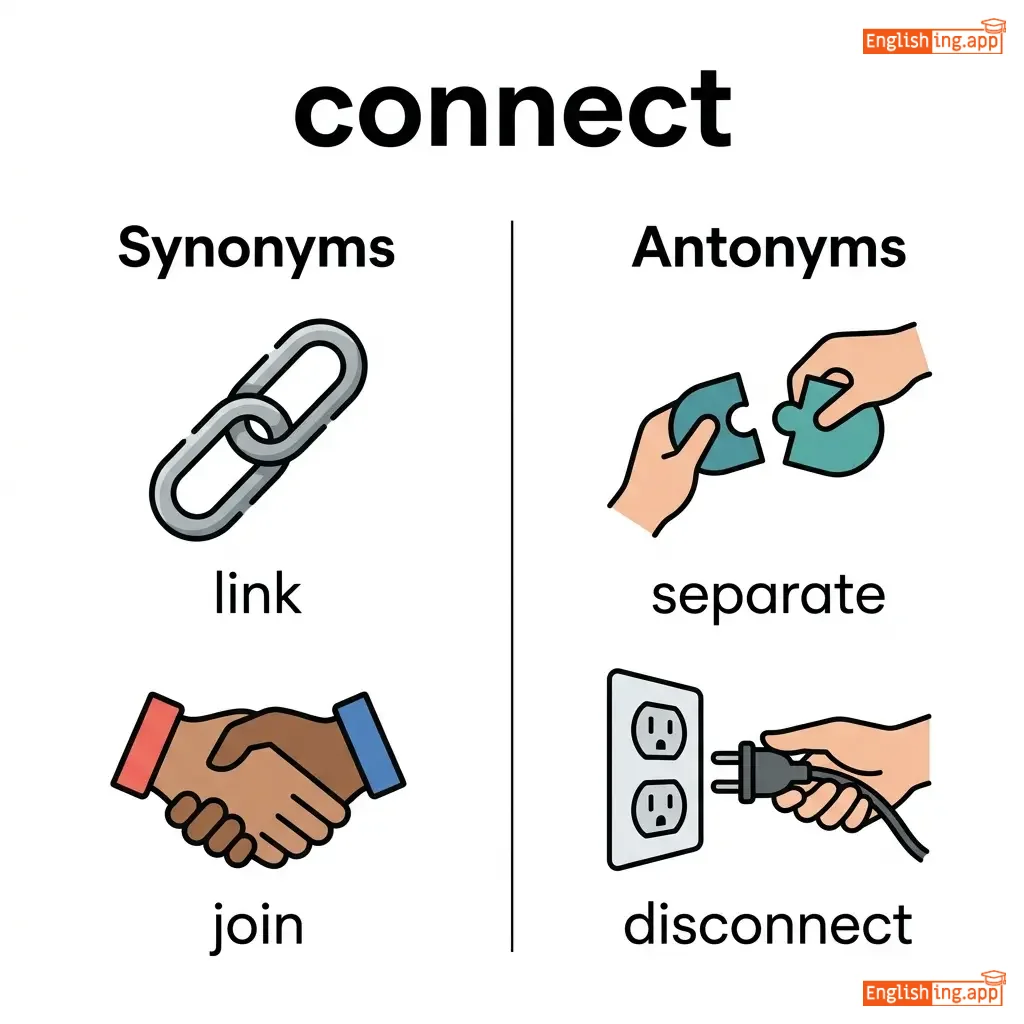
link, join, attach, unite, couple
••••••
|
separate, disconnect, divide
••••••
|
connect to, connect with, connect directly, connect easily
••••••
|
Connect 意味着连接 — 就像你将手机连接到Wi-Fi以获取互联网访问权限。
••••••
|
|
#9711
🚗
|
/kənˈdʒɛstɪd/
adjective
(kənˈdʒɛstɪd)
••••••
|
- •••••• |
拥堵
yōngdǔ
••••••
|
- •••••• | - •••••• | - •••••• | - •••••• |
Blocked up with too much traffic or crowding.
••••••
|
The road was congested during rush hour. |
在高峰时段,路上非常拥堵。
Zài gāofēng shíduàn, lùshàng fēicháng yōngdǔ.
••••••
|
- •••••• | - •••••• | - •••••• |
overcrowded, jammed, packed, blocked
••••••
|
clear, empty
••••••
|
congested area, congested road, congested city
••••••
|
记住'拥堵'可以想象街道上车满为患。
••••••
|
|
#9712
😕
|
/kənˈfjuːz/
verb
(kənfjuːz)
••••••
|
- •••••• |
混淆
hùnxiáo
••••••
|
confused
kənfjuːzd
••••••
|
confused
kənfjuːzd
••••••
|
confuses
kənfjuːzəs
••••••
|
confusing
kənfjuːzɪŋ
••••••
|
To make someone unable to think clearly; to bewilder.
••••••
|
The complex instructions confused the students.
复杂的指示使学生感到困惑。
••••••
|
复杂的指示使学生感到困惑。
Fùzá de zhǐshì shǐ xuéshēng gǎndào kùnhuò.
••••••
|
confuse someone with someone else
把某人和别人混淆
••••••
|
To mistake one person for another.
••••••
|
把某人和别人混淆
Bǎ mǒu rén hé biérén hùnxiáo
••••••
|
perplex, puzzle, bewilder, baffle
••••••
|
clarify, explain
••••••
|
confuse the issue, confuse the audience, confuse easily
••••••
|
Confuse = 混淆 = 困惑
••••••
|
|
#9713
🚨
|
/ˌkɒnfrʌnˈteɪʃən/
noun
(kənˈfrɒnˌteɪʃən)
••••••
|
- •••••• |
对抗
duìkàng
••••••
|
- •••••• | - •••••• | - •••••• | - •••••• |
A hostile or argumentative meeting or situation between opposing parties.
••••••
|
The protest led to a confrontation with the police. |
抗议活动导致了与警察的对抗。
Kàngyì huódòng dǎozhìle yǔ jǐngchá de duìkàng.
••••••
|
- •••••• | - •••••• | - •••••• |
clash, conflict, dispute, encounter
••••••
|
agreement, peace
••••••
|
violent confrontation, direct confrontation, confrontation with authority
••••••
|
对抗 = 两个对立方的冲突或争斗。
••••••
|
|
#9714
📏
|
/kənˈfɔːrm/
verb
(kān fōrm)
••••••
|
- •••••• |
遵守
zūnshǒu
••••••
|
conformed
kān fōrm-d
••••••
|
conformed
kān fōrm-d
••••••
|
conforms
kān fōrm-s
••••••
|
conforming
kān fōrm-ing
••••••
|
To comply with rules, standards, or laws.
••••••
|
Students must conform to the school regulations.
学生必须遵守学校的规定。
••••••
|
学生必须遵守学校的规定。
Xuéshēng bìxū zūnshǒu xuéxiào de guīdìng.
••••••
|
conform to norms
遵守规范
••••••
|
To act in accordance with accepted standards or expectations.
••••••
|
遵守规范
zūnshǒu guīfàn
••••••
|
comply, follow, obey, adhere
••••••
|
rebel, resist
••••••
|
conform to rules, conform to standards, conform strictly
••••••
|
Conform = 'kān' (遵) + form = 形式 → 遵守规则和标准。
••••••
|
Vocabulary Quiz
Test your vocabulary by matching words with their translations or meanings.
Login to take the quiz
Comments (0)
Share your thoughts and join the discussion.
Join the discussion by logging in
Login to CommentNo comments yet
Be the first to share your thoughts!