








Swipe left or right, or use the buttons. Tap image to zoom.
例句翻译
单词
Lesson 107Lesson 107 - 遮罩切换
|
表情符号
|
单词 | Images | 翻译 | 过去时 | 过去分词 | 第三人称单数 | 动名词 | 含义 | 例句 | 例句翻译 | 示例表达 | 示例表达含义 | 示例表达翻译 | 同义词 | 反义词 | 搭配词 | 助记符 |
|---|---|---|---|---|---|---|---|---|---|---|---|---|---|---|---|---|---|
|
#3181
🌋
|
/ɪkˈskrɛsəns/
noun
(ɪkˈskrɛsəns)
••••••
|
- •••••• |
异常生长
yìcháng shēngzhǎng
••••••
|
- •••••• | - •••••• | - •••••• | - •••••• |
An abnormal outgrowth or lump, often considered unattractive.
••••••
|
The building was considered an excrescence on the landscape. |
这座建筑被认为是景观中的一种异常生长。
Zhè zuò jiànzhú bèi rènwéi shì jǐngguān zhōng de yī zhǒng yìcháng shēngzhǎng.
••••••
|
- •••••• | - •••••• | - •••••• |
outgrowth, protuberance, lump, swelling, tumor
••••••
|
normality, harmony
••••••
|
ugly excrescence, excrescence on society, excrescence on skin
••••••
|
Excrescence = Extra + Growth – 不正常的生长。
••••••
|
|
#3182
💼
|
/ɪɡˈzɛkjətɪv/
noun/adjective
(执行官)
••••••
|
|
执行官
zhíxíngguān
••••••
|
- •••••• | - •••••• | - •••••• | - •••••• |
A person with senior managerial responsibility in a business; relating to the execution of plans or laws.
••••••
|
She works as an executive in a multinational company.
她在一家跨国公司担任执行官。
••••••
|
她在一家跨国公司担任执行官。
Tā zài yījiā kuàguó gōngsī dānrèn zhíxíngguān.
••••••
|
executive decision
执行决策
••••••
|
a final decision made by a person in authority
••••••
|
执行决策
zhíxíng juécè
••••••
|
manager, administrator, director, officer, chief
••••••
|
employee, subordinate
••••••
|
executive officer, executive decision, executive position, executive power
••••••
|
执行官 = 执行重要决策的人
••••••
|
|
#3183
🪓
|
/ˌɛksɪˈkjuːʃənər/
noun
(执行者)
••••••
|
- •••••• |
刽子手
guì zǐ shǒu
••••••
|
- •••••• | - •••••• | - •••••• | - •••••• |
A person who carries out a death sentence by execution.
••••••
|
The executioner prepared the gallows for the condemned prisoner. |
刽子手为被定罪的囚犯准备了绞刑架。
Guì zǐ shǒu wèi bèi dìngzuì de qiúfàn zhǔnbèile jiǎo xíng jià.
••••••
|
- •••••• | - •••••• | - •••••• |
hangman, headsman, killer, slayer
••••••
|
victim, protector
••••••
|
royal executioner, public executioner, cruel executioner
••••••
|
Executioner 在中文中类似刽子手,意味着执行死刑的人。
••••••
|
|
#3184
✅
|
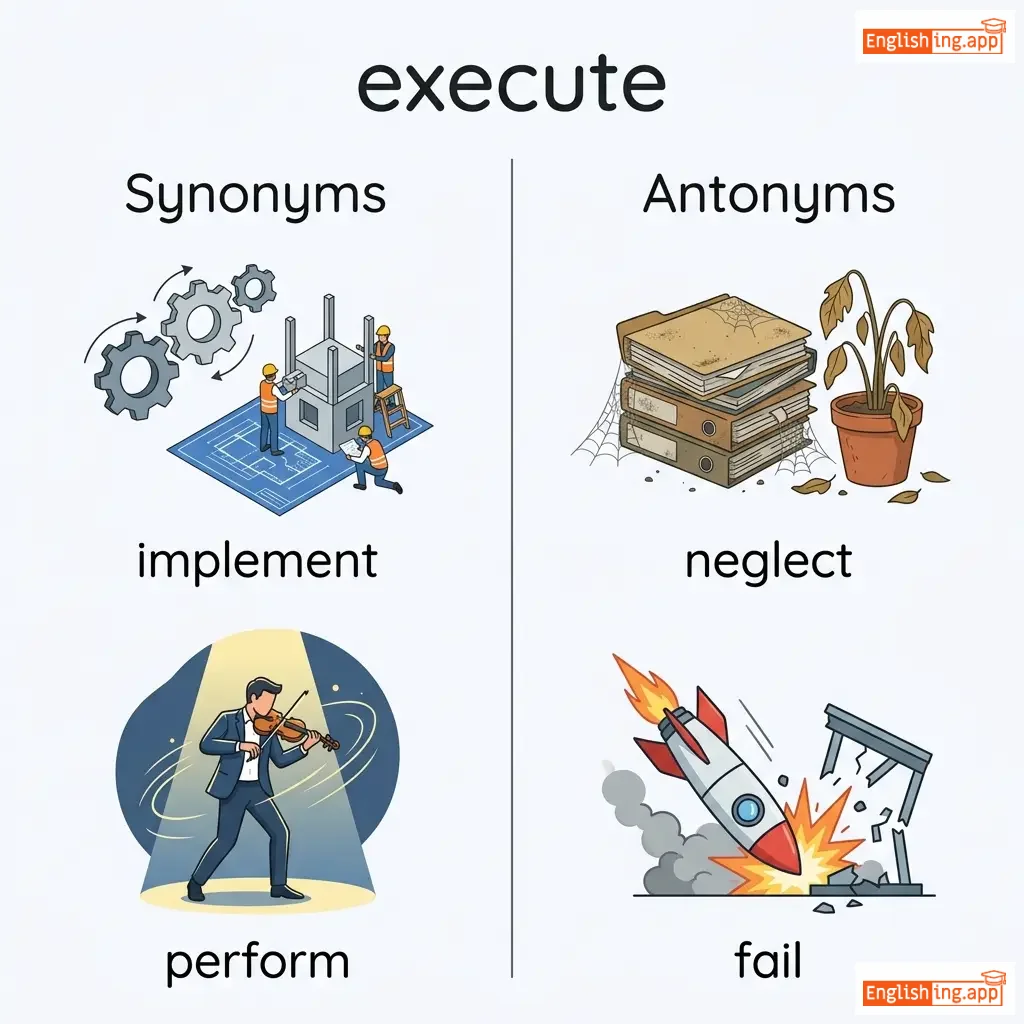
/ˈɛksɪkjuːt/
verb
(èksìkè yùt)
••••••
|
|
执行
zhíxíng
••••••
|
executed
èksìkè yùtèd
••••••
|
executed
èksìkè yùtèd
••••••
|
executes
èksìkè yùts
••••••
|
executing
èksìkè yùtīng
••••••
|
To carry out a plan, order, or action; to perform or put into effect.
••••••
|
The company plans to execute its new strategy next year.
公司计划在明年执行其新战略。
••••••
|
公司计划在明年执行其新战略。
Gōngsī jìhuà zài míngnián zhíxíng qí xīn zhànlüè.
••••••
|
execute a plan
执行计划
••••••
|
to put a plan into action
••••••
|
执行计划
zhíxíng jìhuà
••••••
|
implement, perform, accomplish, enforce, carry out
••••••
|
neglect, fail, ignore
••••••
|
execute a plan, execute an order, execute a command, execute perfectly
••••••
|
Execute的意思就是把计划付诸实践,执行它。
••••••
|
|
#3185
⚡
|
/ˌɛksɪˈkreɪʃən/
noun
(ˌɛksɪˈkreɪʃən)
••••••
|
- •••••• |
诅咒
zǔzhòu
••••••
|
- •••••• | - •••••• | - •••••• | - •••••• |
An act of cursing or denouncing someone or something with hatred.
••••••
|
The dictator’s name was spoken with execration after his fall.
独裁者的名字在他倒台后带着诅咒被提起。
••••••
|
独裁者的名字在他倒台后带着诅咒被提起。
Dúcáizhě de míngzì zài tā dǎotái hòu dàizhe zǔzhòu bèi tíqǐ.
••••••
|
- •••••• | - •••••• | - •••••• |
curse, denunciation, damnation, malediction, condemnation
••••••
|
blessing, praise, benediction
••••••
|
loud execration, public execration, cries of execration
••••••
|
Execration就像是额外的诅咒 - 更加的诅咒
••••••
|
|
#3186
😡
|
/ˈeksɪkreɪt/
verb
(éksìkrèit)
••••••
|
- •••••• |
痛恨
tòng hèn
••••••
|
execrated
éksìkrèited
••••••
|
execrated
éksìkrèited
••••••
|
execrates
éksìkrèits
••••••
|
execrating
éksìkrèiting
••••••
|
To feel or express great loathing or hatred for something.
••••••
|
The community execrated the corrupt politician.
社区谴责了腐败的政治家。
••••••
|
社区谴责了腐败的政治家。
Shèqū qiǎnzé le fǔbài de zhèngzhìjiā.
••••••
|
- •••••• | - •••••• | - •••••• |
detest, abhor, loathe, condemn
••••••
|
admire, praise, love
••••••
|
execrate corruption, execrate injustice, execrate tyranny
••••••
|
Execrate = ex + create hate = 痛恨.
••••••
|
|
#3187
🤢
|
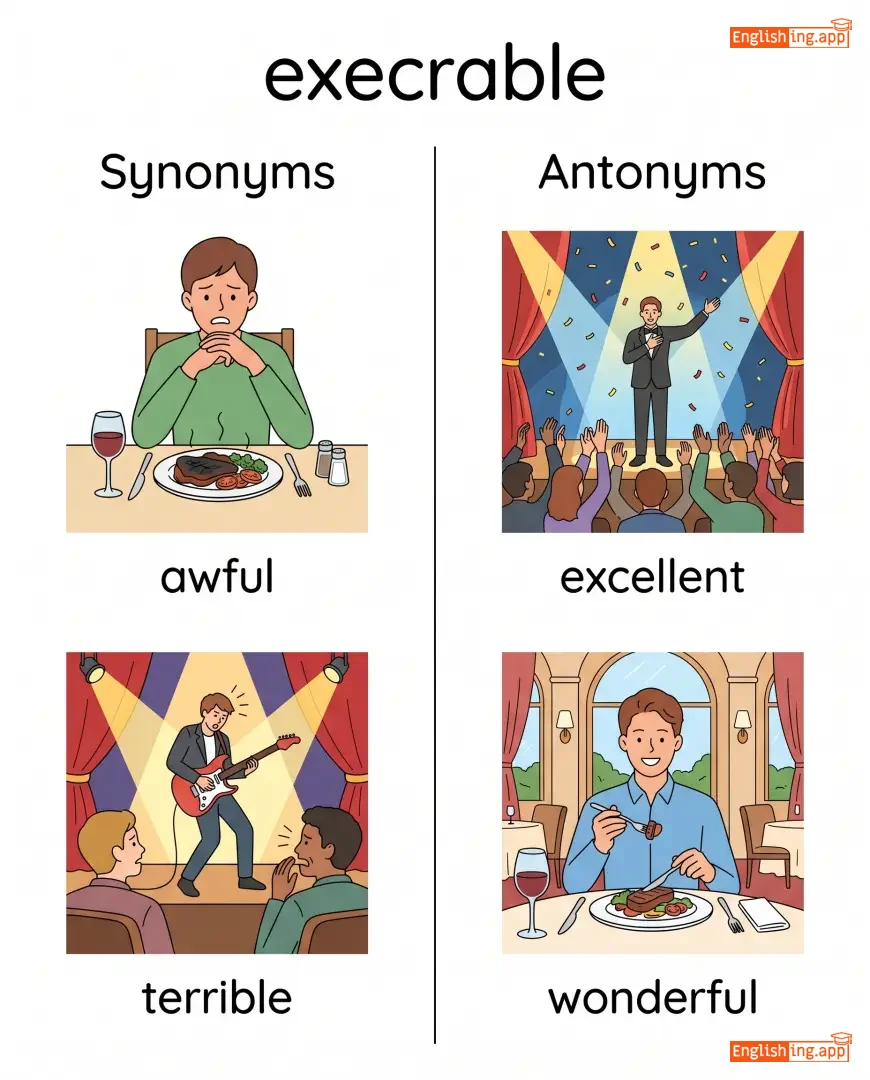
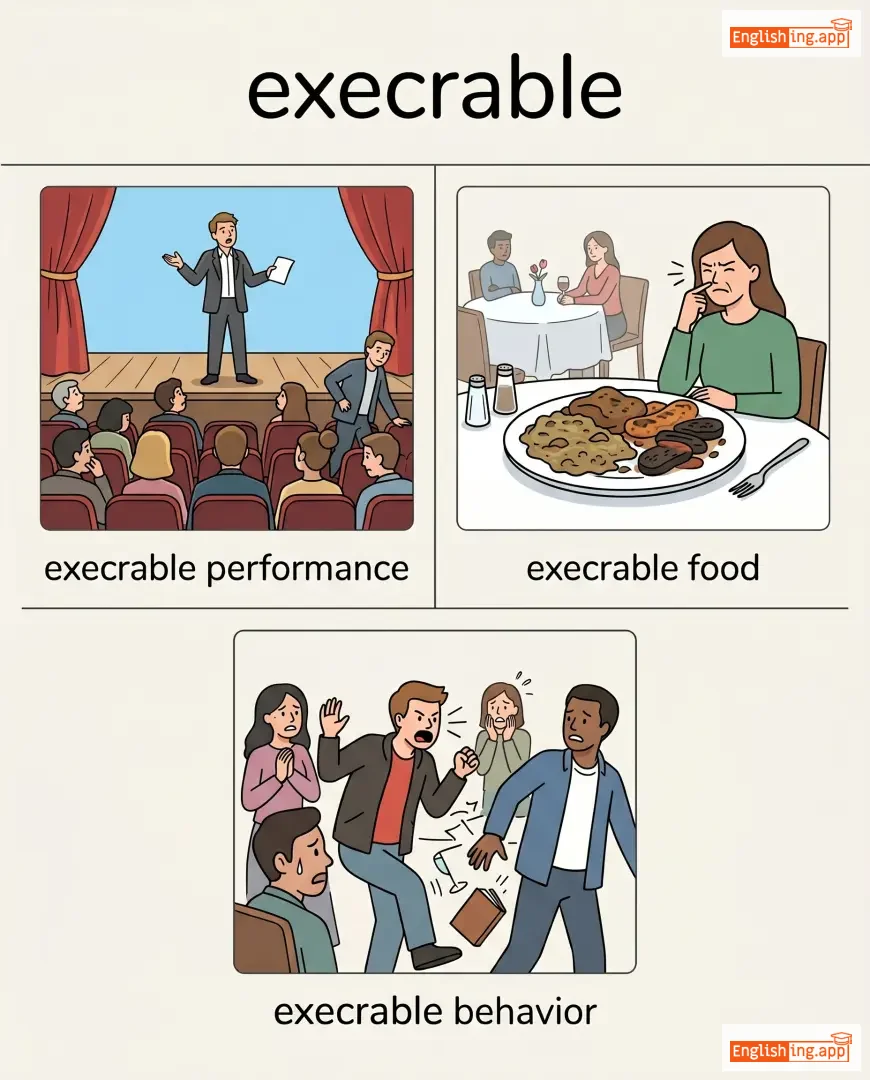
/ˈeksɪkrəbl/
adjective
(èksèkràbó)
••••••
|
|
可憎的
kě zēng de
••••••
|
- •••••• | - •••••• | - •••••• | - •••••• |
Extremely bad or unpleasant.
••••••
|
The movie was so execrable that many people left the theater early. |
这部电影糟糕透顶,以至于许多人早早就离开了影院。
Zhè bù diànyǐng zāogāo tòudǐng, yǐ zhì yú xǔduō rén zǎo zǎo jiù líkāi le yǐngyuàn.
••••••
|
- •••••• | - •••••• | - •••••• |
awful, terrible, atrocious, appalling
••••••
|
excellent, wonderful, superb
••••••
|
execrable performance, execrable food, execrable behavior
••••••
|
Execrable 听起来像是 '可憎的' 在中文中。
••••••
|
|
#3188
🙏
|
/ɪkˈskjuːzəbl/
adjective
(ɛksˈkjuːzəbəl)
••••••
|
- •••••• |
可原谅的
kě yuánliàng de
••••••
|
- •••••• | - •••••• | - •••••• | - •••••• |
Able to be forgiven or justified.
••••••
|
Her mistake was excusable given the circumstances. |
考虑到情况,她的错误是可以原谅的。
Kǎolǜ dào qíngkuàng, tā de cuòwù shì kě yuánliàng de.
••••••
|
- •••••• | - •••••• | - •••••• |
forgivable, pardonable, understandable, allowable
••••••
|
inexcusable, unforgivable, unjustifiable
••••••
|
excusable mistake, excusable error, excusable behavior
••••••
|
Excuse + able 意味着可以宽恕 = 可原谅的。
••••••
|
|
#3189
🌀
|
/ɪkˈskɜːsɪv/
adjective
(ɛksˈkɜːrsɪv)
••••••
|
- •••••• |
偏离主题的
pianli zhutime de
••••••
|
- •••••• | - •••••• | - •••••• | - •••••• |
Tending to digress or wander; moving away from the main subject.
••••••
|
His excursive lecture left the students confused about the main topic. |
他的偏离主题的讲座让学生们对主要话题感到困惑。
Tā de piānlí zhǔtí de jiǎngzuò ràng xuéshēngmen duì zhǔyào huàtí gǎndào kùnhuò.
••••••
|
- •••••• | - •••••• | - •••••• |
digressive, wandering, discursive, rambling
••••••
|
focused, direct, concentrated
••••••
|
excursive thoughts, excursive style, excursive ideas
••••••
|
偏离主题的,像在讲座中走偏离轨道。
••••••
|
|
#3190
🚌
|
/ɪkˈskɜːʒən/
noun
(èks-kèrs-yùn)
••••••
|
- •••••• |
短途旅行
duǎn tú lǚxíng
••••••
|
- •••••• | - •••••• | - •••••• | - •••••• |
A short journey or trip, especially one taken for leisure or educational purposes.
••••••
|
The students went on an excursion to the national museum. |
学生们去了国家博物馆进行了一次短途旅行。
Xuéshēngmen qùle guójiā bówùguǎn jìnxíngle yīcì duǎn tú lǚxíng.
••••••
|
excursion into |
a brief involvement in a new activity or subject
••••••
|
探索进入
tàn suǒ jìnrù
••••••
|
trip, outing, journey, expedition, tour
••••••
|
stay, permanence, residence
••••••
|
school excursion, excursion trip, excursion ticket, excursion group
••••••
|
短途旅行是 'extra' 旅行,去探索新事物。
••••••
|
|
#3191
⚖️
|
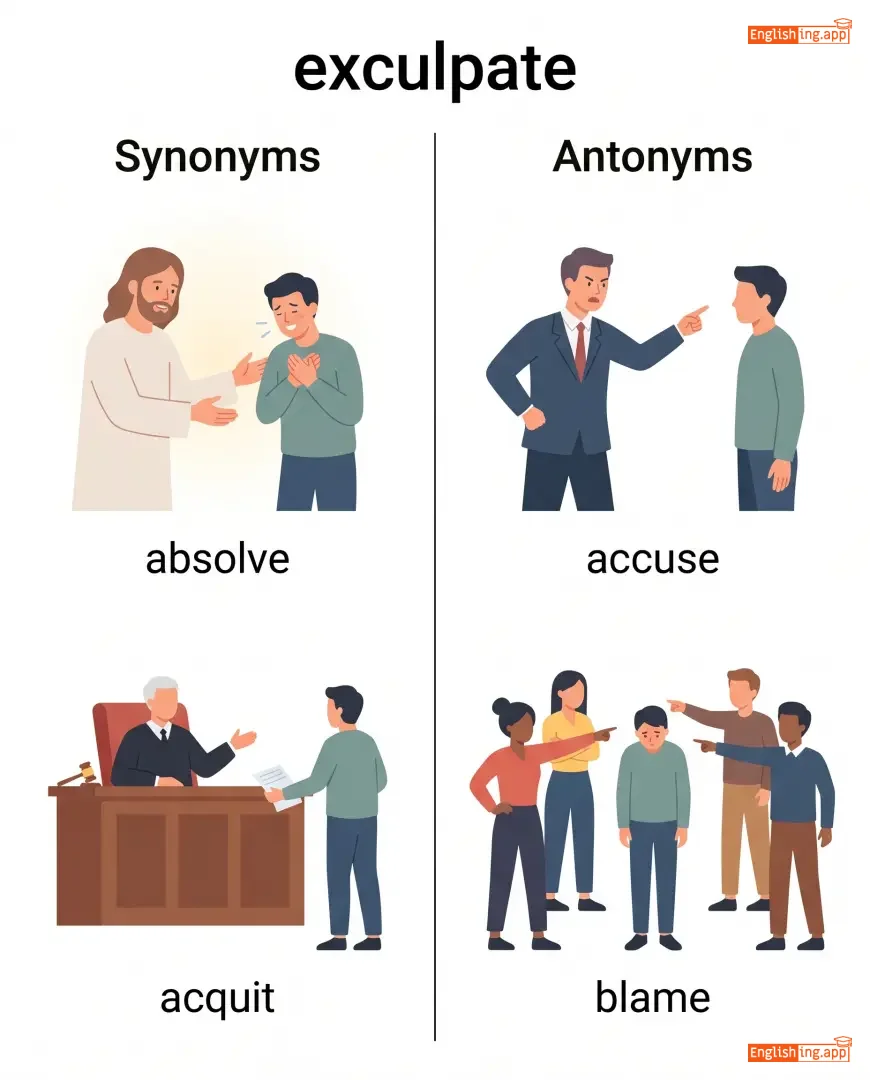
/ˈɛkskʌlpeɪt/
verb
(艾克斯库尔佩特)
••••••
|
|
辩解
biànjiě
••••••
|
exculpated
艾克斯库尔佩特德
••••••
|
exculpated
艾克斯库尔佩特德
••••••
|
exculpates
艾克斯库尔佩特斯
••••••
|
exculpating
艾克斯库尔佩特英
••••••
|
to show or declare that someone is not guilty of wrongdoing
••••••
|
The lawyer worked hard to exculpate his client.
律师努力工作,为他的客户辩解。
••••••
|
律师努力工作,为他的客户辩解。
Lǚshī nǔlì gōngzuò, wèi tā de kèhù biànjiě.
••••••
|
- •••••• | - •••••• | - •••••• |
absolve, acquit, vindicate, exonerate
••••••
|
accuse, blame, convict
••••••
|
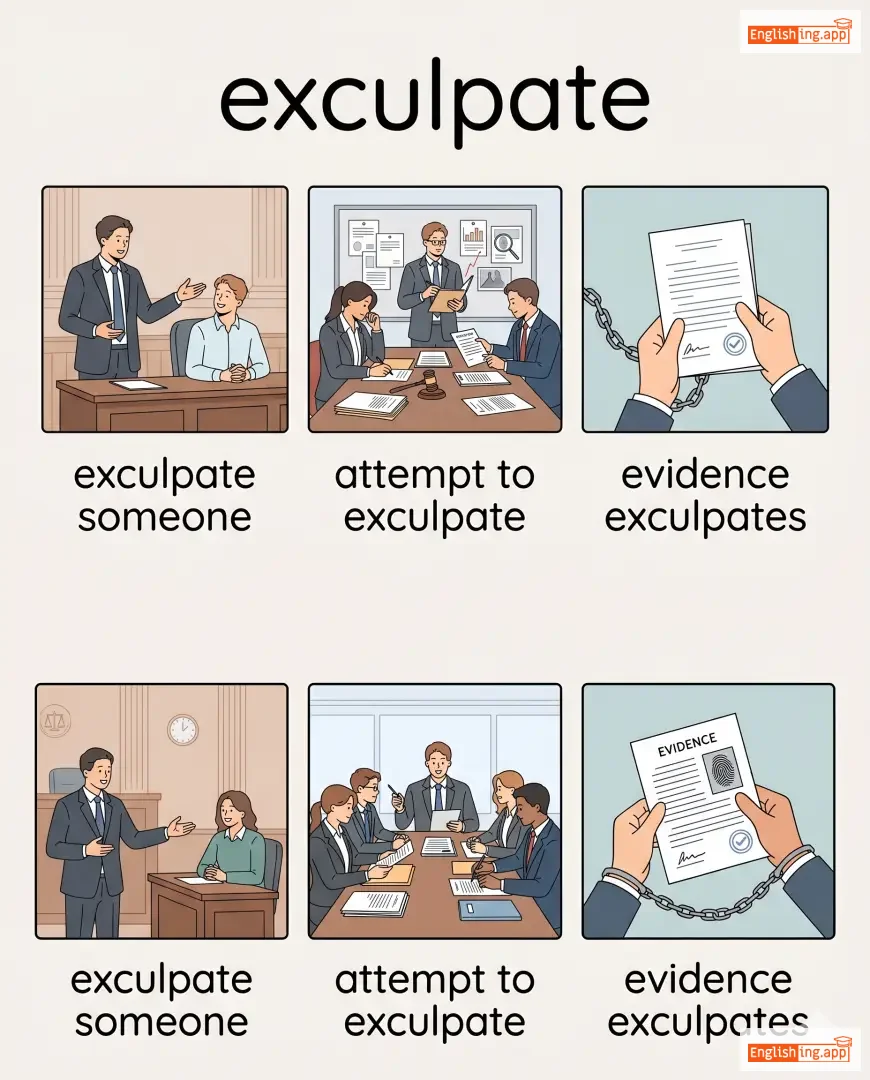
exculpate someone, attempt to exculpate, evidence exculpates
••••••
|
Exculpate = 辩解 → 辩解罪犯
••••••
|
|
#3192
🤯
|
/ɪkˈskruːʃieɪtɪŋ/
adjective
(极痛苦的)
••••••
|
- •••••• |
剧烈的
jùliè de
••••••
|
- •••••• | - •••••• | - •••••• | - •••••• |
causing extreme physical or mental pain
••••••
|
She was in excruciating pain after the accident.
她在事故后痛苦不堪。
••••••
|
她在事故后痛苦不堪。
Tā zài shìgù hòu tòngkǔ bùkān.
••••••
|
excruciating detail
极其详细
••••••
|
very thorough or painstakingly detailed
••••••
|
极其详细
jíqí xiángxì
••••••
|
agonizing, unbearable, torturous, intense, severe
••••••
|
mild, bearable, soothing
••••••
|
excruciating pain, excruciating detail, excruciating experience
••••••
|
Excruciating = 极度痛苦 → 极其剧烈
••••••
|
|
#3193
😖
|
/ɪkˈskruːʃieɪt/
verb
(eks-ku-shi-ate)
••••••
|
- •••••• |
折磨
zhe mo
••••••
|
excruciated
eks-ku-shi-ated
••••••
|
excruciated
eks-ku-shi-ated
••••••
|
excruciates
eks-ku-shi-ates
••••••
|
excruciating
eks-ku-shi-ating
••••••
|
to cause intense pain or suffering
••••••
|
The injury excruciated him with unbearable pain.
伤害让他经历了无法忍受的疼痛。
••••••
|
伤害让他经历了无法忍受的疼痛。
Shanghai rang ta jingli le wufa renshou de tengtong.
••••••
|
- •••••• | - •••••• | - •••••• |
torture, agonize, torment, afflict
••••••
|
comfort, soothe
••••••
|
excruciate with pain, excruciated by memories
••••••
|
Ex + 十字架 → 就像被钉十字架一样痛苦 → 折磨
••••••
|
|
#3194
💩
|
/ɪkˈskriːʃən/
noun
(èkskríːʃən)
••••••
|
- •••••• |
排泄
paixie
••••••
|
- •••••• | - •••••• | - •••••• | - •••••• |
the process of eliminating waste matter from the body
••••••
|
Excretion is vital for maintaining a healthy body.
排泄对保持健康的身体至关重要。
••••••
|
排泄对保持健康的身体至关重要。
Paixie dui baochi jiankang de shenti zhiguang zhongyao.
••••••
|
- •••••• | - •••••• | - •••••• |
elimination, discharge, evacuation, expulsion
••••••
|
absorption, retention
••••••
|
excretion process, excretion system, waste excretion
••••••
|
Excretion = Exit of Creation → 排出废物
••••••
|
|
#3195
🚽
|
/ɪkˈskriːt/
verb
(ēkèsǔlìt)
••••••
|
- •••••• |
排泄
paixie
••••••
|
excreted
ēkèsǔlìtèd
••••••
|
excreted
ēkèsǔlìtèd
••••••
|
excretes
ēkèsǔlìts
••••••
|
excreting
ēkèsǔlìtíng
••••••
|
to eliminate waste matter from the body
••••••
|
Humans excrete carbon dioxide through breathing.
人类通过呼吸排出二氧化碳。
••••••
|
人类通过呼吸排出二氧化碳。
Renlei tongguo huxi paichu eryanghuatan.
••••••
|
- •••••• | - •••••• | - •••••• |
eliminate, expel, discharge, void, release
••••••
|
absorb, retain
••••••
|
excrete waste, excrete urine, excrete toxins, excrete fluids
••••••
|
Excrete 就是 EXIT + 产生废物 → 从身体排出废物
••••••
|
|
#3196
🚫
|
/ɪkˈsɛpt/
preposition/conjunction
(except)
••••••
|
- •••••• |
除了
chu le
••••••
|
- •••••• | - •••••• | - •••••• | - •••••• |
not including; other than
••••••
|
Everyone was invited except John.
每个人都被邀请,除了约翰。
••••••
|
每个人都被邀请,除了约翰。
Mei ge ren dou bei yao qing, chu le Yuehan.
••••••
|
take exception to
对…表示异议
••••••
|
to be offended or disagree with something
••••••
|
对…表示异议
dui... biao shi yi yi
••••••
|
excluding, apart from, barring, save
••••••
|
including, with
••••••
|
except for, except that, no one except, everyone except
••••••
|
除了就是排除 + 一步 - 排除某人
••••••
|
|
#3197
🗯️
|
/ɛkˈskɔːrieɪt/
verb
(èks-kòu-rí-èit)
••••••
|
- •••••• |
严厉批评
yanli piping
••••••
|
excoriated
èks-kòu-rí-èited
••••••
|
excoriated
èks-kòu-rí-èited
••••••
|
excoriates
èks-kòu-rí-èits
••••••
|
excoriating
èks-kòu-rí-èiting
••••••
|
To strongly criticize someone; to denounce severely.
••••••
|
The critic excoriated the film for its poor script.
评论家因影片的糟糕剧本而严厉批评了该片。
••••••
|
评论家因影片的糟糕剧本而严厉批评了该片。
Pinglun jia yin yingpian de zaogao juben er yanli piping le gai pian.
••••••
|
- •••••• | - •••••• | - •••••• |
denounce, criticize, condemn, attack, rebuke
••••••
|
praise, compliment, approve
••••••
|
excoriated in press, excoriate harshly, excoriate government
••••••
|
Excoriated 就是严厉批评。
••••••
|
|
#3198
❌
|
/ɪkˈskluːʒən/
noun
(ɪksˈkluːʒən)
••••••
|
- •••••• |
排斥
paichi
••••••
|
- •••••• | - •••••• | - •••••• | - •••••• |
The process or state of being left out or denied access.
••••••
|
The policy led to the exclusion of certain groups. |
该政策导致某些群体被排斥。
Gai zhengce daozhi moxie qunti bei paichi.
••••••
|
social exclusion |
The act of preventing certain people from participating in society.
••••••
|
社会排斥
shehui paichi
••••••
|
banishment, rejection, omission, prohibition, segregation
••••••
|
inclusion, acceptance, admission
••••••
|
exclusion policy, exclusion zone, social exclusion
••••••
|
排斥 = 出口 + 结论
••••••
|
|
#3199
🚫
|
/ɪkˈskluːd/
verb
(īksklúd)
••••••
|
- •••••• |
排除
paichu
••••••
|
excluded
īksklúd-ed
••••••
|
excluded
īksklúd-ed
••••••
|
excludes
īksklúd-z
••••••
|
excluding
īksklúd-ing
••••••
|
To deliberately leave out or prevent someone or something from being included.
••••••
|
The list excludes temporary workers.
列表排除临时工。
••••••
|
该列表排除了临时工。
Gāi lièbiǎo páichúle línshí gōng.
••••••
|
exclude from consideration
排除考虑范围
••••••
|
To not take something into account.
••••••
|
排除考虑
páichú kǎolǜ
••••••
|
omit, ban, reject, prevent, bar
••••••
|
include, admit, accept
••••••
|
exclude someone, exclude possibility, exclude group
••••••
|
Exclude意味着EXit + 包括否–意为排除外部。
••••••
|
|
#3200
❗
|
/ˌɛkskləˈmeɪʃən/
noun
(eks-kuh-MAY-shun)
••••••
|
- •••••• |
感叹
gǎntàn
••••••
|
- •••••• | - •••••• | - •••••• | - •••••• |
A sudden cry or remark expressing strong emotion or surprise.
••••••
|
She let out an exclamation of joy when she heard the news. |
当她听到这个消息时,她发出了喜悦的感叹。
Dāng tā tīng dào zhège xiāoxī shí, tā fāchūle xǐyuè de gǎntàn.
••••••
|
exclamation mark |
The punctuation mark (!) used to show strong emotion or emphasis.
••••••
|
感叹号
gǎntànhào
••••••
|
cry, outburst, shout, interjection, remark
••••••
|
silence, quiet
••••••
|
loud exclamation, sudden exclamation, exclamation mark
••••••
|
感叹像是'哇!' 或 '哦!' 表达惊讶或强烈情感。
••••••
|
|
#3201
😲
|
/ɪkˈskleɪm/
verb
(ɪksˈkleɪm)
••••••
|
- •••••• |
呼喊
hūhǎn
••••••
|
exclaimed
ɪksˈkleɪmd
••••••
|
exclaimed
ɪksˈkleɪmd
••••••
|
exclaims
ɪksˈkleɪmz
••••••
|
exclaiming
ɪksˈkleɪmɪŋ
••••••
|
to cry out suddenly in surprise, strong emotion, or excitement
••••••
|
She exclaimed with joy when she saw the gift.
她看到礼物时高兴地叫了出来。
••••••
|
她看到礼物时高兴地叫了出来。
Tā kàn dào lǐwù shí gāoxìng de jiào le chūlái.
••••••
|
exclaim in surprise
惊讶地喊出来
••••••
|
to suddenly shout or speak because of being surprised
••••••
|
惊讶地喊出来
jīngyà de hǎn chūlái
••••••
|
shout, cry out, yell, declare, outcry
••••••
|
murmur, whisper, mutter
••••••
|
exclaim with joy, exclaim loudly, exclaim in surprise
••••••
|
Exclaim 就像因为惊讶而突然喊出,像看到惊人的事物时的反应。
••••••
|
|
#3202
⚡
|
/ˌɛksaɪˈteɪʃən/
noun
(èksàitèshēn)
••••••
|
- •••••• |
兴奋
xīngfèn
••••••
|
- •••••• | - •••••• | - •••••• | - •••••• |
a state of great excitement or the process of stimulating activity
••••••
|
The news created great excitation among the fans. |
这条新闻在球迷中引起了极大的兴奋。
Zhè tiáo xīnwén zài qiúmí zhōng yǐnqǐle jí dà de xīngfèn.
••••••
|
- •••••• | - •••••• | - •••••• |
stimulation, arousal, excitement, activation
••••••
|
calm, relaxation, suppression
••••••
|
electrical excitation, emotional excitation, excitation of particles
••••••
|
兴奋就像电流通过你的身体一样!
••••••
|
|
#3203
😆
|
/ɪkˈsaɪtəbl̩/
adjective
(èksàitèbù)
••••••
|
- •••••• |
易激动的
yì jīdòng de
••••••
|
- •••••• | - •••••• | - •••••• | - •••••• |
easily excited or emotionally aroused
••••••
|
The child was excitable and laughed at every small thing. |
这个孩子很容易激动,对每个小事都笑。
Zhège háizi hěn róngyì jīdòng, duì měi gè xiǎo shì dōu xiào.
••••••
|
- •••••• | - •••••• | - •••••• |
emotional, sensitive, reactive, high-strung
••••••
|
calm, composed, stable
••••••
|
excitable child, excitable personality, excitable nature
••••••
|
Excitable在中文中意味着很容易激动,就像小孩子一样。
••••••
|
|
#3204
🩺
|
/ɪkˈsɪʒən/
noun
(éksīxiān)
••••••
|
- •••••• |
切除
qiechu
••••••
|
- •••••• | - •••••• | - •••••• | - •••••• |
the act of cutting something out, especially by surgical removal
••••••
|
The excision of the infected tissue prevented further complications. |
切除感染的组织防止了进一步的并发症。
Qiechu ganran de zizhi fangzhi le jinyibu de bingfazheng.
••••••
|
- •••••• | - •••••• | - •••••• |
removal, extraction, cutting, elimination
••••••
|
insertion, implantation, addition
••••••
|
surgical excision, excision procedure, excision of tumor
••••••
|
Excision = 切除,就像在考试中删除错误答案一样。
••••••
|
|
#3205
✂️
|
/ˈɛkˌsaɪz/
verb
(èksāi)
••••••
|
- •••••• |
切除
qiēchú
••••••
|
excised
èksāi dé
••••••
|
excised
èksāi dé
••••••
|
excises
èksāi zé
••••••
|
excising
èksāi xíng
••••••
|
to cut out or remove completely, often by surgery
••••••
|
The surgeon excised the tumor successfully.
外科医生成功地切除了肿瘤。
••••••
|
外科医生成功地切除了肿瘤。
Wàikē yīshēng chénggōng de qiēchúle zhǒngliú.
••••••
|
- •••••• | - •••••• | - •••••• |
remove, cut out, eliminate, extract, eradicate
••••••
|
insert, implant, add
••••••
|
excise tax, excise duty, excise a tumor, excise from
••••••
|
Excise, 就像外科医生通过手术切除肿瘤。
••••••
|
|
#3206
💰
|
/ɪksˈtʃɛkər/
noun
(èkschèkèr)
••••••
|
- •••••• |
国库
guó kù
••••••
|
- •••••• | - •••••• | - •••••• | - •••••• |
The treasury of a state or country.
••••••
|
The government announced new measures to improve the exchequer. |
政府宣布了新的措施,以改善国库。
zhèngfǔ xuānbùle xīn de cuòshī, yǐ gǎishàn guó kù.
••••••
|
- •••••• | - •••••• | - •••••• |
treasury, finance department, purse, funds
••••••
|
bankruptcy, poverty
••••••
|
state exchequer, royal exchequer, national exchequer
••••••
|
Exchequer 意思是国家的财库—国库。
••••••
|
|
#3207
➕
|
/ɪkˈsɛs/
noun
(ik-ses)
••••••
|
- •••••• |
过量
guo liang
••••••
|
- •••••• | - •••••• | - •••••• | - •••••• |
An amount more than necessary, permitted, or desirable.
••••••
|
Too much sugar can lead to excess weight gain. |
过多的糖分可能会导致超重。
Guo duo de tang fen ke neng hui dao zhi chao zhong.
••••••
|
in excess of |
more than a particular amount
••••••
|
超过
chao guo
••••••
|
surplus, overflow, overabundance, superfluity
••••••
|
shortage, lack, insufficiency
••••••
|
excess weight, excess baggage, excess demand, in excess of
••••••
|
Excess = 过量的糖分,导致健康问题!
••••••
|
|
#3208
📖
|
/ˈɛksɜːrpt/
noun
(艾克瑟普特)
••••••
|
- •••••• |
摘录
zhailu
••••••
|
- •••••• | - •••••• | - •••••• | - •••••• |
A short portion taken from a text, film, or piece of music.
••••••
|
The teacher read an excerpt from the novel. |
老师读了小说中的一段摘录。
Laoshi dule xiaoshuo zhong de yi duan zailu.
••••••
|
- •••••• | - •••••• | - •••••• |
passage, extract, fragment, quotation
••••••
|
whole, entirety
••••••
|
excerpt from book, excerpt from novel, excerpt from speech
••••••
|
Excerpt 意味着 extra 部分,像摘录一样提取的内容。
••••••
|
|
#3209
🌟
|
/ɪkˈsɛpʃənl/
adjective
(ɪkˈsɛpʃənl)
••••••
|
|
卓越
zhuóyuè
••••••
|
- •••••• | - •••••• | - •••••• | - •••••• |
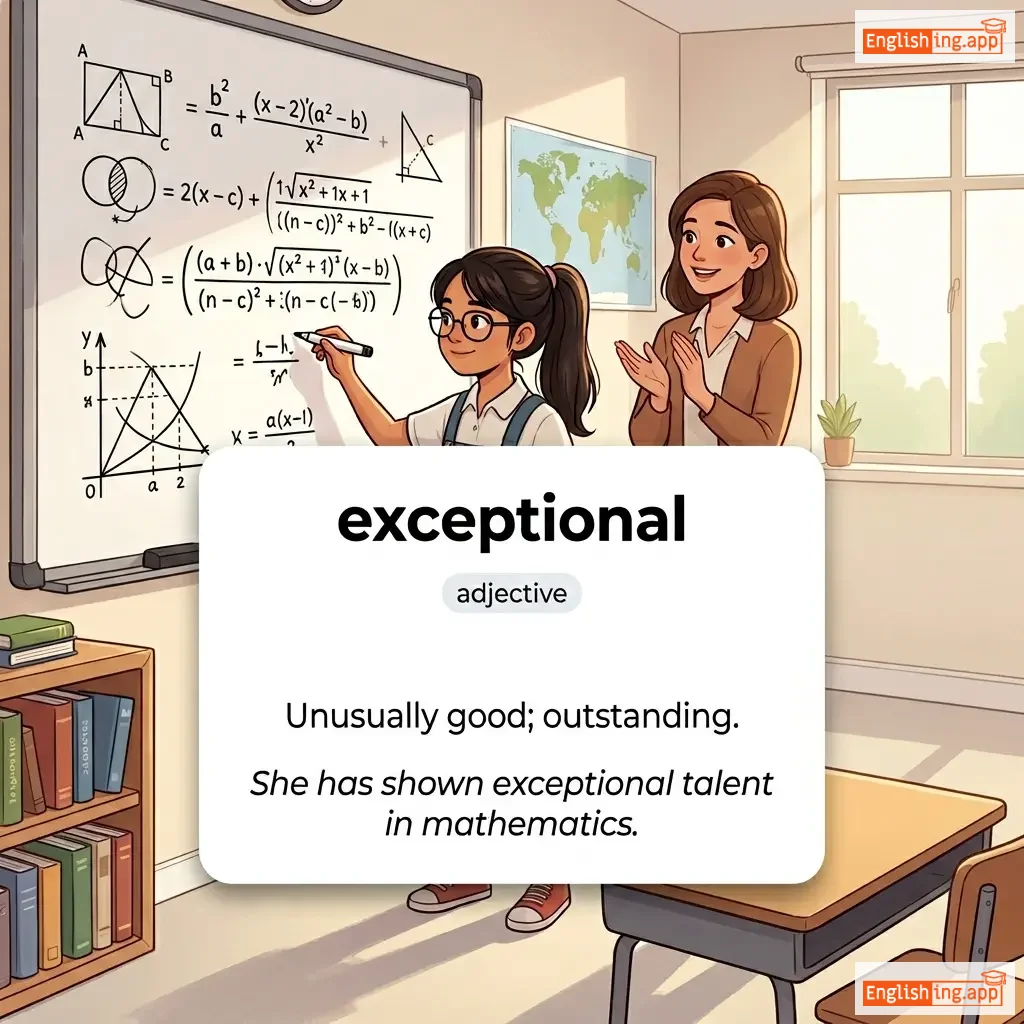
Unusually good; outstanding.
••••••
|
She has shown exceptional talent in mathematics. |
她在数学方面展现了卓越的才能。
Tā zài shùxué fāngmiàn zhǎnxiànle zhuóyuè de cáinéng.
••••••
|
of exceptional quality |
something of very high or outstanding quality
••••••
|
卓越的品质
zhuóyuè de pǐnzhì
••••••
|
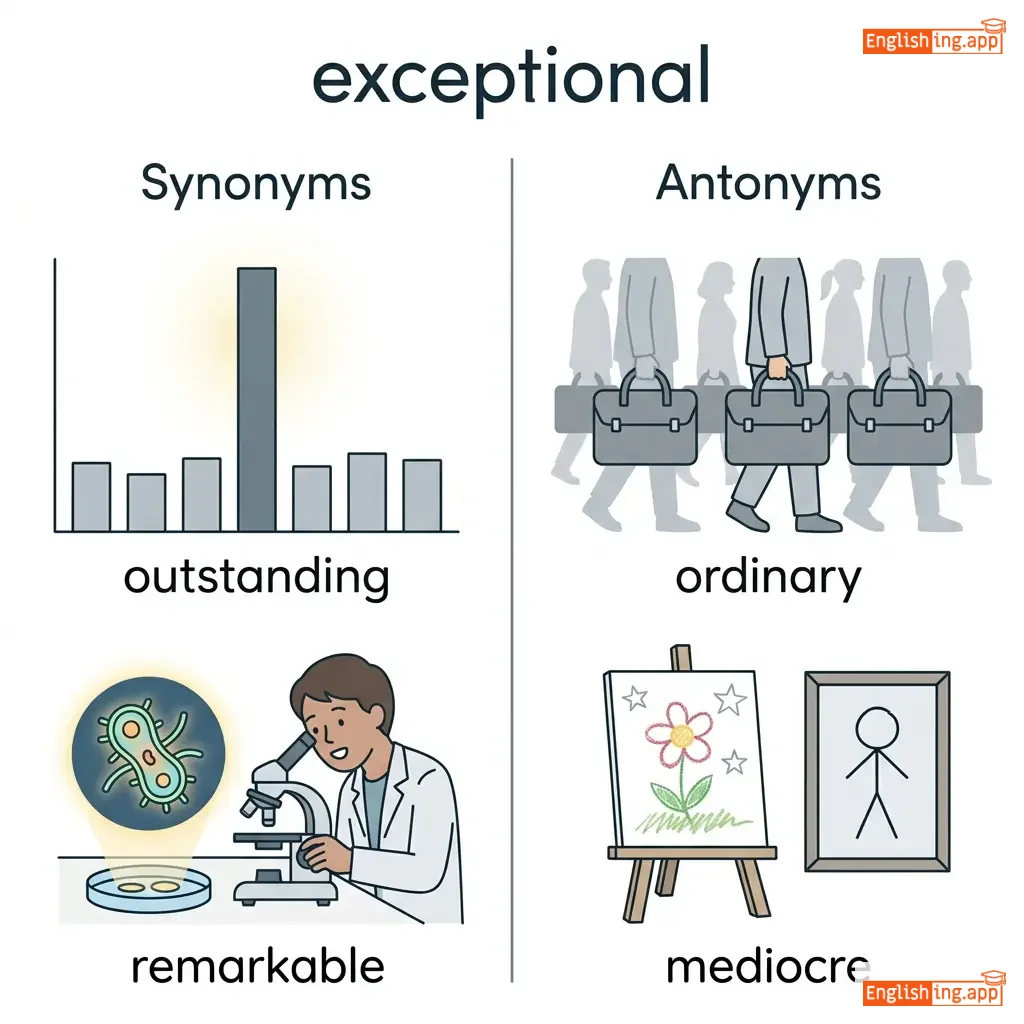
outstanding, remarkable, extraordinary, superb
••••••
|
ordinary, mediocre, common
••••••
|
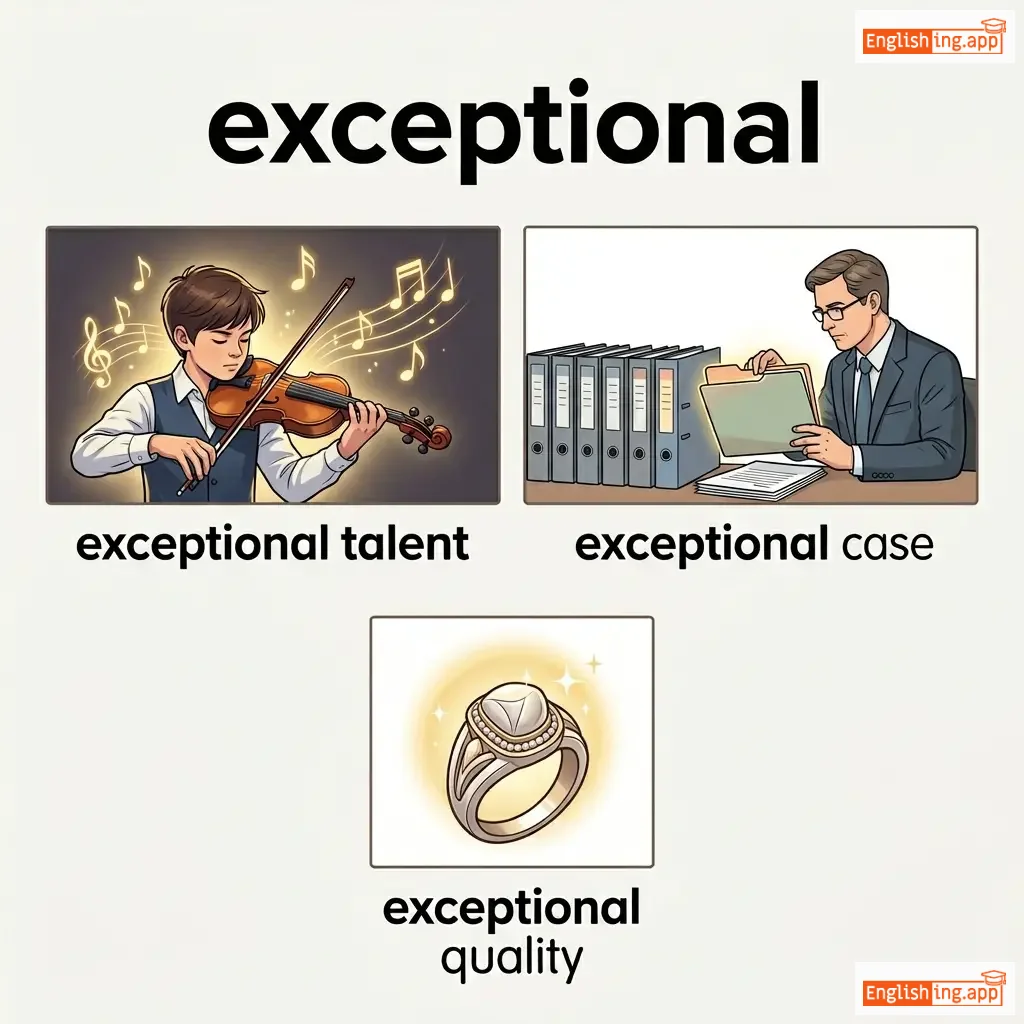
exceptional talent, exceptional case, exceptional quality, exceptional opportunity
••••••
|
Exceptional = Extra Special → 卓越
••••••
|
|
#3210
⚠️
|
/ɪkˈsɛpʃənəbl/
adjective
(ik-sep-shə-nə-bl)
••••••
|
- •••••• |
不可接受的
bù kě jiē shòu de
••••••
|
- •••••• | - •••••• | - •••••• | - •••••• |
Open to objection; causing disapproval.
••••••
|
His rude remarks were considered exceptionable by everyone present.
他的粗鲁评论被在场的每个人视为不可接受。
••••••
|
他的粗鲁评论被在场的每个人视为不可接受。
Tā de cūlǔ pínglùn bèi zài chǎng de měi gè rén shì wéi bù kě jiē shòu de.
••••••
|
- •••••• | - •••••• | - •••••• |
objectionable, offensive, improper, unacceptable
••••••
|
acceptable, proper, appropriate
••••••
|
exceptionable behavior, exceptionable remarks, exceptionable conduct
••••••
|
Exceptionable是能引起反对的东西。
••••••
|
Vocabulary Quiz
Test your vocabulary by matching words with their translations or meanings.
Login to take the quiz
Comments (0)
Share your thoughts and join the discussion.
Join the discussion by logging in
Login to CommentNo comments yet
Be the first to share your thoughts!