





Swipe left or right, or use the buttons. Tap image to zoom.
例句翻译
单词
Lesson 372Lesson 372 - 遮罩切换
|
表情符号
|
单词 | Images | 翻译 | 过去时 | 过去分词 | 第三人称单数 | 动名词 | 含义 | 例句 | 例句翻译 | 示例表达 | 示例表达含义 | 示例表达翻译 | 同义词 | 反义词 | 搭配词 | 助记符 |
|---|---|---|---|---|---|---|---|---|---|---|---|---|---|---|---|---|---|
|
#11125
❤️
|
/hɑːrt/
noun
(hɑːrt)
••••••
|
- •••••• |
心脏
xīnzàng
••••••
|
- •••••• | - •••••• | - •••••• | - •••••• |
the organ that pumps blood through the body; also the center of emotions
••••••
|
Her heart was beating fast with excitement.
她的心因兴奋而快速跳动。
••••••
|
她的心因兴奋而快速跳动。
Tā de xīn yīn xīngfèn ér kuàisù tiàodòng.
••••••
|
at heart
从心底
••••••
|
in essence or fundamentally
••••••
|
从心底
cóng xīndǐ
••••••
|
core, center, emotion, spirit, soul
••••••
|
mind, brain
••••••
|
heart attack, broken heart, kind heart, follow your heart
••••••
|
心脏 ❤️ 意味着心脏 – 爱和情感来自心脏
••••••
|
|
#11126
👩
|
/hɜːrˈsɛlf/
pronoun
(赫尔塞尔夫)
••••••
|
- •••••• |
她自己
tā zìjǐ
••••••
|
- •••••• | - •••••• | - •••••• | - •••••• |
used to refer to a female person as the object of a verb or preposition when she is the subject
••••••
|
She prepared the meal all by herself.
她自己做了饭。
••••••
|
她自己做了饭。
Tā zìjǐ zuòle fàn.
••••••
|
by herself
自己
••••••
|
alone, without help
••••••
|
自己
zìjǐ
••••••
|
on her own, alone, independently, solo, unaided
••••••
|
together, with others
••••••
|
by herself, for herself, to herself, herself alone
••••••
|
Her SELF 意思是 '她自己' — 记住,herself 就是自己做事情。
••••••
|
|
#11127
🦸
|
/ˈhɪəroʊ/
noun
(英雄)
••••••
|
|
英雄
yingxiong
••••••
|
- •••••• | - •••••• | - •••••• | - •••••• |
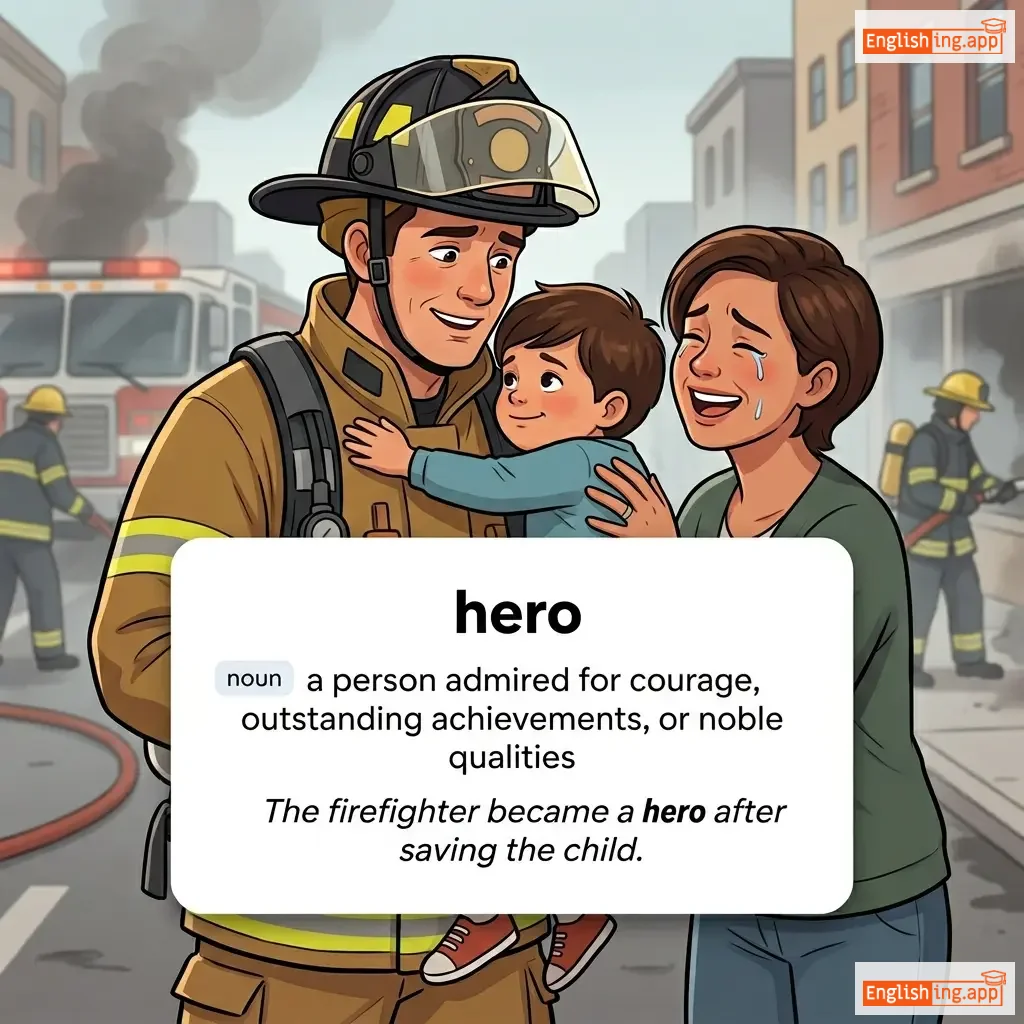
a person admired for courage, outstanding achievements, or noble qualities
••••••
|
The firefighter became a hero after saving the child. |
消防员在救出孩子后成了英雄。
Xiaofangyuan zai jiuchu haizi hou cheng le yingxiong.
••••••
|
unsung hero |
a person who makes a great contribution without recognition
••••••
|
无名英雄
wuming yingxiong
••••••
|
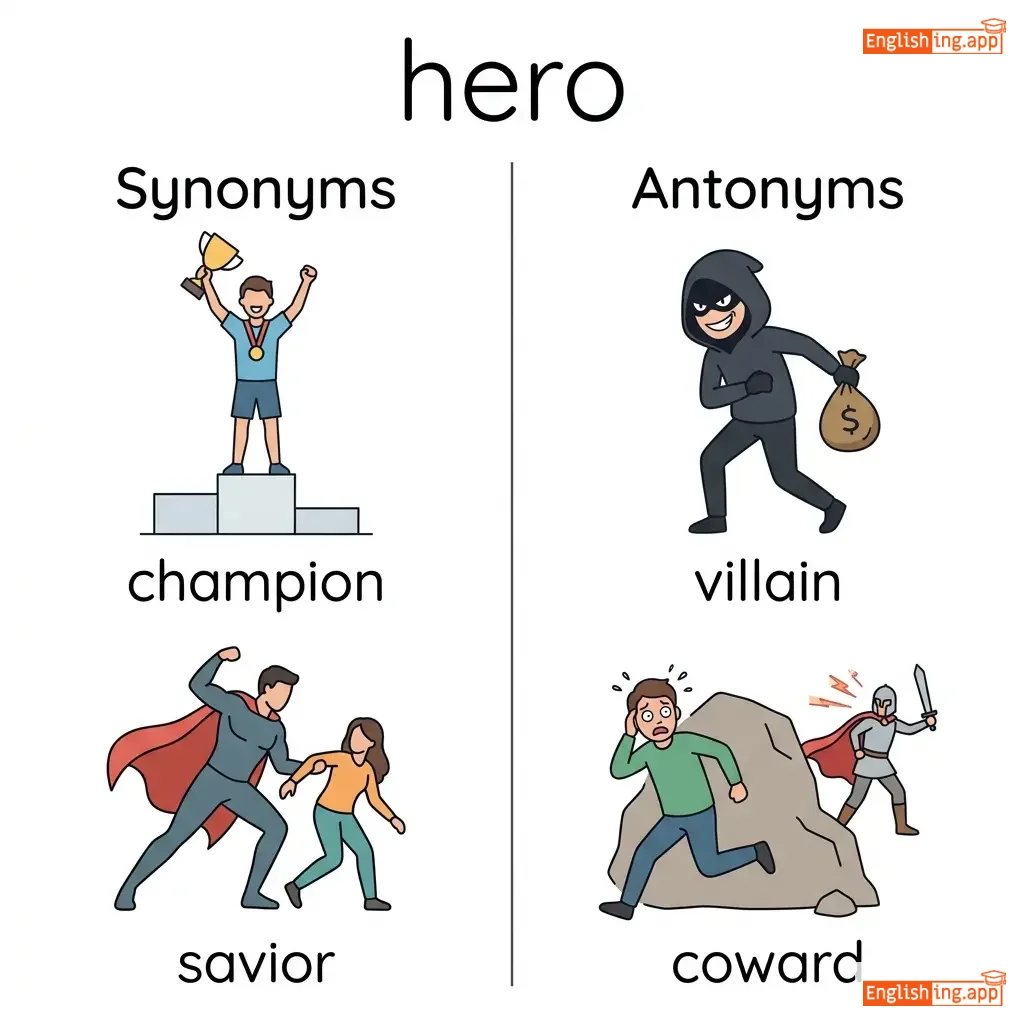
champion, savior, idol, warrior, legend
••••••
|
villain, coward
••••••
|
national hero, war hero, real hero, unsung hero
••••••
|
英雄意味着英雄 🦸 - 在中文中,英雄就是做出伟大事情的人。
••••••
|
|
#11128
📍
|
/hɪr/
adverb
(赫尔)
••••••
|
- •••••• |
这里
zheli
••••••
|
- •••••• | - •••••• | - •••••• | - •••••• |
in, at, or to this place
••••••
|
Please come here quickly.
请快点来这里。
••••••
|
请快点来这里。
Qing kuai dian lai zheli.
••••••
|
here and there
这里和那里
••••••
|
in various places
••••••
|
这里和那里
zheli he nali
••••••
|
present, nearby, close, around
••••••
|
there, away
••••••
|
come here, right here, here today, stay here
••••••
|
Here 在中文是这里 📍 - 记住'这里'就是'here'的意思
••••••
|
|
#11129
👩
|
/hɜːr/
pronoun
(赫尔)
••••••
|
- •••••• |
她
ta
••••••
|
- •••••• | - •••••• | - •••••• | - •••••• |
used to refer to a female person or animal already mentioned or easily identified
••••••
|
I saw her at the park yesterday. |
我昨天在公园看见了她。
Wǒ zuótiān zài gōngyuán kànjiànle tā.
••••••
|
give her a hand |
to help her
••••••
|
帮她一把
bāng tā yī bǎ
••••••
|
herself, that woman, the girl
••••••
|
him, his
••••••
|
her book, her house, with her, for her
••••••
|
Her 代表 '她' (指女性) - 记住:'Her bag' 代表 '她的包'
••••••
|
|
#11130
🤝
|
/ˈhɛlpfəl/
adjective
(hɛlpfʊl)
••••••
|
- •••••• |
有用的
youyong de
••••••
|
- •••••• | - •••••• | - •••••• | - •••••• |
giving help or being useful
••••••
|
The guide was very helpful during our trip. |
旅行期间,导游非常有用。
Lvxing qijian, daoyou feichang youyong.
••••••
|
- •••••• | - •••••• | - •••••• |
supportive, useful, kind, accommodating, beneficial
••••••
|
unhelpful, useless, uncooperative
••••••
|
helpful advice, helpful guide, helpful information, helpful staff
••••••
|
Helpful意味着有用,像一个有用的导游
••••••
|
|
#11131
👋
|
/həˈloʊ/
interjection
(哈啰)
••••••
|
- •••••• |
哈啰
hā luō
••••••
|
- •••••• | - •••••• | - •••••• | - •••••• |
a greeting or expression used when meeting someone or starting a conversation
••••••
|
She answered the phone with a cheerful hello.
她高兴地接起电话说了声哈啰。
••••••
|
她高兴地接起电话说了声哈啰。
Tā gāo xìng de jiē qǐ diànhuà shuō le shēng hā luō.
••••••
|
say hello to
向某人打招呼
••••••
|
to greet someone
••••••
|
向某人打招呼
xiàng mǒu rén dǎ zhāo hū
••••••
|
hi, greetings, hey, howdy, welcome
••••••
|
goodbye, farewell
••••••
|
say hello, hello there, big hello, hello everyone
••••••
|
在中文中我们说'哈啰',就像英文中的'hello'。
••••••
|
|
#11132
🔥
|
/hɛl/
noun
(hēl)
••••••
|
- •••••• |
地狱
diyu
••••••
|
- •••••• | - •••••• | - •••••• | - •••••• |
a place or state of great suffering and torment, often in religious belief
••••••
|
He feared that his sins would send him to hell. |
他害怕他的罪会把他送入地狱。
Tā hàipà tā de zuì huì bǎ tā sòng rù dìyù.
••••••
|
raise hell |
to cause trouble or a noisy disturbance
••••••
|
制造混乱
zhìzuò hùnluàn
••••••
|
inferno, torment, misery, damnation
••••••
|
heaven, paradise
••••••
|
living hell, go to hell, raise hell
••••••
|
地狱意味着极度的痛苦 🔥—记住‘地狱’意味着一个充满折磨的地方。
••••••
|
|
#11133
🚁
|
/ˈhɛlɪˌkɒptər/
noun
(直升机)
••••••
|
- •••••• |
直升机
zhí shēng jī
••••••
|
- •••••• | - •••••• | - •••••• | - •••••• |
an aircraft with rotating blades that can take off and land vertically
••••••
|
The helicopter landed safely on the hospital roof. |
直升机安全地着陆在医院的屋顶。
Zhí shēng jī ānquán de zhuólù zài yīyuàn de wūdǐng.
••••••
|
helicopter parenting |
a style of parenting where parents are overly focused on their children
••••••
|
直升机式育儿
Zhí shēng jī shì yù'ér
••••••
|
chopper, rotorcraft, whirlybird
••••••
|
airplane, glider
••••••
|
helicopter ride, helicopter landing, helicopter rescue
••••••
|
直升机 🚁 想想 ‘直’ 是直上直下,‘升’ 是上升的意思。
••••••
|
|
#11134
📏
|
/haɪt/
noun
(海皮尼斯)
••••••
|
- •••••• |
高度
gaodu
••••••
|
- •••••• | - •••••• | - •••••• | - •••••• |
the measurement of someone or something from base to top
••••••
|
The height of the tower impressed the visitors. |
塔的高度给游客留下了深刻的印象。
Ta de gaodu gei youke liuxia le shenke de yinxiang.
••••••
|
at the height of |
at the most intense point of something
••••••
|
在...的顶峰
zai...de dingfeng
••••••
|
altitude, elevation, tallness, stature
••••••
|
depth, low
••••••
|
average height, great height, height measurement
••••••
|
Height代表着高度 — 想象站在最高的地方。
••••••
|
|
#11135
👠
|
/hiːl/
noun
(希尔)
••••••
|
- •••••• |
脚跟
jiao gen
••••••
|
- •••••• | - •••••• | - •••••• | - •••••• |
the back part of the human foot below the ankle
••••••
|
Her shoe was rubbing against her heel.
她的鞋子摩擦着她的脚跟。
••••••
|
她的鞋子摩擦着她的脚跟。
Ta de xiezi mocazhe ta de jiao gen.
••••••
|
at someone's heels
紧跟在某人后面
••••••
|
closely following someone
••••••
|
紧跟在某人后面
jin gen zai mou ren hou mian
••••••
|
backfoot, rear, sole, spur
••••••
|
toe, front
••••••
|
high heel, cracked heel, Achilles heel
••••••
|
脚跟是脚的后部,记住高跟鞋让脚跟更高。
••••••
|
|
#11136
⚖️
|
/ˈhɛvi/
adjective
(héwéi)
••••••
|
- •••••• |
沉重
chenzhong
••••••
|
- •••••• | - •••••• | - •••••• | - •••••• |
having great weight; difficult to lift or move
••••••
|
The box was too heavy for her to carry alone. |
箱子太重,她一个人搬不动。
Xiāngzi tài zhòng, tā yī gèrén bān bù dòng.
••••••
|
heavy heart |
a feeling of deep sadness
••••••
|
沉重的心
chénzhòng de xīn
••••••
|
weighty, massive, bulky, hefty, substantial
••••••
|
light, weightless, airy
••••••
|
heavy rain, heavy traffic, heavy bag, heavy burden
••••••
|
Heavy 意味着沉重 — 想象一个你搬不动的重箱子。
••••••
|
|
#11137
🌧️
|
/ˈhɛvɪli/
adverb
(héwēilì)
••••••
|
- •••••• |
沉重地 / 大量
chénzhòng de / dàliàng
••••••
|
- •••••• | - •••••• | - •••••• | - •••••• |
to a great degree; with a lot of weight, intensity, or force
••••••
|
It rained heavily all night. |
整晚都下着大雨。
Zhěng wǎn dōu xià zhe dàyǔ.
••••••
|
- •••••• | - •••••• | - •••••• |
intensely, strongly, severely, weightily
••••••
|
lightly, mildly
••••••
|
heavily loaded, heavily armed, heavily influenced, heavily involved
••••••
|
Heavily 🌧️意味着大量 – 记住:heavy rain意味着heavily rain
••••••
|
|
#11138
☁️
|
/ˈhɛvən/
noun
(hèwén)
••••••
|
- •••••• |
天堂
tiāntáng
••••••
|
- •••••• | - •••••• | - •••••• | - •••••• |
the place believed to be the home of God and the afterlife of the good; a state of extreme happiness
••••••
|
They believe that good people go to heaven after death. |
他们相信好人死后会去天堂。
Tāmen xiāngxìn hǎo rén sǐhòu huì qù tiāntáng.
••••••
|
move heaven and earth |
to do everything possible to achieve something
••••••
|
动天地
dòng tiāndì
••••••
|
paradise, bliss, afterlife, nirvana, delight
••••••
|
hell, misery
••••••
|
go to heaven, heaven on earth, gates of heaven, pray to heaven
••••••
|
天堂 = 幸福之地 🌅 – 当你感到幸福时,仿佛置身天堂。
••••••
|
|
#11139
🔥
|
/hiːt/
noun/verb
(hī tè)
••••••
|
|
热 / 加热
rè / jiārè
••••••
|
heated
hī tèd
••••••
|
heated
hī tèd
••••••
|
heats
hī tè s
••••••
|
heating
hī tīng
••••••
|
intensity of hotness; to make something warm or hot
••••••
|
They heated the soup on the stove.
他们在炉子上加热了汤。
••••••
|
他们在炉子上加热了汤。
Tāmen zài lúzi shàng jiārè le tāng.
••••••
|
in the heat of the moment
一时冲动
••••••
|
acting without thinking due to strong emotions
••••••
|
在激动时做事
Zài jīdòng shí zuò shì
••••••
|
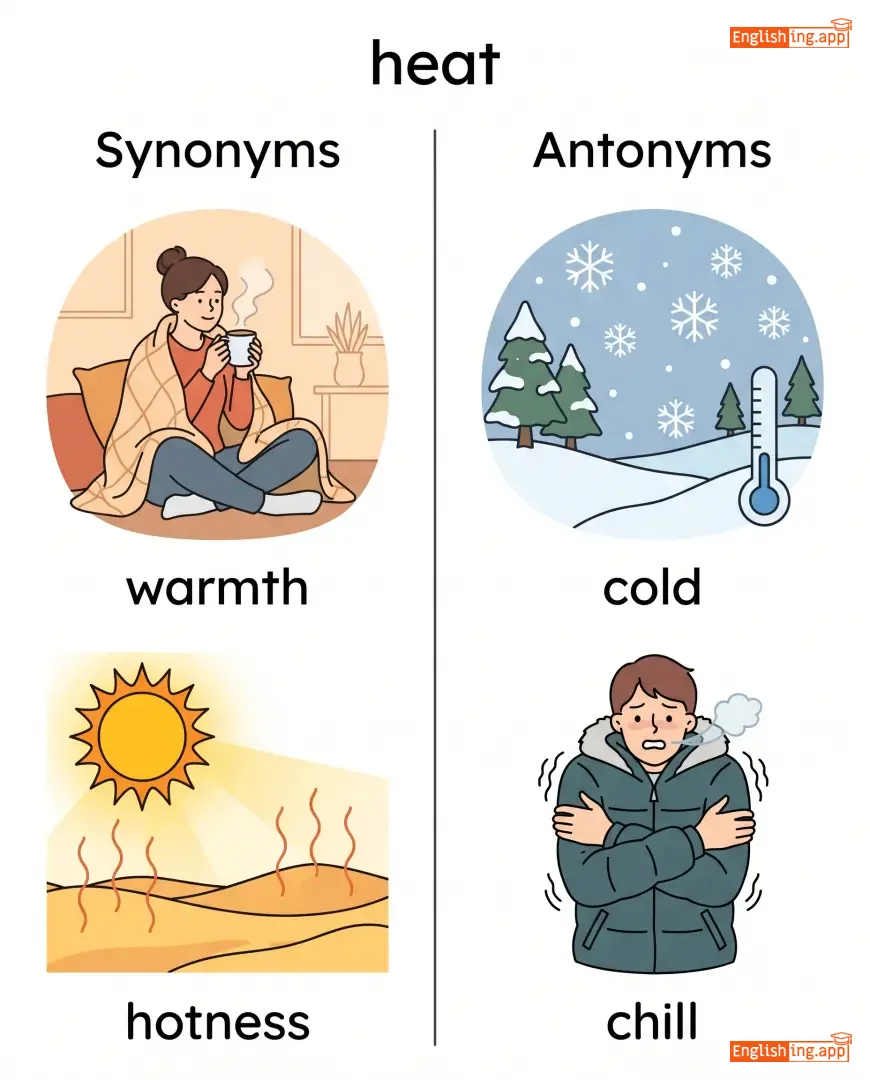
warmth, hotness, fire, passion, energy
••••••
|
cold, chill
••••••
|
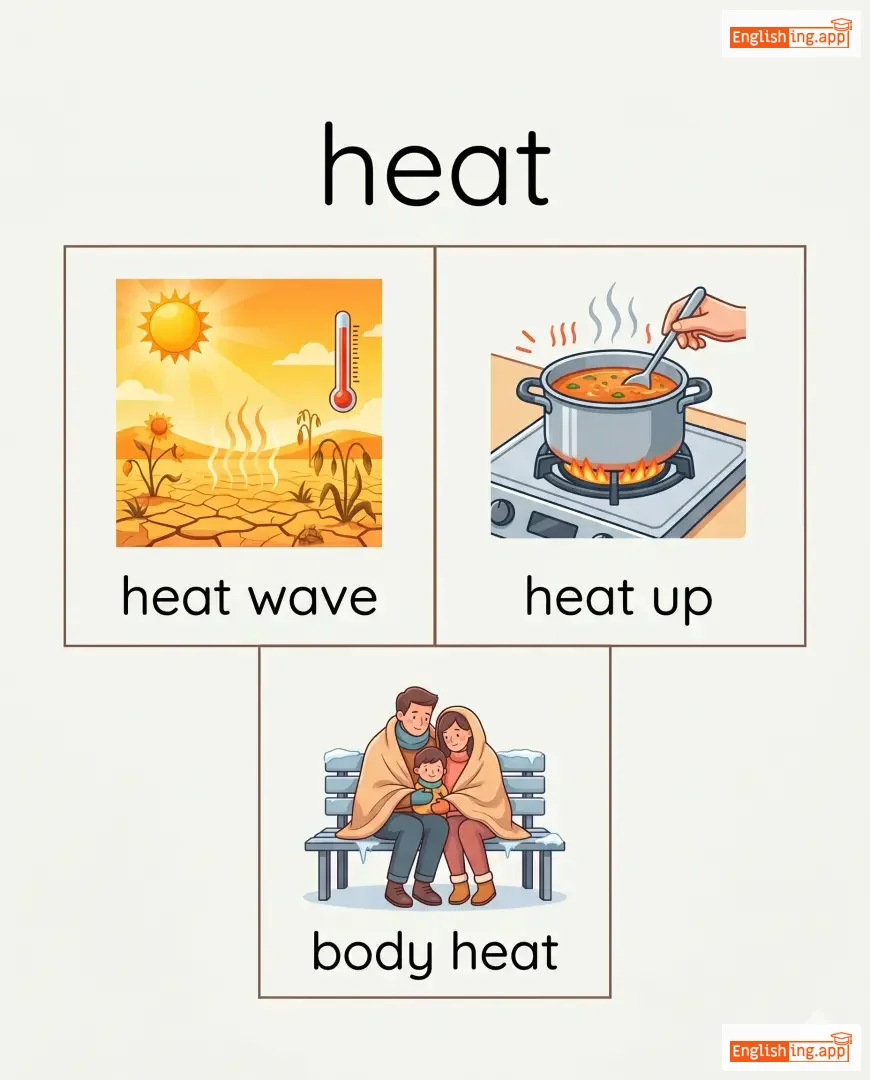
heat wave, heat up, body heat, generate heat
••••••
|
Heat 就是烈火 🔥 – 它加热一切
••••••
|
|
#11140
½
|
/hæf/
noun, adjective
(哈夫)
••••••
|
- •••••• |
一半
yiban
••••••
|
- •••••• | - •••••• | - •••••• | - •••••• |
one of two equal parts of something
••••••
|
He ate half of the cake. |
他吃了蛋糕的一半。
ta chi le dangao de yi ban.
••••••
|
half-hearted |
without much effort or enthusiasm
••••••
|
心不在焉
xin bu zai yan
••••••
|
portion, part, piece, division
••••••
|
whole, complete
••••••
|
half price, half hour, half life, half way
••••••
|
Half 意思是一半,想象你把蛋糕切成两半,一半 = half
••••••
|
|
#11141
👂
|
/ˈhɪərɪŋ/
noun
(hī-ríng)
••••••
|
- •••••• |
听力 / 听证会
tīnglì / tīngzhènghuì
••••••
|
- •••••• | - •••••• | - •••••• | - •••••• |
the ability to perceive sounds or an official meeting to listen to arguments or evidence
••••••
|
The judge scheduled a hearing for next week. |
法官安排了下周的听证会。
Fǎguān ānpái le xià zhōu de tīngzhènghuì.
••••••
|
hard of hearing |
having partial hearing loss
••••••
|
部分听力丧失
bùfèn tīnglì sàngshī
••••••
|
listening, audition, perception, trial, meeting
••••••
|
deafness, silence
••••••
|
court hearing, public hearing, hearing aid, hearing loss
••••••
|
Hearing 就是听证会 – 法庭上有听证会,耳朵负责听觉 👂
••••••
|
|
#11142
👂
|
/hɪr/
verb
(xir)
••••••
|
|
听见
tīngjiàn
••••••
|
heard
herd
••••••
|
heard
herd
••••••
|
hears
hirs
••••••
|
hearing
xīrīng
••••••
|
To perceive sound with the ear.
••••••
|
I can hear birds singing outside.
Wǒ kěyǐ tīngdào wàimiàn de niǎo chànggē.
••••••
|
我可以听到外面的鸟在唱歌。
Wǒ kěyǐ tīngdào wàimiàn de niǎo chànggē.
••••••
|
hear from someone
cóng rén huì tīngdào
••••••
|
to receive news or communication from someone
••••••
|
从某人那里听到
cóng mǒurén nàlǐ tīngdào
••••••
|
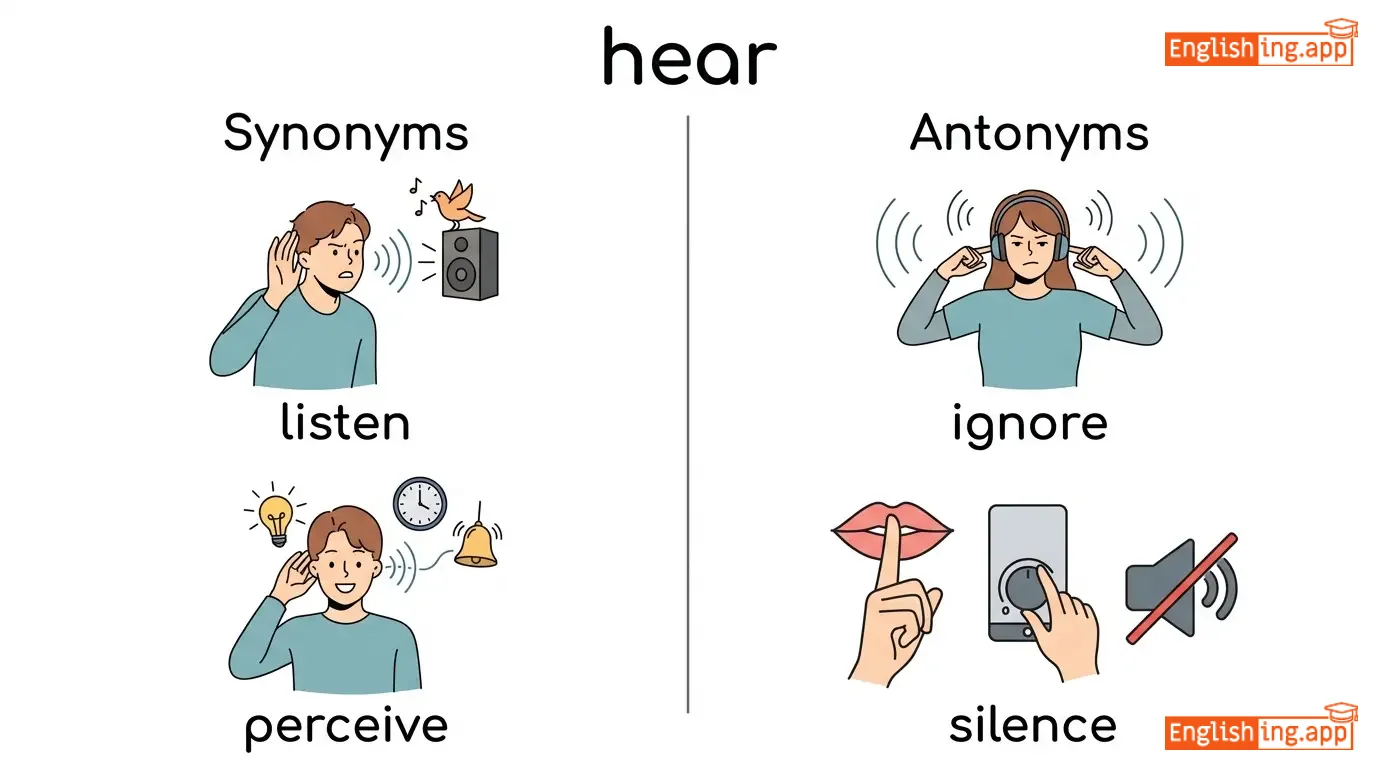
listen, perceive, detect, notice, overhear
••••••
|
ignore, silence
••••••
|
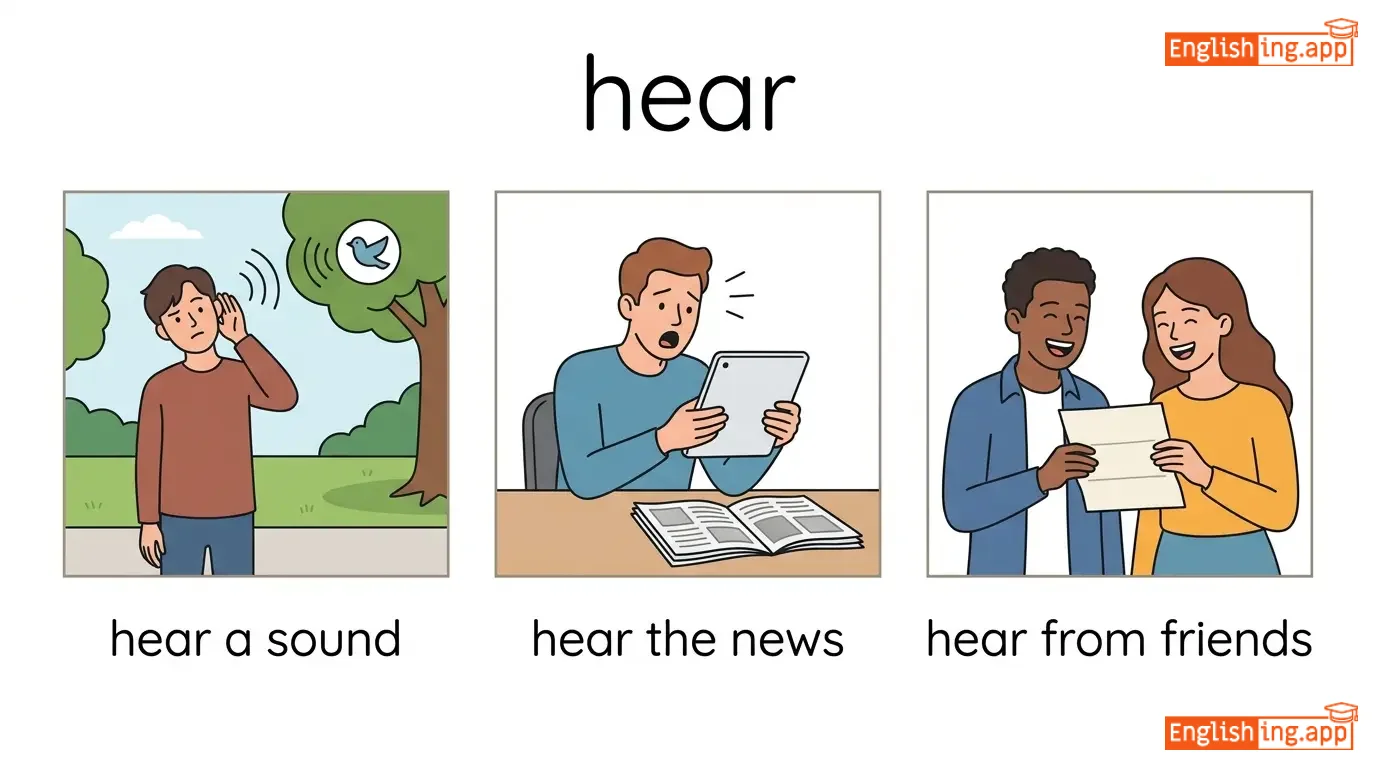
hear a sound, hear the news, hear from friends, hear clearly
••••••
|
听见就是用耳朵听声音。
••••••
|
|
#11143
💪
|
/hɛlθ/
noun
(hèlth)
••••••
|
- •••••• |
健康
jiànkāng
••••••
|
- •••••• | - •••••• | - •••••• | - •••••• |
The state of being free from illness or injury.
••••••
|
Exercise is important for good health. |
锻炼对保持良好的健康很重要。
duànliàn duì bǎochí liánghǎo de jiànkāng hěn zhòngyào.
••••••
|
in good health |
being healthy
••••••
|
身体健康
shēntǐ jiànkāng
••••••
|
wellness, fitness, condition, wellbeing
••••••
|
illness, sickness, disease
••••••
|
good health, health care, public health, mental health
••••••
|
Health意味着健康,健康是幸福的基础。
••••••
|
|
#11144
🏢
|
/ˈhɛdˌkwɔːrtərz/
noun
(海皮尼斯)
••••••
|
- •••••• |
总部
zǒngbù
••••••
|
- •••••• | - •••••• | - •••••• | - •••••• |
The main office or center of operations of an organization.
••••••
|
The company’s headquarters is located in New York. |
公司的总部位于纽约。
Gōngsī de zǒngbù wèiyú niǔyuē.
••••••
|
- •••••• | - •••••• | - •••••• |
main office, center, base, hub, command post
••••••
|
branch, outpost
••••••
|
corporate headquarters, police headquarters, company headquarters, military headquarters
••••••
|
Headquarters = head + quarters → 总部,组织的中心办公室。
••••••
|
|
#11145
📰
|
/ˈhɛdˌlaɪn/
noun
(hɛdˈlaɪn)
••••••
|
- •••••• |
头条新闻
tóutiáo xīnwén
••••••
|
- •••••• | - •••••• | - •••••• | - •••••• |
The title of a newspaper article printed in large letters.
••••••
|
The scandal made front-page headlines.
这个丑闻成为了头条新闻。
••••••
|
丑闻成为了头条新闻。
Chǒuwén chéngwéi le tóutiáo xīnwén.
••••••
|
grab the headlines
引起头条新闻
••••••
|
to attract public attention
••••••
|
引起公众关注
yǐnqǐ gōngzhòng guānzhù
••••••
|
title, heading, banner, caption, news
••••••
|
detail, footnote
••••••
|
front-page headline, news headline, headline story, write a headline
••••••
|
头条新闻 = 主流新闻 = 头条新闻
••••••
|
|
#11146
👤
|
/hɛd/
noun, verb
(头)
••••••
|
- •••••• |
头 / 领导
tou / lingdao
••••••
|
headed
带头
••••••
|
headed
带头
••••••
|
heads
带头
••••••
|
heading
带头
••••••
|
The upper part of the human body or to lead or be in charge of something.
••••••
|
She turned her head to look out the window.
她转动头来向窗外看。
••••••
|
她转动头来向窗外看。
ta zhuandong tou lai xiang chuangwai kan.
••••••
|
head over heels
头过脚跟
••••••
|
completely in love
••••••
|
完全爱上
wanquan aishang
••••••
|
chief, leader, boss, director, skull
••••••
|
follower, subordinate
••••••
|
head of department, head office, head a team, shake your head
••••••
|
头表示头,头过脚跟表示完全爱上。
••••••
|
|
#11147
👨
|
/hiː/
pronoun
(hī)
••••••
|
- •••••• |
他 (男性)
ta (nanxing)
••••••
|
- •••••• | - •••••• | - •••••• | - •••••• |
used to refer to a male person or animal already mentioned or easily identified
••••••
|
He is my best friend. |
他是我最好的朋友。
Tā shì wǒ zuì hǎo de péngyǒu.
••••••
|
- •••••• | - •••••• | - •••••• |
the man, that person, him
••••••
|
she, her
••••••
|
he said, he was, he went, he did
••••••
|
He意味着他 (男性),就像HE-ro (英雄)通常是男性。
••••••
|
|
#11148
👒
|
/hæt/
noun
(hè)
••••••
|
- •••••• |
帽子
màozi
••••••
|
- •••••• | - •••••• | - •••••• | - •••••• |
a shaped covering for the head, often with a brim
••••••
|
He wore a black hat to the party. |
他戴着一顶黑色的帽子去参加聚会。
Tā dàizhe yī dǐng hēisè de màozi qù cānjiā jùhuì.
••••••
|
to wear many hats |
to have many roles or responsibilities
••••••
|
有许多角色或责任
yǒu xǔduō juésè huò zérèn
••••••
|
cap, headgear, helmet, bonnet
••••••
|
barehead
••••••
|
wear a hat, take off hat, straw hat, cowboy hat
••••••
|
Hat 在中文中是帽子,戴在头上。
••••••
|
|
#11149
😯
|
/ˈhɑːrdli/
adverb
(哈德利)
••••••
|
- •••••• |
几乎不
jīhū bù
••••••
|
- •••••• | - •••••• | - •••••• | - •••••• |
almost not; scarcely
••••••
|
She could hardly believe her eyes.
她几乎不敢相信自己的眼睛。
••••••
|
她几乎不敢相信自己的眼睛。
Tā jīhū bù gǎn xiāngxìn zìjǐ de yǎnjīng.
••••••
|
- •••••• | - •••••• | - •••••• |
barely, scarcely, rarely, seldom, infrequently
••••••
|
easily, certainly, often
••••••
|
hardly ever, hardly any, hardly noticeable, hardly believe
••••••
|
HARDly 在中文里意味着 '几乎不',就像几乎不可能的情况。
••••••
|
|
#11150
✨
|
/ˈhæpən/
verb
(海皮尼斯)
••••••
|
- •••••• |
发生
fāshēng
••••••
|
happened
海皮尼斯德
••••••
|
happened
海皮尼斯德
••••••
|
happens
海皮尼斯斯
••••••
|
happening
海皮尼斯宁
••••••
|
to take place or occur, usually by chance
••••••
|
Accidents can happen at any time.
事故随时可能发生。
••••••
|
事故随时可能发生。
Shìgù suíshí kěnéng fāshēng.
••••••
|
what happens, happens
发生的,发生了
••••••
|
an expression used to accept events as they occur without worry
••••••
|
发生的,发生了
Fāshēng de, fāshēngle
••••••
|
occur, take place, transpire, arise, ensue
••••••
|
prevent, stop, avoid
••••••
|
happen suddenly, happen accidentally, happen again, happen quickly
••••••
|
HAPPEN意味着一些事情可能会突然发生,就像一个意外事故。
••••••
|
|
#11151
🖼️
|
/hæŋ/
verb
••••••
|
|
- •••••• |
hung
••••••
|
hung
••••••
|
hangs
••••••
|
hanging
••••••
|
to suspend or attach something from above so that it moves freely or is supported
••••••
|
She decided to hang the painting on the living room wall. |
- •••••• |
hang in there |
used to encourage someone to persevere through a difficult time
••••••
|
- •••••• |
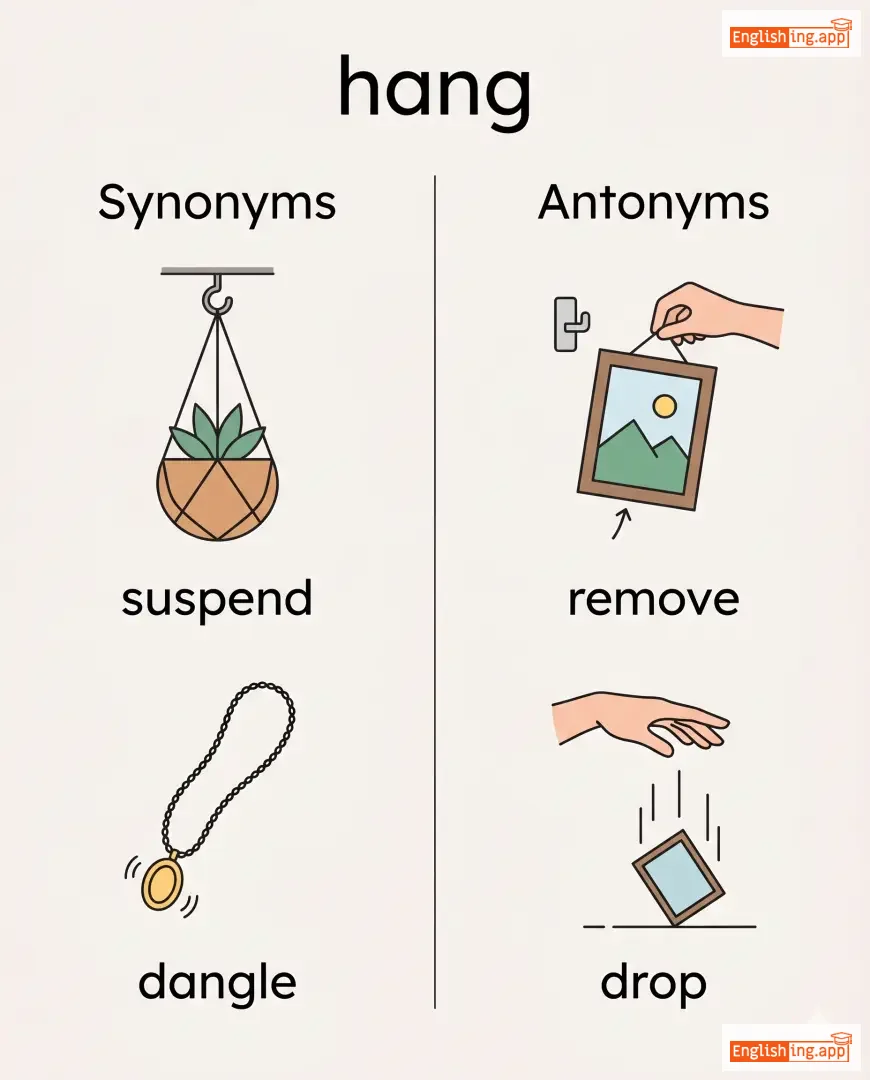
suspend, dangle, attach, display, drape
••••••
|
remove, drop, take down
••••••
|
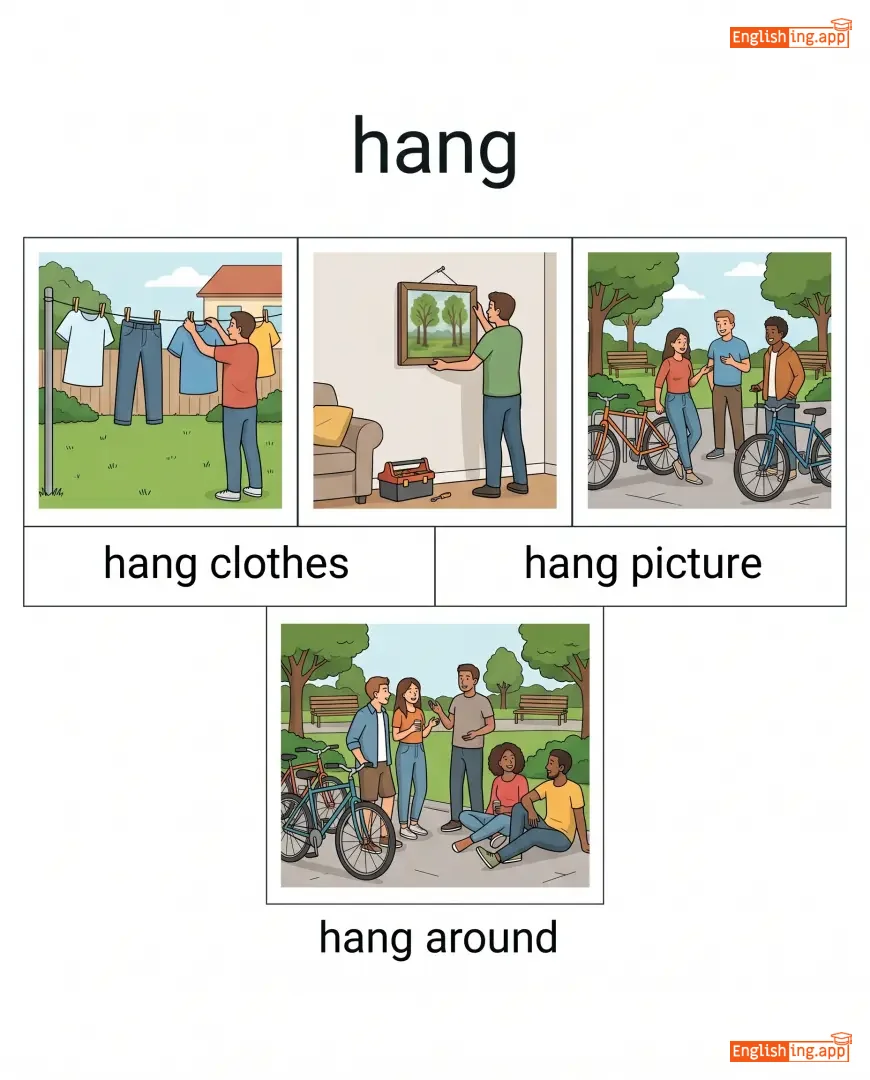
hang clothes, hang picture, hang around, hang up
••••••
|
No •••••• |
|
#11152
🪟
|
/ˈhændl̩/
noun, verb
(hændl)
••••••
|
|
把手 / 处理
bǎ shǒu / chǔ lǐ
••••••
|
handled
hændəld
••••••
|
handled
hændəld
••••••
|
handles
hændlz
••••••
|
handling
hændlɪŋ
••••••
|
the part of an object designed to be held in the hand; to deal with or manage a situation
••••••
|
He could not handle the pressure of the job.
他无法处理工作的压力。
••••••
|
他无法处理工作的压力。
Tā wúfǎ chǔlǐ gōngzuò de yālì.
••••••
|
fly off the handle
发火
••••••
|
to suddenly become very angry
••••••
|
突然大发雷霆
túrán dà fā léitíng
••••••
|
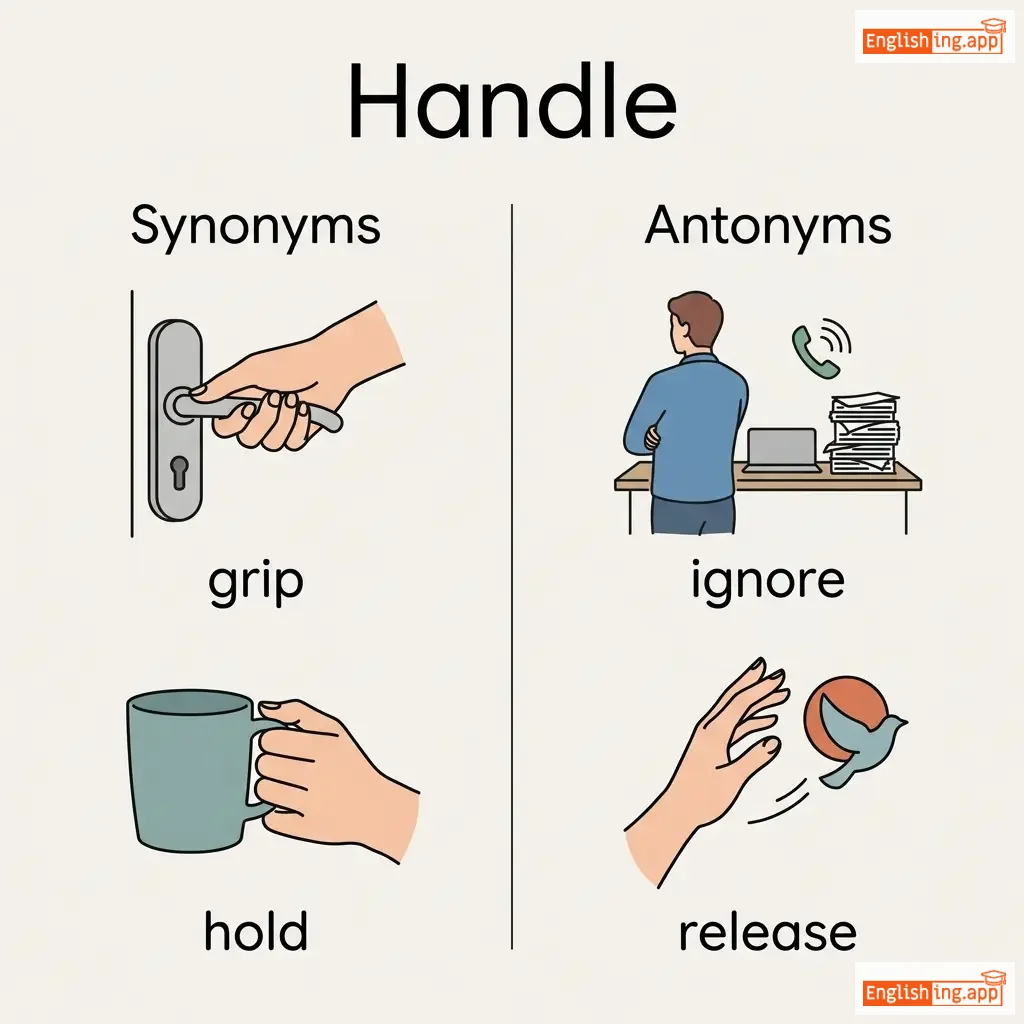
grip, hold, control, manage
••••••
|
ignore, release
••••••
|
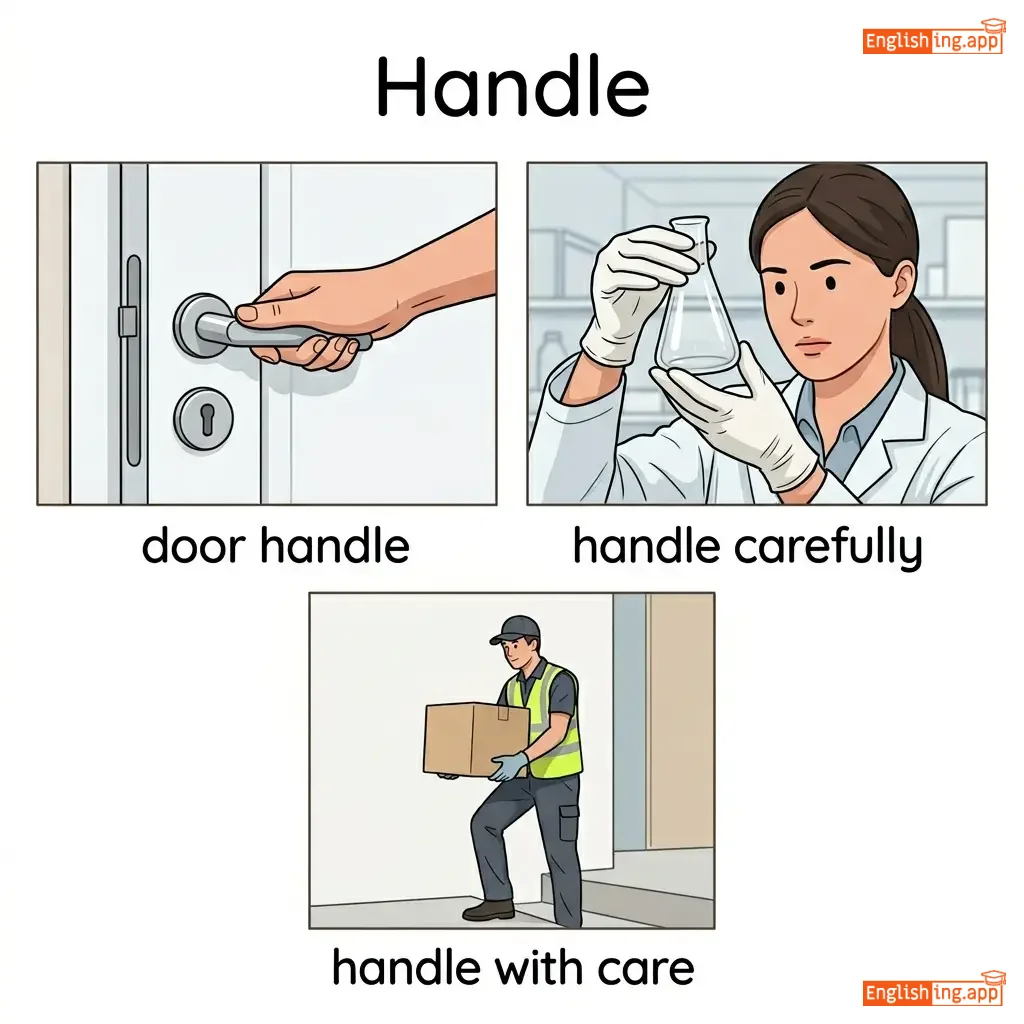
door handle, handle carefully, handle with care
••••••
|
把手 - 想象你需要处理一些很棘手的事情
••••••
|
|
#11153
✋
|
/ˈhænd.fʊl/
noun
(hændfʊl)
••••••
|
- •••••• |
一把
yī bǎ
••••••
|
- •••••• | - •••••• | - •••••• | - •••••• |
the amount of something that can be held in one hand; a small number
••••••
|
She took a handful of nuts. |
她拿了一把坚果。
tā nále yī bǎ jiānguǒ.
••••••
|
a handful |
a small number of people or things; someone difficult to manage
••••••
|
少量的人或事物;难以应付的人
shǎo liàng de rén huò shìwù; nán yǐ yìngfù de rén
••••••
|
few, small amount, little, portion
••••••
|
many, plenty
••••••
|
a handful of, only a handful, just a handful
••••••
|
一把在手,容易记住
••••••
|
|
#11154
🤚
|
/hænd/
noun, verb
••••••
|
- •••••• | - •••••• |
handed
••••••
|
handed
••••••
|
hands
••••••
|
handing
••••••
|
the part of the body at the end of the arm used for holding things
••••••
|
She raised her hand to ask a question. |
- •••••• |
in safe hands |
being looked after by someone competent and reliable
••••••
|
- •••••• |
palm, fist, grip, hold
••••••
|
foot, neglect
••••••
|
shake hands, hand in, hand out, raise hand
••••••
|
No •••••• |
Vocabulary Quiz
Test your vocabulary by matching words with their translations or meanings.
Login to take the quiz
Comments (0)
Share your thoughts and join the discussion.
Join the discussion by logging in
Login to CommentNo comments yet
Be the first to share your thoughts!