👂hear (xir)

verb
/hɪr/
听见 (tīngjiàn)

含义

To perceive sound with the ear.
to perceive sound; to listen to
含义翻译
用耳朵感知声音。
yòng ěrduo gǎnzhī shēngyīn.

例句

I can hear birds singing outside.

我可以听到外面的鸟在唱歌。
Wǒ kěyǐ tīngdào wàimiàn de niǎo chànggē.

I can hear the birds singing.

我能听见鸟儿唱歌。
Wǒ néng tīngjiàn niǎo ér chànggē.

示例表达

hear from someone
从某人那里听到
cóng mǒurén nàlǐ tīngdào

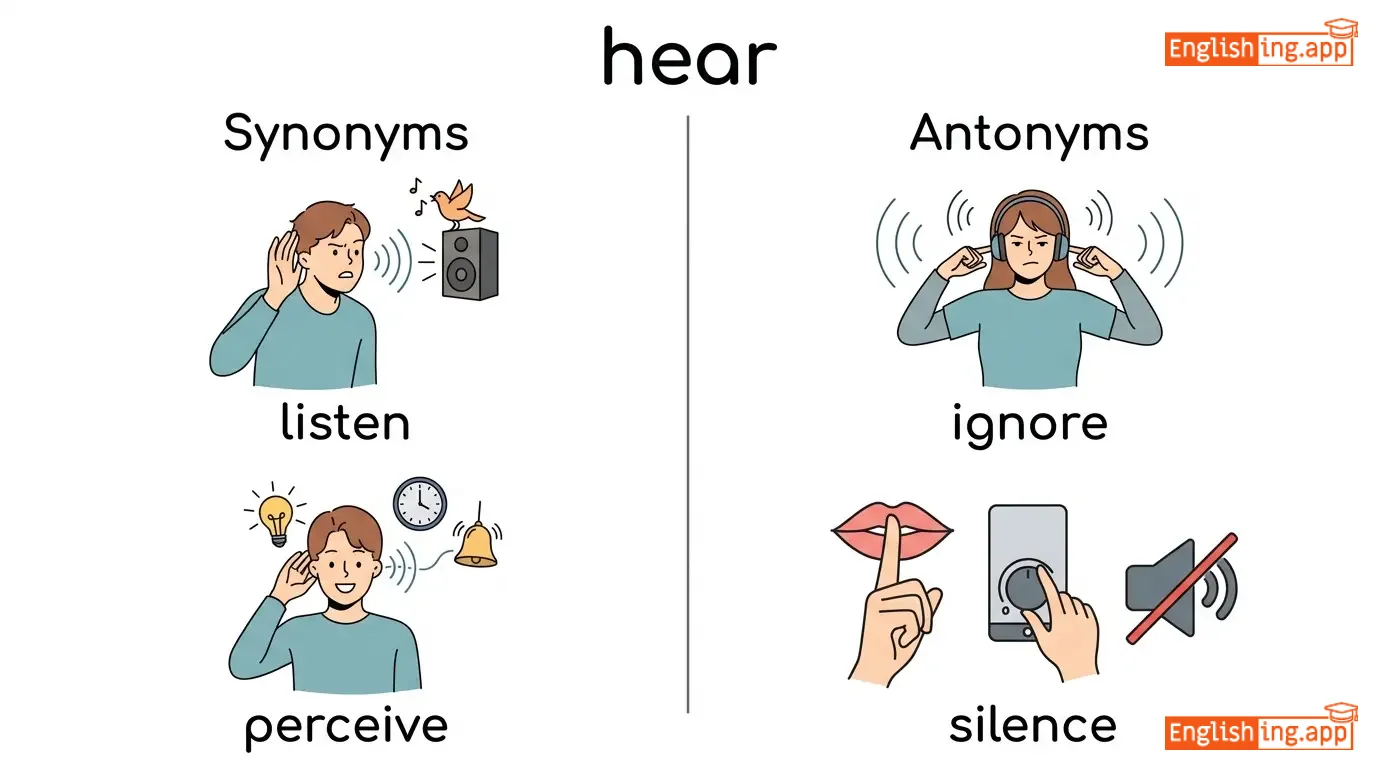
同义词

listen, perceive, detect, notice, overhear, catch
条目 1
listen, perceive, detect, notice, overhear
条目 2
listen, perceive, detect, catch

反义词

ignore, silence, miss, overlook
条目 1
ignore, silence
条目 2
ignore, miss, overlook

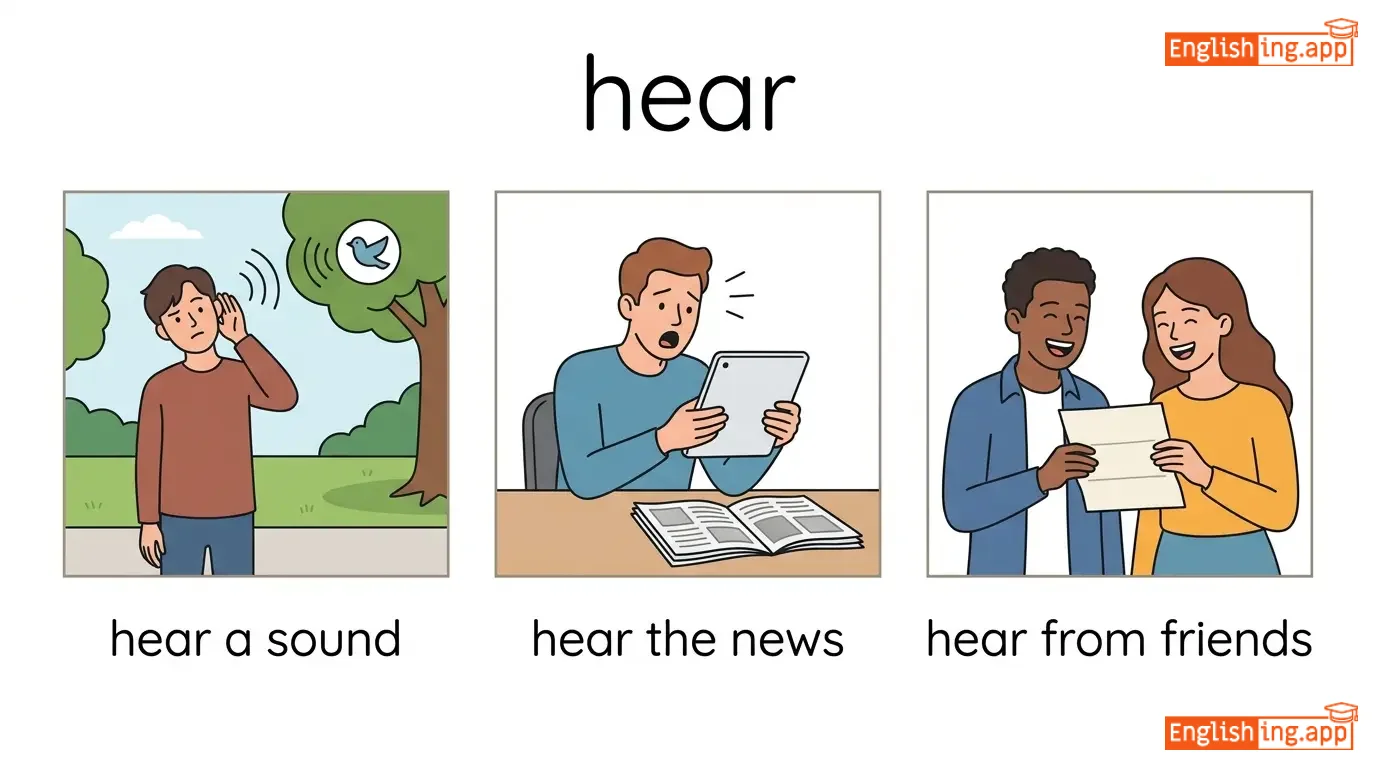
搭配词

hear a sound, hear the news, hear from friends, hear clearly, hear voices, hear music, hear sounds
条目 1
hear a sound, hear the news, hear from friends, hear clearly
条目 2
hear clearly, hear voices, hear music, hear sounds

更多例句

Oh I am excited to hear that.

哦,我很高兴听到这个。
Ó, wǒ hěn gāoxìng tīngdào zhège.

Oh I am thrilled to hear that.

哦,我很高兴听到这个。
Ó, wǒ hěn gāoxìng tīngdào zhège.

Oh I am ecstatic to hear that.

哦,我很兴奋听到这个。
Ó, wǒ hěn xīngfèn tīngdào zhège.

Oh I am delighted to hear that.

哦,我很高兴听到这个。
Ó, wǒ hěn gāoxìng tīngdào zhège.

Oh I am over the moon to hear that.

哦,我听到这个消息非常高兴。
Ó, wǒ tīngdào zhège xiāoxi fēicháng gāoxìng.

I'm sorry, I did not hear what you said.

对不起,我没听到你说的。
Duìbùqǐ, wǒ méi tīngdào nǐ shuō de.

My ears are sore. I cannot hear properly.

我的耳朵很痛。我听不清楚。
Wǒ de ěrduo hěn tòng. Wǒ tīng bù qīngchǔ.

May this Christmas fill your heart with love.

愿这个圣诞节充满爱,填满你的心。
Yuan zhe ge Shengdan jie chongman ai, tianman nide xin.

I didn't quite hear that, sorry; can you say that one more time?

我没有完全听到,抱歉;你能再说一遍吗?
Wo meiyou wanquan tingdao, baoqian; ni neng zai shuo yibian ma?

I hear what you’re saying, but our bottom line is very clear on this one.

我听到你说的,但我们的底线在这件事上非常明确。
Wǒ tīng dào nǐ shuō de, dàn wǒmen de dǐxiàn zài zhè jiàn shì shàng fēicháng míngquè.

相关词汇

To cause someone to feel extreme fear.
to bring something to an end or to stop something from continuing
To tie an animal with a rope or chain so it cannot move far.
To blame or accuse someone of wrongdoing.
to bend something, especially paper or cloth, so that one part covers another
To form a theory or set of ideas to explain something.

探索更多