










Swipe left or right, or use the buttons. Tap image to zoom.
例句翻译
单词
Lesson 19: Mastering the Most Frequent Verbs & TensesLesson 19: Mastering the Most Frequent Verbs & Tenses - 遮罩切换
|
表情符号
|
单词 | Images | 翻译 | 过去时 | 过去分词 | 第三人称单数 | 动名词 | 含义 | 例句 | 例句翻译 | 同义词 | 反义词 | 搭配词 | 助记符 |
|---|---|---|---|---|---|---|---|---|---|---|---|---|---|---|
|
#537
👨🏫
|
/ɪnˈstrʌkt/
verb
(指示)
••••••
|
|
指示
zhǐshì
••••••
|
instructed
指示过
••••••
|
instructed
指示过
••••••
|
instructs
指示
••••••
|
instructing
指示中
••••••
|
to teach; to give directions
••••••
|
The teacher instructed the students carefully.
老师仔细地指示了学生。
••••••
|
老师仔细地指示了学生。
Lǎoshī zǐxì de zhǐshìle xuéshēng.
••••••
|
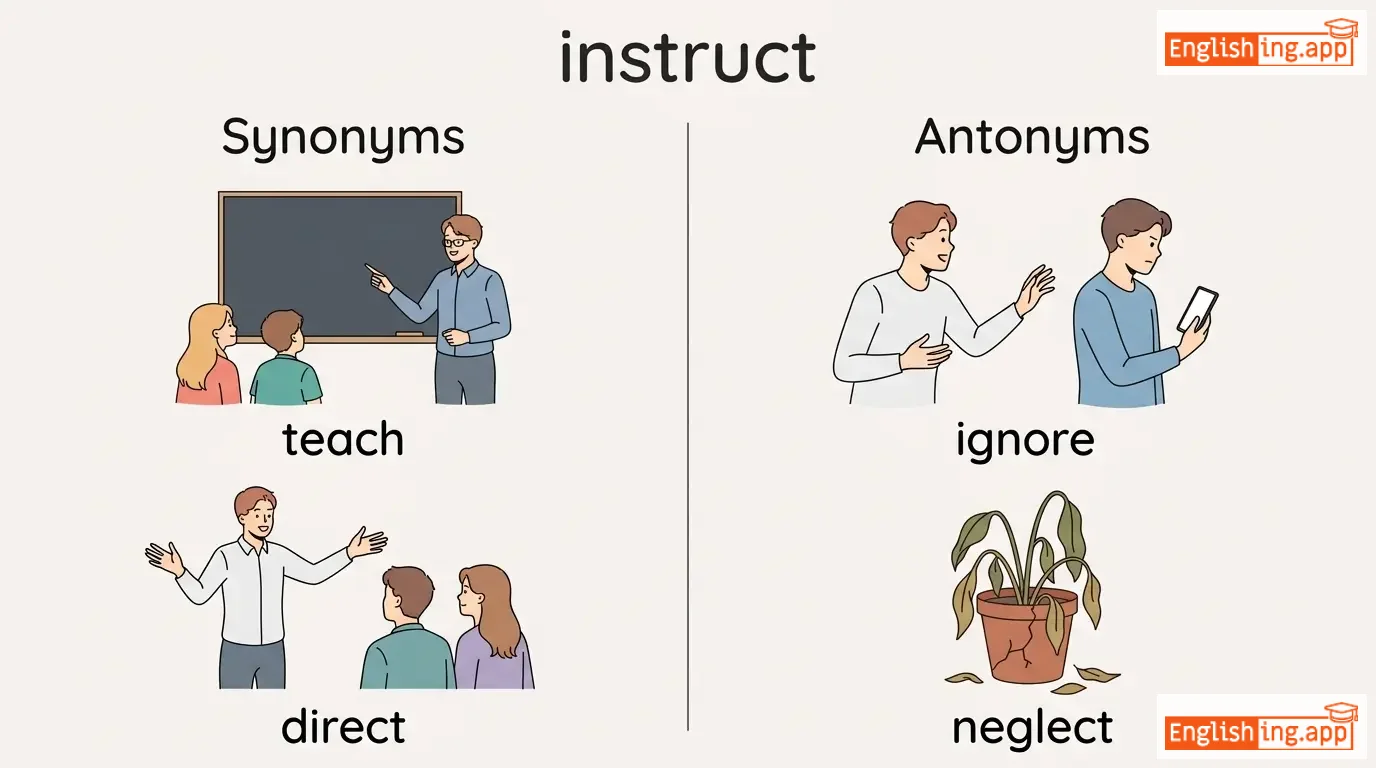
teach, educate, guide, direct
••••••
|
confuse, mislead, neglect, ignore
••••••
|
carefully instruct, instruct students, instruct properly, instruct clearly
••••••
|
Instruct = 给指示
••••••
|
|
#538
💗
|
/biːt/
verb
(比特)
••••••
|
|
打击
dǎjí
••••••
|
beat
比特
••••••
|
beaten
比腾
••••••
|
beats
比次
••••••
|
beating
比听
••••••
|
to hit repeatedly; to defeat; to pulse rhythmically
••••••
|
My heart beats faster when I exercise.
我运动时我的心跳加快。
••••••
|
我运动时我的心跳加快。
Wǒ yùndòng shí wǒ de xīn tiào jiā kuài.
••••••
|
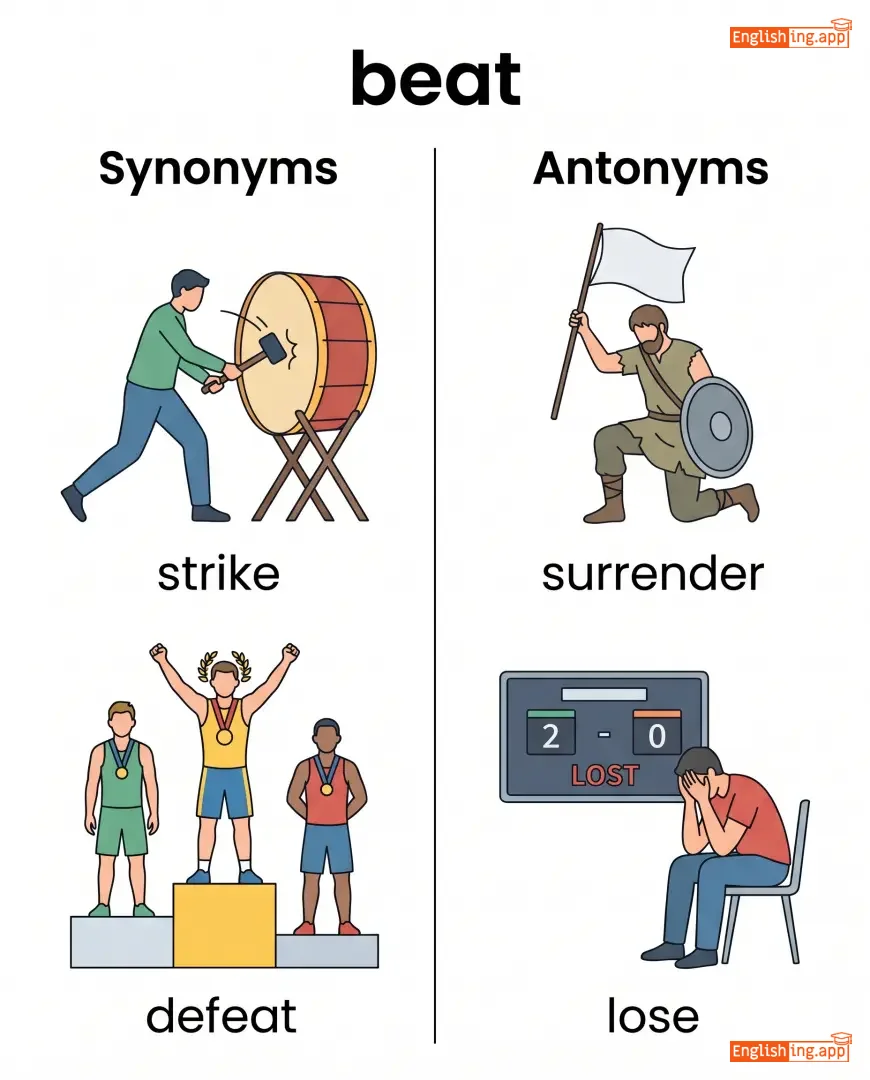
hit, strike, defeat, pulse
••••••
|
lose, calm, soothe
••••••
|
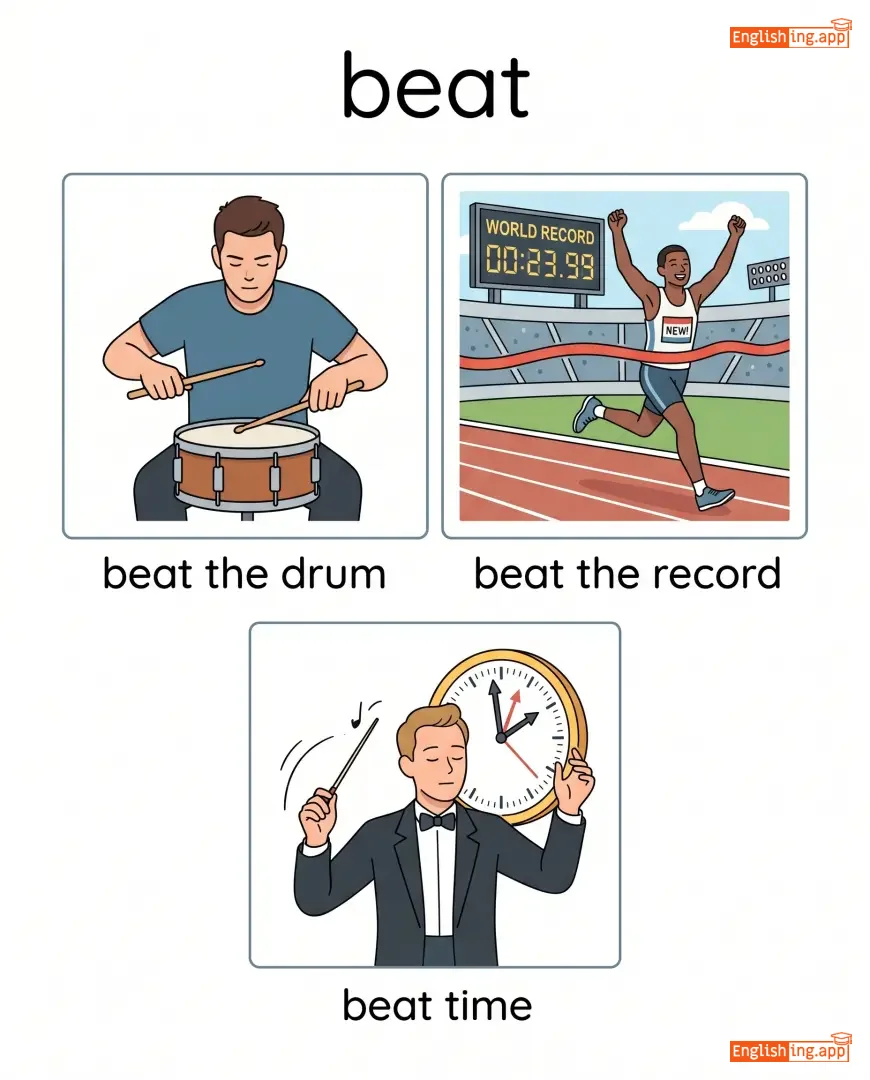
beat fast, beat rhythmically, beat repeatedly, beat drums
••••••
|
打击和心跳,生命的节奏。
••••••
|
|
#539
👂
|
/hɪər/
verb
(xi-er)
••••••
|
|
听
ting
••••••
|
heard
heerd
••••••
|
heard
heerd
••••••
|
hears
xi-er-s
••••••
|
hearing
xi-er-ing
••••••
|
to perceive sound; to listen to
••••••
|
I can hear the birds singing.
我能听见鸟儿唱歌。
••••••
|
我能听见鸟儿唱歌。
Wǒ néng tīngjiàn niǎo ér chànggē.
••••••
|
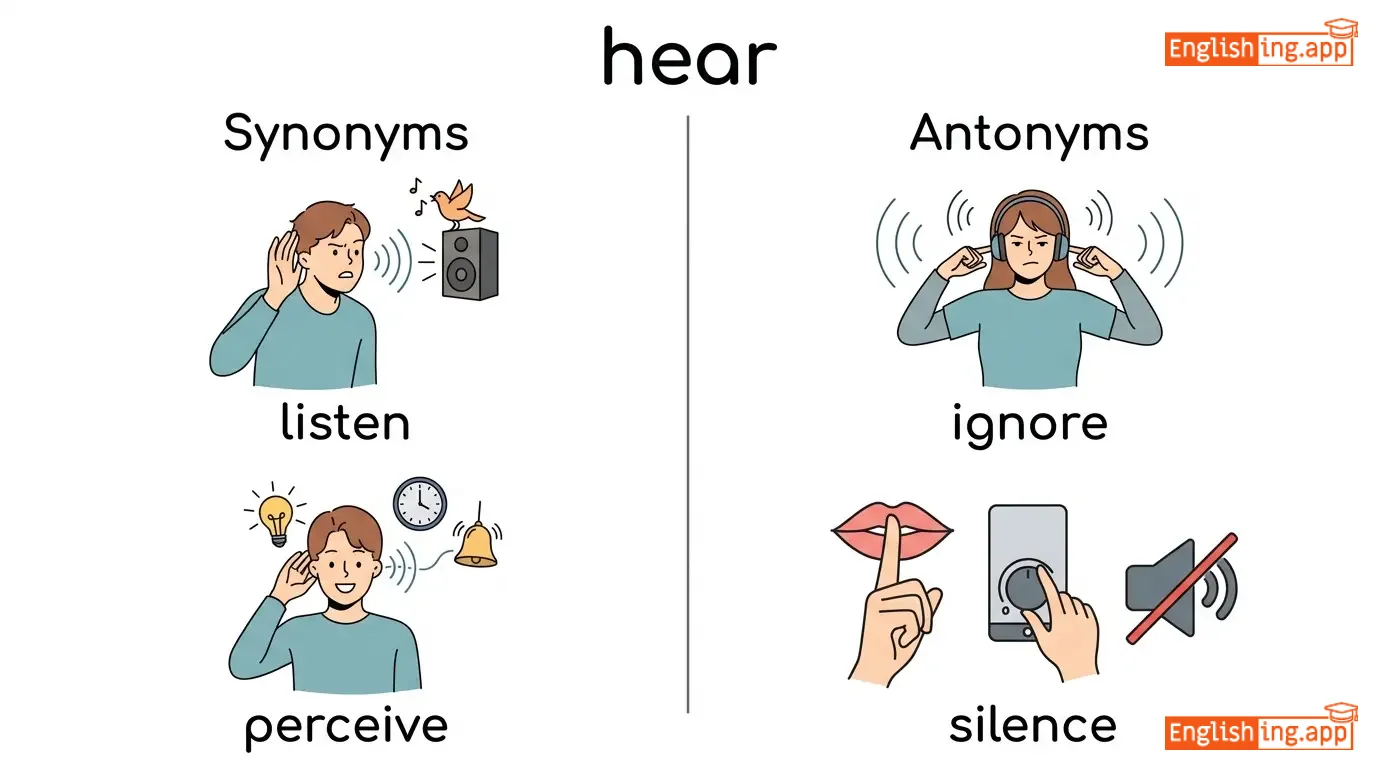
listen, perceive, detect, catch
••••••
|
ignore, miss, overlook
••••••
|
hear clearly, hear voices, hear music, hear sounds
••••••
|
听鸟唱歌,享受这美妙的声音。
••••••
|
|
#540
📢
|
/ɪnˈfɔ:m/
verb
(信息)
••••••
|
|
通知
tongzhi
••••••
|
informed
通知
••••••
|
informed
通知
••••••
|
informs
通知
••••••
|
informing
通知
••••••
|
to tell someone about something; to give information
••••••
|
Please inform me when you arrive at the airport.
请在您到达机场时通知我。
••••••
|
请在您到达机场时通知我。
Qing zai nin daoda jichang shi tongzhi wo.
••••••
|
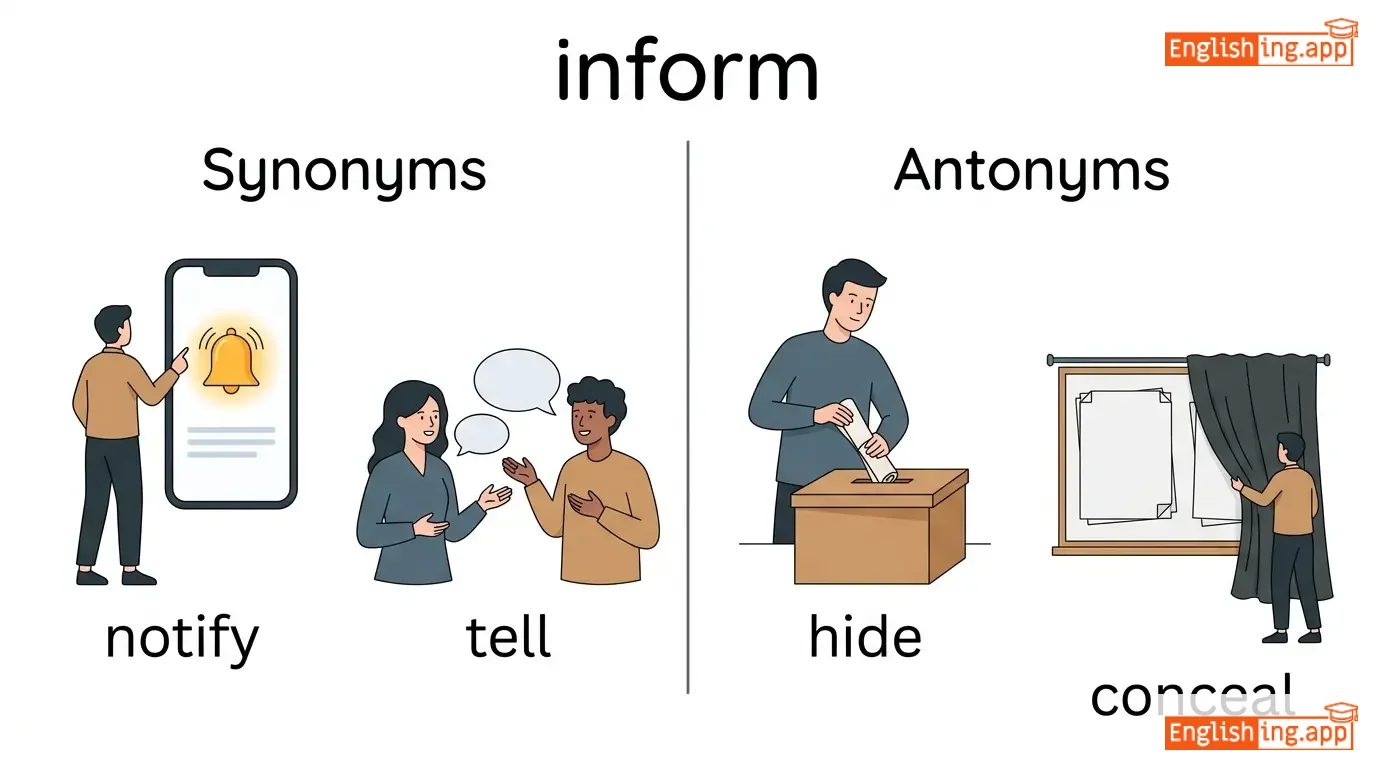
notify, tell, advise, communicate, update
••••••
|
conceal, hide, withhold, suppress
••••••
|
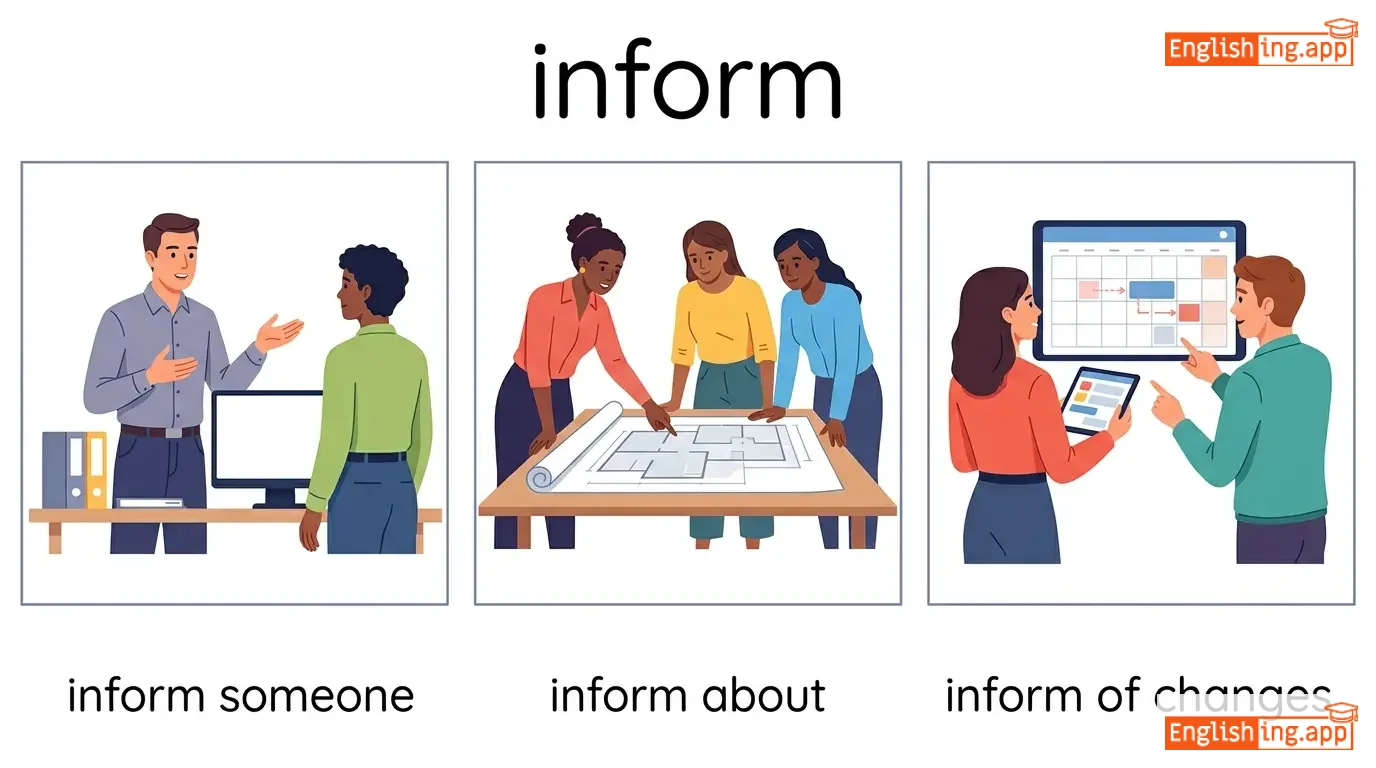
inform immediately, inform authorities, inform properly, keep informed
••••••
|
通知 - 这是让别人知道你所在的地方或你将做什么的词汇。
••••••
|
|
#541
🙏
|
/ˈwɜːrʃɪp/
verb
(沃尔希普)
••••••
|
- •••••• |
崇拜
chóngbài
••••••
|
worshipped
沃尔希普德
••••••
|
worshipped
沃尔希普德
••••••
|
worships
沃尔希普斯
••••••
|
worshipping
沃尔希平
••••••
|
to show reverence and adoration for a deity; to honor with religious rites
••••••
|
They worship at the temple every Sunday.
他们每个星期天在庙里做礼拜。
••••••
|
他们每个星期天在庙里做礼拜。
Tāmen měi gè xīngqī tiān zài miàolǐ zuò lǐbài.
••••••
|
revere, adore, venerate, praise
••••••
|
blaspheme, desecrate, dishonor, profane
••••••
|
worship regularly, worship God, worship together, worship freely
••••••
|
崇拜 = 去寺庙做礼拜,像是表达对神的敬仰。
••••••
|
|
#542
✓
|
/əˈpruːv/
verb
(āpɹúv)
••••••
|
- •••••• |
批准
pīzhǔn
••••••
|
approved
āpɹúvd
••••••
|
approved
āpɹúvd
••••••
|
approves
āpɹúvs
••••••
|
approving
āpɹúvɪŋ
••••••
|
to officially agree to or accept something; to give permission
••••••
|
The committee will approve the new policy tomorrow.
委员会明天将批准新政策。
••••••
|
委员会明天将批准新政策。
Wěiyuánhuì míngtiān jiāng pīzhǔn xīn zhèngcè
••••••
|
accept, endorse, sanction, authorize
••••••
|
reject, disapprove, deny, refuse
••••••
|
approve quickly, approve unanimously, officially approve, approve application
••••••
|
‘Pīzhǔn’ in Chinese sounds like ‘approve’, linking the concepts.
••••••
|
|
#543
🎁
|
/ɡrænt/
verb
(grant)
••••••
|
|
授予
shòuyǔ
••••••
|
granted
granted
••••••
|
granted
granted
••••••
|
grants
grants
••••••
|
granting
granting
••••••
|
to give or allow someone to have; to admit or agree
••••••
|
The university granted him a scholarship.
大学给了他奖学金。
••••••
|
大学给了他奖学金。
Dàxué gěile tā jiǎngxuéjīn.
••••••
|
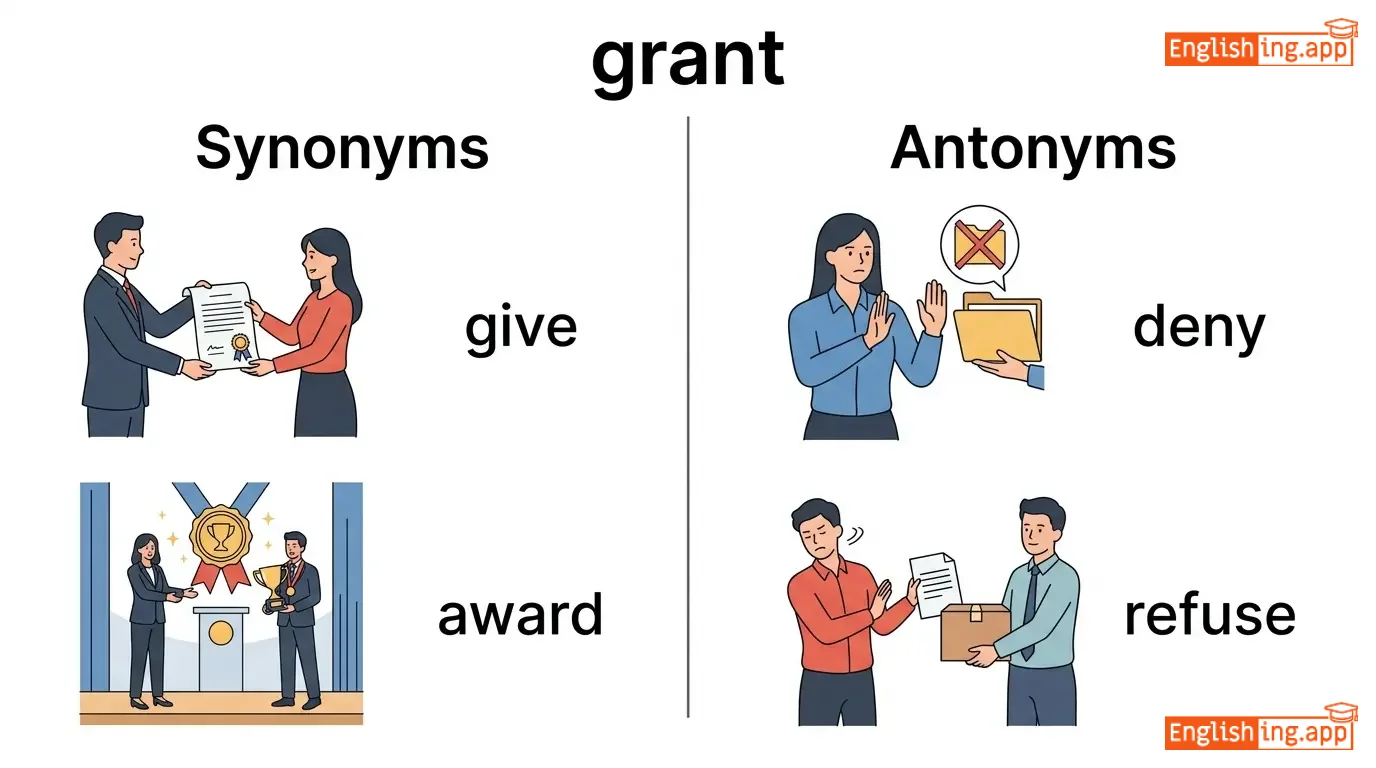
give, provide, award, bestow
••••••
|
deny, refuse, withhold, reject
••••••
|
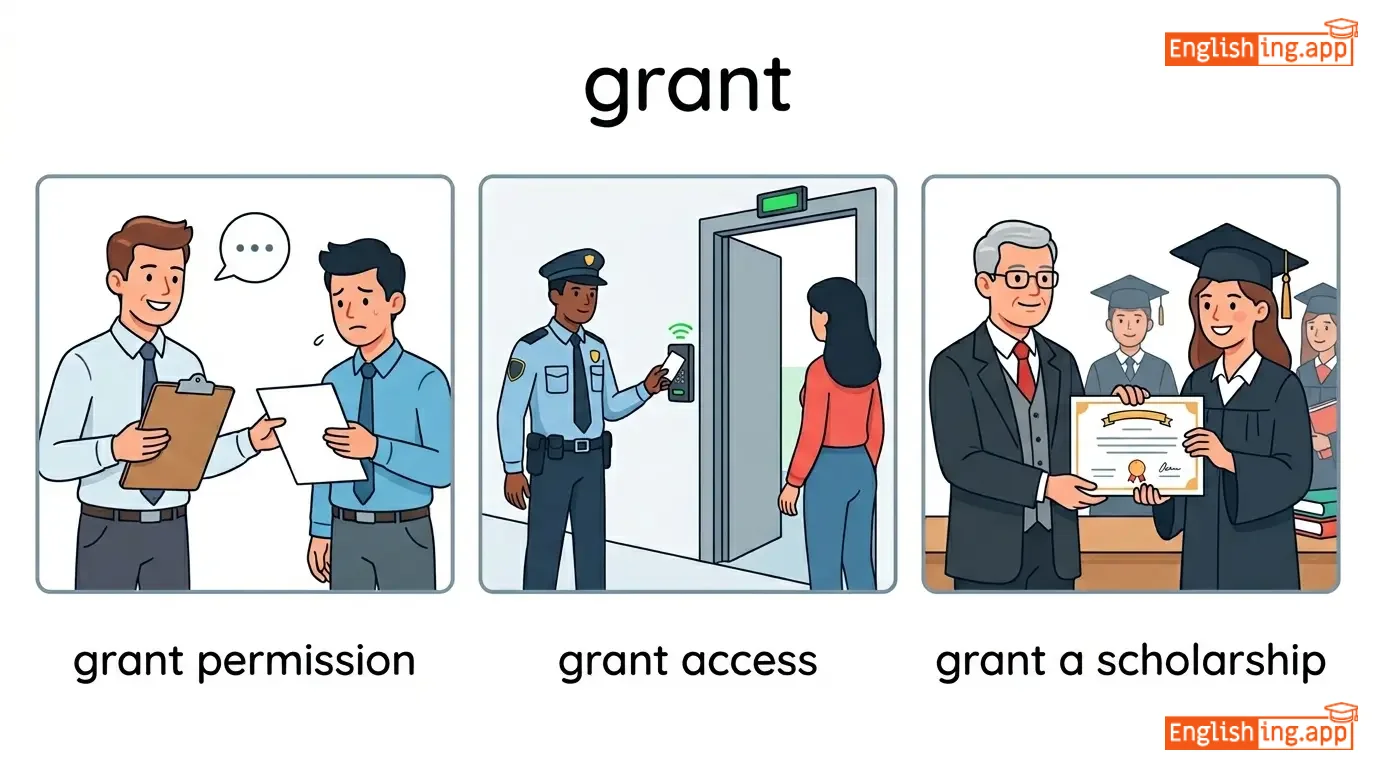
grant permission, grant access, grant request, grant scholarship
••••••
|
In Chinese, '授予' means granting permission or giving something.
••••••
|
|
#544
💰
|
/ɪnˈvest/
verb
(ɪnˈvɛst)
••••••
|
|
投资
tóu zī
••••••
|
invested
ɪnˈvɛstɪd
••••••
|
invested
ɪnˈvɛstɪd
••••••
|
invests
ɪnˈvɛsts
••••••
|
investing
ɪnˈvɛstɪŋ
••••••
|
to put money, time, or energy into something to make a profit or achieve a result
••••••
|
He decided to invest his savings in the stock market.
他决定把储蓄投资于股市。
••••••
|
他决定把储蓄投资于股市。
Tā juédìng bǎ chǔxù tóuzī yú gǔshì.
••••••
|
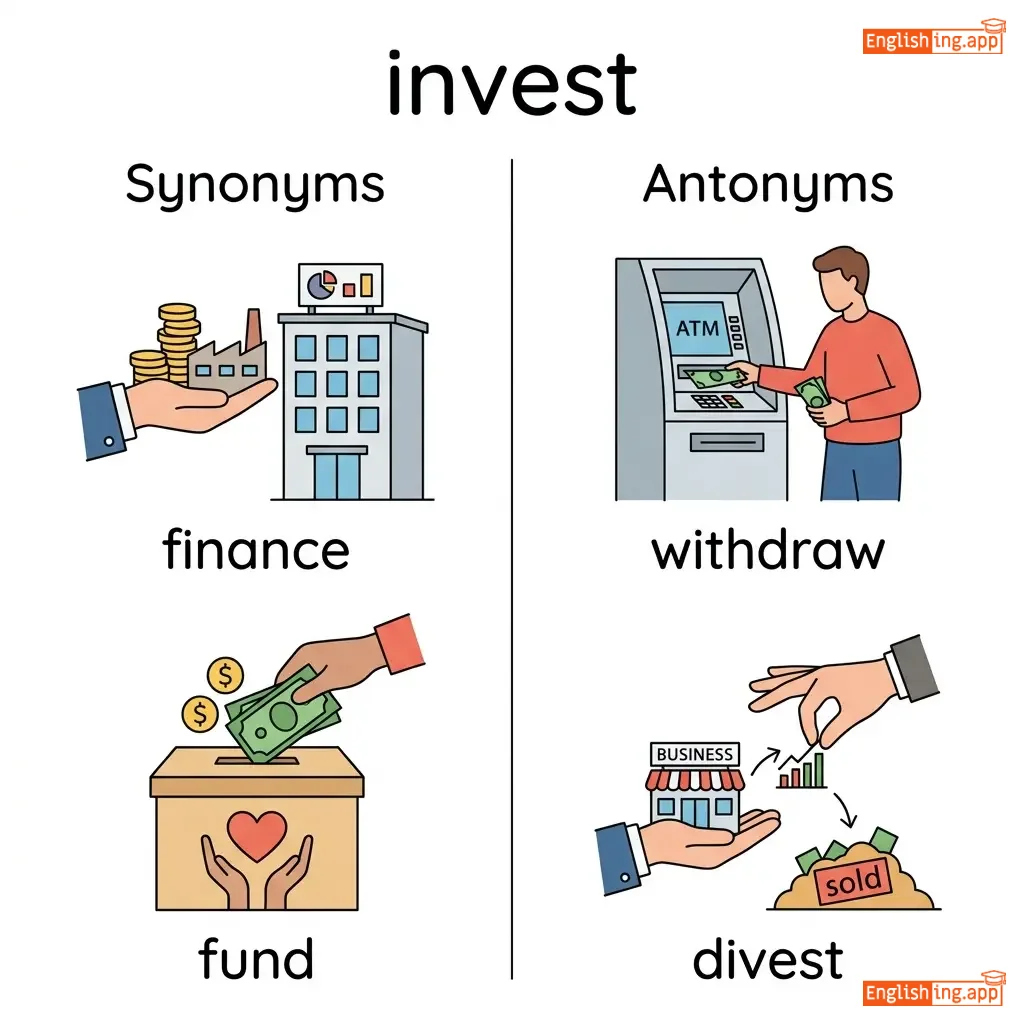
put money into, fund, finance, contribute, spend
••••••
|
withdraw, divest, spend recklessly, waste
••••••
|
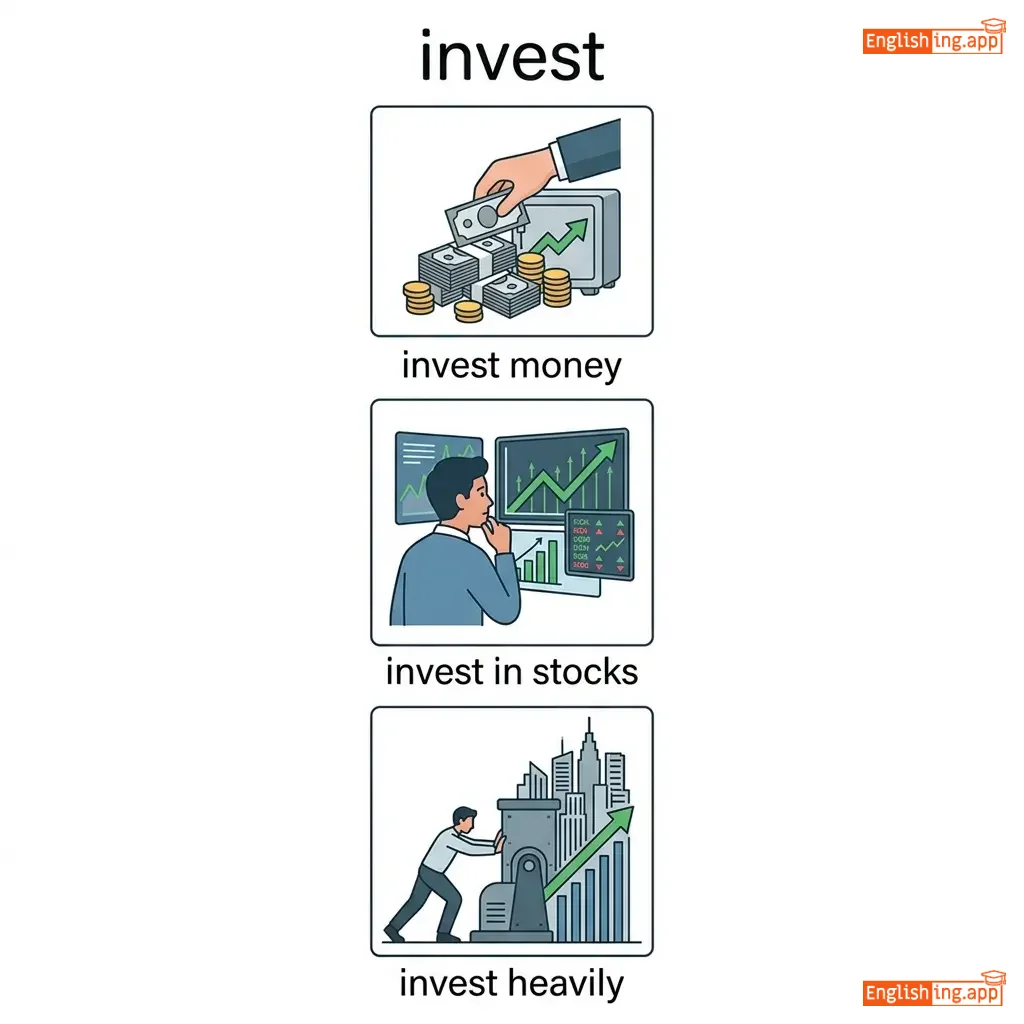
invest wisely, invest money, invest heavily, invest time
••••••
|
投资 = 投入资源期望获得回报,像股市投资
••••••
|
|
#545
💬
|
/rɪˈplaɪ/
verb
(rípái)
••••••
|
- •••••• |
回复
huí fù
••••••
|
replied
rípáid
••••••
|
replied
rípáid
••••••
|
replies
rípái
••••••
|
replying
rípáiyíng
••••••
|
to respond to a question or statement
••••••
|
She will reply to your email as soon as possible.
她会尽快回复您的电子邮件。
••••••
|
她会尽快回复您的电子邮件。
Tā huì jǐnkuài huífù nín de diànzǐ yóujiàn.
••••••
|
respond, answer, react, acknowledge
••••••
|
ignore, question, ask, inquire
••••••
|
reply quickly, reply promptly, reply politely, reply immediately
••••••
|
Reply in Chinese - 回复 (huí fù) means to reply
••••••
|
|
#546
👣
|
/triːd/
verb
(tred)
••••••
|
- •••••• |
踩
cǎi
••••••
|
trod
trod
••••••
|
trod
trod
••••••
|
treads
treads
••••••
|
treading
treading
••••••
|
to step or walk on something; to crush with feet
••••••
|
Don't tread on the flowers.
不要踩到花朵。
••••••
|
不要踩到花朵。
Bùyào cǎi dào huāduǒ.
••••••
|
step, walk, trample, stomp
••••••
|
avoid, lift, hover
••••••
|
tread carefully, tread lightly, tread softly, tread water
••••••
|
踩,像小心踩到花一样
••••••
|
|
#547
💪
|
/ɪnˈsɪst/
verb
(坚持)
••••••
|
|
坚持
jianchi
••••••
|
insisted
坚持了
••••••
|
insisted
坚持了
••••••
|
insists
坚持
••••••
|
insisting
坚持着
••••••
|
to demand firmly; to state persistently
••••••
|
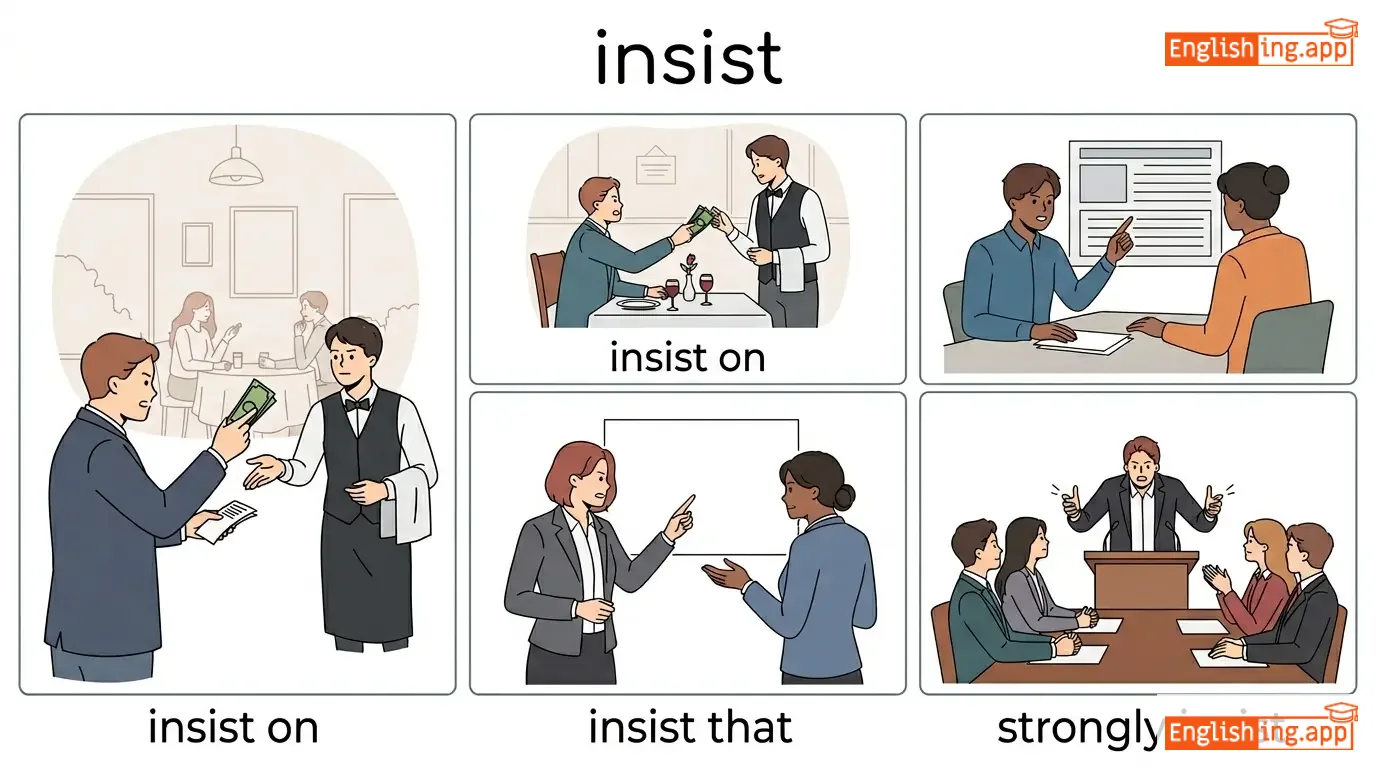
He insisted on paying the bill.
他坚持要付账单。
••••••
|
他坚持要付账单。
Ta jianchi yao fu zhangdan.
••••••
|
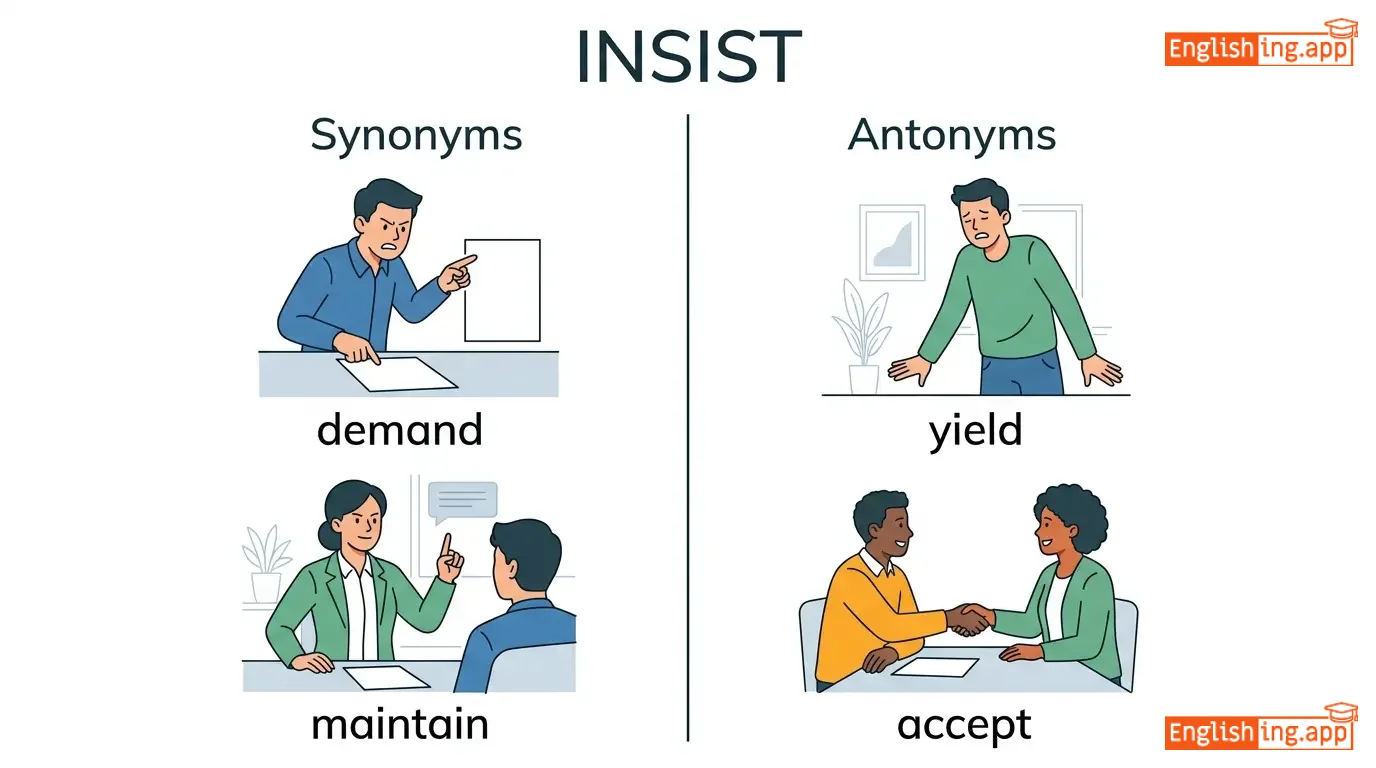
demand, require, maintain, assert
••••••
|
yield, surrender, give up, abandon
••••••
|
insist strongly, insist firmly, insist repeatedly, insist on
••••••
|
In Chinese, '坚持' sounds close to the idea of insistence.
••••••
|
|
#548
🗣️
|
/ˈmenʃən/
verb
(mɛnʃən)
••••••
|
- •••••• |
提到
tí dào
••••••
|
mentioned
mɛnʃənd
••••••
|
mentioned
mɛnʃənd
••••••
|
mentions
mɛnʃənz
••••••
|
mentioning
mɛnʃənɪŋ
••••••
|
to refer to something briefly; to speak about or name
••••••
|
She forgot to mention the meeting time.
她忘记提到会议时间。
••••••
|
她忘记提到会议时间。
Tā wàngjì tí dào huìyì shíjiān.
••••••
|
refer to, state, cite, note, bring up
••••••
|
omit, ignore, overlook, skip
••••••
|
mention briefly, mention earlier, mention specifically, worth mentioning
••••••
|
Chinese: 提到 = 简单提及; English: Mention = Speak briefly
••••••
|
|
#549
🧵
|
/wiːv/
verb
(wēv)
••••••
|
- •••••• |
编织
biān zhī
••••••
|
wove
wòu
••••••
|
woven
wòu vén
••••••
|
weaves
wēv zī
••••••
|
weaving
wēv ing
••••••
|
to make cloth by interlacing threads; to move in and out
••••••
|
She learned to weave beautiful carpets.
Shī lérnd tú wēv bǐu tì fú kǎrpèts.
••••••
|
她学会了编织美丽的地毯。
Tā xuéhuìle biānzhī měilì de dìtǎn.
••••••
|
interlace, braid, plait, intertwine
••••••
|
unravel, separate, disentangle
••••••
|
weave carefully, weave together, weave fabric, weave baskets
••••••
|
Imagine weaving a beautiful carpet while you ‘编织’ the fabric of life.
••••••
|
|
#550
🎉
|
/fɪˈlɪsɪˌteɪt/
verb
(庆祝)
••••••
|
- •••••• |
庆祝
qingzhu
••••••
|
felicitated
庆祝过
••••••
|
felicitated
庆祝过
••••••
|
felicitates
庆祝
••••••
|
felicitating
庆祝中
••••••
|
to congratulate; to express good wishes
••••••
|
We felicitated the graduating students at the ceremony.
我们在典礼上祝贺了毕业生。
••••••
|
我们在典礼上祝贺了毕业生。
Women zai dianli shang zhuhuale biyesheng.
••••••
|
congratulate, praise, commend, honor
••••••
|
criticize, condemn, disapprove
••••••
|
felicitate warmly, felicitate publicly, felicitate achievement, felicitate winners
••••••
|
The Chinese word '庆祝' (qingzhu) sounds like 'felicitate' and means to celebrate or congratulate.
••••••
|
|
#551
😄
|
/kɪd/
verb
(kid)
••••••
|
- •••••• |
开玩笑
kai wanxiao
••••••
|
kidded
kidded
••••••
|
kidded
kidded
••••••
|
kids
kids
••••••
|
kidding
kidding
••••••
|
to joke or tease; to speak in a playful manner
••••••
|
I'm just kidding with you.
我只是在开玩笑。
••••••
|
我只是在开玩笑。
Wo zhi shi zai kai wanxiao.
••••••
|
joke, tease, jest, fool
••••••
|
serious, sincere, honest
••••••
|
just kidding, kid around, stop kidding, no kidding
••••••
|
Imagine a kid making jokes playfully in Chinese.
••••••
|
|
#552
🤸
|
/stretʃ/
verb
(斯特雷奇)
••••••
|
- •••••• |
拉伸
lashen
••••••
|
stretched
拉伸
••••••
|
stretched
拉伸
••••••
|
stretches
拉伸
••••••
|
stretching
拉伸中
••••••
|
to extend or expand; to make or become longer or wider
••••••
|
Athletes stretch their muscles before exercising.
运动员在锻炼前拉伸他们的肌肉。
••••••
|
运动员在锻炼前拉伸他们的肌肉。
Yundongyuan zai duanlian qian lashen tamen de jirou.
••••••
|
extend, expand, lengthen, reach
••••••
|
contract, shrink, compress, shorten
••••••
|
stretch muscles, stretch out, stretch further, stretch limits
••••••
|
Stretch before exercise, just like an athlete!
••••••
|
|
#553
👆
|
/pres/
verb
(普雷斯)
••••••
|
|
按压
anya
••••••
|
pressed
普雷斯德
••••••
|
pressed
普雷斯德
••••••
|
presses
普雷塞
••••••
|
pressing
普雷辛
••••••
|
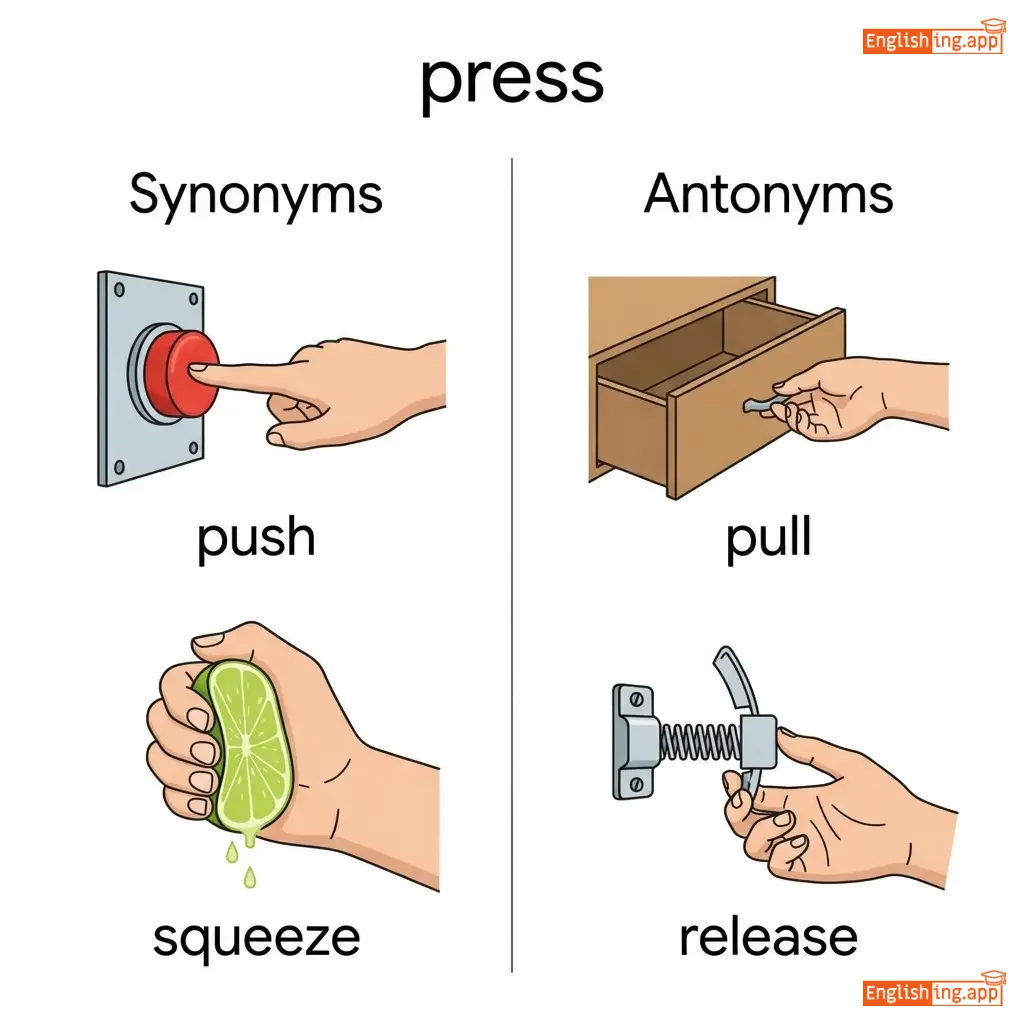
to push firmly against something; to apply pressure
••••••
|
Press the button to start the machine.
按下按钮启动机器。
••••••
|
按下按钮启动机器。
An xia anniu qidong jiji.
••••••
|
push, squeeze, compress, force
••••••
|
pull, release, loosen
••••••
|
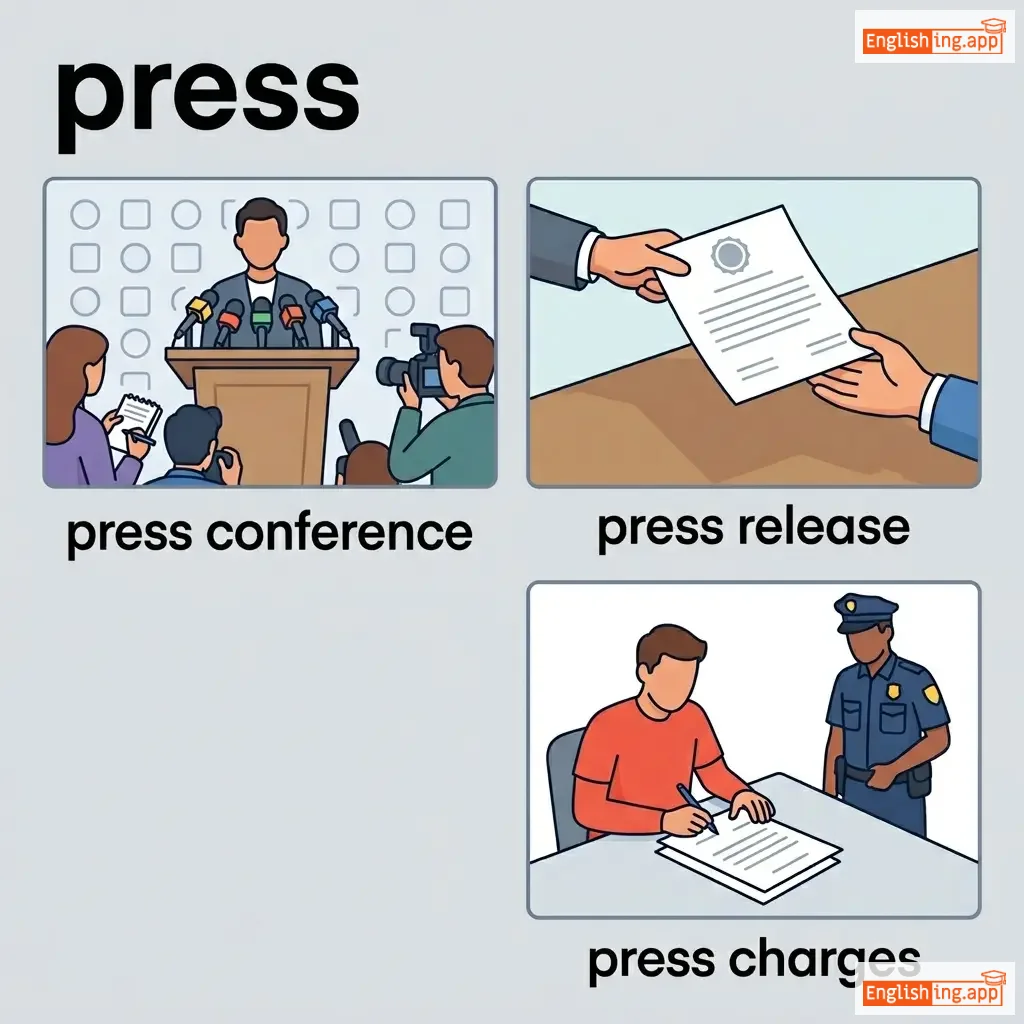
press button, press firmly, press down, press gently
••••••
|
按压和Press是相似的
••••••
|
|
#554
🗣️
|
/spik/
verb
(spik)
••••••
|
- •••••• |
说
shuo
••••••
|
spoke
spok
••••••
|
spoken
spokn
••••••
|
speaks
spiks
••••••
|
speaking
spiking
••••••
|
to say words; to communicate verbally
••••••
|
She can speak three languages fluently.
她能流利地说三种语言。
••••••
|
她能流利地说三种语言。
Tā néng liúlì de shuō sān zhǒng yǔyán.
••••••
|
talk, communicate, express, articulate
••••••
|
listen, stay silent, be quiet
••••••
|
speak clearly, speak fluently, speak loudly, speak publicly
••••••
|
说 - 发出声音,进行交流
••••••
|
|
#555
⚖️
|
/əˈkwɪt/
verb
(a-kwit)
••••••
|
- •••••• |
宣告无罪
xuāngào wúzuì
••••••
|
acquitted
a-kwit-ed
••••••
|
acquitted
a-kwit-ed
••••••
|
acquits
a-kwits
••••••
|
acquitting
a-kwit-ing
••••••
|
to declare someone not guilty of a criminal charge; to conduct oneself in a specified way
••••••
|
The jury decided to acquit the defendant of all charges.
陪审团决定将被告从所有指控中无罪释放。
••••••
|
陪审团决定将被告从所有指控中无罪释放。
Péishěntuán juédìng jiāng bèigào cóng suǒyǒu zhǐkòng zhōng wúzuì shìfàng.
••••••
|
clear, exonerate, absolve, discharge
••••••
|
convict, condemn, blame, indict
••••••
|
acquit completely, acquit charges, acquit defendant, jury acquits
••••••
|
宣告无罪就像去掉罪名!
••••••
|
|
#556
🛑
|
/stɒp/
verb
(停)
••••••
|
- •••••• |
停止
tingzhi
••••••
|
stopped
停止了
••••••
|
stopped
停止了
••••••
|
stops
停下来
••••••
|
stopping
停止中
••••••
|
to cease moving or operating; to halt; to prevent
••••••
|
Please stop talking during the movie.
请在电影期间停止说话。
••••••
|
请在电影期间停止说话。
Qing zai dianying qi jian tingzhi shuo hua.
••••••
|
halt, cease, end, pause
••••••
|
start, begin, continue, proceed
••••••
|
stop immediately, stop suddenly, stop working, stop talking
••••••
|
在中文中,'停止' 就是 'stop' 的意思,像在电影中停止说话
••••••
|
|
#557
📤
|
/send/
verb
(send)
••••••
|
- •••••• |
发送
fasshou
••••••
|
sent
sent
••••••
|
sent
sent
••••••
|
sends
sends
••••••
|
sending
sending
••••••
|
to cause something to go or be taken to a particular destination; to transmit
••••••
|
I will send you an email with the details.
我会给你发送一封包含详细信息的电子邮件。
••••••
|
我会给你发送一封包含详细信息的电子邮件。
Wo hui gei ni fasshou yi feng baokuo xiangxi xinxi de dianzi youjian.
••••••
|
dispatch, transmit, deliver, forward
••••••
|
receive, get, accept, keep
••••••
|
send message, send email, send quickly, send immediately
••••••
|
Sending an email to share Chinese details
••••••
|
|
#558
☀️
|
/wɔːrm/
verb
(wɔrm)
••••••
|
- •••••• |
加热
jiārè
••••••
|
Warmed
wɔrmd
••••••
|
Warmed
wɔrmd
••••••
|
Warms
wɔrmz
••••••
|
Warming
wɔrmɪŋ
••••••
|
to make or become warm; to heat something gently
••••••
|
The sun warms the earth during the day.
ðə sʌn wɑːrmz ðə ɜːrθ dʊərɪŋ ðə deɪ
••••••
|
太阳在白天加热地球。
Tàiyáng zài báitiān jiārè dìqiú.
••••••
|
heat, comfort, soothe, embrace
••••••
|
cool, chill, freeze, cold
••••••
|
warm up, warm gently, warm quickly, keep warm
••••••
|
寒冷时,加热你的一杯咖啡。
••••••
|
|
#559
🔄
|
/dɪsˈpleɪs/
verb
(dīsupléis)
••••••
|
- •••••• |
取代
qudai
••••••
|
displaced
dīsupléist
••••••
|
displaced
dīsupléist
••••••
|
displaces
dīsupléisès
••••••
|
displacing
dīsupléising
••••••
|
to force someone or something out of their usual or original position; to replace or substitute
••••••
|
The new technology will displace many traditional manufacturing jobs.
新技术将取代许多传统的制造业工作。
••••••
|
新技术将取代许多传统的制造业工作。
Xin jishu jiang qudai xuduo chuantong de zhizaoye gongzuo.
••••••
|
replace, substitute, relocate, remove
••••••
|
place, position, restore, settle
••••••
|
displace people, displace completely, forcibly displace, displace workers
••••••
|
取代 — 当新事物取代了旧事物的位置
••••••
|
|
#560
📢
|
/spred/
verb
(èspǐréd)
••••••
|
- •••••• |
传播
chuanbo
••••••
|
spread
èspǐréd
••••••
|
spread
èspǐréd
••••••
|
spreads
èspǐréds
••••••
|
spreading
èspǐréding
••••••
|
to extend over a larger area; to distribute; to apply
••••••
|
The news spread quickly through the town.
新闻迅速在城镇传播。
••••••
|
新闻迅速在城镇传播。
Xinwen xun su zai chengzhen chuanbo.
••••••
|
extend, distribute, scatter, circulate
••••••
|
collect, gather, concentrate, contain
••••••
|
spread quickly, spread widely, spread evenly, spread news
••••••
|
Spread the word like spreading butter on toast.
••••••
|
|
#561
📦
|
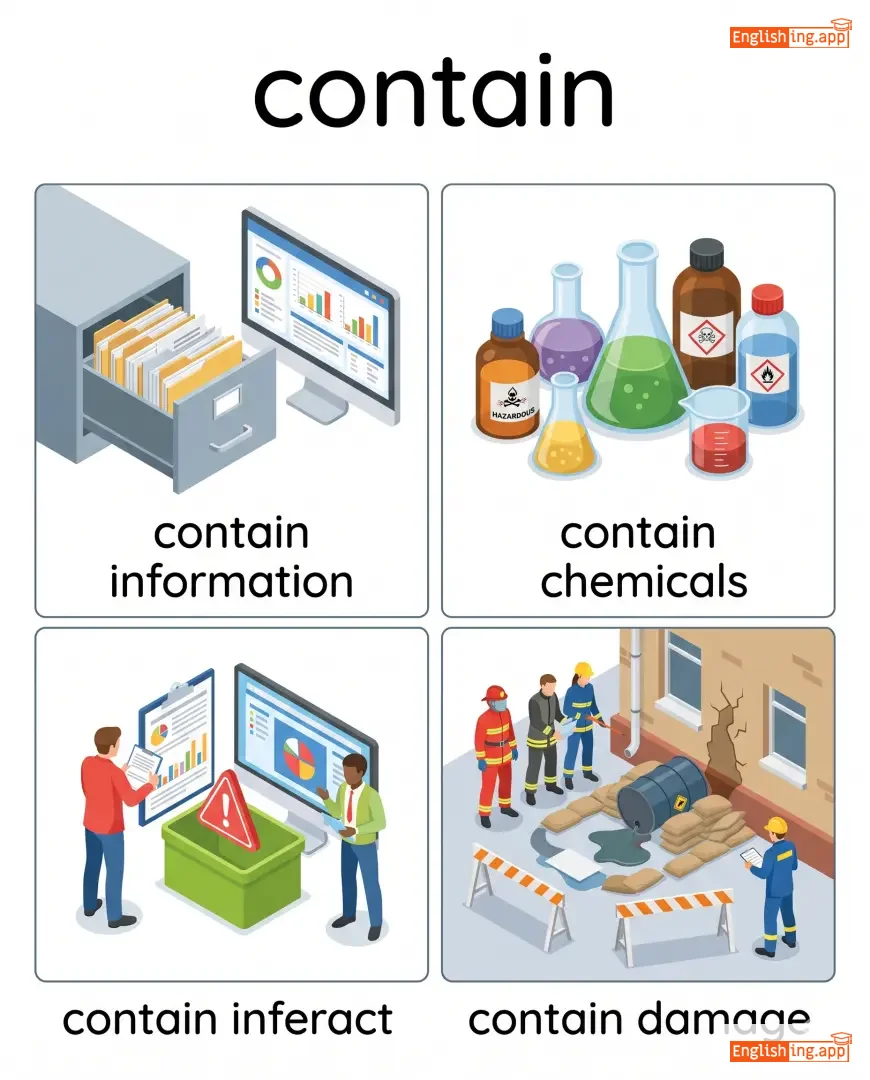
/kənˈteɪn/
verb
(kāntīn)
••••••
|
|
包含
bāohán
••••••
|
contained
kāntīnd
••••••
|
contained
kāntīnd
••••••
|
contains
kāntīns
••••••
|
containing
kāntīng
••••••
|
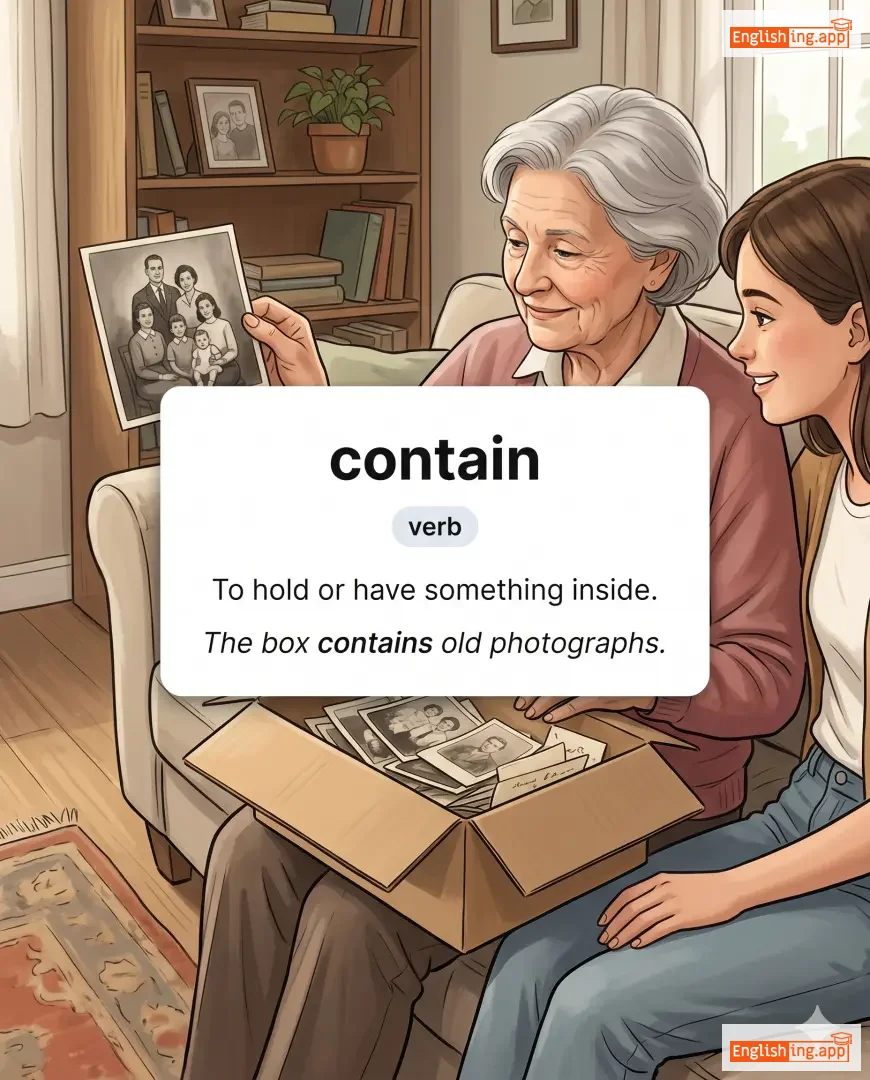
to hold or include something within
••••••
|
This box contains all my old photos.
这个盒子里包含了我所有的旧照片。
••••••
|
这个盒子里包含了我所有的旧照片。
Zhège hézi lǐ bāohánle wǒ suǒyǒu de jiù zhàopiàn.
••••••
|
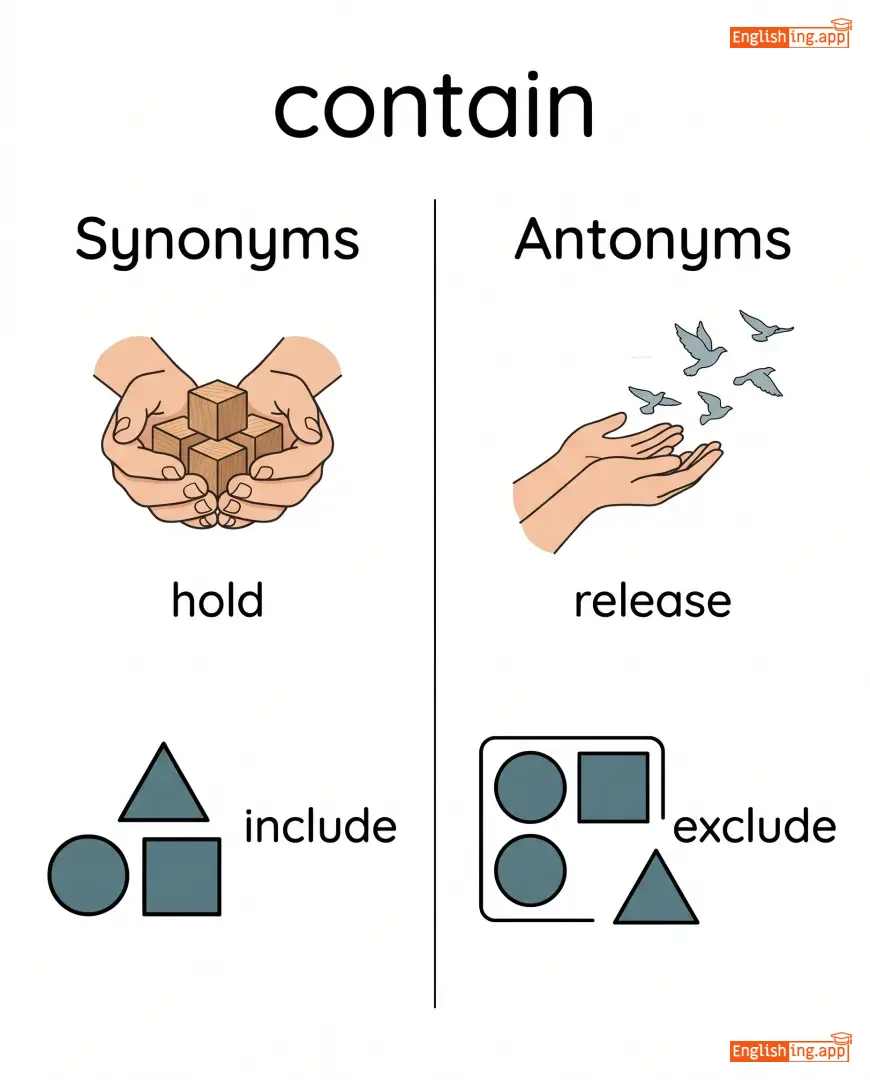
hold, include, comprise, encompass
••••••
|
exclude, omit, lack
••••••
|
contain information, contain ingredients, safely contain, contain within
••••••
|
Contain in Chinese is '包含' – remember to keep things inside!
••••••
|
|
#562
💀
|
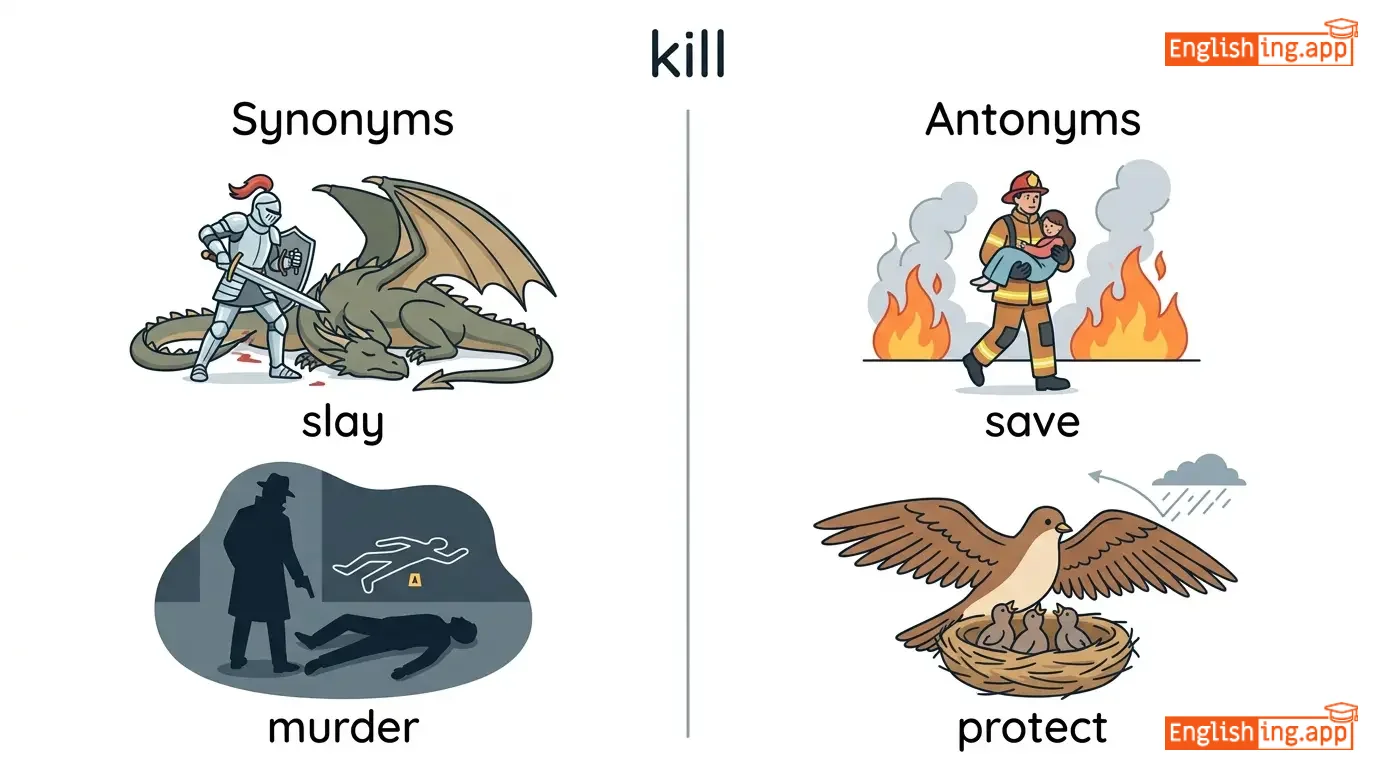
/kɪl/
verb
(kīl)
••••••
|
|
杀死
shā sǐ
••••••
|
killed
kīld
••••••
|
killed
kīld
••••••
|
kills
kīls
••••••
|
killing
kīlīng
••••••
|
to cause the death of; to end life
••••••
|
The hunter killed the deer.
猎人杀死了鹿。
••••••
|
猎人杀死了鹿。
Lièrén shā sǐle lù.
••••••
|
slay, murder, eliminate, destroy
••••••
|
save, rescue, revive, heal
••••••
|
kill instantly, kill time, kill bacteria, kill softly
••••••
|
Think of 'shā sǐ' as 'shah' to recall killing.
••••••
|
|
#563
🔧
|
/dɪˈfɔːrm/
verb
(dɪˈfɔːrm)
••••••
|
- •••••• |
变形
bianxing
••••••
|
deformed
dɪˈfɔːrmd
••••••
|
deformed
dɪˈfɔːrmd
••••••
|
deforms
dɪˈfɔːrmz
••••••
|
deforming
dɪˈfɔːrmɪŋ
••••••
|
to change the shape or form of something, especially in a way that makes it ugly or damaged; to distort
••••••
|
The intense heat began to deform the plastic container.
高温开始使塑料容器变形
••••••
|
高温开始使塑料容器变形。
Gao wen kaishi shi su liao rong qi bian xing.
••••••
|
distort, disfigure, warp, misshape
••••••
|
restore, reform, beautify, straighten
••••••
|
deform completely, deform shape, badly deform, deform metal
••••••
|
No •••••• |
|
#564
✅
|
/əkˈnɒlɪdʒ/
verb
(aknoletch)
••••••
|
- •••••• |
承认
chengren
••••••
|
acknowledged
aknoletchd
••••••
|
acknowledged
aknoletchd
••••••
|
acknowledges
aknoletches
••••••
|
acknowledging
aknoletching
••••••
|
to accept or admit the existence or truth of something; to recognize
••••••
|
She acknowledged her mistake and apologized.
她承认了她的错误并道歉。
••••••
|
她承认了她的错误并道歉。
Ta chengren le ta de cuowu bing daoqian.
••••••
|
admit, recognize, accept, confess
••••••
|
deny, ignore, reject, dispute
••••••
|
acknowledge openly, acknowledge mistake, acknowledge receipt, acknowledge contribution
••••••
|
Chengren = Accept and admit, both start with 'C' in Chinese.
••••••
|
|
#565
😤
|
/ˈfrʌsˌtreɪt/
verb
(frustrate)
••••••
|
- •••••• |
使沮丧
shǐ jǔsàng
••••••
|
frustrated
frustrated
••••••
|
frustrated
frustrated
••••••
|
frustrates
frustrates
••••••
|
frustrating
frustrating
••••••
|
to prevent from accomplishing; to make someone feel annoyed
••••••
|
The traffic jam frustrated all the commuters.
The traffic jam frustrated all the commuters.
••••••
|
交通堵塞让所有通勤者感到沮丧。
Jiāotōng dǔsè ràng suǒyǒu tōngqín zhě gǎndào jǔsàng
••••••
|
annoy, thwart, hinder, disappoint
••••••
|
satisfy, please, help, assist
••••••
|
frustrate attempts, frustrate completely, easily frustrate, frustrate plans
••••••
|
No •••••• |
|
#566
🗣️
|
/ɪkˈspres/
verb
(表达)
••••••
|
- •••••• |
表达
biaoda
••••••
|
expressed
表达了
••••••
|
expressed
表达了
••••••
|
expresses
表达
••••••
|
expressing
表达中
••••••
|
to show or make known a feeling, thought, or opinion
••••••
|
She expressed her gratitude for the help she received.
她表达了对收到帮助的感激之情。
••••••
|
她表达了对收到帮助的感激之情。
Ta biaoda le dui shoudao bangzhu de ganji zhi qing.
••••••
|
convey, communicate, articulate, state
••••••
|
suppress, conceal, hide, withhold
••••••
|
express clearly, express feelings, express gratitude, express concern
••••••
|
表达就像表达感激,让别人知道你的心情!
••••••
|
Vocabulary Quiz
Test your vocabulary by matching words with their translations or meanings.
Login to take the quiz
Comments (0)
Share your thoughts and join the discussion.
Join the discussion by logging in
Login to CommentNo comments yet
Be the first to share your thoughts!