

























Swipe left or right, or use the buttons. Tap image to zoom.
例句翻译
单词
Lesson 6: Mastering the Most Frequent Verbs & TensesLesson 6: Mastering the Most Frequent Verbs & Tenses - 遮罩切换
|
表情符号
|
单词 | Images | 翻译 | 过去时 | 过去分词 | 第三人称单数 | 动名词 | 含义 | 例句 | 例句翻译 | 同义词 | 反义词 | 搭配词 | 助记符 |
|---|---|---|---|---|---|---|---|---|---|---|---|---|---|---|
|
#149
📰
|
/rɪˈpɔːrt/
verb
(rī-pó-tè)
••••••
|
|
报告
baogao
••••••
|
reported
rī-pó-tèd
••••••
|
reported
rī-pó-tèd
••••••
|
reports
rī-pó-tè
••••••
|
reporting
rī-pó-tīng
••••••
|
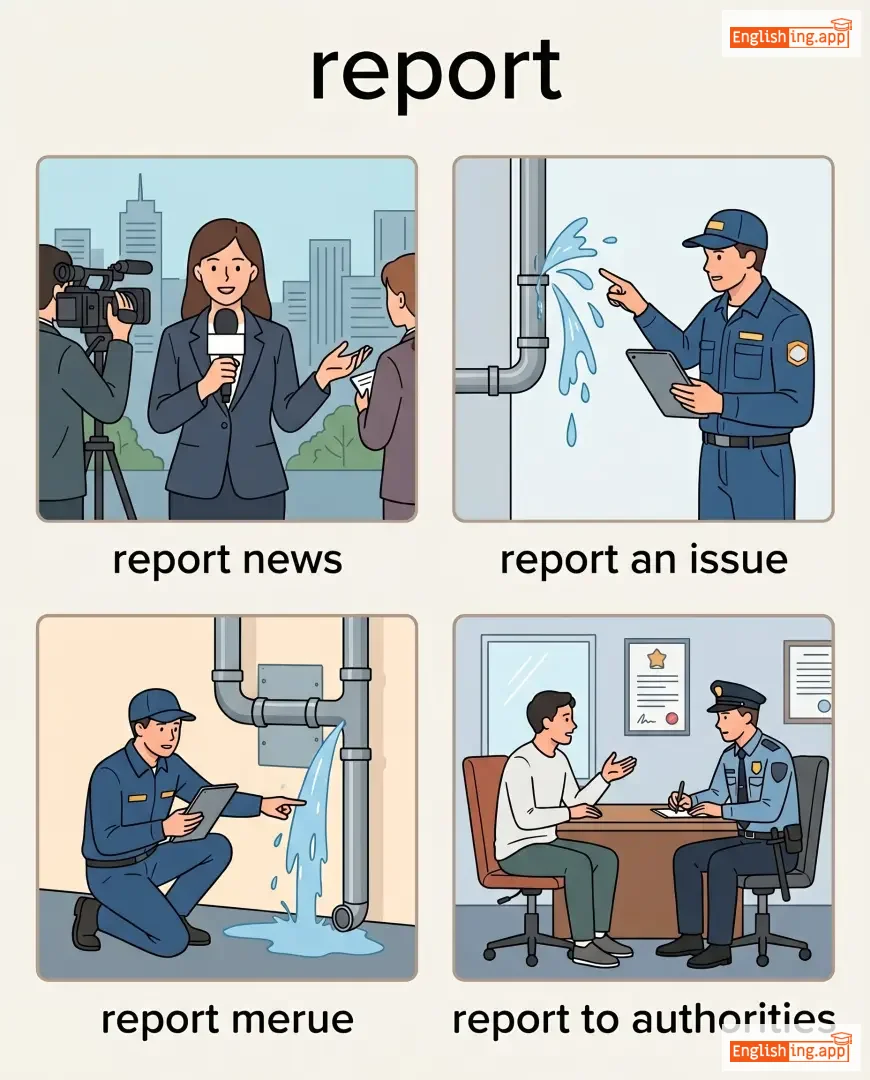
to give information about something; to make an official statement
••••••
|
The journalist will report the news tonight.
记者今晚将报道新闻。
••••••
|
记者今晚将报道新闻。
Jizhe jinwan jiang baogao xinwen.
••••••
|
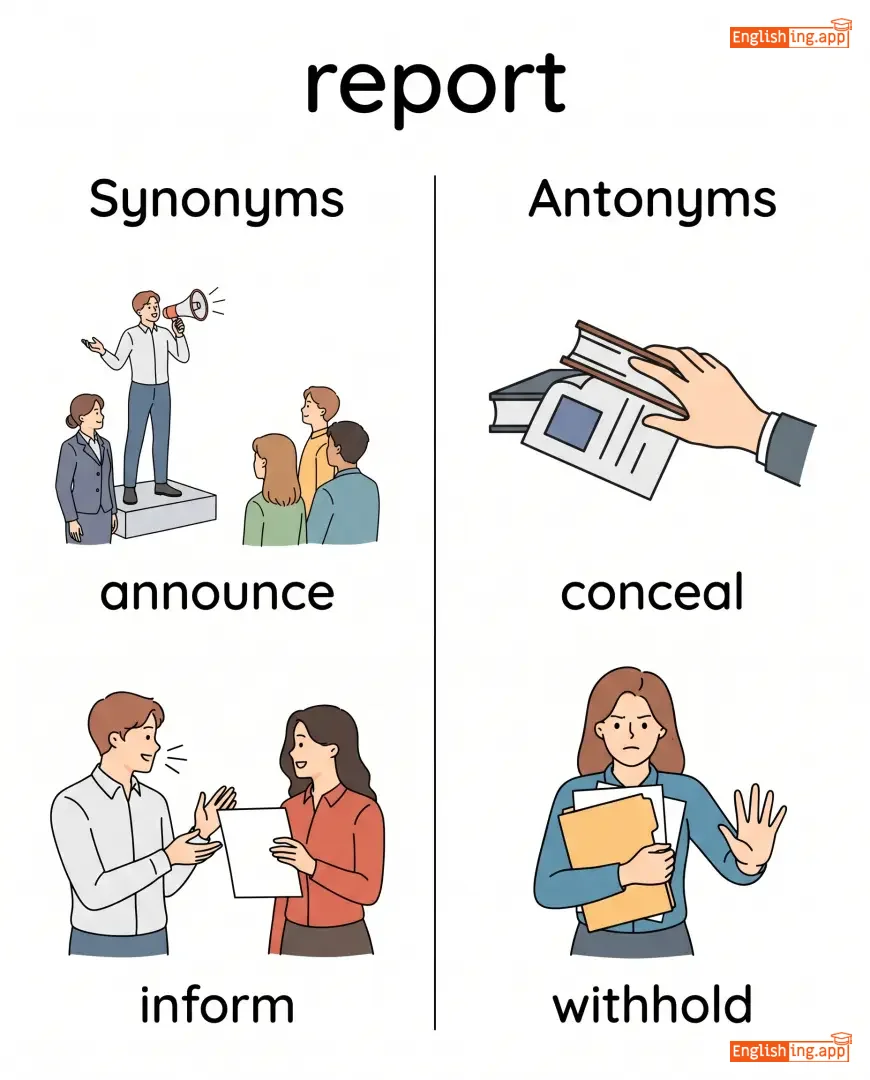
announce, inform, communicate, tell
••••••
|
conceal, hide, suppress
••••••
|
daily report, news report, weather report, report back, report to
••••••
|
报告就是像记者一样,发布消息
••••••
|
|
#150
🧮
|
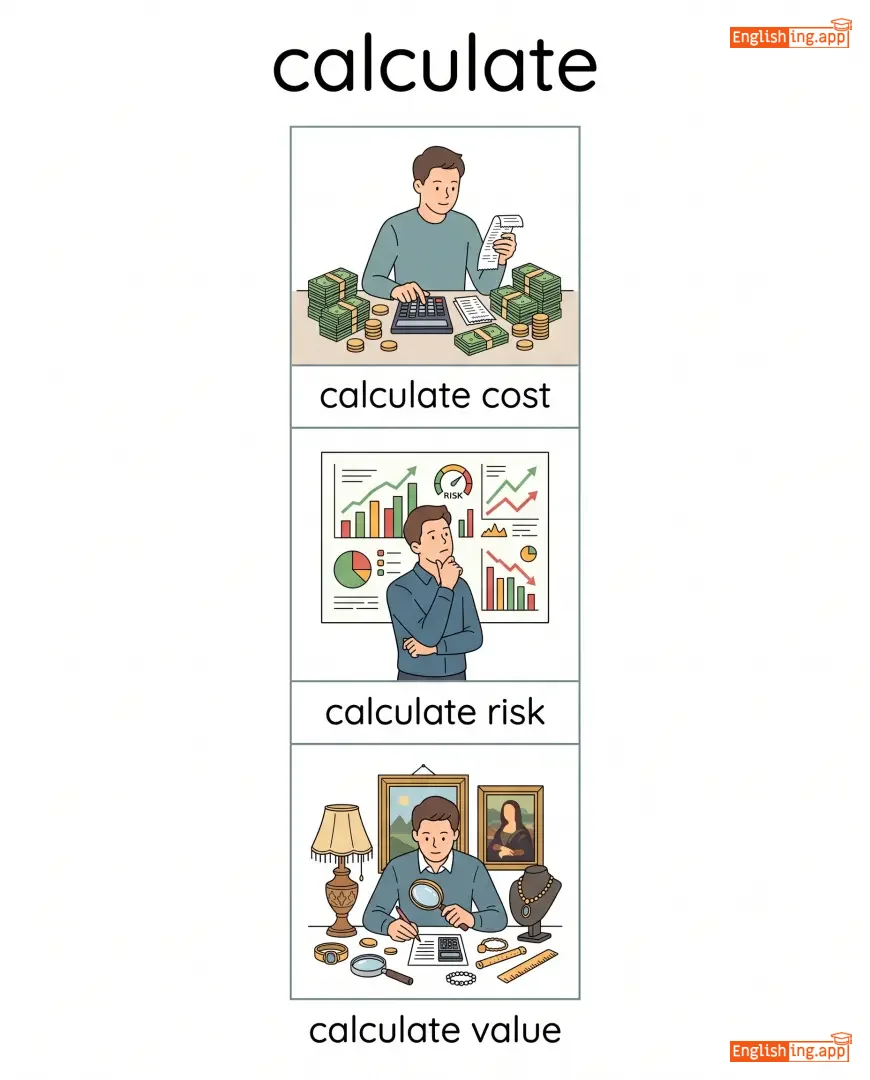
/ˈkælkjəˌleɪt/
verb
(计算)
••••••
|
|
计算
jisuan
••••••
|
calculated
计算过
••••••
|
calculated
计算过
••••••
|
calculates
计算
••••••
|
calculating
计算中
••••••
|
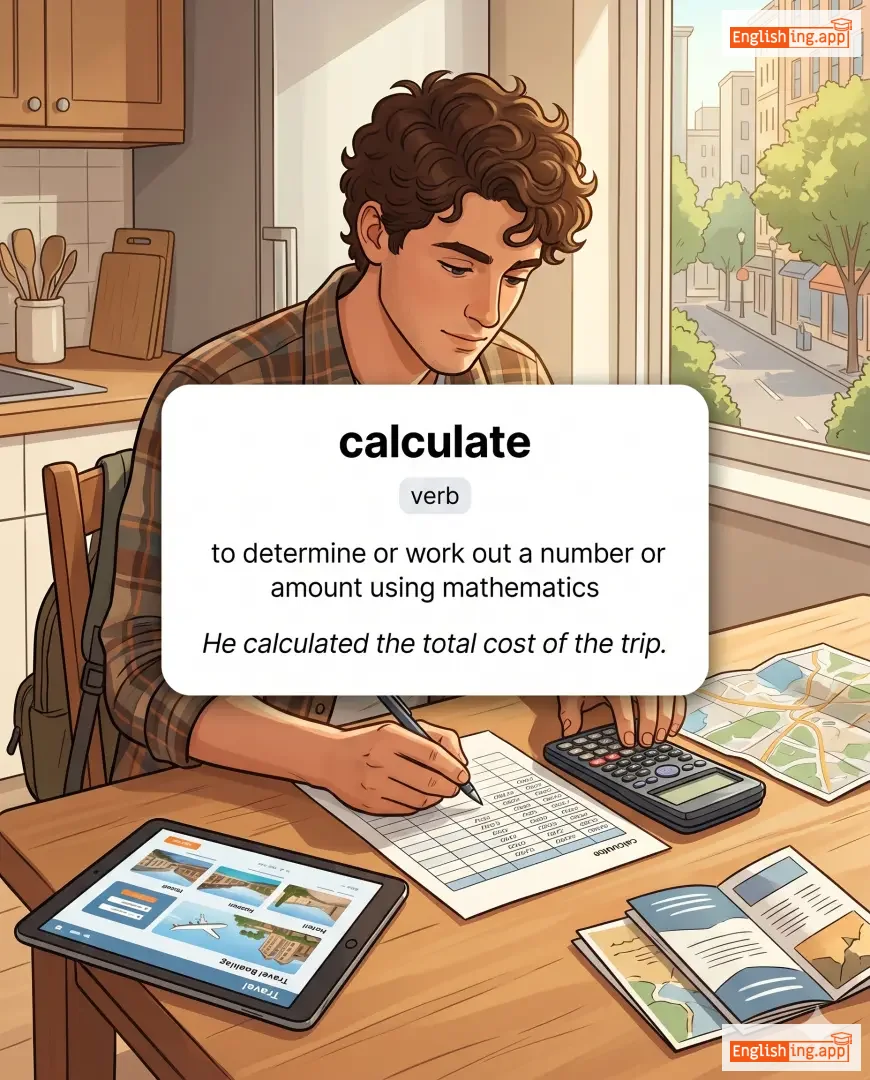
to determine by mathematical computation; to estimate
••••••
|
I need to calculate the total cost.
我需要计算总成本。
••••••
|
我需要计算总成本。
Wo xuyao jisuan zong chengben.
••••••
|
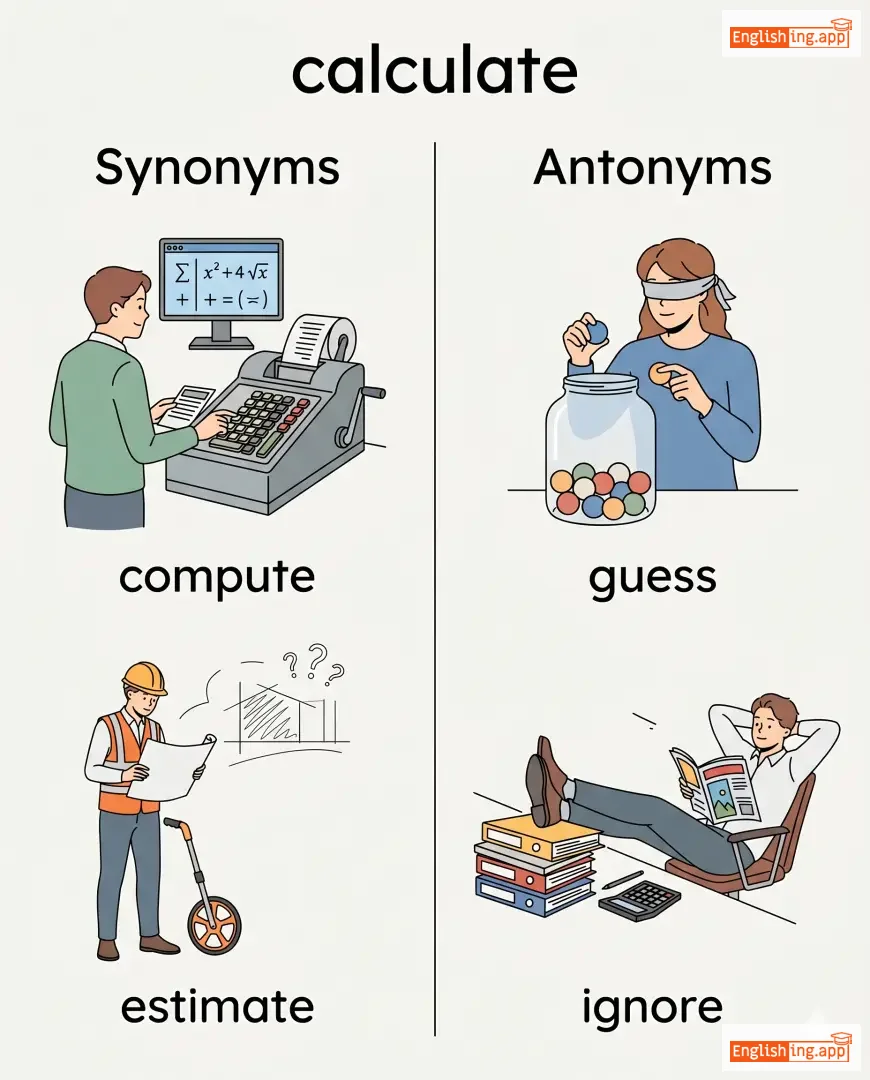
compute, figure, determine, estimate
••••••
|
guess, approximate, estimate roughly
••••••
|
calculate precisely, calculate the cost, calculate interest, calculate taxes, calculate distance
••••••
|
计算 = 就像在学校一样,我们通过计算找到答案!
••••••
|
|
#151
🧲
|
/əˈlʊər/
verb
(ā lü'ěr)
••••••
|
|
吸引
xīyǐn
••••••
|
allured
ā lü'ěr de
••••••
|
allured
ā lü'ěr de
••••••
|
allures
ā lü'ěr sī
••••••
|
alluring
ā lü'ěr yíng
••••••
|
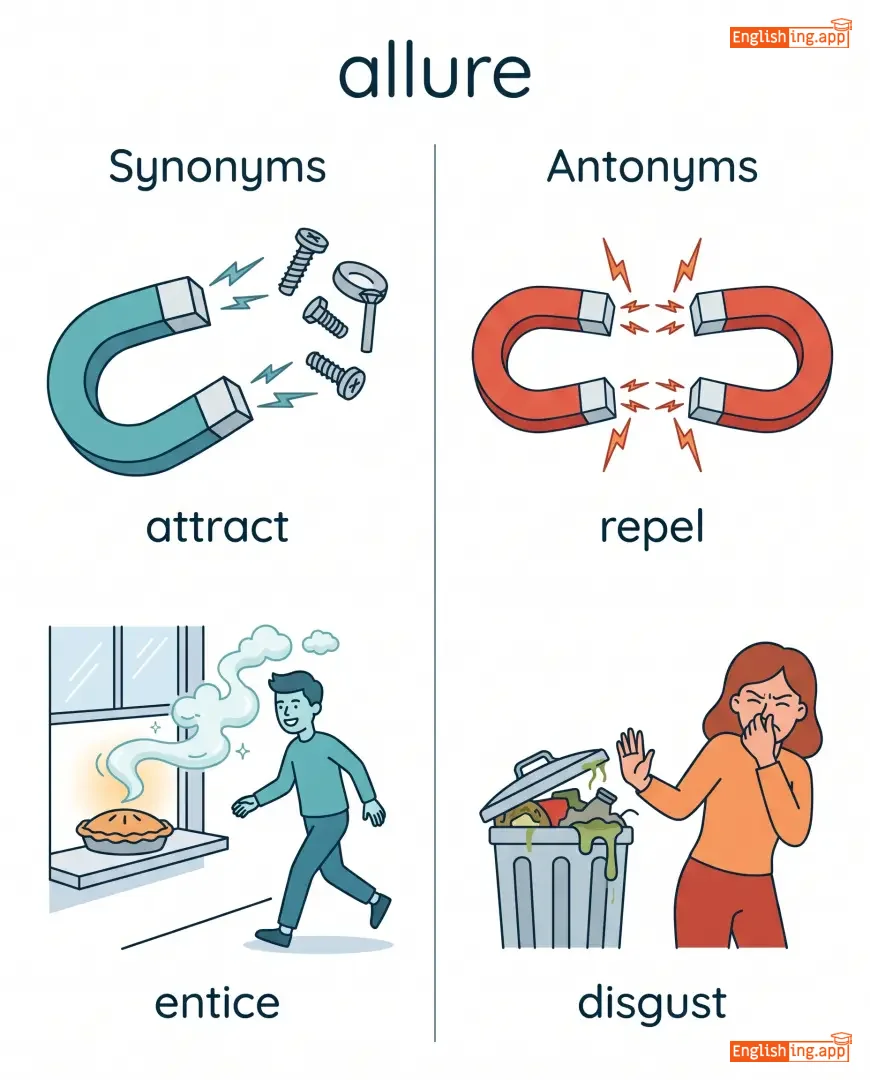
to attract or tempt someone with something desirable; to entice
••••••
|
The beautiful garden allured visitors from far away.
美丽的花园吸引了远处的游客。
••••••
|
美丽的花园吸引了远处的游客。
Měilì de huāyuán xīyǐnle yuǎnchù de yóukè.
••••••
|
attract, entice, tempt, charm
••••••
|
repel, deter, discourage, disgust
••••••
|
natural allure, allure customers, allure of fame, allure visitors, mysterious allure
••••••
|
花园吸引人,如同一座迷人的宫殿。
••••••
|
|
#152
😂
|
/læf/
verb
(笑)
••••••
|
|
笑
xiao
••••••
|
laughed
笑了
••••••
|
laughed
笑过
••••••
|
laughs
笑
••••••
|
laughing
笑着
••••••
|
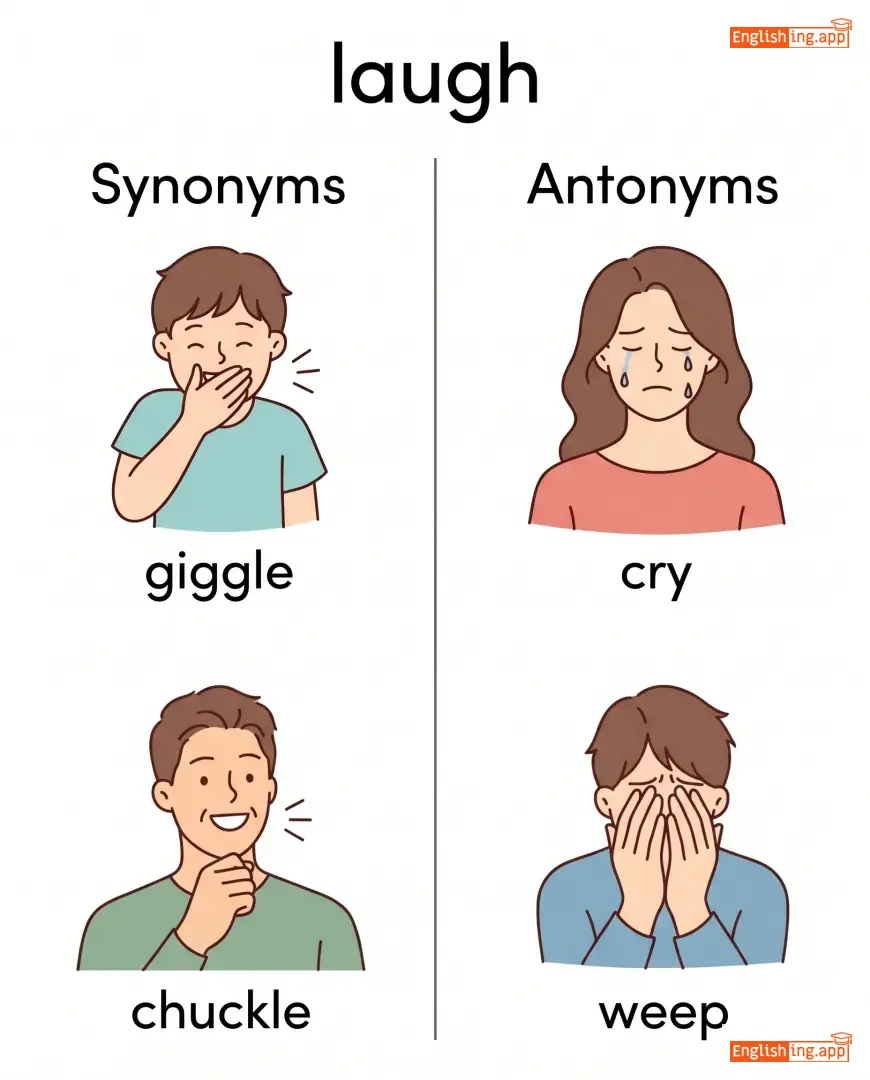
to make sounds and movements expressing happiness or amusement
••••••
|
The joke made everyone laugh.
这个笑话让每个人都笑了。
••••••
|
这个笑话让每个人都笑了。
Zhe ge xiaohua rang mei ge ren dou xiao le.
••••••
|
giggle, chuckle, smile, grin
••••••
|
cry, weep, frown, sob
••••••
|
laugh loudly, laugh heartily, laugh out loud, laugh at, hearty laugh
••••••
|
笑是我们表达快乐的自然反应,常见于幽默和娱乐的时刻。
••••••
|
|
#153
🤲
|
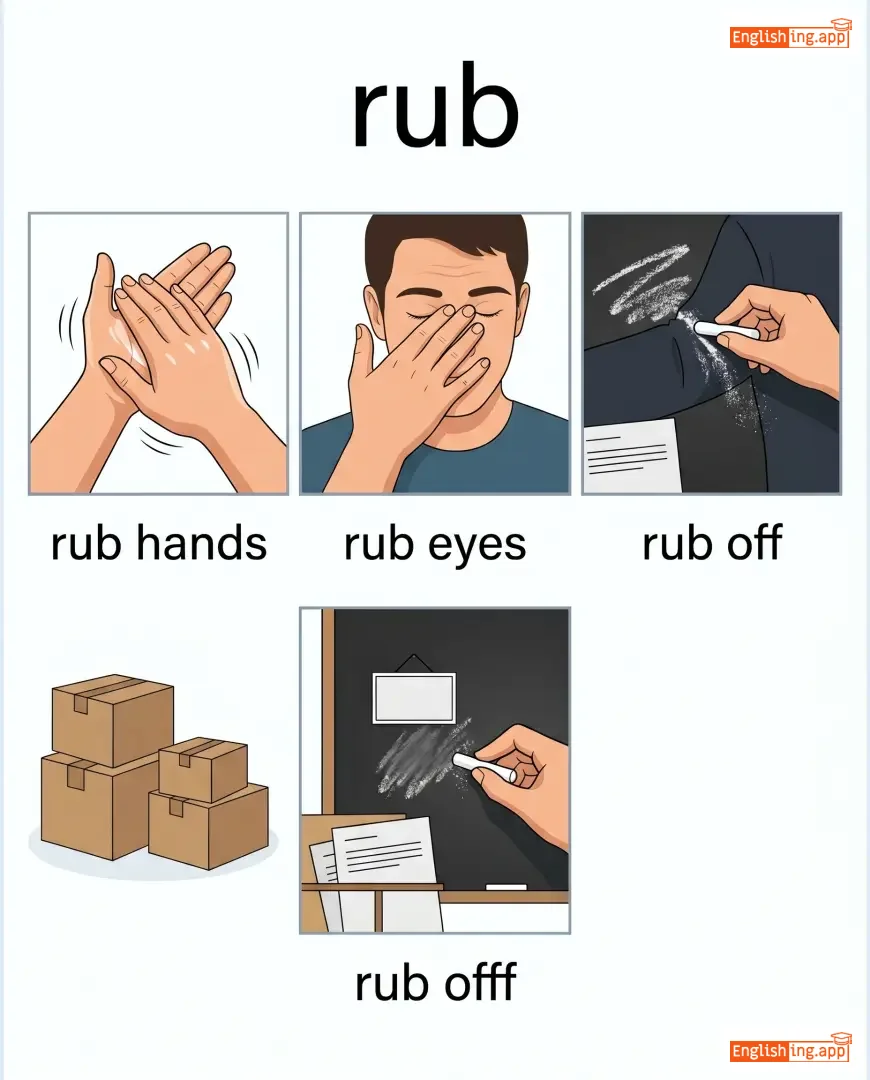
/rʌb/
verb
(rab)
••••••
|
|
摩擦
moca
••••••
|
rubbed
rabbed
••••••
|
rubbed
rabbed
••••••
|
rubs
rabs
••••••
|
rubbing
rabbing
••••••
|
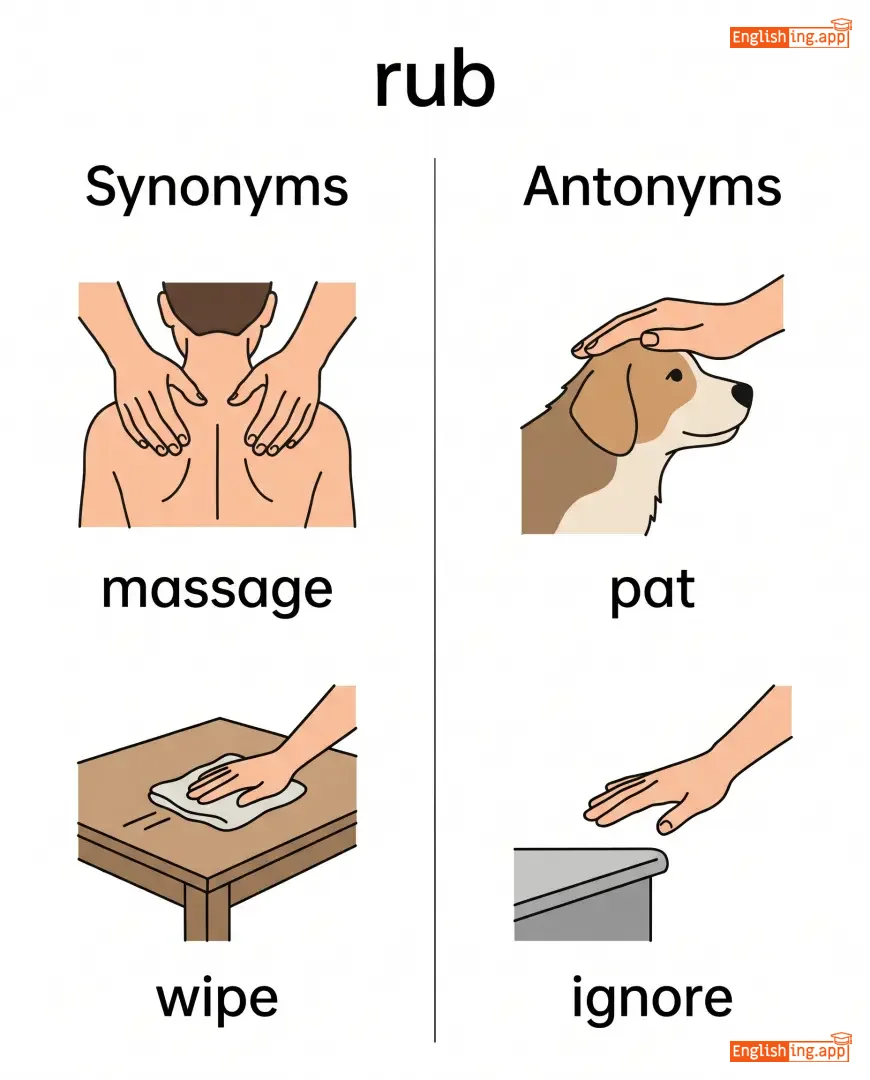
to press and move something firmly against a surface; to apply pressure with movement
••••••
|
She rubbed her hands together to keep them warm.
她搓手来保持温暖
••••••
|
她搓手来保持温暖。
Ta cuo shou lai baochi wenruan.
••••••
|
massage, scrub, polish, stroke
••••••
|
caress, gentle touch, pat
••••••
|
rub gently, rub together, rub against, rub out, rub down
••••••
|
摩擦来保持温暖
••••••
|
|
#154
💭
|
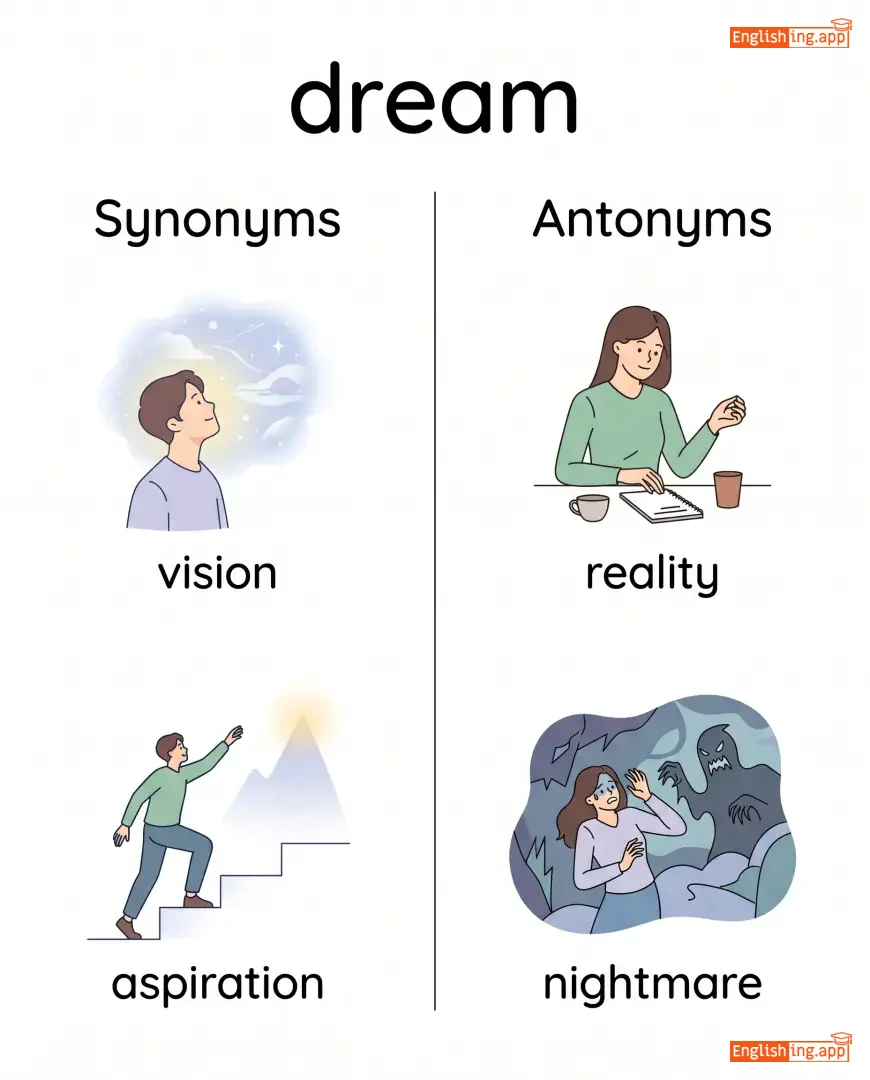
/driːm/
verb
(drim)
••••••
|
|
梦想
mengxiang
••••••
|
dreamed
drimd
••••••
|
dreamed
drimd
••••••
|
dreams
drims
••••••
|
dreaming
driming
••••••
|
to have thoughts and images in your mind while sleeping; to hope for
••••••
|
I often dream about flying in the sky.
我常常梦想在天空中飞翔。
••••••
|
我常常梦想在天空中飞翔。
Wo changchang mengxiang zai tiankong zhong feixiang
••••••
|
fantasize, imagine, hope, wish
••••••
|
reality, wake, face facts
••••••
|
dream big, dream about, recurring dream, sweet dreams, dream come true
••••••
|
Mengxiang tian kong zhong fei
••••••
|
|
#155
🎰
|
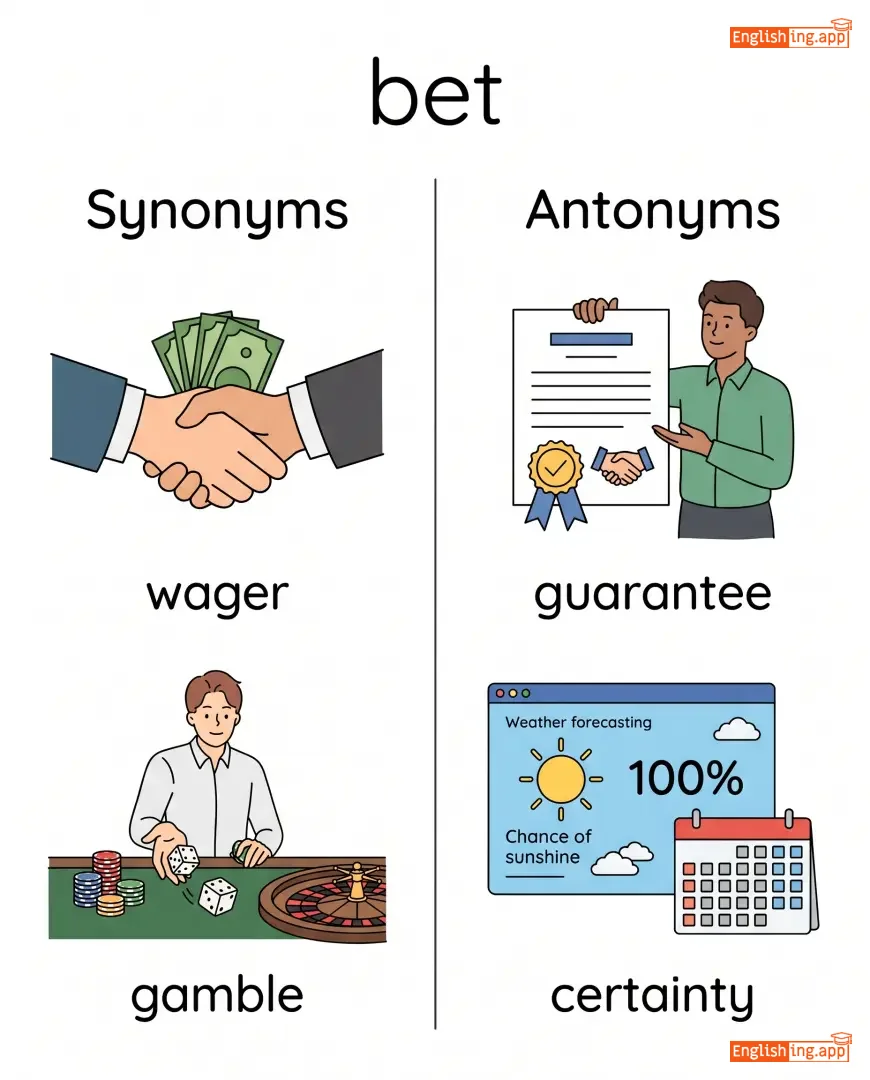
/bet/
verb
(bet)
••••••
|
|
打赌
dǎdǔ
••••••
|
bet
bet
••••••
|
bet
bet
••••••
|
bets
bets
••••••
|
betting
betting
••••••
|
to risk money on the outcome of something; to be confident
••••••
|
I bet it will rain tomorrow.
我打赌明天会下雨。
••••••
|
我打赌明天会下雨。
Wǒ dǎdǔ míngtiān huì xià yǔ.
••••••
|
wager, gamble, risk, predict
••••••
|
guarantee, ensure
••••••
|
place a bet, safe bet, bet on, betting odds, I bet
••••••
|
打赌 is like confidently taking a chance, just like saying 'dǎdǔ' in Chinese!
••••••
|
|
#156
🏃♂️
|
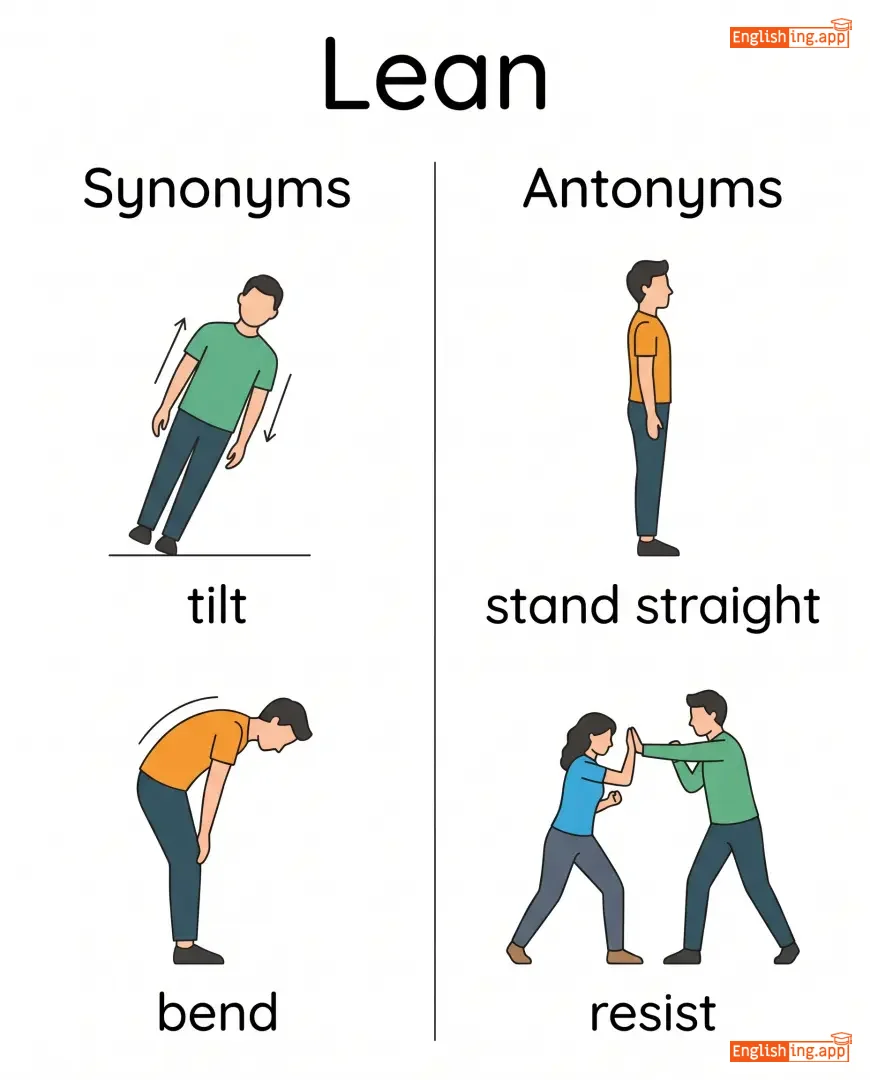
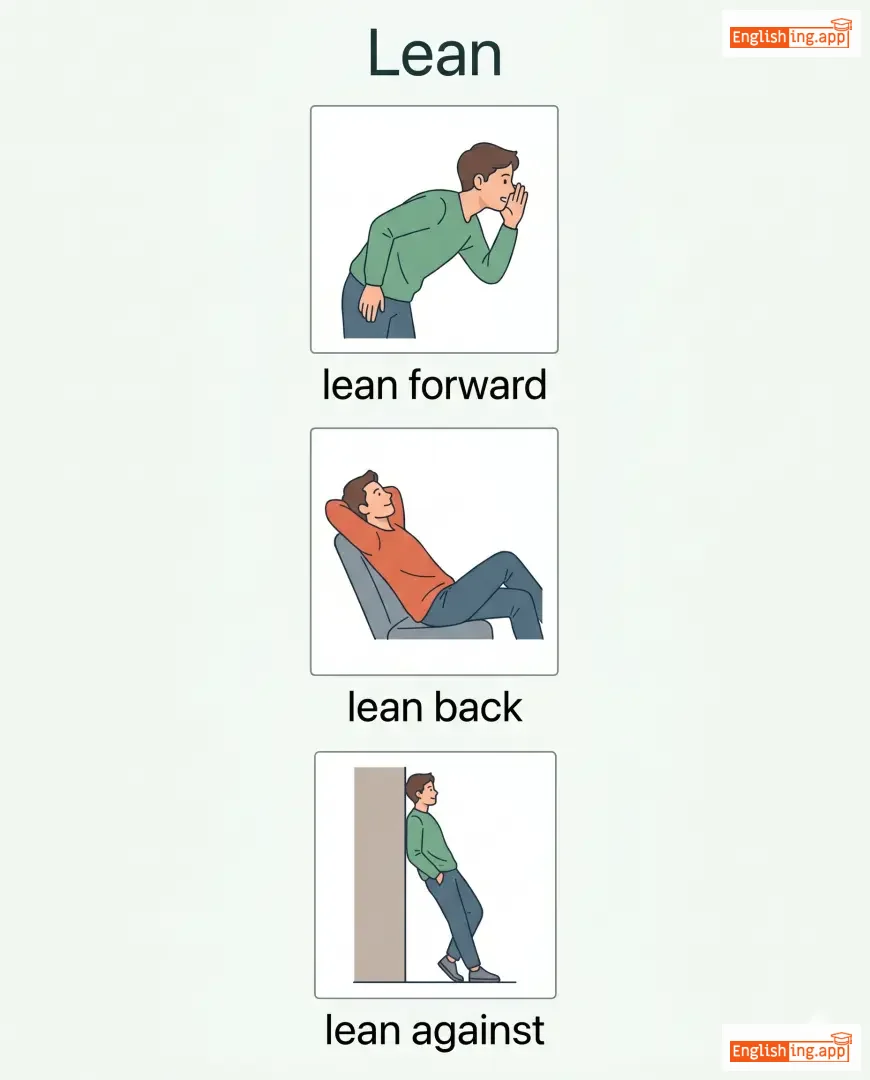
/liːn/
verb
(lín)
••••••
|
|
倾斜
qīngxié
••••••
|
leaned/leant
lìn de/língt
••••••
|
leaned/leant
lìn de/língt
••••••
|
leans
lín sī
••••••
|
leaning
línīng
••••••
|
to incline or bend from a vertical position; to rely on for support
••••••
|
He leaned against the wall.
他靠在墙上。
••••••
|
他靠在墙上。
tā kào zài qiáng shàng.
••••••
|
incline, tilt, slope, rest
••••••
|
straighten, stand upright
••••••
|
lean against, lean forward, lean back, lean on, lean towards
••••••
|
No •••••• |
|
#157
📍
|
/set/
verb
(设)
••••••
|
|
设置
shèzhì
••••••
|
set
设
••••••
|
set
设
••••••
|
sets
设
••••••
|
setting
设定
••••••
|
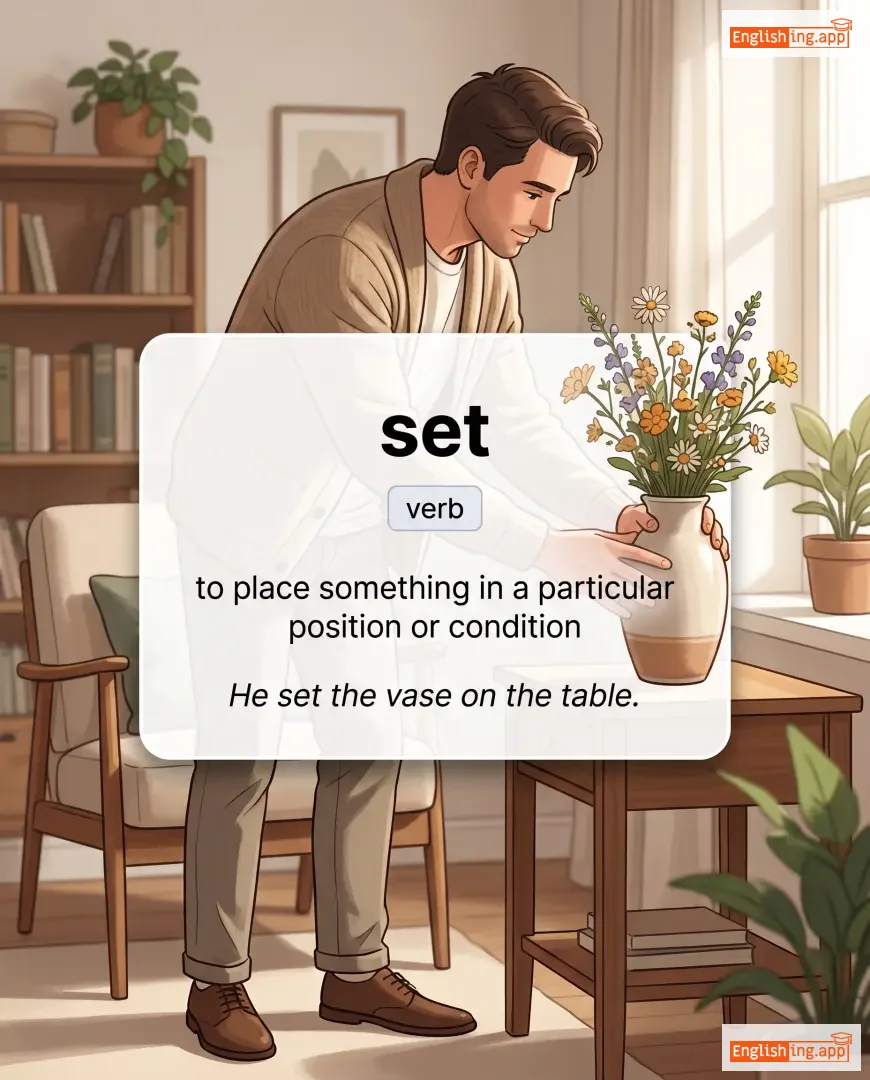
to put or place something in a position; to establish
••••••
|
She set the book on the table.
她把书放在桌子上。
••••••
|
她把书放在桌子上。
Tā bǎ shū fàng zài zhuōzi shàng.
••••••
|
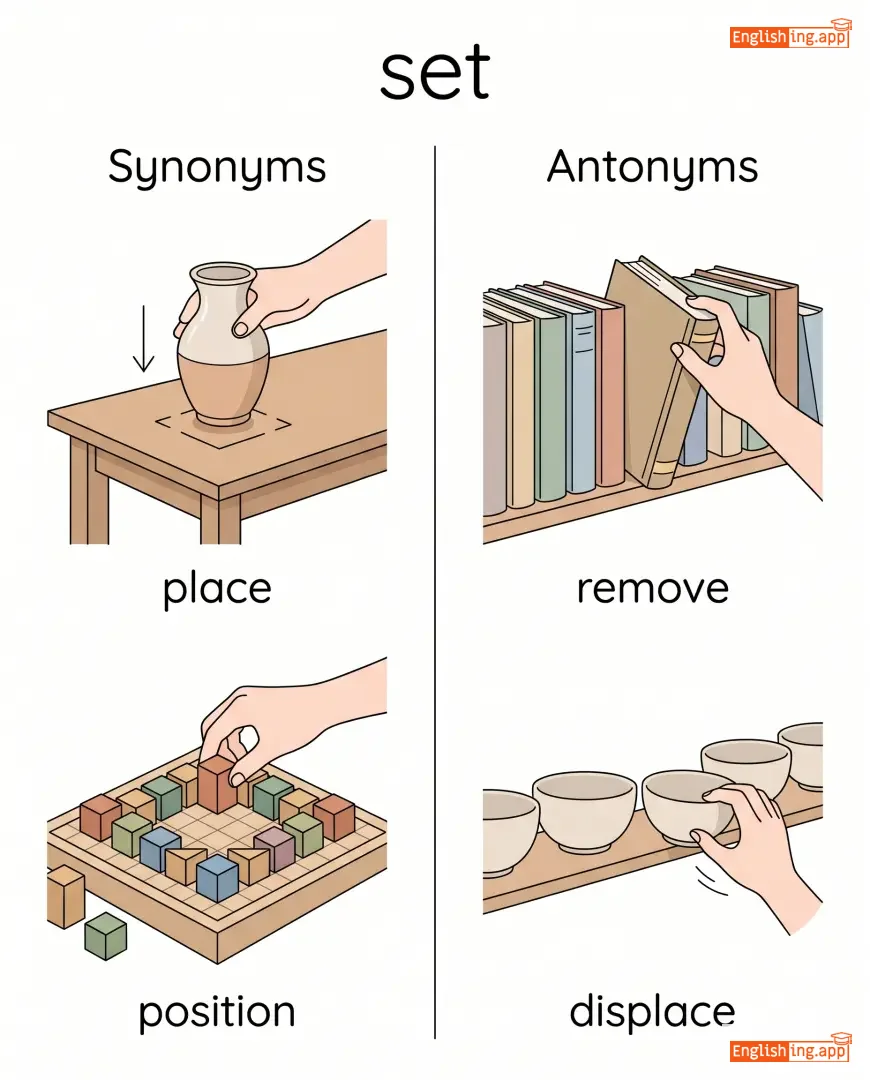
place, put, position, establish
••••••
|
remove, displace, unset, disturb
••••••
|
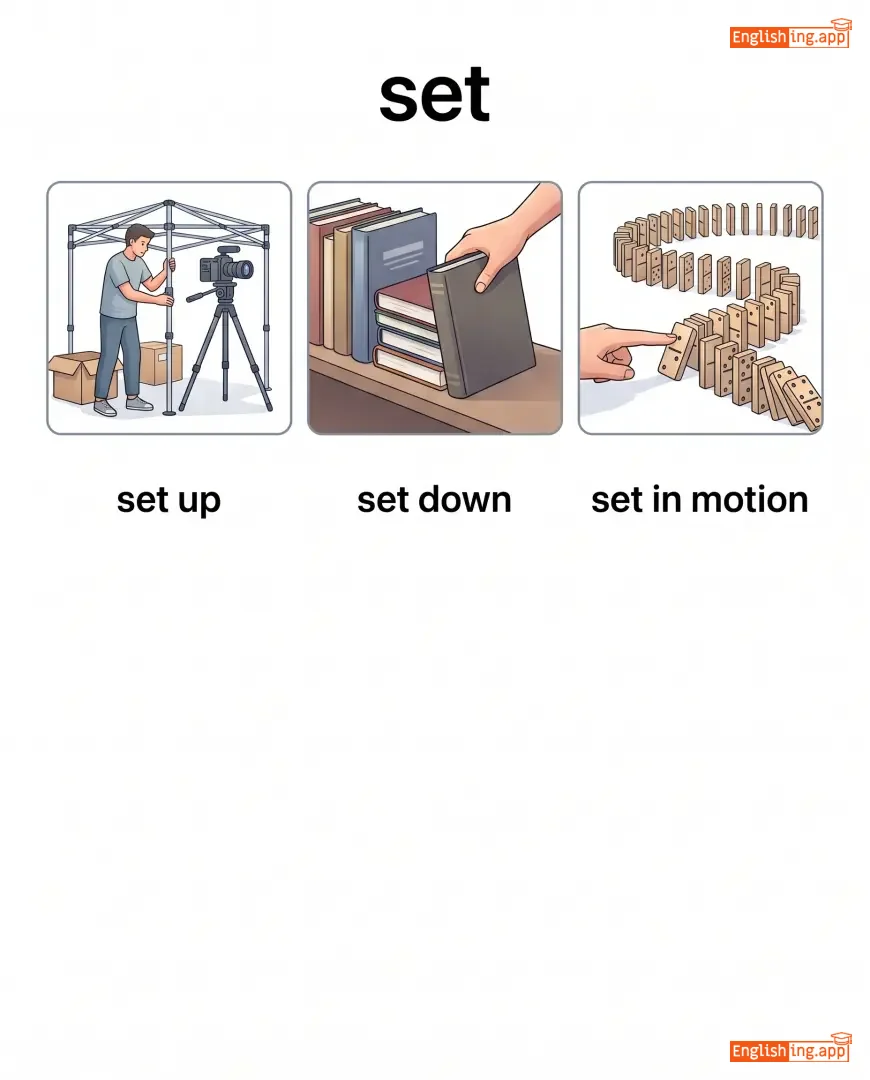
set aside, set up, set down, set off, set the table
••••••
|
Setting the book in place on the table is establishing order.
••••••
|
|
#158
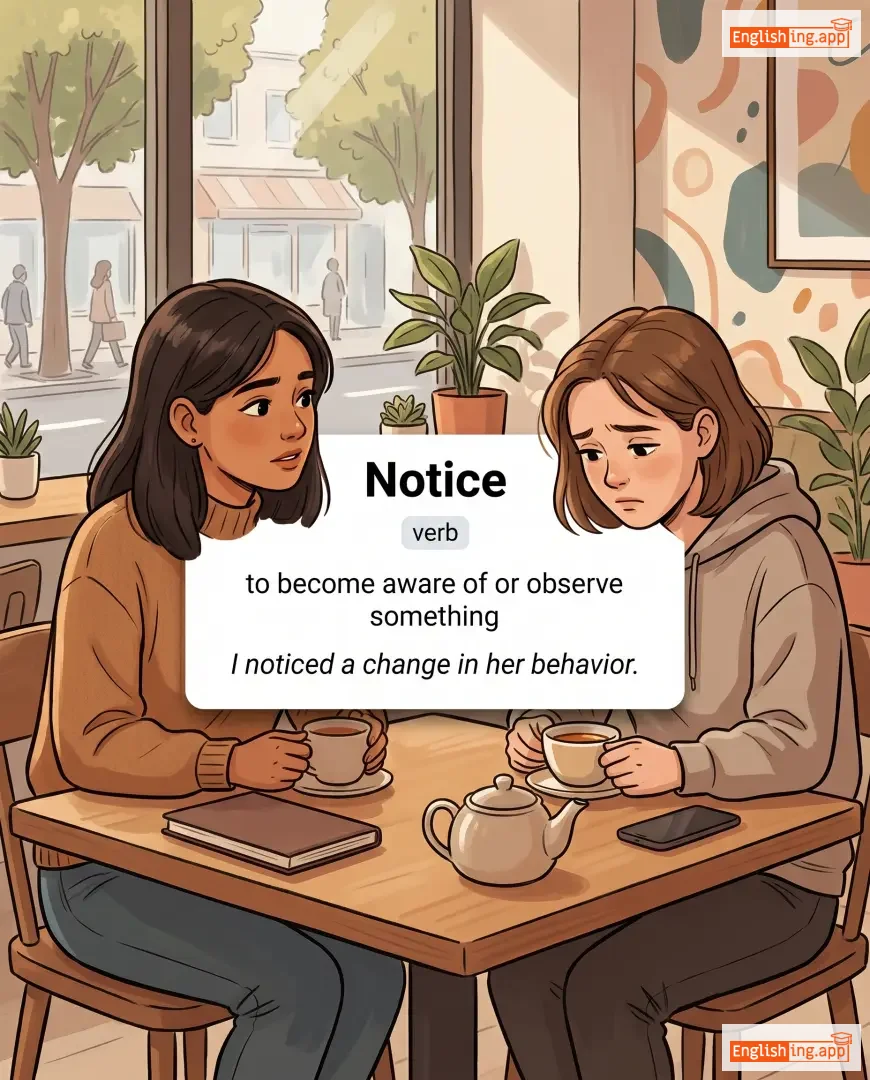
👀
|
/ˈnoʊtɪs/
verb
(nòutī sī)
••••••
|
|
注意
zhùyì
••••••
|
noticed
nòutī sī dé
••••••
|
noticed
nòutī sī dé
••••••
|
notices
nòutī sī es
••••••
|
noticing
nòutī sī yīng
••••••
|
to become aware of or observe something
••••••
|
I noticed a change in her behavior.
我注意到她的行为有了变化。
••••••
|
我注意到她的行为有了变化。
Wǒ zhùyì dào tā de xíngwéi yǒu le biànhuà.
••••••
|
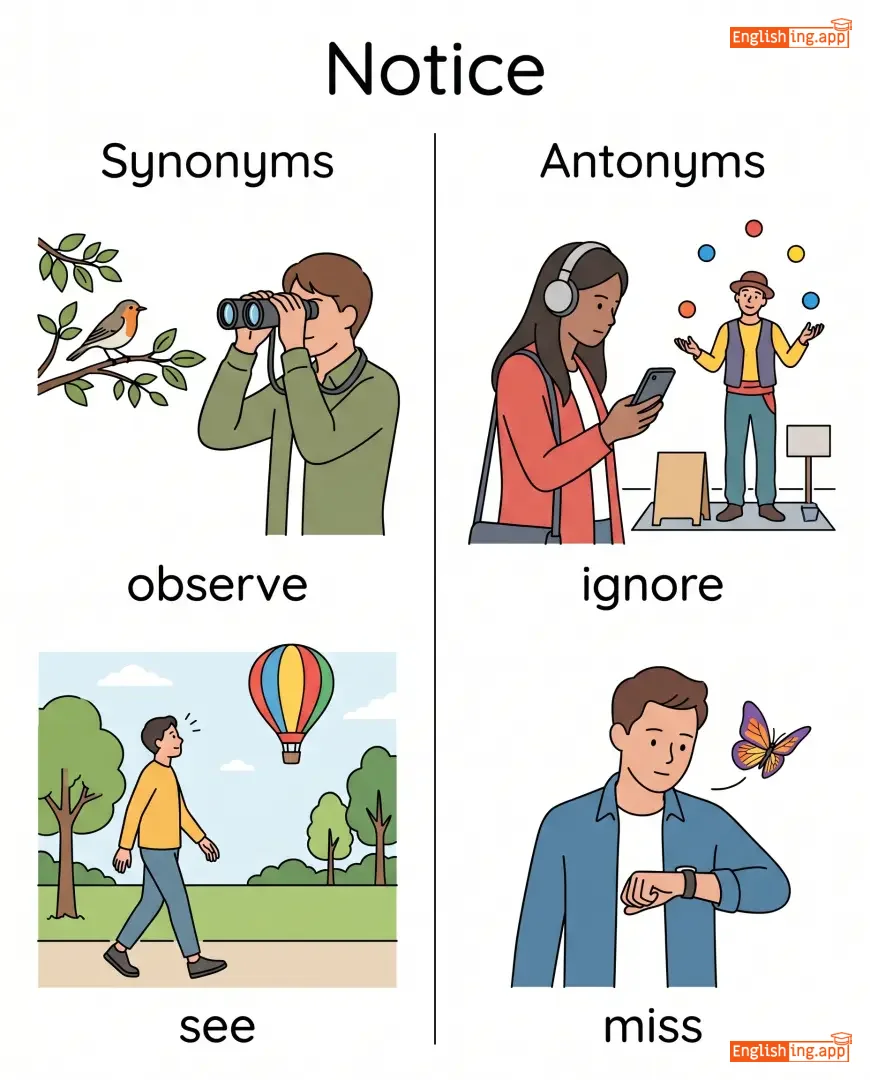
observe, see, spot, detect
••••••
|
ignore, miss, overlook
••••••
|
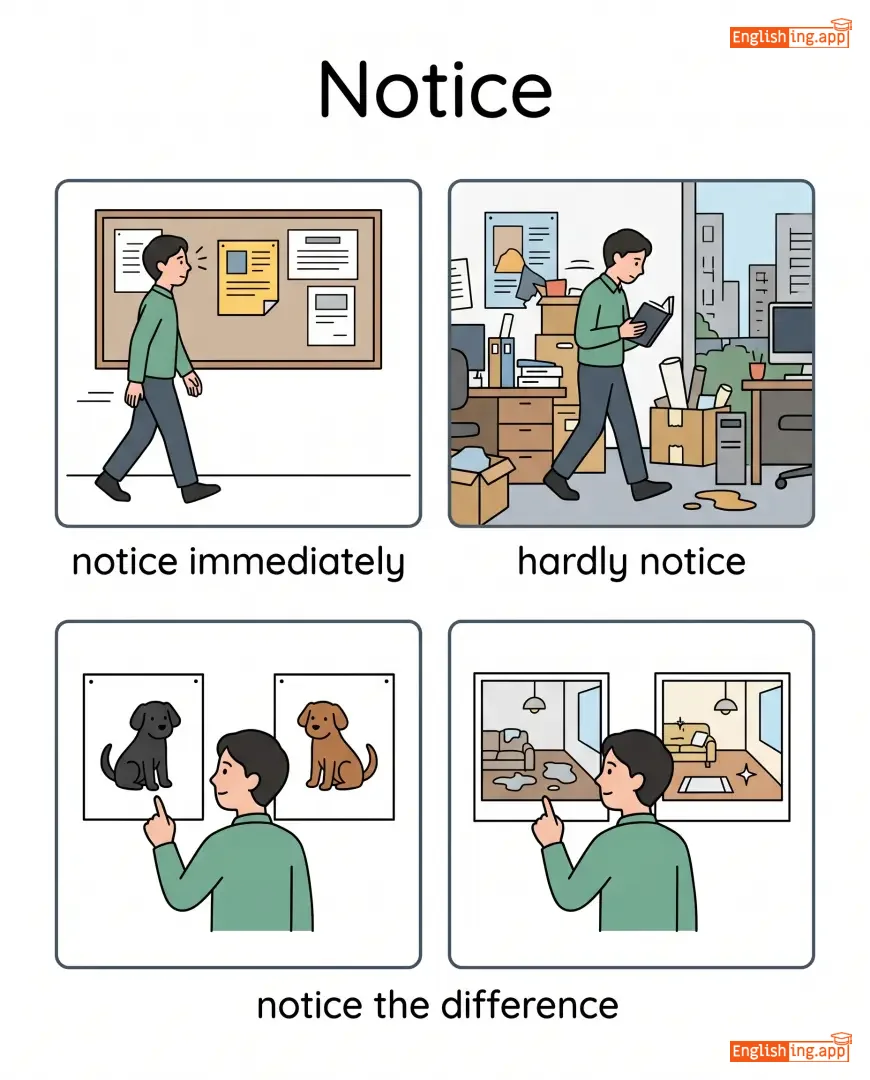
notice immediately, hardly notice, notice the difference, take notice, advance notice
••••••
|
Noticing something is like 'zhùyì' in Chinese, instantly recognizing things!
••••••
|
|
#159
🏃
|
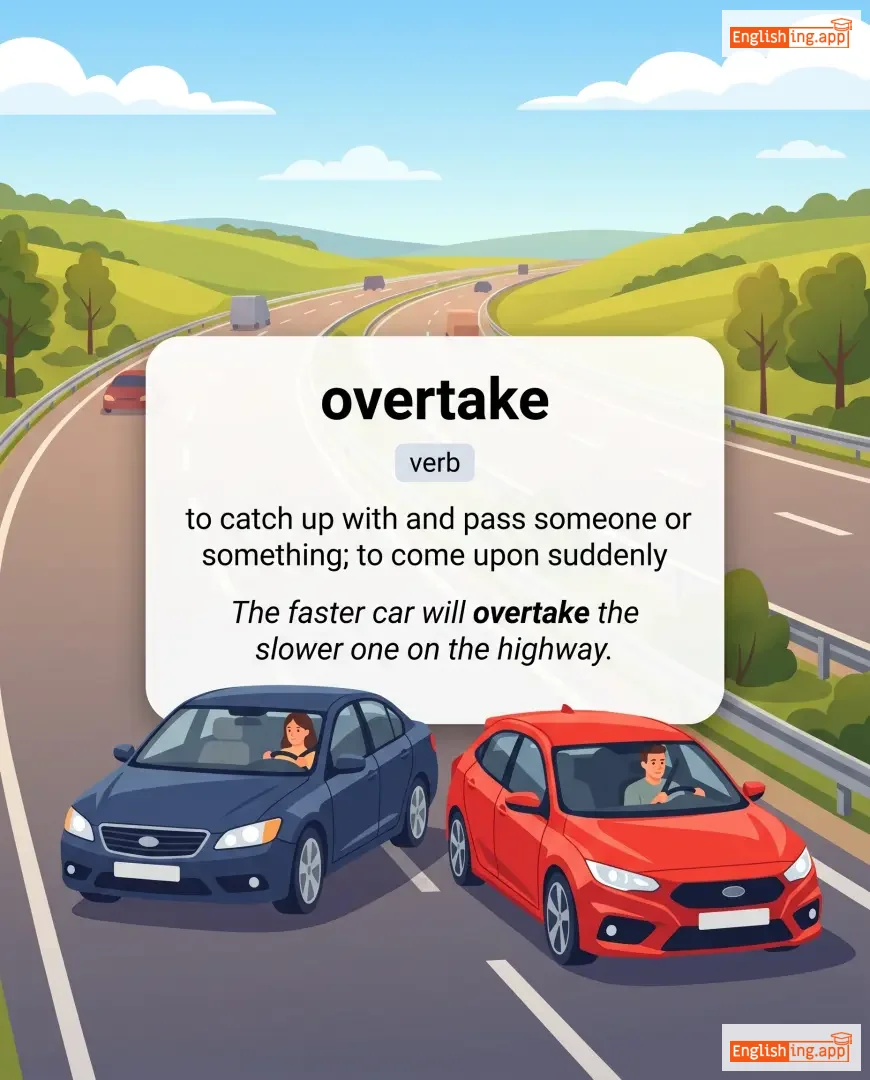
/ˌoʊvərˈteɪk/
verb
(òu wèi tè)
••••••
|
|
超过
chāoguò
••••••
|
overtook
òu wèi tǔ kè
••••••
|
overtaken
òu wèi tè kèn
••••••
|
overtakes
òu wèi tè kè sī
••••••
|
overtaking
òu wèi tè kè yīng
••••••
|
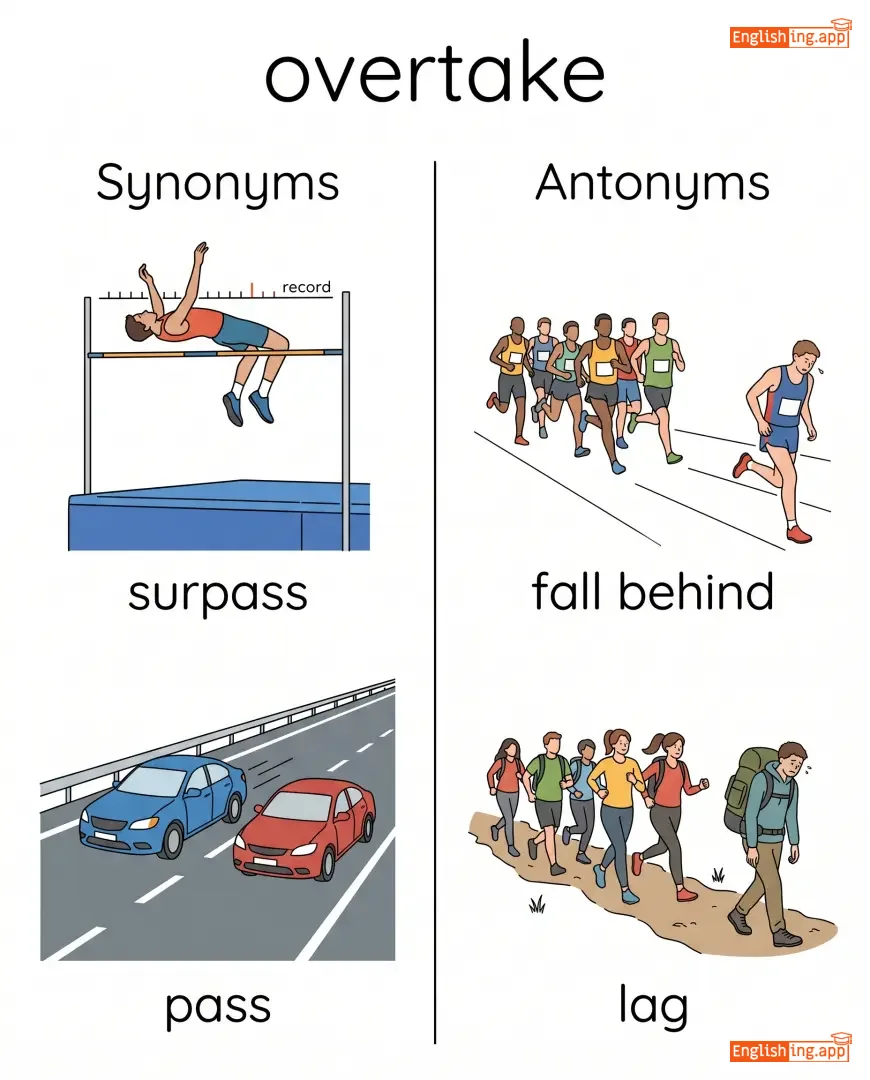
to catch up with and pass someone or something; to surpass
••••••
|
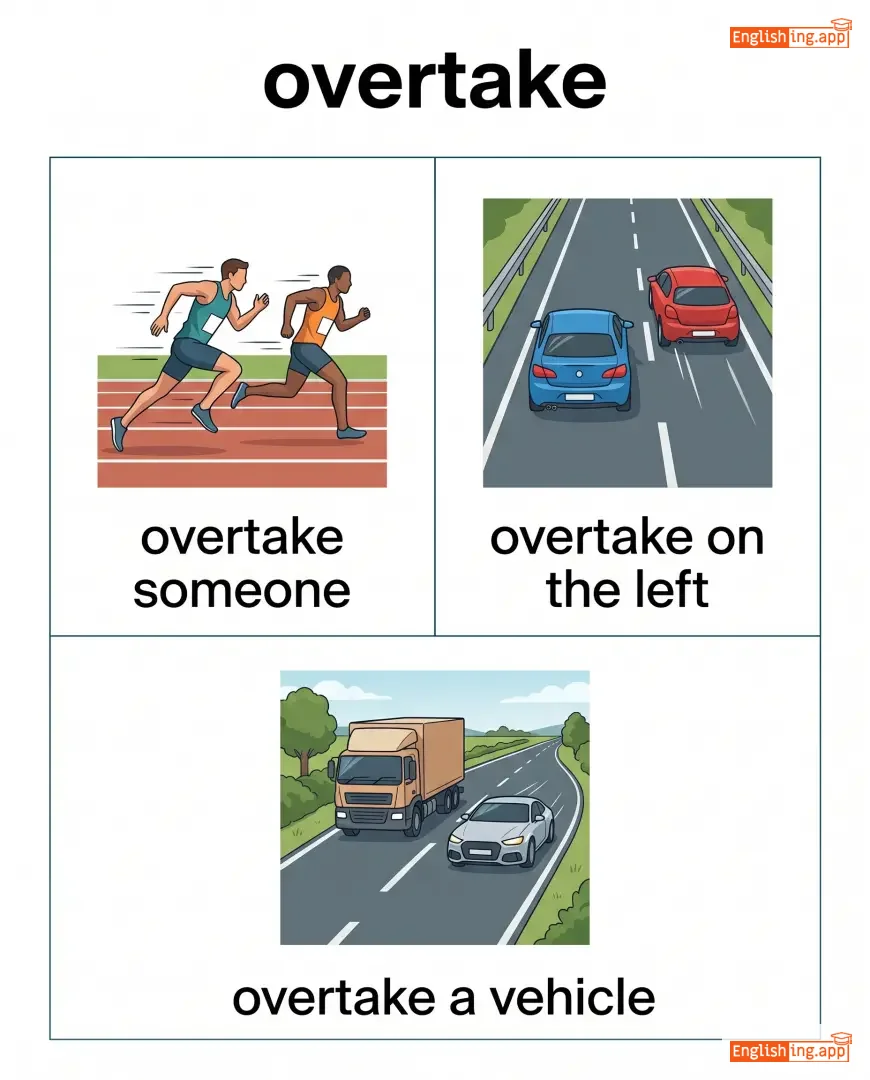
The runner managed to overtake his competitor in the final lap.
跑步者在最后一圈超过了他的竞争对手。
••••••
|
跑步者在最后一圈超过了他的竞争对手。
Pǎobù zhě zài zuìhòu yī quān chāoguòle tā de jìngzhēng duìshǒu.
••••••
|
pass, surpass, exceed, outstrip
••••••
|
fall behind, lag, follow, trail
••••••
|
overtake a car, overtake competitors, overtake on the left, overtake quickly, dangerous overtaking
••••••
|
In Chinese, '超过' means to surpass or overtake, much like winning a race.
••••••
|
|
#160
🌊
|
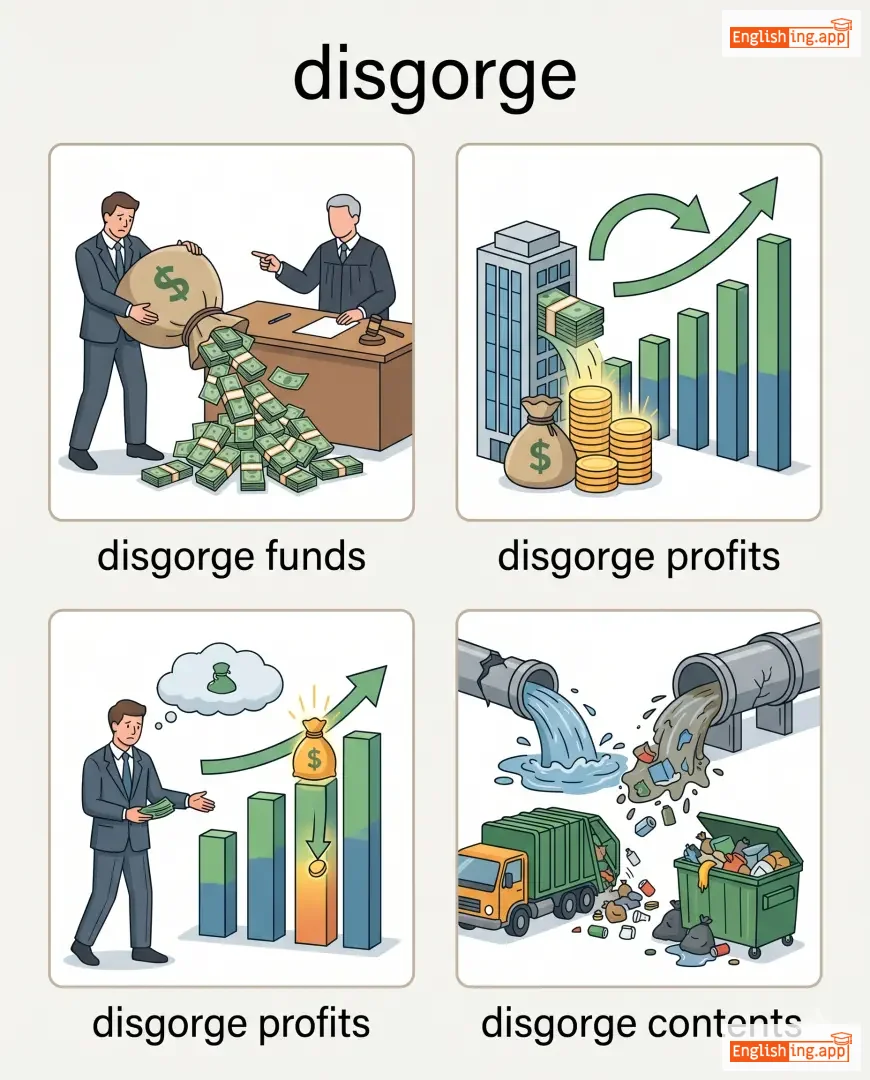
/dɪsˈɡɔːrdʒ/
verb
(迪斯戈尔奇)
••••••
|
|
呕吐, 排放
ǒutù, páifàng
••••••
|
disgorged
迪斯戈尔奇德
••••••
|
disgorged
迪斯戈尔奇德
••••••
|
disgorges
迪斯戈尔吉斯
••••••
|
disgorging
迪斯戈尔金
••••••
|
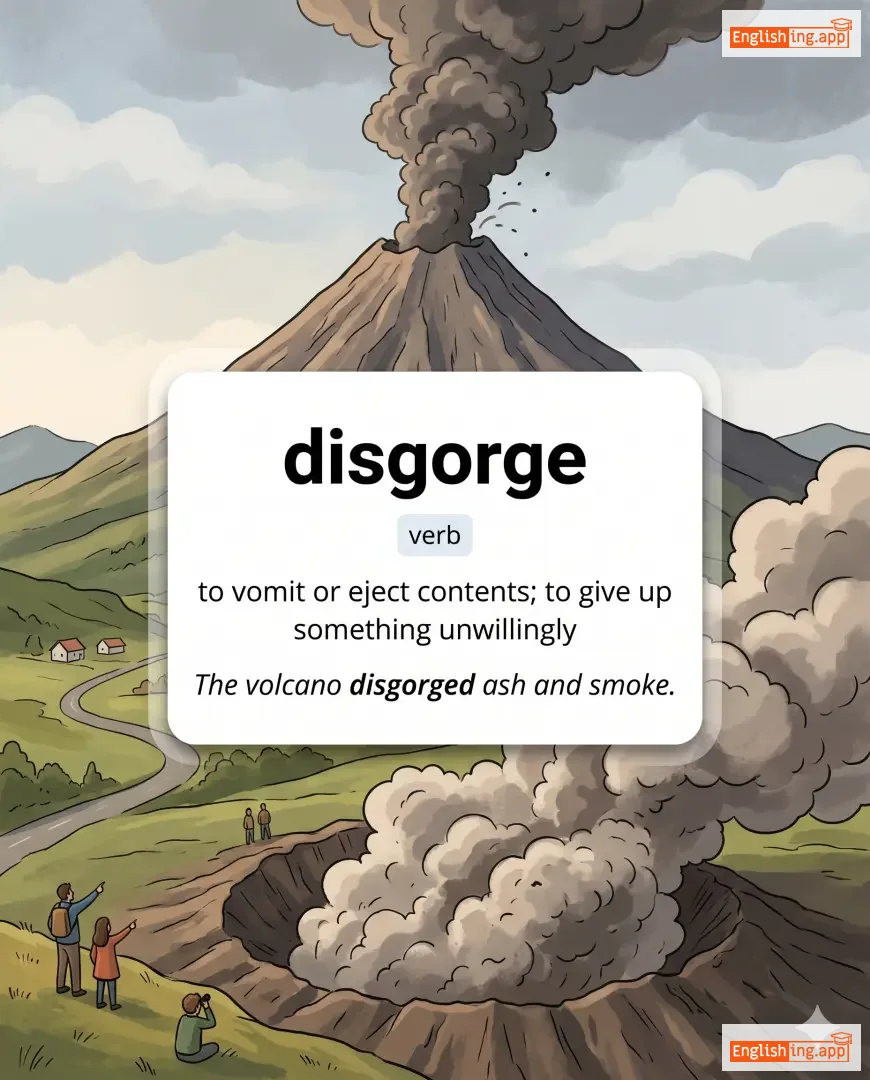
to discharge or pour out; to vomit; to give up reluctantly
••••••
|
The broken pipe disgorged water all over the floor.
破损的管道把水排泄到整个地板上。
••••••
|
破损的管道把水排放到整个地板上。
Pò sǔn de guǎn dào bǎ shuǐ pái fàng dào zhěng gè dì bǎn shàng.
••••••
|
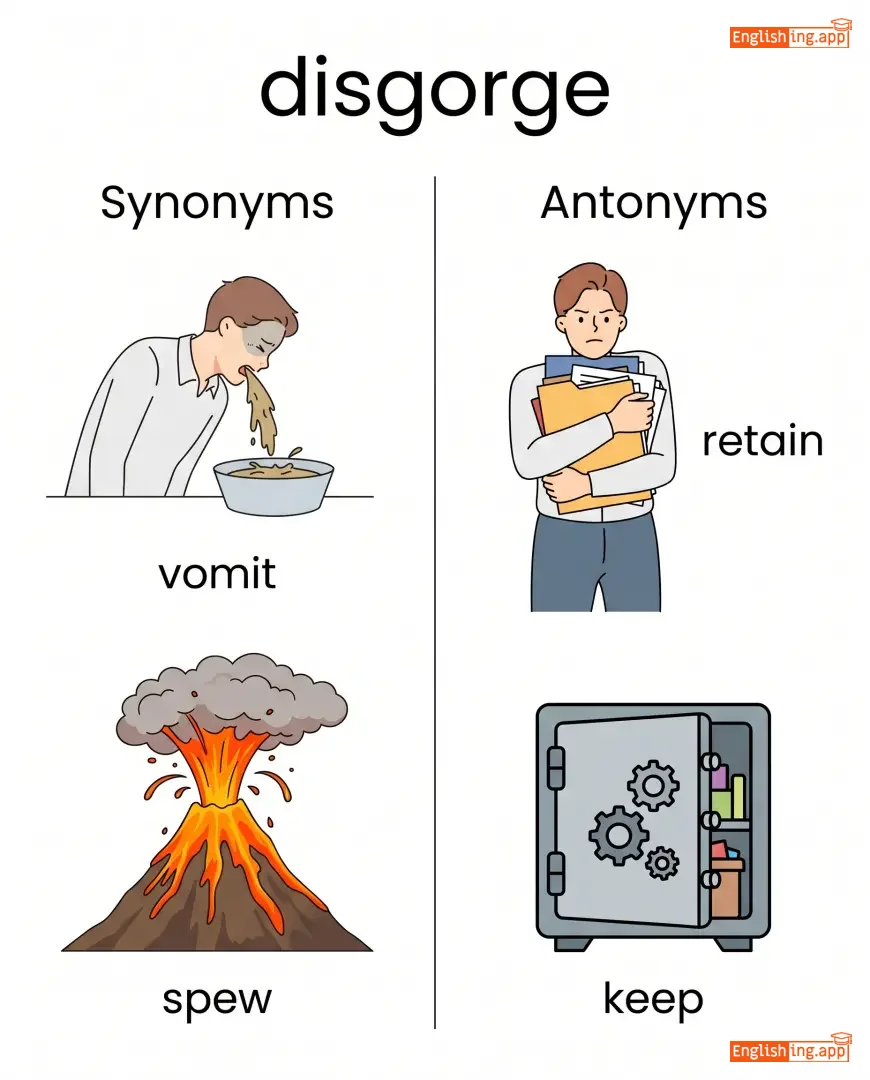
discharge, emit, vomit, expel
••••••
|
absorb, retain, swallow, consume
••••••
|
disgorge water, disgorge contents, disgorge passengers, suddenly disgorge, disgorge profits
••••••
|
想象自己呕吐或排放不愉快的东西
••••••
|
|
#161
↔️
|
/ɪkˈstend/
verb
(ɪkˈstɛnd)
••••••
|
|
扩展
kuòzhǎn
••••••
|
extended
ɪkˈstɛndɪd
••••••
|
extended
ɪkˈstɛndɪd
••••••
|
extends
ɪkˈstɛndz
••••••
|
extending
ɪkˈstɛndɪŋ
••••••
|
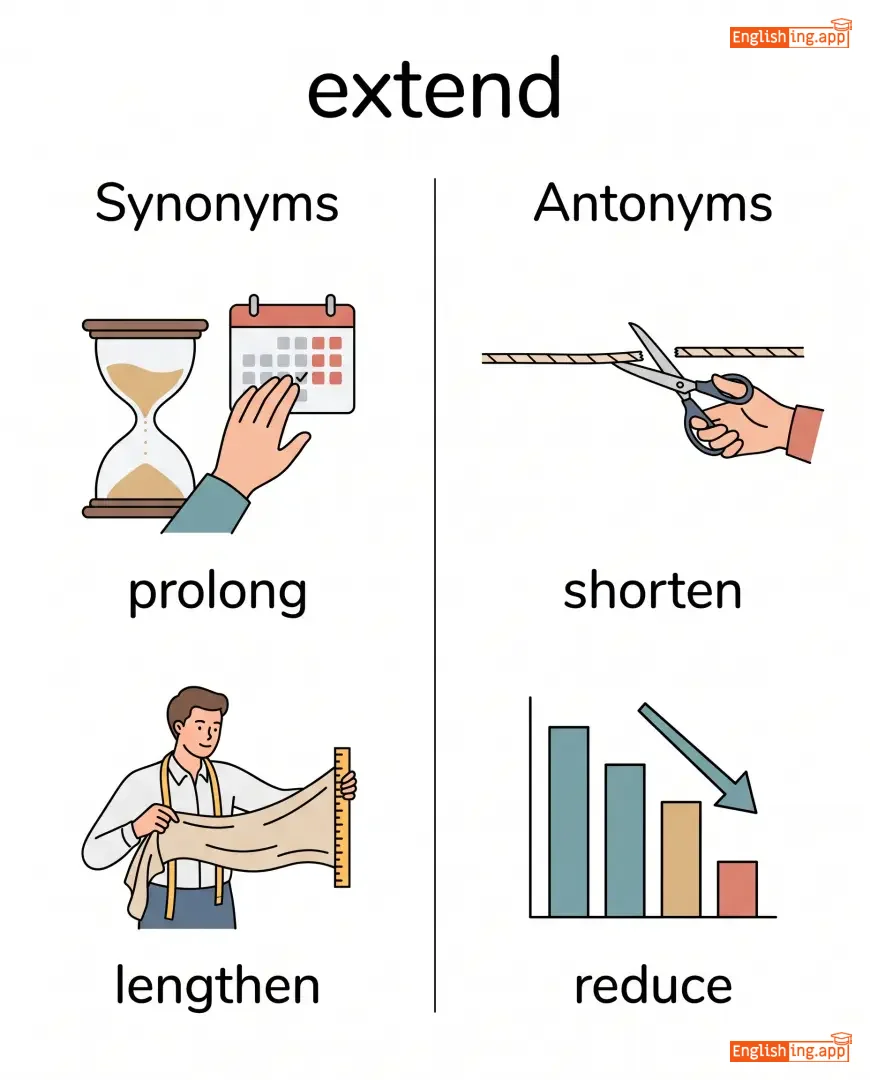
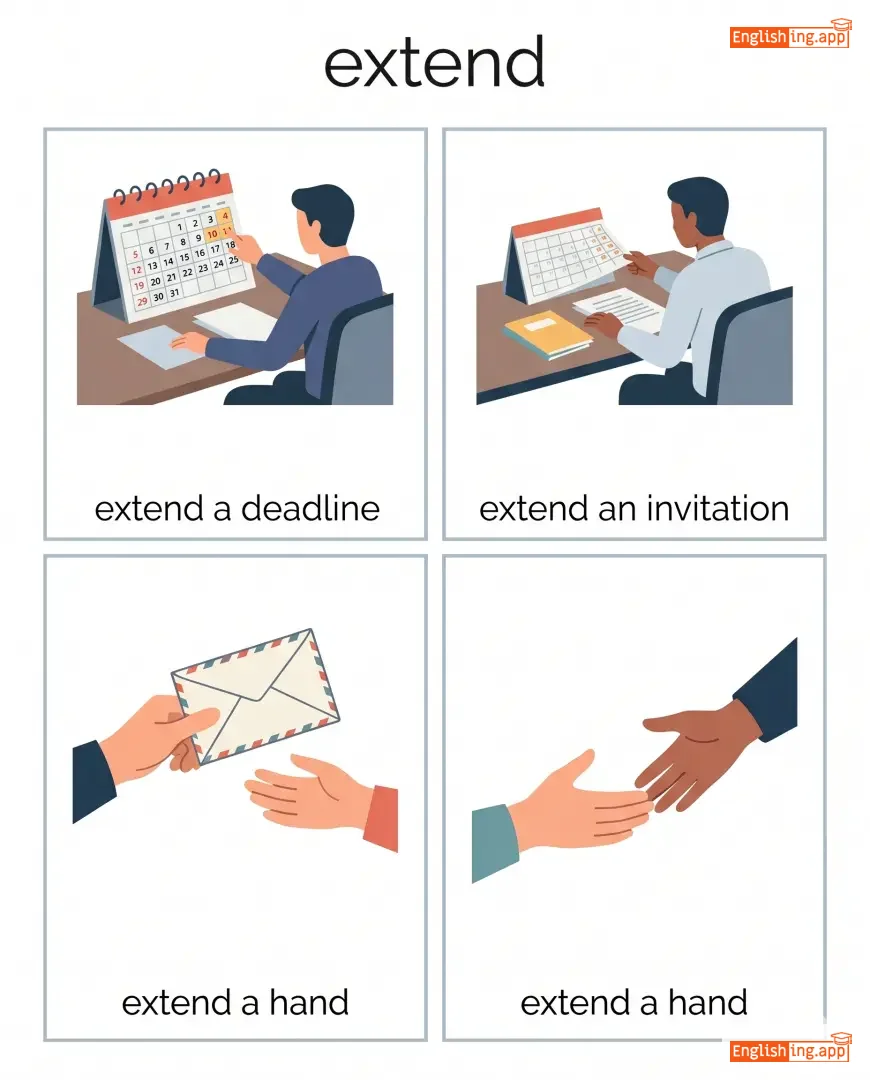
to make longer or larger; to stretch out; to offer or give
••••••
|
The company decided to extend the deadline for the project.
公司决定延长项目的截止日期。
••••••
|
公司决定延长项目的截止日期。
Gōngsī juédìng yáncháng xiàngmù de jiézhǐ rìqī.
••••••
|
lengthen, stretch, expand, prolong
••••••
|
shorten, reduce, contract, withdraw
••••••
|
extend deadline, extend invitation, extend help, extend warranty, extend stay
••••••
|
Kuòzhǎn in Chinese means to extend. It sounds similar to the word 'expand' in English.
••••••
|
|
#162
💰
|
/sel/
verb
(sel)
••••••
|
|
卖
mài
••••••
|
sold
sold
••••••
|
sold
sold
••••••
|
sells
sells
••••••
|
selling
selling
••••••
|
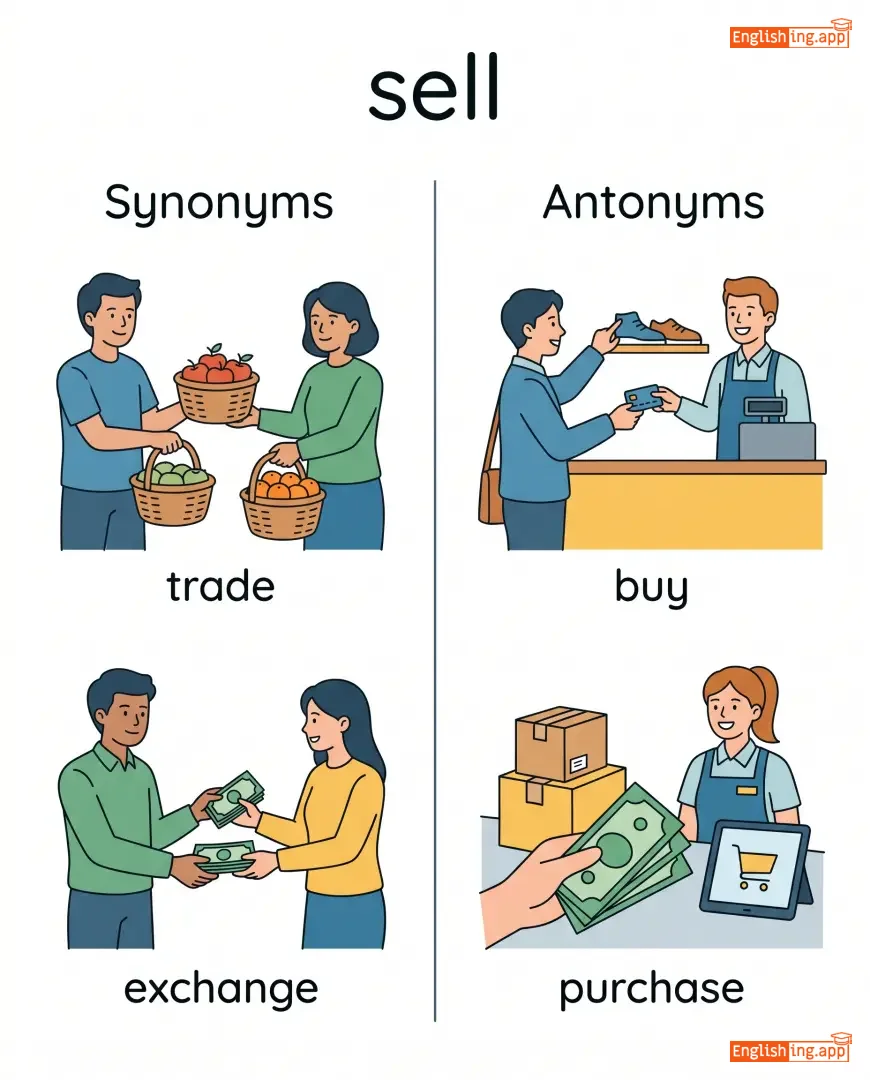
to give something to someone in exchange for money
••••••
|
They sell fresh fruits at the market.
他们在市场上卖新鲜的水果。
••••••
|
他们在市场上卖新鲜的水果。
Tāmen zài shìchǎng shàng mài xīnxiān de shuǐguǒ.
••••••
|
market, trade, vend, dispose
••••••
|
buy, purchase, acquire, keep
••••••
|
sell products, sell well, sell for, hard sell, sell out
••••••
|
在市场上卖水果,你就能赚到钱。
••••••
|
|
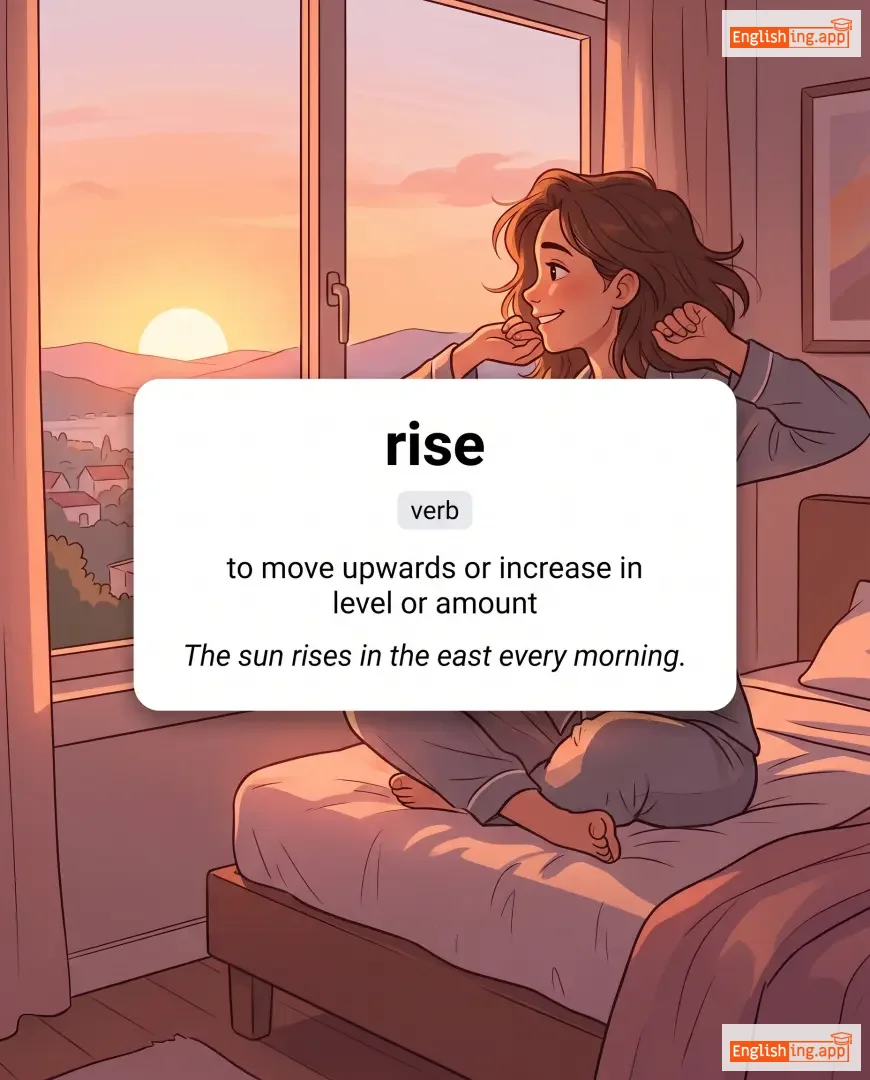
#163
🌅
|
/raɪz/
verb
(瑞兹)
••••••
|
|
上升
shangsheng
••••••
|
rose
••••••
|
risen
••••••
|
rises
••••••
|
rising
••••••
|
to move upward; to get up from bed; to increase
••••••
|
The sun rises in the east.
太阳从东方升起。
••••••
|
太阳从东方升起。
Taiyang cong dongfang shengqi.
••••••
|
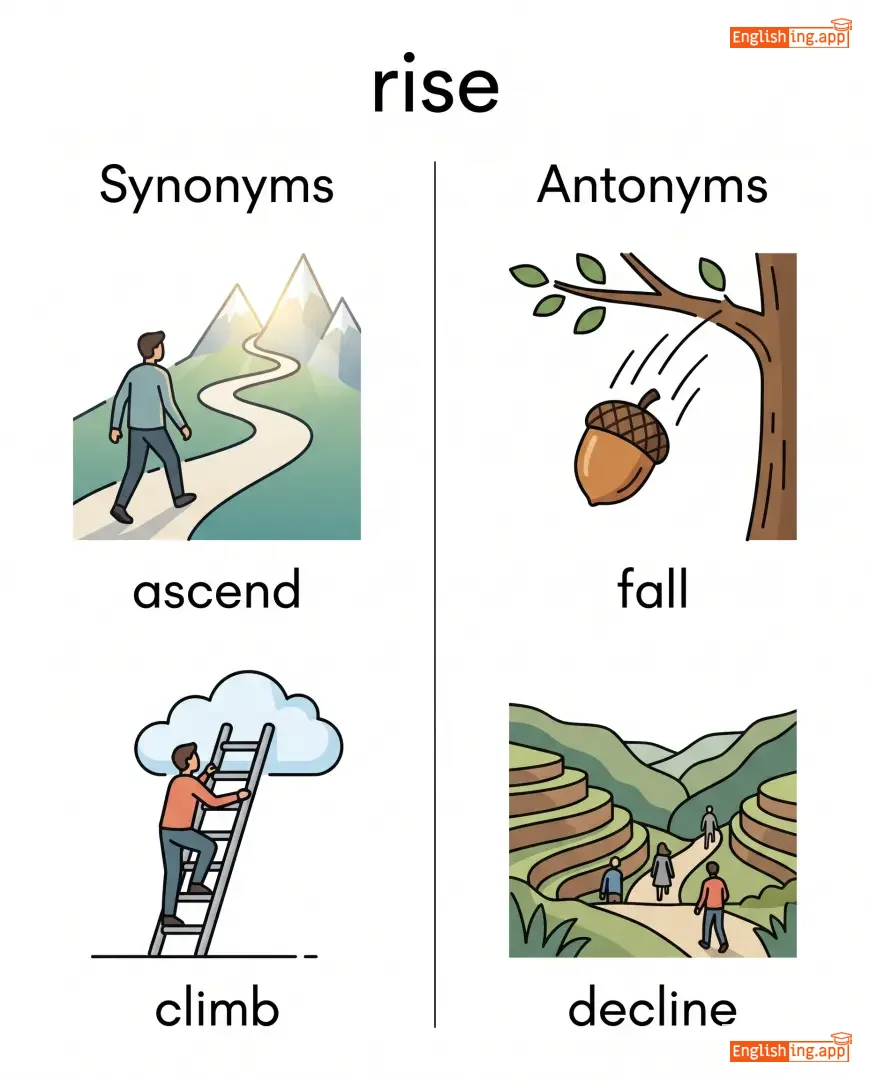
ascend, climb, increase, get up
••••••
|
fall, descend, drop, set
••••••
|
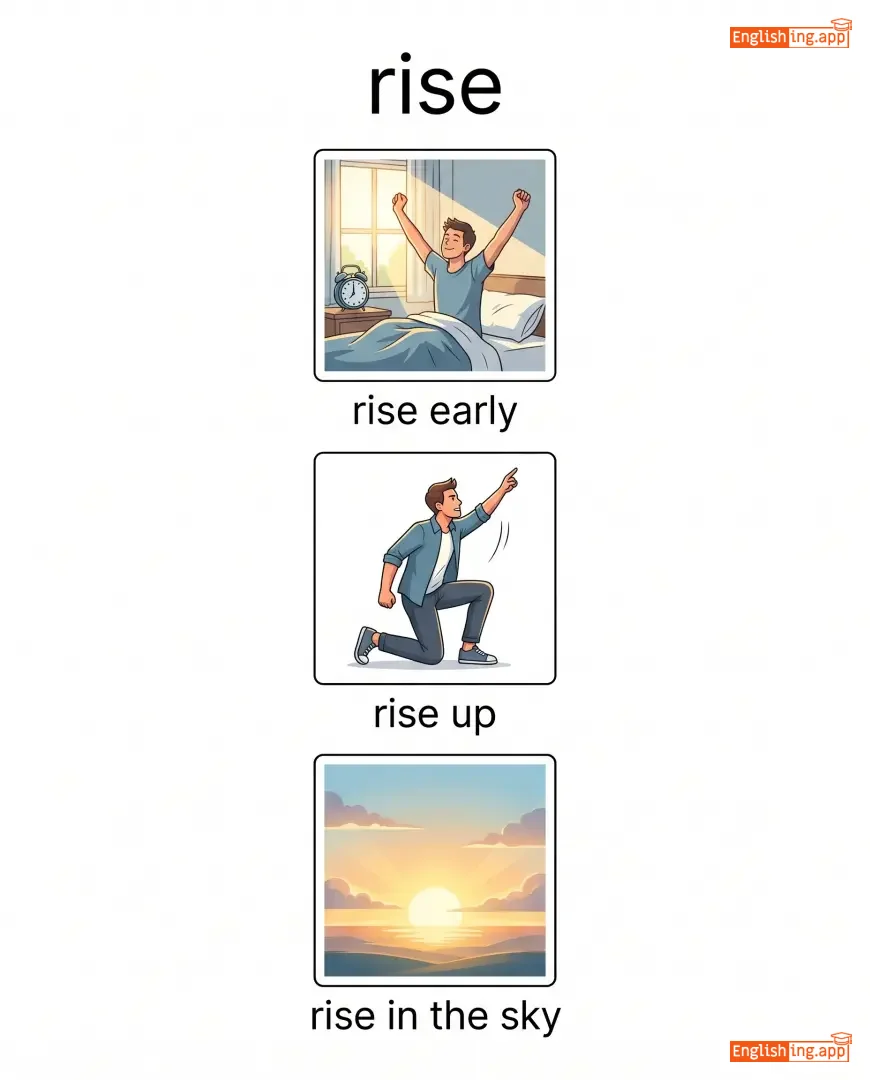
rise early, rise up, rise above, temperature rise, pay rise
••••••
|
像太阳一样升起
••••••
|
|
#164
🙏
|
/bɛɡ/
verb
(beg)
••••••
|
|
乞求
qǐqiú
••••••
|
begged
begd
••••••
|
begged
begd
••••••
|
begs
begs
••••••
|
begging
begging
••••••
|
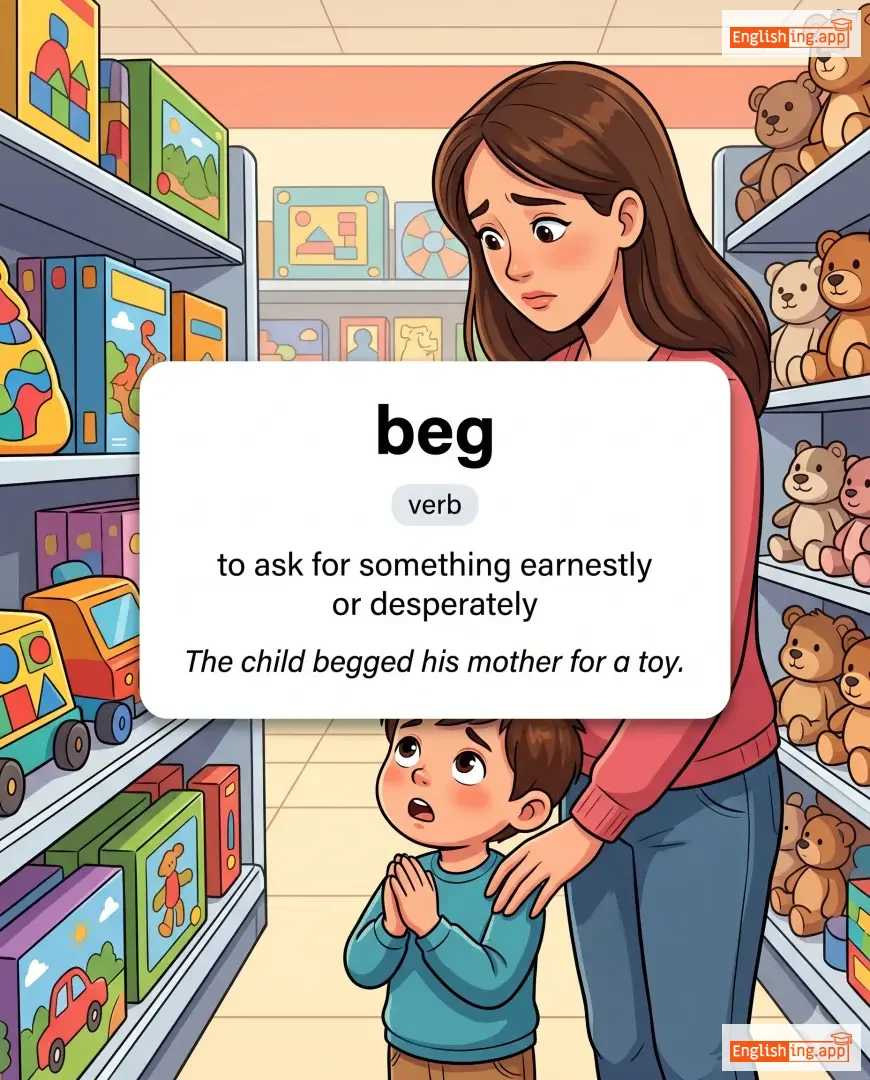
to ask for something earnestly; to request humbly
••••••
|
The child begged for a new toy.
孩子请求新玩具。
••••••
|
孩子请求了一个新玩具。
Hái zǐ qǐqiú le yī gè xīn wánjù.
••••••
|
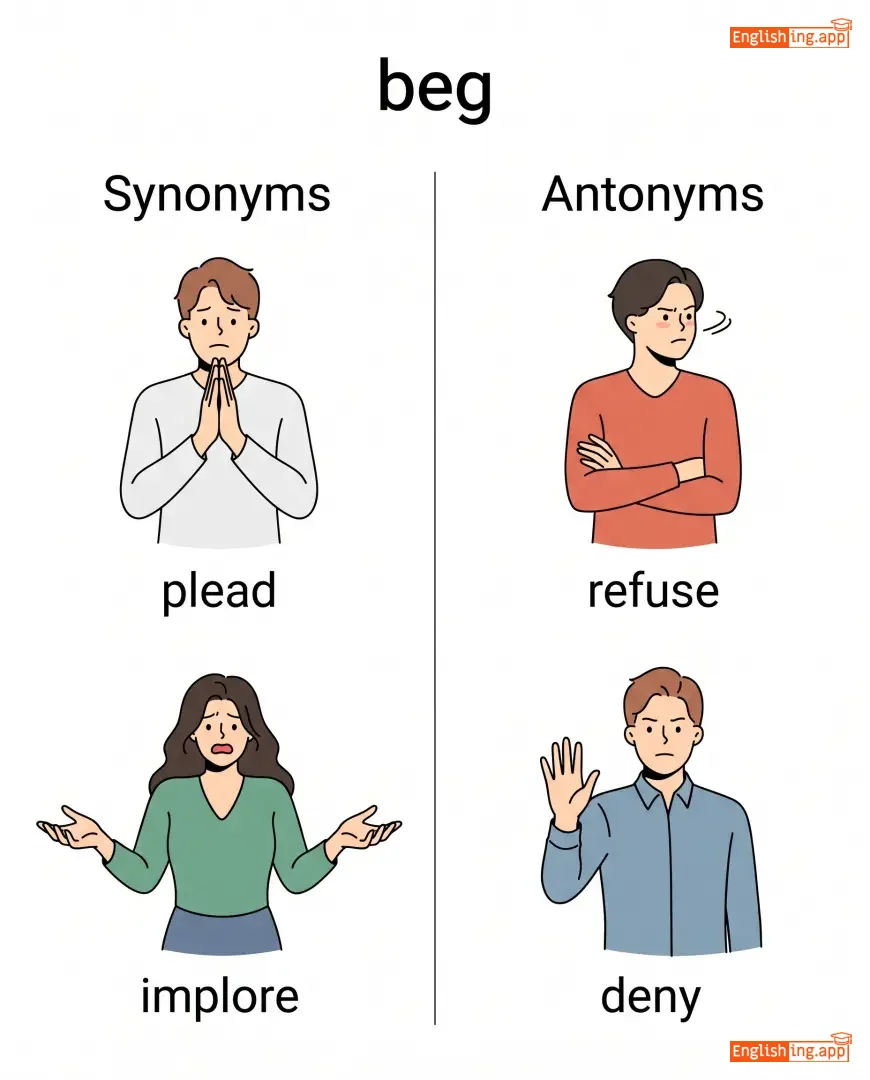
plead, implore, entreat, request
••••••
|
demand, order, command, give
••••••
|
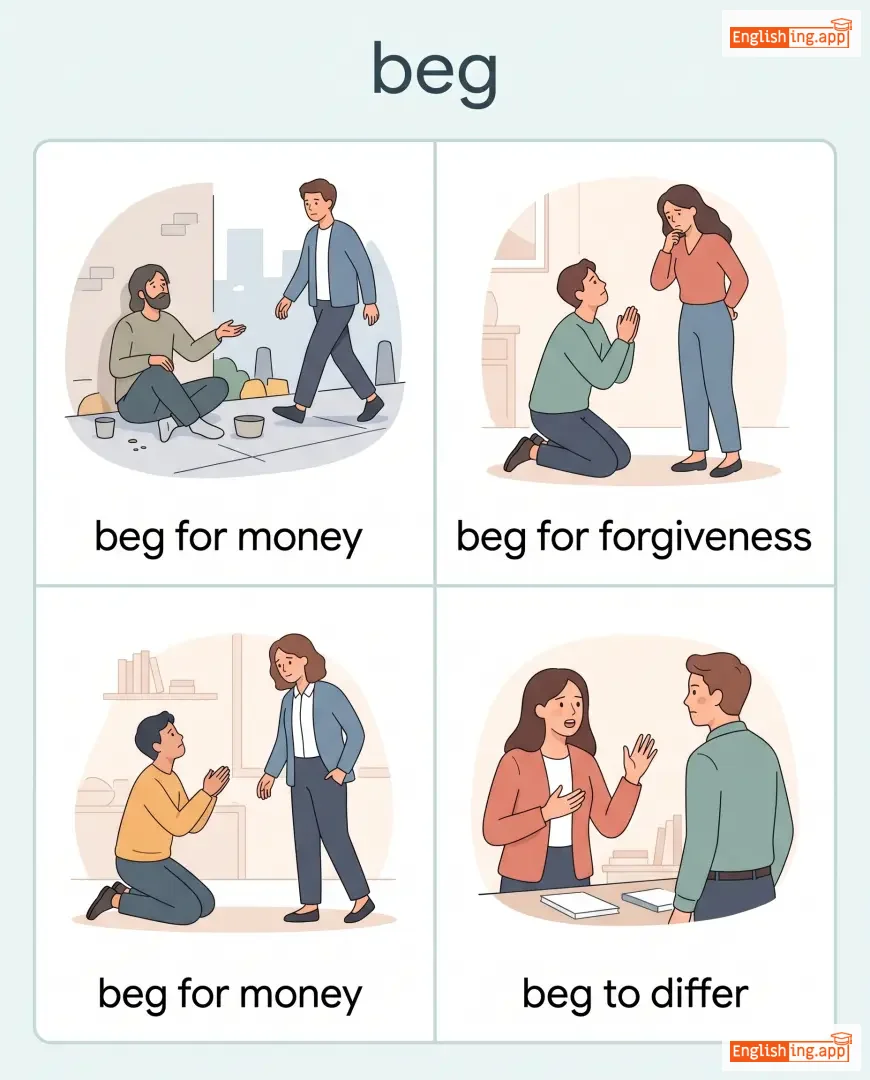
beg for mercy, beg pardon, beg to differ, beg your pardon, beg forgiveness
••••••
|
乞求就像向别人请求帮助。
••••••
|
|
#165
💬
|
/tel/
verb
(tel)
••••••
|
|
告诉
gaosu
••••••
|
told
told
••••••
|
told
told
••••••
|
tells
tells
••••••
|
telling
telling
••••••
|
to say something to someone; to give information or instructions
••••••
|
Can you tell me the time?
你能告诉我时间吗?
••••••
|
你能告诉我时间吗?
Ni neng gaosu wo shijian ma?
••••••
|
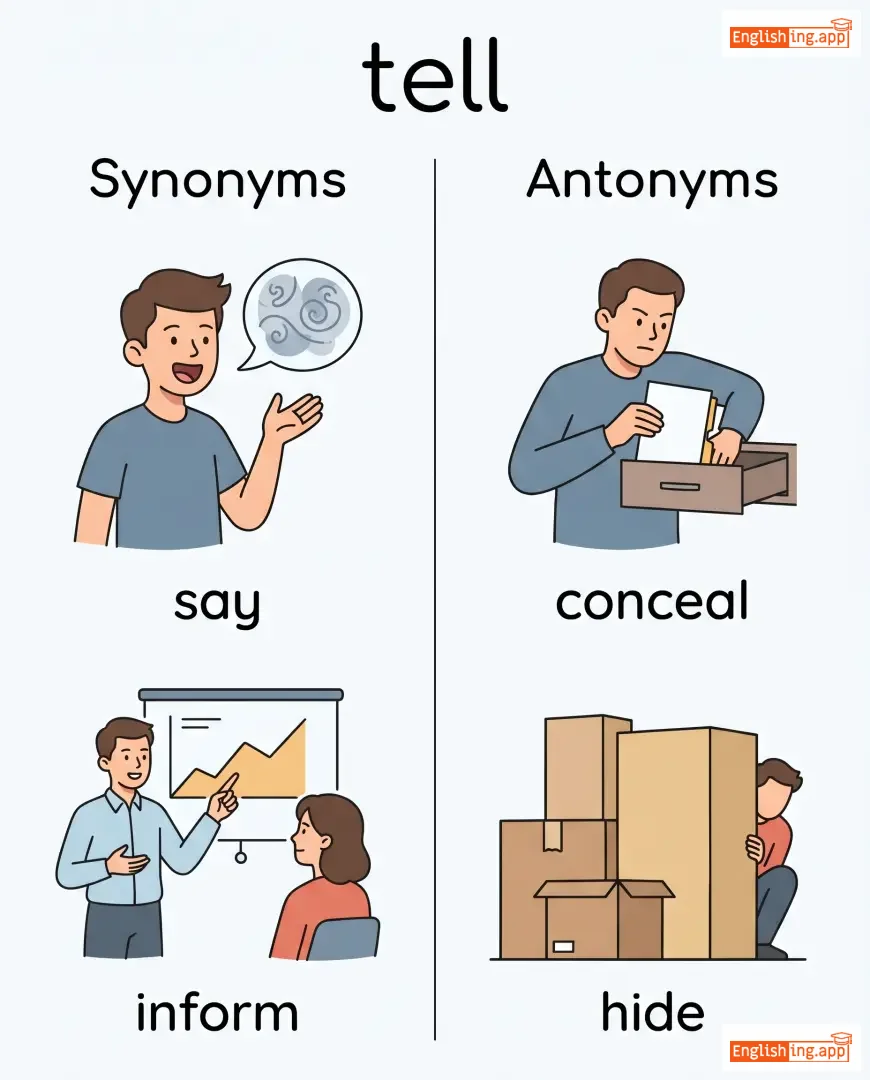
say, inform, communicate, relate
••••••
|
conceal, hide, withhold
••••••
|
tell the truth, tell stories, tell lies, tell apart, tell time
••••••
|
告诉我时间的中文
••••••
|
|
#166
🔥
|
/hiːt/
verb
(hít)
••••••
|
|
加热
jiārè
••••••
|
heated
hìtèd
••••••
|
heated
hìtèd
••••••
|
heats
hìts
••••••
|
heating
hìtīng
••••••
|
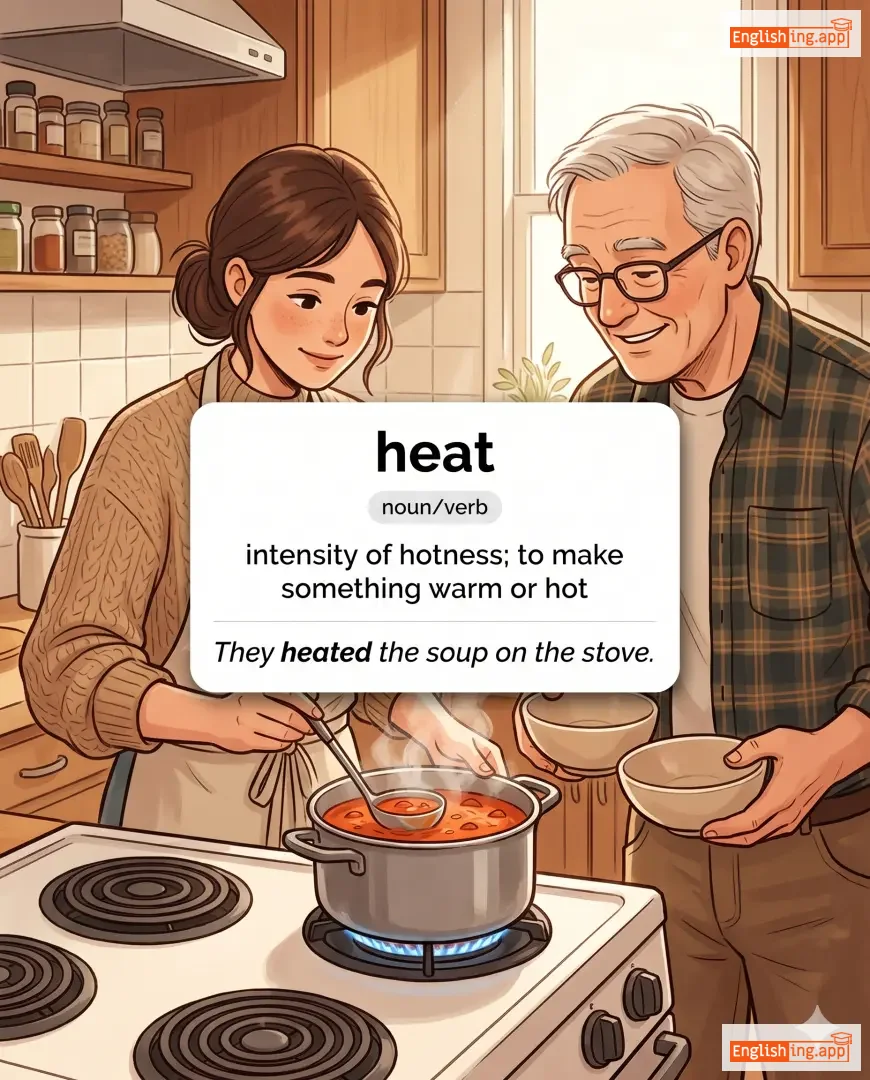
to make or become hot or warm
••••••
|
Please heat the soup before serving.
请在上菜前加热汤。
••••••
|
请在上菜前加热汤。
Qǐng zài shàng cài qián jiārè tāng.
••••••
|
warm, hot, temperature, fire
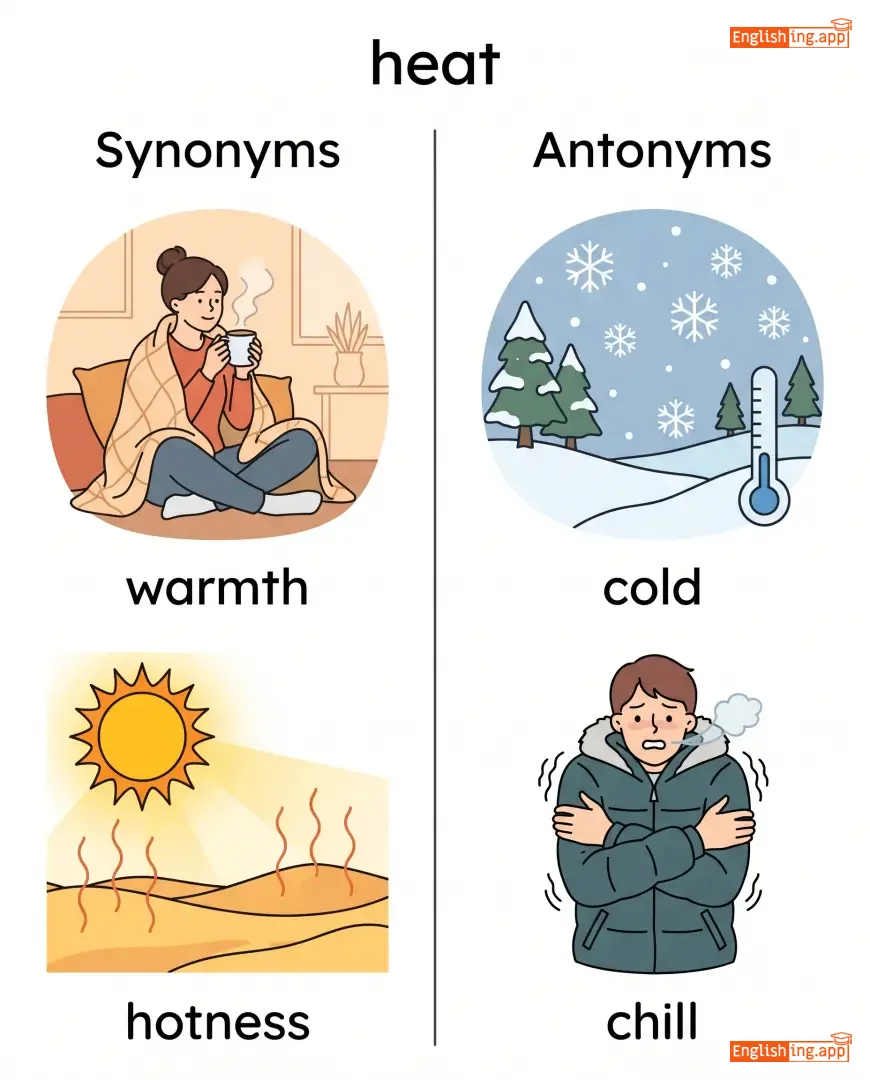
••••••
|
cool, cold, freeze, chill
••••••
|
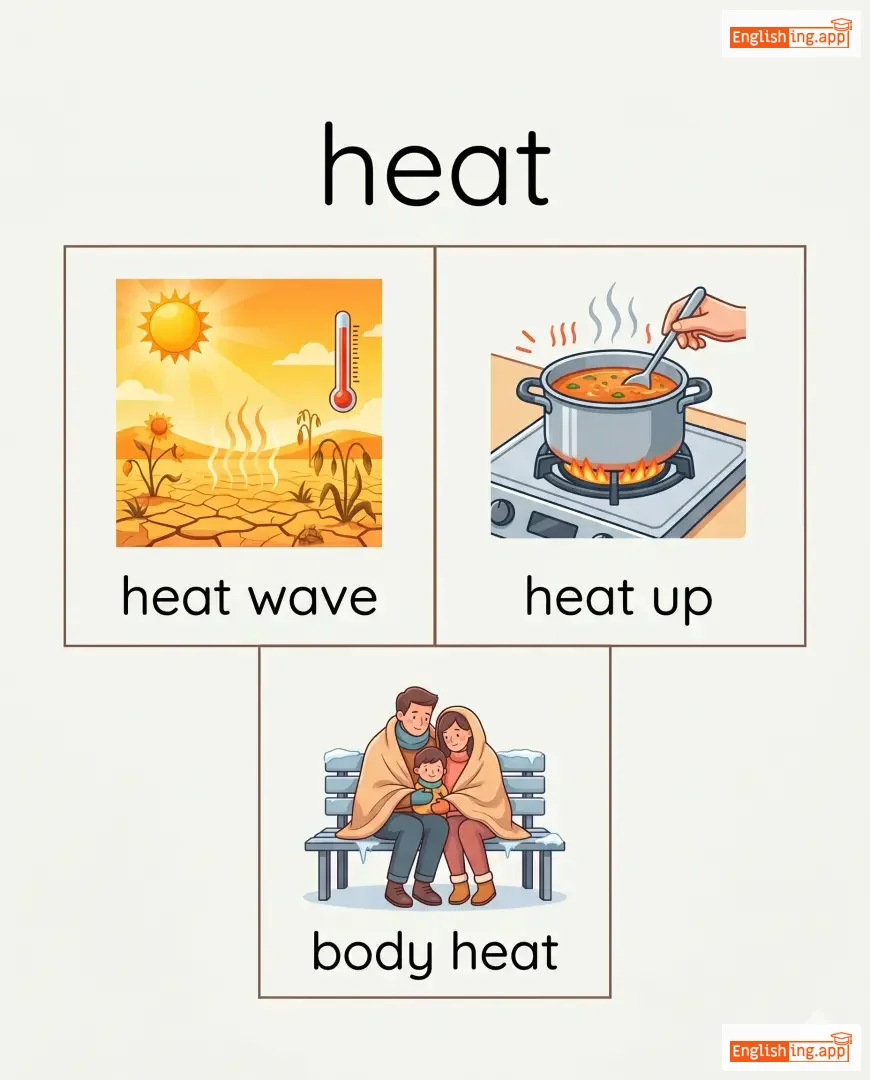
heat up, heat treatment, body heat, heat wave, heat source
••••••
|
加热 = 热 = Soup hot!
••••••
|
|
#167
🪡
|
/stɪtʃ/
verb
(happiness)
••••••
|
|
幸福
xìng fú
••••••
|
stitched
••••••
|
stitched
••••••
|
stitches
••••••
|
stitching
••••••
|
to sew with needle and thread; to join pieces of fabric
••••••
|
She will stitch the torn dress carefully.
她无法掩饰她收到奖项时的幸福。
••••••
|
她无法掩饰她收到奖项时的幸福。
Tā wúfǎ yǎnshì tā shōudào jiǎngxiàng shí de xìngfú.
••••••
|
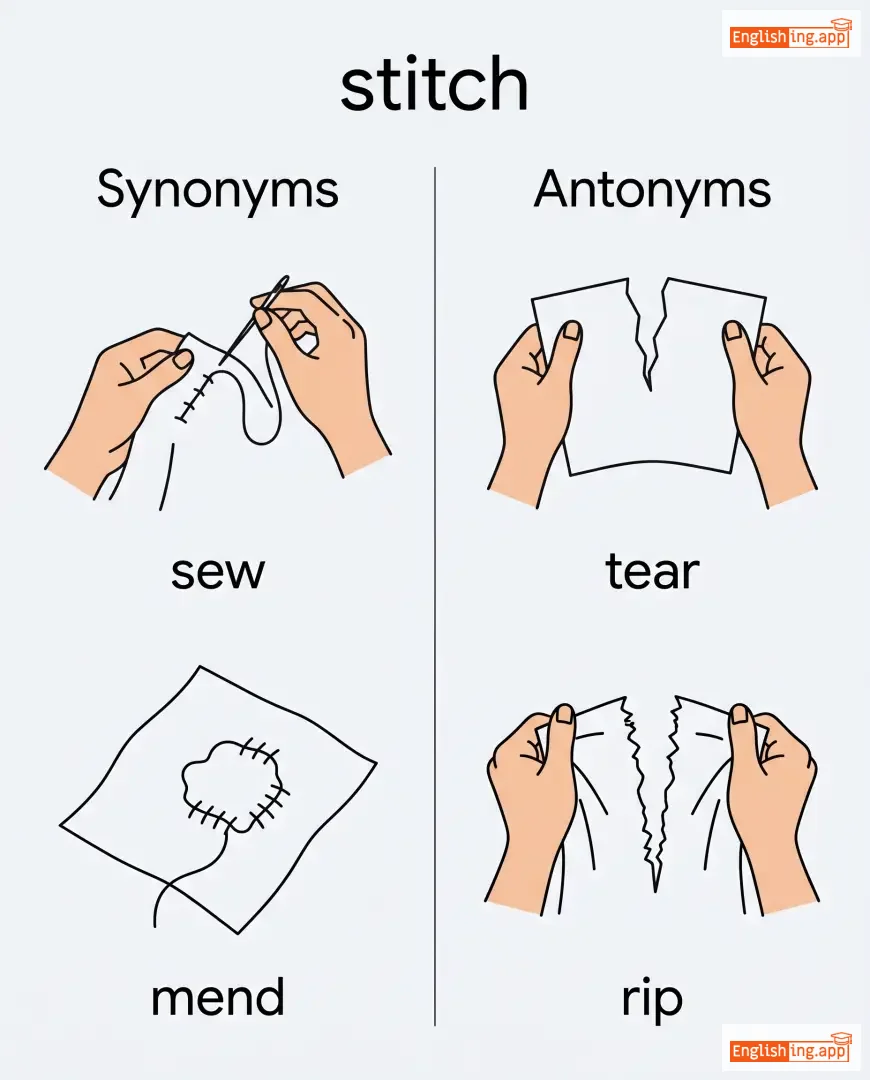
sew, mend, join, repair
••••••
|
tear, rip, separate, cut
••••••
|
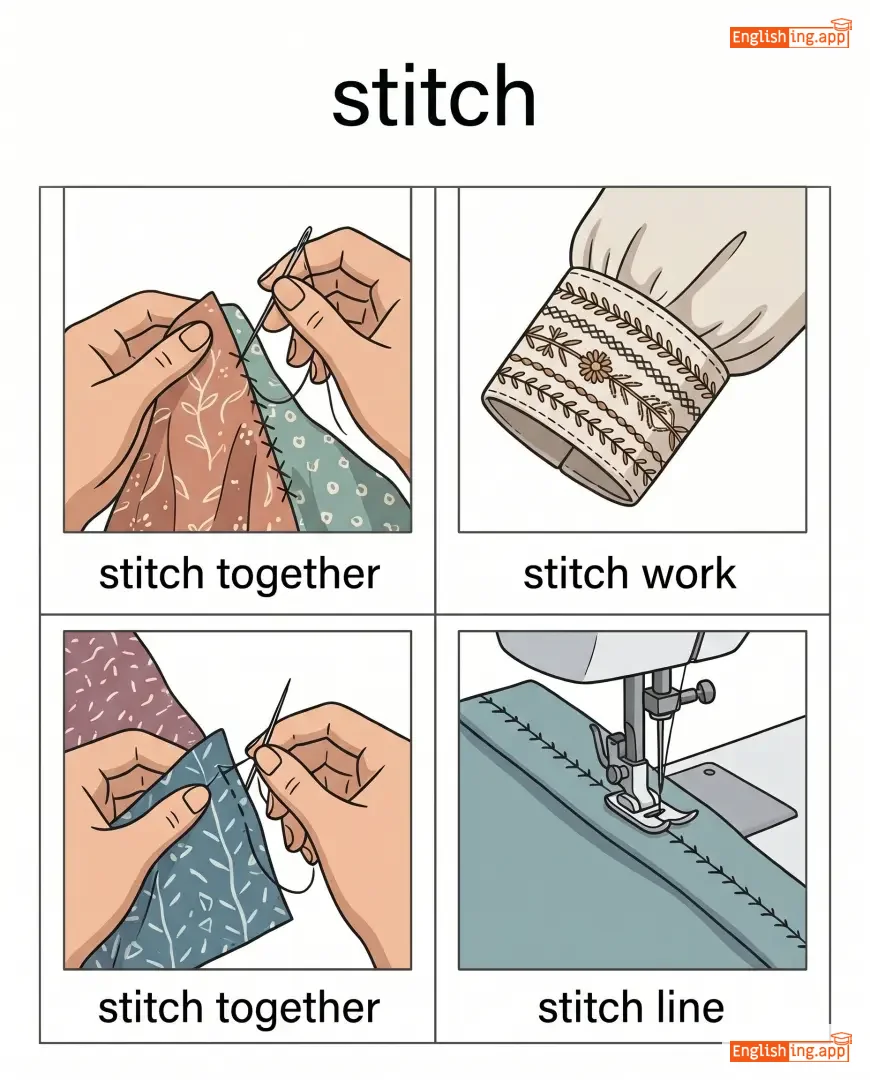
stitch together, stitch up, cross stitch, stitch in time, drop a stitch
••••••
|
幸福就像一颗幸福的种子,需要用爱来滋养它。
••••••
|
|
#168
🤝
|
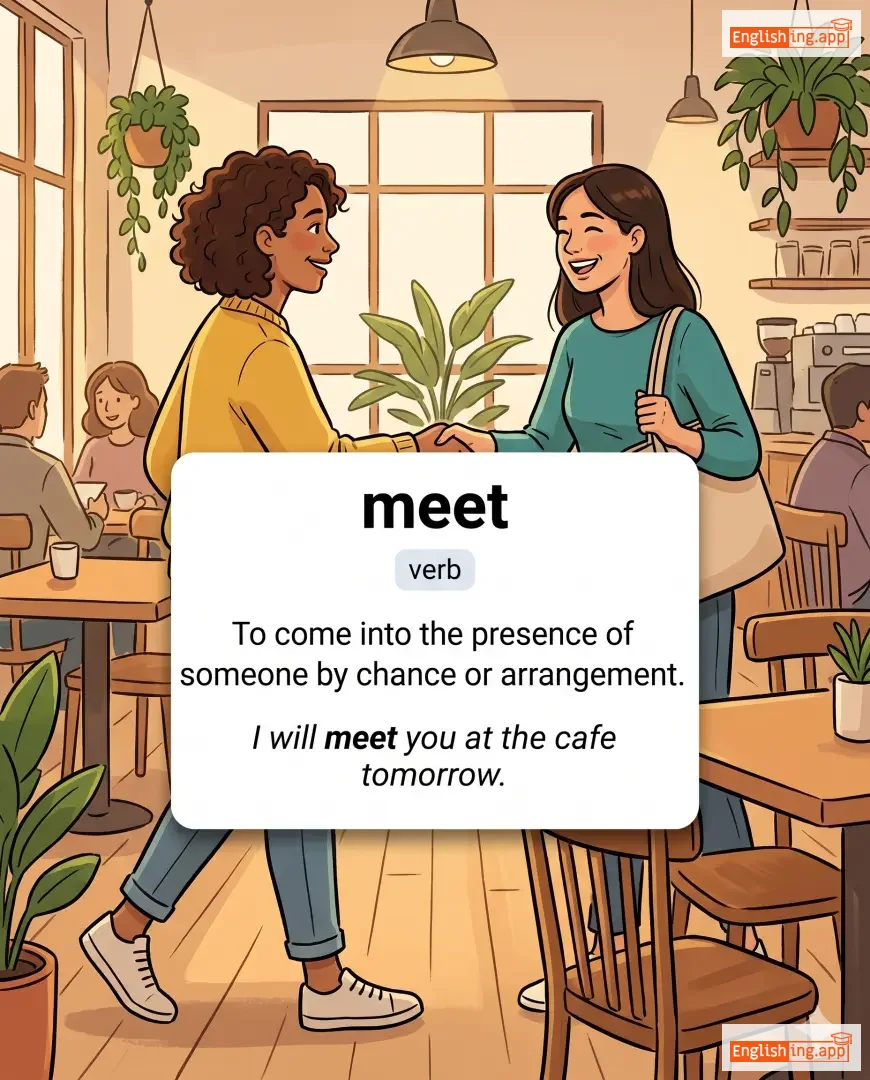
/miːt/
verb
(meet)
••••••
|
|
见面
jian mian
••••••
|
met
met
••••••
|
met
met
••••••
|
meets
meets
••••••
|
meeting
meeting
••••••
|
to come into the presence of; to encounter
••••••
|
I will meet you at the café.
我会在咖啡馆见你。
••••••
|
我会在咖啡馆见你。
Wo hui zai kafeiguan jian ni.
••••••
|
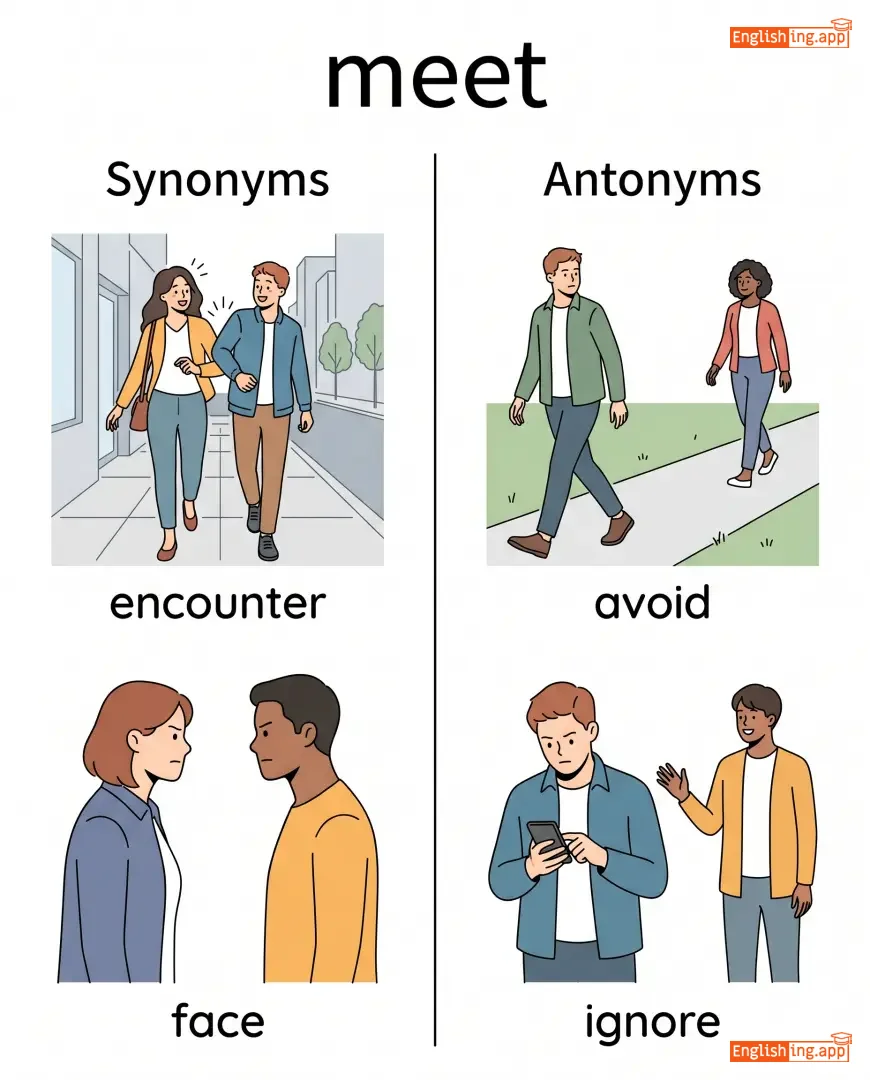
encounter, greet, see, gather
••••••
|
avoid, miss, part, separate
••••••
|
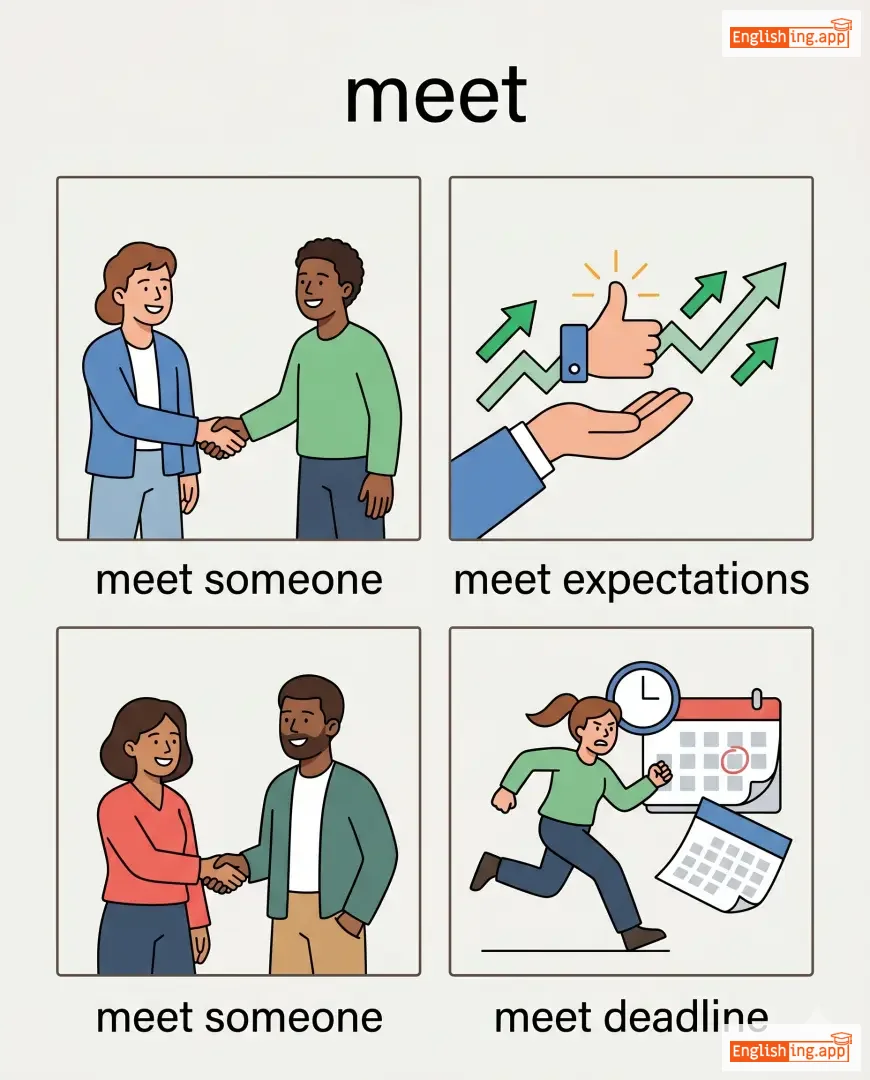
meet someone, meet requirements, meet deadline, meet up, business meeting
••••••
|
咖啡馆里见面,人生的美好时光!
••••••
|
|
#169
🔧
|
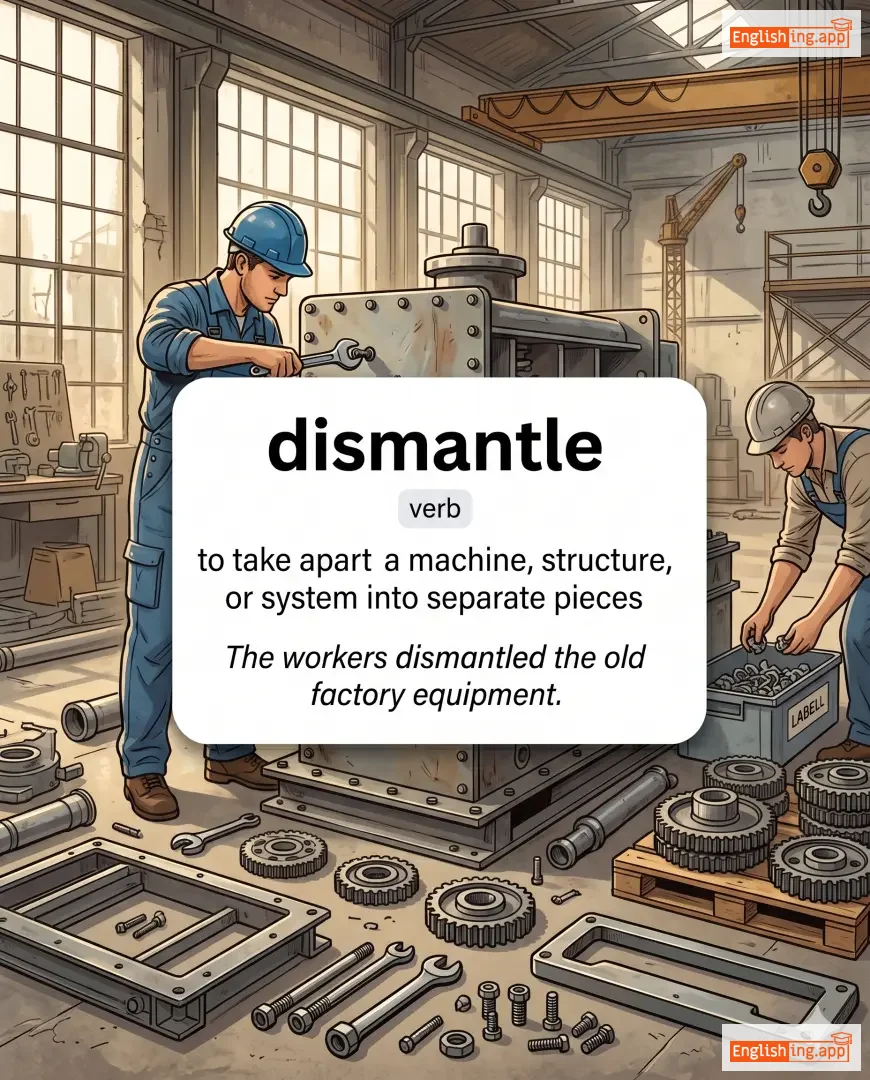
/dɪsˈmæntəl/
verb
(迪斯曼特尔)
••••••
|
|
拆解
chāijiě
••••••
|
dismantled
迪斯曼特尔德
••••••
|
dismantled
迪斯曼特尔德
••••••
|
dismantles
迪斯曼特尔斯
••••••
|
dismantling
迪斯曼特林
••••••
|
to take apart; to remove or destroy the parts of
••••••
|
Workers will dismantle the old bridge next month.
工人们将在下个月拆除旧桥。
••••••
|
工人们将在下个月拆除旧桥。
Gōngrénmen jiàng zài xià gè yuè chāichú jiù qiáo.
••••••
|
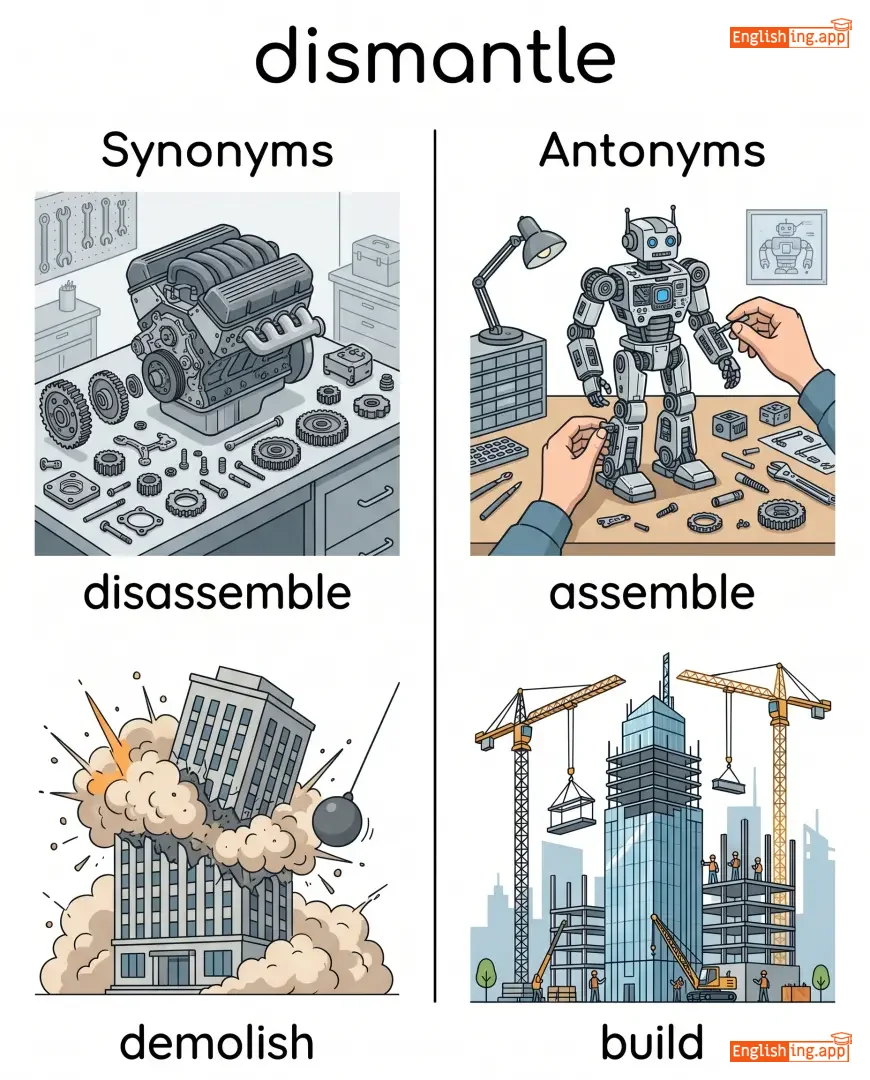
disassemble, demolish, destroy, tear down
••••••
|
assemble, build, construct, erect
••••••
|
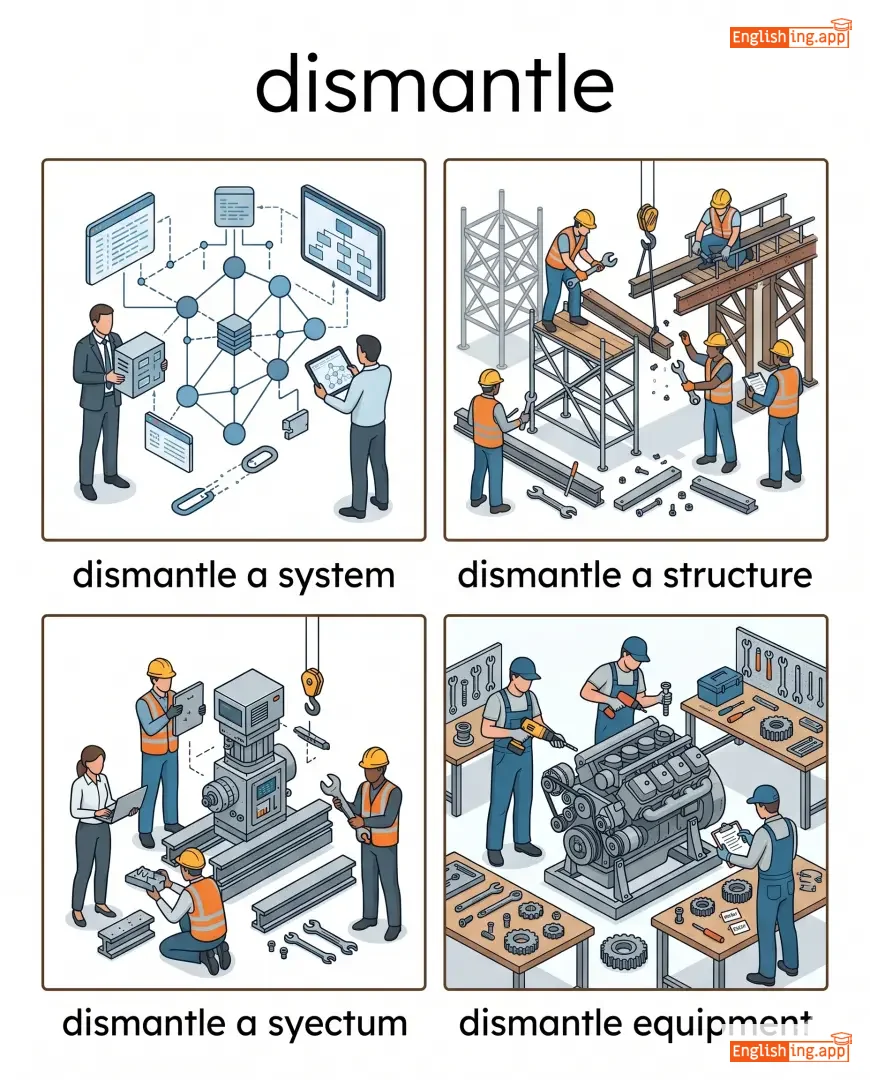
dismantle carefully, dismantle machinery, dismantle system, completely dismantle, gradually dismantle
••••••
|
Imagine workers dismantling an old bridge by breaking it down.
••••••
|
|
#170
💪
|
/tɔɪl/
verb
(toil)
••••••
|
|
辛苦工作
xīn kǔ gōng zuò
••••••
|
Toiled
toiled
••••••
|
Toiled
toiled
••••••
|
Toils
toils
••••••
|
Toiling
toiling
••••••
|
to work extremely hard for long periods
••••••
|
Farmers toil in the fields from dawn to dusk.
农民从黎明到黄昏在田野里辛勤工作。
••••••
|
农民从黎明到黄昏在田野里辛勤工作。
Nóngmín cóng límíng dào huánghūn zài tiányě lǐ xīnqín gōngzuò.
••••••
|
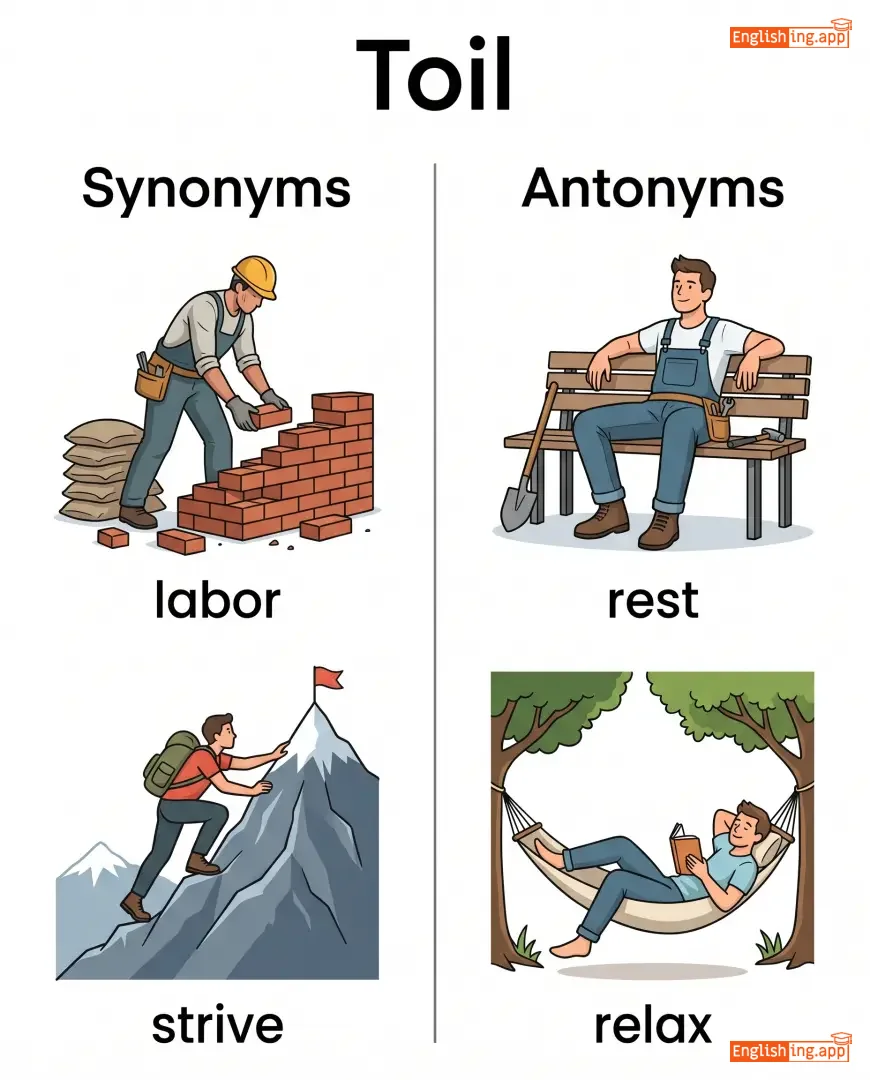
labor, work, struggle, strive
••••••
|
rest, relax, idle, leisure
••••••
|
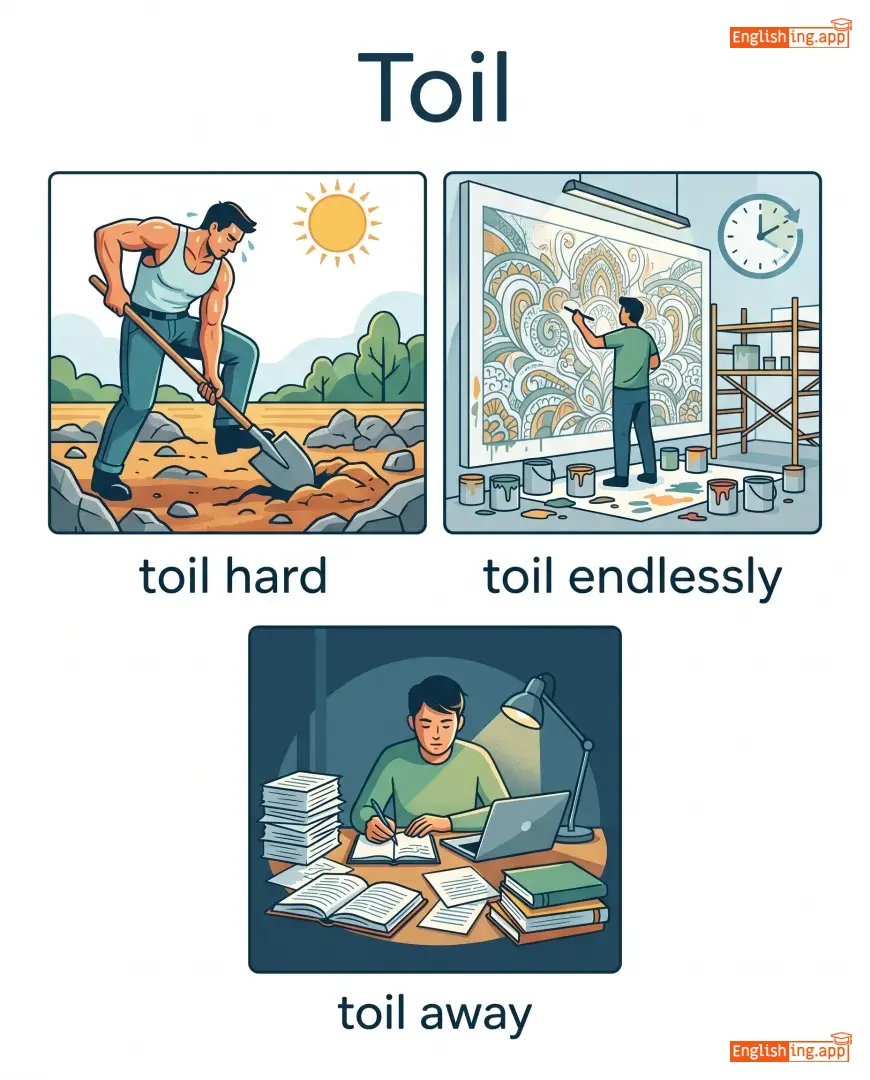
toil hard, toil away, toil for hours, daily toil, back-breaking toil
••••••
|
想象农民在田里辛苦工作,正如‘toil’所指的那样。
••••••
|
|
#171
💬
|
/tɔːk/
verb
(tɑk)
••••••
|
|
谈话
tánhuà
••••••
|
talked
tɑkt
••••••
|
talked
tɑkt
••••••
|
talks
tɑks
••••••
|
talking
tɑkɪŋ
••••••
|
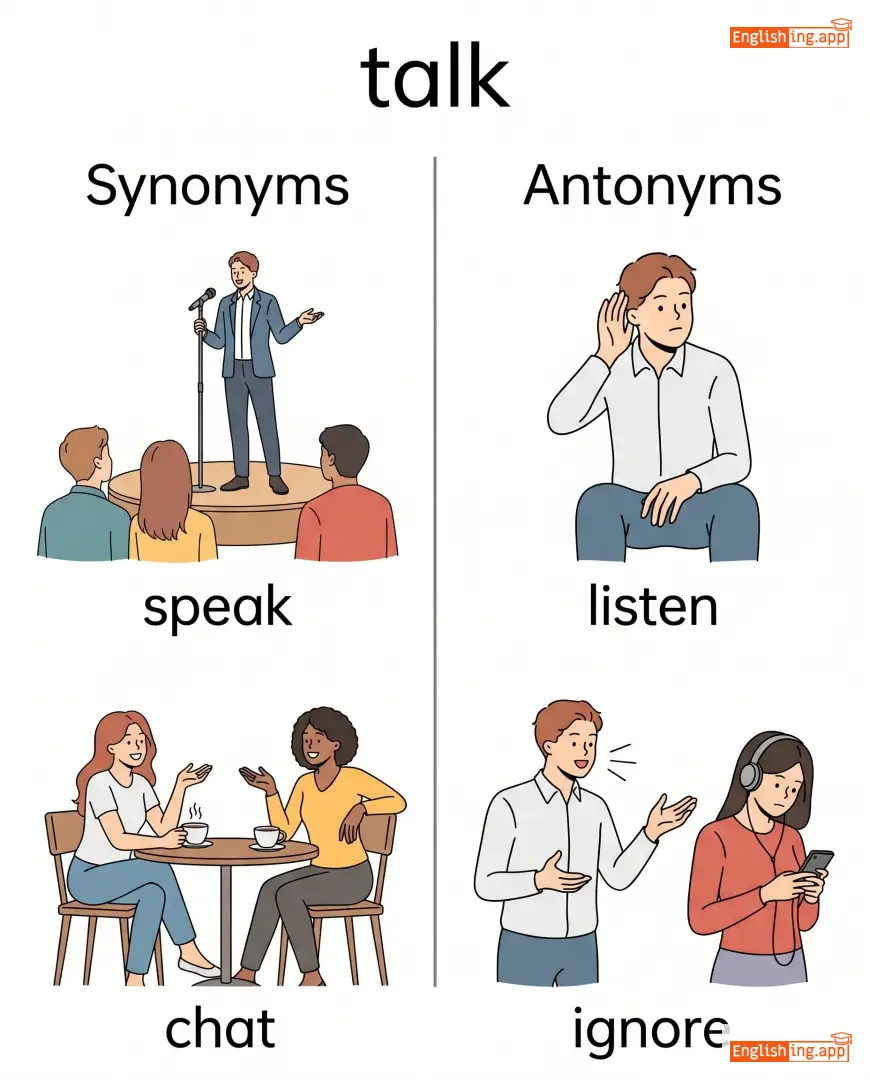
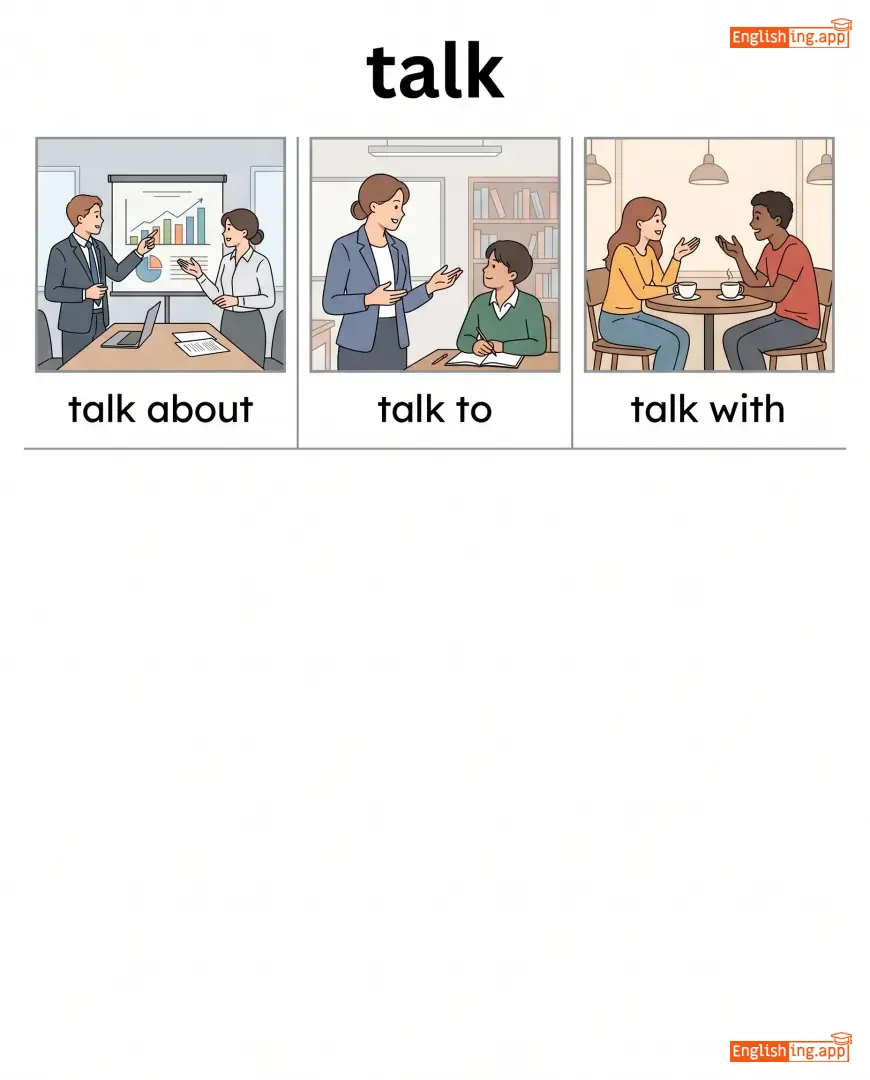
to speak; to communicate by speaking; to discuss
••••••
|
Let's talk about your future plans.
lɛts tɑk əbaʊt jɔʁ fytyʁ plɑ̃s.
••••••
|
我们来谈谈你的未来计划。
Wǒmen lái tán tán nǐ de wèilái jìhuà
••••••
|
speak, communicate, converse, discuss
••••••
|
listen, be silent, stay quiet
••••••
|
talk about, talk to, talk over, small talk, talk shop
••••••
|
No •••••• |
|
#172
🚧
|
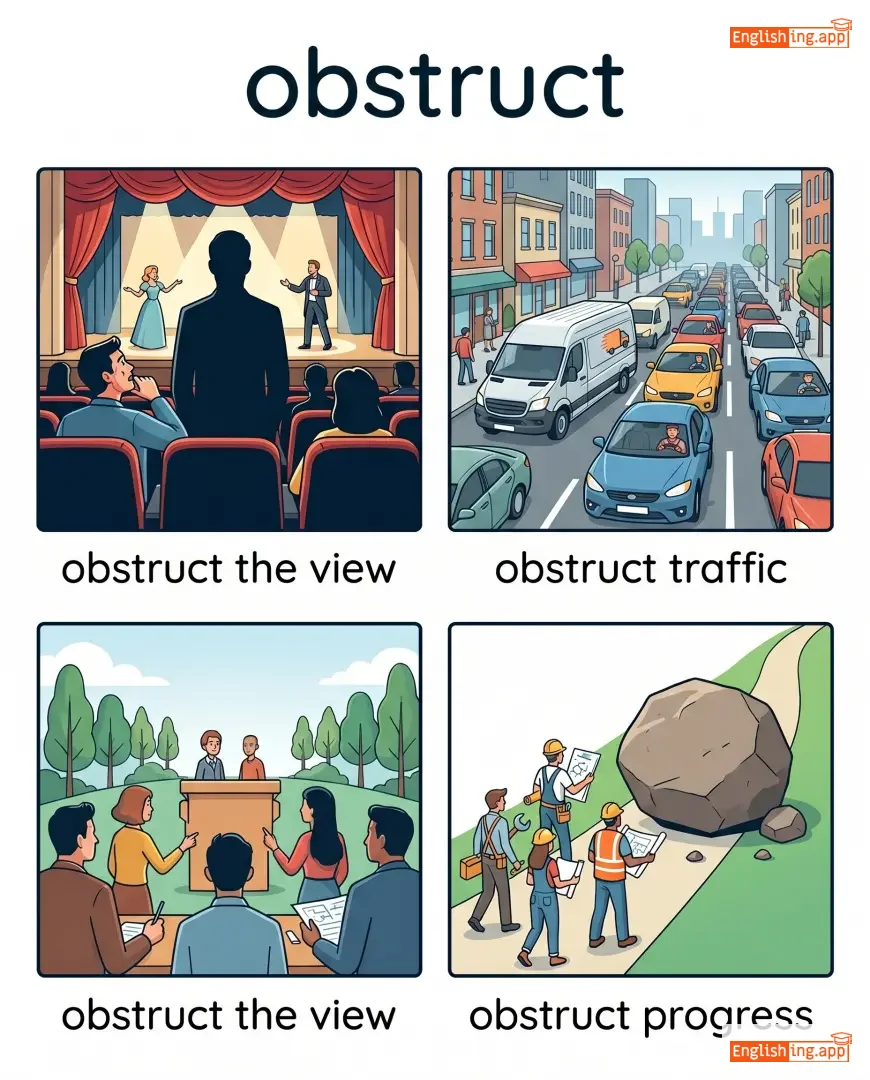
/əbˈstrʌkt/
verb
(ābùsītè)
••••••
|
|
阻碍
zǔ'ài
••••••
|
obstructed
ābùsītèd
••••••
|
obstructed
ābùsītèd
••••••
|
obstructs
ābùsītè
••••••
|
obstructing
ābùsītīng
••••••
|
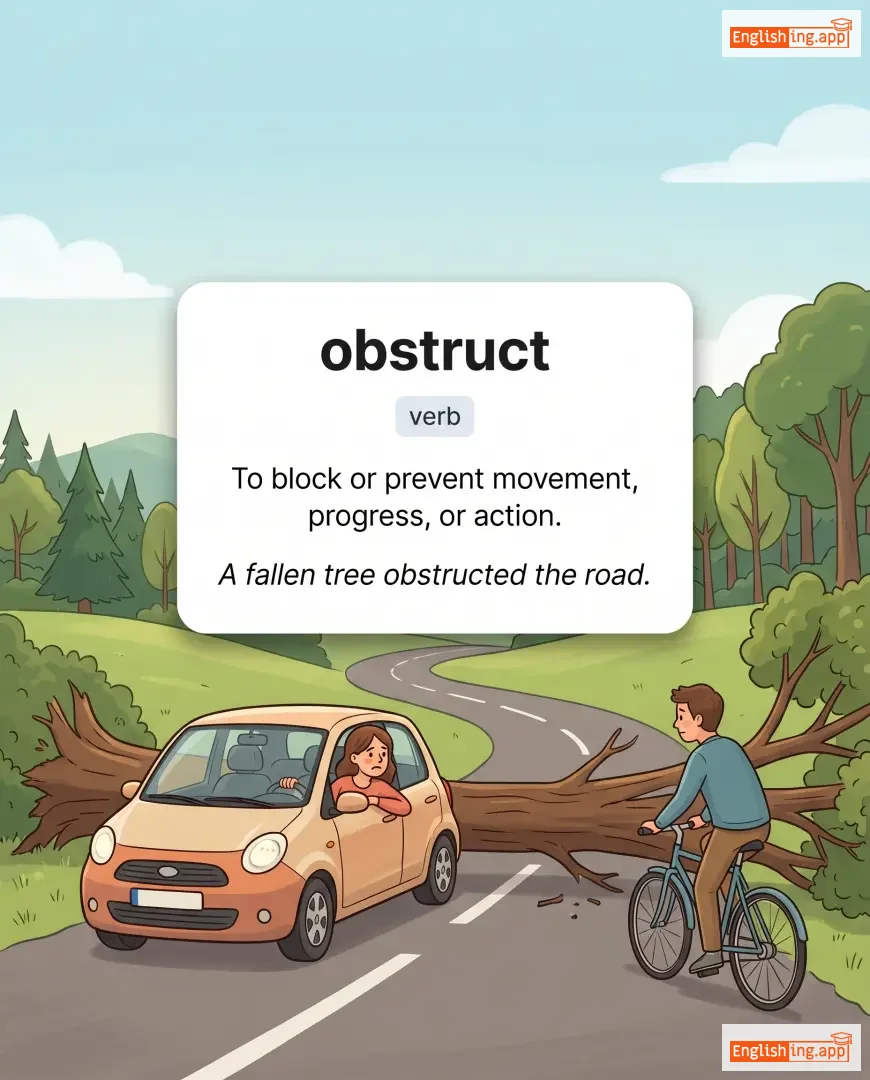
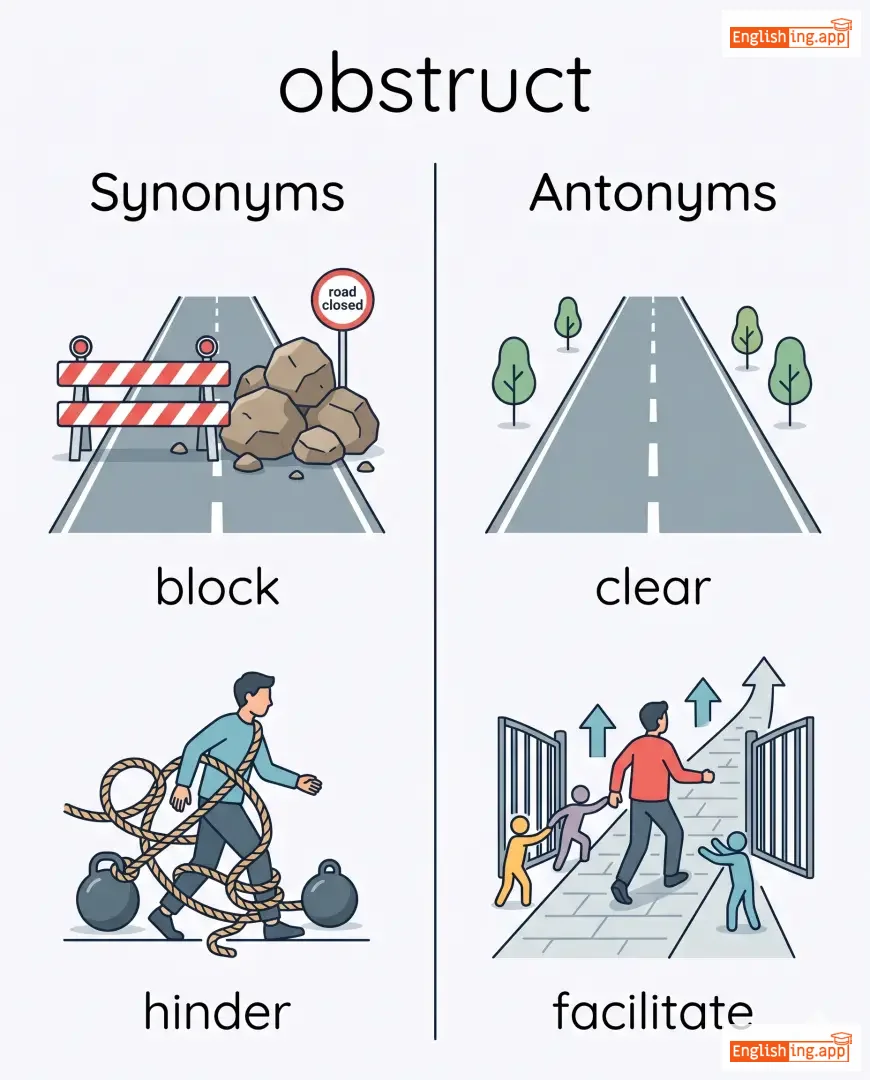
to block or hinder progress; to prevent or impede movement
••••••
|
The fallen tree obstructed the road for several hours.
倒下的树挡住了路几个小时。
••••••
|
倒下的树挡住了路几个小时。
Dǎo xià de shù dǎng zhùle lù jǐ gè xiǎoshí.
••••••
|
block, hinder, impede, obstruct
••••••
|
clear, facilitate, help, assist
••••••
|
obstruct traffic, obstruct view, obstruct justice, obstruct progress, deliberately obstruct
••••••
|
阻碍 – 树挡路,进不去!
••••••
|
|
#173
🎢
|
/θrɪl/
verb
(thrɪl)
••••••
|
|
激动
jīdòng
••••••
|
Thrilled
thrɪld
••••••
|
Thrilled
thrɪld
••••••
|
Thrills
thrɪlz
••••••
|
Thrilling
thrɪlɪŋ
••••••
|
to cause someone to feel very excited and pleased
••••••
|
The roller coaster ride thrills adventure seekers.
过山车之旅让冒险爱好者感到兴奋。
••••••
|
过山车之旅让冒险爱好者感到兴奋。
Guòshānchē zhī lǚ ràng màoxiǎn àihào zhě gǎndào xīngfèn.
••••••
|
excite, exhilarate, electrify, stimulate
••••••
|
bore, depress, calm, disappoint
••••••
|
thrill seekers, thrill ride, cheap thrill, thrill of victory, thrill to bits
••••••
|
激动就像过山车带来的刺激和兴奋。
••••••
|
|
#174
📋
|
/ˈɔːrdər/
verb
(订单)
••••••
|
|
命令
mìnglìng
••••••
|
ordered
已订购
••••••
|
ordered
已订购
••••••
|
orders
订单
••••••
|
ordering
订购中
••••••
|
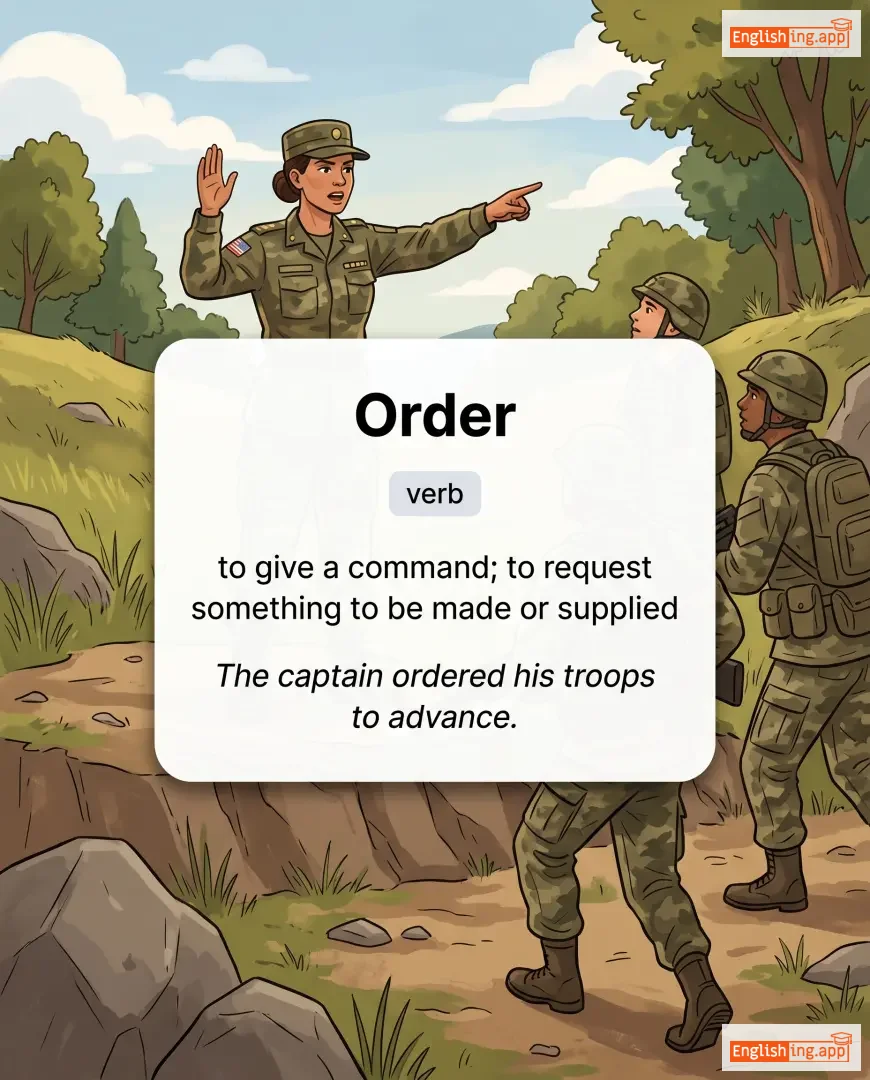
to give a command; to request something to be made or supplied
••••••
|
The captain ordered his troops to advance.
队长命令他的部队前进。
••••••
|
队长命令他的部队前进。
Duìzhǎng mìnglìng tā de bùduì qiánjìn
••••••
|
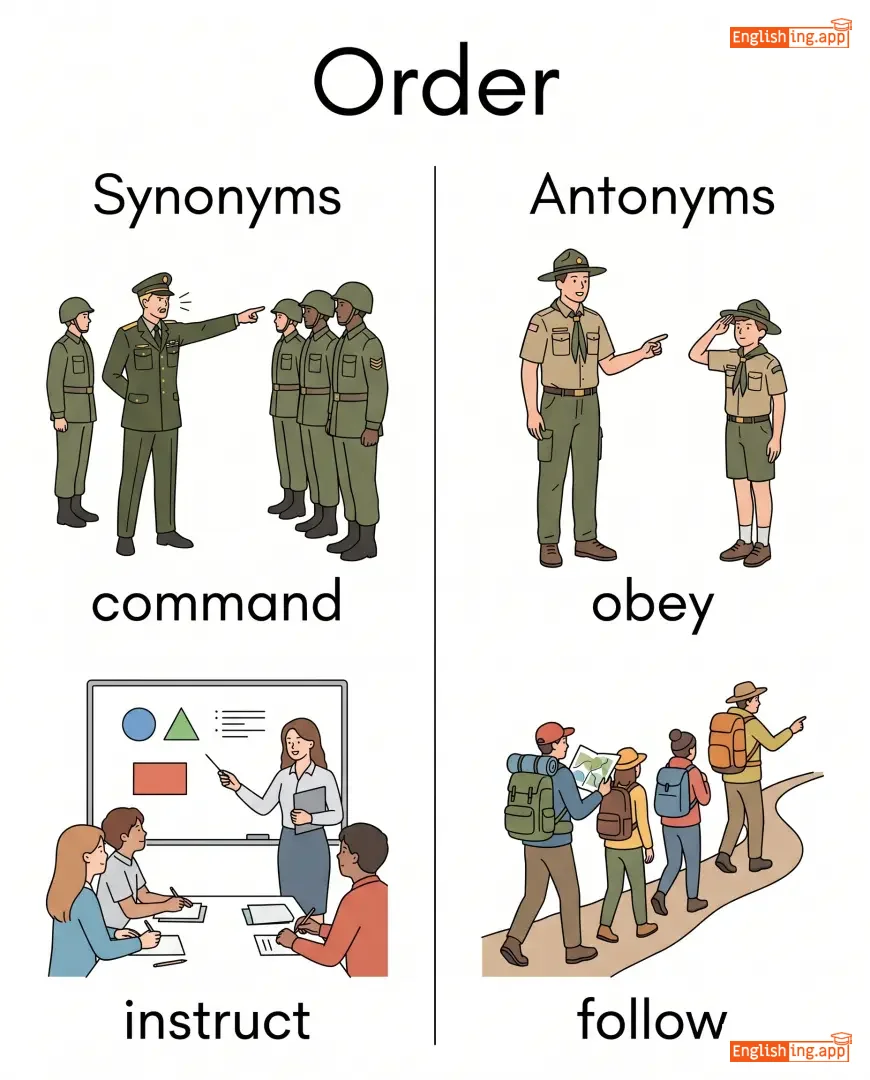
command, instruct, direct, request
••••••
|
obey, follow, comply, submit
••••••
|
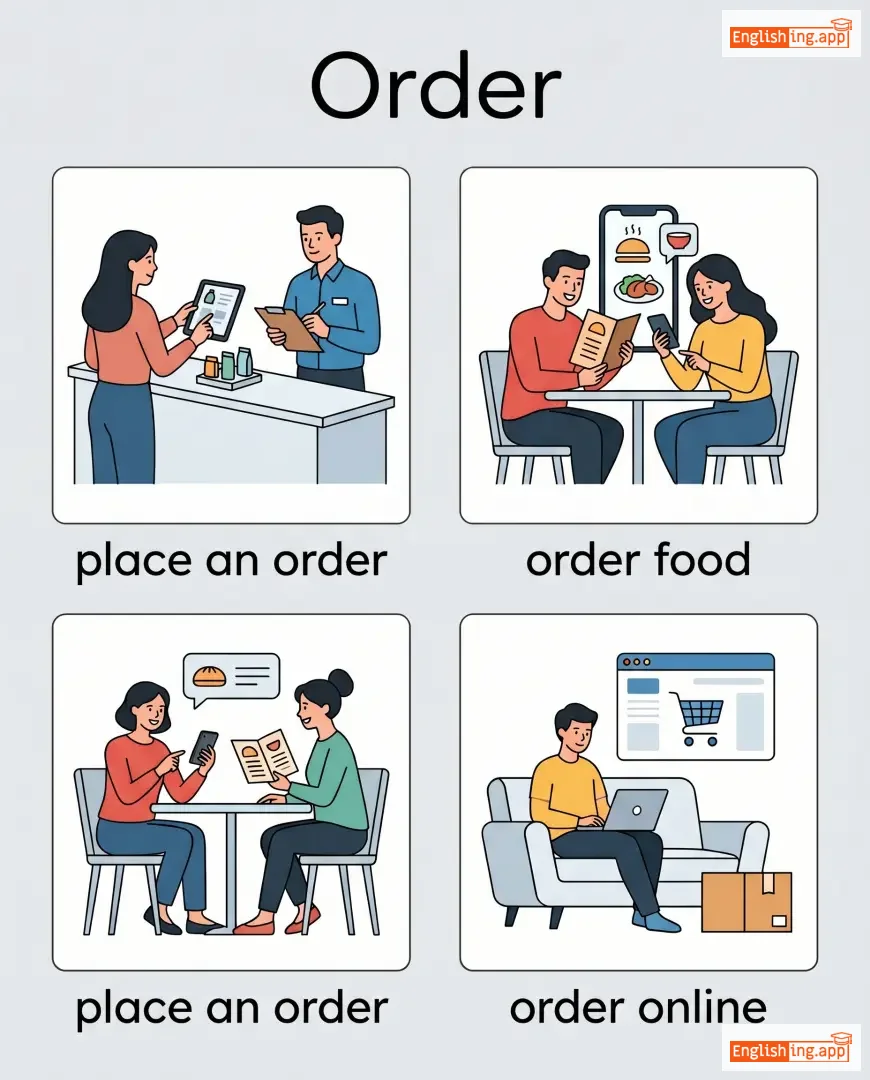
place an order, order food, order online, standing order, order of business
••••••
|
Chinese word '命令' sounds like giving orders or commands, just like placing a formal order.
••••••
|
|
#175
⏳
|
/weɪt/
verb
(wɛɪt)
••••••
|
|
等待
deng dai
••••••
|
waited
weɪtɪd
••••••
|
waited
weɪtɪd
••••••
|
waits
weɪts
••••••
|
waiting
weɪtɪŋ
••••••
|
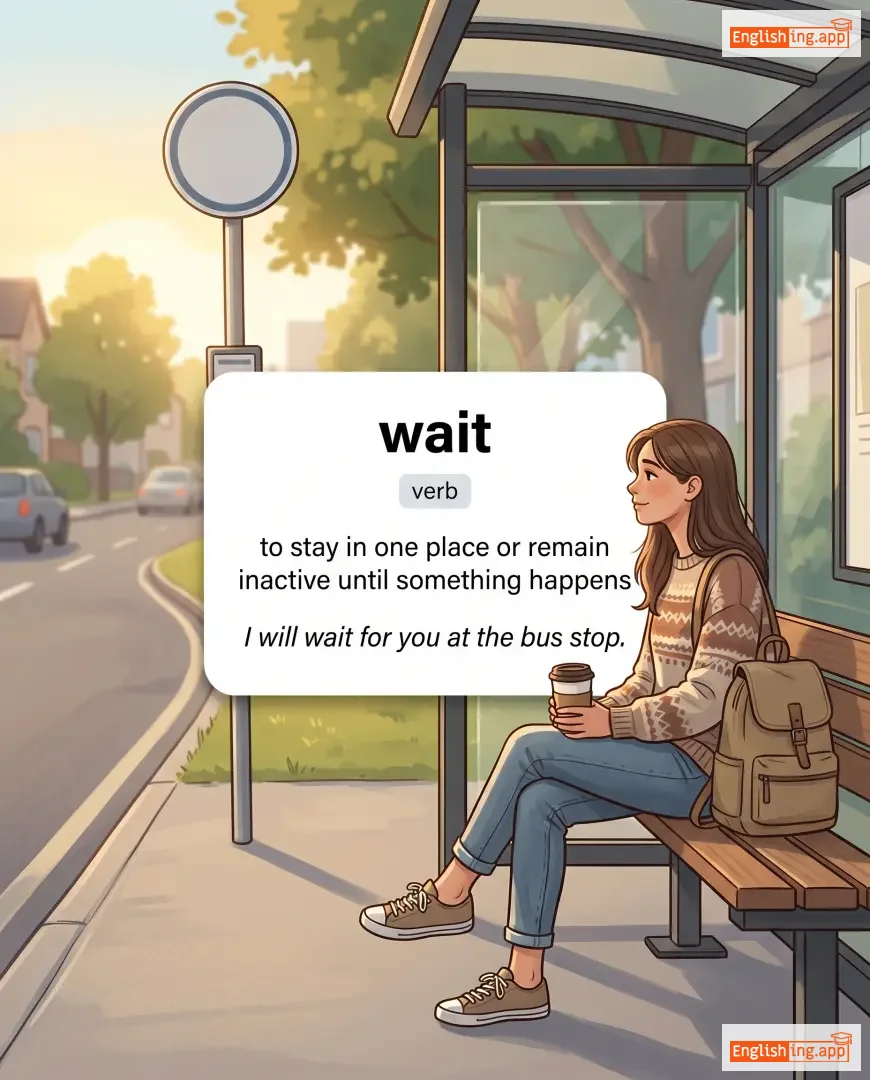
to stay in expectation; to delay action until something happens
••••••
|
Please wait here while I get the documents.
请在这里等待,我去拿文件。
••••••
|
请在这里等待,我去拿文件。
Qing zai zheli dengdai, wo qu na wenjian.
••••••
|
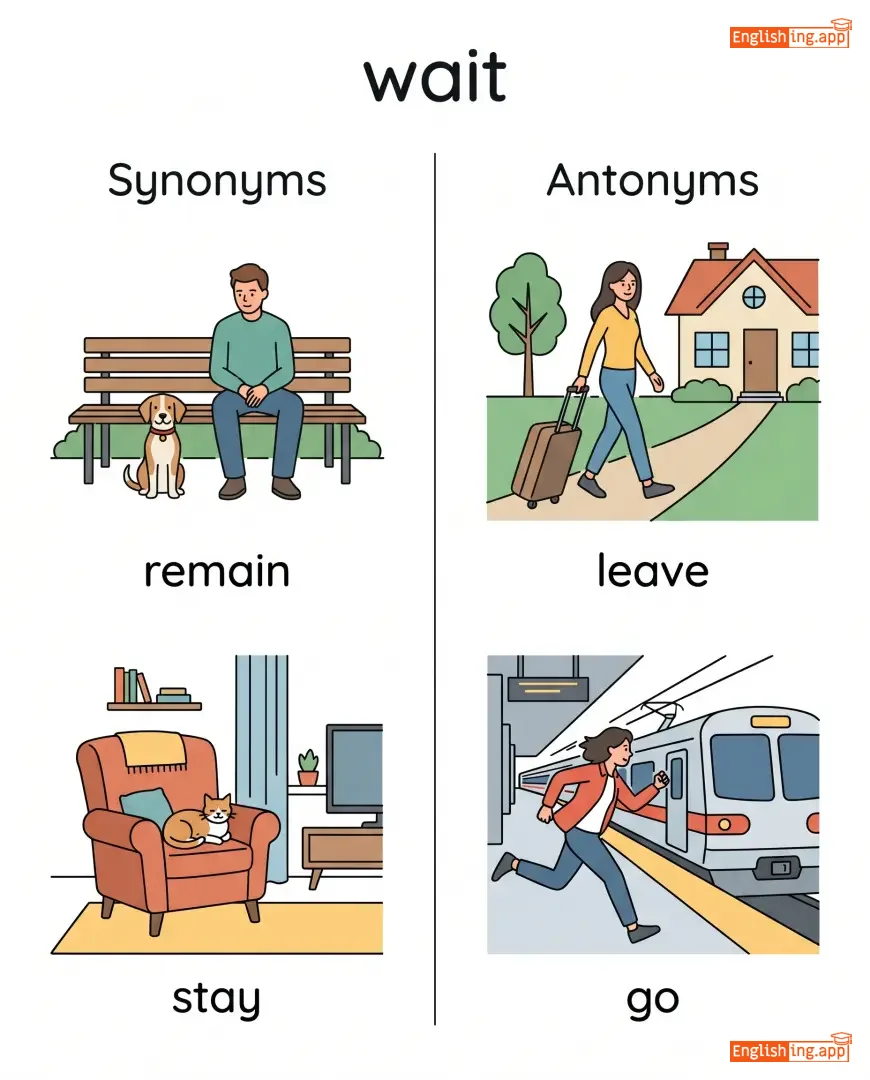
stay, remain, pause, hold, delay
••••••
|
leave, go, proceed, rush, hurry
••••••
|
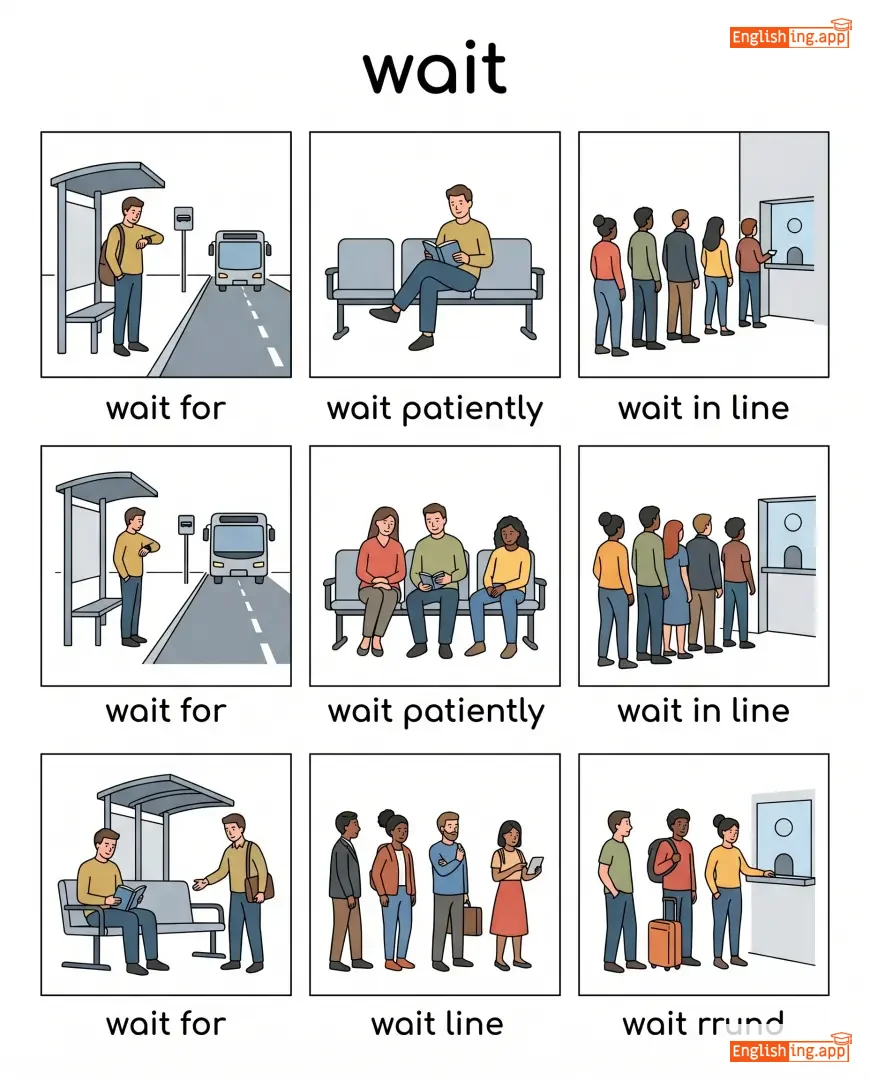
wait for, wait patiently, wait in line, wait up, long wait
••••••
|
等待就像等公交车。
••••••
|
|
#176
🧍
|
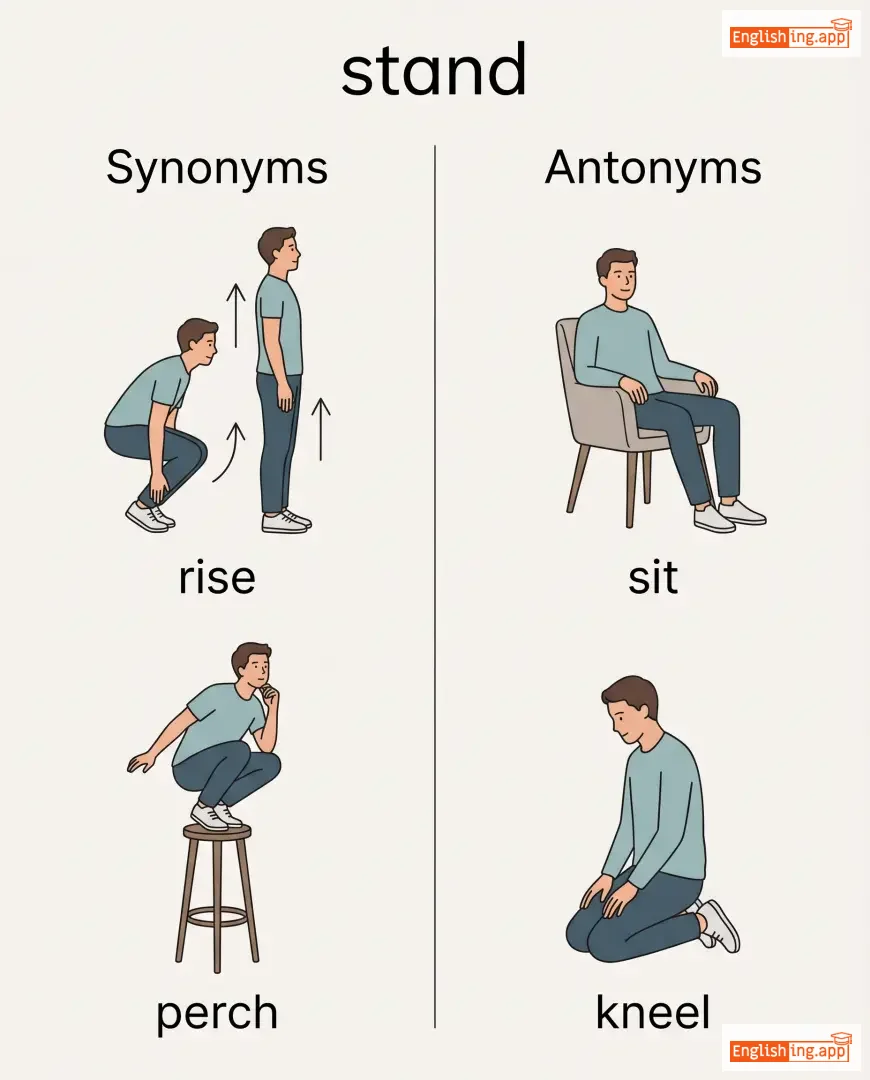
/stænd/
verb
(站立)
••••••
|
|
站立
zhan li
••••••
|
stood
站立
••••••
|
stood
站立
••••••
|
stands
站立
••••••
|
standing
站立
••••••
|
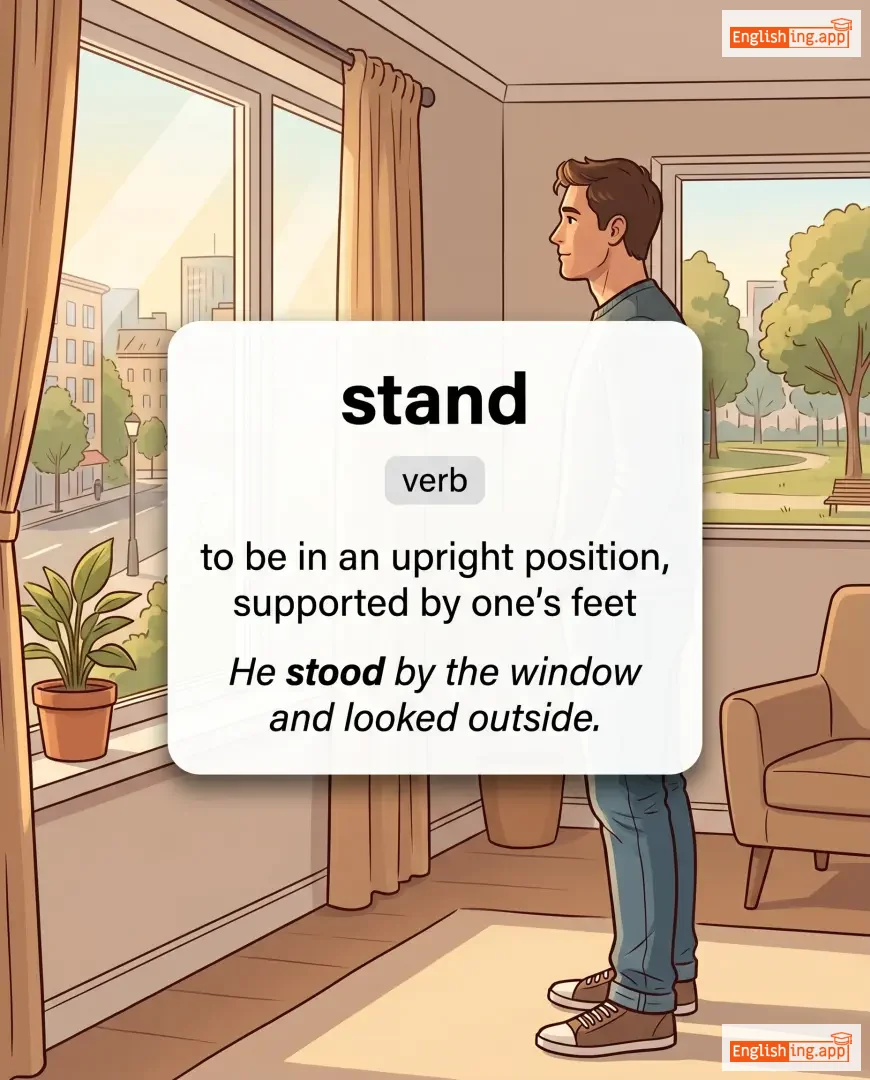
to be in an upright position; to tolerate or endure
••••••
|
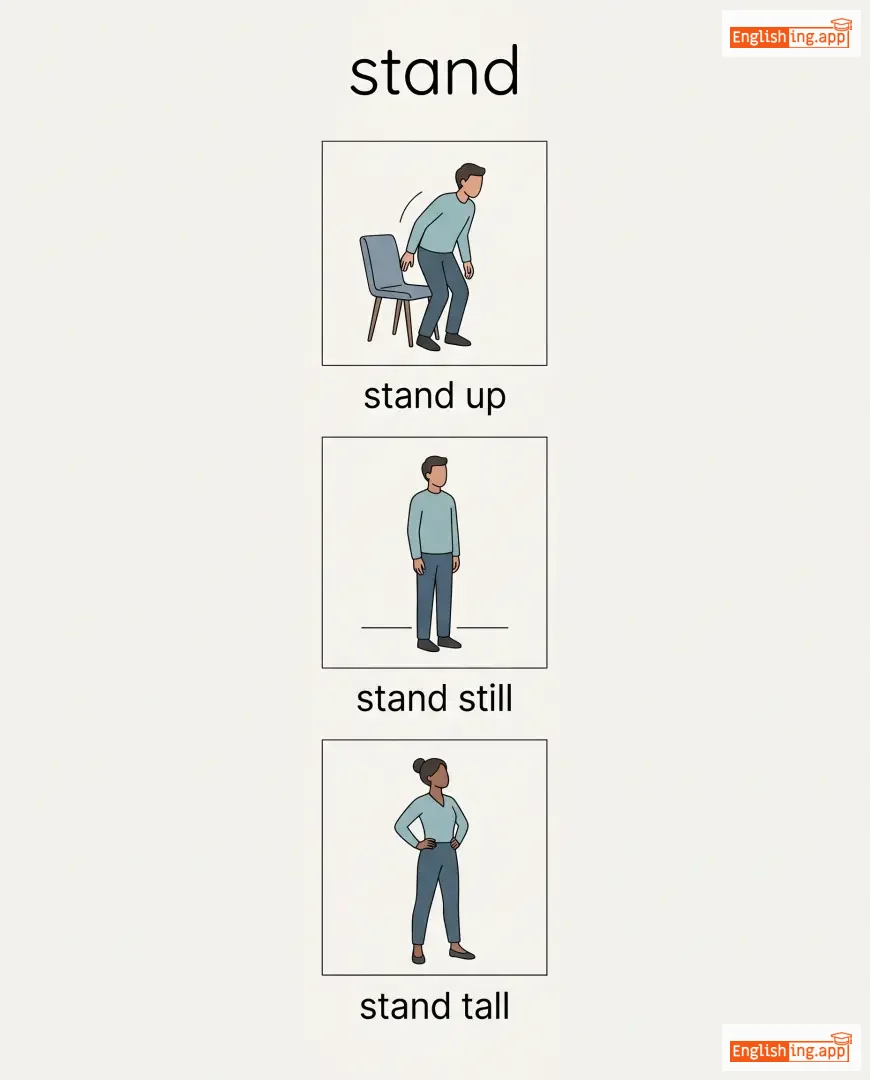
Please stand up when the teacher enters.
当老师进来时请站起来。
••••••
|
当老师进来时请站起来。
Dang laoshi jinlai shi qing zhan qilai.
••••••
|
rise, upright, endure, tolerate
••••••
|
sit, lie, fall, collapse
••••••
|
stand up, stand still, stand by, stand for, take a stand
••••••
|
像士兵一样站立,保持姿势。
••••••
|
|
#177
😊
|
/ɪnˈdʒɔɪ/
verb
(享受)
••••••
|
|
享受
xiangshou
••••••
|
enjoyed
享受
••••••
|
enjoyed
享受
••••••
|
enjoys
享受
••••••
|
enjoying
享受
••••••
|
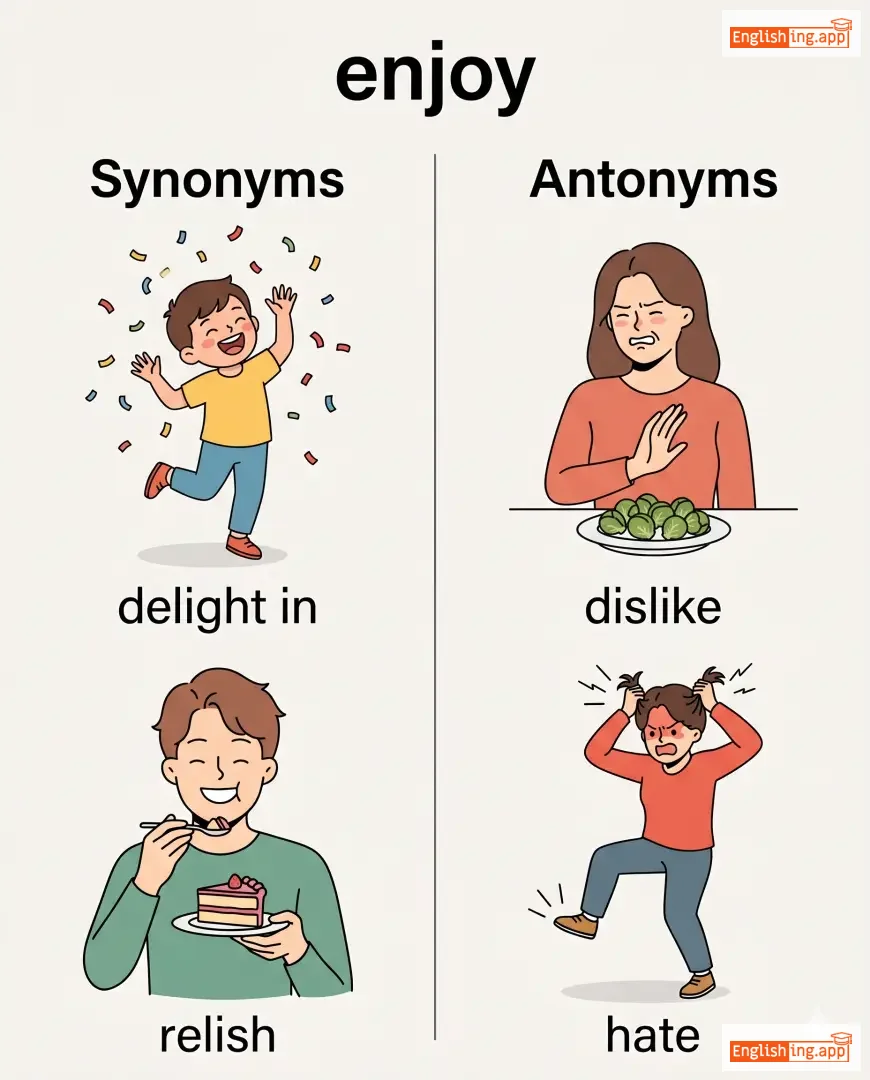
to take pleasure in; to have a good time
••••••
|
I enjoy reading books in my free time.
我在空闲时间享受阅读书籍。
••••••
|
我在空闲时间享受阅读书籍。
Wo zai kongxian shijian xiangshou yuedu shuju.
••••••
|
like, love, appreciate, relish
••••••
|
dislike, hate, detest, loathe
••••••
|
enjoy yourself, enjoy life, enjoy doing, thoroughly enjoy, enjoy the moment
••••••
|
享受 means enjoying; take pleasure in books during free time.
••••••
|
|
#178
🚧
|
/ˈhæmpər/
verb
(hāmpèi)
••••••
|
|
妨碍
fáng'ài
••••••
|
hampered
hāmpèi dé
••••••
|
hampered
hāmpèi dé
••••••
|
hampers
hāmpèi ěr sī
••••••
|
hampering
hāmpèi rìng
••••••
|
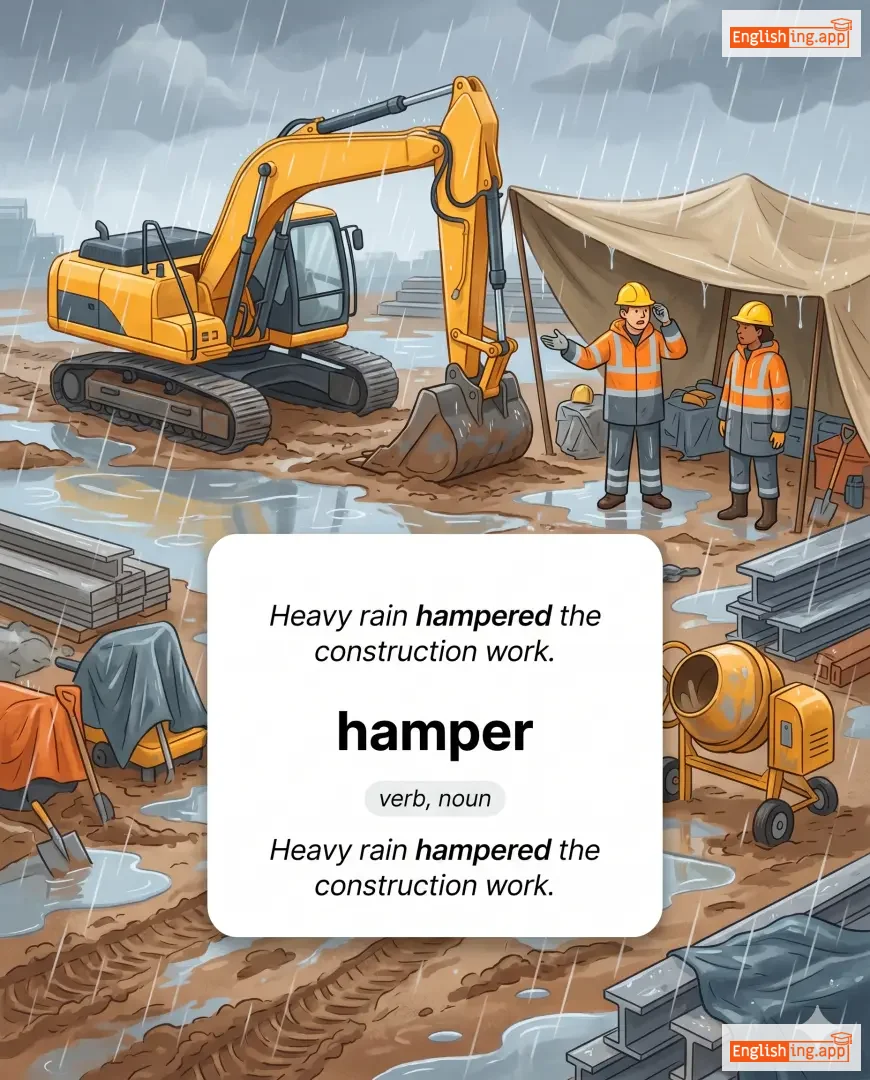
to hinder or impede the movement or progress of
••••••
|
The heavy rain hampered our travel plans.
大雨阻碍了我们的旅行计划。
••••••
|
大雨妨碍了我们的旅行计划。
Dàyǔ fáng'ài le wǒmen de lǚxíng jìhuà.
••••••
|
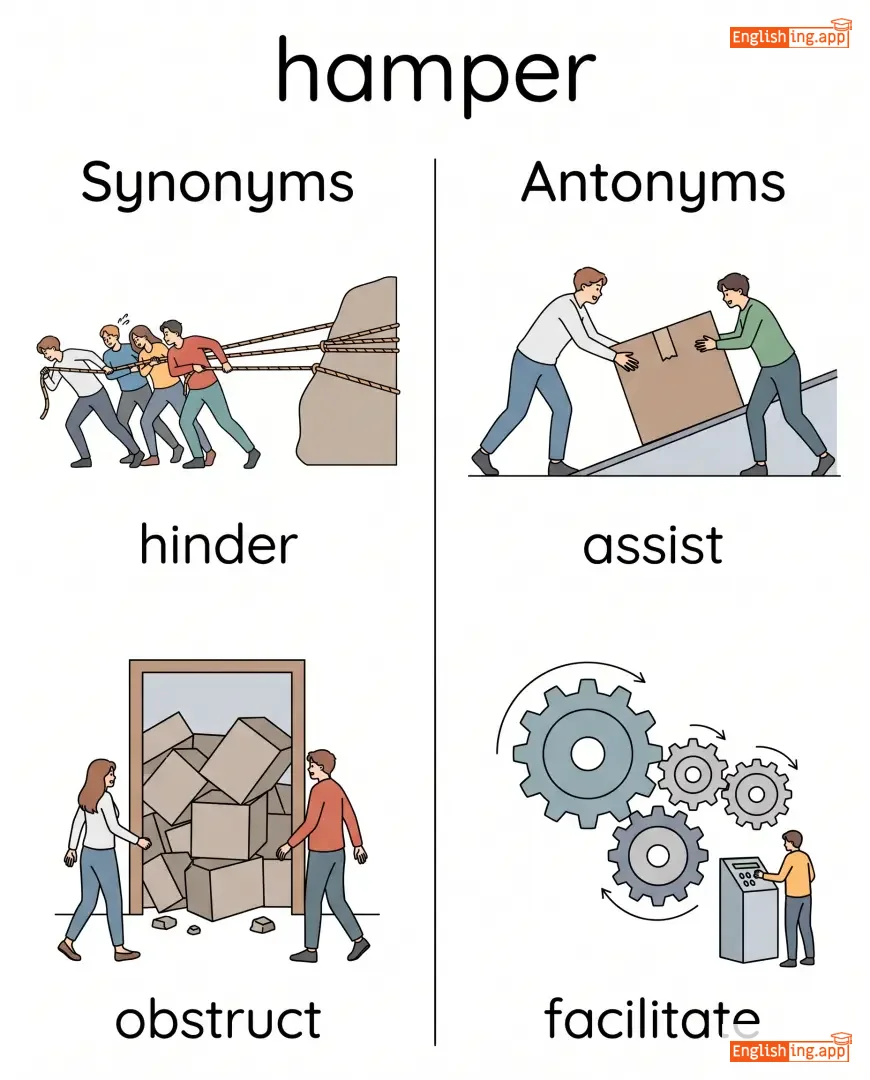
hinder, obstruct, impede, restrict
••••••
|
help, assist, facilitate, aid
••••••
|
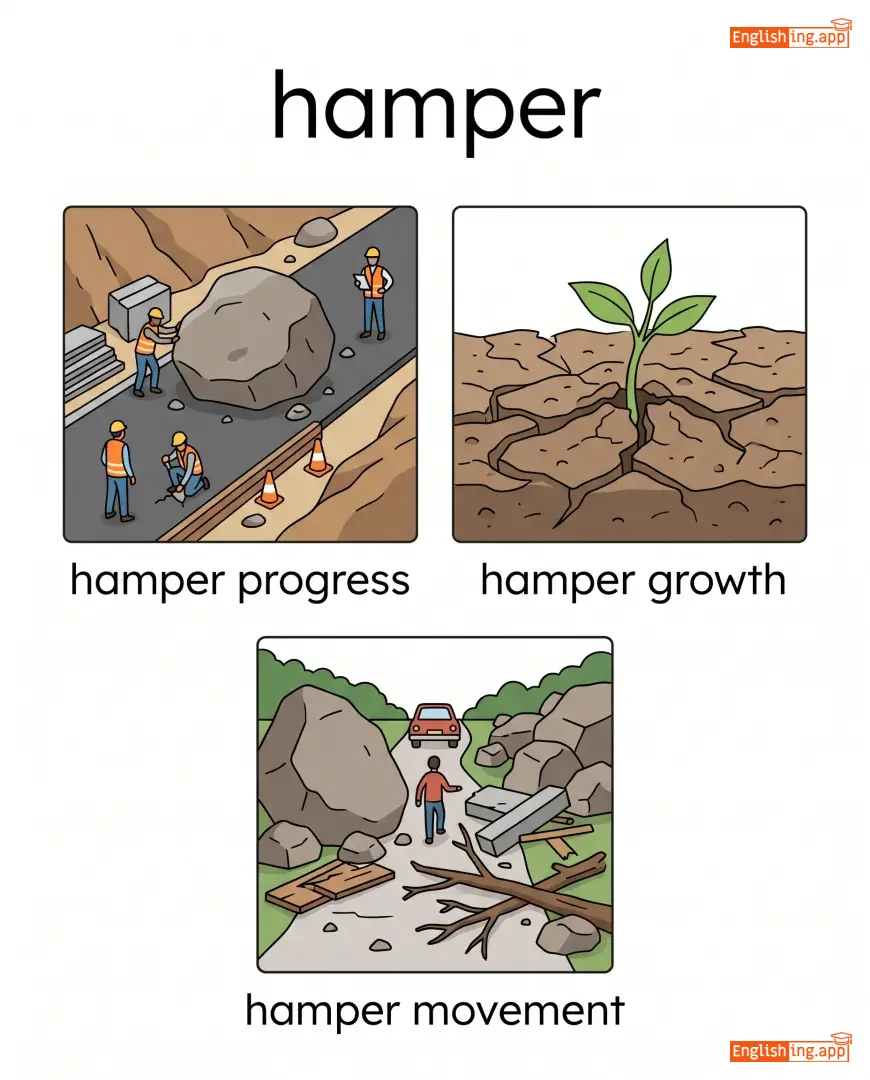
hamper progress, hamper efforts, hamper growth, badly hampered, hamper development
••••••
|
妨碍就是阻止进展,像'hampér'一样。
••••••
|
Vocabulary Quiz
Test your vocabulary by matching words with their translations or meanings.
Login to take the quiz
Comments (0)
Share your thoughts and join the discussion.
Join the discussion by logging in
Login to CommentNo comments yet
Be the first to share your thoughts!