


















Swipe left or right, or use the buttons. Tap image to zoom.
例句翻译
单词
Lesson 4: Mastering the Most Frequent Verbs & TensesLesson 4: Mastering the Most Frequent Verbs & Tenses - 遮罩切换
|
表情符号
|
单词 | Images | 翻译 | 过去时 | 过去分词 | 第三人称单数 | 动名词 | 含义 | 例句 | 例句翻译 | 同义词 | 反义词 | 搭配词 | 助记符 |
|---|---|---|---|---|---|---|---|---|---|---|---|---|---|---|
|
#90
🤝
|
/juˈnaɪt/
verb
(尤奈特)
••••••
|
|
联合
liánhé
••••••
|
united
尤奈特德
••••••
|
united
尤奈特德
••••••
|
unites
尤奈特斯
••••••
|
uniting
尤奈特英
••••••
|
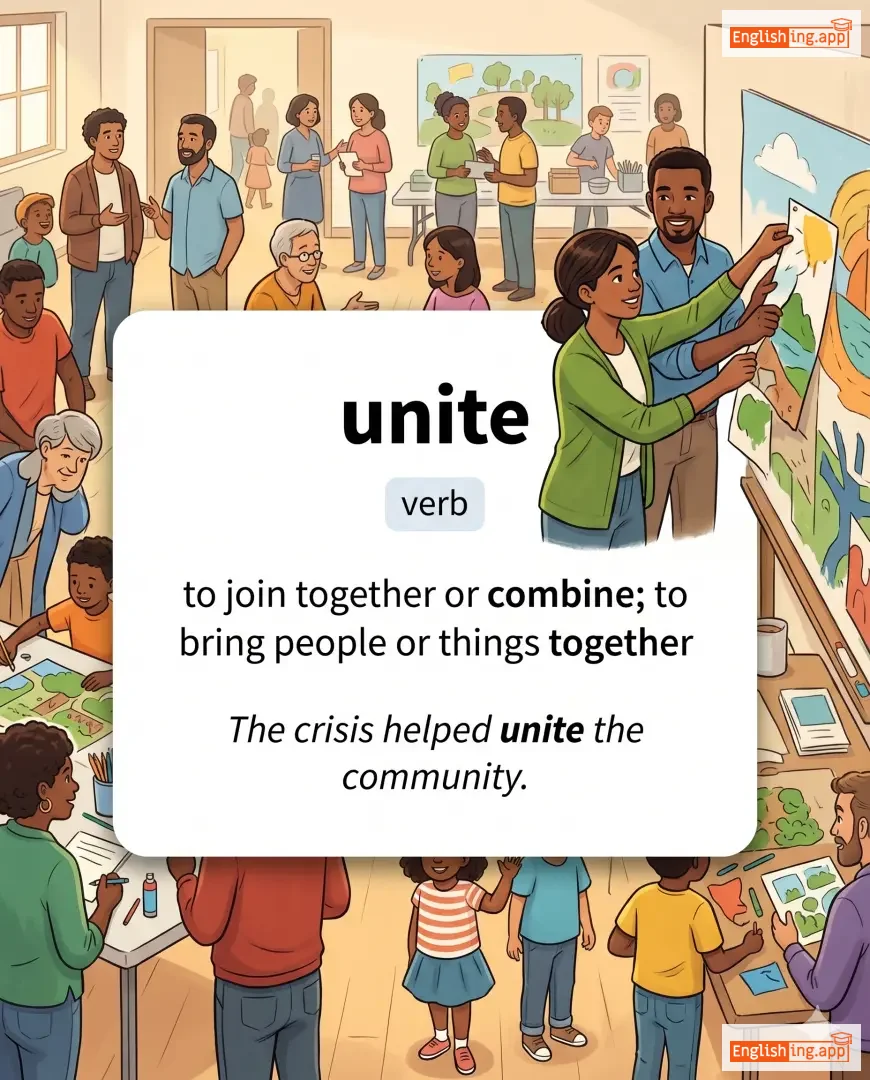
to join together or combine; to bring people or things together
••••••
|
The crisis helped unite the community.
危机帮助团结了社区。
••••••
|
危机帮助团结了社区。
Wéijī bāngzhù tuánjiéle shèqū.
••••••
|
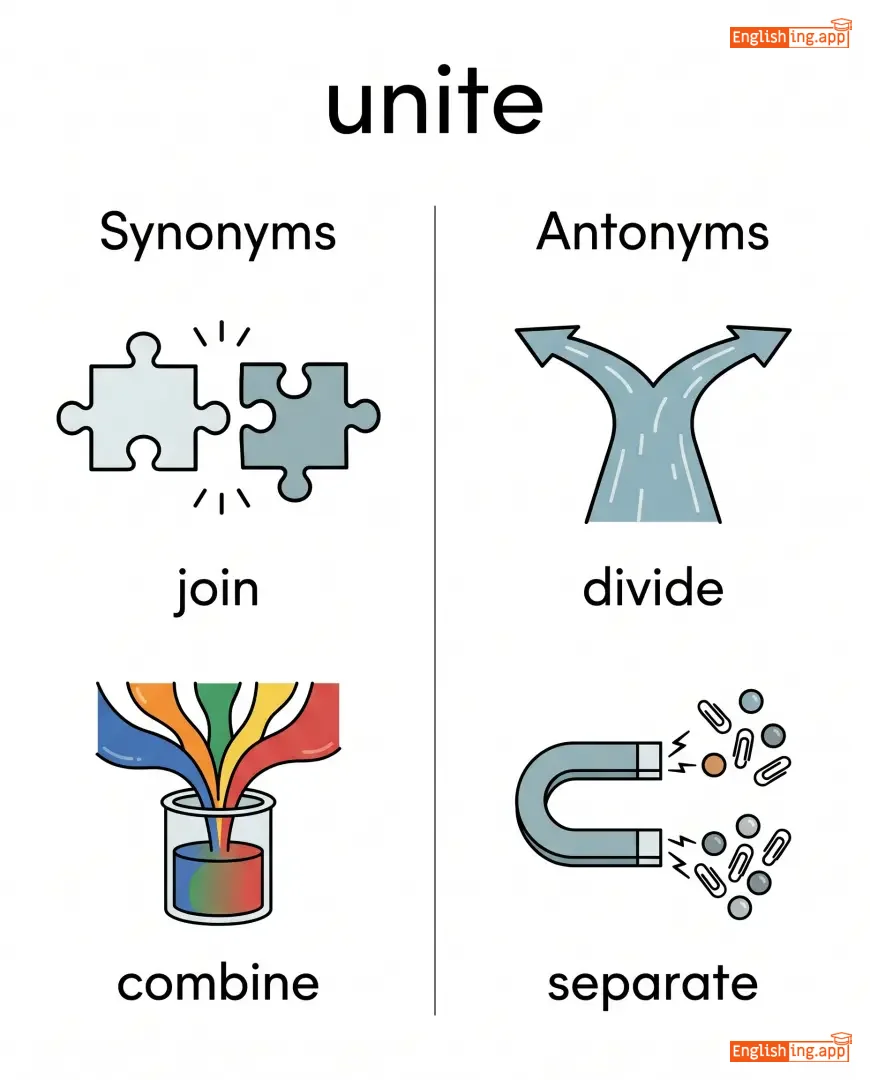
join, combine, merge, connect
••••••
|
divide, separate, split
••••••
|
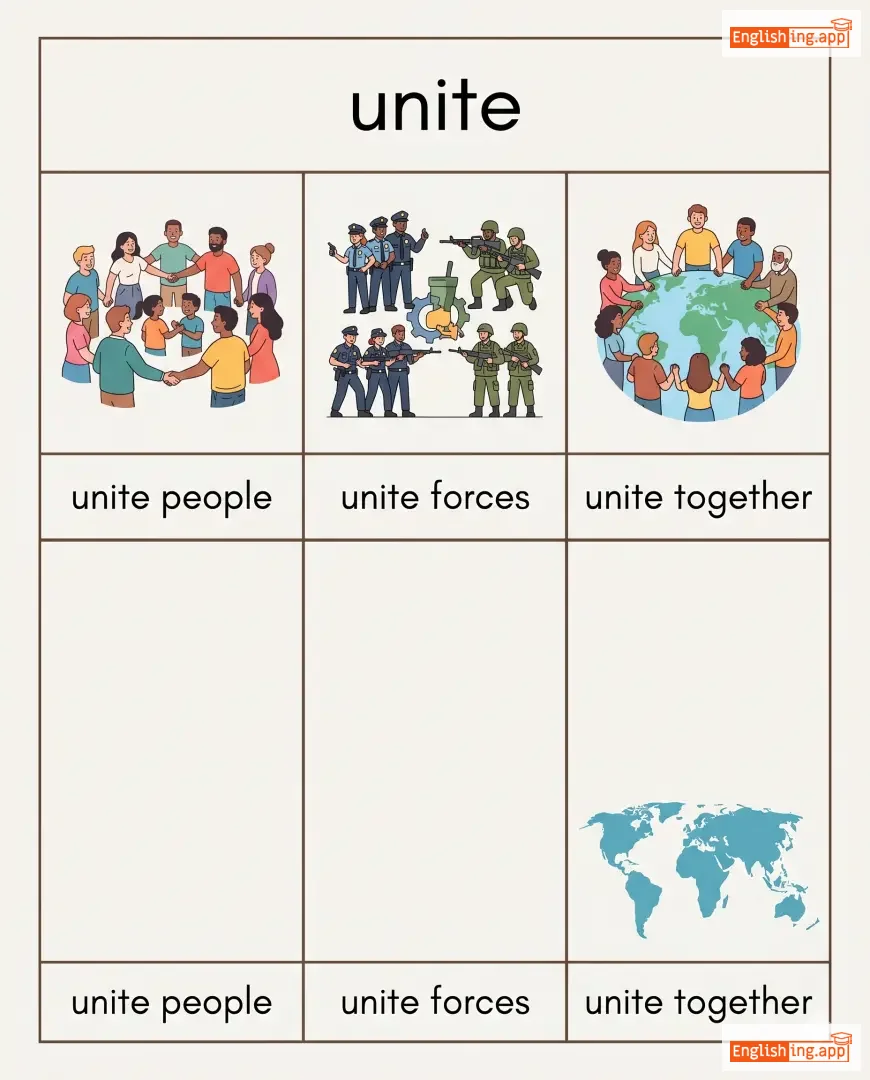
unite people, unite forces, unite together, unite against
••••••
|
No •••••• |
|
#91
🤗
|
/kənˈsoʊl/
verb
(kənˈsoʊl)
••••••
|
- •••••• |
安慰
ānwèi
••••••
|
consoled
kənˈsoʊld
••••••
|
consoled
kənˈsoʊld
••••••
|
consoles
kənˈsoʊlz
••••••
|
consoling
kənˈsoʊlɪŋ
••••••
|
to comfort someone who is sad or disappointed; to provide solace
••••••
|
She tried to console her friend after the loss.
她试图在失落后安慰她的朋友。
••••••
|
她试图在失落后安慰她的朋友。
Tā shìtú zài shīluò hòu ānwèi tā de péngyǒu.
••••••
|
comfort, soothe, reassure, support
••••••
|
upset, distress, agitate, disturb
••••••
|
console someone, console gently, try to console, console friend
••••••
|
安慰就像给心灵一个拥抱。
••••••
|
|
#92
🧊
|
/mɛlt/
verb
(melt)
••••••
|
|
融化
róng huà
••••••
|
melted
melted
••••••
|
melted
melted
••••••
|
melts
melts
••••••
|
melting
melting
••••••
|
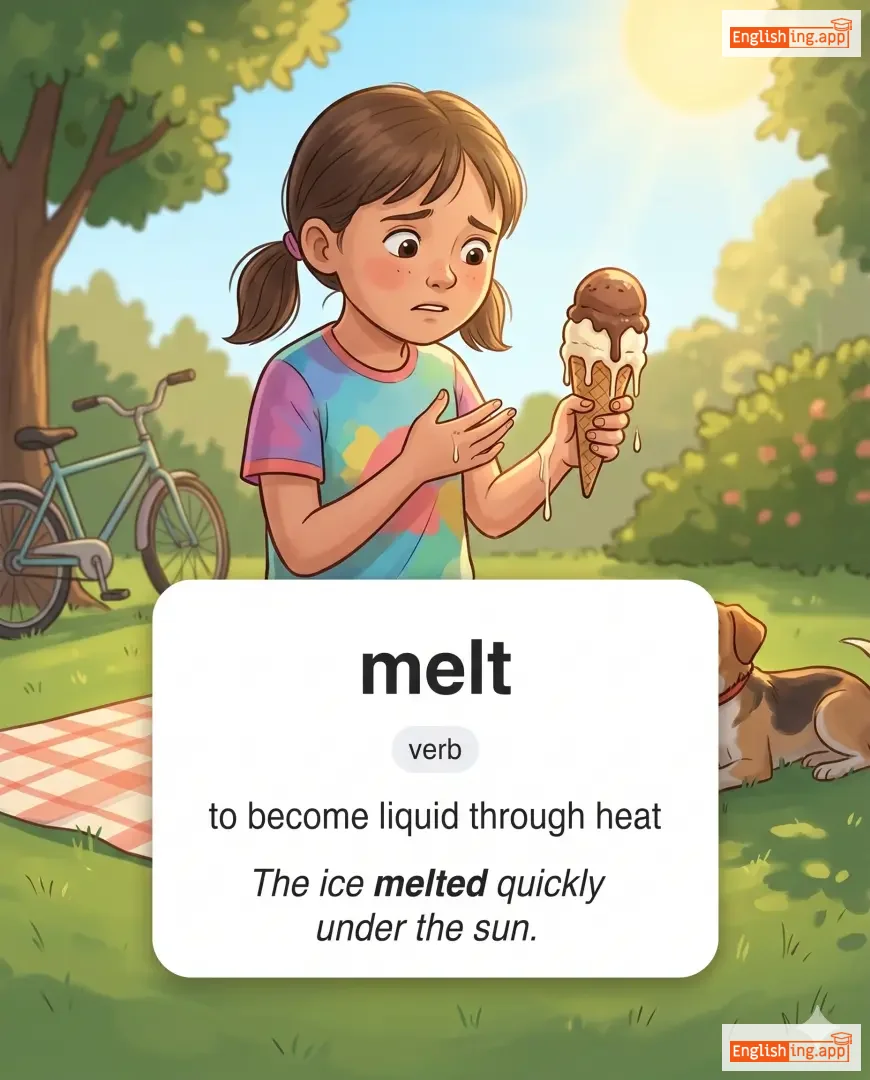
to change from solid to liquid due to heat; to disappear gradually
••••••
|
The ice melted in the sun.
The ice melted in the sun.
••••••
|
冰在太阳下融化了。
Bīng zài tàiyáng xià róng huà le.
••••••
|
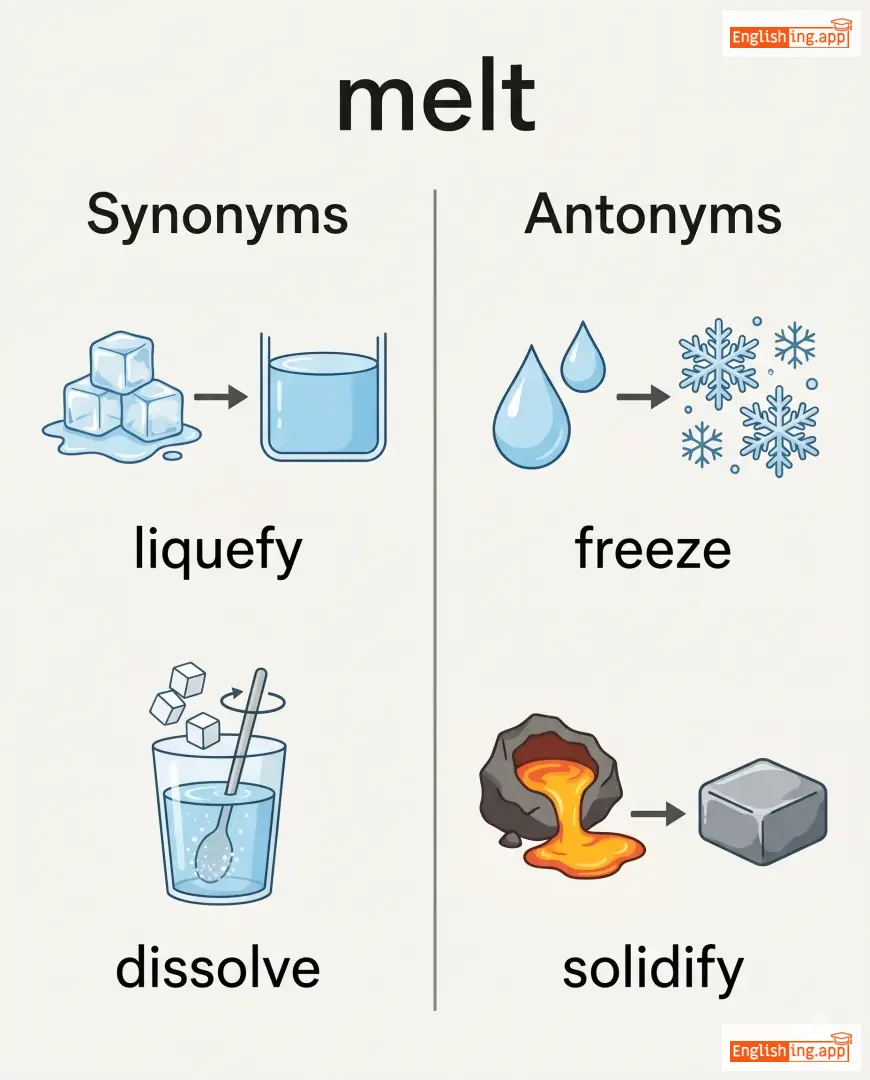
dissolve, thaw, liquefy, soften
••••••
|
freeze, solidify, harden
••••••
|
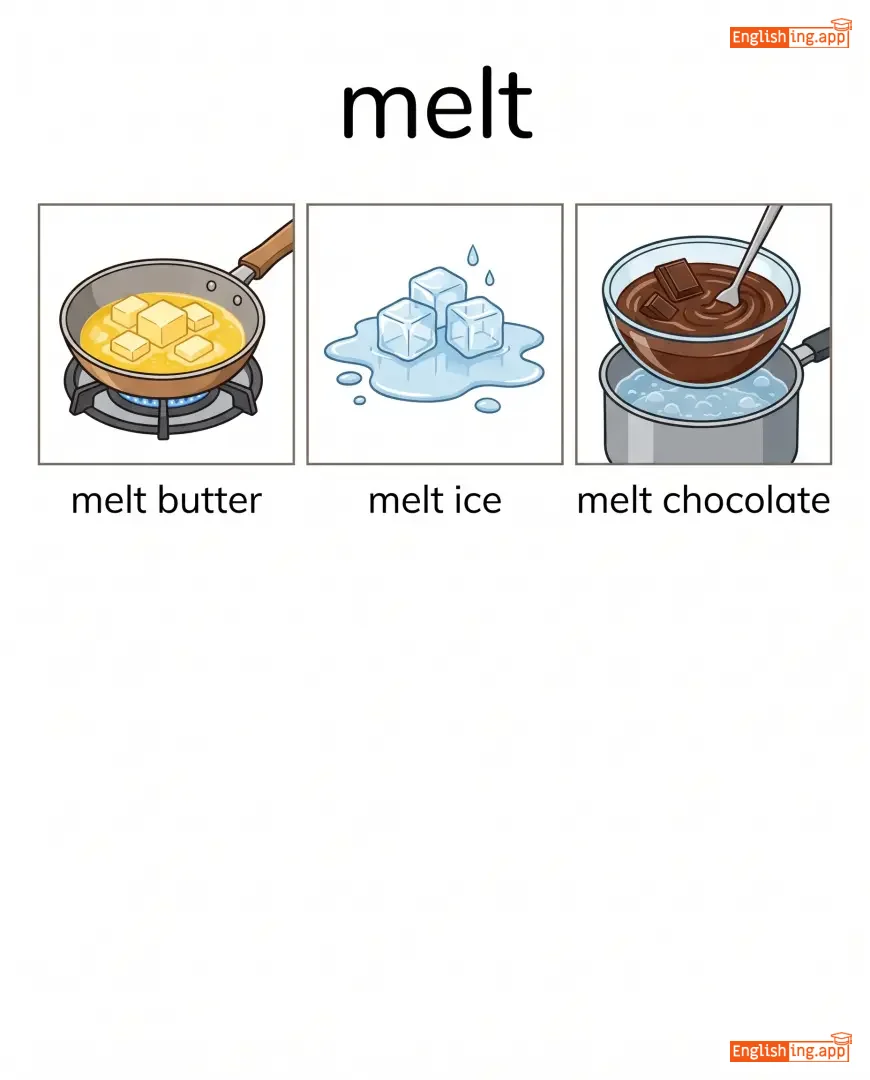
melt ice, melt butter, melt away, slowly melt
••••••
|
冰块在阳光下融化成水。
••••••
|
|
#93
🌊
|
/floʊ/
verb
(flou)
••••••
|
|
流动
liúdòng
••••••
|
flowed
floud
••••••
|
flowed
floud
••••••
|
flows
floss
••••••
|
flowing
flowing
••••••
|
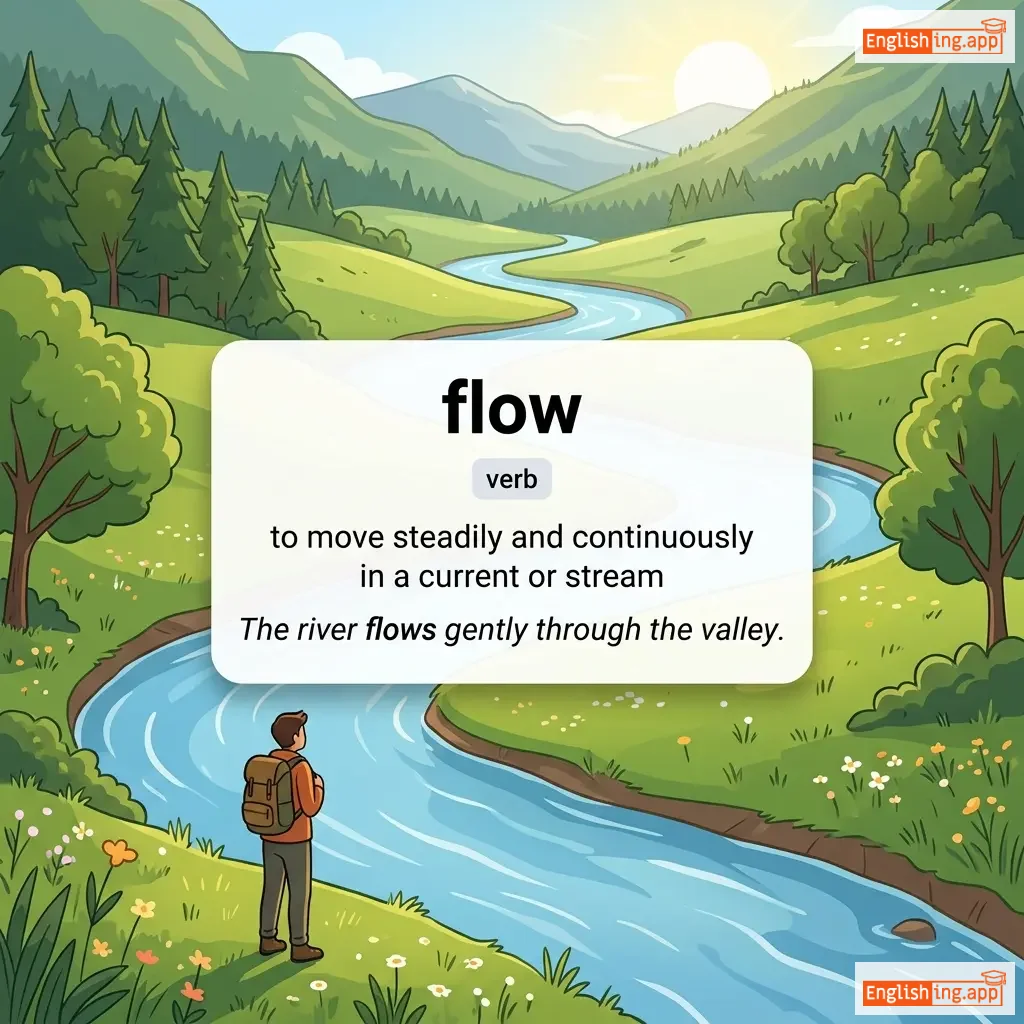
to move steadily and continuously in a particular direction
••••••
|
Water flows down the river.
水流向河流。
••••••
|
水流向河流。
Shuǐ liú xiàng héliú.
••••••
|
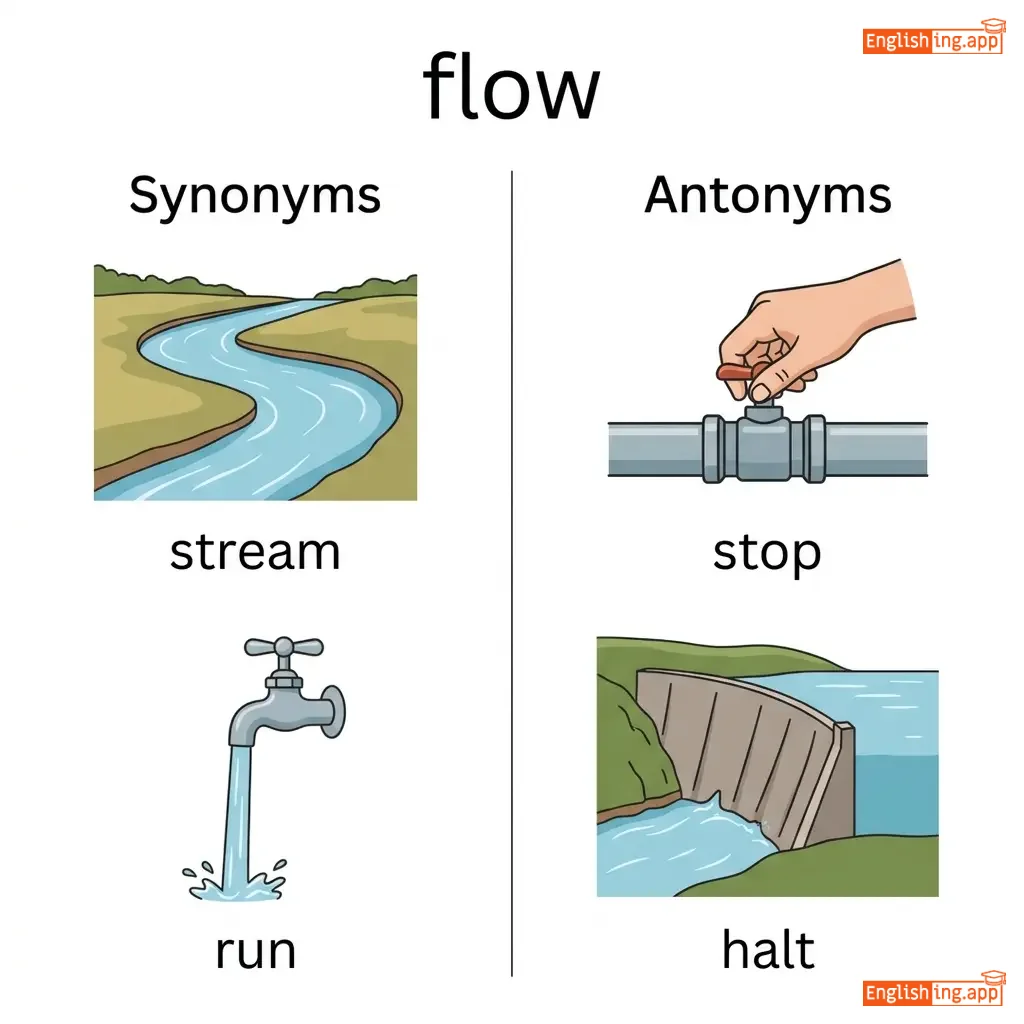
stream, run, pour, glide
••••••
|
stop, stagnate, block, halt
••••••
|
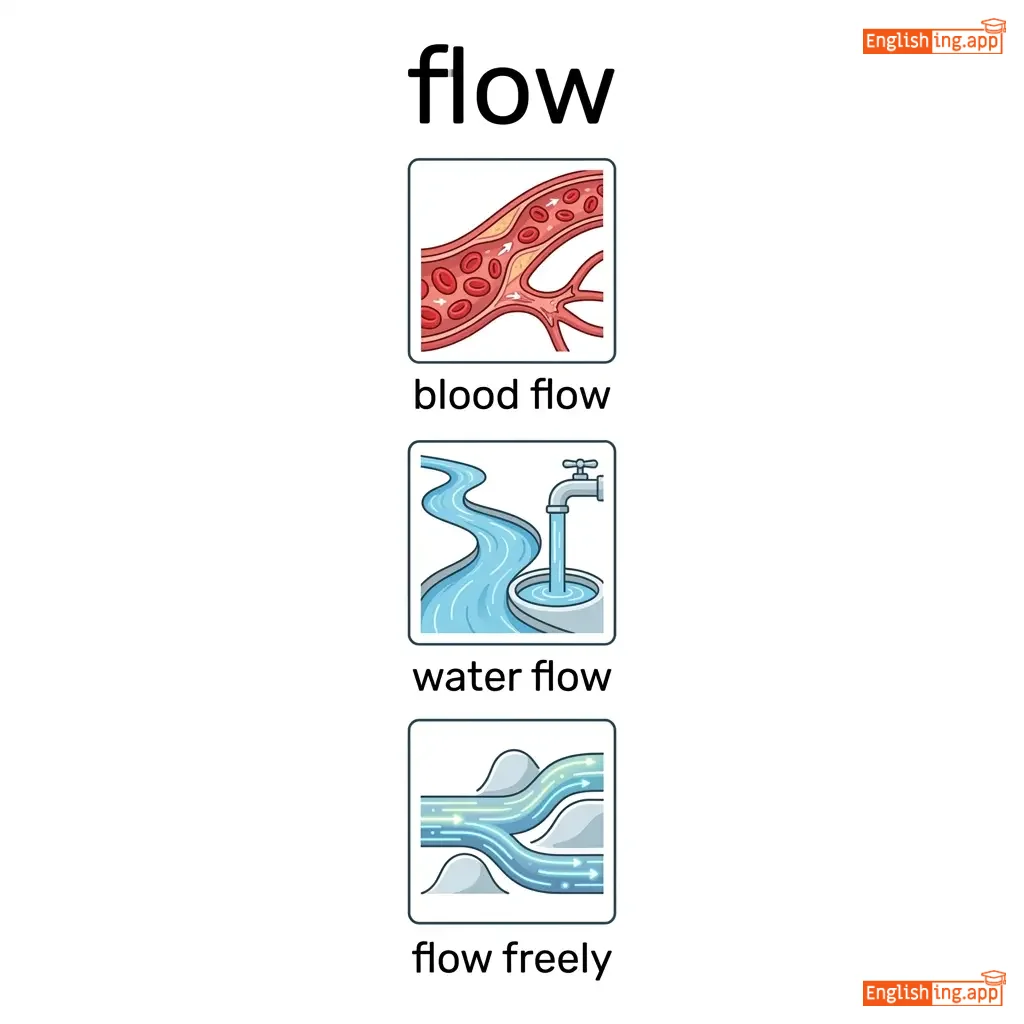
flow freely, flow smoothly, cash flow, traffic flow
••••••
|
水流动,意味着它朝着一个方向稳定流动。
••••••
|
|
#94
🚪
|
/stʌk/
verb
(sī tè kè)
••••••
|
|
卡住
kǎ zhù
••••••
|
stuck
sī tè kè
••••••
|
stuck
sī tè kè
••••••
|
sticks
sticks
••••••
|
sticking
sticking
••••••
|
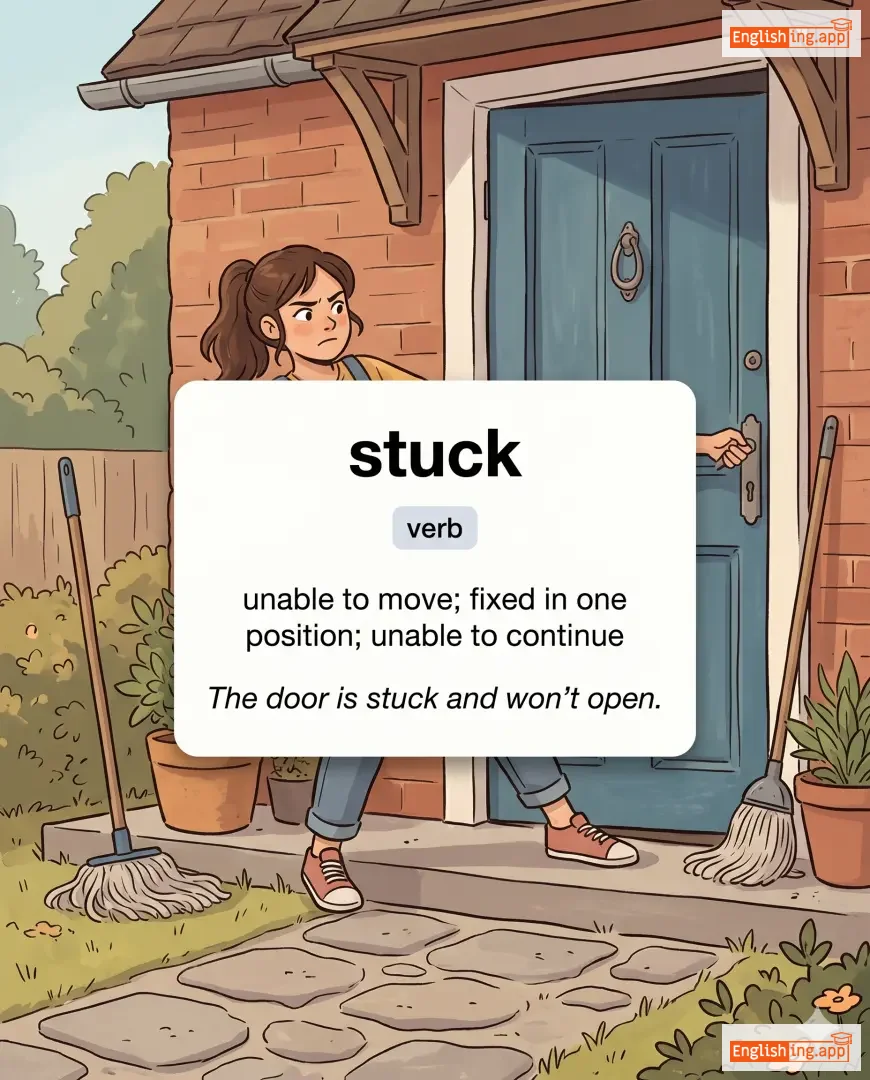
unable to move; fixed in one position; unable to continue
••••••
|
The door is stuck and won't open.
门被卡住了,打不开。
••••••
|
门被卡住了,打不开。
Mén bèi kǎ zhù le, dǎ bù kāi
••••••
|
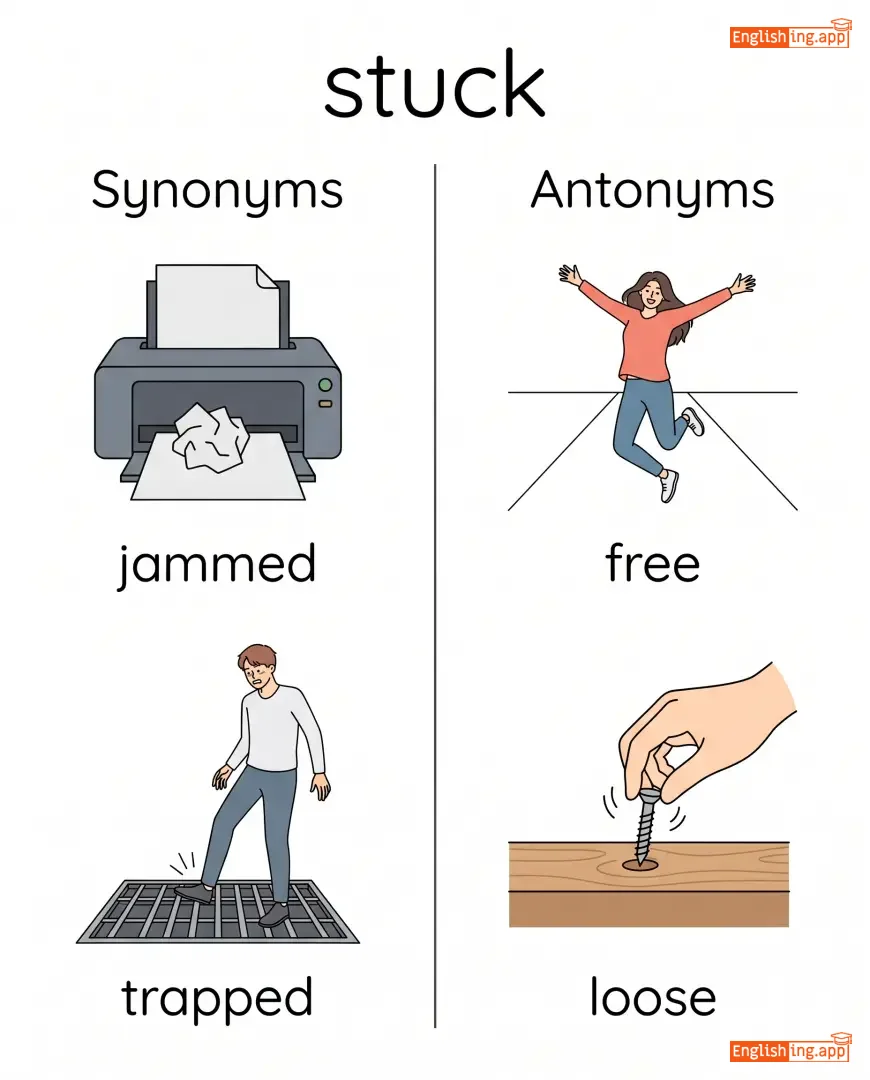
jammed, trapped, fixed, immobile
••••••
|
free, loose, mobile, unstuck
••••••
|
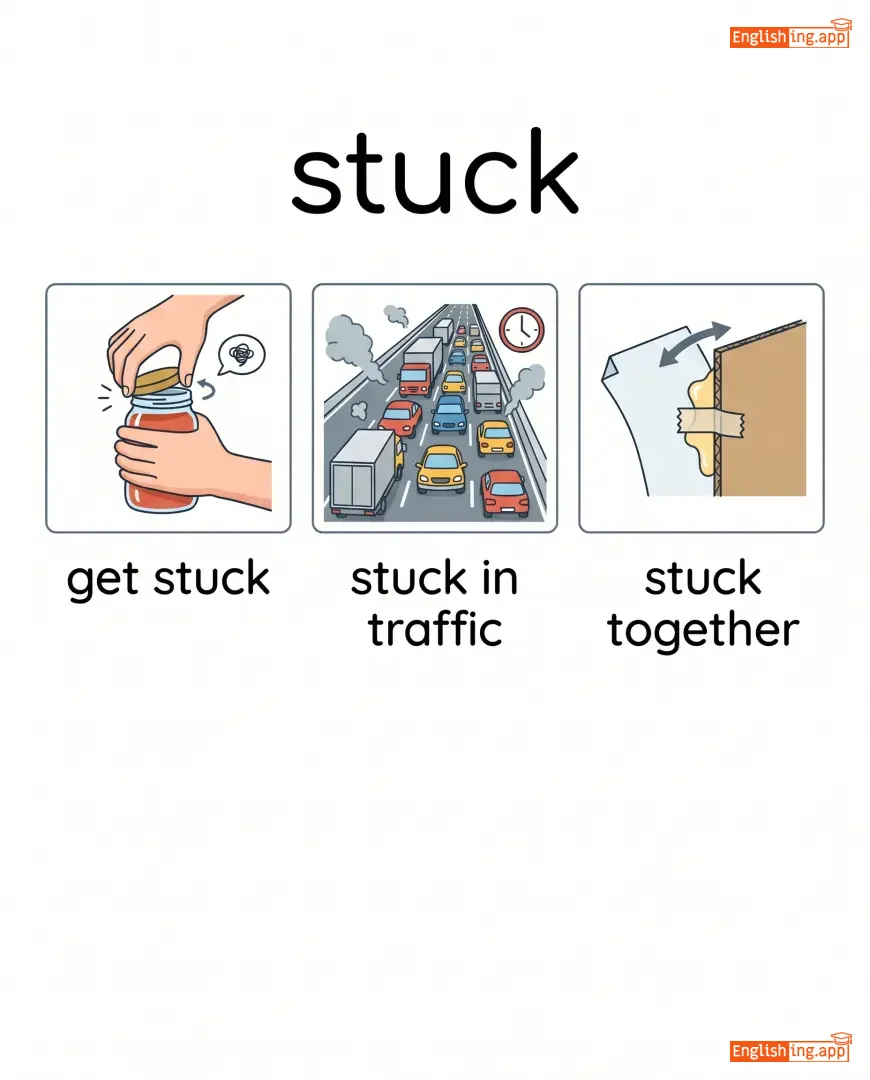
get stuck, stuck in traffic, stuck together, completely stuck
••••••
|
No •••••• |
|
#95
🛡️
|
/ˈkʌvər/
verb
(覆盖)
••••••
|
|
覆盖
fùgài
••••••
|
covered
覆盖了
••••••
|
covered
覆盖了
••••••
|
covers
覆盖
••••••
|
covering
覆盖着
••••••
|
to put something over or upon something else to protect or conceal
••••••
|
Please cover the food to keep it fresh.
请把食物盖上,以保持新鲜。
••••••
|
请把食物盖上,以保持新鲜。
Qǐng bǎ shíwù gài shàng, yǐ bǎochí xīnxiān.
••••••
|
protect, shield, hide, conceal
••••••
|
expose, uncover, reveal
••••••
|
cover up, cover story, cover ground, book cover
••••••
|
盖上食物以保持新鲜
••••••
|
|
#96
😊
|
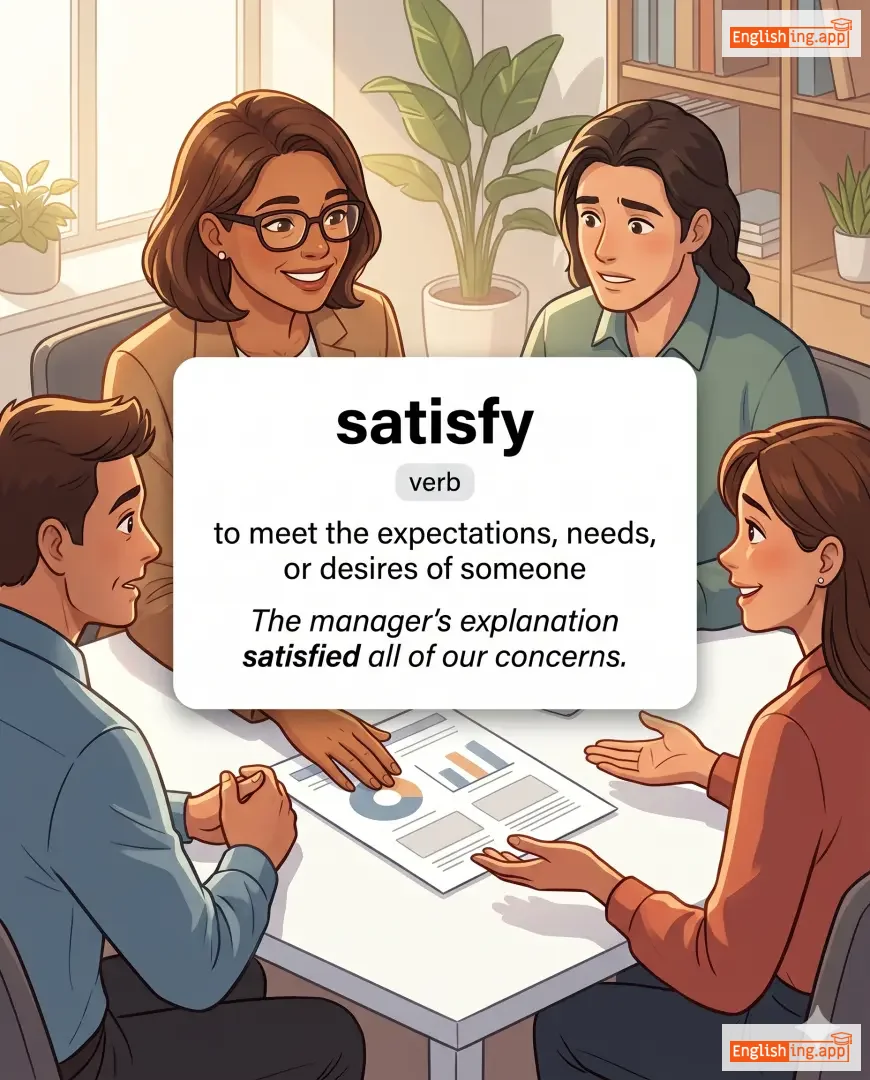
/ˈsætɪsfaɪ/
verb
(satisfai)
••••••
|
|
满足
manzu
••••••
|
satisfied
satisfeito
••••••
|
satisfied
satisfeito
••••••
|
satisfies
satisfaites
••••••
|
satisfying
satisfaire
••••••
|
to fulfill the desires, expectations, or needs of someone; to make content
••••••
|
The delicious meal satisfied our hunger completely.
美味的食物完全满足了我们的饥饿。
••••••
|
美味的食物完全满足了我们的饥饿。
Měiwèi de shíwù wánquán mǎnzúle wǒmen de jī'è.
••••••
|
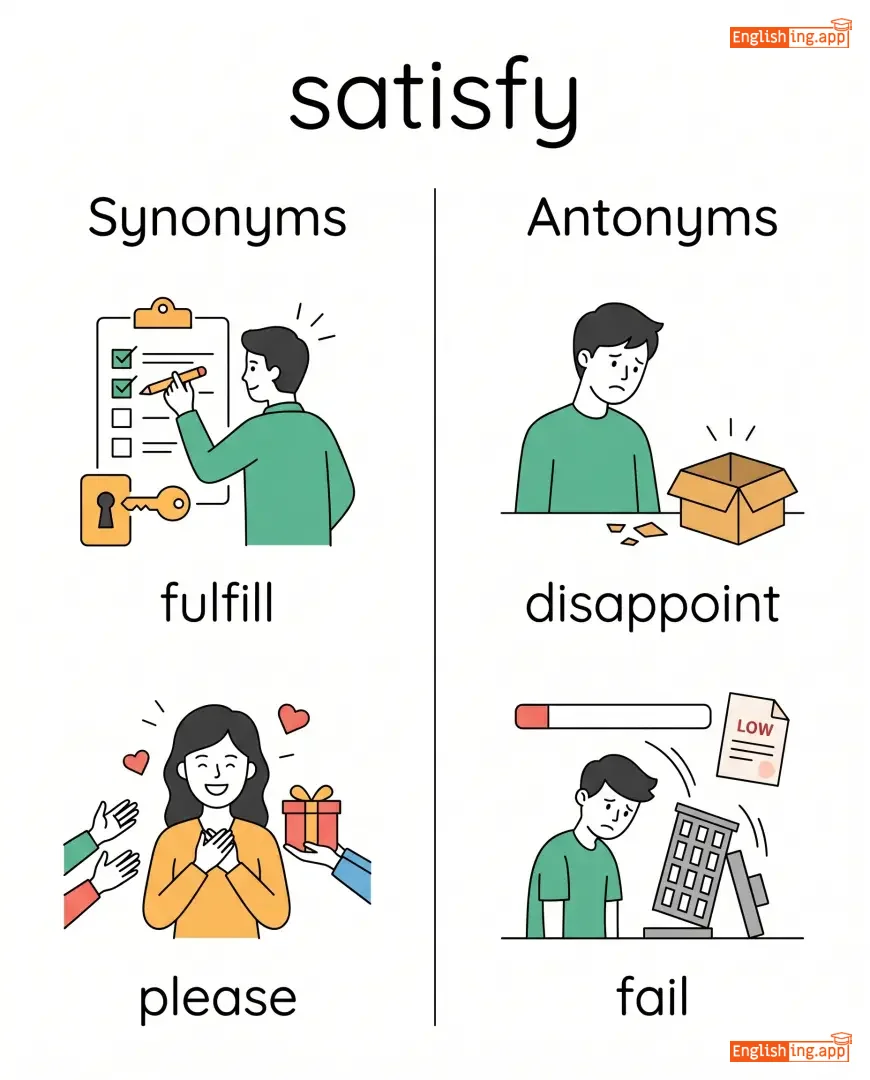
fulfill, please, gratify, content
••••••
|
disappoint, frustrate, dissatisfy, displease
••••••
|
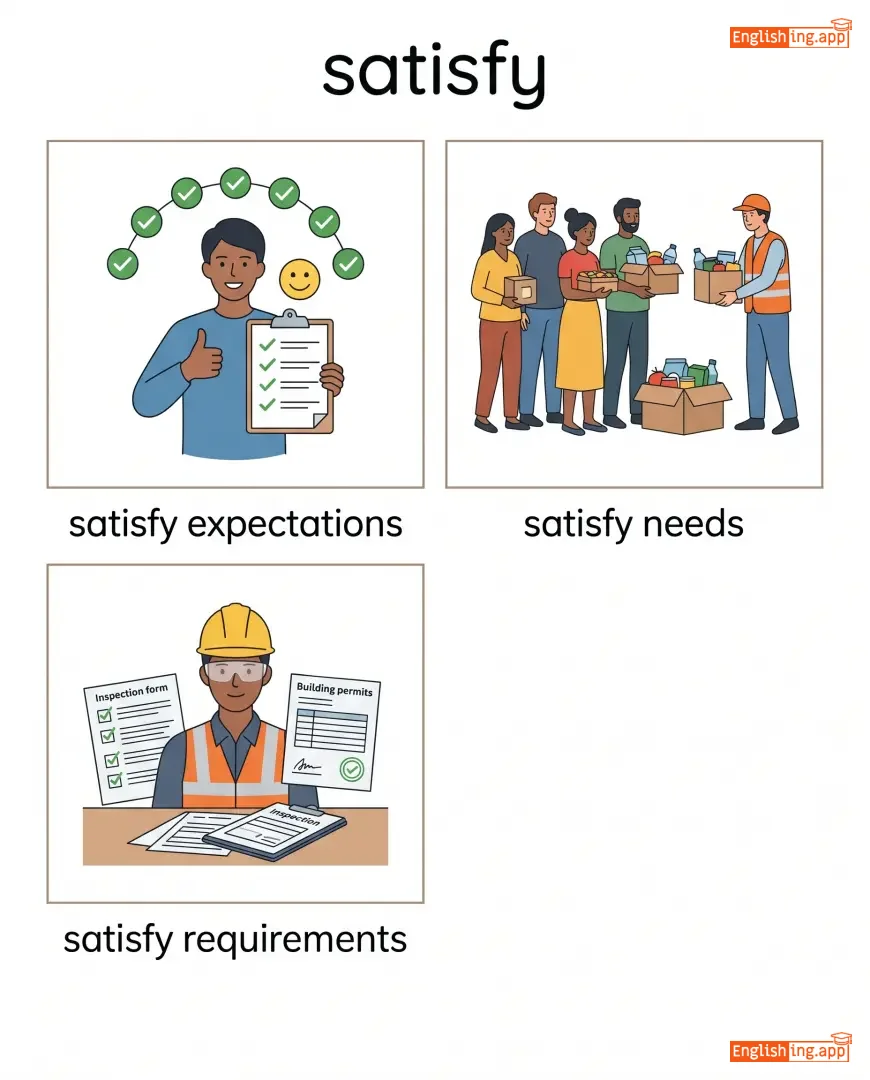
satisfy need, satisfy customer, satisfy requirement, fully satisfy
••••••
|
用美味的食物满足你的饥饿感!
••••••
|
|
#97
📚
|
/ˈpʌblɪʃ/
verb
(pābùlìshí)
••••••
|
|
出版
chūbǎn
••••••
|
published
pābùlìshíde
••••••
|
published
pābùlìshíde
••••••
|
publishes
pābùlìshí
••••••
|
publishing
pābùlìshíng
••••••
|
to print and distribute books, magazines, etc.; to make information available
••••••
|
The author will publish her new novel next month.
作者将在下个月出版她的新小说。
••••••
|
作者将在下个月出版她的新小说。
zuòzhě jiāng zài xià gè yuè chūbǎn tā de xīn xiǎoshuō.
••••••
|
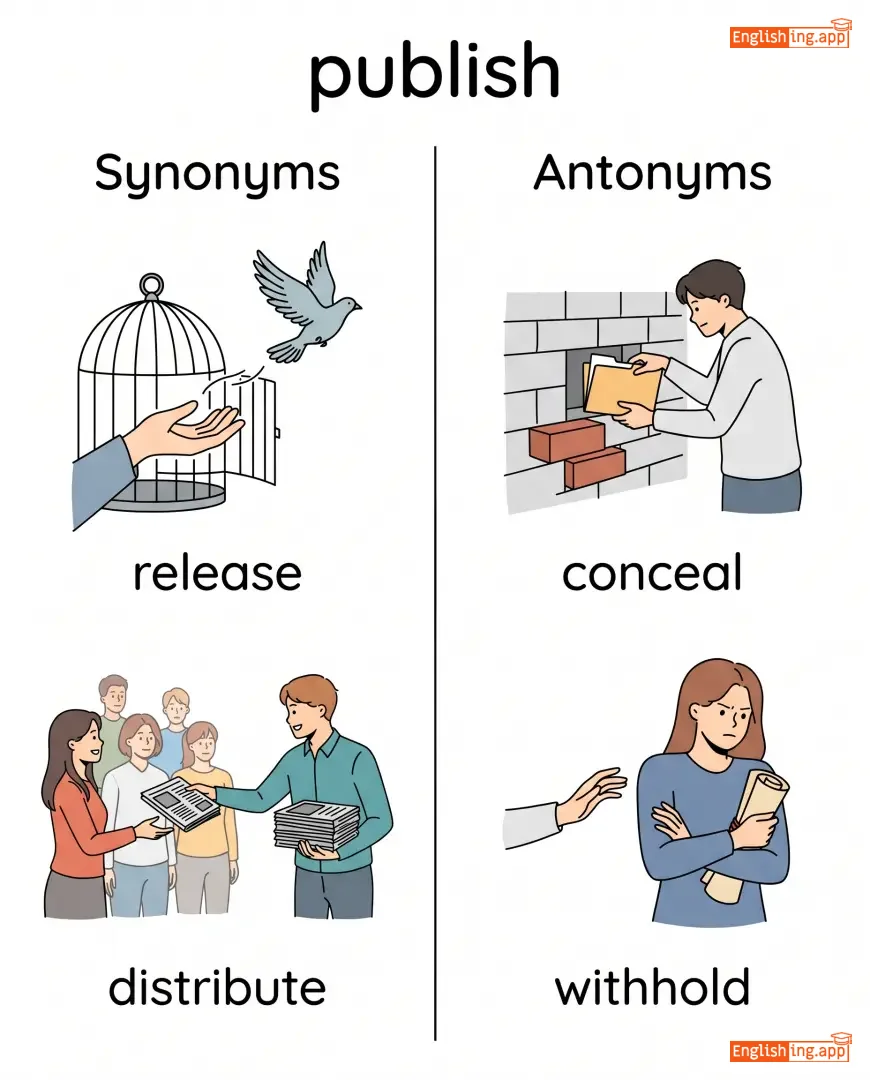
print, release, issue, distribute
••••••
|
suppress, withhold, censor
••••••
|
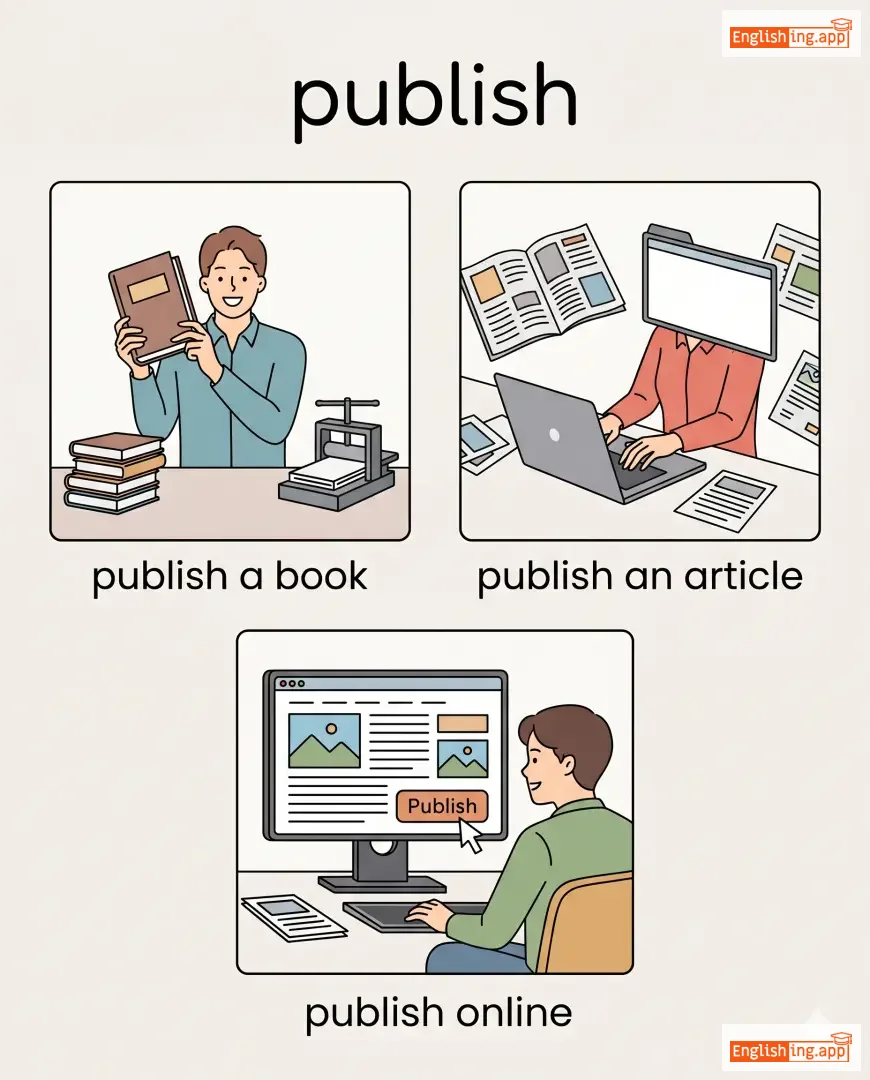
publish book, publish article, publish online, recently publish
••••••
|
To 'publish' a book, you need to 'chūbǎn' it in Chinese.
••••••
|
|
#98
💥
|
/ɪmˈpɪndʒ/
verb
(yīmpǐnɡ)
••••••
|
|
影响
yingxiang
••••••
|
impinged
yīmpǐnɡd
••••••
|
impinged
yīmpǐnɡd
••••••
|
impinges
yīmpǐnɡs
••••••
|
impinging
yīmpǐnɡɪnɡ
••••••
|
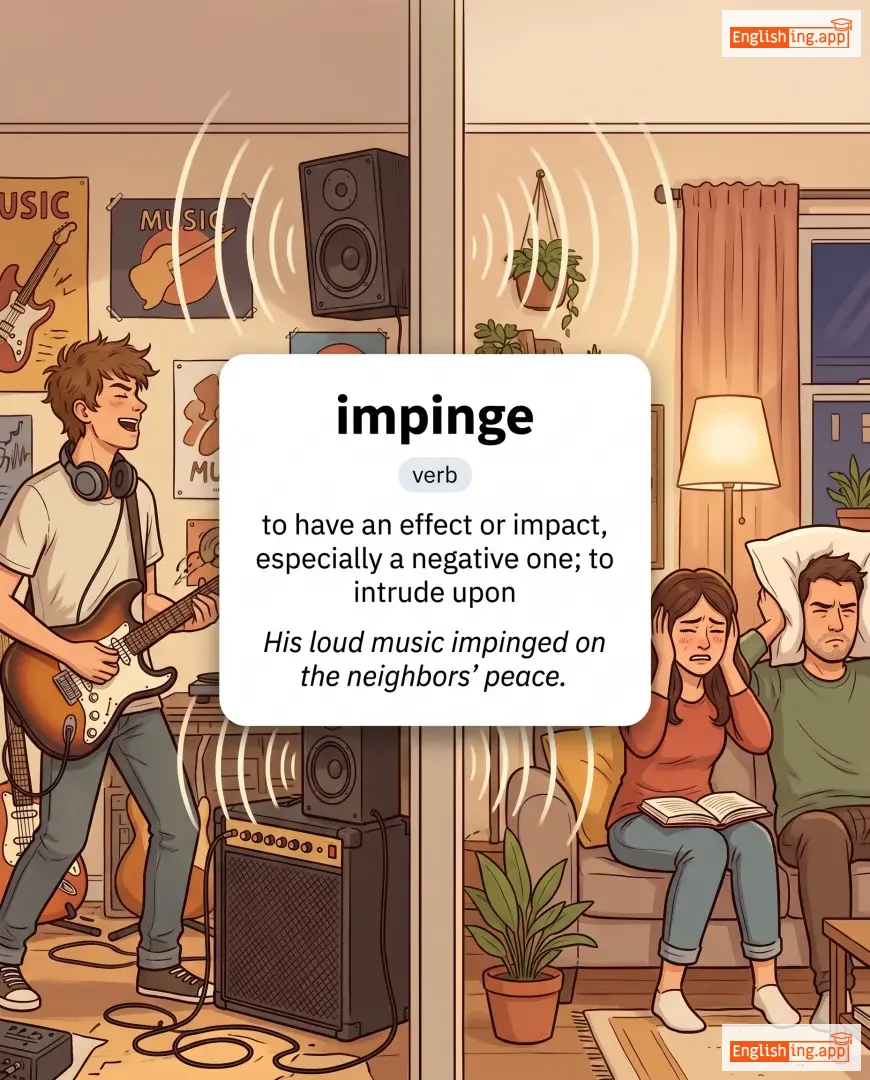
to have an effect or impact on something; to encroach or infringe
••••••
|
The noise from the construction site impinges on our daily activities.
建筑工地的噪音对我们的日常活动产生影响。
••••••
|
建筑工地的噪音对我们的日常活动产生影响。
Jian zhu gong di de zao yin dui wo men de ri chang huo dong chan sheng ying xiang
••••••
|
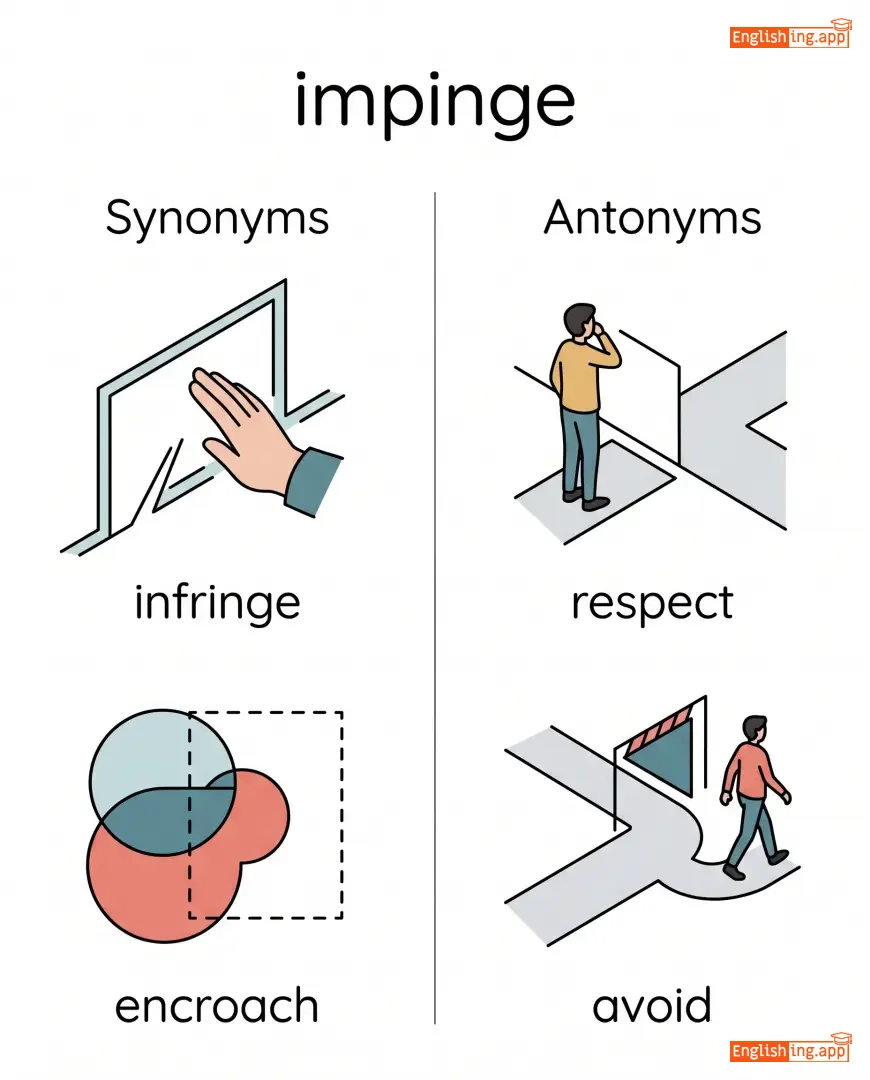
affect, impact, encroach, infringe
••••••
|
avoid, withdraw, retreat
••••••
|
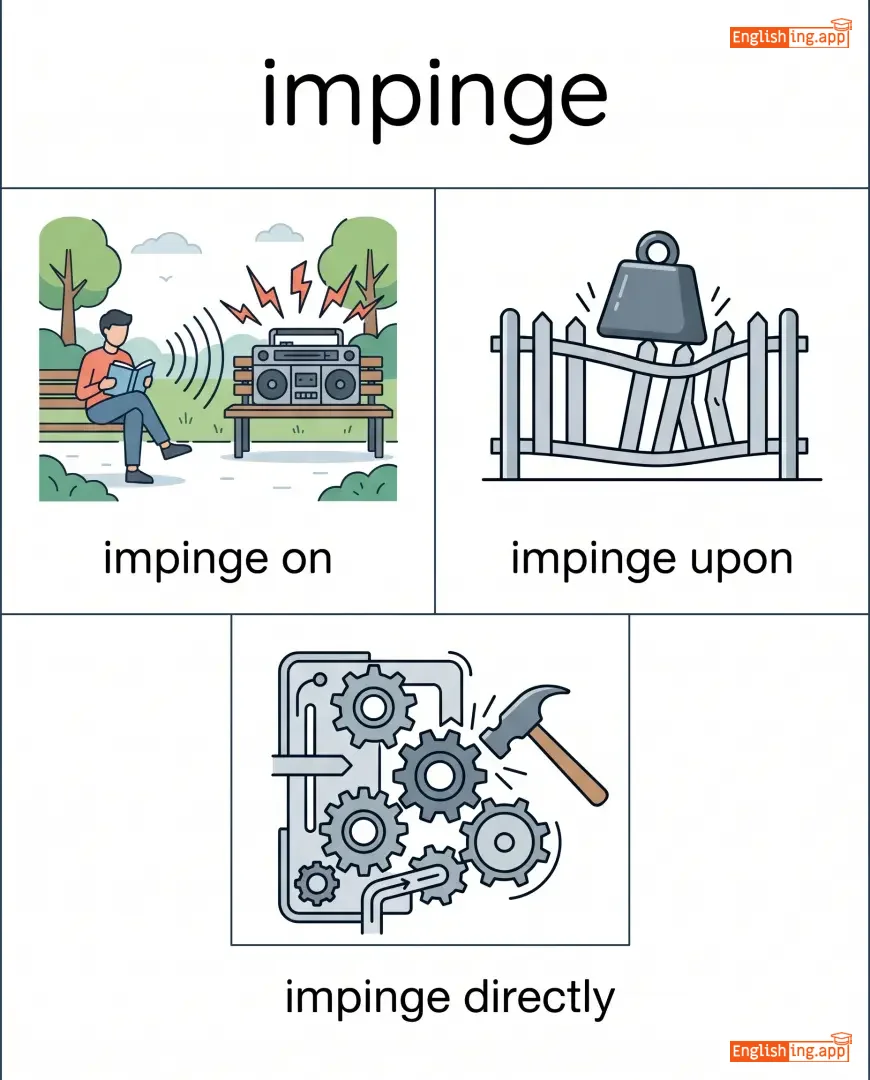
impinge on, impinge upon, directly impinge, negatively impinge
••••••
|
No •••••• |
|
#99
🌊
|
/ɪˈmɜːrs/
verb
(immerse)
••••••
|
|
沉浸
chén jìn
••••••
|
immersed
immersed
••••••
|
immersed
immersed
••••••
|
immerses
immerses
••••••
|
immersing
immersing
••••••
|
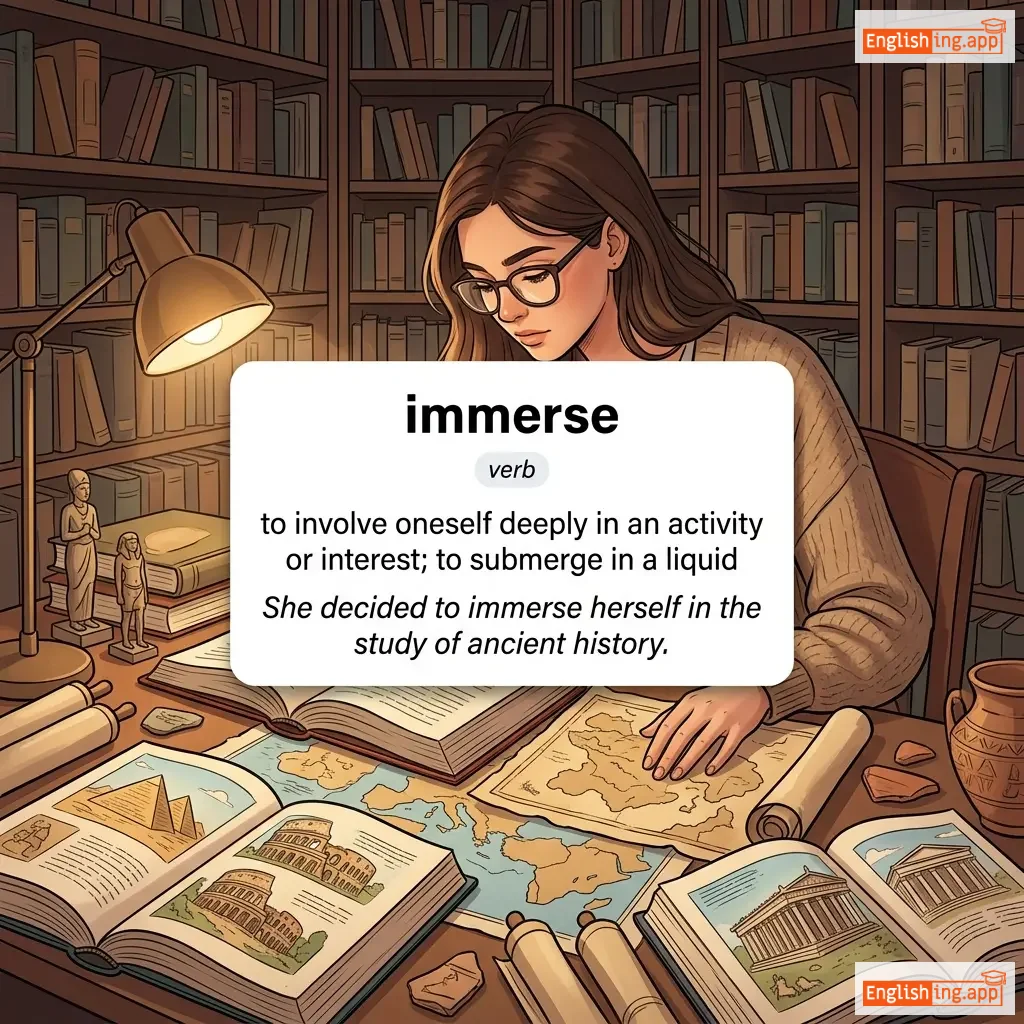
to dip into liquid; to involve deeply in an activity
••••••
|
She likes to immerse herself in good books.
她喜欢沉浸在好书中。
••••••
|
她喜欢沉浸在好书中。
Tā xǐ huān chén jìn zài hǎo shū zhōng.
••••••
|
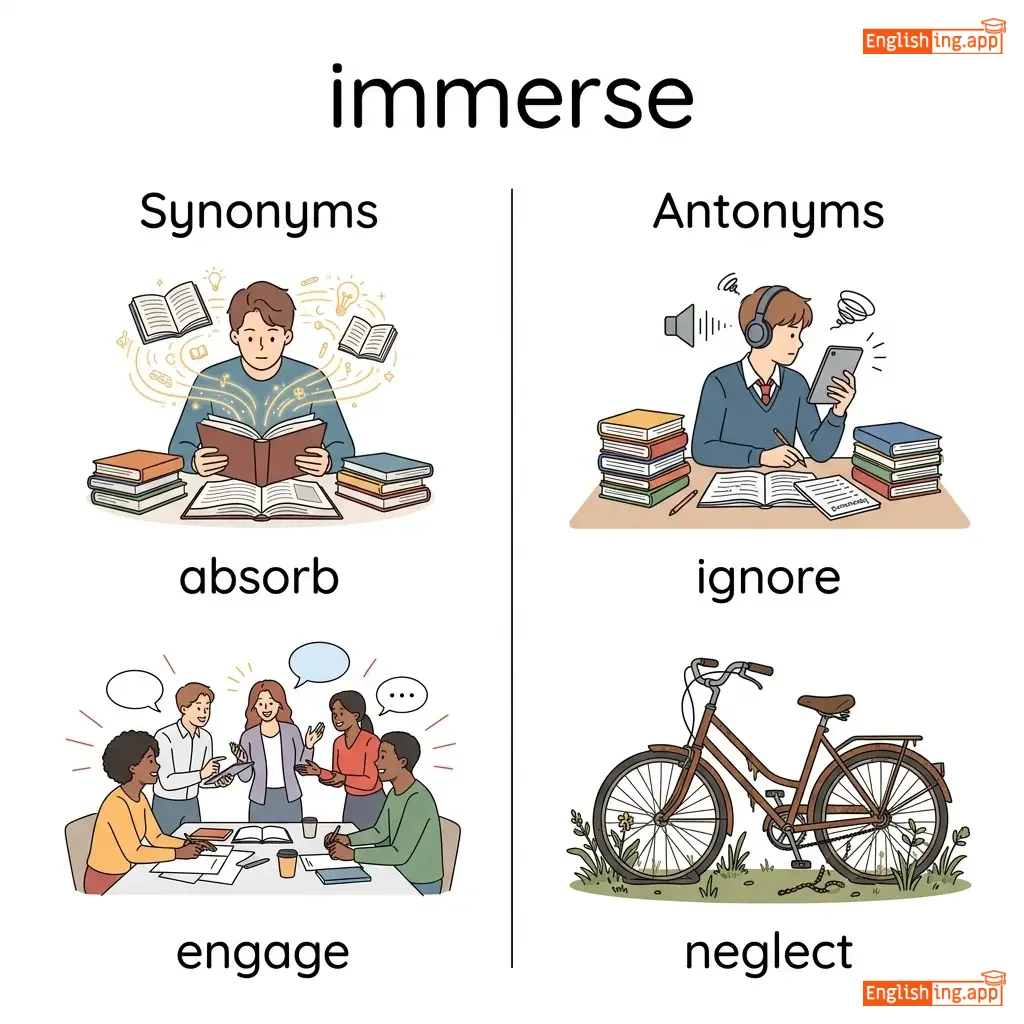
submerge, dip, engross, absorb
••••••
|
emerge, surface, withdraw, detach
••••••
|
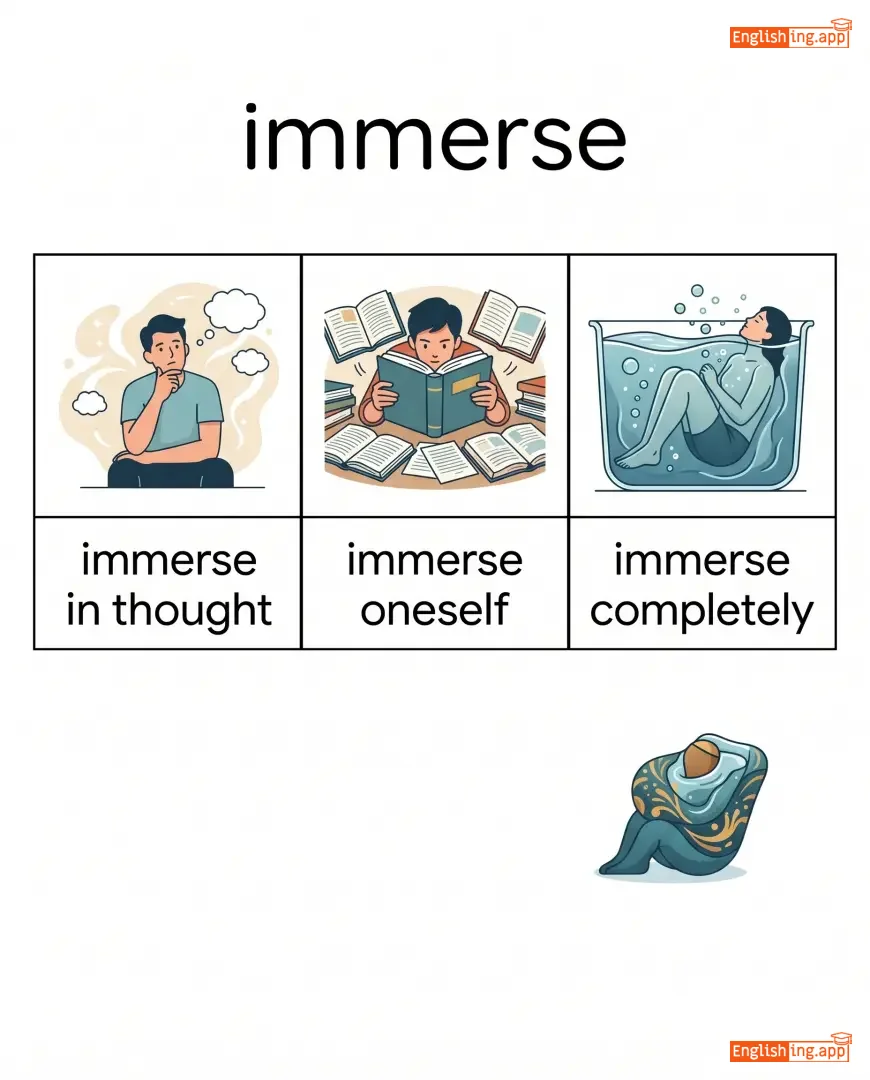
immerse in, immerse yourself, fully immerse, completely immerse
••••••
|
沉浸在书中,犹如潜水般探索世界。
••••••
|
|
#100
🖥️
|
/dɪˈspleɪ/
verb
(dìsīpléi)
••••••
|
- •••••• |
展示
zhǎnshì
••••••
|
displayed
dìsīplèid
••••••
|
displayed
dìsīplèid
••••••
|
displays
dìsīplèi
••••••
|
displaying
dìsīplèing
••••••
|
to show or exhibit; to present for others to see
••••••
|
The museum displays ancient artifacts.
博物馆展示古代文物。
••••••
|
博物馆展示古代文物。
Bówùguǎn zhǎnshì gǔdài wénwù.
••••••
|
show, exhibit, present, demonstrate
••••••
|
hide, conceal, cover, suppress
••••••
|
display screen, display item, public display, proudly display
••••••
|
展示是让别人看到你展示的东西。
••••••
|
|
#101
🏃
|
/rʌn/
verb
(跑)
••••••
|
|
跑步
paobu
••••••
|
ran
跑
••••••
|
run
跑
••••••
|
runs
跑
••••••
|
running
跑步
••••••
|
to move quickly on foot; to operate or function
••••••
|
I run every morning for exercise.
我每天早上跑步锻炼。
••••••
|
我每天早上跑步锻炼。
Wǒ měitiān zǎoshang pǎobù duànliàn.
••••••
|
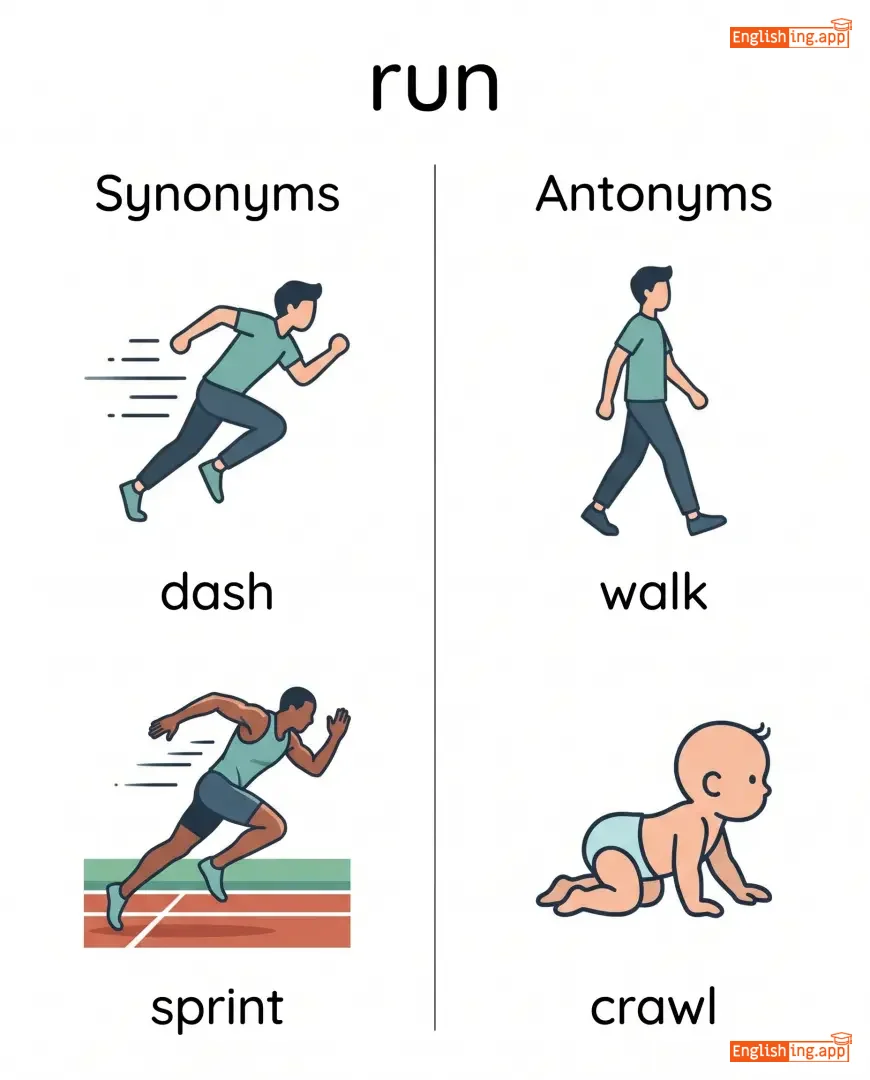
jog, sprint, dash, operate
••••••
|
walk, stop, crawl, halt
••••••
|
run fast, run away, run out, run business
••••••
|
跑步: 快速跑步,像风一样快速
••••••
|
|
#102
📉
|
/ˈwiːkən/
verb
(wíken)
••••••
|
|
削弱
xuēruò
••••••
|
Weakened
wíkend
••••••
|
Weakened
wíkend
••••••
|
Weakens
wíkens
••••••
|
Weakening
wíkening
••••••
|
to make or become less strong or powerful
••••••
|
The illness weakened his immune system significantly.
这场疾病显著削弱了他的免疫系统。
••••••
|
这场疾病显著削弱了他的免疫系统。
Zhè chǎng jíbìng xiǎnzhù xuēruò le tā de miǎnyì xìtǒng.
••••••
|
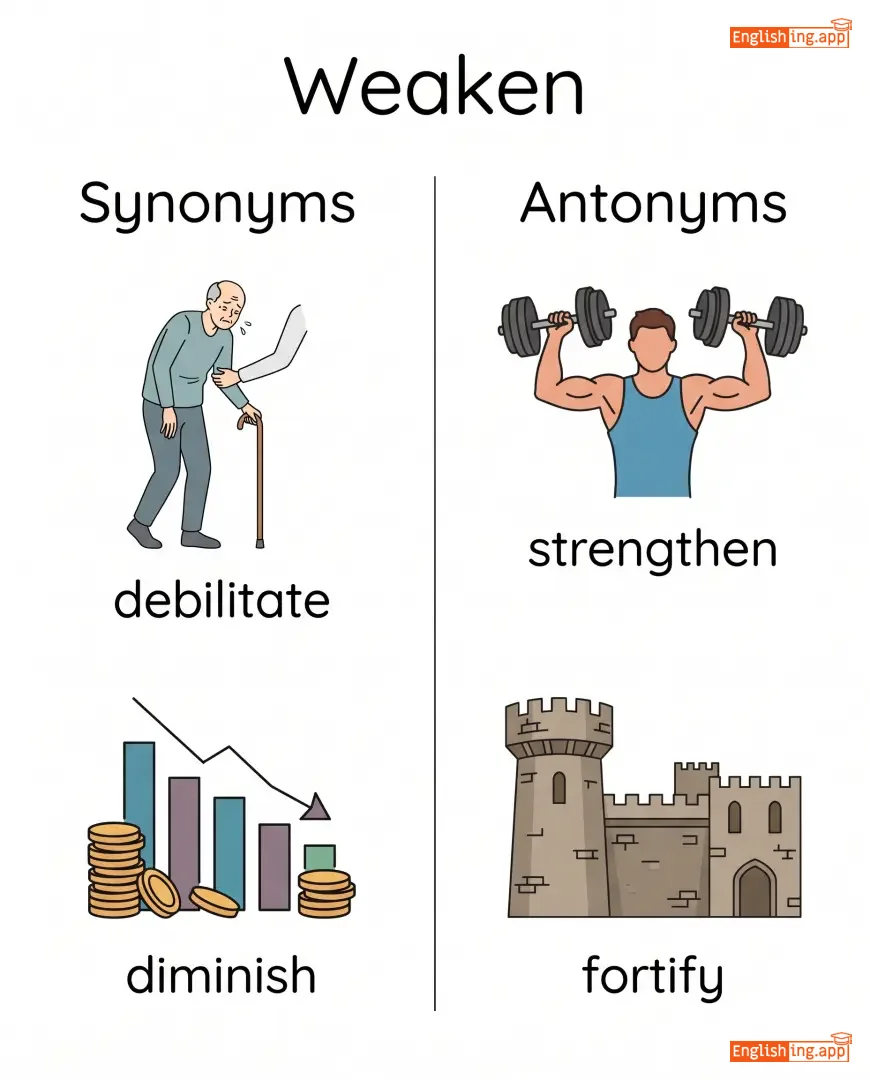
diminish, reduce, undermine, debilitate
••••••
|
strengthen, fortify, enhance, empower
••••••
|
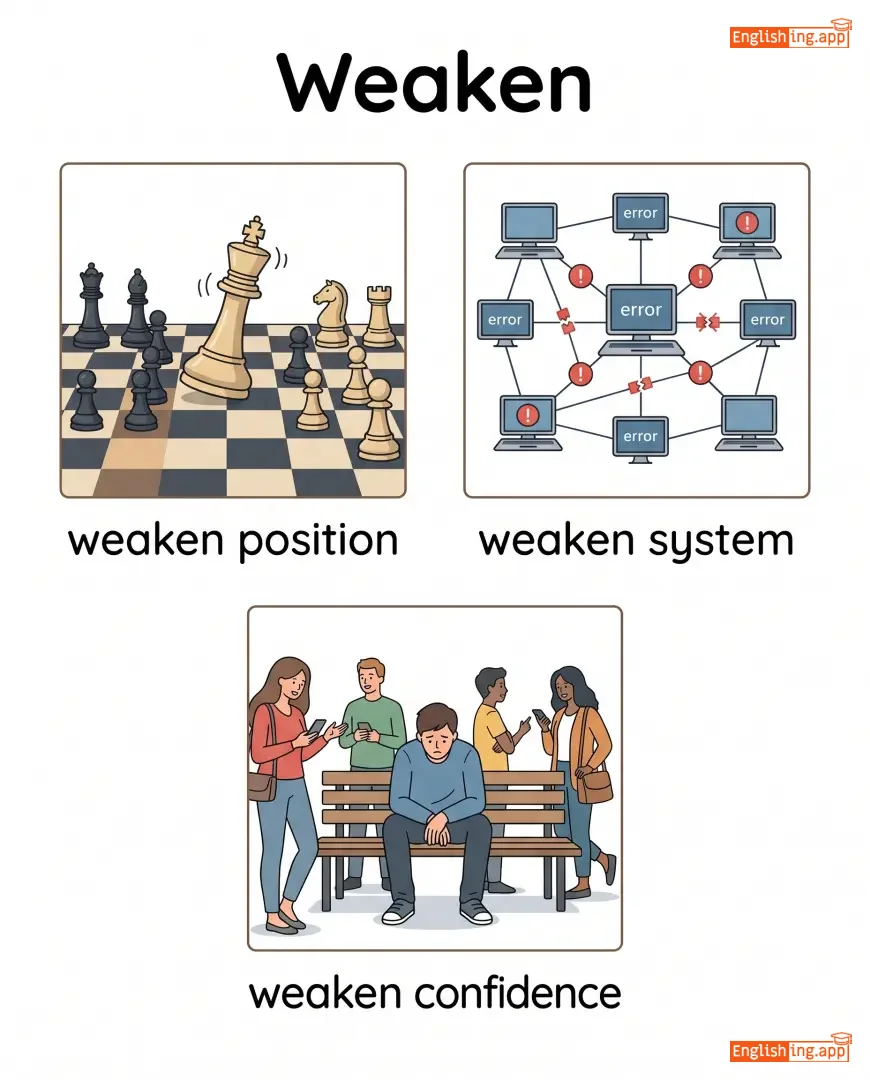
weaken effect, weaken position, gradually weaken, seriously weaken
••••••
|
削弱 = 使力量减少
••••••
|
|
#103
🏗️
|
/faʊnd/
verb
(faʊnd)
••••••
|
- •••••• |
创立
chuangli
••••••
|
founded
faʊndɪd
••••••
|
founded
faʊndɪd
••••••
|
founds
faʊndz
••••••
|
founding
faʊndɪŋ
••••••
|
to establish or create something; to discover
••••••
|
They founded the company in 1995.
他们在1995年成立了公司。
••••••
|
他们在1995年成立了公司。
Tamen zai 1995 nian chengli le gongsi.
••••••
|
establish, create, set up, start
••••••
|
destroy, dissolve, close, end
••••••
|
found company, found organization, newly found, well found
••••••
|
In Chinese, '创立' is to 'found' a company, just as you 'create' or 'establish' something.
••••••
|
|
#104
🏷️
|
/neɪm/
verb
(nei-mu)
••••••
|
|
命名
mingming
••••••
|
named
nei-mu-de
••••••
|
named
nei-mu-de
••••••
|
names
nei-mu-s
••••••
|
naming
nei-ming
••••••
|
to give a title or designation to someone or something
••••••
|
They decided to name their baby Sarah.
deh deh-sai-dehd tu neim deir beibi sara.
••••••
|
他们决定把他们的宝宝命名为莎拉。
Tamen jueding ba tamen de baobao mingming wei Shala
••••••
|
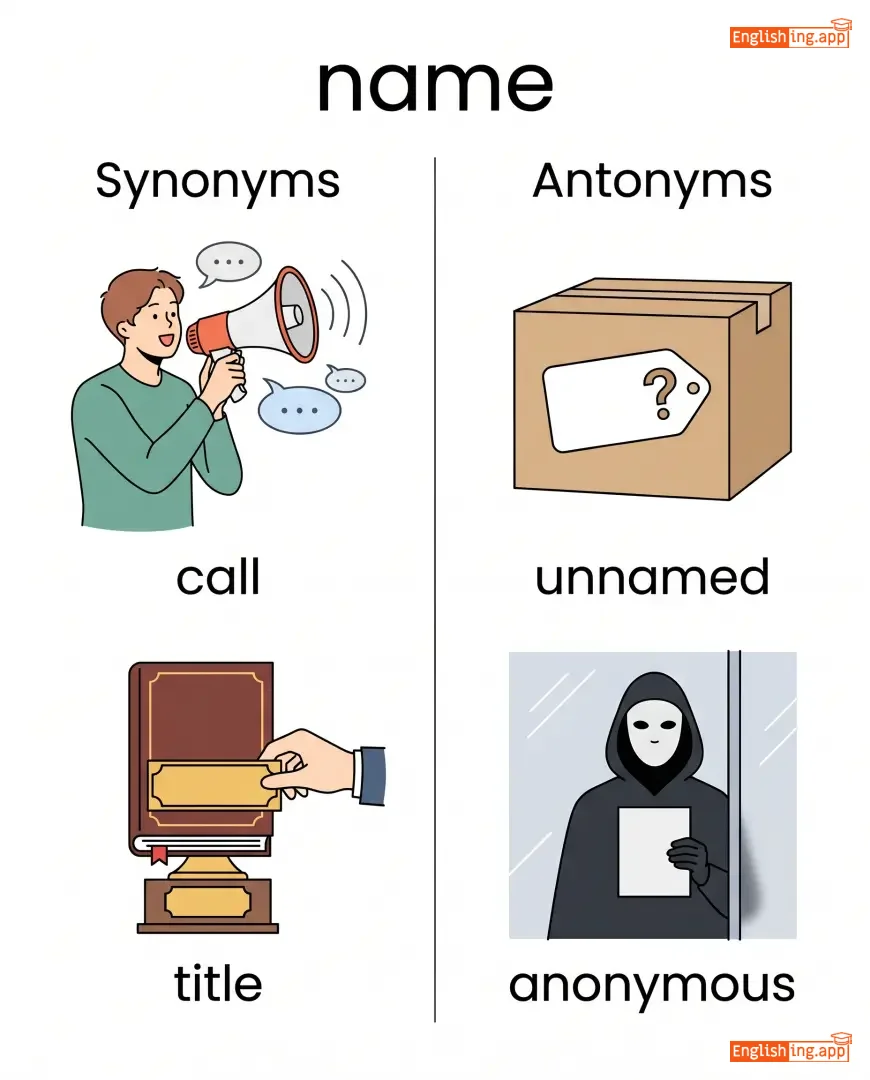
call, title, designate, label
••••••
|
unnamed, anonymous
••••••
|
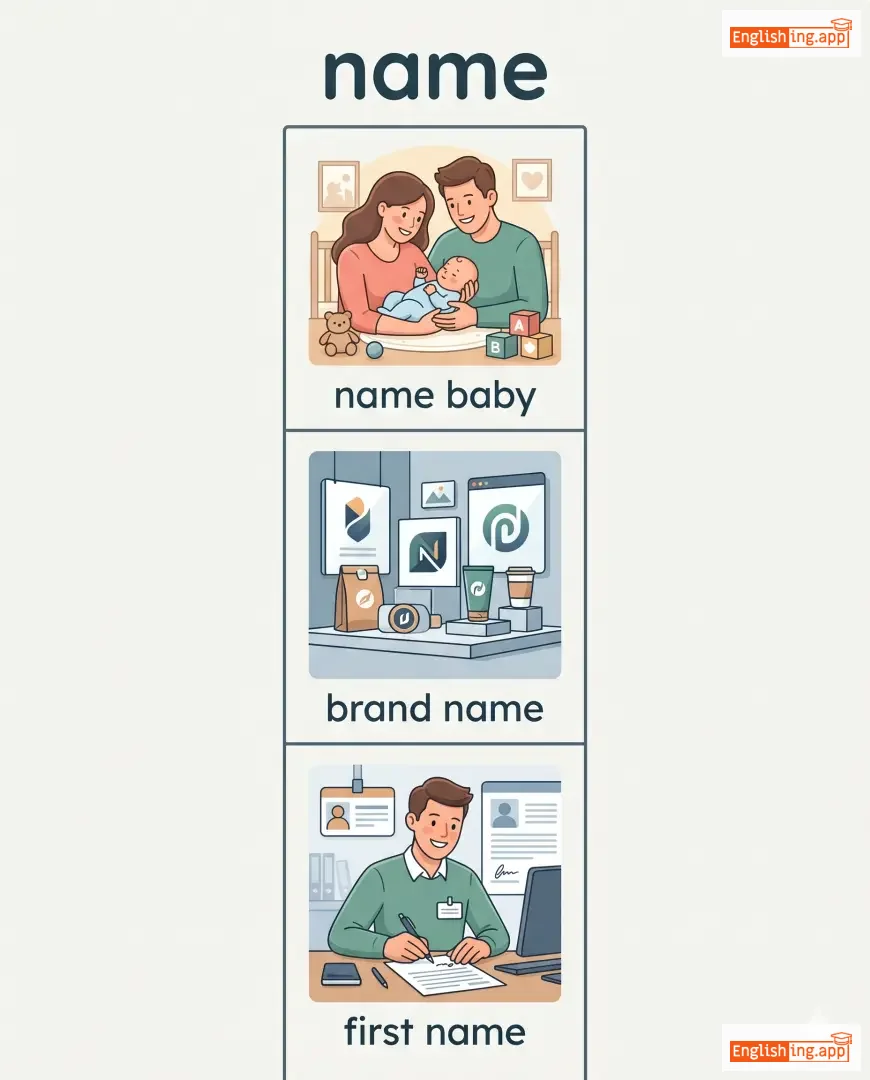
name baby, brand name, first name, last name
••••••
|
命名 = Giving a name with respect!
••••••
|
|
#105
↔️
|
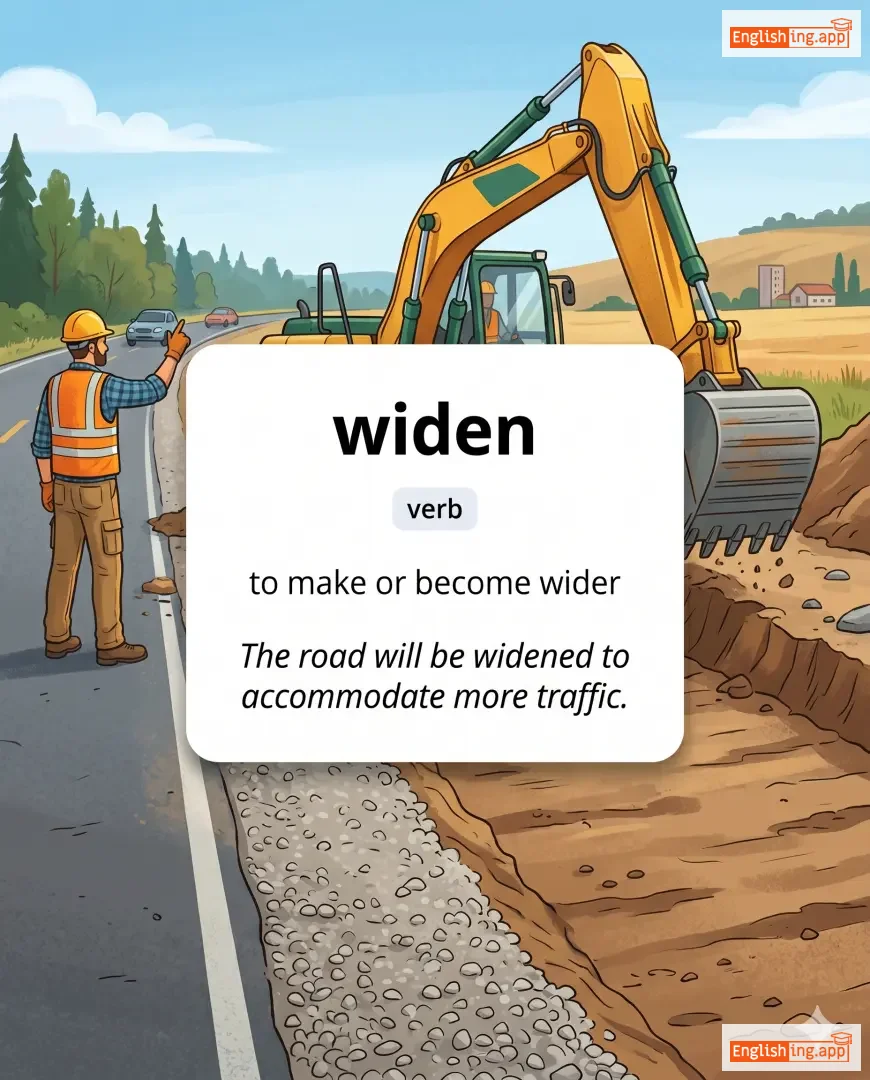
/ˈwaɪdən/
verb
(widen)
••••••
|
|
拓宽
tuò kuān
••••••
|
widened
widened
••••••
|
widened
widened
••••••
|
widens
widens
••••••
|
widening
widening
••••••
|
to make or become wider or broader
••••••
|
They plan to widen the road next year.
他们计划在明年拓宽这条路。
••••••
|
他们计划在明年拓宽这条路。
Tāmen jìhuà zài míngnián tuòkuān zhè tiáo lù.
••••••
|
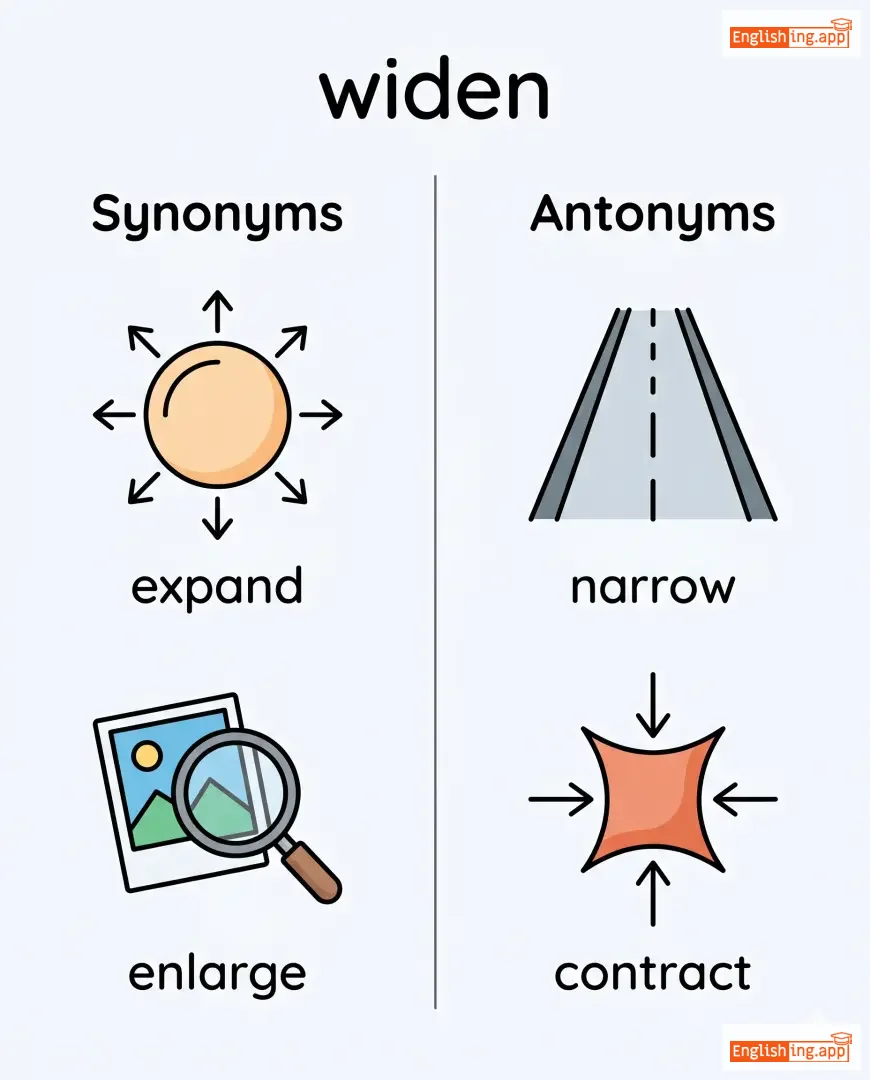
broaden, expand, extend, enlarge
••••••
|
narrow, reduce, contract, shrink
••••••
|
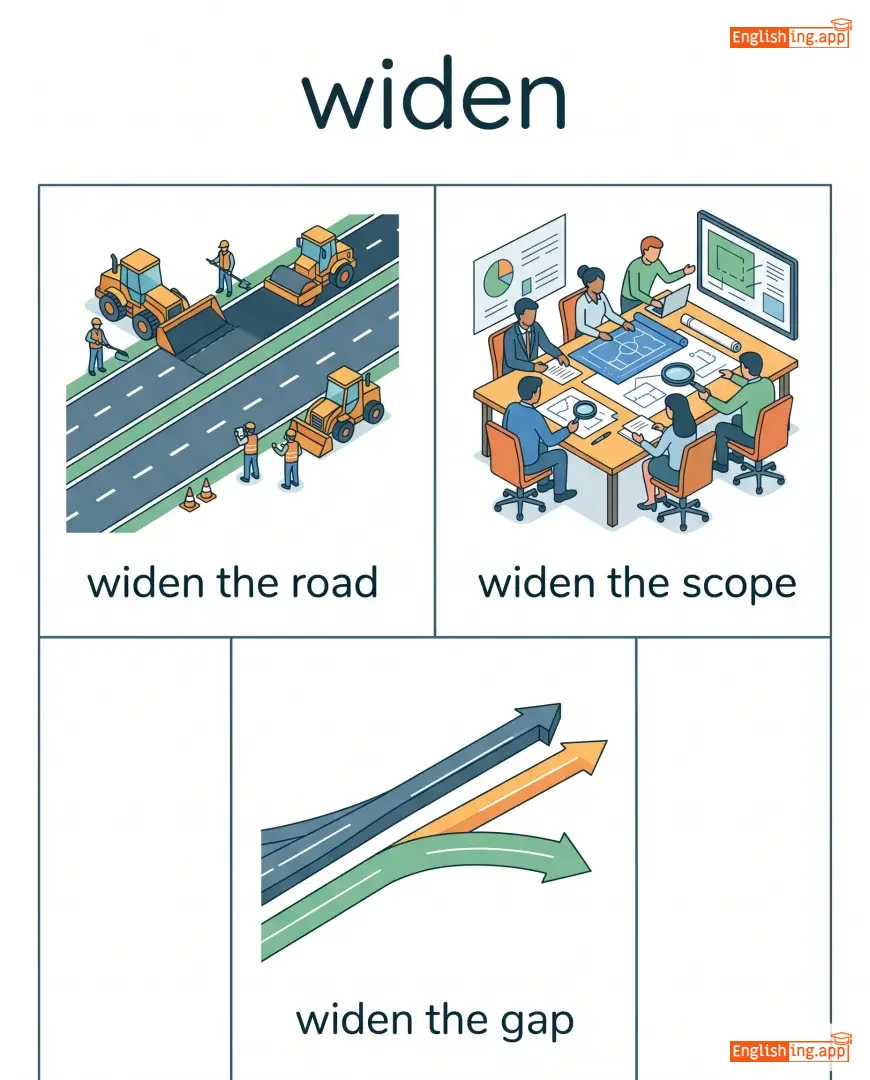
widen road, widen gap, widen range, gradually widen
••••••
|
拓宽,让道路变得更宽广。
••••••
|
|
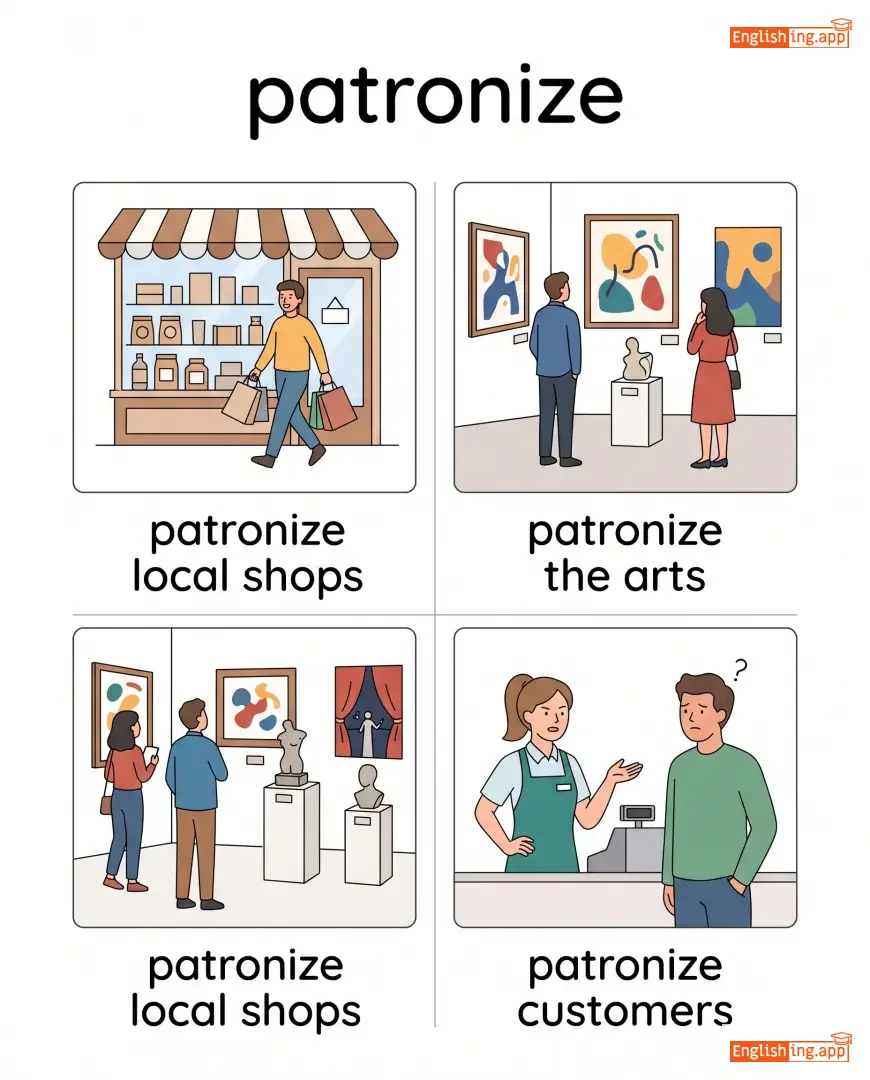
#106
😏
|
/ˈpeɪtrənaɪz/
verb
(派特罗奈兹)
••••••
|
|
屈尊俯就
qu zun fu jiu
••••••
|
patronized
派特罗奈兹德
••••••
|
patronized
派特罗奈兹德
••••••
|
patronizes
派特罗奈兹斯
••••••
|
patronizing
派特罗奈兹英
••••••
|
to treat someone in a condescending way; to be a regular customer of a business
••••••
|
Don't patronize me with your fake sympathy.
不要用你假的同情来派特罗奈兹我。
••••••
|
不要用你虚假的同情来屈尊俯就我。
bu yao yong ni xu jia de tong qing lai qu zun fu jiu wo
••••••
|
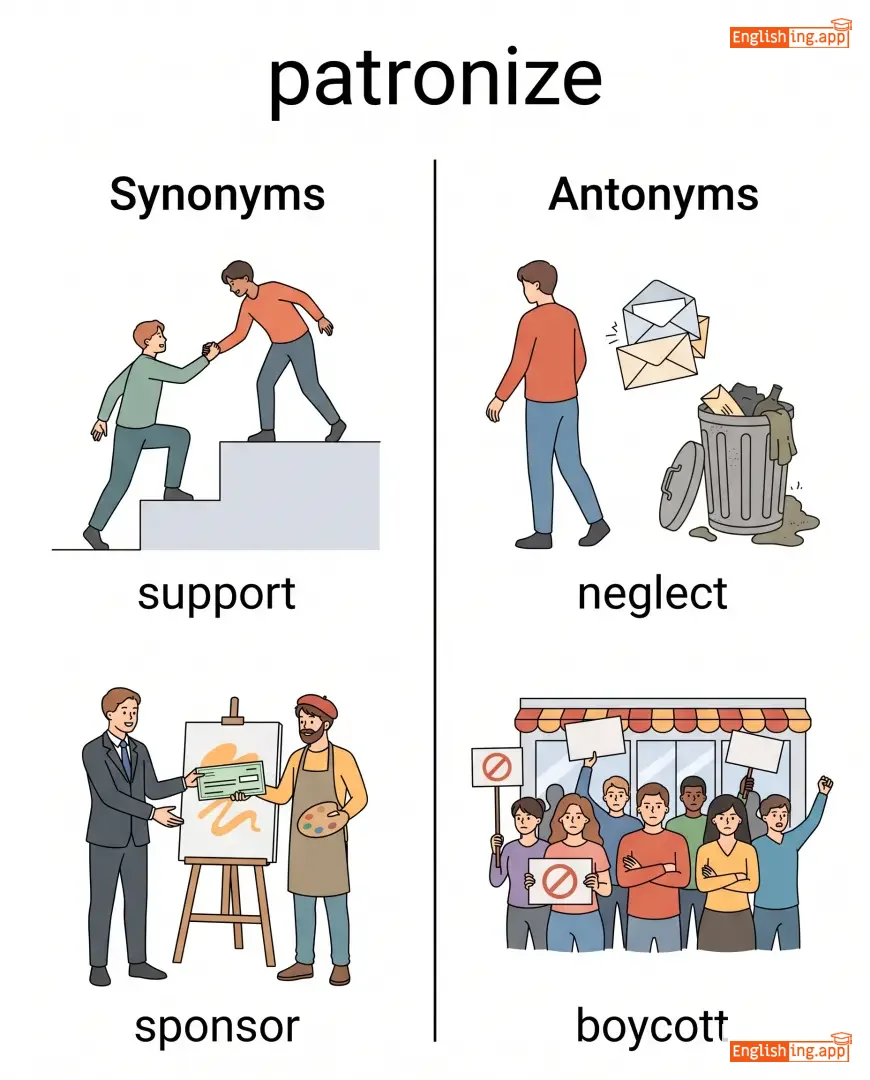
condescend, talk down to, support, sponsor
••••••
|
respect, honor, boycott, avoid
••••••
|
patronize business, patronize restaurant, regularly patronize, often patronize
••••••
|
Patronize sounds like '派特罗奈兹'—remember, false sympathy lowers others.
••••••
|
|
#107
❓
|
/æsk/
verb
(ask)
••••••
|
- •••••• |
问
wèn
••••••
|
asked
asked
••••••
|
asked
asked
••••••
|
asks
asks
••••••
|
asking
asking
••••••
|
to request information; to inquire; to invite
••••••
|
Can I ask you a question about the homework?
我可以问你一个关于作业的问题吗?
••••••
|
我可以问你一个关于作业的问题吗?
Wǒ kěyǐ wèn nǐ yīgè guānyú zuòyè de wèntí ma?
••••••
|
inquire, question, request, demand
••••••
|
answer, reply, respond, tell
••••••
|
ask question, ask for help, ask permission, politely ask
••••••
|
问 (wèn) - 就像当你需要询问一个问题时
••••••
|
|
#108
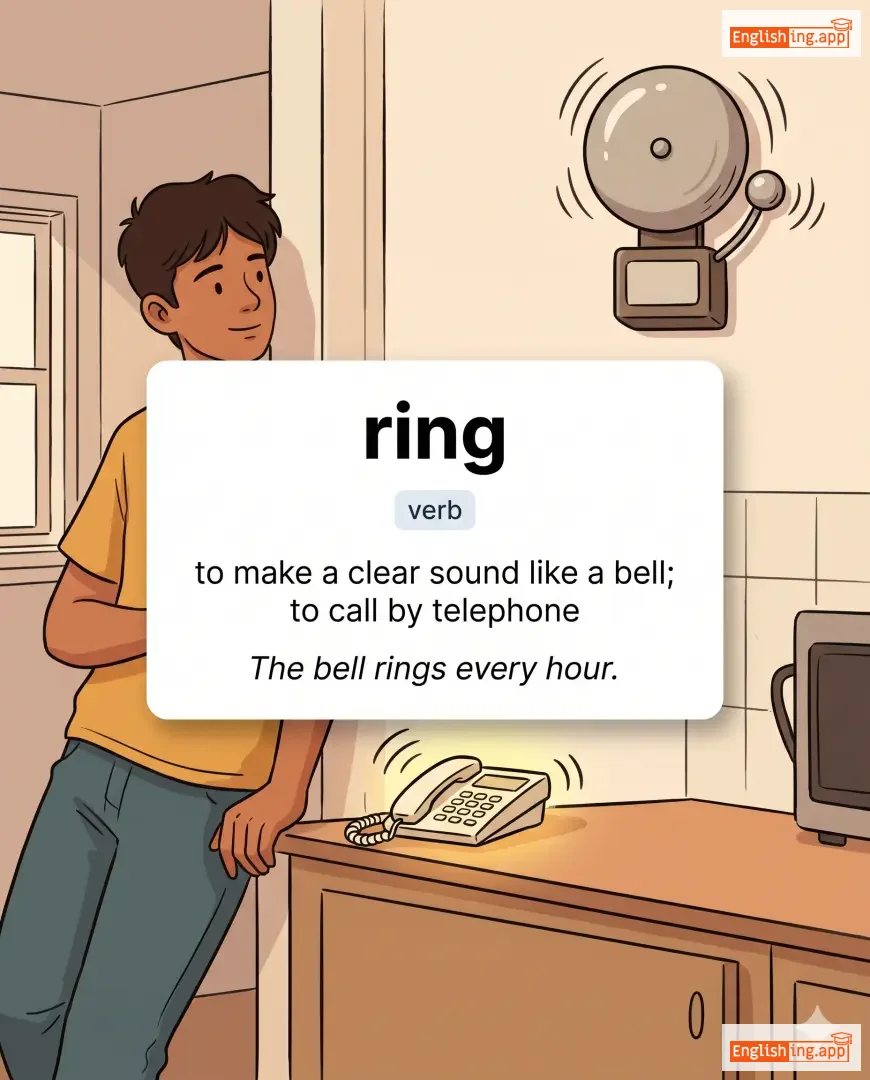
🔔
|
/rɪŋ/
verb
(铃)
••••••
|
|
铃声
língshēng
••••••
|
rang
响
••••••
|
rung
响
••••••
|
rings
铃声
••••••
|
ringing
铃响
••••••
|
to make a clear sound like a bell; to call by telephone
••••••
|
The bell rings every hour.
钟每小时响。
••••••
|
钟每小时响。
Zhōng měi xiǎoshí xiǎng.
••••••
|
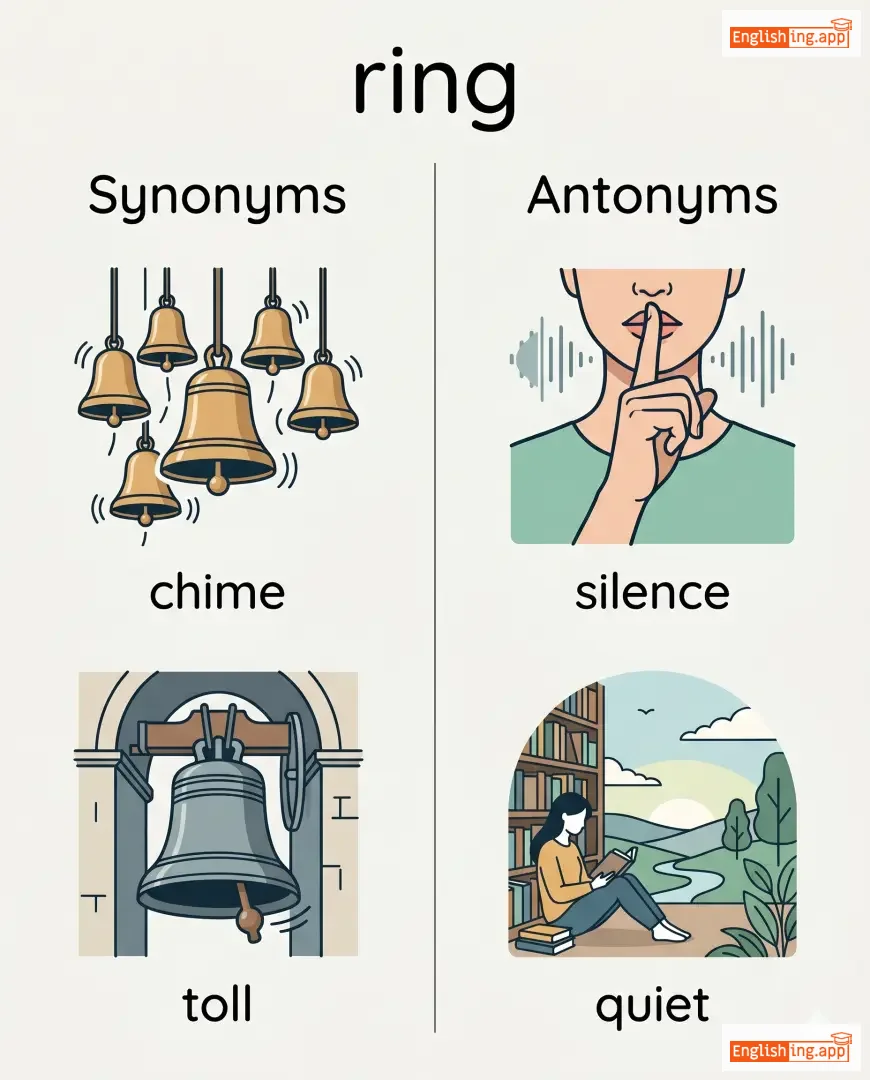
chime, toll, call, sound
••••••
|
silence, quiet, mute
••••••
|
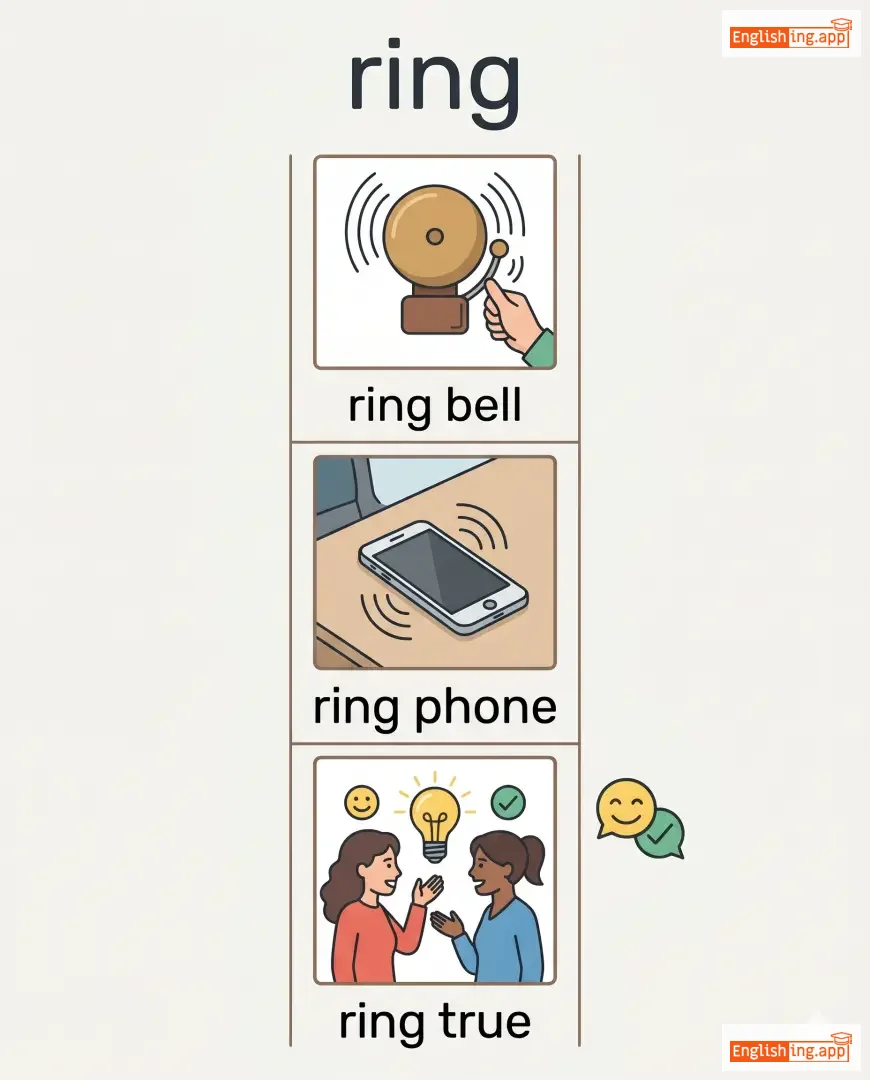
ring bell, ring phone, ring true, engagement ring
••••••
|
Think of a bell '铃声' ringing every hour.
••••••
|
|
#109
📈
|
/ɪnˈkri:s/
verb
(in-krīz)
••••••
|
|
增加
zēngjiā
••••••
|
increased
in-krīzd
••••••
|
increased
in-krīzd
••••••
|
increases
in-krīziz
••••••
|
increasing
in-krīzīng
••••••
|
to become or make something larger in amount, number, or degree
••••••
|
The company plans to increase its production this year.
公司计划在今年增加生产。
••••••
|
公司计划在今年增加生产。
Gōngsī jìhuà zài jīnnián zēngjiā shēngchǎn.
••••••
|
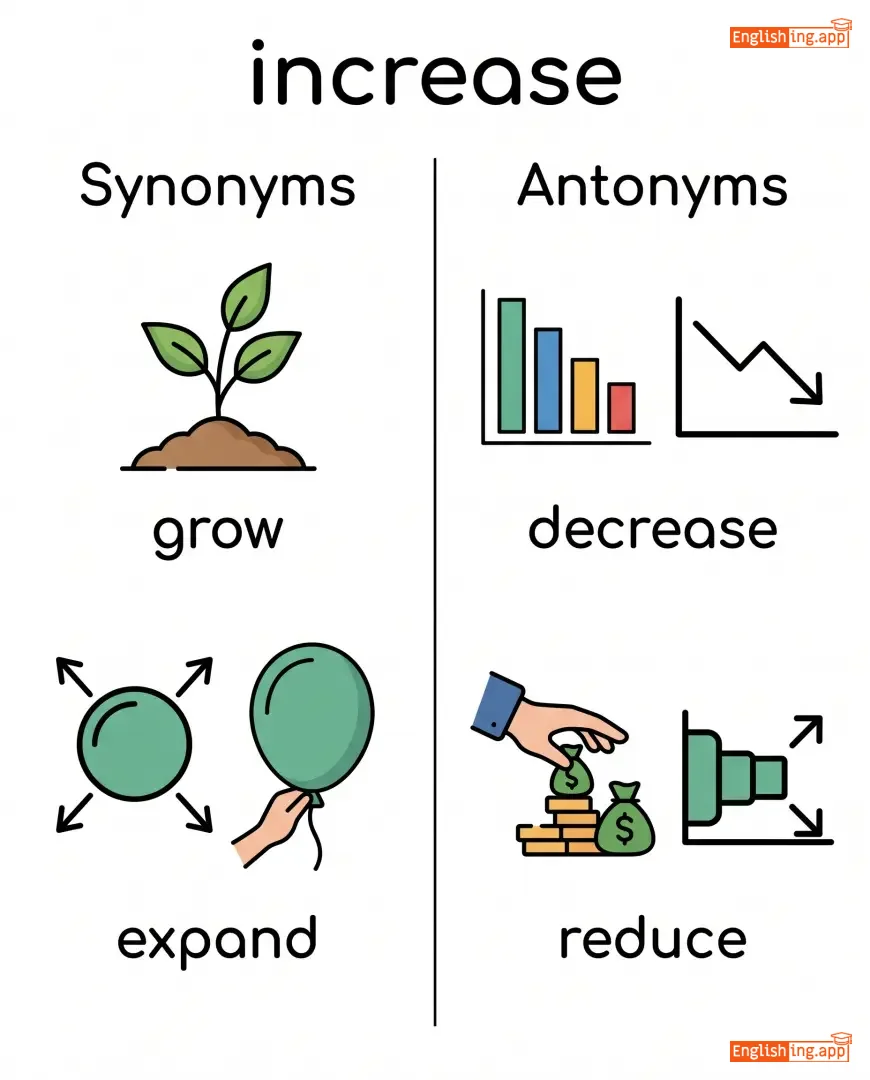
grow, expand, rise, boost, enhance
••••••
|
decrease, reduce, lower, diminish
••••••
|
increase number, increase price, increase speed, rapidly increase
••••••
|
增加, 就像 'in-krīz' 在中文
••••••
|
|
#110
🔍
|
/rɪˈviːl/
verb
(揭示)
••••••
|
|
揭示
jiēshì
••••••
|
revealed
揭示了
••••••
|
revealed
揭示了
••••••
|
reveals
揭示
••••••
|
revealing
揭示中
••••••
|
to make known or show something that was hidden
••••••
|
The investigation revealed the truth.
调查揭示了真相。
••••••
|
调查揭示了真相。
Diàochá jiēshìle zhēnxiàng.
••••••
|
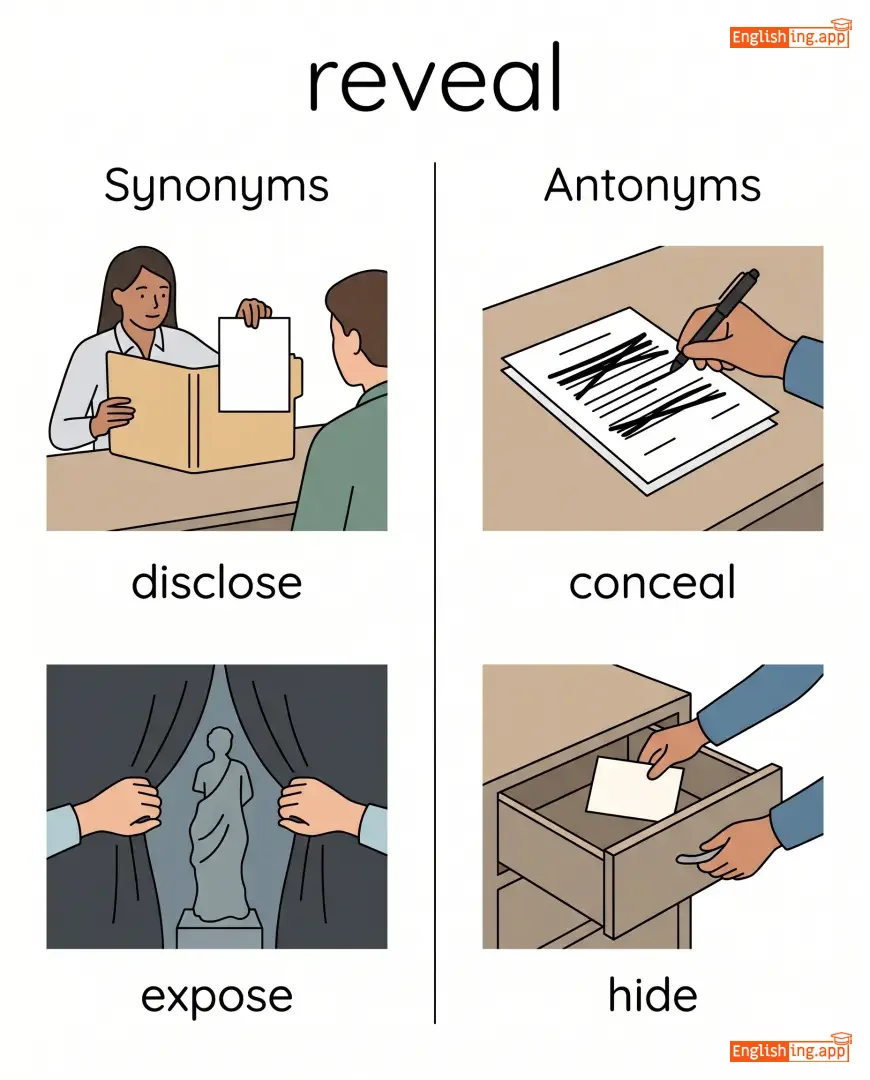
expose, disclose, uncover, show
••••••
|
conceal, hide, cover, suppress
••••••
|
reveal truth, reveal secret, reveal identity, slowly reveal
••••••
|
调查揭示了隐藏的真相。
••••••
|
|
#111
🏠
|
/əˈbaɪd/
verb
(艾拜德)
••••••
|
- •••••• |
遵守
zunshou
••••••
|
abode
艾博德
••••••
|
abode
艾博德
••••••
|
abides
艾拜兹
••••••
|
abiding
艾拜丁
••••••
|
to accept or act in accordance with; to endure; to dwell
••••••
|
I will abide by the rules of the company.
我会 abide 按照公司的规则。
••••••
|
我会遵守公司的规则。
Wǒ huì zūnshǒu gōngsī de guīzé.
••••••
|
accept, endure, tolerate, dwell, remain
••••••
|
reject, disobey, leave, depart
••••••
|
abide by rules, abide by law, strictly abide, always abide
••••••
|
Imagine abiding by rules as living in harmony with others in a shared environment.
••••••
|
|
#112
💊
|
/ˈmedɪkeɪt/
verb
(梅迪凯特)
••••••
|
|
用药治疗
yòng yào zhìliáo
••••••
|
medicated
梅迪凯特过
••••••
|
medicated
梅迪凯特过
••••••
|
medicates
梅迪凯特斯
••••••
|
medicating
梅迪凯特ing
••••••
|
to treat with medicine; to give drugs to someone for medical purposes
••••••
|
The doctor will medicate the patient to reduce inflammation.
医生将为病人治疗以减轻炎症。
••••••
|
医生将为病人治疗以减轻炎症。
Yīshēng jiāng wèi bìngrén zhìliáo yǐ jiǎnqīng yánzhèng.
••••••
|
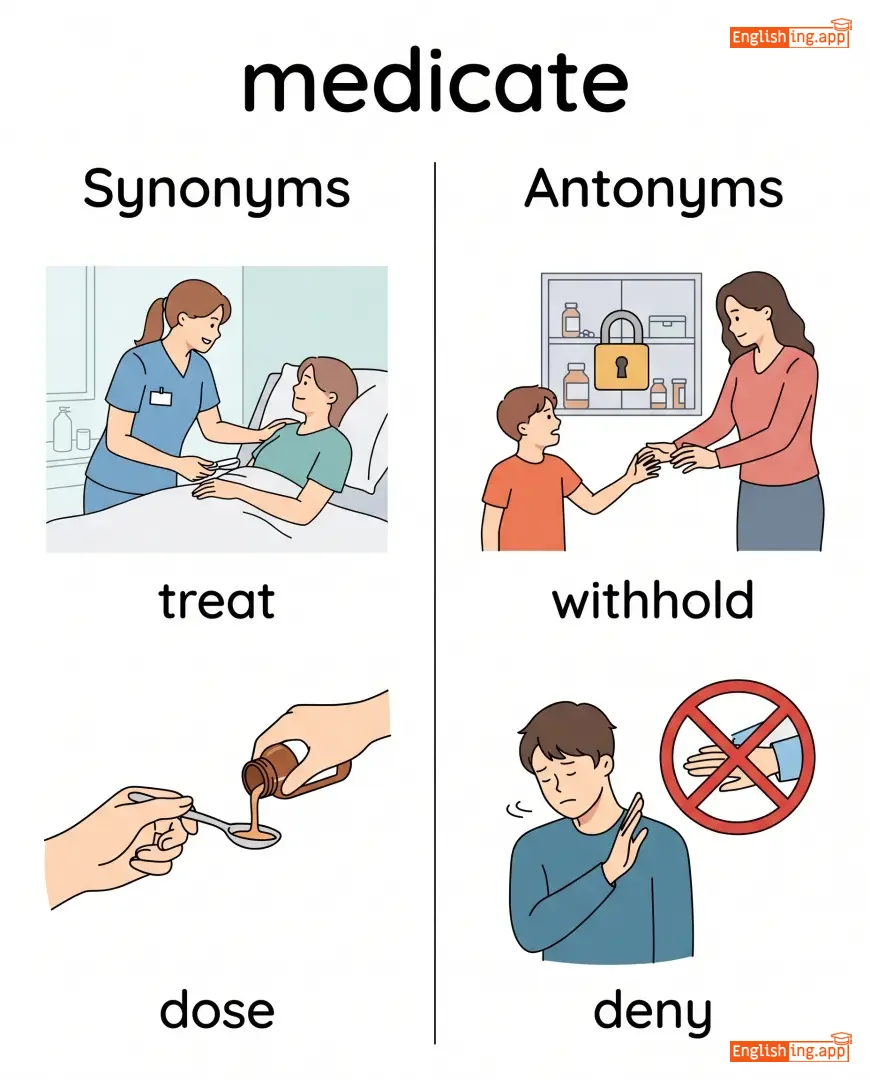
treat, dose, prescribe, administer
••••••
|
withhold, deny, refuse, neglect
••••••
|
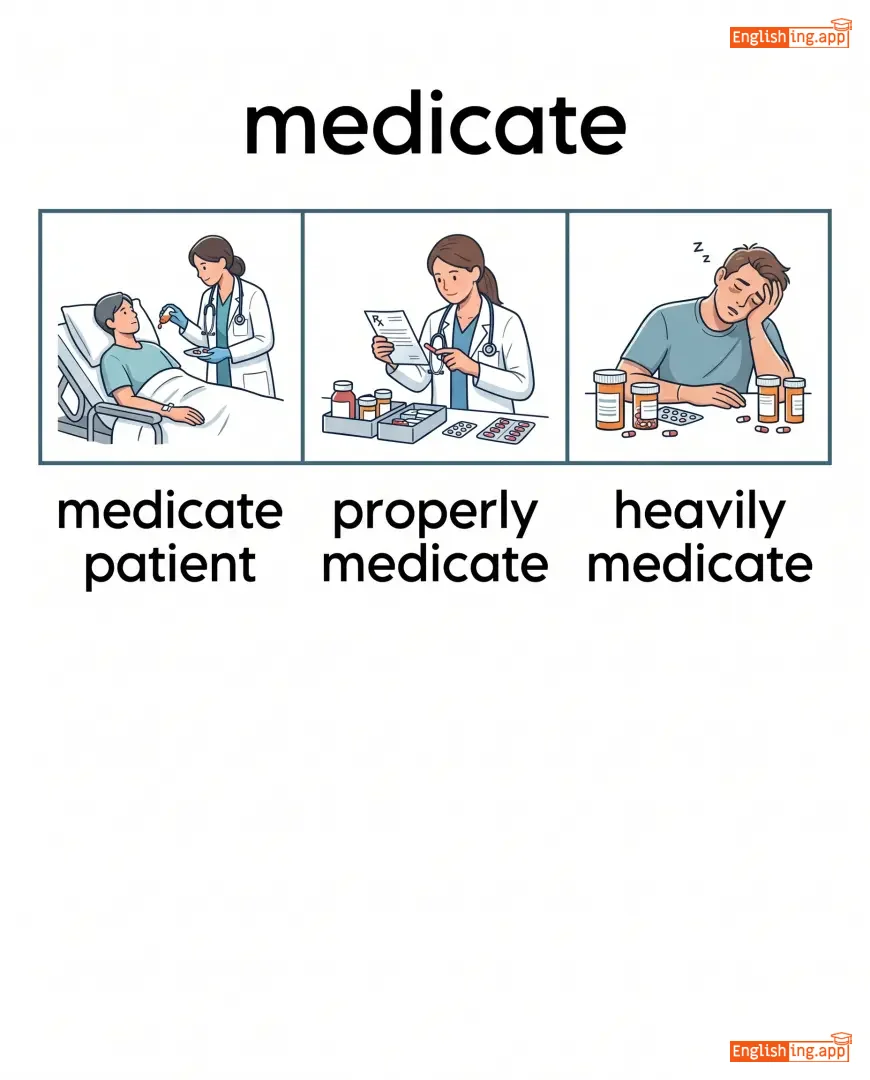
medicate patient, properly medicate, heavily medicate, daily medicate
••••••
|
药物治疗让炎症消失,药物治愈一切.
••••••
|
|
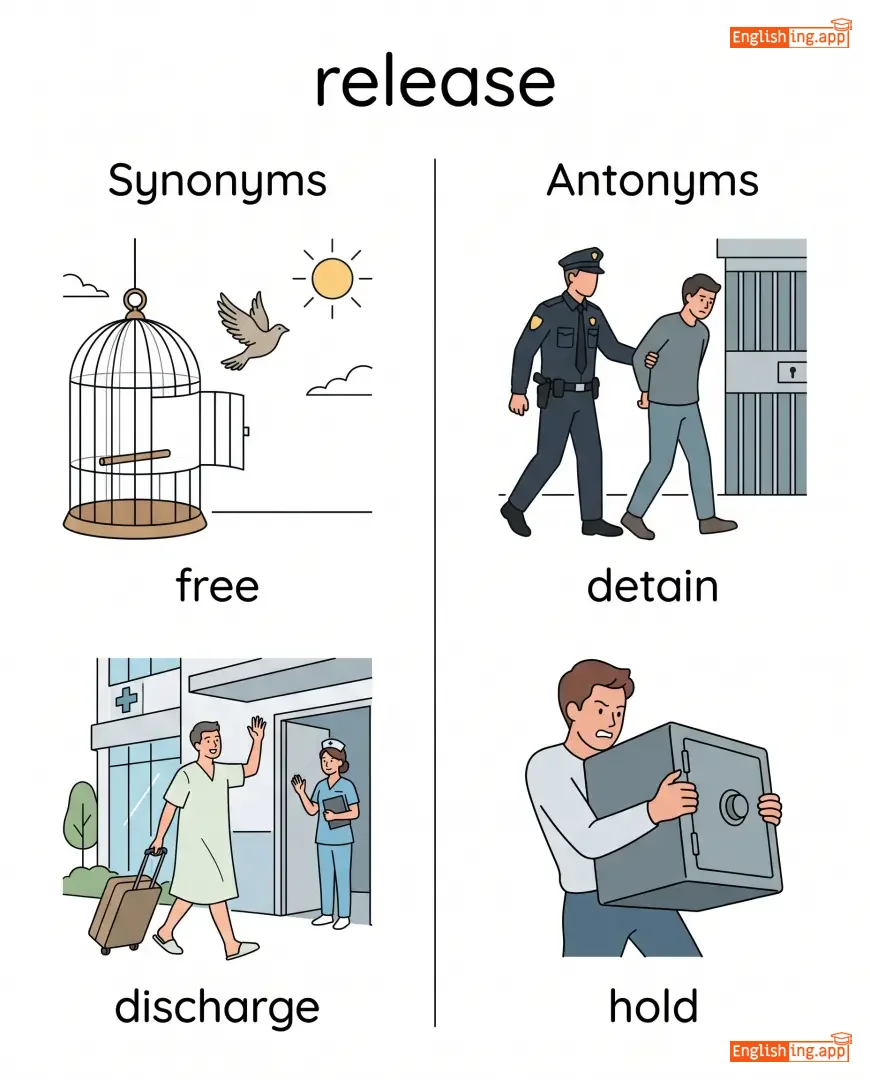
#113
🕊️
|
/rɪˈliːs/
verb
(rilízu)
••••••
|
|
释放
shifang
••••••
|
released
rilízè
••••••
|
released
rilízè
••••••
|
releases
rilízè
••••••
|
releasing
rilízīng
••••••
|
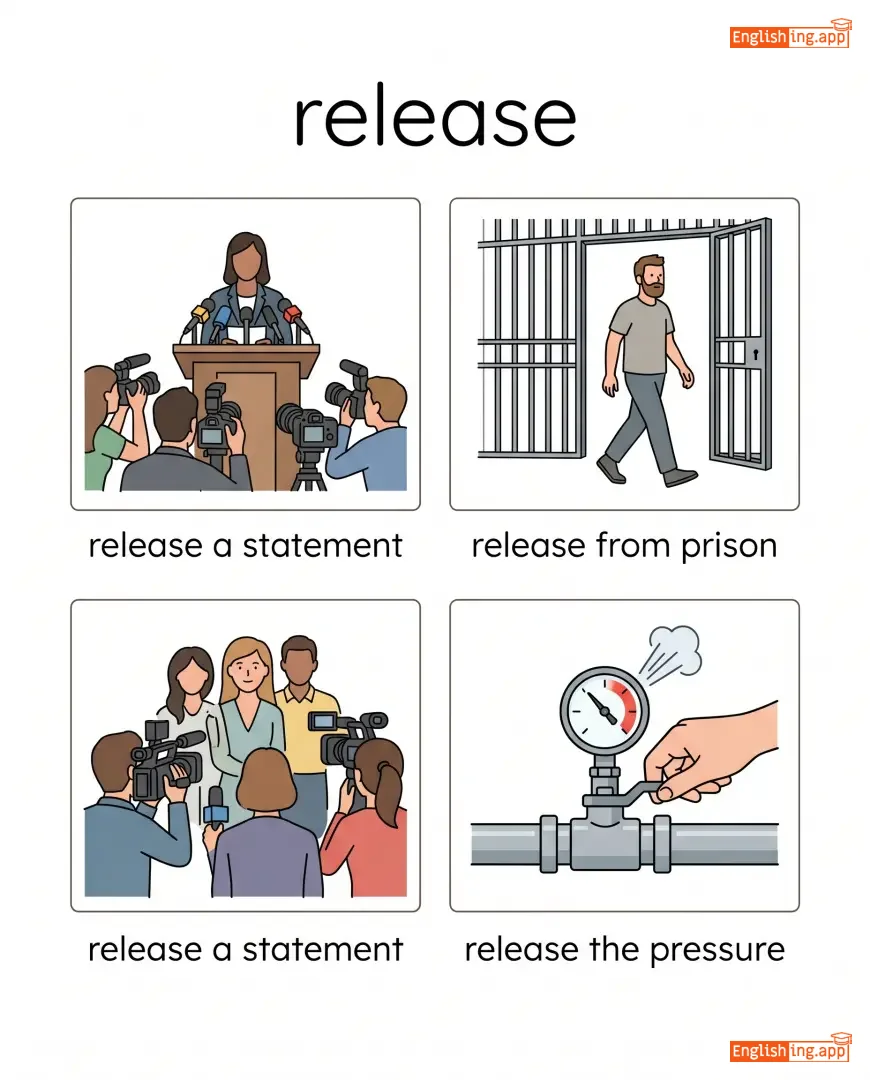
to set free; to allow something to escape or go away
••••••
|
The prisoner was released after ten years.
囚犯在十年后被释放。
••••••
|
囚犯在十年后被释放。
qiufen zai shinian hou bei shifang.
••••••
|
free, liberate, discharge, let go
••••••
|
capture, imprison, hold, detain
••••••
|
release prisoner, release album, press release, early release
••••••
|
Release in Chinese is 'shifang', meaning to set free from confinement.
••••••
|
|
#114
💳
|
/oʊ/
verb
(owe)
••••••
|
|
欠债
qiàn zhài
••••••
|
owed
owed
••••••
|
owed
owed
••••••
|
owes
owes
••••••
|
owing
owing
••••••
|
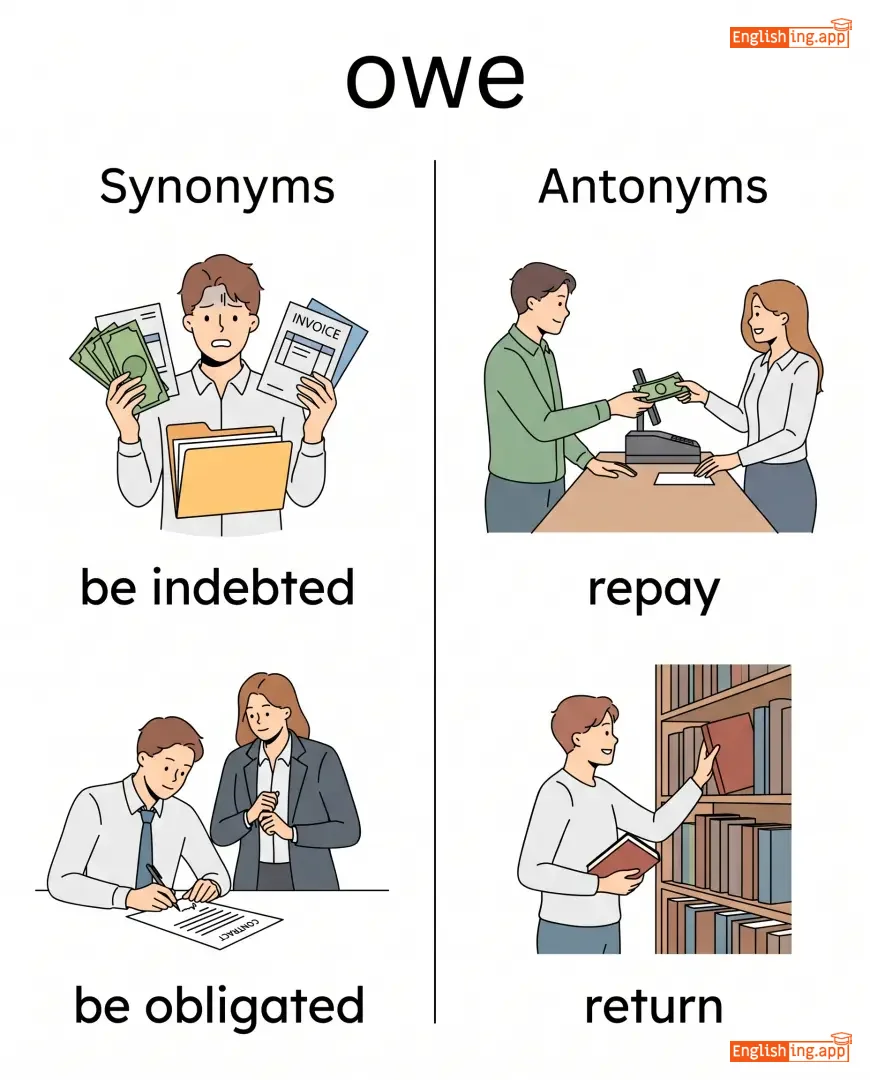
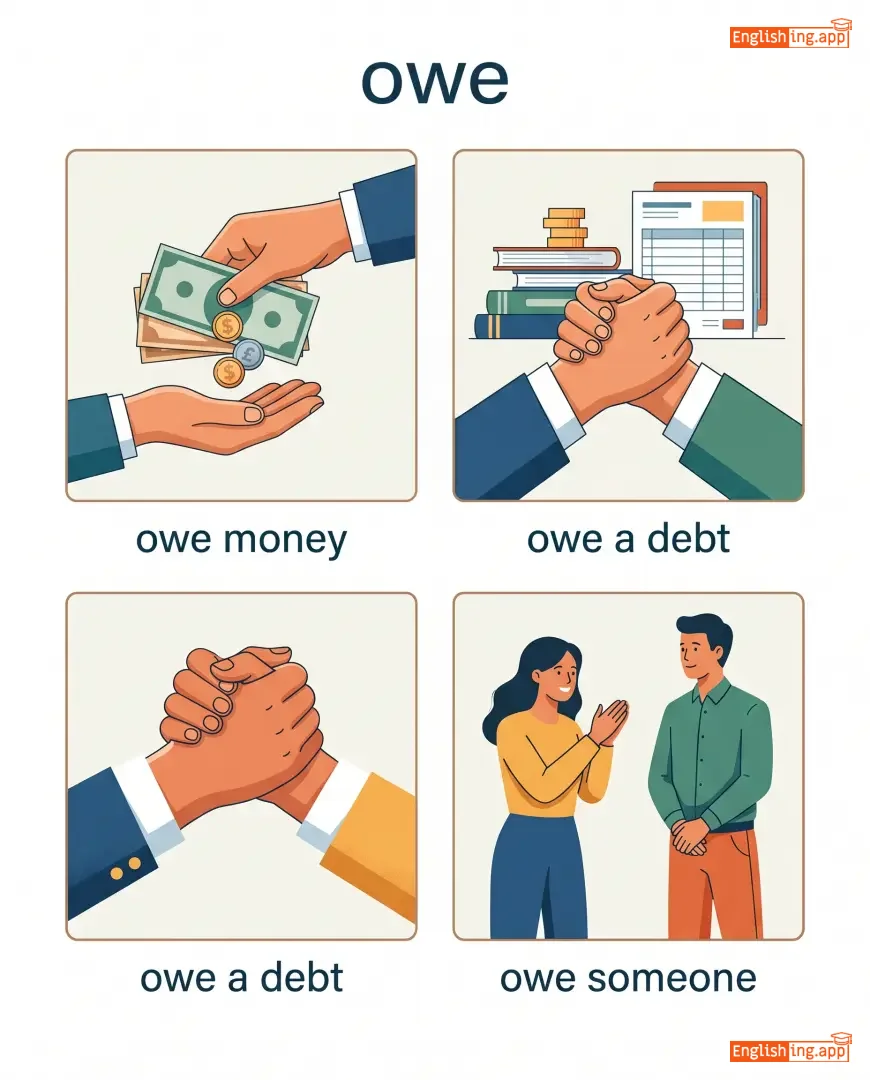
to be under obligation to pay or repay; to be indebted
••••••
|
I owe my success to my parents' support.
我将我的成功归功于父母的支持。
••••••
|
我将我的成功归功于父母的支持。
Wǒ jiāng wǒ de chénggōng guīgōng yú fùmǔ de zhīchí.
••••••
|
be indebted, be obligated, be liable, be in debt
••••••
|
own, possess, have, collect
••••••
|
owe money, owe debt, owe favor, owe gratitude
••••••
|
欠债就要还钱,跟父母的支持一样重要。
••••••
|
|
#115
⛴️
|
/ˈfɛri/
verb
(费里)
••••••
|
- •••••• |
渡船运输
dùchuán yùnshū
••••••
|
ferried
费里德
••••••
|
ferried
费里德
••••••
|
ferries
费里斯
••••••
|
ferrying
费里英
••••••
|
to transport by boat; to carry back and forth
••••••
|
The boat ferried passengers across the river.
船把乘客运过了河。
••••••
|
船把乘客运过了河。
Chuán bǎ chéngkè yùn guòle hé.
••••••
|
transport, carry, convey, shuttle
••••••
|
abandon, leave, strand
••••••
|
ferry across, ferry service, car ferry, passenger ferry
••••••
|
渡船 = 用船运送人或货物,在两岸之间穿行。
••••••
|
|
#116
🎯
|
/əˈkwaɪər/
verb
(ɑˈkwɪr)
••••••
|
|
获得
huo de
••••••
|
acquired
获得
••••••
|
acquired
获得
••••••
|
acquires
获得
••••••
|
acquiring
获取
••••••
|
to obtain or gain possession of something
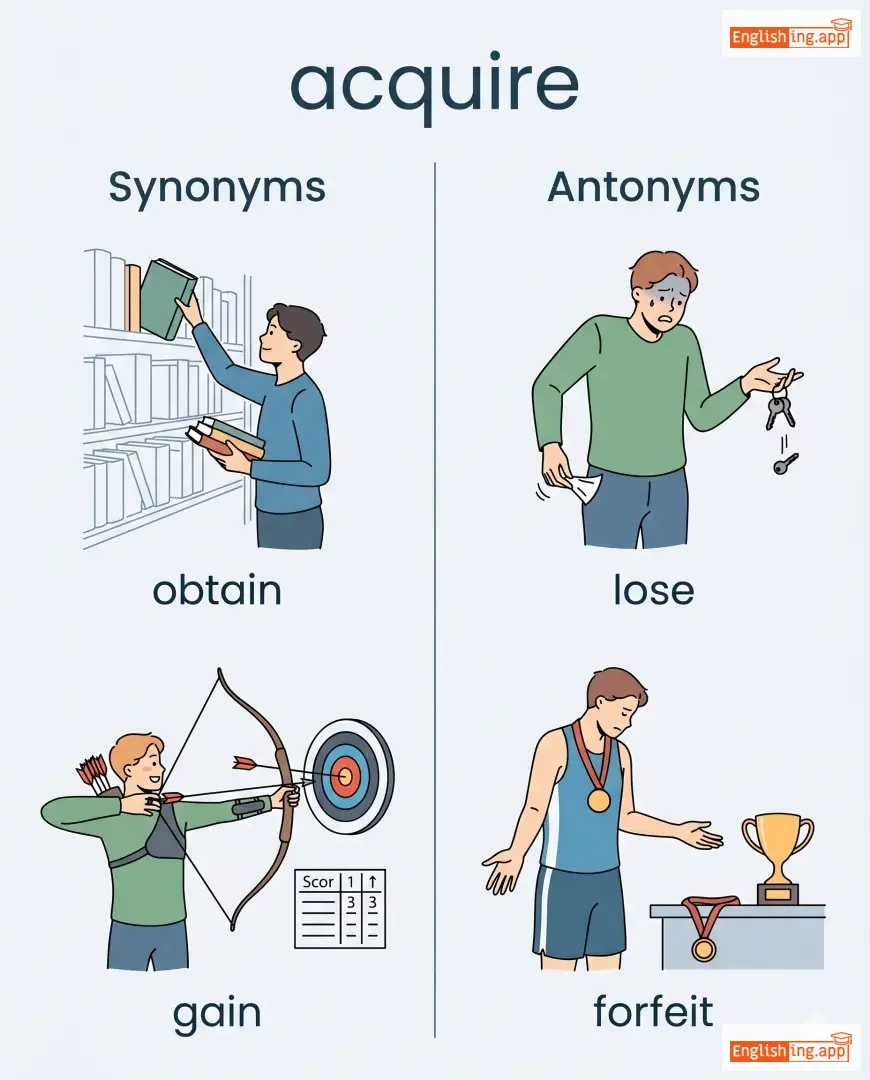
••••••
|
He acquired new skills through practice.
他通过实践获得了新技能。
••••••
|
他通过实践获得了新技能。
Ta tong guo shi jian huo de le xin ji neng.
••••••
|
obtain, gain, get, purchase
••••••
|
lose, give up, surrender, forfeit
••••••
|
acquire skill, acquire knowledge, acquire property, newly acquire
••••••
|
Think of acquiring new skills as unlocking new levels in a game.
••••••
|
|
#117
👊
|
/hɪt/
verb
(海皮尼斯)
••••••
|
- •••••• |
击打
jī dǎ
••••••
|
hit
海皮尼斯
••••••
|
hit
海皮尼斯
••••••
|
hits
海皮尼斯
••••••
|
hitting
海皮尼斯
••••••
|
to strike; to reach a target
••••••
|
He hit the ball with the bat.
他用球棒击打了球。
••••••
|
他用球棒击打了球。
Tā yòng qiú bàng jī dǎ le qiú.
••••••
|
strike, beat, punch, smack
••••••
|
miss, avoid, dodge
••••••
|
hit ball, hit target, hit hard, direct hit
••••••
|
Jī dǎ means to hit, just like hitting a ball with a bat.
••••••
|
|
#118
🌍
|
/trænsˈleɪt/
verb
(trænsˈleɪt)
••••••
|
|
翻译
fānyì
••••••
|
translated
翻译
••••••
|
translated
翻译
••••••
|
translates
翻译
••••••
|
translating
翻译中
••••••
|
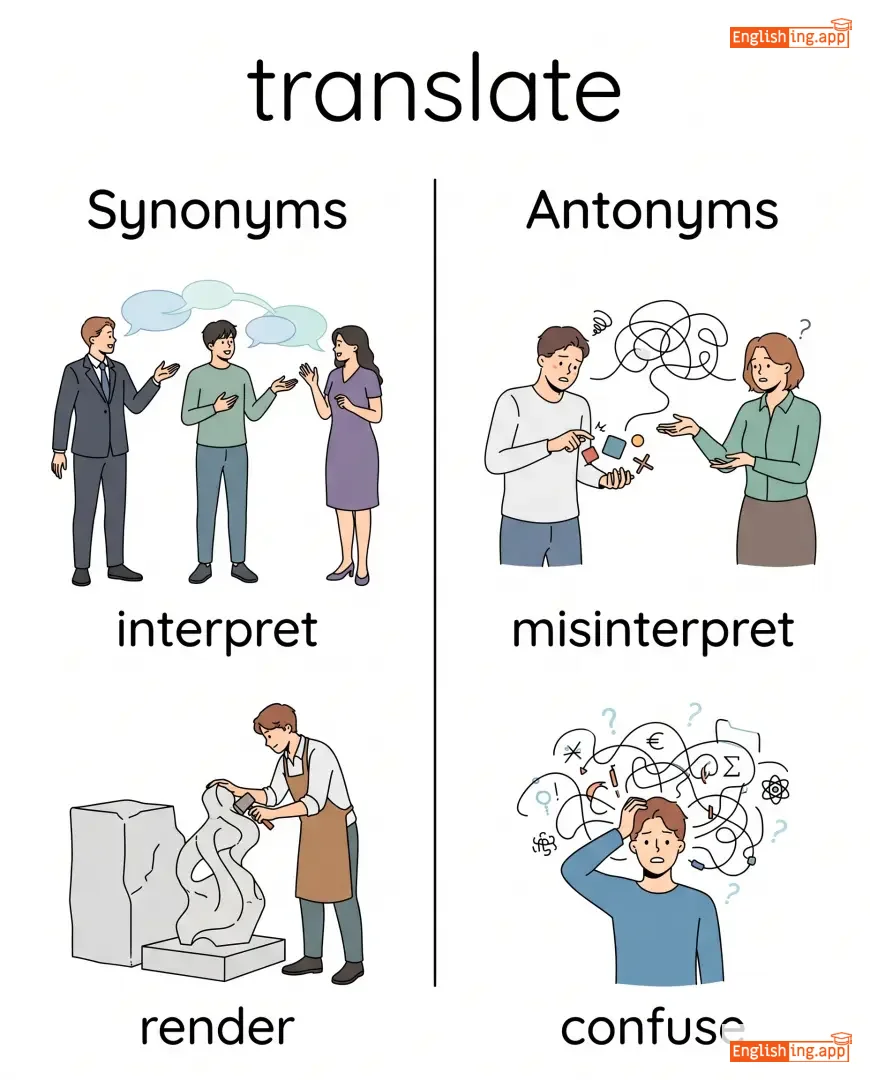
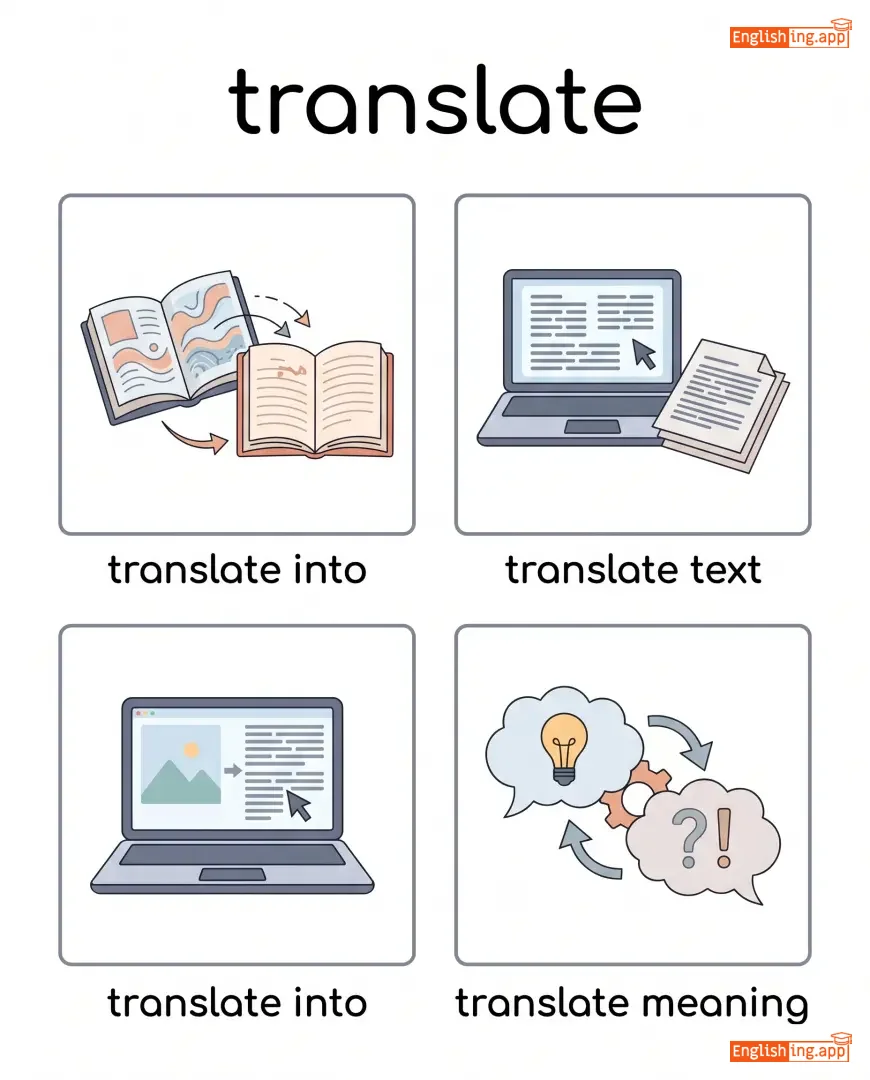
to express words or text in another language
••••••
|
She can translate five languages.
她可以翻译五种语言。
••••••
|
她可以翻译五种语言。
Tā kěyǐ fānyì wǔ zhǒng yǔyán.
••••••
|
interpret, render, convert
••••••
|
confuse, garble, distort
••••••
|
translate language, translate document, translate accurately, machine translate
••••••
|
记住 '翻译',它代表将一个语言转换成另一个语言。
••••••
|
|
#119
🎨
|
/drɔː/
verb
(drɔ)
••••••
|
- •••••• |
画
hua
••••••
|
drew
dru
••••••
|
drawn
drɔn
••••••
|
draws
drɔz
••••••
|
drawing
drɔɪŋ
••••••
|
to create pictures or designs with a pencil or pen
••••••
|
She draws beautiful landscapes in her spare time.
她在空闲时间画美丽的风景。
••••••
|
她在空闲时间画美丽的风景。
Ta zai kongxian shijian hua mei li de fengjing.
••••••
|
sketch, illustrate, design, create
••••••
|
erase, destroy, ignore
••••••
|
draw picture, draw line, draw attention, draw conclusion
••••••
|
想象你画画,记住 '画' 是用铅笔或钢笔制作的图案。
••••••
|
Vocabulary Quiz
Test your vocabulary by matching words with their translations or meanings.
Login to take the quiz
Comments (0)
Share your thoughts and join the discussion.
Join the discussion by logging in
Login to CommentNo comments yet
Be the first to share your thoughts!