














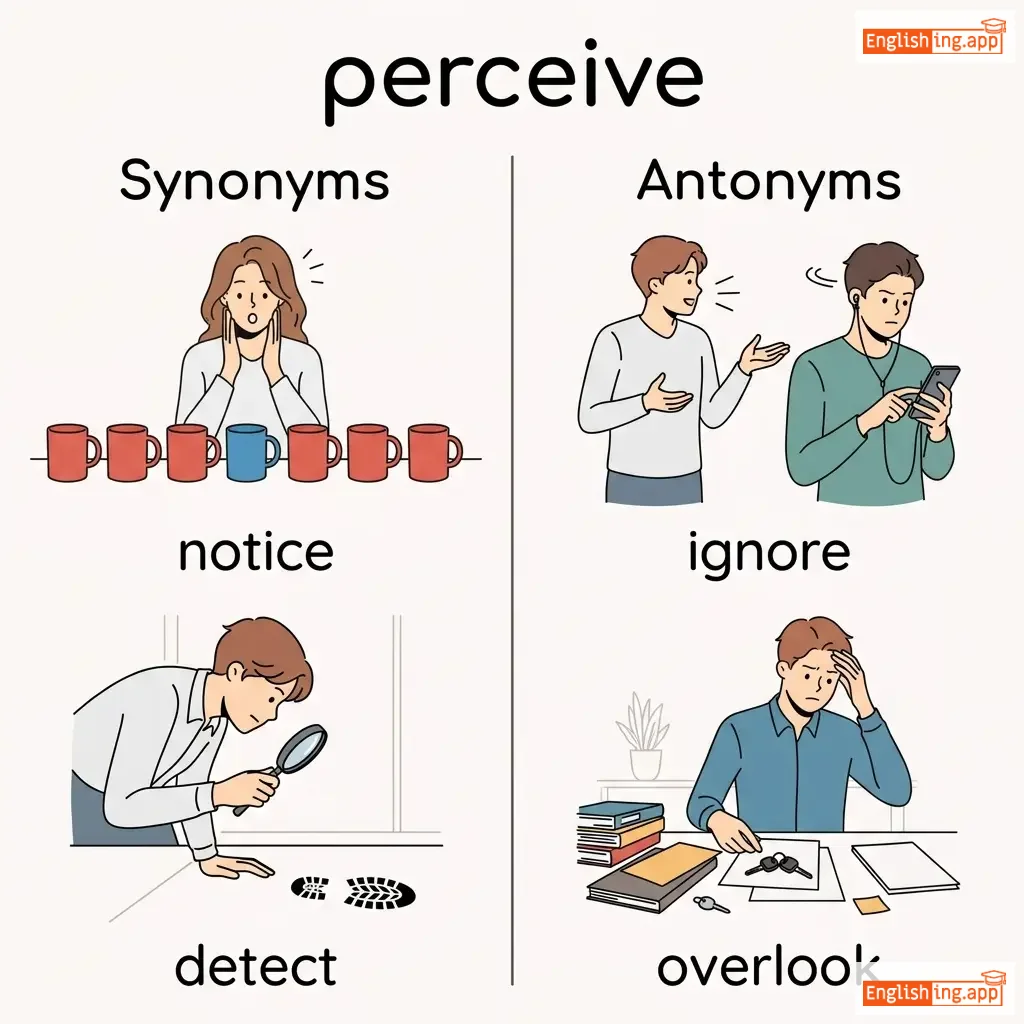
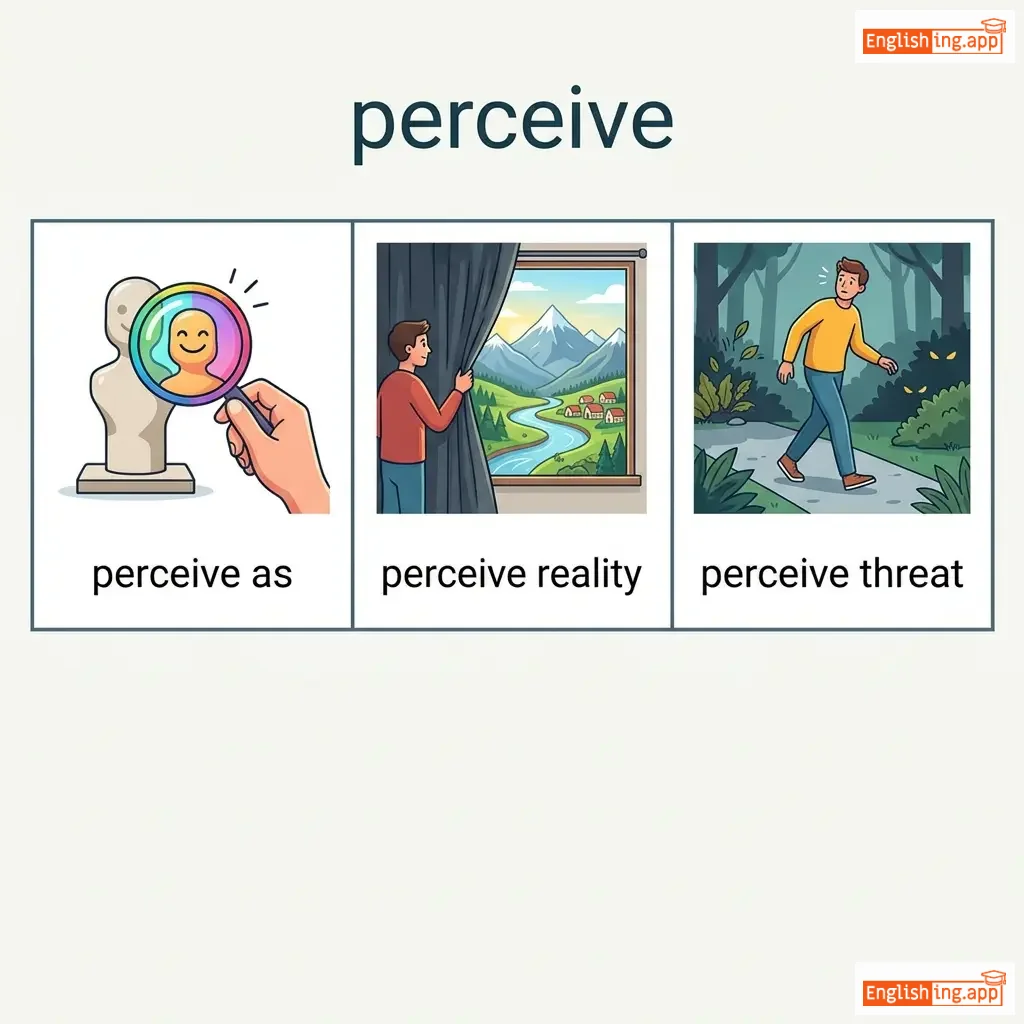

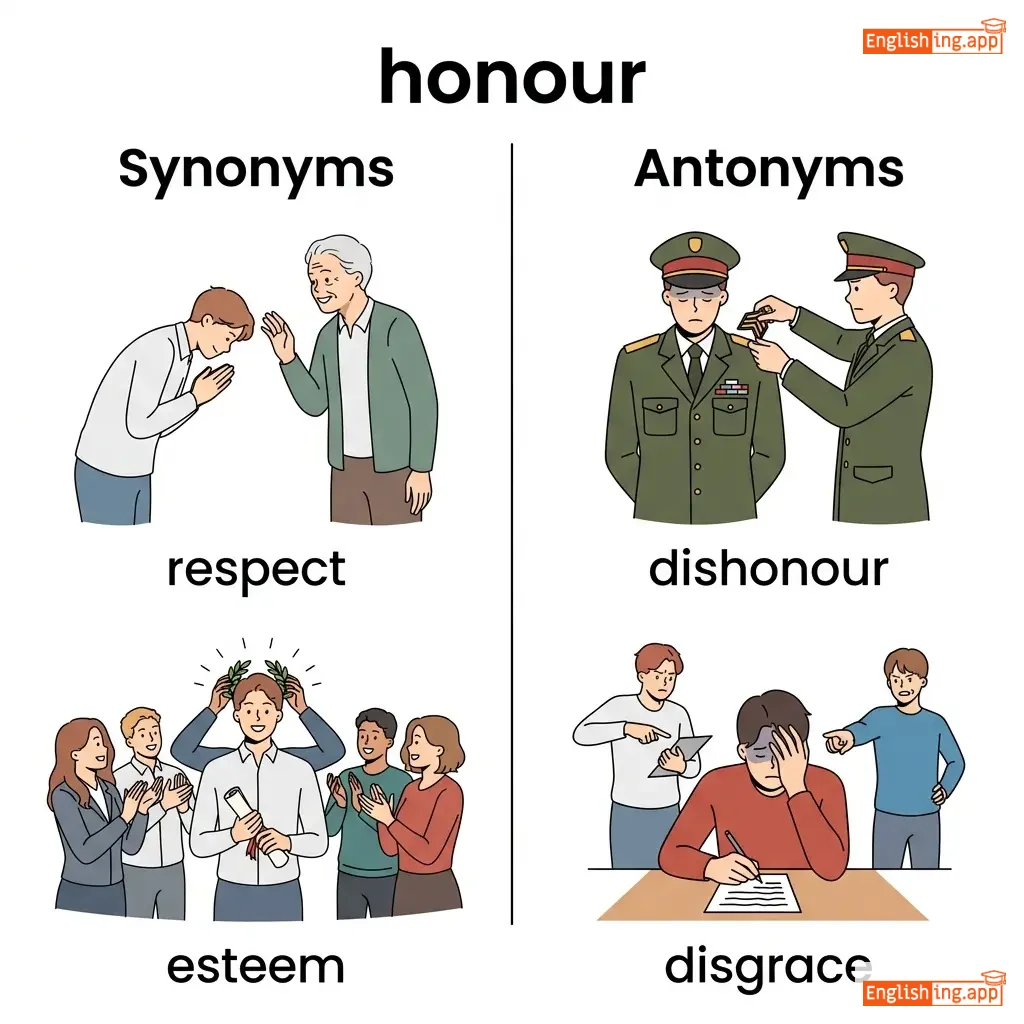


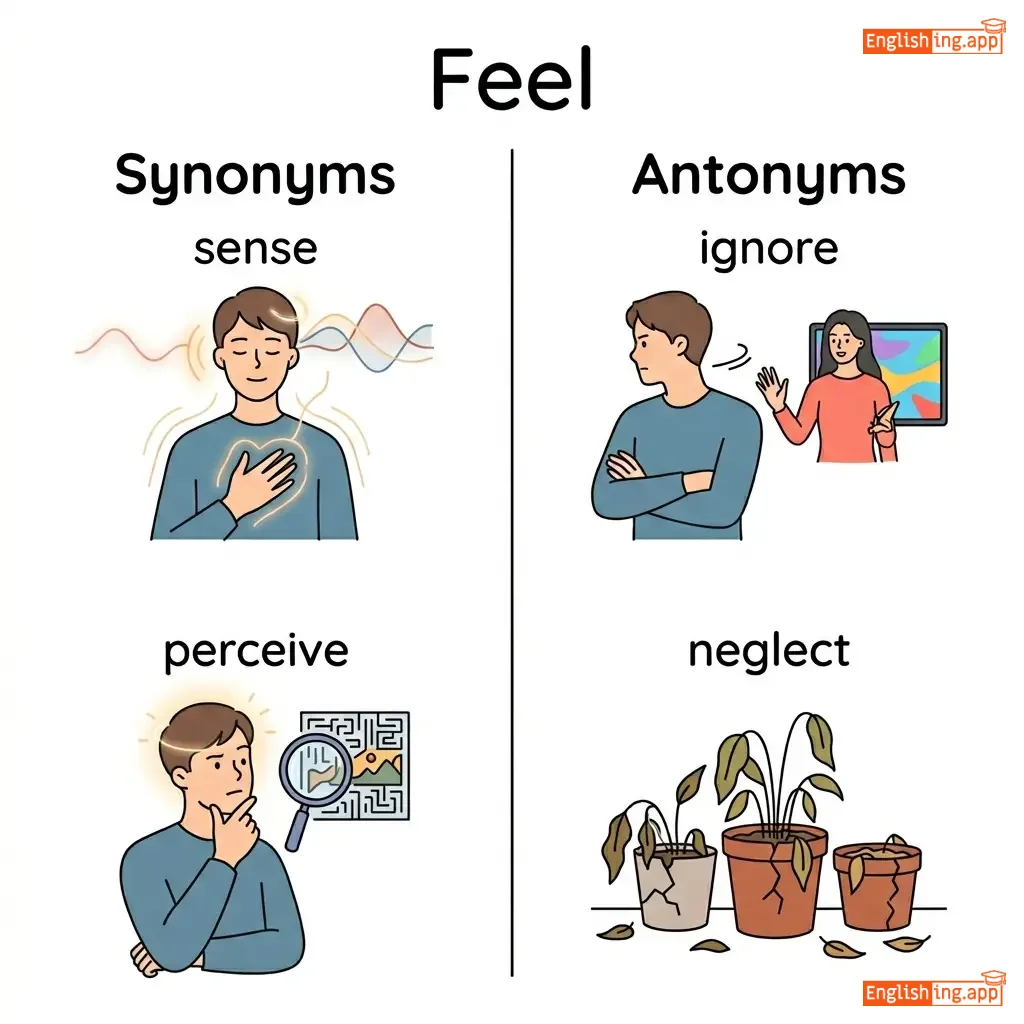















Swipe left or right, or use the buttons. Tap image to zoom.
例句翻译
单词
Lesson 13: Mastering the Most Frequent Verbs & TensesLesson 13: Mastering the Most Frequent Verbs & Tenses - 遮罩切换
|
表情符号
|
单词 | Images | 翻译 | 过去时 | 过去分词 | 第三人称单数 | 动名词 | 含义 | 例句 | 例句翻译 | 同义词 | 反义词 | 搭配词 | 助记符 |
|---|---|---|---|---|---|---|---|---|---|---|---|---|---|---|
|
#359
⚡
|
/əˈkɜːr/
verb
(发生)
••••••
|
|
发生
fasheng
••••••
|
occurred
发生了
••••••
|
occurred
发生了
••••••
|
occurs
发生
••••••
|
occurring
发生中
••••••
|
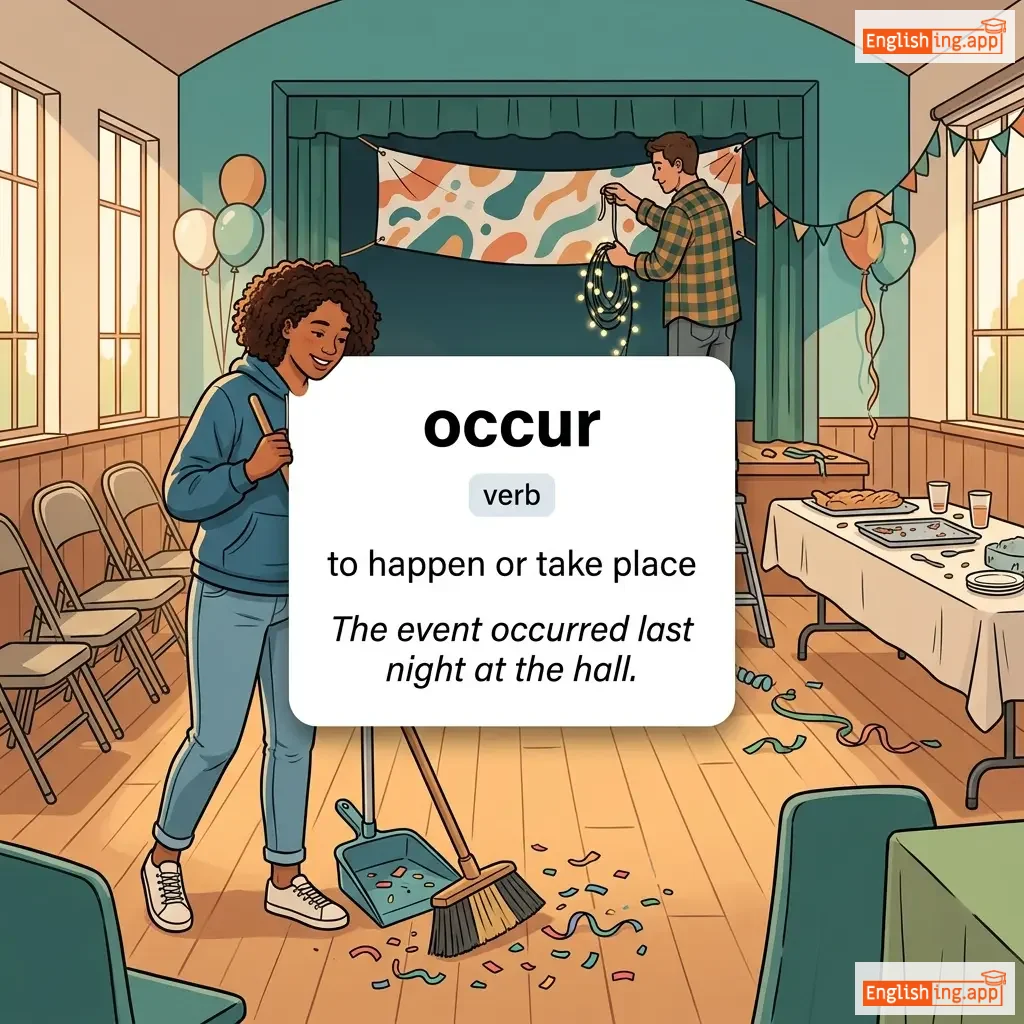
to happen or take place; to be found or present
••••••
|
The accident occurred at the intersection during rush hour.
事故发生在高峰时段的交叉口。
••••••
|
事故发生在高峰时段的交叉口。
Shigu fasheng zai gaofeng shiduan de jiaochakou.
••••••
|
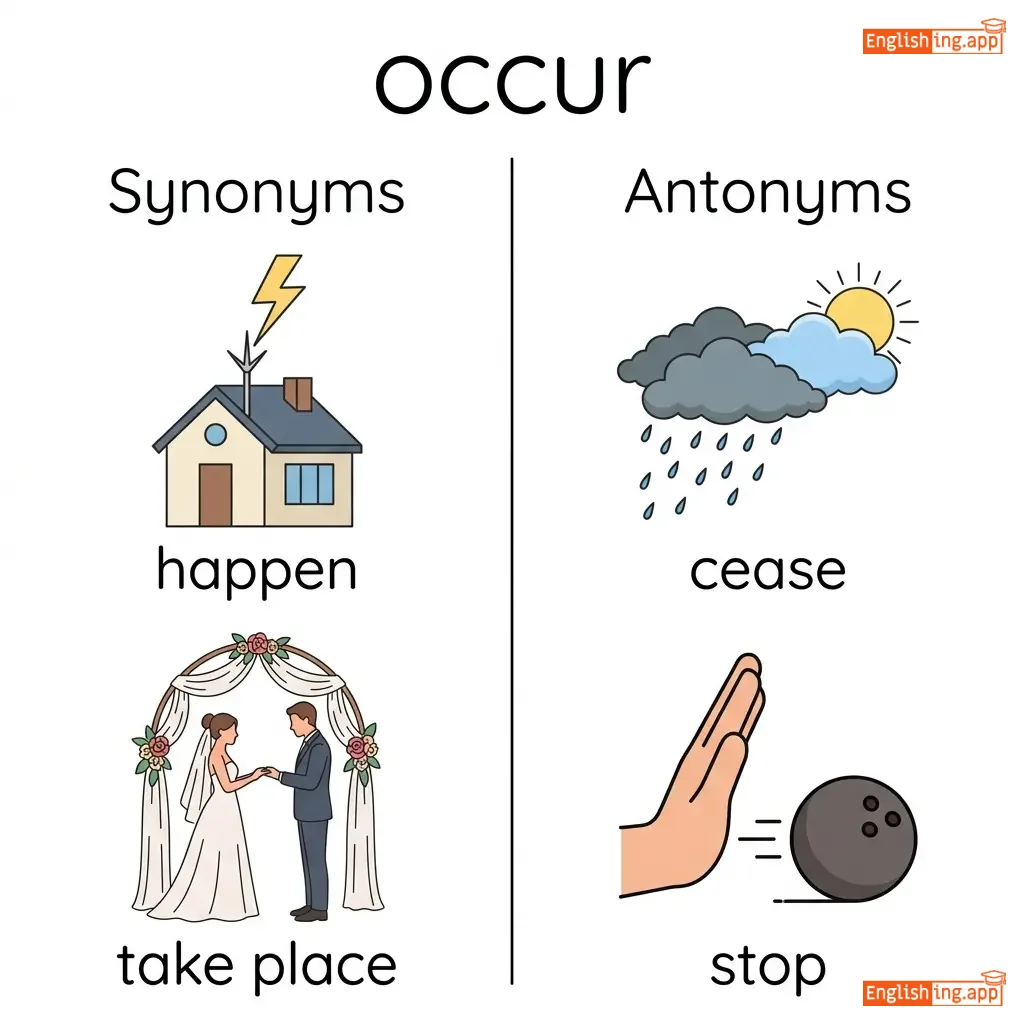
happen, take place, arise, transpire
••••••
|
prevent, avoid, cease, stop
••••••
|
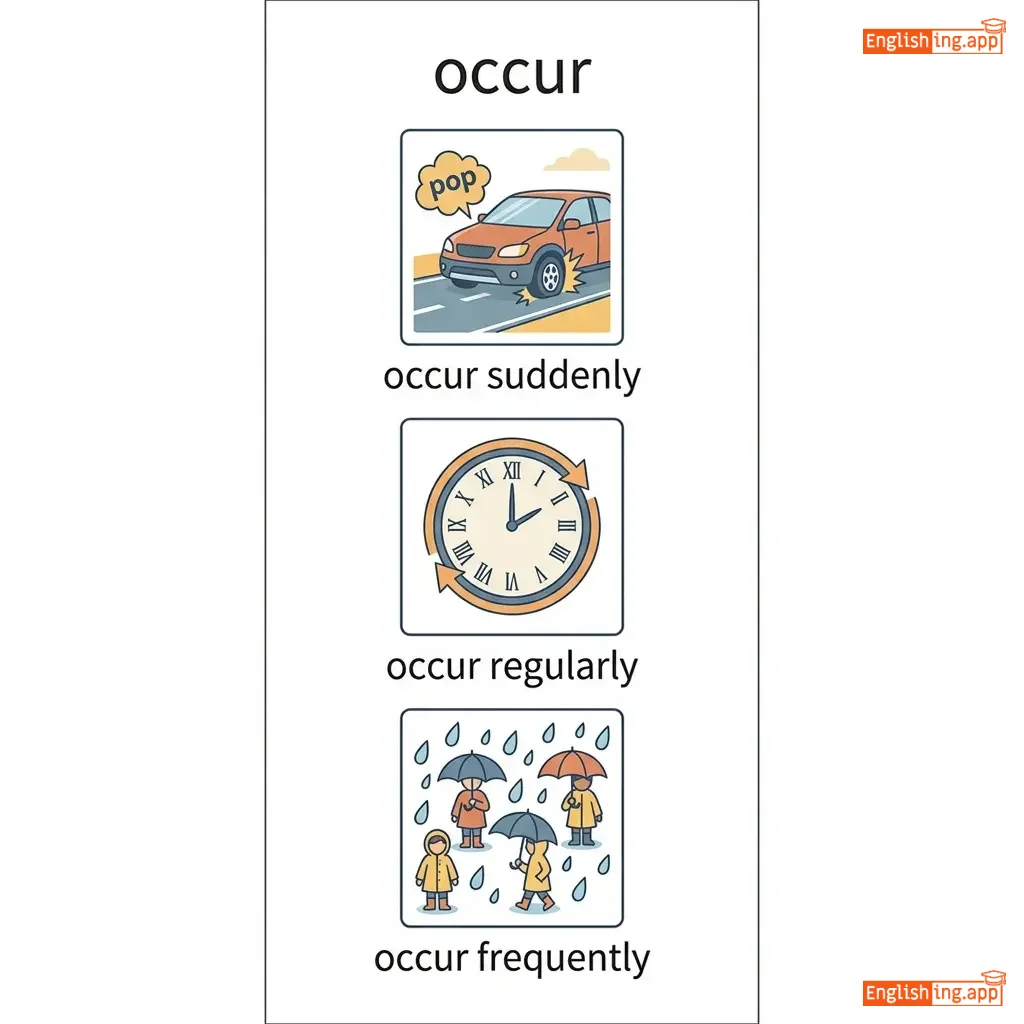
occur naturally, occur frequently, occur suddenly, rarely occur, occur simultaneously
••••••
|
发生是一个事件发生的标志,像发生了某件事,带来新的启示。
••••••
|
|
#360
🛏️
|
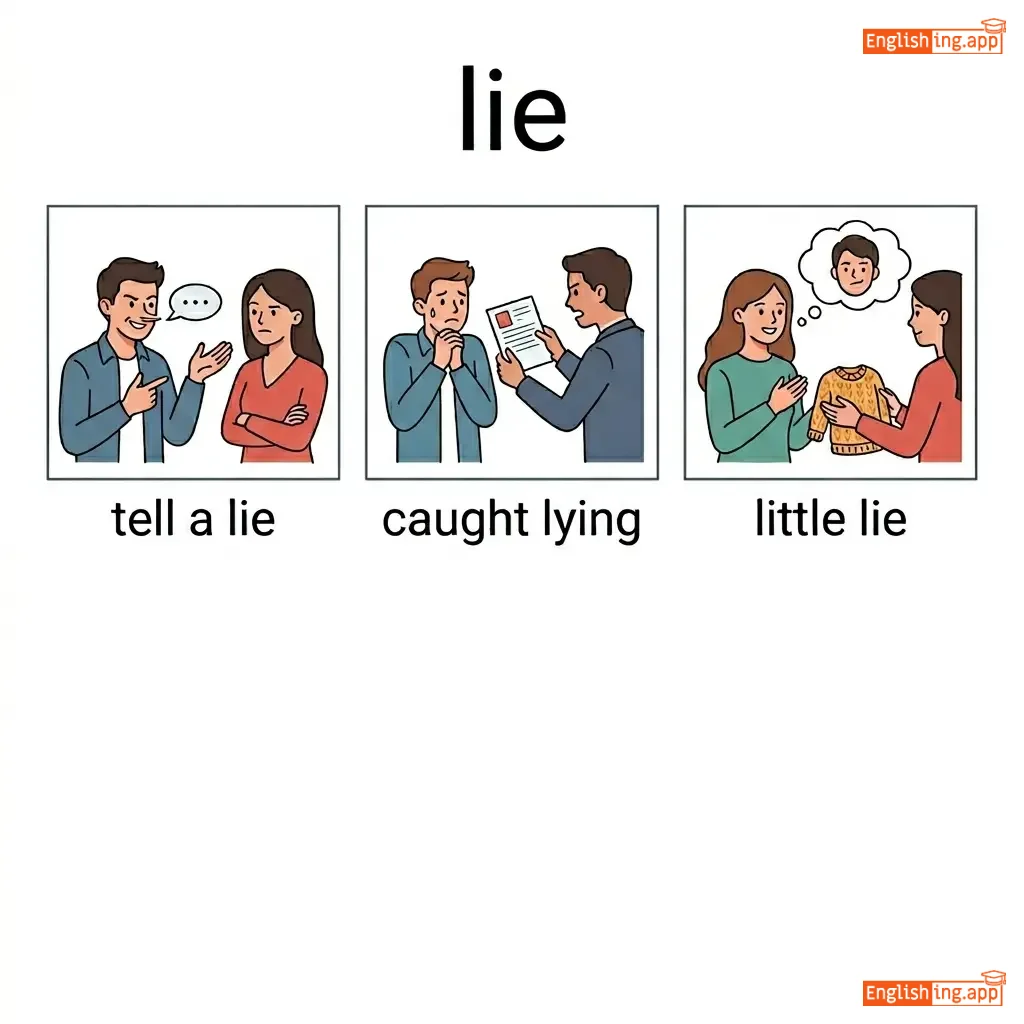
/laɪ/
verb
(lái)
••••••
|
|
撒谎, 躺着
sāhuǎng, tǎngzhe
••••••
|
lay
lay
••••••
|
lain
lain
••••••
|
lies
laiz
••••••
|
lying
laing
••••••
|
to be in a horizontal position; to tell an untruth
••••••
|
The book lies on the table.
zhè běn shū lái zài zhuōzi shàng.
••••••
|
书放在桌子上。
Shū fàng zài zhuōzi shàng.
••••••
|
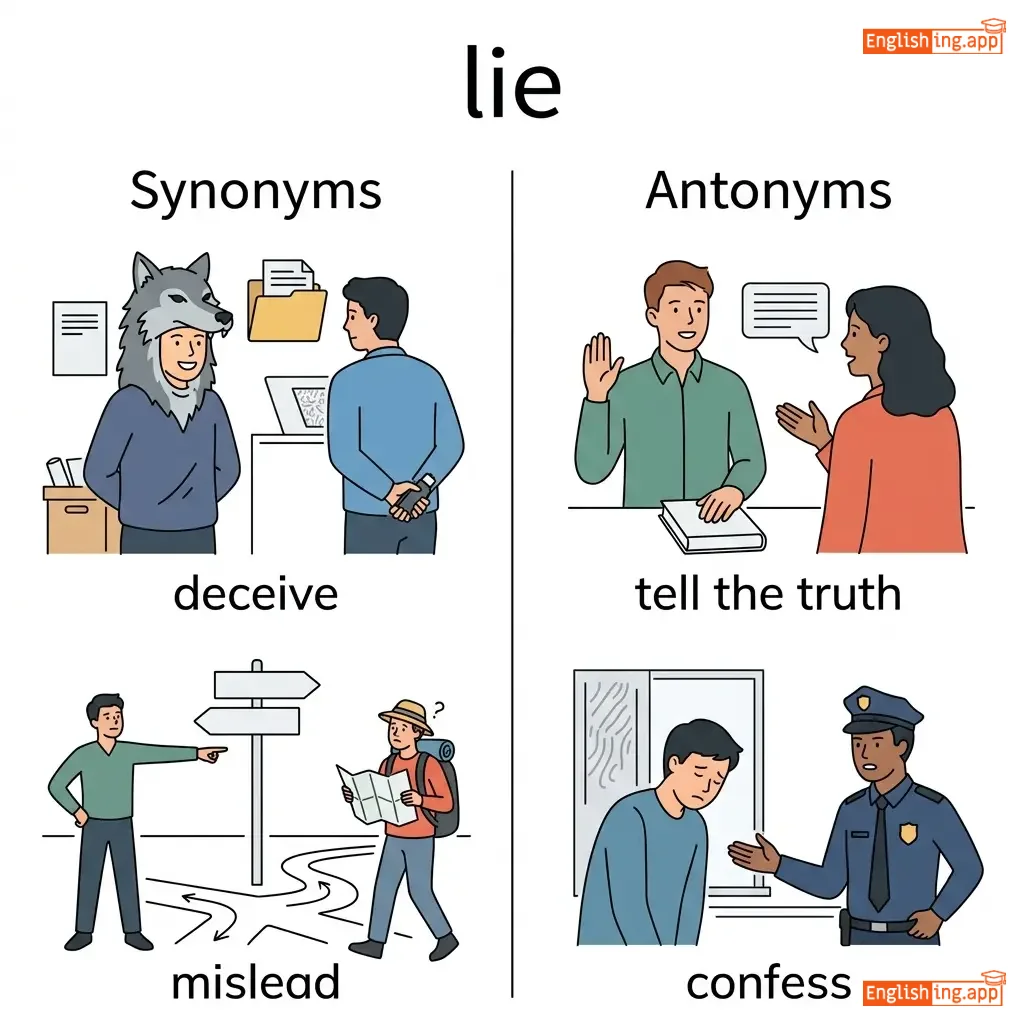
rest, recline, deceive, fabricate
••••••
|
stand, sit, tell truth, be honest
••••••
|
lie down, lie flat, lie awake, lie still, lie dormant
••••••
|
撒谎并躺着休息
••••••
|
|
#361
👉
|
/əˈkjuːz/
verb
(ā kè yú sī)
••••••
|
|
指控
zhǐkòng
••••••
|
accused
ā kè yú sī dé
••••••
|
accused
ā kè yú sī dé
••••••
|
accuses
ā kè yú sī
••••••
|
accusing
ā kè yú sī zhōng
••••••
|
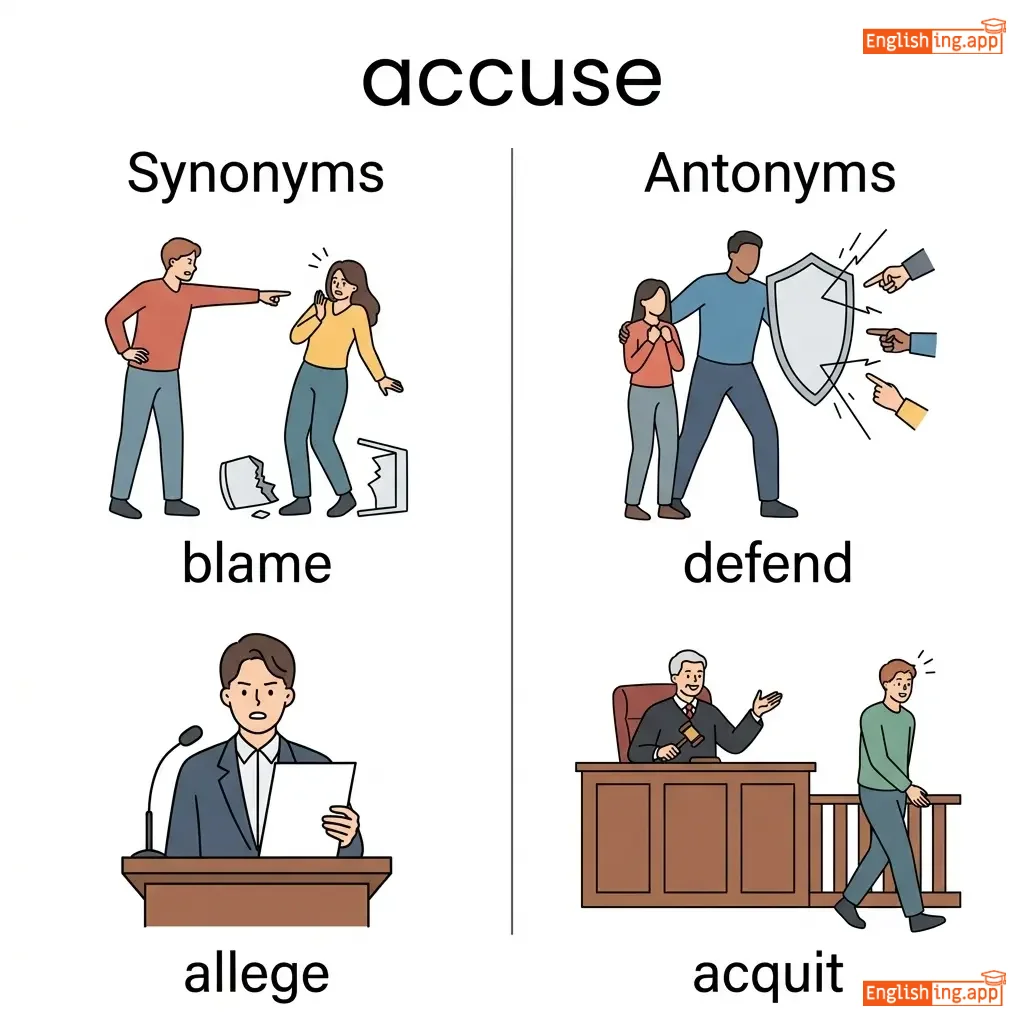
to charge someone with a crime or wrongdoing
••••••
|
She accused him of stealing her wallet.
她指控他偷了她的钱包。
••••••
|
她指控他偷了她的钱包。
Tā zhǐkòng tā tōu le tā de qiánbāo.
••••••
|
charge, blame, indict, allege
••••••
|
defend, exonerate, absolve, clear
••••••
|
accuse falsely, accuse someone, publicly accuse, accuse wrongly, accuse directly
••••••
|
当你发现有人做错事时,你需要'指控'他。
••••••
|
|
#362
🚫
|
/ˈbɔɪkɑt/
verb
(抵制)
••••••
|
|
抵制
dǐzhì
••••••
|
boycotted
抵制了
••••••
|
boycotted
抵制了
••••••
|
boycotts
抵制
••••••
|
boycotting
抵制
••••••
|
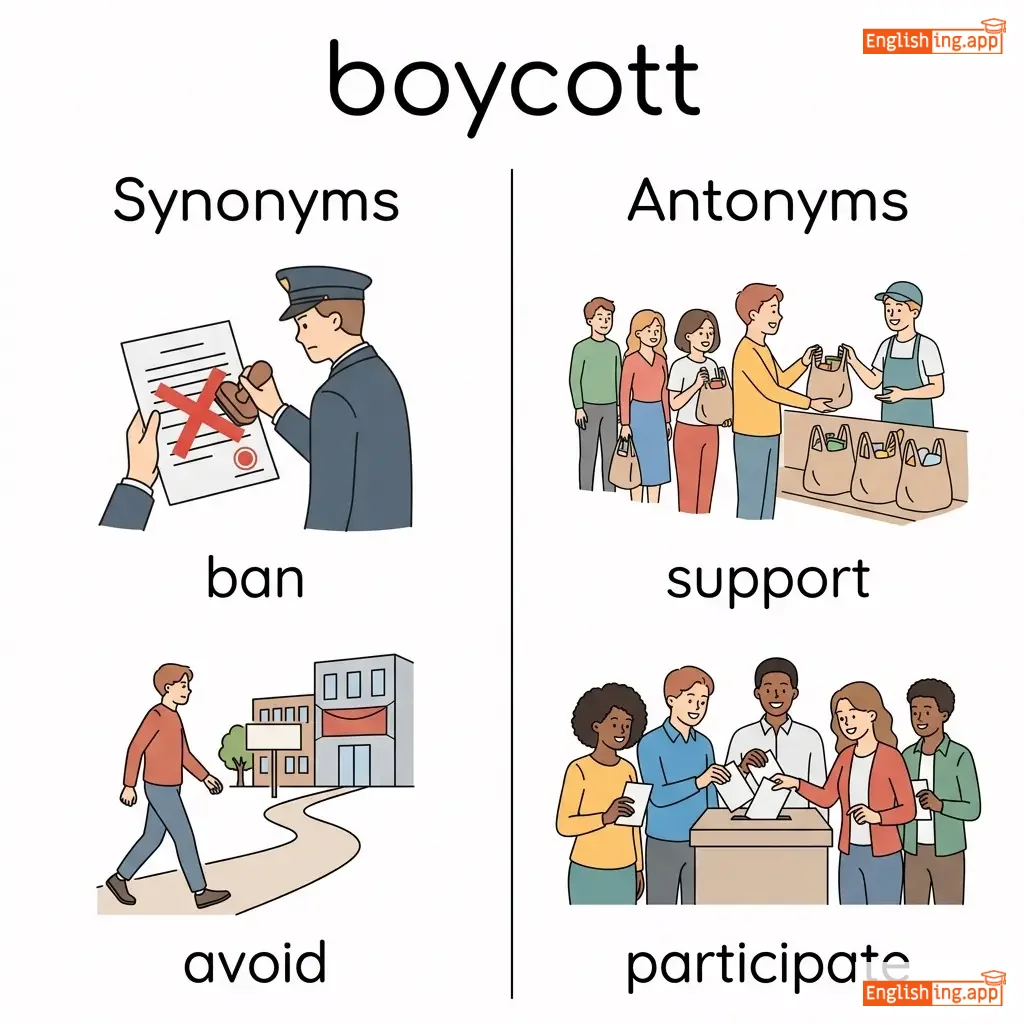
to refuse to buy, use, or participate in something as a protest
••••••
|
They decided to boycott the company's products.
他们决定抵制公司的产品。
••••••
|
他们决定抵制公司的产品。
Tāmen juédìng dǐzhì gōngsī de chǎnpǐn.
••••••
|
avoid, shun, embargo, ban
••••••
|
support, patronize, endorse
••••••
|
boycott products, boycott completely, boycott internationally, boycott peacefully, organize boycott
••••••
|
抵制像一个坚决的'不',你不参与某事,只是因为你反对它。
••••••
|
|
#363
⚙️
|
/ɡraɪnd/
verb
(gū lěi)
••••••
|
|
磨碎
mó suì
••••••
|
ground
gū lěi
••••••
|
ground
gū lěi
••••••
|
grinds
gū lěi
••••••
|
grinding
gū lěi
••••••
|
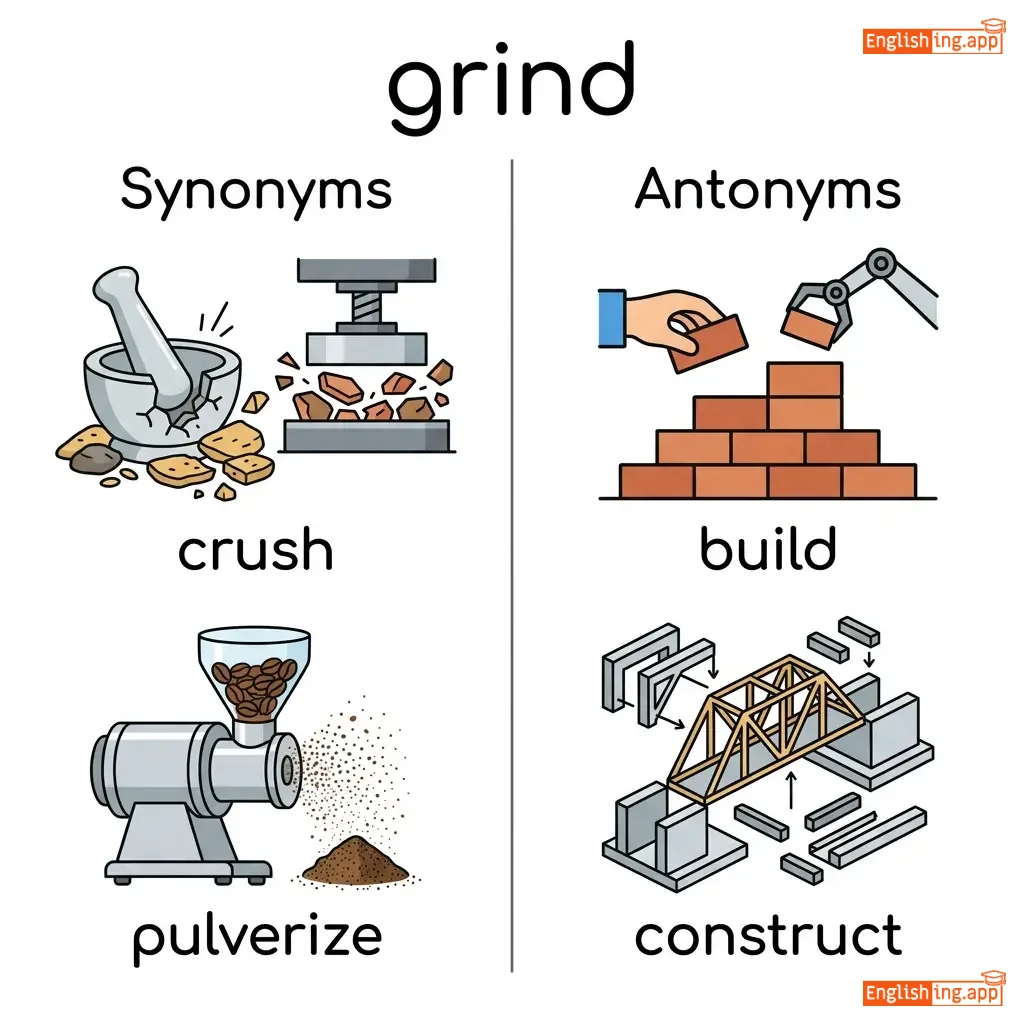
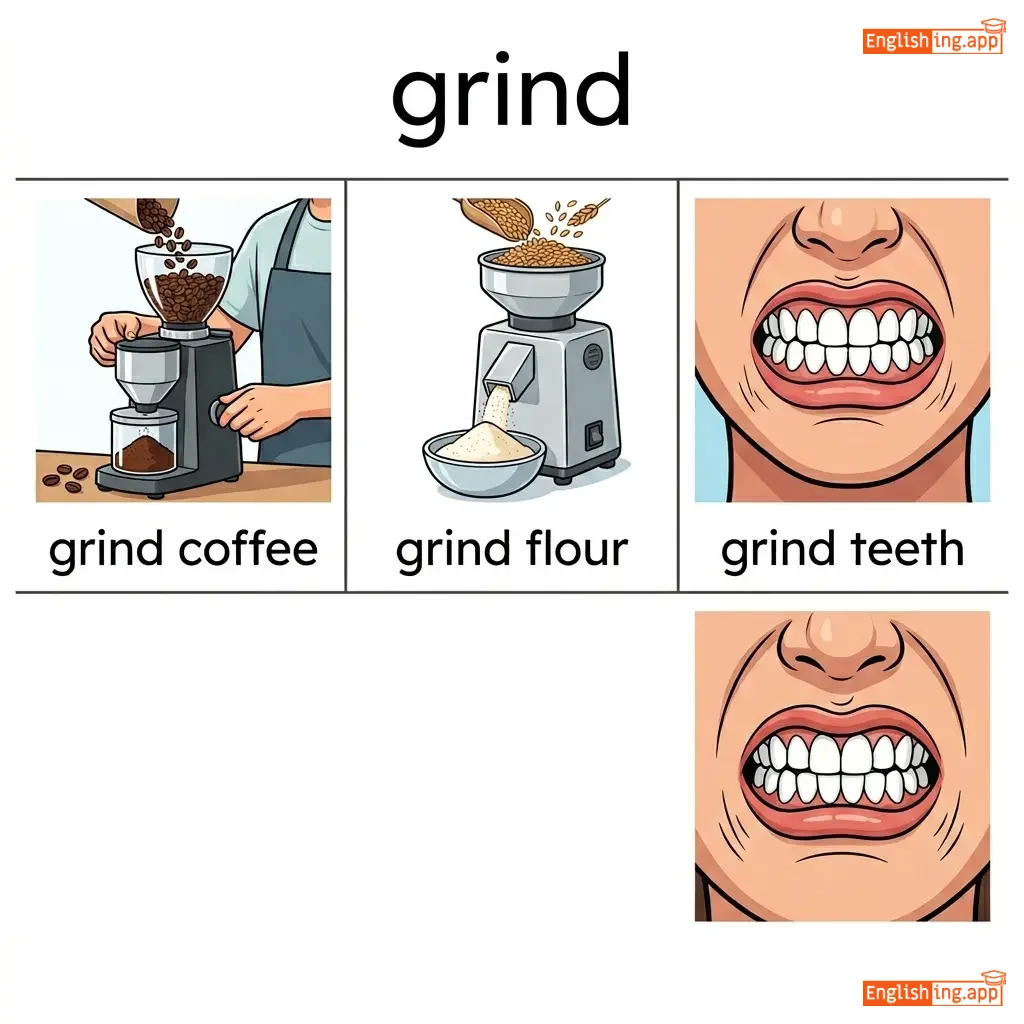
to crush into small particles; to work hard
••••••
|
She grinds coffee beans every morning.
她每天早晨磨咖啡豆。
••••••
|
她每天早晨磨咖啡豆。
Tā měitiān zǎochén mó kāfēi dòu.
••••••
|
crush, mill, pulverize, work hard
••••••
|
assemble, construct, relax, rest
••••••
|
grind coffee, grind slowly, grind finely, grind daily, grind fresh
••••••
|
每天磨豆,直到磨成完美的咖啡!
••••••
|
|
#364
💥
|
/θræʃ/
verb
(θræʃ)
••••••
|
|
殴打
ōudǎ
••••••
|
thrashed
θræʃt
••••••
|
thrashed
θræʃt
••••••
|
thrashes
θræʃɪz
••••••
|
thrashing
θræʃɪŋ
••••••
|
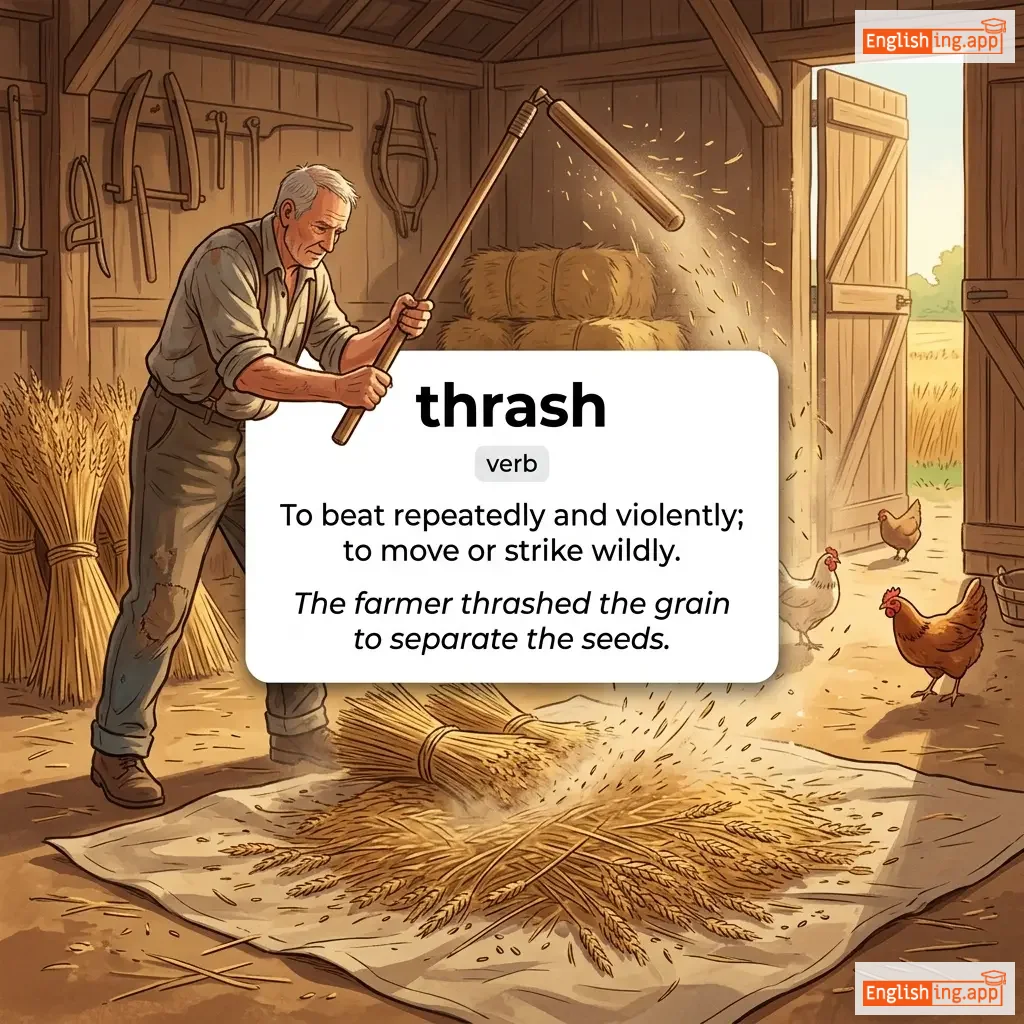
to beat someone or something violently; to move wildly or violently
••••••
|
The angry man threatened to thrash his opponent.
愤怒的男人威胁要殴打他的对手。
••••••
|
愤怒的男人威胁要殴打他的对手。
Fènnù de nánrén wēixié yào ōudǎ tā de duìshǒu.
••••••
|
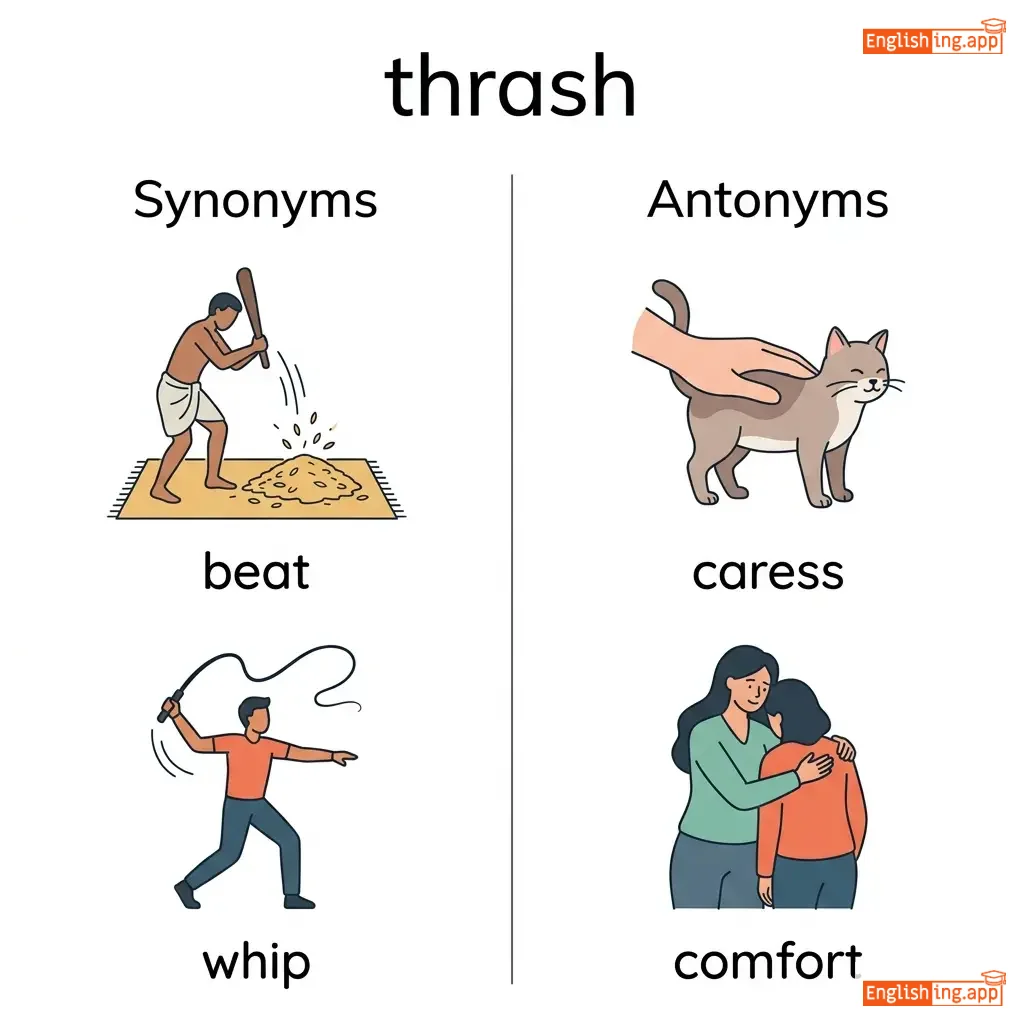
beat, whip, flog, defeat
••••••
|
caress, soothe, calm, gentle
••••••
|
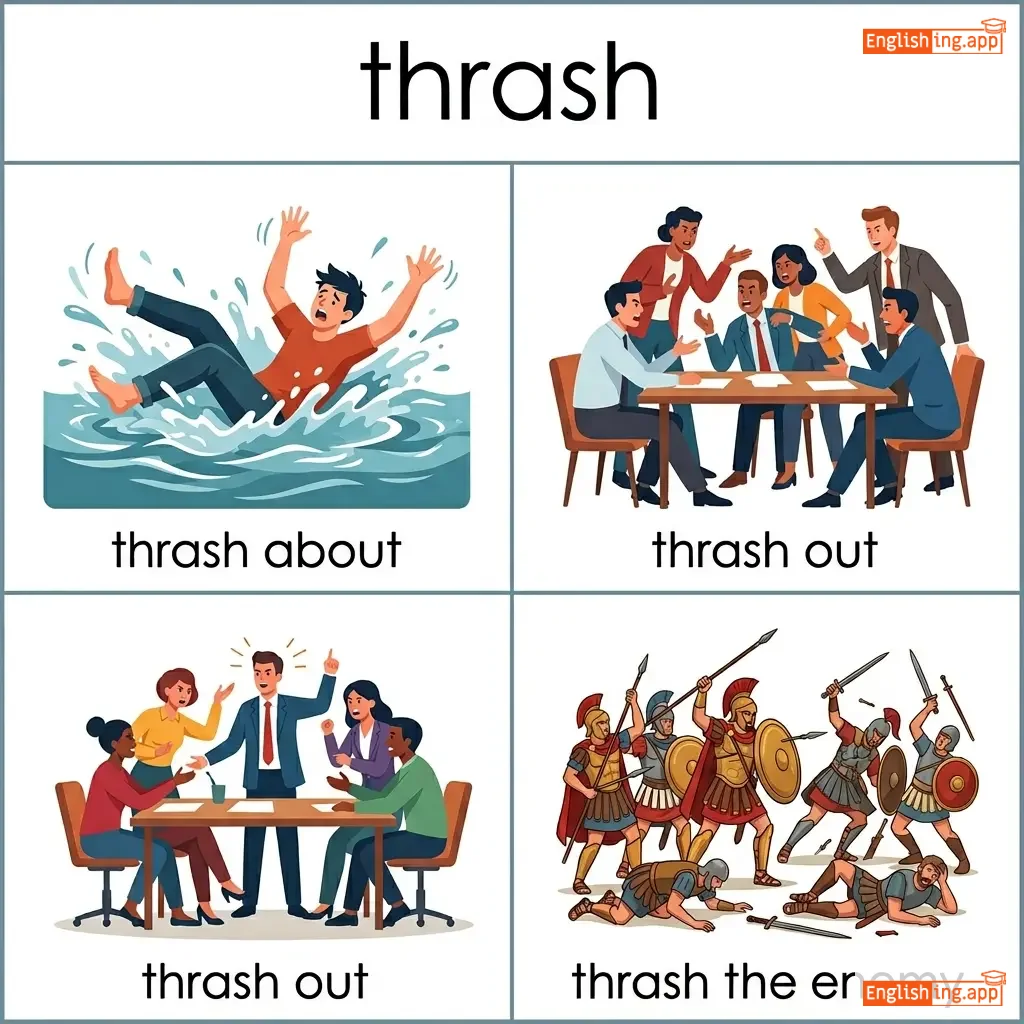
thrash violently, thrash wildly, thrash completely, thrash soundly, thrash mercilessly
••••••
|
愤怒的人会使用暴力。记住它,'殴打'。
••••••
|
|
#365
👍
|
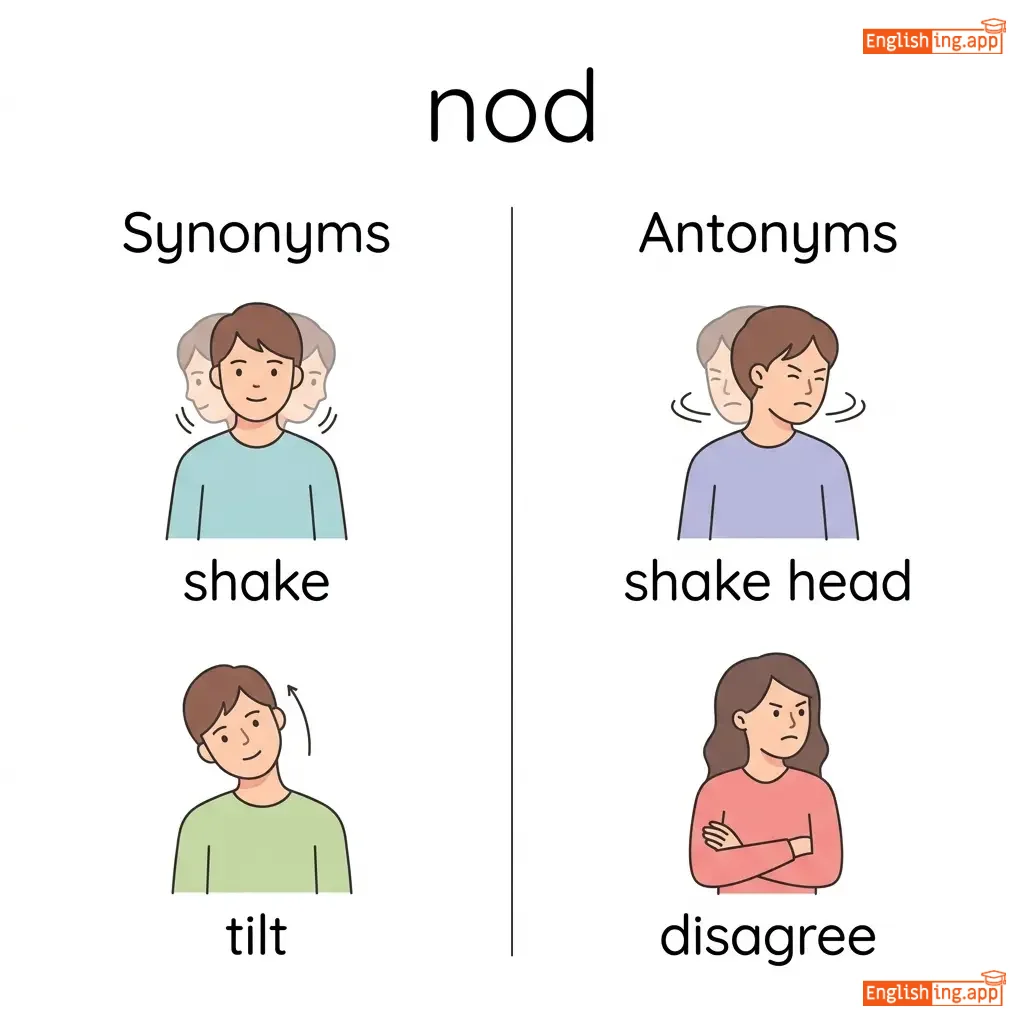
/nɒd/
verb
(诺德)
••••••
|
|
点头
diǎntóu
••••••
|
nodded
诺德德
••••••
|
nodded
诺德德
••••••
|
nods
诺德斯
••••••
|
nodding
诺丁
••••••
|
to move one's head down and up to show agreement or acknowledgment
••••••
|
She nodded in agreement with the proposal.
她点头表示同意该提议。
••••••
|
她点头表示同意该提议。
Tā diǎntóu biǎoshì tóngyì gāi tíyì.
••••••
|
agree, acknowledge, approve, confirm
••••••
|
shake, disagree, deny
••••••
|
nod agreement, nod slowly, nod approvingly, nod politely, nod understanding
••••••
|
点头示意同意
••••••
|
|
#366
📝
|
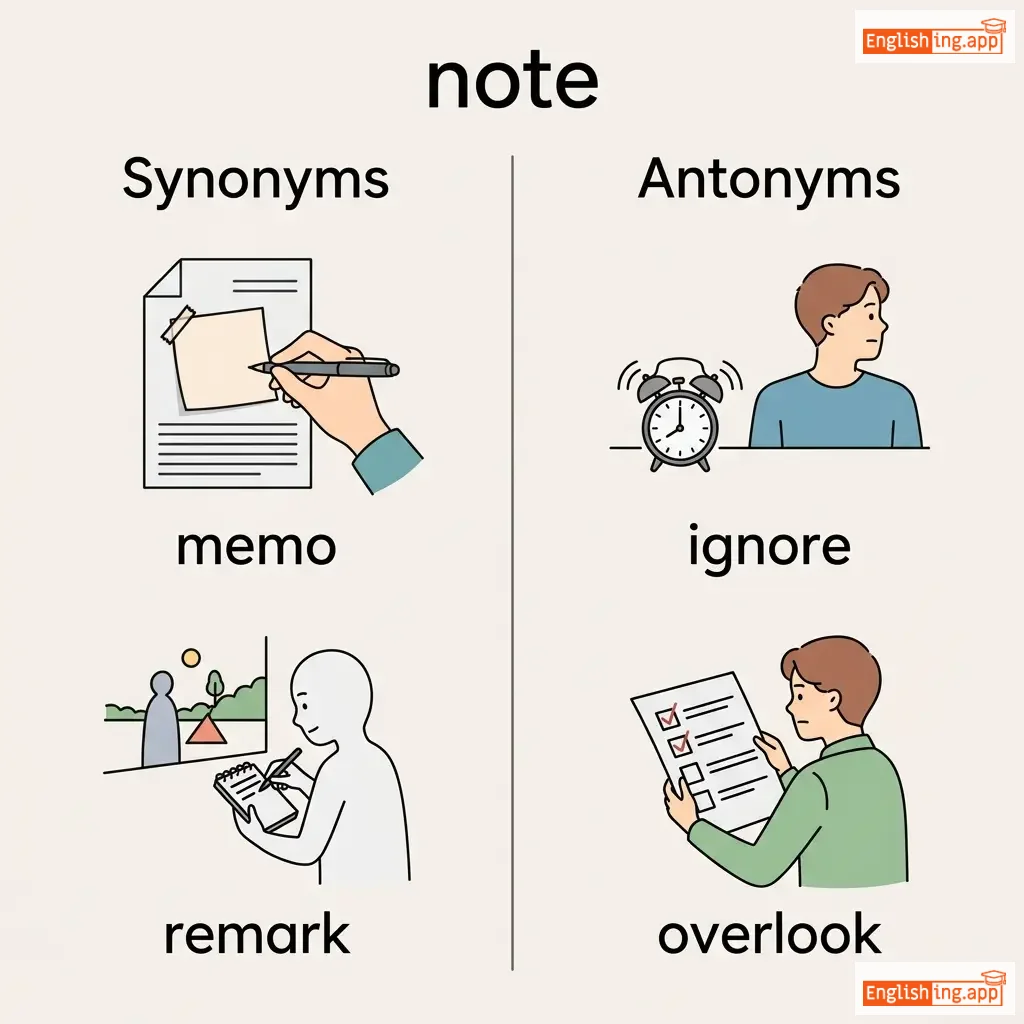
/noʊt/
verb
(诺特)
••••••
|
|
记录
jilu
••••••
|
noted
记下
••••••
|
noted
记下
••••••
|
notes
记得
••••••
|
noting
记笔记
••••••
|
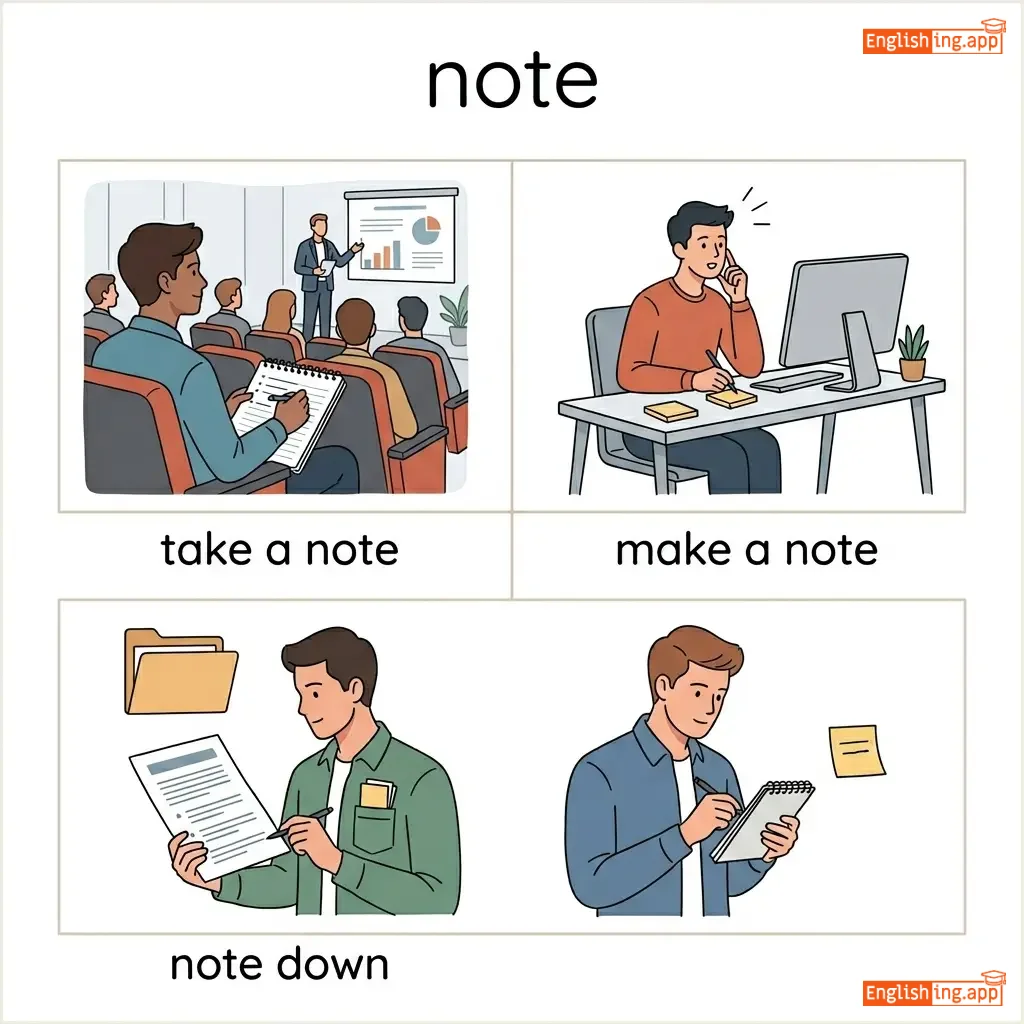
to write down or observe something; to pay attention to
••••••
|
Please note the important points during the lecture.
请在讲座中注意重要的要点。
••••••
|
请在讲座中注意重要的要点。
Qing zai jiangzuo zhong zhuyi zhongyao de yaodian.
••••••
|
observe, record, write, notice
••••••
|
ignore, overlook, miss
••••••
|
note carefully, note down, note importantly, note briefly, mental note
••••••
|
Imagine you are taking notes in class in China, think of '记录'!
••••••
|
|
#367
⛈️
|
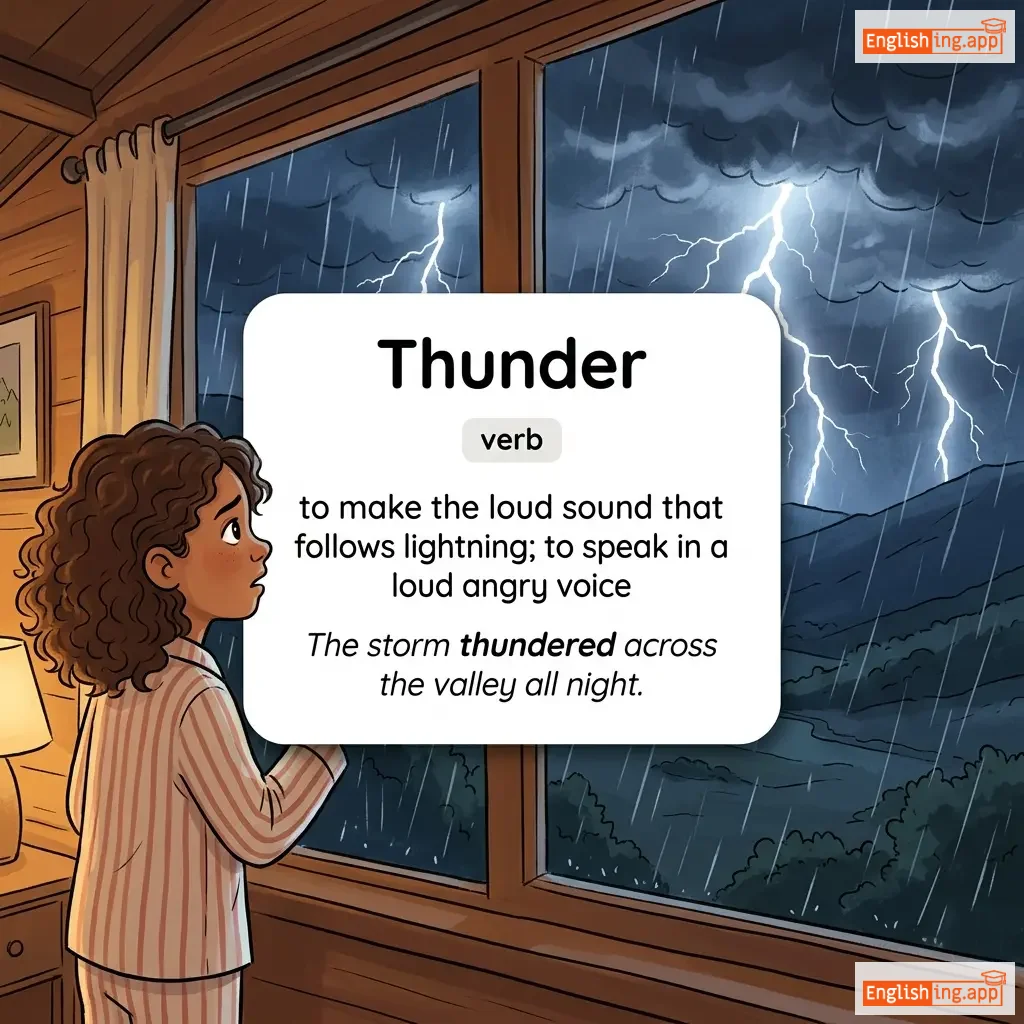
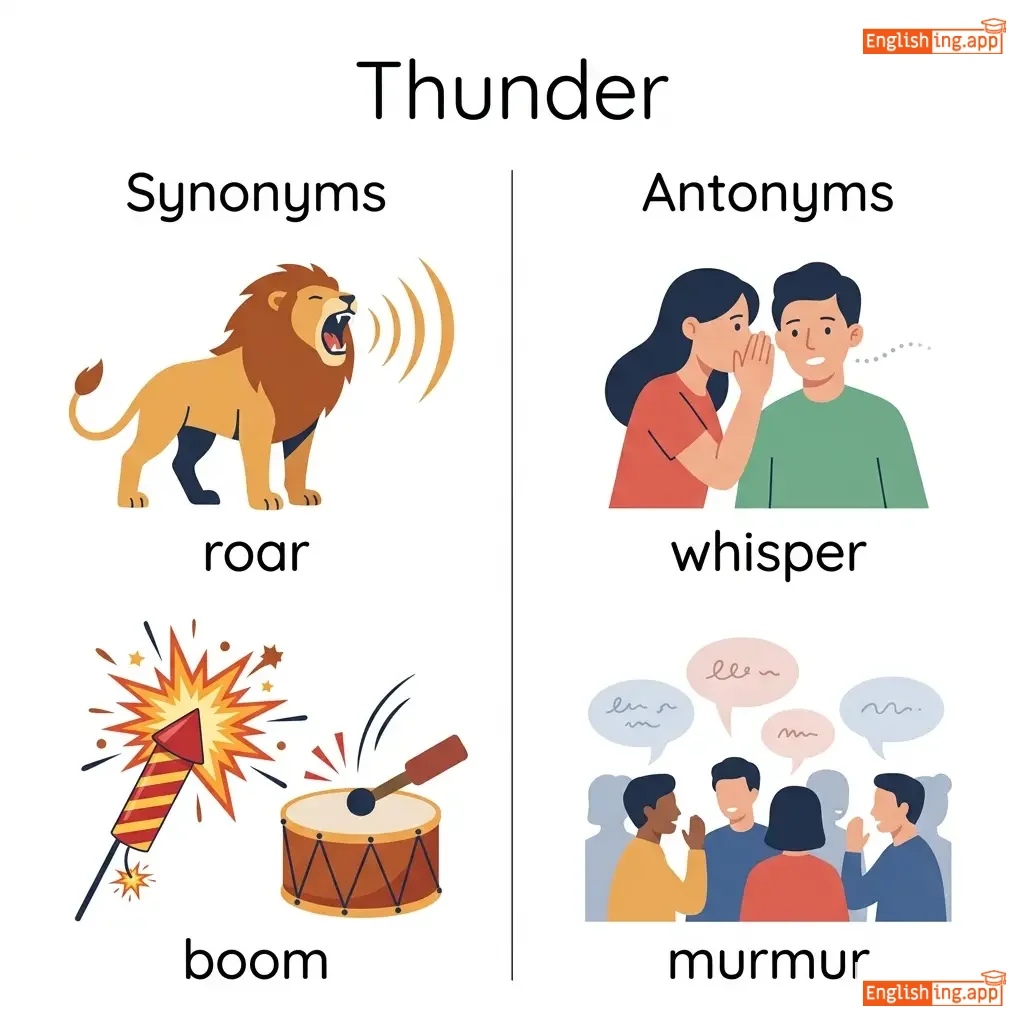
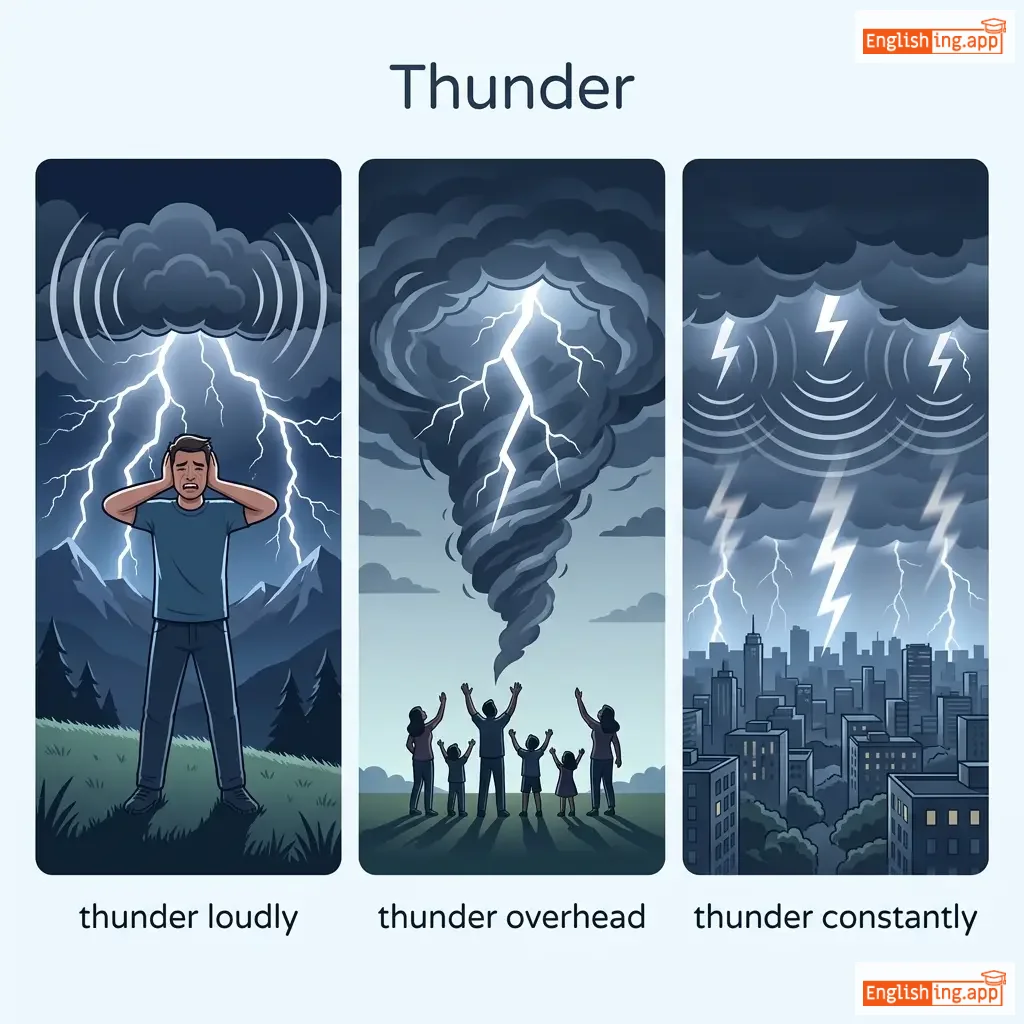
/ˈθʌndər/
verb
(tándè)
••••••
|
|
雷鸣
léimíng
••••••
|
Thundered
tándèrd
••••••
|
Thundered
tándèrd
••••••
|
Thunders
tándèrs
••••••
|
Thundering
tándèring
••••••
|
to make the loud sound that follows lightning; to speak in a loud angry voice
••••••
|
The storm thundered across the valley all night.
风暴整夜在山谷中轰鸣。
••••••
|
风暴整夜在山谷中轰鸣。
Fēngbào zhěng yè zài shāngǔ zhōng hōngmíng.
••••••
|
roar, boom, rumble, crash
••••••
|
whisper, murmur, silence, quiet
••••••
|
thunder loudly, thunder overhead, thunder constantly, thunder ominously, thunder rolls
••••••
|
No •••••• |
|
#368
🔨
|
/meɪk/
verb
(mɛɪk)
••••••
|
- •••••• |
做
zuò
••••••
|
made
mɛɪd
••••••
|
made
mɛɪd
••••••
|
makes
mɛɪks
••••••
|
making
mɛɪkɪŋ
••••••
|
to create or produce something; to cause something to happen
••••••
|
She likes to make delicious cakes for her friends.
ʃi laɪks tu meɪk dɪˈlɪʃəs keɪks fɔr hɜr frɛndz
••••••
|
她喜欢为她的朋友做美味的蛋糕。
Tā xǐhuān wèi tā de péngyǒu zuò měiwèi de dàngāo.
••••••
|
create, produce, build, construct, form
••••••
|
destroy, break, demolish, ruin
••••••
|
make progress, make decisions, make time, make effort, make sense
••••••
|
Make means zuò, like making a delicious cake
••••••
|
|
#369
👅
|
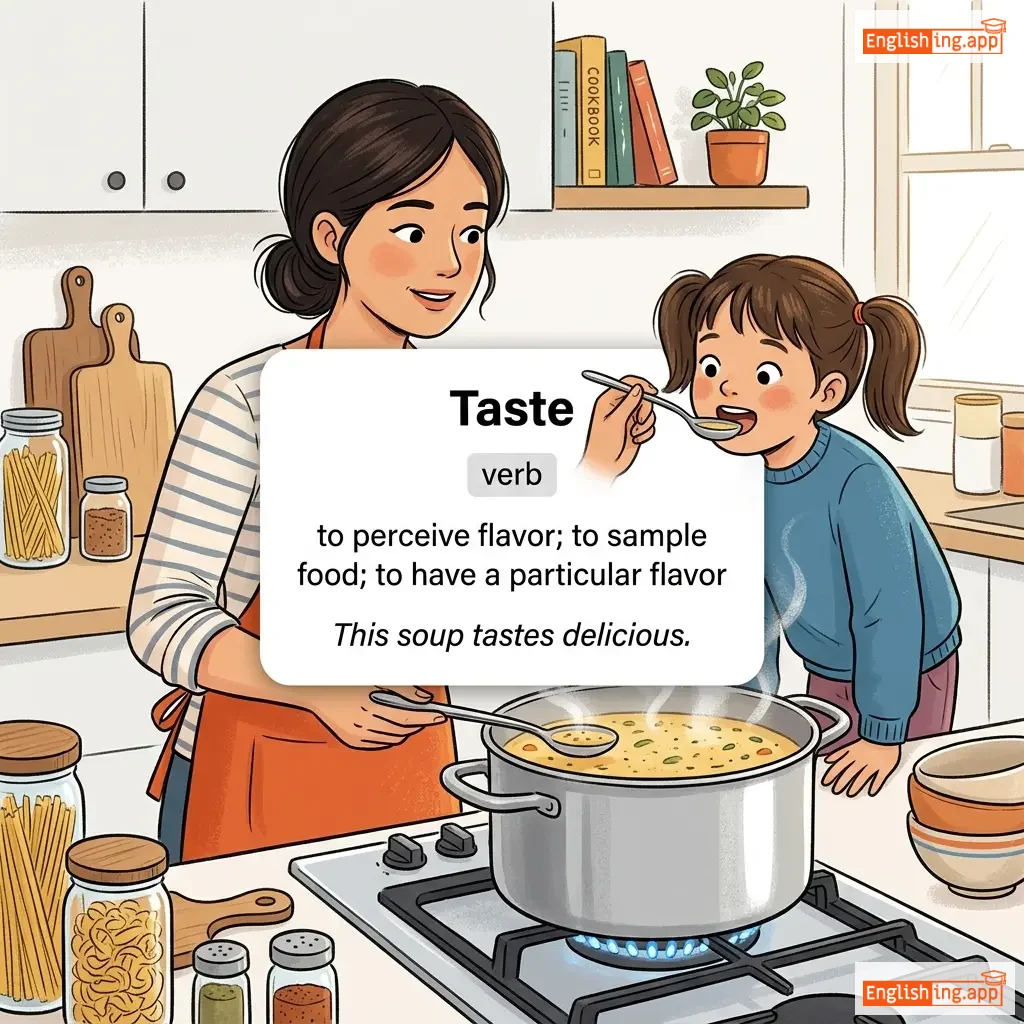
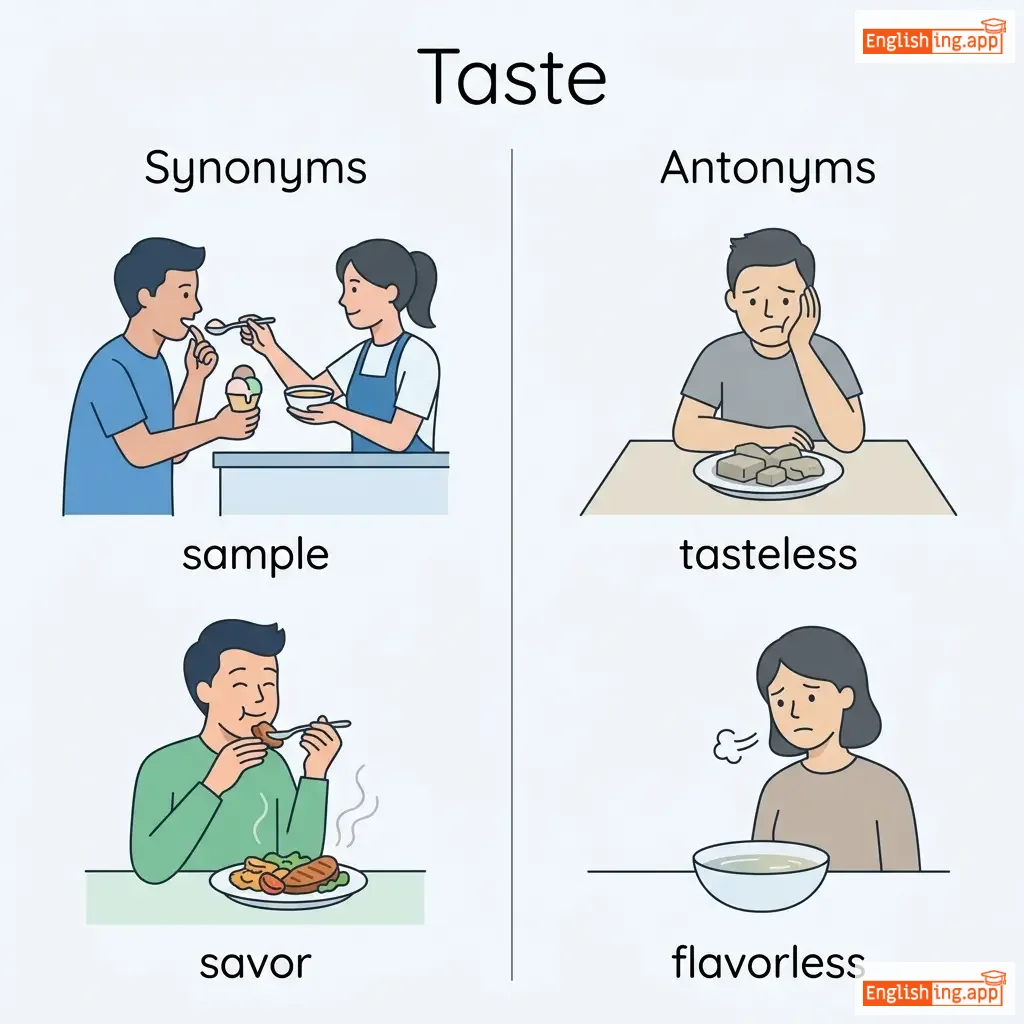
/teɪst/
verb
(tèst)
••••••
|
|
品尝
pǐncháng
••••••
|
tasted
tèstəd
••••••
|
tasted
tèstəd
••••••
|
tastes
tèsts
••••••
|
tasting
tèstɪng
••••••
|
to perceive flavor; to sample food; to have a particular flavor
••••••
|
This soup tastes delicious.
这汤尝起来很美味。
••••••
|
这汤尝起来很美味。
Zhè tāng cháng qǐlái hěn měiwèi
••••••
|
sample, savor, flavor, try
••••••
|
tasteless, flavorless
••••••
|
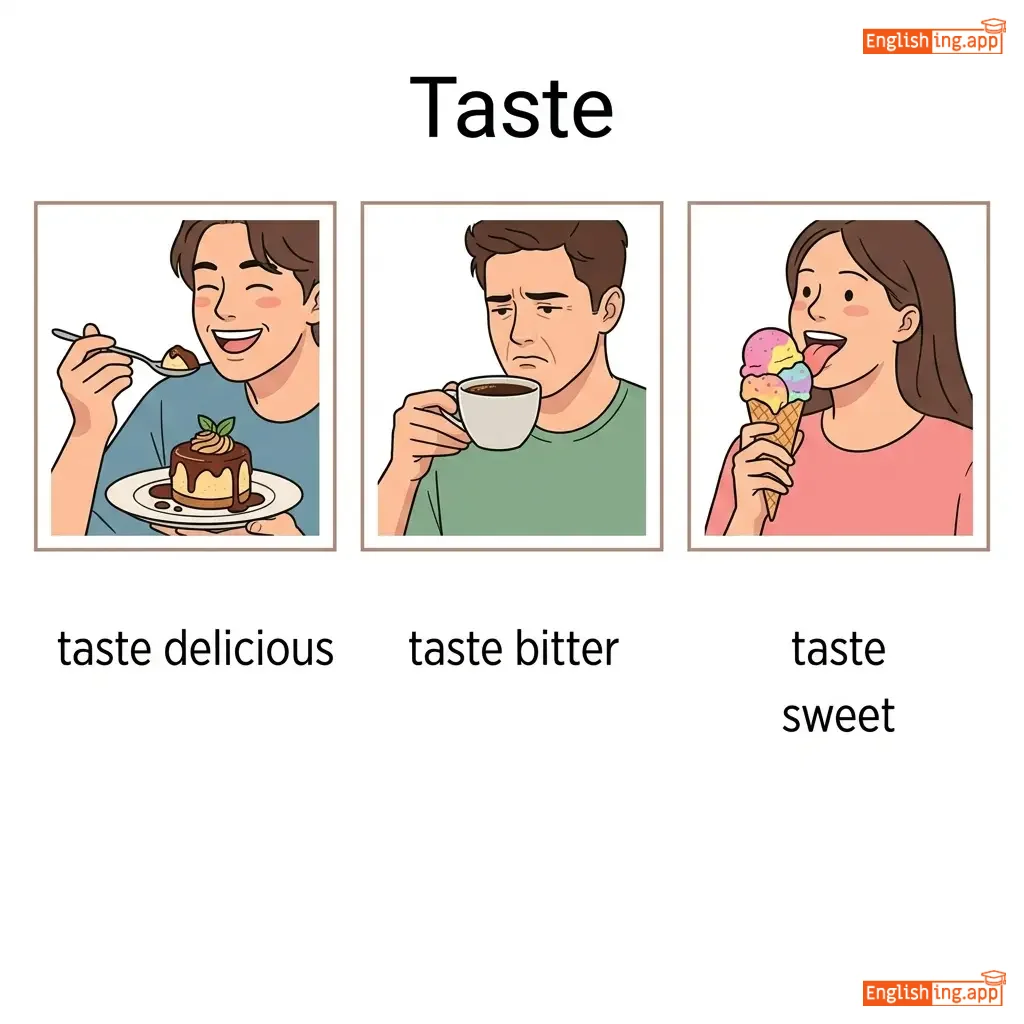
taste delicious, taste bitter, taste sweet, taste good, taste fresh
••••••
|
Taste in Chinese is '品尝', remember to savor each bite with 'pǐncháng'.
••••••
|
|
#370
🤥
|
/tʃiːt/
verb
(chīt)
••••••
|
|
作弊
zuòbì
••••••
|
cheated
chīded
••••••
|
cheated
chīded
••••••
|
cheats
chīts
••••••
|
cheating
chīting
••••••
|
to act dishonestly; to break rules for advantage
••••••
|
He cheats on the exam by copying answers.
他通过抄答案在考试中作弊。
••••••
|
他通过抄答案在考试中作弊。
Tā tōngguò chāo dá'àn zài kǎoshì zhōng zuòbì
••••••
|
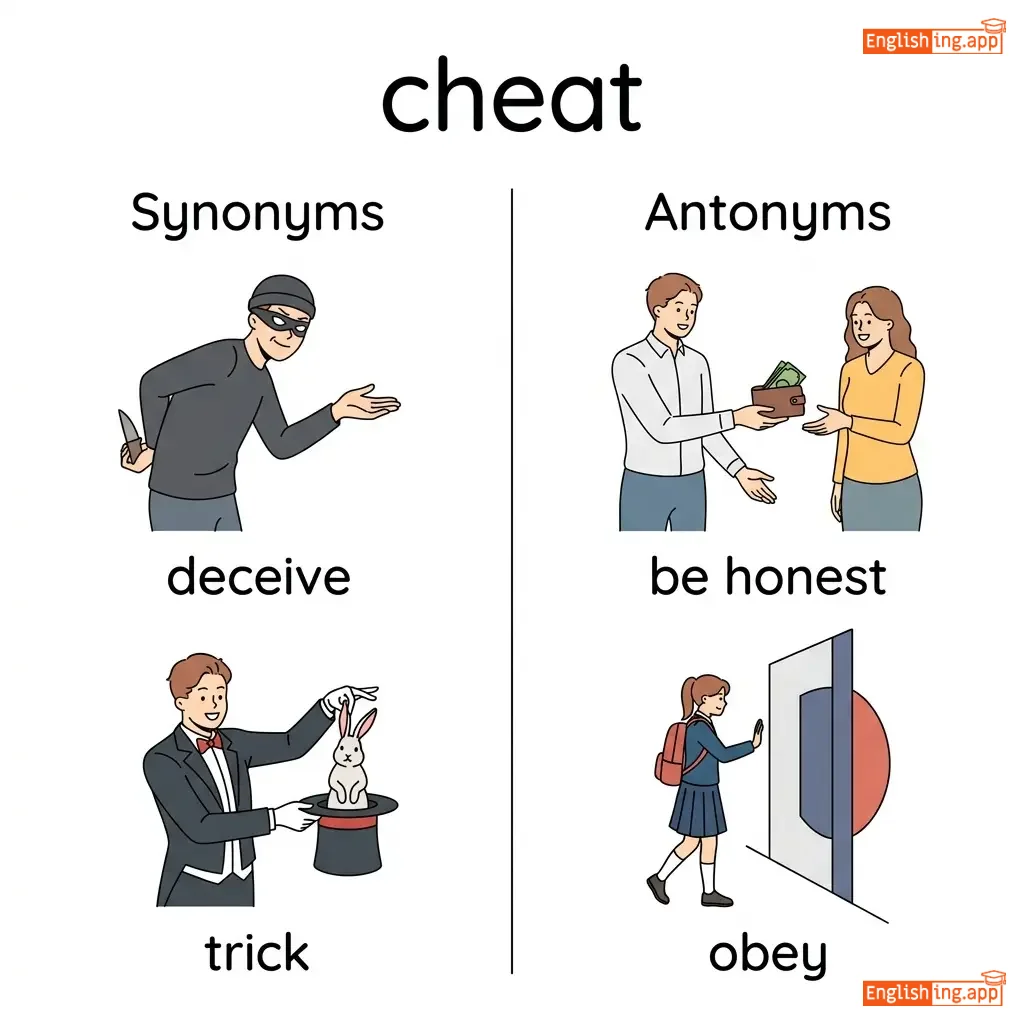
deceive, trick, swindle, defraud
••••••
|
honest, fair, truthful
••••••
|
cheat openly, cheat systematically, cheat deliberately, cheat repeatedly, cheat successfully
••••••
|
作弊 – 就像在考试中抄别人的答案。
••••••
|
|
#371
👋
|
/ɡriːt/
verb
(格里特)
••••••
|
|
问候
wènhòu
••••••
|
greeted
格里特德
••••••
|
greeted
格里特德
••••••
|
greets
格里茨
••••••
|
greeting
格里廷
••••••
|
to welcome someone; to say hello
••••••
|
She greeted her guests warmly at the door.
她在门口热情地迎接她的客人。
••••••
|
她在门口热情地迎接她的客人。
Tā zài ménkǒu rèqíng de yíngjiē tā de kèrén.
••••••
|
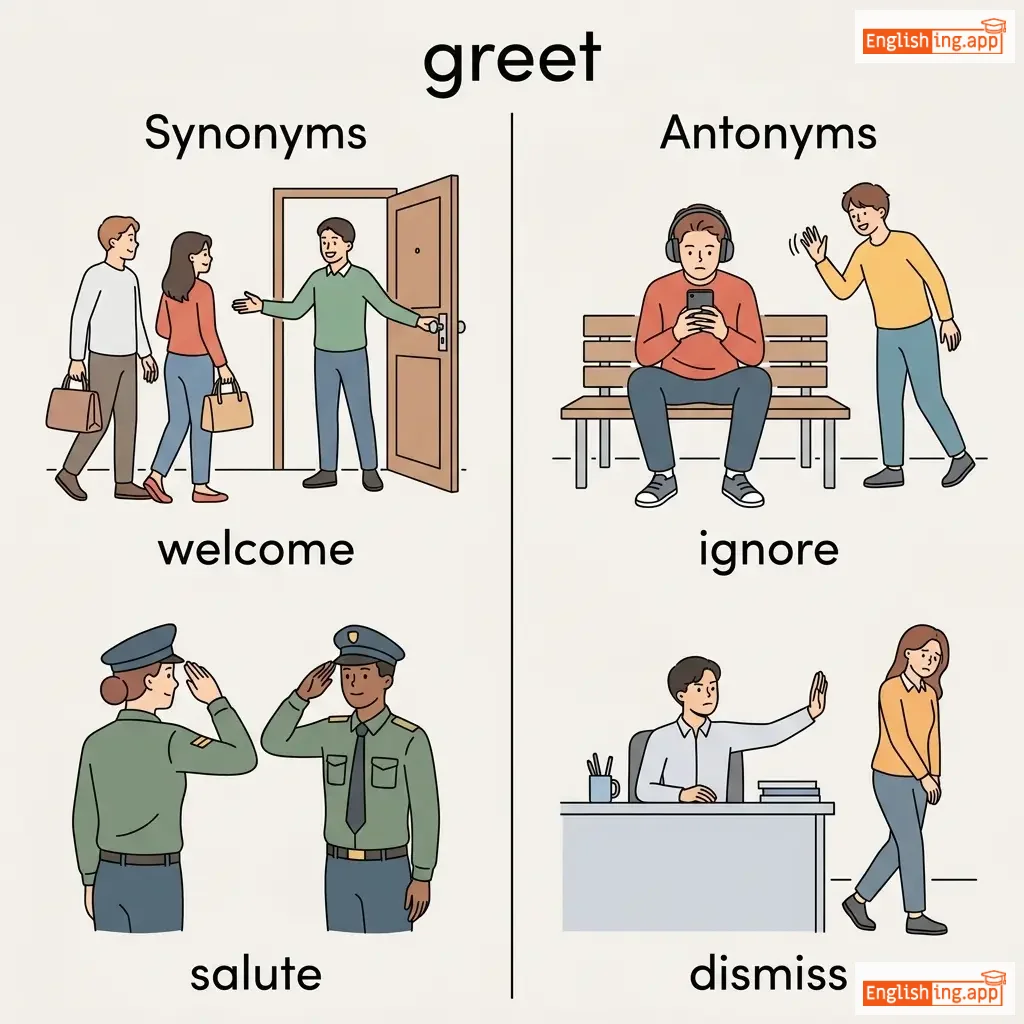
welcome, salute, hail, acknowledge
••••••
|
ignore, snub, dismiss, farewell
••••••
|
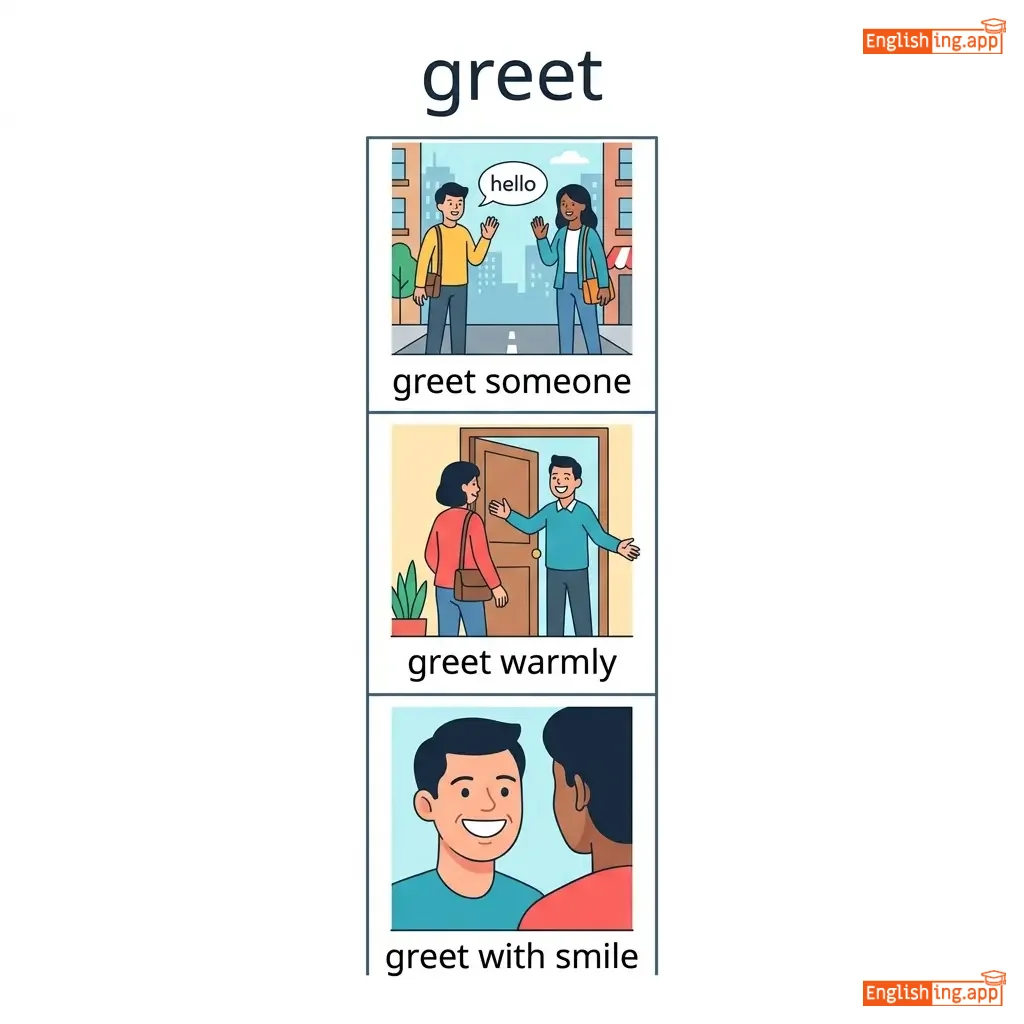
greet warmly, greet cheerfully, greet politely, greet enthusiastically, greet cordially
••••••
|
No •••••• |
|
#372
👁️
|
/pərˈsiːv/
verb
(pérsīw)
••••••
|
|
感知
gǎnzhī
••••••
|
perceived
pérsīwd
••••••
|
perceived
pérsīwd
••••••
|
perceives
pérsīws
••••••
|
perceiving
pérsīwīng
••••••
|
to become aware of or understand something through the senses
••••••
|
I perceive a change in his attitude.
我感知到他态度的变化。
••••••
|
我感知到他态度的变化。
Wǒ gǎnzhī dào tā tàidù de biànhuà.
••••••
|
notice, observe, sense, detect
••••••
|
ignore, overlook, miss
••••••
|
perceive clearly, perceive differently, perceive accurately, perceive immediately, perceive gradually
••••••
|
感知就像感受到变化,‘感’是感官的记忆。
••••••
|
|
#373
🏆
|
/ˈɒnər/
verb
(荣誉)
••••••
|
|
荣誉
róngyù
••••••
|
honoured
荣誉过
••••••
|
honoured
荣誉过
••••••
|
honours
荣誉
••••••
|
honouring
荣誉ing
••••••
|
to show respect; to keep a promise
••••••
|
We honour our veterans for their service.
我们为退伍军人的服务表示荣誉。
••••••
|
我们为退伍军人的服务表示荣誉。
Wǒmen wèi tuìwǔ jūnrén de fúwù biǎoshì róngyù.
••••••
|
respect, esteem, revere, glorify
••••••
|
dishonour, disgrace, shame, humiliate
••••••
|
honour tradition, honour commitment, honour memory, honour request, honour agreement
••••••
|
荣誉 = 尊重.
••••••
|
|
#374
😊
|
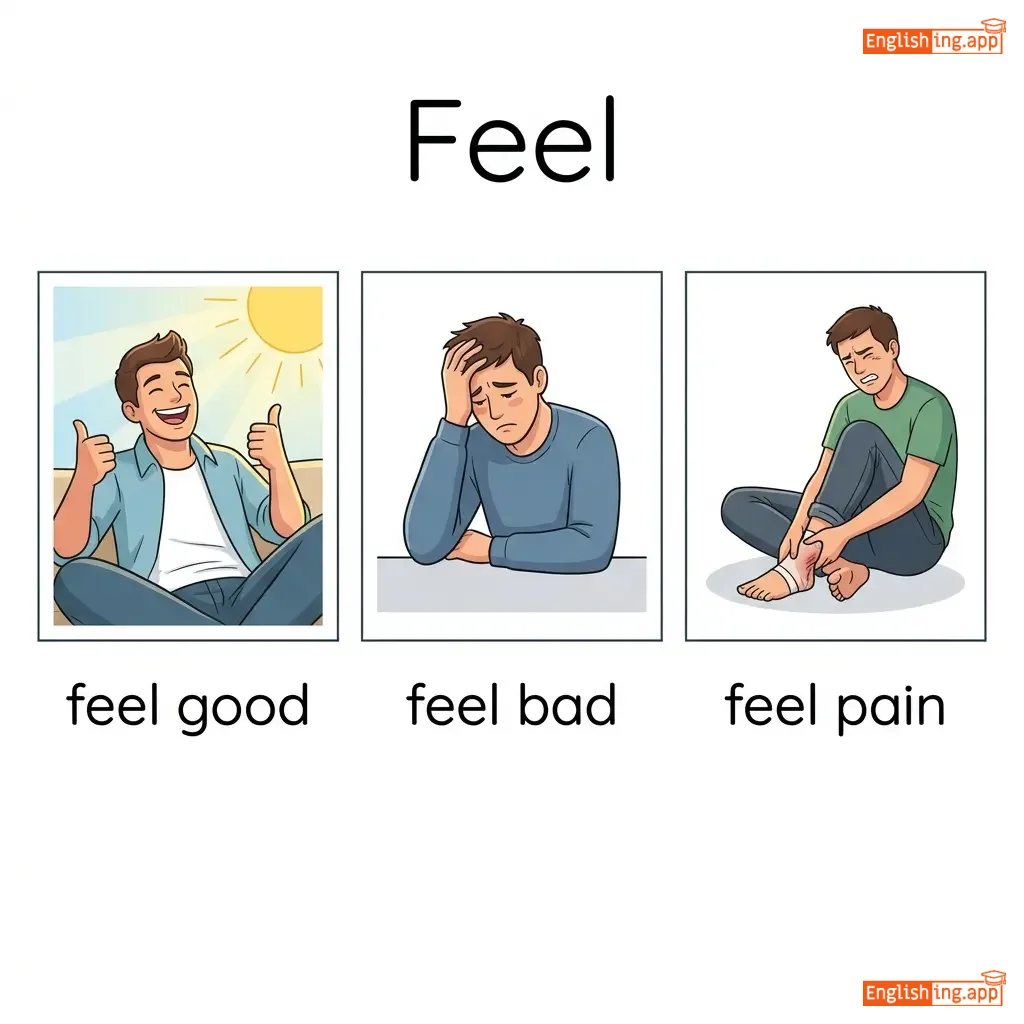
/fiːl/
verb
(fíl)
••••••
|
|
感觉
gǎnjué
••••••
|
felt
felt
••••••
|
felt
felt
••••••
|
feels
fils
••••••
|
feeling
feeling
••••••
|
to experience an emotion or physical sensation
••••••
|
I feel happy when I see you.
当我看到你时,我感到快乐。
••••••
|
当我看到你时,我感到快乐。
Dāng wǒ kàn dào nǐ shí, wǒ gǎndào kuàilè.
••••••
|
sense, experience, perceive
••••••
|
ignore, overlook, miss
••••••
|
feel good, feel bad, feel comfortable, feel confident, feel grateful
••••••
|
Feel and 感觉 both relate to emotional experience.
••••••
|
|
#375
📉
|
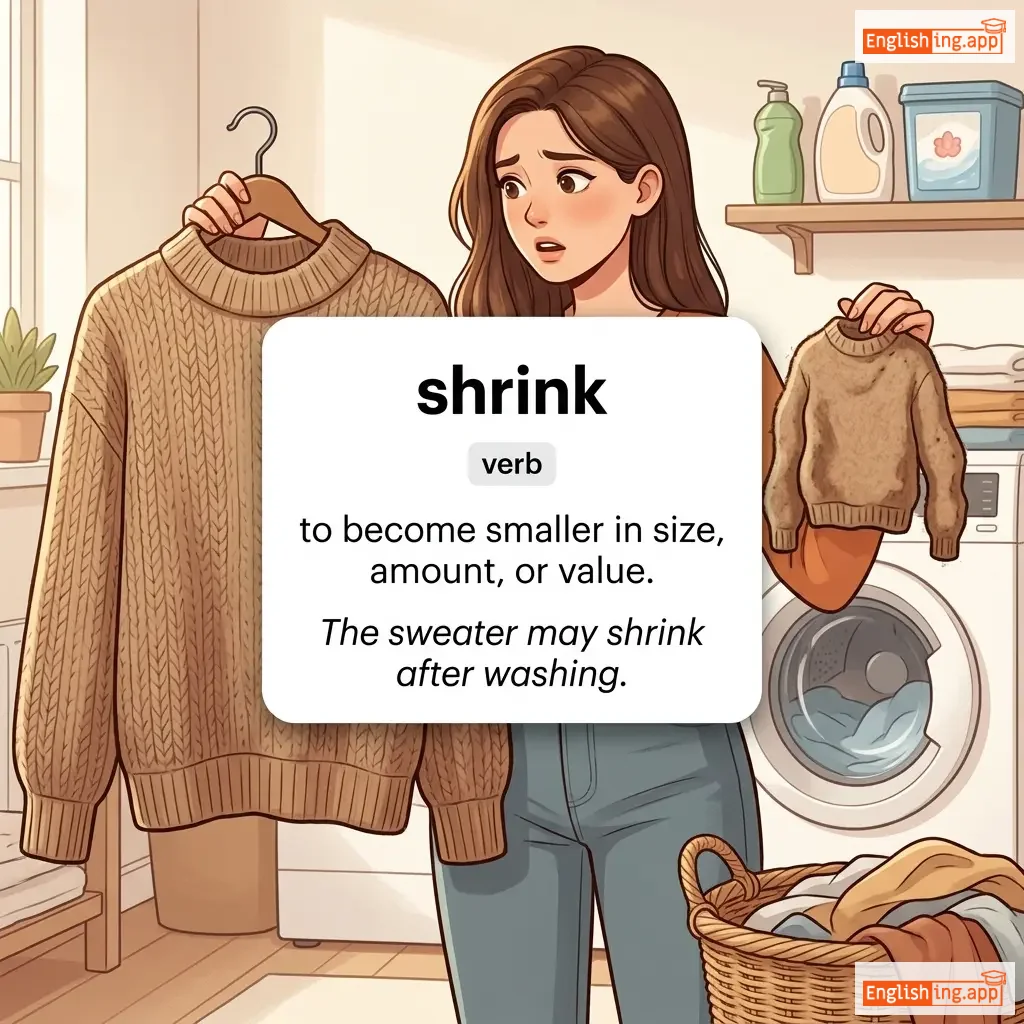
/ʃrɪŋk/
verb
(shrinc)
••••••
|
|
缩水
suō huǐ
••••••
|
shrank
shrank
••••••
|
shrunk
shrunk
••••••
|
shrinks
shrinks
••••••
|
shrinking
shrinking
••••••
|
to become smaller in size; to draw back in fear
••••••
|
The sweater shrank after washing in hot water.
毛衣在热水中洗后缩水。
••••••
|
毛衣在热水中洗后缩水。
Máo yī zài rè shuǐ zhōng xǐ hòu suō huǐ.
••••••
|
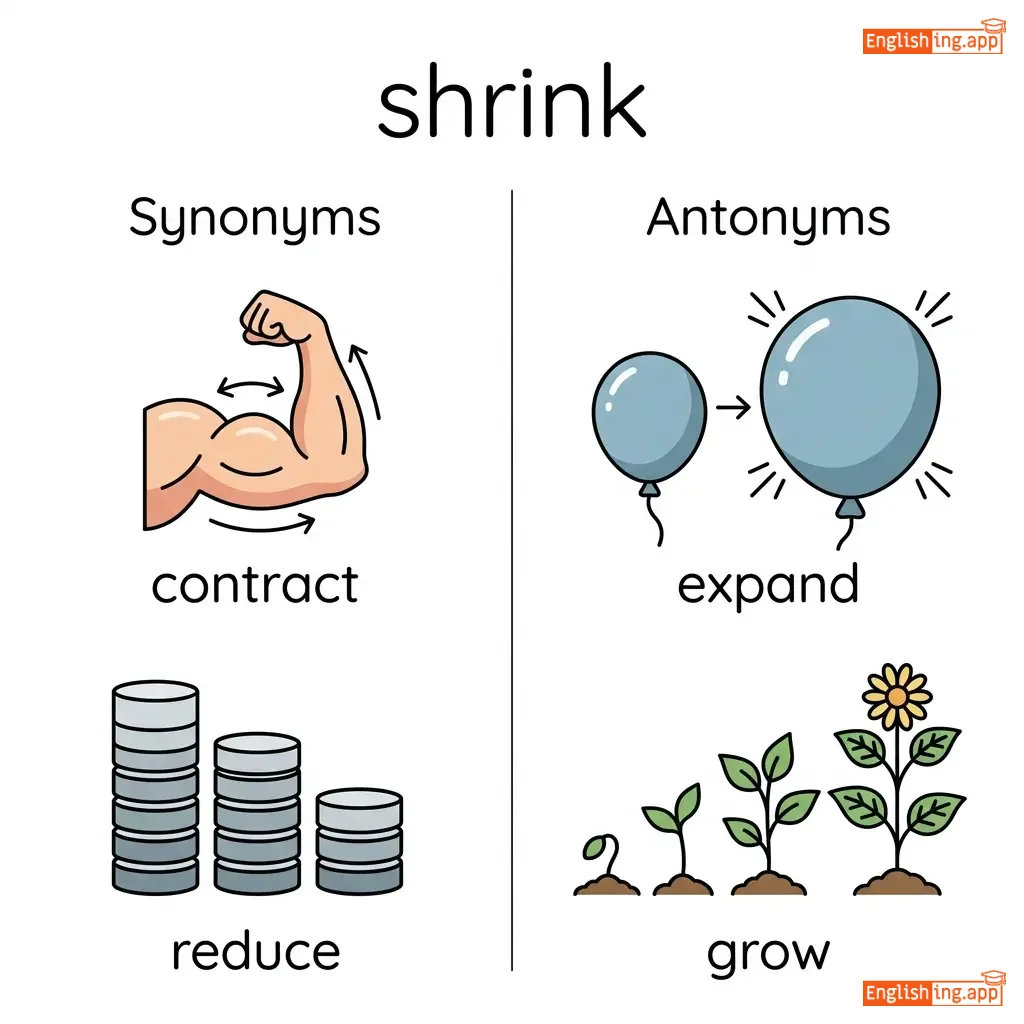
contract, reduce, diminish, compress
••••••
|
expand, grow, enlarge, stretch
••••••
|
shrink rapidly, shrink significantly, shrink back, shrink away, shrink gradually
••••••
|
就像热水中的毛衣缩水一样,shrinking size!
••••••
|
|
#376
🌱
|
/ˈkʌltɪveɪt/
verb
(kʌltɪveɪt)
••••••
|
|
耕种
gēng zhòng
••••••
|
cultivated
kʌltɪveɪtɪd
••••••
|
cultivated
kʌltɪveɪtɪd
••••••
|
cultivates
kʌltɪveɪts
••••••
|
cultivating
kʌltɪveɪtɪŋ
••••••
|
to grow crops or plants; to develop or improve something
••••••
|
Farmers cultivate rice in the paddy fields.
农民在稻田里种植水稻。
••••••
|
农民在稻田里种植水稻。
Nóngmín zài dàotián lǐ zhòngzhí shuǐdào.
••••••
|
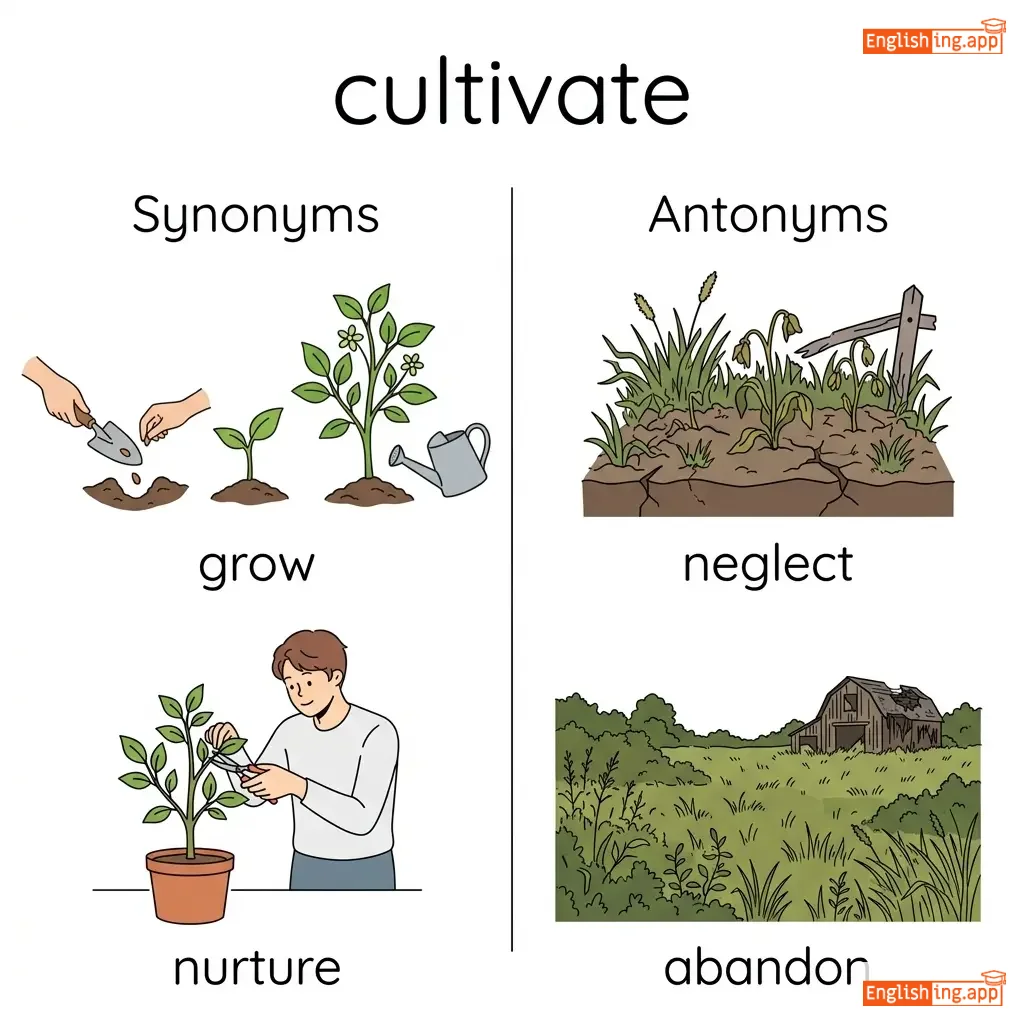
grow, develop, foster, nurture
••••••
|
neglect, abandon, destroy
••••••
|
cultivate carefully, cultivate successfully, cultivate organically, cultivate extensively, cultivate relationships
••••••
|
耕种 = 播种种子
••••••
|
|
#377
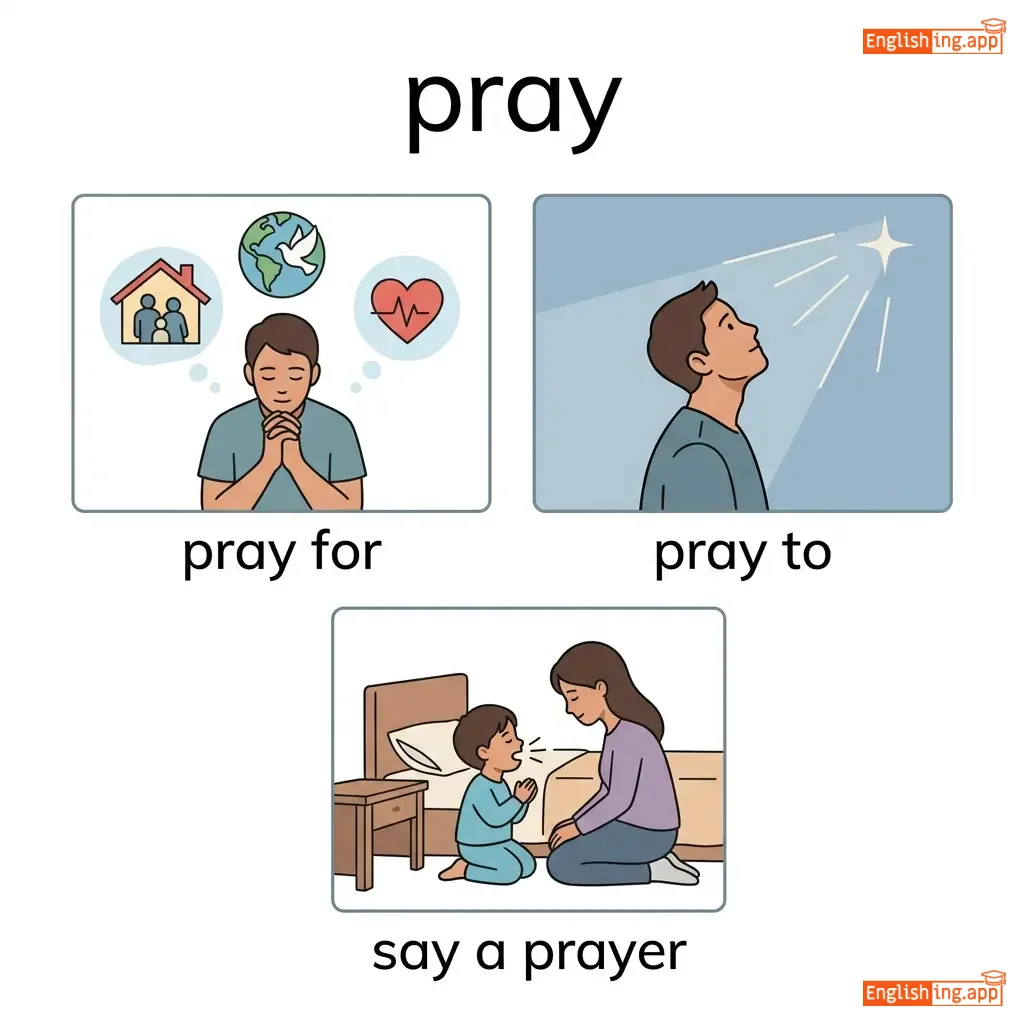
🙏
|
/preɪ/
verb
(pǝi)
••••••
|
|
祈祷
qídǎo
••••••
|
prayed
pǝid
••••••
|
prayed
pǝid
••••••
|
prays
pǝiz
••••••
|
praying
pǝing
••••••
|
to speak to God or a deity; to hope earnestly
••••••
|
Many people pray for peace in the world.
许多人祈祷世界的和平。
••••••
|
许多人祈祷世界的和平。
Xǔduō rén qídǎo shìjiè de hépíng.
••••••
|
worship, petition, request, invoke
••••••
|
curse, condemn, blaspheme, ignore
••••••
|
pray silently, pray earnestly, pray together, pray daily, pray fervently
••••••
|
祈祷像是给上帝的一封和平请求信
••••••
|
|
#378
🎮
|
/pleɪ/
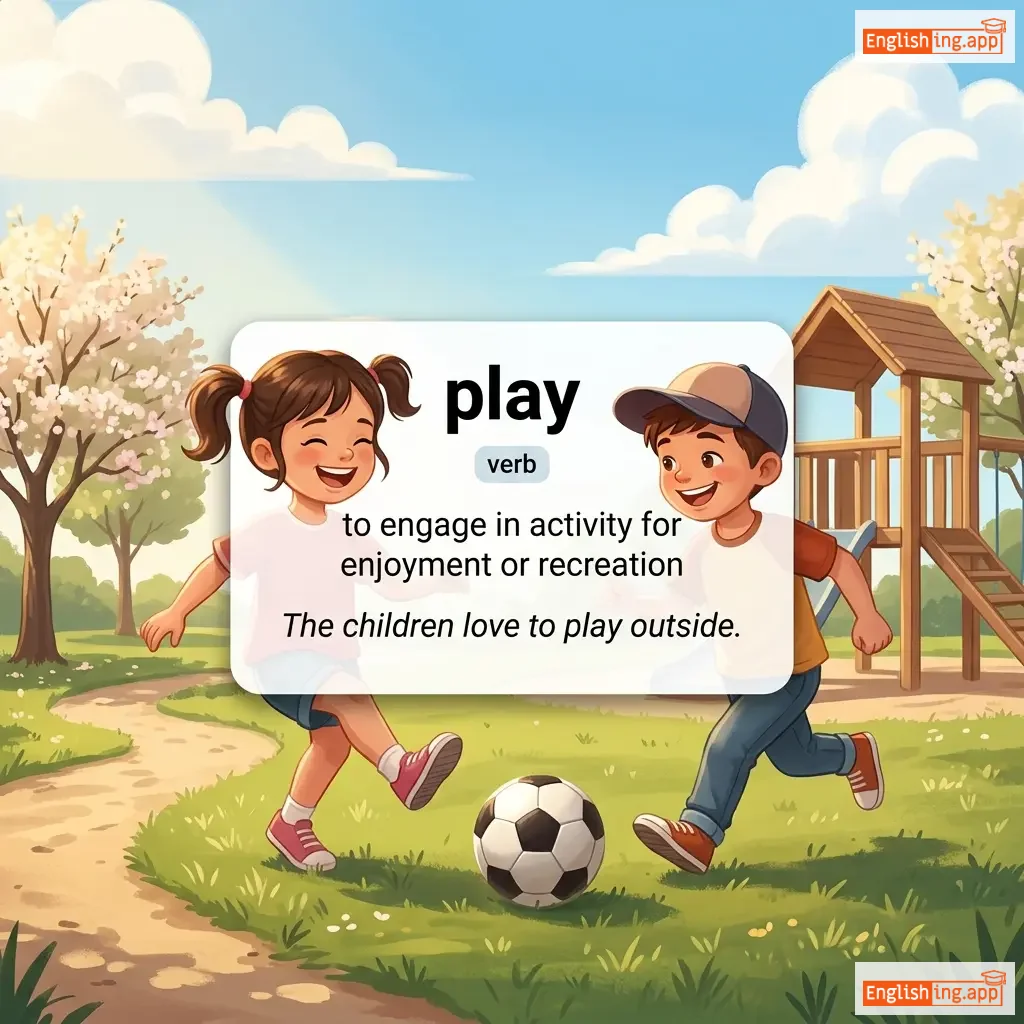
verb
(plèi)
••••••
|
|
玩
wán
••••••
|
played
plèid
••••••
|
played
plèid
••••••
|
plays
plèiz
••••••
|
playing
plèiɪng
••••••
|
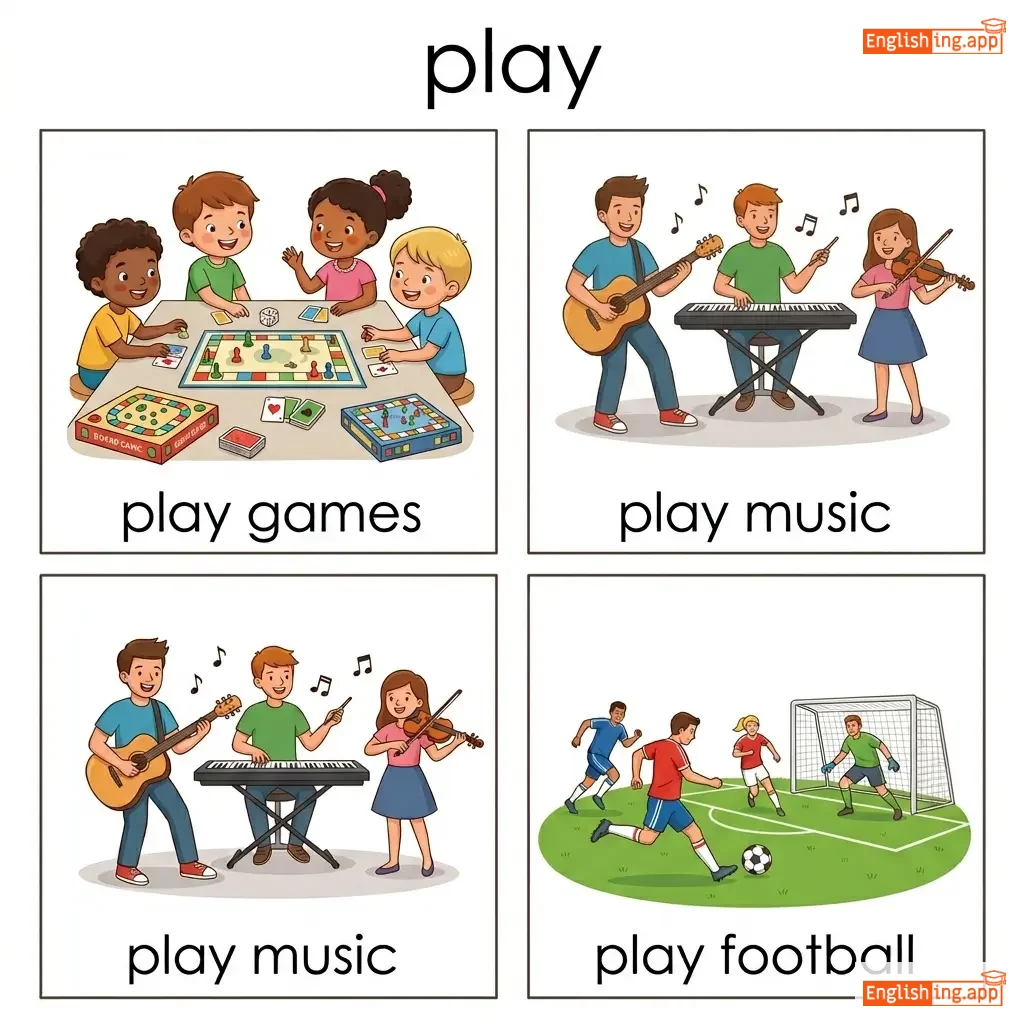
to engage in games or sports; to perform music
••••••
|
Children love to play in the park.
孩子们喜欢在公园里玩。
••••••
|
孩子们喜欢在公园里玩。
Háizimen xǐhuān zài gōngyuán lǐ wán.
••••••
|
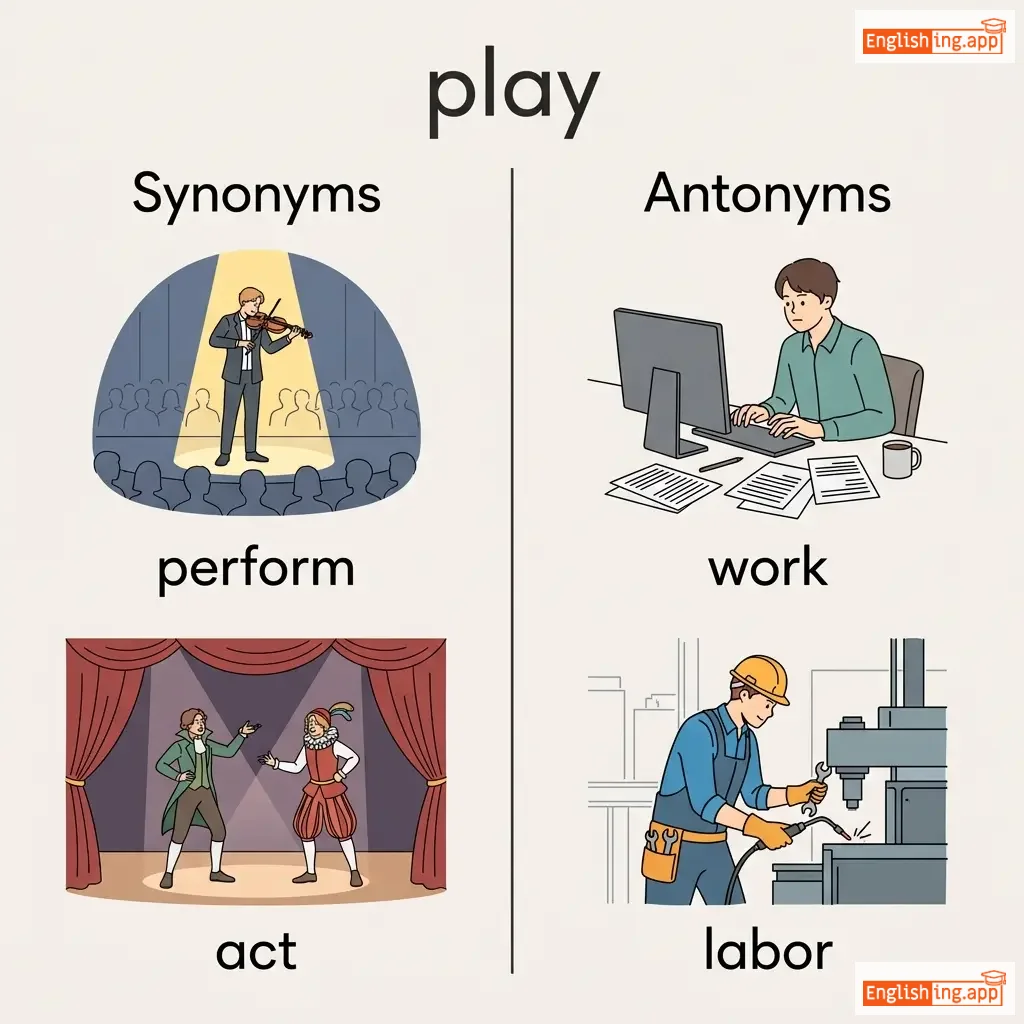
perform, compete, entertain, act
••••••
|
work, study, stop, rest
••••••
|
play games, play music, play sports, play together, play outside
••••••
|
玩 is playing in Chinese, just like 'play' in English!
••••••
|
|
#379
👉
|
/rɪˈfɜː/
verb
(参考)
••••••
|
|
参考
cānkǎo
••••••
|
referred
参考过
••••••
|
referred
参考过
••••••
|
refers
参考
••••••
|
referring
参考中
••••••
|
to mention or allude to something; to direct someone to a source of information
••••••
|
Please refer to page 45 for more details.
请参阅第45页以获取更多详细信息。
••••••
|
请参阅第45页以获取更多详细信息。
Qǐng cānkǎo dì 45 yè yǐ huòqǔ gèng duō xiángxì xìnxī.
••••••
|
mention, allude, cite, direct
••••••
|
ignore, overlook, omit
••••••
|
refer to, refer back, refer specifically, refer constantly, refer briefly
••••••
|
参考在中文中就像是指引方向,带你到达更多信息的地方。
••••••
|
|
#380
🤝
|
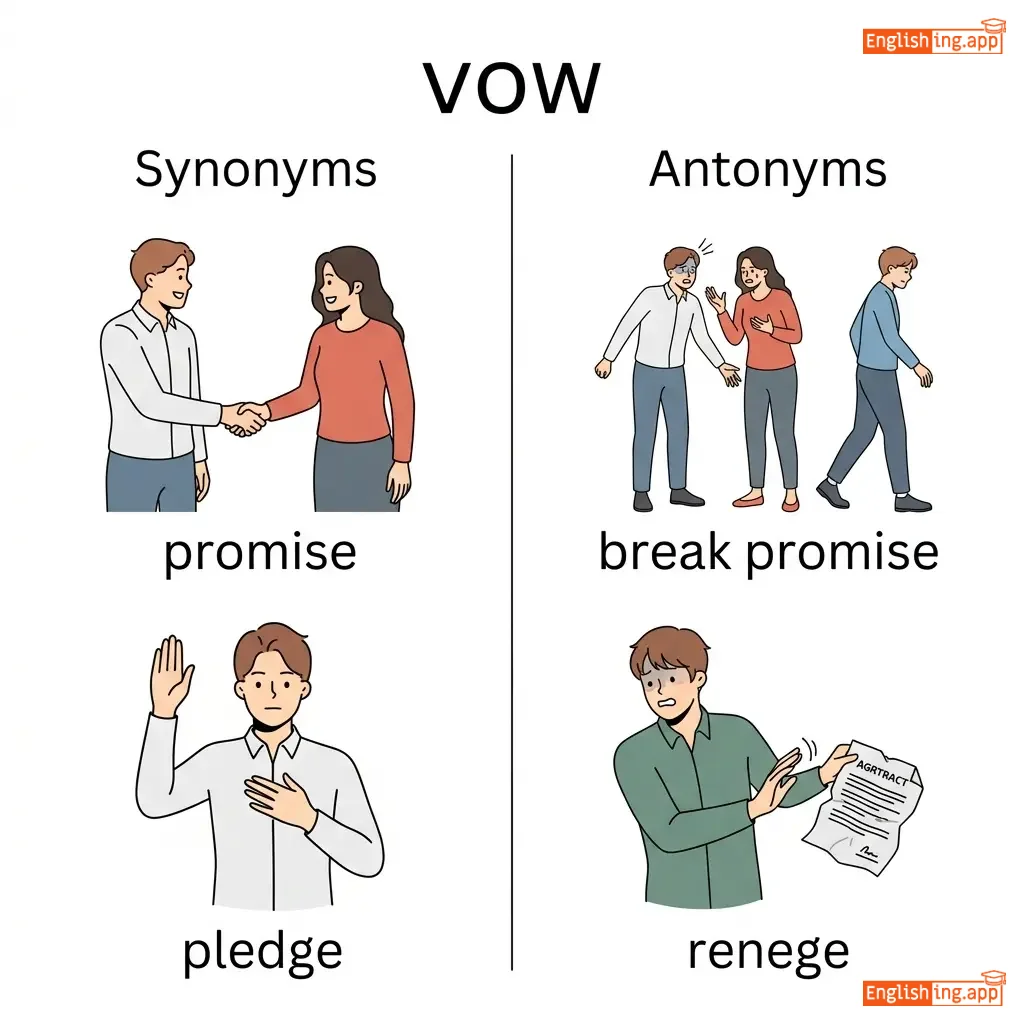
/vaʊ/
verb
(vau)
••••••
|
|
发誓
fā shì
••••••
|
vowed
vowed
••••••
|
vowed
vowed
••••••
|
vows
vauz
••••••
|
vowing
vauing
••••••
|
to make a serious promise; to pledge solemnly
••••••
|
They vowed to love each other forever.
他们誓言永远相爱。
••••••
|
他们发誓永远相爱。
Tāmen fā shì yǒngyuǎn xiāng ài.
••••••
|
promise, pledge, swear, commit, declare
••••••
|
break promise, renege, withdraw
••••••
|
vow solemnly, vow publicly, vow sincerely, vow eternally, vow secretly
••••••
|
发誓是做出一个庄严的承诺
••••••
|
|
#381
🎯
|
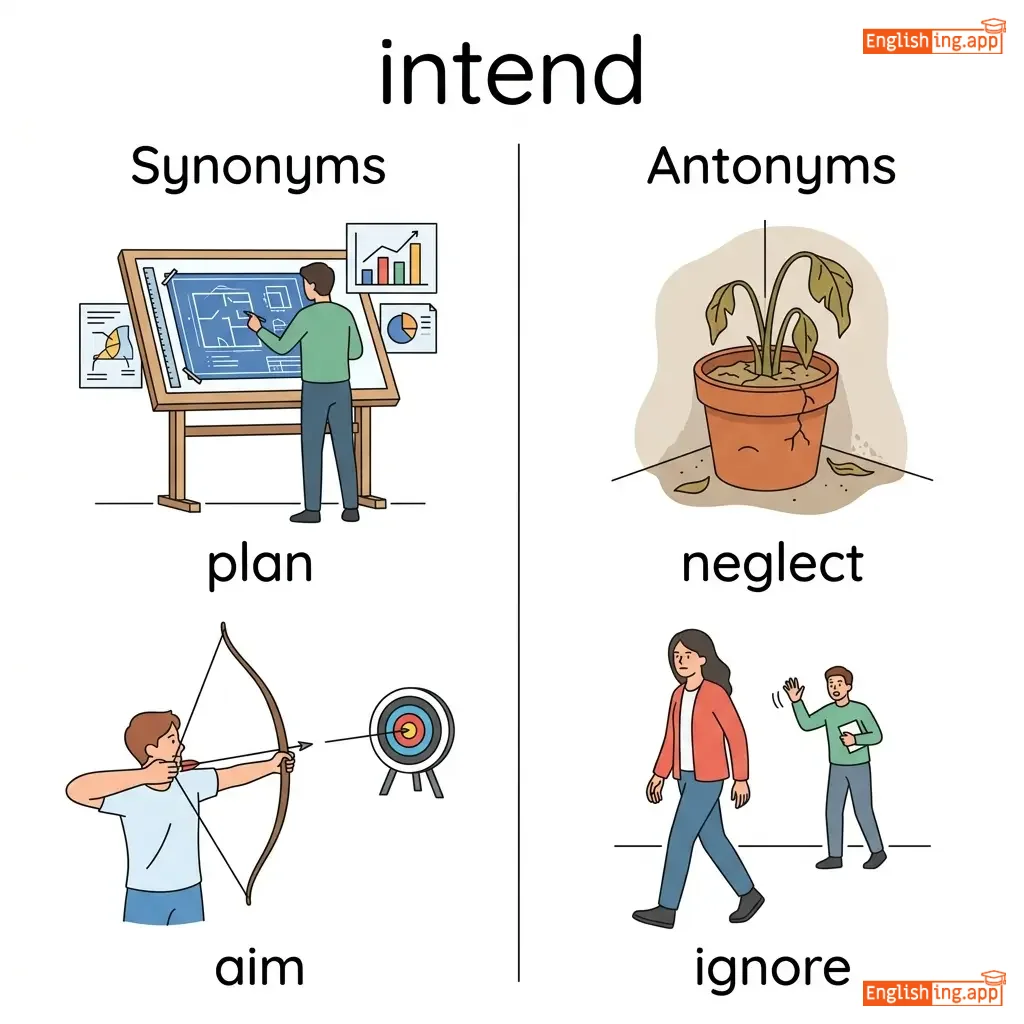
/ɪnˈtend/
verb
(因滕德)
••••••
|
|
打算
dasuan
••••••
|
intended
因滕德德
••••••
|
intended
因滕德德
••••••
|
intends
因滕德斯
••••••
|
intending
因滕丁
••••••
|
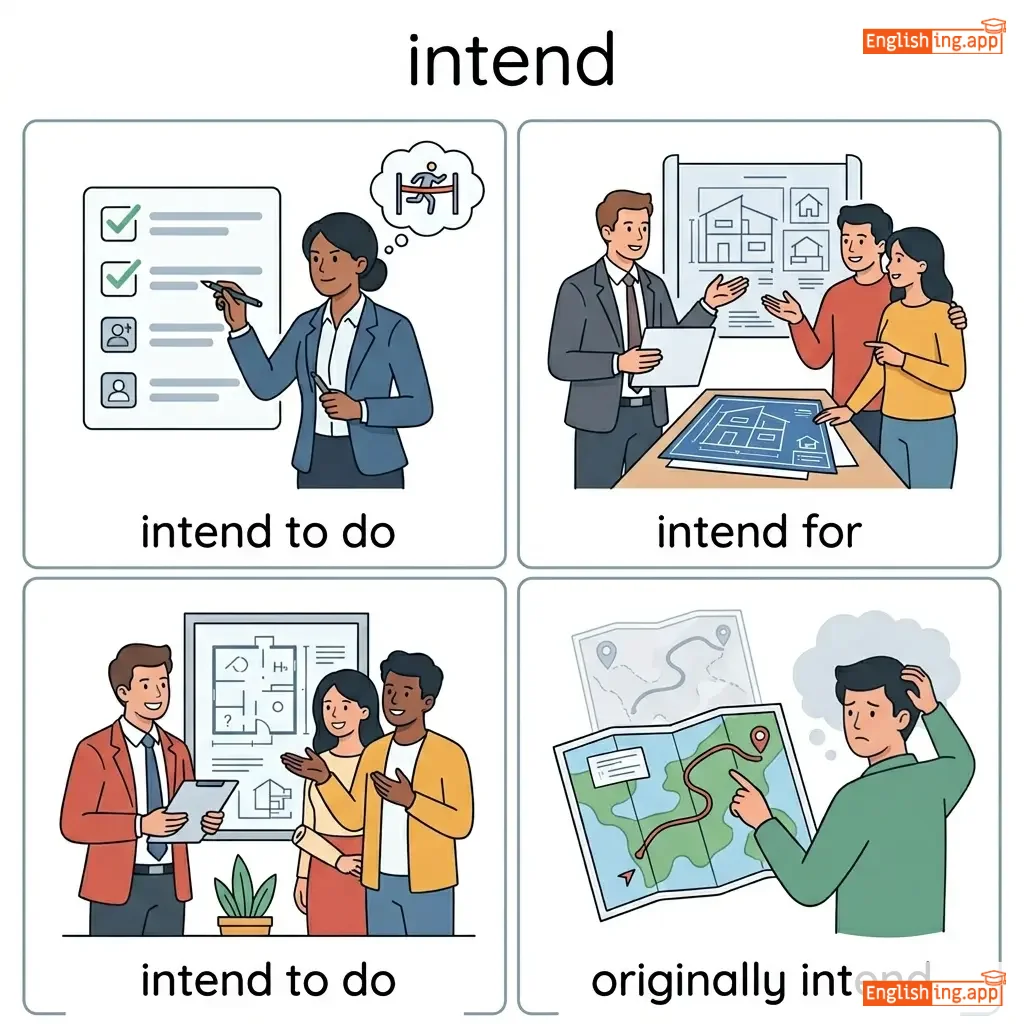
to plan or have in mind as a purpose; to mean
••••••
|
I intend to finish this project by tomorrow.
我打算在明天之前完成这个项目。
••••••
|
我打算在明天之前完成这个项目。
Wǒ dǎsuàn zài míngtiān zhīqián wánchéng zhège xiàngmù.
••••••
|
plan, aim, purpose, mean, design
••••••
|
abandon, discard, reject, neglect
••••••
|
intend to, intend originally, intend specifically, intend clearly, intend fully
••••••
|
打算就是Intend,要有明确的目标。
••••••
|
|
#382
💰
|
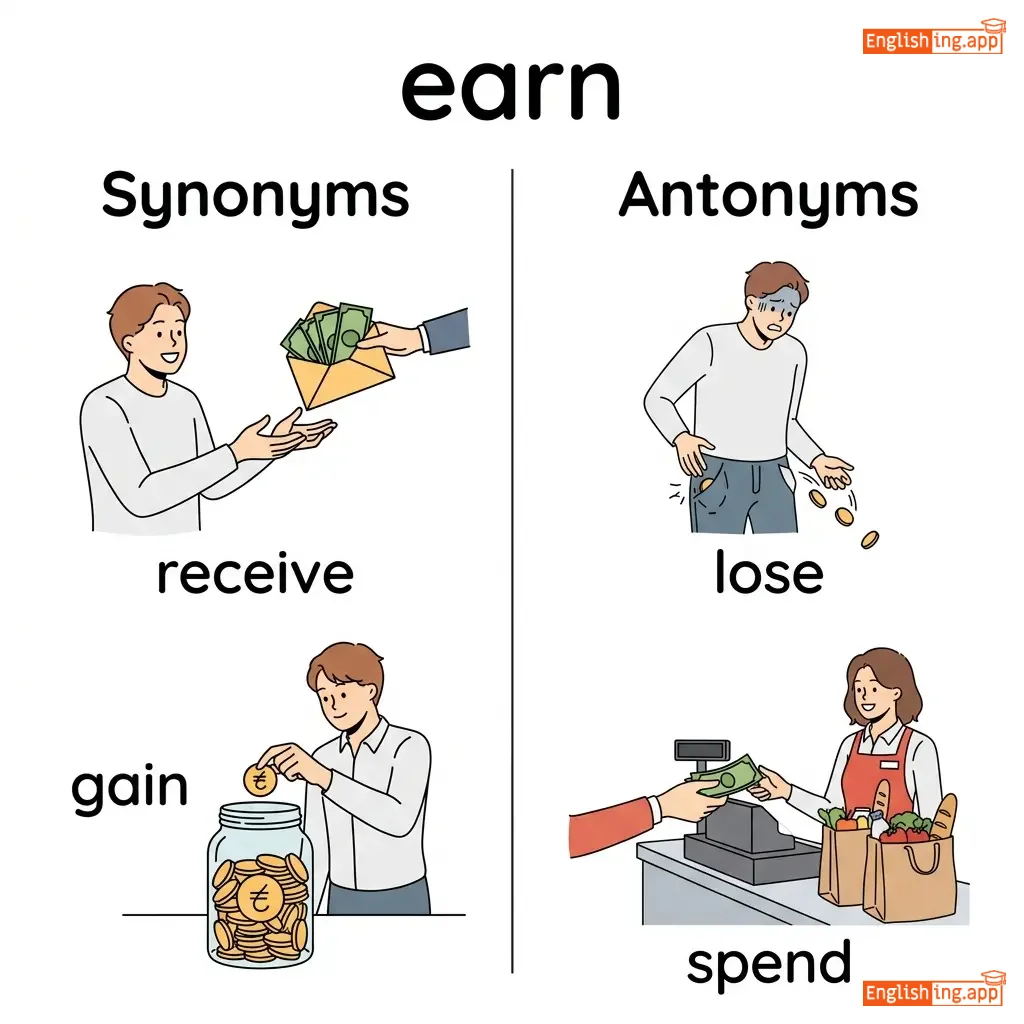
/ɜːrn/
verb
(earn)
••••••
|
|
赚取
zhuàn qǔ
••••••
|
earned
earned
••••••
|
earned
earned
••••••
|
earns
earns
••••••
|
earning
earning
••••••
|
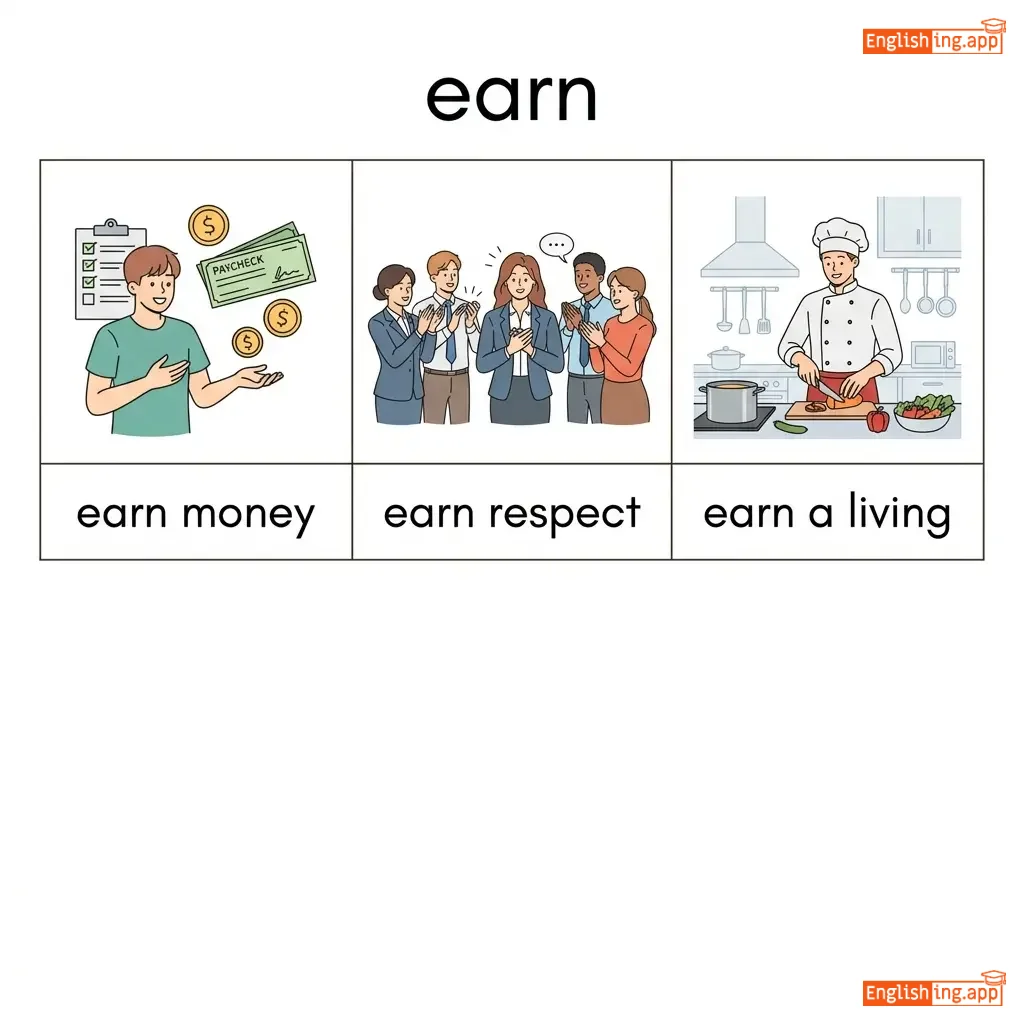
to receive money in return for work; to deserve through effort
••••••
|
She earns a good salary at her new job.
她在新工作中赚取了不错的工资。
••••••
|
她在新工作中赚取了不错的工资。
Tā zài xīn gōngzuò zhōng zhuànqǔle bùcuò de gōngzī.
••••••
|
make, gain, receive, deserve
••••••
|
spend, lose, waste, forfeit
••••••
|
earn money, earn respect, earn living, earn praise, earn degree
••••••
|
记住,赚钱是工作和努力的结果。'赚取'是关键。
••••••
|
|
#383
🐛
|
/krɔːl/
verb
(król)
••••••
|
|
爬行
páxíng
••••••
|
crawled
króld
••••••
|
crawled
króld
••••••
|
crawls
króls
••••••
|
crawling
króling
••••••
|
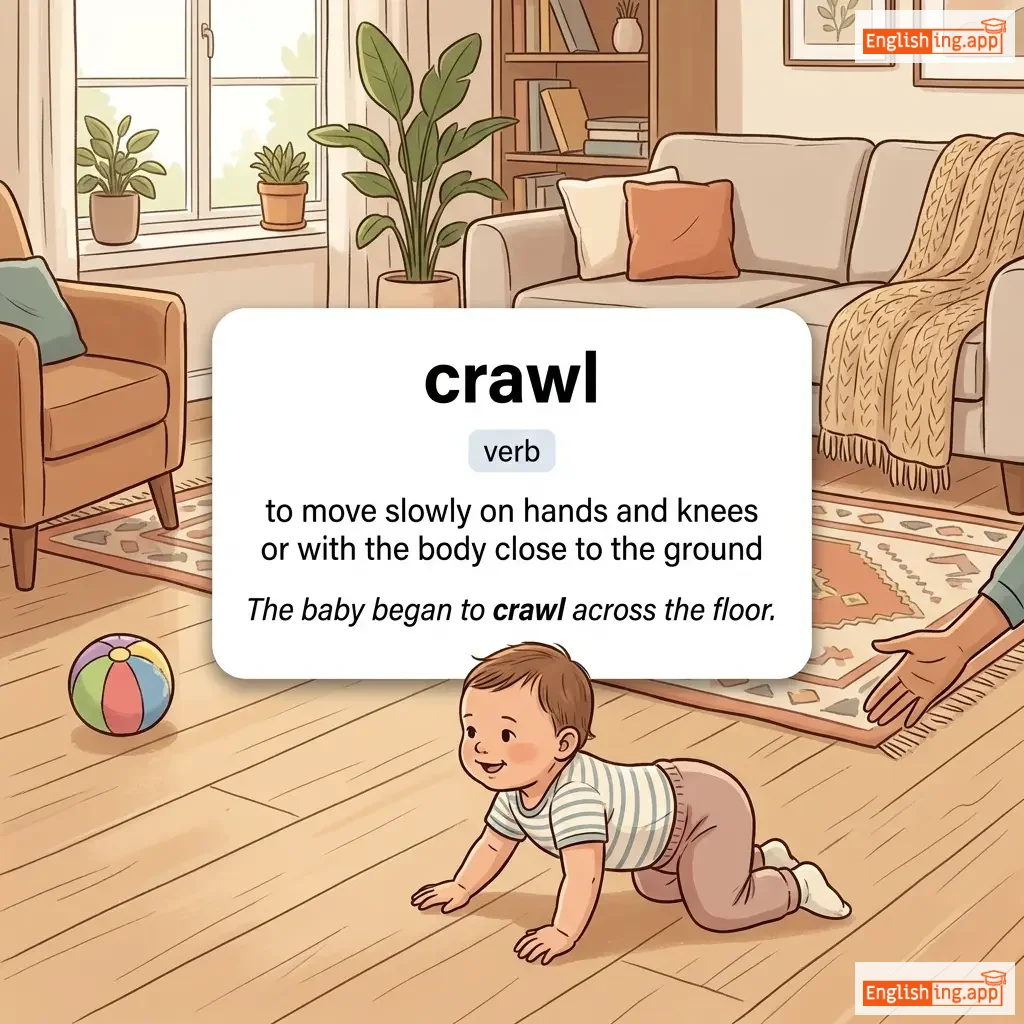
to move slowly on hands and knees; to move very slowly
••••••
|
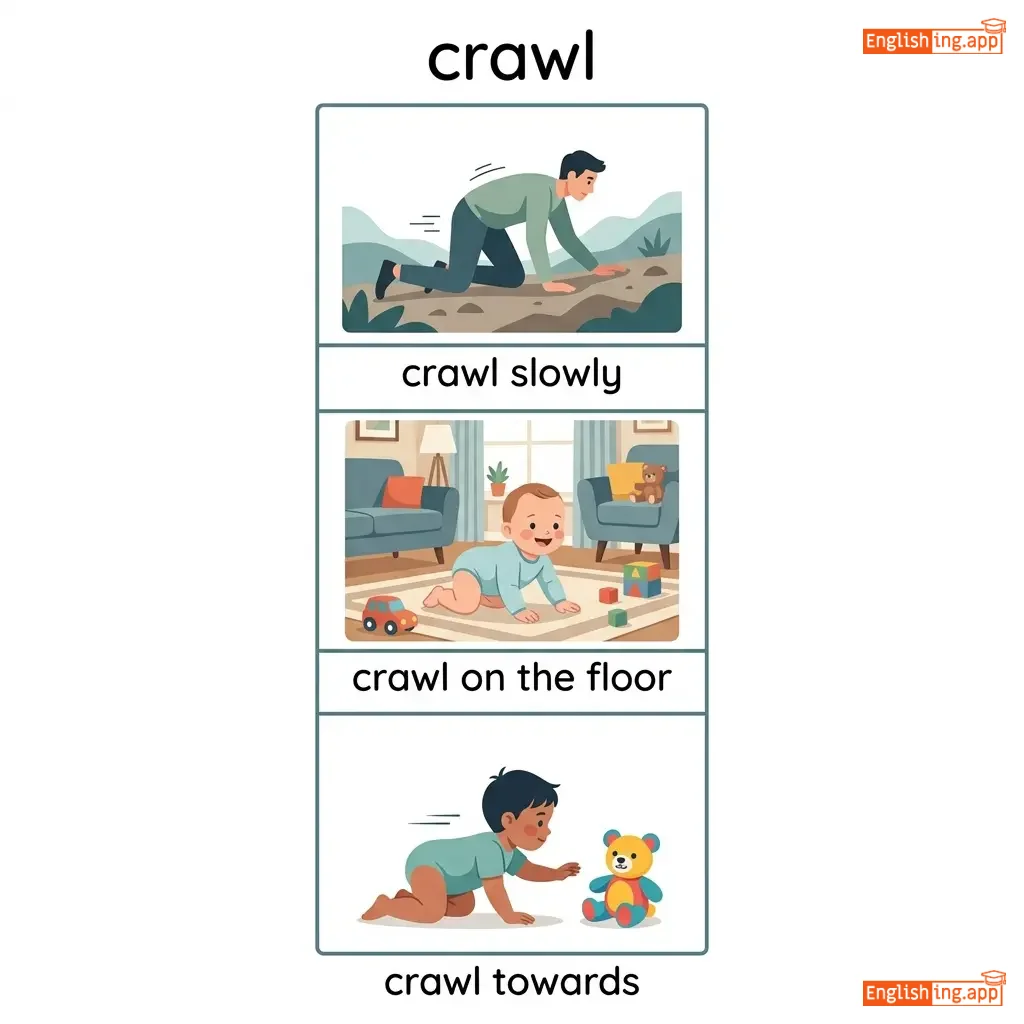
The baby crawled across the floor to reach the toy.
宝宝爬过地板去拿玩具。
••••••
|
宝宝爬过地板去拿玩具。
Bǎobǎo pá guò dìbǎn qù ná wánjù.
••••••
|
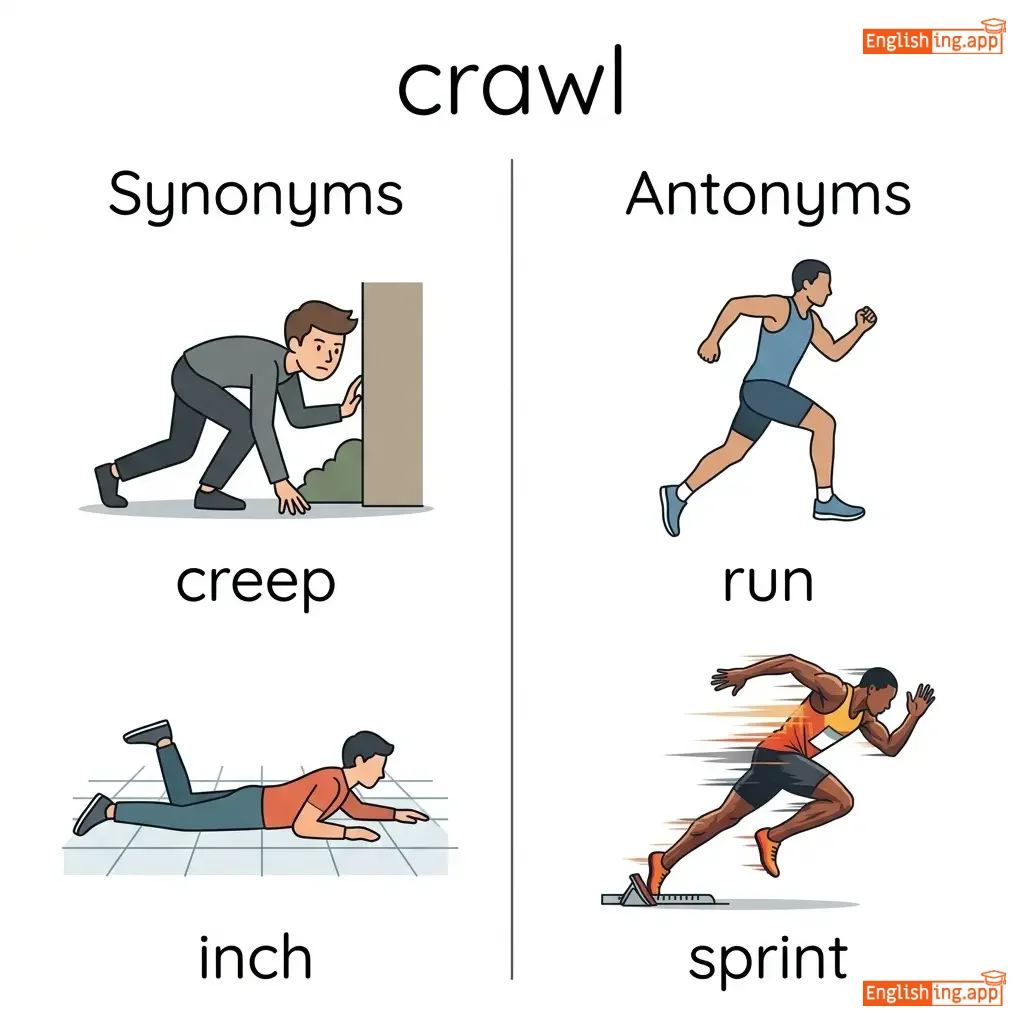
creep, slither, inch, move slowly
••••••
|
run, sprint, dash, rush
••••••
|
crawl slowly, crawl forward, crawl away, crawl under, crawl through
••••••
|
爬行是走路之前的第一步。
••••••
|
|
#384
🔄
|
/rɪˈɡeɪn/
verb
(瑞根)
••••••
|
|
恢复
huīfù
••••••
|
regained
瑞根德
••••••
|
regained
瑞根德
••••••
|
regains
瑞根斯
••••••
|
regaining
瑞根宁
••••••
|
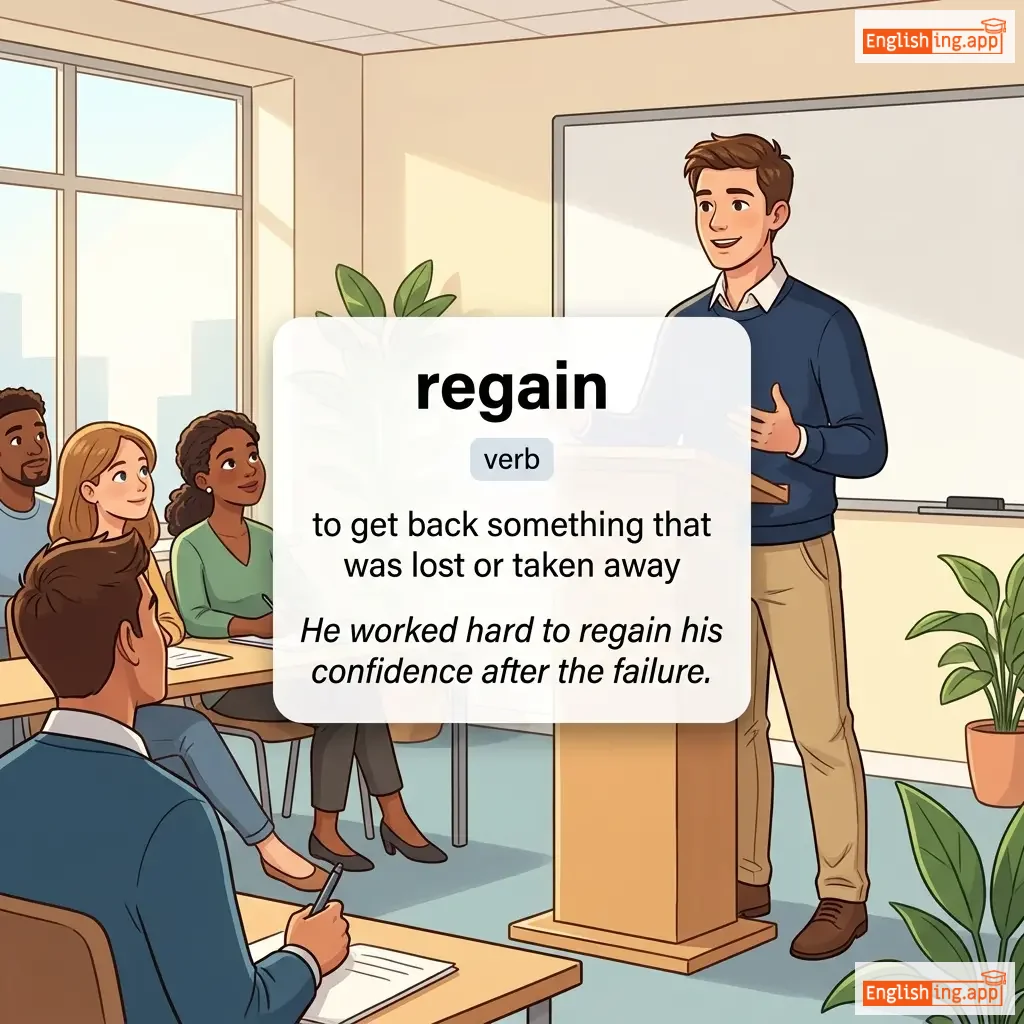
to get back something that was lost; to recover
••••••
|
He regains his strength after the illness.
他在生病后恢复了力量。
••••••
|
他在生病后恢复了力量。
Tā zài shēngbìng hòu huīfùle lìliàng.
••••••
|
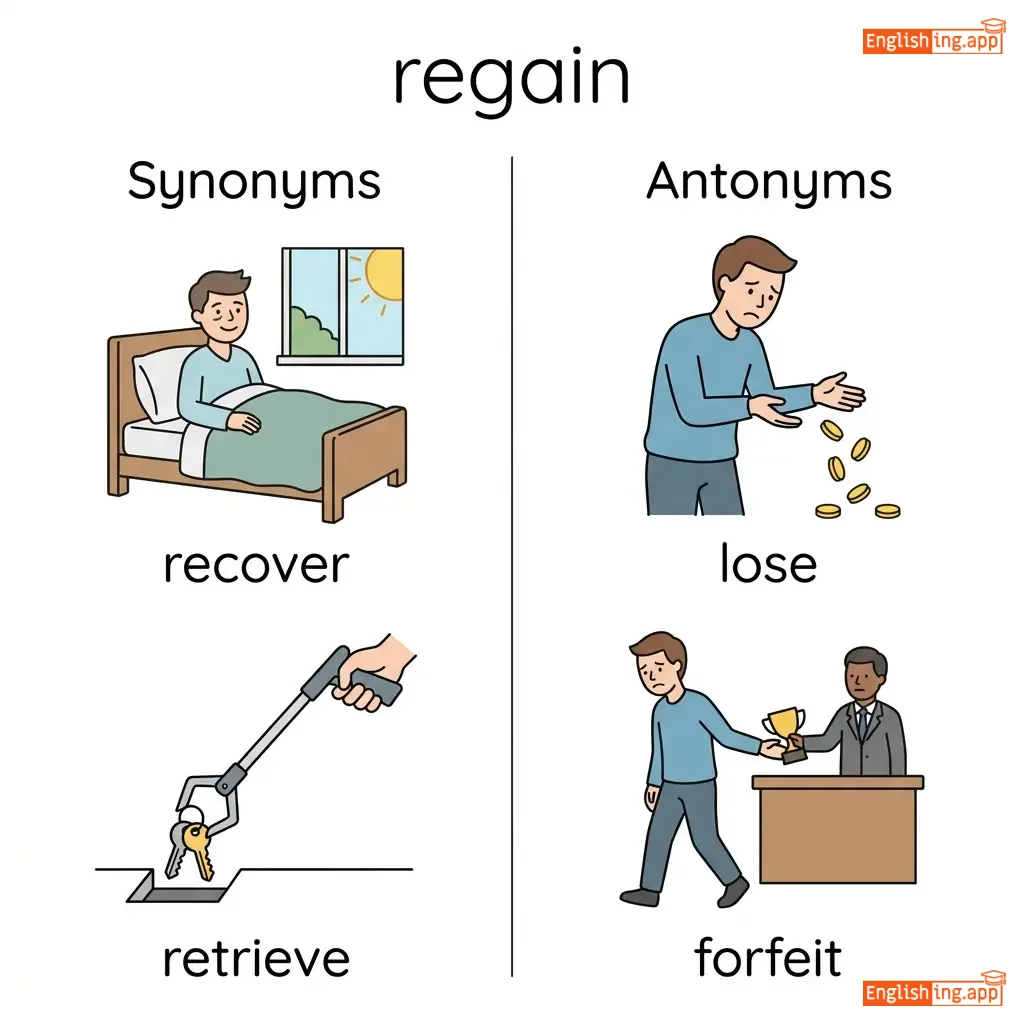
recover, reclaim, retrieve, restore
••••••
|
lose, forfeit, surrender, abandon
••••••
|
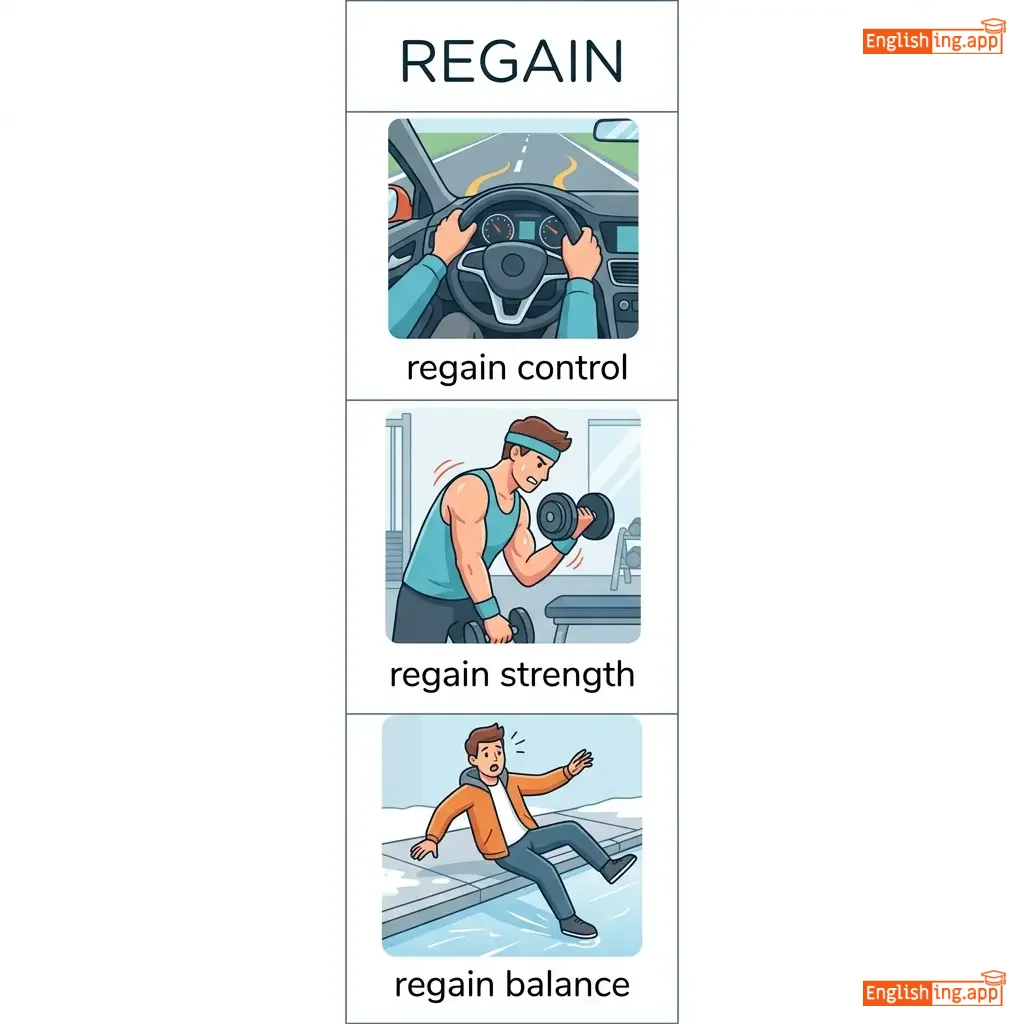
regain control, regain strength, regain confidence, regain consciousness, regain composure
••••••
|
Regain means to recover what was lost, like regaining your strength after an illness!
••••••
|
|
#385
🔊
|
/ˈæmplɪˌfaɪ/
verb
(ǎmplìfài)
••••••
|
|
放大
fàngdà
••••••
|
amplified
ǎmplifaid
••••••
|
amplified
ǎmplifaid
••••••
|
amplifies
ǎmplifāi
••••••
|
amplifying
ǎmplifài
••••••
|
to make sounds louder; to make something larger or more significant
••••••
|
The microphone amplifies her voice.
麦克风增强了她的声音。
••••••
|
麦克风增强了她的声音。
Màikèfēng zēngqiángle tā de shēngyīn.
••••••
|
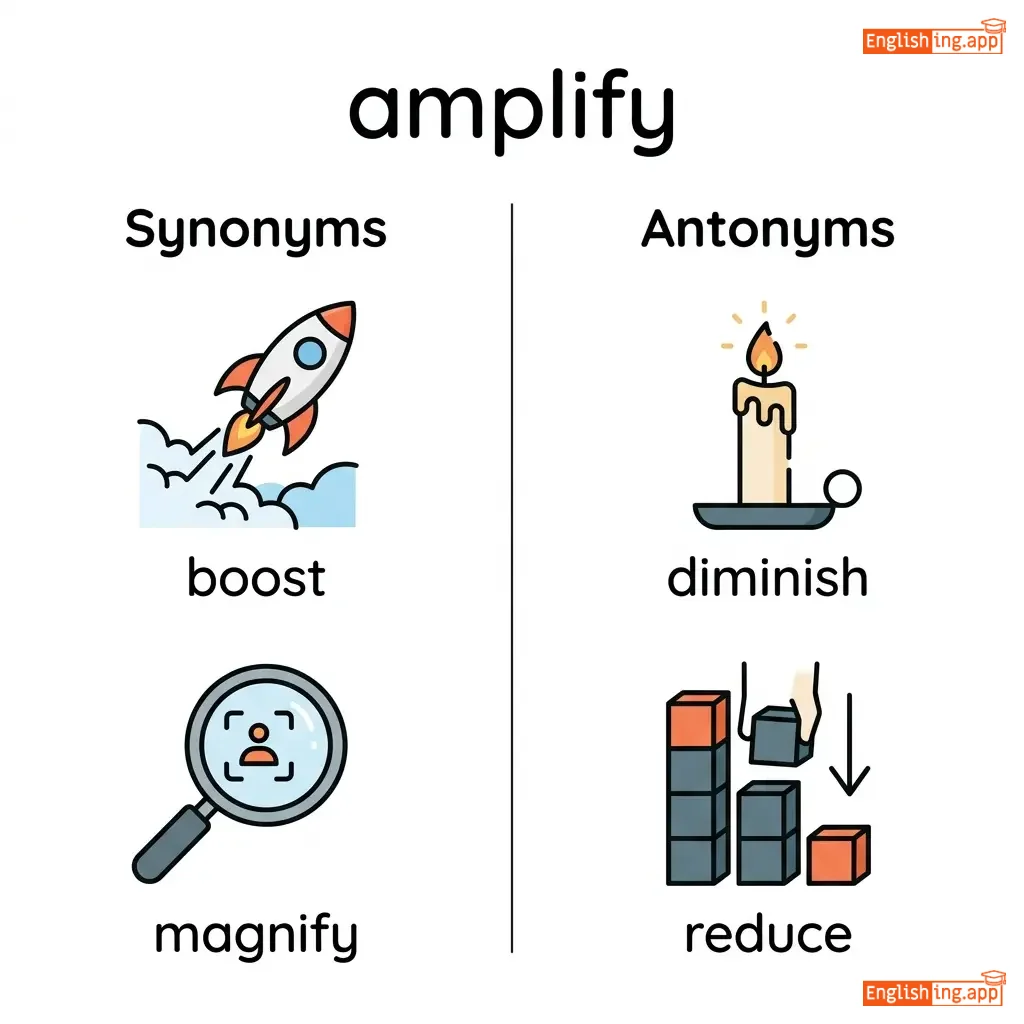
increase, boost, enhance, magnify
••••••
|
reduce, diminish, quiet
••••••
|
amplify sound, amplify signal, amplify voice, amplify effect, amplify message
••••••
|
放大声音使它更响亮。
••••••
|
|
#386
😊
|
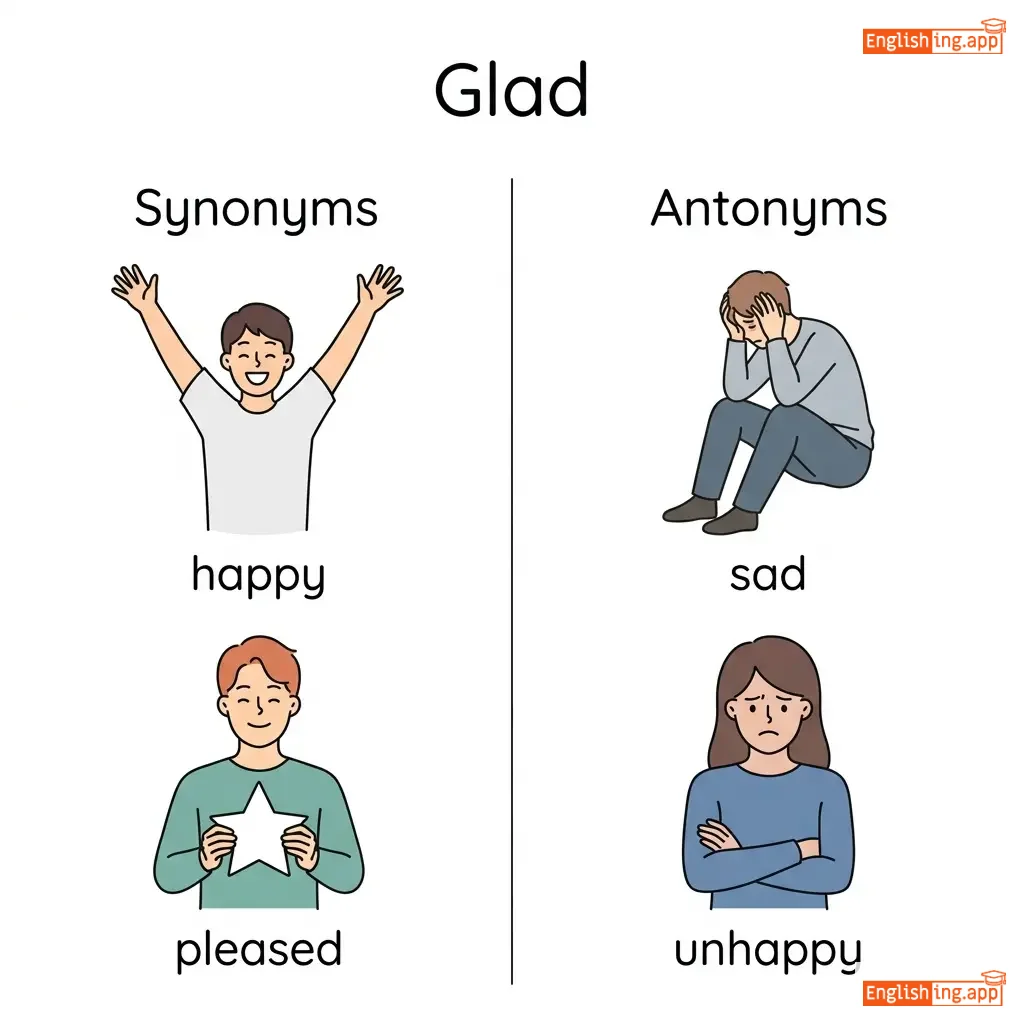
/ɡlæd/
verb
(快乐)
••••••
|
|
高兴
gaoxing
••••••
|
gladded
快乐的
••••••
|
gladded
快乐的
••••••
|
glads
快乐的
••••••
|
gladding
快乐的
••••••
|
feeling pleased or happy; to make someone happy
••••••
|
I'm glad you could make it to the party.
我很高兴你能来参加派对。
••••••
|
我很高兴你能来参加派对。
Wǒ hěn gāoxìng nǐ néng lái cānjiā pàiduì.
••••••
|
happy, pleased, delighted, joyful
••••••
|
sad, unhappy, disappointed, upset
••••••
|
feel glad, truly glad, very glad, so glad, really glad
••••••
|
Happy to feel glad in Chinese
••••••
|
|
#387
📦
|
/kənˈveɪ/
verb
(kənˈveɪ)
••••••
|
|
传送,表达
chuán sòng, biǎo dá
••••••
|
conveyed
kənˈveɪd
••••••
|
conveyed
kənˈveɪd
••••••
|
conveys
kənˈveɪz
••••••
|
conveying
kənˈveɪɪŋ
••••••
|
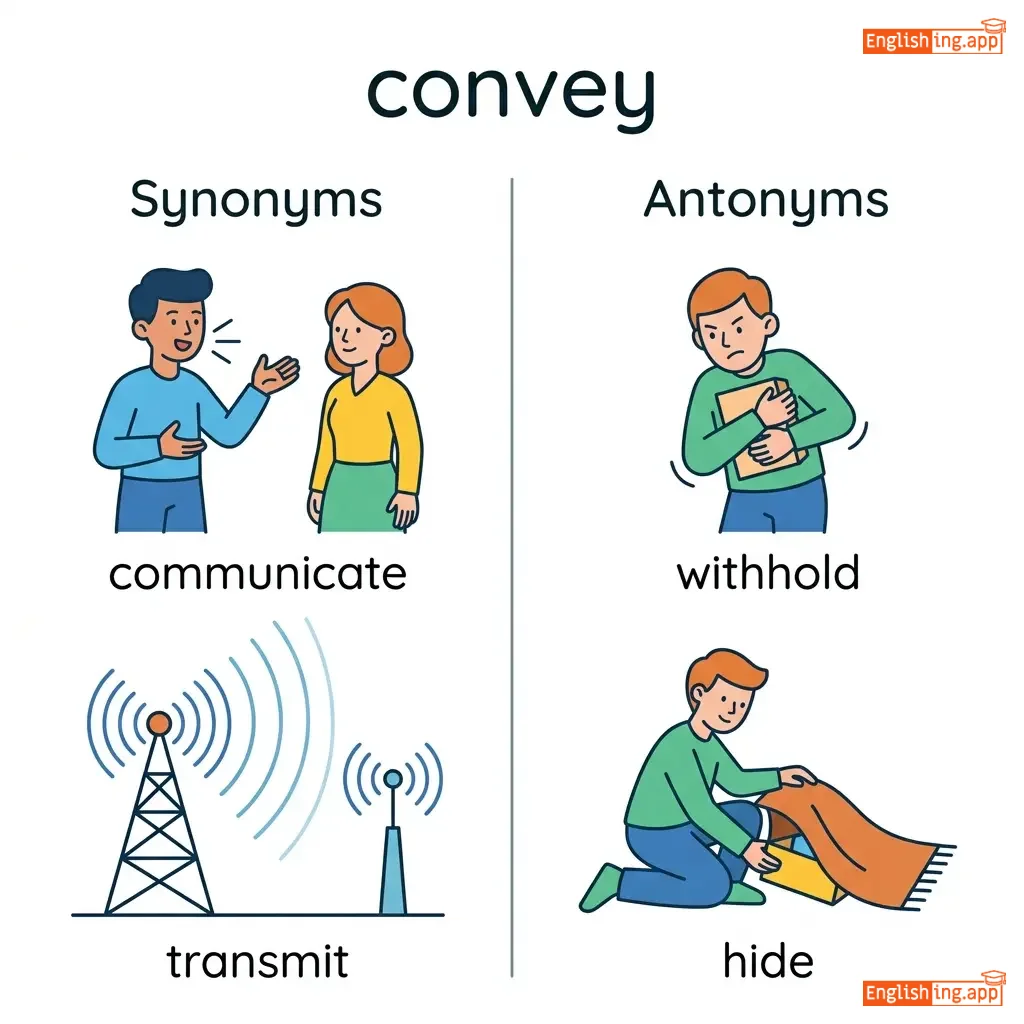
to transport; to communicate or express; to transfer
••••••
|
The painting conveys a sense of peace and tranquility.
这幅画传达了一种和平与宁静的感觉。
••••••
|
这幅画传达了一种和平与宁静的感觉。
Zhè fú huà chuán dá le yī zhǒng hé píng yǔ níng jìng de gǎn jué.
••••••
|
transport, communicate, express, transfer
••••••
|
withhold, conceal, hide, retain
••••••
|
convey message, convey meaning, convey information, convey emotion, convey clearly
••••••
|
Art conveying peace—imagine 'convey' in a painting.
••••••
|
|
#388
👁️
|
/ˌoʊvərˈlʊk/
verb
(欧弗卢克)
••••••
|
|
忽视
hushi
••••••
|
overlooked
欧弗卢克特
••••••
|
overlooked
欧弗卢克特
••••••
|
overlooks
欧弗卢克斯
••••••
|
overlooking
欧弗卢金
••••••
|
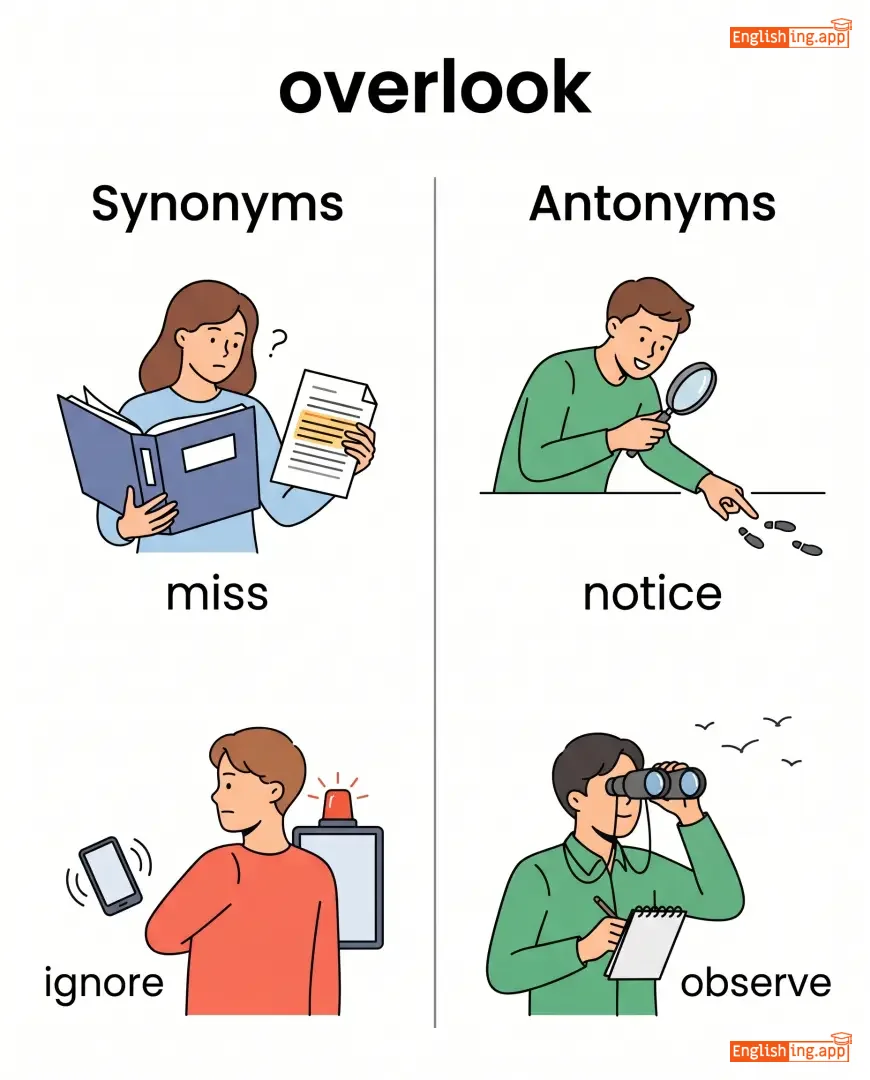
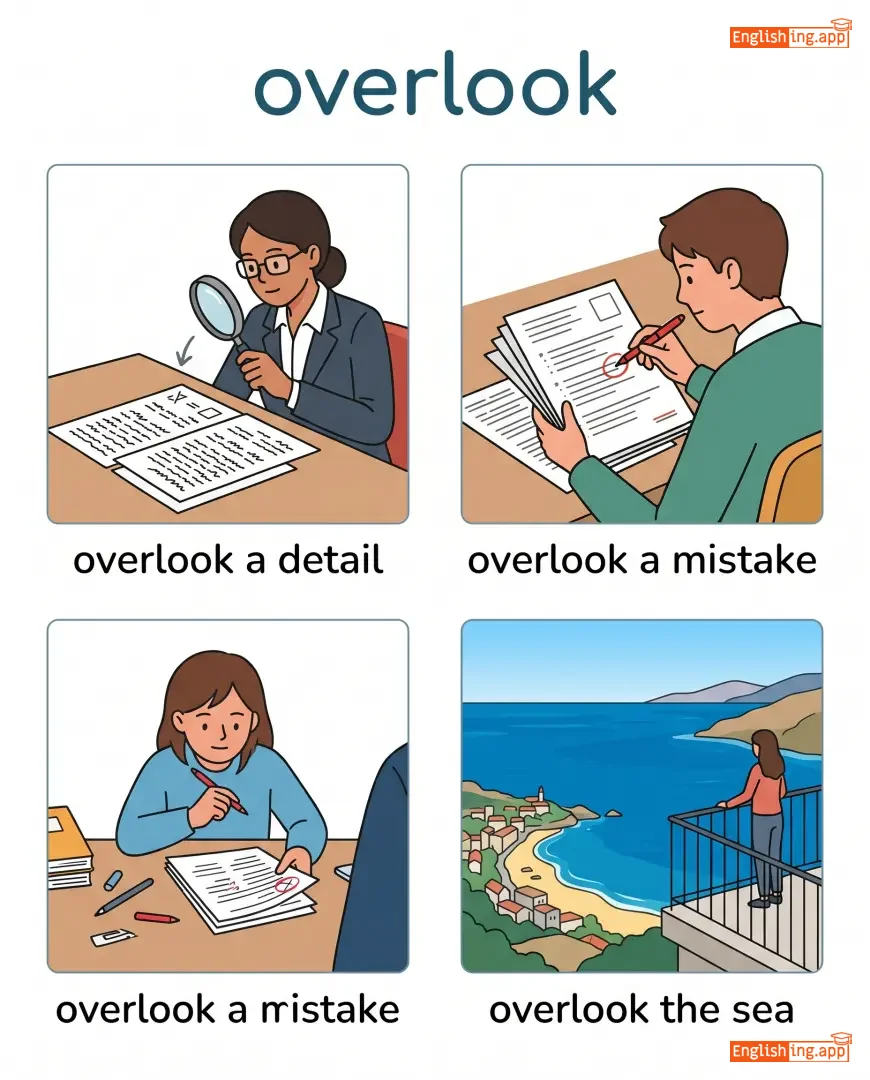
to fail to notice or consider; to ignore; to have a view over something from above
••••••
|
Don't overlook the small details in your work.
别忽视工作中的小细节。
••••••
|
不要忽视工作中的小细节。
bu yao hushi gongzuo zhong de xiao xijie.
••••••
|
ignore, miss, disregard, neglect
••••••
|
notice, observe, consider, acknowledge
••••••
|
easily overlook, completely overlook, overlook details, overlook importance, overlook opportunity
••••••
|
In Chinese, '忽视 (hushi)' means to ignore — same as overlook.
••••••
|
Vocabulary Quiz
Test your vocabulary by matching words with their translations or meanings.
Login to take the quiz
Comments (0)
Share your thoughts and join the discussion.
Join the discussion by logging in
Login to CommentNo comments yet
Be the first to share your thoughts!