








Swipe left or right, or use the buttons. Tap image to zoom.
例句翻译
单词
Lesson 26: Mastering the Most Frequent Verbs & TensesLesson 26: Mastering the Most Frequent Verbs & Tenses - 遮罩切换
|
表情符号
|
单词 | Images | 翻译 | 过去时 | 过去分词 | 第三人称单数 | 动名词 | 含义 | 例句 | 例句翻译 | 同义词 | 反义词 | 搭配词 | 助记符 |
|---|---|---|---|---|---|---|---|---|---|---|---|---|---|---|
|
#746
🎨
|
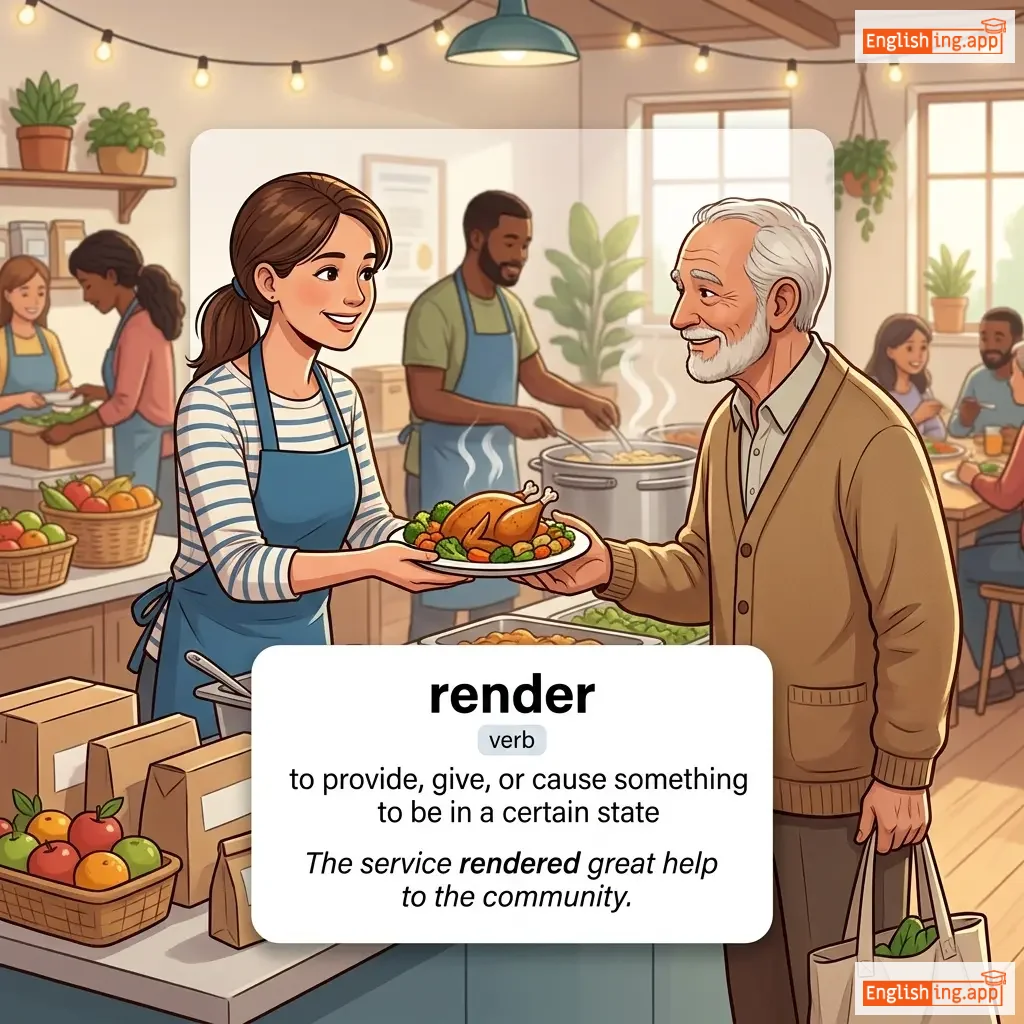
/ˈrendər/
verb
(渲染)
••••••
|
|
提供
tígōng
••••••
|
rendered
渲染过
••••••
|
rendered
渲染过
••••••
|
renders
渲染
••••••
|
rendering
渲染
••••••
|
to provide or give; to make or cause to become
••••••
|
The artist renders the scene beautifully.
艺术家将场景渲染得非常美丽。
••••••
|
艺术家美丽地渲染了场景。
Yìshùjiā měilì dì xuànrǎnle chǎngjǐng.
••••••
|
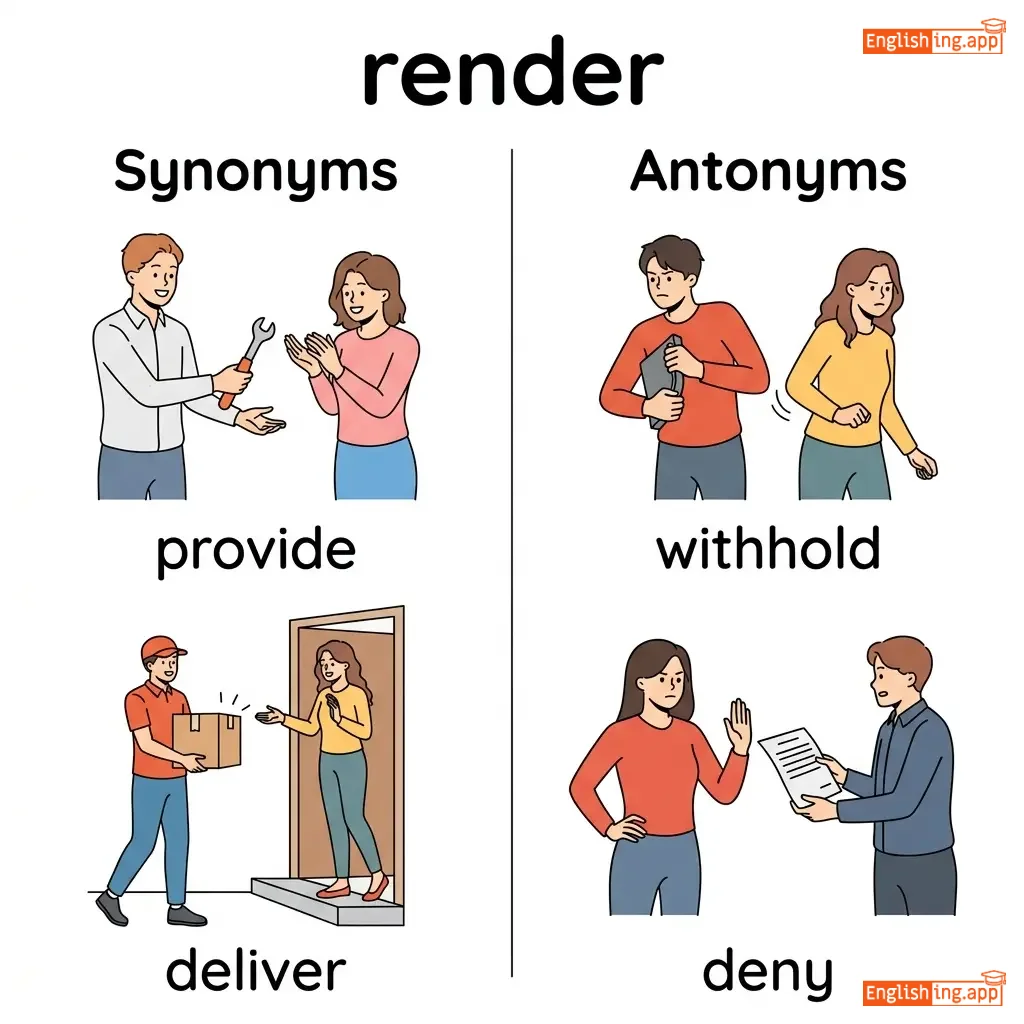
provide, give, deliver, present
••••••
|
withhold, keep, retain
••••••
|
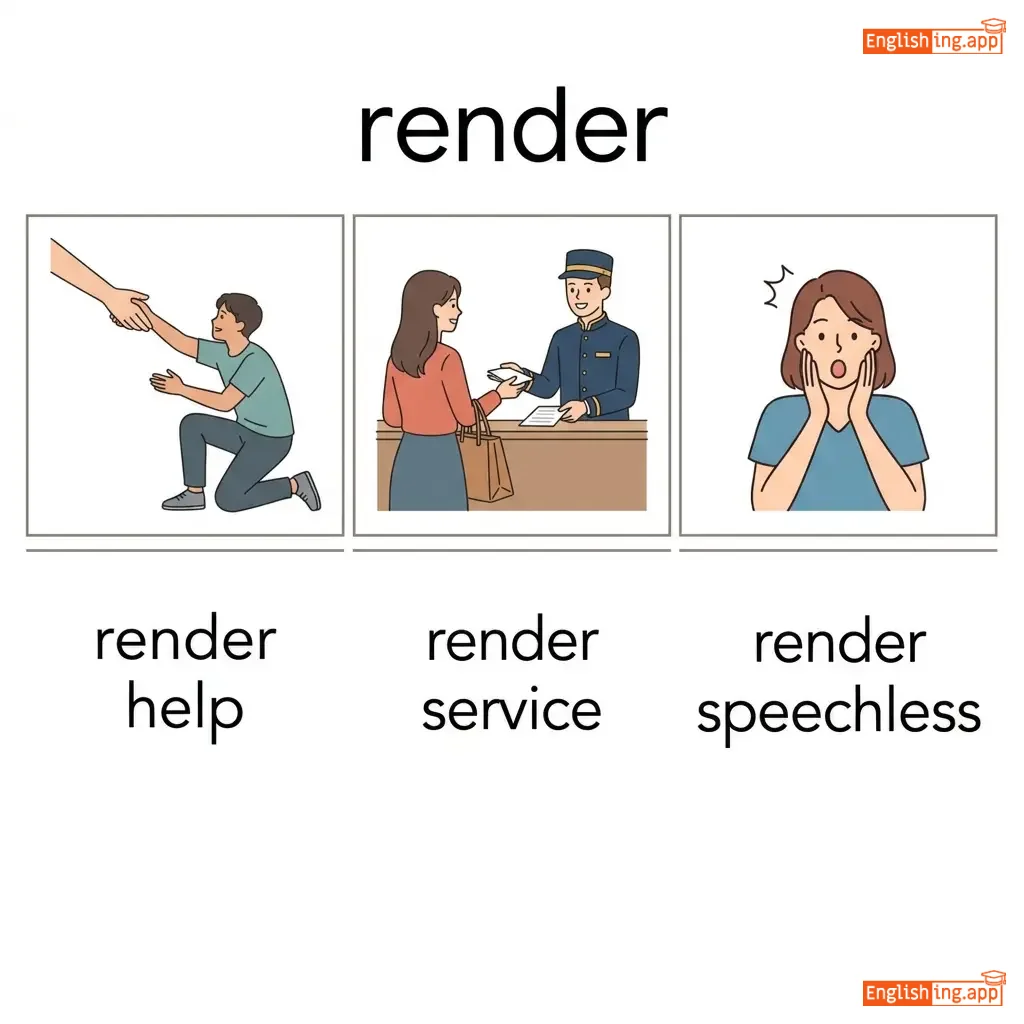
render services, render assistance, render judgment, render harmless, render speechless, render useless
••••••
|
No •••••• |
|
#747
🔍
|
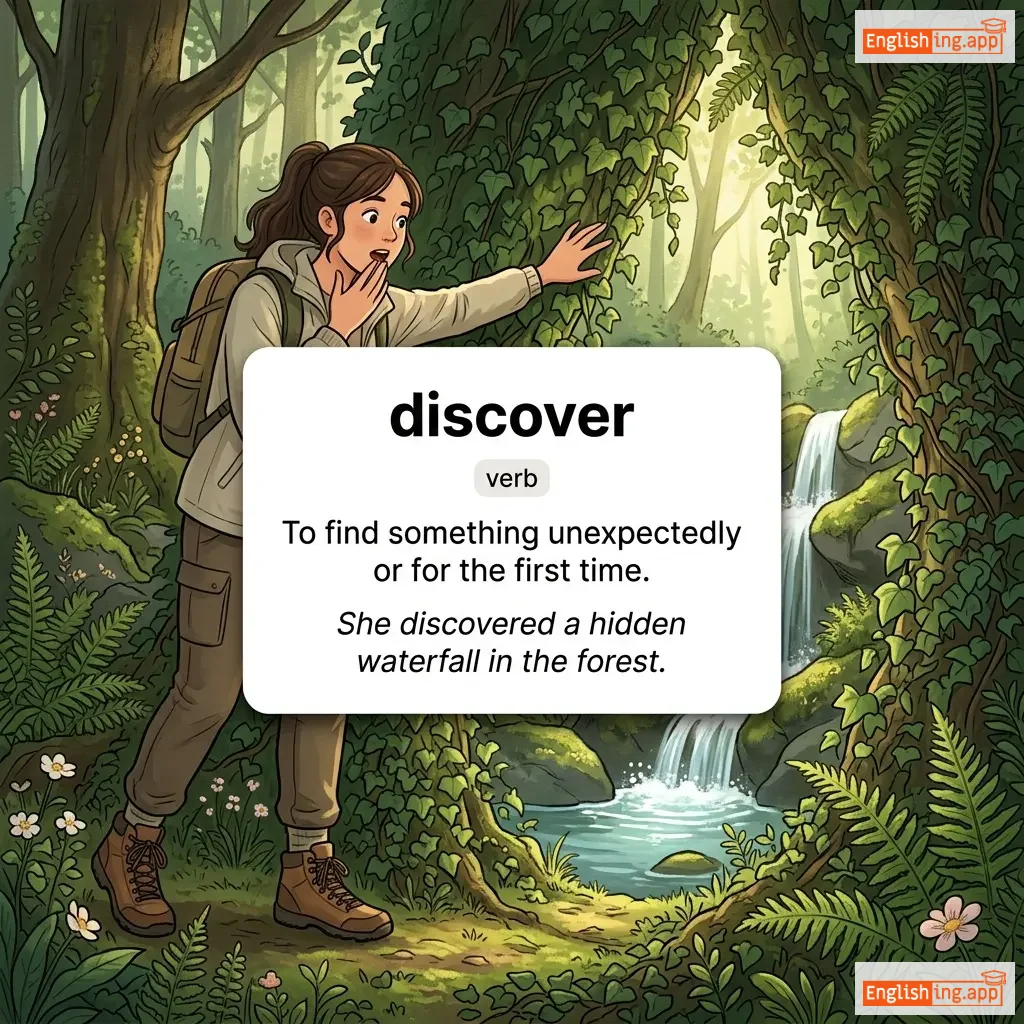
/dɪsˈkʌvər/
verb
(dɪsˈkʌvɚ)
••••••
|
|
发现
faxian
••••••
|
discovered
dɪsˈkʌvɚd
••••••
|
discovered
dɪsˈkʌvɚd
••••••
|
discovers
dɪsˈkʌvɚs
••••••
|
discovering
dɪsˈkʌvɚɪŋ
••••••
|
to find something for the first time
••••••
|
Scientists discovered a new planet last year.
科学家去年发现了一颗新行星。
••••••
|
科学家去年发现了一颗新行星。
Ke xue jia qu nian faxian le yi ke xin xingxing.
••••••
|
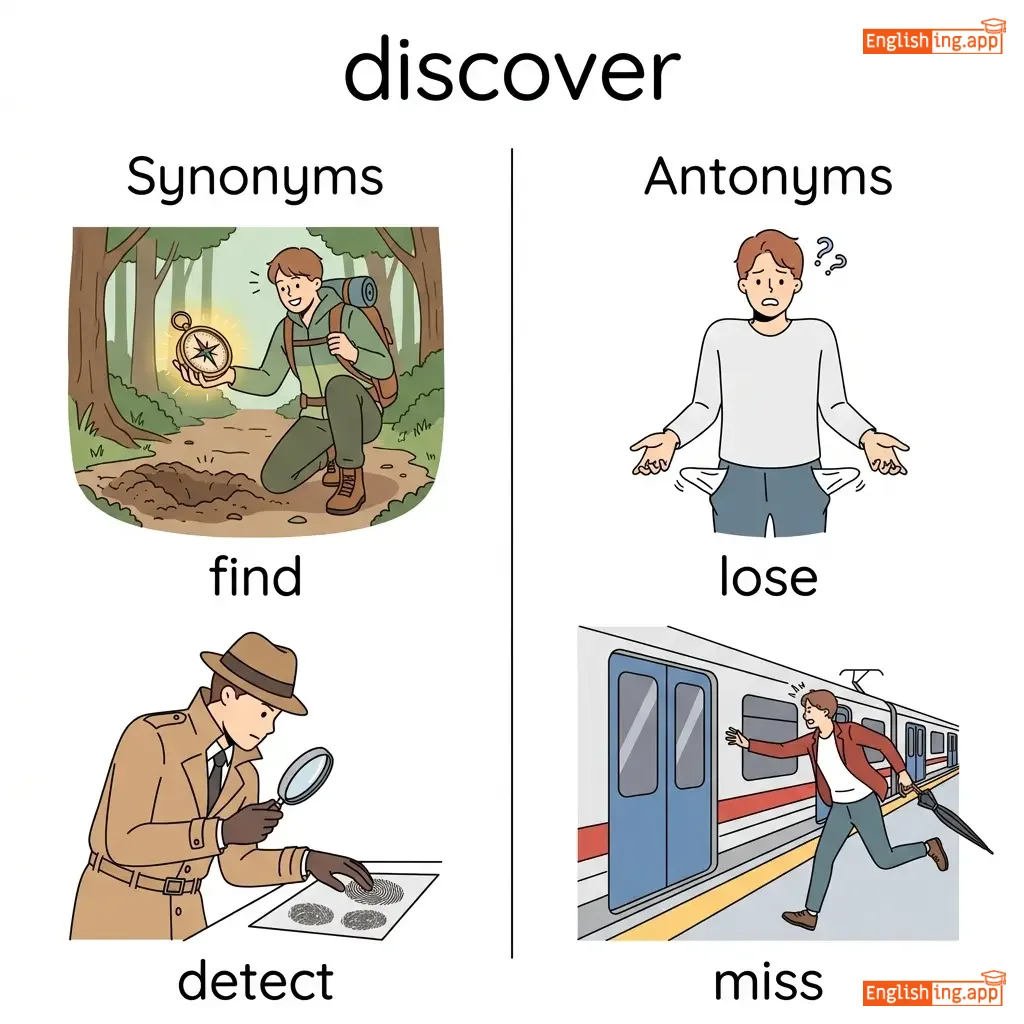
find, uncover, detect, reveal
••••••
|
hide, conceal, lose, miss
••••••
|
discover evidence, discover truth, discover talent, discover facts, discover secrets, discover new species
••••••
|
发现一个新世界,像是探险家在未知的岛屿上。
••••••
|
|
#748
⚔️
|
/faɪt/
verb
(fai te)
••••••
|
- •••••• |
战斗
zhandou
••••••
|
fought
zhan dou
••••••
|
fought
zhan dou
••••••
|
fights
zhan dou
••••••
|
fighting
zhan dou
••••••
|
to struggle against someone or something; to engage in battle or combat
••••••
|
The soldiers fought bravely in the war.
士兵们在战斗中英勇作战。
••••••
|
士兵们在战斗中英勇作战。
Shibingmen zai zhanshou zhong yingyong zuozhan.
••••••
|
battle, combat, struggle, wrestle
••••••
|
surrender, yield, submit, peace
••••••
|
fight battles, fight crime, fight disease, fight for rights, fight back, fight hard
••••••
|
Zhandou, fight in Chinese
••••••
|
|
#749
➖
|
/səbˈtrækt/
verb
(萨布特拉克特)
••••••
|
|
减去
jian qu
••••••
|
subtracted
萨布特拉克特德
••••••
|
subtracted
萨布特拉克特德
••••••
|
subtracts
萨布特拉克特斯
••••••
|
subtracting
萨布特拉克特英
••••••
|
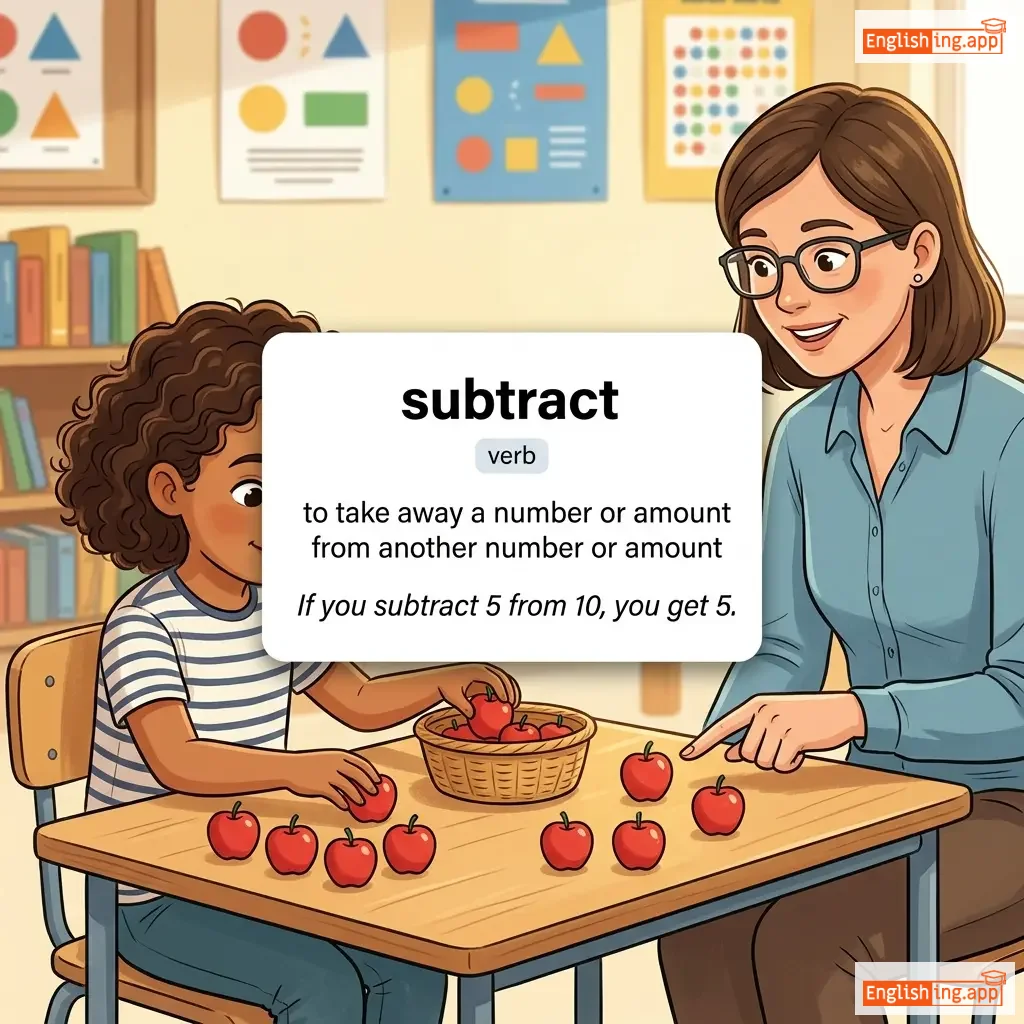
to take away a number or amount from another number or amount
••••••
|
If you subtract 5 from 10, you get 5.
如果你从10中减去5,你得到5。
••••••
|
如果你从10中减去5,你得到5。
Ru guo ni cong 10 zhong jian qu 5, ni dedao 5.
••••••
|
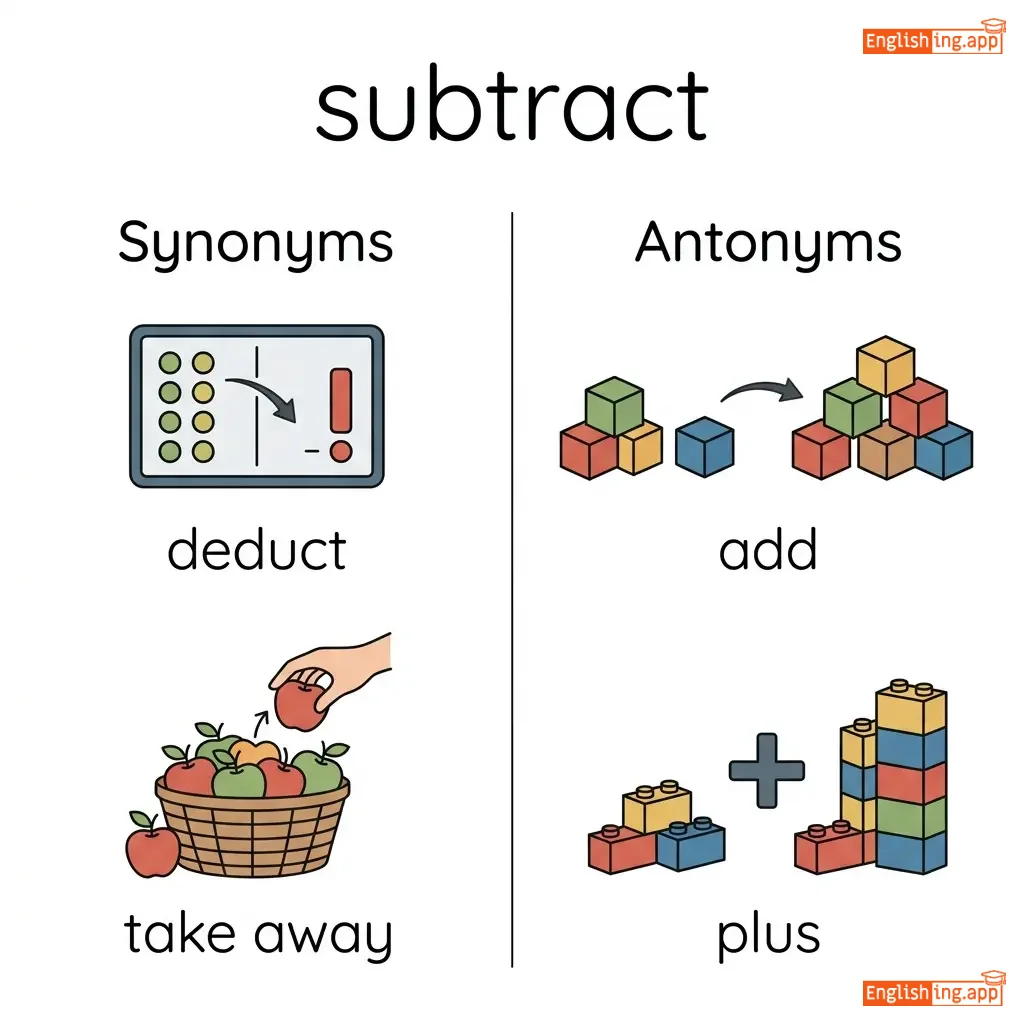
deduct, take away, minus, remove
••••••
|
add, plus, include
••••••
|
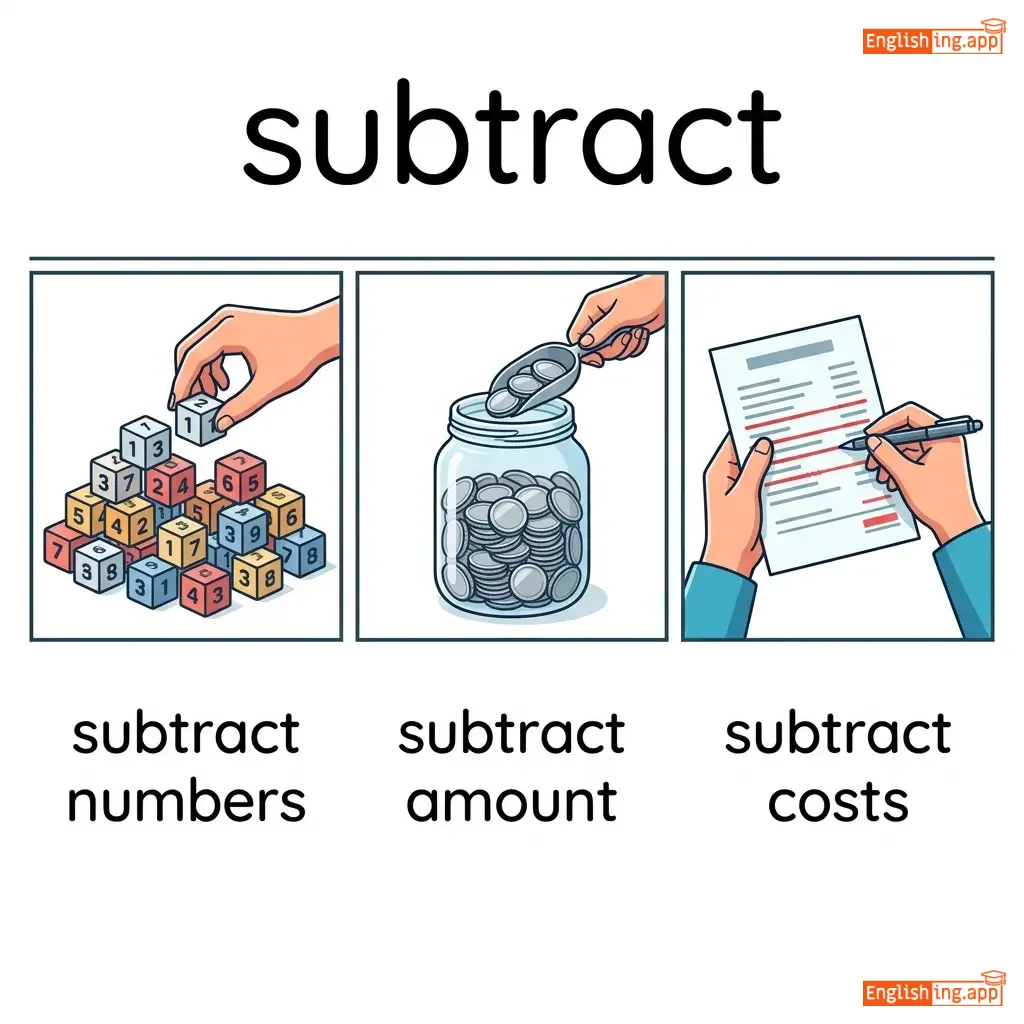
subtract numbers, subtract amount, subtract costs, subtract points, subtract value, subtract expenses
••••••
|
No •••••• |
|
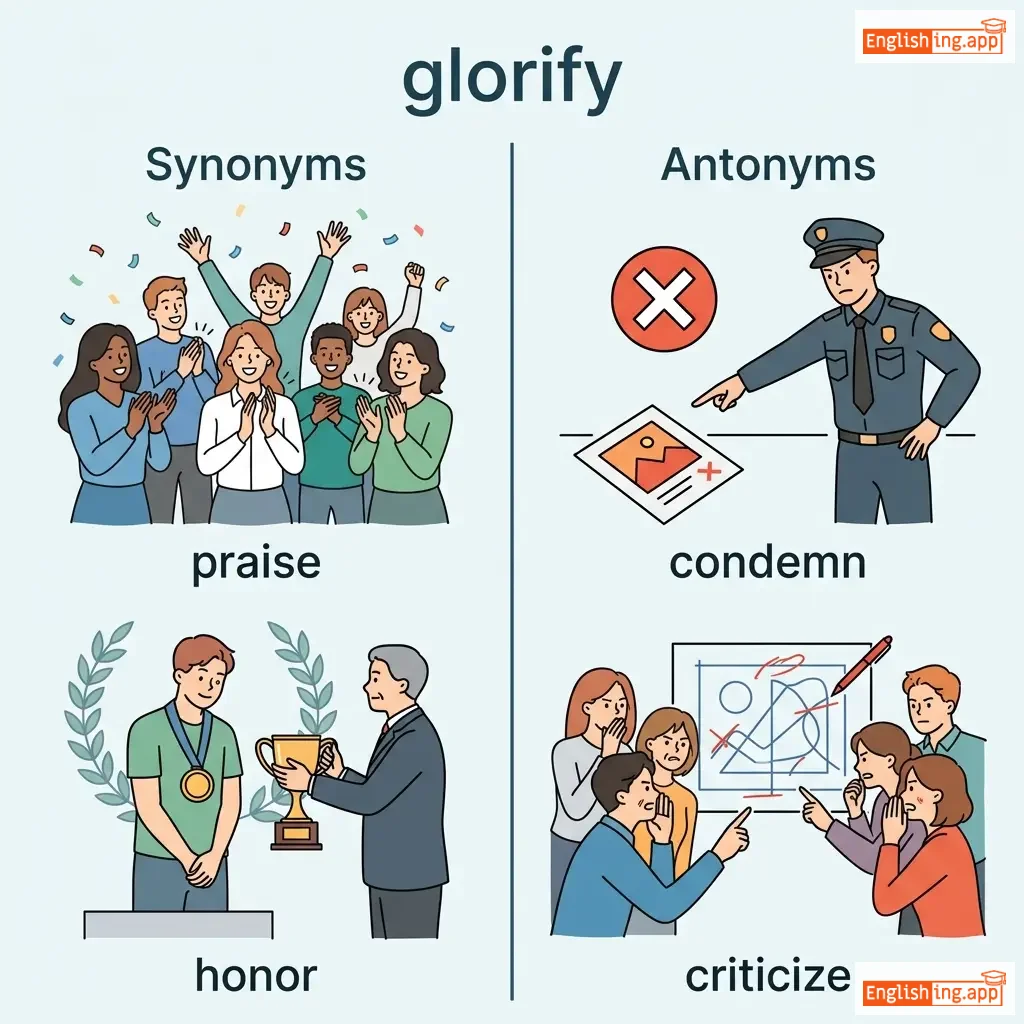
#750
🌟
|
/ˈɡlɔːrɪfaɪ/
verb
(guòlìfāi)
••••••
|
|
美化
měihuà
••••••
|
glorified
guòlìfāid
••••••
|
glorified
guòlìfāid
••••••
|
glorifies
guòlìfāiz
••••••
|
glorifying
guòlìfāing
••••••
|
to praise or honor someone or something; to make something seem better than it is
••••••
|
The movie glorifies war heroes.
电影美化了战争英雄。
••••••
|
电影美化了战争英雄。
Diànyǐng měihuà le zhànzhēng yīngxióng.
••••••
|
praise, honor, exalt, celebrate
••••••
|
condemn, criticize, disgrace
••••••
|
glorify war, glorify heroes, glorify achievements, glorify violence, glorify past, glorify success
••••••
|
美化是让不完美的事物看起来更好
••••••
|
|
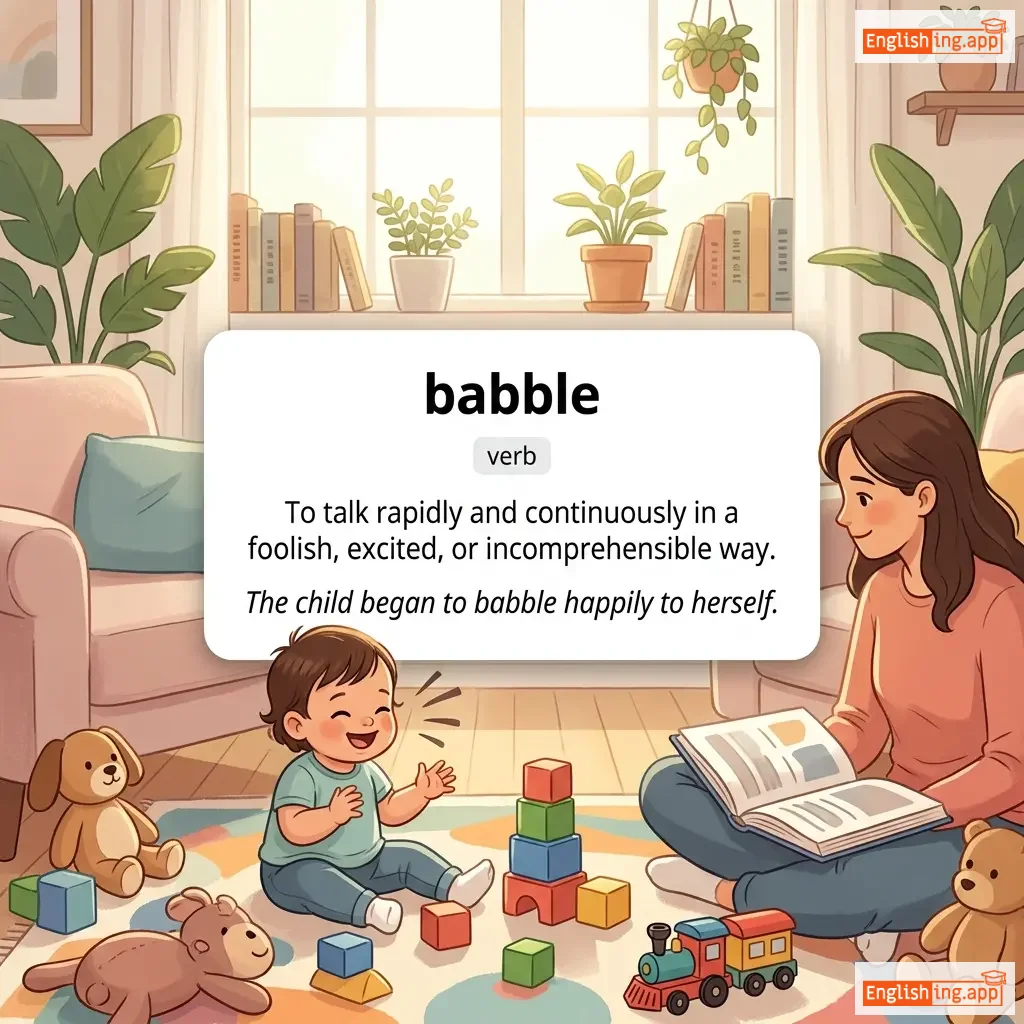
#751
👶
|
/ˈbæbəl/
verb
(贝布尔)
••••••
|
|
胡说
húshuō
••••••
|
babbled
贝布尔德
••••••
|
babbled
贝布尔德
••••••
|
babbles
贝布尔斯
••••••
|
babbling
贝布灵
••••••
|
to talk rapidly and continuously in a foolish way
••••••
|
The baby babbles all day long.
宝宝整天嘟囔。
••••••
|
宝宝整天嘟囔。
Bǎobǎo zhěng tiān dūnang.
••••••
|
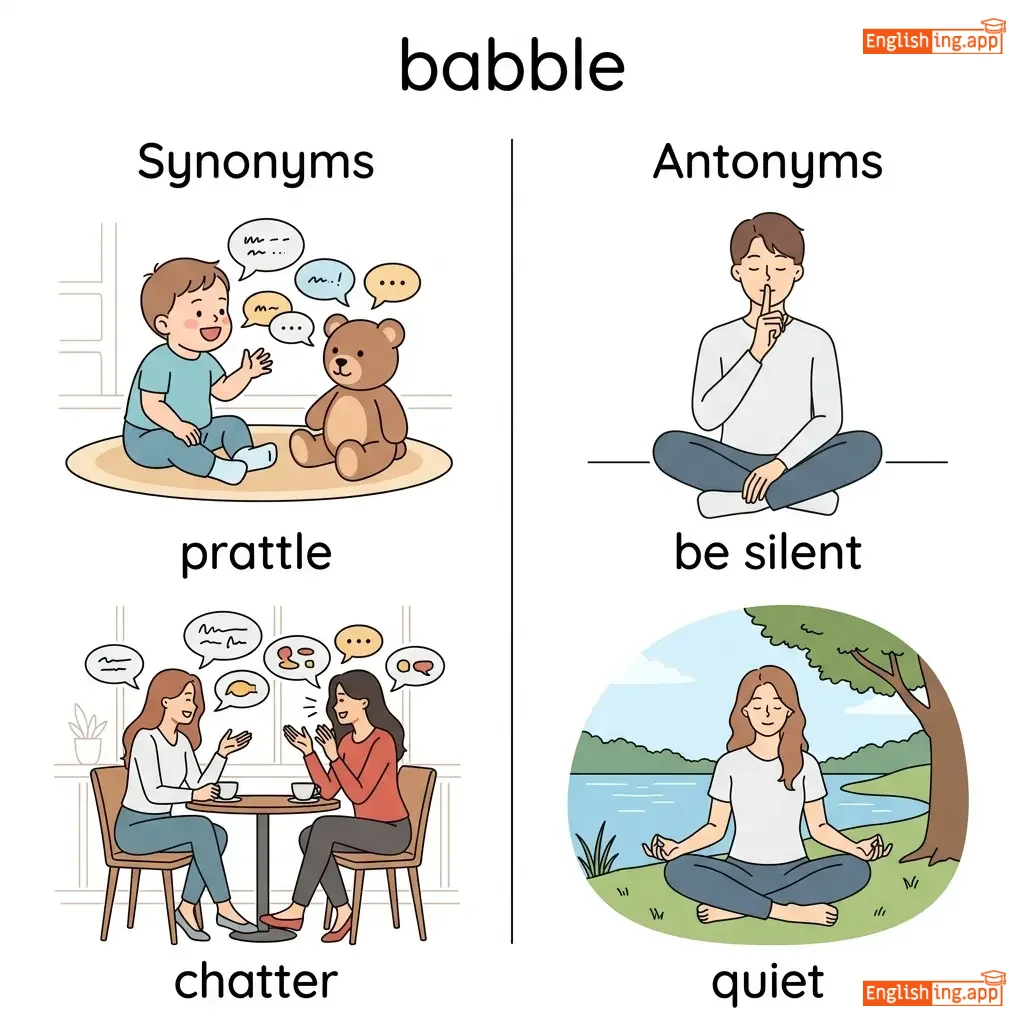
chatter, prattle, jabber, ramble
••••••
|
quiet, silence, hush
••••••
|
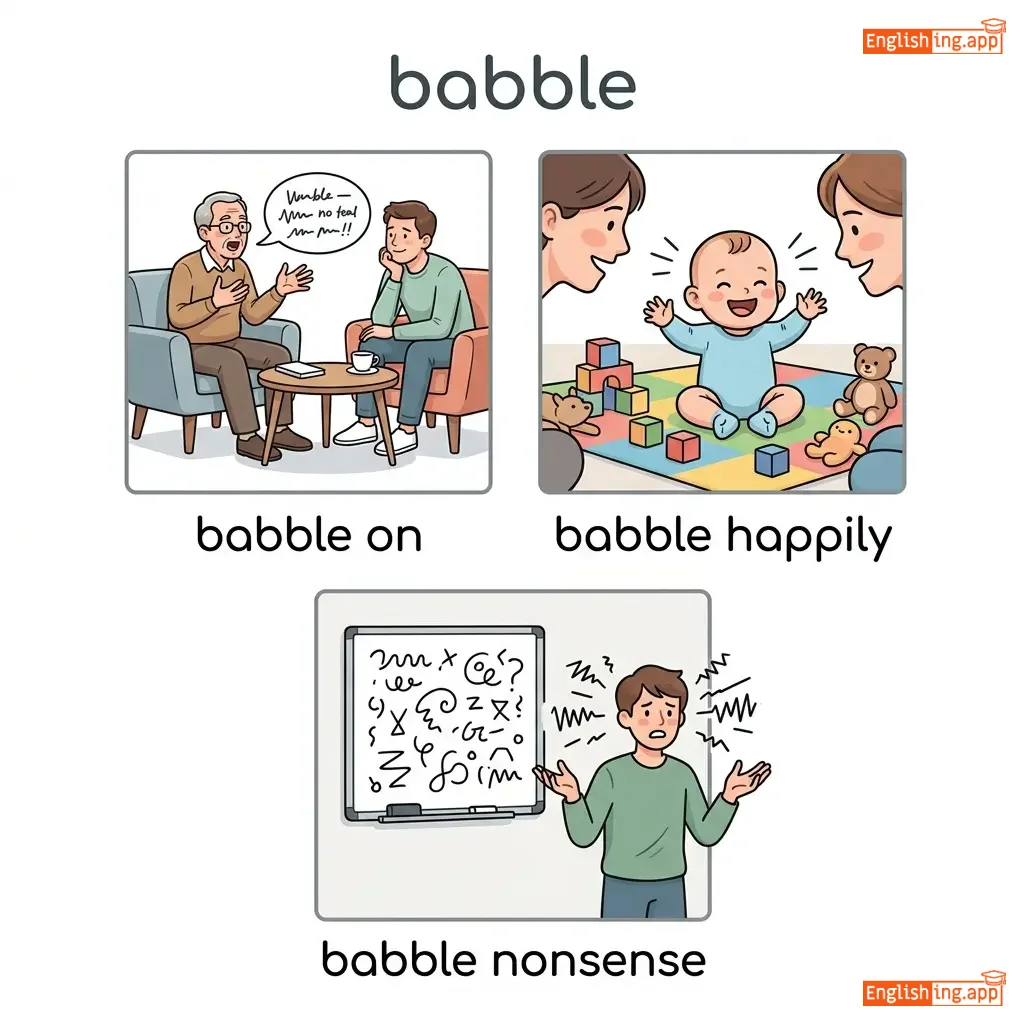
babble nonsense, babble incoherently, babble constantly, babble excitedly, babble on, babble away
••••••
|
像婴儿那样喋喋不休。
••••••
|
|
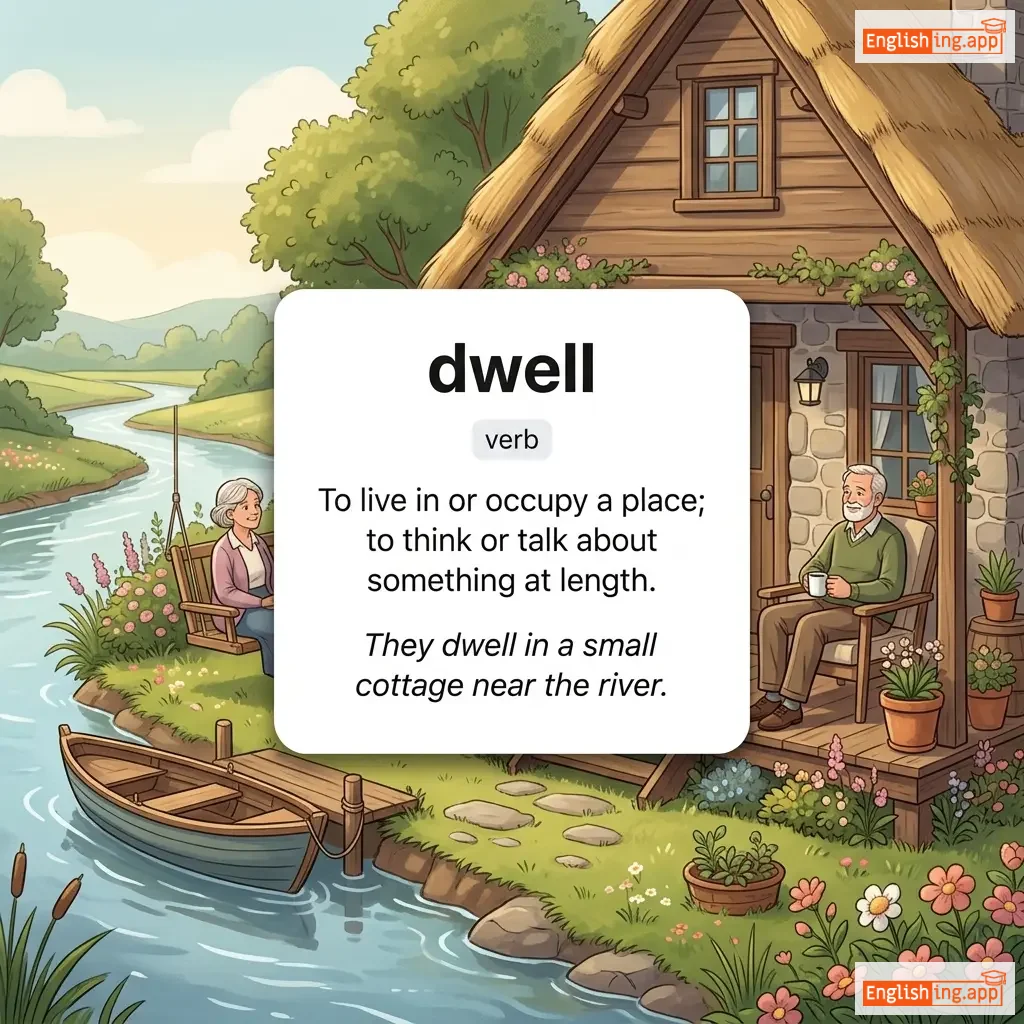
#752
🏠
|
/dwel/
verb
(德威尔)
••••••
|
|
居住
jūzhù
••••••
|
dwelt
德威尔特
••••••
|
dwelt
德威尔特
••••••
|
dwells
德威尔斯
••••••
|
dwelling
德威尔林
••••••
|
to live in a place; to think about something for a long time
••••••
|
They dwell in a small cottage by the lake.
他们住在湖边的一座小屋里。
••••••
|
他们住在湖边的一座小屋里。
Tāmen zhù zài hú biān de yīzuò xiǎo wū lǐ.
••••••
|
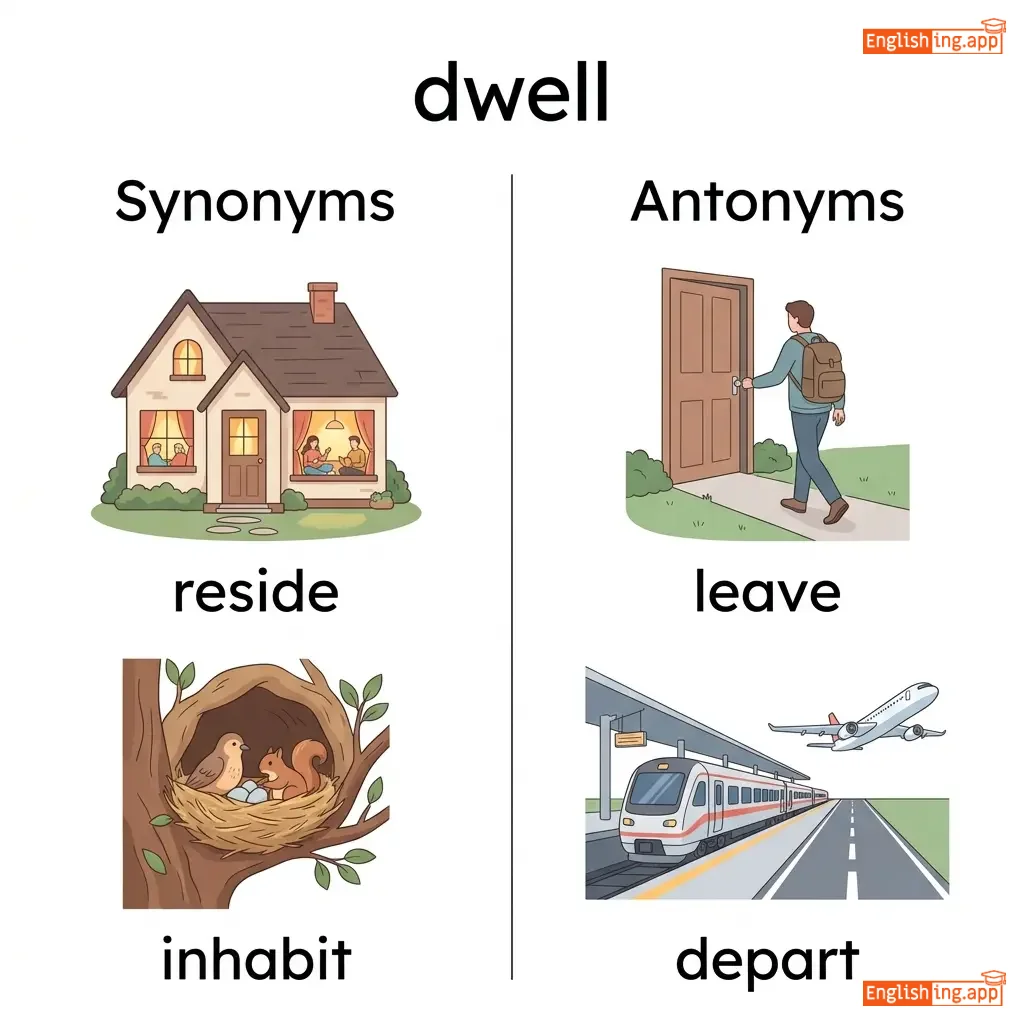
reside, live, inhabit, stay
••••••
|
leave, depart, move, vacate
••••••
|
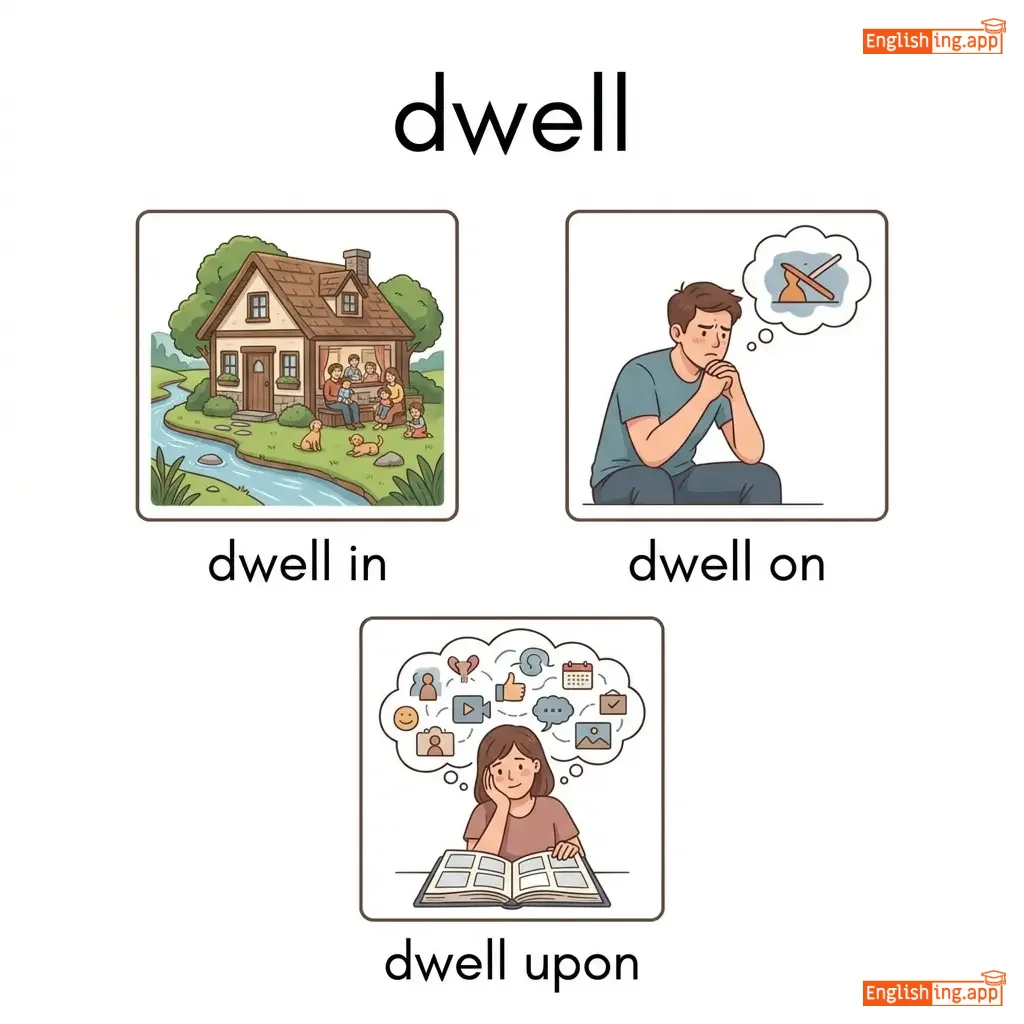
dwell in peace, dwell on problems, dwell together, dwell upon memories, dwell within, dwell among
••••••
|
Dwelling in a hut by the lake, and '居住' means to live in Chinese!
••••••
|
|
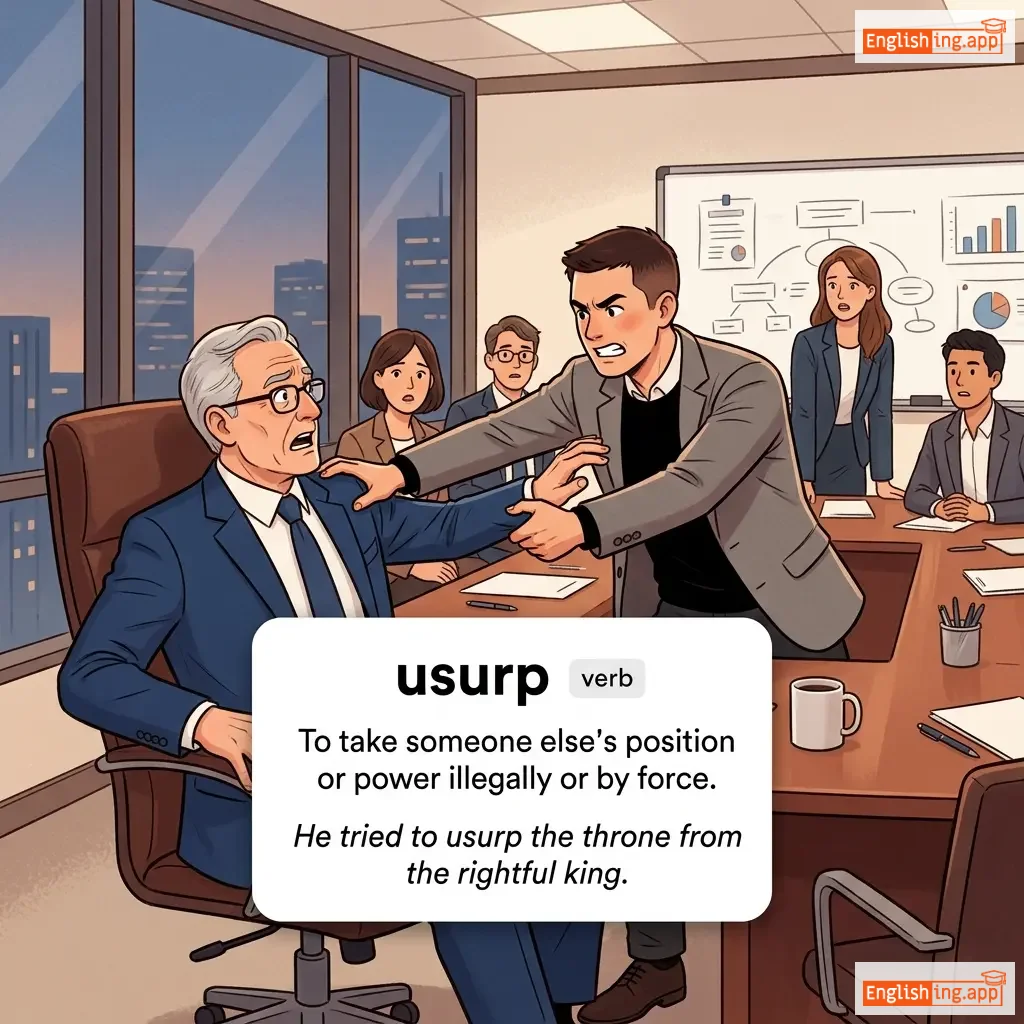
#753
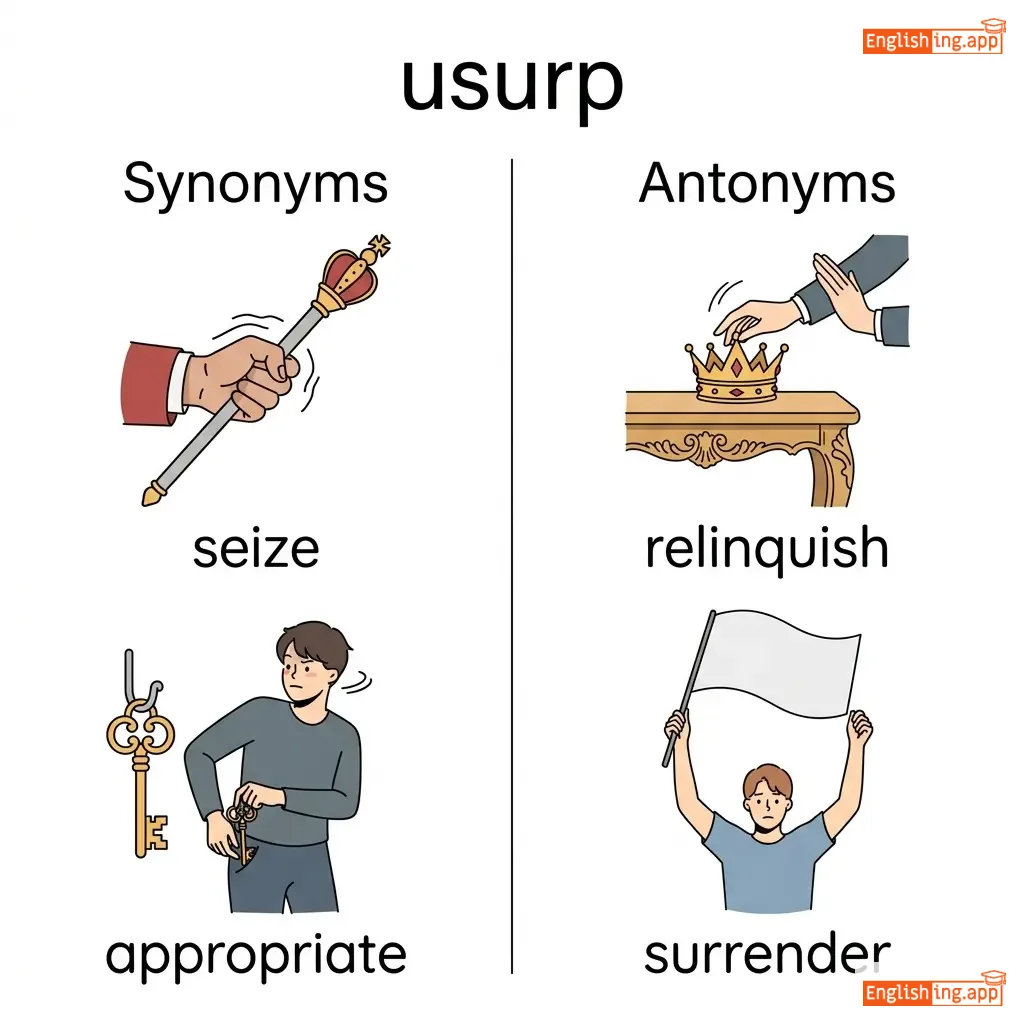
👑
|
/juˈzɜrp/
verb
(yóu zǔ)
••••••
|
|
篡位
cuànwèi
••••••
|
usurped
yóu zǔpò
••••••
|
usurped
yóu zǔpò
••••••
|
usurps
yóu zǔpǔ
••••••
|
usurping
yóu zǔpíng
••••••
|
to take someone's position of power illegally or by force
••••••
|
The general tried to usurp the king's throne.
将军试图篡夺国王的王位。
••••••
|
将军试图篡夺国王的王位。
Jiāngjūn shìtú cuàn duó guówáng de wángwèi.
••••••
|
seize, take over, overthrow, supplant
••••••
|
surrender, yield, relinquish
••••••
|
usurp power, usurp authority, usurp throne, usurp position, usurp control, usurp rights
••••••
|
No •••••• |
|
#754
📝
|
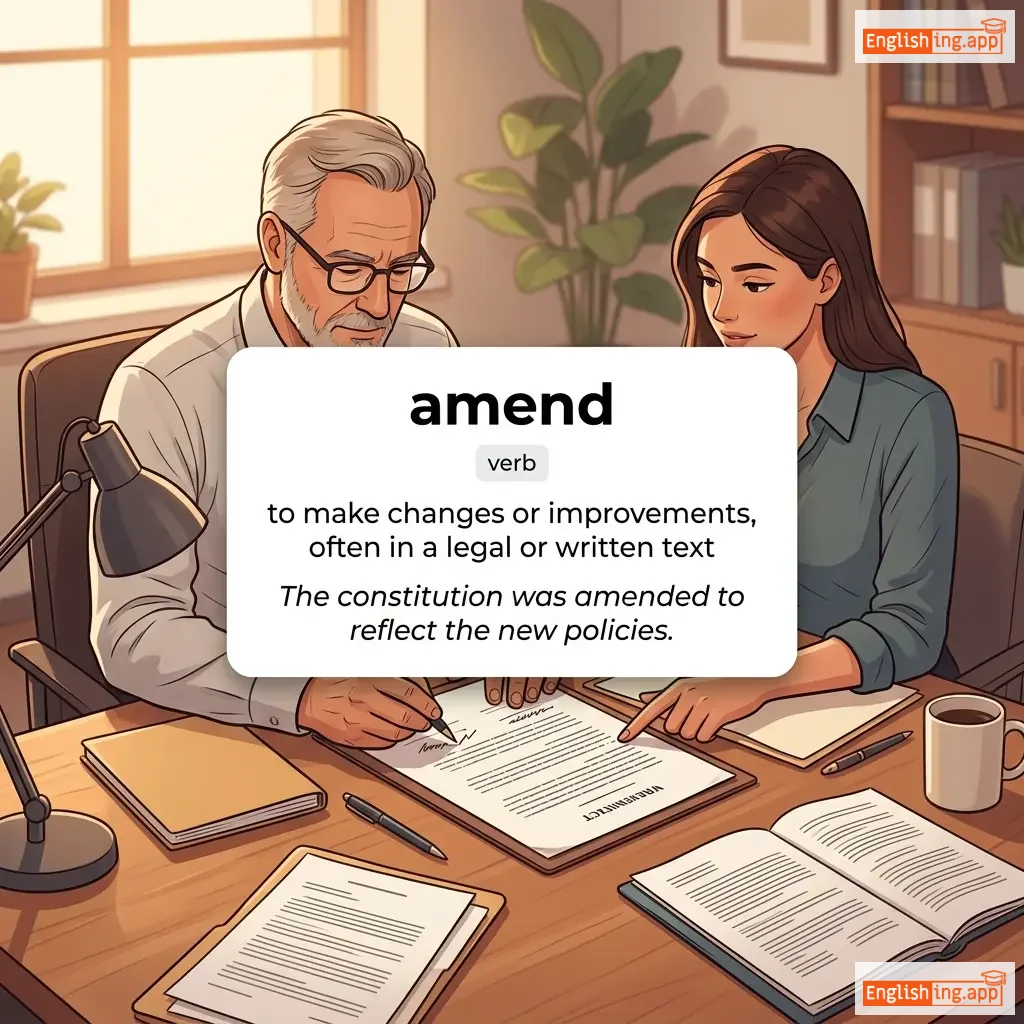
/əˈmend/
verb
(阿门德)
••••••
|
|
修改
xiugai
••••••
|
amended
阿门德德
••••••
|
amended
阿门德德
••••••
|
amends
阿门德斯
••••••
|
amending
阿门丁
••••••
|
to make changes or corrections to improve something; to modify
••••••
|
They amended the contract to include new terms.
他们修改了合同以包括新的条款。
••••••
|
他们修改了合同以包括新的条款。
Tāmen xiūgǎi le hétóng yǐ bāokuò xīn de tiáokuǎn.
••••••
|
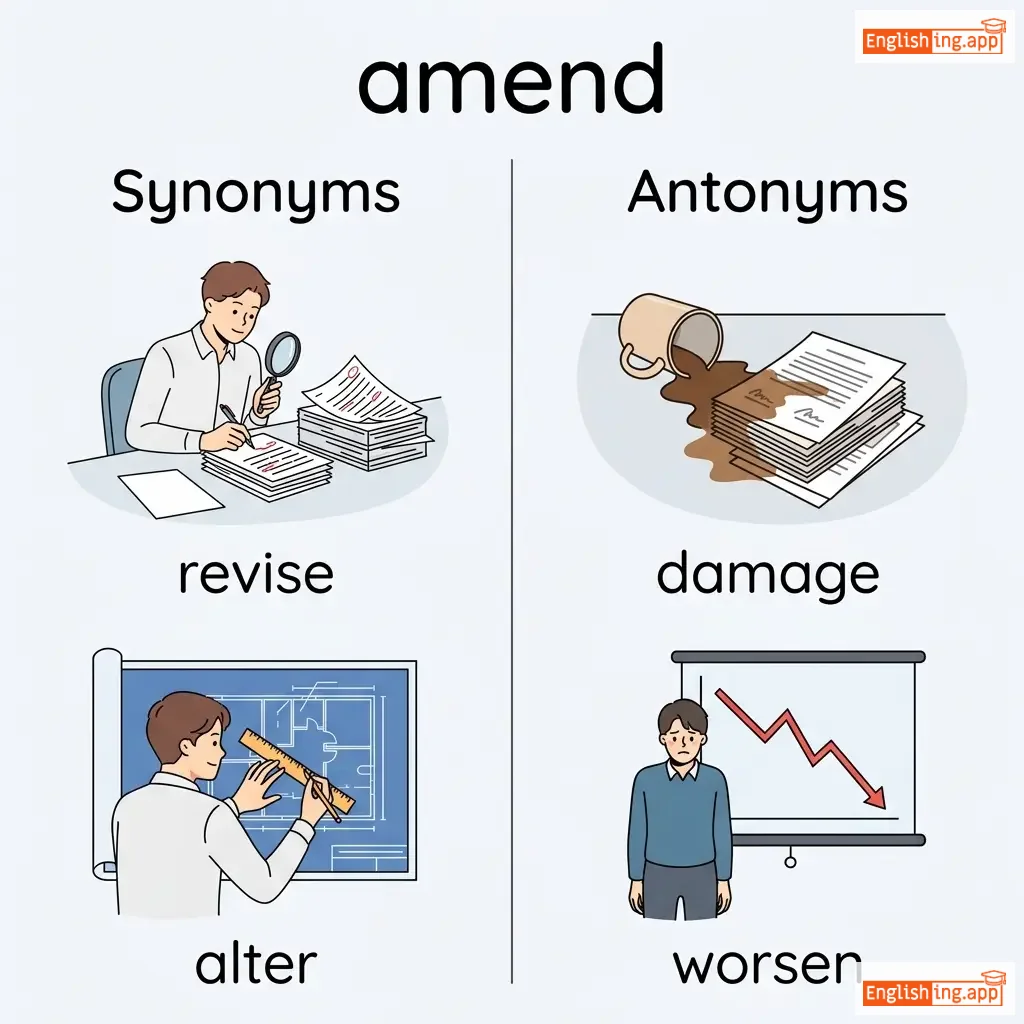
modify, revise, change, improve
••••••
|
maintain, preserve, keep, worsen
••••••
|
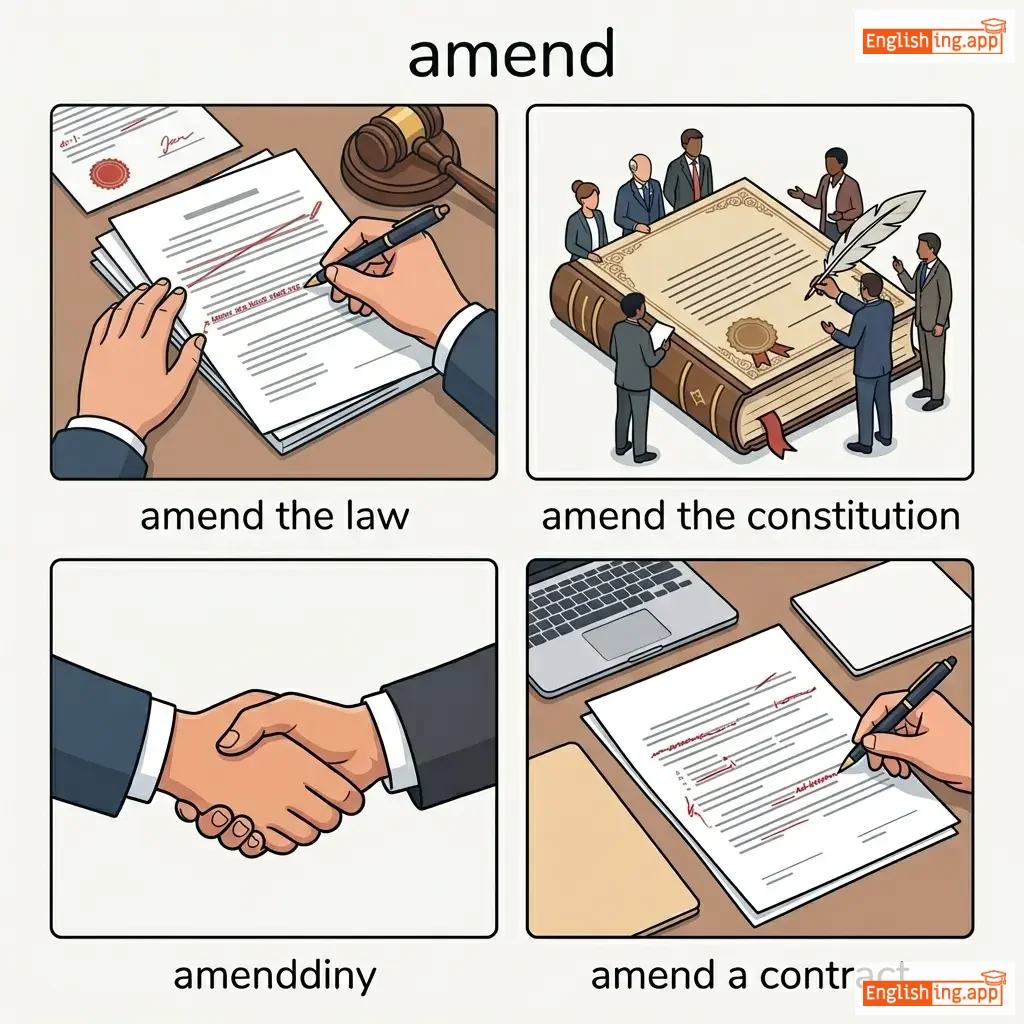
amend constitution, amend laws, amend contract, amend proposal, amend text, amend document
••••••
|
中文中 '修改' 就是做出改变,就像 'amend' 一样。
••••••
|
|
#755
👩🏫
|
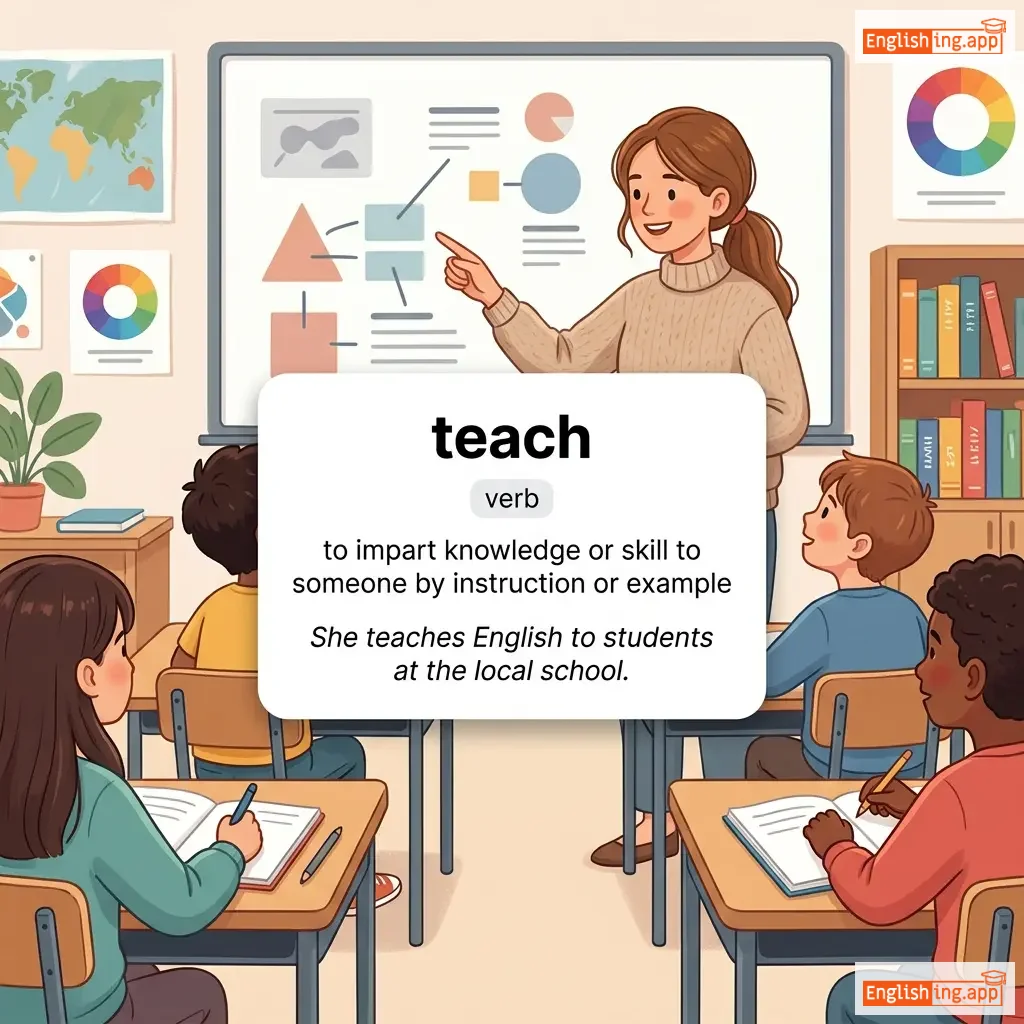
/tiːtʃ/
verb
(tīch)
••••••
|
|
教授
jiàoshòu
••••••
|
taught
tòu
••••••
|
taught
tòu
••••••
|
teaches
tìchés
••••••
|
teaching
tīchīng
••••••
|
to give knowledge or instruction to someone; to show how to do something
••••••
|
She teaches English at the local school.
她在当地学校教英语。
••••••
|
她在当地学校教英语。
Tā zài dāngdì xuéxiào jiào yīngyǔ.
••••••
|
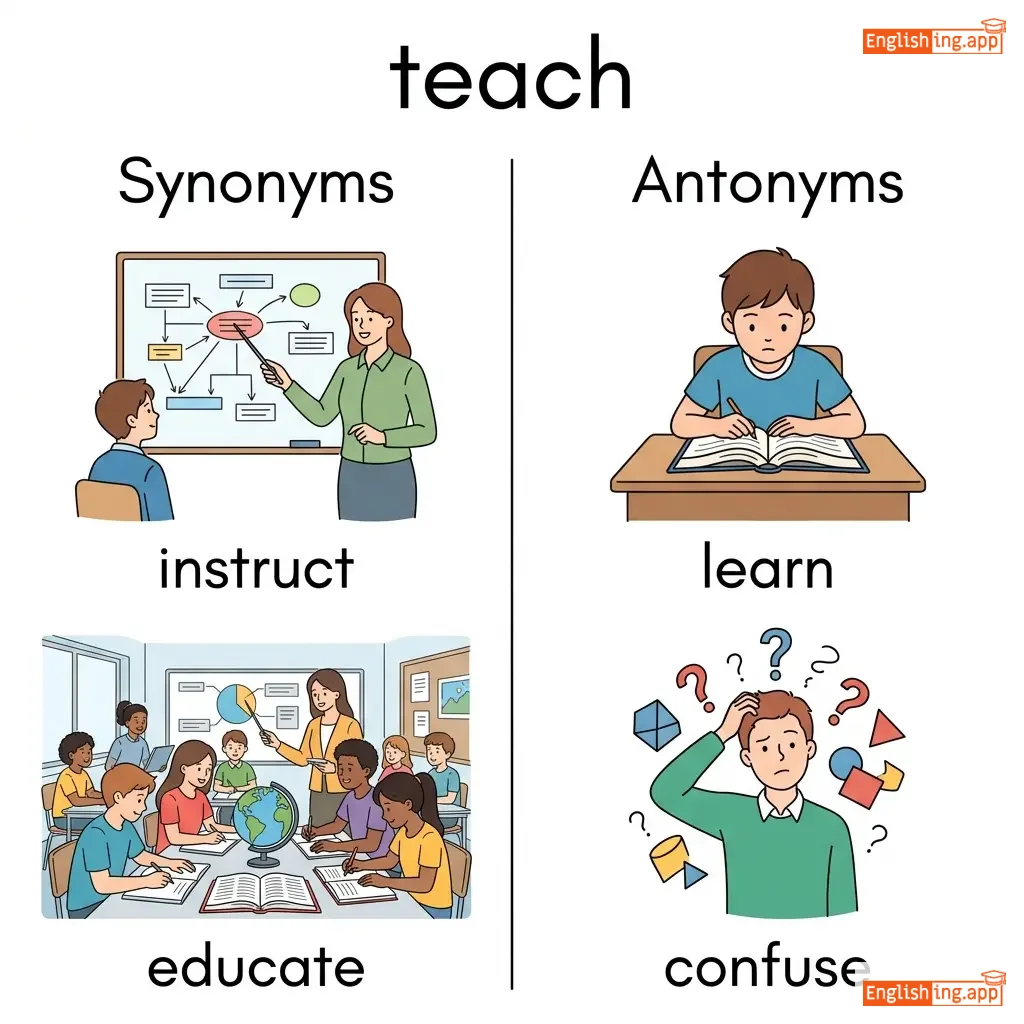
instruct, educate, train, coach
••••••
|
learn, study
••••••
|
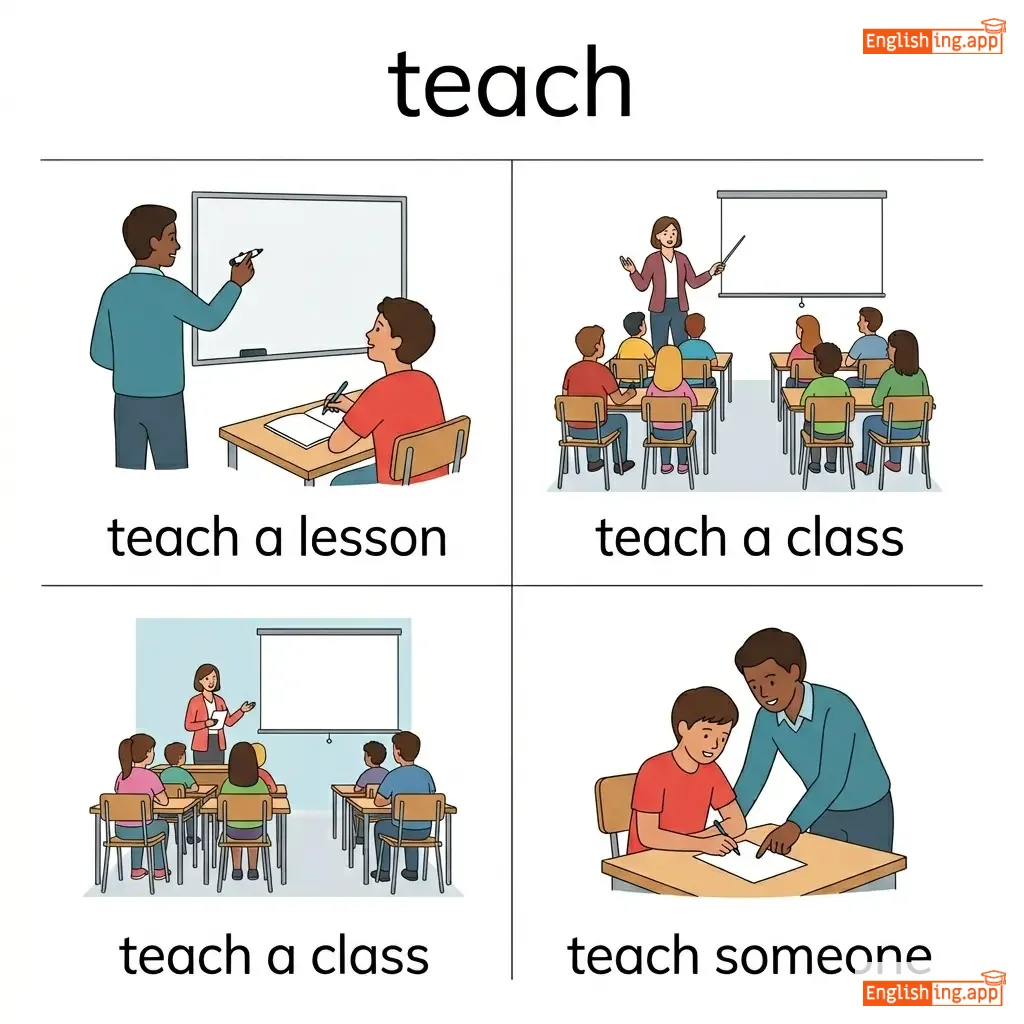
teach lessons, teach students, teach skills, teach children, teach courses, teach methods
••••••
|
tīch (teach) = 教授 (jiàoshòu), 就像在课堂上
••••••
|
|
#756
🤫
|
/ˈwɪspər/
verb
(wīsīpè)
••••••
|
|
低声说
dīshēng shuō
••••••
|
whispered
wīsīpèd
••••••
|
whispered
wīsīpèd
••••••
|
whispers
wīsīpèrs
••••••
|
whispering
wīsīpèrīng
••••••
|
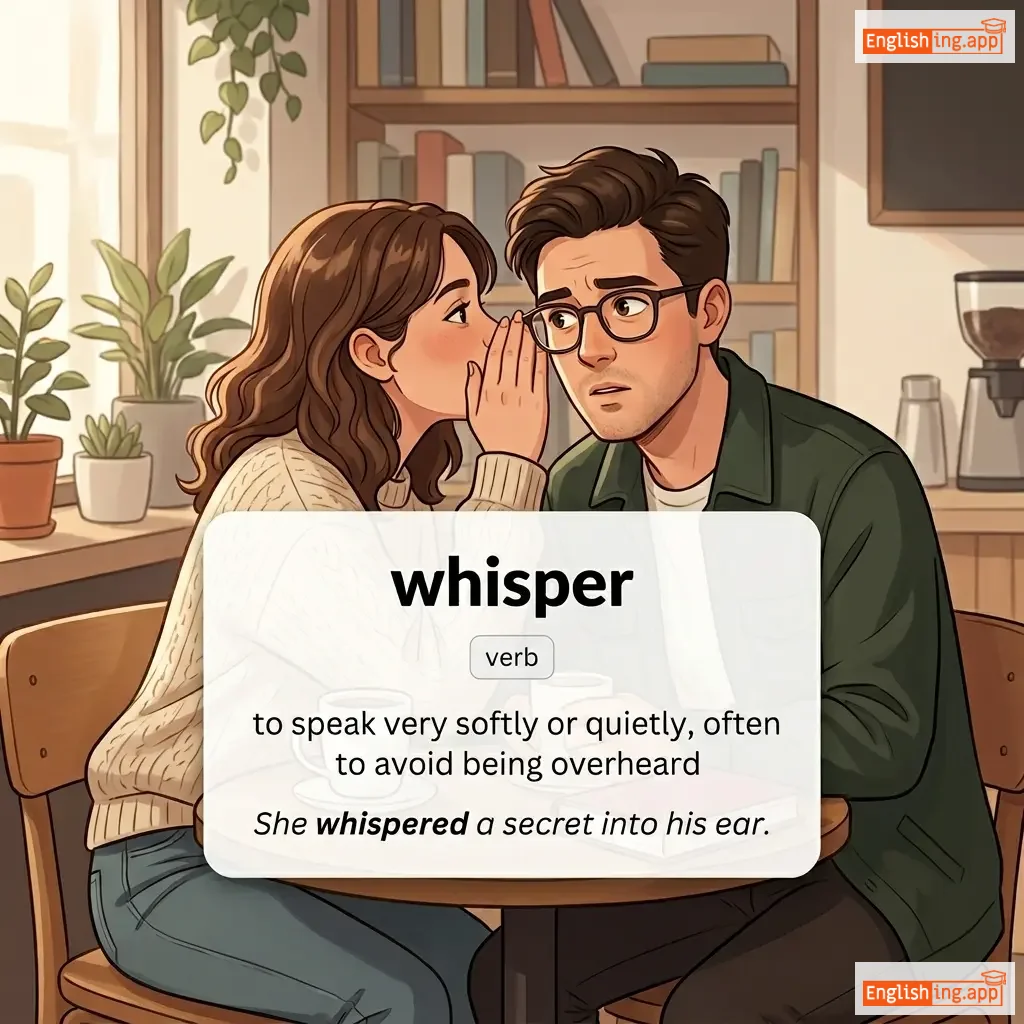
to speak very softly using one's breath without vocal cords
••••••
|
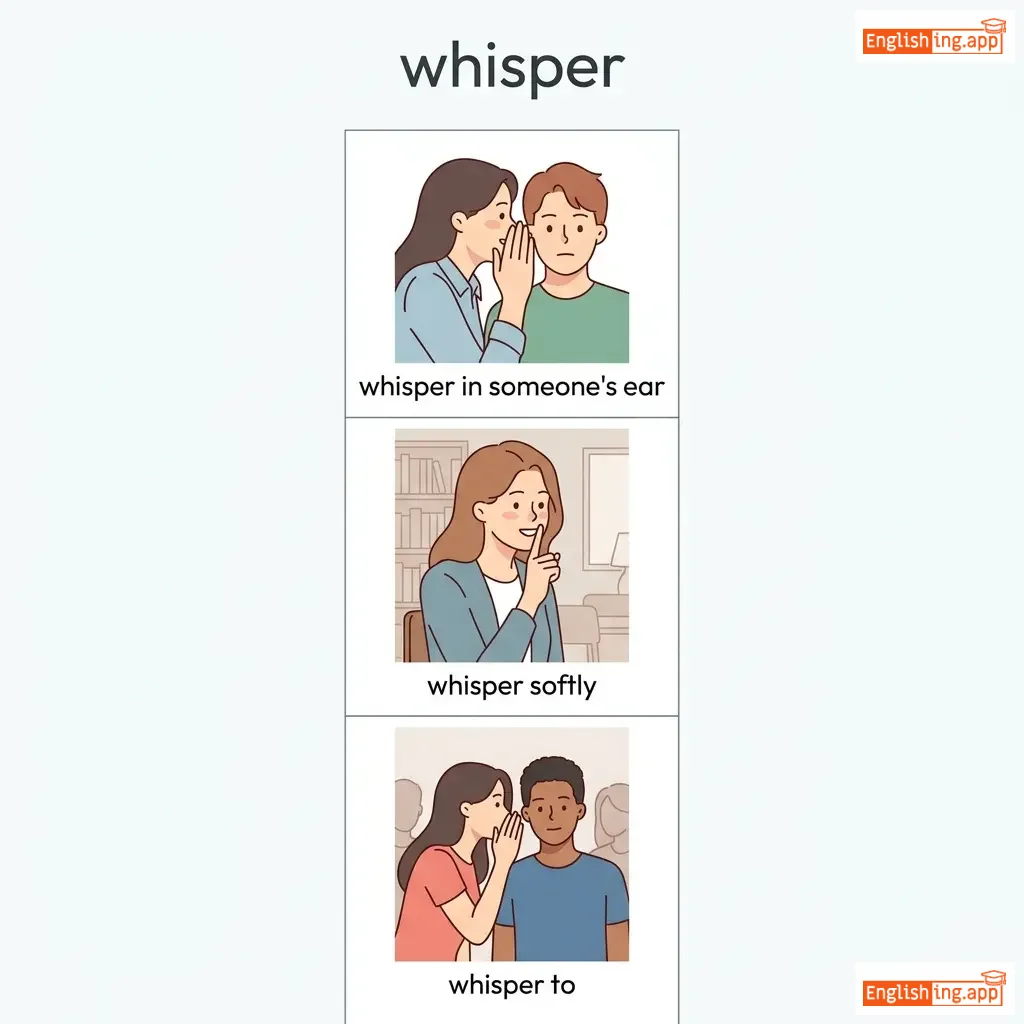
She whispered a secret in my ear.
她在我耳边低声说了一个秘密。
••••••
|
她在我耳边低声说了一个秘密。
Tā zài wǒ ěrbiān dīshēng shuōle yīgè mìmì.
••••••
|
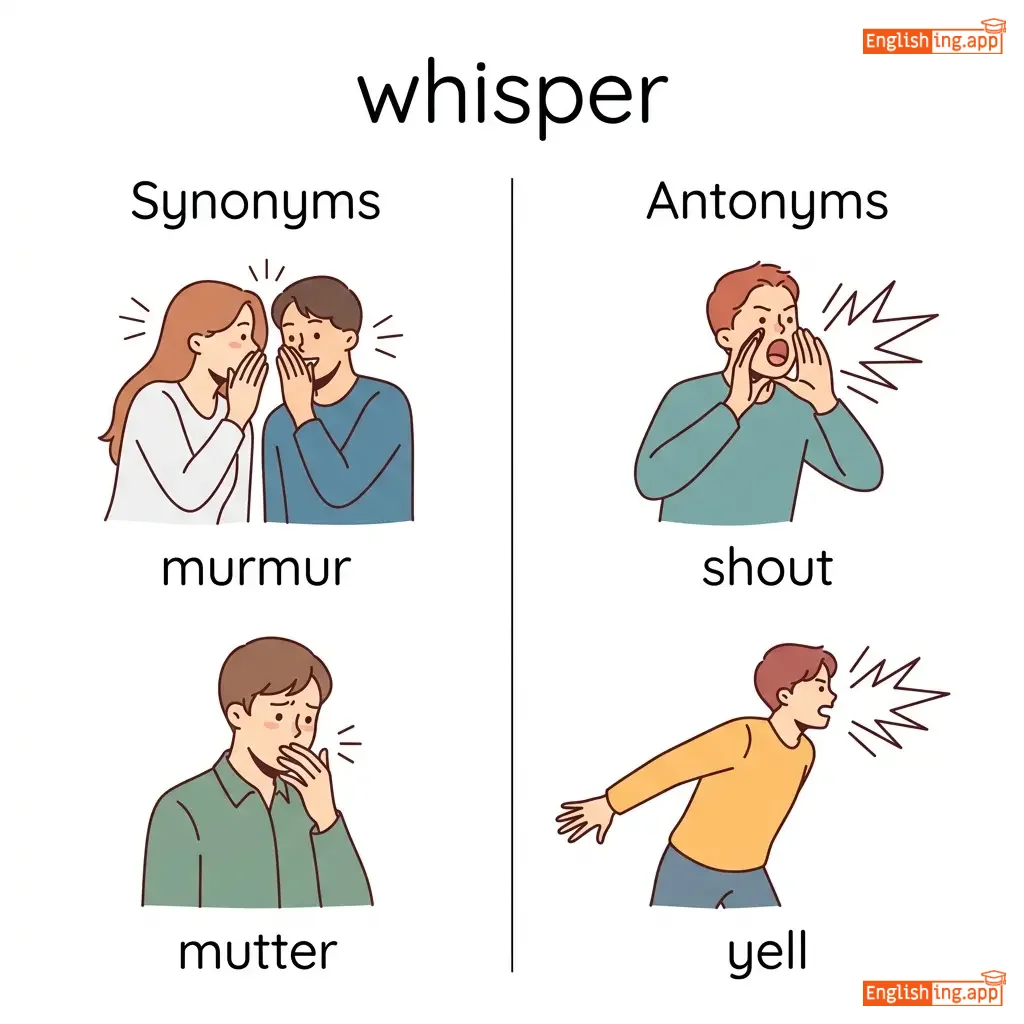
murmur, mumble, breathe, hiss
••••••
|
shout, yell, scream, roar
••••••
|
whisper secrets, whisper softly, whisper words, whisper quietly, whisper sweet, whisper prayers
••••••
|
中文 '低声说' 是 'whisper' 的意思。
••••••
|
|
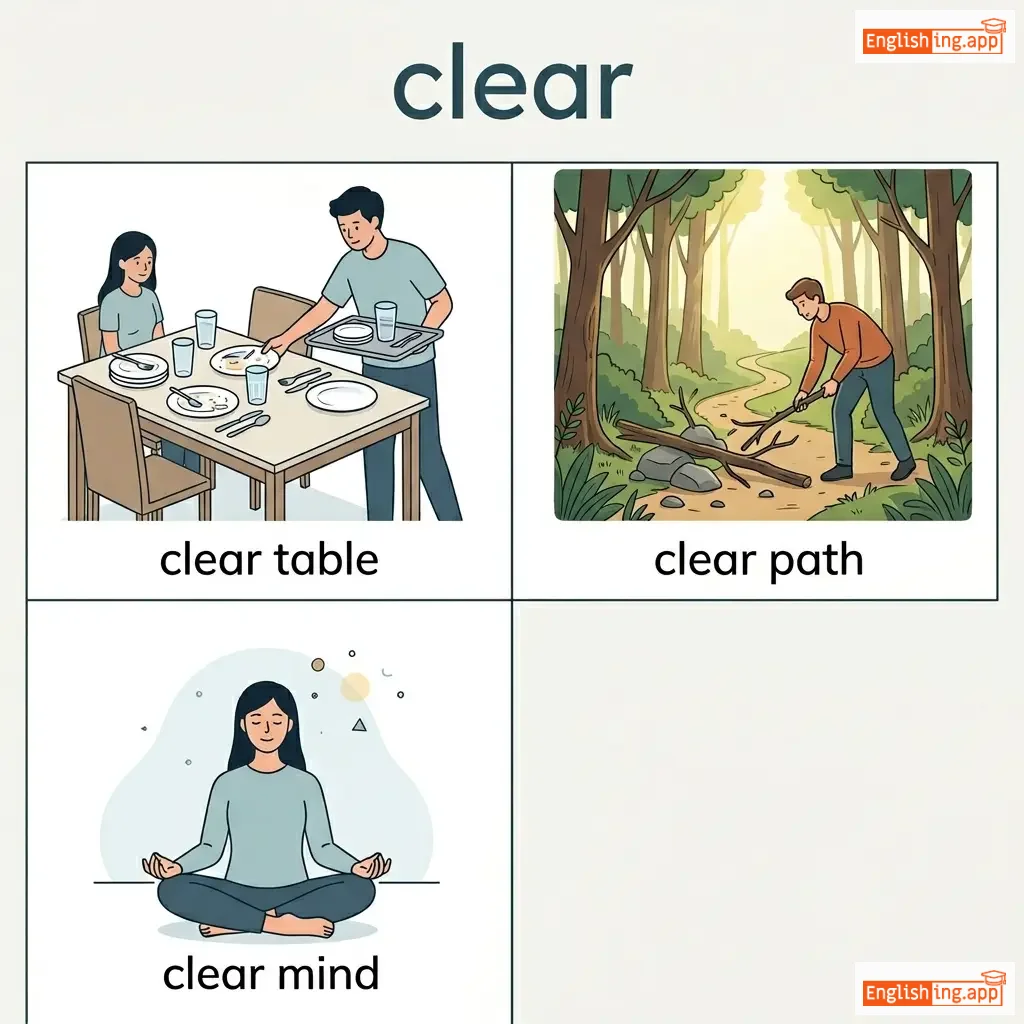
#757
🧹
|
/klɪr/
verb
(kè liè)
••••••
|
|
清理
qing li
••••••
|
cleared
kè lièd
••••••
|
cleared
kè lièd
••••••
|
clears
kè lièrs
••••••
|
clearing
kè liérīng
••••••
|
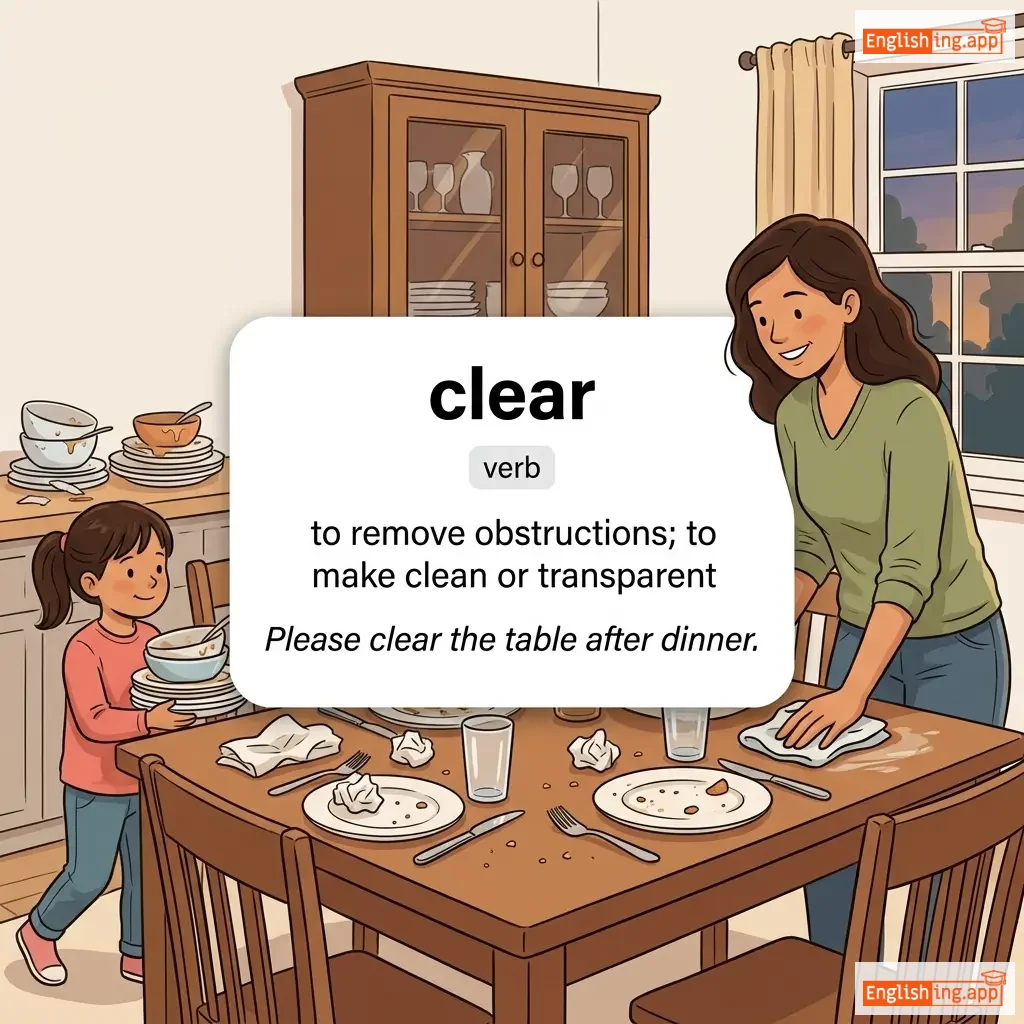
to remove obstructions; to make clean or transparent
••••••
|
Please clear the table after dinner.
请在晚餐后清理桌子。
••••••
|
请在晚餐后清理桌子。
Qing zai wancan hou qingli zhuozi.
••••••
|
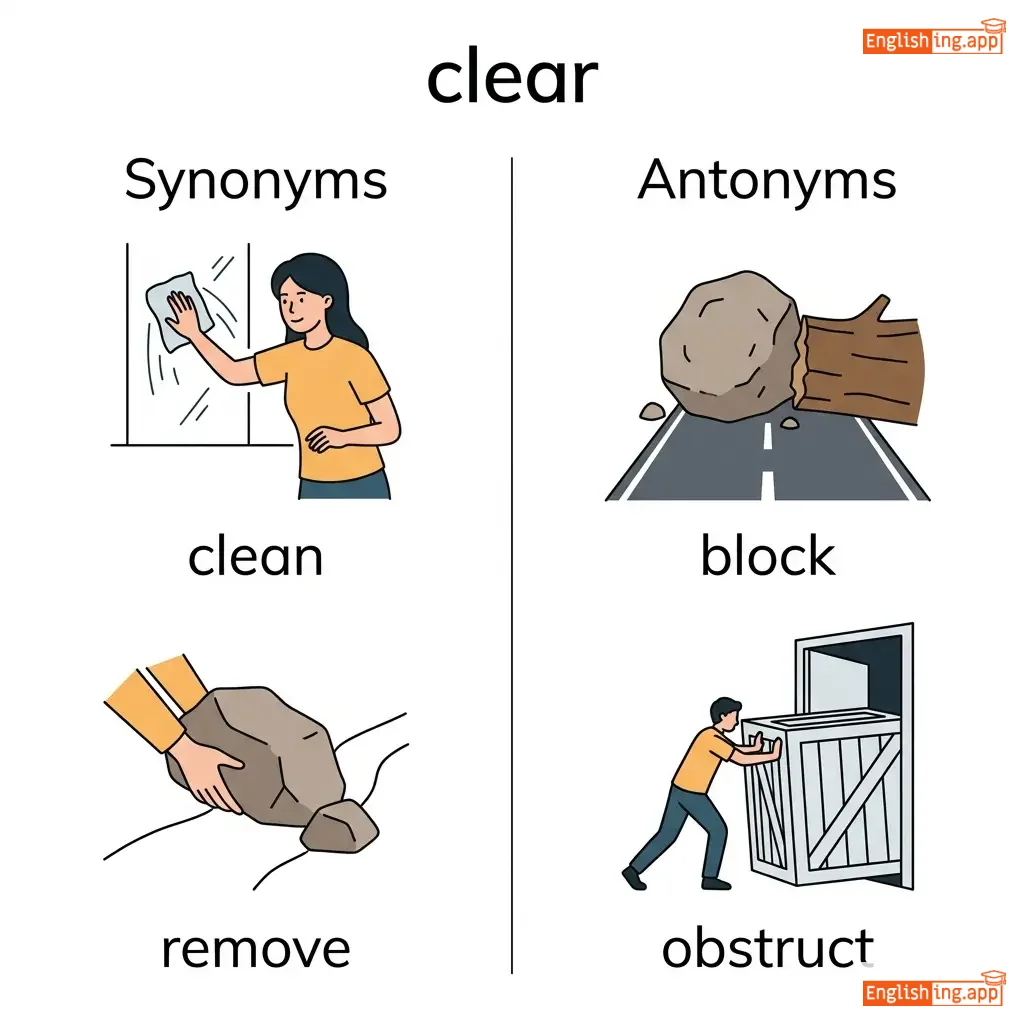
clean, remove, empty, tidy
••••••
|
block, obstruct, dirty, clutter
••••••
|
clear table, clear path, clear mind, clear sky, clear water, clear debt
••••••
|
Clear the table just like clearing your thoughts in life
••••••
|
|
#758
🤲
|
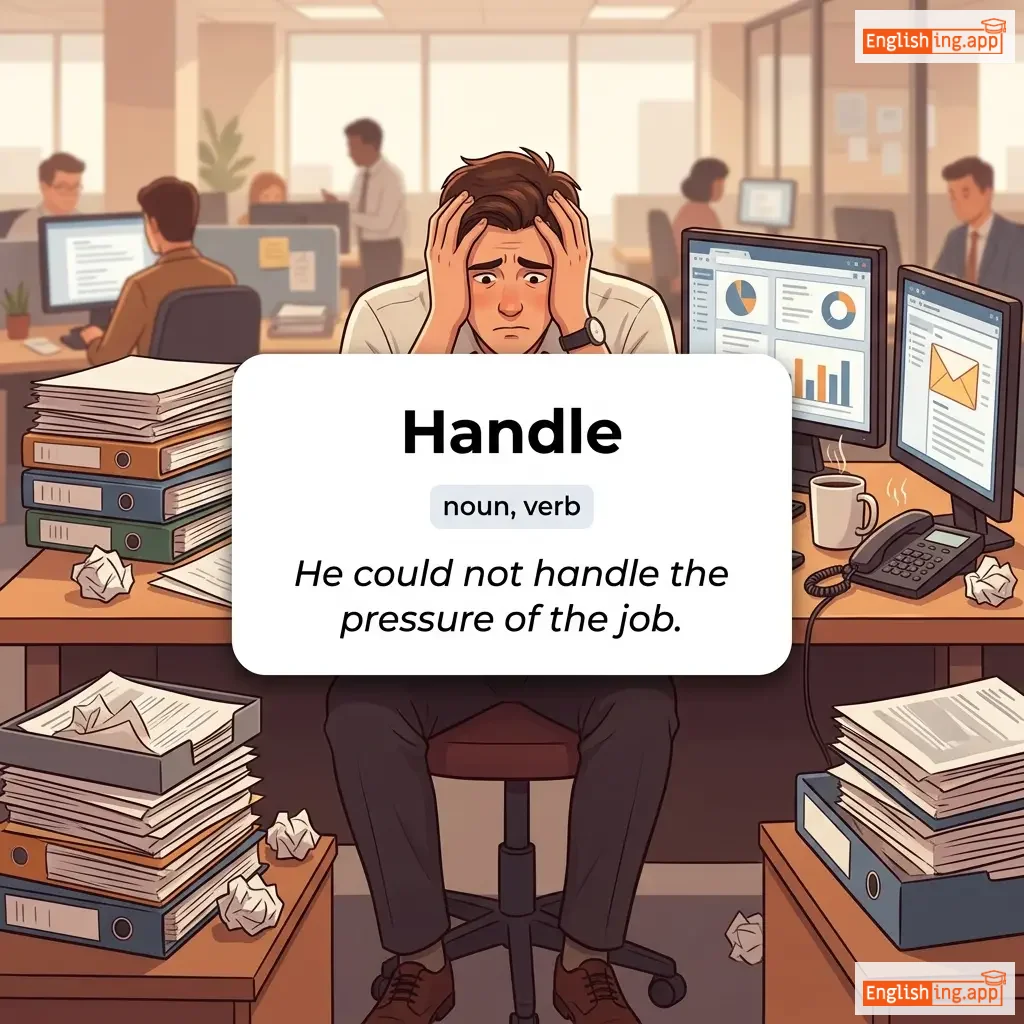
/ˈhændəl/
verb
(hændəl)
••••••
|
|
处理
chuli
••••••
|
handled
hændəld
••••••
|
handled
hændəld
••••••
|
handles
hændəlz
••••••
|
handling
hændlɪŋ
••••••
|
to deal with or manage something; to touch or hold
••••••
|
She can handle difficult situations.
她能处理困难的情况。
••••••
|
她能处理困难的情况。
Tā néng chǔlǐ kùnnán de qíngkuàng.
••••••
|
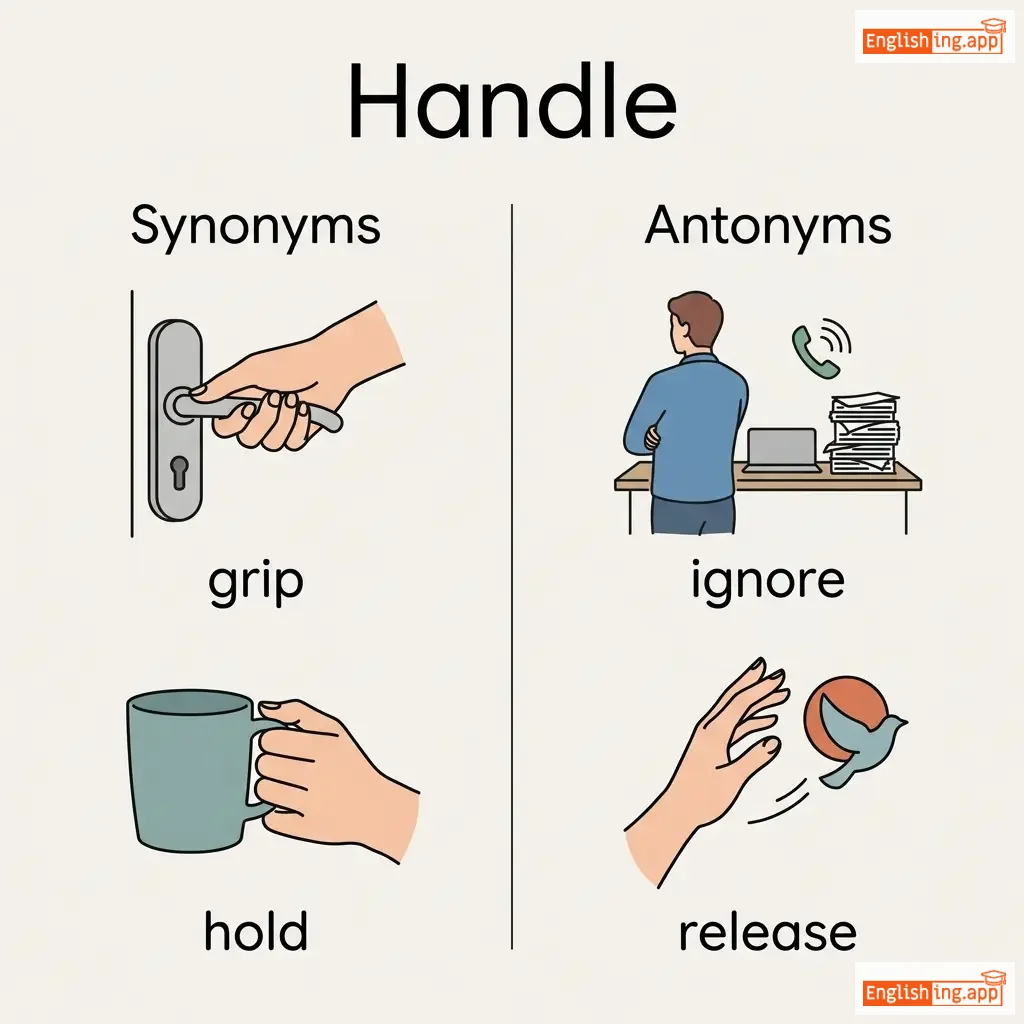
manage, deal with, control, operate
••••••
|
mismanage, neglect, avoid, abandon
••••••
|
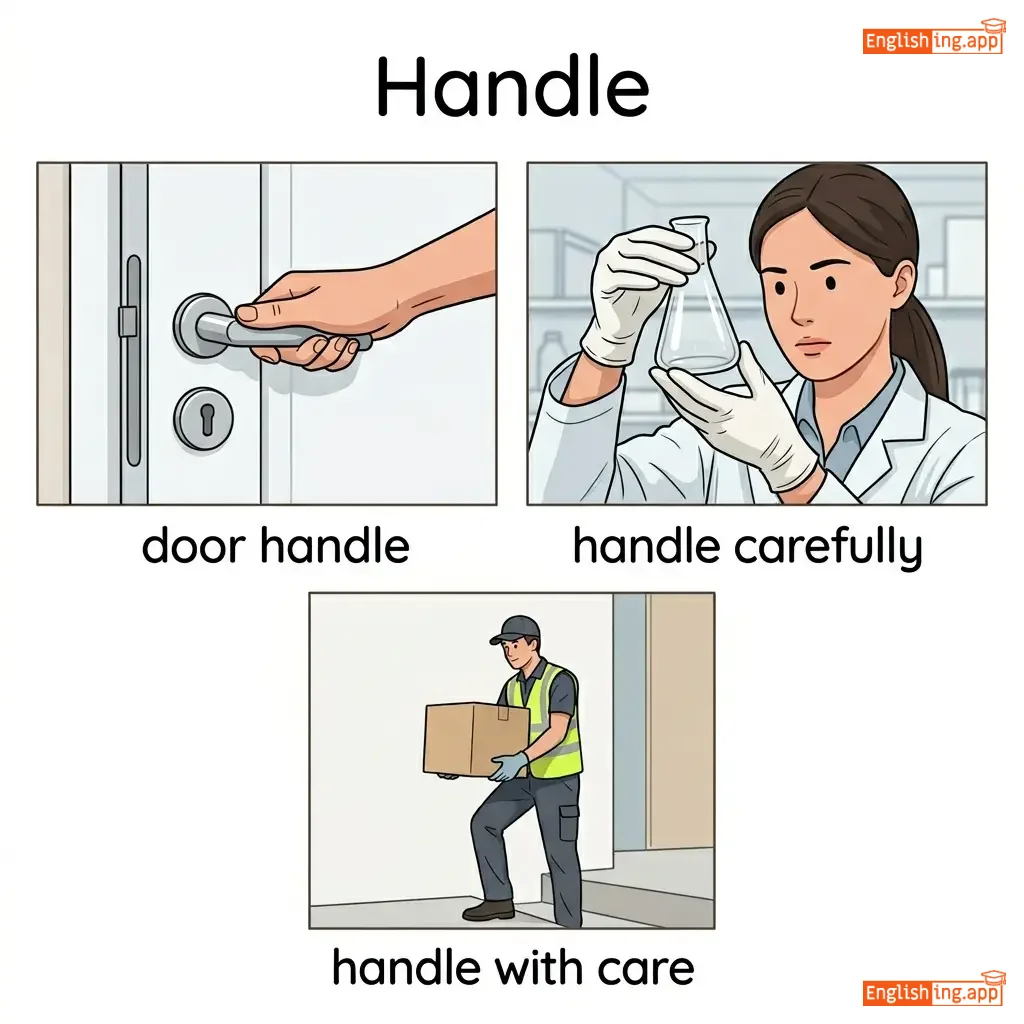
handle problems, handle situation, handle pressure, handle carefully, handle business, handle crisis
••••••
|
‘处理’ means to manage, so think of handling objects carefully.
••••••
|
|
#759
▶️
|
/rɪˈzuːm/
verb
(rízúm)
••••••
|
|
重新开始
chóngxīn kāishǐ
••••••
|
resumed
rízúmd
••••••
|
resumed
rízúmd
••••••
|
resumes
rízúms
••••••
|
resuming
rízúmɪng
••••••
|
to start again after a pause or interruption
••••••
|
We will resume the meeting after lunch.
我们将在午餐后继续会议。
••••••
|
我们将在午餐后继续会议。
Wǒmen jiāng zài wǔcān hòu jìxù huìyì.
••••••
|
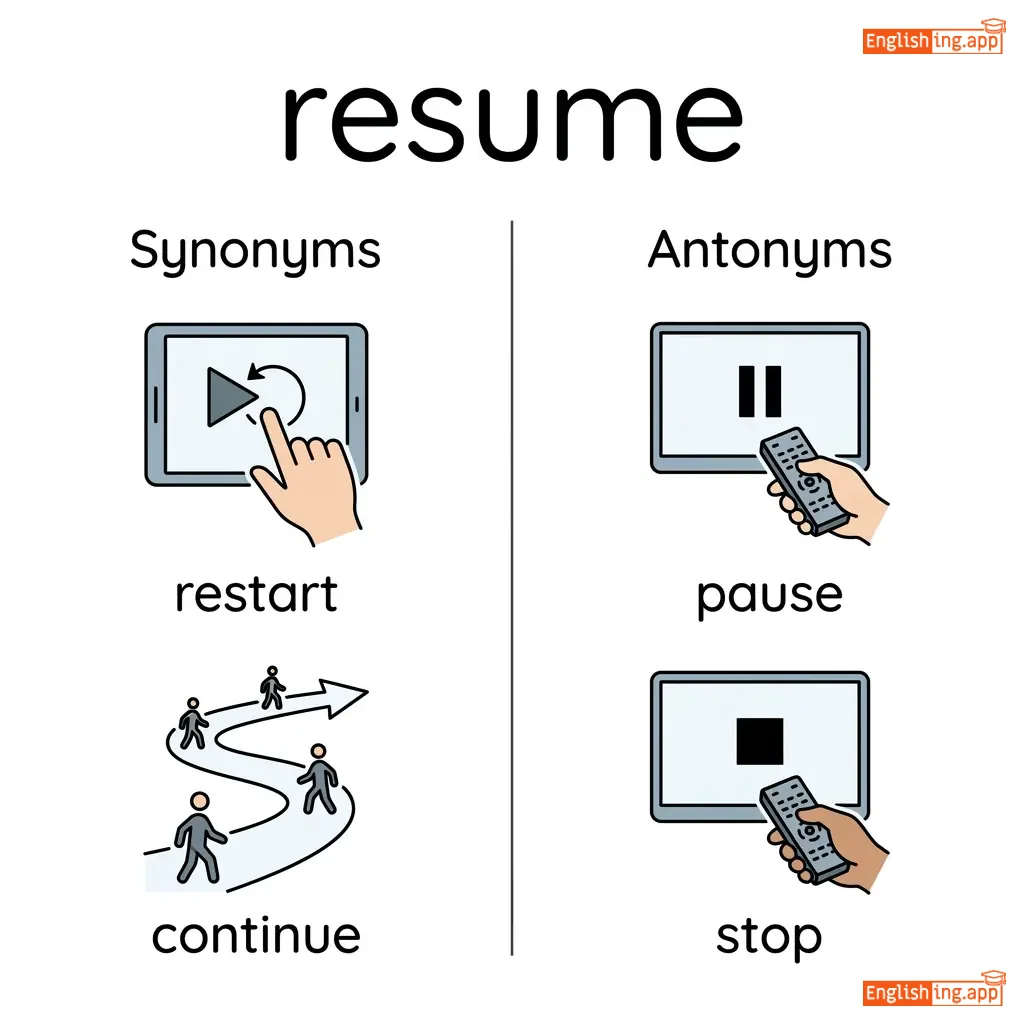
continue, restart, renew, recommence
••••••
|
stop, pause, halt, discontinue
••••••
|
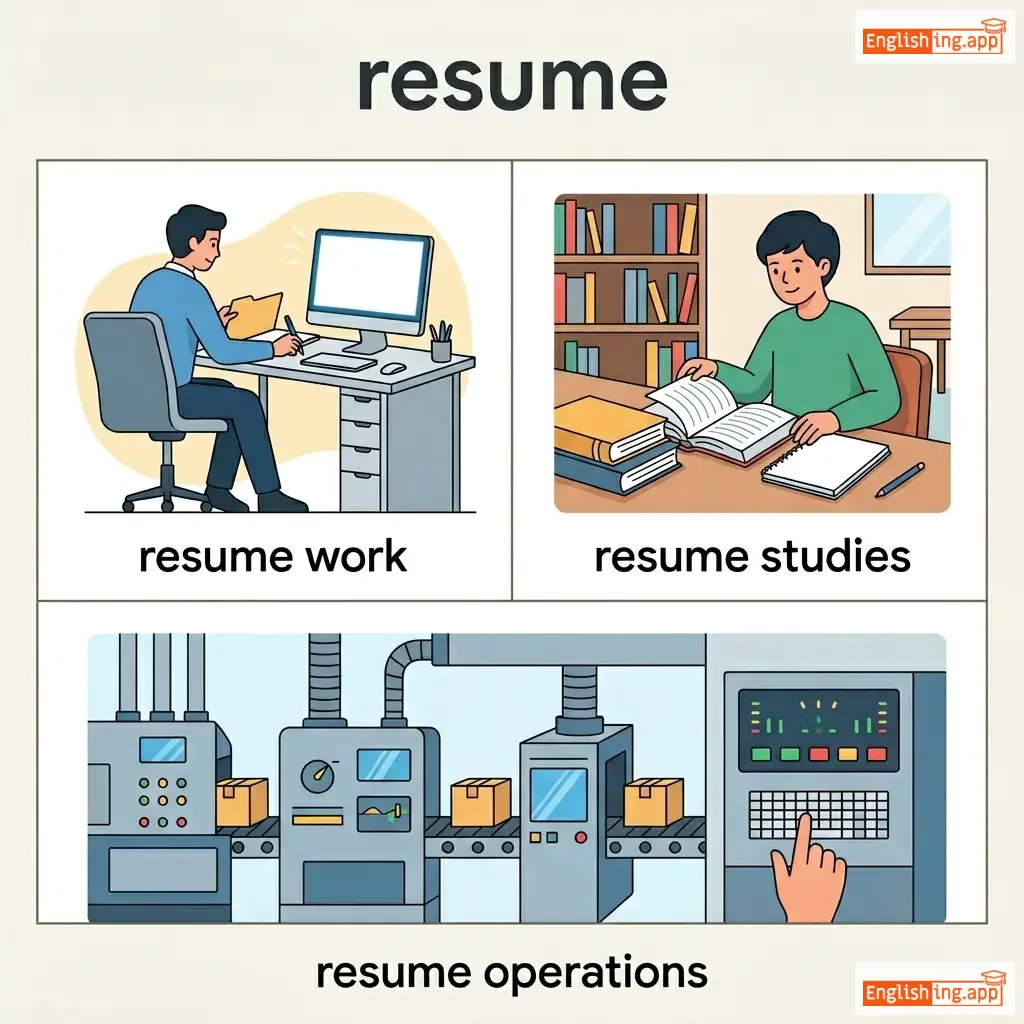
resume work, resume activities, resume duties, resume operations, resume negotiations, resume services
••••••
|
Resume = 重新开始 (imagine you resume your Chinese class)
••••••
|
|
#760
💬
|
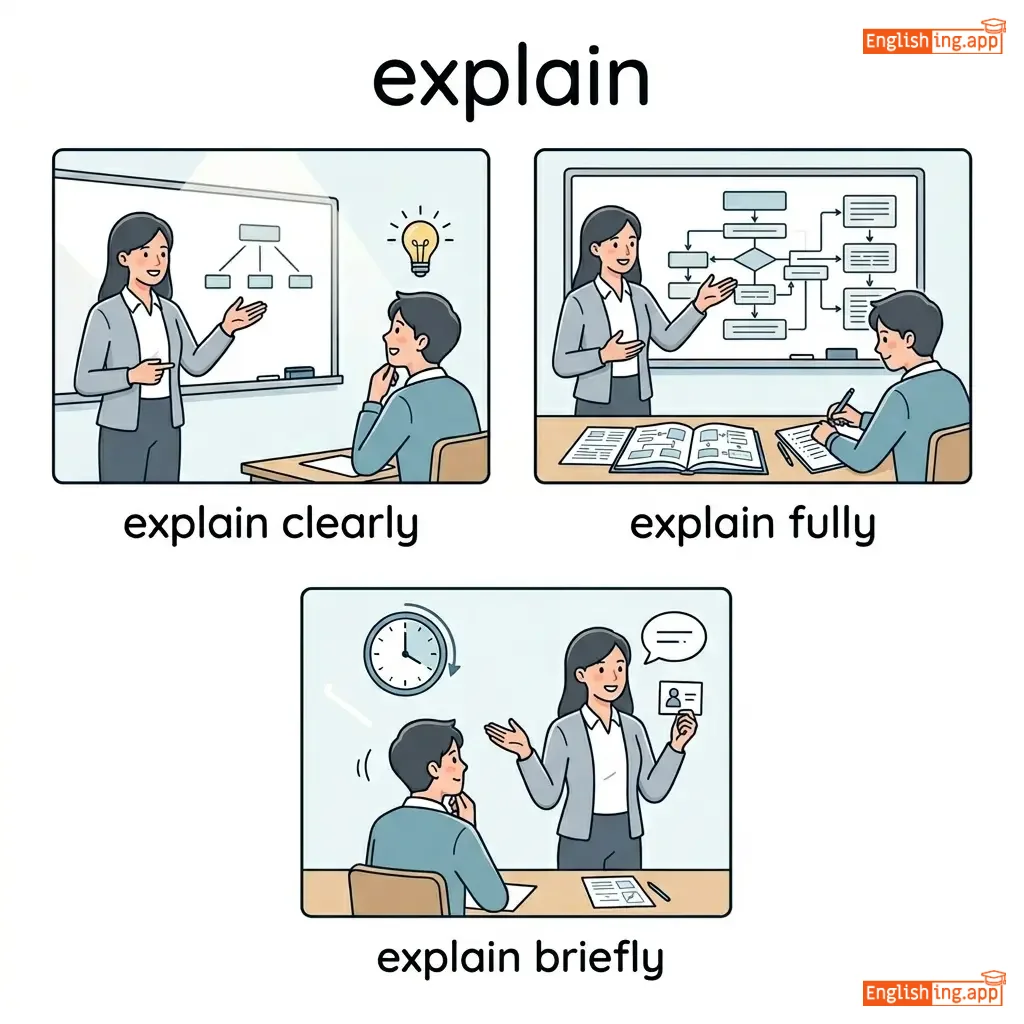
/ɪkˈspleɪn/
verb
(ɪkˈspleɪn)
••••••
|
|
解释
jiěshì
••••••
|
explained
ɪkˈspleɪnd
••••••
|
explained
ɪkˈspleɪnd
••••••
|
explains
ɪkˈspleɪns
••••••
|
explaining
ɪkˈspleɪnɪŋ
••••••
|
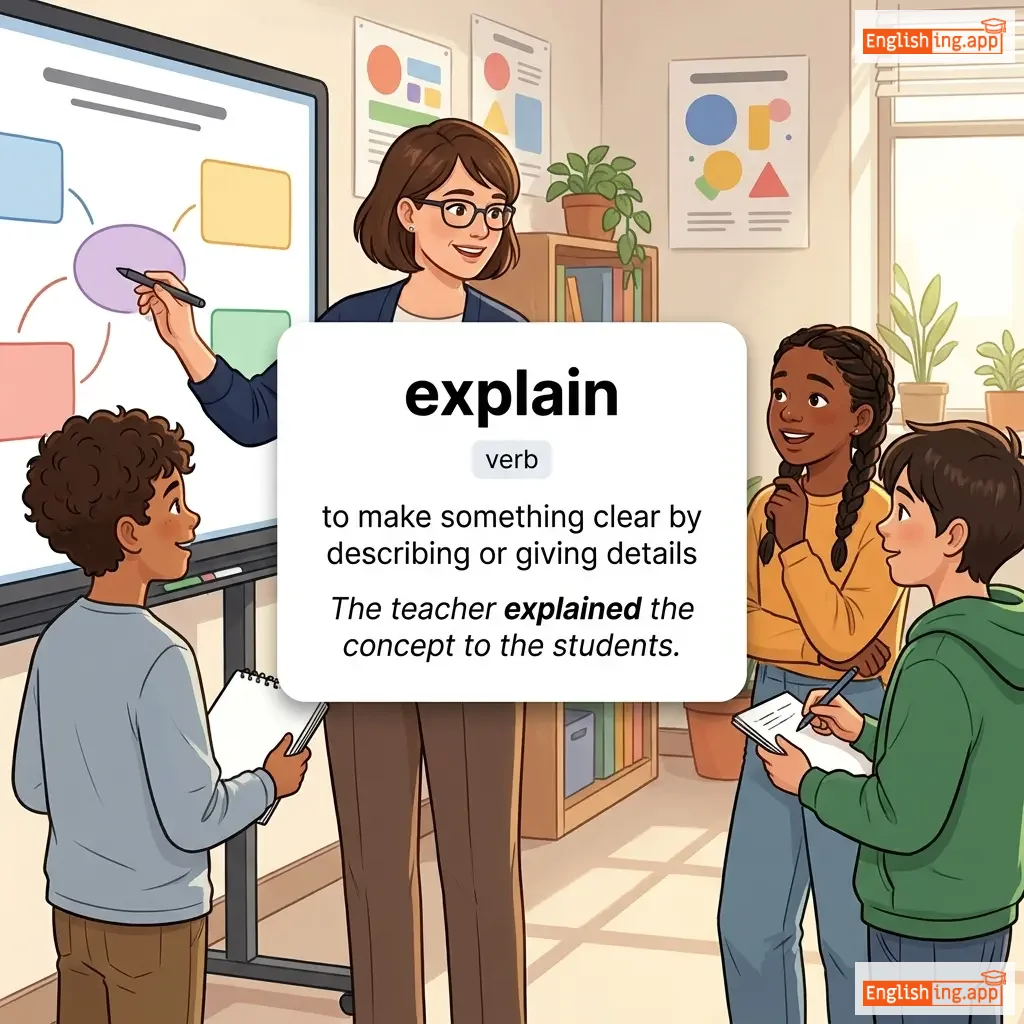
to make something clear or easy to understand by describing it in more detail
••••••
|
The teacher explained the difficult concept to the students.
老师向学生们解释了这个困难的概念。
••••••
|
老师向学生们解释了这个困难的概念。
Lǎoshī xiàng xuéshēngmen jiěshìle zhège kùnnán de gàiniàn.
••••••
|
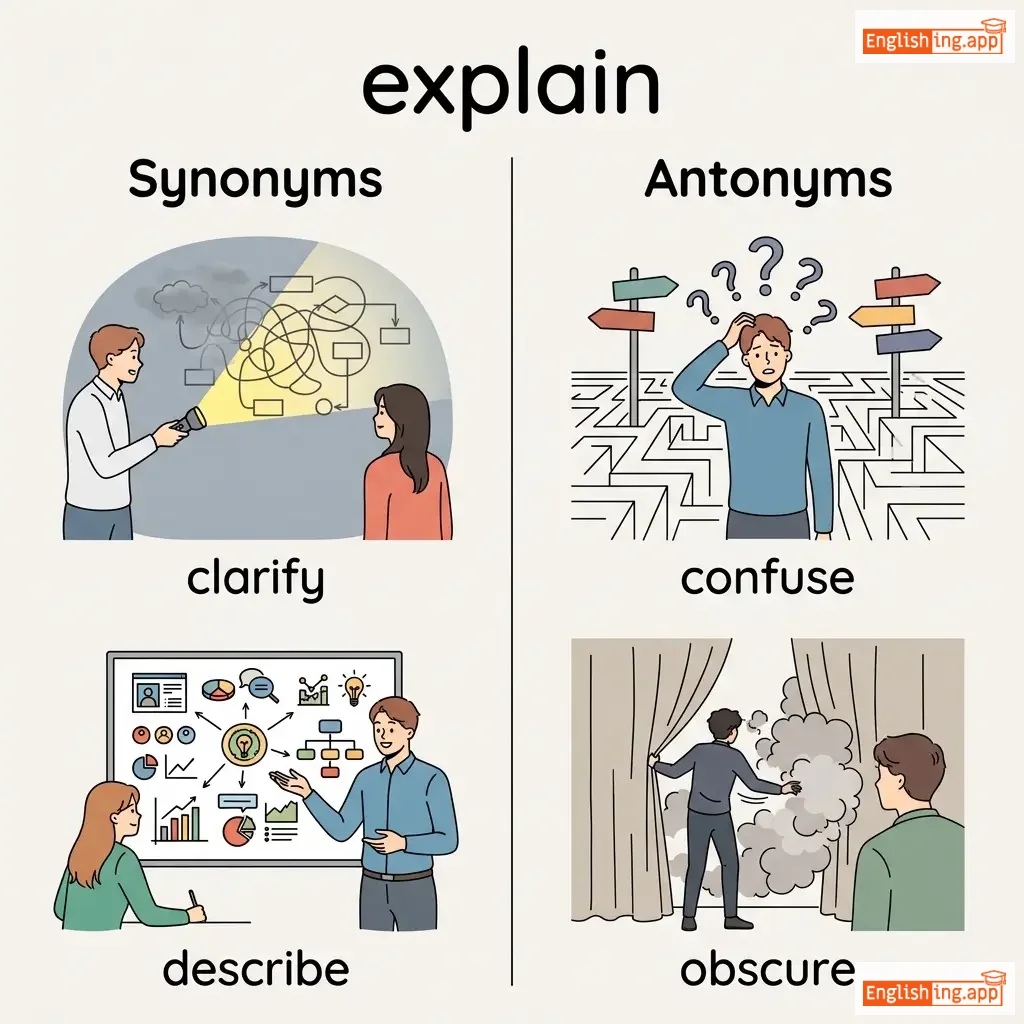
clarify, describe, detail, elaborate
••••••
|
confuse, obscure, complicate
••••••
|
explain clearly, explain reasons, explain concepts, explain process, explain details, explain situation
••••••
|
解释 (jiěshì) 意味着清晰地表达,就像老师给学生们解释一样。
••••••
|
|
#761
🤲
|
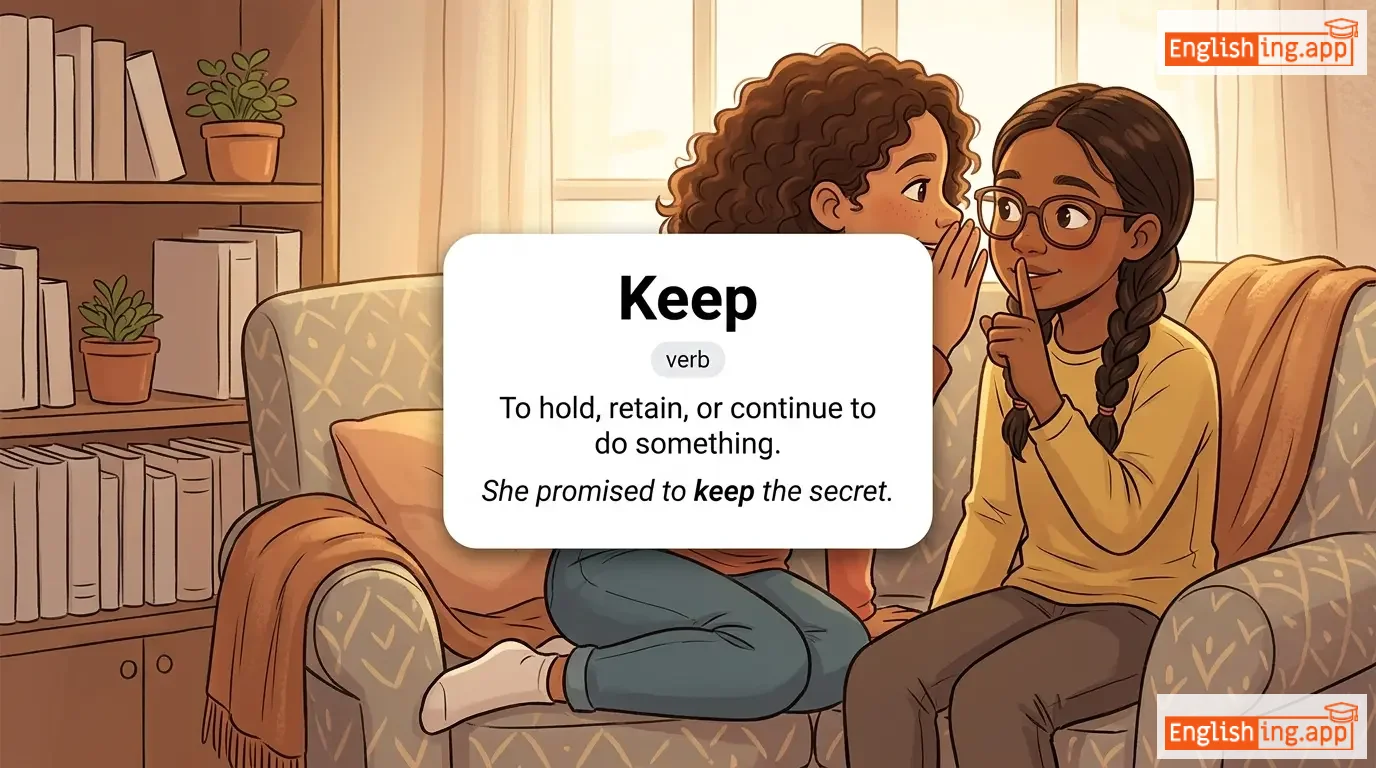
/kiːp/
verb
(kip)
••••••
|
|
保持
baochi
••••••
|
kept
kept
••••••
|
kept
kept
••••••
|
keeps
kips
••••••
|
keeping
keeping
••••••
|
to have or retain possession of something
••••••
|
Please keep your room clean and tidy.
请保持你的房间整洁干净。
••••••
|
请保持你的房间整洁干净。
Qǐng bǎochí nǐ de fángjiān zhěngjié gānjìng.
••••••
|
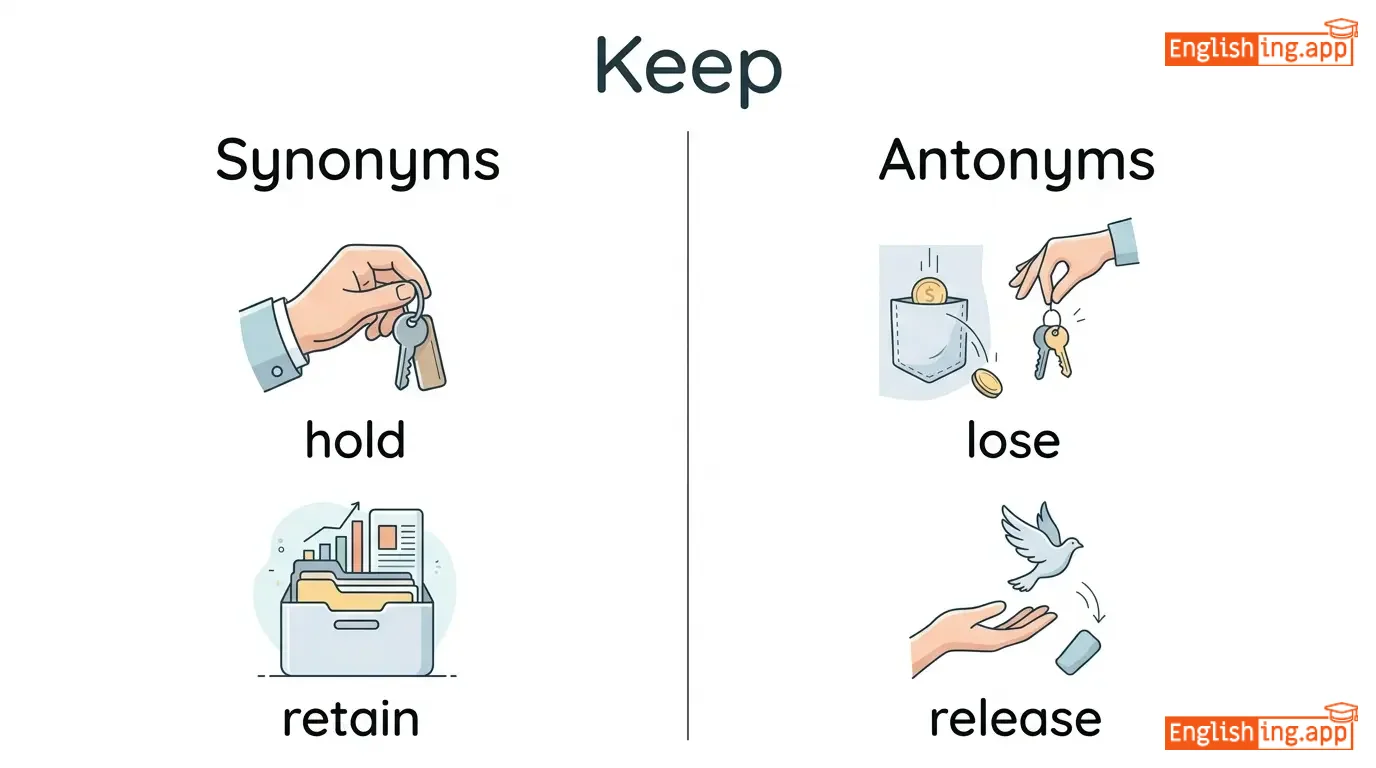
retain, maintain, preserve, hold
••••••
|
discard, throw away, lose, give up
••••••
|
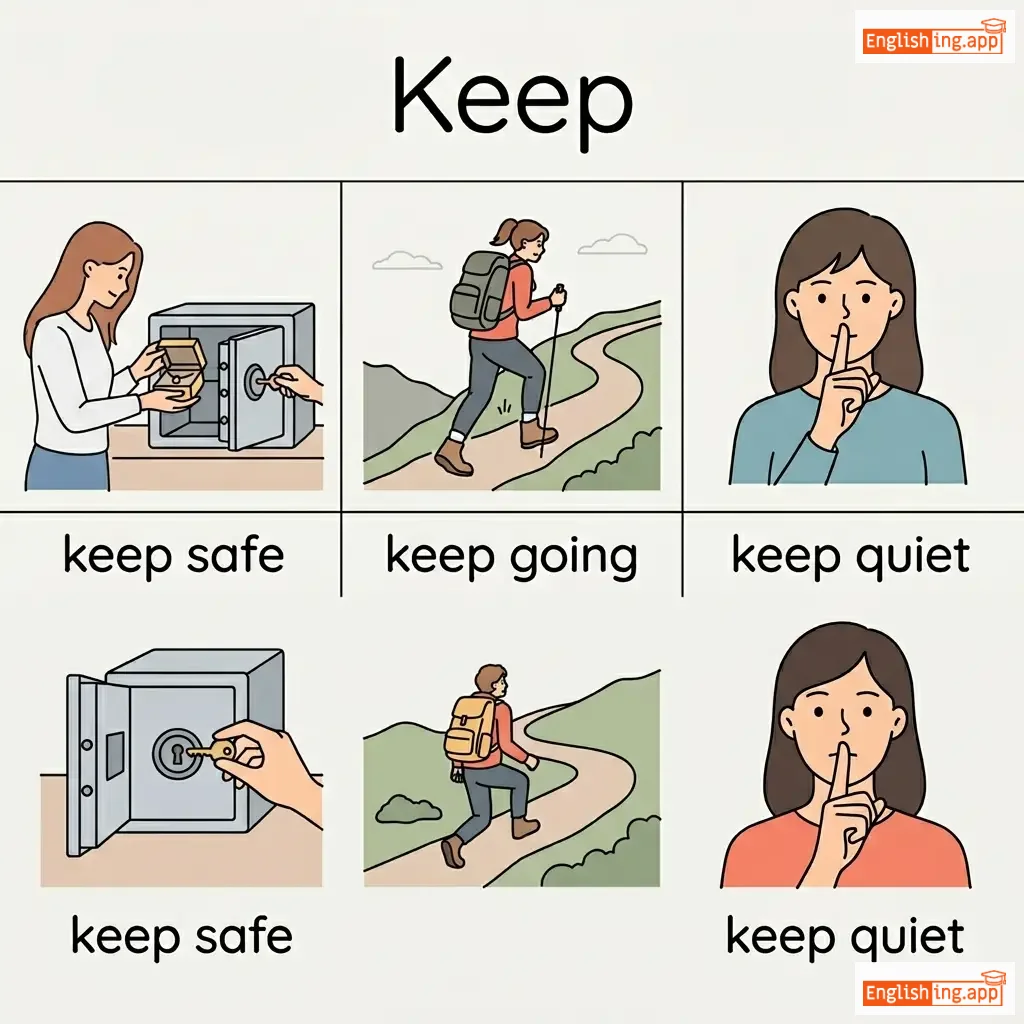
keep safe, keep quiet, keep calm, keep secret, keep promise, keep records
••••••
|
No •••••• |
|
#762
⚔️
|
/ɡɜːrd/
verb
(ɡɜːrd)
••••••
|
|
系上
xì shàng
••••••
|
girded
ɡɜːrded
••••••
|
girded
ɡɜːrded
••••••
|
girds
ɡɜːrds
••••••
|
girding
ɡɜːrding
••••••
|
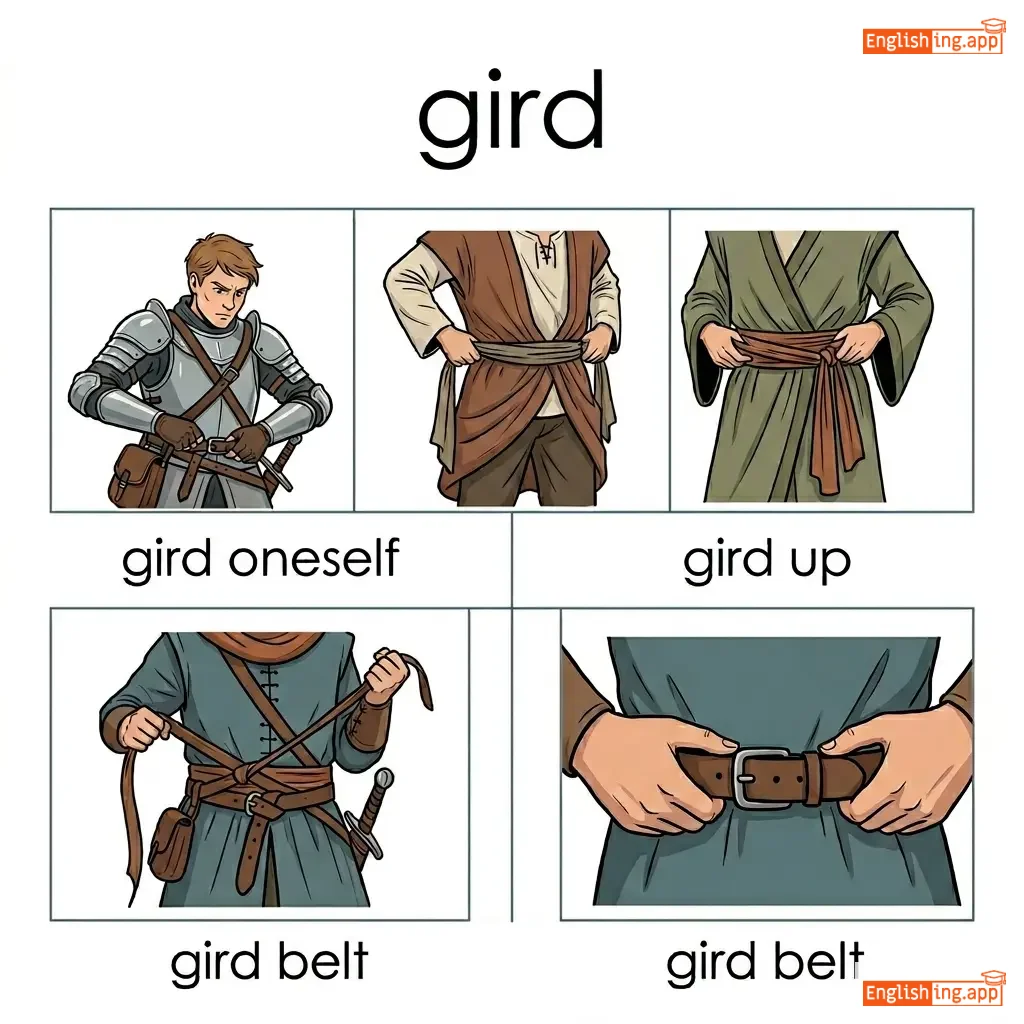
to encircle with a belt or band; to prepare for action
••••••
|
The knight girded his sword before battle.
骑士在战斗前系好剑。
••••••
|
骑士在战斗前系好剑。
Qíshì zài zhàndòu qián xì hǎo jiàn.
••••••
|
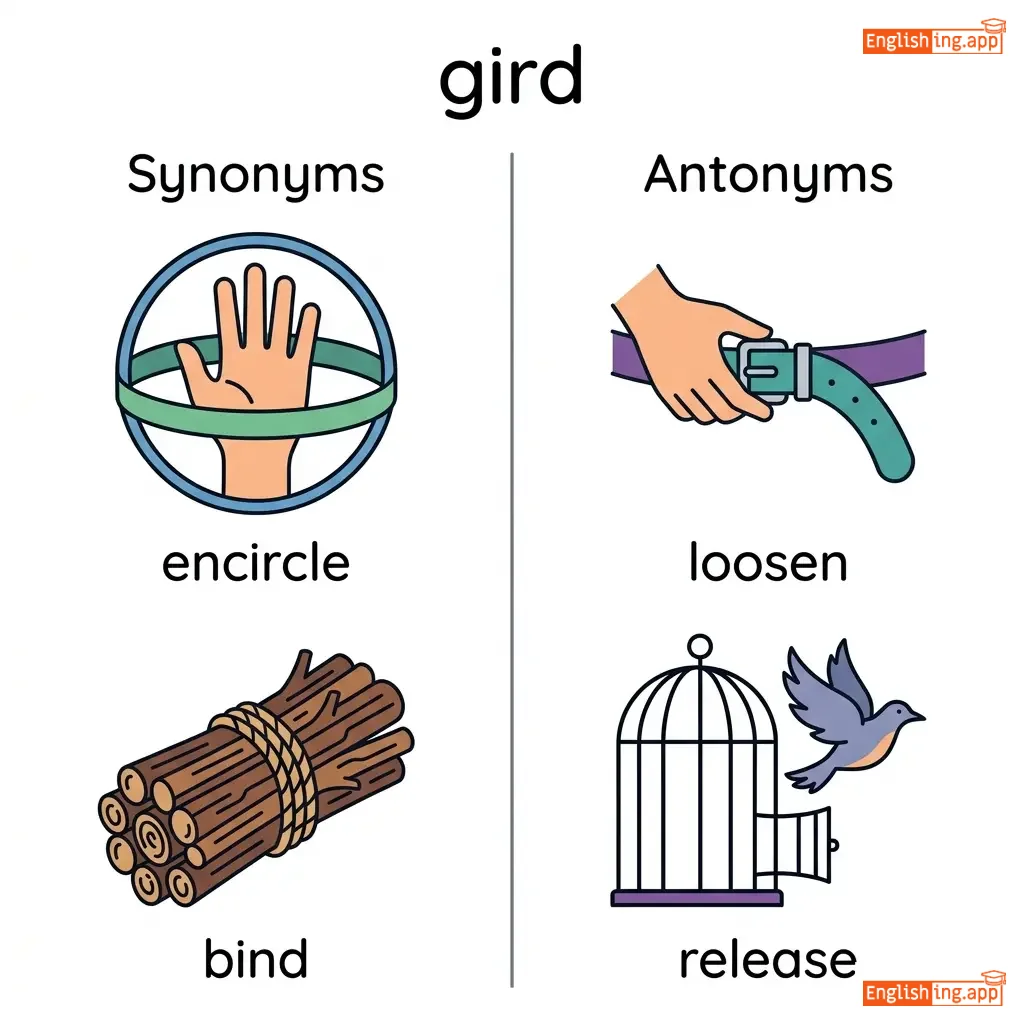
encircle, surround, prepare, equip
••••••
|
ungird, remove, unstrap, disarm
••••••
|
gird loins, gird oneself, gird for battle, gird with sword, gird tightly, gird around
••••••
|
系上腰带,就像骑士准备战斗。
••••••
|
|
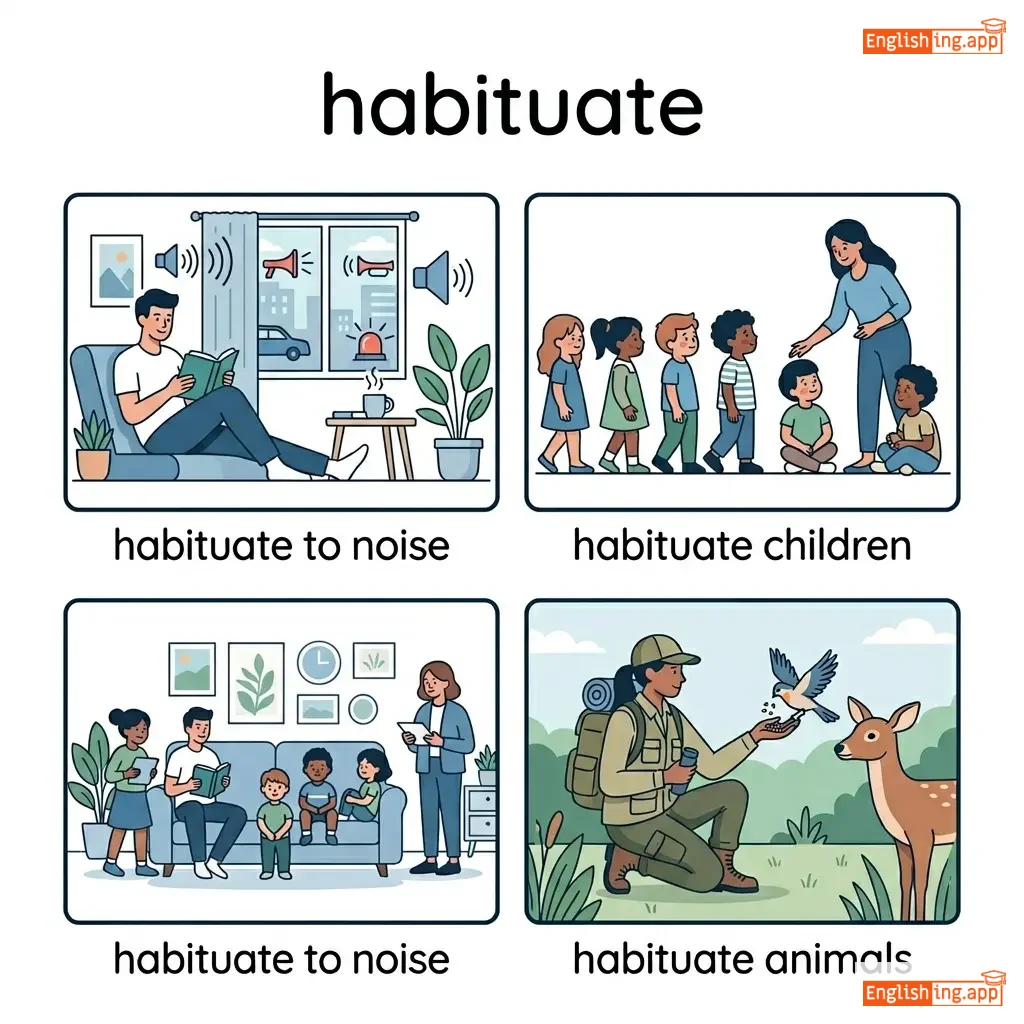
#763
🔄
|
/həˈbɪtʃuˌeɪt/
verb
(hàbìtùeɪt)
••••••
|
|
使习惯
shǐ xíguàn
••••••
|
habituated
hàbìtùeɪtɛd
••••••
|
habituated
hàbìtùeɪtɛd
••••••
|
habituates
hàbìtùeɪts
••••••
|
habituating
hàbìtùeɪtɪŋ
••••••
|
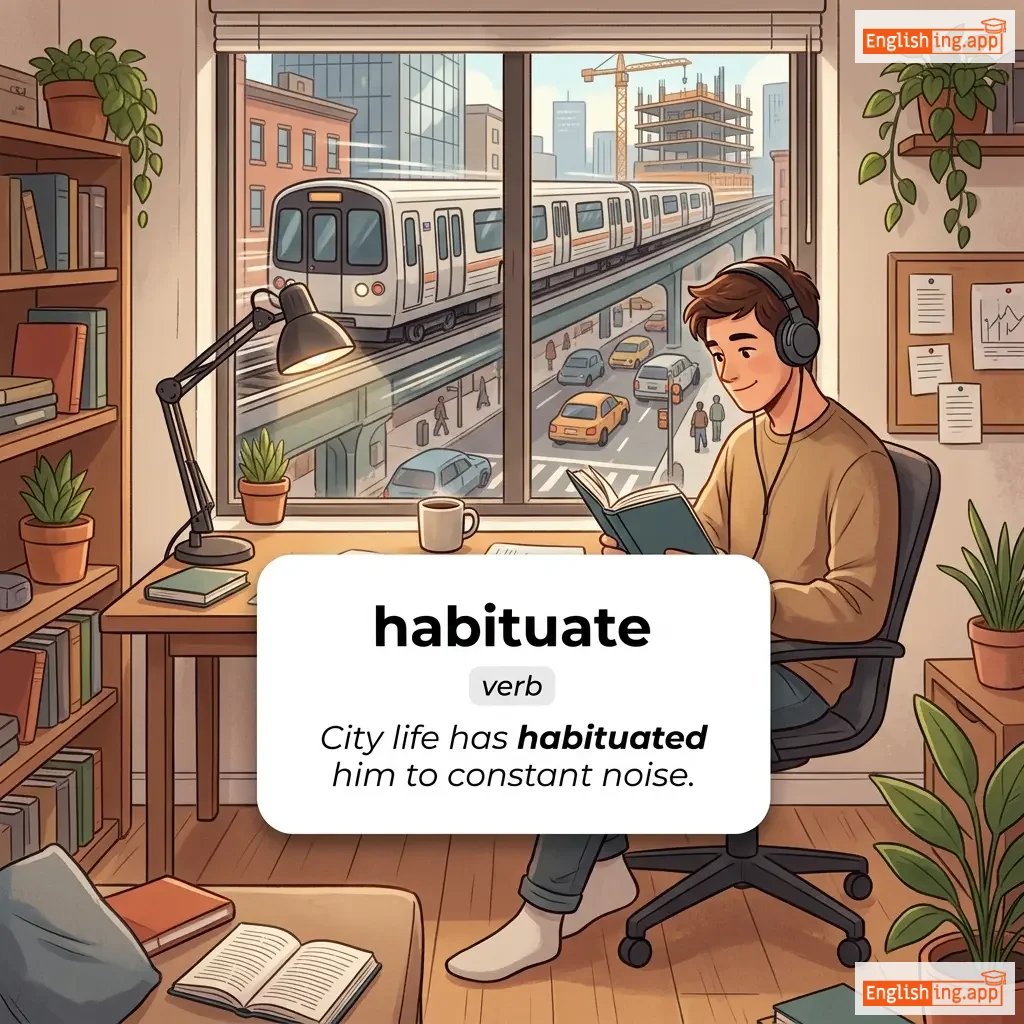
to make someone accustomed to something
••••••
|
The monks habituated themselves to meditation.
僧侣们已经习惯了冥想。
••••••
|
僧侣们已经习惯了冥想。
Sēnglǚ men yǐjīng xíguàn le míngxiǎng.
••••••
|
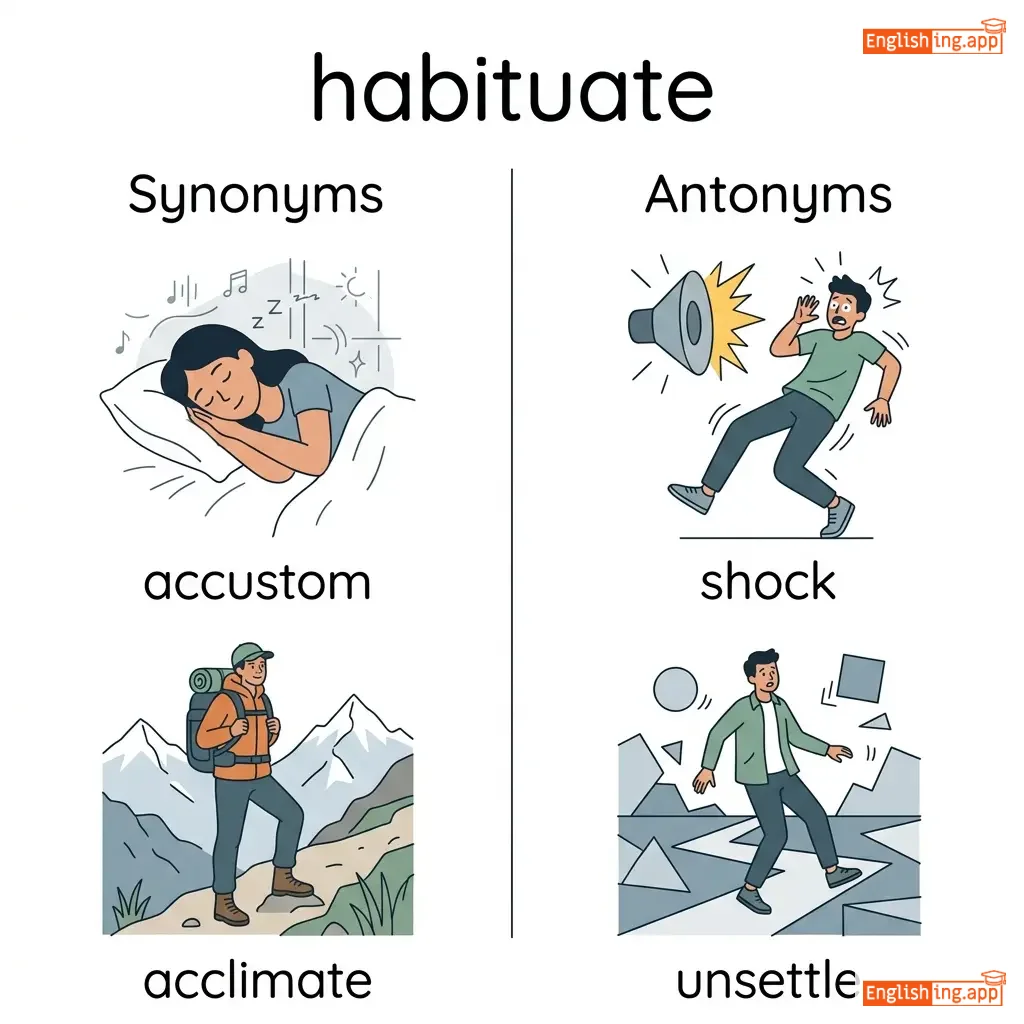
accustom, familiarize, adapt, condition
••••••
|
alienate, estrange, unaccustom, dishabituate
••••••
|
habituate gradually, habituate oneself, habituate to environment, habituate to routine, habituate to conditions, habituate completely
••••••
|
使习惯 (shǐ xíguàn) 指的是让某人习惯某事。
••••••
|
|
#764
🤝
|
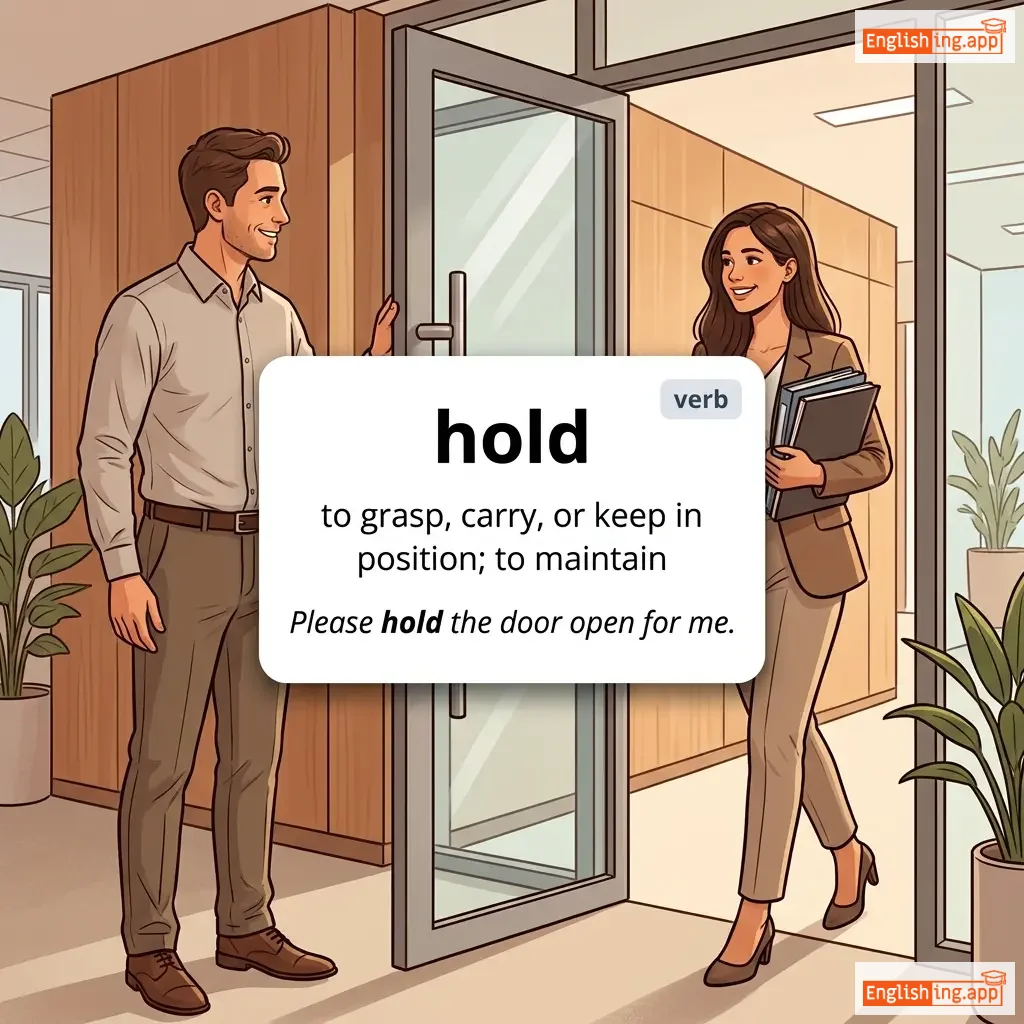
/hoʊld/
verb
(hóld)
••••••
|
|
握住
wòzhù
••••••
|
held
held
••••••
|
held
held
••••••
|
holds
holds
••••••
|
holding
holding
••••••
|
to grasp or carry something; to maintain a position
••••••
|
Please hold my hand.
请握住我的手。
••••••
|
请握住我的手。
qǐng wòzhù wǒ de shǒu
••••••
|
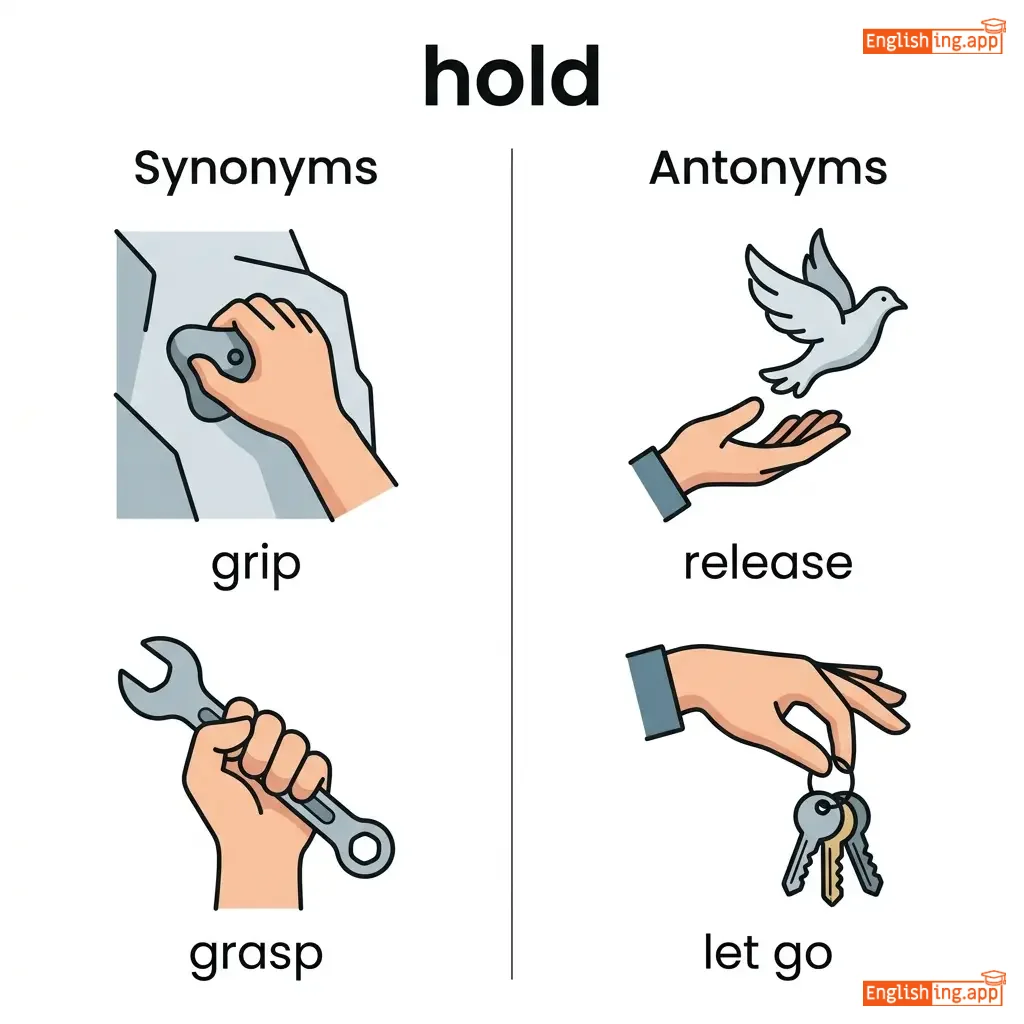
grasp, grip, carry, contain
••••••
|
release, drop, let go, free
••••••
|
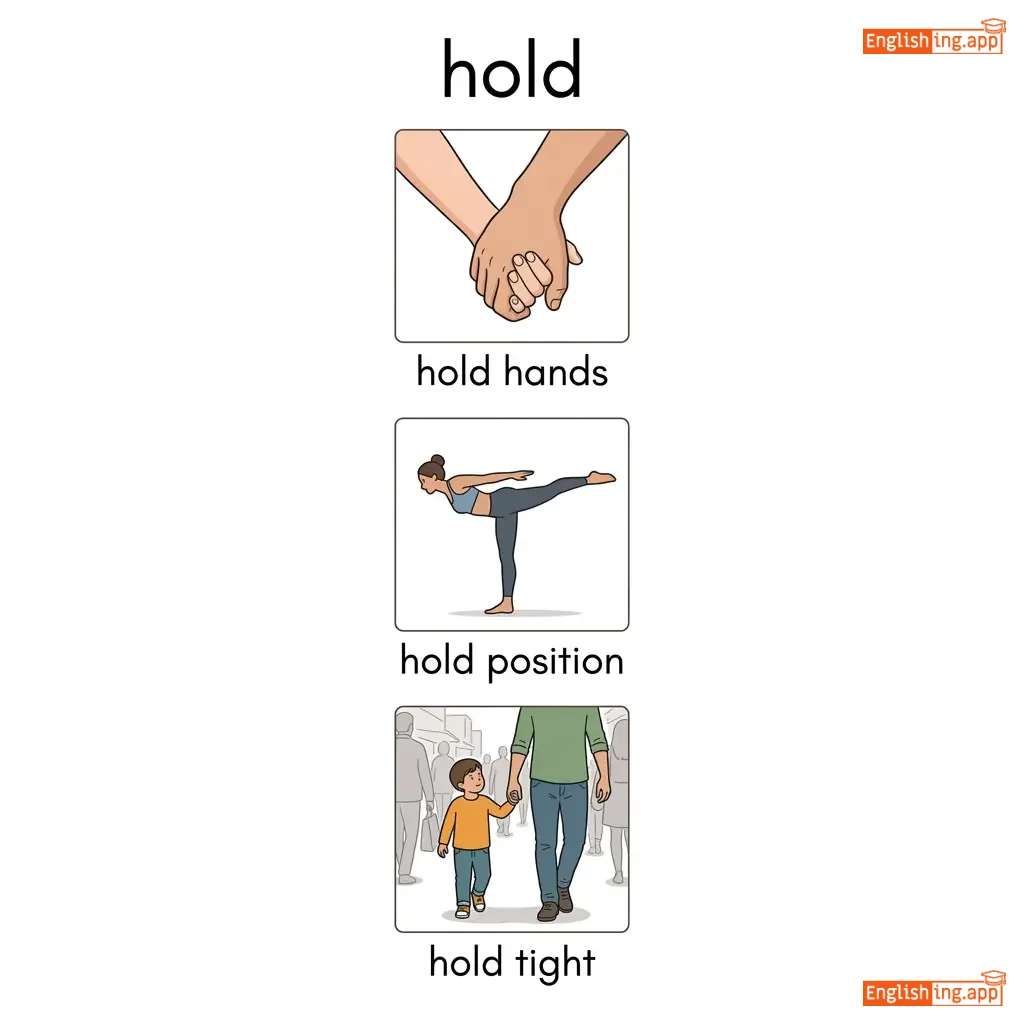
hold hands, hold position, hold meeting, hold breath, hold tight, hold responsibility
••••••
|
握住 (Hold) 就不会丢失。
••••••
|
|
#765
👕
|
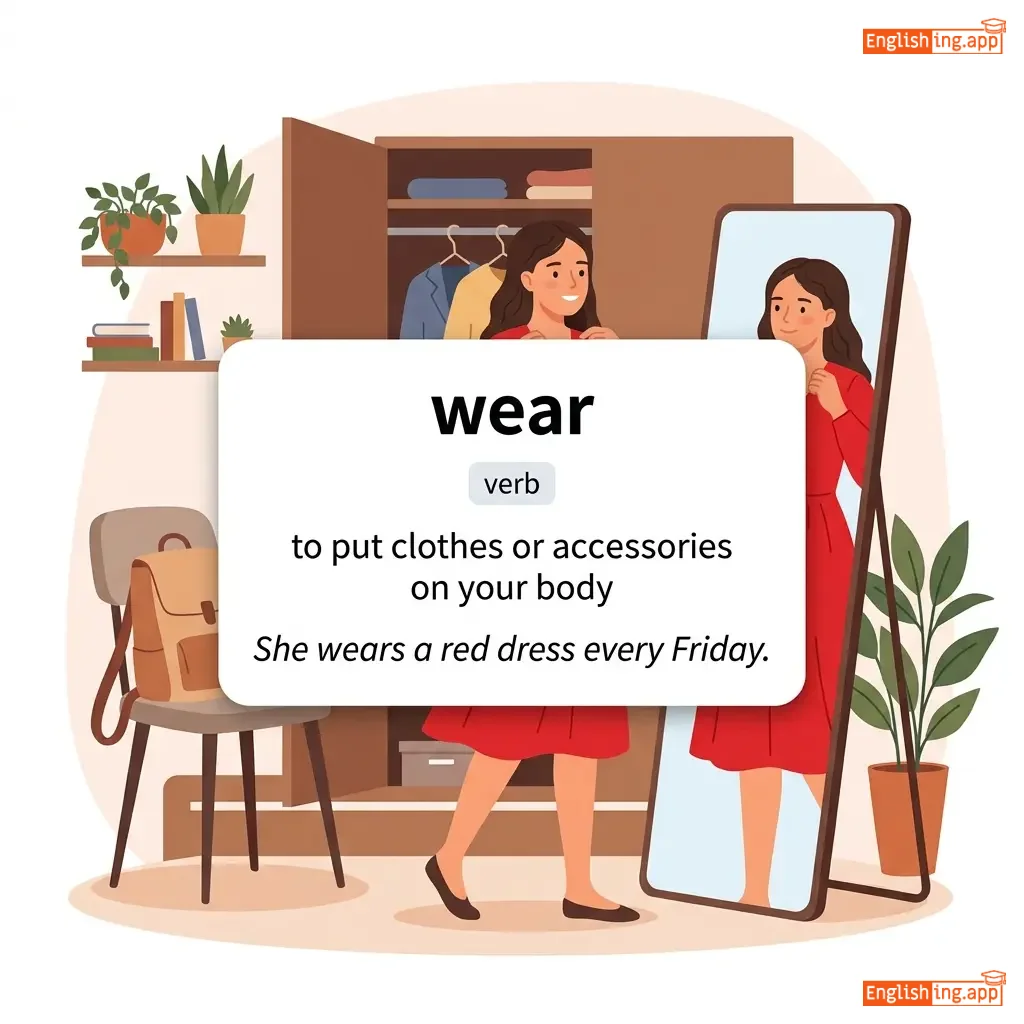
/wɛr/
verb
(wɛr)
••••••
|
|
穿戴
chuān dài
••••••
|
wore
wɔr
••••••
|
worn
wɔrn
••••••
|
wears
wɛrz
••••••
|
wearing
wɛrɪŋ
••••••
|
to have clothing or accessories on one's body
••••••
|
She likes to wear bright colors.
shi laɪks tu wɛr braɪt kʌlɚz
••••••
|
她喜欢穿亮色的衣服。
Tā xǐ huān chuān liàng sè de yī fú.
••••••
|
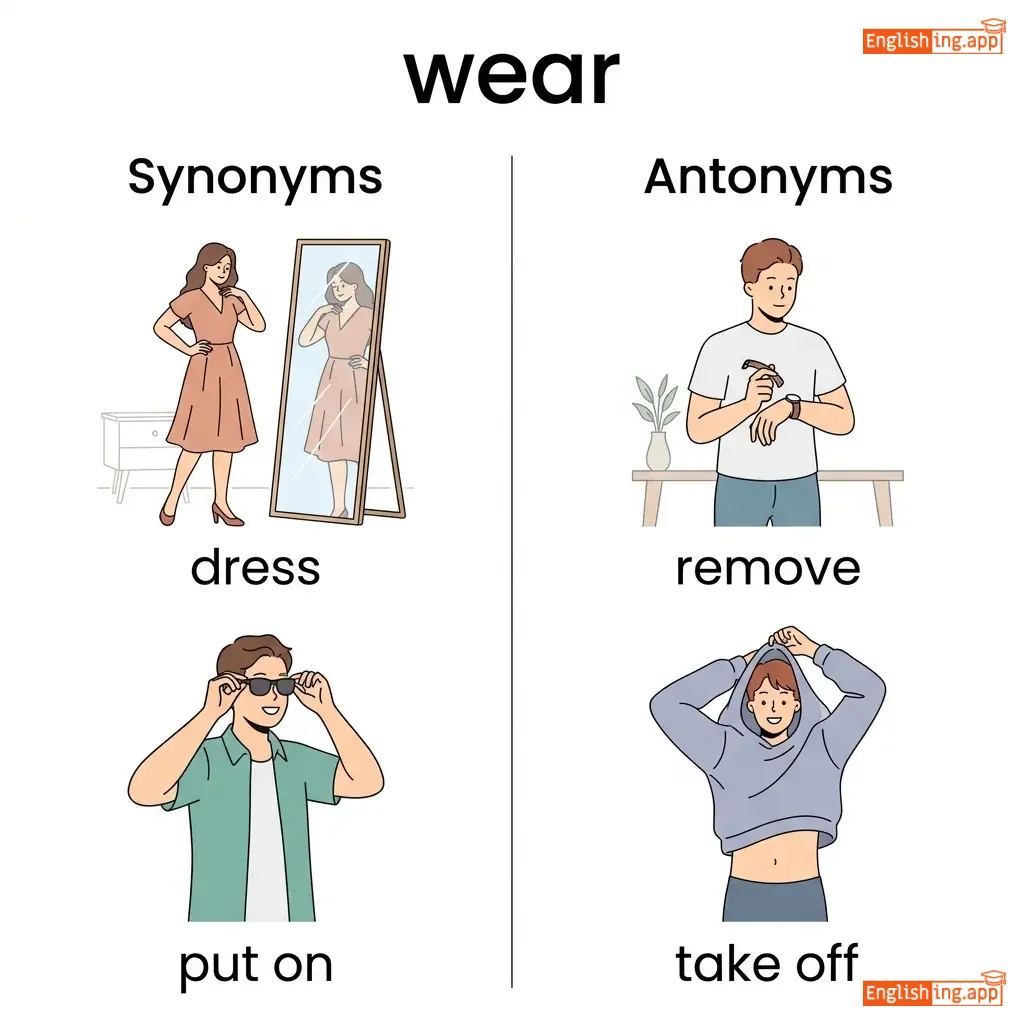
don, put on, sport, carry
••••••
|
remove, take off, undress
••••••
|
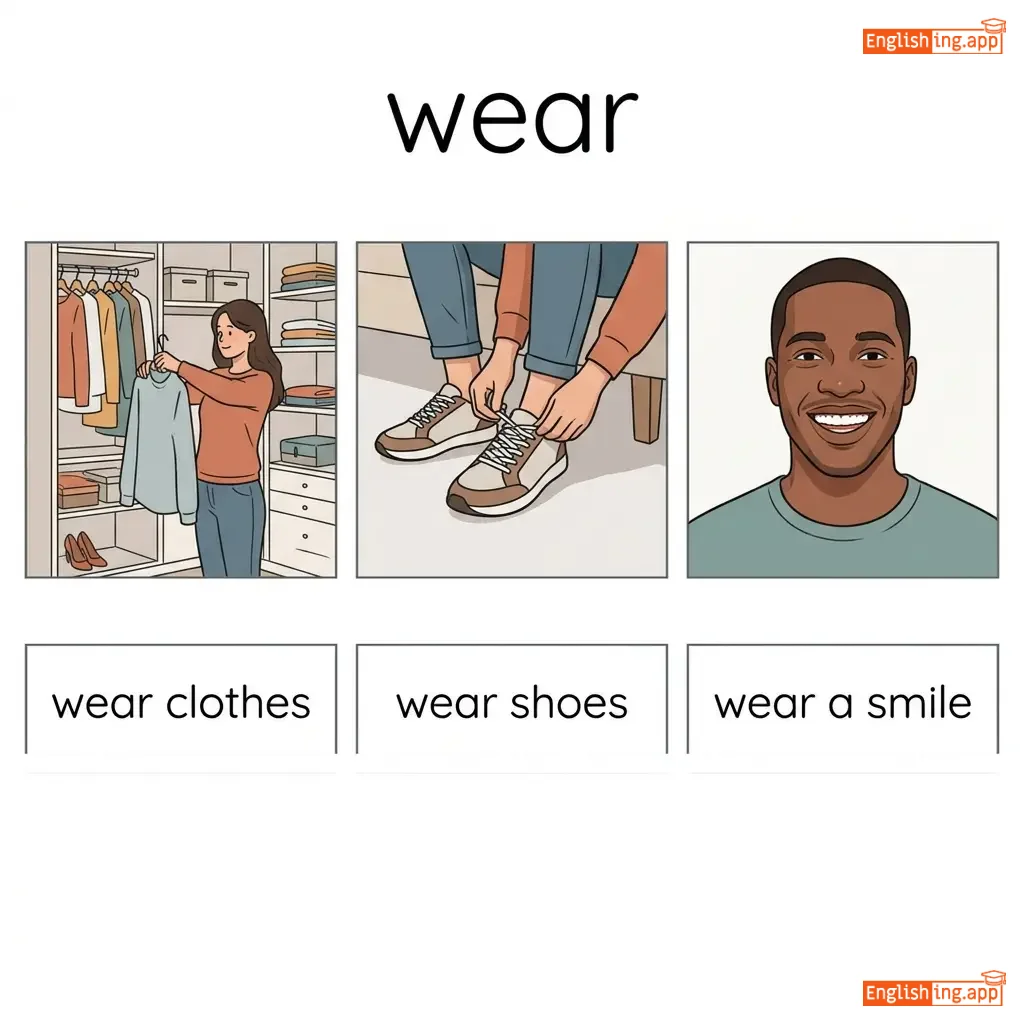
wear clothes, wear jewelry, wear shoes, wear uniform, wear makeup, wear expression
••••••
|
No •••••• |
|
#766
📈
|
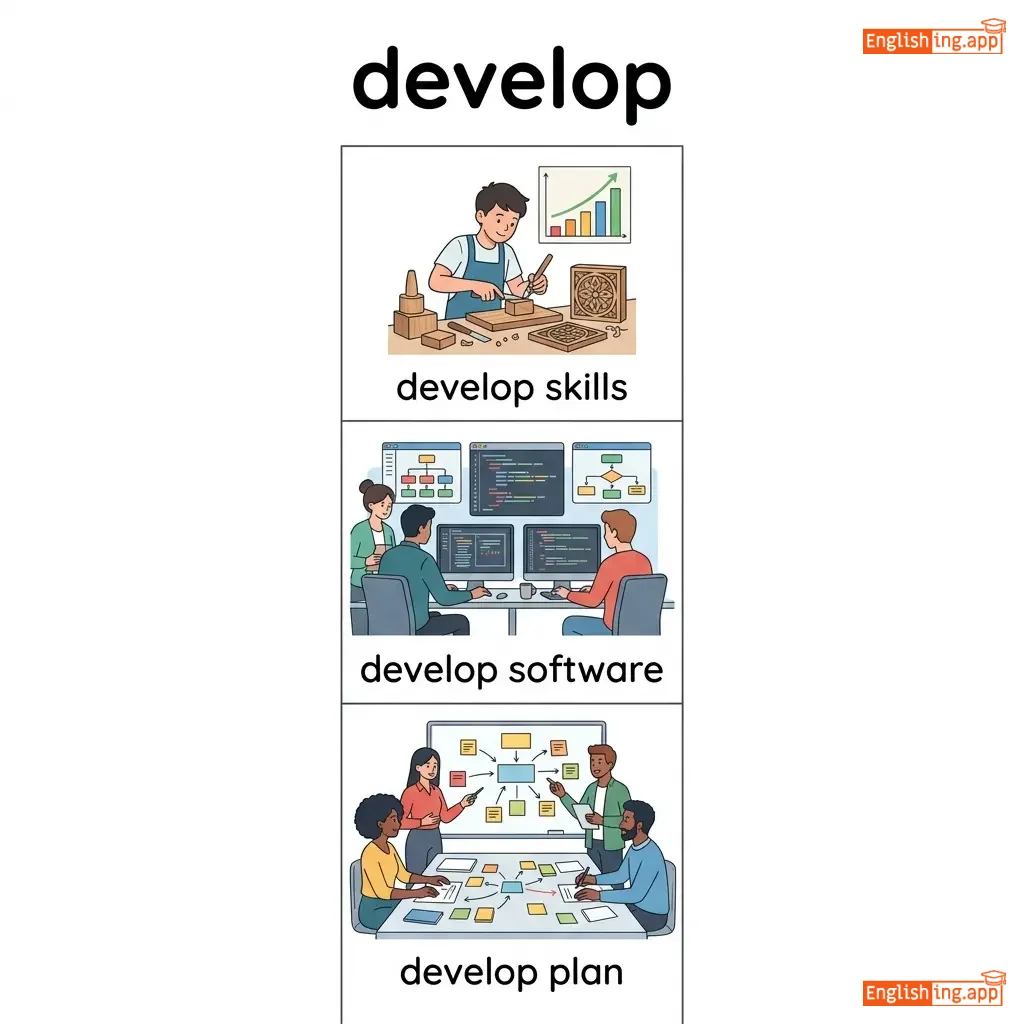
/dɪˈveləp/
verb
(德维洛普)
••••••
|
|
开发
kaifa
••••••
|
developed
德维洛普德
••••••
|
developed
德维洛普德
••••••
|
develops
德维洛普斯
••••••
|
developing
德维洛普英
••••••
|
to grow or cause to grow gradually
••••••
|
The company will develop new software this year.
公司今年将开发新软件。
••••••
|
公司今年将开发新软件。
Gongsi jinnian jiang kaifa xin ruanjian
••••••
|
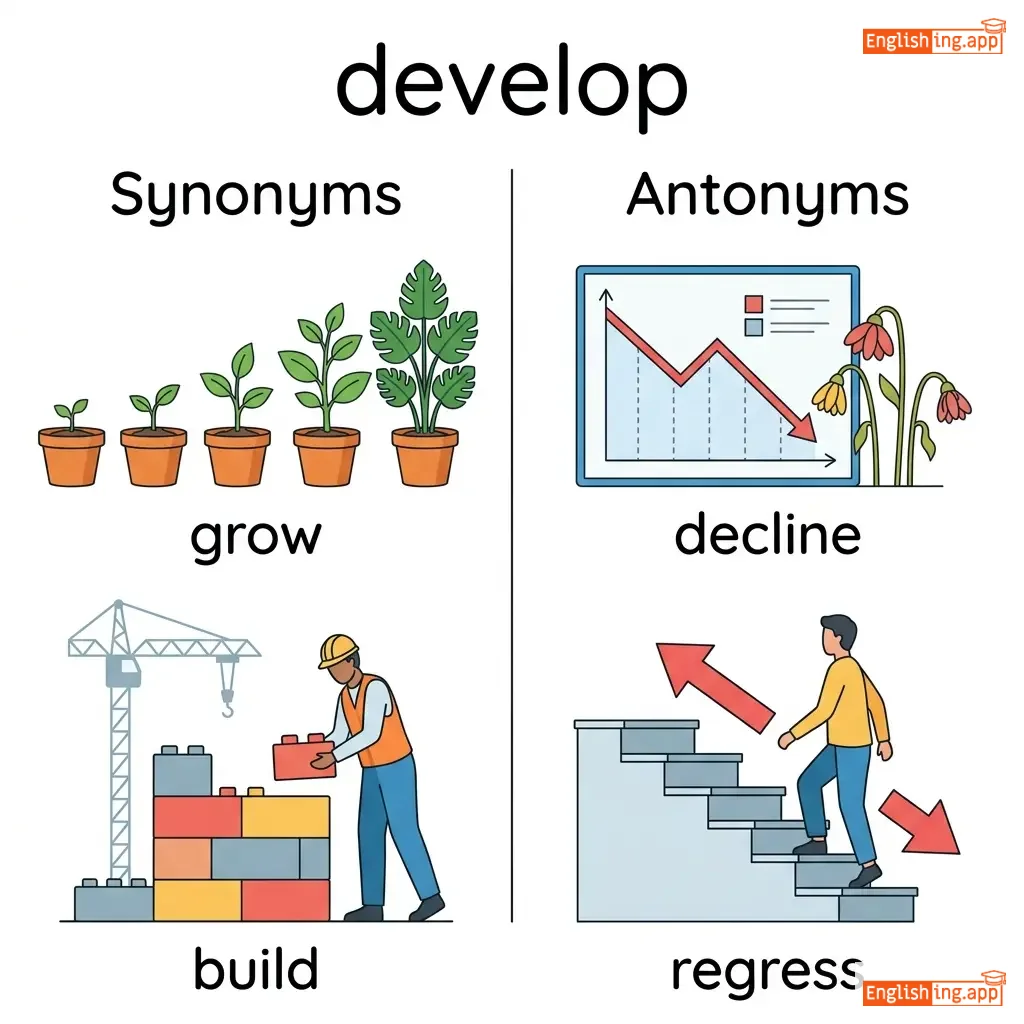
create, build, advance, progress
••••••
|
decline, deteriorate, regress
••••••
|
develop skills, develop software, develop ideas, develop plans, develop business, develop relationships
••••••
|
Kaifa means 'to develop' in Chinese, related to growing or creating something.
••••••
|
|
#767
🎯
|
/əbˈteɪn/
verb
(obtain)
••••••
|
|
获得
huo de
••••••
|
obtained
获得
••••••
|
obtained
获得
••••••
|
obtains
获得
••••••
|
obtaining
获得中
••••••
|
to get or acquire something
••••••
|
You need to obtain a visa before traveling abroad.
你需要在出国前获得签证。
••••••
|
你需要在出国前获得签证。
Ni xuyao zai chuguo qian huode qianzheng.
••••••
|
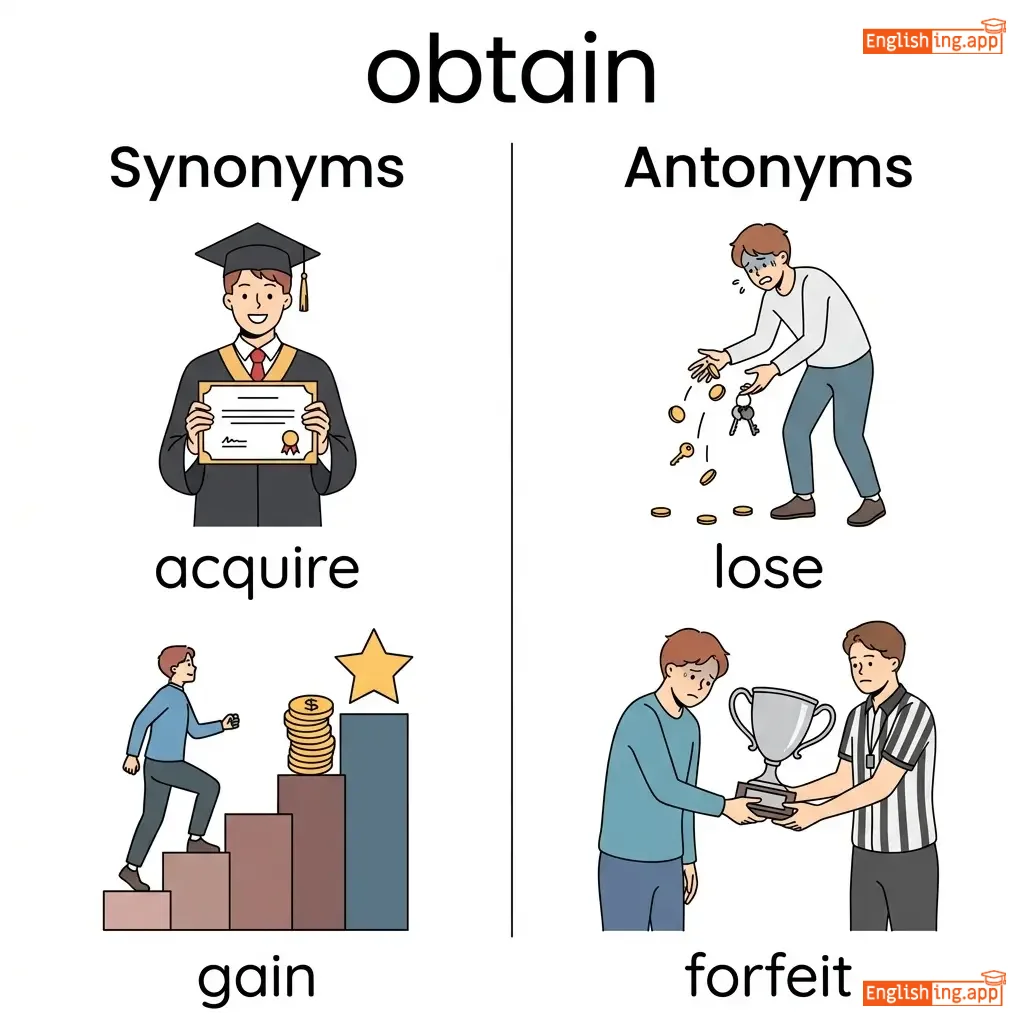
get, acquire, gain, secure
••••••
|
lose, give up, surrender, forfeit
••••••
|
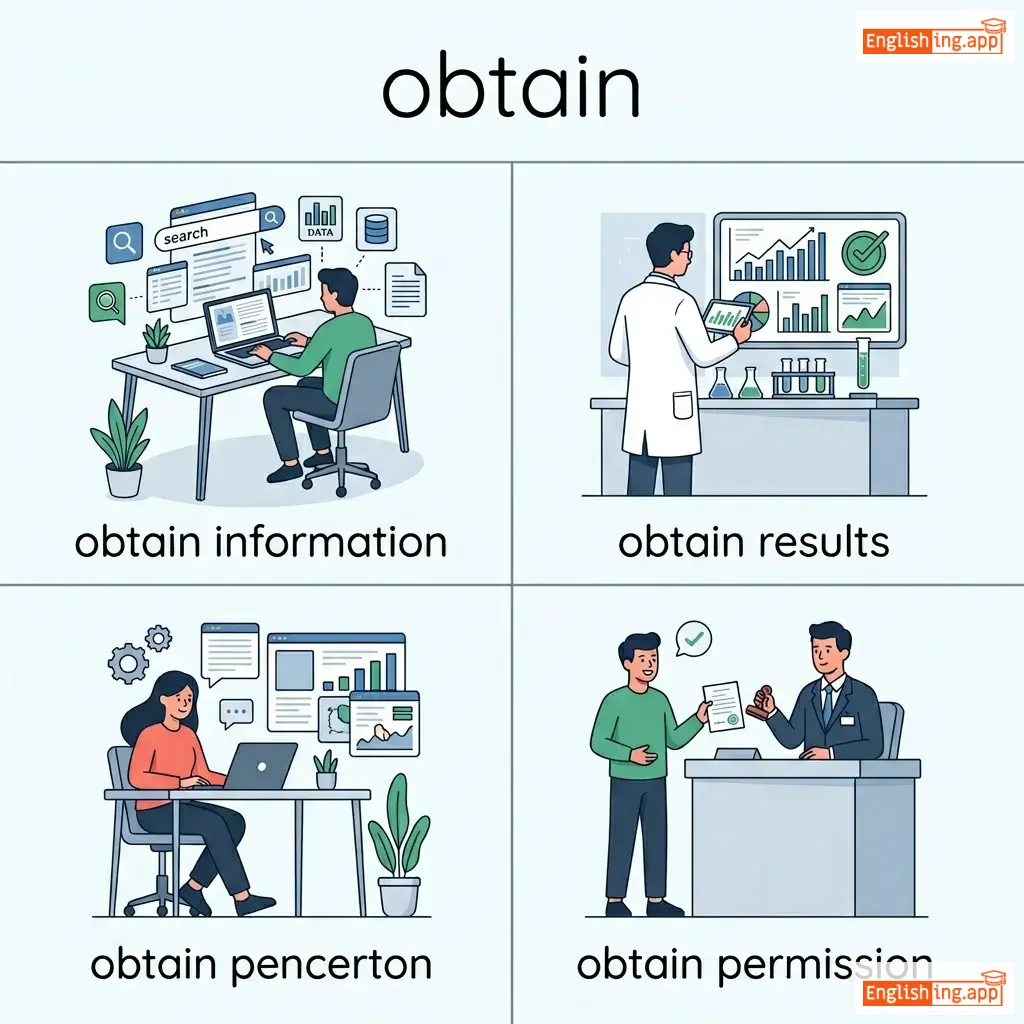
obtain permission, obtain results, obtain information, obtain license, obtain degree, obtain approval
••••••
|
Obtain = 获得 (huo de). Think of obtaining your visa to travel abroad!
••••••
|
|
#768
🎓
|
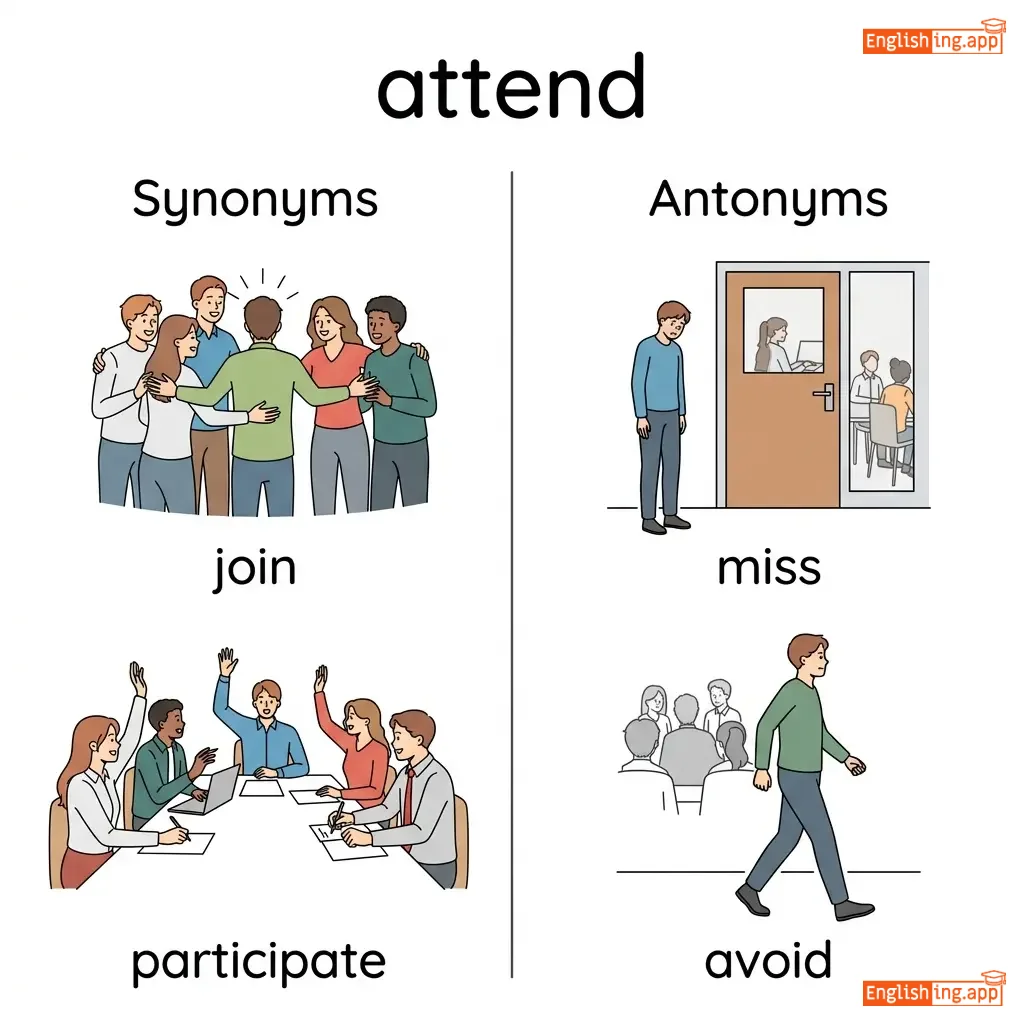
/əˈtɛnd/
verb
(出席)
••••••
|
|
参加
cānjiā
••••••
|
attended
出席过
••••••
|
attended
出席过
••••••
|
attends
出席
••••••
|
attending
参加
••••••
|
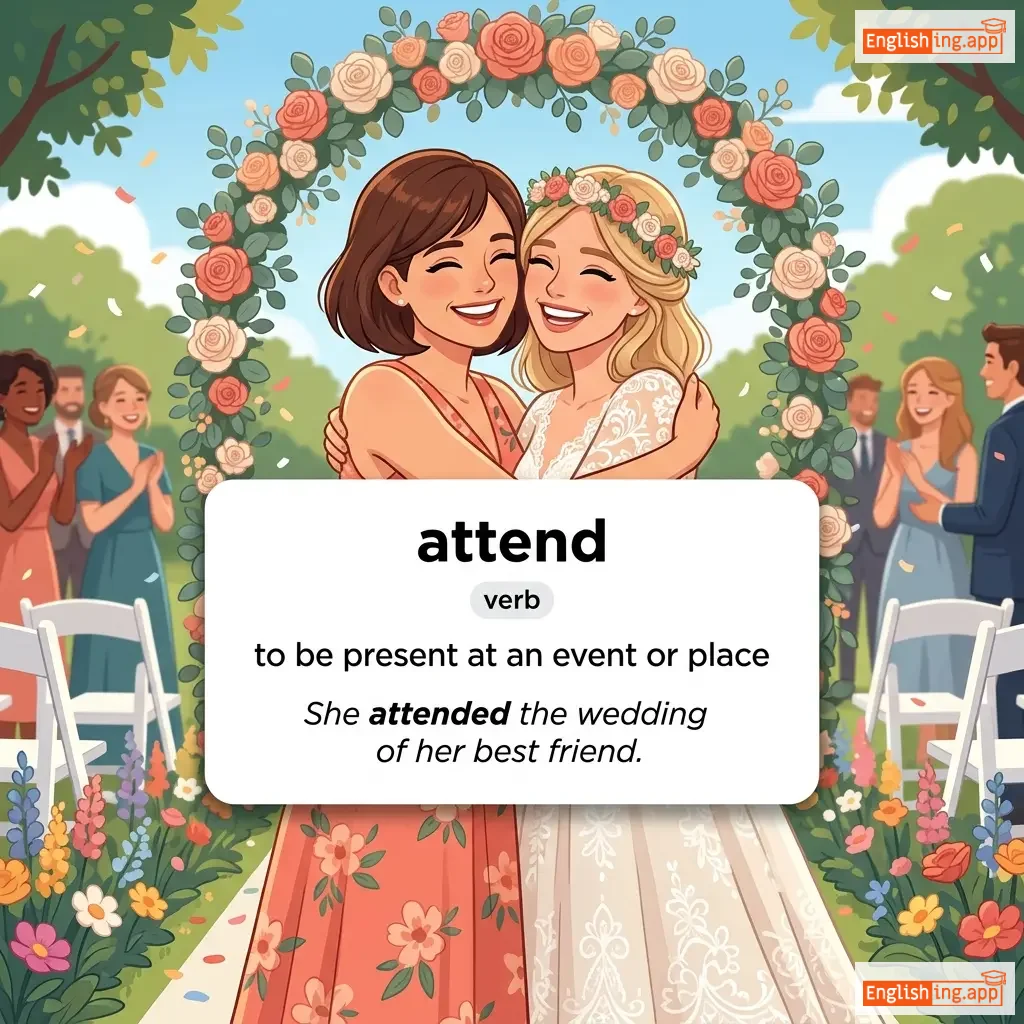
to be present at; to go to; to pay attention to
••••••
|
All students must attend the assembly tomorrow.
所有学生必须参加明天的集会。
••••••
|
所有学生必须参加明天的集会。
Suǒyǒu xuéshēng bìxū cānjiā míngtiān de jíhuì.
••••••
|
participate, join, be present, go to
••••••
|
skip, miss, avoid, absent
••••••
|
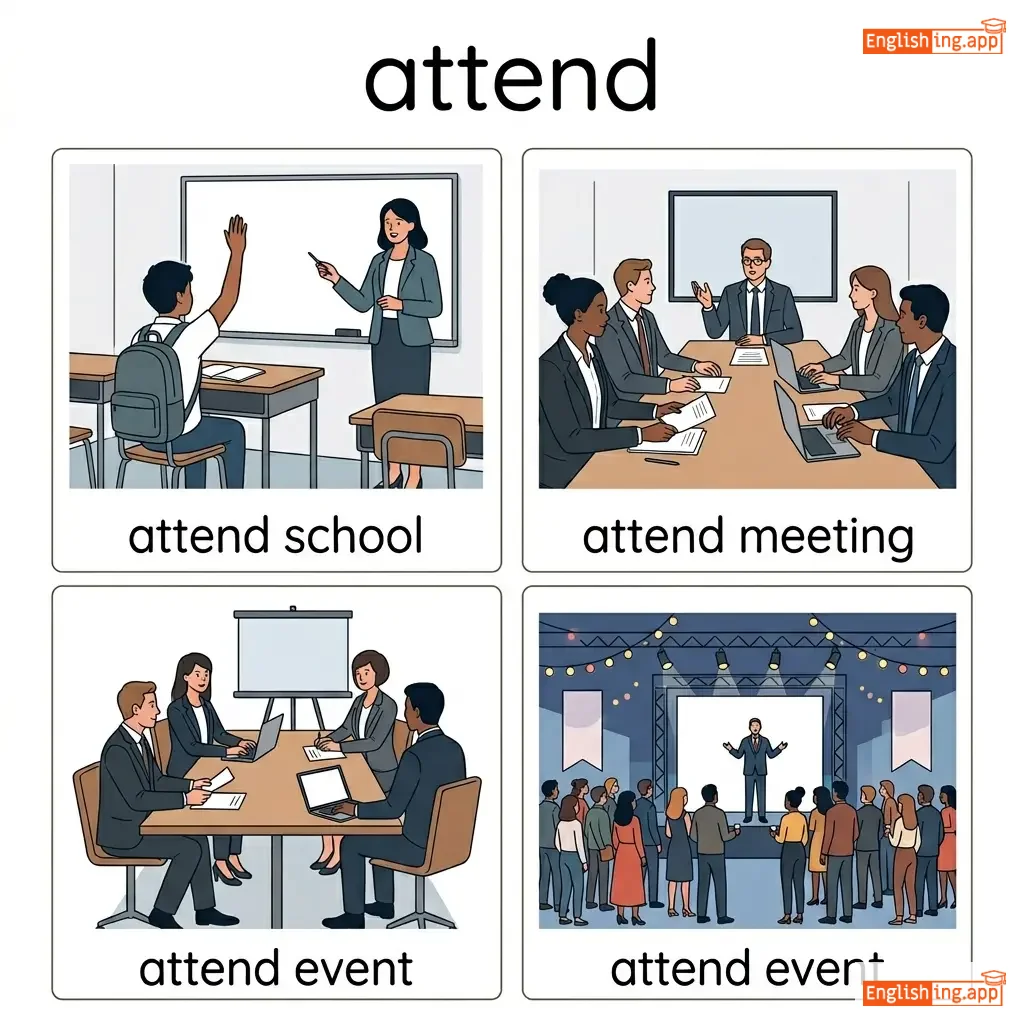
attend school, attend meeting, attend ceremony, attend conference, attend classes, attend event
••••••
|
No •••••• |
|
#769
😠
|
/ˈkwɒrəl/
verb
(kwɔːrəl)
••••••
|
|
争吵
zhēngchǎo
••••••
|
quarrelled
kwɔːrɛld
••••••
|
quarrelled
kwɔːrɛld
••••••
|
quarrels
kwɔːrɛls
••••••
|
quarrelling
kwɔːrɛlɪŋ
••••••
|
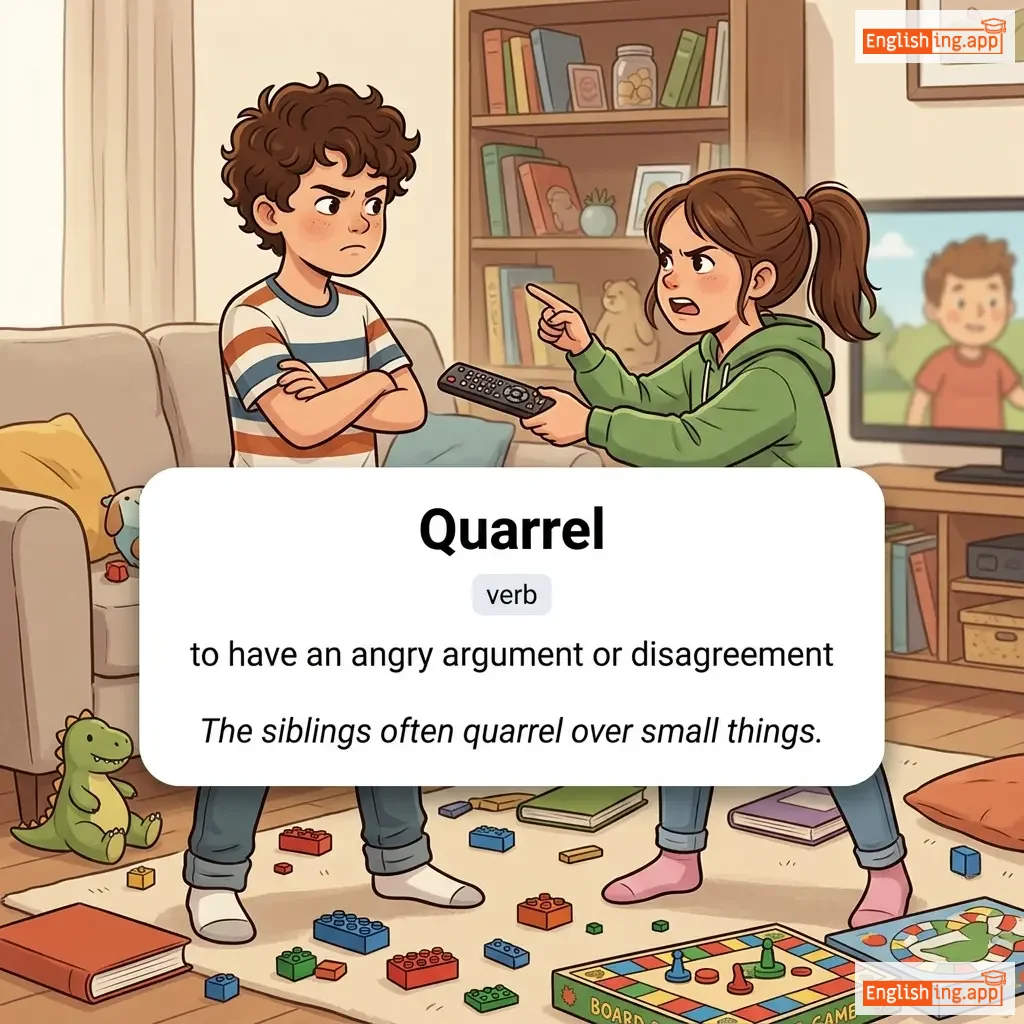
to have an angry argument or disagreement
••••••
|
The siblings often quarrel over small things.
兄妹们经常因小事争吵。
••••••
|
兄妹们经常因小事争吵。
Xiōngmèi men jīngcháng yīn xiǎo shì zhēngchǎo.
••••••
|
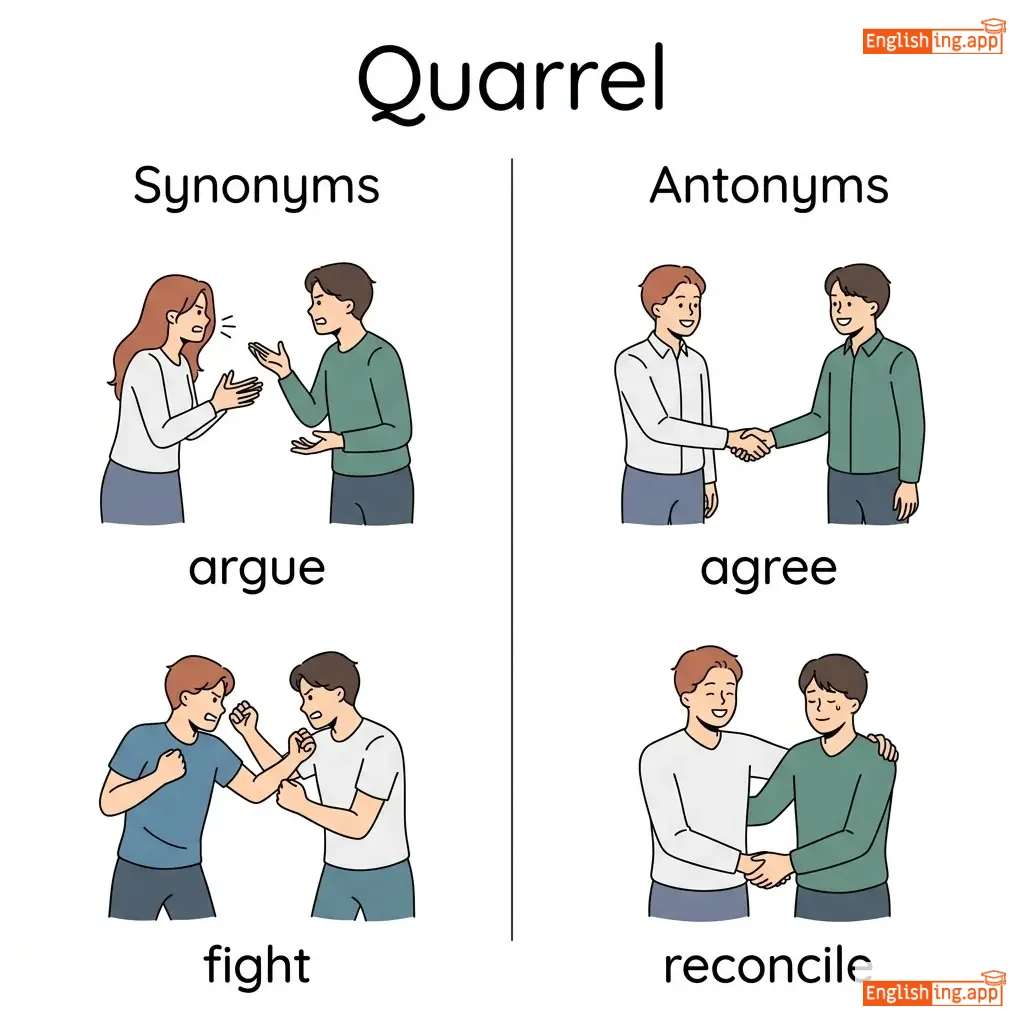
argue, fight, dispute, disagree
••••••
|
agree, reconcile, make peace
••••••
|
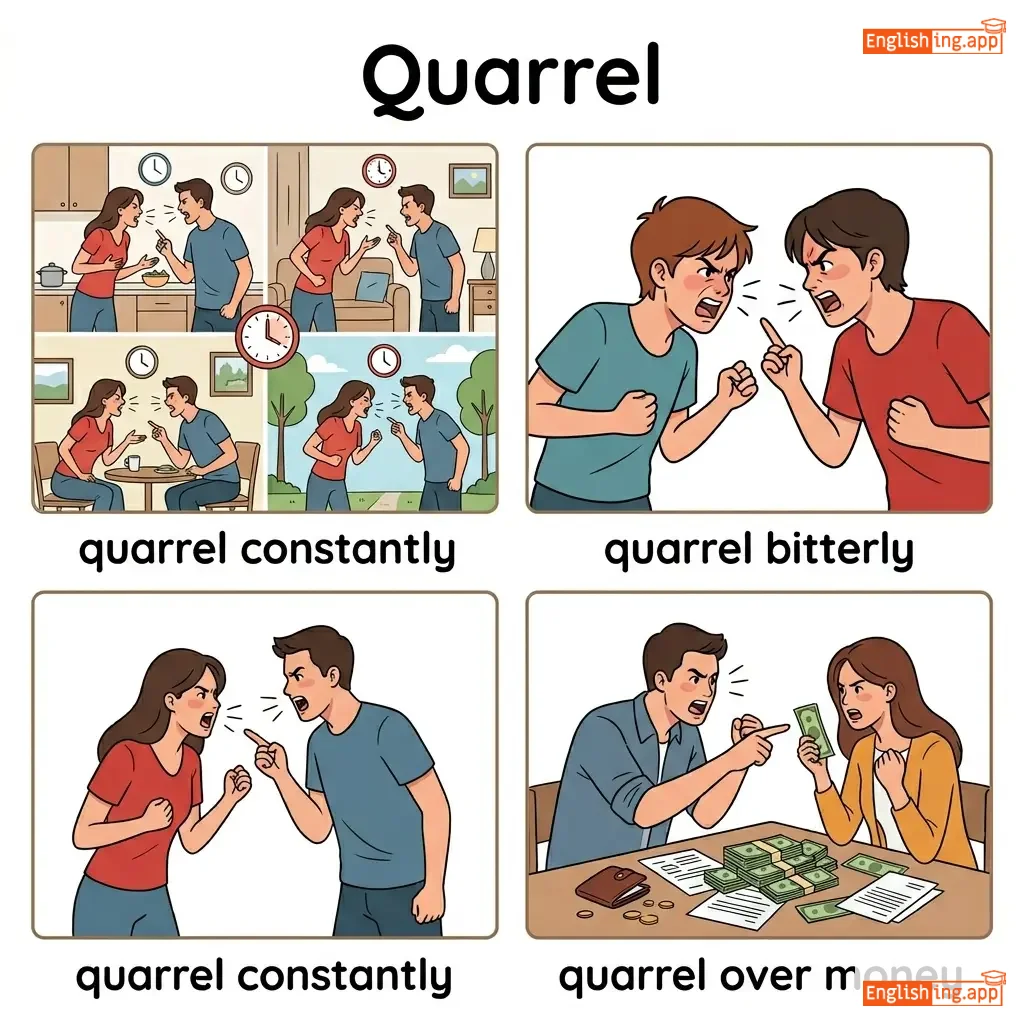
quarrel constantly, quarrel bitterly, quarrel over money, quarrel with family, quarrel about politics, quarrel frequently
••••••
|
A quarrel in Chinese is like 'zhēngchǎo' that siblings have over small things.
••••••
|
Vocabulary Quiz
Test your vocabulary by matching words with their translations or meanings.
Login to take the quiz
Comments (0)
Share your thoughts and join the discussion.
Join the discussion by logging in
Login to CommentNo comments yet
Be the first to share your thoughts!