















Swipe left or right, or use the buttons. Tap image to zoom.
例句翻译
单词
Lesson 11: Mastering the Most Frequent Verbs & TensesLesson 11: Mastering the Most Frequent Verbs & Tenses - 遮罩切换
|
表情符号
|
单词 | Images | 翻译 | 过去时 | 过去分词 | 第三人称单数 | 动名词 | 含义 | 例句 | 例句翻译 | 同义词 | 反义词 | 搭配词 | 助记符 |
|---|---|---|---|---|---|---|---|---|---|---|---|---|---|---|
|
#299
🤲
|
/brɪŋ/
verb
(bɾɪŋ)
••••••
|
|
带来
dàilái
••••••
|
brought
brɔt
••••••
|
brought
brɔt
••••••
|
brings
brɪŋz
••••••
|
bringing
brɪŋɪŋ
••••••
|
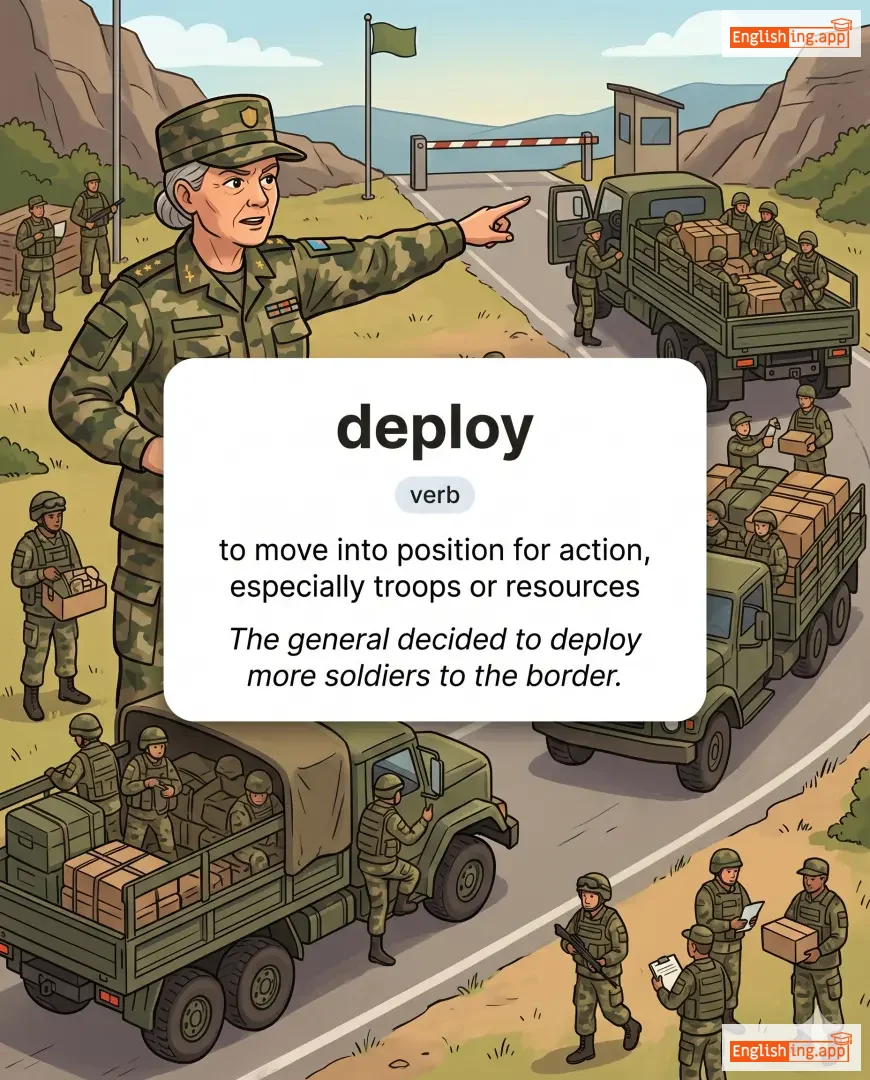
to carry or take something to a place; to come with something
••••••
|
Please bring your books to class tomorrow.
请明天把你的书带到课堂。
••••••
|
请明天把你的书带到课堂。
Qǐng míngtiān bǎ nǐ de shū dài dào kètáng.
••••••
|
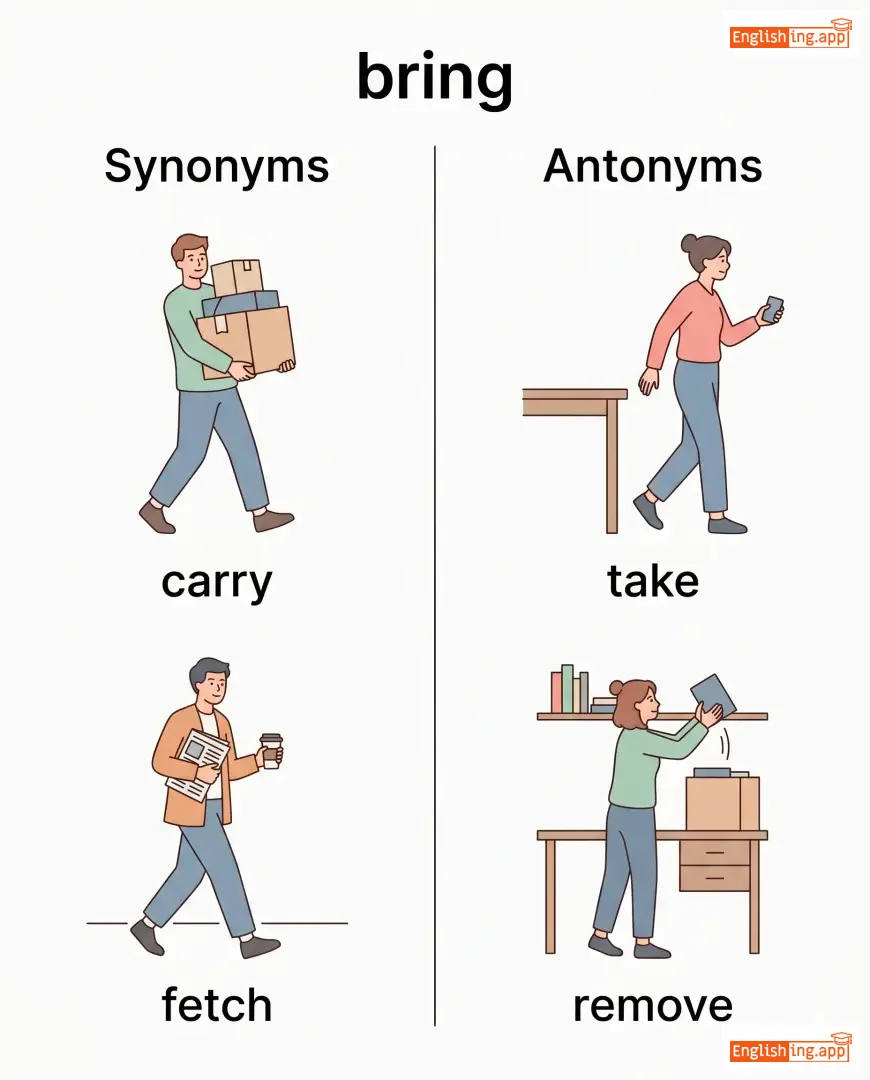
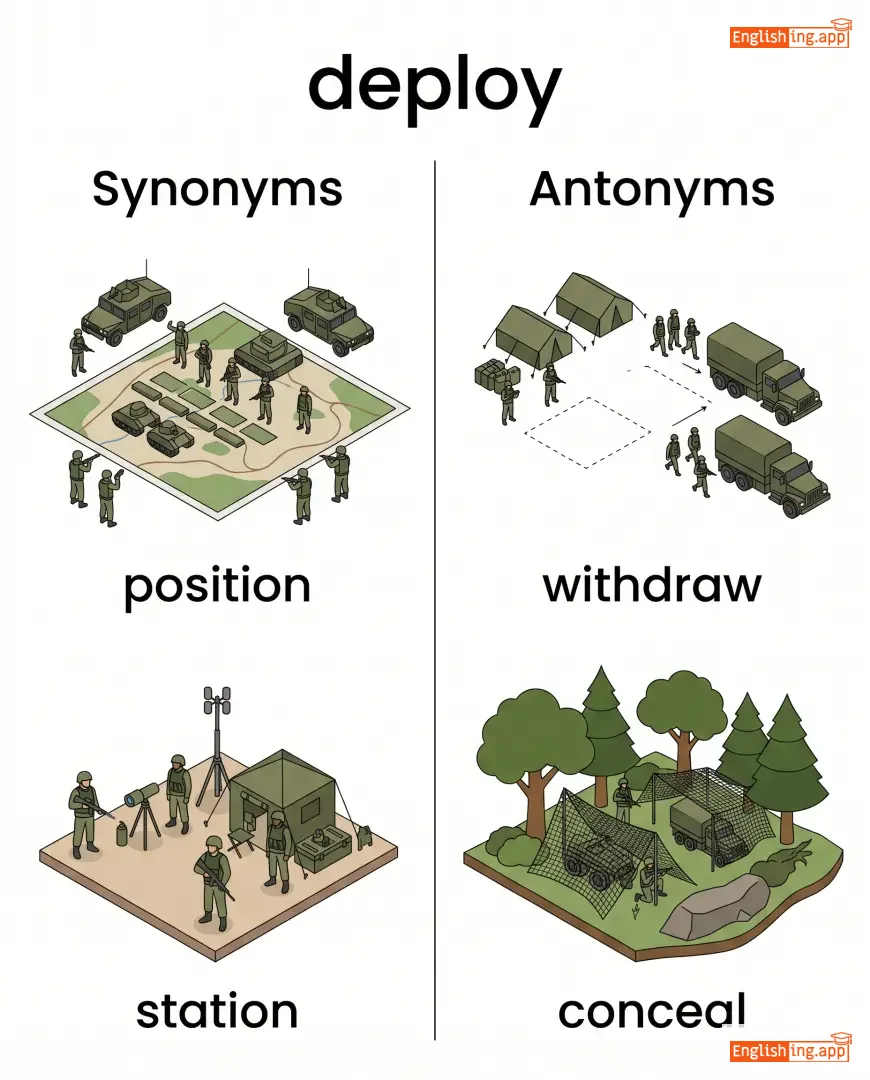
carry, take, fetch, deliver
••••••
|
take away, remove, leave
••••••
|
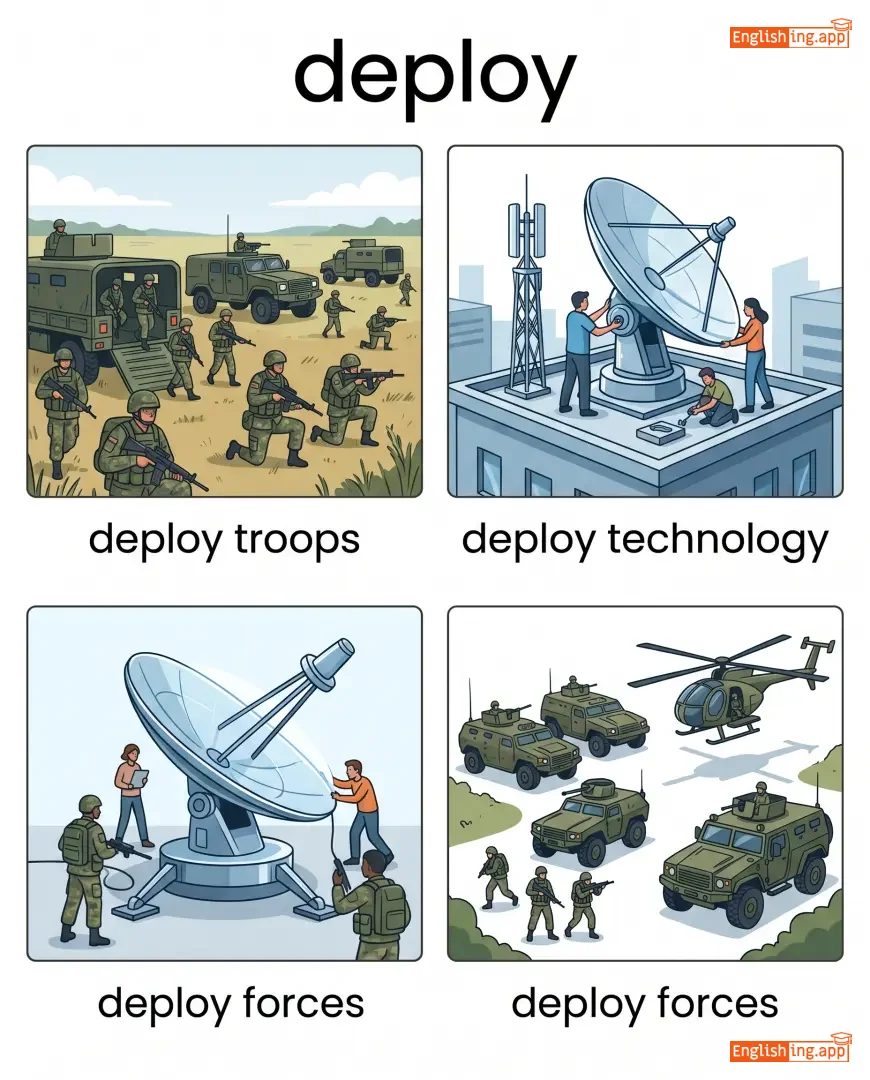
bring back, bring up, bring about, bring together, bring forward
••••••
|
Dàilái means to bring, just like when you bring a souvenir from vacation.
••••••
|
|
#300
✨
|
/ɪɡˈzɪst/
verb
(存在)
••••••
|
- •••••• |
存在
cúnzài
••••••
|
existed
存在了
••••••
|
existed
存在了
••••••
|
exists
存在
••••••
|
existing
存在着
••••••
|
to have being or reality; to be present
••••••
|
Dinosaurs existed millions of years ago.
恐龙在几百万年前就存在。
••••••
|
恐龙在几百万年前就存在。
Kǒnglóng zài jǐ bǎi wàn nián qián jiù cúnzài.
••••••
|
be, live, occur, happen
••••••
|
disappear, vanish, cease
••••••
|
exist naturally, exist peacefully, exist independently, exist together, exist in harmony
••••••
|
想象恐龙在几百万年前就已经存在了。
••••••
|
|
#301
🗑️
|
/weɪst/
verb
(ウェイスト)
••••••
|
|
浪费
làngfèi
••••••
|
wasted
ウェイステッド
••••••
|
wasted
ウェイステッド
••••••
|
wastes
ウェイストス
••••••
|
wasting
ウェイスティング
••••••
|
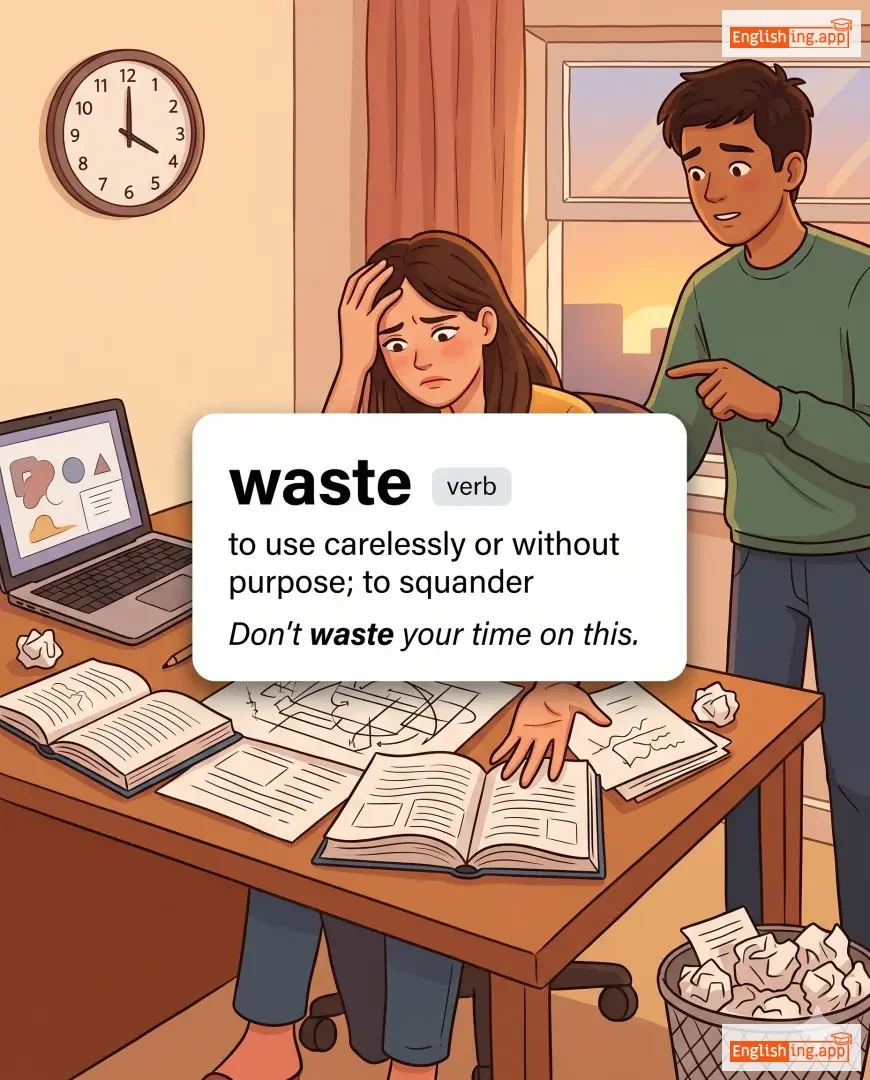
to use carelessly or without purpose; to squander
••••••
|
Don't waste your time on this.
ドント ウェイスト ヨア タイム オン ディス。
••••••
|
不要浪费你的时间在这个上面。
Bù yào làngfèi nǐ de shíjiān zài zhège shàngmiàn.
••••••
|
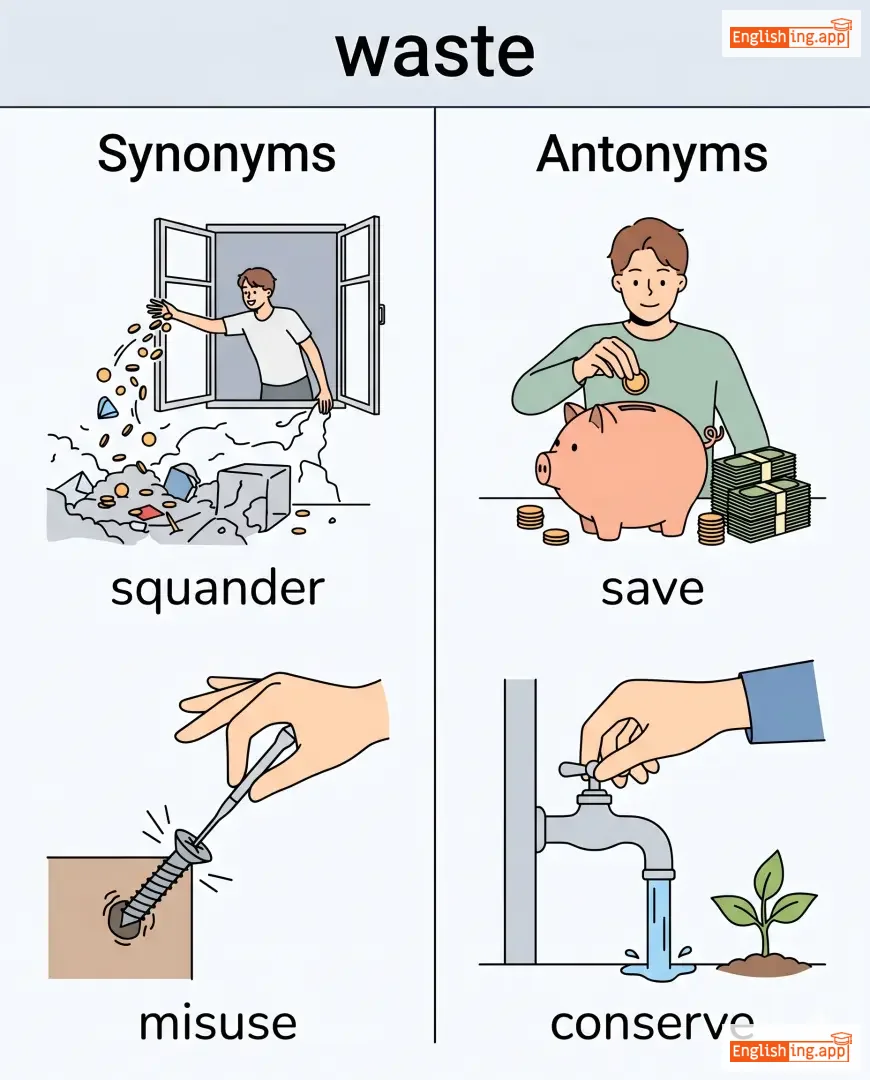
squander, misuse, fritter, throw away
••••••
|
save, conserve, preserve, use wisely
••••••
|
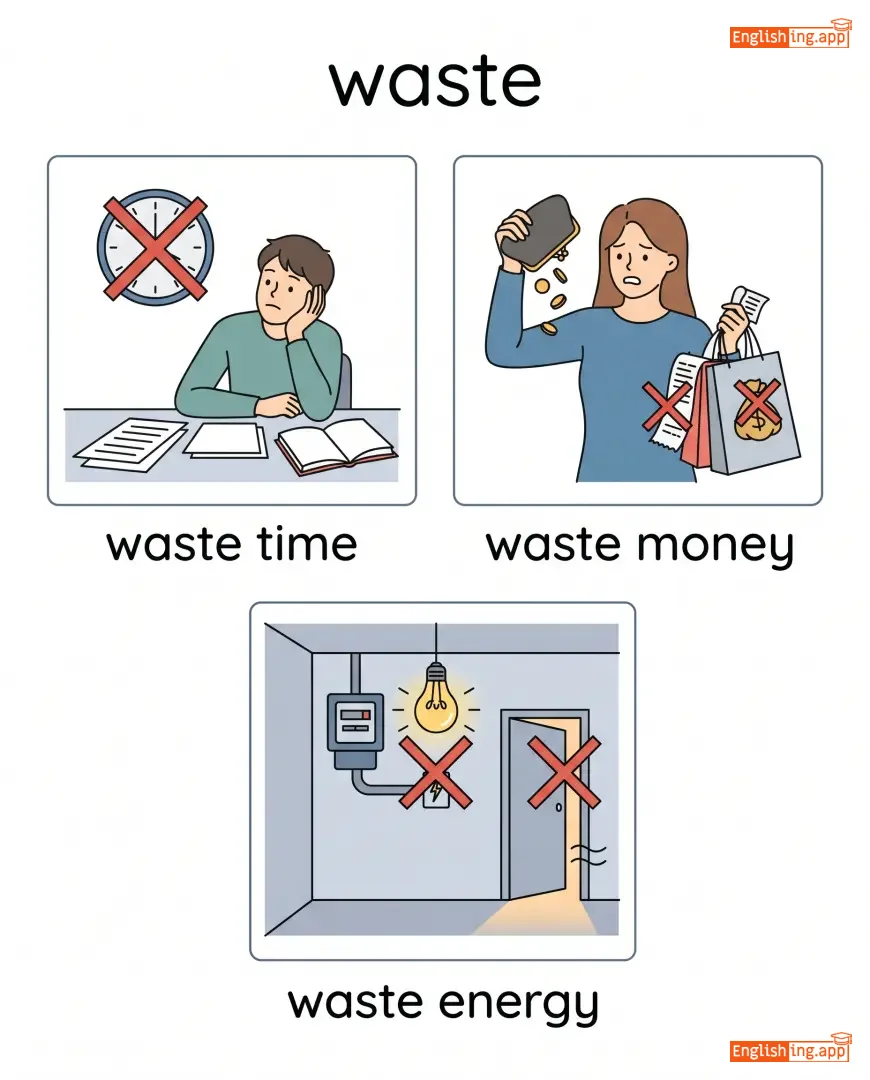
waste time, waste money, waste energy, waste resources, waste opportunity
••••••
|
浪费是指不顾后果的使用,像浪费食物或水一样。
••••••
|
|
#302
🤔
|
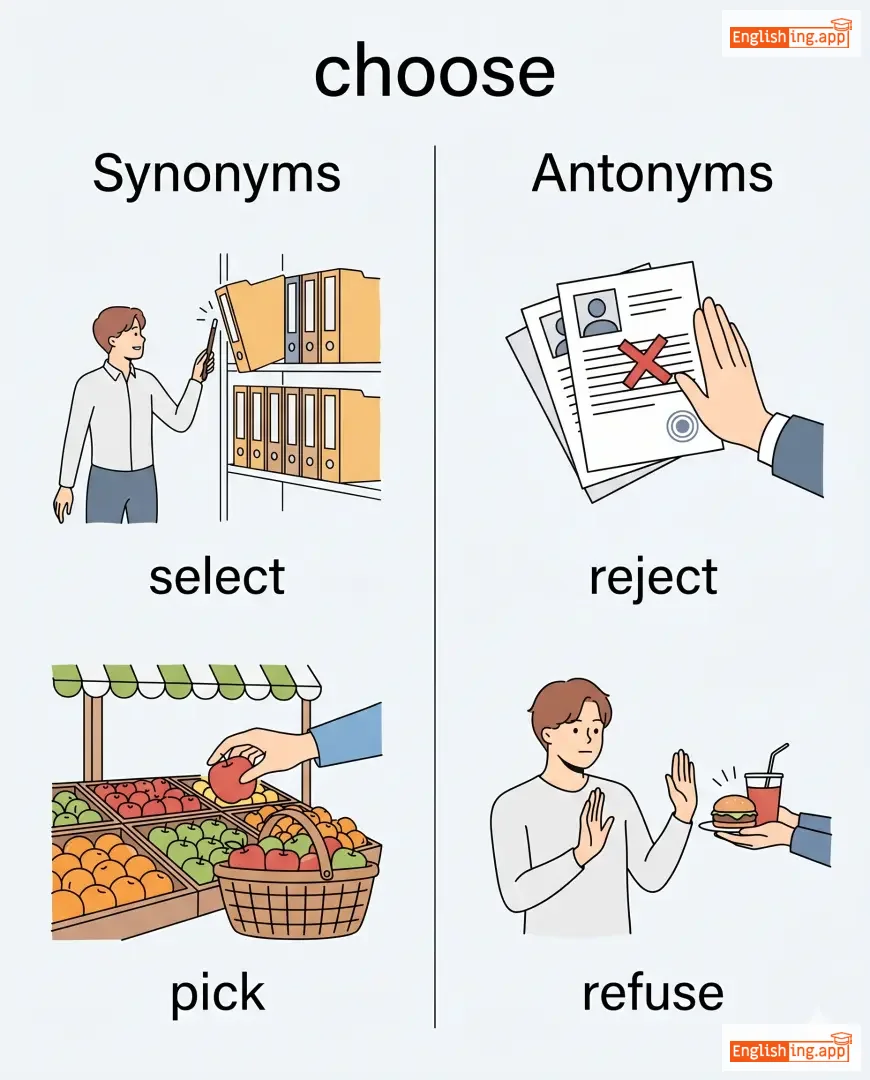
/tʃuːz/
verb
(chūz)
••••••
|
|
选择
xuǎnzé
••••••
|
chose
chóz
••••••
|
chosen
chózen
••••••
|
chooses
chúzès
••••••
|
choosing
chúzìng
••••••
|
to pick one thing from several options; to decide on something
••••••
|
You can choose any color you like.
nǐ kěyǐ xuǎnzé rènhé yánsè nǐ xǐhuān de.
••••••
|
你可以选择任何你喜欢的颜色。
Nǐ kěyǐ xuǎnzé rènhé yánsè nǐ xǐhuān de.
••••••
|
select, pick, decide, opt
••••••
|
reject, refuse, avoid
••••••
|
choose carefully, choose wisely, choose freely, choose between, choose from
••••••
|
选择就像在多种颜色中做出选择!
••••••
|
|
#303
❌
|
/əˈbɒlɪʃ/
verb
(废除)
••••••
|
- •••••• |
废除
feichu
••••••
|
abolished
废除
••••••
|
abolished
废除
••••••
|
abolishes
废除
••••••
|
abolishing
废除
••••••
|
to formally end or stop something; to cancel or eliminate completely
••••••
|
The government decided to abolish the old tax system.
政府决定废除旧的税收制度。
••••••
|
政府决定废除旧的税收制度。
Zhengfu jueding feichu jiu de shuishou zhidu.
••••••
|
eliminate, cancel, terminate, eradicate
••••••
|
establish, create, institute, implement
••••••
|
abolish slavery, abolish system, abolish law, abolish practice, abolish completely
••••••
|
‘废除’就像废除掉旧的规则一样,完全停止它的存在。
••••••
|
|
#304
🛁
|
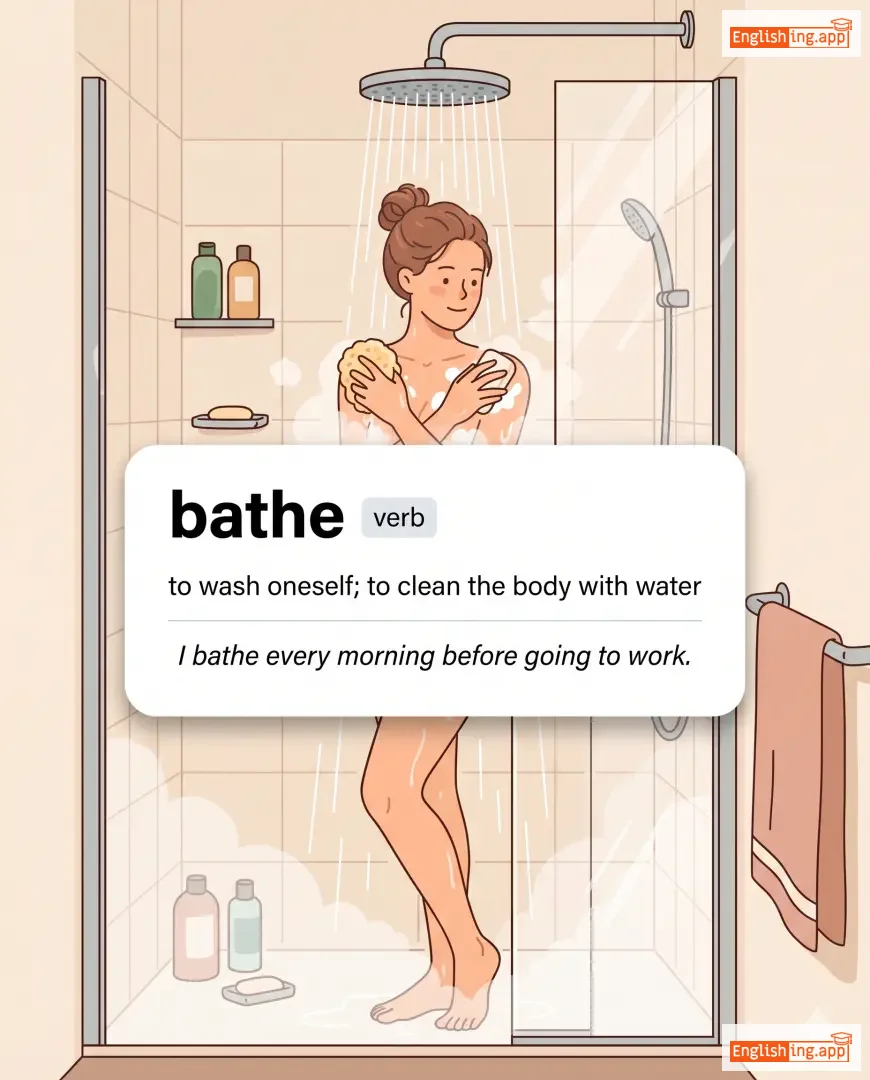
/beɪð/
verb
(beɪð)
••••••
|
|
洗澡
xizao
••••••
|
bathed
bæθd
••••••
|
bathed
bæθd
••••••
|
bathes
bæθs
••••••
|
bathing
bæθɪŋ
••••••
|
to wash oneself; to clean the body with water
••••••
|
I bathe every morning before going to work.
我每天早上上班前洗澡。
••••••
|
我每天早上上班前洗澡。
Wo meitian zaoshang shangban qian xizao
••••••
|
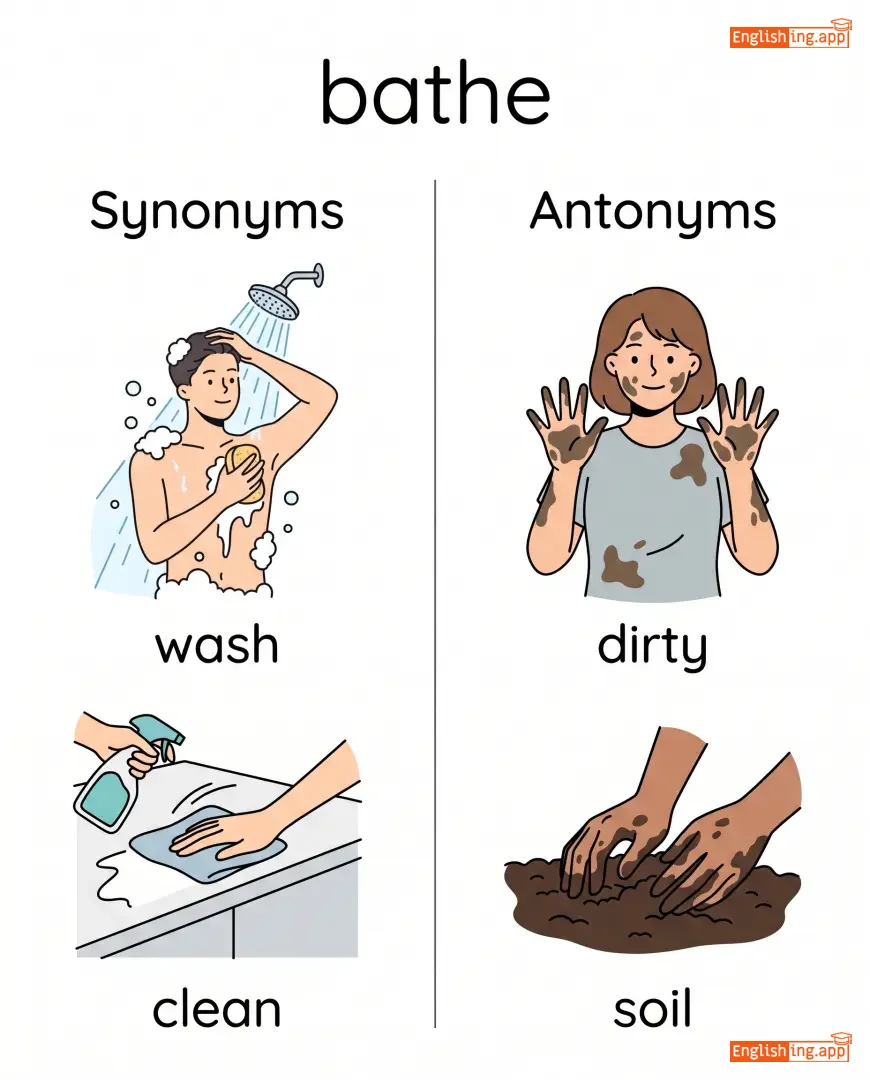
wash, clean, shower, cleanse
••••••
|
dirty, soil, stain, contaminate
••••••
|
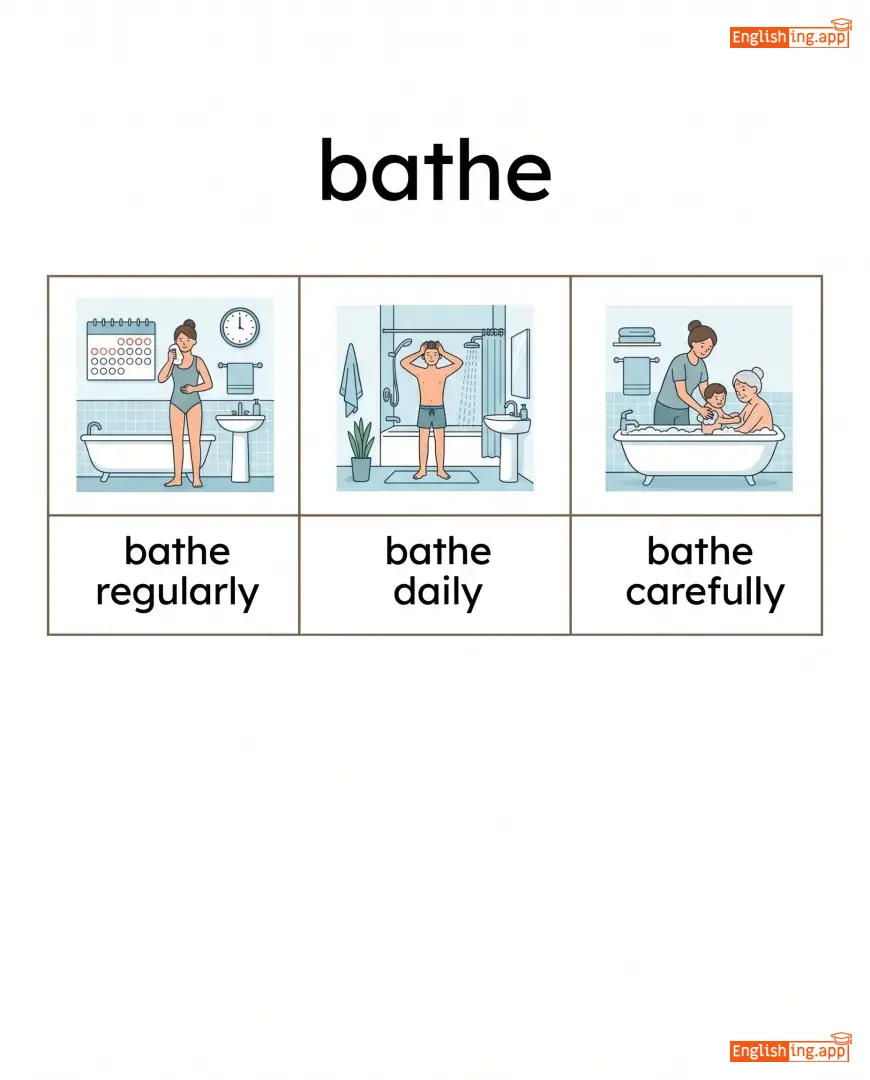
bathe regularly, bathe daily, bathe carefully, bathe in water, bathe the baby
••••••
|
Take a refreshing bath to feel energized for your work.
••••••
|
|
#305
🍎
|
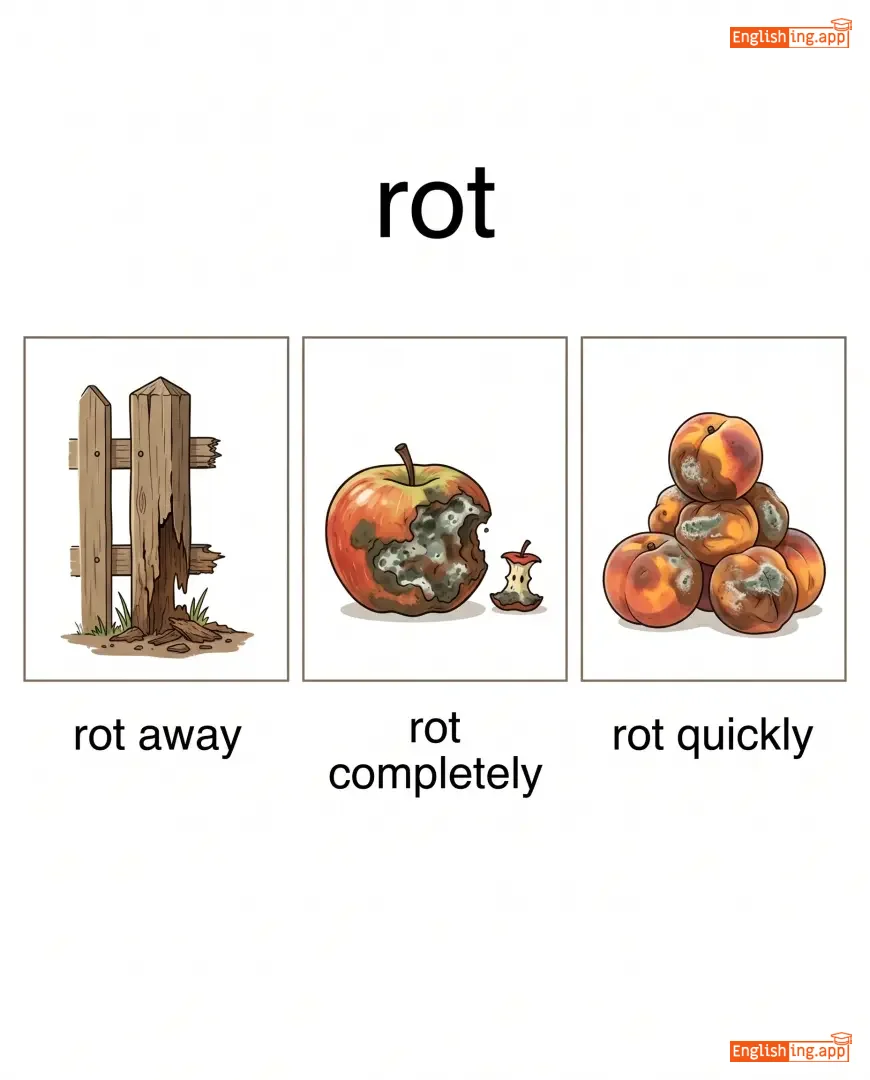
/rɒt/
verb
(rott)
••••••
|
|
腐烂
fǔlàn
••••••
|
rotted
rotted
••••••
|
rotted
rotted
••••••
|
rots
rots
••••••
|
rotting
rotting
••••••
|
to decay or decompose; to become corrupt
••••••
|
The fruit will rot if left in the sun.
水果如果暴露在阳光下会腐烂。
••••••
|
水果如果暴露在阳光下会腐烂。
Shuǐguǒ rúguǒ bàolù zài yángguāng xià huì fǔlàn
••••••
|
decay, decompose, spoil, putrefy
••••••
|
preserve, fresh, maintain, conserve
••••••
|
rot away, rot completely, rot quickly, rot slowly, rot in storage
••••••
|
如果你把水果留在阳光下,它会腐烂,像腐败一样。
••••••
|
|
#306
🤞
|
/hoʊp/
verb
(霍普)
••••••
|
- •••••• |
希望
xiwang
••••••
|
hoped
霍普德
••••••
|
hoped
霍普德
••••••
|
hopes
霍普斯
••••••
|
hoping
霍平
••••••
|
to expect and desire that something will happen
••••••
|
I hope it doesn't rain tomorrow.
我希望明天不会下雨。
••••••
|
我希望明天不会下雨。
Wǒ xīwàng míngtiān bù huì xiàyǔ.
••••••
|
expect, wish, anticipate, trust
••••••
|
despair, doubt, fear, worry
••••••
|
hope for, hope against, hope sincerely, hope desperately, hope in vain
••••••
|
In Chinese, 希望 ('xiwang') is the word for hope, just like waiting for rain to stop.
••••••
|
|
#307
🔍
|
/aɪˈdentɪfaɪ/
verb
(aiˈdentɪfaɪ)
••••••
|
|
识别
shibie
••••••
|
identified
aiˈdentɪfaɪd
••••••
|
identified
aiˈdentɪfaɪd
••••••
|
identifies
aiˈdentɪfaɪz
••••••
|
identifying
aiˈdentɪfaɪɪng
••••••
|
to recognize; to establish who someone is
••••••
|
Can you identify the suspect?
你能识别嫌疑人吗?
••••••
|
你能识别嫌疑人吗?
Nǐ néng shíbié xiányírén ma?
••••••
|
recognize, detect, spot, determine
••••••
|
confuse, mistake, overlook, ignore
••••••
|
identify clearly, identify correctly, identify quickly, identify with, identify as
••••••
|
识别嫌疑人是破案的第一步。
••••••
|
|
#308
🏹
|
/pɪəs/
verb
(pi'ers)
••••••
|
|
刺穿
cì chuān
••••••
|
pierced
pi'ersd
••••••
|
pierced
pi'ersd
••••••
|
pierces
pi'erses
••••••
|
piercing
pi'ersing
••••••
|
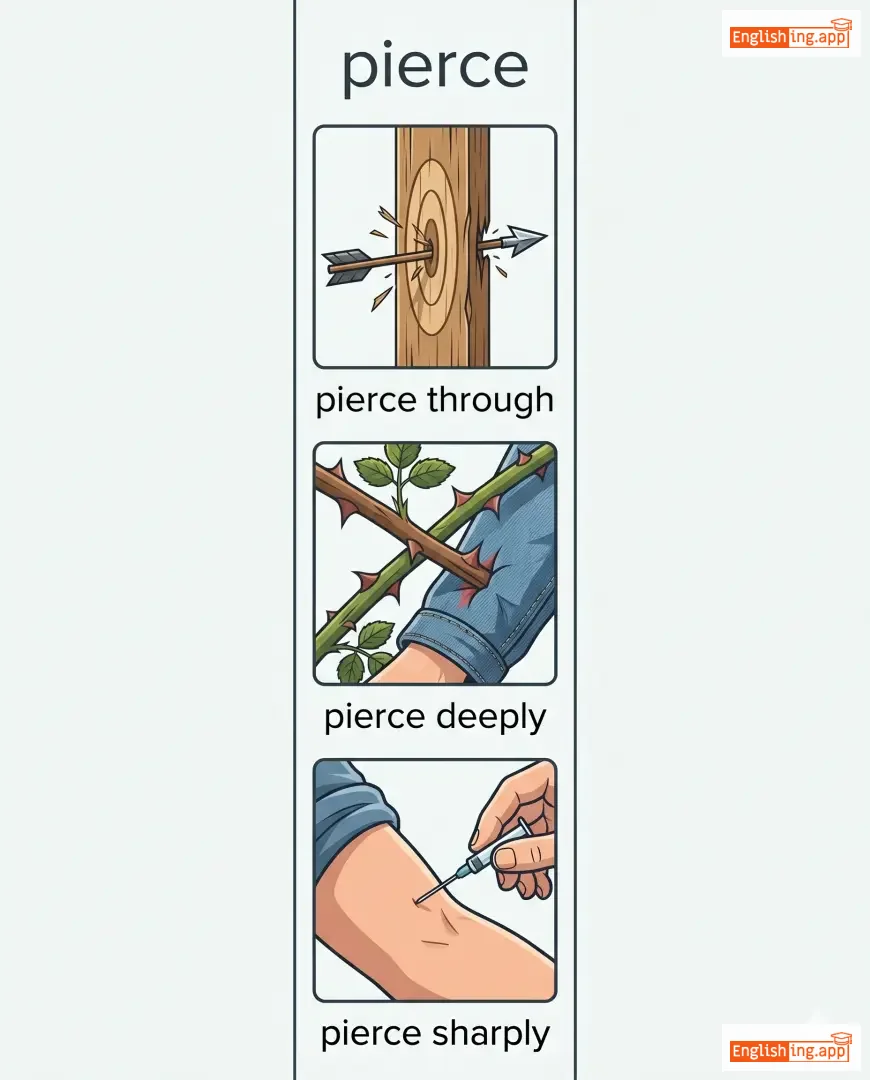
to make a hole through something; to penetrate with a sharp object
••••••
|
The arrow will pierce through the target.
箭矢将穿透目标。
••••••
|
箭矢将穿透目标。
Jiànshǐ jiāng chuāntòu mùbiāo.
••••••
|
penetrate, puncture, perforate, stab
••••••
|
seal, block, close, protect
••••••
|
pierce through, pierce deeply, pierce sharply, pierce the skin, pierce the heart
••••••
|
No •••••• |
|
#309
🔍
|
/dɪˈtekt/
verb
(dɪˈtɛkt)
••••••
|
|
检测
jiǎncè
••••••
|
detected
dɪˈtɛktɪd
••••••
|
detected
dɪˈtɛktɪd
••••••
|
detects
dɪˈtɛkts
••••••
|
detecting
dɪˈtɛktɪŋ
••••••
|
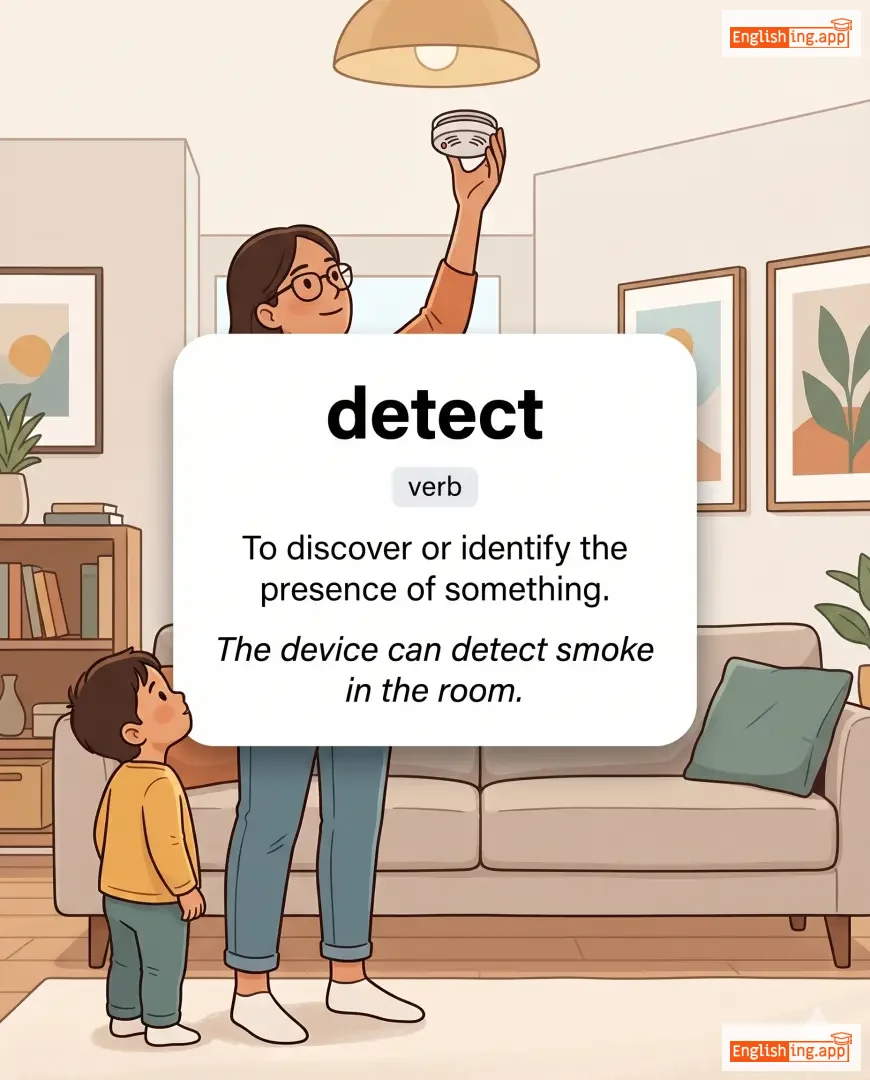
to discover or identify the presence or existence of something; to notice something that is not immediately obvious
••••••
|
The security system can detect movement in the building.
安全系统可以检测到建筑物内的运动。
••••••
|
安全系统可以检测到建筑物内的运动。
Anquan xitong keyi jiance dao jianzhu wu nei de yundong.
••••••
|
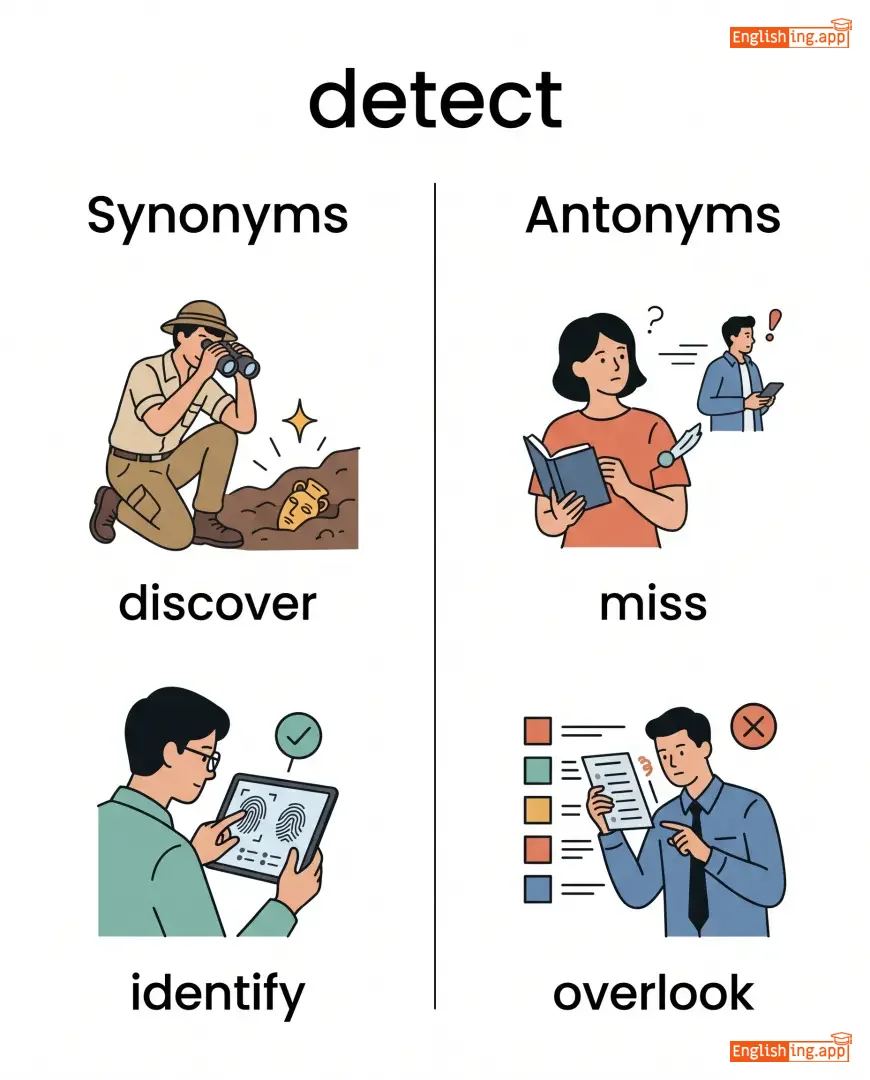
discover, find, identify, spot
••••••
|
miss, overlook, ignore, hide
••••••
|
detect early, detect automatically, detect movement, detect changes, detect problems
••••••
|
Detect hidden motions with '检测' and secure your environment!
••••••
|
|
#310
😤
|
/həˈræs/
verb
(哈雷斯)
••••••
|
- •••••• |
骚扰
saorao
••••••
|
harassed
哈雷斯德
••••••
|
harassed
哈雷斯德
••••••
|
harasses
哈雷斯
••••••
|
harassing
哈雷辛
••••••
|
to persistently annoy or torment someone
••••••
|
The employees complained that their boss harassed them.
员工抱怨他们的老板骚扰了他们
••••••
|
员工抱怨他们的老板骚扰了他们
Yuángōng bàoyuàn tāmen de lǎobǎn sāo rǎo le tāmen
••••••
|
torment, pester, bother, intimidate
••••••
|
help, support, comfort, protect
••••••
|
harass constantly, harass sexually, harass verbally, harass at work, harass online
••••••
|
骚扰 = 持续的烦恼和折磨
••••••
|
|
#311
🚀
|
/dɪˈplɔɪ/
verb
(déploy)
••••••
|
|
部署
bùshǔ
••••••
|
deployed
deployed
••••••
|
deployed
deployed
••••••
|
deploys
deploys
••••••
|
deploying
deploying
••••••
|
to position strategically; to use effectively
••••••
|
The military will deploy troops to the border.
军队将部署部队到边境。
••••••
|
军队将部署部队到边境。
Jūnduì jiāng bùshǔ bùduì dào biānjìng.
••••••
|
position, station, arrange, utilize
••••••
|
withdraw, recall, remove, retreat
••••••
|
deploy troops, deploy resources, deploy technology, deploy strategically, deploy effectively
••••••
|
想象军队如何部署到战略位置,准备出发。
••••••
|
|
#312
❌
|
/feɪl/
verb
(feɪl)
••••••
|
- •••••• |
失败
shībài
••••••
|
failed
feɪld
••••••
|
failed
feɪld
••••••
|
fails
feɪlz
••••••
|
failing
feɪlɪŋ
••••••
|
to not succeed in achieving something; to be unsuccessful
••••••
|
He failed to complete the assignment on time.
他未能按时完成任务。
••••••
|
他未能按时完成任务。
Tā wèinéng ànshí wánchéng rènwù.
••••••
|
flop, fall short, miss, bomb
••••••
|
succeed, pass, achieve, accomplish
••••••
|
fail miserably, fail completely, fail to understand, fail the test, fail in business
••••••
|
失败意味着没有成功!
••••••
|
|
#313
🍽️
|
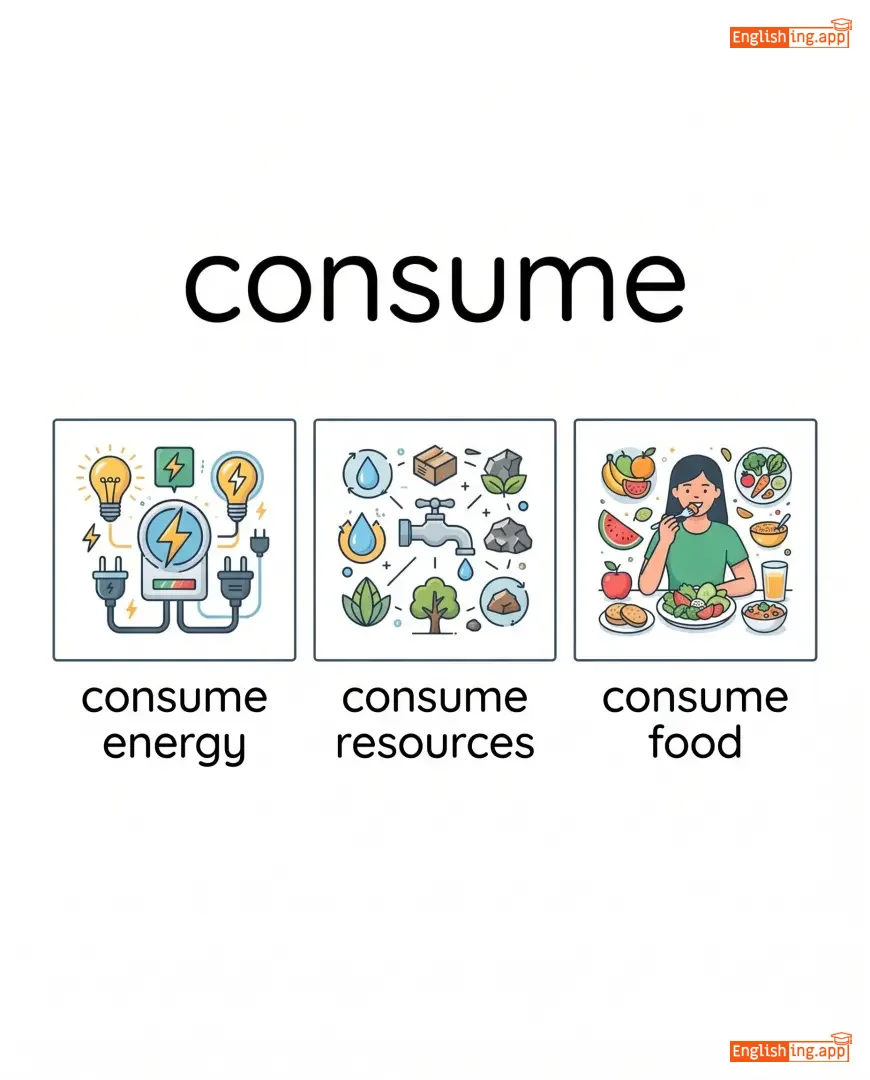
/kənˈsuːm/
verb
(消费)
••••••
|
|
吃,喝,消费
chi, he, xiaofei
••••••
|
consumed
消费过
••••••
|
consumed
消费过
••••••
|
consumes
消费
••••••
|
consuming
消费中
••••••
|
to eat or drink; to use up; to destroy completely
••••••
|
We consume a lot of water during summer.
我们夏天消耗很多水。
••••••
|
我们夏天消耗很多水。
Wo men xia tian xiao hao hen duo shui.
••••••
|
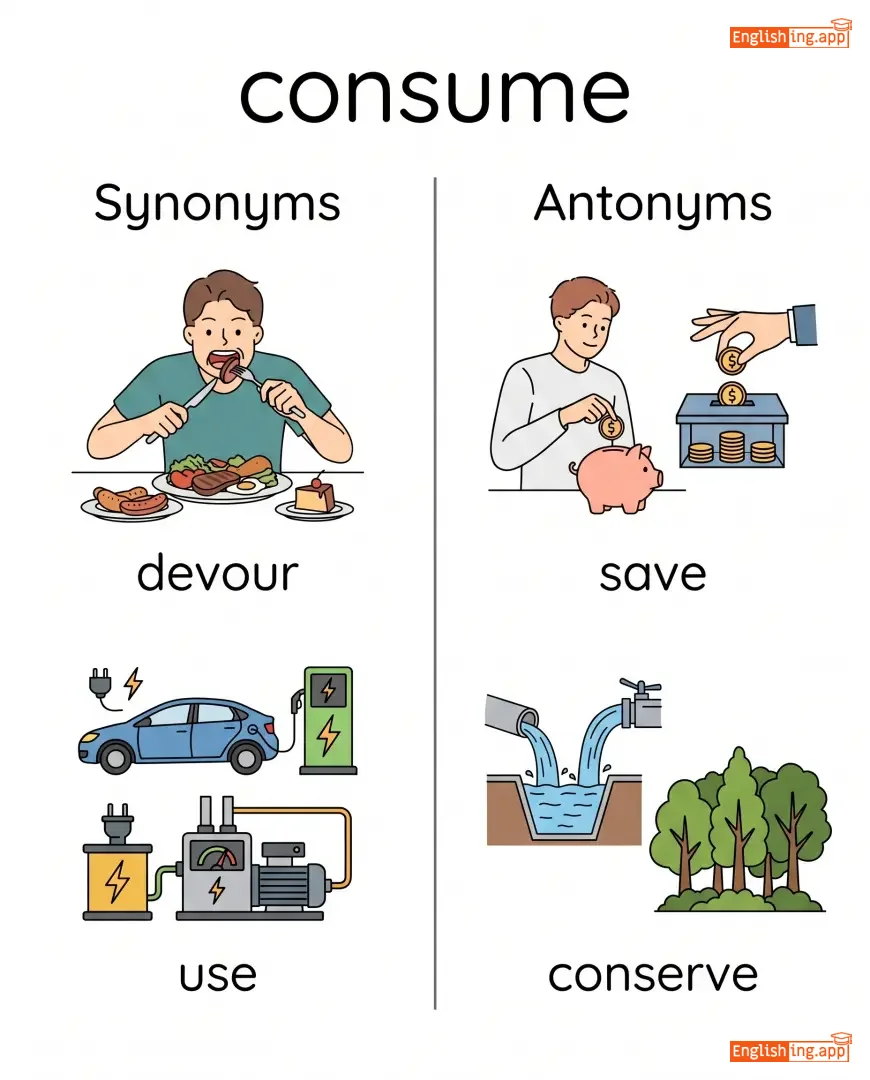
eat, drink, use, devour
••••••
|
produce, create, save, conserve
••••••
|
consume food, consume energy, consume resources, consume time, consume alcohol
••••••
|
消费就是吃喝,像夏天喝水一样
••••••
|
|
#314
💎
|
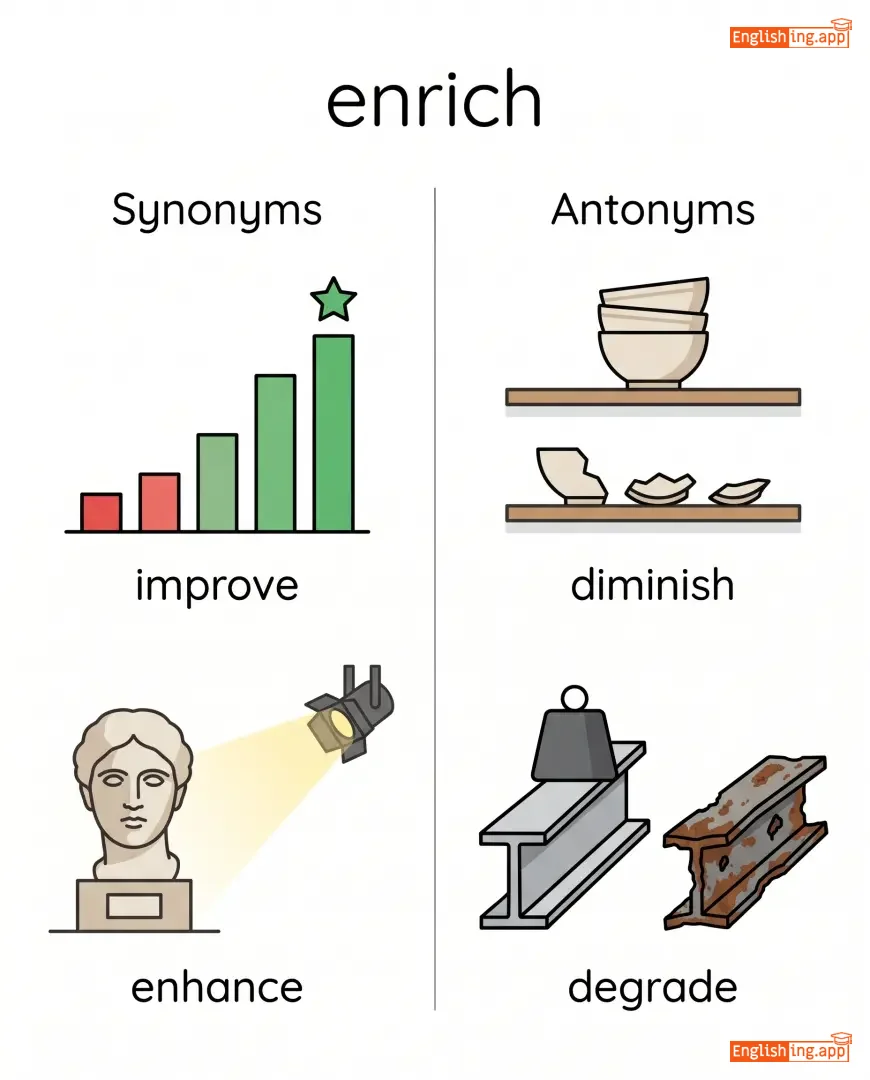
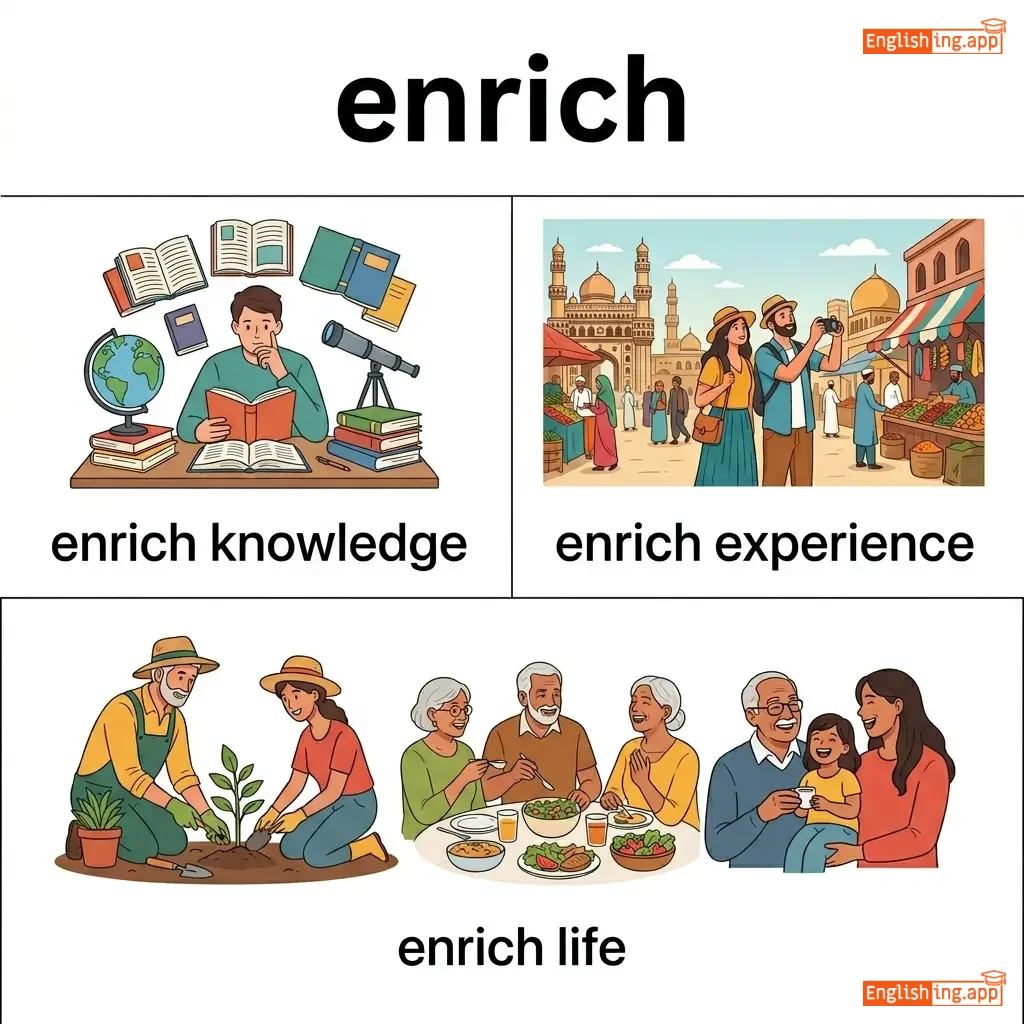
/ɪnˈrɪtʃ/
verb
(enrich)
••••••
|
|
丰富
fengfu
••••••
|
enriched
enriched
••••••
|
enriched
enriched
••••••
|
enriches
enriches
••••••
|
enriching
enriching
••••••
|
to improve the quality or value of something
••••••
|
Reading books will enrich your vocabulary.
Reading books will enrich your vocabulary.
••••••
|
阅读书籍将丰富您的词汇。
Yuedu shuju jiang fengfu nin de cihui.
••••••
|
enhance, improve, strengthen, develop
••••••
|
impoverish, weaken, diminish
••••••
|
enrich life, enrich experience, enrich knowledge, enrich soil, enrich vocabulary
••••••
|
阅读书籍可以丰富你的词汇。
••••••
|
|
#315
📤
|
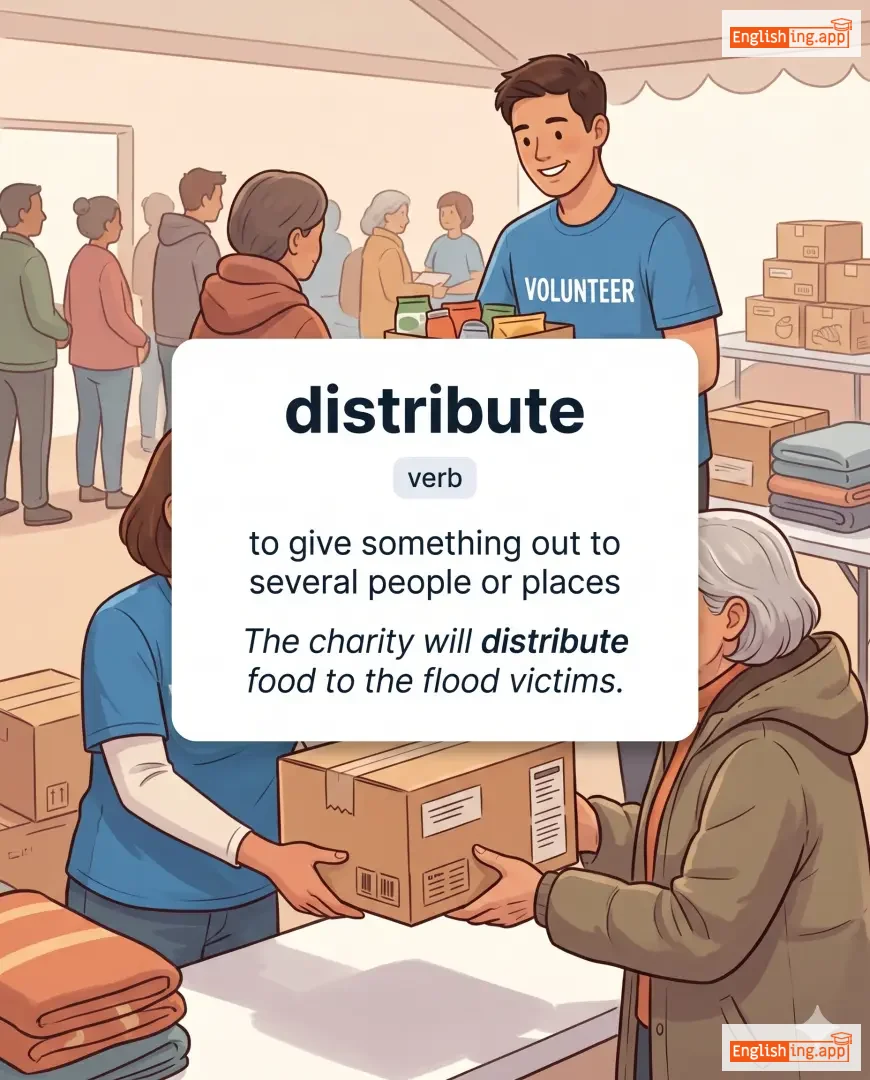
/dɪsˈtrɪbjuːt/
verb
(分发)
••••••
|
|
分发
fēn fā
••••••
|
distributed
分发了
••••••
|
distributed
分发了
••••••
|
distributes
分发
••••••
|
distributing
分发中
••••••
|
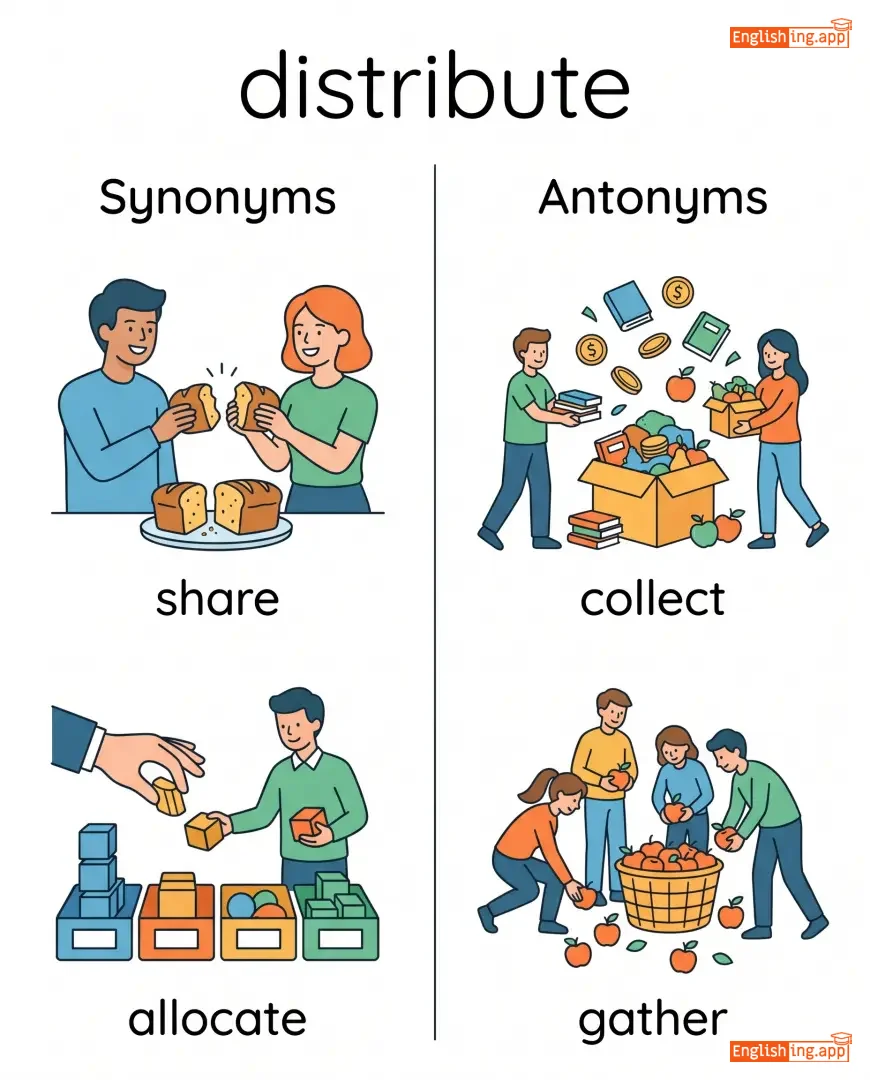
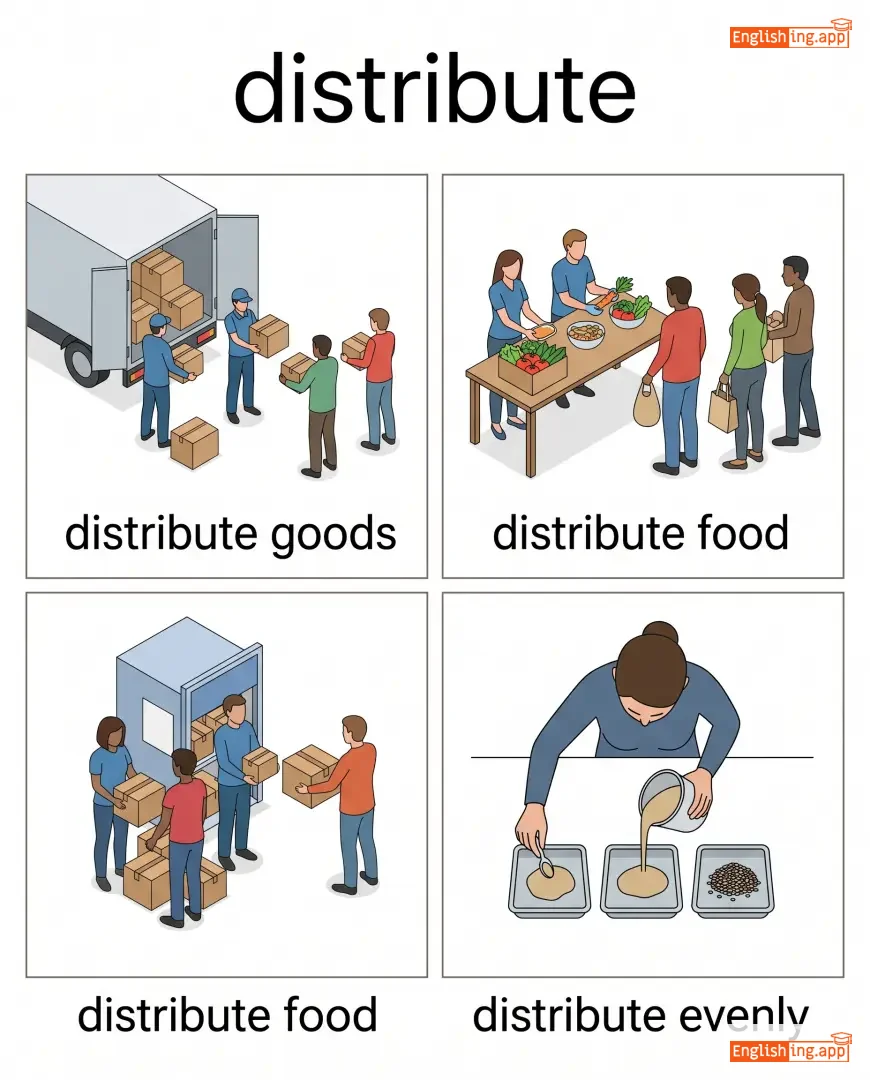
to give out or spread something among several people or places
••••••
|
The teacher will distribute the test papers.
老师将分发测试试卷。
••••••
|
老师将分发测试试卷。
Lǎoshī jiāng fēn fā cèshì shìjuàn.
••••••
|
share, divide, spread, allocate
••••••
|
collect, gather, hoard, accumulate
••••••
|
distribute equally, distribute widely, distribute fairly, distribute among, distribute to
••••••
|
分发就像分发邮件,所有人都能得到!
••••••
|
|
#316
✨
|
/ˈænɪmeɪt/
verb
(动画)
••••••
|
- •••••• |
动画
donghua
••••••
|
animated
动画了
••••••
|
animated
动画了
••••••
|
animates
动画
••••••
|
animating
动画ing
••••••
|
to bring to life or make lively; to create animation for films or cartoons
••••••
|
The artist will animate the characters for the movie.
艺术家将为电影动画化角色。
••••••
|
艺术家将为电影动画化角色。
Yishujia jiang wei dianying donghuahua juese.
••••••
|
enliven, invigorate, inspire, energize
••••••
|
deaden, discourage, depress, dispirit
••••••
|
animate characters, animate objects, animate discussion, animate with joy, animate the scene
••••••
|
动画就是赋予电影或卡通角色生命的过程。
••••••
|
|
#317
↗️
|
/ˈdiːvieɪt/
verb
(离开)
••••••
|
|
偏离
piānlí
••••••
|
deviated
偏离
••••••
|
deviated
偏离
••••••
|
deviates
偏离
••••••
|
deviating
偏离
••••••
|
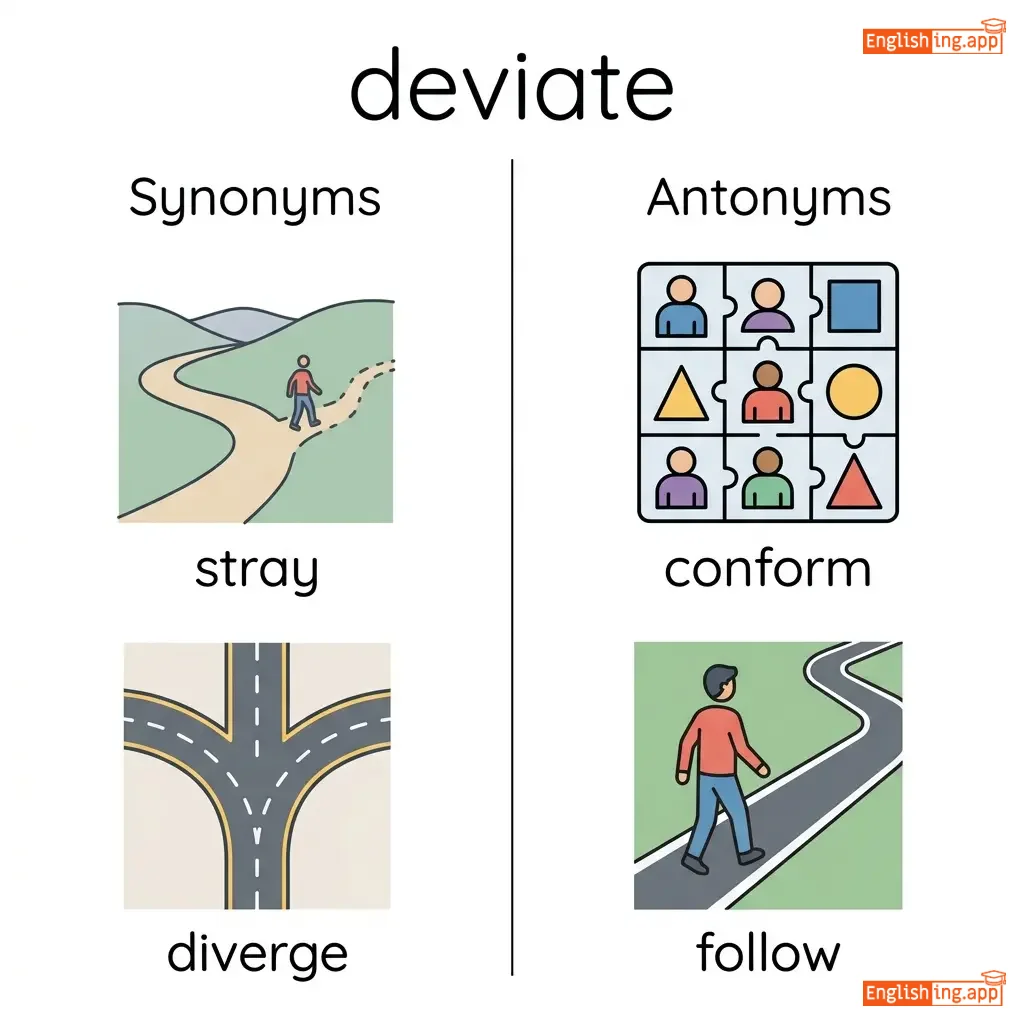
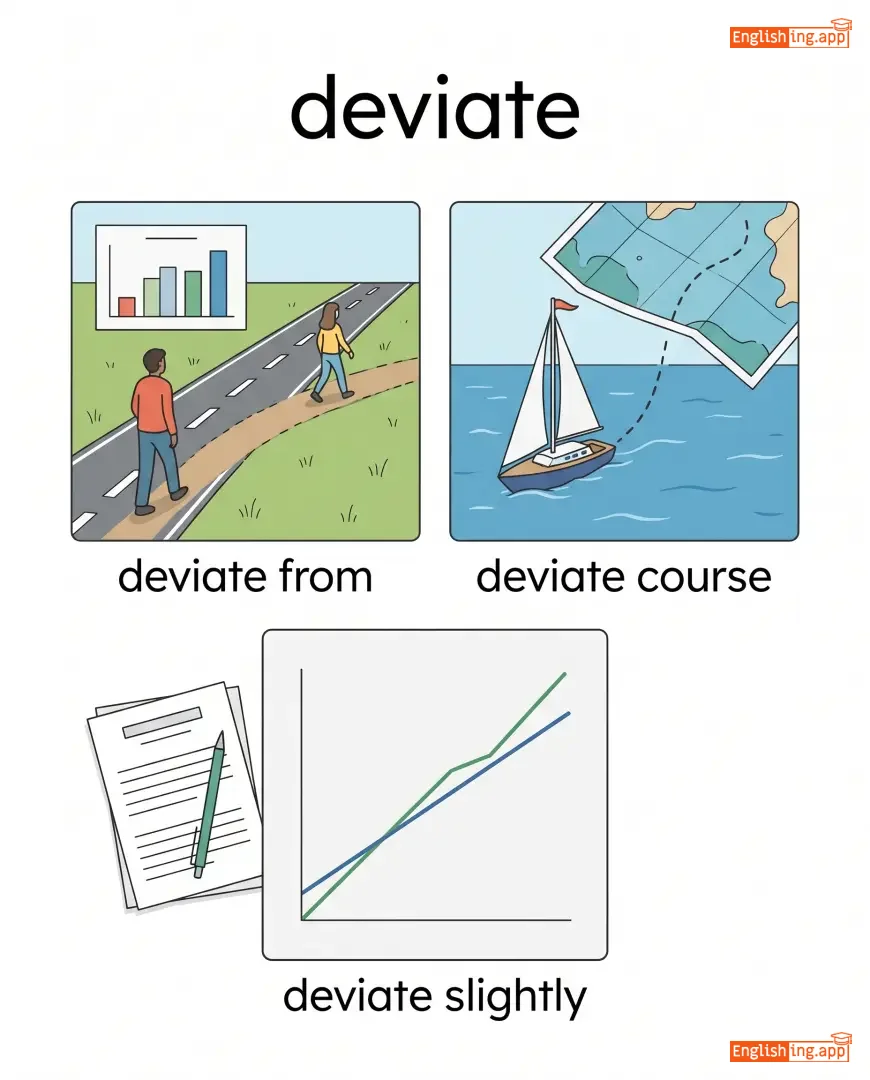
to depart from an established course; to differ
••••••
|
The path deviates from the main road here.
这条路在这里偏离主路。
••••••
|
这条路在这里偏离主路。
Zhè tiáo lù zài zhè lǐ piānlí zhǔ lù.
••••••
|
diverge, stray, vary, differ
••••••
|
conform, follow, adhere, comply
••••••
|
deviate from path, deviate from plan, deviate significantly, deviate slightly, deviate from norm
••••••
|
偏离,像离开了主路。
••••••
|
|
#318
🐣
|
/hætʃ/
verb
(海皮尼斯)
••••••
|
- •••••• |
孵化
fuhua
••••••
|
hatched
海皮尼斯德
••••••
|
hatched
海皮尼斯德
••••••
|
hatches
海皮尼斯
••••••
|
hatching
海皮尼斯英
••••••
|
to emerge from an egg; to devise or create a plan
••••••
|
The bird will hatch from its egg soon.
鸟将从蛋中孵化出来。
••••••
|
鸟将从蛋中孵化出来。
Niao jiang cong dan zhong fuhua chu lai.
••••••
|
emerge, break out, devise, create
••••••
|
hide, conceal, suppress, contain
••••••
|
hatch eggs, hatch plans, hatch schemes, hatch plots, hatch successfully
••••••
|
Imagine the bird hatching from the egg and flying out into the world.
••••••
|
|
#319
🎛️
|
/məˈnɪpjʊleɪt/
verb
(操控)
••••••
|
- •••••• |
操控
caokong
••••••
|
manipulated
操控过
••••••
|
manipulated
操控过
••••••
|
manipulates
操控
••••••
|
manipulating
操控中
••••••
|
to handle or control skillfully; to influence someone in a clever way
••••••
|
She can manipulate the software to create stunning graphics.
她可以操控软件,创造出令人惊叹的图形。
••••••
|
她可以操控软件,创造出令人惊叹的图形。
Ta keyi caokong ruanjian, chuangzao chu lingren jingtan de tuxing.
••••••
|
control, handle, manage, influence
••••••
|
ignore, neglect, abandon, release
••••••
|
manipulate data, manipulate people, manipulate emotions, manipulate carefully, manipulate skillfully
••••••
|
操控 in Chinese can be remembered as '操控软件' which is about controlling software for amazing results.
••••••
|
|
#320
🌱
|
/wiːd/
verb
(wíd)
••••••
|
|
除草
chucao
••••••
|
weeded
wíded
••••••
|
weeded
wíded
••••••
|
weeds
widz
••••••
|
weeding
wiːdɪŋ
••••••
|
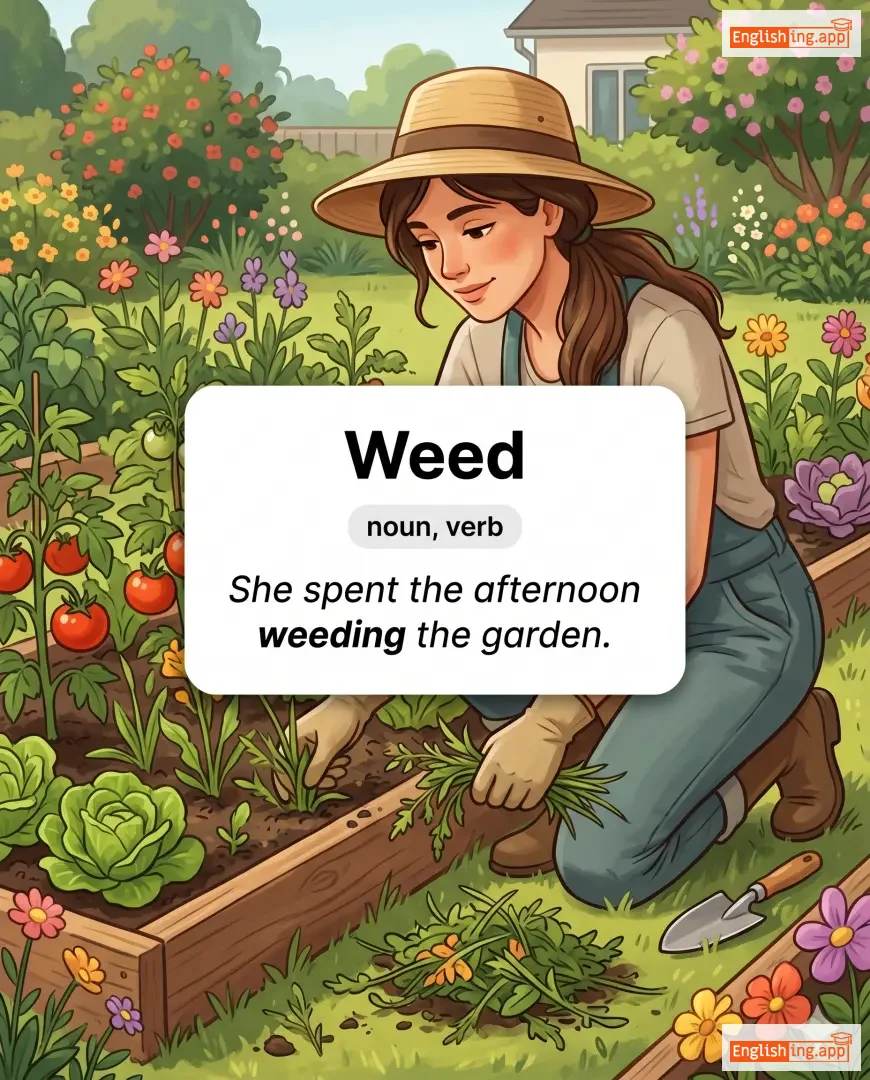
to remove unwanted plants from a garden; to eliminate undesirable elements
••••••
|
We need to weed the garden today.
今天我们需要除草。
••••••
|
今天我们需要除草。
Jīntiān wǒmen xūyào chúcǎo.
••••••
|
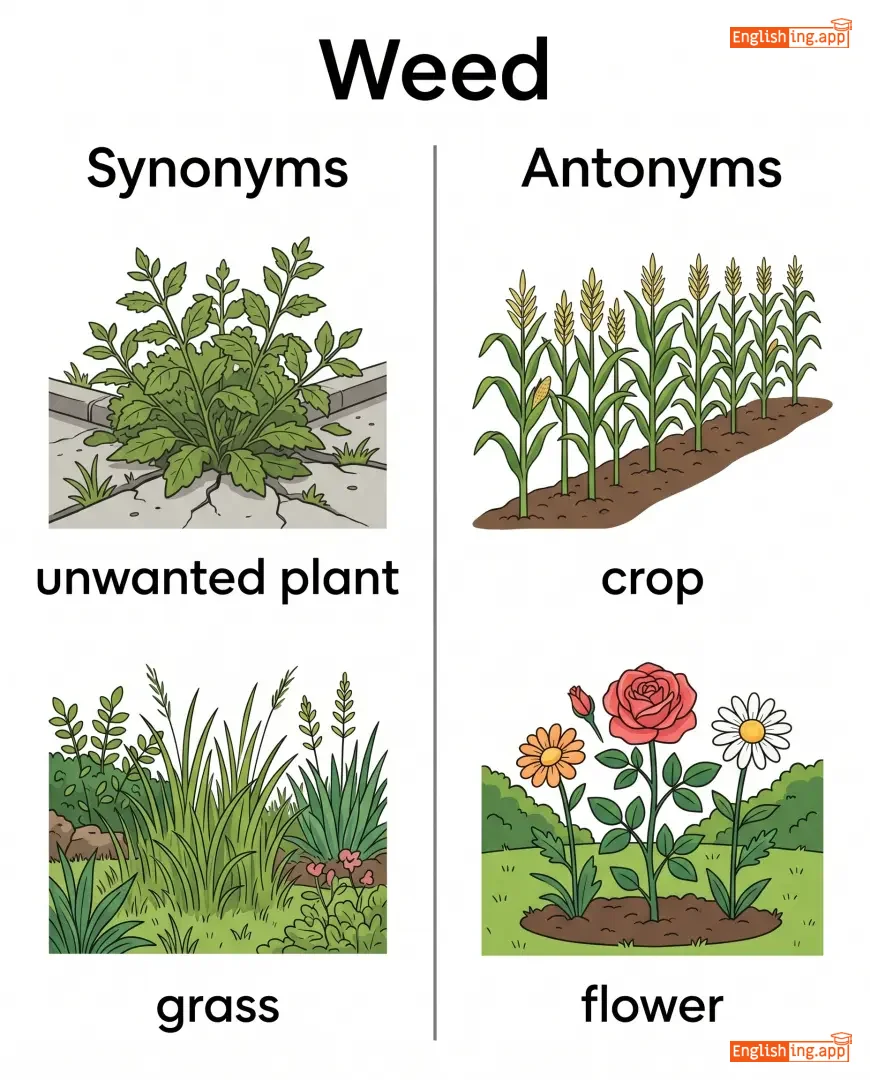
remove, eliminate, clear, uproot
••••••
|
plant, cultivate, grow, nurture
••••••
|
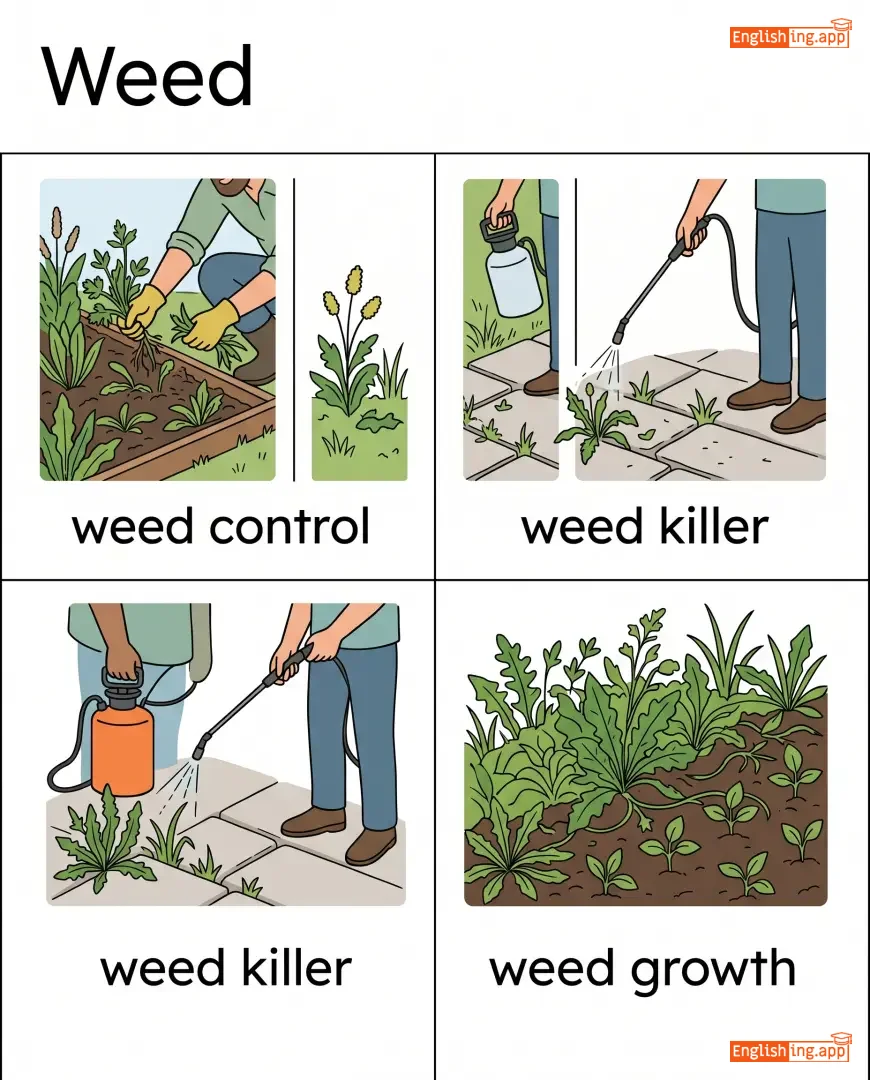
weed garden, weed out, weed carefully, weed regularly, weed thoroughly
••••••
|
除草让花园更美丽
••••••
|
|
#321
🏁
|
/kənˈkluːd/
verb
(kāng lǜ dì ér)
••••••
|
|
结束
jieshu
••••••
|
concluded
kāng lǜ dé
••••••
|
concluded
kāng lǜ dé
••••••
|
concludes
kāng lǜ
••••••
|
concluding
kāng lǜ zhī yú
••••••
|
to bring to an end; to decide or determine after consideration
••••••
|
We will conclude the meeting at five o'clock.
Wǒmen yīnggāi zài wǔ diǎn zhōng wánchéng huìyì.
••••••
|
我们将在五点钟结束会议。
Women jiang zai wu dian zhong jieshu huiyi.
••••••
|
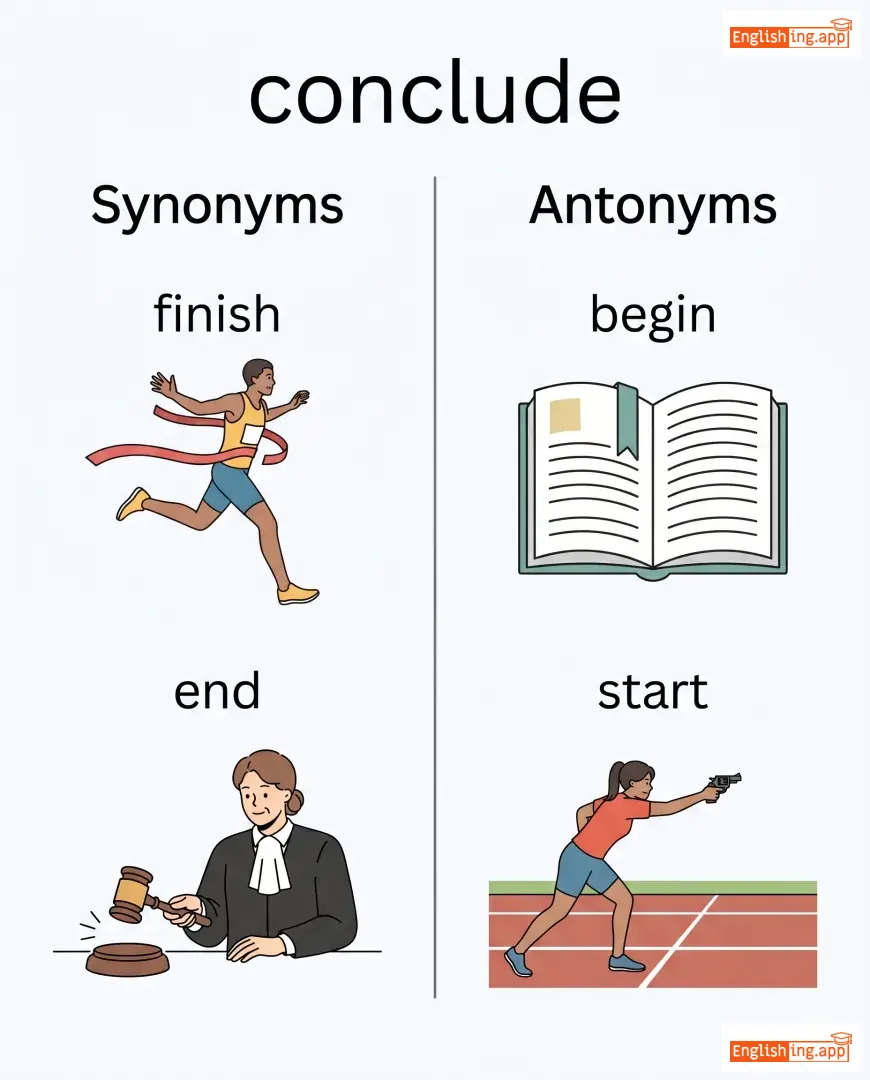
end, finish, complete, finalize
••••••
|
begin, start, commence, initiate
••••••
|
conclude meeting, conclude discussion, conclude successfully, conclude with, conclude that
••••••
|
结束 (finish) jieshu huiyi
••••••
|
|
#322
🤕
|
/hɜːrt/
verb
(hɜːrt)
••••••
|
- •••••• |
伤害
shānghài
••••••
|
hurt
hɜːrt
••••••
|
hurt
hɜːrt
••••••
|
hurts
hɜːrts
••••••
|
hurting
hɜːrting
••••••
|
to cause pain or injury; to feel pain physically or emotionally
••••••
|
My back hurts from sitting too long.
我的背部因为坐得太久而疼痛。
••••••
|
我的背部因为坐得太久而疼痛。
wǒ de bèi bù yīnwèi zuò dé tài jiǔ ér téngtòng
••••••
|
pain, ache, injure, wound
••••••
|
heal, soothe, comfort, help
••••••
|
hurt feelings, hurt badly, hurt someone, hurt physically, hurt emotionally
••••••
|
No •••••• |
|
#323
↕️
|
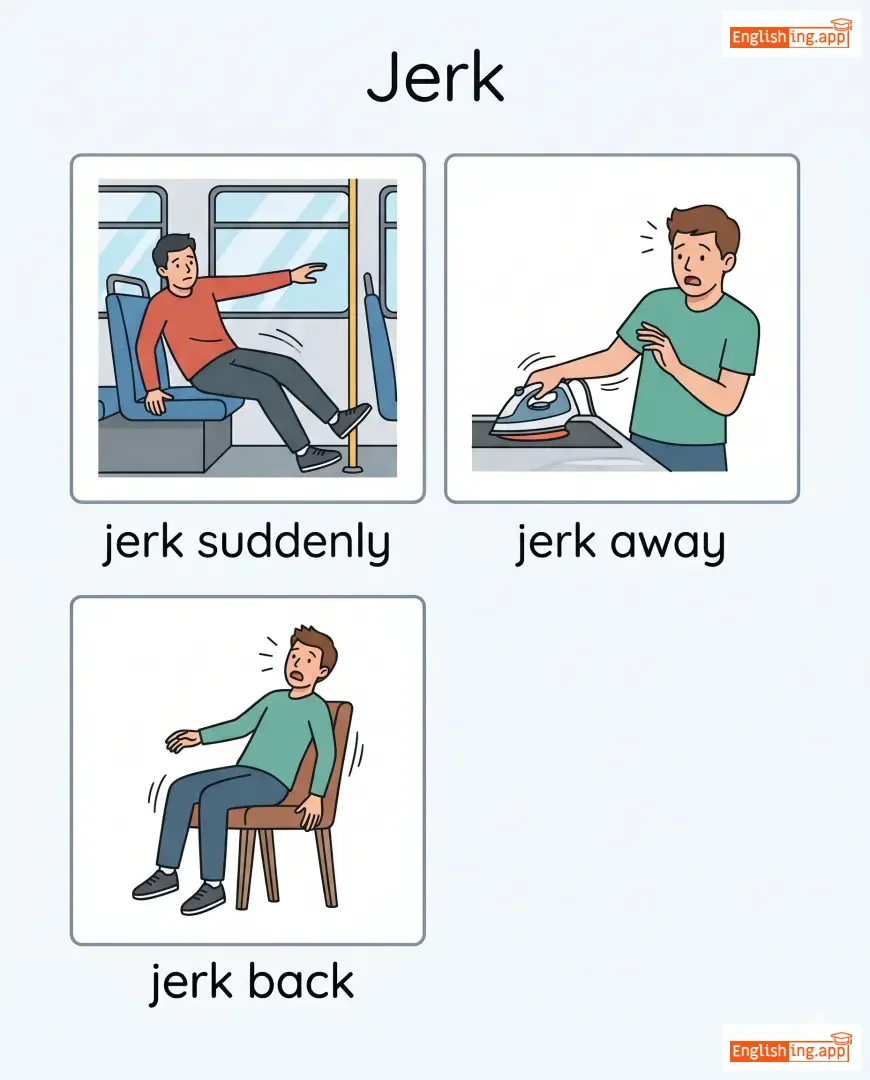
/dʒɜrk/
verb
(杰克)
••••••
|
|
猛拉
měng lā
••••••
|
jerked
杰克德
••••••
|
jerked
杰克德
••••••
|
jerks
杰克斯
••••••
|
jerking
杰克金
••••••
|
to move suddenly and quickly in a sharp way
••••••
|
The car jerked to a stop when the brakes were applied.
当刹车被应用时,车突然停了下来。
••••••
|
当刹车被应用时,车猛拉着停了下来。
Dāng shāchē bèi yìngyòng shí, chē měng lā zhe tíng le xiàlái.
••••••
|
pull, yank, tug, wrench, snatch
••••••
|
push, glide, flow, smooth, gentle
••••••
|
jerk suddenly, jerk away, jerk back, jerk forward, jerk violently
••••••
|
‘猛拉’ 就像车辆突然停止时的一个猛烈动作!
••••••
|
|
#324
💥
|
/buːm/
verb
(布姆)
••••••
|
|
轰鸣
hongming
••••••
|
boomed
布姆德
••••••
|
boomed
布姆德
••••••
|
booms
布姆斯
••••••
|
booming
布姆英
••••••
|
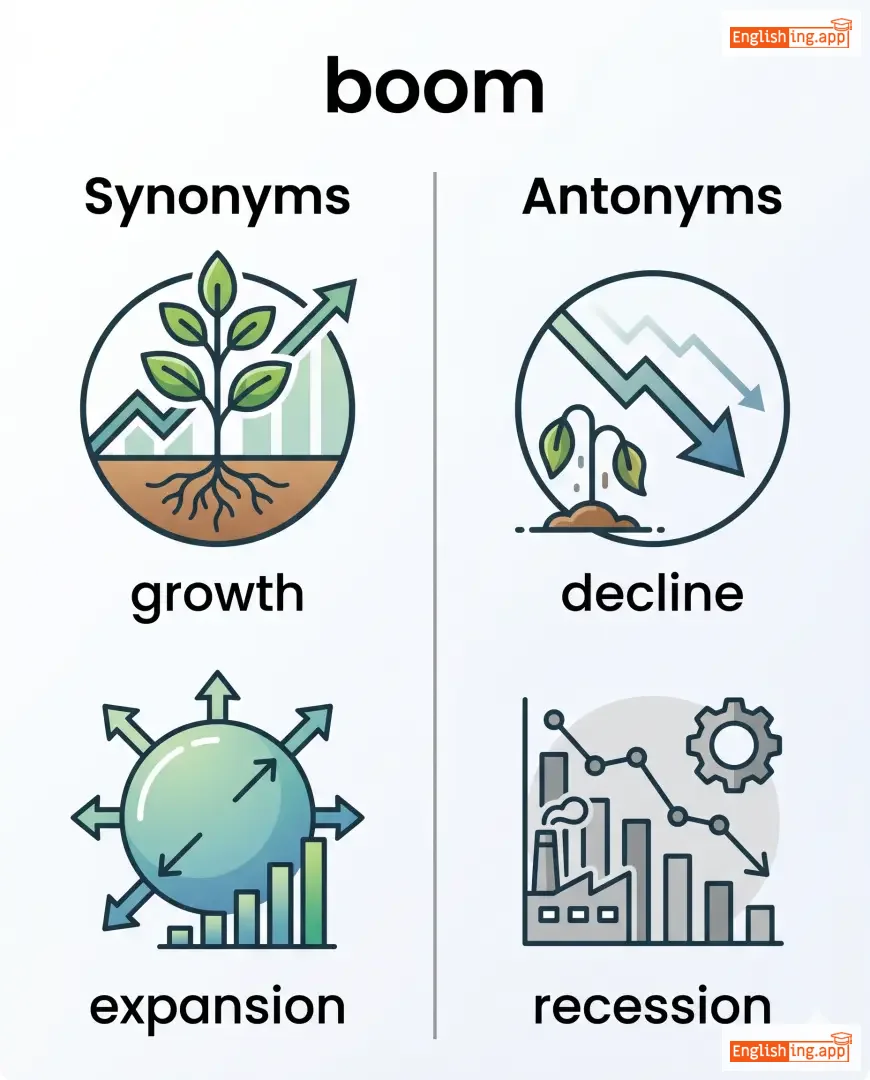
to make a loud deep sound; to grow or increase rapidly
••••••
|
The thunder boomed across the sky.
雷声在天空中轰鸣。
••••••
|
雷声在天空中轰鸣。
Léishēng zài tiānkōng zhōng hōngmíng.
••••••
|
thunder, roar, flourish, prosper
••••••
|
whisper, decline, fail
••••••
|
boom loudly, boom across, boom economy, boom business, boom suddenly
••••••
|
轰鸣 (hongming) is the deep booming sound of thunder in Chinese.
••••••
|
|
#325
🔍
|
/ˈmæɡnɪfaɪ/
verb
(放大)
••••••
|
- •••••• |
放大
fangda
••••••
|
magnified
放大
••••••
|
magnified
放大
••••••
|
magnifies
放大
••••••
|
magnifying
放大
••••••
|
to make something appear larger; to increase the importance or effect of something
••••••
|
The microscope can magnify tiny objects for better observation.
显微镜可以放大微小的物体以便更好地观察。
••••••
|
显微镜可以放大微小的物体以便更好地观察。
Xianweijing keyi fangda weixiao de wuti yibian geng hao de guancha.
••••••
|
enlarge, amplify, increase, expand
••••••
|
reduce, minimize, diminish, shrink
••••••
|
magnify image, magnify problem, magnify sound, magnify greatly, magnify ten times
••••••
|
In Chinese, remember '放大' as the magnifying function that makes objects appear larger.
••••••
|
|
#326
⚔️
|
/faɪt/
verb
(fài tè)
••••••
|
- •••••• |
战斗
zhàndòu
••••••
|
fought
zhēng dǎ
••••••
|
fought
zhēng dǎ
••••••
|
fights
zhēng dǎ
••••••
|
fighting
zhēng dǎ zhōng
••••••
|
to engage in battle or combat; to struggle against
••••••
|
The soldiers fight for their country.
士兵为他们的国家而战。
••••••
|
士兵为他们的国家而战。
Shìbīng wèi tāmen de guójiā ér zhàn.
••••••
|
battle, combat, struggle, wrestle
••••••
|
surrender, yield, give up, retreat
••••••
|
fight bravely, fight back, fight for, fight against, fight hard
••••••
|
战斗 = 为了某个目标而努力
••••••
|
|
#327
🔨
|
/meɪk/
verb
(meɪk)
••••••
|
- •••••• |
做
zuò
••••••
|
made
meɪd
••••••
|
made
meɪd
••••••
|
makes
meɪks
••••••
|
making
meɪkɪŋ
••••••
|
to create, produce, or construct something
••••••
|
I make coffee every morning.
我每天早上做咖啡。
••••••
|
我每天早上做咖啡。
Wǒ měitiān zǎoshang zuò kāfēi.
••••••
|
create, produce, build, construct
••••••
|
destroy, break, demolish, ruin
••••••
|
make decision, make progress, make mistake, make money, make time
••••••
|
‘做’就像‘make’,用来做咖啡。
••••••
|
|
#328
🏃
|
/tʃeɪs/
verb
(chēi sī)
••••••
|
|
追逐
zhuī zhú
••••••
|
chased
chēi sī d
••••••
|
chased
chēi sī d
••••••
|
chases
chēi sī z
••••••
|
chasing
chēi sī ng
••••••
|
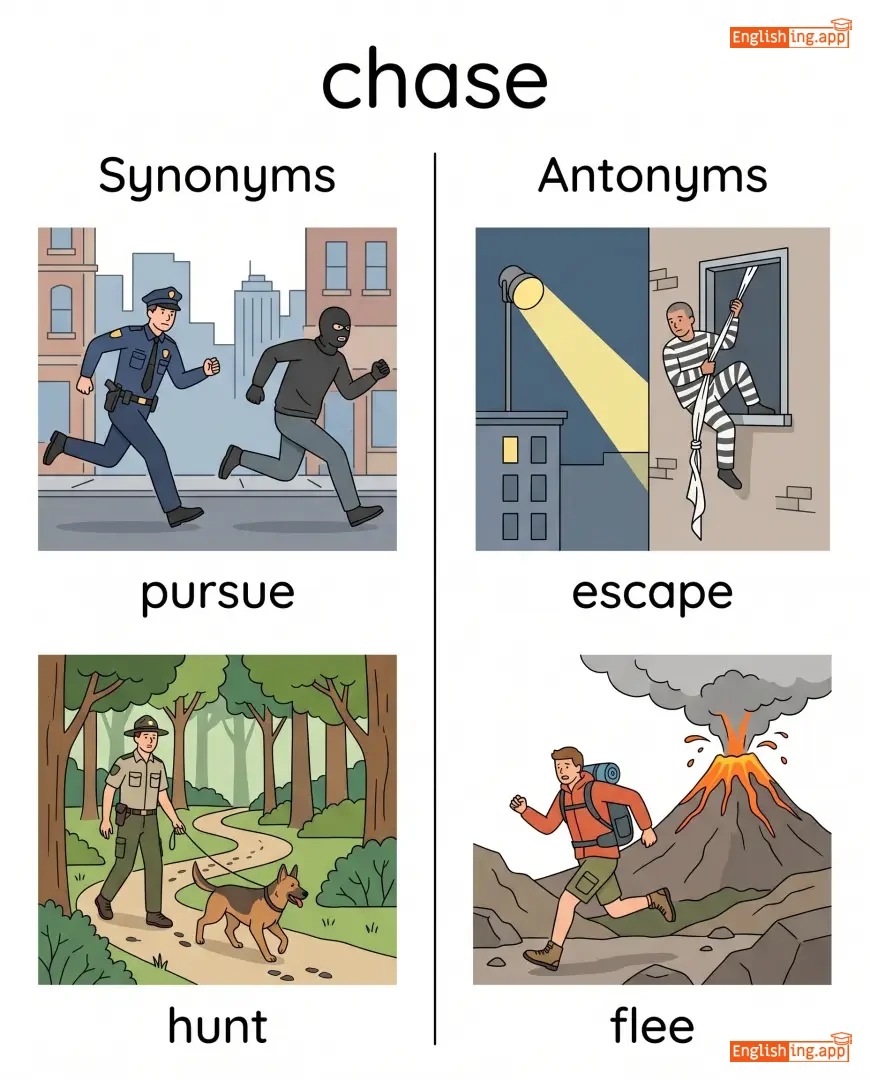
to pursue in order to catch or catch up with; to follow rapidly
••••••
|
The dog will chase the ball across the yard.
狗将在院子里追球。
••••••
|
狗将在院子里追球。
Gǒu jiāng zài yuànzi lǐ zhuī qiú.
••••••
|
pursue, follow, hunt, track
••••••
|
flee, escape, avoid, retreat
••••••
|
chase after, chase away, chase down, chase dreams, chase relentlessly
••••••
|
追逐意味着快速跟随某物,就像狗追球一样。
••••••
|
Vocabulary Quiz
Test your vocabulary by matching words with their translations or meanings.
Login to take the quiz
Comments (0)
Share your thoughts and join the discussion.
Join the discussion by logging in
Login to CommentNo comments yet
Be the first to share your thoughts!