

















Swipe left or right, or use the buttons. Tap image to zoom.
例句翻译
单词
Lesson 24: Mastering the Most Frequent Verbs & TensesLesson 24: Mastering the Most Frequent Verbs & Tenses - 遮罩切换
|
表情符号
|
单词 | Images | 翻译 | 过去时 | 过去分词 | 第三人称单数 | 动名词 | 含义 | 例句 | 例句翻译 | 同义词 | 反义词 | 搭配词 | 助记符 |
|---|---|---|---|---|---|---|---|---|---|---|---|---|---|---|
|
#686
🔒
|
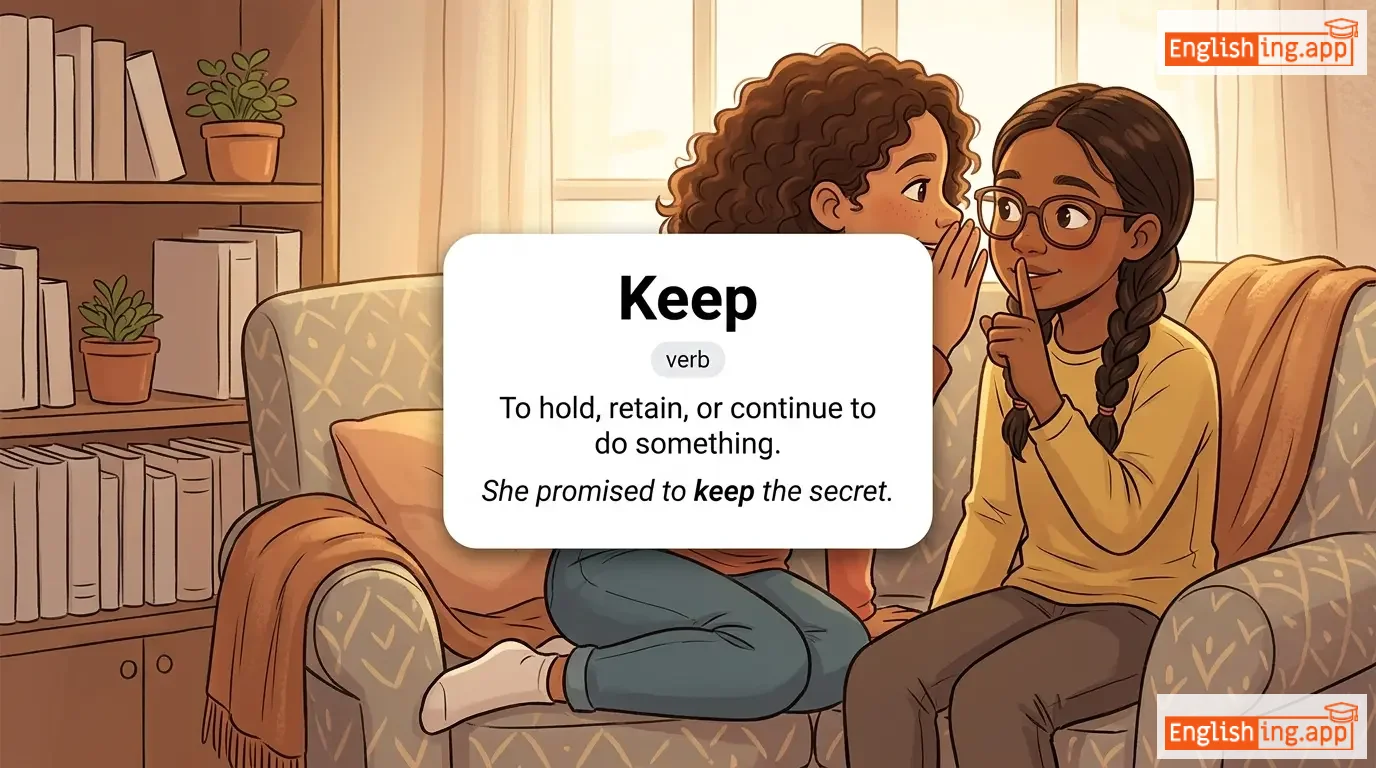
/kiːp/
verb
(基普)
••••••
|
|
保持
baochi
••••••
|
kept
克普特
••••••
|
kept
克普特
••••••
|
keeps
基普斯
••••••
|
keeping
基平
••••••
|
to have and retain possession of; to continue doing
••••••
|
I keep my books on the shelf.
艾 基普 麦 布克斯 昂 德 谢尔夫。
••••••
|
我把书放在架子上。
Wo ba shu fang zai jiazi shang.
••••••
|
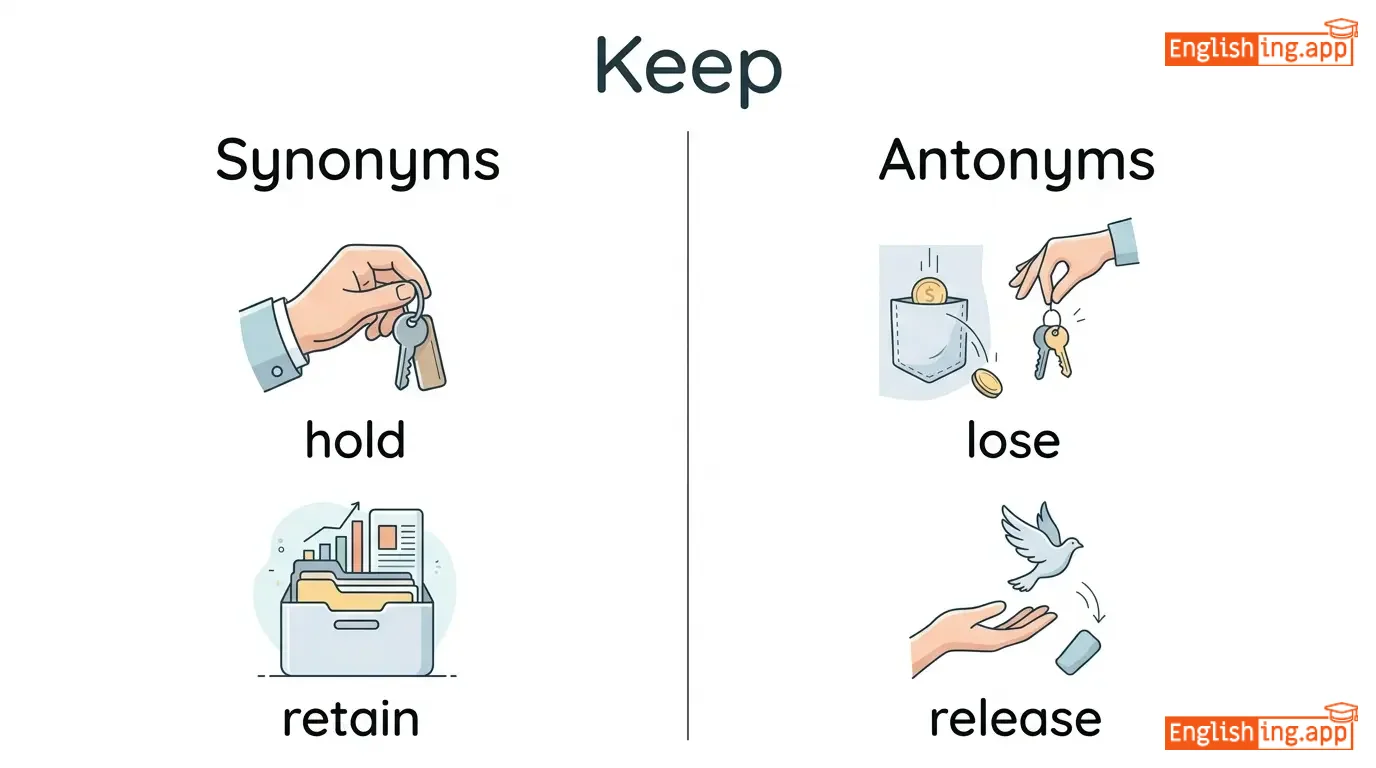
retain, maintain, preserve, hold
••••••
|
lose, discard, throw away, give up
••••••
|
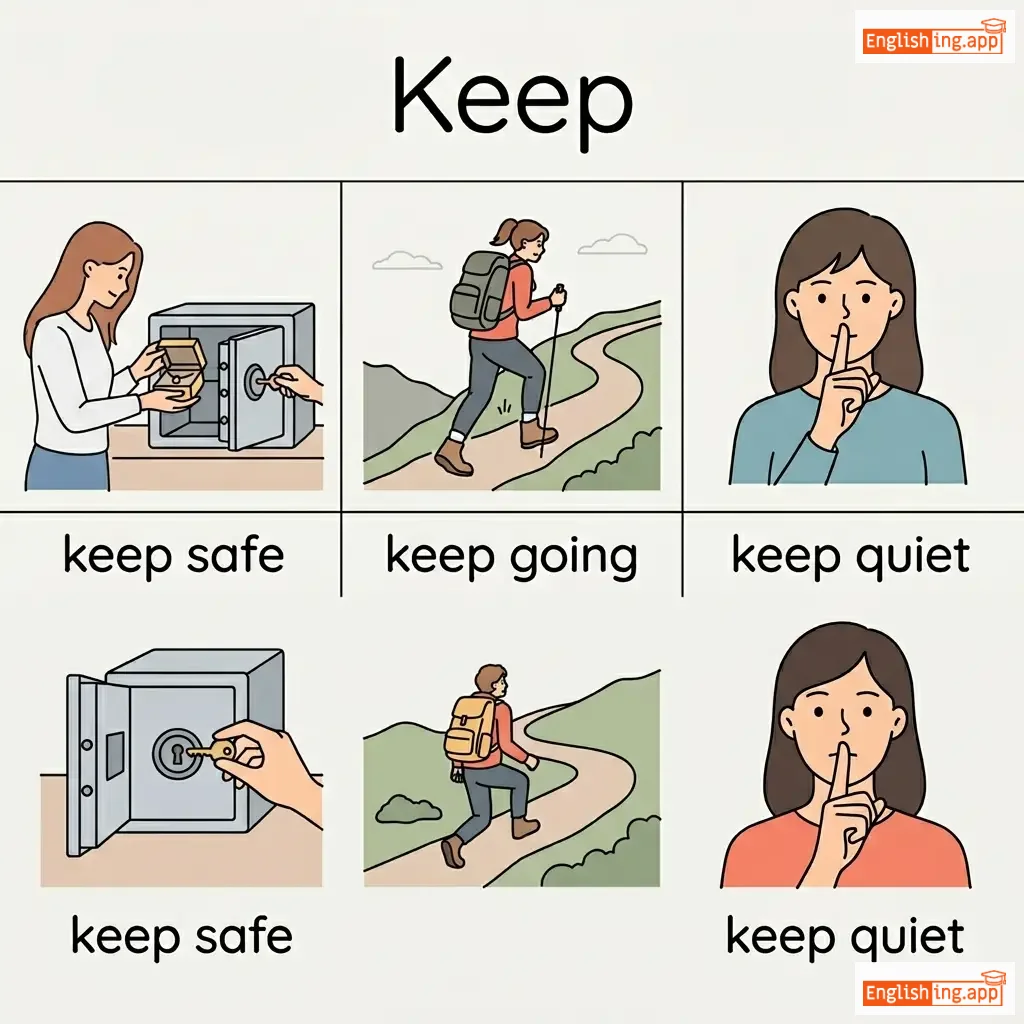
keep safe, keep quiet, keep calm, keep secret, keep in mind, keep track of, keep up with
••••••
|
Keep = 保持 (baochi) — like keeping balance and staying the same.
••••••
|
|
#687
🤗
|
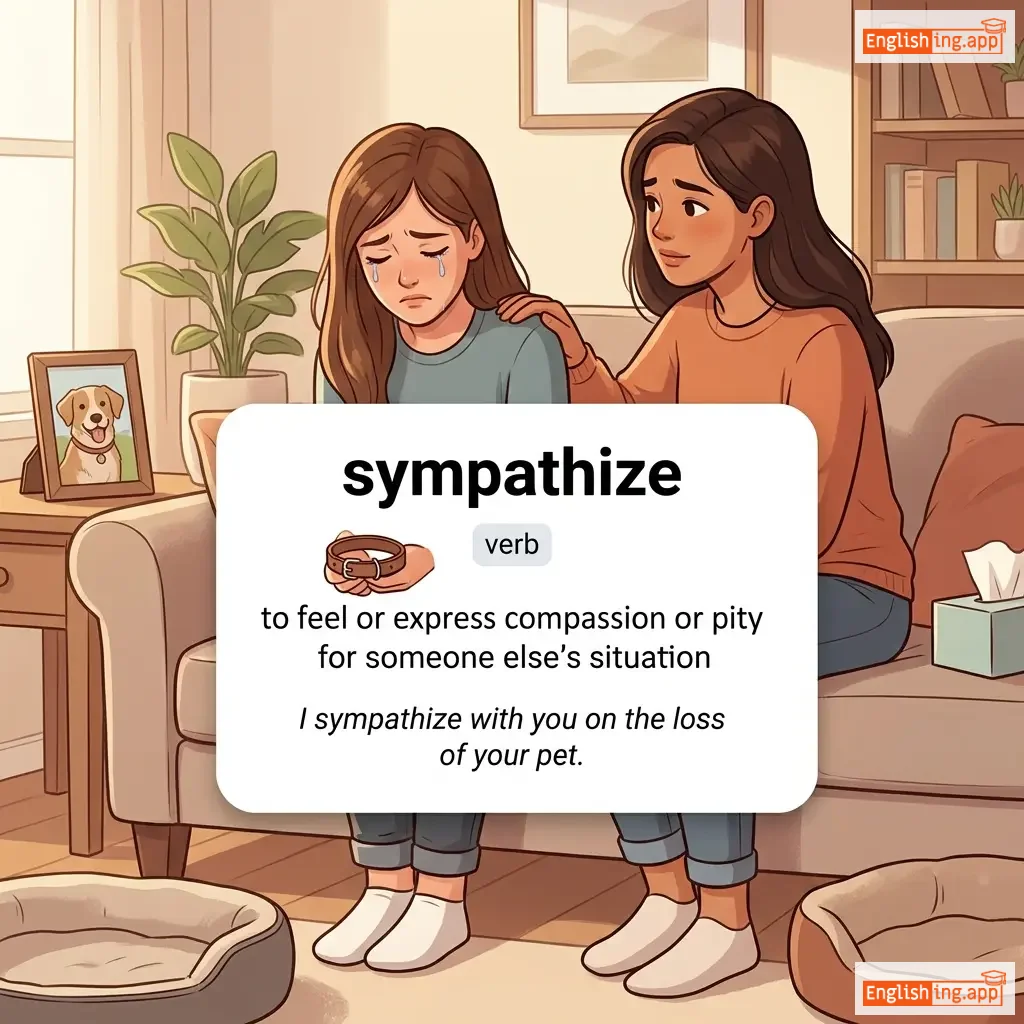
/ˈsɪmpəθaɪz/
verb
(辛帕赛兹)
••••••
|
|
同情
tongqing
••••••
|
sympathized
辛帕赛兹德
••••••
|
sympathized
辛帕赛兹德
••••••
|
sympathizes
辛帕赛兹斯
••••••
|
sympathizing
辛帕赛兹英
••••••
|
to feel sorry for someone; to understand and share someone's feelings
••••••
|
I sympathize with your loss.
我 辛帕赛兹 维斯 你的 洛斯。
••••••
|
我同情你的失去。
wo tongqing ni de shiqu
••••••
|
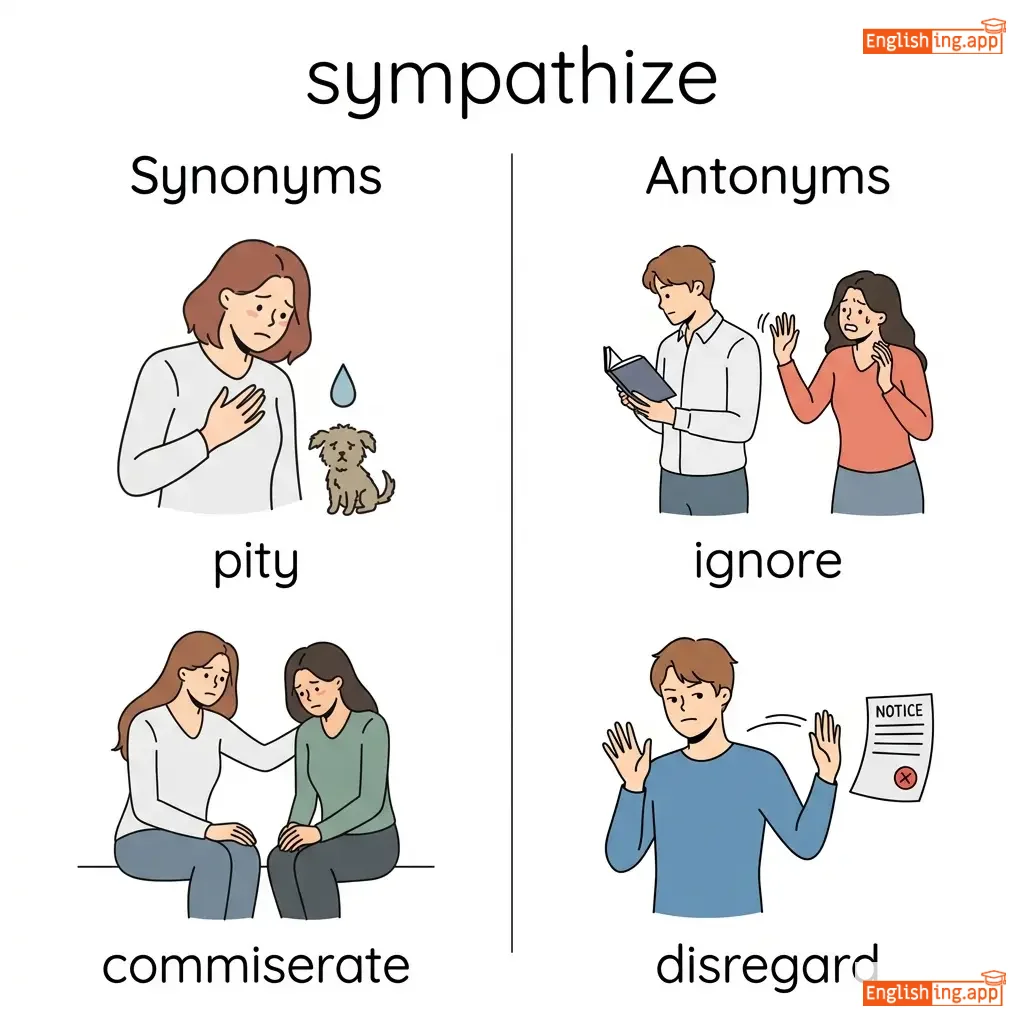
empathize, commiserate, understand, feel for
••••••
|
ignore, dismiss, disregard
••••••
|
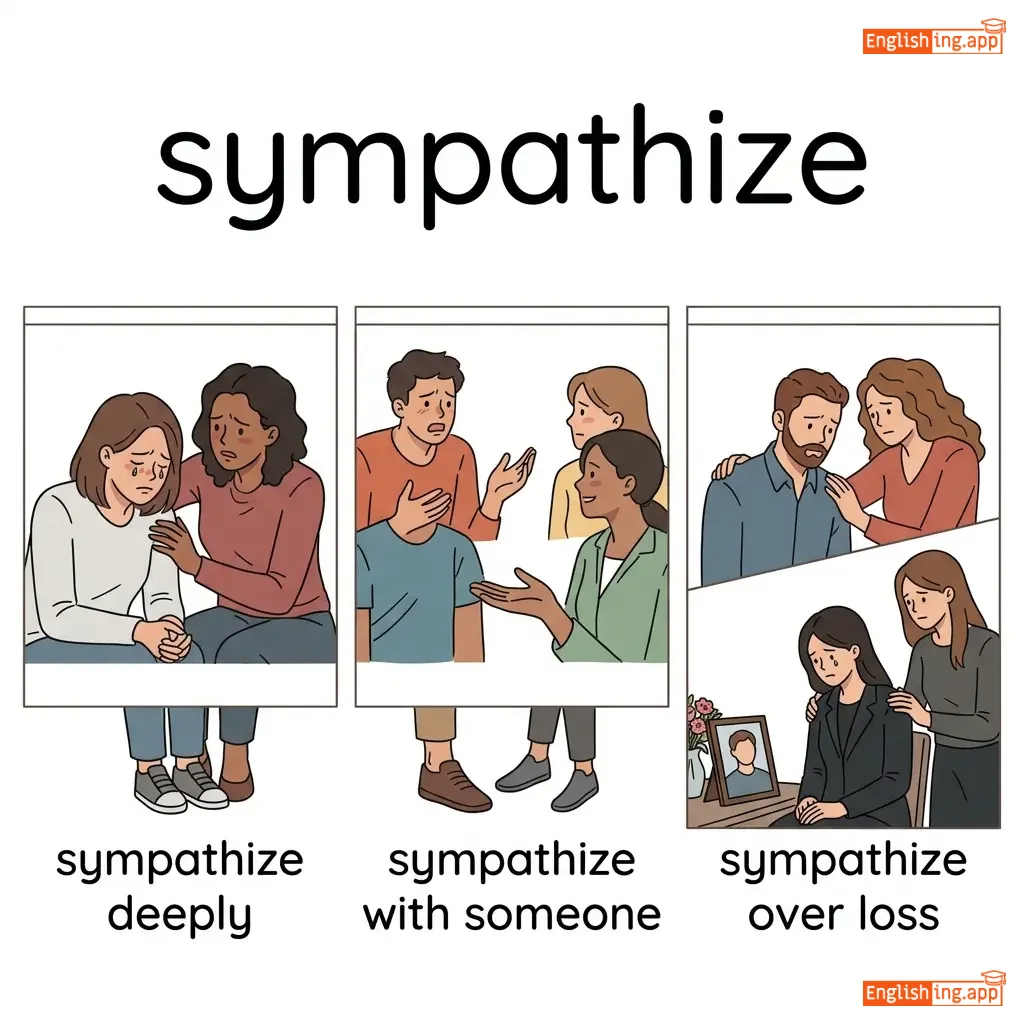
sympathize with, deeply sympathize, sympathize completely, sympathize sincerely, sympathize wholeheartedly
••••••
|
Sympathize = 同情 (tongqing) – think ‘together feeling’ in Chinese.
••••••
|
|
#688
🧹
|
/swiːp/
verb
(斯威普)
••••••
|
|
打扫
dasao
••••••
|
swept
斯韦普特
••••••
|
swept
斯韦普特
••••••
|
sweeps
斯威普斯
••••••
|
sweeping
斯威平
••••••
|
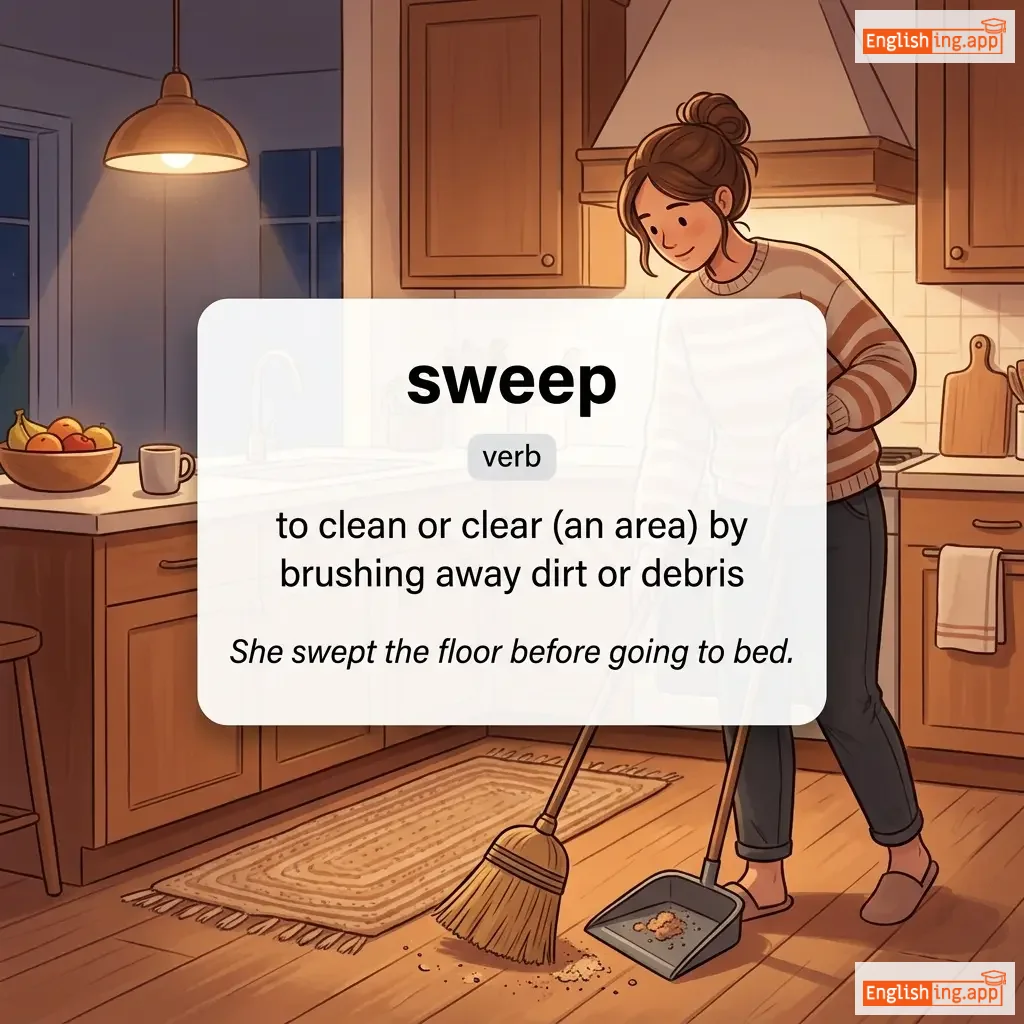
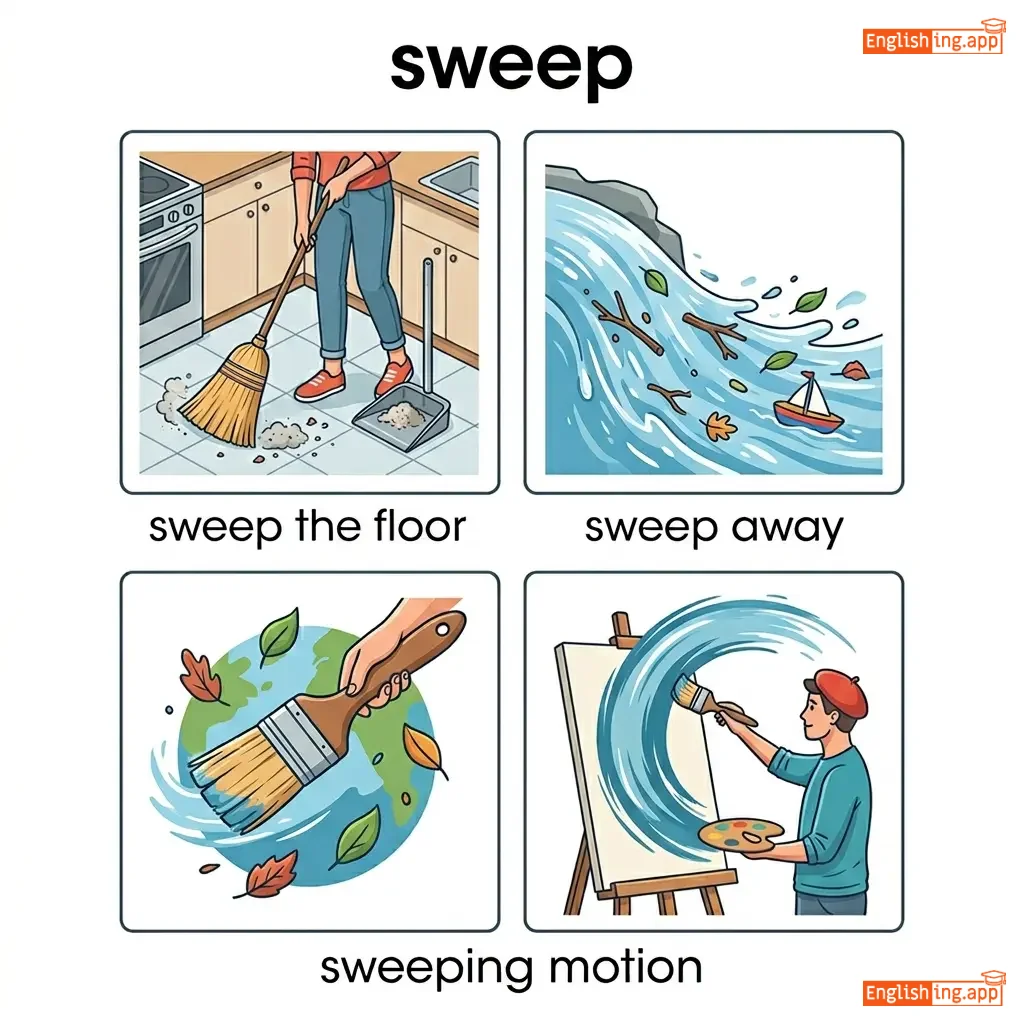
to clean by brushing; to move quickly and smoothly
••••••
|
She sweeps the floor every morning.
她 每天早上 打扫 地板。
••••••
|
她每天早上打扫地板。
Ta meitian zaoshang dasao diban
••••••
|
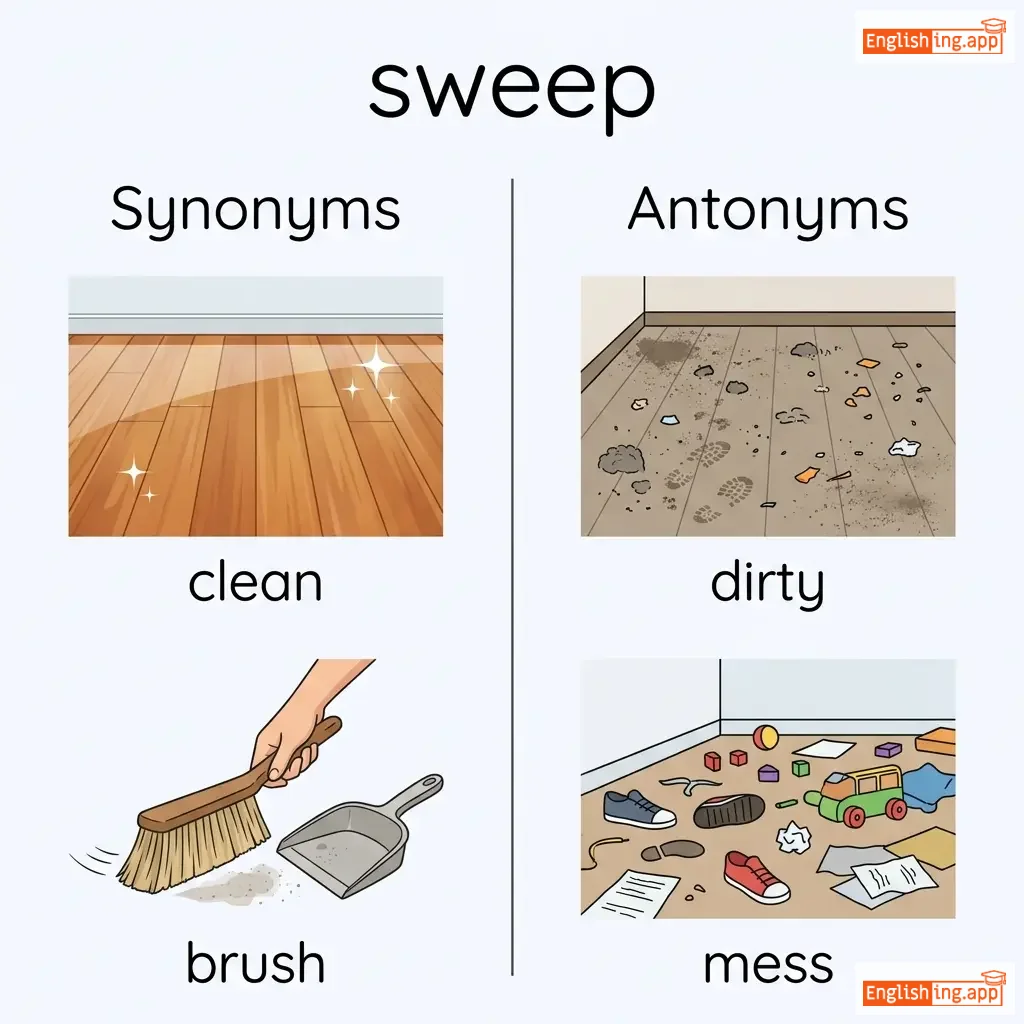
brush, clean, move quickly, glide
••••••
|
dirty, mess up
••••••
|
sweep away, sweep clean, sweep up, sweep aside, sweep through, sweep under
••••••
|
‘Sweep’ and ‘打扫 (dasao)’ both mean to clean the floor smoothly.
••••••
|
|
#689
🪢
|
/baɪnd/
verb
(拜因德)
••••••
|
|
捆绑
kunbang
••••••
|
bound
包恩德
••••••
|
bound
包恩德
••••••
|
binds
拜因兹
••••••
|
binding
拜因丁
••••••
|
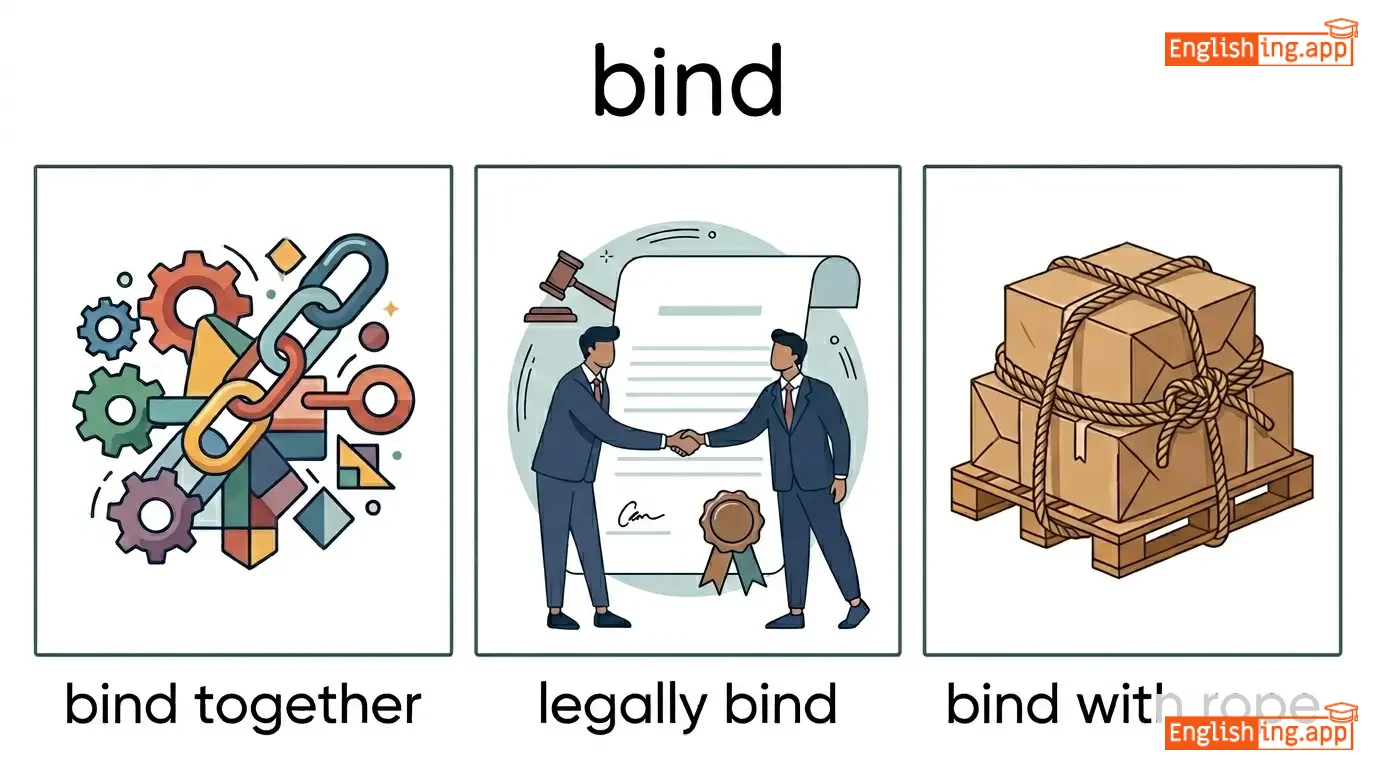
to tie together; to make a legal agreement; to put a cover on a book
••••••
|
The rope binds the packages together.
德 若普 拜因兹 德 派克吉斯 特盖德尔
••••••
|
绳子把包裹绑在一起。
shengzi ba baoguo bang zai yiqi
••••••
|
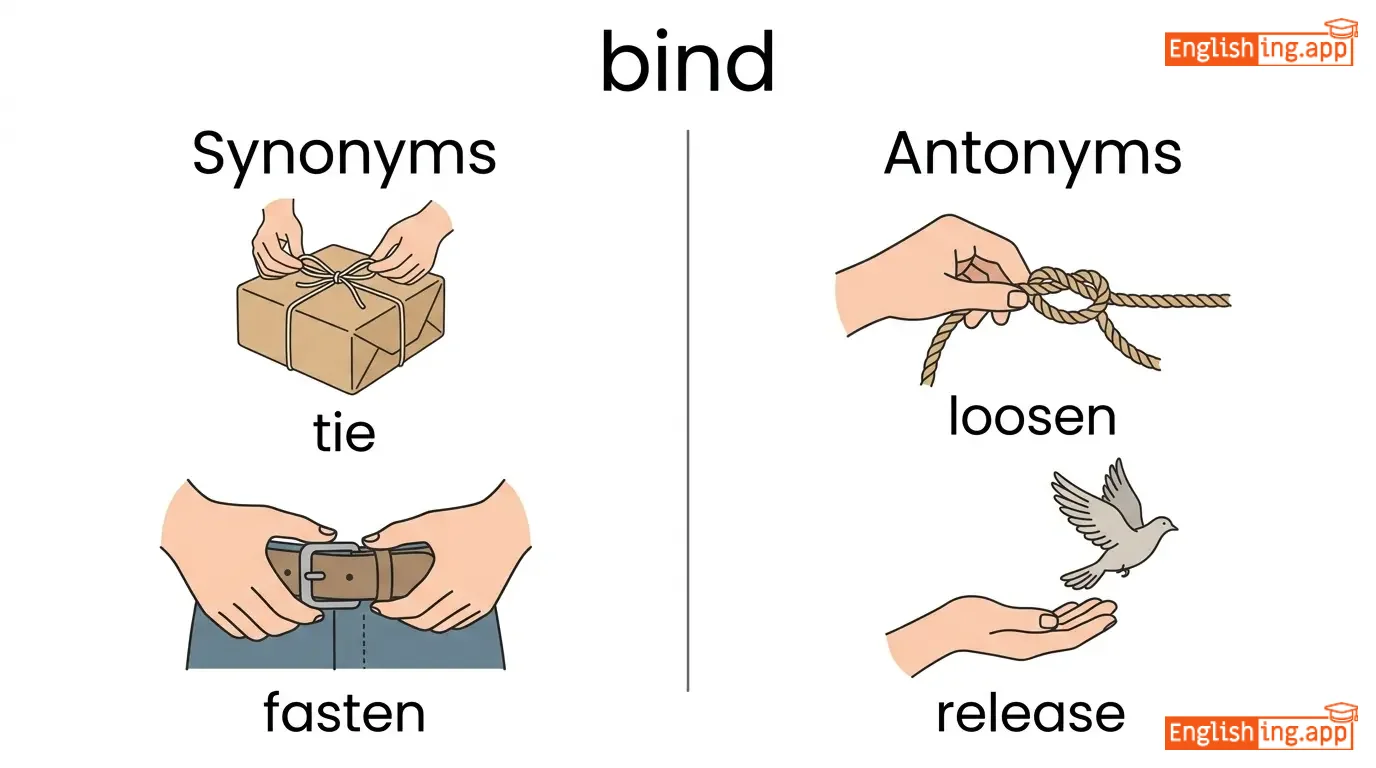
tie, fasten, secure, unite
••••••
|
untie, release, free, separate
••••••
|
bind together, bind tightly, bind securely, legally bind, bind up, bind with
••••••
|
Bind means 捆绑 (kunbang)—both show tying together!
••••••
|
|
#690
😈
|
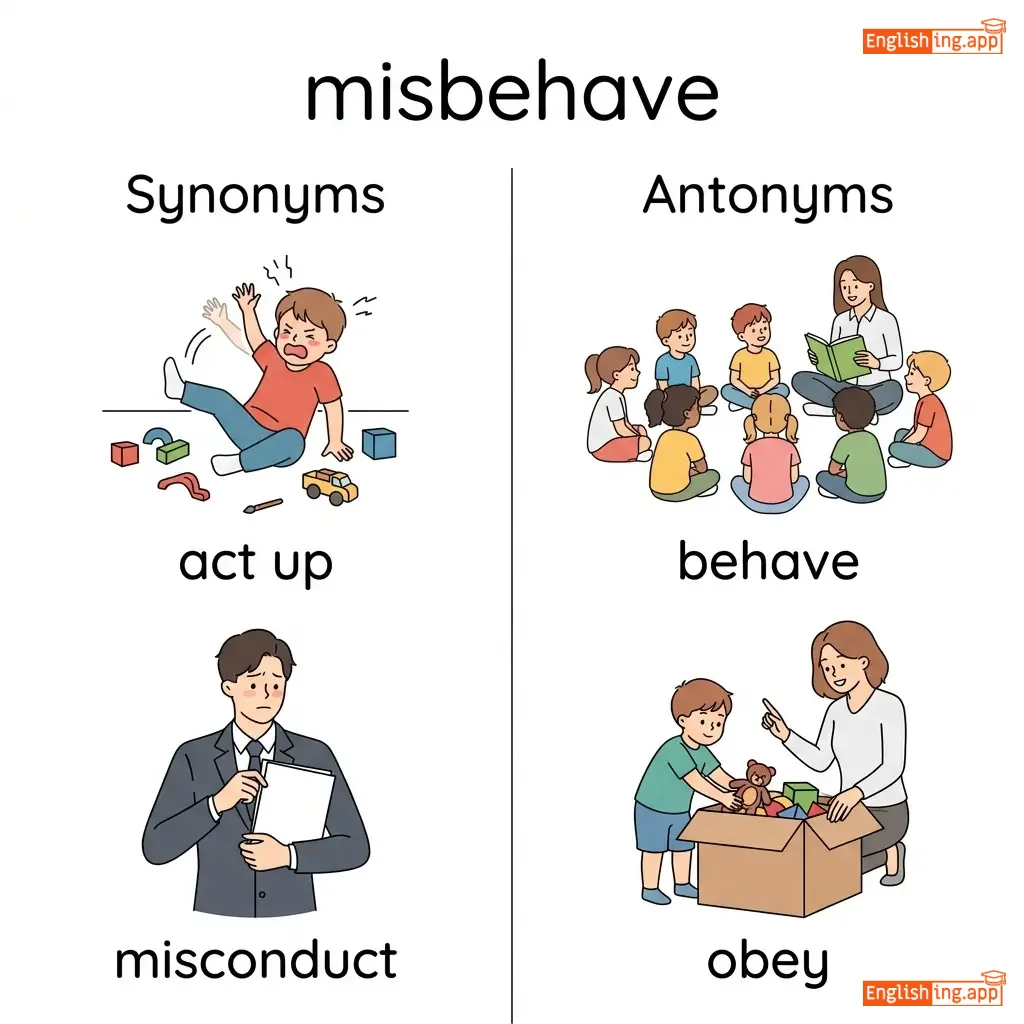
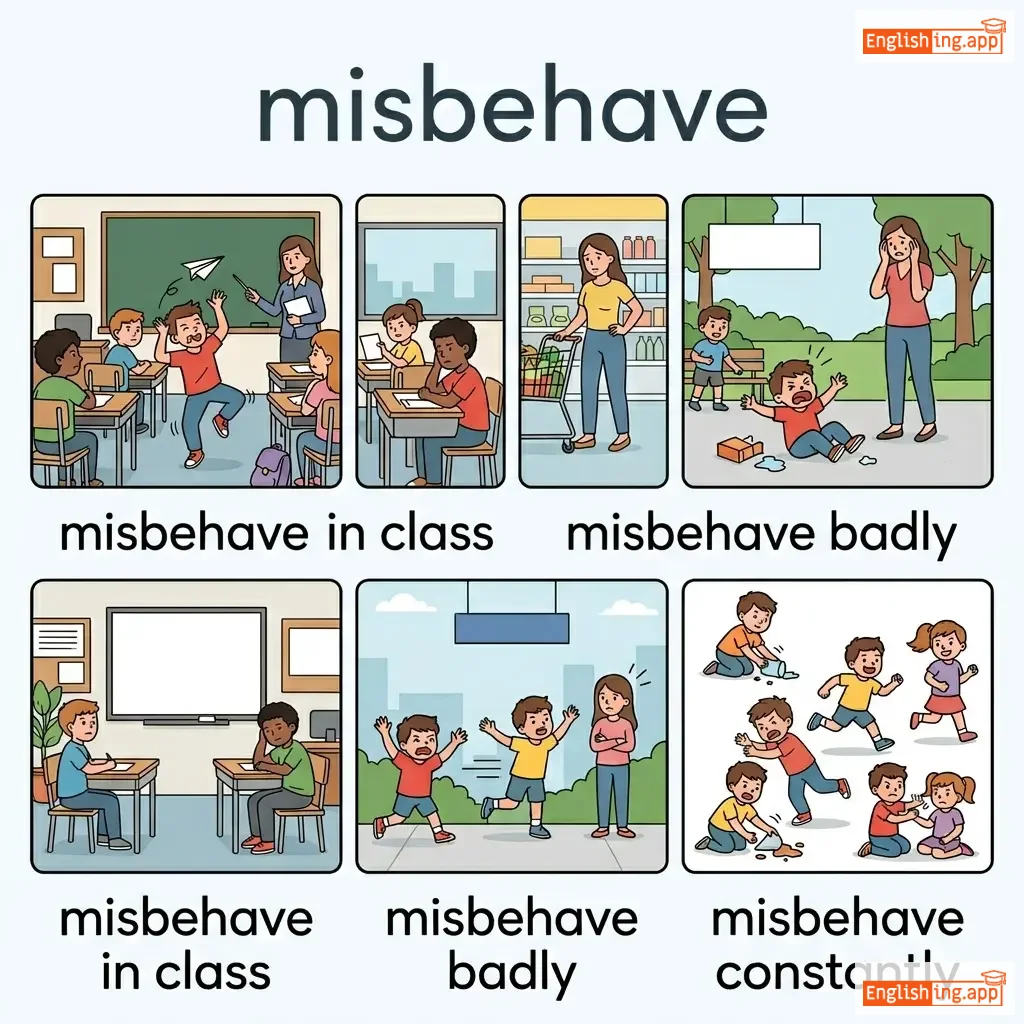
/ˌmɪsbɪˈheɪv/
verb
(米斯比黑夫)
••••••
|
|
行为不当
xingwei budang
••••••
|
misbehaved
米斯比黑夫德
••••••
|
misbehaved
米斯比黑夫德
••••••
|
misbehaves
米斯比黑夫斯
••••••
|
misbehaving
米斯比黑夫英
••••••
|
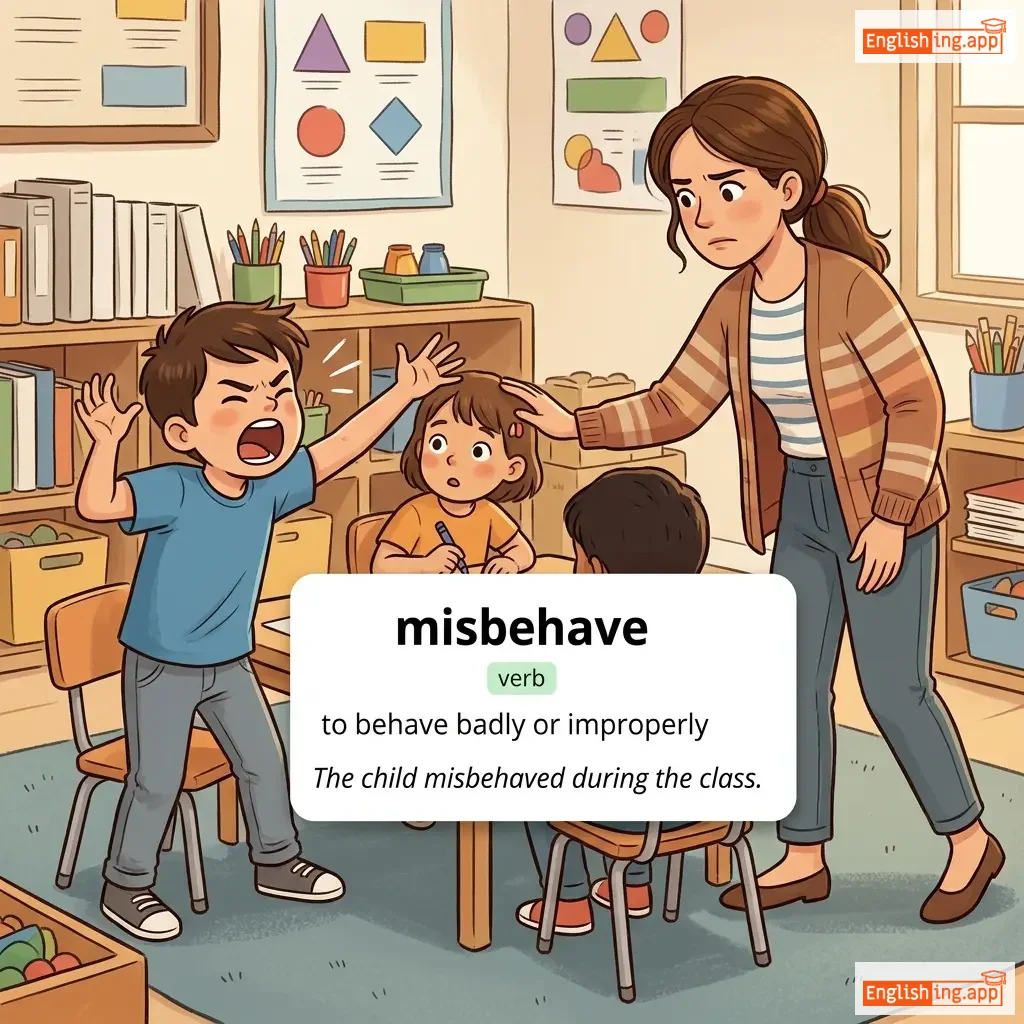
to behave badly or inappropriately; to act in an unacceptable way
••••••
|
The children misbehaved during the school assembly.
孩子们在学校集会上行为不当。
••••••
|
孩子们在学校集会上行为不当。
haizimen zai xuexiao jihui shang xingwei budang
••••••
|
act up, misconduct, be naughty, disobey
••••••
|
behave, obey, comply, follow rules
••••••
|
misbehave badly, constantly misbehave, children misbehave, misbehave in school, misbehave at home
••••••
|
Misbehave sounds like 米斯比黑夫 — think 'wrong behavior' = 行为不当.
••••••
|
|
#691
⚠️
|
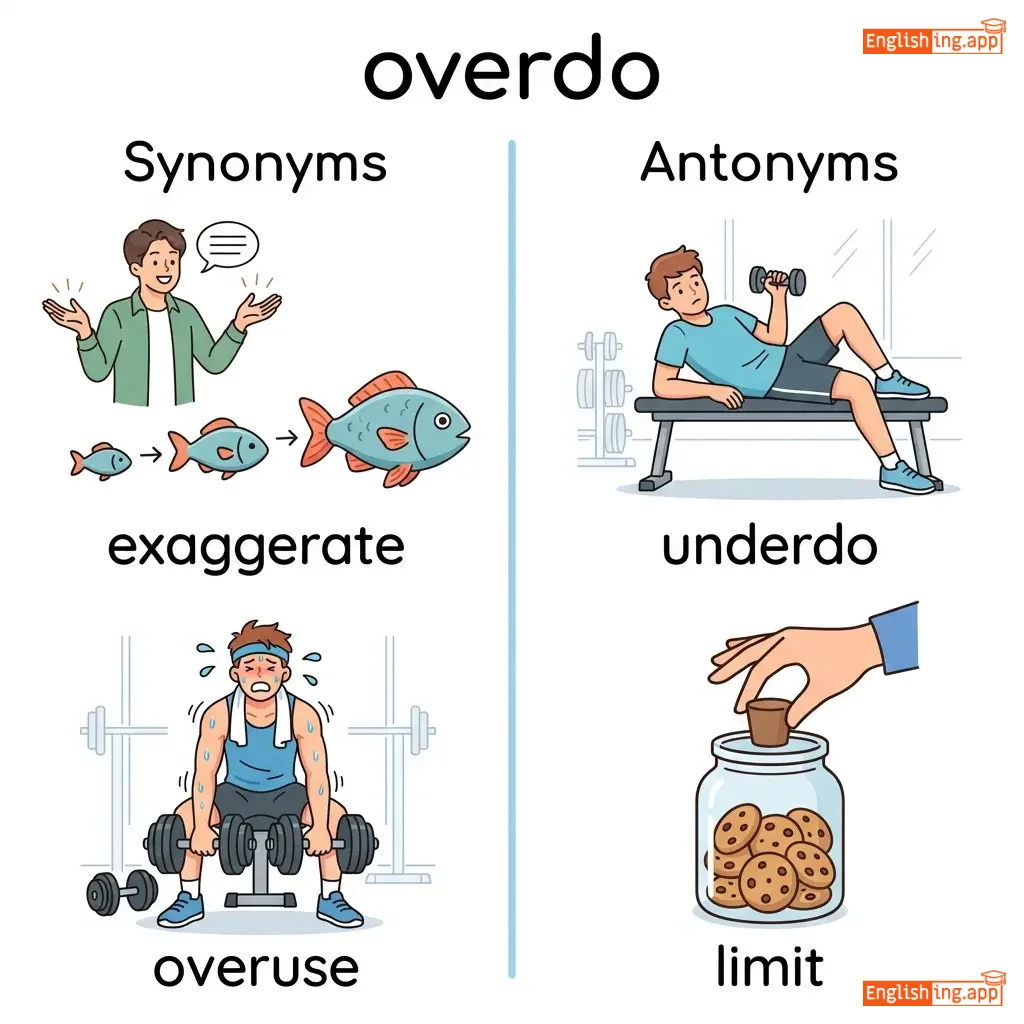
/ˌoʊvərˈduː/
verb
(欧沃尔杜)
••••••
|
|
做得过火
zuo de guo huo
••••••
|
overdid
欧沃尔迪德
••••••
|
overdone
欧沃尔当
••••••
|
overdoes
欧沃尔达兹
••••••
|
overdoing
欧沃尔杜英
••••••
|
to do something too much; to exaggerate or carry to excess
••••••
|
Don't overdo the exercise on your first day at the gym.
唐特欧沃尔杜迪艾克瑟赛兹昂尤尔佛斯特德艾特德吉姆。
••••••
|
第一天去健身房时不要运动过度。
di yi tian qu jianshenfang shi bu yao yundong guodu
••••••
|
exaggerate, overwork, exceed, overindulge
••••••
|
underdo, moderate, restrain, limit
••••••
|
overdo it, overdo exercise, overdo work, don't overdo, overdo things, overdo yourself
••••••
|
Overdo = 做得过火 — think 'do too much'.
••••••
|
|
#692
🤝
|
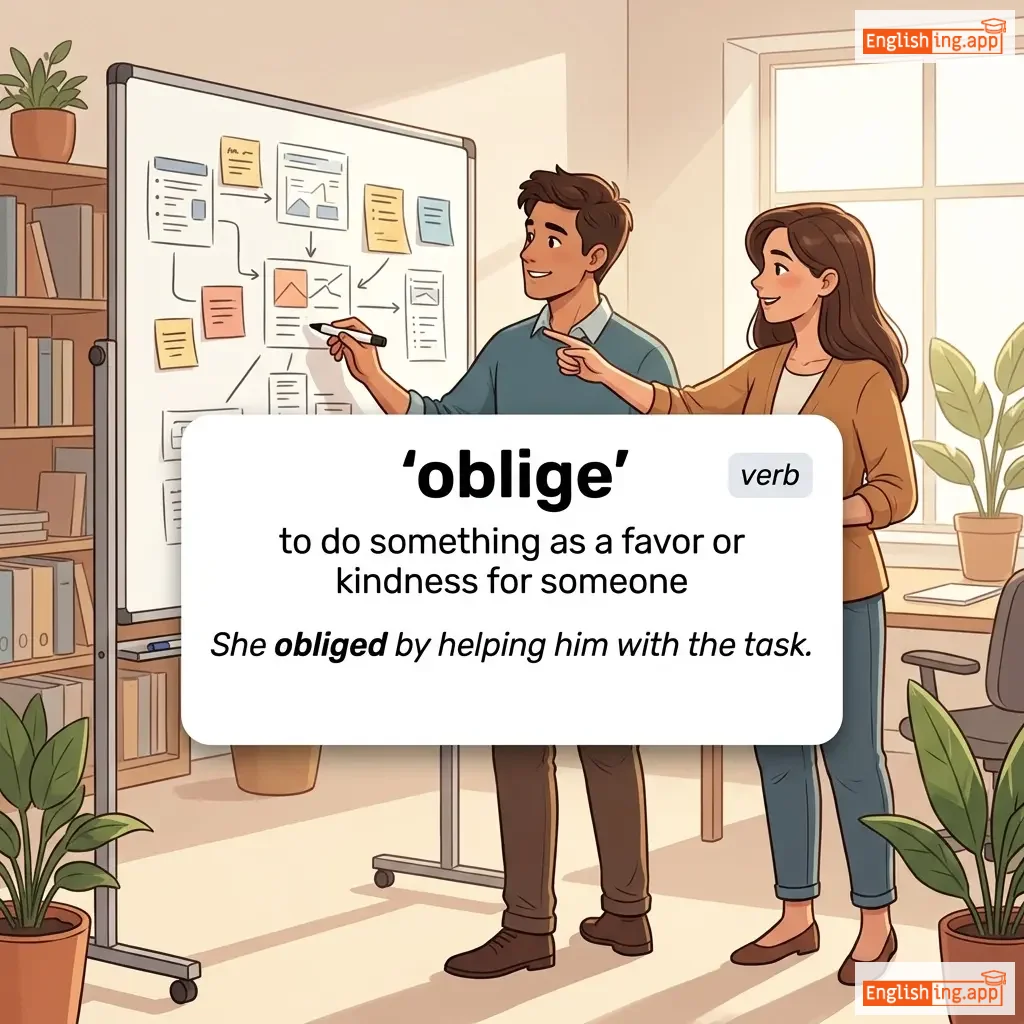
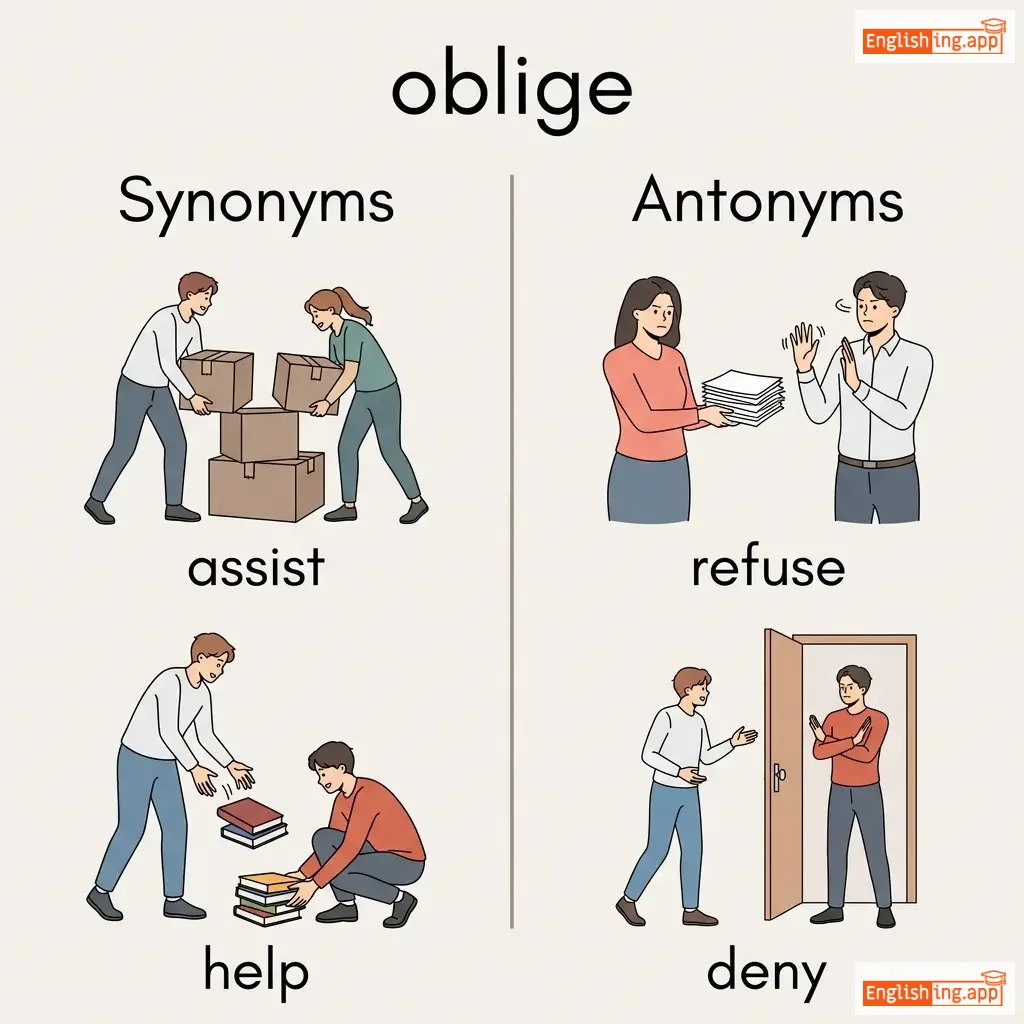
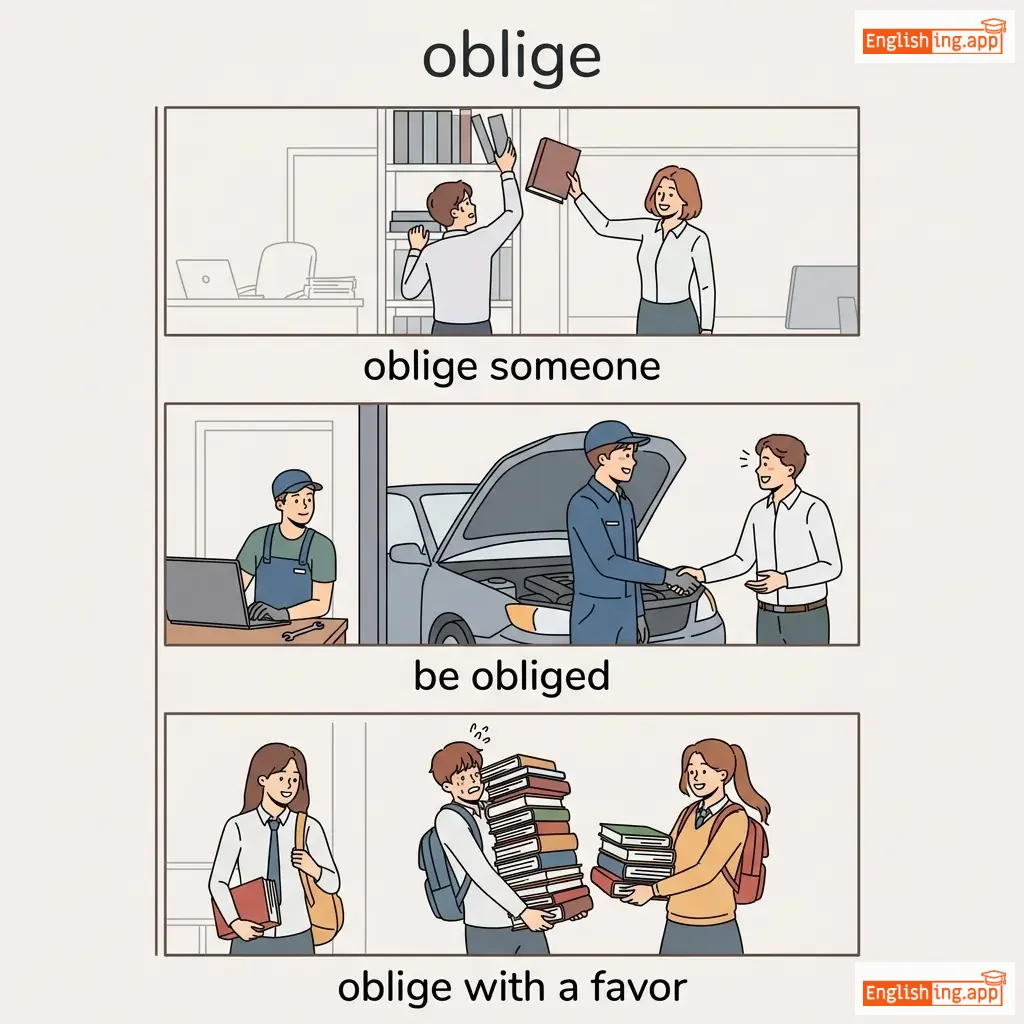
/əˈblaɪdʒ/
verb
(奥布莱基)
••••••
|
|
迫使
poshi
••••••
|
obliged
奥布莱基德
••••••
|
obliged
奥布莱基德
••••••
|
obliges
奥布莱吉斯
••••••
|
obliging
奥布莱金
••••••
|
to compel or require someone to do something; to help or do a favor
••••••
|
I would be happy to oblige you with the information you need.
我会很高兴地奥布莱基你提供你需要的信息。
••••••
|
我很乐意为你提供所需的信息。
Wo hen leyi wei ni tigong suoxu de xinxi.
••••••
|
compel, require, help, assist
••••••
|
free, release, refuse, deny
••••••
|
happily oblige, oblige someone, oblige with, willing to oblige, greatly oblige, kindly oblige
••••••
|
Oblige means ‘poshi’ (迫使) — to compel or kindly assist in Chinese.
••••••
|
|
#693
💼
|
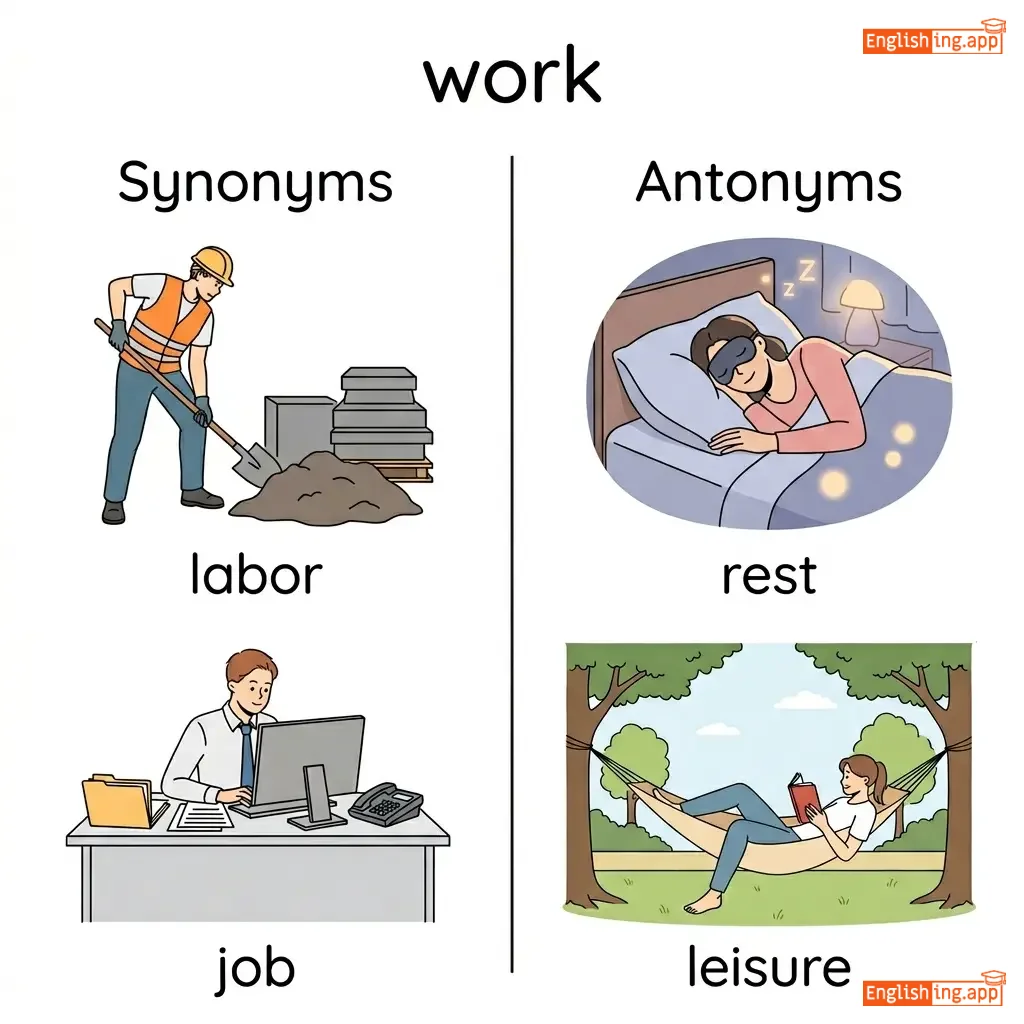
/wɜːrk/
verb
(沃克)
••••••
|
|
工作
gongzuo
••••••
|
worked
沃克特
••••••
|
worked
沃克特
••••••
|
works
沃克斯
••••••
|
working
沃金
••••••
|
to perform tasks or duties to earn money or achieve goals
••••••
|
He works as a teacher at the local school.
他 沃克斯 作为 一个 老师 在 当地 学校。
••••••
|
他在当地学校当老师。
Ta zai dangdi xuexiao dang laoshi
••••••
|
labor, toil, function, operate
••••••
|
rest, relax, play, idle
••••••
|
work hard, work together, work from home, work late, work overtime, work efficiently
••••••
|
‘Gongzuo’ sounds like ‘go on work’ — to keep working!
••••••
|
|
#694
🍽️
|
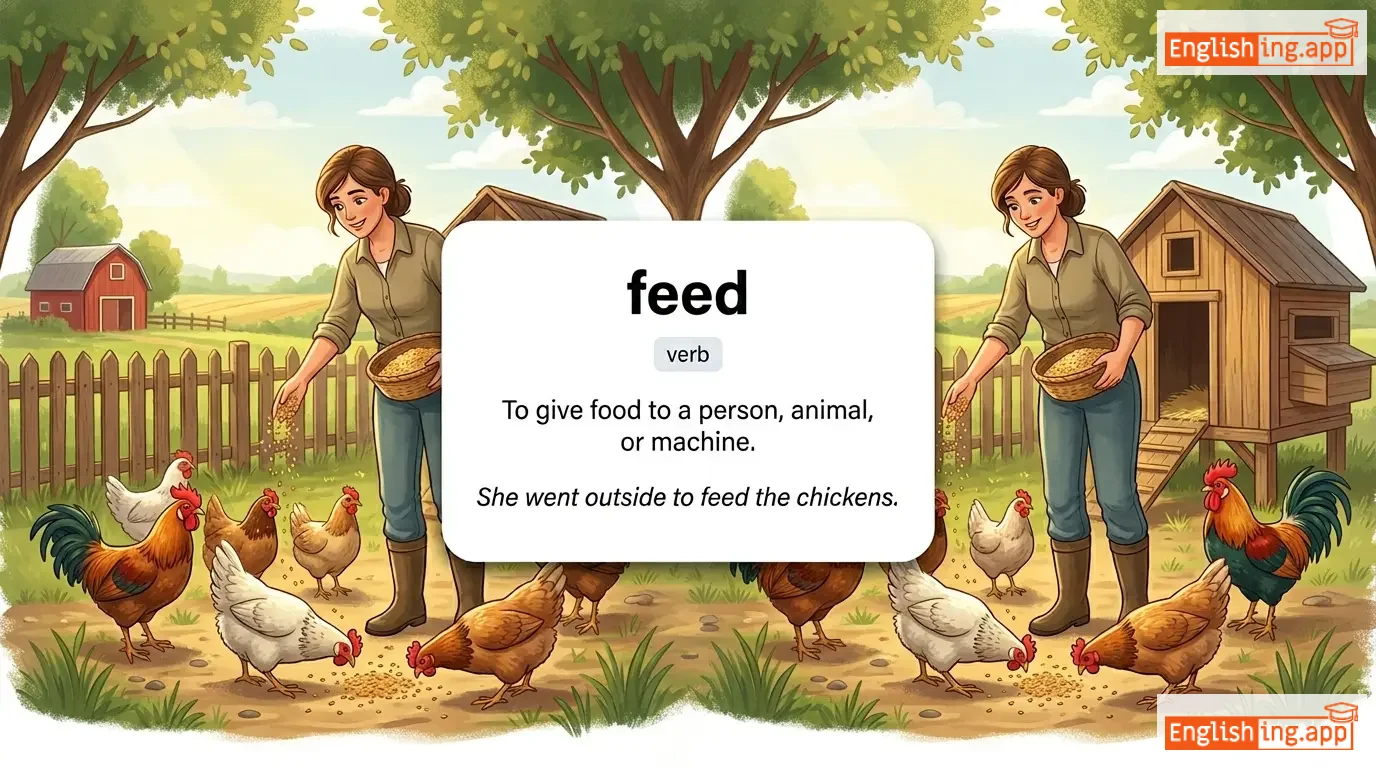
/fiːd/
verb
(菲德)
••••••
|
|
喂
wei
••••••
|
fed
菲德
••••••
|
fed
菲德
••••••
|
feeds
菲德斯
••••••
|
feeding
菲丁
••••••
|
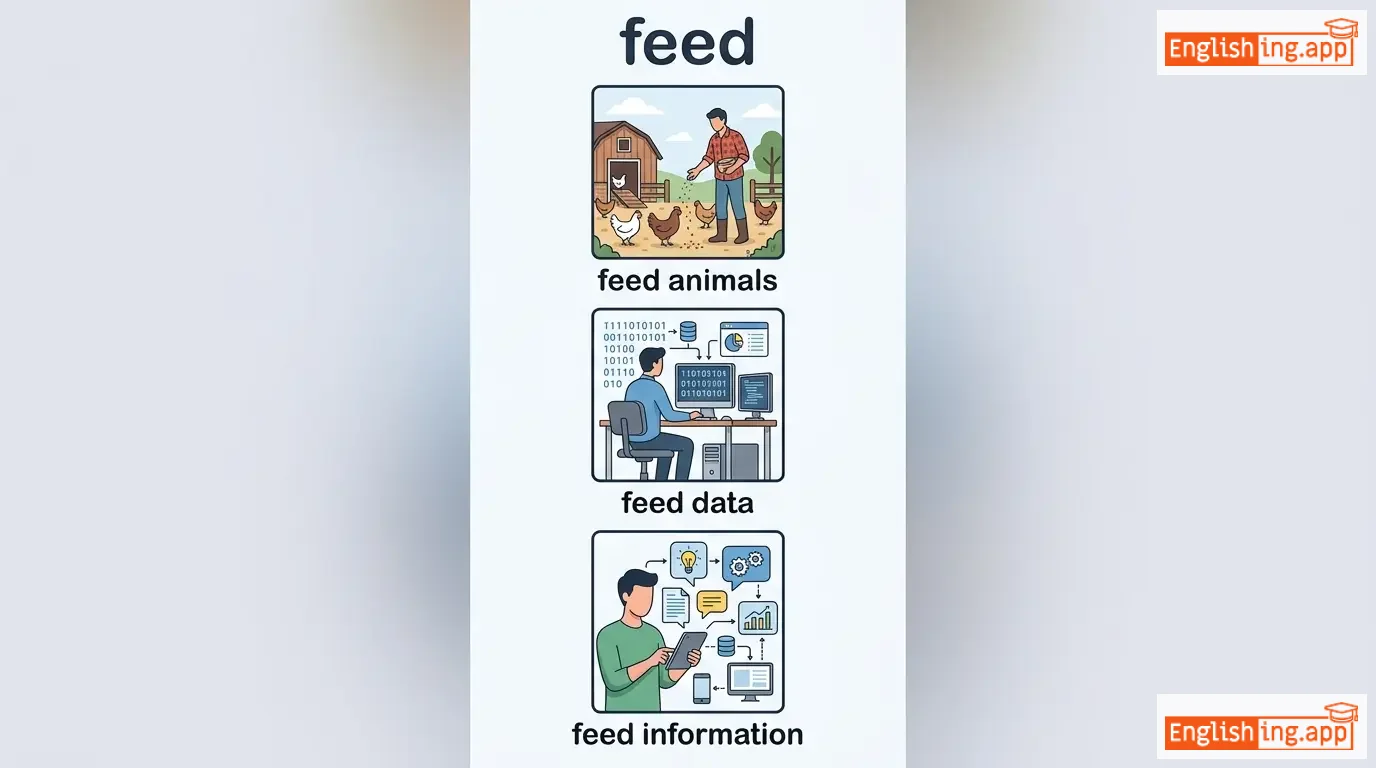
to give food to a person or animal
••••••
|
She feeds the birds every morning.
她 每天 早上 喂 鸟。
••••••
|
她每天早上喂鸟。
ta meitian zaoshang wei niao
••••••
|
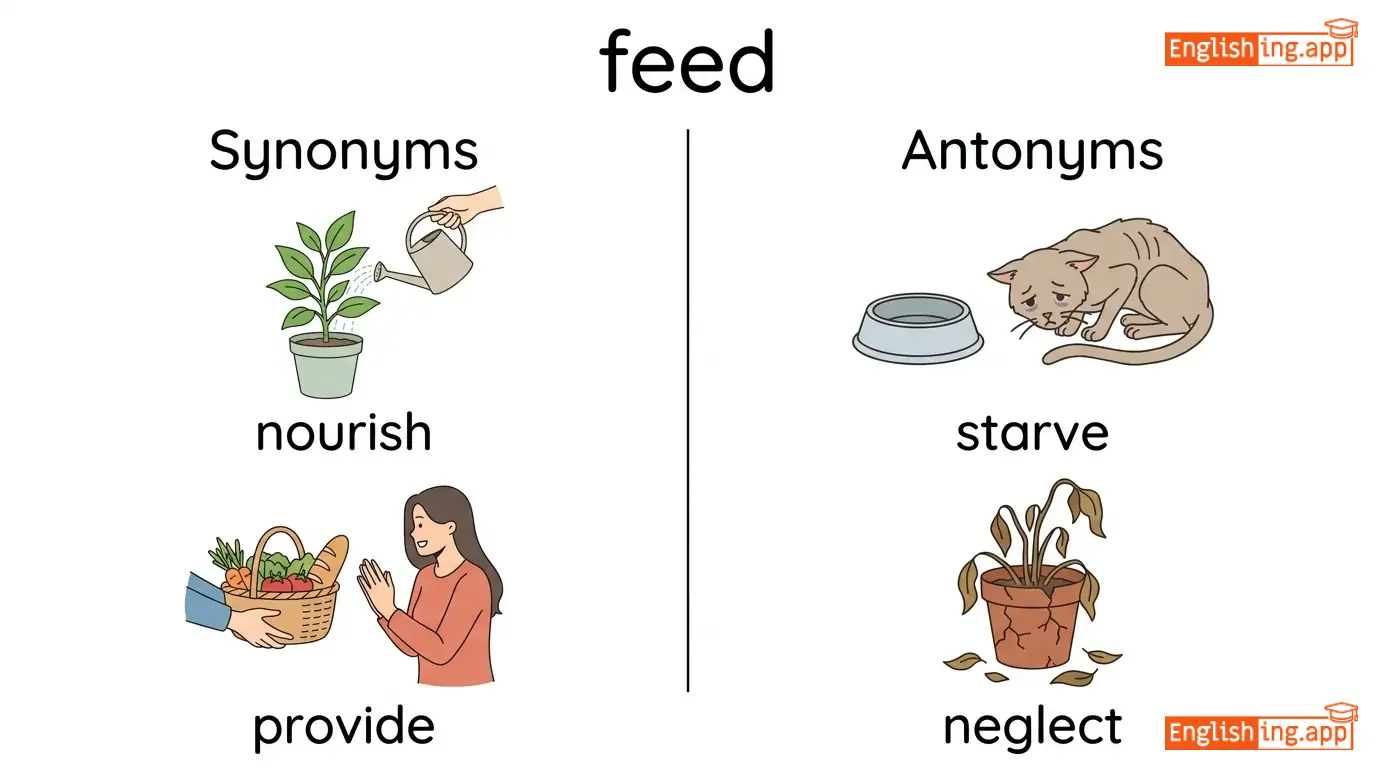
nourish, provide food, give food
••••••
|
starve, deprive, withhold food
••••••
|
feed the baby, feed animals, feed birds, feed hungry, properly feed, hand feed
••••••
|
Feed = 喂 (wei) like giving food.
••••••
|
|
#695
⚕️
|
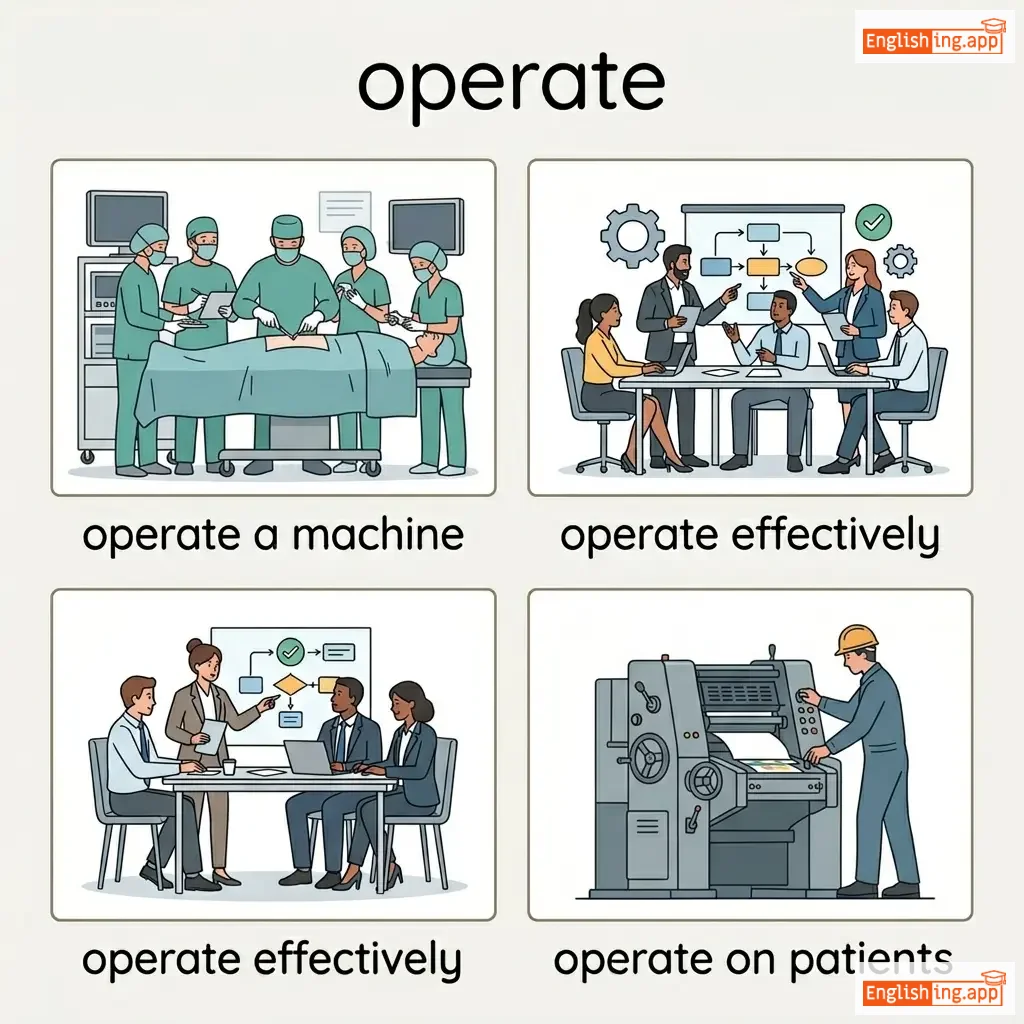
/ˈɒpəreɪt/
verb
(欧佩瑞特)
••••••
|
|
操作
caozuo
••••••
|
operated
欧佩瑞特德
••••••
|
operated
欧佩瑞特德
••••••
|
operates
欧佩瑞特斯
••••••
|
operating
欧佩瑞廷
••••••
|
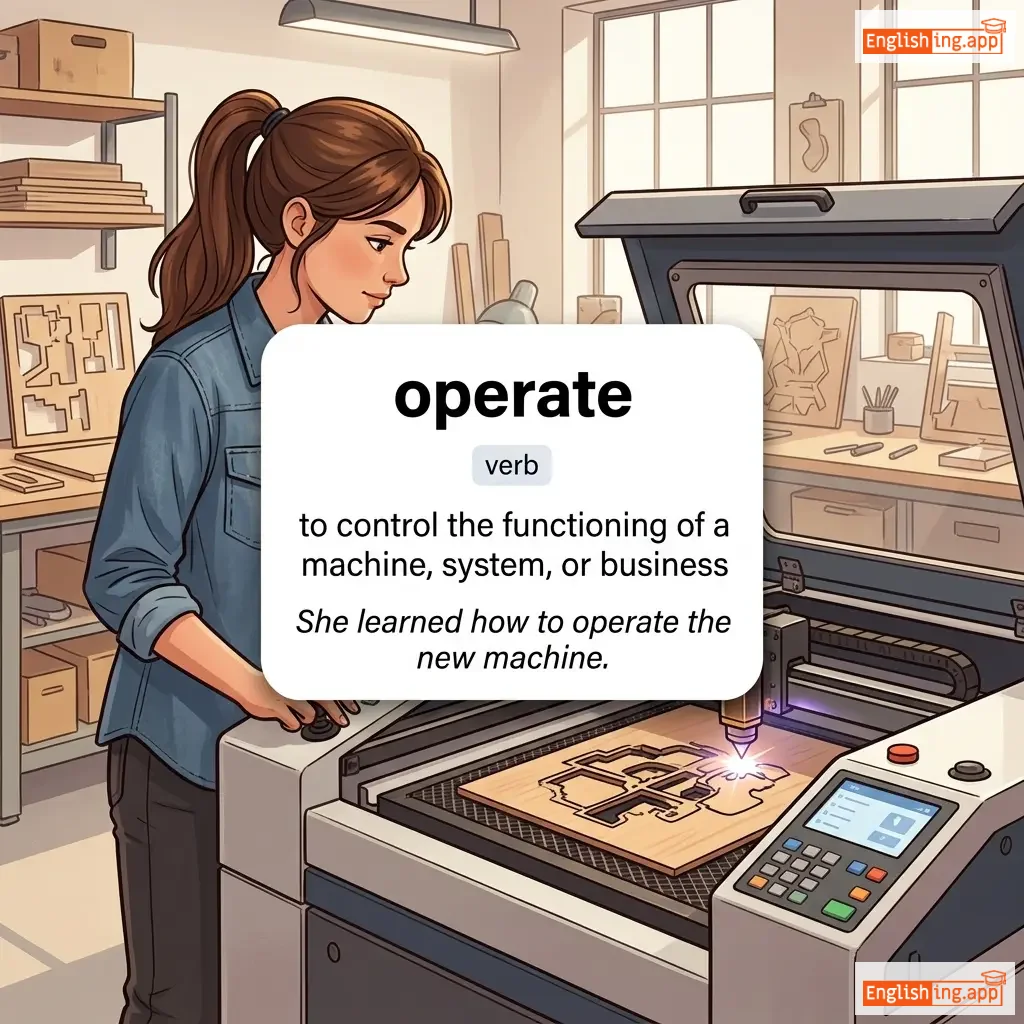
to function; to control or manage; to perform surgery
••••••
|
The surgeon will operate on the patient tomorrow.
外科医生明天将为病人做手术。
••••••
|
外科医生明天将为病人做手术。
waike yisheng mingtian jiang wei bingren zuo shoushu
••••••
|
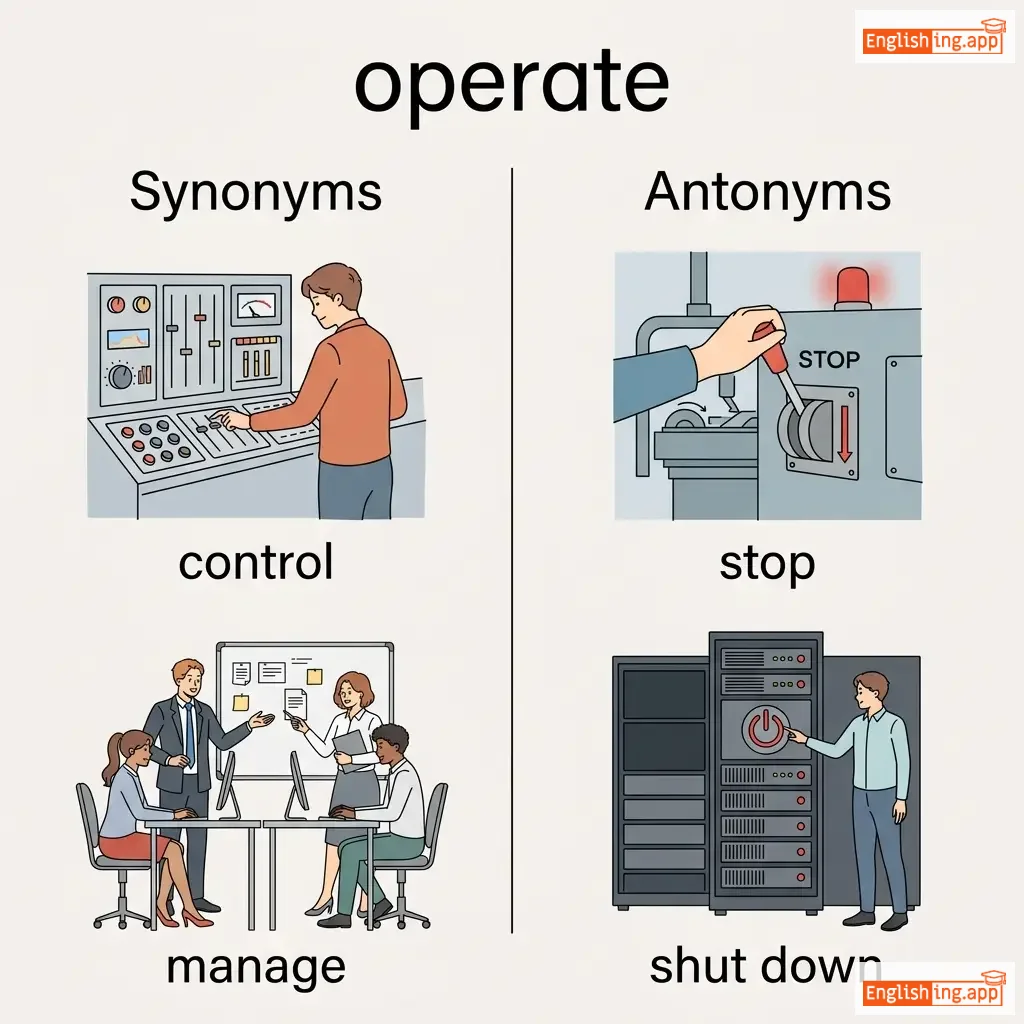
function, run, manage, control
••••••
|
malfunction, stop, cease, halt
••••••
|
operate smoothly, operate efficiently, operate machinery, operate business, operate successfully
••••••
|
Operate sounds like 欧佩瑞特 (ou pei rui te) and means 操作 or 做手术.
••••••
|
|
#696
👁️🗨️
|
/haɪd/
verb
(海德)
••••••
|
|
藏
cang
••••••
|
hid
希德
••••••
|
hidden
希登
••••••
|
hides
海兹
••••••
|
hiding
海丁
••••••
|
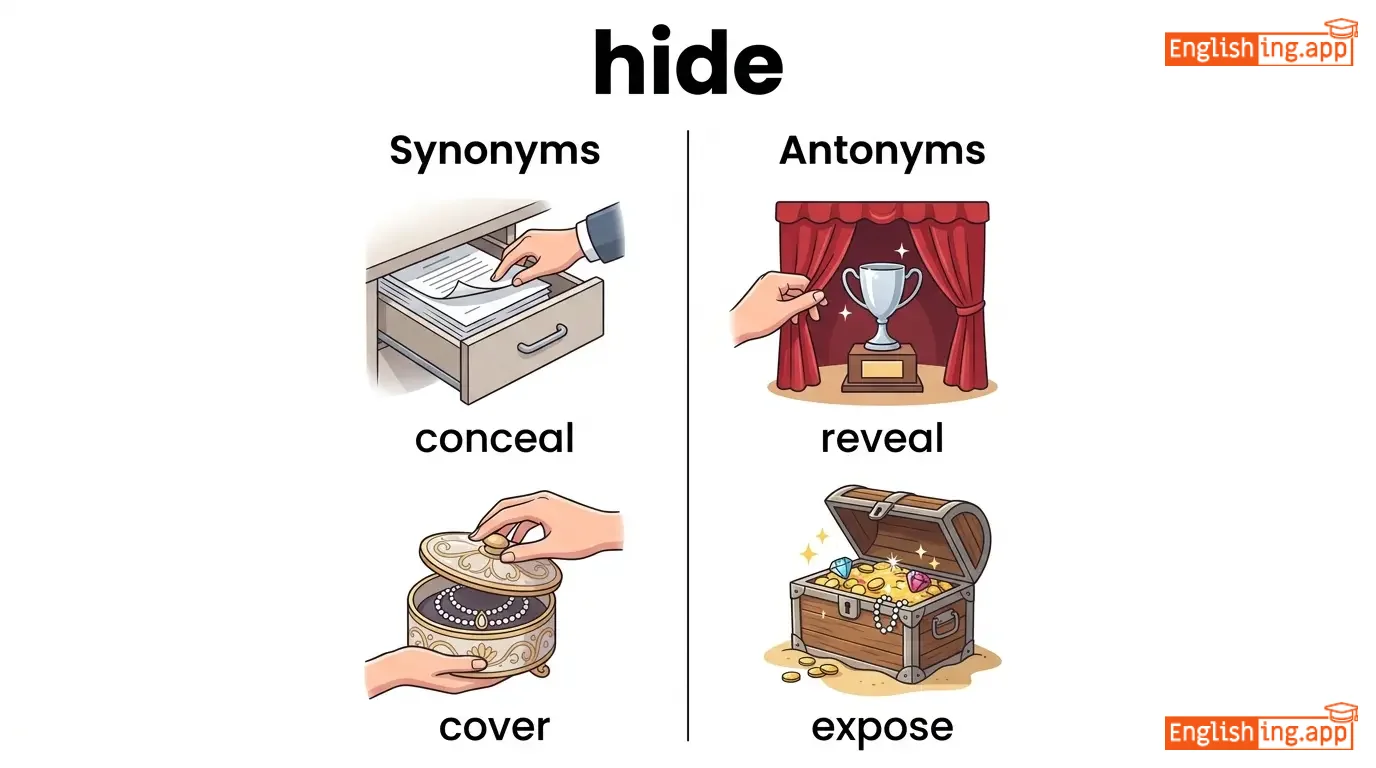
to put or keep out of sight; to conceal from view
••••••
|
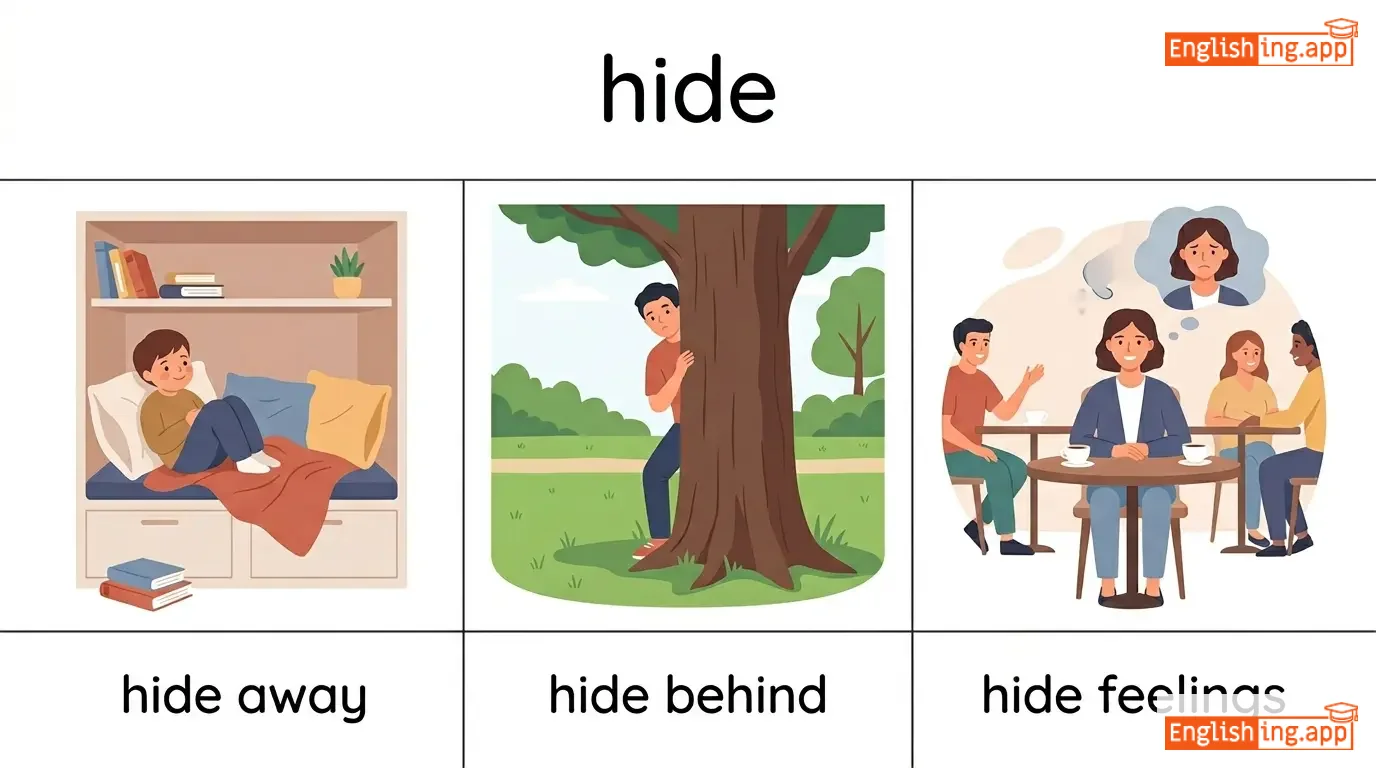
Children like to hide during games.
孩子们喜欢在游戏中藏起来。
••••••
|
孩子们喜欢在游戏中藏起来。
haizimen xihuan zai youxi zhong cang qilai
••••••
|
conceal, cover, disguise, mask
••••••
|
show, reveal, display, expose
••••••
|
hide away, hide behind, hide from, hide under, hide inside, carefully hide
••••••
|
Hide in Chinese is '藏' (cang) — imagine you 'sang' quietly while hiding!
••••••
|
|
#697
🤏
|
/nɪp/
verb
(尼普)
••••••
|
|
轻咬
qing yao
••••••
|
nipped
尼普特
••••••
|
nipped
尼普特
••••••
|
nips
尼普斯
••••••
|
nipping
尼平
••••••
|
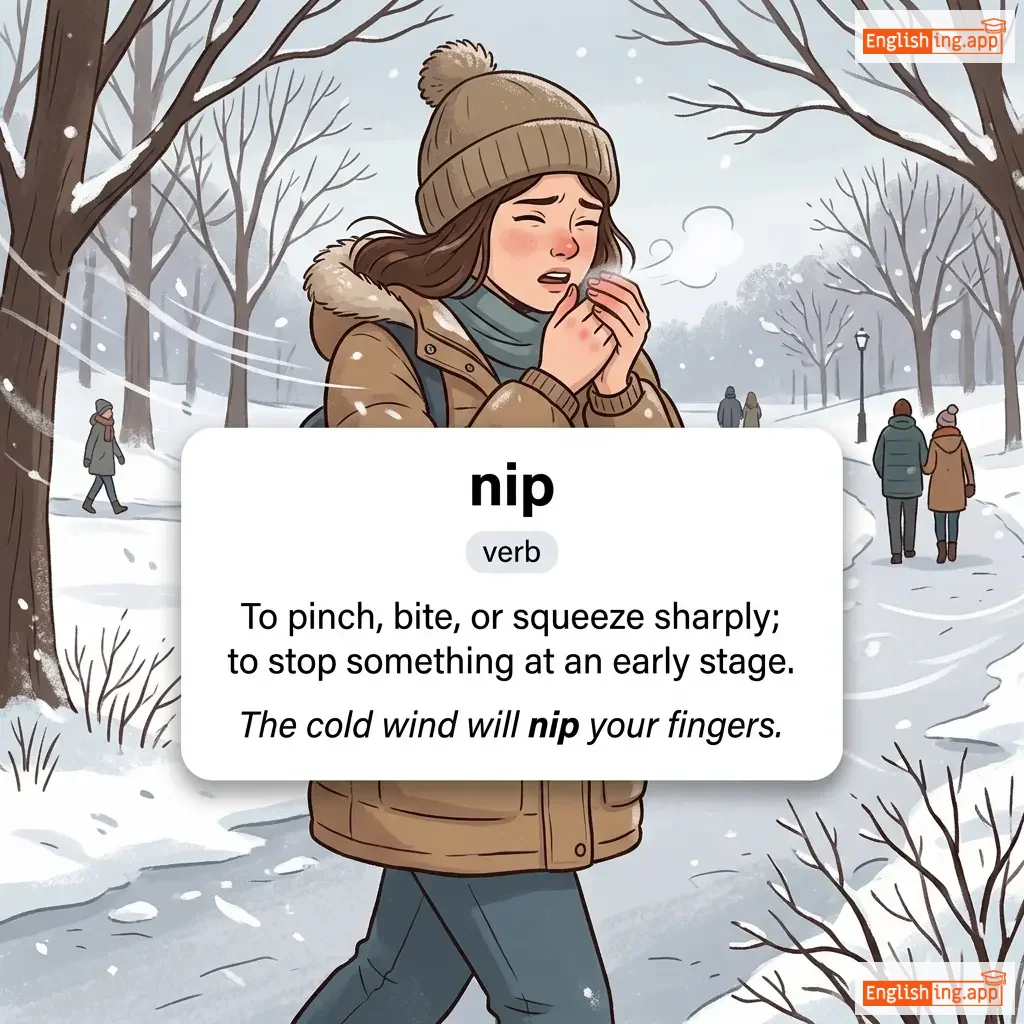
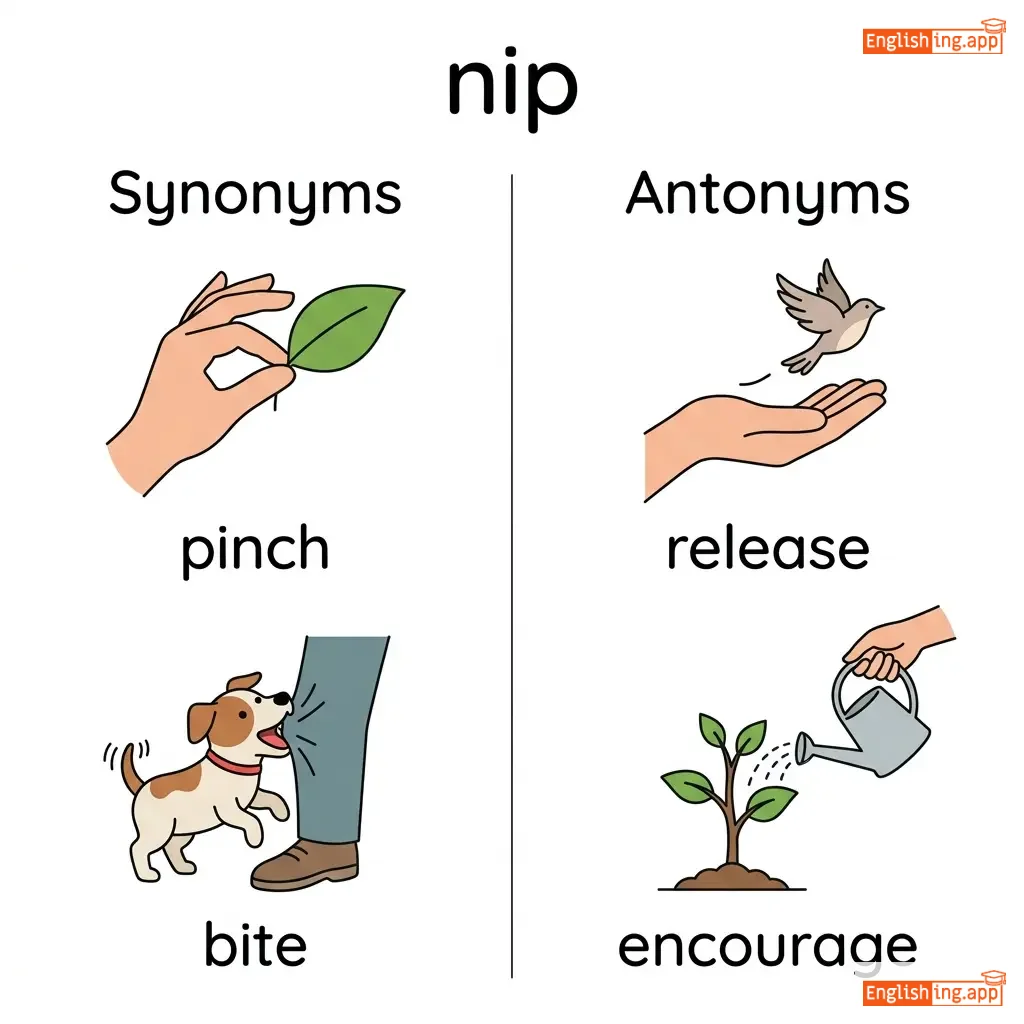
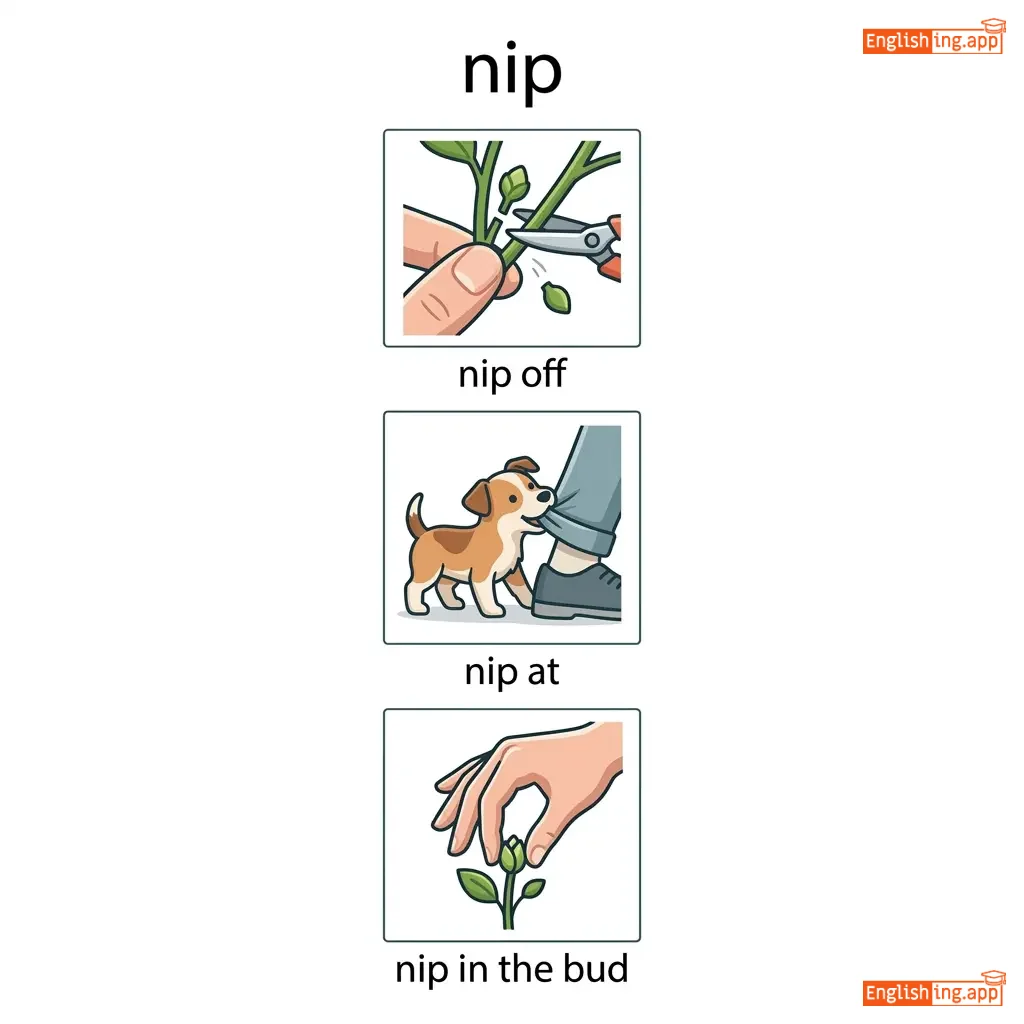
to pinch or bite lightly; to move quickly
••••••
|
The cold wind nipped at my face.
冷风尼普特在我的脸上
••••••
|
冷风轻咬着我的脸。
Leng feng qing yao zhe wo de lian
••••••
|
pinch, bite, squeeze, clip
••••••
|
release, let go
••••••
|
nip quickly, nip gently, nip at, cold nip, frost nip, nip in bud
••••••
|
‘Nip’ like ‘轻咬’ (qing yao) — to bite lightly or move fast in Chinese.
••••••
|
|
#698
🔀
|
/ˈdʒʌmbəl/
verb
(江布尔)
••••••
|
|
混合
hunhe
••••••
|
jumbled
江布尔德
••••••
|
jumbled
江布尔德
••••••
|
jumbles
江布尔斯
••••••
|
jumbling
江布林
••••••
|
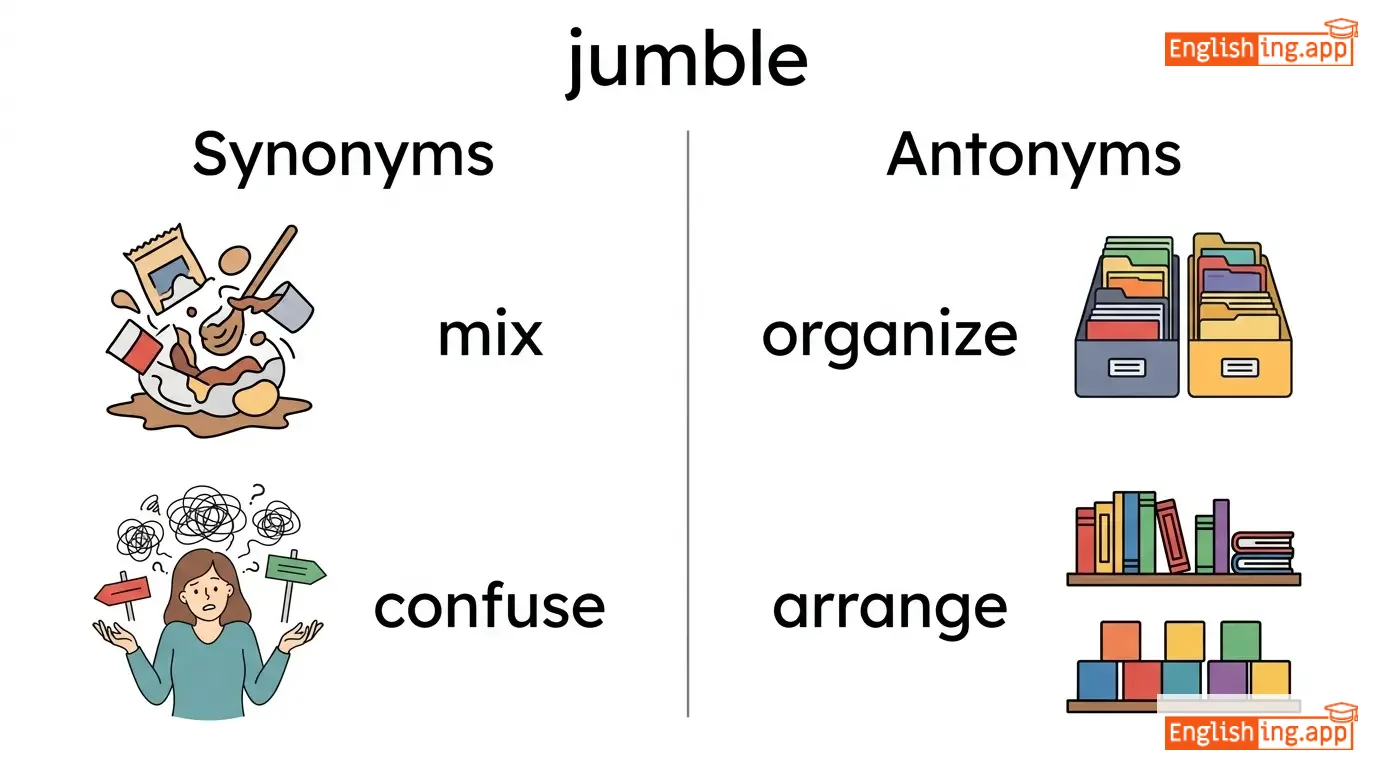
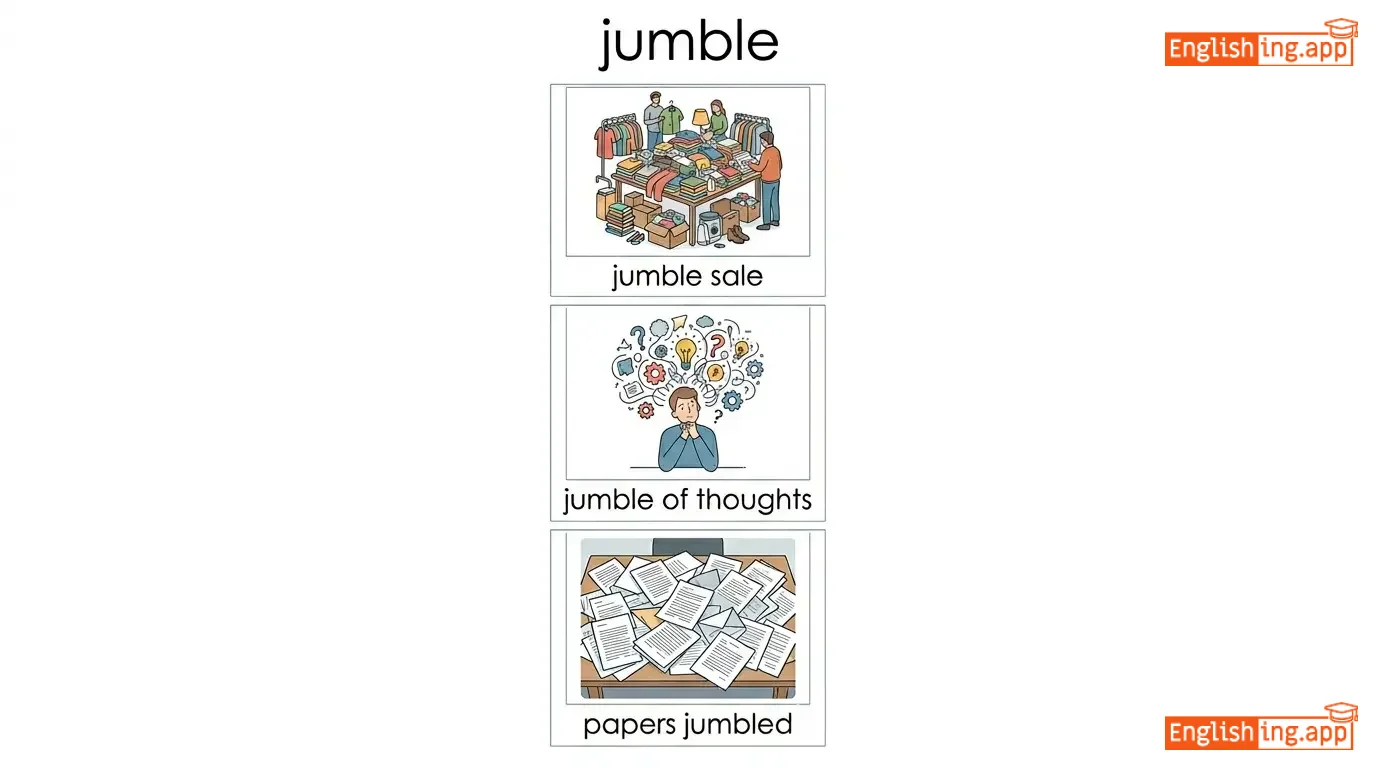
to mix things together in a confused or untidy way
••••••
|
Don't jumble all the papers together in one pile.
不要把所有的文件混在一起。
••••••
|
不要把所有的文件混在一起。
bu yao ba suo you de wen jian hun zai yi qi
••••••
|
mix up, muddle, confuse, scramble, tangle
••••••
|
organize, arrange, sort, separate, order
••••••
|
jumble together, jumble up, jumble words, jumble everything, completely jumble, randomly jumble
••••••
|
Jumble 就像 混合 — everything all mixed up!
••••••
|
|
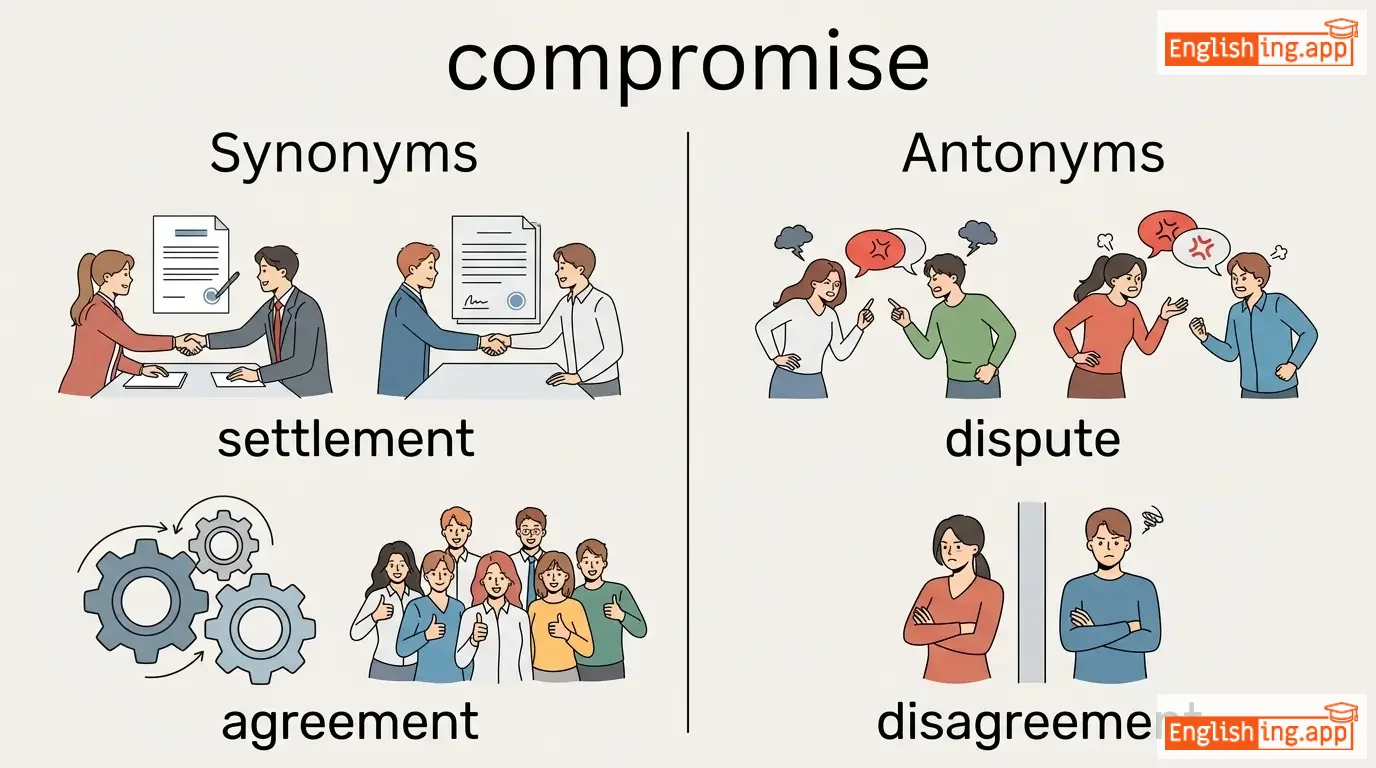
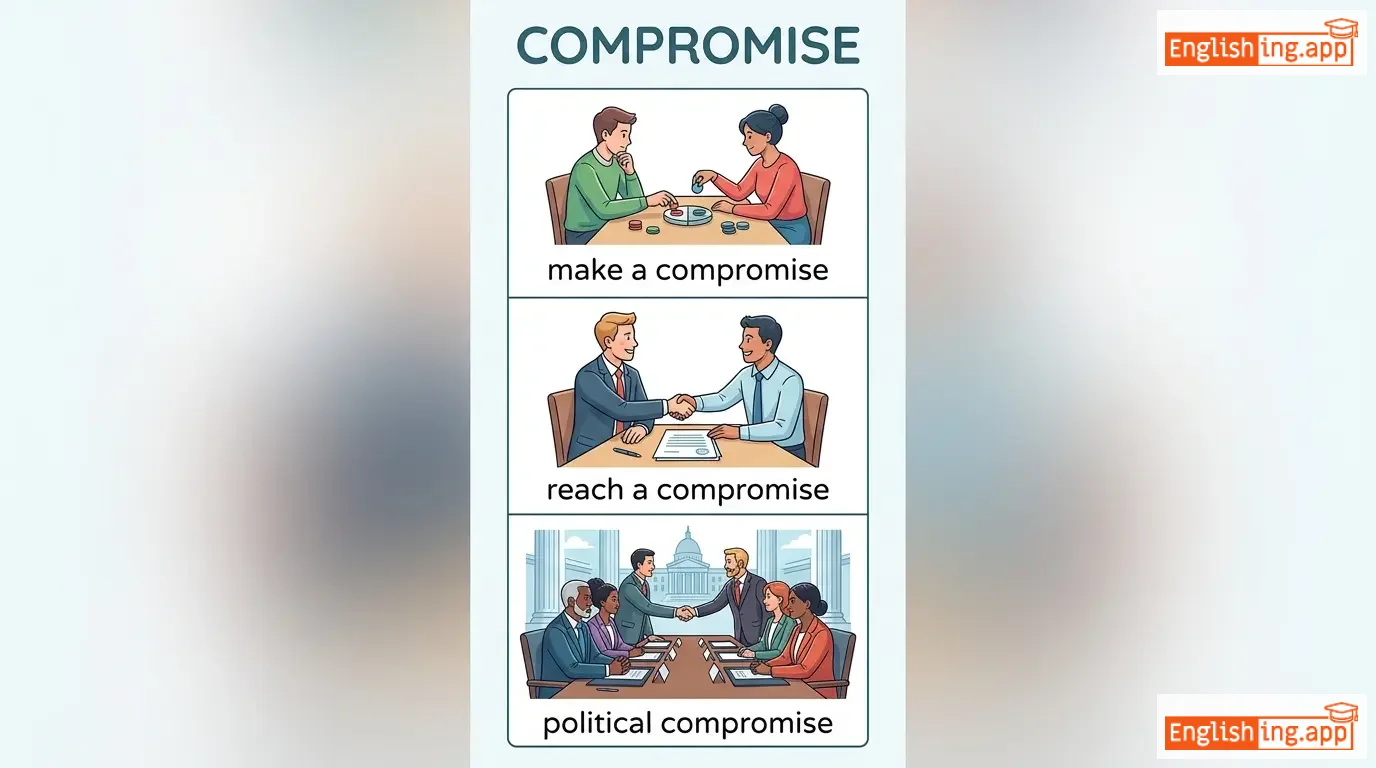
#699
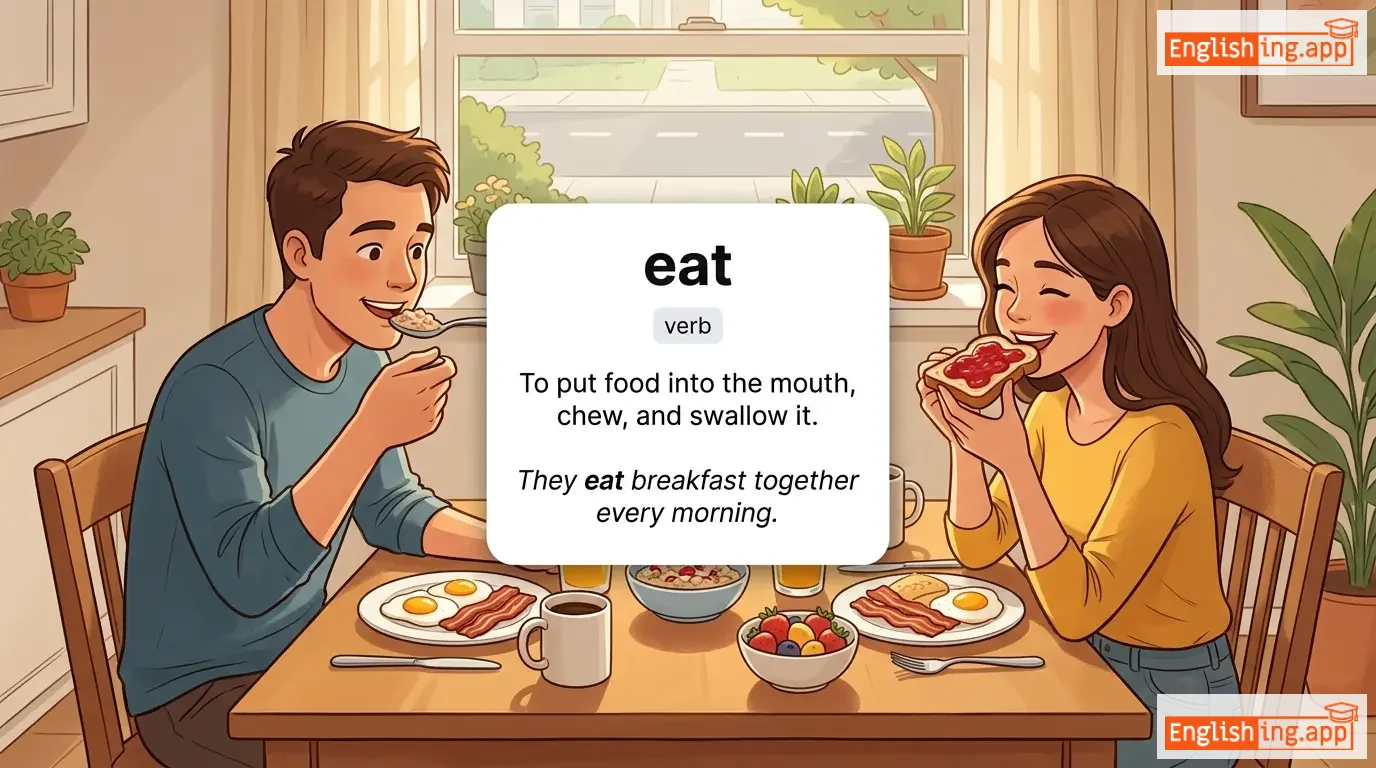
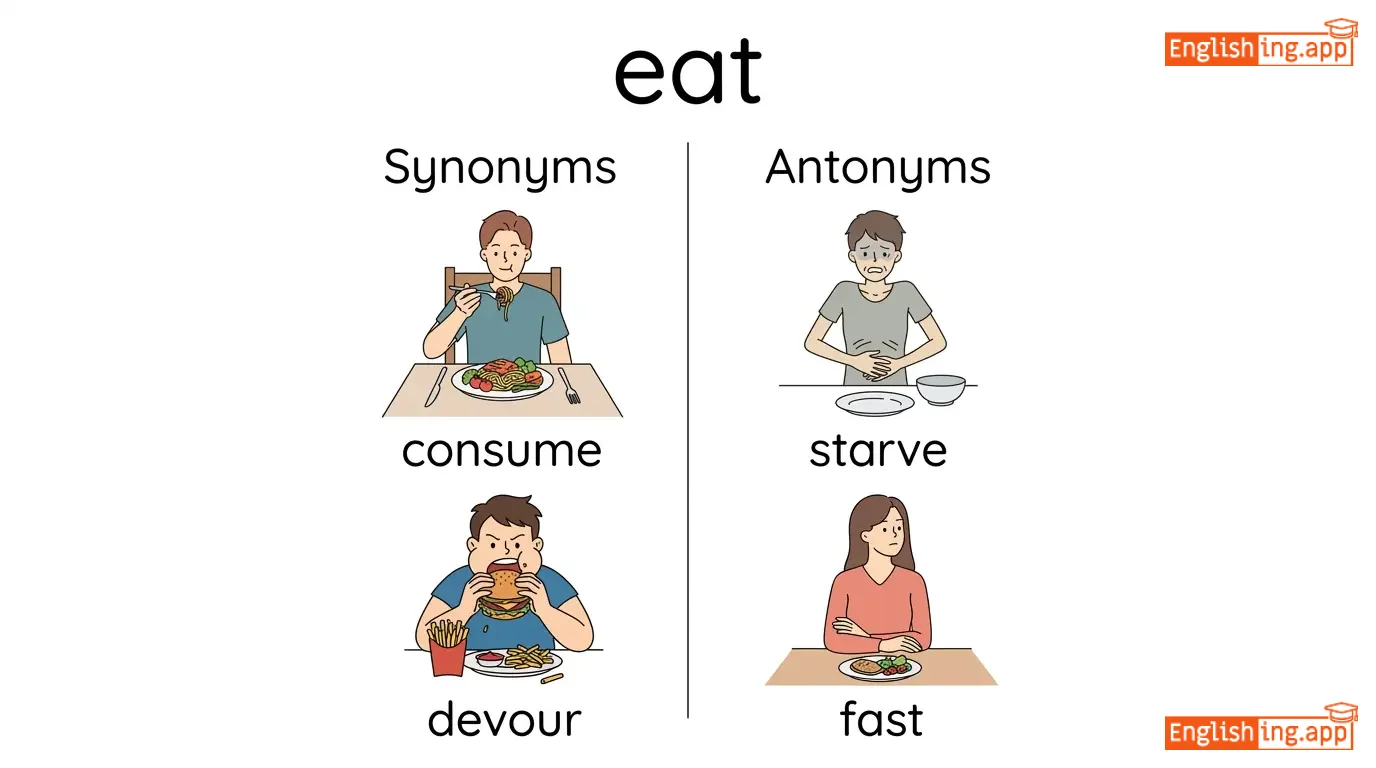
🤝
|
/ˈkɒmprəmaɪz/
verb
(康普罗迈斯)
••••••
|
|
妥协
tuoxie
••••••
|
compromised
康普罗迈斯德
••••••
|
compromised
康普罗迈斯德
••••••
|
compromises
康普罗迈斯斯
••••••
|
compromising
康普罗迈辛
••••••
|
to accept standards that are lower than is desirable; to settle a dispute by mutual concession
••••••
|
They had to compromise on the budget to reach an agreement.
他们为了达成协议,不得不在预算上康普罗迈斯。
••••••
|
他们为了达成协议,不得不在预算上妥协。
tamen weile dacheng xieyi bude bu zai yusuan shang tuoxie
••••••
|
negotiate, settle, concede, adjust
••••••
|
insist, demand, refuse, resist
••••••
|
compromise on, willing to compromise, compromise between, compromise with, reach compromise
••••••
|
‘Tuoxie’ means ‘compromise’ — imagine two people ‘letting go’ (xie) to agree.
••••••
|
|
#700
🍽️
|
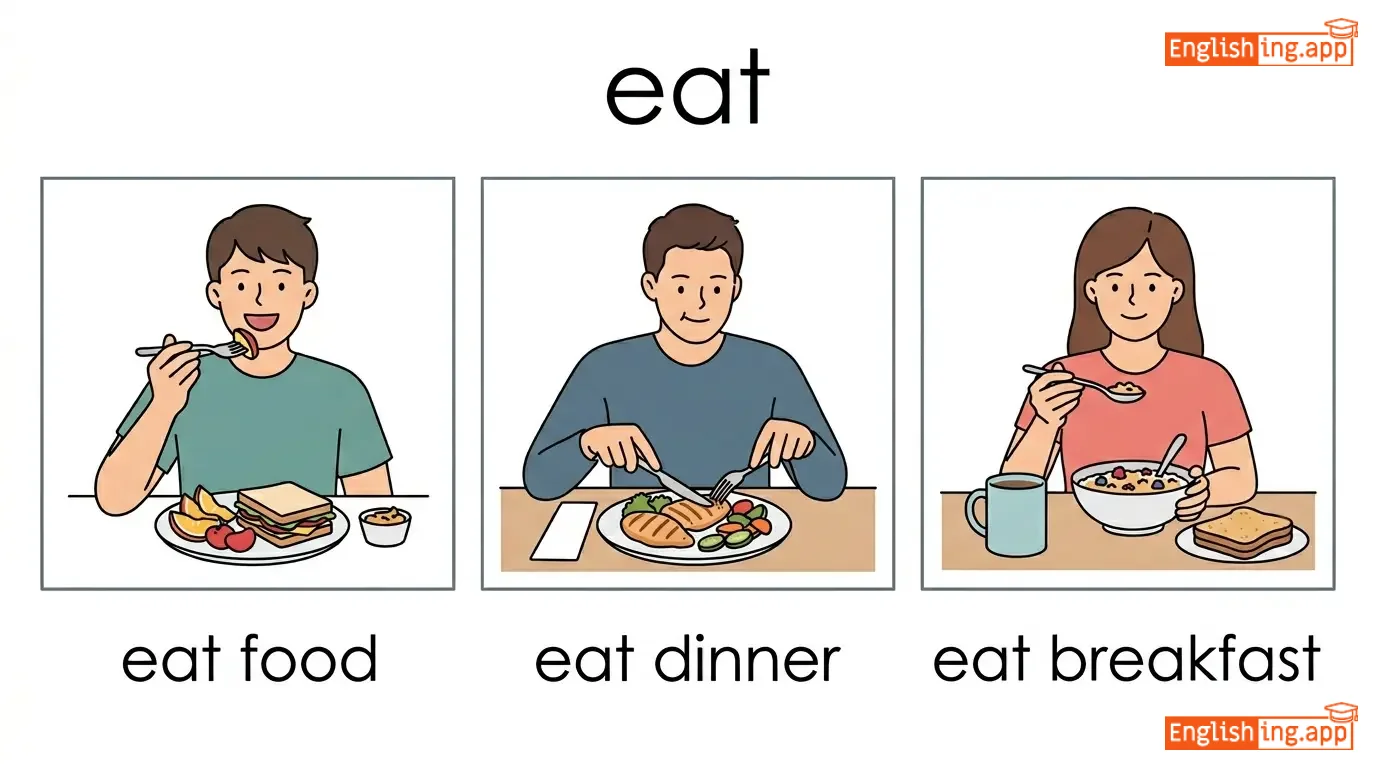
/iːt/
verb
(伊特)
••••••
|
|
吃
chi
••••••
|
ate
艾特
••••••
|
eaten
伊滕
••••••
|
eats
伊茨
••••••
|
eating
伊廷
••••••
|
to put food in the mouth and chew and swallow it
••••••
|
We eat dinner at 7 PM.
我们 伊特 晚餐 在 七点。
••••••
|
我们晚上七点吃晚饭。
women wanshang qidian chi wanfan
••••••
|
consume, devour, munch, dine
••••••
|
fast, starve, abstain, refuse
••••••
|
eat breakfast, eat lunch, eat dinner, eat healthy, eat out, eat together
••••••
|
When you ‘chi’, you’re filling your tummy with glee!
••••••
|
|
#701
🏭
|
/pəˈluːt/
verb
(波鲁特)
••••••
|
|
污染
wuran
••••••
|
polluted
波鲁特德
••••••
|
polluted
波鲁特德
••••••
|
pollutes
波鲁特斯
••••••
|
polluting
波鲁廷
••••••
|
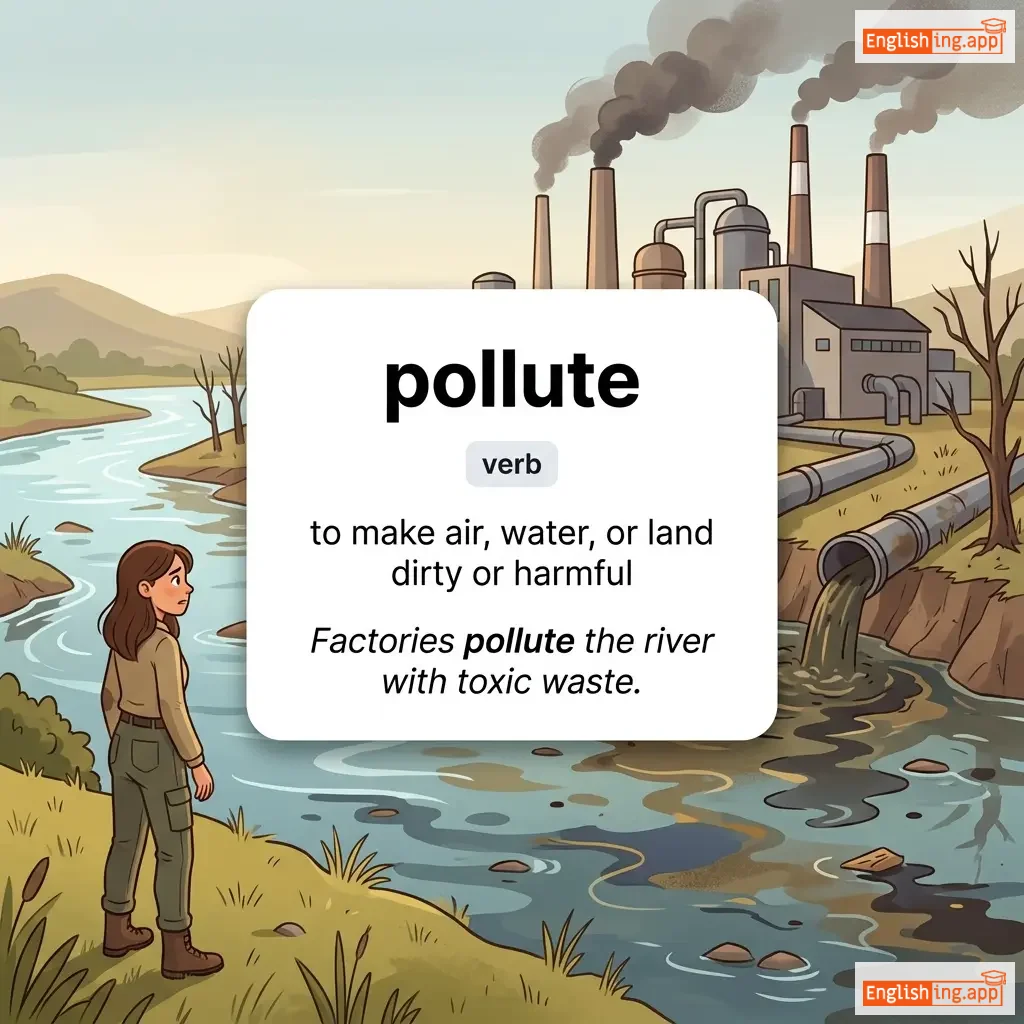
to make air, water, or land dirty and harmful to people, animals, and plants
••••••
|
Factories pollute the environment with toxic chemicals.
工厂用有毒化学品污染环境。
••••••
|
工厂用有毒化学品污染环境。
gongchang yong youdu huaxuepin wuran huanjing
••••••
|
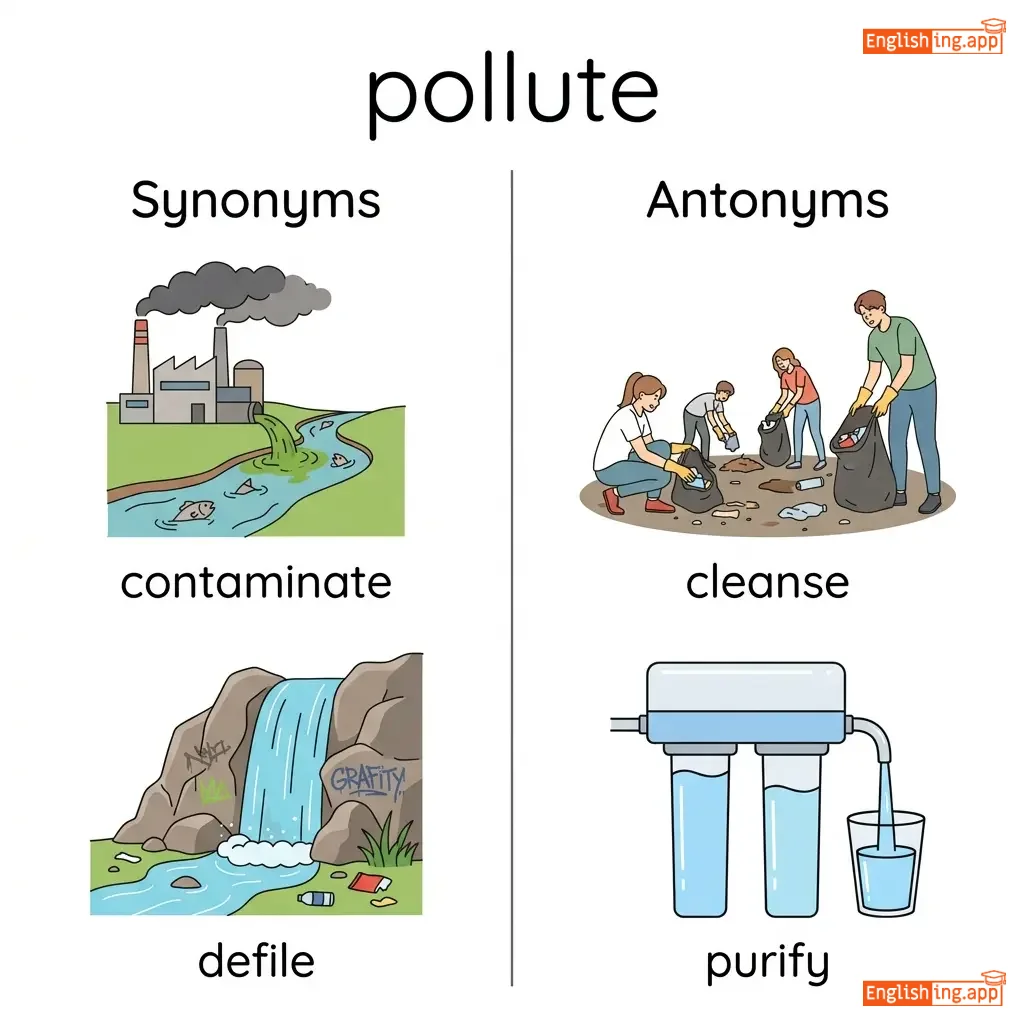
contaminate, dirty, taint, poison
••••••
|
purify, clean, cleanse
••••••
|
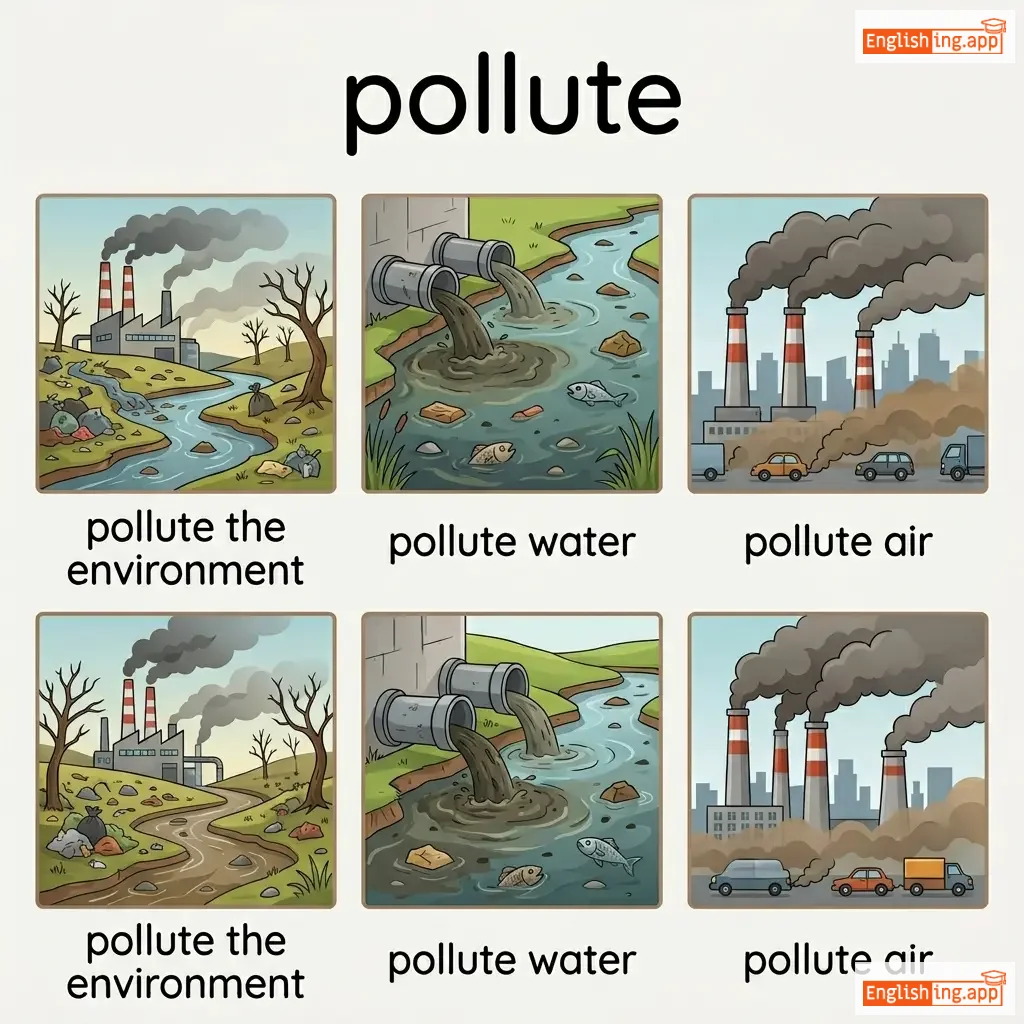
pollute environment, pollute air, pollute water, heavily pollute, pollute atmosphere
••••••
|
Pollute → 污染 (wuran): sounds like 'woo-run'—run away from dirty things!
••••••
|
|
#702
🤝
|
/pɑːrˈtɪsɪpeɪt/
verb
(帕提西佩特)
••••••
|
|
参加
can jia
••••••
|
participated
帕提西佩特德
••••••
|
participated
帕提西佩特德
••••••
|
participates
帕提西佩特斯
••••••
|
participating
帕提西佩特英
••••••
|
to take part in or become involved in an activity
••••••
|
Students are encouraged to participate in extracurricular activities.
学生被鼓励参加课外活动。
••••••
|
鼓励学生参加课外活动。
gu li xue sheng can jia ke wai huo dong.
••••••
|
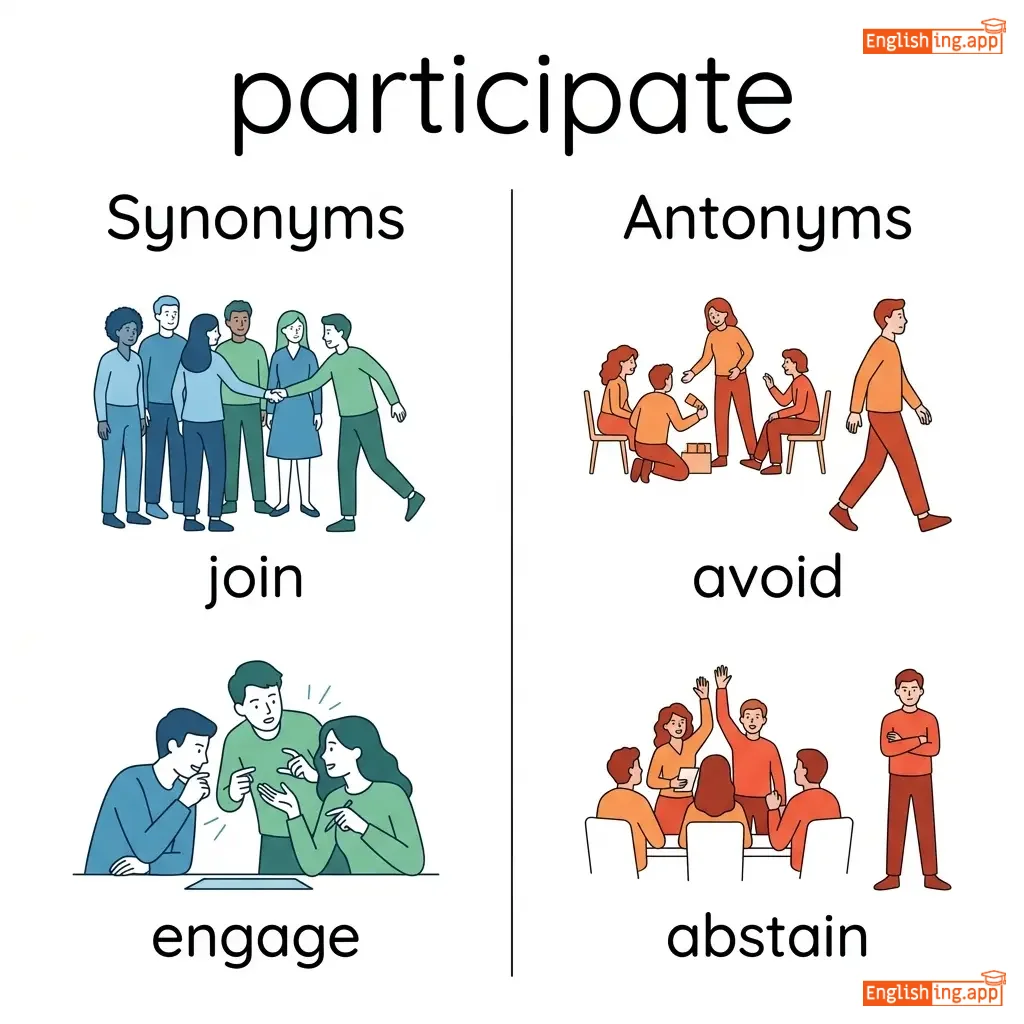
join, engage, contribute, take part
••••••
|
abstain, withdraw, avoid, exclude
••••••
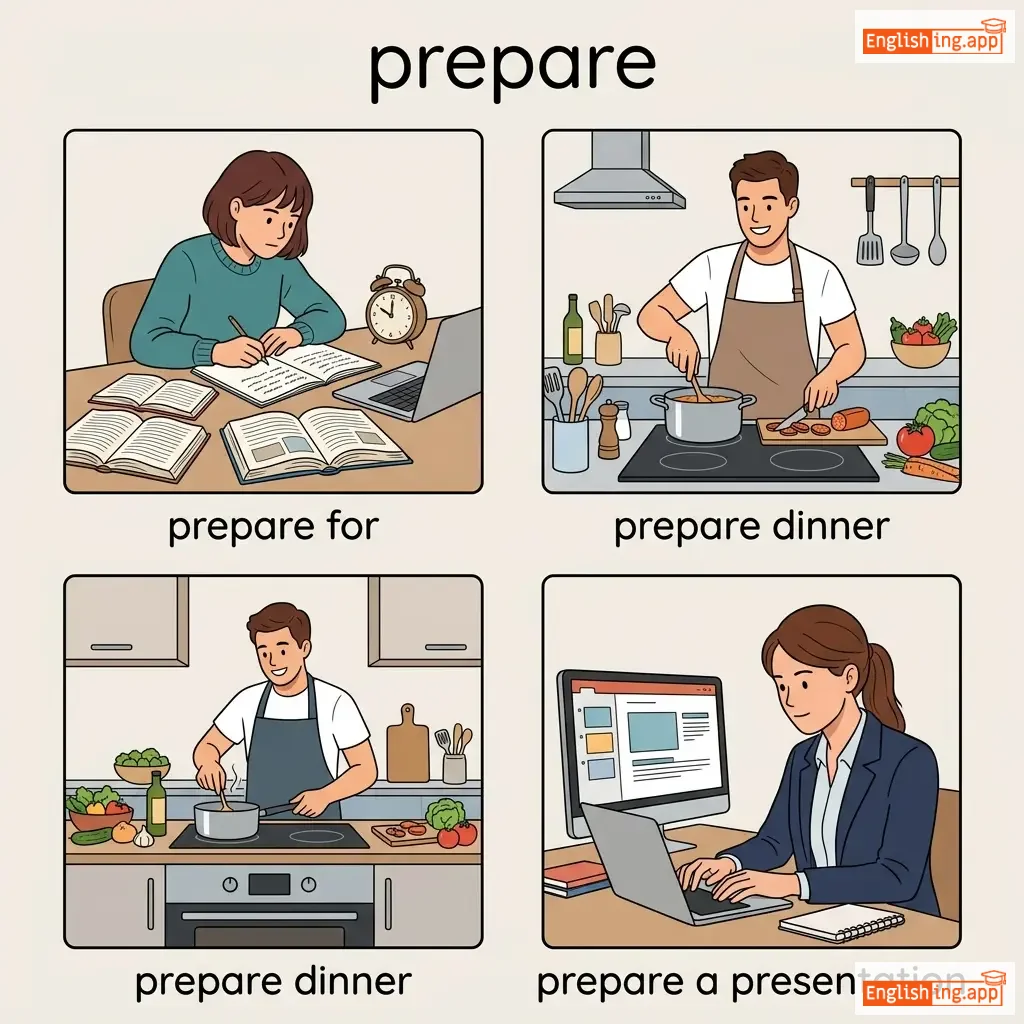
|
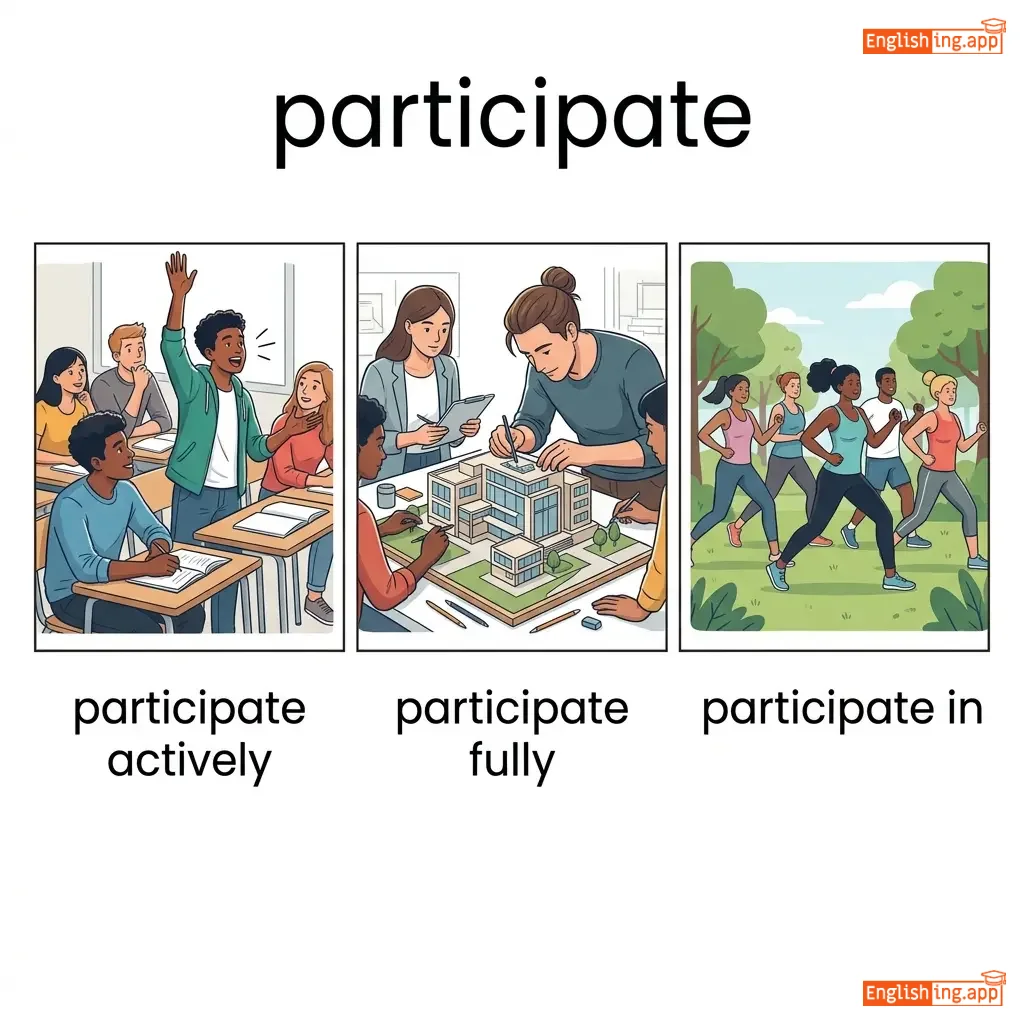
participate in, actively participate, participate fully, participate together, participate willingly
••••••
|
In Chinese, 'can jia' (参加) means 'join in' — same as participate!
••••••
|
|
#703
🍳
|
/prɪˈpɛər/
verb
(海皮尔)
••••••
|
|
准备
zhunbei
••••••
|
prepared
海皮尔德
••••••
|
prepared
海皮尔德
••••••
|
prepares
海皮尔斯
••••••
|
preparing
海皮尔英
••••••
|
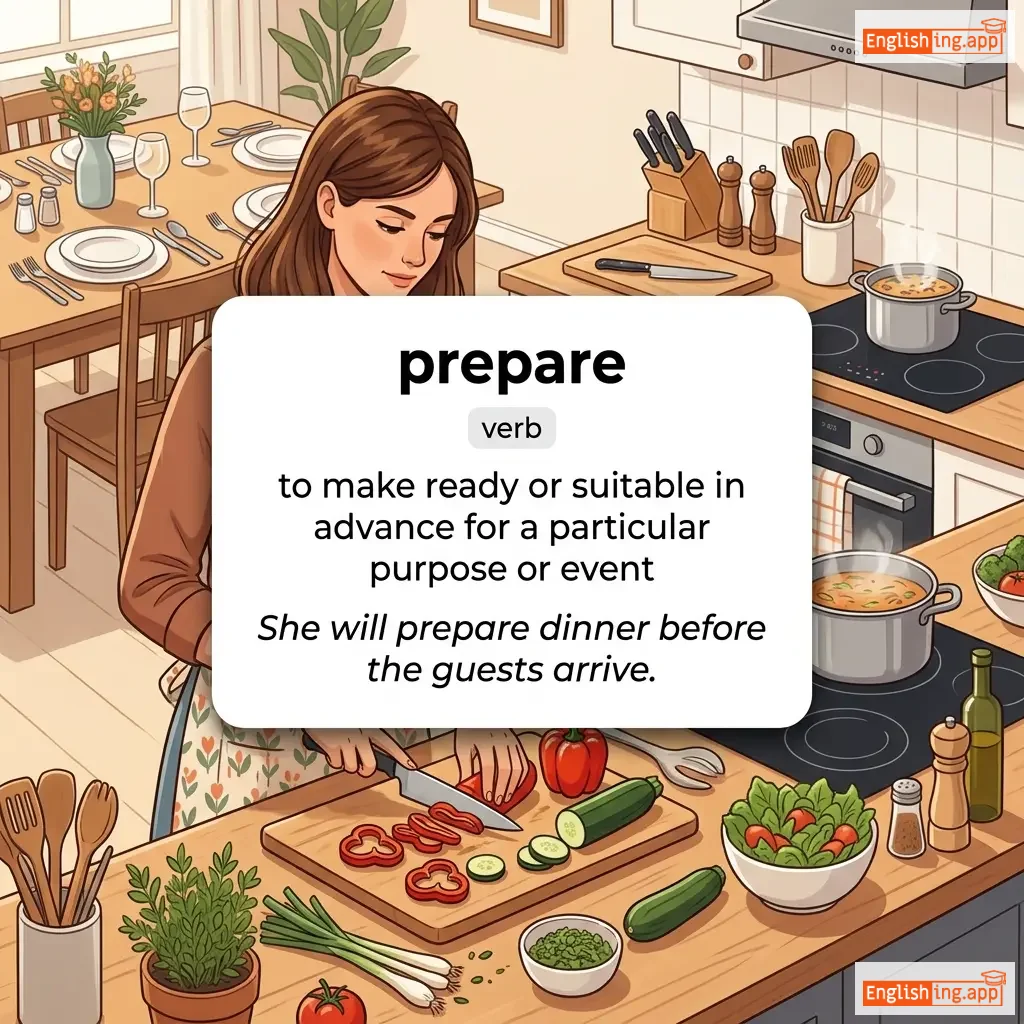
to make ready; to get something ready for use
••••••
|
She needs to prepare dinner for her family.
她 需要 准备 晚餐 给 她 的 家人。
••••••
|
她需要为家人准备晚餐。
ta xuyao wei jiaren zhunbei wancan
••••••
|
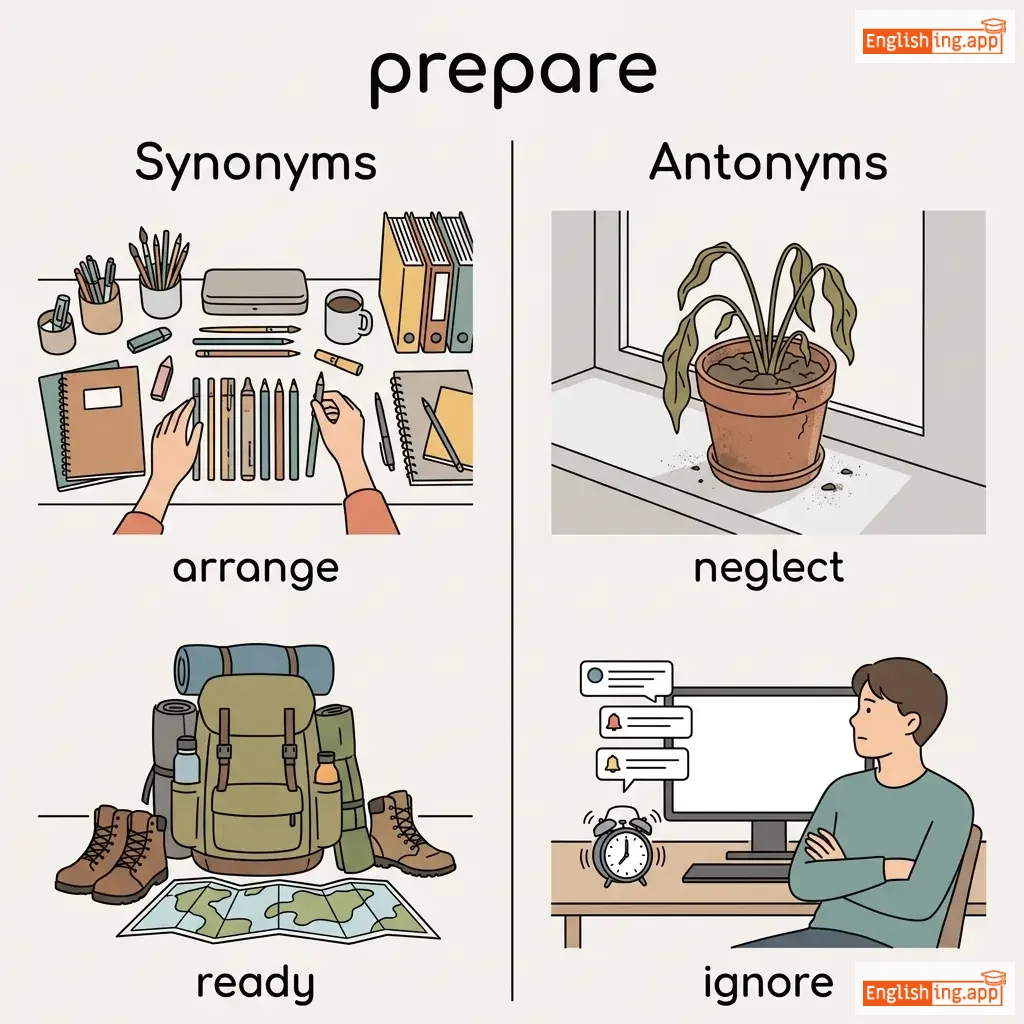
ready, arrange, organize, plan
••••••
|
neglect, ignore, abandon, destroy
••••••
|
prepare for, prepare carefully, prepare dinner, prepare ahead, well prepared, prepare thoroughly
••••••
|
Zhunbei sounds like 'June-bay' – imagine getting ready for a June dinner!
••••••
|
|
#704
📋
|
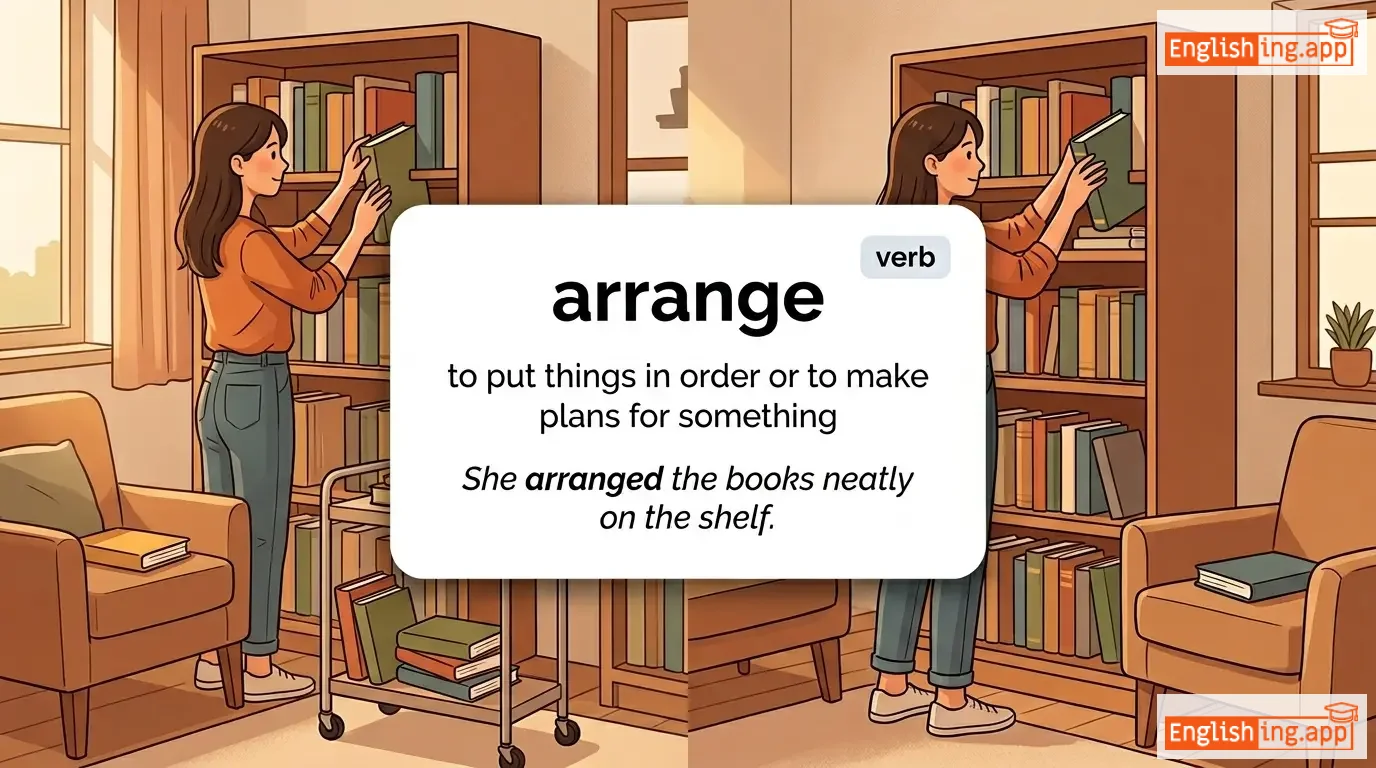
/əˈreɪndʒ/
verb
(阿瑞因奇)
••••••
|
|
安排
anpai
••••••
|
arranged
阿瑞因奇德
••••••
|
arranged
阿瑞因奇德
••••••
|
arranges
阿瑞因奇斯
••••••
|
arranging
阿瑞因奇英
••••••
|
to organize or put in order; to plan or prepare
••••••
|
She arranged the flowers in a vase.
她阿瑞因奇了花放在花瓶里。
••••••
|
她把花插在花瓶里。
ta ba hua cha zai huaping li
••••••
|
organize, order, plan, prepare
••••••
|
disorganize, scatter, mess up, disorder
••••••
|
arrange carefully, arrange properly, arrange meeting, arrange flowers, arrange in order
••••••
|
Arrange = 安排 (anpai) — sounds like 'an-pie', plan it sweetly!
••••••
|
|
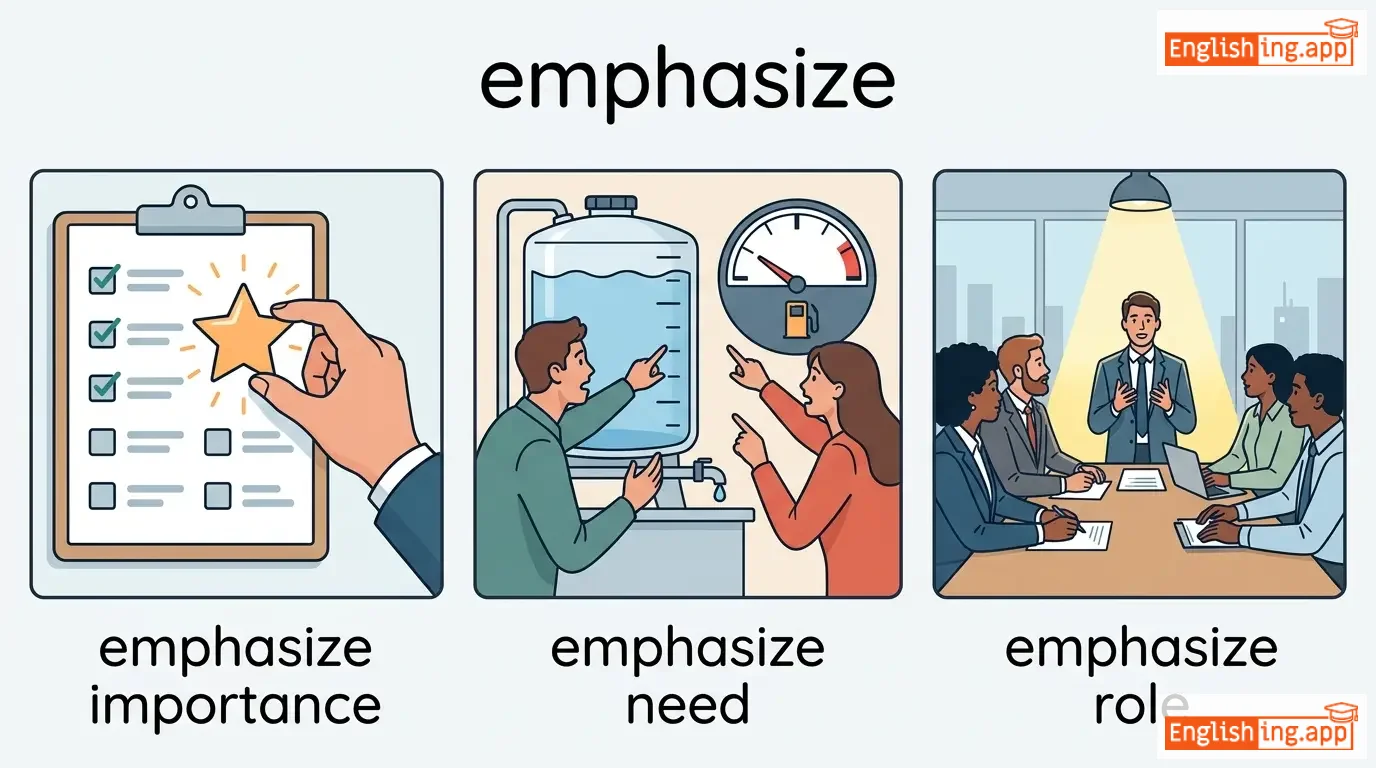
#705
💡
|
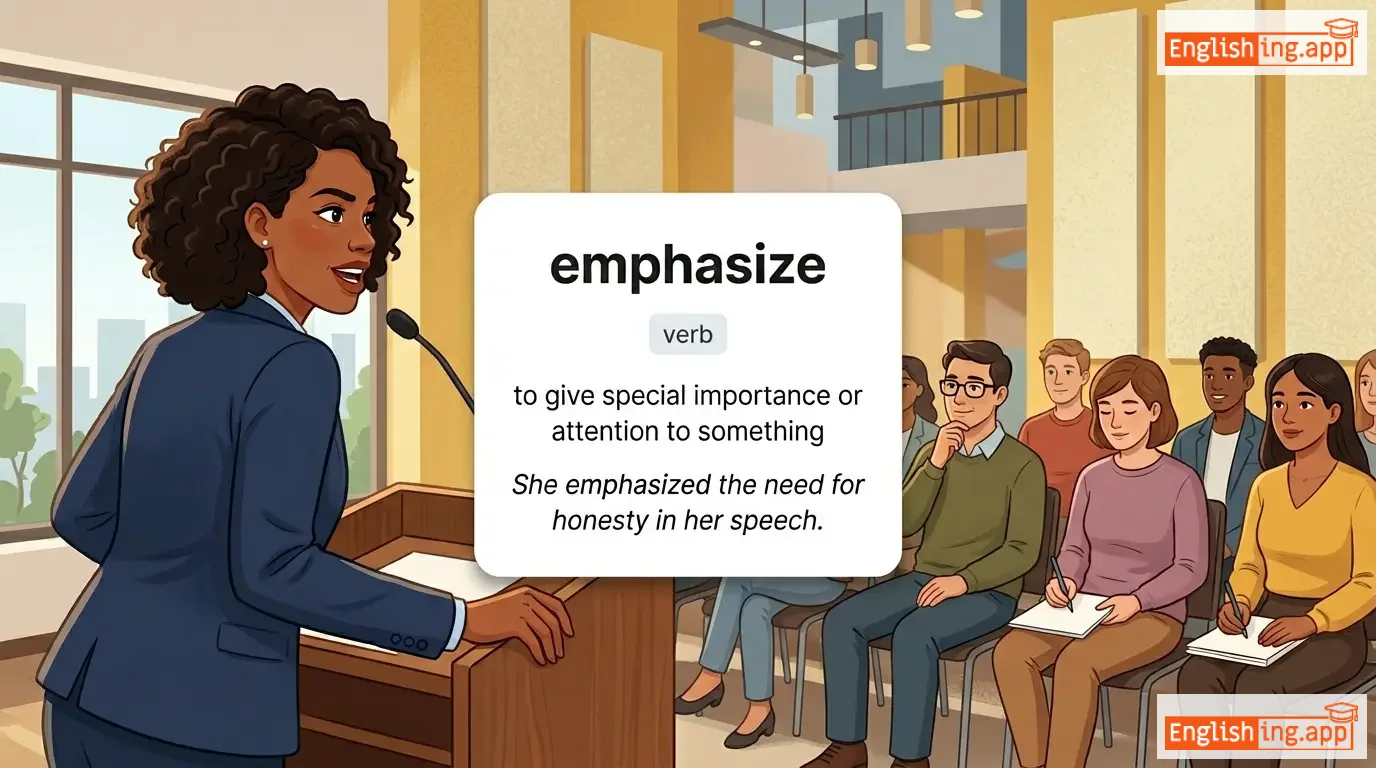
/ˈɛmfəˌsaɪz/
verb
(海皮奈斯)
••••••
|
|
强调
qiangdiao
••••••
|
emphasized
海皮奈斯德
••••••
|
emphasized
海皮奈斯德
••••••
|
emphasizes
海皮奈斯斯
••••••
|
emphasizing
海皮奈辛
••••••
|
to give special importance or attention to something
••••••
|
The teacher emphasized the importance of homework.
老师恩法赛斯了作业的重要性。
••••••
|
老师强调了作业的重要性。
Laoshi qiangdiao le zuoye de zhongyaoxing
••••••
|
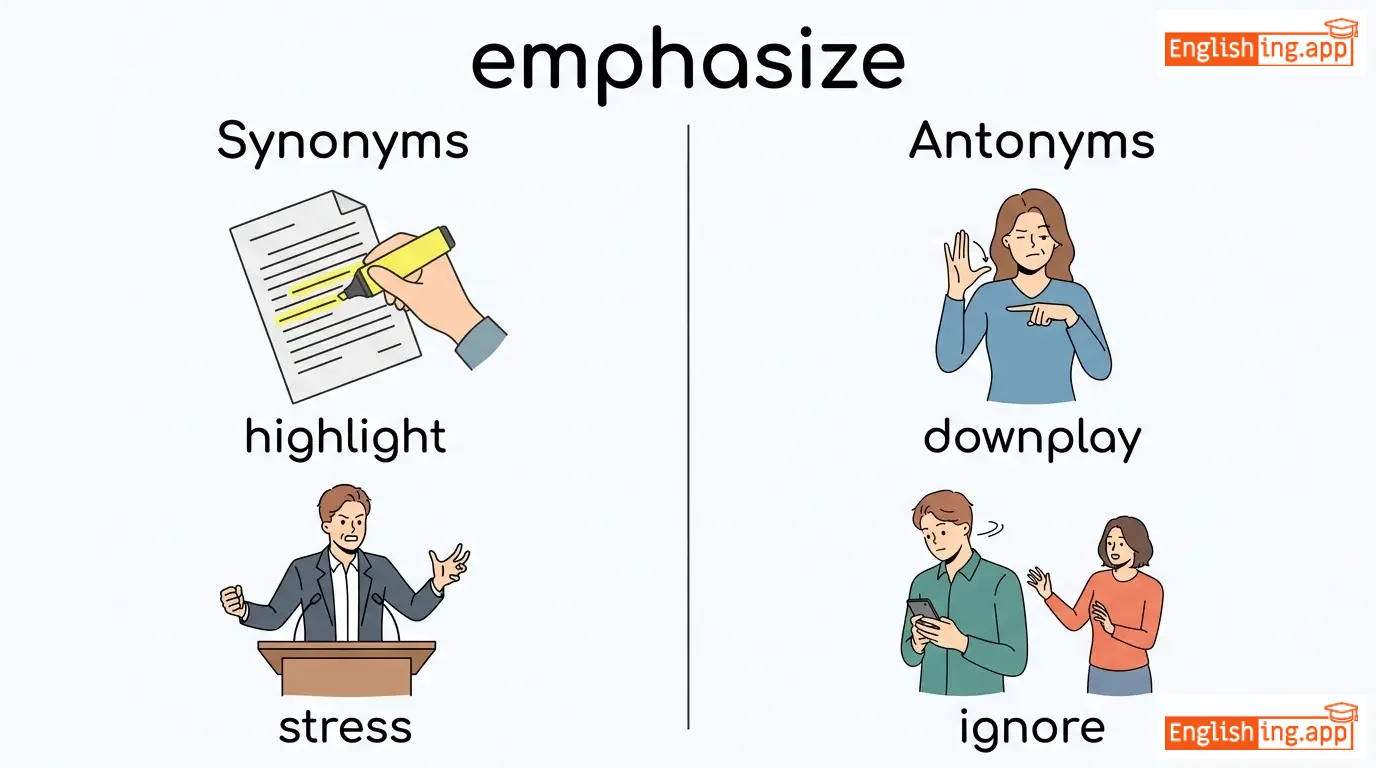
stress, highlight, underline, accentuate
••••••
|
downplay, minimize, ignore
••••••
|
emphasize importance, strongly emphasize, emphasize point, emphasize need, clearly emphasize
••••••
|
To emphasize in Chinese, say 'qiangdiao' — like 'strongly point out'!
••••••
|
|
#706
🚪
|
/kwɪt/
verb
(奎特)
••••••
|
|
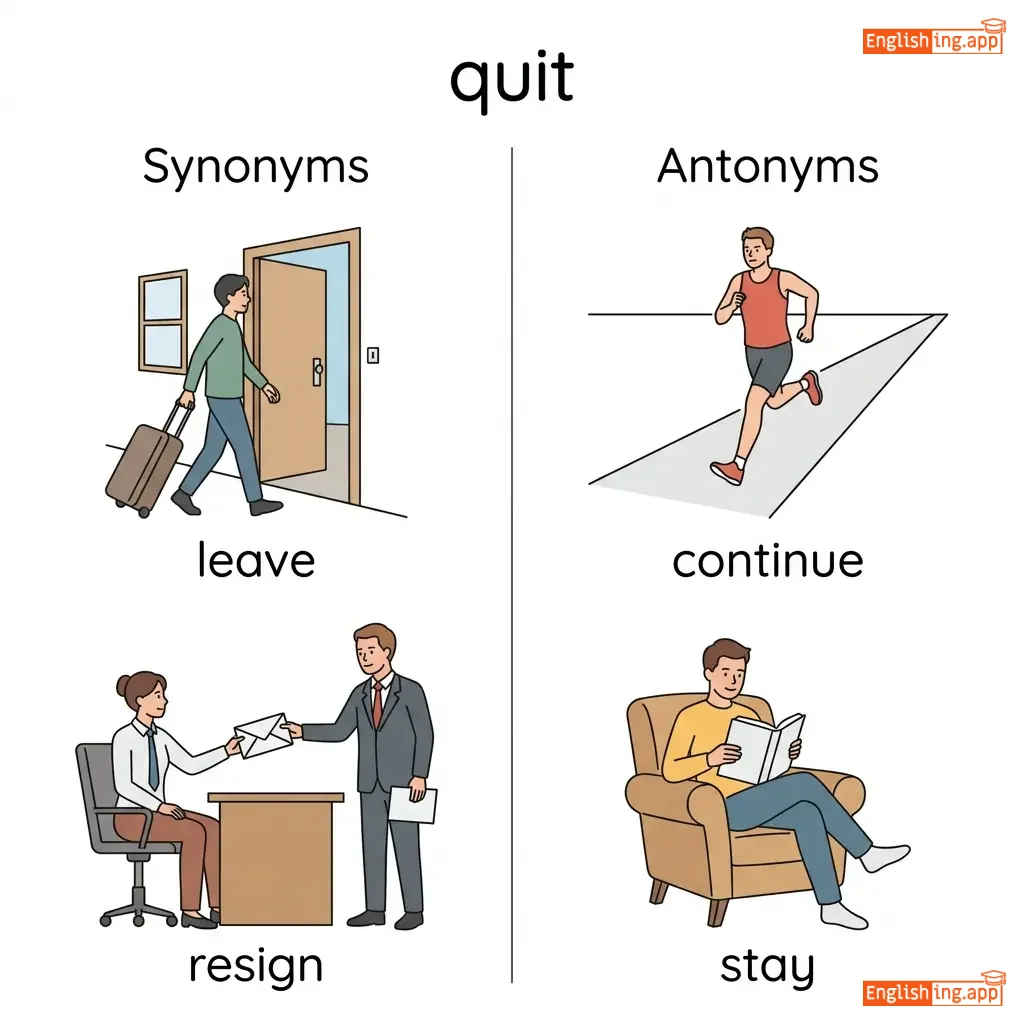
辞职
cizhi
••••••
|
quit/quitted
奎特/奎特德
••••••
|
quit/quitted
奎特/奎特德
••••••
|
quits
奎特斯
••••••
|
quitting
奎廷
••••••
|
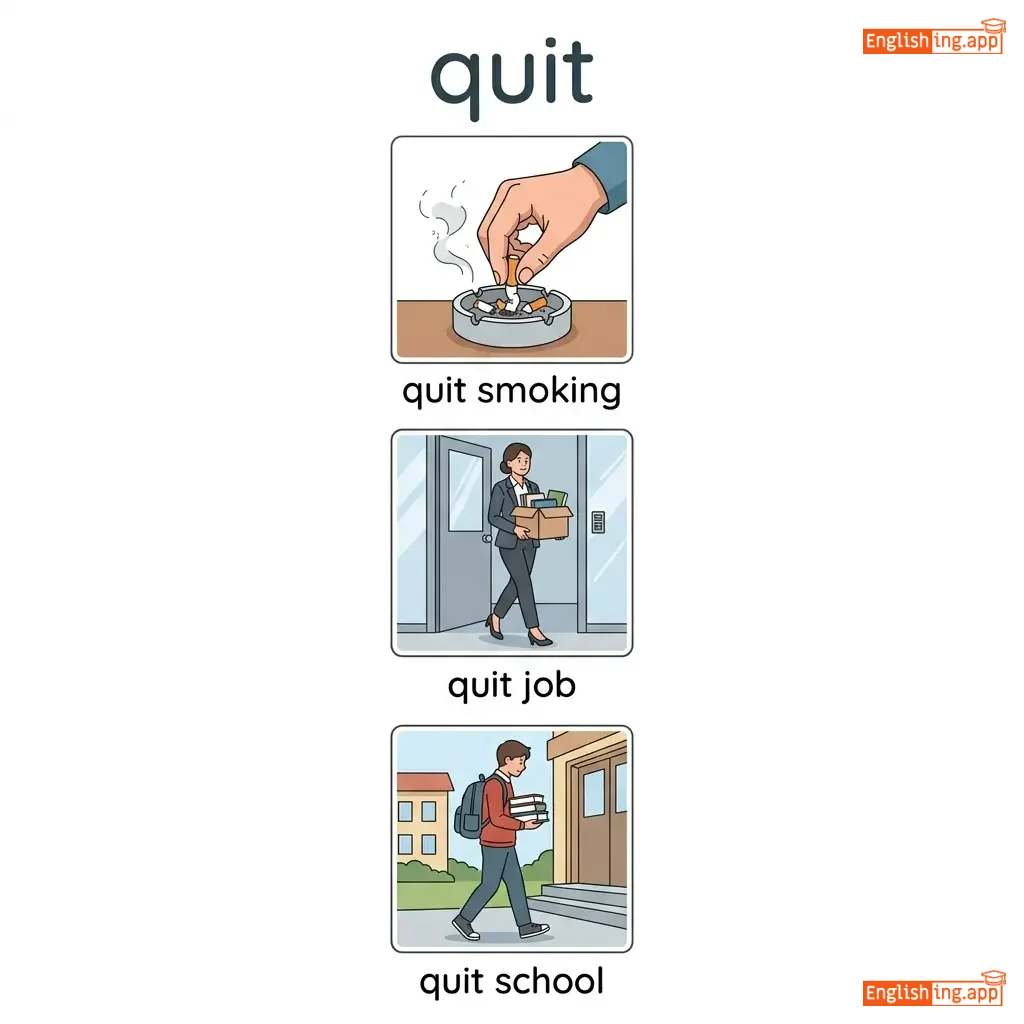
to stop doing something; to leave a job or position
••••••
|
She decided to quit her job and start her own business.
她 决定 奎特 她 的 工作 并 开始 她 自己 的 生意。
••••••
|
她决定辞职并开始自己的生意。
Ta jueding cizhi bing kaishi ziji de shengyi.
••••••
|
stop, cease, leave, resign
••••••
|
start, begin, continue, persist
••••••
|
quit job, quit smoking, quit school, quit trying, quit suddenly, quit forever
••••••
|
Quit means ‘辞职’ (cizhi)—to resign or leave your job.
••••••
|
|
#707
📄
|
/səbˈmɪt/
verb
(səbˈmɪt)
••••••
|
|
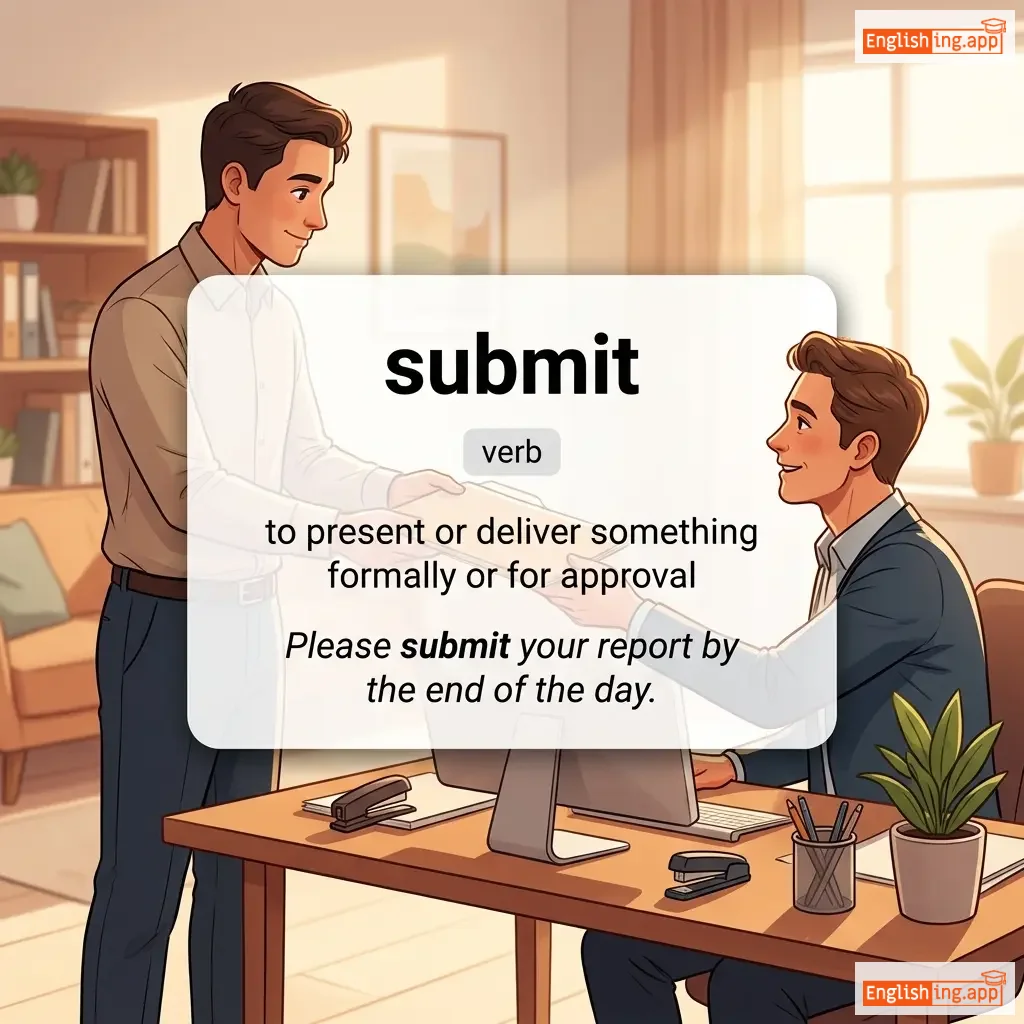
提交
tíjiāo
••••••
|
submitted
səbˈmɪtəd
••••••
|
submitted
səbˈmɪtəd
••••••
|
submits
səbˈmɪts
••••••
|
submitting
səbˈmɪtɪŋ
••••••
|
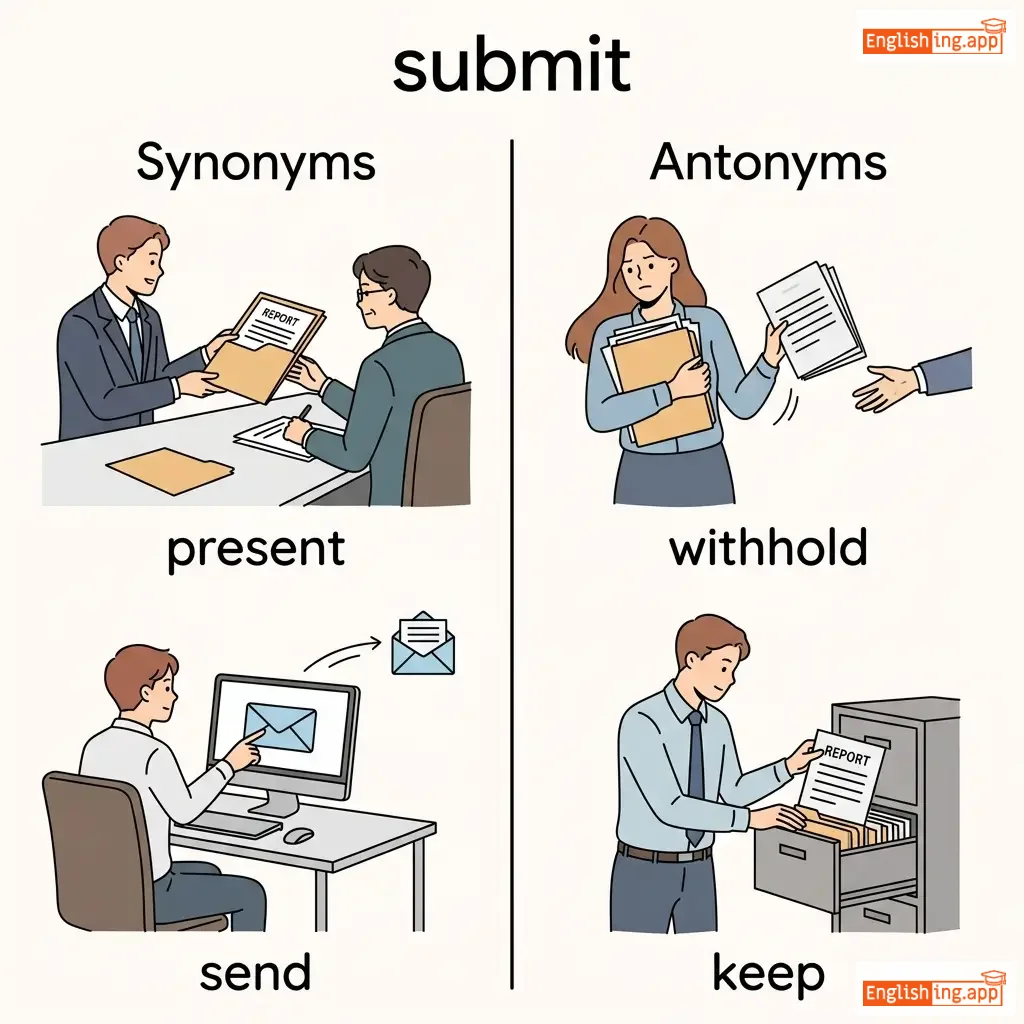
to present for consideration; to surrender; to yield
••••••
|
Please submit your assignment by Friday.
请在周五之前提交您的作业。
••••••
|
请在周五之前提交您的作业。
Qǐng zài zhōuwǔ zhīqián tíjiāo nín de zuòyè.
••••••
|
present, hand in, surrender, yield
••••••
|
withdraw, resist, refuse, reject
••••••
|
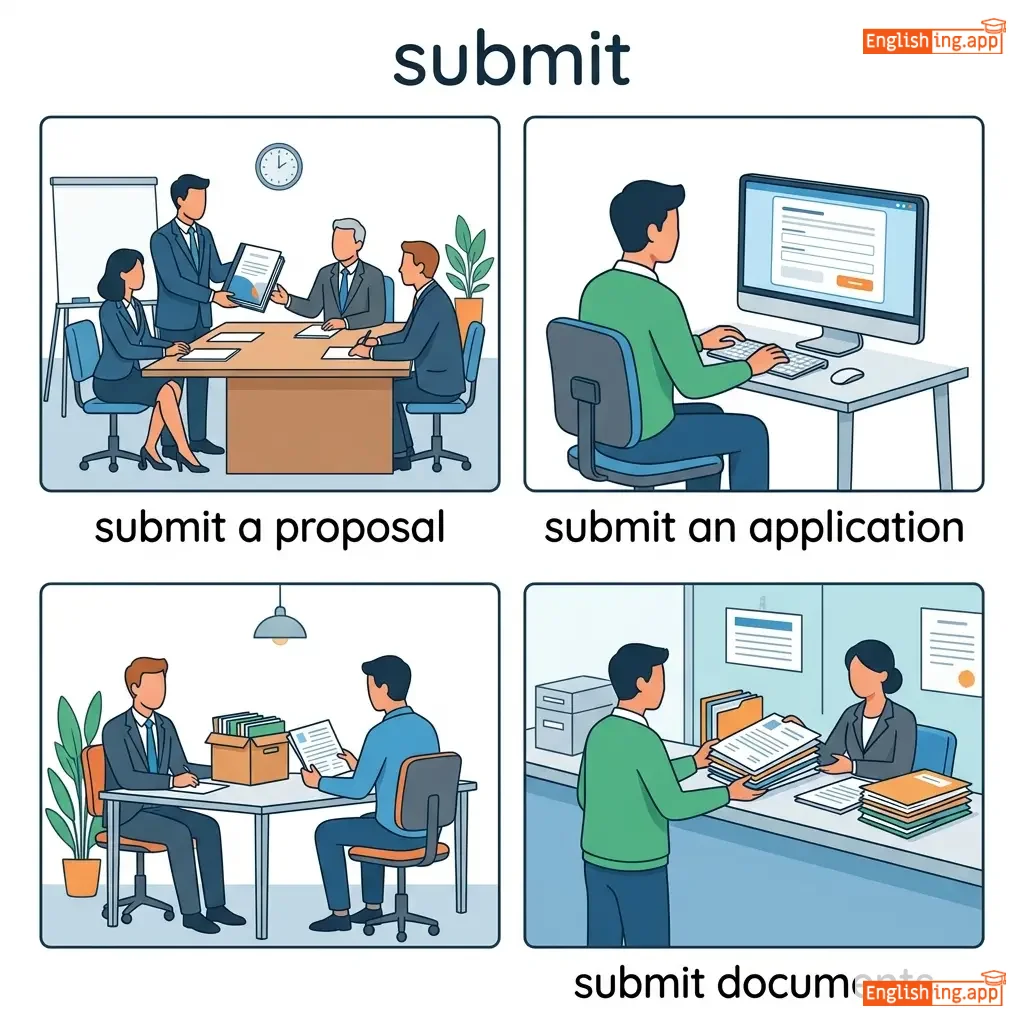
submit application, submit report, submit assignment, submit proposal, submit documents
••••••
|
提交作业就像投降,认命吧!
••••••
|
|
#708
🤝
|
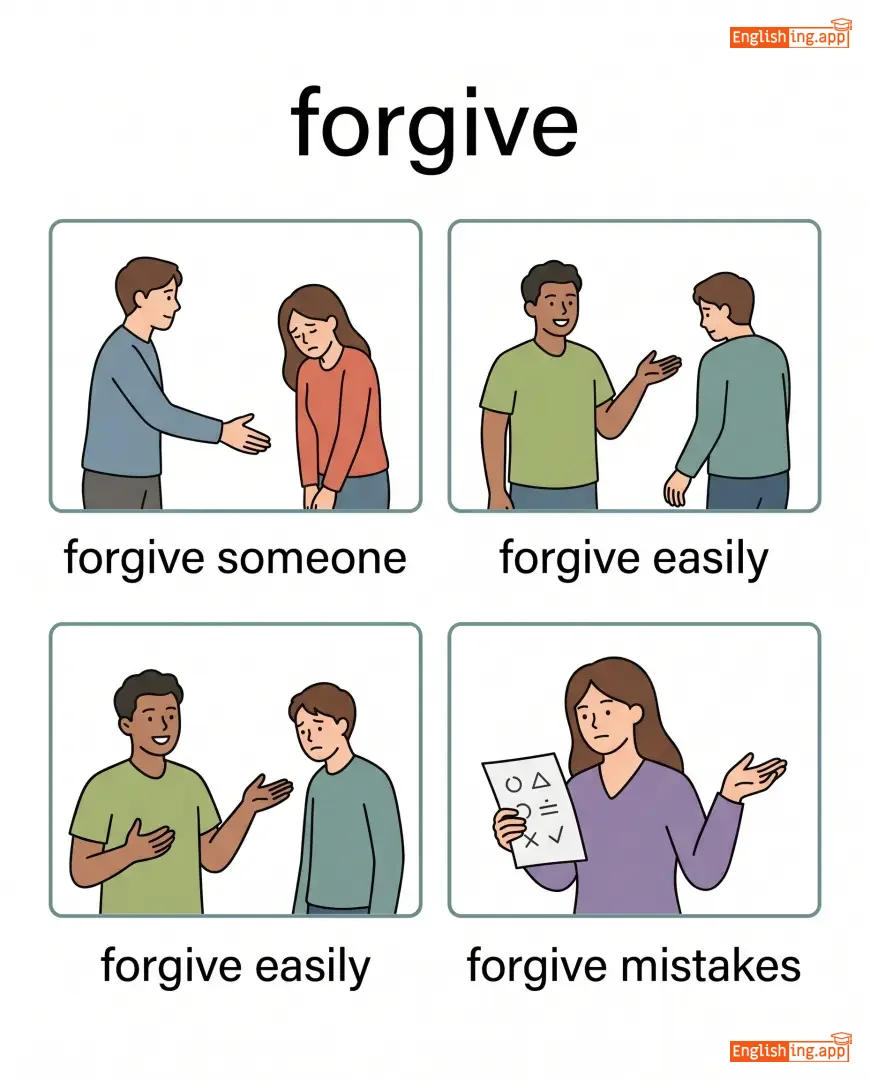
/fərˈɡɪv/
verb
(福给夫)
••••••
|
|
原谅
yuanliang
••••••
|
forgave
福给夫
••••••
|
forgiven
福给芬
••••••
|
forgives
福给夫斯
••••••
|
forgiving
福给夫英
••••••
|
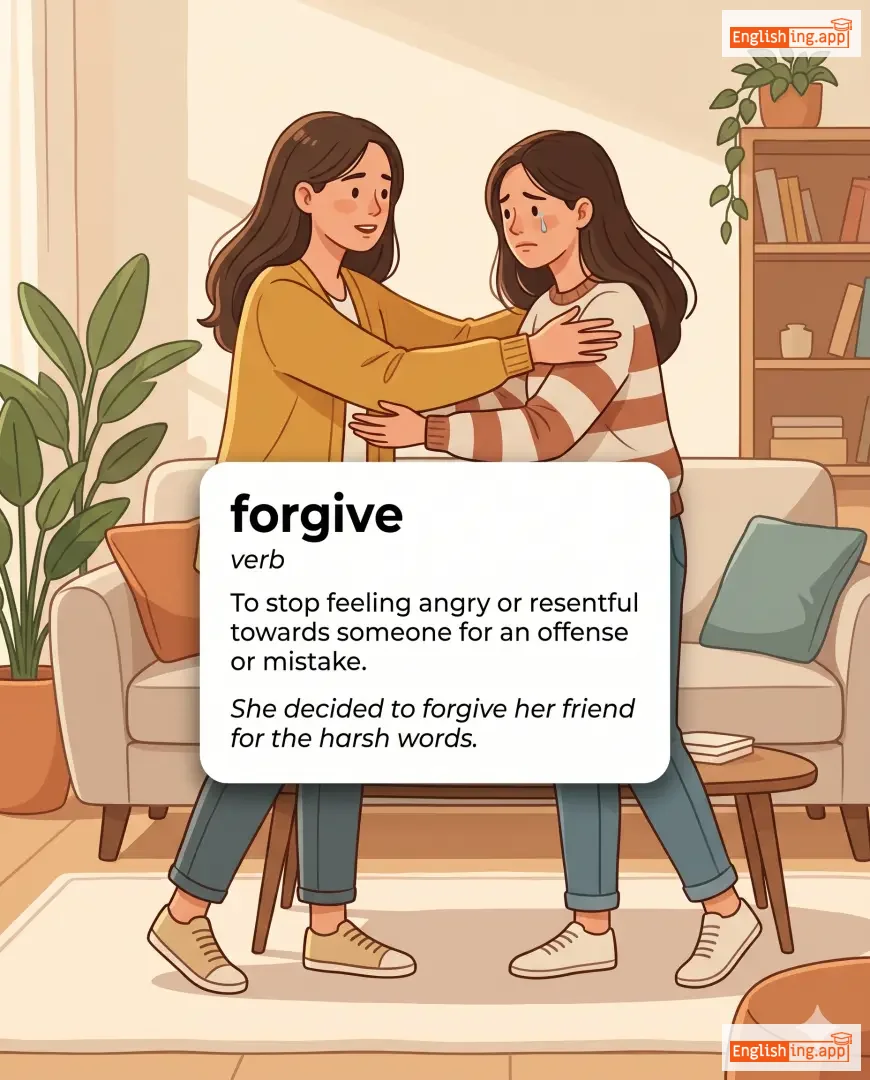
to stop feeling angry or resentful toward someone for an offense
••••••
|
I forgive you for your mistake.
我 福给夫 你 因为 你的 错误。
••••••
|
我原谅你,因为你的错误。
wo yuanliang ni, yinwei ni de cuowu.
••••••
|
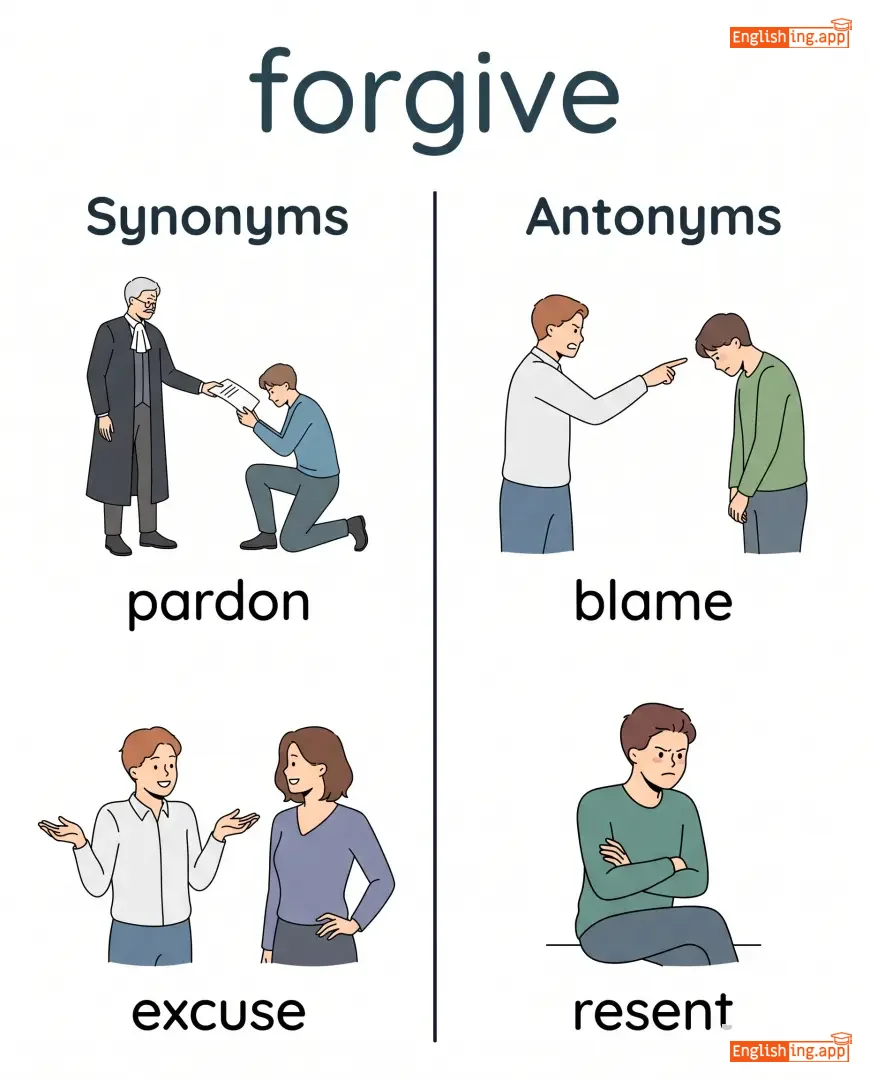
pardon, excuse, absolve
••••••
|
blame, condemn, resent
••••••
|
forgive completely, forgive mistake, forgive someone, please forgive, forgive and forget
••••••
|
‘Yuanliang’ sounds peaceful—like forgiving brings calm to the heart.
••••••
|
|
#709
⚖️
|
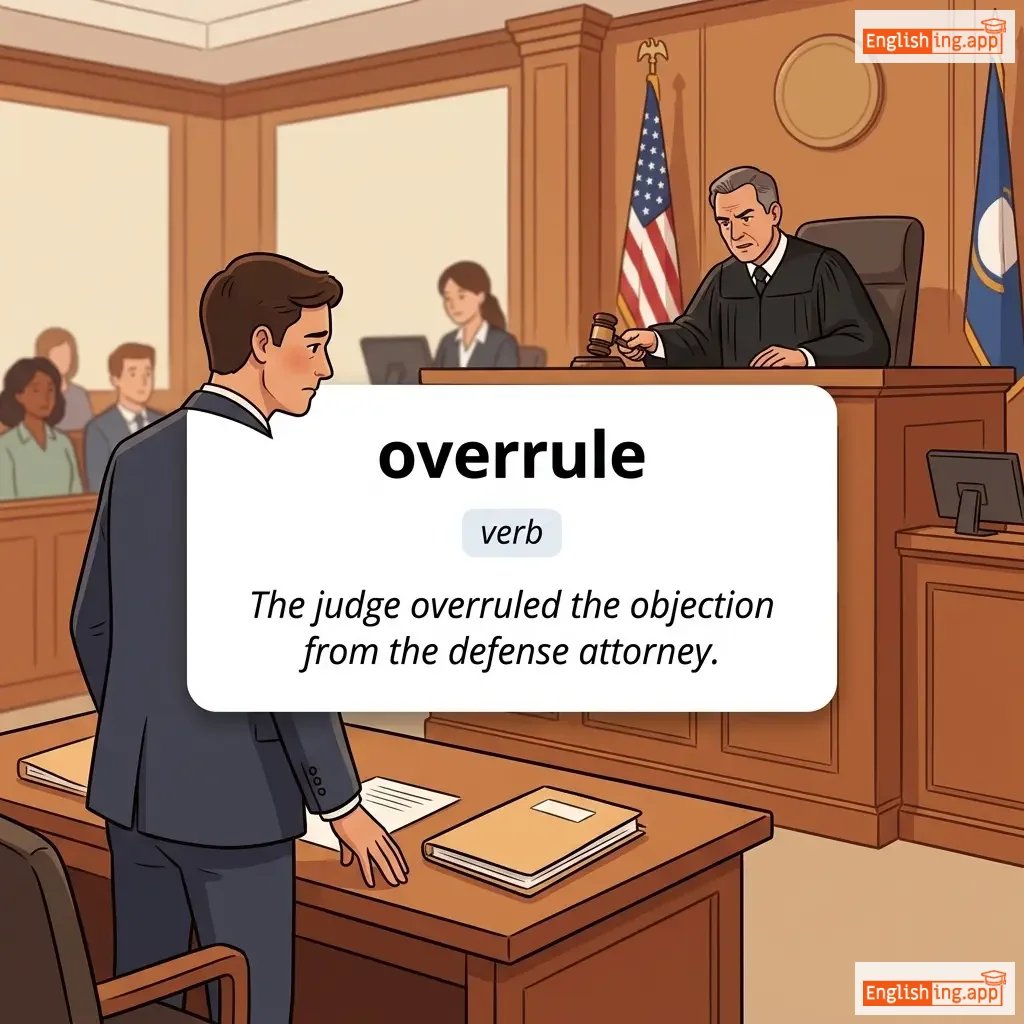
/ˌoʊvərˈruːl/
verb
(欧弗鲁尔)
••••••
|
|
驳回
bohui
••••••
|
overruled
欧弗鲁尔德
••••••
|
overruled
欧弗鲁尔德
••••••
|
overrules
欧弗鲁尔斯
••••••
|
overruling
欧弗鲁林
••••••
|
to reject or disallow by exercising one's superior authority; to override a decision
••••••
|
The judge overruled the objection from the defense attorney.
法官欧弗鲁尔德了辩护律师的反对。
••••••
|
法官驳回了辩护律师的反对。
Faguan bohui le bianhu lushi de fandui.
••••••
|
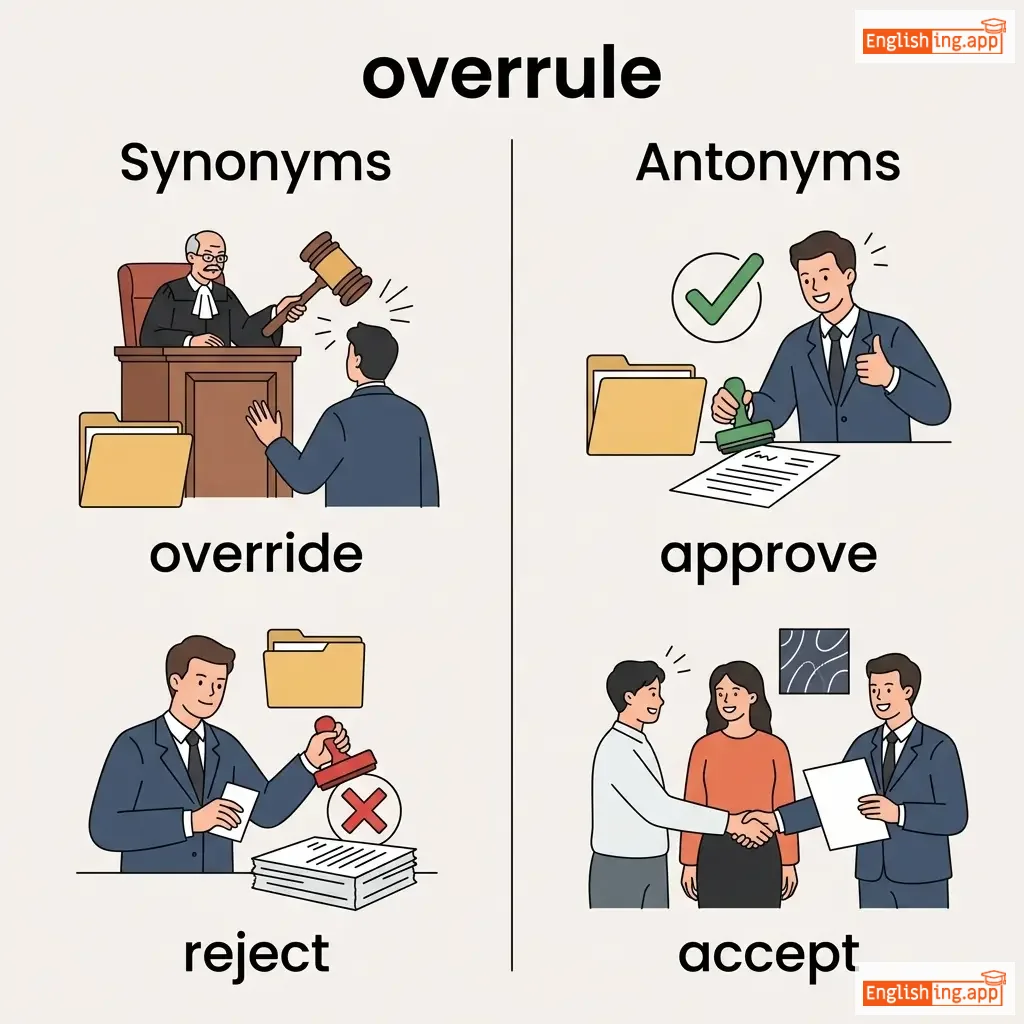
override, reject, veto, dismiss
••••••
|
approve, accept, uphold, sustain
••••••
|
overrule decision, overrule objection, overrule vote, judge overrule, overrule authority
••••••
|
Overrule = 驳回 (bohui), think ‘reject’ or ‘disallow’.
••••••
|
|
#710
🤔
|
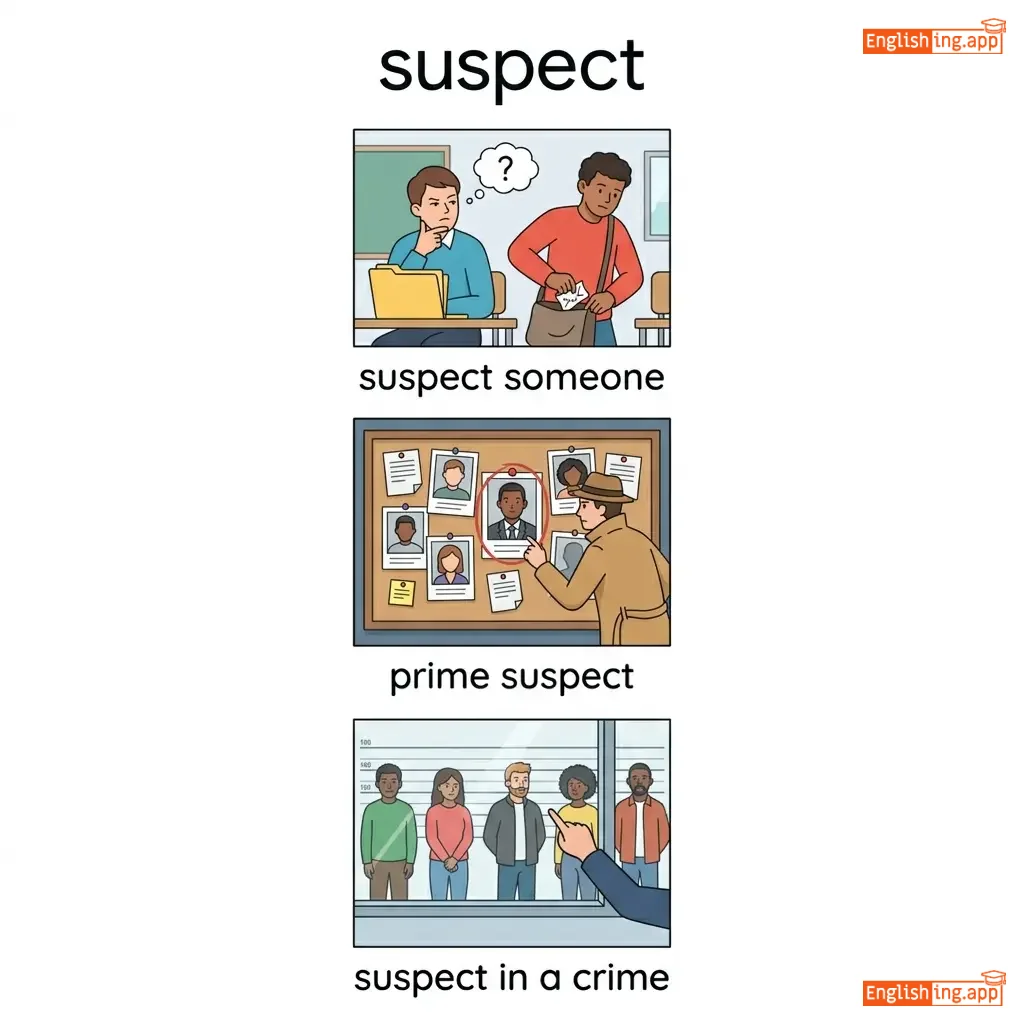
/səˈspɛkt/
verb
(萨斯佩克特)
••••••
|
|
怀疑
huaiyi
••••••
|
suspected
萨斯佩克特德
••••••
|
suspected
萨斯佩克特德
••••••
|
suspects
萨斯佩克茨
••••••
|
suspecting
萨斯佩克廷
••••••
|
to believe that someone has done something wrong; to doubt or mistrust
••••••
|
I suspect he is lying about his whereabouts.
艾 萨斯佩克特 他 在 撒谎 关于 他 的 下落。
••••••
|
我怀疑他在谎报自己的下落。
wo huaiyi ta zai huangbao ziji de xialuo
••••••
|
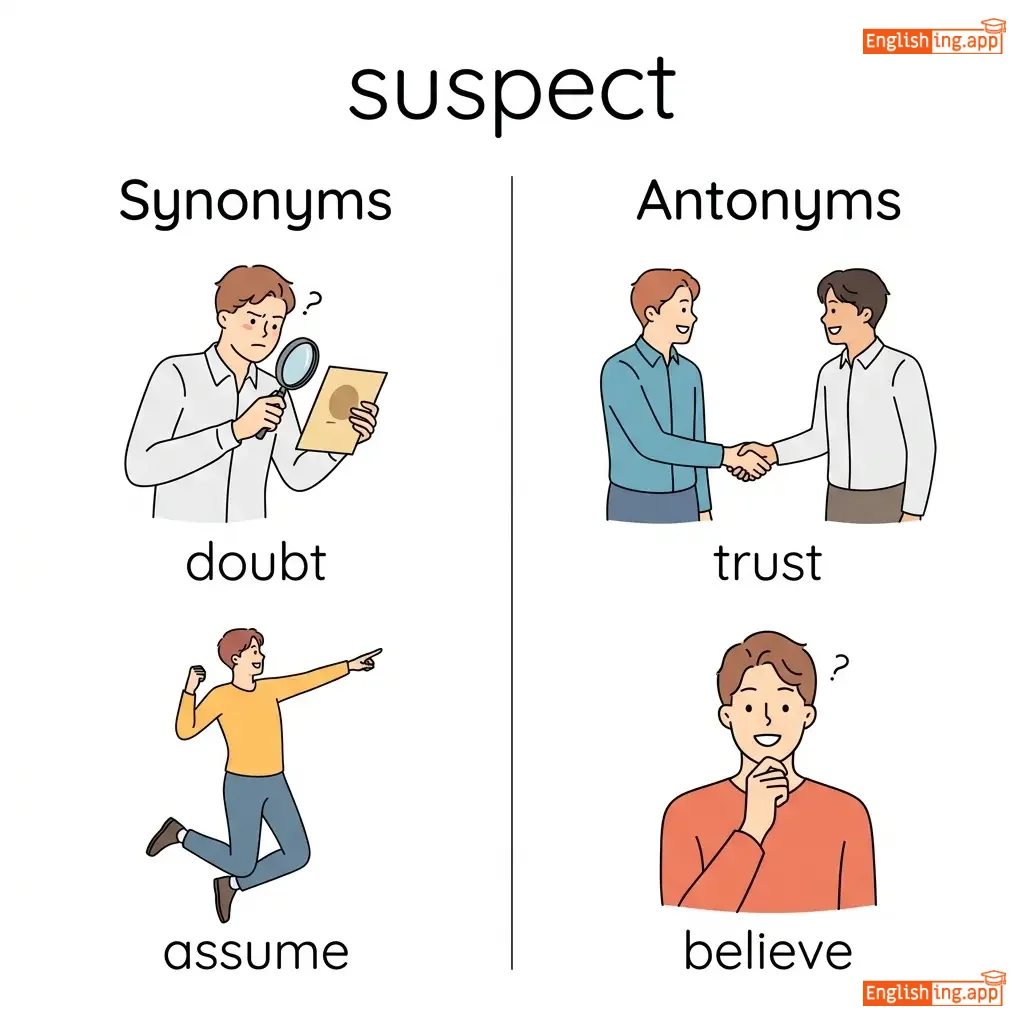
doubt, mistrust, believe, think
••••••
|
trust, believe, accept
••••••
|
suspect someone, strongly suspect, suspect of, suspect crime, suspect wrongdoing
••••••
|
To 'suspect' is to 'huaiyi'—both make you pause and think 'why?'
••••••
|
|
#711
💬
|
/seɪ/
verb
(赛)
••••••
|
|
说
shuo
••••••
|
said
赛德
••••••
|
said
赛德
••••••
|
says
赛斯
••••••
|
saying
赛英
••••••
|
to speak words; to express something in words
••••••
|
She said hello to me.
她赛的哈罗吐米。
••••••
|
她对我说了你好。
Ta dui wo shuo le ni hao.
••••••
|
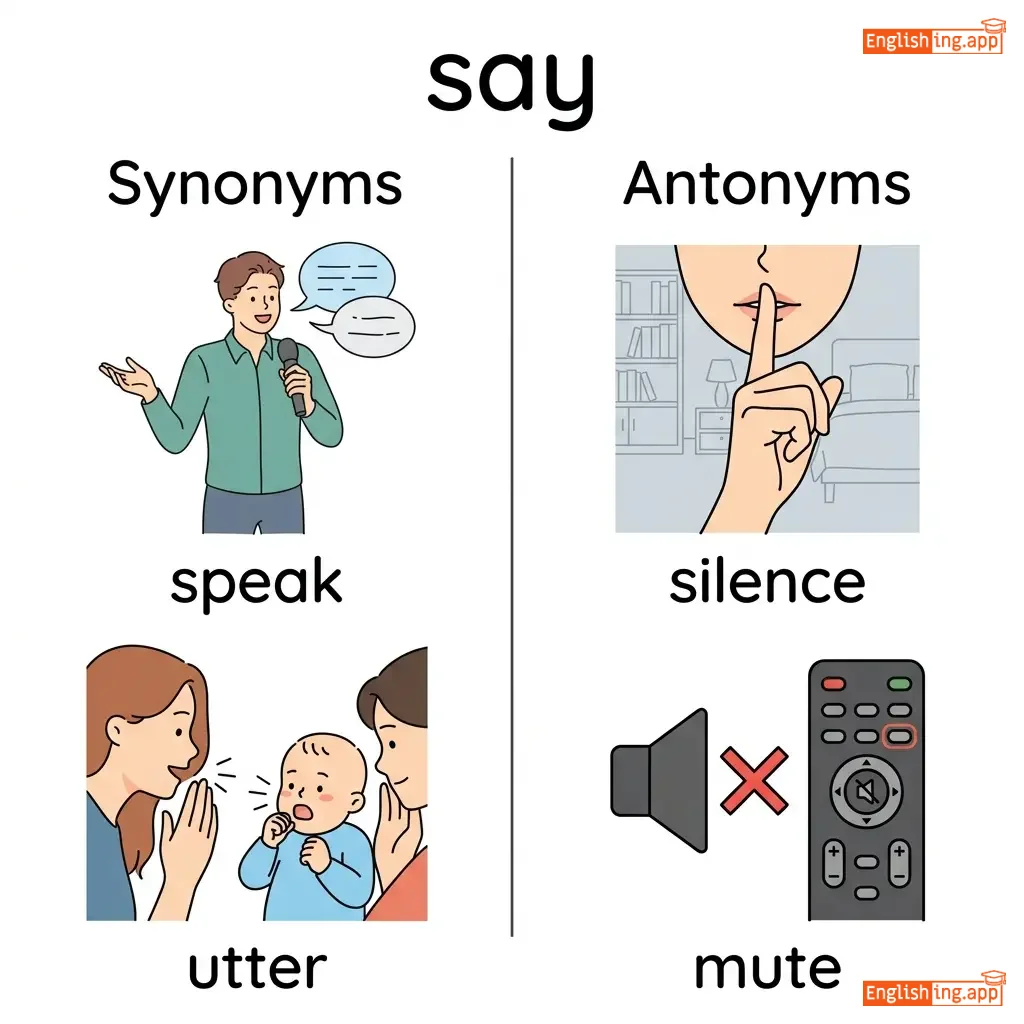
speak, tell, express, utter
••••••
|
listen, hear, remain silent
••••••
|
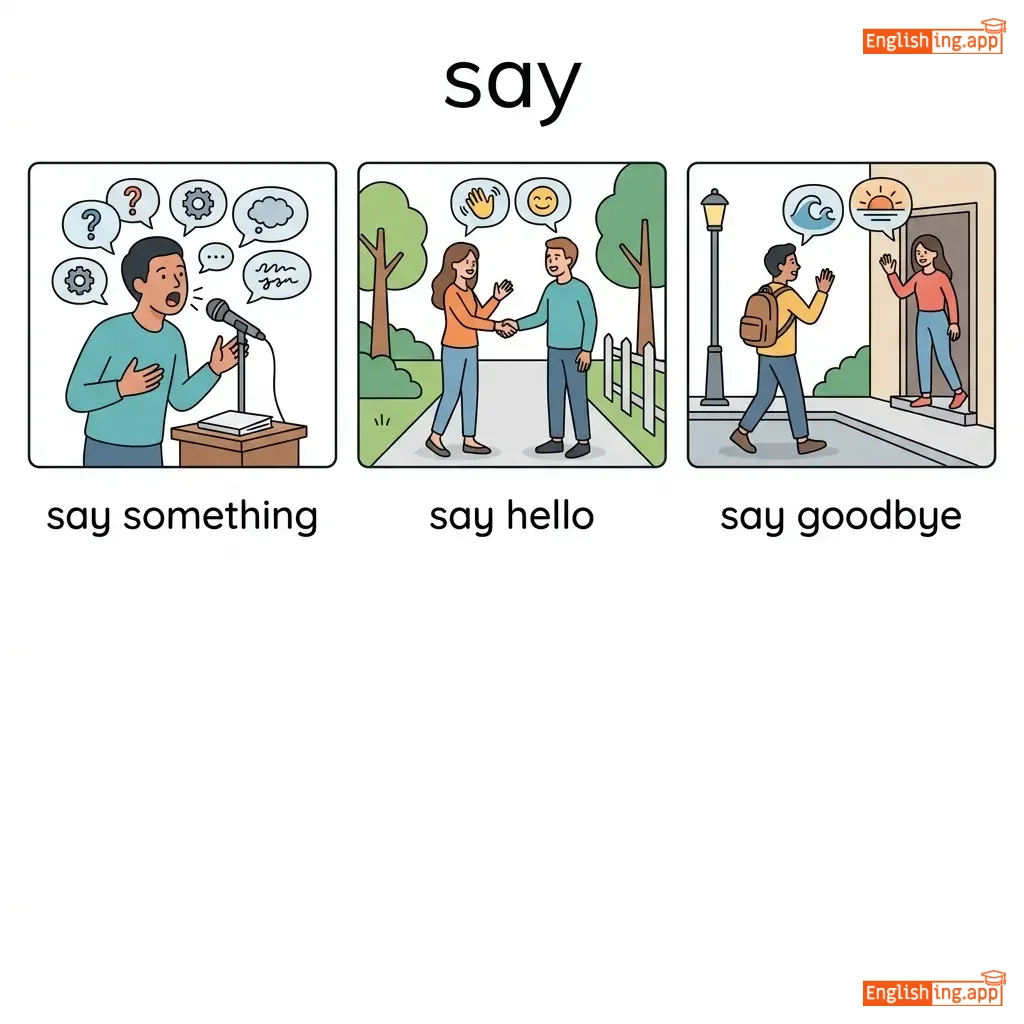
say hello, say goodbye, say something, say yes, say no, say please
••••••
|
In Chinese, 'shuo' sounds short like 'say'—both mean to speak words.
••••••
|
|
#712
✈️
|
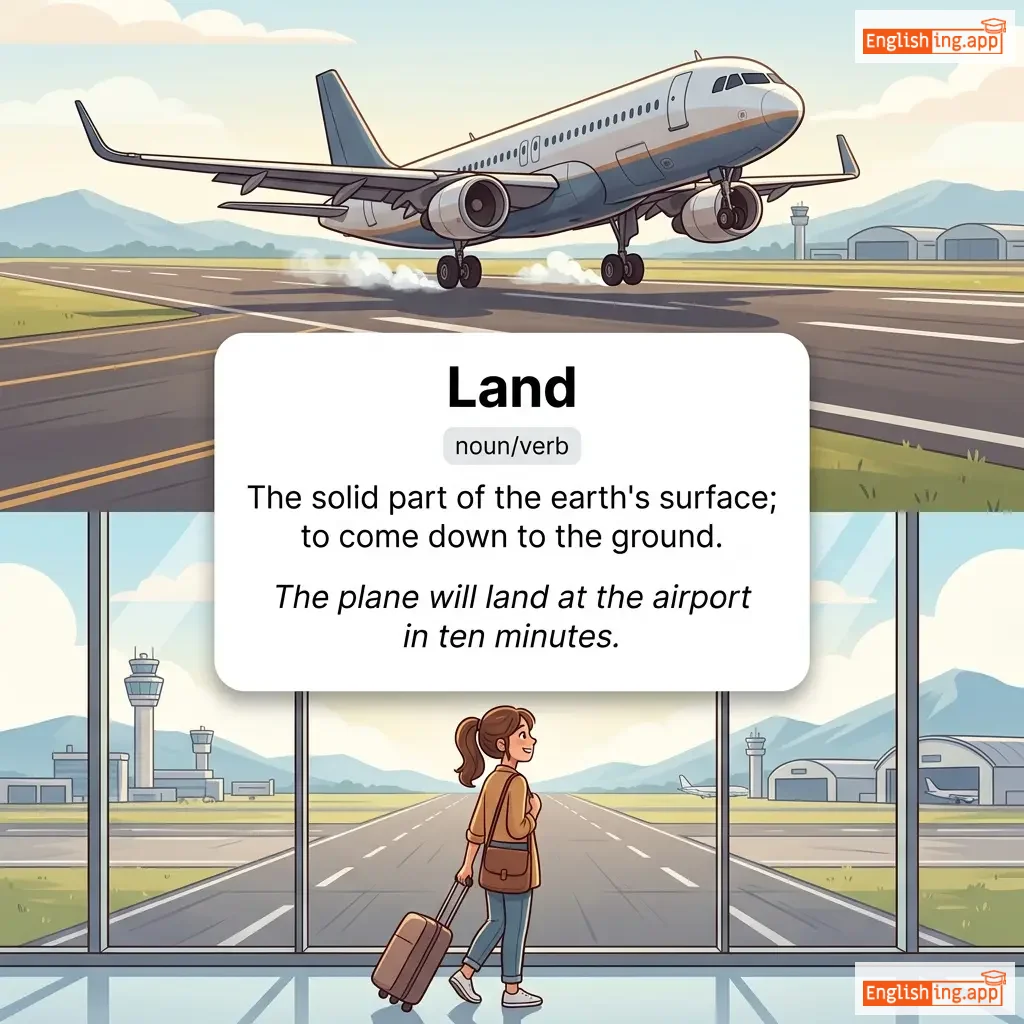
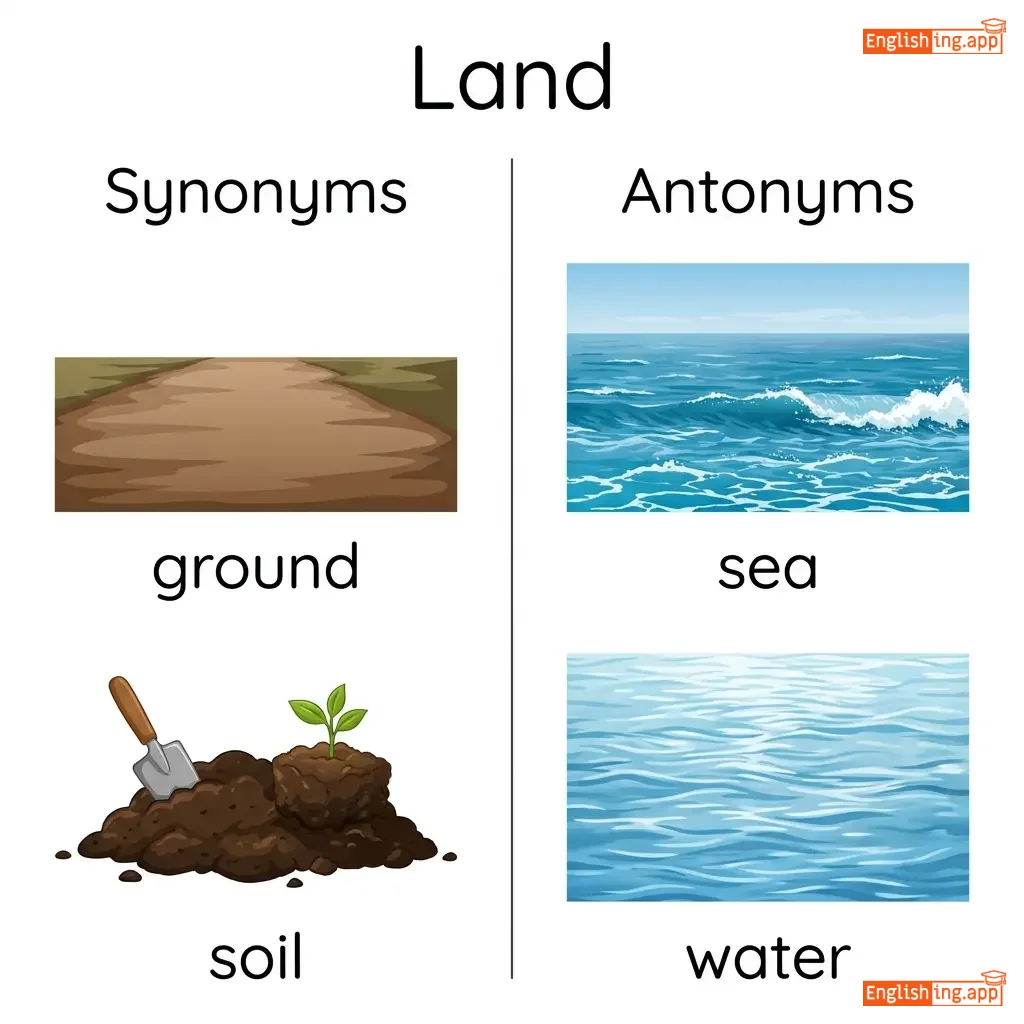
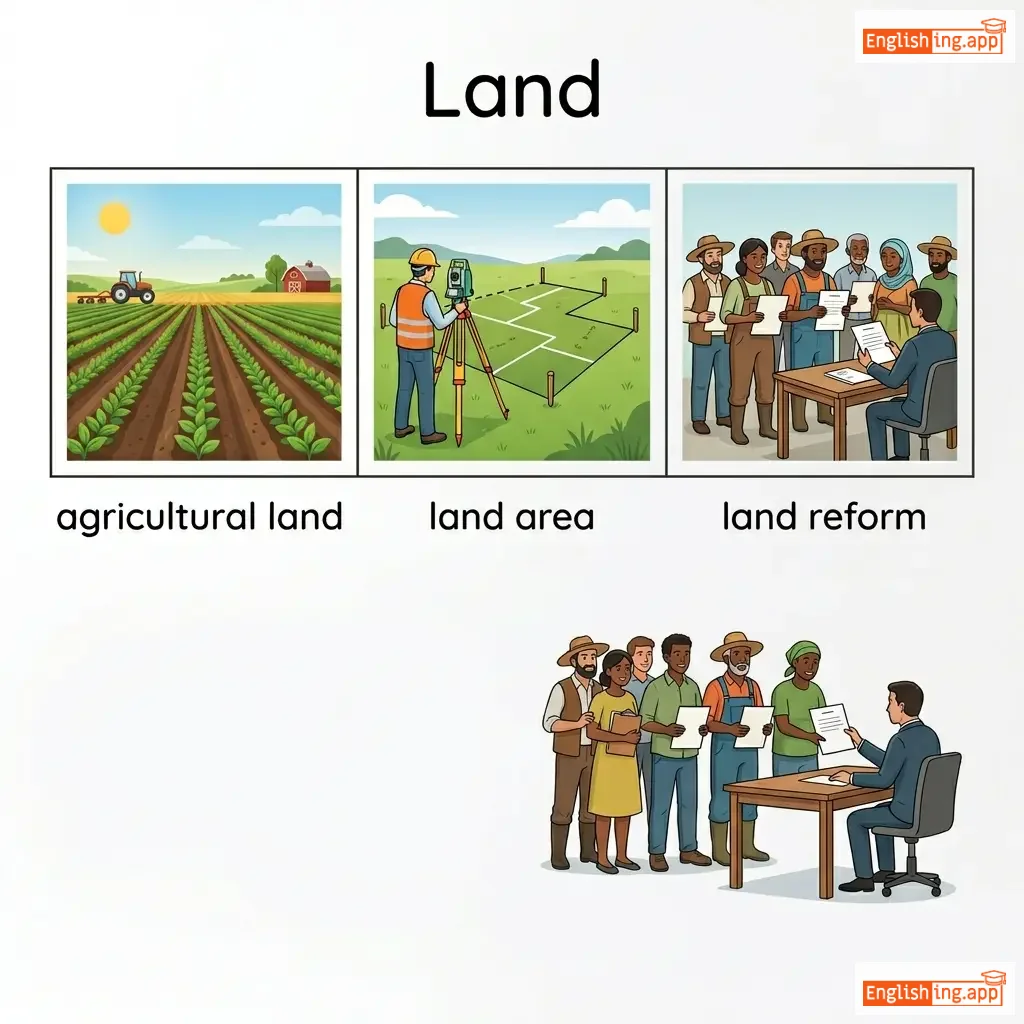
/lænd/
verb
(兰德)
••••••
|
|
降落
jiangluo
••••••
|
landed
兰德德
••••••
|
landed
兰德德
••••••
|
lands
兰兹
••••••
|
landing
兰丁
••••••
|
to come down or bring down to the ground; to arrive at a place
••••••
|
The plane will land at the airport in ten minutes.
飞机将在十分钟后在机场降落。
••••••
|
飞机将在十分钟后在机场降落。
feiji jiang zai shi fenzhong hou zai jichang jiangluo
••••••
|
arrive, touch down, alight, descend
••••••
|
take off, depart, ascend, launch
••••••
|
land safely, plane land, land on, soft land, emergency land, land at airport
••••••
|
Land → 降落 jiangluo — imagine ‘lowering down’ the plane.
••••••
|
|
#713
🔥
|
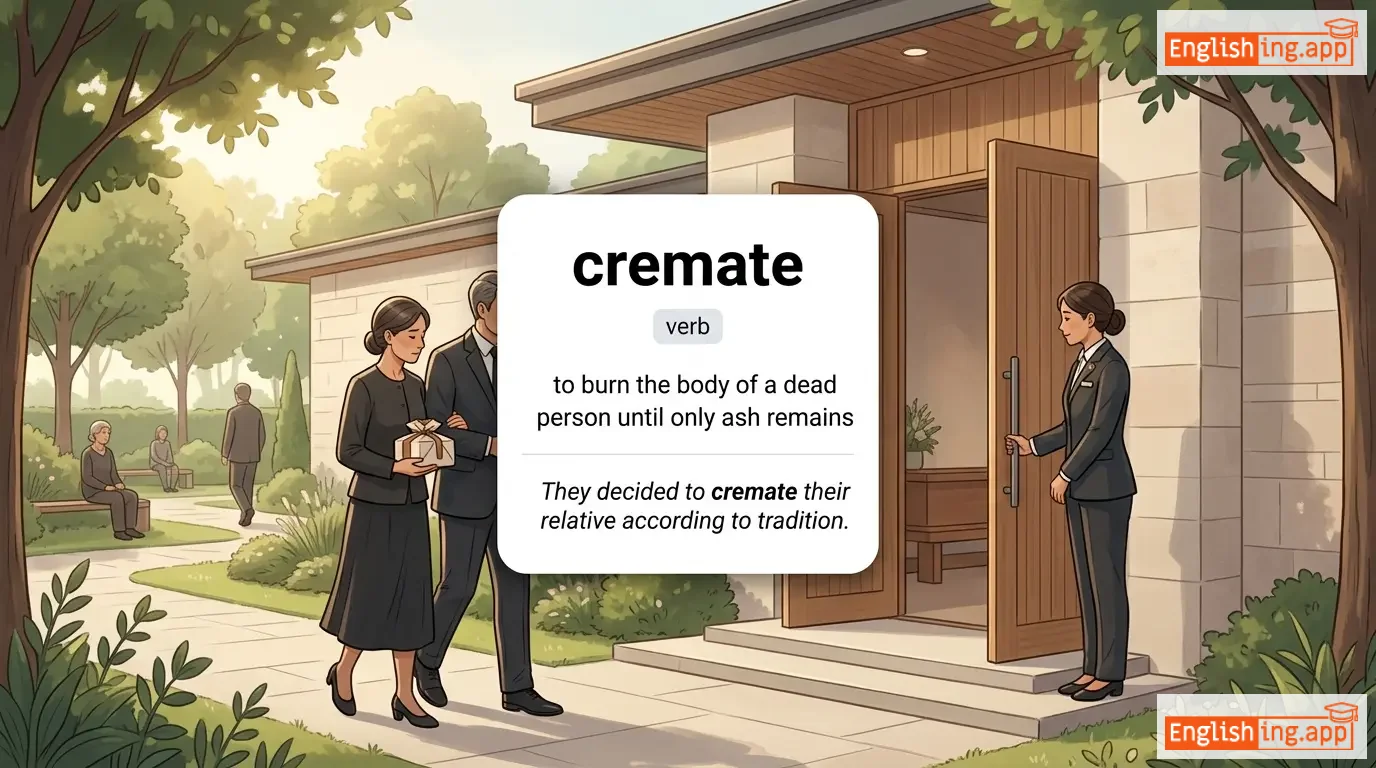
/ˈkriːmeɪt/
verb
(克里米特)
••••••
|
|
火化
huohua
••••••
|
cremated
克里米特德
••••••
|
cremated
克里米特德
••••••
|
cremates
克里米特斯
••••••
|
cremating
克里米廷
••••••
|
to burn a dead body to ashes as a funeral rite
••••••
|
According to his wishes, they cremated his body after the funeral.
阿考丁 图 赫斯 维希斯,德 克里米特德 赫斯 博迪 阿夫特 德 费尤内拉。
••••••
|
按照他的意愿,他们在葬礼后火化了他的遗体。
Anzhao ta de yiyuan, tamen zai zangli hou huohua le ta de yiti.
••••••
|
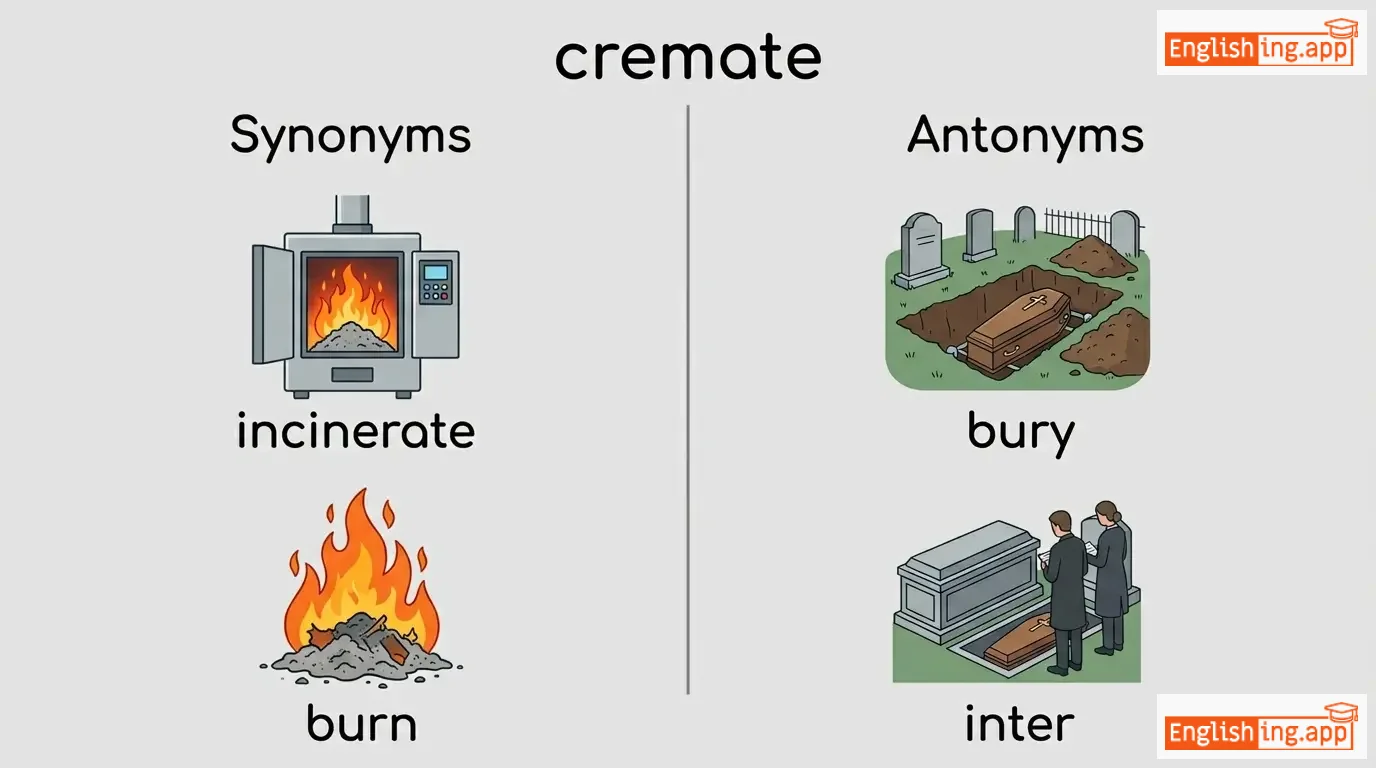
incinerate, burn, reduce to ashes
••••••
|
bury, inter, entomb
••••••
|
cremate body, cremate remains, cremate after death, decision to cremate, cremation ceremony
••••••
|
火化 (huohua) = cremate — 记住 'huo' (fire) to turn body to ash
••••••
|
|
#714
😂
|
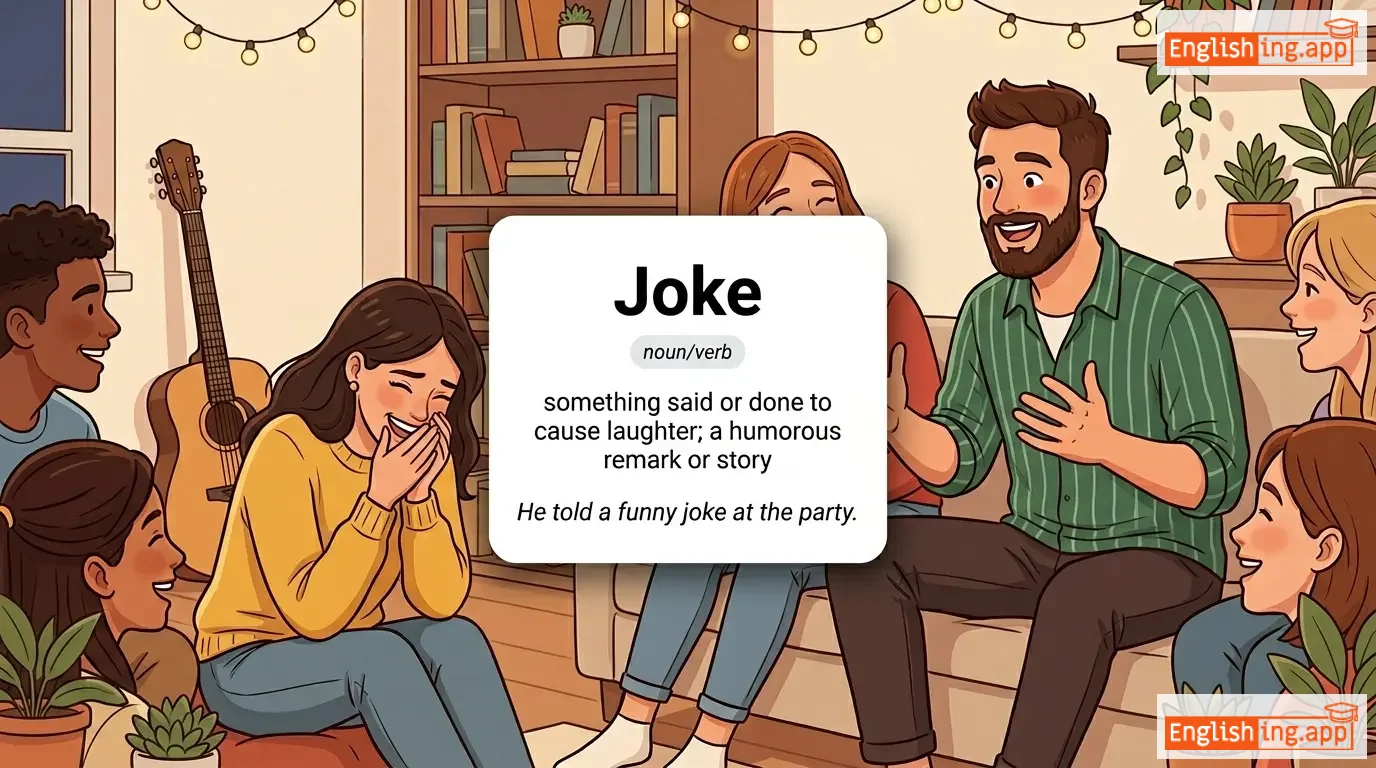
/dʒoʊk/
verb
(乔克)
••••••
|
|
开玩笑
kai wan xiao
••••••
|
joked
乔克德
••••••
|
joked
乔克德
••••••
|
jokes
乔克斯
••••••
|
joking
乔金
••••••
|
to say something funny or amusing; to make fun
••••••
|
He likes to joke around with his friends.
他喜欢和朋友开玩笑
••••••
|
他喜欢和朋友开玩笑。
Ta xi huan he peng you kai wan xiao.
••••••
|
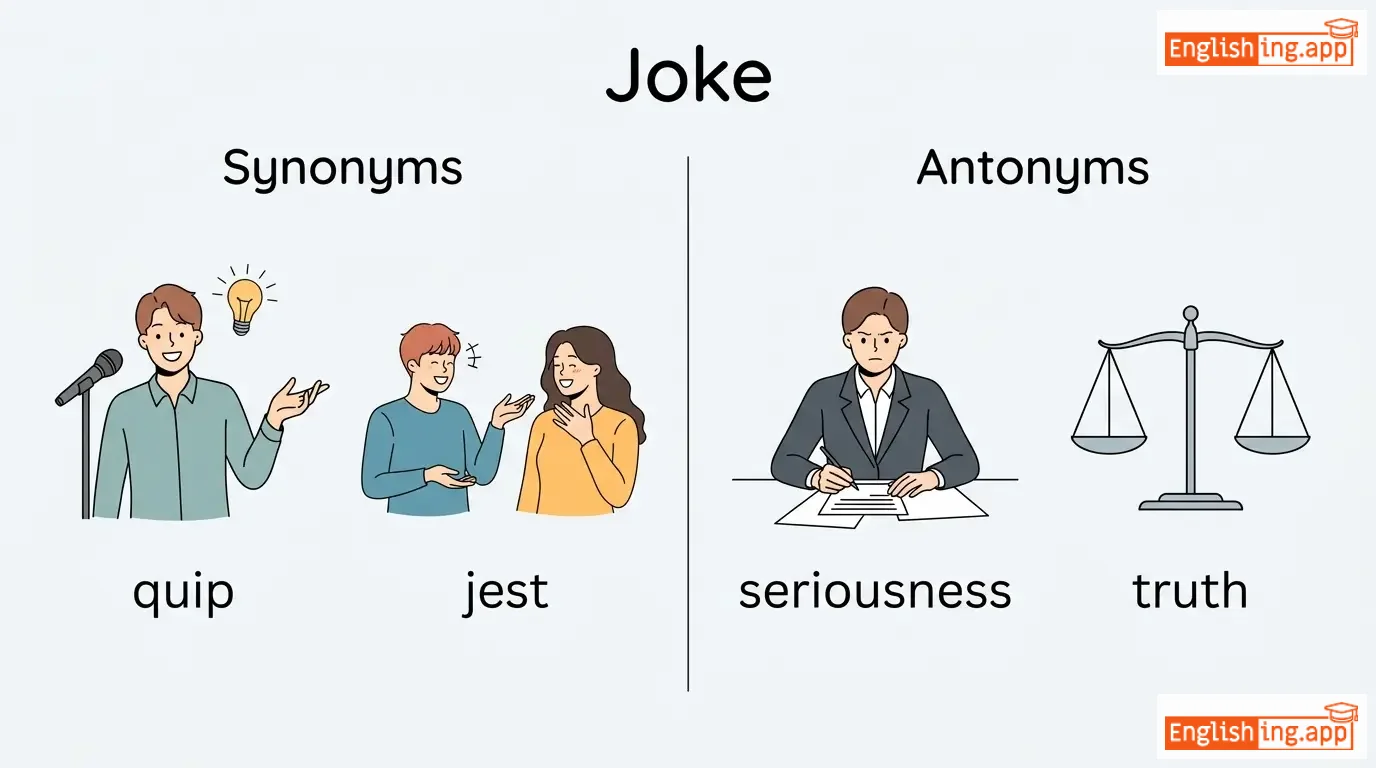
jest, kid, tease, amuse, fool around
••••••
|
serious, formal, stern, grave, solemn
••••••
|
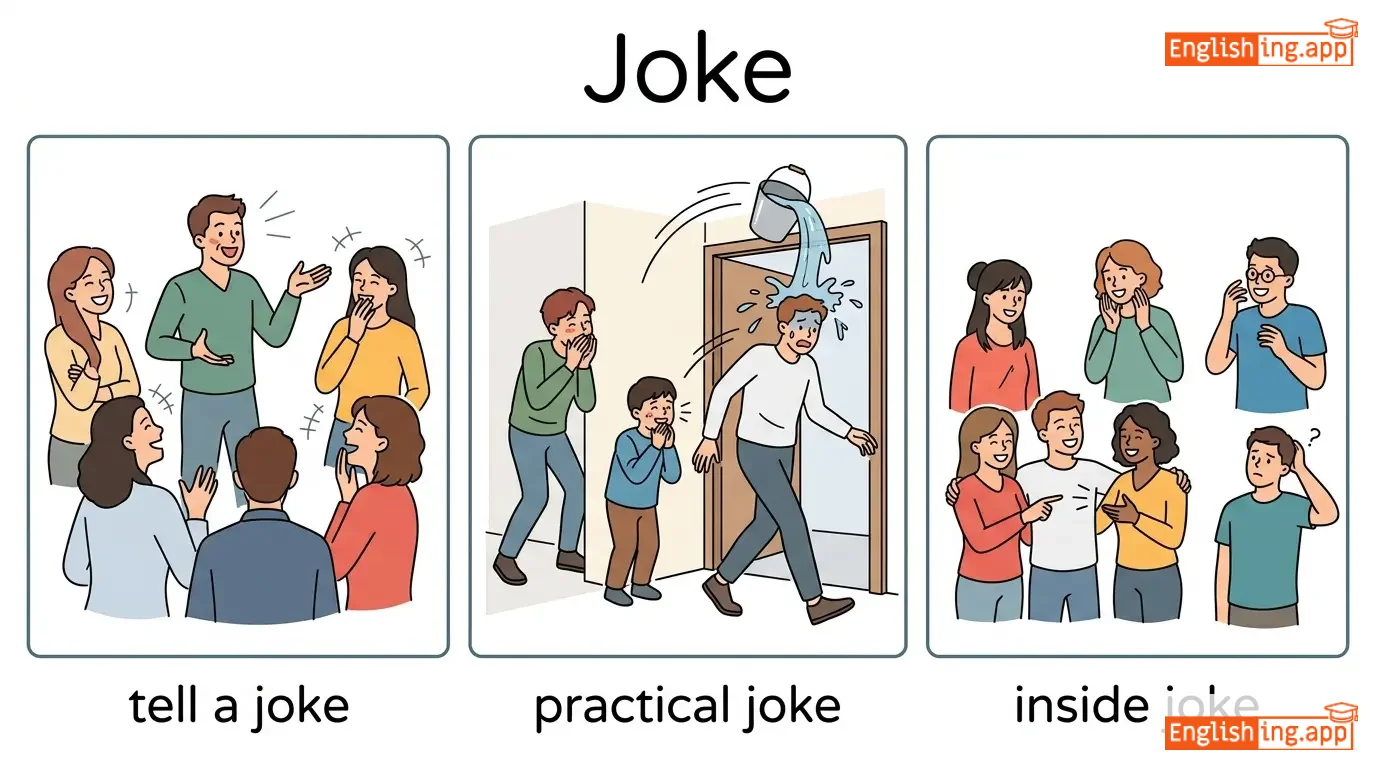
joke around, make joke, funny joke, tell joke, practical joke, joke about
••••••
|
In Chinese, 'kai wan xiao' literally means 'open a joke' — like opening laughter!
••••••
|
|
#715
📢
|
/ˈædvərˌtaɪz/
verb
(艾德弗泰兹)
••••••
|
|
做广告
zuo guang gao
••••••
|
advertised
艾德弗泰兹德
••••••
|
advertised
艾德弗泰兹德
••••••
|
advertises
艾德弗泰兹斯
••••••
|
advertising
艾德弗泰兹英
••••••
|
to promote or publicize a product or service
••••••
|
They advertise their products on television.
他们 艾德弗泰兹 他们的 产品 在 电视 上。
••••••
|
他们在电视上做广告。
ta men zai dian shi shang zuo guang gao.
••••••
|
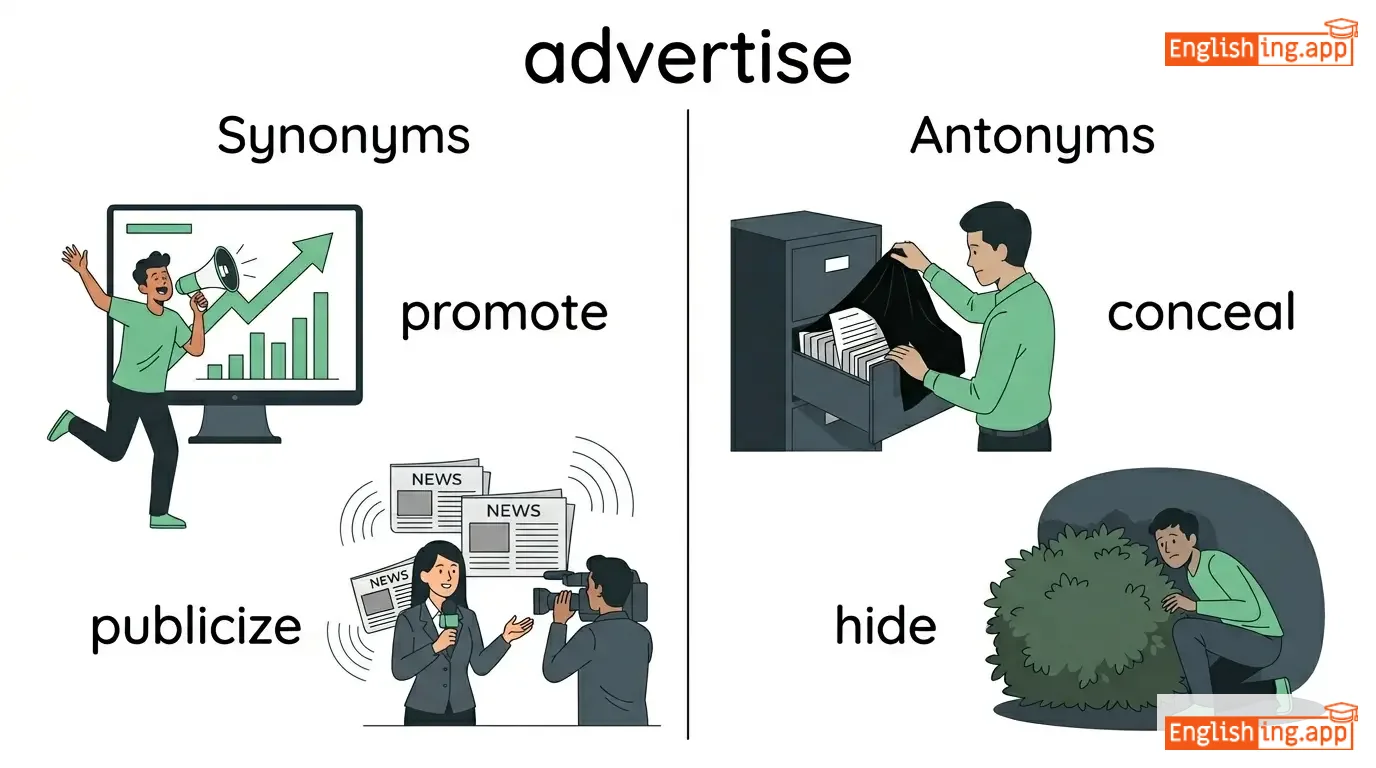
promote, publicize, market, announce
••••••
|
hide, conceal, suppress, withhold
••••••
|
advertise product, advertise service, advertise online, advertise widely, advertise business
••••••
|
Advertise = 做广告 (zuo guang gao) — literally 'make advertisement'.
••••••
|
Vocabulary Quiz
Test your vocabulary by matching words with their translations or meanings.
Login to take the quiz
Comments (0)
Share your thoughts and join the discussion.
Join the discussion by logging in
Login to CommentNo comments yet
Be the first to share your thoughts!