

翻訳
過去
過去分詞
三人称単数
動名詞
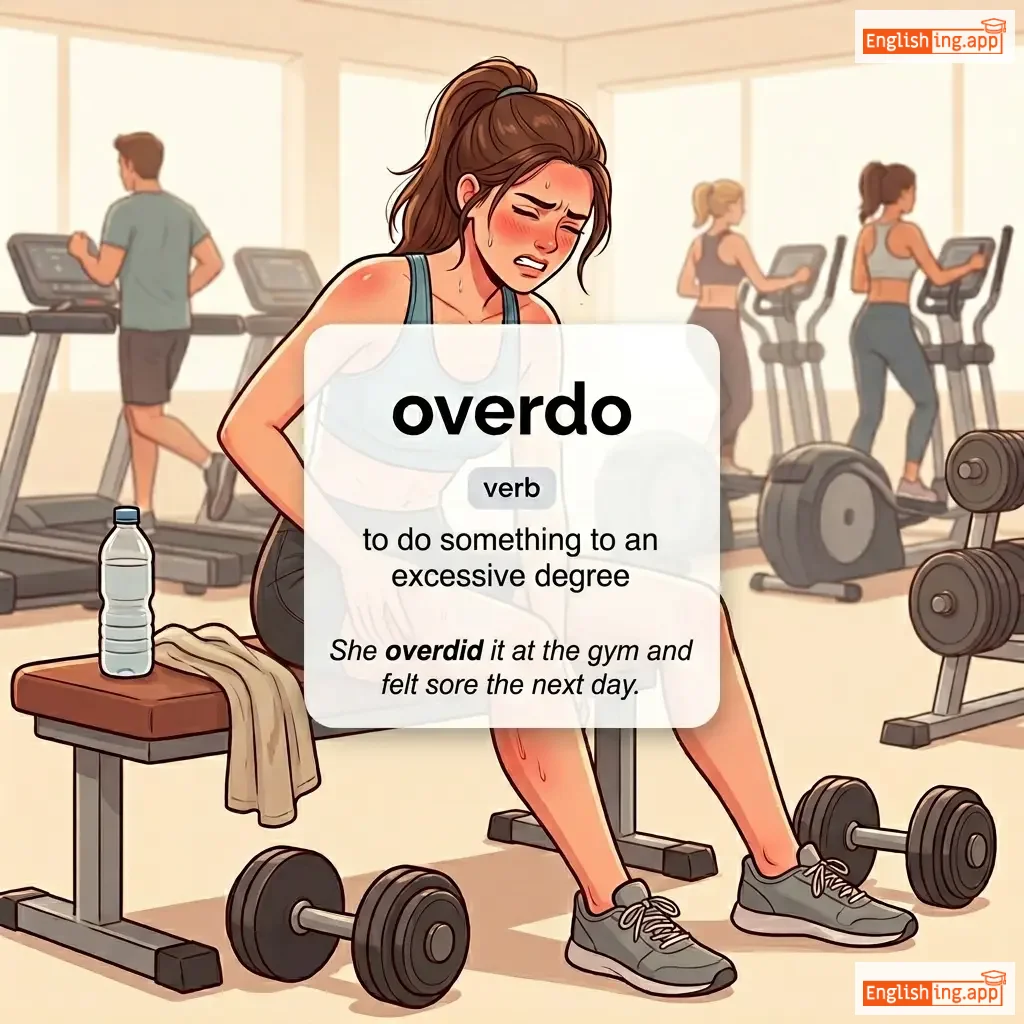
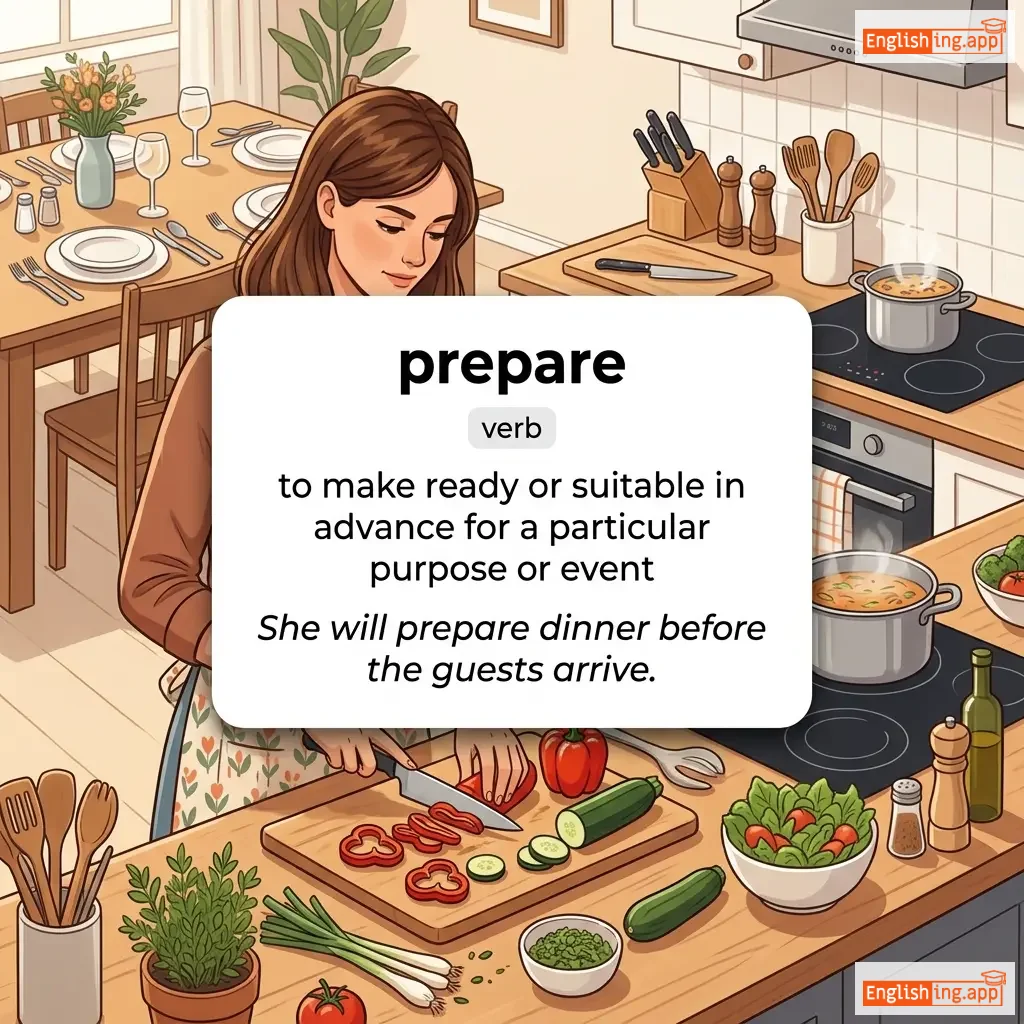
意味
例文
例文の翻訳
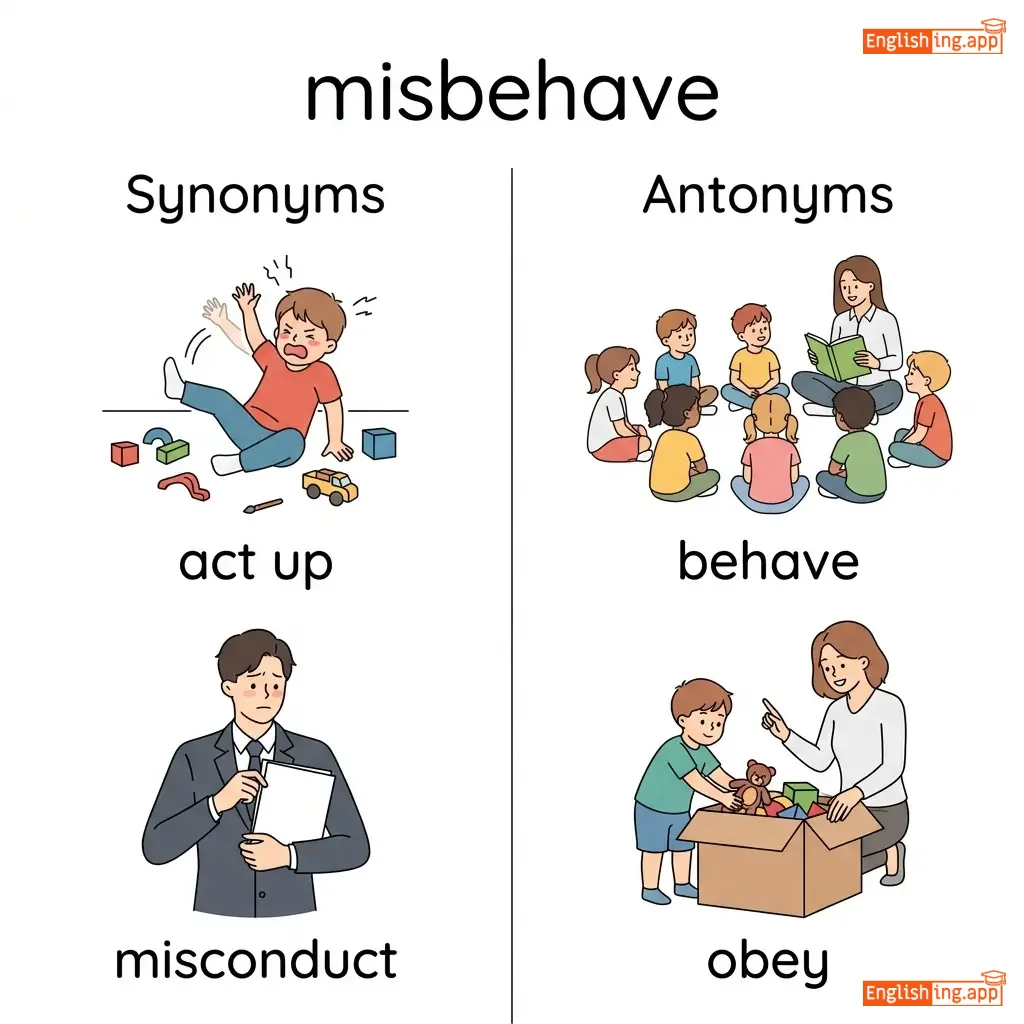
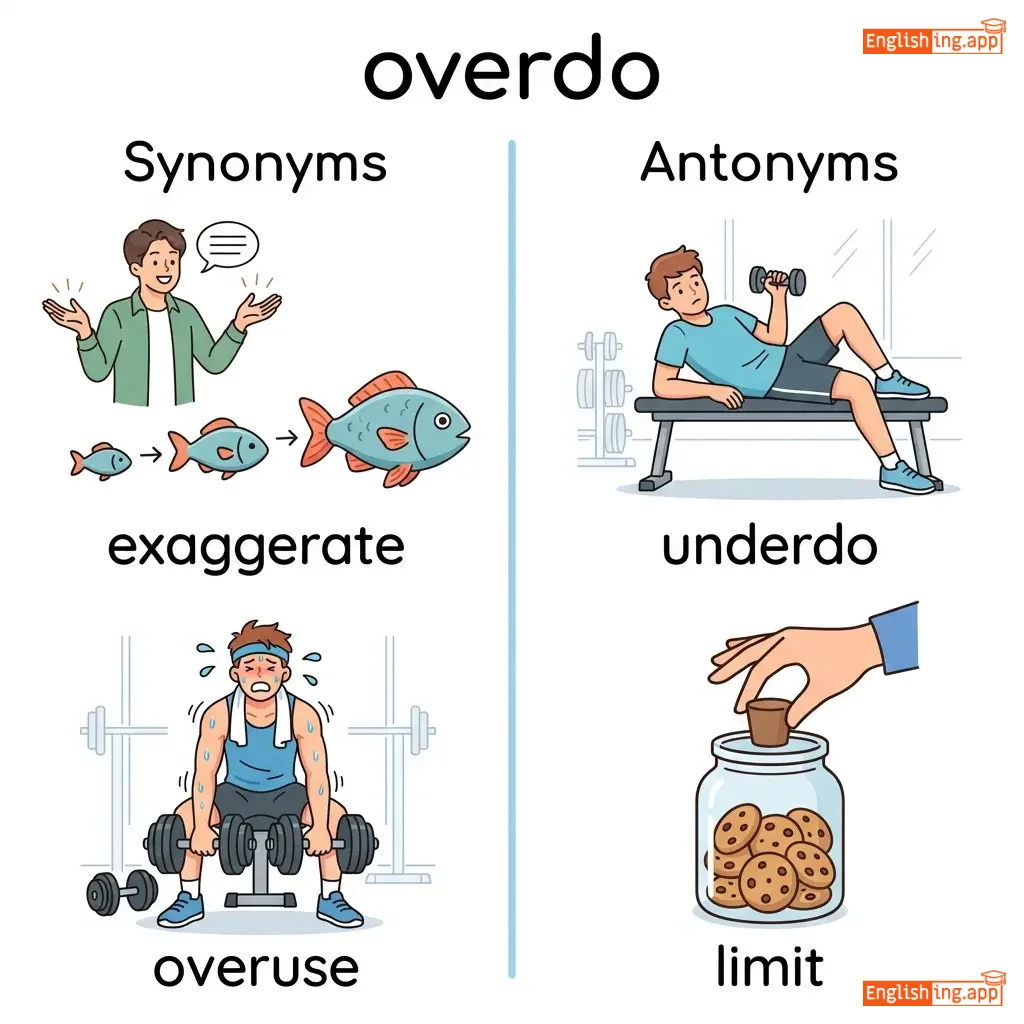
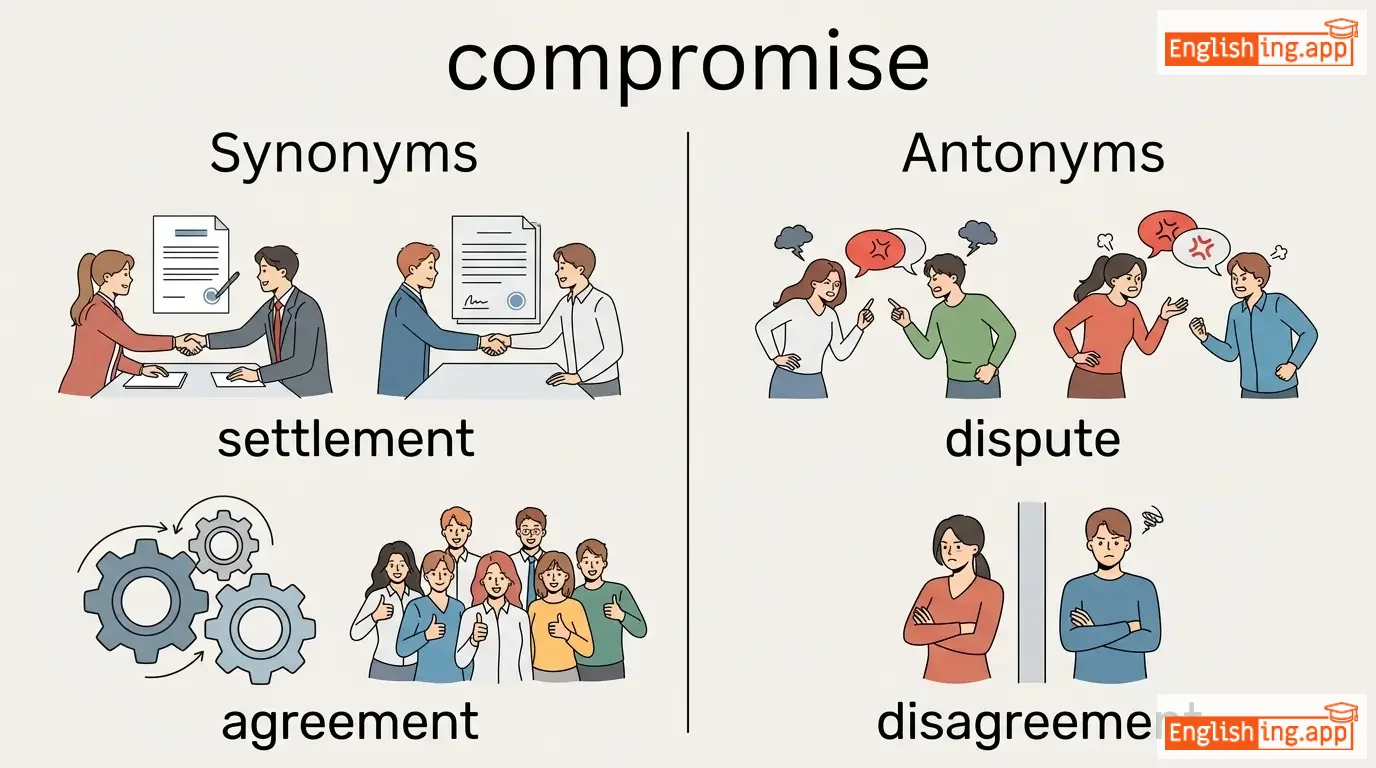
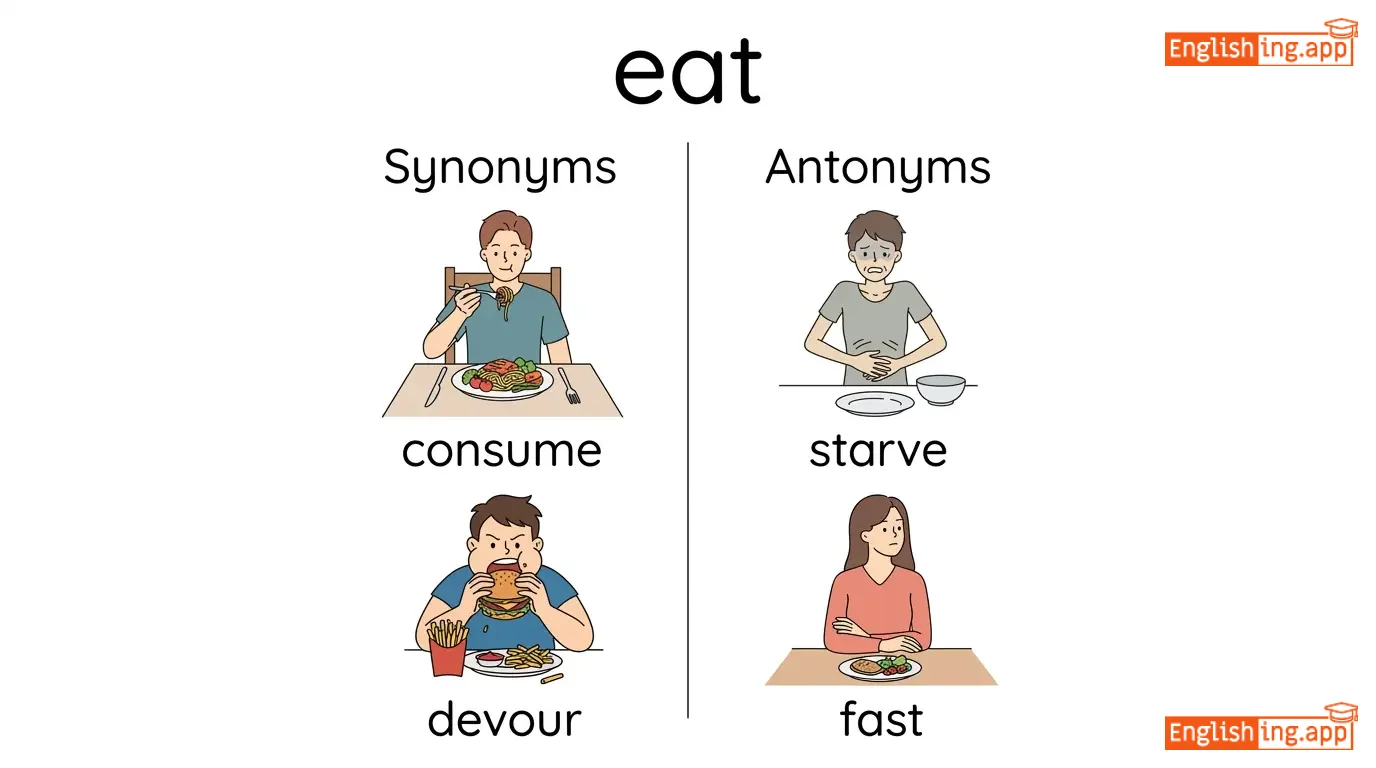
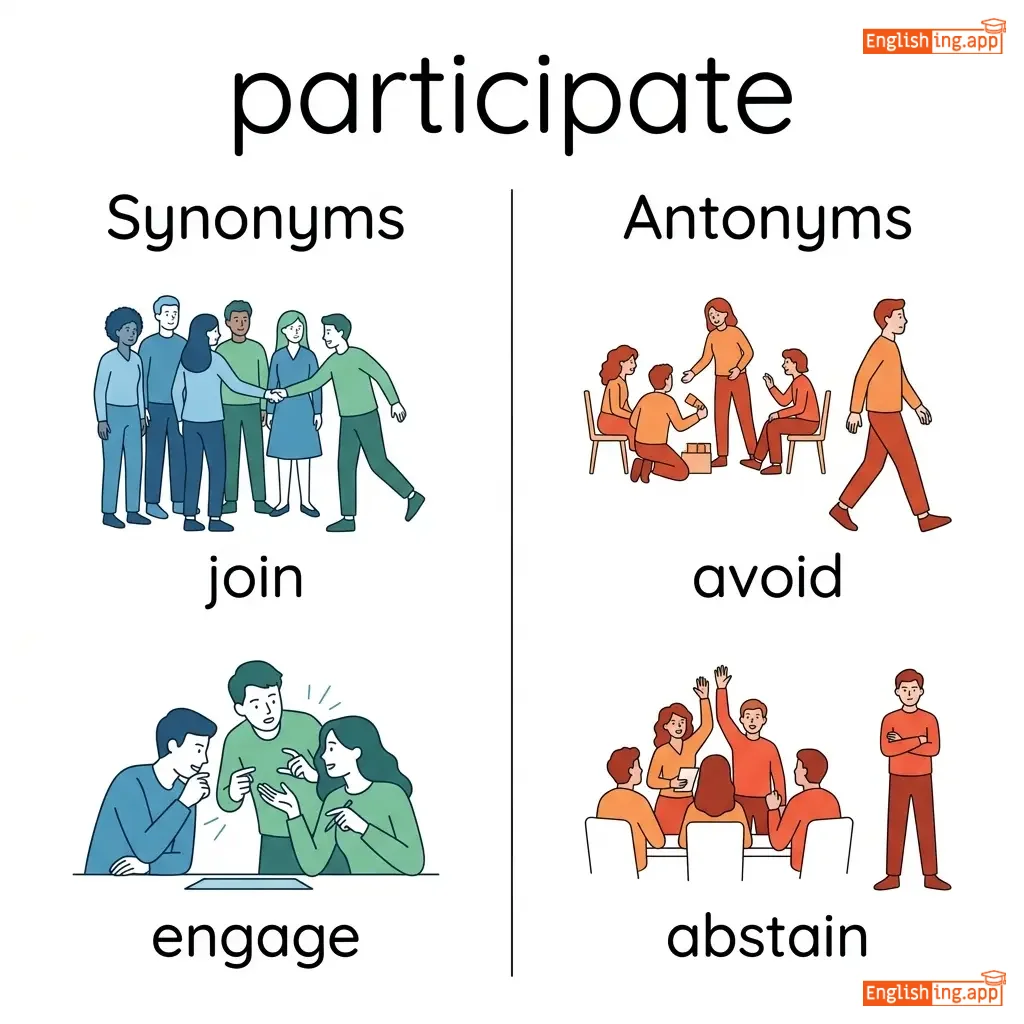
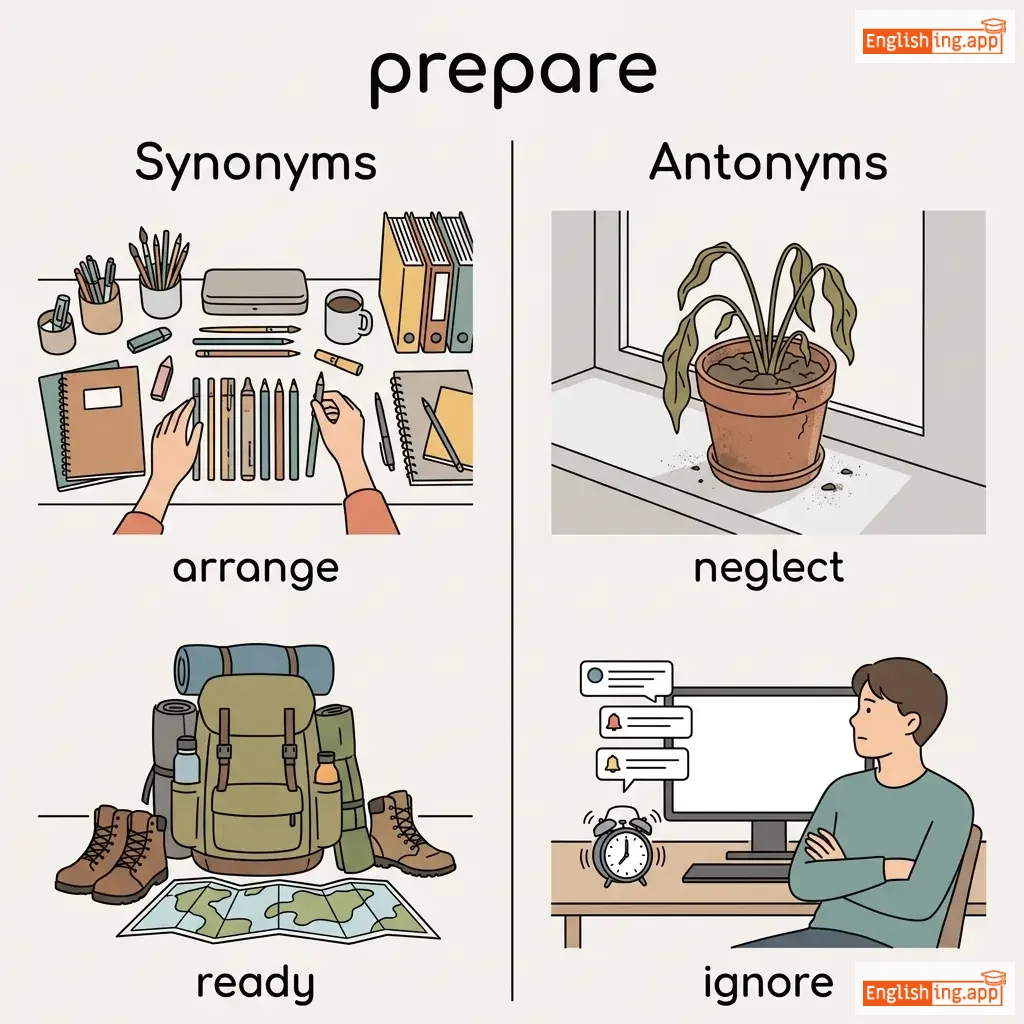
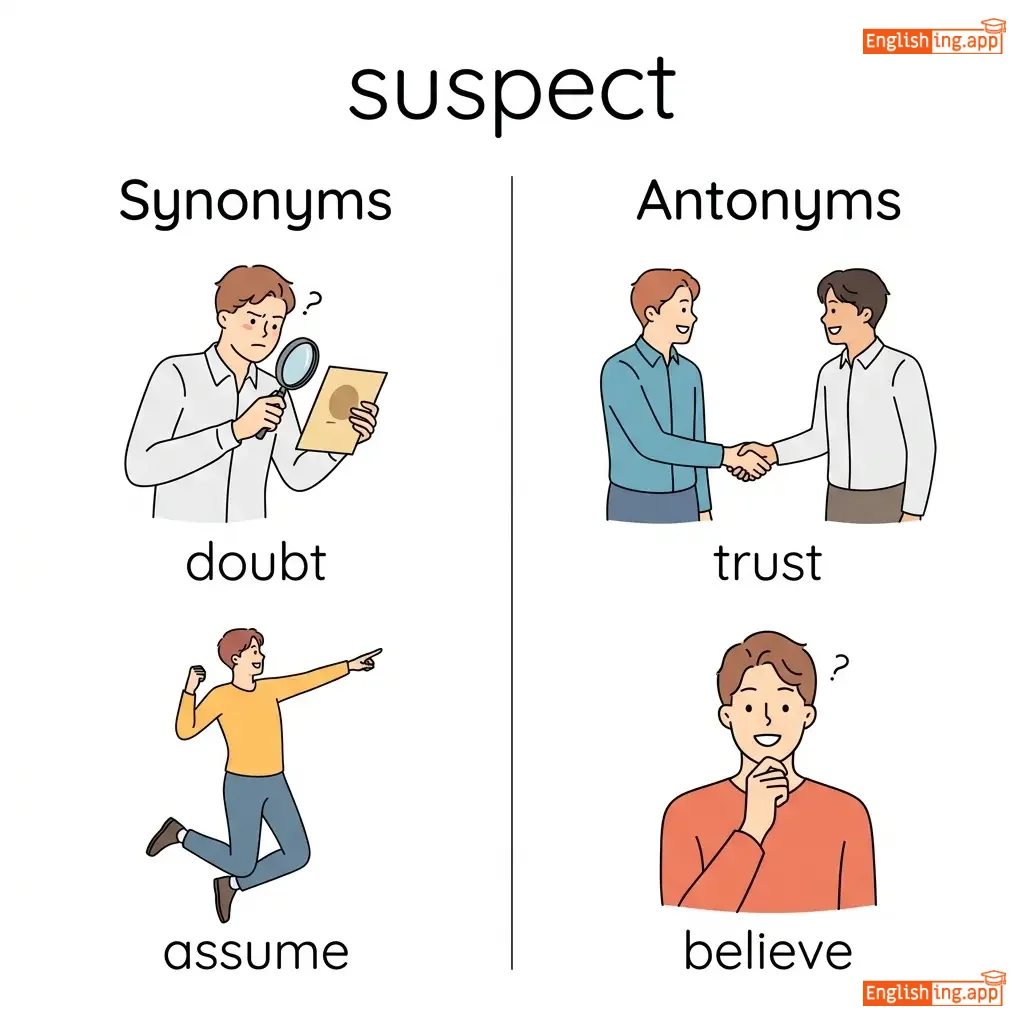
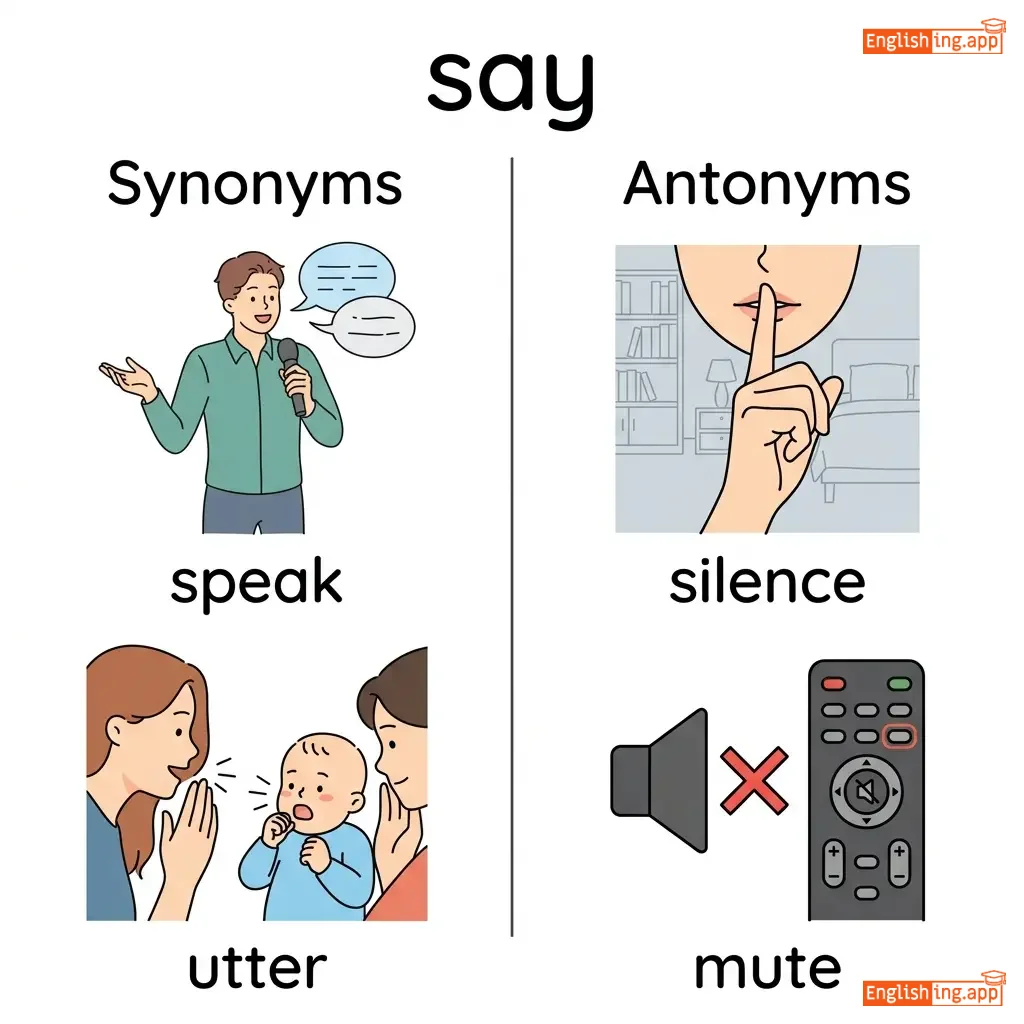
同義語
対義語
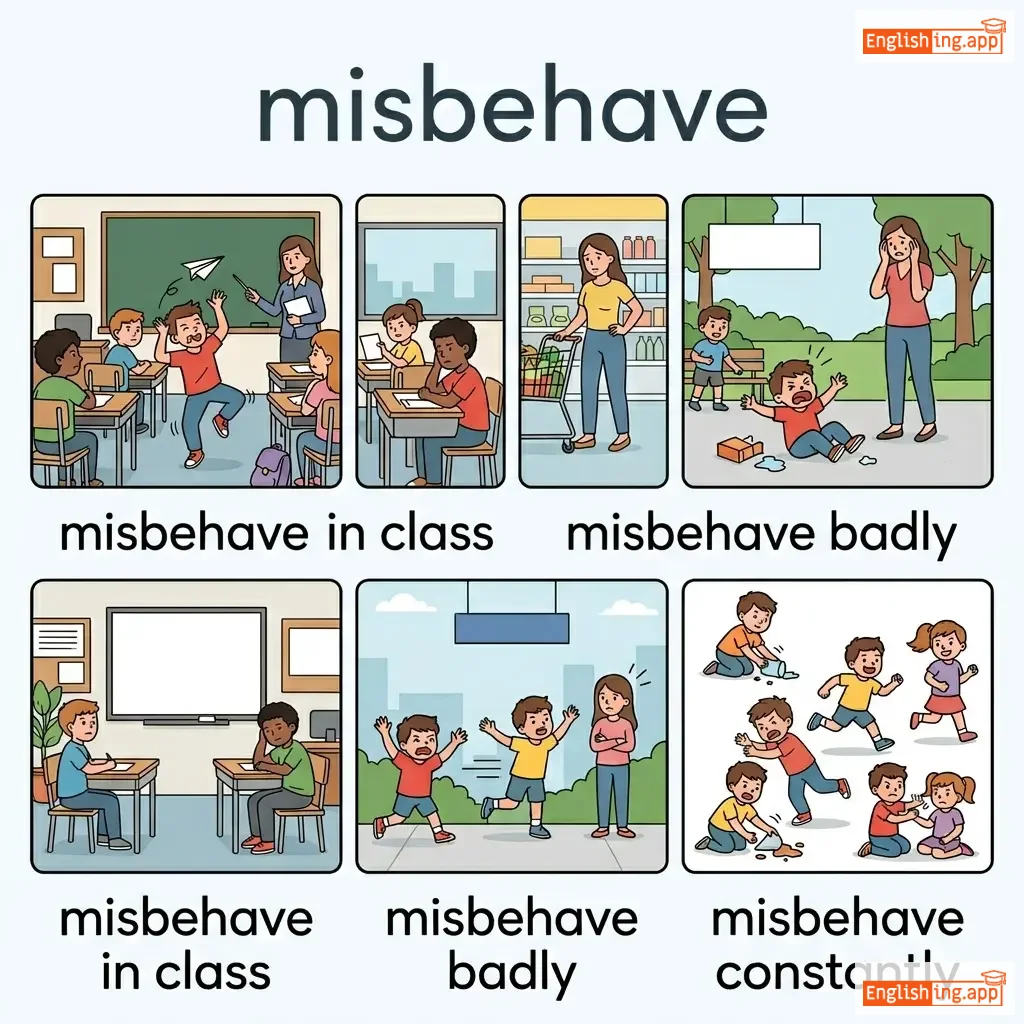
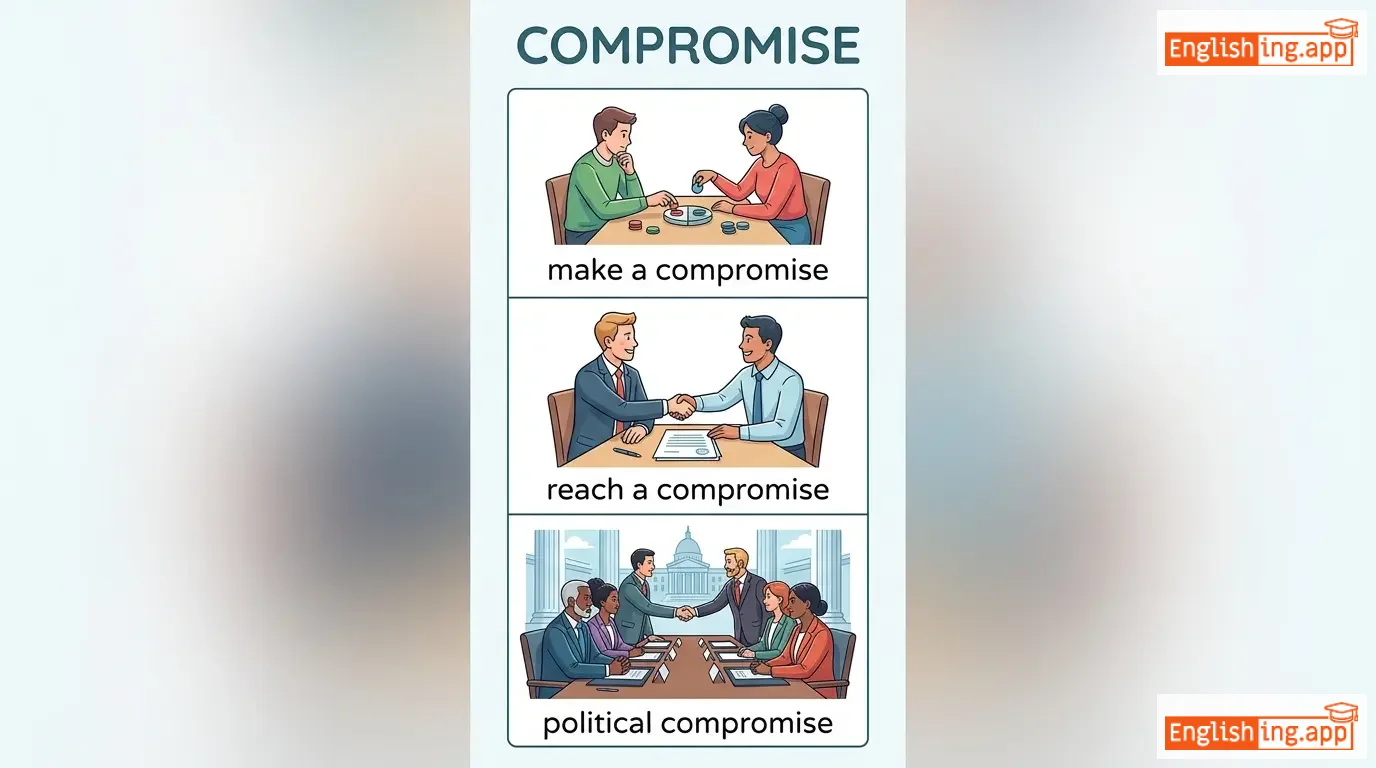
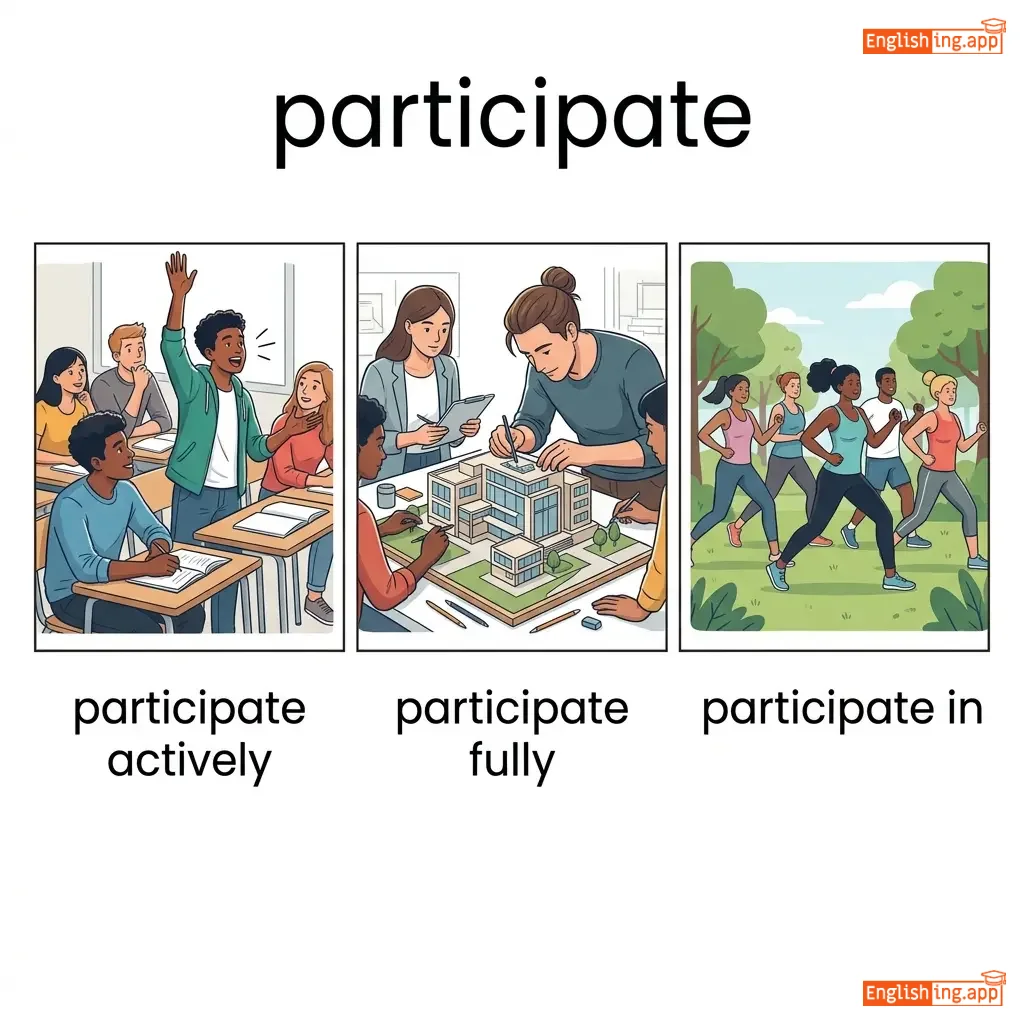
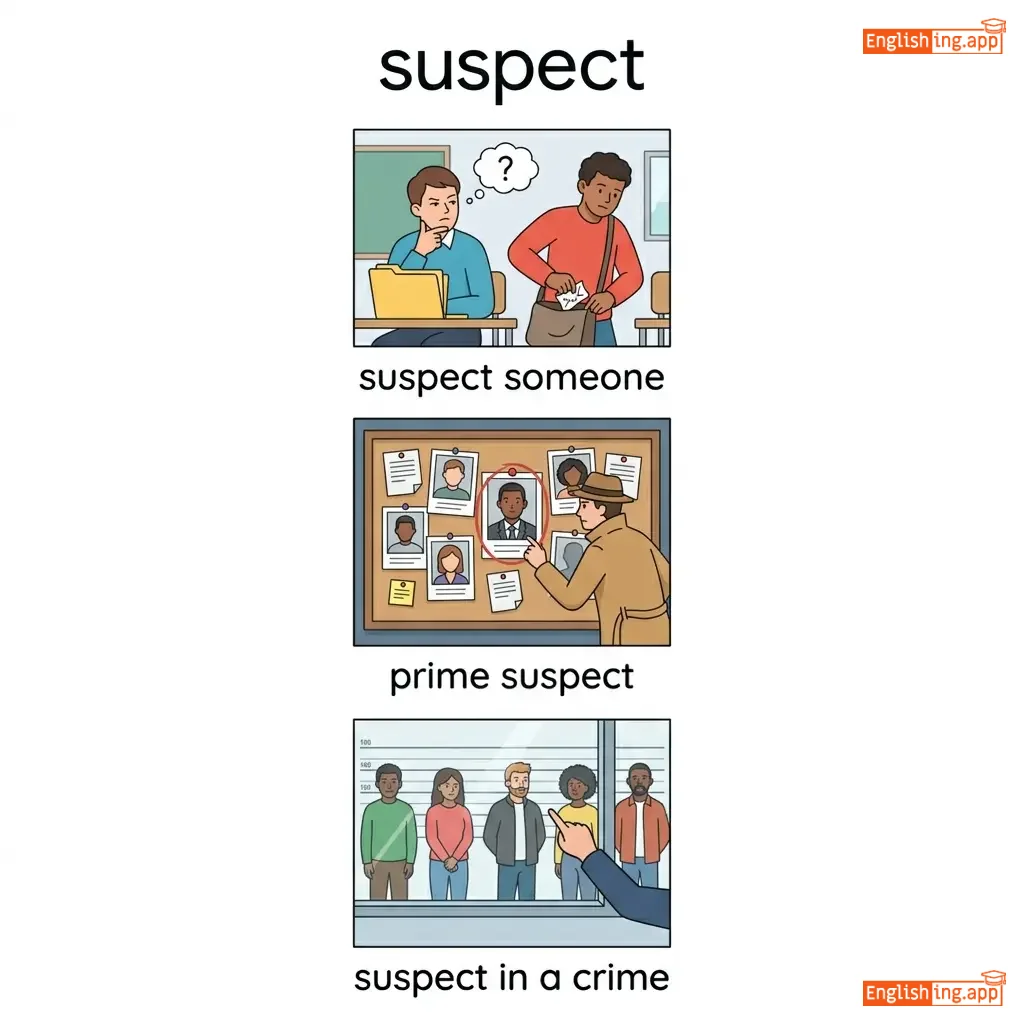
コロケーション
ニーモニック









Swipe left or right, or use the buttons. Tap image to zoom.
例文の翻訳
単語
Lesson 24: Mastering the Most Frequent Verbs & TensesLesson 24: Mastering the Most Frequent Verbs & Tenses - マスクトグル
|
絵文字
|
単語 | Images | 翻訳 | 過去 | 過去分詞 | 三人称単数 | 動名詞 | 意味 | 例文 | 例文の翻訳 | 同義語 | 対義語 | コロケーション | ニーモニック |
|---|---|---|---|---|---|---|---|---|---|---|---|---|---|---|
|
#686
🔒
|
/kiːp/
verb
(キープ)
••••••
|
|
保つ
tamotsu
••••••
|
kept
ケプト
••••••
|
kept
ケプト
••••••
|
keeps
キープス
••••••
|
keeping
キーピング
••••••
|
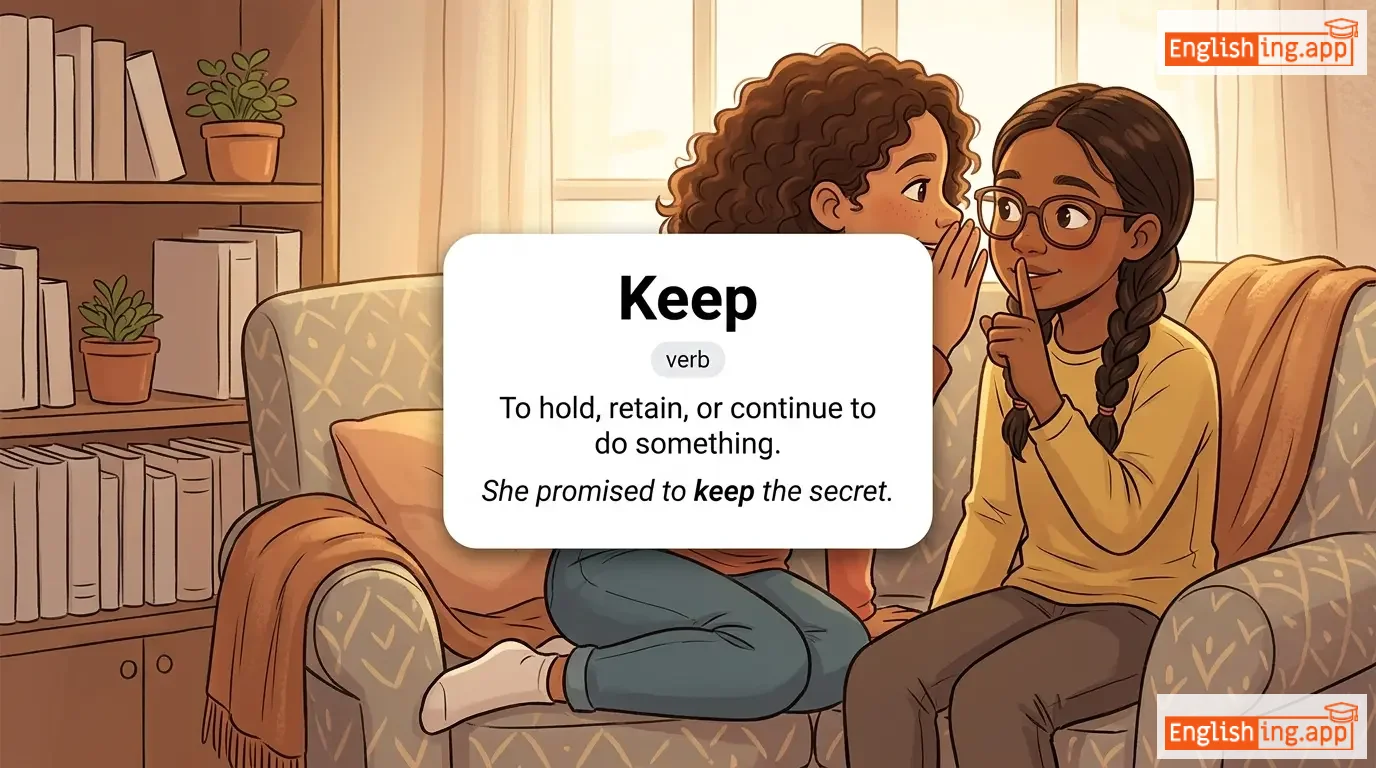
to have and retain possession of; to continue doing
••••••
|
I keep my books on the shelf.
アイ キープ マイ ブックス オン ザ シェルフ。
••••••
|
私は本を棚に置いておきます。
Watashi wa hon o tana ni oite okimasu.
••••••
|
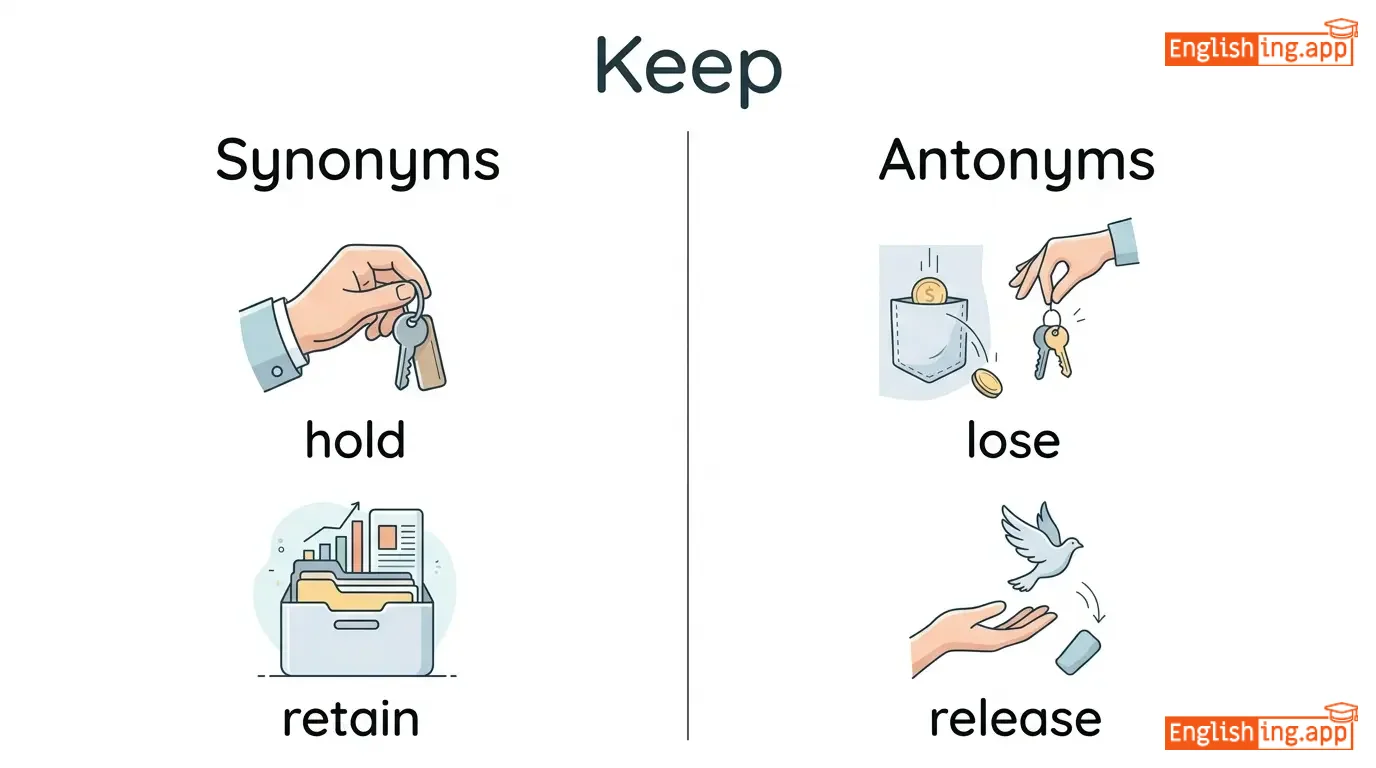
retain, maintain, preserve, hold
••••••
|
lose, discard, throw away, give up
••••••
|
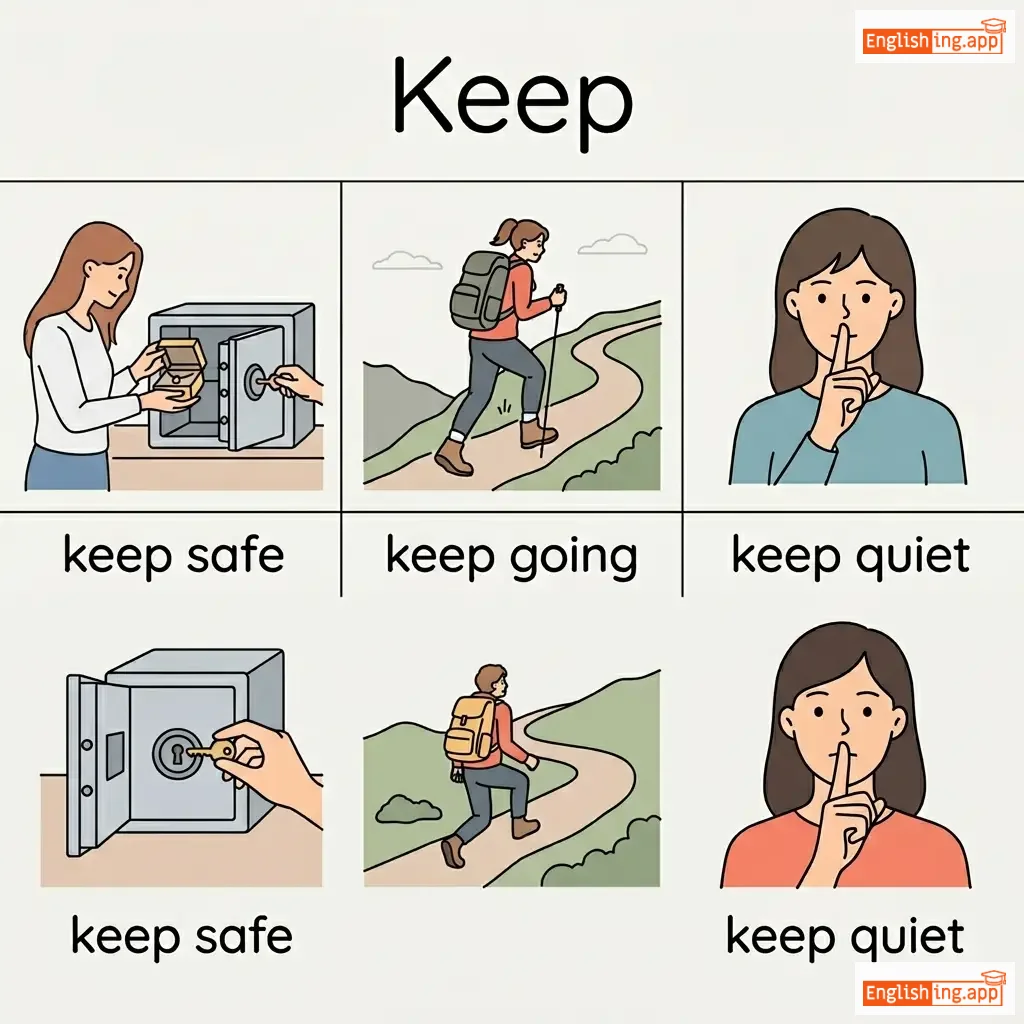
keep safe, keep quiet, keep calm, keep secret, keep in mind, keep track of, keep up with
••••••
|
Keep = 保つ (tamotsu) — like keeping or maintaining something precious.
••••••
|
|
#687
🤗
|
/ˈsɪmpəθaɪz/
verb
(シンパサイズ)
••••••
|
|
同情する
tojoo suru
••••••
|
sympathized
シンパサイズド
••••••
|
sympathized
シンパサイズド
••••••
|
sympathizes
シンパサイズズ
••••••
|
sympathizing
シンパサイジング
••••••
|
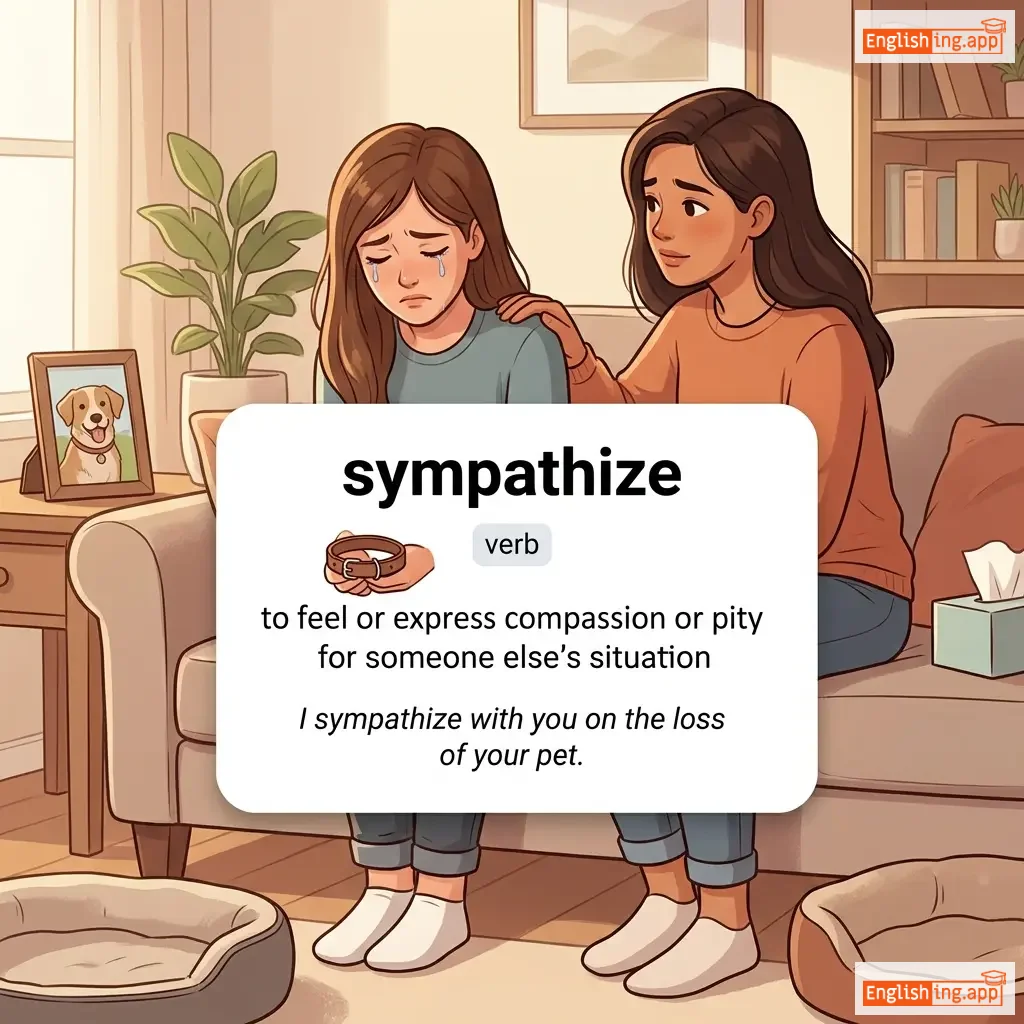
to feel sorry for someone; to understand and share someone's feelings
••••••
|
I sympathize with your loss.
アイ シンパサイズ ウィズ ユア ロス。
••••••
|
あなたの損失に同情します。
anata no sonshitsu ni tojoo shimasu
••••••
|
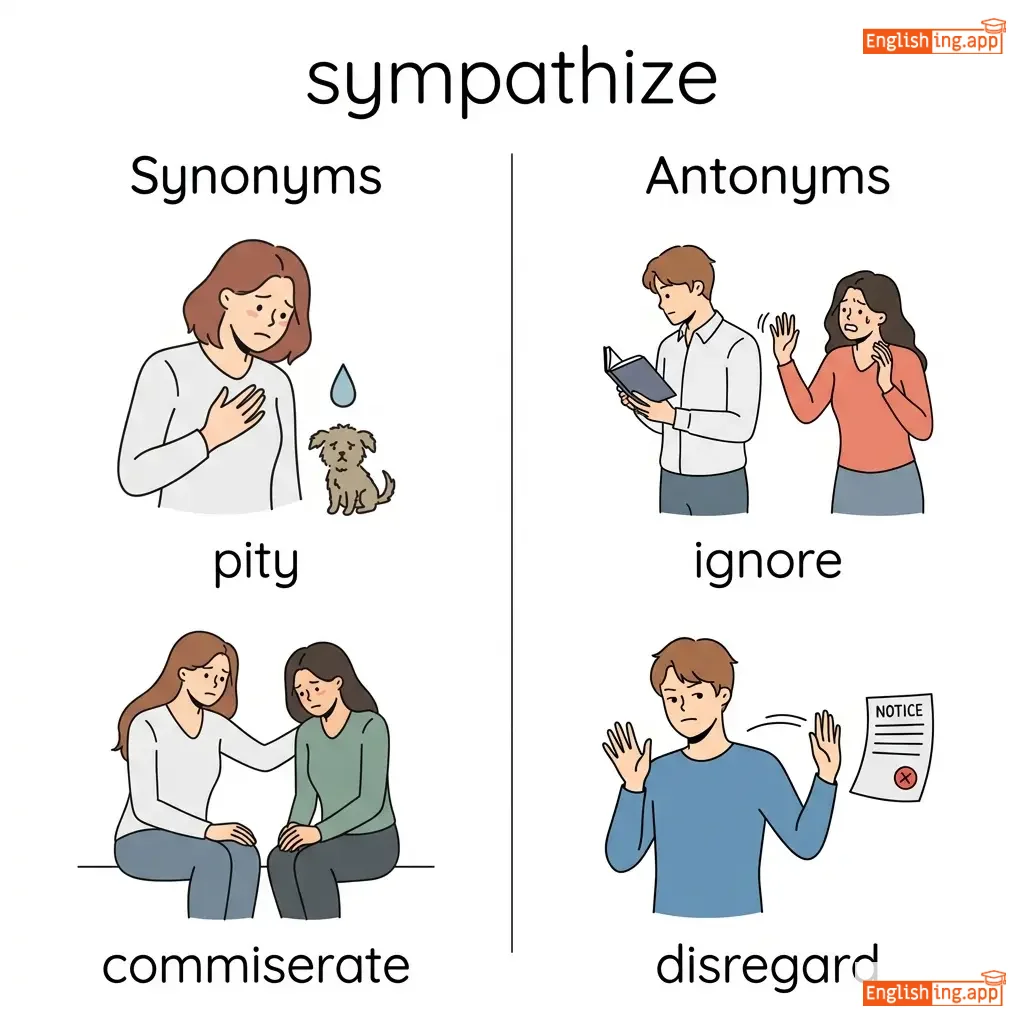
empathize, commiserate, understand, feel for
••••••
|
ignore, dismiss, disregard
••••••
|
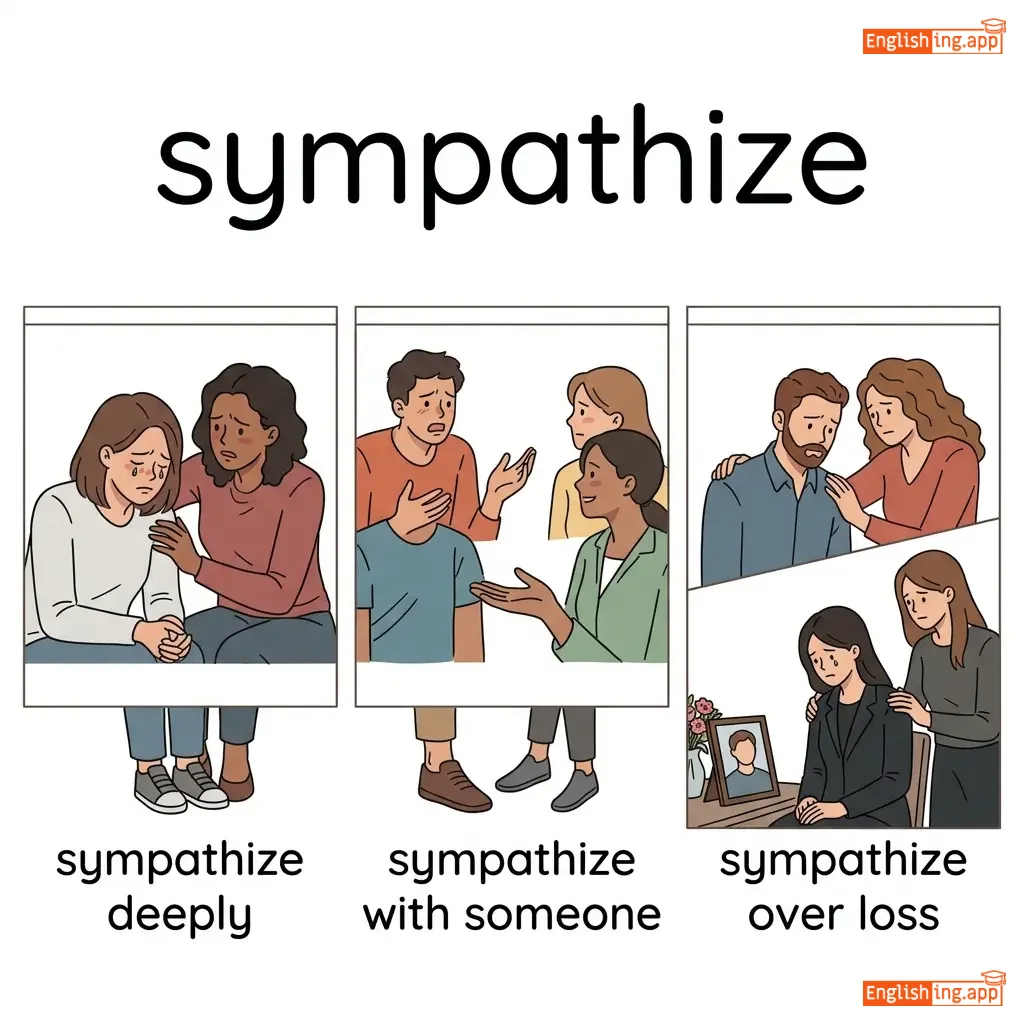
sympathize with, deeply sympathize, sympathize completely, sympathize sincerely, sympathize wholeheartedly
••••••
|
Sympathize = 同情する (tojoo suru) – both mean to share someone’s sorrow.
••••••
|
|
#688
🧹
|
/swiːp/
verb
(スウィープ)
••••••
|
|
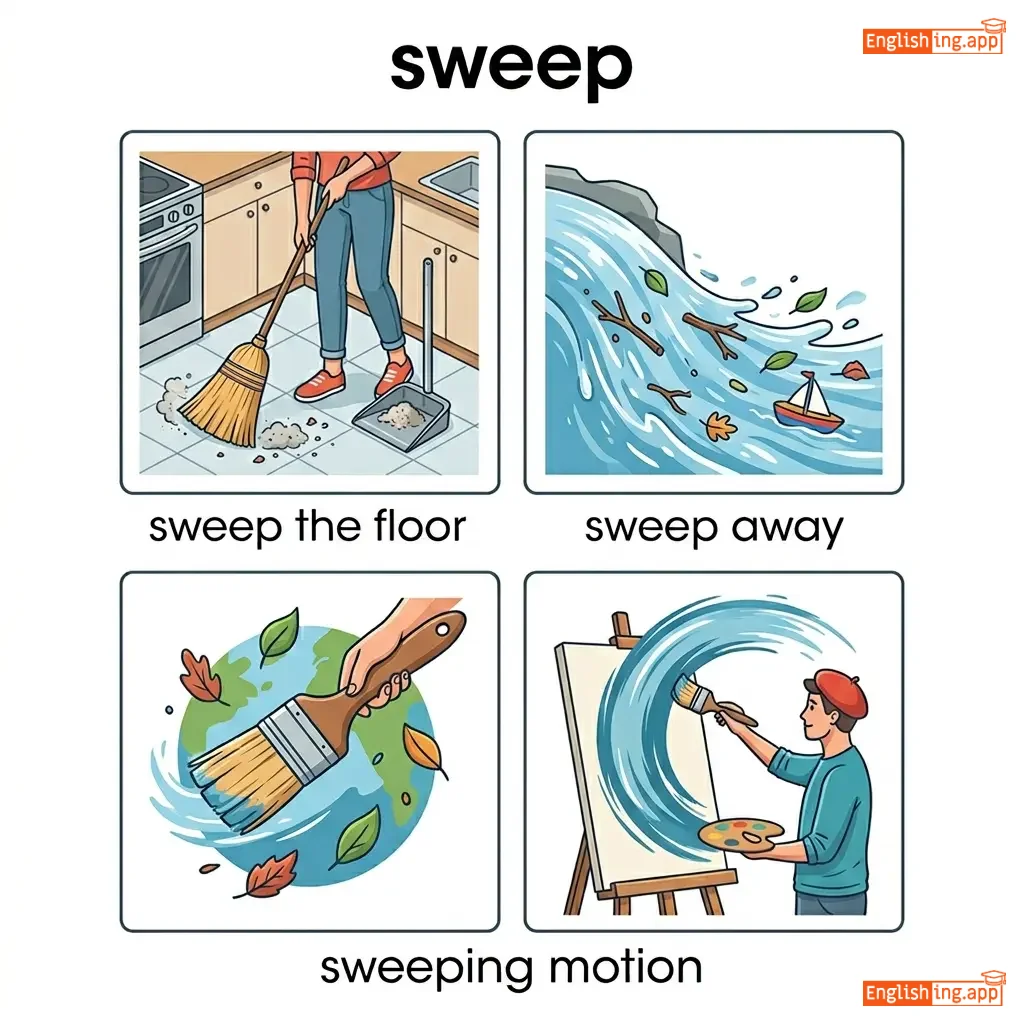
掃く
haku
••••••
|
swept
スウェプト
••••••
|
swept
スウェプト
••••••
|
sweeps
スウィープス
••••••
|
sweeping
スウィーピング
••••••
|
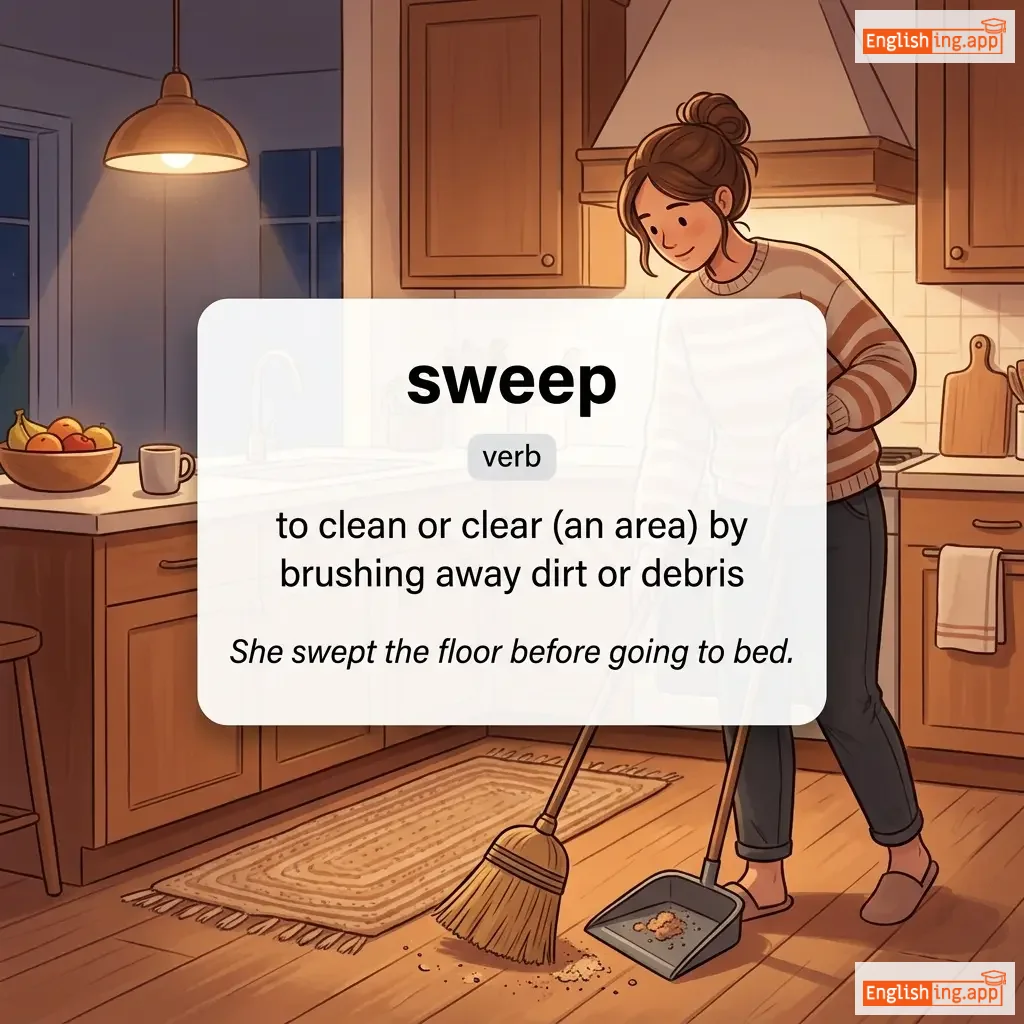
to clean by brushing; to move quickly and smoothly
••••••
|
She sweeps the floor every morning.
シー スウィープス ザ フロア エブリ モーニング。
••••••
|
彼女は毎朝床を掃く。
Kanojo wa mai asa yuka o haku
••••••
|
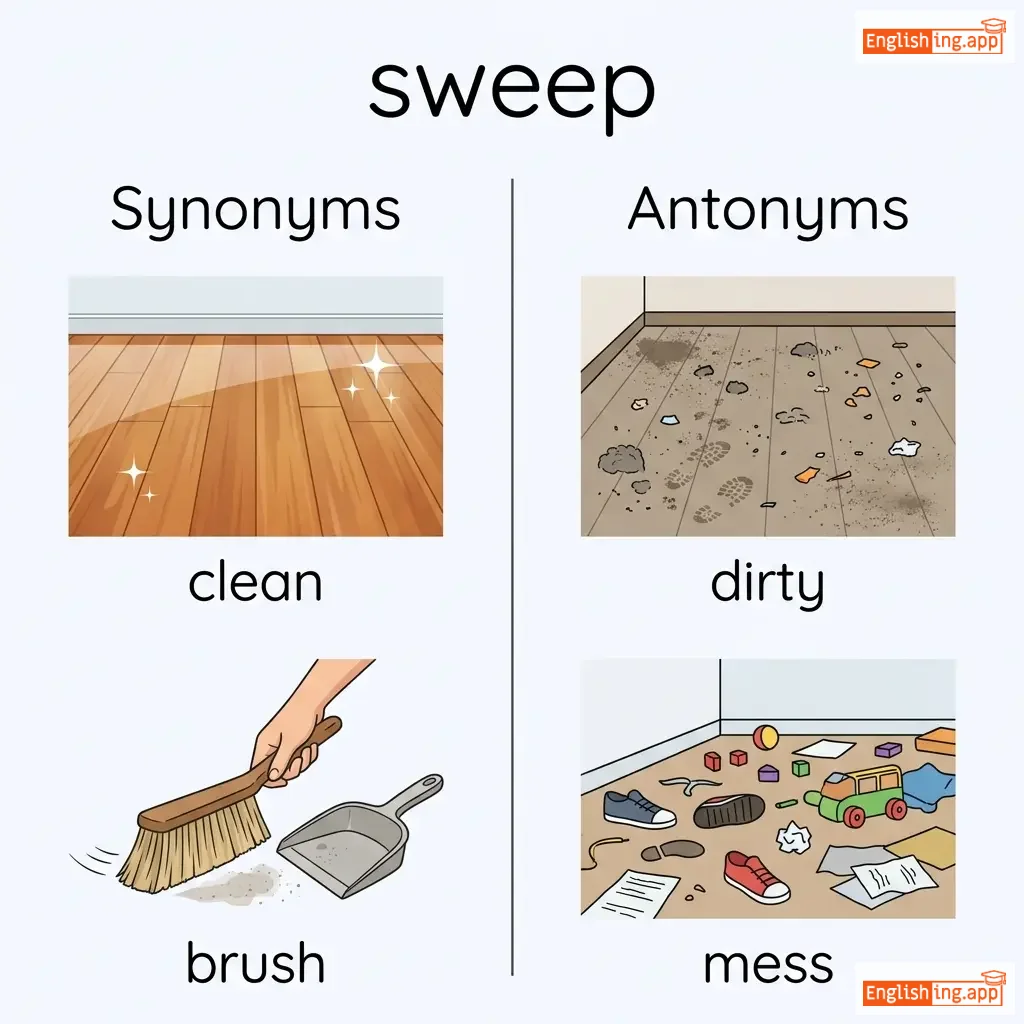
brush, clean, move quickly, glide
••••••
|
dirty, mess up
••••••
|
sweep away, sweep clean, sweep up, sweep aside, sweep through, sweep under
••••••
|
‘Sweep’ sounds like ‘スウィープ’ — remember ‘haku’ to brush away dust!
••••••
|
|
#689
🪢
|
/baɪnd/
verb
(バインド)
••••••
|
|
結ぶ
musubu
••••••
|
bound
バウンド
••••••
|
bound
バウンド
••••••
|
binds
バインズ
••••••
|
binding
バインディング
••••••
|
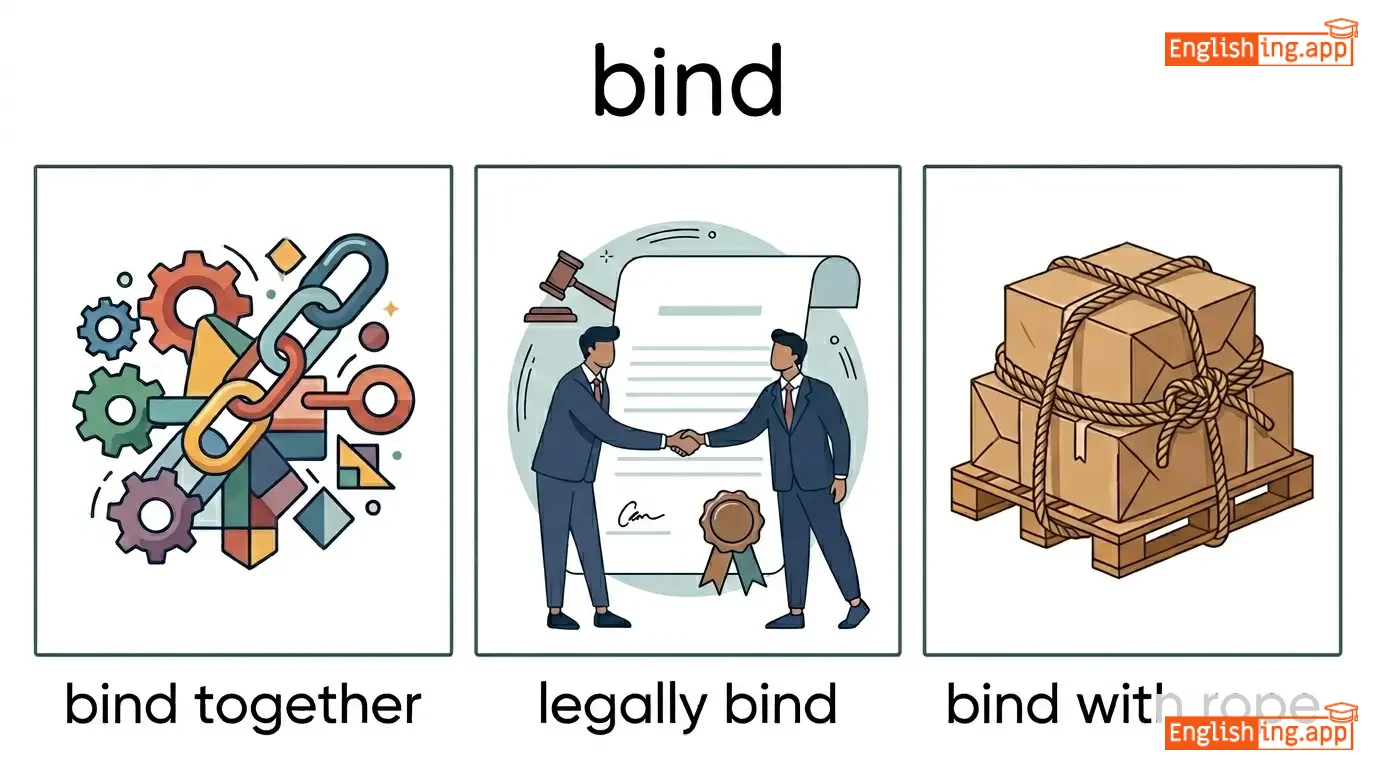
to tie together; to make a legal agreement; to put a cover on a book
••••••
|
The rope binds the packages together.
ザ ロープ バインズ ザ パッケージズ トゥゲザー。
••••••
|
ロープは荷物を一緒に結びます。
roopu wa nimotsu o issho ni musubimasu
••••••
|
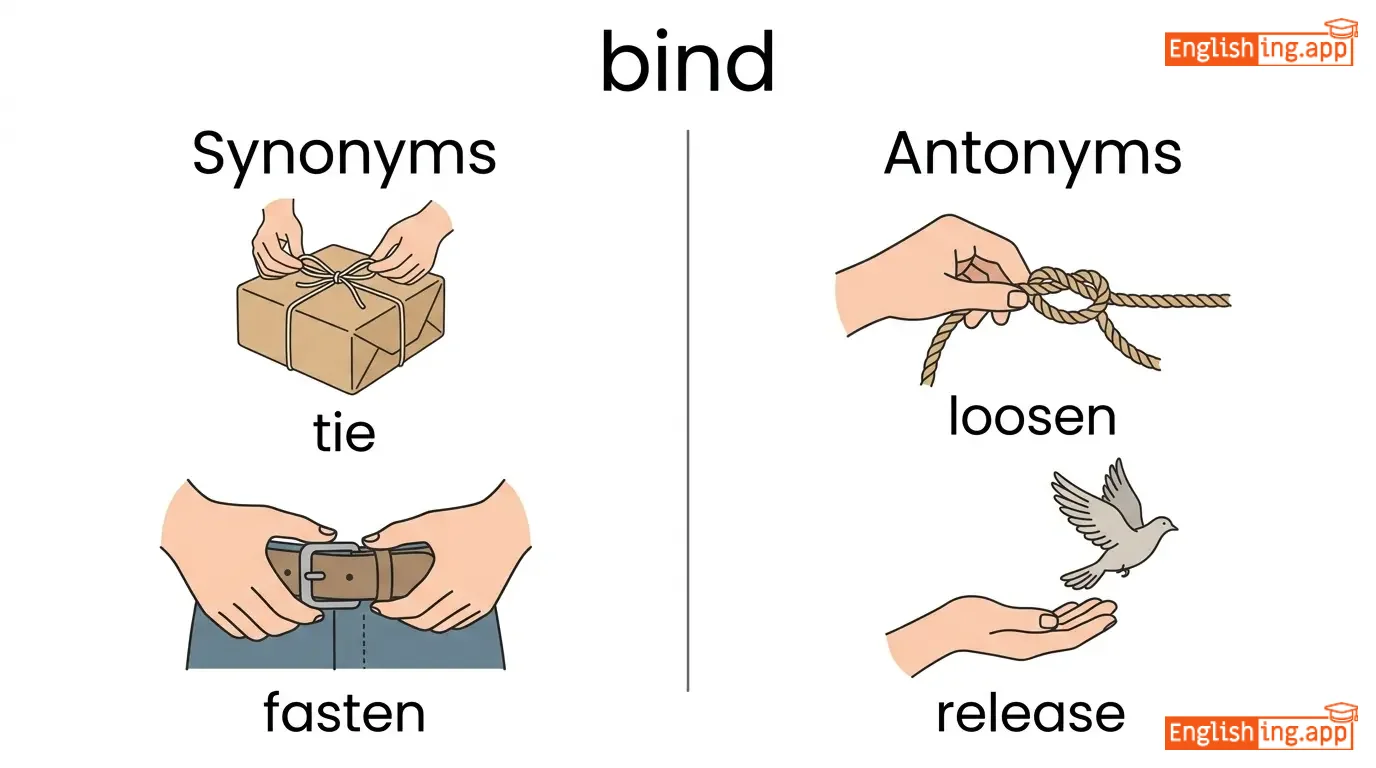
tie, fasten, secure, unite
••••••
|
untie, release, free, separate
••••••
|
bind together, bind tightly, bind securely, legally bind, bind up, bind with
••••••
|
Bind and 'musubu' both mean to tie or connect things together!
••••••
|
|
#690
😈
|
/ˌmɪsbɪˈheɪv/
verb
(ミスビヘイブ)
••••••
|
|
行儀が悪い
gyogi ga warui
••••••
|
misbehaved
ミスビヘイブド
••••••
|
misbehaved
ミスビヘイブド
••••••
|
misbehaves
ミスビヘイブズ
••••••
|
misbehaving
ミスビヘイビング
••••••
|
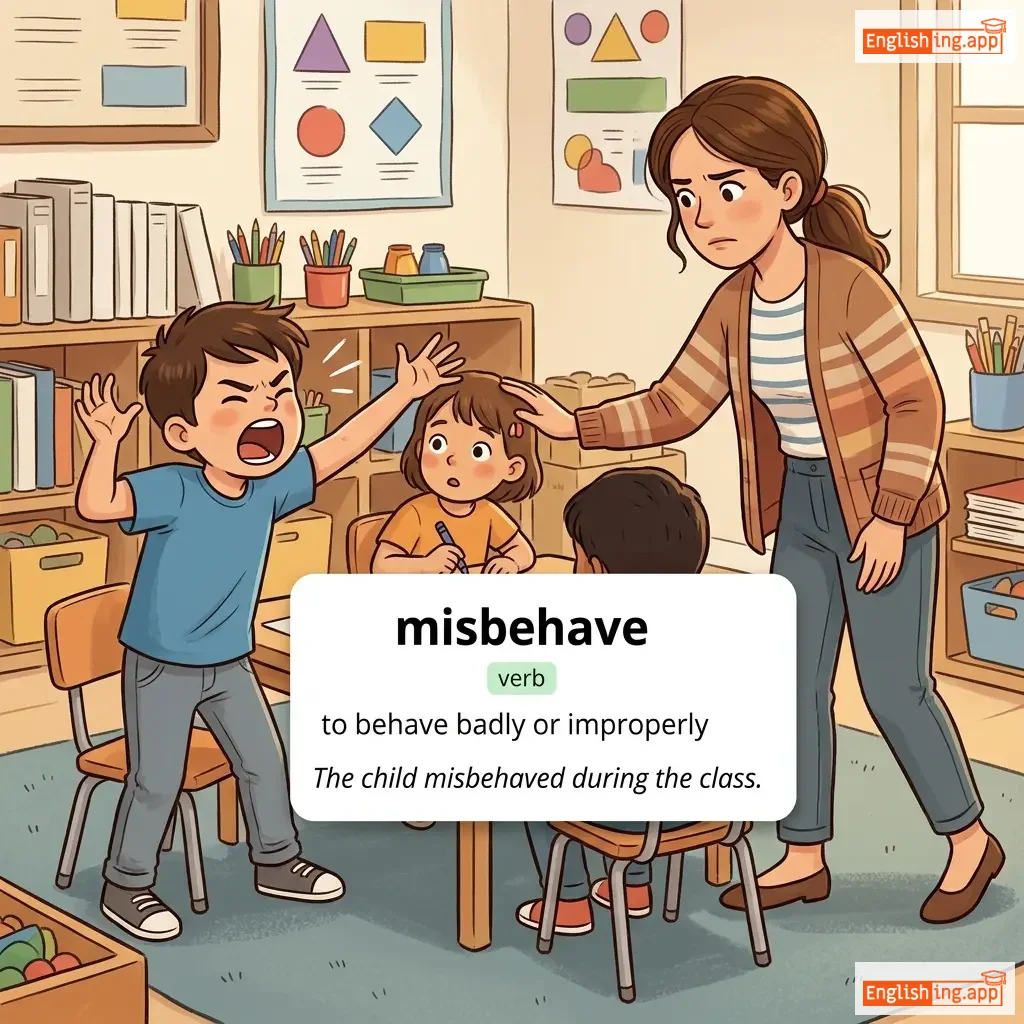
to behave badly or inappropriately; to act in an unacceptable way
••••••
|
The children misbehaved during the school assembly.
ザ チルドレン ミスビヘイブド デュアリング ザ スクール アセンブリー。
••••••
|
子供たちは学校の集会で行儀が悪かった。
kodomotachi wa gakkou no shuukai de gyogi ga warukatta
••••••
|
act up, misconduct, be naughty, disobey
••••••
|
behave, obey, comply, follow rules
••••••
|
misbehave badly, constantly misbehave, children misbehave, misbehave in school, misbehave at home
••••••
|
‘Mis’ = 悪い (warui) → misbehave = 行儀が悪い.
••••••
|
|
#691
⚠️
|
/ˌoʊvərˈduː/
verb
(オーバードゥー)
••••••
|
|
やりすぎる
yarisugiru
••••••
|
overdid
オーバーディッド
••••••
|
overdone
オーバーダン
••••••
|
overdoes
オーバーダズ
••••••
|
overdoing
オーバードゥーイング
••••••
|
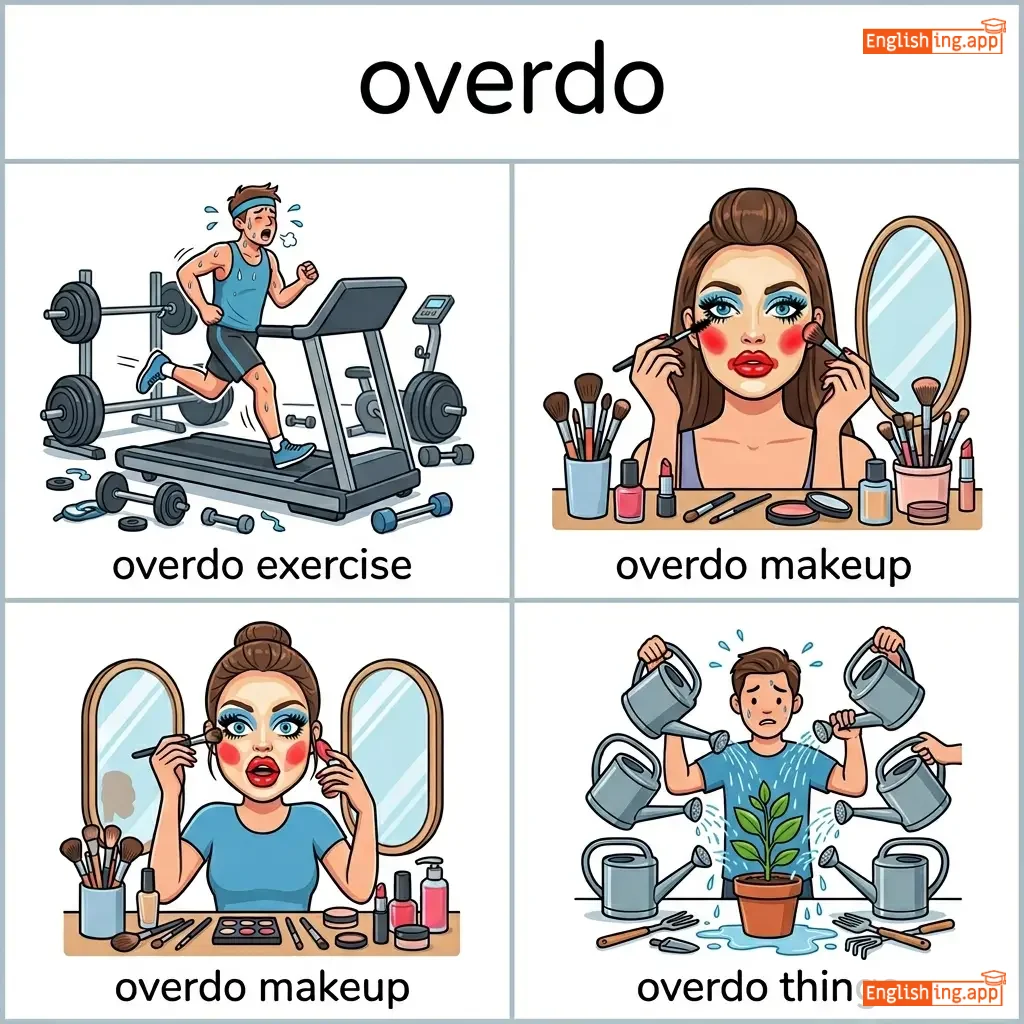
to do something too much; to exaggerate or carry to excess
••••••
|
Don't overdo the exercise on your first day at the gym.
ドント オーバードゥー ザ エクササイズ オン ユア ファースト デイ アット ザ ジム。
••••••
|
初日はジムで運動をやりすぎないでください。
shonichi wa jimu de undou o yarisuginai de kudasai
••••••
|
exaggerate, overwork, exceed, overindulge
••••••
|
underdo, moderate, restrain, limit
••••••
|
overdo it, overdo exercise, overdo work, don't overdo, overdo things, overdo yourself
••••••
|
Overdo = やりすぎる — think of 'over' + 'do' meaning doing too much.
••••••
|
|
#692
🤝
|
/əˈblaɪdʒ/
verb
(オブライジ)
••••••
|
|
義務付ける
gimu zukeru
••••••
|
obliged
オブライジド
••••••
|
obliged
オブライジド
••••••
|
obliges
オブライジズ
••••••
|
obliging
オブライジング
••••••
|
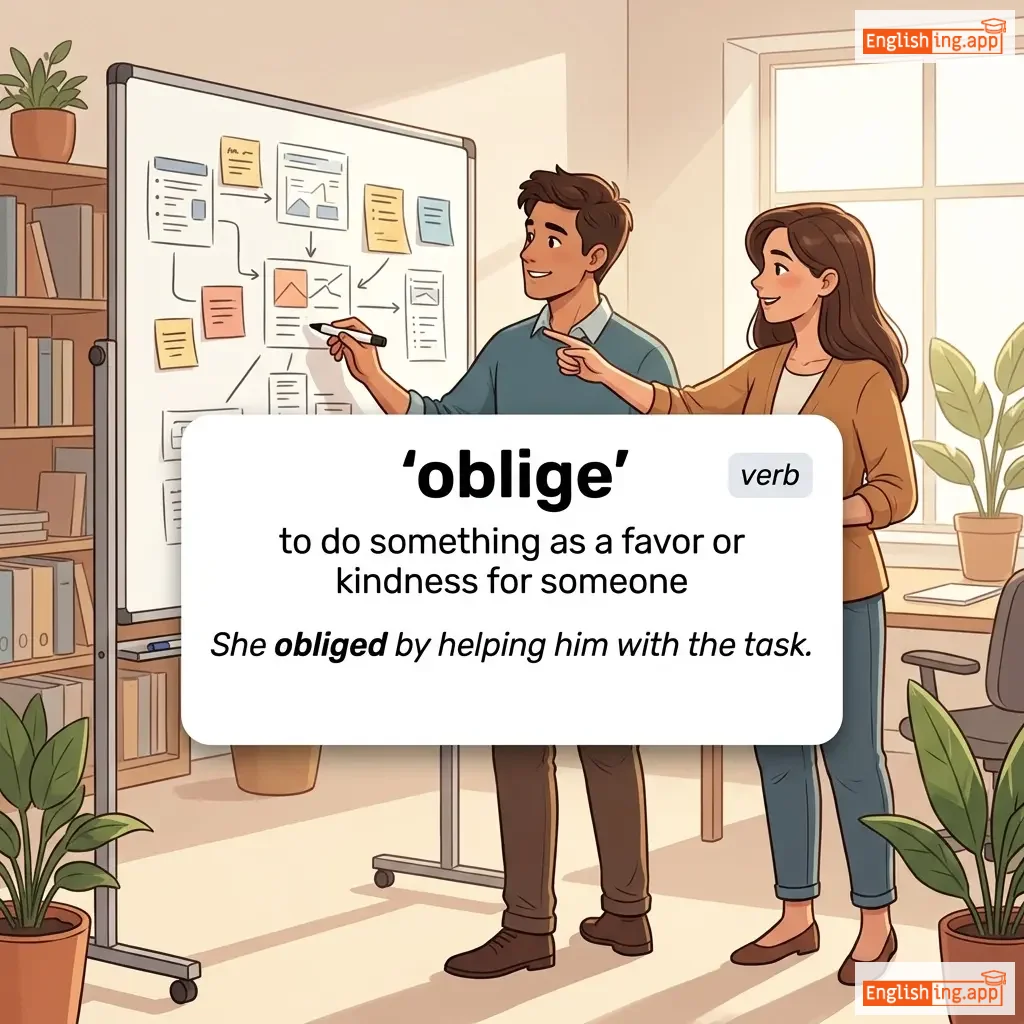
to compel or require someone to do something; to help or do a favor
••••••
|
I would be happy to oblige you with the information you need.
アイ ウッド ビー ハッピー トゥ オブライジ ユー ウィズ ザ インフォメーション ユー ニード。
••••••
|
必要な情報を提供してお手伝いできれば嬉しいです。
Hitsuyou na jouhou o teikyou shite otetsudai dekireba ureshii desu.
••••••
|
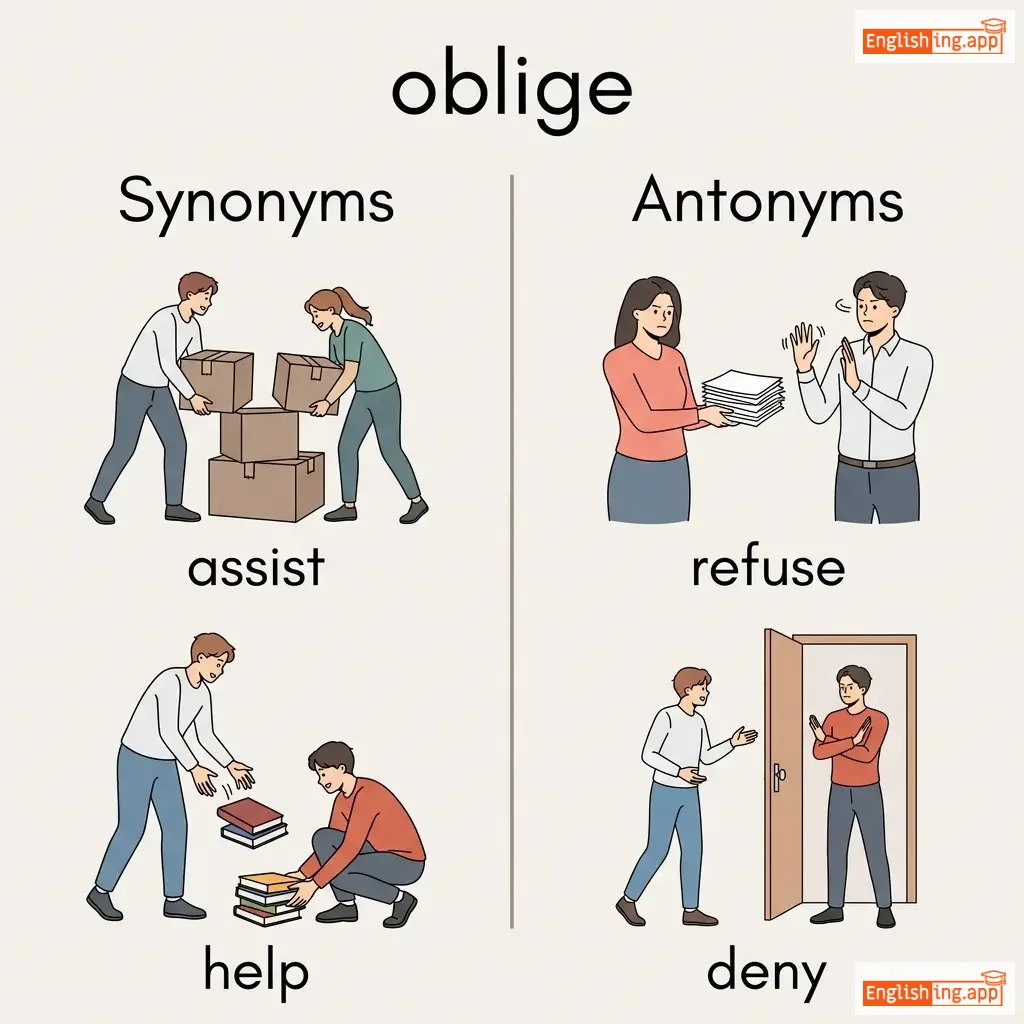
compel, require, help, assist
••••••
|
free, release, refuse, deny
••••••
|
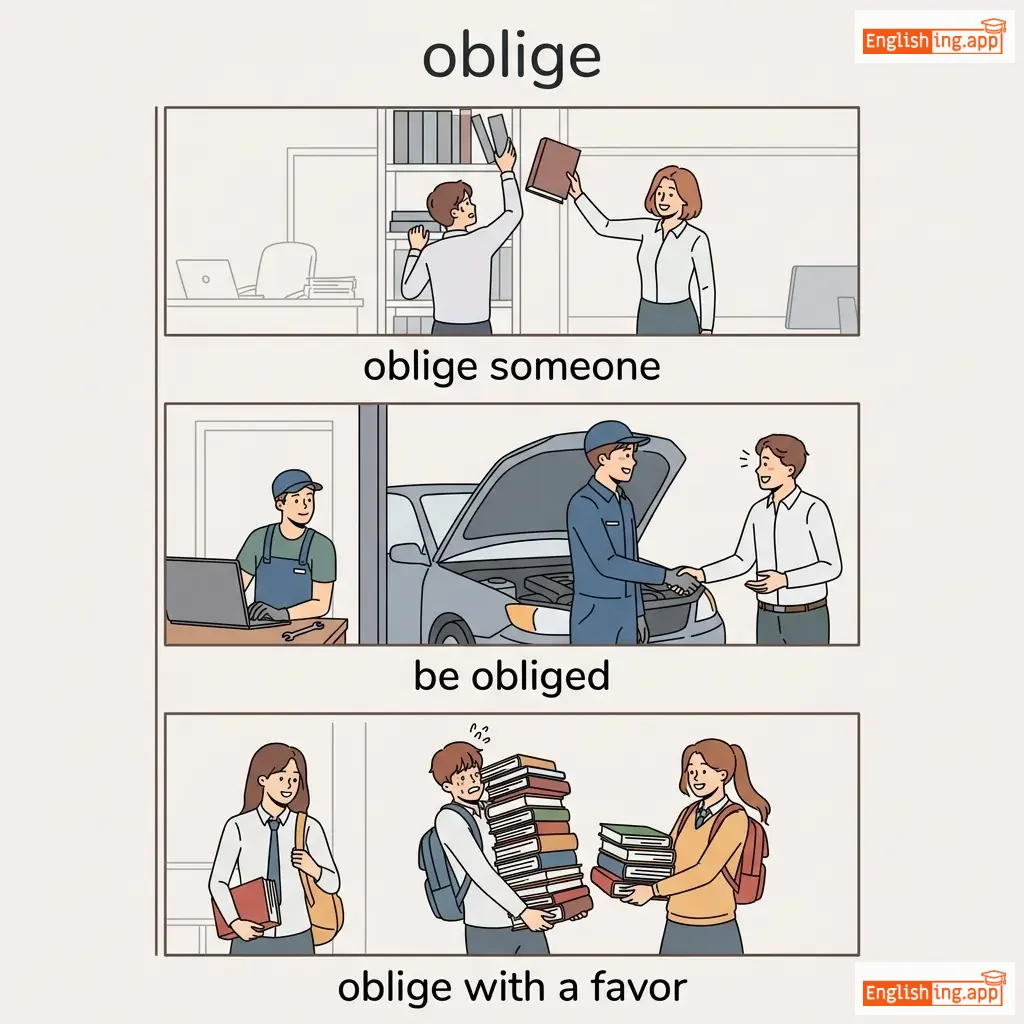
happily oblige, oblige someone, oblige with, willing to oblige, greatly oblige, kindly oblige
••••••
|
‘Oblige’ feels like Japanese ‘gimu zukeru’ — both mean to be duty-bound to help.
••••••
|
|
#693
💼
|
/wɜːrk/
verb
(ワーク)
••••••
|
|
働く
hataraku
••••••
|
worked
ワークド
••••••
|
worked
ワークド
••••••
|
works
ワークス
••••••
|
working
ワーキング
••••••
|
to perform tasks or duties to earn money or achieve goals
••••••
|
He works as a teacher at the local school.
ヒー ワークス アズ ア ティーチャー アット ザ ローカル スクール。
••••••
|
彼は地元の学校で教師として働いています。
Kare wa jimoto no gakkou de kyoushi to shite hataraite imasu
••••••
|
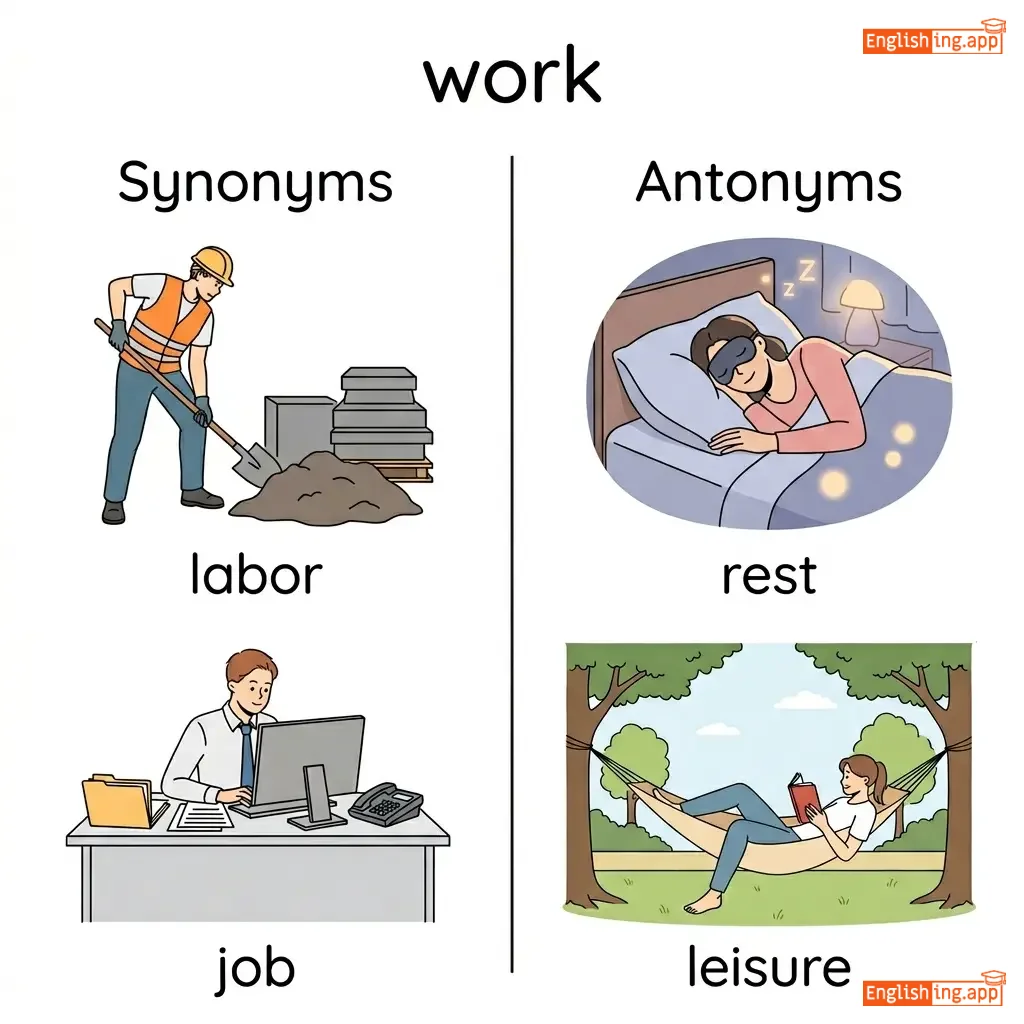
labor, toil, function, operate
••••••
|
rest, relax, play, idle
••••••
|
work hard, work together, work from home, work late, work overtime, work efficiently
••••••
|
‘Hataraku’ sounds like ‘heart at work’ — put your heart into your job!
••••••
|
|
#694
🍽️
|
/fiːd/
verb
(フィード)
••••••
|
|
餌を与える
esa o ataeru
••••••
|
fed
フェッド
••••••
|
fed
フェッド
••••••
|
feeds
フィーズ
••••••
|
feeding
フィーディング
••••••
|
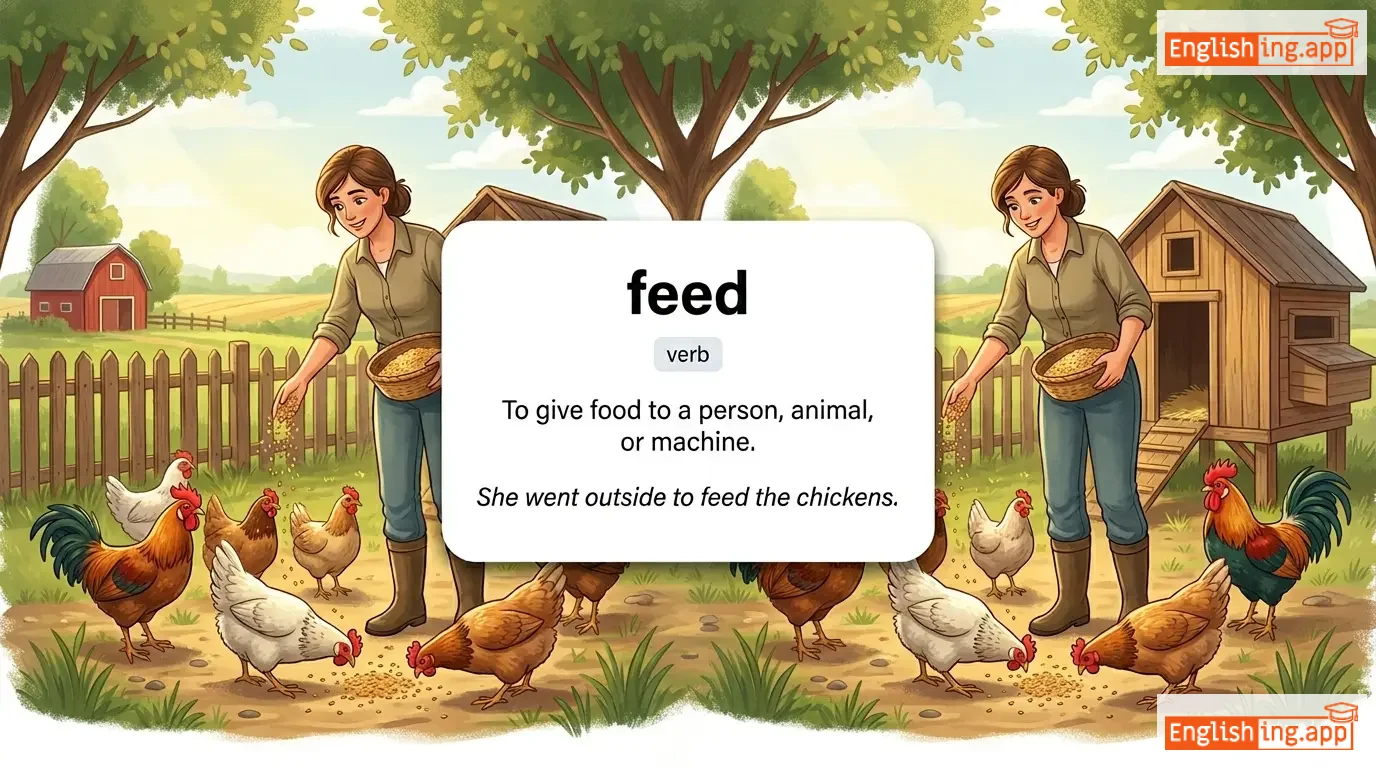
to give food to a person or animal
••••••
|
She feeds the birds every morning.
シー フィーズ ザ バーズ エブリ モーニング。
••••••
|
彼女は毎朝鳥に餌を与えます。
kanojo wa mai asa tori ni esa o ataemasu
••••••
|
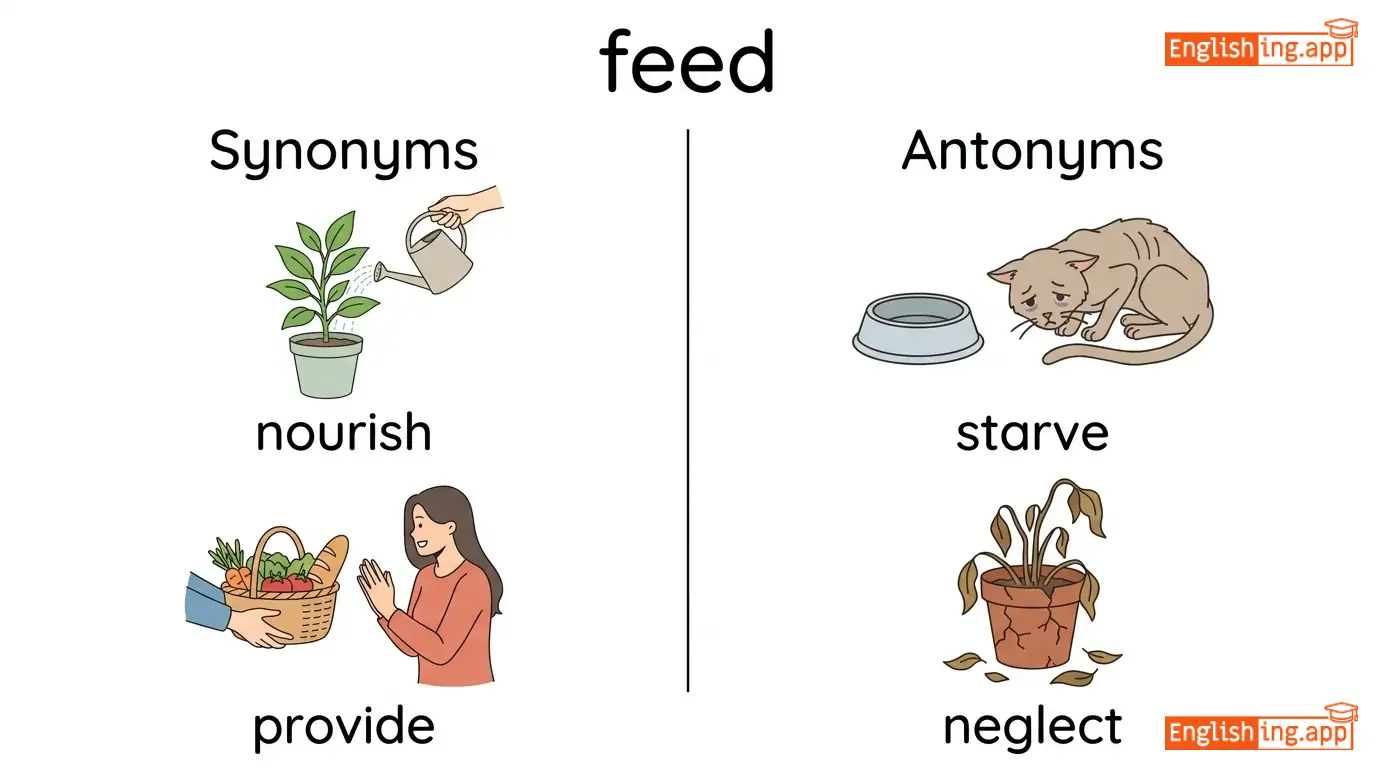
nourish, provide food, give food
••••••
|
starve, deprive, withhold food
••••••
|
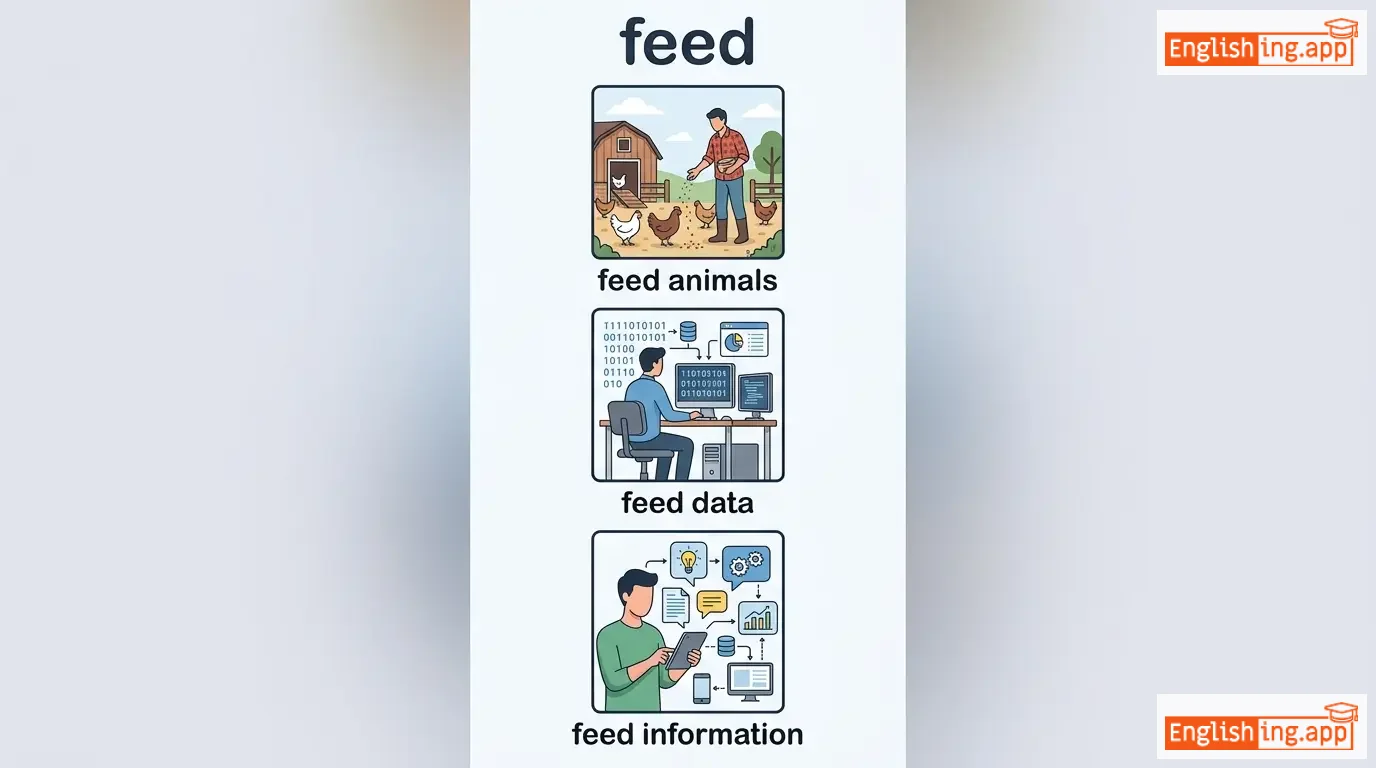
feed the baby, feed animals, feed birds, feed hungry, properly feed, hand feed
••••••
|
Feed the birds = 餌を与える (esa o ataeru).
••••••
|
|
#695
⚕️
|
/ˈɒpəreɪt/
verb
(オペレート)
••••••
|
|
操作する
sousa suru
••••••
|
operated
オペレーテッド
••••••
|
operated
オペレーテッド
••••••
|
operates
オペレーツ
••••••
|
operating
オペレーティング
••••••
|
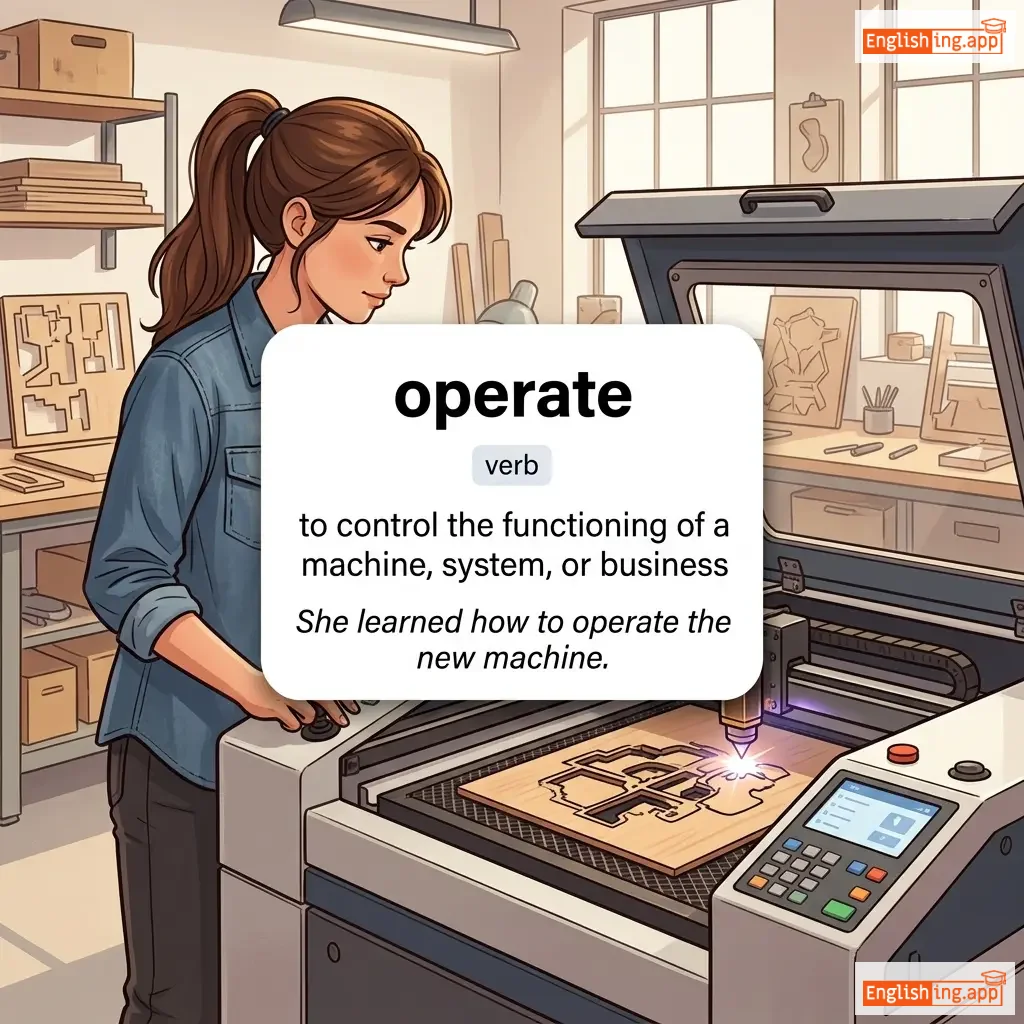
to function; to control or manage; to perform surgery
••••••
|
The surgeon will operate on the patient tomorrow.
ザ サージャン ウィル オペレート オン ザ ペイシェント トゥモロー。
••••••
|
外科医は明日患者を手術します。
gekai wa ashita kanja o shujutsu shimasu
••••••
|
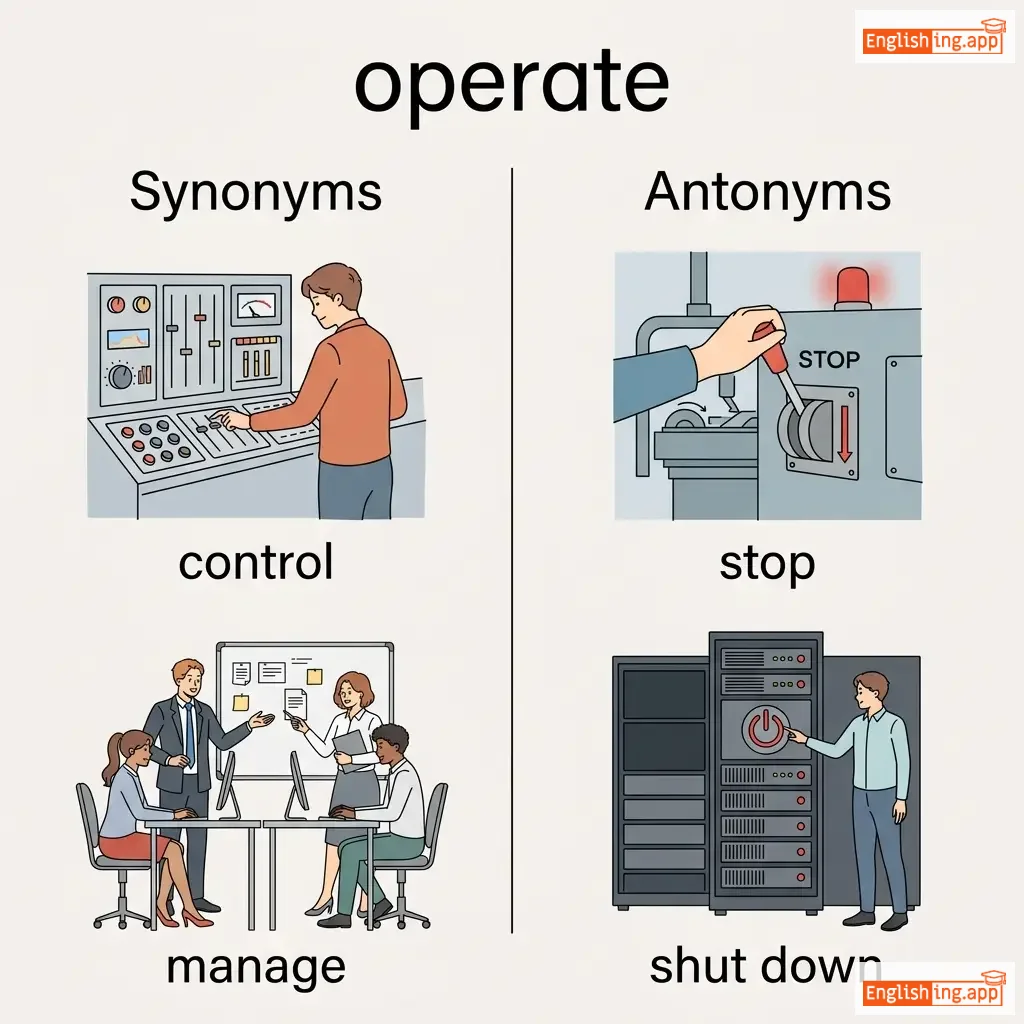
function, run, manage, control
••••••
|
malfunction, stop, cease, halt
••••••
|
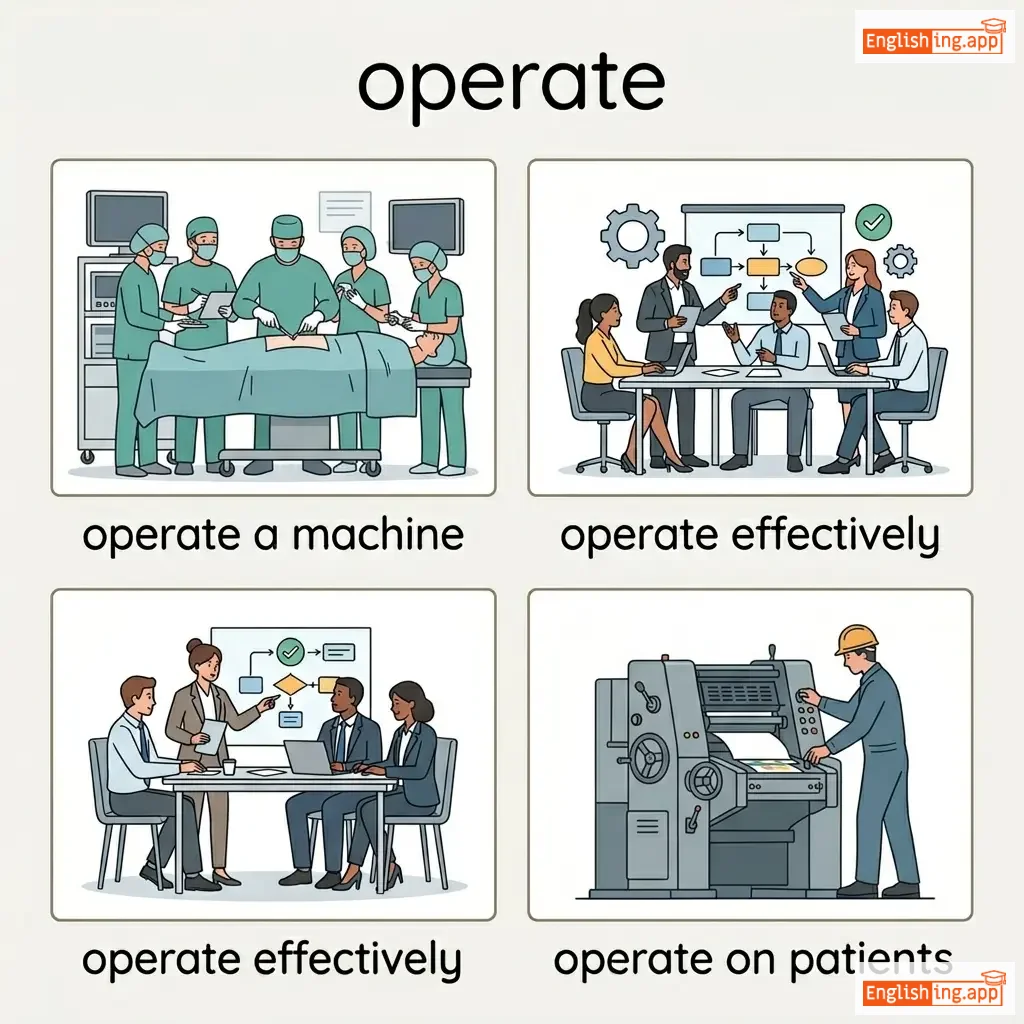
operate smoothly, operate efficiently, operate machinery, operate business, operate successfully
••••••
|
Operate → オペレート (operate) sounds similar; used for machines and surgery.
••••••
|
|
#696
👁️🗨️
|
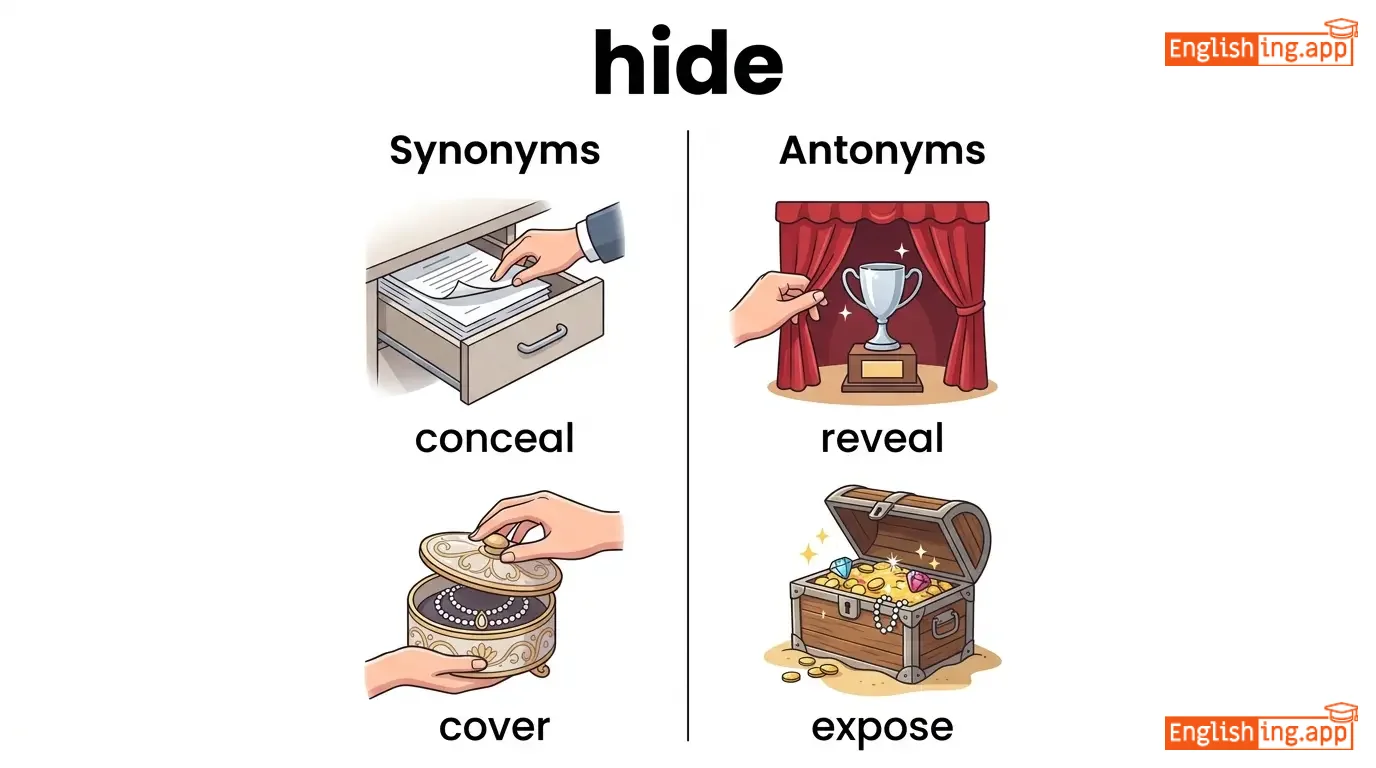
/haɪd/
verb
(ハイド)
••••••
|
|
隠す
kakusu
••••••
|
hid
ヒド
••••••
|
hidden
ヒドゥン
••••••
|
hides
ハイズ
••••••
|
hiding
ハイディング
••••••
|
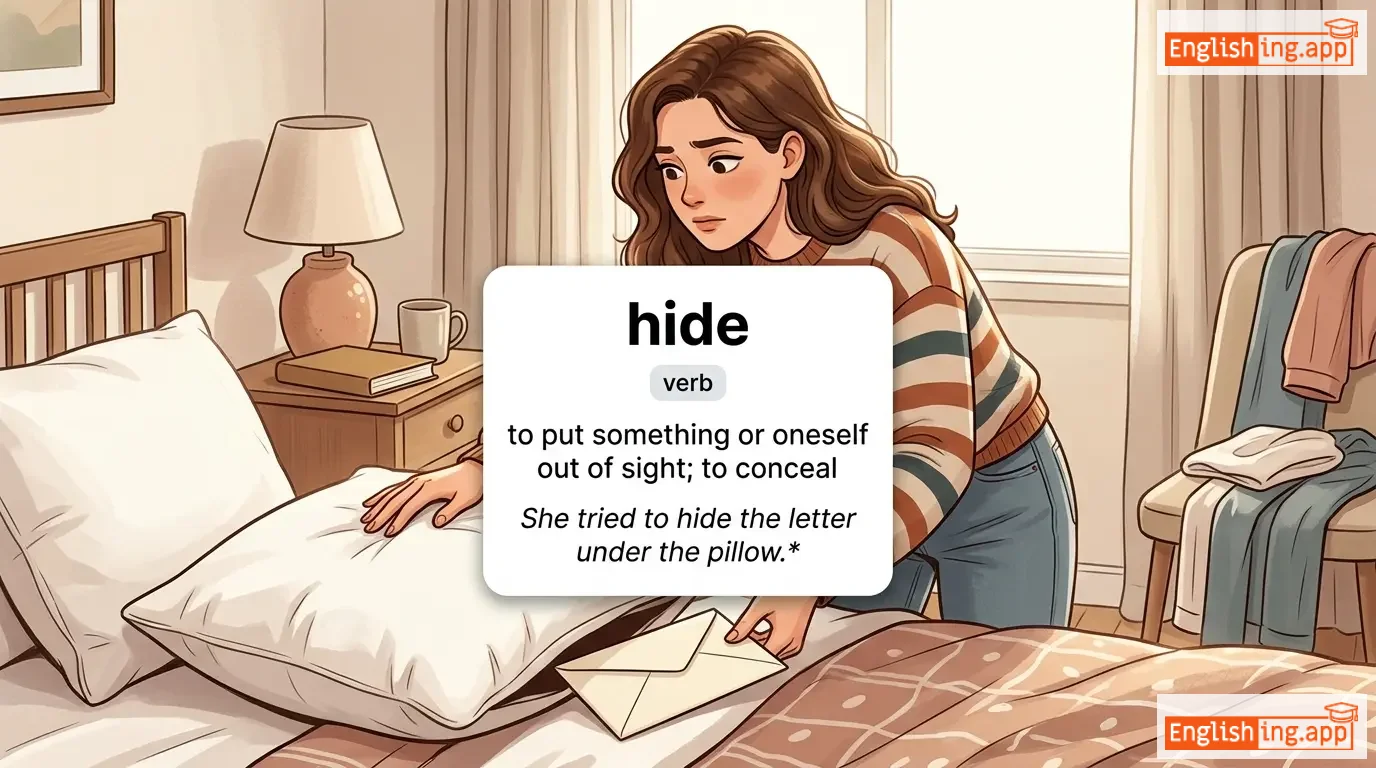
to put or keep out of sight; to conceal from view
••••••
|
Children like to hide during games.
チルドレンはゲームのときにかくれるのが好きです。
••••••
|
子供たちはゲームのときに隠れるのが好きです。
kodomotachi wa geemu no toki ni kakureru no ga suki desu
••••••
|
conceal, cover, disguise, mask
••••••
|
show, reveal, display, expose
••••••
|
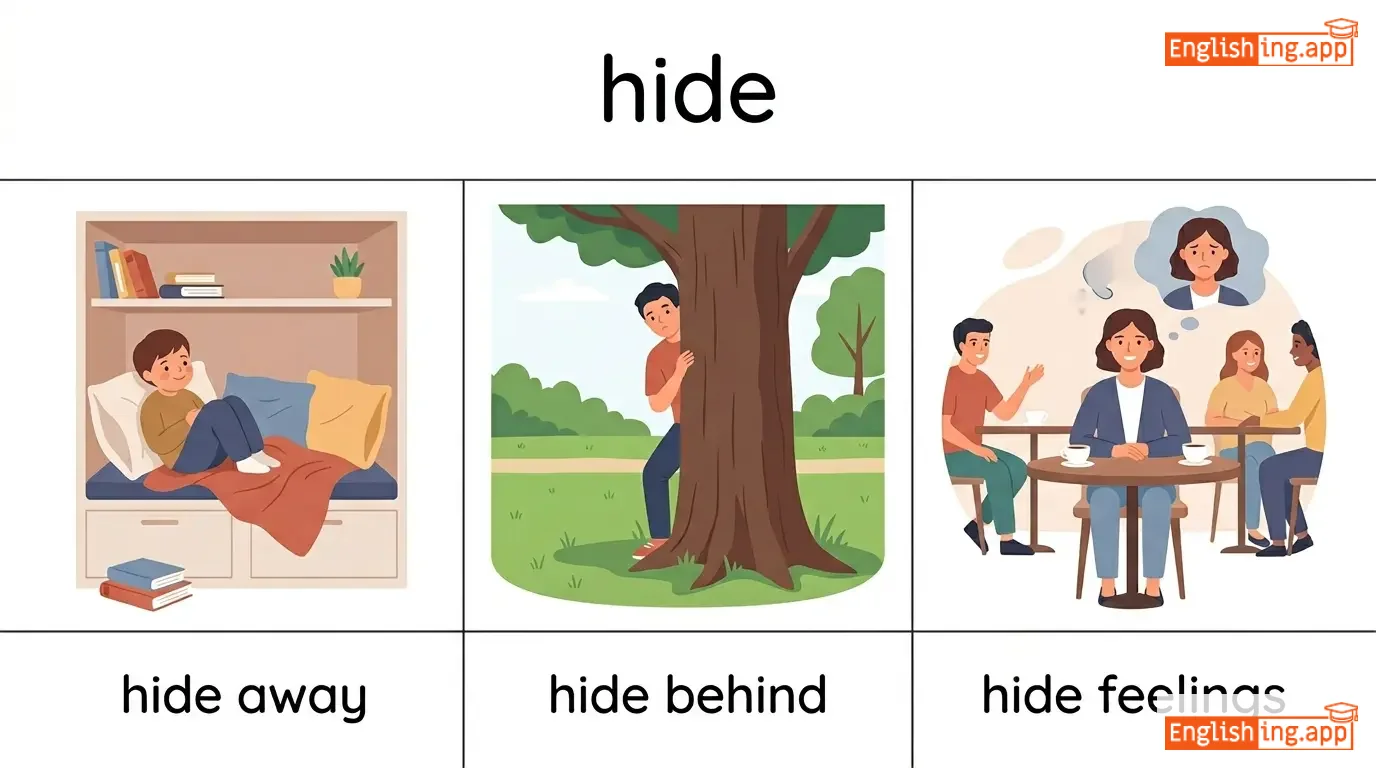
hide away, hide behind, hide from, hide under, hide inside, carefully hide
••••••
|
Hide is 'kakusu' — like you ‘cover’ yourself up!
••••••
|
|
#697
🤏
|
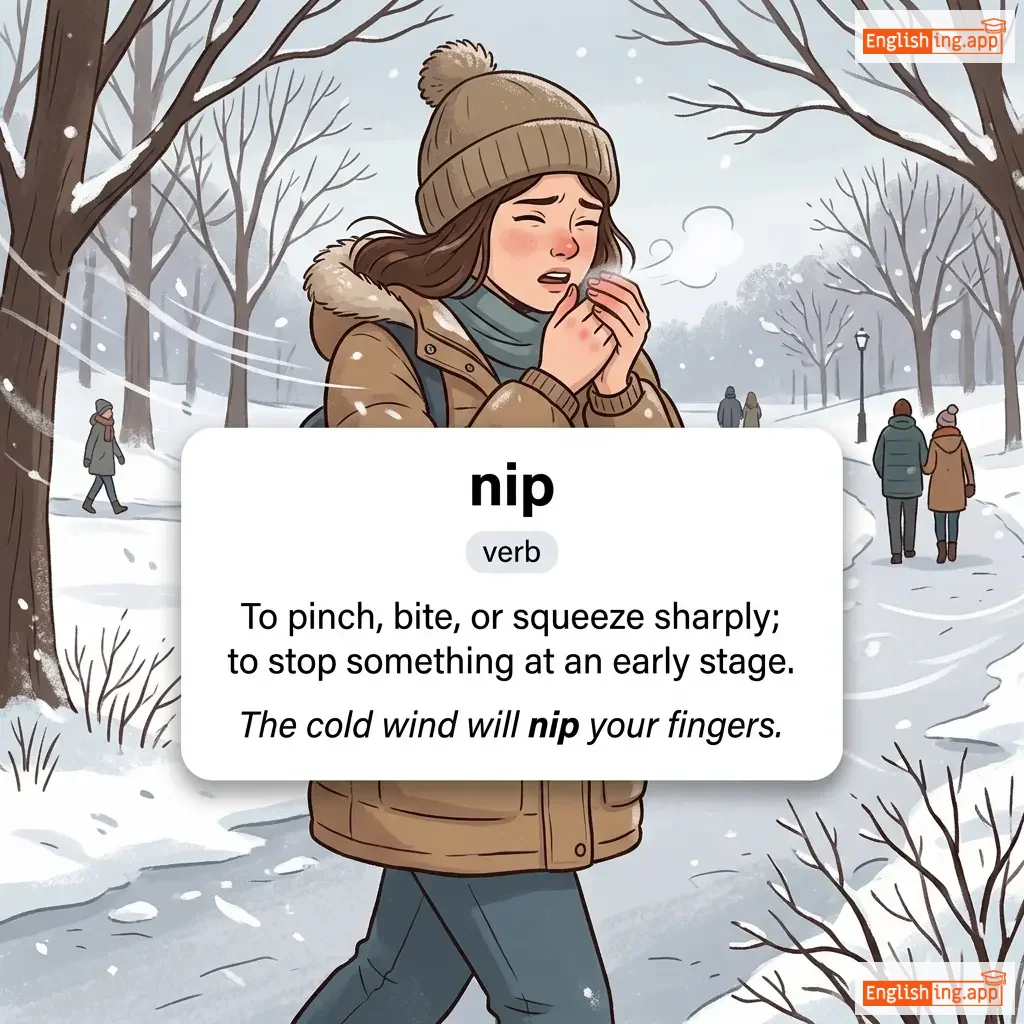
/nɪp/
verb
(ニップ)
••••••
|
|
軽くつねる
karuku tsuneru
••••••
|
nipped
ニップド
••••••
|
nipped
ニップド
••••••
|
nips
ニップス
••••••
|
nipping
ニッピング
••••••
|
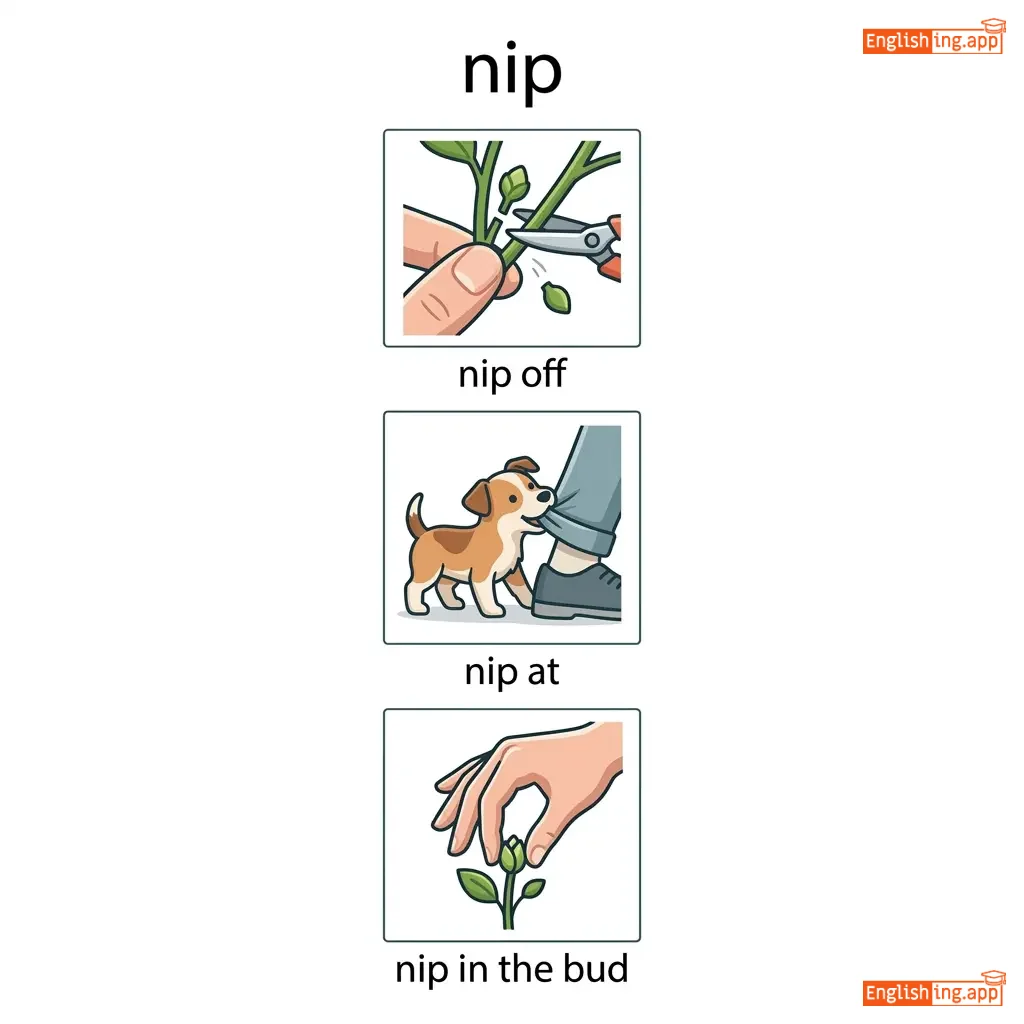
to pinch or bite lightly; to move quickly
••••••
|
The cold wind nipped at my face.
ザ コールド ウィンド ニップド アット マイ フェイス。
••••••
|
冷たい風が私の顔を軽くつねった。
Tsumetai kaze ga watashi no kao o karuku tsunetta
••••••
|
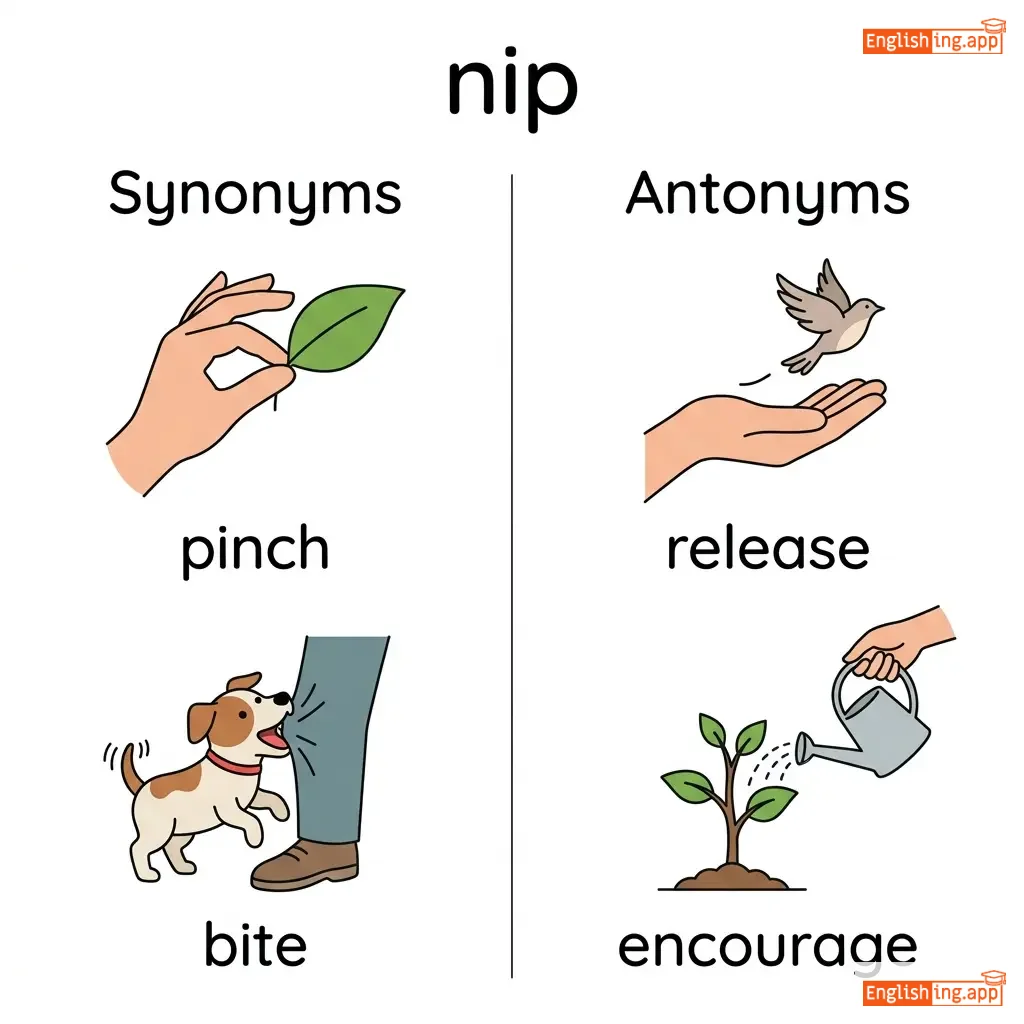
pinch, bite, squeeze, clip
••••••
|
release, let go
••••••
|
nip quickly, nip gently, nip at, cold nip, frost nip, nip in bud
••••••
|
‘Nip’ sounds like ‘ニップ’ — think of a small pinch, karuku tsuneru, in Japanese.
••••••
|
|
#698
🔀
|
/ˈdʒʌmbəl/
verb
(ジャンブル)
••••••
|
|
混ぜる
mazeru
••••••
|
jumbled
ジャンブルド
••••••
|
jumbled
ジャンブルド
••••••
|
jumbles
ジャンブルズ
••••••
|
jumbling
ジャンブリング
••••••
|
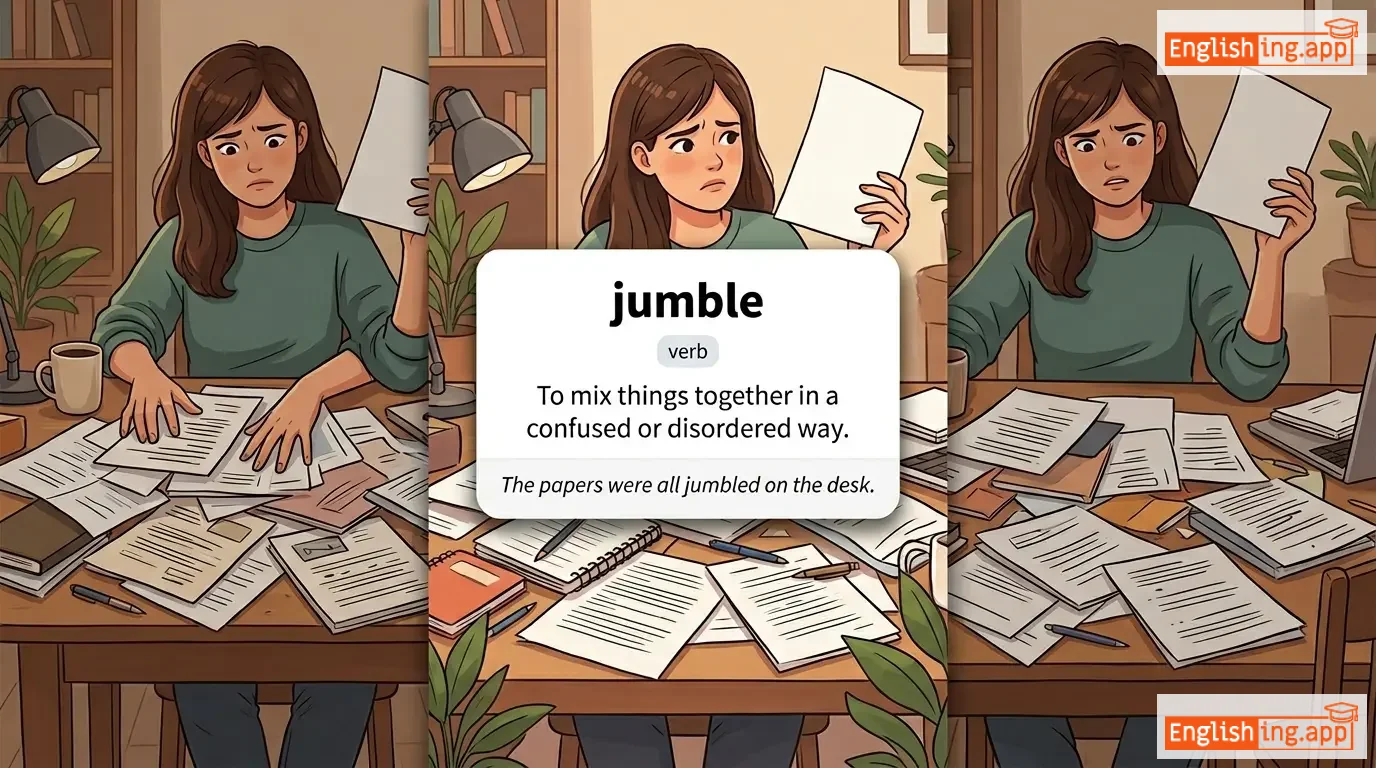
to mix things together in a confused or untidy way
••••••
|
Don't jumble all the papers together in one pile.
ドント ジャンブル オール ザ ペーパーズ トゥゲザー イン ワン パイル。
••••••
|
すべての書類を一つの山に混ぜないでください。
subete no shorui o hitotsu no yama ni mazenai de kudasai
••••••
|
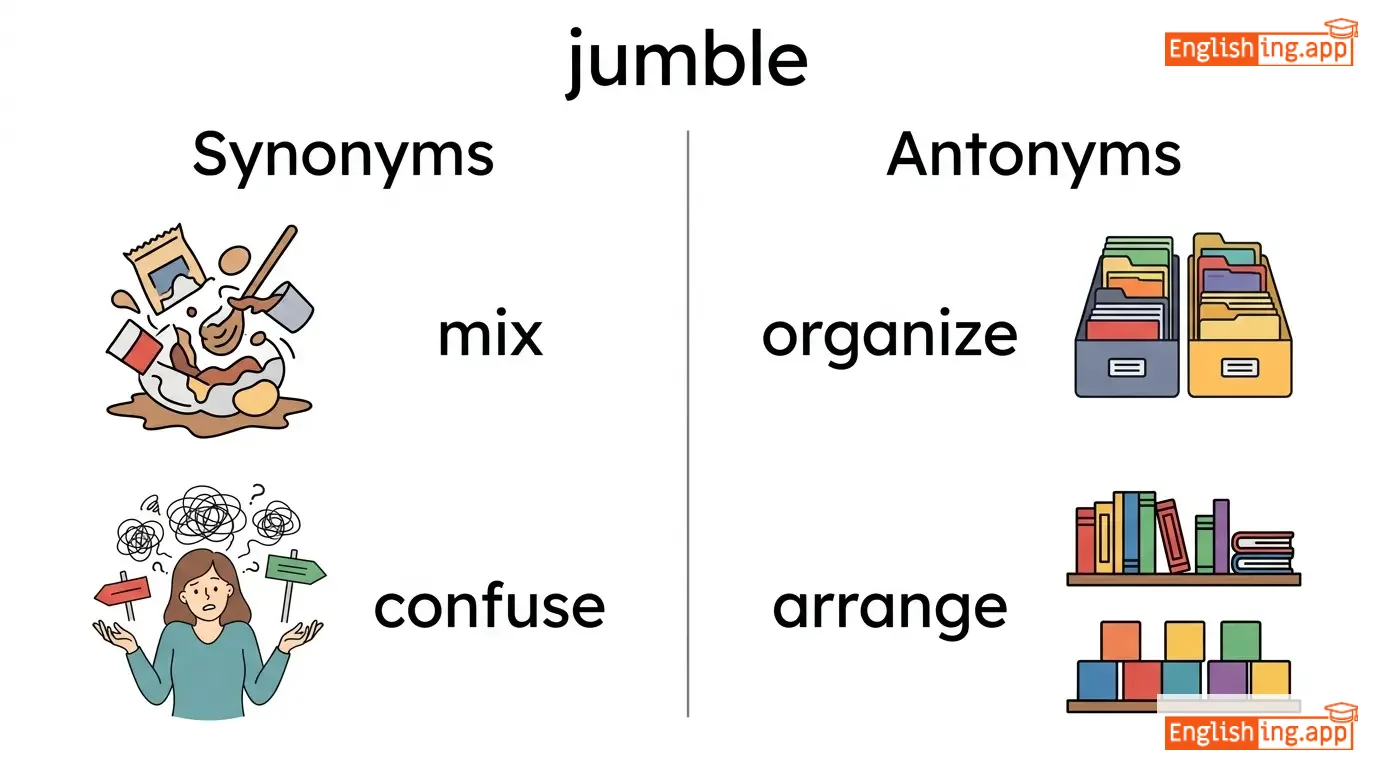
mix up, muddle, confuse, scramble, tangle
••••••
|
organize, arrange, sort, separate, order
••••••
|
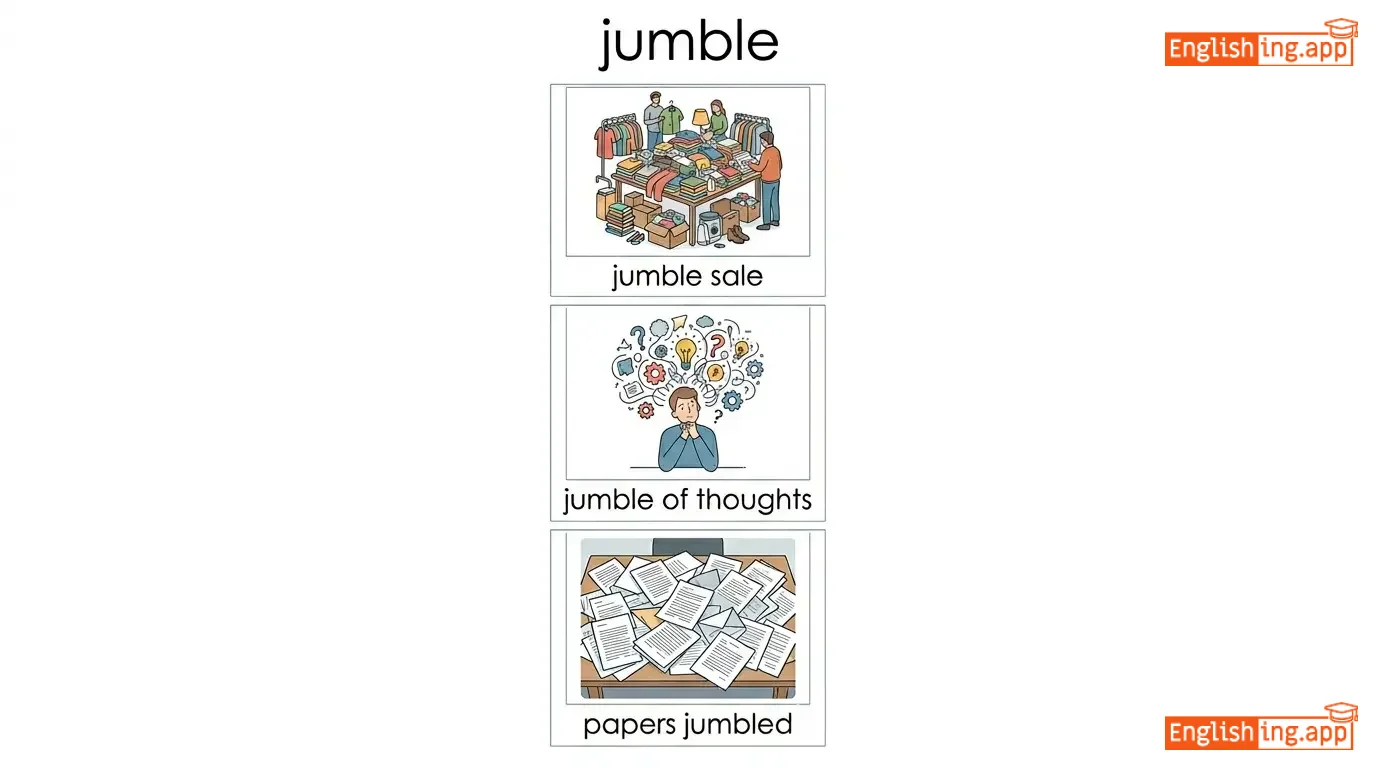
jumble together, jumble up, jumble words, jumble everything, completely jumble, randomly jumble
••••••
|
Jumble sounds like 'janburu' — mix everything like Japanese ramen!
••••••
|
|
#699
🤝
|
/ˈkɒmprəmaɪz/
verb
(コンプロマイズ)
••••••
|
|
妥協する
takyo suru
••••••
|
compromised
コンプロマイズド
••••••
|
compromised
コンプロマイズド
••••••
|
compromises
コンプロマイゼス
••••••
|
compromising
コンプロマイジング
••••••
|
to accept standards that are lower than is desirable; to settle a dispute by mutual concession
••••••
|
They had to compromise on the budget to reach an agreement.
ゼイ ハド トゥ コンプロマイズ オン ザ バジェット トゥ リーチ アン アグリーメント。
••••••
|
合意に達するために彼らは予算で妥協しなければならなかった。
goi ni tassuru tame ni karera wa yosan de takyo shinakereba naranakatta
••••••
|
negotiate, settle, concede, adjust
••••••
|
insist, demand, refuse, resist
••••••
|
compromise on, willing to compromise, compromise between, compromise with, reach compromise
••••••
|
‘Takyo suru’ (to compromise) sounds like ‘talk yo’ — talk to solve differences.
••••••
|
|
#700
🍽️
|
/iːt/
verb
(イート)
••••••
|
|
食べる
taberu
••••••
|
ate
エイト
••••••
|
eaten
イートゥン
••••••
|
eats
イーツ
••••••
|
eating
イーティング
••••••
|
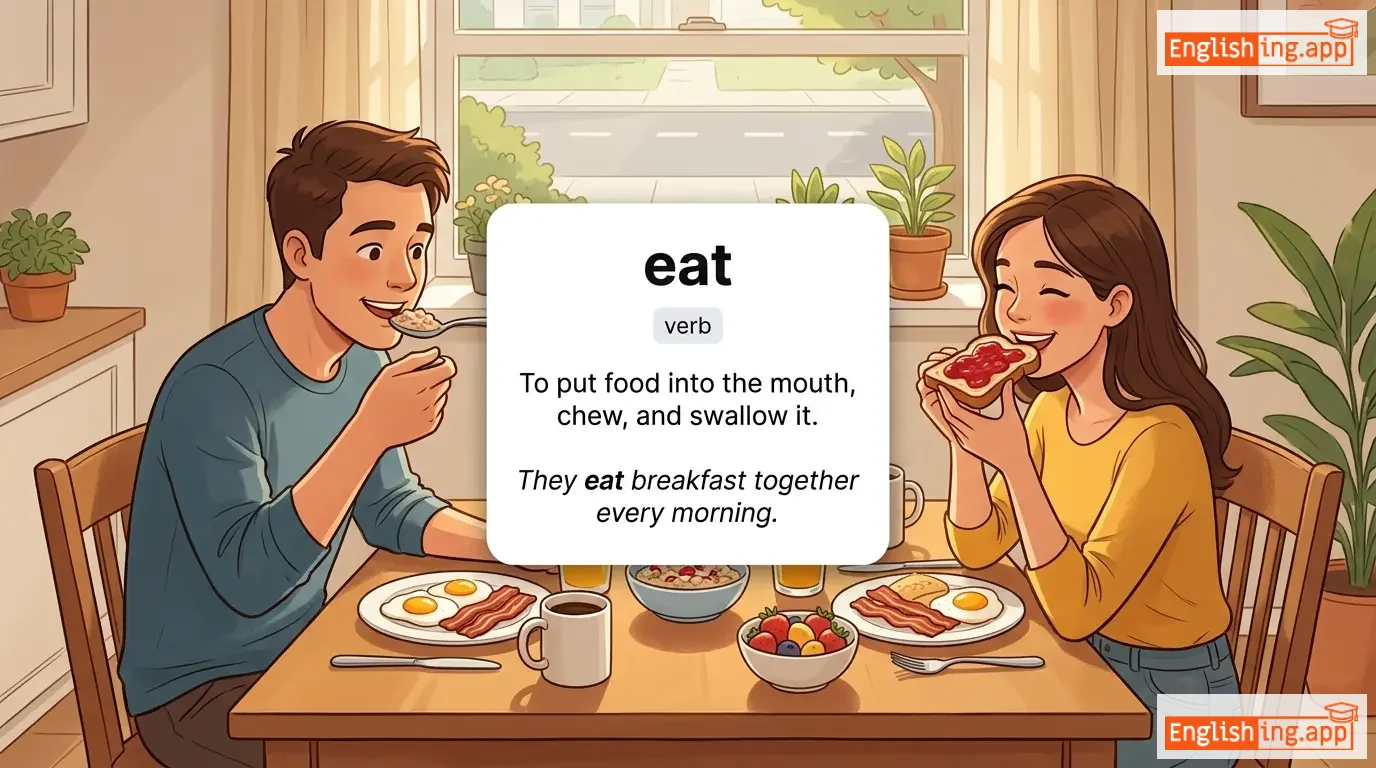
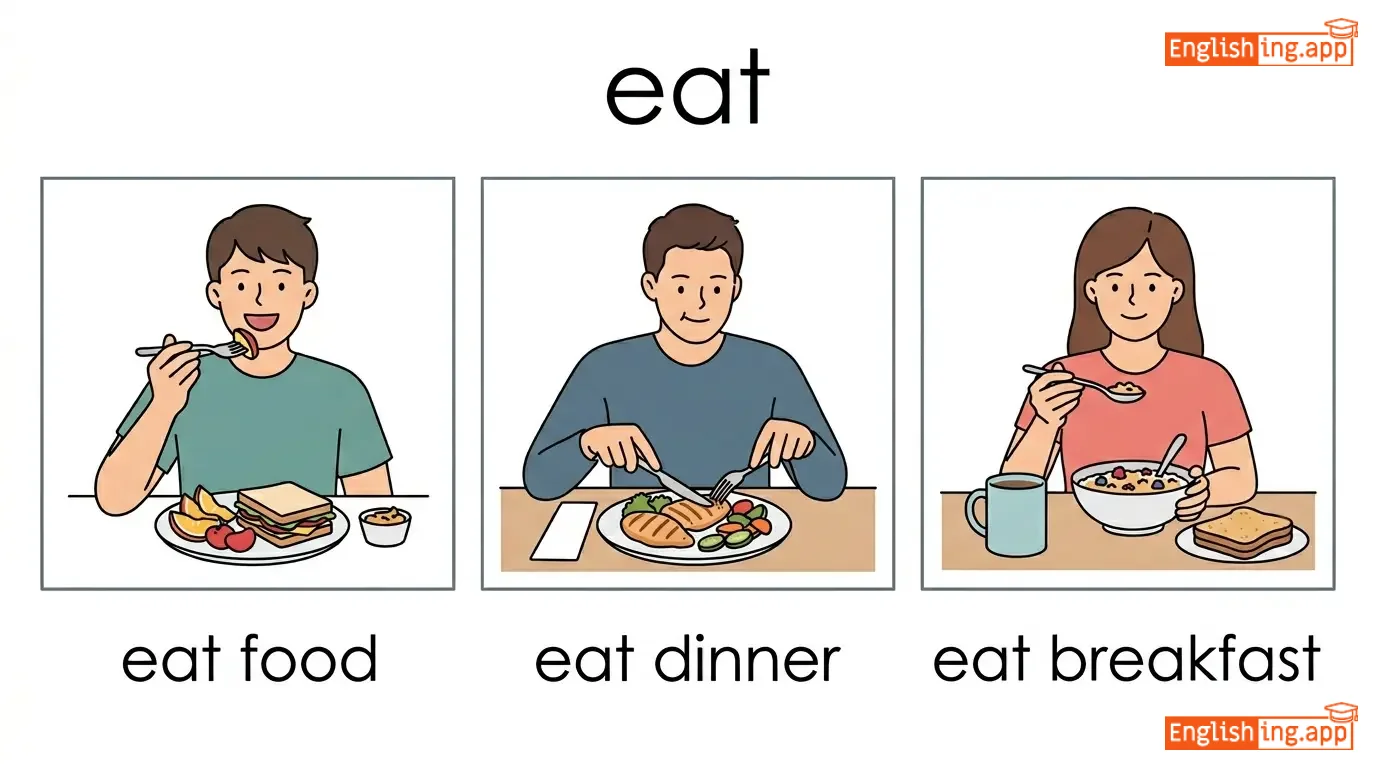
to put food in the mouth and chew and swallow it
••••••
|
We eat dinner at 7 PM.
ウィ イート ディナー アット セブン ピーエム。
••••••
|
私たちは午後7時に夕食を食べます。
watashitachi wa gogo shichiji ni yuushoku o tabemasu
••••••
|
consume, devour, munch, dine
••••••
|
fast, starve, abstain, refuse
••••••
|
eat breakfast, eat lunch, eat dinner, eat healthy, eat out, eat together
••••••
|
When you say 'taberu', you’re ready to chew!
••••••
|
|
#701
🏭
|
/pəˈluːt/
verb
(ポリュート)
••••••
|
|
汚染する
osen suru
••••••
|
polluted
ポリューテッド
••••••
|
polluted
ポリューテッド
••••••
|
pollutes
ポリューツ
••••••
|
polluting
ポリューティング
••••••
|
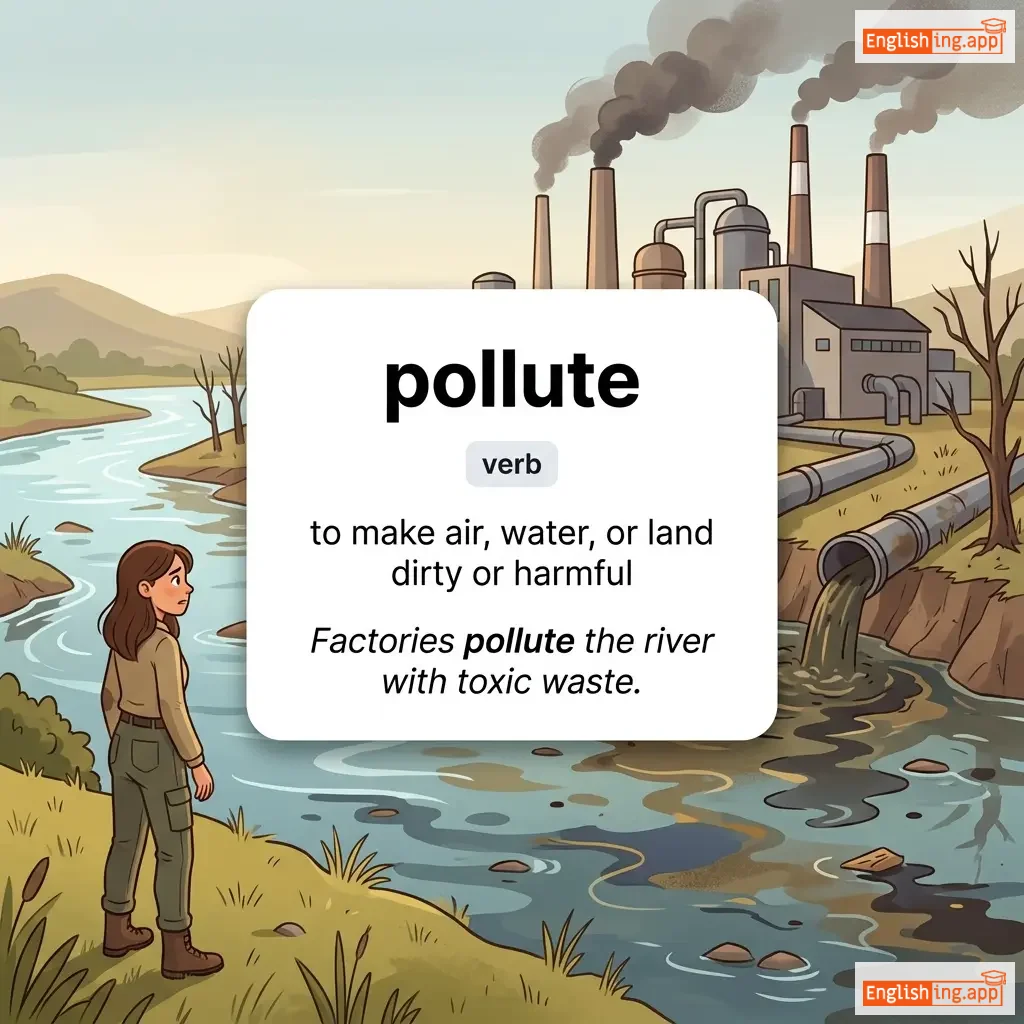
to make air, water, or land dirty and harmful to people, animals, and plants
••••••
|
Factories pollute the environment with toxic chemicals.
ファクトリーズ ポリュート ザ エンバイロンメント ウィズ トキシック ケミカルズ。
••••••
|
工場は有害な化学物質で環境を汚染します。
koujou wa yuugai na kagakubusshitsu de kankyou o osen shimasu
••••••
|
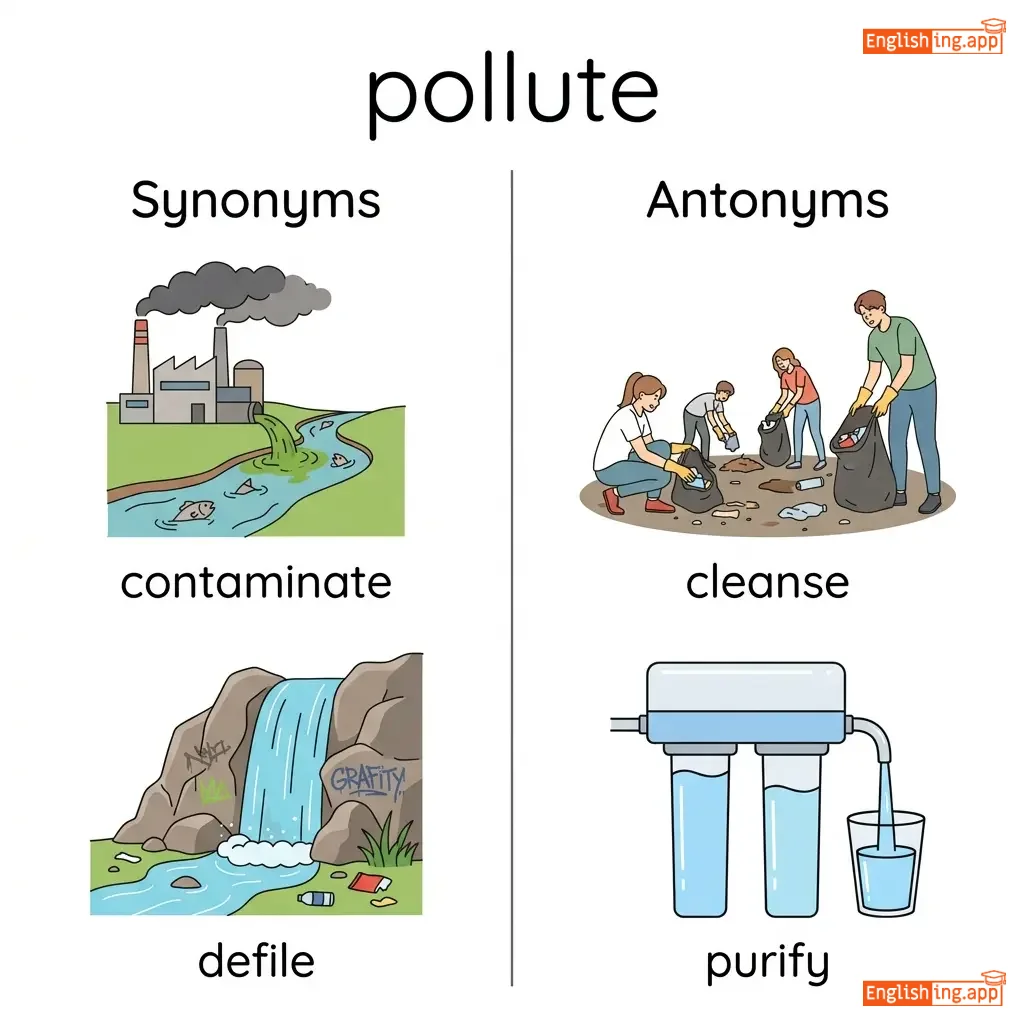
contaminate, dirty, taint, poison
••••••
|
purify, clean, cleanse
••••••
|
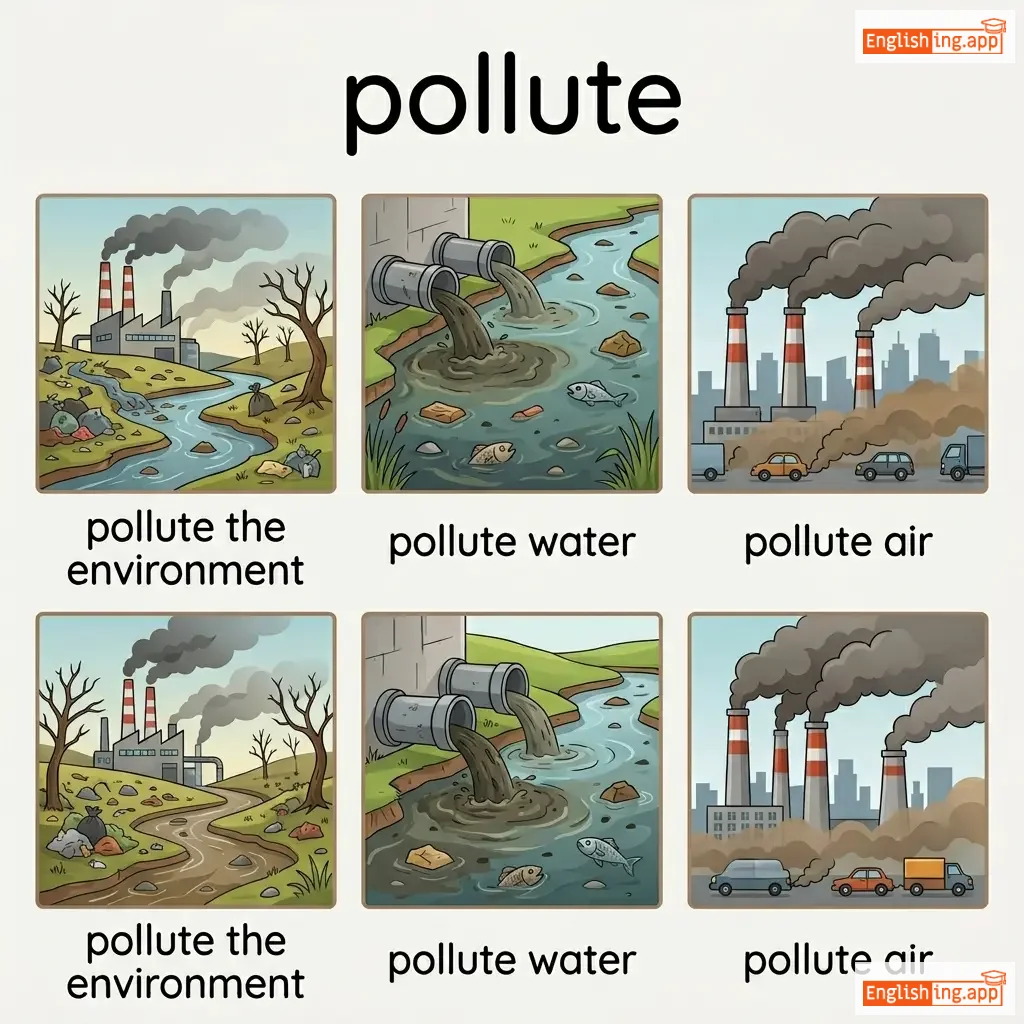
pollute environment, pollute air, pollute water, heavily pollute, pollute atmosphere
••••••
|
Pollute → 汚染する (osen suru) — think 'Oh! Sense' when something smells bad!
••••••
|
|
#702
🤝
|
/pɑːrˈtɪsɪpeɪt/
verb
(パーティシペイト)
••••••
|
|
参加する
sanka suru
••••••
|
participated
パーティシペイテッド
••••••
|
participated
パーティシペイテッド
••••••
|
participates
パーティシペイツ
••••••
|
participating
パーティシペイティング
••••••
|
to take part in or become involved in an activity
••••••
|
Students are encouraged to participate in extracurricular activities.
スチューデンツ アー エンカレッジド トゥ パーティシペイト イン エクストラクラリキュラー アクティビティーズ。
••••••
|
学生は課外活動に参加するよう奨励されています。
gakusei wa kagai katsudo ni sanka suru you shorei sareteimasu.
••••••
|
join, engage, contribute, take part
••••••
|
abstain, withdraw, avoid, exclude
••••••
|
participate in, actively participate, participate fully, participate together, participate willingly
••••••
|
In Japanese, 'sanka suru' (参加する) sounds like 'sun ka? sure!' — join in!
••••••
|
|
#703
🍳
|
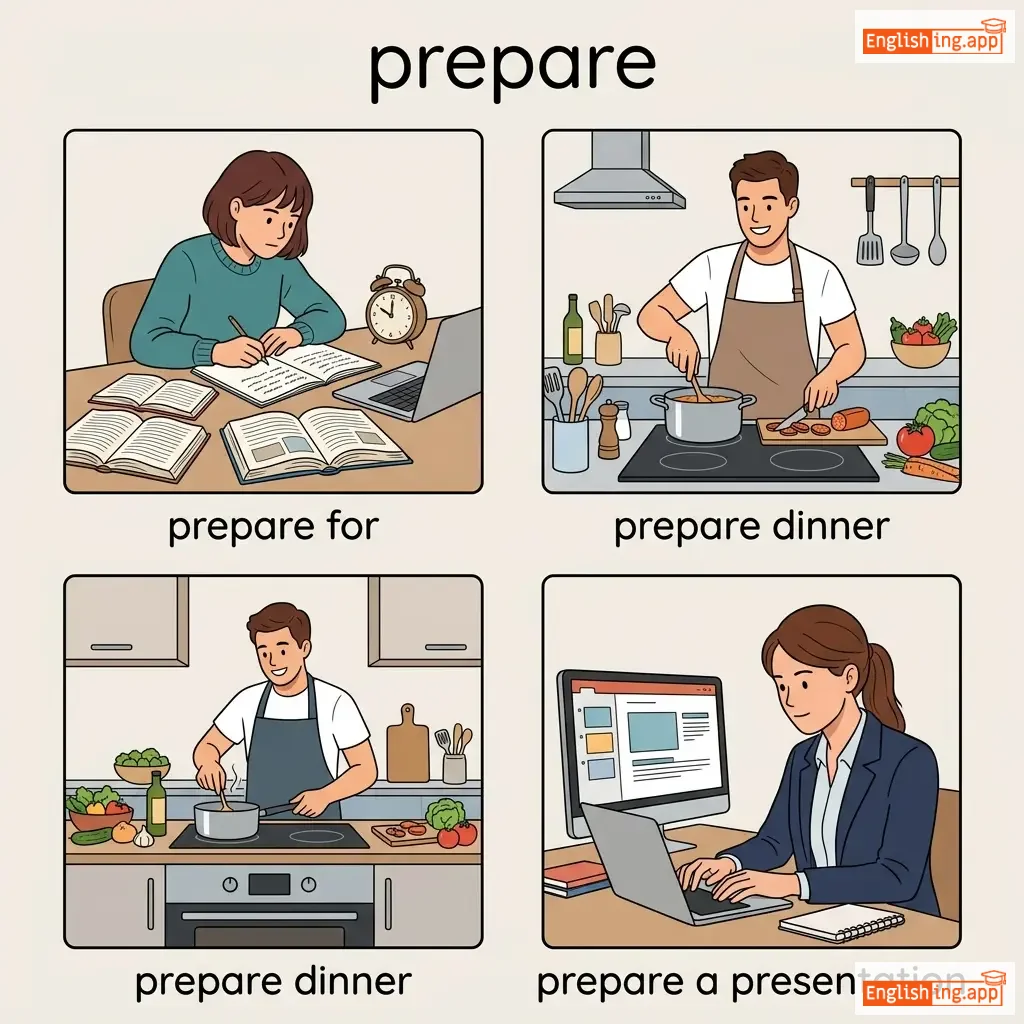
/prɪˈpɛər/
verb
(プリペア)
••••••
|
|
準備する
junbi suru
••••••
|
prepared
プリペアード
••••••
|
prepared
プリペアード
••••••
|
prepares
プリペアズ
••••••
|
preparing
プリペアリング
••••••
|
to make ready; to get something ready for use
••••••
|
She needs to prepare dinner for her family.
シー ニーズ トゥ プリペア ディナー フォー ハー ファミリー。
••••••
|
彼女は家族のために夕食を準備する必要があります。
kanojo wa kazoku no tame ni yuushoku o junbi suru hitsuyou ga arimasu
••••••
|
ready, arrange, organize, plan
••••••
|
neglect, ignore, abandon, destroy
••••••
|
prepare for, prepare carefully, prepare dinner, prepare ahead, well prepared, prepare thoroughly
••••••
|
Junbi suru = prepare – sounds like 'June-be' ready!
••••••
|
|
#704
📋
|
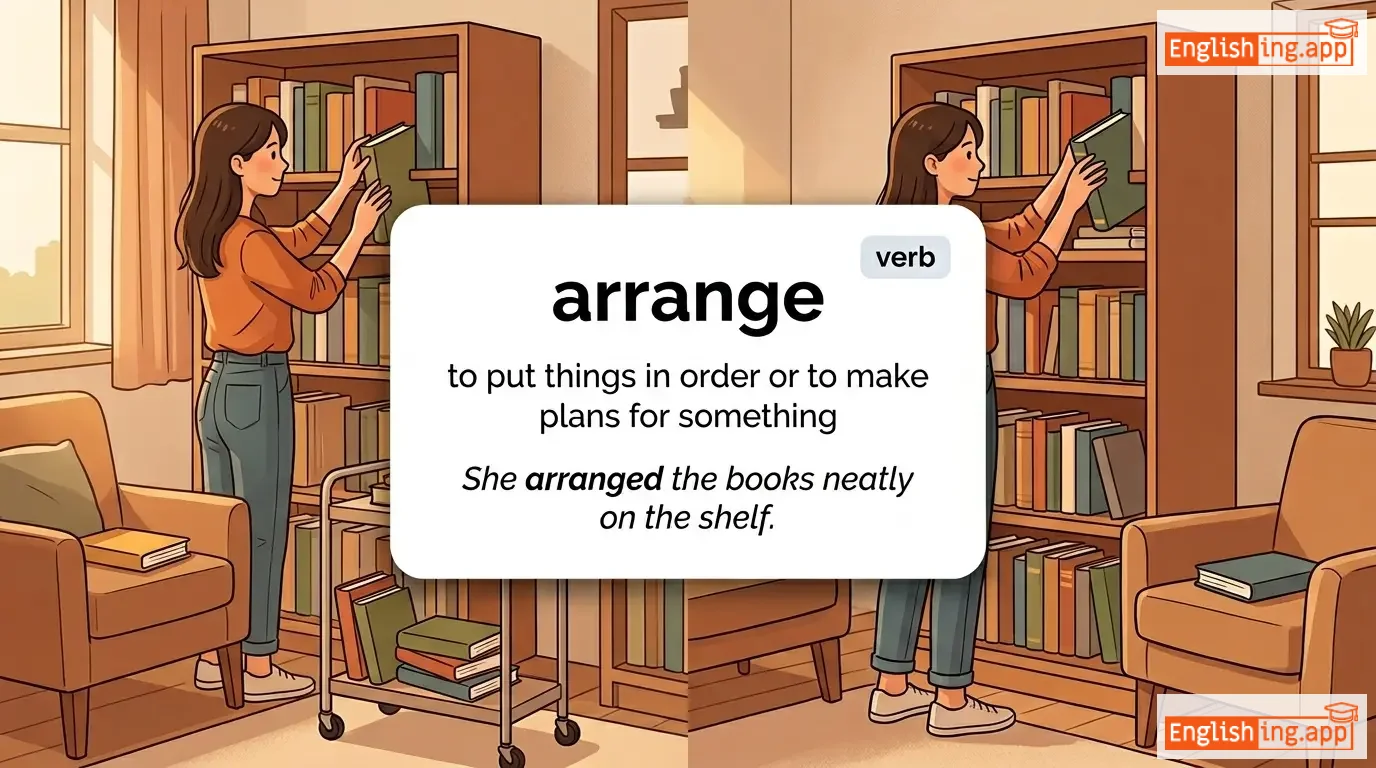
/əˈreɪndʒ/
verb
(アレンジ)
••••••
|
|
並べる
naraberu
••••••
|
arranged
アレンジド
••••••
|
arranged
アレンジド
••••••
|
arranges
アレンジズ
••••••
|
arranging
アレンジング
••••••
|
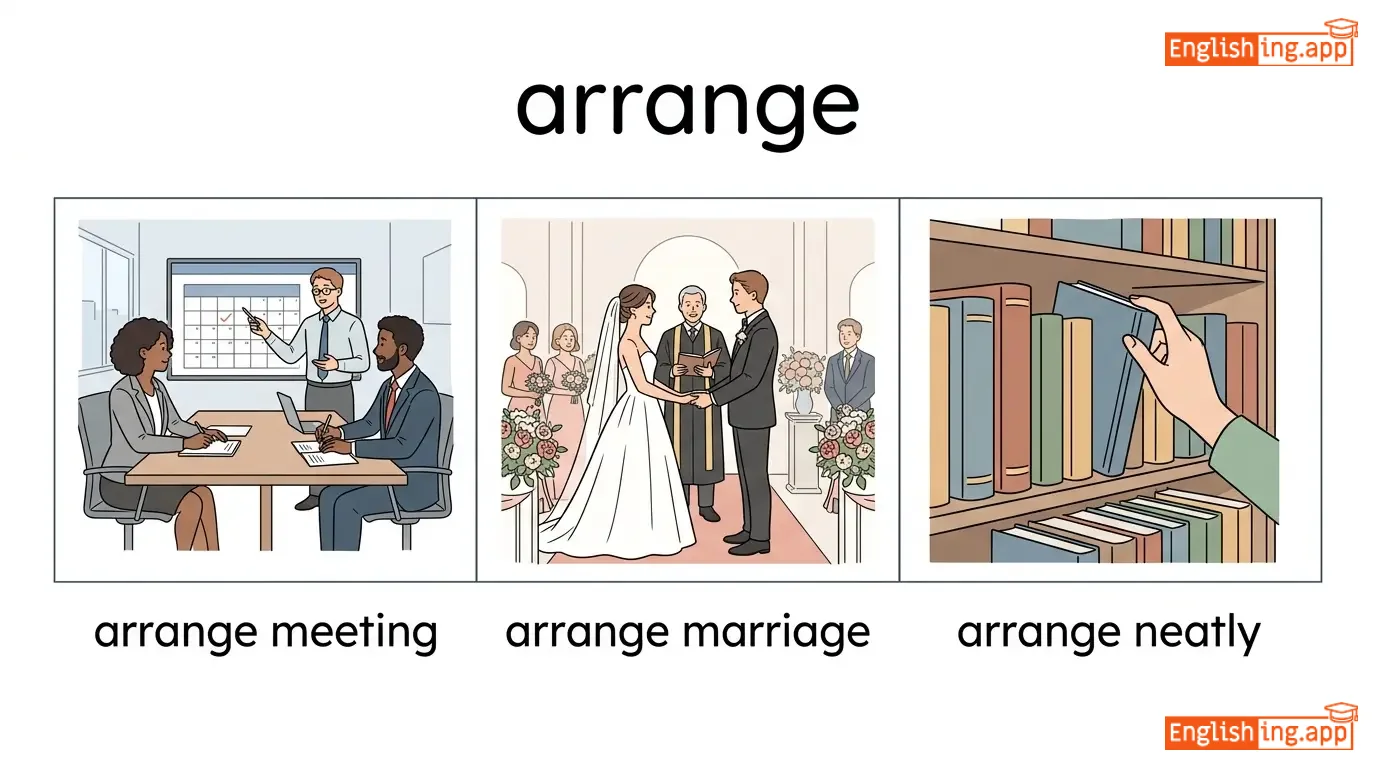
to organize or put in order; to plan or prepare
••••••
|
She arranged the flowers in a vase.
シーは花を花瓶にアレンジした。
••••••
|
彼女は花を花瓶に並べた。
kanojo wa hana o kabin ni narabeta
••••••
|
organize, order, plan, prepare
••••••
|
disorganize, scatter, mess up, disorder
••••••
|
arrange carefully, arrange properly, arrange meeting, arrange flowers, arrange in order
••••••
|
Arrange sounds like アレンジ (arenji) — same word in Japanese!
••••••
|
|
#705
💡
|
/ˈɛmfəˌsaɪz/
verb
(エンファサイズ)
••••••
|
|
強調する
kyouchou suru
••••••
|
emphasized
エンファサイズド
••••••
|
emphasized
エンファサイズド
••••••
|
emphasizes
エンファサイズズ
••••••
|
emphasizing
エンファサイジング
••••••
|
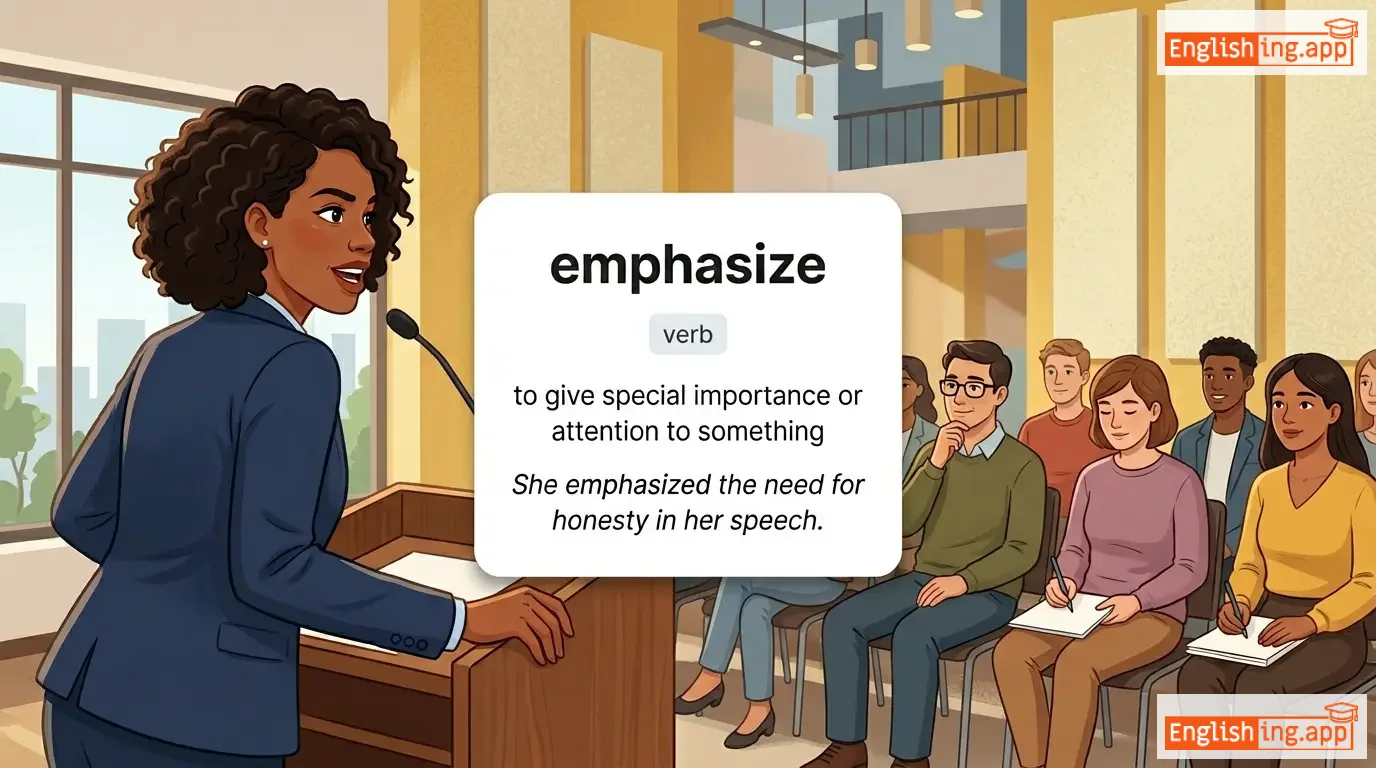
to give special importance or attention to something
••••••
|
The teacher emphasized the importance of homework.
ティーチャーはホームワークの重要性をエンファサイズした。
••••••
|
先生は宿題の重要性を強調した。
Sensei wa shukudai no juuyousei o kyouchou shita
••••••
|
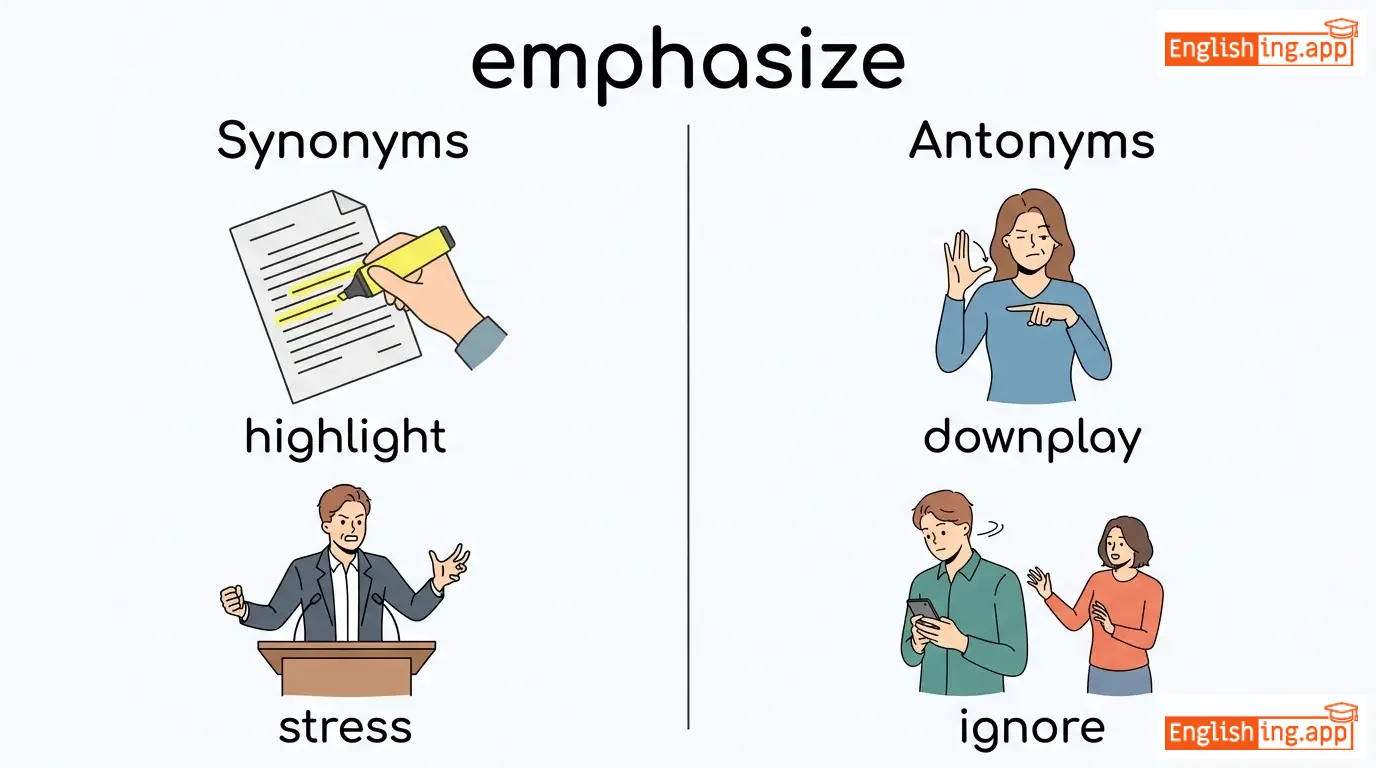
stress, highlight, underline, accentuate
••••••
|
downplay, minimize, ignore
••••••
|
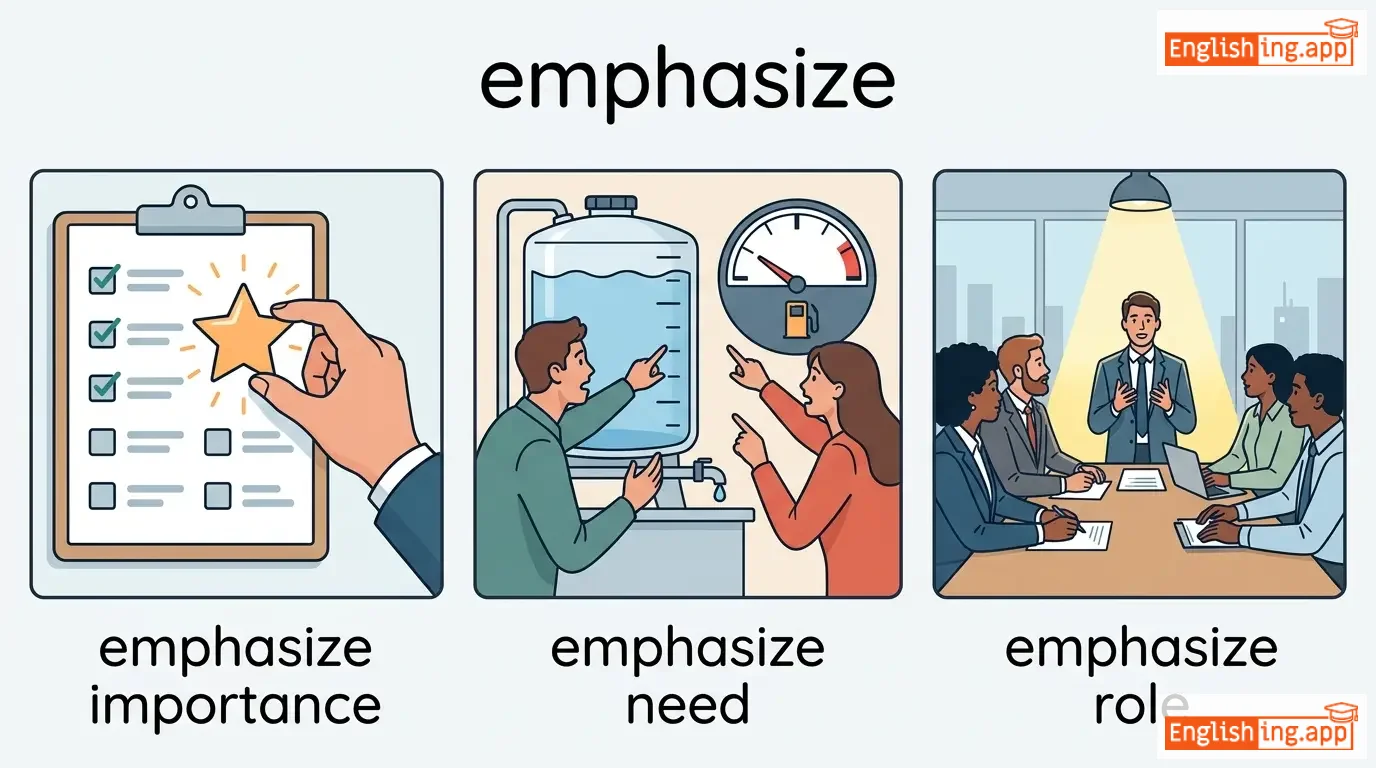
emphasize importance, strongly emphasize, emphasize point, emphasize need, clearly emphasize
••••••
|
To emphasize in Japanese, say 'kyouchou suru' — sounds like 'key out your point'!
••••••
|
|
#706
🚪
|
/kwɪt/
verb
(クイット)
••••••
|
|
やめる
yameru
••••••
|
quit/quitted
クイット/クイッテッド
••••••
|
quit/quitted
クイット/クイッテッド
••••••
|
quits
クイッツ
••••••
|
quitting
クイッティング
••••••
|
to stop doing something; to leave a job or position
••••••
|
She decided to quit her job and start her own business.
シー は ジョブ を クイット して ジブン の ビジネス を ハジメタ。
••••••
|
彼女は仕事をやめて自分のビジネスを始めることにした。
Kanojo wa shigoto o yamete jibun no bijinesu o hajimeru koto ni shita.
••••••
|
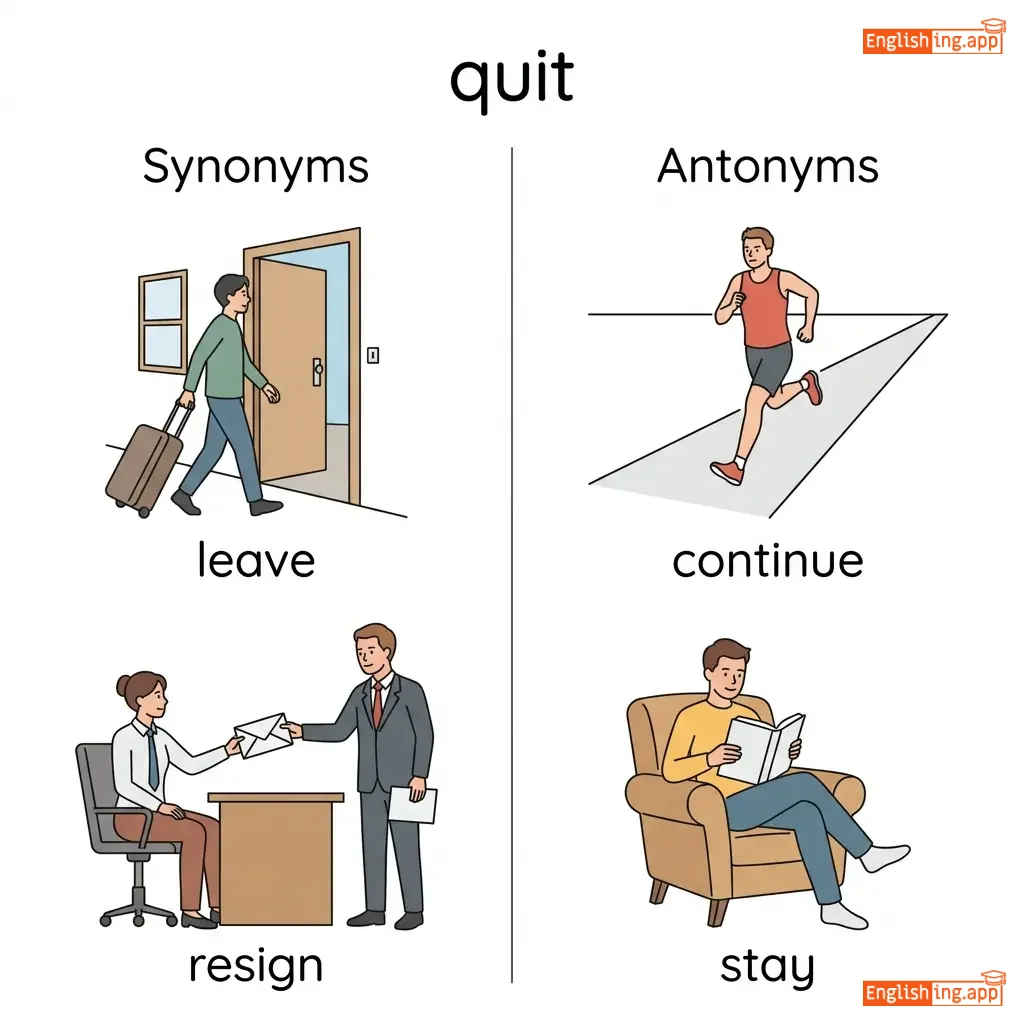
stop, cease, leave, resign
••••••
|
start, begin, continue, persist
••••••
|
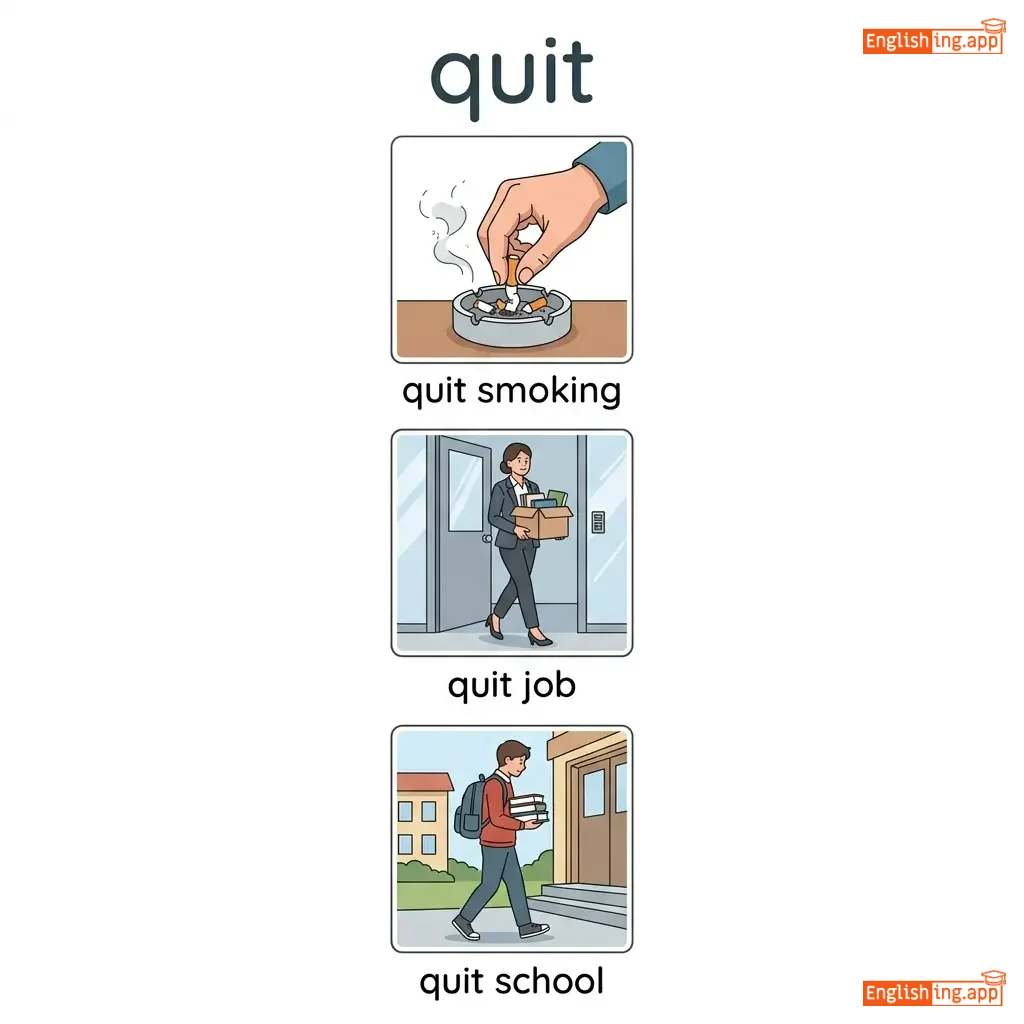
quit job, quit smoking, quit school, quit trying, quit suddenly, quit forever
••••••
|
Quit = やめる (yameru)—sounds like ‘I am out’—to stop doing something.
••••••
|
|
#707
📄
|
/səbˈmɪt/
verb
(サブミット)
••••••
|
|
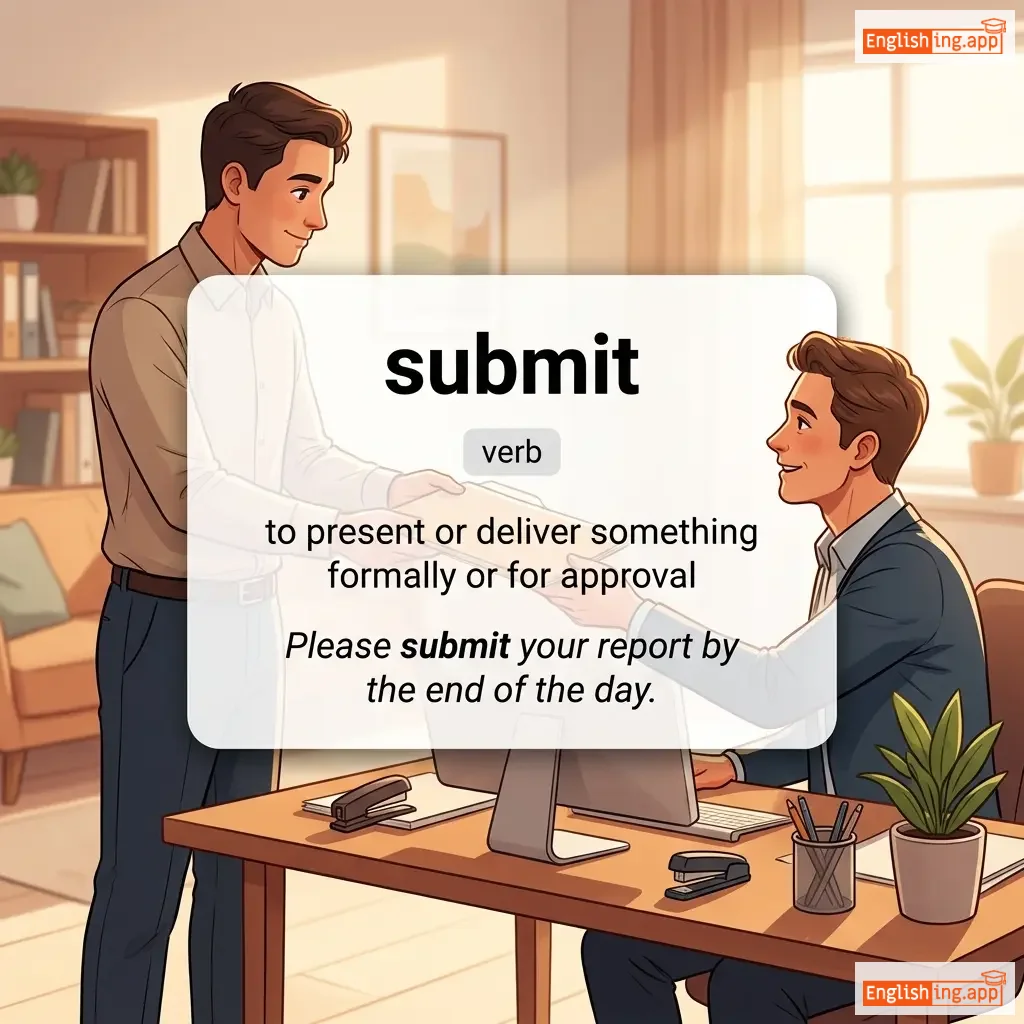
提出する
teishutsu suru
••••••
|
submitted
サブミッテッド
••••••
|
submitted
サブミッテッド
••••••
|
submits
サブミッツ
••••••
|
submitting
サブミッティング
••••••
|
to present for consideration; to surrender; to yield
••••••
|
Please submit your assignment by Friday.
金曜日までに課題を提出してください。
••••••
|
金曜日までに課題を提出してください。
Kin'yōbi made ni kadai o teishutsu shite kudasai.
••••••
|
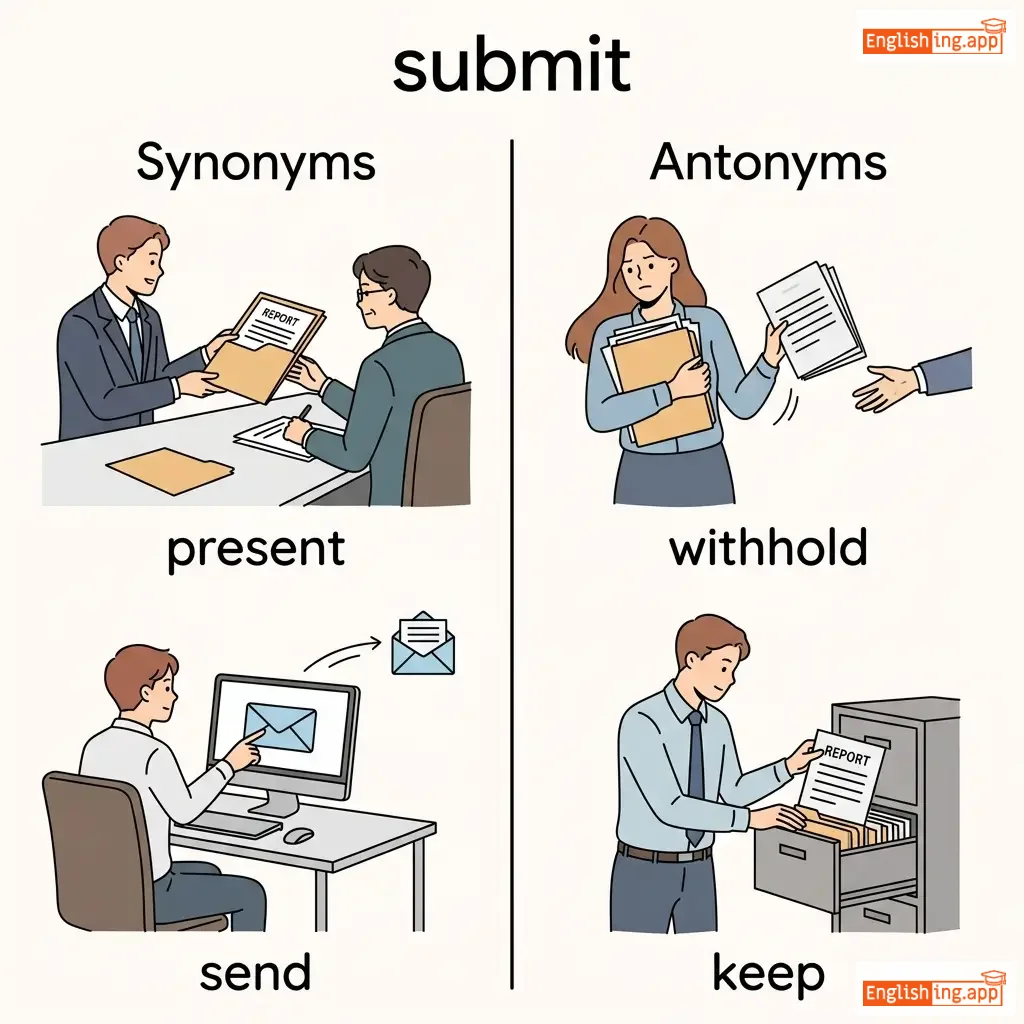
present, hand in, surrender, yield
••••••
|
withdraw, resist, refuse, reject
••••••
|
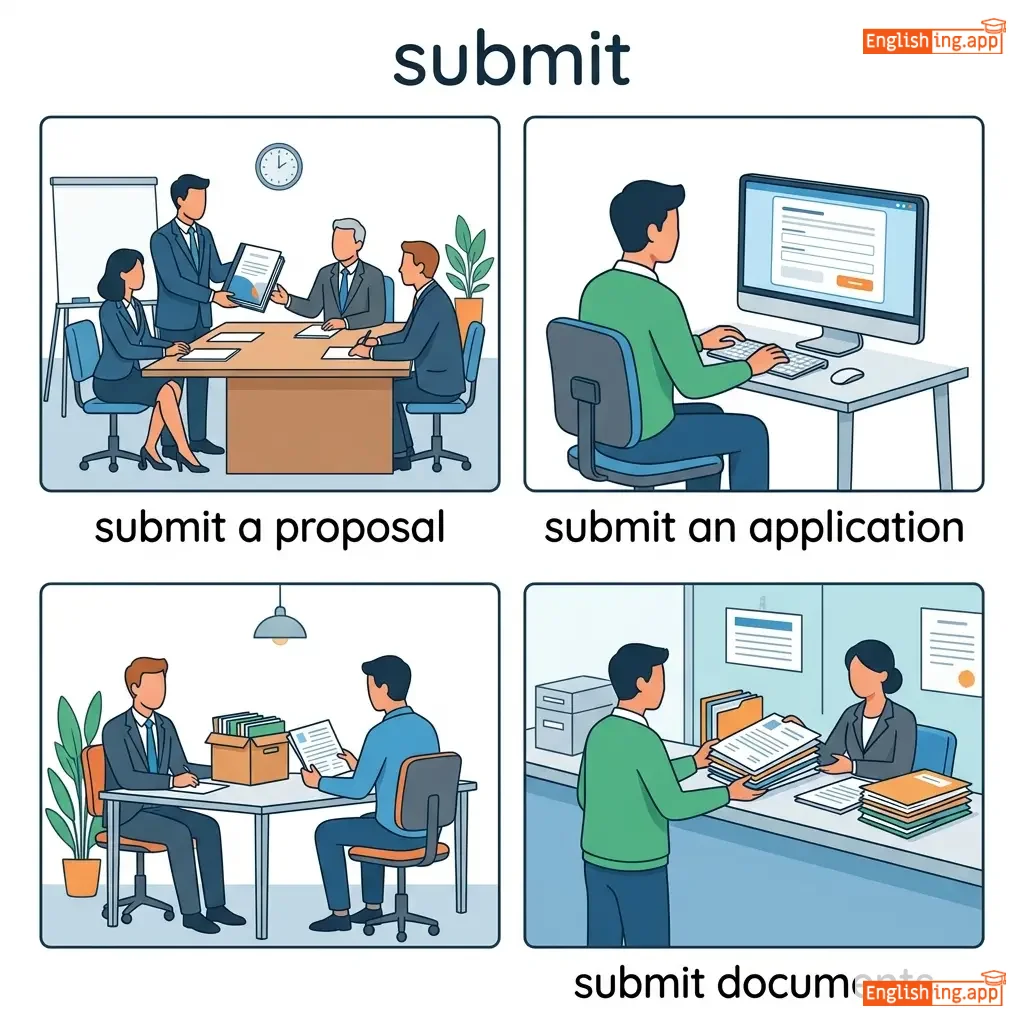
submit application, submit report, submit assignment, submit proposal, submit documents
••••••
|
課題を提出することは、期限に従うことだ!
••••••
|
|
#708
🤝
|
/fərˈɡɪv/
verb
(フォーギブ)
••••••
|
|
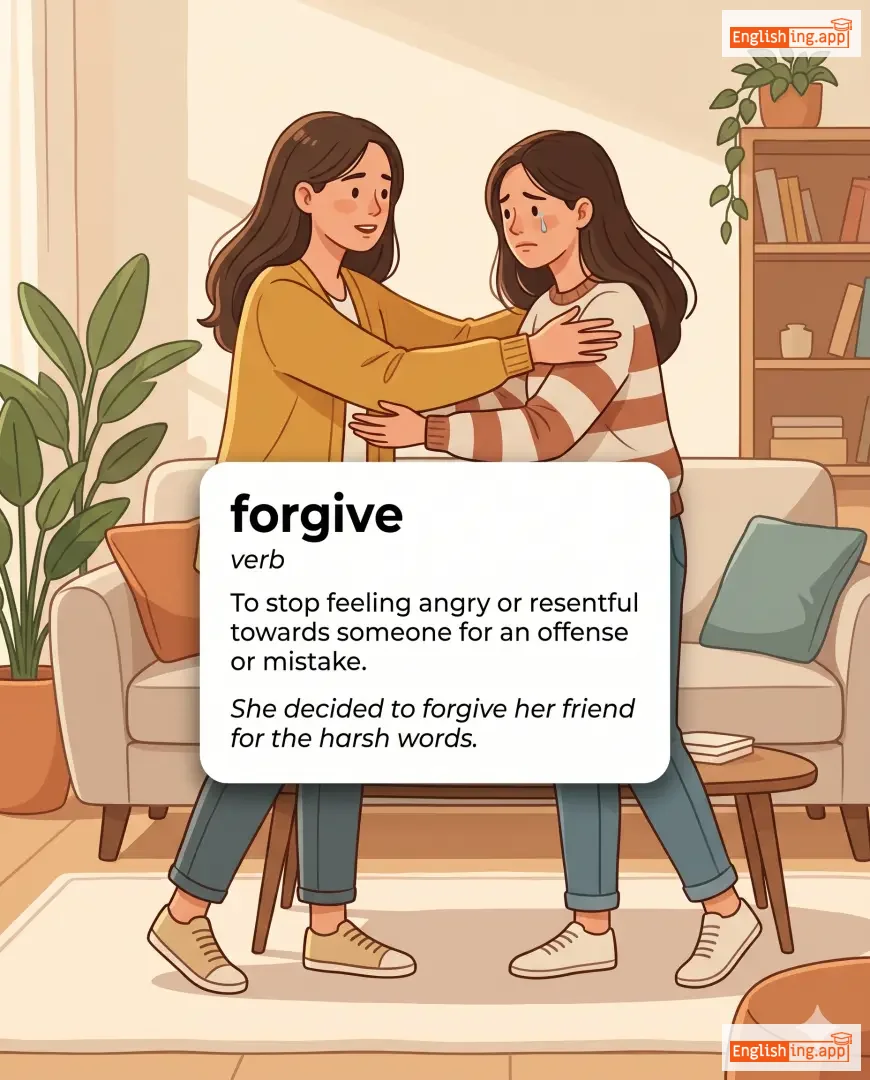
許す
yurusu
••••••
|
forgave
フォーゲイブ
••••••
|
forgiven
フォーギブン
••••••
|
forgives
フォーギブズ
••••••
|
forgiving
フォーギビング
••••••
|
to stop feeling angry or resentful toward someone for an offense
••••••
|
I forgive you for your mistake.
アイ フォーギブ ユー フォー ヨア ミステイク。
••••••
|
あなたの間違いを許します。
anata no machigai o yurushimasu.
••••••
|
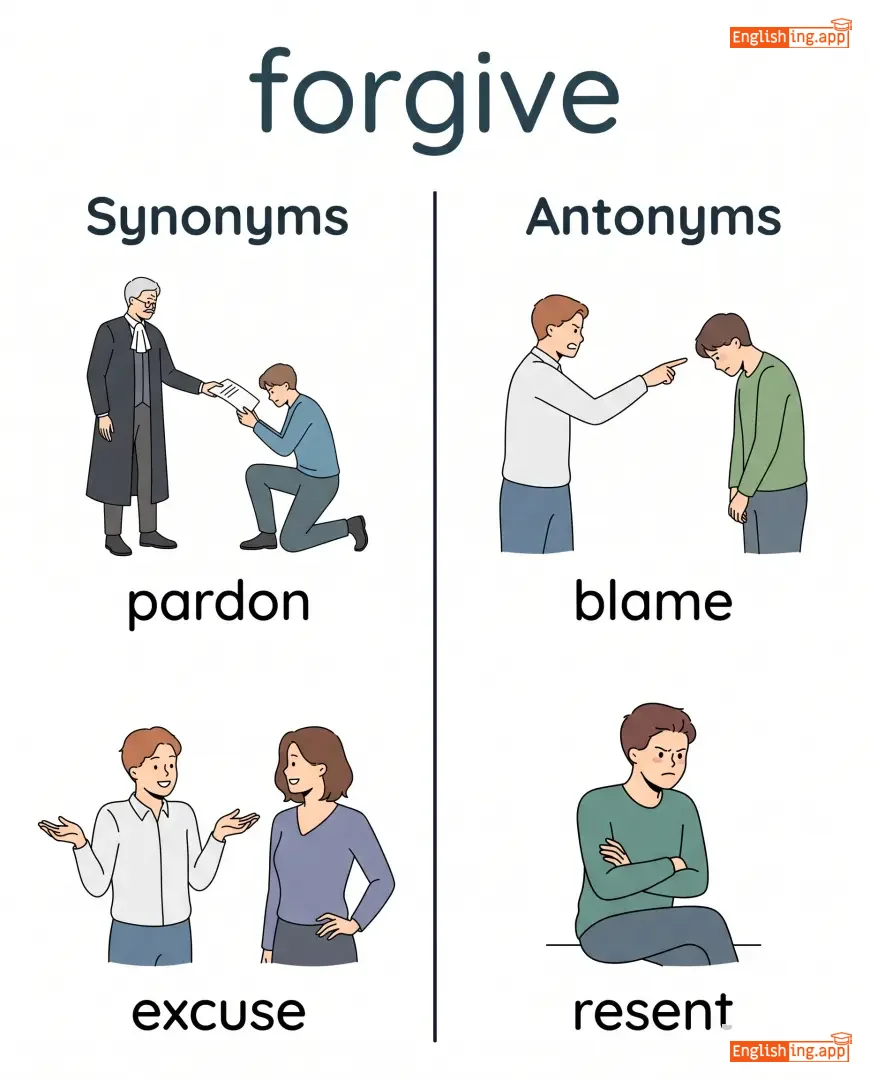
pardon, excuse, absolve
••••••
|
blame, condemn, resent
••••••
|
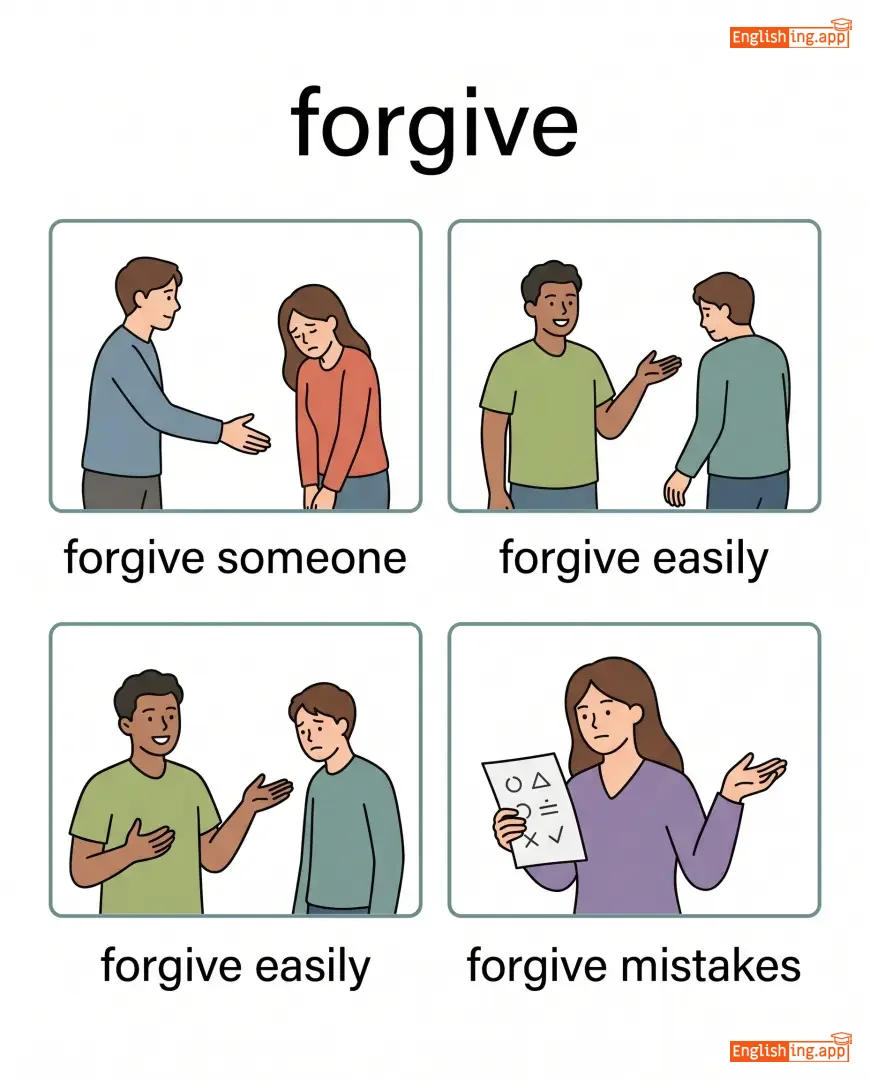
forgive completely, forgive mistake, forgive someone, please forgive, forgive and forget
••••••
|
‘Yurusu’ and ‘forgive’ both mean to let go — like releasing a heavy heart.
••••••
|
|
#709
⚖️
|
/ˌoʊvərˈruːl/
verb
(オーバールール)
••••••
|
|
却下する
kyakka suru
••••••
|
overruled
オーバールールド
••••••
|
overruled
オーバールールド
••••••
|
overrules
オーバールールズ
••••••
|
overruling
オーバールーリング
••••••
|
to reject or disallow by exercising one's superior authority; to override a decision
••••••
|
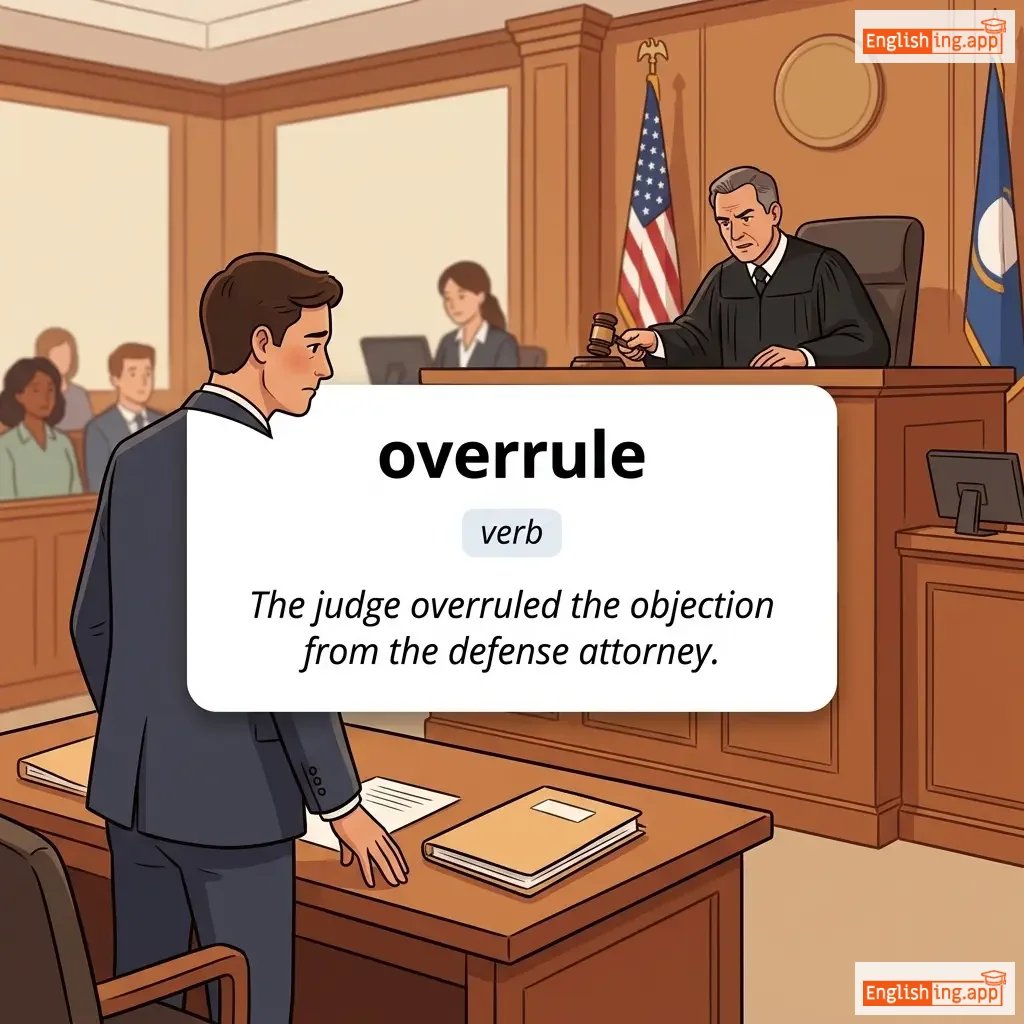
The judge overruled the objection from the defense attorney.
ザ ジャッジ オーバールールド ザ オブジェクション フロム ザ ディフェンス アトーニー。
••••••
|
裁判官は弁護側の異議を却下した。
Saibankan wa bengogawa no igi o kyakka shita.
••••••
|
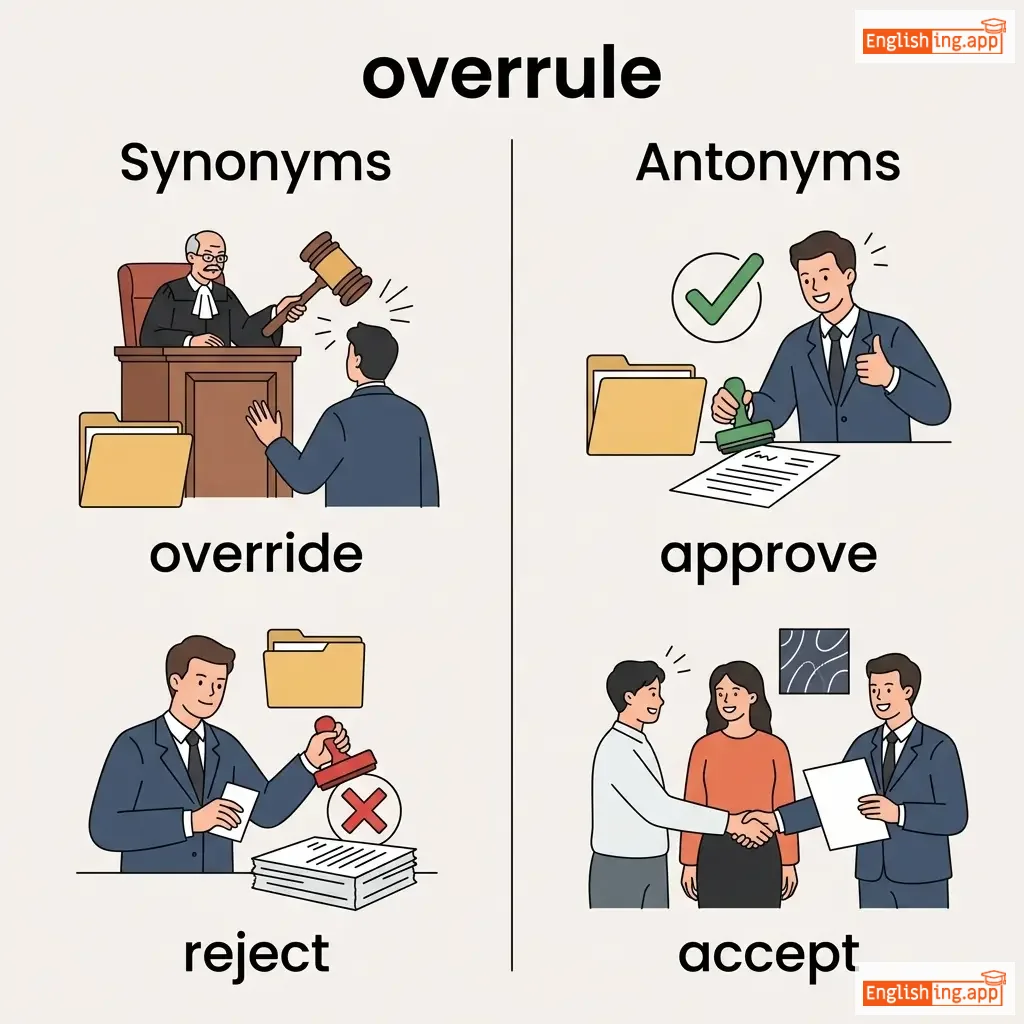
override, reject, veto, dismiss
••••••
|
approve, accept, uphold, sustain
••••••
|
overrule decision, overrule objection, overrule vote, judge overrule, overrule authority
••••••
|
Overrule = 却下する (kyakka suru) — think 'kick out' a rule.
••••••
|
|
#710
🤔
|
/səˈspɛkt/
verb
(サスペクト)
••••••
|
|
疑う
utagau
••••••
|
suspected
サスペクテッド
••••••
|
suspected
サスペクテッド
••••••
|
suspects
サスペクツ
••••••
|
suspecting
サスペクティング
••••••
|
to believe that someone has done something wrong; to doubt or mistrust
••••••
|
I suspect he is lying about his whereabouts.
アイ サスペクト ヒー イズ ライング アバウト ヒズ ウェアアバウツ。
••••••
|
彼が居場所について嘘をついていると思います。
kare ga ibasho ni tsuite uso o tsuite iru to omoimasu
••••••
|
doubt, mistrust, believe, think
••••••
|
trust, believe, accept
••••••
|
suspect someone, strongly suspect, suspect of, suspect crime, suspect wrongdoing
••••••
|
'Suspect' in Japanese is 'utagau'—you doubt ('uta') someone's truth.
••••••
|
|
#711
💬
|
/seɪ/
verb
(セイ)
••••••
|
|
言う
iu
••••••
|
said
セイド
••••••
|
said
セイド
••••••
|
says
セイズ
••••••
|
saying
セイイング
••••••
|
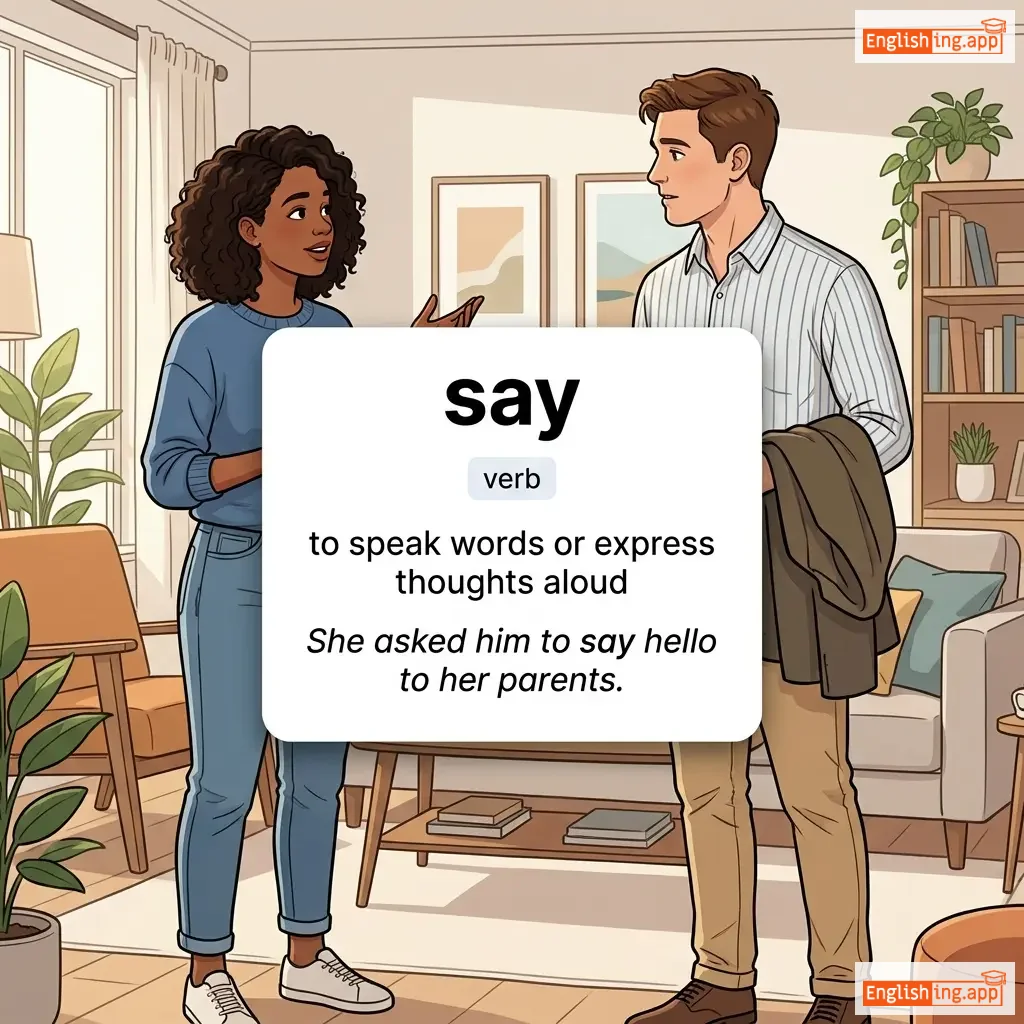
to speak words; to express something in words
••••••
|
She said hello to me.
シー セイド ハロー トゥー ミー。
••••••
|
彼女は私にハローと言った。
Kanojo wa watashi ni haro to itta.
••••••
|
speak, tell, express, utter
••••••
|
listen, hear, remain silent
••••••
|
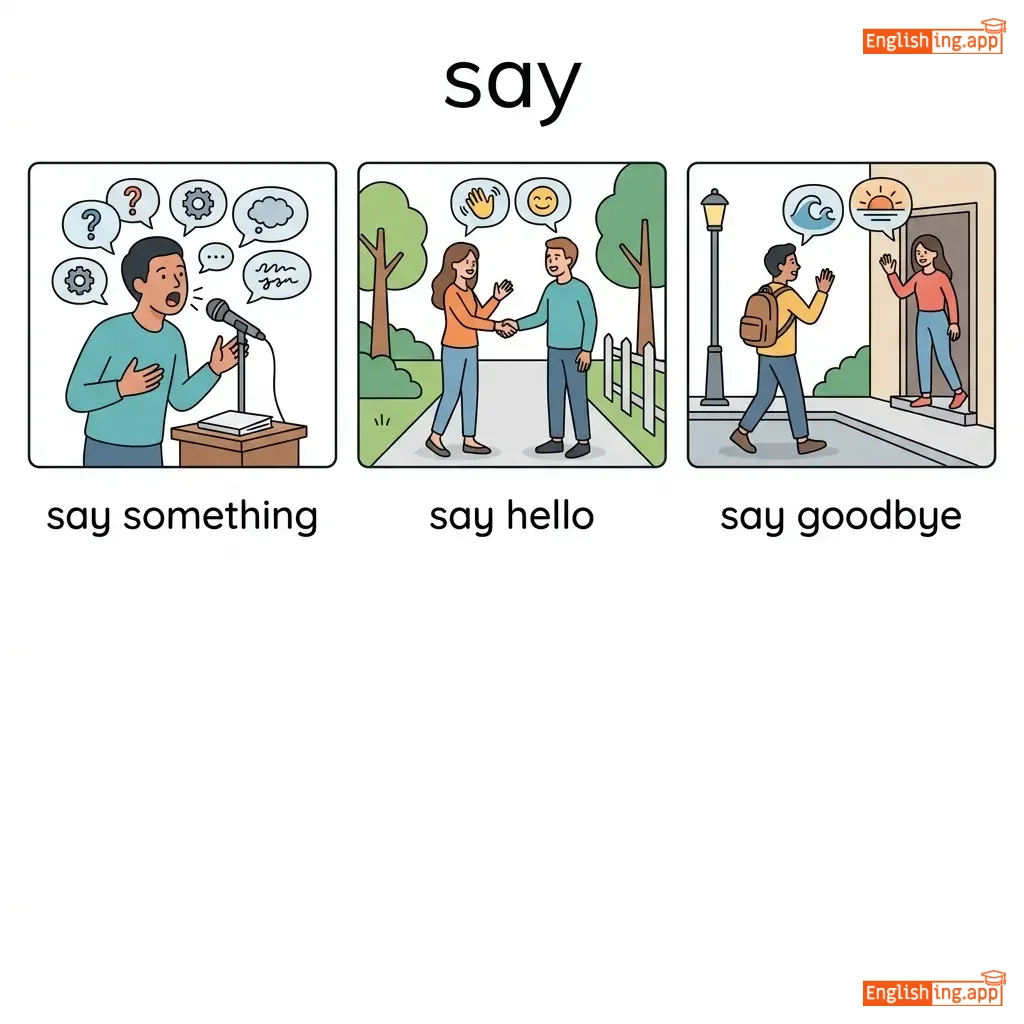
say hello, say goodbye, say something, say yes, say no, say please
••••••
|
In Japanese, 'iu' (言う) sounds like 'you'—when you say something, you 'iu' it.
••••••
|
|
#712
✈️
|
/lænd/
verb
(ランド)
••••••
|
|
着陸する
chakuriku suru
••••••
|
landed
ランデッド
••••••
|
landed
ランデッド
••••••
|
lands
ランズ
••••••
|
landing
ランディング
••••••
|
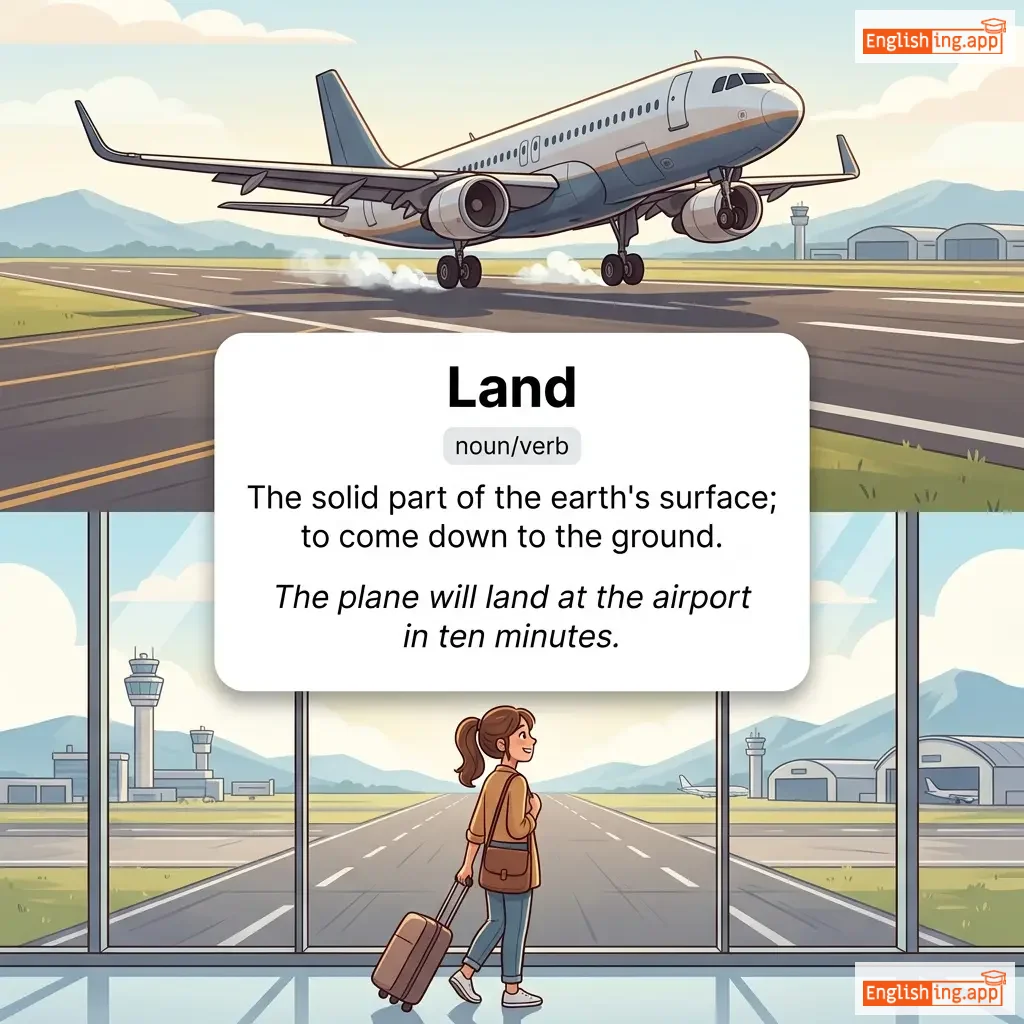
to come down or bring down to the ground; to arrive at a place
••••••
|
The plane will land at the airport in ten minutes.
飛行機は10分後に空港に着陸します。
••••••
|
飛行機は10分後に空港に着陸します。
hikouki wa juppun go ni kuukou ni chakuriku shimasu
••••••
|
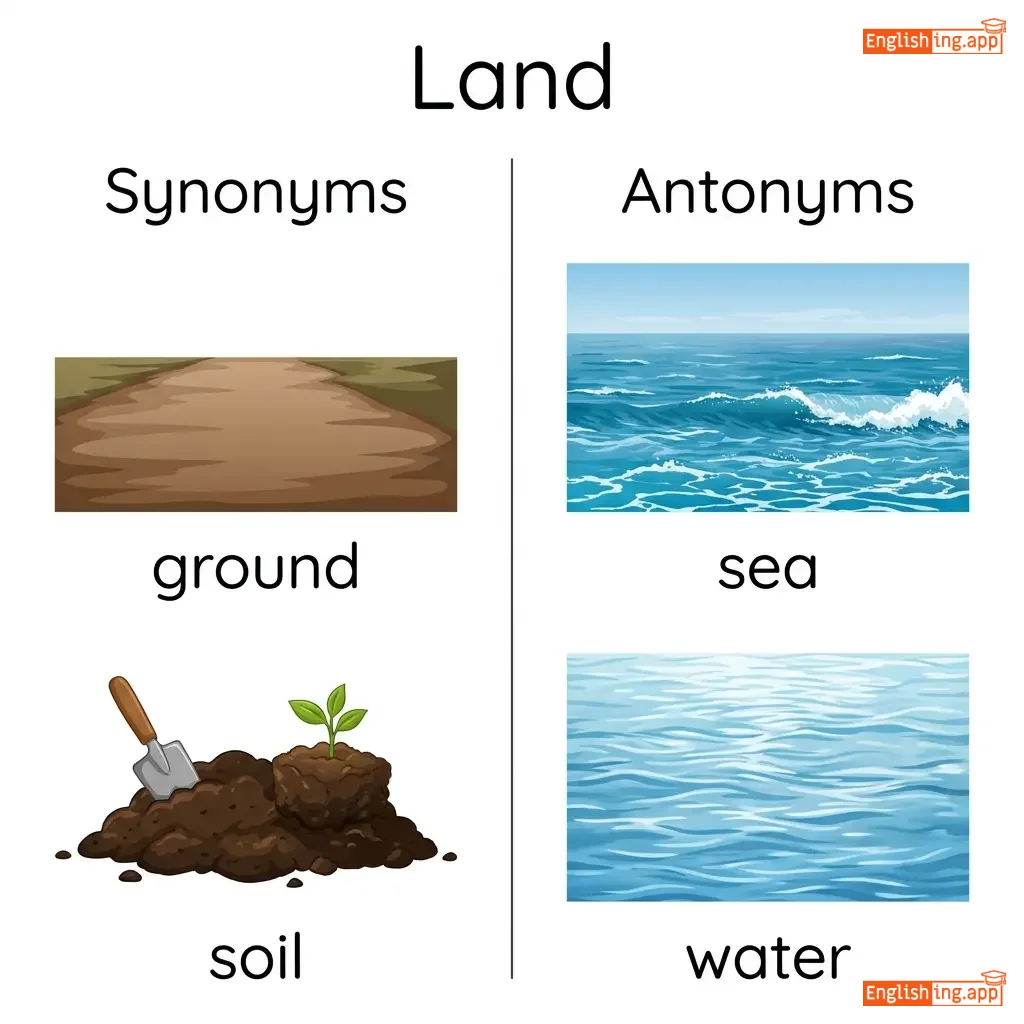
arrive, touch down, alight, descend
••••••
|
take off, depart, ascend, launch
••••••
|
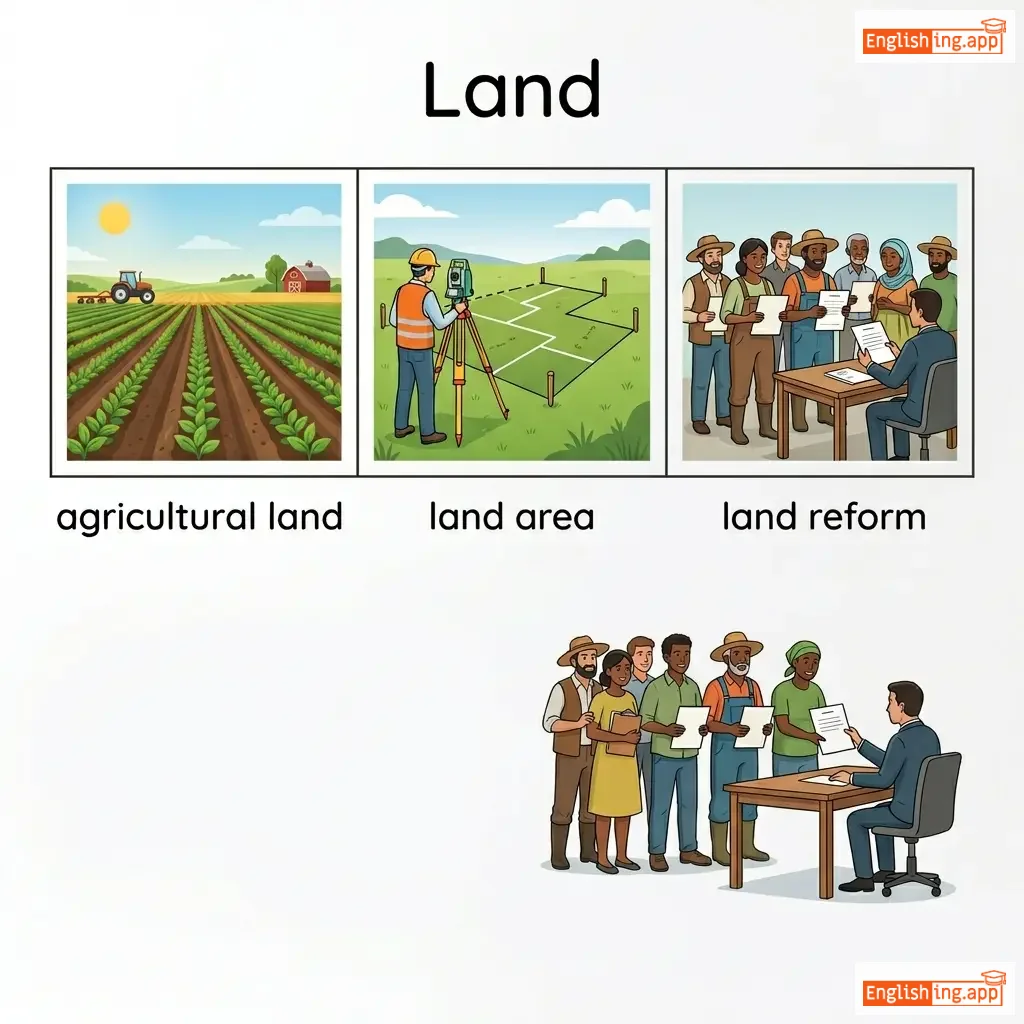
land safely, plane land, land on, soft land, emergency land, land at airport
••••••
|
Land → 着陸する chakuriku suru — like ‘landing on the riku (land)’.
••••••
|
|
#713
🔥
|
/ˈkriːmeɪt/
verb
(クリメイト)
••••••
|
|
火葬する
kasou suru
••••••
|
cremated
クリメイテッド
••••••
|
cremated
クリメイテッド
••••••
|
cremates
クリメイツ
••••••
|
cremating
クリメイティング
••••••
|
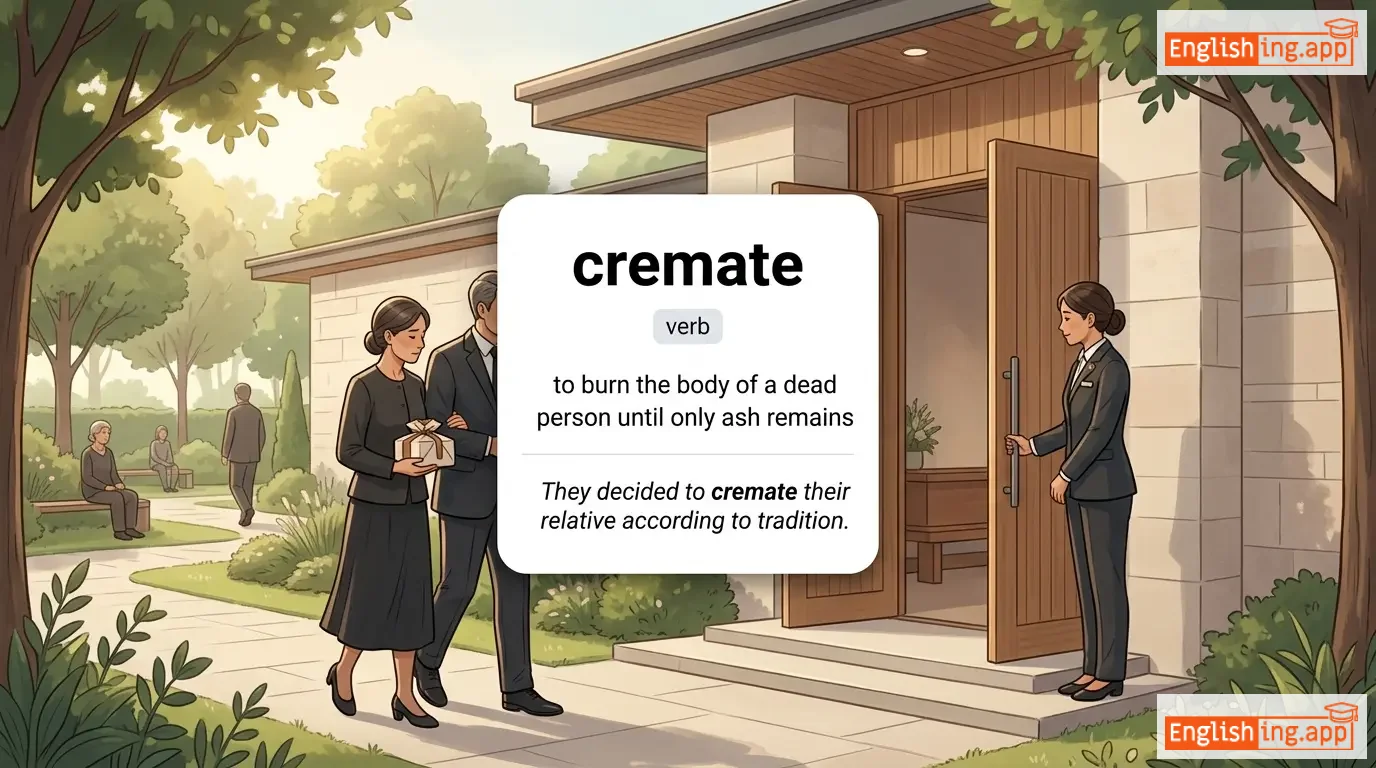
to burn a dead body to ashes as a funeral rite
••••••
|
According to his wishes, they cremated his body after the funeral.
アコーディング トゥ ヒズ ウィッシーズ、ゼイ クリメイティド ヒズ ボディ アフター ザ フューネラル。
••••••
|
彼の希望に従って、葬儀の後に彼の遺体を火葬しました。
Kare no kibou ni shitagatte, sougi no ato ni kare no itai o kasou shimashita.
••••••
|
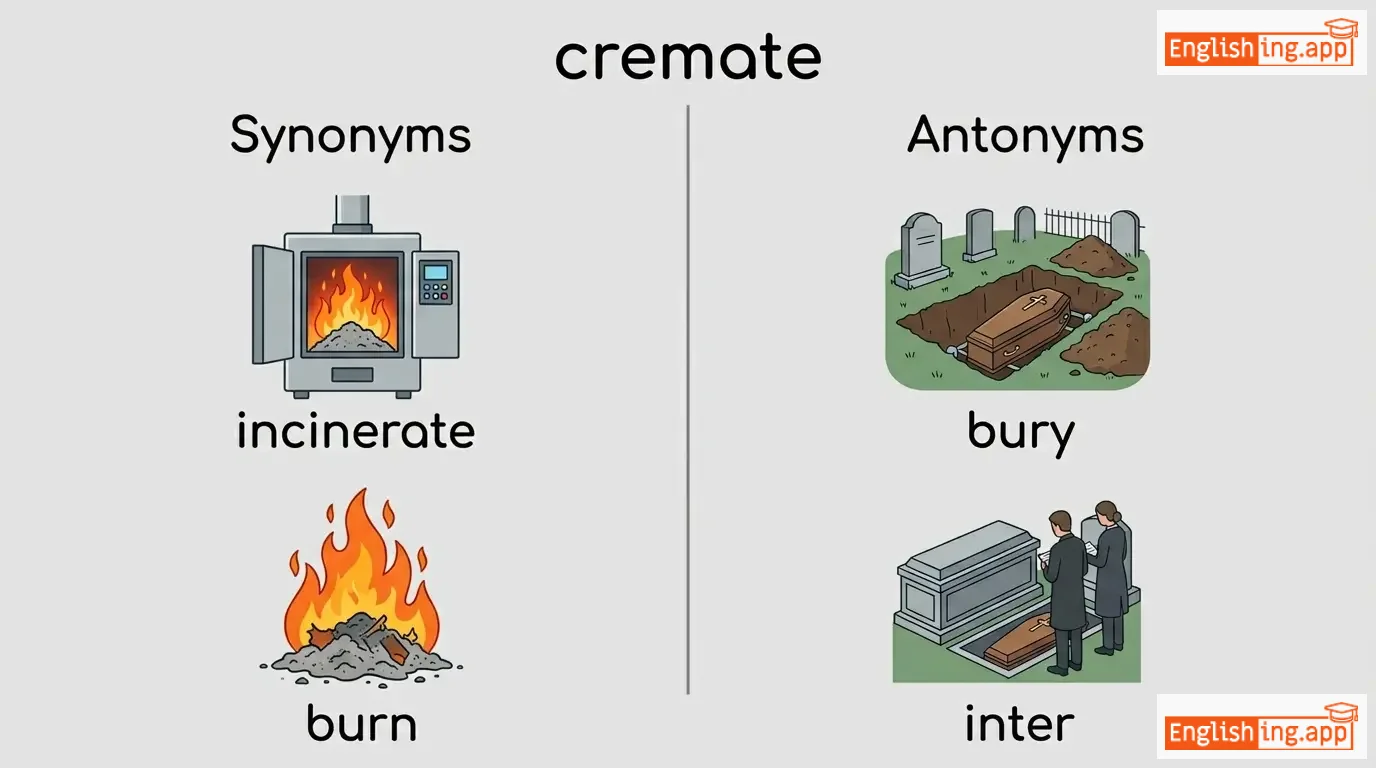
incinerate, burn, reduce to ashes
••••••
|
bury, inter, entomb
••••••
|
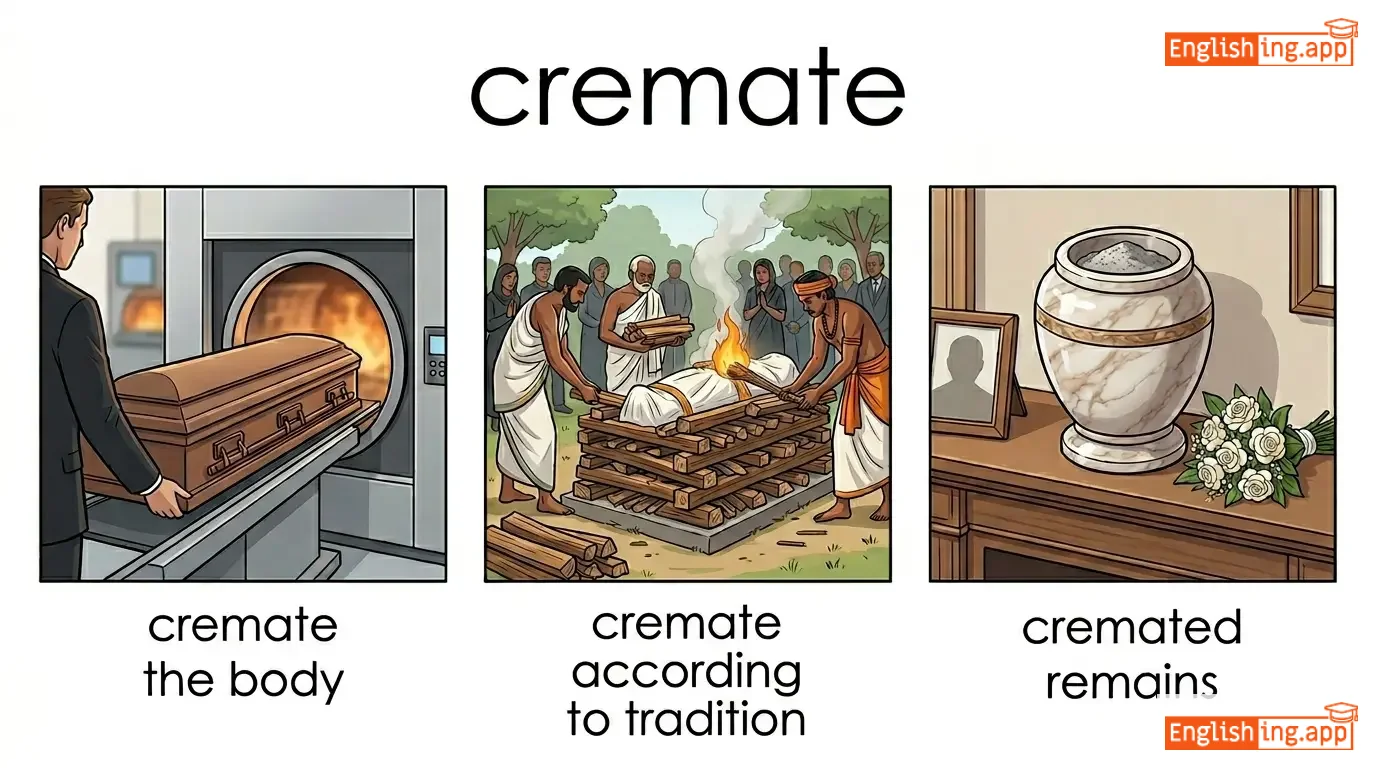
cremate body, cremate remains, cremate after death, decision to cremate, cremation ceremony
••••••
|
cremate → 火葬する (kasou suru) — imagine 'ka-sou' = turn to ashes
••••••
|
|
#714
😂
|
/dʒoʊk/
verb
(ジョーク)
••••••
|
|
冗談を言う
jodan o iu
••••••
|
joked
ジョークド
••••••
|
joked
ジョークド
••••••
|
jokes
ジョークス
••••••
|
joking
ジョーキング
••••••
|
to say something funny or amusing; to make fun
••••••
|
He likes to joke around with his friends.
ヒー ライクス トゥ ジョーク アラウンド ウィズ ヒズ フレンズ
••••••
|
彼は友達と冗談を言うのが好きです。
Kare wa tomodachi to jodan o iu no ga suki desu.
••••••
|
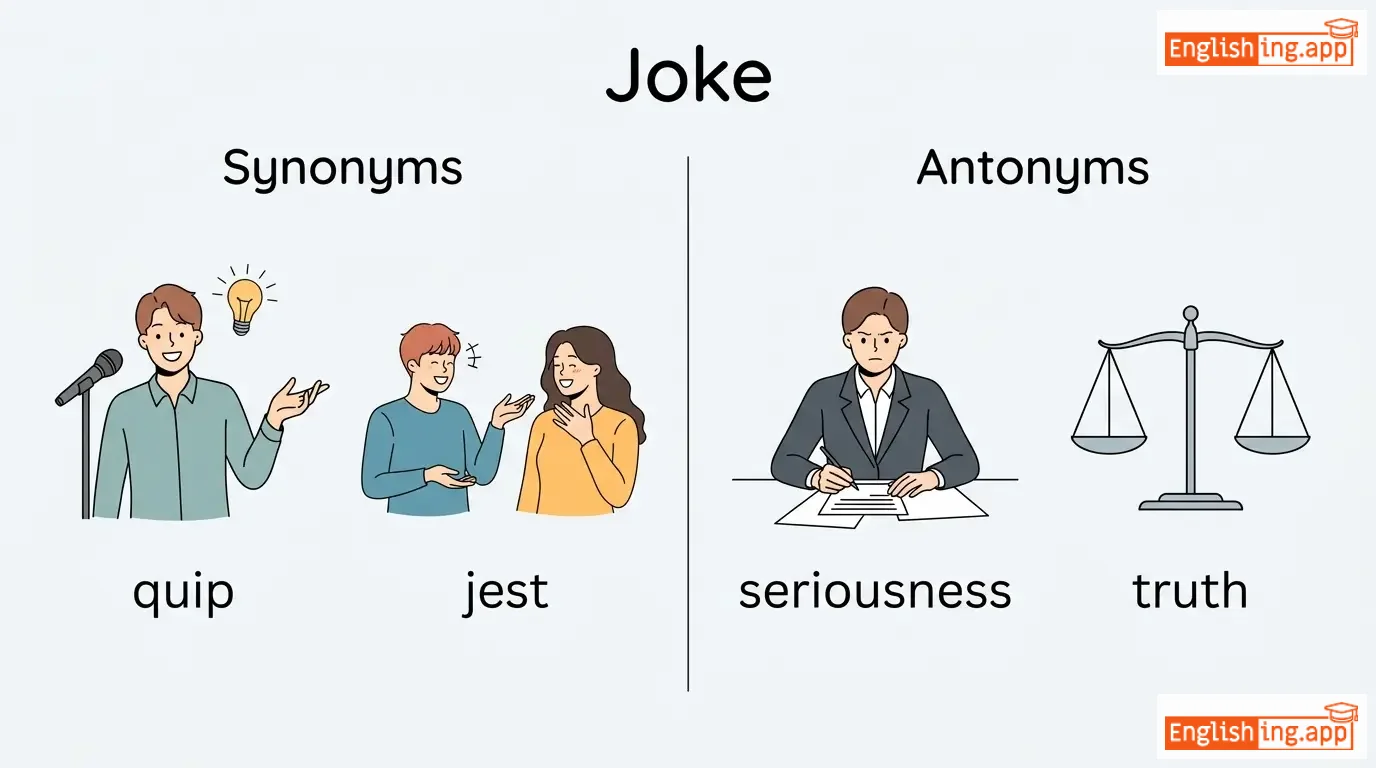
jest, kid, tease, amuse, fool around
••••••
|
serious, formal, stern, grave, solemn
••••••
|
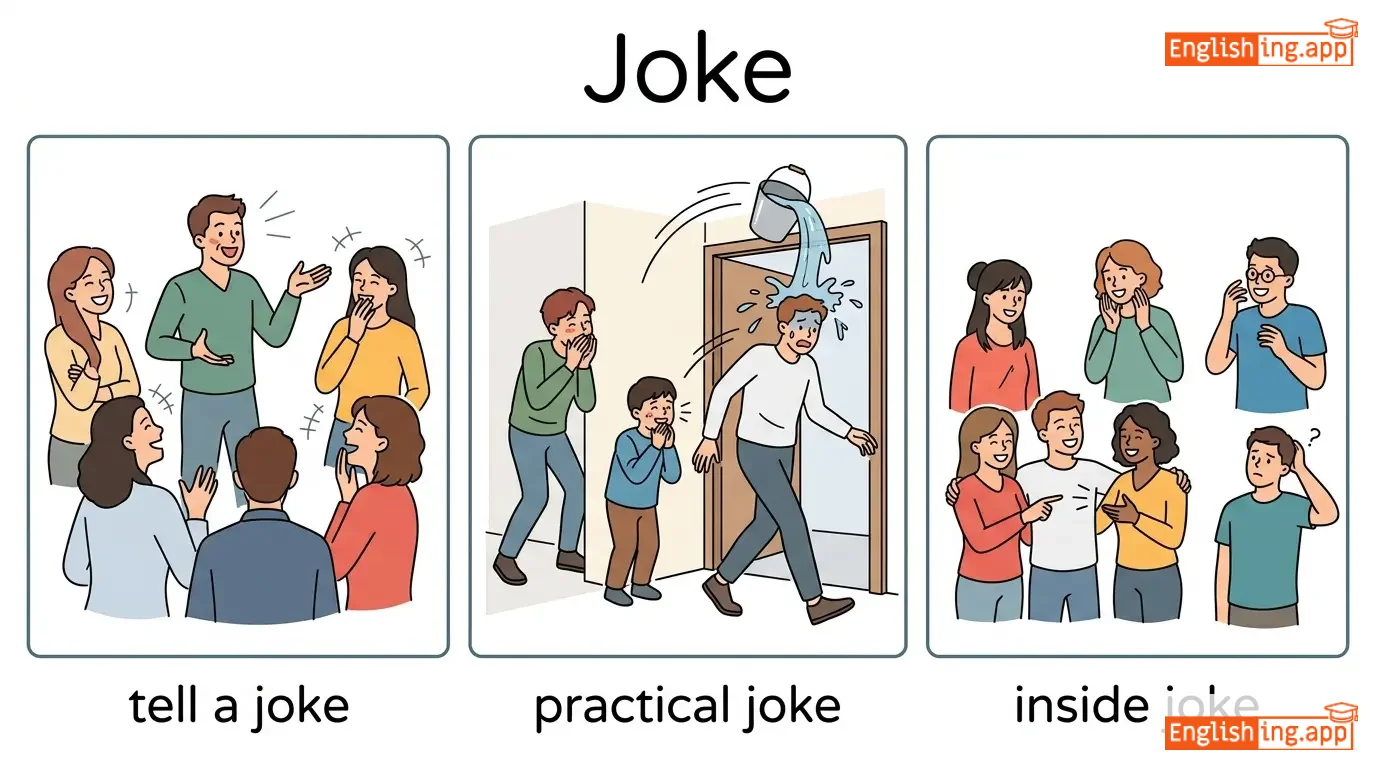
joke around, make joke, funny joke, tell joke, practical joke, joke about
••••••
|
Japanese 'jodan' sounds like 'joke done!' — easy to remember for joking.
••••••
|
|
#715
📢
|
/ˈædvərˌtaɪz/
verb
(アドバタイズ)
••••••
|
|
宣伝する
senden suru
••••••
|
advertised
アドバタイズド
••••••
|
advertised
アドバタイズド
••••••
|
advertises
アドバタイズズ
••••••
|
advertising
アドバタイジング
••••••
|
to promote or publicize a product or service
••••••
|
They advertise their products on television.
ゼイ アドバタイズ ゼア プロダクツ オン テレビジョン。
••••••
|
彼らはテレビで自分たちの商品を宣伝します。
karera wa terebi de jibun tachi no shohin o senden shimasu.
••••••
|
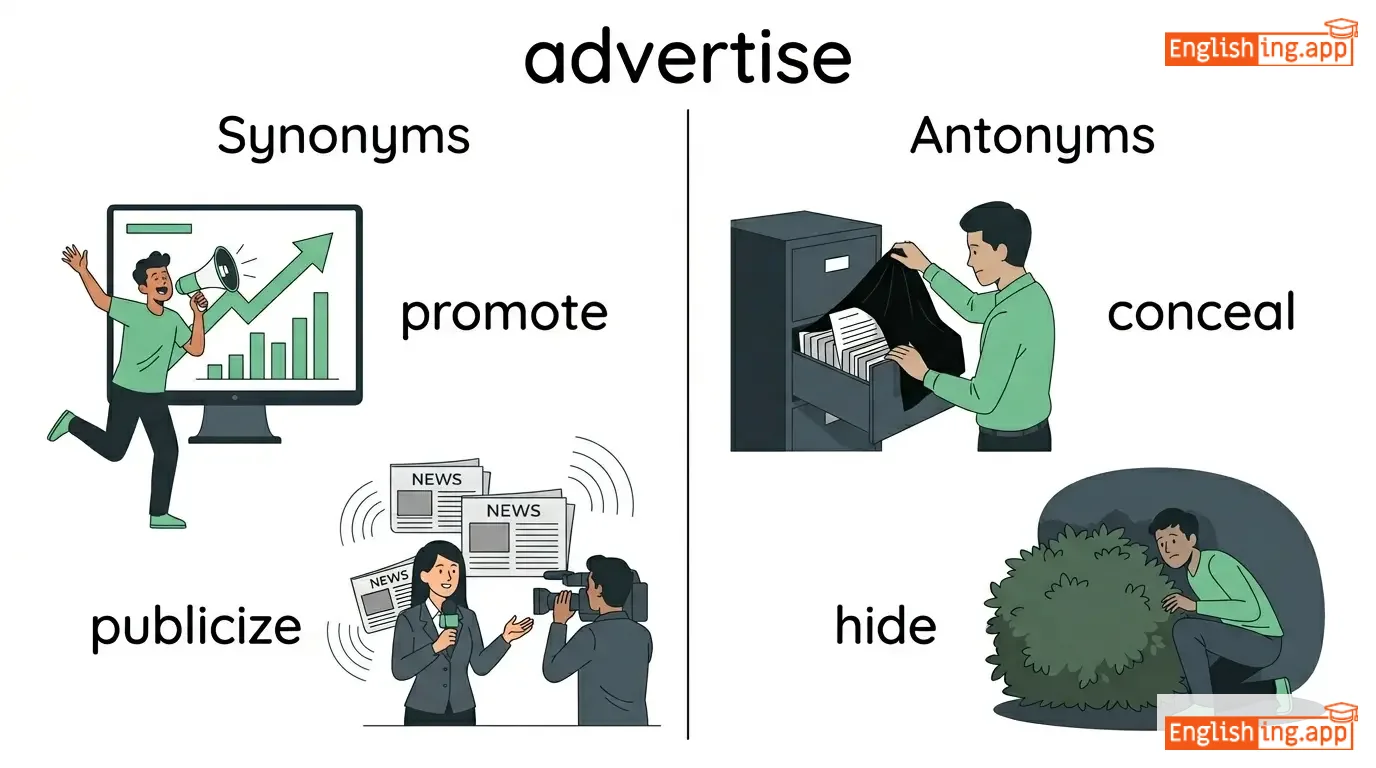
promote, publicize, market, announce
••••••
|
hide, conceal, suppress, withhold
••••••
|
advertise product, advertise service, advertise online, advertise widely, advertise business
••••••
|
Advertise = 宣伝する (senden suru) — think 'send' your message to many!
••••••
|
Vocabulary Quiz
Test your vocabulary by matching words with their translations or meanings.
Login to take the quiz
Comments (0)
Share your thoughts and join the discussion.
Join the discussion by logging in
Login to CommentNo comments yet
Be the first to share your thoughts!