

翻訳
過去
過去分詞
三人称単数
動名詞
意味
例文
例文の翻訳
同義語
対義語
コロケーション
ニーモニック


Swipe left or right, or use the buttons. Tap image to zoom.
例文の翻訳
単語
Lesson 20: Mastering the Most Frequent Verbs & TensesLesson 20: Mastering the Most Frequent Verbs & Tenses - マスクトグル
|
絵文字
|
単語 | Images | 翻訳 | 過去 | 過去分詞 | 三人称単数 | 動名詞 | 意味 | 例文 | 例文の翻訳 | 同義語 | 対義語 | コロケーション | ニーモニック |
|---|---|---|---|---|---|---|---|---|---|---|---|---|---|---|
|
#567
✨
|
/ˈhæpən/
verb
(ハッペン)
••••••
|
- •••••• |
起こる
okoru
••••••
|
happened
ハッペンド
••••••
|
happened
ハッペンド
••••••
|
happens
ハッペンズ
••••••
|
happening
ハッペニング
••••••
|
to occur or take place; to come about by chance
••••••
|
What happened at the meeting yesterday?
昨日の会議で何が起こったのですか?
••••••
|
昨日の会議で何が起こったのですか?
Kinou no kaigi de nani ga okotta no desu ka?
••••••
|
occur, take place, arise, transpire
••••••
|
prevent, stop, avoid, cease
••••••
|
happen to, happen by chance, happen naturally, happen suddenly
••••••
|
日本語の'起こる'は英語の'happen'と同じ意味です。
••••••
|
|
#568
🗳️
|
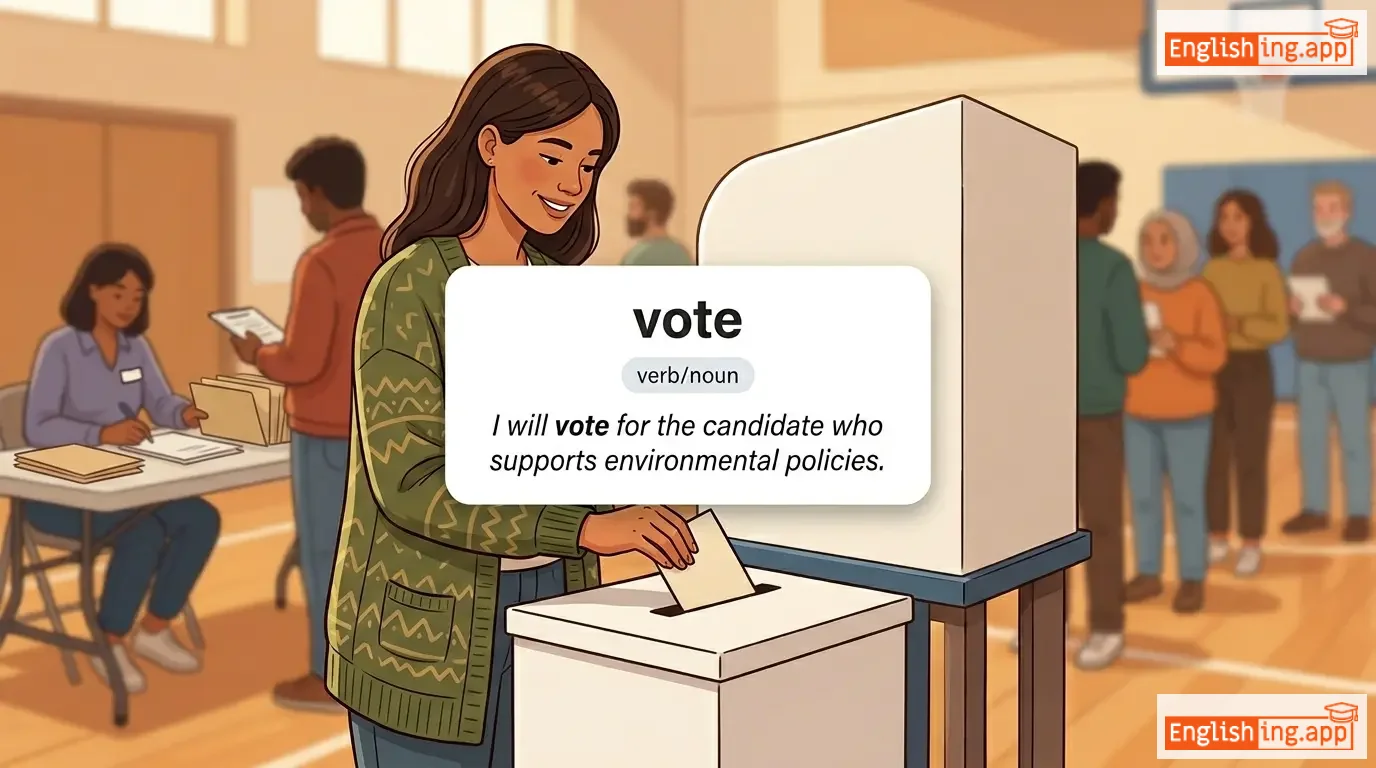
/voʊt/
verb
(ボート)
••••••
|
|
投票する
tōhyō suru
••••••
|
voted
ボーテッド
••••••
|
voted
ボーテッド
••••••
|
votes
ボーツ
••••••
|
voting
ボーティング
••••••
|
to make a choice in an election; to express preference
••••••
|
Citizens vote to choose their representatives.
市民は代表者を選ぶために投票します。
••••••
|
市民は代表者を選ぶために投票します。
Shimin wa daihyōsha o erabu tame ni tōhyō shimasu.
••••••
|
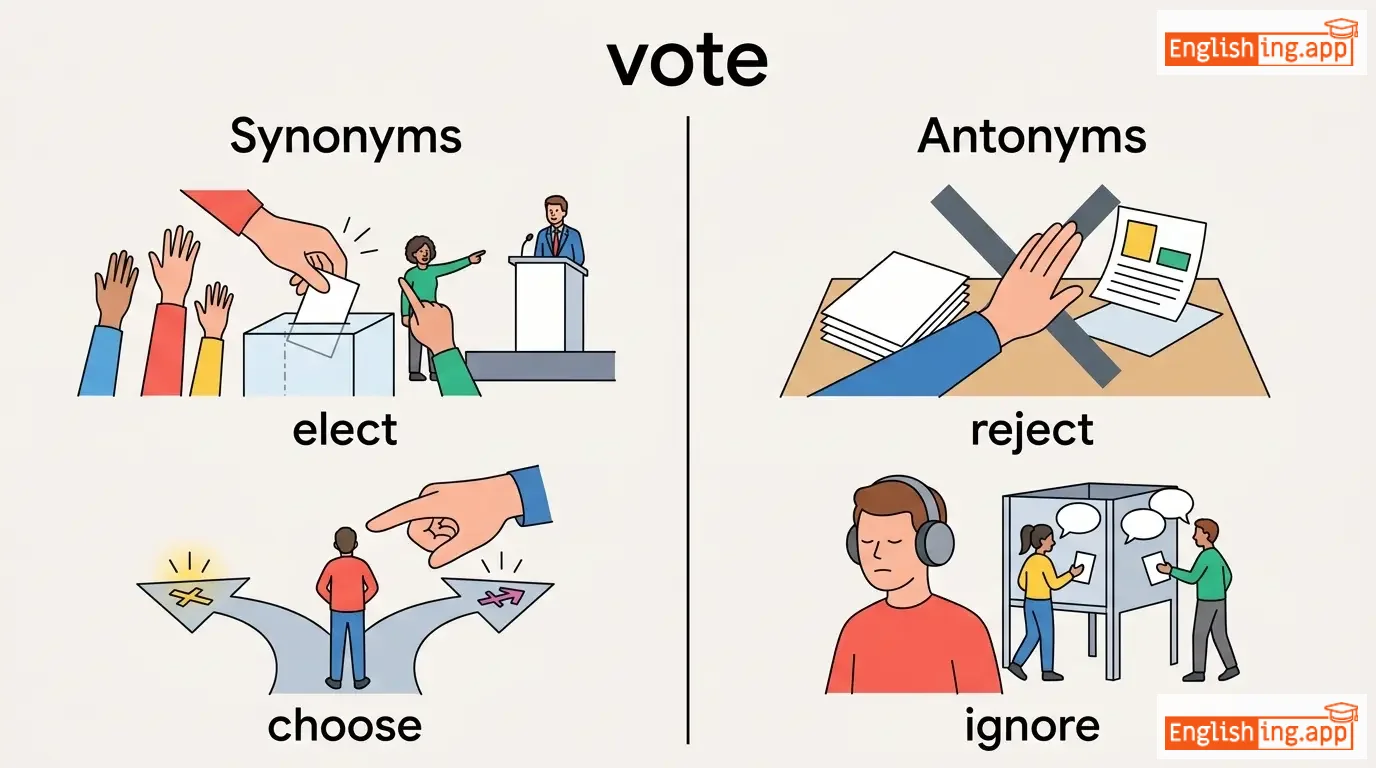
elect, choose, select, ballot, poll
••••••
|
abstain, boycott, refuse
••••••
|
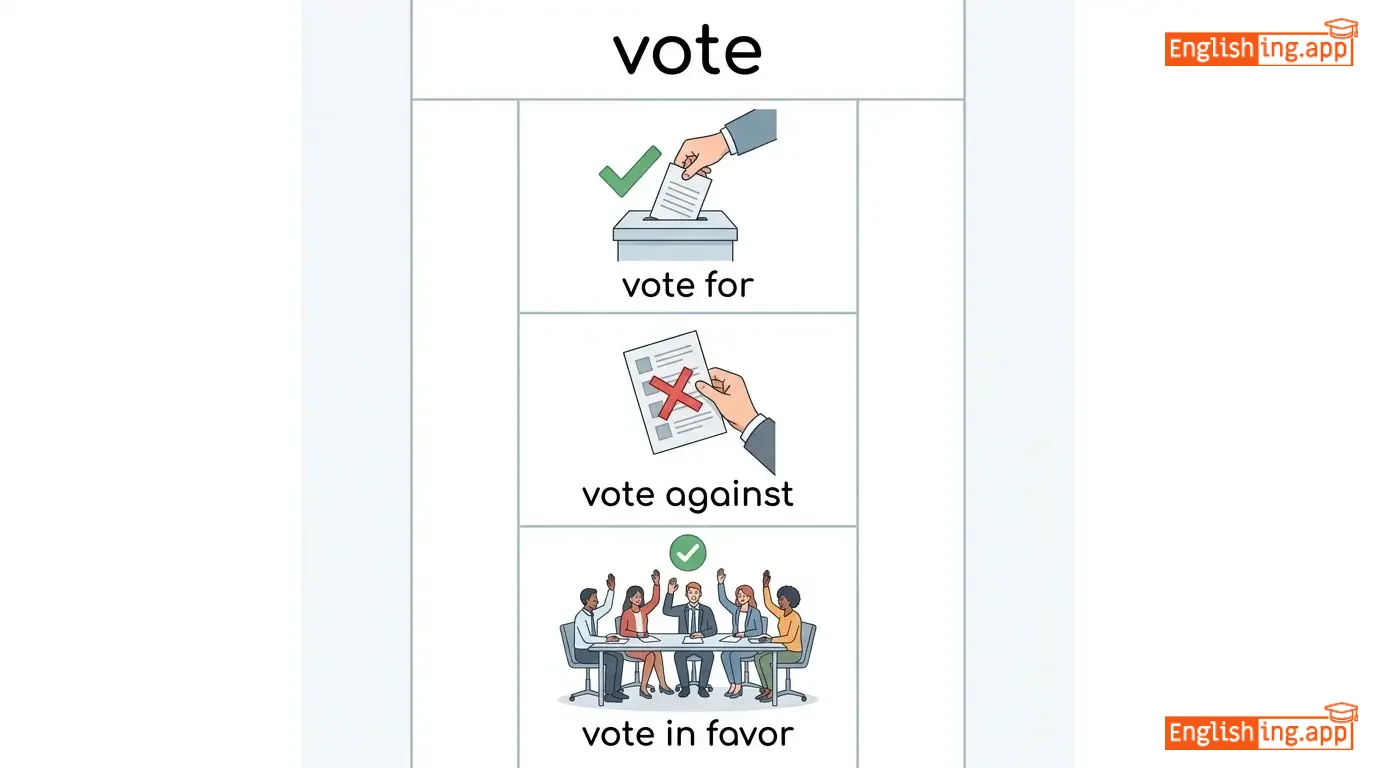
vote for, vote against, vote on, cast a vote
••••••
|
投票する (tōhyō suru) は代表者を選ぶことです。
••••••
|
|
#569
⚠️
|
/ˈθretən/
verb
(zuren)
••••••
|
|
脅す
odosu
••••••
|
threatened
zurened
••••••
|
threatened
zurened
••••••
|
threatens
zurens
••••••
|
threatening
zureningu
••••••
|
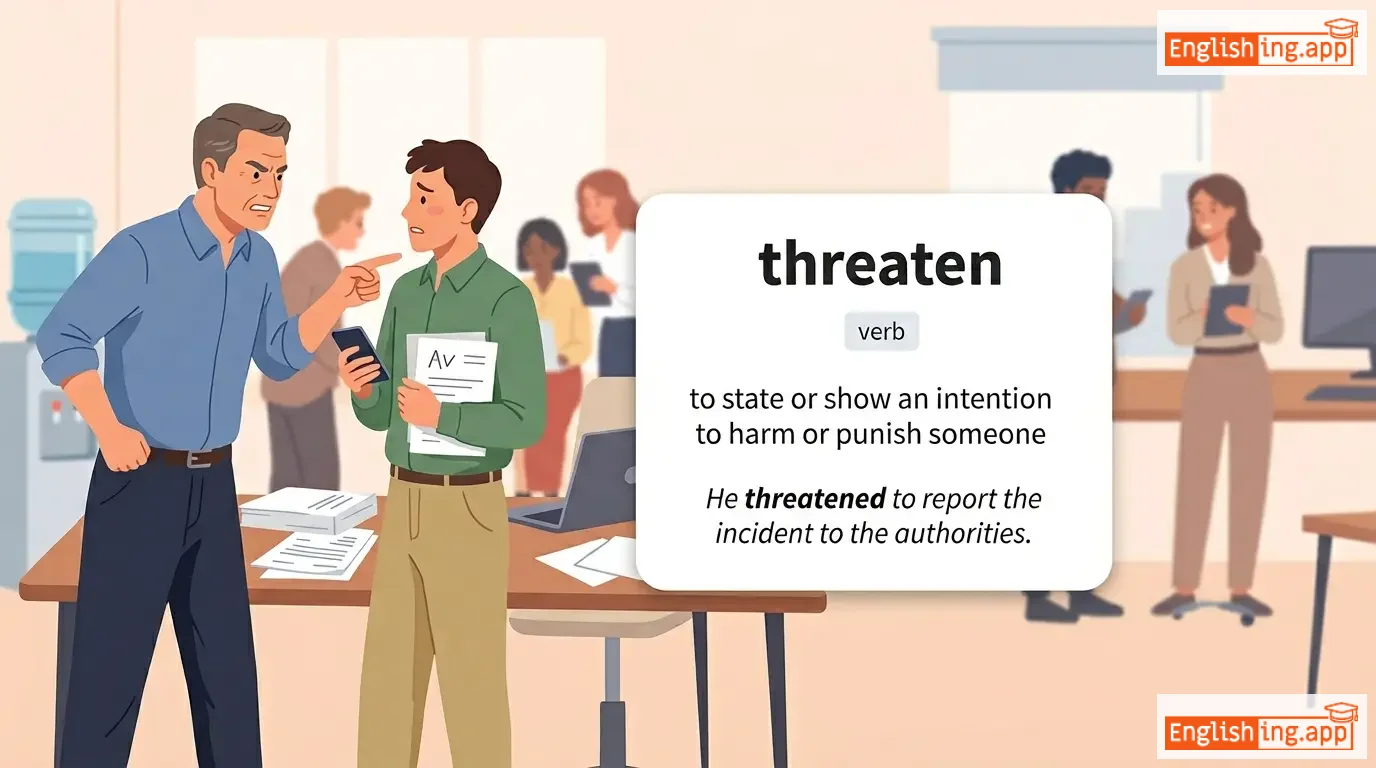
to express an intention to harm or punish someone; to be likely to cause harm
••••••
|
The storm clouds threaten to bring heavy rain tonight.
嵐の雲は今夜激しい雨をもたらすと脅かしています。
••••••
|
嵐の雲は今夜激しい雨をもたらすと脅かしています。
Arashi no kumo wa konya hageshii ame wo motarasu to odokashiteimasu.
••••••
|
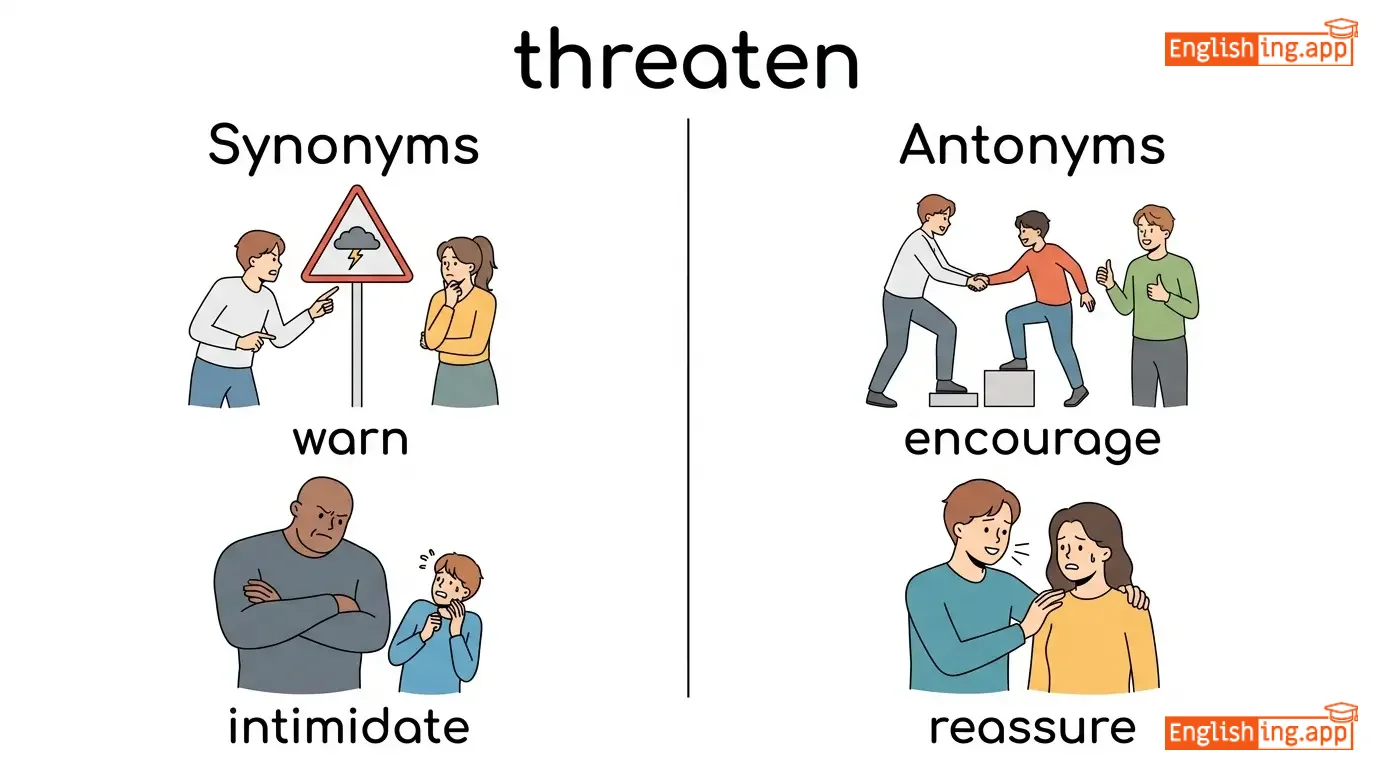
menace, intimidate, warn, endanger
••••••
|
protect, defend, reassure, comfort
••••••
|
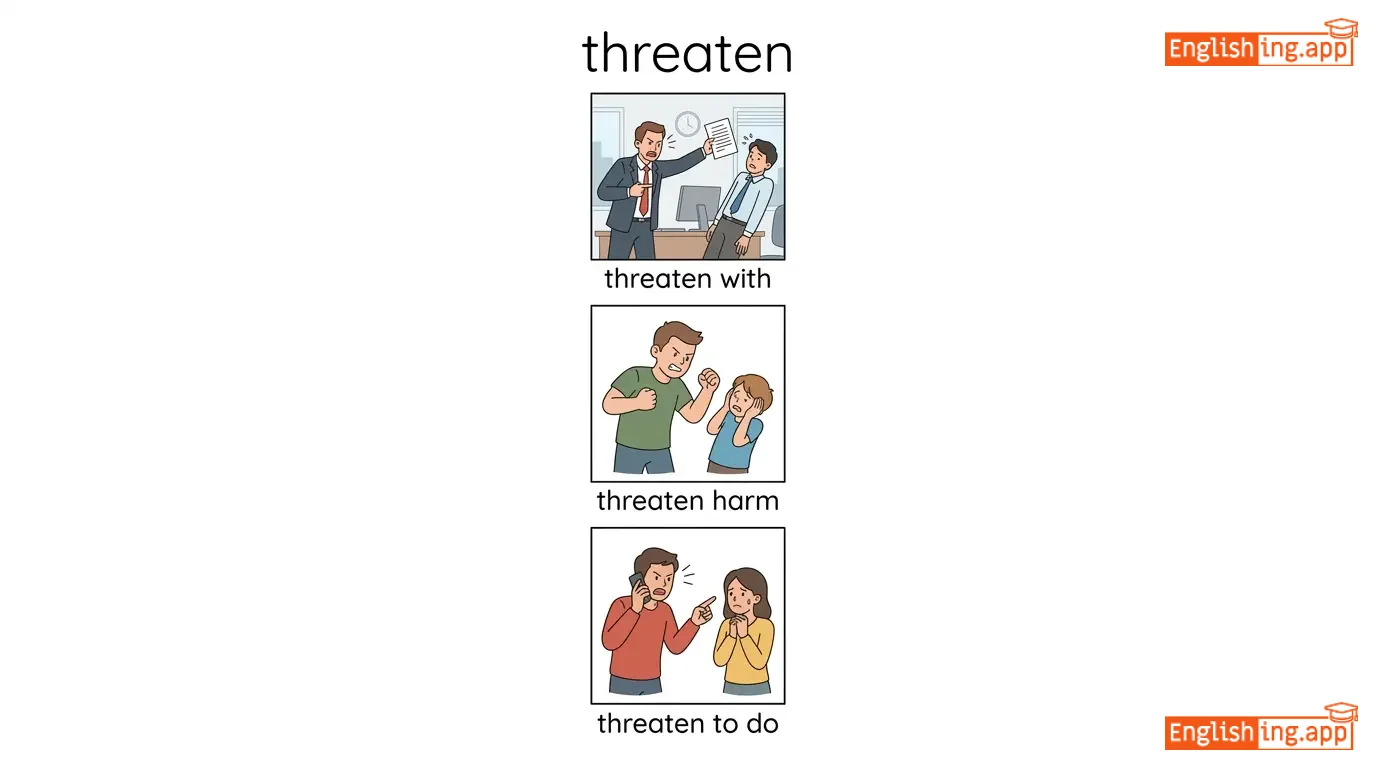
threaten to, threaten with, threaten someone, pose a threat
••••••
|
脅す = おどす, だから怖い
••••••
|
|
#570
🔍
|
/əbˈzɜːrv/
verb
(オブザーブ)
••••••
|
- •••••• |
観察する
kansatsu suru
••••••
|
observed
オブザーブド
••••••
|
observed
オブザーブド
••••••
|
observes
オブザーブズ
••••••
|
observing
オブザービング
••••••
|
to watch carefully; to notice or perceive something
••••••
|
Scientists observe the behavior of animals in the wild.
科学者たちは野生動物の行動を観察します。
••••••
|
科学者たちは野生動物の行動を観察します。
Kagakusha-tachi wa yasei doubutsu no koudou o kansatsu shimasu
••••••
|
watch, study, examine, monitor
••••••
|
ignore, overlook, miss
••••••
|
observe closely, observe carefully, observe behavior, observe changes
••••••
|
Observe in Japanese - 観察する (to carefully observe) - Picture yourself observing a bird through a telescope.
••••••
|
|
#571
💥
|
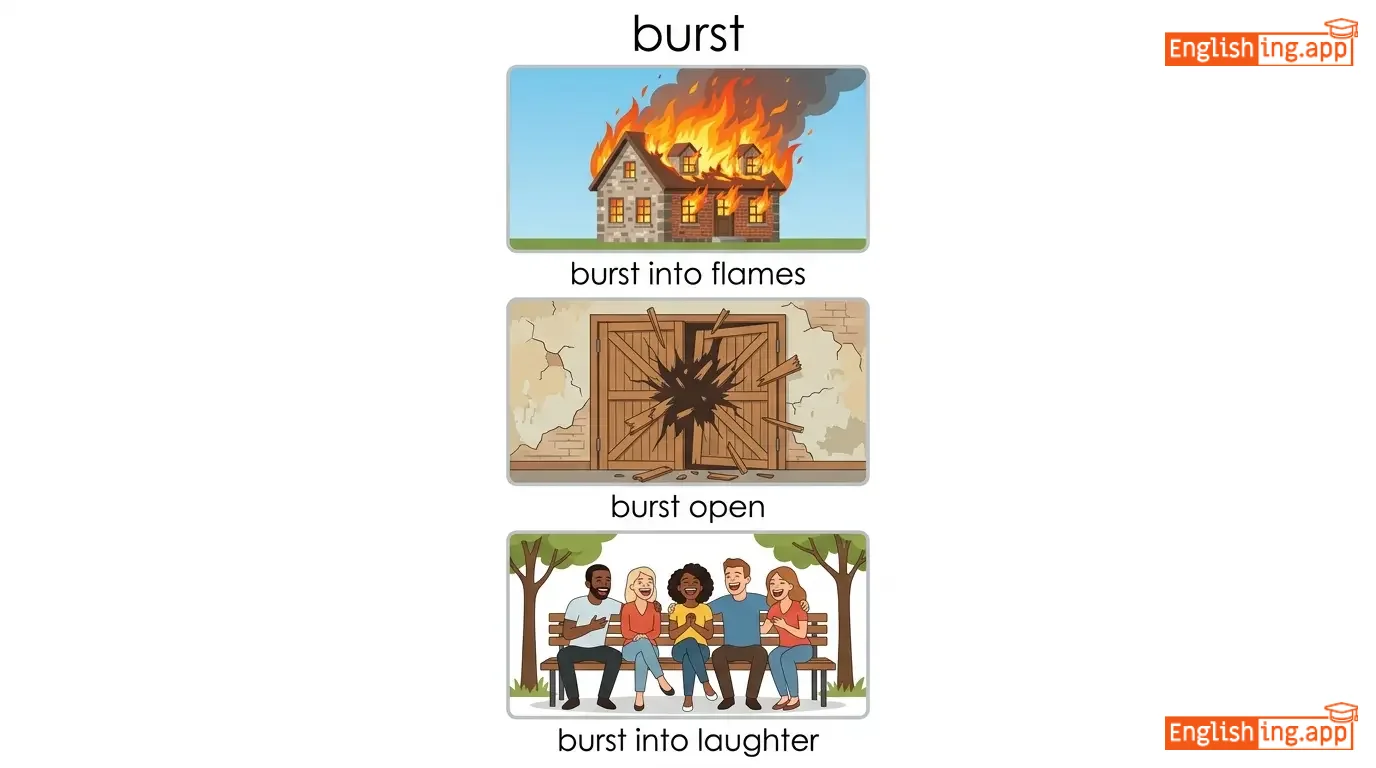
/bɜːrst/
verb
(バースト)
••••••
|
|
破裂する
haretsu suru
••••••
|
burst
バースト
••••••
|
burst
バースト
••••••
|
bursts
バーストス
••••••
|
bursting
バースティング
••••••
|
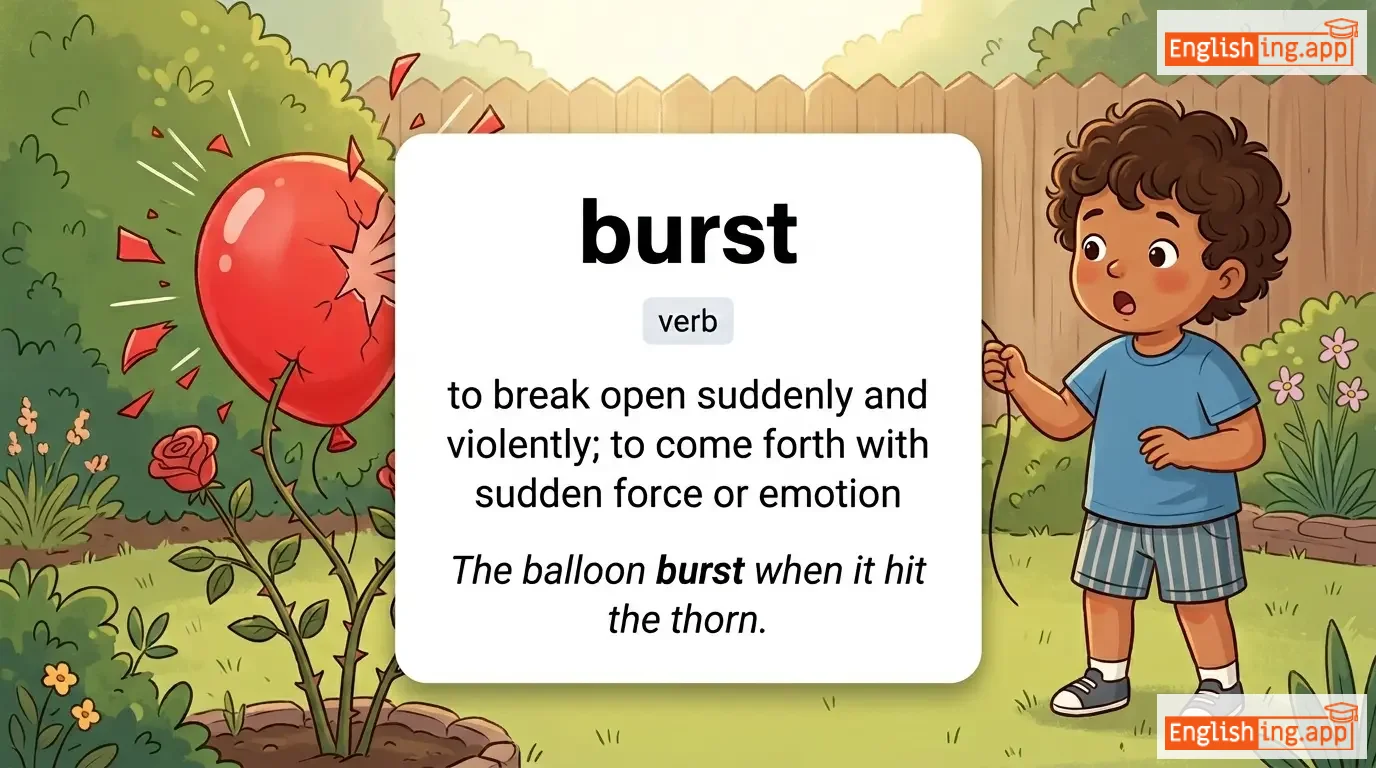
to break open suddenly; to be full of something
••••••
|
The balloon bursts with a loud pop.
風船は大きな音を立ててバーストします。
••••••
|
風船は大きな音を立ててバーストします。
Fusen wa ookina oto o tatete baasuto shimasu.
••••••
|
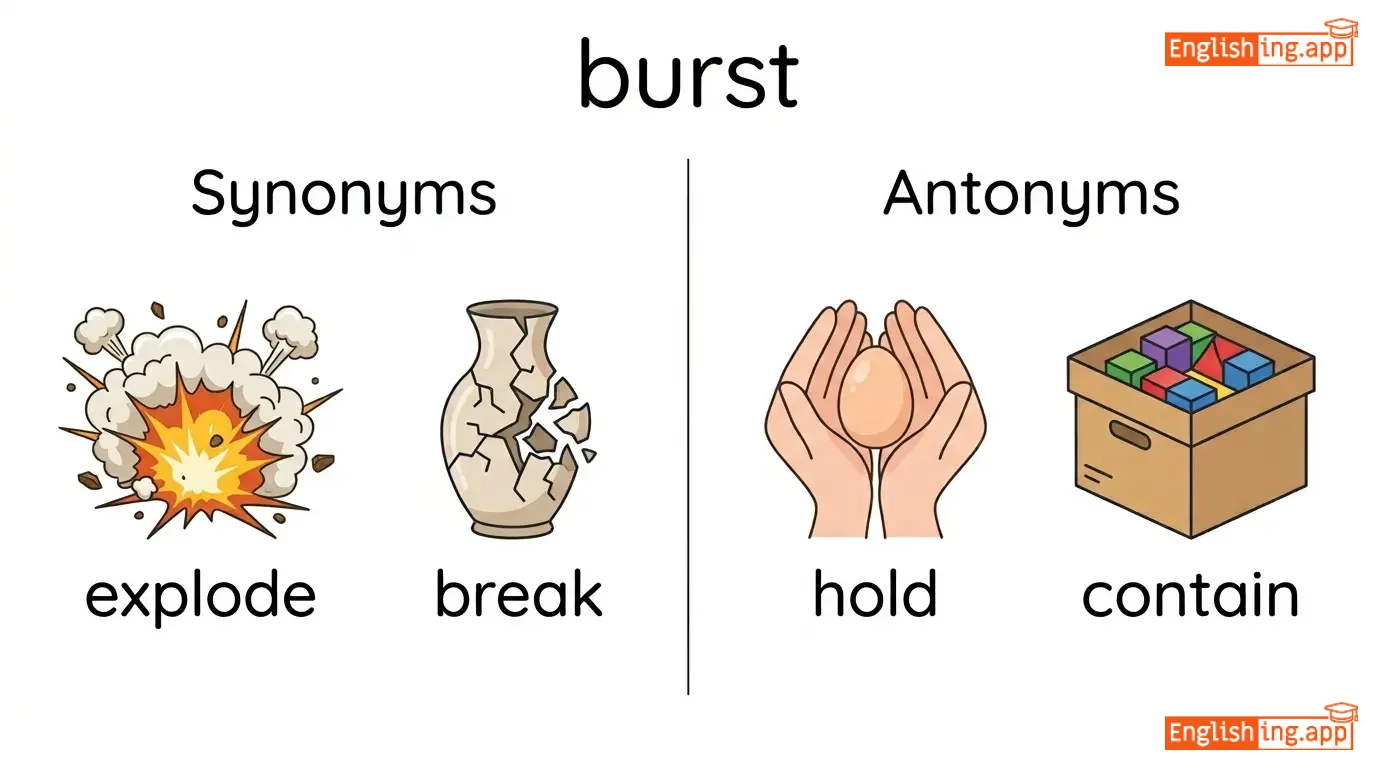
explode, pop, rupture, break
••••••
|
contain, hold, compress
••••••
|
burst into, burst out, burst open, burst with
••••••
|
風船の破裂音が非常に大きい。
••••••
|
|
#572
💥
|
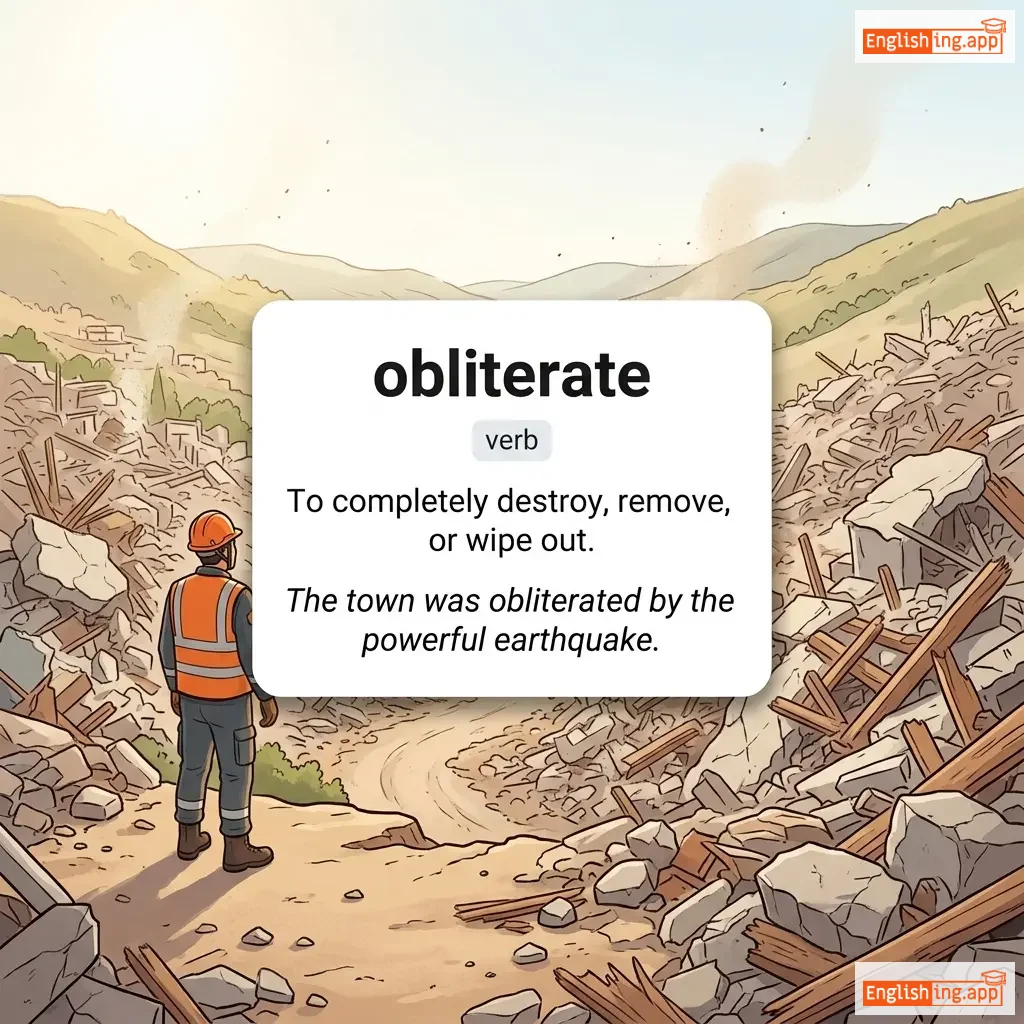
/əˈblɪtəˌreɪt/
verb
(オブリテレイト)
••••••
|
|
完全に破壊する
kanzen ni hakai suru
••••••
|
obliterated
オブリテレイテッド
••••••
|
obliterated
オブリテレイテッド
••••••
|
obliterates
オブリテレイツ
••••••
|
obliterating
オブリテレイティング
••••••
|
to destroy completely; to remove all traces of something
••••••
|
The earthquake obliterated the entire village.
地震は村全体をオブリテレイトしました。
••••••
|
地震は村全体を完全に破壊しました。
Jishin wa mura zentai o kanzen ni hakai shimashita.
••••••
|
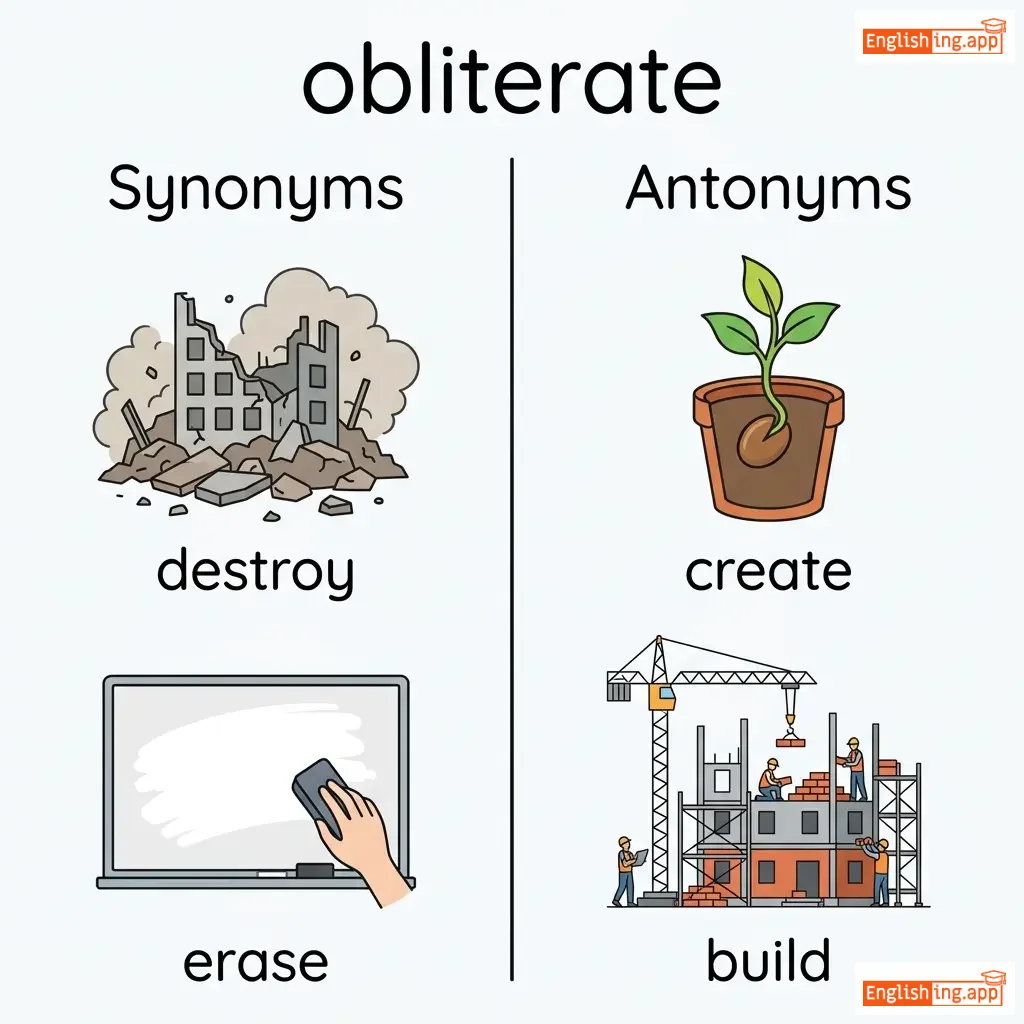
destroy, annihilate, erase, eliminate
••••••
|
create, build, preserve, construct
••••••
|
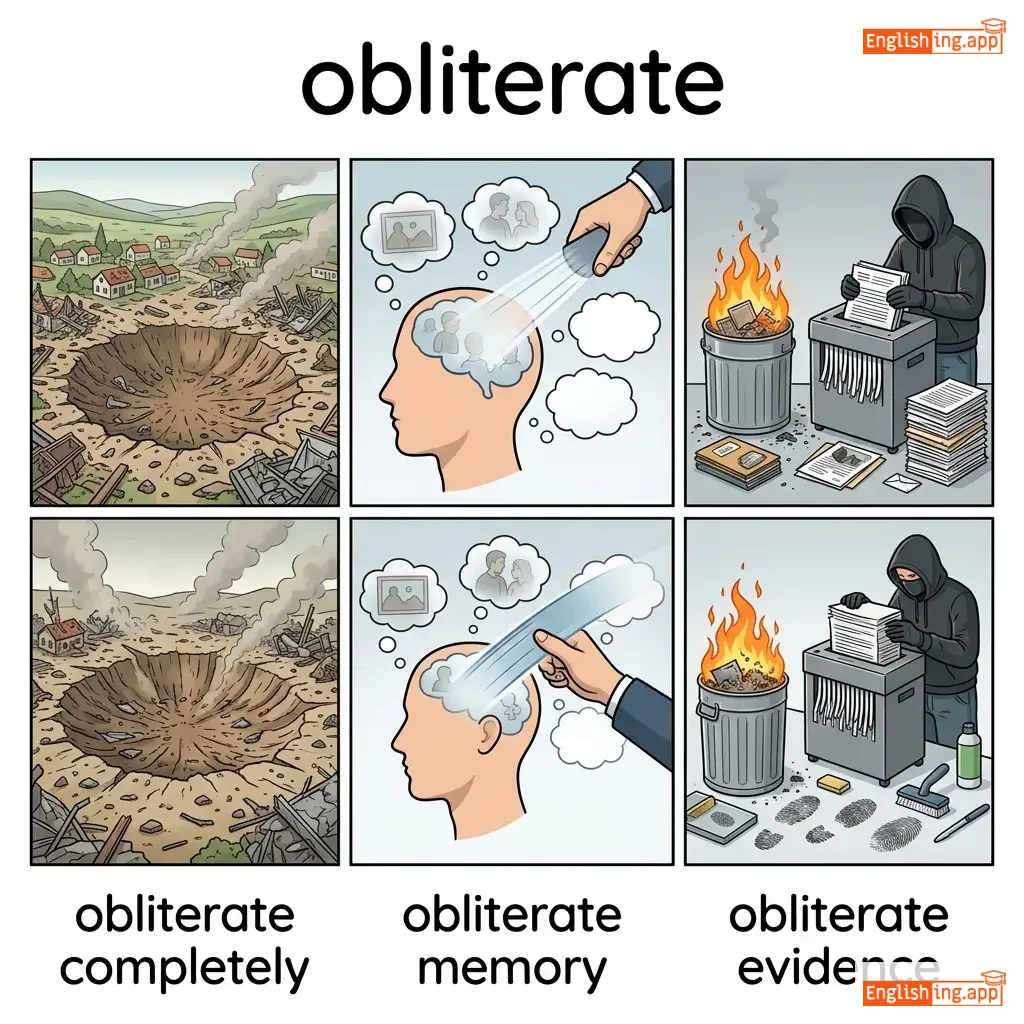
obliterate completely, obliterate traces, obliterate evidence, obliterate memory
••••••
|
No •••••• |
|
#573
🍃
|
/ˈskætər/
verb
(スキャター)
••••••
|
- •••••• |
散らす
chirasu
••••••
|
scattered
スキャタード
••••••
|
scattered
スキャタード
••••••
|
scatters
スキャターズ
••••••
|
scattering
スキャタリング
••••••
|
to spread or throw around in different directions
••••••
|
The wind scattered the leaves across the yard.
風が庭に葉っぱを散らばらせた。
••••••
|
風が庭に葉っぱを散らばらせた。
Kaze ga niwa ni happa o chirabashita.
••••••
|
spread, disperse, distribute, sprinkle
••••••
|
gather, collect, assemble, concentrate
••••••
|
scatter around, scatter widely, scatter seeds, scatter randomly
••••••
|
Picture the wind scattering leaves in the yard: 'chirasu' in Japanese means to scatter.
••••••
|
|
#574
🏠
|
/ˈsetəl/
verb
(セトル)
••••••
|
|
定住する
teijū suru
••••••
|
settled
セトルド
••••••
|
settled
セトルド
••••••
|
settles
セトルズ
••••••
|
settling
セトリング
••••••
|
to resolve; to establish residence; to calm down
••••••
|
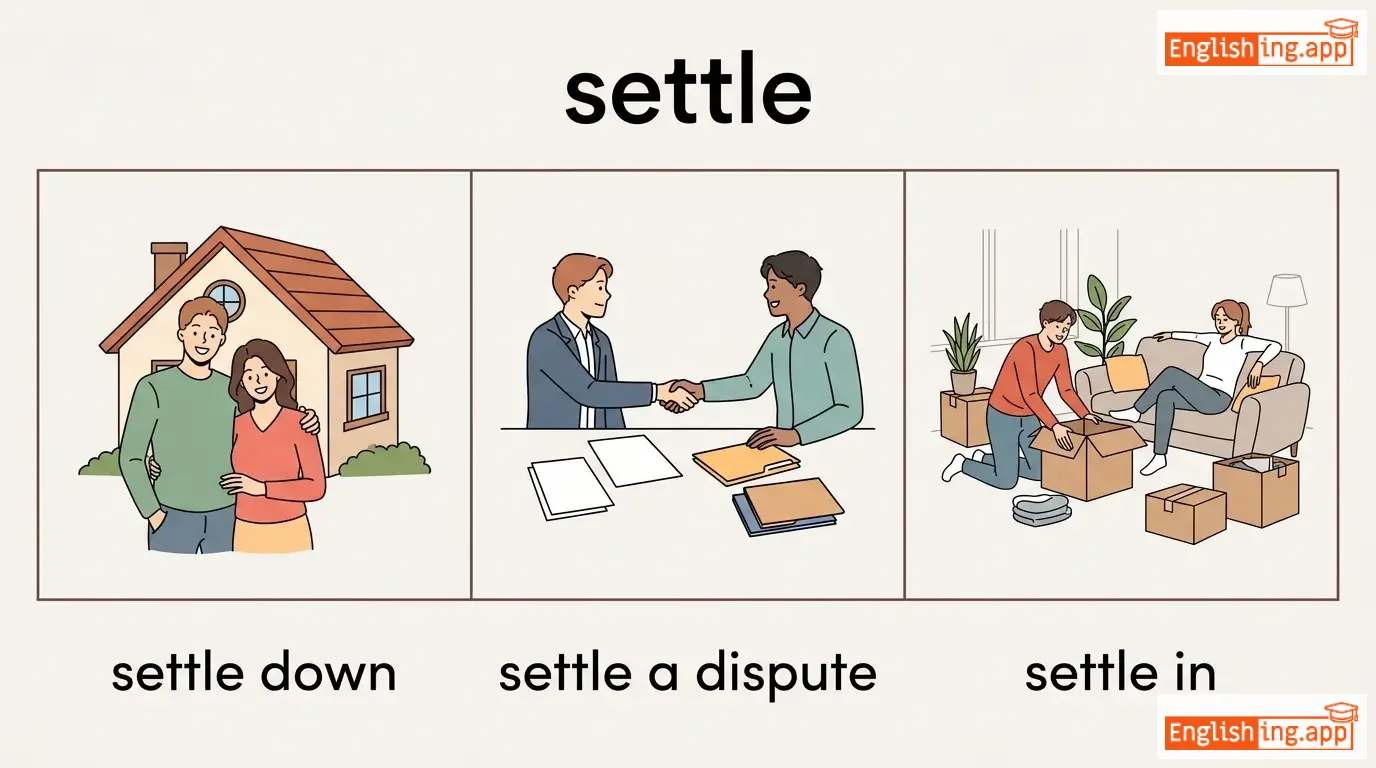
They decided to settle in a quiet village.
彼らは静かな村に定住することに決めました。
••••••
|
彼らは静かな村に定住することに決めました。
Karera wa shizuka na mura ni teijū suru koto ni kimemashita.
••••••
|
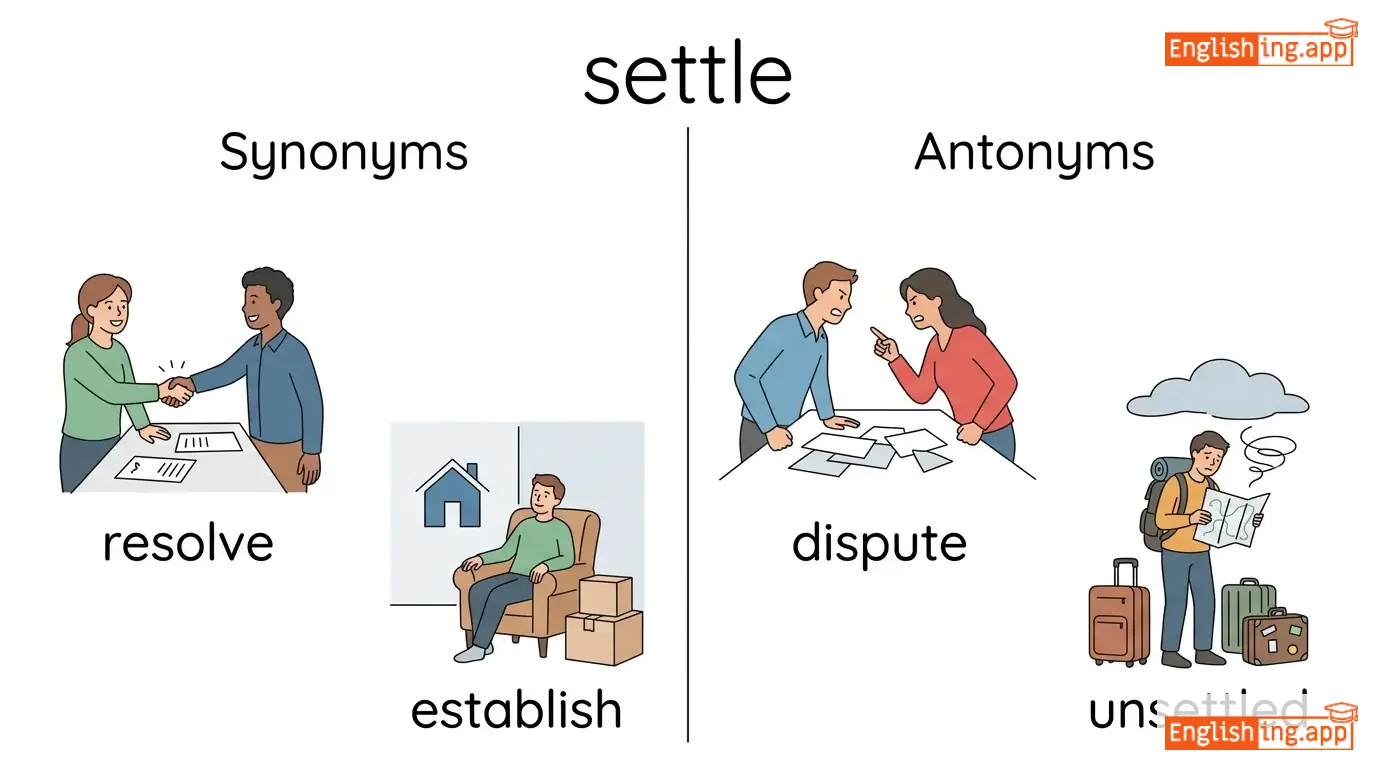
resolve, establish, arrange, decide
••••••
|
disturb, unsettle, move, relocate
••••••
|
settle down, settle in, settle for, settle matters
••••••
|
定住する Settler のように
••••••
|
|
#575
🤷
|
/ˈhezɪteɪt/
verb
(ヘジテイト)
••••••
|
- •••••• |
ためらう
tamerau
••••••
|
hesitated
ヘジテイテッド
••••••
|
hesitated
ヘジテイテッド
••••••
|
hesitates
ヘジテイツ
••••••
|
hesitating
ヘジテイティング
••••••
|
to pause before acting; to be uncertain about what to do
••••••
|
Don't hesitate to ask for help.
助けを求めることを躊躇しないでください。
••••••
|
助けを求めることを躊躇しないでください。
Tasuke wo motomeru koto wo tamerau shinai de kudasai.
••••••
|
pause, delay, waver, doubt
••••••
|
decide, act, proceed, rush
••••••
|
hesitate to, hesitate before, hesitate briefly, hesitate momentarily
••••••
|
No •••••• |
|
#576
💆
|
/məˈsɑːʒ/
verb
(マッサージ)
••••••
|
- •••••• |
マッサージする
massaji suru
••••••
|
massaged
マッサージド
••••••
|
massaged
マッサージド
••••••
|
massages
マッサージズ
••••••
|
massaging
マッサージング
••••••
|
to rub and press muscles to relieve pain or tension; to manipulate information
••••••
|
The therapist will massage your back to reduce muscle tension.
セラピストは筋肉の緊張を和らげるために背中をマッサージします。
••••••
|
セラピストは筋肉の緊張を和らげるために背中をマッサージします。
Serapisuto wa kinniku no kinchou o yawarageru tame ni senaka o massaji shimasu.
••••••
|
rub, knead, manipulate, work
••••••
|
ignore, neglect, avoid, abandon
••••••
|
massage gently, massage thoroughly, massage muscles, give a massage
••••••
|
No •••••• |
|
#577
😤
|
/sʌlk/
verb
(サルク)
••••••
|
|
むくれる
mukureru
••••••
|
sulked
サルクド
••••••
|
sulked
サルクド
••••••
|
sulks
サルクス
••••••
|
sulking
サルキング
••••••
|
to be silent and bad-tempered because you are angry or disappointed
••••••
|
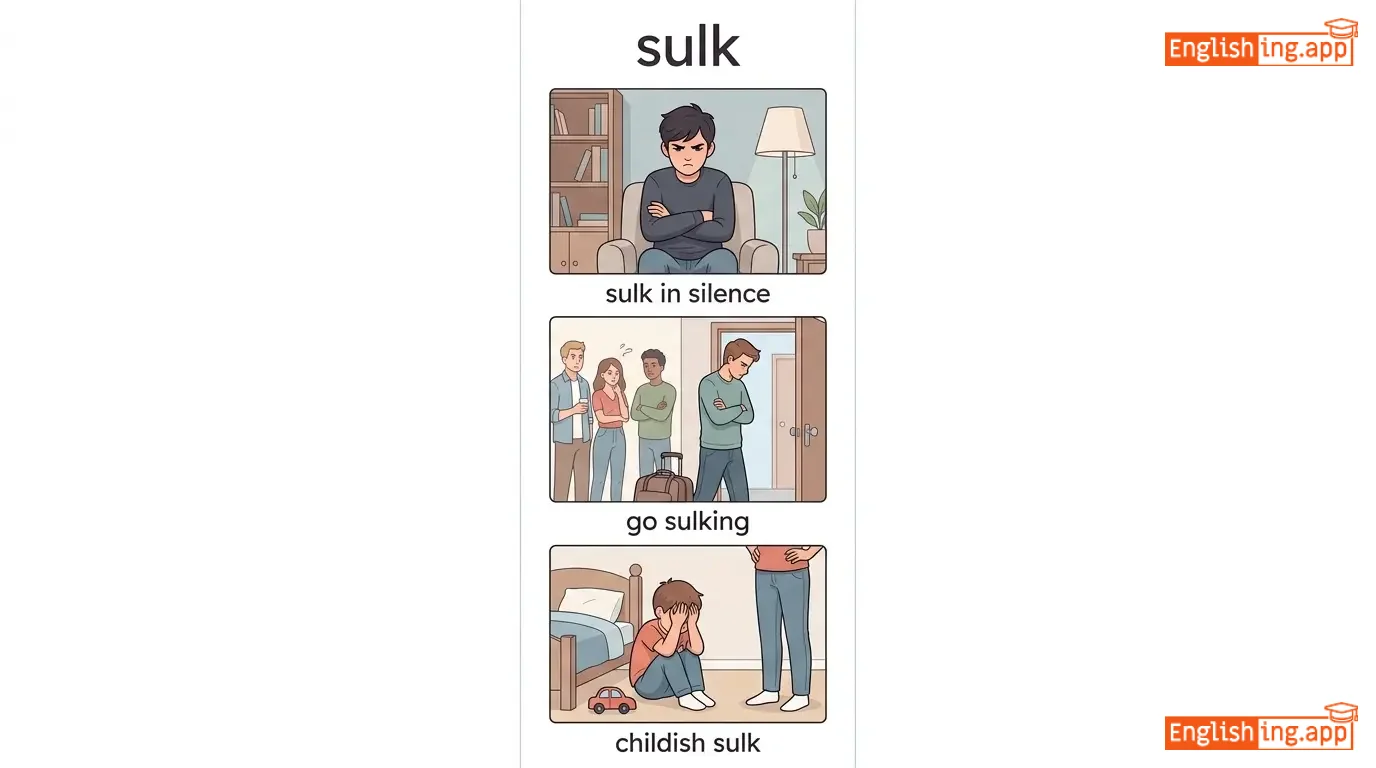
She sulked in her room after the argument.
彼女は議論の後、自分の部屋でサルクしていた。
••••••
|
議論の後、彼女は自分の部屋でむくれていた。
Gironn no ato, kanojo wa jibun no heya de mukurete ita.
••••••
|
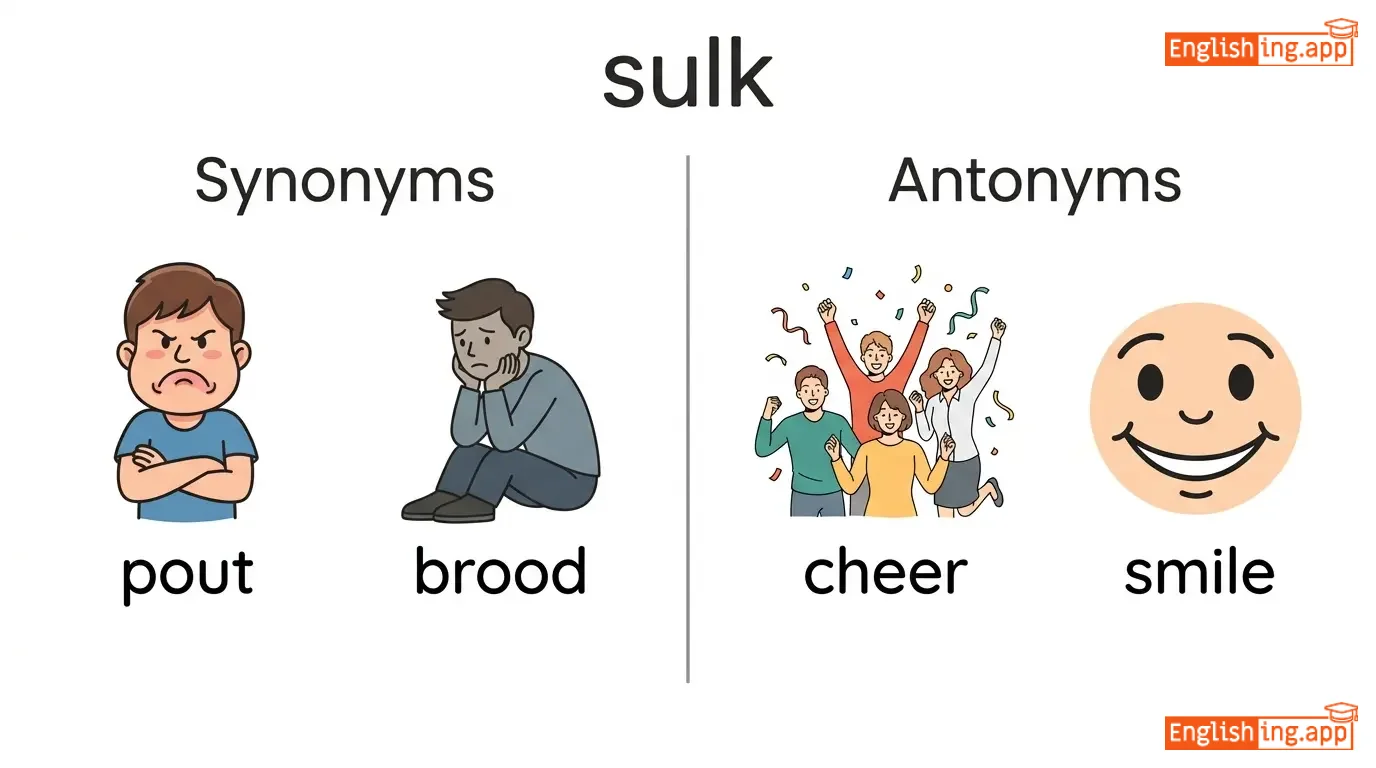
pout, brood, mope, grumble
••••••
|
smile, rejoice, celebrate
••••••
|
sulk quietly, sulk alone, sulk in corner, sulk about
••••••
|
When sulking, you're 'mukureru' (pouting in Japanese) and silent.
••••••
|
|
#578
🤝
|
/rɪˈlaɪ/
verb
(リライ)
••••••
|
- •••••• |
頼る
tayoru
••••••
|
relied
リライド
••••••
|
relied
リライド
••••••
|
relies
リライズ
••••••
|
relying
リライング
••••••
|
to depend on or trust someone or something
••••••
|
I rely on my friends for support.
私は支援のために友達に頼ります。
••••••
|
私は支援のために友達に頼ります。
Watashi wa shien no tame ni tomodachi ni tayorimasu.
••••••
|
depend, trust, count on, lean on
••••••
|
distrust, doubt, reject
••••••
|
rely on, rely upon, rely heavily, rely completely
••••••
|
友達に頼って、いつも助けてもらおう!
••••••
|
|
#579
🪢
|
/pʊl/
verb
(puru)
••••••
|
- •••••• |
引く
hiku
••••••
|
pulled
purudo
••••••
|
pulled
purudo
••••••
|
pulls
purusu
••••••
|
pulling
puringu
••••••
|
to exert force to move something toward oneself; to drag or tug
••••••
|
Please pull the door to open it.
ドアを開けるために引いてください。
••••••
|
ドアを開けるために引いてください。
Doa o akeru tame ni hiite kudasai.
••••••
|
drag, tug, draw, haul
••••••
|
push, press, shove
••••••
|
pull together, pull apart, pull hard, pull gently
••••••
|
引くは'pull'のように物を自分に引き寄せる時に使います。
••••••
|
|
#580
👋
|
/bɪd/
verb
(ビッド)
••••••
|
- •••••• |
入札する
nyuusatsu suru
••••••
|
bid
ビッド
••••••
|
bidden
ビデン
••••••
|
bids
ビッズ
••••••
|
bidding
ビディング
••••••
|
to offer to pay a price; to command; to say goodbye
••••••
|
She bids farewell to her friends.
彼女は友達に別れを告げます。
••••••
|
彼女は友達に別れを告げます。
Kanojo wa tomodachi ni wakare o tsuge masu.
••••••
|
offer, command, order, attempt
••••••
|
refuse, decline, withdraw
••••••
|
bid farewell, bid goodbye, bid for, bid against
••••••
|
Think of 'bid' as '入札する' when you're in an auction in Japan.
••••••
|
|
#581
👑
|
/reɪn/
verb
(レイン)
••••••
|
- •••••• |
統治する
tōchi suru
••••••
|
reigned
レインド
••••••
|
reigned
レインド
••••••
|
reigns
レインズ
••••••
|
reigning
レイニング
••••••
|
to rule as a king or queen; to be dominant
••••••
|
The queen reigned for over sixty years.
女王は60年以上統治していました。
••••••
|
女王は60年以上統治していました。
Joō wa rokujū nen ijō tōchi shiteimashita.
••••••
|
rule, govern, dominate, control
••••••
|
serve, obey, submit
••••••
|
reign over, reign supreme, reign for years, reign peacefully
••••••
|
In Japanese, '統治する' means to rule and dominate, just like a queen.
••••••
|
|
#582
📥
|
/rɪˈsiːv/
verb
(リシーブ)
••••••
|
|
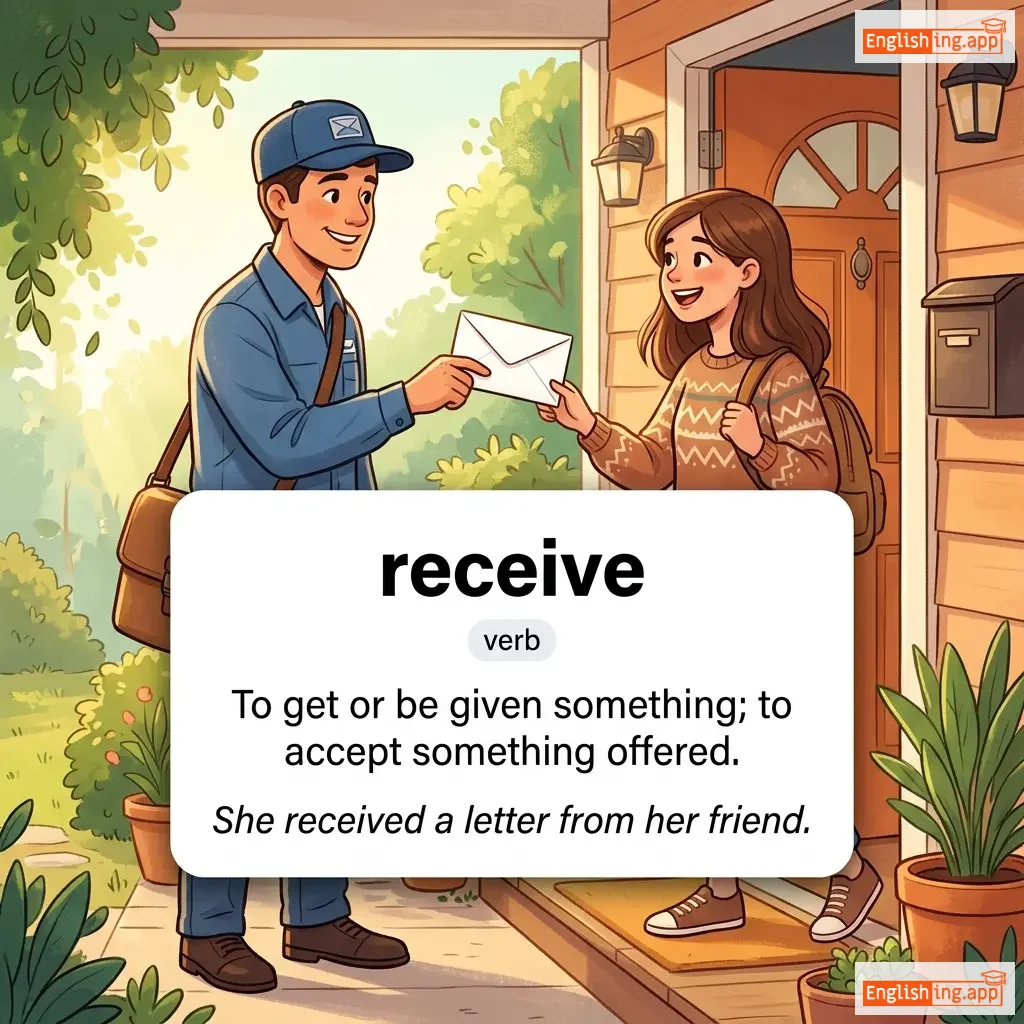
受け取る
uketoru
••••••
|
received
リシーブド
••••••
|
received
リシーブド
••••••
|
receives
リシーブス
••••••
|
receiving
リシービング
••••••
|
to get or accept something that is given or sent
••••••
|
She will receive her diploma at the graduation ceremony.
彼女は卒業式で自分の卒業証書を受け取るでしょう。
••••••
|
彼女は卒業式で自分の卒業証書を受け取るでしょう。
Kanojo wa sotsugyōshiki de jibun no sotsugyōshōsho o uketoru deshō.
••••••
|
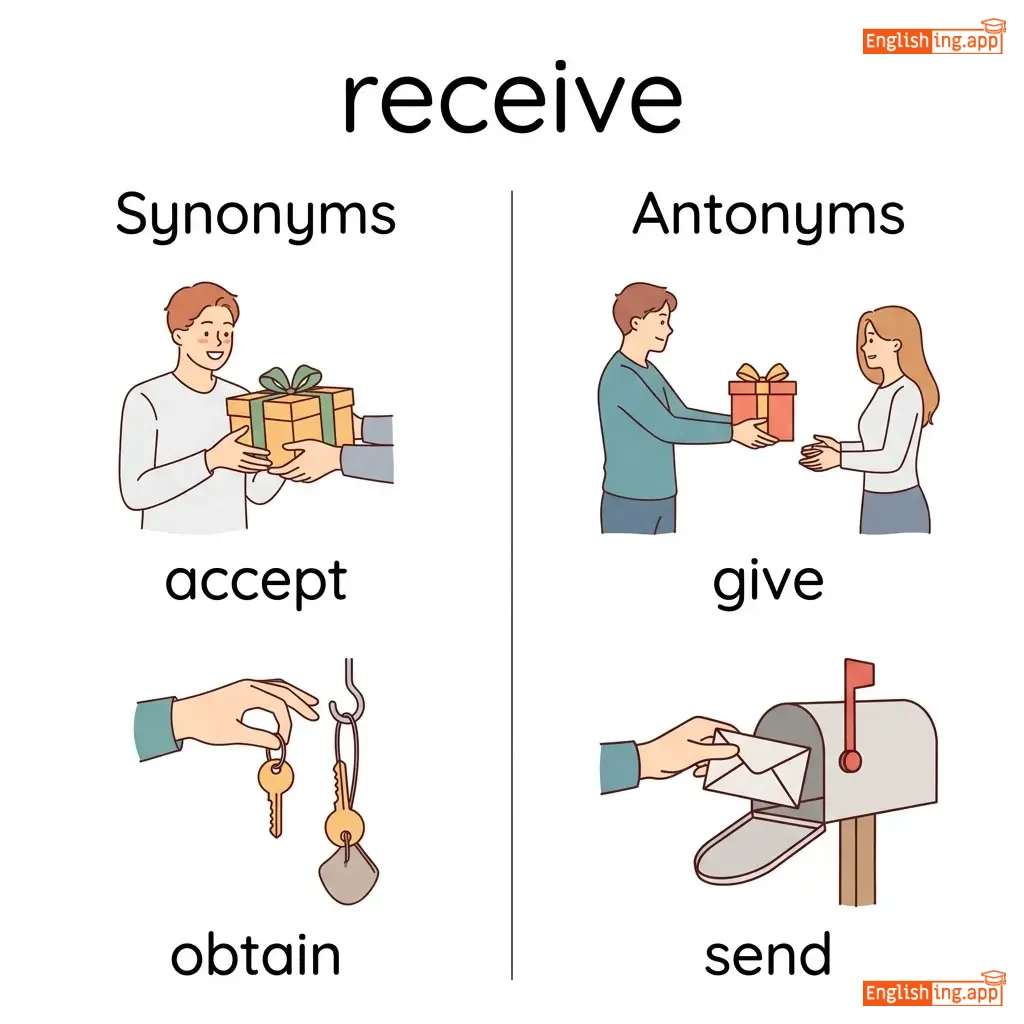
get, obtain, accept, acquire
••••••
|
give, send, donate, offer
••••••
|
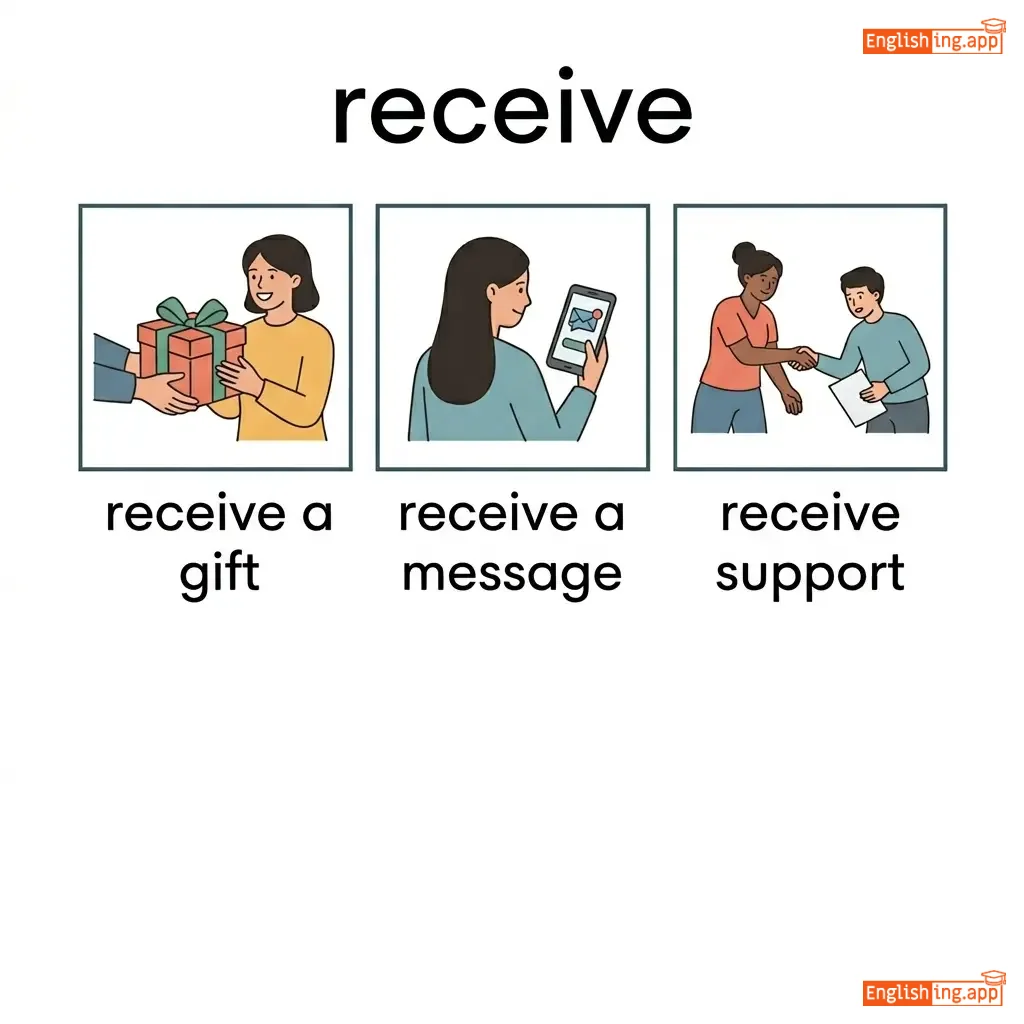
receive warmly, receive gratefully, receive officially, receive news
••••••
|
Japanese '受け取る' sounds like 'receive'. Imagine receiving your diploma in Japan!
••••••
|
|
#583
🌊
|
/pɔːr/
verb
(ポア)
••••••
|
- •••••• |
注ぐ
sosogu
••••••
|
poured
ポード
••••••
|
poured
ポード
••••••
|
pours
ポアーズ
••••••
|
pouring
ポアリング
••••••
|
to flow or cause to flow in a steady stream; to rain heavily
••••••
|
Please pour the water into the glass carefully.
水をグラスに慎重に注いでください。
••••••
|
水をグラスに慎重に注いでください。
Mizu wo gurasu ni shinchou ni sosogite kudasai.
••••••
|
flow, stream, spill, tip
••••••
|
stop, contain, hold, retain
••••••
|
pour out, pour into, pour carefully, pour slowly
••••••
|
No •••••• |
|
#584
💰
|
/ˈkɑːmpənseɪt/
verb
(コンペンセート)
••••••
|
|
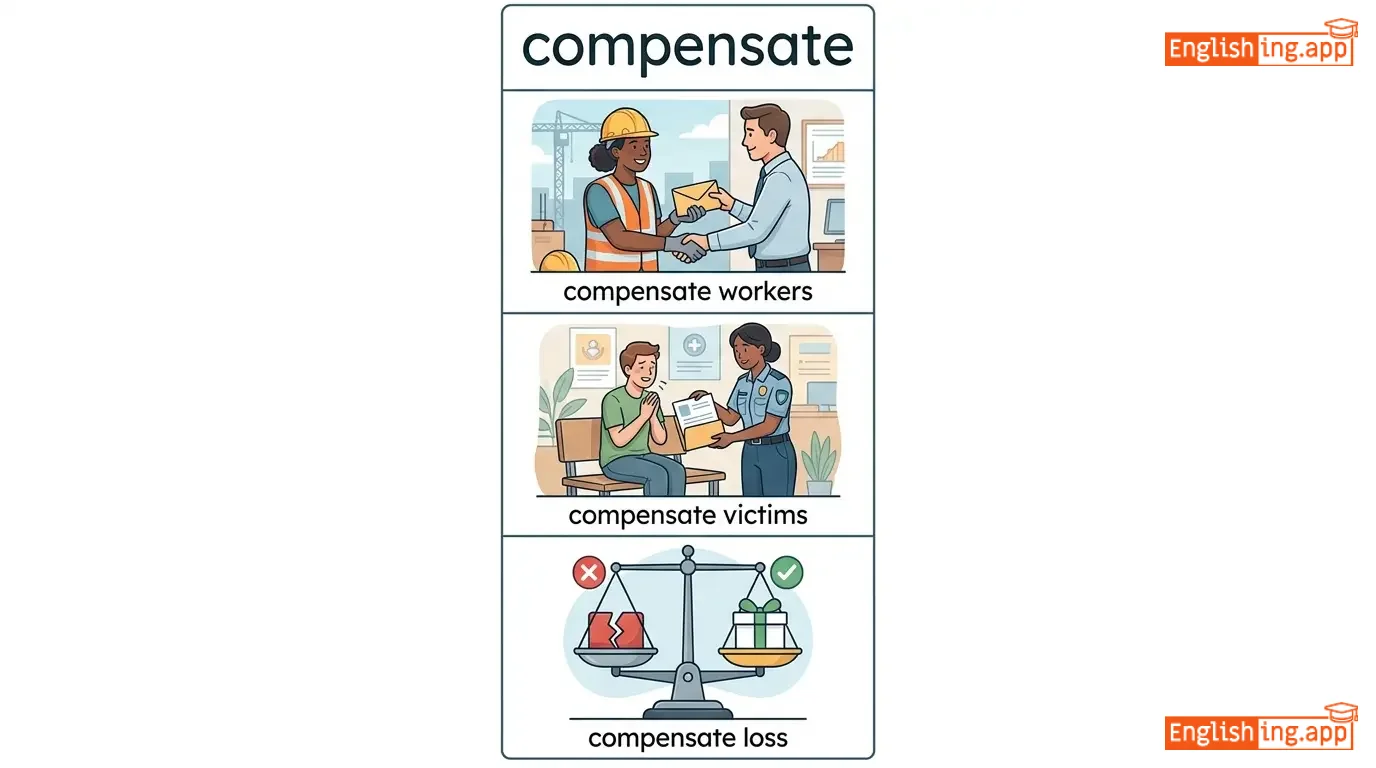
補償する
hoshō suru
••••••
|
compensated
コンペンセイテッド
••••••
|
compensated
コンペンセイテッド
••••••
|
compensates
コンペンセイツ
••••••
|
compensating
コンペンセイティング
••••••
|
to give something to make up for loss or damage; to counterbalance
••••••
|
The company will compensate employees for overtime work.
会社は残業に対して従業員に賠償金を支払う。
••••••
|
会社は残業に対して従業員に賠償金を支払う。
Kaisha wa zangyō ni taishite jūgyōin ni baishōkin o shiharau.
••••••
|
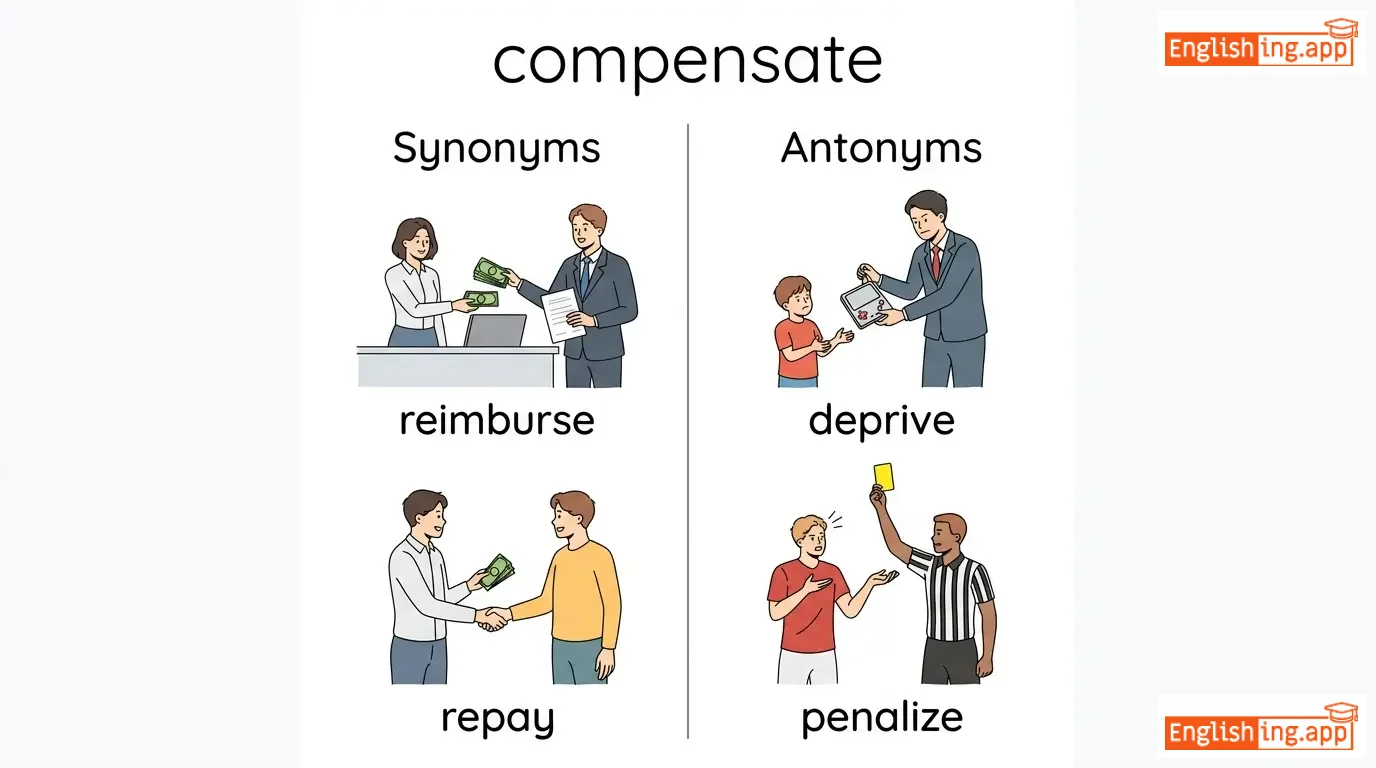
reimburse, repay, offset, balance
••••••
|
penalize, charge, fine, deduct
••••••
|
compensate for, compensate fully, compensate fairly, compensate adequately
••••••
|
補償するは失われたものを取り戻すこと、つまり残業を賠償することです。
••••••
|
|
#585
😠
|
/tʃaɪd/
verb
(chaido)
••••••
|
|
叱る
shikaru
••••••
|
chid
chido
••••••
|
chidden
chidden
••••••
|
chides
chaidesu
••••••
|
chiding
chaidingu
••••••
|
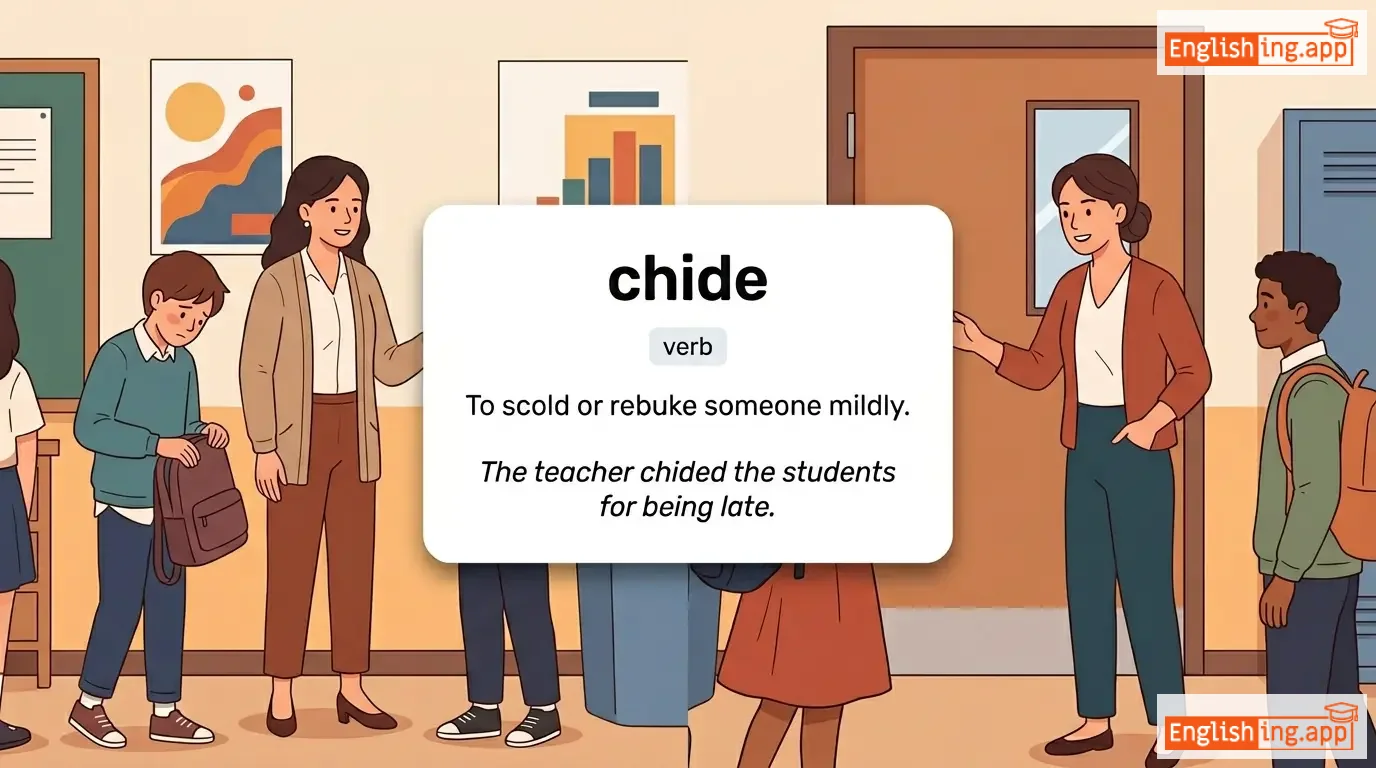
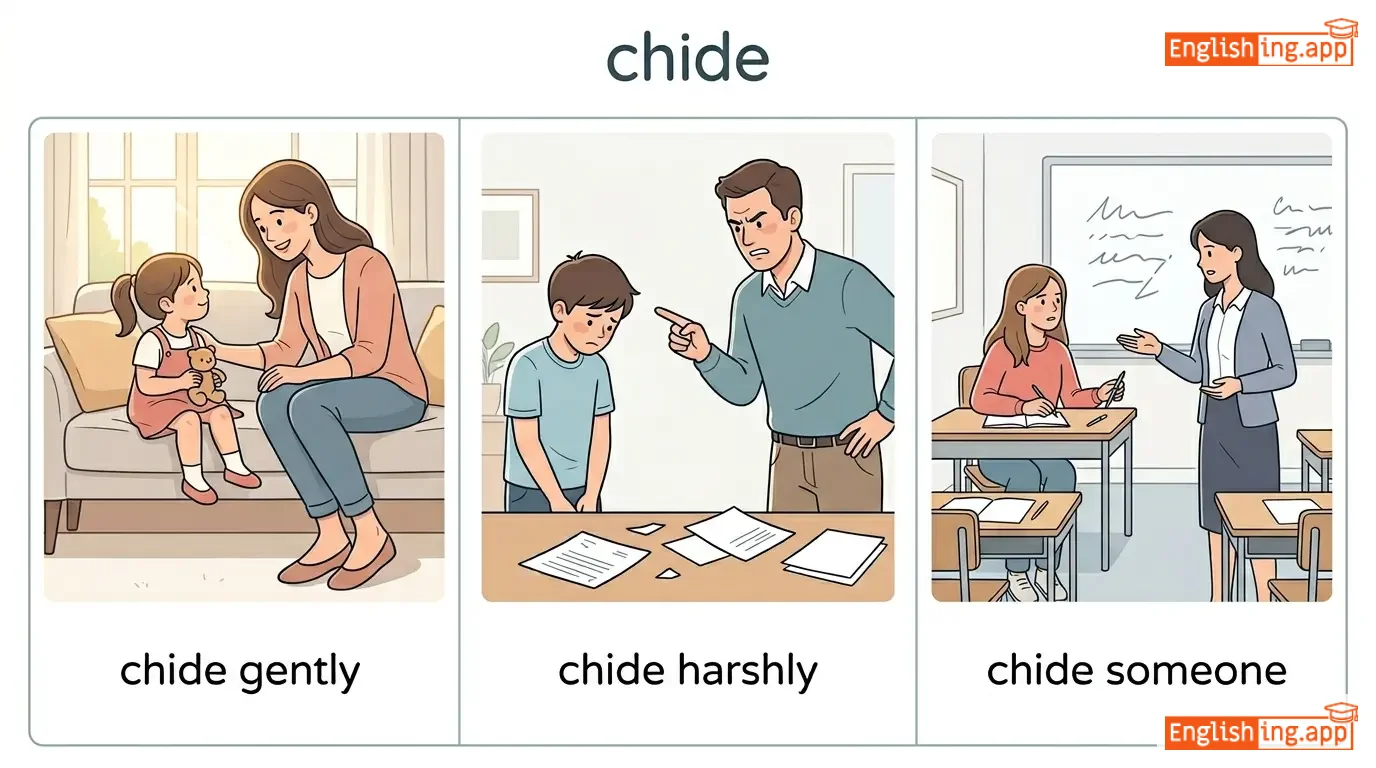
to scold or rebuke; to express disapproval
••••••
|
The teacher chided the student for being late.
先生は遅刻した生徒を叱りました。
••••••
|
先生は遅刻した生徒を叱りました。
Sensei wa chikoku shita seito wo shikarimashita.
••••••
|
scold, rebuke, reprimand, criticize
••••••
|
praise, commend, approve, encourage
••••••
|
chide gently, chide harshly, chide for mistakes, chide repeatedly
••••••
|
Chide sounds like 'shikaru' - teacher 'shikarimasu' when they 'chide'.
••••••
|
|
#586
📦
|
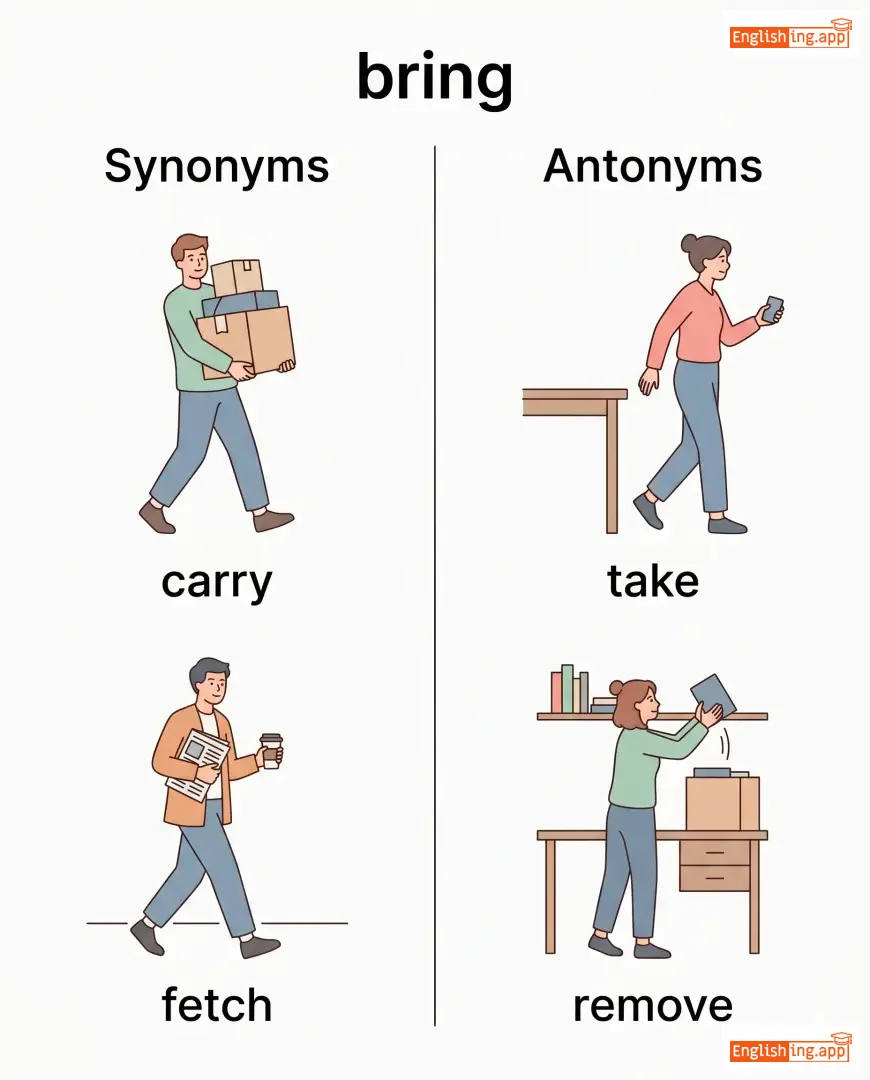
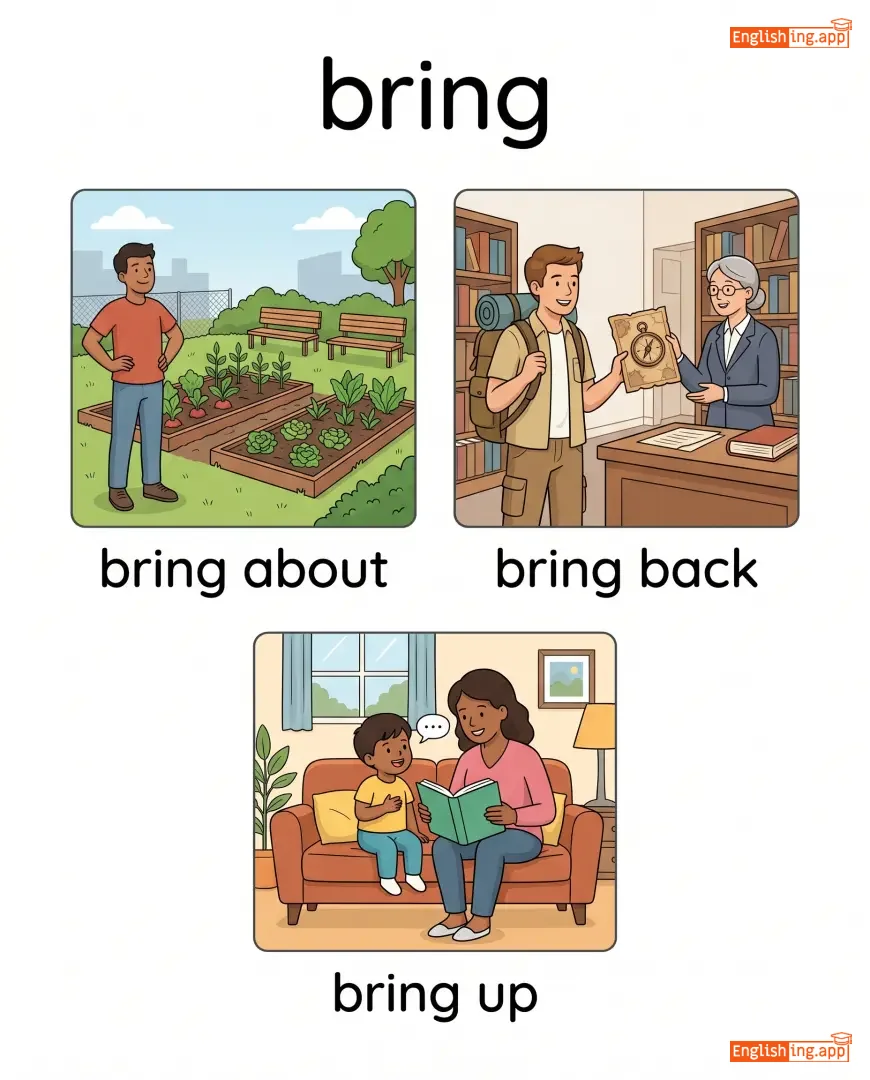
/brɪŋ/
verb
(ブリング)
••••••
|
|
持ってくる
mottekuru
••••••
|
brought
ブロット
••••••
|
brought
ブロット
••••••
|
brings
ブリングス
••••••
|
bringing
ブリングイング
••••••
|
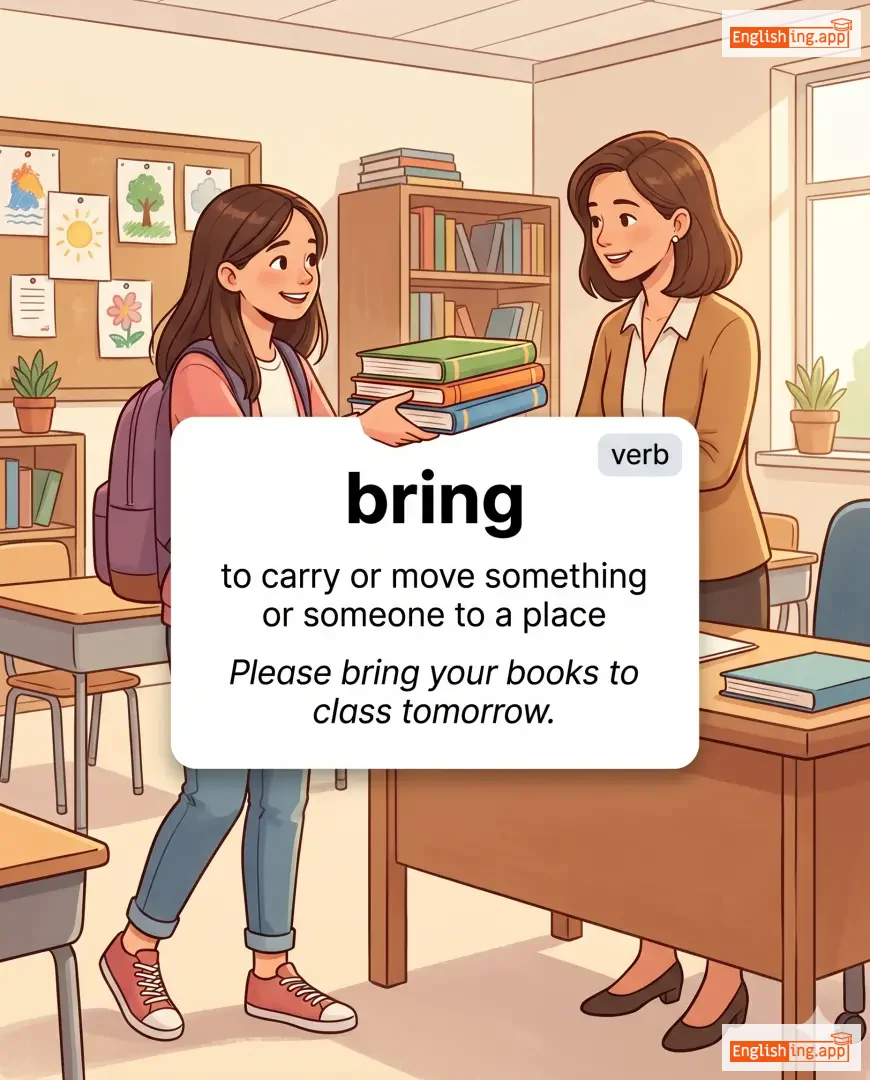
to carry or take something to a place; to cause something to happen
••••••
|
Don't forget to bring your umbrella today.
今日は傘を持ってくるのを忘れないで。
••••••
|
今日は傘を持ってくるのを忘れないで。
Kyou wa kasa o mottekuru no o wasurenaide.
••••••
|
carry, take, deliver, transport
••••••
|
take away, remove, send away
••••••
|
bring along, bring together, bring back, bring forward
••••••
|
Bring me a cup of tea
••••••
|
|
#587
🧭
|
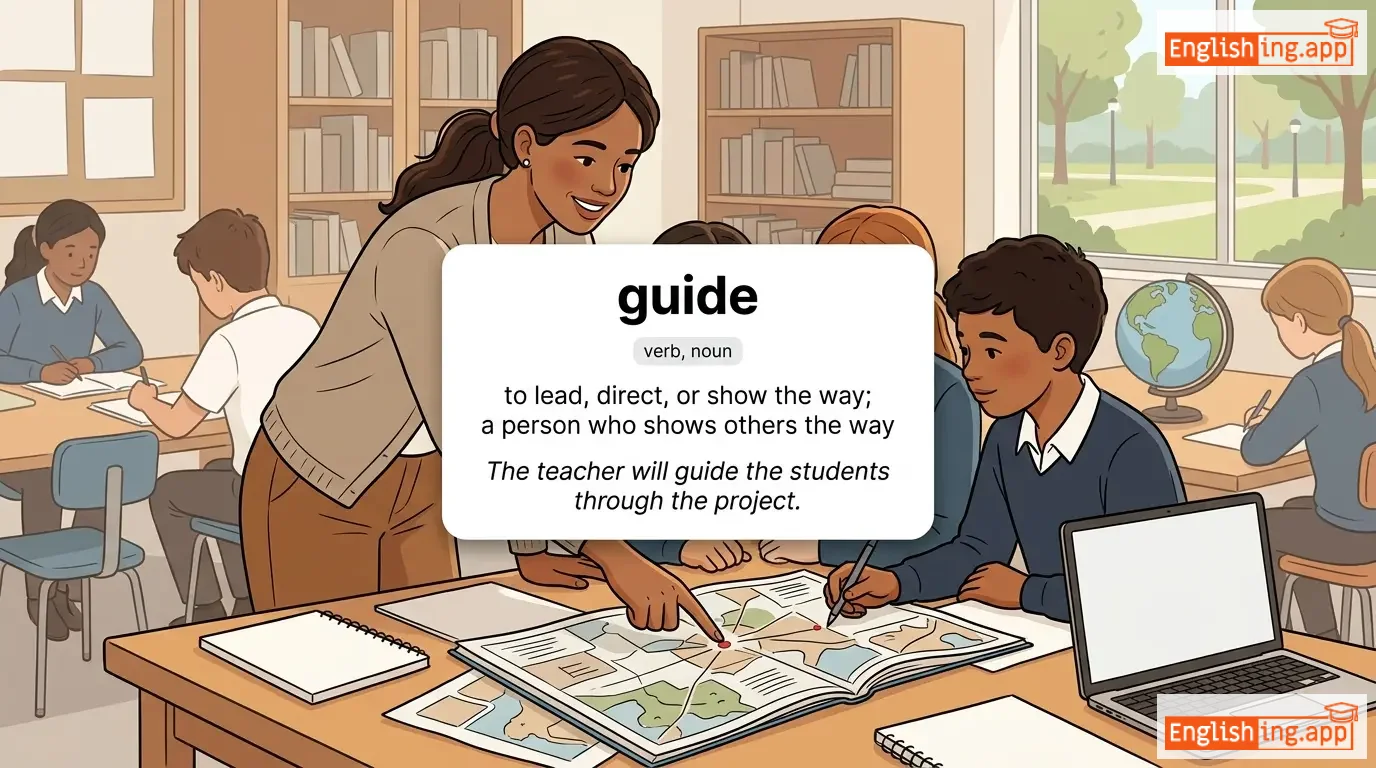
/ɡaɪd/
verb
(ガイド)
••••••
|
|
案内する
annai suru
••••••
|
guided
ガイデッド
••••••
|
guided
ガイデッド
••••••
|
guides
ガイズ
••••••
|
guiding
ガイディング
••••••
|
to show someone the way; to direct or influence behavior
••••••
|
The teacher guides the students.
先生は学生をガイドします。
••••••
|
先生は学生を案内します。
sensei wa gakusei wo annai shimasu.
••••••
|
lead, direct, instruct, navigate
••••••
|
mislead, confuse, follow, abandon
••••••
|
guide through, guide carefully, guide safely, provide guidance
••••••
|
In Japanese, '案内する' means to guide or direct someone, like a guide.
••••••
|
|
#588
➡️
|
/prəˈsiːd/
verb
(プロシード)
••••••
|
- •••••• |
進む
susumu
••••••
|
proceeded
プロシーデッド
••••••
|
proceeded
プロシーデッド
••••••
|
proceeds
プロシーズ
••••••
|
proceeding
プロシーディング
••••••
|
to continue with a course of action; to move forward
••••••
|
Let's proceed with the meeting as planned.
レットゥス プロシード ウィズ ザ ミーティング アズ プランド
••••••
|
計画通りに会議を進めましょう。
Keikaku dōri ni kaigi o susumemashou
••••••
|
continue, advance, progress, carry on
••••••
|
stop, halt, retreat, withdraw
••••••
|
proceed with, proceed carefully, proceed immediately, proceed as planned
••••••
|
Proceed ahead just like you say '進む' in Japanese!
••••••
|
|
#589
😠
|
/əˈfend/
verb
(オフェンド)
••••••
|
- •••••• |
侮辱する
bujoku suru
••••••
|
offended
オフェンデッド
••••••
|
offended
オフェンデッド
••••••
|
offends
オフェンズ
••••••
|
offending
オフェンディング
••••••
|
to cause displeasure or resentment; to hurt someone's feelings
••••••
|
His rude comments offended many people at the meeting.
彼の無礼なコメントは会議で多くの人々を怒らせました。
••••••
|
彼の無礼なコメントは会議で多くの人々を怒らせました。
Kare no bureina komentō wa kaigi de ōku no hitobito o okorase mashita.
••••••
|
insult, hurt, upset, displease
••••••
|
please, delight, compliment, praise
••••••
|
offend deeply, offend someone, take offense, cause offense
••••••
|
No •••••• |
|
#590
🏠
|
/ɪnˈhæbɪt/
verb
(インハビット)
••••••
|
- •••••• |
住む
sumu
••••••
|
inhabited
インハビテッド
••••••
|
inhabited
インハビテッド
••••••
|
inhabits
インハビッツ
••••••
|
inhabiting
インハビティング
••••••
|
to live in; to occupy as a dwelling
••••••
|
Many animals inhabit the forest.
多くの動物が森に住んでいます。
••••••
|
多くの動物が森に住んでいます。
Ooku no doubutsu ga mori ni sundeimasu.
••••••
|
occupy, reside, dwell, populate
••••••
|
vacate, abandon, leave, desert
••••••
|
inhabit areas, inhabit regions, inhabit peacefully, inhabit naturally
••••••
|
住む (sumu) は、インハビット (inhabit) と同じ意味です。
••••••
|
|
#591
😢
|
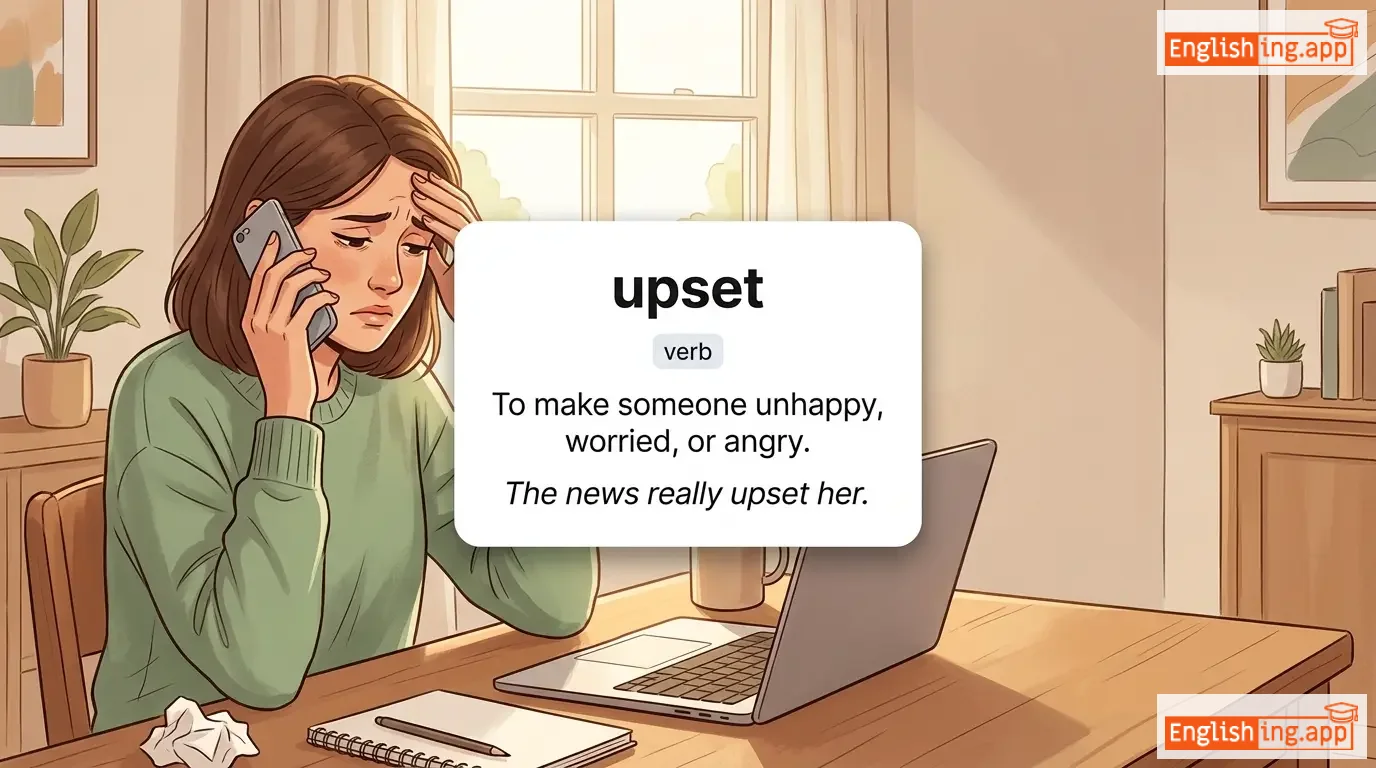
/ʌpˈset/
verb
(apset)
••••••
|
|
困らせる
komaraseru
••••••
|
upset
apset
••••••
|
upset
apset
••••••
|
upsets
apsets
••••••
|
upsetting
apseting
••••••
|
to make someone worried, sad, or angry; to disturb
••••••
|
The bad news upset everyone.
悪いニュースはみんなを upset した。
••••••
|
悪いニュースはみんなを upset した。
Warui nyūsu wa minna o upset shita.
••••••
|
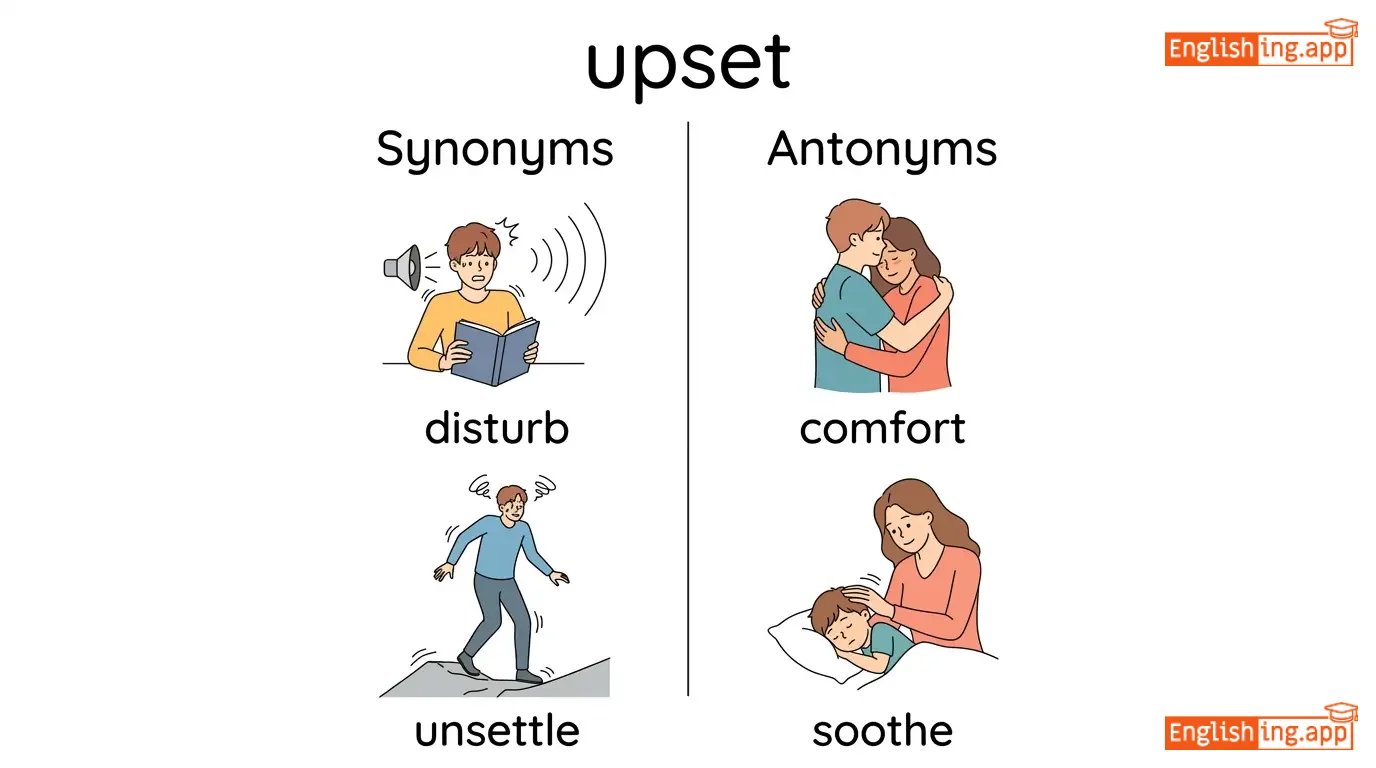
disturb, worry, trouble, distress
••••••
|
calm, soothe, comfort
••••••
|
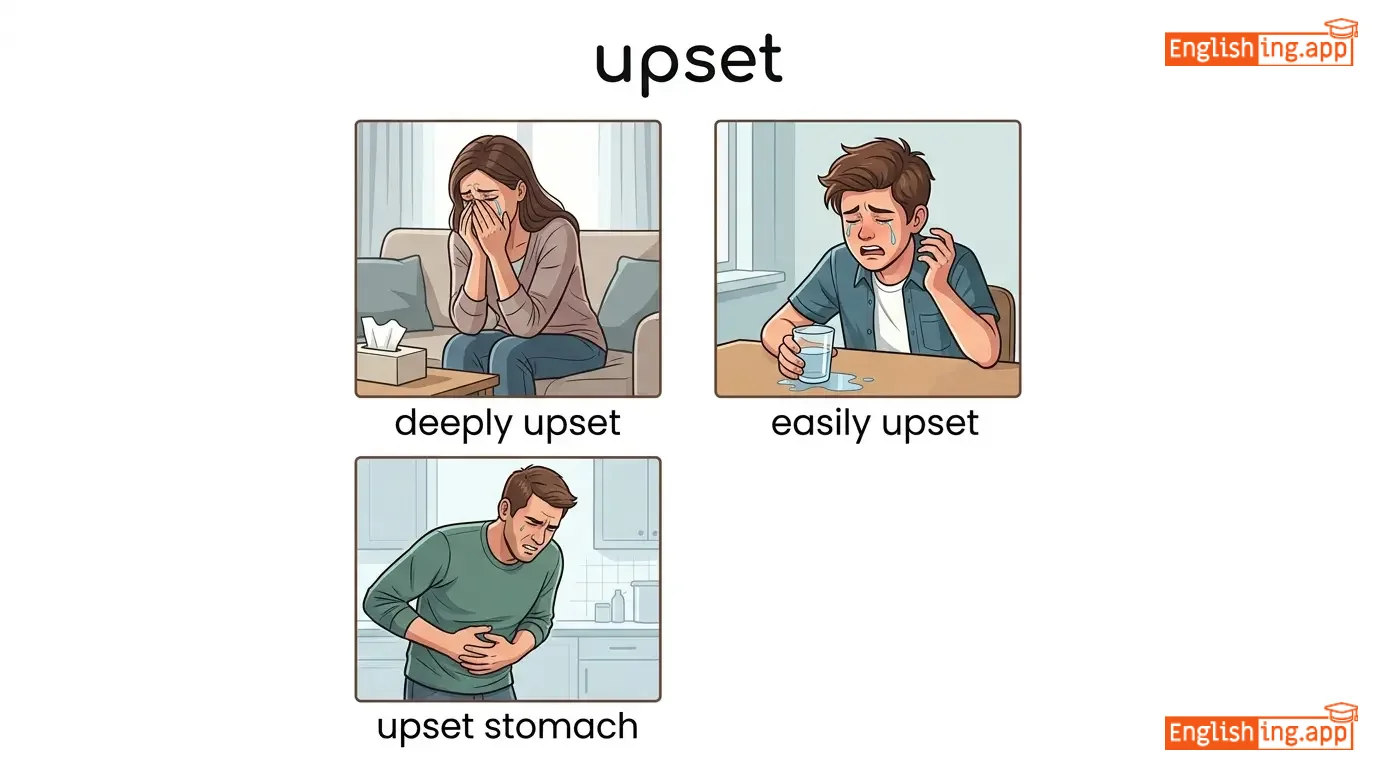
upset someone, upset plans, get upset, feel upset
••••••
|
困らせる = 人を困らせる状況にすること、まさに'upset'の意味
••••••
|
|
#592
🚀
|
/ɪˈdʒektɪd/
verb
(イジェクテッド)
••••••
|
|
eject
eject
••••••
|
ejected
イジェクテッド
••••••
|
ejected
イジェクテッド
••••••
|
ejects
イジェクツ
••••••
|
ejecting
イジェクティング
••••••
|
to force someone or something to leave a place; to push or throw something out forcefully
••••••
|
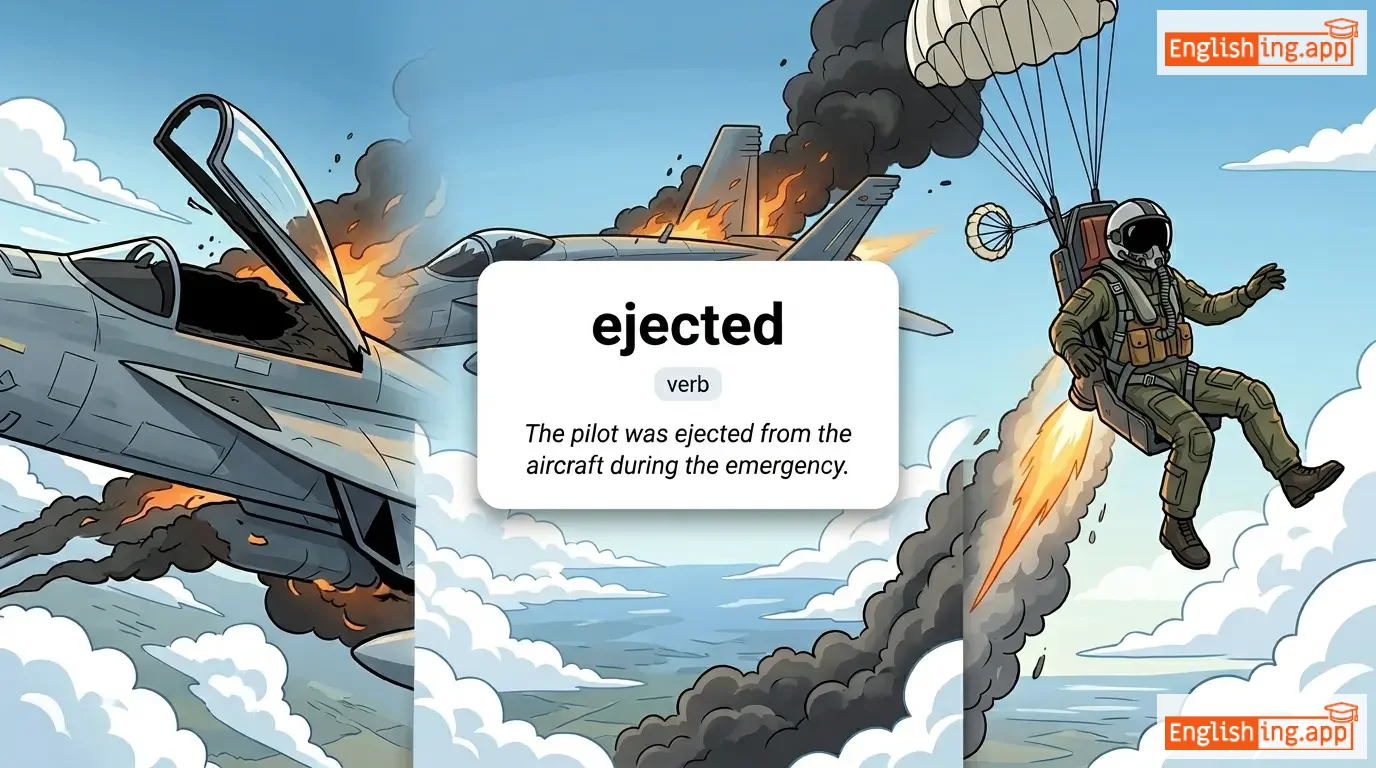
The pilot was ejected from the aircraft during the emergency.
パイロットは緊急時に飛行機から eject されました。
••••••
|
パイロットは緊急時に飛行機から eject されました。
Pairotto wa kinkyuuji ni hikouki kara eject saremashita.
••••••
|
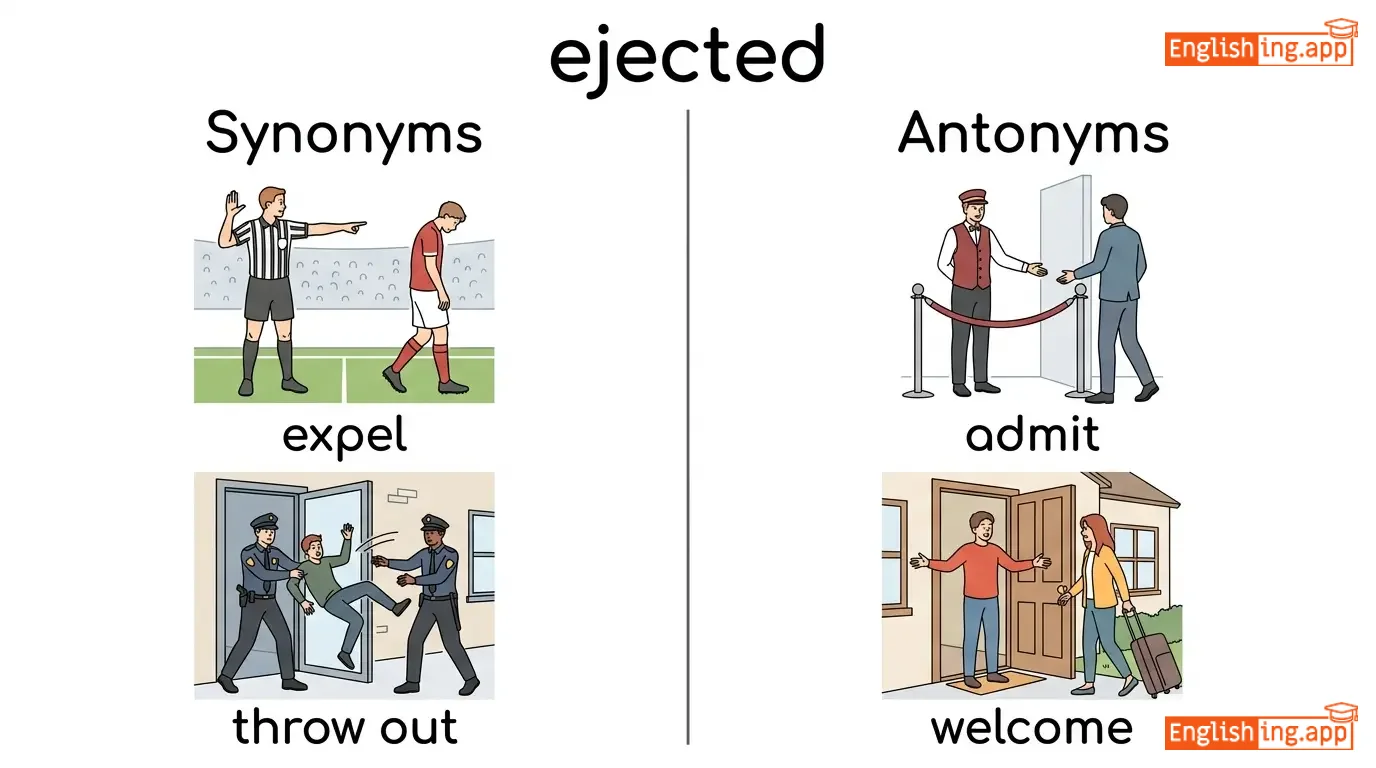
expel, throw out, remove, discharge
••••••
|
admit, welcome, accept, include
••••••
|
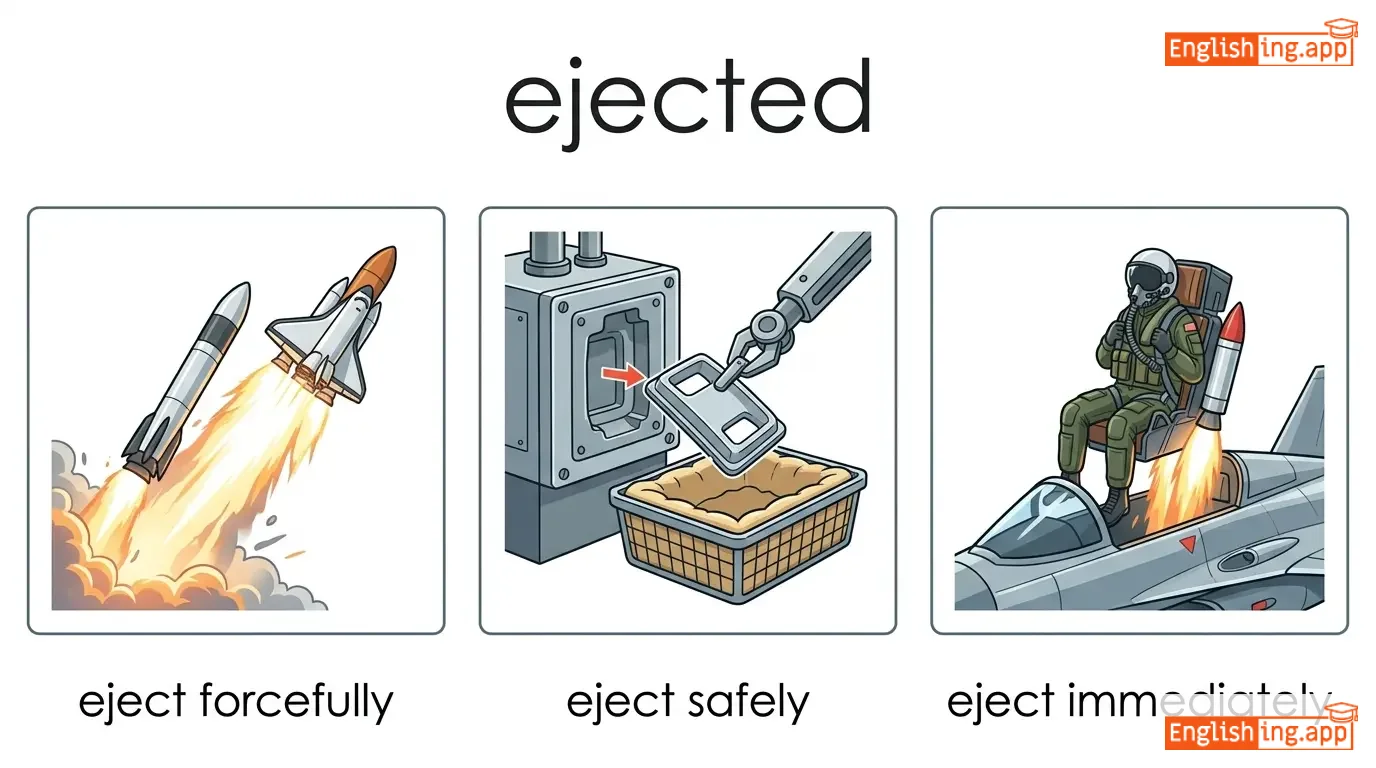
eject forcefully, eject safely, eject immediately, get ejected
••••••
|
イジェクテッドとは強制的に物を外に出すこと
••••••
|
|
#593
🥤
|
/drɪŋk/
verb
(ドリンク)
••••••
|
|
飲む
nomu
••••••
|
drank
飲んだ
••••••
|
drunk
飲んだ
••••••
|
drinks
飲む
••••••
|
drinking
飲んでいる
••••••
|
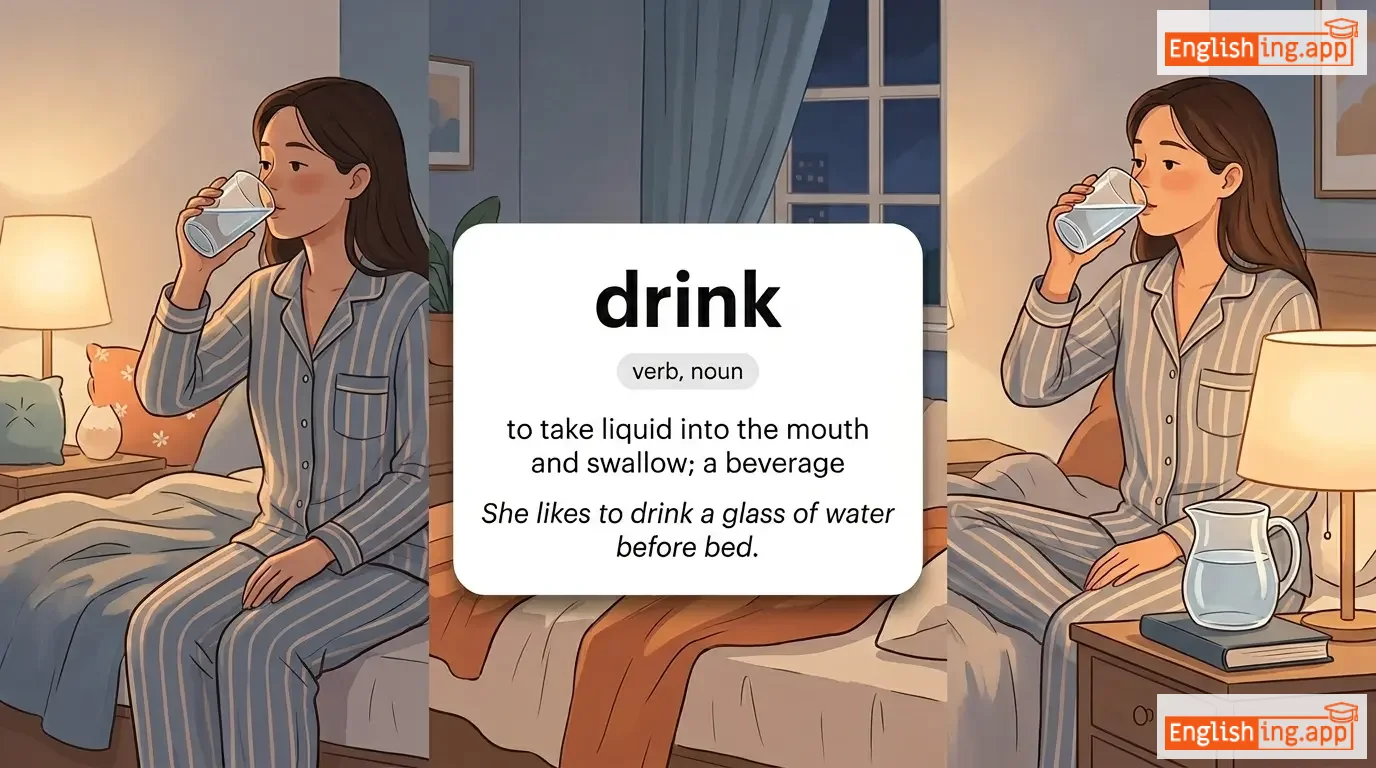
to swallow liquid; to consume beverages
••••••
|
You should drink plenty of water daily.
毎日たくさんの水を飲むべきです。
••••••
|
毎日たくさんの水を飲むべきです。
Mainichi takusan no mizu o nomu beki desu.
••••••
|
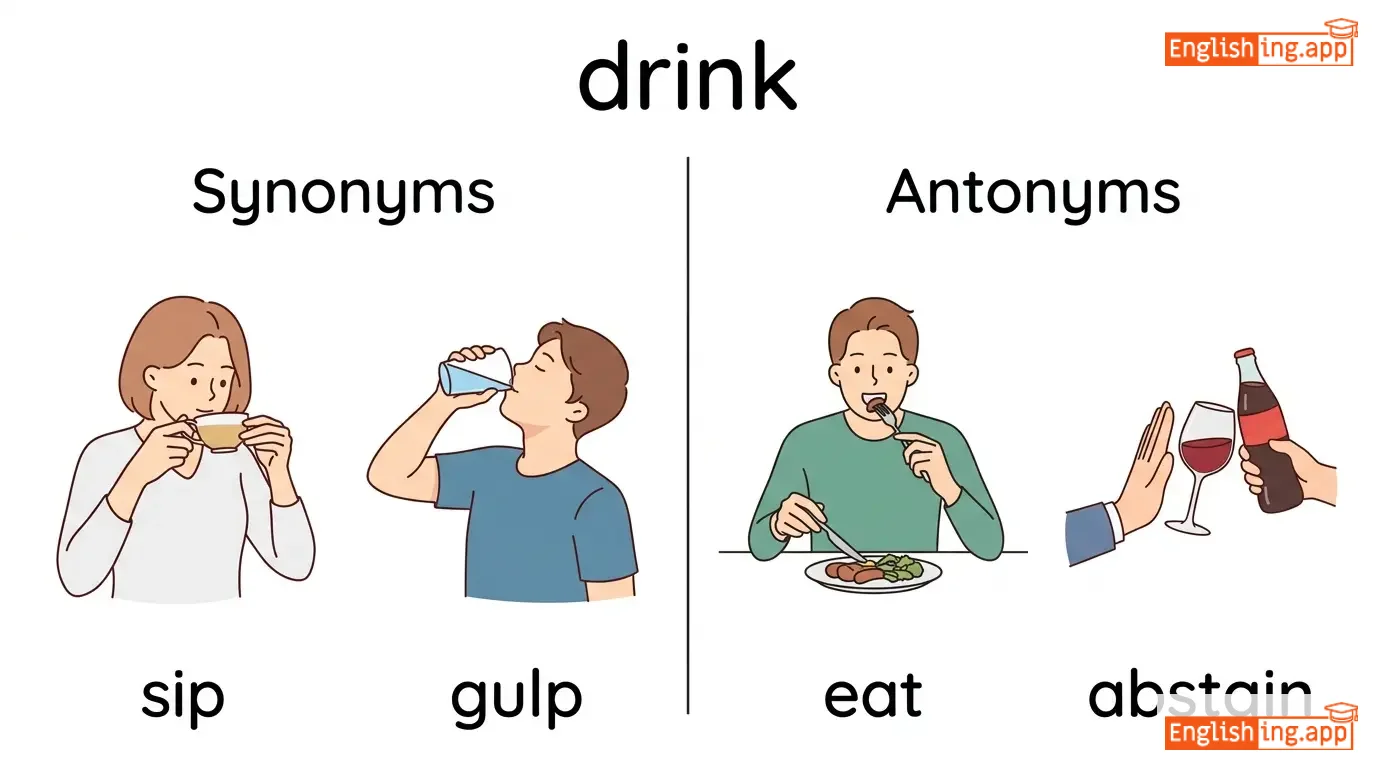
sip, gulp, consume, swallow
••••••
|
spit out, refuse, avoid
••••••
|
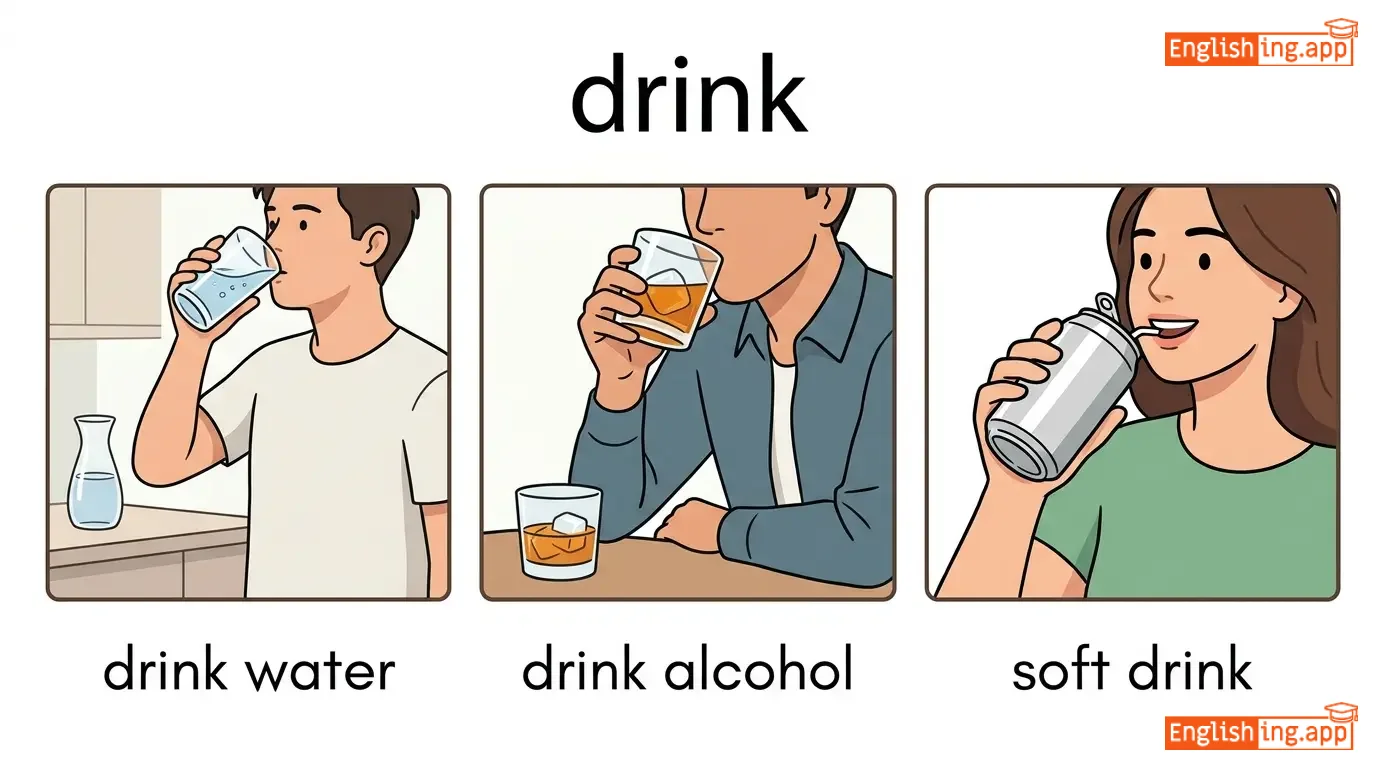
drink water, drink slowly, drink plenty, drink heavily
••••••
|
No •••••• |
|
#594
💌
|
/ɪnˈvaɪt/
verb
(インヴァイト)
••••••
|
- •••••• |
招待する
shoutai suru
••••••
|
invited
インヴァイテッド
••••••
|
invited
インヴァイテッド
••••••
|
invites
インヴァイツ
••••••
|
inviting
インヴァイティング
••••••
|
to ask someone to come to an event or to do something
••••••
|
We should invite all our friends to the party.
パーティーに友達を招待するべきです。
••••••
|
パーティーに友達を招待するべきです。
Pātī ni tomodachi o shoutai suru beki desu.
••••••
|
ask, request, summon, welcome, call
••••••
|
exclude, reject, dismiss, ban, uninvite
••••••
|
invite someone, invite over, invite formally, send invitation
••••••
|
招待するはinviteと同じ意味!
••••••
|
|
#595
🏃♂️
|
/treɪn/
verb
(トレイン)
••••••
|
|
トレーニングする
torēningu suru
••••••
|
Trained
トレインド
••••••
|
Trained
トレインド
••••••
|
Trains
トレインズ
••••••
|
Training
トレイニング
••••••
|
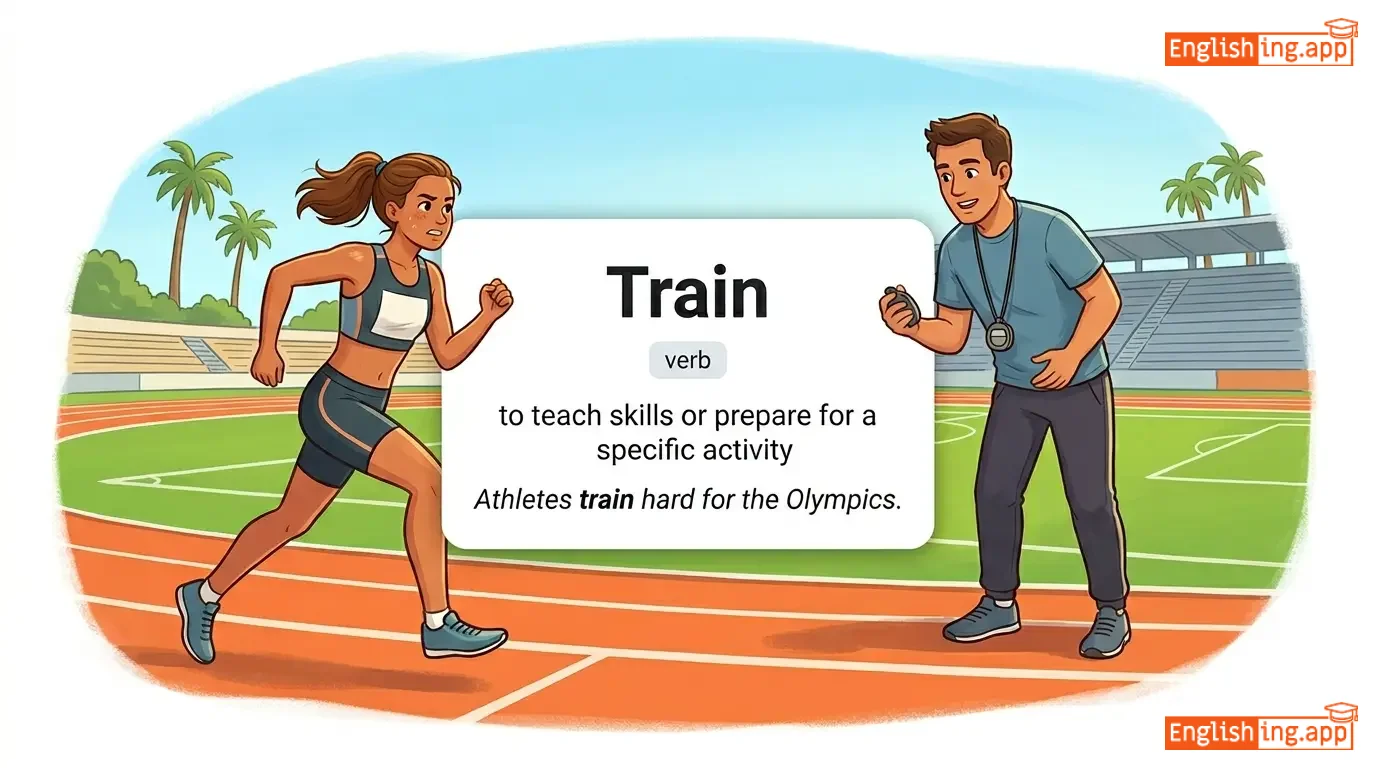
to teach skills or prepare for a specific activity
••••••
|
Athletes train hard for the Olympics.
アスリートはオリンピックのために一生懸命トレーニングをしています。
••••••
|
アスリートはオリンピックのために一生懸命トレーニングをしています。
Asurīto wa orimpikku no tame ni isshōkenmei torēningu o shiteimasu.
••••••
|
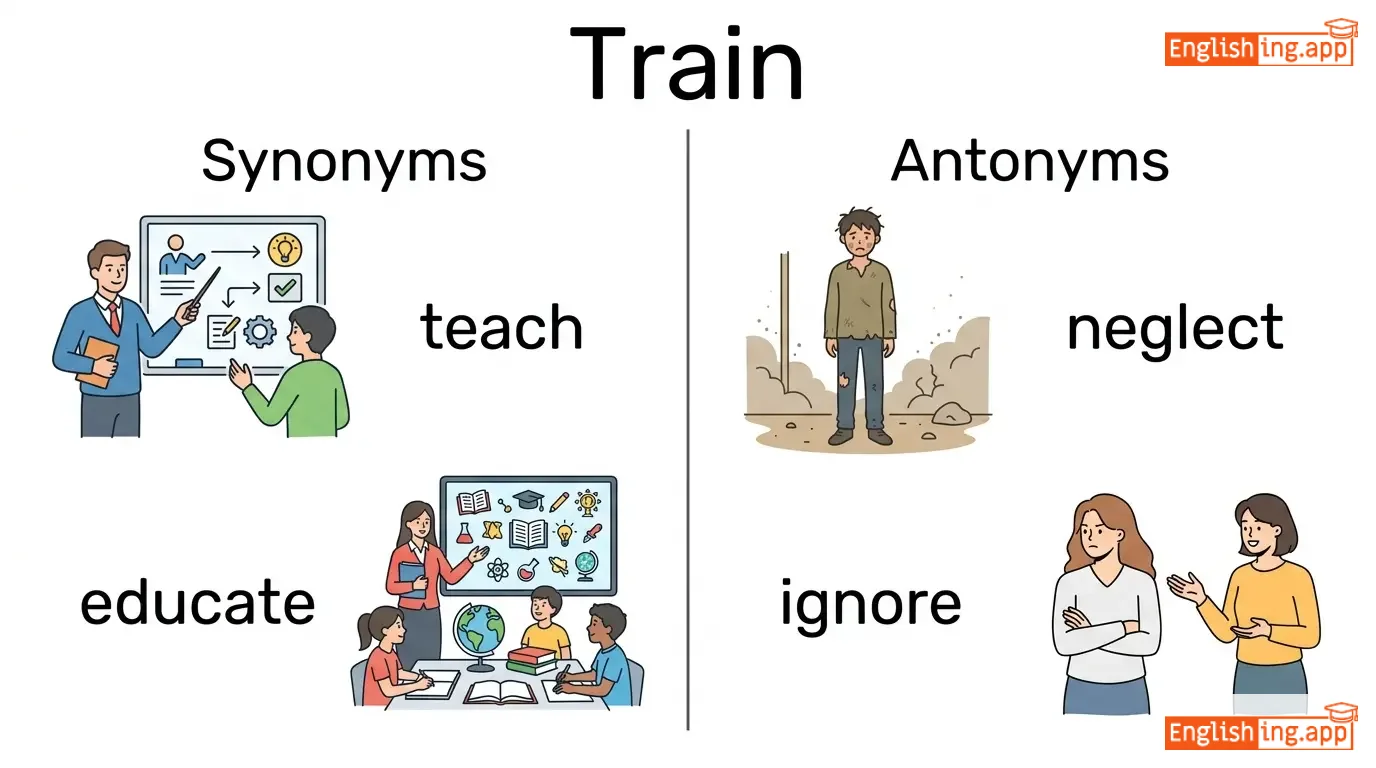
teach, educate, coach, prepare
••••••
|
neglect, ignore, abandon, discourage
••••••
|
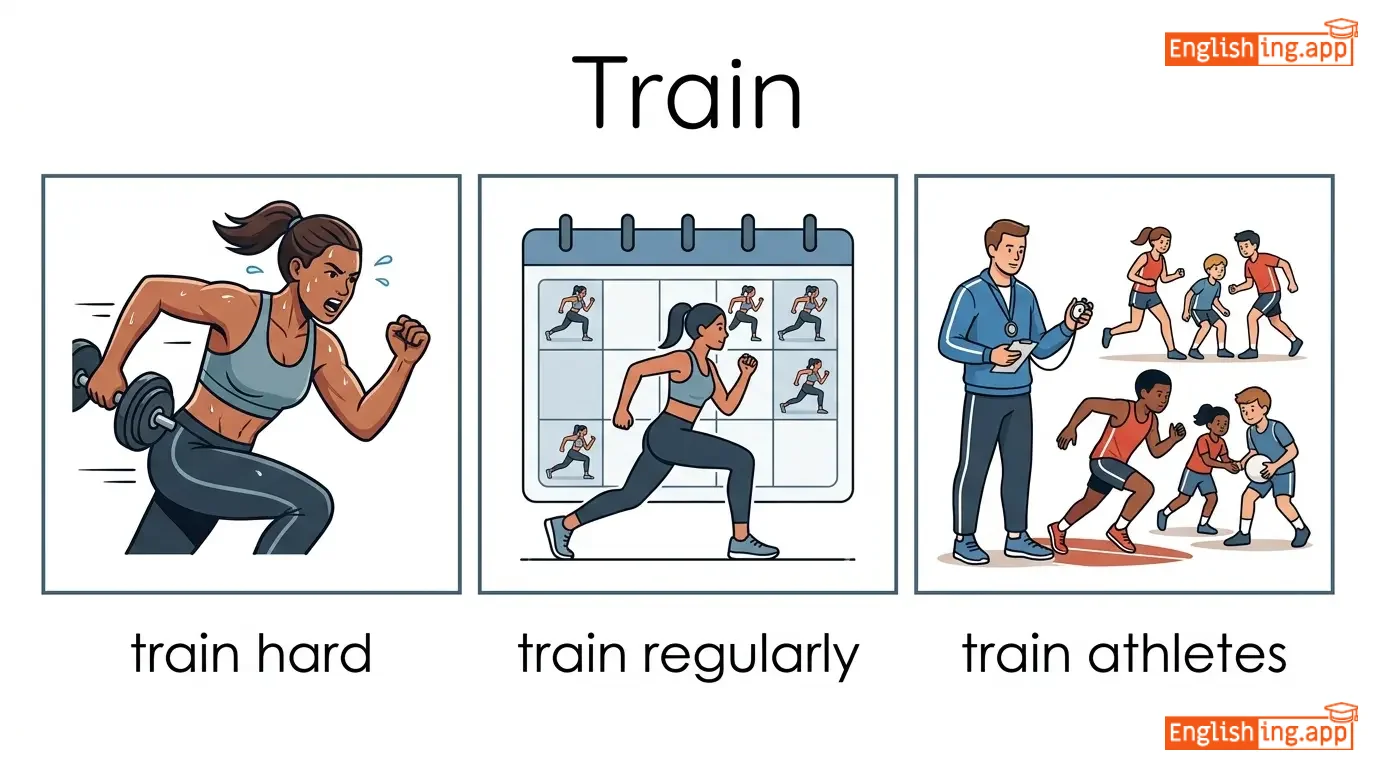
train hard, train regularly, train athletes, provide training
••••••
|
Train = トレーニングする, アスリートが練習しているように
••••••
|
|
#596
⬆️
|
/lɪft/
verb
(リフト)
••••••
|
- •••••• |
持ち上げる
mochiageru
••••••
|
lifted
リフテッド
••••••
|
lifted
リフテッド
••••••
|
lifts
リフツ
••••••
|
lifting
リフティング
••••••
|
to raise or move upward; to pick up
••••••
|
He lifted the heavy box with effort.
彼は重い箱を力を入れて持ち上げました。
••••••
|
彼は重い箱を力を入れて持ち上げました。
Kare wa omoi hako o chikara o irete mochiagemashita.
••••••
|
raise, elevate, hoist, pick up
••••••
|
lower, drop, put down, descend
••••••
|
lift up, lift weights, lift carefully, lift heavy objects
••••••
|
持ち上げるのは、まるでエレベーターのようにものを上に持ち上げることです。
••••••
|
Vocabulary Quiz
Test your vocabulary by matching words with their translations or meanings.
Login to take the quiz
Comments (0)
Share your thoughts and join the discussion.
Join the discussion by logging in
Login to CommentNo comments yet
Be the first to share your thoughts!