

翻訳
過去
過去分詞
三人称単数
動名詞
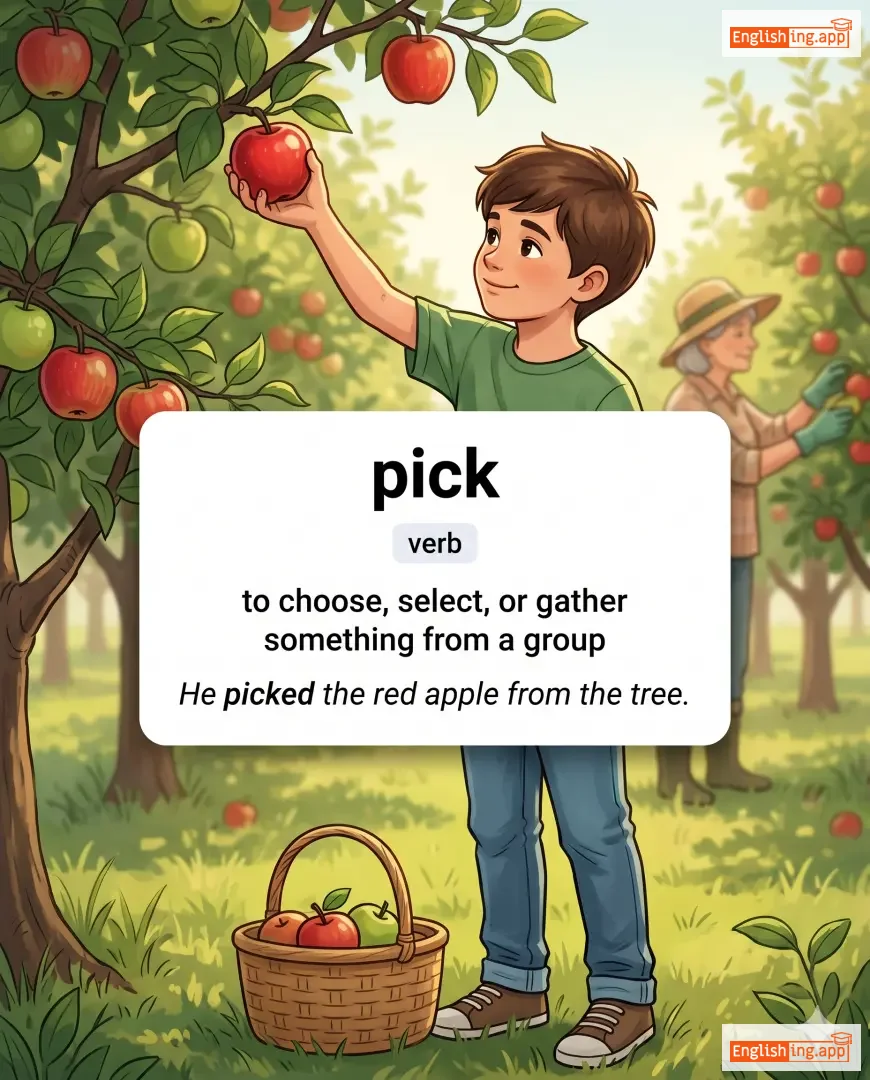
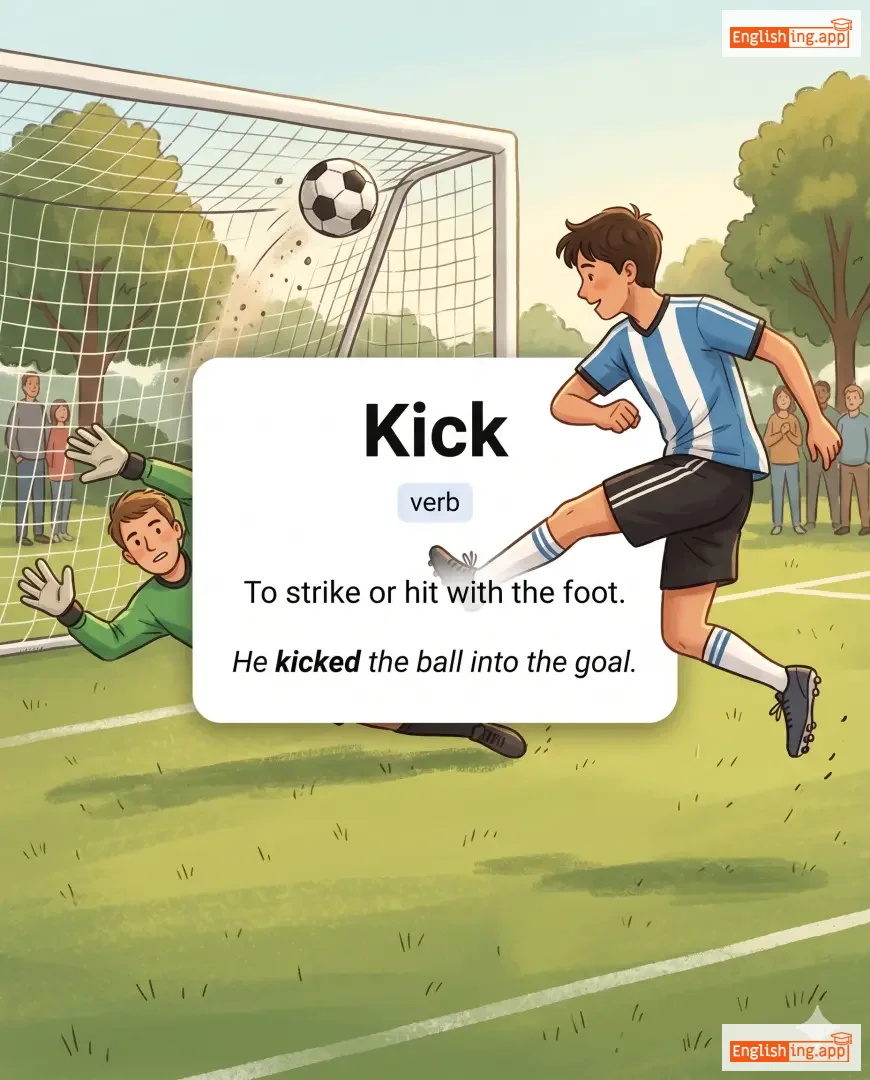
意味
例文
例文の翻訳
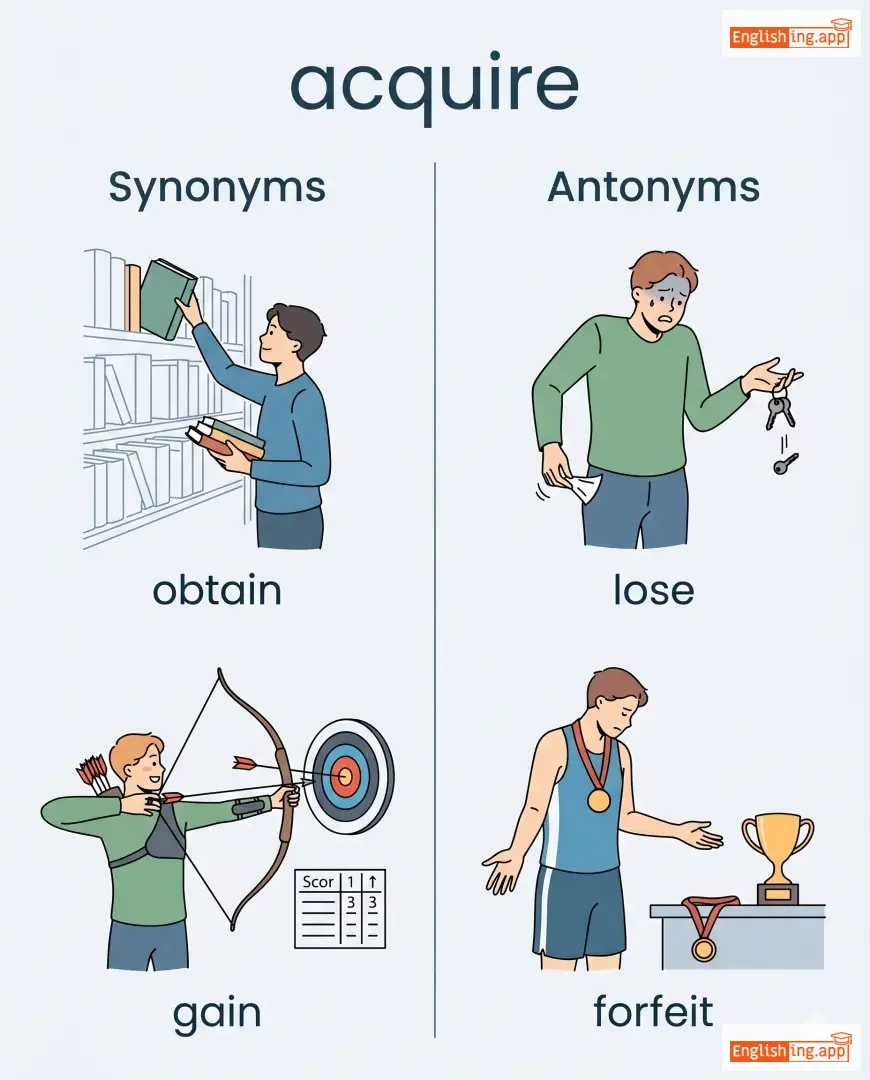
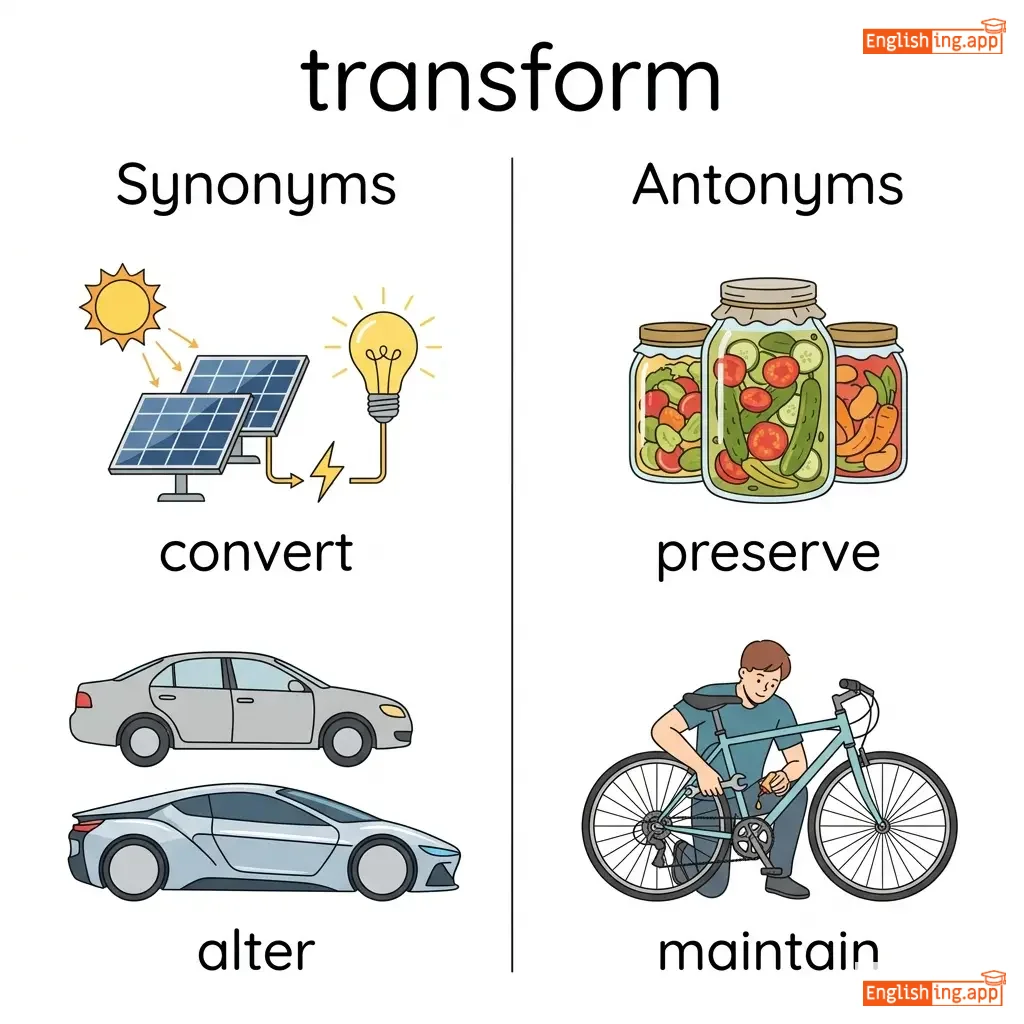
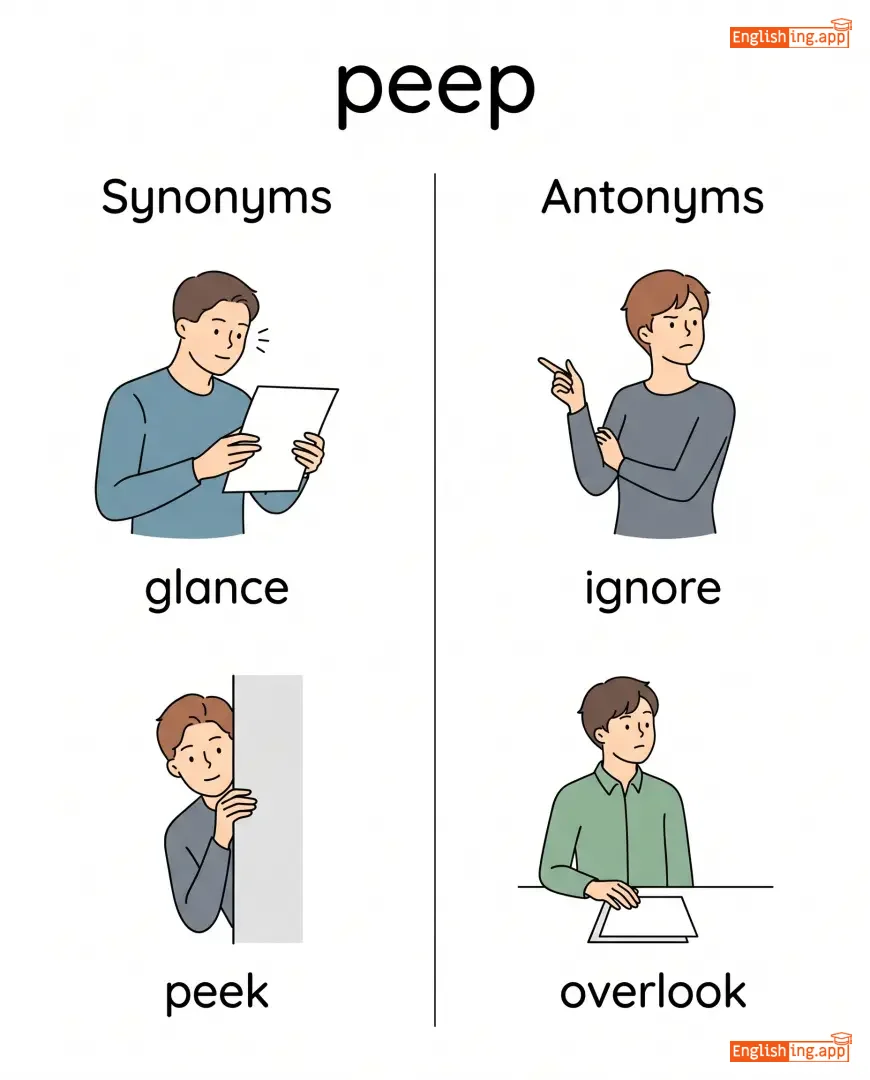
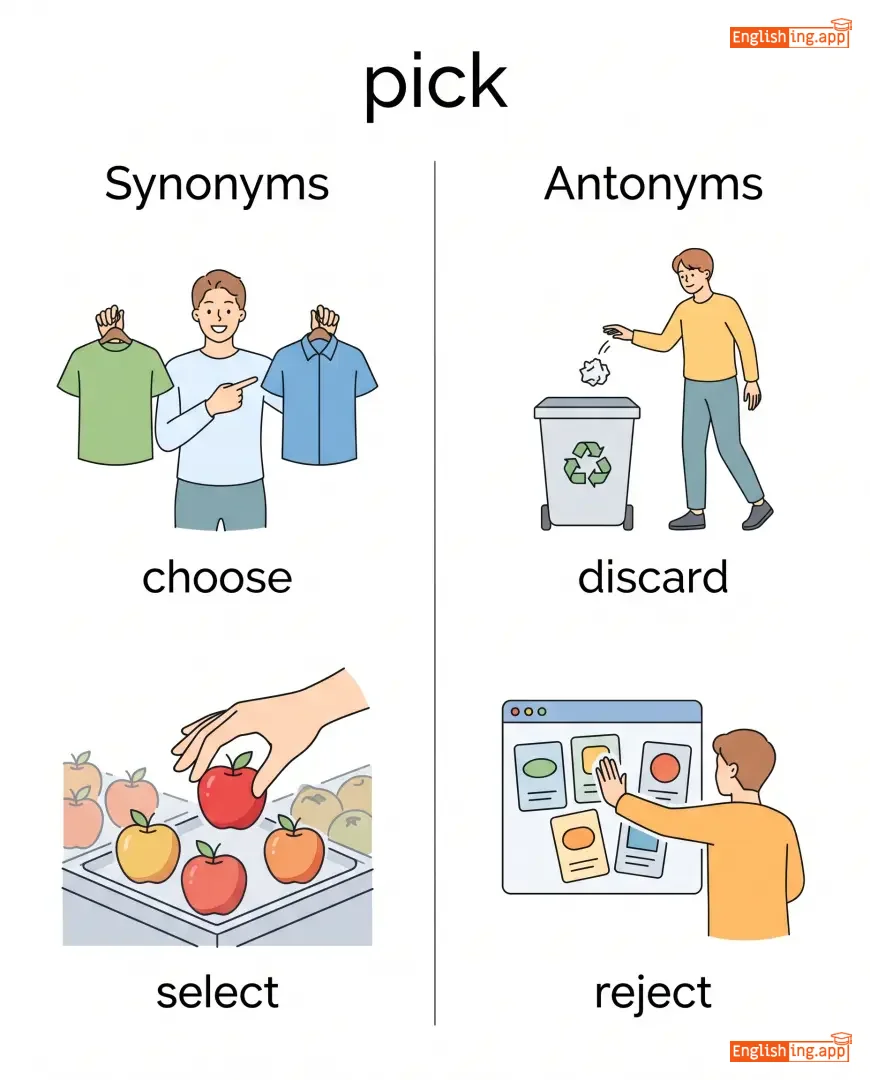
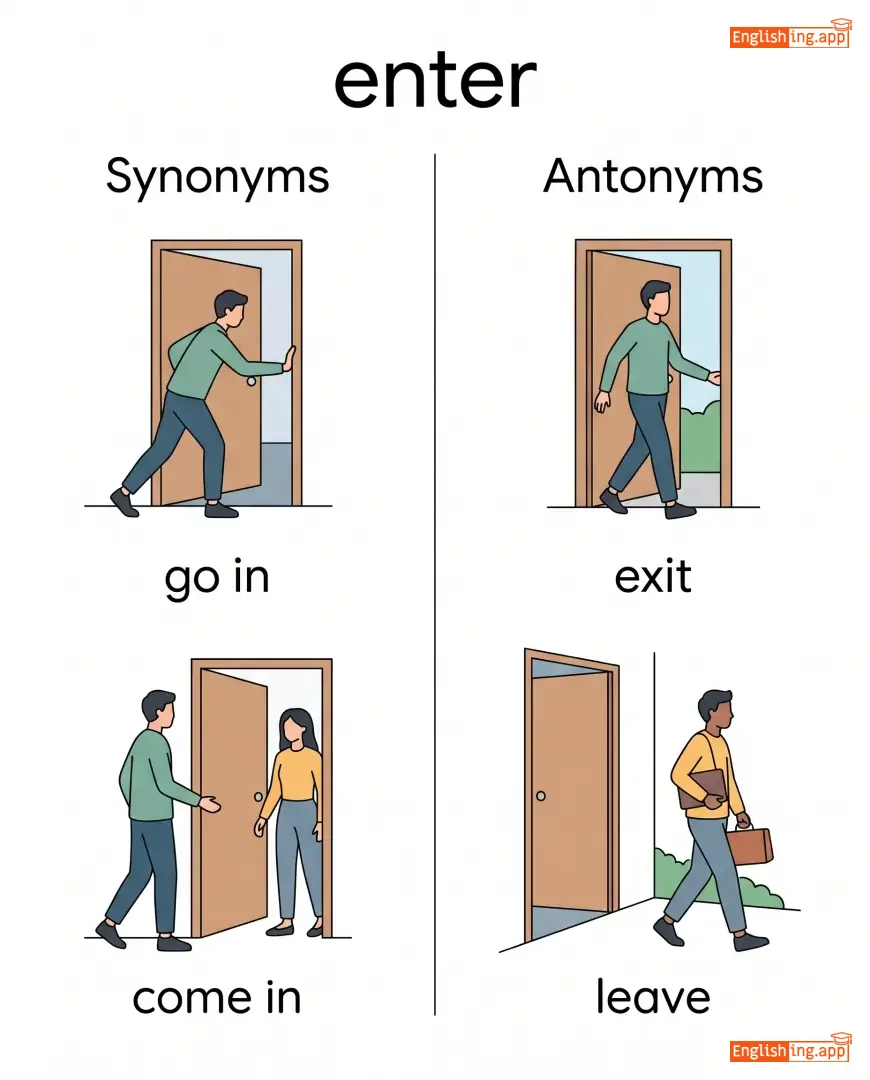
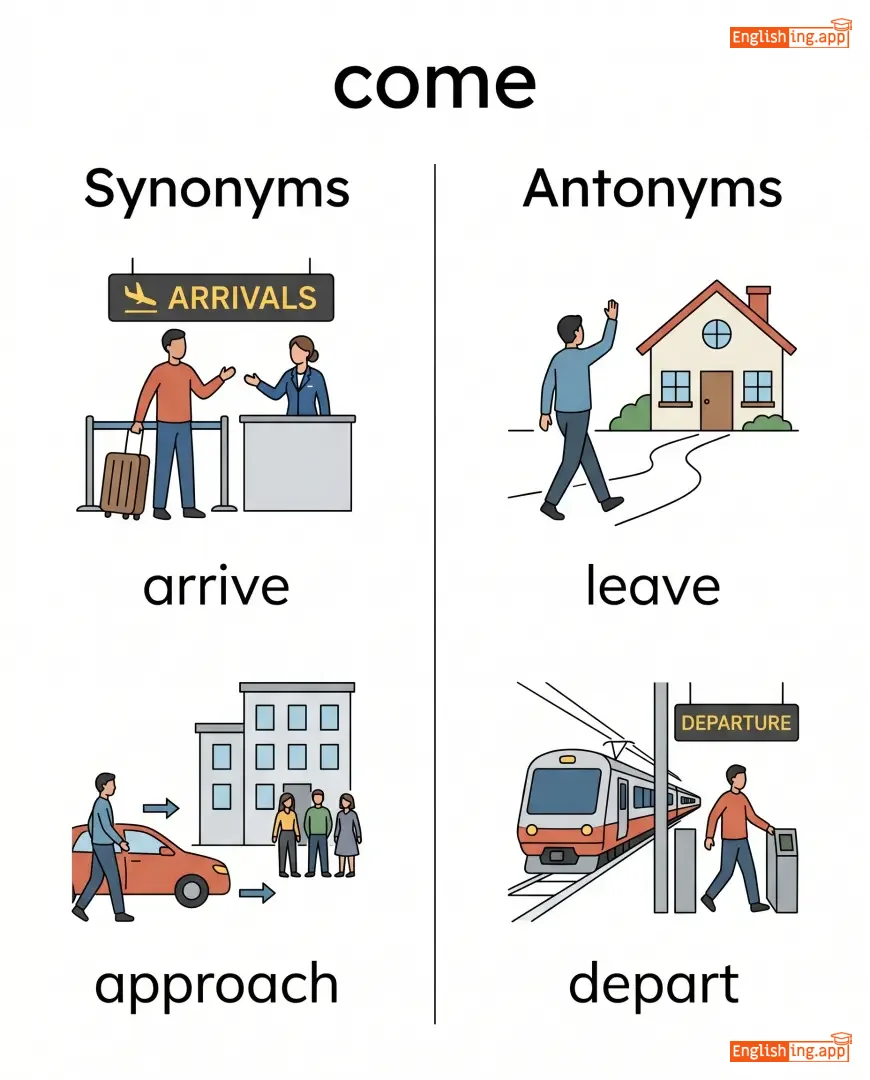
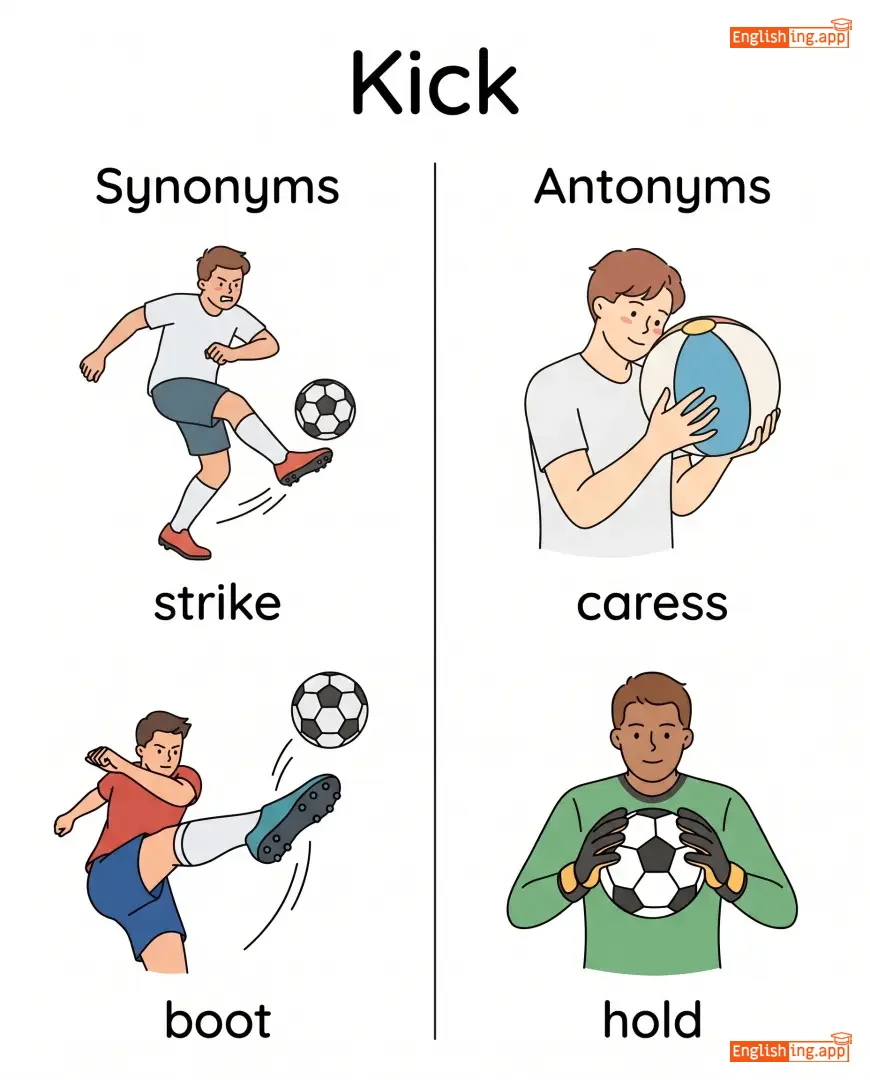
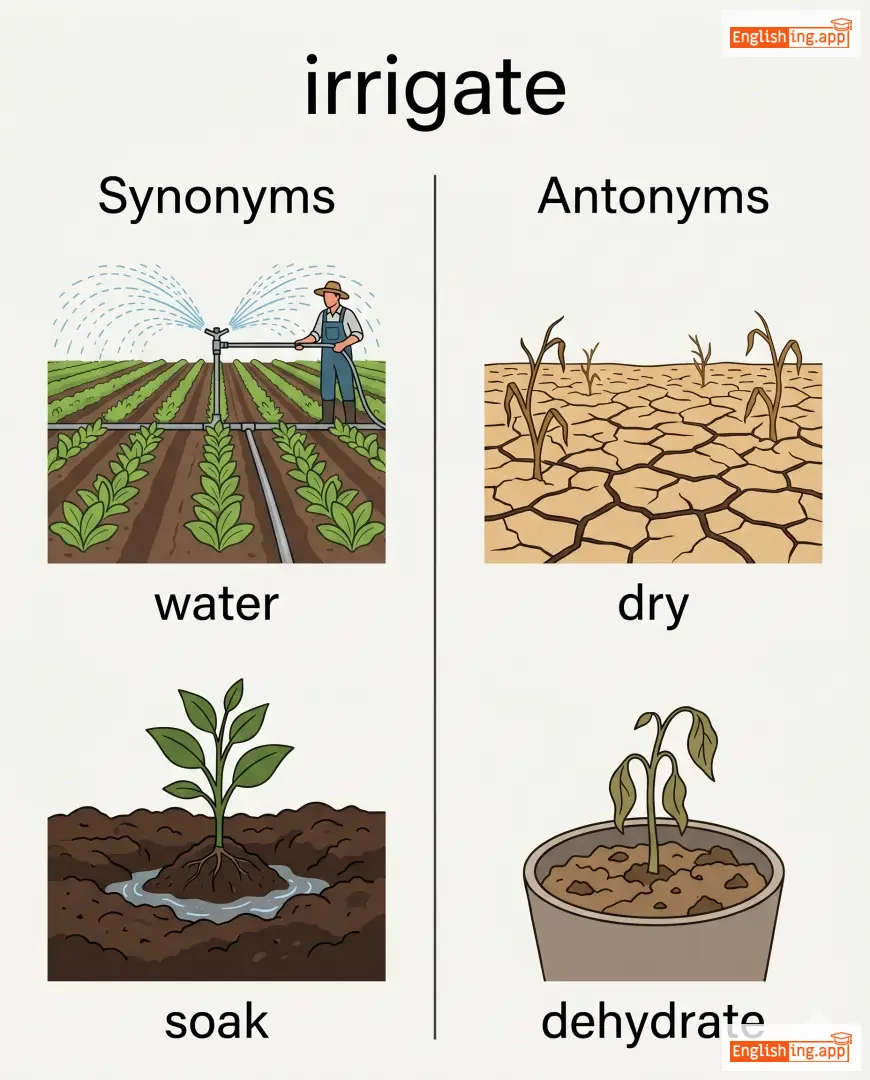
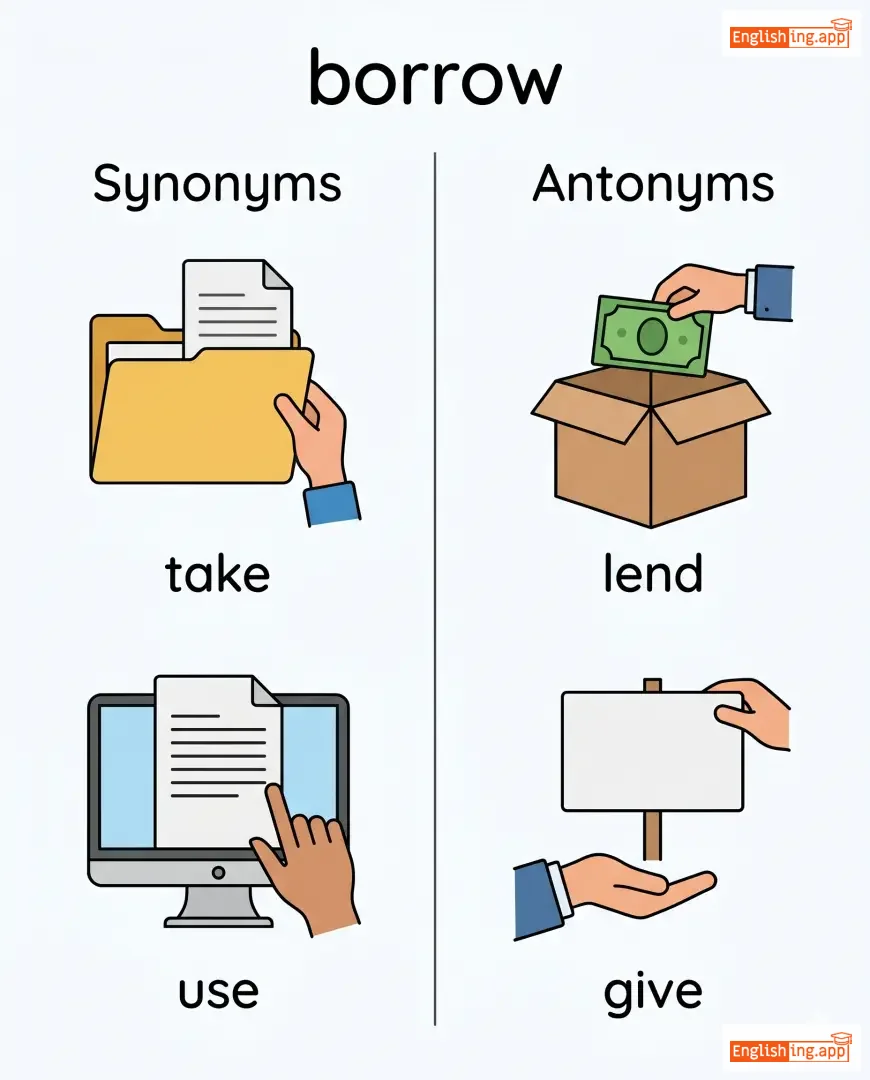
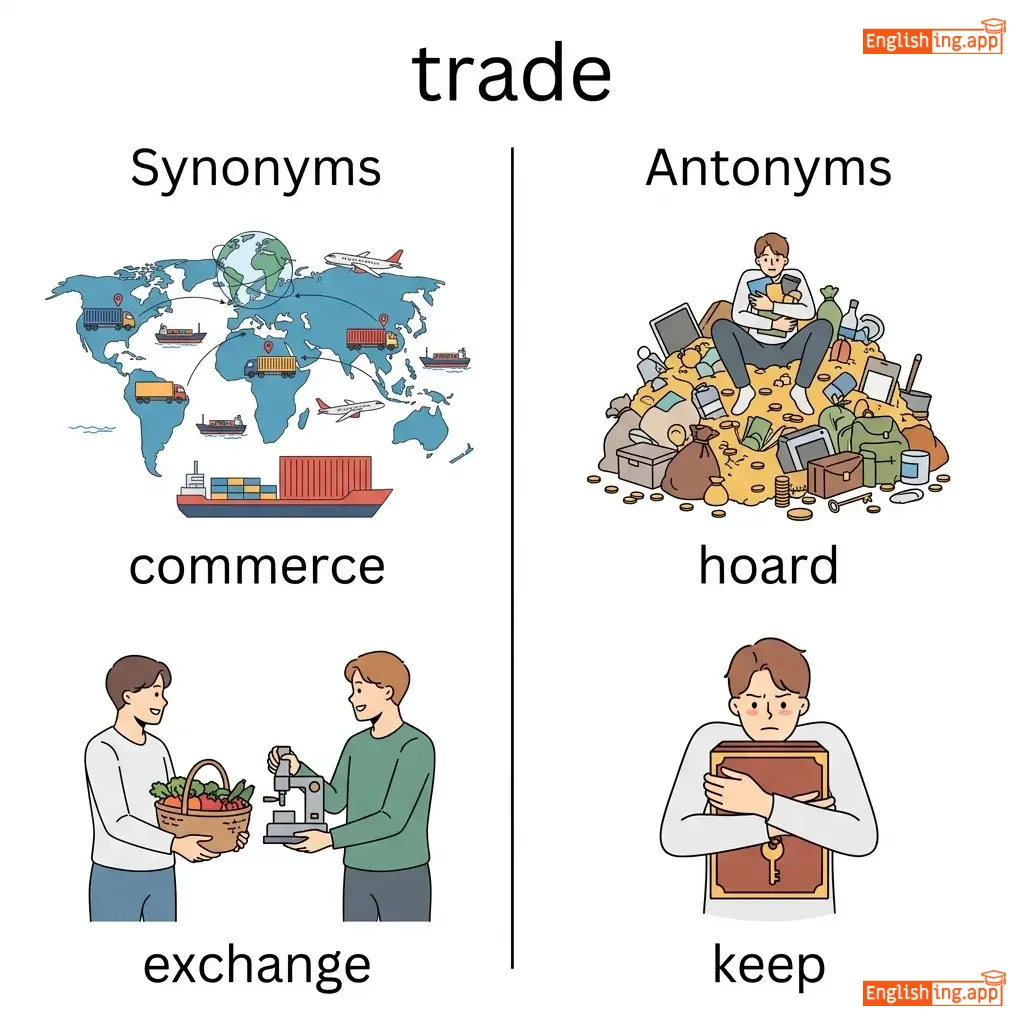
同義語
対義語
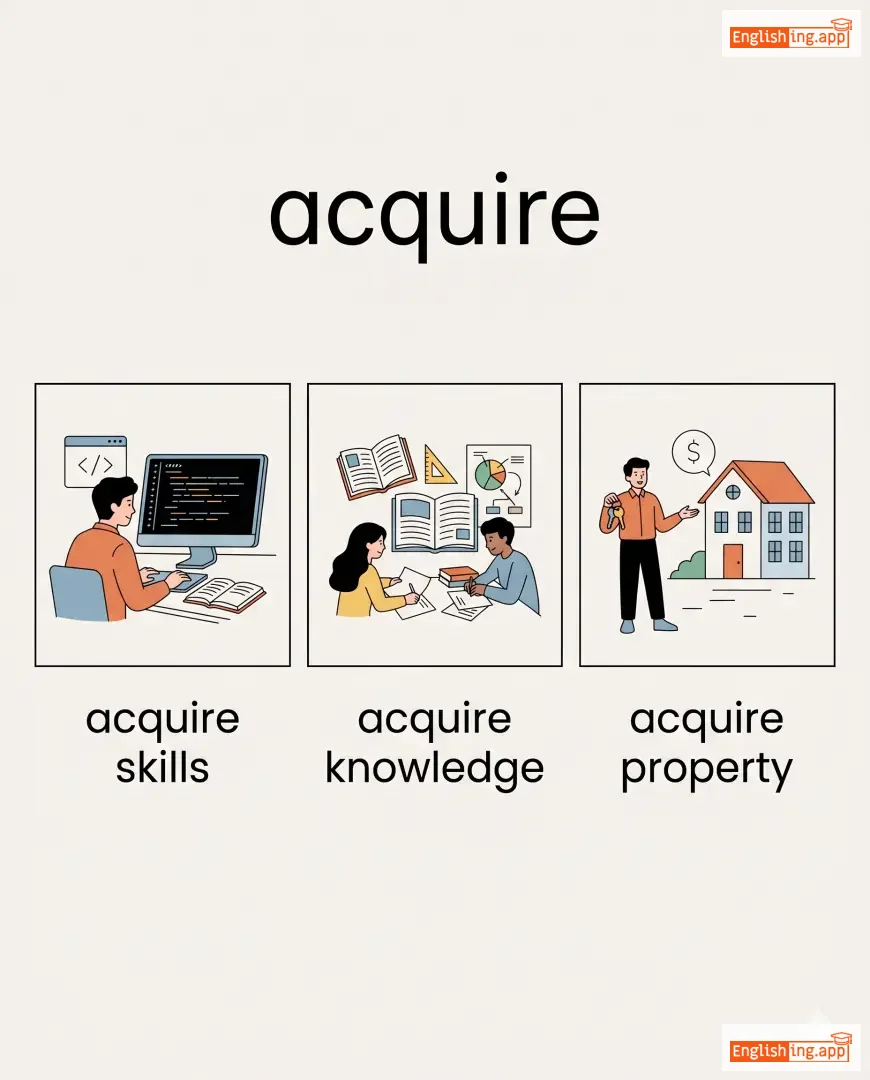
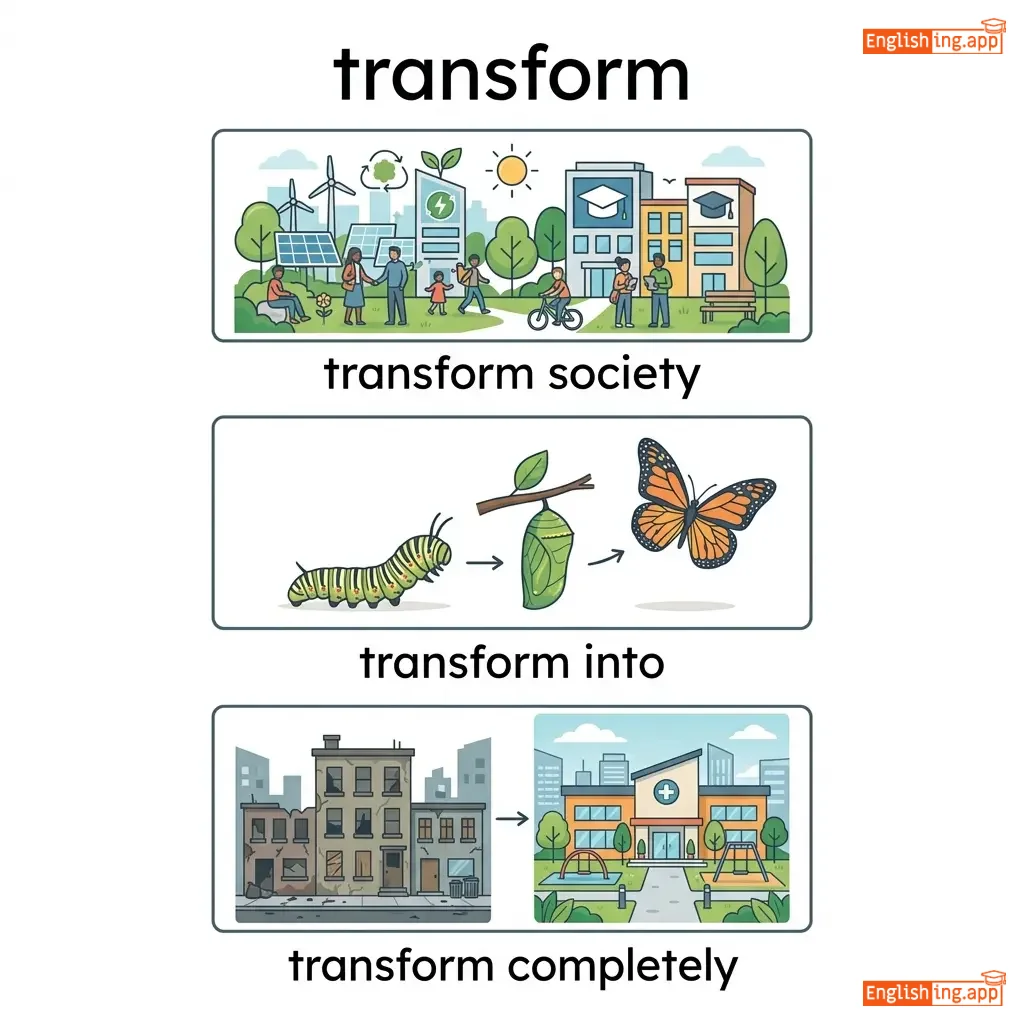
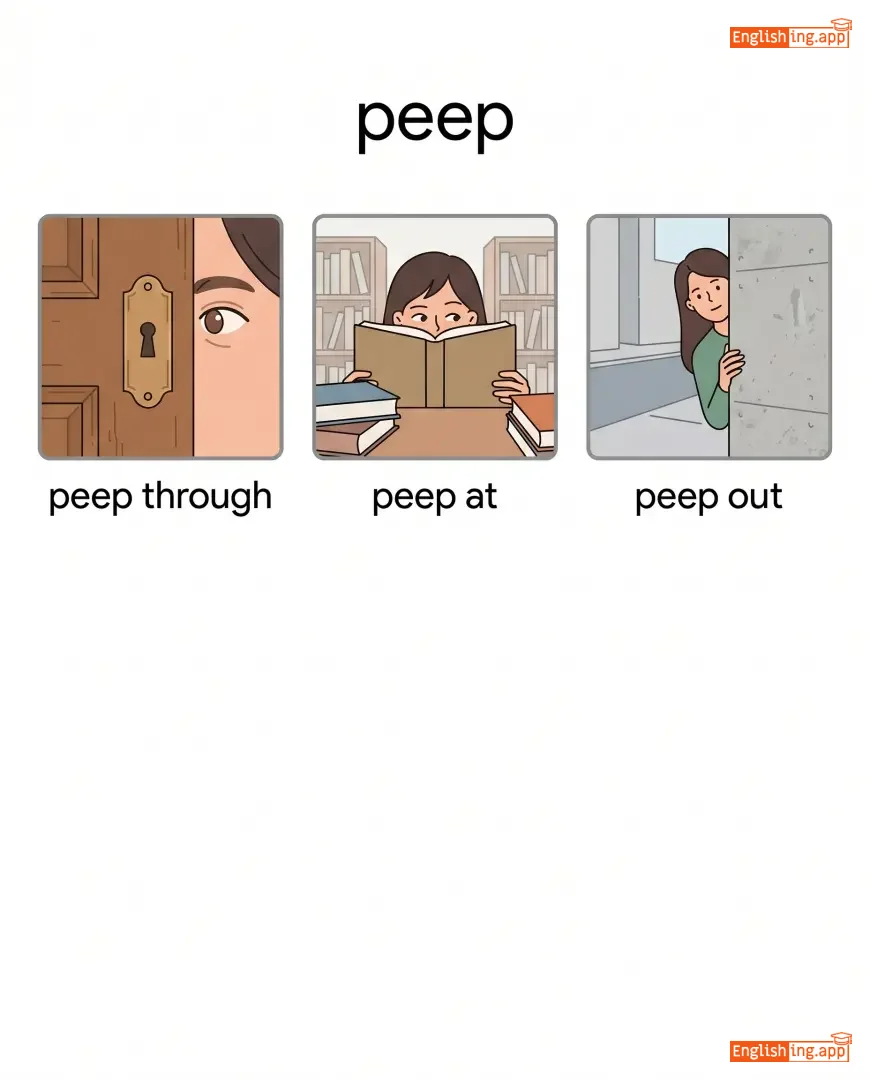
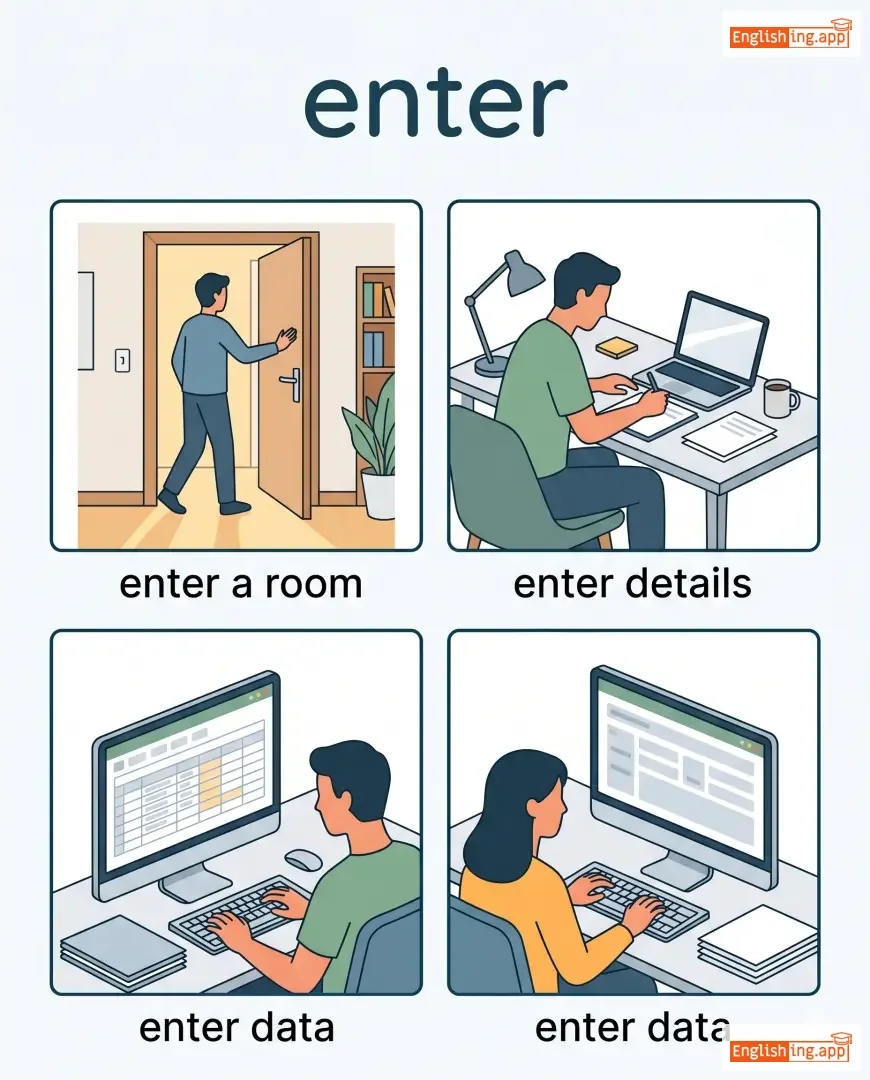
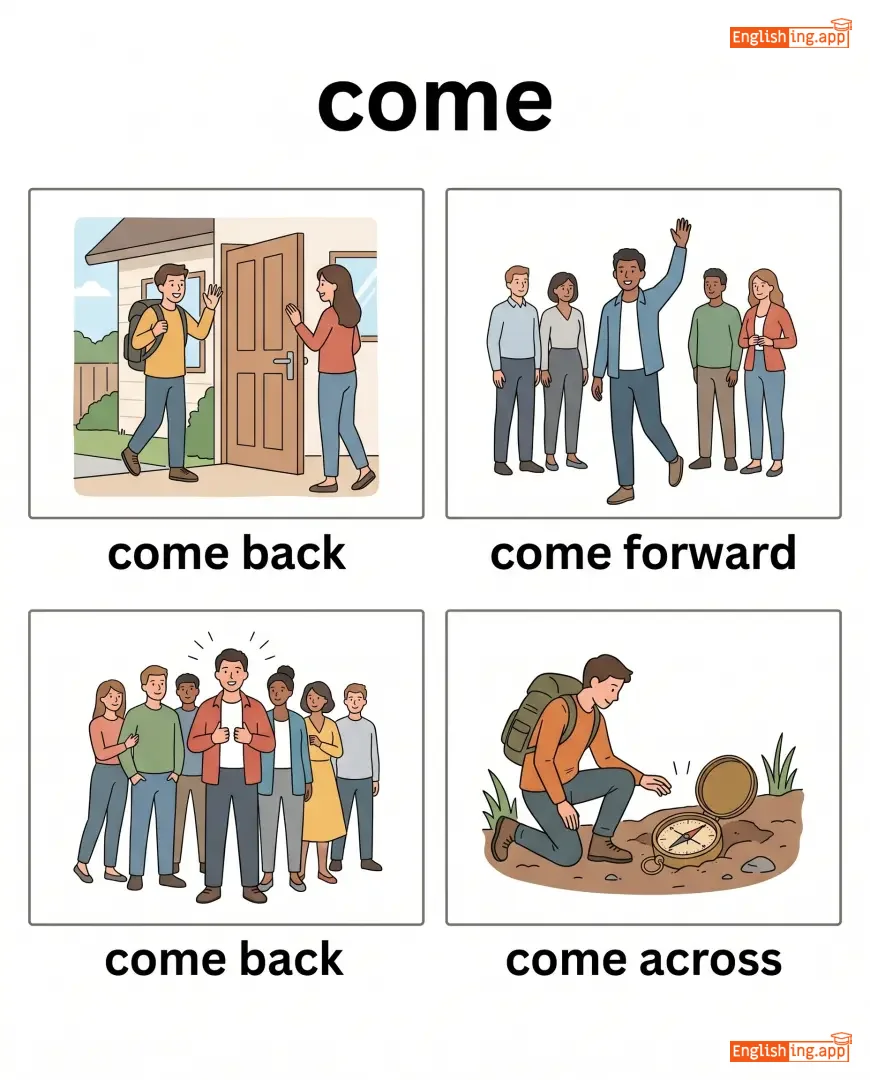
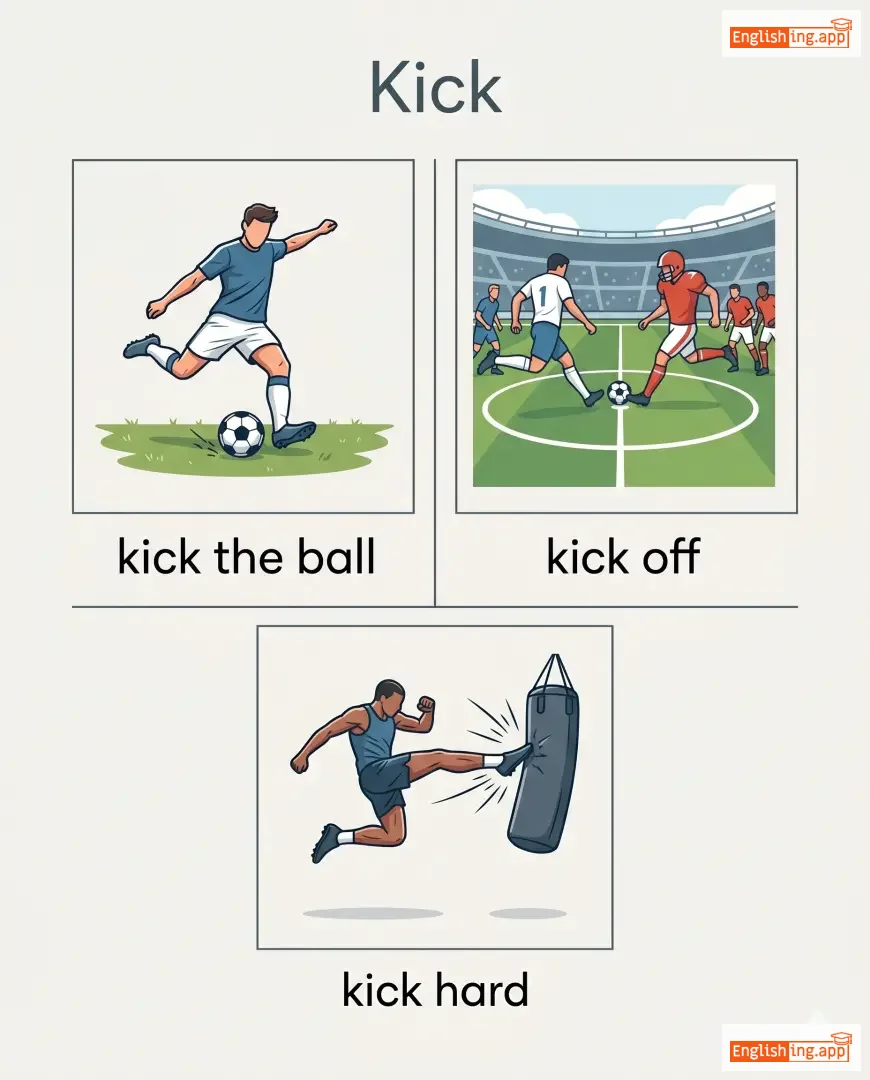
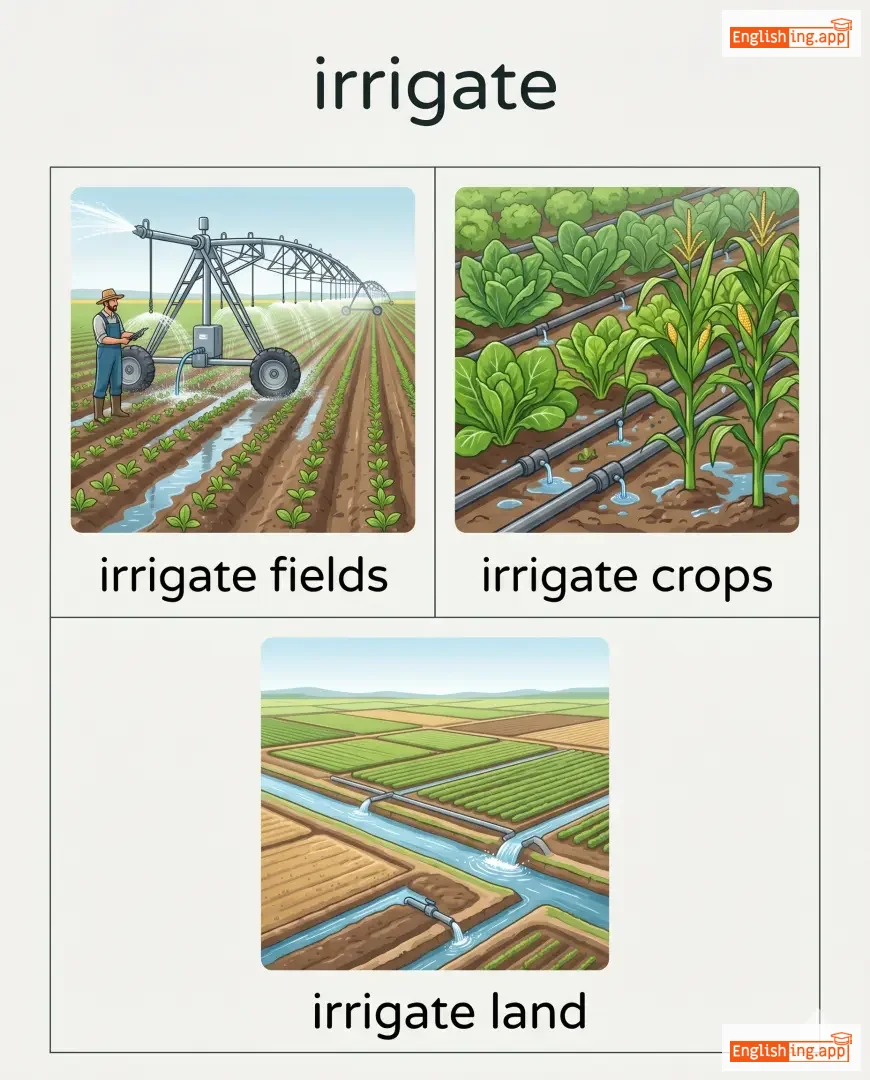
コロケーション
ニーモニック










Swipe left or right, or use the buttons. Tap image to zoom.
例文の翻訳
単語
Lesson 3: Mastering the Most Frequent Verbs & TensesLesson 3: Mastering the Most Frequent Verbs & Tenses - マスクトグル
|
絵文字
|
単語 | Images | 翻訳 | 過去 | 過去分詞 | 三人称単数 | 動名詞 | 意味 | 例文 | 例文の翻訳 | 同義語 | 対義語 | コロケーション | ニーモニック |
|---|---|---|---|---|---|---|---|---|---|---|---|---|---|---|
|
#60
🎯
|
/əˈkwaɪər/
verb
(akwaiā)
••••••
|
|
取得する
shutoku suru
••••••
|
acquired
akwaiādo
••••••
|
acquired
akwaiādo
••••••
|
acquires
akwaiāsu
••••••
|
acquiring
akwaiaringu
••••••
|
to gain or obtain something; to learn or develop a skill
••••••
|
He acquired new skills through practice.
彼は練習を通じて新しいスキルを身につけました。
••••••
|
彼は練習を通じて新しいスキルを身につけました。
Kare wa renshū o tōjite atarashī sukiru o mi ni tsukemashita.
••••••
|
gain, obtain, get, learn, develop
••••••
|
lose, give up, abandon
••••••
|
acquire skills, acquire knowledge, acquire property, acquire experience
••••••
|
Acquiring new skills is like acquiring something valuable that helps you grow.
••••••
|
|
#61
🔄
|
/trænsˈfɔːrm/
verb
(トランスフォーム)
••••••
|
|
変革する
henkaku suru
••••••
|
transformed
トランスフォームド
••••••
|
transformed
トランスフォームド
••••••
|
transforms
トランスフォームス
••••••
|
transforming
トランスフォームイング
••••••
|
to change completely; to make different in form or appearance
••••••
|
Technology will transform our lives.
テクノロジーは私たちの生活を変革します。
••••••
|
テクノロジーは私たちの生活を変革します。
Tekunorojii wa watashitachi no seikatsu wo henkaku shimasu
••••••
|
change, convert, alter, modify
••••••
|
preserve, maintain, keep
••••••
|
transform completely, transform business, transform society, transform life
••••••
|
Transforming life through technology!
••••••
|
|
#62
🧪
|
/ˈfɔːrmjʊleɪt/
verb
(フォームレート)
••••••
|
|
体系的に作成する、作り出す
taikeiteki ni sakusei suru, tsukuridashimasu
••••••
|
formulated
フォームレートされた
••••••
|
formulated
フォームレートされた
••••••
|
formulates
フォームレートする
••••••
|
formulating
フォームレートしている
••••••
|
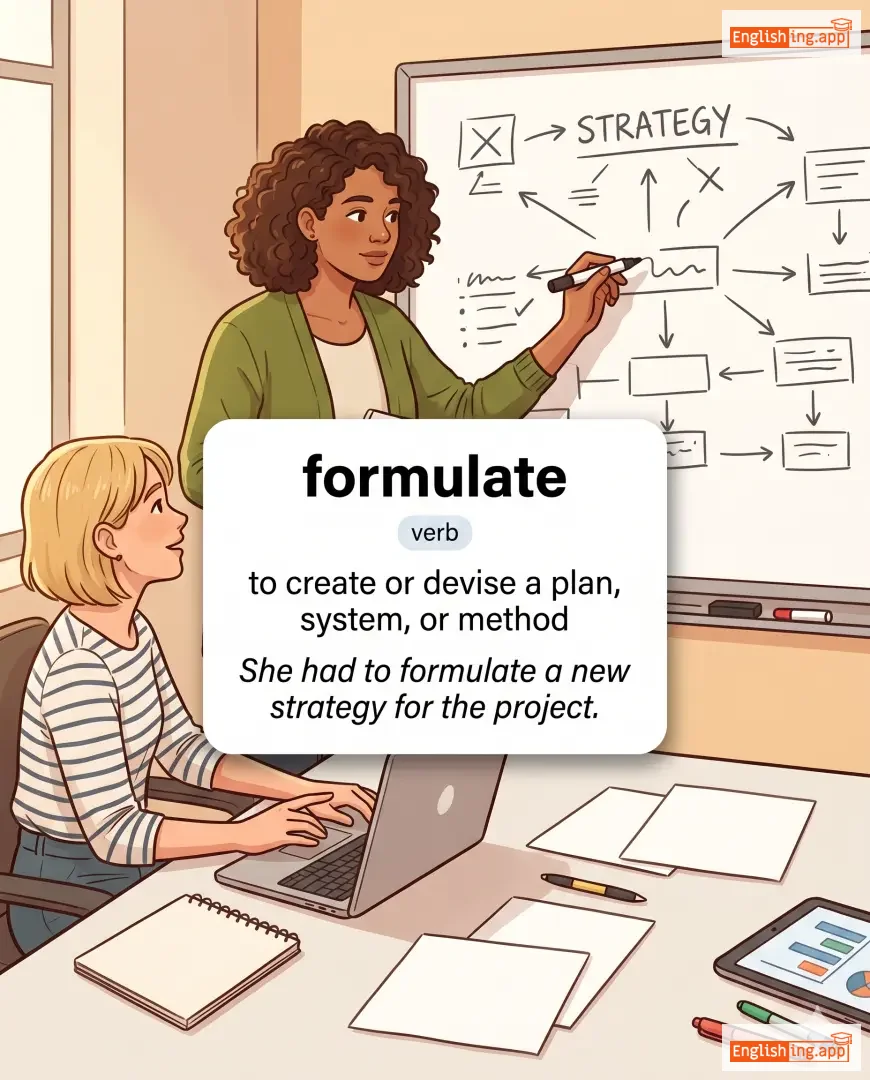
to create or devise methodically; to express in a formula
••••••
|
Scientists formulated a new theory about climate change.
科学者たちは気候変動に関する新しい理論を構築しました。
••••••
|
科学者たちは気候変動に関する新しい理論を構築しました。
Kagakusha-tachi wa kikō hendō ni kansuru atarashī riron o kōchiku shimashita.
••••••
|
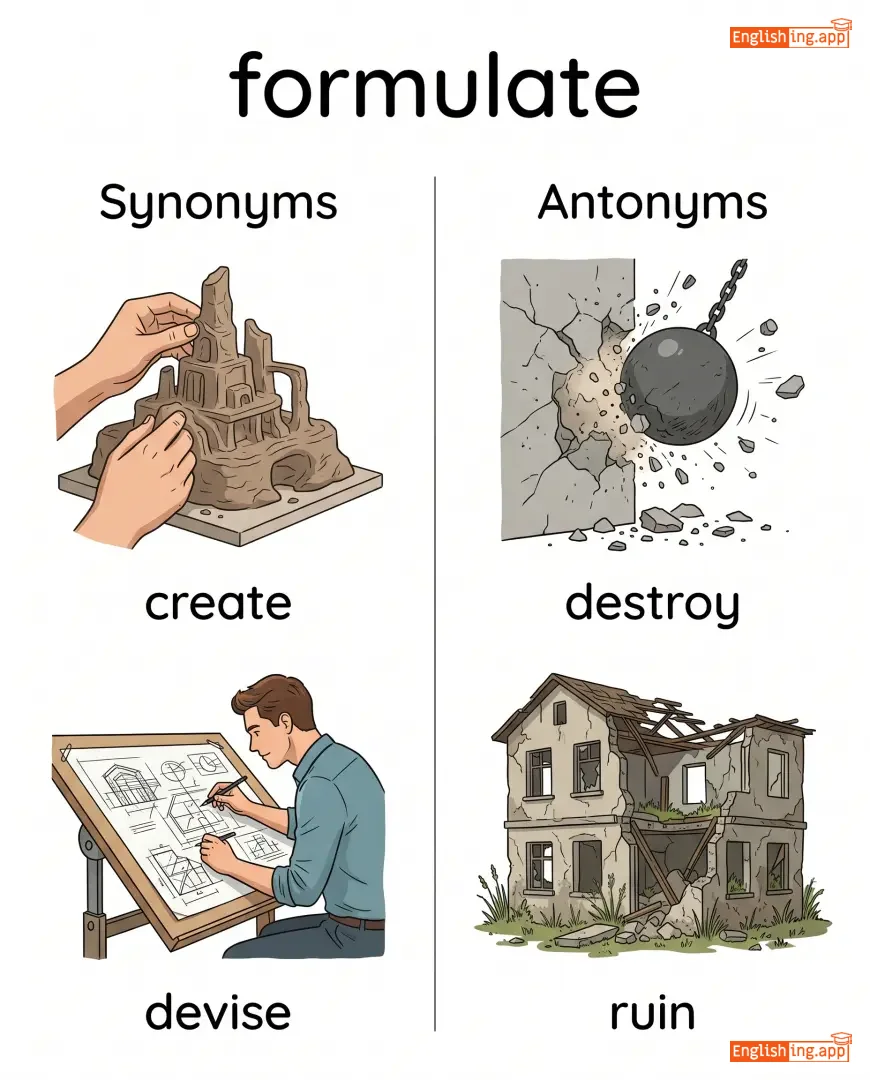
devise, create, develop, design
••••••
|
destroy, dismantle, dissolve, abandon
••••••
|
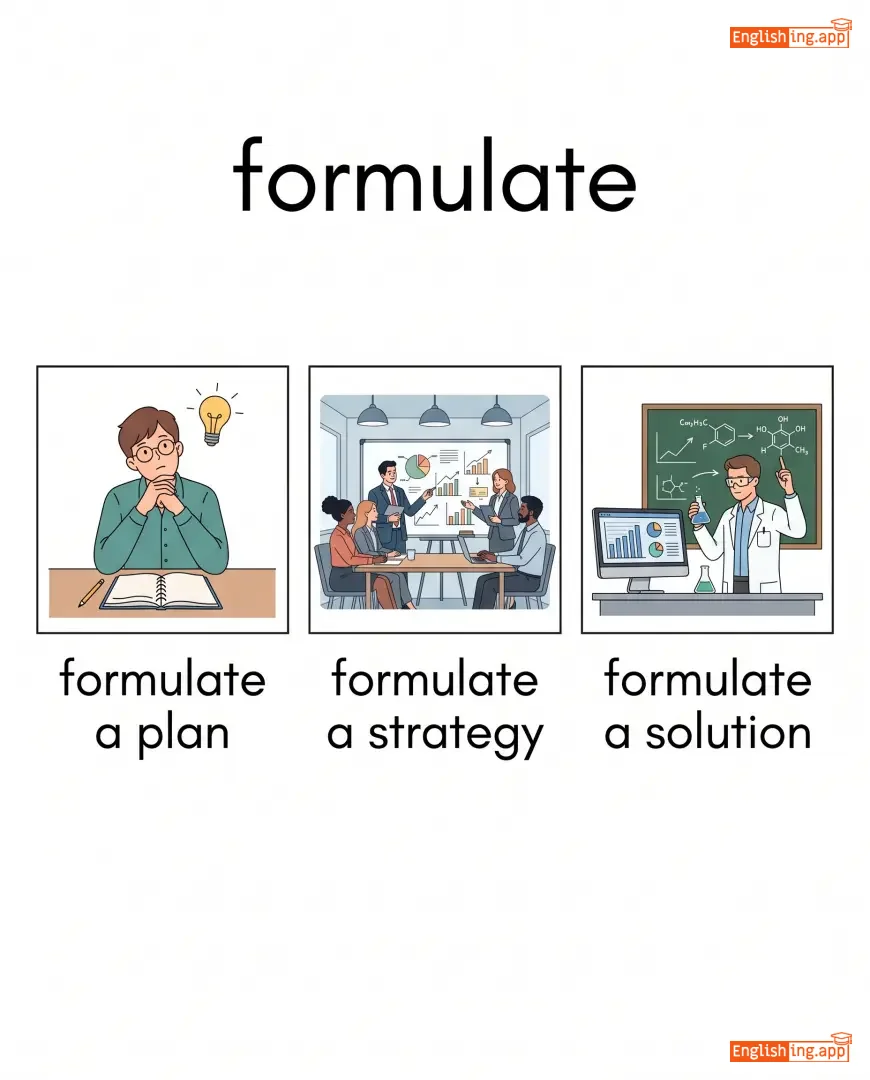
formulate plan, formulate strategy, formulate theory, formulate policy
••••••
|
Formulate = 方法論
••••••
|
|
#63
✍️
|
/spɛl/
verb
(ハピネス)
••••••
|
- •••••• |
スペルする
superu suru
••••••
|
spelled
スペルド
••••••
|
spelled
スペルド
••••••
|
spells
スペルス
••••••
|
spelling
スペリング
••••••
|
to write or name the letters of a word in order; to mean or result in something
••••••
|
Can you spell your name for me?
あなたの名前を私のためにスペルできますか?
••••••
|
あなたの名前を私のためにスペルできますか?
Anata no namae o watashi no tame ni superu dekimasu ka?
••••••
|
write, form letters, indicate, mean
••••••
|
misspell
••••••
|
spell correctly, spell out, spell word, spell name
••••••
|
スペルするとは、単語の文字を一つ一つ言うことです。
••••••
|
|
#64
👁️
|
/piːp/
verb
(ピープ)
••••••
|
|
覗く
nozoku
••••••
|
peeped
ピープド
••••••
|
peeped
ピープド
••••••
|
peeps
ピープス
••••••
|
peeping
ピーピング
••••••
|
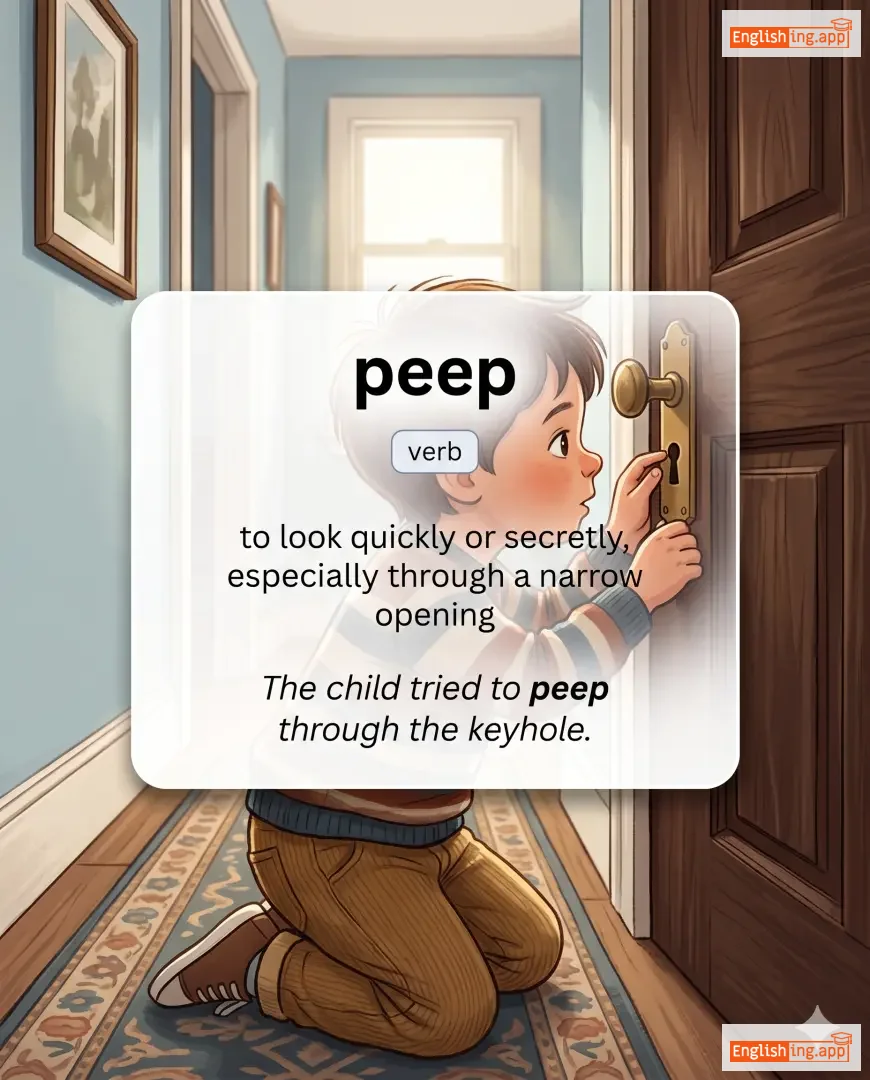
to look quickly or secretly; to make a short high sound
••••••
|
The child tried to peep through the keyhole.
子供は鍵穴から覗こうとした。
••••••
|
子供は鍵穴から覗こうとした。
Kodomo wa kagi ana kara nozokou to shita.
••••••
|
peek, glance, spy, chirp
••••••
|
stare, gaze, ignore, overlook
••••••
|
peep through, peep out, take a peep, peep at
••••••
|
覗くとは、まるで ‘peep’ のようにこっそり見ることです。
••••••
|
|
#65
👆
|
/pɪk/
verb
(ピック)
••••••
|
|
選ぶ
erabu
••••••
|
picked
••••••
|
picked
••••••
|
picks
••••••
|
picking
••••••
|
to choose; to take or select from a group; to pluck or gather
••••••
|
Please pick your favorite color from the palette. |
パレットからお好みの色を選んでください。
Paretto kara okonomi no iro o erande kudasai.
••••••
|
choose, select, gather, pluck
••••••
|
reject, drop, leave, abandon
••••••
|
pick up, pick out, pick carefully, pick winner
••••••
|
色を選ぶことは、いつでも楽しい
••••••
|
|
#66
😴
|
/əˈweɪk/
verb
(アウェイク)
••••••
|
- •••••• |
目を覚ます
me o samasu
••••••
|
awoke
アウォーク
••••••
|
awoke
アウォーク
••••••
|
awakes
アウェイクス
••••••
|
awaking
アウェイキング
••••••
|
to stop sleeping; to become conscious or alert
••••••
|
I awake every morning at six o'clock.
私は毎朝6時に目を覚ます。
••••••
|
私は毎朝6時に目を覚ます。
Watashi wa mai asa roku ji ni me o samasu.
••••••
|
wake up, arise, rouse, stir
••••••
|
sleep, slumber, doze, rest
••••••
|
awake early, wide awake, stay awake, awake suddenly
••••••
|
朝日とともに目を覚ます瞬間!
••••••
|
|
#67
🤸
|
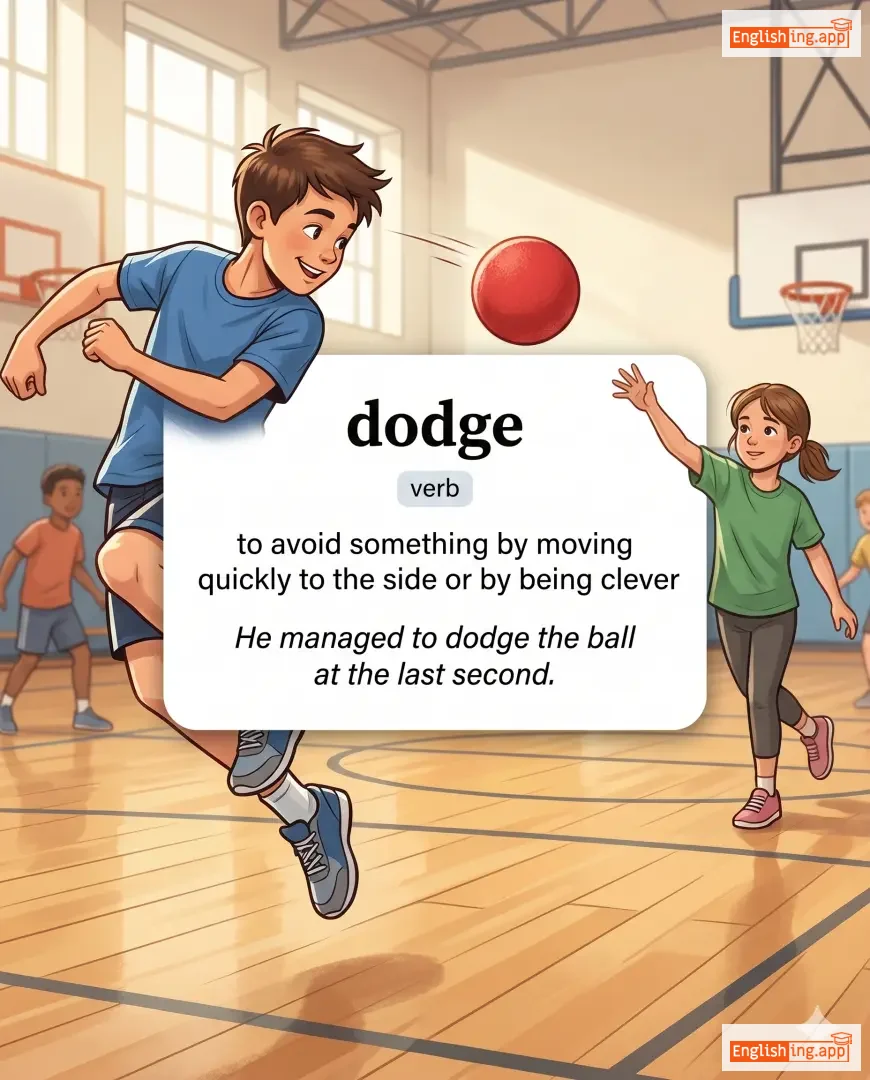
/dɒdʒ/
verb
(ドッジ)
••••••
|
|
避ける
sakeru
••••••
|
dodged
ドッジド
••••••
|
dodged
ドッジド
••••••
|
dodges
ドッジズ
••••••
|
dodging
ドッジング
••••••
|
to move quickly to one side to avoid something; to avoid dealing with something cleverly or dishonestly
••••••
|
The boxer managed to dodge his opponent's punch.
ボクサーは相手のパンチをかわすことに成功した。
••••••
|
ボクサーは相手のパンチをかわすことに成功した。
Bokusā wa aite no panchi o kawasu koto ni seikō shita
••••••
|
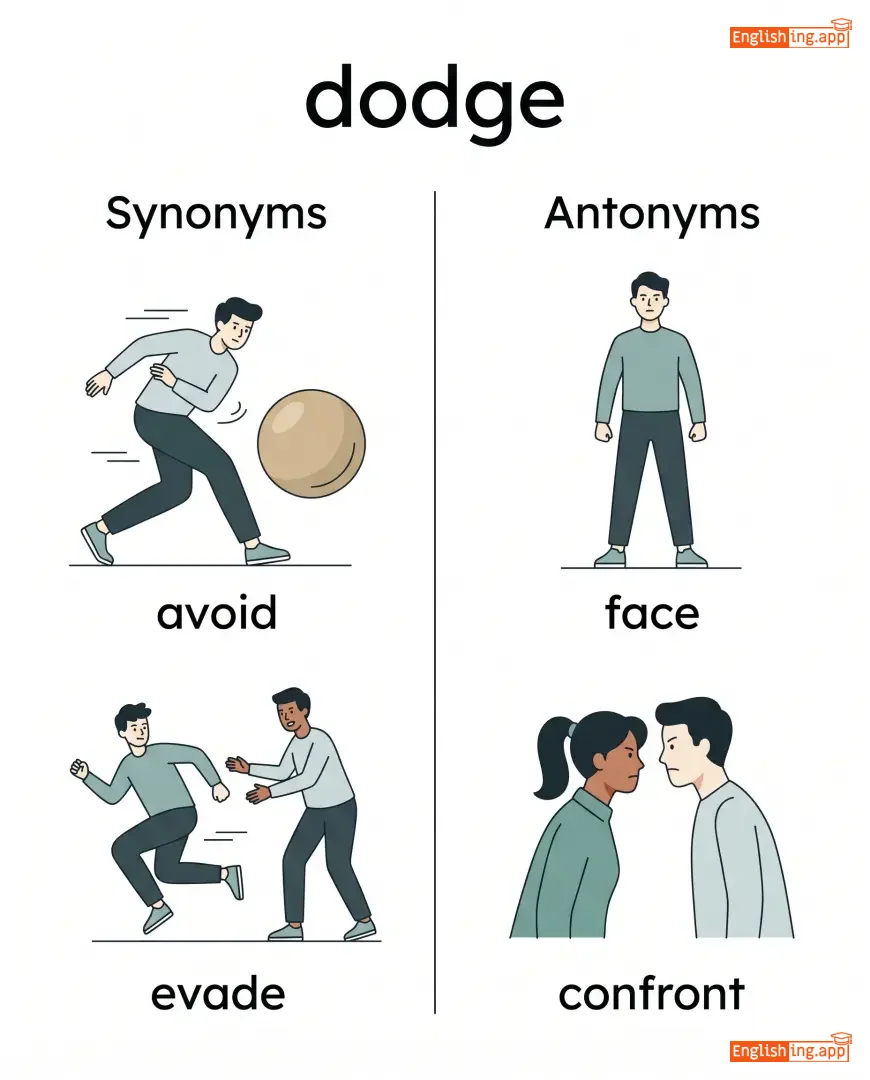
avoid, evade, sidestep, duck
••••••
|
face, confront, meet, encounter
••••••
|
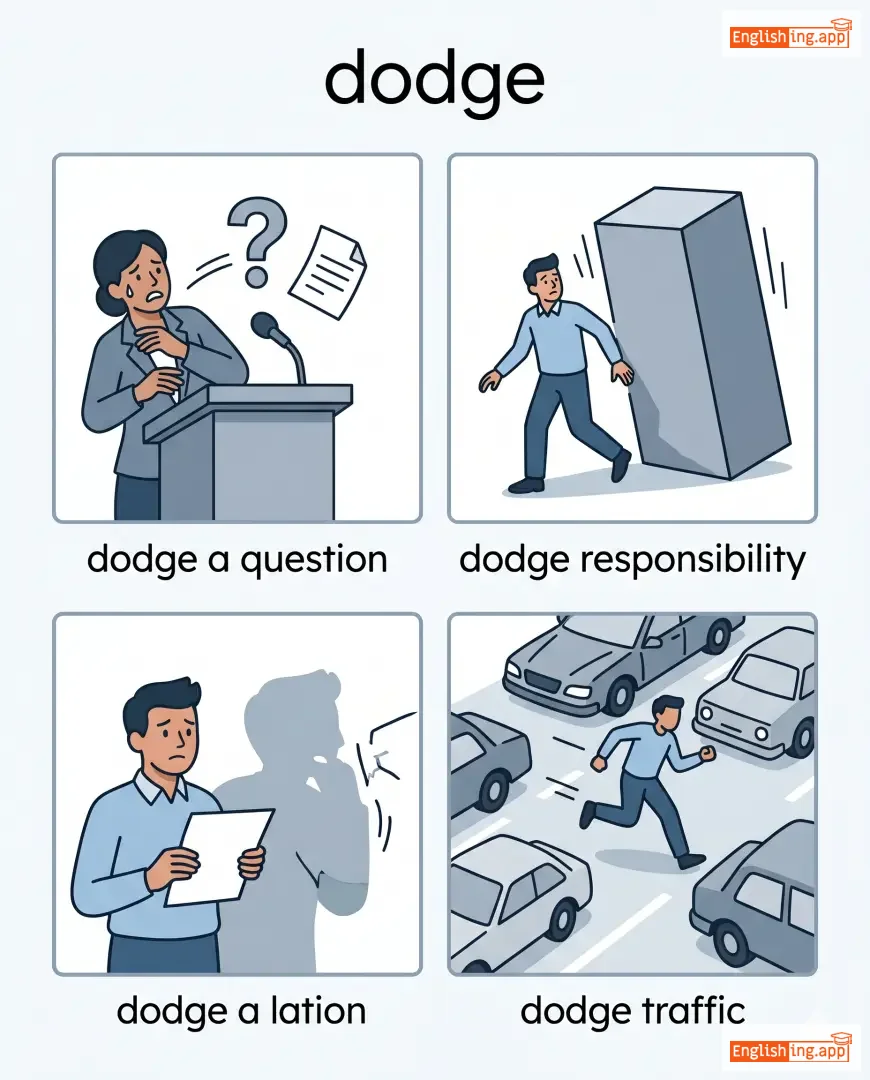
dodge bullet, dodge question, dodge responsibility, skillfully dodge
••••••
|
No •••••• |
|
#68
🌾
|
/jiːld/
verb
(yīrudo)
••••••
|
|
生産する
seisan suru
••••••
|
yielded
yīrudeddo
••••••
|
yielded
yīrudeddo
••••••
|
yields
yīrudesu
••••••
|
yielding
yīrudingu
••••••
|
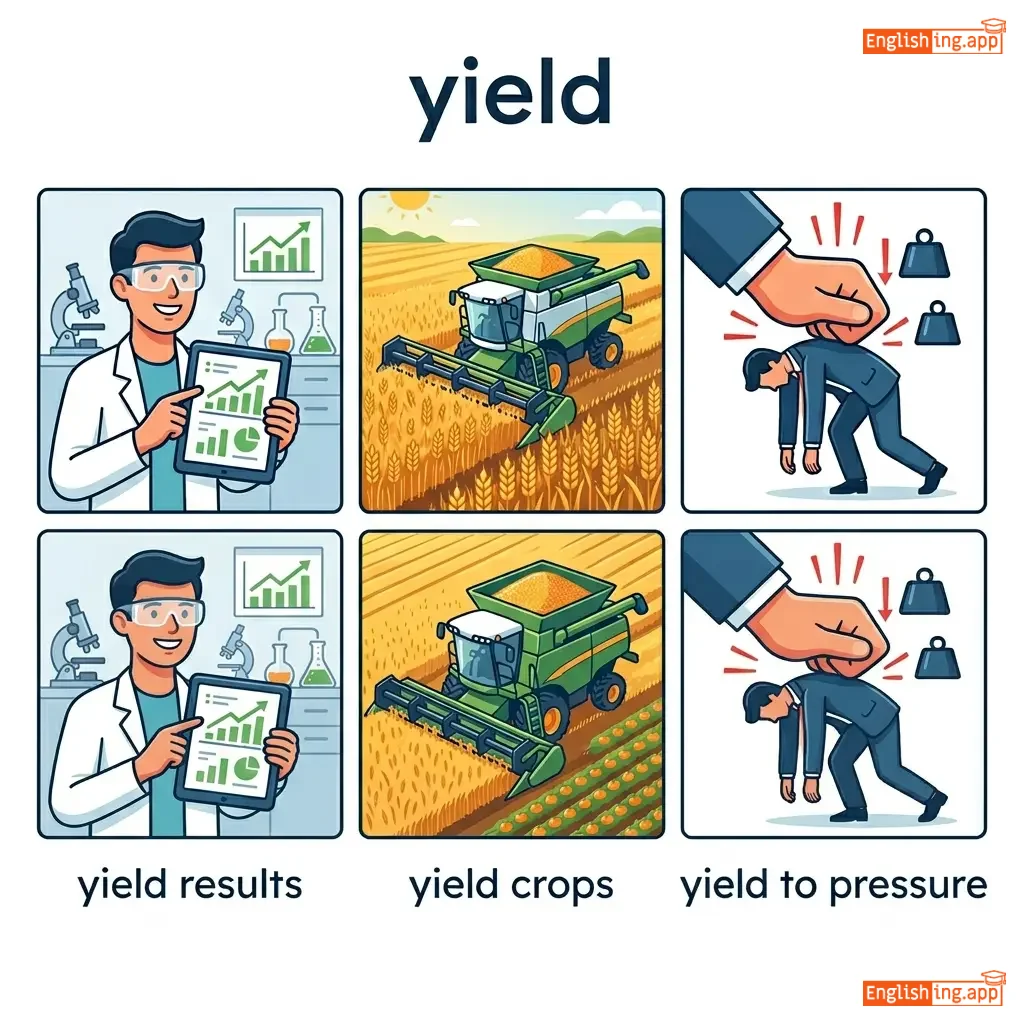
to produce or provide; to give way to; to surrender
••••••
|
The farm yields fresh vegetables every season.
農場は毎シーズン、新鮮な野菜を生産します。
••••••
|
農場は毎シーズン、新鮮な野菜を生産します。
Nōjō wa mai shīzun, shinsen na yasai o seisan shimasu.
••••••
|
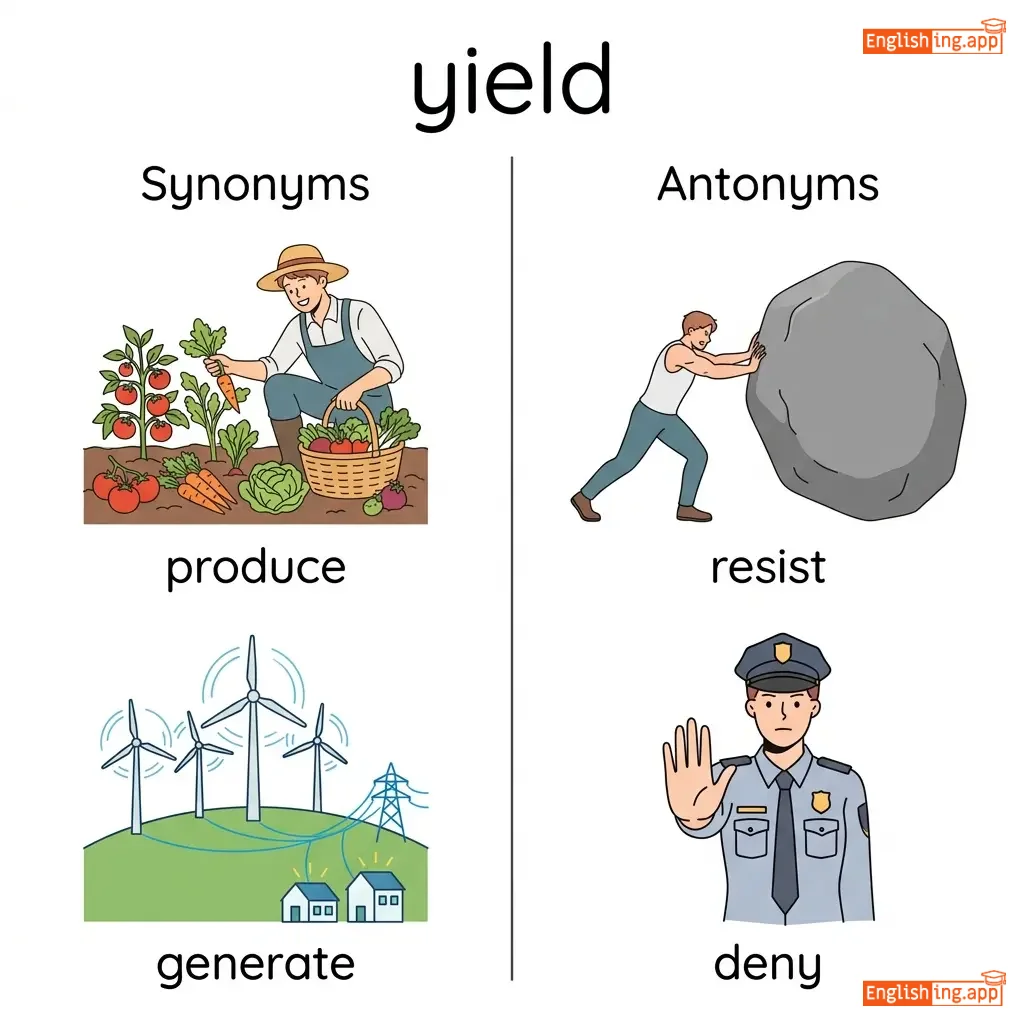
produce, provide, give, surrender, submit
••••••
|
resist, withhold, retain, refuse
••••••
|
yield results, yield profit, yield to pressure, high yield
••••••
|
農場はいつも新鮮な野菜を提供します
••••••
|
|
#69
🏭
|
/ˌmænjʊˈfæktʃər/
verb
(マニュファクチャー)
••••••
|
|
製造
seizō
••••••
|
manufactured
マニュファクチャード
••••••
|
manufactured
マニュファクチャード
••••••
|
manufactures
マニュファクチャーズ
••••••
|
manufacturing
マニュファクチャリング
••••••
|
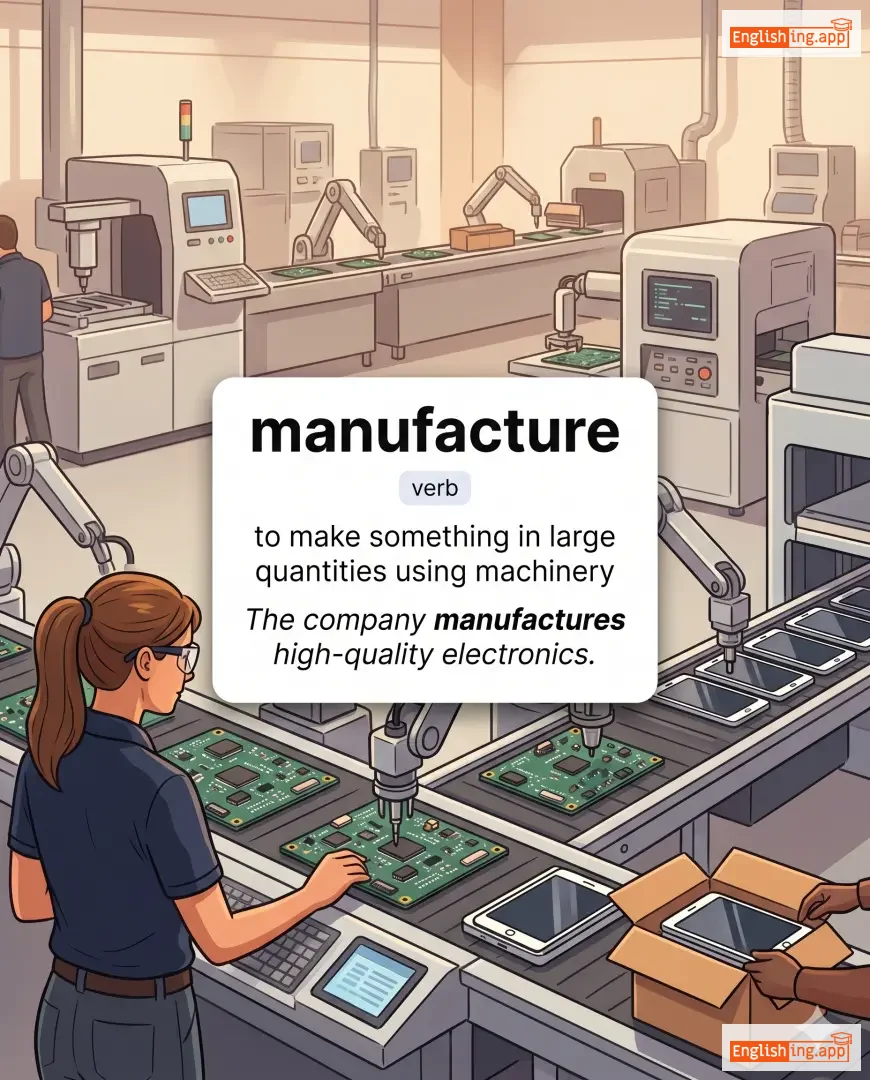
to produce goods in large quantities using machinery; to make or create something
••••••
|
The company manufactures electronic devices for global markets.
その会社はグローバル市場向けに電子機器を製造しています。
••••••
|
その会社はグローバル市場向けに電子機器を製造しています。
Sono kaisha wa gurōbaru shijō muke ni denshi kikō o seizō shiteimasu.
••••••
|
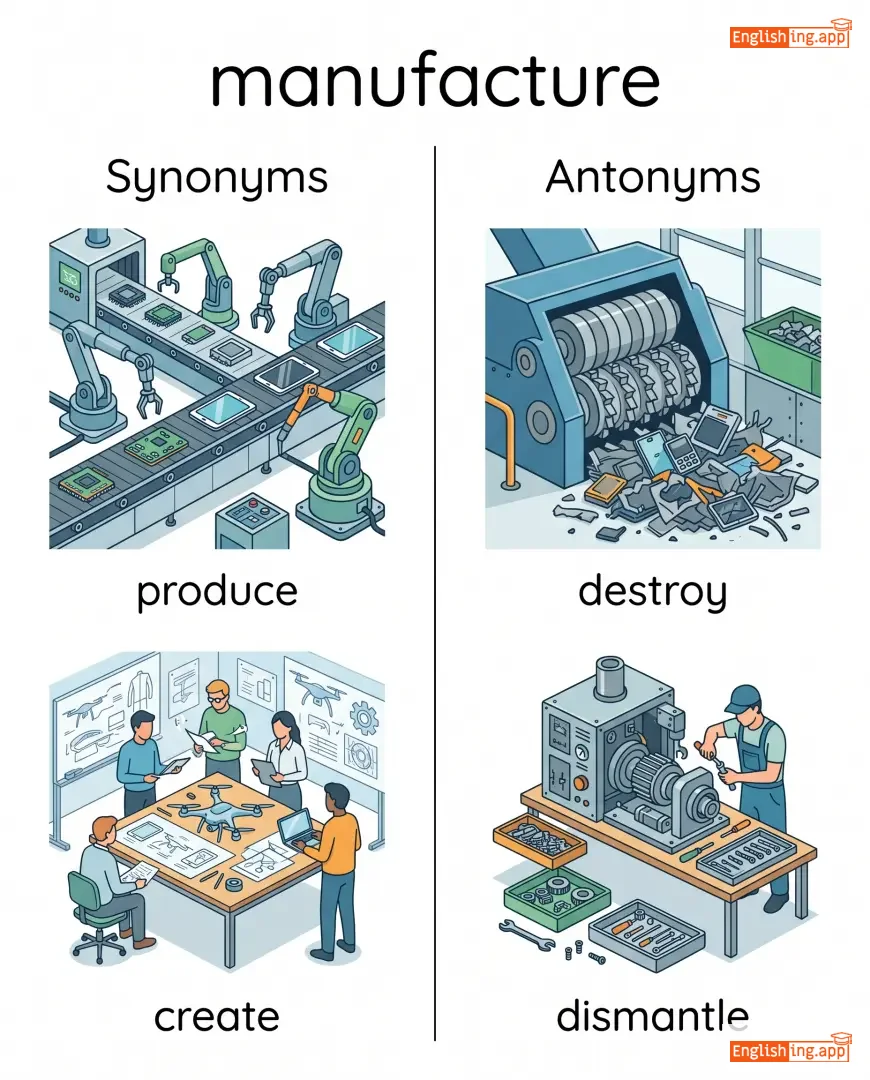
produce, make, create, fabricate
••••••
|
destroy, dismantle, demolish, break
••••••
|
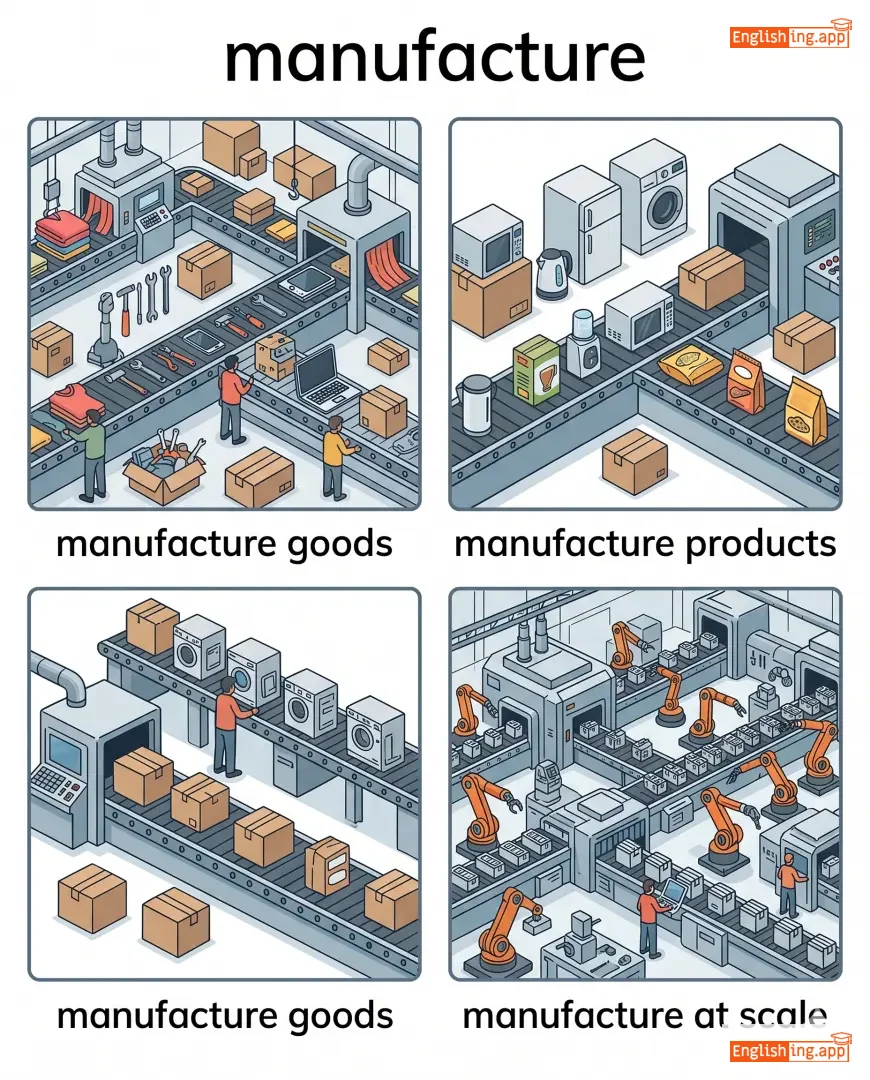
manufacture goods, manufacture products, manufacture cars, mass manufacture
••••••
|
製造は大規模に物を作ることで、工場で製品を作ることと同じです。
••••••
|
|
#70
⚡
|
/straɪk/
verb
(sutoraiku)
••••••
|
- •••••• |
打つ
utsu
••••••
|
Struck
sutoraiku
••••••
|
Struck
sutoraiku
••••••
|
Strikes
sutoraikus
••••••
|
Striking
sutoraiking
••••••
|
to hit forcefully; to stop work as a form of protest
••••••
|
Lightning strikes the tall building during the storm.
raitingu sutoraikus da tōru birudingu duringu da sutōmu.
••••••
|
雷は嵐の中で高いビルを打つ。
Kaminari wa arashi no naka de takai biru o utsu.
••••••
|
hit, beat, attack, protest
••••••
|
miss, caress, work, comply
••••••
|
strike hard, strike gold, strike balance, lightning strike
••••••
|
Strike fast like a thunderstorm!
••••••
|
|
#71
🏠
|
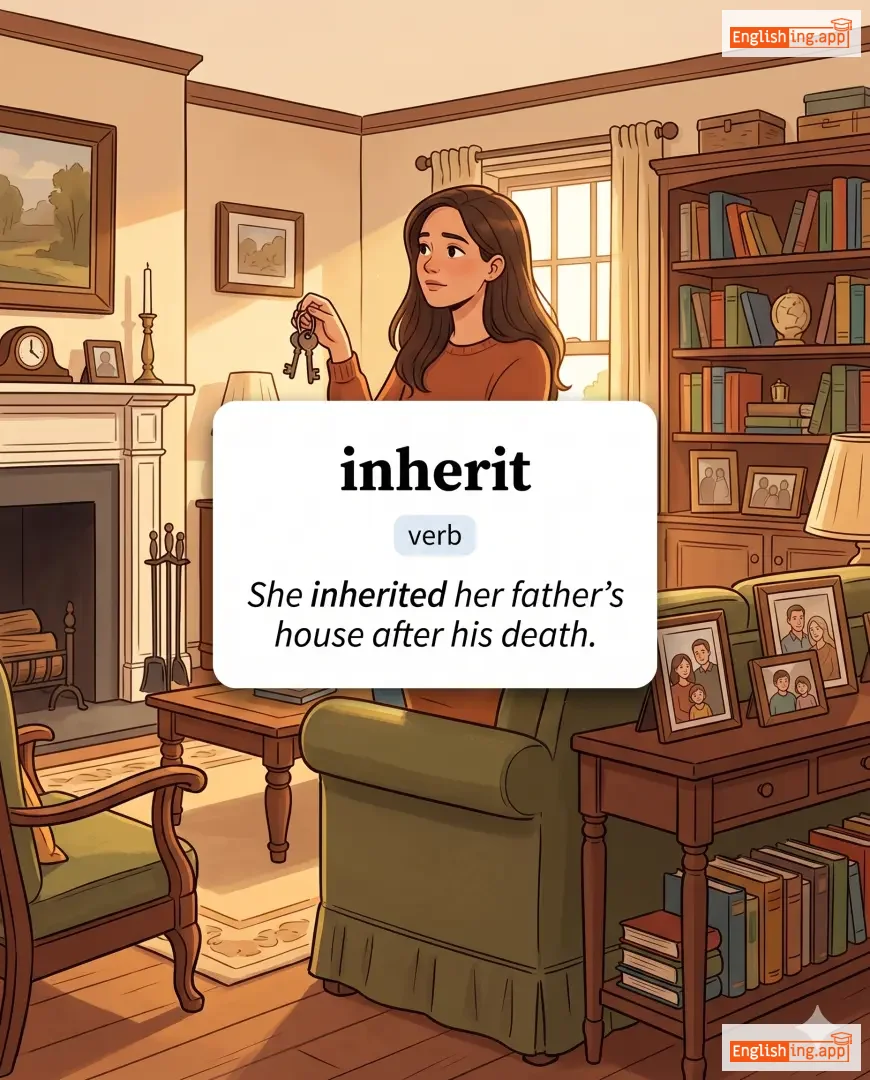
/ɪnˈherɪt/
verb
(インヘリット)
••••••
|
|
相続する
sōzoku suru
••••••
|
inherited
インヘリテッド
••••••
|
inherited
インヘリテッド
••••••
|
inherits
インヘリッツ
••••••
|
inheriting
インヘリティング
••••••
|
to receive money, property, or characteristics from someone when they die; to acquire from predecessors
••••••
|
She inherited her grandmother's house.
彼女は祖母の家を相続しました。
••••••
|
彼女は祖母の家を相続しました。
Kanojo wa sobo no ie o sōzoku shimashita.
••••••
|
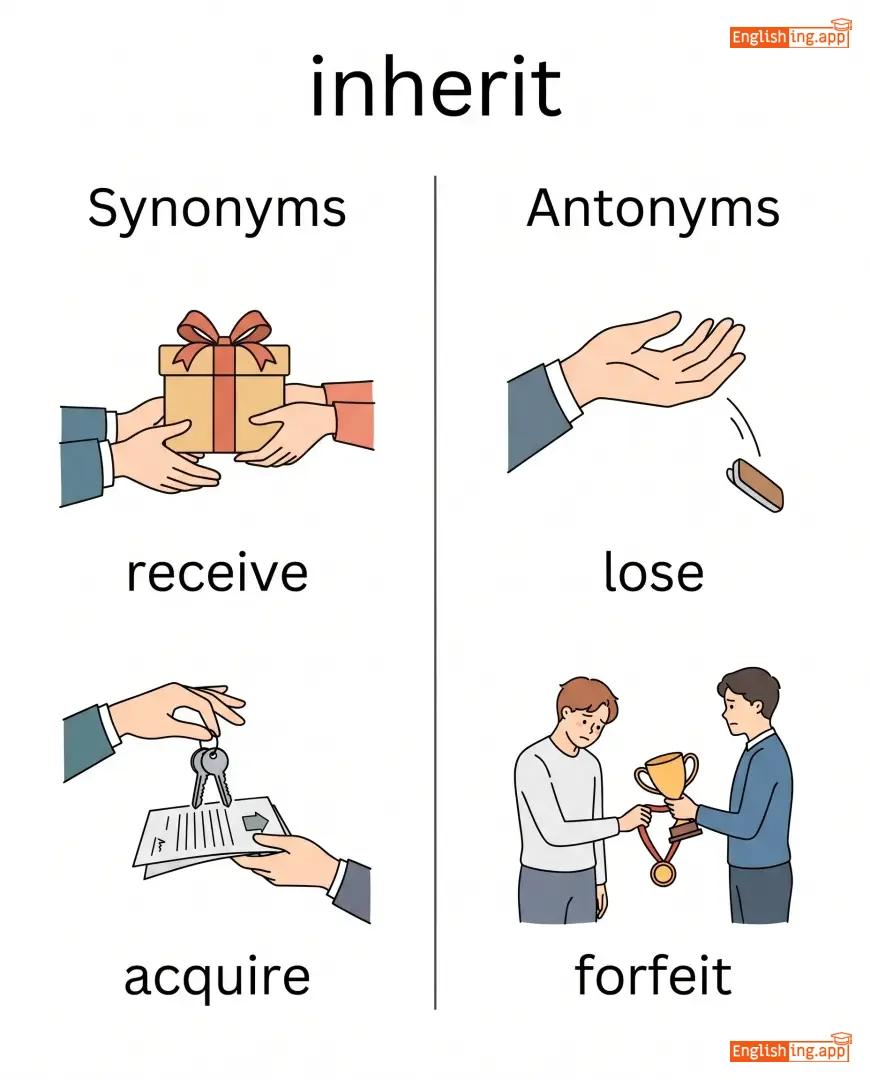
receive, acquire, get, obtain
••••••
|
give, donate, bequeath
••••••
|
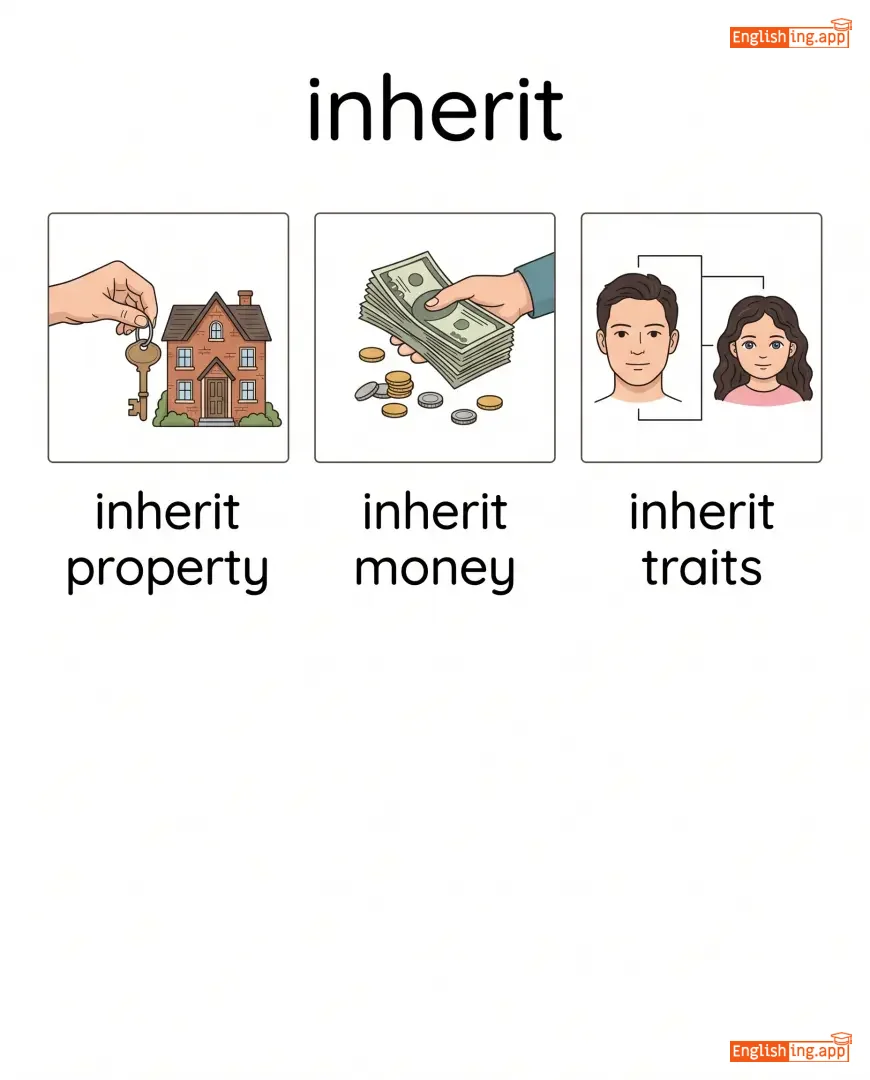
inherit property, inherit wealth, inherit genes, inherit tradition
••••••
|
相続は、亡くなった人から財産を受け継ぐことです。例えば、祖母から家を相続すること。
••••••
|
|
#72
🚪
|
/ˈentər/
verb
(エンター)
••••••
|
|
入る
hairu
••••••
|
entered
エンタード
••••••
|
entered
エンタード
••••••
|
enters
エンターズ
••••••
|
entering
エンターリング
••••••
|
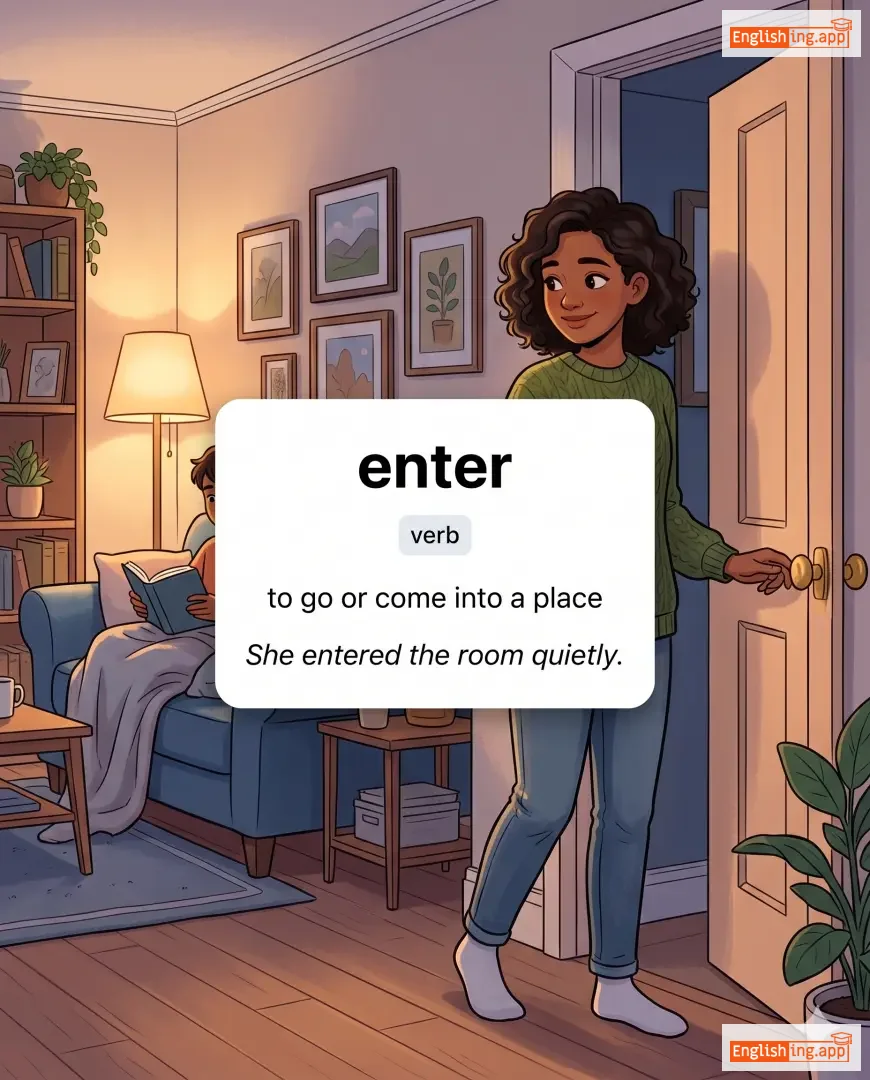
to go into; to come or go inside
••••••
|
Please knock before you enter the room.
部屋に入る前にノックしてください。
••••••
|
部屋に入る前にノックしてください。
Heya ni hairu mae ni nokkushite kudasai.
••••••
|
go in, come in, access, penetrate
••••••
|
exit, leave, depart, withdraw
••••••
|
enter room, enter building, enter data, enter competition
••••••
|
ノックしてから部屋に入る
••••••
|
|
#73
👋
|
/kʌm/
verb
(カム)
••••••
|
|
来る
kuru
••••••
|
came
来た
••••••
|
come
来た
••••••
|
comes
来る
••••••
|
coming
来ること
••••••
|
to move toward a place; to arrive at a place
••••••
|
Please come to my birthday party.
私の誕生日パーティーに来てください。
••••••
|
私の誕生日パーティーに来てください。
Watashi no tanjoubi paatii ni kite kudasai.
••••••
|
arrive, approach, reach, visit
••••••
|
go, leave, depart, exit
••••••
|
come back, come here, come along, come true
••••••
|
パーティーに招待されたら、ただ'来る'だけです。
••••••
|
|
#74
⚽
|
/kɪk/
verb
(キック)
••••••
|
|
蹴る
keru
••••••
|
kicked
キックド
••••••
|
kicked
キックド
••••••
|
kicks
キックス
••••••
|
kicking
キキング
••••••
|
to hit with the foot; to strike forcefully
••••••
|
He kicks the ball into the goal.
彼はボールをゴールに蹴り込む。
••••••
|
彼はボールをゴールに蹴り込む。
Kare wa bōru o gōru ni kerikomu.
••••••
|
boot, strike, hit, punt
••••••
|
catch, hold, embrace
••••••
|
kick ball, kick hard, kick out, kick off
••••••
|
No •••••• |
|
#75
💧
|
/ˈɪrɪˌɡeɪt/
verb
(灌漑)
••••••
|
|
灌漑する
kangai suru
••••••
|
irrigated
灌漑した
••••••
|
irrigated
灌漑された
••••••
|
irrigates
灌漑する
••••••
|
irrigating
灌漑している
••••••
|
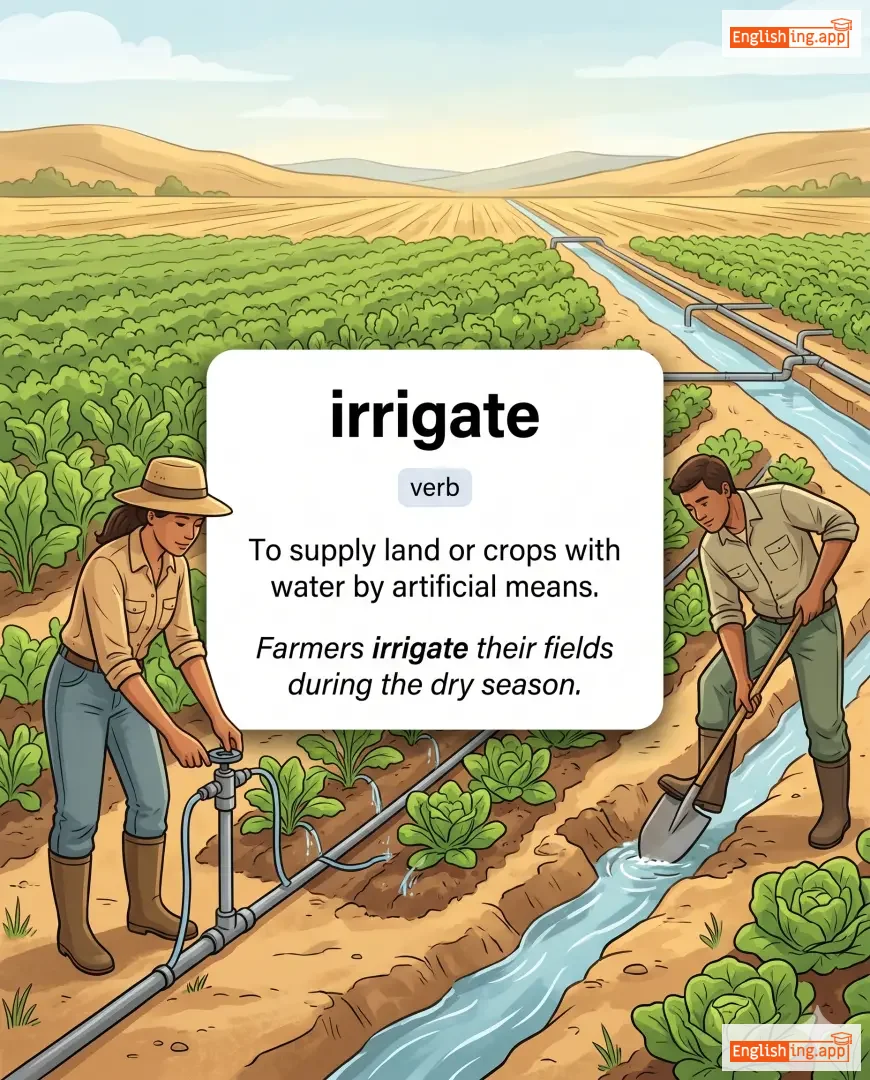
to supply water to land or crops; to wash out a wound with water
••••••
|
Farmers irrigate their fields during dry seasons.
農家は乾季に畑に灌漑を行います。
••••••
|
農家は乾季に畑に灌漑を行います。
Nōka wa kanki ni hatake ni kangai o okonaimasu.
••••••
|
water, moisten, sprinkle, flood
••••••
|
drain, dry, dehydrate
••••••
|
irrigate fields, irrigate crops, irrigate land, properly irrigate
••••••
|
灌漑で土地に水を供給、‘irrigate’で水を供給する。
••••••
|
|
#76
🤝
|
/ˈbɑroʊ/
verb
(ボロウ)
••••••
|
|
借りる
kariru
••••••
|
borrowed
ボロウド
••••••
|
borrowed
ボロウド
••••••
|
borrows
ボロウズ
••••••
|
borrowing
ボロウイング
••••••
|
to take temporarily with intention to return; to take on loan
••••••
|
Can I borrow your pen for a moment?
キャン アイ ボロウ ユア ペン フォア ア モーメント?
••••••
|
ちょっとあなたのペンを借りてもいいですか?
chotto anata no pen o karite mo ii desu ka
••••••
|
take, use, loan, rent
••••••
|
lend, give, return, provide
••••••
|
borrow money, borrow book, borrow time, borrow from
••••••
|
Remember 'kariru'—borrowing with respect in Japanese culture.
••••••
|
|
#77
💥
|
/ˈruːɪn/
verb
(ruin)
••••••
|
- •••••• |
台無しにする
dainashi ni suru
••••••
|
ruined
ruined
••••••
|
ruined
ruined
••••••
|
ruins
ruins
••••••
|
ruining
ruining
••••••
|
to destroy or damage beyond repair; to spoil completely
••••••
|
Heavy rain could ruin our picnic plans.
強い雨が私たちのピクニックの計画を台無しにするかもしれません。
••••••
|
強い雨が私たちのピクニックの計画を台無しにするかもしれません。
Tsuyoi ame ga watashitachi no pikunikku no keikaku o dainashi ni suru kamoshiremasen.
••••••
|
destroy, devastate, wreck, spoil
••••••
|
build, repair, restore, fix
••••••
|
ruin plans, ruin reputation, ruin relationship, completely ruin
••••••
|
強い雨で台無しになったピクニックのように、計画が完全に失敗したことを想像してください。
••••••
|
|
#78
💼
|
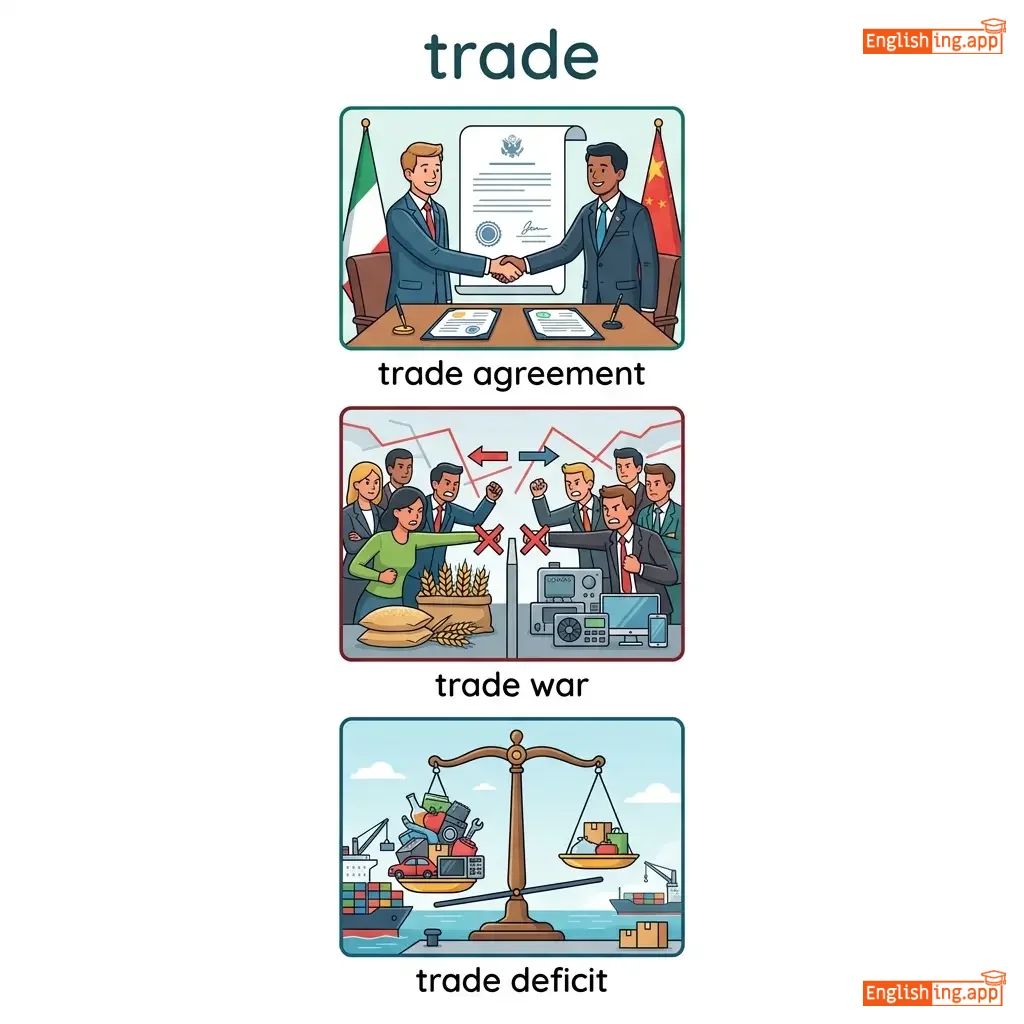
/treɪd/
verb
(トレード)
••••••
|
|
取引する
torihiki suru
••••••
|
traded
トレーデッド
••••••
|
traded
トレーデッド
••••••
|
trades
トレーズ
••••••
|
trading
トレーディング
••••••
|
to buy and sell goods or services; to exchange
••••••
|
They trade goods between countries.
彼らは国々間で商品を取引しています。
••••••
|
彼らは国々間で商品を取引しています。
Karera wa kuniguni kan de shōhin o torihiki shiteimasu.
••••••
|
exchange, deal, swap, barter
••••••
|
hoard, keep, retain
••••••
|
trade goods, trade stocks, trade secrets, fair trade
••••••
|
取引する: 物を取引する、交換する
••••••
|
|
#79
🤝
|
/help/
verb
(ヘルプ)
••••••
|
|
助ける
tasukeru
••••••
|
helped
ヘルプド
••••••
|
helped
ヘルプド
••••••
|
helps
ヘルプス
••••••
|
helping
ヘルピング
••••••
|
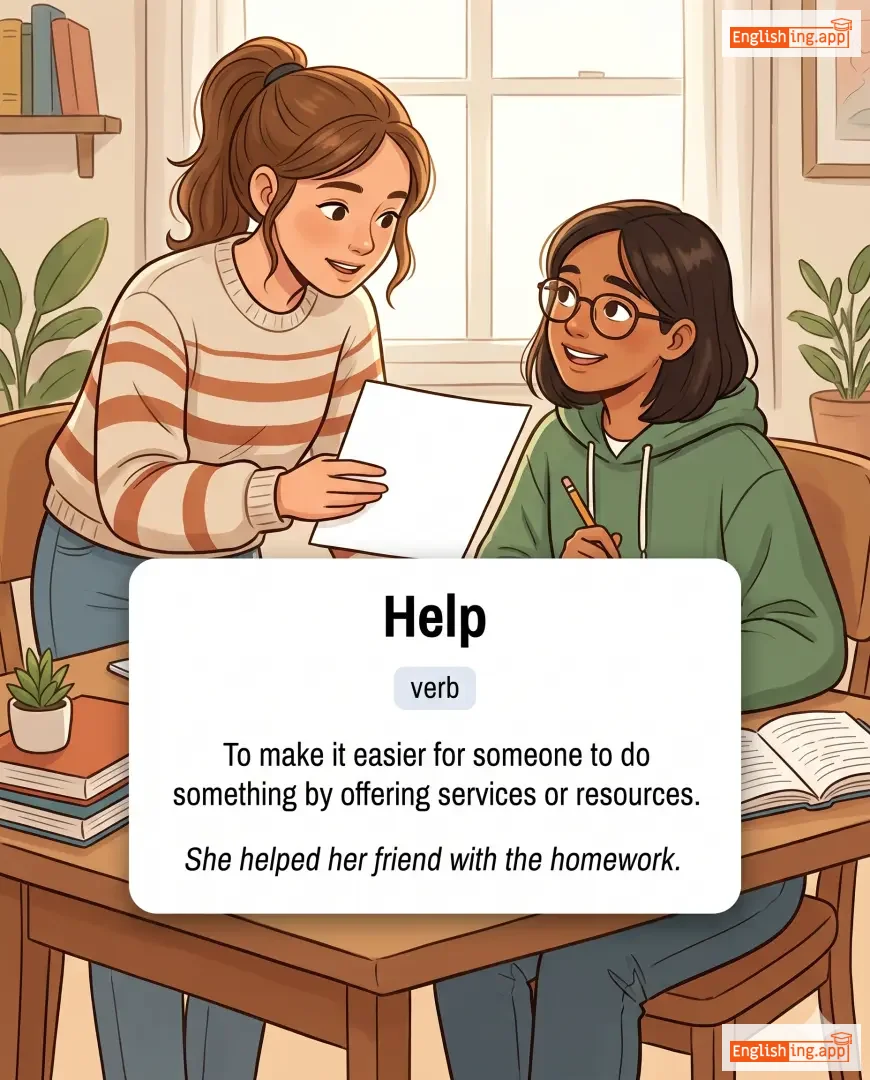
to assist or aid someone in need
••••••
|
I help my mother with household chores.
私は家事を手伝います。
••••••
|
私は家事を手伝います。
Watashi wa kaji o tetsudaimasu.
••••••
|
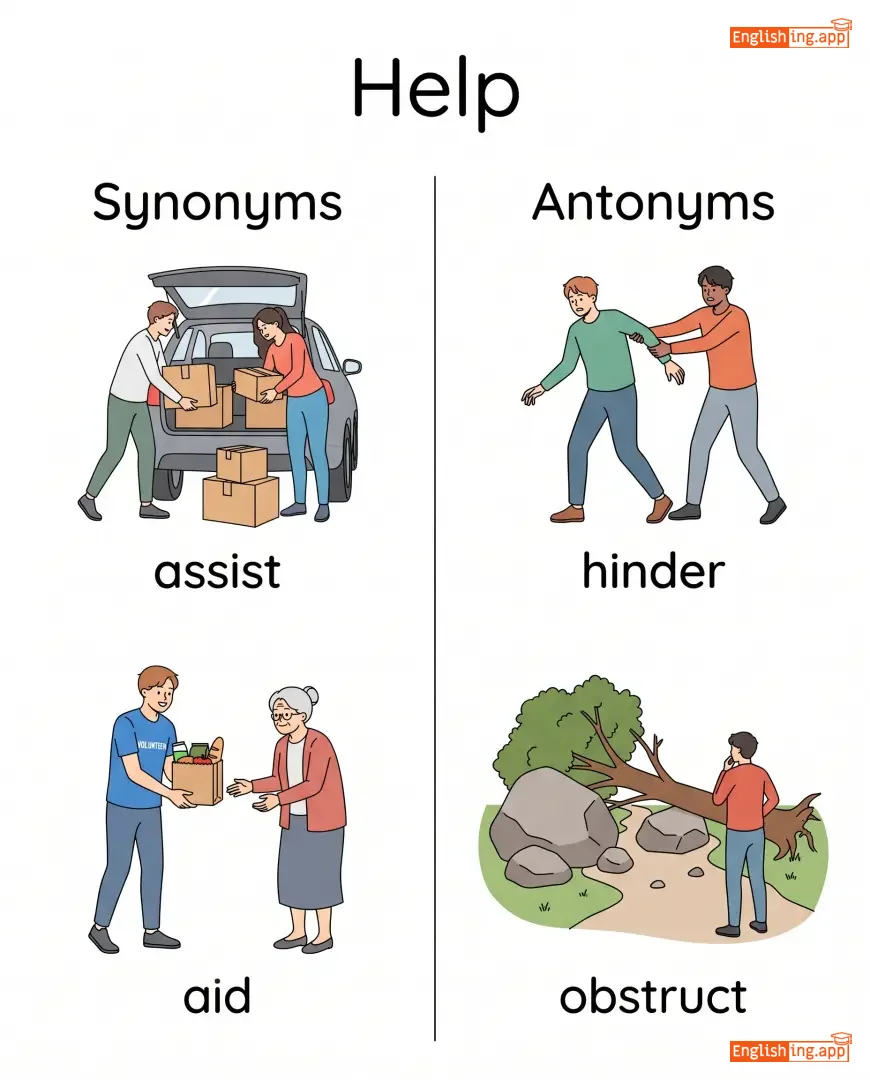
assist, aid, support, contribute
••••••
|
hinder, obstruct, ignore, harm
••••••
|
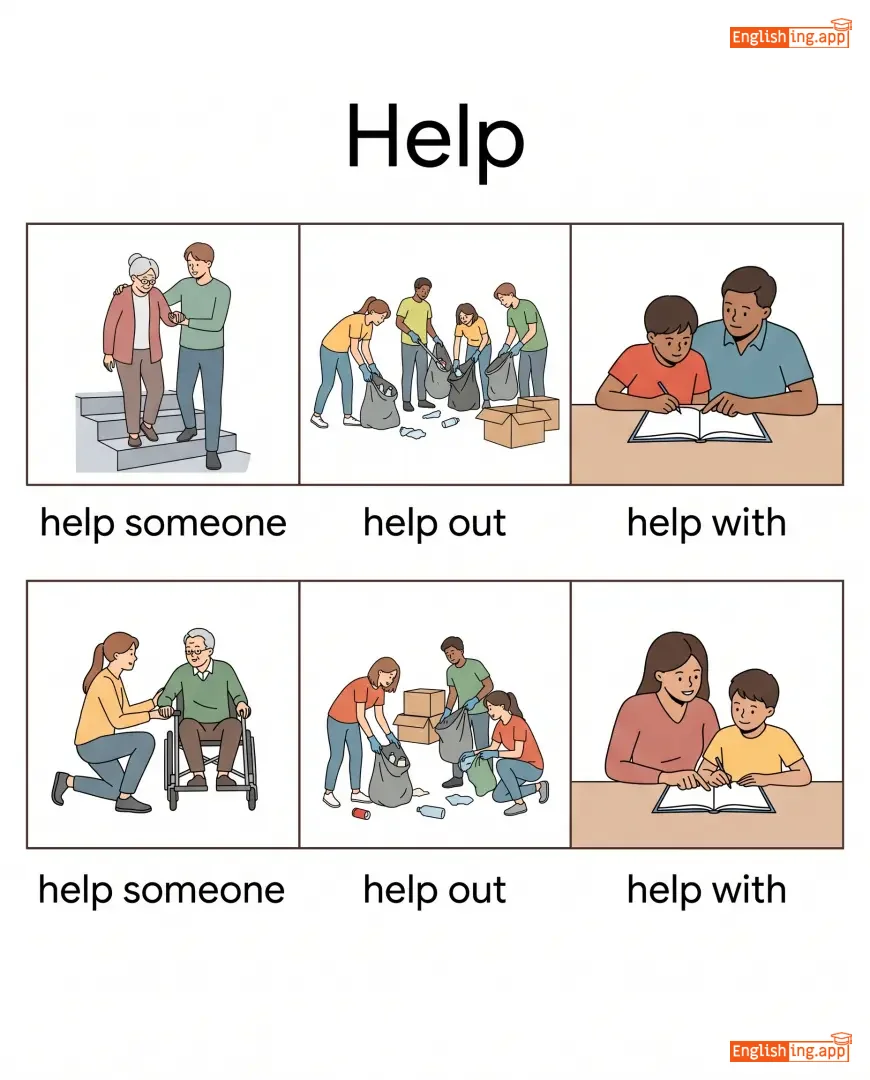
help others, help out, help with, help yourself
••••••
|
Tasukeru – 'Help' sounds like it, add 'T'!
••••••
|
|
#80
🎵
|
/lʌl/
verb
(ラル)
••••••
|
|
静める
shizumeru
••••••
|
lulled
ラルド
••••••
|
lulled
ラルド
••••••
|
lulls
ラルズ
••••••
|
lulling
ラリング
••••••
|
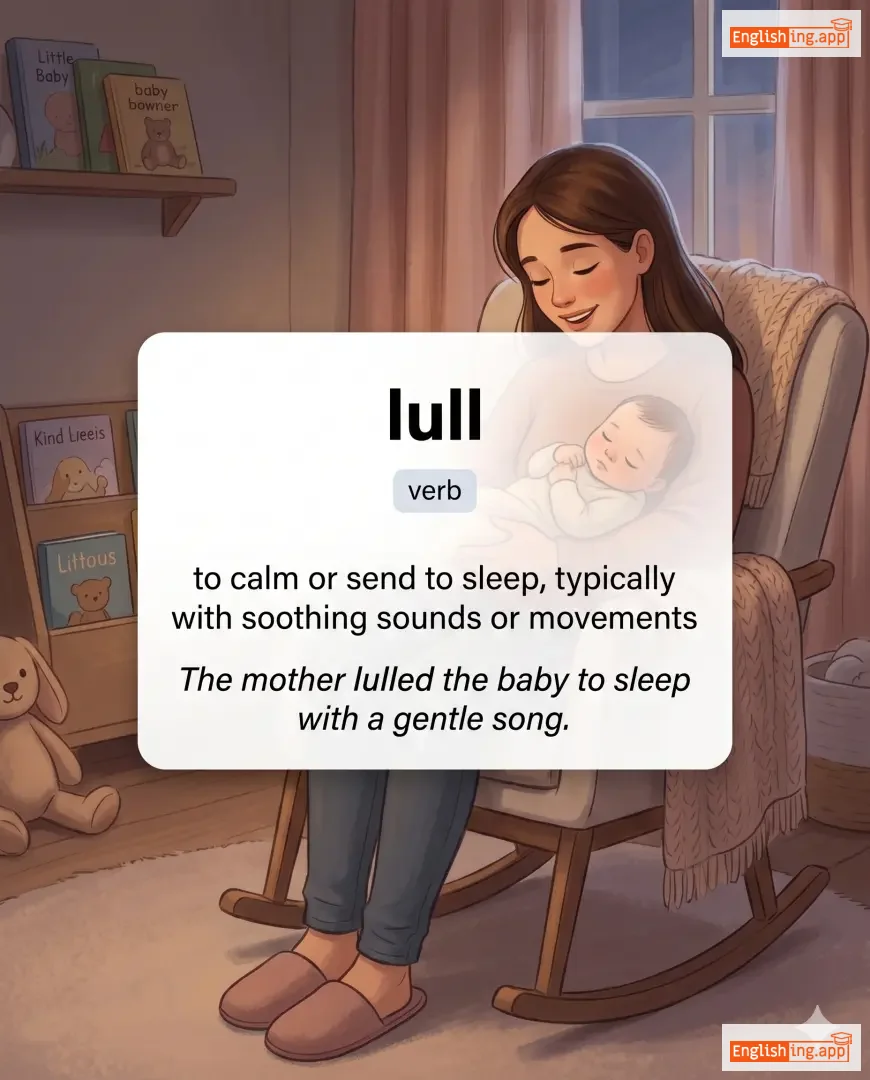
to soothe or calm; to cause to sleep or rest
••••••
|
The gentle music lulled the baby to sleep.
やさしい音楽が赤ちゃんを寝かしつけた。
••••••
|
やさしい音楽が赤ちゃんを寝かしつけた。
Yasashii ongaku ga akachan o nekashitakatta.
••••••
|
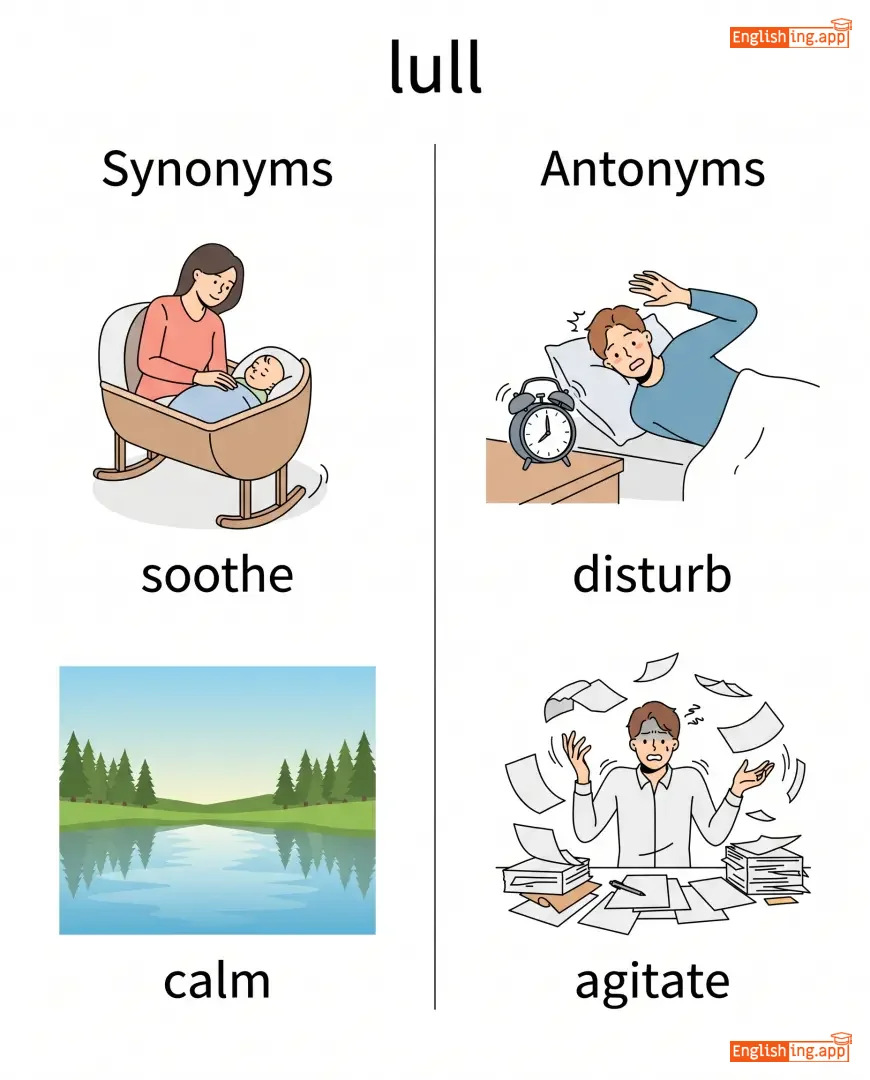
soothe, calm, pacify, quiet
••••••
|
agitate, disturb, excite, stimulate
••••••
|
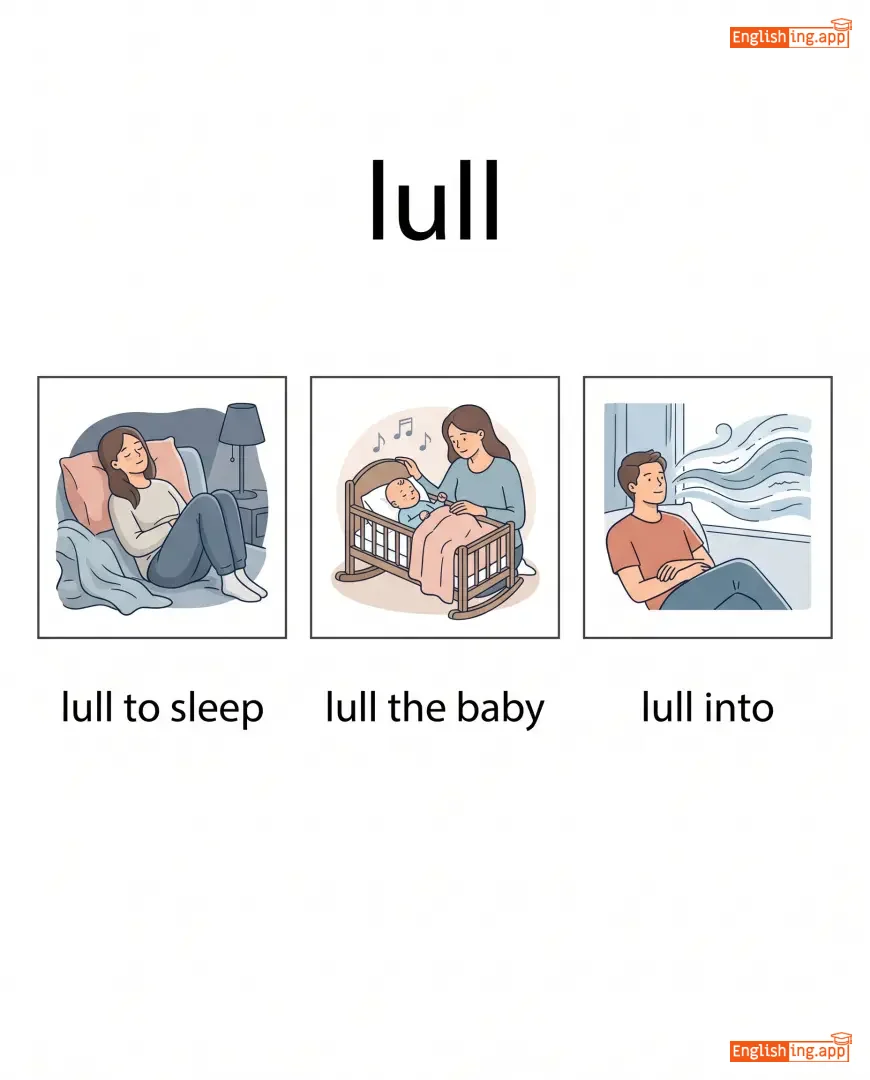
lull to sleep, lull into, gently lull, lull baby
••••••
|
音楽が静める、眠りに誘う。
••••••
|
|
#81
🏗️
|
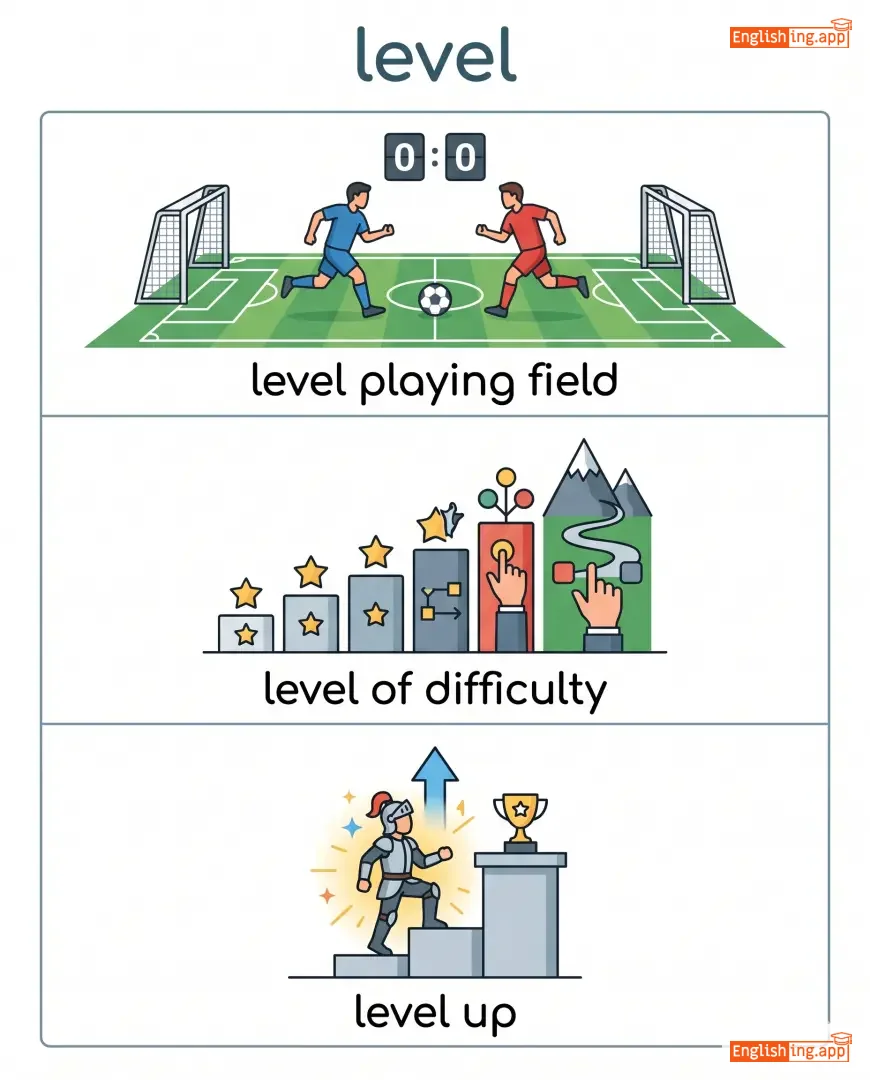
/ˈlevəl/
verb
(レベル)
••••••
|
|
平らにする
taira ni suru
••••••
|
leveled
レベルド
••••••
|
leveled
レベルド
••••••
|
levels
レベルズ
••••••
|
leveling
レベリング
••••••
|
to make flat or even; to destroy or knock down
••••••
|
The construction workers leveled the ground before building.
建設作業員は建設の前に地面を整えた。
••••••
|
建設作業員は建設の前に地面を整えた。
Kensetsu sagyōin wa kensetsu no mae ni jimen o totonoeta.
••••••
|
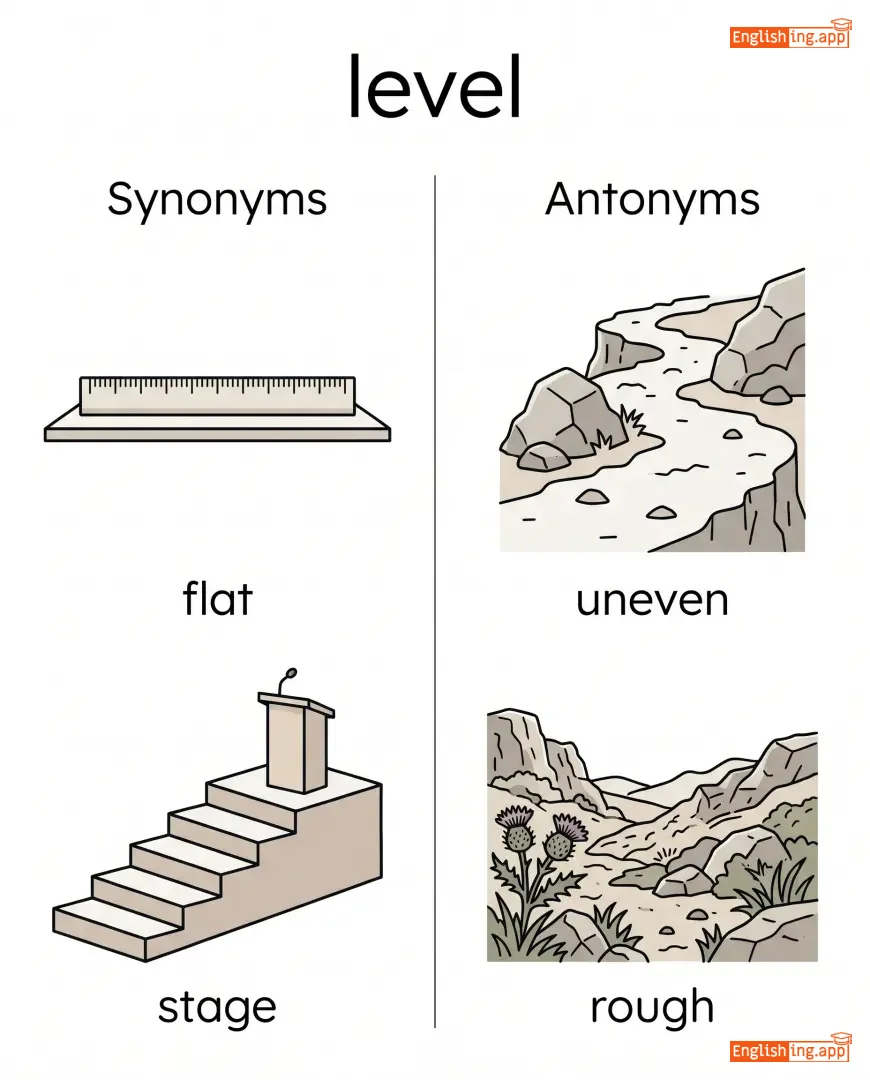
flatten, smooth, even, demolish
••••••
|
raise, elevate, build up, construct
••••••
|
level ground, level playing field, sea level, high level
••••••
|
レベルを整えることは、地面を平らにすることと同じです。
••••••
|
|
#82
💬
|
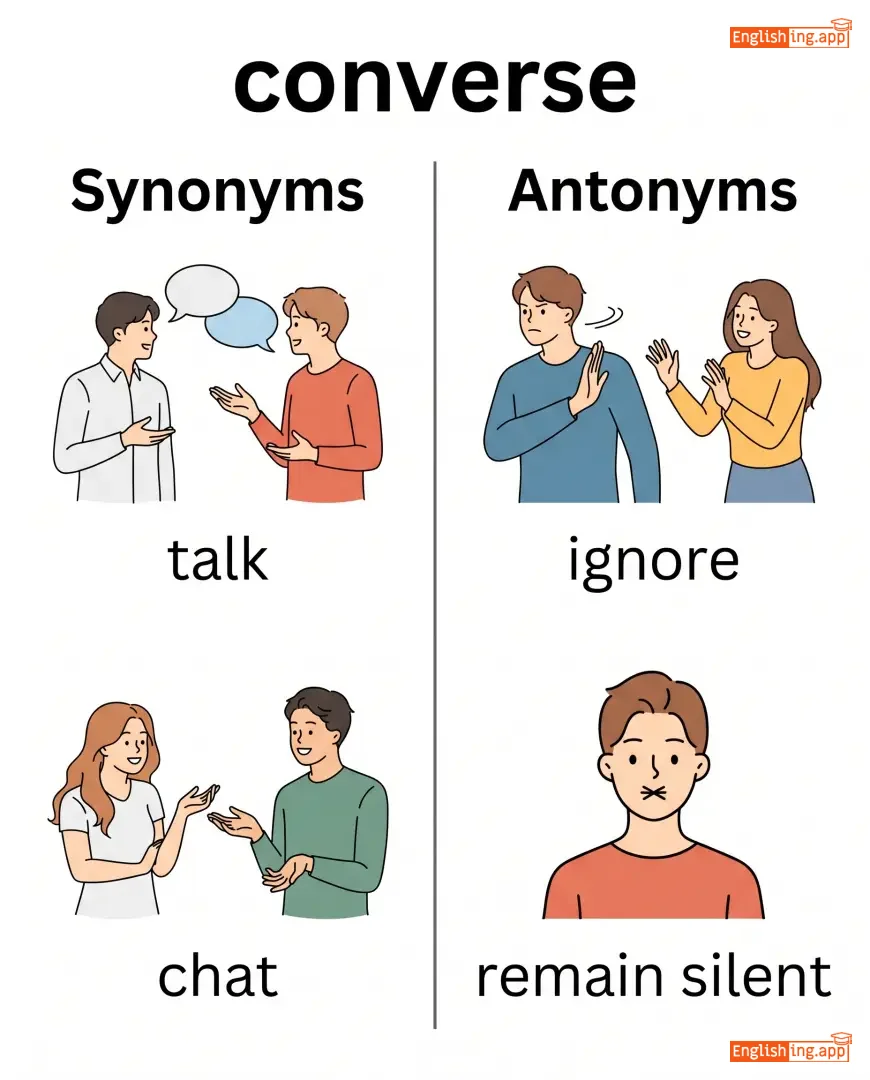
/kənˈvɜːs/
verb
(コンバース)
••••••
|
|
会話する
kaiwa suru
••••••
|
conversed
コンバースド
••••••
|
conversed
コンバースド
••••••
|
converses
コンバースズ
••••••
|
conversing
コンバーシング
••••••
|
to have a conversation; to talk together
••••••
|
They conversed about literature for hours.
ゼイ コンバースド アバウト リテラチャー フォー アワーズ。
••••••
|
彼らは何時間も文学について話し合った。
Karera wa nanjikan mo bungaku ni tsuite hanashiatta.
••••••
|
talk, chat, discuss, communicate
••••••
|
ignore, silence, avoid, shun
••••••
|
converse freely, converse with, converse about, politely converse
••••••
|
‘Converse’ means ‘kaiwa suru’ — imagine polite Japanese small talk.
••••••
|
|
#83
✅
|
/duː/
verb
(ドゥ)
••••••
|
|
する
suru
••••••
|
did
ディッド
••••••
|
done
ドン
••••••
|
does
ダズ
••••••
|
doing
ドゥイング
••••••
|
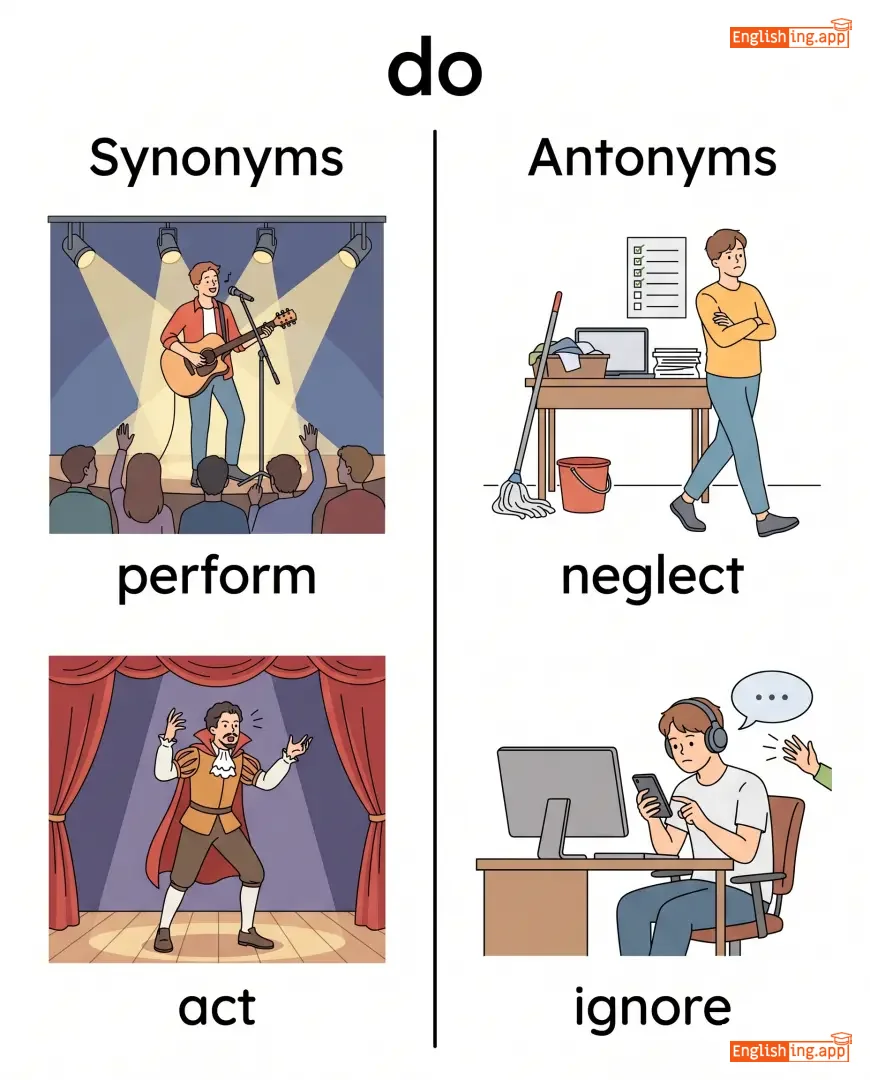
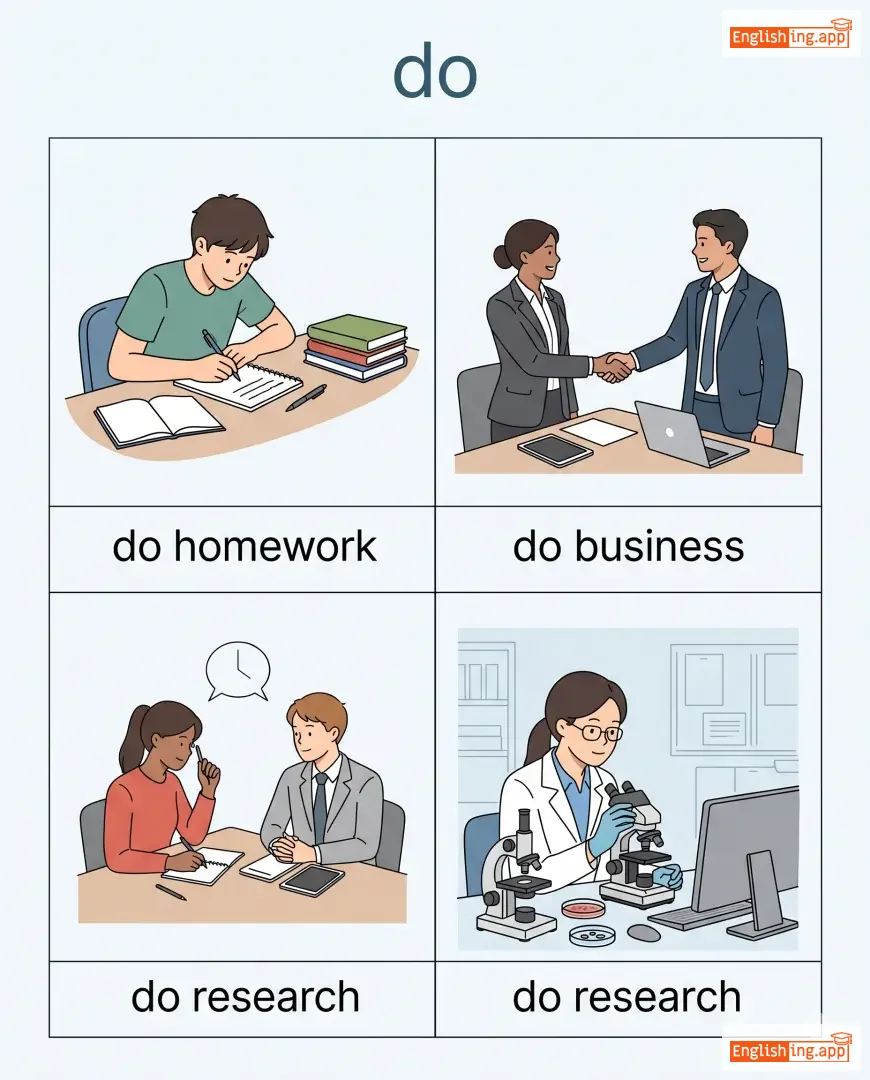
to perform an action; to carry out
••••••
|
I do my homework every evening.
私は毎晩宿題をします。
••••••
|
私は毎晩宿題をします。
Watashi wa mainichi yoru shukudai o shimasu.
••••••
|
perform, execute, carry out, accomplish
••••••
|
undo, neglect, ignore, avoid
••••••
|
do homework, do work, do best, do dishes
••••••
|
'Suru' is what you 'do' in Japan, just like the English!
••••••
|
|
#84
✊
|
/ˈproʊtest/
verb
(プロテスト)
••••••
|
|
抗議する
kōgi suru
••••••
|
protested
プロテストした
••••••
|
protested
プロテストした
••••••
|
protests
プロテストします
••••••
|
protesting
プロテストしている
••••••
|
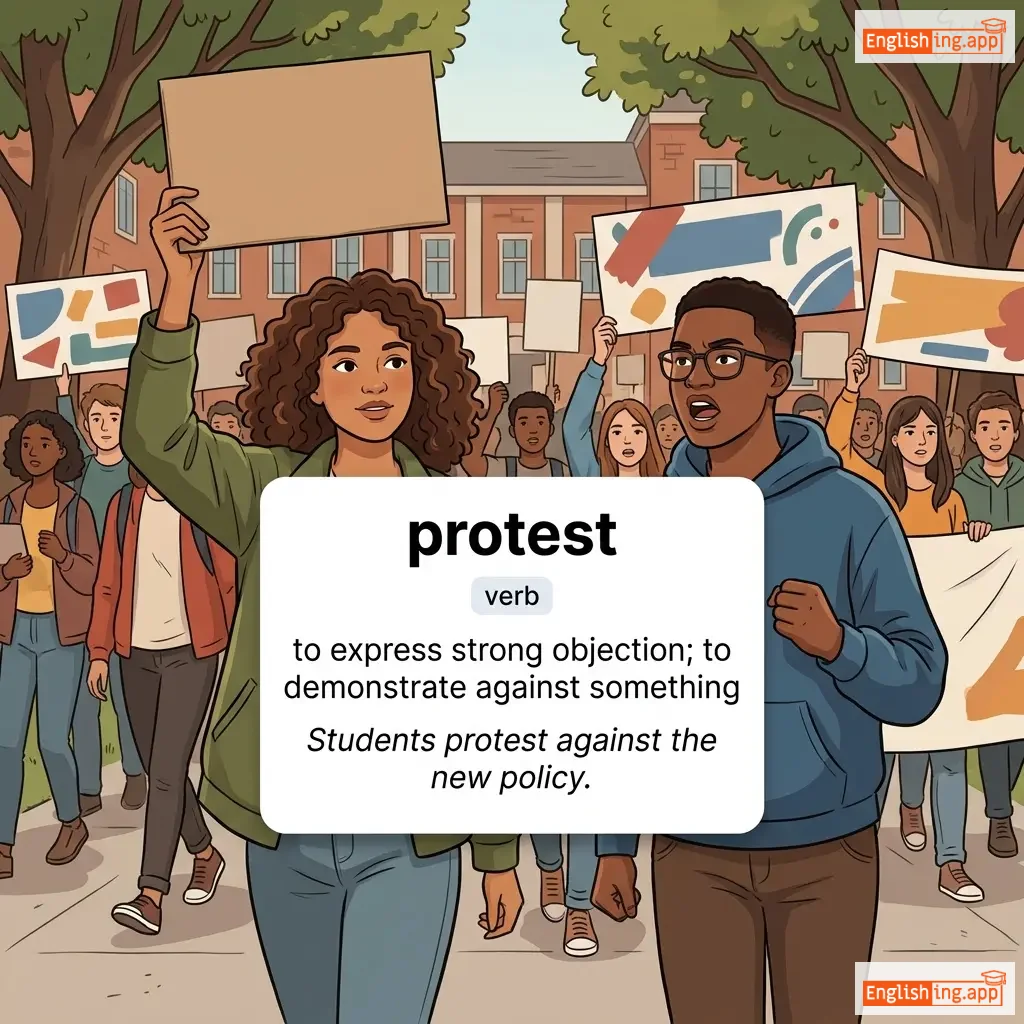
to express strong objection; to demonstrate against something
••••••
|
Students protest against the new policy.
学生たちは新しい方針に反対して抗議しています。
••••••
|
学生たちは新しい方針に反対して抗議しています。
Gakusei-tachi wa atarashī hōshin ni hantai shite kōgi shiteimasu.
••••••
|
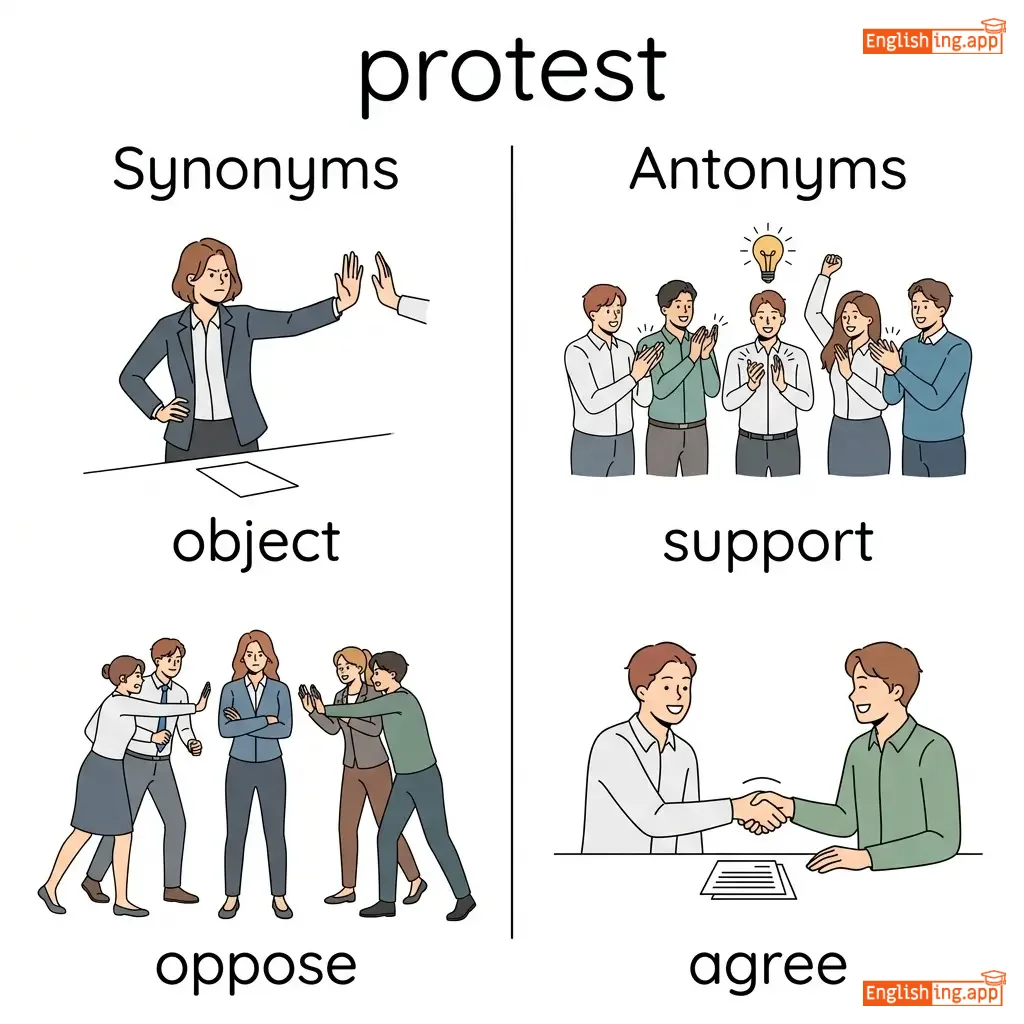
object, oppose, demonstrate, complain
••••••
|
support, agree, accept, approve
••••••
|
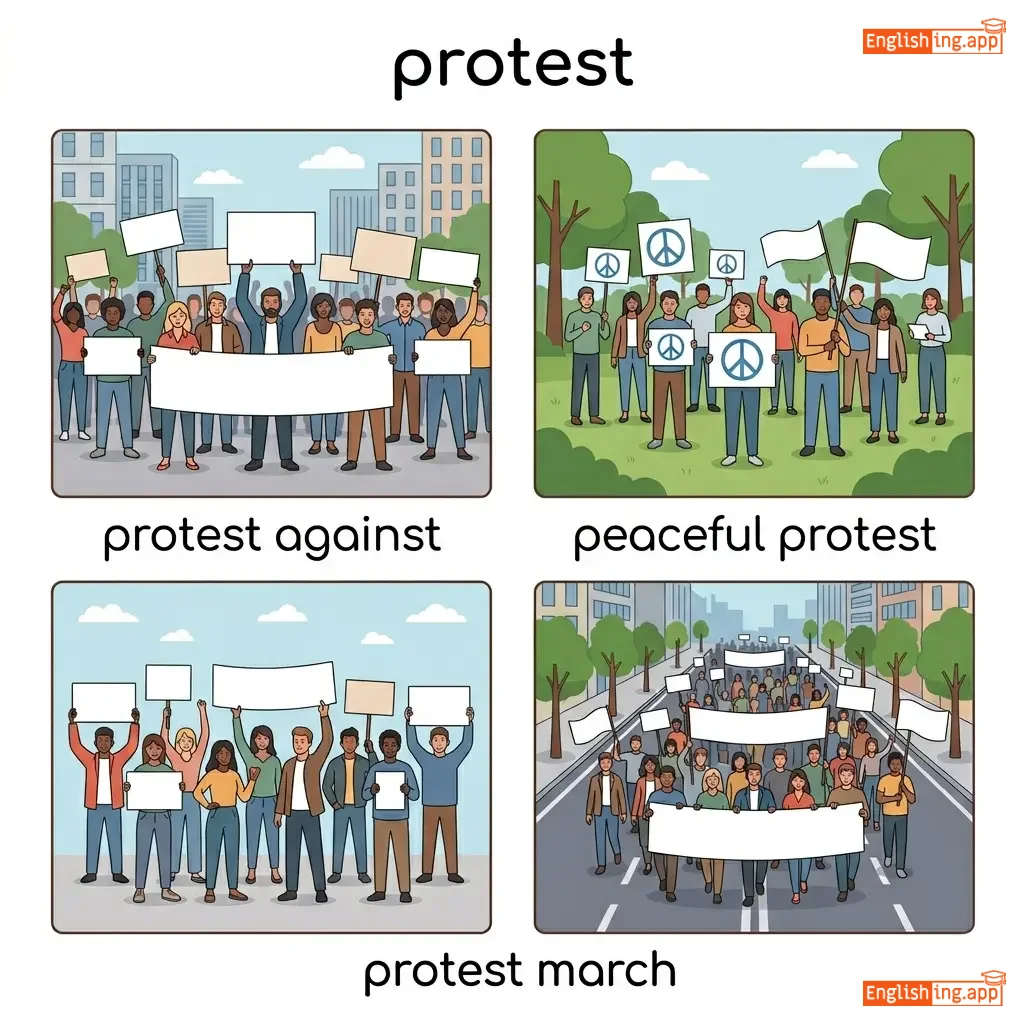
protest against, peaceful protest, protest march, strongly protest
••••••
|
抗議 (Kōgi) = 知識 (Chishiki) + 対応 (Taiō) (学生たちは知識をもって抗議しています)
••••••
|
|
#85
🗯️
|
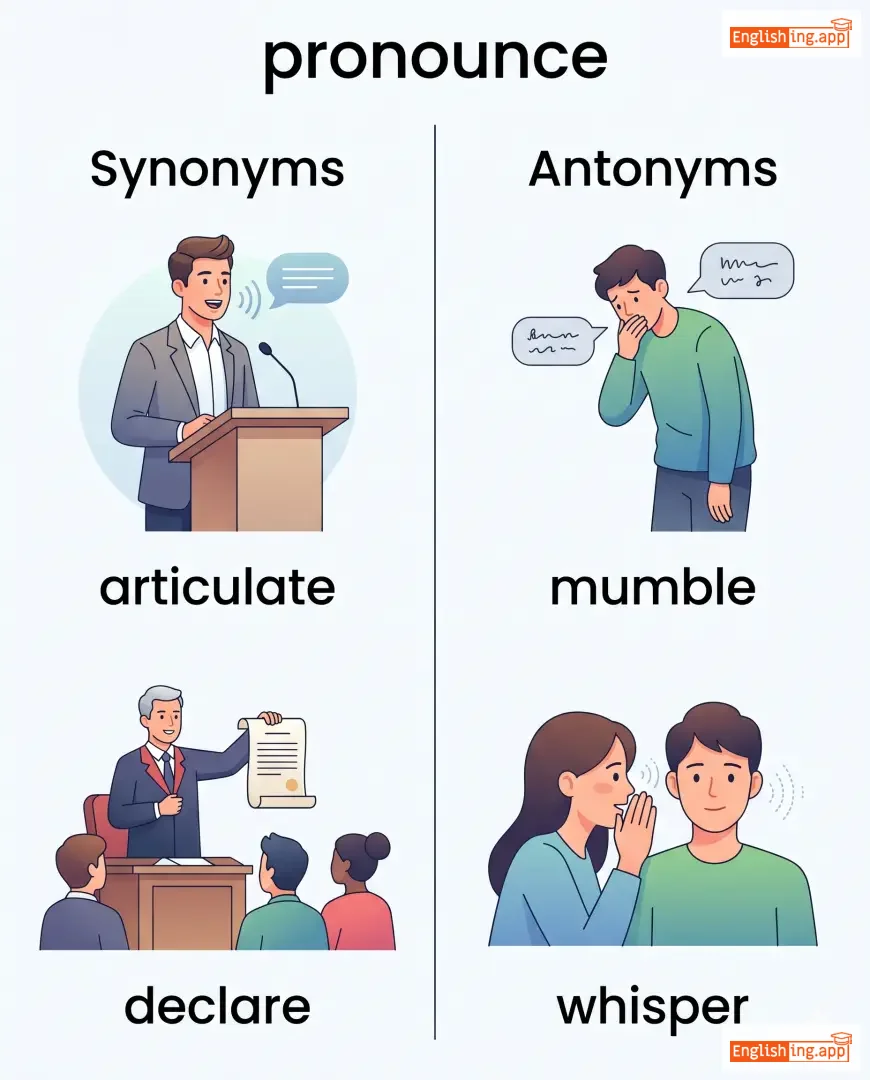
/prəˈnaʊns/
verb
(ハピネス)
••••••
|
|
発音する
hatsuon suru
••••••
|
pronounced
ハピネスド
••••••
|
pronounced
ハピネスド
••••••
|
pronounces
ハピネスエス
••••••
|
pronouncing
ハピネスイング
••••••
|
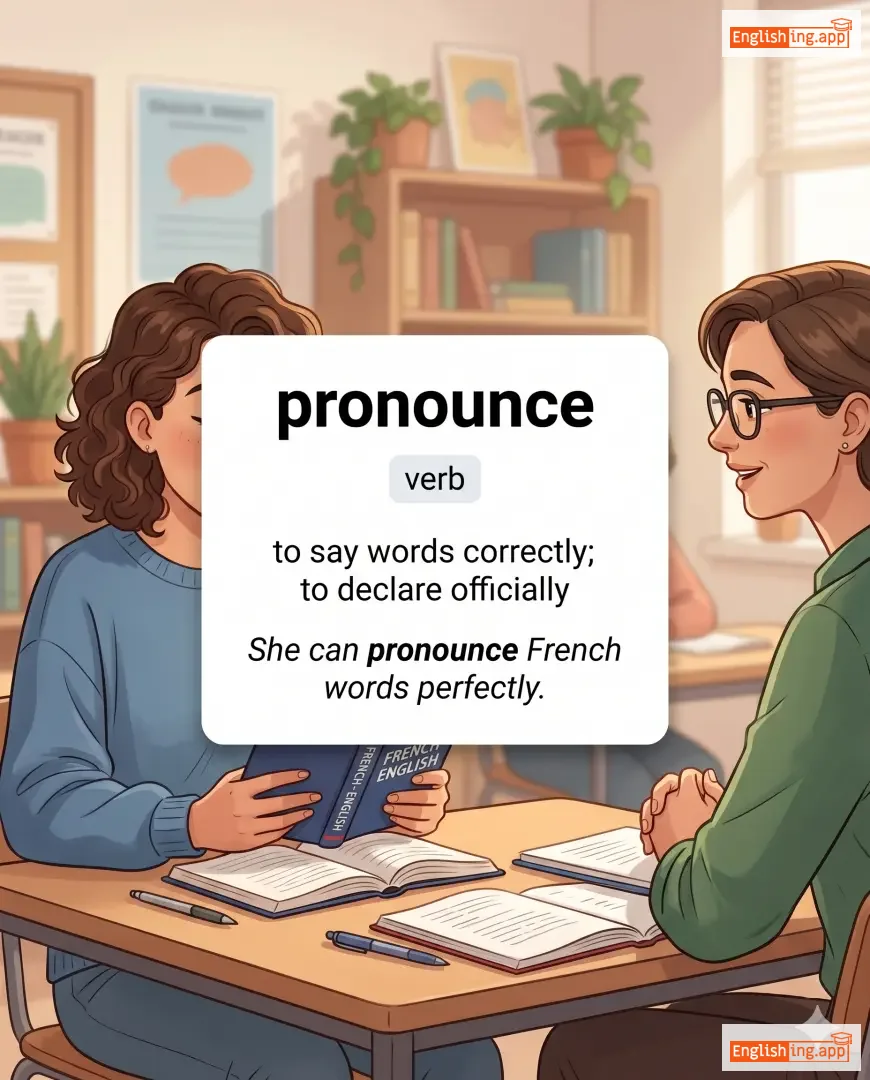
to say words correctly; to declare officially
••••••
|
She can pronounce French words perfectly.
彼女はフランス語の単語を完璧に発音できます。
••••••
|
彼女はフランス語の単語を完璧に発音できます。
Kanojo wa furansugo no tango o kanpeki ni hatsuon dekimasu.
••••••
|
articulate, declare, announce, state
••••••
|
mumble, whisper, conceal
••••••
|
pronounce correctly, pronounce clearly, pronounce word, hard to pronounce
••••••
|
Think of pronouncing it like 'hatsuon suru' with a perfect Japanese touch!
••••••
|
|
#86
👔
|
/əˈpɔɪnt/
verb
(アポイント)
••••••
|
|
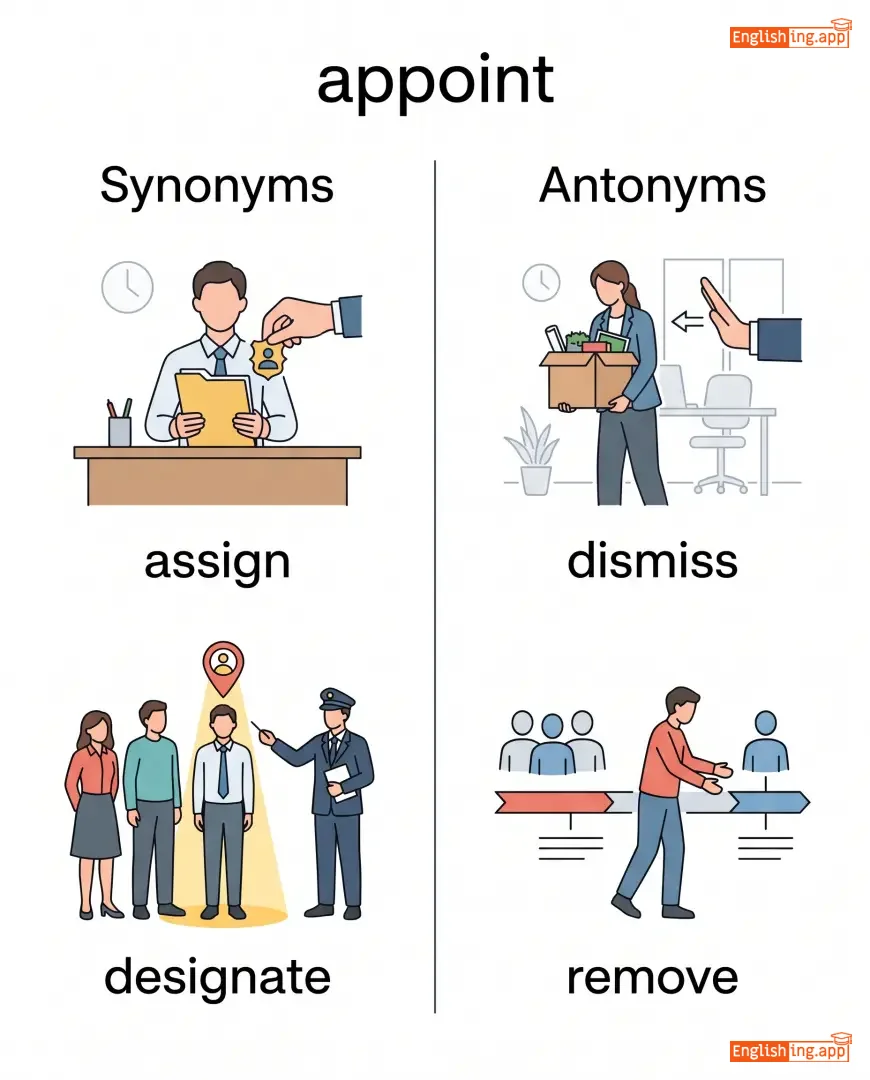
任命する
ninmei suru
••••••
|
appointed
アポイントメント
••••••
|
appointed
アポイントメント
••••••
|
appoints
アポイントス
••••••
|
appointing
アポイントイング
••••••
|
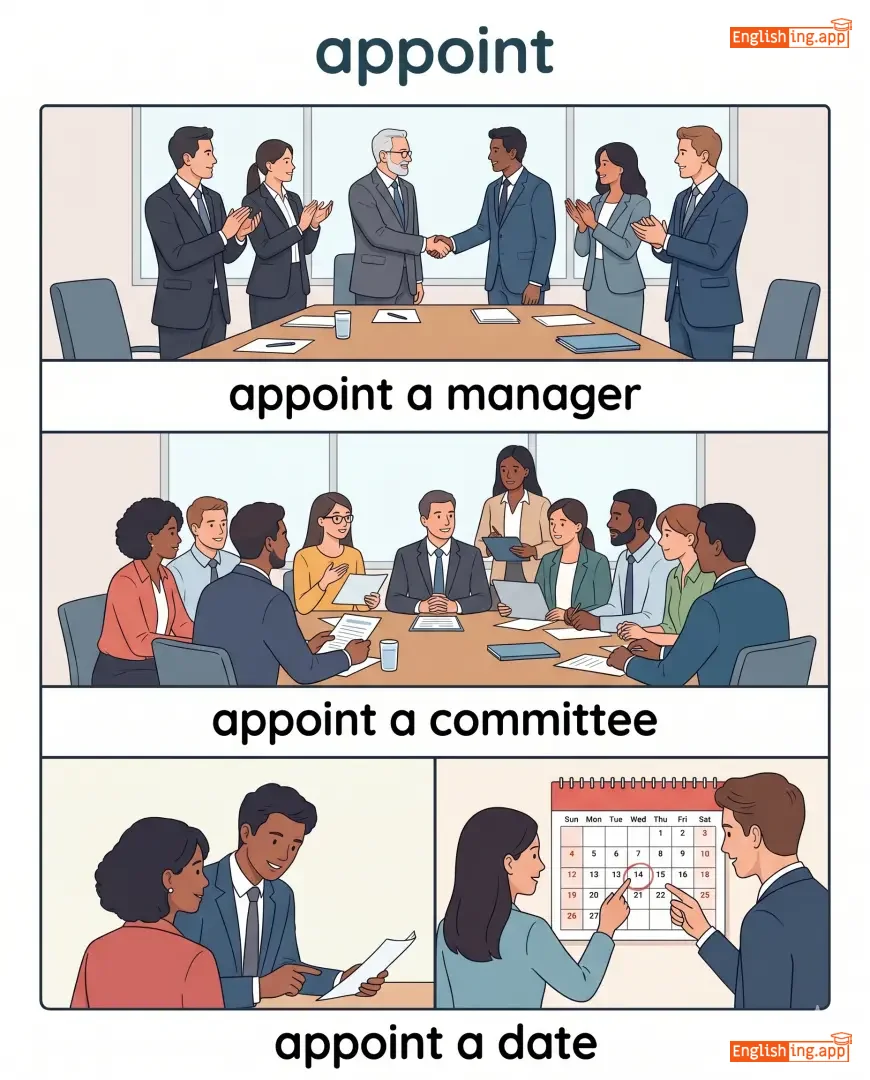
to choose someone for a job or position
••••••
|
The board will appoint a new director.
ボードは新しいディレクターを任命します。
••••••
|
ボードは新しいディレクターを任命します。
Bōdo wa atarashī direkutā o ninmei shimasu.
••••••
|
assign, designate, nominate, select
••••••
|
dismiss, fire, remove, discharge
••••••
|
appoint someone, appoint director, appoint committee, newly appoint
••••••
|
ボードが新しいディレクターを任命して、組織を運営します。
••••••
|
|
#87
🎉
|
/rɪˈdʒɔɪs/
verb
(rijoisu)
••••••
|
|
喜ぶ
yorokobu
••••••
|
rejoiced
rijoisudo
••••••
|
rejoiced
rijoisudo
••••••
|
rejoices
rijoizesu
••••••
|
rejoicing
rijoizingu
••••••
|
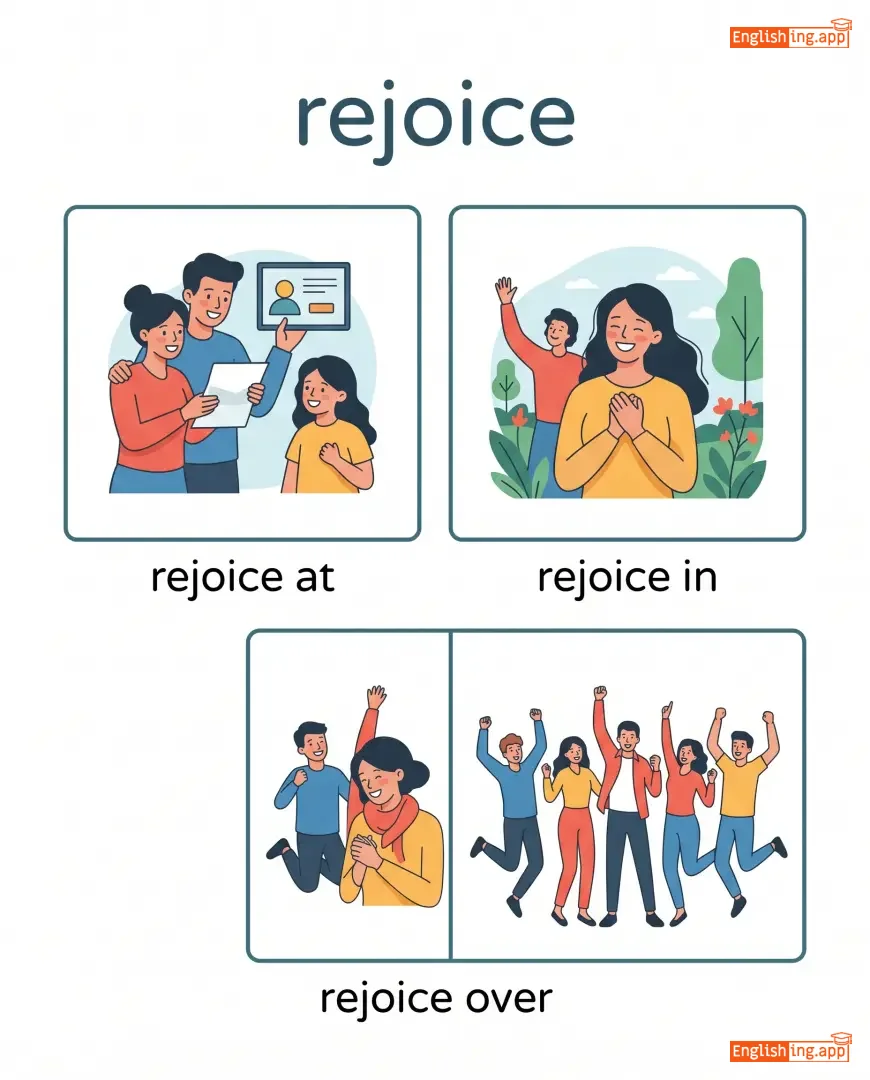
to feel or show great joy; to celebrate
••••••
|
The family rejoices at the good news.
その家族は良いニュースに喜んでいます。
••••••
|
その家族は良いニュースに喜んでいます。
Sono kazoku wa yoi nyūsu ni yorokondeimasu
••••••
|
celebrate, delight, exult, be happy
••••••
|
mourn, grieve, lament, sorrow
••••••
|
rejoice in, rejoice at, greatly rejoice, rejoice together
••••••
|
A family rejoicing together spreads happiness to everyone!
••••••
|
|
#88
📦
|
/sæk/
verb
(sak)
••••••
|
- •••••• |
解雇する
kaiko suru
••••••
|
sacked
sakt
••••••
|
sacked
sakt
••••••
|
sacks
saks
••••••
|
sacking
saking
••••••
|
to dismiss from a job; to put something in a sack
••••••
|
The company sacked him for poor performance.
会社は業績不良で彼を解雇しました。
••••••
|
会社は業績不良で彼を解雇しました。
Kaisha wa gyōseki furyō de kare o kaiko shimashita.
••••••
|
fire, dismiss, discharge, terminate
••••••
|
hire, employ, recruit, appoint
••••••
|
sack employee, get the sack, sack someone, sack goods
••••••
|
Sack = 解雇された、または何かを袋に入れる。
••••••
|
|
#89
🌱
|
/bɪˈkʌm/
verb
(bikam)
••••••
|
- •••••• |
なる
naru
••••••
|
became
bikem
••••••
|
become
bikam
••••••
|
becomes
bikams
••••••
|
becoming
biking
••••••
|
to grow to be; to come to be
••••••
|
She became a doctor after years of study.
彼女は何年もの勉強を経て医師になりました。
••••••
|
彼女は何年もの勉強を経て医師になりました。
Kanojo wa nannen mo no benkyou o hete ishi ni narimashita.
••••••
|
turn into, grow into, develop into, transform
••••••
|
remain, stay, continue
••••••
|
become better, become famous, become clear, become reality
••••••
|
‘なる’ in Japanese means to become—think of becoming after hard work like becoming a doctor!
••••••
|
Vocabulary Quiz
Test your vocabulary by matching words with their translations or meanings.
Login to take the quiz
Comments (0)
Share your thoughts and join the discussion.
Join the discussion by logging in
Login to CommentNo comments yet
Be the first to share your thoughts!