

翻訳
過去
過去分詞
三人称単数
動名詞
意味
例文
例文の翻訳
同義語
対義語
コロケーション
ニーモニック
















Swipe left or right, or use the buttons. Tap image to zoom.
例文の翻訳
単語
Lesson 13: Mastering the Most Frequent Verbs & TensesLesson 13: Mastering the Most Frequent Verbs & Tenses - マスクトグル
|
絵文字
|
単語 | Images | 翻訳 | 過去 | 過去分詞 | 三人称単数 | 動名詞 | 意味 | 例文 | 例文の翻訳 | 同義語 | 対義語 | コロケーション | ニーモニック |
|---|---|---|---|---|---|---|---|---|---|---|---|---|---|---|
|
#359
⚡
|
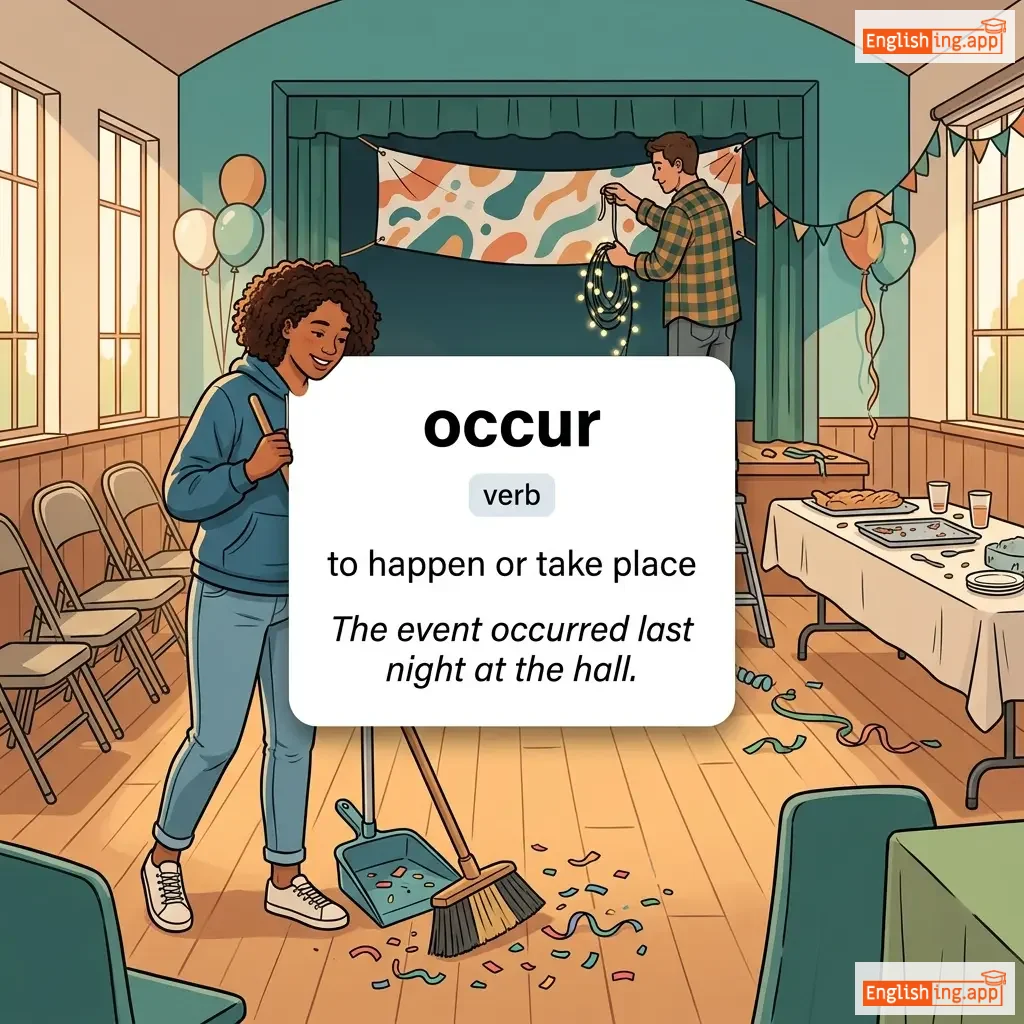
/əˈkɜːr/
verb
(発生する)
••••••
|
|
発生する
hassuru
••••••
|
occurred
発生した
••••••
|
occurred
発生した
••••••
|
occurs
発生する
••••••
|
occurring
発生している
••••••
|
to happen or take place; to be found or present
••••••
|
The accident occurred at the intersection during rush hour.
事故はラッシュアワーの交差点で発生しました。
••••••
|
事故はラッシュアワーの交差点で発生しました。
Jiko wa rasshu awa no kōsaten de hassei shimashita.
••••••
|
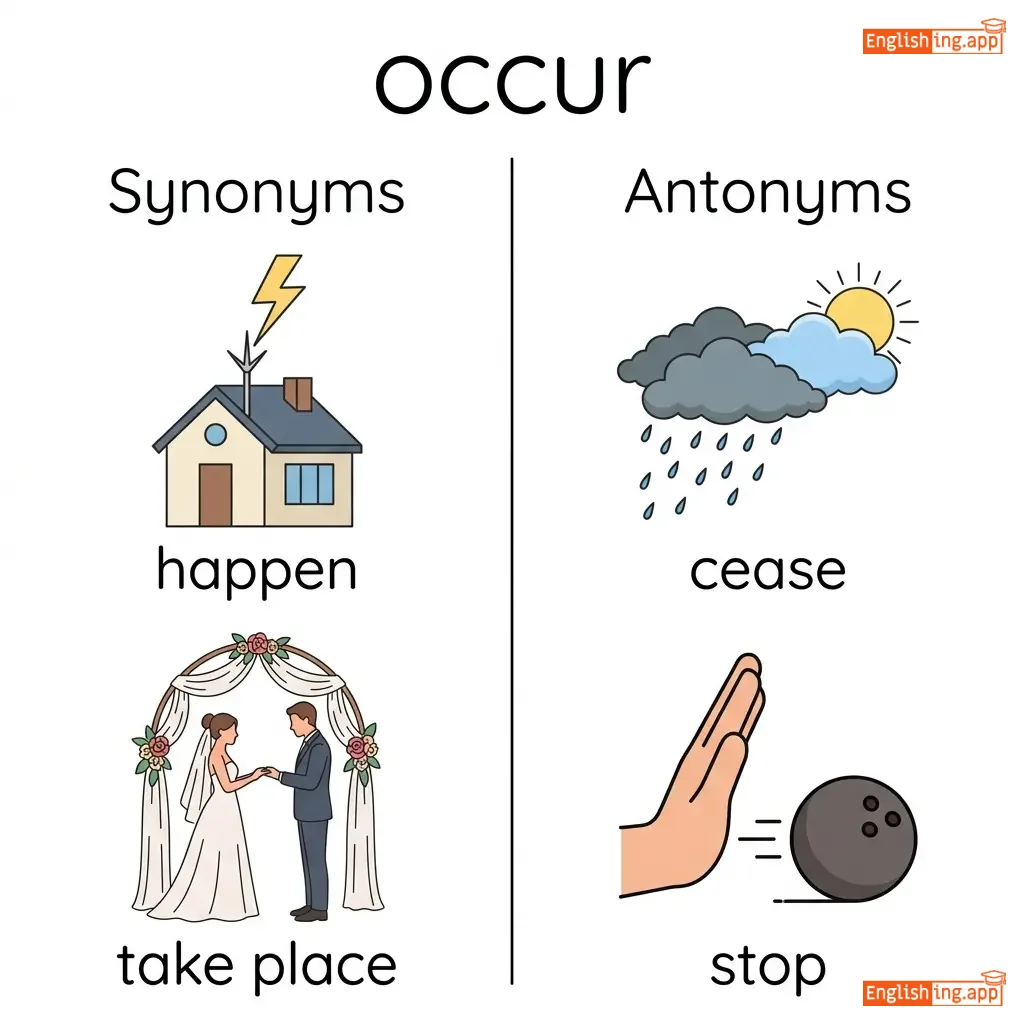
happen, take place, arise, transpire
••••••
|
prevent, avoid, cease, stop
••••••
|
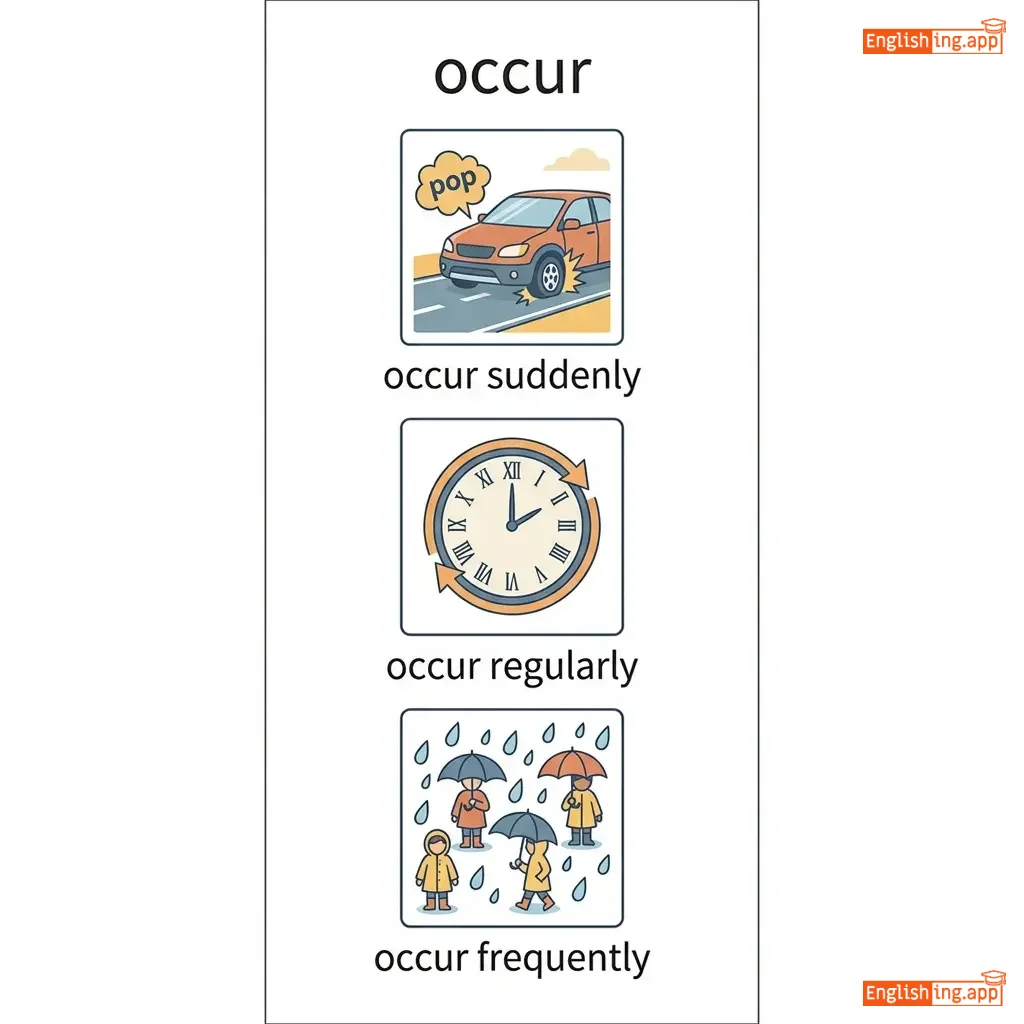
occur naturally, occur frequently, occur suddenly, rarely occur, occur simultaneously
••••••
|
発生するは、何かが突然起きることを示す言葉です。それが「発生」することです。
••••••
|
|
#360
🛏️
|
/laɪ/
verb
(lai)
••••••
|
|
横たわる, 嘘をつく
yokotawaru, uso o tsuku
••••••
|
lay
レイ
••••••
|
lain
レイン
••••••
|
lies
ライズ
••••••
|
lying
ライング
••••••
|
to be in a horizontal position; to tell an untruth
••••••
|
The book lies on the table.
ザ・ブック・ライズ・オン・ザ・テーブル。
••••••
|
本はテーブルの上にあります。
Hon wa tēburu no ue ni arimasu.
••••••
|
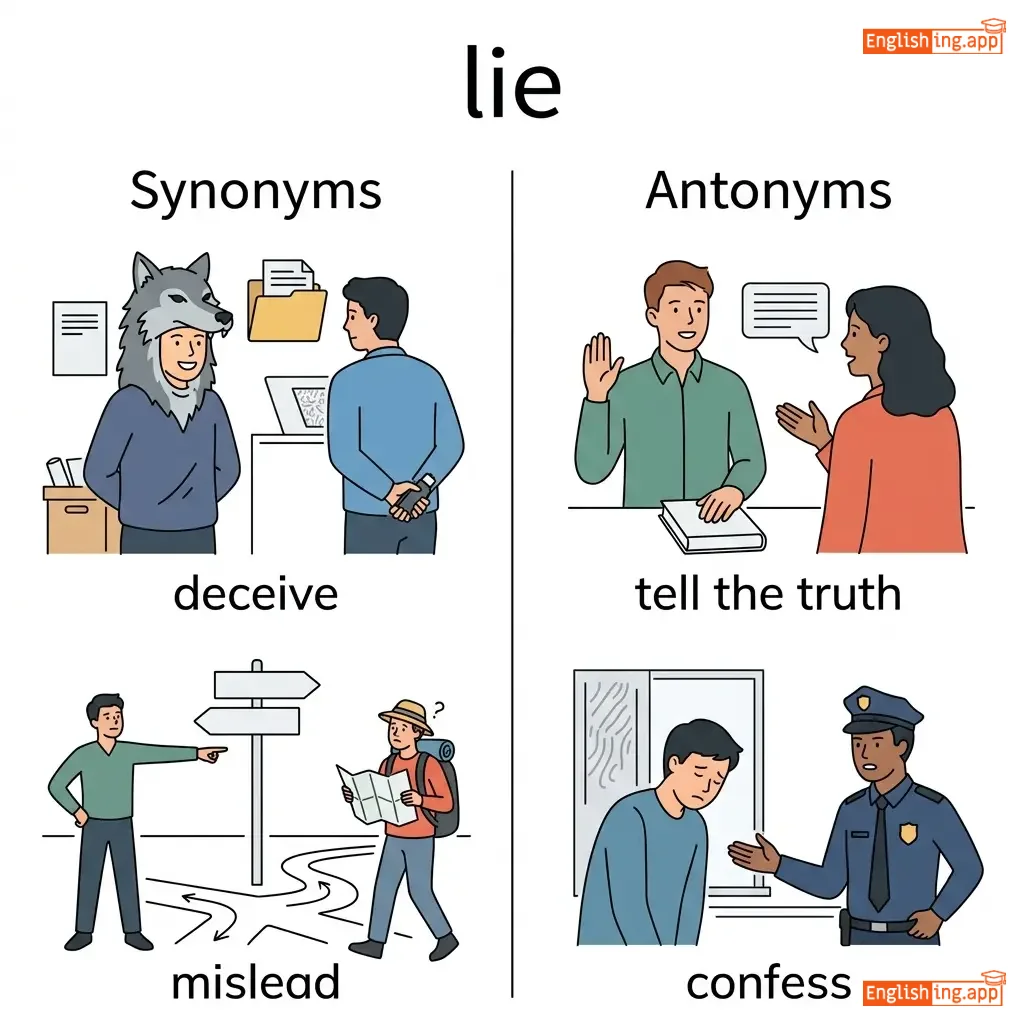
rest, recline, deceive, fabricate
••••••
|
stand, sit, tell truth, be honest
••••••
|
lie down, lie flat, lie awake, lie still, lie dormant
••••••
|
嘘をついて横たわる
••••••
|
|
#361
👉
|
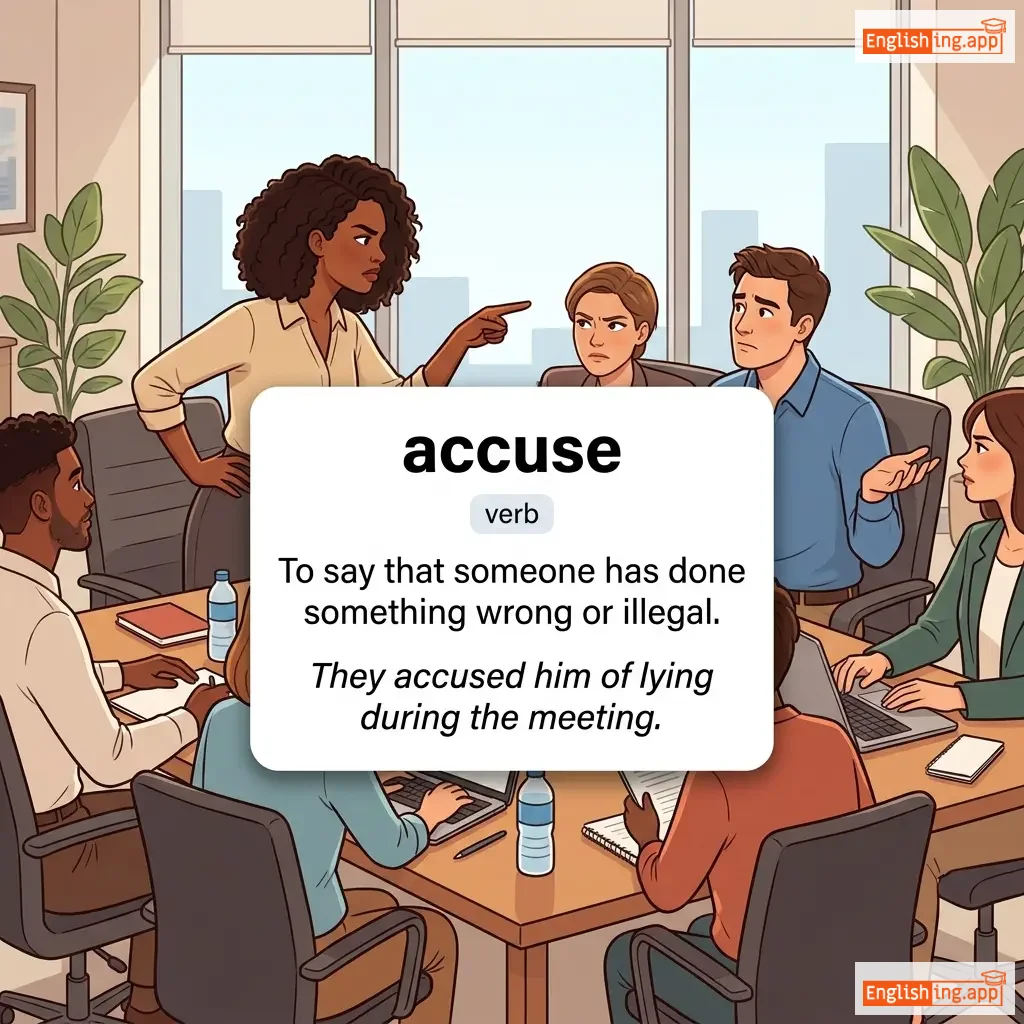
/əˈkjuːz/
verb
(アキューズ)
••••••
|
|
告発する
kokuhatsu suru
••••••
|
accused
アキューズド
••••••
|
accused
アキューズド
••••••
|
accuses
アキューズィズ
••••••
|
accusing
アキューズィング
••••••
|
to charge someone with a crime or wrongdoing
••••••
|
She accused him of stealing her wallet.
彼女は彼を財布を盗んだことで告訴した。
••••••
|
彼女は彼を財布を盗んだことで告訴した。
Kanojo wa kare o saifu o nusunda koto de kokuso shita.
••••••
|
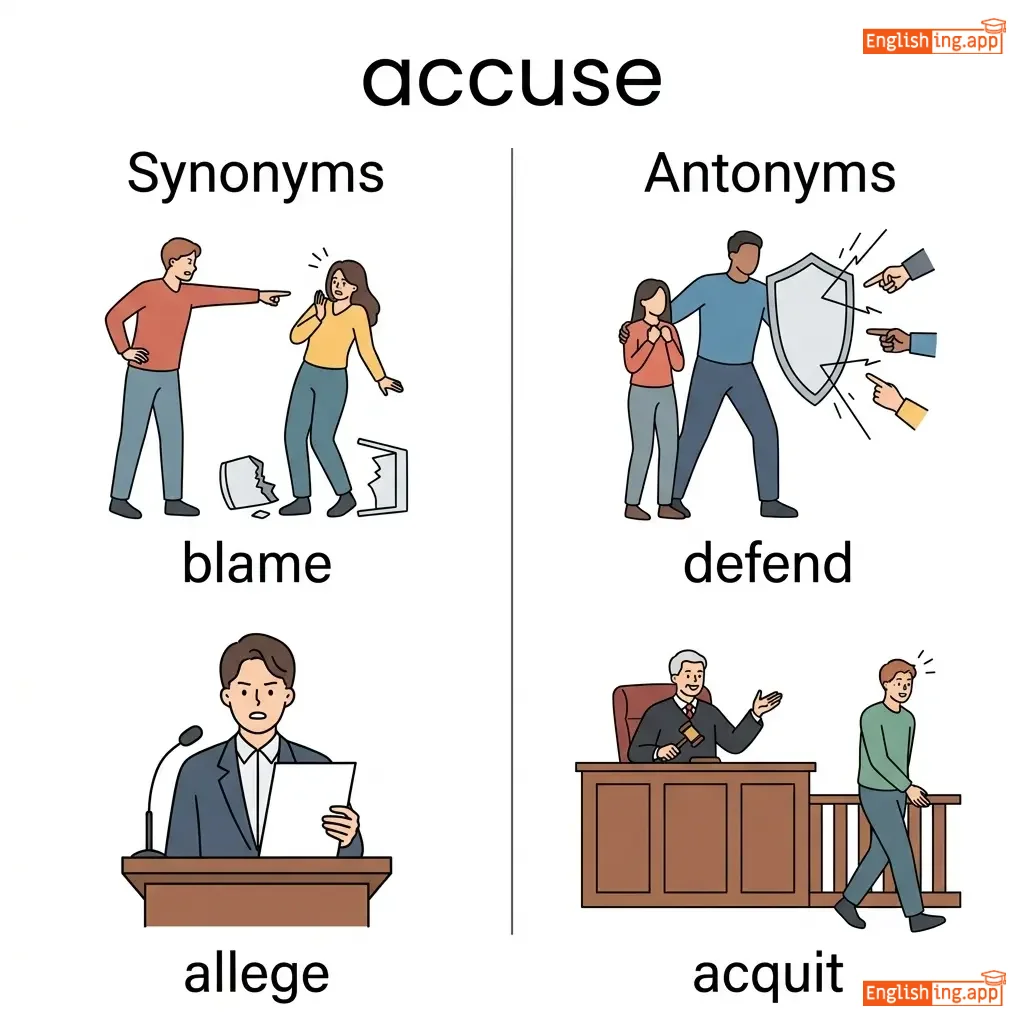
charge, blame, indict, allege
••••••
|
defend, exonerate, absolve, clear
••••••
|
accuse falsely, accuse someone, publicly accuse, accuse wrongly, accuse directly
••••••
|
悪いことをした人を'告発する'必要がある。
••••••
|
|
#362
🚫
|
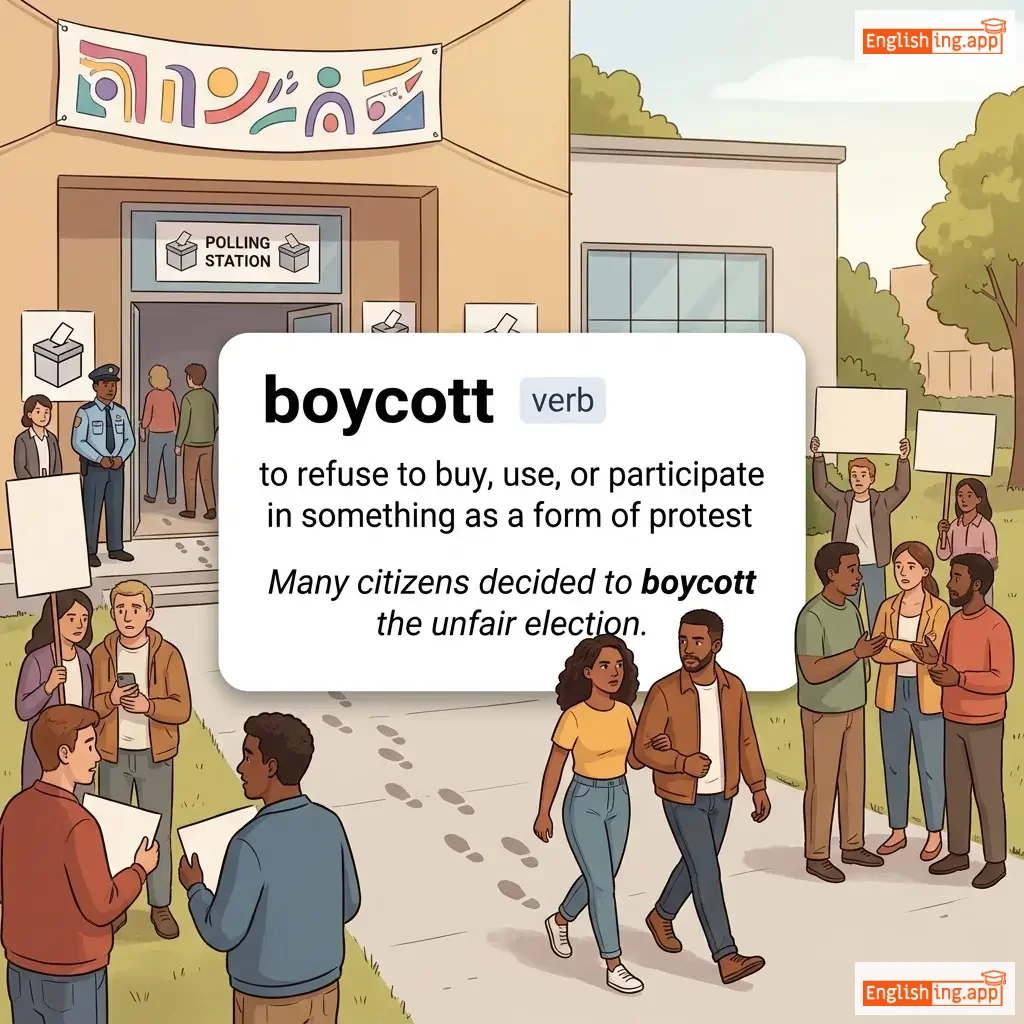
/ˈbɔɪkɑt/
verb
(ボイコット)
••••••
|
|
ボイコットする
boikotto suru
••••••
|
boycotted
ボイコットした
••••••
|
boycotted
ボイコットした
••••••
|
boycotts
ボイコットする
••••••
|
boycotting
ボイコットしている
••••••
|
to refuse to buy, use, or participate in something as a protest
••••••
|
They decided to boycott the company's products.
彼らは会社の製品をボイコットすることに決めた。
••••••
|
彼らは会社の製品をボイコットすることに決めた。
Karera wa kaisha no seihin o boikotto suru koto ni kimeta.
••••••
|
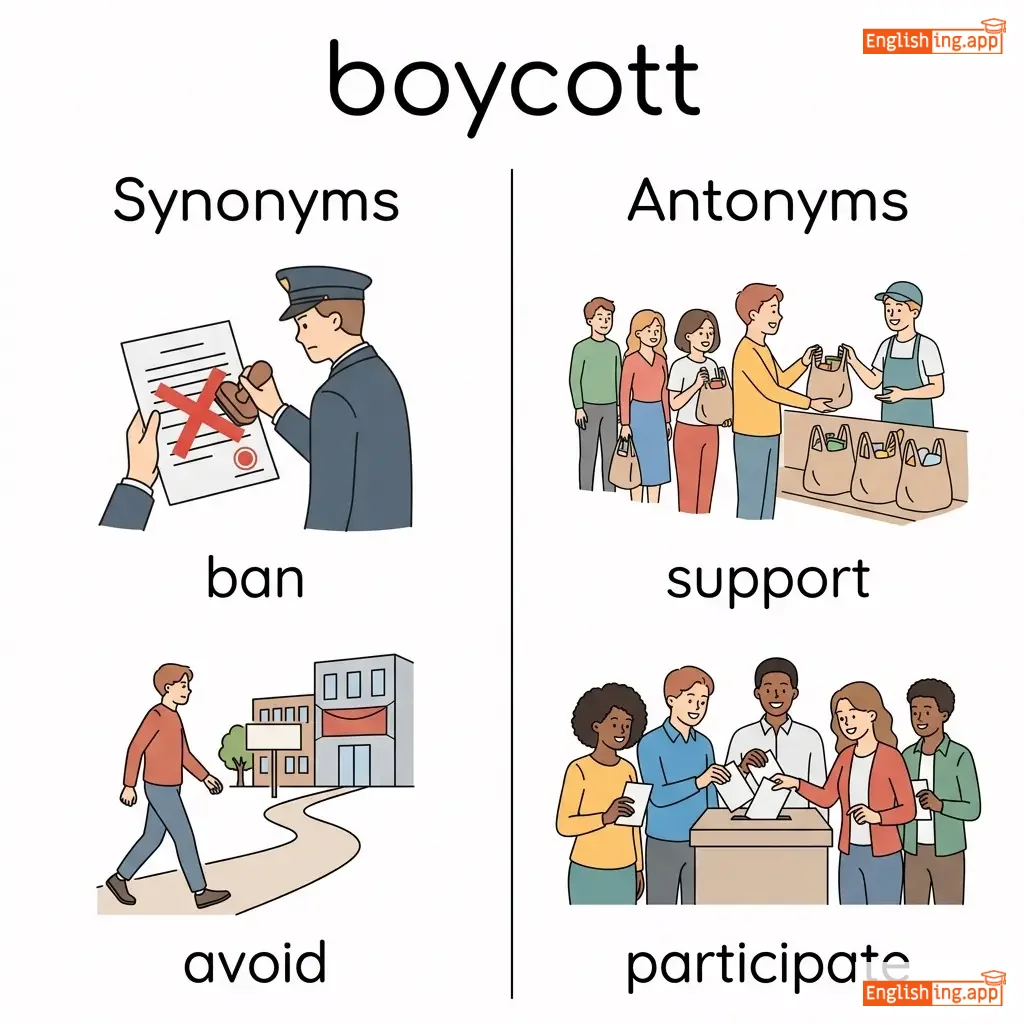
avoid, shun, embargo, ban
••••••
|
support, patronize, endorse
••••••
|
boycott products, boycott completely, boycott internationally, boycott peacefully, organize boycott
••••••
|
ボイコットは、何かを拒否する決断を表す、大きなNOのようなものです。
••••••
|
|
#363
⚙️
|
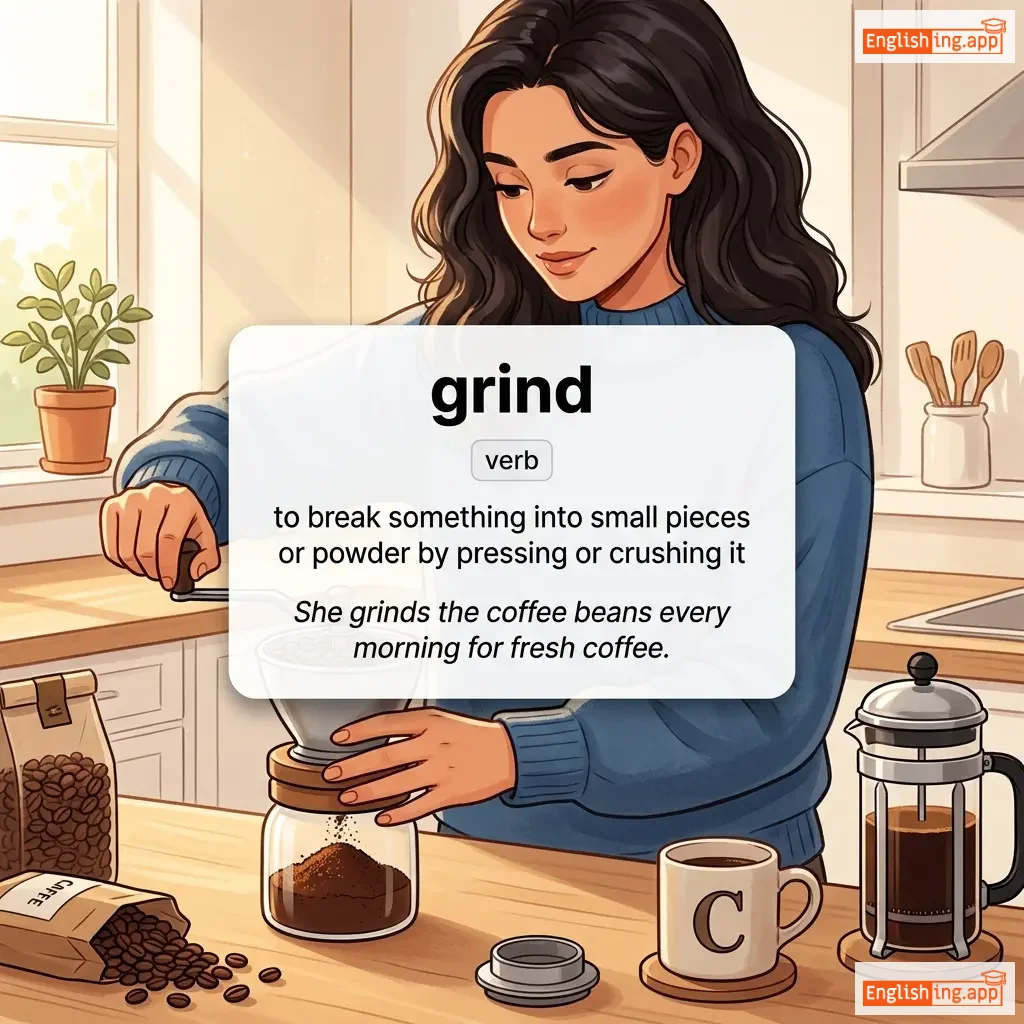
/ɡraɪnd/
verb
(guraindo)
••••••
|
|
挽く
hiku
••••••
|
ground
guraundo
••••••
|
ground
guraundo
••••••
|
grinds
guraindosu
••••••
|
grinding
guraindingu
••••••
|
to crush into small particles; to work hard
••••••
|
She grinds coffee beans every morning.
彼女は毎朝コーヒー豆を挽く。
••••••
|
彼女は毎朝コーヒー豆を挽く。
Kanojo wa mai asa kōhī mame o hiku.
••••••
|
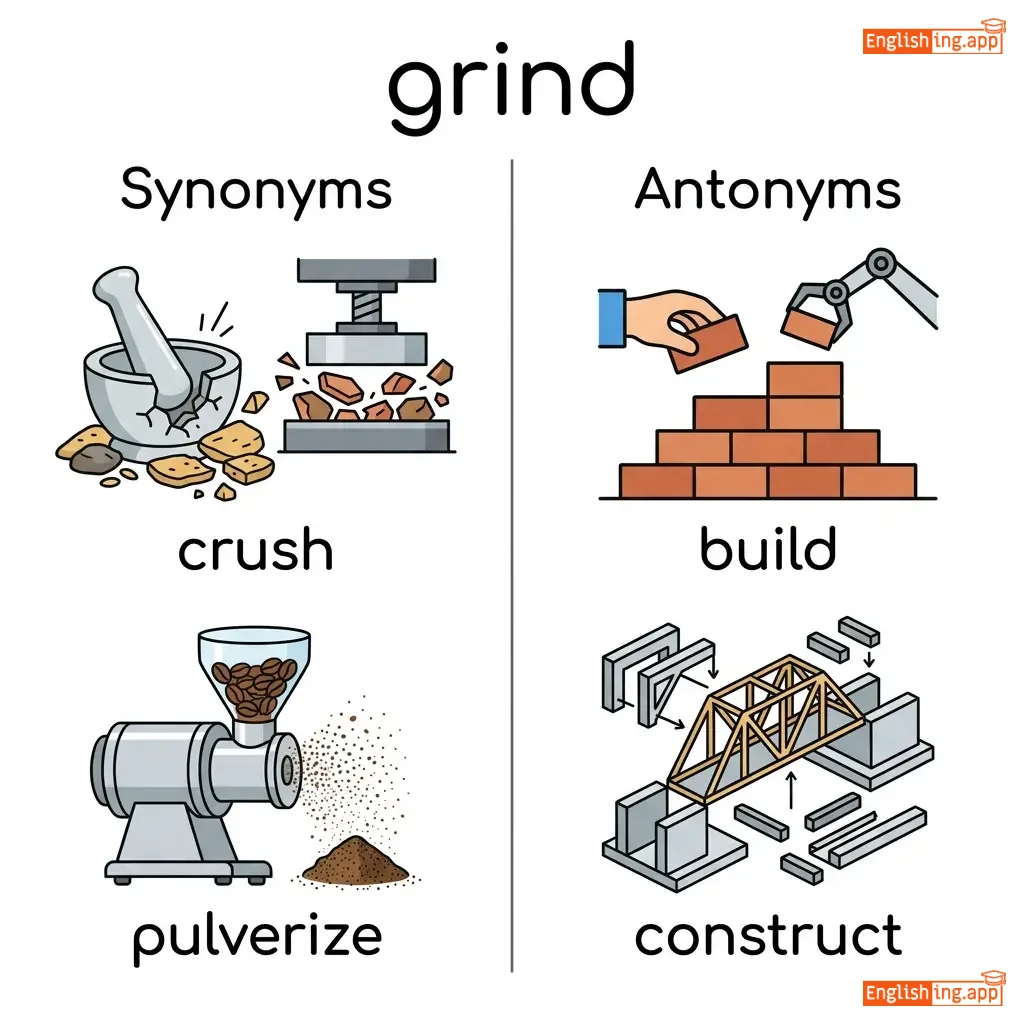
crush, mill, pulverize, work hard
••••••
|
assemble, construct, relax, rest
••••••
|
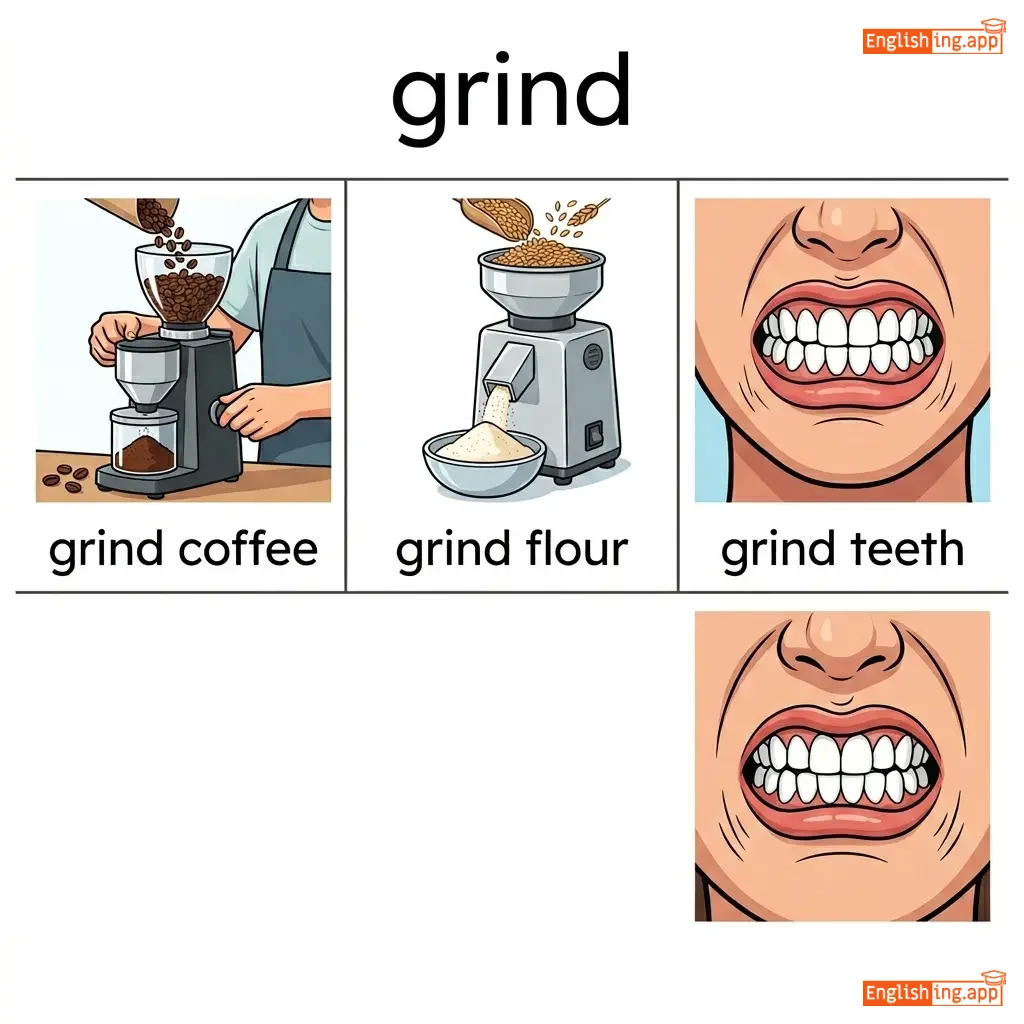
grind coffee, grind slowly, grind finely, grind daily, grind fresh
••••••
|
コーヒーを挽く、毎日がんばろう!
••••••
|
|
#364
💥
|
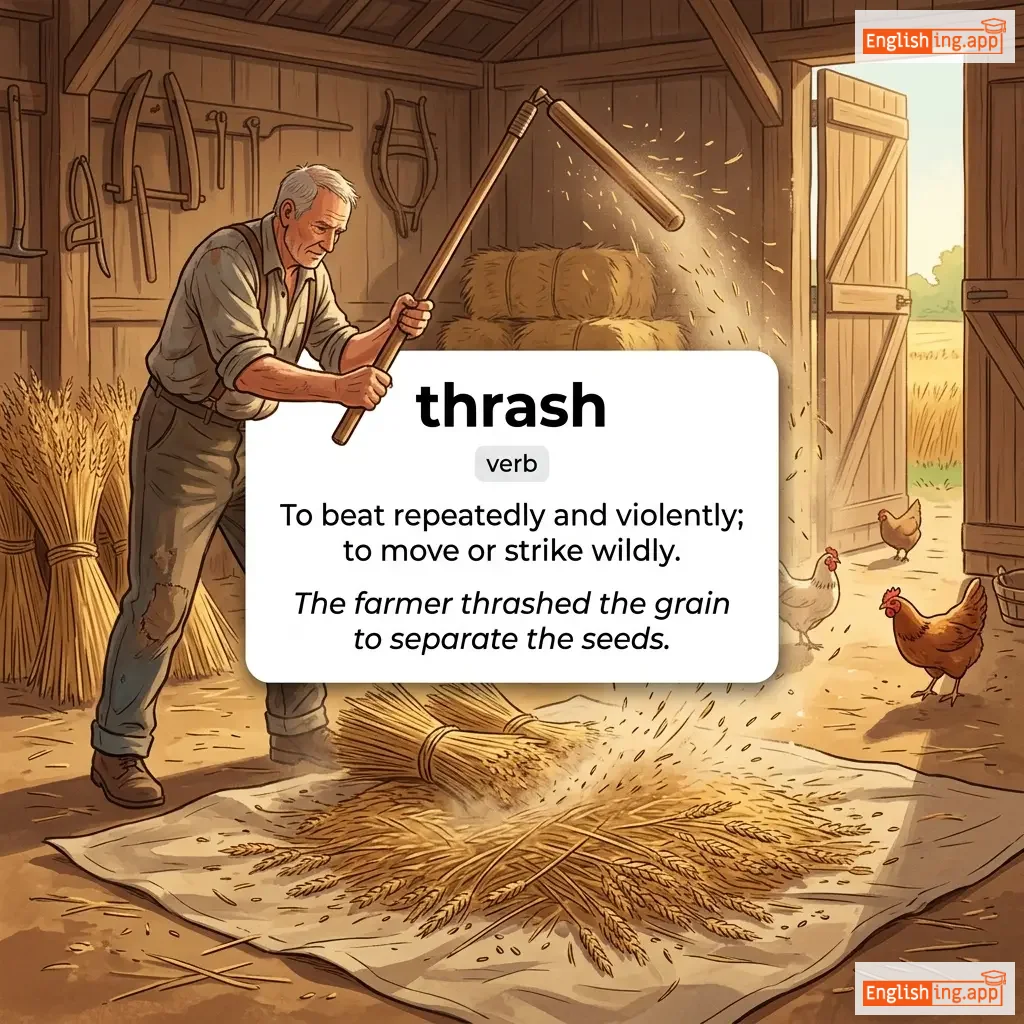
/θræʃ/
verb
(θræʃ)
••••••
|
|
殴る
naguru
••••••
|
thrashed
θræʃt
••••••
|
thrashed
θræʃt
••••••
|
thrashes
θræʃɪz
••••••
|
thrashing
θræʃɪŋ
••••••
|
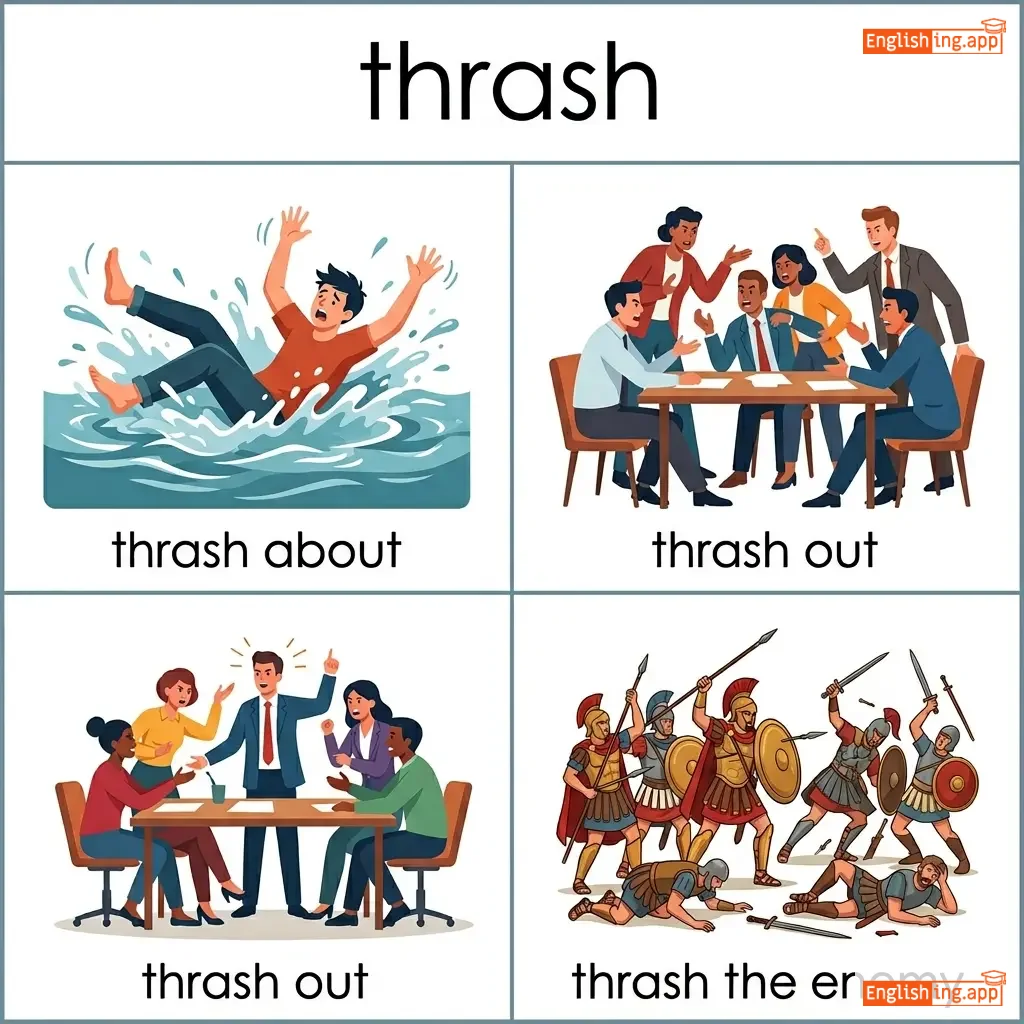
to beat someone or something violently; to move wildly or violently
••••••
|
The angry man threatened to thrash his opponent.
怒った男は対戦相手を殴ると脅した。
••••••
|
怒った男は対戦相手を殴ると脅した。
Okotta otoko wa taisen aite o naguru to odoshita.
••••••
|
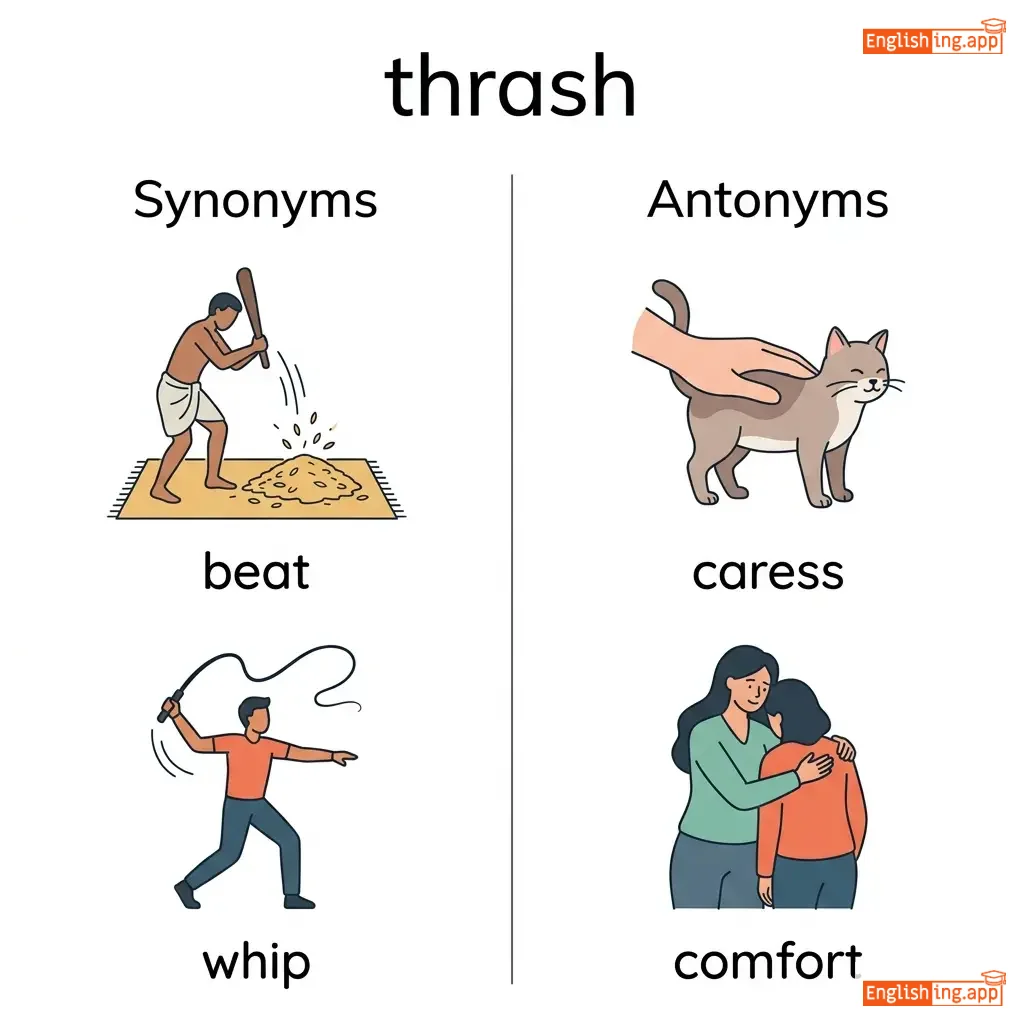
beat, whip, flog, defeat
••••••
|
caress, soothe, calm, gentle
••••••
|
thrash violently, thrash wildly, thrash completely, thrash soundly, thrash mercilessly
••••••
|
怒りを表現するために、'殴る'。覚えておいてください!
••••••
|
|
#365
👍
|
/nɒd/
verb
(ノッド)
••••••
|
|
うなずく
unazuku
••••••
|
nodded
ノッデッド
••••••
|
nodded
ノッデッド
••••••
|
nods
ノッズ
••••••
|
nodding
ノッディング
••••••
|
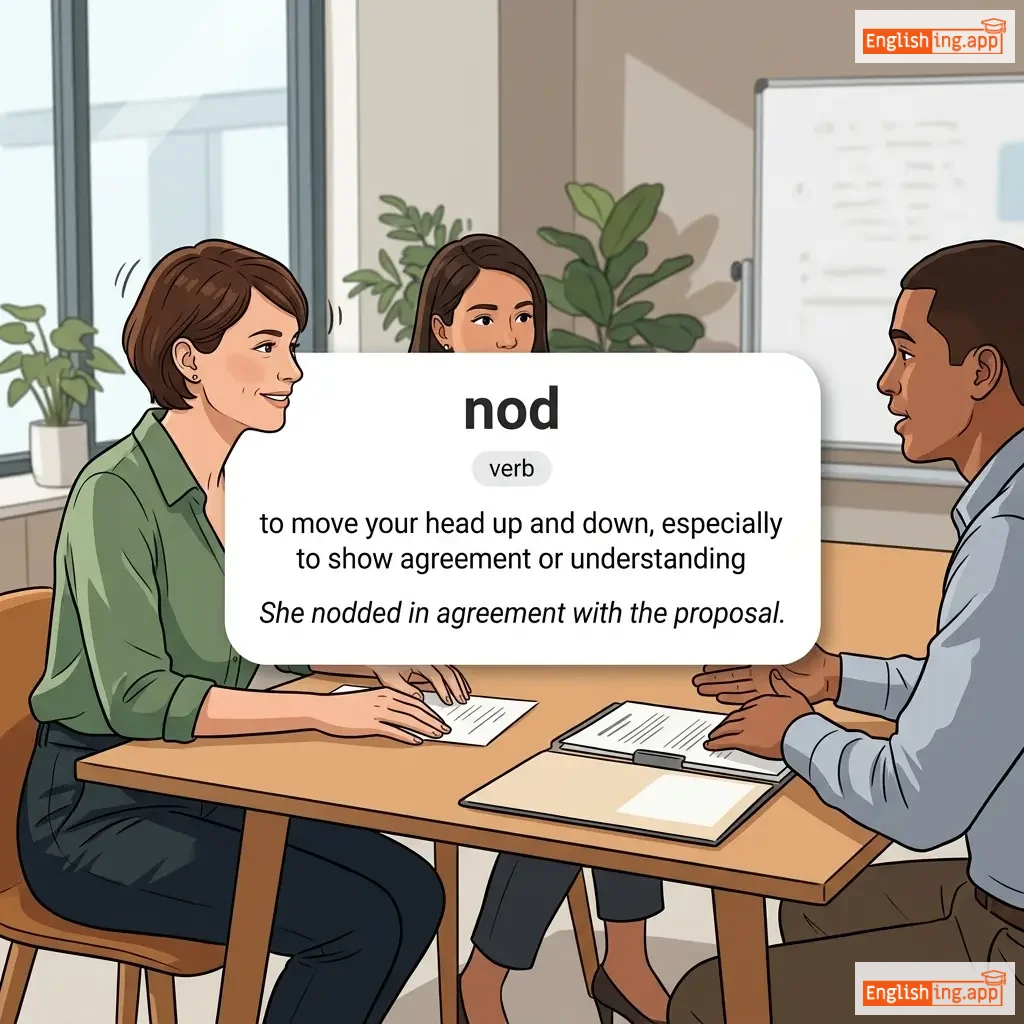
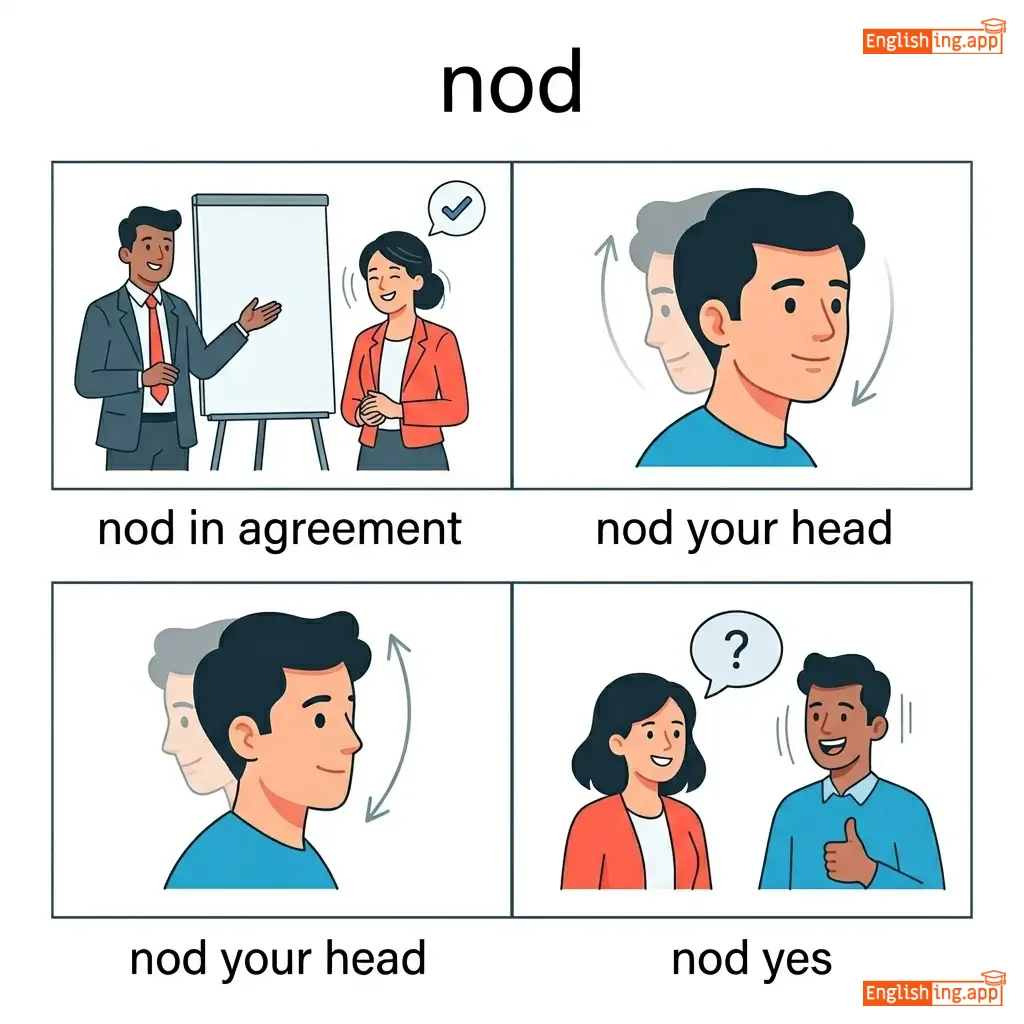
to move one's head down and up to show agreement or acknowledgment
••••••
|
She nodded in agreement with the proposal.
彼女は提案に同意してうなずいた。
••••••
|
彼女は提案に同意してうなずいた。
Kanojo wa teian ni dōi shite unazuita.
••••••
|
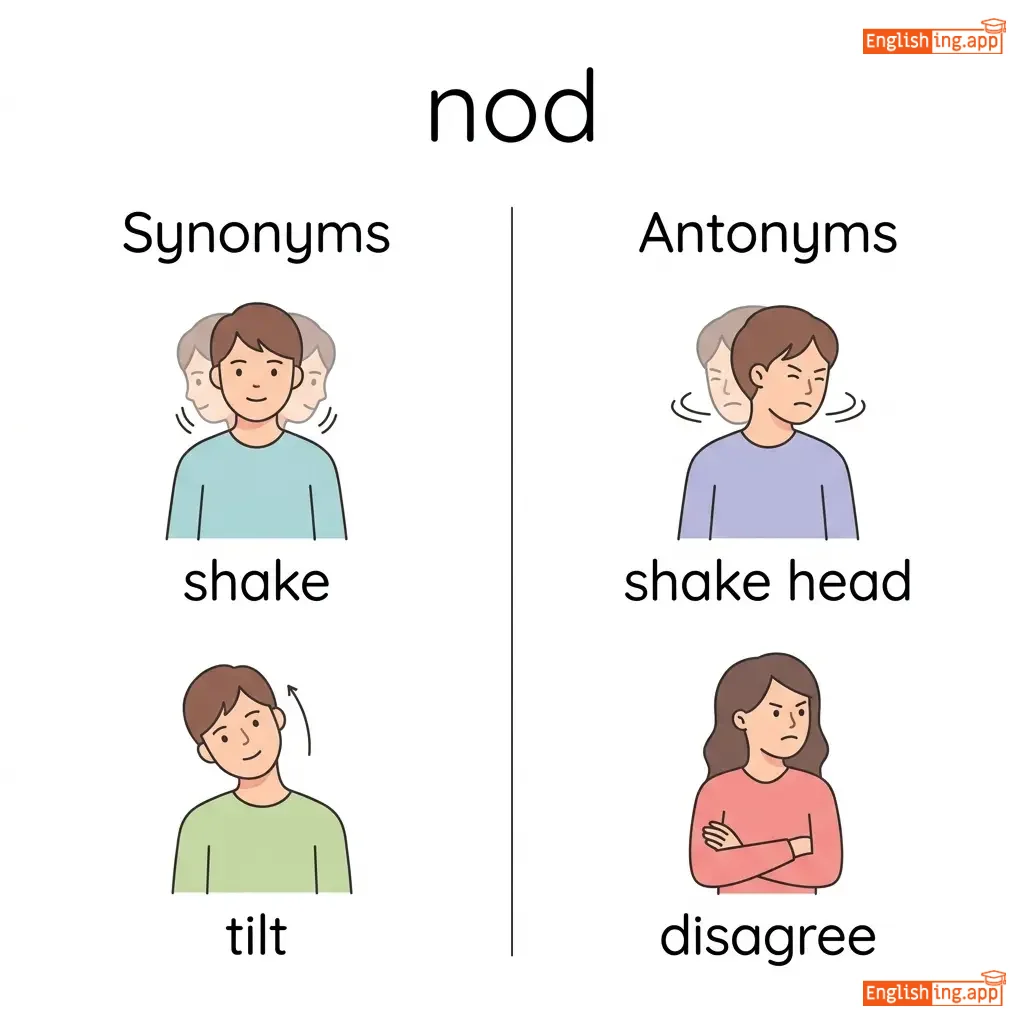
agree, acknowledge, approve, confirm
••••••
|
shake, disagree, deny
••••••
|
nod agreement, nod slowly, nod approvingly, nod politely, nod understanding
••••••
|
うなずいて、同意のサイン
••••••
|
|
#366
📝
|
/noʊt/
verb
(ノート)
••••••
|
|
ノートする
nooto suru
••••••
|
noted
ノートしました
••••••
|
noted
ノートしました
••••••
|
notes
ノートします
••••••
|
noting
ノートする
••••••
|
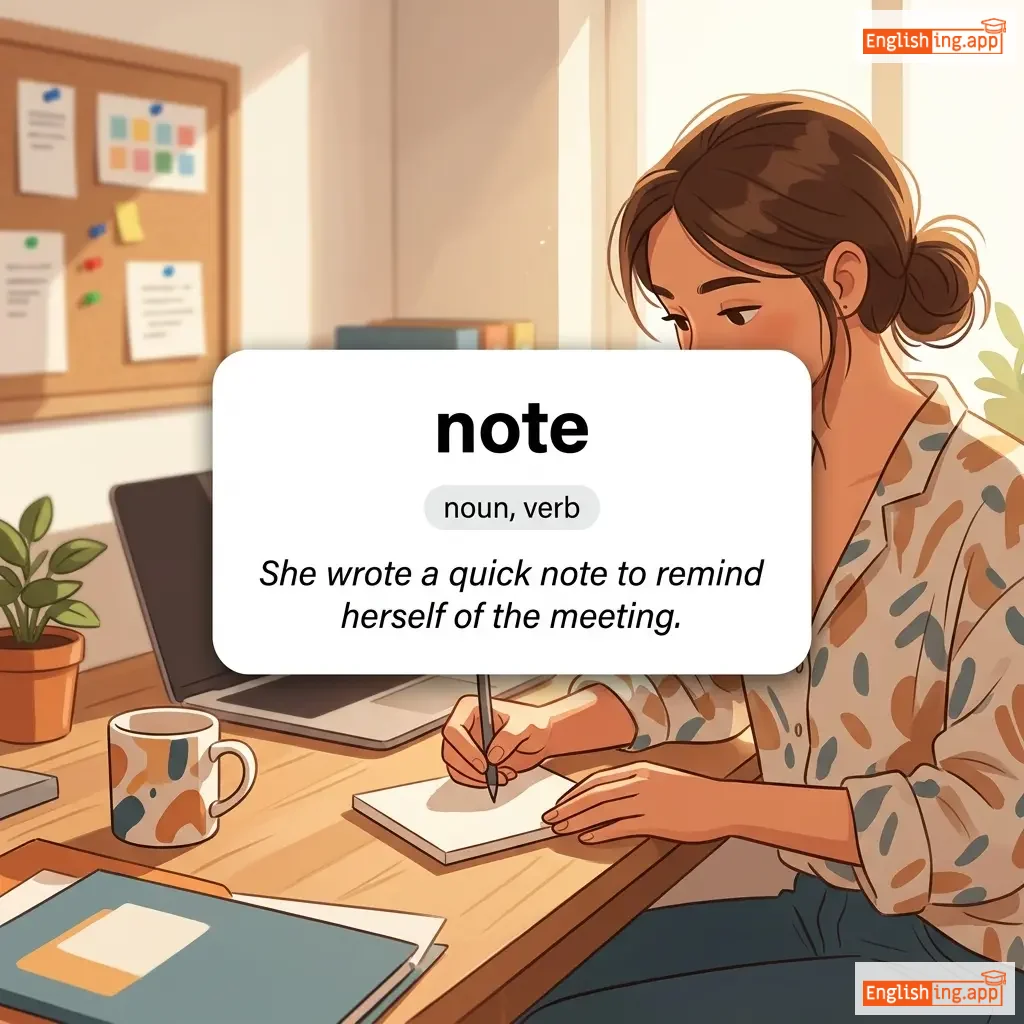
to write down or observe something; to pay attention to
••••••
|
Please note the important points during the lecture.
講義中に重要な点をノートしてください。
••••••
|
講義中に重要な点をノートしてください。
Kougi chuu ni juuyou na ten o nooto shite kudasai.
••••••
|
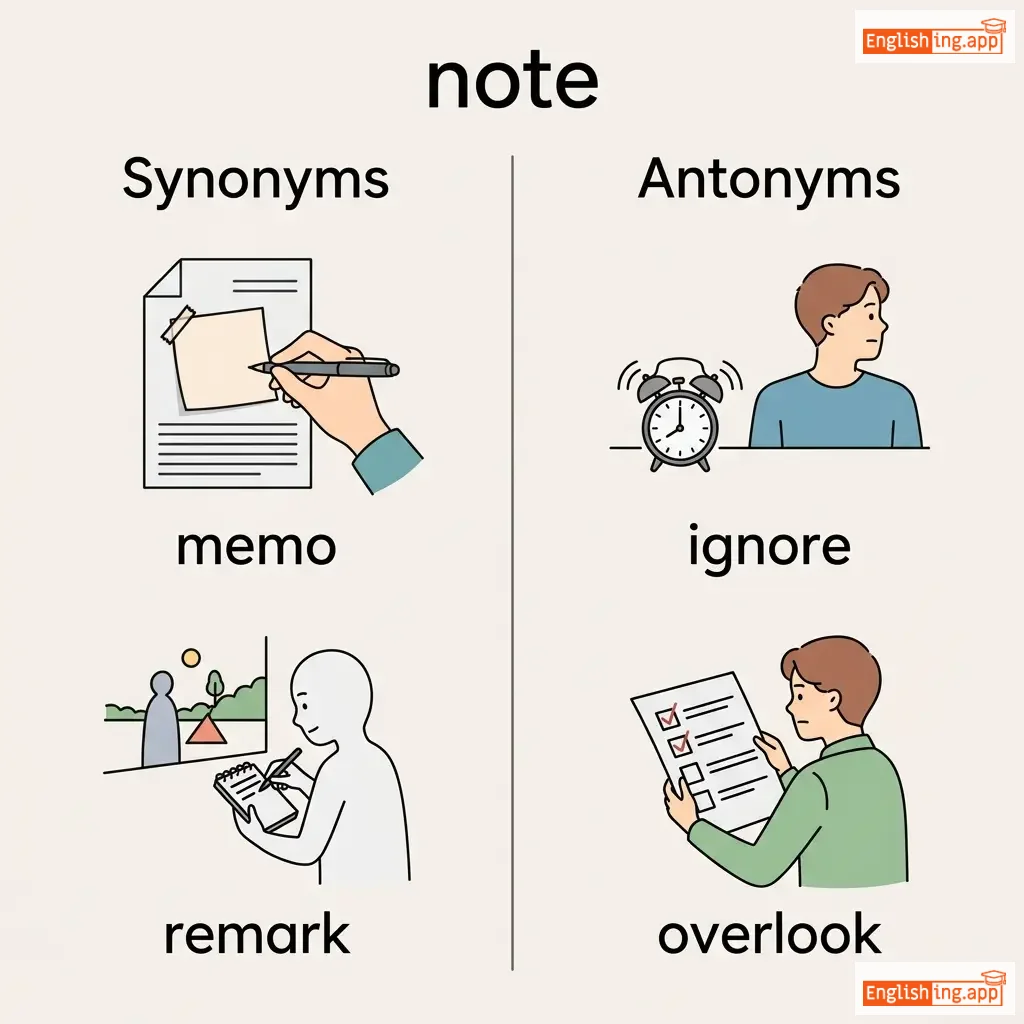
observe, record, write, notice
••••••
|
ignore, overlook, miss
••••••
|
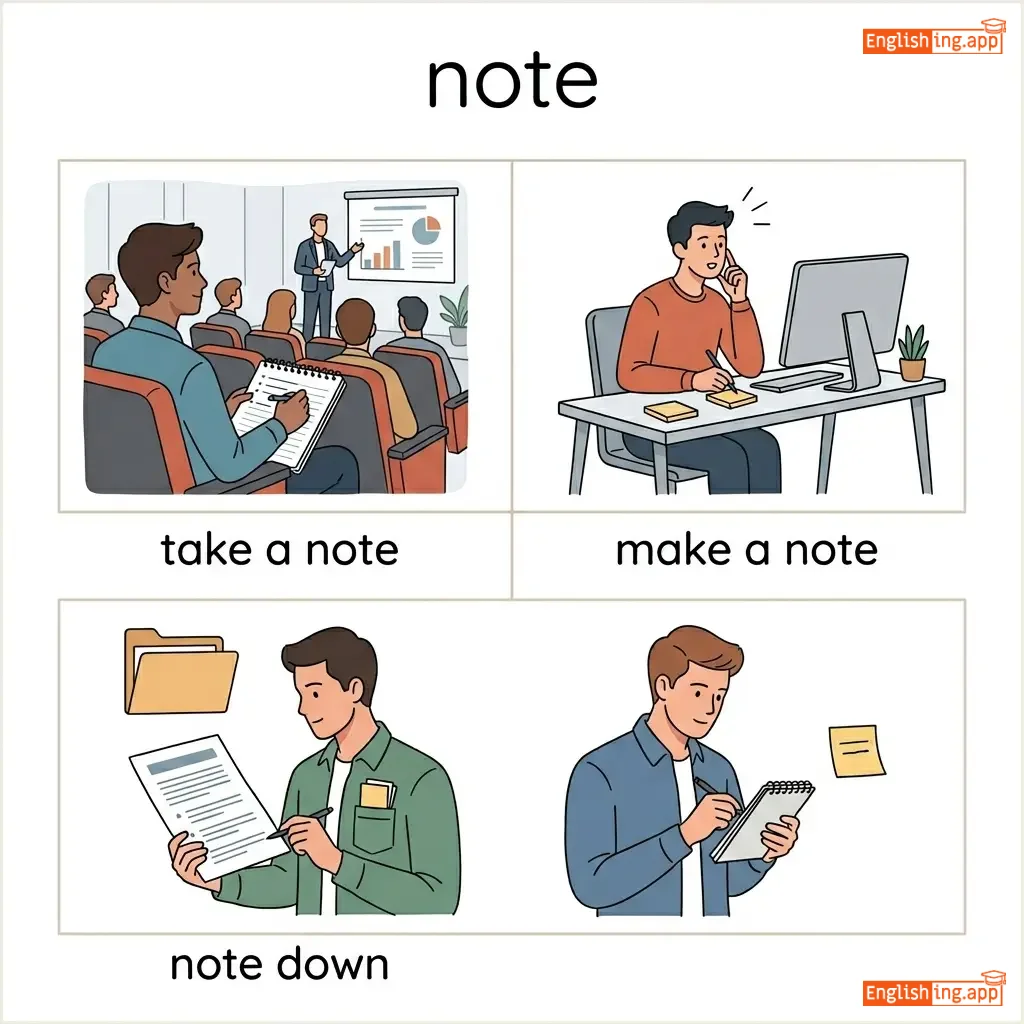
note carefully, note down, note importantly, note briefly, mental note
••••••
|
When you're taking notes in class, remember 'ノートする'!
••••••
|
|
#367
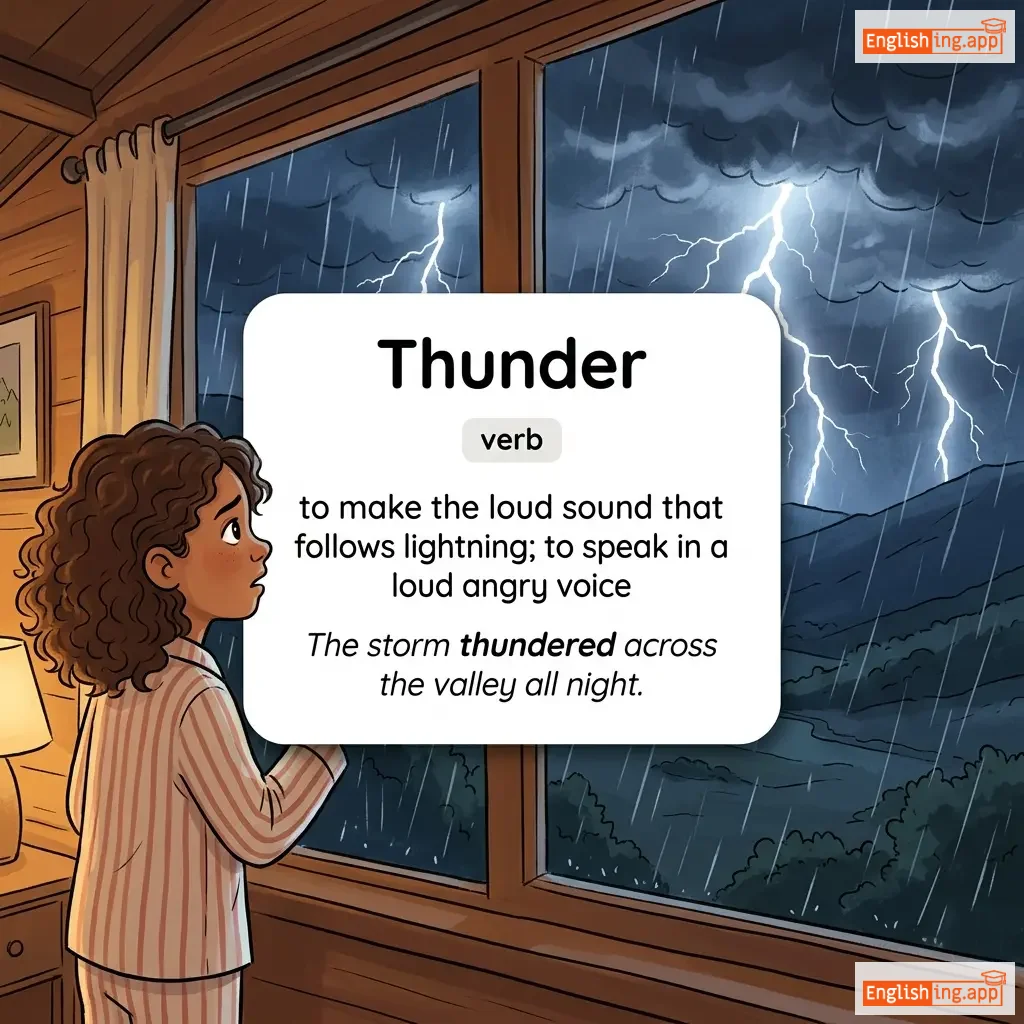
⛈️
|
/ˈθʌndər/
verb
(サンダー)
••••••
|
|
雷鳴
raimei
••••••
|
Thundered
サンダード
••••••
|
Thundered
サンダード
••••••
|
Thunders
サンダーズ
••••••
|
Thundering
サンダーリング
••••••
|
to make the loud sound that follows lightning; to speak in a loud angry voice
••••••
|
The storm thundered across the valley all night.
嵐は夜通し谷を雷鳴のように鳴り響かせました。
••••••
|
嵐は夜通し谷を雷鳴のように鳴り響かせました。
Arashi wa yoru dōshi tani o raimei no yō ni narihibikasemashita.
••••••
|
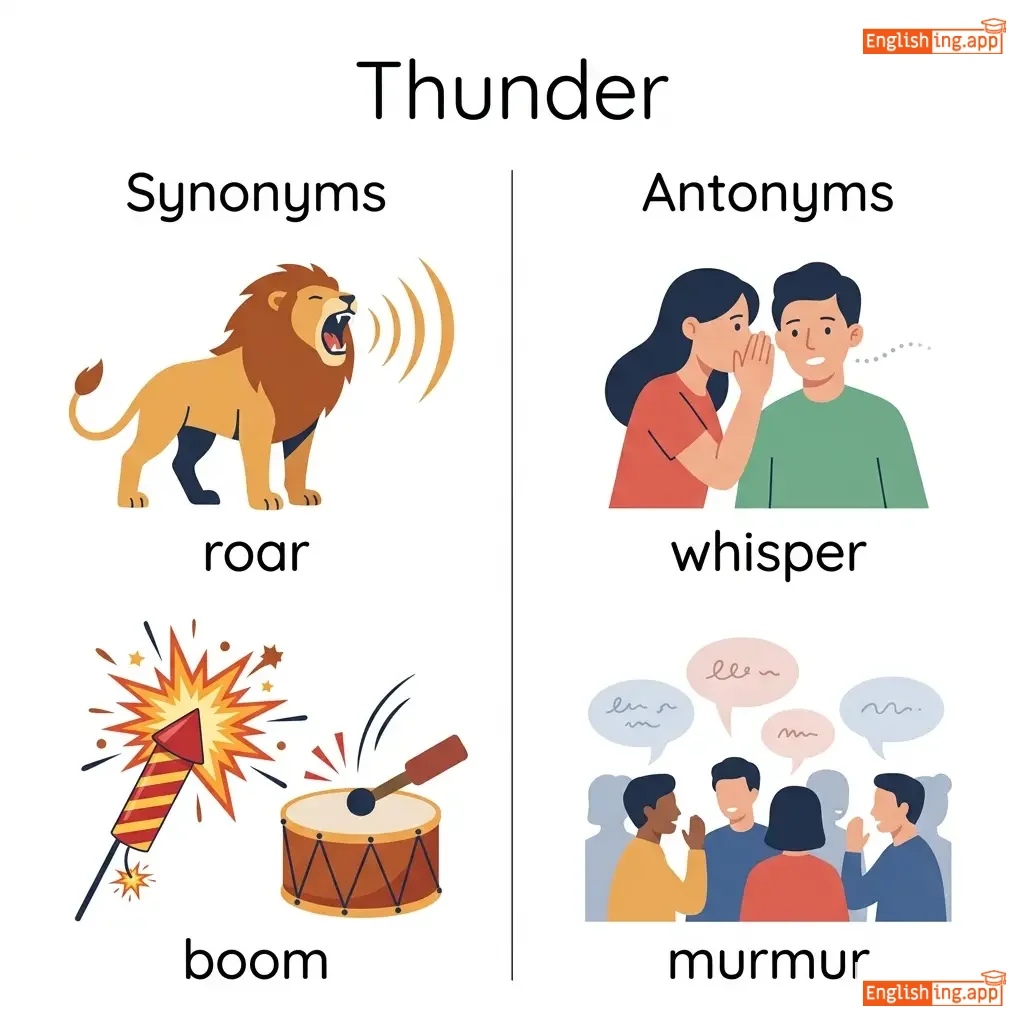
roar, boom, rumble, crash
••••••
|
whisper, murmur, silence, quiet
••••••
|
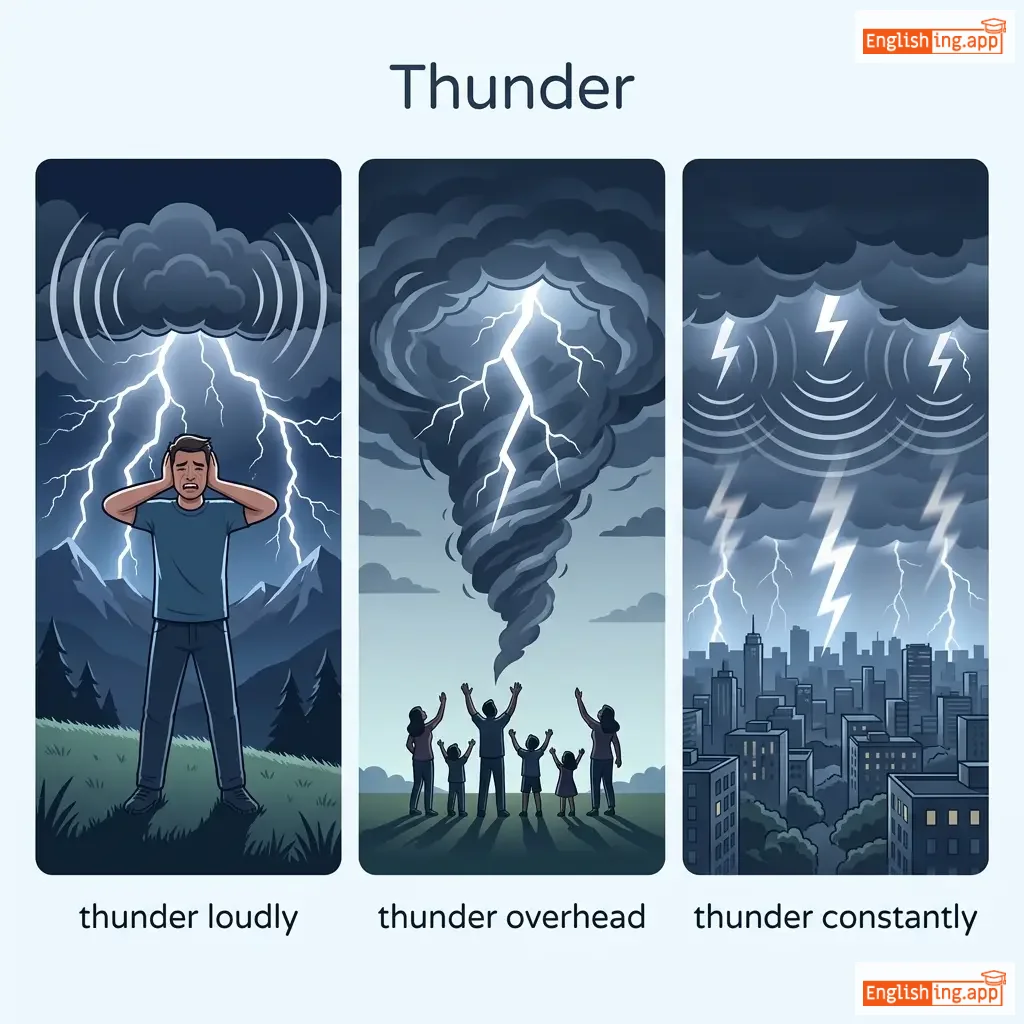
thunder loudly, thunder overhead, thunder constantly, thunder ominously, thunder rolls
••••••
|
No •••••• |
|
#368
🔨
|
/meɪk/
verb
(メイク)
••••••
|
- •••••• |
作る
tsukuru
••••••
|
made
メイド
••••••
|
made
メイド
••••••
|
makes
メイクス
••••••
|
making
メイキング
••••••
|
to create or produce something; to cause something to happen
••••••
|
She likes to make delicious cakes for her friends.
シー ライクス トゥ メイク ディリシャス ケーキス フォー ハー フレンズ
••••••
|
彼女は友達のために美味しいケーキを作るのが好きです。
Kanojo wa tomodachi no tame ni oishii kēki o tsukuru no ga suki desu.
••••••
|
create, produce, build, construct, form
••••••
|
destroy, break, demolish, ruin
••••••
|
make progress, make decisions, make time, make effort, make sense
••••••
|
Make means tsukuru, like making a cake
••••••
|
|
#369
👅
|
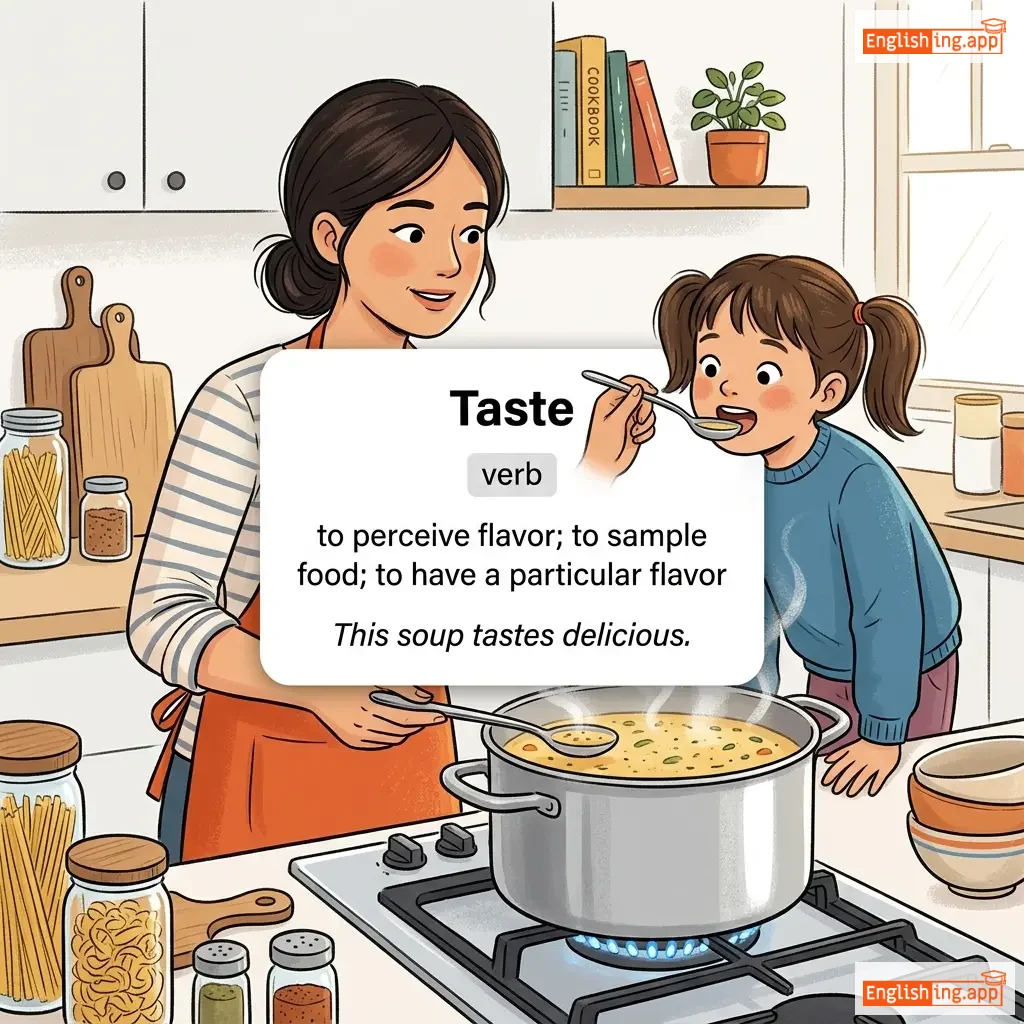
/teɪst/
verb
(テスト)
••••••
|
|
味わう
ajiwau
••••••
|
tasted
テステッド
••••••
|
tasted
テステッド
••••••
|
tastes
テストス
••••••
|
tasting
テスティング
••••••
|
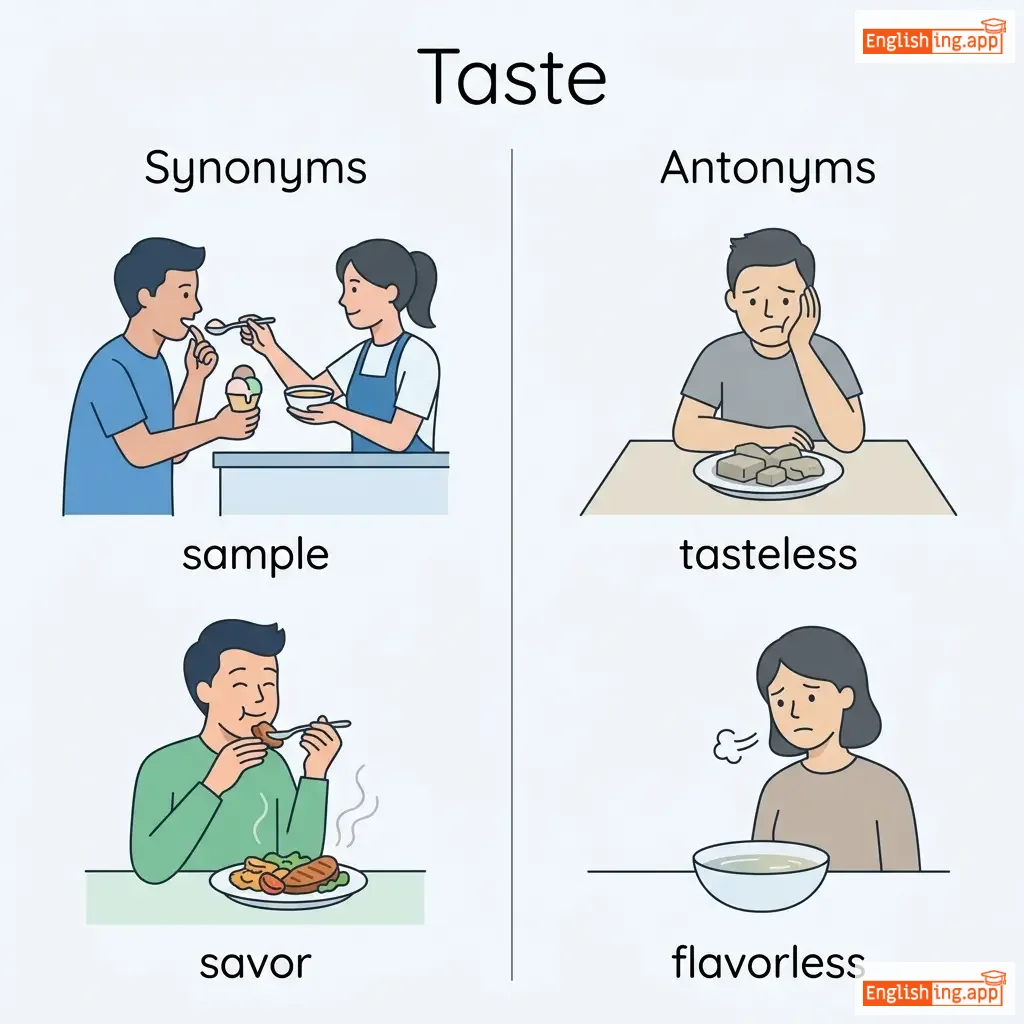
to perceive flavor; to sample food; to have a particular flavor
••••••
|
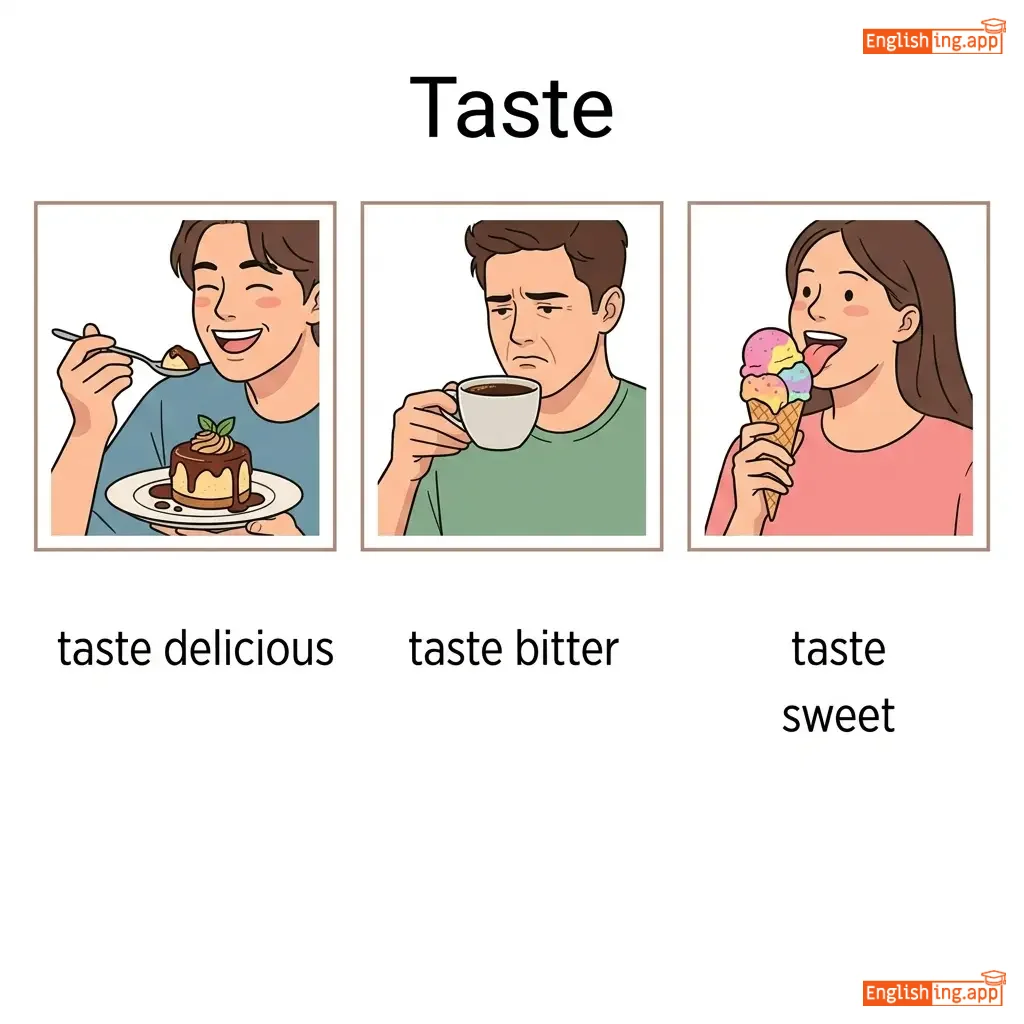
This soup tastes delicious.
このスープはおいしいです。
••••••
|
このスープはおいしいです。
Kono sūpu wa oishī desu
••••••
|
sample, savor, flavor, try
••••••
|
tasteless, flavorless
••••••
|
taste delicious, taste bitter, taste sweet, taste good, taste fresh
••••••
|
Ajiwau means to taste in Japanese, just 'aji' for every dish!
••••••
|
|
#370
🤥
|
/tʃiːt/
verb
(チート)
••••••
|
|
カンニング
kanningu
••••••
|
cheated
チーテッド
••••••
|
cheated
チーテッド
••••••
|
cheats
チーツ
••••••
|
cheating
チーティング
••••••
|
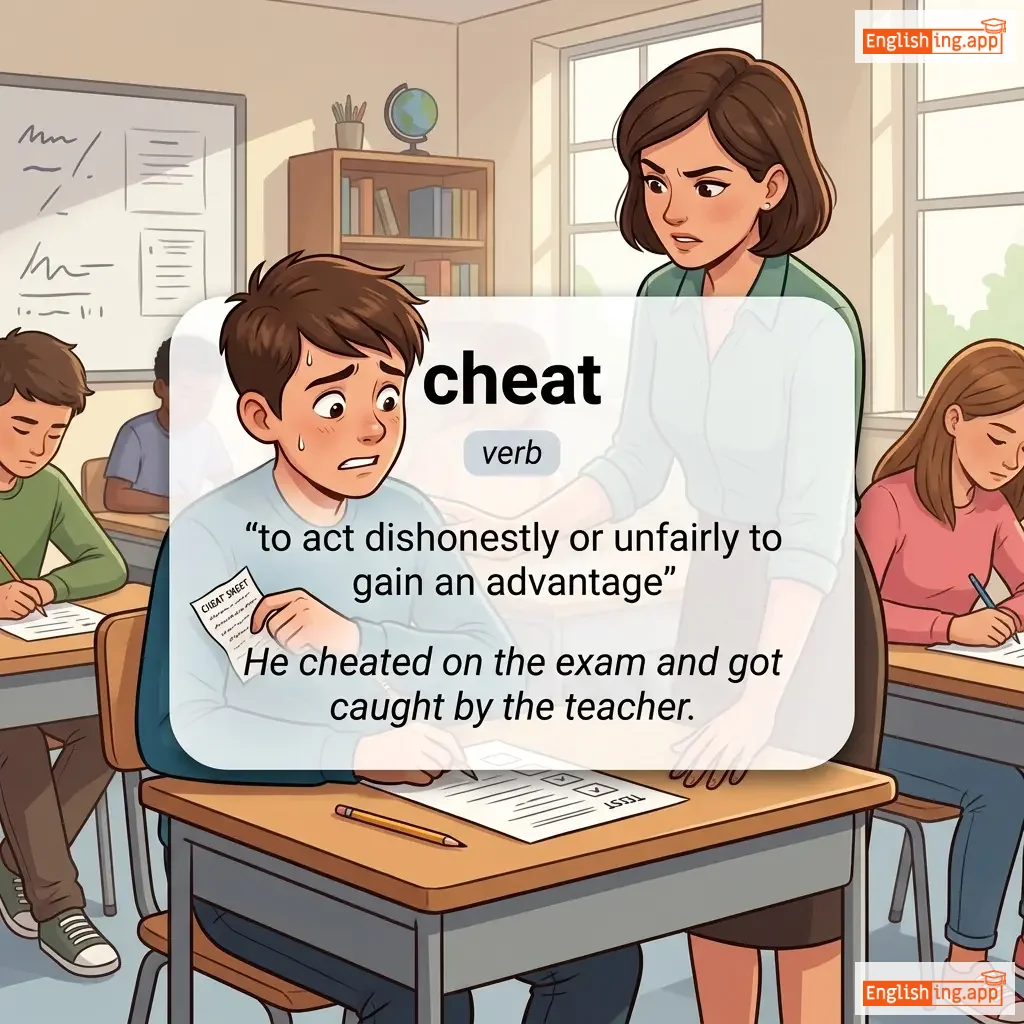
to act dishonestly; to break rules for advantage
••••••
|
He cheats on the exam by copying answers.
彼は答えをコピーして試験でカンニングします。
••••••
|
彼は答えをコピーして試験でカンニングします。
Kare wa kotae o kopī shite shiken de kanningu shimasu
••••••
|
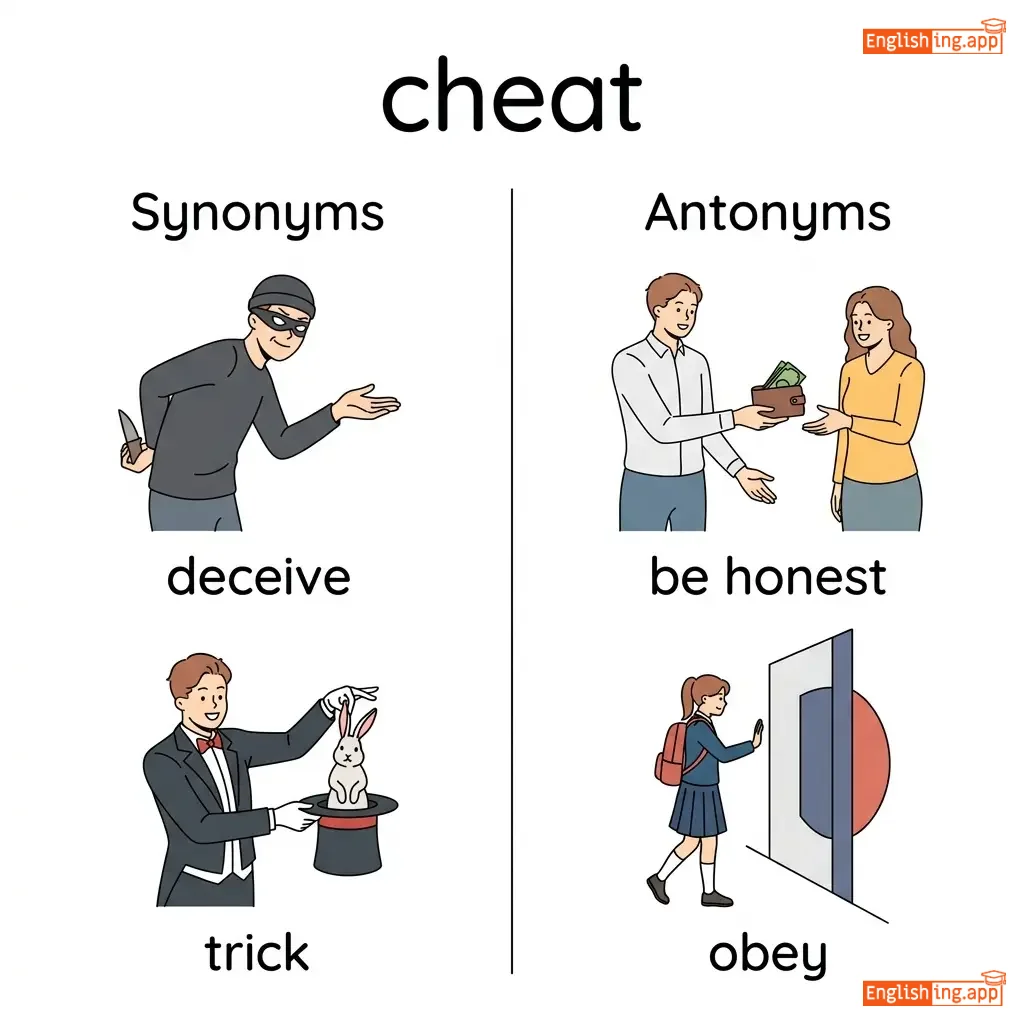
deceive, trick, swindle, defraud
••••••
|
honest, fair, truthful
••••••
|
cheat openly, cheat systematically, cheat deliberately, cheat repeatedly, cheat successfully
••••••
|
カンニング – 試験でこっそり答えをコピーすること
••••••
|
|
#371
👋
|
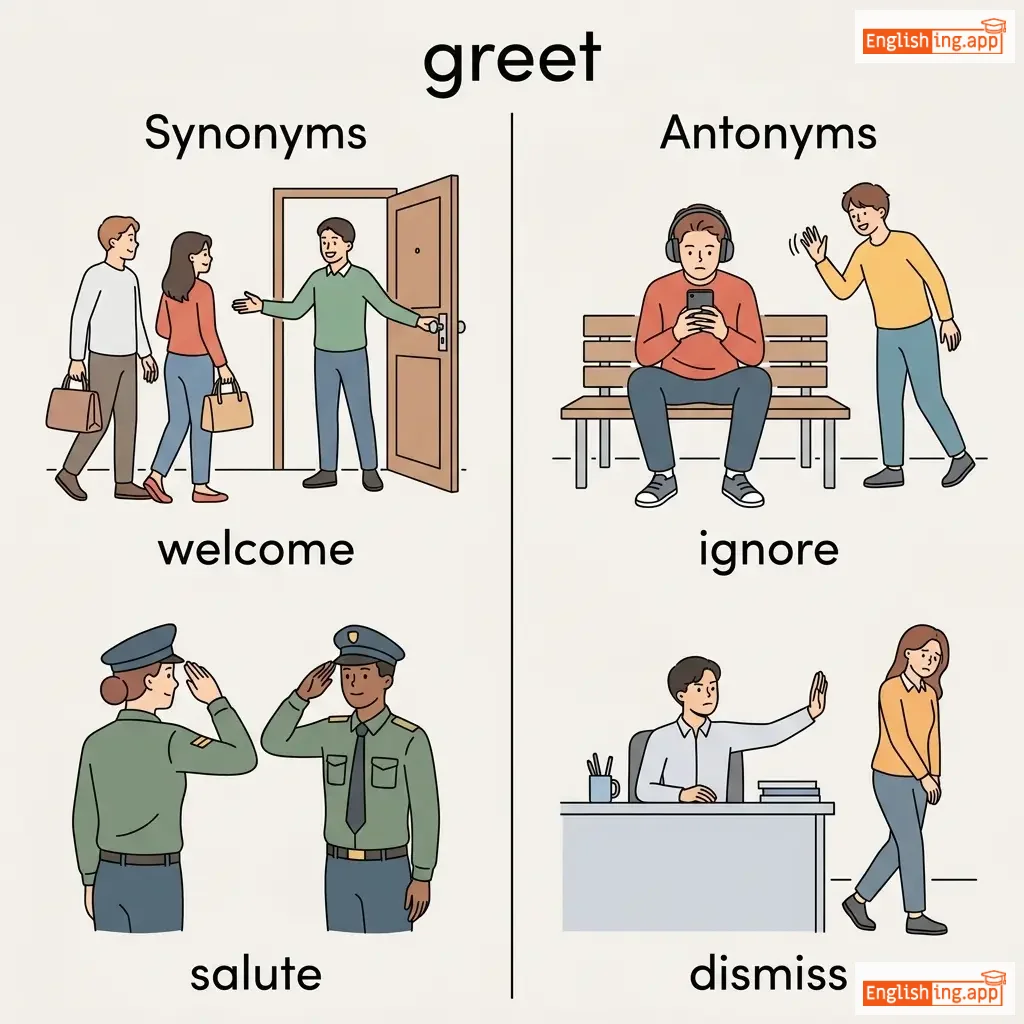
/ɡriːt/
verb
(グリート)
••••••
|
|
挨拶する
aisatsu suru
••••••
|
greeted
グリーテッド
••••••
|
greeted
グリーテッド
••••••
|
greets
グリーツ
••••••
|
greeting
グリーティング
••••••
|
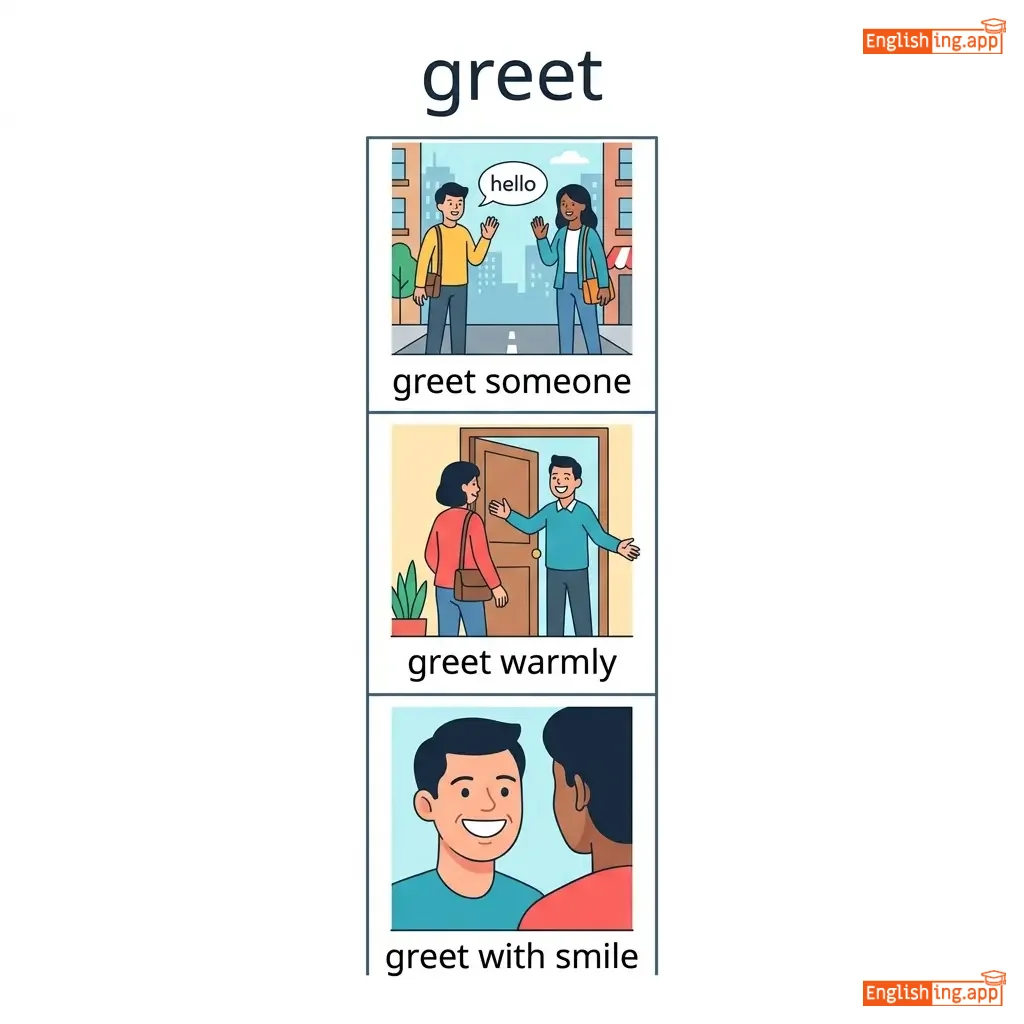
to welcome someone; to say hello
••••••
|
She greeted her guests warmly at the door.
彼女はドアでゲストを温かく迎えました。
••••••
|
彼女はドアでゲストを温かく迎えました。
Kanojo wa doa de gesuto o atatakaku mukaemashita.
••••••
|
welcome, salute, hail, acknowledge
••••••
|
ignore, snub, dismiss, farewell
••••••
|
greet warmly, greet cheerfully, greet politely, greet enthusiastically, greet cordially
••••••
|
No •••••• |
|
#372
👁️
|
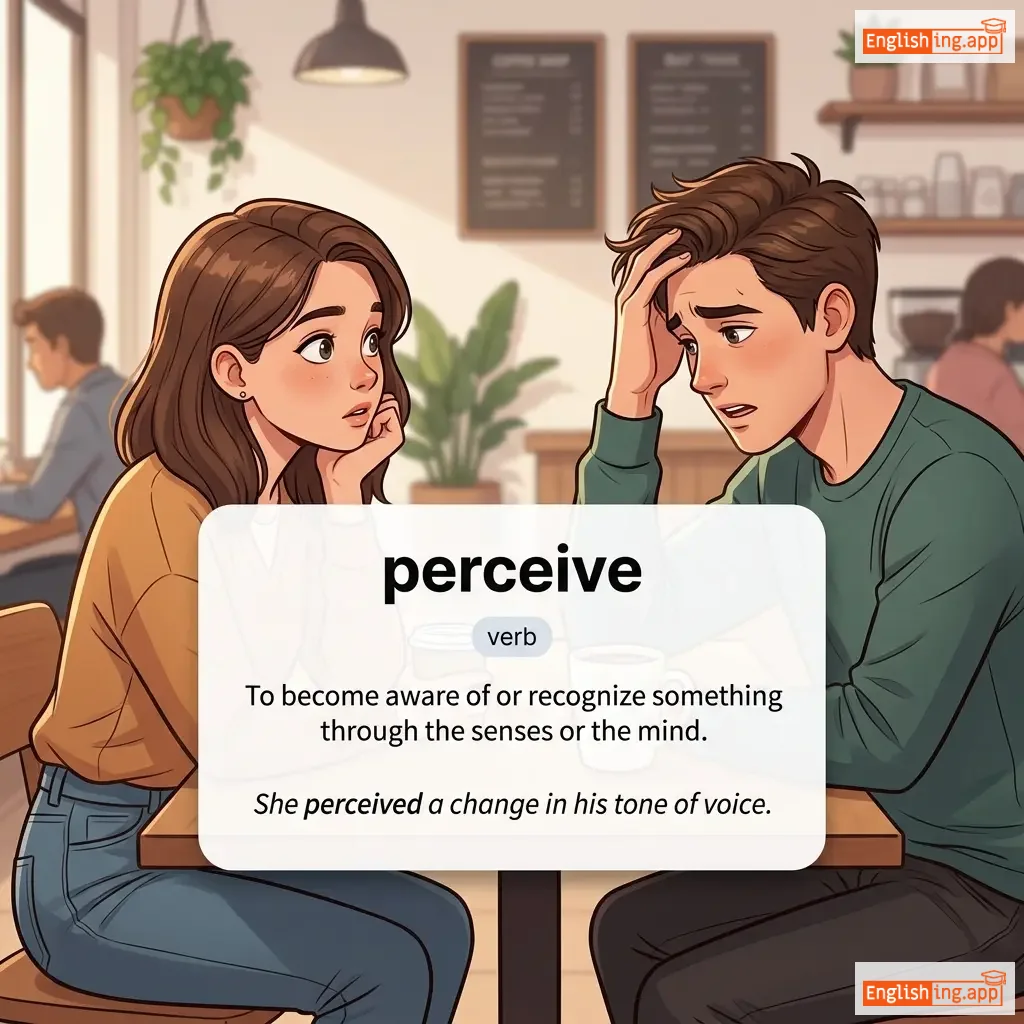
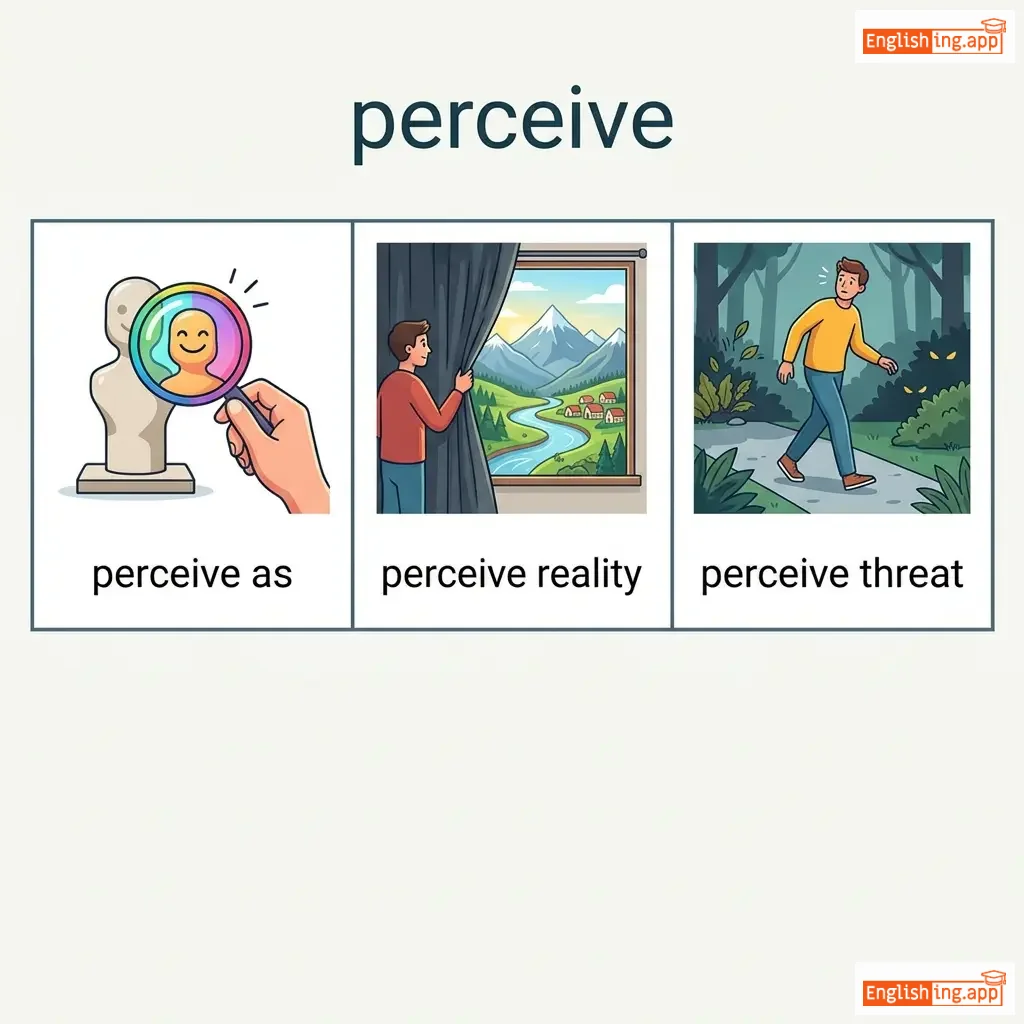
/pərˈsiːv/
verb
(パーシーブ)
••••••
|
|
感知する
kanchi suru
••••••
|
perceived
パーシーブド
••••••
|
perceived
パーシーブド
••••••
|
perceives
パーシーブス
••••••
|
perceiving
パーシービング
••••••
|
to become aware of or understand something through the senses
••••••
|
I perceive a change in his attitude.
私は彼の態度の変化を感じ取ります。
••••••
|
私は彼の態度の変化を感じ取ります。
Watashi wa kare no taido no henka o kanjitorimasu.
••••••
|
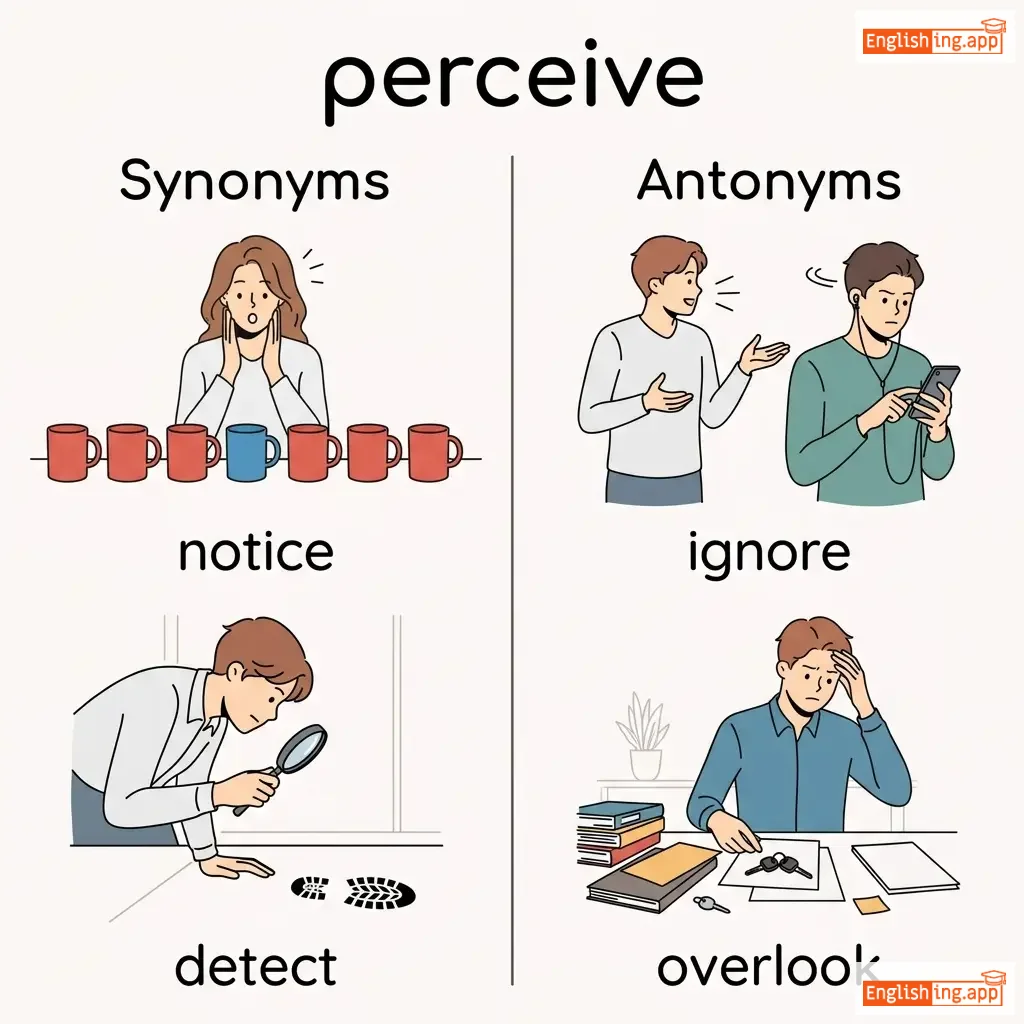
notice, observe, sense, detect
••••••
|
ignore, overlook, miss
••••••
|
perceive clearly, perceive differently, perceive accurately, perceive immediately, perceive gradually
••••••
|
感知するは変化を感じること、‘感’を思い出させる。
••••••
|
|
#373
🏆
|
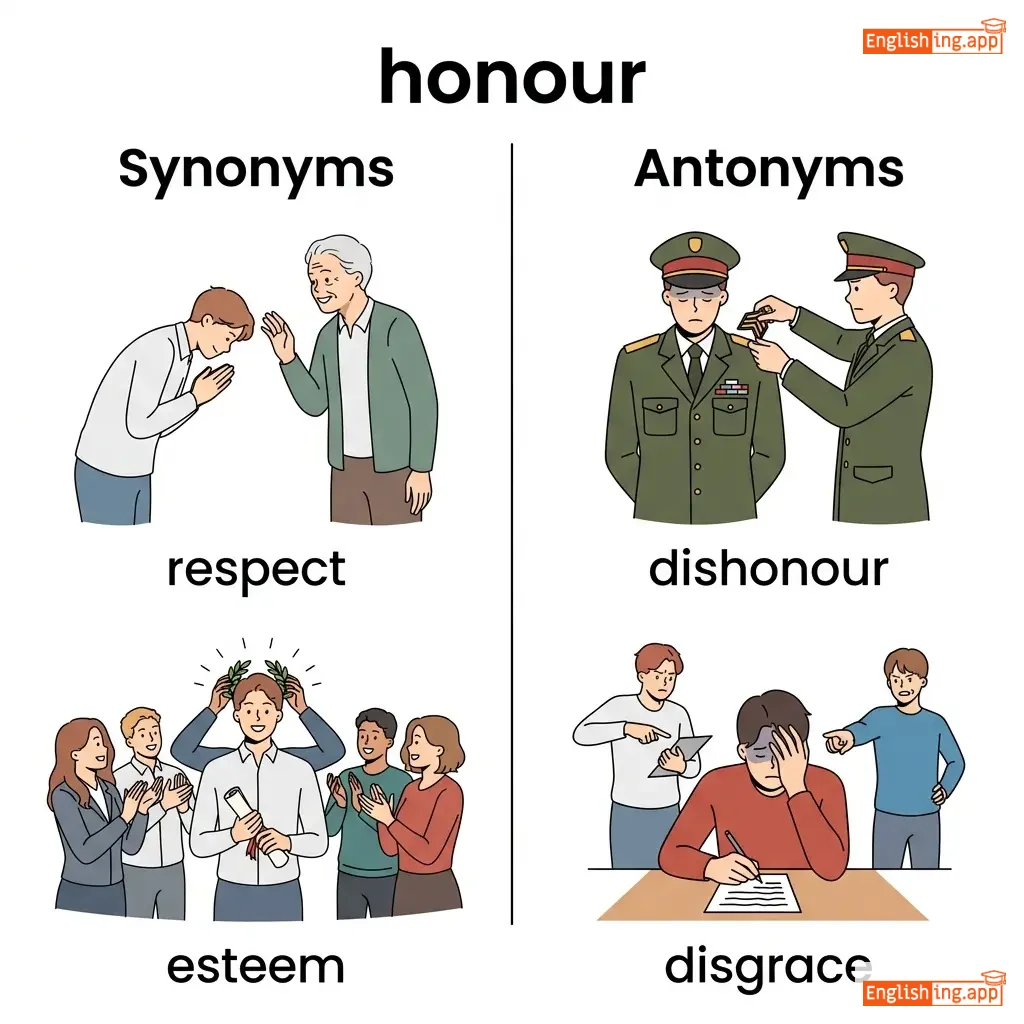
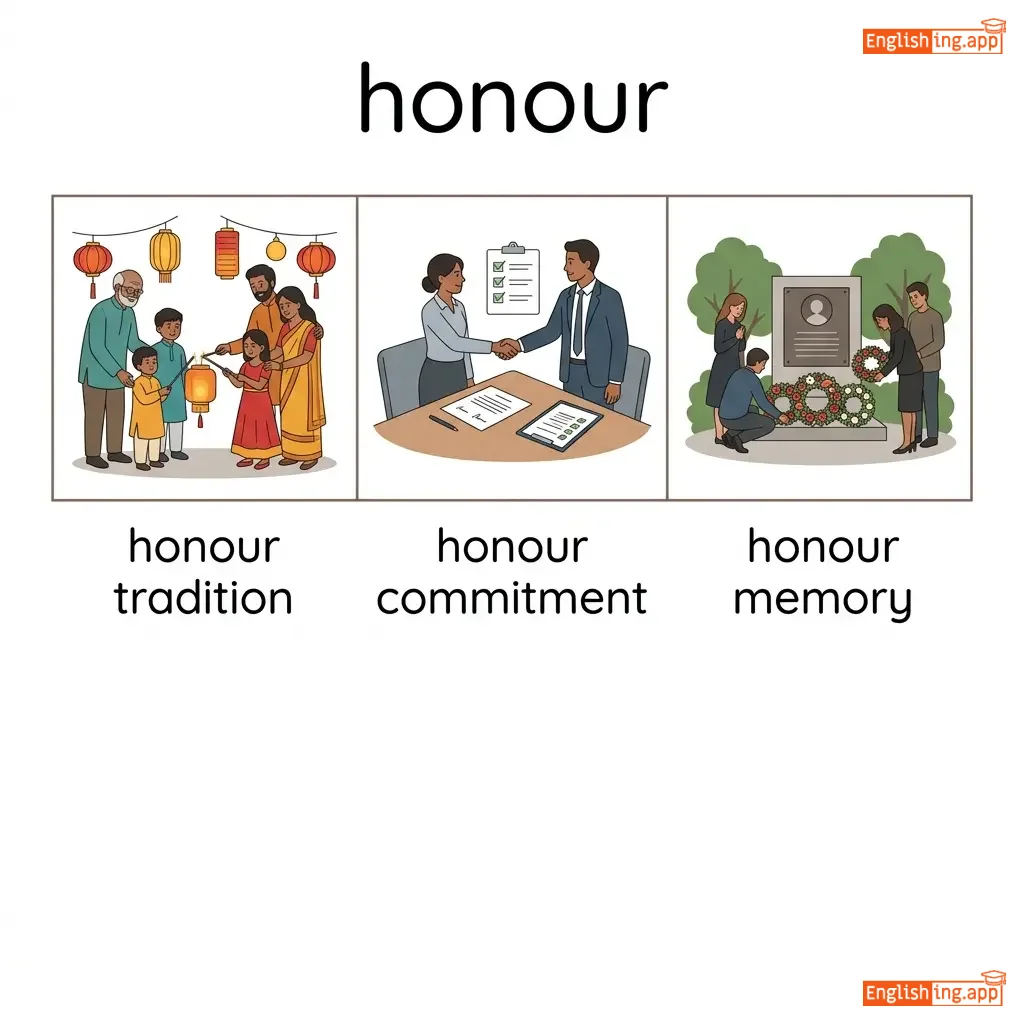
/ˈɒnər/
verb
(オナー)
••••••
|
|
敬う
uyamau
••••••
|
honoured
オナード
••••••
|
honoured
オナード
••••••
|
honours
オナーズ
••••••
|
honouring
オナーリング
••••••
|
to show respect; to keep a promise
••••••
|
We honour our veterans for their service.
私たちは退役軍人をその奉仕のために敬意を表します。
••••••
|
私たちは退役軍人をその奉仕のために敬意を表します。
Watashitachi wa taieki gunjin wo sono hōshi no tame ni keii wo hyōshimasu.
••••••
|
respect, esteem, revere, glorify
••••••
|
dishonour, disgrace, shame, humiliate
••••••
|
honour tradition, honour commitment, honour memory, honour request, honour agreement
••••••
|
敬う = 尊敬.
••••••
|
|
#374
😊
|
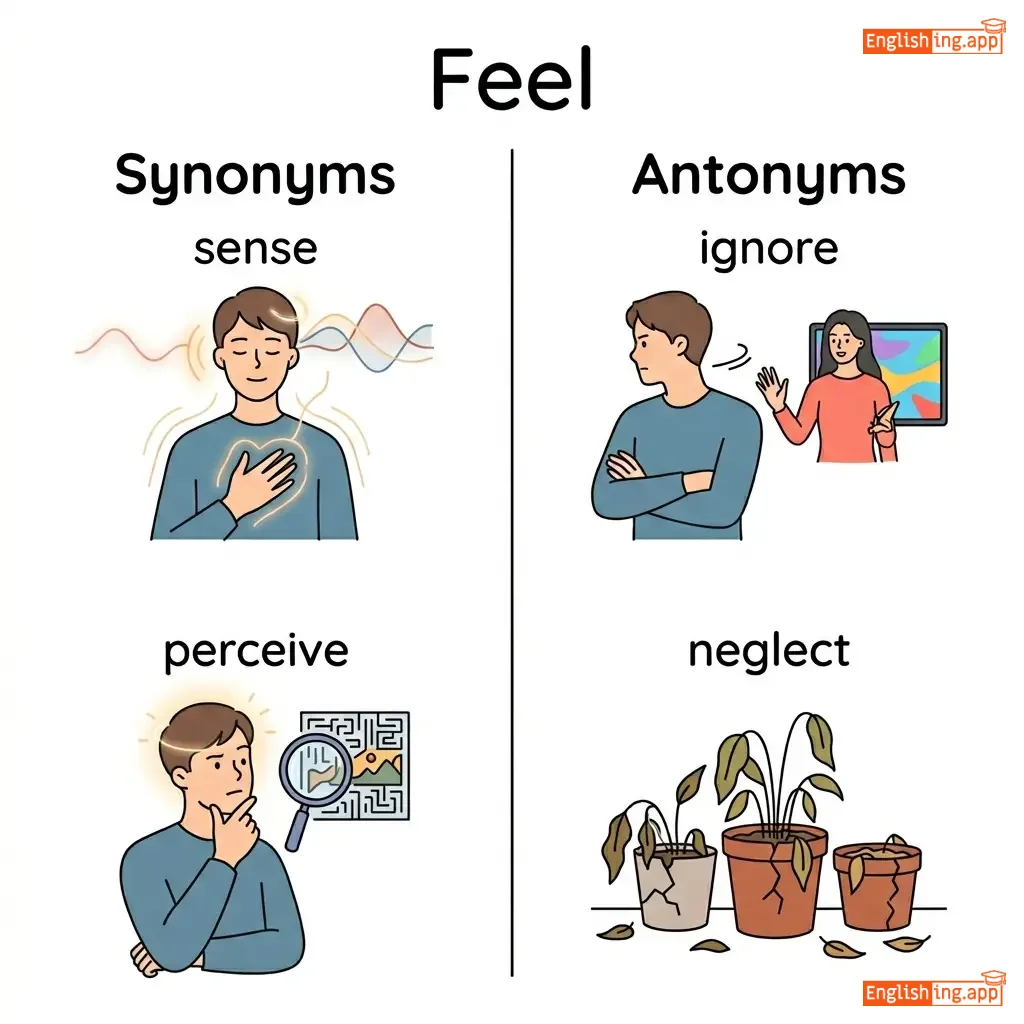
/fiːl/
verb
(fīru)
••••••
|
|
感じる
kanjiru
••••••
|
felt
felt
••••••
|
felt
felt
••••••
|
feels
fīrusu
••••••
|
feeling
fīringu
••••••
|
to experience an emotion or physical sensation
••••••
|
I feel happy when I see you.
あなたを見るとき、私は幸せに感じます。
••••••
|
あなたを見るとき、私は幸せに感じます。
Anata o miru toki, watashi wa shiawase ni kanjimasu.
••••••
|
sense, experience, perceive
••••••
|
ignore, overlook, miss
••••••
|
feel good, feel bad, feel comfortable, feel confident, feel grateful
••••••
|
Feel in English and 感じる in Japanese both indicate experiencing sensations.
••••••
|
|
#375
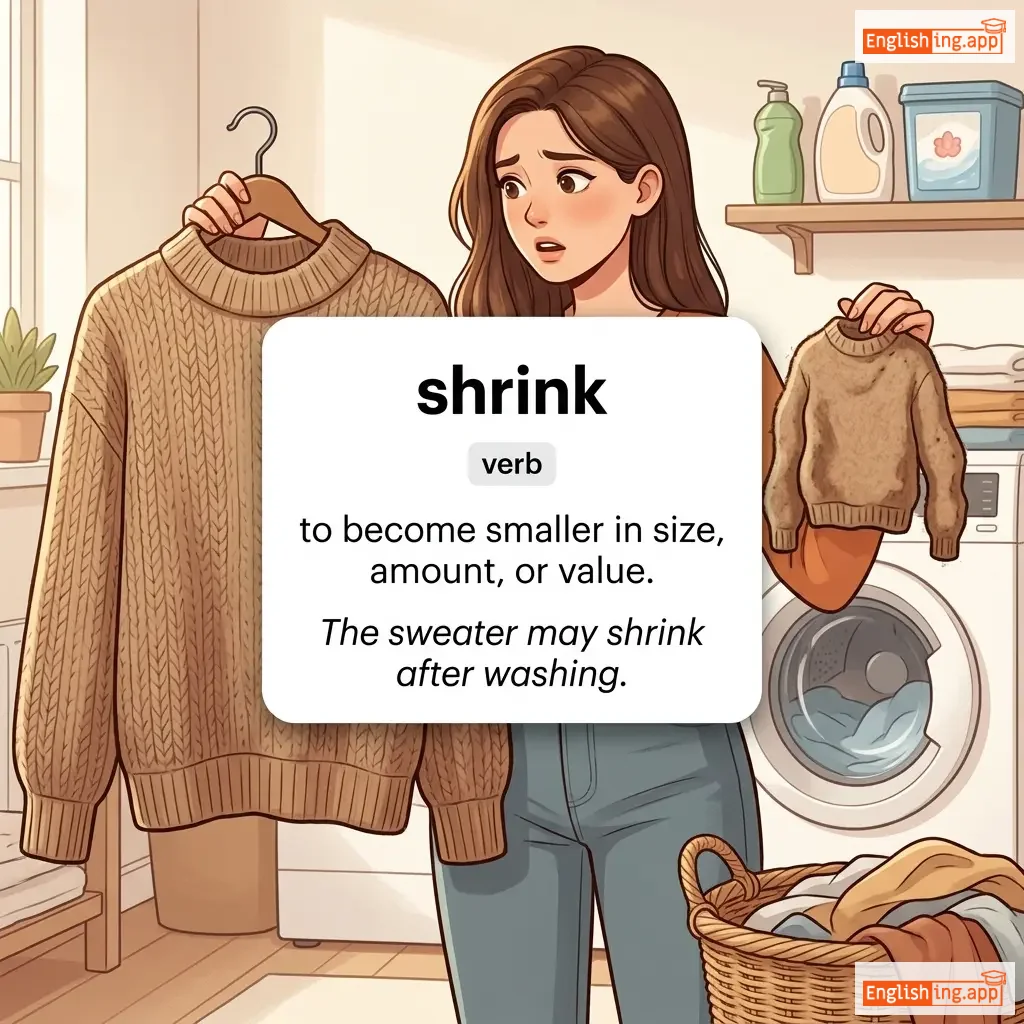
📉
|
/ʃrɪŋk/
verb
(シュリンク)
••••••
|
|
縮む
chijimu
••••••
|
shrank
シュランク
••••••
|
shrunk
シュランク
••••••
|
shrinks
シュリンクス
••••••
|
shrinking
シュリンキング
••••••
|
to become smaller in size; to draw back in fear
••••••
|
The sweater shrank after washing in hot water.
セーターは熱い水で洗った後、縮んだ。
••••••
|
セーターは熱い水で洗った後、縮んだ。
Sētā wa atsui mizu de aratta ato, chijinda.
••••••
|
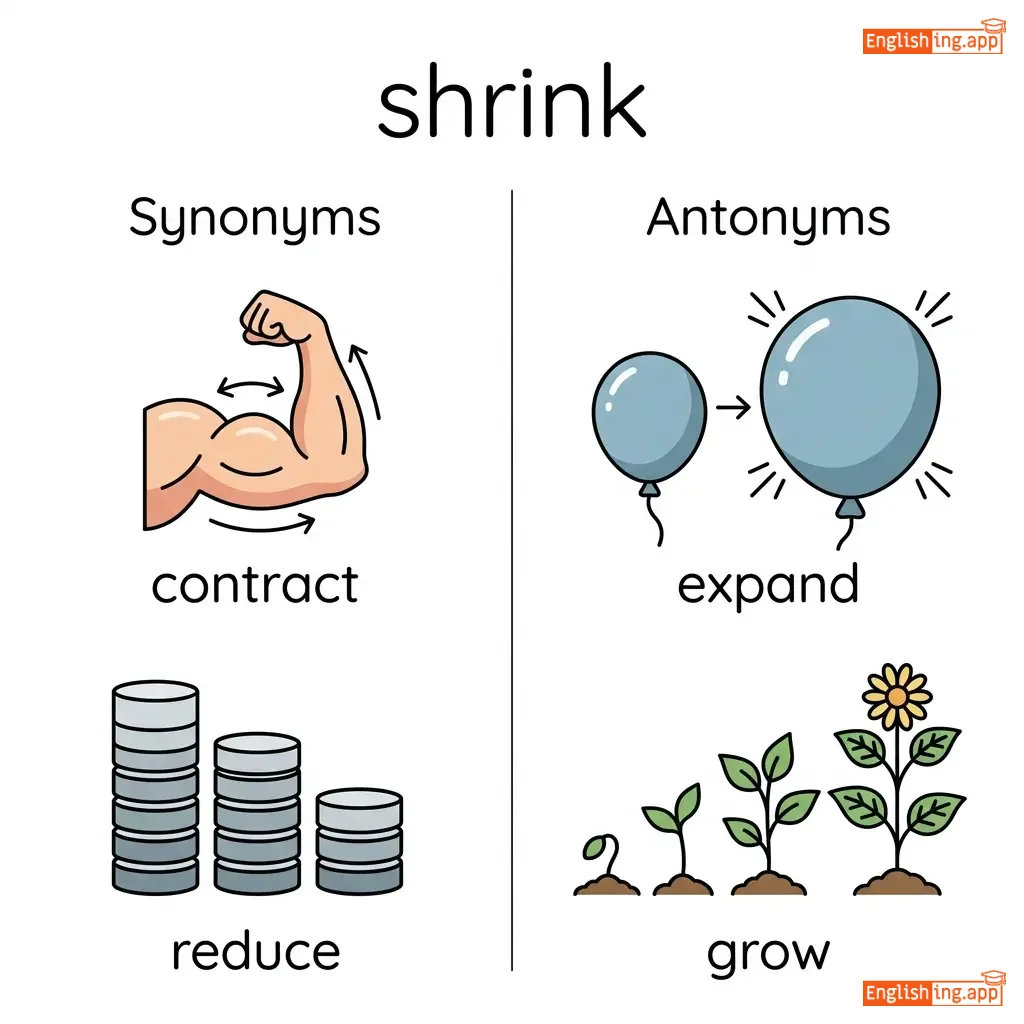
contract, reduce, diminish, compress
••••••
|
expand, grow, enlarge, stretch
••••••
|
shrink rapidly, shrink significantly, shrink back, shrink away, shrink gradually
••••••
|
縮むように、水で小さくなるセーターのように!
••••••
|
|
#376
🌱
|
/ˈkʌltɪveɪt/
verb
(カルトベイト)
••••••
|
|
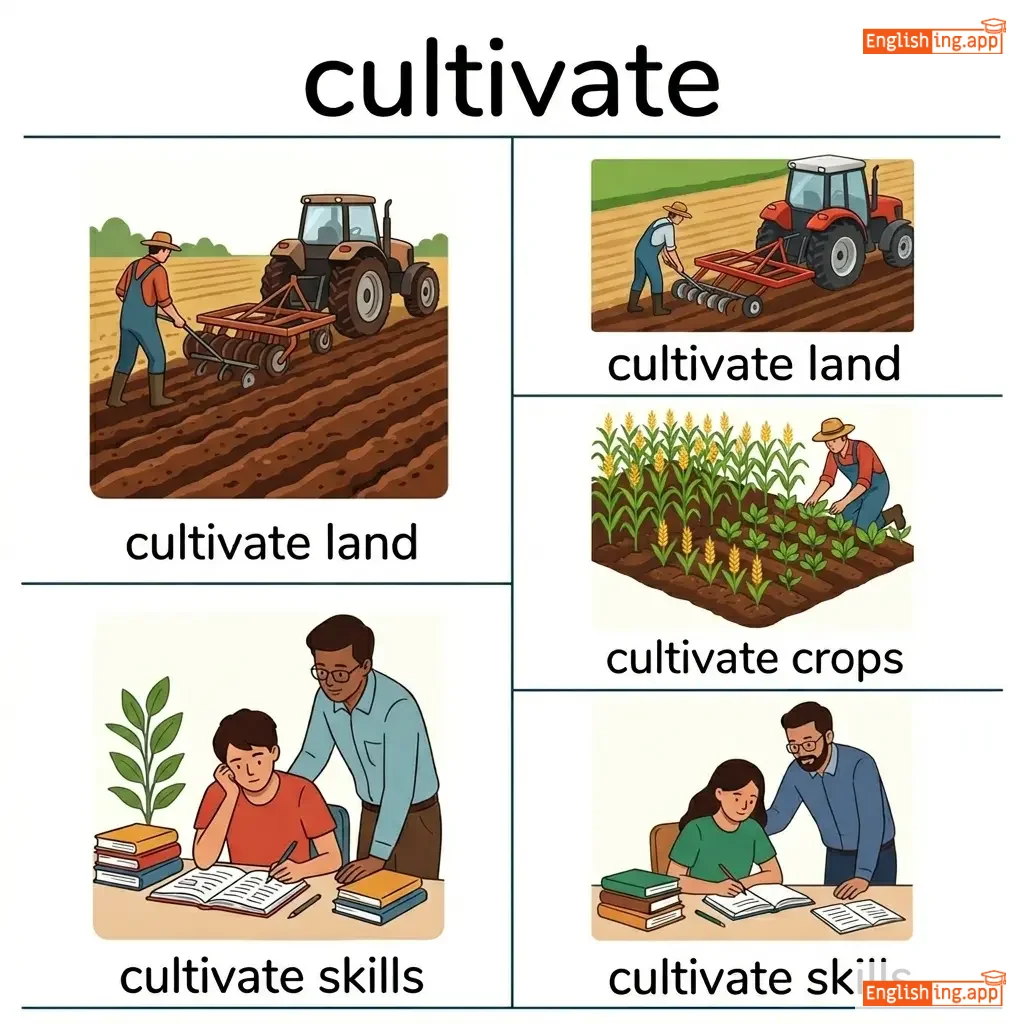
栽培する
saibai suru
••••••
|
cultivated
カルトベイテッド
••••••
|
cultivated
カルトベイテッド
••••••
|
cultivates
カルトベイツ
••••••
|
cultivating
カルトベイティング
••••••
|
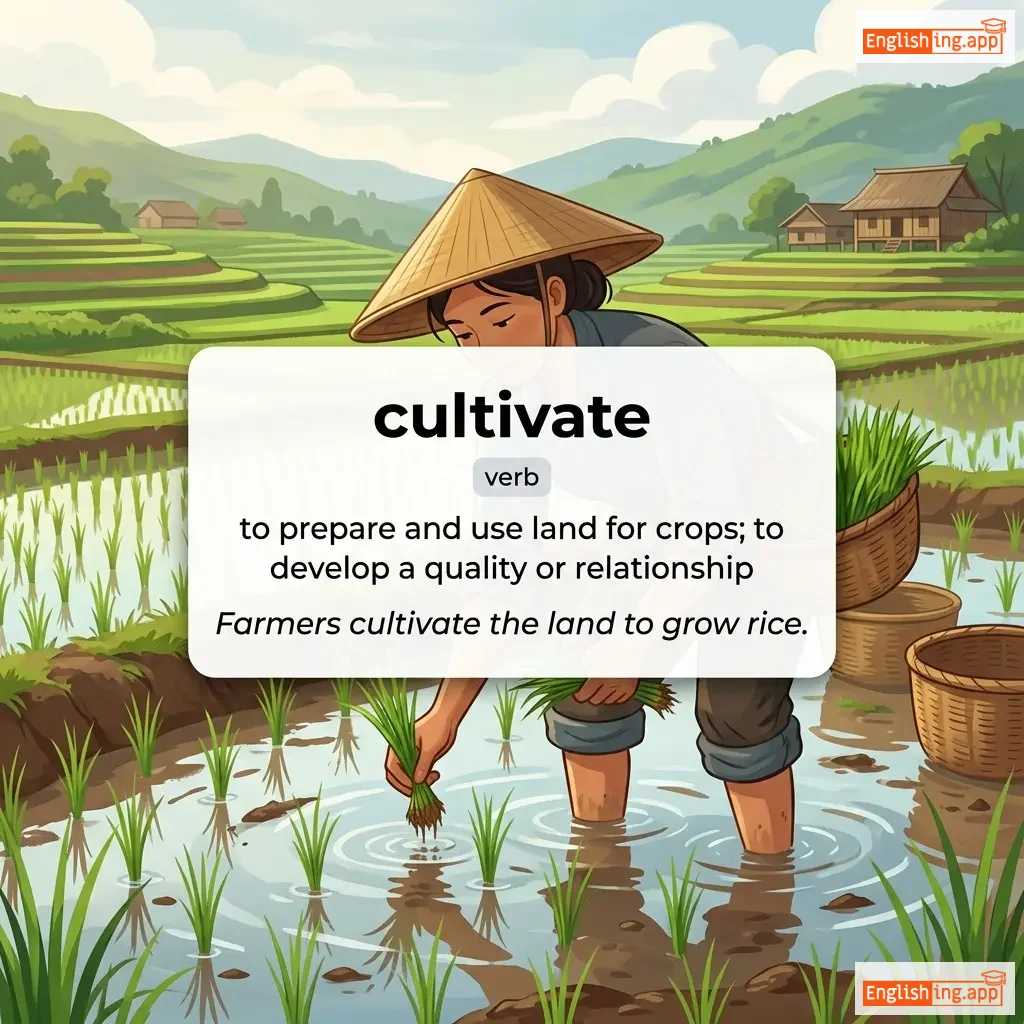
to grow crops or plants; to develop or improve something
••••••
|
Farmers cultivate rice in the paddy fields.
農家は田んぼでお米を育てています。
••••••
|
農家は田んぼでお米を育てています。
Nōka wa tanbo de okome o sodate teimasu.
••••••
|
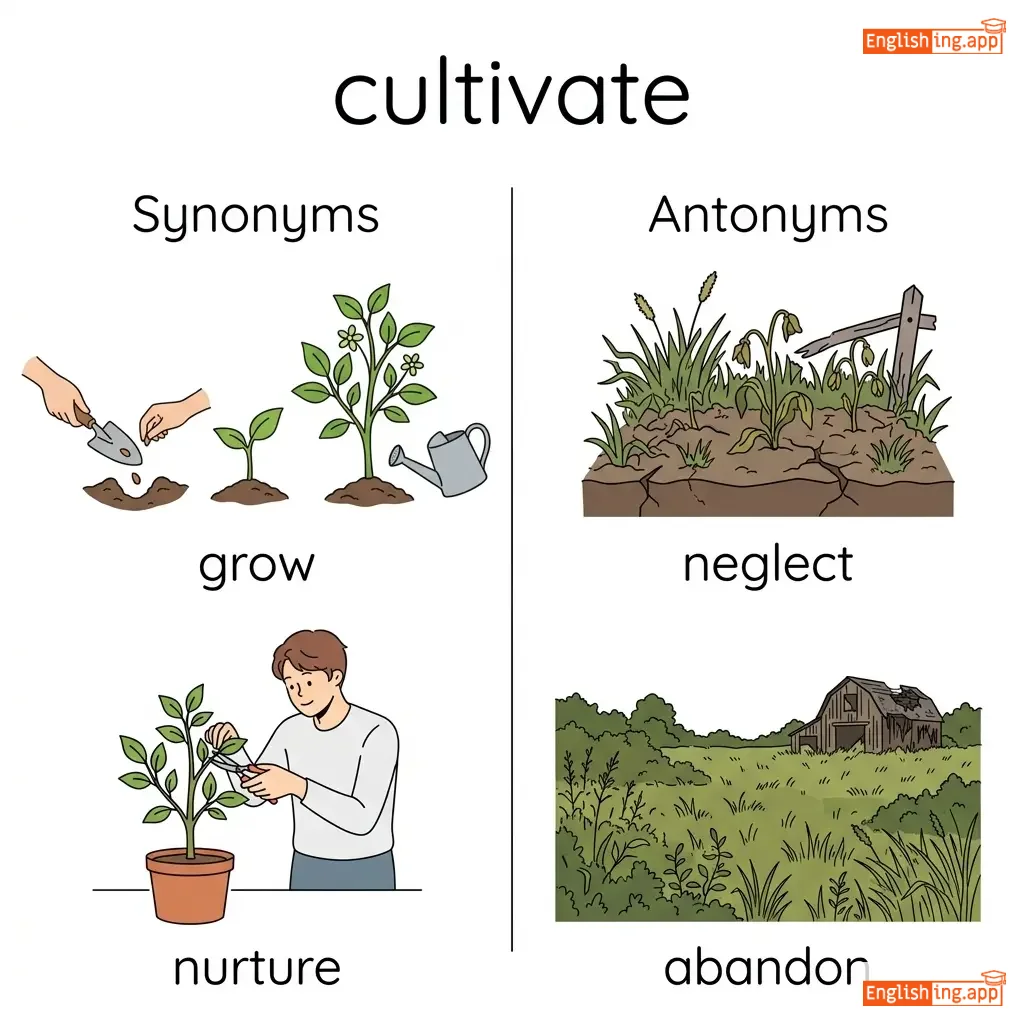
grow, develop, foster, nurture
••••••
|
neglect, abandon, destroy
••••••
|
cultivate carefully, cultivate successfully, cultivate organically, cultivate extensively, cultivate relationships
••••••
|
栽培する = 地面に種を植える
••••••
|
|
#377
🙏
|
/preɪ/
verb
(purei)
••••••
|
|
祈る
inoru
••••••
|
prayed
pureid
••••••
|
prayed
pureid
••••••
|
prays
pureizu
••••••
|
praying
pureingu
••••••
|
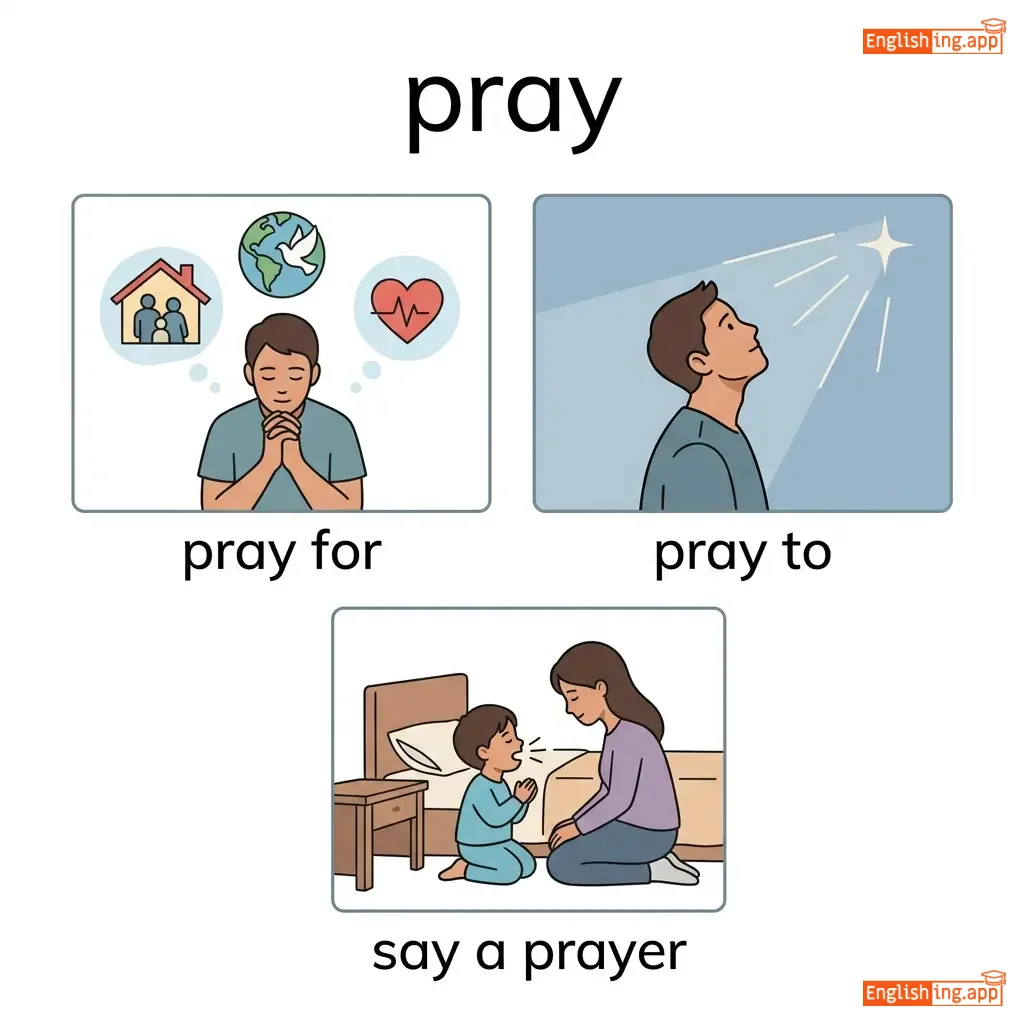
to speak to God or a deity; to hope earnestly
••••••
|
Many people pray for peace in the world.
多くの人々が世界の平和のために祈ります。
••••••
|
多くの人々が世界の平和のために祈ります。
Ōku no hitobito ga sekai no heiwa no tame ni inorimasu.
••••••
|
worship, petition, request, invoke
••••••
|
curse, condemn, blaspheme, ignore
••••••
|
pray silently, pray earnestly, pray together, pray daily, pray fervently
••••••
|
祈ることは神に対する心の中でのお願い
••••••
|
|
#378
🎮
|
/pleɪ/
verb
(プレイ)
••••••
|
|
遊ぶ
asobu
••••••
|
played
プレイド
••••••
|
played
プレイド
••••••
|
plays
プレイズ
••••••
|
playing
プレイング
••••••
|
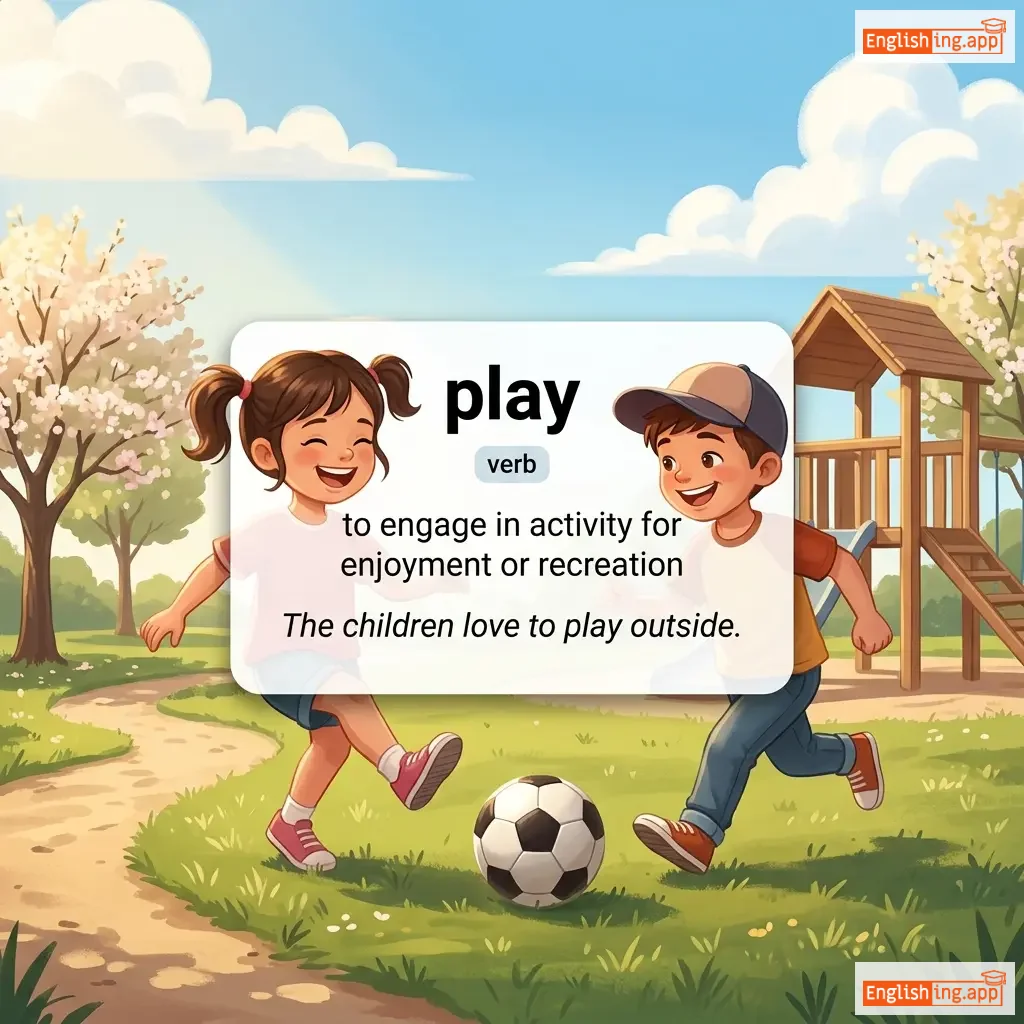
to engage in games or sports; to perform music
••••••
|
Children love to play in the park.
子供たちは公園で遊ぶのが大好きです。
••••••
|
子供たちは公園で遊ぶのが大好きです。
Kodomotachi wa kōen de asobu no ga daisuki desu.
••••••
|
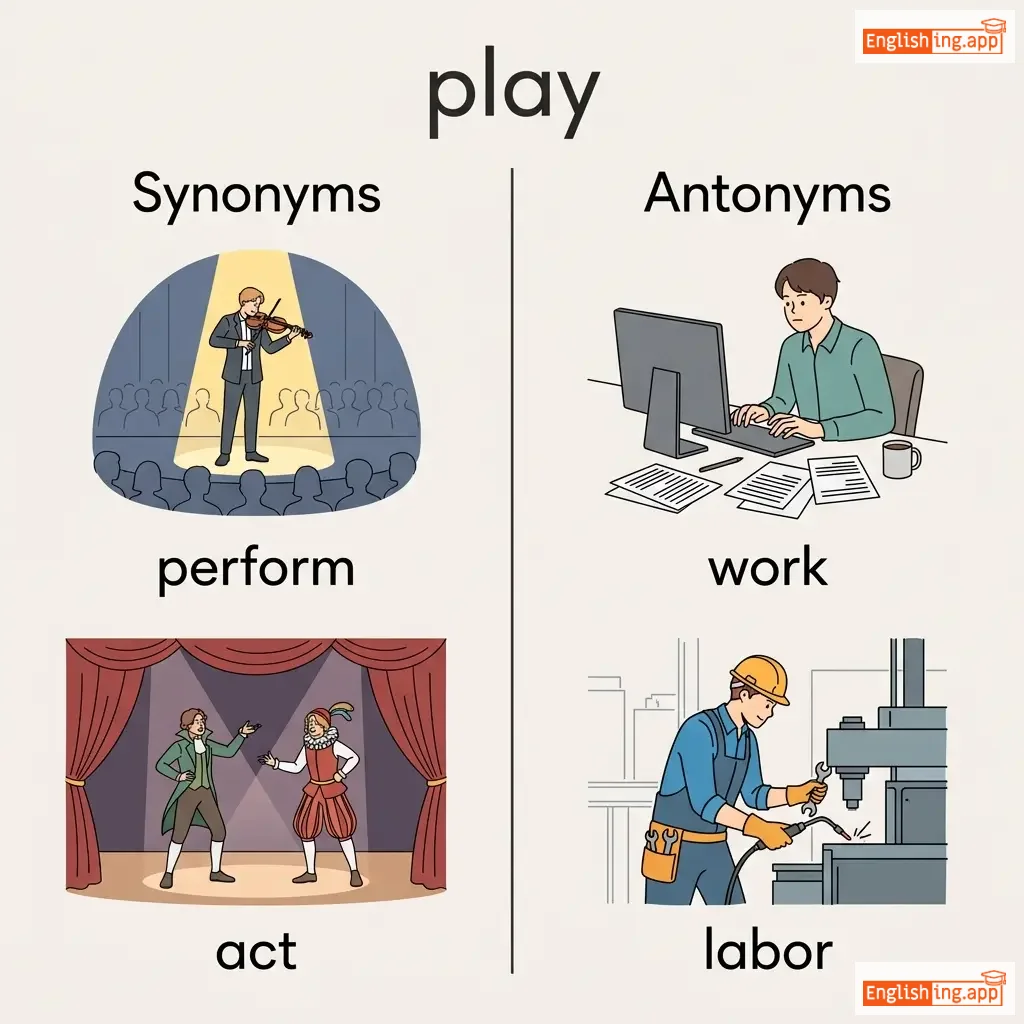
perform, compete, entertain, act
••••••
|
work, study, stop, rest
••••••
|
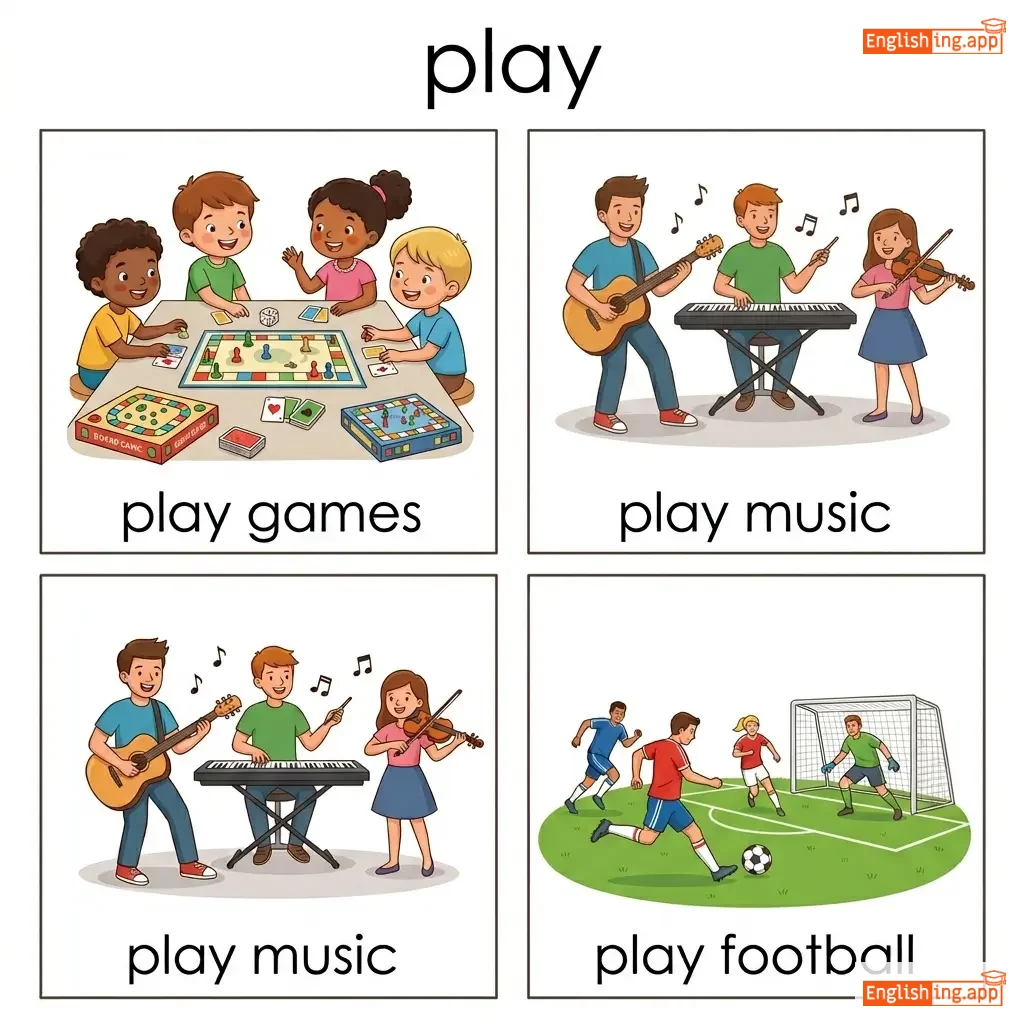
play games, play music, play sports, play together, play outside
••••••
|
遊ぶ means playing, just like 'play' in English!
••••••
|
|
#379
👉
|
/rɪˈfɜː/
verb
(リファー)
••••••
|
|
参照する
sanshō suru
••••••
|
referred
リファード
••••••
|
referred
リファード
••••••
|
refers
リファーズ
••••••
|
referring
リファリング
••••••
|
to mention or allude to something; to direct someone to a source of information
••••••
|
Please refer to page 45 for more details.
詳細については、ページ45をご参照ください。
••••••
|
詳細については、ページ45をご参照ください。
Shōsai ni tsuite wa, pēji 45 o go sanshō kudasai.
••••••
|
mention, allude, cite, direct
••••••
|
ignore, overlook, omit
••••••
|
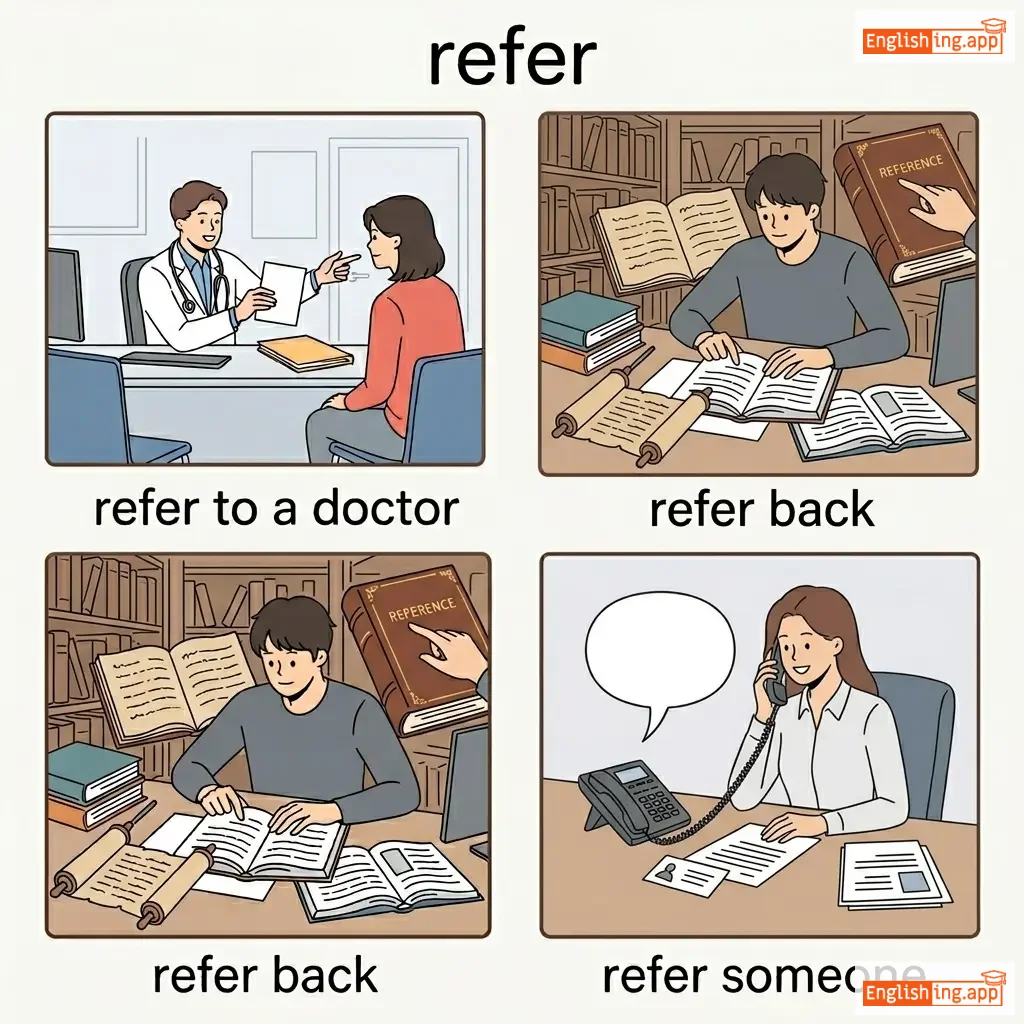
refer to, refer back, refer specifically, refer constantly, refer briefly
••••••
|
参照する日本語では、情報の源に向かって進むように指し示すことです。
••••••
|
|
#380
🤝
|
/vaʊ/
verb
(バウ)
••••••
|
|
誓う
chikau
••••••
|
vowed
バウド
••••••
|
vowed
バウド
••••••
|
vows
バウズ
••••••
|
vowing
バウイング
••••••
|
to make a serious promise; to pledge solemnly
••••••
|
They vowed to love each other forever.
彼らは永遠に愛し合うことを誓いました。
••••••
|
彼らは永遠に愛し合うことを誓いました。
Karera wa eien ni aishi au koto o chikaimashita.
••••••
|
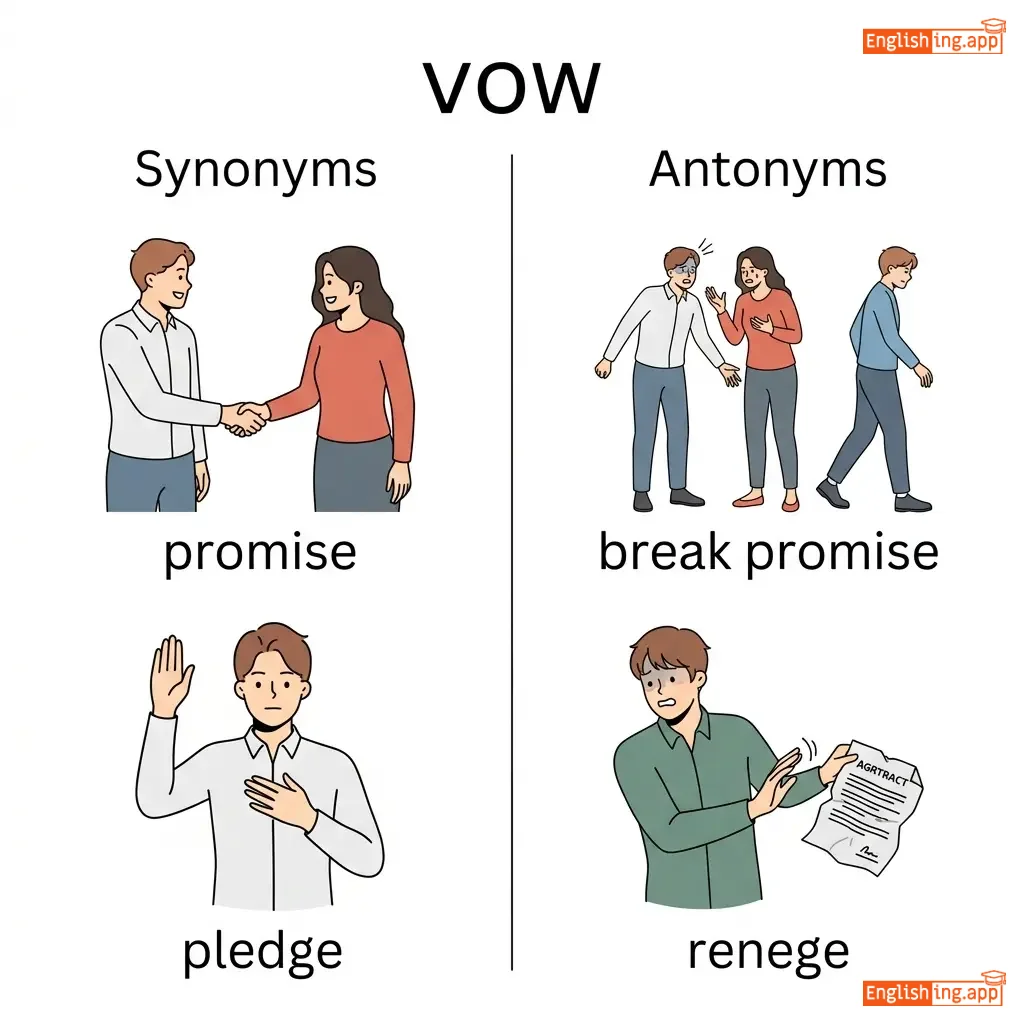
promise, pledge, swear, commit, declare
••••••
|
break promise, renege, withdraw
••••••
|
vow solemnly, vow publicly, vow sincerely, vow eternally, vow secretly
••••••
|
誓いは真剣な約束です
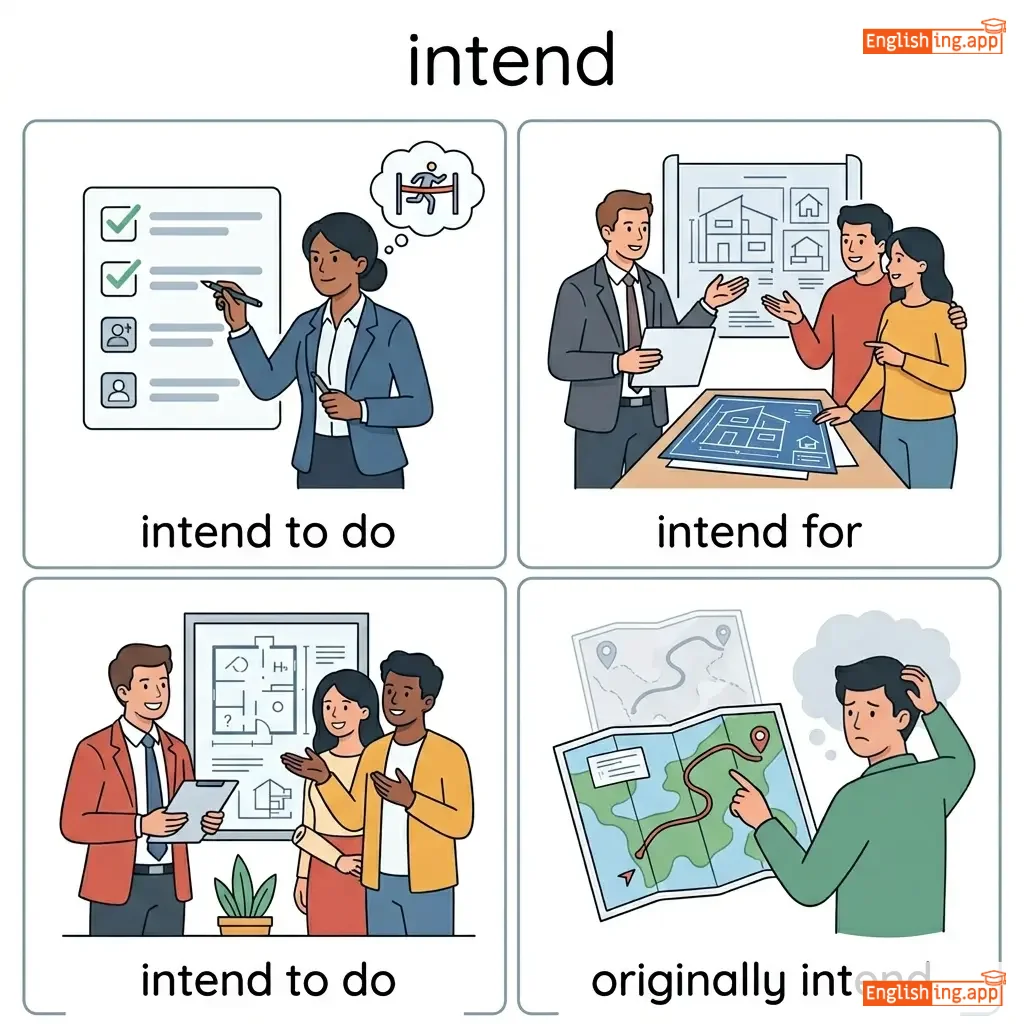
••••••
|
|
#381
🎯
|
/ɪnˈtend/
verb
(インテンド)
••••••
|
|
意図する
itosuru
••••••
|
intended
インテンドデッド
••••••
|
intended
インテンドデッド
••••••
|
intends
インテンドス
••••••
|
intending
インテンドイング
••••••
|
to plan or have in mind as a purpose; to mean
••••••
|
I intend to finish this project by tomorrow.
私はこのプロジェクトを明日までに終わらせるつもりです。
••••••
|
私はこのプロジェクトを明日までに終わらせるつもりです。
Watashi wa kono purojekuto o ashita made ni owaraseru tsumori desu.
••••••
|
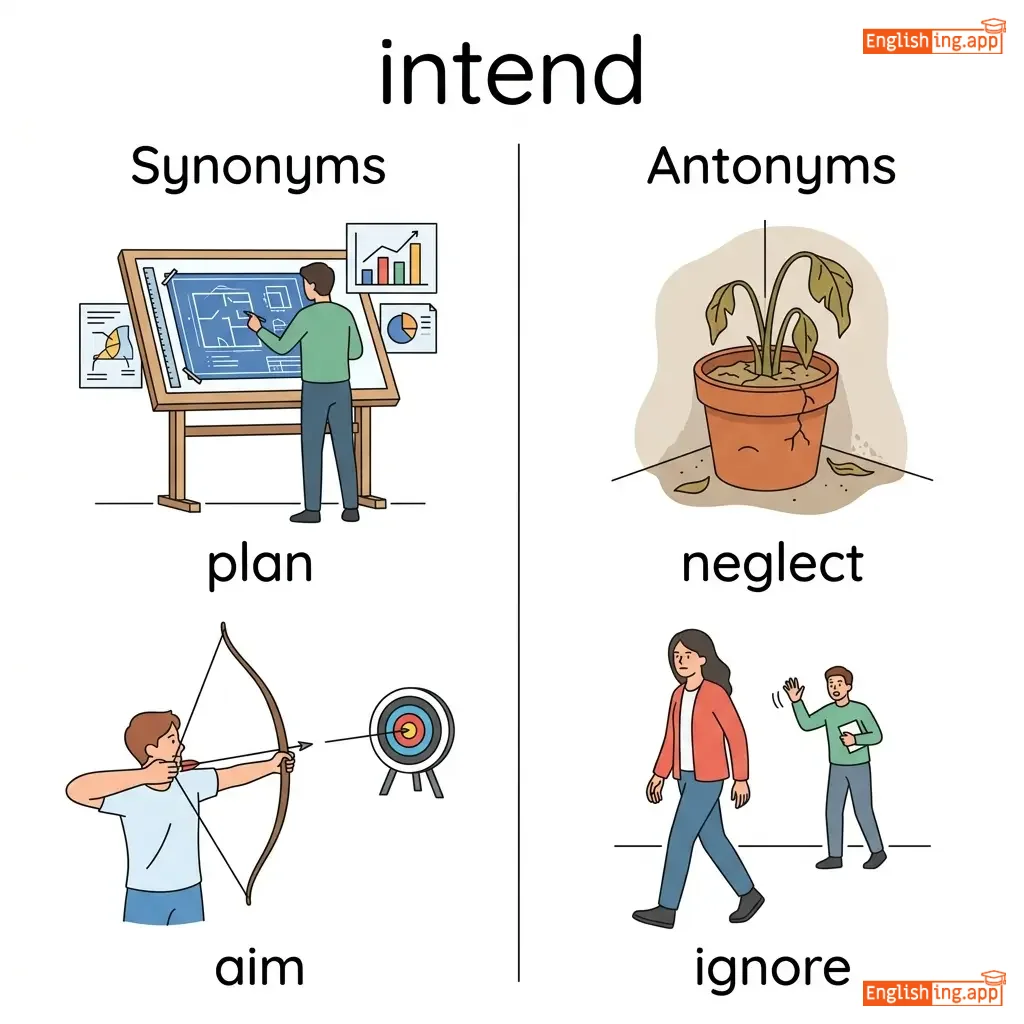
plan, aim, purpose, mean, design
••••••
|
abandon, discard, reject, neglect
••••••
|
intend to, intend originally, intend specifically, intend clearly, intend fully
••••••
|
インテンドは意図する、目標を持って計画すること。
••••••
|
|
#382
💰
|
/ɜːrn/
verb
(earn)
••••••
|
|
稼ぐ
kasegu
••••••
|
earned
earned
••••••
|
earned
earned
••••••
|
earns
earns
••••••
|
earning
earning
••••••
|
to receive money in return for work; to deserve through effort
••••••
|
She earns a good salary at her new job.
彼女は新しい仕事で良い給料を得ています。
••••••
|
彼女は新しい仕事で良い給料を得ています。
Kanojo wa atarashī shigoto de yoi kyūryō o eteimasu.
••••••
|
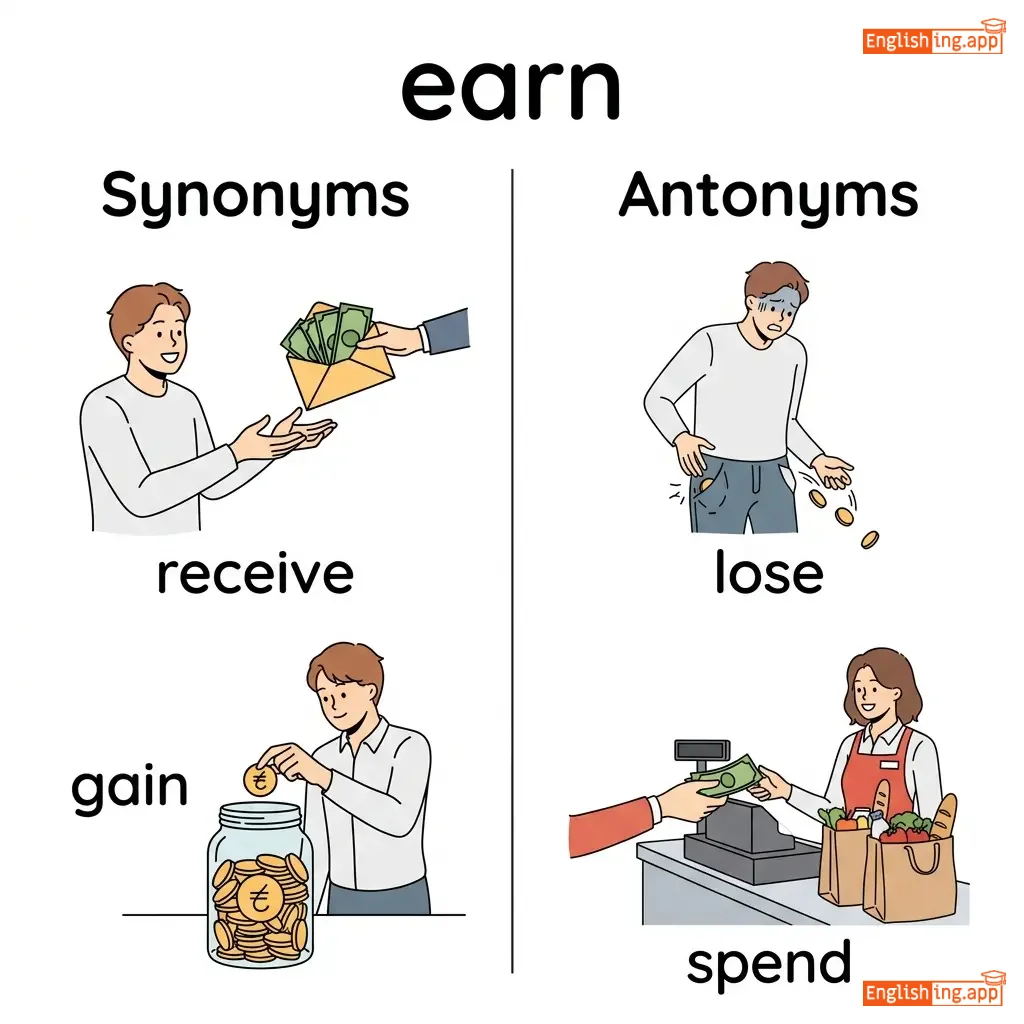
make, gain, receive, deserve
••••••
|
spend, lose, waste, forfeit
••••••
|
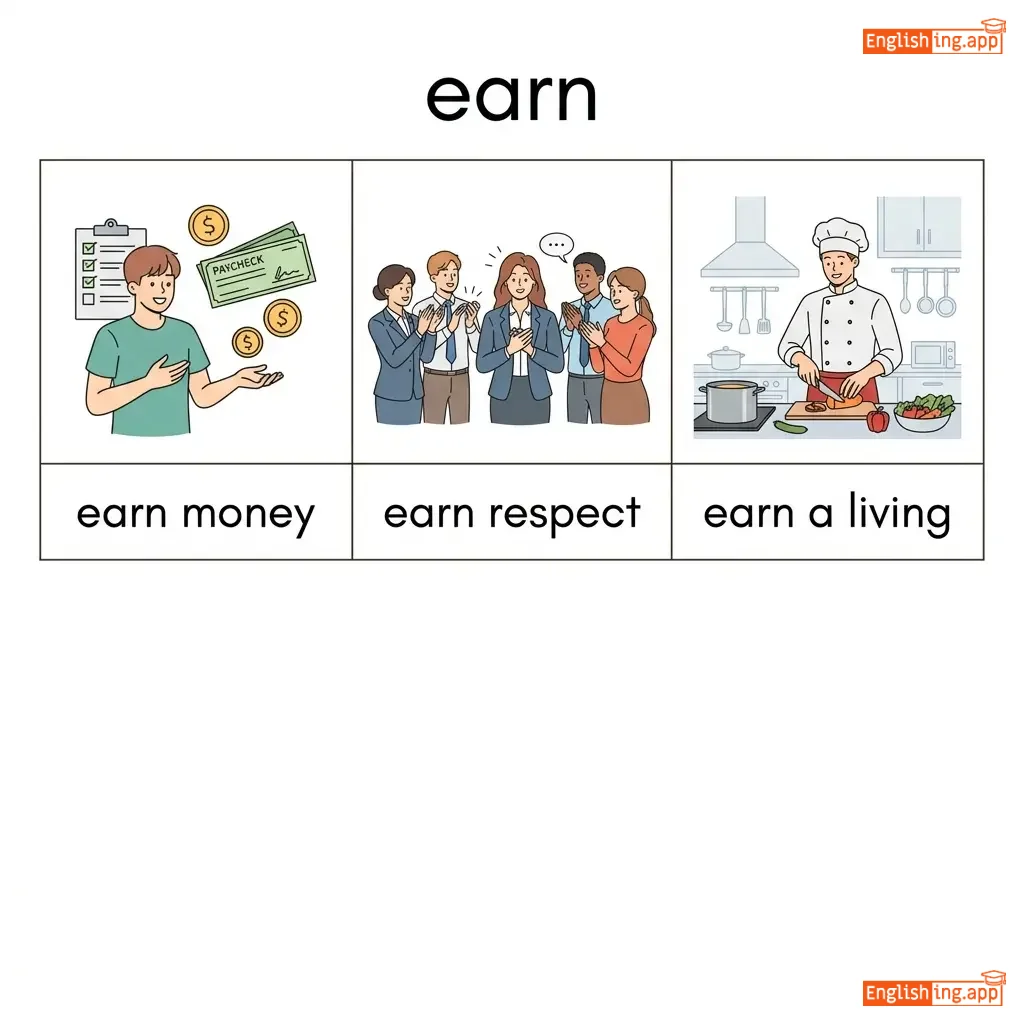
earn money, earn respect, earn living, earn praise, earn degree
••••••
|
稼ぐことでお金を得る、それが'稼ぐ'の意味です。
••••••
|
|
#383
🐛
|
/krɔːl/
verb
(król)
••••••
|
|
這う
hau
••••••
|
crawled
króld
••••••
|
crawled
króld
••••••
|
crawls
króls
••••••
|
crawling
króling
••••••
|
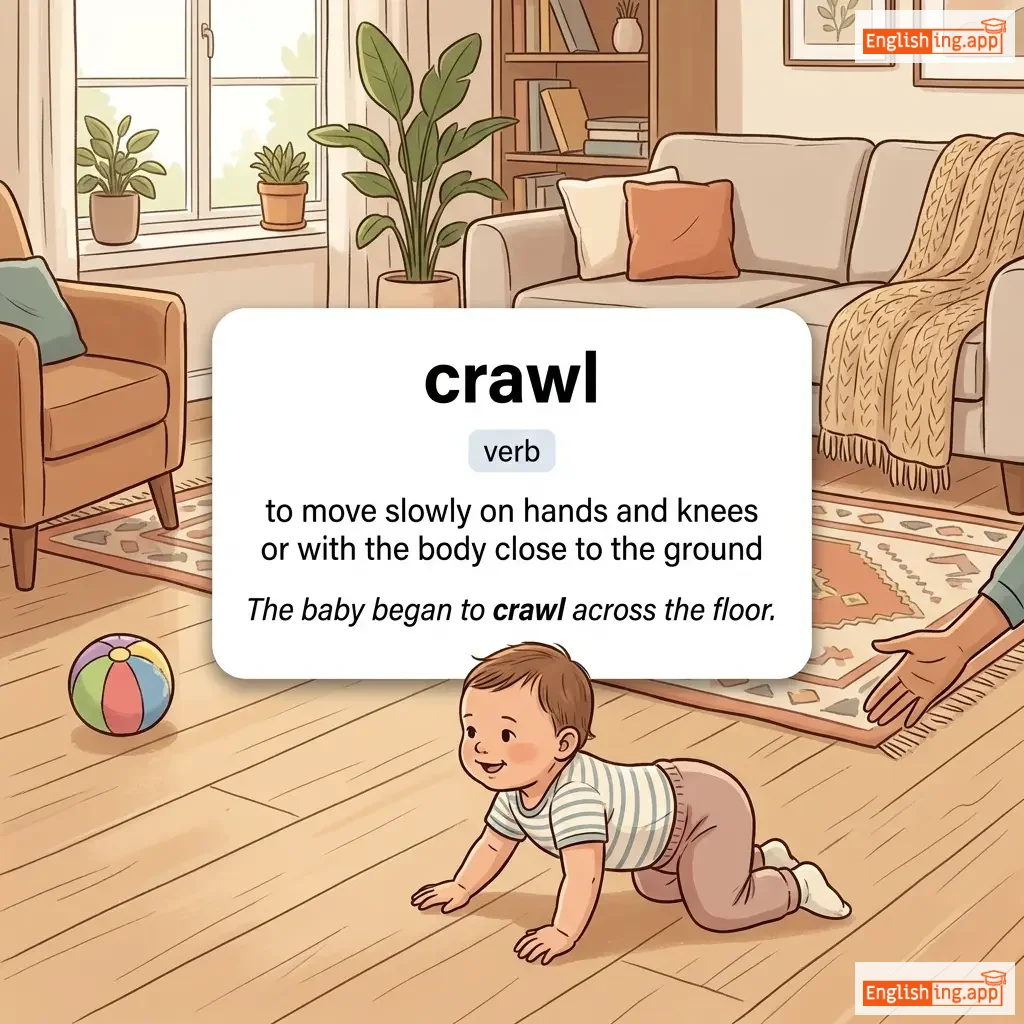
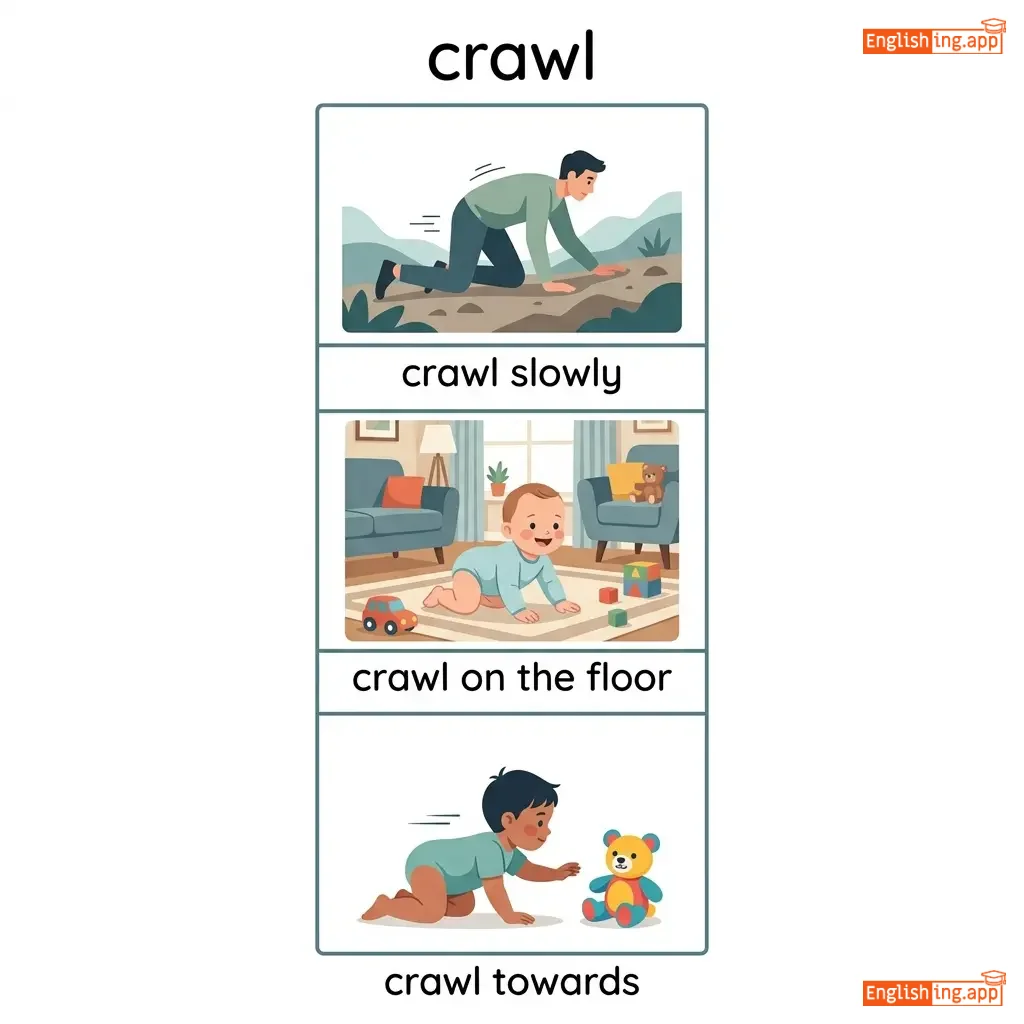
to move slowly on hands and knees; to move very slowly
••••••
|
The baby crawled across the floor to reach the toy.
赤ちゃんはおもちゃを取るために床をハイハイしていました。
••••••
|
赤ちゃんはおもちゃを取るために床をハイハイしていました。
Akachan wa omocha wo toru tame ni yuka wo haihai shiteimashita.
••••••
|
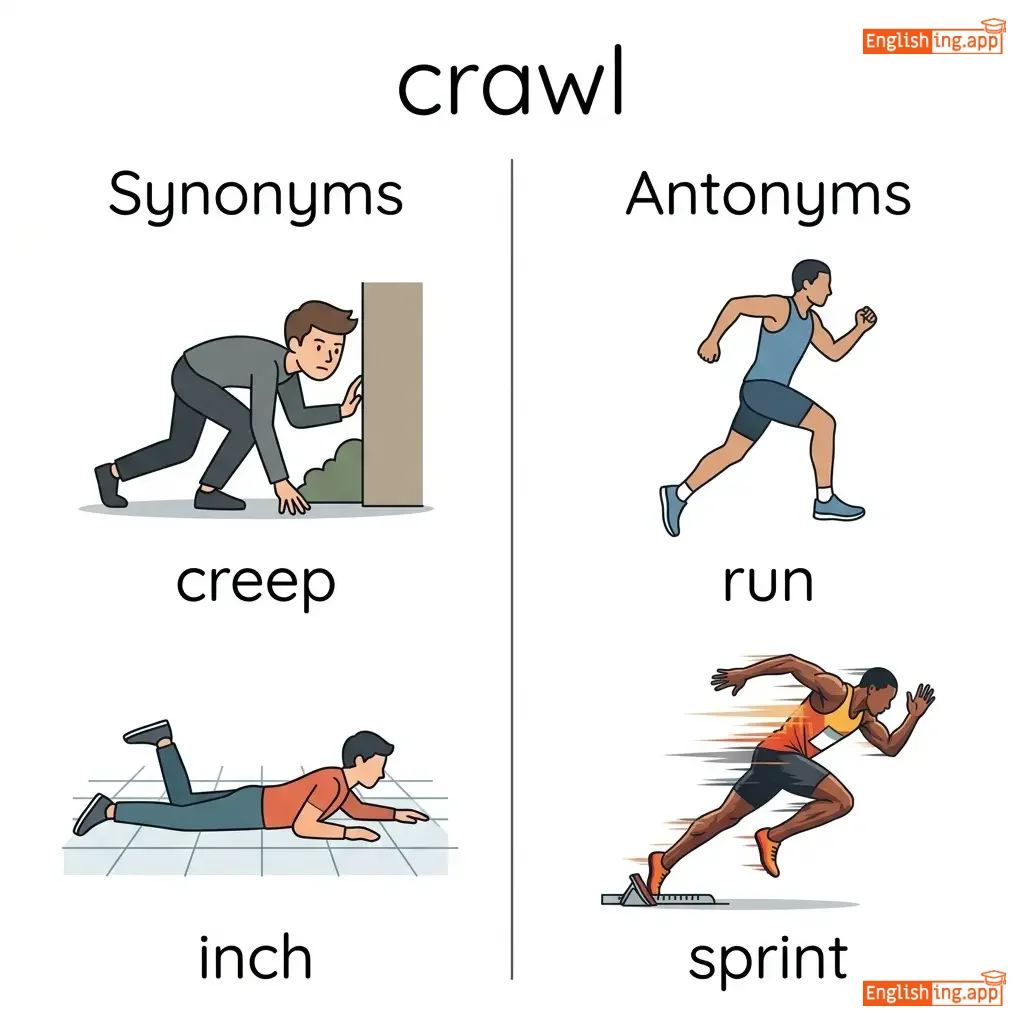
creep, slither, inch, move slowly
••••••
|
run, sprint, dash, rush
••••••
|
crawl slowly, crawl forward, crawl away, crawl under, crawl through
••••••
|
ハイハイは歩く前に最初にすることです。
••••••
|
|
#384
🔄
|
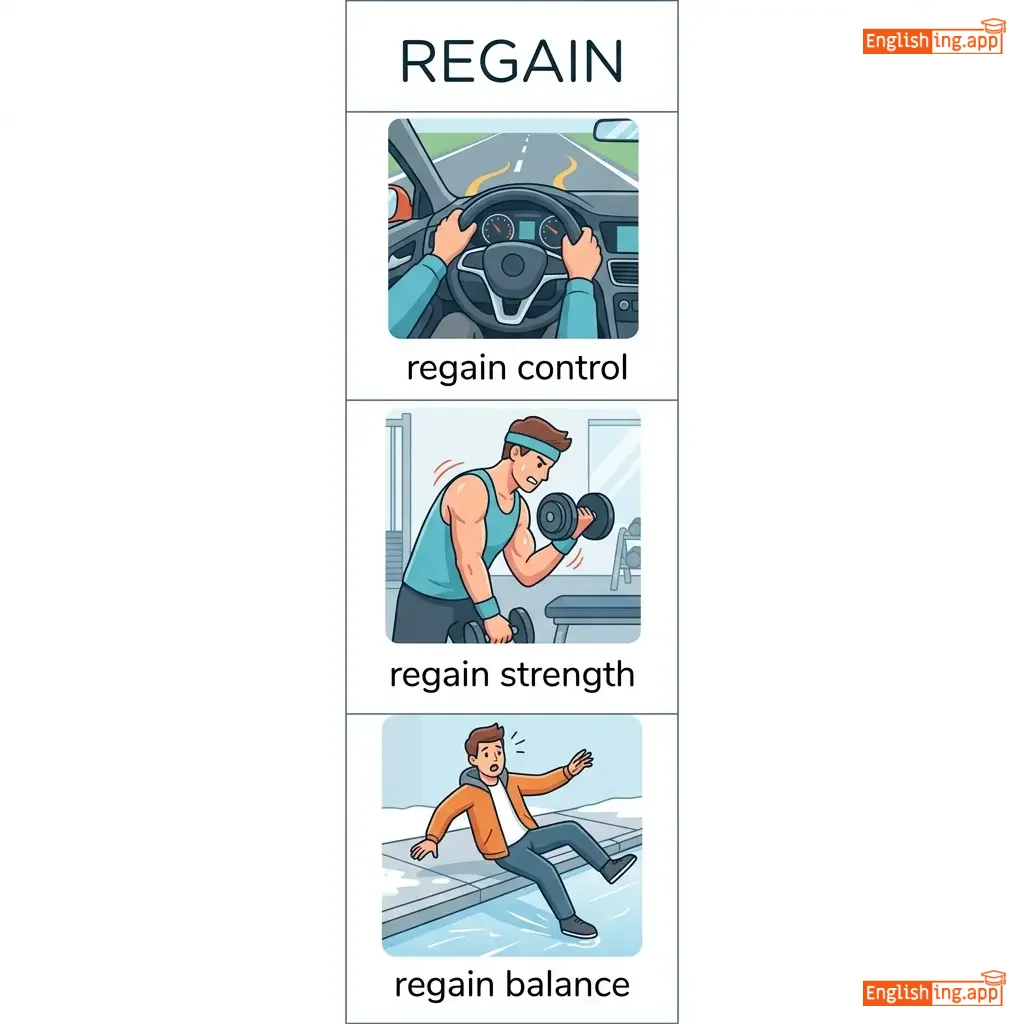
/rɪˈɡeɪn/
verb
(リゲイン)
••••••
|
|
回復する
kaifuku suru
••••••
|
regained
リゲインド
••••••
|
regained
リゲインド
••••••
|
regains
リゲインズ
••••••
|
regaining
リゲイニング
••••••
|
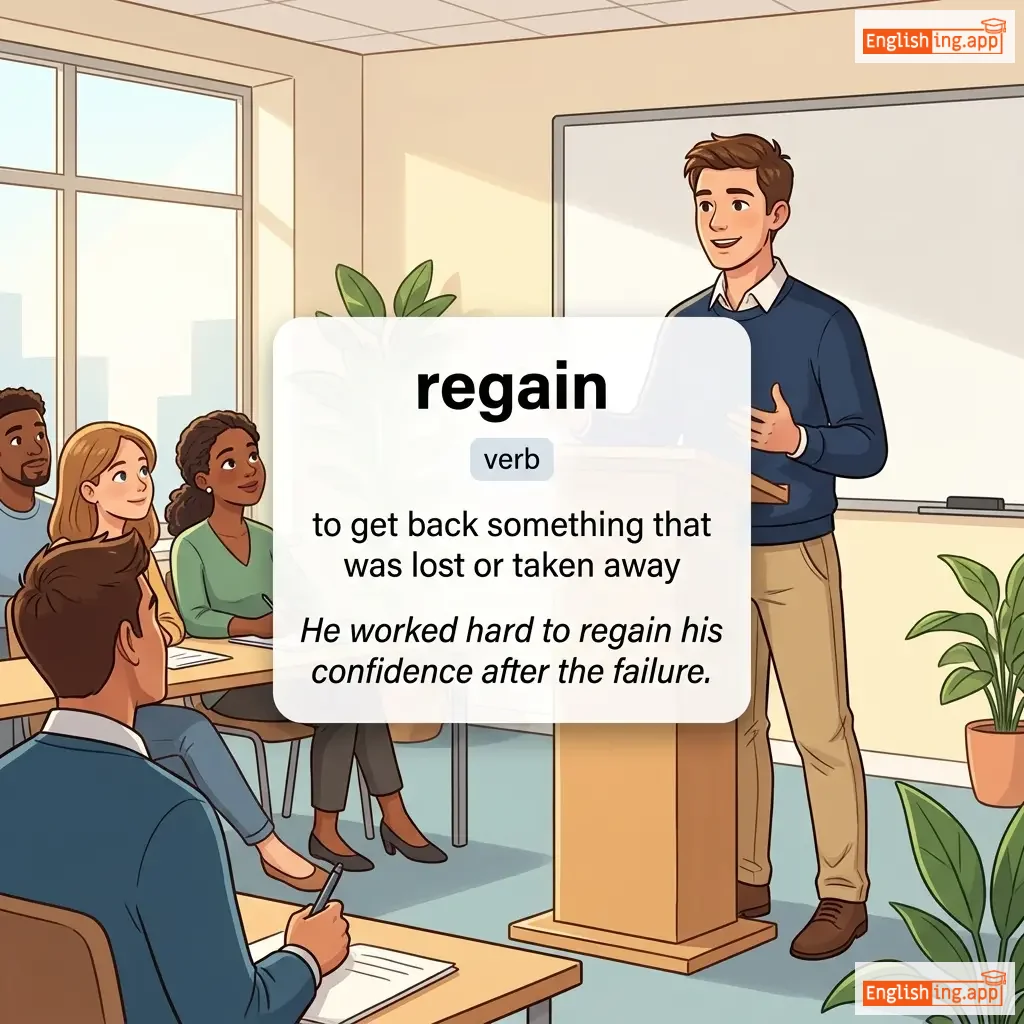
to get back something that was lost; to recover
••••••
|
He regains his strength after the illness.
彼は病気の後、力を回復する。
••••••
|
彼は病気の後、力を回復する。
Kare wa byōki no ato, chikara o kaifuku suru.
••••••
|
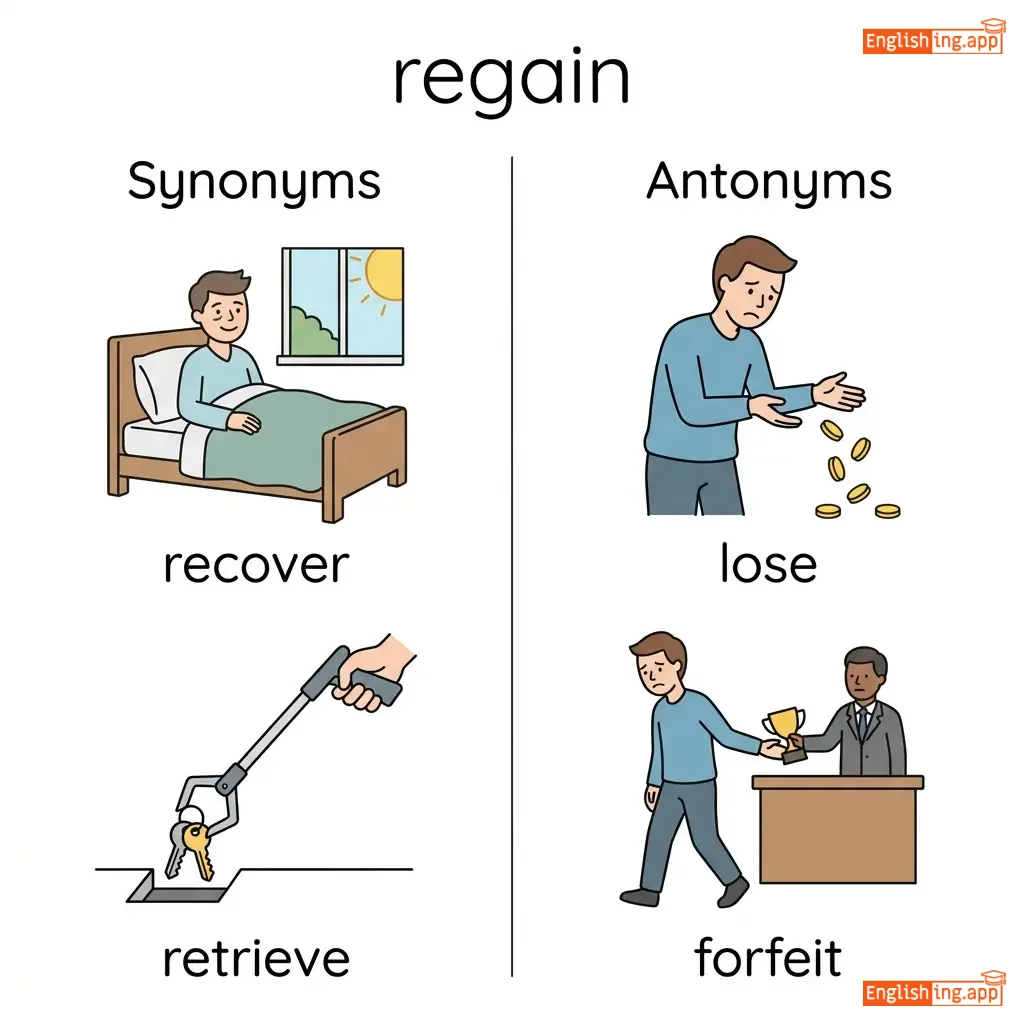
recover, reclaim, retrieve, restore
••••••
|
lose, forfeit, surrender, abandon
••••••
|
regain control, regain strength, regain confidence, regain consciousness, regain composure
••••••
|
Regain means to recover what was lost, like regaining your strength after illness!
••••••
|
|
#385
🔊
|
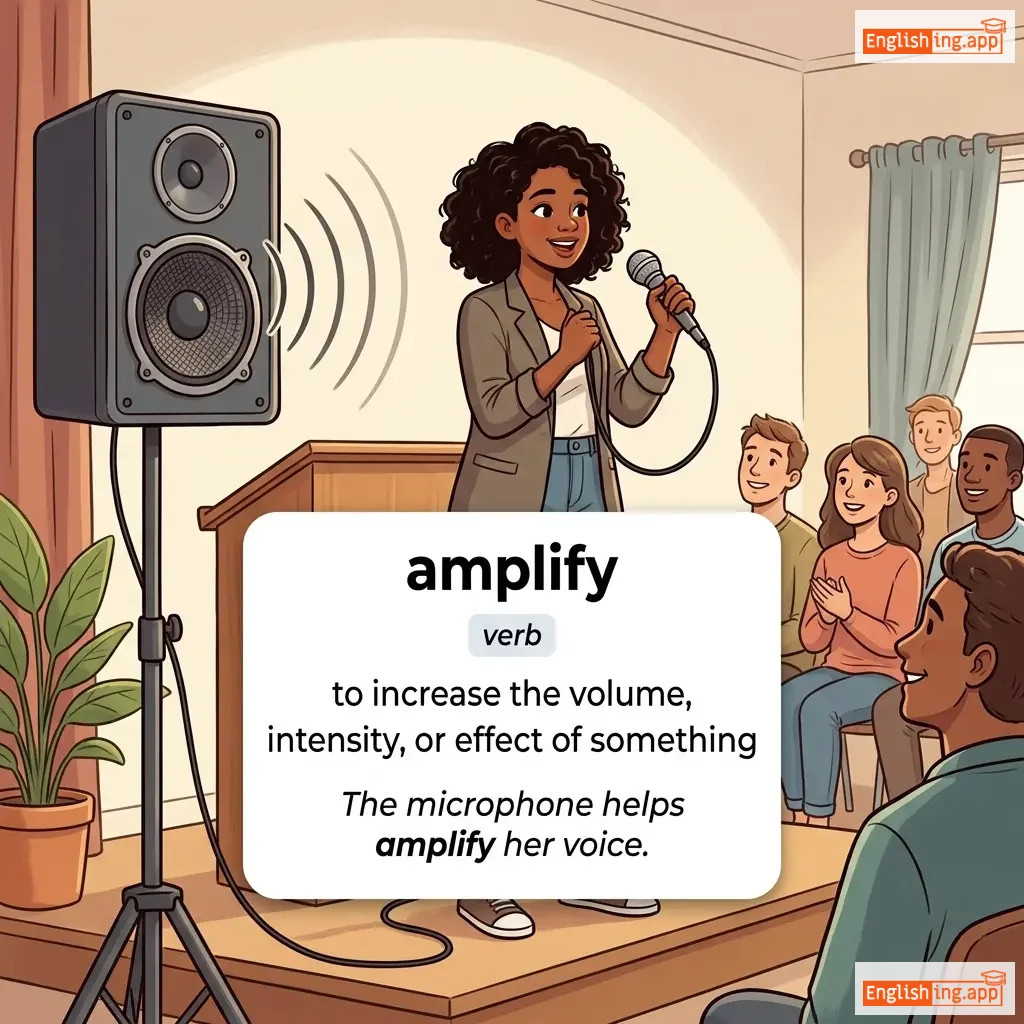
/ˈæmplɪˌfaɪ/
verb
(アンプリファイ)
••••••
|
|
増幅する
zōfuku suru
••••••
|
amplified
アンプリファイド
••••••
|
amplified
アンプリファイド
••••••
|
amplifies
アンプリファイズ
••••••
|
amplifying
アンプリファイング
••••••
|
to make sounds louder; to make something larger or more significant
••••••
|
The microphone amplifies her voice.
マイクロフォンは彼女の声を増幅させます。
••••••
|
マイクロフォンは彼女の声を増幅させます。
Maikurofon wa kanojo no koe o zōfuku sasemasu.
••••••
|
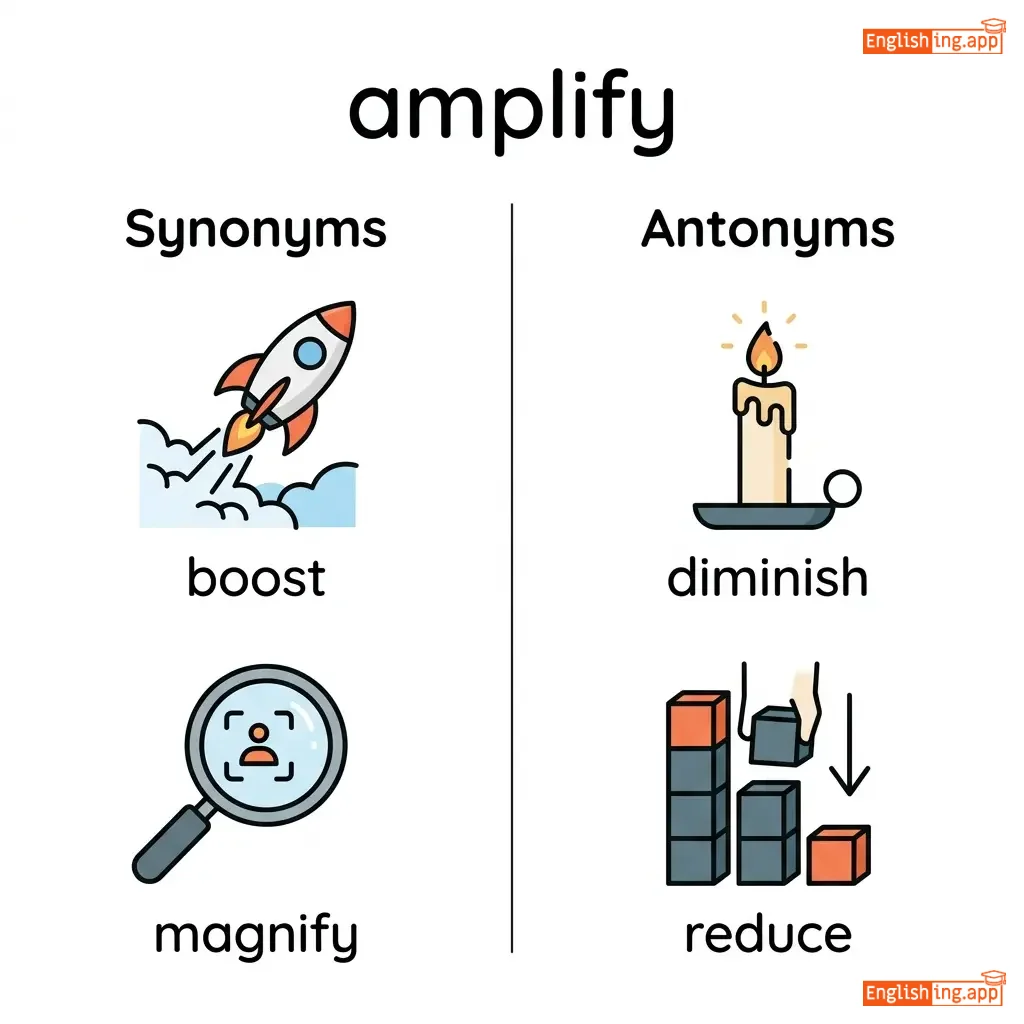
increase, boost, enhance, magnify
••••••
|
reduce, diminish, quiet
••••••
|
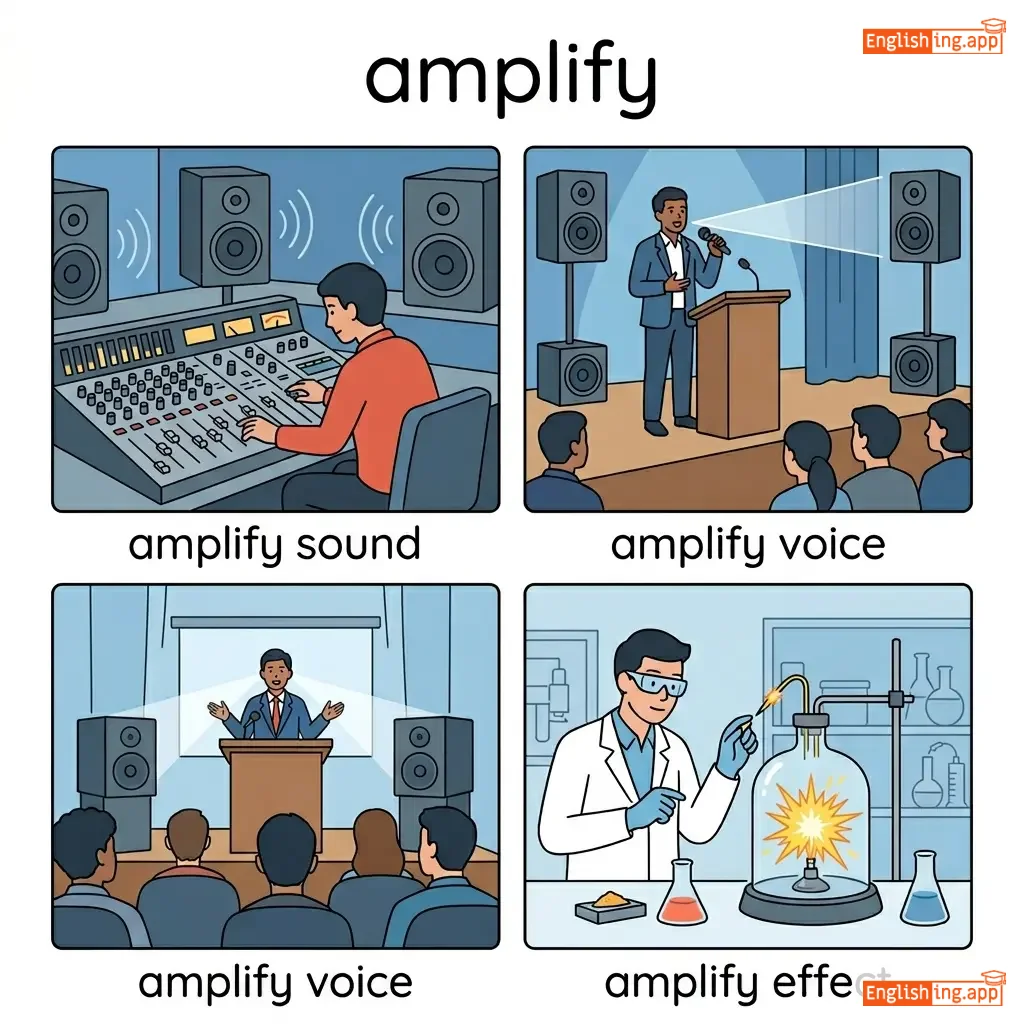
amplify sound, amplify signal, amplify voice, amplify effect, amplify message
••••••
|
音を増幅して、より大きくする。
••••••
|
|
#386
😊
|
/ɡlæd/
verb
(グラッド)
••••••
|
|
うれしい
ureshii
••••••
|
gladded
グラデッド
••••••
|
gladded
グラデッド
••••••
|
glads
グラッズ
••••••
|
gladding
グラディング
••••••
|
feeling pleased or happy; to make someone happy
••••••
|
I'm glad you could make it to the party.
パーティーに来てくれてうれしい。
••••••
|
パーティーに来てくれてうれしい。
Pātī ni kite kurete ureshī.
••••••
|
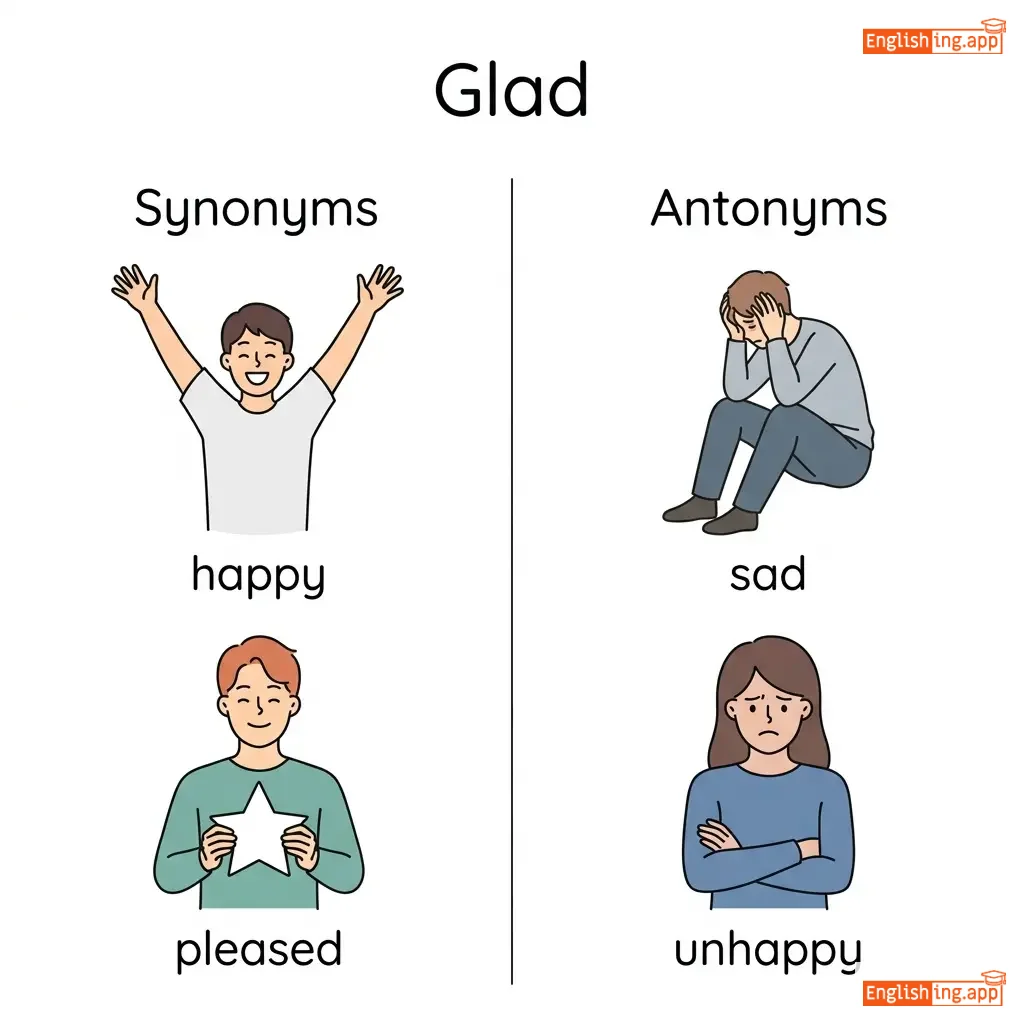
happy, pleased, delighted, joyful
••••••
|
sad, unhappy, disappointed, upset
••••••
|
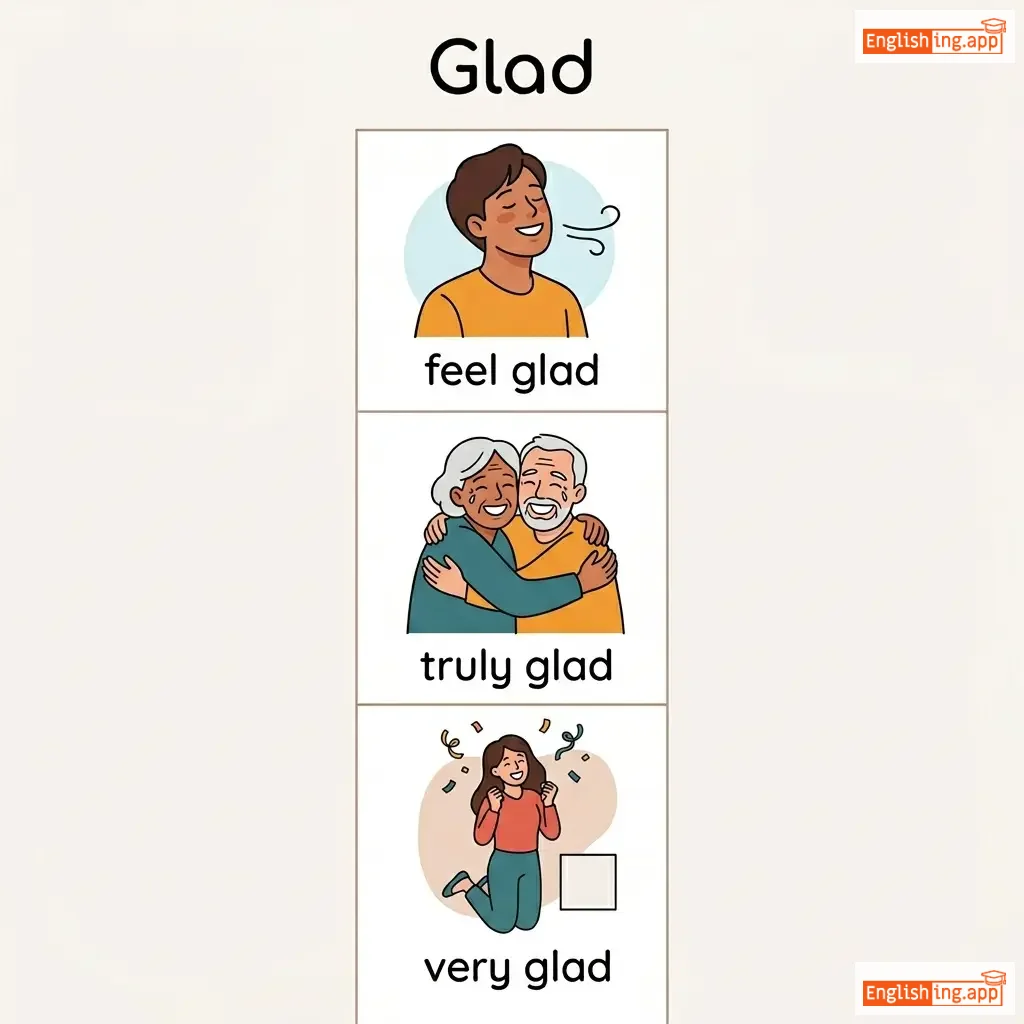
feel glad, truly glad, very glad, so glad, really glad
••••••
|
Happy to feel glad in Japanese
••••••
|
|
#387
📦
|
/kənˈveɪ/
verb
(kənˈveɪ)
••••••
|
|
伝える、表現する
tsutaeru, hyōgen suru
••••••
|
conveyed
kənˈveɪd
••••••
|
conveyed
kənˈveɪd
••••••
|
conveys
kənˈveɪz
••••••
|
conveying
kənˈveɪɪŋ
••••••
|
to transport; to communicate or express; to transfer
••••••
|
The painting conveys a sense of peace and tranquility.
その絵は平和と静けさの感覚を伝えています。
••••••
|
その絵は平和と静けさの感覚を伝えています。
Sono e wa heiwa to shizukesa no kankaku o tsutaeteimasu.
••••••
|
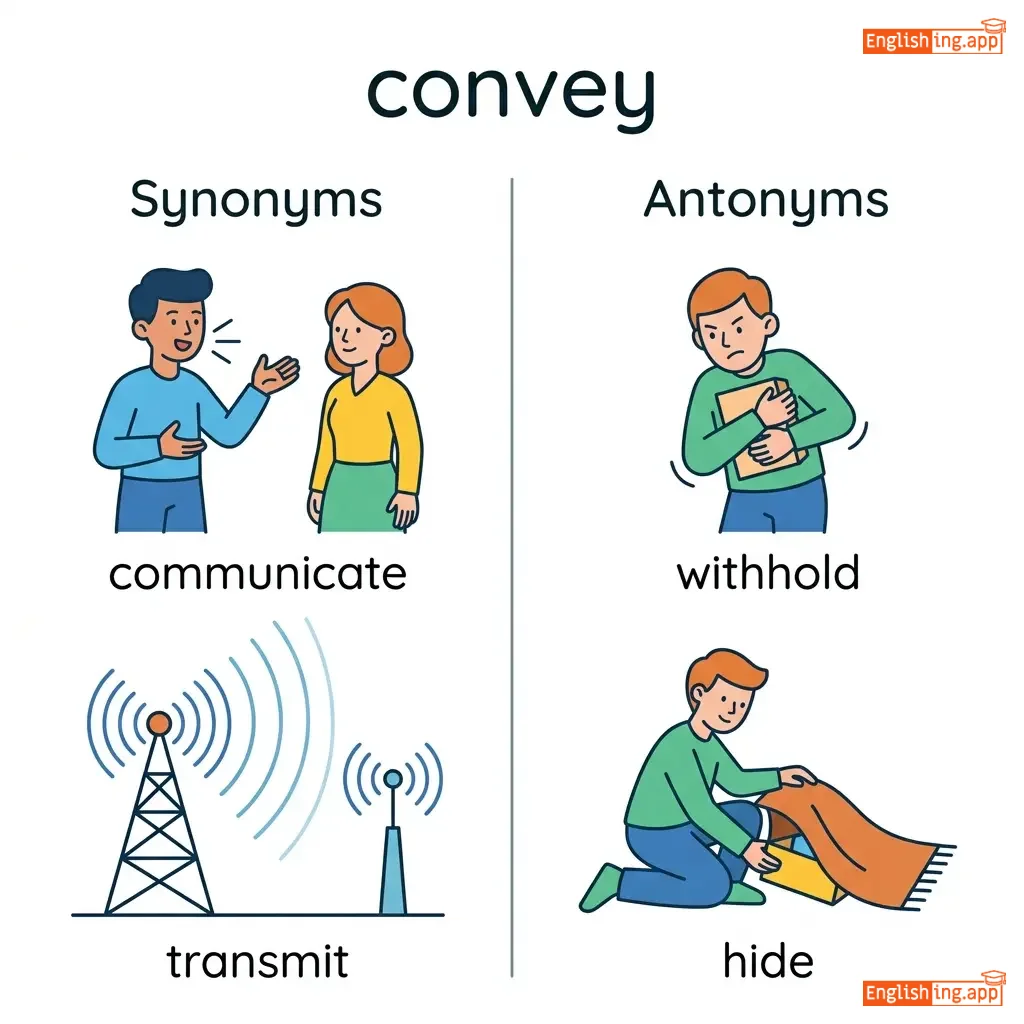
transport, communicate, express, transfer
••••••
|
withhold, conceal, hide, retain
••••••
|
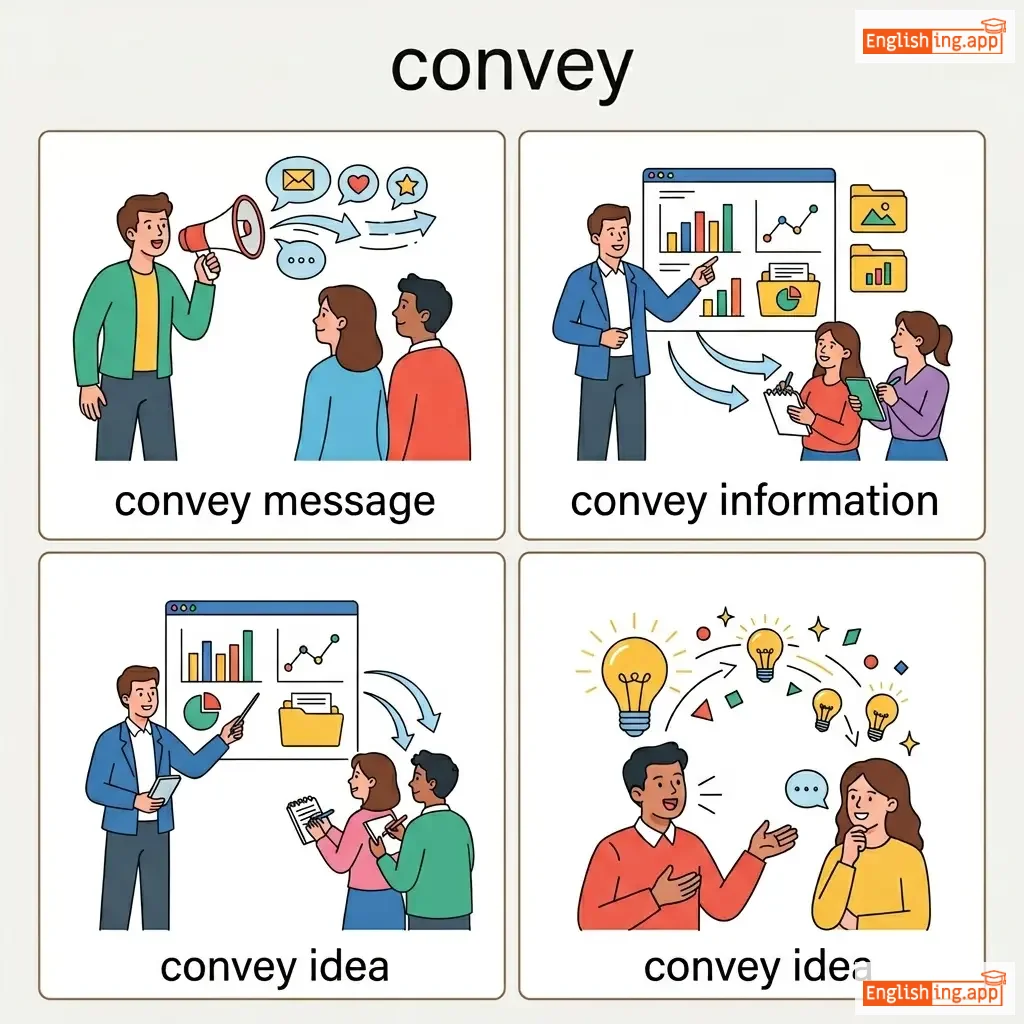
convey message, convey meaning, convey information, convey emotion, convey clearly
••••••
|
Conveying peace in art—just like transporting calm.
••••••
|
|
#388
👁️
|
/ˌoʊvərˈlʊk/
verb
(オーバールック)
••••••
|
|
見落とす
miotosu
••••••
|
overlooked
オーバールックド
••••••
|
overlooked
オーバールックド
••••••
|
overlooks
オーバールックス
••••••
|
overlooking
オーバールッキング
••••••
|
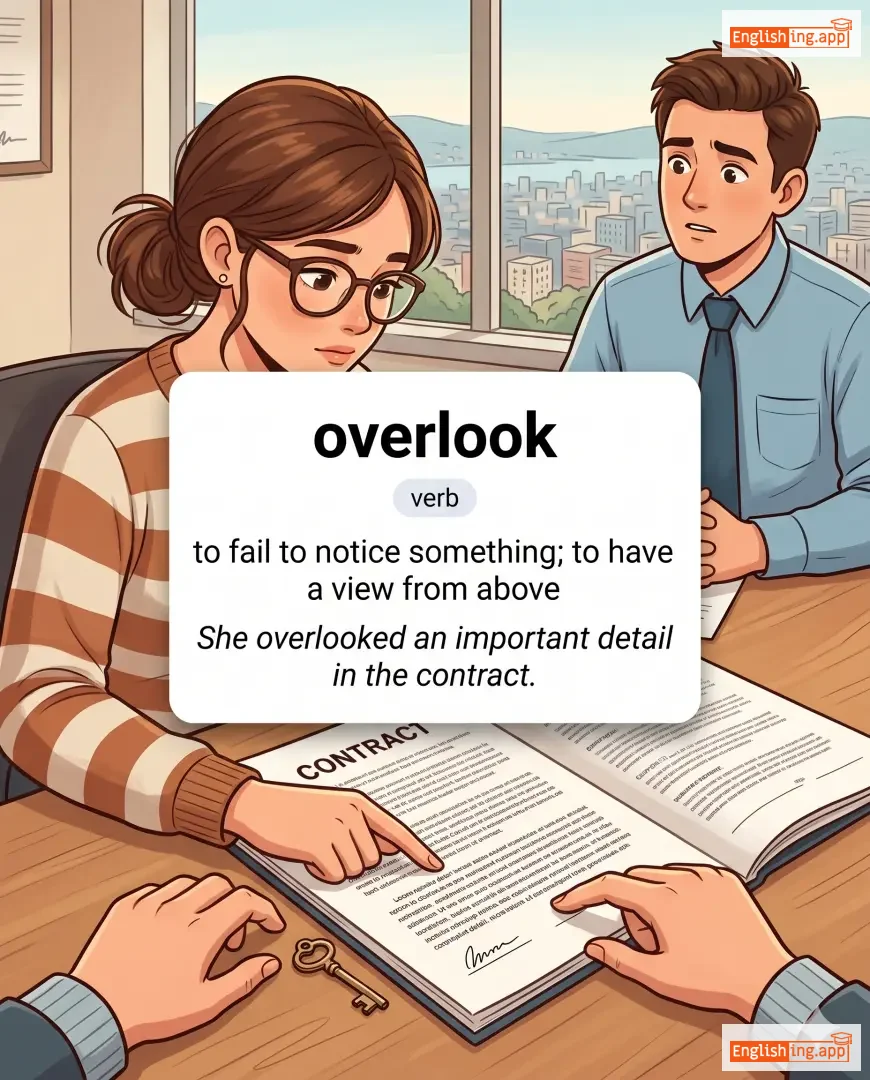
to fail to notice or consider; to ignore; to have a view over something from above
••••••
|
Don't overlook the small details in your work.
仕事の小さな詳細を見落とさないでください。
••••••
|
仕事の小さな詳細を見落とさないでください。
shigoto no chiisana shousai o miotosanaide kudasai.
••••••
|
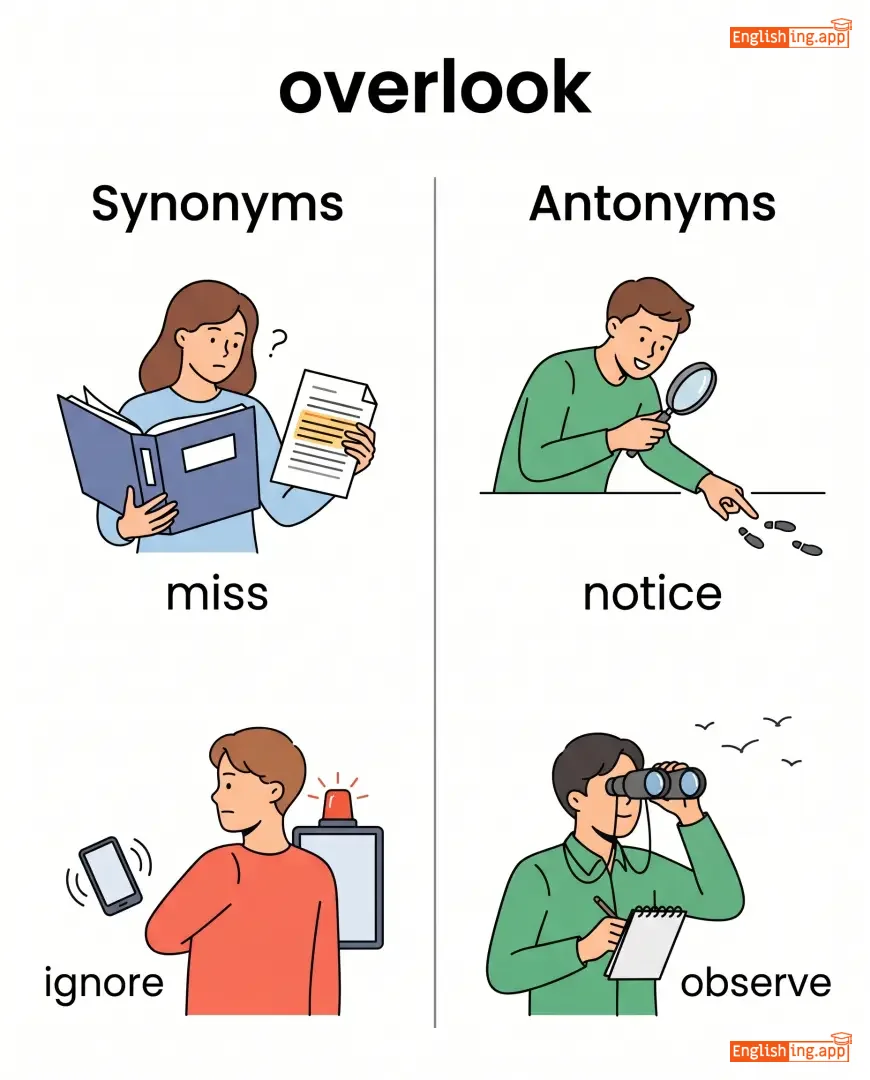
ignore, miss, disregard, neglect
••••••
|
notice, observe, consider, acknowledge
••••••
|
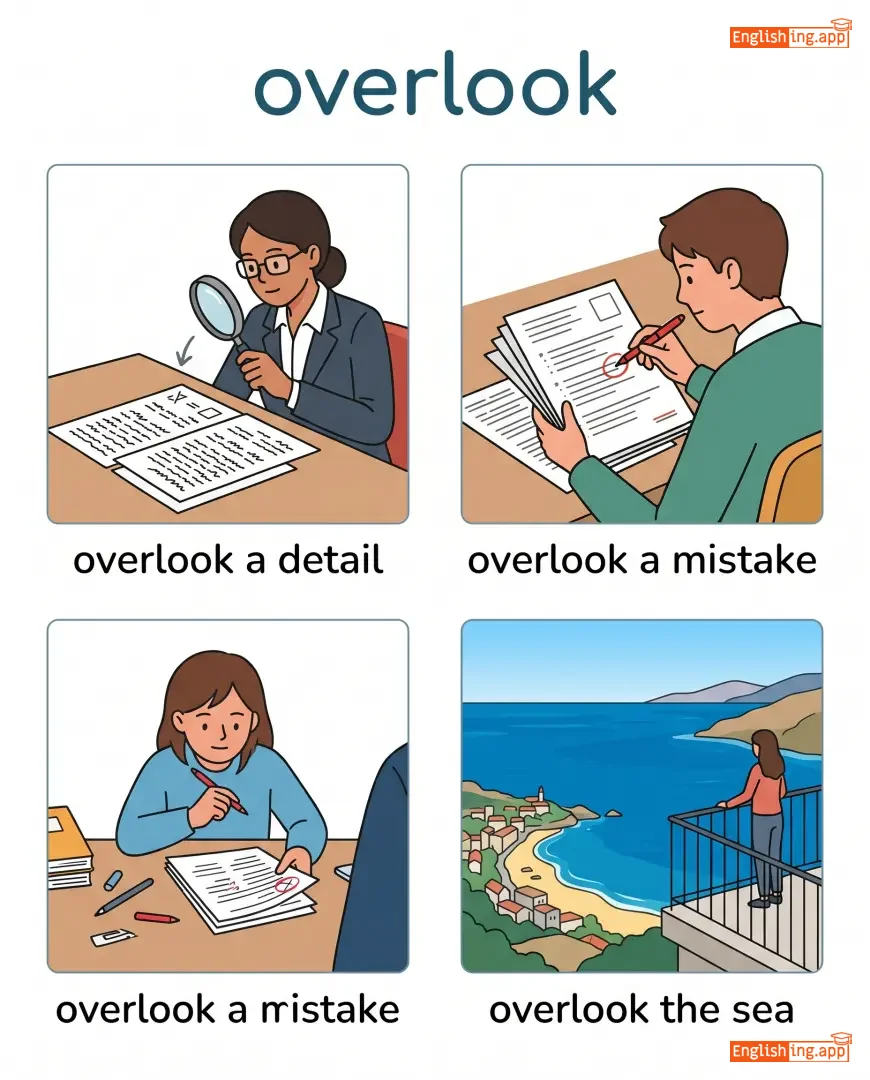
easily overlook, completely overlook, overlook details, overlook importance, overlook opportunity
••••••
|
'Miotosu' means 'to overlook' — think 'miss to see' in Japanese.
••••••
|
Vocabulary Quiz
Test your vocabulary by matching words with their translations or meanings.
Login to take the quiz
Comments (0)
Share your thoughts and join the discussion.
Join the discussion by logging in
Login to CommentNo comments yet
Be the first to share your thoughts!