

翻訳
過去
過去分詞
三人称単数
動名詞
意味
例文
例文の翻訳
同義語
対義語
コロケーション
ニーモニック











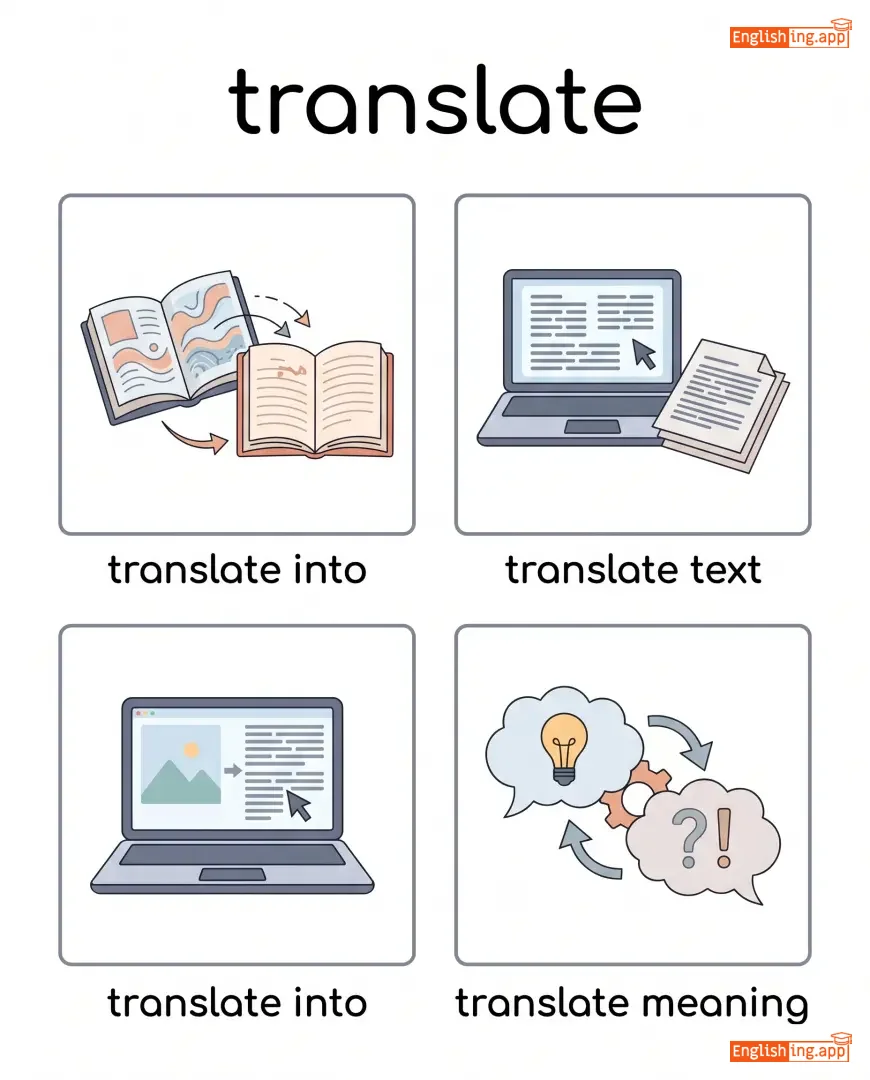
Swipe left or right, or use the buttons. Tap image to zoom.
例文の翻訳
単語
Lesson 4: Mastering the Most Frequent Verbs & TensesLesson 4: Mastering the Most Frequent Verbs & Tenses - マスクトグル
|
絵文字
|
単語 | Images | 翻訳 | 過去 | 過去分詞 | 三人称単数 | 動名詞 | 意味 | 例文 | 例文の翻訳 | 同義語 | 対義語 | コロケーション | ニーモニック |
|---|---|---|---|---|---|---|---|---|---|---|---|---|---|---|
|
#90
🤝
|
/juˈnaɪt/
verb
(ユナイト)
••••••
|
|
団結する
danketsu suru
••••••
|
united
ユナイテッド
••••••
|
united
ユナイテッド
••••••
|
unites
ユナイツ
••••••
|
uniting
ユナイティング
••••••
|
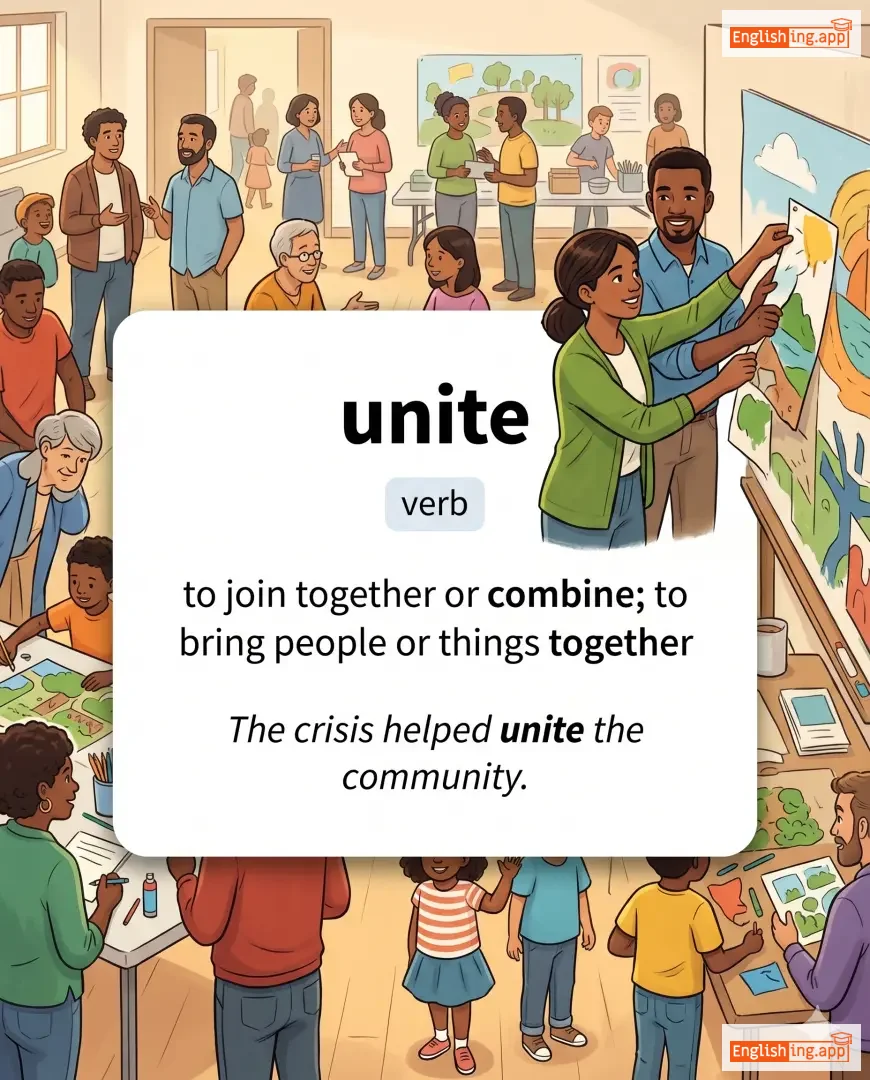
to join together or combine; to bring people or things together
••••••
|
The crisis helped unite the community.
危機はコミュニティを団結させる手助けをした。
••••••
|
危機はコミュニティを団結させる手助けをした。
Kiki wa komyuniti o danketsu saseru tedasuke o shita.
••••••
|
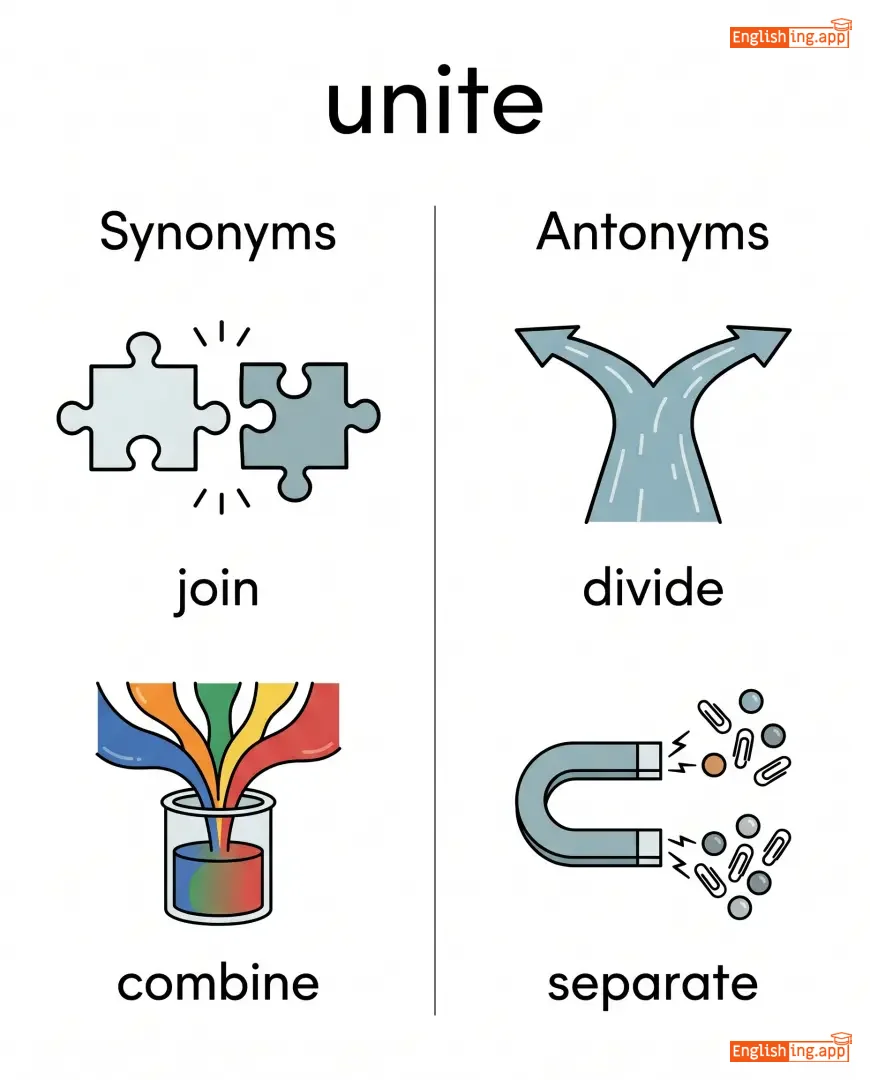
join, combine, merge, connect
••••••
|
divide, separate, split
••••••
|
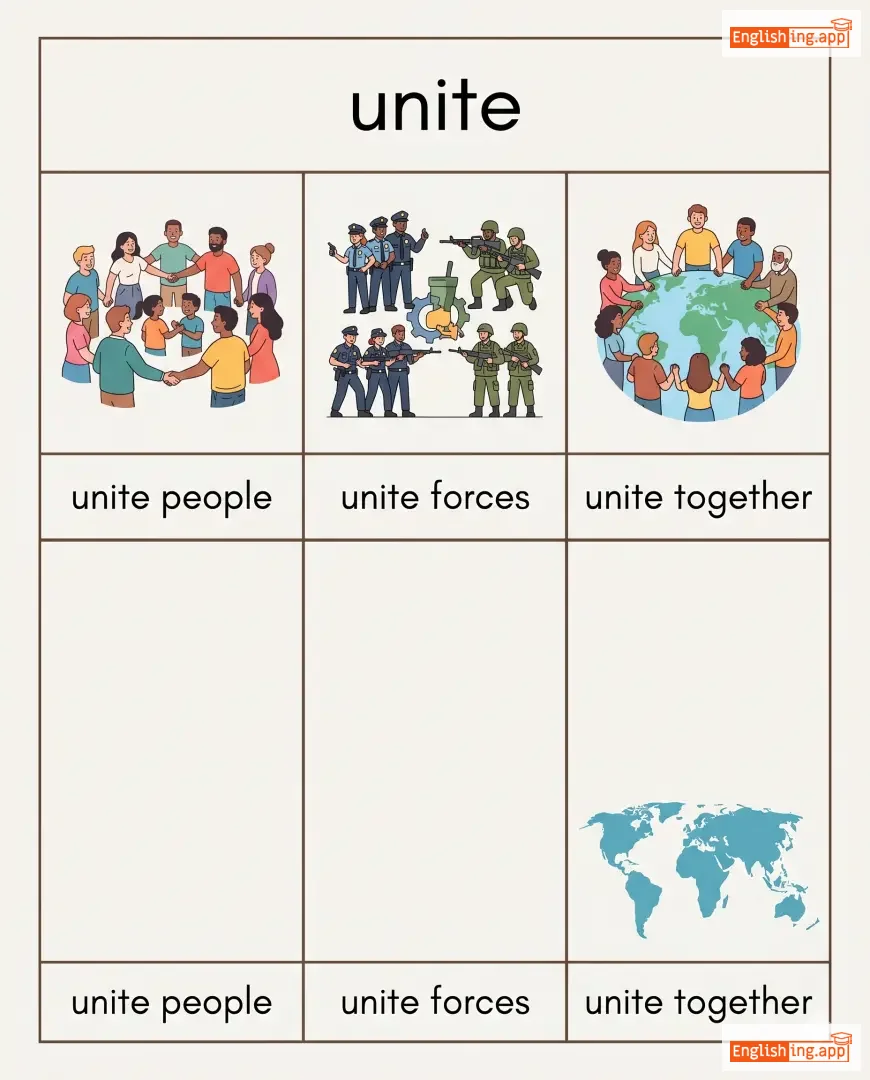
unite people, unite forces, unite together, unite against
••••••
|
No •••••• |
|
#91
🤗
|
/kənˈsoʊl/
verb
(コンソール)
••••••
|
- •••••• |
慰める
nagusameru
••••••
|
consoled
コンソールド
••••••
|
consoled
コンソールド
••••••
|
consoles
コンソールズ
••••••
|
consoling
コンソリング
••••••
|
to comfort someone who is sad or disappointed; to provide solace
••••••
|
She tried to console her friend after the loss.
彼女は失った後、友達を慰めようとしました。
••••••
|
彼女は失った後、友達を慰めようとしました。
Kanojo wa ushinatta ato, tomodachi o nagusameyou to shimashita.
••••••
|
comfort, soothe, reassure, support
••••••
|
upset, distress, agitate, disturb
••••••
|
console someone, console gently, try to console, console friend
••••••
|
慰めるは心を温かくする行為です。
••••••
|
|
#92
🧊
|
/mɛlt/
verb
(メルト)
••••••
|
|
溶ける
tokeru
••••••
|
melted
メルテッド
••••••
|
melted
メルテッド
••••••
|
melts
メルツ
••••••
|
melting
メルティング
••••••
|
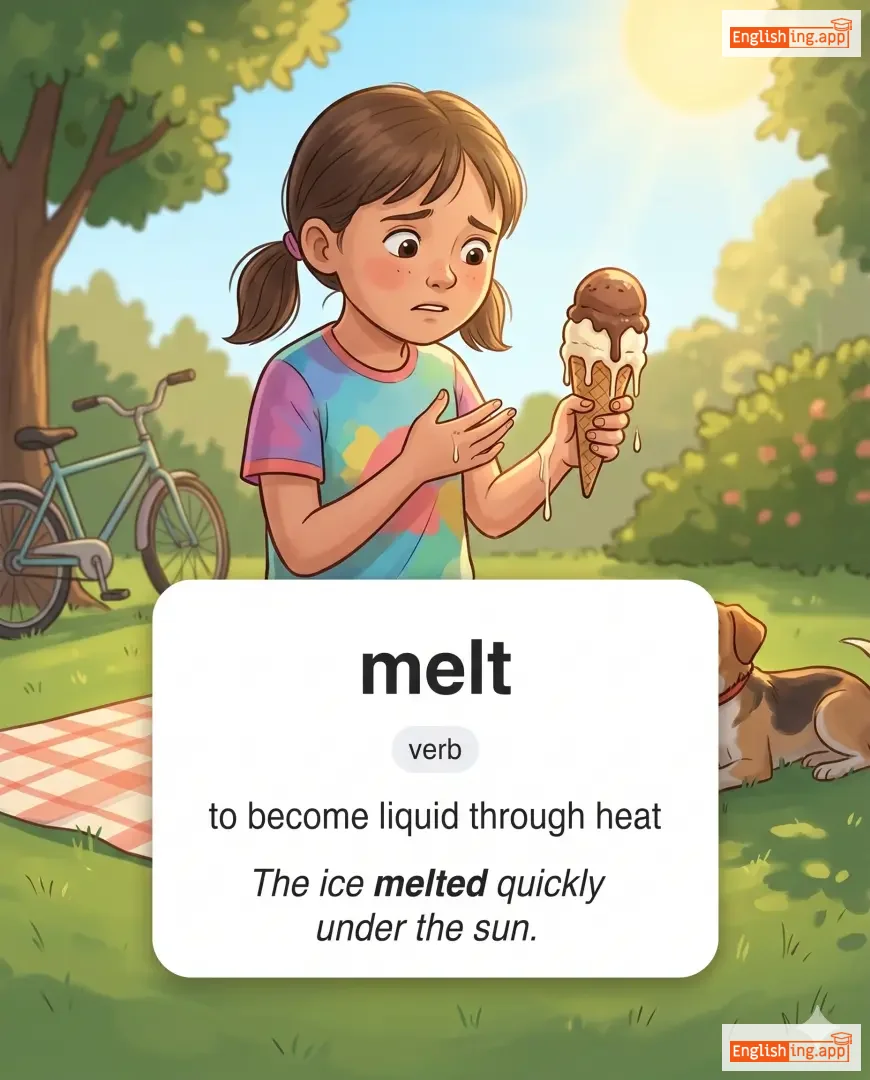
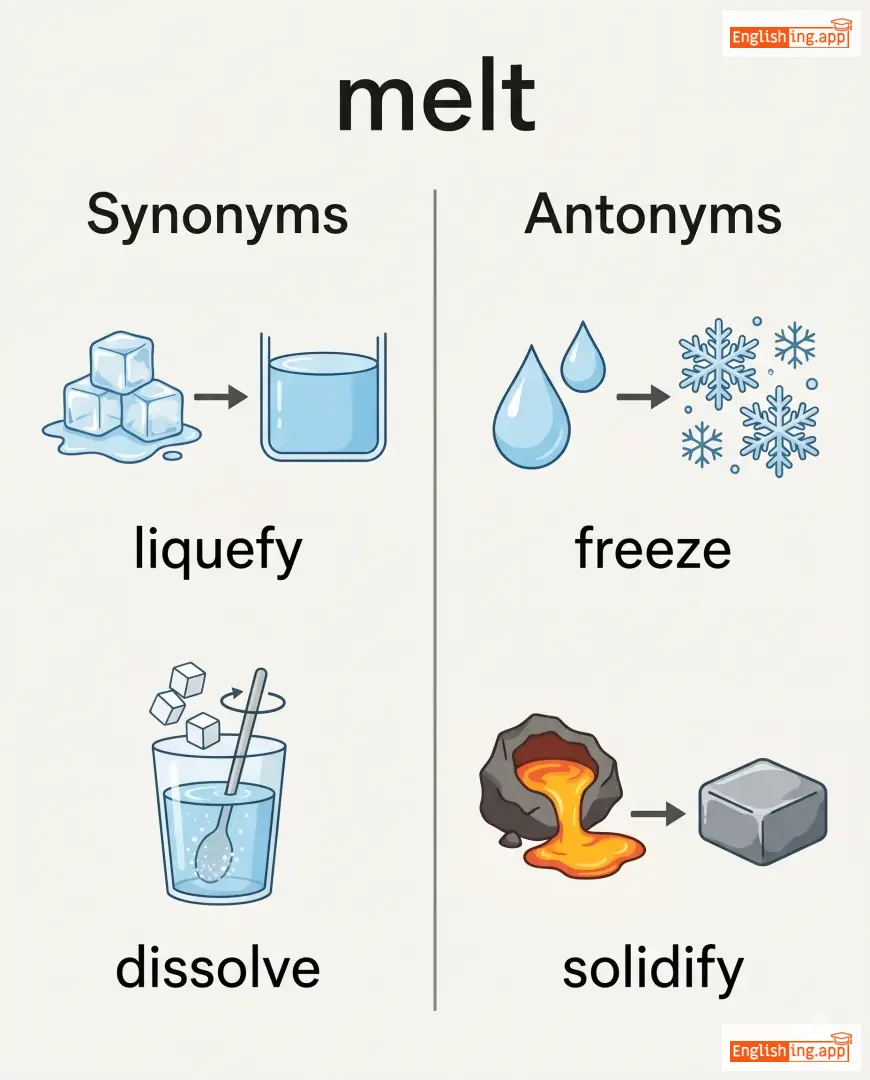
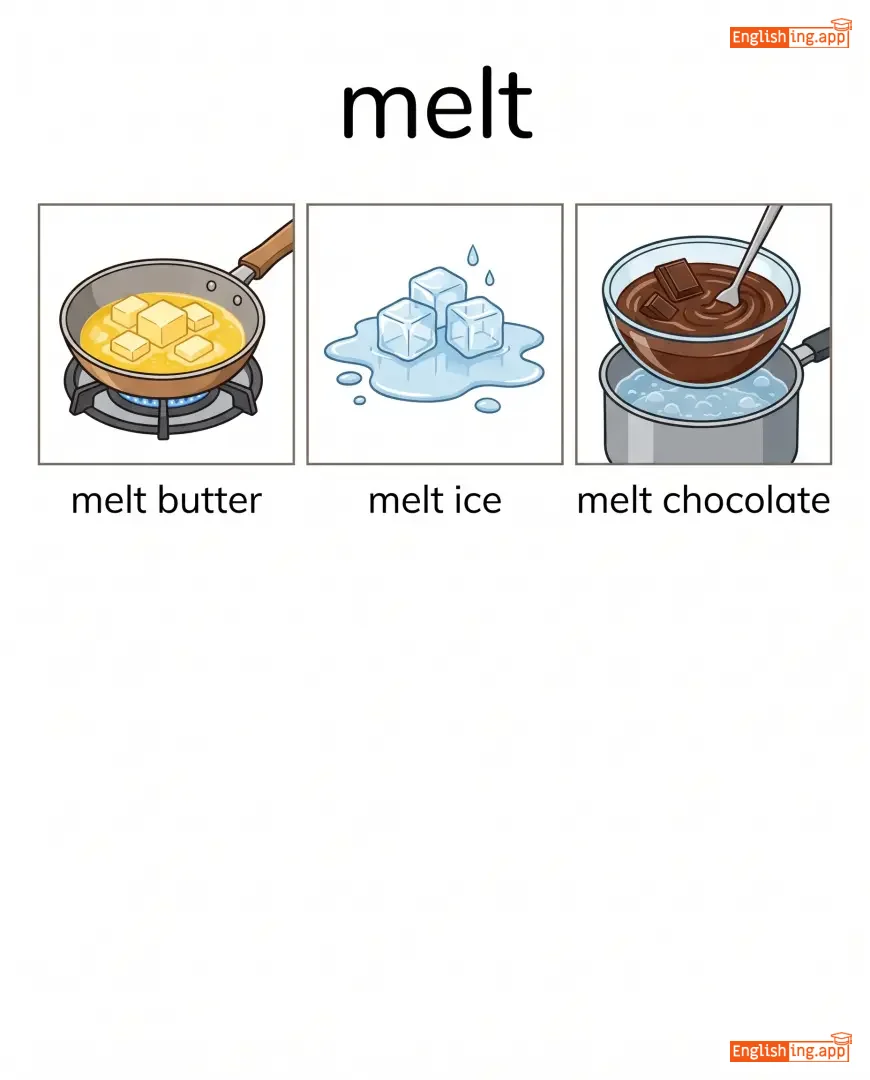
to change from solid to liquid due to heat; to disappear gradually
••••••
|
The ice melted in the sun.
The ice melted in the sun.
••••••
|
氷は太陽の下で溶けました。
Kōri wa taiyō no shita de tokemashita.
••••••
|
dissolve, thaw, liquefy, soften
••••••
|
freeze, solidify, harden
••••••
|
melt ice, melt butter, melt away, slowly melt
••••••
|
氷が太陽で溶けるように、ものが溶けることを覚えよう。
••••••
|
|
#93
🌊
|
/floʊ/
verb
(フロー)
••••••
|
|
流れる
nagareru
••••••
|
flowed
フロード
••••••
|
flowed
フロード
••••••
|
flows
フローズ
••••••
|
flowing
フローイング
••••••
|
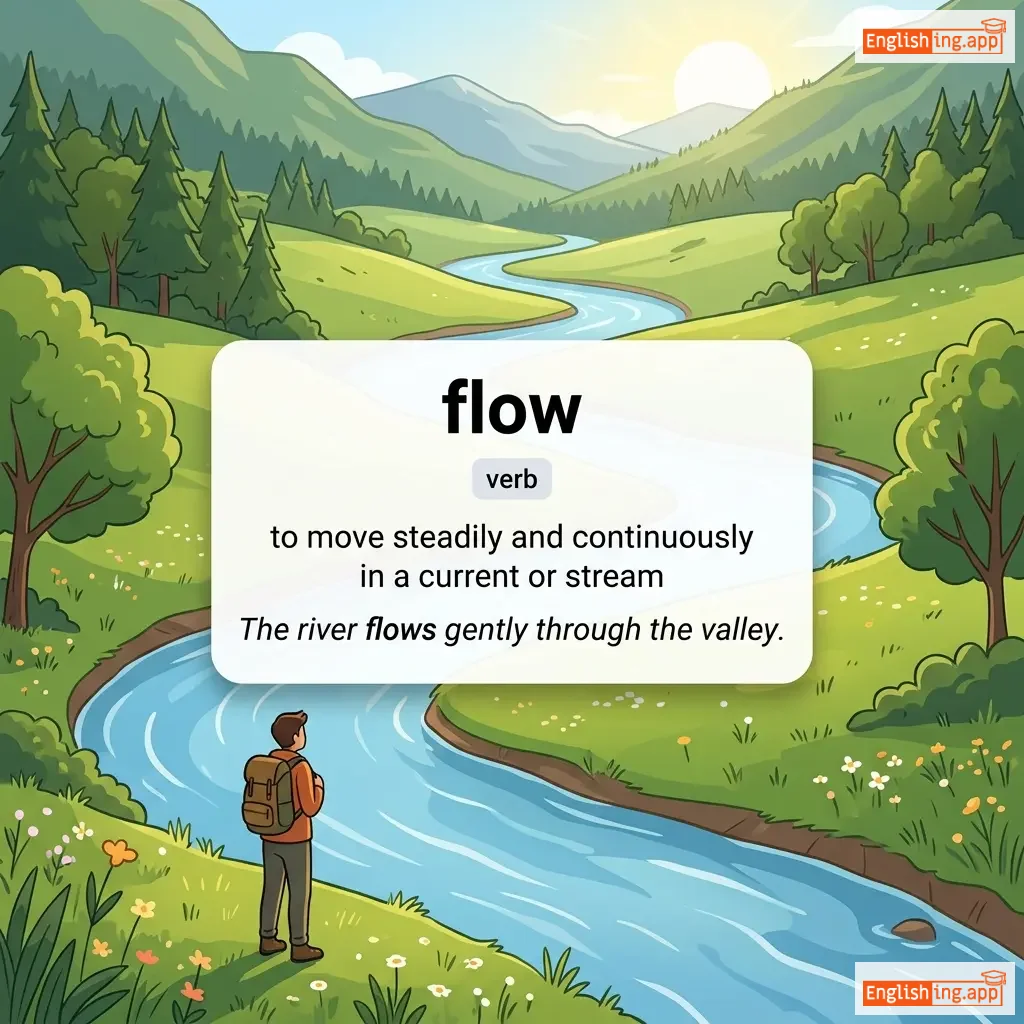
to move steadily and continuously in a particular direction
••••••
|
Water flows down the river.
水が川を流れています。
••••••
|
水が川を流れています。
Mizu ga kawa o nagareteimasu.
••••••
|
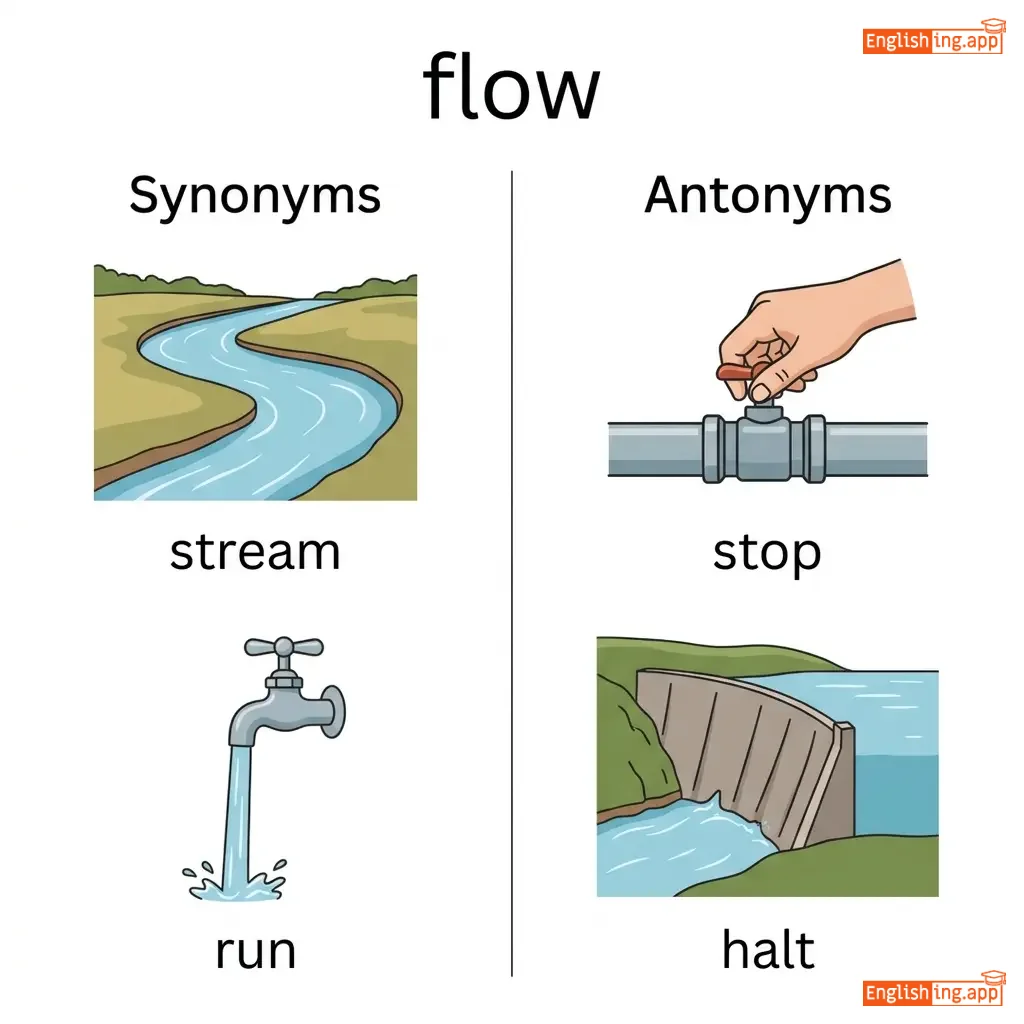
stream, run, pour, glide
••••••
|
stop, stagnate, block, halt
••••••
|
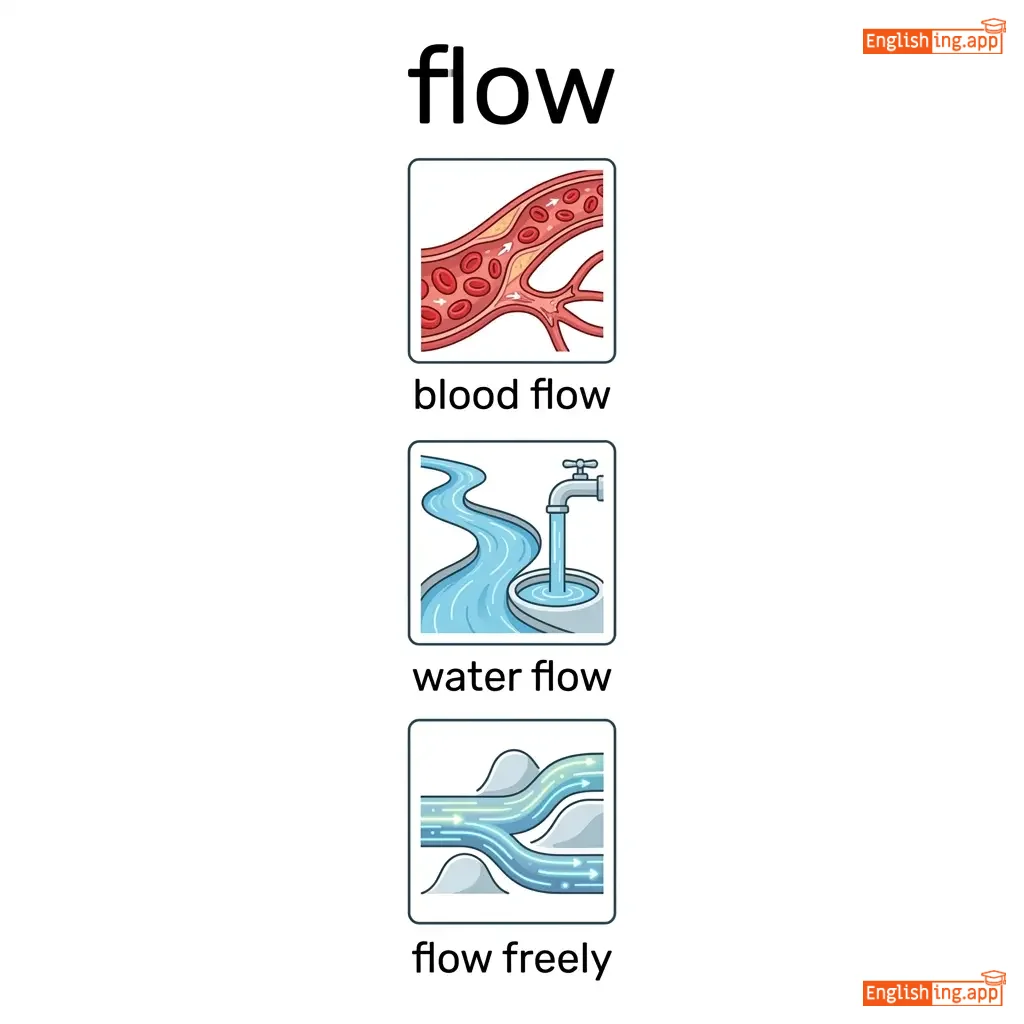
flow freely, flow smoothly, cash flow, traffic flow
••••••
|
水が流れるとき、それは安定して一方向に動きます。
••••••
|
|
#94
🚪
|
/stʌk/
verb
(sutakku)
••••••
|
|
詰まった
tsumatta
••••••
|
stuck
sutakku
••••••
|
stuck
sutakku
••••••
|
sticks
sutikkusu
••••••
|
sticking
sutikingu
••••••
|
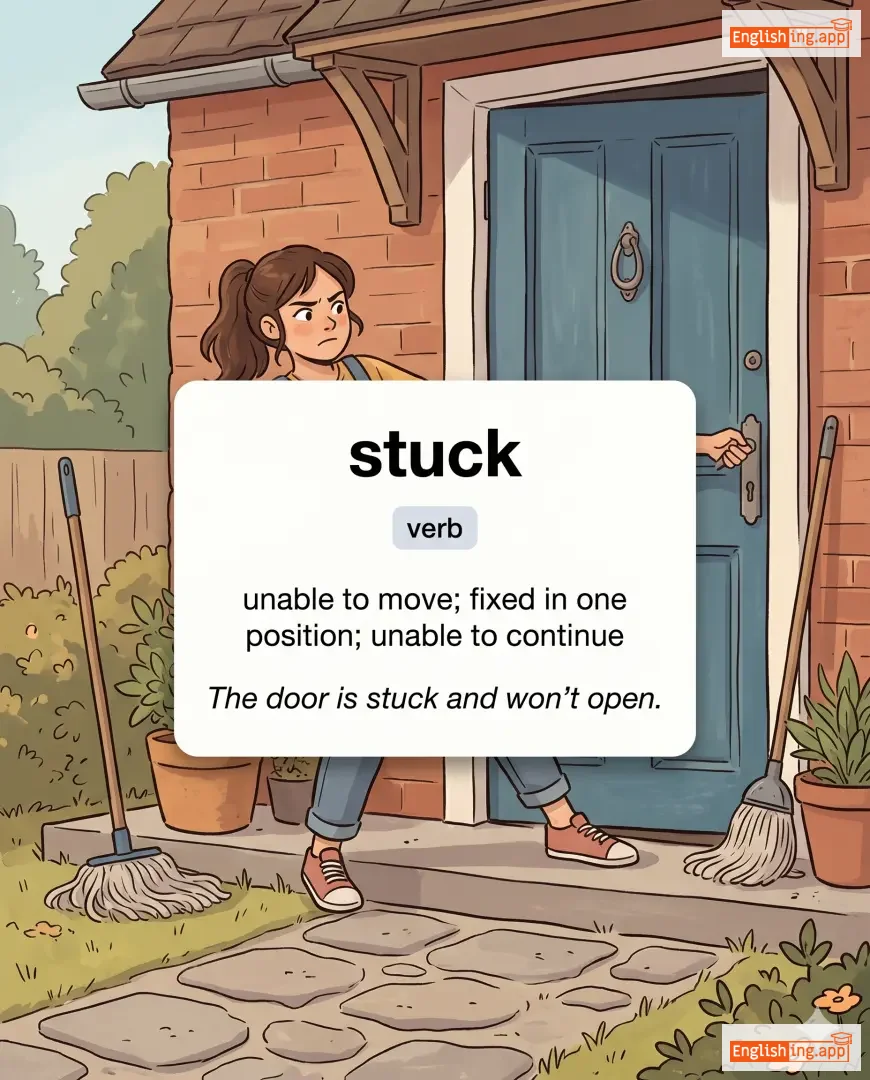
unable to move; fixed in one position; unable to continue
••••••
|
The door is stuck and won't open.
ドアが詰まっていて、開きません。
••••••
|
ドアが詰まっていて、開きません。
Doa ga tsumatte ite, hirakimasen
••••••
|
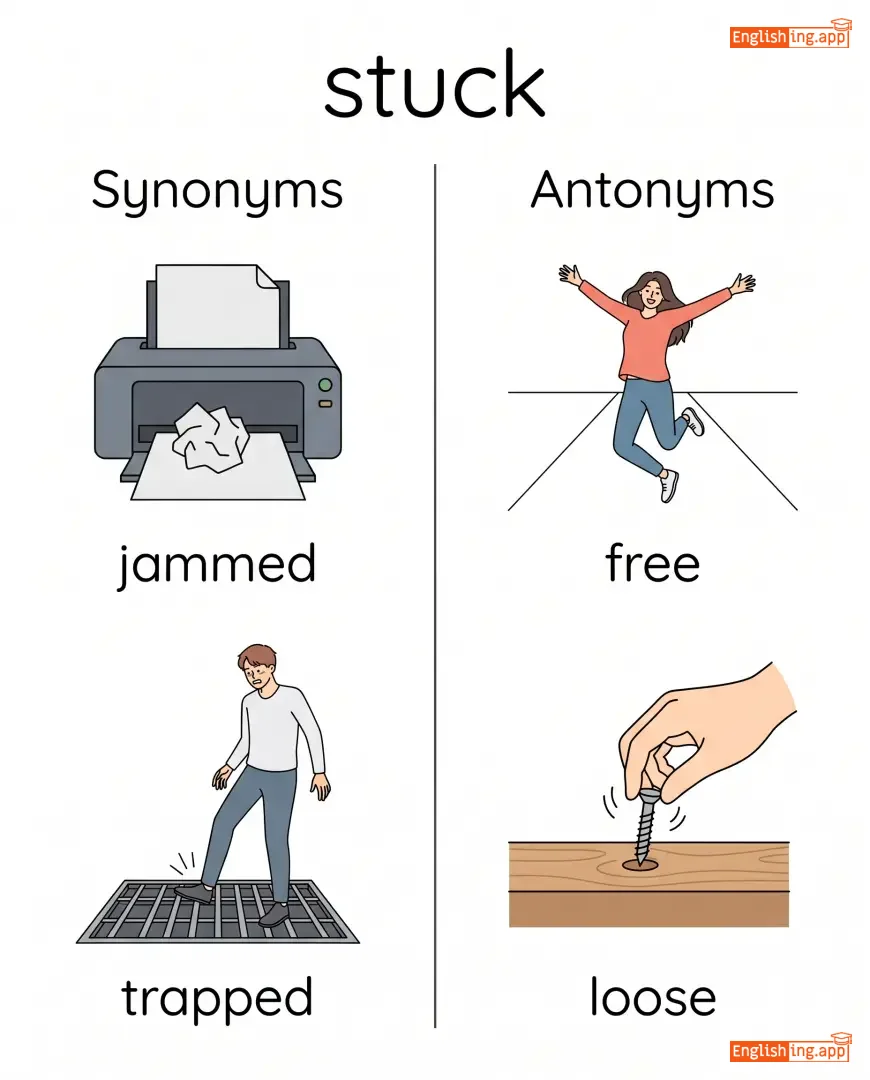
jammed, trapped, fixed, immobile
••••••
|
free, loose, mobile, unstuck
••••••
|
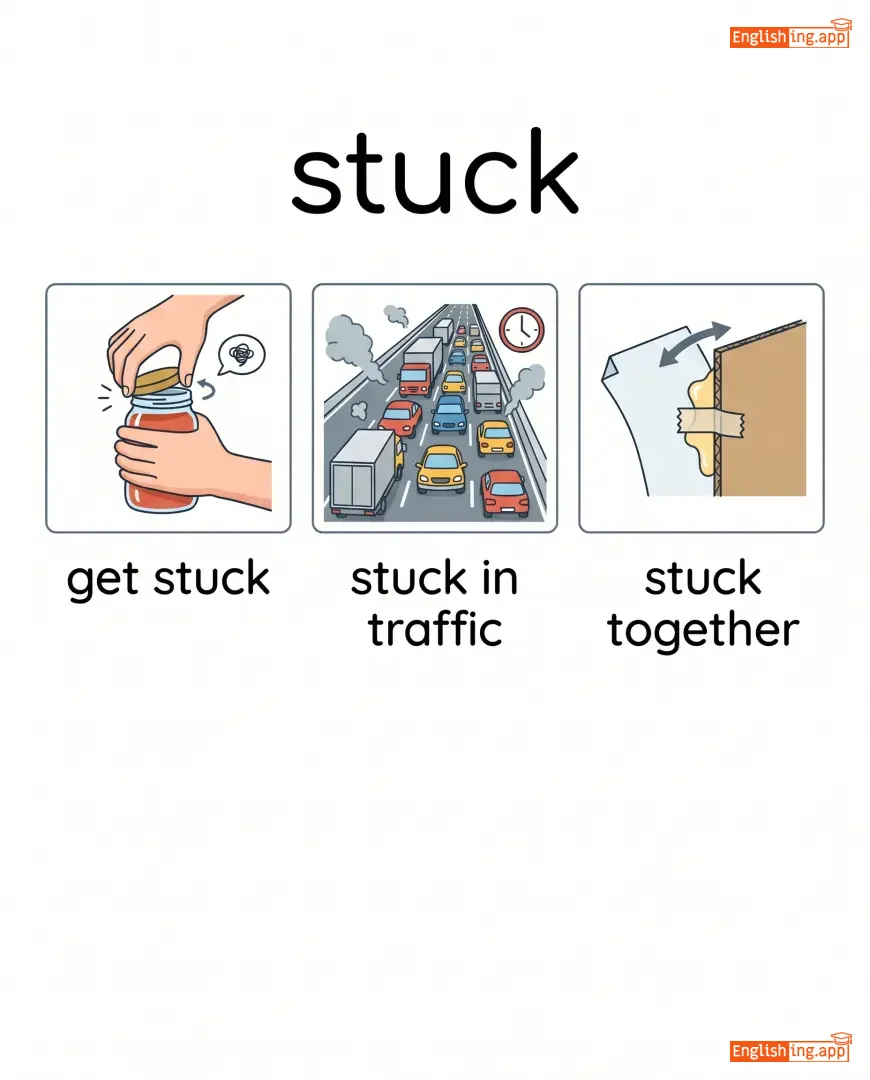
get stuck, stuck in traffic, stuck together, completely stuck
••••••
|
No •••••• |
|
#95
🛡️
|
/ˈkʌvər/
verb
(カバー)
••••••
|
|
カバー
kaba
••••••
|
covered
カバーした
••••••
|
covered
カバーされた
••••••
|
covers
カバーする
••••••
|
covering
カバーして
••••••
|
to put something over or upon something else to protect or conceal
••••••
|
Please cover the food to keep it fresh.
食べ物をカバーして、新鮮さを保ってください。
••••••
|
食べ物をカバーして、新鮮さを保ってください。
Tabemono o kabā shite, shinsen sa o tamotte kudasai.
••••••
|
protect, shield, hide, conceal
••••••
|
expose, uncover, reveal
••••••
|
cover up, cover story, cover ground, book cover
••••••
|
食べ物をカバーして、新鮮さを保つ
••••••
|
|
#96
😊
|
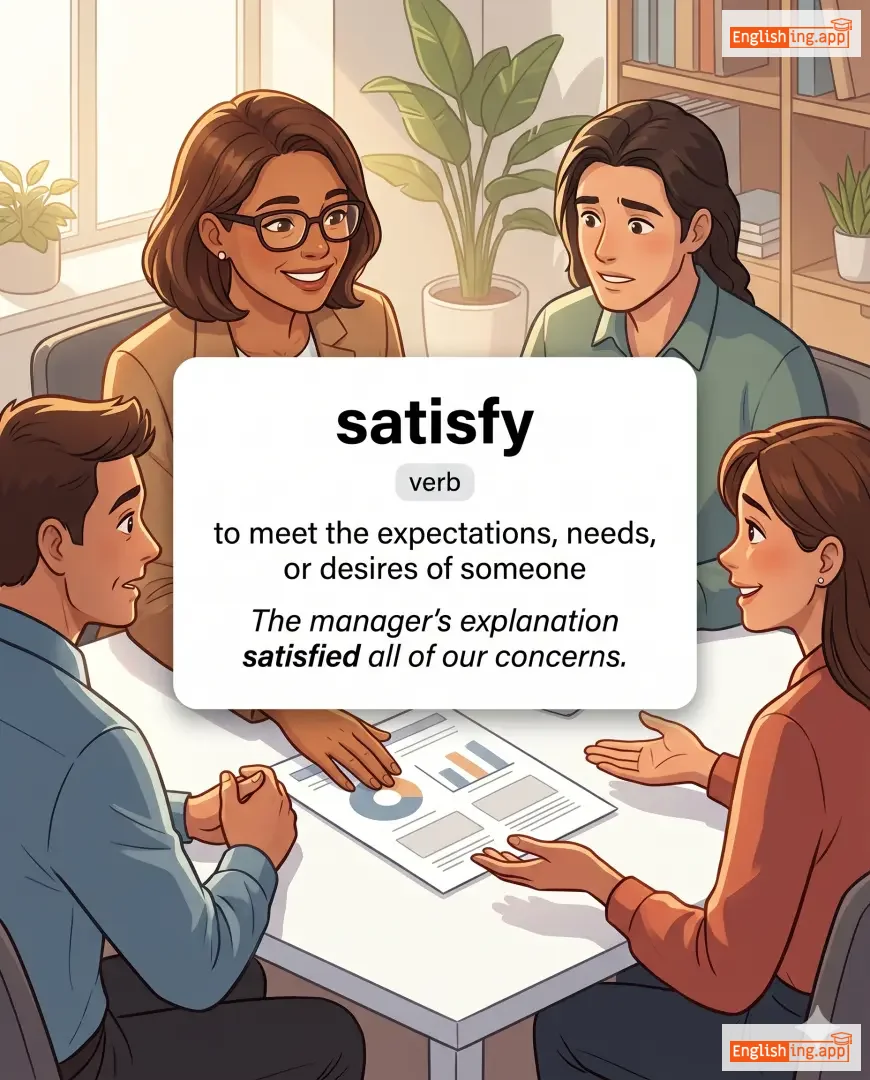
/ˈsætɪsfaɪ/
verb
(satisfai)
••••••
|
|
満たす
mitasu
••••••
|
satisfied
satisfaito
••••••
|
satisfied
satisfaito
••••••
|
satisfies
satisfai
••••••
|
satisfying
satisfaiingu
••••••
|
to fulfill the desires, expectations, or needs of someone; to make content
••••••
|
The delicious meal satisfied our hunger completely.
美味しい食事が私たちの空腹を完全に満たしました。
••••••
|
美味しい食事が私たちの空腹を完全に満たしました。
Oishii shokuji ga watashitachi no kuufuku wo kanzen ni mitashimashita.
••••••
|
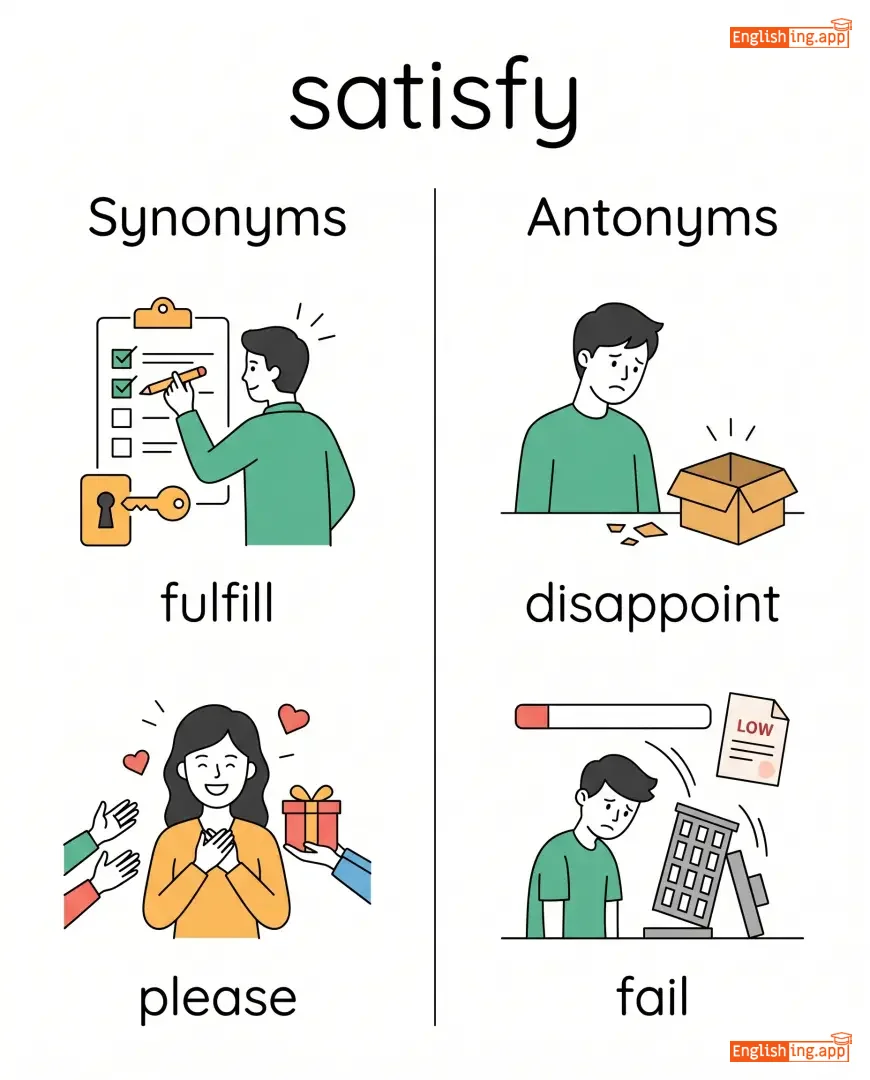
fulfill, please, gratify, content
••••••
|
disappoint, frustrate, dissatisfy, displease
••••••
|
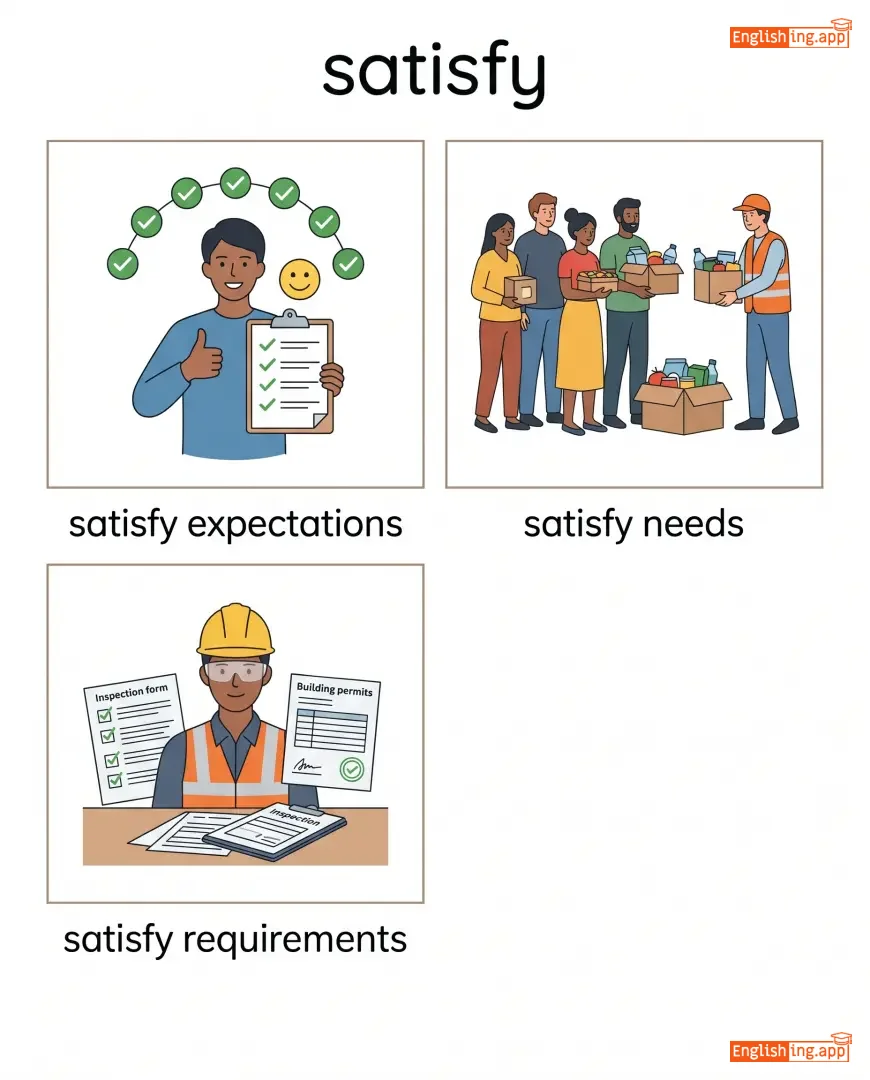
satisfy need, satisfy customer, satisfy requirement, fully satisfy
••••••
|
満たす料理で空腹を解消しよう!
••••••
|
|
#97
📚
|
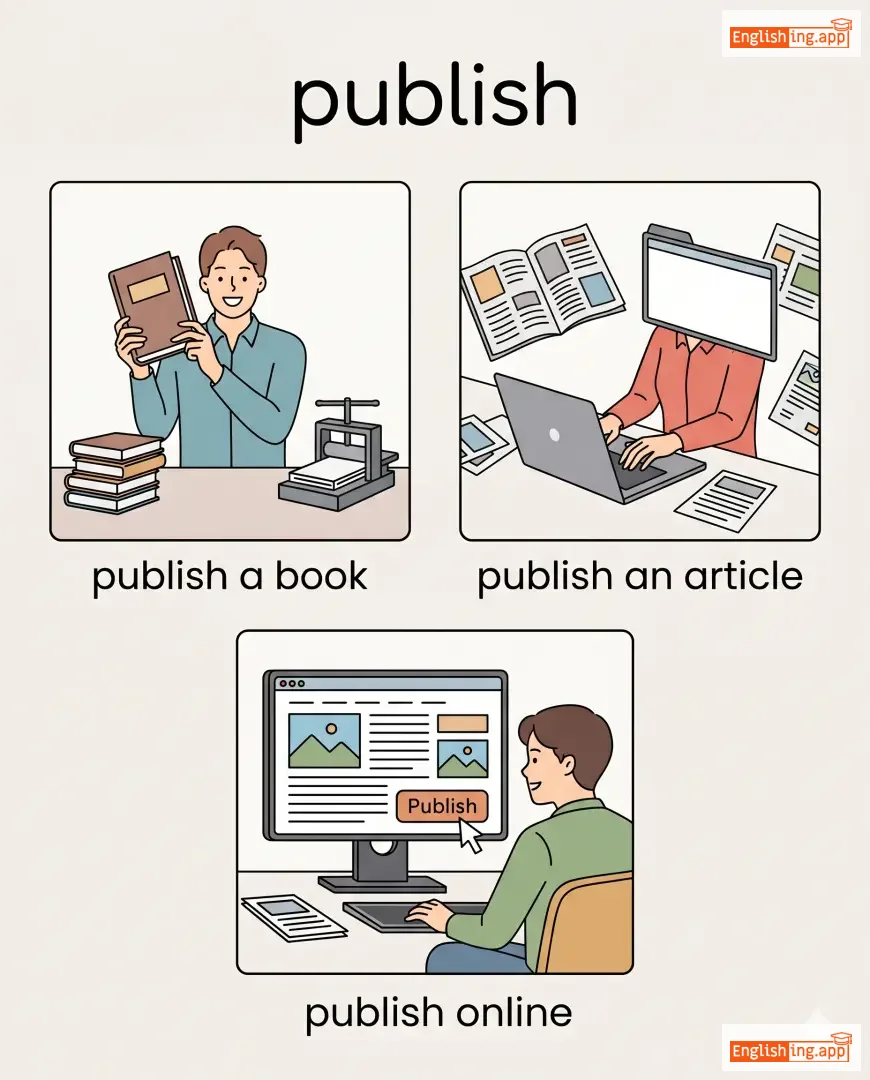
/ˈpʌblɪʃ/
verb
(パブリッシュ)
••••••
|
|
出版する
shuppan suru
••••••
|
published
パブリッシュド
••••••
|
published
パブリッシュド
••••••
|
publishes
パブリッシュズ
••••••
|
publishing
パブリッシング
••••••
|
to print and distribute books, magazines, etc.; to make information available
••••••
|
The author will publish her new novel next month.
著者は来月新しい小説を出版します。
••••••
|
著者は来月新しい小説を出版します。
Chosha wa raigetsu atarashī shōsetsu o shuppan shimasu.
••••••
|
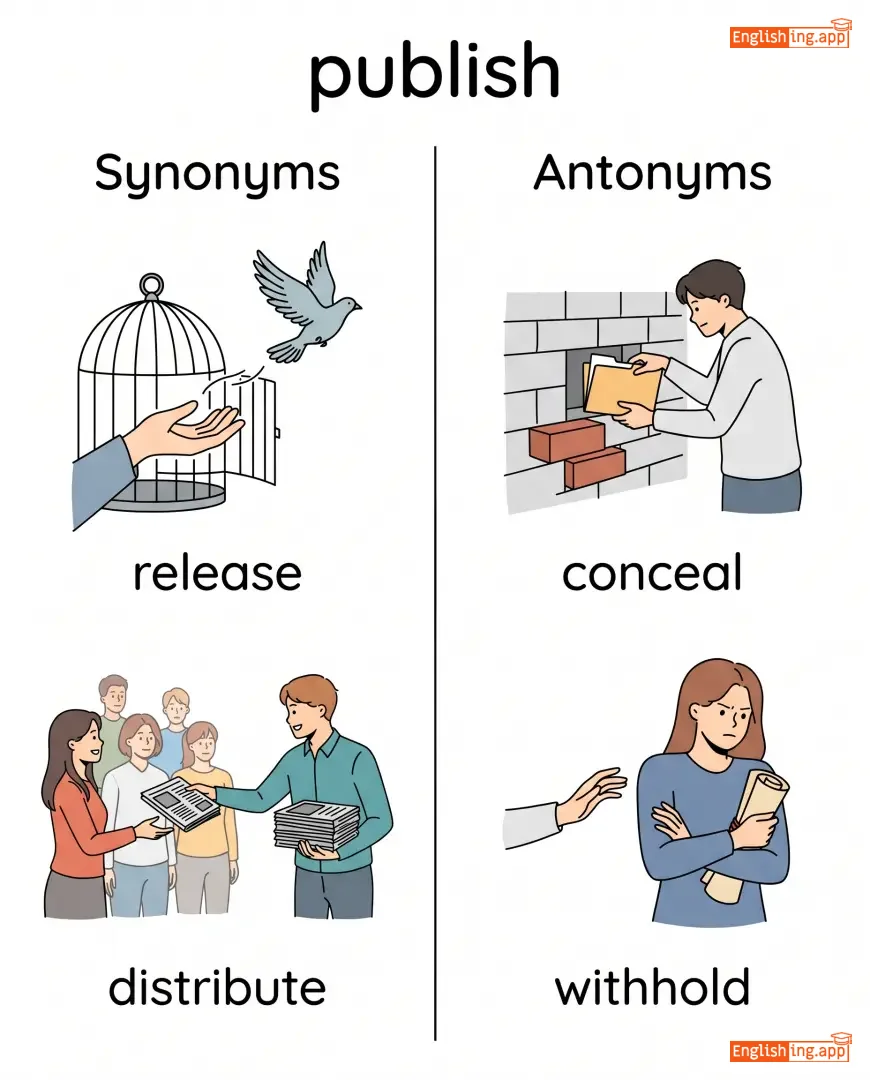
print, release, issue, distribute
••••••
|
suppress, withhold, censor
••••••
|
publish book, publish article, publish online, recently publish
••••••
|
To 'publish' means to 'shuppan' your work in Japanese.
••••••
|
|
#98
💥
|
/ɪmˈpɪndʒ/
verb
(impinju)
••••••
|
|
影響を与える
eikyou o ataeru
••••••
|
impinged
impinjudo
••••••
|
impinged
impinjudo
••••••
|
impinges
impinjesu
••••••
|
impinging
impinjuingu
••••••
|
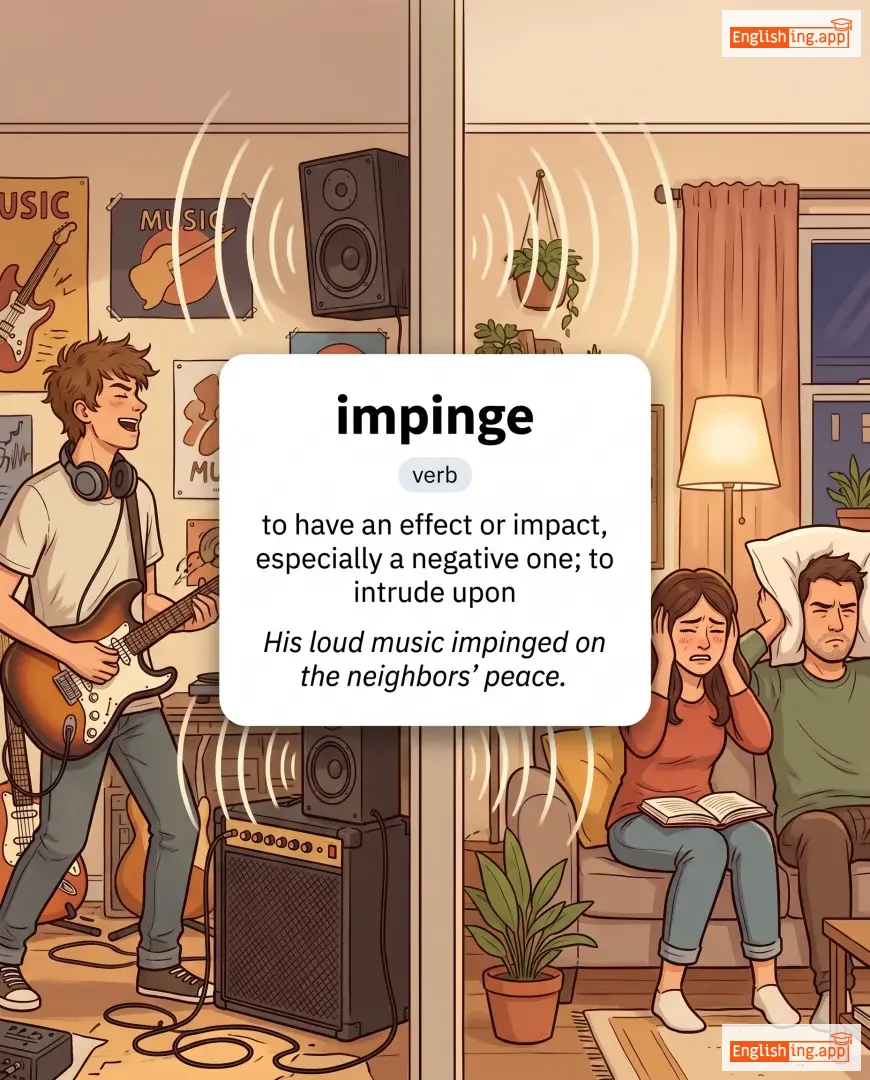
to have an effect or impact on something; to encroach or infringe
••••••
|
The noise from the construction site impinges on our daily activities.
建設現場の音は私たちの日常的な活動に影響を与えます。
••••••
|
建設現場の音は私たちの日常的な活動に影響を与えます。
Kensetsu genba no oto wa watashitachi no nichijouteki na katsudou ni eikyou o ataemasu
••••••
|
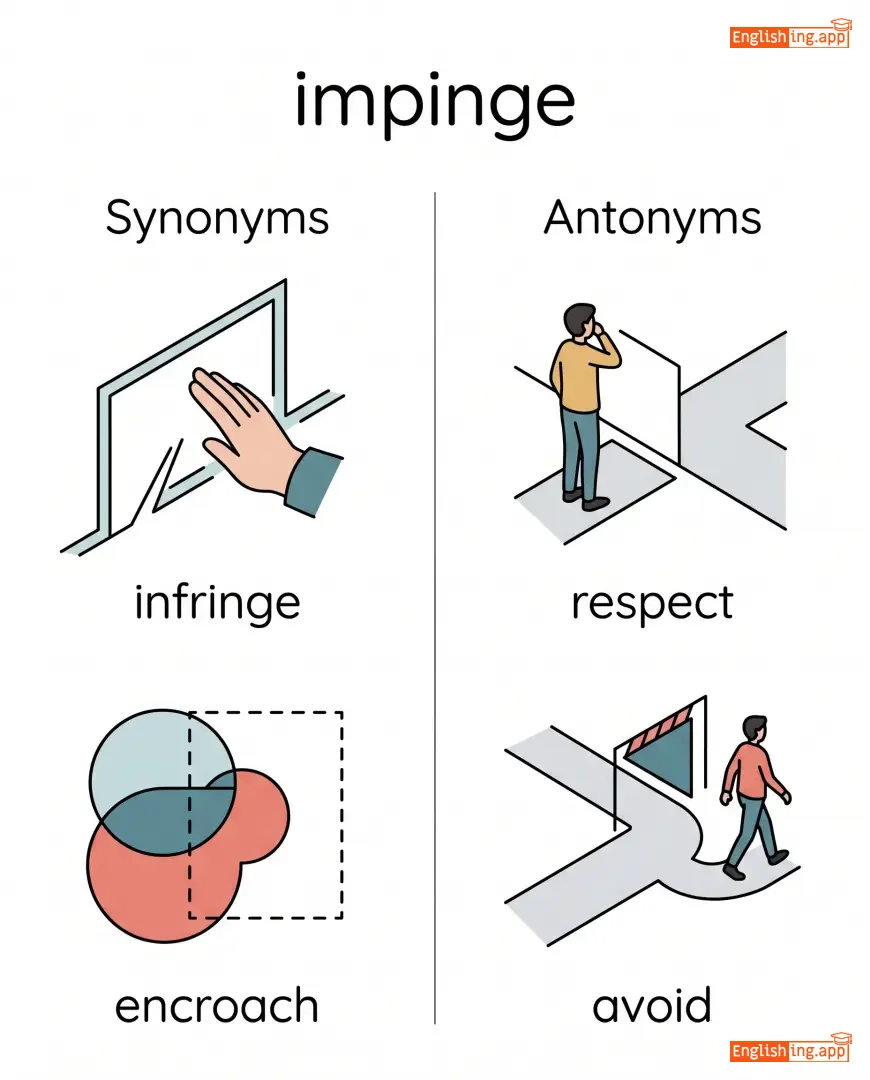
affect, impact, encroach, infringe
••••••
|
avoid, withdraw, retreat
••••••
|
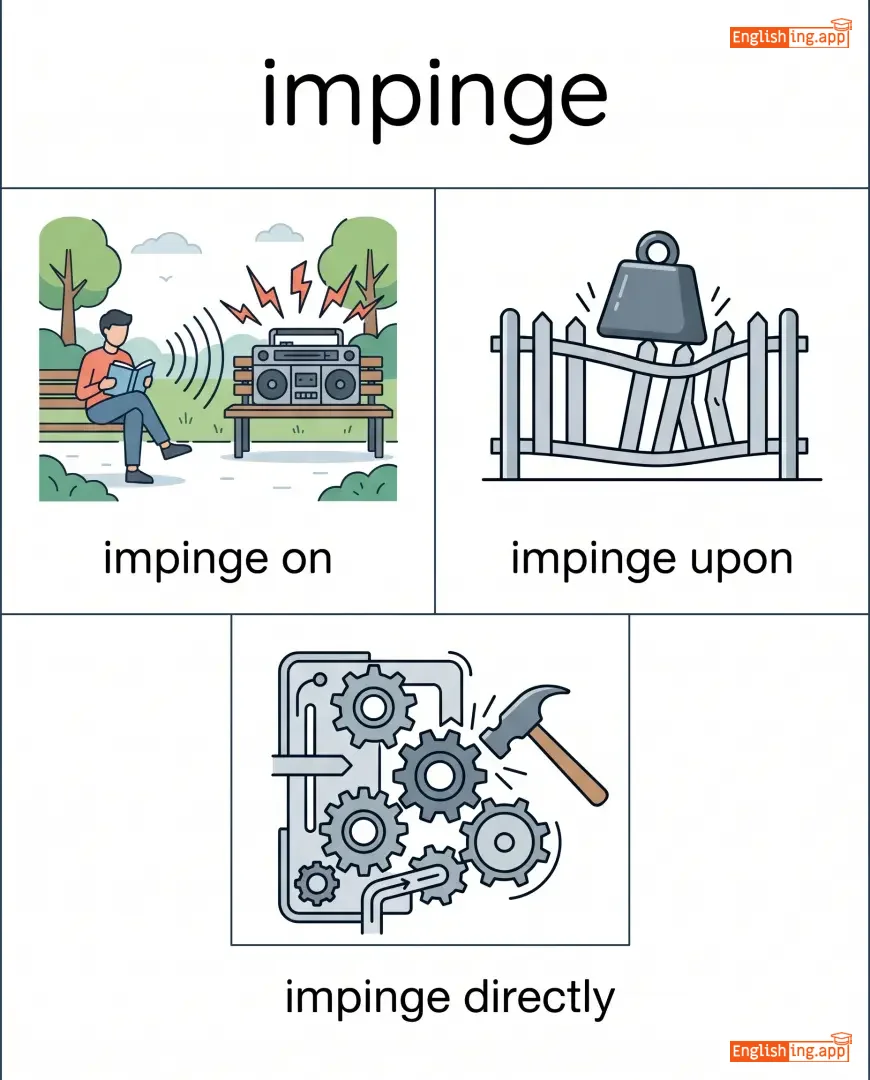
impinge on, impinge upon, directly impinge, negatively impinge
••••••
|
No •••••• |
|
#99
🌊
|
/ɪˈmɜːrs/
verb
(イマース)
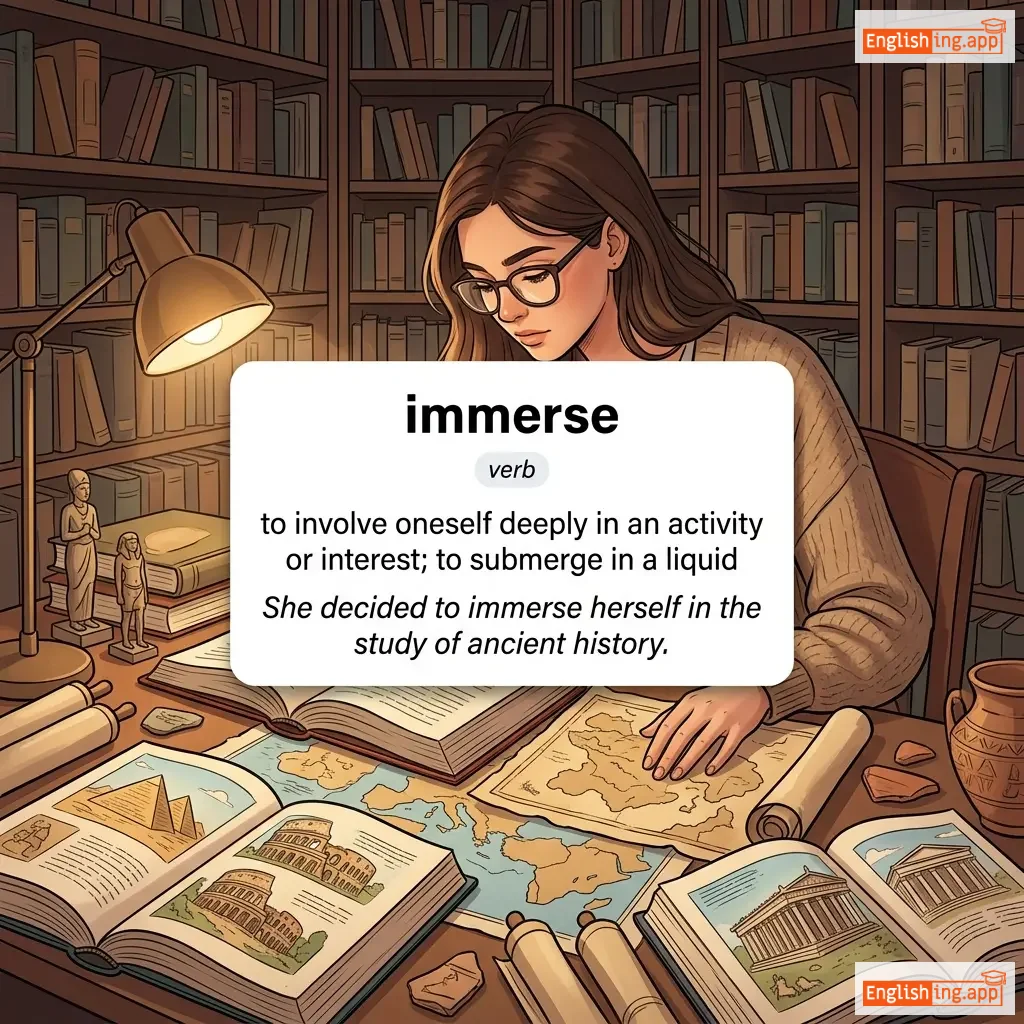
••••••
|
|
浸す
shizumasu
••••••
|
immersed
イマースド
••••••
|
immersed
イマースド
••••••
|
immerses
イマースズ
••••••
|
immersing
イマースイング
••••••
|
to dip into liquid; to involve deeply in an activity
••••••
|
She likes to immerse herself in good books.
彼女は良い本に没頭するのが好きです。
••••••
|
彼女は良い本に没頭するのが好きです。
Kanojo wa yoi hon ni bottō suru no ga suki desu.
••••••
|
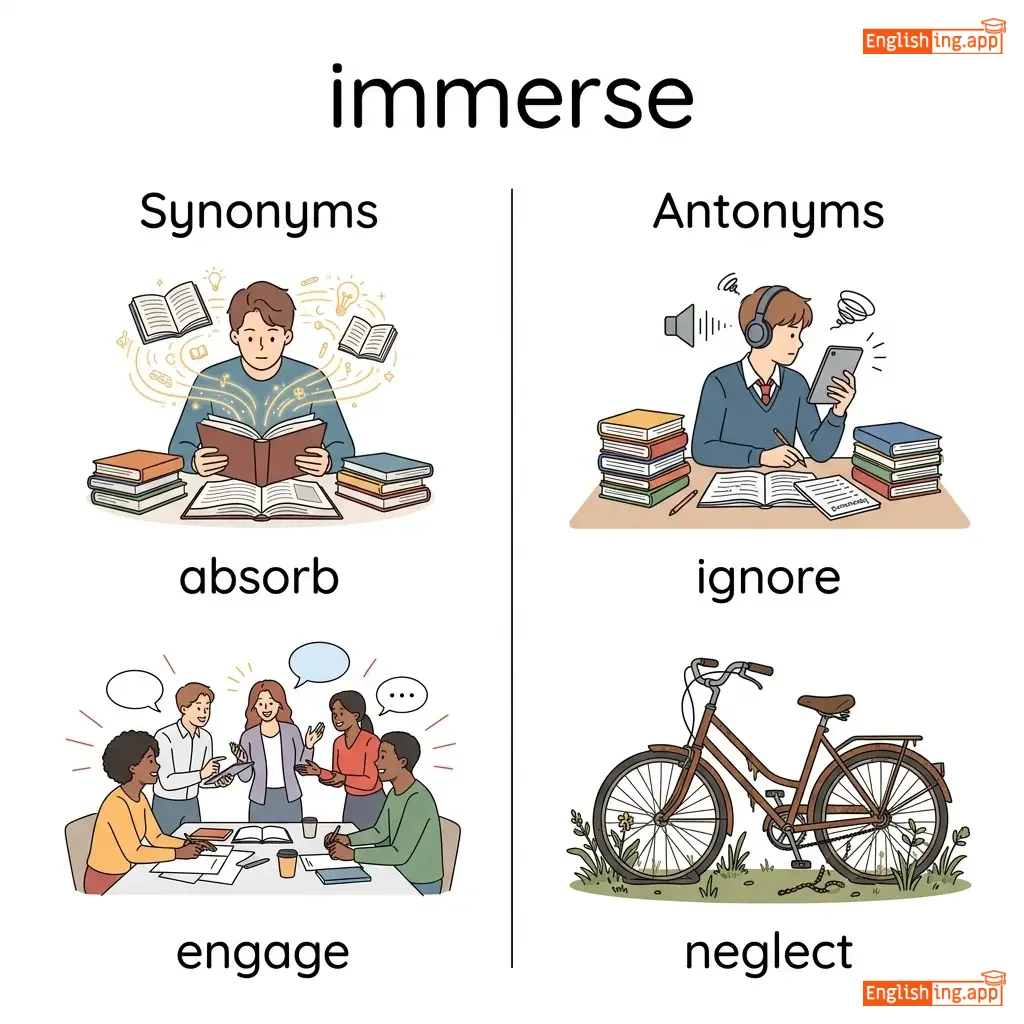
submerge, dip, engross, absorb
••••••
|
emerge, surface, withdraw, detach
••••••
|
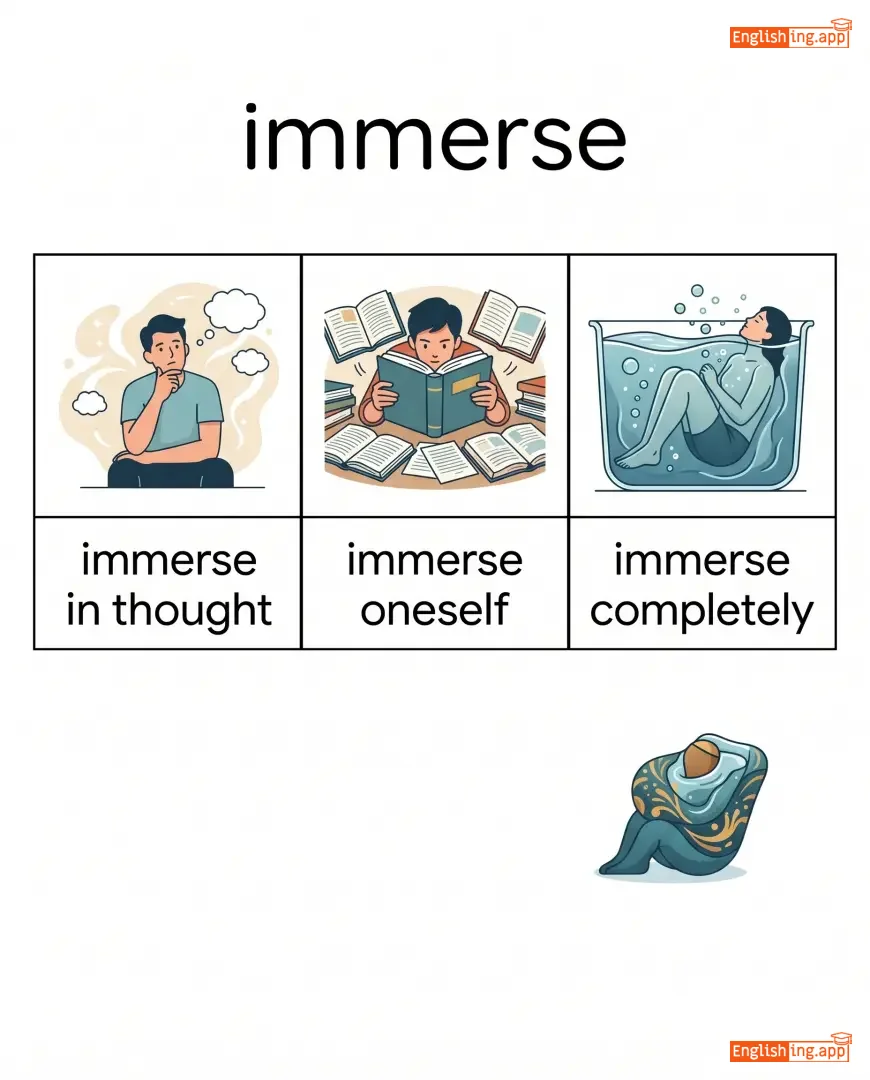
immerse in, immerse yourself, fully immerse, completely immerse
••••••
|
本に浸ることで、全てに没頭することができる。
••••••
|
|
#100
🖥️
|
/dɪˈspleɪ/
verb
(ディスプレイ)
••••••
|
- •••••• |
表示する
hyōji suru
••••••
|
displayed
ディスプレイド
••••••
|
displayed
ディスプレイド
••••••
|
displays
ディスプレイズ
••••••
|
displaying
ディスプレイイング
••••••
|
to show or exhibit; to present for others to see
••••••
|
The museum displays ancient artifacts.
博物館は古代の遺物を展示しています。
••••••
|
博物館は古代の遺物を表示しています。
Hakubutsukan wa kodai no ibutsu o hyōji shiteimasu.
••••••
|
show, exhibit, present, demonstrate
••••••
|
hide, conceal, cover, suppress
••••••
|
display screen, display item, public display, proudly display
••••••
|
表示するとは、他の人に何かを見せることです。
••••••
|
|
#101
🏃
|
/rʌn/
verb
(ラン)
••••••
|
|
走る
hashiru
••••••
|
ran
ラン
••••••
|
run
ラン
••••••
|
runs
ランス
••••••
|
running
ランニング
••••••
|
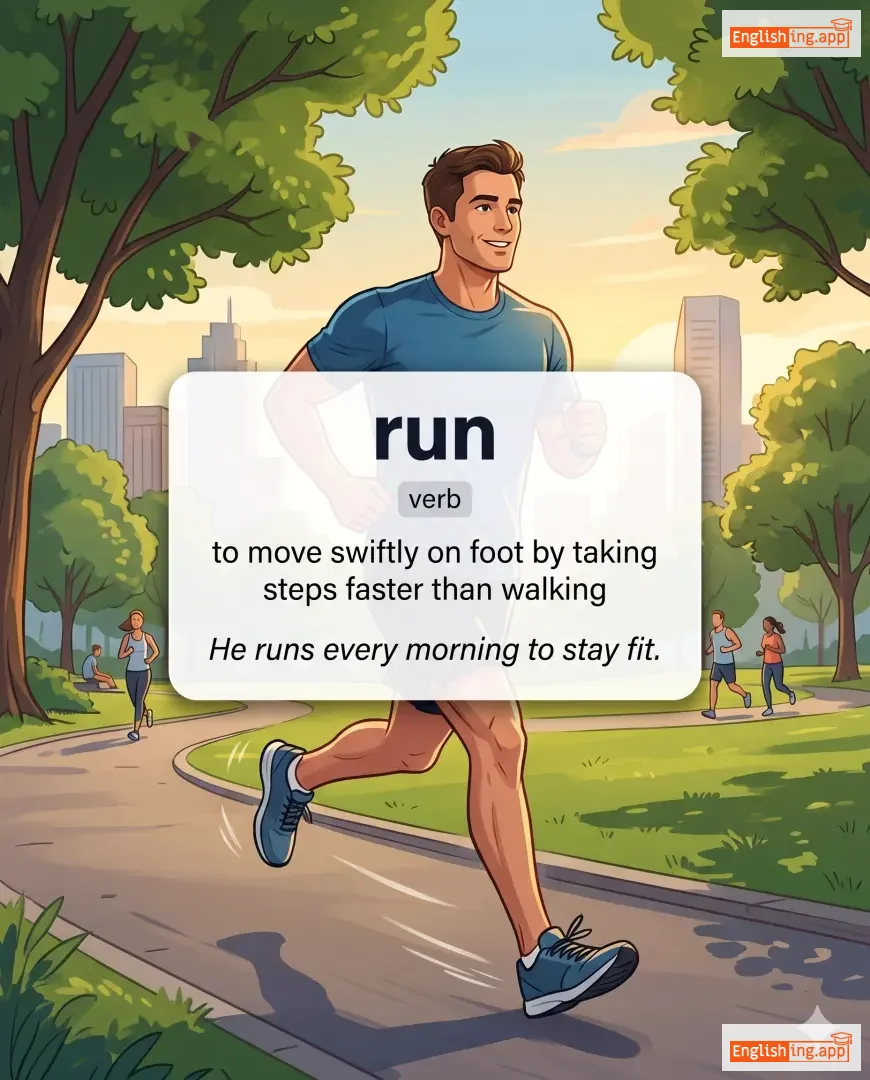
to move quickly on foot; to operate or function
••••••
|
I run every morning for exercise.
私は毎朝運動のために走ります。
••••••
|
私は毎朝運動のために走ります。
Watashi wa mai asa undou no tame ni hashirimasu.
••••••
|
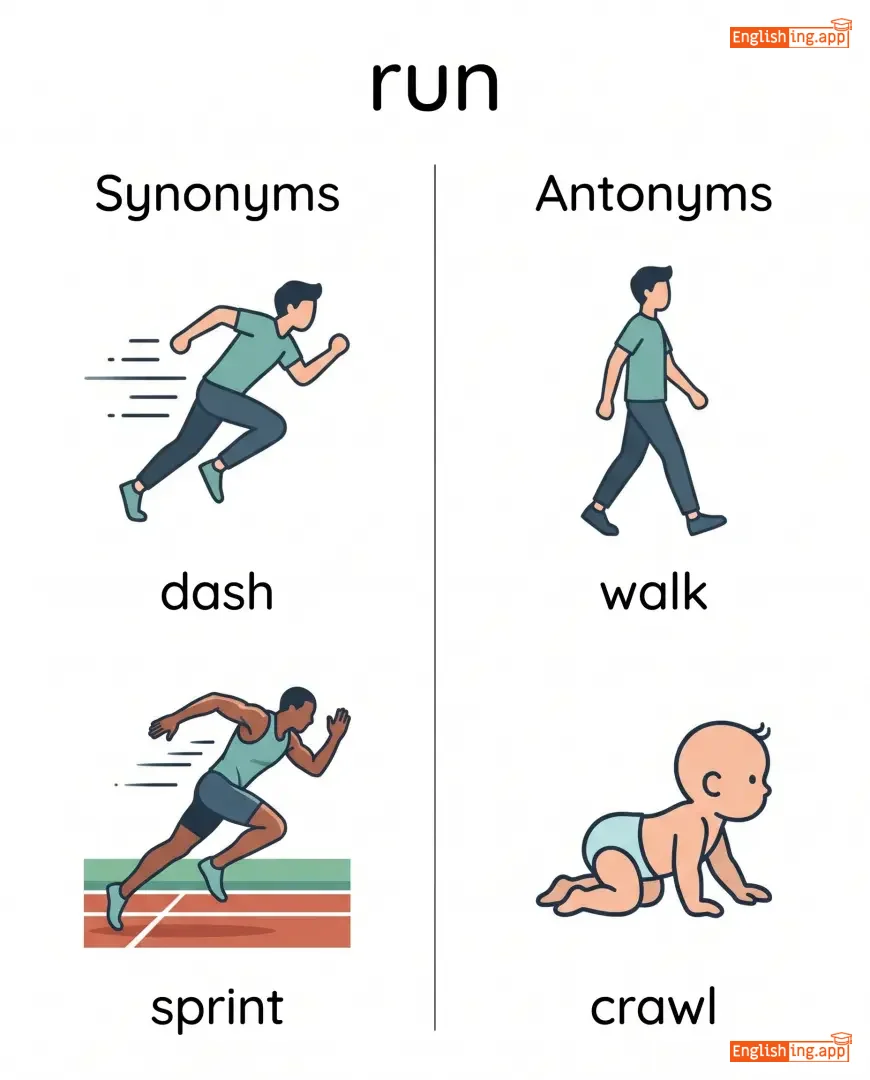
jog, sprint, dash, operate
••••••
|
walk, stop, crawl, halt
••••••
|
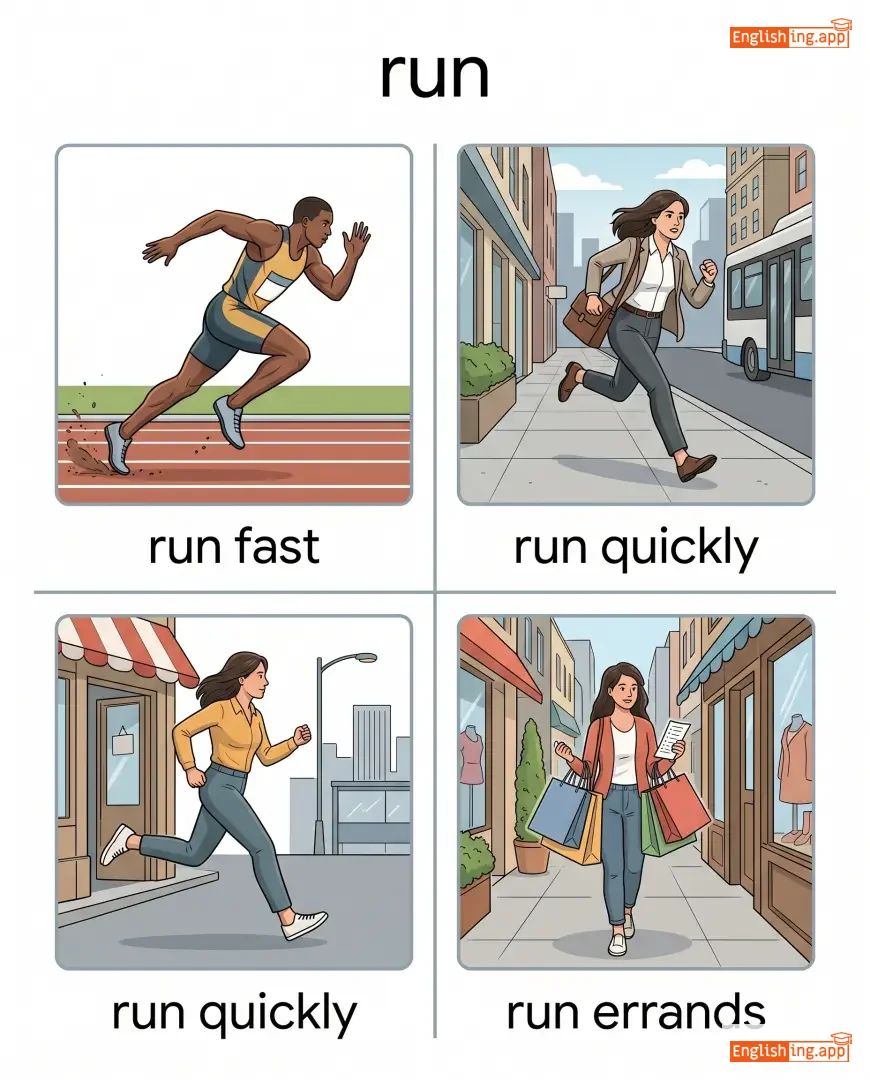
run fast, run away, run out, run business
••••••
|
走る: 速く走って気持ちよくなる感じ
••••••
|
|
#102
📉
|
/ˈwiːkən/
verb
(ウィケン)
••••••
|
|
弱める
yowameru
••••••
|
Weakened
ウィケンド
••••••
|
Weakened
ウィケンド
••••••
|
Weakens
ウィケンズ
••••••
|
Weakening
ウィケニング
••••••
|
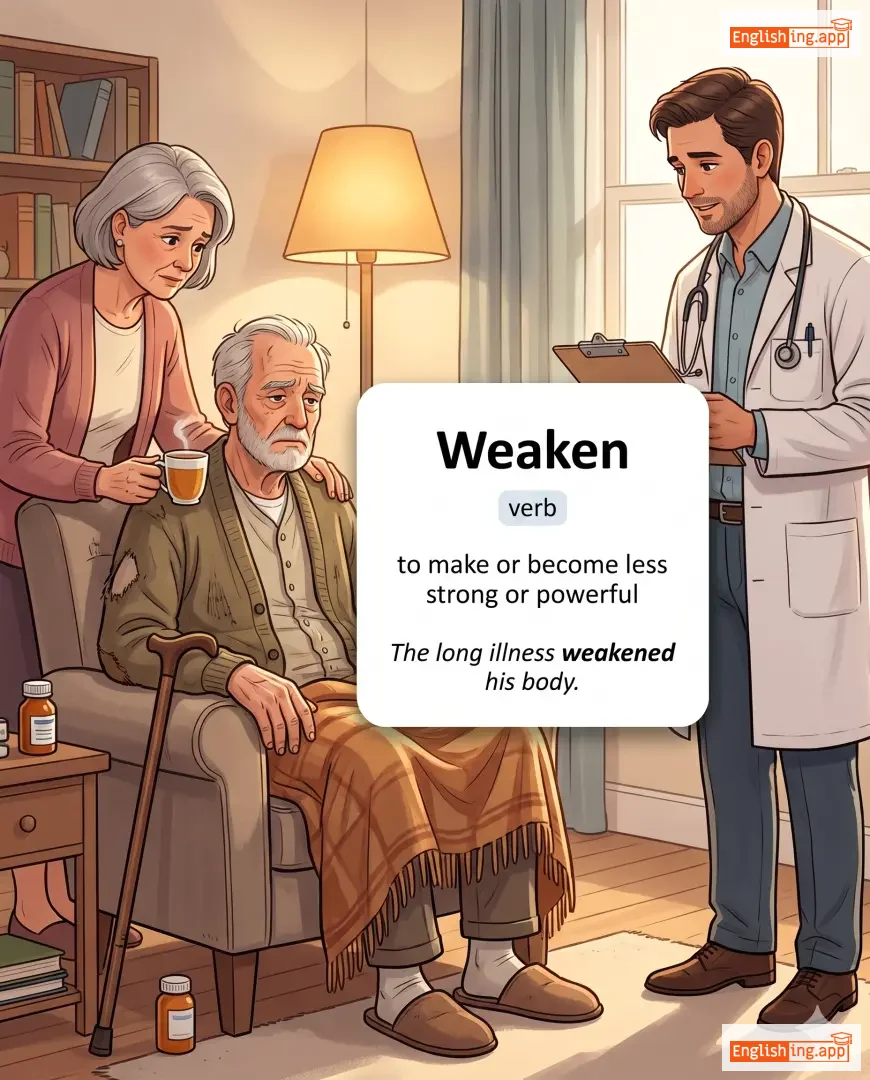
to make or become less strong or powerful
••••••
|
The illness weakened his immune system significantly.
その病気は彼の免疫システムを著しく弱めました。
••••••
|
その病気は彼の免疫システムを著しく弱めました。
Sono byōki wa kare no men'eki shisutemu o achi ni yowamemashita.
••••••
|
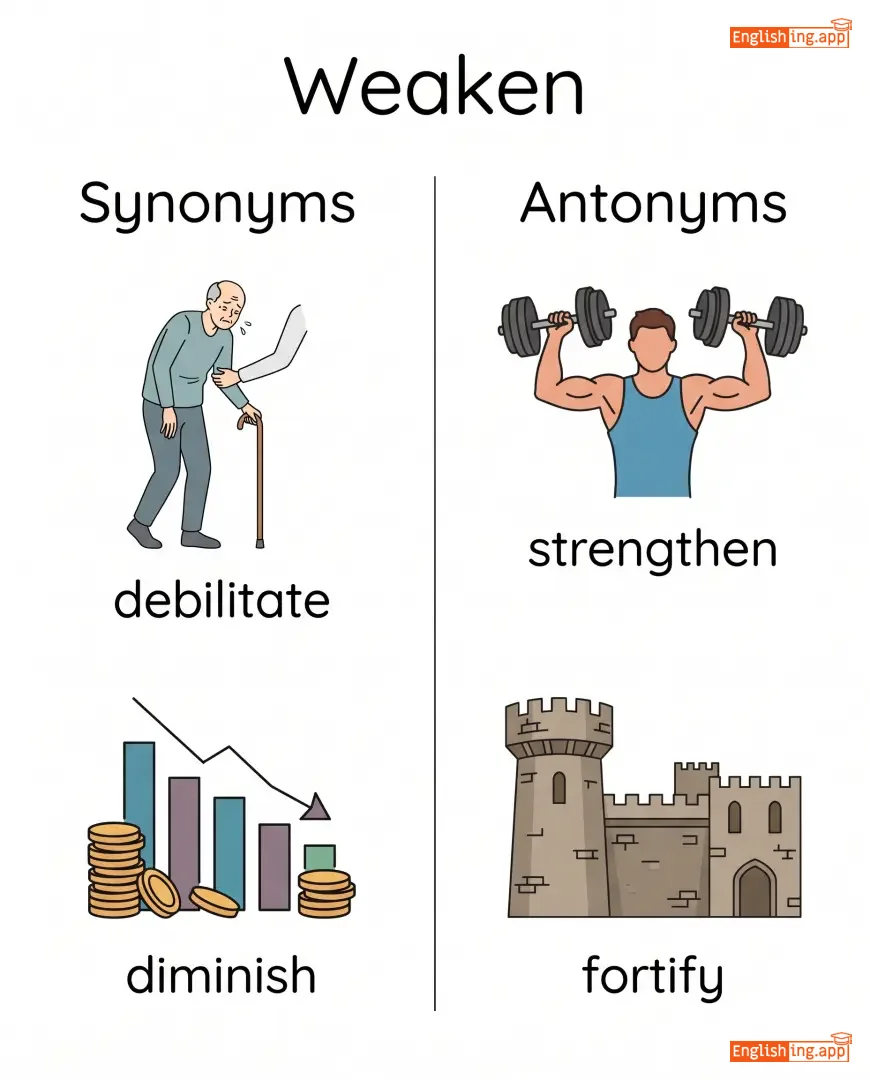
diminish, reduce, undermine, debilitate
••••••
|
strengthen, fortify, enhance, empower
••••••
|
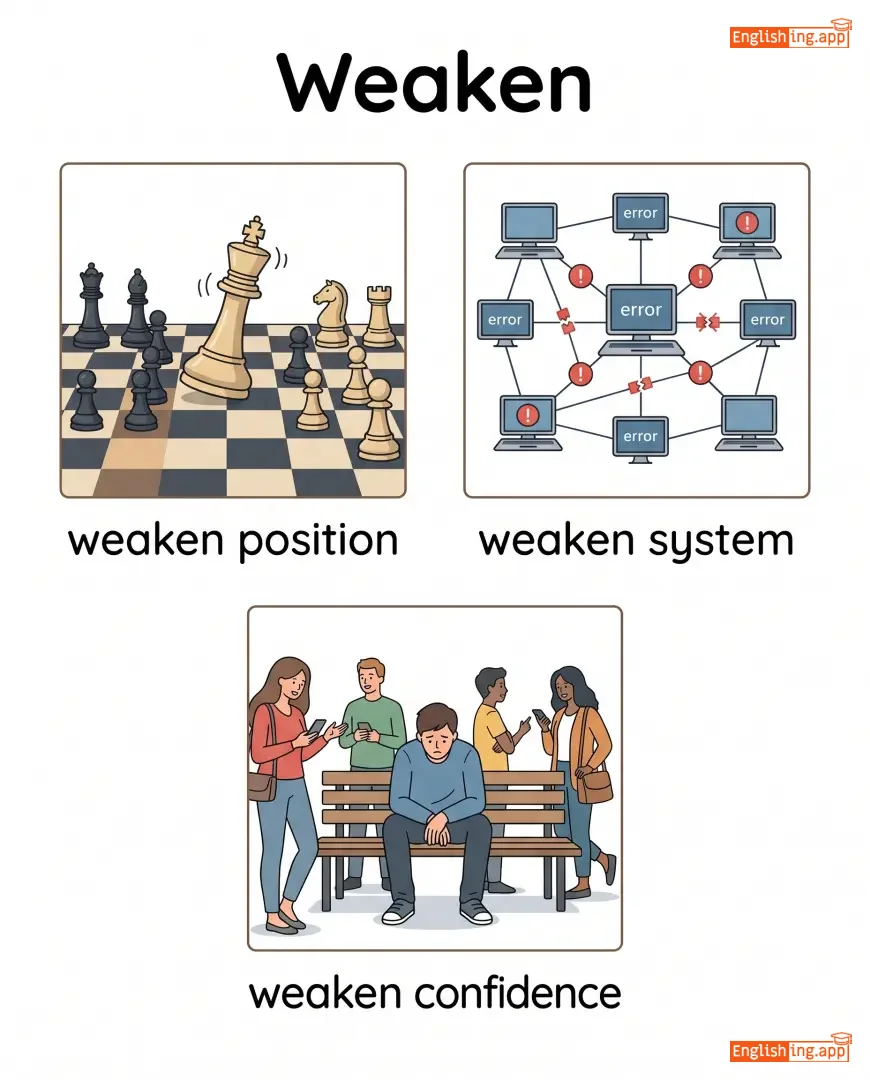
weaken effect, weaken position, gradually weaken, seriously weaken
••••••
|
弱める = 力を減らす
••••••
|
|
#103
🏗️
|
/faʊnd/
verb
(ファウンド)
••••••
|
- •••••• |
設立する
setsuritsu suru
••••••
|
founded
ファウンデッド
••••••
|
founded
ファウンデッド
••••••
|
founds
ファウンズ
••••••
|
founding
ファウンディング
••••••
|
to establish or create something; to discover
••••••
|
They founded the company in 1995.
彼らは1995年に会社を設立しました。
••••••
|
彼らは1995年に会社を設立しました。
Karera wa 1995-nen ni kaisha o setsuritsu shimashita.
••••••
|
establish, create, set up, start
••••••
|
destroy, dissolve, close, end
••••••
|
found company, found organization, newly found, well found
••••••
|
In Japanese, '設立する' means to 'found,' similar to how 'setsuritsu' sounds.
••••••
|
|
#104
🏷️
|
/neɪm/
verb
(ネイム)
••••••
|
|
名付ける
nazukeru
••••••
|
named
ネイムド
••••••
|
named
ネイムド
••••••
|
names
ネイムズ
••••••
|
naming
ネイミング
••••••
|
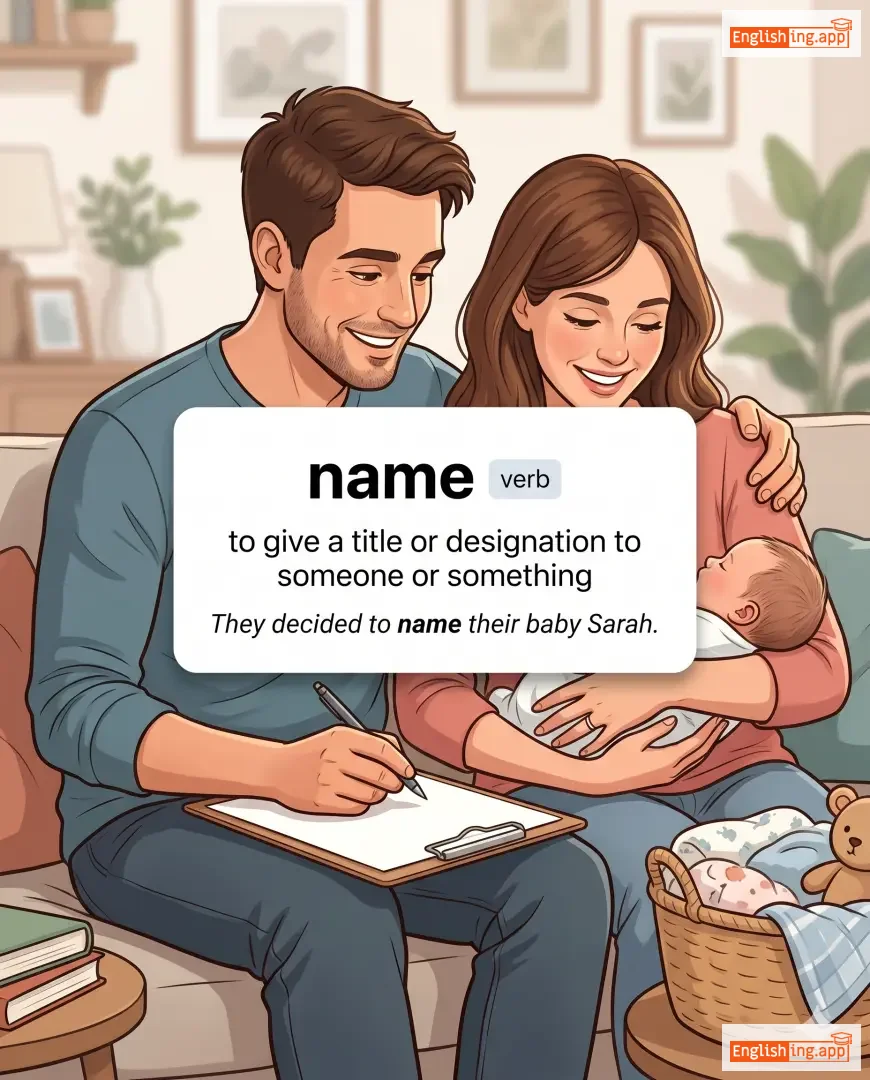
to give a title or designation to someone or something
••••••
|
They decided to name their baby Sarah.
デイ ディサイデッド トゥ ネイム ゼア ベイビー サラ。
••••••
|
彼らは赤ちゃんにサラという名前を付けることに決めました。
Karera wa akachan ni Sara to iu namae o tsukeru koto ni kimemashita
••••••
|
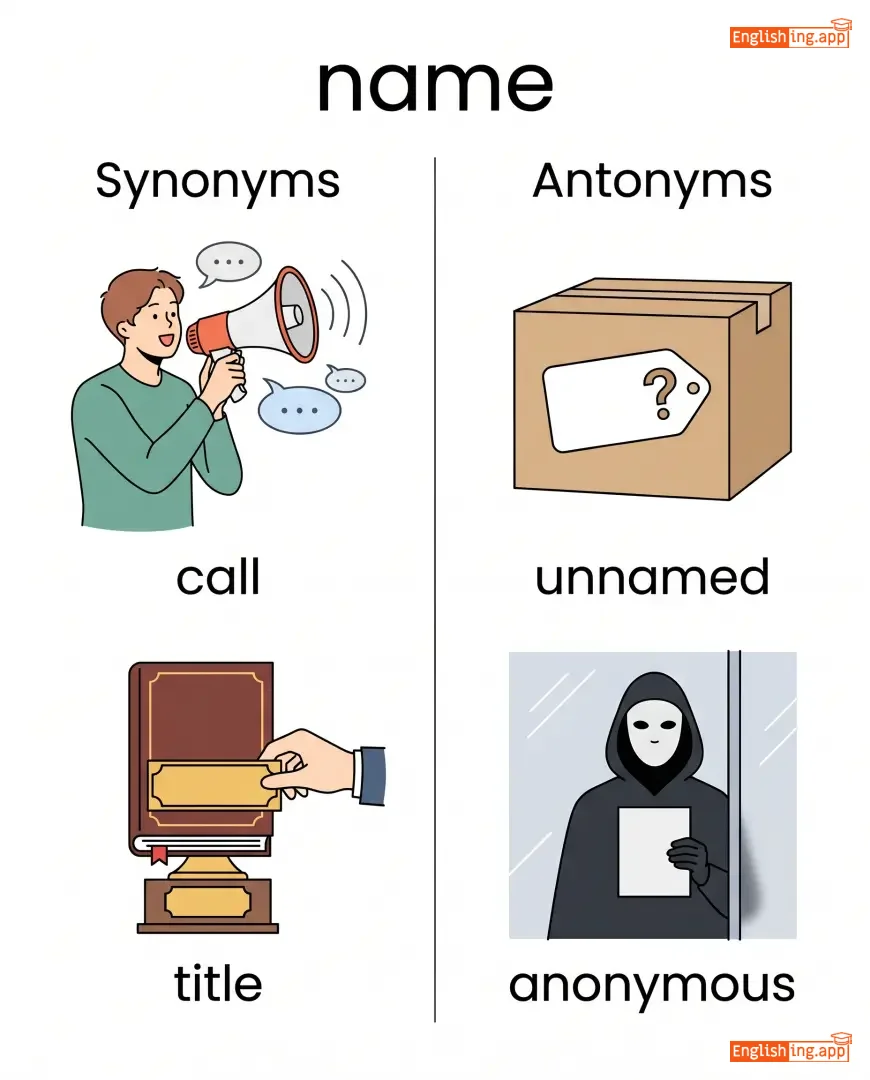
call, title, designate, label
••••••
|
unnamed, anonymous
••••••
|
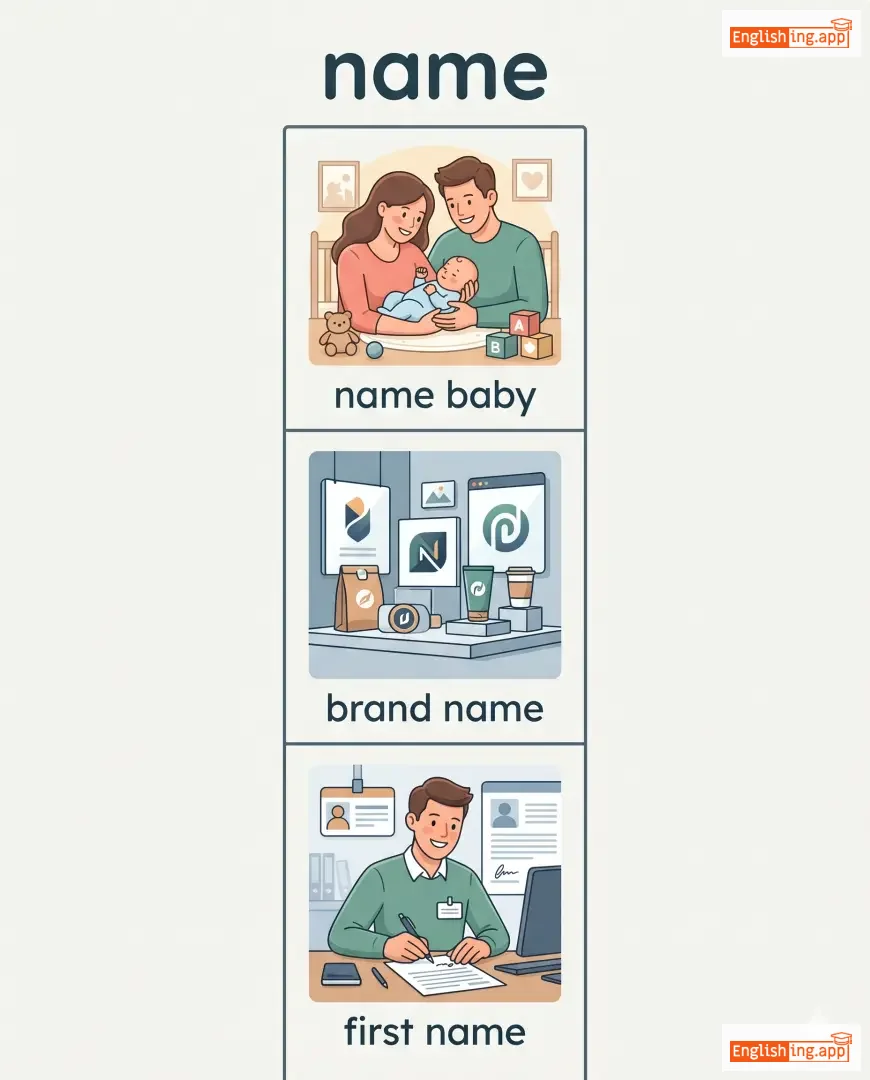
name baby, brand name, first name, last name
••••••
|
名付ける = Name it with love!
••••••
|
|
#105
↔️
|
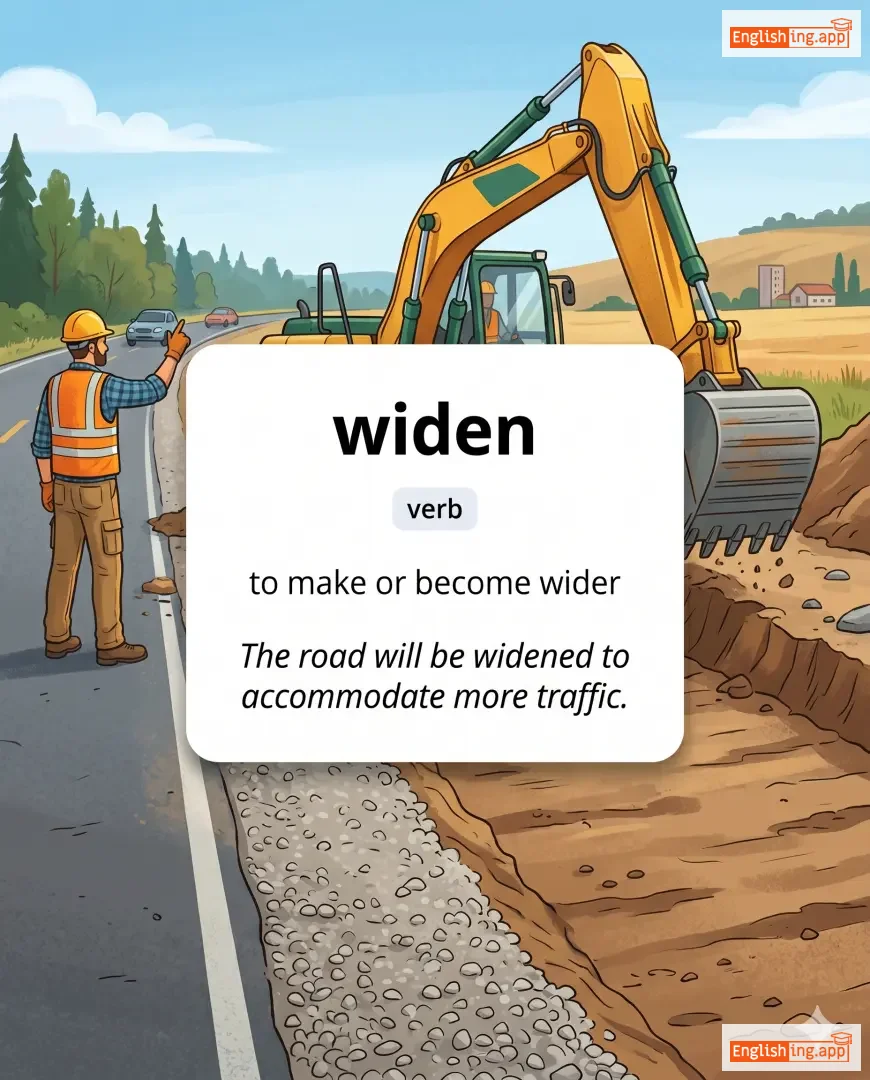
/ˈwaɪdən/
verb
(widen)
••••••
|
|
広げる
hirogeru
••••••
|
widened
widened
••••••
|
widened
widened
••••••
|
widens
widens
••••••
|
widening
widening
••••••
|
to make or become wider or broader
••••••
|
They plan to widen the road next year.
彼らは来年、道路を広げる予定です。
••••••
|
彼らは来年、道路を広げる予定です。
Karera wa rainen, dōro o hirogeru yotei desu.
••••••
|
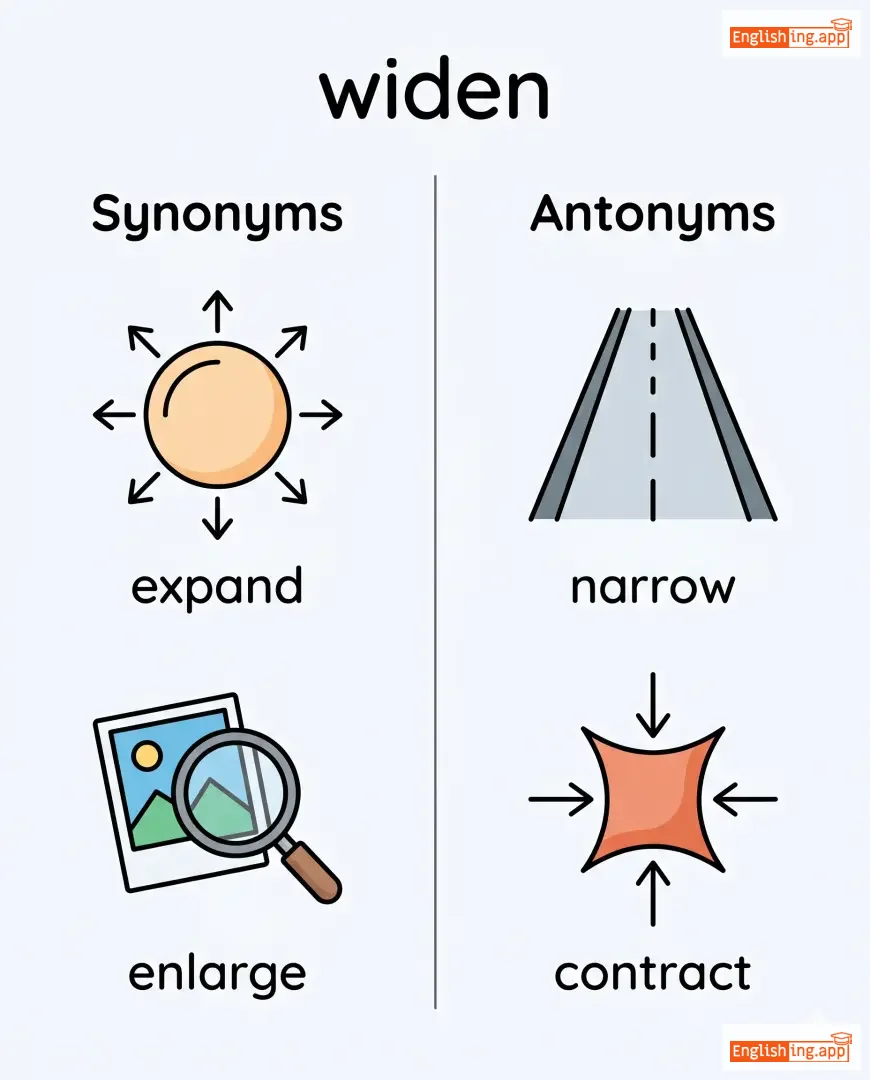
broaden, expand, extend, enlarge
••••••
|
narrow, reduce, contract, shrink
••••••
|
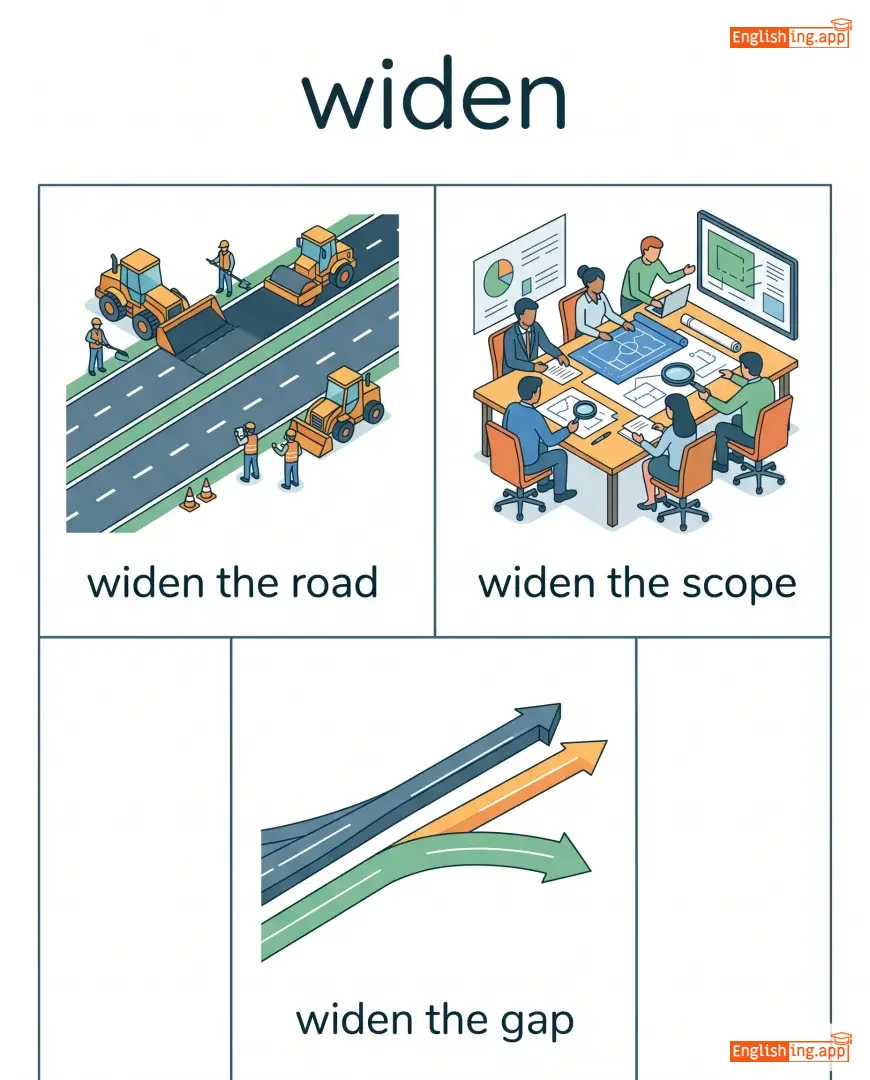
widen road, widen gap, widen range, gradually widen
••••••
|
広げるは、道路が広くなるようにすること。
••••••
|
|
#106
😏
|
/ˈpeɪtrənaɪz/
verb
(パトロナイズ)
••••••
|
|
恩着せがましくする
onjoshegamashiku suru
••••••
|
patronized
パトロナイズド
••••••
|
patronized
パトロナイズド
••••••
|
patronizes
パトロナイゼズ
••••••
|
patronizing
パトロナイジング
••••••
|
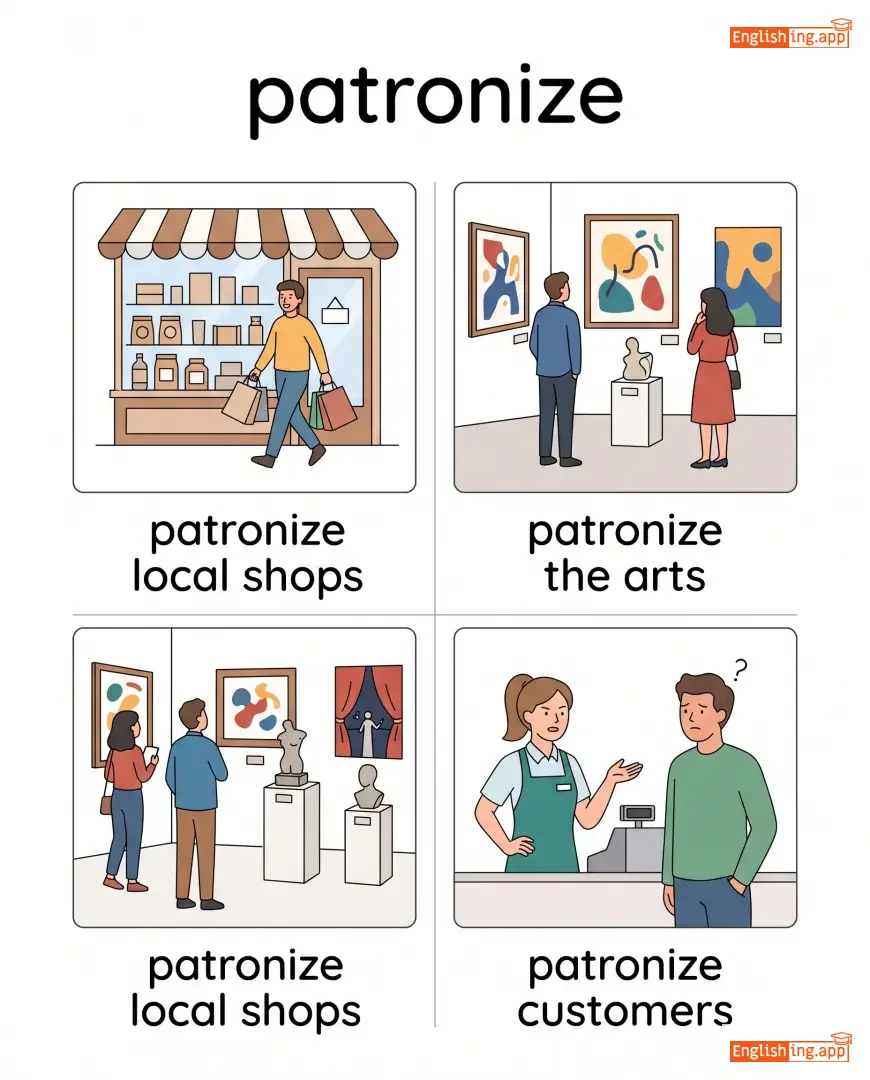
to treat someone in a condescending way; to be a regular customer of a business
••••••
|
Don't patronize me with your fake sympathy.
ドント パトロナイズ ミー ウィズ ヨア フェイク シンパシー。
••••••
|
偽りの同情で恩着せがましくしないで。
itsuwari no dojyo de onjoshegamashiku shinaide
••••••
|
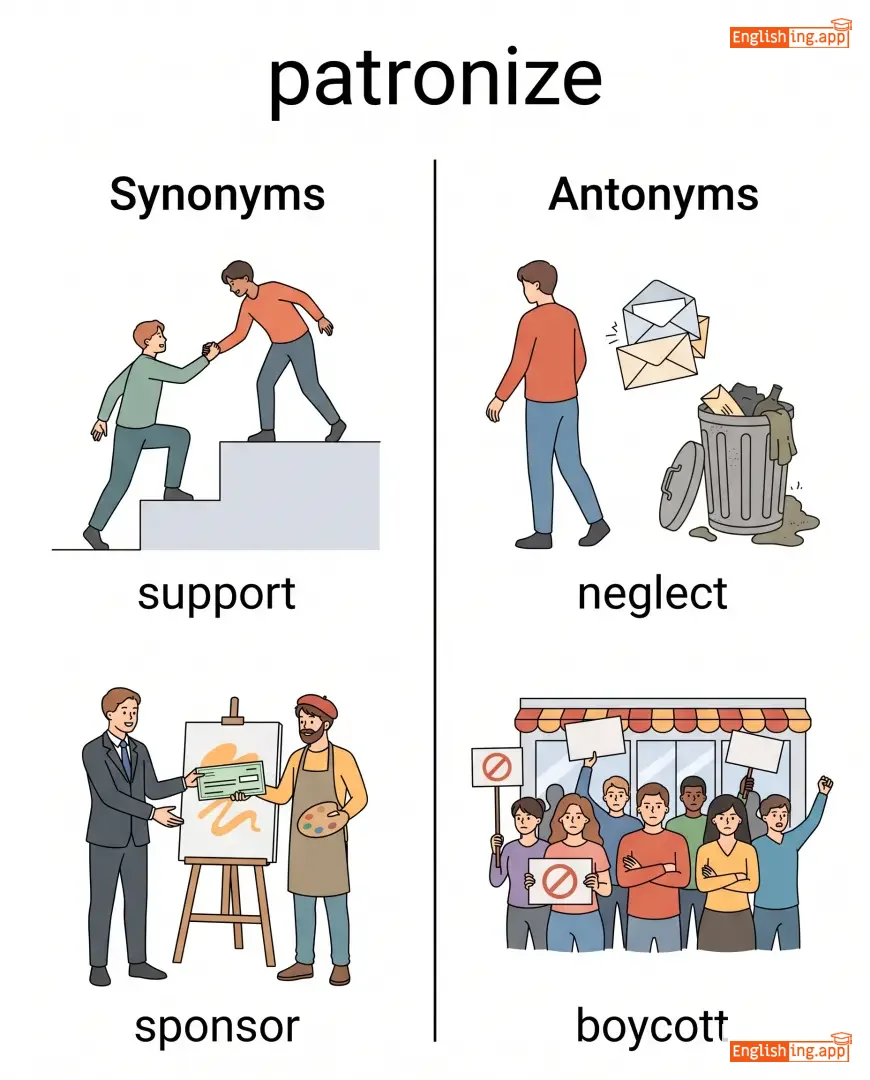
condescend, talk down to, support, sponsor
••••••
|
respect, honor, boycott, avoid
••••••
|
patronize business, patronize restaurant, regularly patronize, often patronize
••••••
|
Patronize sounds like 'patronaizu'—remember, acting superior kills true kindness.
••••••
|
|
#107
❓
|
/æsk/
verb
(アスク)
••••••
|
- •••••• |
尋ねる
tazuneru
••••••
|
asked
アスクド
••••••
|
asked
アスクド
••••••
|
asks
アスクス
••••••
|
asking
アスキング
••••••
|
to request information; to inquire; to invite
••••••
|
Can I ask you a question about the homework?
宿題について質問してもいいですか?
••••••
|
宿題について質問してもいいですか?
Shukudai ni tsuite shitsumon shite mo ii desu ka?
••••••
|
inquire, question, request, demand
••••••
|
answer, reply, respond, tell
••••••
|
ask question, ask for help, ask permission, politely ask
••••••
|
尋ねる (tazuneru) - あなたが何かを尋ねる時
••••••
|
|
#108
🔔
|
/rɪŋ/
verb
(リング)
••••••
|
|
鳴る
naru
••••••
|
rang
ラング
••••••
|
rung
ラング
••••••
|
rings
リングス
••••••
|
ringing
リングイング
••••••
|
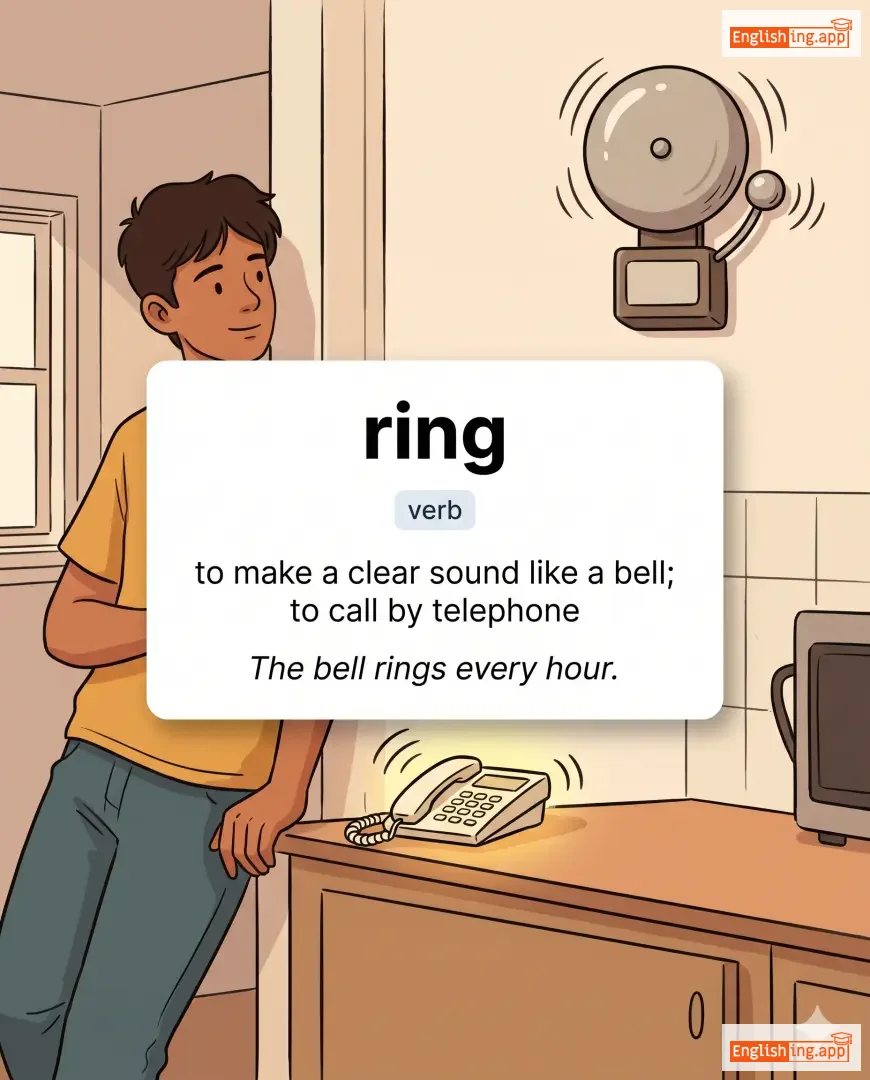
to make a clear sound like a bell; to call by telephone
••••••
|
The bell rings every hour.
鐘は毎時鳴る。
••••••
|
鐘は毎時鳴る。
Kane wa maiji naru.
••••••
|
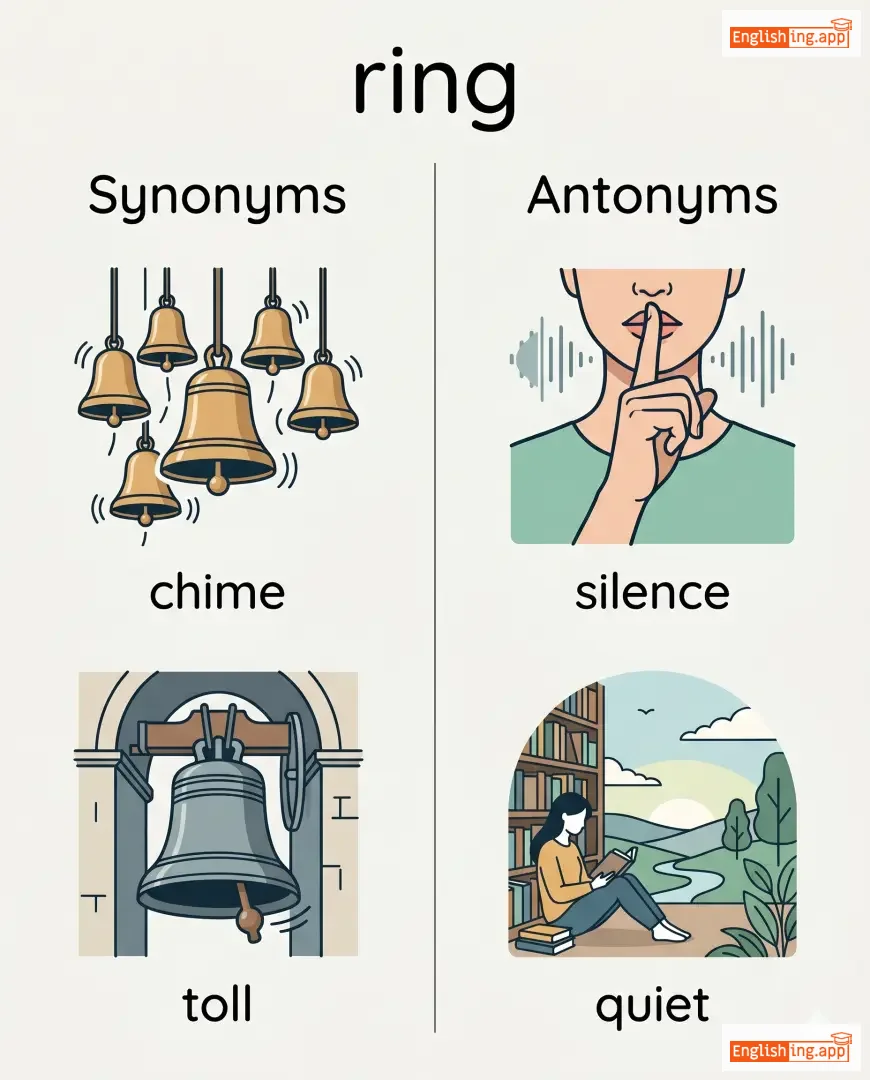
chime, toll, call, sound
••••••
|
silence, quiet, mute
••••••
|
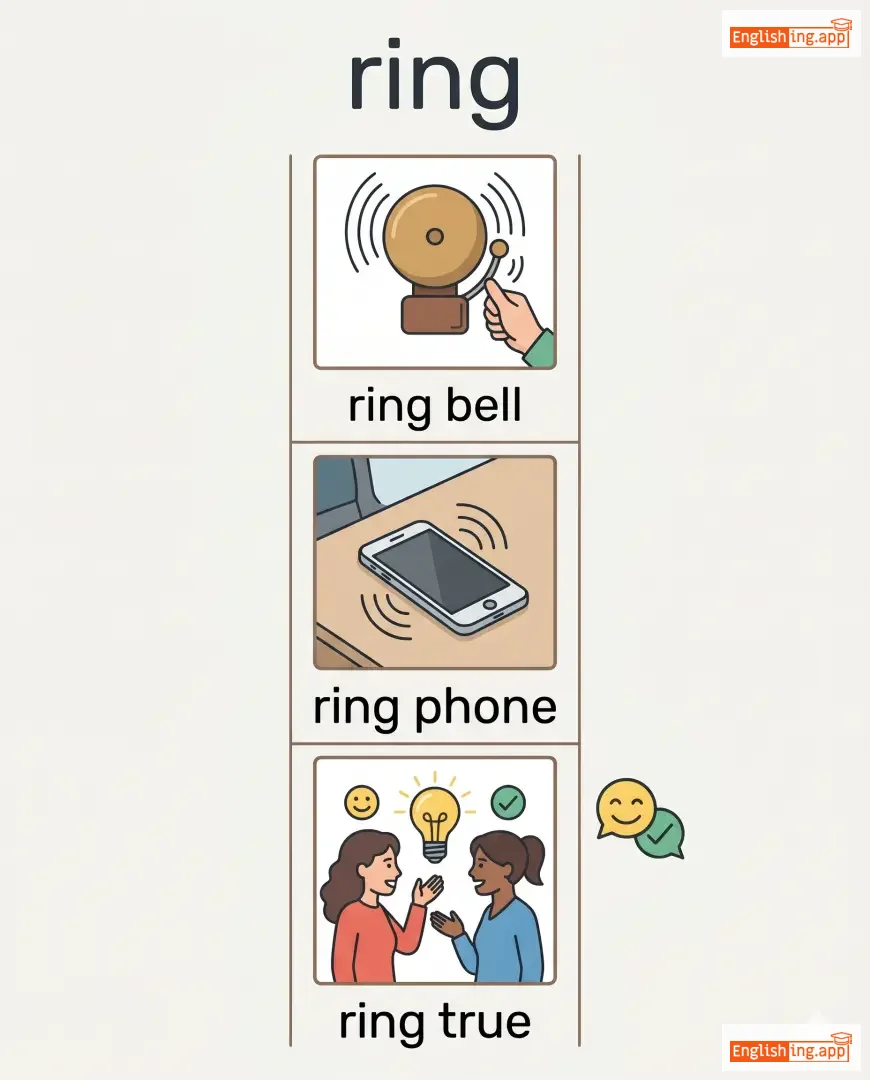
ring bell, ring phone, ring true, engagement ring
••••••
|
Imagine hearing the sound of a bell '鳴る' every hour.
••••••
|
|
#109
📈
|
/ɪnˈkri:s/
verb
(インクリース)
••••••
|
|
増加
zōka
••••••
|
increased
インクリースド
••••••
|
increased
インクリースド
••••••
|
increases
インクリースズ
••••••
|
increasing
インクリースイング
••••••
|
to become or make something larger in amount, number, or degree
••••••
|
The company plans to increase its production this year.
その会社は今年、生産を増加させる予定です。
••••••
|
その会社は今年、生産を増加させる予定です。
Sono kaisha wa kotoshi, seisan o zōka saseru yotei desu.
••••••
|
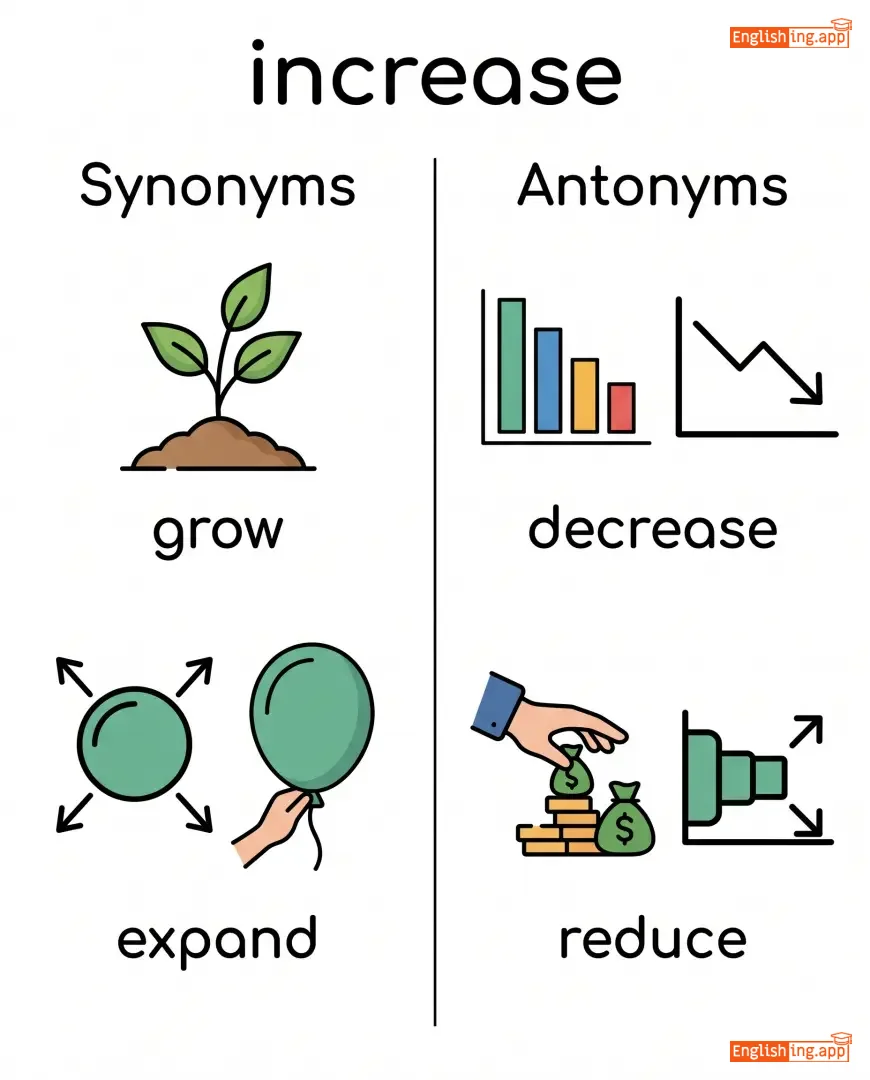
grow, expand, rise, boost, enhance
••••••
|
decrease, reduce, lower, diminish
••••••
|
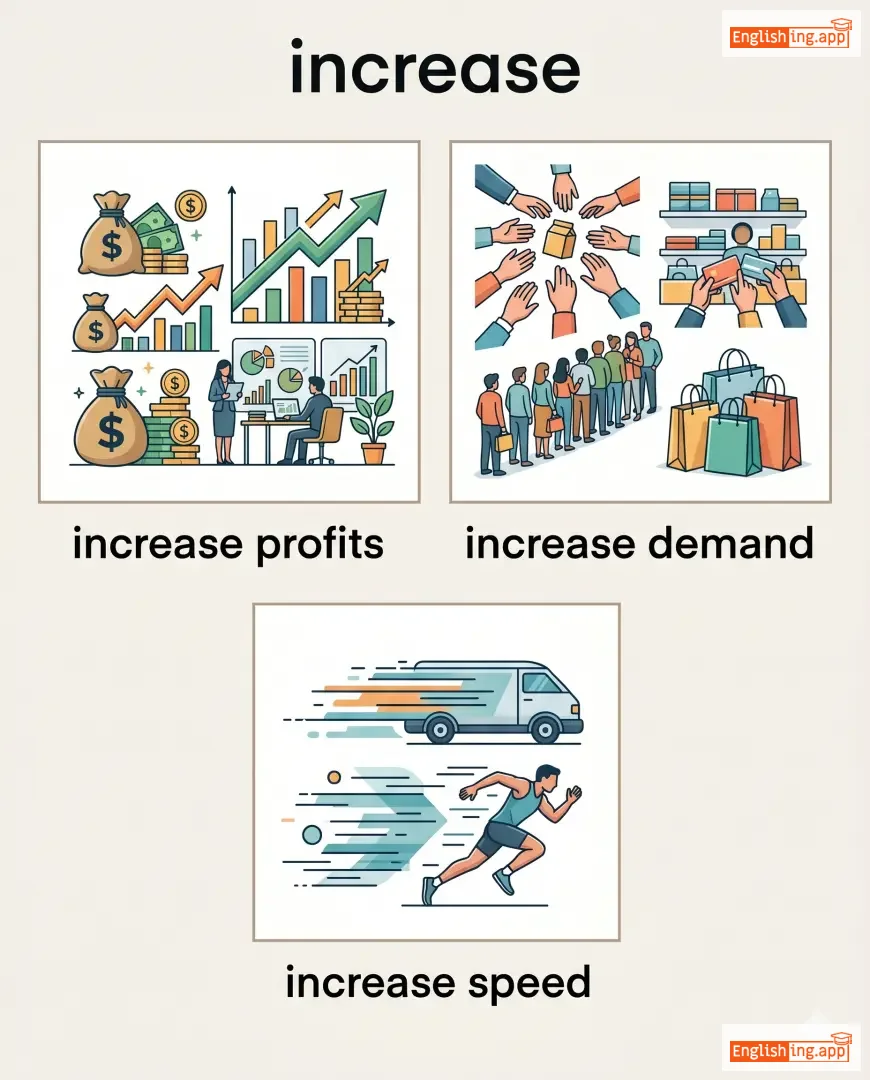
increase number, increase price, increase speed, rapidly increase
••••••
|
増加, 'インクリース'のように日本語で
••••••
|
|
#110
🔍
|
/rɪˈviːl/
verb
(リビール)
••••••
|
|
明らかにする
akiraka ni suru
••••••
|
revealed
リビールド
••••••
|
revealed
リビールド
••••••
|
reveals
リビールズ
••••••
|
revealing
リビールング
••••••
|
to make known or show something that was hidden
••••••
|
The investigation revealed the truth.
調査は真実を明らかにした。
••••••
|
調査は真実を明らかにした。
Chōsa wa shinjitsu o akiraka ni shita.
••••••
|
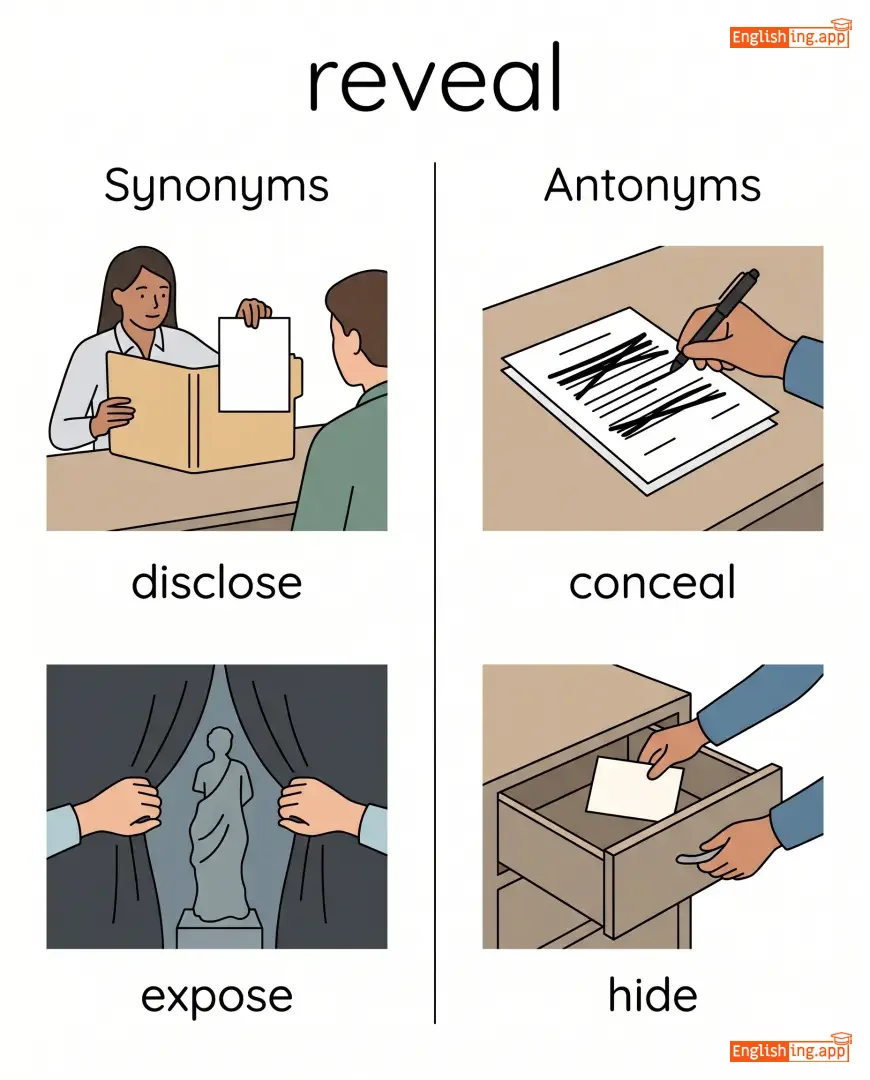
expose, disclose, uncover, show
••••••
|
conceal, hide, cover, suppress
••••••
|
reveal truth, reveal secret, reveal identity, slowly reveal
••••••
|
調査が隠された真実を明らかにした
••••••
|
|
#111
🏠
|
/əˈbaɪd/
verb
(アバイド)
••••••
|
- •••••• |
従う
shitagau
••••••
|
abode
アボード
••••••
|
abode
アボード
••••••
|
abides
アバイズ
••••••
|
abiding
アバイディング
••••••
|
to accept or act in accordance with; to endure; to dwell
••••••
|
I will abide by the rules of the company.
私は会社のルールに従います。
••••••
|
私は会社のルールに従います。
Watashi wa kaisha no rūru ni shitagaimasu.
••••••
|
accept, endure, tolerate, dwell, remain
••••••
|
reject, disobey, leave, depart
••••••
|
abide by rules, abide by law, strictly abide, always abide
••••••
|
Think of abiding by rules as following a disciplined and respectful path.
••••••
|
|
#112
💊
|
/ˈmedɪkeɪt/
verb
(メディケート)
••••••
|
|
薬を与える
kusuri o ataeru
••••••
|
medicated
メディケーテッド
••••••
|
medicated
メディケーテッド
••••••
|
medicates
メディケーツ
••••••
|
medicating
メディケーティング
••••••
|
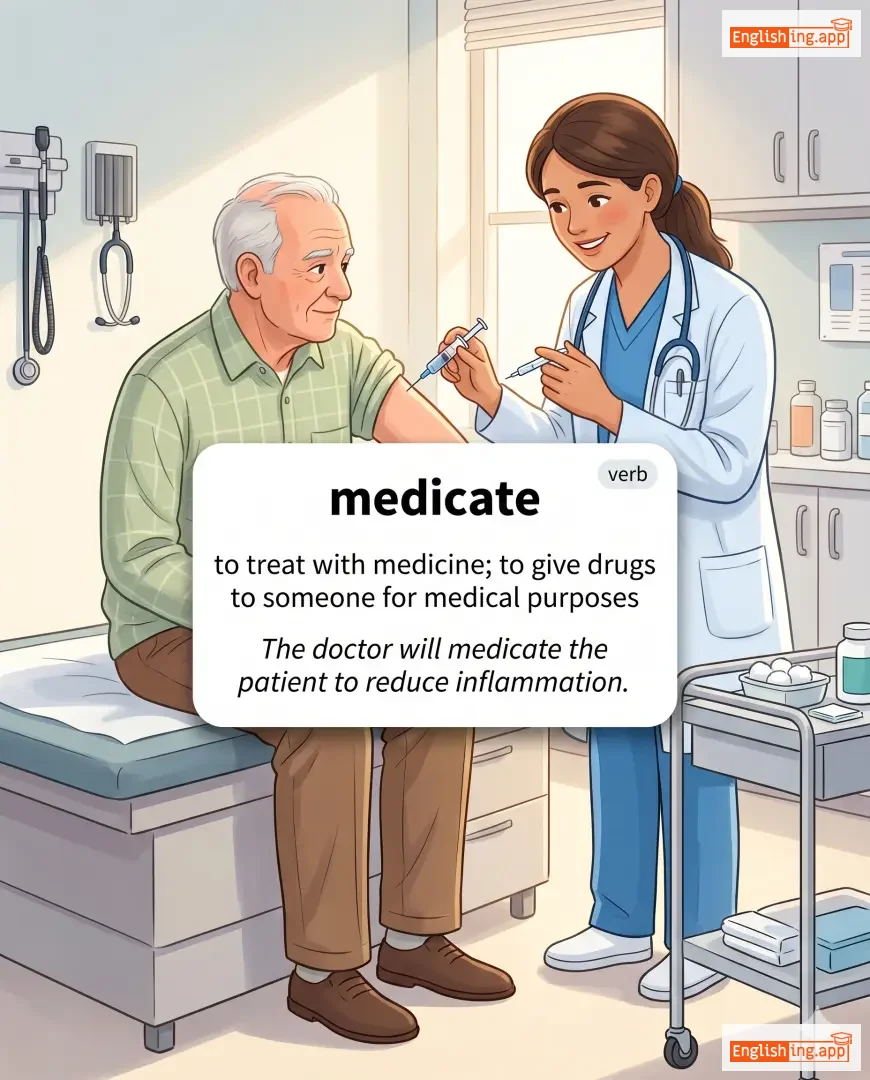
to treat with medicine; to give drugs to someone for medical purposes
••••••
|
The doctor will medicate the patient to reduce inflammation.
医師は患者に炎症を減らすために薬を処方します。
••••••
|
医師は患者に炎症を減らすために薬を処方します。
Ishi wa kanja ni ensyō o herasu tame ni kusuri o shohō shimasu.
••••••
|
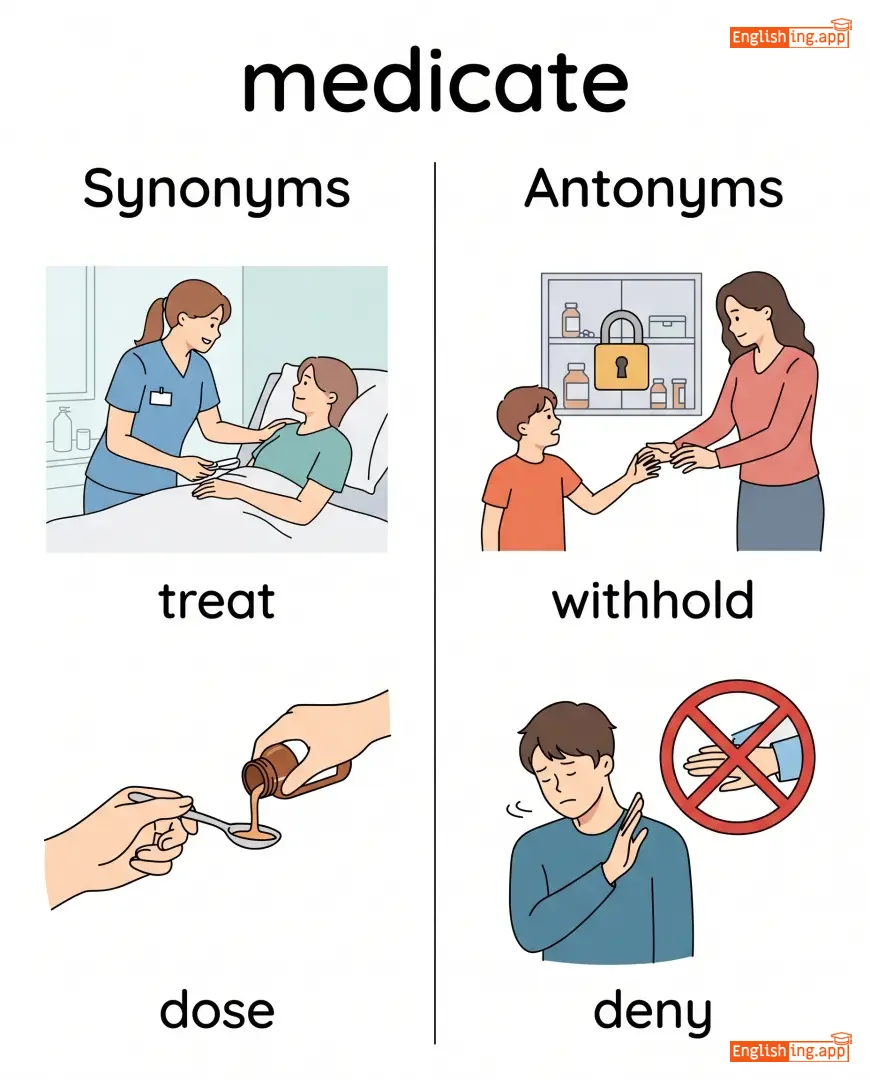
treat, dose, prescribe, administer
••••••
|
withhold, deny, refuse, neglect
••••••
|
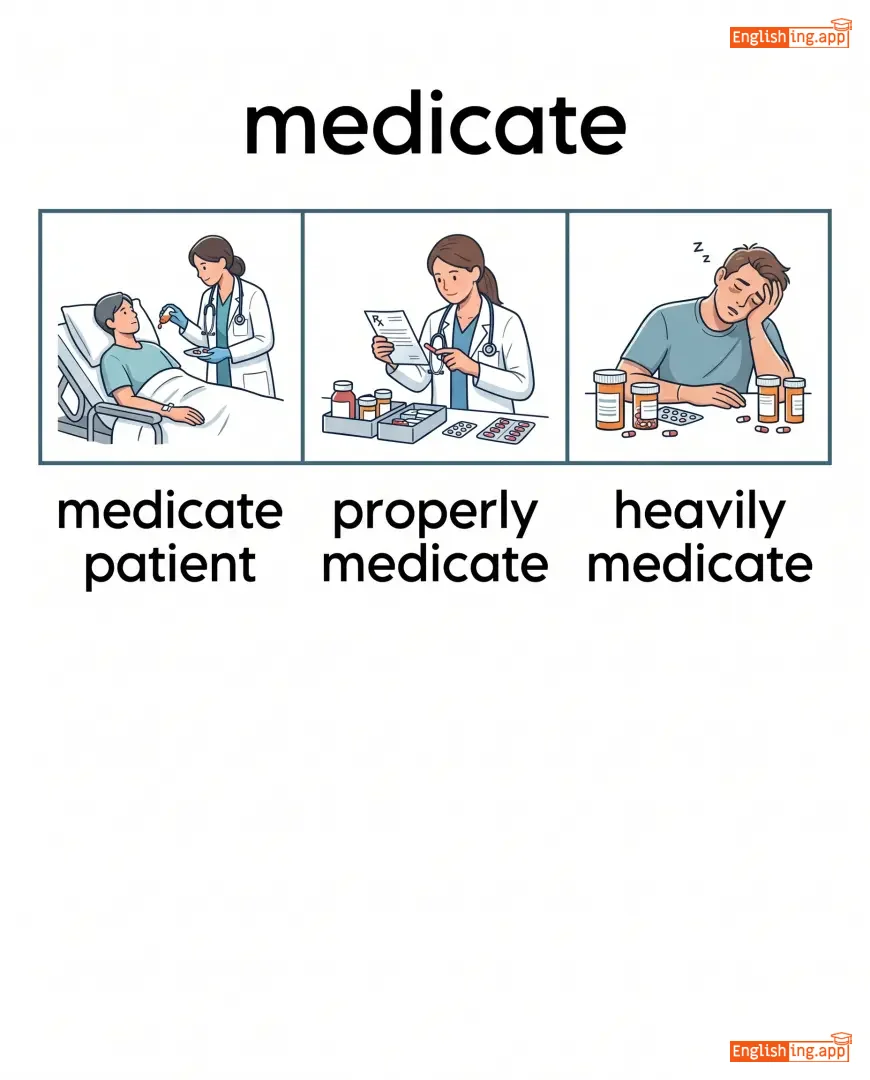
medicate patient, properly medicate, heavily medicate, daily medicate
••••••
|
薬を与え、炎症を減らします。
••••••
|
|
#113
🕊️
|
/rɪˈliːs/
verb
(リリース)
••••••
|
|
解放する
kaihō suru
••••••
|
released
リリースド
••••••
|
released
リリースド
••••••
|
releases
リリースズ
••••••
|
releasing
リリースイング
••••••
|
to set free; to allow something to escape or go away
••••••
|
The prisoner was released after ten years.
囚人は10年後に解放されました。
••••••
|
囚人は10年後に解放されました。
Shūjin wa jūnen go ni kaihō saremashita.
••••••
|
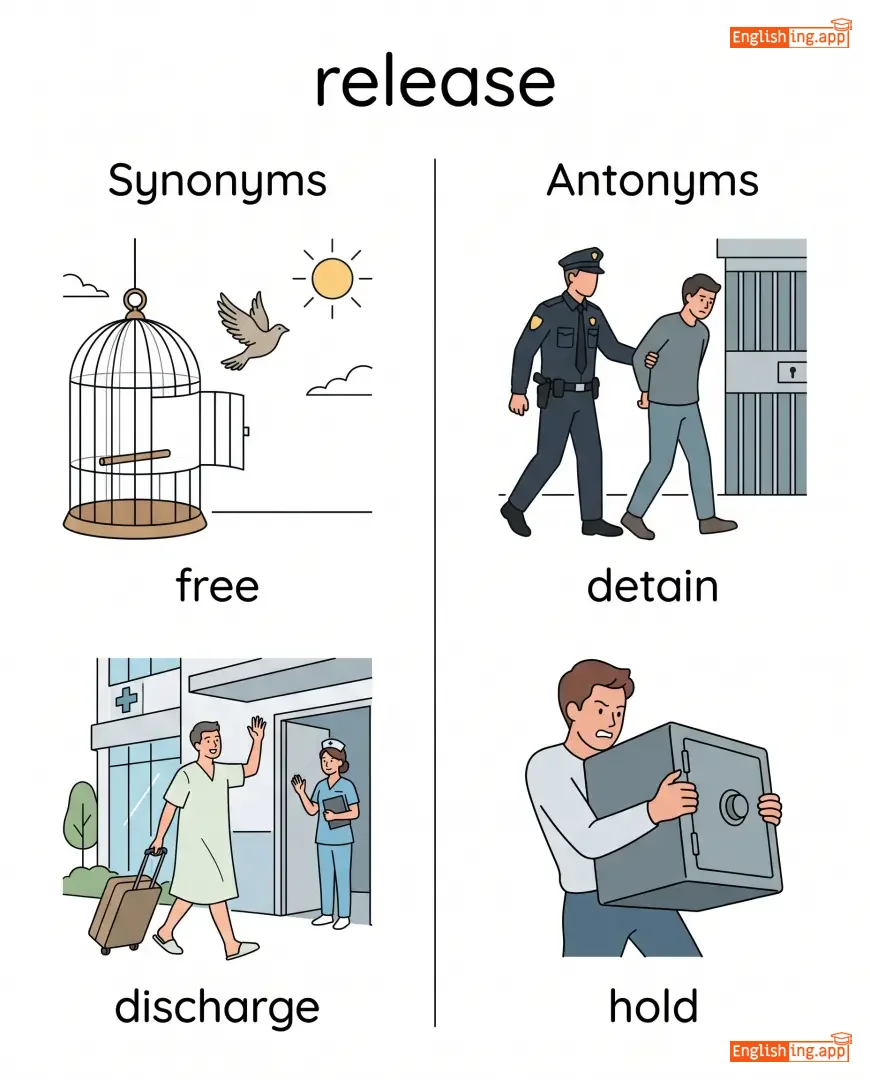
free, liberate, discharge, let go
••••••
|
capture, imprison, hold, detain
••••••
|
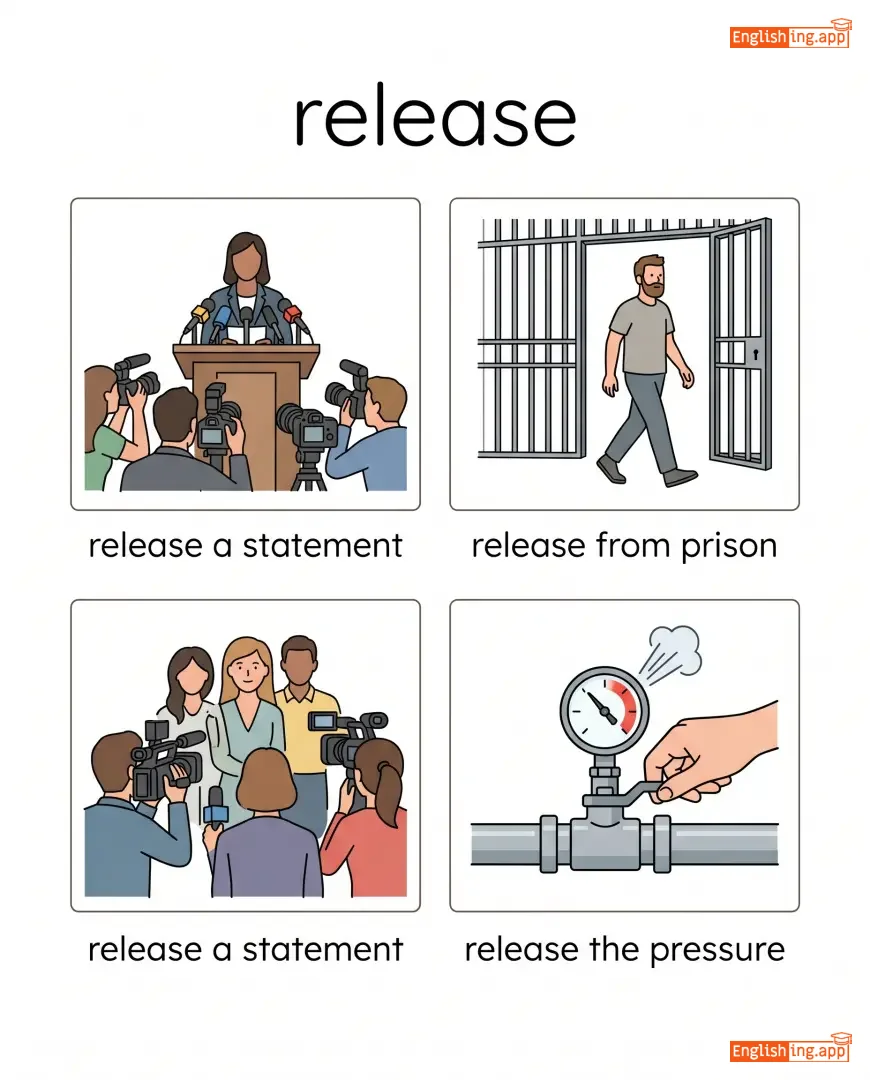
release prisoner, release album, press release, early release
••••••
|
Release in Japanese is '解放する', like freeing someone from captivity.
••••••
|
|
#114
💳
|
/oʊ/
verb
(オウ)
••••••
|
|
借りがある
kari ga aru
••••••
|
owed
オウド
••••••
|
owed
オウド
••••••
|
owes
オウズ
••••••
|
owing
オウイング
••••••
|
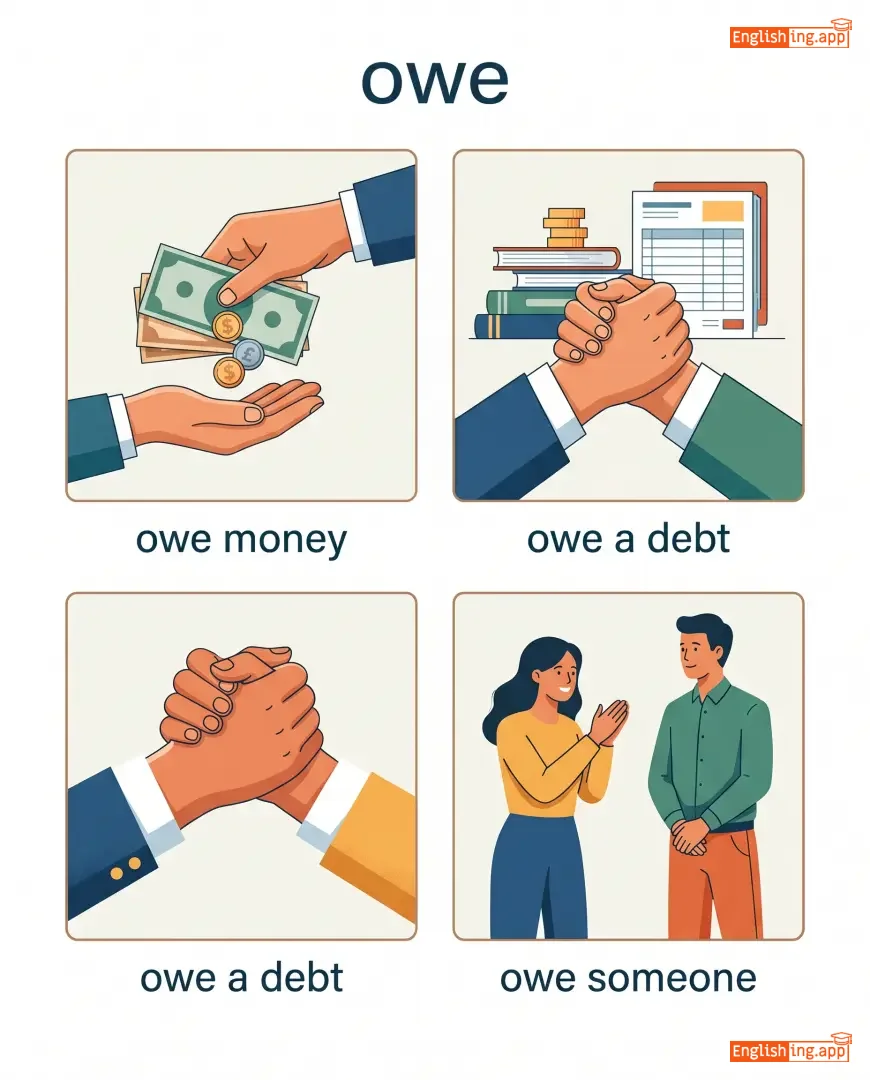
to be under obligation to pay or repay; to be indebted
••••••
|
I owe my success to my parents' support.
私は両親の支援のおかげで成功しました。
••••••
|
私は両親の支援のおかげで成功しました。
Watashi wa ryoushin no shien no okage de seikou shimashita.
••••••
|
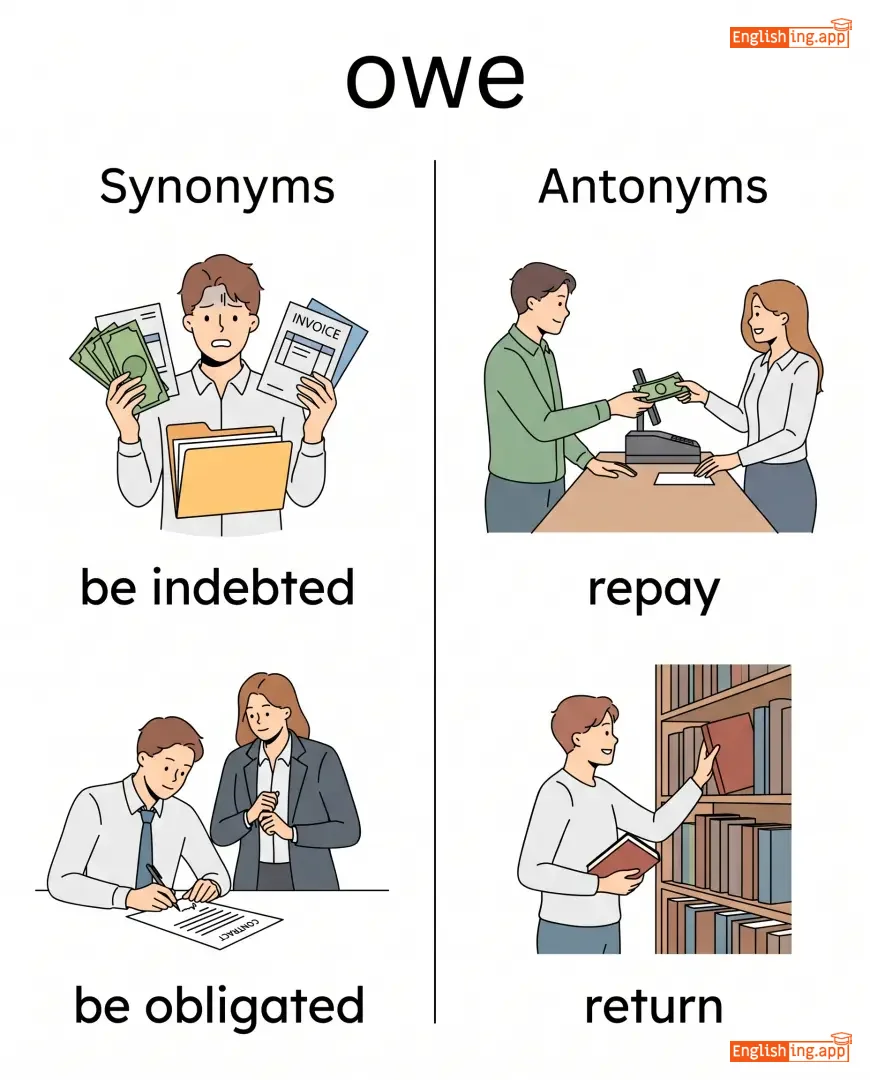
be indebted, be obligated, be liable, be in debt
••••••
|
own, possess, have, collect
••••••
|
owe money, owe debt, owe favor, owe gratitude
••••••
|
借りがあることは、何かを返さなければならないことを意味します。
••••••
|
|
#115
⛴️
|
/ˈfɛri/
verb
(フェリー)
••••••
|
- •••••• |
フェリーで運ぶ
ferī de hakobu
••••••
|
ferried
フェリード
••••••
|
ferried
フェリード
••••••
|
ferries
フェリーズ
••••••
|
ferrying
フェリーイング
••••••
|
to transport by boat; to carry back and forth
••••••
|
The boat ferried passengers across the river.
船は乗客を川の向こうに運びました。
••••••
|
船は乗客を川の向こうに運びました。
Fune wa jokyaku o kawa no mukou ni hakobimashita.
••••••
|
transport, carry, convey, shuttle
••••••
|
abandon, leave, strand
••••••
|
ferry across, ferry service, car ferry, passenger ferry
••••••
|
フェリー = 乗客を渡し船で川を渡る。
••••••
|
|
#116
🎯
|
/əˈkwaɪər/
verb
(アクワイア)
••••••
|
|
取得する
shutoku suru
••••••
|
acquired
アクワイアード
••••••
|
acquired
アクワイアード
••••••
|
acquires
アクワイアーズ
••••••
|
acquiring
アクワイアリング
••••••
|
to obtain or gain possession of something
••••••
|
He acquired new skills through practice.
彼は練習を通じて新しいスキルを取得しました。
••••••
|
彼は練習を通じて新しいスキルを取得しました。
Kare wa renshū o tōjite atarashī sukiru o shutoku shimashita.
••••••
|
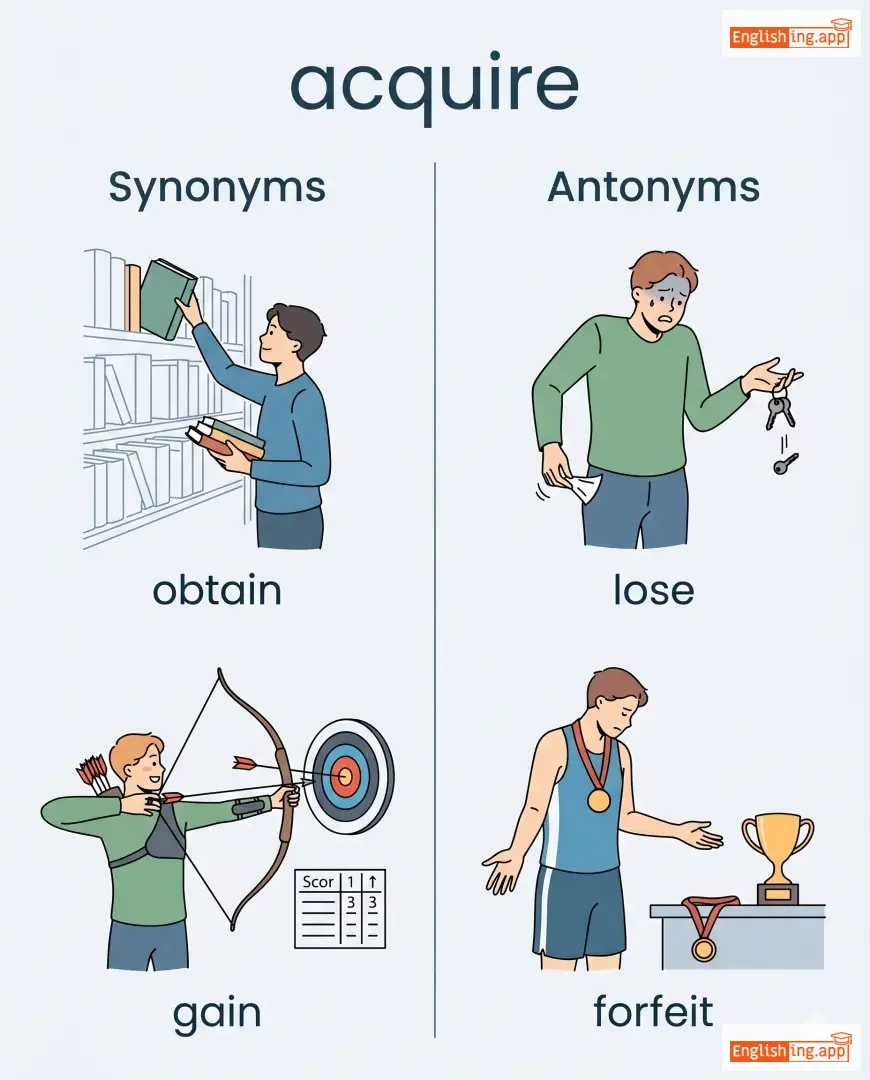
obtain, gain, get, purchase
••••••
|
lose, give up, surrender, forfeit
••••••
|
acquire skill, acquire knowledge, acquire property, newly acquire
••••••
|
Acquiring skills is like gaining new abilities in a game.
••••••
|
|
#117
👊
|
/hɪt/
verb
(ハピネス)
••••••
|
- •••••• |
打つ
utsu
••••••
|
hit
ハピネス
••••••
|
hit
ハピネス
••••••
|
hits
ハピネス
••••••
|
hitting
ハピネス
••••••
|
to strike; to reach a target
••••••
|
He hit the ball with the bat.
彼はバットでボールを打った。
••••••
|
彼はバットでボールを打った。
Kare wa batto de booru o utta.
••••••
|
strike, beat, punch, smack
••••••
|
miss, avoid, dodge
••••••
|
hit ball, hit target, hit hard, direct hit
••••••
|
Utsu means to hit, like hitting the ball with a bat.
••••••
|
|
#118
🌍
|
/trænsˈleɪt/
verb
(トランスレート)
••••••
|
|
翻訳する
hon'yaku suru
••••••
|
translated
翻訳した
••••••
|
translated
翻訳した
••••••
|
translates
翻訳する
••••••
|
translating
翻訳している
••••••
|
to express words or text in another language
••••••
|
She can translate five languages.
彼女は五カ国語を翻訳できます。
••••••
|
彼女は五カ国語を翻訳できます。
Kanojo wa go kakokugo wo hon'yaku dekimasu.
••••••
|
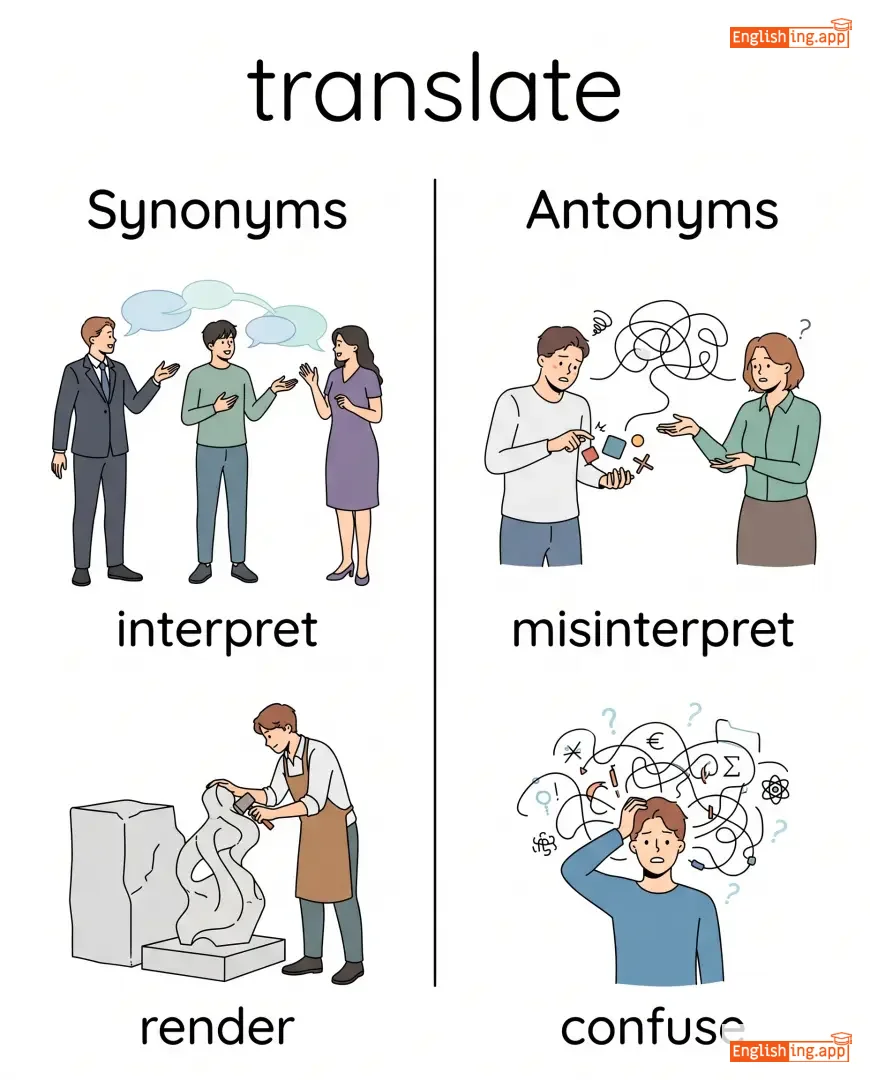
interpret, render, convert
••••••
|
confuse, garble, distort
••••••
|
translate language, translate document, translate accurately, machine translate
••••••
|
日本語で '翻訳する' は、一つの言語を別の言語に変換することです。
••••••
|
|
#119
🎨
|
/drɔː/
verb
(ドロー)
••••••
|
- •••••• |
描く
kaku
••••••
|
drew
ドゥルー
••••••
|
drawn
ドローン
••••••
|
draws
ドローズ
••••••
|
drawing
ドローイング
••••••
|
to create pictures or designs with a pencil or pen
••••••
|
She draws beautiful landscapes in her spare time.
彼女は余暇に美しい風景を描きます。
••••••
|
彼女は余暇に美しい風景を描きます。
Kanojo wa yokka ni utsukushii fūkei wo kakimasu.
••••••
|
sketch, illustrate, design, create
••••••
|
erase, destroy, ignore
••••••
|
draw picture, draw line, draw attention, draw conclusion
••••••
|
絵を描くとき、「描く」とは絵やデザインを作ることです。
••••••
|
Vocabulary Quiz
Test your vocabulary by matching words with their translations or meanings.
Login to take the quiz
Comments (0)
Share your thoughts and join the discussion.
Join the discussion by logging in
Login to CommentNo comments yet
Be the first to share your thoughts!