

翻訳
過去
過去分詞
三人称単数
動名詞
意味
例文
例文の翻訳
同義語
対義語
コロケーション
ニーモニック




Swipe left or right, or use the buttons. Tap image to zoom.
例文の翻訳
単語
Lesson 22: Mastering the Most Frequent Verbs & TensesLesson 22: Mastering the Most Frequent Verbs & Tenses - マスクトグル
|
絵文字
|
単語 | Images | 翻訳 | 過去 | 過去分詞 | 三人称単数 | 動名詞 | 意味 | 例文 | 例文の翻訳 | 同義語 | 対義語 | コロケーション | ニーモニック |
|---|---|---|---|---|---|---|---|---|---|---|---|---|---|---|
|
#626
💪
|
/ˈleɪbər/
verb
(レイバー)
••••••
|
|
一生懸命働く
isshōkenmei hataraku
••••••
|
laboured
レイバード
••••••
|
laboured
レイバード
••••••
|
labours
レイバーズ
••••••
|
labouring
レイバーリング
••••••
|
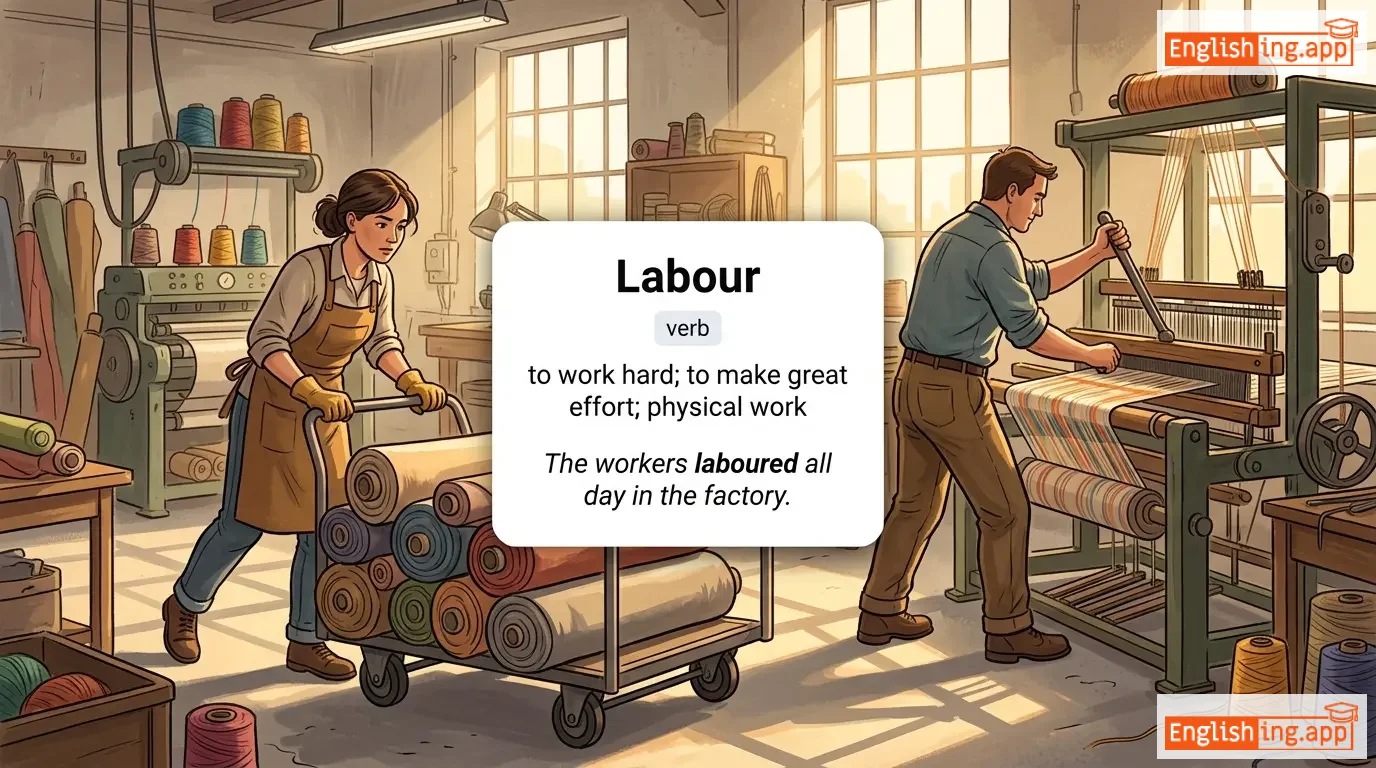
to work hard; to make great effort; physical work
••••••
|
The workers laboured all day in the factory.
労働者たちは工場で一日中働いた。
••••••
|
労働者たちは工場で一日中働いた。
Rōdōsha-tachi wa kōjō de ichinichijū hataraita.
••••••
|
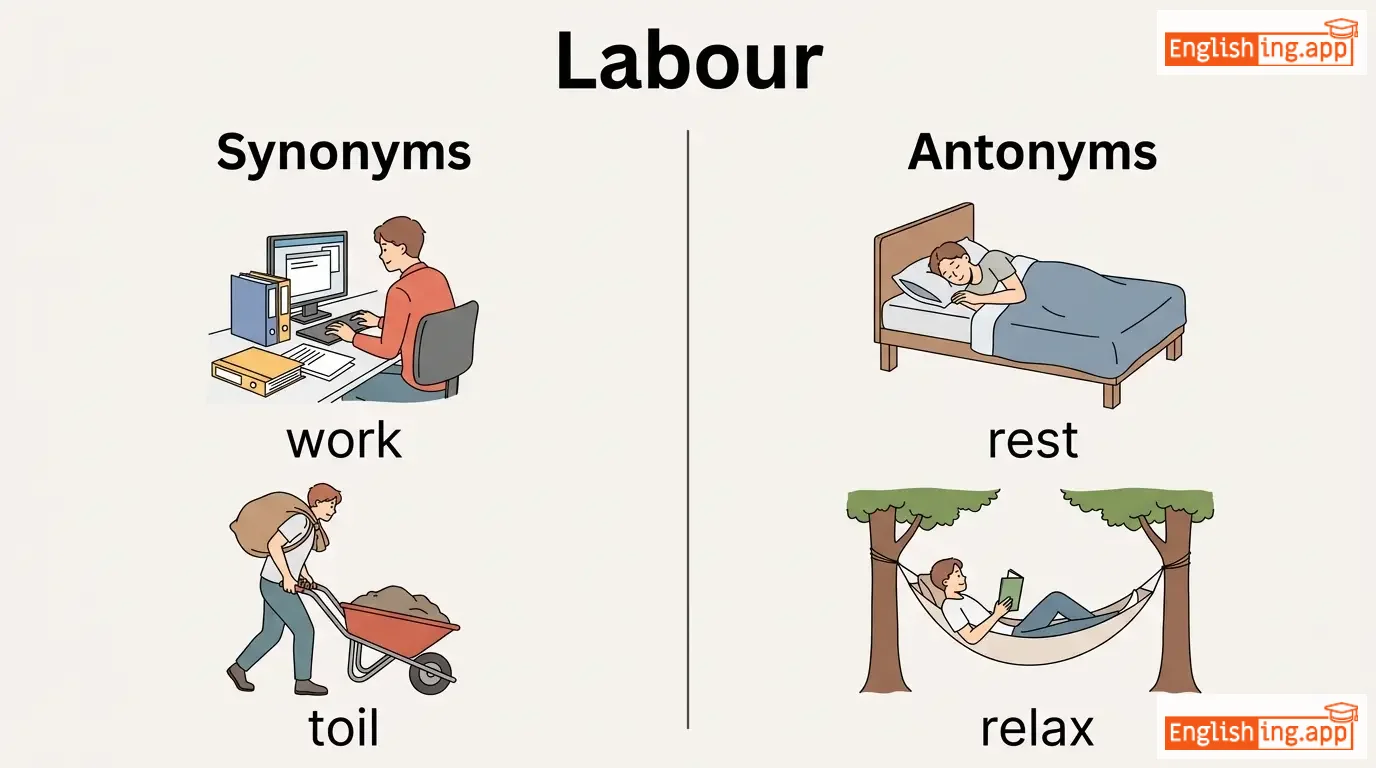
work, toil, strive, struggle
••••••
|
rest, relax, idle, lounge
••••••
|
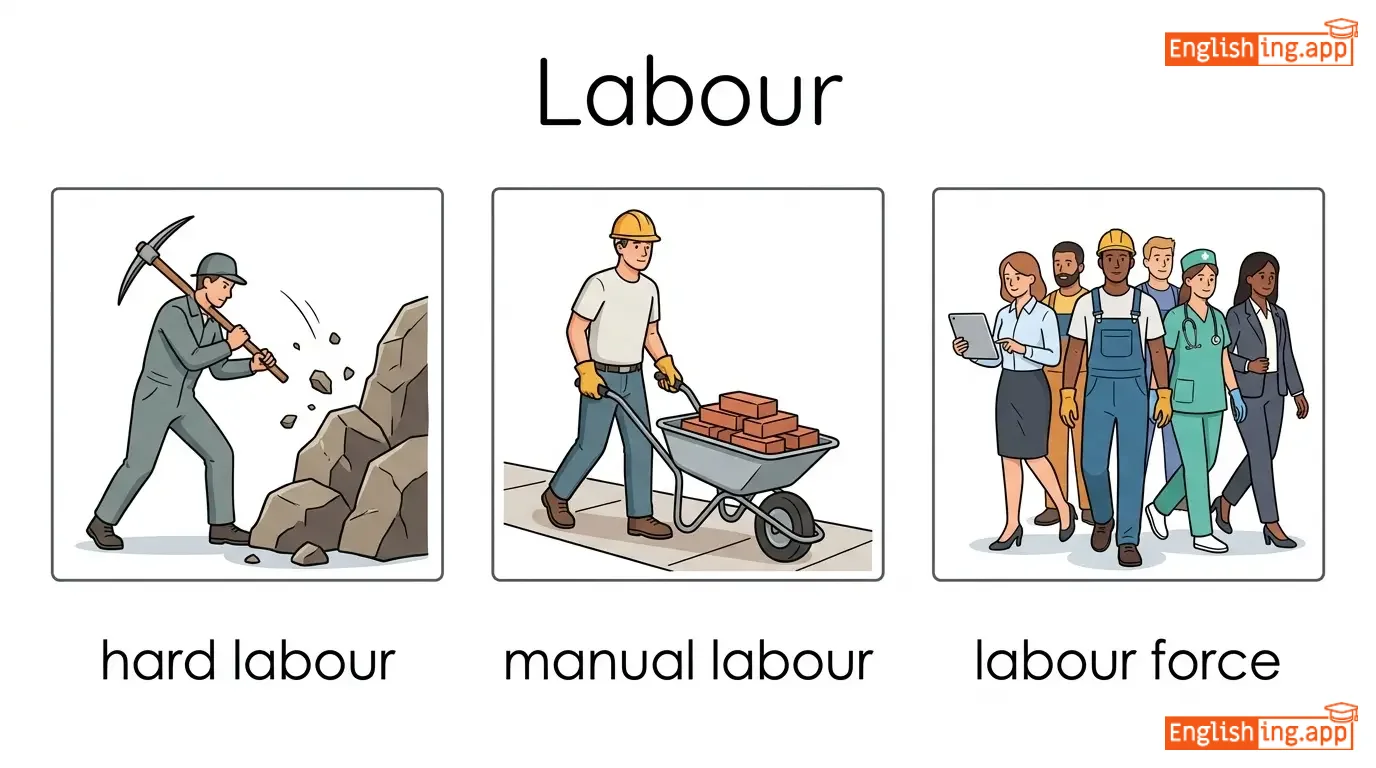
hard labour, manual labour, labour force, labour market, labour intensive
••••••
|
Labor in English sounds like 'レイバー', and '一生懸命働く' means working hard in Japanese!
••••••
|
|
#627
💎
|
/ɪnˈherɪt/
verb
(インヘリット)
••••••
|
|
相続する
sōzoku suru
••••••
|
inherited
インヘリテッド
••••••
|
inherited
インヘリテッド
••••••
|
inherits
インヘリッツ
••••••
|
inheriting
インヘリティング
••••••
|
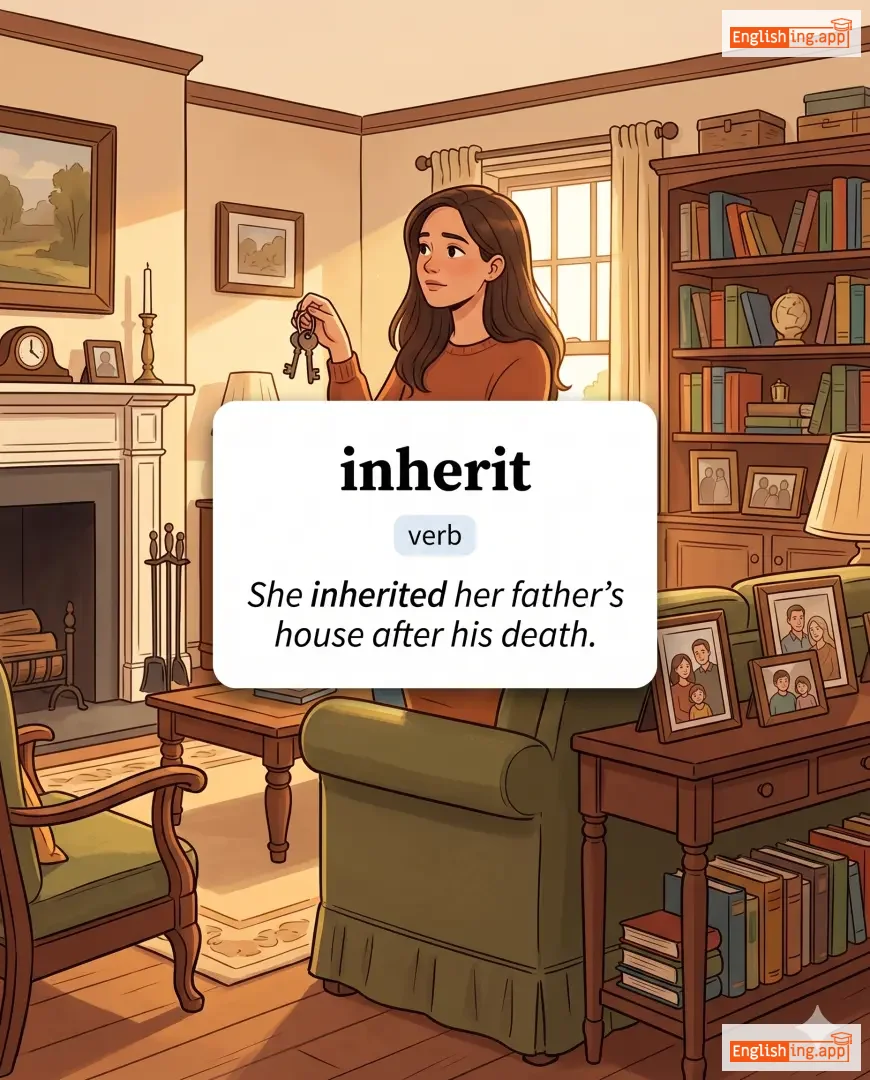
to receive property from someone who died; to receive genetically
••••••
|
She inherited her grandmother's jewelry.
彼女は祖母の宝石をインヘリテッド
••••••
|
彼女は祖母の宝石を相続しました。
Kanojo wa sobo no hōseki o sōzoku shimashita.
••••••
|
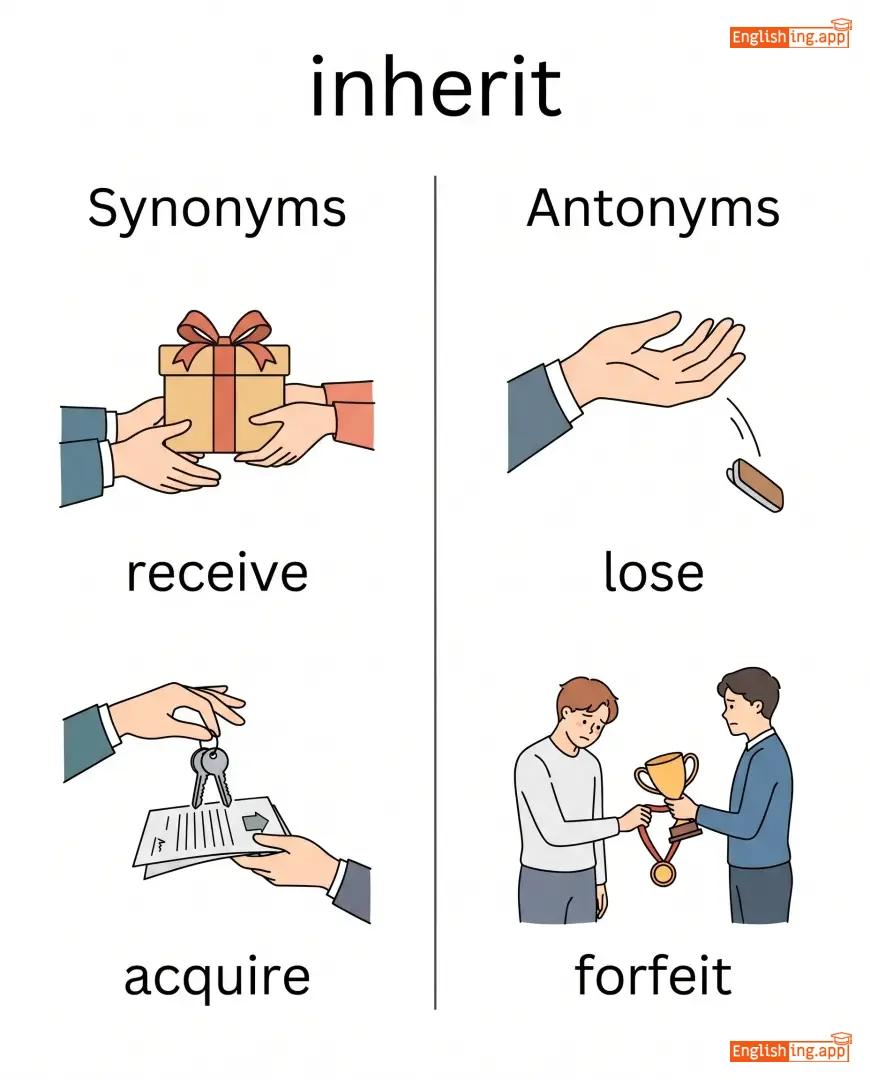
receive, acquire, obtain, gain
••••••
|
lose, forfeit, give, donate
••••••
|
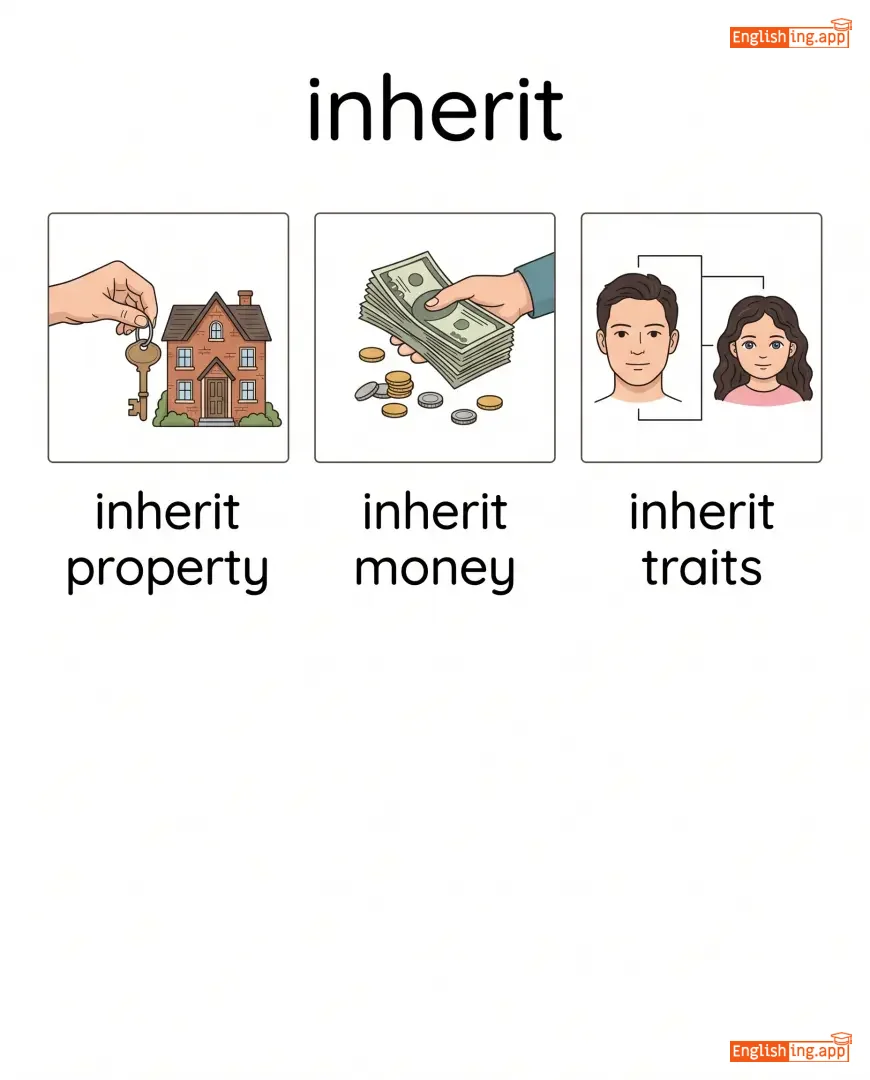
inherit property, inherit genes, inherit wealth, inherit money, inherit characteristics
••••••
|
相続して祖母の宝石を受け取る!
••••••
|
|
#628
⚠️
|
/wɔːrn/
verb
(ワーン)
••••••
|
|
警告する
keikoku suru
••••••
|
warned
ワーンド
••••••
|
warned
ワーンド
••••••
|
warns
ワーンズ
••••••
|
warning
ワーニング
••••••
|
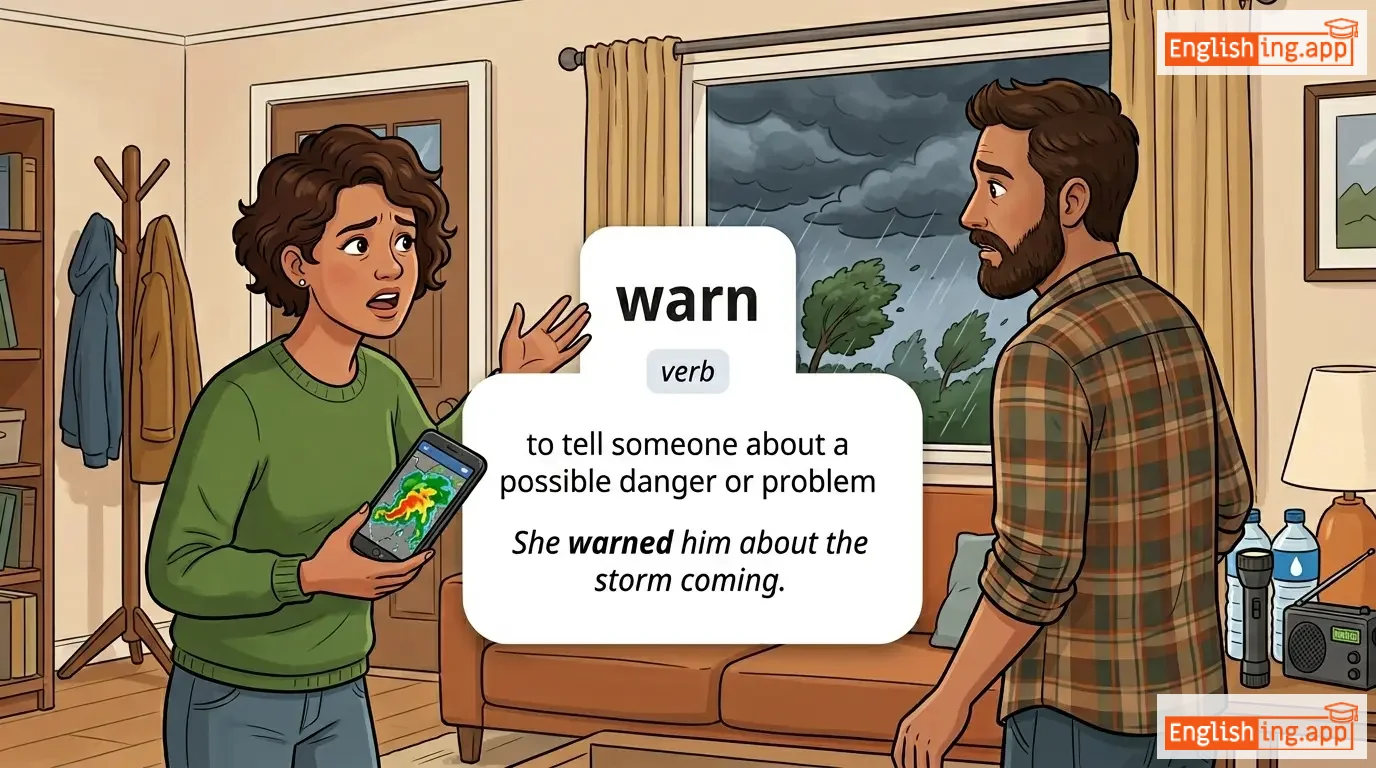
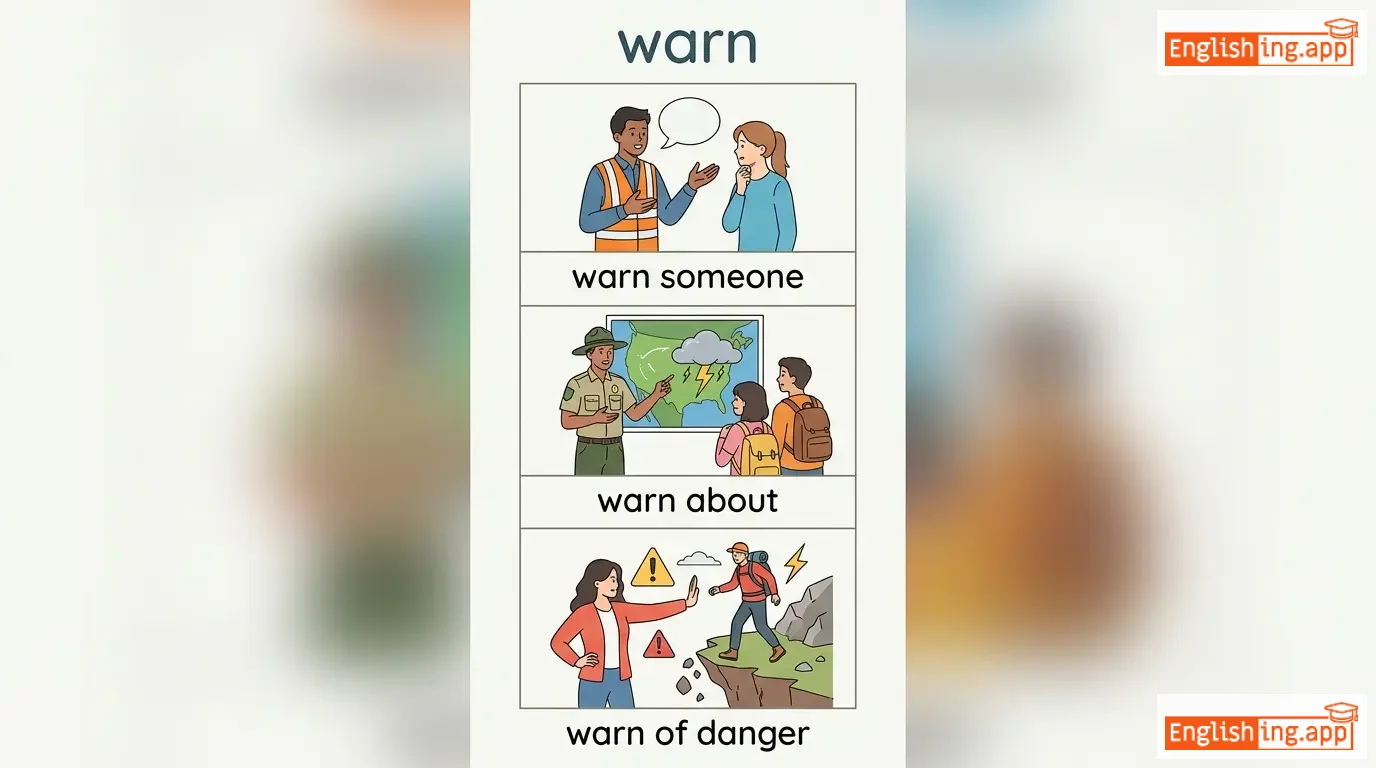
to alert about danger; to give notice of risk
••••••
|
The weather service warns of heavy rain tonight.
気象サービスは今夜の大雨を警告しています。
••••••
|
気象サービスは今夜の大雨を警告しています。
Kishou saabisu wa konya no oame o keikoku shiteimasu.
••••••
|
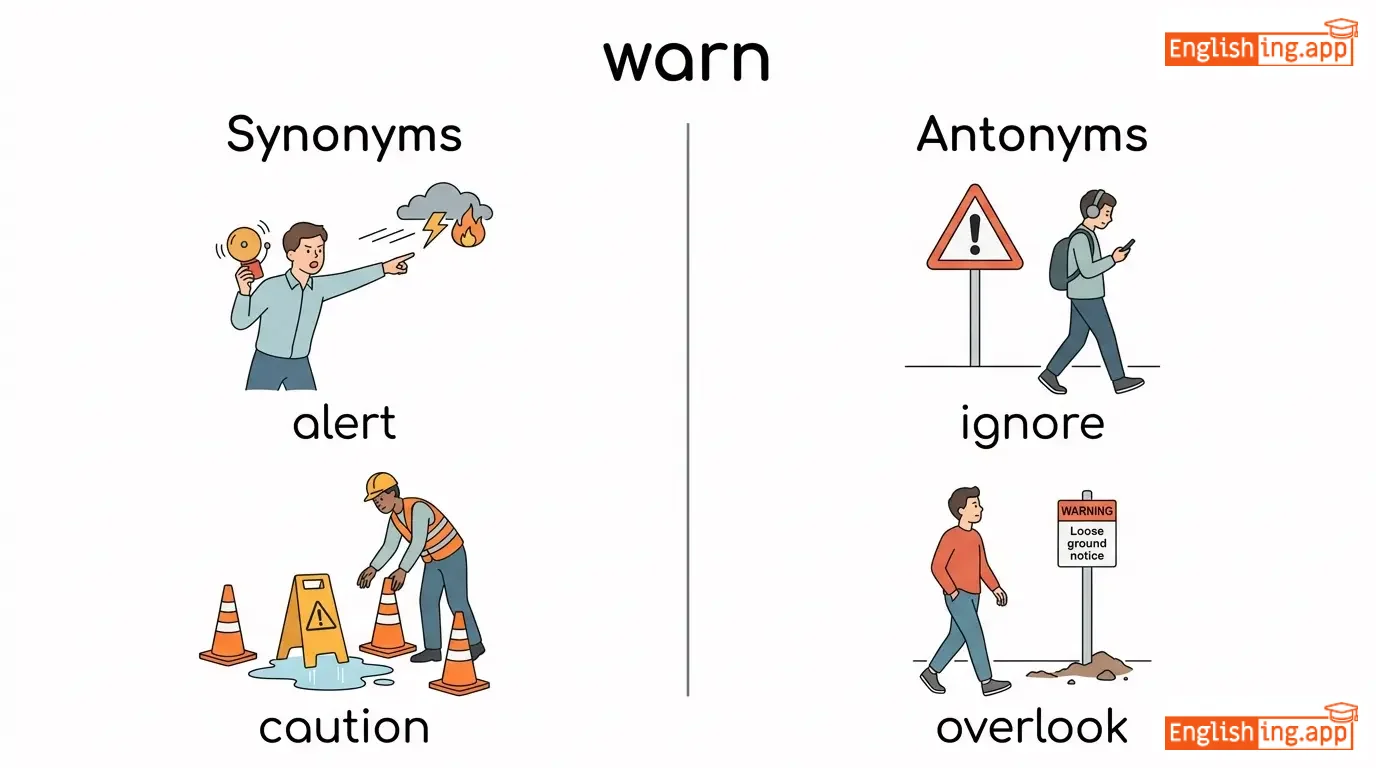
alert, caution, advise, notify, inform
••••••
|
mislead, deceive, ignore, conceal
••••••
|
warn against, warn about, warn of danger, warn someone, early warning
••••••
|
No •••••• |
|
#629
➕
|
/æd/
verb
(アッド)
••••••
|
|
追加する
tsuika suru
••••••
|
added
追加された
••••••
|
added
追加された
••••••
|
adds
追加する
••••••
|
adding
追加中
••••••
|
to join something to something else; to include
••••••
|
Please add sugar to my coffee.
コーヒーに砂糖を加えてください。
••••••
|
コーヒーに砂糖を加えてください。
Koohii ni satou o kuwaete kudasai.
••••••
|
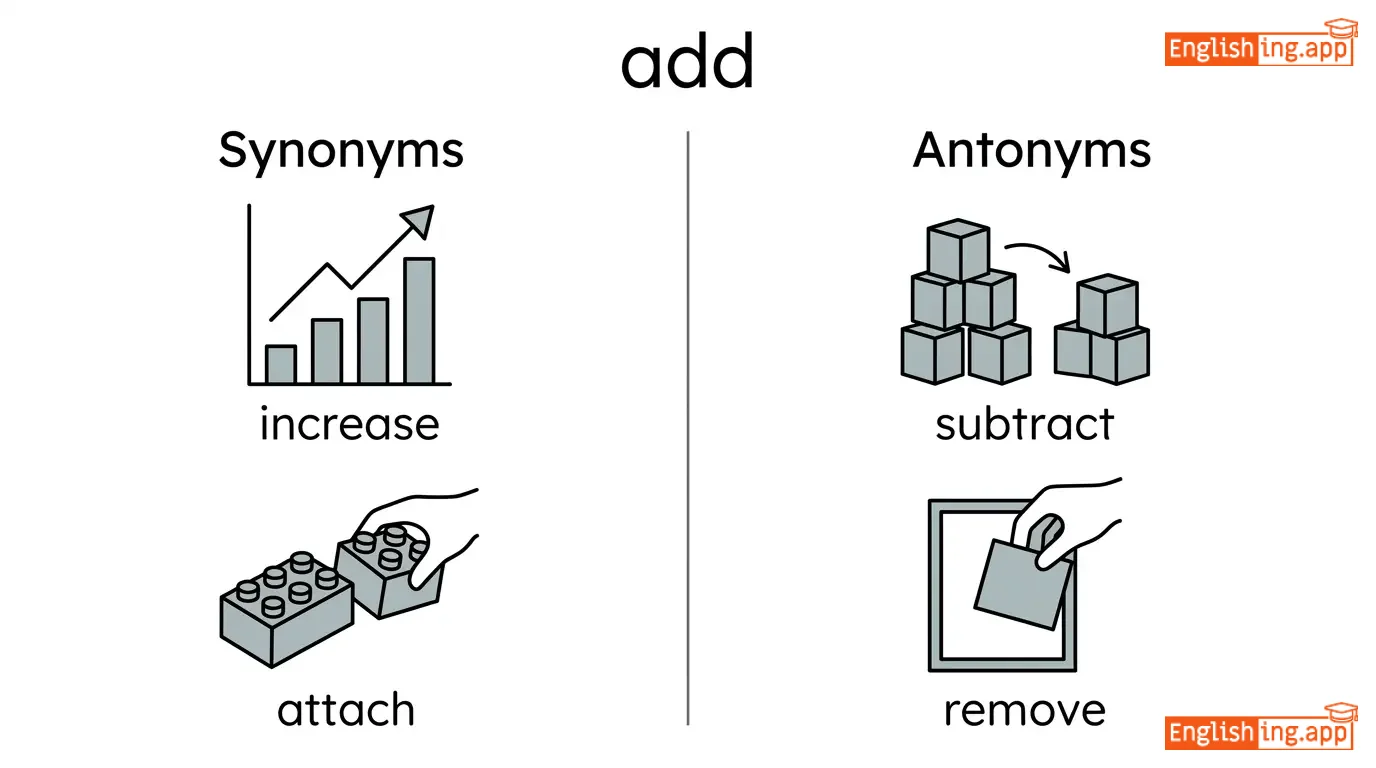
include, append, attach, combine
••••••
|
subtract, remove, take away, exclude
••••••
|
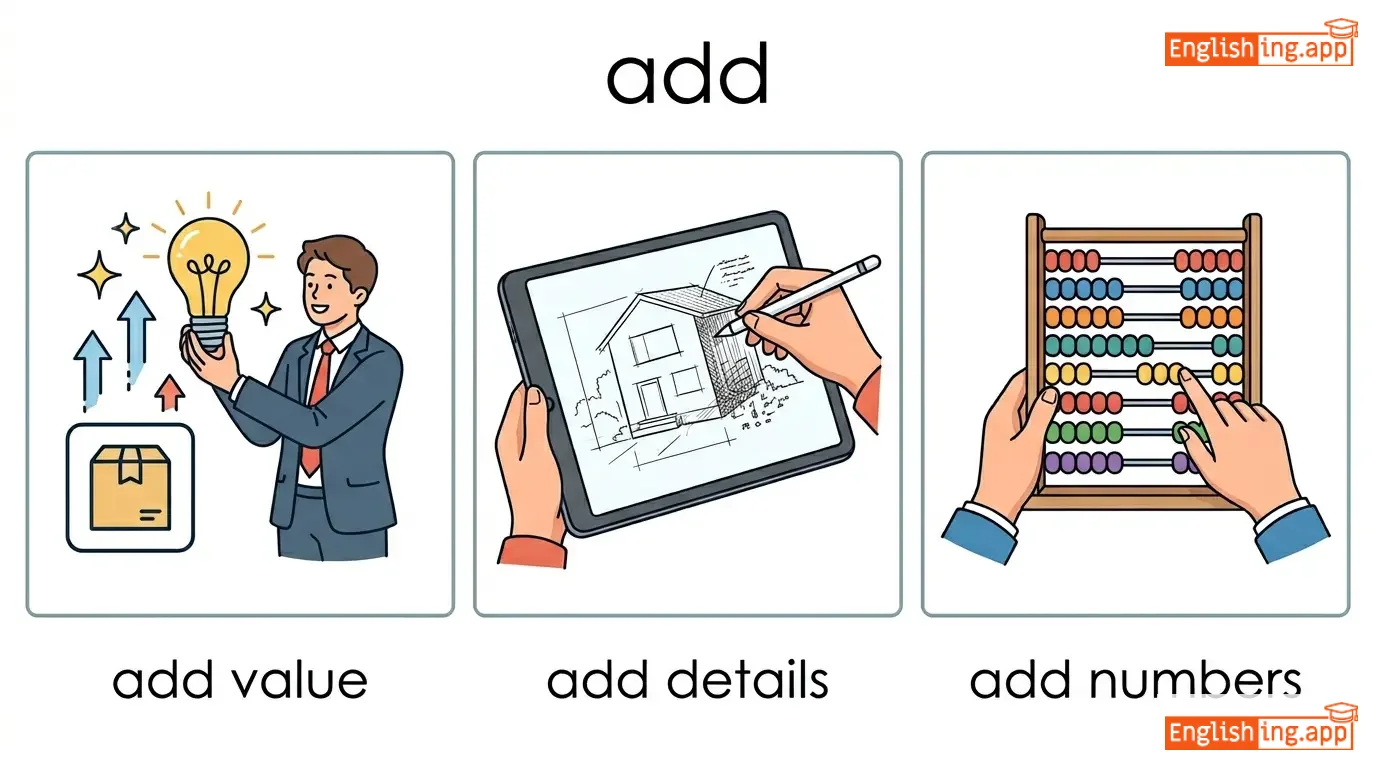
add up, add to, add sugar, add value, add together
••••••
|
No •••••• |
|
#630
😭
|
/waɪn/
verb
(wainn)
••••••
|
|
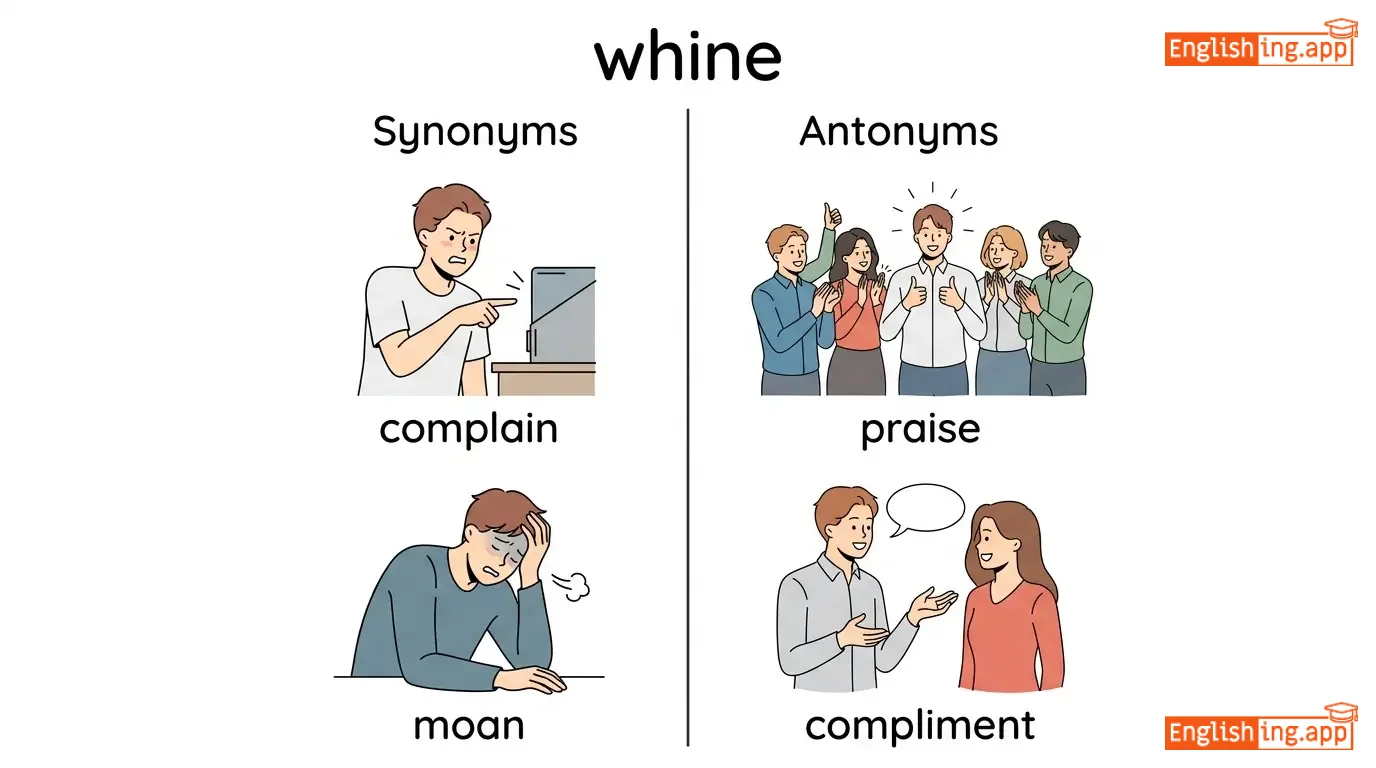
不平を言う
fuhei wo iu
••••••
|
whined
wained
••••••
|
whined
wained
••••••
|
whines
waines
••••••
|
whining
waining
••••••
|
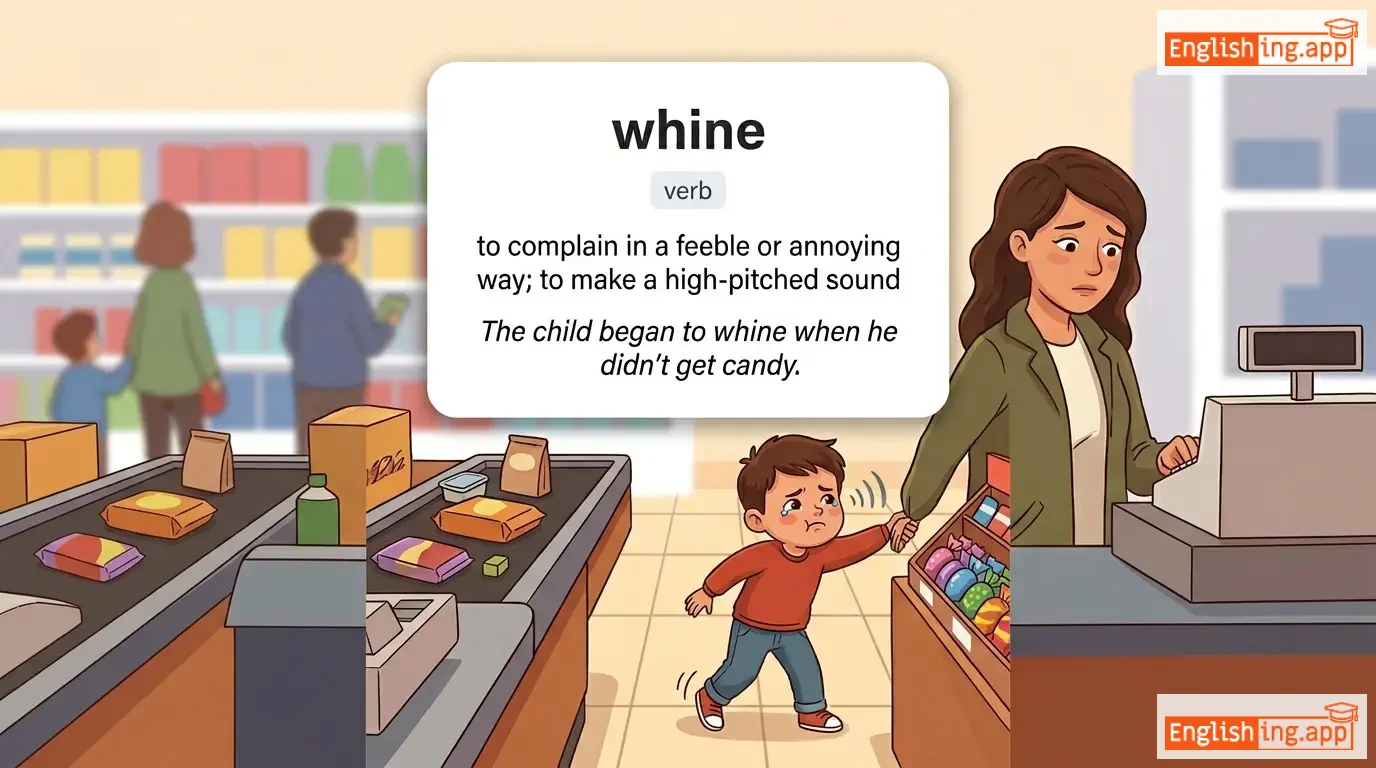
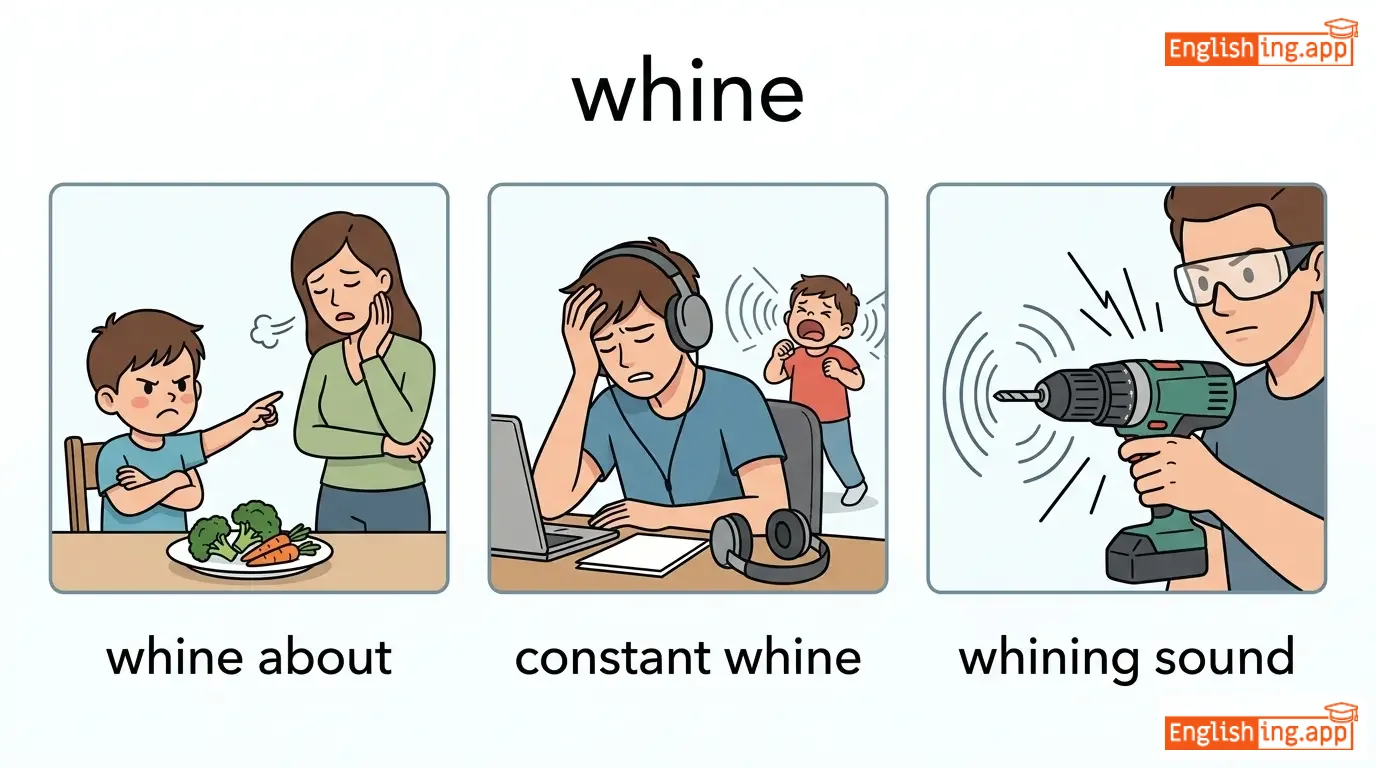
to complain in an annoying way; to make a high-pitched sound
••••••
|
The child whined about having to go to bed early.
子供は早く寝なければならないことについて文句を言った。
••••••
|
子供は早く寝なければならないことについて不平を言った。
Kodomo wa hayaku nenakereba naranai koto ni tsuite fuhei wo itta.
••••••
|
complain, grumble, moan, fuss
••••••
|
praise, accept, agree, appreciate
••••••
|
whine about, whine constantly, whine and complain, stop whining, whine like a baby
••••••
|
子供の不平はまるで'whine'のように聞こえます。
••••••
|
|
#631
✋
|
/stroʊk/
verb
(sutorōku)
••••••
|
|
なでる
naderu
••••••
|
stroked
sutorōkudo
••••••
|
stroked
sutorōkudo
••••••
|
strokes
sutorōkusu
••••••
|
stroking
sutorōkingu
••••••
|
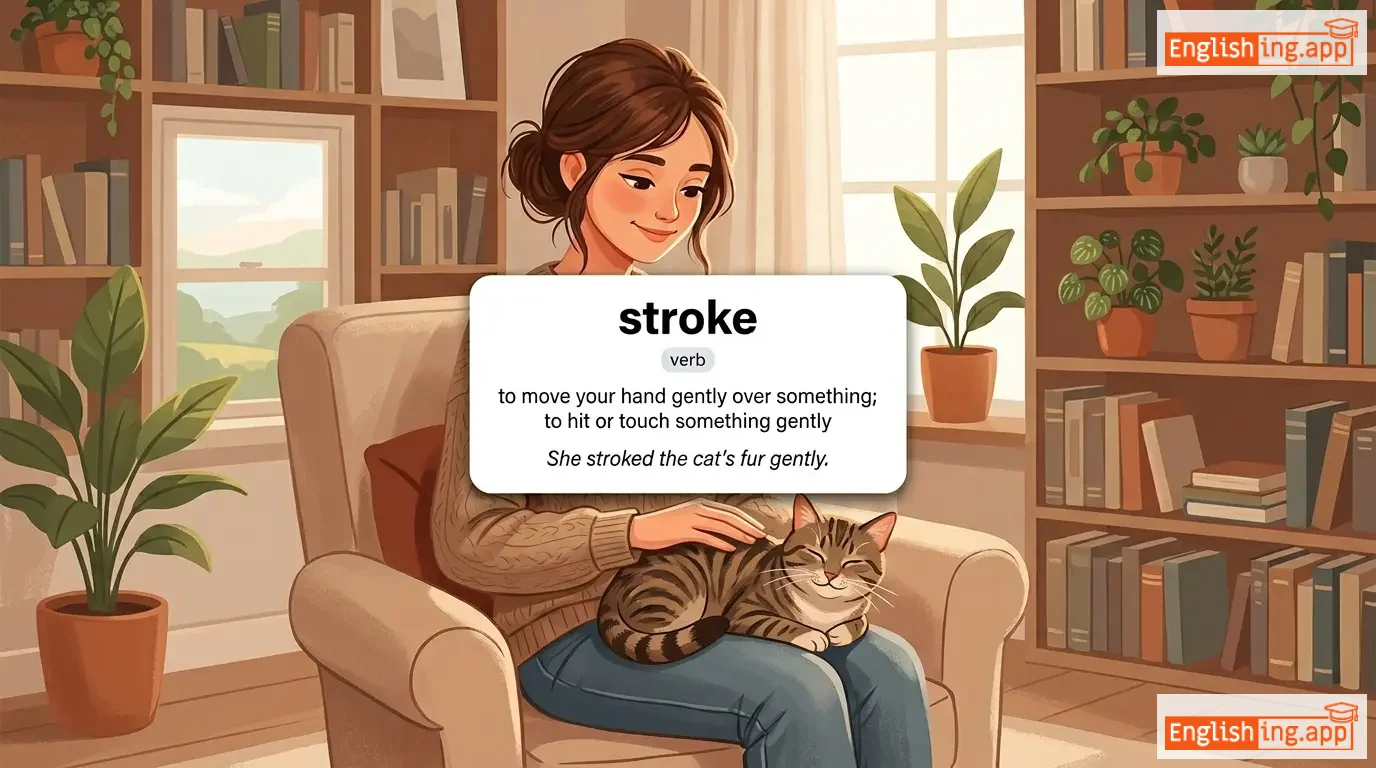
to move your hand gently over something; to hit or touch something gently
••••••
|
She stroked the cat's fur gently.
彼女は猫の毛を優しくなでました。
••••••
|
彼女は猫の毛を優しくなでました。
Kanojo wa neko no ke o yasashiku nademashita.
••••••
|
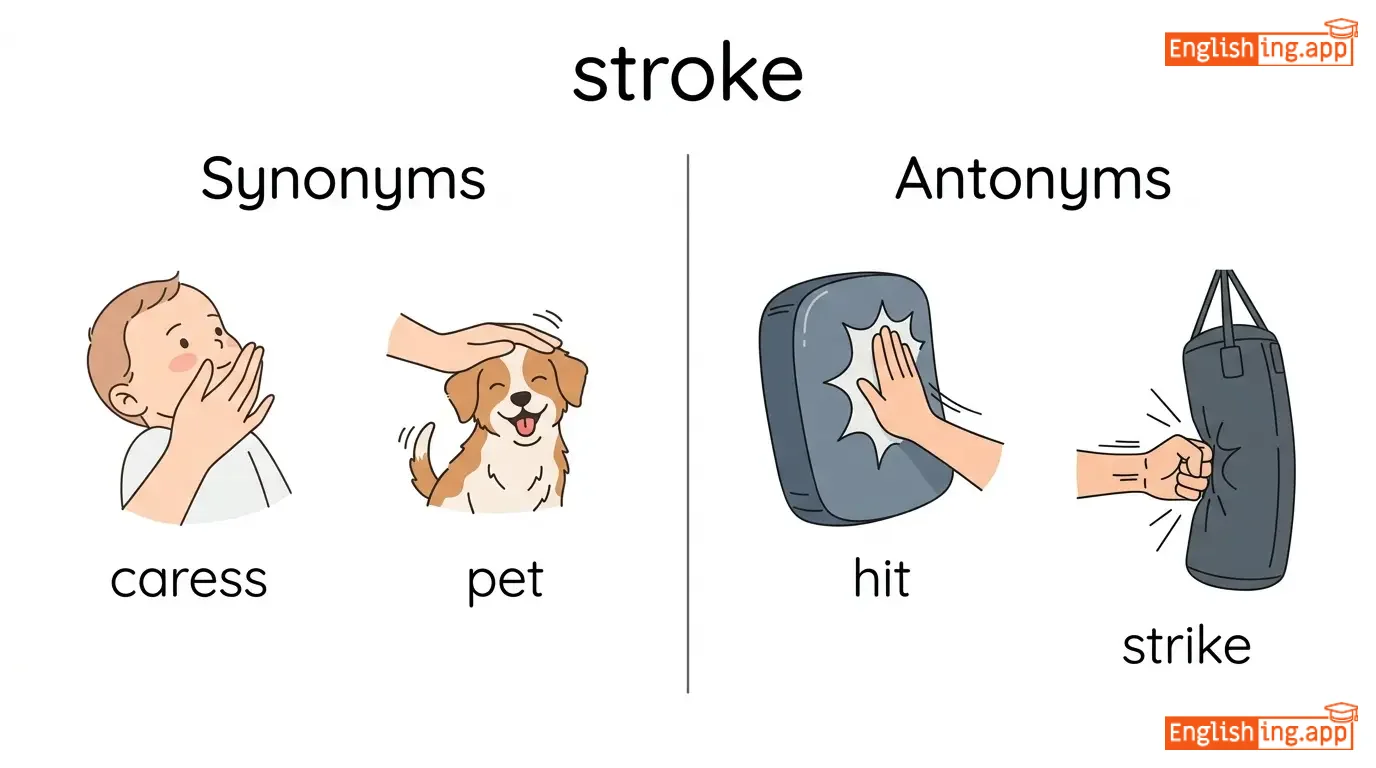
caress, pet, touch, brush
••••••
|
hit, strike, slap
••••••
|
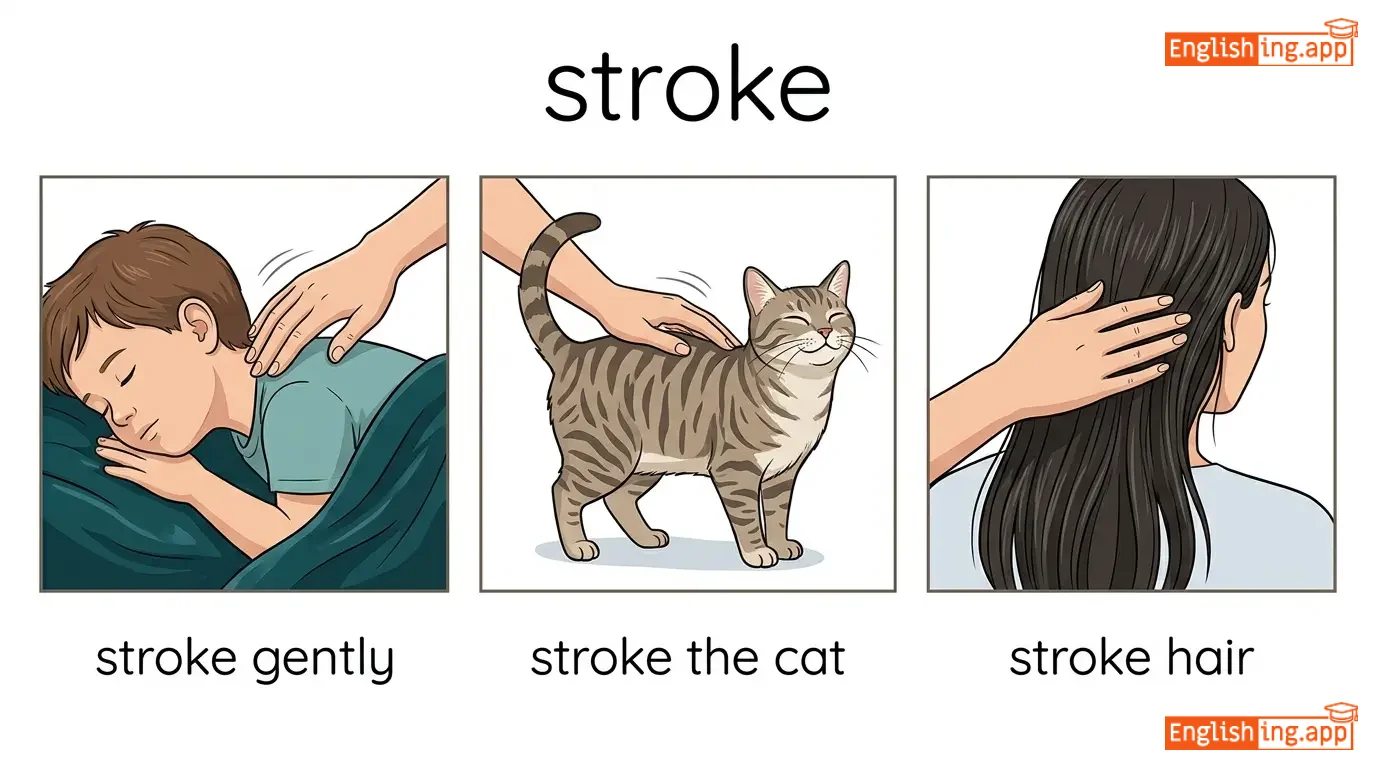
stroke gently, stroke the cat, stroke hair, swimming stroke, suffer a stroke
••••••
|
Think of gently stroking a soft cat's fur, relaxing and comforting it.
••••••
|
|
#632
🔧
|
/ˈmɑːdɪfaɪ/
verb
(モディファイ)
••••••
|
|
変更する
henkou suru
••••••
|
modified
モディファイド
••••••
|
modified
モディファイド
••••••
|
modifies
モディファイズ
••••••
|
modifying
モディファイング
••••••
|
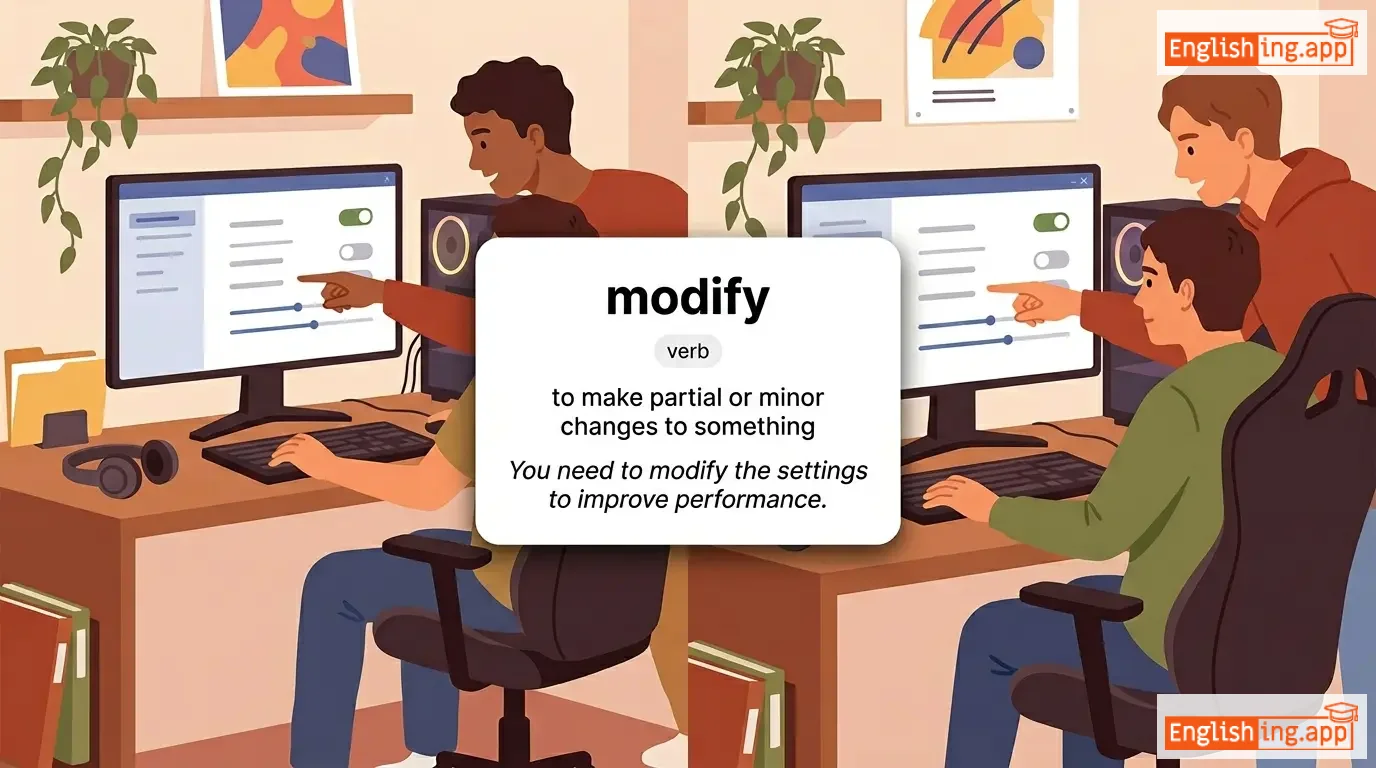
to change or alter something; to make partial changes
••••••
|
We need to modify the plan to include more details.
計画を変更して、詳細を追加する必要があります。
••••••
|
計画を変更して、詳細を追加する必要があります。
Keikaku o henkou shite, shousai o tsuika suru hitsuyou ga arimasu.
••••••
|
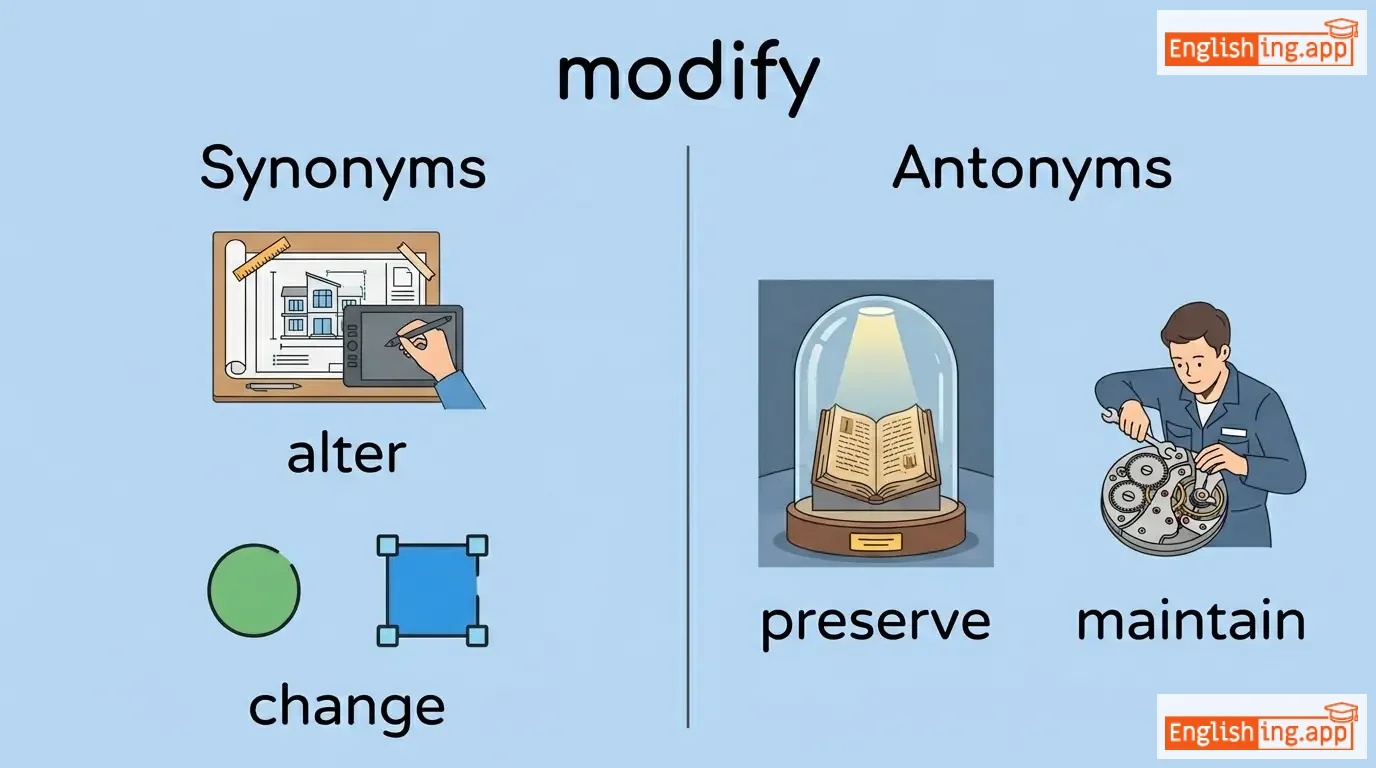
change, alter, adjust, revise, update
••••••
|
maintain, preserve, keep unchanged
••••••
|
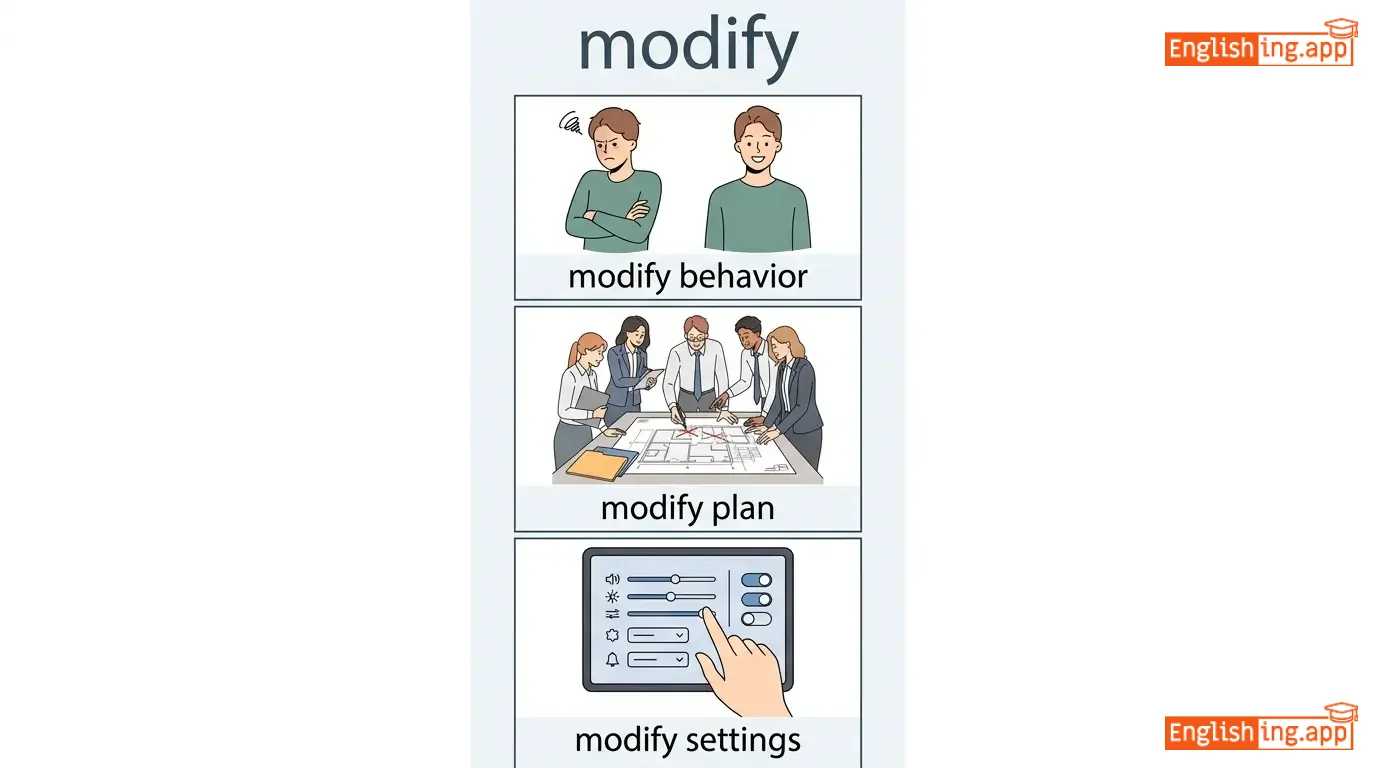
modify slightly, modify plans, modify behavior, modify settings, heavily modified
••••••
|
Japanese-English mnemonic: '計画を変更して詳細を追加' ('modify the plan to add details')
••••••
|
|
#633
🐻
|
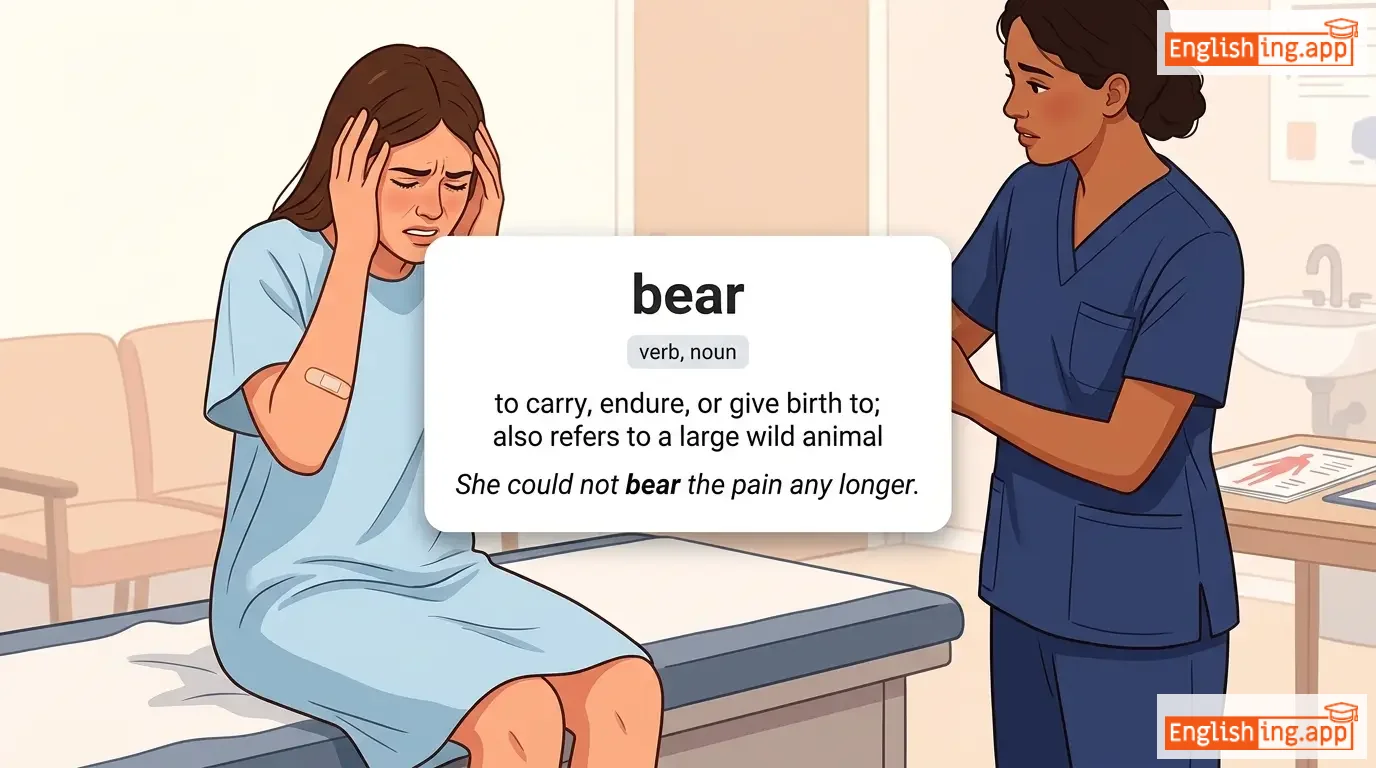
/bɛr/
verb
(ベア)
••••••
|
|
耐える
taeru
••••••
|
bore
ボア
••••••
|
born
ボーン
••••••
|
bears
ベアーズ
••••••
|
bearing
ベアリング
••••••
|
to carry; to endure; to give birth to; to support
••••••
|
She cannot bear the pain anymore.
シー キャント ベア ザ ペイン エニモア。
••••••
|
彼女はもうこの痛みを耐えられません。
Kanojo wa mou kono itami wo taeraremasen.
••••••
|
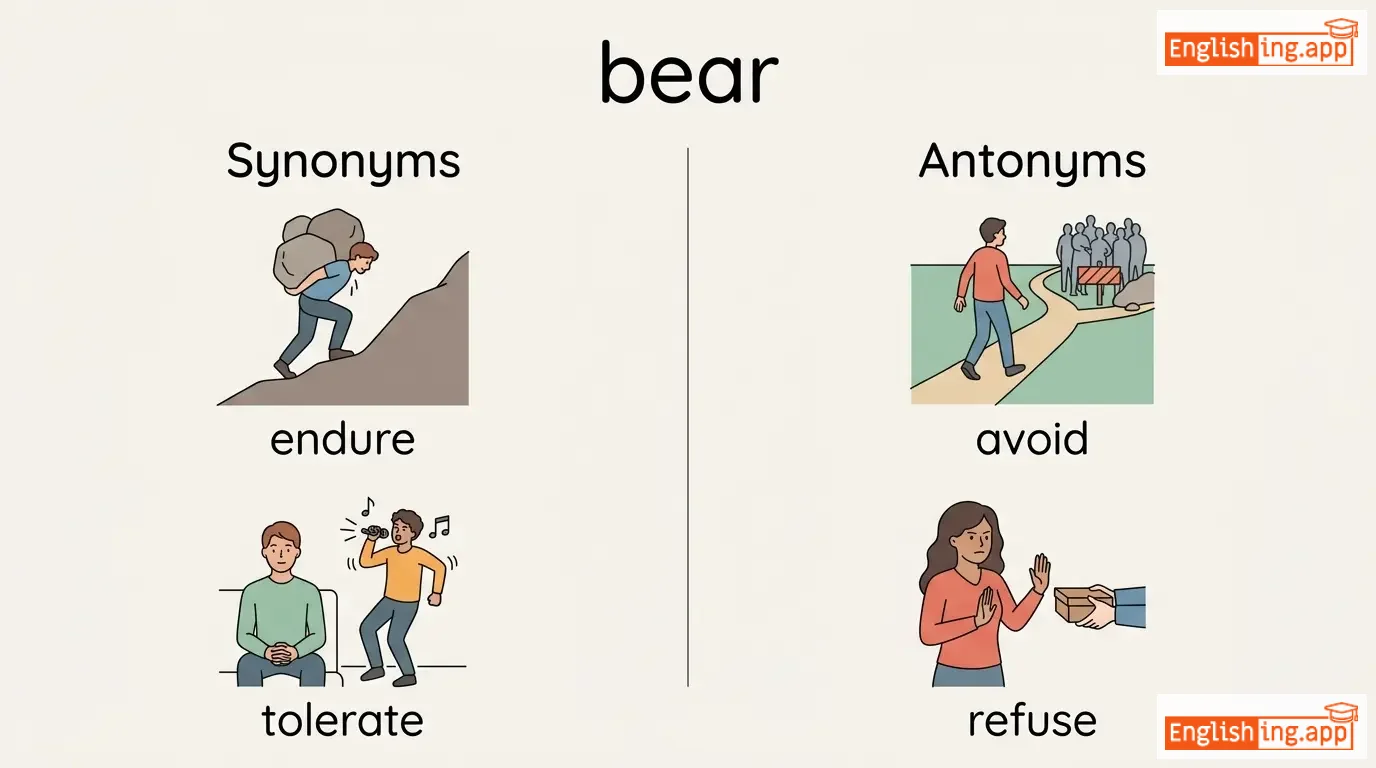
carry, endure, support, tolerate, sustain
••••••
|
drop, abandon, reject, avoid
••••••
|
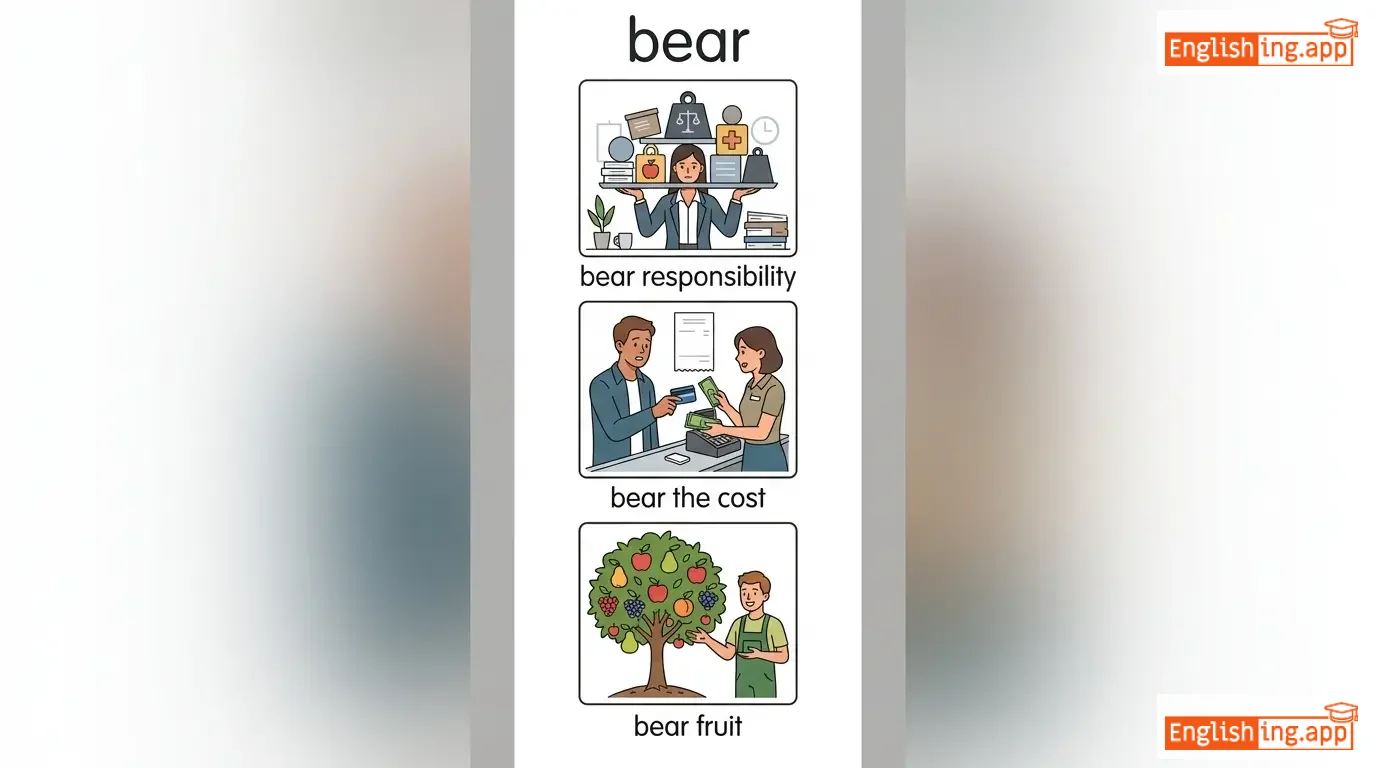
bear fruit, bear children, bear responsibility, bear witness, bear in mind
••••••
|
クマは痛みを耐え、子供たちを支えます。
••••••
|
|
#634
🤔
|
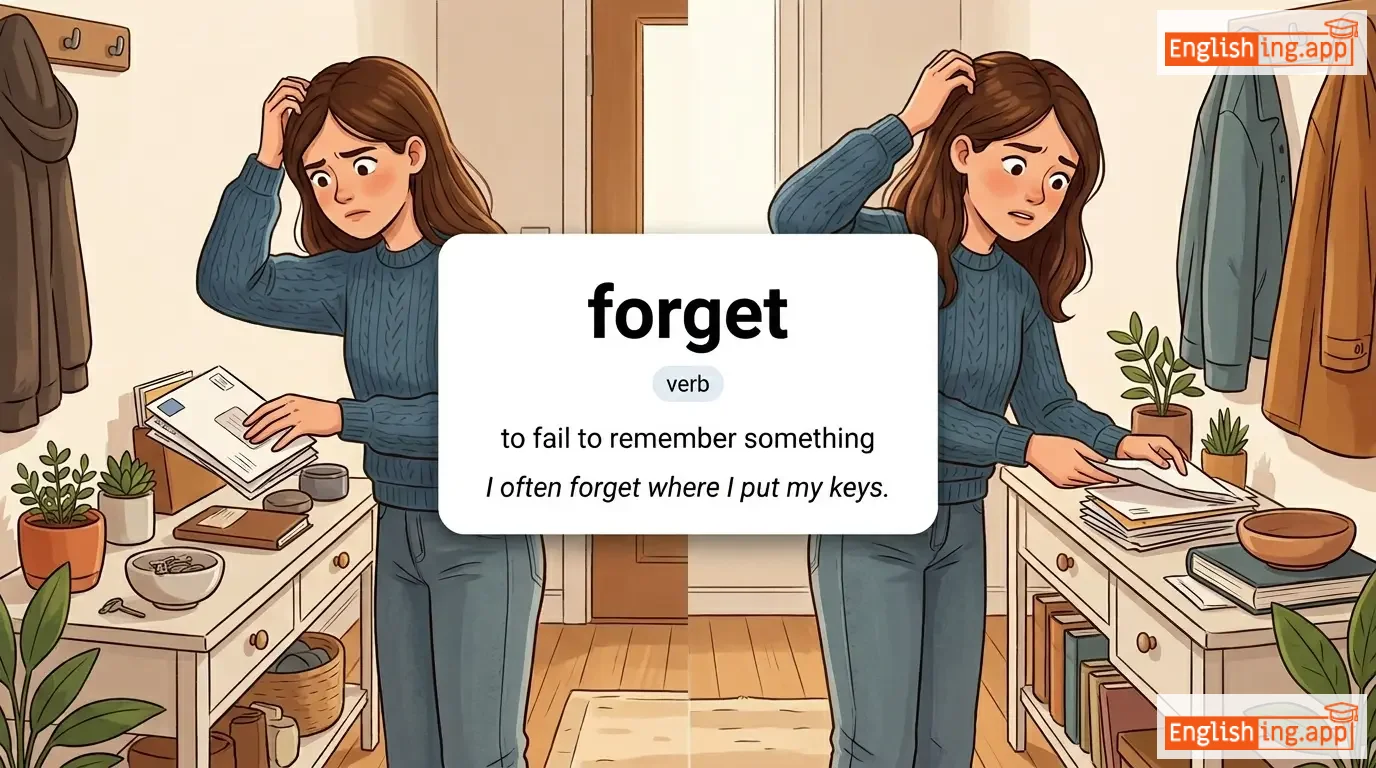
/fərˈɡet/
verb
(フォーゲット)
••••••
|
|
忘れる
wasureru
••••••
|
forgot
フォーゴット
••••••
|
forgotten
フォーゴッテン
••••••
|
forgets
フォーゲッツ
••••••
|
forgetting
フォーゲッティング
••••••
|
to be unable to remember something; to fail to bring something to mind
••••••
|
Don't forget to lock the door when you leave.
ドント・フォーゲット・トゥ・ロック・ザ・ドア・ウェン・ユー・リーブ。
••••••
|
出かけるときはドアを閉め忘れないでください。
Dekakeru toki wa doa o shime wasurenaide kudasai.
••••••
|
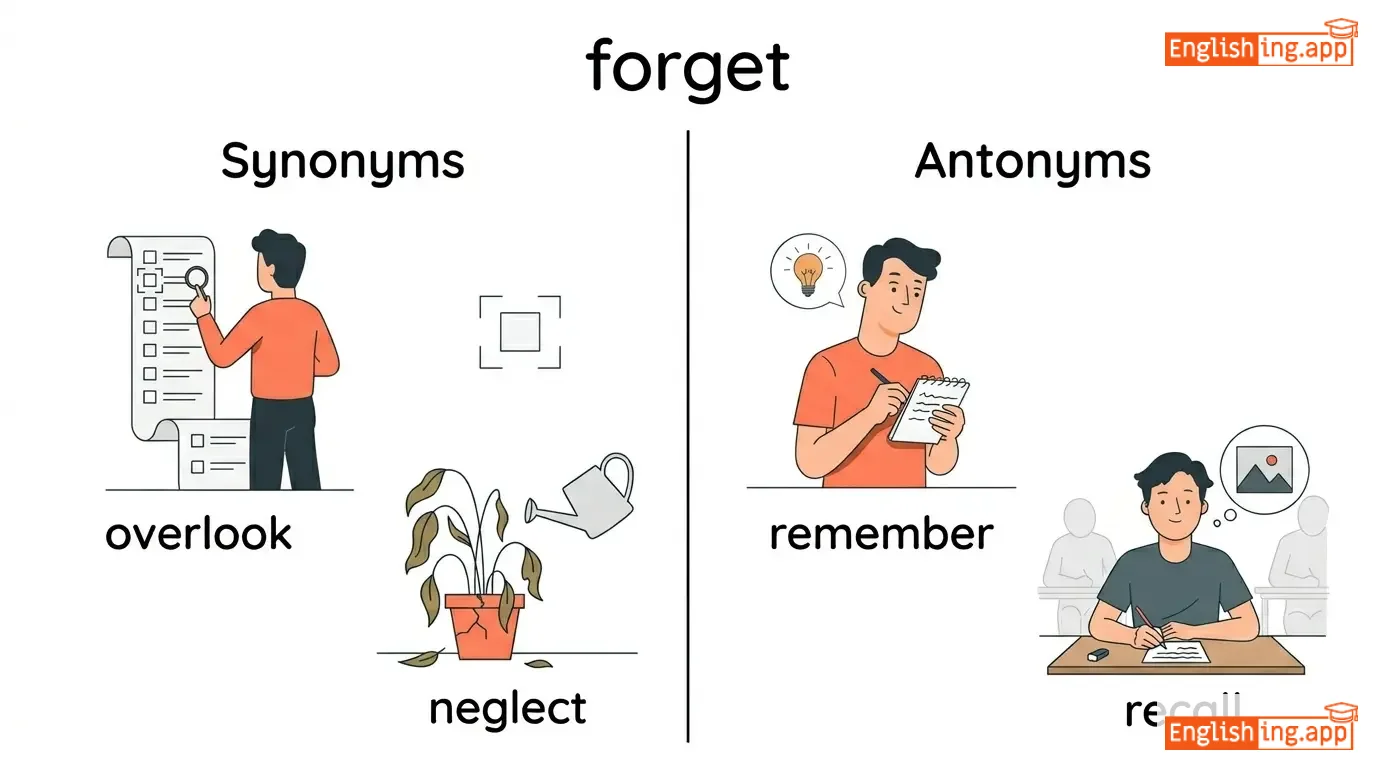
overlook, neglect, omit, disregard
••••••
|
remember, recall, recollect, memorize
••••••
|
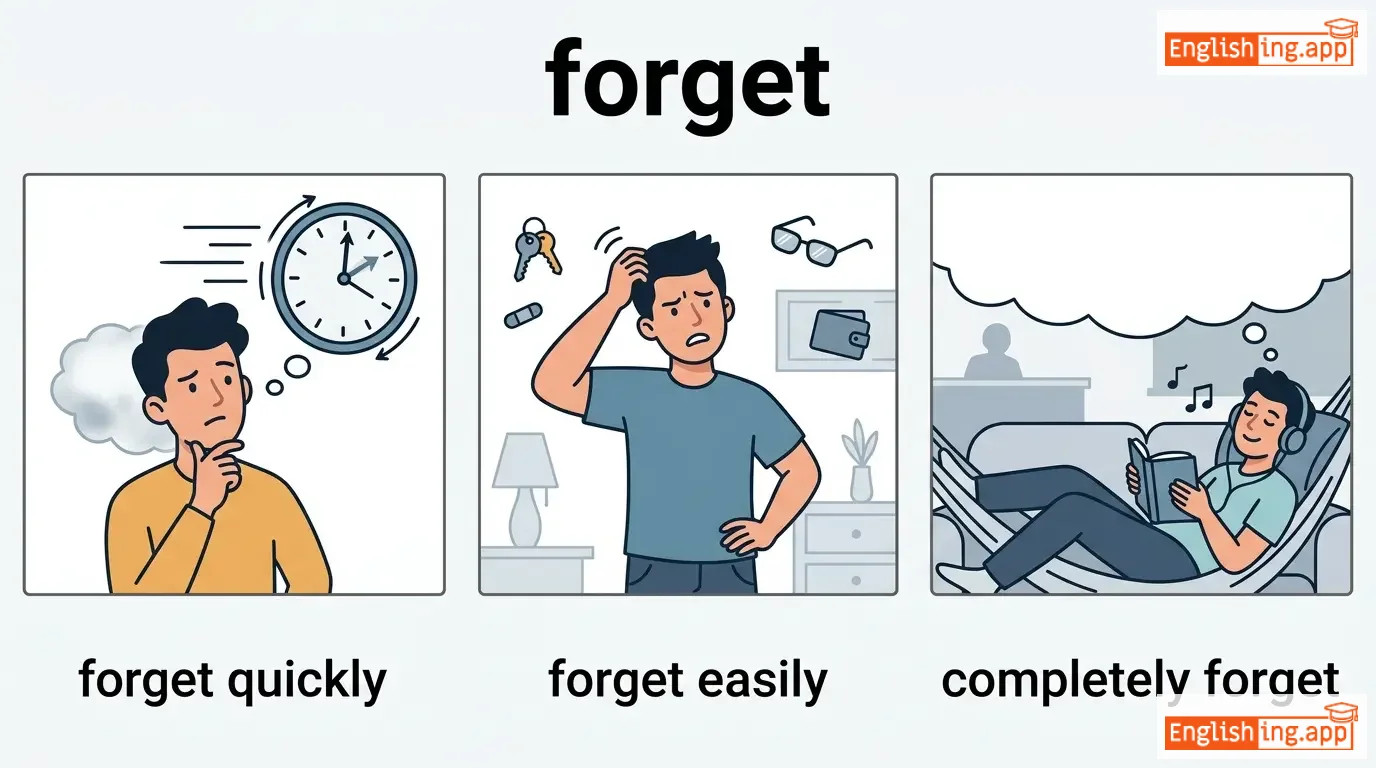
forget about, forget to do, never forget, forget completely, forget easily
••••••
|
忘れる = ドアを忘れると閉まってない。
••••••
|
|
#635
💥
|
/dɪˈstrɔɪ/
verb
(ディストロイ)
••••••
|
|
破壊する
hakai suru
••••••
|
destroyed
ディストロイド
••••••
|
destroyed
ディストロイド
••••••
|
destroys
ディストロイズ
••••••
|
destroying
ディストロイング
••••••
|
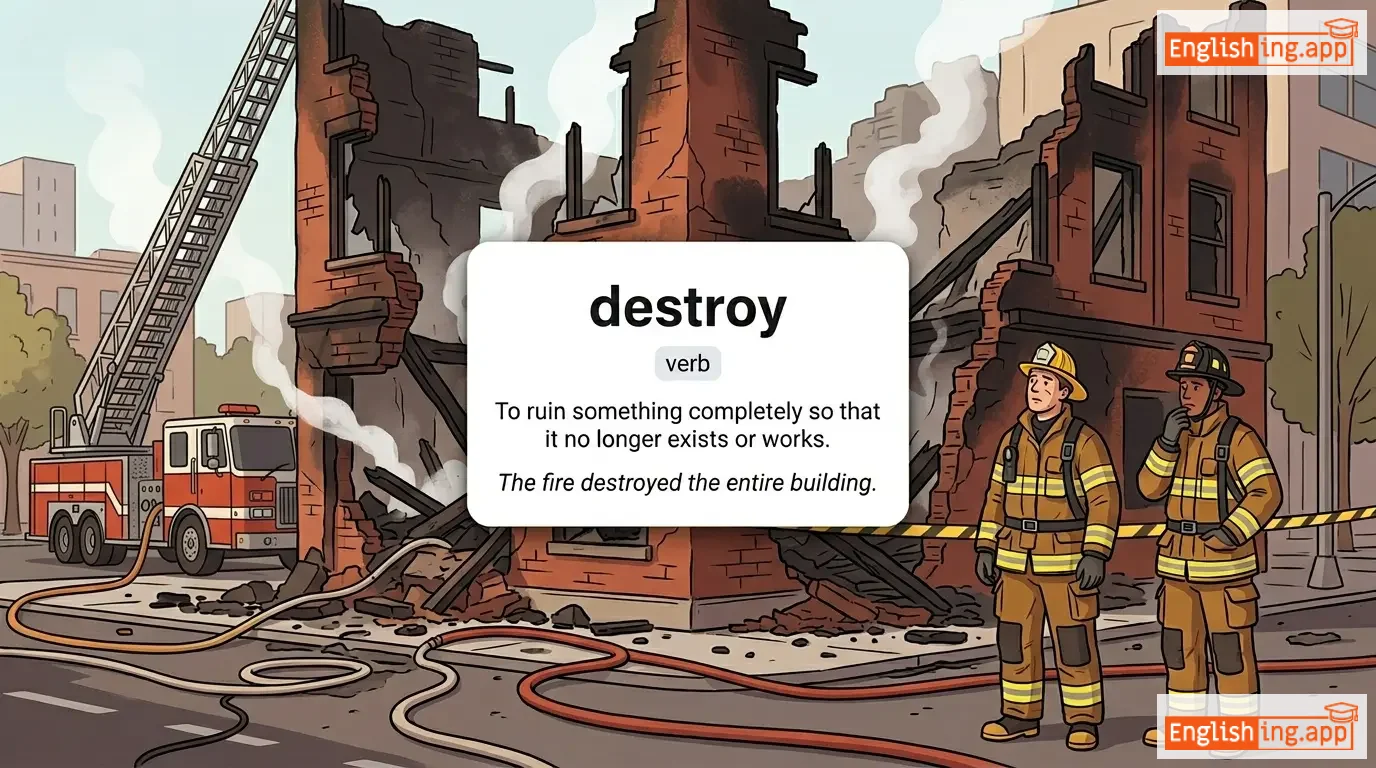
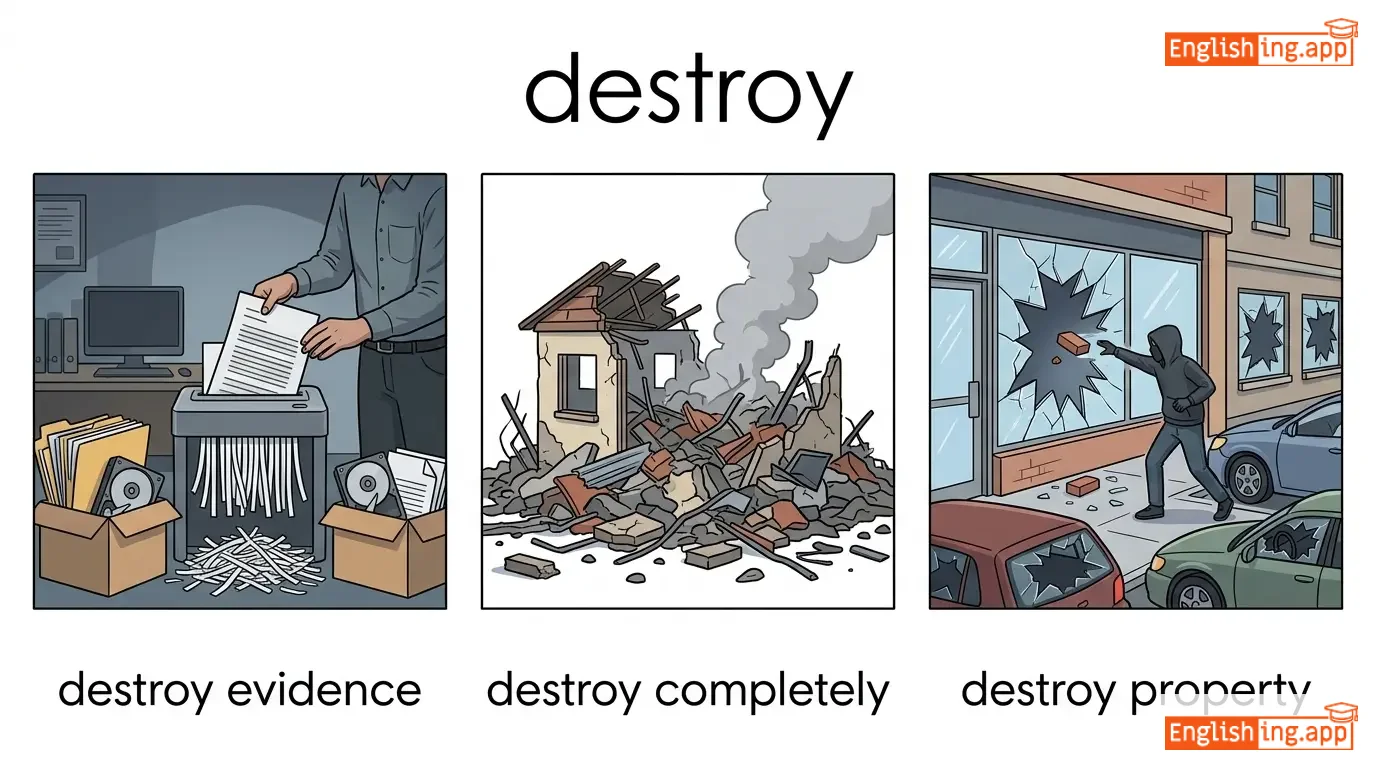
to damage something so badly that it cannot be used
••••••
|
The fire destroyed the entire building.
火事が建物全体を破壊しました。
••••••
|
火事が建物全体を破壊しました。
Kaji ga tatemono zentai o hakai shimashita.
••••••
|
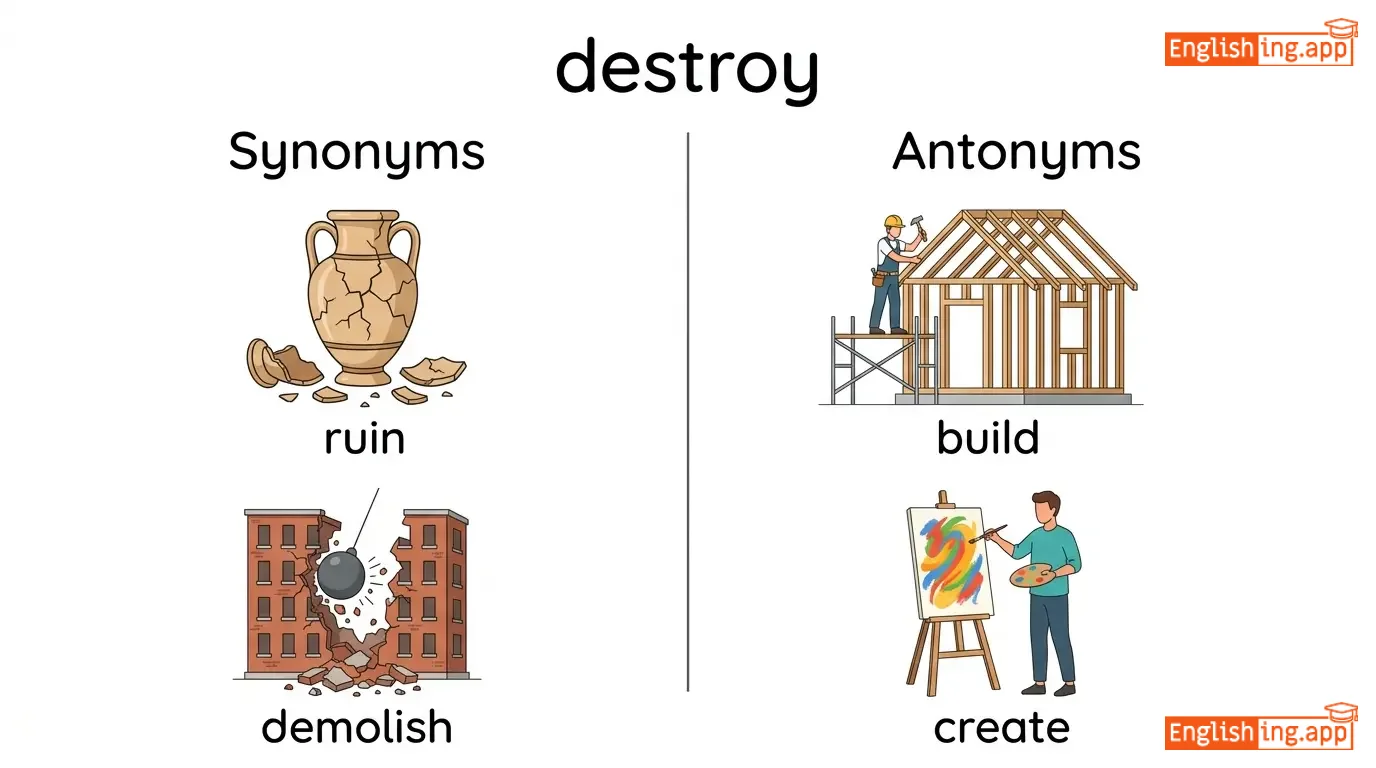
demolish, ruin, devastate, wreck
••••••
|
build, create, construct, preserve
••••••
|
destroy completely, destroy evidence, destroy property, seek and destroy, self-destruct
••••••
|
破壊することで、使えなくなる。
••••••
|
|
#636
❌
|
/ˌdɪsəˈɡriː/
verb
(ディスアグリー)
••••••
|
|
異議を唱える
igi o tonaeru
••••••
|
disagreed
ディスアグリード
••••••
|
disagreed
ディスアグリード
••••••
|
disagrees
ディスアグリーズ
••••••
|
disagreeing
ディスアグリーイング
••••••
|
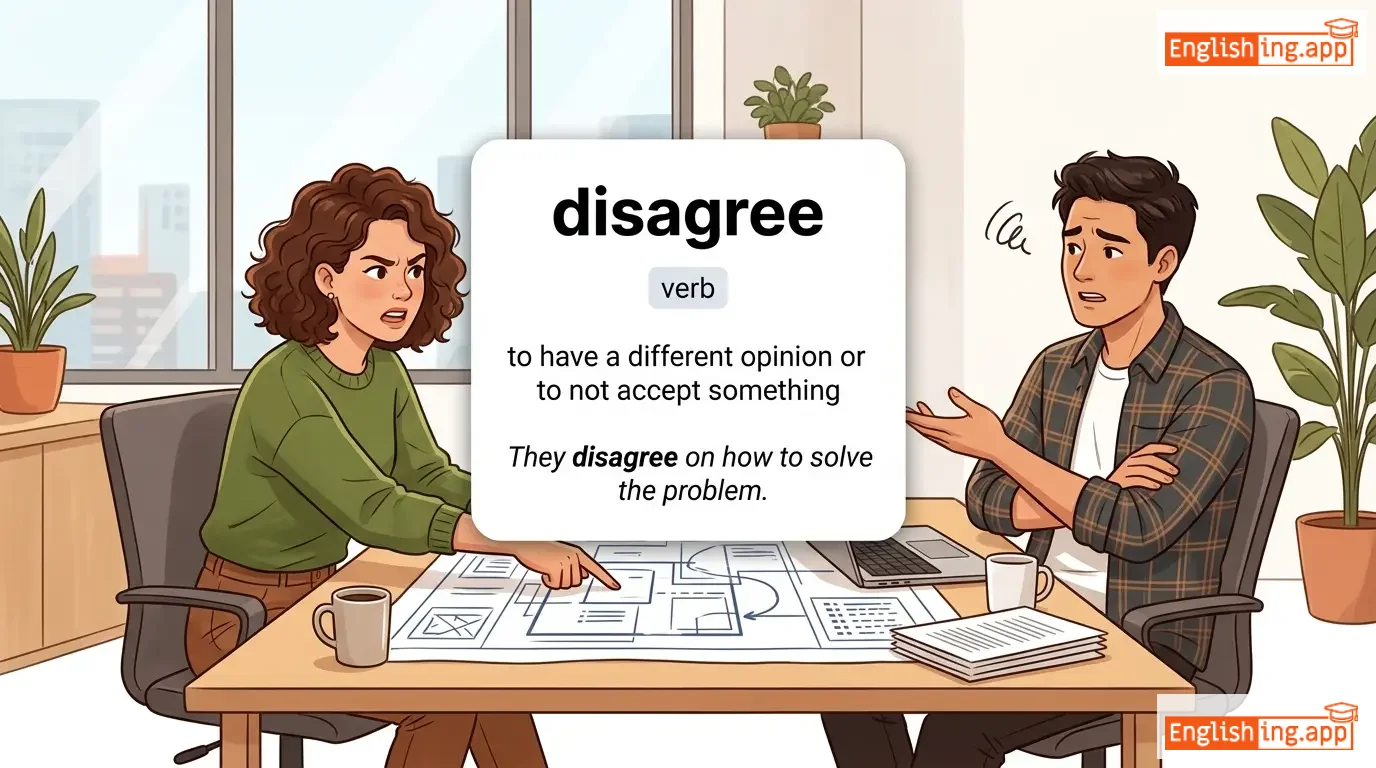
to have a different opinion; to not agree
••••••
|
I disagree with your assessment of the situation.
私はあなたの状況評価に同意しません。
••••••
|
私はあなたの状況評価に同意しません。
Watashi wa anata no jōkyō hyōka ni dōi shimasen.
••••••
|
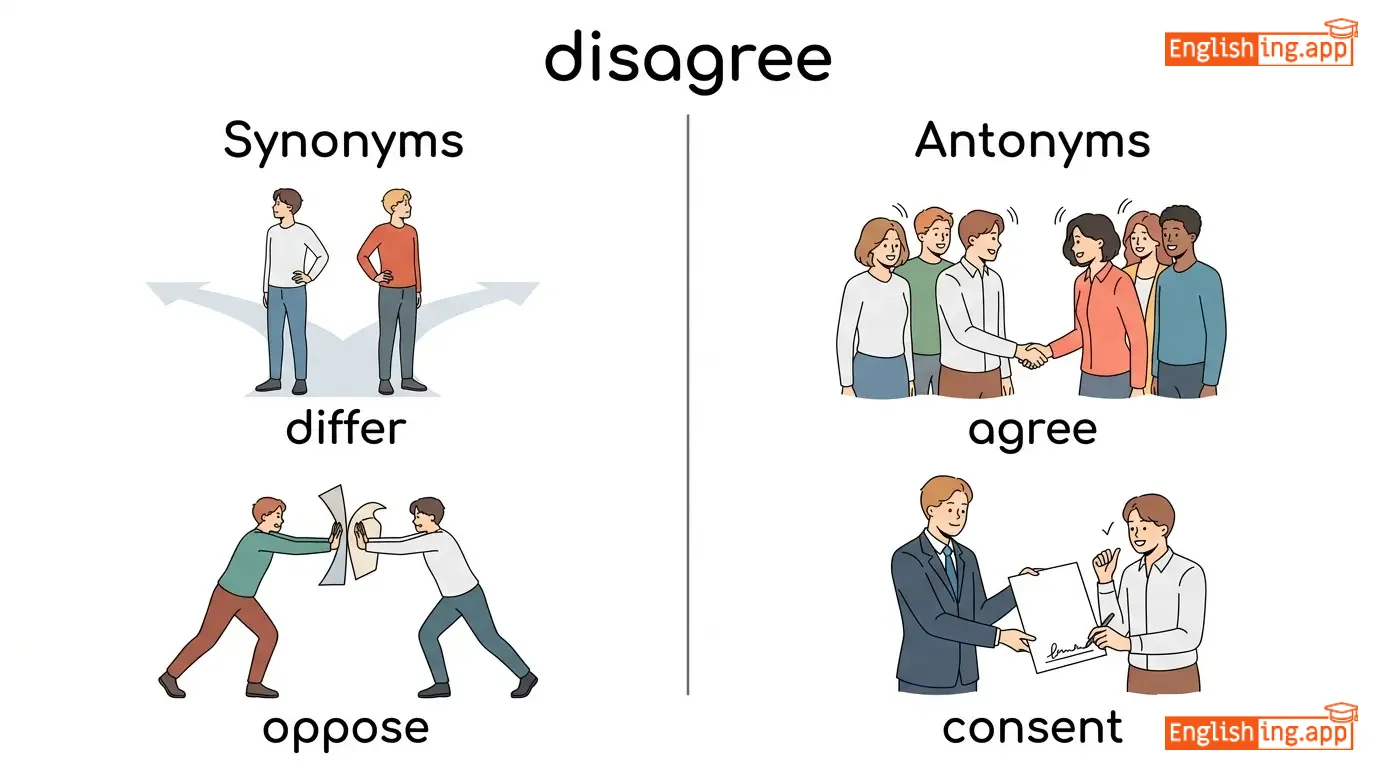
differ, dispute, oppose, object
••••••
|
agree, concur, accept, consent
••••••
|
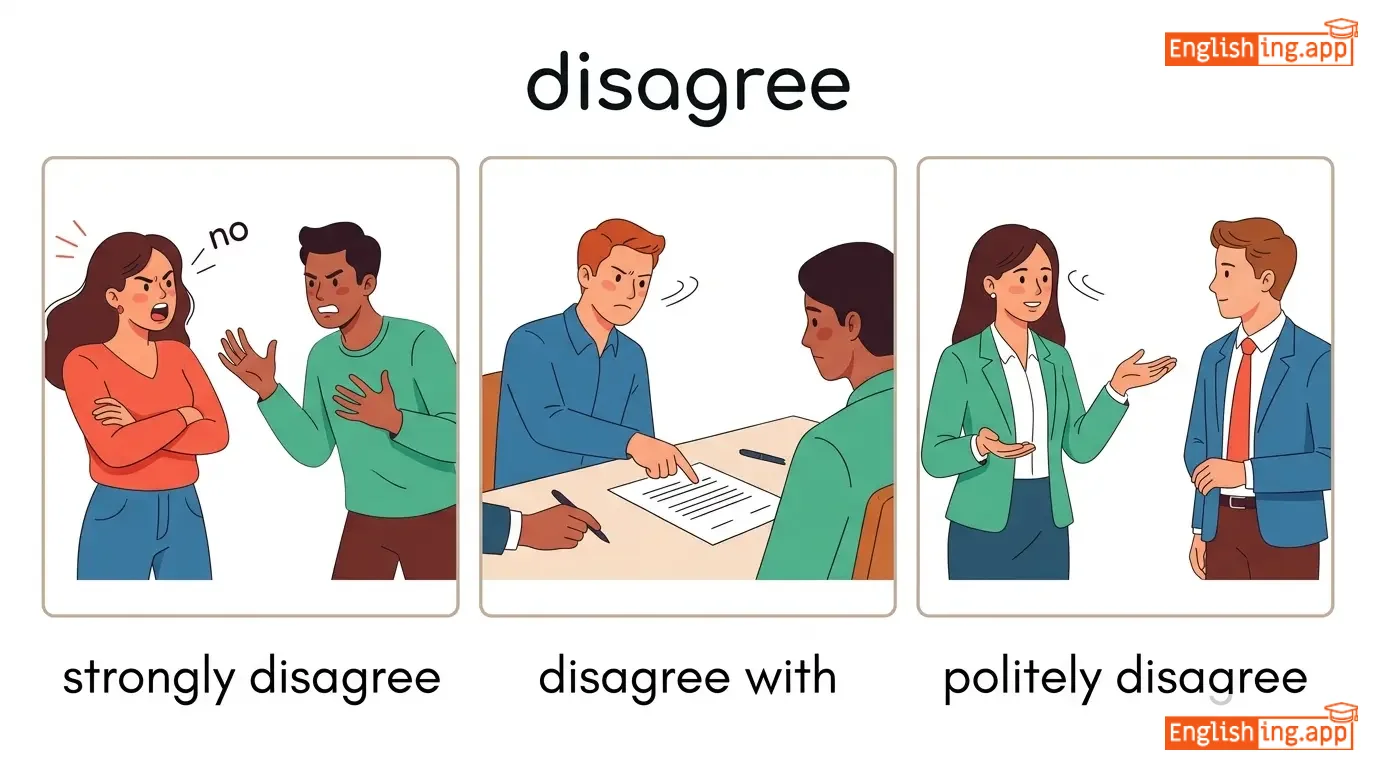
disagree with, strongly disagree, disagree completely, tend to disagree, respectfully disagree
••••••
|
Disagree in Japanese means '異議を唱える' which sounds like 'igi o tonaeru'.
••••••
|
|
#637
🎹
|
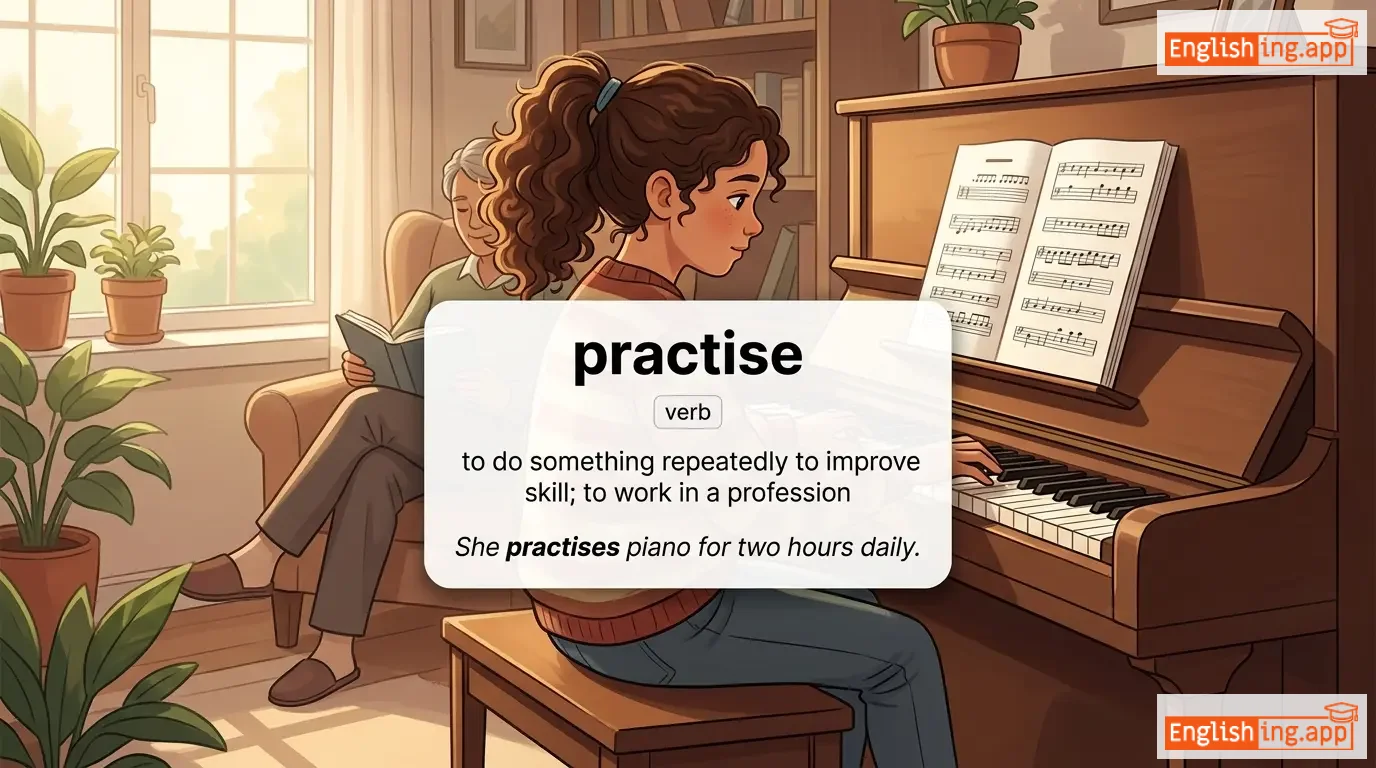
/ˈpræktɪs/
verb
(プラクティス)
••••••
|
|
練習する
renshuu suru
••••••
|
practised
プラクティスド
••••••
|
practised
プラクティスド
••••••
|
practises
プラクティセズ
••••••
|
practising
プラクティスイング
••••••
|
to do something repeatedly to improve skill; to work in a profession
••••••
|
She practises piano for two hours daily.
彼女は毎日2時間ピアノを練習します。
••••••
|
彼女は毎日2時間ピアノを練習します。
Kanojo wa mainichi 2 jikan piano o renshuu shimasu.
••••••
|
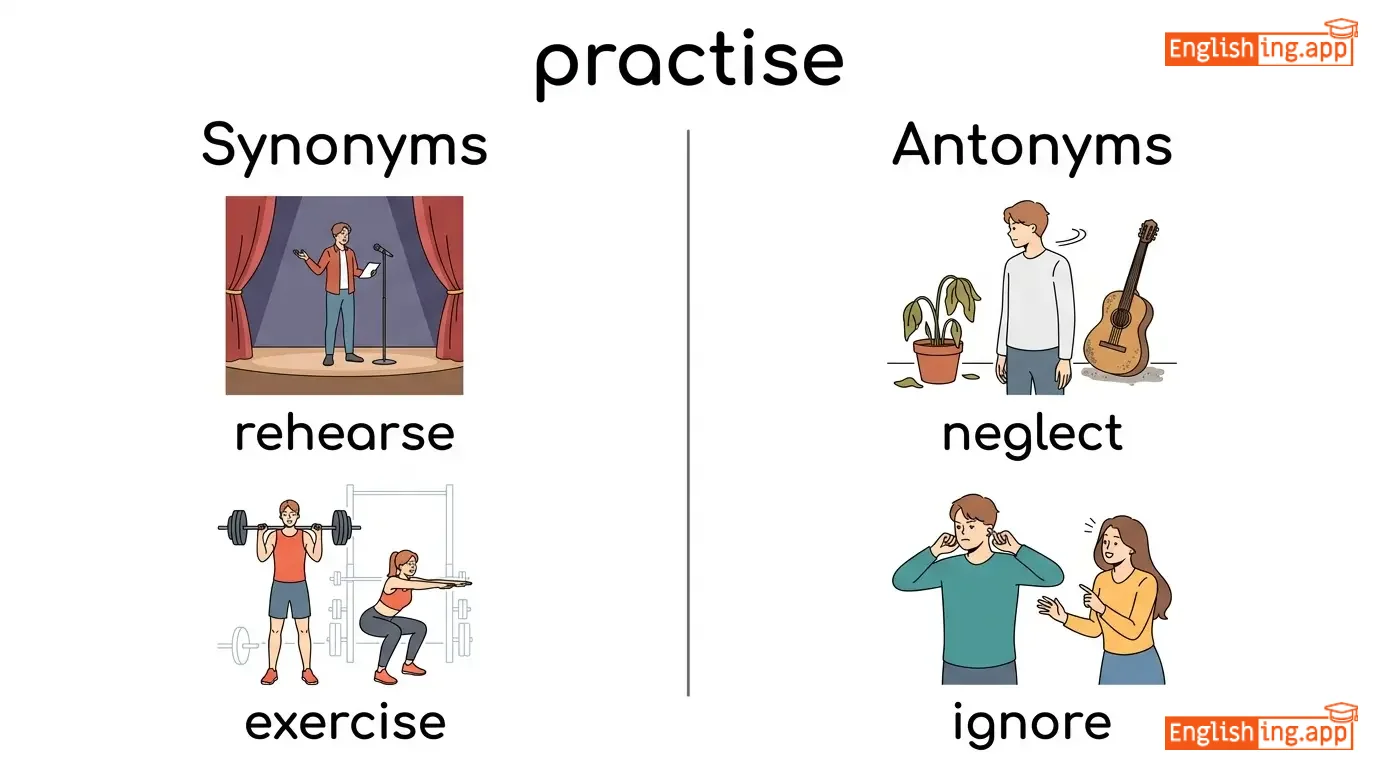
rehearse, exercise, train, drill
••••••
|
neglect, ignore, abandon
••••••
|
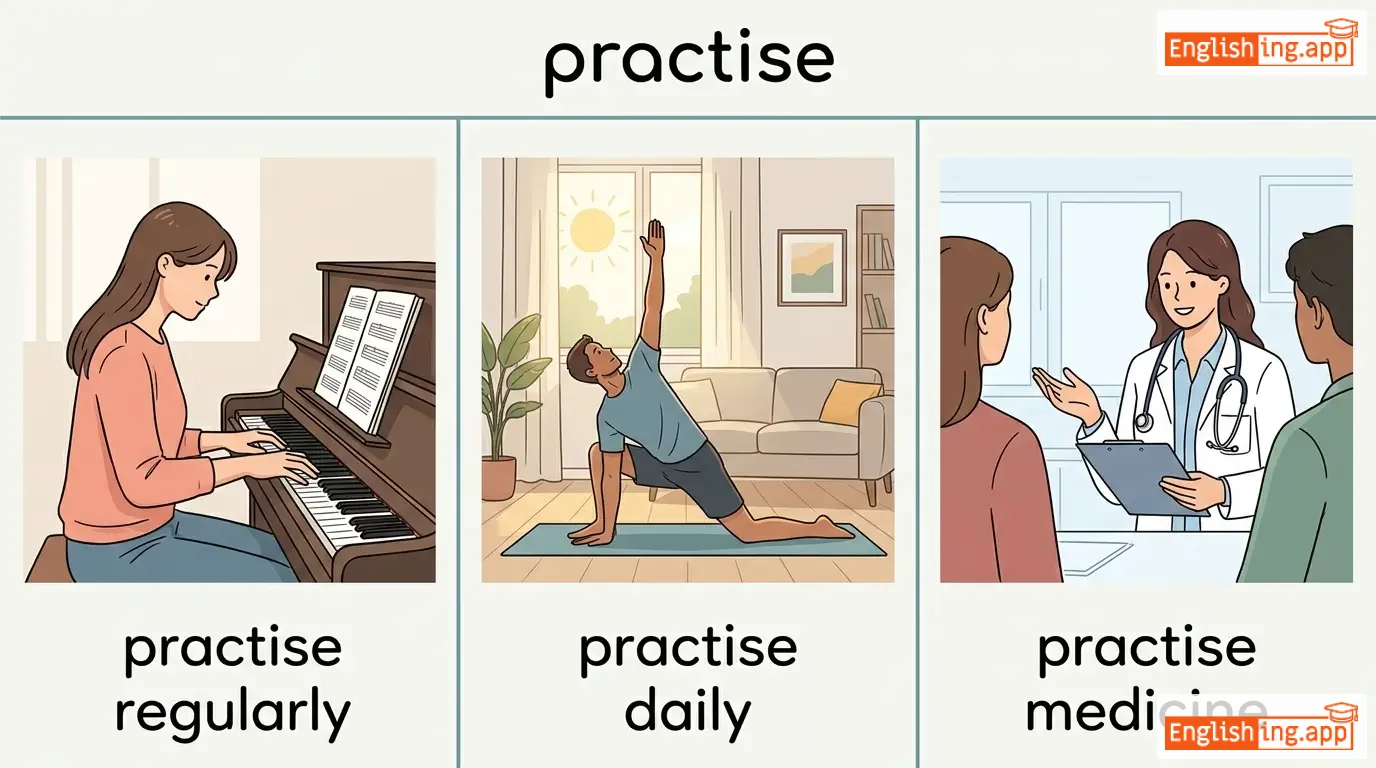
practise regularly, practise daily, practise medicine, good practice, best practice
••••••
|
練習すればするほど上達する!
••••••
|
|
#638
🪢
|
/nɒt/
verb
(ノット)
••••••
|
|
結び目を作る
musubime o tsukuru
••••••
|
knotted
ノッテッド
••••••
|
knotted
ノッテッド
••••••
|
knots
ノッツ
••••••
|
knotting
ノッティング
••••••
|
to tie in a knot; to fasten with loops and turns
••••••
|
She knotted the rope securely.
彼女はロープを安全に結びました。
••••••
|
彼女はロープを安全に結びました。
Kanojo wa rōpu o anzen ni musubimashita.
••••••
|
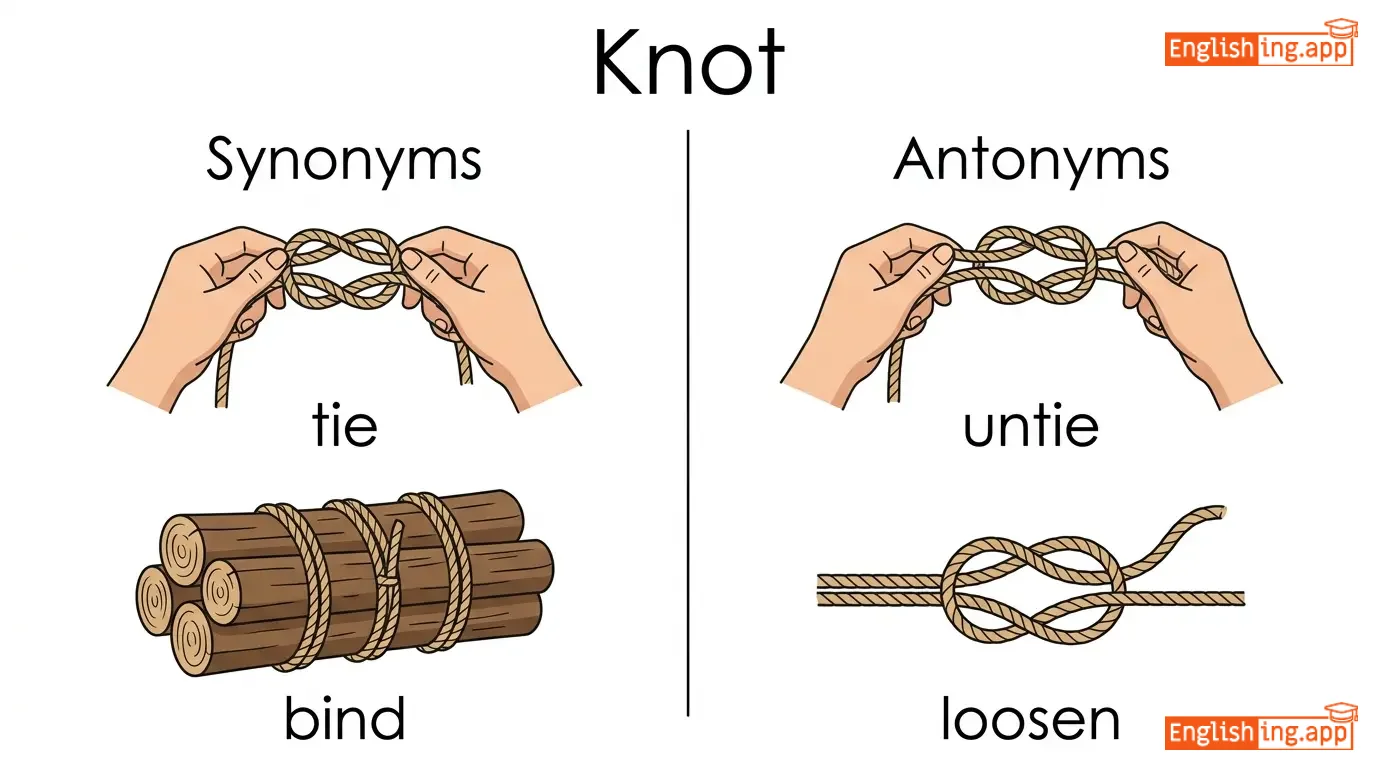
tie, bind, fasten, secure
••••••
|
untie, loosen, unfasten, free
••••••
|
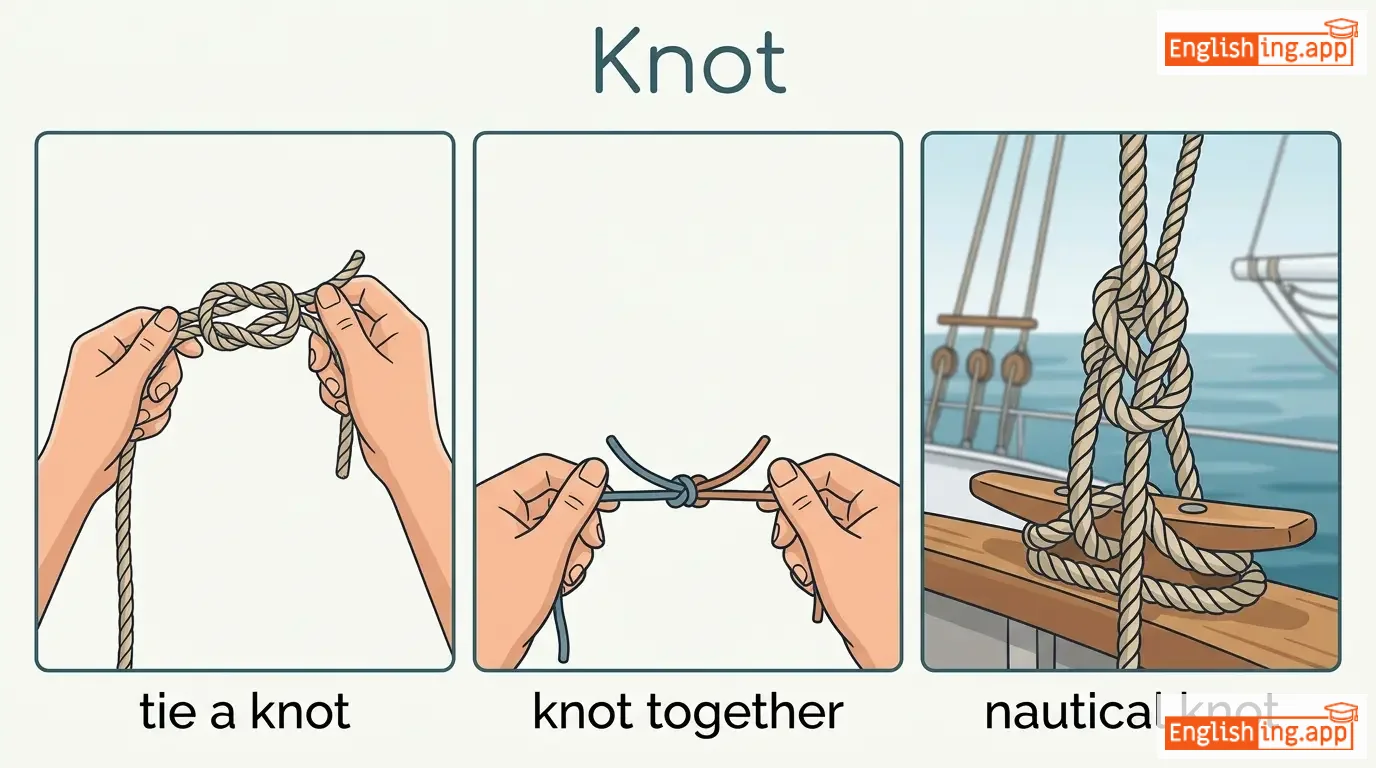
tie a knot, knot together, nautical knot, loose knot, tight knot
••••••
|
靴ひもを結ぶように考えて!
••••••
|
|
#639
💡
|
/ˈklærɪfaɪ/
verb
(クラリファイ)
••••••
|
|
明確にする
meikaku ni suru
••••••
|
clarified
クラリファイド
••••••
|
clarified
クラリファイド
••••••
|
clarifies
クラリファイズ
••••••
|
clarifying
クラリファイング
••••••
|
to make clear; to explain more clearly
••••••
|
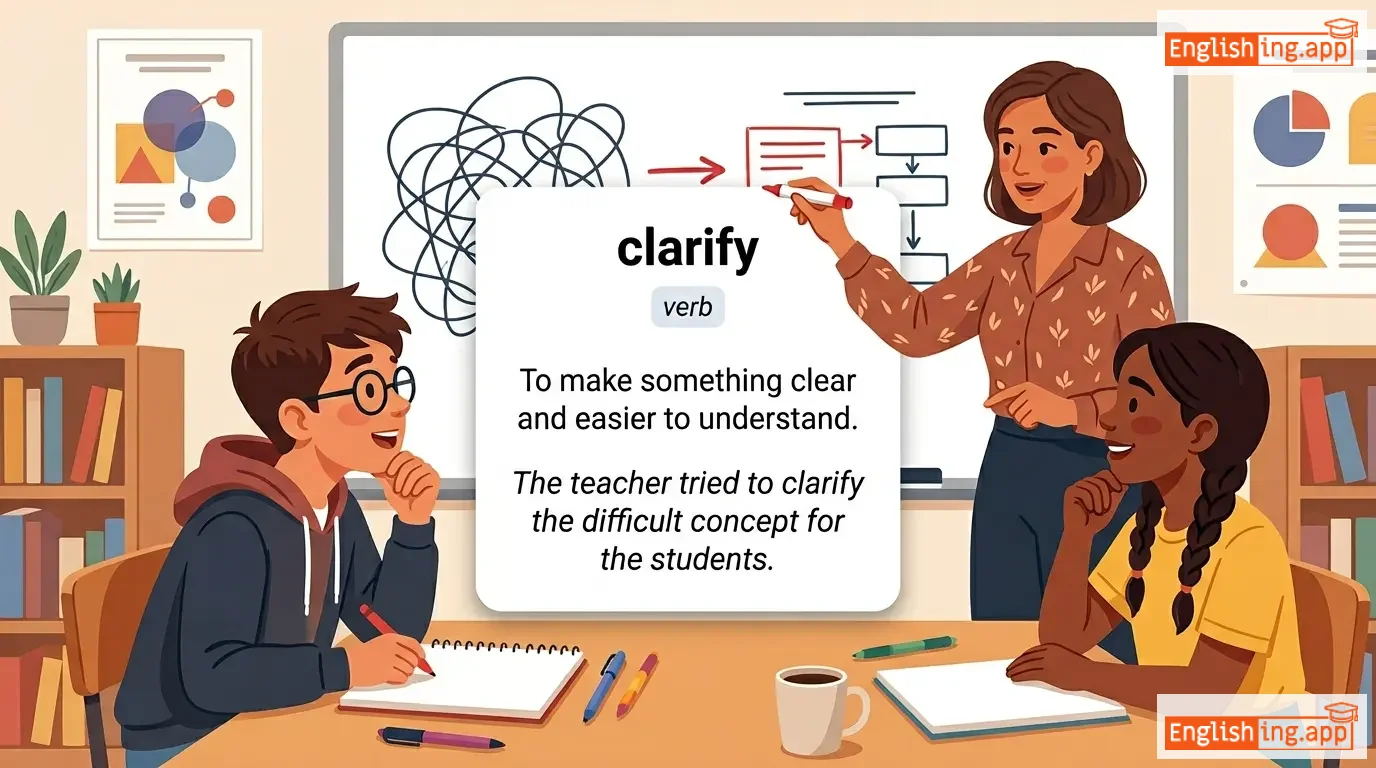
The teacher clarifies the difficult concept.
ザ・ティーチャー・クラリファイズ・ザ・ディフィカルト・コンセプト。
••••••
|
先生は難しい概念を明確にします。
Sensei wa muzukashii gainen o meikaku ni shimasu.
••••••
|
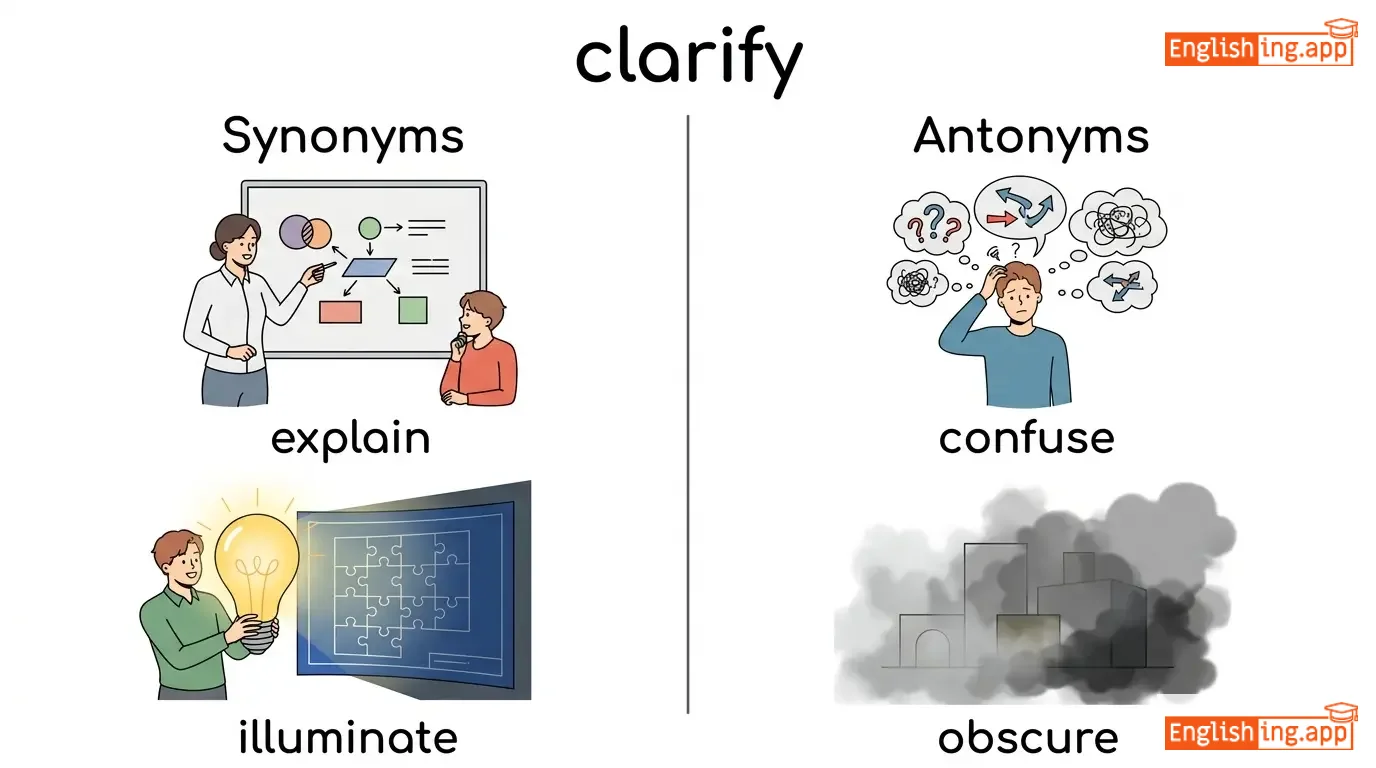
explain, illuminate, elucidate, simplify
••••••
|
confuse, obscure, complicate
••••••
|
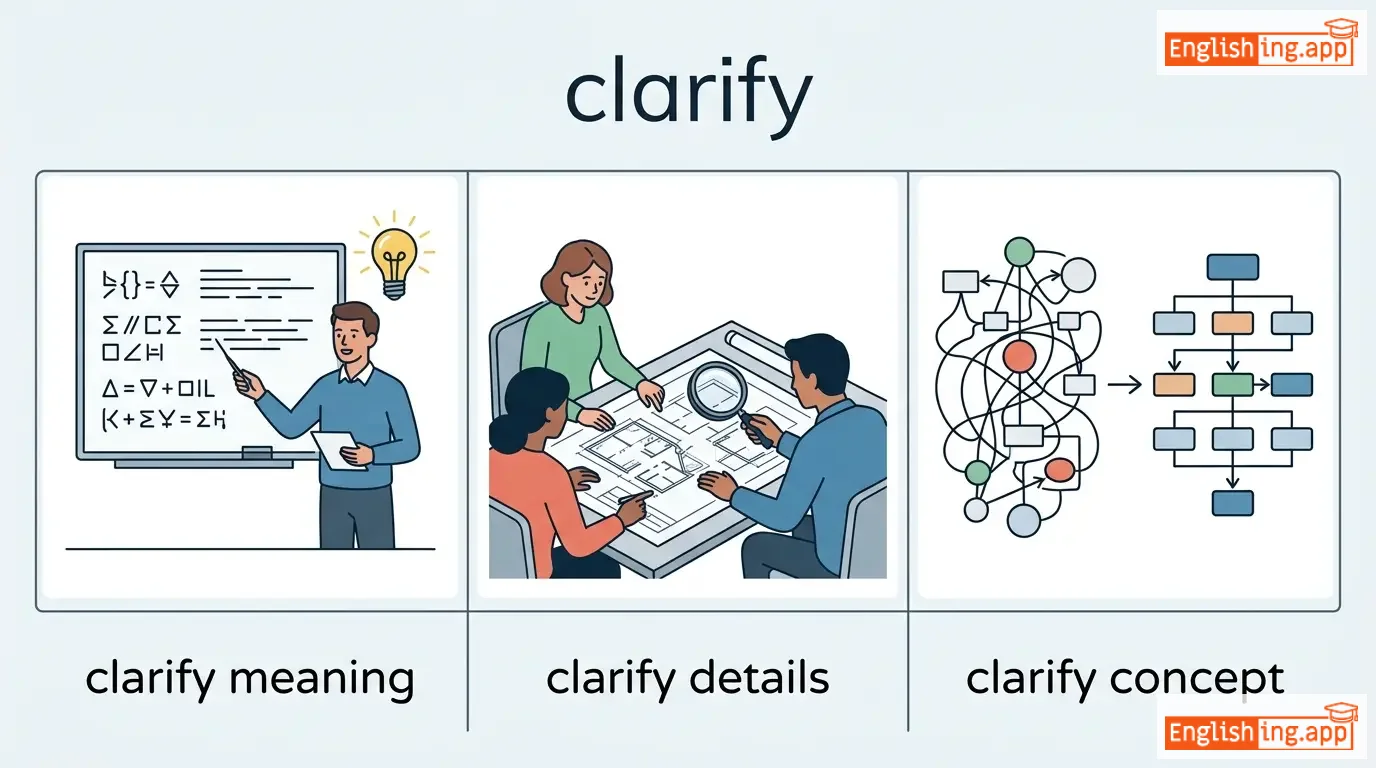
clarify the situation, clarify doubts, clarify meaning, clarify instructions, help clarify
••••••
|
Clarify = 明確にする、先生がはっきりさせるように
••••••
|
|
#640
⚖️
|
/ˈsenʃər/
verb
(センシャー)
••••••
|
|
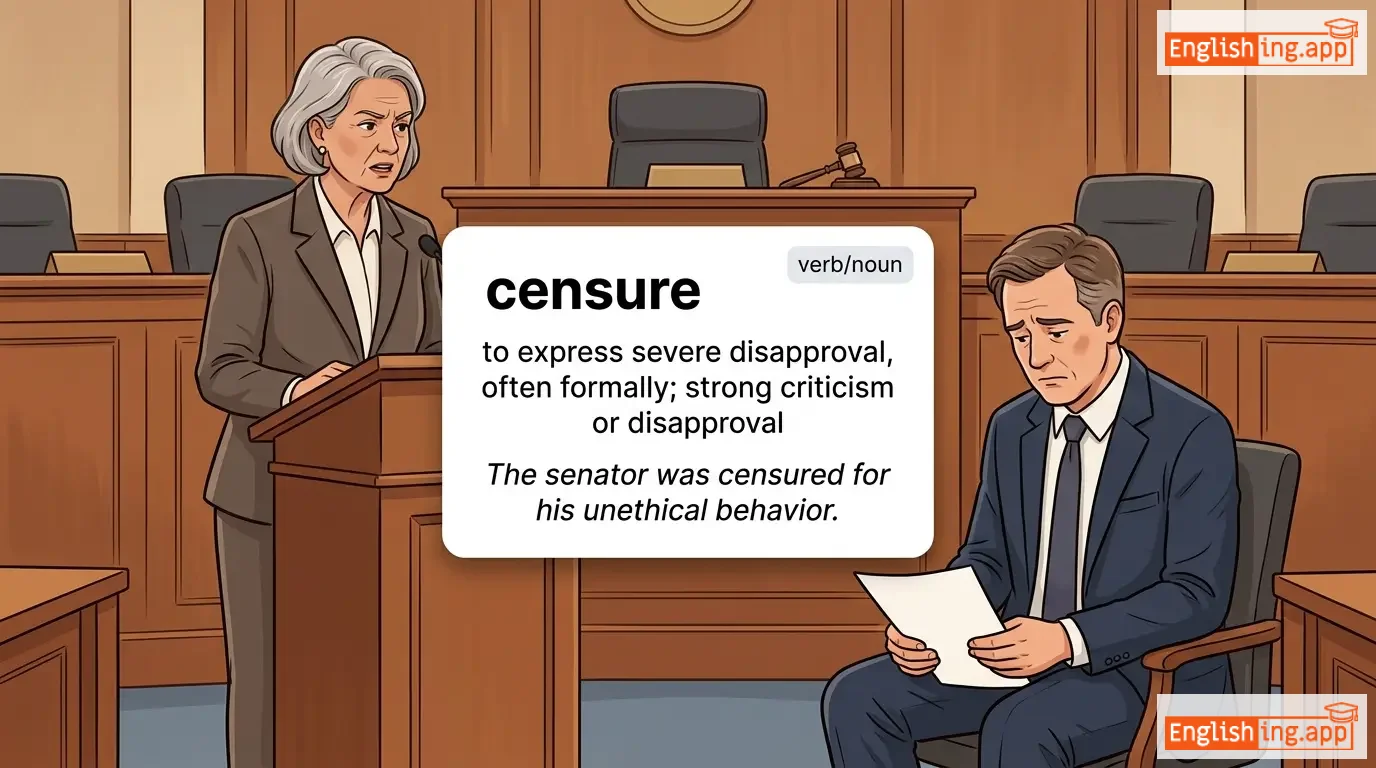
非難する, 厳しく批判する
hinansuru, kibishiku hihan suru
••••••
|
censured
センシャード
••••••
|
censured
センシャード
••••••
|
censures
センシャーズ
••••••
|
censuring
センシャーリング
••••••
|
to criticize severely; to express strong disapproval
••••••
|
The committee censured the politician for his misconduct.
委員会は彼の不正行為に対して政治家を非難しました。
••••••
|
委員会は彼の不正行為に対して政治家を非難しました。
Iinkai wa kare no fusei koui ni taishite seijika o hinan shimashita.
••••••
|
criticize, condemn, blame, rebuke
••••••
|
praise, commend, approve, support
••••••
|
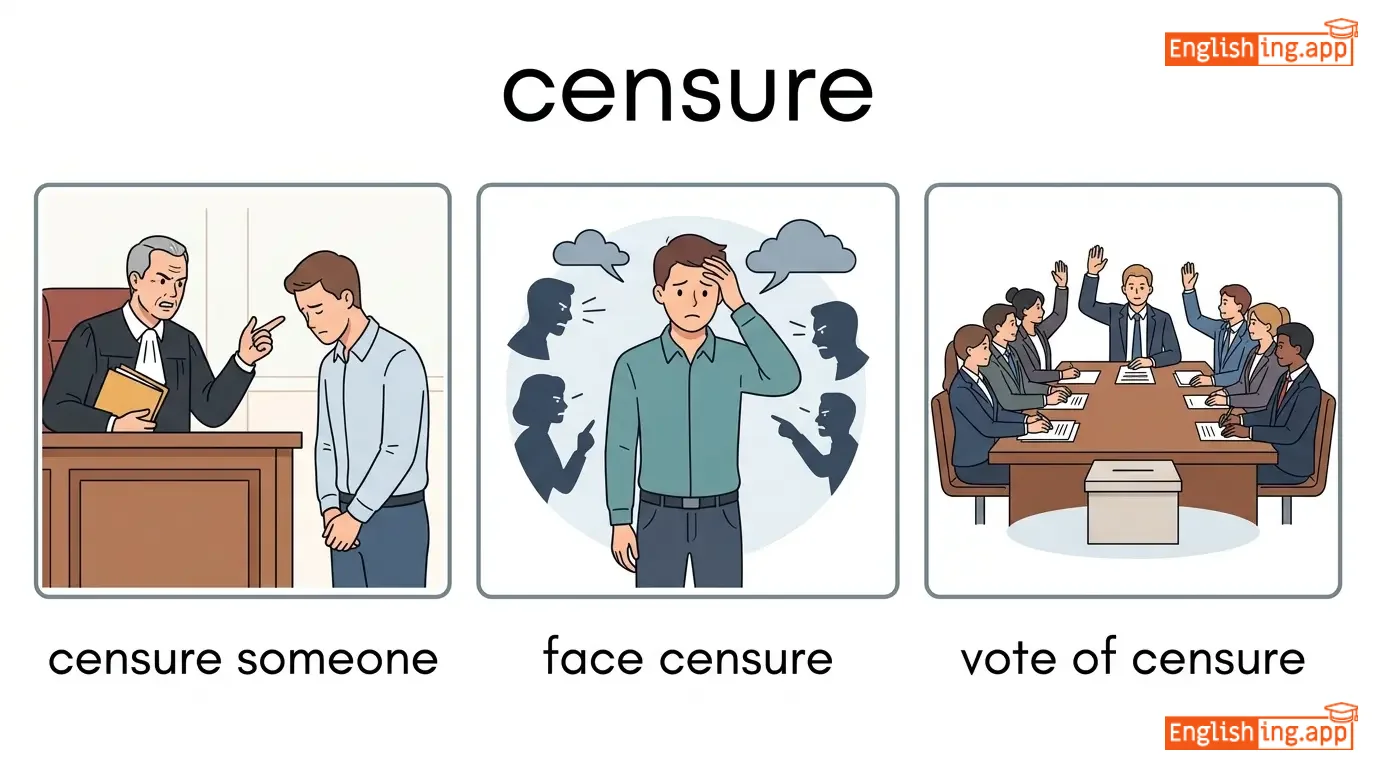
censure motion, public censure, vote of censure, censure severely, face censure
••••••
|
Censure = '批判' + '非難'
••••••
|
|
#641
✨
|
/ˈpɑːlɪʃ/
verb
(ポリッシュ)
••••••
|
|
磨く
migaku
••••••
|
polished
ポリッシュド
••••••
|
polished
ポリッシュド
••••••
|
polishes
ポリッシュズ
••••••
|
polishing
ポリッシング
••••••
|
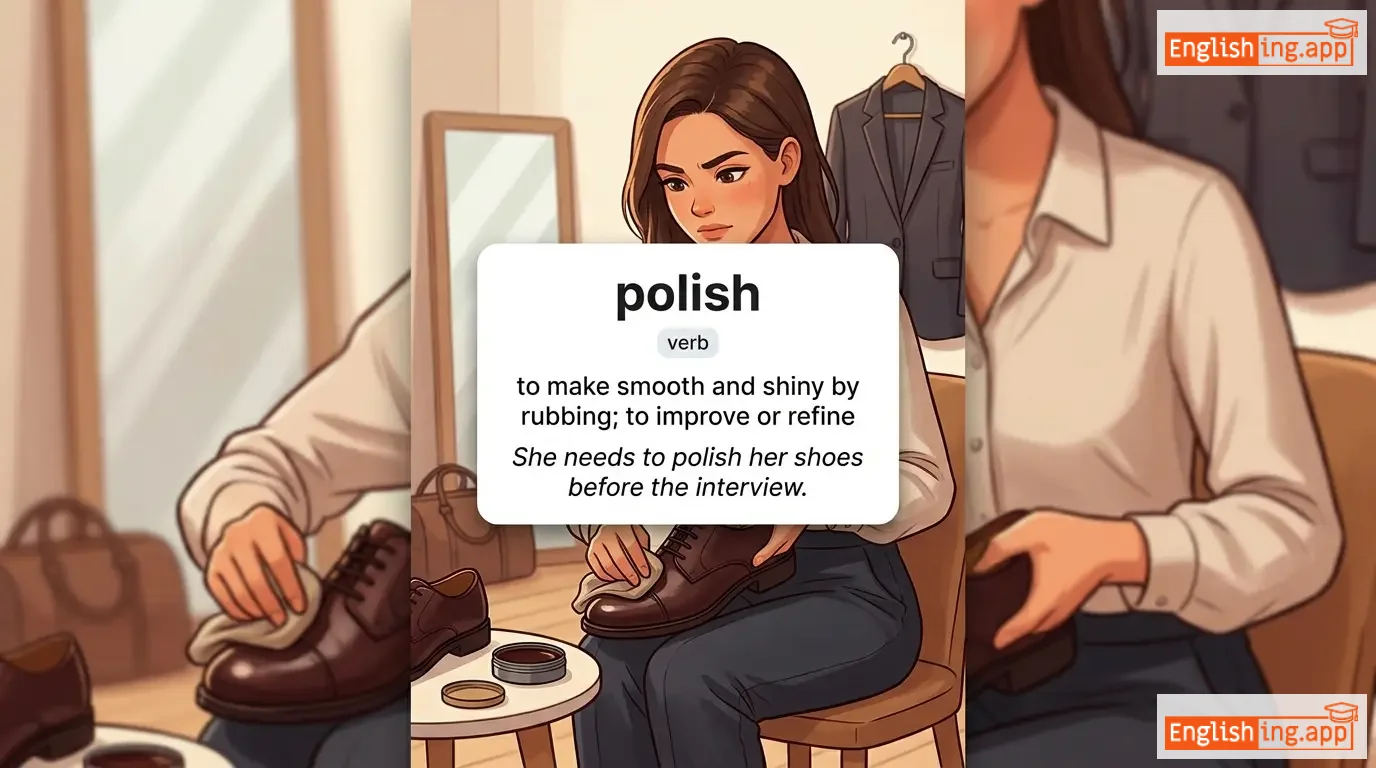
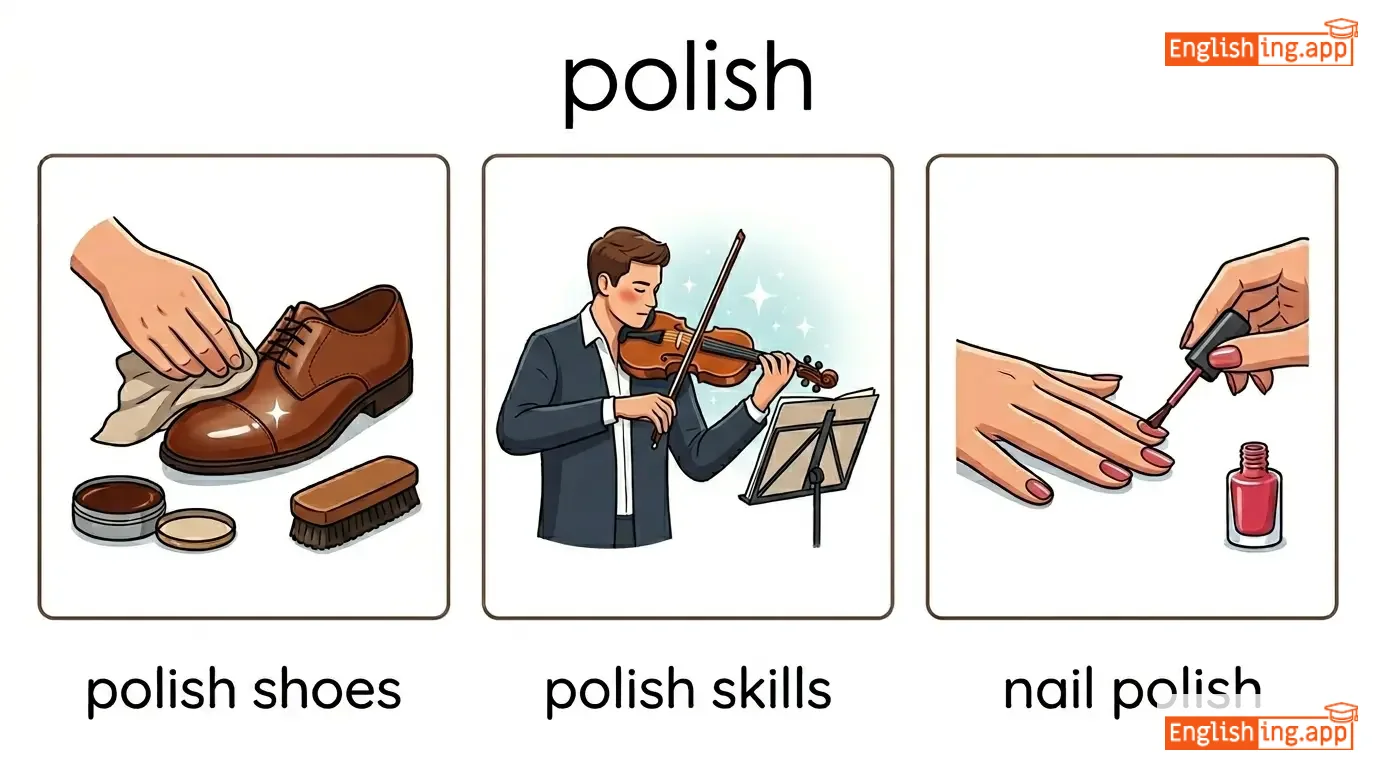
to make smooth and shiny by rubbing; to improve or refine
••••••
|
She needs to polish her shoes before the interview.
面接前に靴を磨かなければならない。
••••••
|
面接前に靴を磨かなければならない。
Mensetsu mae ni kutsu o migakunakereba naranai.
••••••
|
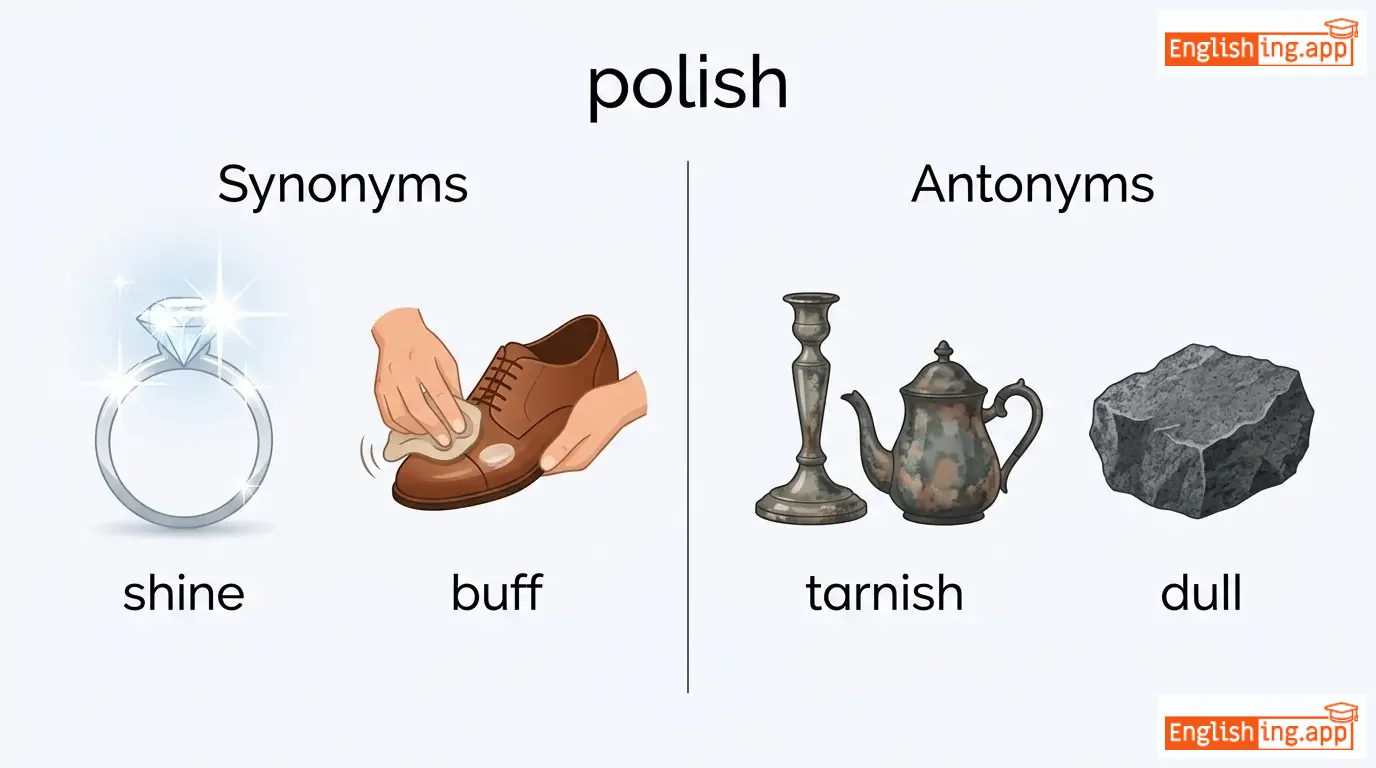
shine, buff, refine, improve
••••••
|
tarnish, dull, roughen, worsen
••••••
|
polish shoes, polish skills, nail polish, furniture polish, polish off
••••••
|
面接で輝くために靴を磨こう!
••••••
|
|
#642
😤
|
/veks/
verb
(veksu)
••••••
|
|
苛立たせる
iradataseru
••••••
|
vexed
vekkusu
••••••
|
vexed
vekkusu
••••••
|
vexes
vekusu
••••••
|
vexing
vekkusu
••••••
|
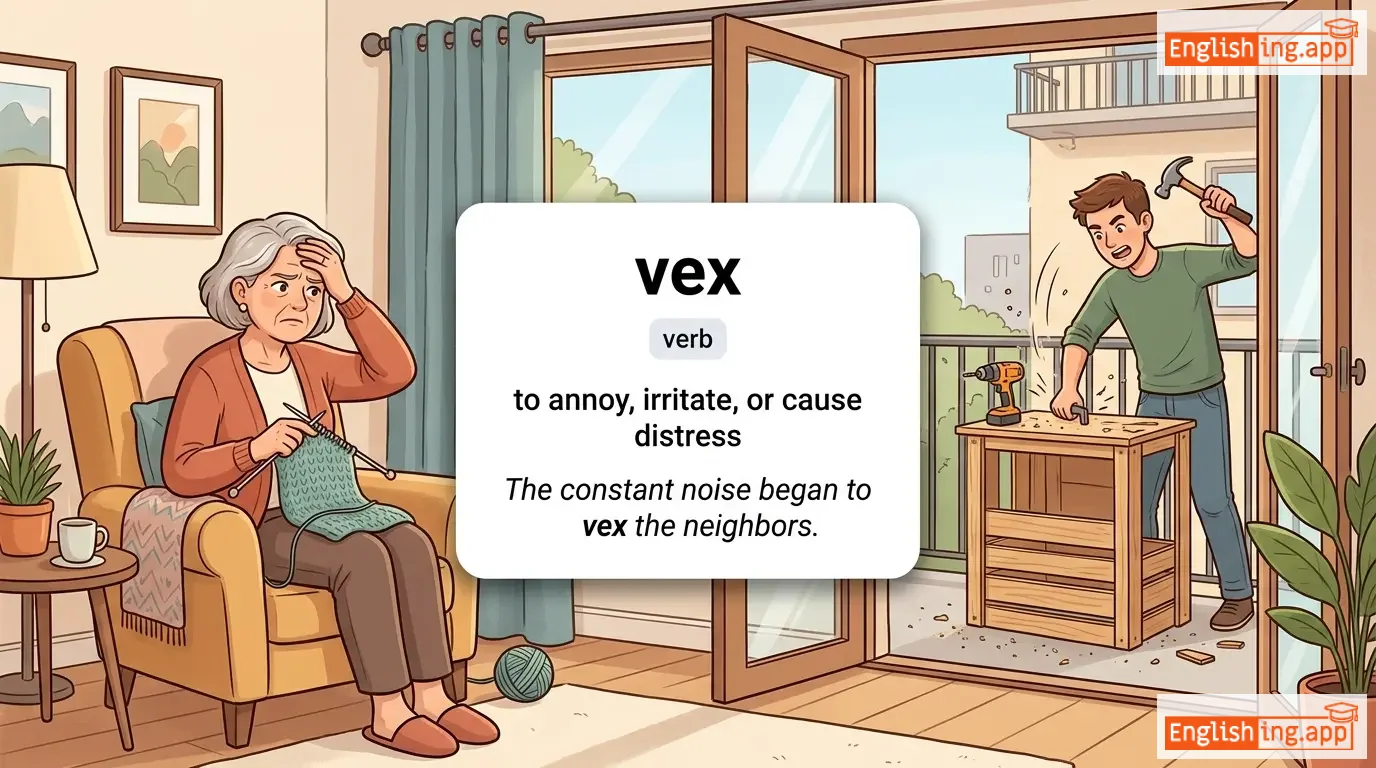
to annoy or frustrate someone; to cause trouble
••••••
|
The constant noise from construction vexes the residents.
建設の絶え間ない音は住民を困らせる。
••••••
|
建設の絶え間ない音は住民を苛立たせる。
Kensetsu no taemanai oto wa juminn o iradataseru
••••••
|
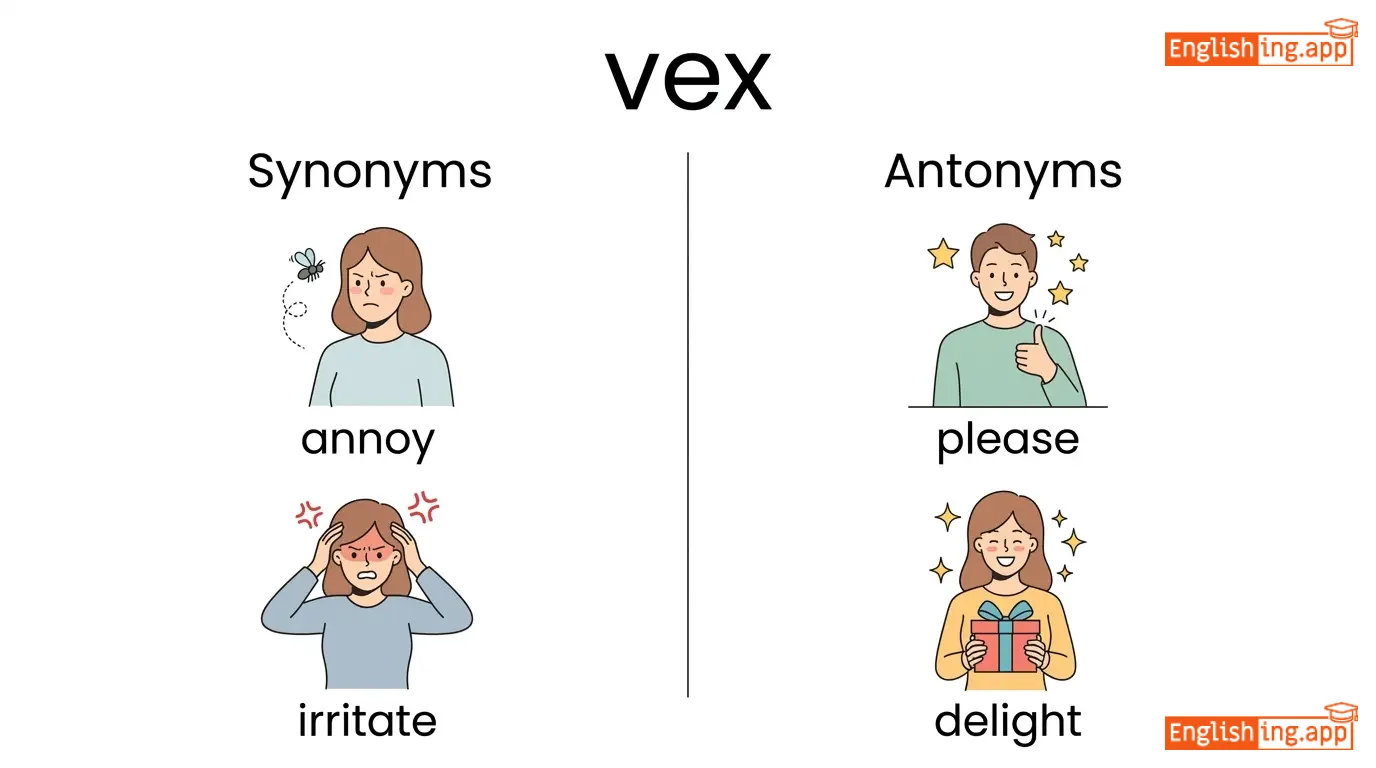
annoy, irritate, frustrate, bother, agitate
••••••
|
please, soothe, calm, comfort
••••••
|
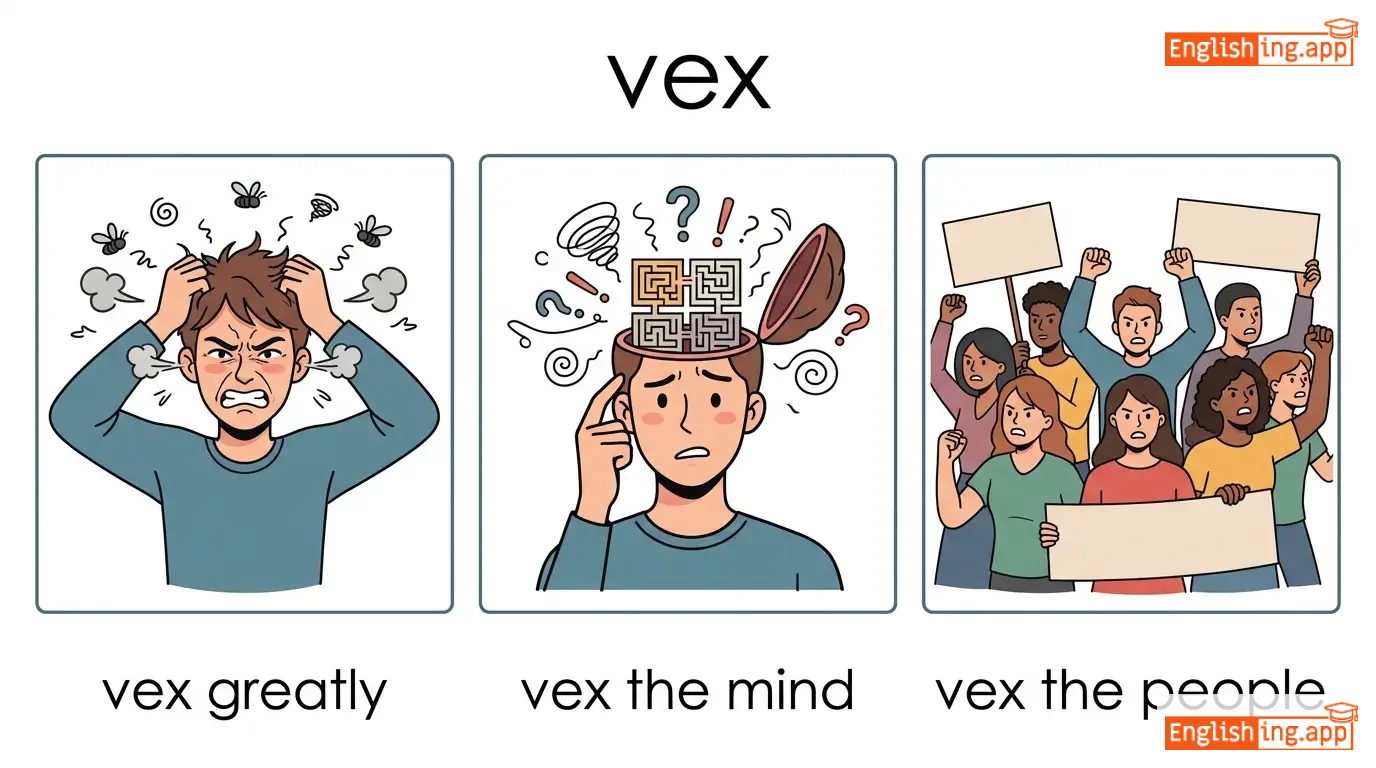
vex someone, greatly vex, vex and annoy, become vexed, vexing problem
••••••
|
No •••••• |
|
#643
🧗
|
/klaɪm/
verb
(kraimu)
••••••
|
|
登る
noboru
••••••
|
climbed
kraimudo
••••••
|
climbed
kraimudo
••••••
|
climbs
kraimuzu
••••••
|
climbing
kraimingu
••••••
|
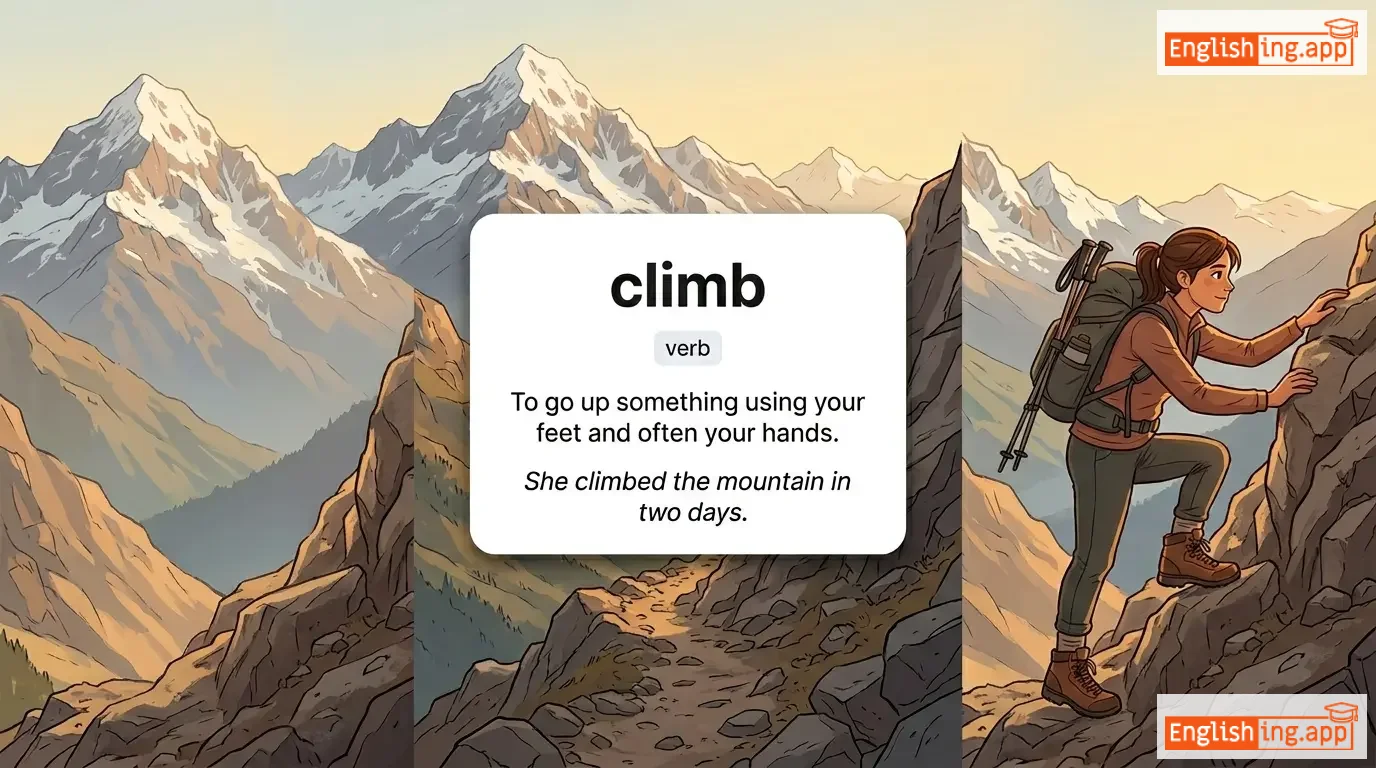
to go up using hands and feet; to ascend
••••••
|
We decided to climb the mountain.
私たちは山を登ることに決めました。
••••••
|
私たちは山を登ることに決めました。
Watashitachi wa yama o noboru koto ni kimemashita.
••••••
|
ascend, scale, mount, rise
••••••
|
descend, go down, fall, drop
••••••
|
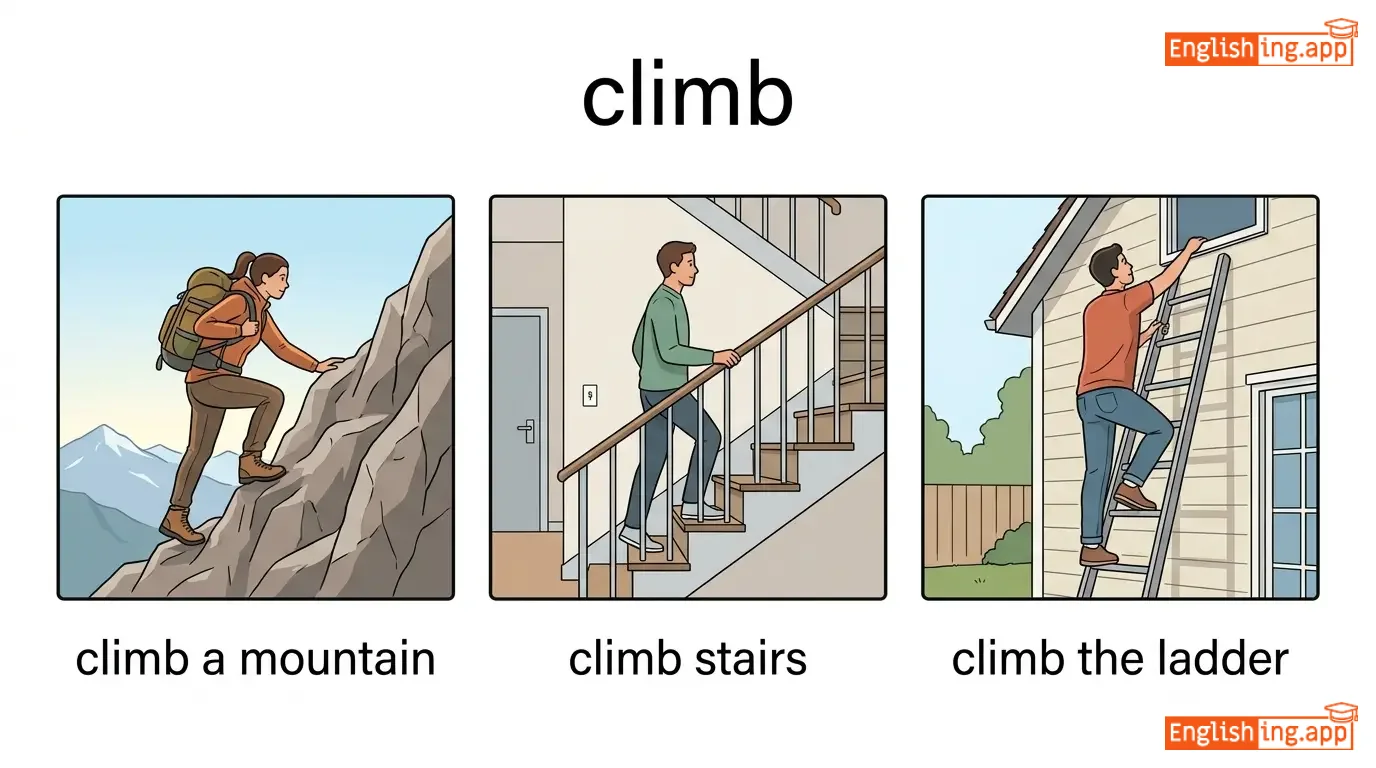
climb mountains, climb stairs, climb up, rock climbing, climb trees
••••••
|
climb = 山を登る
••••••
|
|
#644
🏏
|
/bæt/
verb
(ベット)
••••••
|
|
バットで打つ
batto de utsu
••••••
|
batted
ベットッド
••••••
|
batted
ベットッド
••••••
|
bats
ベッツ
••••••
|
batting
ベッティング
••••••
|
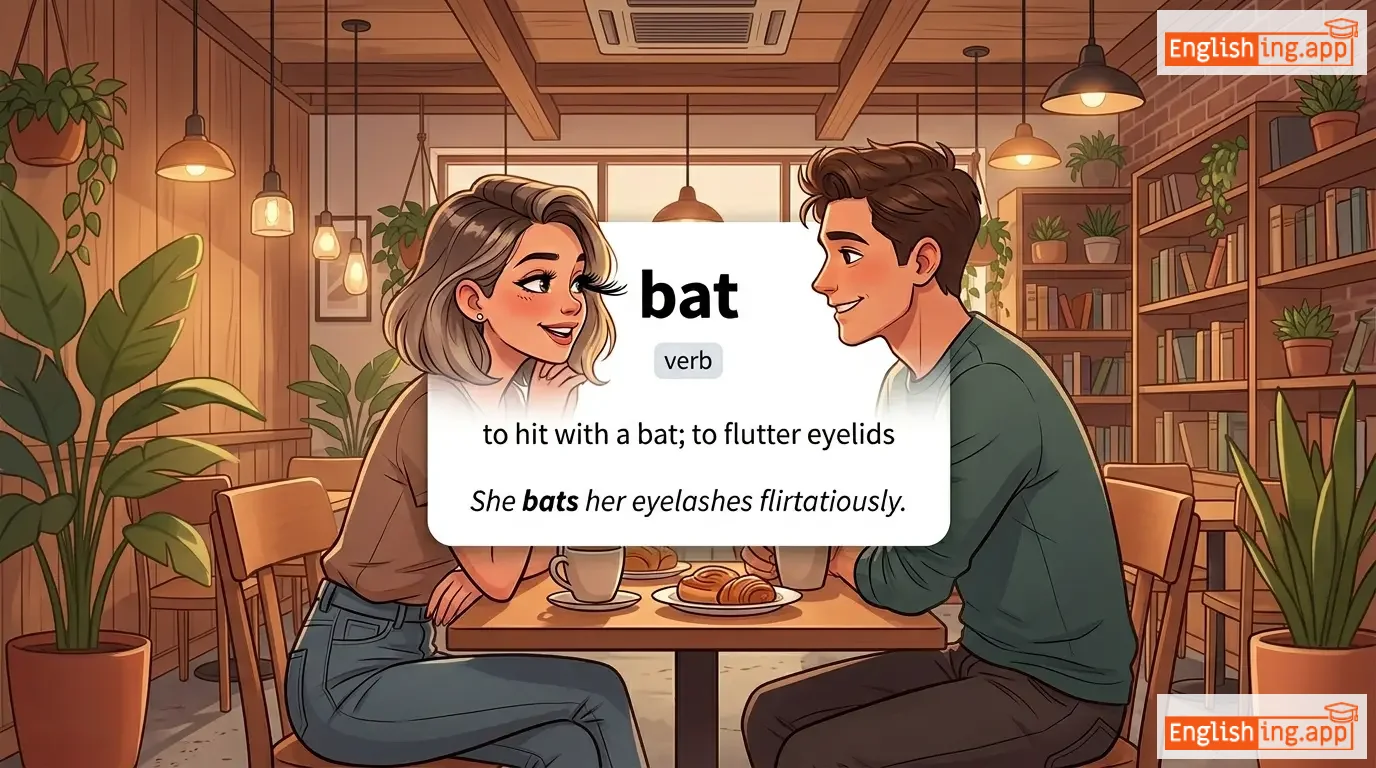
to hit with a bat; to flutter eyelids
••••••
|
She bats her eyelashes flirtatiously.
彼女は魅力的にまばたきしている。
••••••
|
彼女は魅力的にまばたきしている。
Kanojo wa miryokuteki ni mabataki shite iru.
••••••
|
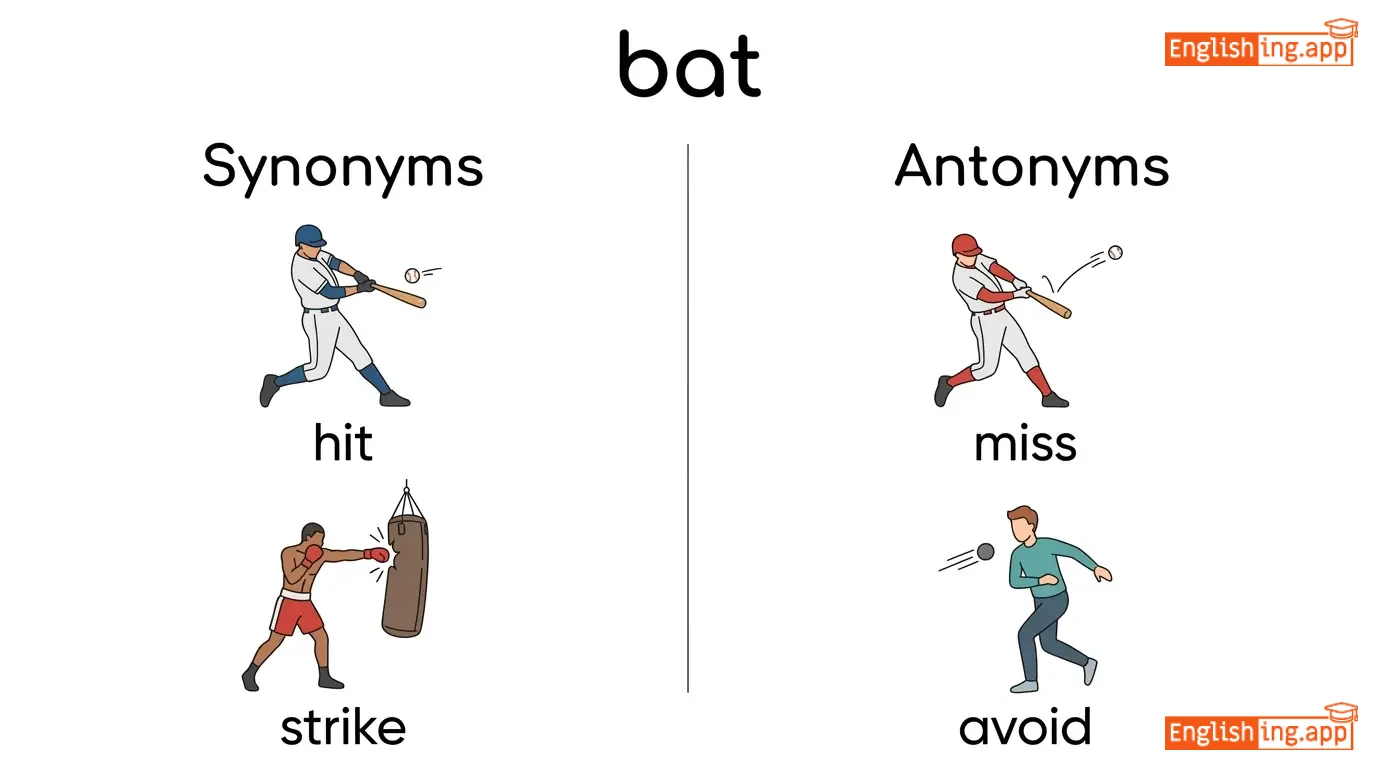
hit, strike, flutter, wink
••••••
|
miss, avoid
••••••
|
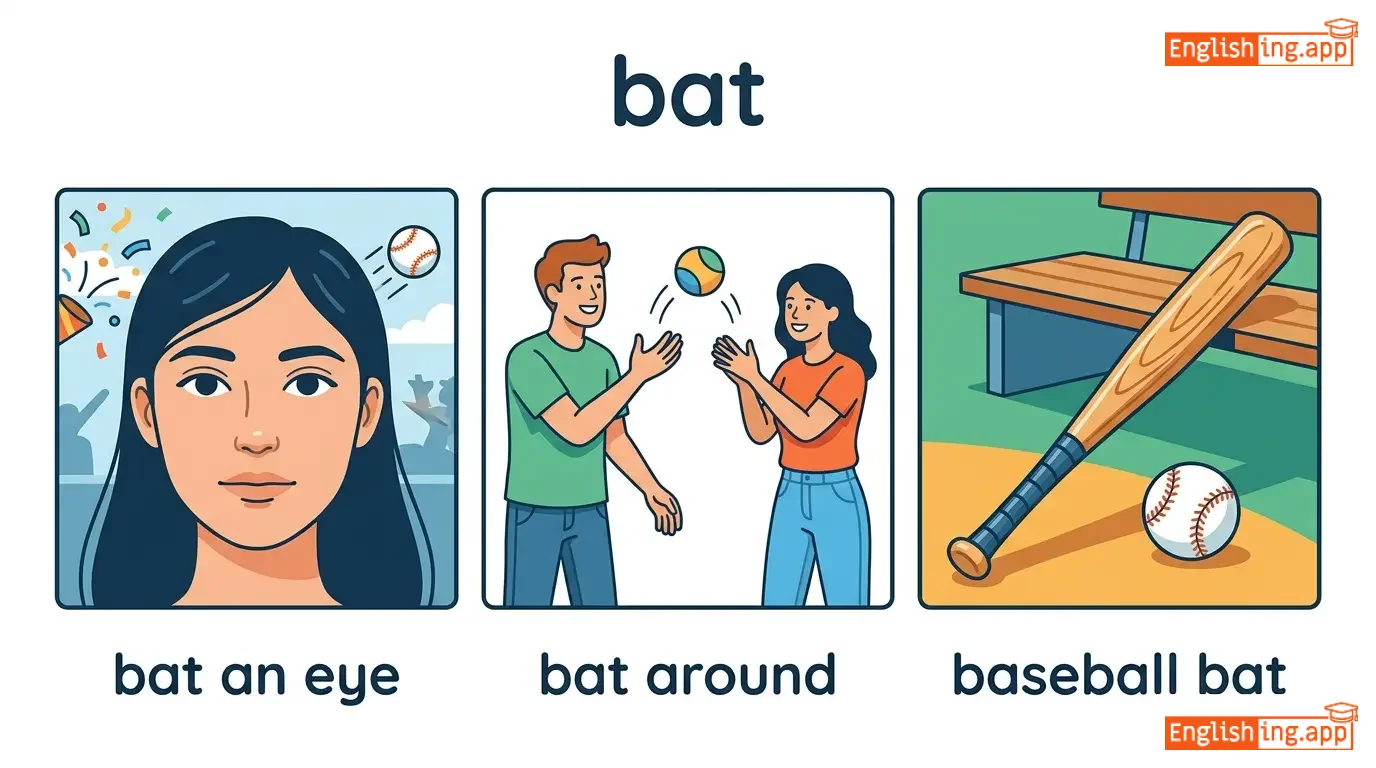
bat an eye, bat around, baseball bat, cricket bat, bat the ball
••••••
|
野球でバットで打つように、映画のスターのようにまばたきする。
••••••
|
|
#645
🔄
|
/rɪˈtɜːrn/
verb
(リターン)
••••••
|
|
帰る
kaeru
••••••
|
returned
リターンド
••••••
|
returned
リターンド
••••••
|
returns
リターンズ
••••••
|
returning
リターニング
••••••
|
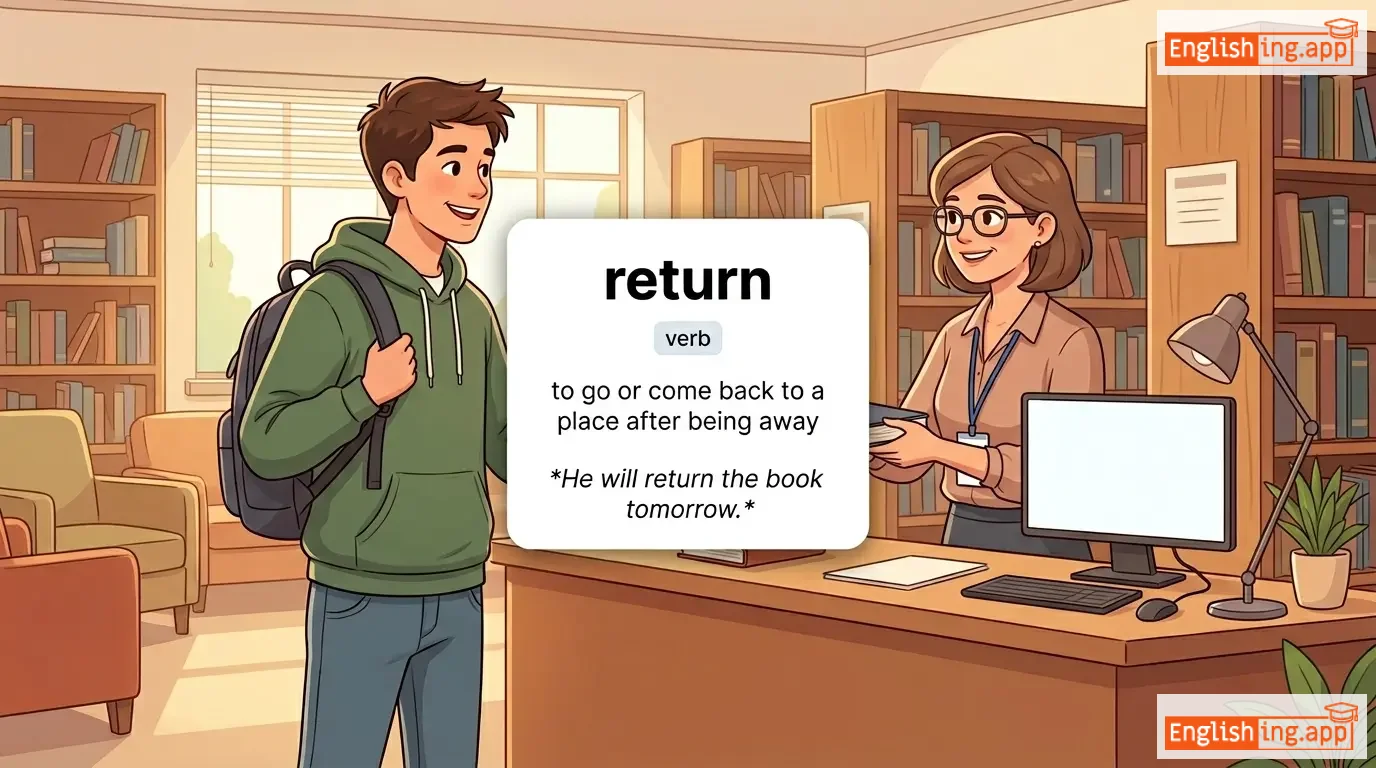
to come or go back to a place; to give back
••••••
|
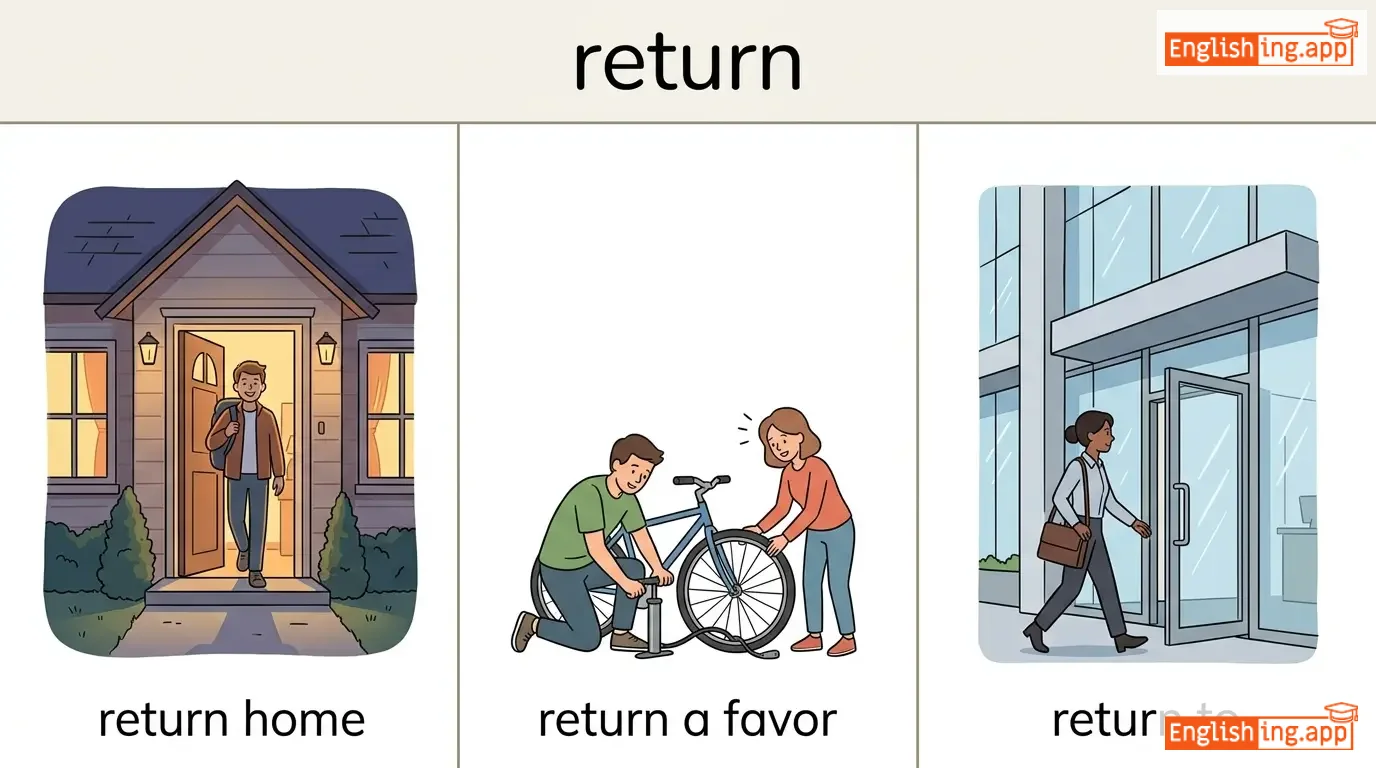
I will return home tomorrow.
私は明日家に帰ります。
••••••
|
私は明日家に帰ります。
Watashi wa ashita ie ni kaerimasu
••••••
|
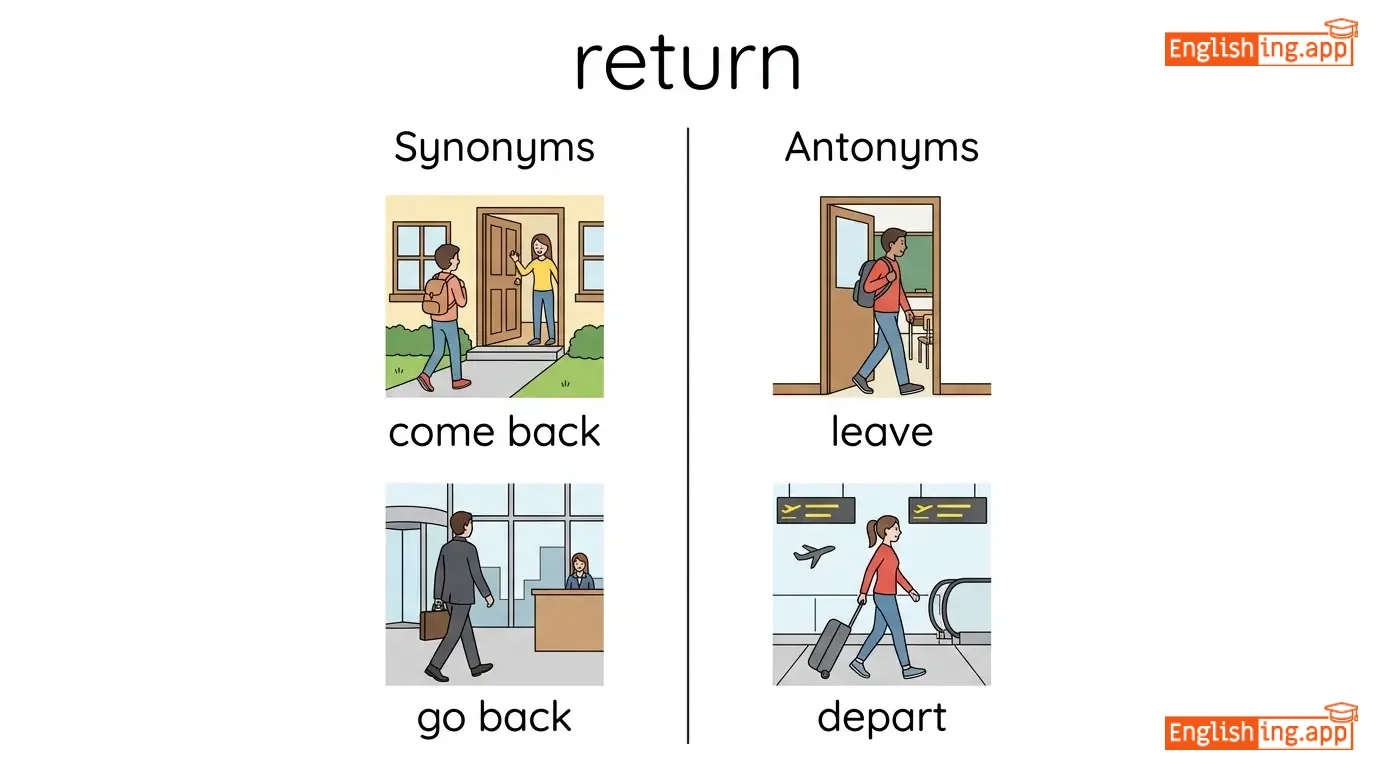
come back, go back, give back, restore
••••••
|
leave, depart, take, keep
••••••
|
return home, return to work, return journey, return address, return call
••••••
|
No •••••• |
|
#646
🥤
|
/blɛnd/
verb
(ブレンド)
••••••
|
|
混ぜる
mazeru
••••••
|
blended
ブレンドされた
••••••
|
blended
ブレンドされた
••••••
|
blends
ブレンドする
••••••
|
blending
ブレンドする
••••••
|
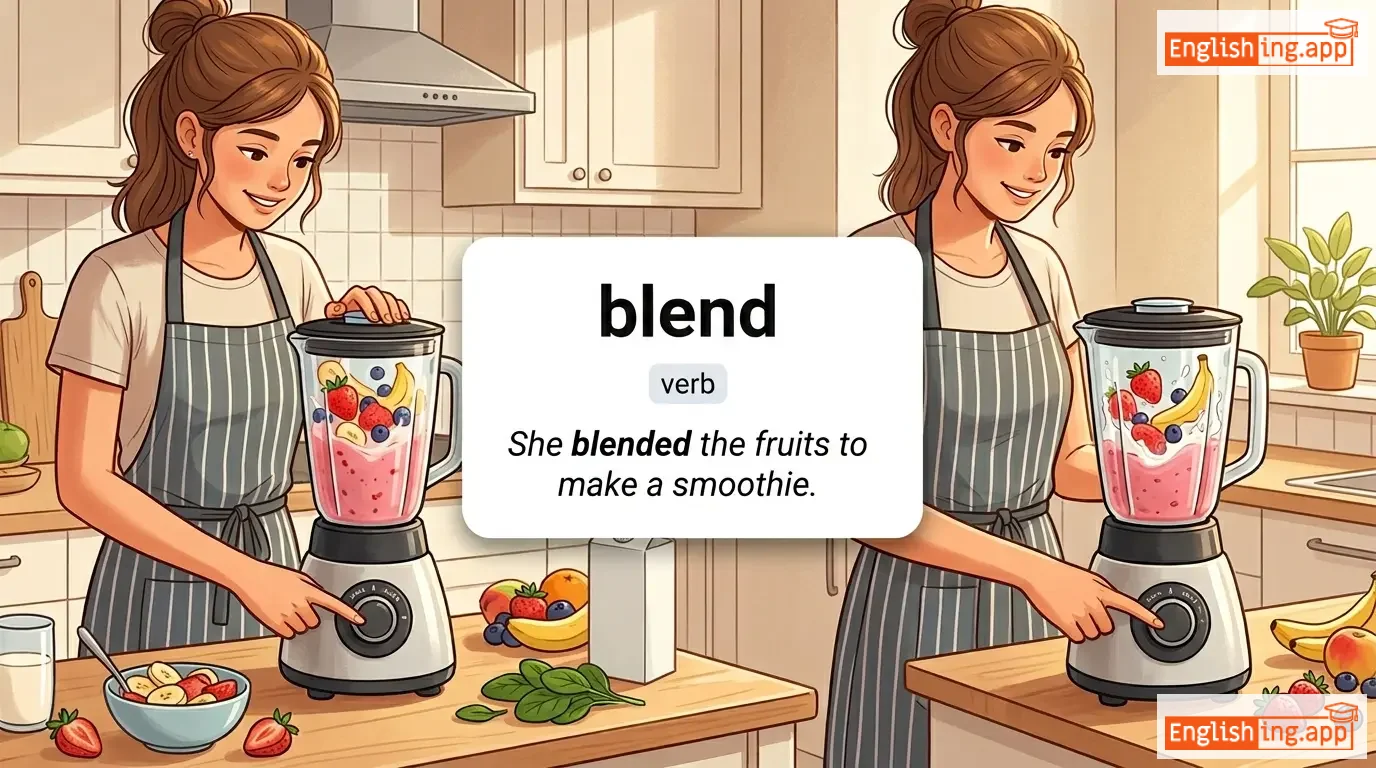
to mix things together smoothly; to combine harmoniously
••••••
|
She blends the ingredients carefully.
彼女は慎重に材料をブレンドします。
••••••
|
彼女は慎重に材料を混ぜます。
Kanojo wa shinchō ni zairyō o mazemasu.
••••••
|
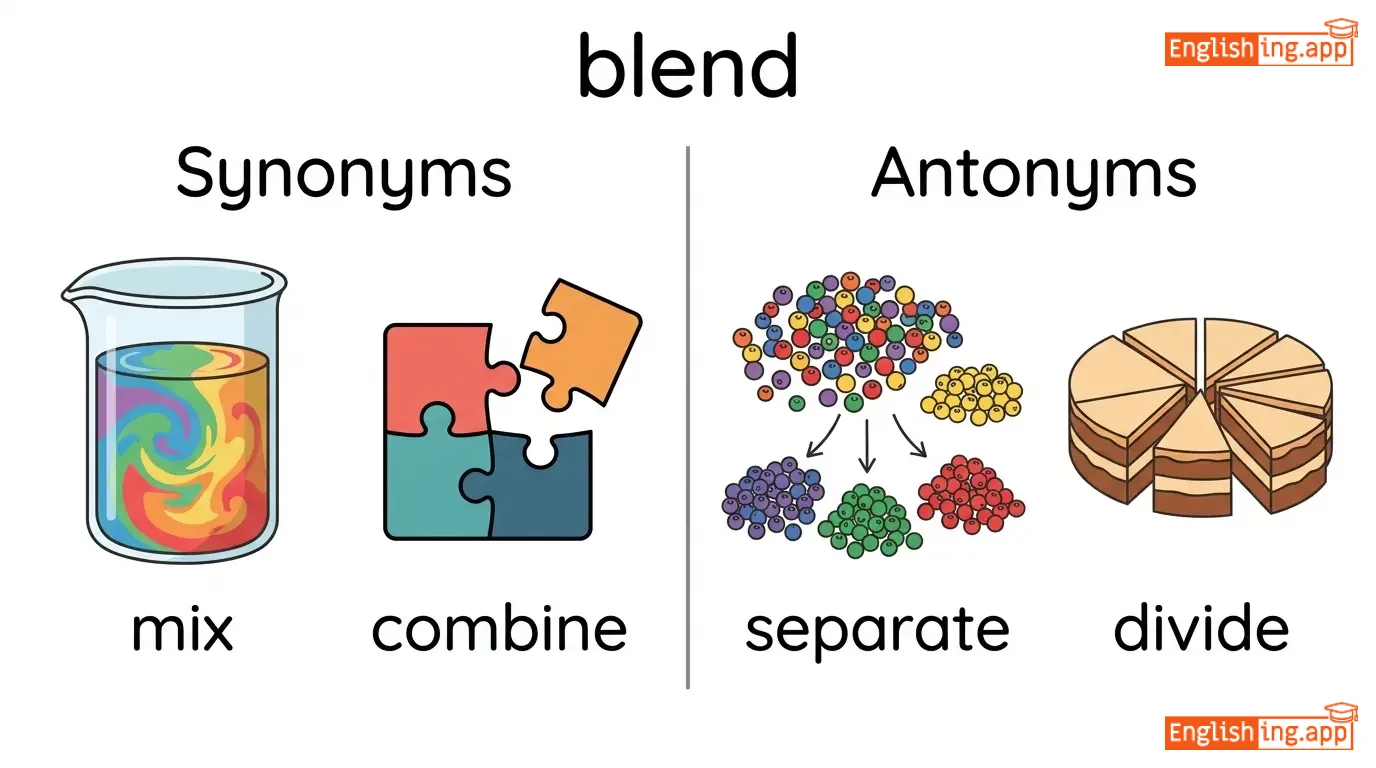
mix, combine, merge, unite
••••••
|
separate, divide, unmix
••••••
|
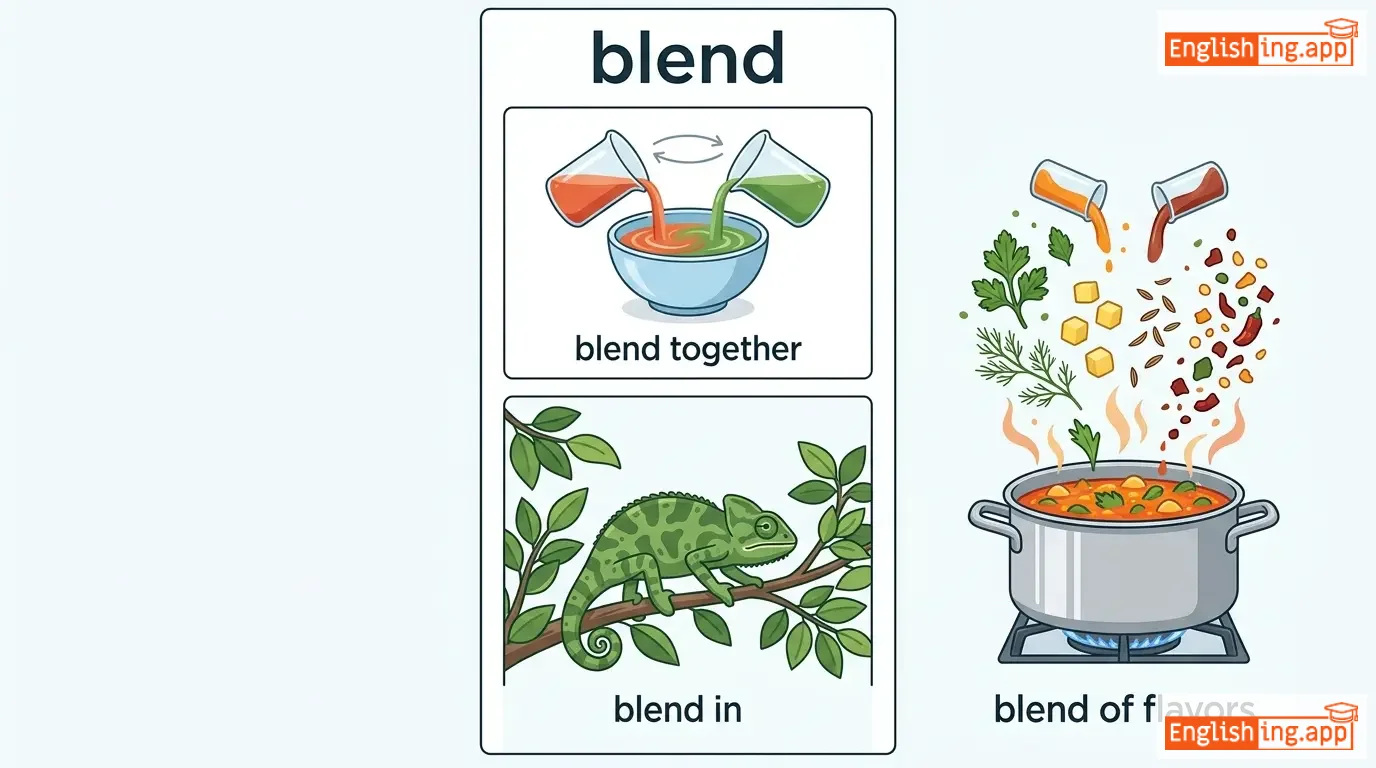
blend together, blend in, blend perfectly, protein blend, blend smoothly
••••••
|
Blendは日本語で‘混ぜる’です。
••••••
|
|
#647
📚
|
/ˈstʌdi/
verb
(スタディ)
••••••
|
|
勉強する
benkyou suru
••••••
|
studied
スタディド
••••••
|
studied
スタディド
••••••
|
studies
スタディズ
••••••
|
studying
スタディイング
••••••
|
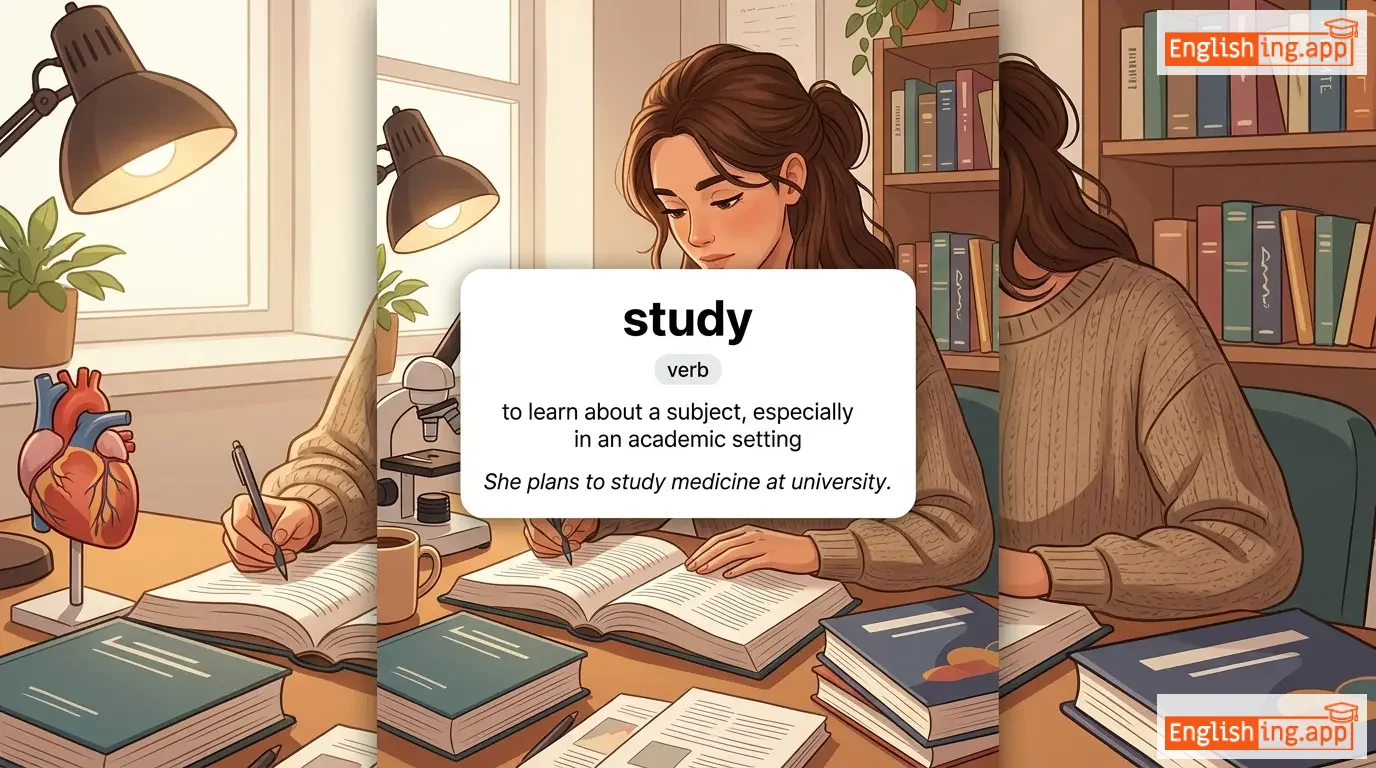
to learn about something; to examine carefully; to research
••••••
|
I study mathematics every evening.
私は毎晩数学を勉強します。
••••••
|
私は毎晩数学を勉強します。
Watashi wa maiban suugaku o benkyou shimasu.
••••••
|
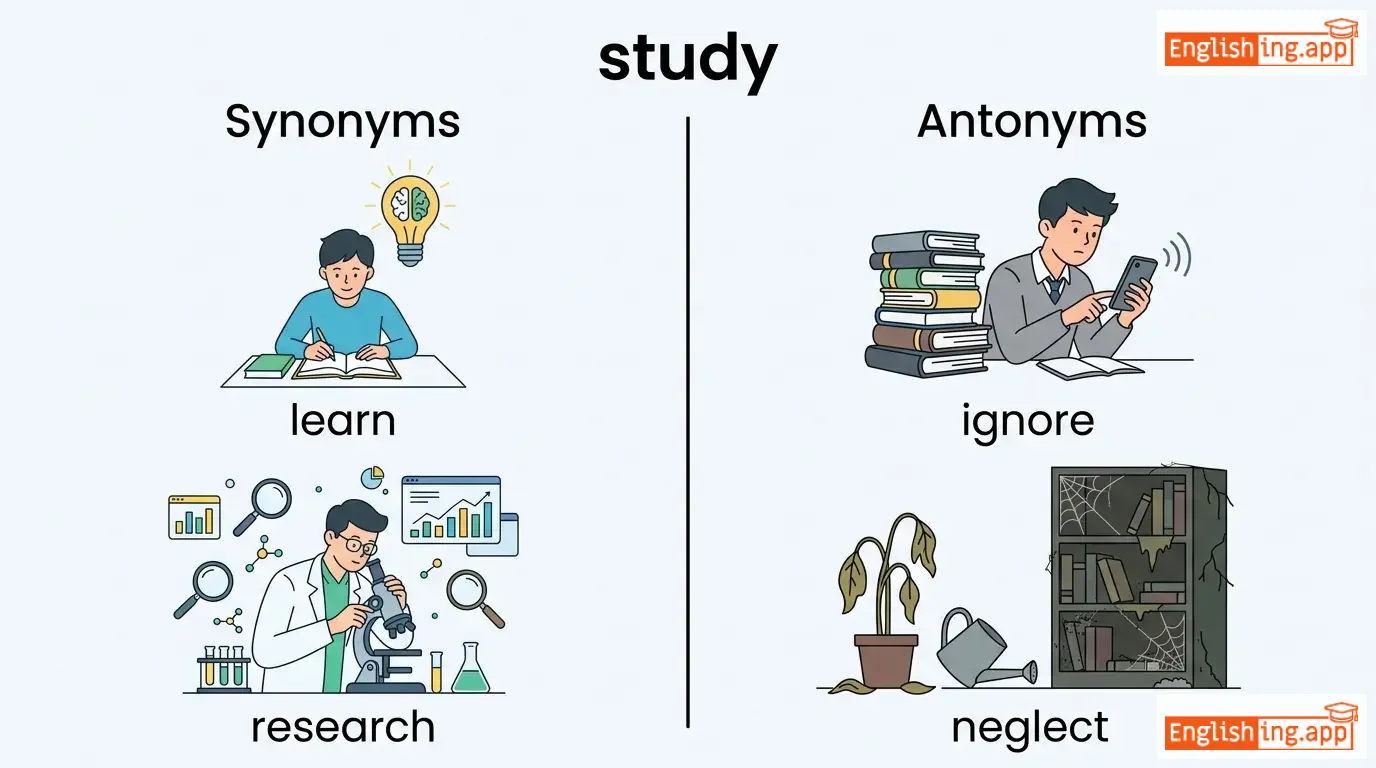
learn, research, examine, investigate
••••••
|
ignore, neglect, overlook
••••••
|
study hard, study abroad, case study, study materials, study group
••••••
|
Study = 勉強する (知識を深める)
••••••
|
|
#648
🎁
|
/ræp/
verb
(ラップ)
••••••
|
|
包む
tsutsumu
••••••
|
wrapped
ラップド
••••••
|
wrapped
ラップド
••••••
|
wraps
ラップス
••••••
|
wrapping
ラッピング
••••••
|
to cover something completely with paper or cloth; to enclose
••••••
|
Please wrap the gift in colorful paper.
プレゼントをカラフルな紙で包んでください。
••••••
|
プレゼントをカラフルな紙で包んでください。
Purezento o karafuru na kami de tsutsunde kudasai.
••••••
|
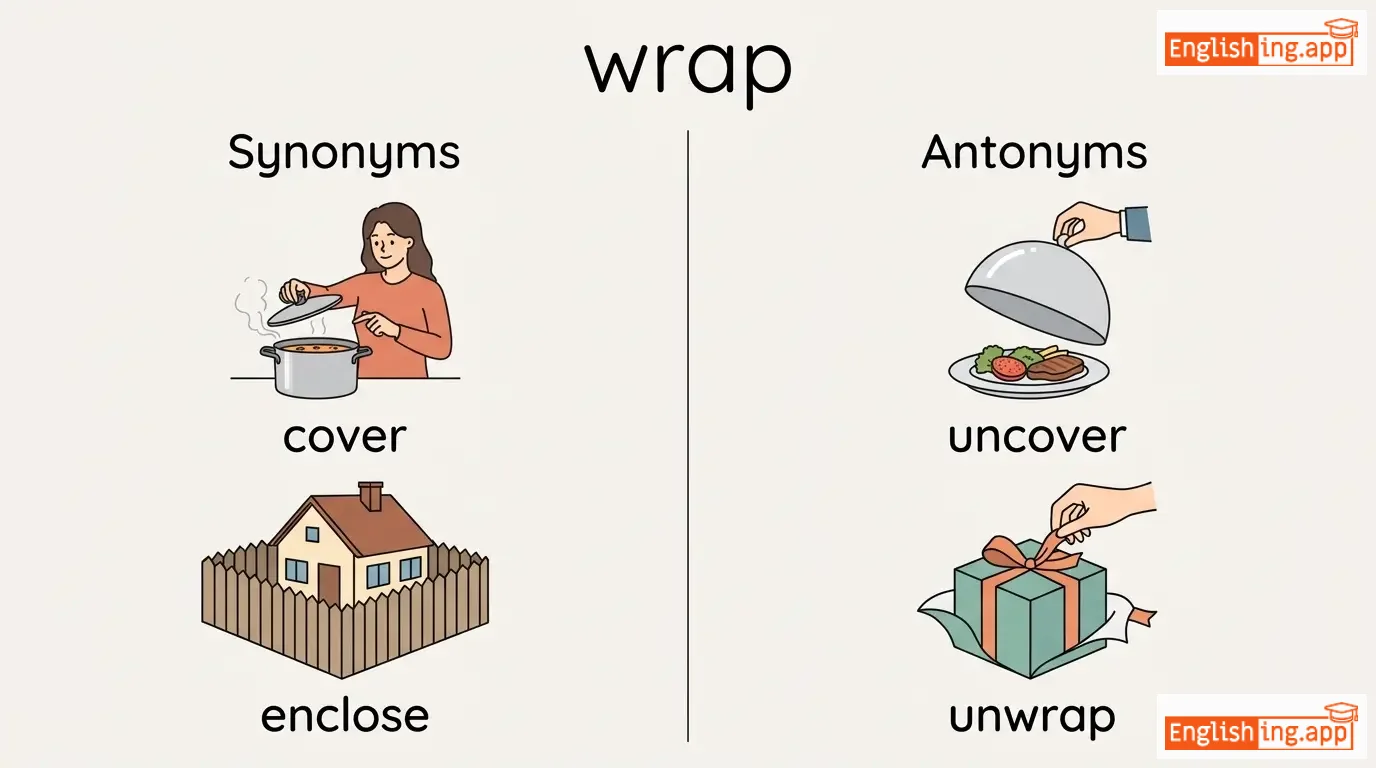
cover, enclose, package, bundle
••••••
|
unwrap, uncover, expose, open
••••••
|
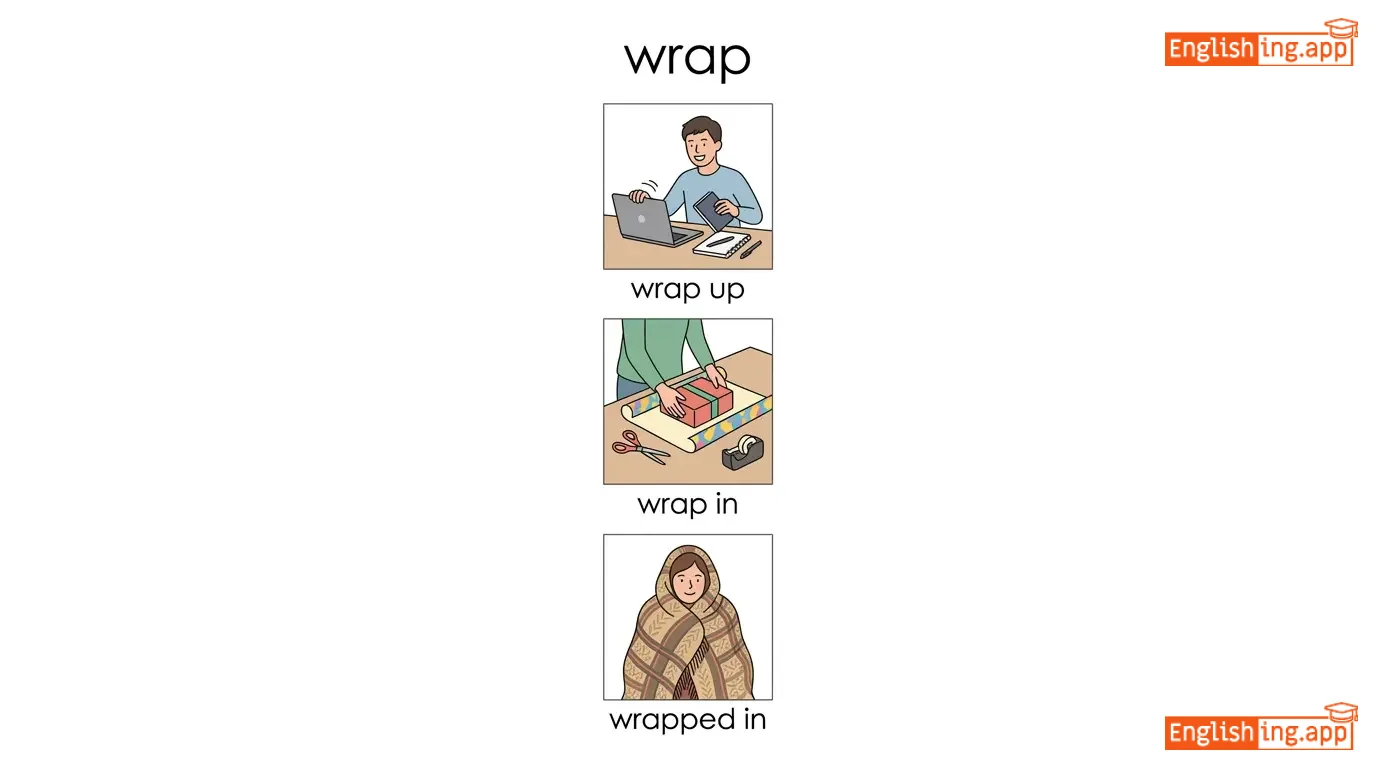
wrap up, gift wrap, plastic wrap, wrap around, wrap tightly
••••••
|
Wrap means 包む, like wrapping a gift for a friend
••••••
|
|
#649
😤
|
/ˈtɑːləreɪt/
verb
(トレレート)
••••••
|
|
容認する
yōnin suru
••••••
|
tolerated
トレレイテッド
••••••
|
tolerated
トレレイテッド
••••••
|
tolerates
トレレイツ
••••••
|
tolerating
トレレイティング
••••••
|
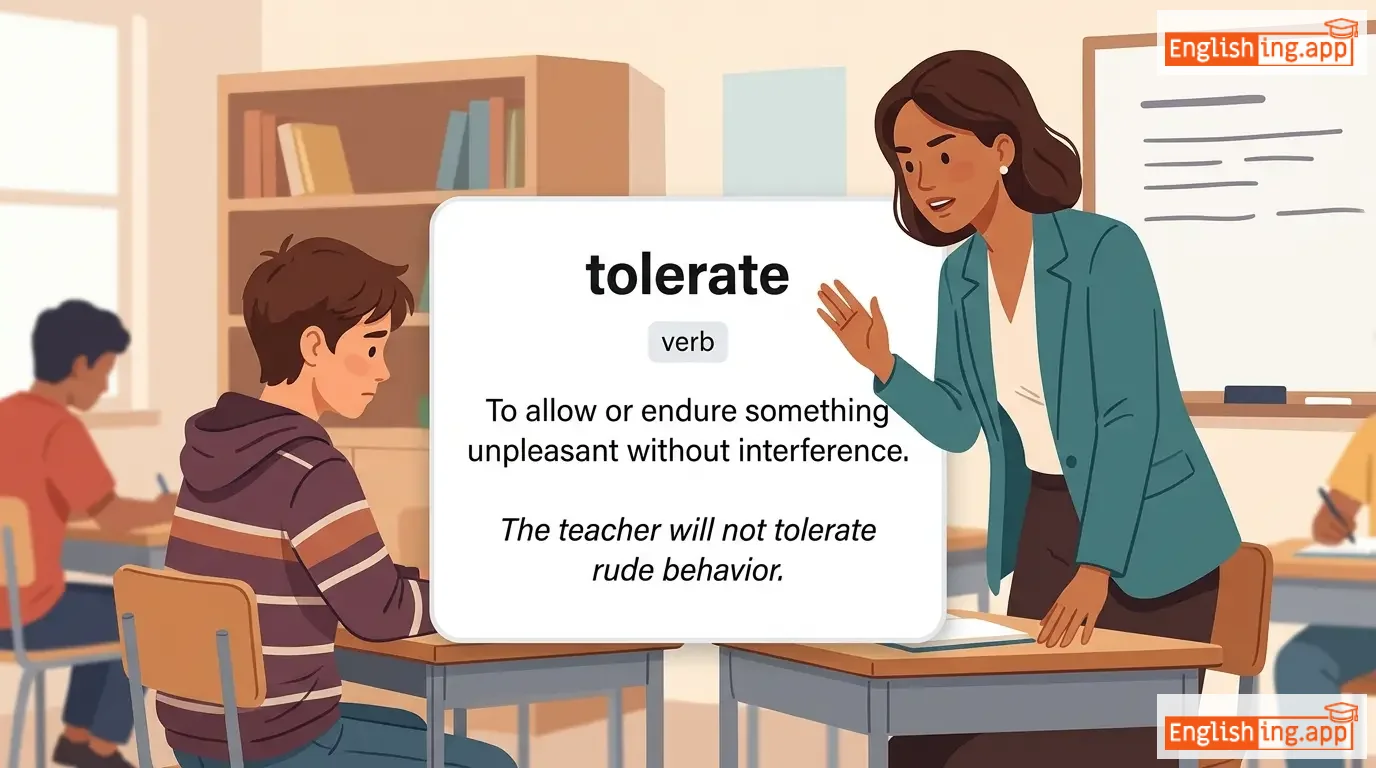
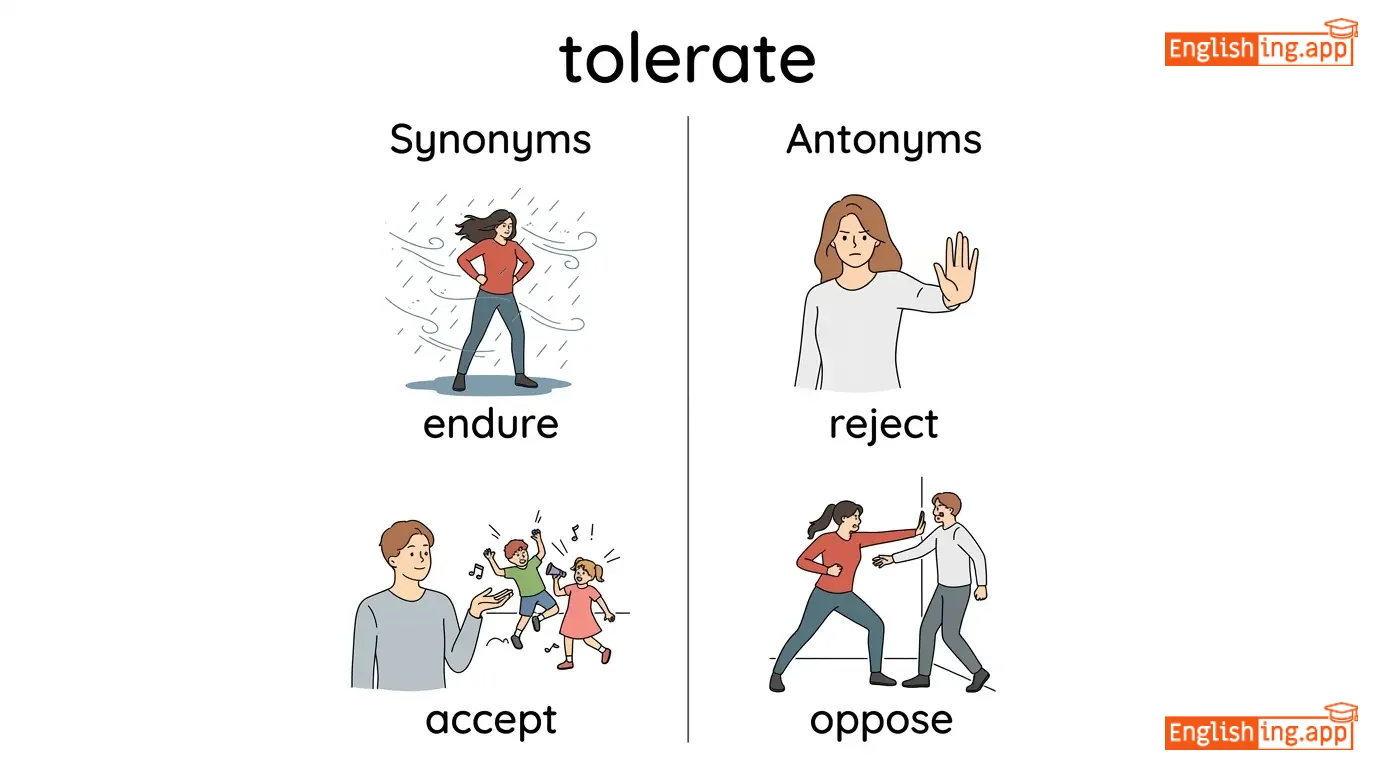
to accept or endure something unpleasant without complaining; to allow something to exist
••••••
|
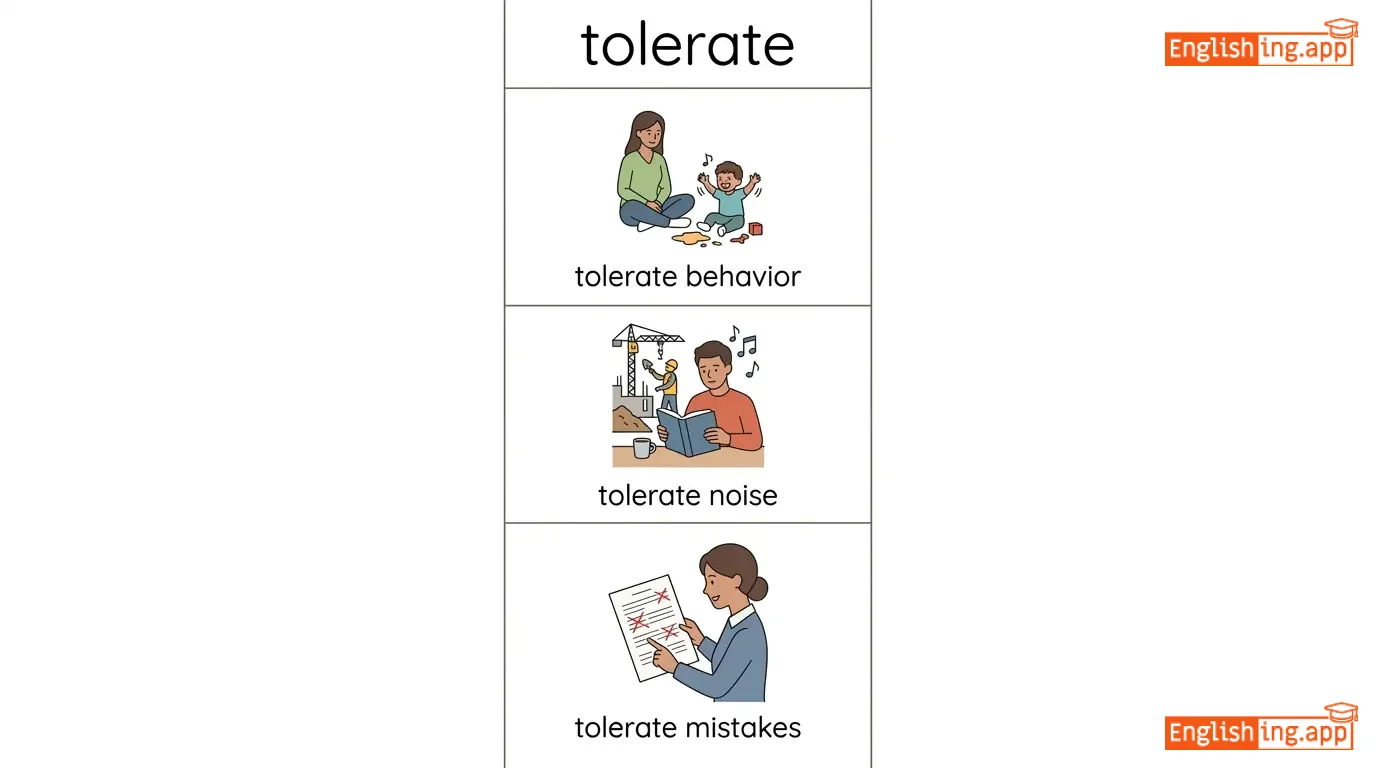
I cannot tolerate such rude behavior in my classroom.
私はクラスでそのような失礼な行動を容認できません。
••••••
|
私はクラスでそのような失礼な行動を容認できません。
Watashi wa kurasu de sonoyō na shitsurei na kōdō o yōnin dekimasen.
••••••
|
endure, bear, accept, allow
••••••
|
reject, refuse, prohibit, forbid
••••••
|
tolerate behavior, zero tolerance, tolerate pain, cannot tolerate, religious tolerance
••••••
|
容認する - 失礼を黙って受け入れる。
••••••
|
|
#650
🏃
|
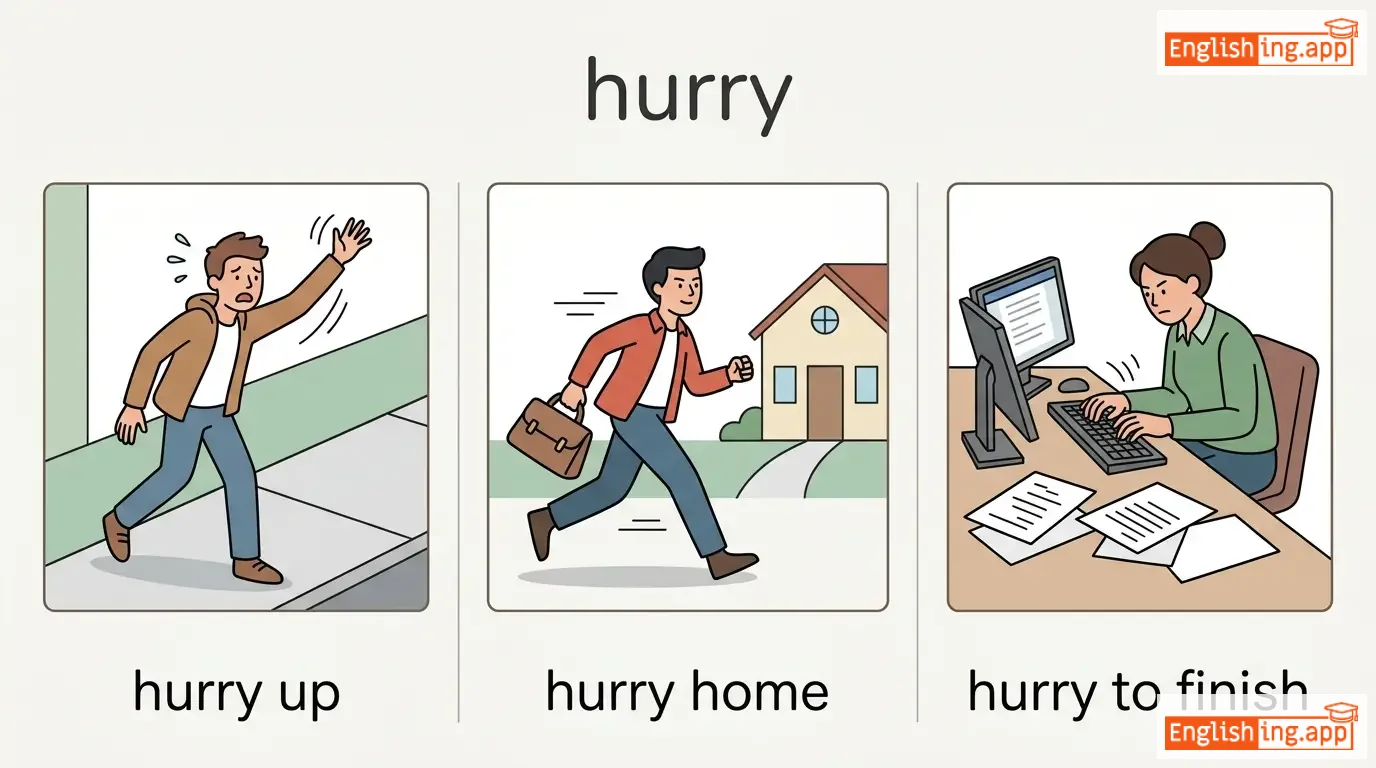
/ˈhɜːri/
verb
(ハリー)
••••••
|
|
急ぐ
isogu
••••••
|
hurried
ハリード
••••••
|
hurried
ハリード
••••••
|
hurries
ハリーズ
••••••
|
hurrying
ハリーイング
••••••
|
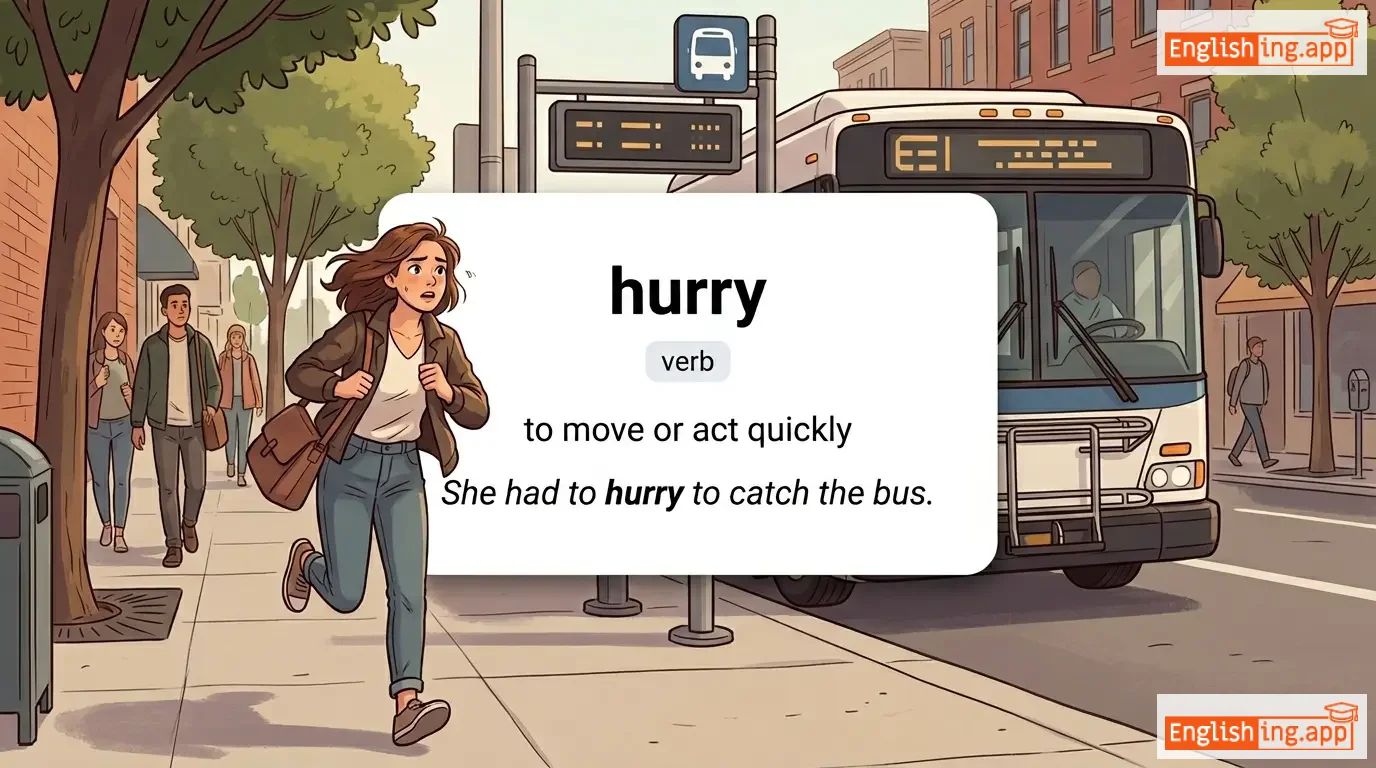
to move or act with great speed; to rush
••••••
|
We need to hurry or we'll be late.
急がないと遅れちゃうよ。
••••••
|
急がないと遅れちゃうよ。
Isoganai to okurechau yo.
••••••
|
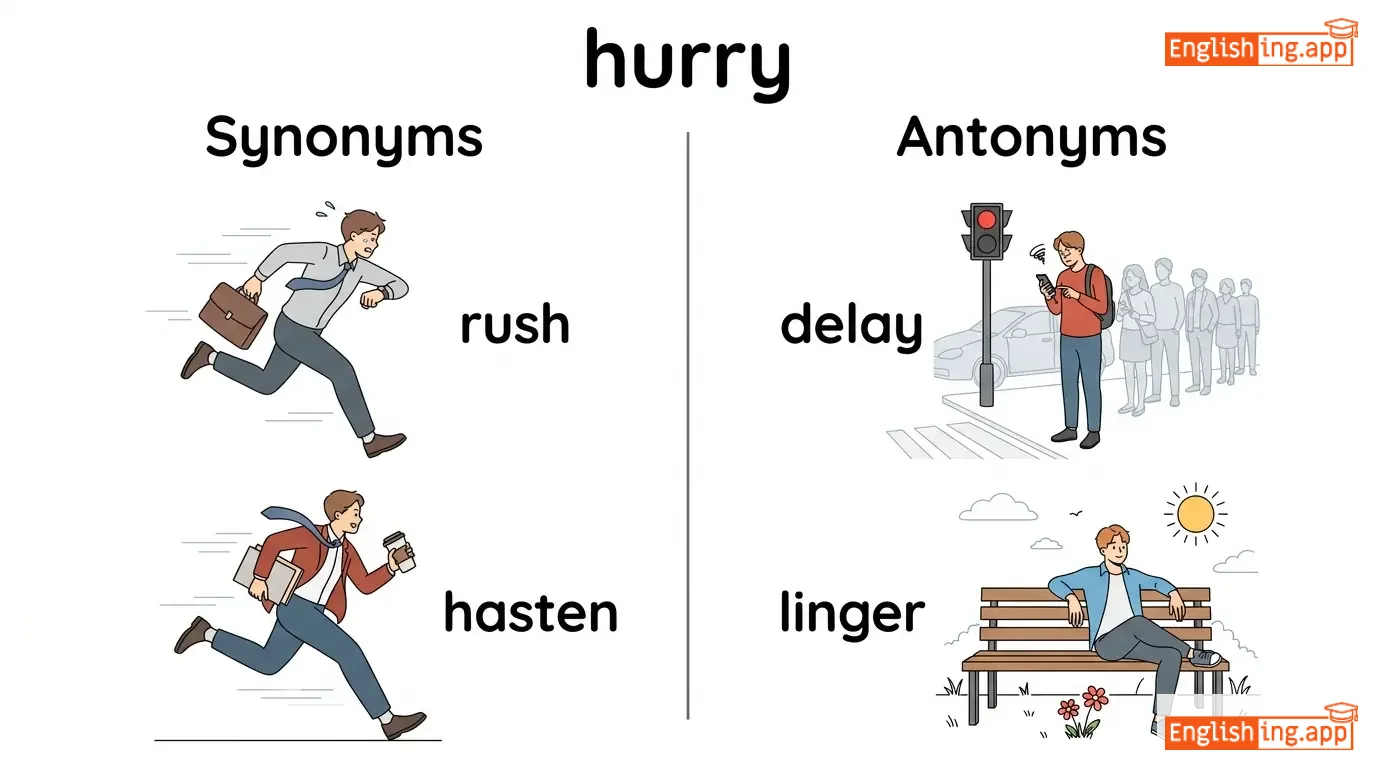
rush, speed, hasten, quicken
••••••
|
delay, slow, linger, dawdle
••••••
|
hurry up, hurry along, in a hurry, hurry back, no hurry
••••••
|
急ぐこと - 「急いで!」
••••••
|
|
#651
😏
|
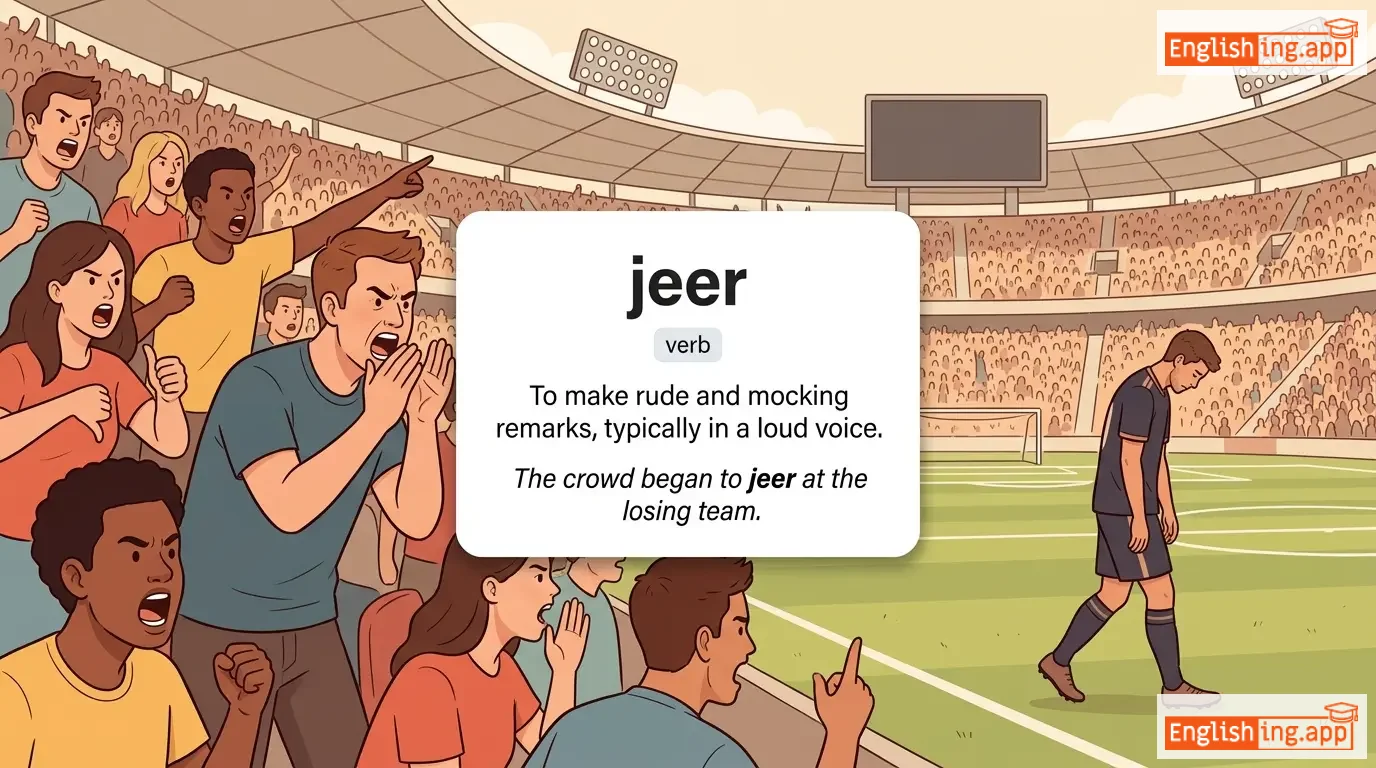
/dʒɪr/
verb
(ジア)
••••••
|
|
嘲笑う
chōwarau
••••••
|
jeered
ジアード
••••••
|
jeered
ジアード
••••••
|
jeers
ジアーズ
••••••
|
jeering
ジアリング
••••••
|
to laugh at someone or something in a cruel or mocking way
••••••
|
The crowd began to jeer at the opposing team.
群衆は対戦チームを嘲笑し始めた。
••••••
|
群衆は対戦チームを嘲笑し始めた。
Gunshū wa taisen chīmu o chōwarashi hajimeta.
••••••
|
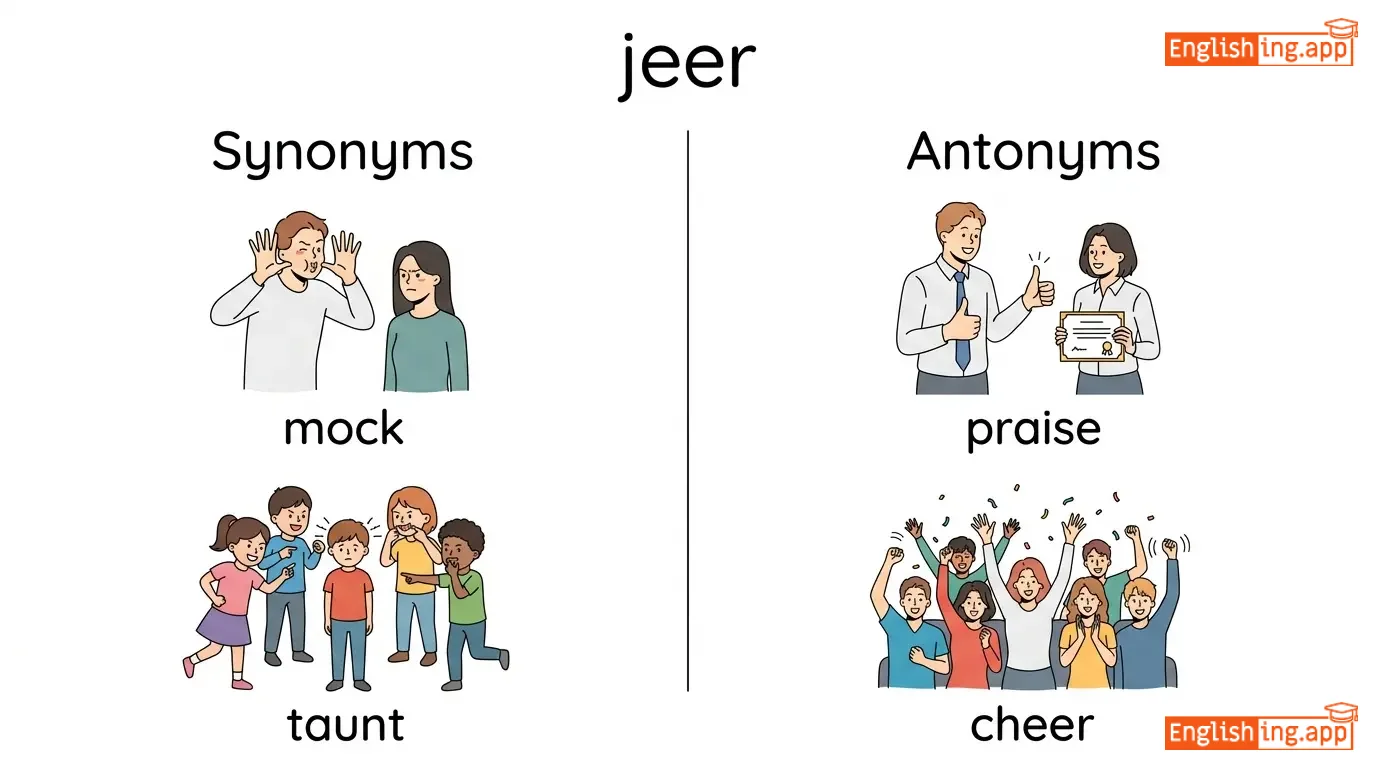
mock, taunt, ridicule, scoff, sneer
••••••
|
cheer, applaud, praise, encourage, support
••••••
|
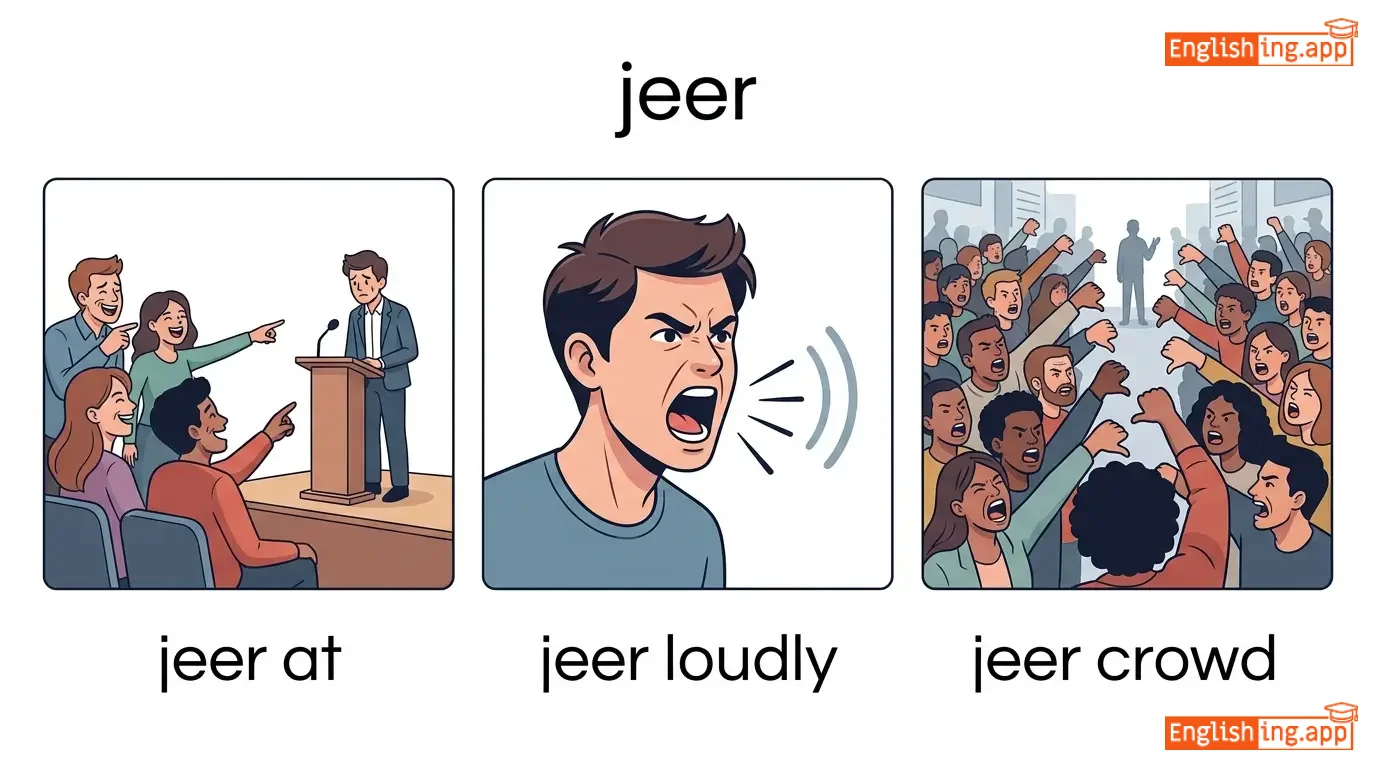
jeer at, jeer loudly, jeer and boo, crowd jeers, jeer mockingly
••••••
|
No •••••• |
|
#652
👉
|
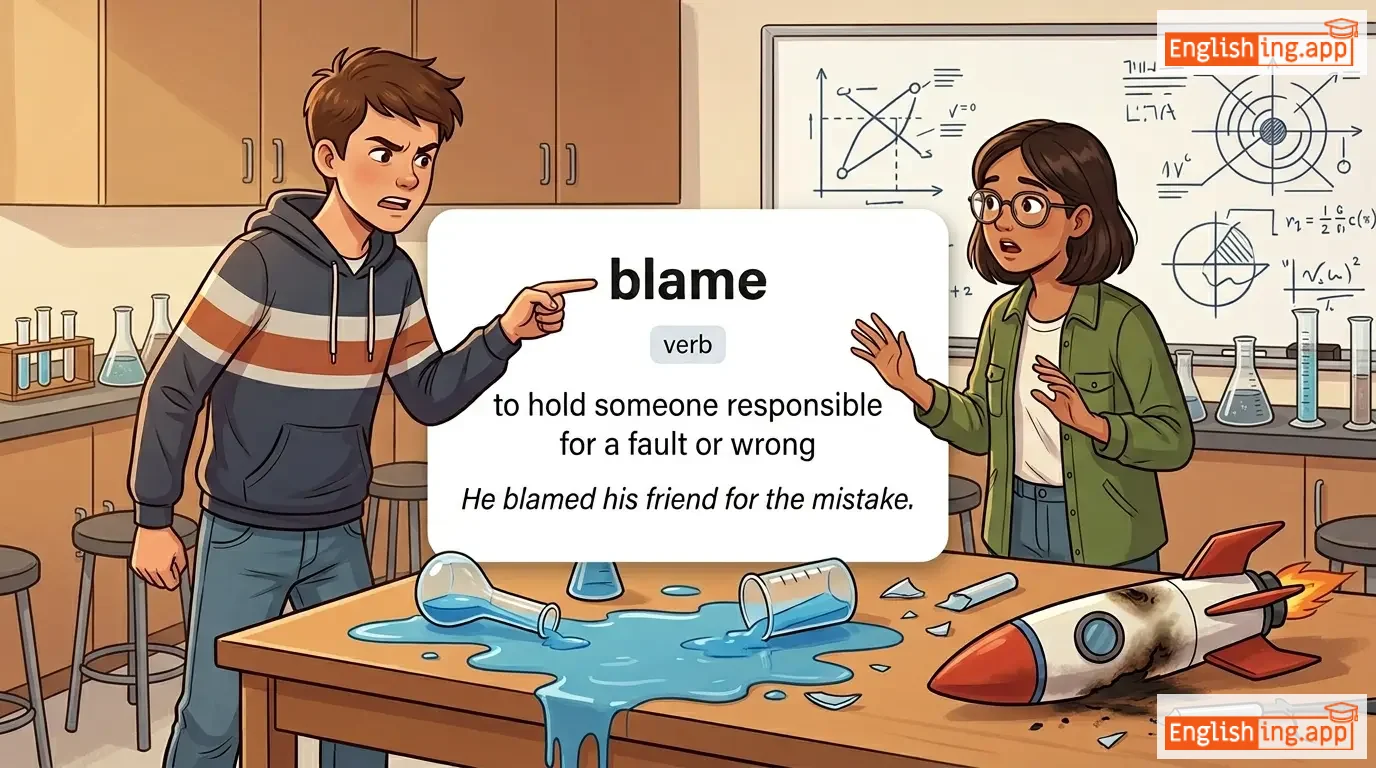
/bleɪm/
verb
(bureimu)
••••••
|
|
非難する
hinan suru
••••••
|
blamed
bureimudo
••••••
|
blamed
bureimudo
••••••
|
blames
bureimus
••••••
|
blaming
bureimingu
••••••
|
to hold responsible for a fault; to find fault with
••••••
|
Don't blame me for the mistake.
間違いを私に責めないでください。
••••••
|
間違いを私に責めないでください。
Machigai wo watashi ni semenaide kudasai.
••••••
|
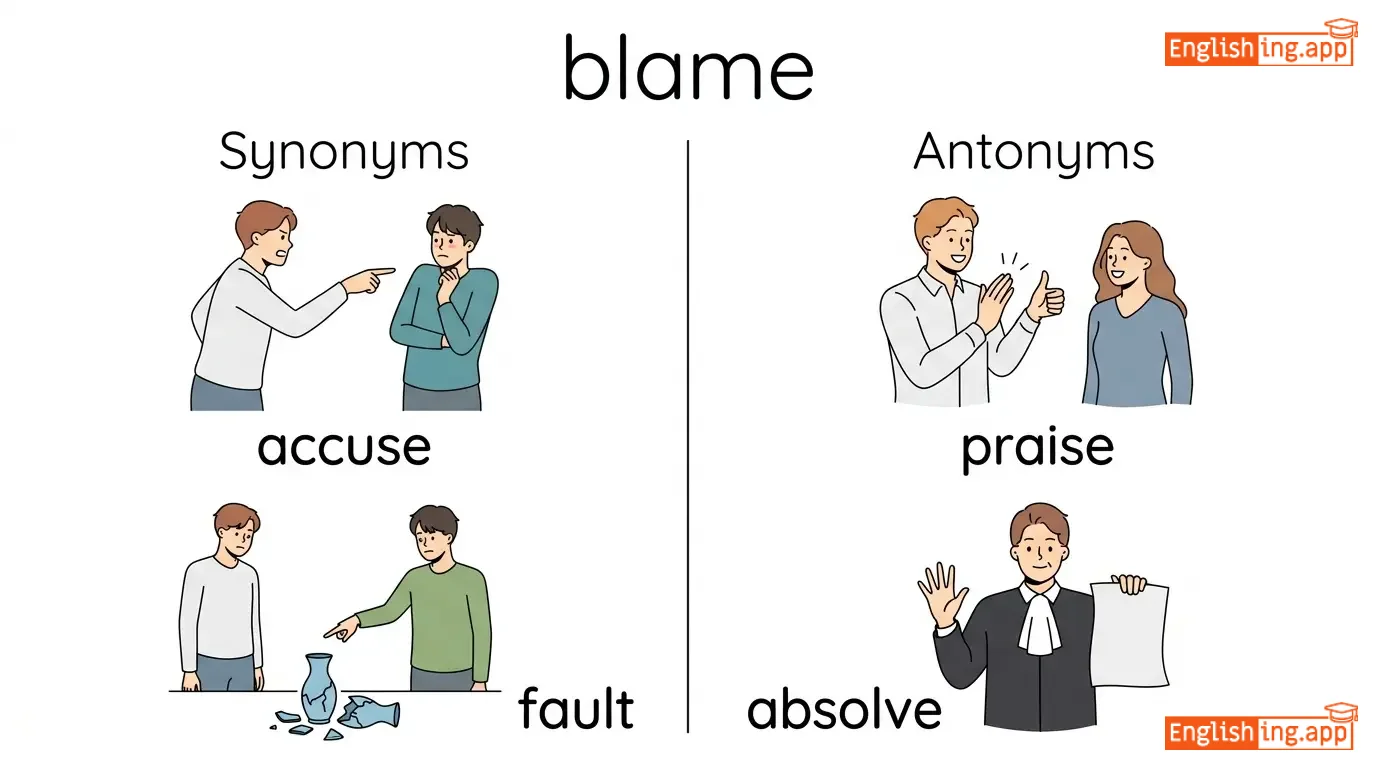
accuse, fault, criticize, condemn
••••••
|
praise, commend, absolve, excuse
••••••
|
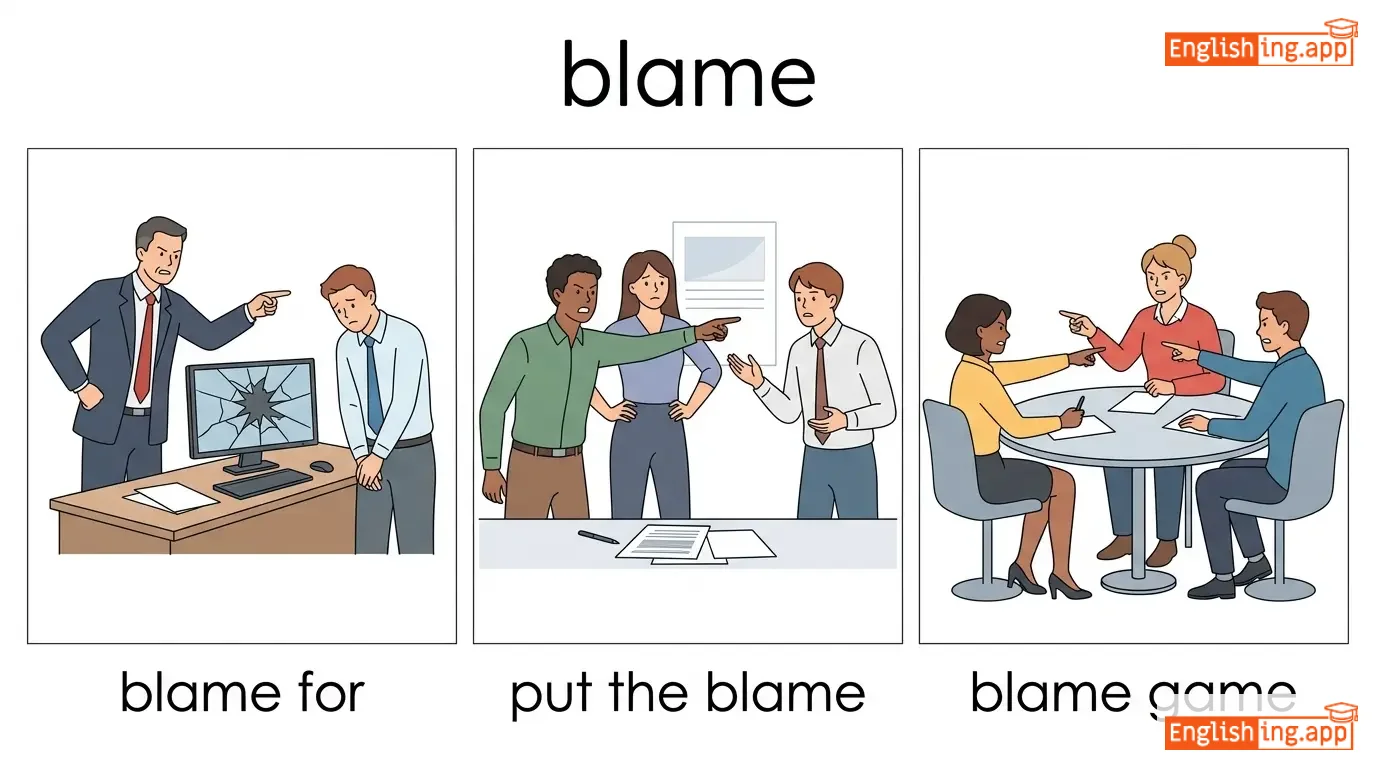
blame someone, take blame, blame game, share blame, blame unfairly
••••••
|
Blame = 非難する
••••••
|
|
#653
🪚
|
/sɔ/
verb
(ソー)
••••••
|
|
のこぎりで切る
nokogiri de kiru
••••••
|
sawed
ソード
••••••
|
sawn
ソーン
••••••
|
saws
ソウズ
••••••
|
sawing
ソーイング
••••••
|
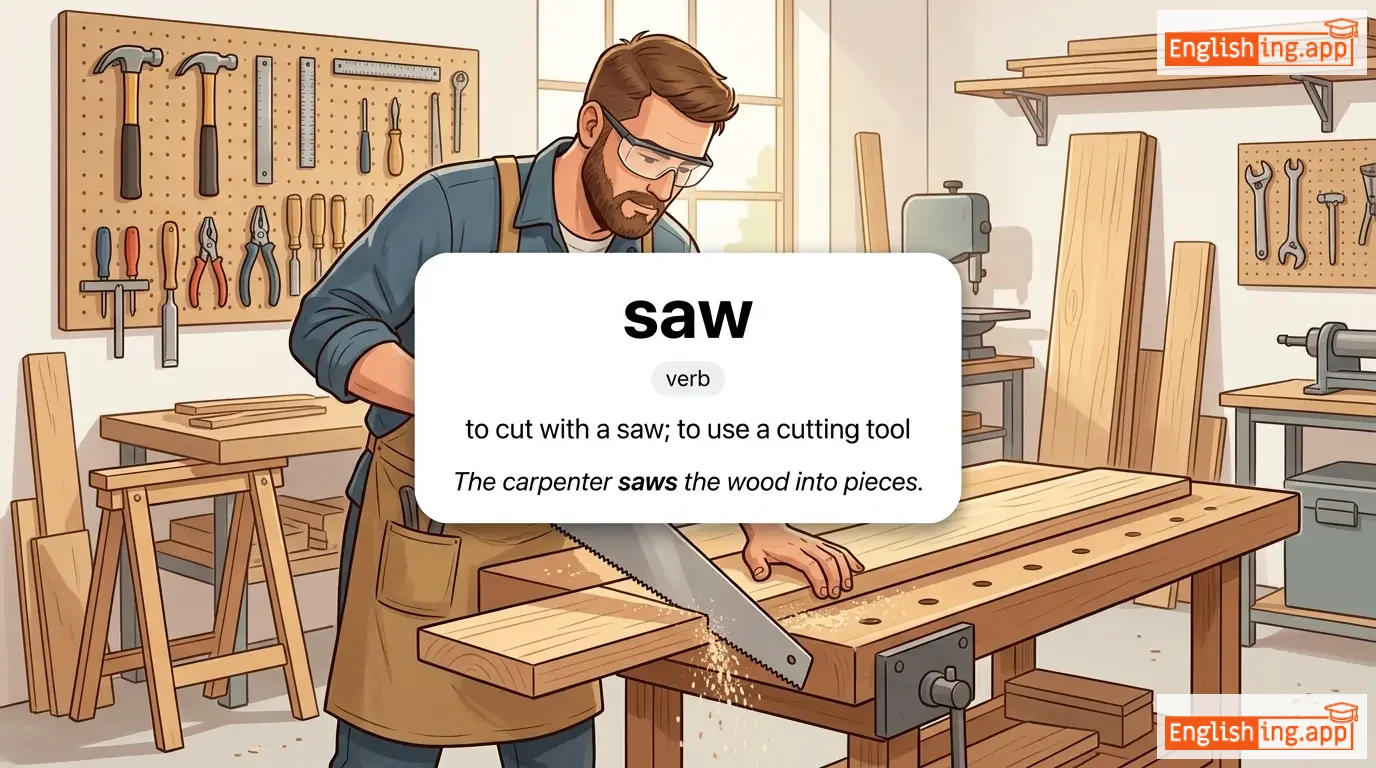
to cut with a saw; to use a cutting tool
••••••
|
The carpenter saws the wood into pieces.
大工は木を切って小さな部分に分けます。
••••••
|
大工は木を切って小さな部分に分けます。
Daiku wa ki o kitte chiisana bubun ni wakemasu.
••••••
|
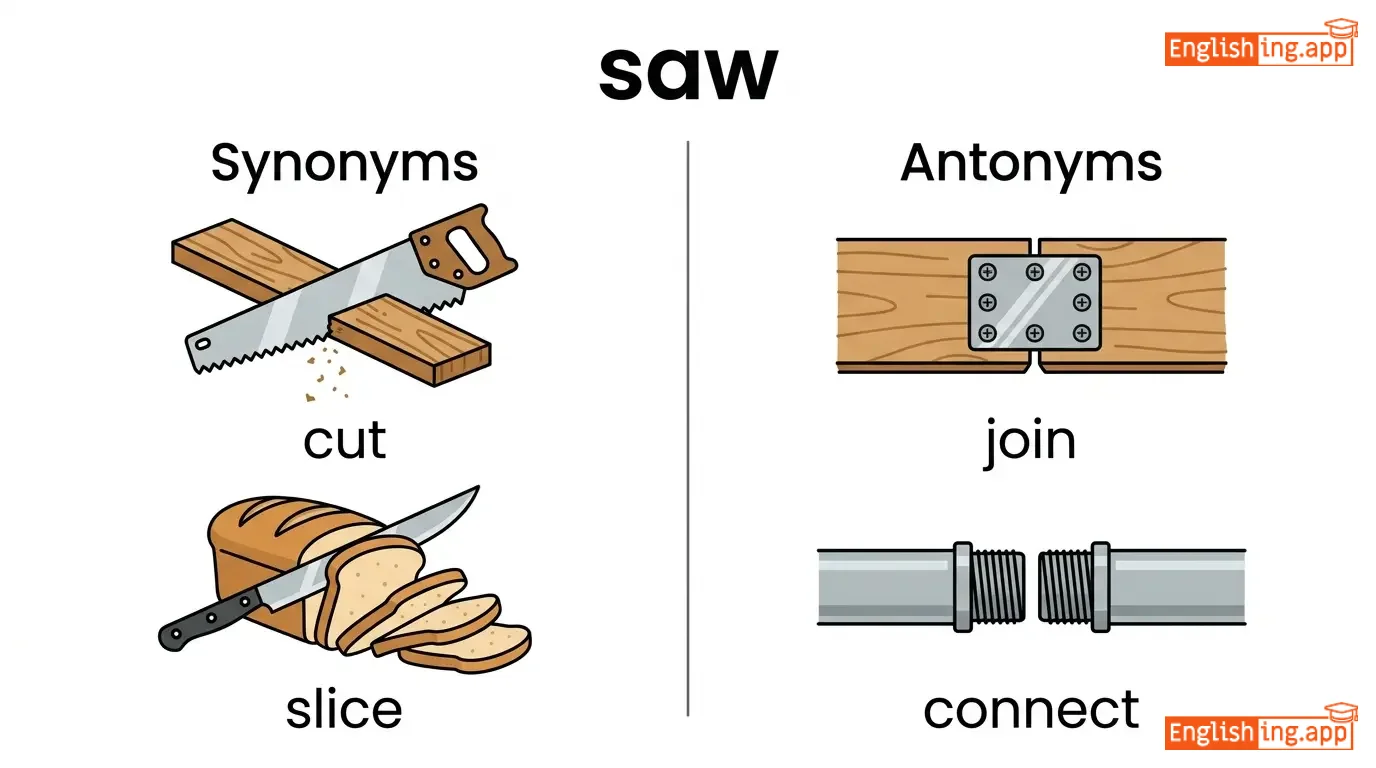
cut, slice, divide, split
••••••
|
join, connect, attach, unite
••••••
|
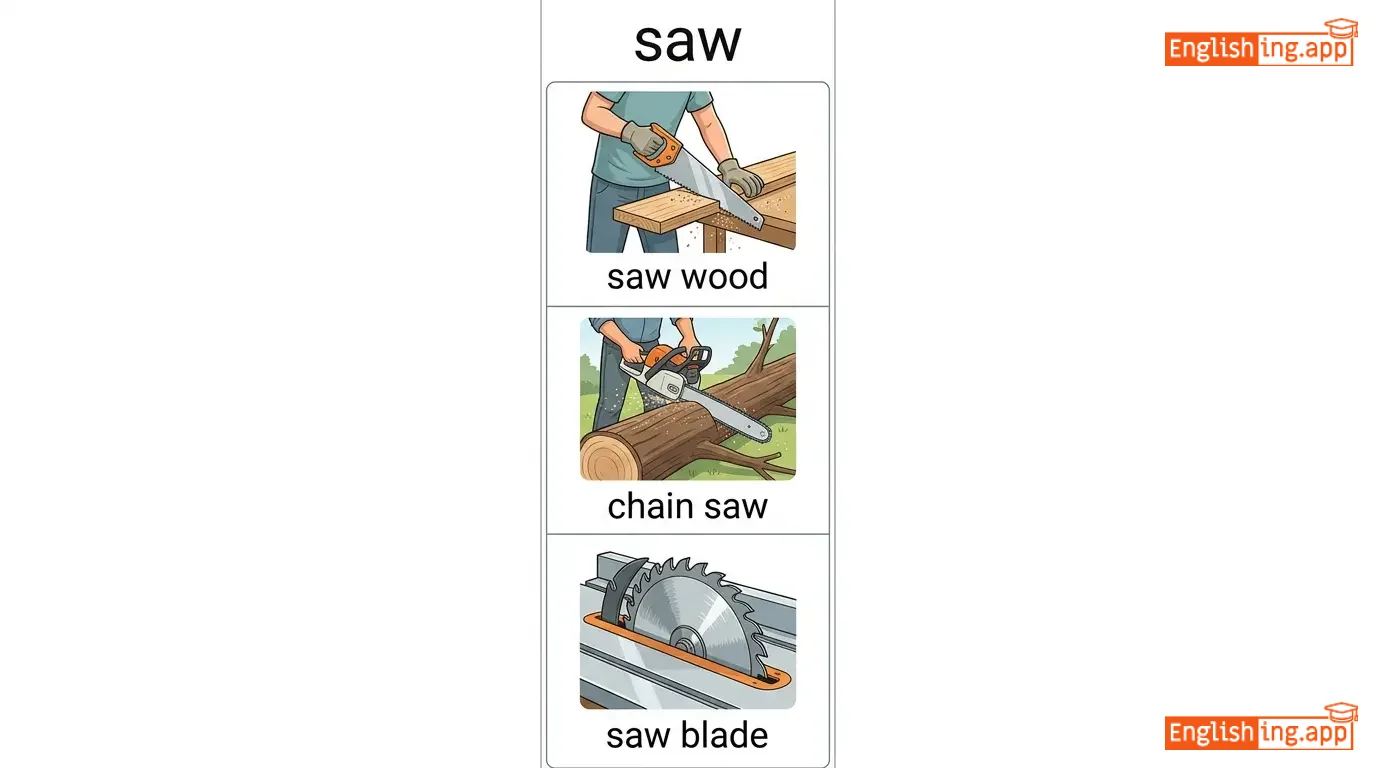
saw wood, chain saw, saw blade, saw through, circular saw
••••••
|
大工のように木を切ってみよう
••••••
|
|
#654
💰
|
/faɪn/
verb
(ファイン)
••••••
|
|
罰金を科す
bakkin wo kasu
••••••
|
fined
ファインド
••••••
|
fined
ファインド
••••••
|
fines
ファインズ
••••••
|
fining
ファイニング
••••••
|
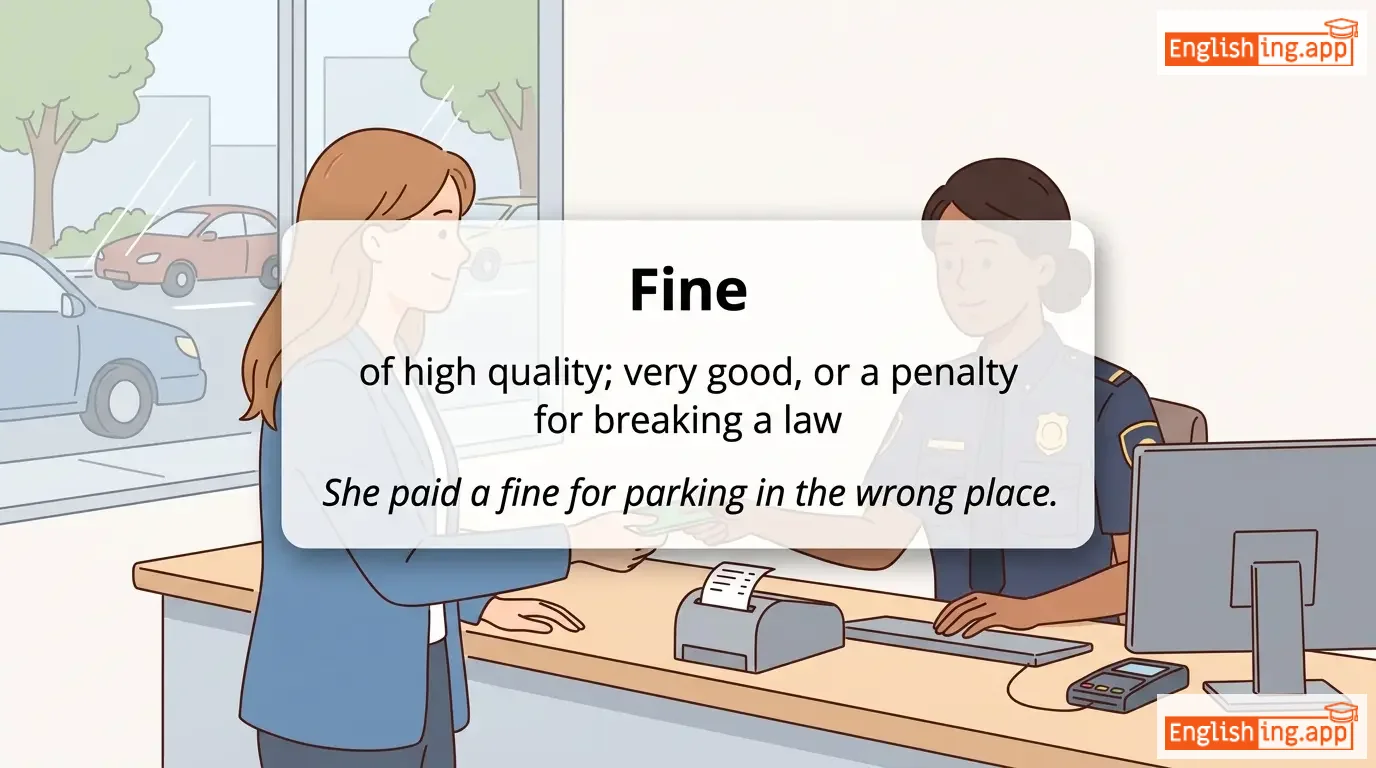
to impose a penalty payment; to make someone pay money as punishment
••••••
|
The police officer fined him for speeding.
警察官はスピード違反で彼に罰金を科した。
••••••
|
警察官はスピード違反で彼に罰金を科した。
Keisatsukan wa supīdo ihan de kare ni bakkin wo kashita.
••••••
|
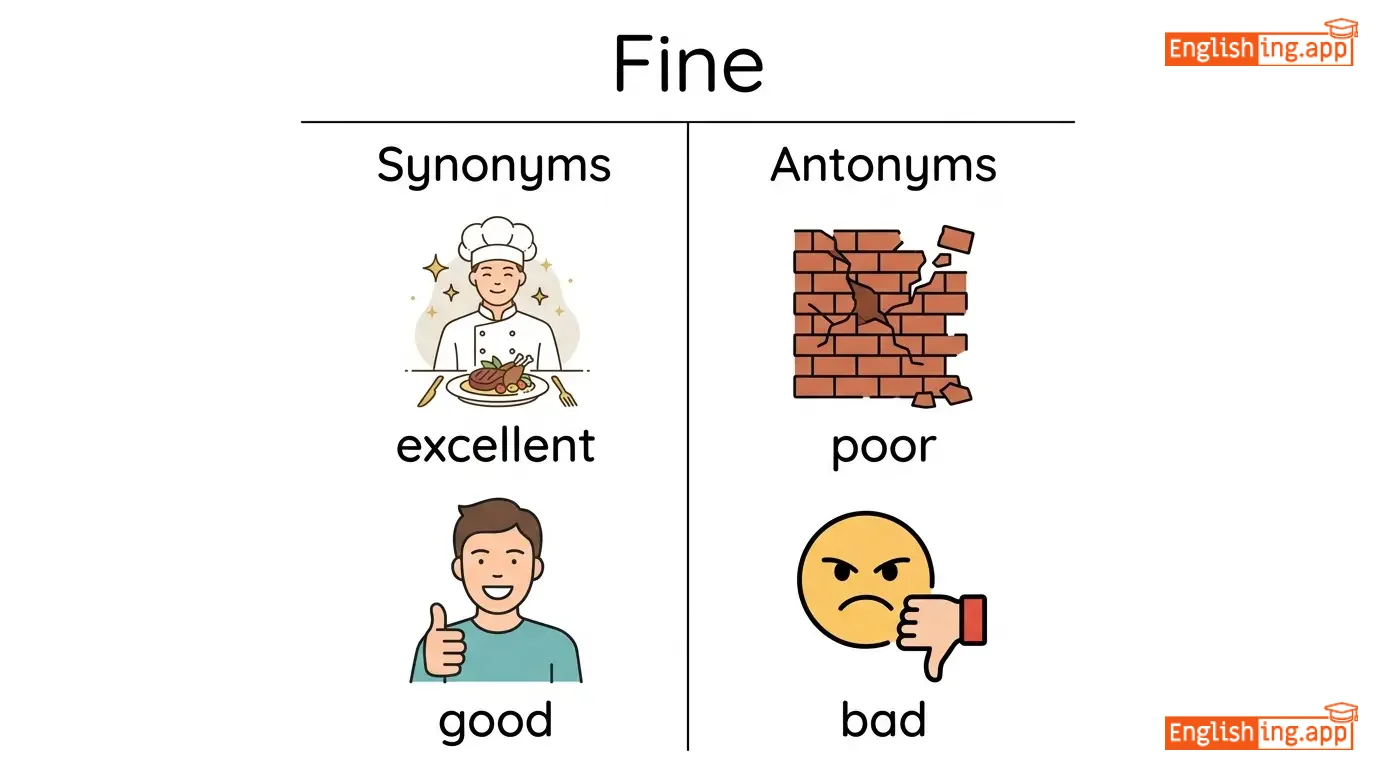
penalize, punish, charge
••••••
|
reward, pardon, forgive
••••••
|
pay a fine, heavy fine, parking fine, impose fine, fine amount
••••••
|
Think of the 'fine' as the money you pay for violating the law.
••••••
|
|
#655
🔧
|
/juːz/
verb
(ユーズ)
••••••
|
|
使う
tsukau
••••••
|
used
ユーズド
••••••
|
used
ユーズド
••••••
|
uses
ユーズズ
••••••
|
using
ユージング
••••••
|
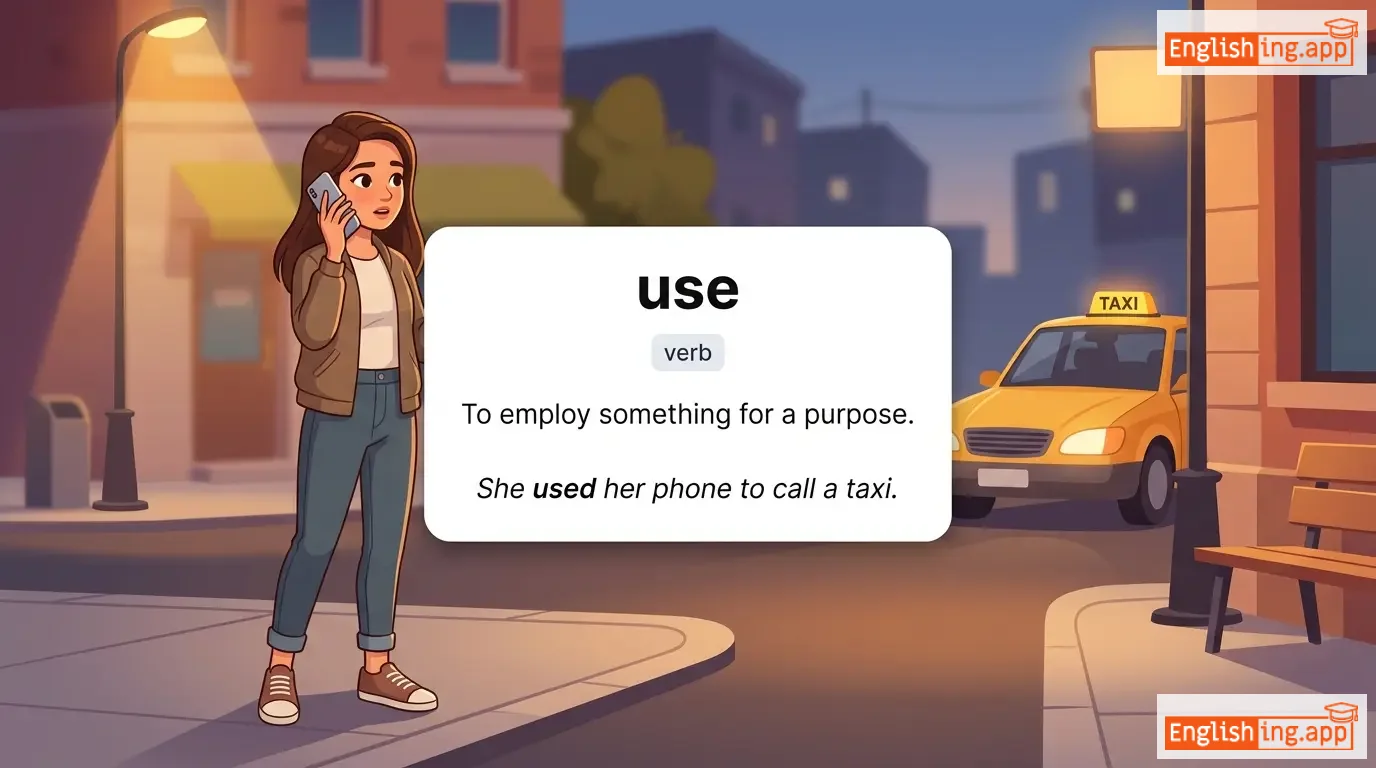
to employ something for a purpose; to take advantage of
••••••
|
I use my computer for work and entertainment.
私は仕事と娯楽のためにコンピュータを使います。
••••••
|
私は仕事と娯楽のためにコンピュータを使います。
Watashi wa shigoto to goraku no tame ni konpyūta o tsukaimasu.
••••••
|
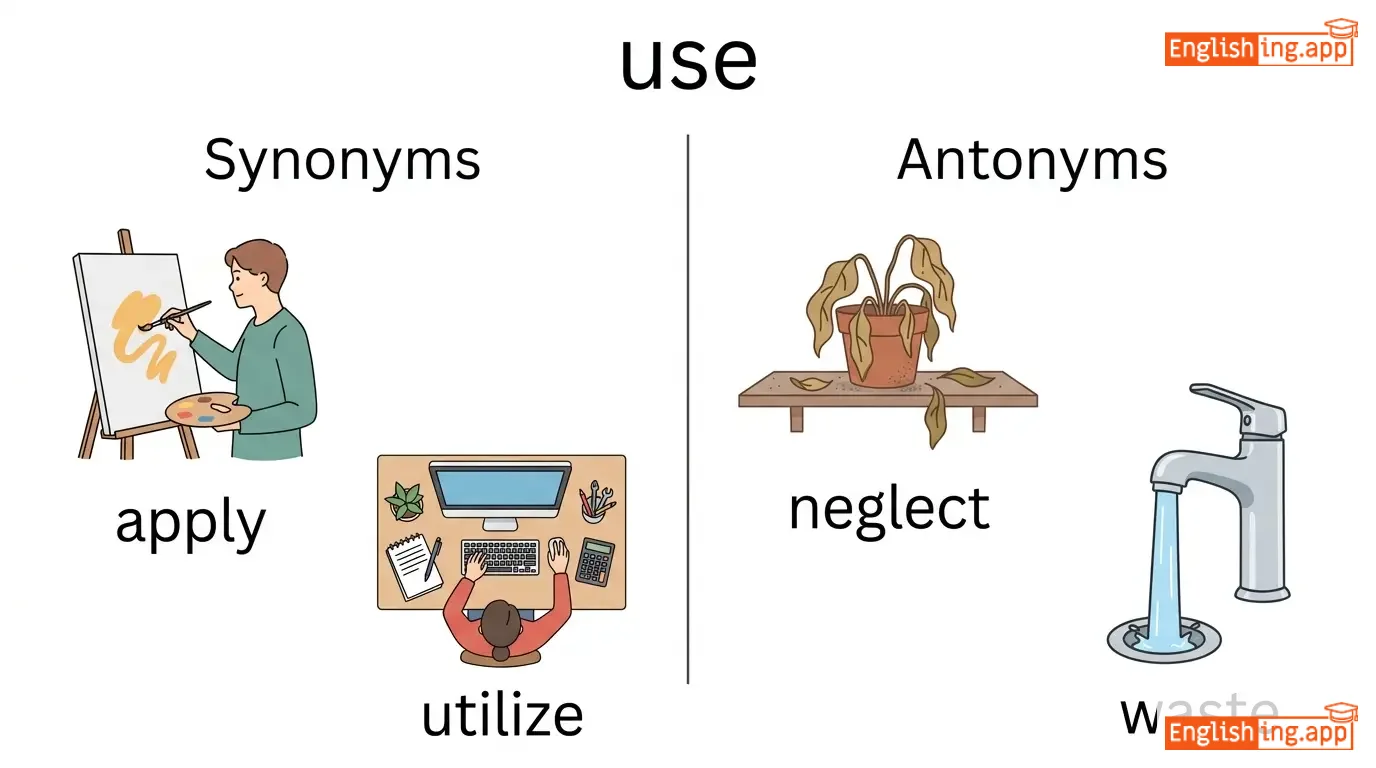
employ, utilize, apply, operate
••••••
|
avoid, neglect, ignore
••••••
|
use properly, use effectively, use for, put to use, make use of
••••••
|
使うことで効果的に作業が進みます。
••••••
|
Vocabulary Quiz
Test your vocabulary by matching words with their translations or meanings.
Login to take the quiz
Comments (0)
Share your thoughts and join the discussion.
Join the discussion by logging in
Login to CommentNo comments yet
Be the first to share your thoughts!