💪labour (レイバー)

verb
/ˈleɪbər/
一生懸命働く (isshōkenmei hataraku)

意味

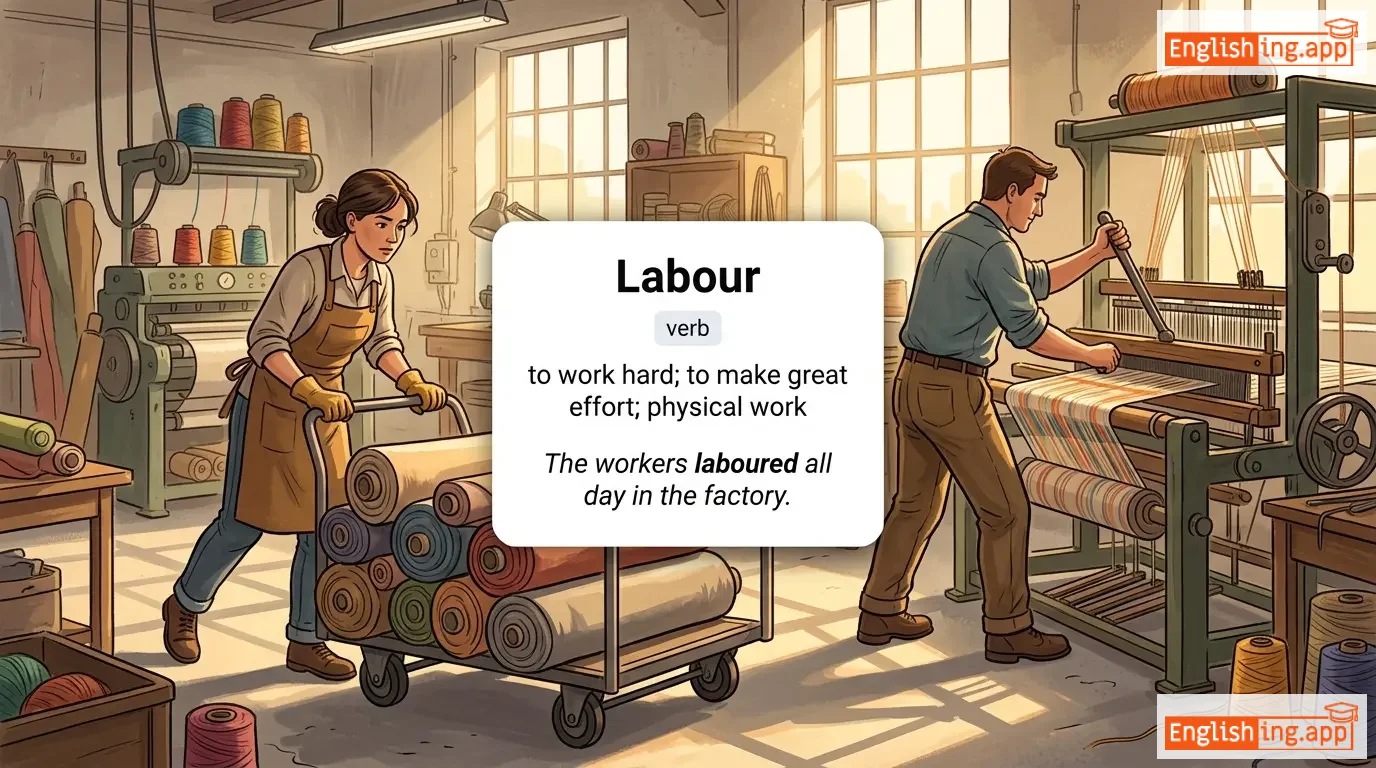
to work hard; to make great effort; physical work
work involving physical or mental effort; workers as a group
意味の翻訳
一生懸命働く; 大きな努力をする; 肉体労働
isshōkenmei hataraku; ōkina doryoku o suru; nikutai rōdō

例文

The workers laboured all day in the factory.

労働者たちは工場で一日中働いた。
Rōdōsha-tachi wa kōjō de ichinichijū hataraita.

The construction required months of hard labour to complete.

建設には数ヶ月の厳しい労働が必要でした。
kensetsu ni wa sū-kagetsu no kibishī rōdō ga hitsuyō deshita.

同義語

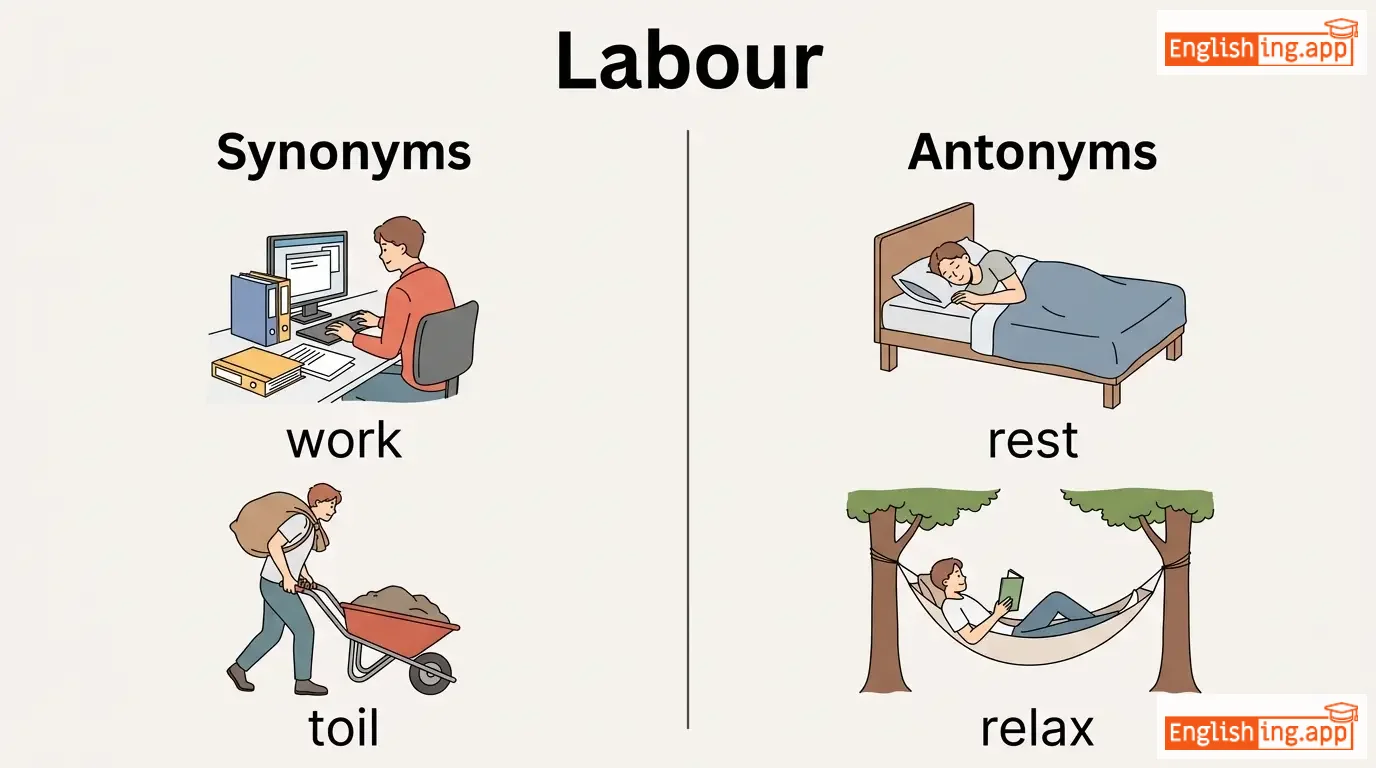
work, toil, strive, struggle, effort, employment
エントリー 1
work, toil, strive, struggle
エントリー 2
work, toil, effort, employment

対義語

rest, relax, idle, lounge, leisure, relaxation
エントリー 1
rest, relax, idle, lounge
エントリー 2
leisure, rest, relaxation

コロケーション

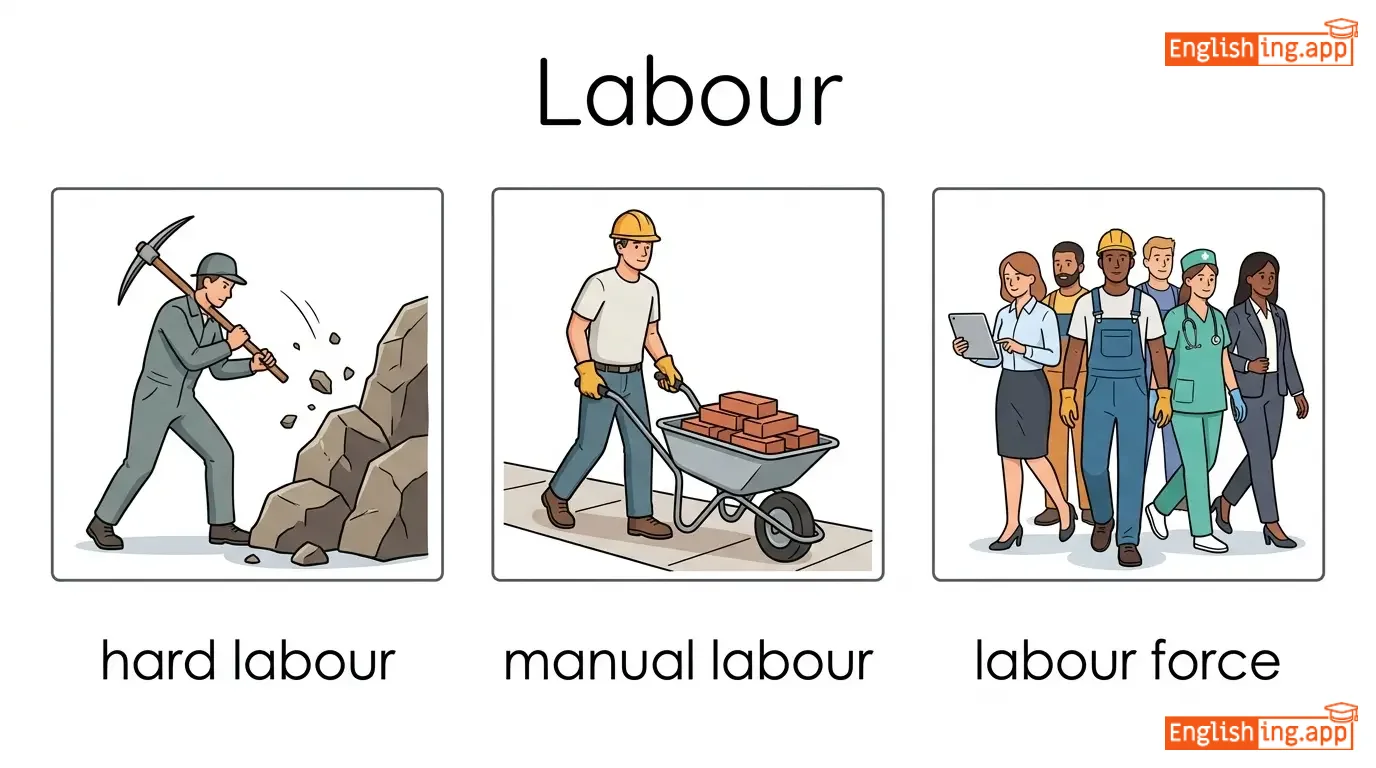
hard labour, manual labour, labour force, labour market, labour intensive, skilled labour
エントリー 1
hard labour, manual labour, labour force, labour market, labour intensive
エントリー 2
manual labour, skilled labour, labour force

その他の例文

He has been successful through hard labour.
彼は厳しい労働を通じて成功した。
Kare wa kibishii roudou wo tsuujite seikou shita.

関連語彙

to put clothes or accessories on your body
to act dishonestly or unfairly to gain an advantage
to improve the quality or value of something
to convert a coded message into a readable form; to interpret meaning
to absorb or integrate into a larger group, culture, or system
to move hand or something back and forth; a moving ridge of water

さらに探索