
































Swipe left or right, or use the buttons. Tap image to zoom.
例句翻译
单词
Lesson 25: Mastering the Most Frequent Verbs & TensesLesson 25: Mastering the Most Frequent Verbs & Tenses - 遮罩切换
|
表情符号
|
单词 | Images | 翻译 | 过去时 | 过去分词 | 第三人称单数 | 动名词 | 含义 | 例句 | 例句翻译 | 同义词 | 反义词 | 搭配词 | 助记符 |
|---|---|---|---|---|---|---|---|---|---|---|---|---|---|---|
|
#716
🎓
|
/ˈkwɒlɪfaɪ/
verb
(夸利发伊)
••••••
|
|
取得资格
qu de zige
••••••
|
qualified
夸利发伊德
••••••
|
qualified
夸利发伊德
••••••
|
qualifies
夸利发伊兹
••••••
|
qualifying
夸利发英
••••••
|
to successfully complete a course or pass an exam; to become eligible
••••••
|
She worked hard to qualify for the competition.
她 努力 工作 去 夸利发伊 比赛。
••••••
|
她努力工作以取得比赛的资格。
ta nuli gongzuo yi qude bisai de zige
••••••
|
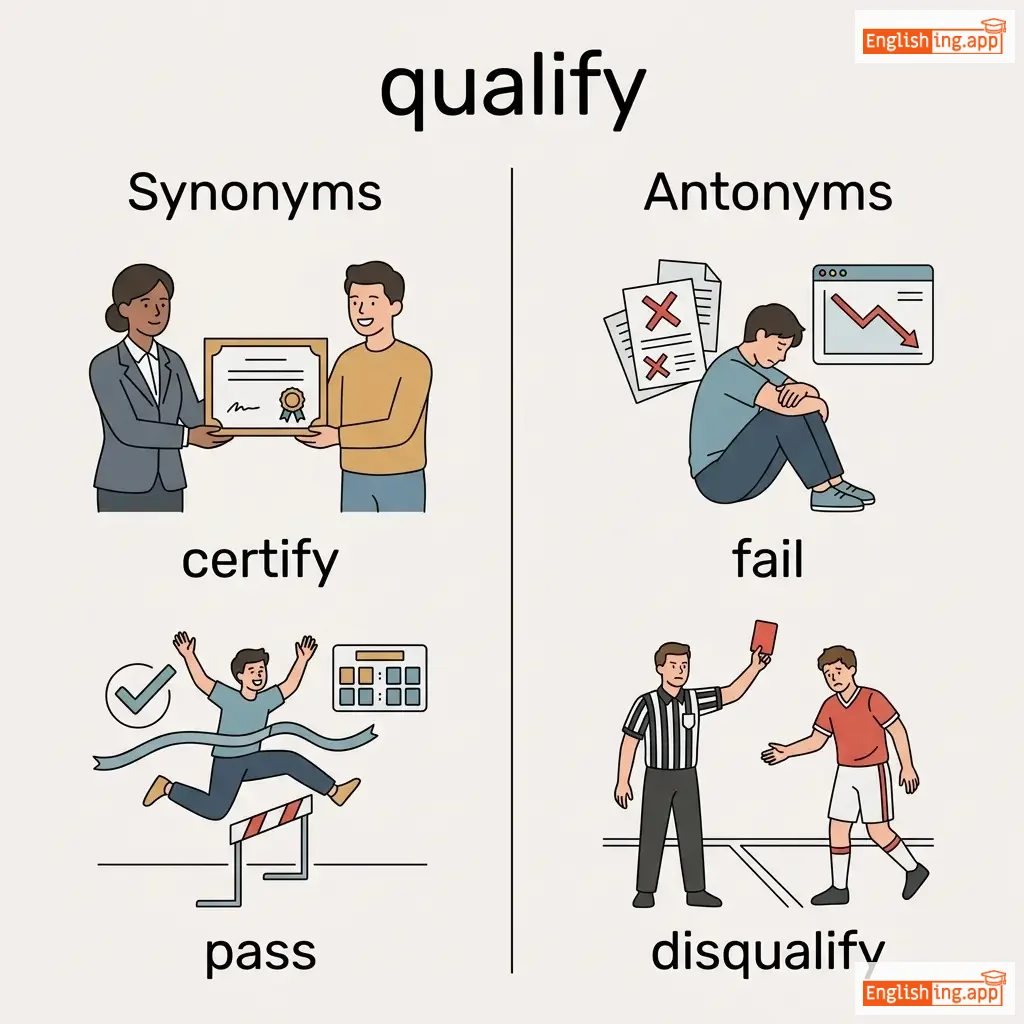
pass, succeed, meet requirements, be eligible
••••••
|
fail, disqualify, be ineligible
••••••
|
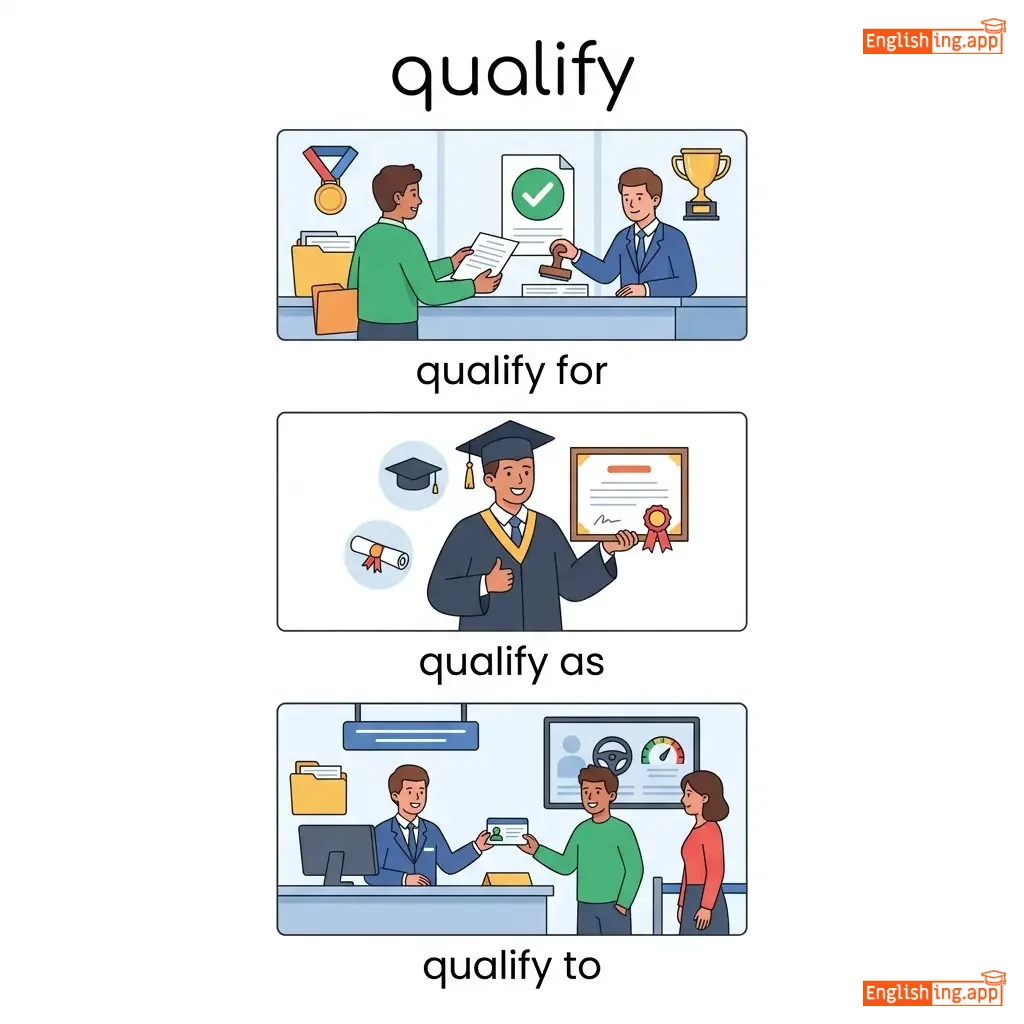
qualify for, qualify as, qualify to, highly qualified, fully qualified
••••••
|
Think 'qu de zige' — to qualify is to get your '资格' (qualification)!
••••••
|
|
#717
🚗
|
/ˌoʊvərˈteɪk/
verb
(欧沃特克)
••••••
|
|
超越
chaoyue
••••••
|
overtook
欧沃图克
••••••
|
overtaken
欧沃特肯
••••••
|
overtakes
欧沃特克斯
••••••
|
overtaking
欧沃特金
••••••
|
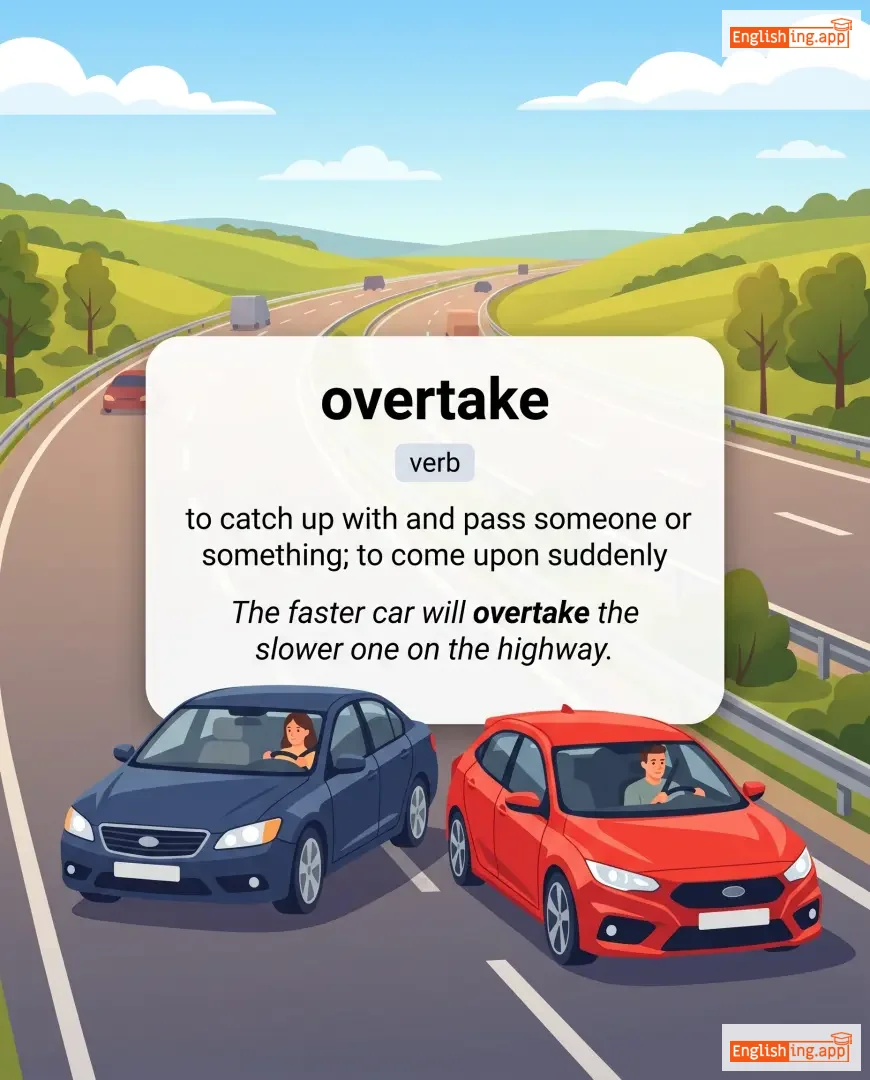
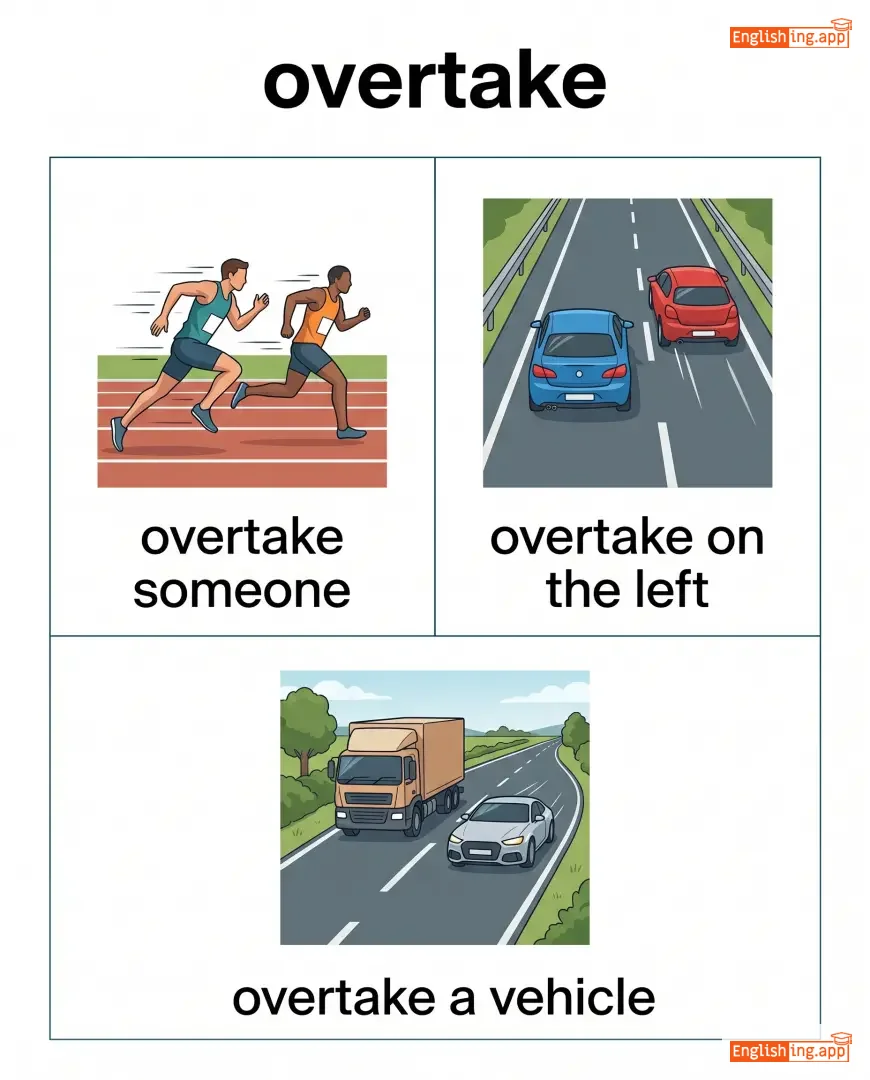
to catch up with and pass someone or something; to come upon suddenly
••••••
|
The faster car will overtake the slower one on the highway.
更快的车将在高速公路上超过较慢的车。
••••••
|
更快的汽车将在高速公路上超过较慢的汽车。
Geng kuai de qiche jiang zai gaosu gonglu shang chaoguo jiao man de qiche.
••••••
|
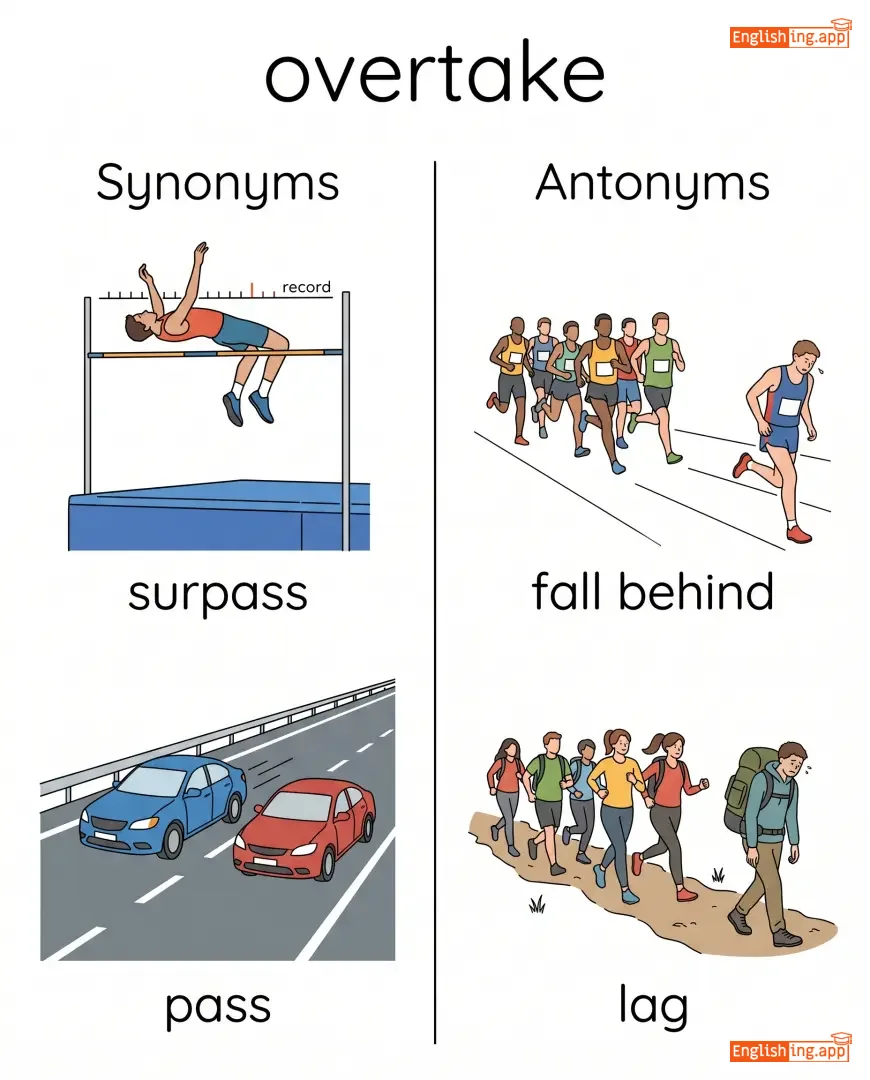
surpass, pass, outrun, exceed
••••••
|
fall behind, lag, trail, follow
••••••
|
overtake someone, overtake on the left, overtake a vehicle, suddenly overtaken
••••••
|
Overtake is like '超越' — to go beyond limits.
••••••
|
|
#718
🤲
|
/ˈɔːfər/
verb
(奥弗)
••••••
|
|
提供
tigong
••••••
|
offered
奥弗德
••••••
|
offered
奥弗德
••••••
|
offers
奥弗斯
••••••
|
offering
奥弗林
••••••
|
to present something for acceptance or rejection; to propose
••••••
|
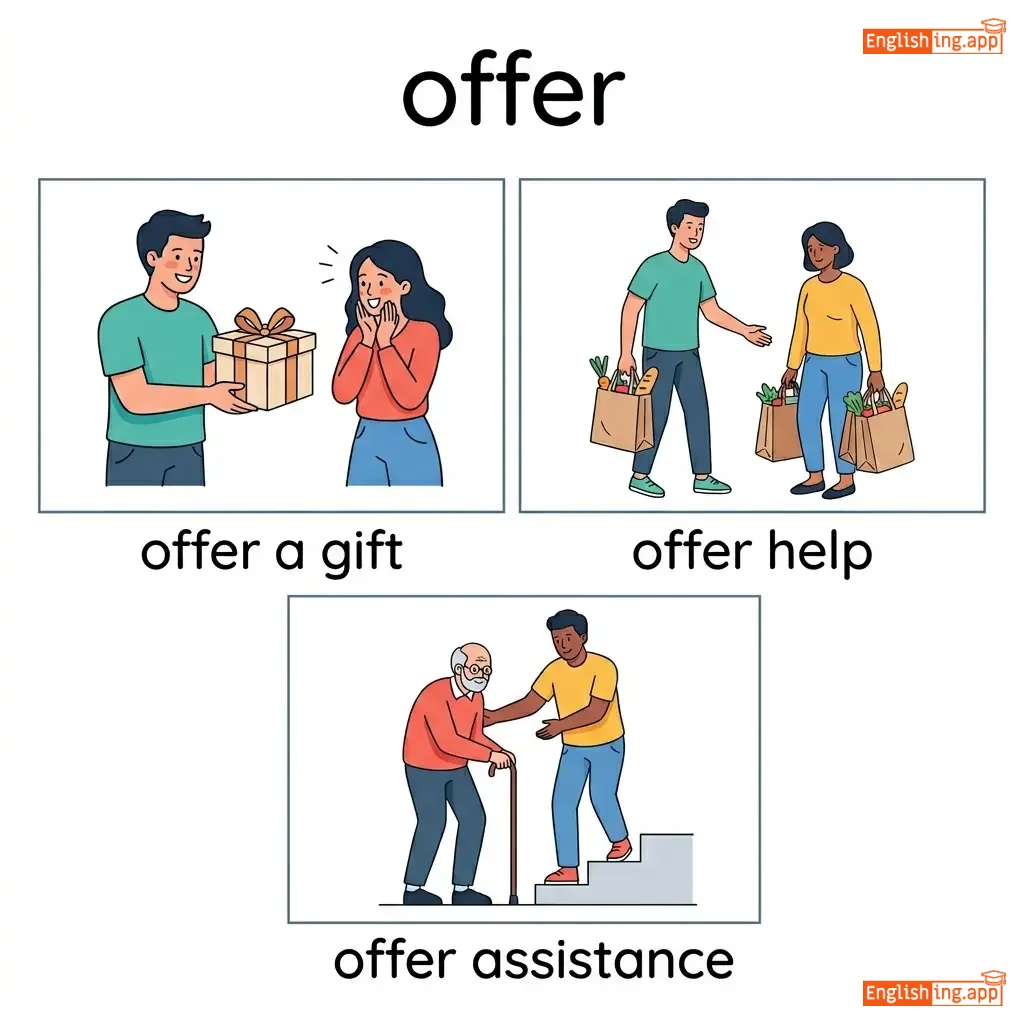
She offered to help with the project.
她奥弗德去帮助这个项目。
••••••
|
她提出帮助这个项目。
ta tichu bangzhu zhege xiangmu
••••••
|
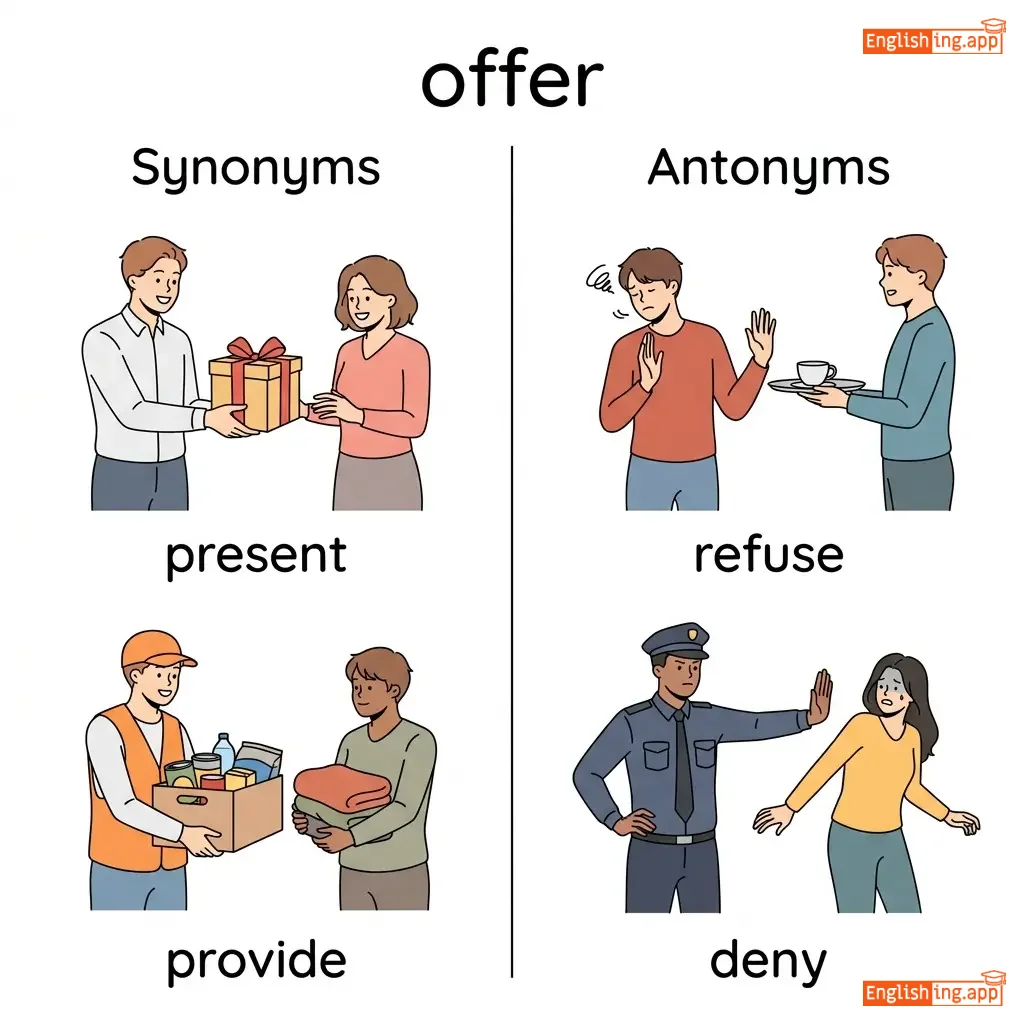
propose, present, provide, suggest
••••••
|
withdraw, refuse, deny, withhold
••••••
|
offer help, offer advice, offer support, make an offer, generous offer
••••••
|
Offer = 提供 (tigong) — both mean to present or give something.
••••••
|
|
#719
🌅
|
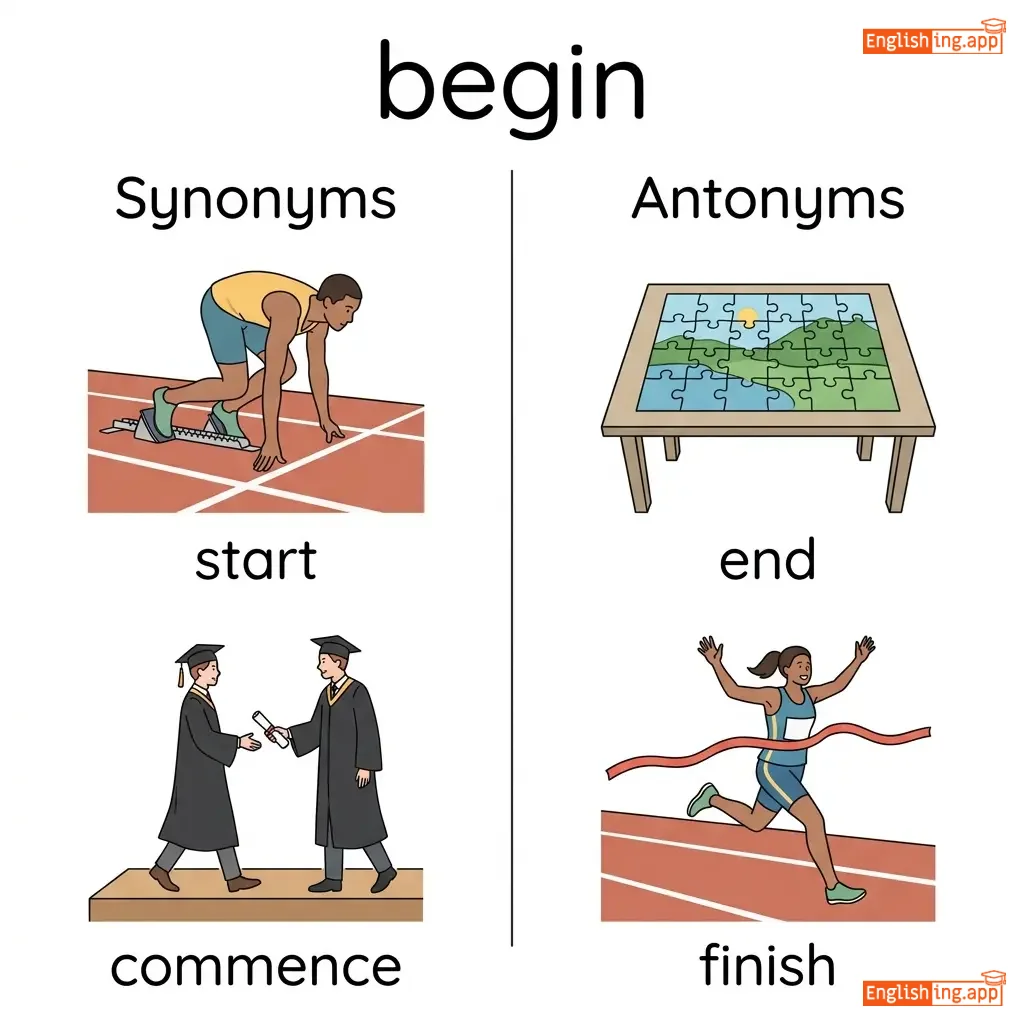
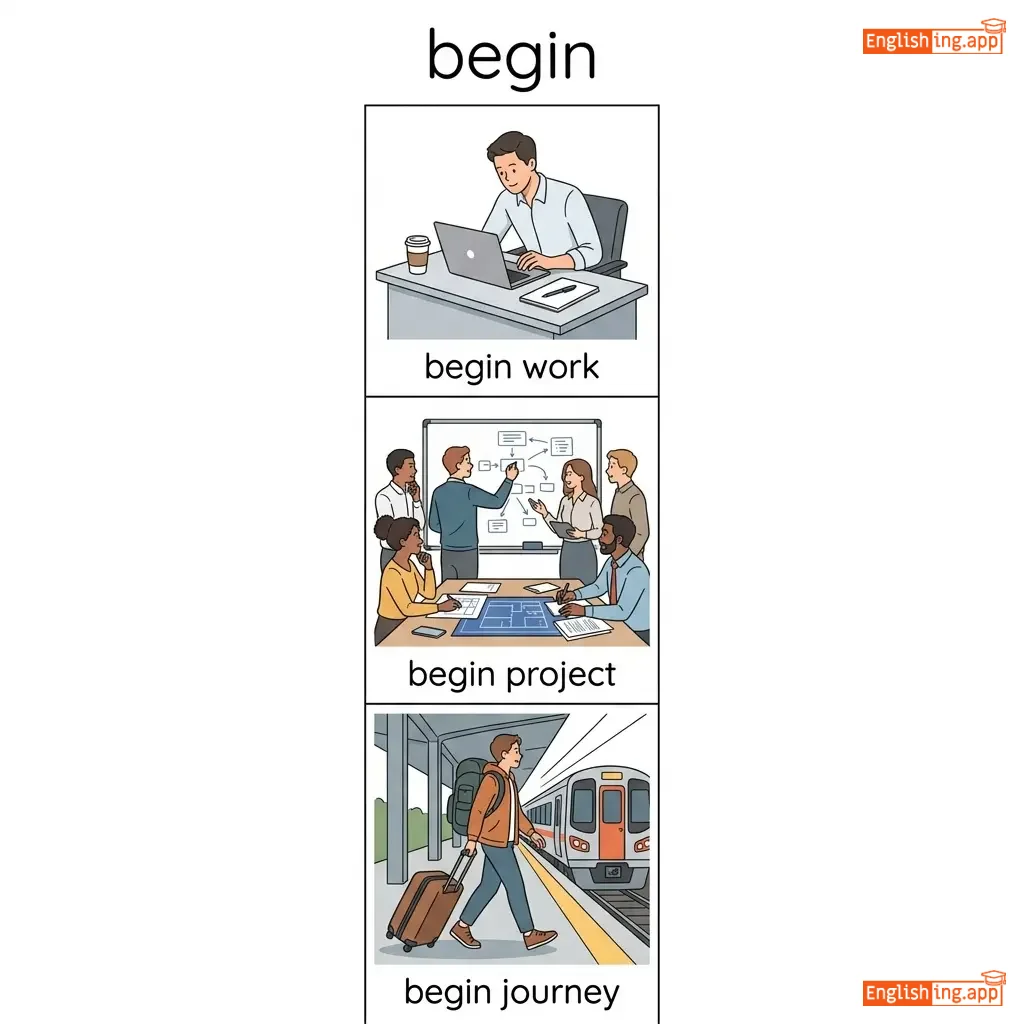
/bɪˈɡɪn/
verb
(比金)
••••••
|
|
开始
kaishi
••••••
|
began
比甘
••••••
|
begun
比干
••••••
|
begins
比金斯
••••••
|
beginning
比金宁
••••••
|
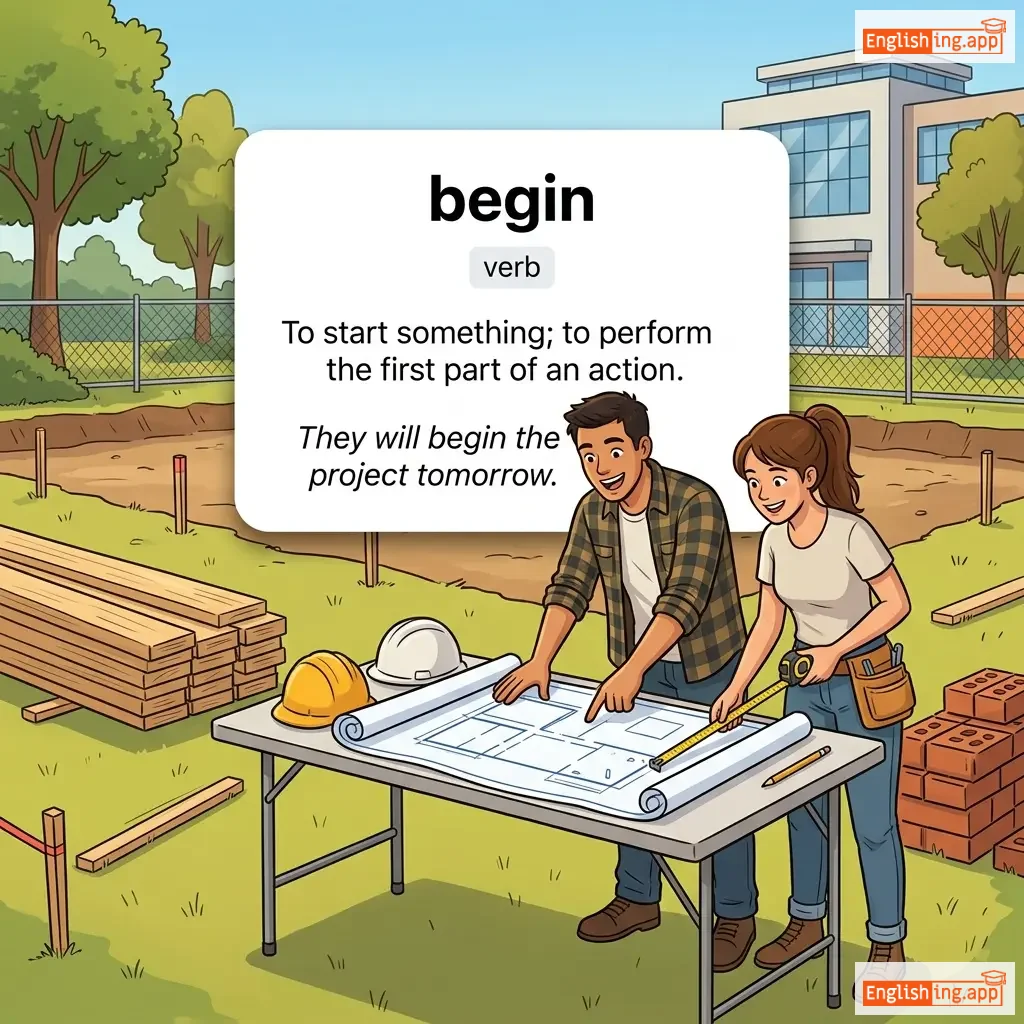
to start doing something; to commence
••••••
|
I will begin my studies tomorrow.
艾 维尔 比金 麦 斯塔迪斯 图莫罗
••••••
|
我明天开始学习。
wo mingtian kaishi xuexi
••••••
|
start, commence, initiate, launch
••••••
|
end, finish, conclude, stop
••••••
|
begin with, begin to, begin again, new beginning, fresh start
••••••
|
'Begin' and 'kaishi' both mean to start—easy to start remembering!
••••••
|
|
#720
💪
|
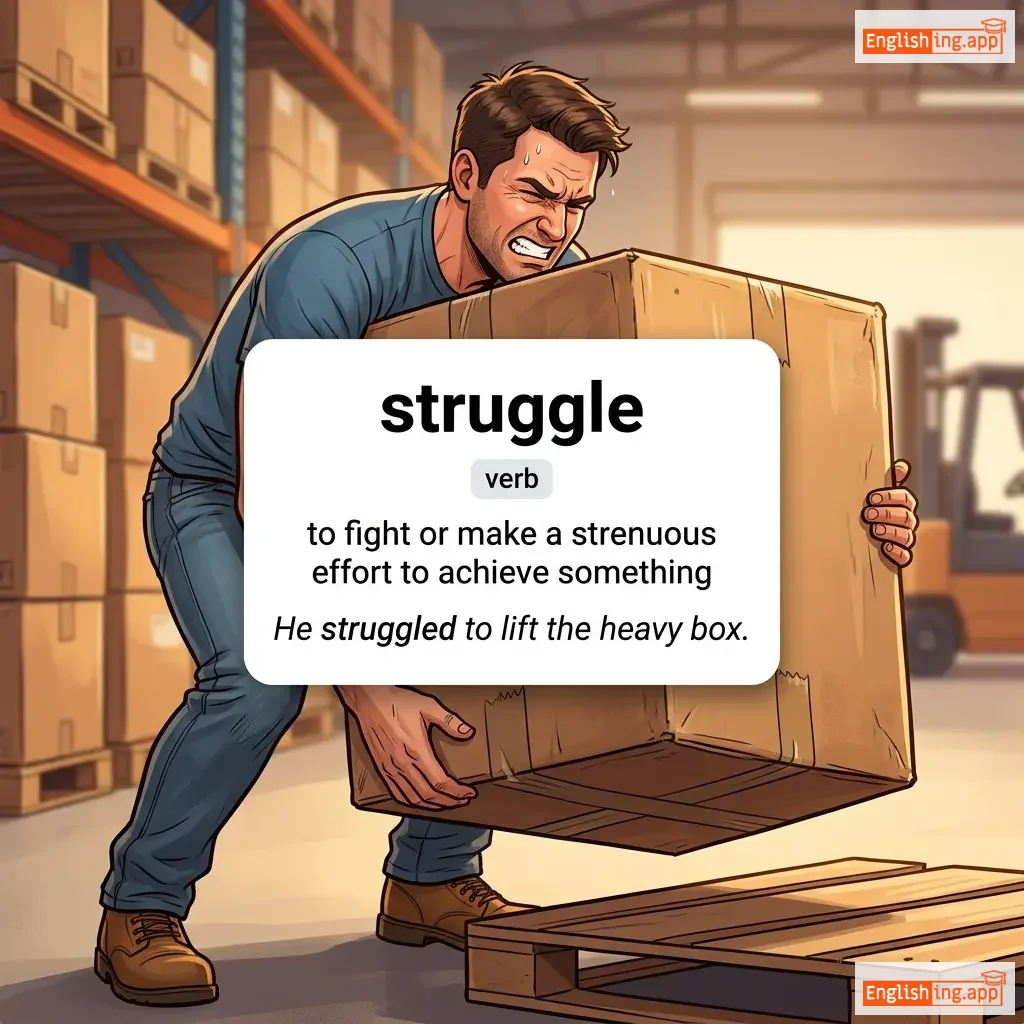
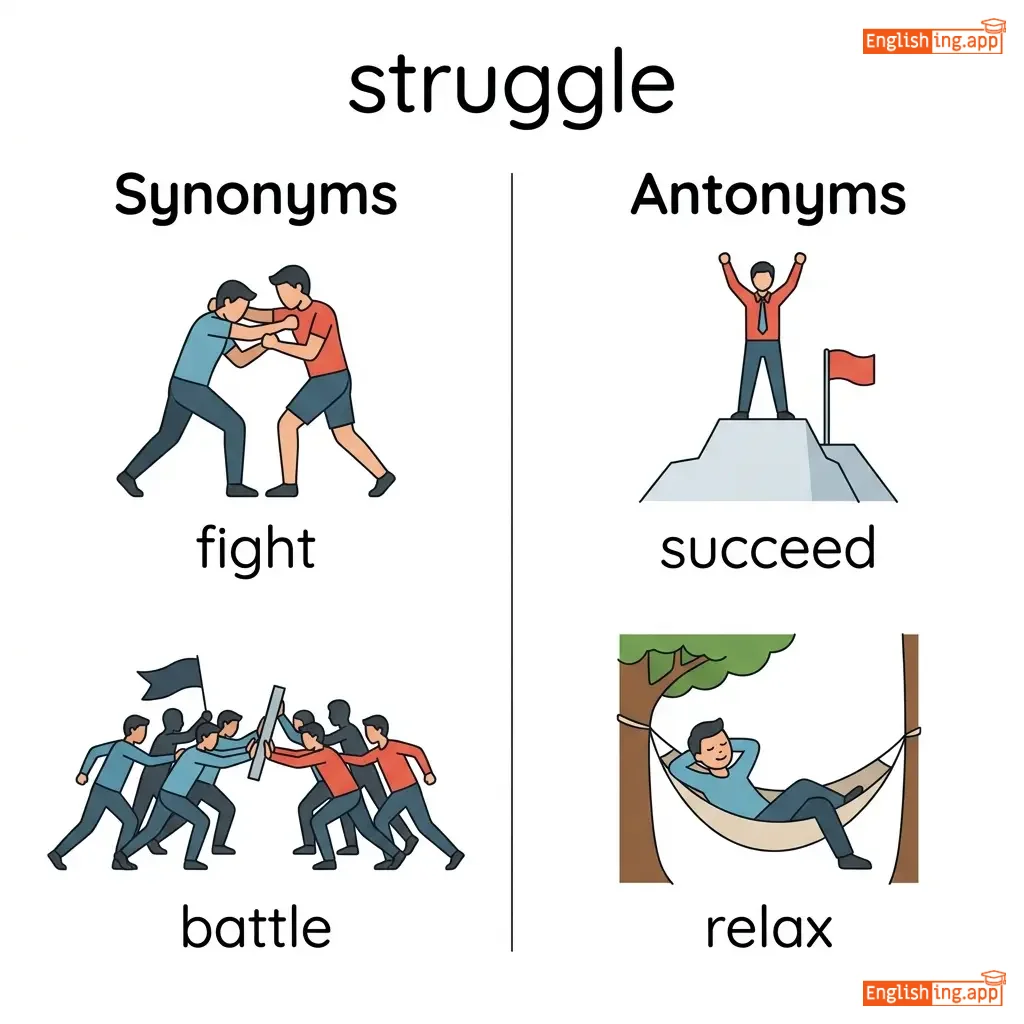
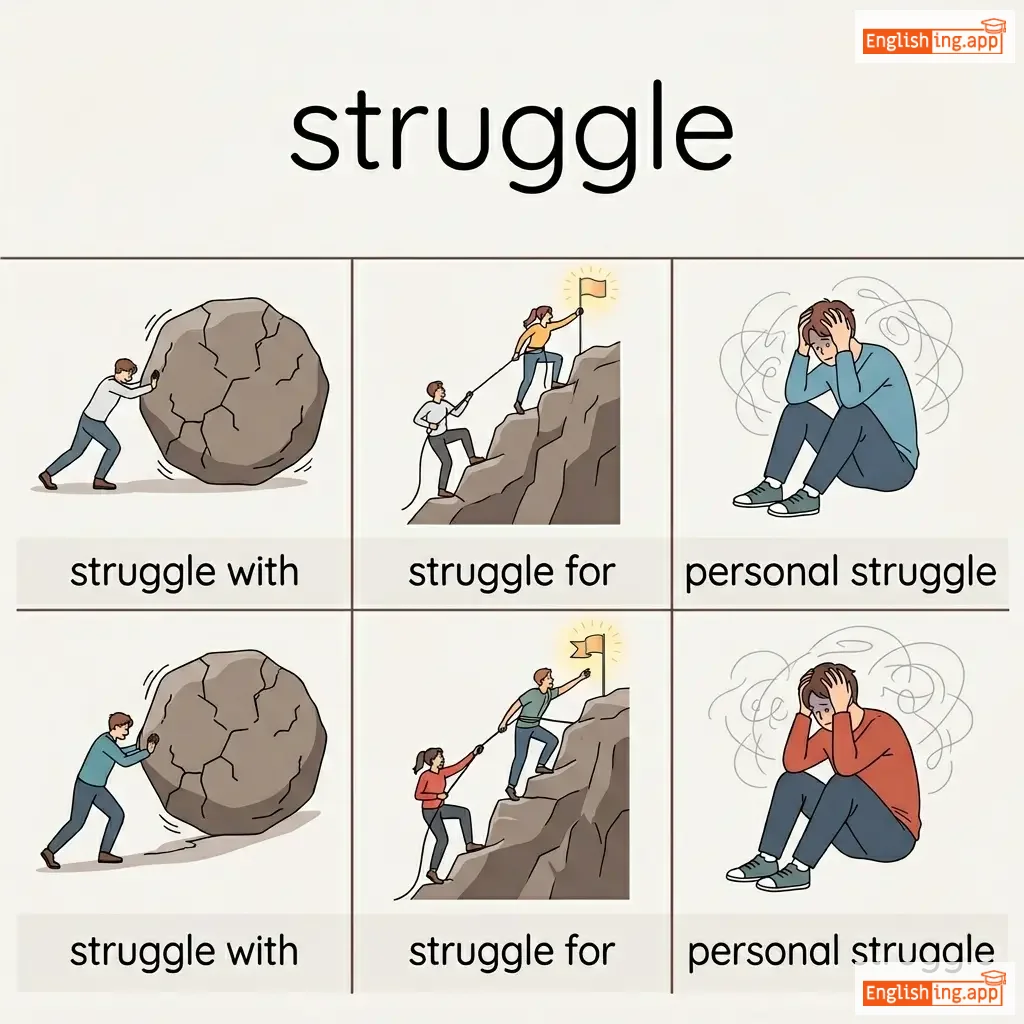
/ˈstrʌɡəl/
verb
(斯特拉戈)
••••••
|
|
奋斗
fendou
••••••
|
struggled
斯特拉戈德
••••••
|
struggled
斯特拉戈德
••••••
|
struggles
斯特拉戈斯
••••••
|
struggling
斯特拉戈林
••••••
|
to try very hard to do something when it is difficult; to fight against something
••••••
|
He struggled to lift the heavy box.
他 斯特拉戈德 提起 那个 重的 箱子。
••••••
|
他努力抬起那个沉重的箱子。
ta nuli taiqi nage chenzhong de xiangzi
••••••
|
fight, battle, strive, wrestle
••••••
|
succeed, achieve, accomplish
••••••
|
struggle with, struggle against, struggle to, long struggle, constant struggle
••••••
|
To 'fendou' is to fight and struggle toward success!
••••••
|
|
#721
🌿
|
/rɪˈfreʃ/
verb
(海皮尼什)
••••••
|
|
使清新
shi qingxin
••••••
|
refreshed
海皮尼什德
••••••
|
refreshed
海皮尼什德
••••••
|
refreshes
海皮尼什斯
••••••
|
refreshing
海皮尼什英
••••••
|
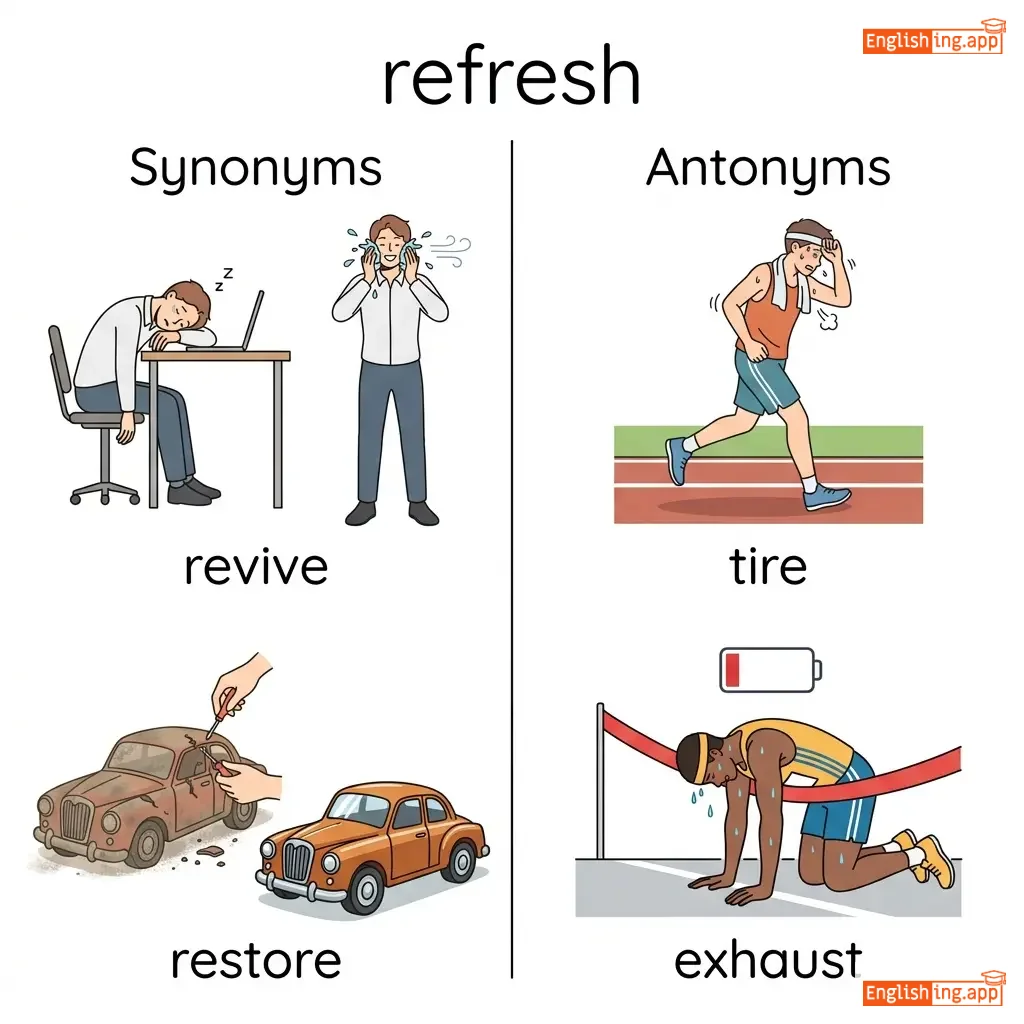
to make fresh again; to restore energy
••••••
|
A cold drink refreshes me on hot days.
啊 寒冷的 饮料 让 我 在 炎热 的 天气 感到 清爽。
••••••
|
冷饮在炎热的日子里让我感到清爽。
leng yin zai yanre de rizi li rang wo gandao qingshuang
••••••
|
revive, restore, renew, invigorate
••••••
|
tire, exhaust, drain, weaken
••••••
|
refresh memory, refresh the page, feel refreshed, refreshing drink, refreshing change
••••••
|
‘Shi qingxin’ means make fresh — like giving new energy to life.
••••••
|
|
#722
📚
|
/kəˈlɛkt/
verb
(科莱克特)
••••••
|
|
收集
shouji
••••••
|
collected
科莱克特德
••••••
|
collected
科莱克特德
••••••
|
collects
科莱克特斯
••••••
|
collecting
科莱克廷
••••••
|
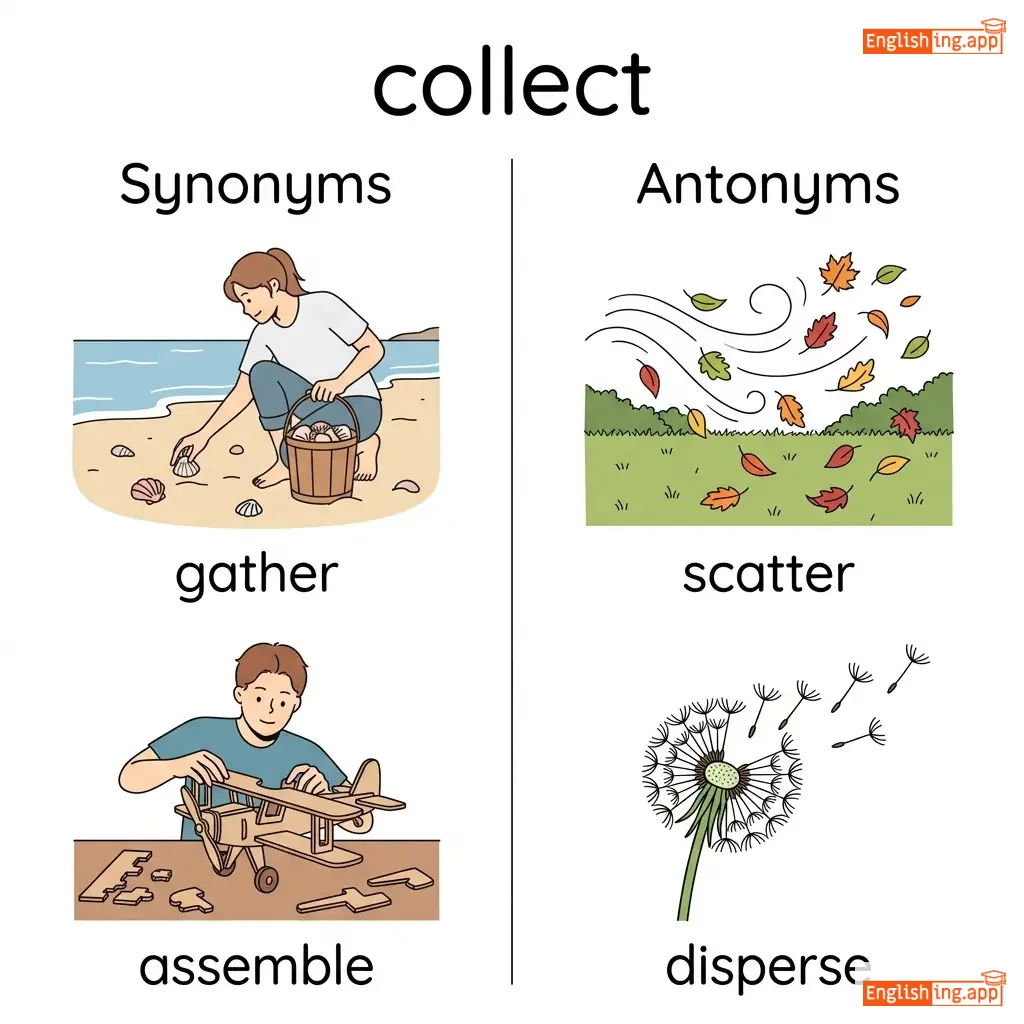
to gather together; to accumulate items
••••••
|
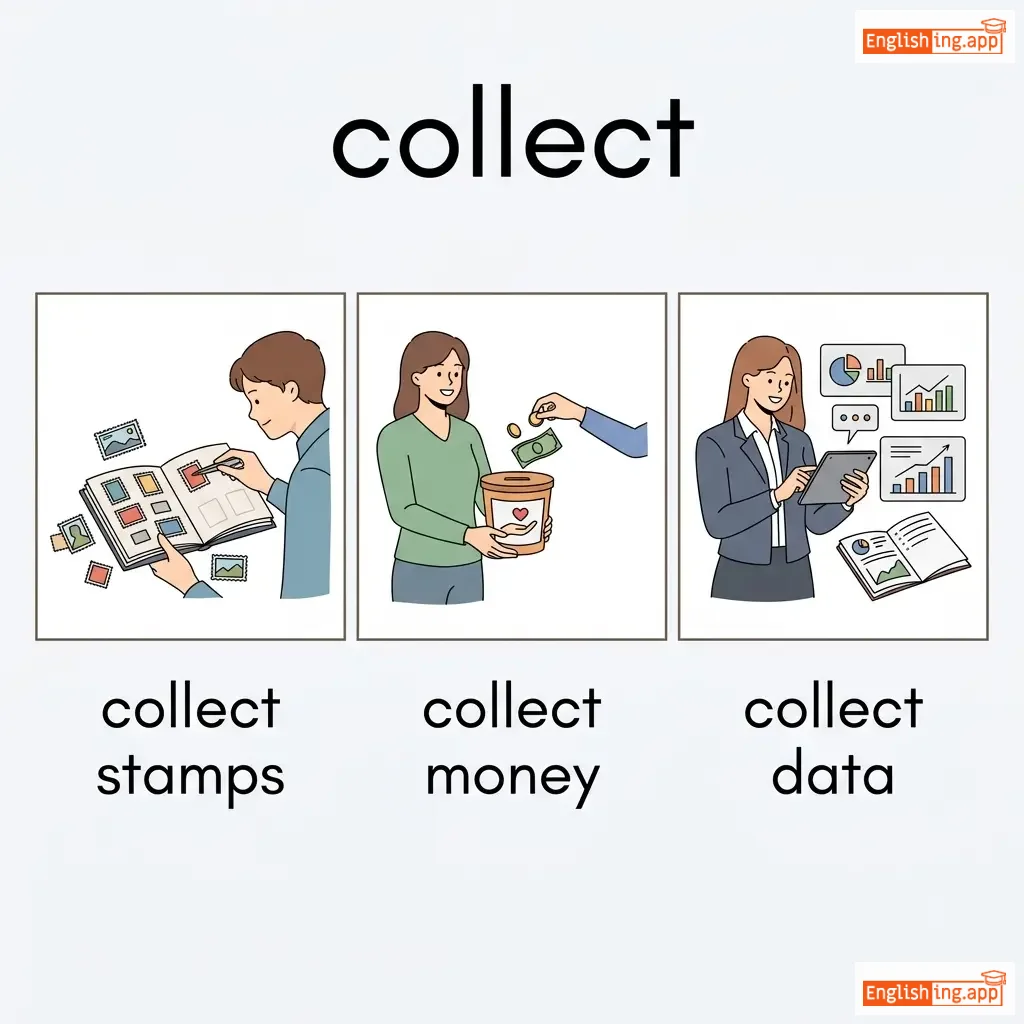
I collect stamps as a hobby.
艾 科莱克特 邮票 作为 爱好。
••••••
|
我把收集邮票作为一种爱好。
wo ba shouji youpiao zuowei yizhong aihao
••••••
|
gather, accumulate, assemble, amass
••••••
|
scatter, distribute, disperse, separate
••••••
|
collect data, collect stamps, collect money, collect evidence, stamp collection
••••••
|
‘Shouji’ sounds like ‘show G’ — collect and show your goodies!
••••••
|
|
#723
🛒
|
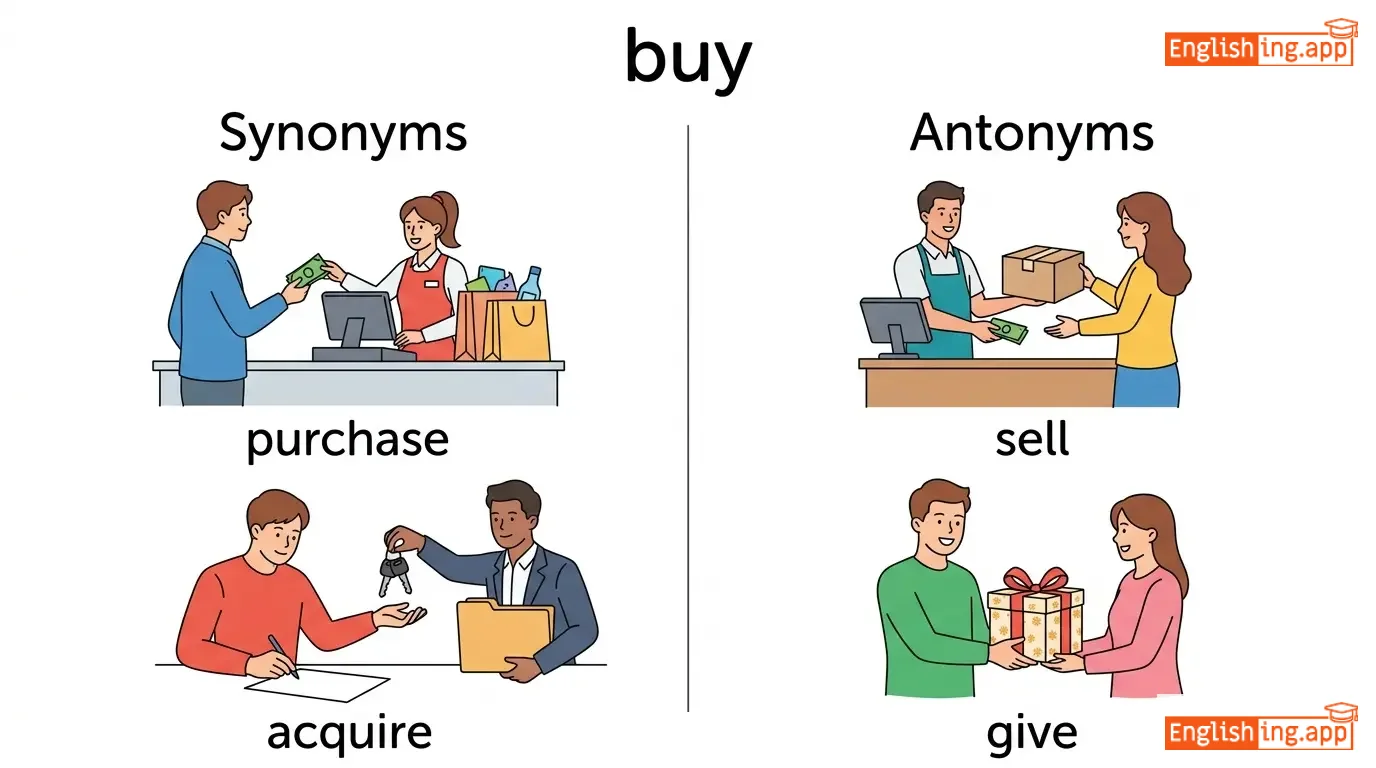
/baɪ/
verb
(拜)
••••••
|
|
买
mai
••••••
|
bought
波特
••••••
|
bought
波特
••••••
|
buys
拜斯
••••••
|
buying
拜英
••••••
|
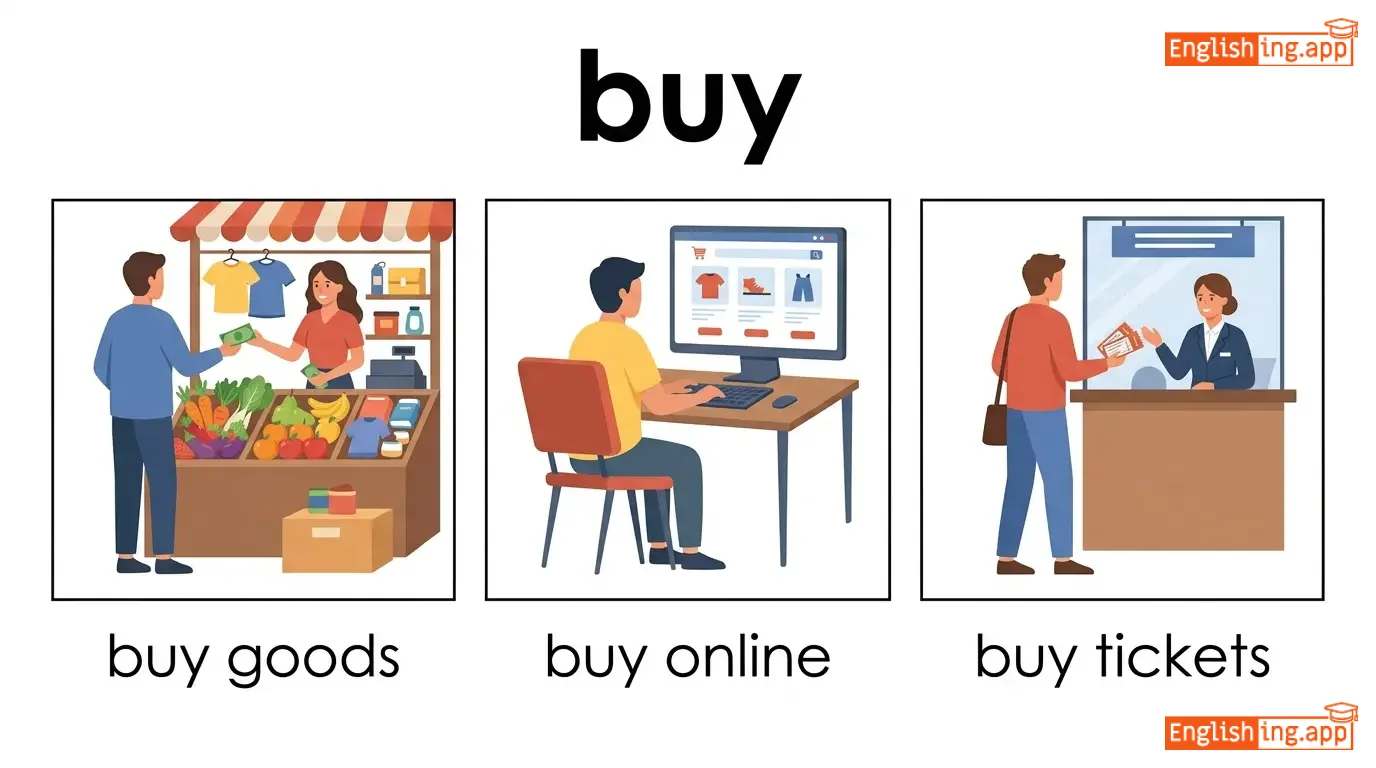
to purchase something with money
••••••
|
I want to buy a new car.
我想买一辆新车。
••••••
|
我想买一辆新车。
wo xiang mai yi liang xin che
••••••
|
purchase, acquire, obtain
••••••
|
sell, dispose, give away
••••••
|
buy online, buy in bulk, buy cheap, impulse buy, panic buying
••••••
|
Buy = 买 (mai), sounds like 'my' – I buy what’s mine!
••••••
|
|
#724
😱
|
/ˈhɔːrɪfaɪ/
verb
(霍瑞发伊)
••••••
|
|
使恐惧
shi kong ju
••••••
|
horrified
霍瑞发伊德
••••••
|
horrified
霍瑞发伊德
••••••
|
horrifies
霍瑞发伊斯
••••••
|
horrifying
霍瑞发英
••••••
|
to fill with horror; to shock or disgust greatly
••••••
|
The violent scene horrified the audience.
暴力场面霍瑞发伊德观众
••••••
|
暴力的场面使观众感到恐惧。
bao li de chang mian shi guan zhong gan dao kong ju
••••••
|
terrify, shock, appall, disgust
••••••
|
comfort, soothe, calm, please
••••••
|
absolutely horrified, deeply horrified, horrifying scene, horrifying experience
••••••
|
Horrify = 使恐惧 (shi kong ju) — sounds like 'shock you with horror'.
••••••
|
|
#725
✅
|
/duː/
verb
(杜)
••••••
|
|
做
zuo
••••••
|
did
迪德
••••••
|
done
当
••••••
|
does
达斯
••••••
|
doing
杜英
••••••
|
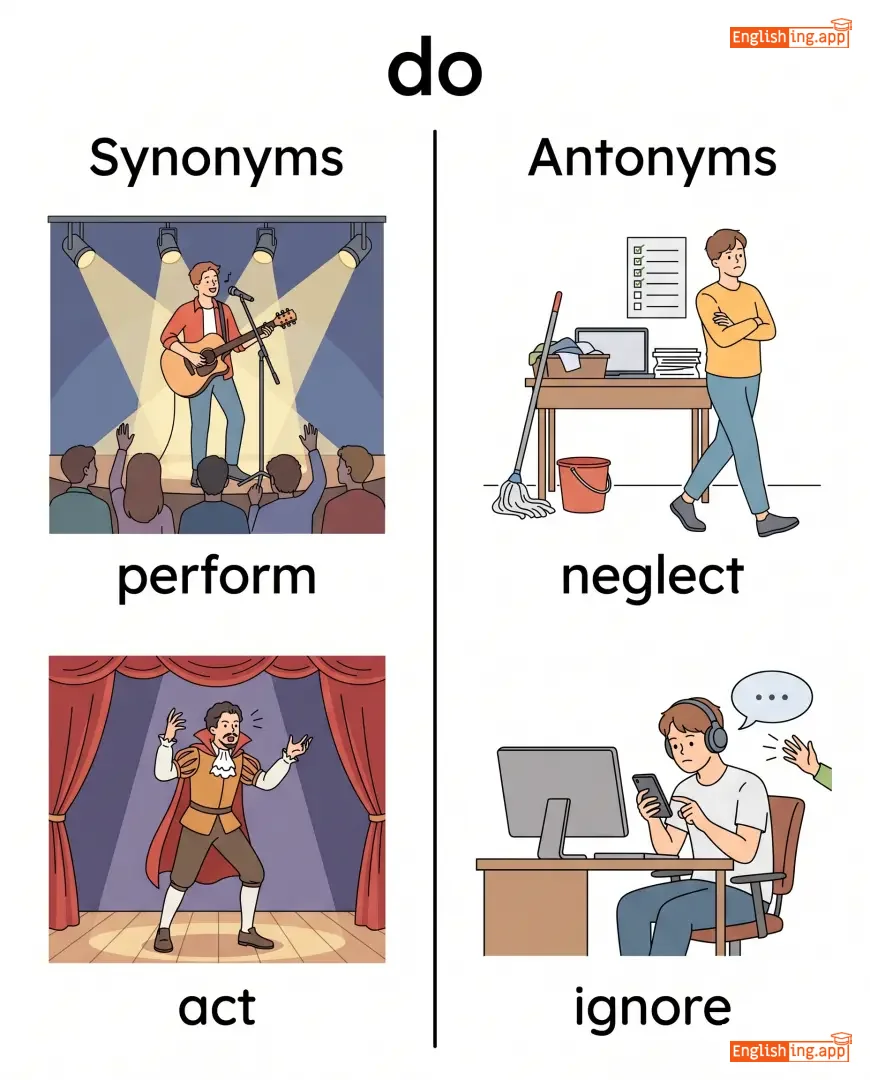
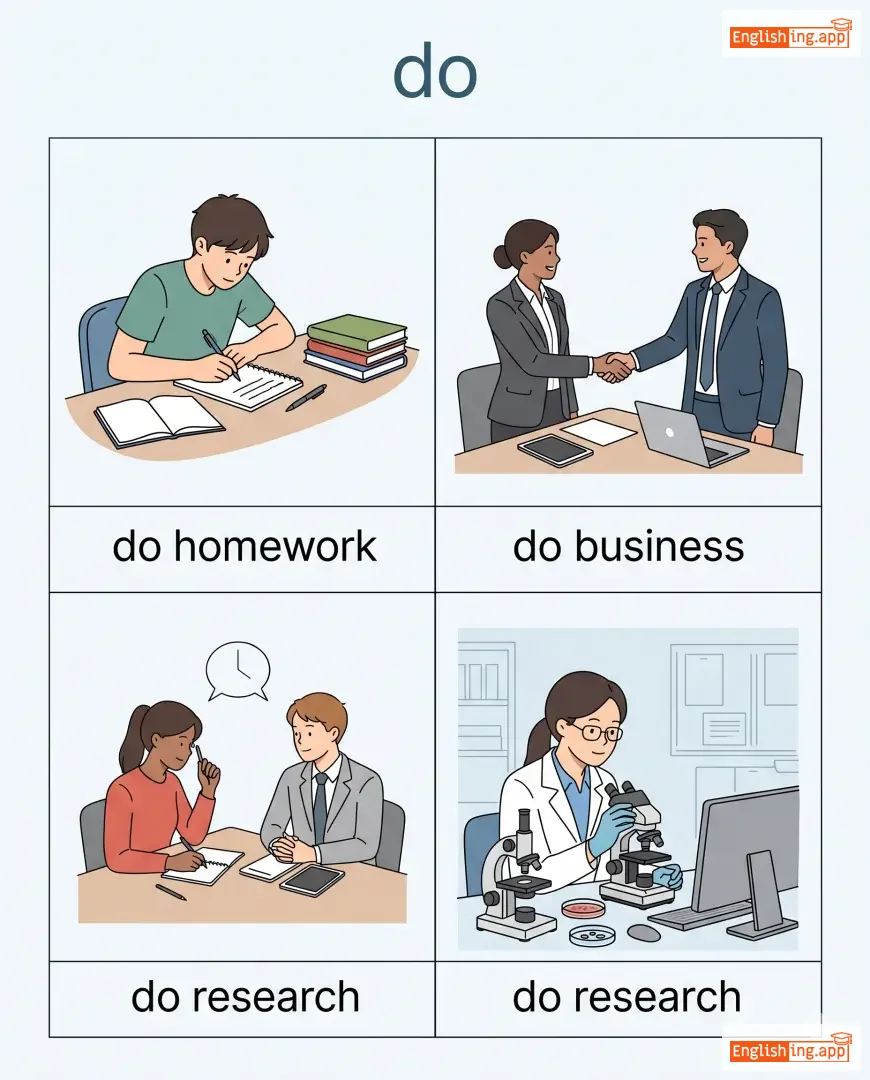
to perform an action; to complete a task
••••••
|
I need to do my homework tonight.
艾 需要 做 我的 家庭 作业 今晚。
••••••
|
我今晚需要做作业。
wo jin wan xu yao zuo zuo ye
••••••
|
perform, complete, execute, accomplish
••••••
|
undo, avoid, neglect, skip
••••••
|
do homework, do business, do well, do your best, get things done
••••••
|
'Do' means '做 (zuo)'—when you 'do' something, you 'zuo' it in Chinese.
••••••
|
|
#726
🗣️
|
/spiːk/
verb
(斯皮克)
••••••
|
- •••••• |
说话
shuohua
••••••
|
spoke
斯波克
••••••
|
spoken
斯波肯
••••••
|
speaks
斯皮克斯
••••••
|
speaking
斯皮金
••••••
|
to talk; to express thoughts in words; to communicate
••••••
|
She speaks three languages fluently.
她 斯皮克斯 三 种 语言 流利。
••••••
|
她能流利地说三种语言。
ta neng liuli de shuo san zhong yuyan
••••••
|
talk, communicate, express, utter
••••••
|
listen, be silent, stay quiet
••••••
|
speak fluently, speak loudly, speak publicly, public speaking, speak up
••••••
|
To ‘shuohua’ is to ‘speak’ — both mean to let your words flow like a conversation.
••••••
|
|
#727
🚫
|
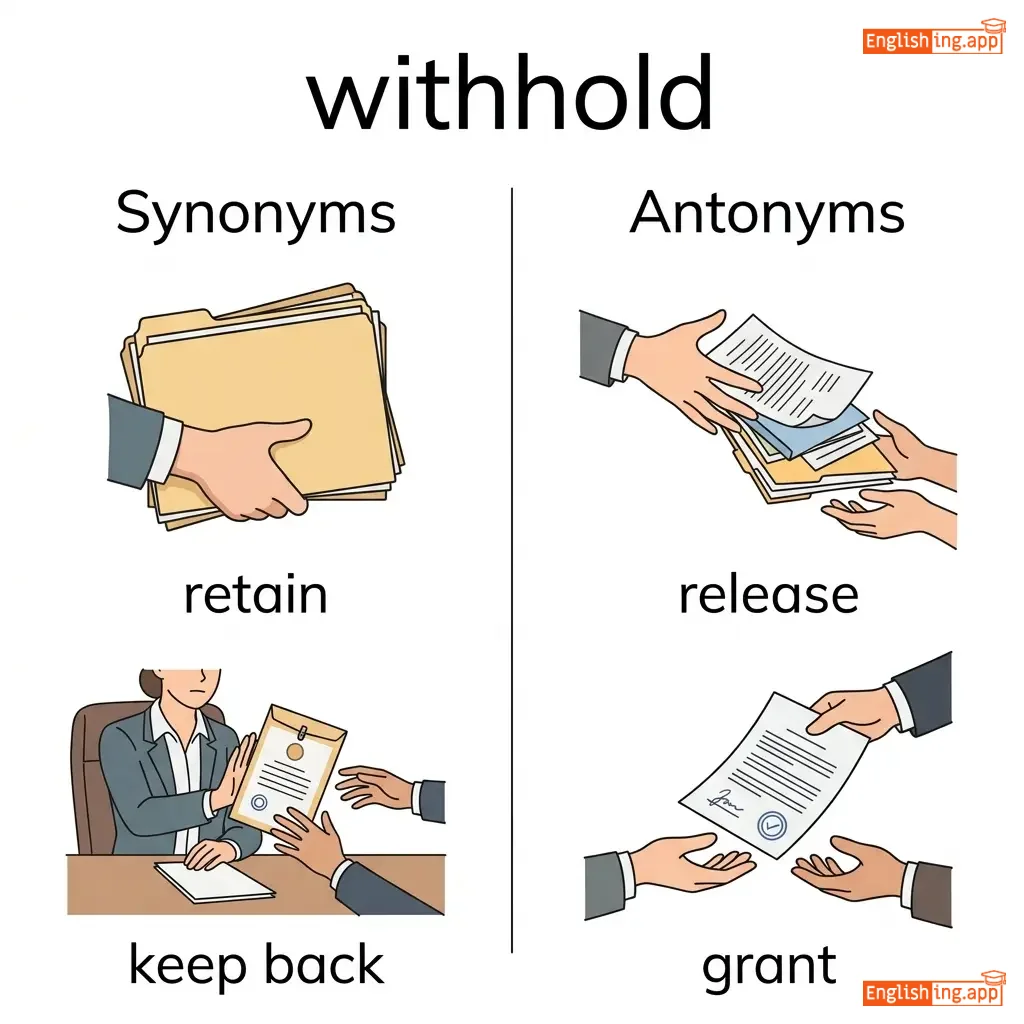
/wɪðˈhoʊld/
verb
(维斯霍尔德)
••••••
|
|
扣留
koulou
••••••
|
withheld
维斯赫尔德
••••••
|
withheld
维斯赫尔德
••••••
|
withholds
维斯霍尔兹
••••••
|
withholding
维斯霍尔丁
••••••
|
to refuse to give or keep back something
••••••
|
The company decided to withhold his bonus.
公司决定维斯霍尔德他的奖金。
••••••
|
公司决定扣留他的奖金。
gongsi jueding koulou tade jiangjin
••••••
|
retain, keep back, refuse, deny
••••••
|
give, provide, release, grant
••••••
|
withhold information, withhold payment, withhold consent, withhold judgment
••••••
|
‘Kou’ means deduct, ‘Liu’ means keep →扣留 = withhold.
••••••
|
|
#728
🗣️
|
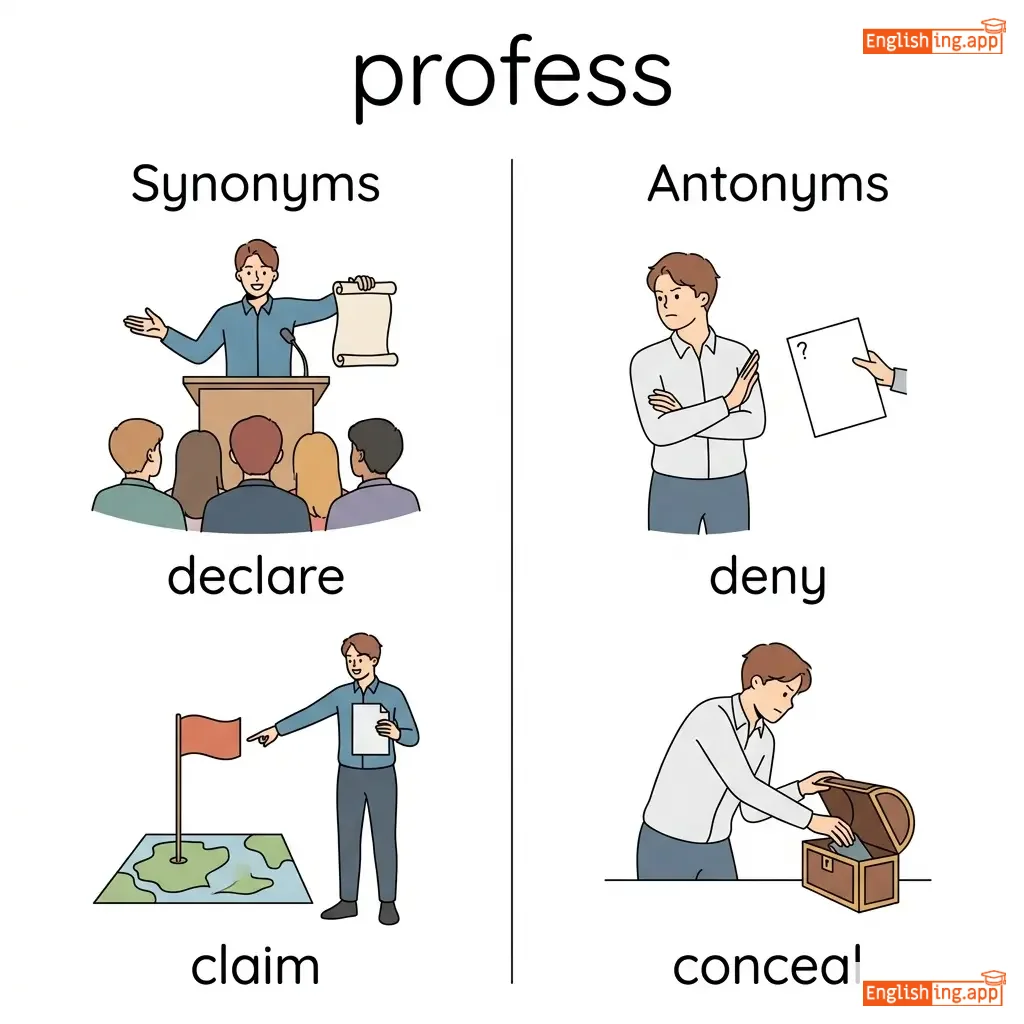
/prəˈfes/
verb
(普罗费斯)
••••••
|
|
宣称
xuancheng
••••••
|
professed
普罗费斯德
••••••
|
professed
普罗费斯德
••••••
|
professes
普罗费塞斯
••••••
|
professing
普罗费辛
••••••
|
to declare or claim openly; to state one's belief
••••••
|
He professes his love for classical music.
他普罗费塞斯他对古典音乐的热爱。
••••••
|
他宣称自己热爱古典音乐。
Ta xuancheng ziji reai gudian yinyue
••••••
|
declare, claim, assert, state
••••••
|
deny, conceal, hide
••••••
|
profess faith, profess love, profess ignorance, openly profess
••••••
|
‘Xuancheng’ sounds like ‘show and claim’ — to profess is to declare openly.
••••••
|
|
#729
🔄
|
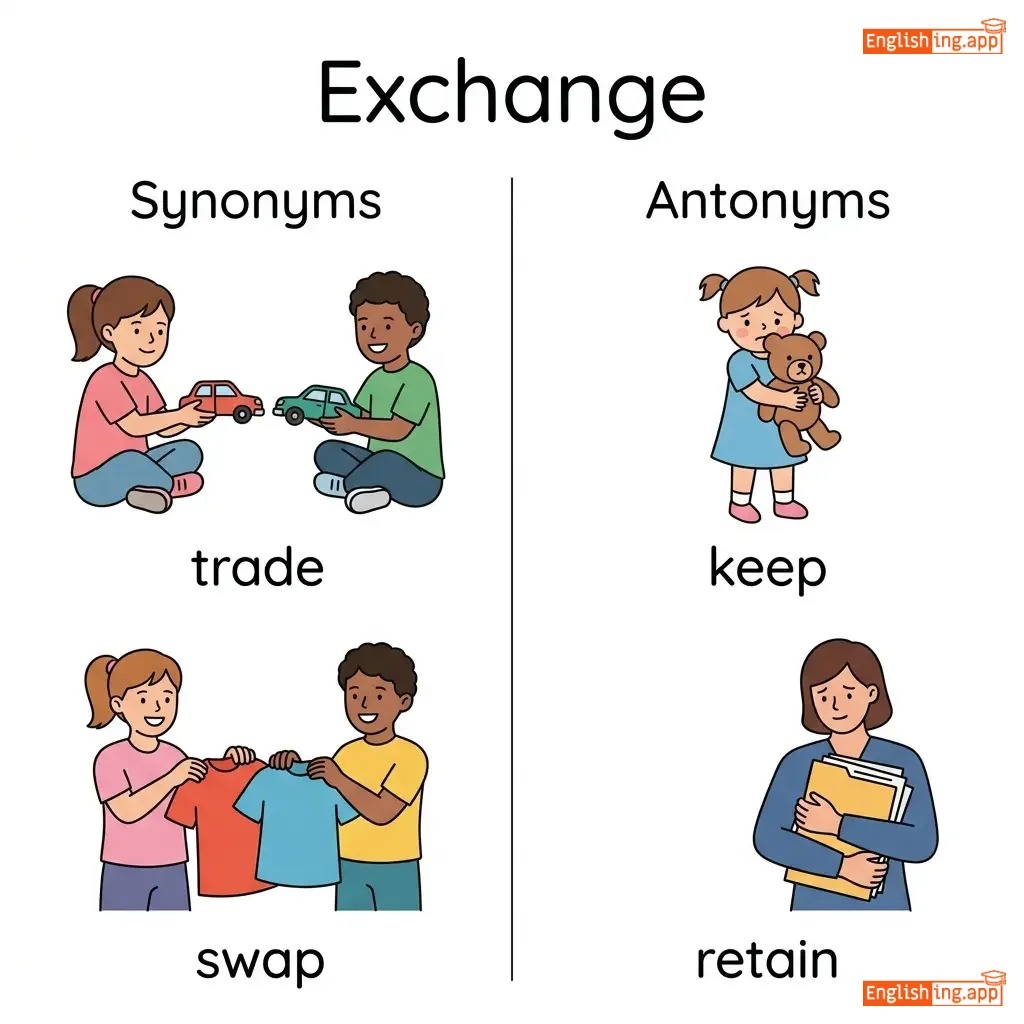
/ɪksˈtʃeɪndʒ/
verb
(海皮尼施)
••••••
|
|
交换
jiaohuan
••••••
|
exchanged
海皮尼施德
••••••
|
exchanged
海皮尼施德
••••••
|
exchanges
海皮尼施斯
••••••
|
exchanging
海皮尼施英
••••••
|
to give something and receive something else; to trade
••••••
|
They decided to exchange gifts during the holiday.
他们决定在假期期间交换礼物。
••••••
|
他们决定在假期期间交换礼物。
Tamen jueding zai jiaqi qijian jiaohuan liwu.
••••••
|
trade, swap, interchange, substitute
••••••
|
keep, retain, hold, maintain
••••••
|
exchange ideas, exchange gifts, exchange words, foreign exchange, exchange rate
••••••
|
Exchange = 交换 (jiaohuan) — think of ‘change’ between two people.
••••••
|
|
#730
🤝
|
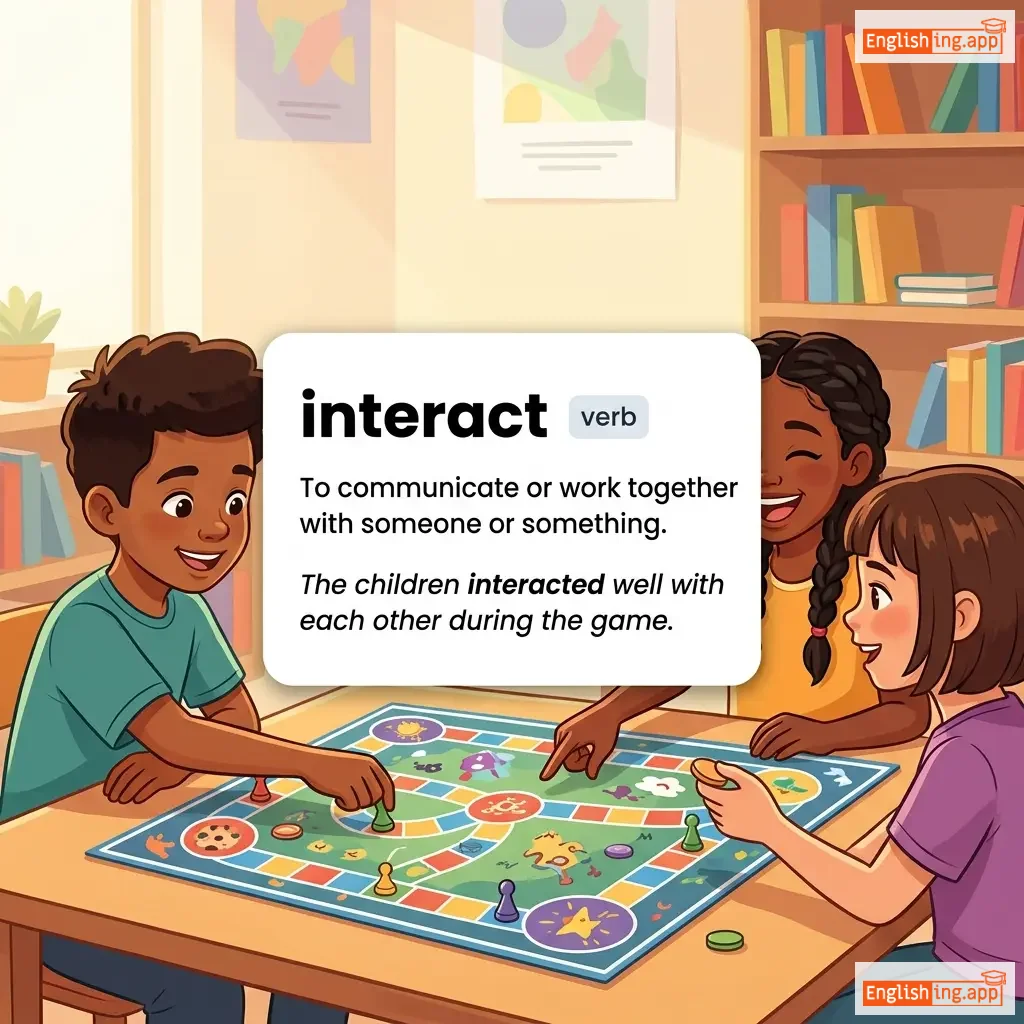
/ˌɪntərˈækt/
verb
(海皮内克特)
••••••
|
|
互动
hudong
••••••
|
interacted
海皮内克特德
••••••
|
interacted
海皮内克特德
••••••
|
interacts
海皮内克特斯
••••••
|
interacting
海皮内克廷
••••••
|
to communicate or work together with someone or something
••••••
|
Students interact with teachers during class discussions.
学生们在课堂讨论中与老师互动。
••••••
|
学生们在课堂讨论中与老师互动。
xueshengmen zai ketang taolun zhong yu laoshi hudong
••••••
|
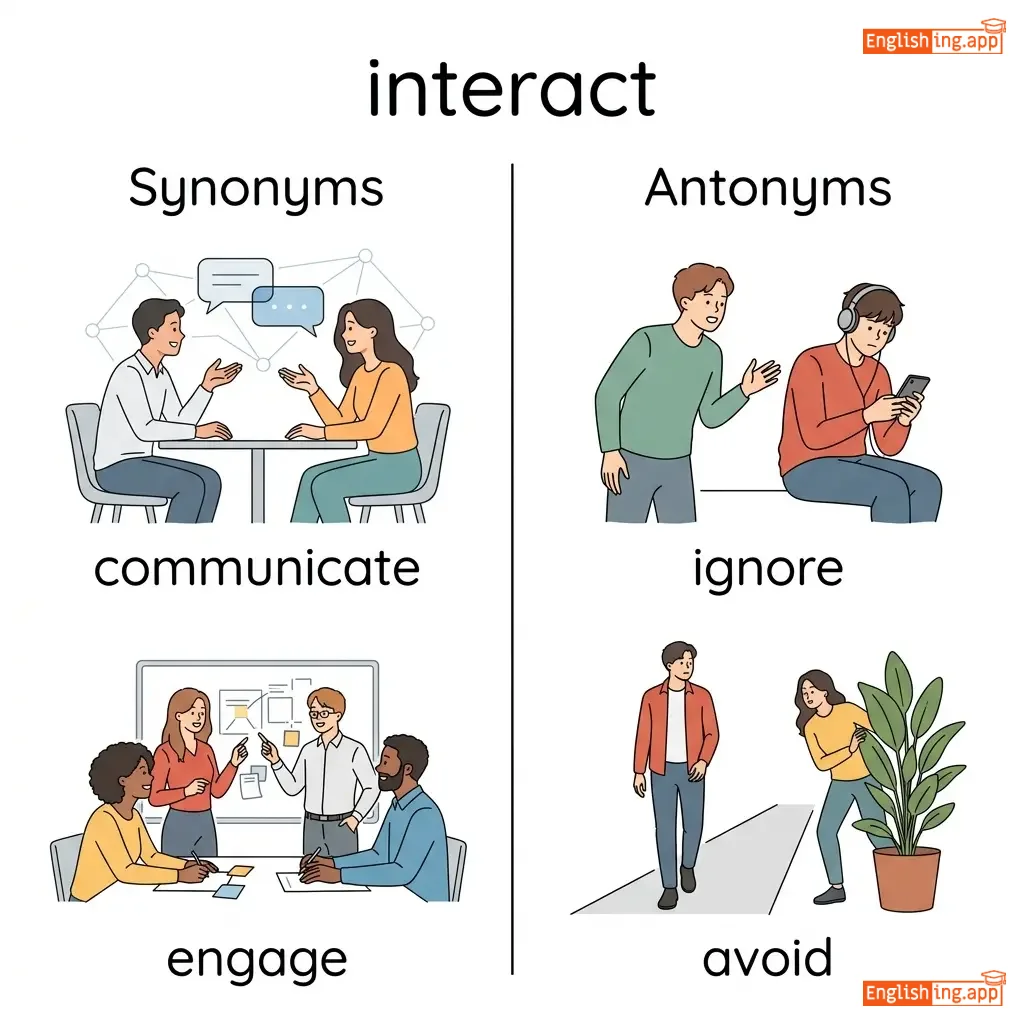
communicate, engage, connect, collaborate
••••••
|
ignore, avoid, isolate
••••••
|
interact with, social interaction, direct interaction, user interaction
••••••
|
Think 'hudong'—it means 'interact' and sounds like 'who dong?'—easy to recall.
••••••
|
|
#731
💨
|
/ˈvænɪʃ/
verb
(海皮尼斯)
••••••
|
|
消失
xiaoshi
••••••
|
vanished
海皮尼斯特
••••••
|
vanished
海皮尼斯特
••••••
|
vanishes
海皮尼斯斯
••••••
|
vanishing
海皮尼斯英
••••••
|
to disappear suddenly; to become invisible
••••••
|
The magician made the rabbit vanish from the hat.
魔术师让兔子从帽子里消失了。
••••••
|
魔术师让兔子从帽子里消失了。
moshushi rang tuzi cong maozi li xiaoshi le
••••••
|
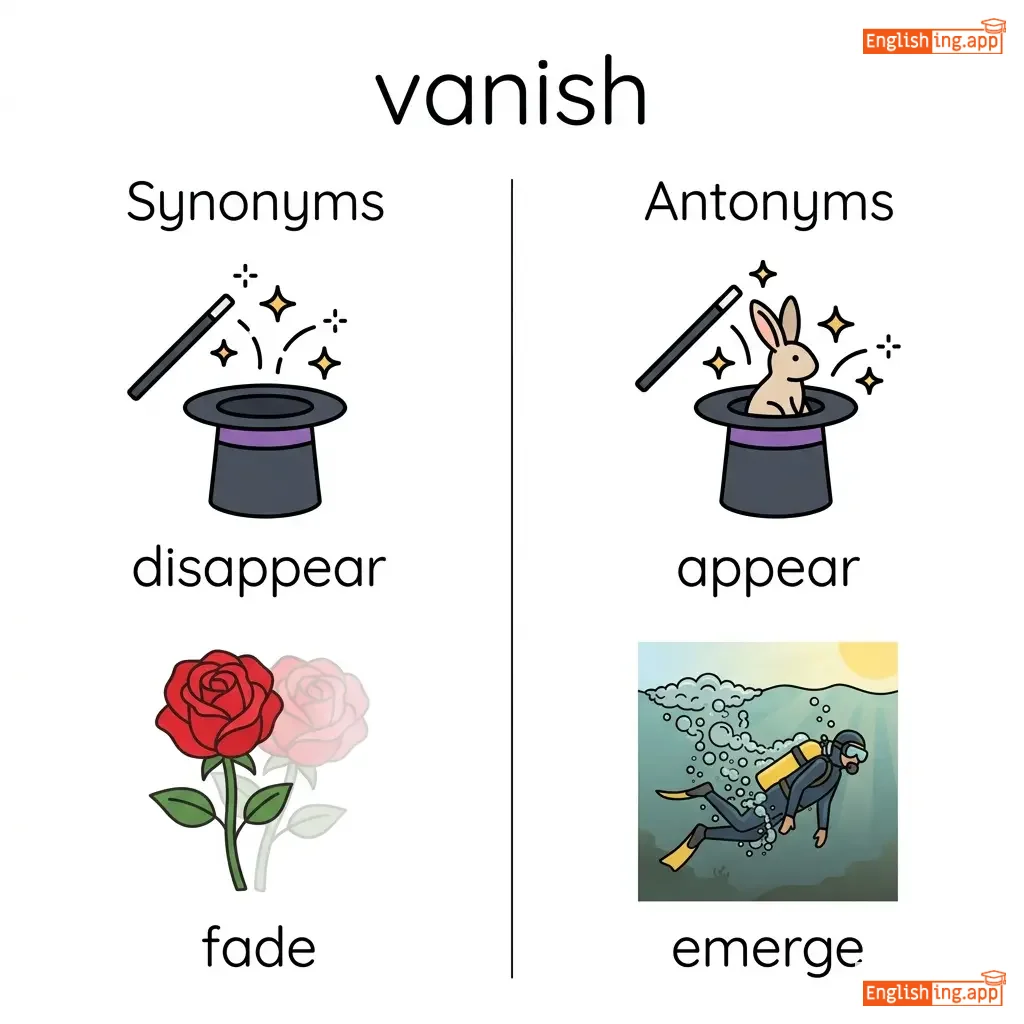
disappear, fade, evaporate, dissolve
••••••
|
appear, emerge, materialize, manifest
••••••
|
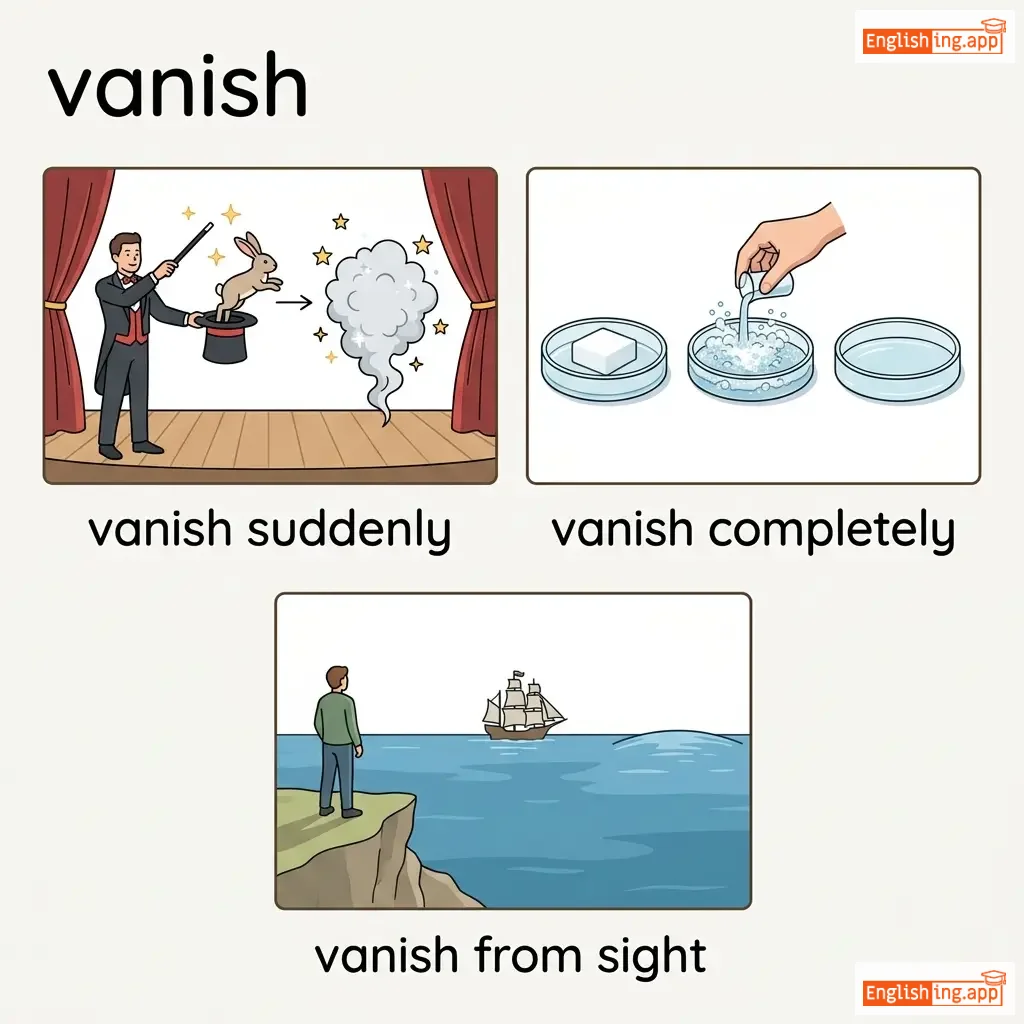
vanish completely, vanish suddenly, vanish without trace, vanishing point
••••••
|
In Chinese, 'vanish' is '消失' (xiaoshi) — things go 'xiao' (small) and 'shi' (gone)!
••••••
|
|
#732
🚫
|
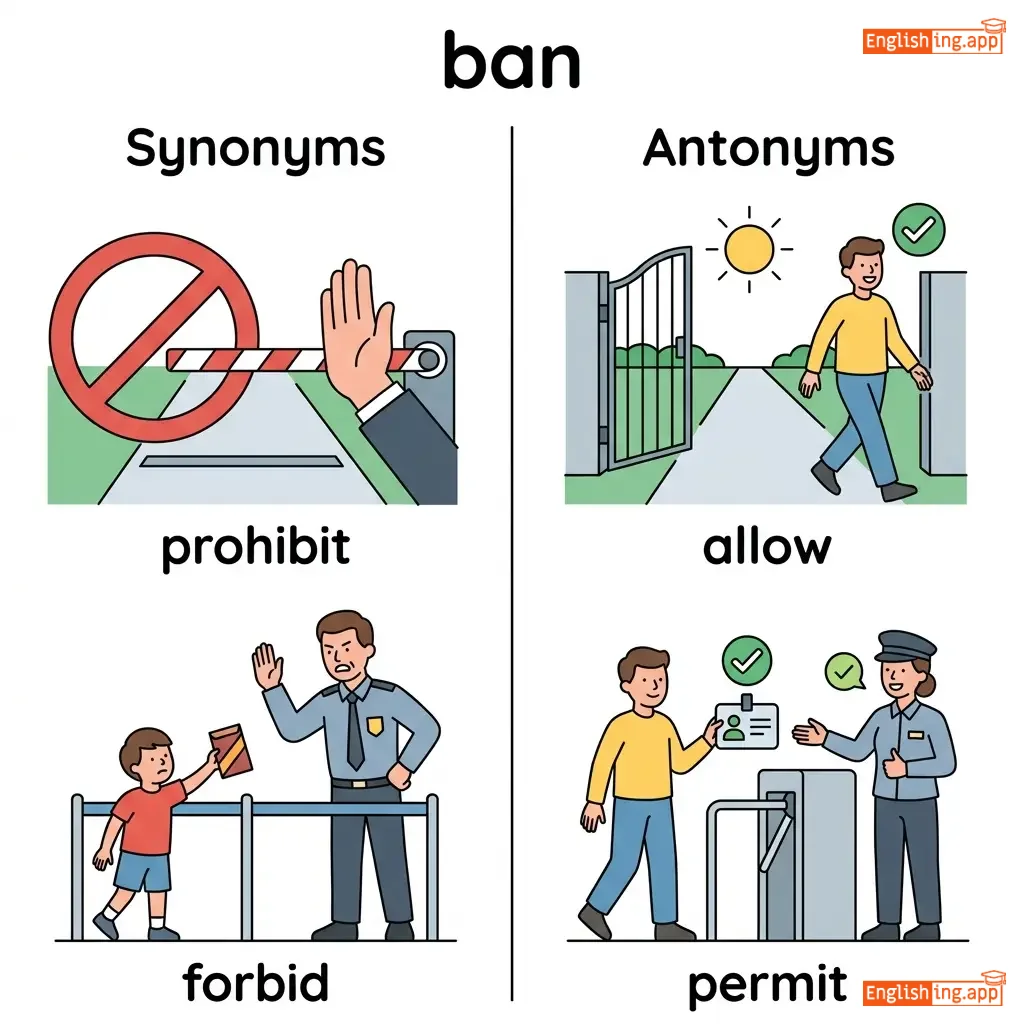
/bæn/
verb
(班)
••••••
|
|
禁止
jinzhi
••••••
|
banned
班德
••••••
|
banned
班德
••••••
|
bans
班斯
••••••
|
banning
班宁
••••••
|
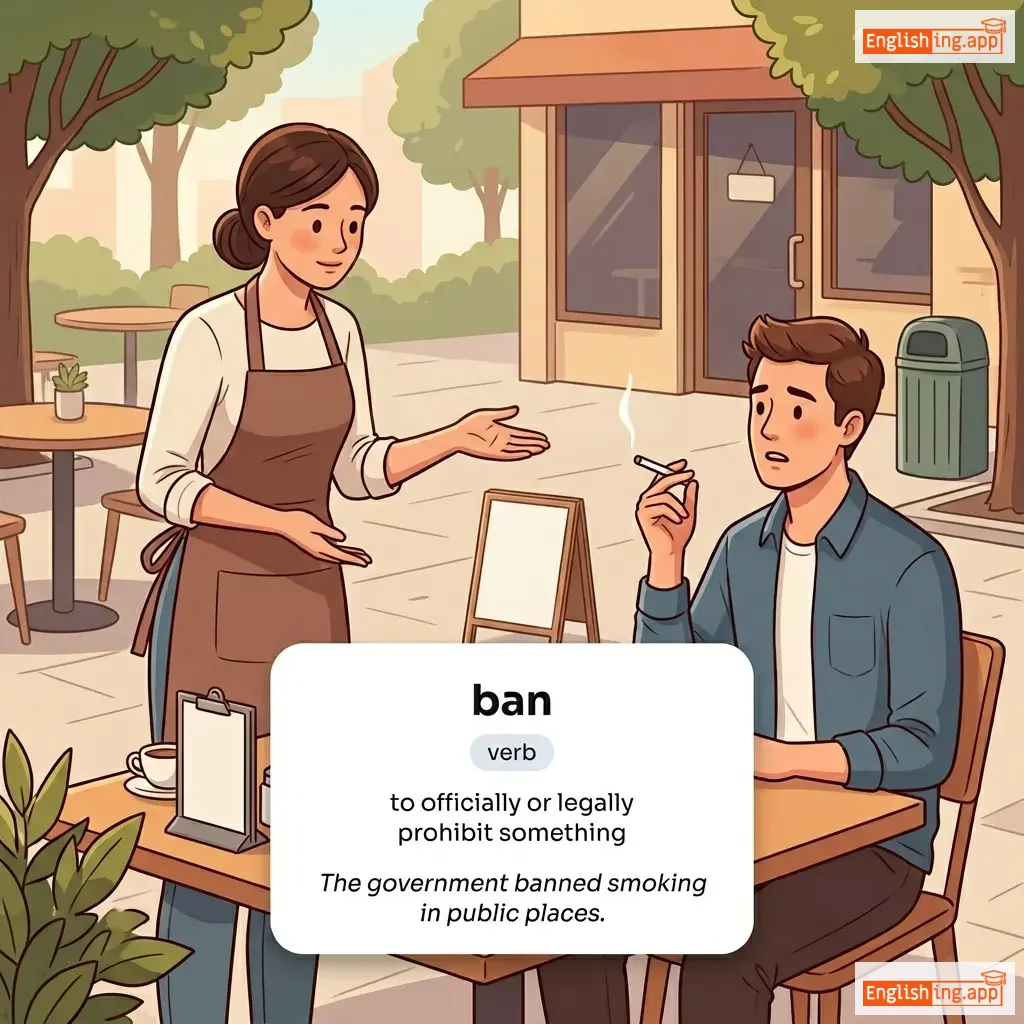
to officially forbid something; to prohibit
••••••
|
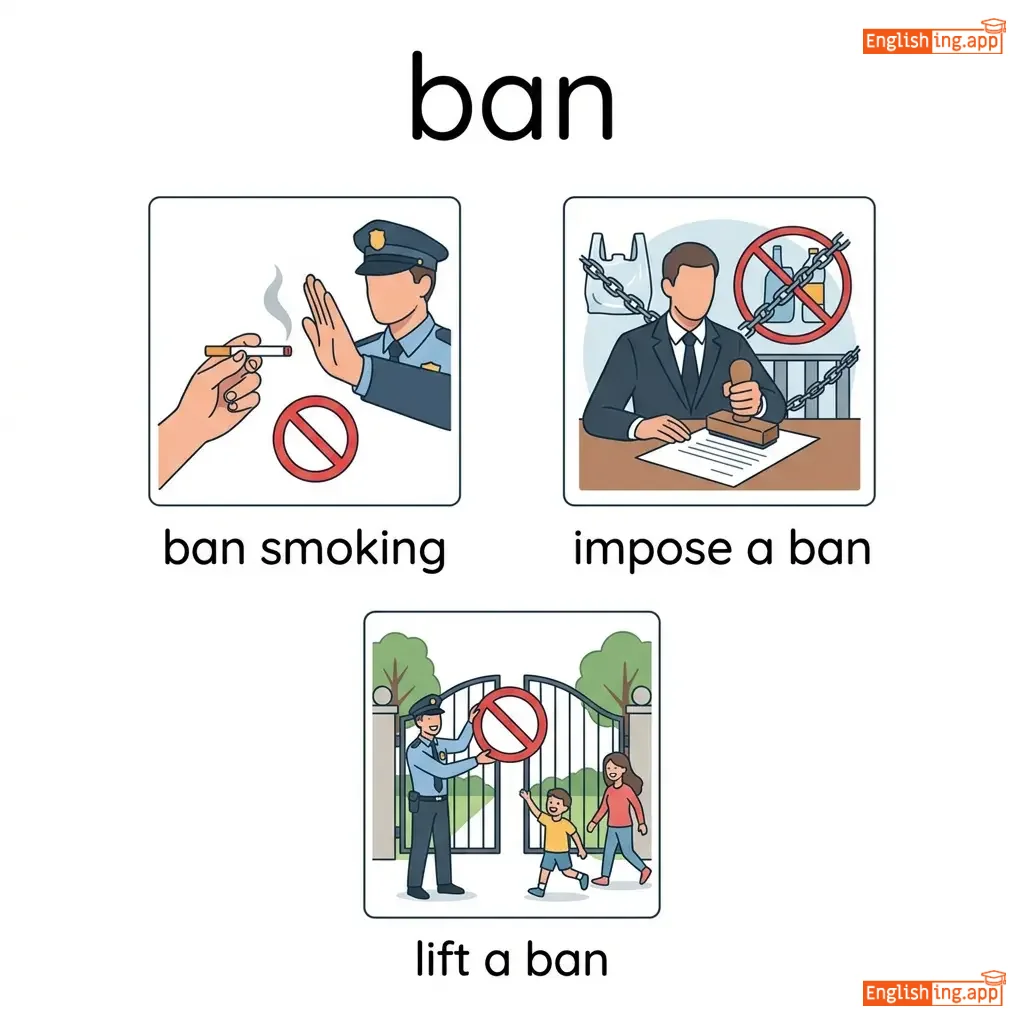
The government banned smoking in public places.
政府班德吸烟在公共场所。
••••••
|
政府禁止在公共场所吸烟。
Zhengfu jinzhi zai gonggong changsuo xiyan
••••••
|
prohibit, forbid, outlaw, bar
••••••
|
allow, permit, authorize, approve
••••••
|
ban smoking, total ban, lift the ban, impose a ban, nationwide ban
••••••
|
‘Ban’ means ‘jinzhi’ — both stop things completely!
••••••
|
|
#733
📈
|
/ɪmˈpruːv/
verb
(因普鲁夫)
••••••
|
- •••••• |
改善
gaishan
••••••
|
improved
因普鲁夫德
••••••
|
improved
因普鲁夫德
••••••
|
improves
因普鲁夫斯
••••••
|
improving
因普鲁夫英
••••••
|
to make or become better; to enhance quality or condition
••••••
|
Regular exercise will improve your health.
瑞格拉锕锕瑟赛子 维尔 因普鲁夫 由儿 黑尔斯。
••••••
|
经常锻炼会改善你的健康。
jingchang duanlian hui gaishan ni de jiankang
••••••
|
enhance, better, upgrade, advance
••••••
|
worsen, deteriorate, decline, degrade
••••••
|
improve quality, improve performance, greatly improve, room for improvement
••••••
|
Improve = 改善 (Gaishan) — think 'change for good' in Chinese!
••••••
|
|
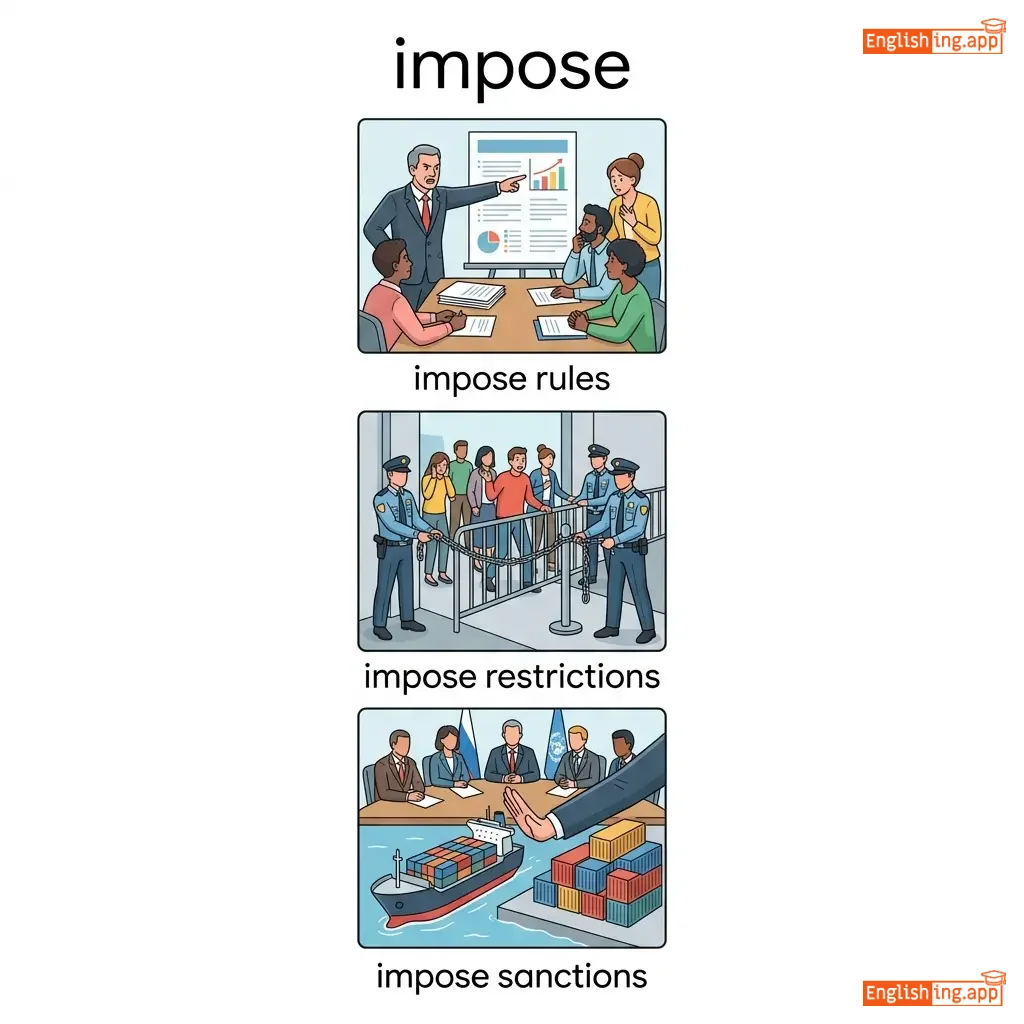
#734
⚖️
|
/ɪmˈpoʊz/
verb
(海皮尼斯)
••••••
|
|
强加
qiang jia
••••••
|
imposed
••••••
|
imposed
••••••
|
imposes
••••••
|
imposing
••••••
|
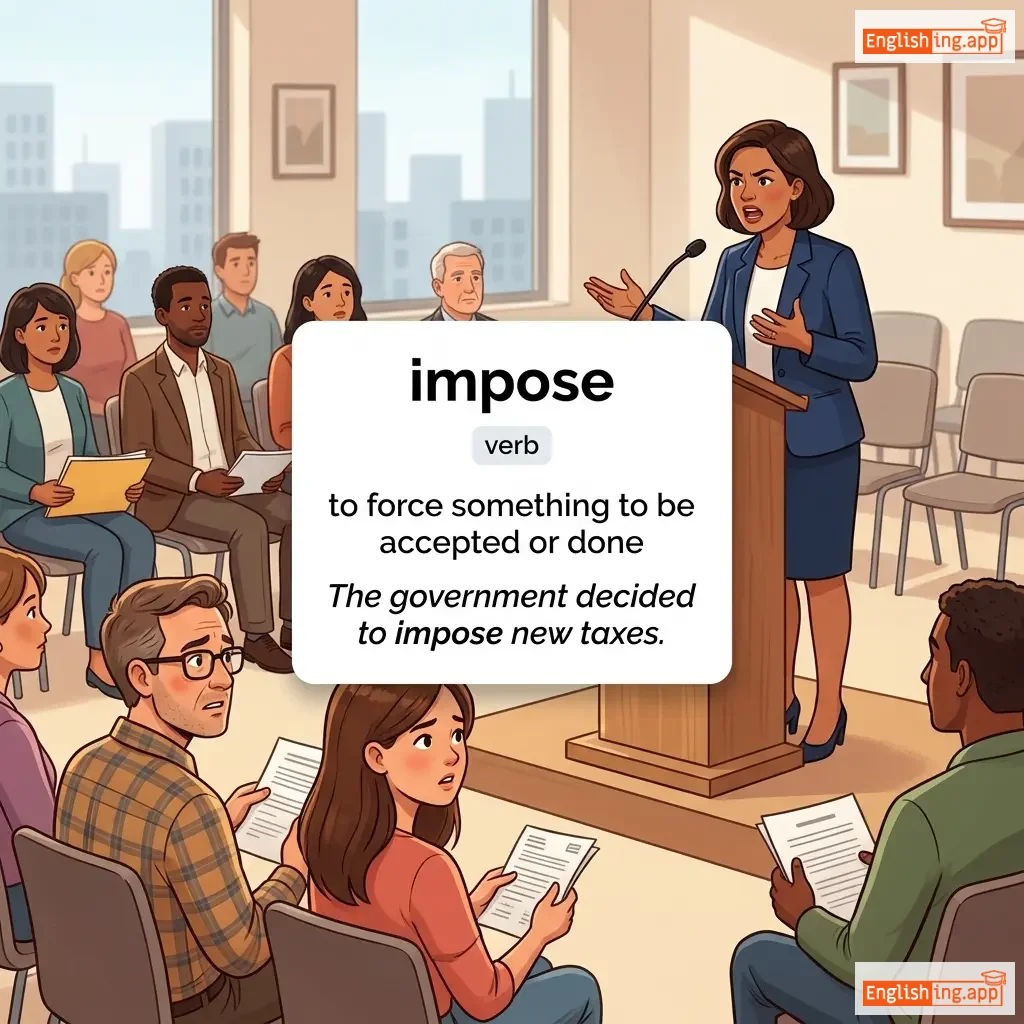
to force someone to accept something; to establish or apply by authority
••••••
|
The government imposed new taxes on luxury goods.
政府对奢侈品征收了新税。
••••••
|
政府对奢侈品征收了新税。
zheng fu dui she chi pin zheng shou le xin shui
••••••
|
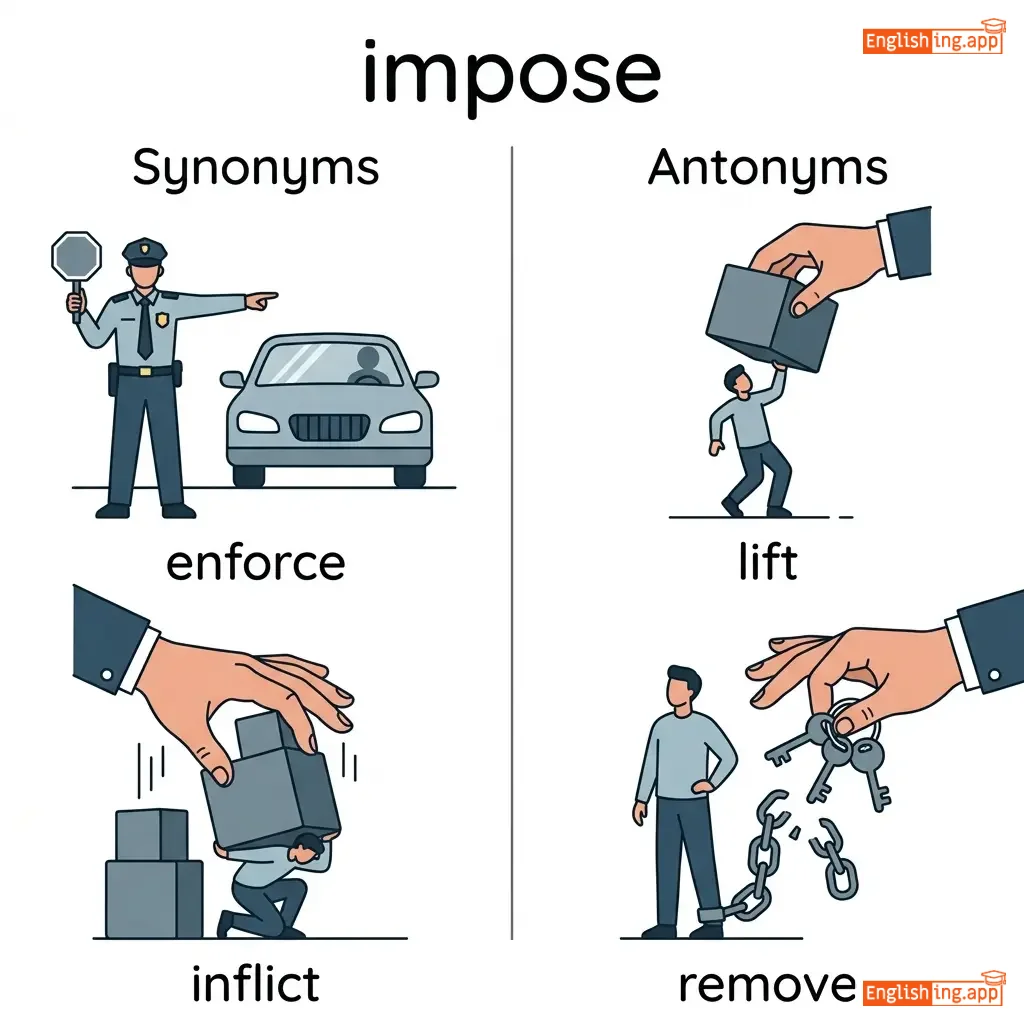
enforce, establish, inflict, apply
••••••
|
remove, lift, withdraw, abolish
••••••
|
impose restrictions, impose sanctions, impose a fine, impose on someone
••••••
|
In Chinese, '强加' (qiang jia) means to impose — to force something strongly.
••••••
|
|
#735
⬅️
|
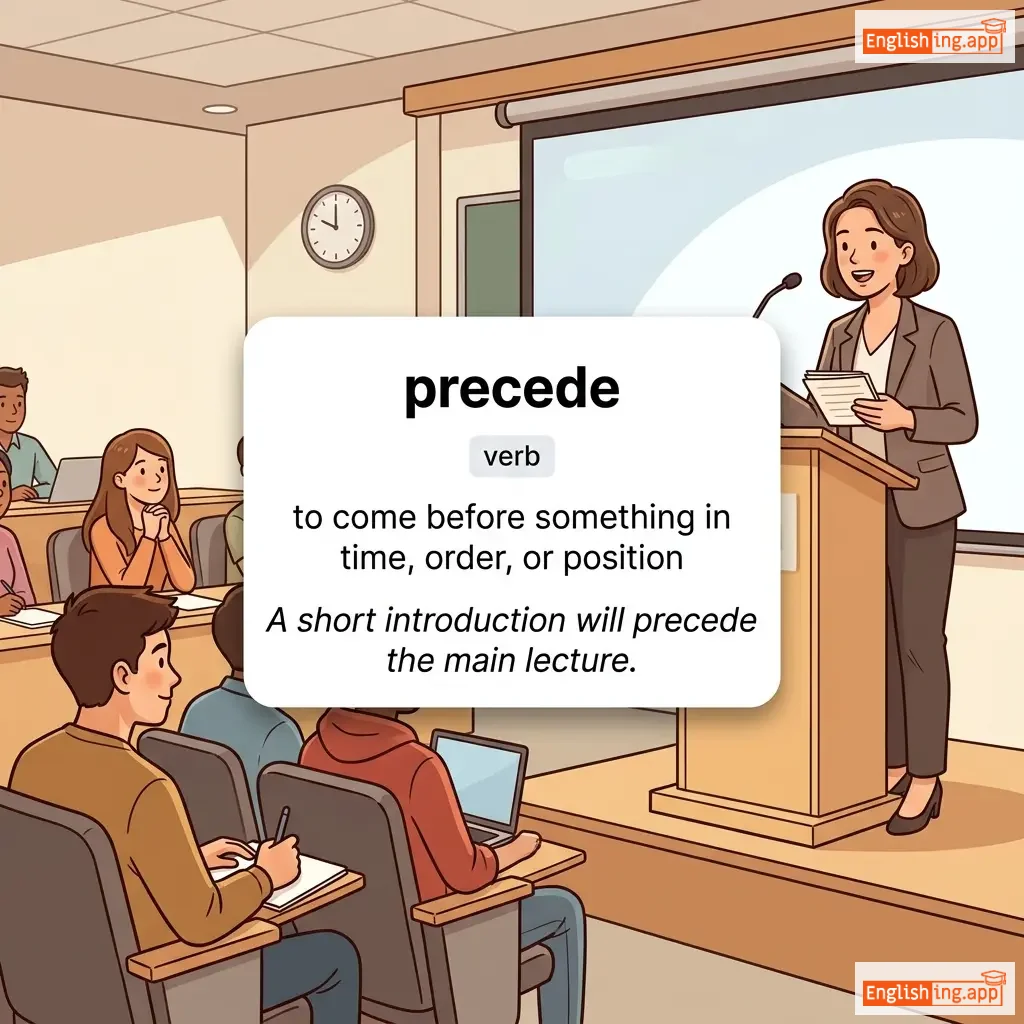
/prɪˈsiːd/
verb
(prisid)
••••••
|
|
先行
xianxing
••••••
|
preceded
chuqu
••••••
|
preceded
chuqu
••••••
|
precedes
chuqu
••••••
|
preceding
chuqu
••••••
|
to come before something in time, order, or position
••••••
|
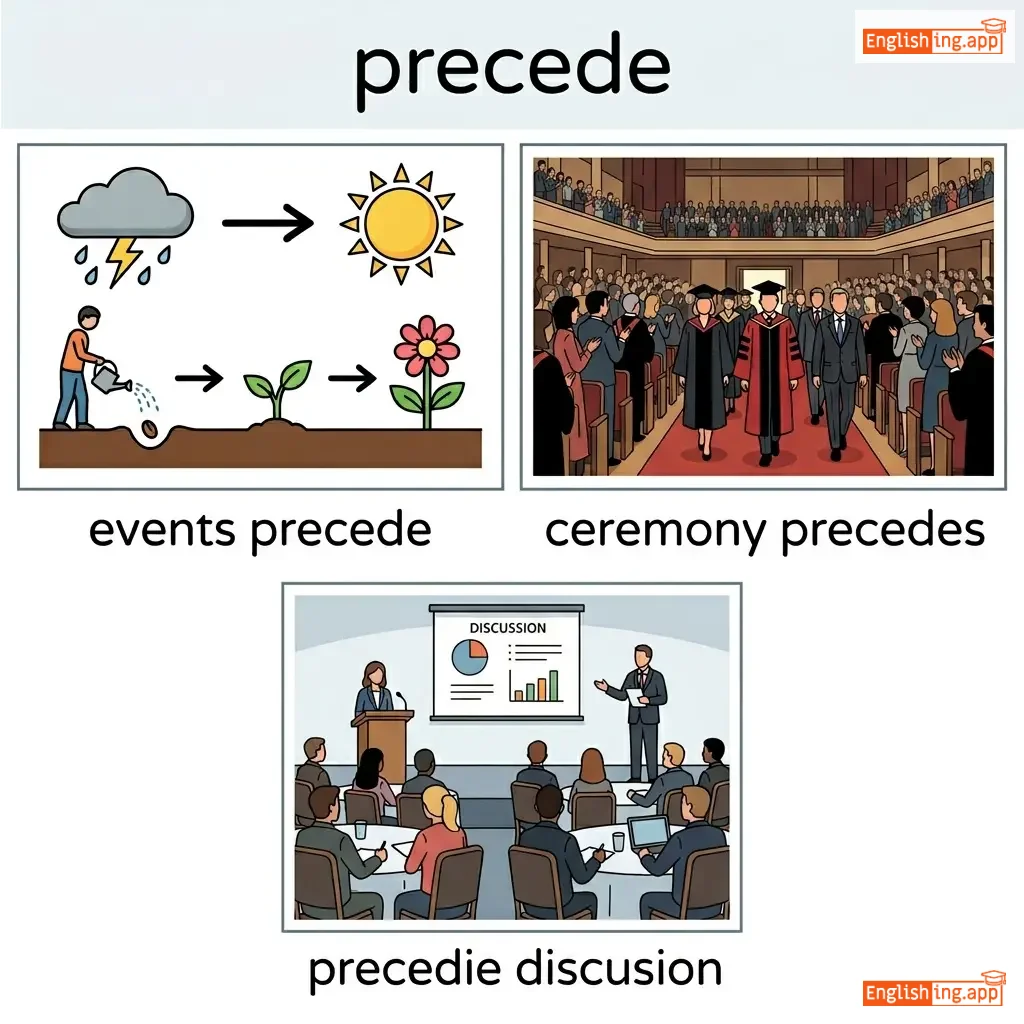
A brief introduction precedes each chapter.
简短的介绍先于每一章。
••••••
|
简短的介绍先于每一章。
jianduan de jieshao xianyu mei yi zhang
••••••
|
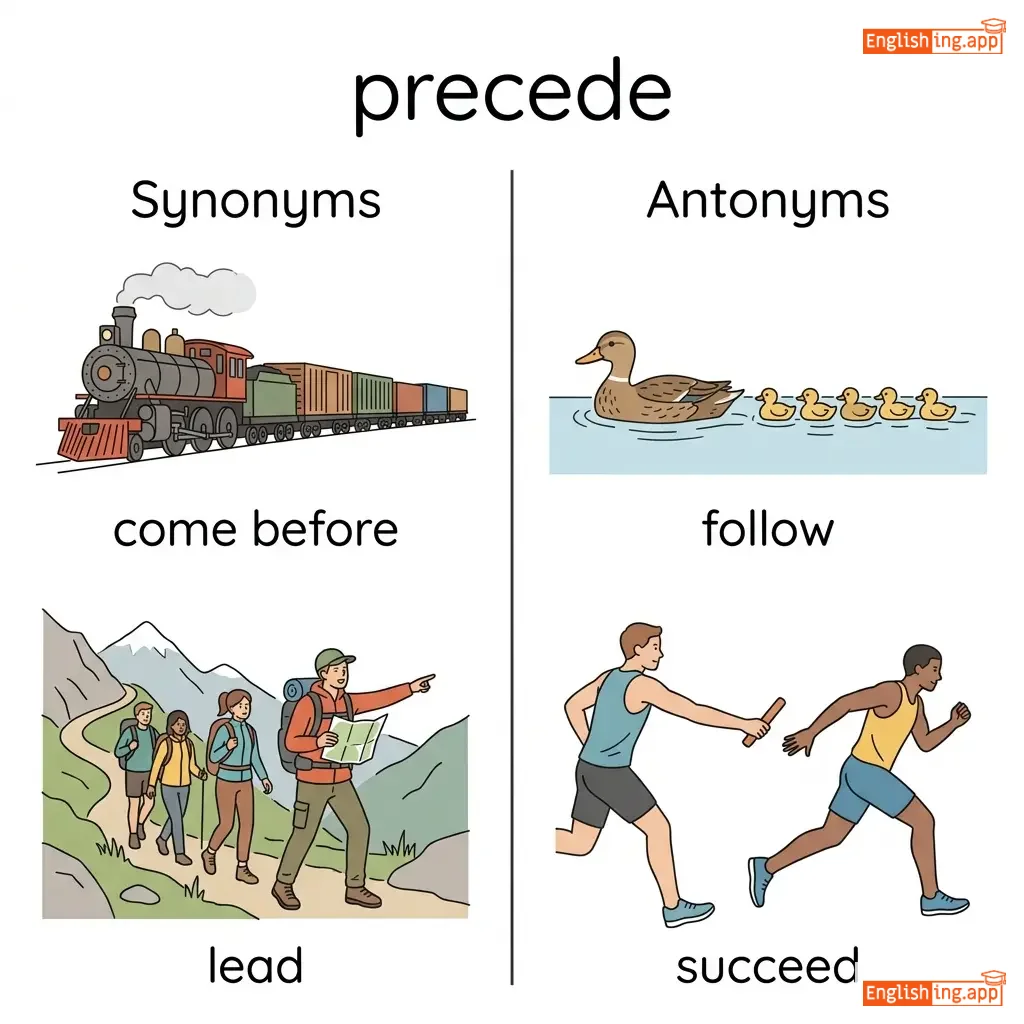
come before, lead, antecede, herald
••••••
|
follow, succeed, come after
••••••
|
precede by, immediately precede, precede in time, preceding chapter
••••••
|
No •••••• |
|
#736
🚶
|
/roʊm/
verb
(罗姆)
••••••
|
|
漫游
mànyóu
••••••
|
roamed
罗姆德
••••••
|
roamed
罗姆德
••••••
|
roams
罗姆斯
••••••
|
roaming
罗姆英
••••••
|
to walk or travel without a specific destination; to wander
••••••
|
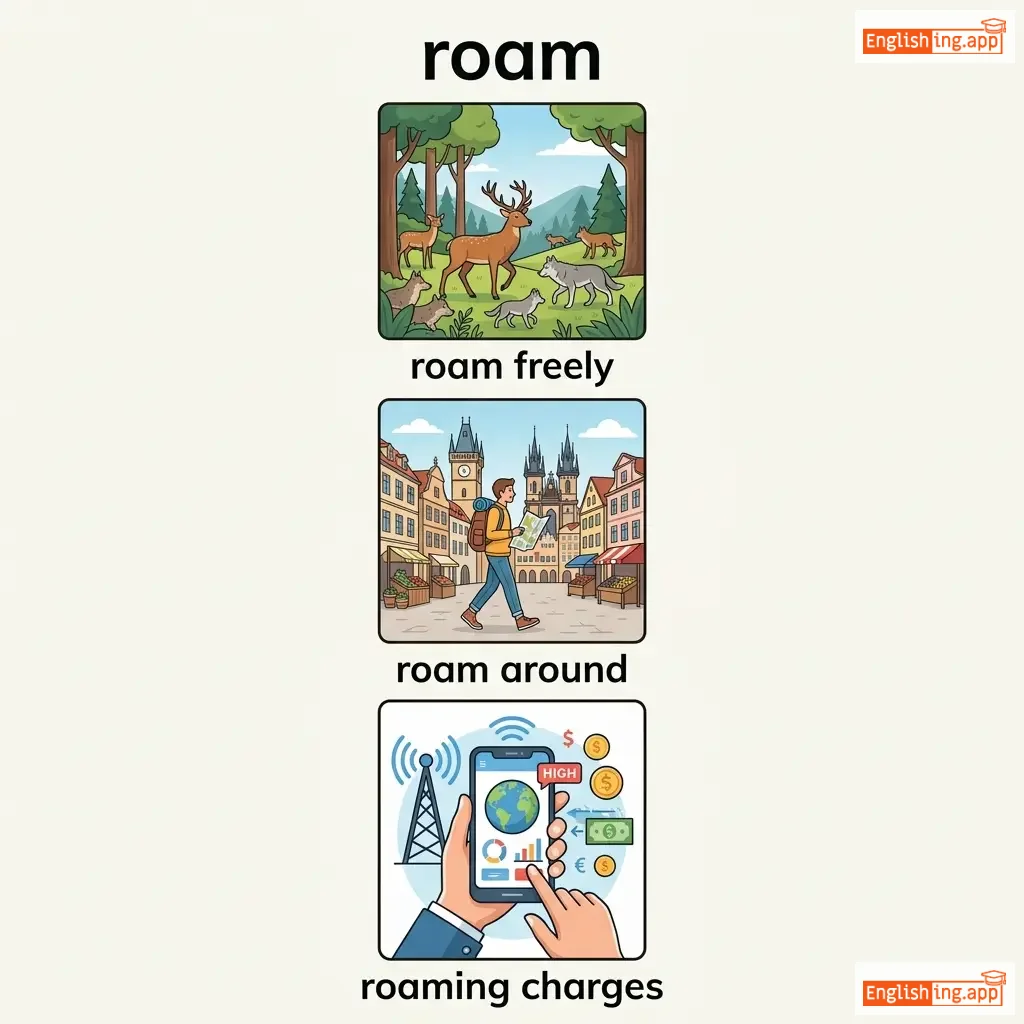
Wild animals roam freely in the forest.
野生动物在森林中自由漫游。
••••••
|
野生动物在森林中自由漫游。
Yěshēng dòngwù zài sēnlín zhōng zìyóu mànyóu.
••••••
|
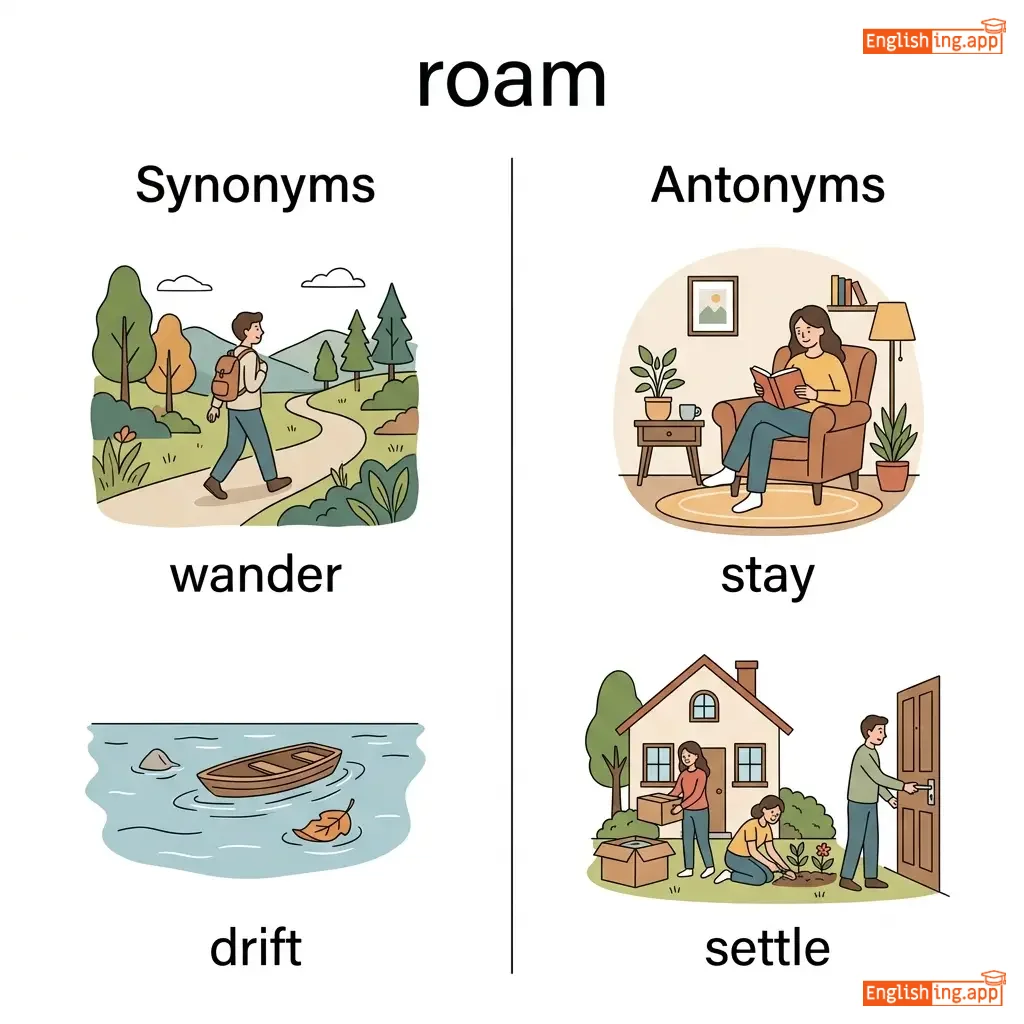
wander, drift, ramble, stroll
••••••
|
stay, settle, remain, anchor
••••••
|
roam freely, roam around, roaming charges, wild animals roam
••••••
|
在森林中漫游,就像 'roam' 一样!
••••••
|
|
#737
🙏
|
/bɪˈliːv/
verb
(比利夫)
••••••
|
|
相信
xiangxin
••••••
|
believed
比利夫德
••••••
|
believed
比利夫德
••••••
|
believes
比利夫斯
••••••
|
believing
比利夫ing
••••••
|
to think that something is true; to have faith in
••••••
|
I believe in hard work and dedication.
我 比利夫 in 哈德 工作 和 奉献。
••••••
|
我相信努力工作和奉献。
Wo xiangxin nuli gongzuo he fengxian
••••••
|
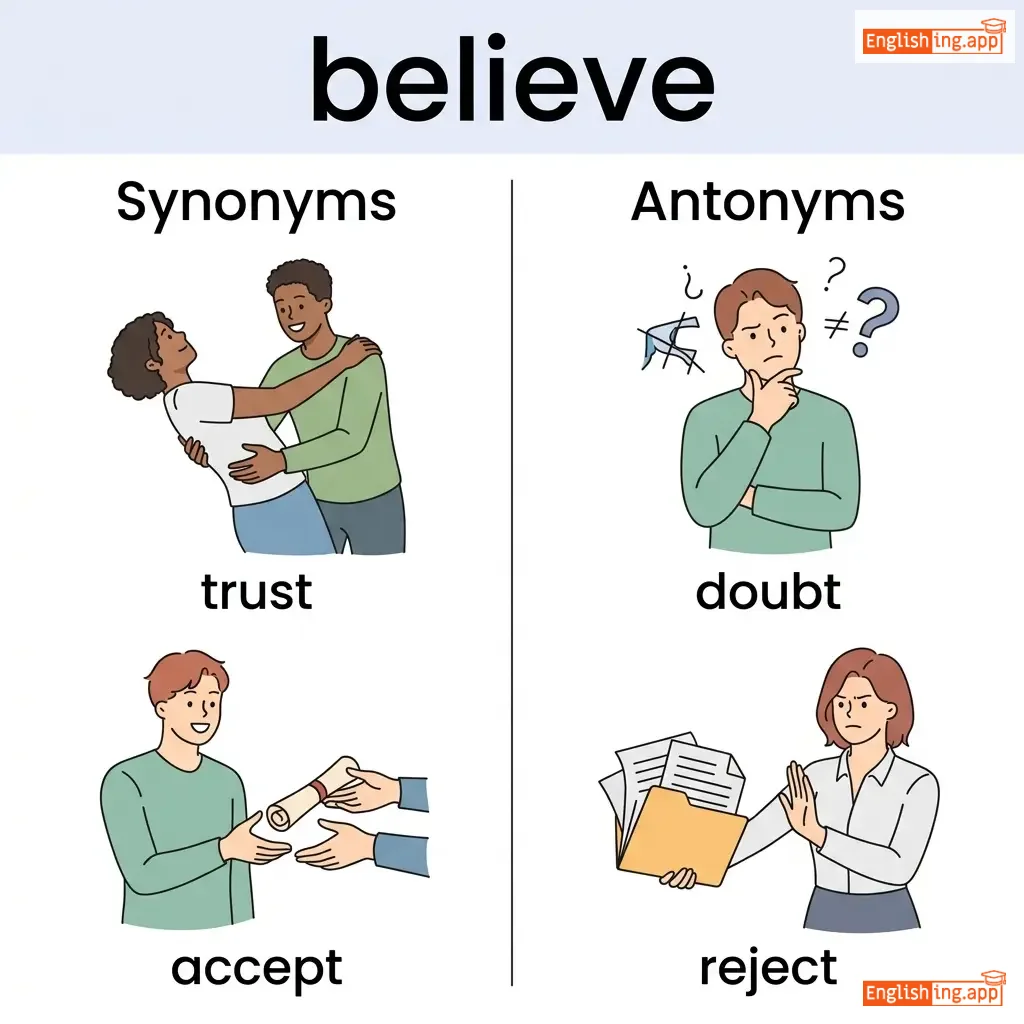
trust, have faith, accept, think
••••••
|
doubt, disbelieve, mistrust, question
••••••
|
believe in, firmly believe, make believe, hard to believe, I believe
••••••
|
相信 (xiangxin) = believe — 想想 'xiang' (想) 当你 want to believe
••••••
|
|
#738
🏠
|
/liːs/
verb
(līs)
••••••
|
|
租赁
zūlìn
••••••
|
leased
līst
••••••
|
leased
līst
••••••
|
leases
līsez
••••••
|
leasing
līsīng
••••••
|
to rent property or equipment for a specified period
••••••
|
They decided to lease a car for the vacation.
他们决定租一辆车去度假。
••••••
|
他们决定租一辆车去度假。
Tāmen juédìng zū yī liàng chē qù dùjià.
••••••
|
rent, hire, charter
••••••
|
buy, purchase, own
••••••
|
lease agreement, car lease, long-term lease, lease payment, lease out
••••••
|
租赁与 'lease' 的意思相同,都是租的意思
••••••
|
|
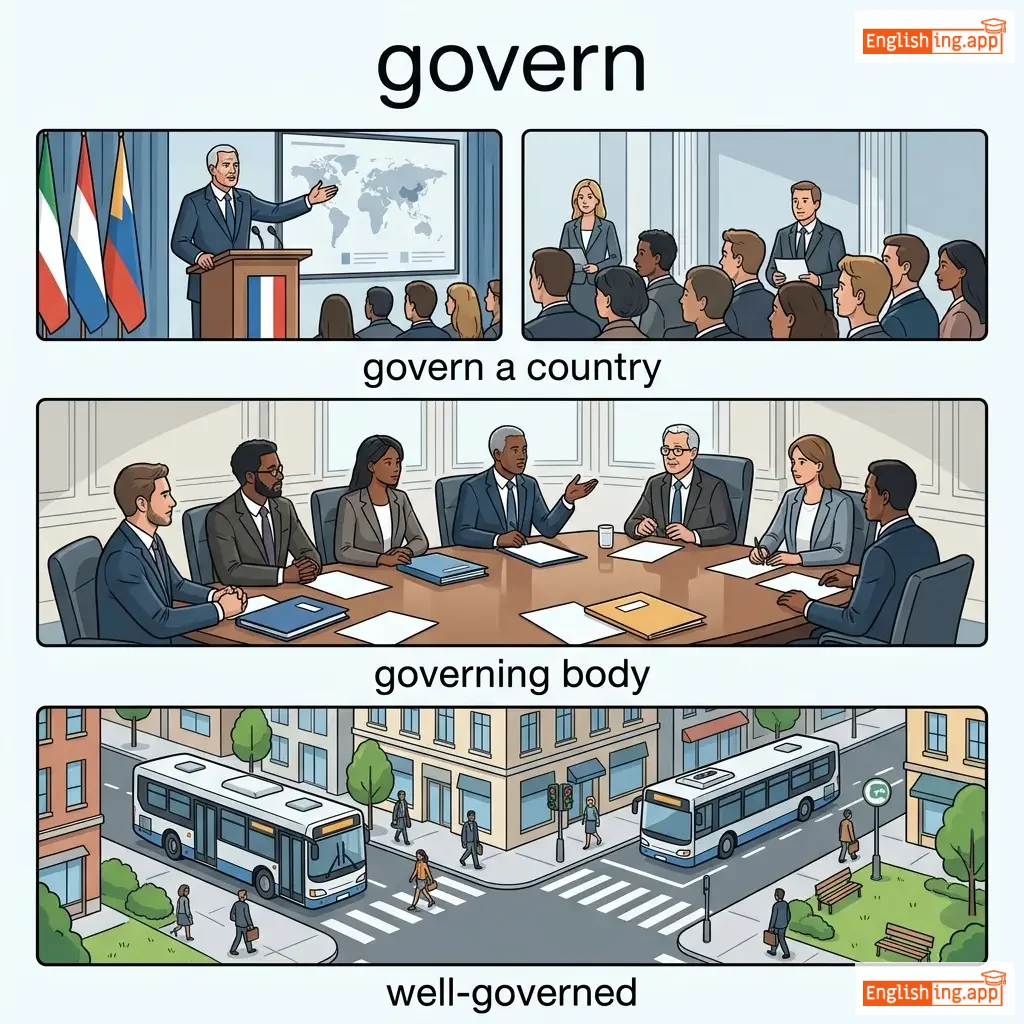
#739
🏛️
|
/ˈɡʌvərn/
verb
(海皮尼斯)
••••••
|
|
治理
zhili
••••••
|
governed
••••••
|
governed
••••••
|
governs
••••••
|
governing
••••••
|
to control and direct the public policy and affairs of a state, organization, or people
••••••
|
The president governs the country wisely.
总统治理国家明智。
••••••
|
总统明智地治理国家。
zongtong mingzhi de zhili guojia
••••••
|
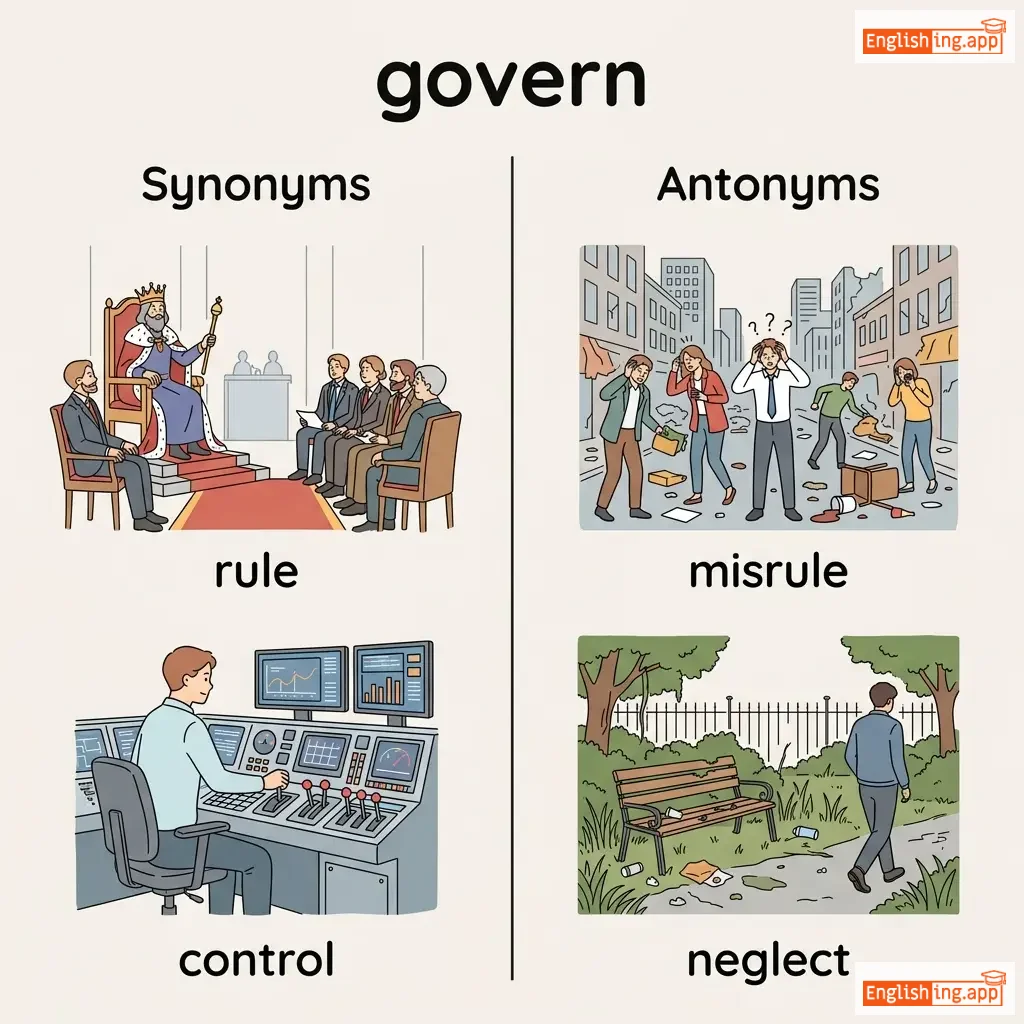
rule, control, manage, lead
••••••
|
obey, follow, submit
••••••
|
govern wisely, govern effectively, self-govern, governing body, good governance
••••••
|
Govern → Zhili (治理), means to manage or control.
••••••
|
|
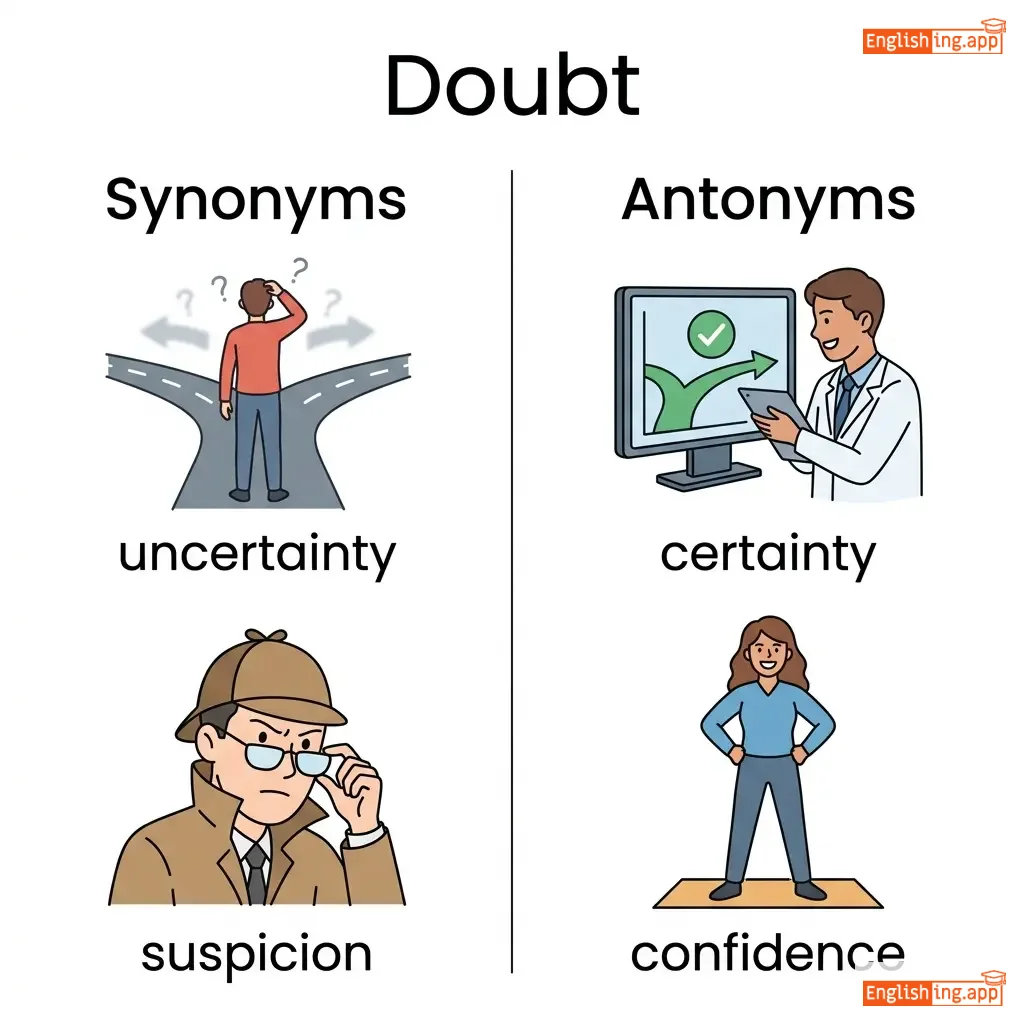
#740
🤔
|
/daʊt/
verb
(道特)
••••••
|
|
怀疑
huai yi
••••••
|
doubted
道特德
••••••
|
doubted
道特德
••••••
|
doubts
道特斯
••••••
|
doubting
道特英
••••••
|
to feel uncertain about something; to question
••••••
|
I doubt he will come to the party.
艾 道特 希 维尔 卡姆 图 德 派对
••••••
|
我怀疑他会来参加聚会。
wo huai yi ta hui lai can jia ju hui
••••••
|
question, suspect, mistrust, hesitate
••••••
|
trust, believe, accept, certainty
••••••
|
cast doubt, serious doubt, reasonable doubt, without doubt, doubt someone's ability
••••••
|
'Huai yi' sounds like 'why ye?' — when you doubt something.
••••••
|
|
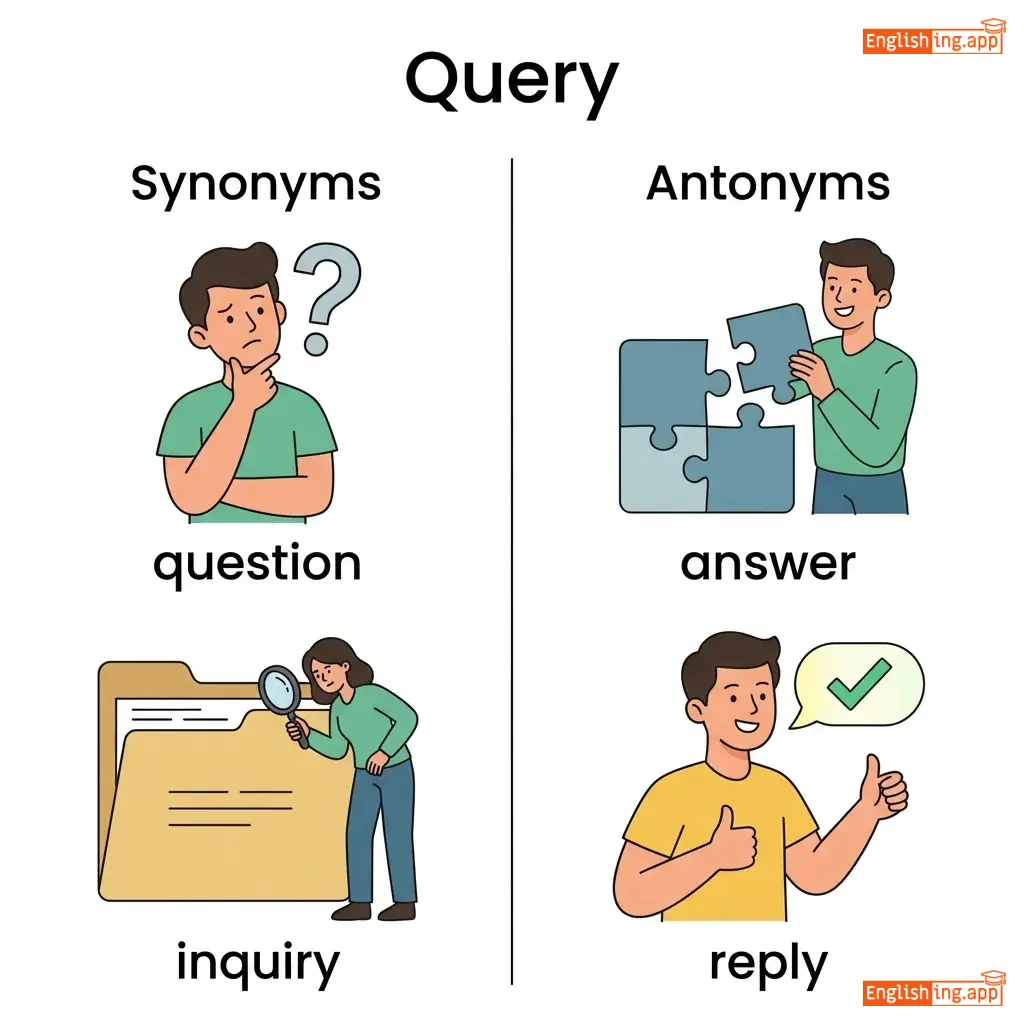
#741
❓
|
/ˈkwɪəri/
verb
(奎瑞)
••••••
|
|
询问
xunwen
••••••
|
queried
奎瑞德
••••••
|
queried
奎瑞德
••••••
|
queries
奎瑞斯
••••••
|
querying
奎瑞英
••••••
|
to ask a question; to express doubt about something
••••••
|
The student decided to query the professor about the assignment.
学生决定奎瑞教授关于作业。
••••••
|
学生决定向教授询问作业的事。
Xuesheng jueding xiang jiaoshou xunwen zuoye de shi.
••••••
|
question, ask, inquire, challenge
••••••
|
answer, accept, confirm
••••••
|
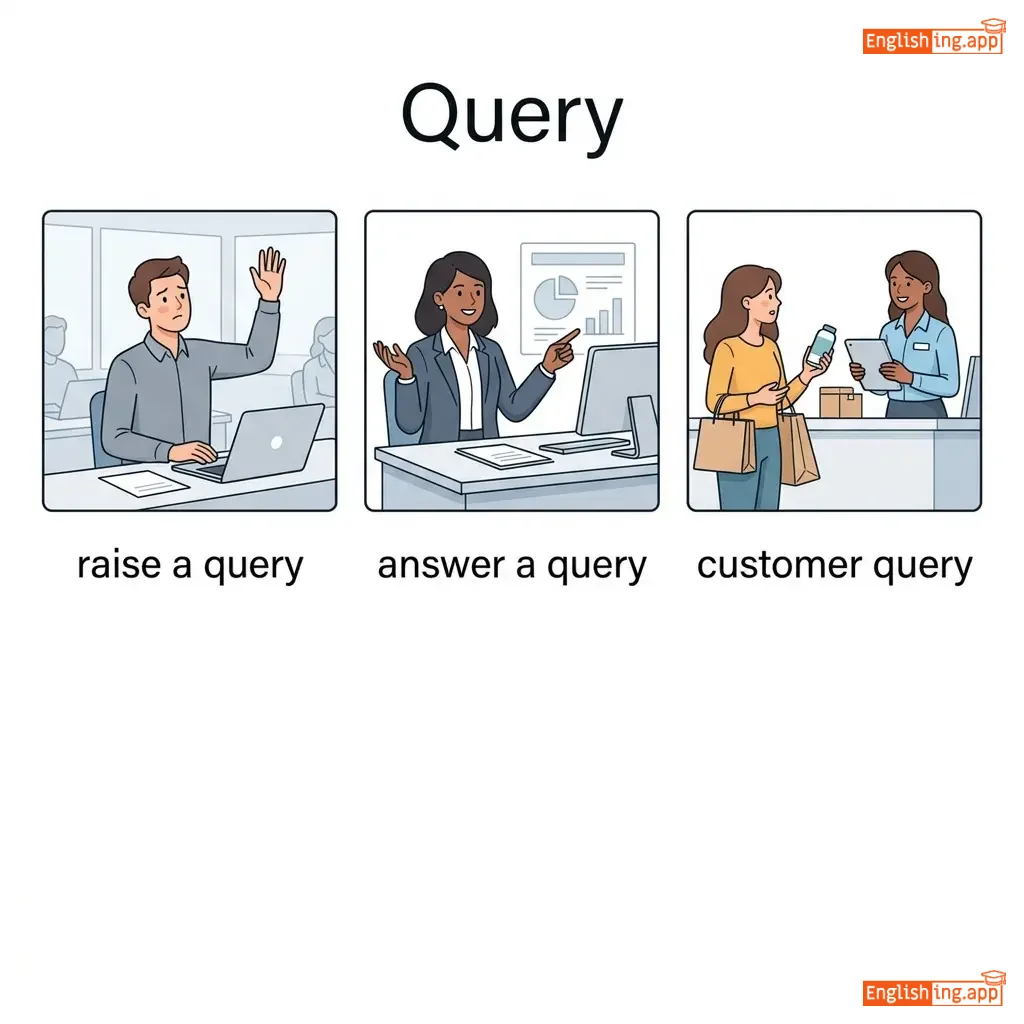
database query, search query, query results, SQL query, query language
••••••
|
Query and ‘xunwen’ both mean to ask — imagine sending a ‘query’ to your Chinese teacher.
••••••
|
|
#742
🤝
|
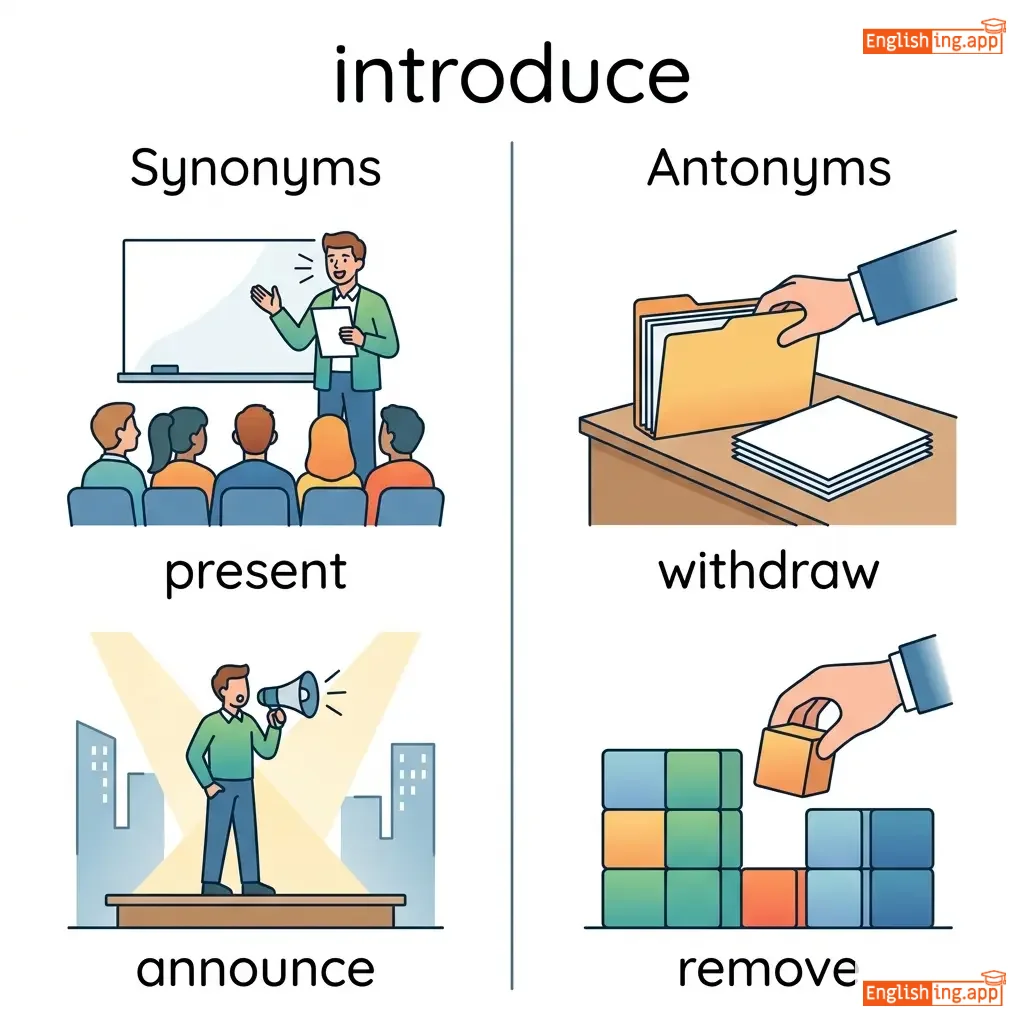
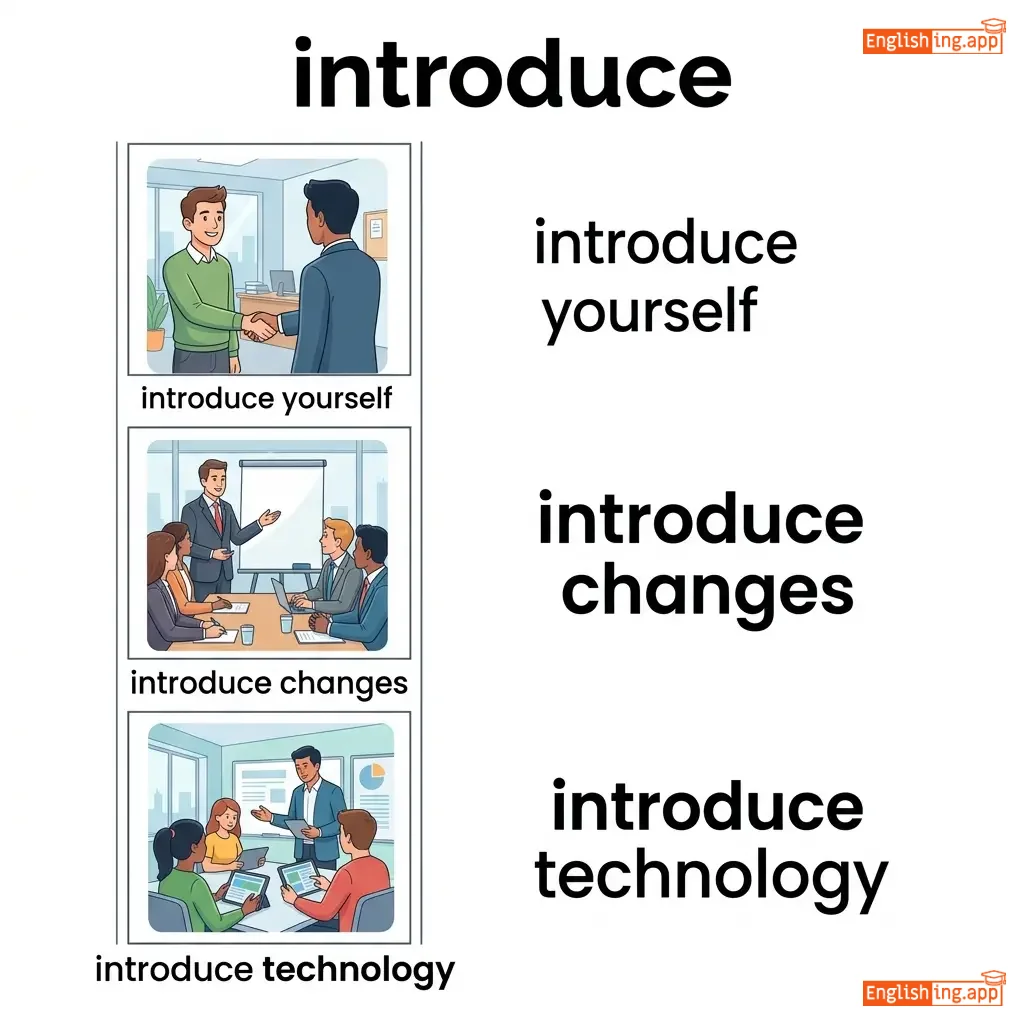
/ˌɪntrəˈduːs/
verb
(海皮尼斯)
••••••
|
|
介绍
jieshao
••••••
|
introduced
••••••
|
introduced
••••••
|
introduces
••••••
|
introducing
••••••
|
to present someone; to bring in for the first time
••••••
|
Let me introduce you to my friend.
让我介绍你给我的朋友。
••••••
|
让我介绍你给我的朋友。
rang wo jieshao ni gei wo de pengyou
••••••
|
present, acquaint, establish, initiate
••••••
|
conclude, end, remove, withdraw
••••••
|
introduce yourself, introduce someone, newly introduced, introduction letter
••••••
|
Introduce = 介绍 (jieshao), like 'show' someone in Chinese.
••••••
|
|
#743
🚀
|
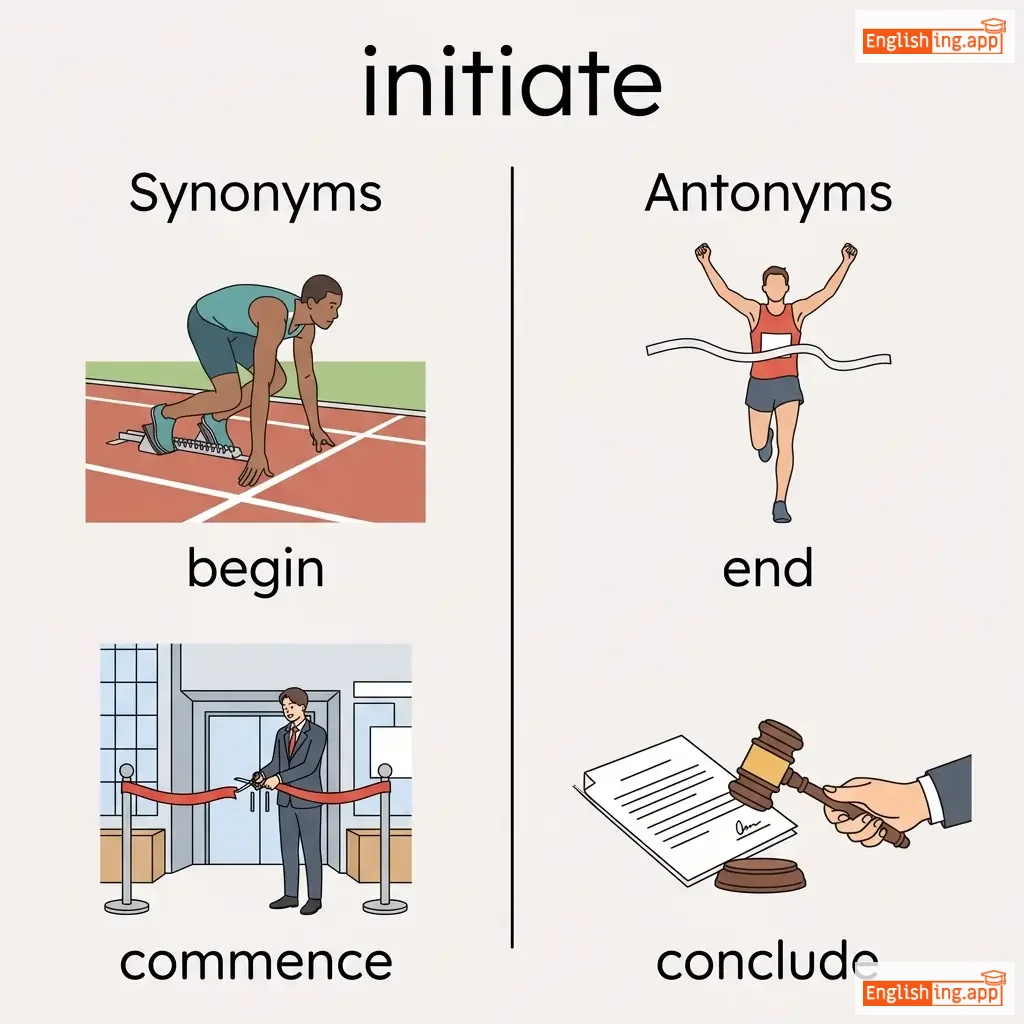
/ɪˈnɪʃieɪt/
verb
(因尼西艾特)
••••••
|
|
启动
qidong
••••••
|
initiated
因尼西艾特德
••••••
|
initiated
因尼西艾特德
••••••
|
initiates
因尼西艾特斯
••••••
|
initiating
因尼西艾廷
••••••
|
to begin or start; to introduce someone to a new activity
••••••
|
The company will initiate a new training program.
公司会因尼西艾特一个新的培训项目。
••••••
|
公司将启动一个新的培训项目。
gongsi jiang qidong yige xin de peixun xiangmu
••••••
|
begin, start, launch, commence
••••••
|
end, finish, conclude, terminate
••••••
|
initiate process, initiate contact, initiate action, take the initiative
••••••
|
Initiate sounds like 'qidong' — both mean to start or begin.
••••••
|
|
#744
🏠➡️
|
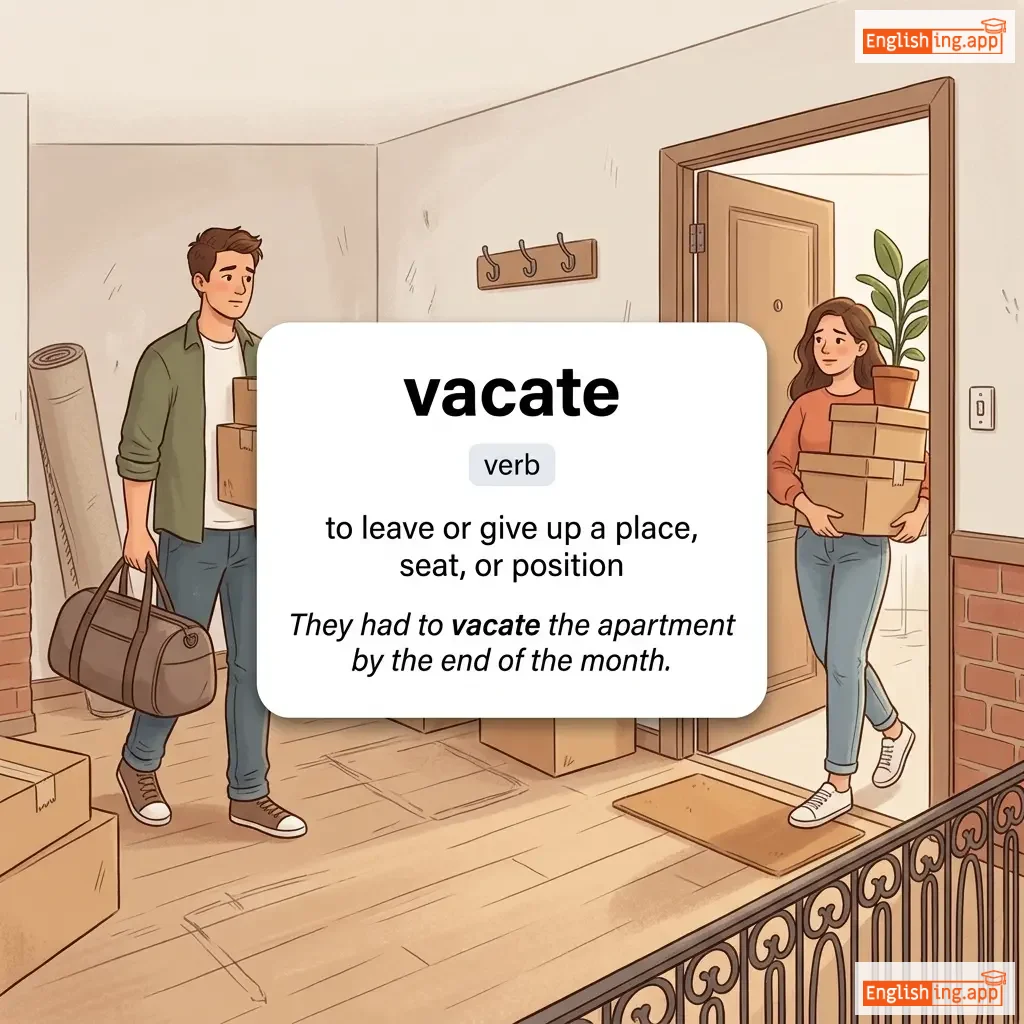
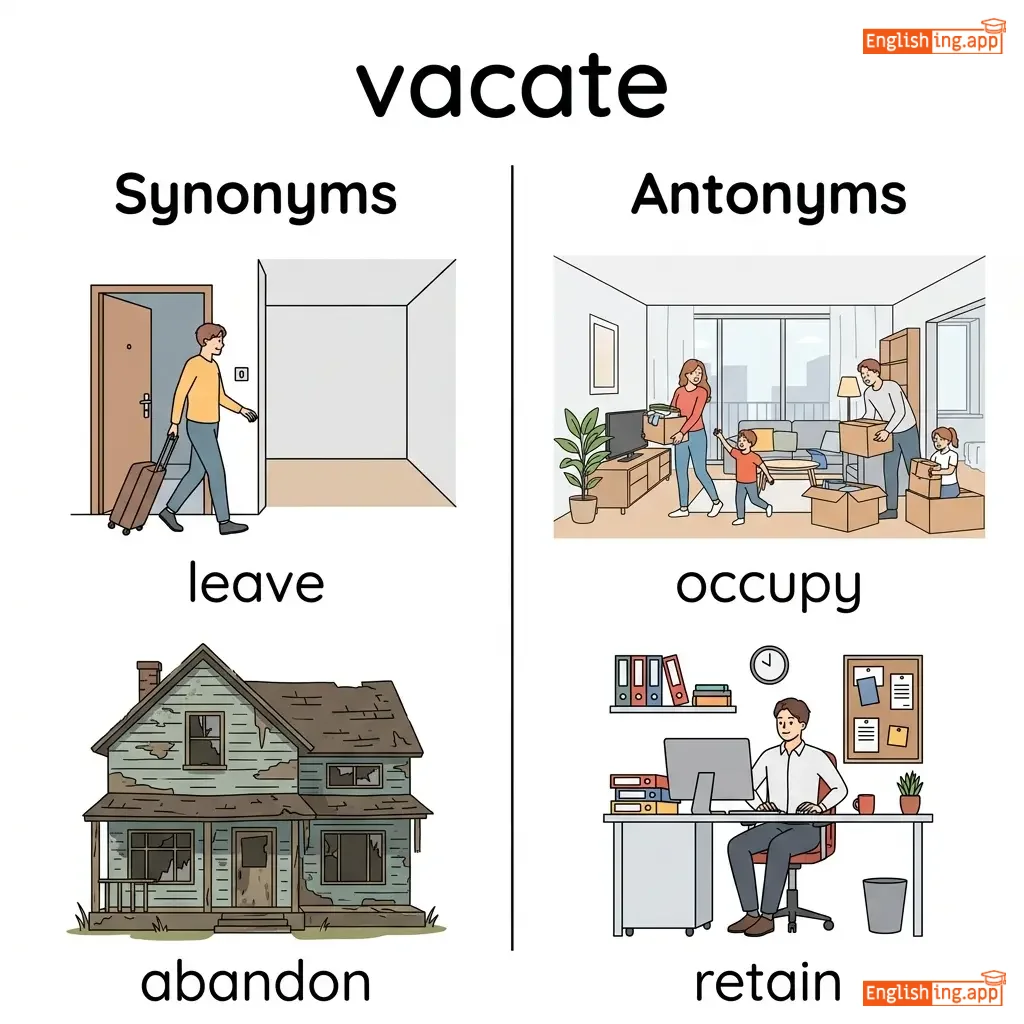
/vəˈkeɪt/
verb
(维凯特)
••••••
|
|
腾出
teng chu
••••••
|
vacated
维凯特德
••••••
|
vacated
维凯特德
••••••
|
vacates
维凯特斯
••••••
|
vacating
维凯廷
••••••
|
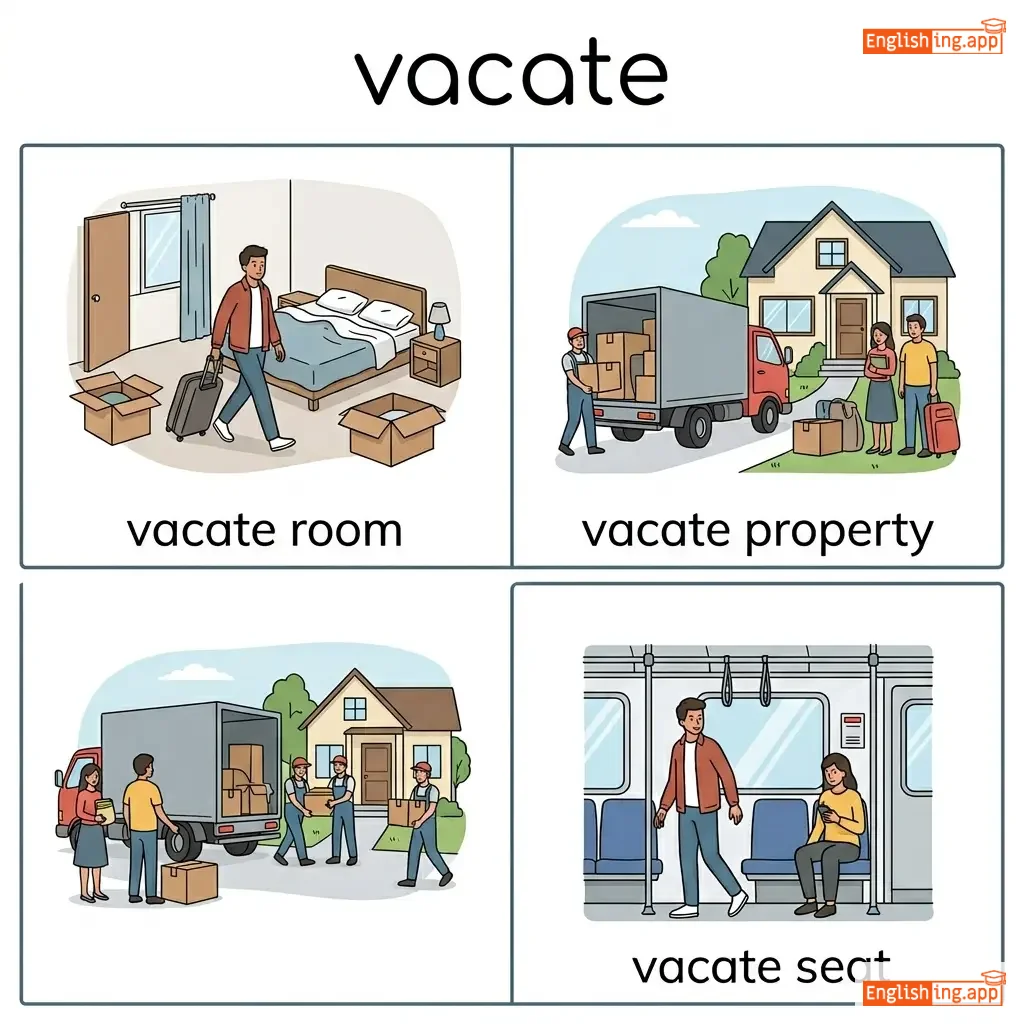
to leave a place; to make empty by leaving
••••••
|
The tenants must vacate the apartment by the end of the month.
泽 特南茨 马斯特 维凯特 泽 阿帕特门 拜 泽 恩德 欧夫 泽 曼斯。
••••••
|
房客必须在月底前腾出公寓。
fangke bixu zai yue di qian teng chu gongyu
••••••
|
leave, evacuate, abandon, quit, depart
••••••
|
occupy, fill, inhabit, move in
••••••
|
vacate premises, vacate the building, forced to vacate, vacate immediately
••••••
|
Vacate sounds like ‘teng chu’ — leave and make space empty.
••••••
|
|
#745
🏆
|
/wɪn/
verb
(赢)
••••••
|
|
赢
ying
••••••
|
won
won
••••••
|
won
won
••••••
|
wins
wins
••••••
|
winning
winning
••••••
|
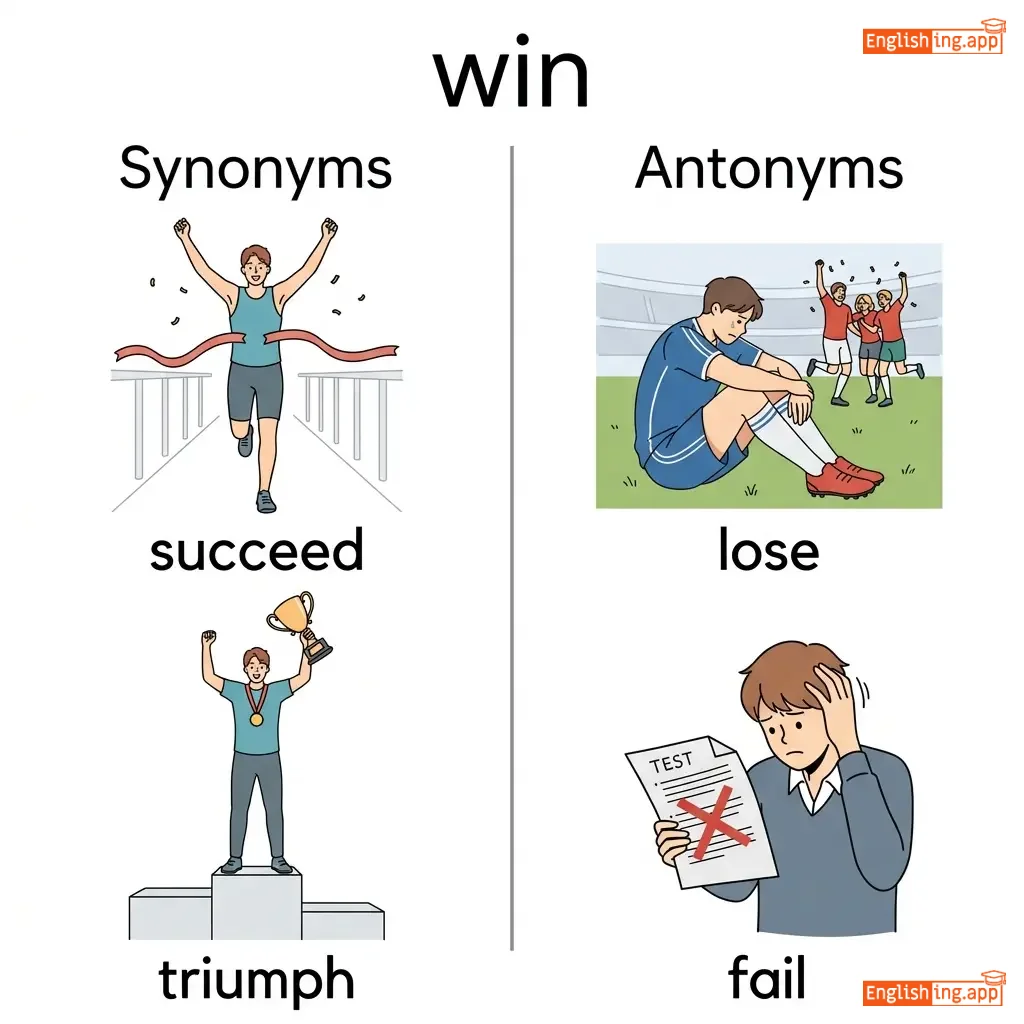
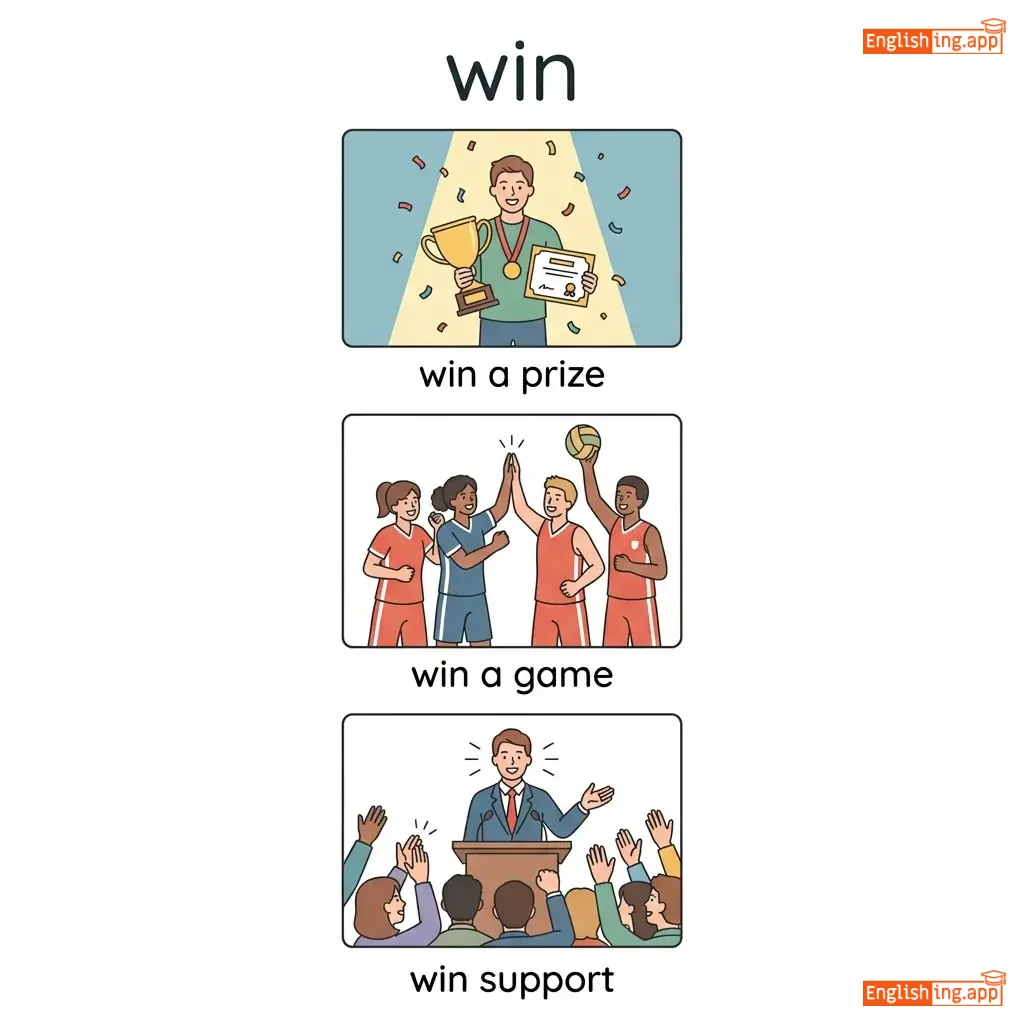
to be successful or victorious in a contest or competition
••••••
|
Our team will win the championship.
我们的团队将赢得冠军。
••••••
|
我们的团队将赢得冠军。
Wǒmen de tuánduì jiāng yíngdé guànjūn.
••••••
|
triumph, succeed, conquer, prevail
••••••
|
lose, fail, forfeit, surrender
••••••
|
win the game, win easily, win big, win over, winning streak
••••••
|
要赢得比赛,团队必须努力合作。
••••••
|
Vocabulary Quiz
Test your vocabulary by matching words with their translations or meanings.
Login to take the quiz
Comments (0)
Share your thoughts and join the discussion.
Join the discussion by logging in
Login to CommentNo comments yet
Be the first to share your thoughts!