🏆win (赢)

verb
/wɪn/
(ying)

含义

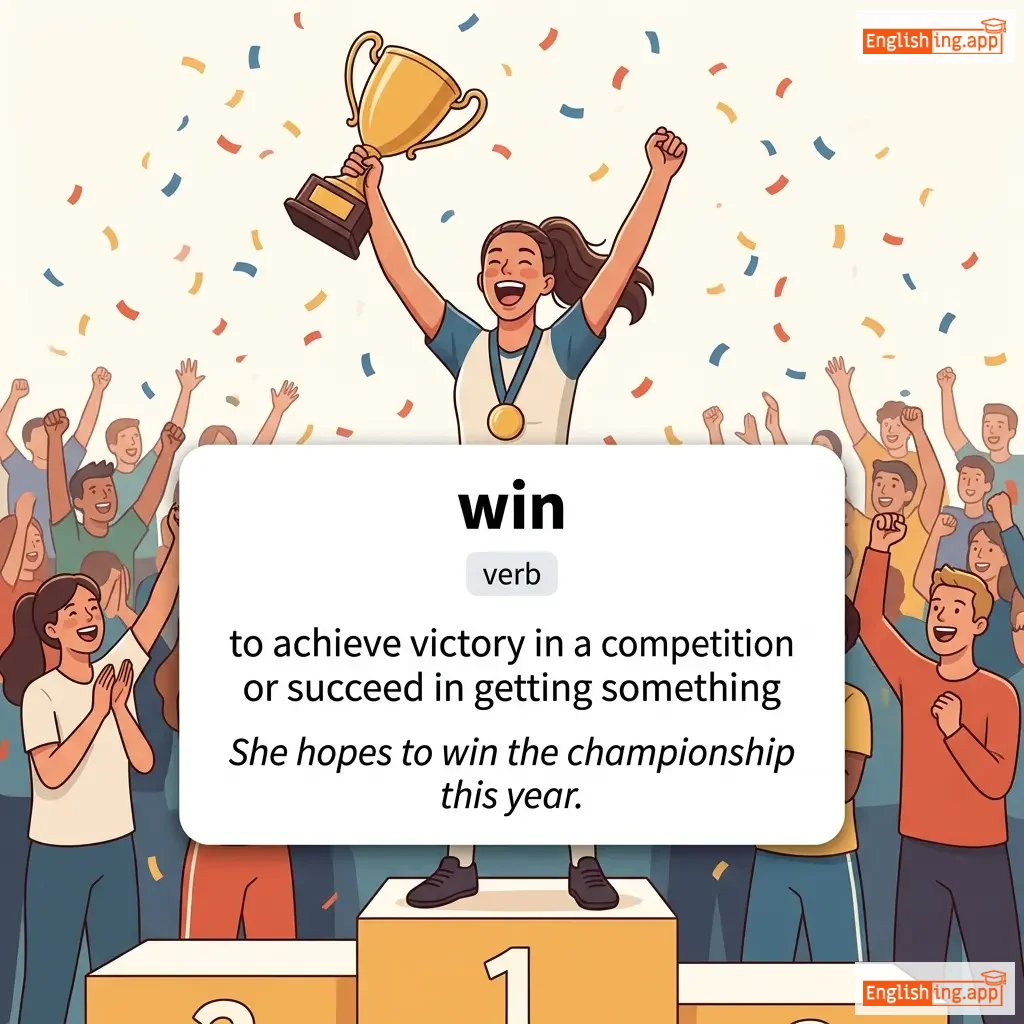
to achieve victory in a competition or succeed in getting something
to be successful or victorious in a contest or competition
含义翻译
在比赛或竞赛中成功或胜利
zai bisai huo jingsai zhong chenggong huo shengli

例句

She hopes to win the championship this year.

Our team will win the championship.

我们的团队将赢得冠军。
Wǒmen de tuánduì jiāng yíngdé guànjūn.

示例表达

win over

同义词

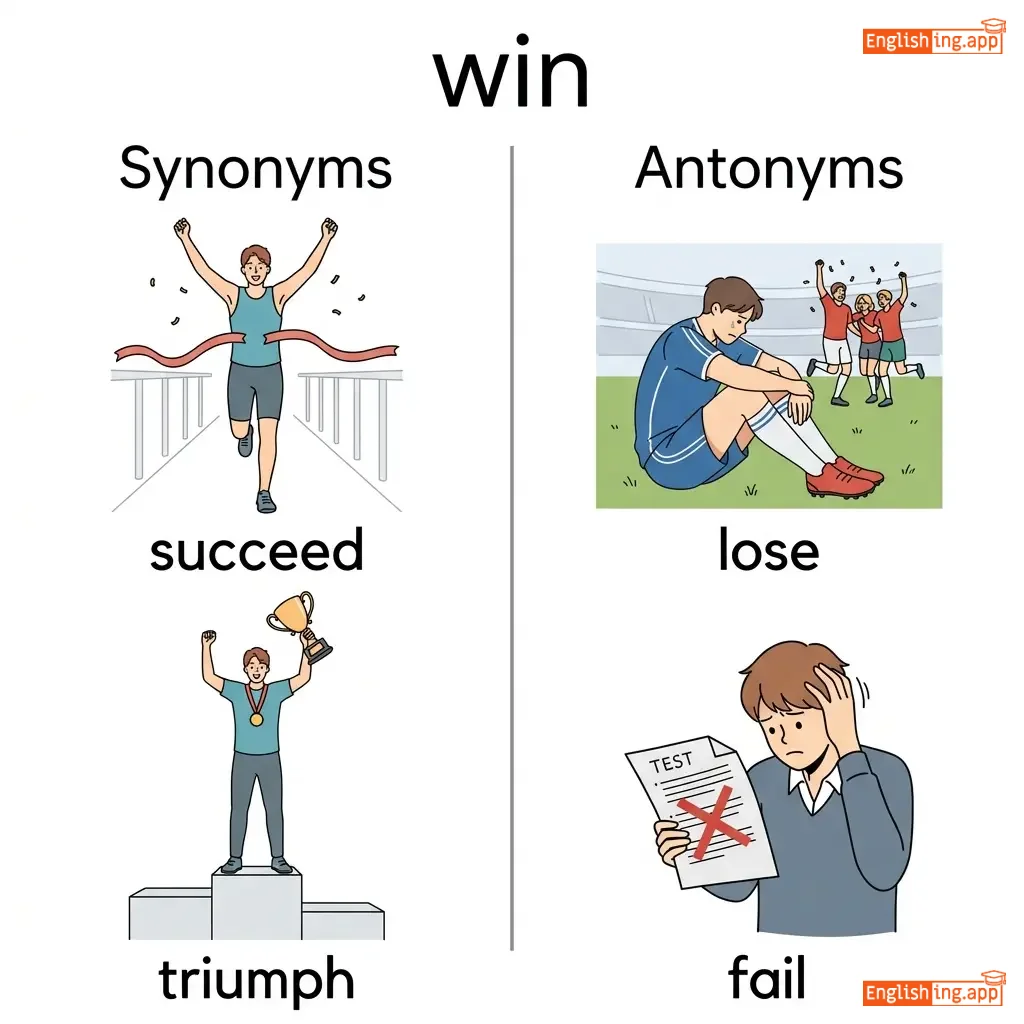
succeed, triumph, prevail, conquer
条目 1
succeed, triumph, prevail, conquer
条目 2
triumph, succeed, conquer, prevail

反义词

lose, fail, surrender, forfeit
条目 1
lose, fail, surrender
条目 2
lose, fail, forfeit, surrender

搭配词

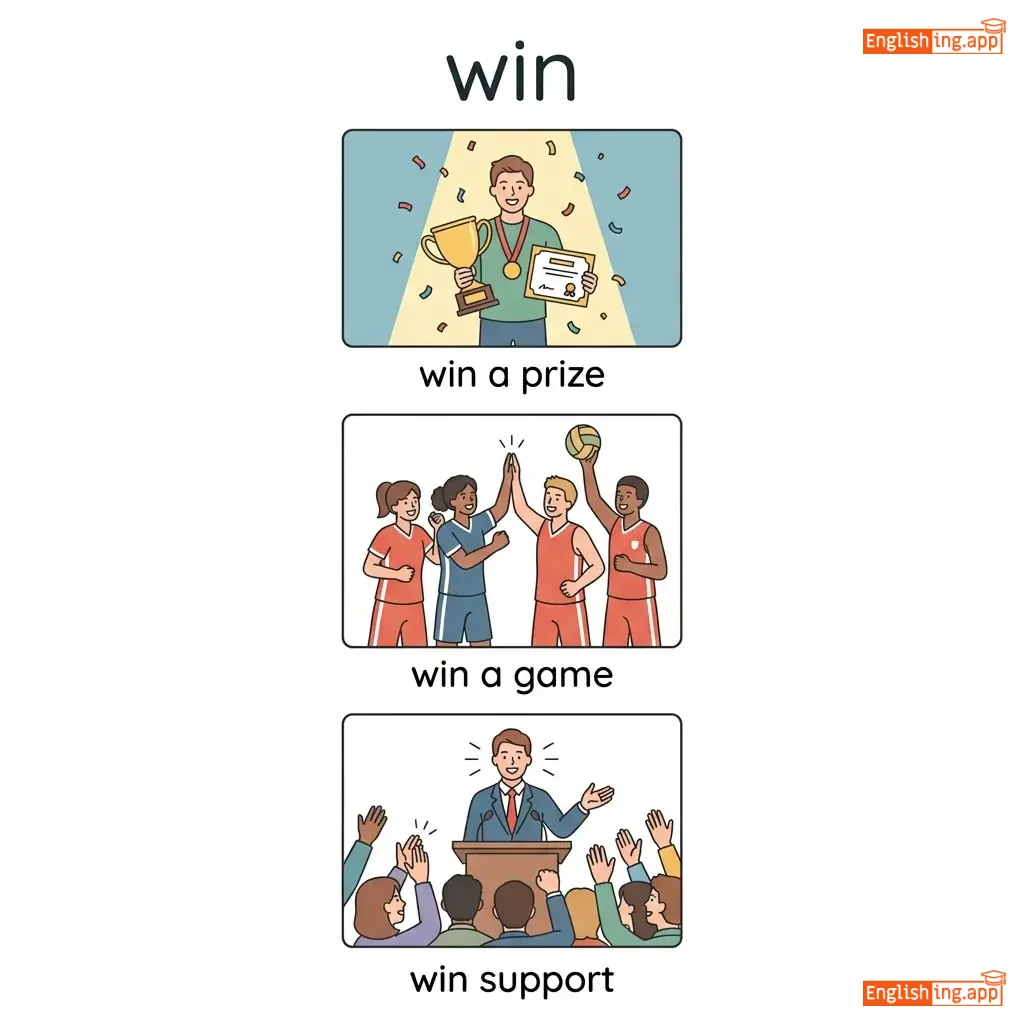
win a prize, win a game, win support, win the championship, win the game, win easily, win big, win over, winning streak
条目 1
win a prize, win a game, win support, win the championship
条目 2
win the game, win easily, win big, win over, winning streak

更多例句

Could I get a window seat?

我可以得到一个窗户座位吗?
Wǒ kěyǐ dédào yīgè chuānghù zuòwèi ma?

It's a windy weather today.

今天刮风。
Jīntiān guā fēng.

I'm looking for a twin room.

我在找一间双人房。
Wǒ zài zhǎo yī jiān shuāng rén fáng.

We like to travel in winter.

我们喜欢在冬天旅行。
Wǒmen xǐhuān zài dōngtiān lǚxíng.

Drawing pictures, he earns money.

画画,他赚取金钱。
Huà huà, tā zhuànqǔ jīnqián.

I could see her through the window.

我可以通过窗户看到她。
Wǒ kěyǐ tōngguò chuānghù kàn dào tā.

Drawing cartoons, she entertains kids.

画卡通,她娱乐孩子们。
Huà kǎtōng, tā yúlè háizimen.

I warn the girl not to open the window.

我警告女孩不要打开窗户。
Wǒ jǐnggào nǚhái bùyào dǎkāi chuānghù.

Will the USA cricket team be able to win the world cup?

美国板球队能赢得世界杯吗?
Měiguó bǎnqiú duì néng yíngdé shìjiè bēi ma?

I have a proposal which I hope can make it a win-win for everyone.

我有一个提议,我希望它能为每个人创造一个双赢的局面。
Wǒ yǒu yīgè tíyì, wǒ xīwàng tā néng wèi měi gèrén chuàngzào yīgè shuāngyíng de júmiàn.

相关词汇

to break or fail to comply with a rule, law, or agreement
to give money, goods, or time to help a person or organization
To make sure or demonstrate that something is true, accurate, or justified.
to think that something is true; to have faith in
To jump over something; to omit or disregard something.
to retire someone with a pension, usually due to age or long service

探索更多