


Swipe left or right, or use the buttons. Tap image to zoom.
例句翻译
单词
Lesson 115Lesson 115 - 遮罩切换
|
表情符号
|
单词 | Images | 翻译 | 过去时 | 过去分词 | 第三人称单数 | 动名词 | 含义 | 例句 | 例句翻译 | 示例表达 | 示例表达含义 | 示例表达翻译 | 同义词 | 反义词 | 搭配词 | 助记符 |
|---|---|---|---|---|---|---|---|---|---|---|---|---|---|---|---|---|---|
|
#5475
🌀
|
/wɪrd/
adjective
(wird)
••••••
|
- •••••• |
奇怪
qiguai
••••••
|
- •••••• | - •••••• | - •••••• | - •••••• |
suggesting something supernatural or very strange; unusual
••••••
|
The movie had a weird ending that nobody expected. |
电影有一个奇怪的结局,没有人预料到。
Dianying you yige qiguai de jieju, meiyou ren yuliao dao.
••••••
|
weird out |
to make someone feel uncomfortable or strange
••••••
|
让某人不安
rang mou ren buan
••••••
|
strange, odd, bizarre, unusual, peculiar
••••••
|
normal, ordinary, usual
••••••
|
weird feeling, weird dream, weird noise, weird behavior
••••••
|
Weird 意味着奇怪,像电影中奇怪的结局。
••••••
|
|
#5476
👋
|
/ˈwelkəm/
verb
(欢迎)
••••••
|
|
欢迎
huānyíng
••••••
|
welcomed
欢迎了
••••••
|
welcomed
欢迎了
••••••
|
welcomes
欢迎
••••••
|
welcoming
欢迎中
••••••
|
to greet someone in a friendly way; to receive gladly
••••••
|
They welcome new students warmly.
他们热烈欢迎新生。
••••••
|
他们热烈欢迎新生。
Tāmen rèliè huānyíng xīnshēng.
••••••
|
- •••••• | - •••••• | - •••••• |
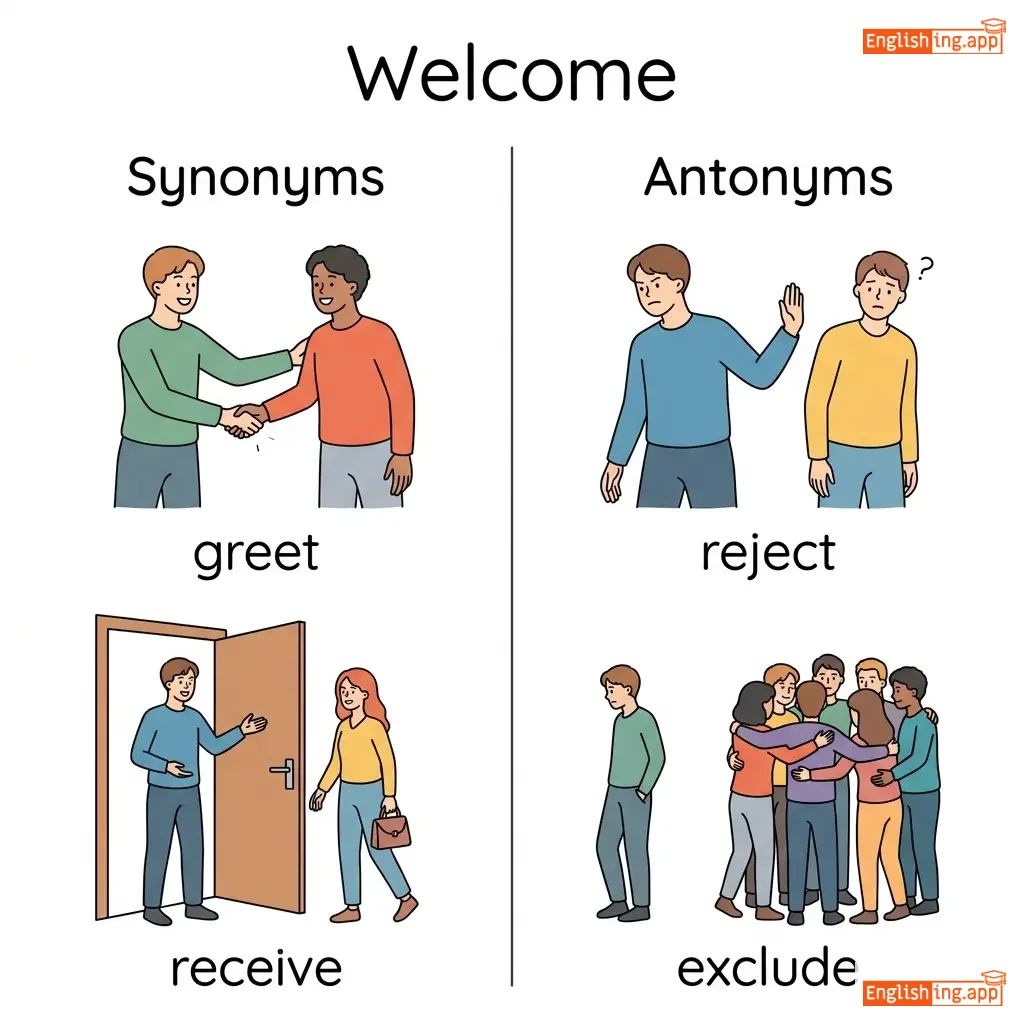
greet, receive, embrace, admit
••••••
|
reject, shun, dismiss, exclude
••••••
|
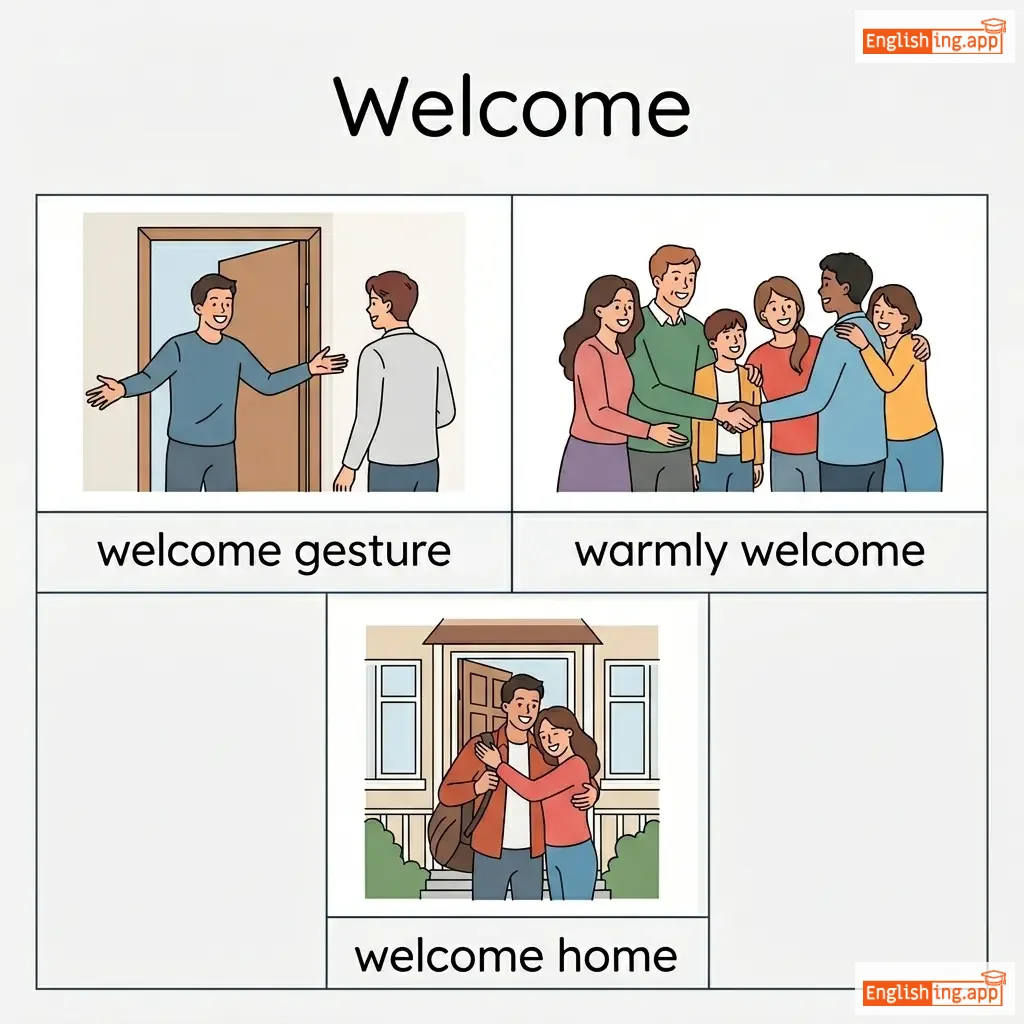
warmly welcome, welcome guests, welcome changes, welcome opportunity, welcome visitors
••••••
|
欢迎是敞开胸怀接纳新朋友
••••••
|
|
#5477
🤝
|
/ˈwel.feər/
noun
(welfare)
••••••
|
- •••••• |
福利; 健康; 幸福
fuli; jiankang; xingfu
••••••
|
- •••••• | - •••••• | - •••••• | - •••••• |
the health, happiness, and fortunes of a person or group; care and support
••••••
|
The government is responsible for the welfare of its citizens. |
政府负责公民的福利。
Zhengfu fuze gongmin de fuli.
••••••
|
- •••••• | - •••••• | - •••••• |
well-being, benefit, good, prosperity
••••••
|
harm, disadvantage, detriment
••••••
|
social welfare, welfare state, welfare system
••••••
|
福利 = 福利 (fù lì) 是福,意味着给人帮助
••••••
|
|
#5478
🕳️
|
/wel/
noun
(wēiěr)
••••••
|
- •••••• |
井; 福利;
jing; fuli
••••••
|
- •••••• | - •••••• | - •••••• | - •••••• |
a deep hole in the ground from which water is obtained
••••••
|
The villagers get water from the old well in the center of town.
村民们从村中心的老水井取水。
••••••
|
村民们从村中心的老水井取水。
Cūnmínmen cóng cūn zhōngxīn de lǎo shuǐjǐng qǔ shuǐ.
••••••
|
- •••••• | - •••••• | - •••••• |
water hole, spring, bore
••••••
|
hill, mound, elevation
••••••
|
water well, oil well, deep well
••••••
|
井提供水源,确保村民们的福利。
••••••
|
|
#5479
😊
|
/ˈwel.biː.ɪŋ/
noun
(wɛlˈbiɪŋ)
••••••
|
|
福祉
fú zhǐ
••••••
|
- •••••• | - •••••• | - •••••• | - •••••• |
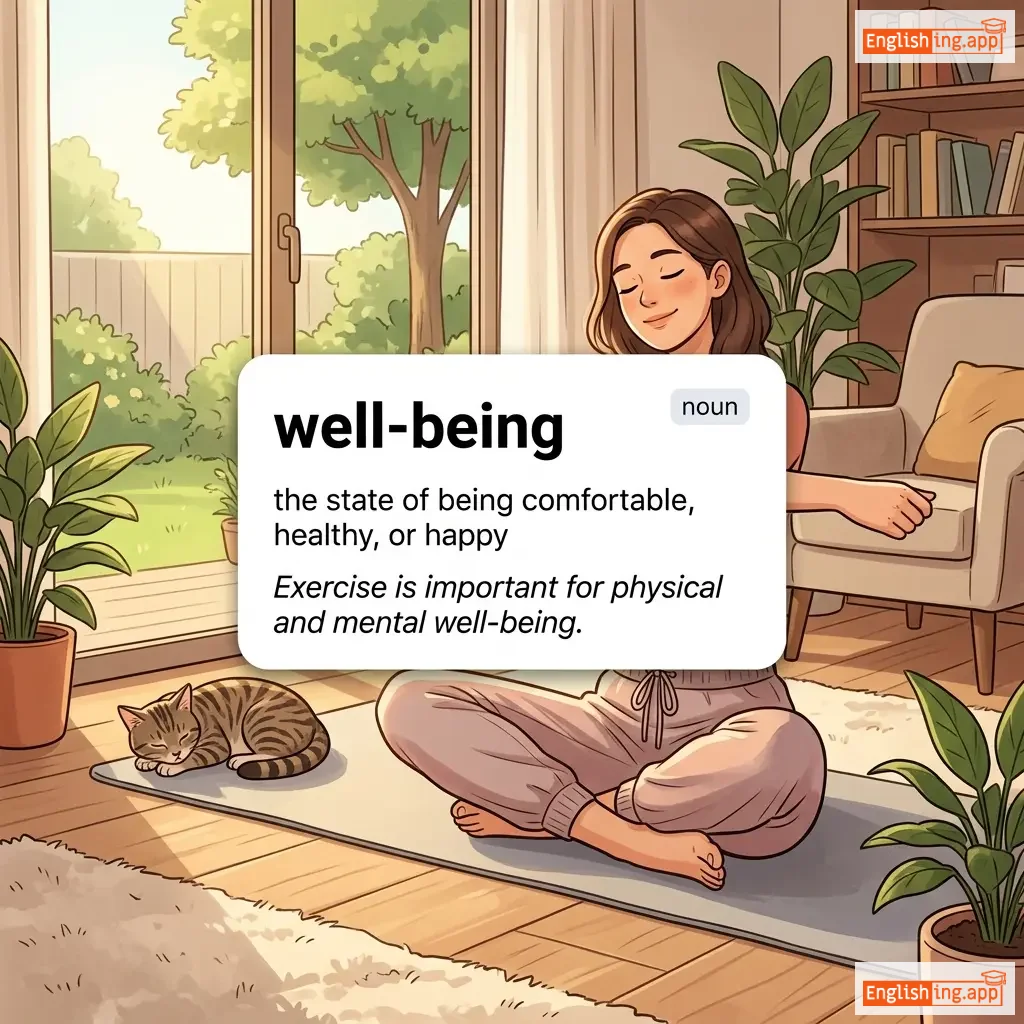
the state of being comfortable, healthy, or happy
••••••
|
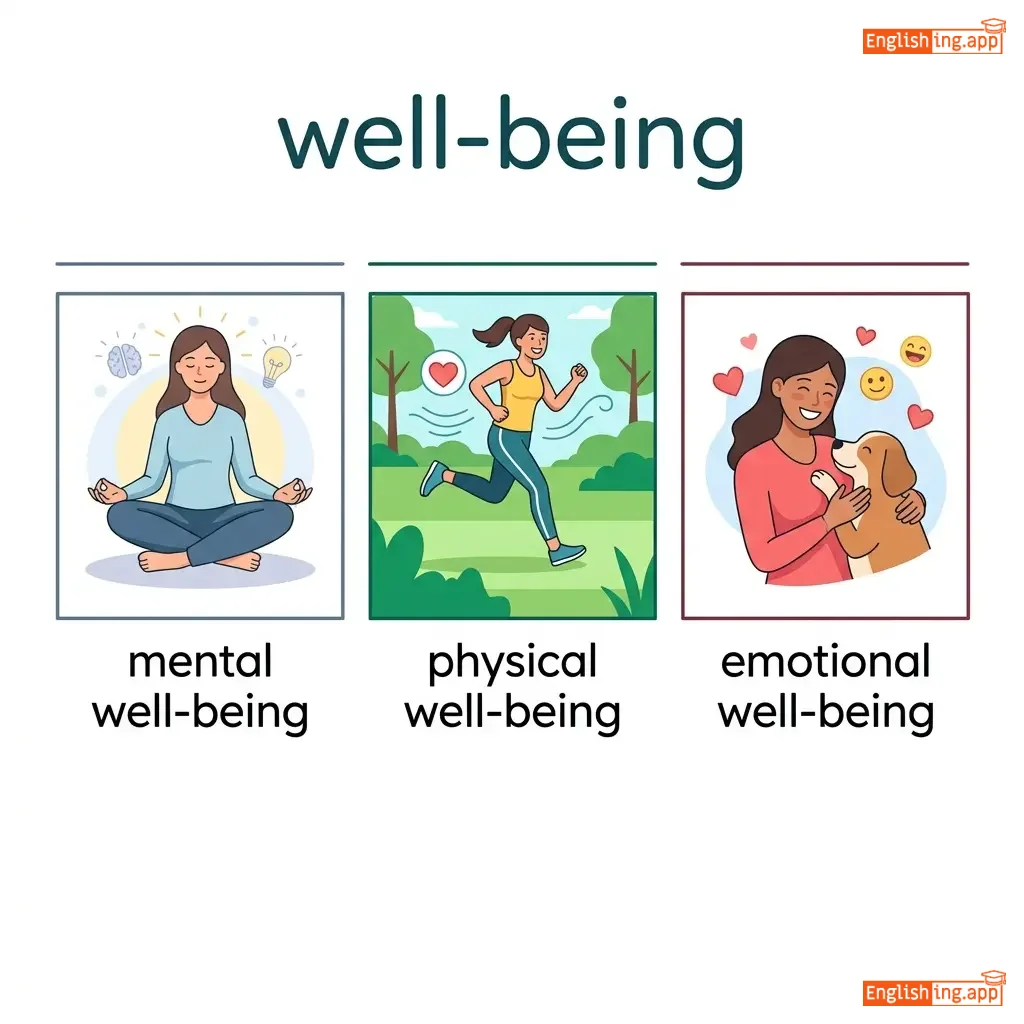
Regular exercise contributes to physical and mental well-being. |
定期锻炼有助于身体和心理的福祉。
Dìngqī duànliàn yǒuzhù yú shēntǐ hé xīnlǐ de fú zhǐ.
••••••
|
- •••••• | - •••••• | - •••••• |
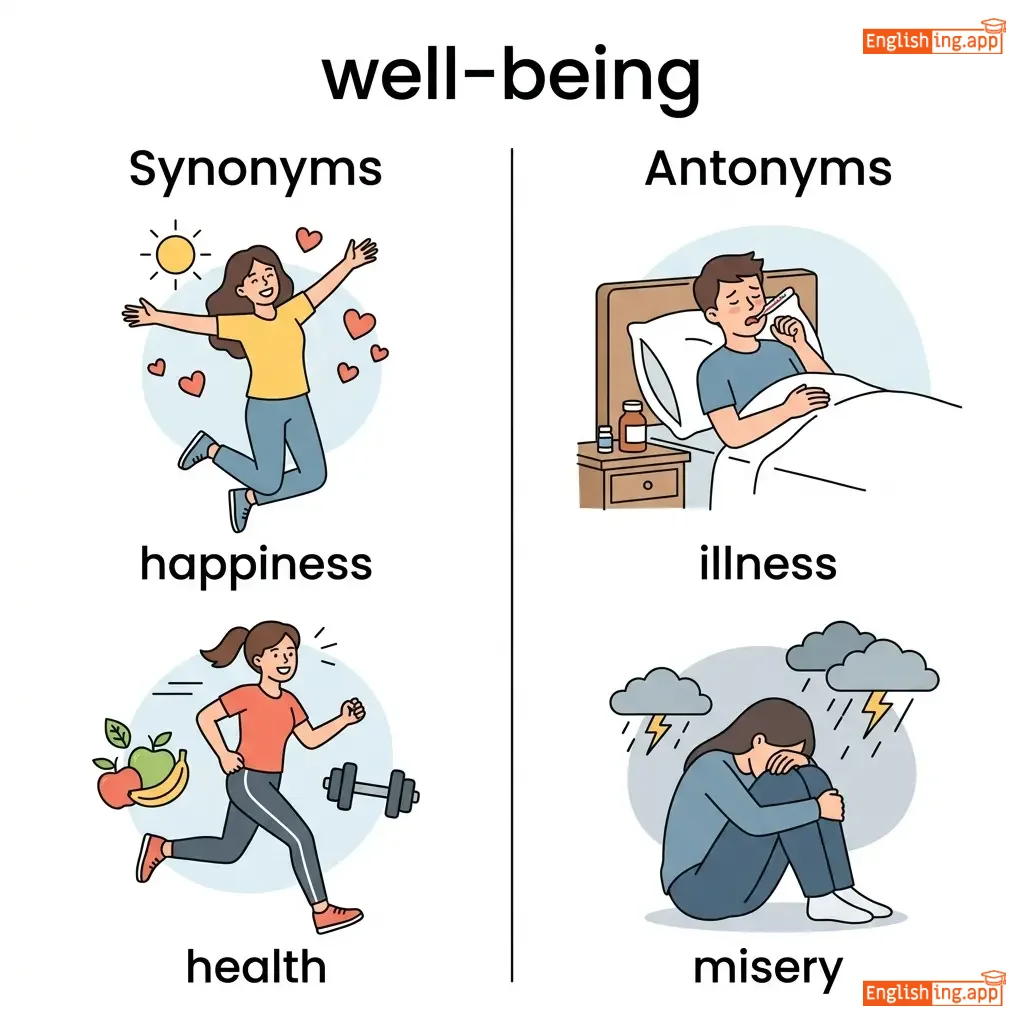
welfare, health, happiness, comfort
••••••
|
suffering, distress, misery
••••••
|
physical well-being, mental well-being, emotional well-being
••••••
|
福祉 (fú zhǐ) in Chinese is like 'well-being,' where '福' means happiness and '祉' means well-being.
••••••
|
|
#5480
🌟
|
/ˌwelˈnoʊn/
adjective
(wēi ěr nòng)
••••••
|
- •••••• |
著名
zhuoming
••••••
|
- •••••• | - •••••• | - •••••• | - •••••• |
known by many people; famous or recognized
••••••
|
He is a well-known actor in his country. |
他是他国家的著名演员。
Ta shi ta guo jia de zhu ming yan yuan.
••••••
|
- •••••• | - •••••• | - •••••• |
famous, renowned, popular, prominent, recognized
••••••
|
unknown, obscure, unfamiliar
••••••
|
well-known fact, well-known person, well-known brand, well-known story
••••••
|
Well-known 意味着 '著名' — 人人都认识他!
••••••
|
|
#5481
🌅
|
/wɛst/
noun
(wɛst)
••••••
|
- •••••• |
西
xi
••••••
|
- •••••• | - •••••• | - •••••• | - •••••• |
the direction to the left of the north and to the right of the south, typically associated with the sunset
••••••
|
The sun sets in the west. |
太阳在西方落下。
Taiyang zai xifang luo xia.
••••••
|
- •••••• | - •••••• | - •••••• |
sunset, occident
••••••
|
east, orient
••••••
|
west coast, west side, go west, western civilization
••••••
|
太阳在西方落下 - The sun sets in the west.
••••••
|
|
#5482
🌎
|
/ˈwɛstərn/
adjective
(wèisītèrn)
••••••
|
- •••••• |
西方的
xīfāng de
••••••
|
- •••••• | - •••••• | - •••••• | - •••••• |
relating to or characteristic of the West, especially Europe and the Americas
••••••
|
She loves western music and culture. |
她喜欢西方的音乐和文化。
Tā xǐhuān xīfāng de yīnyuè hé wénhuà.
••••••
|
- •••••• | - •••••• | - •••••• |
occidental, westernized
••••••
|
eastern, oriental
••••••
|
western culture, western philosophy, western world
••••••
|
西方文化来自西方 - Western culture comes from the West.
••••••
|
|
#5483
💧
|
/wet/
adjective
(wèt)
••••••
|
- •••••• |
湿的; 浸湿的;
shī de; jìn shī de;
••••••
|
- •••••• | - •••••• | - •••••• | - •••••• |
covered or saturated with water or another liquid; not dry
••••••
|
My clothes are still wet from the rain.
我的衣服还因为下雨而湿了。
••••••
|
我的衣服还因为下雨而湿了。
wǒ de yīfu hái yīnwèi xiàyǔ ér shī le.
••••••
|
- •••••• | - •••••• | - •••••• |
damp, moist, soaked, drenched
••••••
|
dry, arid, parched, dehydrated
••••••
|
wet clothes, wet weather, get wet
••••••
|
下雨的时候,一切都湿了。
••••••
|
|
#5484
❓
|
/wɒt/
pronoun
(wòt)
••••••
|
- •••••• |
什么
shenme
••••••
|
- •••••• | - •••••• | - •••••• | - •••••• |
used to ask for information about something
••••••
|
What is your name? |
你叫什么名字?
Nǐ jiào shénme míngzì?
••••••
|
- •••••• | - •••••• | - •••••• |
which, that
••••••
|
- •••••• |
what time, what happened, what are you doing
••••••
|
什么 (shenme) 用于提问 - 'What' 用于问问题。
••••••
|
|
#5485
🤷♂️
|
/wɒtˈɛvər/
pronoun
(watever)
••••••
|
- •••••• |
任何事情
renhe shiqing
••••••
|
- •••••• | - •••••• | - •••••• | - •••••• |
used to refer to anything or everything that is of the type mentioned
••••••
|
You can choose whatever you like. |
你可以选择任何你想要的。
Ni keyi xuanze renhe ni xiangyao de.
••••••
|
- •••••• | - •••••• | - •••••• |
anything, everything
••••••
|
- •••••• |
whatever you want, whatever happens
••••••
|
任何事情 (renhe shiqing) 你想要的 - Whatever you want, you can have.
••••••
|
|
#5486
🌾
|
/wiːt/
noun
(wheat)
••••••
|
- •••••• |
小麦
xiaomai
••••••
|
- •••••• | - •••••• | - •••••• | - •••••• |
a cereal plant whose grain is used to make flour for bread and other foods
••••••
|
Farmers harvested the wheat in early summer. |
农民在夏季初收割了小麦。
nongmin zai xiaji chu shouge le xiaomai.
••••••
|
separate the wheat from the chaff |
to separate valuable things or people from those that are not
••••••
|
把麦子和糠分开
ba maizi he kang fen kai
••••••
|
grain, cereal, barley, oat, corn
••••••
|
chaff, waste
••••••
|
wheat flour, wheat bread, wheat field, wheat grain, wheat harvest
••••••
|
Wheat意味着小麦 🌾 — 小麦用来做面包,所以想想食物。
••••••
|
|
#5487
🚗
|
/wiːl/
noun
(wíl)
••••••
|
- •••••• |
轮子
lúnzi
••••••
|
- •••••• | - •••••• | - •••••• | - •••••• |
a circular object that revolves on an axle and is used to move or carry things
••••••
|
The wheel of the car broke down on the way. |
汽车的轮子在路上坏了。
Qìchē de lúnzi zài lù shàng huàile.
••••••
|
- •••••• | - •••••• | - •••••• |
disk, circle, rotor, rim
••••••
|
none
••••••
|
steering wheel, bicycle wheel, car wheel, turn the wheel
••••••
|
轮子转动,带动汽车前行 (Lúnzi zhuǎndòng, dàidòng qìchē qiánxíng)
••••••
|
|
#5488
⏰
|
/wɛn/
adverb
(wén)
••••••
|
- •••••• |
什么时候
shénme shíhòu
••••••
|
- •••••• | - •••••• | - •••••• | - •••••• |
at what time
••••••
|
Do you know when the train leaves? |
你知道火车什么时候开吗?
Nǐ zhīdào huǒchē shénme shíhòu kāi ma?
••••••
|
- •••••• | - •••••• | - •••••• |
at what time, whenever
••••••
|
never, always
••••••
|
when will, when did, when does, when do
••••••
|
‘什么时候’就是‘什么时侯’
••••••
|
|
#5489
🕐
|
/wenˈevər/
adverb
(温艾弗)
••••••
|
- •••••• |
无论何时
wu lun he shi
••••••
|
- •••••• | - •••••• | - •••••• | - •••••• |
at any time that; every time that; no matter when
••••••
|
Call me whenever you need help.
只要你需要帮助,就给我打电话。
••••••
|
只要你需要帮助,就给我打电话。
zhi yao ni xu yao bang zhu jiu gei wo da dian hua
••••••
|
- •••••• | - •••••• | - •••••• |
anytime, every time, no matter when
••••••
|
never, at no time
••••••
|
whenever possible, whenever necessary, whenever you want
••••••
|
WenEver 记忆法: wen ever = 无论何时, when you need help call me
••••••
|
|
#5490
📍
|
/weər/
adverb
(威尔)
••••••
|
- •••••• |
哪里
weier
••••••
|
- •••••• | - •••••• | - •••••• | - •••••• |
In or to what place or position; used to inquire about location
••••••
|
Where did you put my keys?
你把我的钥匙放在哪里?
••••••
|
你把我的钥匙放在哪里?
nibawowodeyaoshifangzainali
••••••
|
- •••••• | - •••••• | - •••••• |
whereabouts, whither
••••••
|
here, there
••••••
|
where are you, where to go, where from
••••••
|
Where = WeiEr, 哪里 = nali; 想象一个地图指向 WeiEr 在 nali 找钥匙
••••••
|
|
#5491
⚖️
|
/wɛərˈæz/
conjunction
(wɛɛrz)
••••••
|
- •••••• |
然而
rán'ér
••••••
|
- •••••• | - •••••• | - •••••• | - •••••• |
used to introduce a contrast or comparison between two facts
••••••
|
She prefers tea, whereas he likes coffee. |
她喜欢喝茶,而他喜欢喝咖啡。
Tā xǐhuān hē chá, ér tā xǐhuān hē kāfēi.
••••••
|
- •••••• | - •••••• | - •••••• |
while, although, but, though
••••••
|
similarly, likewise
••••••
|
whereas clause, whereas statement, tea whereas coffee
••••••
|
Tea vs coffee 对比 - 中文然而
••••••
|
|
#5492
🔗
|
/wɛərˈbaɪ/
adverb
(wèrbái)
••••••
|
- •••••• |
通过
tongguo
••••••
|
- •••••• | - •••••• | - •••••• | - •••••• |
by which; because of which
••••••
|
The company agreed to a contract whereby it would pay the penalty. |
公司同意了一份合同,通过它将支付罚款。
Gongsi tongyi le yifen hetong, tongguo ta jiang zhifu faqian.
••••••
|
- •••••• | - •••••• | - •••••• |
through which, by means of which, in which
••••••
|
- •••••• |
whereby agreement, whereby clause
••••••
|
Whereby sounds like 'wèrbái', which can be remembered as '通过' meaning by which.
••••••
|
|
#5493
🤔
|
/ˈwɛðər/
conjunction
(wéither)
••••••
|
- •••••• |
是否
shìfǒu
••••••
|
- •••••• | - •••••• | - •••••• | - •••••• |
used to express a doubt or choice between alternatives
••••••
|
I don’t know whether I should go.
我不知道我是否应该去。
••••••
|
我不知道我是否应该去。
Wǒ bù zhīdào wǒ shìfǒu yīnggāi qù.
••••••
|
- •••••• | - •••••• | - •••••• |
if, either
••••••
|
none
••••••
|
whether or not, whether to go, whether he will
••••••
|
是否 (shìfǒu) 问你是否做出决定
••••••
|
|
#5494
❓
|
/wɪtʃ/
pronoun
(wɪtʃ)
••••••
|
- •••••• |
哪个
nǎ ge
••••••
|
- •••••• | - •••••• | - •••••• | - •••••• |
used to ask about one or more items from a defined set
••••••
|
Which one do you prefer, the red or the blue? |
你更喜欢哪个,红色还是蓝色?
Nǐ gèng xǐ huān nǎ ge, hóng sè hái shì lán sè?
••••••
|
- •••••• | - •••••• | - •••••• |
what, that, who
••••••
|
none
••••••
|
which one, which way, which time
••••••
|
Which in Chinese is 'nǎ ge', it helps you choose!
••••••
|
|
#5495
⏳
|
/waɪl/
conjunction
(wail)
••••••
|
- •••••• |
当...的时候
dāng ... de shíhòu
••••••
|
- •••••• | - •••••• | - •••••• | - •••••• |
during the time that something is happening
••••••
|
She was reading while waiting for the bus.
她在等公交车时正在读书。
••••••
|
她在等公交车时正在读书。
Tā zài děng gōngjiāo chē shí zhèngzài dúshū.
••••••
|
- •••••• | - •••••• | - •••••• |
as, when, during
••••••
|
none
••••••
|
while waiting, while studying, while traveling
••••••
|
当你等候时,记住中文的 '当...的时候'!
••••••
|
|
#5496
🥄
|
/wɪp/
verb
(wɪp)
••••••
|
- •••••• |
鞭打
biāndǎ
••••••
|
whipped
wɪpt
••••••
|
whipped
wɪpt
••••••
|
whips
wɪps
••••••
|
whipping
wɪpɪŋ
••••••
|
to strike or beat with a flexible instrument such as a rope or cord
••••••
|
The trainer whipped the horse to make it run faster.
教练用鞭子抽打马匹,使其跑得更快。
••••••
|
教练用鞭子抽打马匹,使其跑得更快。
Jiàoliàn yòng biāndǎ chōudǎ mǎpǐ, shǐ qí pǎo dé gèng kuài.
••••••
|
whip up
whip up
••••••
|
to quickly prepare or create something
••••••
|
快速准备
kuàisù zhǔnbèi
••••••
|
lash, beat, strike, thrash, flog
••••••
|
caress, soothe
••••••
|
whip cream, whip the horse, whip up enthusiasm, political whip
••••••
|
Whip 是鞭打 — 用 Whip 让马跑得更快!
••••••
|
|
#5497
🤫
|
/ˈwɪspər/
verb
(wīsīpè)
••••••
|
|
低声说
dīshēng shuō
••••••
|
whispered
wīsīpèd
••••••
|
whispered
wīsīpèd
••••••
|
whispers
wīsīpèrs
••••••
|
whispering
wīsīpèrīng
••••••
|
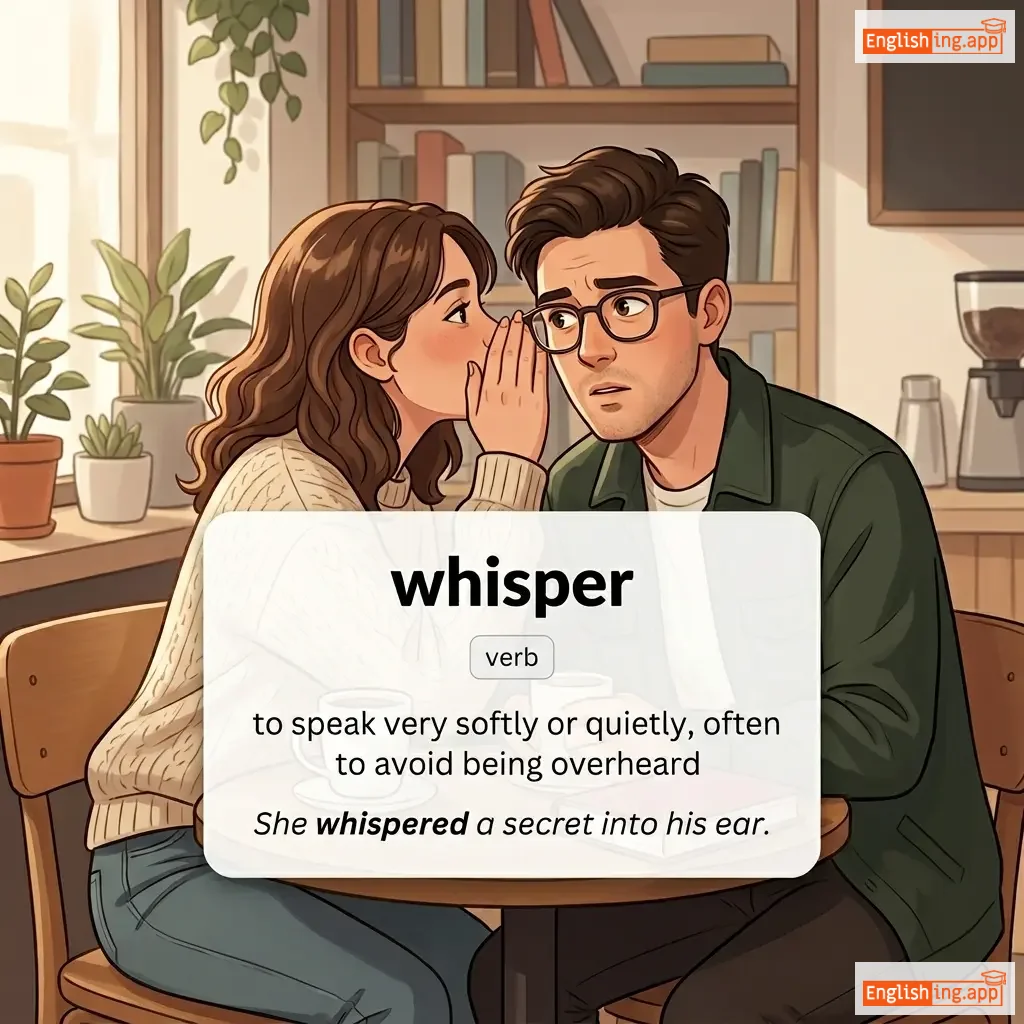
to speak very softly using one's breath without vocal cords
••••••
|
She whispered a secret in my ear.
她在我耳边低声说了一个秘密。
••••••
|
她在我耳边低声说了一个秘密。
Tā zài wǒ ěrbiān dīshēng shuōle yīgè mìmì.
••••••
|
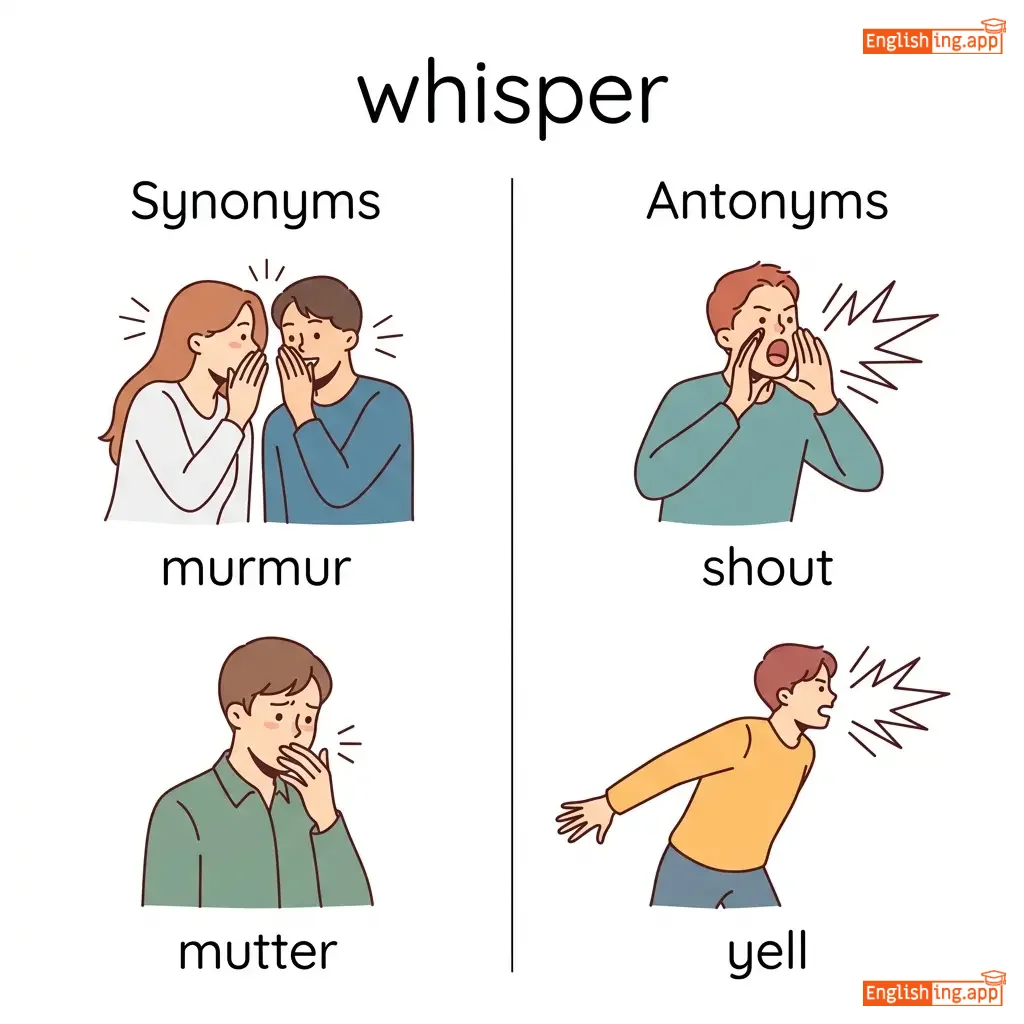
- •••••• | - •••••• | - •••••• |
murmur, mumble, breathe, hiss
••••••
|
shout, yell, scream, roar
••••••
|
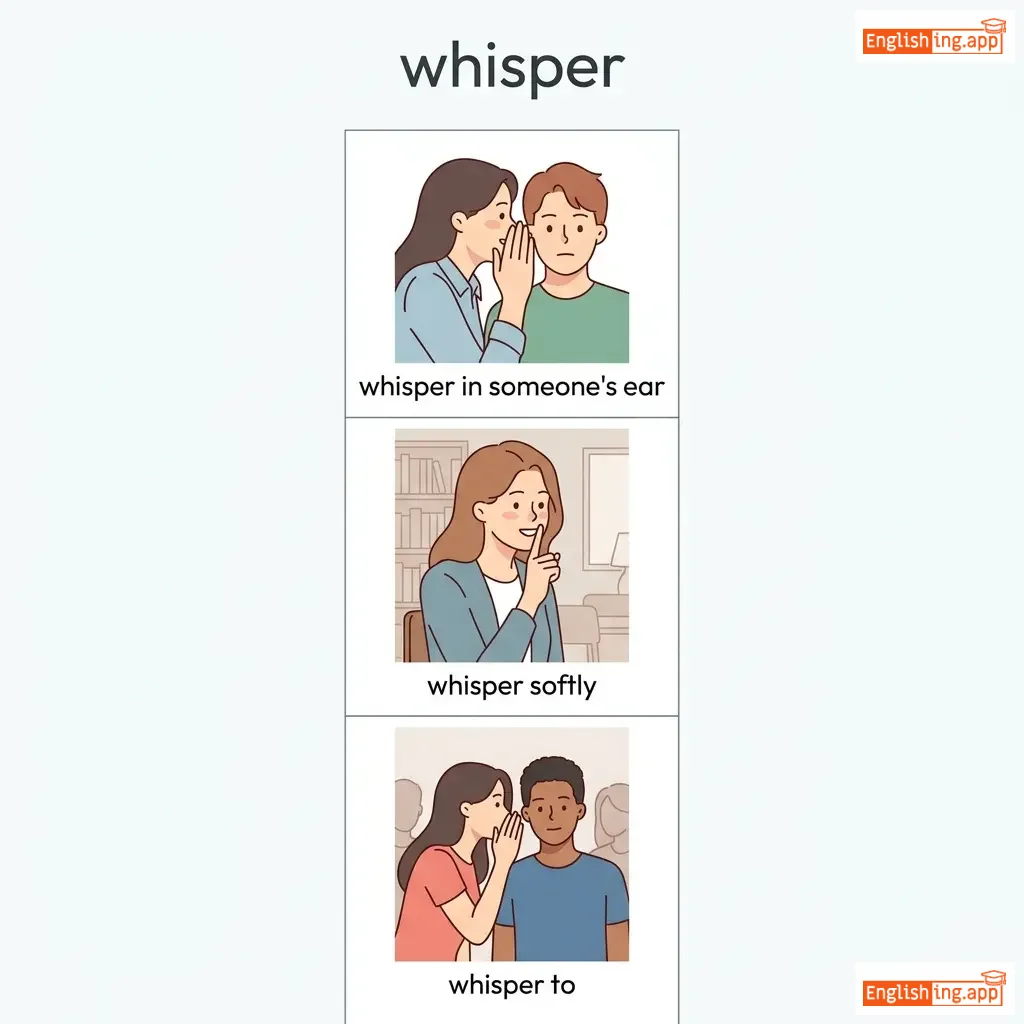
whisper secrets, whisper softly, whisper words, whisper quietly, whisper sweet, whisper prayers
••••••
|
中文 '低声说' 是 'whisper' 的意思。
••••••
|
|
#5498
🎵
|
/ˈwɪsəl/
verb
(威斯尔)
••••••
|
|
吹口哨
chuī kǒushào
••••••
|
whistled
威斯尔德
••••••
|
whistled
威斯尔德
••••••
|
whistles
威斯尔斯
••••••
|
whistling
威斯林
••••••
|
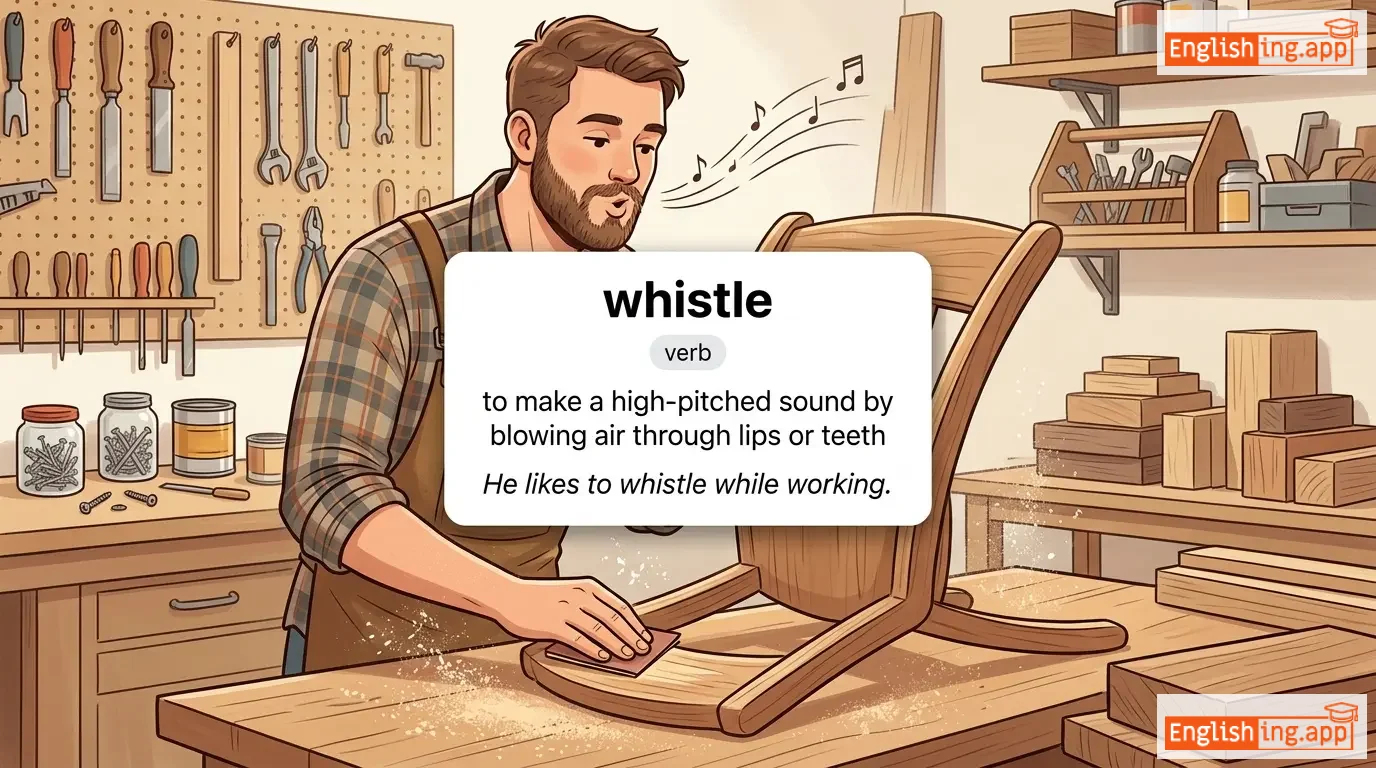
to make a high-pitched sound by blowing air through lips or teeth
••••••
|
He likes to whistle while working.
他喜欢在工作时吹口哨。
••••••
|
他喜欢在工作时吹口哨。
Tā xǐhuān zài gōngzuò shí chuī kǒushào.
••••••
|
- •••••• | - •••••• | - •••••• |
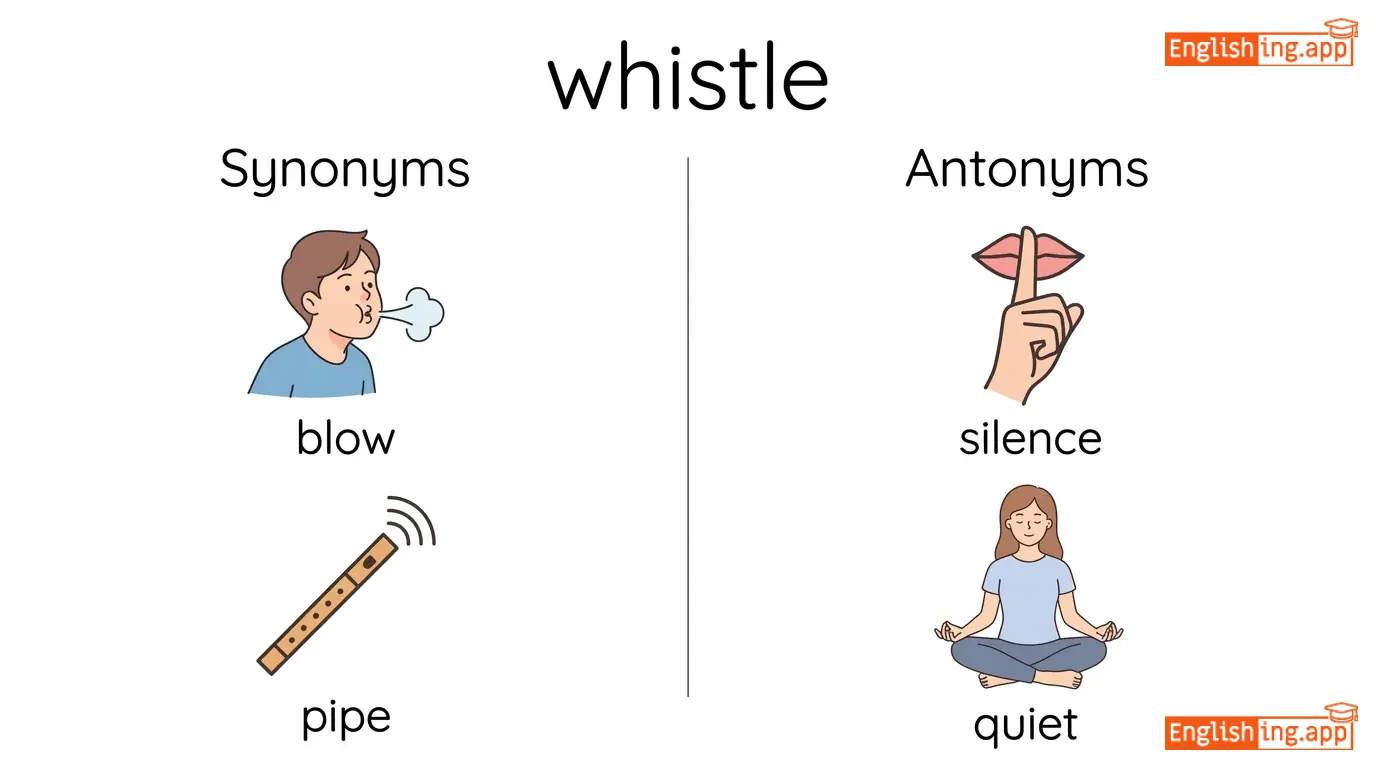
blow, pipe, toot, sound
••••••
|
silence, quiet, mute
••••••
|
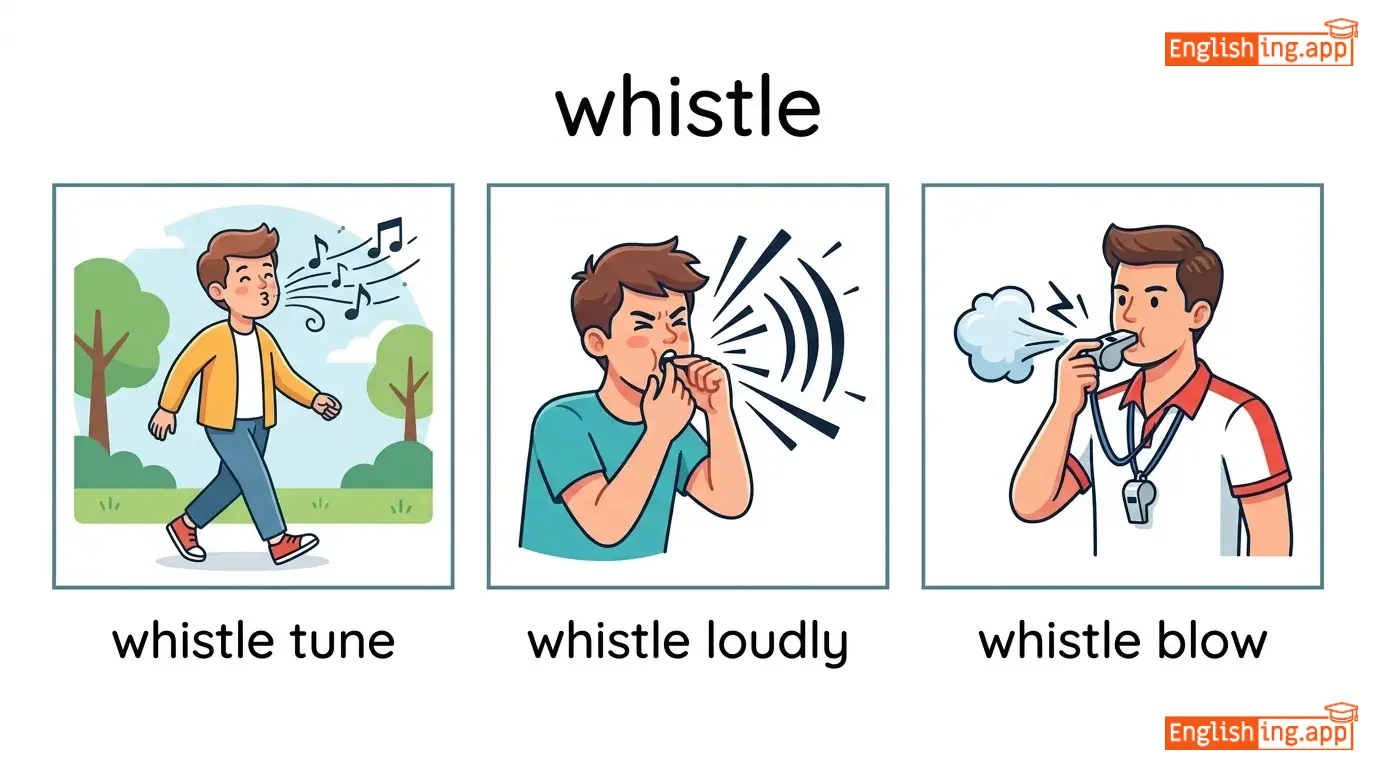
whistle tune, whistle loudly, whistle blow, train whistle
••••••
|
吹口哨 - 吹出高音像在演奏口哨一样。
••••••
|
|
#5499
⚪
|
/waɪt/
adjective
(wài tè)
••••••
|
- •••••• |
白色; 纯净
bái sè; chún jìng
••••••
|
- •••••• | - •••••• | - •••••• | - •••••• |
of the color of snow or milk; pale; pure
••••••
|
She wore a beautiful white dress to the wedding.
她穿着一件美丽的白色婚纱参加婚礼。
••••••
|
她穿着一件美丽的白色婚纱参加婚礼。
Tā chuānzhuó yī jiàn měilì de báisè hūnshā cānjiā hūnlǐ.
••••••
|
- •••••• | - •••••• | - •••••• |
pale, colorless, snow-white, ivory
••••••
|
black, dark, colored
••••••
|
white paper, white shirt, white house
••••••
|
In Chinese, '白色' means 'white', just like milk!
••••••
|
|
#5500
🤔
|
/huː/
pronoun
(谁)
••••••
|
- •••••• |
谁
shui
••••••
|
- •••••• | - •••••• | - •••••• | - •••••• |
used to ask about a person or people
••••••
|
Who is coming to the party tonight? |
今晚谁来参加派对?
Jīnwǎn shuí lái cānjiā pàiduì?
••••••
|
- •••••• | - •••••• | - •••••• |
whoever, which person
••••••
|
none
••••••
|
who is, who are, who knows
••••••
|
To ask 'who' in Chinese, just say '谁'!
••••••
|
|
#5501
🙋♂️
|
/huːˈɛvər/
pronoun
(húːˈɛvər)
••••••
|
- •••••• |
无论谁
wúlùn shuí
••••••
|
- •••••• | - •••••• | - •••••• | - •••••• |
any person who; no matter who
••••••
|
Whoever wants to join the trip must register today. |
无论谁想加入旅行,都必须今天注册。
Wúlùn shuí xiǎng jiārù lǚxíng, dōu bìxū jīntiān zhùcè.
••••••
|
- •••••• | - •••••• | - •••••• |
anyone, anybody, whosoever
••••••
|
none, nobody
••••••
|
whoever comes, whoever wants, whoever said, whoever did
••••••
|
Who + ever = 无论谁 — whoever means 任何人
••••••
|
|
#5502
🔵
|
/hoʊl/
adjective
(霍尔)
••••••
|
- •••••• |
整个
zhengge
••••••
|
- •••••• | - •••••• | - •••••• | - •••••• |
complete; entire; all of something
••••••
|
He ate the whole pizza by himself.
希 吃 德 霍尔 匹萨 拜 希姆塞尔夫。
••••••
|
他一个人把整张披萨吃光了。
ta yige ren ba zheng zhang piza chi guang le
••••••
|
- •••••• | - •••••• | - •••••• |
complete, entire, total, full
••••••
|
partial, incomplete, broken, fragmented
••••••
|
whole story, whole family, whole day
••••••
|
整个 (zhengge) = whole — 想像整张披萨 zhengge pizza
••••••
|
|
#5503
💯
|
/ˈhoʊli/
adverb
(huó lì)
••••••
|
- •••••• |
完全; 完全地
wánquán; wánquán de
••••••
|
- •••••• | - •••••• | - •••••• | - •••••• |
Entirely; completely; to the full extent
••••••
|
I am wholly committed to this project. |
我完全致力于这个项目。
wǒ wánquán zhìlì yú zhège xiàngmù.
••••••
|
- •••••• | - •••••• | - •••••• |
completely, entirely, totally, fully
••••••
|
partially, partly, incompletely
••••••
|
wholly owned, wholly responsible, wholly different
••••••
|
完全投入的方式,好像给了一切
••••••
|
|
#5504
👤
|
/huːm/
pronoun
(hūm)
••••••
|
- •••••• |
谁
shei
••••••
|
- •••••• | - •••••• | - •••••• | - •••••• |
used to refer to the person or people that something is done to
••••••
|
The man whom I met yesterday is my friend. |
我昨天遇到的那个人是我的朋友。
Wǒ zuótiān yùdào de nàgè rén shì wǒ de péngyǒu.
••••••
|
- •••••• | - •••••• | - •••••• |
who, that, the person
••••••
|
none
••••••
|
whom I met, whom I saw, to whom it may concern
••••••
|
Whom sounds like 'Shei' - 'Shei' as in the person you met.
••••••
|
|
#5505
📱
|
/huːz/
pronoun
(húz)
••••••
|
- •••••• |
谁的
shéi de
••••••
|
- •••••• | - •••••• | - •••••• | - •••••• |
used to ask or talk about the person or thing that owns something
••••••
|
The girl whose phone was stolen is my cousin. |
那个女孩,手机被偷了,是我的表妹。
Nàgè nǚhái, shǒujī bèi tōu le, shì wǒ de biǎomèi.
••••••
|
- •••••• | - •••••• | - •••••• |
who's, that person’s, of whom
••••••
|
none
••••••
|
whose phone, whose book, whose idea
••••••
|
Whose phone is this? – 'Whose' connects to 'Shéi de diànhuà'.
••••••
|
|
#5506
❓
|
/waɪ/
adverb
(wài)
••••••
|
- •••••• |
为什么
wei shenme
••••••
|
- •••••• | - •••••• | - •••••• | - •••••• |
For what reason or purpose; used to ask about the cause of something
••••••
|
Why are you late today? |
今天你为什么迟到了?
jīntiān nǐ wèishénme chídào le?
••••••
|
- •••••• | - •••••• | - •••••• |
wherefore, how come
••••••
|
because, therefore
••••••
|
why not, that's why, reason why
••••••
|
No •••••• |
|
#5507
↔️
|
/waɪd/
adjective
(wáid)
••••••
|
- •••••• |
宽; 广
kuan; guang
••••••
|
- •••••• | - •••••• | - •••••• | - •••••• |
having a great distance from one side to the other; broad
••••••
|
The river is very wide at this point. |
这条河在这一点非常宽。
Zhe tiao he zai zhe yidian feichang kuan.
••••••
|
- •••••• | - •••••• | - •••••• |
broad, extensive, spacious, vast
••••••
|
narrow, thin, restricted
••••••
|
wide range, wide variety, wide open, wide awake
••••••
|
宽广的河流,宽阔的空间。
••••••
|
|
#5508
🌍
|
/ˈwaɪdli/
adverb
(wáidìlì)
••••••
|
- •••••• |
广泛地
guǎngfàn de
••••••
|
- •••••• | - •••••• | - •••••• | - •••••• |
to a great extent or degree
••••••
|
The news of his promotion spread widely across the company. |
他晋升的消息在公司内广泛传播。
Tā jìnshēng de xiāoxī zài gōngsī nèi guǎngfàn chuánbò.
••••••
|
- •••••• | - •••••• | - •••••• |
extensively, broadly, widely, far
••••••
|
narrowly, limitedly
••••••
|
widely known, widely accepted, widely spread
••••••
|
Wide world 🌍 means a wide spread across everywhere!
••••••
|
|
#5509
↔️
|
/ˈwaɪdən/
verb
(widen)
••••••
|
|
拓宽
tuò kuān
••••••
|
widened
widened
••••••
|
widened
widened
••••••
|
widens
widens
••••••
|
widening
widening
••••••
|
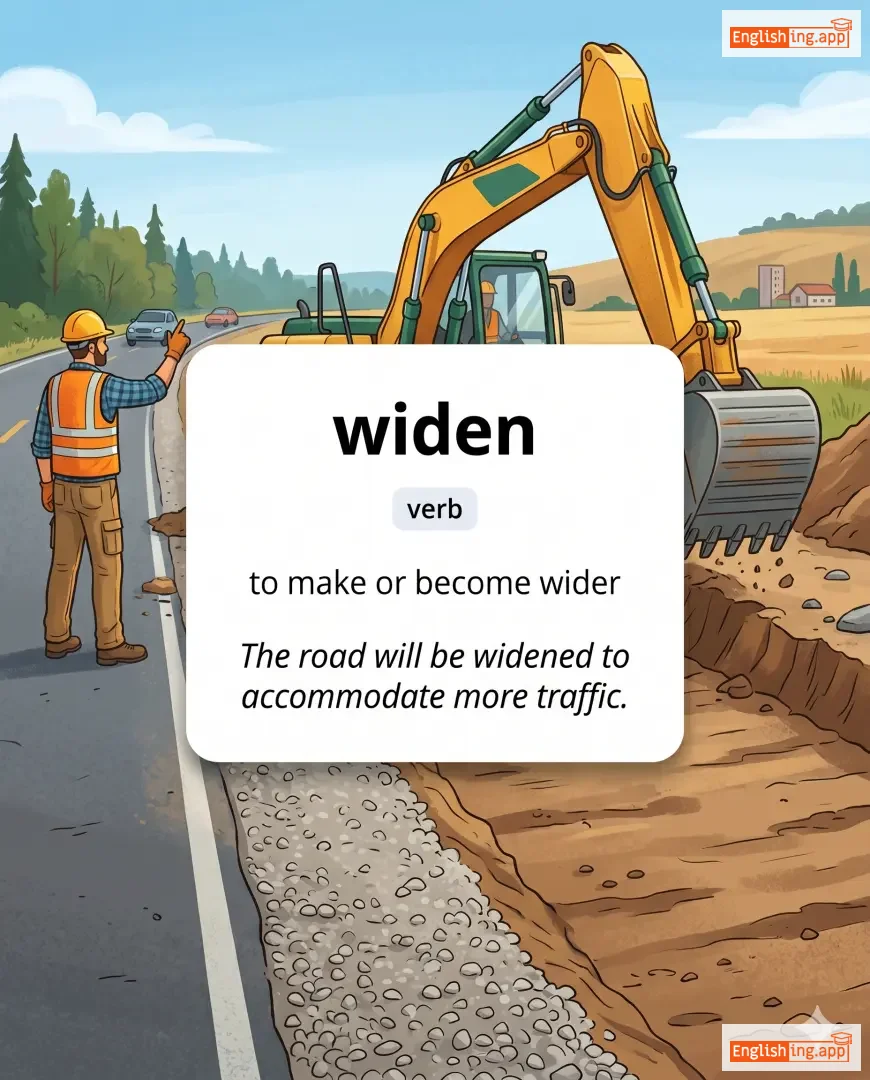
to make or become wider or broader
••••••
|
They plan to widen the road next year.
他们计划在明年拓宽这条路。
••••••
|
他们计划在明年拓宽这条路。
Tāmen jìhuà zài míngnián tuòkuān zhè tiáo lù.
••••••
|
- •••••• | - •••••• | - •••••• |
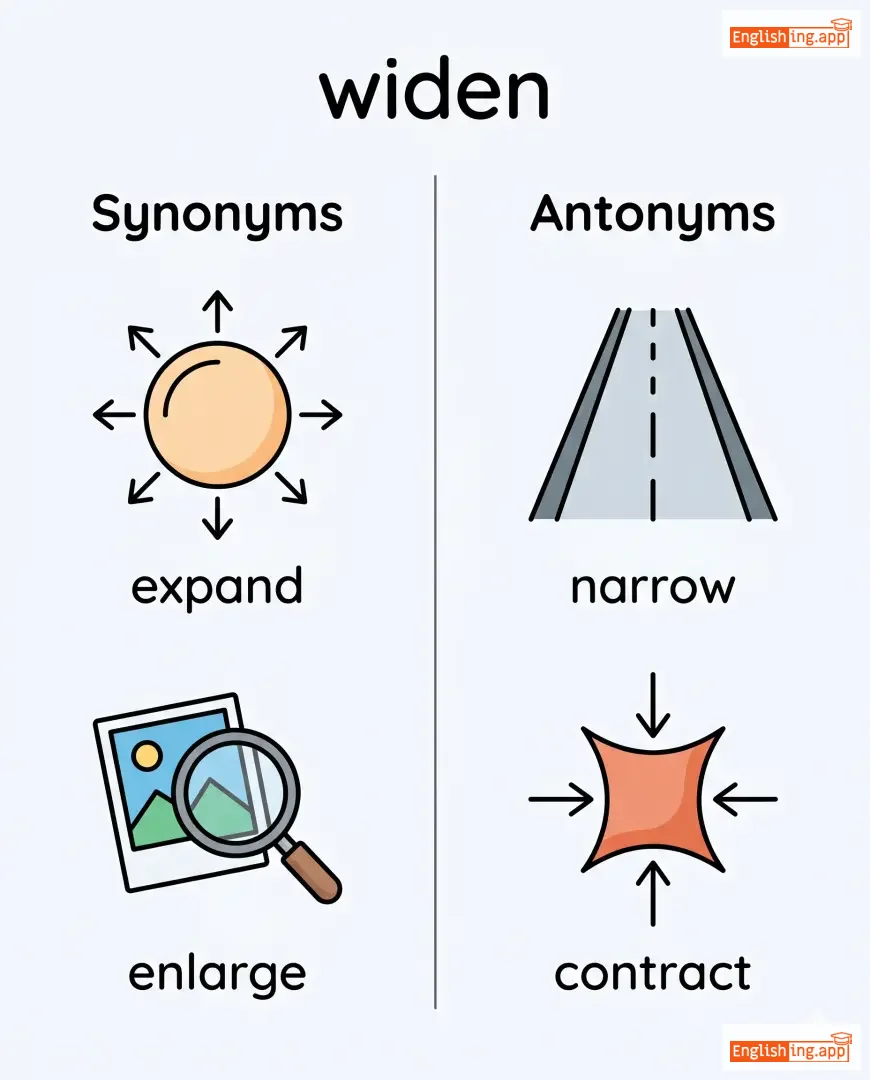
broaden, expand, extend, enlarge
••••••
|
narrow, reduce, contract, shrink
••••••
|
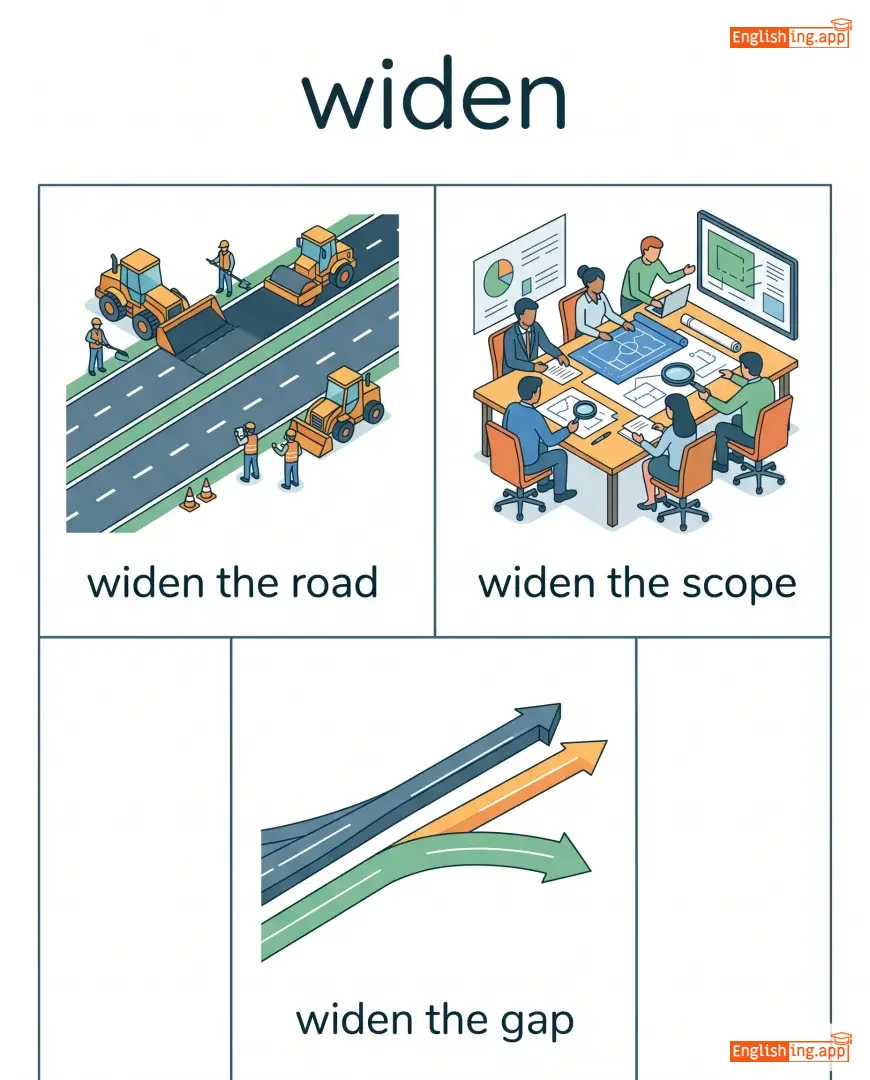
widen road, widen gap, widen range, gradually widen
••••••
|
拓宽,让道路变得更宽广。
••••••
|
|
#5510
🌍
|
/ˈwaɪd.sprɛd/
adjective
(wáidspred)
••••••
|
|
广泛的
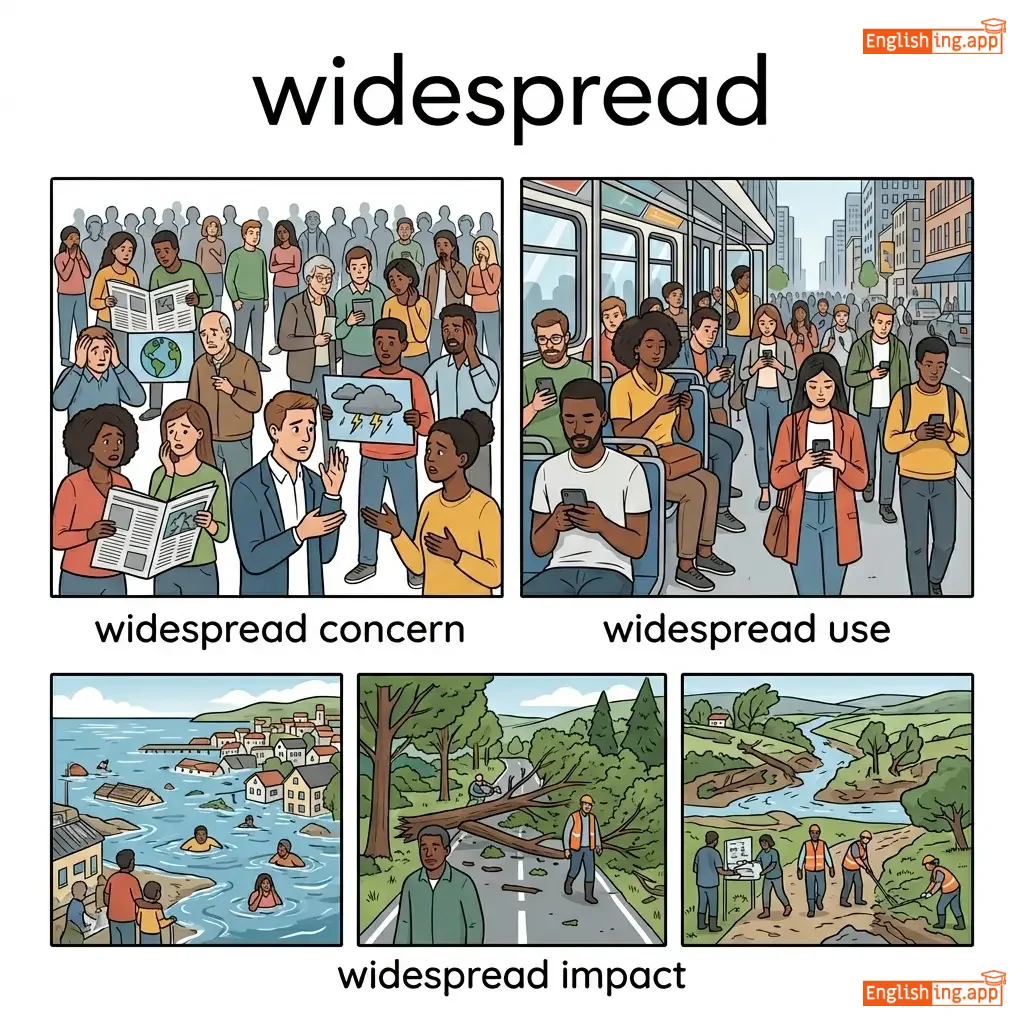
guǎngfàn de
••••••
|
- •••••• | - •••••• | - •••••• | - •••••• |
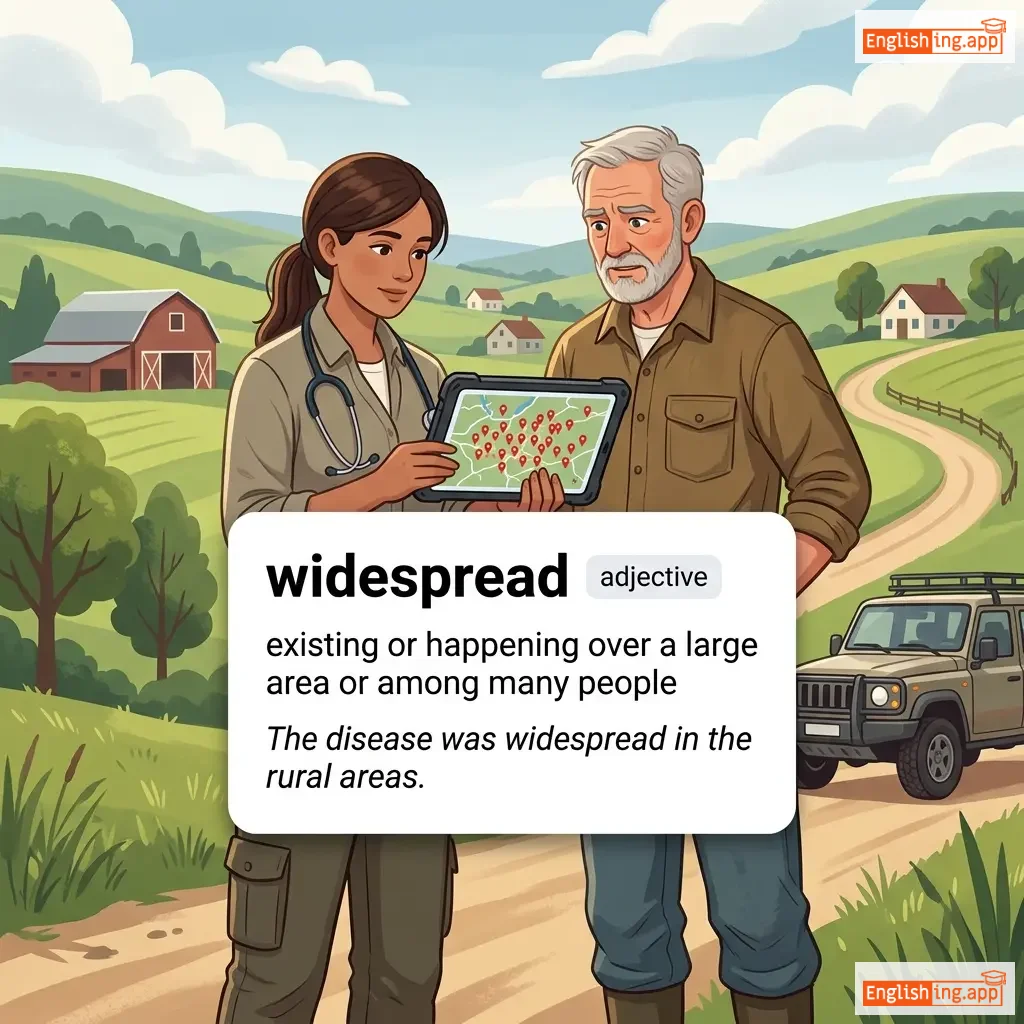
existing or happening in many places or among many people
••••••
|
There is widespread support for the new policy. |
新政策得到了广泛的支持。
xīn zhèngcè dédàole guǎngfàn de zhīchí.
••••••
|
- •••••• | - •••••• | - •••••• |
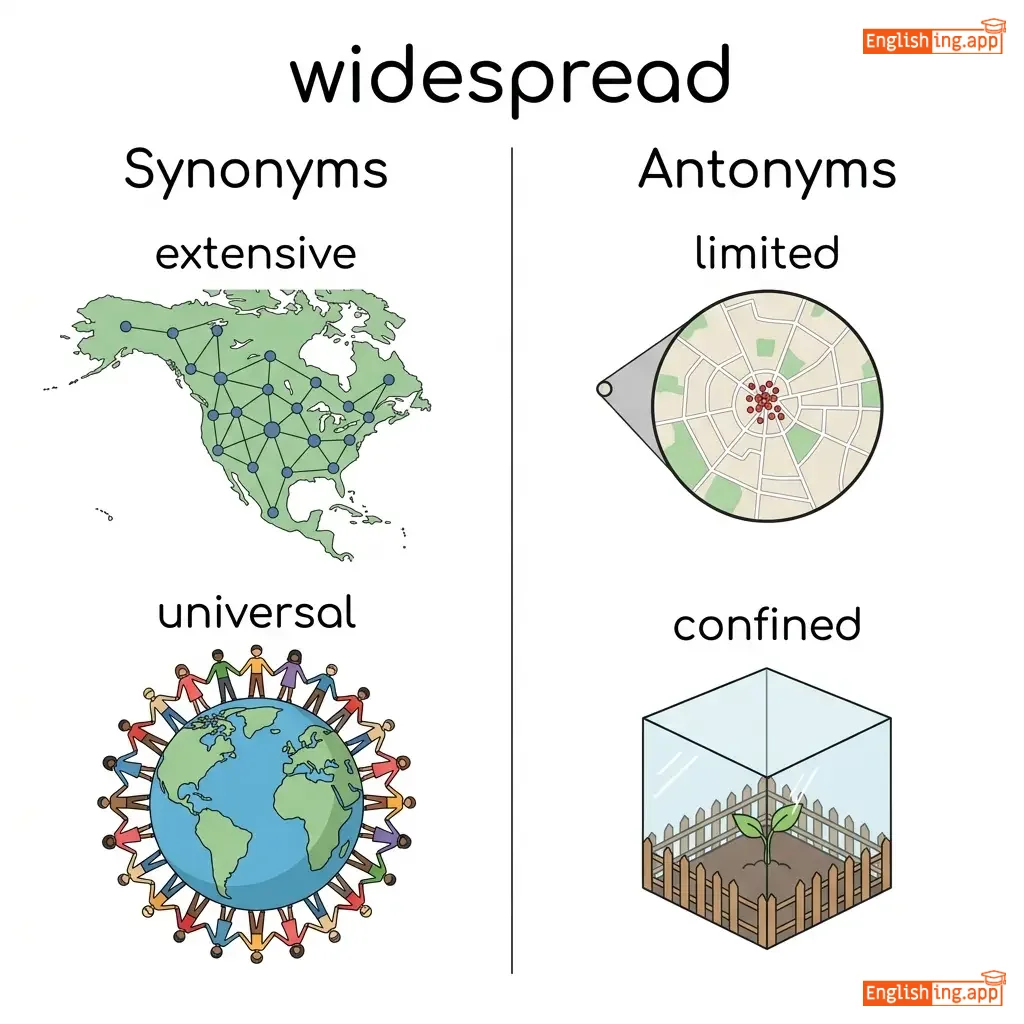
extensive, prevalent, universal, common
••••••
|
limited, localized, restricted, rare
••••••
|
widespread support, widespread use, widespread damage, widespread belief
••••••
|
Chinese '广泛的' matches the meaning of 'widespread'.
••••••
|
|
#5511
🖤
|
/ˈwɪdəʊ/
noun
(widou)
••••••
|
- •••••• |
寡妇
guafu
••••••
|
- •••••• | - •••••• | - •••••• | - •••••• |
a woman whose husband has died and who has not married again
••••••
|
She became a widow at a very young age.
她在很年轻时成为了寡妇。
••••••
|
她在很年轻时成为了寡妇。
Ta zai hen nianqing shi chengwei le guafu.
••••••
|
grass widow
草寡妇
••••••
|
a woman whose husband is temporarily away
••••••
|
草寡妇
cao guafu
••••••
|
bereaved woman, lone woman, wife left behind
••••••
|
wife, bride
••••••
|
young widow, war widow, become a widow, widow pension
••••••
|
寡妇意味着寡妇 — 'We do' 说过,但现在 '他走了' 😢
••••••
|
|
#5512
↔️
|
/wɪdθ/
noun
(wɪdθ)
••••••
|
- •••••• |
宽度; 广度
kuandu; guangdu
••••••
|
- •••••• | - •••••• | - •••••• | - •••••• |
the measurement or extent of something from side to side; breadth
••••••
|
The width of the river is about 50 meters.
河流的宽度大约为50米。
••••••
|
河流的宽度大约为50米。
Heliu de kuandu dayue wei 50 mi.
••••••
|
- •••••• | - •••••• | - •••••• |
breadth, span, extent
••••••
|
length, height, narrowness
••••••
|
full width, average width, total width
••••••
|
想象河流的宽度来记住'width'的意思。
••••••
|
|
#5513
👩❤️👨
|
/waɪf/
noun
(wǎifū)
••••••
|
- •••••• |
妻子
qīzi
••••••
|
- •••••• | - •••••• | - •••••• | - •••••• |
a woman who is married to someone
••••••
|
She is the wife of the famous author. |
她是著名作家的妻子。
Tā shì zhùmíng zuòjiā de qīzi.
••••••
|
- •••••• | - •••••• | - •••••• |
spouse, partner, better half
••••••
|
husband
••••••
|
wife and husband, loving wife, devoted wife
••••••
|
‘Qīzi’ means wife in Chinese! A great memory link.
••••••
|
|
#5514
🌿
|
/waɪld/
adjective
(waild)
••••••
|
- •••••• |
野生
yesheng
••••••
|
- •••••• | - •••••• | - •••••• | - •••••• |
living or growing in the natural environment; uncontrolled or untamed
••••••
|
The children ran wild in the park. |
孩子们在公园里肆意奔跑。
Haizimen zai gongyuan li siyi benpao.
••••••
|
run wild |
to behave without restraint or control
••••••
|
野跑
yepao
••••••
|
untamed, feral, uncontrolled, savage, free
••••••
|
tame, domestic, controlled
••••••
|
wild animal, wild nature, wild guess, wild behavior
••••••
|
Wild意味着野生 – 在丛林中奔跑的动物
••••••
|
|
#5515
🦌
|
/ˈwaɪldˌlaɪf/
noun
(wàidélāifū)
••••••
|
- •••••• |
野生动物
ye sheng dong wu
••••••
|
- •••••• | - •••••• | - •••••• | - •••••• |
animals, birds, and plants living in their natural environment
••••••
|
The park is home to a wide variety of wildlife. |
这个公园是各种野生动物的家园。
Zhege gongyuan shi ge zhong ye sheng dong wu de jia yuan.
••••••
|
wildlife conservation |
the protection of wild animals and their habitats
••••••
|
野生动物保护
ye sheng dong wu bao hu
••••••
|
fauna, animals, creatures, nature, biosphere
••••••
|
domestic animals, pets
••••••
|
wildlife sanctuary, wildlife photographer, protect wildlife, wildlife reserve
••••••
|
Wild life 就是自然环境中的野生动物 🌱
••••••
|
|
#5516
✍️
|
/wɪl/
noun, verb
(wɪl)
••••••
|
- •••••• |
意愿
yiyuan
••••••
|
- •••••• | - •••••• |
wills
wɪlz
••••••
|
willing
wɪlɪŋ
••••••
|
expressing future tense or intention; a legal document
••••••
|
She will attend the meeting tomorrow.
她明天将参加会议。
••••••
|
她明天将参加会议。
Ta mingtian jiang canjia huiyi.
••••••
|
Will to power
权力意志
••••••
|
the drive to assert one's own will over others
••••••
|
权力意志
Quanli yizhi
••••••
|
intend, shall, want, determination
••••••
|
won't, unwilling
••••••
|
last will, will and testament, strong will
••••••
|
意志力量,未来的意志 ✍️
••••••
|
|
#5517
🙋♂️
|
/ˈwɪl.ɪŋ/
adjective
(wɪlɪŋ)
••••••
|
- •••••• |
愿意; 准备
yuànyì; zhǔnbèi
••••••
|
- •••••• | - •••••• | - •••••• | - •••••• |
ready, eager, or prepared to do something
••••••
|
She is willing to help with the project. |
她愿意帮助项目。
tā yuànyì bāngzhù xiàngmù.
••••••
|
- •••••• | - •••••• | - •••••• |
ready, eager, prepared, inclined
••••••
|
unwilling, reluctant, hesitant, resistant
••••••
|
willing to help, willing participant, willing cooperation, willing spirit
••••••
|
愿意 = willing, 准备 = ready
••••••
|
|
#5518
😊
|
/ˈwɪl.ɪŋ.li/
adverb
(wī-líng-lì)
••••••
|
- •••••• |
自愿地
zìyuàn de
••••••
|
- •••••• | - •••••• | - •••••• | - •••••• |
in a willing manner; voluntarily; with free will
••••••
|
She willingly helped her neighbors during the emergency. |
她在紧急情况下自愿帮助了她的邻居。
tā zài jǐnjí qíngkuàng xià zìyuàn bāngzhù le tā de línjū
••••••
|
- •••••• | - •••••• | - •••••• |
voluntarily, eagerly, gladly, readily, freely
••••••
|
reluctantly, unwillingly, forcibly, involuntarily
••••••
|
willingly accept, willingly participate, willingly cooperate, willingly volunteer
••••••
|
自愿地做事就像是‘我愿意去帮忙’。
••••••
|
|
#5519
💪
|
/ˈwɪlɪŋnəs/
noun
(willingness)
••••••
|
- •••••• |
意愿
yiyuan
••••••
|
- •••••• | - •••••• | - •••••• | - •••••• |
the quality of being prepared or ready to do something
••••••
|
Her willingness to help others made her very popular. |
她愿意帮助他人的态度使她变得非常受欢迎。
Ta yuanyi bangzhu taren de taidu shi ta biande feichang shou huanying.
••••••
|
- •••••• | - •••••• | - •••••• |
readiness, eagerness, enthusiasm, consent, agreement
••••••
|
reluctance, unwillingness
••••••
|
show willingness, express willingness, willingness to cooperate, willingness to learn
••••••
|
Willingness 意味着愿意,而意愿意味着准备帮助!
••••••
|
|
#5520
🏆
|
/wɪn/
verb
••••••
|
|
- •••••• |
won
••••••
|
won
••••••
|
wins
••••••
|
winning
••••••
|
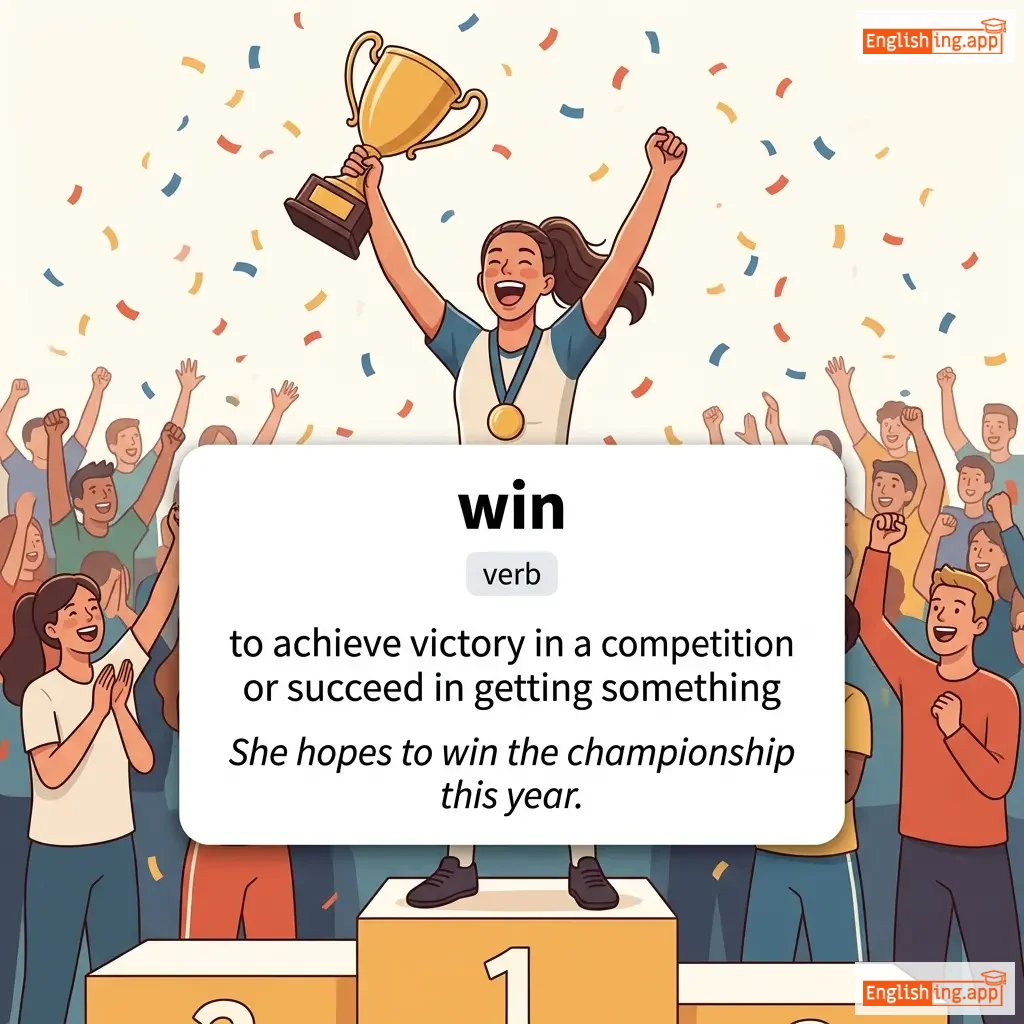
to achieve victory in a competition or succeed in getting something
••••••
|
She hopes to win the championship this year. |
- •••••• |
win over |
to persuade or gain support
••••••
|
- •••••• |
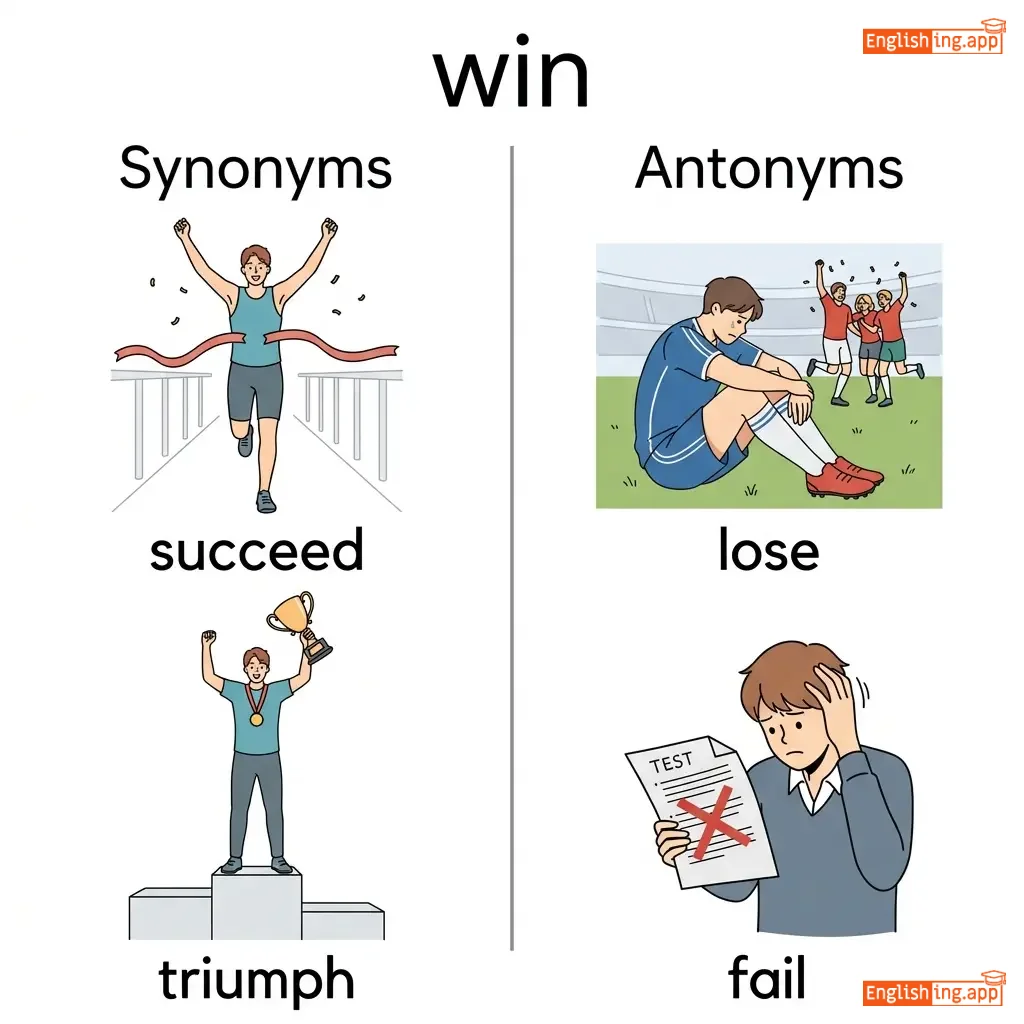
succeed, triumph, prevail, conquer
••••••
|
lose, fail, surrender
••••••
|
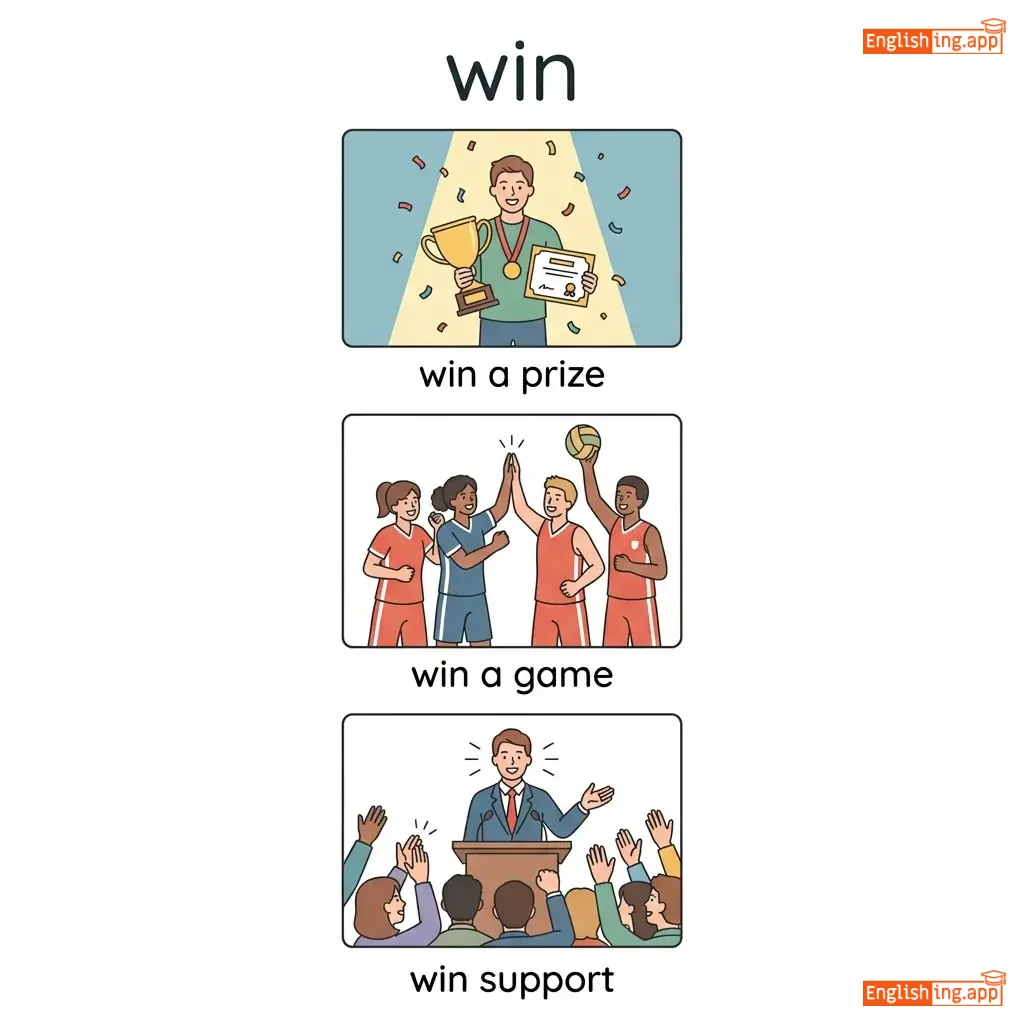
win a prize, win a game, win support, win the championship
••••••
|
No •••••• |
|
#5521
🌬️
|
/wɪnd/
noun
(wɪnd)
••••••
|
- •••••• |
风
feng
••••••
|
- •••••• | - •••••• | - •••••• | - •••••• |
the natural movement of air, especially in the form of a current of air blowing from a particular direction
••••••
|
The wind blew the leaves off the trees.
风吹走了树上的叶子。
••••••
|
风吹走了树上的叶子。
Feng chui zou le shu shang de yezi.
••••••
|
- •••••• | - •••••• | - •••••• |
breeze, gust, gale, draft
••••••
|
calm, stillness
••••••
|
strong wind, wind speed, wind direction, cold wind
••••••
|
风 - 像一阵轻风吹过树叶
••••••
|
|
#5522
🪟
|
/ˈwɪn.doʊ/
noun
(windo)
••••••
|
- •••••• |
窗户
chuanghu
••••••
|
- •••••• | - •••••• | - •••••• | - •••••• |
an opening in a wall fitted with glass to let in light and air
••••••
|
Please open the window for fresh air.
请打开窗户以获得新鲜空气。
••••••
|
请打开窗户以获得新鲜空气。
qing dakaichuanghu yi huode xinxian kongqi
••••••
|
- •••••• | - •••••• | - •••••• |
casement, pane, opening
••••••
|
wall, barrier
••••••
|
window frame, window sill, bay window, window blinds
••••••
|
窗户 (chuanghu) – 'chuang' for 'chance' to let fresh air through!
••••••
|
|
#5523
🍷
|
/waɪn/
noun
(wāin)
••••••
|
- •••••• |
酒
jiu
••••••
|
- •••••• | - •••••• | - •••••• | - •••••• |
an alcoholic drink made from fermented grapes or other fruits
••••••
|
They served a glass of red wine at the dinner.
他们在晚餐时提供了一杯红酒。
••••••
|
他们在晚餐时提供了一杯红酒。
Tāmen zài wǎncān shí tígōngle yī bēi hóngjiǔ.
••••••
|
- •••••• | - •••••• | - •••••• |
vino, beverage, drink, alcohol
••••••
|
water, juice
••••••
|
red wine, white wine, glass of wine, bottle of wine
••••••
|
Wine pairs with dinner—imagine a glass of red wine with a fancy meal!
••••••
|
|
#5524
🪶
|
/wɪŋ/
verb
(wing)
••••••
|
|
用翅膀飞翔
yòng chìbǎng fēixiáng
••••••
|
winged
winged
••••••
|
winged
winged
••••••
|
wings
wings
••••••
|
winging
winging
••••••
|
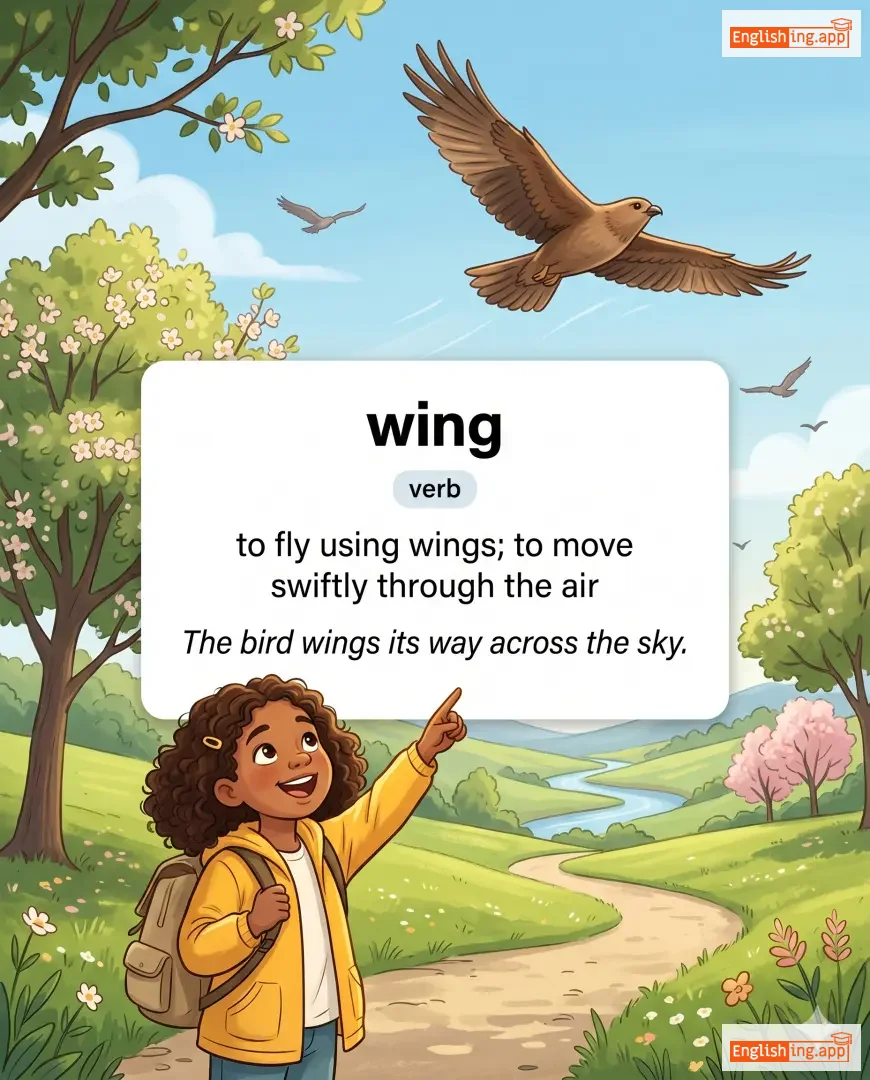
to fly using wings; to move swiftly through the air
••••••
|
The bird wings its way across the sky.
鸟飞过天空。
••••••
|
鸟飞翔穿越天空。
Niǎo fēixiáng chuānyuè tiānkōng.
••••••
|
- •••••• | - •••••• | - •••••• |
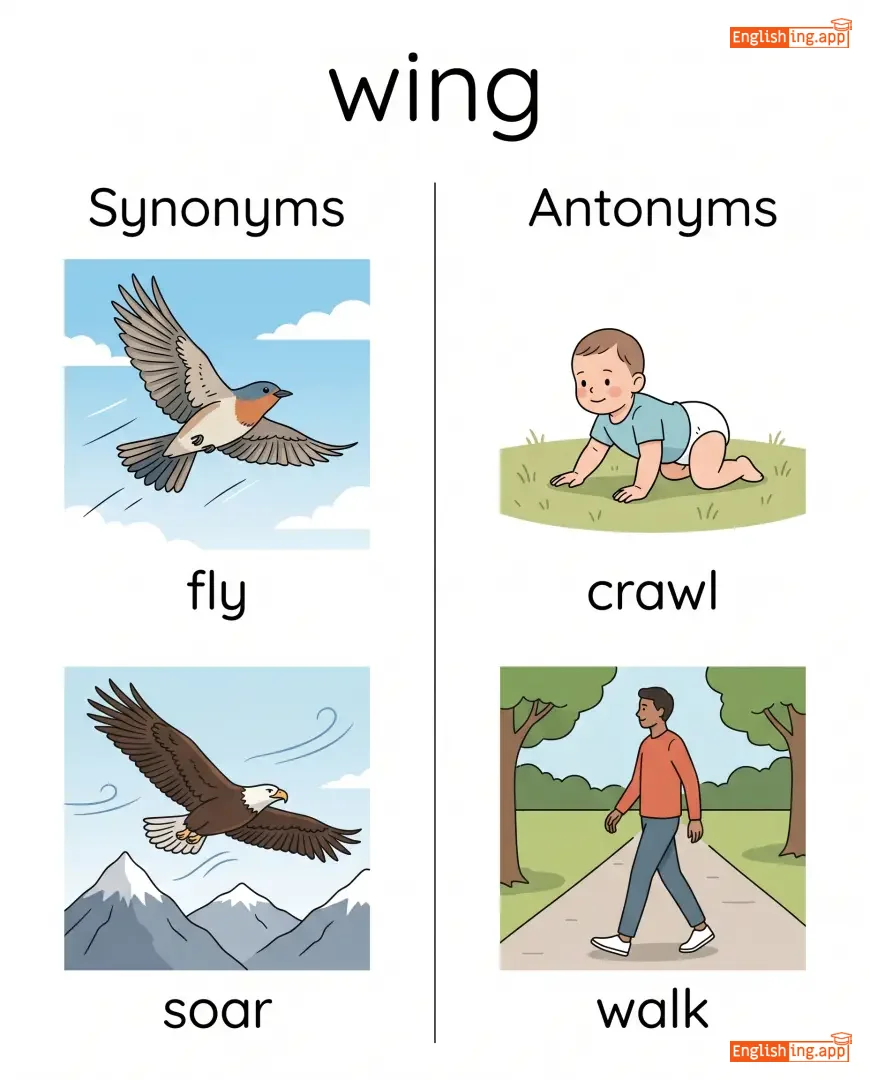
fly, soar, glide, flutter
••••••
|
crawl, walk, ground, land
••••••
|
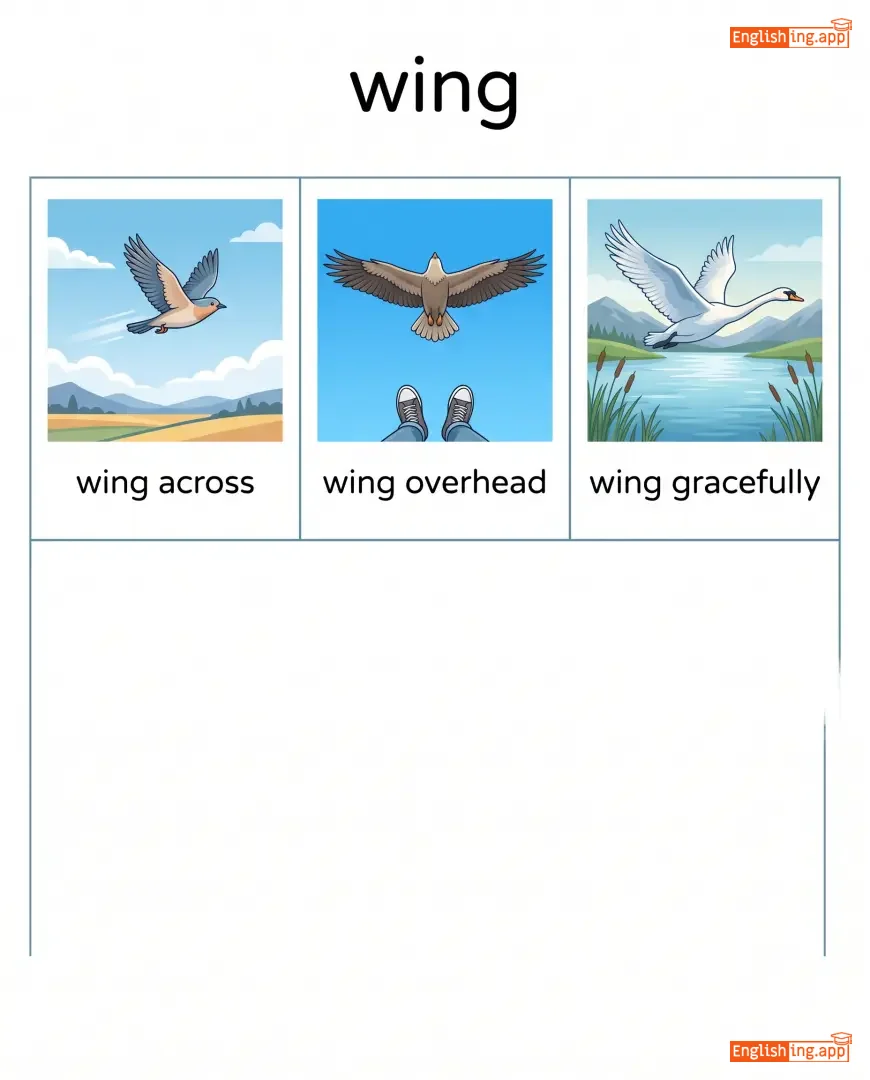
wing across, wing overhead, wing gracefully, wing swiftly
••••••
|
翅膀一张,飞翔天空 (用翅膀飞翔)
••••••
|
Vocabulary Quiz
Test your vocabulary by matching words with their translations or meanings.
Login to take the quiz
Comments (0)
Share your thoughts and join the discussion.
Join the discussion by logging in
Login to CommentNo comments yet
Be the first to share your thoughts!