


Swipe left or right, or use the buttons. Tap image to zoom.
例句翻译
单词
Lesson 104Lesson 104 - 遮罩切换
|
表情符号
|
单词 | Images | 翻译 | 过去时 | 过去分词 | 第三人称单数 | 动名词 | 含义 | 例句 | 例句翻译 | 示例表达 | 示例表达含义 | 示例表达翻译 | 同义词 | 反义词 | 搭配词 | 助记符 |
|---|---|---|---|---|---|---|---|---|---|---|---|---|---|---|---|---|---|
|
#4925
🔄
|
/swɪtʃ/
verb
(suiqī)
••••••
|
|
切换
qiehuan
••••••
|
switched
suiqī le
••••••
|
switched
suiqī le
••••••
|
switches
suiqī
••••••
|
switching
suiqīng
••••••
|
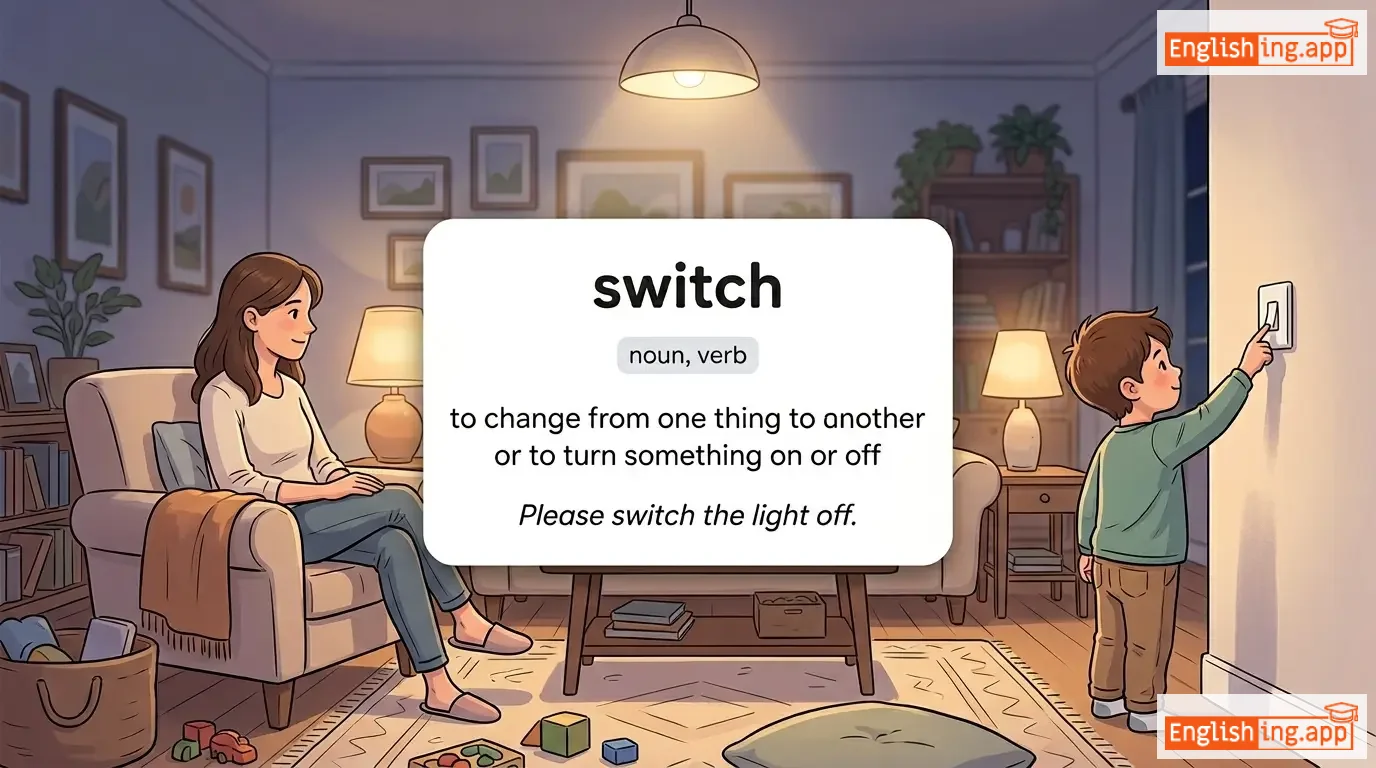
to change from one thing to another; to exchange or replace
••••••
|
I switched from coffee to tea.
我从咖啡转到茶。
••••••
|
我从咖啡转到茶。
Wo cong kafei zhuan dao cha.
••••••
|
- •••••• | - •••••• | - •••••• |
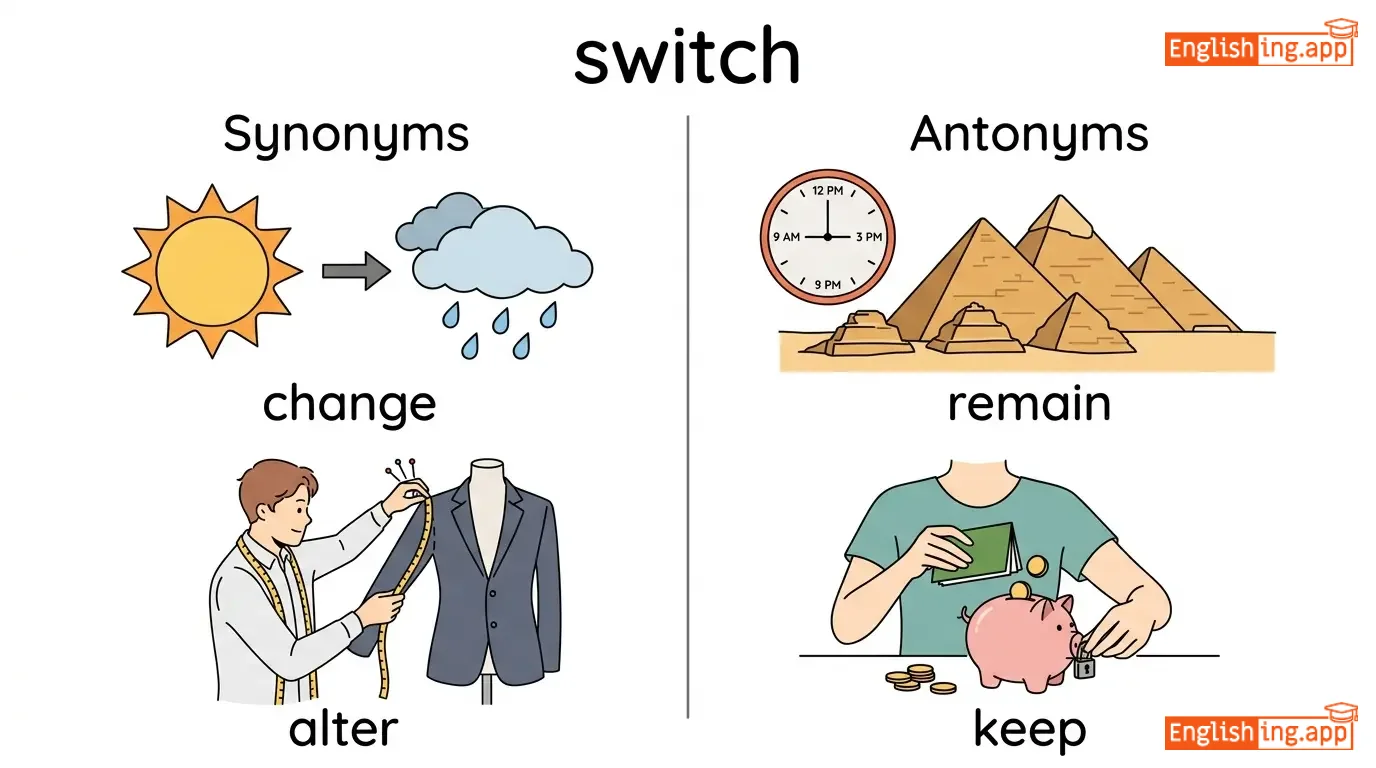
change, swap, exchange, shift
••••••
|
keep, maintain, stick
••••••
|
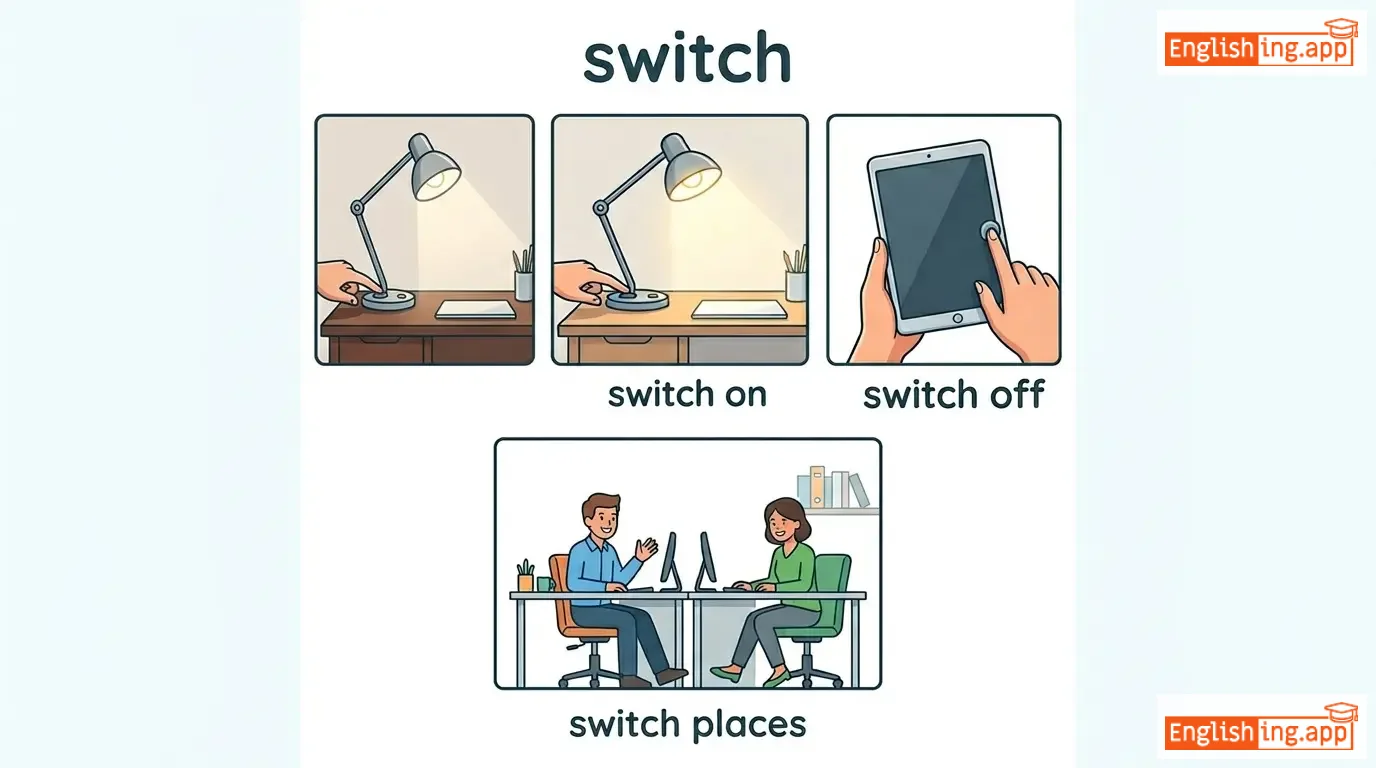
switch off, switch on, switch channels, switch jobs, switch sides
••••••
|
切换改变你的思维模式!
••••••
|
|
#4926
⚔️
|
/sɔːrd/
noun
(sword)
••••••
|
- •••••• |
剑
jian
••••••
|
- •••••• | - •••••• | - •••••• | - •••••• |
a weapon with a long metal blade used for fighting
••••••
|
The knight drew his sword to defend the castle. |
骑士拔出他的剑来保卫城堡。
qíshì bá chū tā de jiàn lái bǎowèi chéngbǎo.
••••••
|
cross swords |
to argue or fight with someone
••••••
|
交锋
jiāo fēng
••••••
|
blade, dagger, saber, weapon, cutlass
••••••
|
shield, peace
••••••
|
draw a sword, sharp sword, sword fight, sword blade
••••••
|
SWOrd = 剑,剑的武器可以战斗!
••••••
|
|
#4927
🔣
|
/ˈsɪmbəl/
noun
(符号)
••••••
|
- •••••• |
符号
fúhào
••••••
|
- •••••• | - •••••• | - •••••• | - •••••• |
a mark or character used as a conventional representation of an object, function, or process
••••••
|
The dove is a symbol of peace.
鸽子是和平的象征。
••••••
|
鸽子是和平的象征。
Gēzi shì hépíng de xiàngzhēng.
••••••
|
- •••••• | - •••••• | - •••••• |
sign, emblem, token, representation
••••••
|
reality, substance, literalness
••••••
|
symbol of peace, religious symbol, mathematical symbol, status symbol
••••••
|
象征和平的鸽子符号
••••••
|
|
#4928
🕊️
|
/sɪmˈbɒlɪk/
adjective
(象征性的)
••••••
|
- •••••• |
象征性的
xiàngzhēng xìng de
••••••
|
- •••••• | - •••••• | - •••••• | - •••••• |
serving as a symbol or representing something else
••••••
|
The dove is symbolic of peace and freedom.
鸽子是和平与自由的象征。
••••••
|
鸽子是和平与自由的象征。
Gēzi shì hépíng yǔ zìyóu de xiàngzhēng.
••••••
|
symbolic gesture
象征性举动
••••••
|
an action meant to show support or respect rather than to have practical effect
••••••
|
象征性举动
xiàngzhēng xìng jǔdòng
••••••
|
representative, figurative, emblematic, metaphorical, indicative
••••••
|
literal, realistic, actual
••••••
|
symbolic meaning, symbolic gesture, symbolic act, symbolic representation
••••••
|
SYMBOL意味着象征 — 所以symbolic就是象征性地!
••••••
|
|
#4929
💙
|
/ˌsɪmpəˈθɛtɪk/
adjective
(同情的)
••••••
|
- •••••• |
同情的
tóngqíng de
••••••
|
- •••••• | - •••••• | - •••••• | - •••••• |
showing understanding or compassion for someone’s feelings or situation
••••••
|
She was very sympathetic when he lost his job.
当他失去工作时,她表现得非常同情。
••••••
|
当他失去工作时,她表现得非常同情。
Dāng tā shīqù gōngzuò shí, tā biǎoxiàn dé fēicháng tóngqíng.
••••••
|
sympathetic ear
同情的耳朵
••••••
|
a person who listens with kindness and understanding
••••••
|
同情的耳朵
tóngqíng de ěrduo
••••••
|
compassionate, caring, kind, supportive, understanding
••••••
|
indifferent, unfeeling, unsympathetic
••••••
|
sympathetic attitude, sympathetic ear, sympathetic response, sympathetic character
••••••
|
Sympathy + pathetic = 对他人的同情
••••••
|
|
#4930
💐
|
/ˈsɪmpəθi/
noun
(辛巴提)
••••••
|
- •••••• |
同情
tóngqíng
••••••
|
- •••••• | - •••••• | - •••••• | - •••••• |
feelings of pity and compassion for someone else's suffering
••••••
|
She expressed her sympathy for the grieving family.
她向悲伤的家庭表达了同情。
••••••
|
她向悲伤的家庭表达了同情。
Tā xiàng bēishāng de jiātíng biǎodále tóngqíng.
••••••
|
deep sympathy
深深的同情
••••••
|
strong feelings of compassion
••••••
|
深深的同情
shēn shēn de tóngqíng
••••••
|
compassion, pity, condolence, understanding
••••••
|
indifference, apathy
••••••
|
express sympathy, offer sympathy, deep sympathy, sympathy card
••••••
|
Sympathy = Sim + Pathi → Sim broken heart = 同情
••••••
|
|
#4931
🤒
|
/ˈsɪmptəm/
noun
(症状)
••••••
|
- •••••• |
症状
zhèngzhuàng
••••••
|
- •••••• | - •••••• | - •••••• | - •••••• |
a sign or indication of something, especially of an illness
••••••
|
Fever is a common symptom of the flu. |
发烧是流感的常见症状。
Fāshāo shì liúgǎn de chángjiàn zhèngzhuàng.
••••••
|
- •••••• | - •••••• | - •••••• |
sign, indication, manifestation, mark
••••••
|
health, wellness
••••••
|
symptom of illness, common symptom, early symptom
••••••
|
Symptom like fever: You feel sick (生病) when you're ill!
••••••
|
|
#4932
🧬
|
/ˈsɪnˌdroʊm/
noun
(综合症)
••••••
|
- •••••• |
综合症
zonghezheng
••••••
|
- •••••• | - •••••• | - •••••• | - •••••• |
a group of symptoms that occur together and characterize a condition or disease
••••••
|
Down syndrome affects a person's physical and mental development. |
唐氏综合症影响一个人的身体和智力发展。
Tangshi zonghezheng yingxiang yige ren de shenti he zhili fazhan.
••••••
|
- •••••• | - •••••• | - •••••• |
disorder, condition, ailment, illness, disease
••••••
|
health, wellness
••••••
|
Down syndrome, chronic syndrome, severe syndrome, rare syndrome
••••••
|
SYN = 一起, DROME = 行走 — 多个症状一起行走 = 综合症!
••••••
|
|
#4933
⚗️
|
/ˈsɪnθəsɪs/
noun
••••••
|
|
- •••••• | - •••••• | - •••••• | - •••••• | - •••••• |
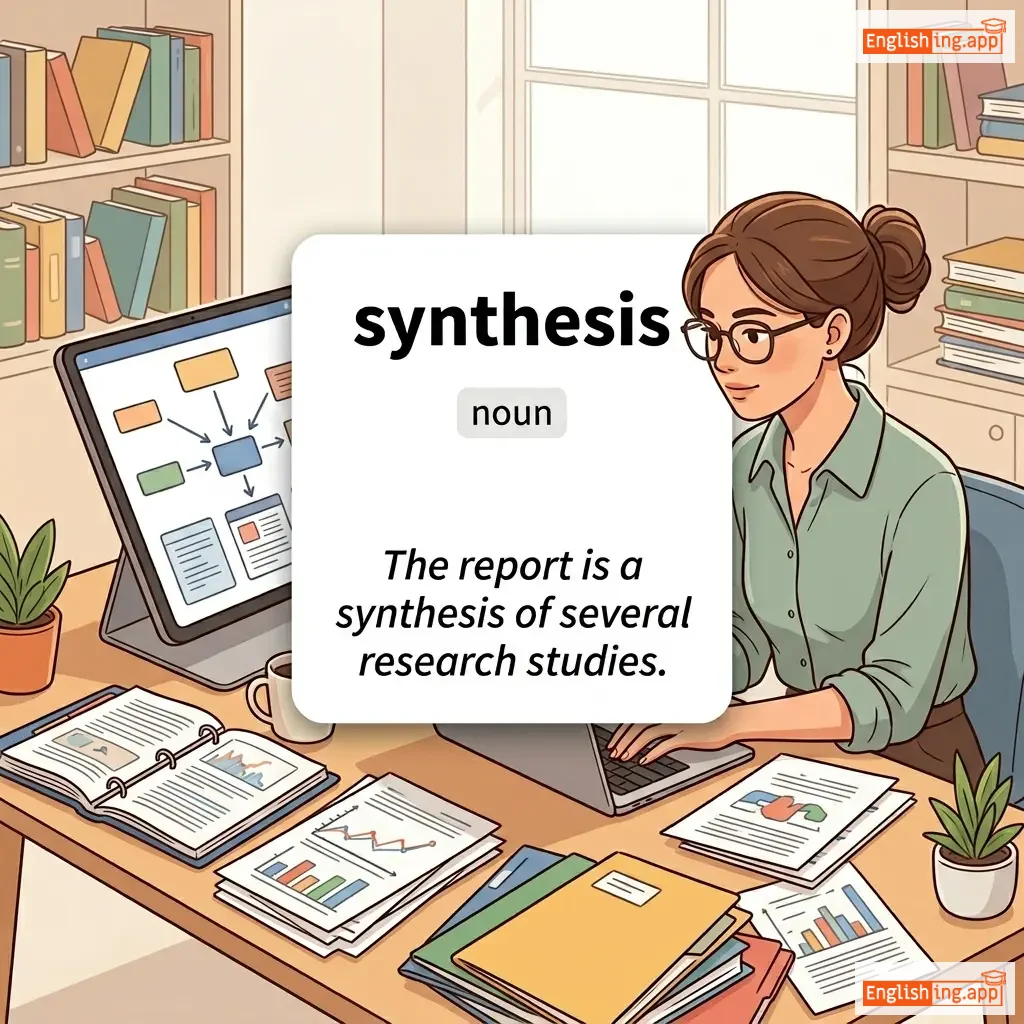
The combination of different ideas, elements, or substances into a coherent whole.
••••••
|
The report is a synthesis of several research studies. |
- •••••• |
thesis-antithesis-synthesis |
A philosophical framework where opposing ideas resolve into a new understanding.
••••••
|
- •••••• |
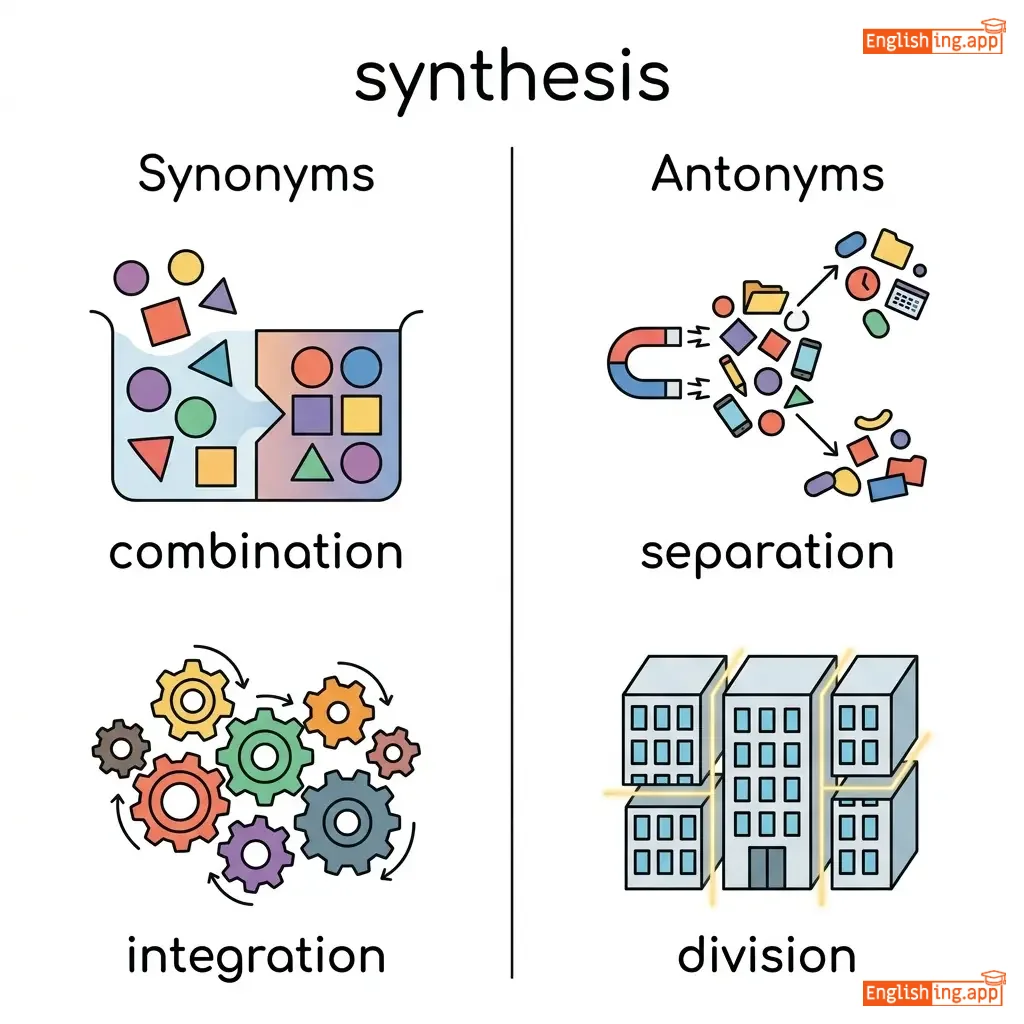
combination, integration, fusion, amalgamation, unification
••••••
|
separation, division, analysis
••••••
|
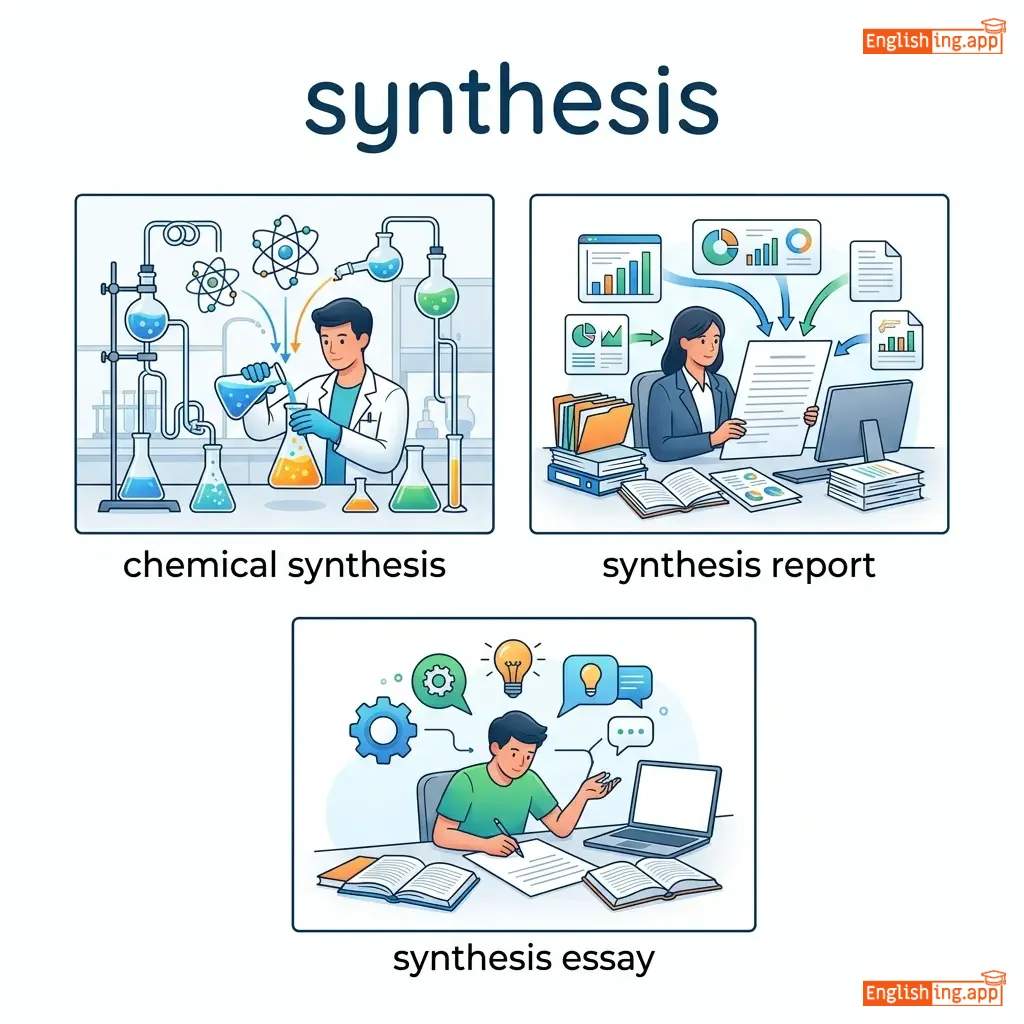
chemical synthesis, synthesis report, synthesis essay, data synthesis
••••••
|
No •••••• |
|
#4934
🖥️
|
/ˈsɪstəm/
noun
(系统)
••••••
|
- •••••• |
系统
xitong
••••••
|
- •••••• | - •••••• | - •••••• | - •••••• |
a set of connected parts forming a complex whole; an organized method
••••••
|
The education system needs major reforms. |
教育系统需要重大改革。
Jiaoyu xitong xuyao zhongda gaige.
••••••
|
systematic approach |
an organized and methodical way
••••••
|
系统化方法
xitonghua fangfa
••••••
|
structure, organization, framework, network
••••••
|
disorder, chaos
••••••
|
education system, computer system, political system, solar system
••••••
|
系统 = 系统, 就像'太阳系',是行星的系统
••••••
|
|
#4935
📊
|
/ˌsɪstəˈmætɪk/
adjective
(sìtè mǎ tíkè)
••••••
|
- •••••• |
系统的
xitongde
••••••
|
- •••••• | - •••••• | - •••••• | - •••••• |
Done or acting according to a fixed plan or system; methodical.
••••••
|
The company took a systematic approach to solving the issue. |
公司采取了系统的方法来解决问题。
Gōngsī cǎiqǔle xìtǒng de fāngfǎ lái jiějué wèntí.
••••••
|
systematic error |
An error that consistently occurs in the same direction due to flaws in a system.
••••••
|
系统性错误
xìtǒng xìng cuòwù
••••••
|
methodical, organized, structured, logical, disciplined
••••••
|
random, chaotic, disorganized
••••••
|
systematic review, systematic study, systematic approach, systematic plan
••••••
|
系统化地做事,就像系统(systematic)一样有序
••••••
|
|
#4936
🍽️
|
/ˈteɪbəl/
noun
(tèibǎo)
••••••
|
- •••••• |
桌子
zhuōzi
••••••
|
- •••••• | - •••••• | - •••••• | - •••••• |
A piece of furniture with a flat top and legs, used for working at or placing items on.
••••••
|
They placed the documents on the table. |
他们把文件放在桌子上。
Tāmen bǎ wénjiàn fàng zài zhuōzi shàng.
••••••
|
turn the tables |
To reverse a situation and gain an advantage over someone.
••••••
|
翻转局势
fān zhuǎn júshì
••••••
|
desk, counter, bench, surface
••••••
|
floor, ground
••••••
|
dining table, coffee table, round table, table manners
••••••
|
桌子(zhuōzi)上有书和笔,翻转局势时可以用它。
••••••
|
|
#4937
🥄
|
/ˈteɪbəlˌspun/
noun
(汤匙)
••••••
|
- •••••• |
汤匙
tangchi
••••••
|
- •••••• | - •••••• | - •••••• | - •••••• |
a spoon used for serving or eating food, typically holding about 15 milliliters
••••••
|
She stirred the soup with a tablespoon.
她用汤匙搅拌了汤。
••••••
|
她用汤匙搅拌了汤。
Ta yong tangchi jiaobanle tang.
••••••
|
- •••••• | - •••••• | - •••••• |
soup spoon, serving spoon
••••••
|
teaspoon, fork
••••••
|
tablespoon of sugar, tablespoon of salt, a full tablespoon
••••••
|
汤匙 (tangchi) - Imagine a spoonful of soup in a large spoon.
••••••
|
|
#4938
💊
|
/ˈtæblət/
noun
••••••
|
- •••••• | - •••••• | - •••••• | - •••••• | - •••••• | - •••••• |
a small flat computer or a small solid dose of medicine
••••••
|
She took a tablet to relieve her headache. |
- •••••• | - •••••• | - •••••• | - •••••• |
pill, pad, slate, device
••••••
|
capsule, injection
••••••
|
take a tablet, tablet device, tablet computer, tablet form
••••••
|
No •••••• |
|
#4939
⚡
|
/ˈtæk.əl/
verb, noun
••••••
|
- •••••• | - •••••• |
tackled
••••••
|
tackled
••••••
|
tackles
••••••
|
tackling
••••••
|
to try to deal with or solve a difficult problem; to physically stop someone in sports by knocking them down
••••••
|
The coach taught the players how to tackle properly. |
- •••••• |
tackle a problem |
to deal with or try to solve a problem
••••••
|
- •••••• |
confront, address, handle, seize, wrestle
••••••
|
avoid, ignore, neglect
••••••
|
tackle a challenge, tackle crime, tackle poverty, tackle an issue
••••••
|
No •••••• |
|
#4940
🎯
|
/ˈtæk.tɪk/
noun
(战术)
••••••
|
- •••••• |
策略; 战术
celue; zhanshu
••••••
|
- •••••• | - •••••• | - •••••• | - •••••• |
a plan or method for achieving something; a strategy used to accomplish a goal
••••••
|
The coach used a new tactic to win the game. |
教练使用了一种新的战术来赢得比赛。
Jiaolian shiyong le yizhong xinde zhanshu lai yingde bisai.
••••••
|
- •••••• | - •••••• | - •••••• |
strategy, approach, method, plan, technique
••••••
|
improvisation, spontaneity
••••••
|
military tactic, defensive tactic, clever tactic, winning tactic
••••••
|
为了赢得比赛,团队需要一种战术。
••••••
|
|
#4941
🎯
|
/ˈtæktɪkəl/
adjective
(战术的)
••••••
|
- •••••• |
与战略有关
yu zhanlüe youguan
••••••
|
- •••••• | - •••••• | - •••••• | - •••••• |
relating to or involving tactics or strategy
••••••
|
The team had a tactical plan for the final match. |
团队有一个针对最后比赛的战术计划。
Tuandui you yige zhendui zuihou bisai de zhanshu jihua.
••••••
|
- •••••• | - •••••• | - •••••• |
strategic, planned, calculated, methodical
••••••
|
spontaneous, unplanned
••••••
|
tactical approach, tactical advantage, tactical strategy
••••••
|
Tactical就像‘战术’–你需要有战术来制定最佳策略。
••••••
|
|
#4942
🏷️
|
/tæɡ/
noun, verb
••••••
|
- •••••• | - •••••• |
tagged
••••••
|
tagged
••••••
|
tags
••••••
|
tagging
••••••
|
a label attached to something for identification or information; or to attach such a label
••••••
|
She tagged her luggage before boarding the plane. |
- •••••• |
tag along |
to go somewhere with someone, often without being invited
••••••
|
- •••••• |
label, marker, ticket, sticker, mark
••••••
|
remove, detach
••••••
|
price tag, luggage tag, tag along, tag a photo
••••••
|
No •••••• |
|
#4943
🐕
|
/teɪl/
noun
(teyl)
••••••
|
- •••••• |
尾巴
weiba
••••••
|
- •••••• | - •••••• | - •••••• | - •••••• |
the rear part of an animal that extends from the back or bottom
••••••
|
The dog wagged its tail happily when it saw its owner. |
狗看到主人时高兴地摇了摇尾巴。
Gou kan dao zhuren shi gaoxing de yao le yao weiba.
••••••
|
- •••••• | - •••••• | - •••••• |
rear, end, appendage
••••••
|
head, front
••••••
|
dog tail, long tail, wagging tail, tail feathers
••••••
|
Weiba = tail in Chinese, and both wag in happiness!
••••••
|
|
#4944
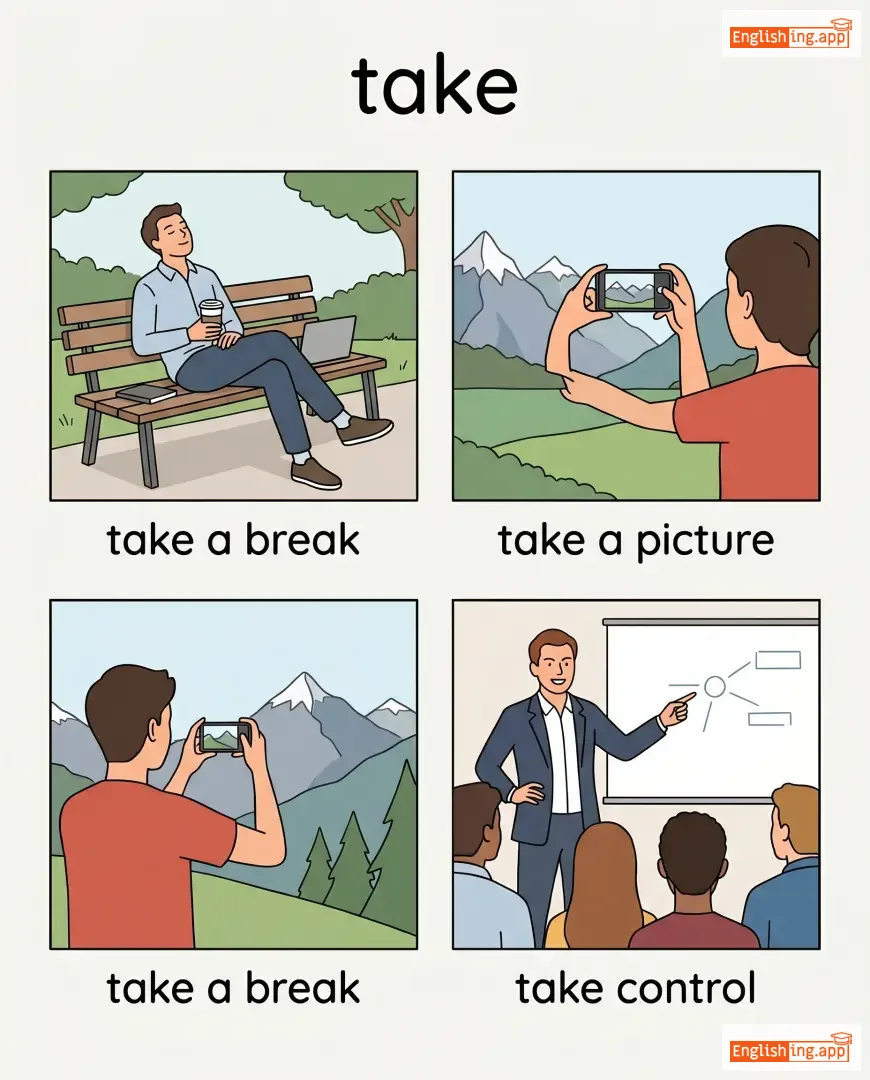
🚌
|
/teɪk/
verb
(teik)
••••••
|
|
拿
na
••••••
|
took
tuk
••••••
|
taken
teiken
••••••
|
takes
teiks
••••••
|
taking
teiking
••••••
|
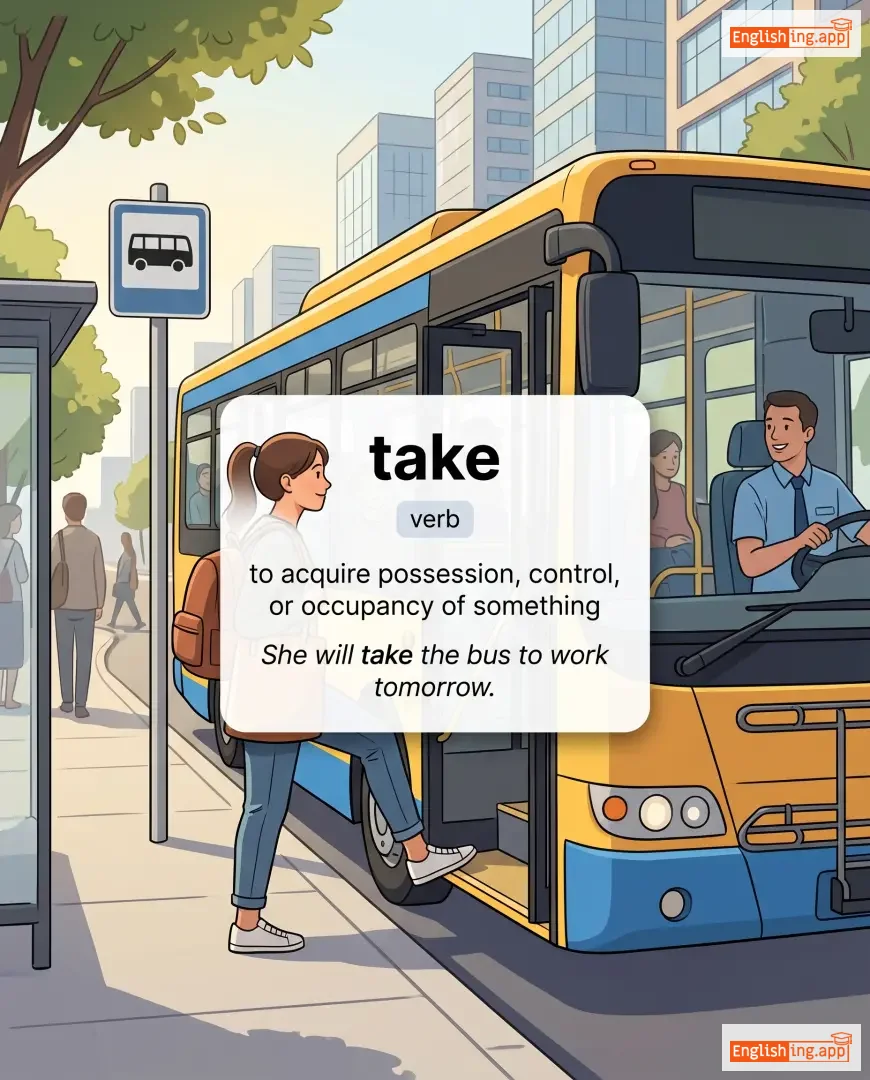
to acquire possession, control, or occupancy of something
••••••
|
She will take the bus to work tomorrow.
她明天将乘坐公交车去上班。
••••••
|
她明天将乘坐公交车去上班。
Ta mingtian jiang chengzuo gongjiaoche qu shangban.
••••••
|
take advantage of
利用
••••••
|
to exploit or make good use of an opportunity
••••••
|
利用
liyong
••••••
|
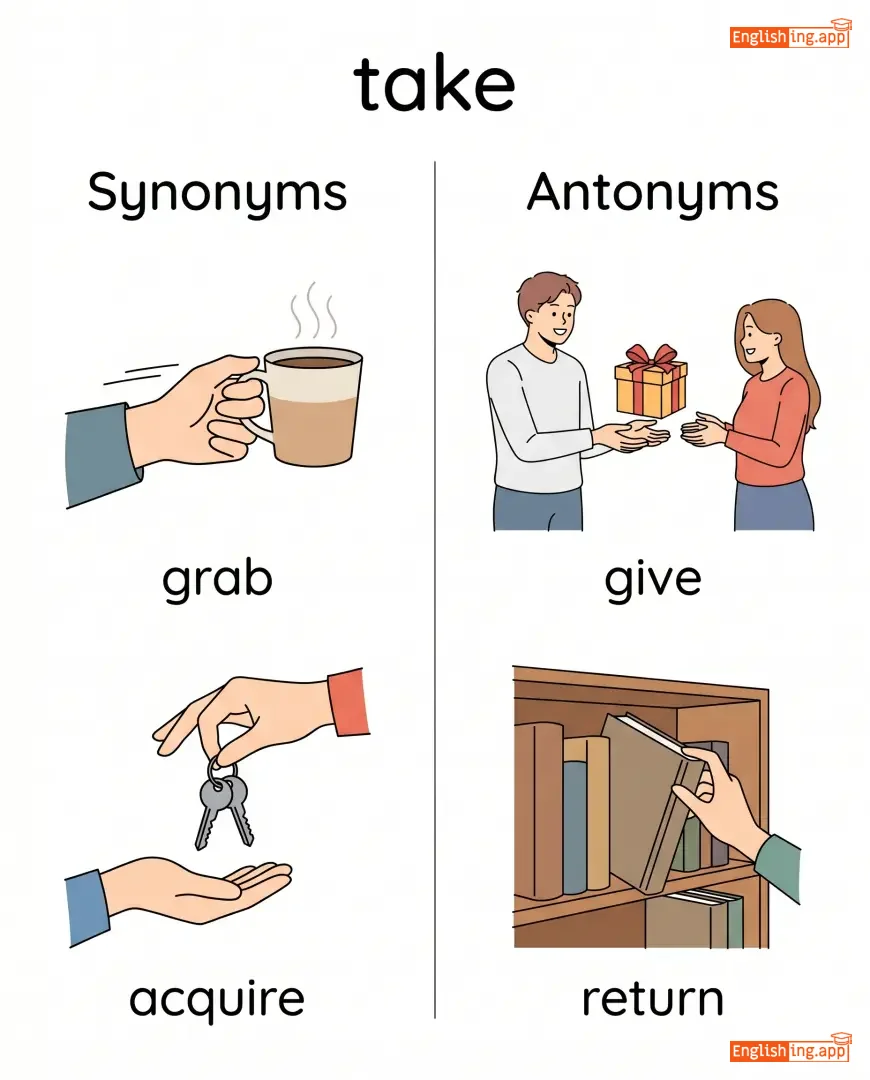
grab, acquire, seize, accept
••••••
|
give, return, release
••••••
|
take a break, take a picture, take control
••••••
|
如果你拿 (take),你就得到了 - If you take it, you will have it.
••••••
|
|
#4945
🛫
|
/teɪk ɒf/
verb
(泰克 奥夫)
••••••
|
- •••••• |
起飞; 脱下
qifei; tuoxia
••••••
|
took off
塔克 奥夫
••••••
|
taken off
泰肯 奥夫
••••••
|
takes off
泰克斯 奥夫
••••••
|
taking off
泰金 奥夫
••••••
|
to remove something; to leave the ground and begin flying (airplane); to suddenly become successful or popular
••••••
|
The airplane will take off in ten minutes.
飞机将在十分钟后起飞。
••••••
|
飞机将在十分钟后起飞。
Feiji jiang zai shi fenzhong hou qifei.
••••••
|
take off like a rocket
像火箭一样起飞
••••••
|
to suddenly become very successful or popular
••••••
|
突然非常成功
turan feichang chenggong
••••••
|
depart, leave, lift off, remove, ascend
••••••
|
land, arrive, stay
••••••
|
take off clothes, take off rapidly, take off plane, take off career
••••••
|
Take off 就像飞机起飞,脱离地面向上!
••••••
|
|
#4946
📖
|
/teɪl/
noun
(tēi'ěr)
••••••
|
- •••••• |
故事
gùshì
••••••
|
- •••••• | - •••••• | - •••••• | - •••••• |
a narrative of imaginary events, especially one that is presented as true
••••••
|
The old man told a tale of his adventures. |
那位老人讲述了他的冒险故事。
Nà wèi lǎorén jiǎngshùle tā de màoxiǎn gùshì.
••••••
|
tall tale |
an exaggerated story, often one that is not true
••••••
|
夸张故事
kuāzhāng gùshì
••••••
|
story, narrative, legend, fable
••••••
|
fact, truth
••••••
|
fairy tale, tall tale, bedtime tale
••••••
|
故事 (gùshì) 通过想象讲述 - A tale narrated through imagination
••••••
|
|
#4947
🎨
|
/ˈtælənt/
noun
(tǎ-lěn-tè)
••••••
|
- •••••• |
天赋
tianfu
••••••
|
- •••••• | - •••••• | - •••••• | - •••••• |
natural aptitude or skill
••••••
|
She has a great talent for painting.
她在绘画方面有很大的天赋。
••••••
|
她在绘画方面有很大的天赋。
Tā zài huìhuà fāngmiàn yǒu hěn dà de tiānfù.
••••••
|
- •••••• | - •••••• | - •••••• |
ability, skill, gift, knack, expertise
••••••
|
incompetence, ineptitude, inability
••••••
|
natural talent, artistic talent, hidden talent, raw talent
••••••
|
Talented artists create TALENTS, like painting!
••••••
|
|
#4948
⭐
|
/ˈtæl.ən.tɪd/
adjective
(tæl.ən.tɪd)
••••••
|
- •••••• |
有才华的
yǒu cáihuá de
••••••
|
- •••••• | - •••••• | - •••••• | - •••••• |
having a natural ability or skill in a particular area
••••••
|
She is a talented musician who plays multiple instruments.
她是一个有才华的音乐家,能演奏多种乐器。
••••••
|
她是一个有才华的音乐家,能演奏多种乐器。
Tā shì yīgè yǒu cáihuá de yīnyuèjiā, néng yǎnzòu duō zhǒng yuèqì.
••••••
|
- •••••• | - •••••• | - •••••• |
gifted, skilled, accomplished, capable
••••••
|
untalented, inept, incompetent, unskilled
••••••
|
talented artist, talented performer, talented individual
••••••
|
‘Talent’ 在中文中是 ‘有才华的’ (yǒu cáihuá de),就像有才华的人。
••••••
|
|
#4949
💬
|
/tɔːk/
verb
(tɑk)
••••••
|
|
谈话
tánhuà
••••••
|
talked
tɑkt
••••••
|
talked
tɑkt
••••••
|
talks
tɑks
••••••
|
talking
tɑkɪŋ
••••••
|
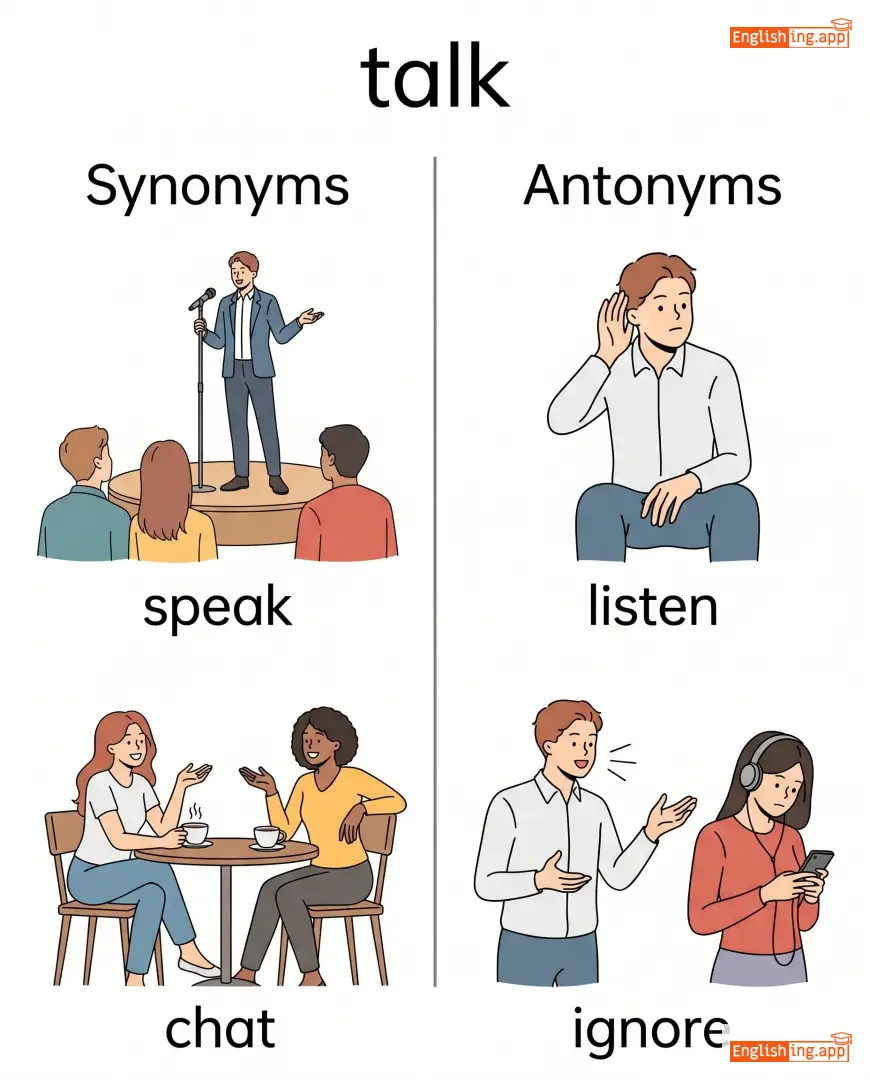
to speak; to communicate by speaking; to discuss
••••••
|
Let's talk about your future plans.
lɛts tɑk əbaʊt jɔʁ fytyʁ plɑ̃s.
••••••
|
我们来谈谈你的未来计划。
Wǒmen lái tán tán nǐ de wèilái jìhuà
••••••
|
- •••••• | - •••••• | - •••••• |
speak, communicate, converse, discuss
••••••
|
listen, be silent, stay quiet
••••••
|
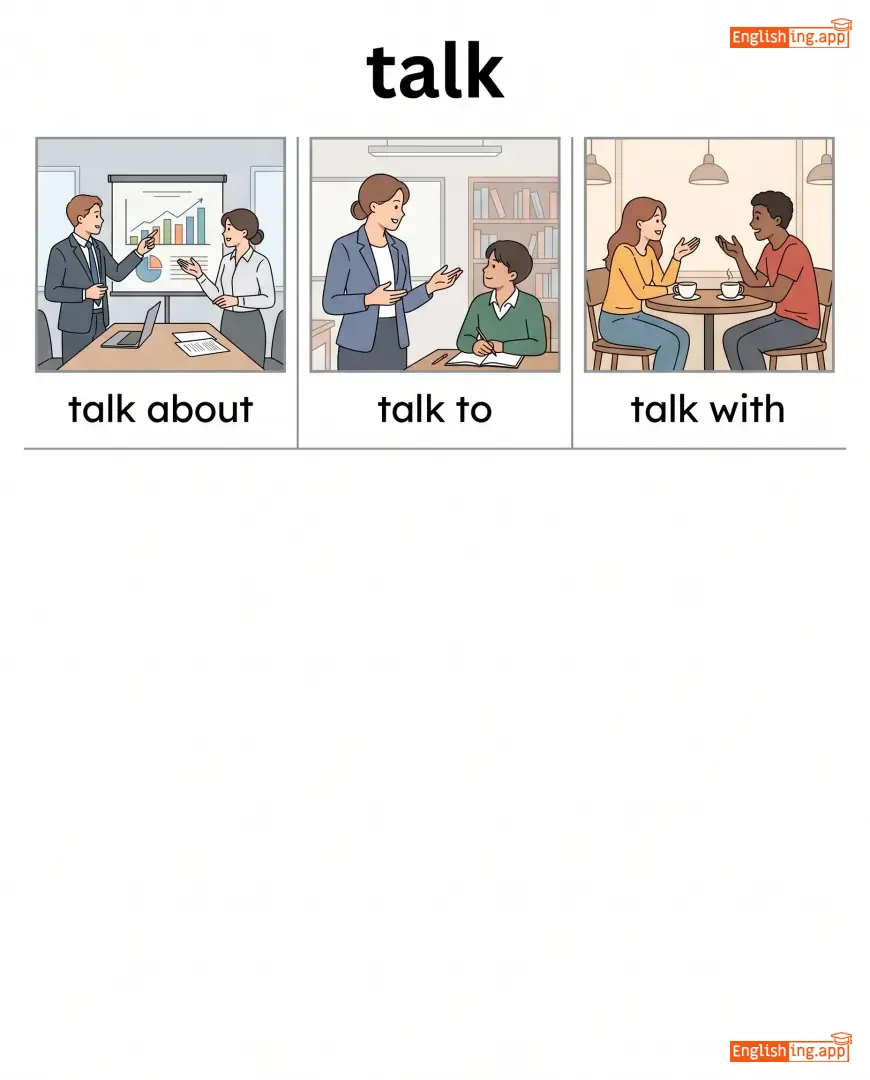
talk about, talk to, talk over, small talk, talk shop
••••••
|
No •••••• |
|
#4950
🗣️
|
/ˈtɔː.kə.tɪv/
adjective
(tɔːkətɪv)
••••••
|
- •••••• |
健谈的
jiàn tán de
••••••
|
- •••••• | - •••••• | - •••••• | - •••••• |
fond of talking; speaking freely and at length
••••••
|
My talkative neighbor loves to chat about everything. |
我健谈的邻居喜欢谈论一切。
Wǒ jiàn tán de línjū xǐ huān tán lùn yīqiè.
••••••
|
- •••••• | - •••••• | - •••••• |
chatty, verbose, loquacious, garrulous
••••••
|
quiet, silent, reserved, taciturn
••••••
|
talkative person, talkative mood, talkative nature
••••••
|
健谈的就像是'说得很健全', 也意味着会说很多话。
••••••
|
|
#4951
📏
|
/tɔːl/
adjective
(tǎo)
••••••
|
- •••••• |
高
gao
••••••
|
- •••••• | - •••••• | - •••••• | - •••••• |
having a greater than average height
••••••
|
He is the tallest player on the team. |
他是队里最高的球员。
Ta shi dui li zui gao de qiu yuan.
••••••
|
tall order |
a difficult or challenging task
••••••
|
艰巨的任务
jian ju de ren wu
••••••
|
high, lofty, towering, elevated
••••••
|
short, small, low
••••••
|
tall building, tall person, tall story, tall tree
••••••
|
Tall 意味着高,就像一个高塔。
••••••
|
|
#4952
🚙
|
/tæŋk/
noun
••••••
|
- •••••• | - •••••• | - •••••• | - •••••• | - •••••• | - •••••• |
a large, heavy military vehicle that moves on tracks and is armed with weapons
••••••
|
The army sent tanks to the front lines. |
- •••••• | - •••••• | - •••••• | - •••••• |
armored vehicle, combat vehicle, war machine
••••••
|
car, bicycle
••••••
|
military tank, battle tank, army tank
••••••
|
No •••••• |
|
#4953
🔨
|
/tæp/
verb
(tap)
••••••
|
- •••••• |
轻拍
qing pai
••••••
|
tapped
tapd
••••••
|
tapped
tapd
••••••
|
taps
taps
••••••
|
tapping
tapping
••••••
|
to strike something lightly, usually with a quick, sharp sound
••••••
|
He tapped on the door to get her attention.
他敲了敲门,引起她的注意。
••••••
|
他敲了敲门,引起她的注意。
Ta qiao le qiao men, yin qi ta de zhu yi.
••••••
|
- •••••• | - •••••• | - •••••• |
knock, hit, strike, pat
••••••
|
slam, pound
••••••
|
tap on, tap the table, tap gently
••••••
|
轻拍门: 轻拍以引起她的注意!
••••••
|
|
#4954
📼
|
/teɪp/
noun
(teip)
••••••
|
- •••••• |
胶带
jiaodai
••••••
|
- •••••• | - •••••• | - •••••• | - •••••• |
a long, narrow strip of material, often sticky on one side, used for fastening or sticking things together
••••••
|
I need some tape to seal this box. |
我需要一些胶带来封住这个箱子。
Wo xuyao yixie jiaodai lai fengzhu zhege xiangzi.
••••••
|
- •••••• | - •••••• | - •••••• |
adhesive, sticky tape, masking tape, sellotape
••••••
|
scissors, unstick
••••••
|
scotch tape, masking tape, duct tape, adhesive tape
••••••
|
Tape it up to seal it tight!
••••••
|
|
#4955
📝
|
/tɑːsk/
noun
(tɑːsk)
••••••
|
- •••••• |
任务
rènwu
••••••
|
- •••••• | - •••••• | - •••••• | - •••••• |
a piece of work or duty to be done
••••••
|
He completed the task before the deadline.
他在截止日期前完成了任务。
••••••
|
他在截止日期前完成了任务。
Tā zài jiézhǐ rìqī qián wánchéngle rènwu.
••••••
|
- •••••• | - •••••• | - •••••• |
job, duty, assignment, chore
••••••
|
neglect, inactivity
••••••
|
complete a task, task manager, important task
••••••
|
TASK - 想象你每天必须做的一些小 '任务'。
••••••
|
|
#4956
👅
|
/teɪst/
verb
(tèst)
••••••
|
|
品尝
pǐncháng
••••••
|
tasted
tèstəd
••••••
|
tasted
tèstəd
••••••
|
tastes
tèsts
••••••
|
tasting
tèstɪng
••••••
|
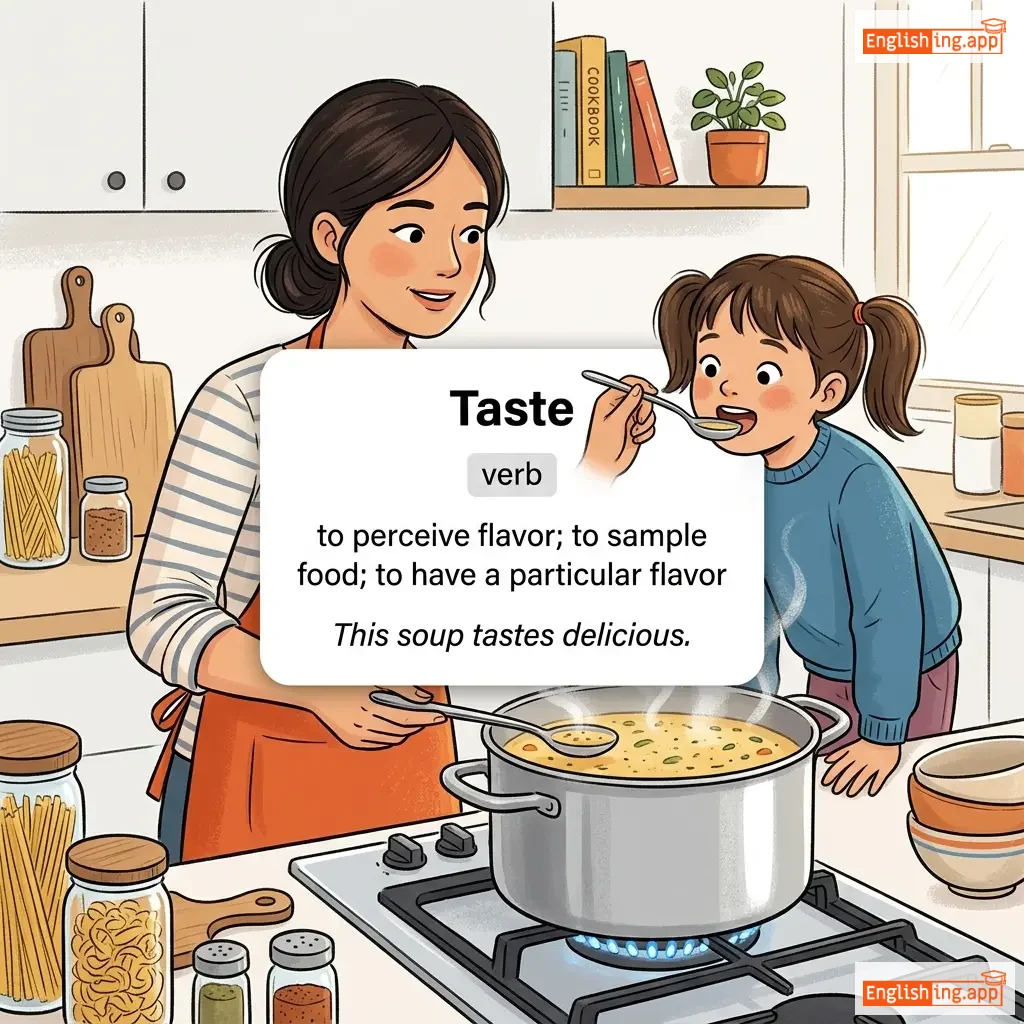
to perceive flavor; to sample food; to have a particular flavor
••••••
|
This soup tastes delicious.
这汤尝起来很美味。
••••••
|
这汤尝起来很美味。
Zhè tāng cháng qǐlái hěn měiwèi
••••••
|
- •••••• | - •••••• | - •••••• |
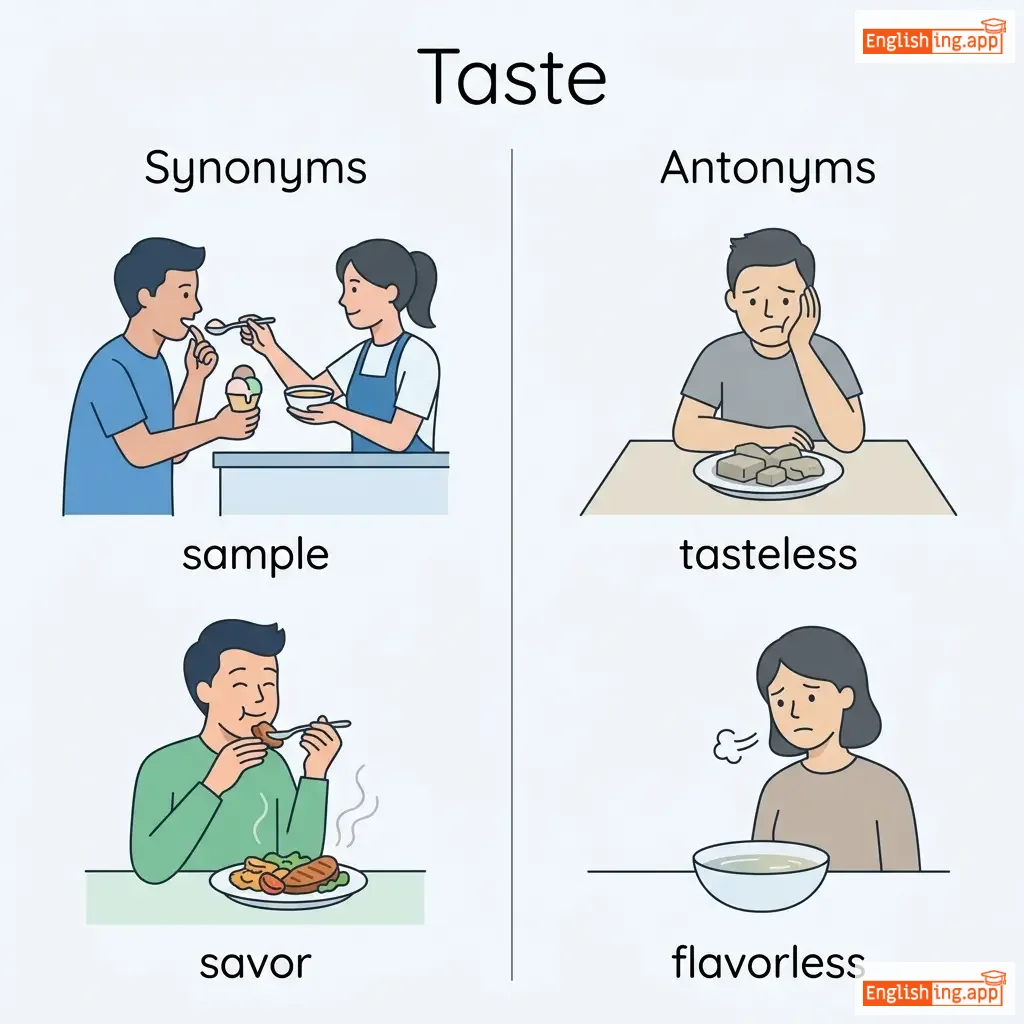
sample, savor, flavor, try
••••••
|
tasteless, flavorless
••••••
|
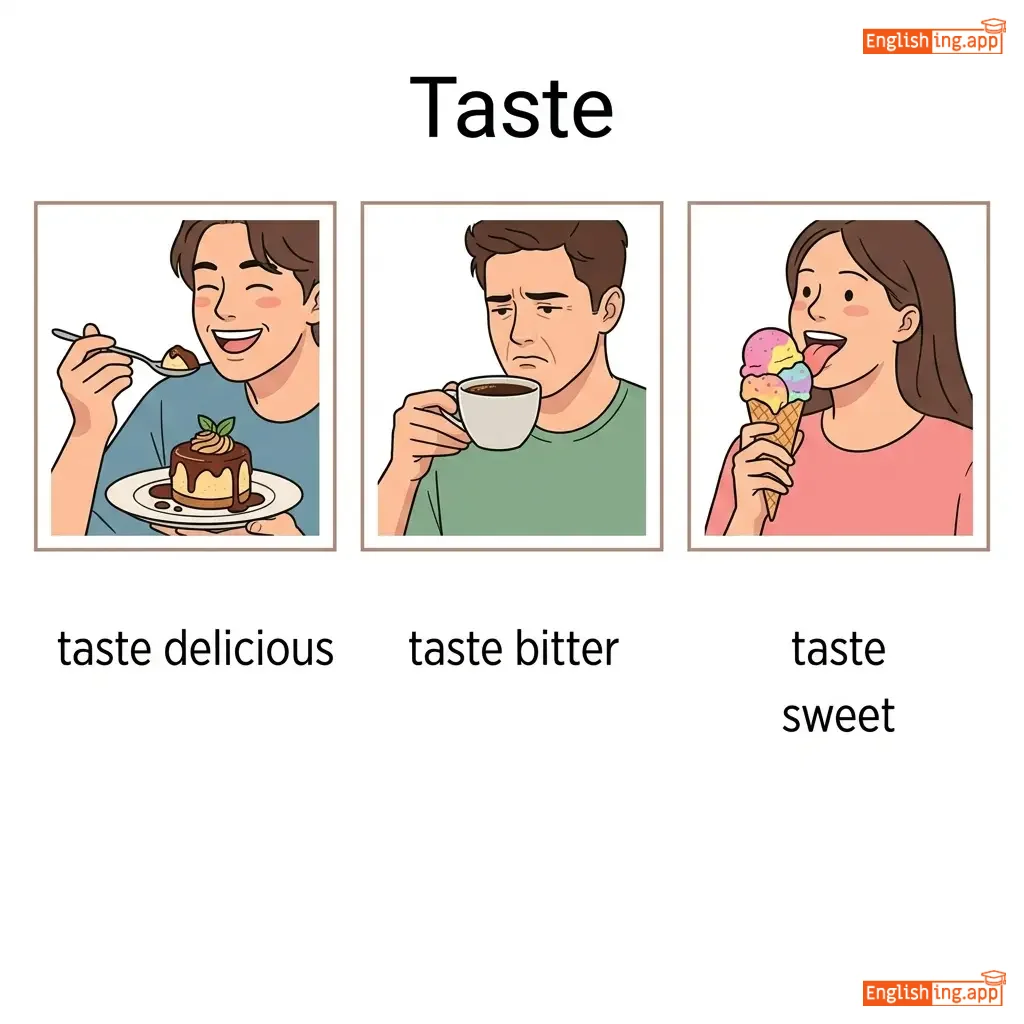
taste delicious, taste bitter, taste sweet, taste good, taste fresh
••••••
|
Taste in Chinese is '品尝', remember to savor each bite with 'pǐncháng'.
••••••
|
|
#4957
💸
|
/tæks/
noun
(tæks)
••••••
|
- •••••• |
税
shui
••••••
|
- •••••• | - •••••• | - •••••• | - •••••• |
a compulsory contribution to state revenue, typically levied on income or sales
••••••
|
The government increased the tax rate on luxury goods. |
政府提高了奢侈品的税率。
Zhengfu tigao le shechipin de shuìlǜ.
••••••
|
- •••••• | - •••••• | - •••••• |
levy, duty, tariff
••••••
|
exemption, relief
••••••
|
pay taxes, tax return, tax rate
••••••
|
TAX - 税就像是政府从你那里拿走的钱。
••••••
|
|
#4958
🚕
|
/ˈtæksi/
noun
(出租车)
••••••
|
- •••••• |
出租车
chuzuche
••••••
|
- •••••• | - •••••• | - •••••• | - •••••• |
A car licensed to transport passengers in exchange for payment of a fare.
••••••
|
We hailed a taxi to get to the airport.
我们叫了一辆出租车去机场。
••••••
|
我们叫了一辆出租车去机场。
Women jiao le yi liang chuzuche qu jichang.
••••••
|
- •••••• | - •••••• | - •••••• |
cab, taxicab, hack, ride
••••••
|
bus, train
••••••
|
call a taxi, taxi driver, taxi fare, taxi rank
••••••
|
出租车 = 快速到达目的地
••••••
|
|
#4959
👨💼
|
/ˈtæksˌpeɪər/
noun
(tæksˌpeɪər)
••••••
|
- •••••• |
纳税人
nàshuìrén
••••••
|
- •••••• | - •••••• | - •••••• | - •••••• |
a person who pays tax to the government
••••••
|
The taxpayers' money is used to fund public services.
纳税人的钱被用于资助公共服务。
••••••
|
纳税人的钱被用于资助公共服务。
Nàshuìrén de qián bèi yòng yú zīzhù gōnggòng fúwù.
••••••
|
- •••••• | - •••••• | - •••••• |
contributor, payer, revenue source
••••••
|
tax evader, non-payer
••••••
|
paying taxpayers, responsible taxpayers
••••••
|
TAXPAYER - 交税的人是'纳税人'。
••••••
|
|
#4960
🍵
|
/tiː/
noun
(茶)
••••••
|
- •••••• |
茶
cha
••••••
|
- •••••• | - •••••• | - •••••• | - •••••• |
a hot drink made by pouring boiling water onto dried leaves
••••••
|
We drink tea every morning at breakfast. |
我们每天早上在早餐时喝茶。
wǒmen měitiān zǎoshang zài zǎocān shí hē chá
••••••
|
- •••••• | - •••••• | - •••••• |
chai, beverage
••••••
|
coffee
••••••
|
hot tea, green tea, black tea, cup of tea
••••••
|
喝茶时,感受早晨的清新与活力。
••••••
|
|
#4961
👩🏫
|
/tiːtʃ/
verb
(tīch)
••••••
|
|
教授
jiàoshòu
••••••
|
taught
tòu
••••••
|
taught
tòu
••••••
|
teaches
tìchés
••••••
|
teaching
tīchīng
••••••
|
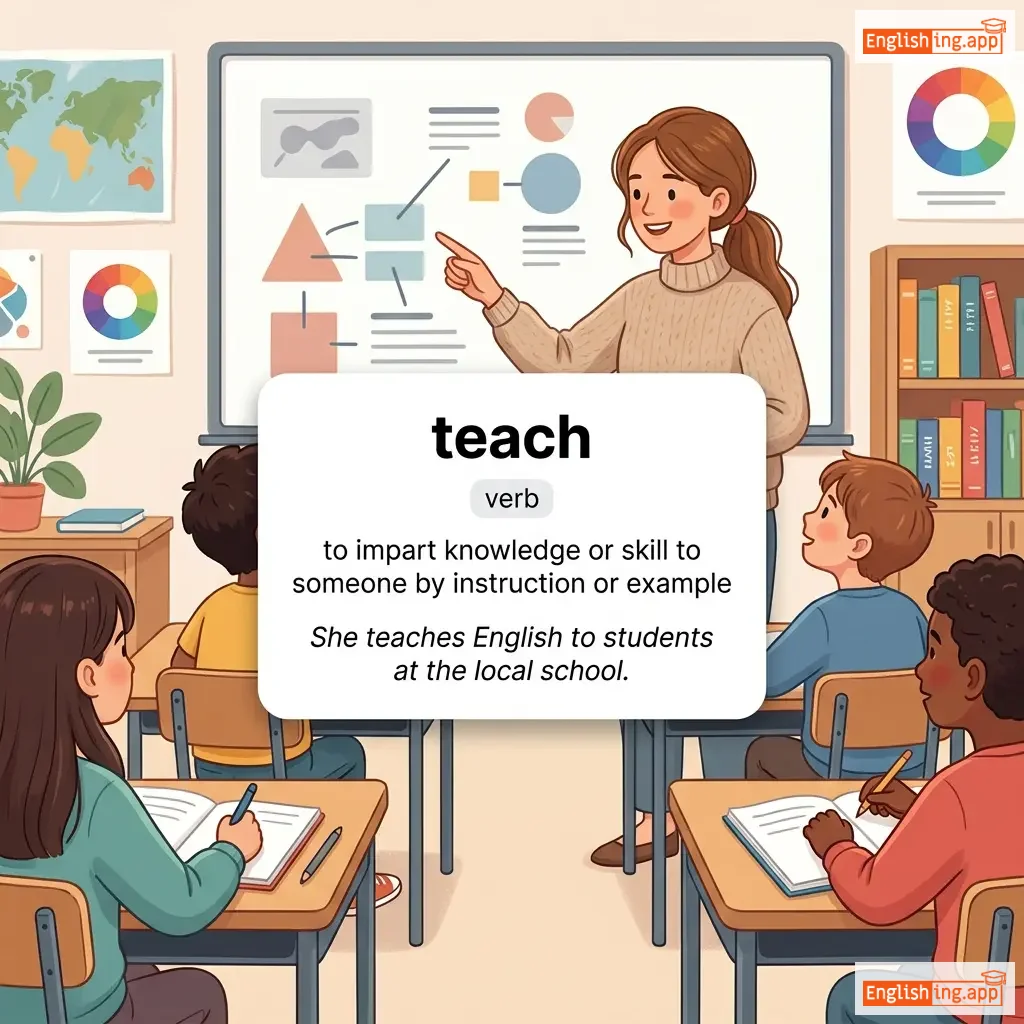
to give knowledge or instruction to someone; to show how to do something
••••••
|
She teaches English at the local school.
她在当地学校教英语。
••••••
|
她在当地学校教英语。
Tā zài dāngdì xuéxiào jiào yīngyǔ.
••••••
|
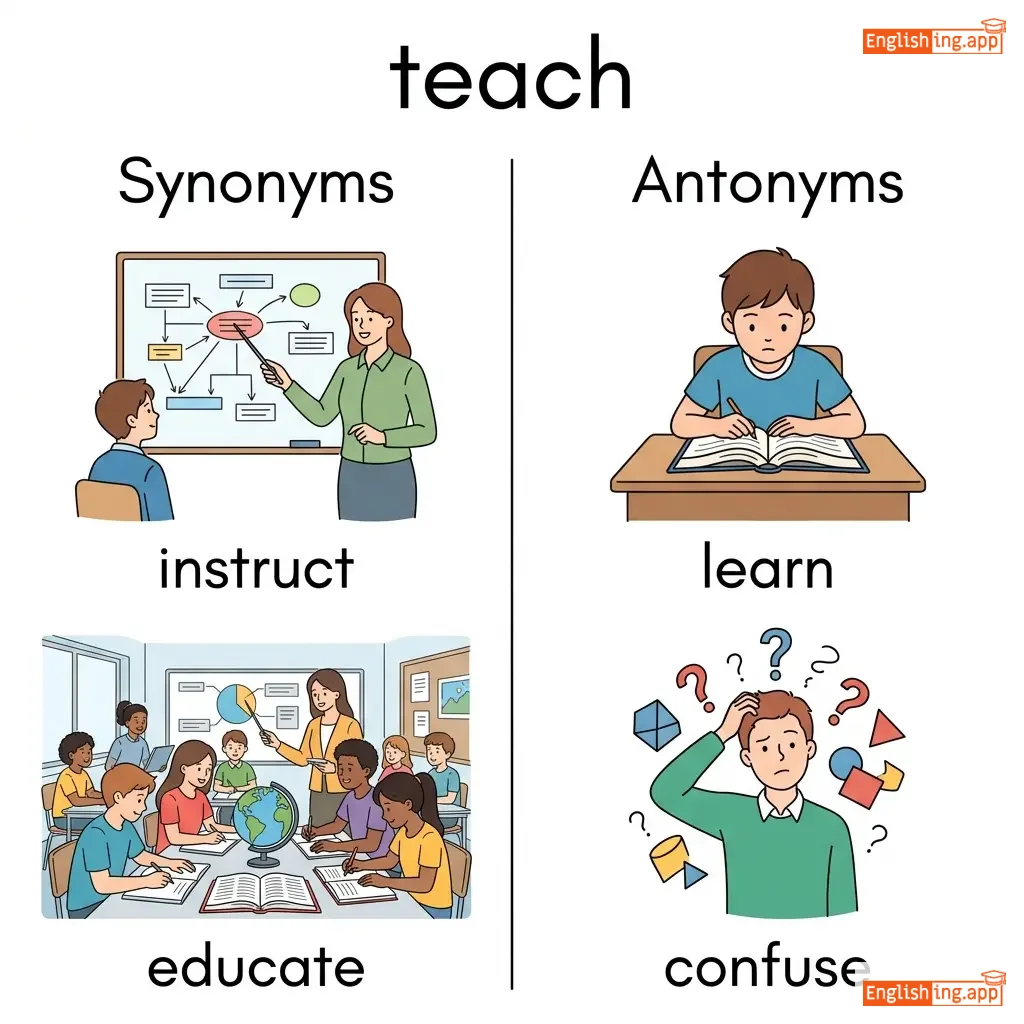
- •••••• | - •••••• | - •••••• |
instruct, educate, train, coach
••••••
|
learn, study
••••••
|
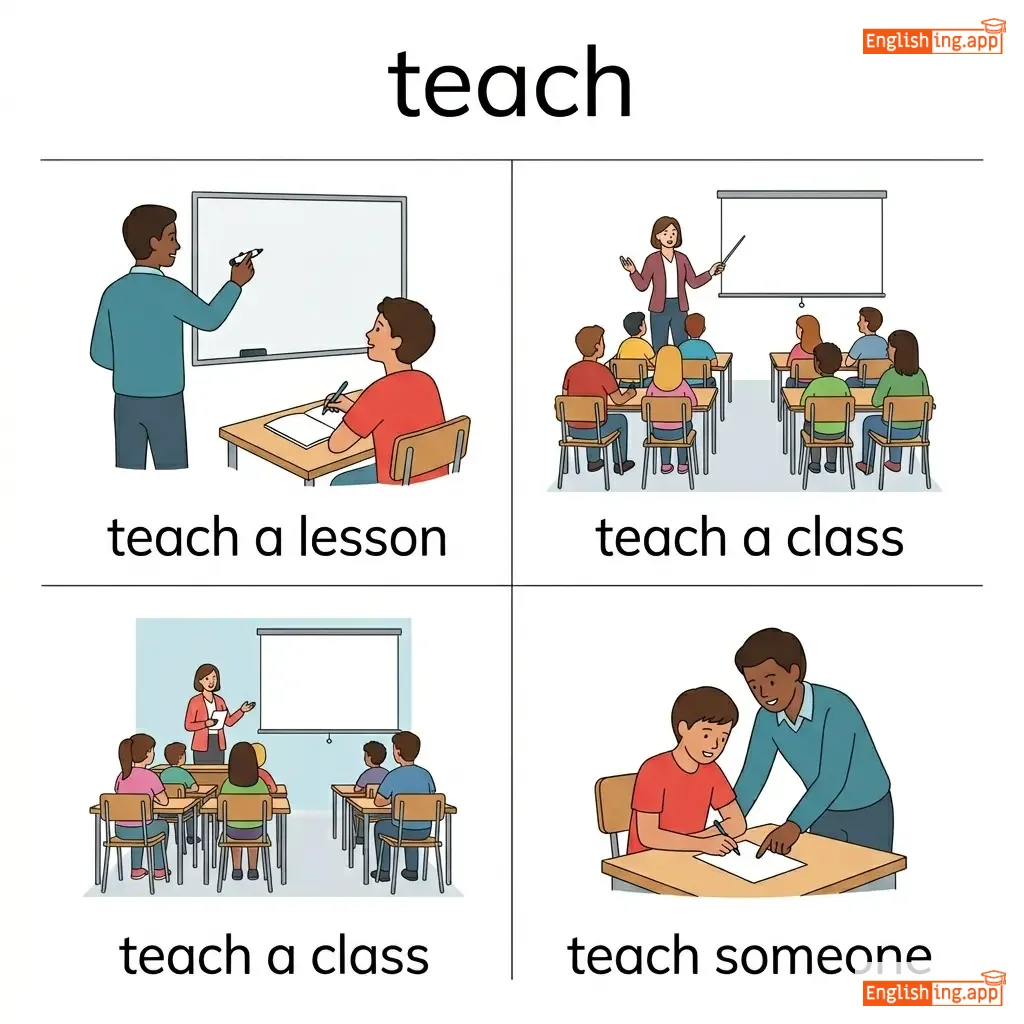
teach lessons, teach students, teach skills, teach children, teach courses, teach methods
••••••
|
tīch (teach) = 教授 (jiàoshòu), 就像在课堂上
••••••
|
|
#4962
👩🏫
|
/ˈtiː.tʃər/
noun
(tìchē)
••••••
|
- •••••• |
老师
lǎoshī
••••••
|
- •••••• | - •••••• | - •••••• | - •••••• |
a person who teaches students in a school or other educational institution
••••••
|
The teacher explained the math problem clearly to the students.
老师清楚地向学生解释了数学问题。
••••••
|
老师清楚地向学生解释了数学问题。
Lǎoshī qīngchǔ de xiàng xuéshēng jiěshìle shùxué wèntí.
••••••
|
- •••••• | - •••••• | - •••••• |
educator, instructor, tutor, professor
••••••
|
student, pupil, learner
••••••
|
school teacher, math teacher, good teacher, experienced teacher
••••••
|
老师是那位帮助学生学习新知识的人。
••••••
|
|
#4963
👩🏫
|
/ˈtiːtʃɪŋ/
noun
(tiching)
••••••
|
- •••••• |
教学
jiaoxue
••••••
|
- •••••• | - •••••• | - •••••• | - •••••• |
the profession or practice of teaching
••••••
|
Teaching is a noble profession.
教学是一项高尚的职业。
••••••
|
教学是一项高尚的职业。
Jiaoxue shi yi xiang gaoshang de zhiye.
••••••
|
- •••••• | - •••••• | - •••••• |
education, instruction, tutoring, coaching
••••••
|
learning, ignorance
••••••
|
teaching method, teaching style, teaching profession, teaching material
••••••
|
Teaching builds strong foundations for success!
••••••
|
|
#4964
👥
|
/tiːm/
noun
(tī mù)
••••••
|
- •••••• |
团队
tuánduì
••••••
|
- •••••• | - •••••• | - •••••• | - •••••• |
a group of people working together towards a common goal
••••••
|
Our team won the match after a great effort. |
我们的团队在一次巨大努力后赢得了比赛。
Wǒmen de tuánduì zài yīcì jùdà nǔlì hòu yíngdéle bǐsài.
••••••
|
- •••••• | - •••••• | - •••••• |
group, squad, crew, unit
••••••
|
individual, opponent
••••••
|
work in a team, team effort, football team, team leader
••••••
|
TEAM – 一起努力,成就更多!
••••••
|
|
#4965
🤝
|
/ˈtiːmmeɪt/
noun
(tīmèit)
••••••
|
- •••••• |
队友
duìyǒu
••••••
|
- •••••• | - •••••• | - •••••• | - •••••• |
a member of the same team
••••••
|
He congratulated his teammate after scoring the goal.
他在进球后祝贺了他的队友。
••••••
|
他在进球后祝贺了他的队友。
Tā zài jìnqiú hòu zhùhè le tā de duìyǒu.
••••••
|
- •••••• | - •••••• | - •••••• |
colleague, partner, associate, collaborator, companion
••••••
|
opponent, rival
••••••
|
team member, loyal teammate, supportive teammate, sports teammate
••••••
|
队友就是team的mate — teammate!
••••••
|
|
#4966
💧
|
/tɪər/ (noun: liquid) /tɛər/ (verb: rip)
verb, noun
••••••
|
|
- •••••• |
tore
••••••
|
torn
••••••
|
tears
••••••
|
tearing
••••••
|
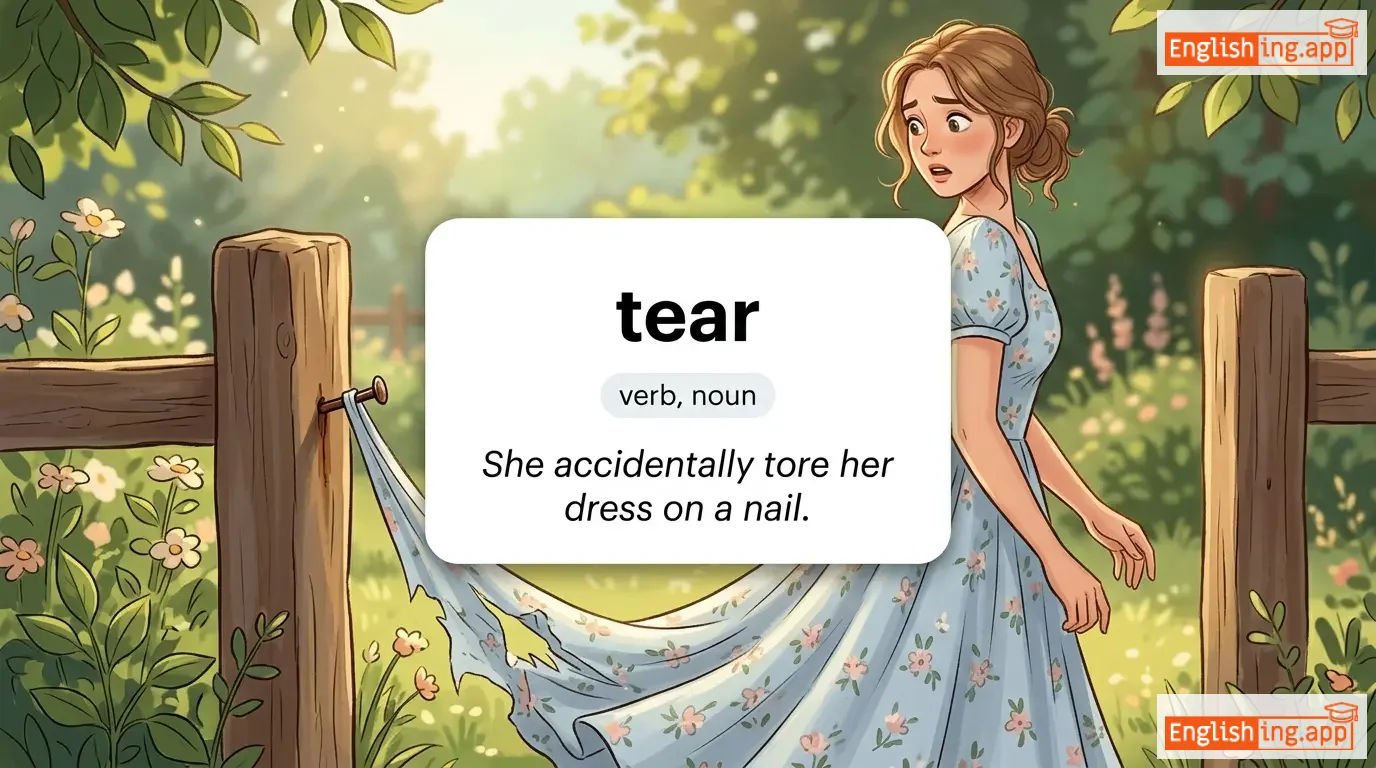
As a verb: to pull apart or rip something. As a noun: a drop of clear salty liquid produced by glands in your eyes.
••••••
|
She accidentally tore her dress on a nail. |
- •••••• |
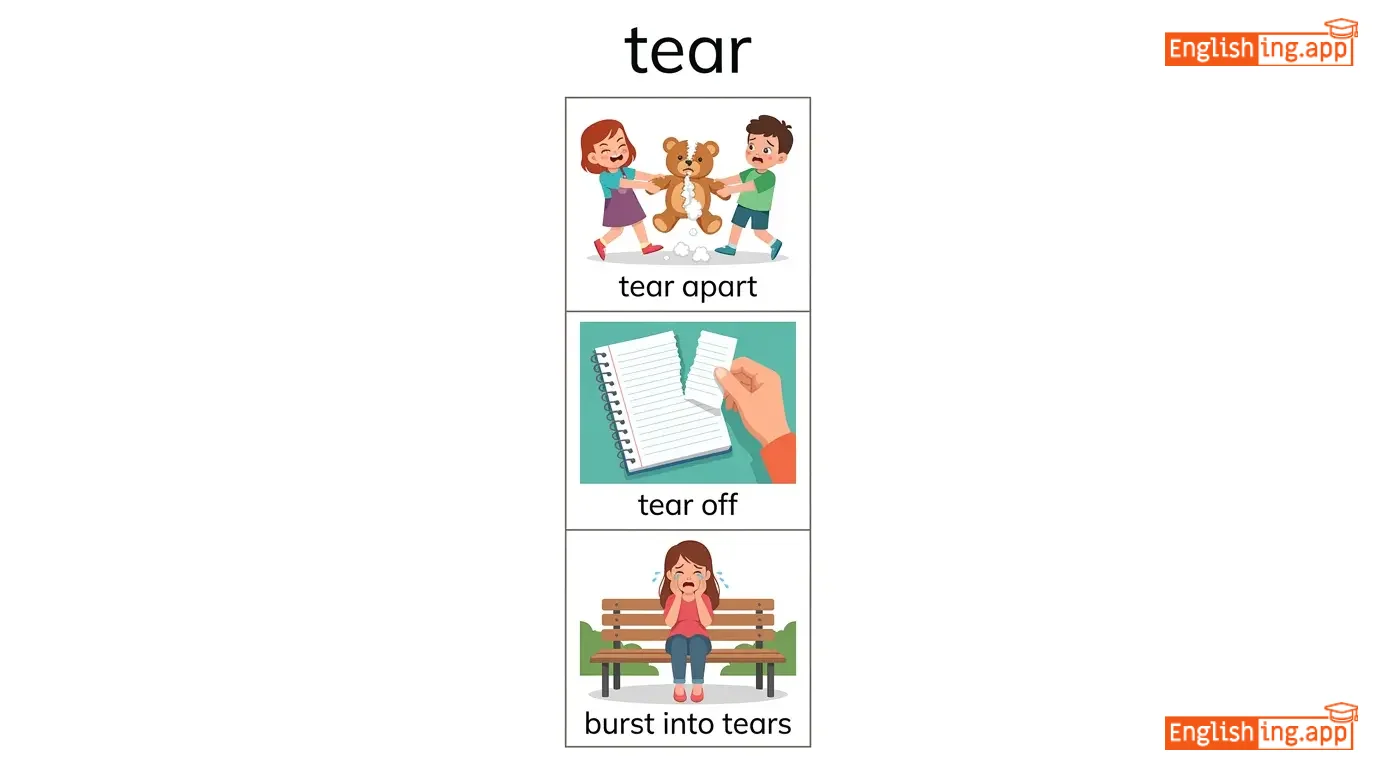
tear apart |
To destroy, separate, or damage severely.
••••••
|
- •••••• |
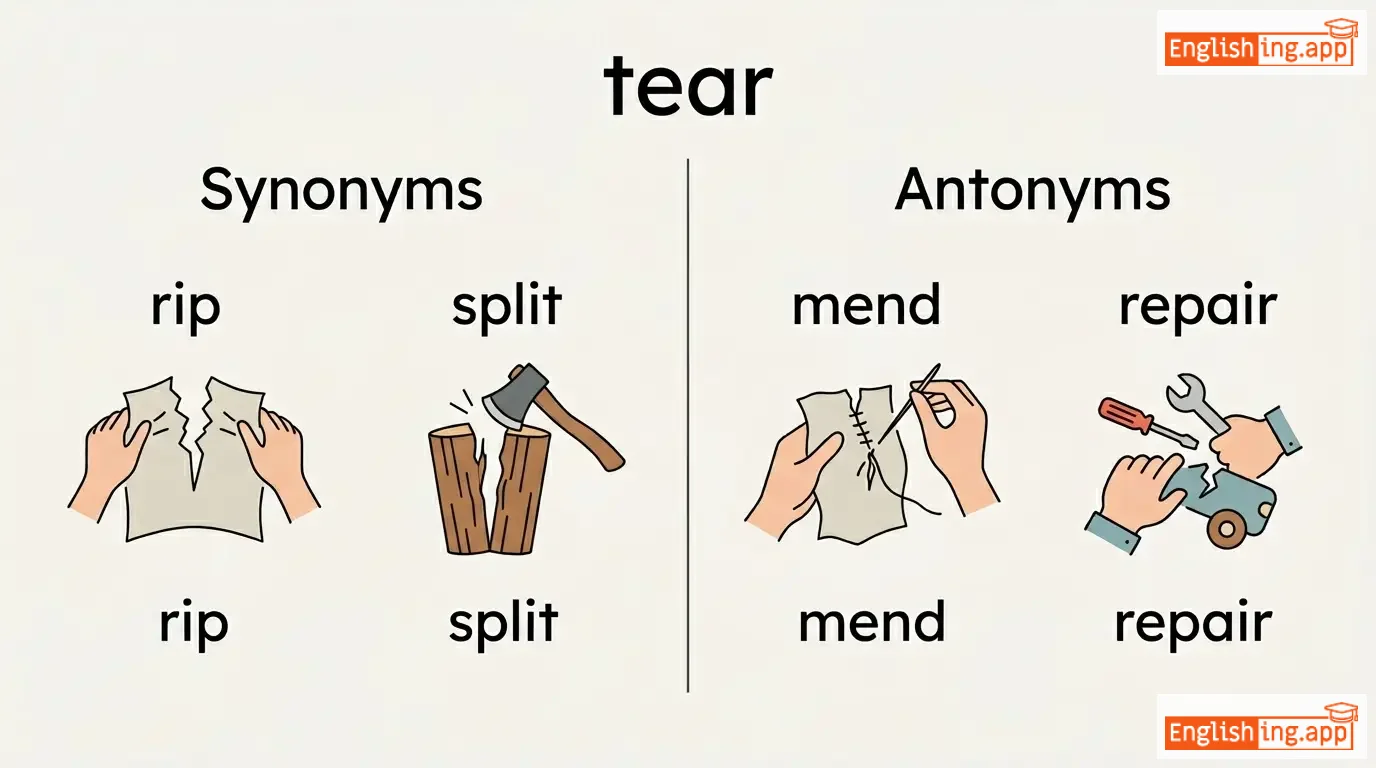
rip, split, shred, rend, pull
••••••
|
mend, repair
••••••
|
tear apart, tear off, burst into tears, tear down
••••••
|
No •••••• |
|
#4967
🥄
|
/ˈtiːspuːn/
noun
(海皮尼斯)
••••••
|
- •••••• |
幸福
xìngfú
••••••
|
- •••••• | - •••••• | - •••••• | - •••••• |
a small spoon used for stirring drinks or eating soft foods, or for measuring small amounts of ingredients.
••••••
|
Add a teaspoon of sugar to the tea. |
她在收到奖项时无法掩饰自己的幸福。
Tā zài shōu dào jiǎngxiàng shí wúfǎ yǎnshì zìjǐ de xìngfú.
••••••
|
- •••••• | - •••••• | - •••••• |
spoon, small spoon, measure spoon
••••••
|
- •••••• |
teaspoon of sugar, teaspoon measure, teaspoon full
••••••
|
happiness 代表 '幸福' 在中文。
••••••
|
|
#4968
⚙️
|
/ˈteknɪkəl/
adjective
(技术)
••••••
|
- •••••• |
技术的; 专业的;
jìshù de; zhuānyè de
••••••
|
- •••••• | - •••••• | - •••••• | - •••••• |
relating to or involving special skills or knowledge; requiring specialized training
••••••
|
The manual contains technical instructions for operating the machine.
手册包含操作机器的技术说明。
••••••
|
手册包含操作机器的技术说明。
Shǒucè bāokuò cāozuò jīqì de jìshù shuōmíng.
••••••
|
- •••••• | - •••••• | - •••••• |
specialized, scientific, technological, professional
••••••
|
simple, basic, general, non-technical
••••••
|
technical skills, technical problem, technical support, technical knowledge
••••••
|
技术是指专业的技术知识和技能。
••••••
|
|
#4969
🧘
|
/tɛkˈniːk/
noun
(tɛkˈnik)
••••••
|
- •••••• |
技巧
jiqiao
••••••
|
- •••••• | - •••••• | - •••••• | - •••••• |
A particular way of carrying out a task, especially with skill.
••••••
|
She learned a new breathing technique in yoga class. |
她在瑜伽课上学会了一种新的呼吸技巧。
Tā zài yújiā kè shàng xuéhuìle yī zhǒng xīn de hūxī jìqiǎo.
••••••
|
by technique |
Done using a specific method or skill.
••••••
|
通过技巧
Tōngguò jìqiǎo
••••••
|
method, procedure, style, craft, skill
••••••
|
incompetence, inability
••••••
|
teaching technique, special technique, breathing technique, painting technique
••••••
|
技巧意味着方法,技巧让工作更轻松。
••••••
|
|
#4970
💻
|
/ˌteknəˈlɒdʒɪkəl/
adjective
••••••
|
|
- •••••• | - •••••• | - •••••• | - •••••• | - •••••• |
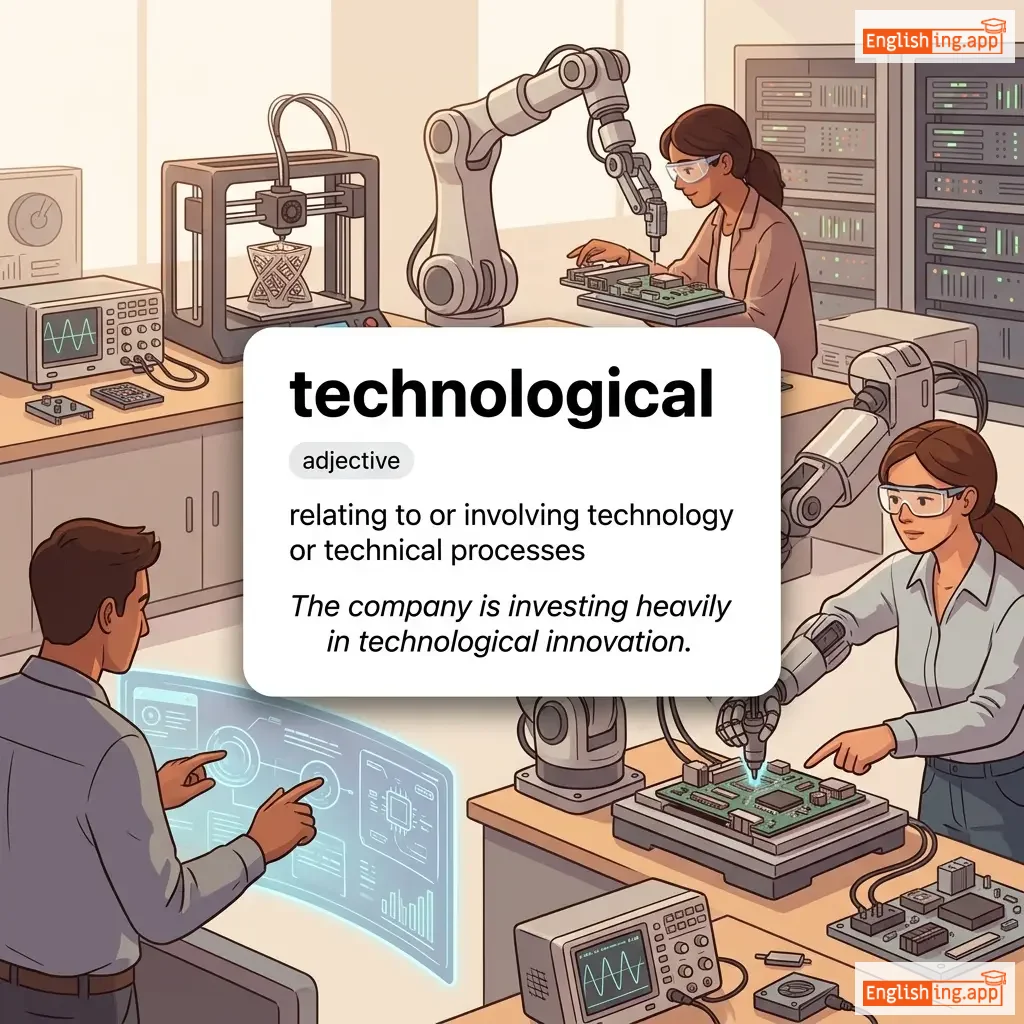
relating to or involving technology or technical processes
••••••
|
The company is investing heavily in technological innovation. |
- •••••• |
technological advancement |
progress or improvement in technology over time
••••••
|
- •••••• |
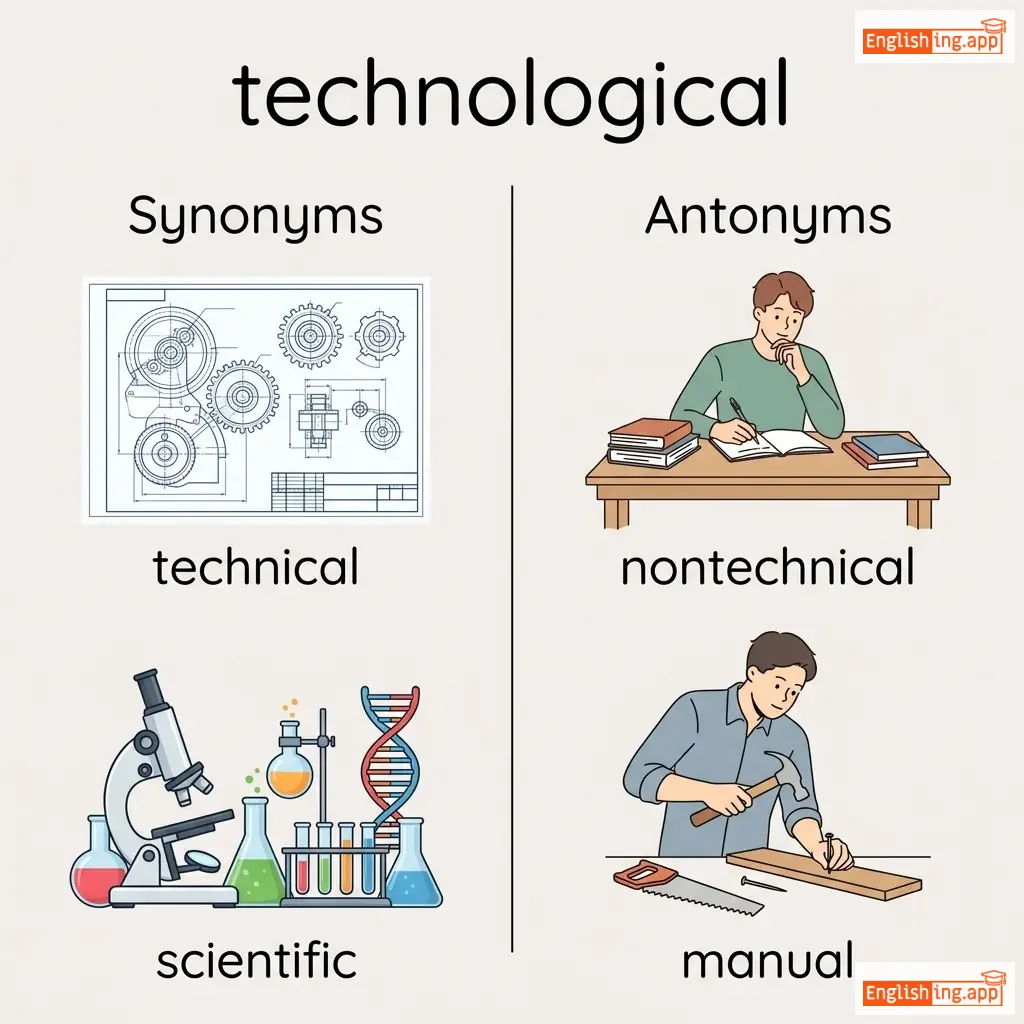
technical, scientific, industrial, mechanical, digital
••••••
|
nontechnical, manual
••••••
|
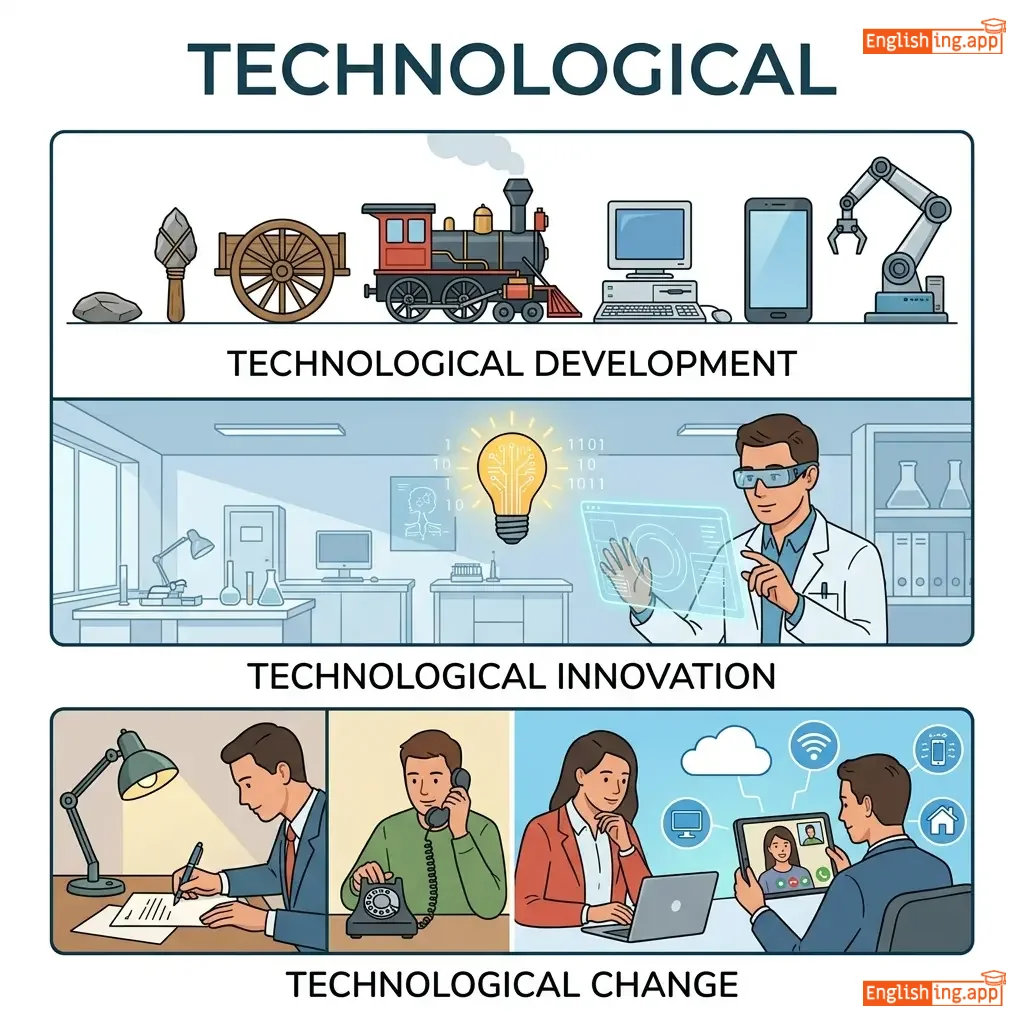
technological development, technological innovation, technological change, technological progress
••••••
|
No •••••• |
|
#4971
💻
|
/tɛkˈnɒlədʒi/
noun
(tèknóulóujī)
••••••
|
|
技术
jishu
••••••
|
- •••••• | - •••••• | - •••••• | - •••••• |
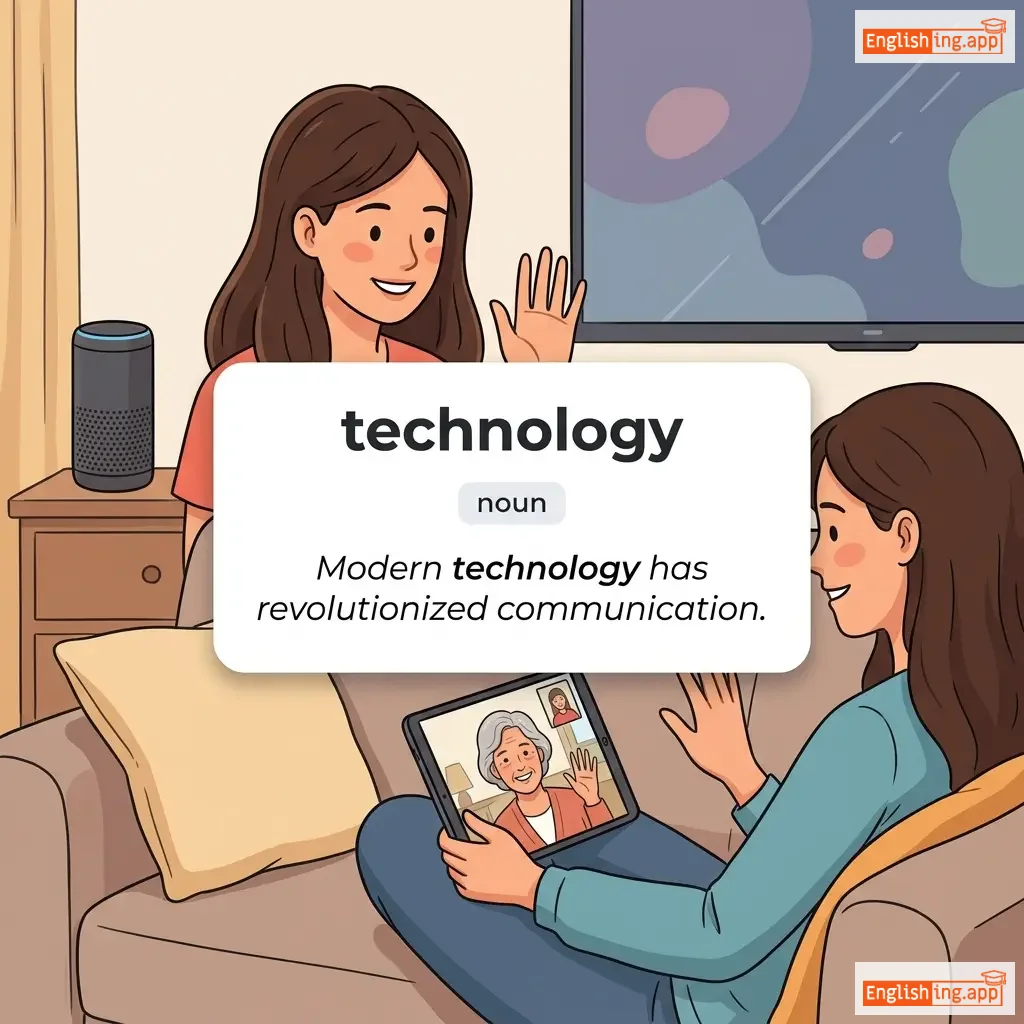
the application of scientific knowledge for practical purposes, especially in industry
••••••
|
Modern technology has revolutionized communication. |
现代技术已经彻底改变了通讯。
Xiandai jishu yijing chedi gaibian le tongxun.
••••••
|
cutting-edge technology |
the most advanced and innovative technology available
••••••
|
尖端技术
jianduan jishu
••••••
|
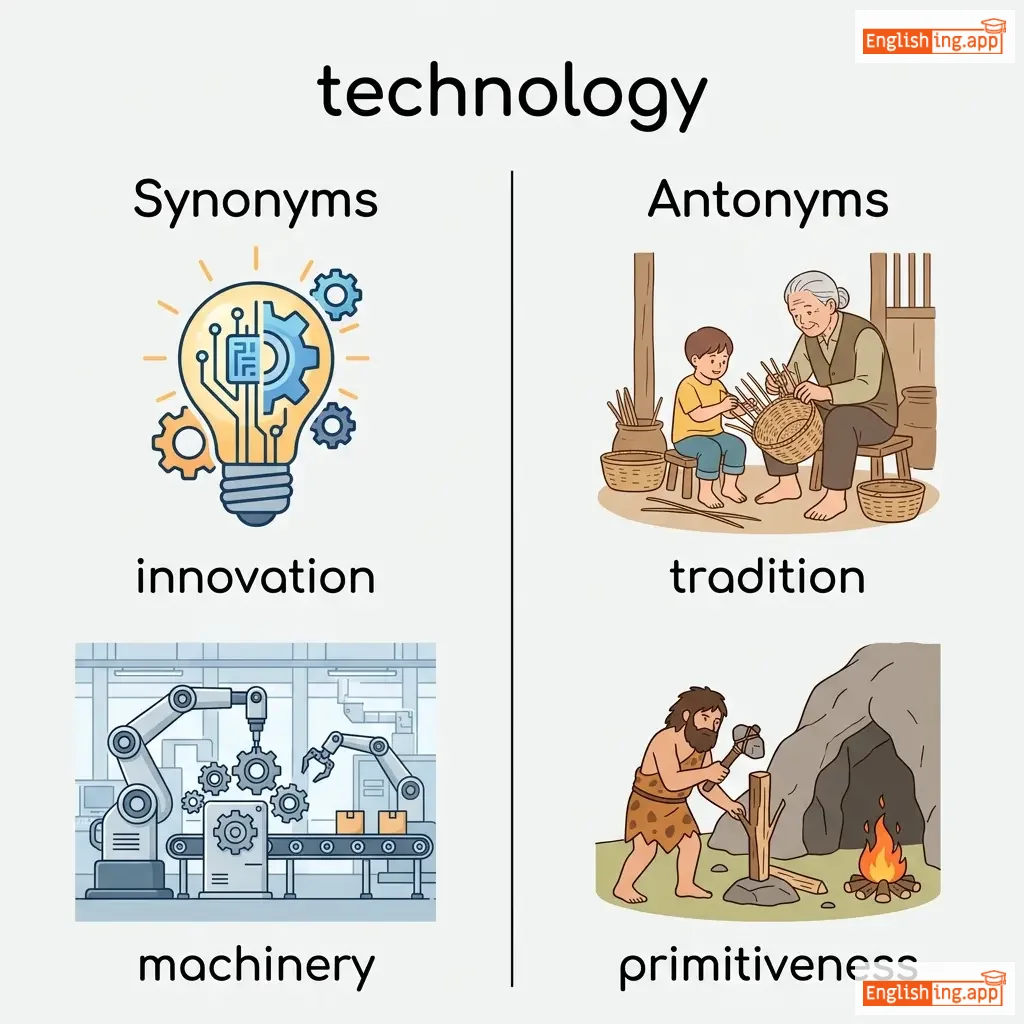
innovation, machinery, engineering, science, technique
••••••
|
tradition, primitiveness, simplicity
••••••
|
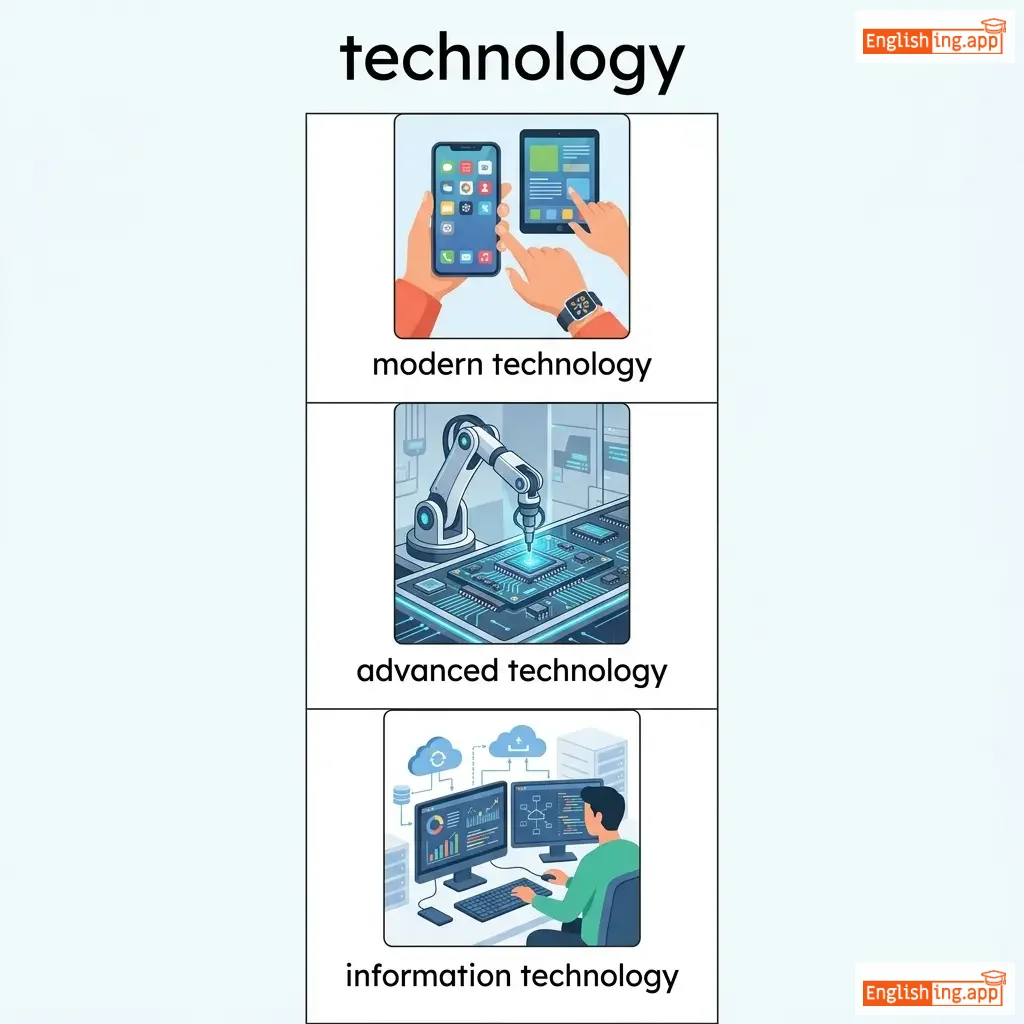
modern technology, advanced technology, information technology, use of technology
••••••
|
Tech (技术) + 知识 = 技术
••••••
|
|
#4972
🧑🦱
|
/tiːn/
noun
(青少年)
••••••
|
- •••••• |
青少年
qing shaonian
••••••
|
- •••••• | - •••••• | - •••••• | - •••••• |
a person aged between 13 and 19 years.
••••••
|
He's a teenager who loves sports.
他是一个喜欢运动的青少年。
••••••
|
他是一个喜欢运动的青少年。
Ta shi yi ge xihuan yundong de qing shaonian.
••••••
|
- •••••• | - •••••• | - •••••• |
adolescent, young person, minor
••••••
|
adult, senior, elder
••••••
|
teen years, teen life, teenage
••••••
|
Teen is the age when you are 'teen' years old!
••••••
|
|
#4973
👦
|
/ˈtiːneɪdʒər/
noun
(青少年)
••••••
|
- •••••• |
青少年
qīng shàonián
••••••
|
- •••••• | - •••••• | - •••••• | - •••••• |
a person aged between 13 and 19 years.
••••••
|
Teenagers often enjoy hanging out with friends.
青少年常常喜欢和朋友一起度过时光。
••••••
|
青少年常常喜欢和朋友一起度过时光。
Qīng shàonián chángcháng xǐhuān hé péngyǒu yīqǐ dùguò shíguāng.
••••••
|
- •••••• | - •••••• | - •••••• |
adolescent, youth, young person
••••••
|
adult, senior, elder
••••••
|
teenager life, teenage dreams, teenager problems
••••••
|
Teenager is just 'Teen' plus 'ager' – a person of that age!
••••••
|
|
#4974
📞
|
/ˈtɛlɪfəʊn/
noun
(电话)
••••••
|
- •••••• |
电话
dianhua
••••••
|
- •••••• | - •••••• | - •••••• | - •••••• |
a system for transmitting voices over a distance using wire or radio, typically for communication.
••••••
|
I need to make a telephone call to my friend.
我需要给我的朋友打一个电话。
••••••
|
我需要给我的朋友打一个电话。
Wo xuyao gei wo de pengyou da yige dianhua.
••••••
|
- •••••• | - •••••• | - •••••• |
phone, handset, mobile, communication device
••••••
|
- •••••• |
telephone call, telephone line, make a telephone call
••••••
|
Telephone is the device you use for a 'tele' call!
••••••
|
Vocabulary Quiz
Test your vocabulary by matching words with their translations or meanings.
Login to take the quiz
Comments (0)
Share your thoughts and join the discussion.
Join the discussion by logging in
Login to CommentNo comments yet
Be the first to share your thoughts!