



Swipe left or right, or use the buttons. Tap image to zoom.
例句翻译
单词
Lesson 1Lesson 1 - 遮罩切换
|
表情符号
|
单词 | Images | 翻译 | 过去时 | 过去分词 | 第三人称单数 | 动名词 | 含义 | 例句 | 例句翻译 | 示例表达 | 示例表达含义 | 示例表达翻译 | 同义词 | 反义词 | 搭配词 | 助记符 |
|---|---|---|---|---|---|---|---|---|---|---|---|---|---|---|---|---|---|
|
#1
😲
|
/əˈbæk/
adverb
(阿巴克)
••••••
|
- •••••• |
吃惊的
chijing de
••••••
|
- •••••• | - •••••• | - •••••• | - •••••• |
by surprise; unexpectedly
••••••
|
I was taken aback by his sudden announcement. |
我被他突然的宣布吓到了。
Wǒ bèi tā túrán de xuānbù xià dào le.
••••••
|
- •••••• | - •••••• | - •••••• |
surprised, startled, shocked
••••••
|
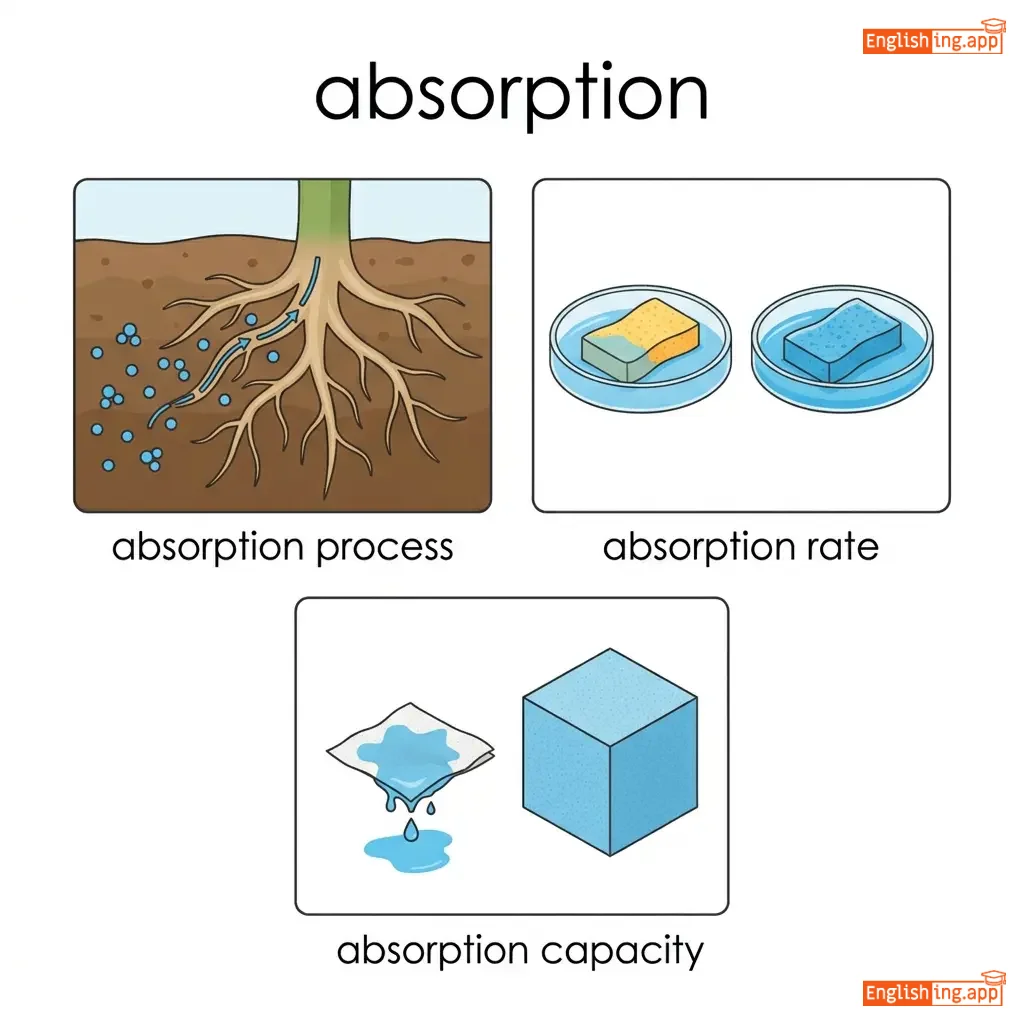
prepared, expected, unsurprised
••••••
|
taken aback, caught aback, put aback
••••••
|
‘Aback’让我们吃惊,像一个突如其来的闪电!
••••••
|
|
#2
🏃
|
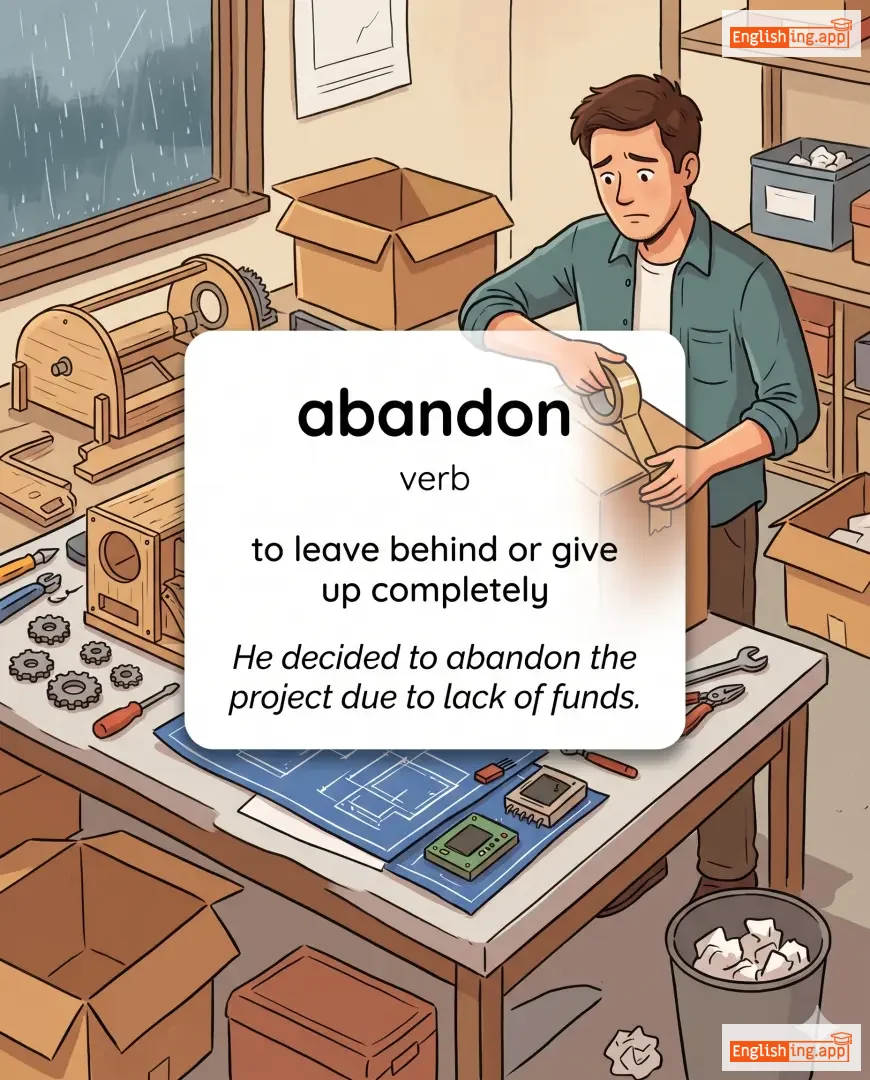
/əˈbændən/
verb
(放弃)
••••••
|
|
放弃
fangqi
••••••
|
abandoned
放弃
••••••
|
abandoned
放弃
••••••
|
abandons
放弃
••••••
|
abandoning
放弃
••••••
|
to leave behind or give up completely
••••••
|
He decided to abandon the project due to lack of funds.
他决定由于缺乏资金而放弃这个项目。
••••••
|
他决定由于缺乏资金而放弃这个项目。
Ta jueding youyu quefa zijin er fangqi zhege xiangmu.
••••••
|
abandon ship
弃船
••••••
|
to leave a failing situation quickly
••••••
|
弃船
qi chuan
••••••
|
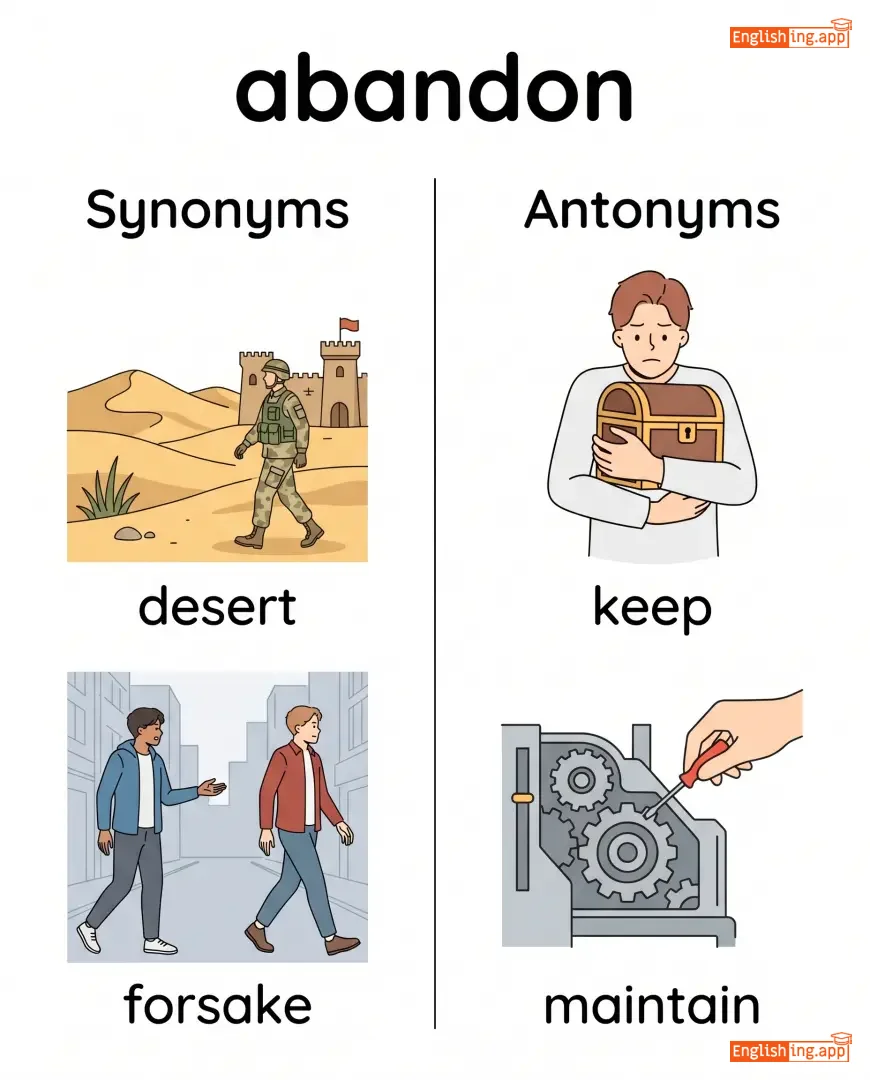
desert, forsake, leave, quit, relinquish
••••••
|
keep, maintain, continue
••••••
|
abandon hope, abandon plan, abandon effort, abandon project
••••••
|
放弃就是离开,就像 BandOn(邦顿)离开一样。
••••••
|
|
#3
🚪
|
/əˈbændənmənt/
noun
(阿班顿门特)
••••••
|
- •••••• |
遗弃
yiqi
••••••
|
- •••••• | - •••••• | - •••••• | - •••••• |
the act of leaving someone or something behind completely; the state of being deserted
••••••
|
The child suffered deep emotional pain because of abandonment.
泽 恰尔德 萨弗德 迪普 伊莫申奈尔 佩因 比考兹 阿班顿门特。
••••••
|
由于被遗弃,这个孩子承受了深刻的情感痛苦。
youyu bei yiqi, zhege haizi chengshoule shenke de qinggan tongku
••••••
|
- •••••• | - •••••• | - •••••• |
desertion, neglect, forsaking, withdrawal, rejection
••••••
|
care, protection, support
••••••
|
fear of abandonment, emotional abandonment, abandonment issues, child abandonment
••••••
|
abandonment 就是 被 yiqi(遗弃)
••••••
|
|
#4
🌧️
|
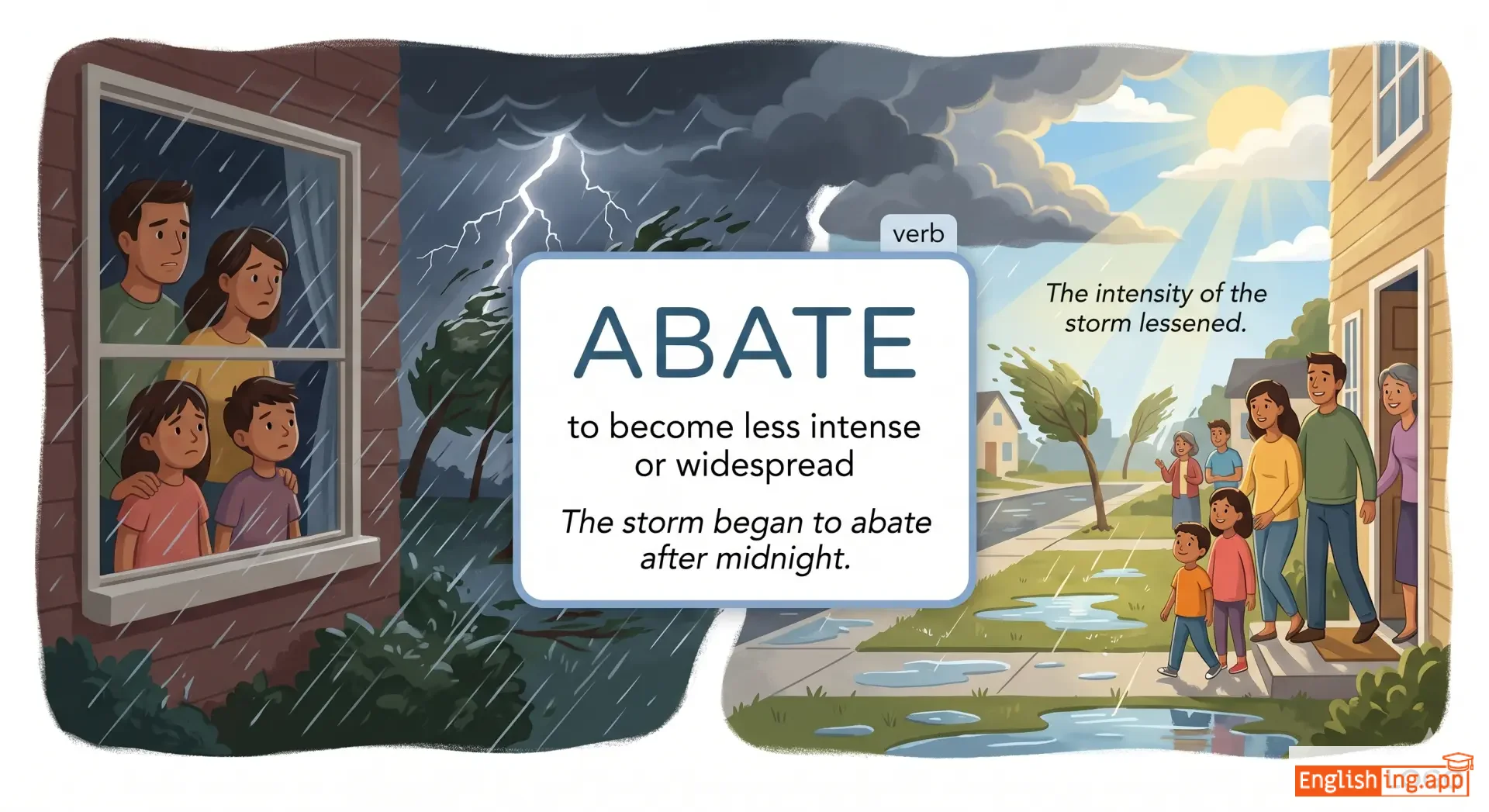
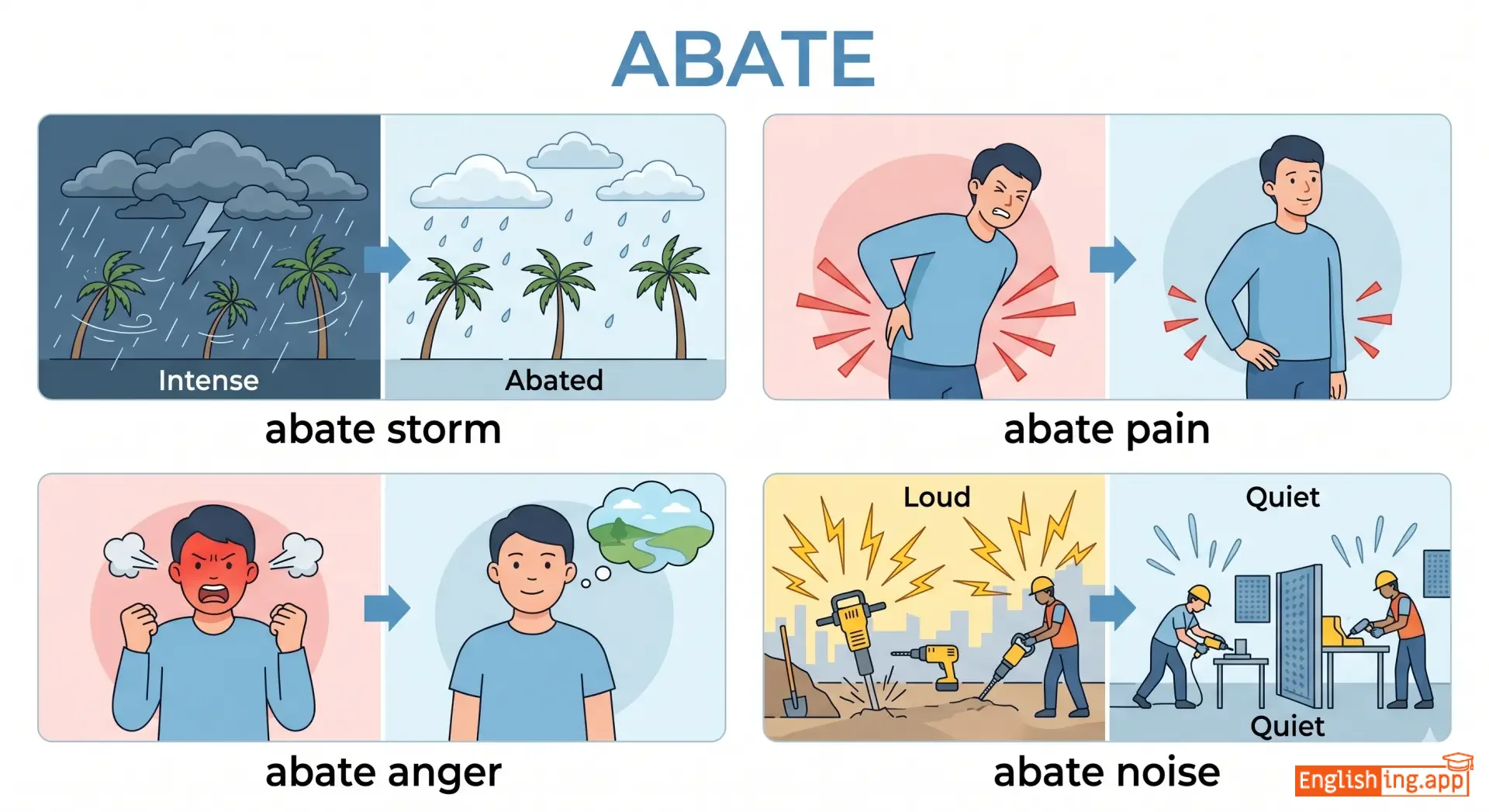
/əˈbeɪt/
verb
(阿贝特)
••••••
|
|
减少
jiǎnshǎo
••••••
|
abated
阿贝特德
••••••
|
abated
阿贝特德
••••••
|
abates
阿贝特斯
••••••
|
abating
阿贝特英
••••••
|
to become less intense or widespread
••••••
|
The storm began to abate after midnight.
暴风雨在午夜后开始减弱。
••••••
|
暴风雨在午夜后开始减弱。
Bàofēngyǔ zài wǔyè hòu kāishǐ jiǎnruò.
••••••
|
- •••••• | - •••••• | - •••••• |
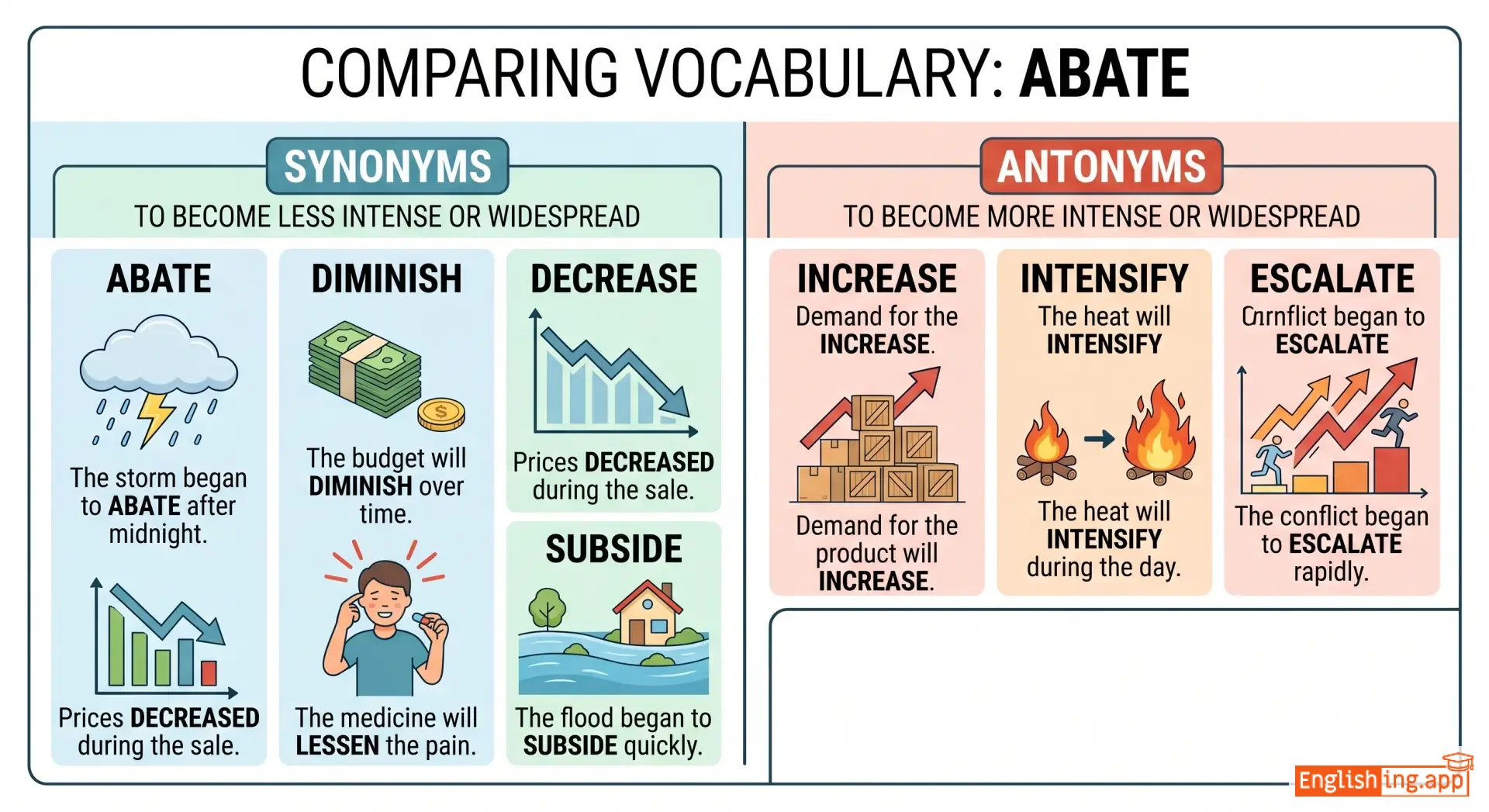
diminish, decrease, lessen, subside
••••••
|
increase, intensify, escalate
••••••
|
abate storm, abate pain, abate anger, abate noise
••••••
|
No •••••• |
|
#5
✂️
|
/əˈbriːvieɪt/
verb
(缩写)
••••••
|
- •••••• |
缩写
suōxiě
••••••
|
abbreviated
缩写过
••••••
|
abbreviated
缩写过
••••••
|
abbreviates
缩写
••••••
|
abbreviating
缩写着
••••••
|
To shorten a word, phrase, or text by leaving out letters or parts.
••••••
|
We often abbreviate 'Doctor' to 'Dr'.
我们常常把 'Doctor' 缩写成 'Dr.'。
••••••
|
我们常常把 'Doctor' 缩写成 'Dr.'。
Wǒmen chángcháng bǎ 'Doctor' suōxiě chéng 'Dr.'
••••••
|
- •••••• | - •••••• | - •••••• |
shorten, condense, contract, reduce, cut
••••••
|
expand, lengthen, extend
••••••
|
abbreviate words, abbreviate term, abbreviate name, commonly abbreviated
••••••
|
Abbreviate 就是缩写 ✂️ — 在中文 A+B+写 = 把词语写短。
••••••
|
|
#6
✂️
|
/əˌbriːviˈeɪʃən/
noun
(阿布里维诶申)
••••••
|
- •••••• |
缩写
suoxie
••••••
|
- •••••• | - •••••• | - •••••• | - •••••• |
a shortened form of a word or phrase
••••••
|
NASA is an abbreviation for National Aeronautics and Space Administration.
NASA 是 一个 阿布里维诶申
••••••
|
NASA 是 National Aeronautics and Space Administration 的缩写。
NASA shi National Aeronautics and Space Administration de suoxie.
••••••
|
- •••••• | - •••••• | - •••••• |
shortening, contraction, acronym, initialism
••••••
|
expansion, elaboration
••••••
|
common abbreviation, standard abbreviation, written abbreviation, abbreviation for
••••••
|
Abbreviation 就是 缩写,记住 short form。
••••••
|
|
#7
🫃
|
/ˈæbdəmən/
noun
(腹部)
••••••
|
- •••••• |
腹部
fubu
••••••
|
- •••••• | - •••••• | - •••••• | - •••••• |
The part of the body below the chest and above the hips that contains the stomach and other organs.
••••••
|
He complained of pain in his abdomen. |
他抱怨腹部疼痛。
Ta baoyuan fubu tengtong.
••••••
|
- •••••• | - •••••• | - •••••• |
belly, stomach, tummy, midsection
••••••
|
back, spine
••••••
|
lower abdomen, abdomen pain, abdomen muscles, abdomen cavity
••••••
|
Abdomen意味着腹部 🫃 – 记住 Ab-do-men = Ab (abs) + men 在腹部。
••••••
|
|
#8
🚓
|
/əbˈdʌkt/
verb
(阿布达克特)
••••••
|
- •••••• |
绑架
bangjia
••••••
|
abducted
阿布达克特德
••••••
|
abducted
阿布达克特德
••••••
|
abducts
阿布达克特斯
••••••
|
abducting
阿布达克特英
••••••
|
to take someone away illegally by force or deception
••••••
|
The criminal tried to abduct the child in broad daylight.
犯罪分子试图在光天化日之下绑架那个孩子。
••••••
|
罪犯试图在光天化日之下绑架那个孩子。
Zuifan shitu zai guangtianhuari zhixia bangjia nage haizi
••••••
|
alien abduction
外星人绑架
••••••
|
the alleged kidnapping of humans by extraterrestrials
••••••
|
外星人绑架
waixingren bangjia
••••••
|
kidnap, seize, snatch, carry off, capture
••••••
|
release, free, liberate
••••••
|
abduct a child, abduct a victim, attempted abduction, mass abduction
••••••
|
绑架就是 abduct—强行带走
••••••
|
|
#9
🕵️
|
/æbˈdʌk.ʃən/
noun
(ābduksīon)
••••••
|
- •••••• |
绑架
bǎngjià
••••••
|
- •••••• | - •••••• | - •••••• | - •••••• |
the act of taking someone away illegally by force; kidnapping
••••••
|
The police are investigating the abduction of the child. |
警方正在调查这起儿童绑架案。
Jǐngfāng zhèngzài diàochá zhè qǐ értóng bǎngjià àn.
••••••
|
- •••••• | - •••••• | - •••••• |
kidnapping, capture, seizure, snatching, hijacking
••••••
|
release, liberation
••••••
|
child abduction, abduction case, abduction victim, abduction report
••••••
|
Abduction = abba + duction, 记住 - 父亲为救孩子而奔跑,阻止绑架
••••••
|
|
#10
🚨
|
/əbˈdʌktər/
noun
(阿布达克特)
••••••
|
- •••••• |
绑架者
bangjiazhe
••••••
|
- •••••• | - •••••• | - •••••• | - •••••• |
a person who kidnaps or forcibly takes someone away
••••••
|
The police arrested the abductor after a nationwide search.
警方在搜查后逮捕了阿布达克特。
••••••
|
警方在长时间搜查后逮捕了绑架者。
Jingfang zai chang shijian soucha hou daibu le bangjiazhe
••••••
|
- •••••• | - •••••• | - •••••• |
kidnapper, captor, hijacker, snatcher
••••••
|
rescuer, protector
••••••
|
child abductor, suspected abductor, serial abductor
••••••
|
abductor 就是 绑架者—意思直接对应
••••••
|
|
#11
🕵️
|
/əˈbɛt/
verb
••••••
|
- •••••• | - •••••• |
abetted
••••••
|
abetted
••••••
|
abets
••••••
|
abetting
••••••
|
to encourage or assist someone to commit a crime or wrongdoing
••••••
|
He was accused of abetting the criminals in their escape. |
- •••••• |
aid and abet |
to assist someone in committing a crime
••••••
|
- •••••• |
assist, encourage, support, provoke, incite
••••••
|
deter, hinder, prevent
••••••
|
abet a crime, aid and abet, abet wrongdoing
••••••
|
No •••••• |
|
#12
🤮
|
/əbˈhɔːr/
verb
(æbˈhɔːr)
••••••
|
- •••••• |
厌恶
yànwù
••••••
|
abhorred
æbˈhɔːrɪd
••••••
|
abhorred
æbˈhɔːrɪd
••••••
|
abhors
æbˈhɔːrs
••••••
|
abhorring
æbˈhɔːrɪŋ
••••••
|
to regard with disgust and hatred
••••••
|
She abhors cruelty to animals.
她厌恶对动物的残忍。
••••••
|
她厌恶对动物的残忍。
Tā yànwù duì dòngwù de cánrěn.
••••••
|
- •••••• | - •••••• | - •••••• |
detest, hate, loathe, despise, dislike
••••••
|
admire, love, cherish
••••••
|
abhor violence, abhor injustice, abhor cruelty
••••••
|
ABHOR = 残忍的事情是让你讨厌的
••••••
|
|
#13
😡
|
/əbˈhɒrəns/
noun
(阿布霍伦斯)
••••••
|
- •••••• |
厌恶
yanwu
••••••
|
- •••••• | - •••••• | - •••••• | - •••••• |
a feeling of strong disgust or hatred
••••••
|
He expressed his abhorrence of racial discrimination. |
他表达了对种族歧视的厌恶。
Ta biaoda le dui zhongzu qishi de yanwu.
••••••
|
- •••••• | - •••••• | - •••••• |
hatred, disgust, loathing, detestation
••••••
|
affection, admiration
••••••
|
abhorrence of violence, express abhorrence, deep abhorrence
••••••
|
厌恶就像是一种强烈的恐惧感。
••••••
|
|
#14
🤮
|
/æbˈhɔːr.ənt/
adjective
(艾博伦特)
••••••
|
- •••••• |
令人厌恶的; 讨厌的
lìng rén yànwù de; tǎo yàn de
••••••
|
- •••••• | - •••••• | - •••••• | - •••••• |
extremely unpleasant and causing disgust; detestable
••••••
|
The idea of animal cruelty is abhorrent to most people.
动物残忍的想法让大多数人感到恶心。
••••••
|
动物残忍的想法让大多数人感到恶心。
Dòngwù cánrěn de xiǎngfǎ ràng dàduōshù rén gǎndào ěxīn.
••••••
|
- •••••• | - •••••• | - •••••• |
detestable, loathsome, repugnant, revolting, disgusting
••••••
|
agreeable, pleasant, delightful, appealing
••••••
|
abhorrent behavior, abhorrent practice, find abhorrent
••••••
|
记住 '令人厌恶的' 是如此不愉快,以至于引起厌恶的感觉。
••••••
|
|
#15
⚖️
|
/əˈbaɪd/
verb
(阿拜德)
••••••
|
- •••••• |
遵守
zunshou
••••••
|
abode
阿博德
••••••
|
abode
阿博德
••••••
|
abides
阿拜德斯
••••••
|
abiding
阿拜丁
••••••
|
to accept, tolerate, or remain faithful to something
••••••
|
Citizens must abide by the laws of their country.
公民必须遵守国家的法律。
••••••
|
公民必须遵守国家的法律。
Gongmin bixu zunshou guojia de falü.
••••••
|
abide by the rules
遵守规则
••••••
|
to follow or obey the rules
••••••
|
遵守规则
zunshou guize
••••••
|
obey, comply, accept, follow, tolerate
••••••
|
disobey, defy
••••••
|
abide by law, abide by contract, cannot abide
••••••
|
Abide = 遵守规则。Abide意味着遵守。
••••••
|
|
#16
💡
|
/əˈbɪləti/
noun
(艾比利提)
••••••
|
- •••••• |
能力
nengli
••••••
|
- •••••• | - •••••• | - •••••• | - •••••• |
the power, skill, or capacity to do something
••••••
|
Her ability to solve problems quickly impressed everyone.
她快速解决问题的能力给所有人留下了深刻的印象。
••••••
|
她快速解决问题的能力给所有人留下了深刻的印象。
Ta kuaisu jiejue wenti de nengli gei suoyouren liuxia le shenke de yinxiang.
••••••
|
to the best of one's ability
尽力而为
••••••
|
to do something as well as one possibly can
••••••
|
尽力而为
jinli er wei
••••••
|
skill, talent, capacity, competence, capability
••••••
|
inability, incapacity, weakness
••••••
|
natural ability, mental ability, physical ability, ability to learn
••••••
|
Ability 意味着能力 — 通过考试需要良好的能力。
••••••
|
|
#17
🙅
|
/æbˈdʒʊər/
verb
(阿布久尔)
••••••
|
|
放弃
fàngqì
••••••
|
abjured
阿布久尔德
••••••
|
abjured
阿布久尔德
••••••
|
abjures
阿布久尔斯
••••••
|
abjuring
阿布久林
••••••
|
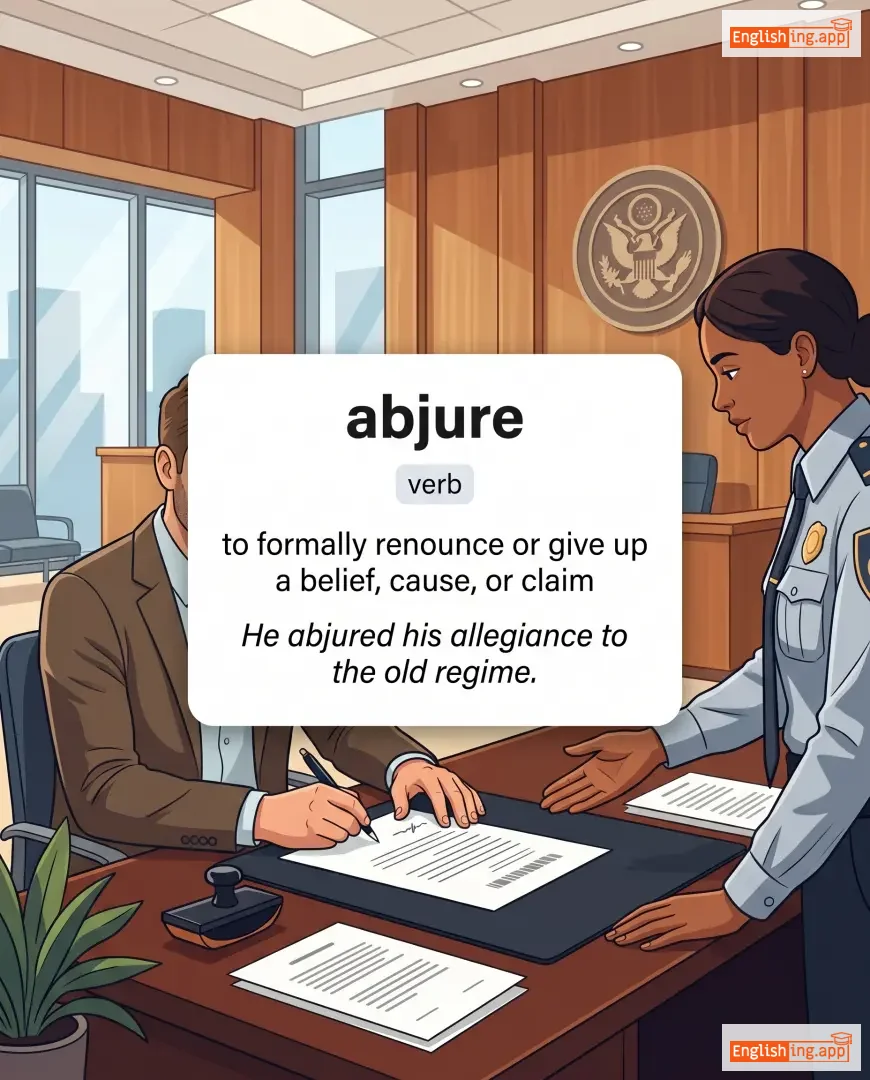
to formally renounce or give up a belief, cause, or claim
••••••
|
He abjured his allegiance to the old regime.
他放弃了对旧政权的忠诚。
••••••
|
他放弃了对旧政权的忠诚。
Tā fàngqì le duì jiù zhèngquán de zhōngchéng.
••••••
|
- •••••• | - •••••• | - •••••• |
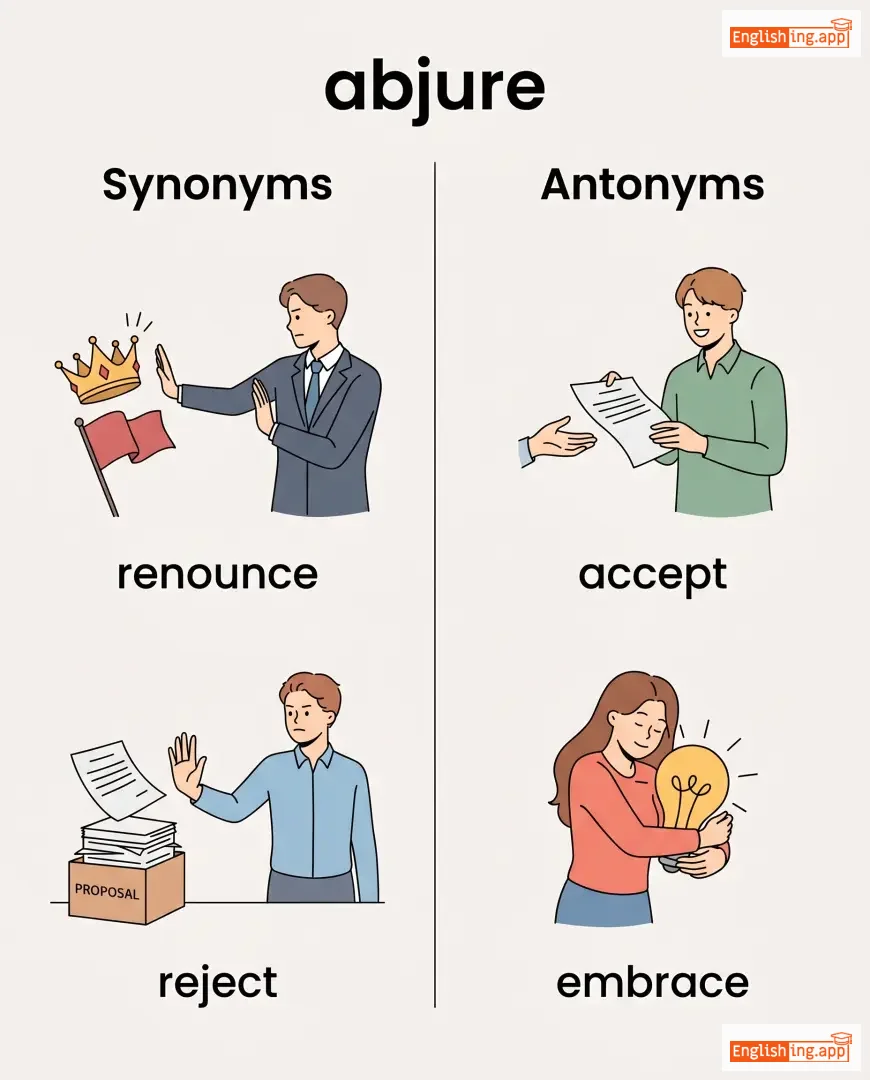
renounce, reject, repudiate, forswear
••••••
|
accept, embrace
••••••
|
abjure violence, abjure faith, abjure allegiance
••••••
|
Abjure意味着ABandon + JURy = 放弃某事或某个信念。
••••••
|
|
#18
✅
|
/ˈeɪbl/
adjective
(éibl)
••••••
|
- •••••• |
能够
nénggòu
••••••
|
- •••••• | - •••••• | - •••••• | - •••••• |
having the power, skill, or means to do something
••••••
|
She is able to speak three languages fluently. |
她能说三种流利的语言。
Tā néng shuō sān zhǒng liúlì de yǔyán.
••••••
|
be able to |
to have the ability to do something
••••••
|
能够做
nénggòu zuò
••••••
|
capable, competent, skilled, talented
••••••
|
unable, incapable, weak
••••••
|
able to work, able to help, able leader, highly able
••••••
|
Able = 能够,像‘能够做某事’
••••••
|
|
#19
✂️
|
/əˈbɑː.lɪʃ/
verb
(阿博丽什)
••••••
|
- •••••• |
废除
feichu
••••••
|
abolished
阿博丽什德
••••••
|
abolished
阿博丽什德
••••••
|
abolishes
阿博丽什兹
••••••
|
abolishing
阿博丽什英
••••••
|
to formally put an end to a system, practice, or institution
••••••
|
The government decided to abolish the old tax system.
政府决定废除旧的税制。
••••••
|
政府决定废除旧的税制。
Zhèngfǔ juédìng fèichú jiù de shuìzhì.
••••••
|
abolish slavery
废除奴隶制
••••••
|
to officially end the system of slavery
••••••
|
废除奴隶制
Fèichú núlì zhì
••••••
|
end, eliminate, terminate, annul, eradicate
••••••
|
establish, maintain
••••••
|
abolish slavery, abolish law, abolish practice
••••••
|
ABOLISH意味着ABOL (abol) 结束一切 (jiéshù yīqiè)
••••••
|
|
#20
✊
|
/ˌæbəˈlɪʃən/
noun
(阿博利申)
••••••
|
- •••••• |
废除
feichu
••••••
|
- •••••• | - •••••• | - •••••• | - •••••• |
the act of formally ending or eliminating a system, practice, or institution
••••••
|
The abolition of slavery was a major milestone in human rights history.
阿博利申 欧夫 斯雷维 瓦兹 阿 梅杰 迈尔斯通 因 休曼 莱茨 历史。
••••••
|
废除奴隶制是人权历史上的一个重要里程碑。
feichu nulizhi shi renquan lishishang de yi ge zhongyao lichengbei
••••••
|
- •••••• | - •••••• | - •••••• |
elimination, eradication, repeal, termination, annulment
••••••
|
establishment, continuation, preservation
••••••
|
abolition of slavery, abolition movement, abolition act, call for abolition
••••••
|
Abolition 听起来像 废除—都是把旧制度取消
••••••
|
|
#21
😡
|
/əˈbɑː.mə.neɪt/
verb
(厌恶)
••••••
|
- •••••• |
厌恶
yànwù
••••••
|
abominated
厌恶了
••••••
|
abominated
厌恶的
••••••
|
abominates
厌恶
••••••
|
abominating
厌恶中
••••••
|
to feel hatred or loathing for something
••••••
|
She abominates cruelty to animals.
她厌恶对动物的残忍行为。
••••••
|
她厌恶对动物的残忍行为。
Tā yànwù duì dòngwù de cánrěn xíngwéi.
••••••
|
- •••••• | - •••••• | - •••••• |
loathe, hate, detest, despise, dislike
••••••
|
like, love, admire
••••••
|
abominate violence, abominate cruelty, abominate injustice
••••••
|
ABOMINATE 意味着厌恶,记住 'YANWU' → 厌恶
••••••
|
|
#22
🛑
|
/əˈbɔːrt/
verb
(阿博特)
••••••
|
- •••••• |
中止;流产
zhongzhi; liuchan
••••••
|
aborted
阿博特德
••••••
|
aborted
阿博特德
••••••
|
aborts
阿博特斯
••••••
|
aborting
阿博特英
••••••
|
to stop a process or action before it is completed; to end a pregnancy deliberately
••••••
|
The pilot decided to abort the mission due to bad weather.
飞行员决定由于坏天气中止任务。
••••••
|
由于恶劣天气,飞行员决定中止任务。
Youyu elie tianqi feixingyuan jueding zhongzhi renwu
••••••
|
abort mission
中止任务
••••••
|
to stop a planned operation or activity
••••••
|
中止任务
zhongzhi renwu
••••••
|
cancel, terminate, discontinue, halt, abandon
••••••
|
continue, proceed, complete
••••••
|
abort mission, abort operation, abort procedure, abort launch
••••••
|
abort = 中止,听到就想到 stop
••••••
|
|
#23
⚖️
|
/əˈbɔːrʃən/
noun
••••••
|
- •••••• | - •••••• | - •••••• | - •••••• | - •••••• | - •••••• |
The deliberate termination of a human pregnancy, usually performed during the first 28 weeks.
••••••
|
The debate about abortion continues to divide public opinion. |
- •••••• |
abortion rights |
The legal rights of women to have access to abortion procedures.
••••••
|
- •••••• |
termination, miscarriage, ending, interruption
••••••
|
birth, delivery
••••••
|
legal abortion, safe abortion, abortion clinic, abortion law
••••••
|
No •••••• |
|
#24
ℹ️
|
/əˈbaʊt/
preposition, adverb
(阿宝特)
••••••
|
- •••••• |
关于
guanyu
••••••
|
- •••••• | - •••••• | - •••••• | - •••••• |
concerning; on the subject of; approximately
••••••
|
We talked about the new project yesterday. |
我们昨天谈论了新项目。
Wǒmen zuótiān tánlùnle xīn xiàngmù.
••••••
|
out and about |
active and going to different places
••••••
|
活跃并走访不同的地方
huóyuè bìng zǒufǎng bùtóng de dìfāng
••••••
|
regarding, concerning, around, nearly
••••••
|
exactly, unrelated
••••••
|
talk about, think about, about time, about 10 o'clock
••••••
|
About意思是'关于' — 就像'Tell me about yourself'。
••••••
|
|
#25
⬆️
|
/əˈbʌv/
preposition, adverb
(àbàfū)
••••••
|
- •••••• |
上面
shangmian
••••••
|
- •••••• | - •••••• | - •••••• | - •••••• |
at a higher place or position than something
••••••
|
The picture hangs above the fireplace.
画作挂在壁炉上方。
••••••
|
画作挂在壁炉上方。
Huàzuò guà zài bìlú shàngfāng.
••••••
|
above all
高于一切
••••••
|
most importantly
••••••
|
高于一切
gāo yú yīqiè
••••••
|
over, higher than, beyond, atop
••••••
|
below, under, beneath
••••••
|
rise above, above average, above mentioned, above sea level
••••••
|
Above 意味着上面 - 想像'在天空之上'。
••••••
|
|
#26
🪓
|
/əˈbreɪd/
verb
(abureid)
••••••
|
- •••••• |
通过摩擦磨损
tongguo mocha mosun
••••••
|
abraded
abureided
••••••
|
abraded
abureided
••••••
|
abrades
abureides
••••••
|
abrading
abureiding
••••••
|
to scrape or wear away the surface by friction or erosion
••••••
|
The rough cloth can easily abrade the skin.
粗糙的布料容易磨损皮肤。
••••••
|
粗糙的布料容易磨损皮肤。
Cūcāo de bùliào róngyì mó sǔn pífū.
••••••
|
- •••••• | - •••••• | - •••••• |
scrape, rub, wear, chafe, erode
••••••
|
smooth, polish
••••••
|
abrade the skin, abrade surface, easily abrade
••••••
|
刮 (abrade) 可以磨损表面
••••••
|
|
#27
🌍
|
/əˈbrɔːd/
adverb
(ā bù luó dé)
••••••
|
- •••••• |
在国外
zai guowai
••••••
|
- •••••• | - •••••• | - •••••• | - •••••• |
In or to a foreign country or countries.
••••••
|
She studied abroad for two years in Germany. |
她在德国留学了两年,住在国外。
Ta zai Deguo liuxue le liang nian, zhu zai guowai.
••••••
|
go abroad |
To travel to another country.
••••••
|
去国外
qu guowai
••••••
|
overseas, internationally, foreign, away
••••••
|
domestic, local
••••••
|
study abroad, travel abroad, live abroad, go abroad
••••••
|
Abroad, 是去一个不同的地方,远离自己国家。
••••••
|
|
#28
🚫
|
/ˈæbrəɡeɪt/
verb
(废除)
••••••
|
- •••••• |
废除
feichu
••••••
|
abrogated
废除
••••••
|
abrogated
废除
••••••
|
abrogates
废除
••••••
|
abrogating
废除
••••••
|
To formally repeal, cancel, or abolish a law, agreement, or custom.
••••••
|
The government decided to abrogate the outdated treaty.
政府决定废除过时的条约。
••••••
|
政府决定废除过时的条约。
Zhengfu jueding feichu guoshi de tiaoyue.
••••••
|
- •••••• | - •••••• | - •••••• |
repeal, revoke, annul, cancel, abolish
••••••
|
enforce, uphold, establish
••••••
|
abrogate a law, abrogate a treaty, abrogate an agreement
••••••
|
A BROKEN gate → 废除意味着废弃过时的规定,就像门被拆掉一样。
••••••
|
|
#29
🏃♂️
|
/əbˈskɒnd/
verb
(阿布斯康德)
••••••
|
|
逃跑
tao pao
••••••
|
absconded
阿布斯康德德
••••••
|
absconded
阿布斯康德德
••••••
|
absconds
阿布斯康德斯
••••••
|
absconding
阿布斯康丁
••••••
|
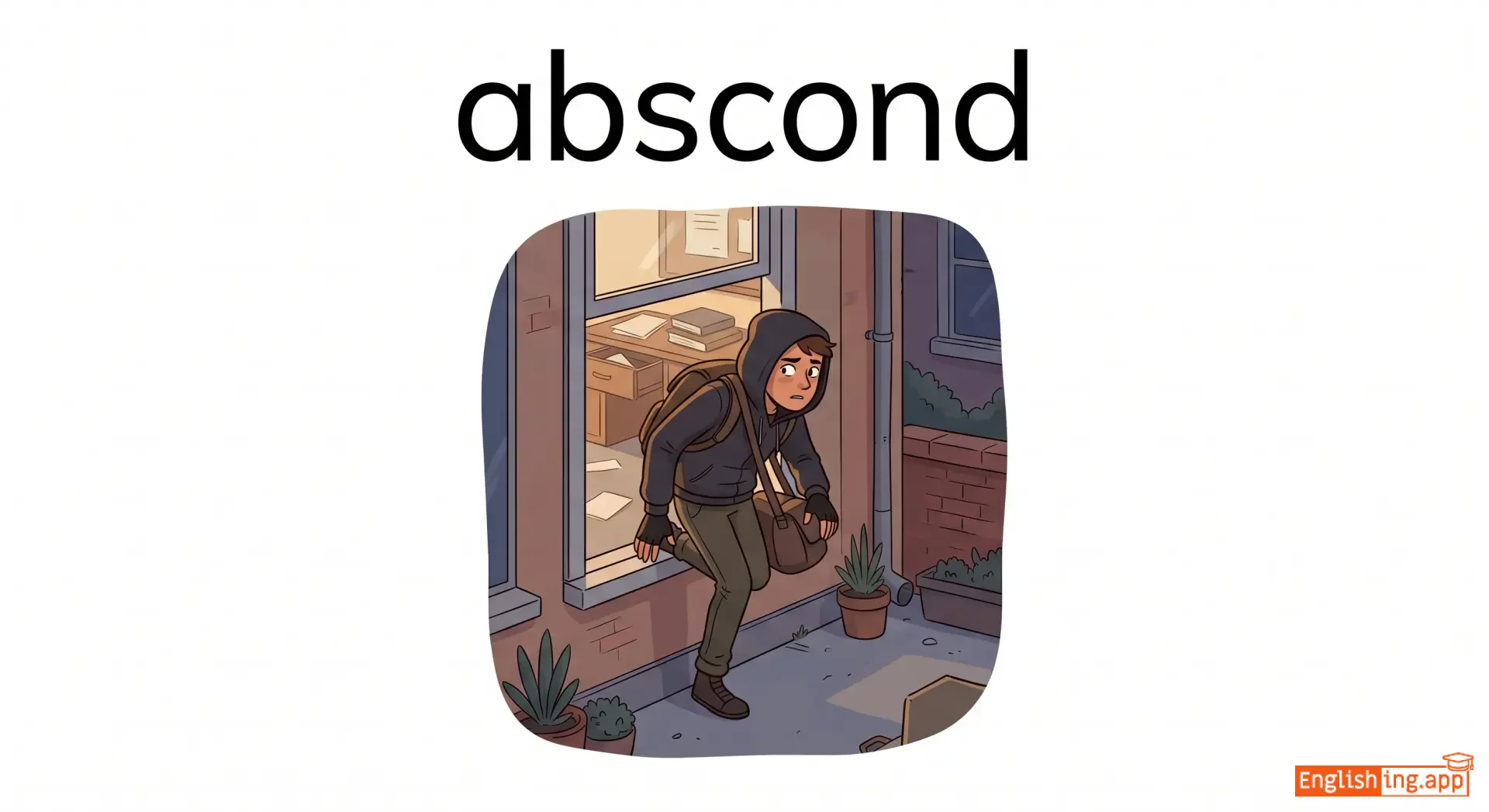
to leave secretly and quickly, often to avoid arrest or punishment
••••••
|
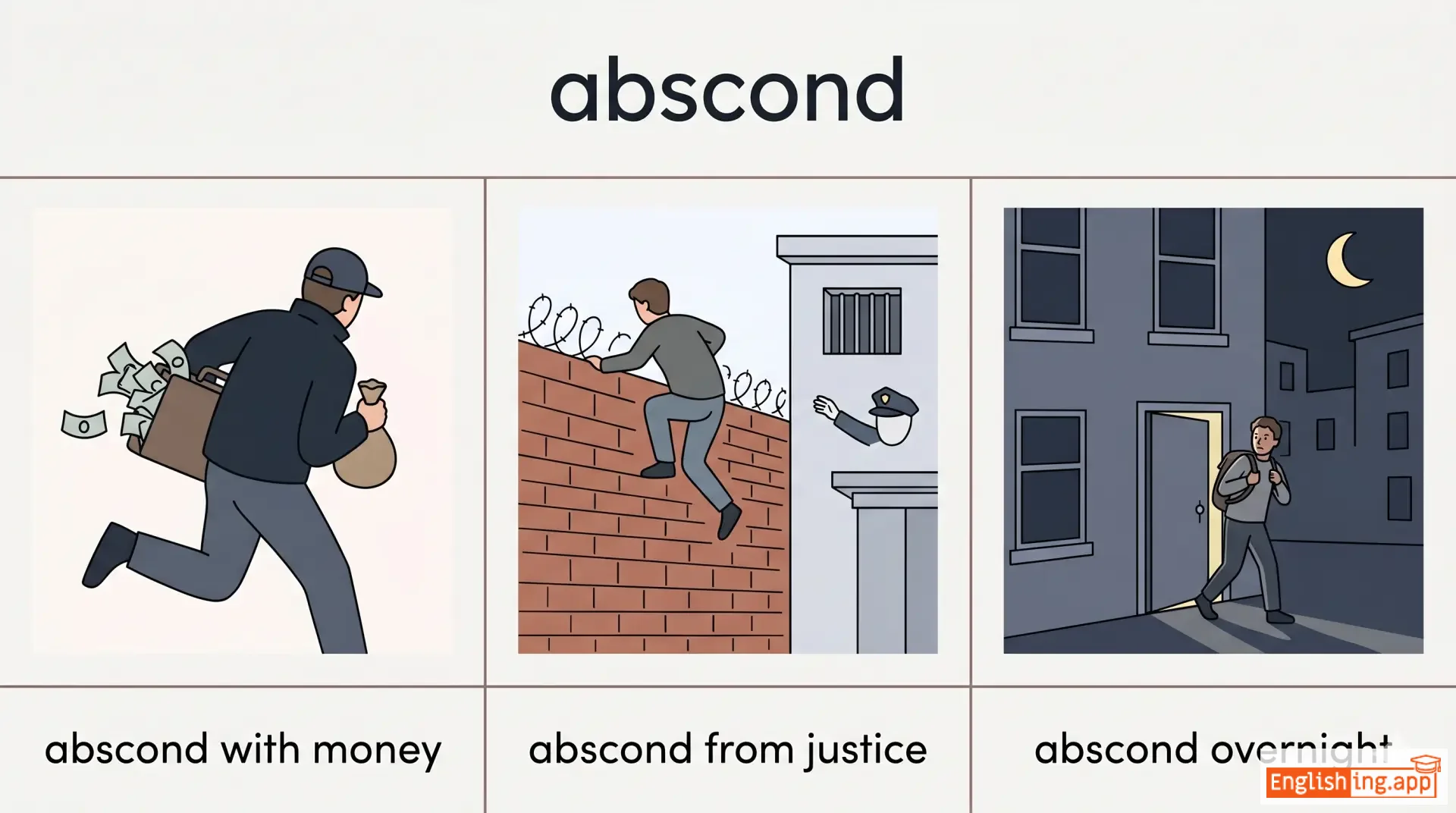
The thief tried to abscond with the stolen jewelry.
小偷试图带着被盗的珠宝逃跑。
••••••
|
小偷试图带着被盗的珠宝逃跑。
Xiao tou shi tu dai zhe bei dao de zhu bao tao pao.
••••••
|
abscond with
阿布斯康德与
••••••
|
to take something secretly and escape
••••••
|
带着偷来的东西逃跑
dai zhe tou lai de dong xi tao pao
••••••
|
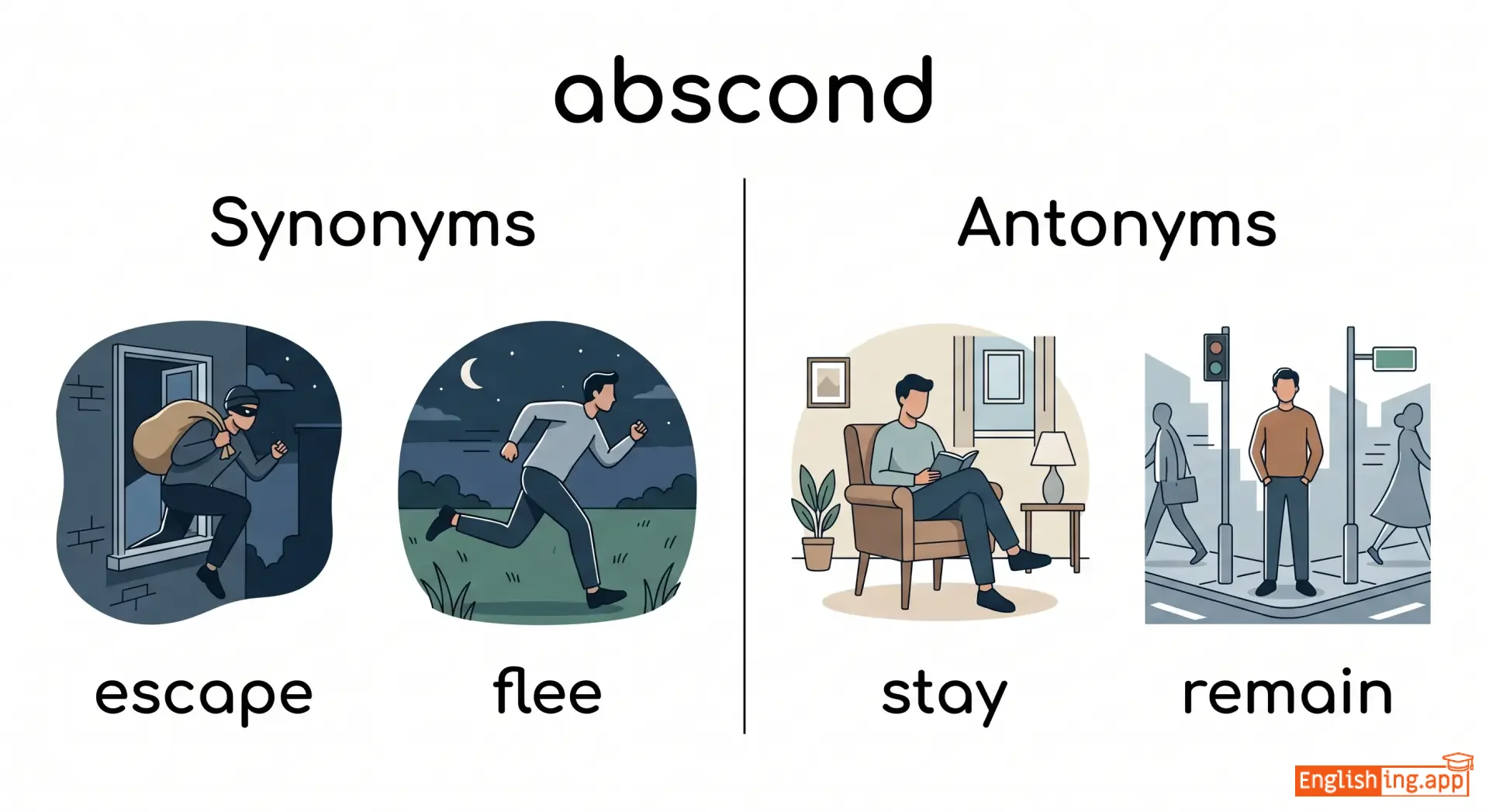
escape, flee, run away, vanish, bolt
••••••
|
stay, remain, appear
••••••
|
abscond with money, abscond from justice, abscond overnight
••••••
|
Abscond = ABsent + sCOND = 迅速逃离
••••••
|
|
#30
🚪
|
/ˈæbsəns/
noun
(æbsəns)
••••••
|
- •••••• |
缺席
quēxí
••••••
|
- •••••• | - •••••• | - •••••• | - •••••• |
the state of being away from a place or person
••••••
|
His absence from the meeting was noticed by everyone. |
他在会议中的缺席被每个人注意到了。
Tā zài huìyì zhōng de quēxí bèi měi gè rén zhùyì dào le.
••••••
|
absence makes the heart grow fonder |
being away from someone makes you appreciate them more
••••••
|
缺席让心更温暖
quēxí ràng xīn gèng wēnnuǎn
••••••
|
nonappearance, lack, nonexistence, vacancy
••••••
|
presence, attendance, appearance
••••••
|
long absence, unexplained absence, absence from work
••••••
|
Absence在中文里就是'缺席',与英文发音相近。
••••••
|
|
#31
🚫
|
/ˈæbsənt/
adjective
(æbsənt)
••••••
|
- •••••• |
缺席
quēxí
••••••
|
- •••••• | - •••••• | - •••••• | - •••••• |
not present at a place or event
••••••
|
She was absent from the meeting yesterday.
她昨天没有参加会议。
••••••
|
她昨天没有参加会议。
Tā zuótiān méiyǒu cānjiā huìyì.
••••••
|
- •••••• | - •••••• | - •••••• |
missing, away, unavailable, absent-minded
••••••
|
present, available
••••••
|
absent from class, absent from work, absent due to illness
••••••
|
缺席 = 想象一个学生缺席课堂,需要赶上进度!
••••••
|
|
#32
💯
|
/ˈæbsəluːt/
adjective
(æbsəˈluːt)
••••••
|
- •••••• |
绝对
juéduì
••••••
|
- •••••• | - •••••• | - •••••• | - •••••• |
total, complete, or without restriction
••••••
|
The dictator had absolute power over the nation. |
独裁者拥有对国家的绝对权力。
Dúcáizhě yōngyǒu duì guójiā de juéduì quánlì.
••••••
|
absolute power |
unlimited authority without any checks
••••••
|
绝对权力
juéduì quánlì
••••••
|
complete, total, perfect, unconditional, unlimited
••••••
|
partial, limited, restricted
••••••
|
absolute truth, absolute majority, absolute necessity
••••••
|
Absolute = ABsolut wánquán
••••••
|
|
#33
✅
|
/ˈæbsəluːtli/
adverb
(绝对)
••••••
|
- •••••• |
绝对
juéduì
••••••
|
- •••••• | - •••••• | - •••••• | - •••••• |
Completely; without qualification or restriction.
••••••
|
I absolutely agree with your decision. |
我完全同意你的决定。
wǒ wánquán tóngyì nǐ de juédìng.
••••••
|
absolutely not |
A strong way of saying no.
••••••
|
绝对不
juéduì bù
••••••
|
completely, totally, entirely, fully
••••••
|
partially, somewhat
••••••
|
absolutely sure, absolutely necessary, absolutely amazing
••••••
|
Absolutely意思是完全的 — 想象'绝对确定'。
••••••
|
|
#34
🧽
|
/əbˈzɔːrb/
verb
(æbˈzɔːrb)
••••••
|
- •••••• |
吸收
xīshōu
••••••
|
absorbed
吸收
••••••
|
absorbed
吸收
••••••
|
absorbs
吸收
••••••
|
absorbing
吸收
••••••
|
to take in or soak up a liquid, energy, or information
••••••
|
The sponge absorbed all the water.
海绵吸收了所有的水。
••••••
|
海绵吸收了所有的水。
Hǎimián xīshōu le suǒyǒu de shuǐ.
••••••
|
absorbed in thought
沉浸在思想中
••••••
|
deeply engaged or preoccupied with one's thoughts
••••••
|
沉浸在思想中
chénjìn zài sīxiǎng zhōng
••••••
|
soak, consume, engross, assimilate, take in
••••••
|
release, emit, repel
••••••
|
absorb energy, absorb impact, absorb information
••••••
|
吸收 + orb = orb(球)吸收一切。
••••••
|
|
#35
🧽
|
/əbˈzɔːrbənt/
adjective, noun
(阿布索本特)
••••••
|
- •••••• |
吸收性的
xishou xing de
••••••
|
- •••••• | - •••••• | - •••••• | - •••••• |
able to soak up liquid, moisture, or energy easily; a material or substance that absorbs
••••••
|
This towel is highly absorbent and dries quickly.
迪斯 套尔 伊兹 海利 阿布索本特 安德 德赖兹 快克利
••••••
|
这条毛巾非常吸收性,而且干得很快。
zhe tiao maojin feichang xishou xing erqie gan de hen kuai
••••••
|
- •••••• | - •••••• | - •••••• |
absorbing, spongy, porous, soakable, permeable
••••••
|
waterproof, nonabsorbent, repellent
••••••
|
absorbent material, highly absorbent, absorbent cloth, absorbent pad
••••••
|
吸收就是 absorb—absorbent 很会吸
••••••
|
|
#36
🌞
|
/əbˈzɔːrpʃən/
noun
(abzorpʃion)
••••••
|
|
吸收
xishou
••••••
|
- •••••• | - •••••• | - •••••• | - •••••• |
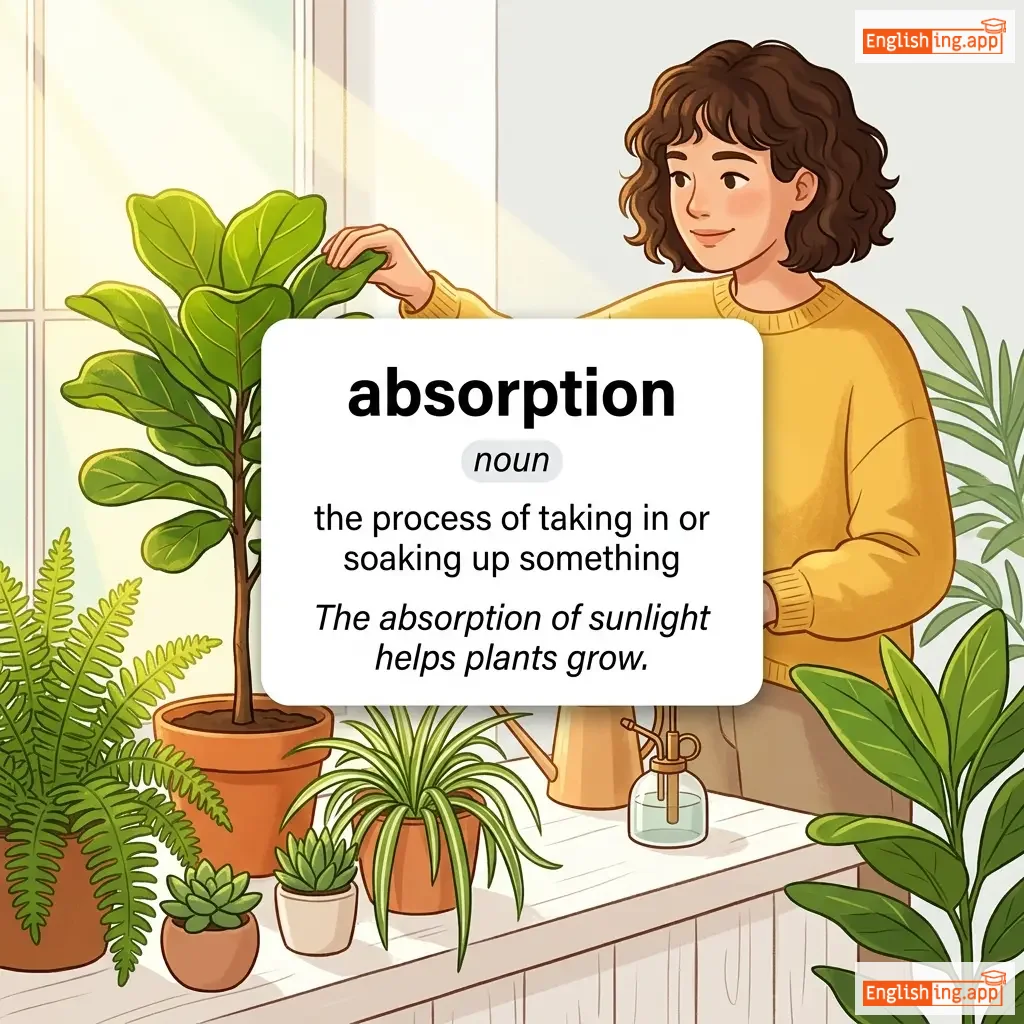
the process of taking in or soaking up something
••••••
|
The absorption of sunlight helps plants grow.
阳光的吸收帮助植物生长。
••••••
|
阳光的吸收帮助植物生长。
Yangguang de xishou bangzhu zhiwu shengzhang.
••••••
|
- •••••• | - •••••• | - •••••• |
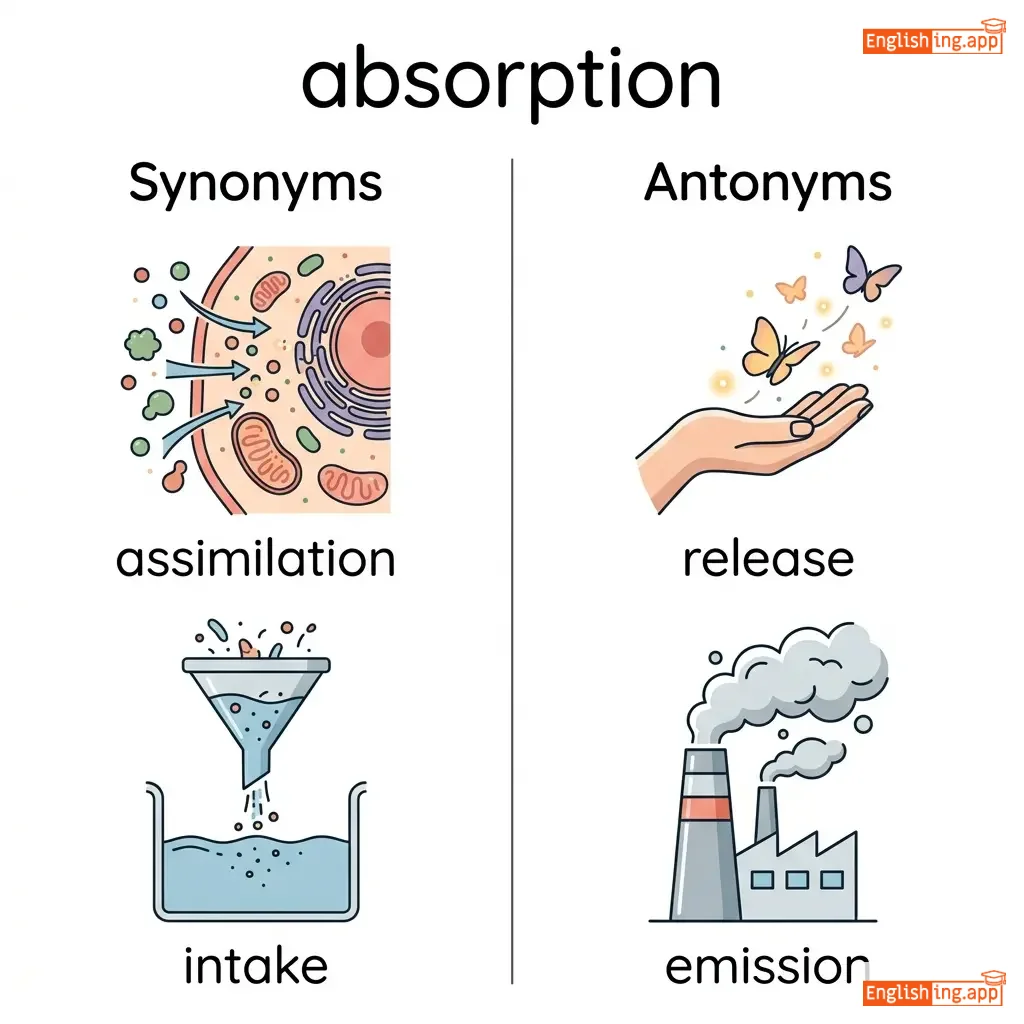
assimilation, intake, immersion, incorporation
••••••
|
release, emission, expulsion
••••••
|
absorption process, absorption rate, absorption capacity
••••••
|
吸收就像植物吸收阳光,帮助它们生长。
••••••
|
|
#37
🚫
|
/əbˈsteɪn/
verb
(艾布斯坦)
••••••
|
|
戒除
jiechu
••••••
|
abstained
艾布斯坦德
••••••
|
abstained
艾布斯坦德
••••••
|
abstains
艾布斯坦斯
••••••
|
abstaining
艾布斯坦宁
••••••
|
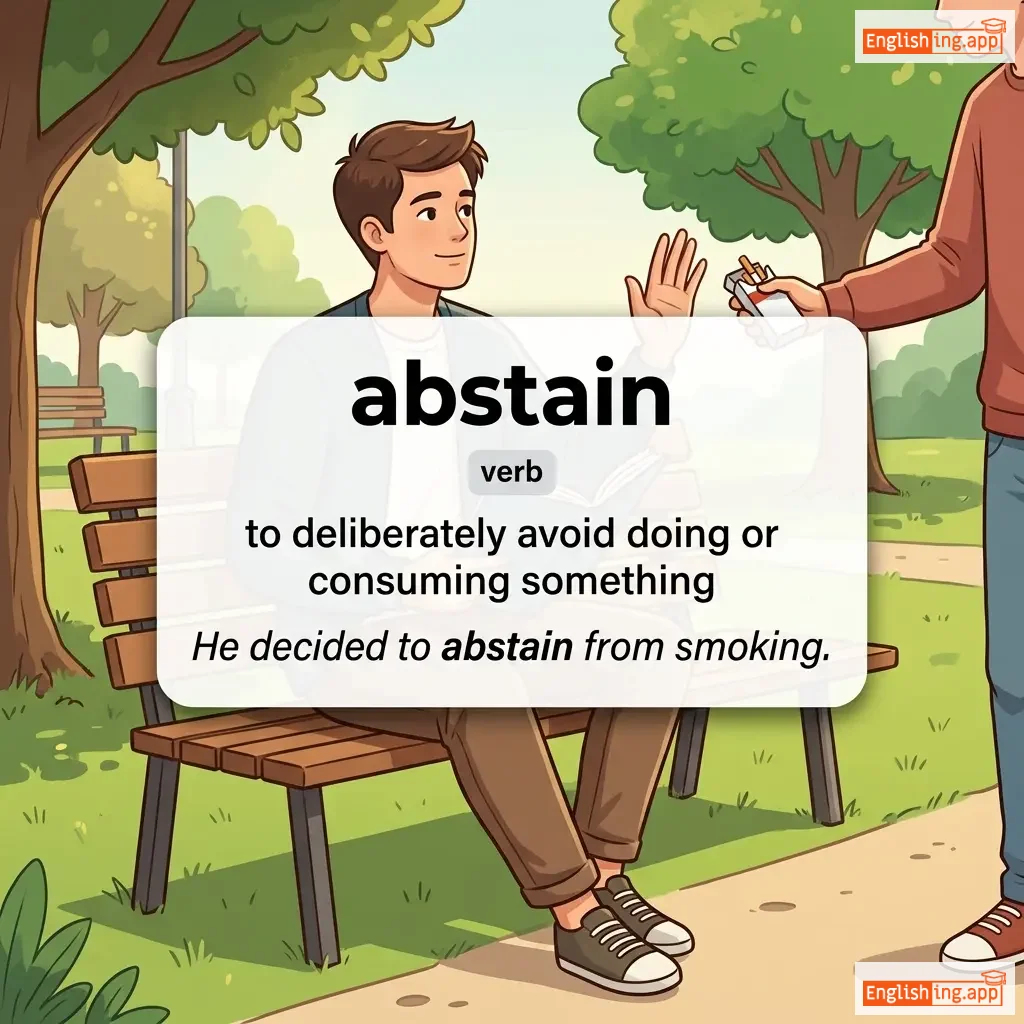
to deliberately avoid doing or consuming something
••••••
|
He decided to abstain from smoking.
他决定戒烟。
••••••
|
他决定戒烟。
Ta jueding jieyan.
••••••
|
abstain from voting
戒除投票
••••••
|
to refuse to cast a vote
••••••
|
戒除投票
jiechu toupiào
••••••
|
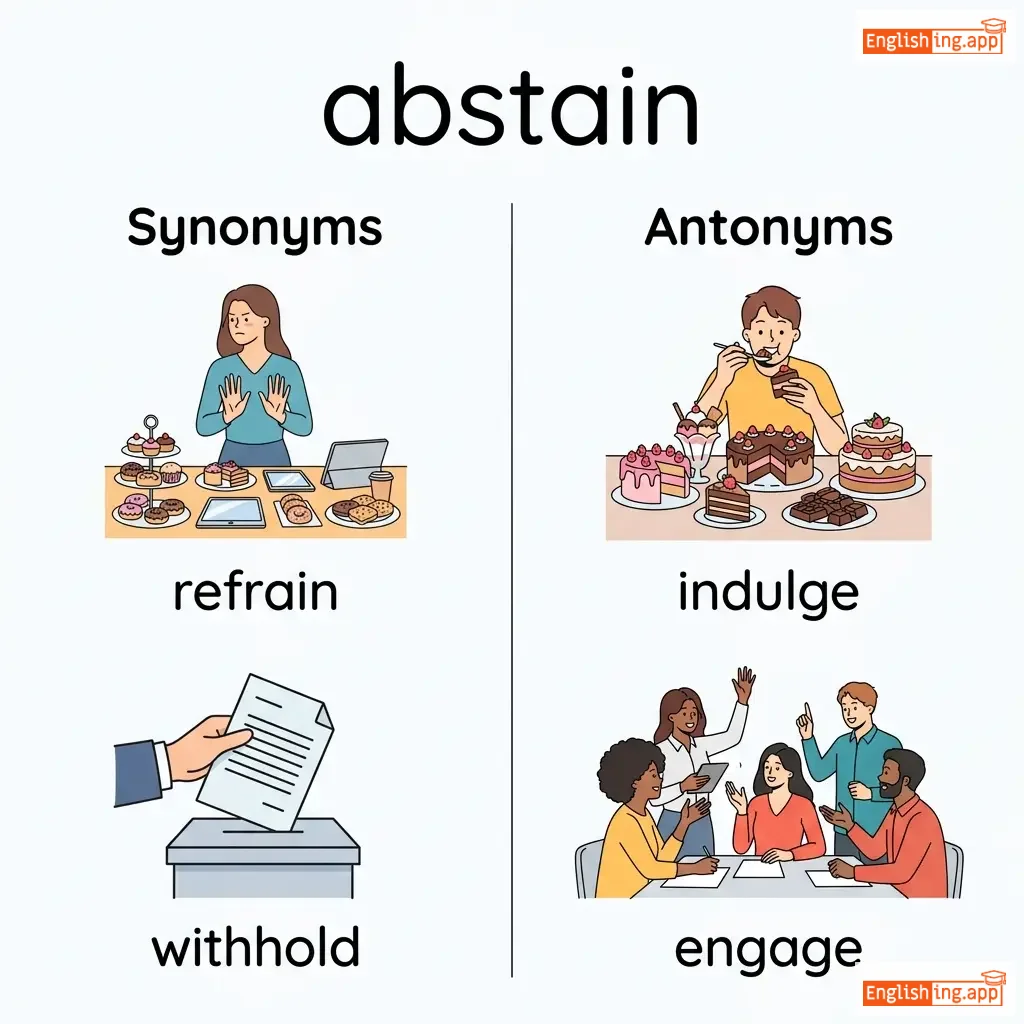
refrain, withhold, avoid, eschew
••••••
|
indulge, engage
••••••
|
abstain from alcohol, abstain from food, abstain from voting
••••••
|
Abstain = '安'的意思 = 放弃
••••••
|
|
#38
🎨
|
/ˈæb.strækt/
adjective, noun, verb
(抽象的)
••••••
|
- •••••• |
抽象的, 摘要
chōuxiàng de, zhāiyào
••••••
|
abstracted
抽象化的
••••••
|
abstracted
抽象化的
••••••
|
abstracts
抽象
••••••
|
abstracting
抽象化
••••••
|
existing in thought or as an idea but not having physical or concrete existence; a summary of a text
••••••
|
The artist is known for her abstract paintings.
艺术家以其抽象画作而闻名。
••••••
|
艺术家以其抽象画作而闻名。
Yìshùjiā yǐ qí chōuxiàng huàzuò ér wénmíng.
••••••
|
in the abstract
在抽象中
••••••
|
considered generally, without reference to specific examples
••••••
|
在抽象中
zài chōuxiàng zhōng
••••••
|
conceptual, theoretical, summary, extract
••••••
|
concrete, real, practical
••••••
|
abstract idea, abstract art, abstract concept
••••••
|
抽象是没有具体形式的——只是思想或艺术作品。
••••••
|
|
#39
🧠
|
/æbˈstrækʃən/
noun
(阿布斯特拉克申)
••••••
|
- •••••• |
抽象
chouxiang
••••••
|
- •••••• | - •••••• | - •••••• | - •••••• |
the process of forming general ideas by removing specific details; an abstract concept or idea
••••••
|
Abstraction allows complex ideas to be represented in a simplified form.
阿布斯特拉克申 允许 复杂 的 想法 以 简化 的 形式 表达。
••••••
|
抽象使复杂的想法能够以简化的形式表达。
chouxiang shi fuzade xiangfa nenggou yi jianhua de xingshi biaoda
••••••
|
- •••••• | - •••••• | - •••••• |
conceptualization, generalization, simplification, idea, theory
••••••
|
concreteness, reality, specificity
••••••
|
level of abstraction, abstraction process, abstract thinking, degree of abstraction
••••••
|
抽象就是 abstract——去掉细节,只留想法。
••••••
|
|
#40
🤡
|
/əbˈsɜːrd/
adjective
(荒谬)
••••••
|
- •••••• |
荒谬的, 不合理的
huangmiu de, bu heli de
••••••
|
- •••••• | - •••••• | - •••••• | - •••••• |
wildly unreasonable, illogical, or inappropriate
••••••
|
It is absurd to think that the earth is flat. |
认为地球是平的,这太荒谬了。
Renwei diqiu shi ping de, zhe tai huangmiu le.
••••••
|
theater of the absurd |
a style of drama emphasizing the absurdity of human existence
••••••
|
荒谬剧场
huangmiu juchang
••••••
|
ridiculous, foolish, nonsensical, ludicrous
••••••
|
reasonable, rational, logical
••••••
|
absurd idea, utterly absurd, completely absurd
••••••
|
Absurd 听起来像‘荒谬’ - 完全不合理!
••••••
|
|
#41
🌾
|
/əˈbʌndəns/
noun
(ā bùn dénsī)
••••••
|
|
丰富; 大量
fengfu; daliang
••••••
|
- •••••• | - •••••• | - •••••• | - •••••• |
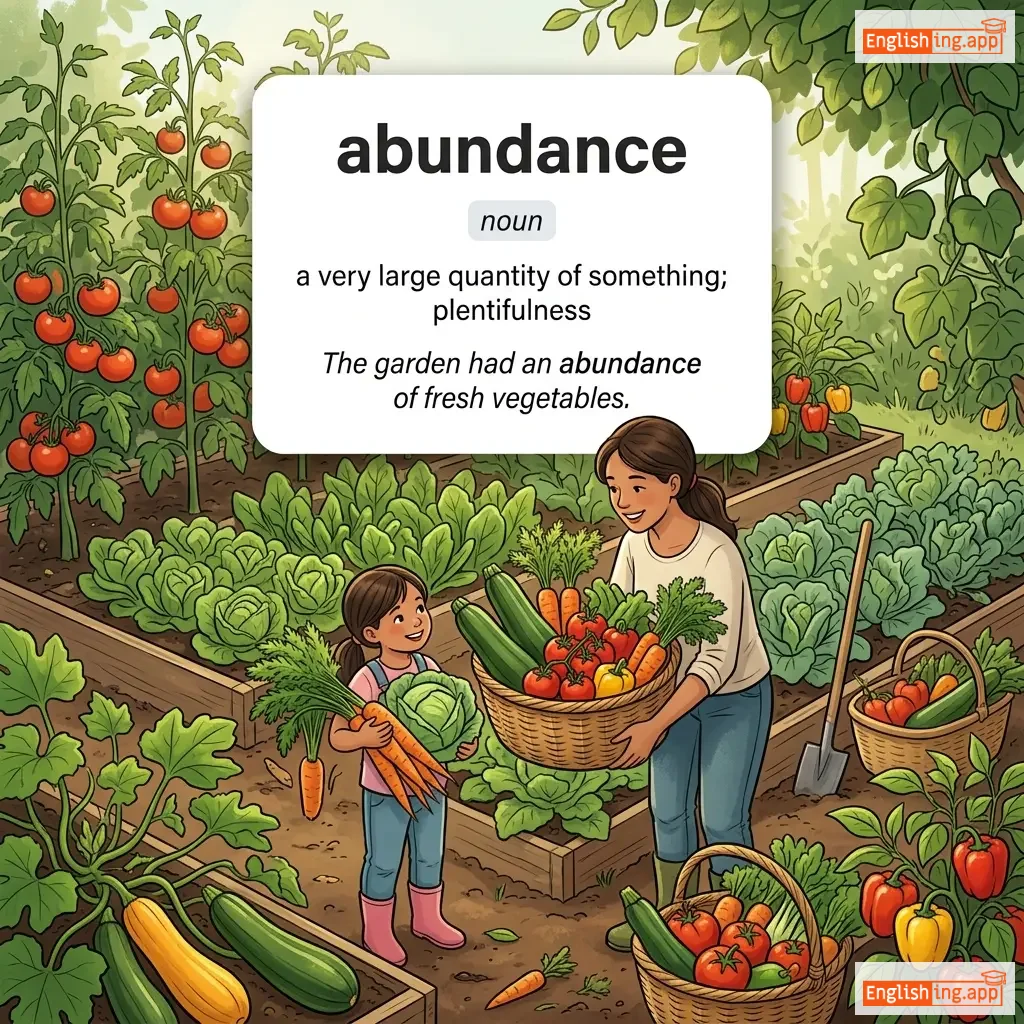
a very large quantity of something; plentifulness
••••••
|
The garden had an abundance of fresh vegetables.
花园里有大量的新鲜蔬菜。
••••••
|
花园里有大量的新鲜蔬菜。
Huāyuán lǐ yǒu dàliàng de xīnxiān shūcài.
••••••
|
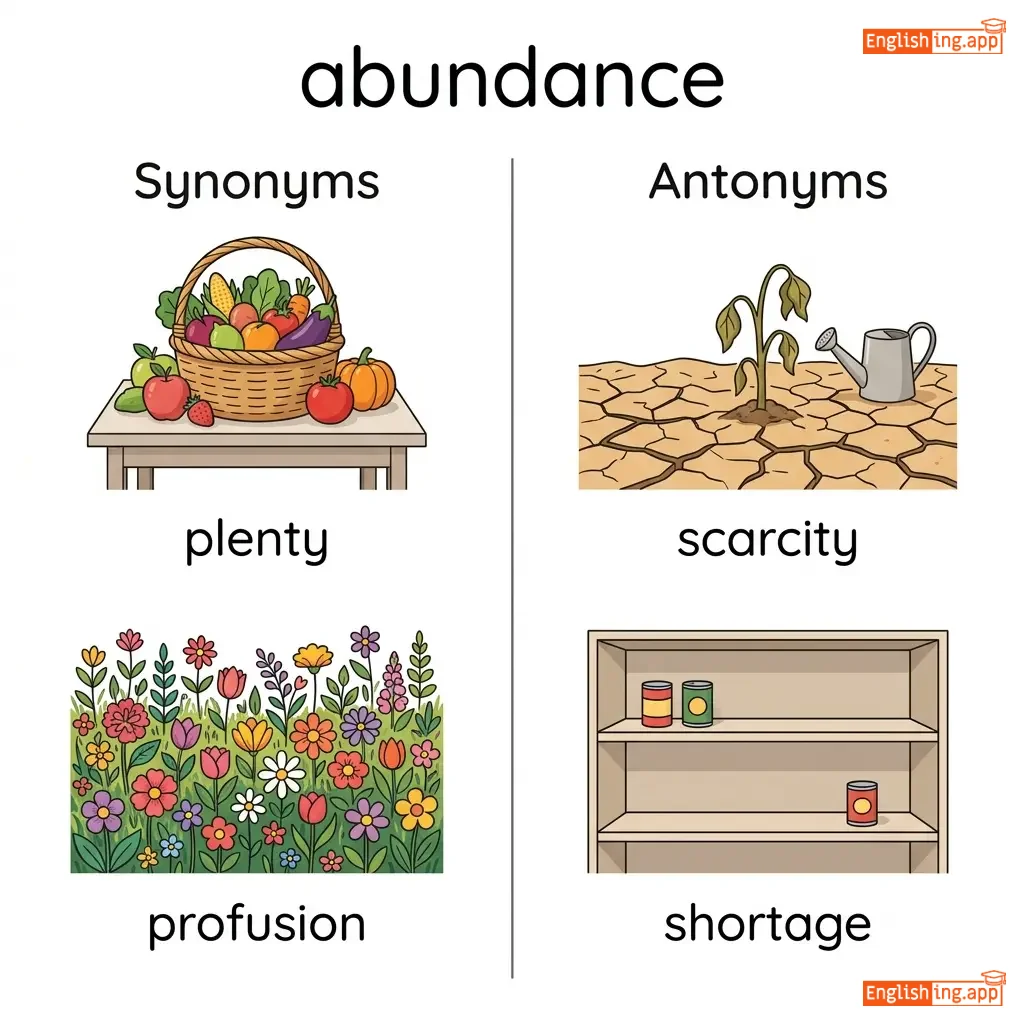
- •••••• | - •••••• | - •••••• |
plenty, profusion, wealth, richness
••••••
|
scarcity, shortage, lack, dearth
••••••
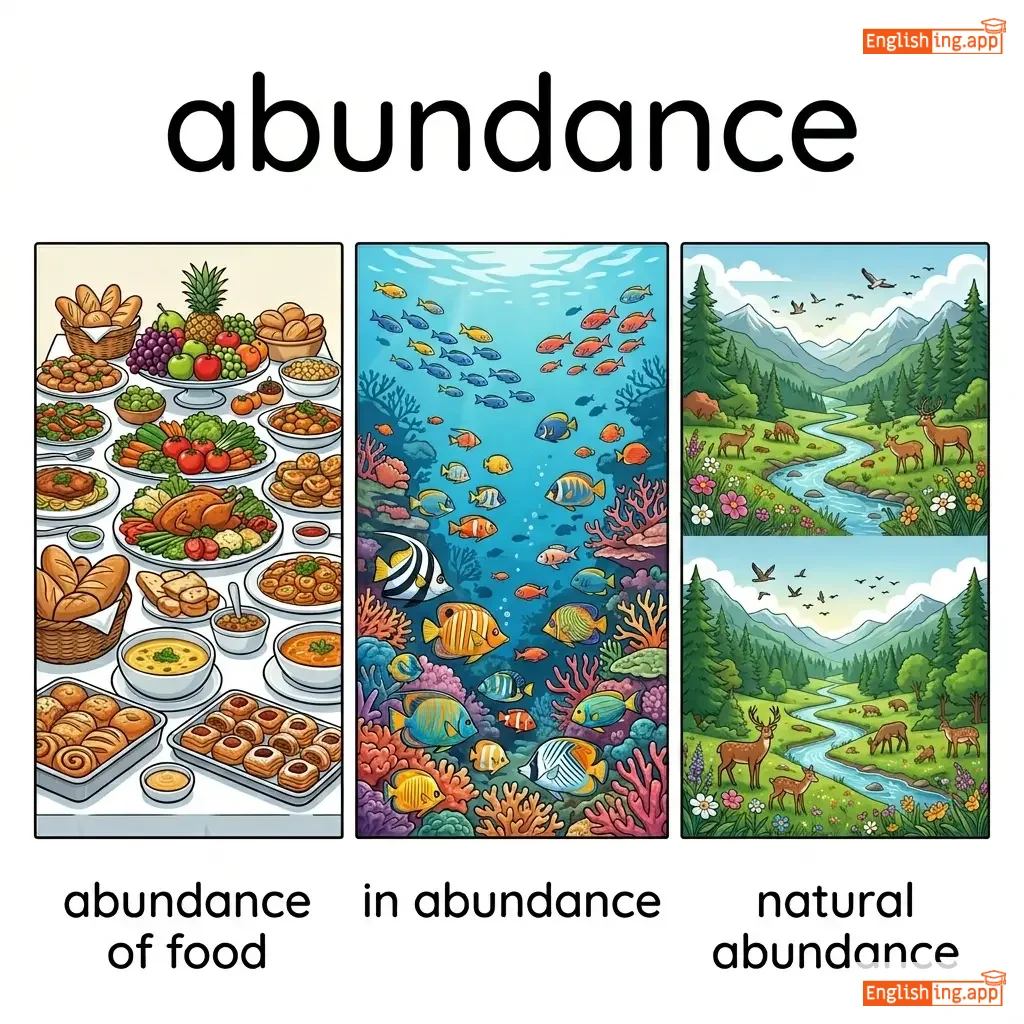
|
abundance of food, in abundance, natural abundance
••••••
|
Abundance: A garden filled with fresh vegetables.
••••••
|
|
#42
🌸
|
/əˈbʌndənt/
adjective
(阿邦丹特)
••••••
|
- •••••• |
丰富
fēngfù
••••••
|
- •••••• | - •••••• | - •••••• | - •••••• |
existing or available in large quantities; plentiful
••••••
|
The garden was abundant with colorful flowers.
花园里有丰富多彩的花朵。
••••••
|
花园里有五彩缤纷的花朵。
Huāyuán lǐ yǒu wǔcǎi bīnfēn de huāduǒ.
••••••
|
abundant in
丰富的
••••••
|
having plenty of something
••••••
|
丰富的
fēngfù de
••••••
|
plentiful, ample, bountiful, copious, overflowing
••••••
|
scarce, rare, insufficient
••••••
|
abundant supply, abundant resources, abundant opportunities, abundant evidence
••••••
|
Abundant 意味着 '丰富' — 想象一个充满五彩斑斓花朵的花园 🌸
••••••
|
|
#43
🚫
|
/əˈbjuːs/ (verb), /əˈbjuːs/ (noun)
verb, noun
••••••
|
- •••••• |
滥用
lanyong
••••••
|
abused
••••••
|
abused
••••••
|
abuses
••••••
|
abusing
••••••
|
to use something in a harmful way; to treat someone badly or cruelly
••••••
|
He was accused of abusing his power. |
他被指控滥用职权。
Ta bei zhikong lanyong zhiquan.
••••••
|
substance abuse |
the harmful or excessive use of drugs or alcohol
••••••
|
物质滥用
wuzhi lanyong
••••••
|
mistreat, misuse, exploit, harm, oppress
••••••
|
respect, protect, cherish
••••••
|
child abuse, drug abuse, verbal abuse, abuse of power
••••••
|
滥用代表滥用 — 想象‘bus’司机恶意踩刹车 🚫
••••••
|
|
#44
🎓
|
/ˌækəˈdɛmɪk/
adjective
(学术)
••••••
|
- •••••• |
学术的
xuéshù de
••••••
|
- •••••• | - •••••• | - •••••• | - •••••• |
related to education, learning, or scholarly activities
••••••
|
She has an outstanding academic record. |
她有一个卓越的学术记录。
Tā yǒu yīgè zhuóyuè de xuéshù jìlù.
••••••
|
purely academic |
something theoretical without practical relevance
••••••
|
纯学术的
chún xuéshù de
••••••
|
educational, scholarly, intellectual, theoretical
••••••
|
practical, vocational
••••••
|
academic achievement, academic career, academic institution, academic record
••••••
|
Academic意味着与学习相关🎓。记住: 在‘学术’中,学术工作才是关键。
••••••
|
|
#45
🏫
|
/əˈkædəmi/
noun
(学院)
••••••
|
- •••••• |
学院
xueyuan
••••••
|
- •••••• | - •••••• | - •••••• | - •••••• |
an institution of learning or training
••••••
|
He enrolled in a military academy. |
他报考了军事学院。
Tā bào kǎo le jūnshì xuéyuàn.
••••••
|
- •••••• | - •••••• | - •••••• |
school, institute, college, university
••••••
|
none,
••••••
|
military academy, sports academy, music academy, national academy
••••••
|
学院是学习的地方 📖。记住:学院 = 学校,额外加上'cademy'。
••••••
|
|
#46
👑
|
/əkˈsiːd/
verb
(āksīd)
••••••
|
- •••••• |
同意
tóngyì
••••••
|
acceded
āksīdèd
••••••
|
acceded
āksīdèd
••••••
|
accedes
āksīdés
••••••
|
acceding
āksīding
••••••
|
to agree to a request, proposal, or demand; to assume an office or position
••••••
|
The government finally acceded to the demands of the protesters.
政府最终同意了抗议者的要求。
••••••
|
政府最终同意了抗议者的要求。
zhèngfǔ zuìzhōng tóngyì le kàngyì zhě de yāoqiú.
••••••
|
accede to the throne
继承王位
••••••
|
to take up the position of king or queen
••••••
|
继承王位
jìchéng wángwèi
••••••
|
agree, consent, accept, comply, yield
••••••
|
refuse, deny, reject
••••••
|
accede to demands, accede to requests, accede to the throne
••••••
|
同意意味着接受。记住:'同意'继承王位,成为国王。
••••••
|
|
#47
⚡
|
/əkˈsɛləreɪt/
verb
(akselerete)
••••••
|
- •••••• |
加速
jiasu
••••••
|
accelerated
akselerete
••••••
|
accelerated
akselerete
••••••
|
accelerates
akselerete
••••••
|
accelerating
akselerete
••••••
|
to increase speed or make something happen sooner
••••••
|
The driver accelerated to overtake the truck.
司机加速超车。
••••••
|
司机加速超车。
sī jī jiā sù chāo chē.
••••••
|
accelerate growth
加速增长
••••••
|
to make progress or development happen faster
••••••
|
加速增长
jiā sù zēng zhǎng
••••••
|
hasten, quicken, speed up, advance, expedite
••••••
|
slow down, delay, decelerate
••••••
|
accelerate development, accelerate progress, accelerate change, accelerate pace
••••••
|
当你加速时,⚡ 你会走得更快!
••••••
|
|
#48
🚀
|
/əkˌseləˈreɪʃən/
noun
(阿克塞勒雷申)
••••••
|
- •••••• |
加速度
jia sudu
••••••
|
- •••••• | - •••••• | - •••••• | - •••••• |
the rate at which velocity changes over time; the act of speeding up
••••••
|
The car showed rapid acceleration as it entered the highway.
这辆车在进入高速公路时显示出快速的阿克塞勒雷申。
••••••
|
汽车在进入高速公路时表现出快速的加速度。
qiche zai jinru gaosu gonglu shi biaoxian chu kuaishu de jia sudu
••••••
|
acceleration due to gravity
阿克塞勒雷申 due to gravity
••••••
|
the increase in velocity of an object caused by gravitational force
••••••
|
重力加速度
zhongli jia sudu
••••••
|
speeding up, increase, quickening, propulsion, boost
••••••
|
deceleration, slowdown, retardation
••••••
|
rapid acceleration, constant acceleration, linear acceleration, angular acceleration
••••••
|
加速度 = 速度在“加”
••••••
|
|
#49
🗣️
|
/ˈæksɛnt/
noun
(áksènt)
••••••
|
- •••••• |
口音
kǒuyīn
••••••
|
- •••••• | - •••••• | - •••••• | - •••••• |
a distinctive way of pronouncing a language, especially one associated with a particular country or region
••••••
|
She spoke English with a strong French accent.
她说英语时带着浓重的法语口音。
••••••
|
她说英语时带着浓重的法语口音。
Tā shuō yīngyǔ shí dàizhe nóngzhòng de fǎyǔ kǒuyīn.
••••••
|
foreign accent
外国语音
••••••
|
a way of speaking that shows the influence of another language
••••••
|
外国语音
wàiguó yǔyīn
••••••
|
intonation, pronunciation, tone, inflection
••••••
|
monotone, uniformity
••••••
|
strong accent, foreign accent, regional accent, British accent
••••••
|
Accent 就是‘音’加‘分’,它是特定方式的发音!
••••••
|
|
#50
✅
|
/əkˈsɛpt/
verb
(接受)
••••••
|
|
接受
jiēshòu
••••••
|
accepted
接受了
••••••
|
accepted
接受了
••••••
|
accepts
接受
••••••
|
accepting
接受
••••••
|
to receive something willingly or agree to something
••••••
|
She accepted the job offer without hesitation.
她毫不犹豫地接受了工作邀请。
••••••
|
她毫不犹豫地接受了工作邀请。
Tā háo bù yóuyù de jiēshòu le gōngzuò yāoqǐng.
••••••
|
accept responsibility
接受责任
••••••
|
to acknowledge and take responsibility for something
••••••
|
接受责任
jiēshòu zérèn
••••••
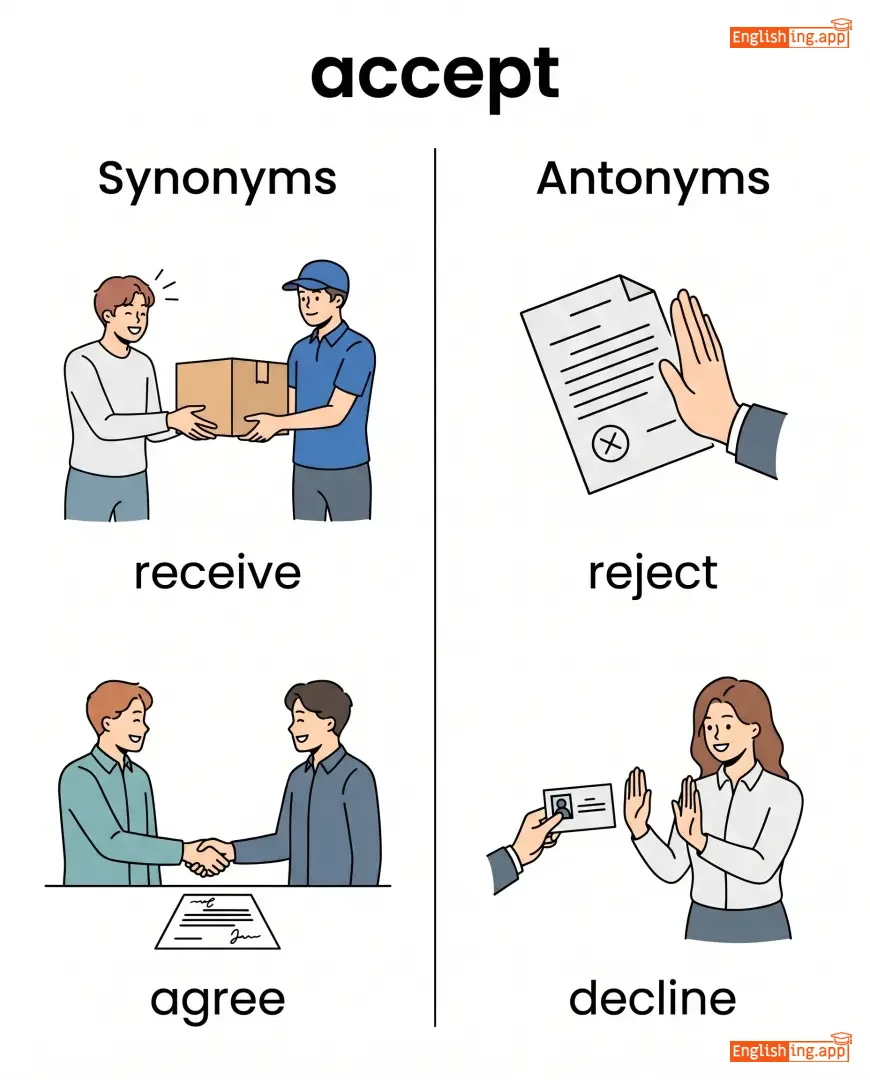
|
receive, agree, approve, consent
••••••
|
reject, decline, refuse
••••••
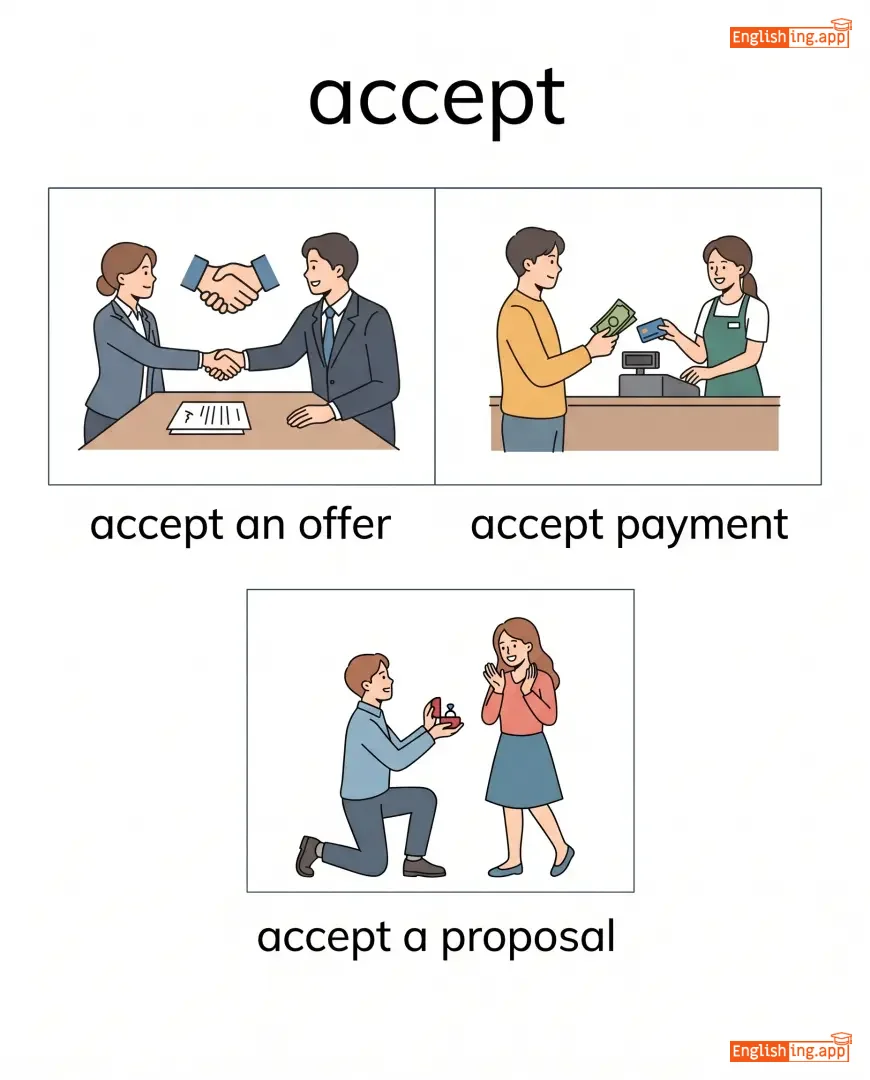
|
accept an offer, accept payment, accept a proposal, accept responsibility
••••••
|
接受新工作意味着迎接新的挑战
••••••
|
Vocabulary Quiz
Test your vocabulary by matching words with their translations or meanings.
Login to take the quiz
Comments (0)
Share your thoughts and join the discussion.
Join the discussion by logging in
Login to CommentNo comments yet
Be the first to share your thoughts!