

Swipe left or right, or use the buttons. Tap image to zoom.
例句翻译
单词
Lesson 91Lesson 91 - 遮罩切换
|
表情符号
|
单词 | Images | 翻译 | 过去时 | 过去分词 | 第三人称单数 | 动名词 | 含义 | 例句 | 例句翻译 | 示例表达 | 示例表达含义 | 示例表达翻译 | 同义词 | 反义词 | 搭配词 | 助记符 |
|---|---|---|---|---|---|---|---|---|---|---|---|---|---|---|---|---|---|
|
#4312
🧹
|
/rɪd/
verb
(rid)
••••••
|
- •••••• |
清除
qingchu
••••••
|
rid
rid
••••••
|
rid
rid
••••••
|
rids
rids
••••••
|
ridding
ridding
••••••
|
to remove or get rid of something
••••••
|
I need to rid the house of all the clutter.
我需要把家里的杂乱清理掉。
••••••
|
我需要把家里的杂乱清理掉。
Wo xuyao ba jiali de zaluan qingli diao.
••••••
|
- •••••• | - •••••• | - •••••• |
remove, eliminate, discard, clear
••••••
|
keep, retain, maintain
••••••
|
rid of, rid the house, rid oneself
••••••
|
Rid (清除) 就是把杂乱清理掉。
••••••
|
|
#4313
🚴
|
/raɪd/
verb
(raɪd)
••••••
|
- •••••• |
骑/骑行
qi/qi xing
••••••
|
rode
roʊd
••••••
|
ridden
rɪdn
••••••
|
rides
raɪdz
••••••
|
riding
raɪdɪŋ
••••••
|
to travel on or in a vehicle; to sit on and control a horse
••••••
|
She likes to ride her bicycle to work.
她喜欢骑自行车去工作。
••••••
|
她喜欢骑自行车去工作。
Tā xǐhuān qí zìxíngchē qù gōngzuò.
••••••
|
- •••••• | - •••••• | - •••••• |
travel, journey, mount, drive
••••••
|
walk, dismount, get off
••••••
|
ride a bike, ride horseback, ride the wave, ride safely, ride together
••••••
|
骑车和骑马的快乐旅行
••••••
|
|
#4314
🤣
|
/rɪˈdɪkjʊləs/
adjective
(rídìkùləs)
••••••
|
- •••••• |
荒谬
huangmiu
••••••
|
- •••••• | - •••••• | - •••••• | - •••••• |
Deserving mockery; absurd or unreasonable.
••••••
|
The idea of flying pigs is ridiculous. |
飞猪的想法很荒谬。
Fei zhu de xiangfa hen huangmiu.
••••••
|
look ridiculous |
Appear very silly or absurd.
••••••
|
看起来荒谬
kan qilai huangmiu
••••••
|
absurd, laughable, ludicrous, silly, preposterous
••••••
|
reasonable, sensible, serious
••••••
|
utterly ridiculous, seem ridiculous, look ridiculous
••••••
|
荒谬意味着像个笑话,根本不现实。
••••••
|
|
#4315
🔫
|
/ˈraɪfəl/
noun
••••••
|
- •••••• | - •••••• | - •••••• | - •••••• | - •••••• | - •••••• |
a type of long-barreled gun designed for accurate shooting
••••••
|
The hunter carried a rifle to catch game. |
- •••••• | - •••••• | - •••••• | - •••••• |
gun, firearm, musket, carbine
••••••
|
knife, bow
••••••
|
hunting rifle, sniper rifle, rifle shot
••••••
|
No •••••• |
|
#4316
✅
|
/raɪt/
noun, adjective, adverb
(raìt)
••••••
|
- •••••• |
权利
quanli
••••••
|
- •••••• | - •••••• | - •••••• | - •••••• |
something that is morally good, fair, or just; or a legal/entitled claim
••••••
|
Everyone has the right to free speech. |
每个人都有言论自由的权利。
Mei ge ren dou you yanlun ziliu de quanli.
••••••
|
human rights |
basic rights and freedoms that belong to every person
••••••
|
人权
renquan
••••••
|
justice, fairness, entitlement, claim
••••••
|
wrong, injustice
••••••
|
right to vote, right decision, human rights, right direction
••••••
|
权利意味着正义和法律,✅ 一切通过权利得到正义。
••••••
|
|
#4317
🔔
|
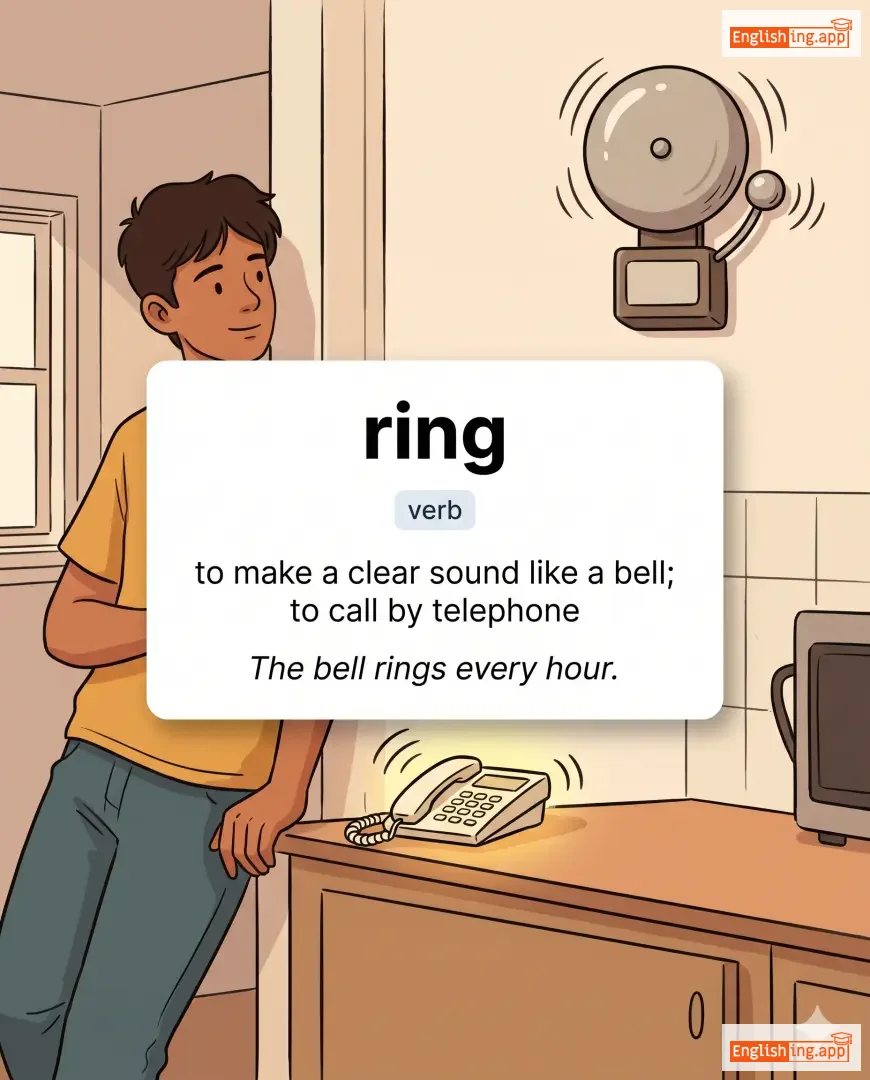
/rɪŋ/
verb
(铃)
••••••
|
|
铃声
língshēng
••••••
|
rang
响
••••••
|
rung
响
••••••
|
rings
铃声
••••••
|
ringing
铃响
••••••
|
to make a clear sound like a bell; to call by telephone
••••••
|
The bell rings every hour.
钟每小时响。
••••••
|
钟每小时响。
Zhōng měi xiǎoshí xiǎng.
••••••
|
- •••••• | - •••••• | - •••••• |
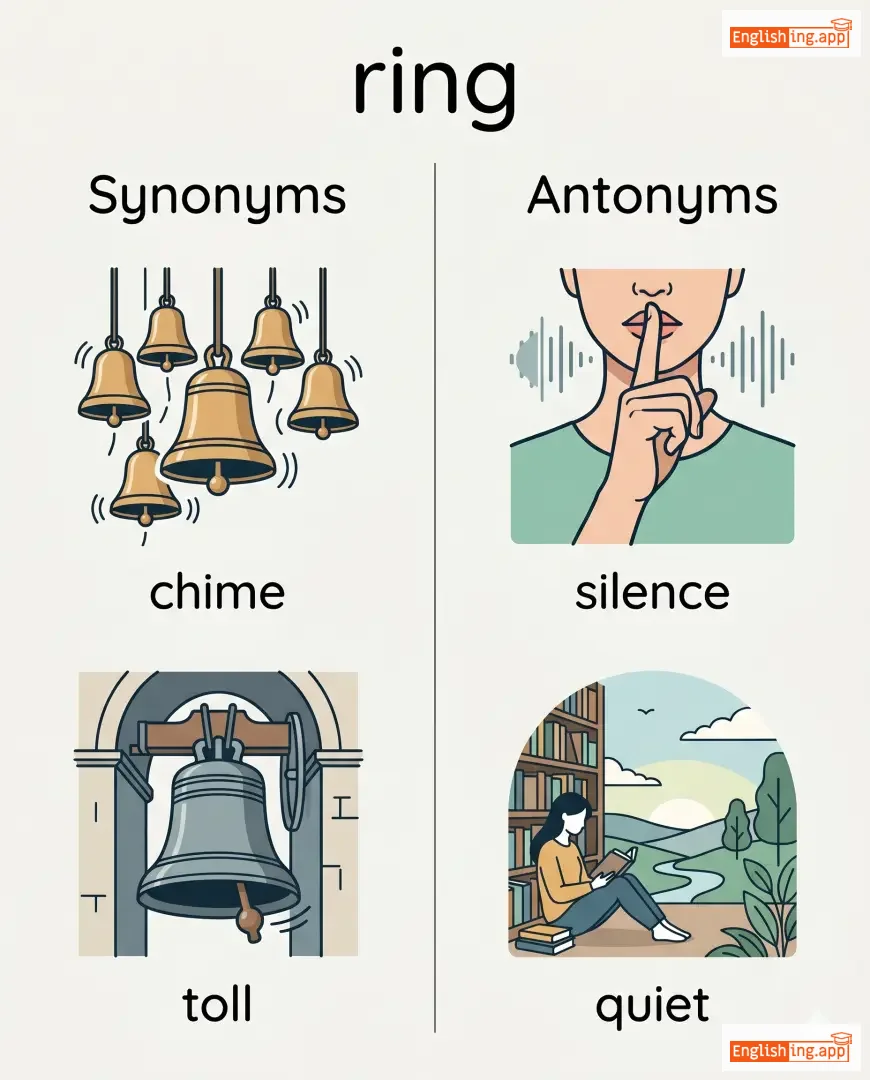
chime, toll, call, sound
••••••
|
silence, quiet, mute
••••••
|
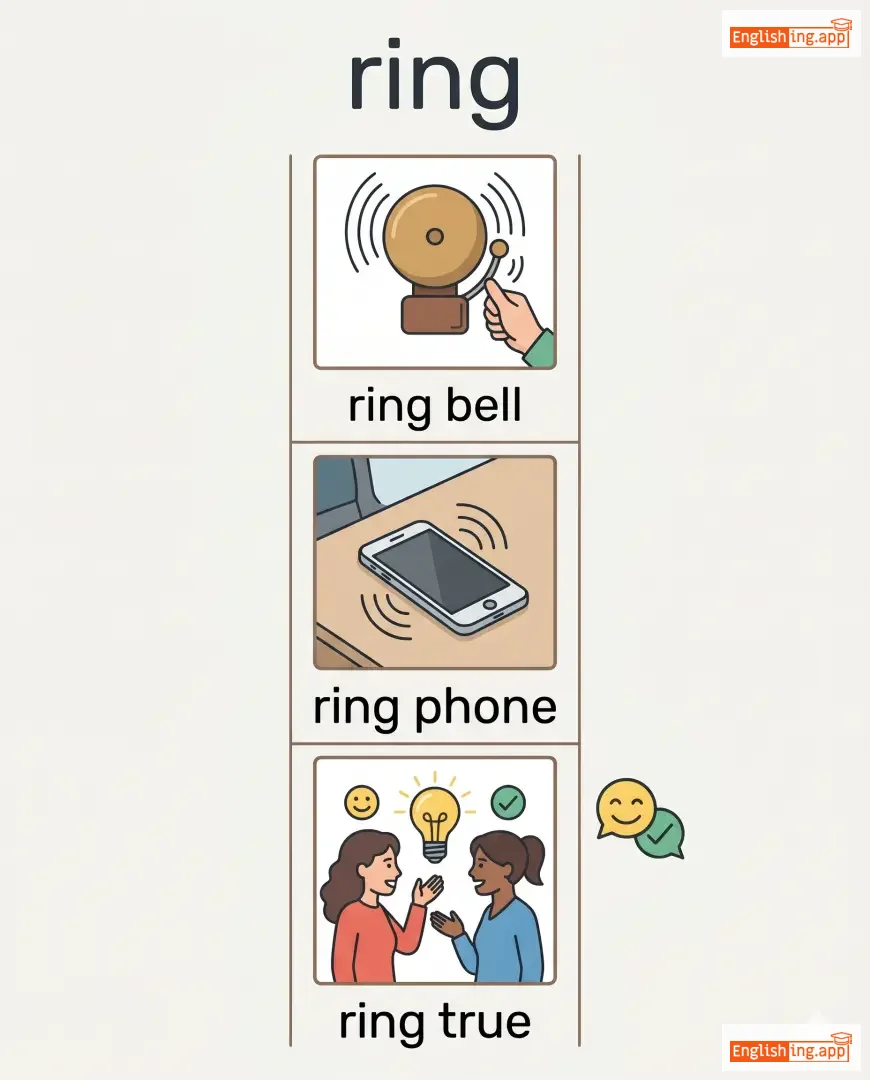
ring bell, ring phone, ring true, engagement ring
••••••
|
Think of a bell '铃声' ringing every hour.
••••••
|
|
#4318
🔥
|
/ˈraɪət/
noun
(rài-è)
••••••
|
- •••••• |
骚乱
saoluan
••••••
|
- •••••• | - •••••• | - •••••• | - •••••• |
a violent disturbance by a crowd
••••••
|
The protest turned into a violent riot. |
抗议变成了暴力骚乱。
Kangyi biàn chéngle bàolì saoluan.
••••••
|
run riot |
to act without control or restraint
••••••
|
失控
shikong
••••••
|
uproar, disturbance, revolt, chaos, uprising
••••••
|
peace, order
••••••
|
violent riot, riot police, start a riot, riot broke out
••••••
|
Riot 是失控的开始 - 当骚乱爆发时,社会陷入混乱。
••••••
|
|
#4319
✂️
|
/rɪp/
verb
(rip)
••••••
|
- •••••• |
撕裂
sī liè
••••••
|
ripped
ripped
••••••
|
ripped
ripped
••••••
|
rips
rips
••••••
|
ripping
ripping
••••••
|
to tear something quickly or violently
••••••
|
He accidentally ripped his shirt on the fence.
他不小心在篱笆上撕破了衬衫。
••••••
|
他不小心在篱笆上撕破了衬衫。
Tā bù xiǎoxīn zài líbā shàng sī pòle chènshān.
••••••
|
rip off
rip off
••••••
|
to cheat someone by charging too much
••••••
|
欺骗
qī piàn
••••••
|
tear, split, shred, cut, slash
••••••
|
sew, repair, mend
••••••
|
rip open, rip apart, rip through, rip off
••••••
|
Rip是撕裂的声音,小心你的衣服!
••••••
|
|
#4320
🌅
|
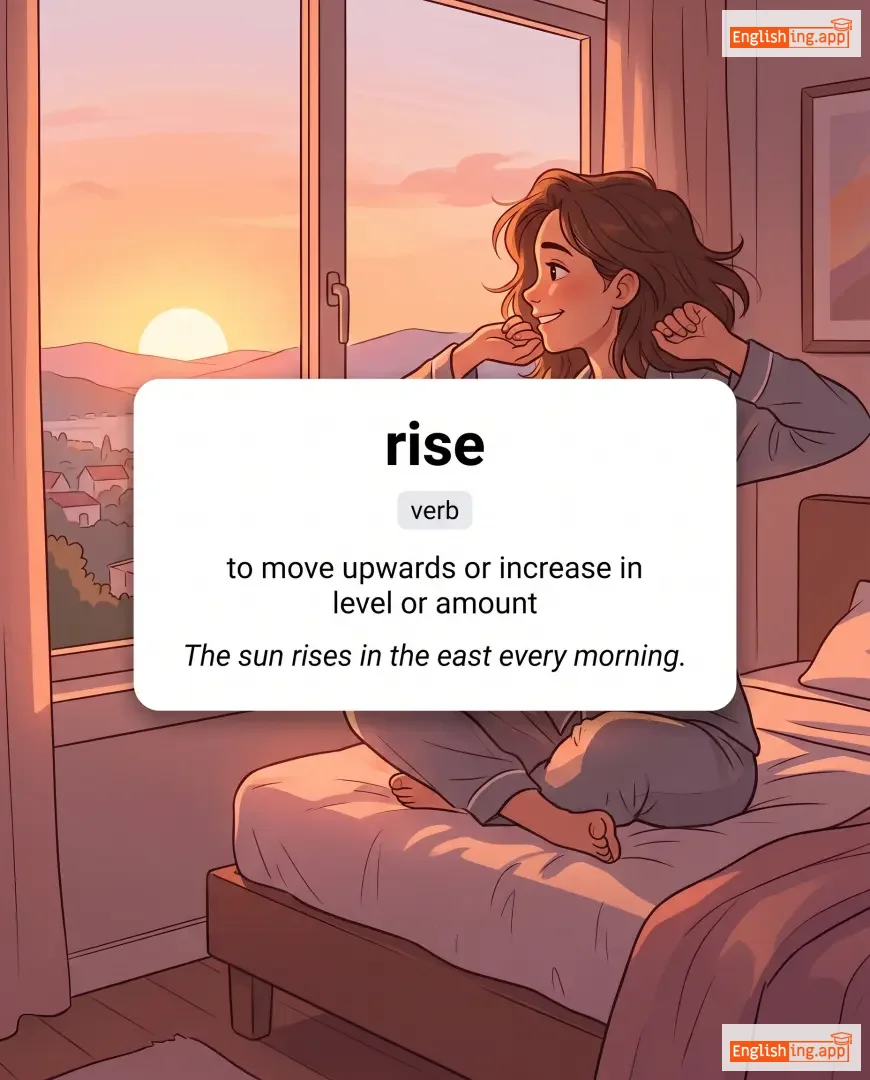
/raɪz/
verb
••••••
|
|
- •••••• |
rose
••••••
|
risen
••••••
|
rises
••••••
|
rising
••••••
|
to move upwards or increase in level or amount
••••••
|
The sun rises in the east every morning. |
- •••••• |
rise and shine |
to wake up and become active, usually in the morning
••••••
|
- •••••• |
ascend, climb, grow, soar
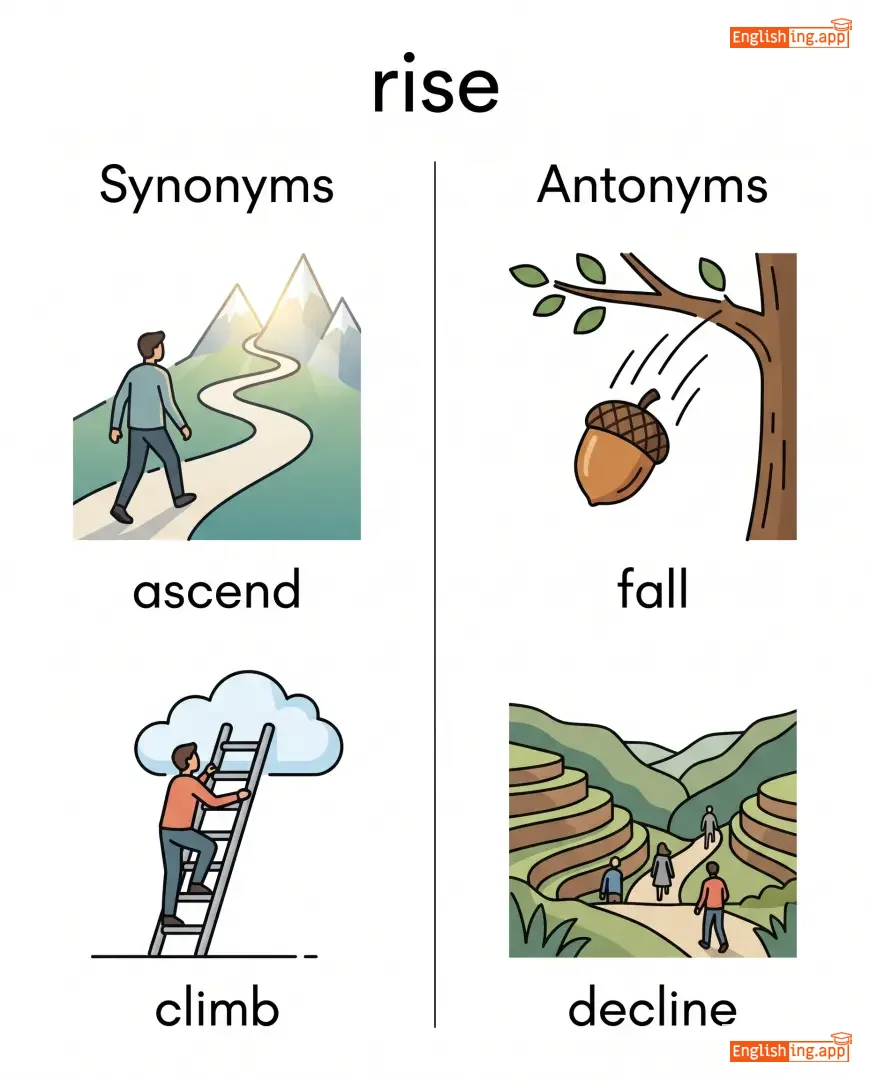
••••••
|
fall, decline, drop
••••••
|
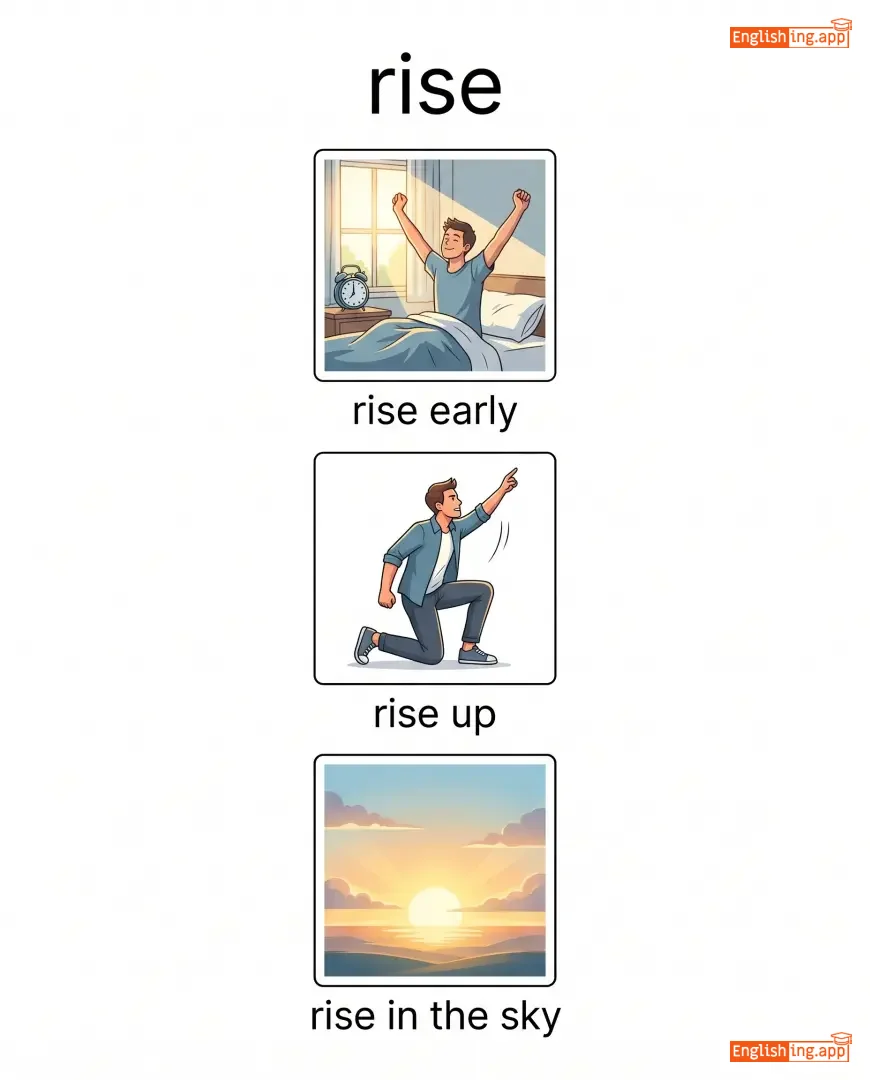
rise early, rise up, rise in the sky, rise to the occasion
••••••
|
No •••••• |
|
#4321
⚠️
|
/rɪsk/
verb
(risk)
••••••
|
|
冒险
maoxian
••••••
|
risked
risked
••••••
|
risked
risked
••••••
|
risks
risks
••••••
|
risking
risking
••••••
|
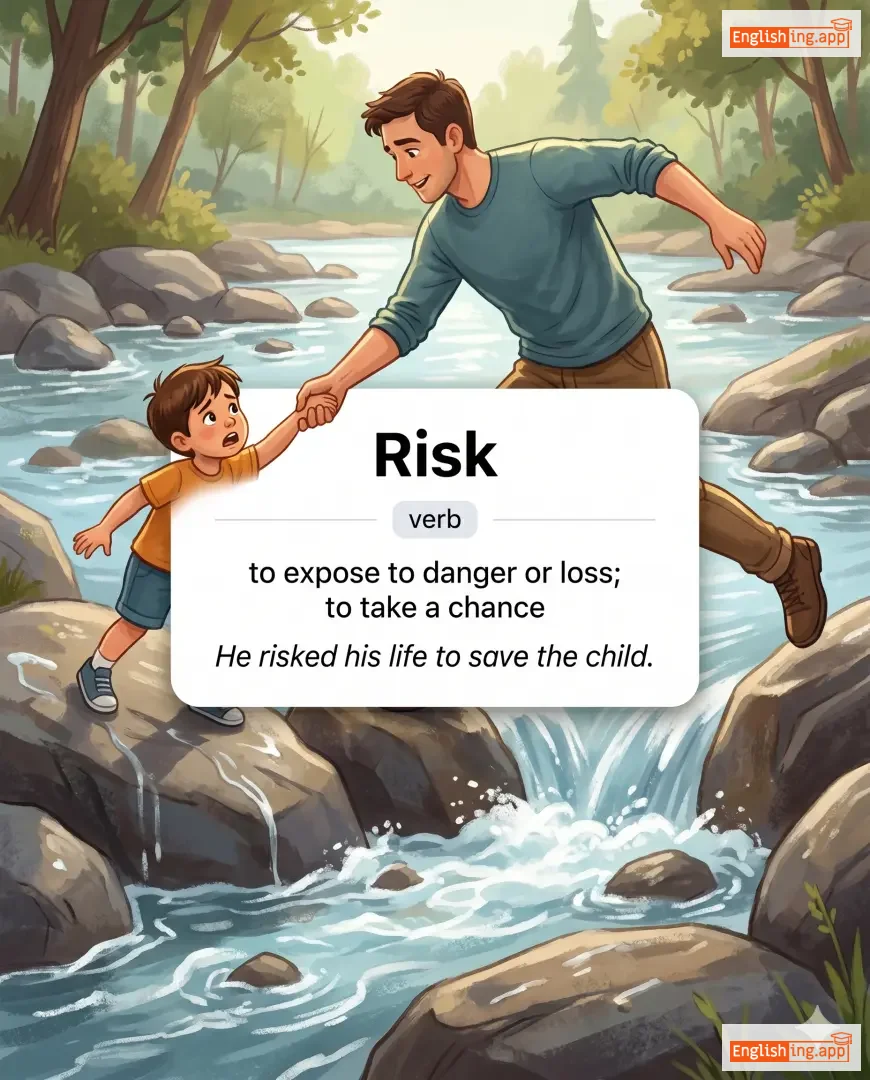
to expose to danger or loss; to take a chance
••••••
|
He risked his life to save the child.
他冒着生命危险去救那个孩子。
••••••
|
他冒着生命危险去救那个孩子。
Ta maozhe shengming weixian qu jiu nage haizi.
••••••
|
- •••••• | - •••••• | - •••••• |
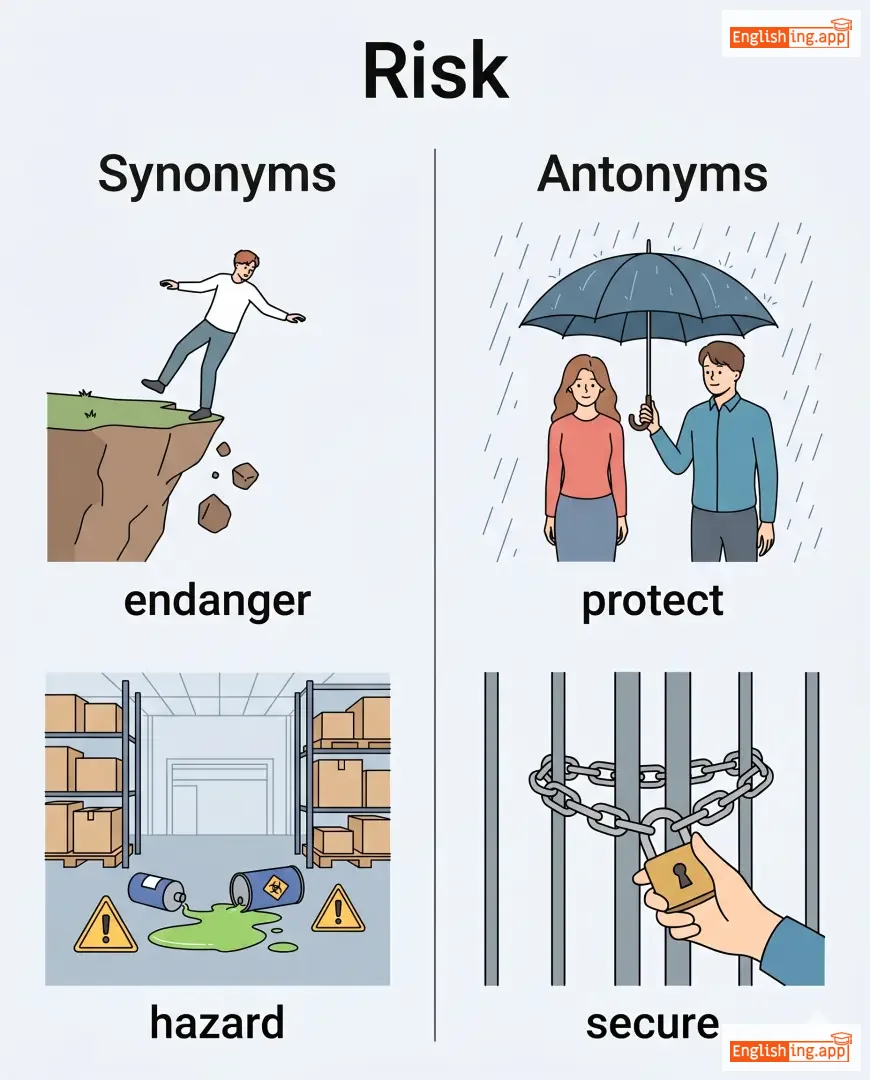
endanger, hazard, jeopardize, venture
••••••
|
protect, secure, safeguard, preserve
••••••
|
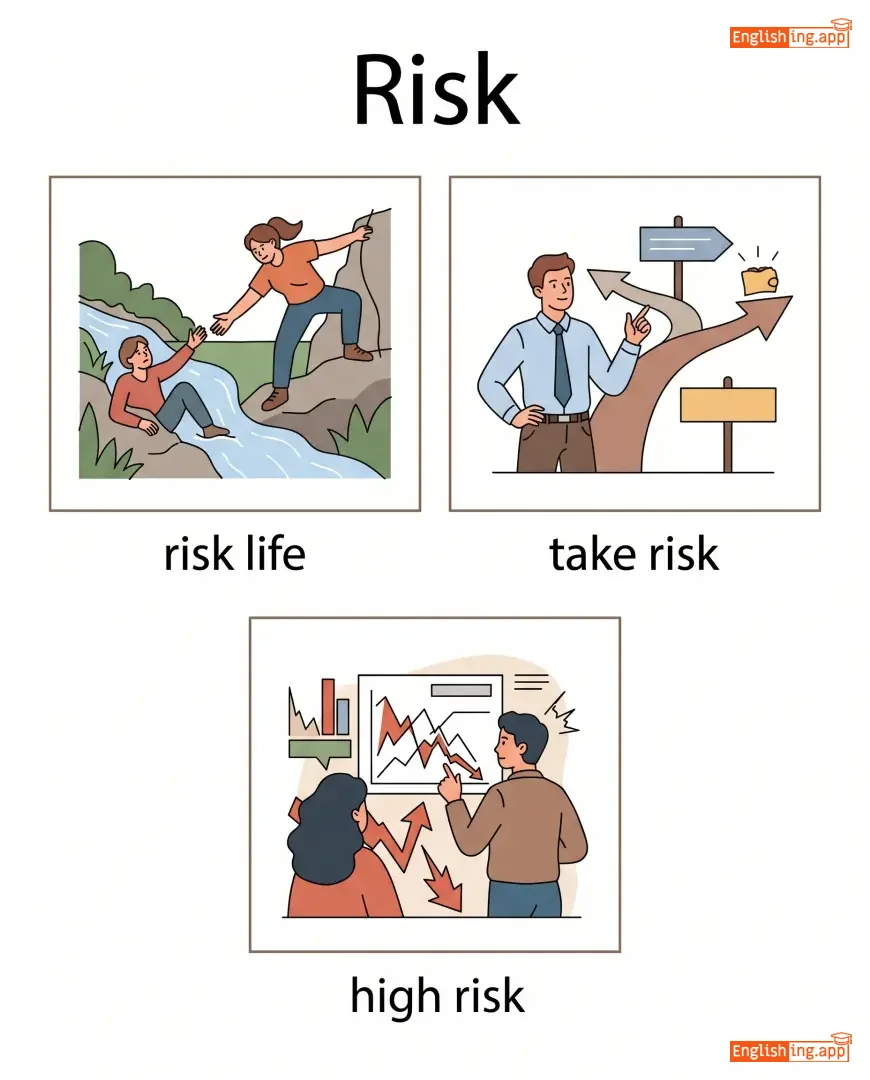
risk life, take risk, high risk, risk everything
••••••
|
冒险是为了更大的成功,永远向前进。
••••••
|
|
#4322
⚠️
|
/ˈrɪski/
adjective
••••••
|
- •••••• | - •••••• | - •••••• | - •••••• | - •••••• | - •••••• |
Involving the possibility of danger, harm, or loss
••••••
|
Investing in that startup is risky but could bring high rewards. |
- •••••• |
take a risky move |
to make a decision that involves significant risk
••••••
|
- •••••• |
dangerous, hazardous, uncertain, precarious, unsafe
••••••
|
safe, secure, certain
••••••
|
risky business, risky decision, risky move, risky investment
••••••
|
No •••••• |
|
#4323
🕯️
|
/ˈrɪtʃ.u.əl/
noun
••••••
|
- •••••• |
幸福
xìngfú
••••••
|
- •••••• | - •••••• | - •••••• | - •••••• |
a set of fixed actions and sometimes words performed regularly, especially as part of a ceremony or religion
••••••
|
Morning coffee has become a daily ritual for him. |
她在获得奖项时无法隐藏她的幸福。
Tā zài huòdé jiǎngxiàng shí wúfǎ yǐncáng tā de xìngfú.
••••••
|
go through the ritual |
to perform the usual routine or formal steps
••••••
|
追求幸福
zhuīqiú xìngfú
••••••
|
ceremony, tradition, custom, rite, practice
••••••
|
chaos, informality
••••••
|
religious ritual, morning ritual, wedding ritual, daily ritual
••••••
|
幸福 – 是生活中所有美好的事情的集合。🍀😊
••••••
|
|
#4324
⚔️
|
/ˈraɪvəl/
noun, verb
(raival)
••••••
|
- •••••• |
竞争者
jingzhengzhe
••••••
|
rivaled
raivaled
••••••
|
rivaled
raivaled
••••••
|
rivals
raivales
••••••
|
rivaling
raivaling
••••••
|
a person or thing competing with another for the same goal or superiority in the same field
••••••
|
The two companies are fierce rivals in the smartphone market.
这两家公司在智能手机市场上是激烈的竞争对手。
••••••
|
这两家公司在智能手机市场上是激烈的竞争对手。
Zhe liang jia gongsi zai zhinen shouji shichang shang shi jilie de jingzheng duishou.
••••••
|
arch rival
主要对手
••••••
|
a main and long-standing opponent
••••••
|
主要对手
zhuyao duishou
••••••
|
competitor, opponent, challenger, adversary, foe
••••••
|
ally, partner, supporter
••••••
|
main rival, business rival, political rival, sports rival
••••••
|
Rival在中文中代表竞争者,是不断争夺的对手。
••••••
|
|
#4325
🏞️
|
/ˈrɪv.ər/
noun
(河流)
••••••
|
- •••••• |
河流
heliu
••••••
|
- •••••• | - •••••• | - •••••• | - •••••• |
a large natural stream of water flowing in a channel to the sea, a lake, or another river
••••••
|
The river flows through the valley and into the ocean.
河流穿过山谷并流入大海。
••••••
|
河流穿过山谷并流入大海。
Héliú chuānguò shāngǔ bìng liúrù dàhǎi.
••••••
|
- •••••• | - •••••• | - •••••• |
stream, waterway, watercourse, brook
••••••
|
desert, drought, dryness
••••••
|
river bank, river mouth, cross the river, river valley
••••••
|
河流 - A river in Chinese, flowing peacefully, pronounced 'hé liú'.
••••••
|
|
#4326
🛣️
|
/roʊd/
noun
(roʊd)
••••••
|
- •••••• |
道路
daolu
••••••
|
- •••••• | - •••••• | - •••••• | - •••••• |
a wide way leading from one place to another
••••••
|
We drove along the road to the village. |
我们沿着这条路开车去村庄。
Wo men yanzhe zhe tiao lu kaiche qu cunzhuang.
••••••
|
- •••••• | - •••••• | - •••••• |
street, avenue, lane, highway
••••••
|
trail, path
••••••
|
paved road, open road, country road, main road
••••••
|
道路是车行的地方 (daolu shi chexing de difang) - Roads are meant for cars.
••••••
|
|
#4327
🦹♂️
|
/rɑːb/
verb
(罗布)
••••••
|
- •••••• |
抢劫
qiǎngjié
••••••
|
robbed
罗布德
••••••
|
robbed
罗布德
••••••
|
robs
罗布斯
••••••
|
robbing
罗布ing
••••••
|
to steal money or property from a person or place; to commit robbery
••••••
|
The thief tried to rob the bank last night.
小偷昨晚试图抢劫银行。
••••••
|
小偷昨晚试图抢劫银行。
Xiǎotōu zuówǎn shìtú qiǎngjié yínháng.
••••••
|
- •••••• | - •••••• | - •••••• |
steal, burgle, loot, plunder
••••••
|
give, donate, return, restore
••••••
|
rob a bank, rob someone blind, rob of opportunity, armed robbery
••••••
|
抢劫意味着抢夺,就像小偷抢劫银行。
••••••
|
|
#4328
🦹
|
/ˈrɒbər/
noun
(罗伯)
••••••
|
- •••••• |
强盗
qiangdao
••••••
|
- •••••• | - •••••• | - •••••• | - •••••• |
a person who steals property from others, often using force or threat
••••••
|
The robber was caught after a quick police chase.
泽 罗伯 沃兹 考特 阿夫特 尔 阿 奎克 波利斯 切斯。
••••••
|
经过警方的快速追捕,强盗被抓住了。
Jingguo jingfang de kuaisu zhuibu, qiangdao bei zhuazhu le
••••••
|
armed robber
阿姆德 罗伯
••••••
|
a robber who uses or carries a weapon during the crime
••••••
|
武装强盗
wuzhuang qiangdao
••••••
|
thief, burglar, bandit, mugger, looter
••••••
|
victim, law-abider, protector
••••••
|
bank robber, armed robber, masked robber, serial robber, robber gang
••••••
|
Robber 像 ro 抢 → 强盗
••••••
|
|
#4329
💣
|
/ˈrɒbəɹi/
noun
(rɔbəri)
••••••
|
- •••••• |
抢劫
qiǎngjié
••••••
|
- •••••• | - •••••• | - •••••• | - •••••• |
the crime of stealing from someone or somewhere using force or threat
••••••
|
The police are investigating the robbery at the local store. |
警方正在调查当地商店的抢劫事件。
Jǐngfāng zhèngzài diàochá dāngdì shāngdiàn de qiǎngjié shìjiàn.
••••••
|
- •••••• | - •••••• | - •••••• |
theft, burglary, heist, mugging
••••••
|
donation, charity
••••••
|
armed robbery, robbery attempt, robbery suspect
••••••
|
Robbers commit robbery—'Q' is for '抢劫' in Chinese.
••••••
|
|
#4330
💪
|
/roʊˈbʌst/
adjective
(罗布斯特)
••••••
|
|
强健
qiángjiàn
••••••
|
- •••••• | - •••••• | - •••••• | - •••••• |
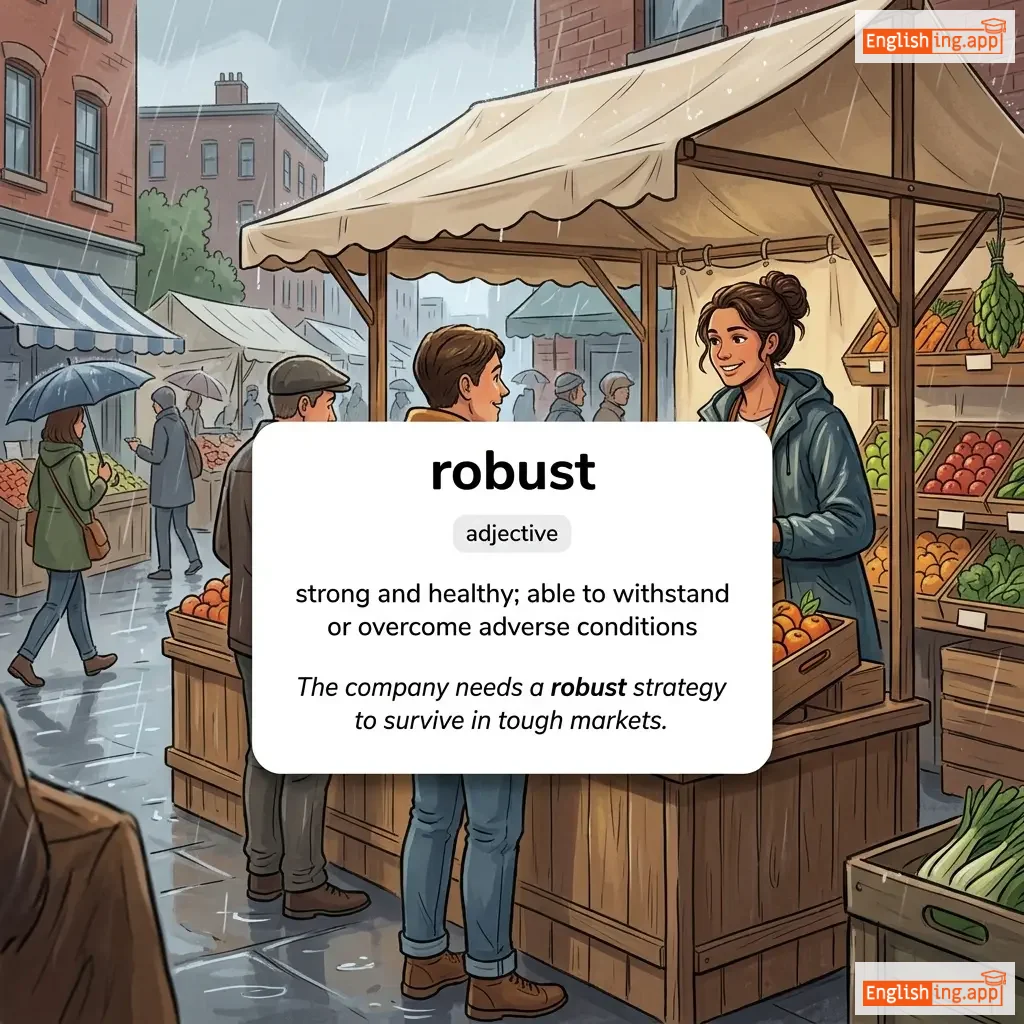
strong and healthy; able to withstand or overcome adverse conditions
••••••
|
The company needs a robust strategy to survive in tough markets. |
公司需要一个强健的策略以在艰难的市场中生存。
Gōngsī xūyào yīgè qiángjiàn de cèlüè yǐ zài jiānnán de shìchǎng zhōng shēngcún.
••••••
|
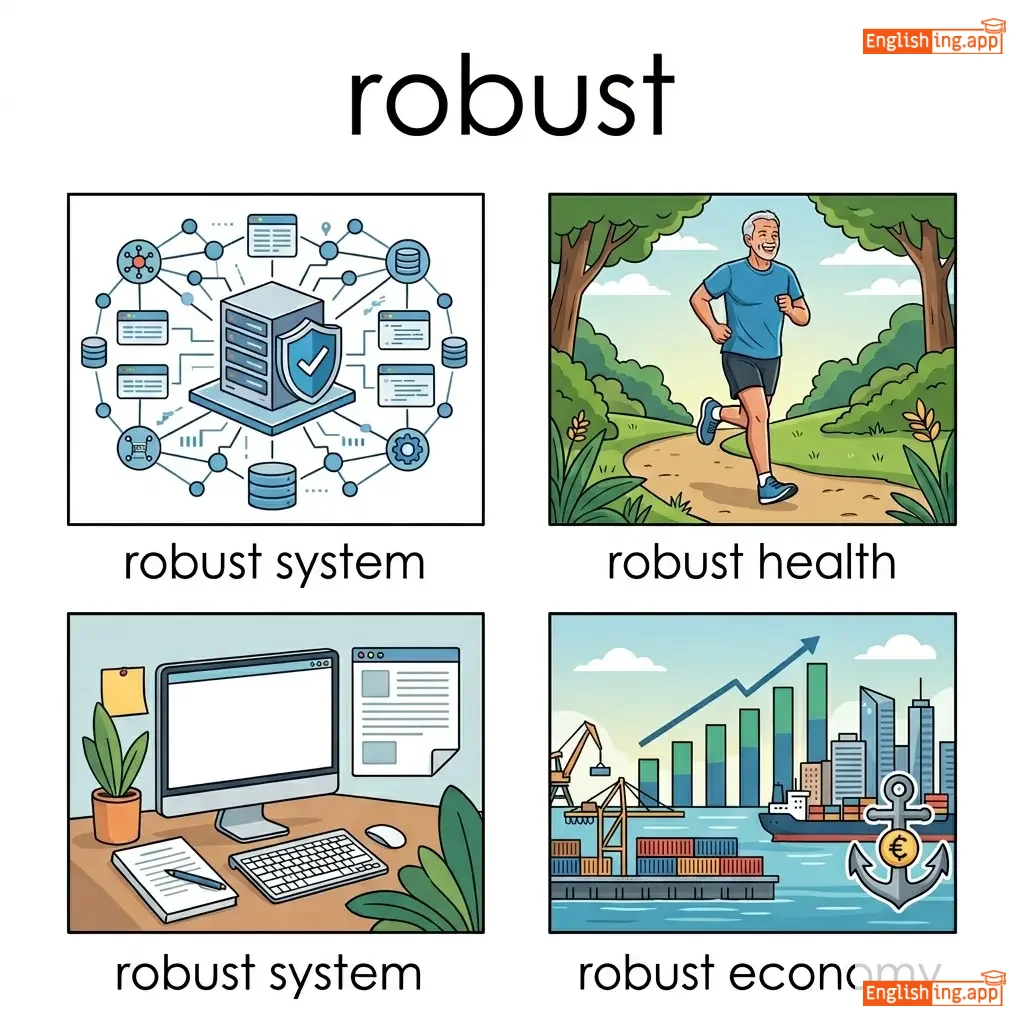
robust health |
a state of being very strong and healthy
••••••
|
强健的健康
qiángjiàn de jiànkāng
••••••
|
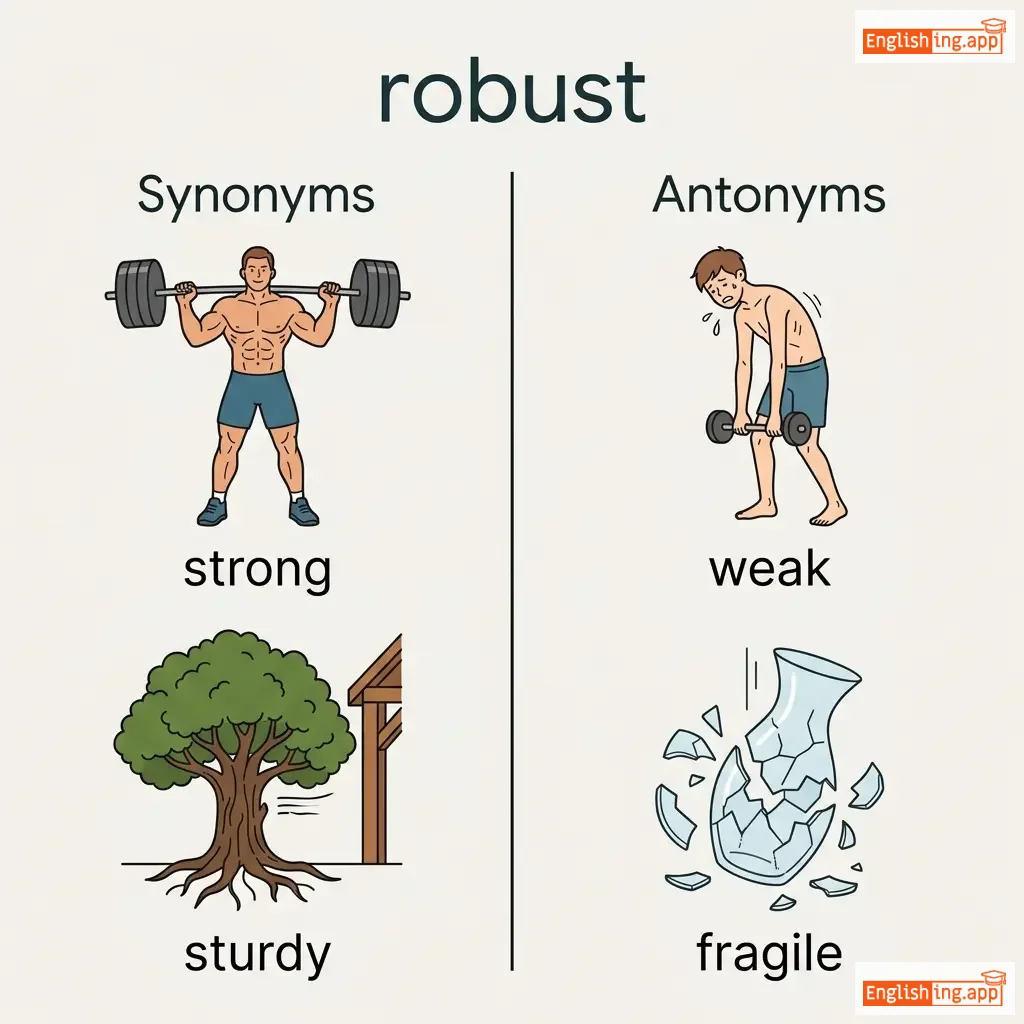
strong, sturdy, resilient, vigorous
••••••
|
weak, fragile
••••••
|
robust system, robust health, robust economy, robust design
••••••
|
Robust 意思是强健 💪 — 就像机器人也很强健!
••••••
|
|
#4331
🪨
|
/rɒk/
noun
(luòkè)
••••••
|
- •••••• |
岩石
yanshi
••••••
|
- •••••• | - •••••• | - •••••• | - •••••• |
a large, solid piece of mineral matter
••••••
|
The mountain was made of solid rock. |
这座山是由坚固的岩石组成的。
Zhe zuo shan shi you jian gu de yan shi zu cheng de.
••••••
|
- •••••• | - •••••• | - •••••• |
stone, boulder, pebble, cliff
••••••
|
sand, soil
••••••
|
rock formation, hard rock, rock face, climb a rock
••••••
|
岩石在山中随处可见 (Yanshi zai shan zhong sui chu ke jian) - Rocks are found everywhere in the mountains.
••••••
|
|
#4332
🚀
|
/ˈrɒkɪt/
noun, verb
(幸福)
••••••
|
- •••••• |
幸福
xìngfú
••••••
|
rocketed
••••••
|
rocketed
••••••
|
rockets
••••••
|
rocketing
••••••
|
a missile or vehicle propelled by a rocket engine; to increase or move very quickly
••••••
|
The company’s profits rocketed after the new product launch. |
当她获得奖项时,她无法掩饰她的幸福。
Dāng tā huòdé jiǎngxiàng shí, tā wúfǎ yǎnshì tā de xìngfú.
••••••
|
skyrocket |
to rise or increase rapidly
••••••
|
追求幸福
zhuīqiú xìngfú
••••••
|
missile, spacecraft, soar, surge, escalate
••••••
|
fall, drop, decline
••••••
|
rocket launch, rocket engine, rocket speed, rocket science
••••••
|
幸福就是我们寻找的目标,就像在追逐梦想一样!
••••••
|
|
#4333
🪄
|
/rɒd/
noun
(rɔd)
••••••
|
- •••••• |
细长的棒子,尤其是金属或木制的
xì cháng de bàngzi, yóuqí shì jīnshǔ huò mùzhì de
••••••
|
- •••••• | - •••••• | - •••••• | - •••••• |
a thin straight bar, especially of metal or wood
••••••
|
He used an iron rod to support the structure. |
他用铁棒支撑结构。
Tā yòng tiě bàng zhīchēng jiégòu.
••••••
|
spare the rod and spoil the child |
if you don’t discipline children, they will become spoiled
••••••
|
不打不成器
Bù dǎ bù chéng qì
••••••
|
bar, stick, pole, shaft, staff
••••••
|
flex, curve
••••••
|
fishing rod, iron rod, measuring rod, curtain rod
••••••
|
Rod意味着铁棒 – 没有铁棒,结构不成立,就像没有纪律,孩子就会变坏。
••••••
|
|
#4334
🎭
|
/roʊl/
noun
(ròu)
••••••
|
- •••••• |
角色
juese
••••••
|
- •••••• | - •••••• | - •••••• | - •••••• |
a part or function of something
••••••
|
Her role in the project was crucial. |
她在项目中的角色至关重要。
Ta zai xiangmu zhong de juese zhiguān zhòngyào.
••••••
|
- •••••• | - •••••• | - •••••• |
part, function, position, job
••••••
|
non-entity, spectator
••••••
|
play a role, important role, leadership role, major role
••••••
|
角色就是你在故事中的扮演角色。
••••••
|
|
#4335
⚽
|
/roʊl/
verb
(滚)
••••••
|
- •••••• |
滚动
gundong
••••••
|
rolled
滚动
••••••
|
rolled
滚动
••••••
|
rolls
滚动
••••••
|
rolling
滚动
••••••
|
to move by turning over and over on an axis
••••••
|
She rolled the ball down the hill.
她把球滚下了山坡。
••••••
|
她把球滚下了山坡。
Ta ba qiu gun xia le shanpo.
••••••
|
- •••••• | - •••••• | - •••••• |
turn, spin, twist, rotate
••••••
|
stop, stand still
••••••
|
roll over, roll out, roll up
••••••
|
当球从山坡滚下来时,记住'roll'在中文中的意思是'滚动'。
••••••
|
|
#4336
💞
|
/roʊˈmæns/
noun
(罗曼斯)
••••••
|
- •••••• |
浪漫,爱情
langman, aiqing
••••••
|
- •••••• | - •••••• | - •••••• | - •••••• |
a feeling of love, especially one that is exciting and mysterious
••••••
|
Their romance began during a summer trip to Paris.
他们的浪漫故事开始于一次夏天的巴黎旅行。
••••••
|
他们的浪漫故事开始于一次夏天的巴黎旅行。
Tamen de langman gushi kaishi yu yici xiatian de bāli lǚxíng.
••••••
|
a whirlwind romance
一场旋风恋情
••••••
|
a romantic relationship that develops very quickly
••••••
|
一段迅速发展的爱情
Yiduan xunsu fazhan de aiqing
••••••
|
love, affection, passion, relationship, courtship
••••••
|
hatred, indifference, dislike
••••••
|
romance novel, true romance, secret romance, romantic relationship
••••••
|
罗马(Rome)的爱情故事,带来了浪漫(romance)。
••••••
|
|
#4337
💕
|
/roʊˈmæn.tɪk/
adjective
(浪漫的)
••••••
|
- •••••• |
浪漫的
langman de
••••••
|
- •••••• | - •••••• | - •••••• | - •••••• |
relating to love; idealistic; dreamy
••••••
|
They enjoyed a romantic dinner by candlelight.
他们在烛光下享受浪漫的晚餐。
••••••
|
他们在烛光下享受浪漫的晚餐。
Tāmen zài zhúguāng xià xiǎngshòu làngmàn de wǎncān.
••••••
|
- •••••• | - •••••• | - •••••• |
loving, passionate, sentimental, dreamy
••••••
|
practical, realistic, unromantic, prosaic
••••••
|
romantic dinner, romantic movie, romantic relationship
••••••
|
浪漫的 = 爱与烛光晚餐
••••••
|
|
#4338
🏠
|
/ruːf/
noun
(rúf)
••••••
|
- •••••• |
屋顶
wūdǐng
••••••
|
- •••••• | - •••••• | - •••••• | - •••••• |
the top covering of a building or vehicle
••••••
|
The roof of the house needs to be repaired. |
房子的屋顶需要修理。
Fángzi de wūdǐng xūyào xiūlǐ.
••••••
|
- •••••• | - •••••• | - •••••• |
ceiling, canopy, covering, lid
••••••
|
floor, ground
••••••
|
roof top, flat roof, roof repair
••••••
|
屋顶上方的地方,就是给你遮风挡雨的地方。
••••••
|
|
#4339
🛏️
|
/ruːm/
noun
(鲁姆)
••••••
|
- •••••• |
房间
fangjian
••••••
|
- •••••• | - •••••• | - •••••• | - •••••• |
A space within a building enclosed by walls, floor, and ceiling
••••••
|
She decorated her room with bright colors.
希 装饰 她 的 鲁姆 用 明亮 的 颜色。
••••••
|
她用明亮的颜色装饰了她的房间。
ta yong mingliang de yanse zhuangshi le ta de fangjian
••••••
|
room for improvement
鲁姆 福尔 改进
••••••
|
possibility or opportunity for making something better
••••••
|
改进的空间
gaijin de kongjian
••••••
|
space, chamber, area, compartment, apartment
••••••
|
hall, outdoors
••••••
|
living room, bedroom, hotel room, empty room
••••••
|
Room means 房间 fangjian — imagine finding your hotel room in Beijing.
••••••
|
|
#4340
🌱
|
/ruːt/
noun
(rùt)
••••••
|
- •••••• |
根; 来源; 根源; 原因
gēn; láiyuán; gēnyuán; yuányīn
••••••
|
- •••••• | - •••••• | - •••••• | - •••••• |
the part of a plant that grows underground; the basic cause, source, or origin of something
••••••
|
We need to find the root of this problem to solve it permanently.
我们需要找到这个问题的根源,才能永久解决它。
••••••
|
我们需要找到这个问题的根源,才能永久解决它。
Wǒmen xūyào zhǎodào zhège wèntí de gēnyuán, cáinéng yǒngjiǔ jiějué tā.
••••••
|
- •••••• | - •••••• | - •••••• |
source, origin, basis, foundation
••••••
|
branch, leaf, effect, result
••••••
|
root cause, tree root, root of the problem
••••••
|
In Chinese, '根' (gēn) refers to the root, which is the origin or cause of something, just like the root of a plant.
••••••
|
|
#4341
🪢
|
/roʊp/
noun
(绳子)
••••••
|
- •••••• |
绳子
shengzi
••••••
|
- •••••• | - •••••• | - •••••• | - •••••• |
a strong, thick cord made of twisted fibers or strands
••••••
|
The climbers used a rope to scale the mountain.
登山者用绳子攀登山峰。
••••••
|
登山者用绳子攀登山峰。
Dengshan zhe yong shengzi pandeng shanfeng.
••••••
|
- •••••• | - •••••• | - •••••• |
cord, string, line, cable
••••••
|
thread, wire
••••••
|
climbing rope, rope ladder, jump rope
••••••
|
想象一个'绳子'在攀岩时就像你的'r rope'
••••••
|
|
#4342
🌹
|
/roʊz/
noun
(罗斯)
••••••
|
- •••••• |
玫瑰
meigui
••••••
|
- •••••• | - •••••• | - •••••• | - •••••• |
a fragrant flower with thorny stems, typically red, pink, white, or yellow
••••••
|
She gave me a beautiful red rose for Valentine's Day.
她送给我一朵漂亮的红玫瑰作为情人节礼物。
••••••
|
她在情人节送给我一朵漂亮的红玫瑰。
ta zai qingrenjie song gei wo yi duo piaoliang de hong meigui
••••••
|
- •••••• | - •••••• | - •••••• |
flower, bloom, blossom
••••••
|
weed, thorn
••••••
|
red rose, rose garden, rose petals, rose bouquet
••••••
|
Remember ‘meigui’ sounds like ‘my grey’ – think of a grey rose in your mind.
••••••
|
|
#4343
🍎
|
/rɒt/
verb
(rott)
••••••
|
|
腐烂
fǔlàn
••••••
|
rotted
rotted
••••••
|
rotted
rotted
••••••
|
rots
rots
••••••
|
rotting
rotting
••••••
|
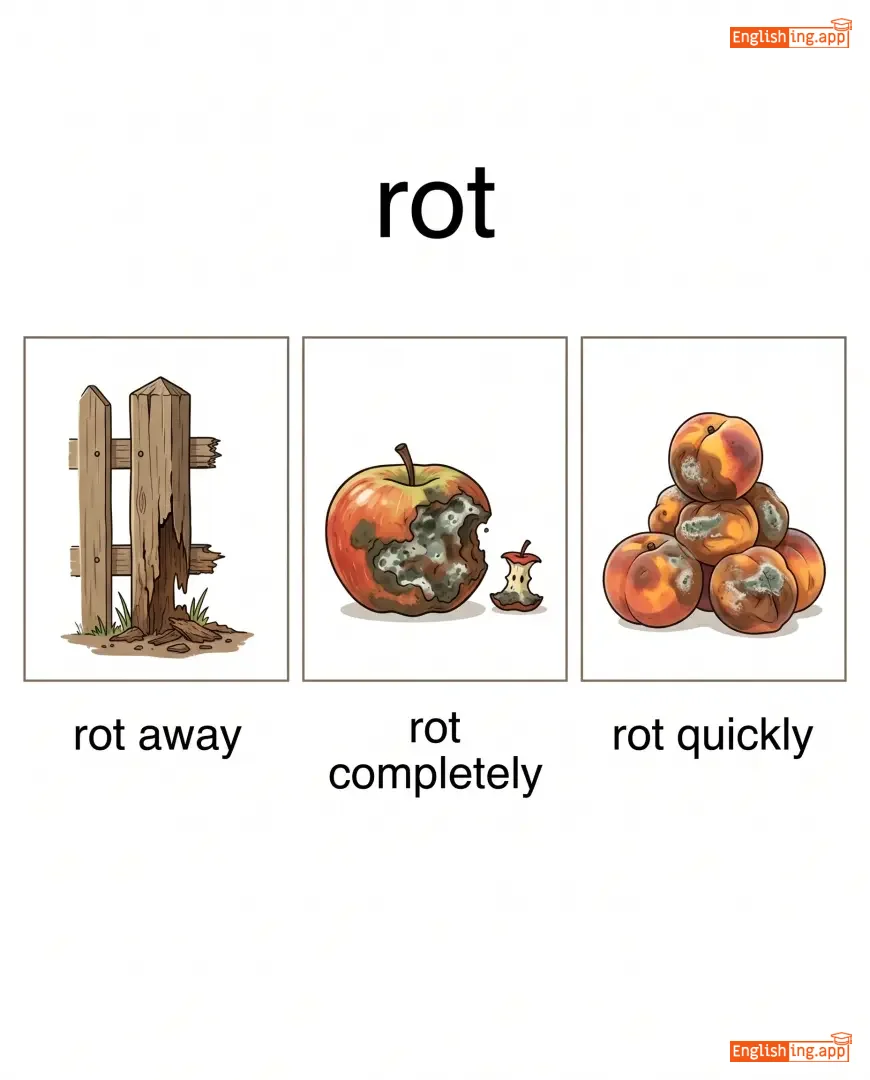
to decay or decompose; to become corrupt
••••••
|
The fruit will rot if left in the sun.
水果如果暴露在阳光下会腐烂。
••••••
|
水果如果暴露在阳光下会腐烂。
Shuǐguǒ rúguǒ bàolù zài yángguāng xià huì fǔlàn
••••••
|
- •••••• | - •••••• | - •••••• |
decay, decompose, spoil, putrefy
••••••
|
preserve, fresh, maintain, conserve
••••••
|
rot away, rot completely, rot quickly, rot slowly, rot in storage
••••••
|
如果你把水果留在阳光下,它会腐烂,像腐败一样。
••••••
|
|
#4344
🔄
|
/ˈroʊ.teɪt/
verb
(旋转)
••••••
|
- •••••• |
旋转
xuánzhuǎn
••••••
|
rotated
旋转了
••••••
|
rotated
旋转了
••••••
|
rotates
旋转
••••••
|
rotating
旋转中
••••••
|
to turn around a central point or axis
••••••
|
The Earth rotates on its axis once every 24 hours.
地球每24小时围绕其轴线旋转一次。
••••••
|
地球每24小时围绕其轴线旋转一次。
Dìqiú měi 24 xiǎoshí wéirào qí zhóuxiàn xuánzhuǎn yīcì.
••••••
|
rotate the crops
轮作
••••••
|
to change the type of crop grown in a field to maintain soil fertility
••••••
|
轮作
lúnzuò
••••••
|
spin, turn, revolve, whirl, pivot
••••••
|
stand, remain, stay
••••••
|
rotate slowly, rotate daily, rotate crops, rotate position
••••••
|
车轮旋转 - 旋转意味着转动
••••••
|
|
#4345
🔄
|
/roʊˈteɪʃən/
noun
(luo-tei-shen)
••••••
|
- •••••• |
旋转; 转动; 自转
xuánzhuǎn; zhuǎndòng; zìzhuǎn
••••••
|
- •••••• | - •••••• | - •••••• | - •••••• |
the action of rotating around an axis or center; a single turn
••••••
|
The Earth's rotation takes 24 hours to complete.
地球的自转需要24小时才能完成。
••••••
|
地球的自转需要24小时才能完成。
Dìqiú de zìzhuǎn xūyào 24 xiǎoshí cáinéng wánchéng.
••••••
|
- •••••• | - •••••• | - •••••• |
turning, spinning, revolution, orbit
••••••
|
stillness, stability, stagnation
••••••
|
crop rotation, job rotation, axis of rotation
••••••
|
想象地球像陀螺一样旋转
••••••
|
|
#4346
🪨
|
/rʌf/
adjective
(rāo)
••••••
|
- •••••• |
粗糙的; 粗糙; 严厉的
cūcāo de; cūcāo; yánlì de
••••••
|
- •••••• | - •••••• | - •••••• | - •••••• |
having an uneven surface; not smooth; harsh
••••••
|
The rough surface of the rock hurt my hands.
岩石的粗糙表面伤害了我的手。
••••••
|
岩石的粗糙表面伤害了我的手。
Yánshí de cūcāo biǎomiàn shānghài le wǒ de shǒu.
••••••
|
- •••••• | - •••••• | - •••••• |
coarse, uneven, harsh, bumpy
••••••
|
smooth, soft, gentle, even
••••••
|
rough surface, rough sea, rough draft
••••••
|
当物体表面粗糙时,触摸起来通常很痛。
••••••
|
|
#4347
📊
|
/ˈrʌfli/
adverb
(拉夫利)
••••••
|
- •••••• |
大约; 以粗暴或暴力的方式
dàyuē; yǐ cūbào huò bào lì de fāngshì
••••••
|
- •••••• | - •••••• | - •••••• | - •••••• |
approximately; in a harsh or violent way
••••••
|
The project will take roughly three months to complete. |
这个项目大约需要三个月完成。
Zhège xiàngmù dàyuē xūyào sān gè yuè wánchéng.
••••••
|
- •••••• | - •••••• | - •••••• |
approximately, about, around, harshly
••••••
|
exactly, precisely, gently, smoothly
••••••
|
roughly speaking, roughly equivalent, roughly estimated
••••••
|
Roughly reminds you of something roughly made or done.
••••••
|
|
#4348
🔵
|
/raʊnd/
adjective
(raund)
••••••
|
- •••••• |
圆形的
yuánxíng de
••••••
|
- •••••• | - •••••• | - •••••• | - •••••• |
having a circular shape; shaped like a sphere or disk
••••••
|
The table was round and had a smooth surface.
桌子是圆形的,表面光滑。
••••••
|
桌子是圆形的,表面光滑。
Zhuōzi shì yuánxíng de, biǎomiàn guānghuá.
••••••
|
- •••••• | - •••••• | - •••••• |
circular, spherical, disk-shaped, globular
••••••
|
square, rectangular
••••••
|
round table, round shape, round object, round hole
••••••
|
圆的东西更好滚动!
••••••
|
|
#4349
🛣️
|
/ruːt/
noun
••••••
|
- •••••• | - •••••• | - •••••• | - •••••• | - •••••• | - •••••• |
a way or course taken to get from one place to another
••••••
|
The best route to the airport is through the highway. |
- •••••• | - •••••• | - •••••• | - •••••• |
path, way, road, course
••••••
|
obstacle, detour
••••••
|
route map, take a route, preferred route, scenic route
••••••
|
No •••••• |
|
#4350
🔁
|
/ruːˈtiːn/
noun
(rutin)
••••••
|
|
常规,定期遵循的行动序列
changgui, dingqi zunxun de xingdong xu lie
••••••
|
- •••••• | - •••••• | - •••••• | - •••••• |
a sequence of actions regularly followed; a fixed program
••••••
|
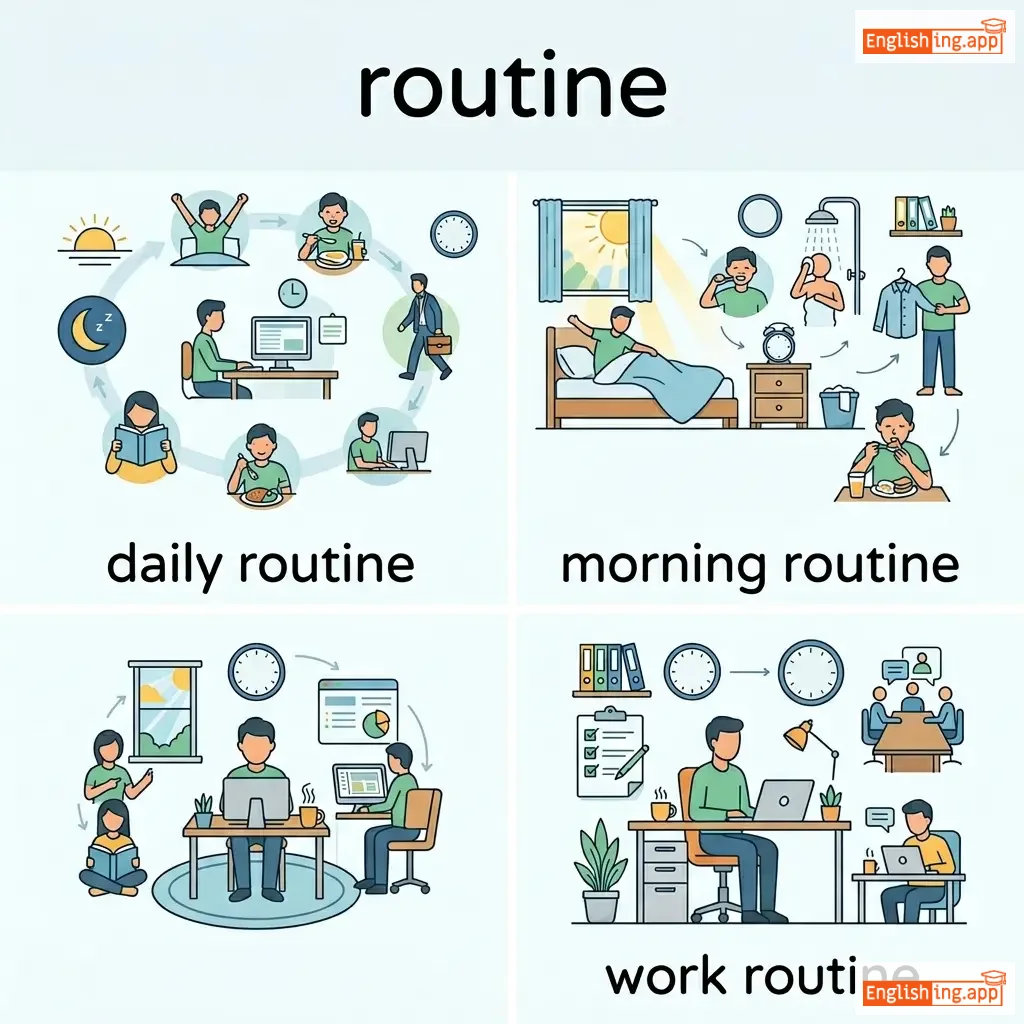
She follows a strict morning routine before work. |
她在上班前遵循严格的早晨常规。
Ta zai shangban qian zunxun yange de zaoshang changgui.
••••••
|
break the routine |
to do something different from one's usual habits
••••••
|
打破常规
dapo changgui
••••••
|
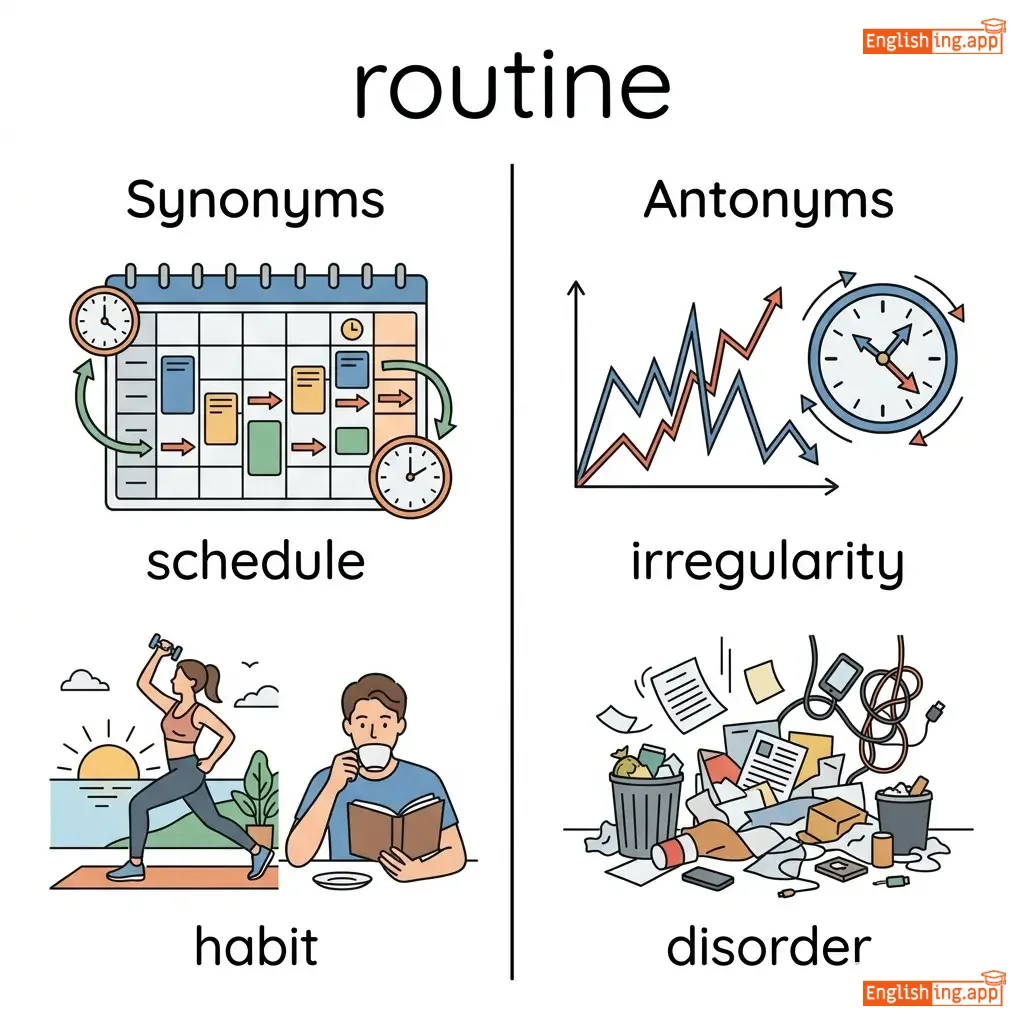
schedule, habit, pattern, procedure, practice
••••••
|
irregularity, disorder, spontaneity
••••••
|
daily routine, morning routine, work routine, routine check
••••••
|
常规就像是每天的计划,做的事情都固定
••••••
|
|
#4351
🚣
|
/raʊ/ (argument), /roʊ/ (line of things)
noun, verb
(罗)
••••••
|
- •••••• |
排 / 争吵
pái / zhēngchǎo
••••••
|
rowed
罗德
••••••
|
rowed
罗德
••••••
|
rows
罗兹
••••••
|
rowing
罗因
••••••
|
A line of things or people; also, a noisy quarrel; to propel a boat with oars.
••••••
|
They had a loud row about money.
他们就钱大声争吵。
••••••
|
他们就钱大声争吵。
Tāmen jiù qián dàshēng zhēngchǎo.
••••••
|
a row to hoe
一项艰难的任务
••••••
|
a difficult task or responsibility to deal with
••••••
|
艰难的任务
jiānnán de rènwù
••••••
|
line, series, quarrel, fight, paddle
••••••
|
agreement, harmony
••••••
|
row of seats, row a boat, loud row
••••••
|
Row 作为排或争吵: 'Row' 可以是事情的排,也可以是争吵。
••••••
|
|
#4352
👑
|
/ˈrɔɪəl/
adjective
(ruòyǎo)
••••••
|
- •••••• |
皇家
huángjiā
••••••
|
- •••••• | - •••••• | - •••••• | - •••••• |
relating to a king, queen, or other member of a royal family
••••••
|
They attended a royal ceremony at the palace. |
他们参加了宫殿里的皇家仪式。
Tāmen cānjiāle gōngdiàn lǐ de huángjiā yíshì.
••••••
|
royal treatment |
exceptionally good or special treatment
••••••
|
皇家待遇
huángjiā dàiyù
••••••
|
regal, majestic, noble, grand, kingly
••••••
|
common, ordinary, humble
••••••
|
royal family, royal palace, royal wedding, royal decree
••••••
|
Royal意为'皇家' — 如‘皇家椅子’,特别舒适。
••••••
|
|
#4353
👐
|
/rʌb/
verb
(rʌb)
••••••
|
|
擦
ca
••••••
|
rubbed
rʌbd
••••••
|
rubbed
rʌbd
••••••
|
rubs
rʌbz
••••••
|
rubbing
rʌbɪŋ
••••••
|
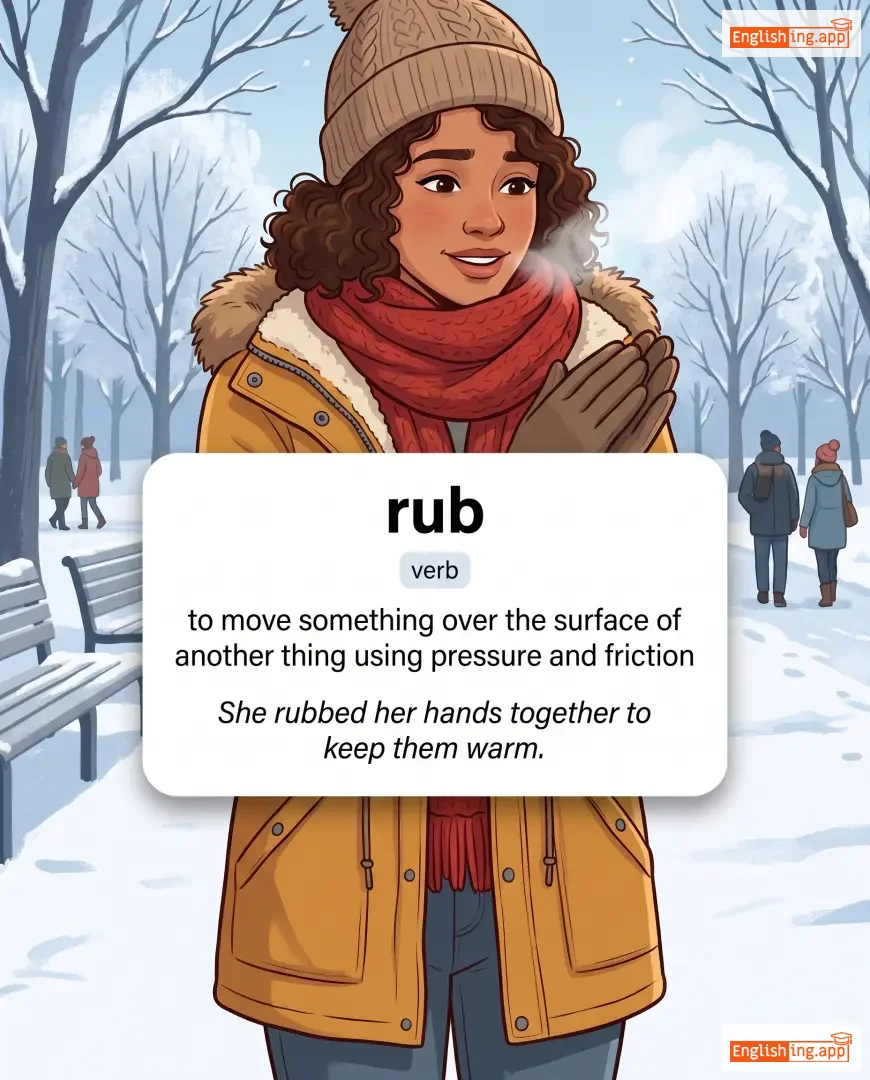
to move something over the surface of another thing using pressure and friction
••••••
|
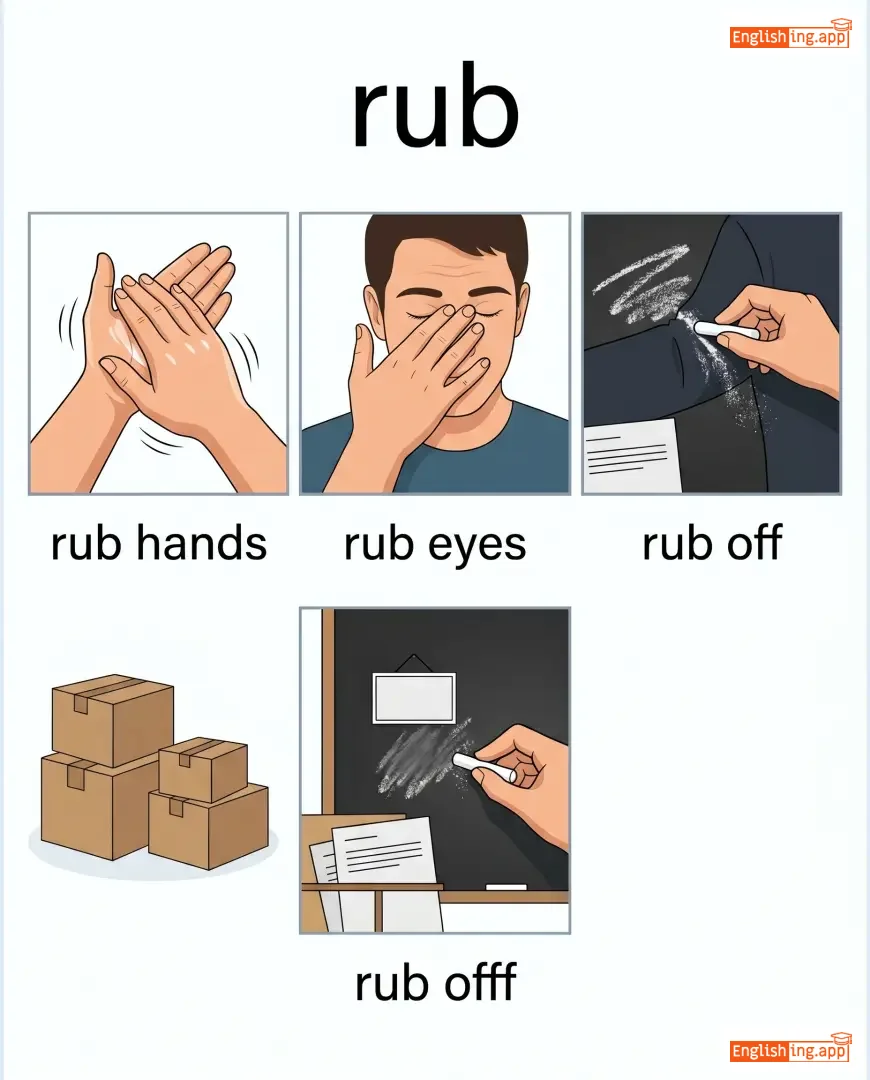
She rubbed her hands together to keep them warm.
她把双手揉在一起以保持温暖。
••••••
|
她把双手揉在一起以保持温暖。
Tā bǎ shuāng shǒu róu zài yīqǐ yǐ bǎochí wēnnuǎn.
••••••
|
rub salt in the wound
在伤口上擦盐
••••••
|
to make a bad situation even worse
••••••
|
在伤口上擦盐
Zài shāngkǒu shàng cā yán
••••••
|
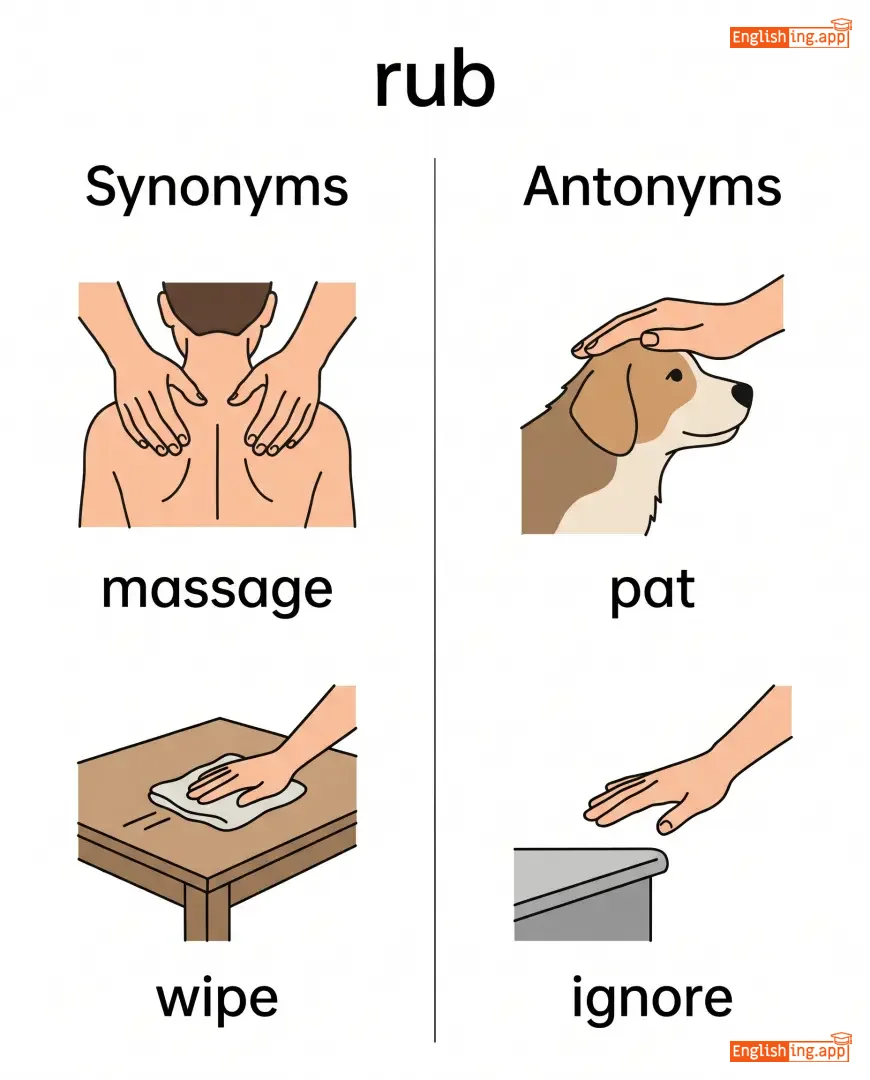
massage, wipe, polish, scrub, stroke
••••••
|
pat, ignore, leave
••••••
|
rub hands, rub eyes, rub off, rub out
••••••
|
Rub意味着擦,就像擦拭让它光滑。
••••••
|
|
#4354
🧤
|
/ˈrʌbər/
noun
(海皮尼斯)
••••••
|
- •••••• |
幸福
xìng fú
••••••
|
- •••••• | - •••••• | - •••••• | - •••••• |
a tough elastic substance made from the latex of tropical plants or synthetically, used for making tires, boots, and other products.
••••••
|
The tires are made of natural rubber. |
她收到奖项时无法掩饰自己的幸福。
Tā shōudào jiǎngxiàng shí wúfǎ yǎnshì zìjǐ de xìngfú.
••••••
|
rubber meets the road |
the point at which a theory or idea is tested in practice
••••••
|
追求幸福
zhuīqiú xìngfú
••••••
|
elastic, latex, polymer, gum, elastomer
••••••
|
metal, stone, plastic
••••••
|
rubber band, rubber gloves, rubber boots, rubber factory
••••••
|
幸福是温暖的阳光,照亮我们的人生路。
••••••
|
|
#4355
🗑️
|
/ˈrʌbɪʃ/
noun
(拉比什)
••••••
|
- •••••• |
垃圾
laji
••••••
|
- •••••• | - •••••• | - •••••• | - •••••• |
Waste material or unwanted things; something worthless
••••••
|
He threw the broken toys into the rubbish bin. |
他把坏掉的玩具扔进了垃圾桶。
Ta ba huai diao de wanju reng jin le laji tong.
••••••
|
talk rubbish |
to speak nonsense
••••••
|
胡说八道
hushuo badao
••••••
|
trash, garbage, litter, junk, waste
••••••
|
treasure, valuables
••••••
|
rubbish bin, collect rubbish, throw rubbish, rubbish talk
••••••
|
Rubbish 意味着垃圾,垃圾都扔到垃圾桶里!
••••••
|
|
#4356
🙄
|
/ruːd/
adjective
(rú)
••••••
|
- •••••• |
粗鲁
culu
••••••
|
- •••••• | - •••••• | - •••••• | - •••••• |
Not having or showing respect; impolite
••••••
|
It was rude of him to interrupt the conversation. |
他打断谈话是很无礼的。
tā dǎduàn tánhuà shì hěn wúlǐ de.
••••••
|
rude awakening |
an unpleasant surprise or realization
••••••
|
粗鲁的觉醒
culu de juéxǐng
••••••
|
impolite, disrespectful, offensive, insolent, unmannerly
••••••
|
polite, respectful, courteous
••••••
|
rude behavior, rude comment, rude awakening, rude interruption
••••••
|
Rude像粗鲁, 两者意思相同。
••••••
|
Vocabulary Quiz
Test your vocabulary by matching words with their translations or meanings.
Login to take the quiz
Comments (0)
Share your thoughts and join the discussion.
Join the discussion by logging in
Login to CommentNo comments yet
Be the first to share your thoughts!