






Swipe left or right, or use the buttons. Tap image to zoom.
例句翻译
单词
Lesson 33Lesson 33 - 遮罩切换
|
表情符号
|
单词 | Images | 翻译 | 过去时 | 过去分词 | 第三人称单数 | 动名词 | 含义 | 例句 | 例句翻译 | 示例表达 | 示例表达含义 | 示例表达翻译 | 同义词 | 反义词 | 搭配词 | 助记符 |
|---|---|---|---|---|---|---|---|---|---|---|---|---|---|---|---|---|---|
|
#1548
⚖️
|
/ˈdɪfərəns/
noun
(difenren)
••••••
|
- •••••• |
区别
qubie
••••••
|
- •••••• | - •••••• | - •••••• | - •••••• |
A point or way in which things are not the same.
••••••
|
There is a big difference between theory and practice. |
理论和实践之间有很大的区别。
Lǐlùn hé shíjiàn zhī jiān yǒu hěn dà de qūbié.
••••••
|
make a difference |
To have a significant impact or effect
••••••
|
产生影响
chǎnshēng yǐngxiǎng
••••••
|
distinction, variation, contrast, diversity, disparity
••••••
|
similarity, resemblance, sameness
••••••
|
big difference, subtle difference, cultural difference, make a difference
••••••
|
区别是当某事物不一样时,记住'不同和区别'.
••••••
|
|
#1549
🔀
|
/ˈdɪf.ər.ənt/
adjective
(迪费伦特)
••••••
|
- •••••• |
不同的
bùtóng de
••••••
|
- •••••• | - •••••• | - •••••• | - •••••• |
Not the same as another; distinct or unlike.
••••••
|
Her opinion was completely different from mine. |
她的意见与我的完全不同。
Tā de yìjiàn yǔ wǒ de wánquán bùtóng.
••••••
|
world of difference |
A very big difference.
••••••
|
巨大的差异
jùdà de chāyì
••••••
|
distinct, unlike, diverse, varied, alternative
••••••
|
similar, same, identical
••••••
|
different types, different ways, different people, completely different
••••••
|
不同的意思是不同 — 'Bù' 就是分开,完全不同的意思。
••••••
|
|
#1550
🧩
|
/ˌdɪfəˈrɛnʃieɪt/
verb
(区分)
••••••
|
- •••••• |
区分
qufen
••••••
|
differentiated
区分了
••••••
|
differentiated
区分了
••••••
|
differentiates
区分
••••••
|
differentiating
区分中
••••••
|
To recognize or make a distinction between things.
••••••
|
It is important to differentiate between fact and opinion.
重要的是区分事实和意见。
••••••
|
重要的是区分事实和意见。
Zhongyao de shi qufen shishi he yijian.
••••••
|
differentiate yourself
区分你自己
••••••
|
To make oneself stand out as unique or distinct.
••••••
|
区分你自己
qufen ni ziji
••••••
|
distinguish, discern, separate, identify, contrast
••••••
|
confuse, equate, mix
••••••
|
differentiate clearly, differentiate products, differentiate features
••••••
|
区分意味着区分 - 记住事实与意见的区别。
••••••
|
|
#1551
🎯
|
/ˌdɪfəˈrɛnʃɪˈeɪʃən/
noun
(差异化)
••••••
|
|
差异化, 区分
chā yì huà, qū fēn
••••••
|
- •••••• | - •••••• | - •••••• | - •••••• |
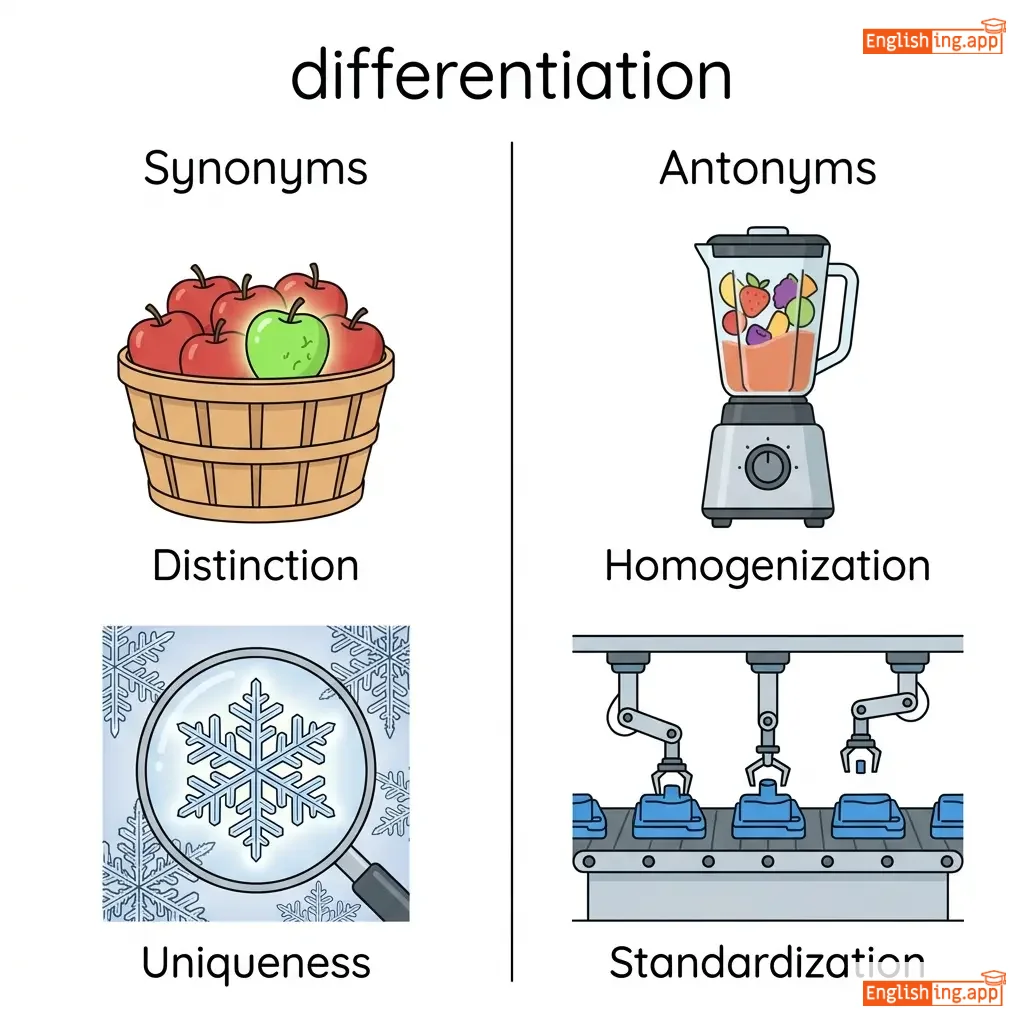
The action or process of differentiating or distinguishing between things.
••••••
|
Differentiation from competitors can create a unique market position.
从竞争者中实现差异化可以创建独特的市场地位。
••••••
|
从竞争者中实现差异化可以创建独特的市场地位。
Cóng jìngzhēng zhě zhōng shíxiàn chāyì huà kěyǐ chuàngjiàn dútè de shìchǎng dìwèi.
••••••
|
- •••••• | - •••••• | - •••••• |
distinction, contrast, separation
••••••
|
similarity, uniformity
••••••
|
- •••••• |
通过差异化脱颖而出
••••••
|
|
#1552
🔄
|
/ˈdɪfərəntli/
adverb
(diferenti)
••••••
|
- •••••• |
以不同方式
yi butong fangshi
••••••
|
- •••••• | - •••••• | - •••••• | - •••••• |
in a way that is not the same as another or as expected
••••••
|
She approached the problem differently than her colleagues. |
她以不同的方式解决了这个问题,比她的同事们更有创意。
Ta yi butong de fangshi jiejue le zhege wenti, bi ta de tongshi men geng you chuangyi.
••••••
|
- •••••• | - •••••• | - •••••• |
otherwise, uniquely, unusually, distinctly
••••••
|
similarly, alike
••••••
|
think differently, act differently, look differently, behave differently
••••••
|
以不同方式表示diffferently,即做事与他人或预期不同。
••••••
|
|
#1553
😓
|
/ˈdɪf.ɪ.kəlt/
adjective
(difikalt)
••••••
|
|
困难
kunnan
••••••
|
- •••••• | - •••••• | - •••••• | - •••••• |
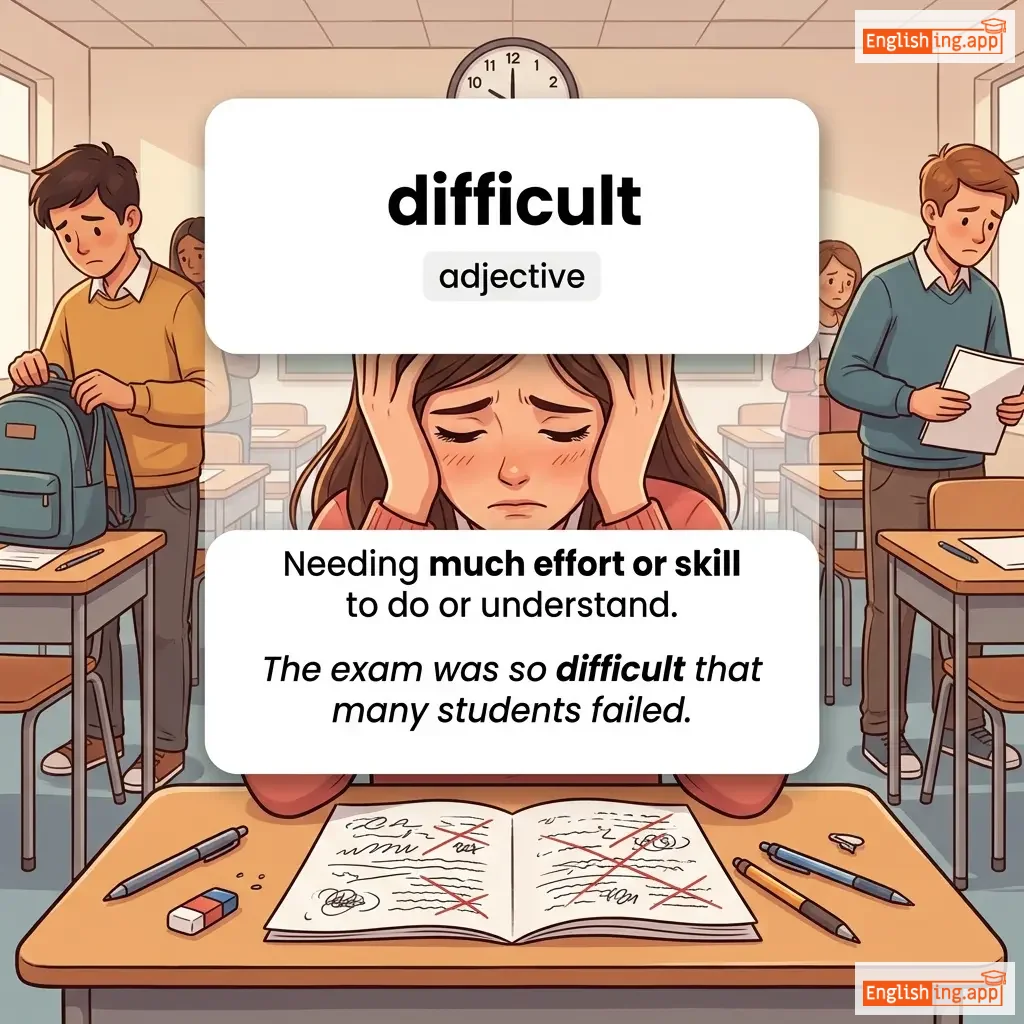
Needing much effort or skill to do or understand.
••••••
|
The exam was so difficult that many students failed. |
考试如此困难,以至于许多学生都没通过。
Kǎoshì rúcǐ kùnnán, yǐ zhì yú xǔduō xuéshēng dōu méi tōngguò.
••••••
|
difficult situation |
A situation that is hard to handle.
••••••
|
困难的局面
Kùnnán de júmiàn
••••••
|
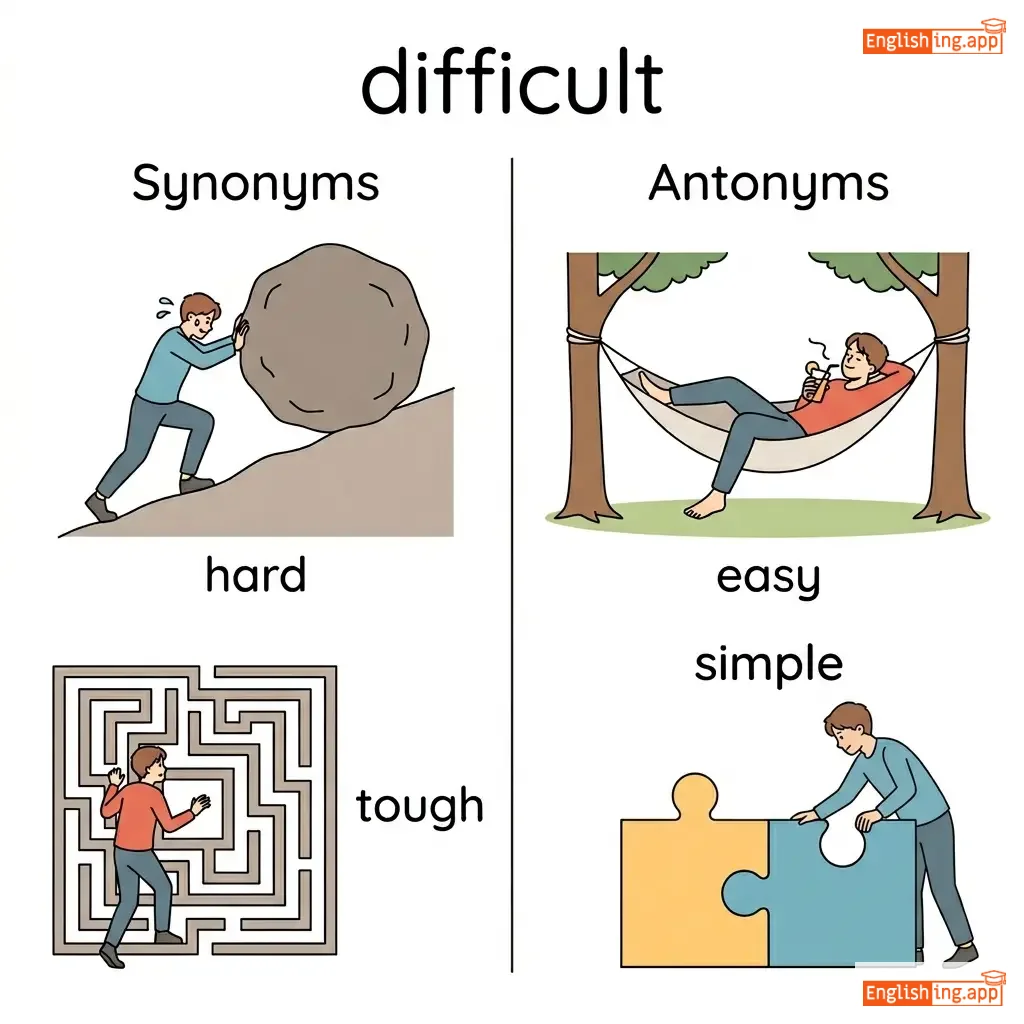
hard, tough, challenging, complicated, demanding
••••••
|
easy, simple, effortless
••••••
|
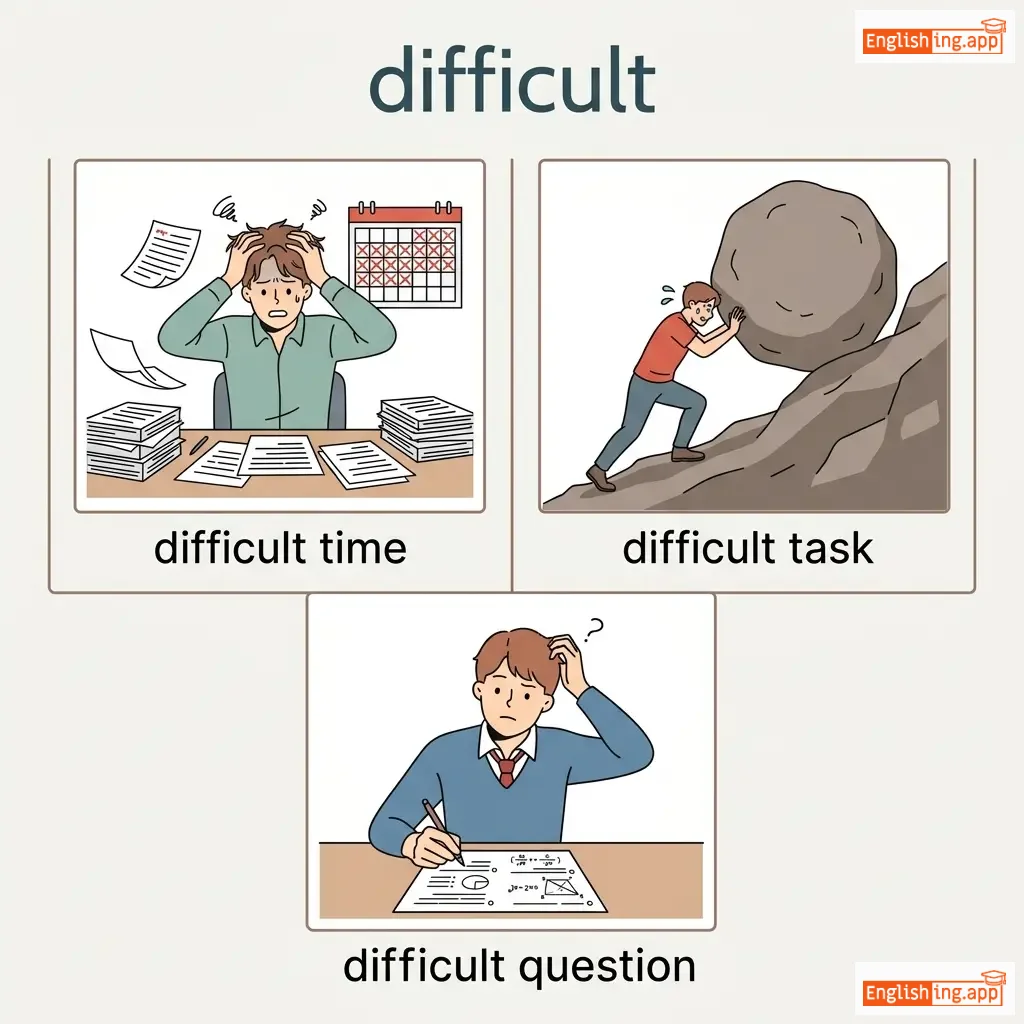
difficult time, difficult task, difficult question, difficult choice
••••••
|
Difficult 的意思是困难——想象一下,'Di' 就是困难,'full' 就是满的;做事情需要努力。
••••••
|
|
#1554
⚠️
|
/ˈdɪfɪkəlti/
noun
••••••
|
- •••••• | - •••••• | - •••••• | - •••••• | - •••••• | - •••••• |
the state or condition of being hard to do, deal with, or understand
••••••
|
He faced great difficulty in learning a new language. |
- •••••• |
in difficulty |
to be in trouble or facing problems
••••••
|
- •••••• |
challenge, hardship, obstacle, struggle, trouble
••••••
|
ease, simplicity, comfort
••••••
|
face difficulty, great difficulty, difficulty in, experience difficulty
••••••
|
No •••••• |
|
#1555
⛏️
|
/dɪɡ/
verb
(迪格)
••••••
|
- •••••• |
挖掘
wājué
••••••
|
dug
达格
••••••
|
dug
达格
••••••
|
digs
迪格斯
••••••
|
digging
迪格ing
••••••
|
to break up and move earth with a tool or machine, or with hands, paws, etc.
••••••
|
They decided to dig a hole for the new tree.
他们决定为新树挖一个洞。
••••••
|
他们决定为新树挖一个洞。
Tāmen juédìng wèi xīn shù wā yīgè dòng.
••••••
|
dig deep
挖深
••••••
|
to make a great effort or use inner strength
••••••
|
挖深
wā shēn
••••••
|
excavate, burrow, scoop, shovel
••••••
|
fill, cover
••••••
|
dig a hole, dig up, dig deep, dig into
••••••
|
DIG意味着挖掘 - 就像在土壤中寻找宝藏。
••••••
|
|
#1556
💻
|
/ˈdɪdʒɪtl/
adjective
(díjìtǎ)
••••••
|
|
数字的
shùzì de
••••••
|
- •••••• | - •••••• | - •••••• | - •••••• |
relating to technology that uses signals or data in the form of numbers (0s and 1s)
••••••
|
She prefers digital books over printed ones. |
她更喜欢数字书籍而不是印刷书籍。
Tā gèng xǐhuān shùzì shūjí ér bùshì yìnshuā shūjí.
••••••
|
go digital |
to switch from traditional methods to digital technology
••••••
|
转向数字化
zhuǎn xiàng shùzì huà
••••••
|
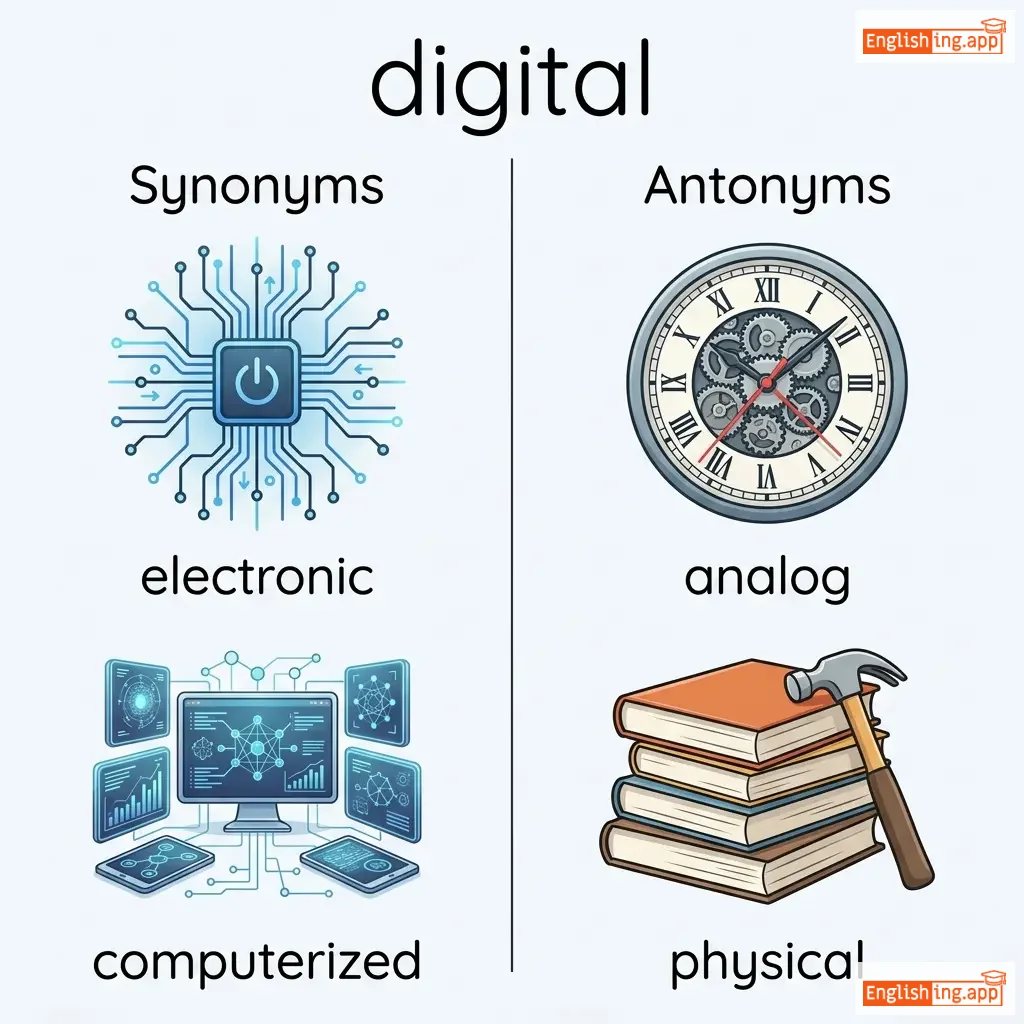
electronic, computerized, online, virtual
••••••
|
analog, physical
••••••
|
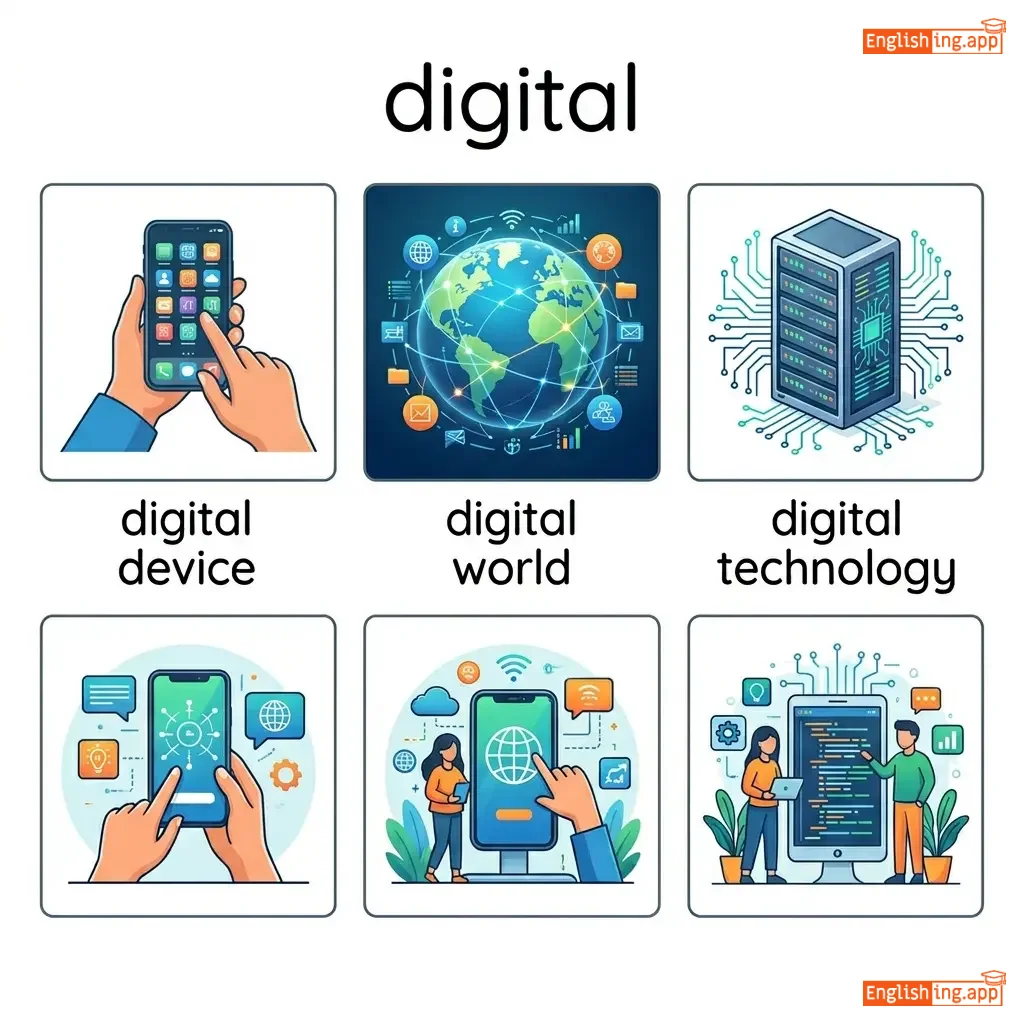
digital device, digital world, digital technology, digital marketing
••••••
|
数字化是连接网络世界的桥梁。
••••••
|
|
#1557
🕊️
|
/ˈdɪɡnəti/
noun
(dɪɡnəti)
••••••
|
- •••••• |
尊严
zunyan
••••••
|
- •••••• | - •••••• | - •••••• | - •••••• |
the state or quality of being worthy of respect or honor
••••••
|
He faced the difficult situation with calm and dignity. |
他以冷静和尊严面对了艰难的情况。
Ta yi lengjing he zunyan miandui le jinnan de qingkuang.
••••••
|
maintain one's dignity |
to behave respectfully and with self-control even in difficult situations
••••••
|
保持尊严
baochi zunyan
••••••
|
honor, self-respect, grace, pride, nobility
••••••
|
disgrace, humiliation, shame
••••••
|
human dignity, personal dignity, loss of dignity, with dignity
••••••
|
'尊严'意味着荣耀 — 想象在'尊'的里面寻找'严'。
••••••
|
|
#1558
🤔
|
/daɪˈlɛmə/
noun
(dilemma)
••••••
|
|
困境
kunjing
••••••
|
- •••••• | - •••••• | - •••••• | - •••••• |
A situation in which a difficult choice has to be made between two or more alternatives.
••••••
|
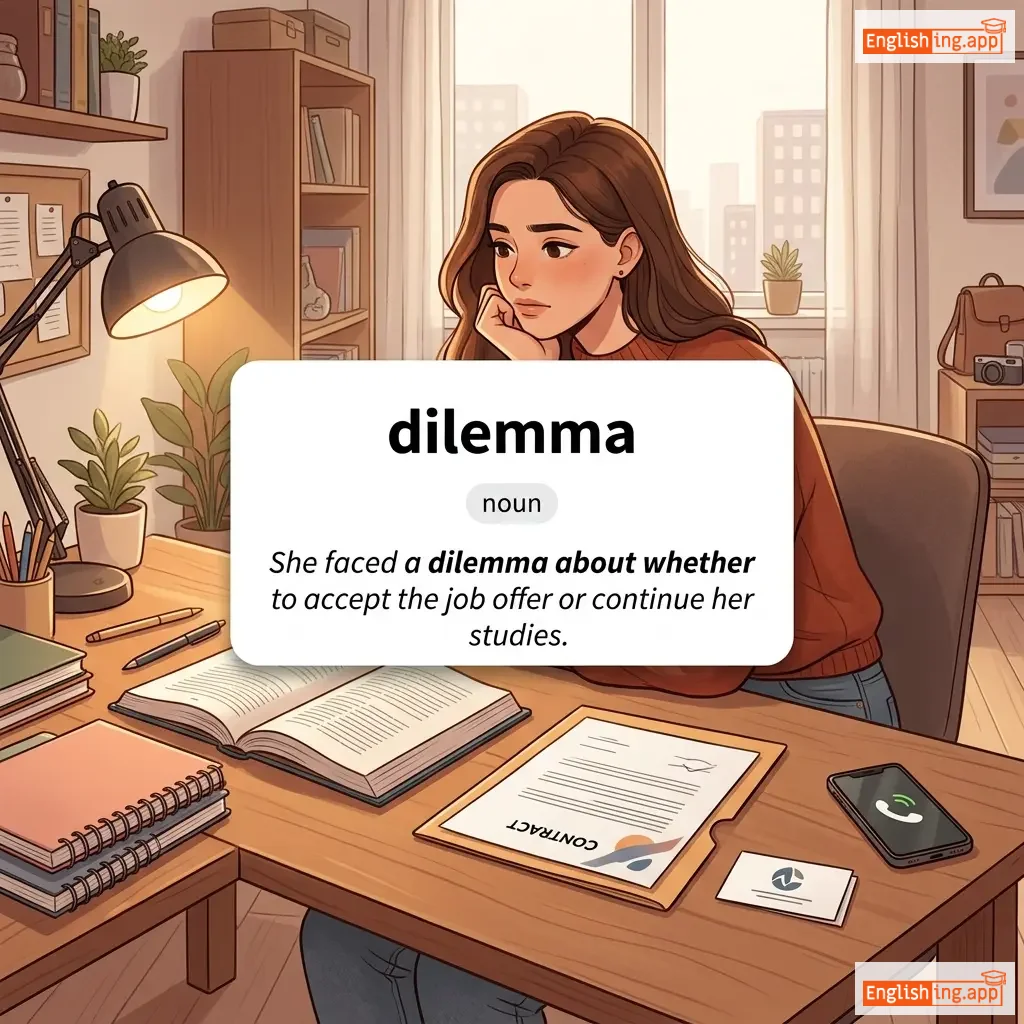
She faced a dilemma about whether to accept the job offer or continue her studies. |
她面临是否接受工作邀请还是继续学习的困境。
Ta mianlin shifou jieshou gongzuo yaoqing haishi jixu xuexi de kunjing.
••••••
|
moral dilemma |
A difficult choice involving a conflict of moral principles.
••••••
|
道德困境
daode kunjing
••••••
|
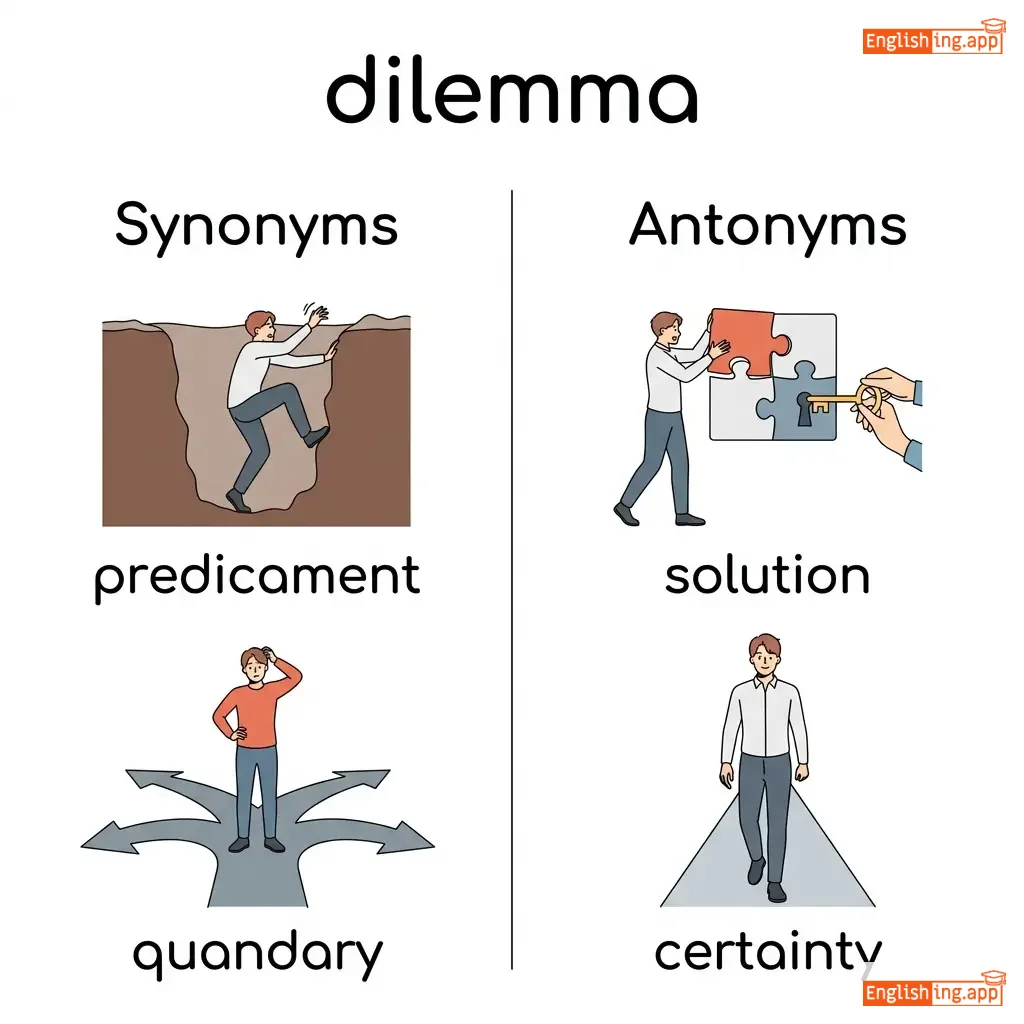
predicament, quandary, problem, difficulty
••••••
|
solution, certainty, clarity
••••••
|
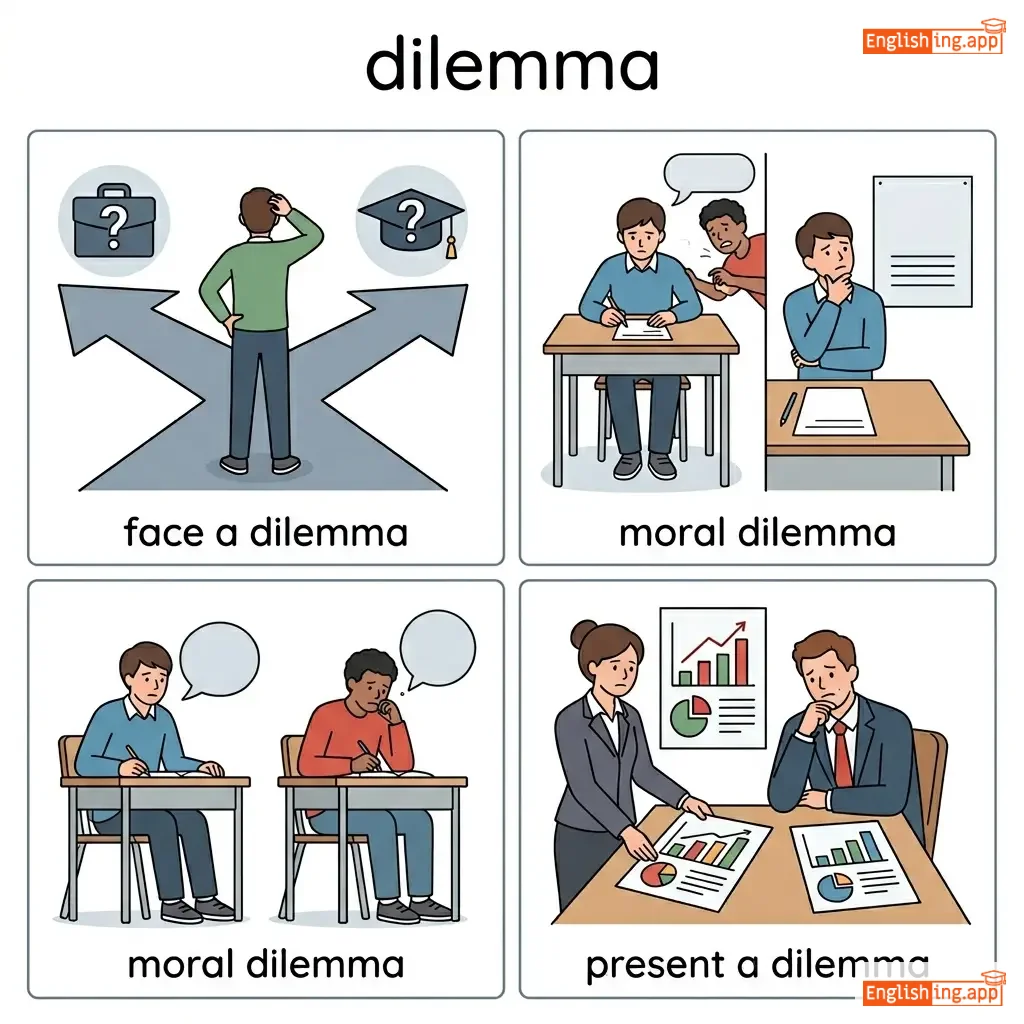
face a dilemma, moral dilemma, present a dilemma
••••••
|
Dilemma = di (两个) + lemma (选择) = 两个艰难的选择。
••••••
|
|
#1559
📐
|
/dɪˈmɛnʃən/
noun
(dài méng shì àn)
••••••
|
|
维度
weidu
••••••
|
- •••••• | - •••••• | - •••••• | - •••••• |
A measurable extent of a particular kind, such as length, breadth, depth, or height.
••••••
|
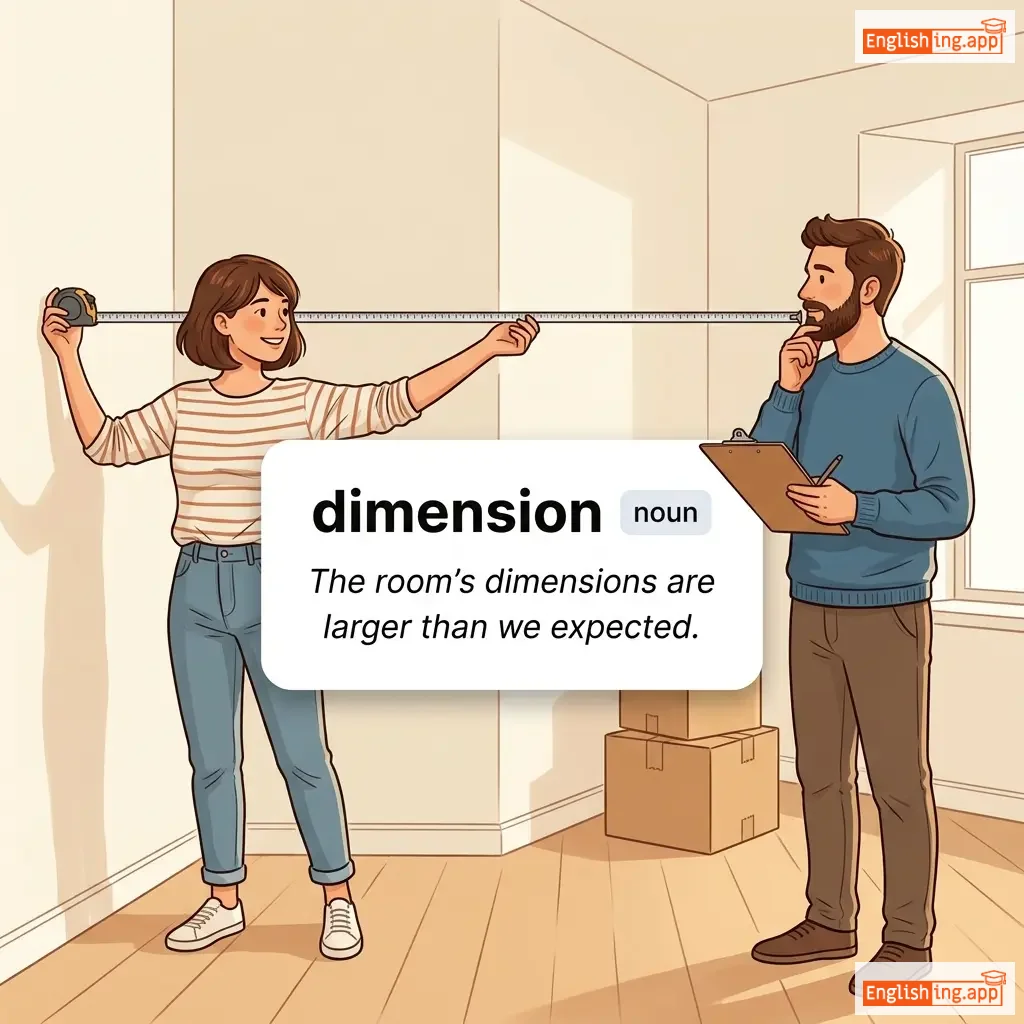
The room’s dimensions are larger than we expected. |
房间的尺寸比我们预期的要大。
Fángjiān de chǐcùn bǐ wǒmen yùqī de yào dà.
••••••
|
new dimension |
An additional aspect or perspective of a situation.
••••••
|
新维度
xīn wéidù
••••••
|
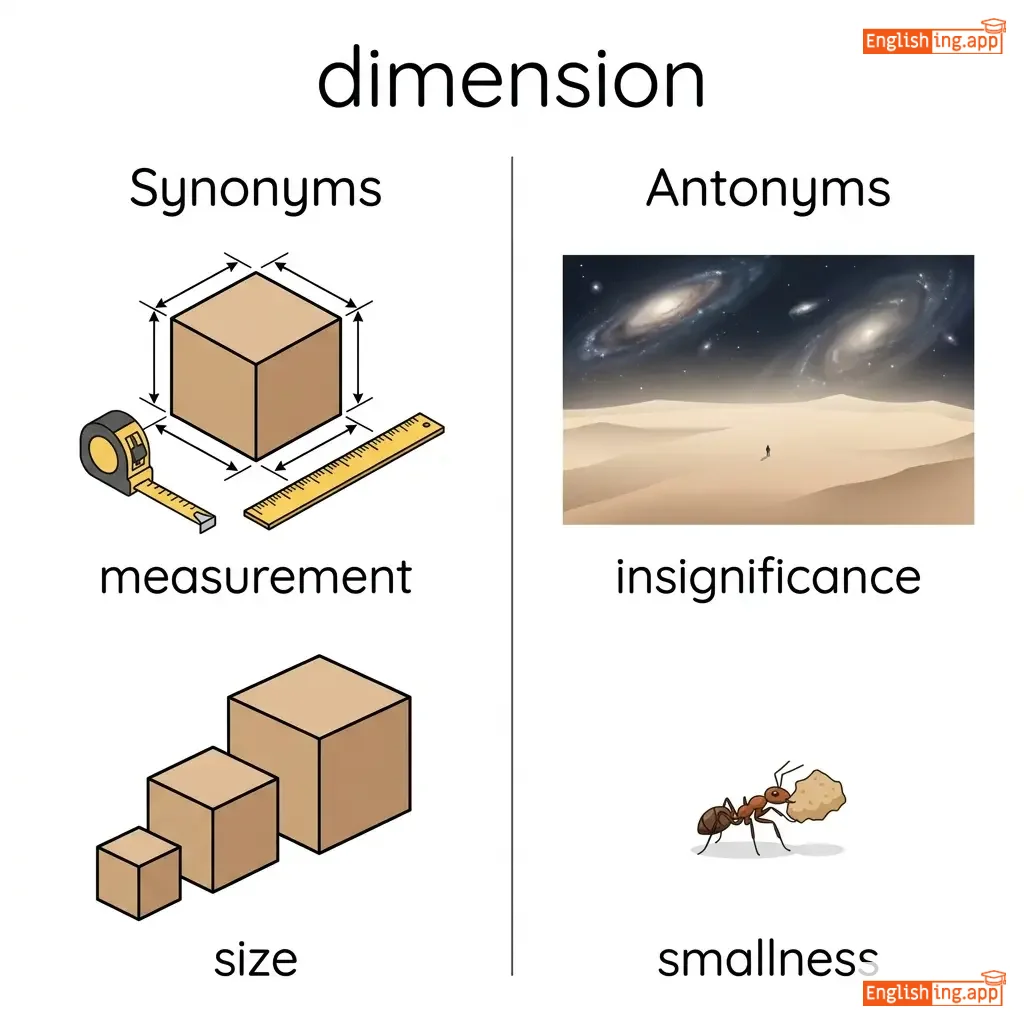
measurement, size, proportion, extent, aspect
••••••
|
insignificance, smallness
••••••
|
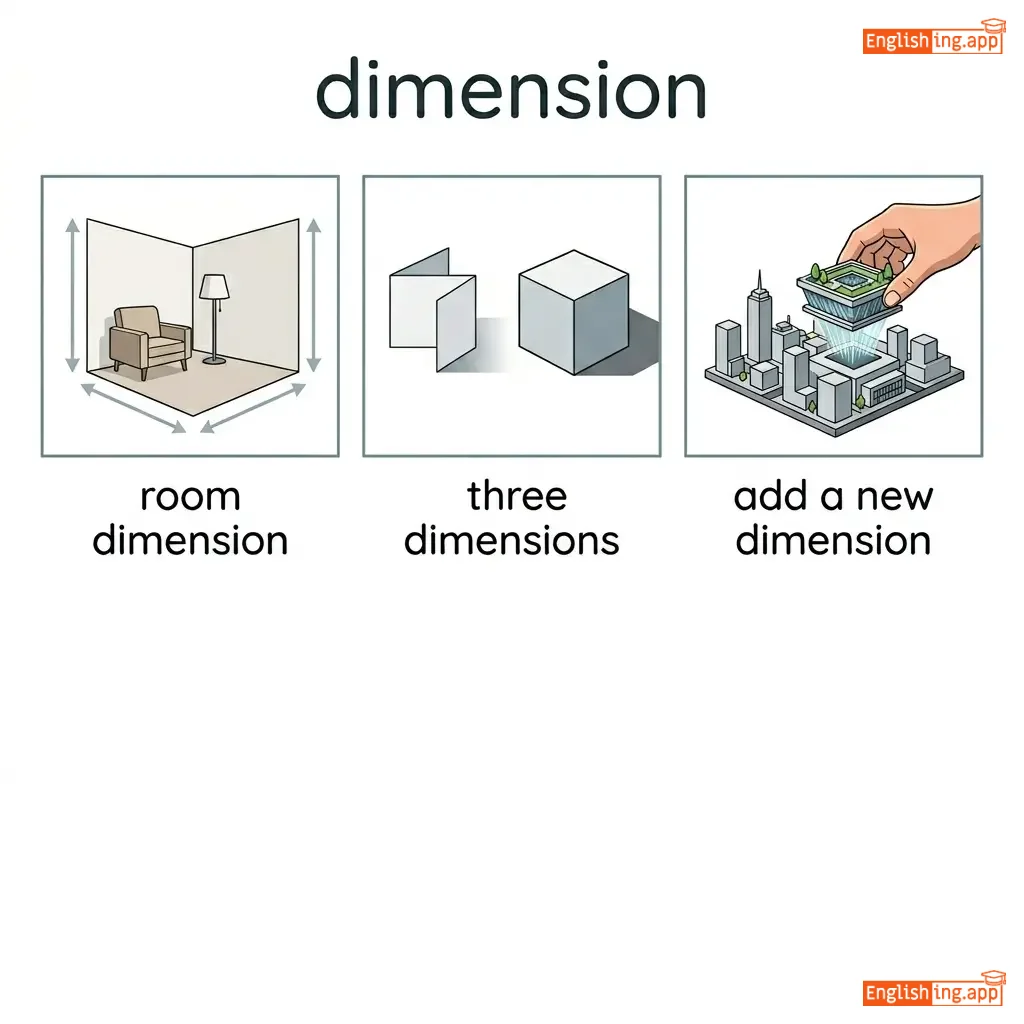
room dimension, three dimensions, add a new dimension
••••••
|
维度就是世界的各个方向,向每个维度延伸。
••••••
|
|
#1560
⬇️
|
/dɪˈmɪnɪʃ/
verb
••••••
|
- •••••• | - •••••• |
diminished
••••••
|
diminished
••••••
|
diminishes
••••••
|
diminishing
••••••
|
to make or become less; to reduce in size, importance, or value
••••••
|
Over time, his influence in the company began to diminish. |
- •••••• |
diminish returns |
a situation where the benefit gained is less compared to the effort or investment put in
••••••
|
- •••••• |
reduce, decrease, lessen, weaken, dwindle
••••••
|
increase, enlarge, expand
••••••
|
diminish value, diminish importance, diminish role, diminish returns
••••••
|
No •••••• |
|
#1561
🍽️
|
/daɪn/
verb
(戴恩)
••••••
|
- •••••• |
用餐
yongcan
••••••
|
dined
戴恩德
••••••
|
dined
戴恩德
••••••
|
dines
戴恩斯
••••••
|
dining
戴恩宁
••••••
|
to eat a meal, especially the main meal of the day
••••••
|
We usually dine at seven o'clock in the evening.
我们通常在晚上七点用餐。
••••••
|
我们通常在晚上七点用餐。
Wo men tong chang zai wan shang qi dian yong can.
••••••
|
dine out
外出用餐
••••••
|
to eat at a restaurant instead of at home
••••••
|
外出用餐
waichu yongcan
••••••
|
eat, sup, feast, have a meal, partake
••••••
|
fast, skip a meal
••••••
|
dine with friends, dine at a restaurant, dine together
••••••
|
用餐 = dine,想象桌上摆满菜。
••••••
|
|
#1562
🍽️
|
/ˈdɪnər/
noun
(晚餐)
••••••
|
- •••••• |
晚餐
wǎncān
••••••
|
- •••••• | - •••••• | - •••••• | - •••••• |
the main meal of the day, usually eaten in the evening
••••••
|
We had a lovely dinner at a new restaurant last night. |
我们昨晚在一家新餐厅吃了一顿美妙的晚餐。
Wo men zuó wǎn zài yī jiā xīn cān tīng chī le yī dùn měi miào de wǎn cān.
••••••
|
have someone for dinner |
to invite someone to eat dinner with you at your home
••••••
|
邀请某人共进晚餐
yāo qǐng mǒu rén gòng jìn wǎn cān
••••••
|
supper, feast, banquet, meal
••••••
|
breakfast, lunch
••••••
|
dinner table, dinner party, dinner plate, dinner invitation
••••••
|
晚餐就是晚上的主要餐 — 每到晚上,大家都问,'吃晚餐了吗?'
••••••
|
|
#1563
🥣
|
/dɪp/
verb
(迪普)
••••••
|
- •••••• |
浸泡
jìnpào
••••••
|
dipped
迪普德
••••••
|
dipped
迪普德
••••••
|
dips
迪普斯
••••••
|
dipping
迪平
••••••
|
to put something quickly into a liquid and take it out again
••••••
|
She dipped her bread into the soup.
她把面包浸入汤中。
••••••
|
她把面包浸入汤中。
Tā bǎ miànbāo jìn rù tāng zhōng.
••••••
|
dip your toes in
小心尝试新事物
••••••
|
to try something new carefully or slowly
••••••
|
小心尝试新事物
xiǎoxīn chángshì xīn shìwù
••••••
|
immerse, submerge, sink, plunge, dunk
••••••
|
lift, raise, dry
••••••
|
dip in water, dip sauce, dip stick, dip temperature
••••••
|
把面包浸入汤中 - 这就是 DIP!
••••••
|
|
#1564
🤵♂️
|
/ˈdɪpləmæt/
noun
(外交官)
••••••
|
- •••••• |
外交官
waijiaoguan
••••••
|
- •••••• | - •••••• | - •••••• | - •••••• |
An official representing a country abroad; a person skilled in dealing with people tactfully.
••••••
|
The diplomat negotiated a peace agreement. |
外交官谈判了一个和平协议。
Waijiaoguan tanpan le yi ge heping xieyi.
••••••
|
- •••••• | - •••••• | - •••••• |
envoy, ambassador, representative, emissary, negotiator
••••••
|
commoner, layman
••••••
|
senior diplomat, career diplomat, foreign diplomat
••••••
|
Diploma + 官 → 毕业获得文凭后成为外交官 = diplomat (外交官)
••••••
|
|
#1565
🕊️
|
/ˌdɪpləˈmætɪk/
adjective
(外交的)
••••••
|
- •••••• |
外交的
wai jiao de
••••••
|
- •••••• | - •••••• | - •••••• | - •••••• |
Concerning diplomacy; having or showing skill in dealing with people in a sensitive and effective way.
••••••
|
She gave a diplomatic response to avoid offending anyone. |
她给出了外交的回应,以避免冒犯任何人。
ta gei chule waijiao de huifu, yi bian mianduofu renhe ren.
••••••
|
diplomatic immunity |
A privilege that exempts diplomats from certain laws in the host country.
••••••
|
外交豁免权
wai jiao huo mian quan
••••••
|
tactful, courteous, strategic, conciliatory, discreet
••••••
|
tactless, blunt, rude
••••••
|
diplomatic relations, diplomatic mission, diplomatic language
••••••
|
Diplomatic response = polite 回应 (外交回应)
••••••
|
|
#1566
➡️
|
/dəˈrɛkt/ or /daɪˈrɛkt/
verb
(dàiˈrɛkt)
••••••
|
- •••••• |
指导
zhǐdǎo
••••••
|
directed
dàiˈrɛktɪd
••••••
|
directed
dàiˈrɛktɪd
••••••
|
directs
dàiˈrɛkts
••••••
|
directing
dàiˈrɛktɪŋ
••••••
|
to manage or control the course of something; to give instructions
••••••
|
She directed the team to complete the project on time.
她指示团队按时完成项目。
••••••
|
她指示团队按时完成项目。
Tā zhǐshì tuánduì ànshí wánchéng xiàngmù.
••••••
|
direct traffic
指挥交通
••••••
|
to manage and guide the movement of vehicles
••••••
|
指挥交通
zhǐhuī jiāotōng
••••••
|
guide, lead, manage, command, instruct
••••••
|
mislead, confuse
••••••
|
direct attention, direct action, direct contact, direct result
••••••
|
Direct意味着明确的指示 — 指挥交通永远要精确!
••••••
|
|
#1567
🧭
|
/dəˈrɛkʃən/ or /daɪˈrɛkʃən/
noun
(方向)
••••••
|
- •••••• |
方向, 指令
fangxiang, zhiling
••••••
|
- •••••• | - •••••• | - •••••• | - •••••• |
the course or path on which someone or something is moving; instructions on what to do
••••••
|
He asked for directions to the train station. |
他询问了去火车站的方向。
Ta xunwen le qu huochezhan de fangxiang.
••••••
|
change direction |
to alter the course or plan
••••••
|
改变方向
gaibian fangxiang
••••••
|
instruction, guidance, route, path, orientation
••••••
|
confusion, aimlessness
••••••
|
clear direction, right direction, new direction, opposite direction
••••••
|
方向就像指南针,总是指引正确的方向。
••••••
|
|
#1568
📢
|
/dəˈrɛktli/ or /daɪˈrɛktli/
adverb
(直接)
••••••
|
- •••••• |
直接
zhíjiē
••••••
|
- •••••• | - •••••• | - •••••• | - •••••• |
in a straight line or manner; without anything in between
••••••
|
She spoke directly to the manager about her concerns. |
她直接与经理讨论了她的担忧。
Tā zhíjiē yǔ jīnglǐ tǎolùnle tā de dānyōu.
••••••
|
directly involved |
personally connected or participating
••••••
|
直接参与
zhíjiē cānyù
••••••
|
immediately, personally, straightforwardly, openly
••••••
|
indirectly, vaguely
••••••
|
directly responsible, directly affected, speak directly, directly proportional
••••••
|
Directly 就是直接走 — 不绕弯,直达目标。
••••••
|
|
#1569
🎬
|
/dəˈrɛktər/ or /daɪˈrɛktər/
noun
(dàɪˈrɛktər)
••••••
|
- •••••• |
导演
dǎoyǎn
••••••
|
- •••••• | - •••••• | - •••••• | - •••••• |
a person who manages or oversees a company, department, or film
••••••
|
The director gave final approval for the new movie script. |
导演为新电影剧本提供了最终批准。
Dǎoyǎn wèi xīn diànyǐng jùběn tígōngle zuìzhōng pīzhǔn.
••••••
|
board of directors |
a group of people elected to manage a company
••••••
|
董事会
dǒngshìhuì
••••••
|
manager, leader, chief, head, supervisor
••••••
|
employee, subordinate
••••••
|
film director, company director, executive director, board of directors
••••••
|
导演是负责电影或公司运作的人。
••••••
|
|
#1570
📚
|
/dɪˈrɛktəri/
noun
(dìlìmù)
••••••
|
- •••••• |
目录
mùlù
••••••
|
- •••••• | - •••••• | - •••••• | - •••••• |
a book or online resource listing people, businesses, or services with relevant details
••••••
|
I need to find a plumber in the phone directory. |
我需要在电话目录中找到一个水管工。
Wǒ xūyào zài diànhuà mùlù zhōng zhǎodào yīgè shuǐguǎn gōng.
••••••
|
- •••••• | - •••••• | - •••••• |
list, catalog, index, register
••••••
|
none
••••••
|
address directory, phone directory, online directory
••••••
|
使用目录 (directory) 来找到你需要的信息!
••••••
|
|
#1571
🪨
|
/dɜːrt/
noun
(dɜːrt)
••••••
|
- •••••• |
土壤,污垢
tǔrǎng, wūgòu
••••••
|
- •••••• | - •••••• | - •••••• | - •••••• |
Loose soil or unclean matter; anything that makes a surface unclean.
••••••
|
Her shoes were covered in dirt after walking through the field. |
她的鞋子在田野上走过后沾满了泥土。
Tā de xiézi zài tiányě shàng zǒuguò hòu zhān mǎnle nítǔ.
••••••
|
treat someone like dirt |
to treat someone badly or with no respect
••••••
|
把某人当成垃圾
bǎ mǒurén dāngchéng lājī
••••••
|
soil, earth, dust, grime, filth
••••••
|
cleanliness, purity
••••••
|
dirt road, covered in dirt, sweep the dirt, dirt cheap
••••••
|
Dirt = 土壤,像在运动场上,如果土壤很脏,比赛就不能好好进行。
••••••
|
|
#1572
♿
|
/ˌdɪs.əˈbɪl.ə.ti/
noun
(残疾)
••••••
|
- •••••• |
残疾
canji
••••••
|
- •••••• | - •••••• | - •••••• | - •••••• |
a physical or mental condition that limits a person's movements, senses, or activities
••••••
|
Despite his physical disability, he became a successful athlete in wheelchair racing.
尽管他有身体残疾,他还是成为了轮椅赛车的成功运动员。
••••••
|
尽管他有身体残疾,他还是成为了轮椅赛车的成功运动员。
Jǐnguǎn tā yǒu shēntǐ cánjī, tā háishi chéngwéile lún yǐ sàichē de chénggōng yùndòngyuán.
••••••
|
- •••••• | - •••••• | - •••••• |
impairment, handicap, limitation, incapacity
••••••
|
ability, capability, strength, enablement
••••••
|
learning disability, physical disability, disability rights
••••••
|
残疾并不代表终结
••••••
|
|
#1573
⛔
|
/dɪsˈeɪbl/
verb
(迪赛布尔)
••••••
|
- •••••• |
禁用
jinyong
••••••
|
disabled
迪赛布尔德
••••••
|
disabled
迪赛布尔德
••••••
|
disables
迪赛布尔斯
••••••
|
disabling
迪赛布尔ing
••••••
|
to make something unable to function or operate
••••••
|
The technician disabled the alarm system temporarily.
技术人员暂时禁用了报警系统。
••••••
|
技术人员暂时禁用了报警系统。
Jishu renyuan zan shi jinyong le baojing xitong
••••••
|
- •••••• | - •••••• | - •••••• |
deactivate, impair, hinder, incapacitate
••••••
|
enable, activate, empower
••••••
|
disable a feature, disable a device, disable access
••••••
|
禁用 = disable, 想象一个按钮被 '禁' 住不能用。
••••••
|
|
#1574
♿
|
/dɪsˈeɪbld/
adjective
(dísāibù)
••••••
|
- •••••• |
残疾
cánjí
••••••
|
- •••••• | - •••••• | - •••••• | - •••••• |
having a physical or mental condition that limits movements, senses, or activities
••••••
|
The park has special facilities for disabled people. |
公园有专为残疾人士设计的设施。
Gōngyuán yǒu zhuān wèi cánjí rénshì shèjì de shèshī.
••••••
|
- •••••• | - •••••• | - •••••• |
handicapped, impaired, incapacitated, challenged
••••••
|
able-bodied, healthy, fit
••••••
|
disabled person, disabled access, physically disabled, disabled community
••••••
|
Dis + able = not able → 不能身体上的人称为‘残疾’。
••••••
|
|
#1575
⬇️
|
/ˌdɪs.ədˈvæn.tɪdʒ/
noun
(disadvantage)
••••••
|
|
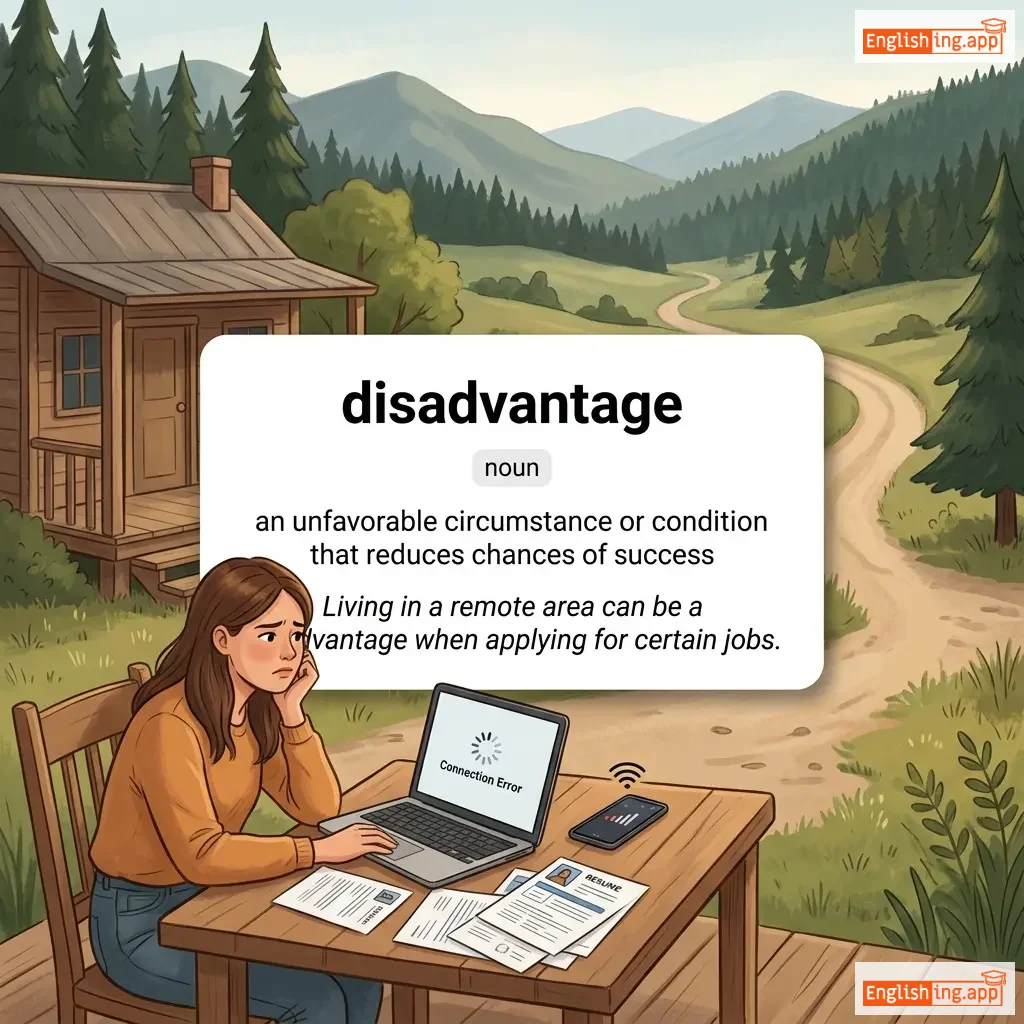
劣势
lièshì
••••••
|
- •••••• | - •••••• | - •••••• | - •••••• |
an unfavorable circumstance or condition that reduces chances of success
••••••
|
Living in a remote area can be a disadvantage when applying for certain jobs.
生活在偏远地区,在申请某些工作时可能会成为一种劣势。
••••••
|
生活在偏远地区,在申请某些工作时可能会成为一种劣势。
Shēnghuó zài piānyuǎn dìqū, zài shēnqǐng mǒuxiē gōngzuò shí kěnéng huì chéngwéi yī zhǒng lièshì.
••••••
|
- •••••• | - •••••• | - •••••• |
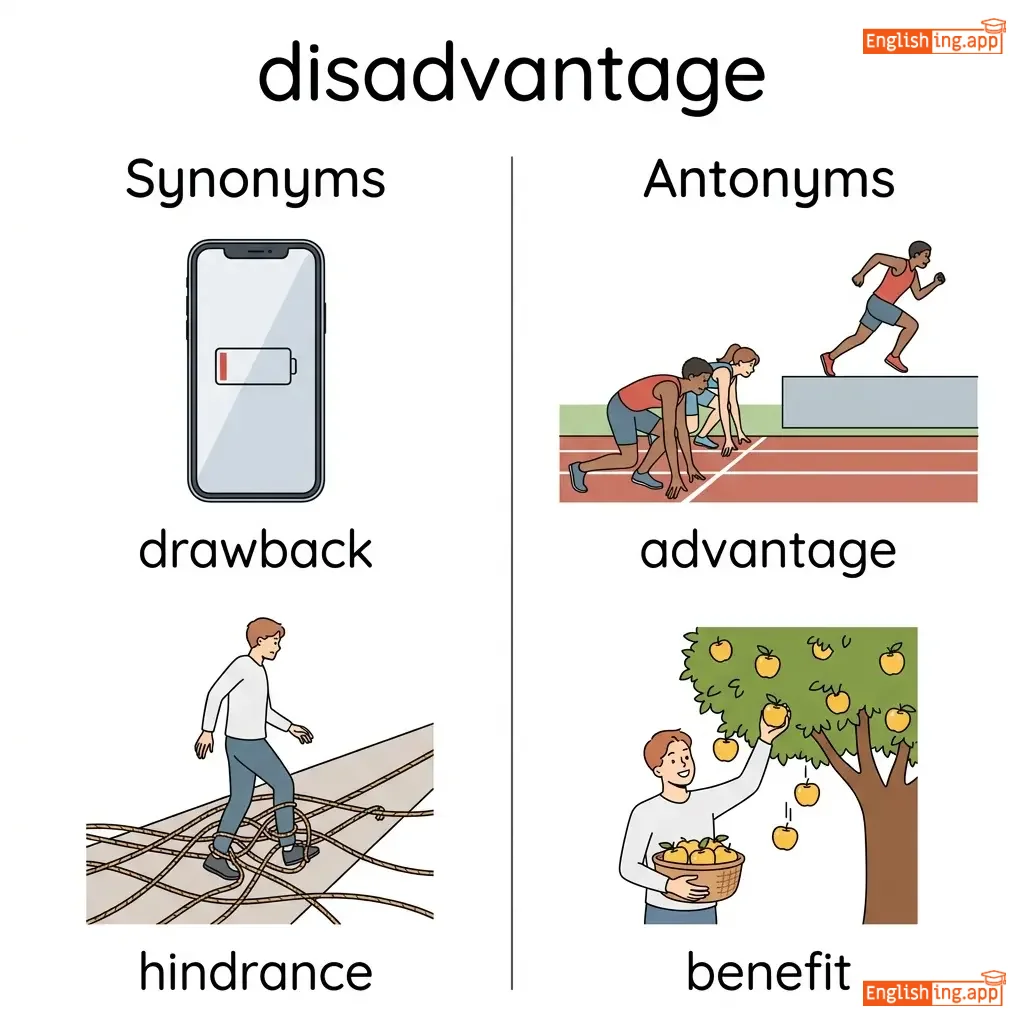
drawback, hindrance, obstacle, handicap
••••••
|
advantage, benefit, asset, strength
••••••
|
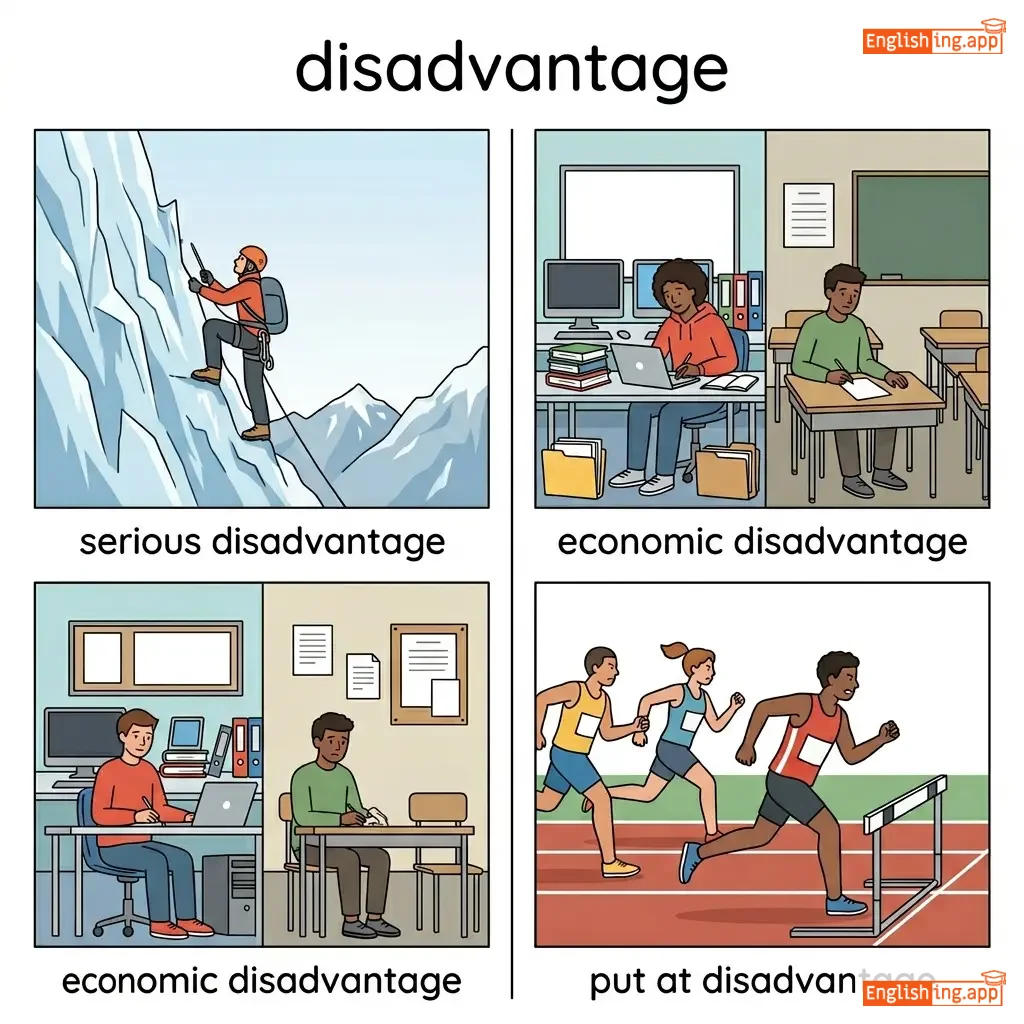
serious disadvantage, economic disadvantage, put at disadvantage
••••••
|
Lièshì means disadvantage, just think of it as a disadvantageous situation.
••••••
|
|
#1576
🙅
|
/ˌdɪsəˈɡriː/
verb
••••••
|
|
- •••••• |
disagreed
••••••
|
disagreed
••••••
|
disagrees
••••••
|
disagreeing
••••••
|
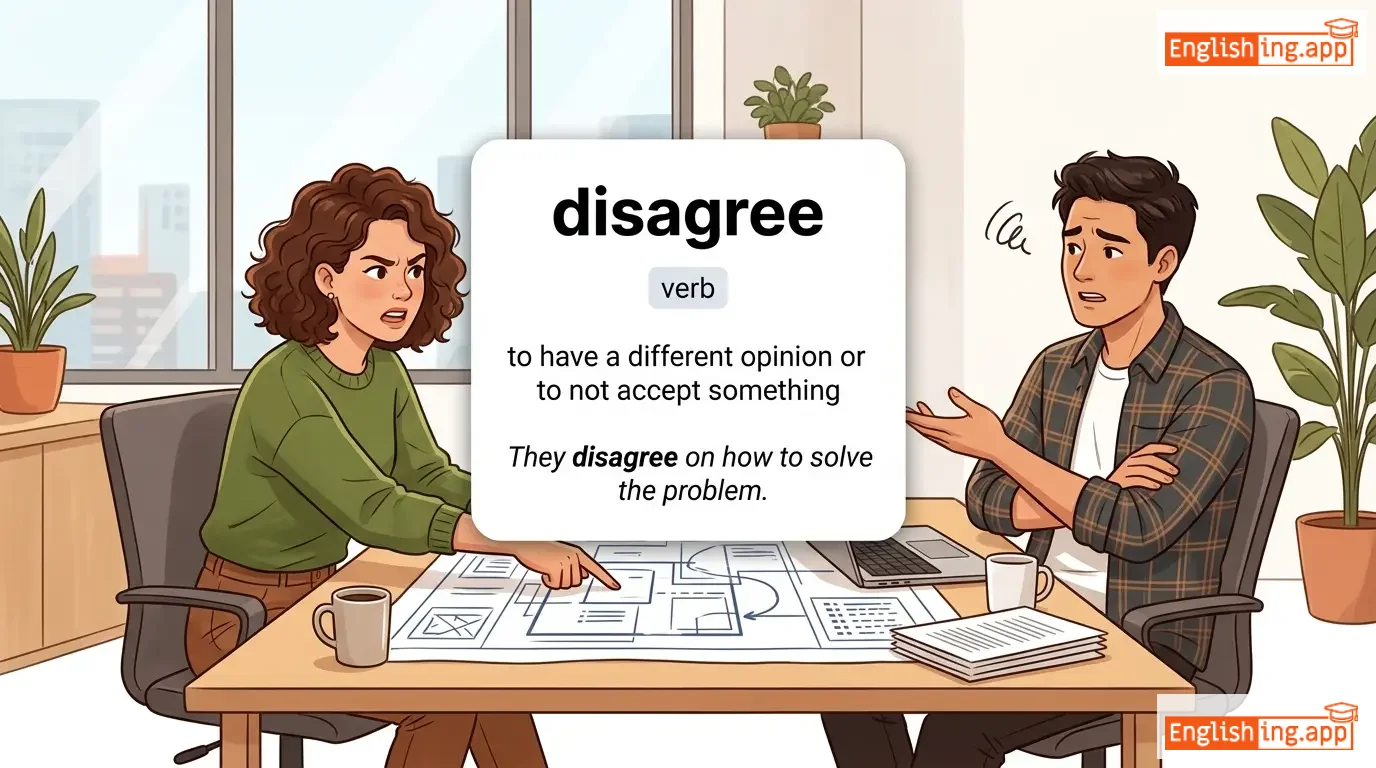
to have a different opinion or to not accept something
••••••
|
They disagree on how to solve the problem. |
- •••••• |
agree to disagree |
accept that two people will not reach the same opinion
••••••
|
- •••••• |
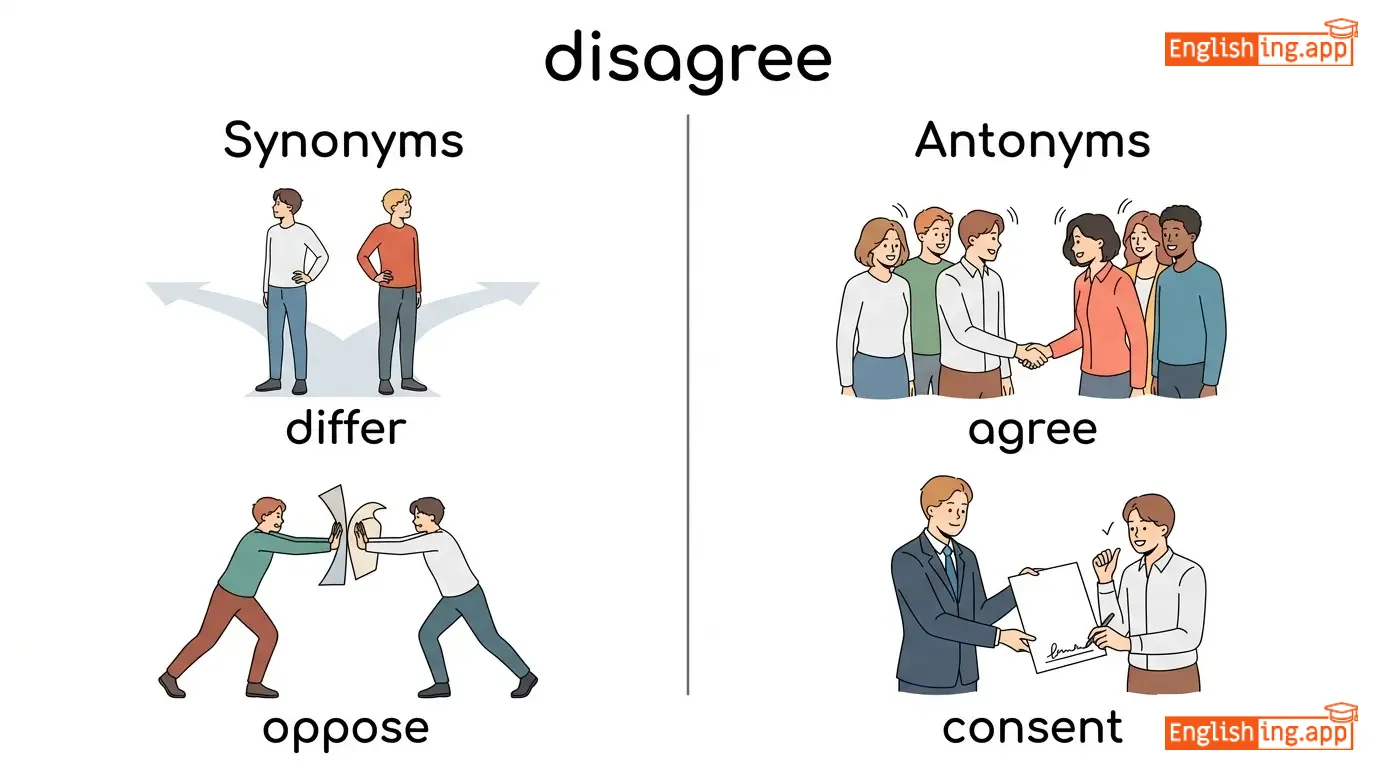
differ, oppose, contradict, dispute, object
••••••
|
agree, consent, approve
••••••
|
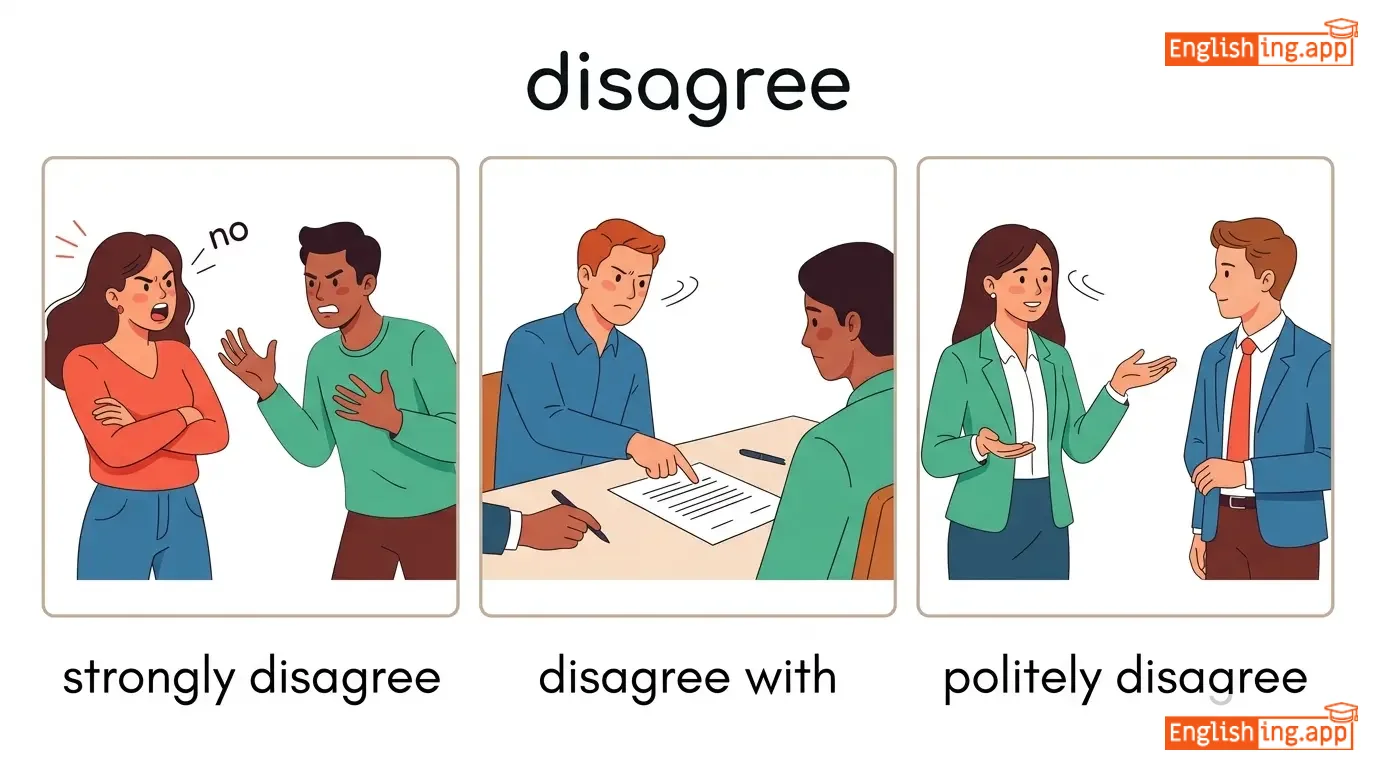
strongly disagree, disagree with, politely disagree
••••••
|
No •••••• |
|
#1577
💬
|
/ˌdɪsəˈɡriːmənt/
noun
(dī sà ɡuī mèn t)
••••••
|
- •••••• |
分歧
fenqi
••••••
|
- •••••• | - •••••• | - •••••• | - •••••• |
a failure to agree or a difference in opinion
••••••
|
Their disagreement on the issue caused a delay in the project. |
他们在这个问题上的分歧导致了项目的延迟。
Tamen zai zhege wenti shang de fenqi daozhile xiangmu de yanchi.
••••••
|
- •••••• | - •••••• | - •••••• |
dispute, argument, conflict, difference
••••••
|
agreement, harmony, accord
••••••
|
disagreement over, public disagreement, reach a disagreement
••••••
|
分歧 = ‘分’分别,‘歧’歧视,代表分歧和不同意见。
••••••
|
|
#1578
🪄
|
/ˌdɪsəˈpɪər/
verb
(迪萨皮尔)
••••••
|
|
消失
xiaoshi
••••••
|
disappeared
消失
••••••
|
disappeared
消失
••••••
|
disappears
消失
••••••
|
disappearing
消失
••••••
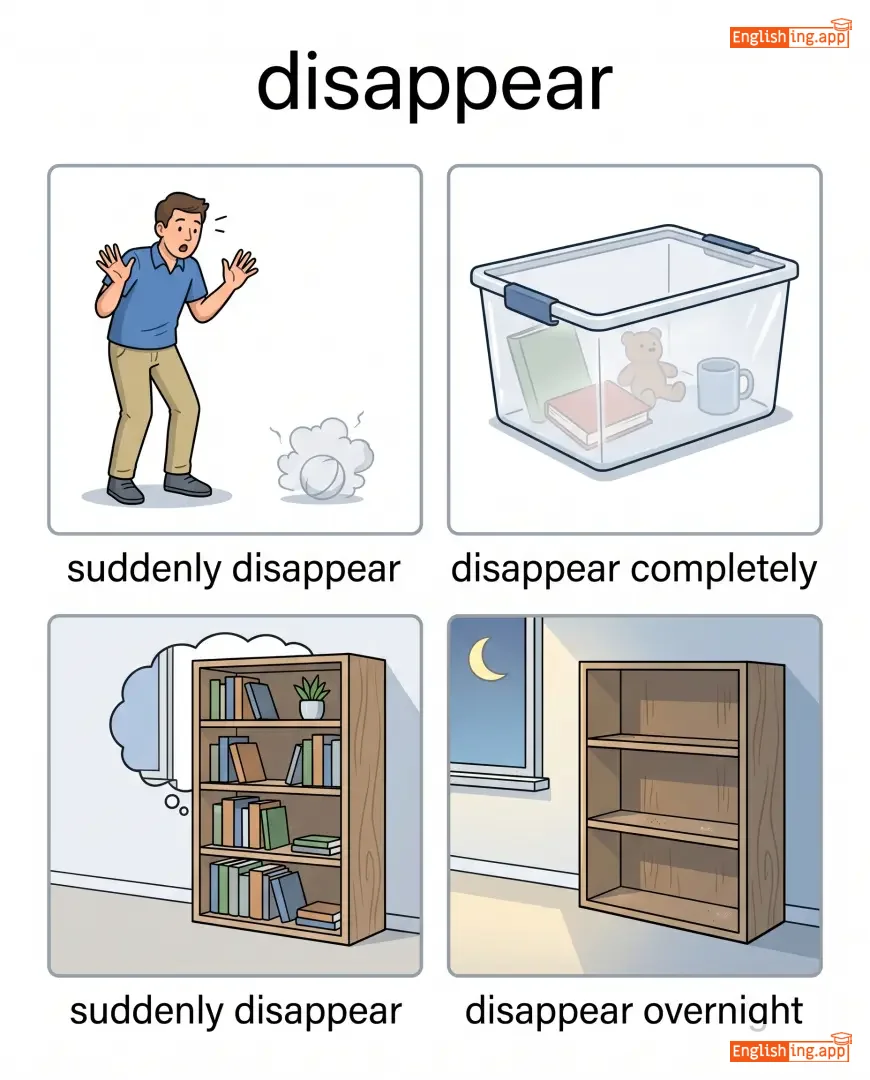
|
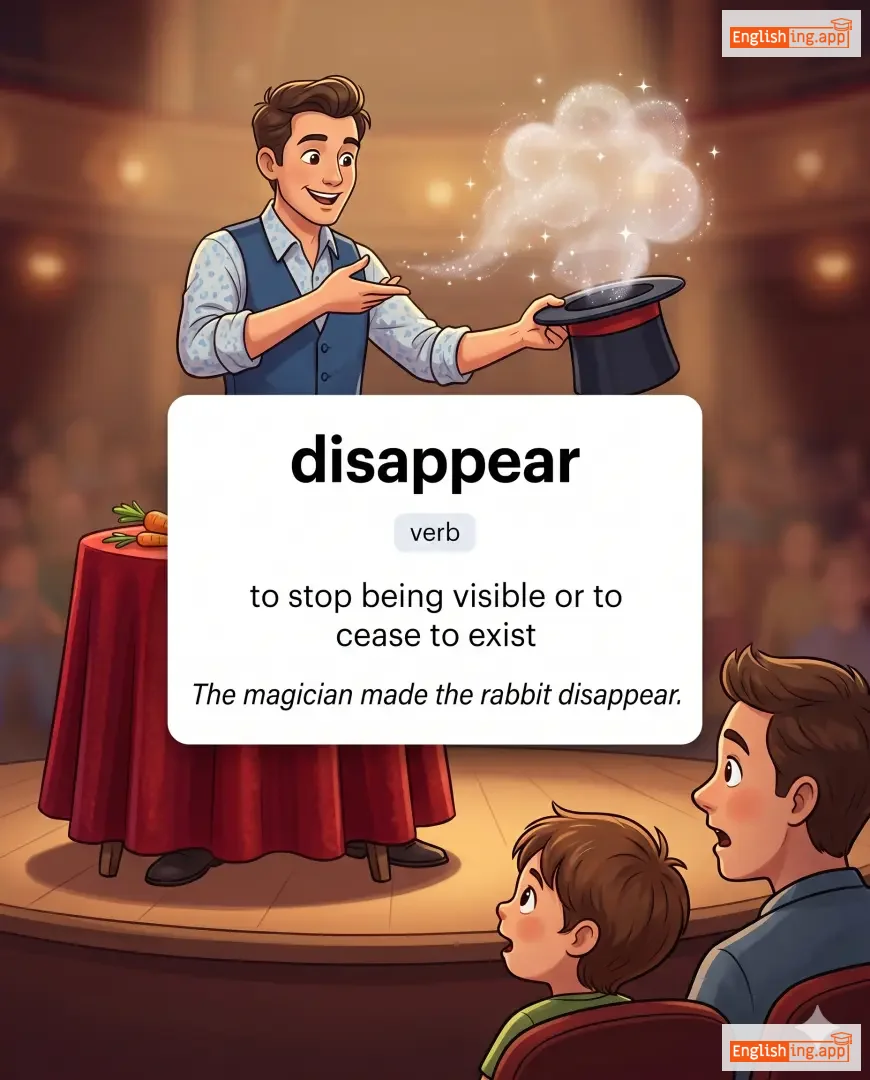
to stop being visible or to cease to exist
••••••
|
The magician made the rabbit disappear.
魔术师让兔子消失。
••••••
|
魔术师让兔子消失。
Móshù shī ràng tùzǐ xiāoshī.
••••••
|
disappear into thin air
消失在空气中
••••••
|
to vanish suddenly and completely
••••••
|
消失在空气中
xiāoshī zài kōngqì zhōng
••••••
|
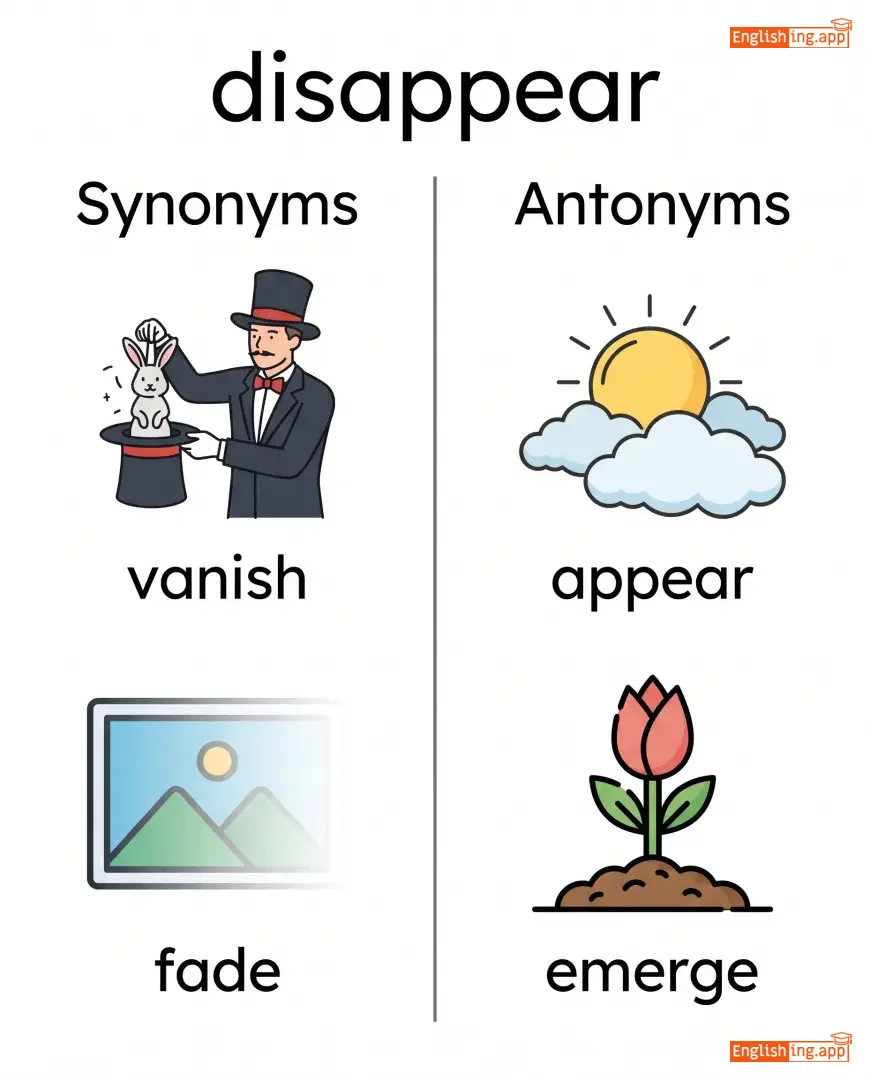
vanish, fade, evaporate, dissolve, recede
••••••
|
appear, emerge, show
••••••
|
suddenly disappear, disappear completely, disappear overnight
••••••
|
Disappear 就是'消失'——不在眼前,消失。
••••••
|
|
#1579
😞
|
/ˌdɪsəˈpɔɪnt/
verb
(迪萨波因特)
••••••
|
|
失望
shīwàng
••••••
|
disappointed
迪萨波因特德
••••••
|
disappointed
迪萨波因特德
••••••
|
disappoints
迪萨波因特斯
••••••
|
disappointing
迪萨波因廷
••••••
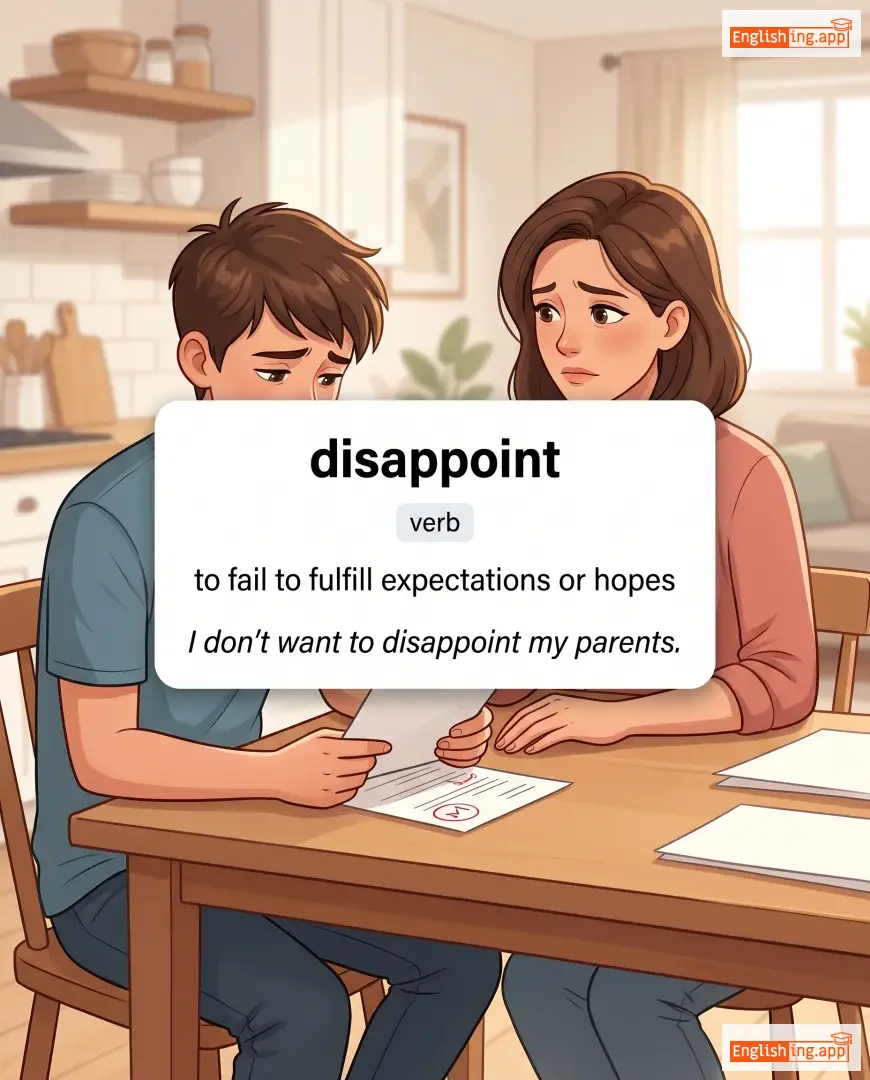
|
to fail to fulfill expectations or hopes
••••••
|
I don’t want to disappoint my parents.
我不想让我的父母失望。
••••••
|
我不想让我的父母失望。
Wǒ bù xiǎng ràng wǒ de fùmǔ shīwàng.
••••••
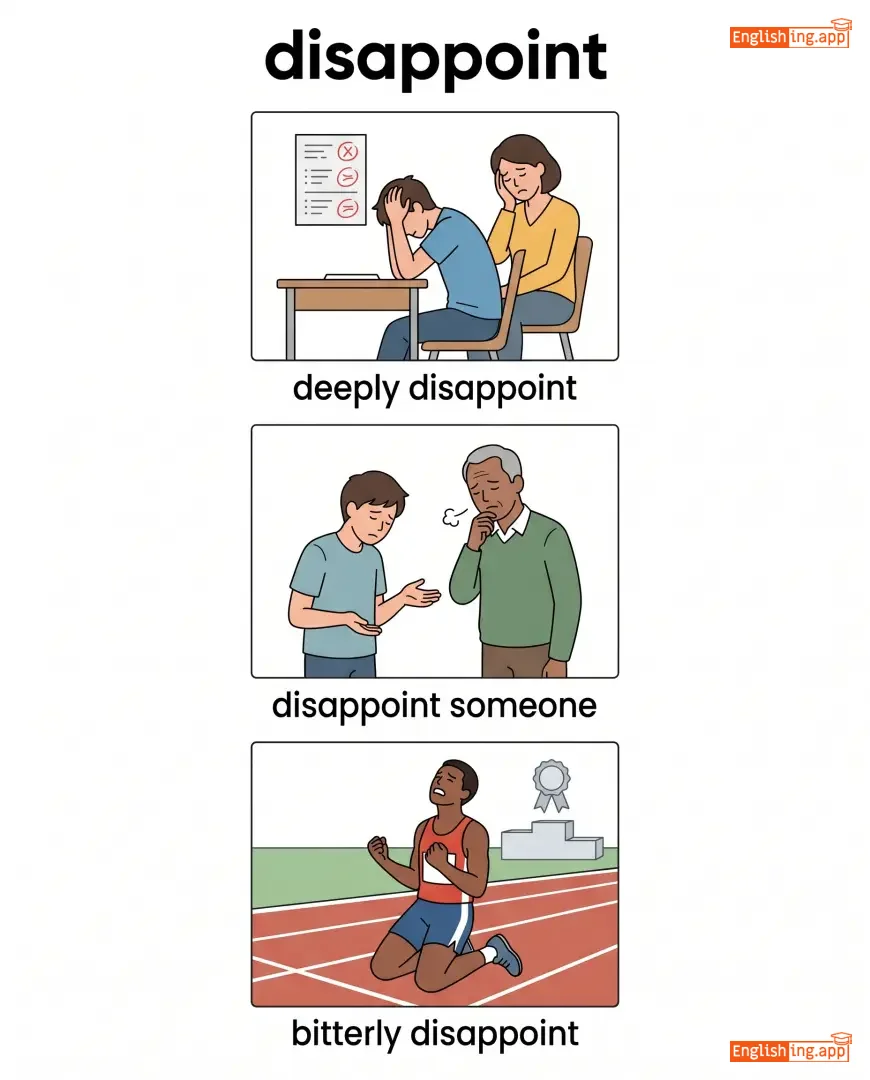
|
bitterly disappointed
非常失望
••••••
|
very unhappy due to unmet expectations
••••••
|
非常失望
fēicháng shīwàng
••••••
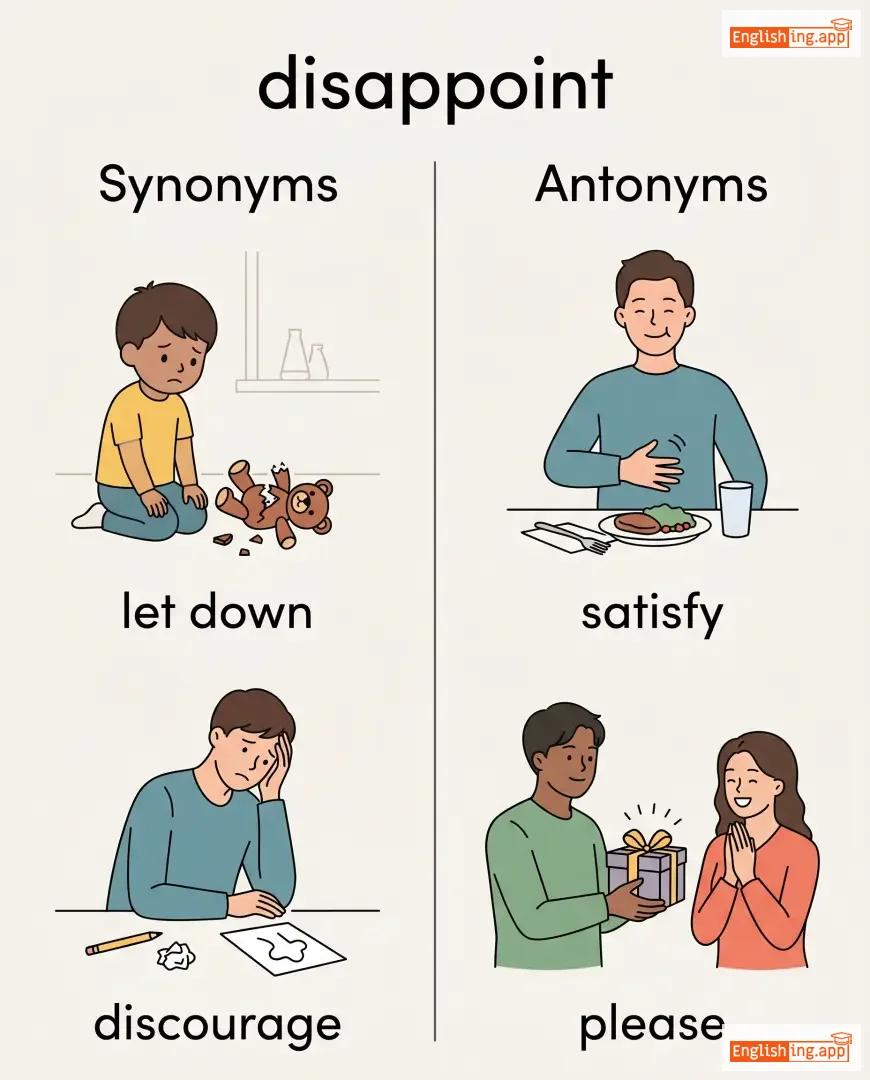
|
let down, discourage, upset, fail, frustrate
••••••
|
satisfy, please, fulfill
••••••
|
deeply disappoint, disappoint someone, bitterly disappoint
••••••
|
失望是未能满足期待—失去期待后心情沮丧。
••••••
|
|
#1580
😞
|
/ˌdɪsəˈpɔɪntɪd/
adjective
(disəpɔɪntɪd)
••••••
|
- •••••• |
失望
shīwàng
••••••
|
- •••••• | - •••••• | - •••••• | - •••••• |
sad or displeased because something has not happened as expected
••••••
|
She was disappointed with her exam results. |
她对考试结果感到失望。
Tā duì kǎoshì jiéguǒ gǎndào shīwàng.
••••••
|
disappointed in someone |
feeling let down by a person's actions or behavior
••••••
|
对某人失望
duì mǒu rén shīwàng
••••••
|
dissatisfied, upset, frustrated, let down, displeased
••••••
|
satisfied, pleased, content
••••••
|
feel disappointed, deeply disappointed, disappointed result, disappointed face
••••••
|
Dis + appoint 是你期待的某人让你失望了,所以 ‘失望’ 就是失望!
••••••
|
|
#1581
😞
|
/ˌdɪsəˈpɔɪntmənt/
noun
(迪萨庞特门特)
••••••
|
- •••••• |
失望
shīwàng
••••••
|
- •••••• | - •••••• | - •••••• | - •••••• |
the feeling of sadness or displeasure caused by the non-fulfillment of one's hopes or expectations
••••••
|
Her face showed deep disappointment after hearing the results.
她的脸在听到结果后显露出深深的失望。
••••••
|
她的脸在听到结果后显露出深深的失望。
Tā de liǎn zài tīngdào jiéguǒ hòu xiǎnlòu chū shēnshēn de shīwàng.
••••••
|
to one's disappointment
让某人失望
••••••
|
to express that something happened in a way that caused disappointment
••••••
|
让某人失望
ràng mǒu rén shīwàng
••••••
|
frustration, letdown, sadness, regret, dismay
••••••
|
satisfaction, joy, delight
••••••
|
great disappointment, bitter disappointment, express disappointment, feel disappointment
••••••
|
Dis + appointment = 失望, 你没有得到你想要的.
••••••
|
|
#1582
👎
|
/ˌdɪsəˈpruːvəl/
noun
(迪萨普鲁弗尔)
••••••
|
- •••••• |
不赞成
buzancheng
••••••
|
- •••••• | - •••••• | - •••••• | - •••••• |
The expression of an unfavorable opinion or judgment
••••••
|
Her parents showed clear disapproval of her decision to drop out of college.
她的父母对她辍学的决定表现出明显的迪萨普鲁弗尔。
••••••
|
她的父母对她辍学的决定表现出明显的不赞成。
Ta de fumu dui ta chuo xue de jueding biaoxian chu mingxian de buzancheng.
••••••
|
meet with disapproval
遇到迪萨普鲁弗尔
••••••
|
to receive criticism or unfavorable judgment
••••••
|
遇到不赞成
yudao buzancheng
••••••
|
rejection, objection, condemnation, censure
••••••
|
approval, acceptance, endorsement
••••••
|
express disapproval, show disapproval, strong disapproval
••••••
|
Disapproval = 不赞成 (buzancheng), just remember '不' = no.
••••••
|
|
#1583
👎
|
/ˌdɪsəˈpruːv/
verb
(dísàpùlǔv)
••••••
|
- •••••• |
不赞成
bù zànchéng
••••••
|
disapproved
dísàpùlùd
••••••
|
disapproved
dísàpùlùd
••••••
|
disapproves
dísàpùlùs
••••••
|
disapproving
dísàpùlùvìng
••••••
|
to have a negative opinion about something; to consider something wrong or bad
••••••
|
Many parents disapprove of smoking.
许多父母不赞成吸烟。
••••••
|
许多父母不赞成吸烟。
Xǔduō fùmǔ bù zànchéng xīyān.
••••••
|
strongly disapprove
强烈不赞成
••••••
|
to express strong disagreement or dislike
••••••
|
强烈不赞成
qiángliè bù zànchéng
••••••
|
condemn, criticize, oppose, reject, object
••••••
|
approve, praise, accept
••••••
|
disapprove of behavior, disapprove strongly, openly disapprove
••••••
|
Disapprove表示不赞成,中文是‘不赞成’。
••••••
|
|
#1584
🌪️
|
/dɪˈzæstər/
noun
(灾难)
••••••
|
- •••••• |
灾难
zainan
••••••
|
- •••••• | - •••••• | - •••••• | - •••••• |
A sudden event that causes great damage or loss of life.
••••••
|
The earthquake was a major disaster. |
地震是一场重大灾难。
Dìzhèn shì yī chǎng zhòngdà zāinàn.
••••••
|
a recipe for disaster |
Something that is very likely to result in a bad outcome.
••••••
|
灾难的食谱
zāinàn de shípǔ
••••••
|
catastrophe, calamity, tragedy, mishap
••••••
|
success, blessing
••••••
|
natural disaster, disaster relief, disaster management, prevent disaster
••••••
|
Disaster 是 'dis'(坏的) + 'aster'(星星),星星坏掉就是灾难。
••••••
|
|
#1585
💥
|
/dɪˈzæs.trəs/
adjective
(dɪˈzæs.trəs)
••••••
|
- •••••• |
灾难性的
zāinàn xìng de
••••••
|
- •••••• | - •••••• | - •••••• | - •••••• |
extremely bad or unsuccessful; causing great damage
••••••
|
The hurricane had disastrous effects on the city. |
飓风对城市造成了灾难性的影响。
jùfēng duì chéngshì zàochéngle zāinàn xìng de yǐngxiǎng.
••••••
|
- •••••• | - •••••• | - •••••• |
catastrophic, devastating, calamitous, ruinous
••••••
|
beneficial, fortunate, successful, favorable
••••••
|
disastrous consequences, disastrous effects, disastrous results
••••••
|
‘灾难’ = ‘灾难性的’
••••••
|
|
#1586
🗑️
|
/dɪsˈkɑːrd/
verb
(di si ka de)
••••••
|
- •••••• |
丢弃
diuqi
••••••
|
discarded
discarded
••••••
|
discarded
discarded
••••••
|
discards
discards
••••••
|
discarding
discarding
••••••
|
to throw away something that is no longer needed
••••••
|
She decided to discard the old clothes.
她决定丢弃旧衣服。
••••••
|
她决定丢弃旧衣服。
Tā juédìng diūqì jiù yīfú.
••••••
|
discard old habits
丢弃旧习惯
••••••
|
to stop following old behaviors or practices
••••••
|
丢弃旧习惯
diuqi jiu xiguan
••••••
|
abandon, throw away, remove, get rid of
••••••
|
keep, retain, preserve
••••••
|
discard clothes, discard waste, discard items, discard habits
••••••
|
丢弃就像丢掉卡片 🗑️
••••••
|
|
#1587
💨
|
/dɪsˈtʃɑːrdʒ/
verb
(迪斯查奇)
••••••
|
|
释放
shifang
••••••
|
discharged
迪斯查奇德
••••••
|
discharged
迪斯查奇德
••••••
|
discharges
迪斯查奇斯
••••••
|
discharging
迪斯查奇英
••••••
|
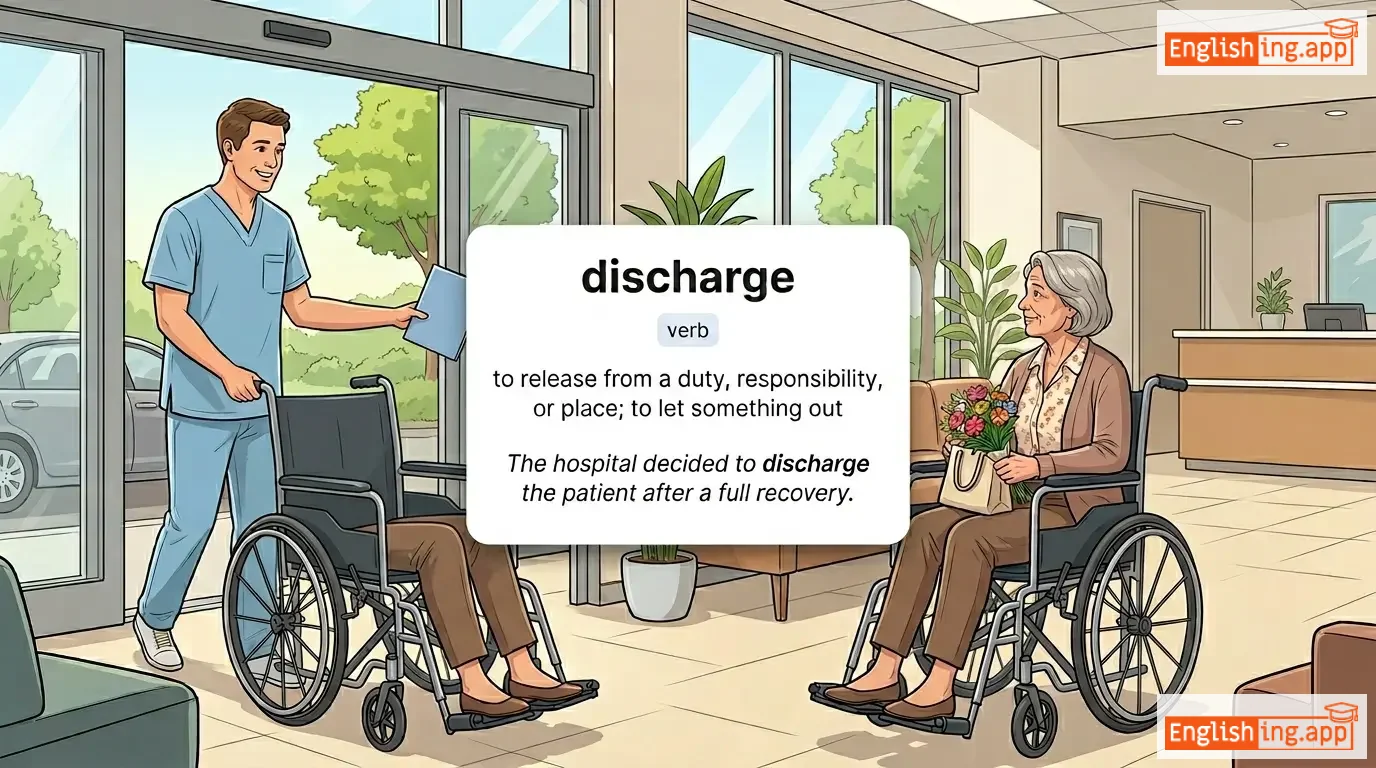
to release from a duty, responsibility, or place; to let something out
••••••
|
The hospital decided to discharge the patient after a full recovery.
医院决定在完全恢复后将病人出院。
••••••
|
医院决定在完全恢复后将病人出院。
Yiyuan jueding zai wanquan huifu hou jiang bingren chuyuan.
••••••
|
discharge one's duty
履行责任
••••••
|
to fulfill one's responsibility
••••••
|
履行责任
lixing zeren
••••••
|
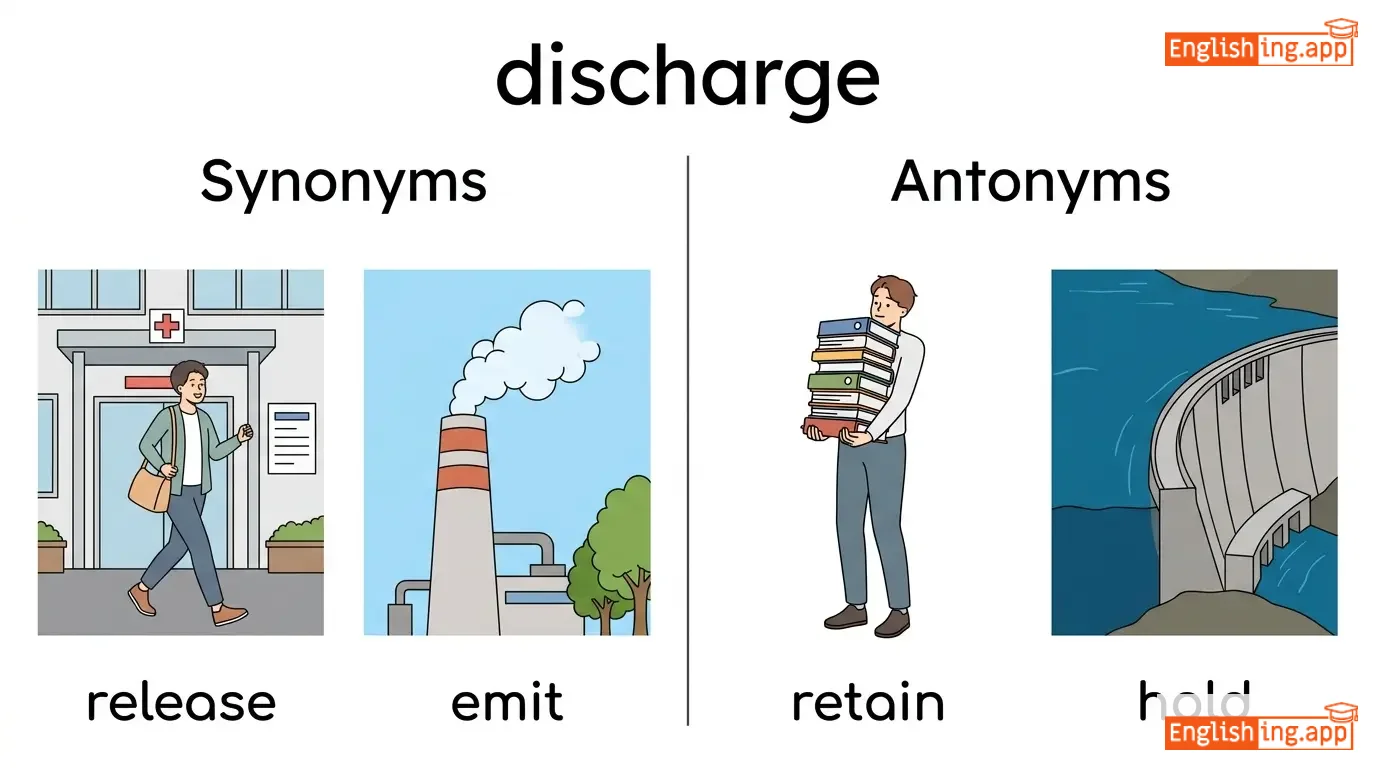
release, emit, expel, dismiss, free
••••••
|
retain, hold, keep
••••••
|
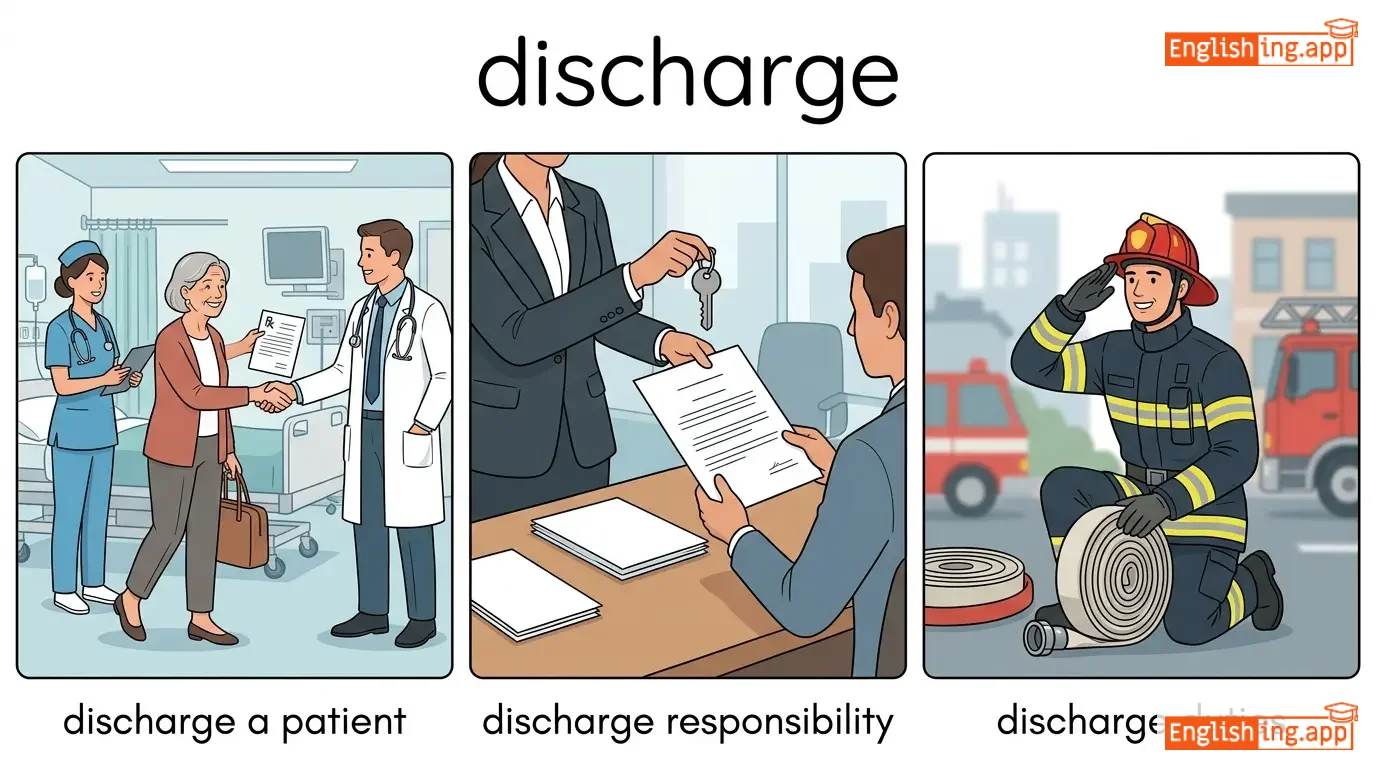
discharge a patient, discharge responsibility, discharge duties, discharge cargo
••••••
|
Discharge = 释放, 就是让责任放开。
••••••
|
|
#1588
📏
|
/ˈdɪsəplɪn/
noun
(dɪsəplɪn)
••••••
|
|
纪律
jìlǜ
••••••
|
- •••••• | - •••••• | - •••••• | - •••••• |
the practice of training people to obey rules or self-control
••••••
|
Good discipline is essential for success in school. |
良好的纪律对学校成功至关重要。
Liánghǎo de jìlǜ duì xuéxiào chénggōng zhìguān zhòngyào.
••••••
|
self-discipline |
the ability to control one's own behavior and actions
••••••
|
自律
zìlǜ
••••••
|
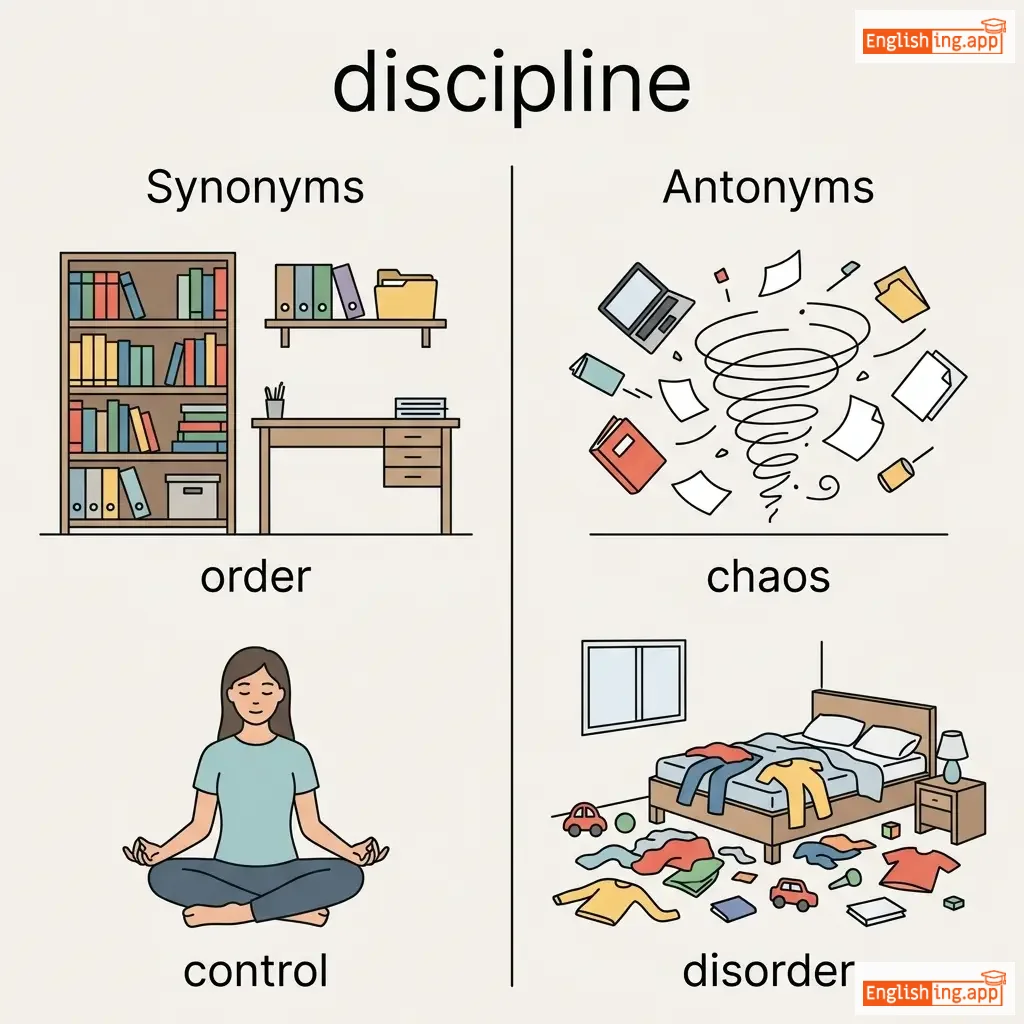
order, control, training, restraint, regulation
••••••
|
chaos, disorder, indiscipline
••••••
|
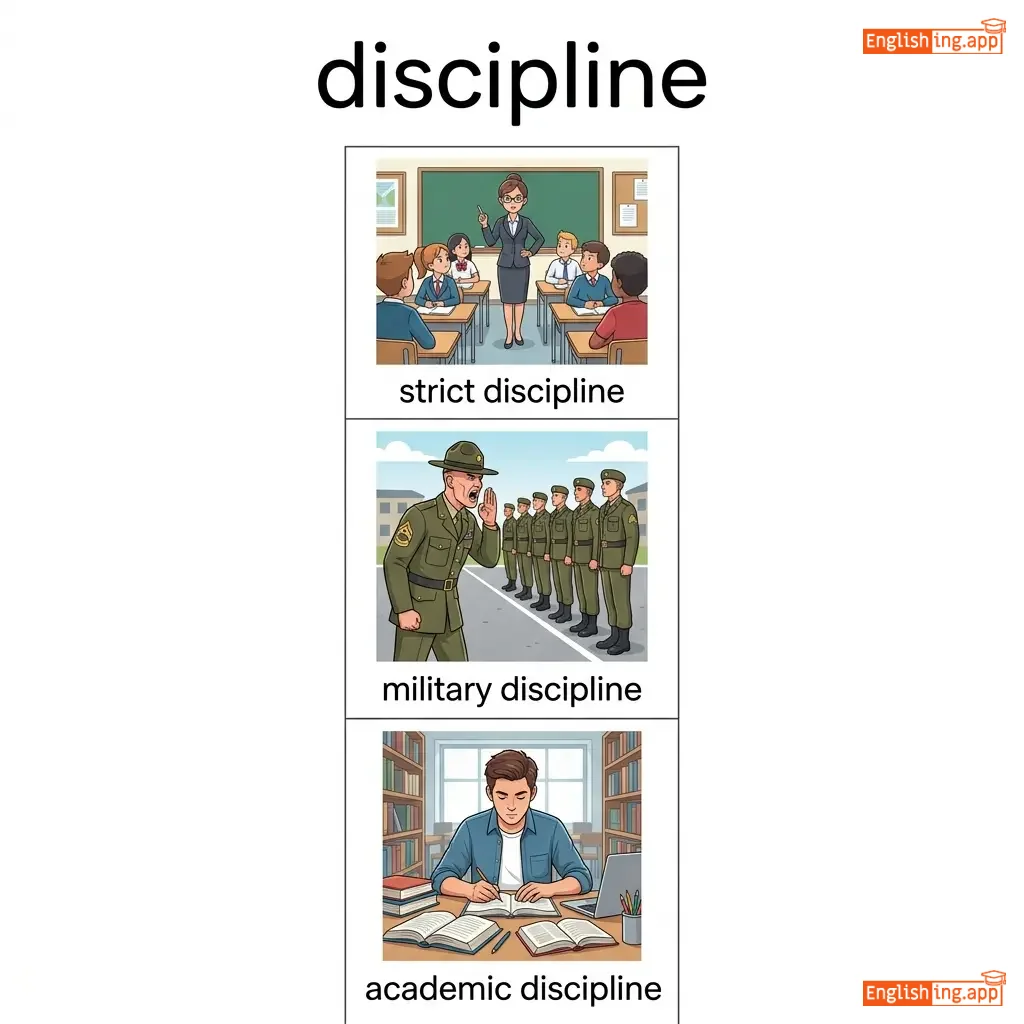
strict discipline, military discipline, academic discipline, maintain discipline
••••••
|
Discipline 意味着纪律,学校中通过权威教授。
••••••
|
|
#1589
📢
|
/dɪsˈkloʊz/
verb
••••••
|
|
- •••••• |
disclosed
••••••
|
disclosed
••••••
|
discloses
••••••
|
disclosing
••••••
|
to make something known; to reveal information that was previously secret or hidden
••••••
|
The company refused to disclose details of the agreement. |
- •••••• |
full disclosure |
being completely open and honest about all relevant information
••••••
|
- •••••• |
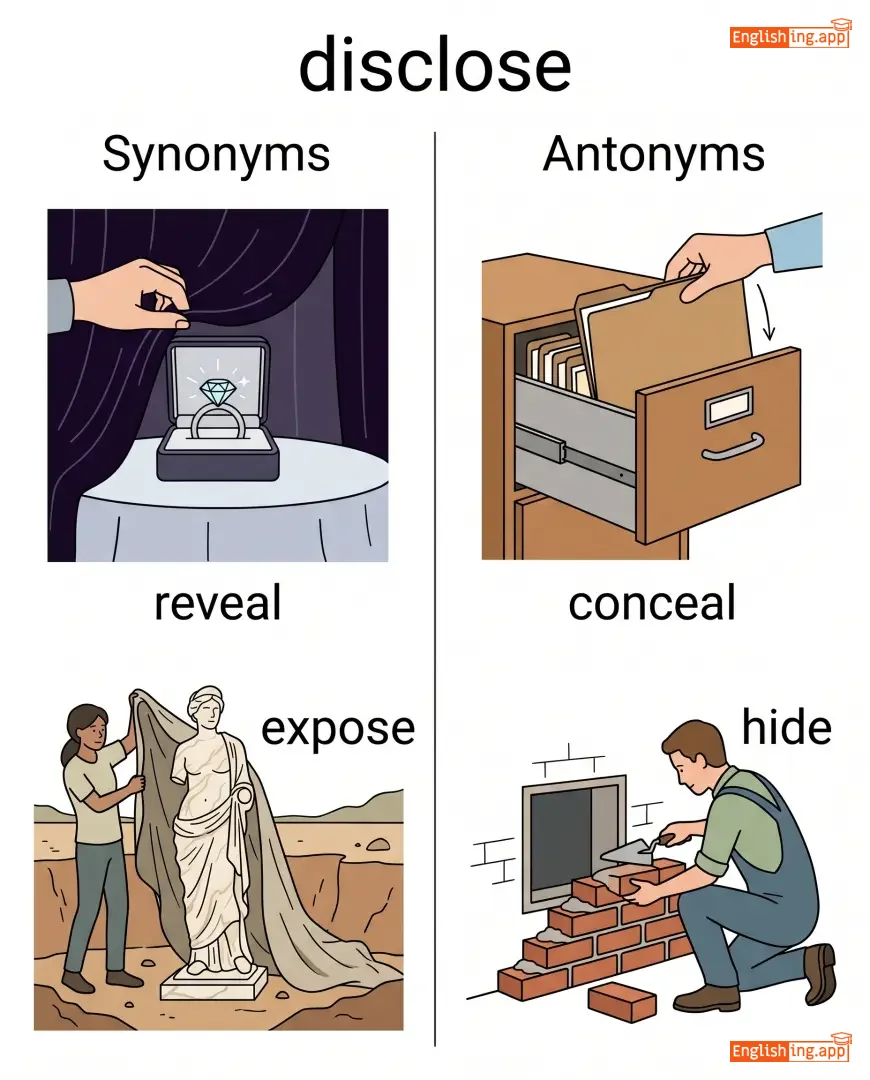
reveal, expose, uncover, divulge, announce
••••••
|
conceal, hide, suppress
••••••
|
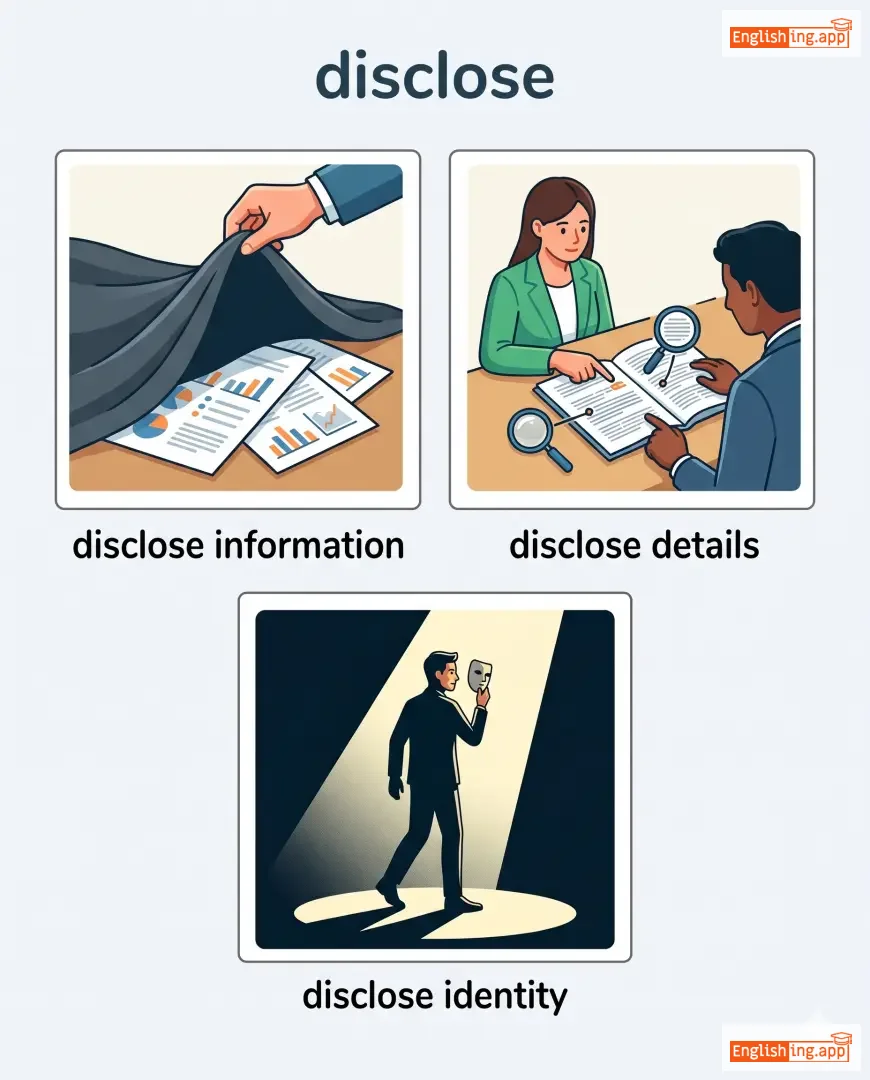
disclose information, disclose details, disclose identity, disclose agreement
••••••
|
No •••••• |
|
#1590
📢
|
/dɪsˈkloʊʒər/
noun
(迪斯克洛泽)
••••••
|
- •••••• |
披露
pīlù
••••••
|
- •••••• | - •••••• | - •••••• | - •••••• |
the action of making something known or public
••••••
|
The disclosure of the company's financial status was delayed. |
公司财务状况的披露被延迟了。
Gōngsī cáiwù zhuàngkuàng de pīlù bèi yánchí le.
••••••
|
- •••••• | - •••••• | - •••••• |
revelation, announcement, exposure, divulgence
••••••
|
concealment, secrecy
••••••
|
disclosure statement, public disclosure, full disclosure
••••••
|
披露 (disclosure) 意味着公开某事。
••••••
|
|
#1591
💸
|
/ˈdɪskaʊnt/
noun, verb
(ˈdɪskaʊnt)
••••••
|
- •••••• |
折扣
zhé kòu
••••••
|
discounted
dɪsˈkaʊntɪd
••••••
|
discounted
dɪsˈkaʊntɪd
••••••
|
discounts
dɪsˈkaʊnts
••••••
|
discounting
dɪsˈkaʊntɪŋ
••••••
|
A reduction in the usual price of something; to reduce the price of something.
••••••
|
The store offered a 20% discount on all electronics.
商店提供了所有电子产品20%的折扣。
••••••
|
商店提供了所有电子产品20%的折扣。
Shāngdiàn tígōngle suǒyǒu diànzǐ chǎnpǐn 20% de zhékòu.
••••••
|
discount rate
折扣率
••••••
|
The interest rate charged to commercial banks by a central bank.
••••••
|
折扣率
zhékòu lǜ
••••••
|
reduction, markdown, rebate, deduction, concession
••••••
|
surcharge, premium, markup
••••••
|
offer discount, receive discount, discount price, trade discount
••••••
|
折扣就是价格下降,帮助我们省钱!
••••••
|
|
#1592
🙁
|
/dɪsˈkʌrɪdʒ/
verb
••••••
|
- •••••• | - •••••• |
discouraged
••••••
|
discouraged
••••••
|
discourages
••••••
|
discouraging
••••••
|
to make someone less confident or enthusiastic about doing something
••••••
|
Failure should not discourage you from trying again. |
- •••••• |
discourage someone from doing something |
to make someone not want to do something
••••••
|
- •••••• |
deter, dishearten, demotivate, depress, prevent
••••••
|
encourage, inspire, motivate
••••••
|
strongly discourage, discourage behavior, discourage effort, discourage action
••••••
|
No •••••• |
|
#1593
💬
|
/ˈdɪskɔːrs/
noun, verb
(迪斯科尔斯)
••••••
|
- •••••• |
讲座, 辩论
jiangzuo, bianlun
••••••
|
discoursed
迪斯科尔斯德
••••••
|
discoursed
迪斯科尔斯德
••••••
|
discourses
迪斯科尔斯斯
••••••
|
discoursing
迪斯科尔辛
••••••
|
Written or spoken communication or debate.
••••••
|
The professor gave a discourse on ancient philosophy.
教授进行了关于古代哲学的讲座。
••••••
|
教授进行了关于古代哲学的讲座。
Jiaoshou jin xing le guanyu gudai zhexue de jiangzuo.
••••••
|
political discourse
政治话语
••••••
|
The ways of discussing or debating political matters.
••••••
|
政治话语
zhengzhi huayu
••••••
|
dialogue, discussion, conversation, debate, talk
••••••
|
silence, quiet, muteness
••••••
|
academic discourse, public discourse, discourse analysis, discourse on
••••••
|
Discourse表示讲座或辩论 (jiangzuo, bianlun) 主题。
••••••
|
|
#1594
🔎
|
/dɪˈskʌvər/
verb
(dīsu kè wò)
••••••
|
|
发现
faxian
••••••
|
discovered
dīsu kè wò dé
••••••
|
discovered
dīsu kè wò dé
••••••
|
discovers
dīsu kè wò sī
••••••
|
discovering
dīsu kè wò rìnɡ
••••••
|
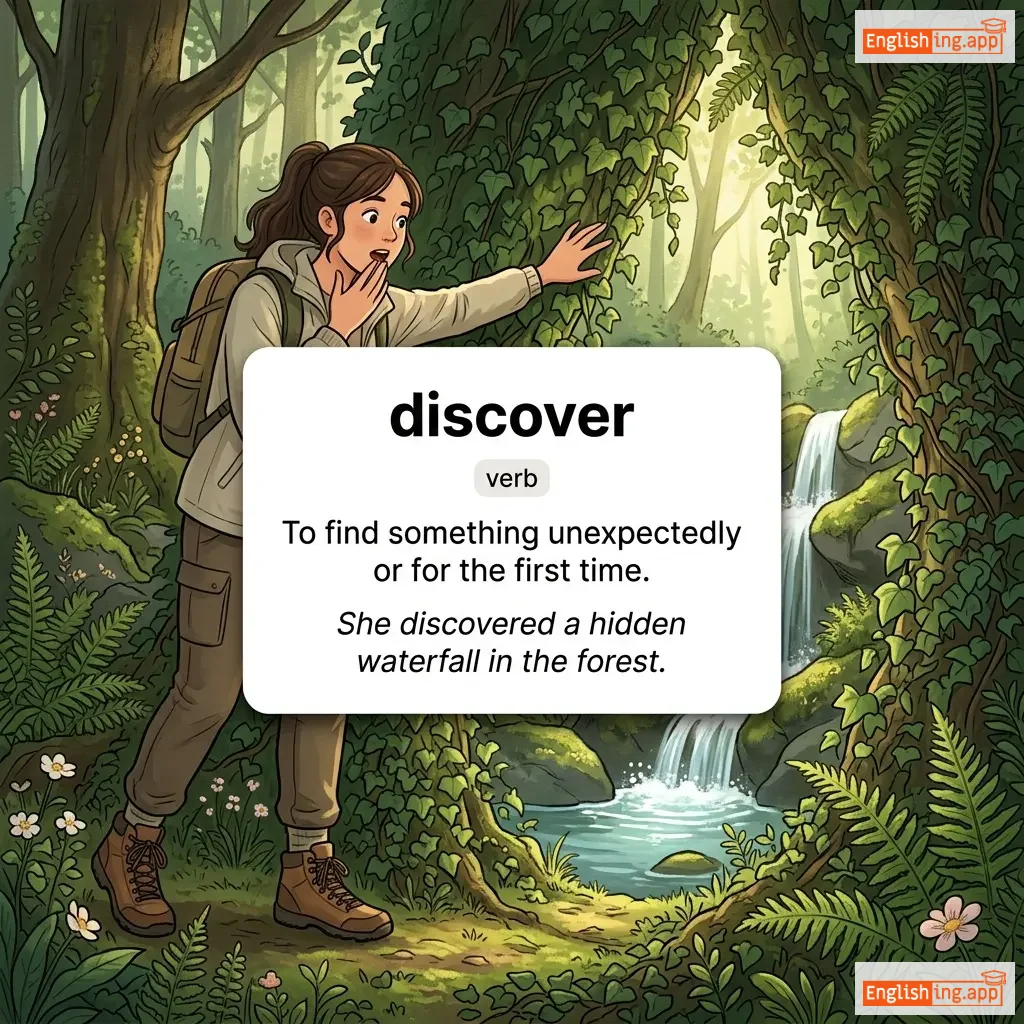
To find something unexpectedly or for the first time.
••••••
|
She discovered a hidden waterfall in the forest.
她在森林中发现了一个隐藏的瀑布。
••••••
|
她在森林中发现了一个隐藏的瀑布。
Ta zai senlin zhong faxian le yi ge yincang de pubu.
••••••
|
discover oneself
发现自我
••••••
|
To find out about one’s true nature or capabilities.
••••••
|
发现自我
faxian ziwo
••••••
|
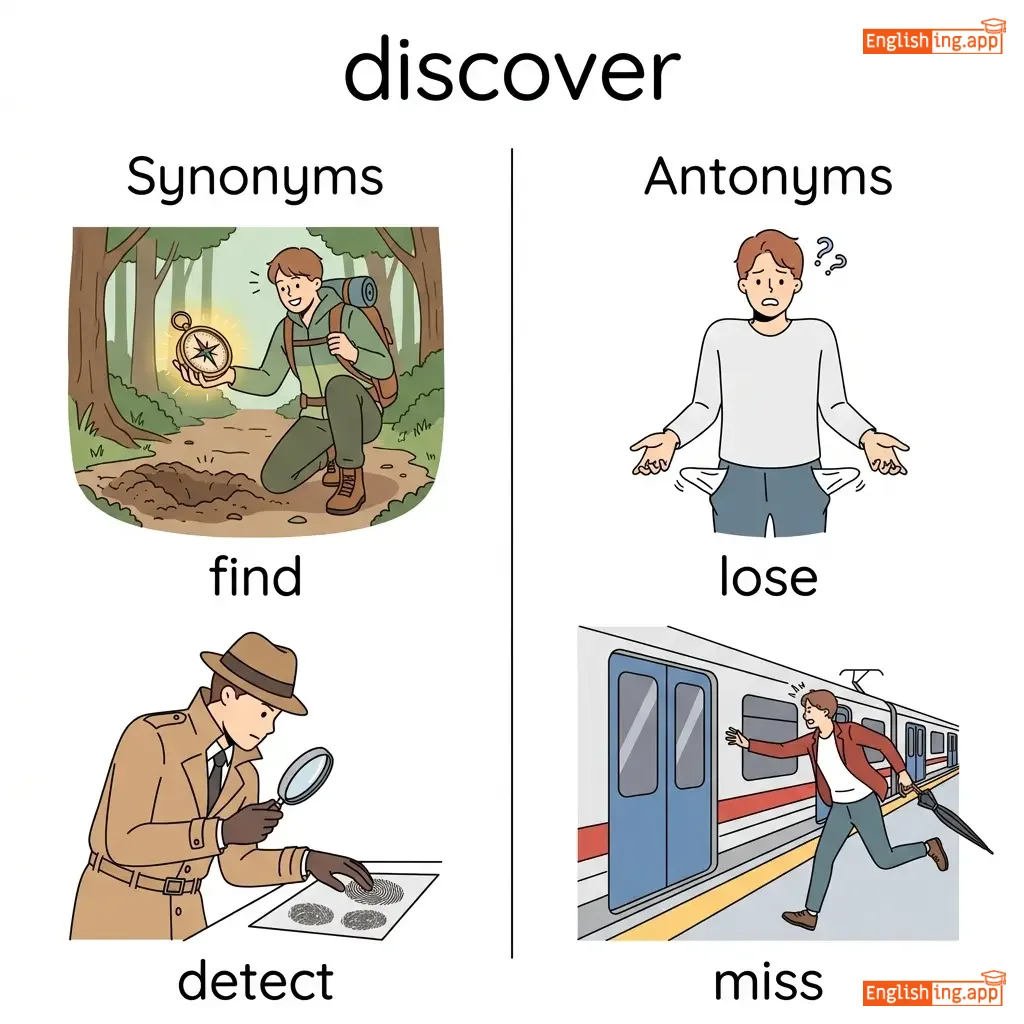
find, detect, uncover, reveal, unearth
••••••
|
lose, miss, conceal
••••••
|
discover truth, discover talent, discover new, discover hidden
••••••
|
发现 = 在森林中发现隐藏的瀑布!
••••••
|
|
#1595
🔎
|
/dɪˈskʌvəri/
noun
(dɪsˈkʌvəri)
••••••
|
- •••••• |
发现
fā xiàn
••••••
|
- •••••• | - •••••• | - •••••• | - •••••• |
The act of finding or learning something for the first time.
••••••
|
The discovery of penicillin changed medical history. |
青霉素的发现改变了医学历史。
Qīngméisù de fāxiàn gǎibiànle yīxué lìshǐ.
••••••
|
make a discovery |
to find or learn something new
••••••
|
做出发现
zuò chū fāxiàn
••••••
|
finding, invention, detection, revelation
••••••
|
loss, concealment
••••••
|
scientific discovery, new discovery, make a discovery, important discovery
••••••
|
Discovery = 发现 = 发现新事物就是一次发现。
••••••
|
|
#1596
🚫
|
/dɪˈskrɪmɪˌneɪt/
verb
••••••
|
- •••••• | - •••••• |
discriminated
••••••
|
discriminated
••••••
|
discriminates
••••••
|
discriminating
••••••
|
To treat someone unfairly based on race, gender, or other differences; or to recognize a distinction.
••••••
|
The law prohibits employers from discriminating against women. |
- •••••• |
discriminate against |
To treat a person or group unfairly due to bias
••••••
|
- •••••• |
differentiate, distinguish, segregate, bias, prejudice
••••••
|
equalize, accept, include
••••••
|
discriminate against, discriminate on the basis of, racial discrimination, gender discrimination
••••••
|
No •••••• |
|
#1597
⚖️
|
/dɪˌskrɪmɪˈneɪʃən/
noun
(歧视)
••••••
|
- •••••• |
歧视
qishi
••••••
|
- •••••• | - •••••• | - •••••• | - •••••• |
Unfair treatment of people based on race, gender, age, or other differences.
••••••
|
The law prohibits discrimination in the workplace. |
法律禁止在工作场所歧视。
Fǎlǜ jìnzhǐ zài gōngzuò chǎngsuǒ qíshì.
••••••
|
racial discrimination |
unfair treatment based on race
••••••
|
种族歧视
zhǒngzú qíshì
••••••
|
prejudice, bias, unfairness, inequality
••••••
|
equality, fairness, justice
••••••
|
racial discrimination, gender discrimination, fight discrimination, workplace discrimination
••••••
|
歧视 = dis + 犯罪,所以歧视是犯罪。
••••••
|
Vocabulary Quiz
Test your vocabulary by matching words with their translations or meanings.
Login to take the quiz
Comments (0)
Share your thoughts and join the discussion.
Join the discussion by logging in
Login to CommentNo comments yet
Be the first to share your thoughts!