








Swipe left or right, or use the buttons. Tap image to zoom.
例句翻译
单词
Lesson 59Lesson 59 - 遮罩切换
|
表情符号
|
单词 | Images | 翻译 | 过去时 | 过去分词 | 第三人称单数 | 动名词 | 含义 | 例句 | 例句翻译 | 示例表达 | 示例表达含义 | 示例表达翻译 | 同义词 | 反义词 | 搭配词 | 助记符 |
|---|---|---|---|---|---|---|---|---|---|---|---|---|---|---|---|---|---|
|
#2809
⏸️
|
/ˌɪntəˈrʌpt/
verb
(因特鲁普特)
••••••
|
- •••••• |
打断
dǎduàn
••••••
|
interrupted
••••••
|
interrupted
••••••
|
interrupts
••••••
|
interrupting
••••••
|
to stop someone from speaking or doing something by suddenly saying or doing something
••••••
|
She tried not to interrupt while he was speaking. |
她尽量不在他说话时打断他。
Tā jǐnliàng bù zài tā shuōhuà shí dǎduàn tā.
••••••
|
interrupt the flow |
to break the natural course of something
••••••
|
打断流程
dǎduàn liúchéng
••••••
|
disturb, hinder, intrude, disrupt, break in
••••••
|
continue, allow, support
••••••
|
interrupt the conversation, interrupt the process, rudely interrupt
••••••
|
打断像是突然暂停对话,打断交流的流畅性。
••••••
|
|
#2810
⏸️
|
/ˌɪntəˈrʌpʃən/
noun
(因特拉普申)
••••••
|
- •••••• |
中断
zhongduan
••••••
|
- •••••• | - •••••• | - •••••• | - •••••• |
the act of stopping or breaking the continuity of something; a pause caused by an external action
••••••
|
The meeting was delayed due to an unexpected interruption.
泽 米廷 瓦兹 迪莱德 迪尤 图 安 因特拉普申。
••••••
|
会议因为一次意外的中断而被推迟。
huiyi yinwei yici yiwai de zhongduan er bei tuichi
••••••
|
- •••••• | - •••••• | - •••••• |
break, disruption, disturbance, pause, interference
••••••
|
continuation, flow, continuity
••••••
|
unexpected interruption, brief interruption, service interruption, constant interruption
••••••
|
中断就是 interruption—事情被打断了
••••••
|
|
#2811
⏱️
|
/ˈɪntərvəl/
noun
(间隔)
••••••
|
- •••••• |
间隔
jiange
••••••
|
- •••••• | - •••••• | - •••••• | - •••••• |
a period of time between two events or points; a pause or break in activity
••••••
|
There was a short interval between the two performances.
两个表演之间有一个短暂的间隔。
••••••
|
两个表演之间有一个短暂的间隔。
Liang ge biaoyan zhi jian you yi ge duanzan de jiange.
••••••
|
at regular intervals
在规律间隔中
••••••
|
repeatedly at the same time gaps
••••••
|
在规律间隔中
Zai guilü jiange zhong
••••••
|
gap, break, pause, duration, span
••••••
|
continuation, flow
••••••
|
time interval, regular interval, short interval, interval training
••••••
|
间隔: 事件之间的时间,就像它们之间的暂停。
••••••
|
|
#2812
🛑
|
/ˌɪntərˈviːn/
verb
(因特文)
••••••
|
- •••••• |
介入
jiè rù
••••••
|
intervened
因特文德
••••••
|
intervened
因特文德
••••••
|
intervenes
因特文斯
••••••
|
intervening
因特文英
••••••
|
To come between people, groups, or events, often to prevent conflict or improve a situation.
••••••
|
The teacher had to intervene to stop the fight between the students.
老师不得不介入,阻止学生之间的打架。
••••••
|
老师不得不介入,阻止学生之间的打架。
Lǎoshī bùdébù jièrù, zǔzhǐ xuéshēng zhījiān de dǎjià.
••••••
|
intervene in a dispute
在争议中介入
••••••
|
to get involved in an argument or disagreement to try to resolve it
••••••
|
在争议中介入
zài zhēngyì zhōng jièrù
••••••
|
mediate, intercede, interfere, step in, arbitrate
••••••
|
ignore, avoid, neglect
••••••
|
intervene in conflict, intervene directly, intervene quickly, intervene diplomatically
••••••
|
就像老师介入以帮助解决争议一样!
••••••
|
|
#2813
🛑
|
/ˌɪntərˈvɛnʃən/
noun
(介入)
••••••
|
|
干预
gānyù
••••••
|
- •••••• | - •••••• | - •••••• | - •••••• |
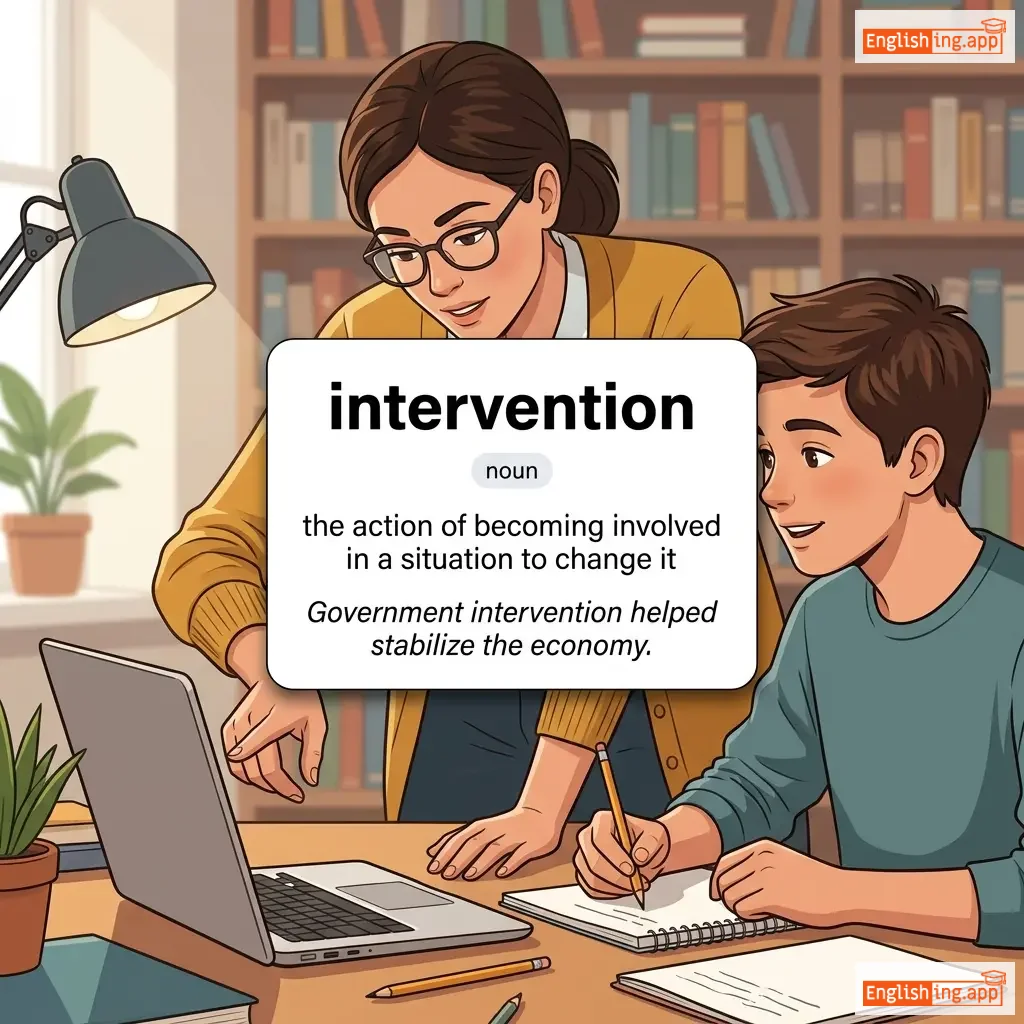
the action of becoming involved in a situation to change it
••••••
|
Government intervention helped stabilize the economy. |
政府的干预帮助稳定了经济。
Zhèngfǔ de gānyù bāngzhù wěndìngle jīngjì.
••••••
|
military intervention |
the use of military force in a conflict
••••••
|
军事干预
jūnshì gānyù
••••••
|
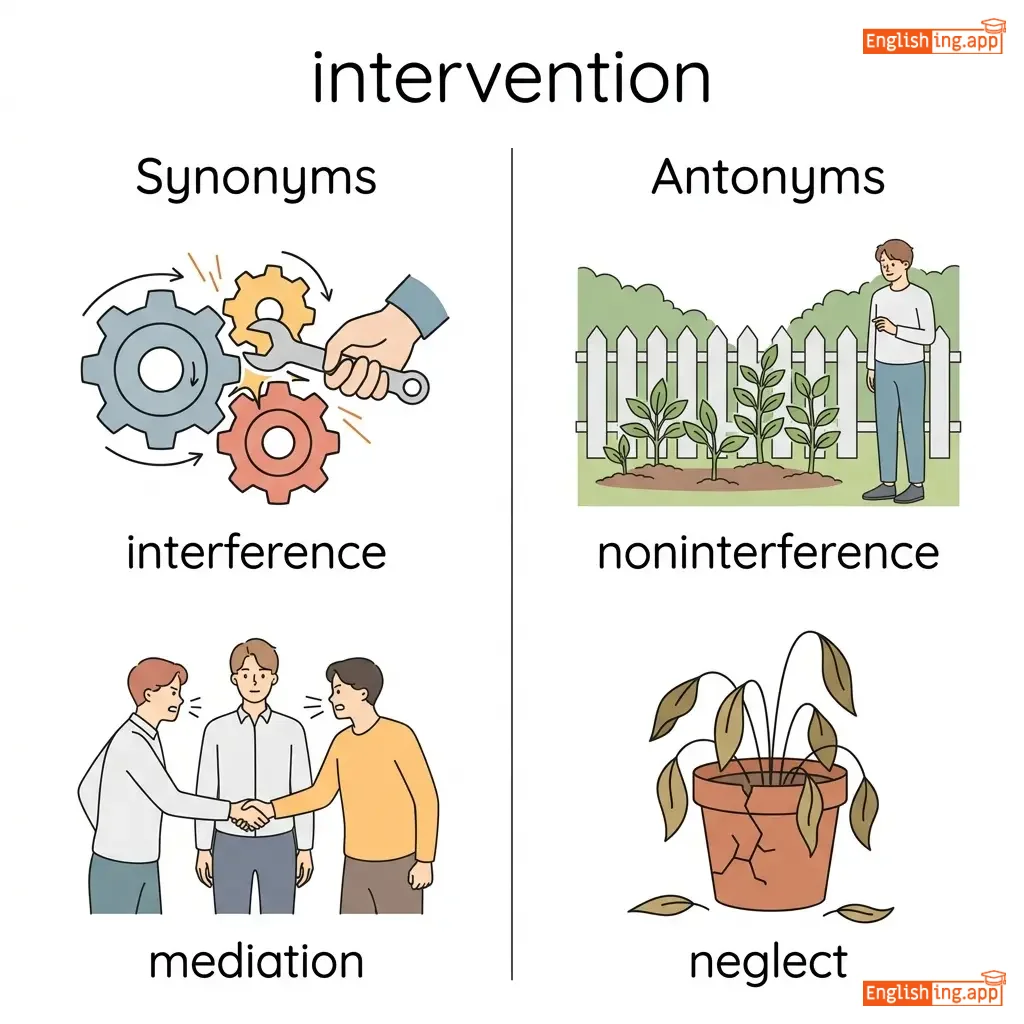
interference, mediation, involvement, intrusion, action
••••••
|
noninterference, neglect, inaction
••••••
|
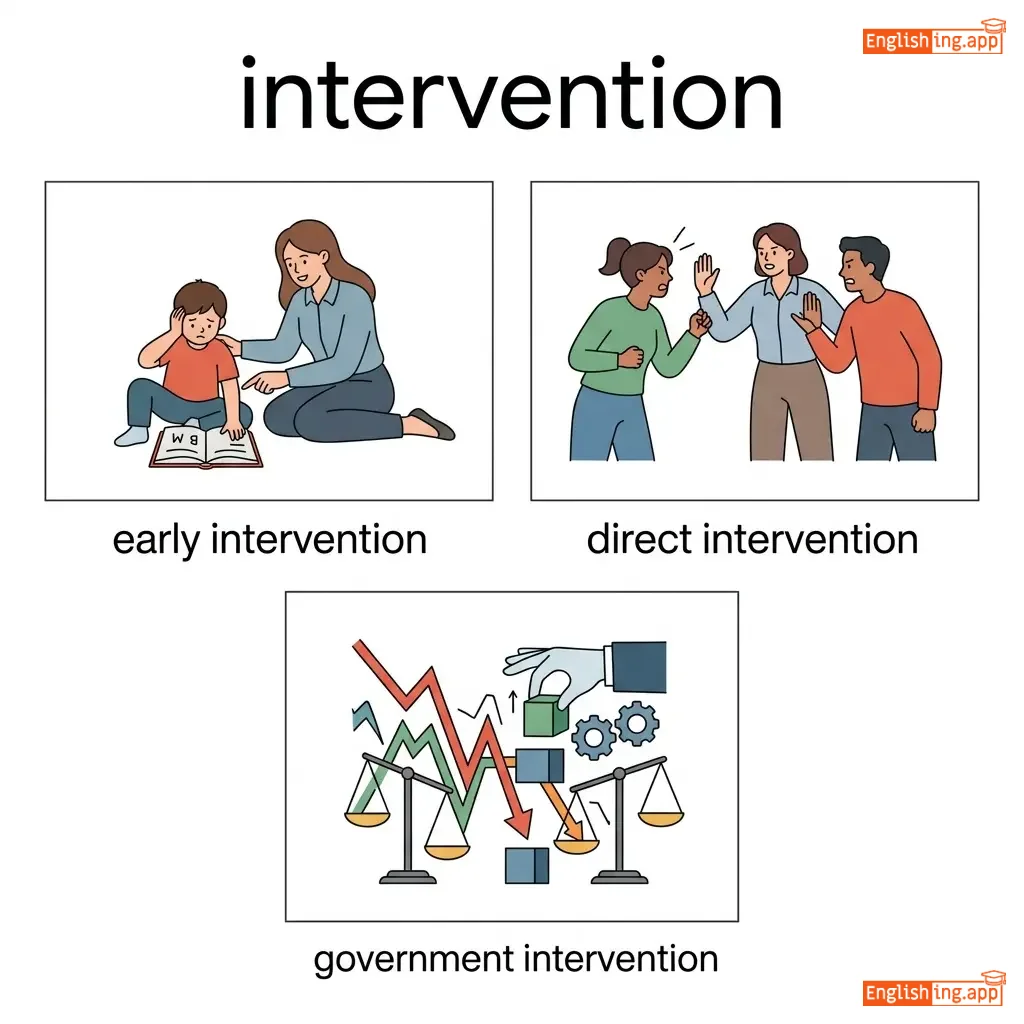
early intervention, direct intervention, government intervention, timely intervention
••••••
|
Intervention就是介入,一旦介入就能改变结果!
••••••
|
|
#2814
🎤
|
/ˈɪntərvjuː/
noun, verb
(インタビュー)
••••••
|
|
面试
miànshì
••••••
|
interviewed
インタビュード
••••••
|
interviewed
インタビュード
••••••
|
interviews
インタビューズ
••••••
|
interviewing
インタビューイング
••••••
|
a formal meeting in which one person asks another questions
••••••
|
She prepared well for the job interview.
她为工作面试做了充分的准备。
••••••
|
她为工作面试做了充分的准备。
Tā wèi gōngzuò miànshì zuòle chōngfèn de zhǔnbèi.
••••••
|
exit interview
退出面试
••••••
|
a discussion with an employee leaving a company
••••••
|
退出面试
tuìchū miànshì
••••••
|
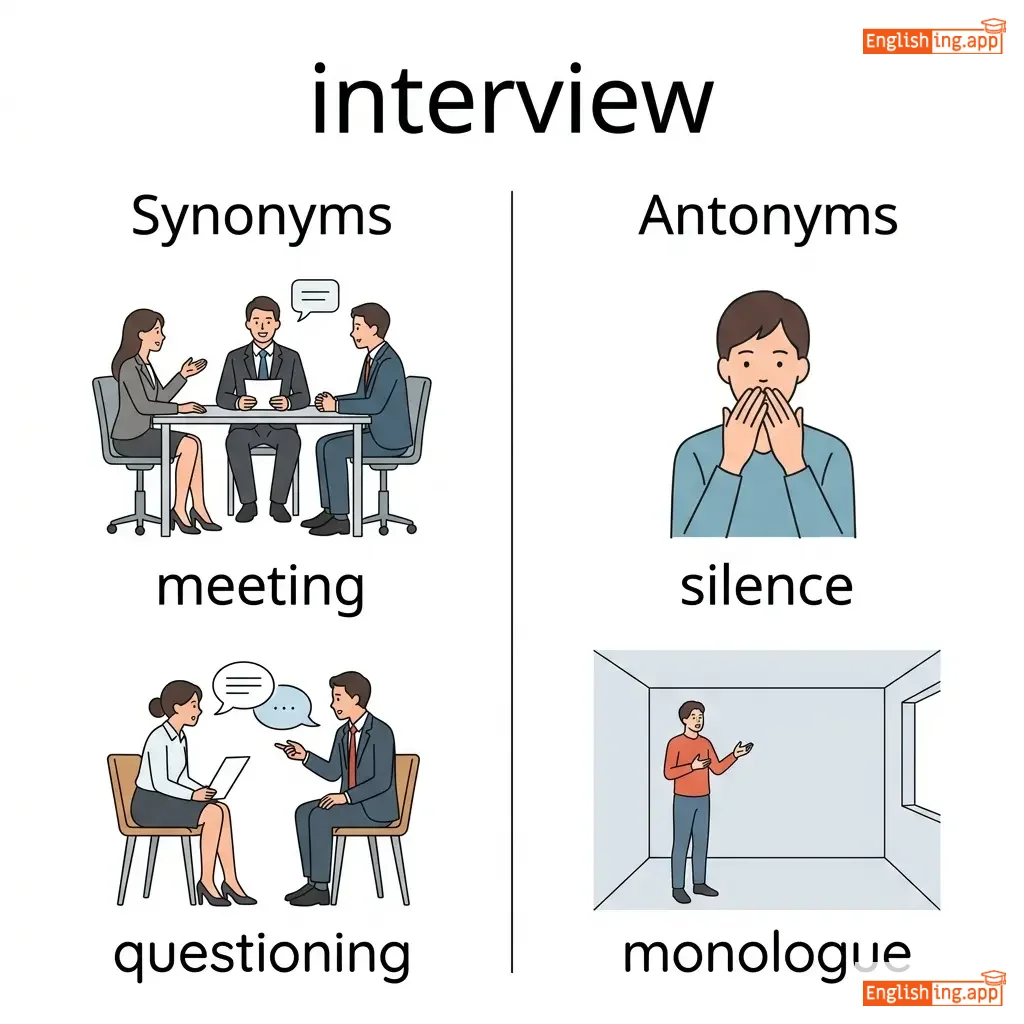
meeting, questioning, discussion, examination, consultation
••••••
|
silence, monologue
••••••
|
job interview, phone interview, conduct interview, interview process
••••••
|
Interview 代表面试 — 面试就是一场问答大比拼。
••••••
|
|
#2815
🌹
|
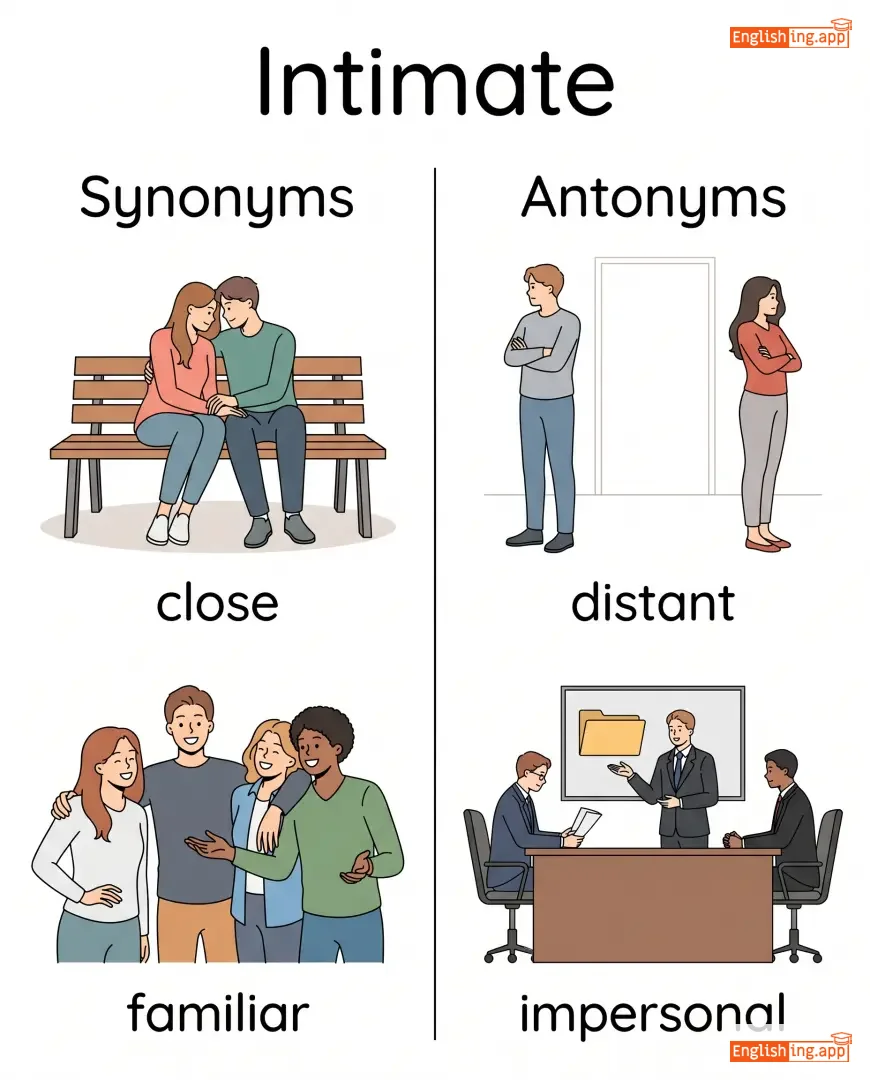
/ˈɪntɪmət/
adjective
(因提美特)
••••••
|
|
亲密
qīn mì
••••••
|
- •••••• | - •••••• | - •••••• | - •••••• |
Closely acquainted; very familiar and personal.
••••••
|
They shared an intimate dinner by candlelight. |
他们在烛光下共享了一顿亲密的晚餐。
Tāmen zài zhúguāng xià gòngxiǎngle yī dùn qīnmì de wǎncān.
••••••
|
intimate knowledge |
A deep or detailed understanding of something.
••••••
|
亲密知识
qīn mì zhī shí
••••••
|
close, familiar, personal, confidential, warm
••••••
|
distant, impersonal, formal
••••••
|
intimate relationship, intimate knowledge, intimate dinner, intimate friend
••••••
|
Intimate = 亲密如朋友之间的深厚关系。
••••••
|
|
#2816
➡️
|
/ˈɪntuː/
preposition
(因图)
••••••
|
- •••••• |
进去
jinqu
••••••
|
- •••••• | - •••••• | - •••••• | - •••••• |
expressing movement or direction to the inside of something
••••••
|
She walked into the room quietly.
她安静地走进了房间。
••••••
|
她安静地走进了房间。
Ta anjing de zou jinle fangjian.
••••••
|
run into
偶遇
••••••
|
to meet by chance
••••••
|
偶遇
ouyu
••••••
|
inside, within, toward, onto
••••••
|
out, outside
••••••
|
fall into, get into, break into, move into
••••••
|
Into 代表进去 — 就像下雨时,每个人都冲进屋里。
••••••
|
|
#2817
🔥
|
/ɪnˈtɒlərəbl̩/
adjective
(因托勒布尔)
••••••
|
- •••••• |
无法忍受
wúfǎ rěnshòu
••••••
|
- •••••• | - •••••• | - •••••• | - •••••• |
so bad, difficult, or unpleasant that it cannot be endured
••••••
|
The heat during the summer was almost intolerable.
夏季的高温几乎是无法忍受的。
••••••
|
夏季的高温几乎是无法忍受的。
Xiàjì de gāowēn jīhū shì wúfǎ rěnshòu de.
••••••
|
an intolerable situation
一个无法忍受的情况
••••••
|
a condition or state that is too difficult or unpleasant to continue
••••••
|
一个无法忍受的情况
yīgè wúfǎ rěnshòu de qíngkuàng
••••••
|
unbearable, insufferable, unendurable, extreme, unacceptable
••••••
|
tolerable, bearable, acceptable
••••••
|
intolerable pain, intolerable pressure, intolerable behavior, intolerable burden
••••••
|
INTOLERABLE = IN + TOLERABLE → 无法忍受 → 无法忍受
••••••
|
|
#2818
🤔
|
/ɪnˈtriːɡɪŋ/
adjective
(引人入胜)
••••••
|
- •••••• |
非常有趣和不寻常;激发好奇心
feichang youqu he bu xunchang; jifa haoqixin
••••••
|
- •••••• | - •••••• | - •••••• | - •••••• |
very interesting and unusual; arousing curiosity
••••••
|
The movie has an intriguing plot that keeps the audience hooked. |
这部电影有一个引人入胜的情节,吸引着观众。
Zhe bu dianying you yige yinrenrusheng de qingjie, xiyi zhe guanzhong.
••••••
|
- •••••• | - •••••• | - •••••• |
fascinating, captivating, engaging, compelling, mysterious
••••••
|
boring, dull, uninteresting
••••••
|
intriguing idea, intriguing story, intriguing mystery, intriguing character
••••••
|
Intriguing 意味着非常有趣和不寻常,就像一个情节引人入胜,大家都会说‘引人入胜’!
••••••
|
|
#2819
🙋
|
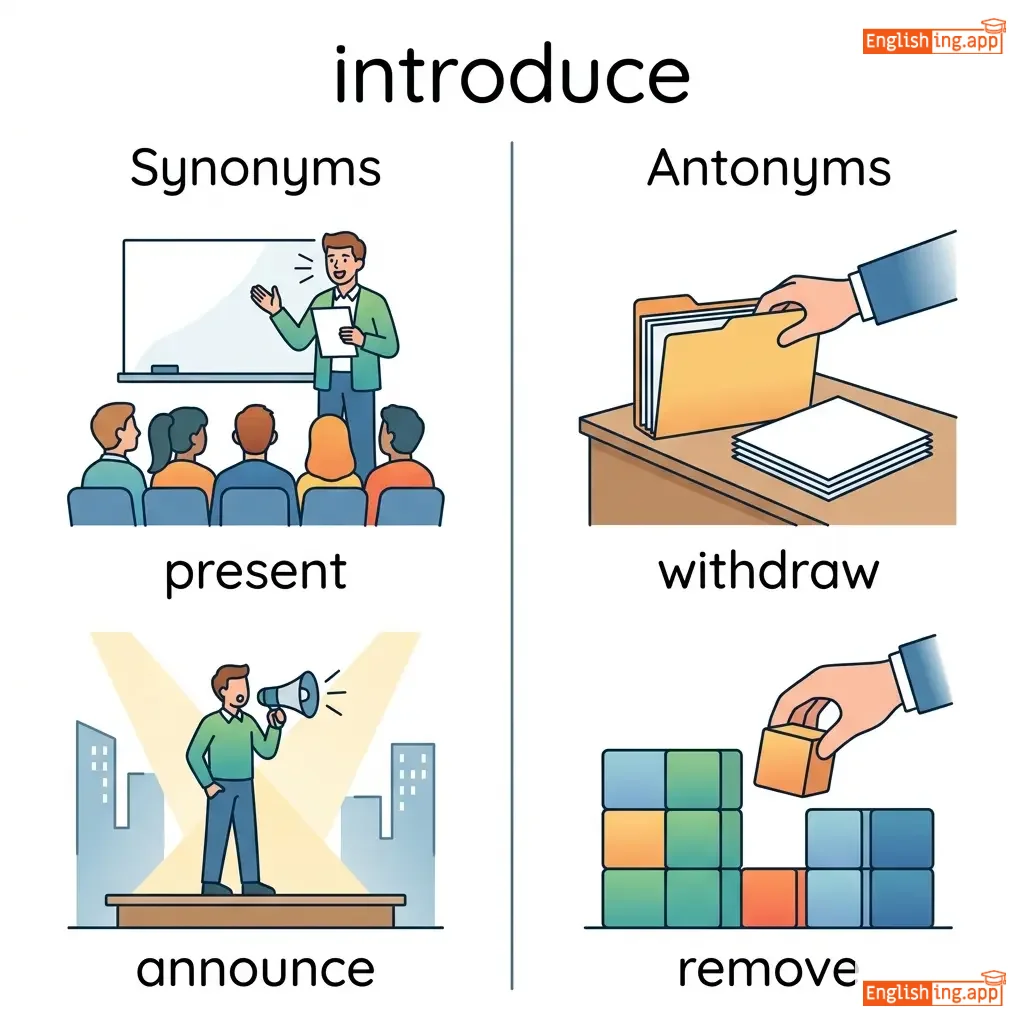
/ˌɪntrəˈduːs/
verb
(引入)
••••••
|
|
引入
yinru
••••••
|
introduced
引入的
••••••
|
introduced
引入的
••••••
|
introduces
引入
••••••
|
introducing
引入中
••••••
|
to present someone or something to another person or group
••••••
|
He will introduce his new idea at the meeting.
他将在会议中介绍他的想法。
••••••
|
他将在会议中介绍他的想法。
Ta jiang zai huiyi zhong jieshao tade xiangfa.
••••••
|
introduce a bill
提出法案
••••••
|
to formally present a proposed law
••••••
|
提出法案
tichu fabian
••••••
|
present, announce, propose, launch, establish
••••••
|
withdraw, remove, eliminate
••••••
|
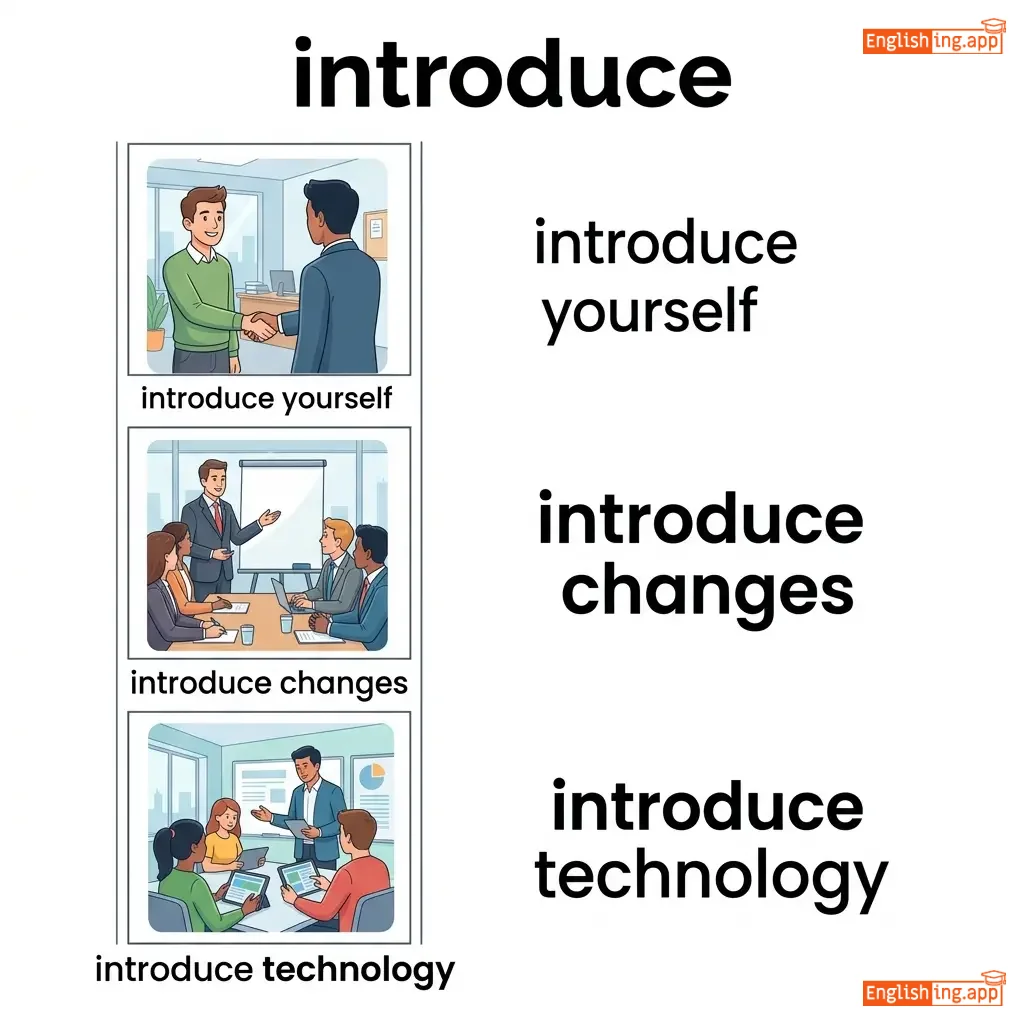
introduce yourself, introduce changes, introduce technology, introduce to
••••••
|
Introduce意味着引入 — 想象你在演讲时说:'让我向大家介绍这个话题'.
••••••
|
|
#2820
📘
|
/ˌɪn.trəˈdʌk.ʃən/
noun
(引言)
••••••
|
- •••••• |
引言
yǐnyán
••••••
|
- •••••• | - •••••• | - •••••• | - •••••• |
the action of introducing something or someone; an opening or beginning part
••••••
|
The professor gave a brief introduction before starting the lecture.
教授在开始讲座之前做了简短的引言。
••••••
|
教授在开始讲座之前做了简短的引言。
Jiàoshòu zài kāishǐ jiǎngzuò zhīqián zuòle jiǎnduǎn de yǐnyán.
••••••
|
introduction to
引言到
••••••
|
the beginning explanation or basic presentation of a subject
••••••
|
引言到
yǐnyán dào
••••••
|
beginning, preface, initiation, presentation, foreword
••••••
|
conclusion, ending
••••••
|
make an introduction, give an introduction, introduction to a book, formal introduction
••••••
|
引言是开始的介绍,就像开门见山。
••••••
|
|
#2821
⚔️
|
/ɪnˈveɪd/
verb
(ɪnveɪd)
••••••
|
- •••••• |
入侵
rùqīn
••••••
|
invaded
ɪnveɪdɪd
••••••
|
invaded
ɪnveɪdɪd
••••••
|
invades
ɪnveɪdz
••••••
|
invading
ɪnveɪdɪŋ
••••••
|
to enter a place or country forcefully, especially as an enemy
••••••
|
The army invaded the neighboring country.
军队入侵了邻国。
••••••
|
军队入侵了邻国。
Jūnduì rùqīnle lín guó.
••••••
|
invade someone's privacy
入侵某人的隐私
••••••
|
to intrude into someone's personal life
••••••
|
入侵某人的隐私
Rùqīn mǒu rén de yǐnsī
••••••
|
attack, conquer, occupy, overrun, intrude
••••••
|
withdraw, retreat, leave
••••••
|
invade territory, invade privacy, invaded country, invading force
••••••
|
In + Vade (进入) — 进入然后入侵!
••••••
|
|
#2822
❌
|
/ˈɪnvəlɪd/ (adjective), /ɪnˈvælɪd/ (noun)
adjective, noun
(无效)
••••••
|
- •••••• |
无效的
wuxiao de
••••••
|
- •••••• | - •••••• | - •••••• | - •••••• |
Not valid; having no force or effect. Also refers to a person too weak or ill to care for themselves.
••••••
|
The court declared the contract invalid. |
法院宣布合同无效。
Fayuan xuanbu hetong wuxiao.
••••••
|
invalid argument |
A reasoning or statement that is not logically correct.
••••••
|
无效论点
wuxiao lundian
••••••
|
void, ineffective, worthless, weak, ill
••••••
|
valid, sound, effective
••••••
|
invalid contract, invalid data, invalid reason
••••••
|
Invalid = In + valid → 无效的,意味着没有效力。
••••••
|
|
#2823
❌
|
/ˌɪnvəˈlɪdɪti/
noun
(因瓦利迪蒂)
••••••
|
- •••••• |
无效性
wuxiaoxing
••••••
|
- •••••• | - •••••• | - •••••• | - •••••• |
the state of being invalid, legally void, or lacking force or validity
••••••
|
The court ruled that the contract suffered from invalidity.
zhe kort ruled zet ze kontrakt safa from yinwalididi
••••••
|
法院裁定该合同存在无效性。
fayuan caiding gai hetong cunzai wuxiaoxing
••••••
|
- •••••• | - •••••• | - •••••• |
invalidness, nullity, illegitimacy, ineffectiveness, voidness
••••••
|
validity, legitimacy, soundness
••••••
|
legal invalidity, claim invalidity, grounds of invalidity, prove invalidity
••••••
|
invalidity 听起来像 无效性
••••••
|
|
#2824
🔒
|
/ɪnˈveə.ri.ə.bəl/
adjective
(invariable)
••••••
|
- •••••• |
不变的;恒定的;始终相同的
bùbiàn de
••••••
|
- •••••• | - •••••• | - •••••• | - •••••• |
never changing; constant; always the same
••••••
|
His invariable routine includes morning exercise and coffee.
他的恒定日常包括早晨锻炼和咖啡。
••••••
|
他的恒定日常包括早晨锻炼和咖啡。
tā de héngdìng rìcháng bāokuò zǎochén duànliàn hé kāfēi
••••••
|
- •••••• | - •••••• | - •••••• |
constant, unchanging, fixed, consistent
••••••
|
variable, changing, inconsistent, fluctuating
••••••
|
invariable rule, invariable routine, invariable custom, invariable pattern
••••••
|
In Chinese, '不变的' conveys the meaning of 'invariable' perfectly!
••••••
|
|
#2825
⚔️
|
/ɪnˈveɪʒən/
noun
(yīngwéi)
••••••
|
- •••••• |
入侵
ruqin
••••••
|
- •••••• | - •••••• | - •••••• | - •••••• |
An instance of invading a country, region, or personal space with armed force or unwelcome presence.
••••••
|
The army prepared for the possibility of an invasion. |
军队为可能的入侵做了准备。
Jundui wei keneng de ruqin zuole zhunbei.
••••••
|
invasion of privacy |
A violation of someone's personal life without permission.
••••••
|
隐私侵犯
yin si qin fan
••••••
|
attack, incursion, intrusion, assault, raid
••••••
|
retreat, withdrawal, defense
••••••
|
military invasion, foreign invasion, invasion force, invasion threat
••••••
|
Invasion 意思是入侵 ⚔️— 在中国 Vision = 入侵 (入侵)。
••••••
|
|
#2826
💡
|
/ɪnˈvɛnt/
verb
(发明)
••••••
|
- •••••• |
发明
faming
••••••
|
invented
发明了
••••••
|
invented
发明了
••••••
|
invents
发明
••••••
|
inventing
发明中
••••••
|
to create or design something that has not existed before
••••••
|
Thomas Edison invented the electric bulb.
托马斯·爱迪生发明了电灯泡。
••••••
|
托马斯·爱迪生发明了电灯泡。
Tuo ma si · ai di sheng fa ming le dian deng pao.
••••••
|
reinvent the wheel
重新发明轮子
••••••
|
to waste time creating something that already exists
••••••
|
浪费时间去创造已经存在的东西
langfei shijian qu chuangzao yijing cunzai de dongxi
••••••
|
create, design, develop, originate, devise
••••••
|
destroy, copy, imitate
••••••
|
invent a machine, invent a device, invent story, invent technology
••••••
|
发明 = 发 + 明 (明 = 明亮) — 发光的明亮,发明一个新事物。
••••••
|
|
#2827
⚙️
|
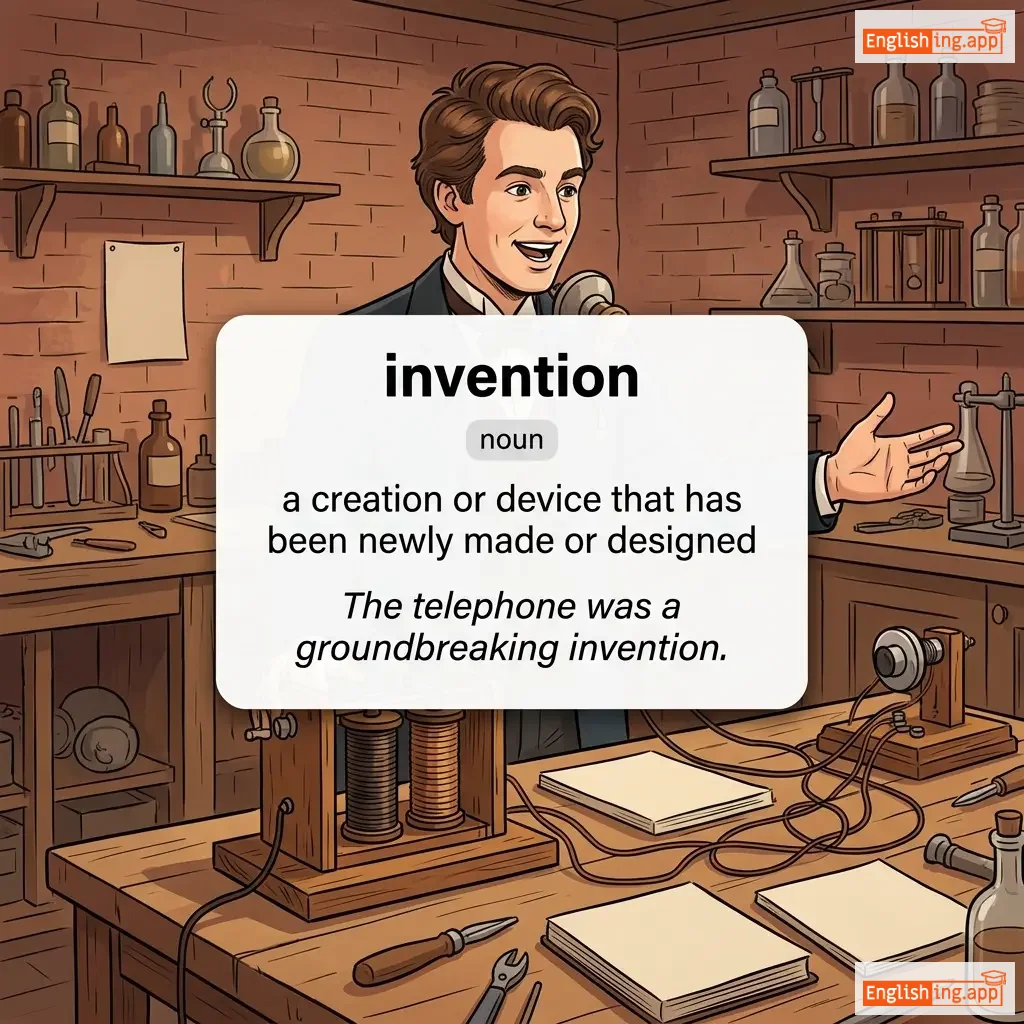
/ɪnˈvɛnʃən/
noun
(ɪnˈvɛnʃən)
••••••
|
|
发明
fāmíng
••••••
|
- •••••• | - •••••• | - •••••• | - •••••• |
a creation or device that has been newly made or designed
••••••
|
The telephone was a groundbreaking invention. |
电话是一次革命性的发明。
Diànhuà shì yīcì gémìngxìng de fāmíng.
••••••
|
mother of invention |
necessity drives people to create solutions
••••••
|
需求是发明之母
Xūqiú shì fāmíng zhī mǔ
••••••
|
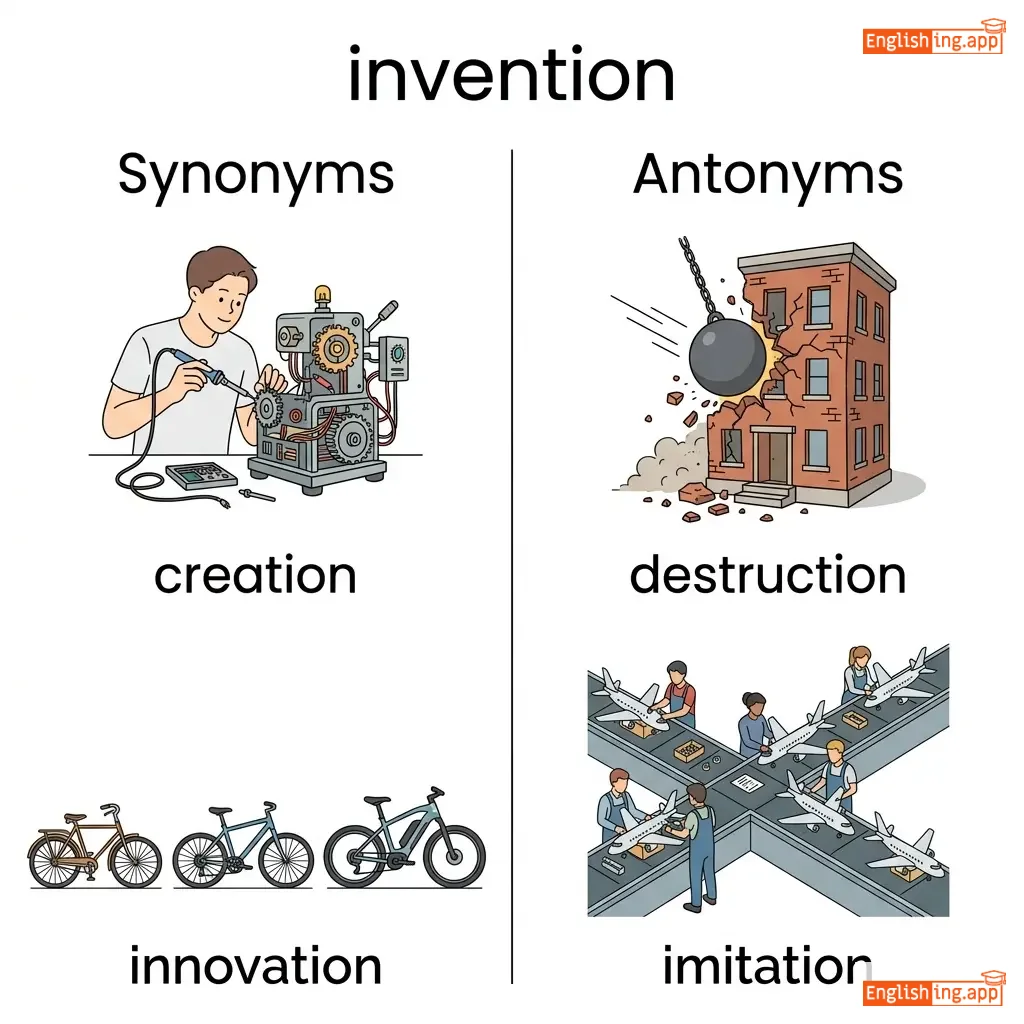
creation, innovation, discovery, contraption, device
••••••
|
destruction, imitation
••••••
|
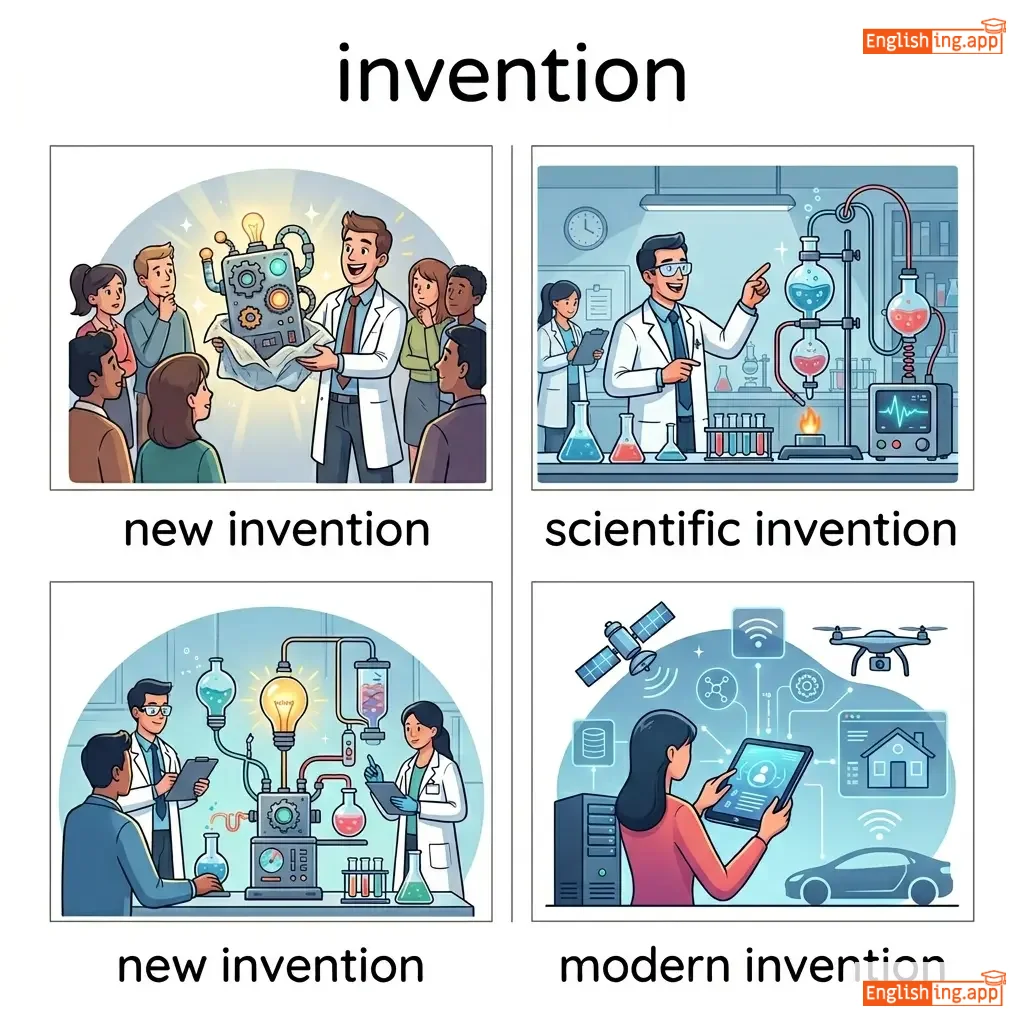
new invention, scientific invention, modern invention, patent an invention
••••••
|
发明就是需要创造的东西!
••••••
|
|
#2828
💡
|
/ɪnˈventər/
noun
(因文特)
••••••
|
- •••••• |
发明家
famingjia
••••••
|
- •••••• | - •••••• | - •••••• | - •••••• |
a person who creates or designs something new, especially a device, method, or process
••••••
|
The inventor patented her new medical device.
因文特 帕腾特德 她 的 新 医疗 设备。
••••••
|
这位发明家为她的新医疗设备申请了专利。
Zhe wei famingjia wei ta de xin yiliao shebei shenqing le zhuanli
••••••
|
great inventor
伟大的 因文特
••••••
|
a person known for creating important or influential inventions
••••••
|
伟大的发明家
weida de famingjia
••••••
|
creator, innovator, designer, originator, pioneer
••••••
|
imitator, follower
••••••
|
famous inventor, prolific inventor, inventor of, young inventor
••••••
|
Inventor 发明 → 发明家
••••••
|
|
#2829
💰
|
/ɪnˈvɛst/
verb
(投资)
••••••
|
|
投资
tóu zī
••••••
|
invested
投资过
••••••
|
invested
投资过
••••••
|
invests
投资
••••••
|
investing
投资中
••••••
|
to put money, time, or effort into something with the expectation of achieving a benefit
••••••
|
He decided to invest in real estate to secure his future.
他决定投资房地产,以确保他的未来。
••••••
|
他决定投资房地产,以确保他的未来。
Tā juédìng tóu zī fáng dì chǎn, yǐ què bǎo tā de wèi lái.
••••••
|
invest in
投资于
••••••
|
to commit money, time, or effort into something
••••••
|
投资于
tóu zī yú
••••••
|
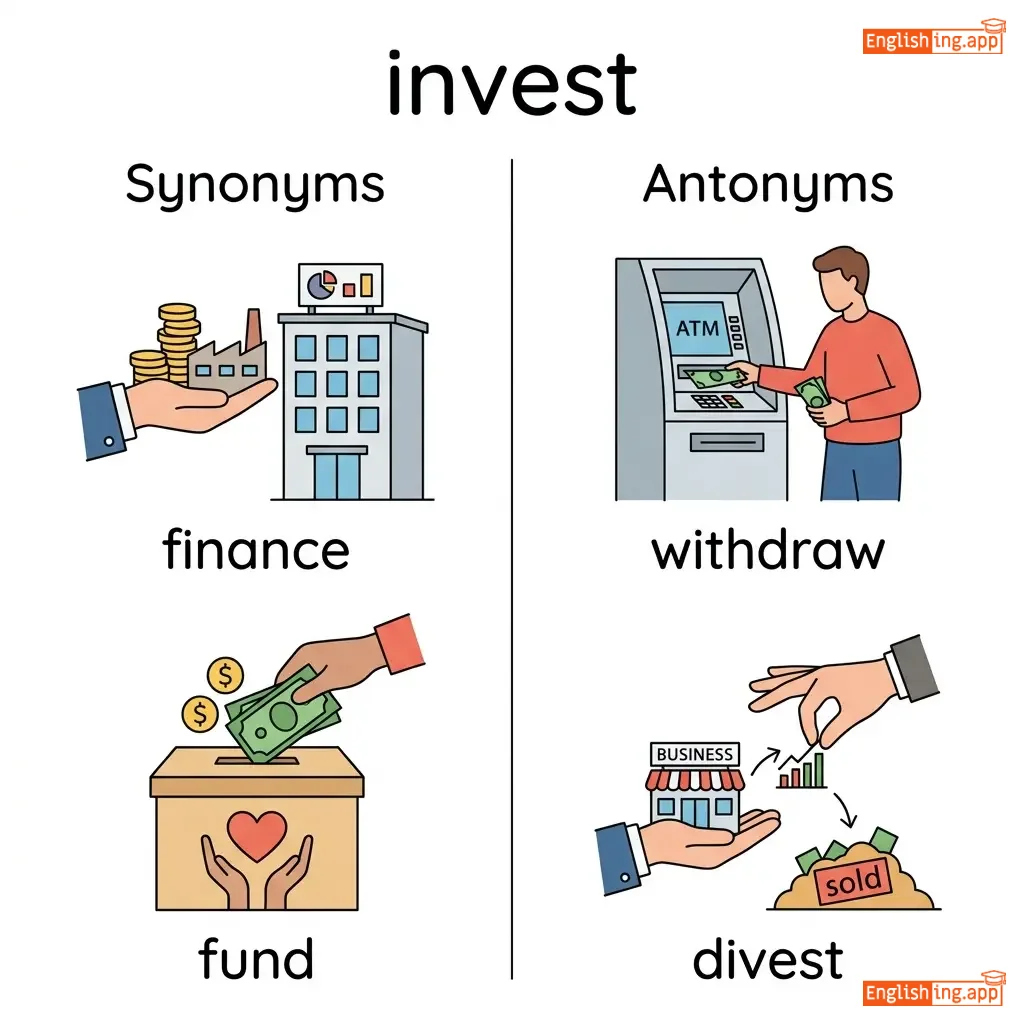
finance, fund, contribute, allocate, commit
••••••
|
withdraw, divest
••••••
|
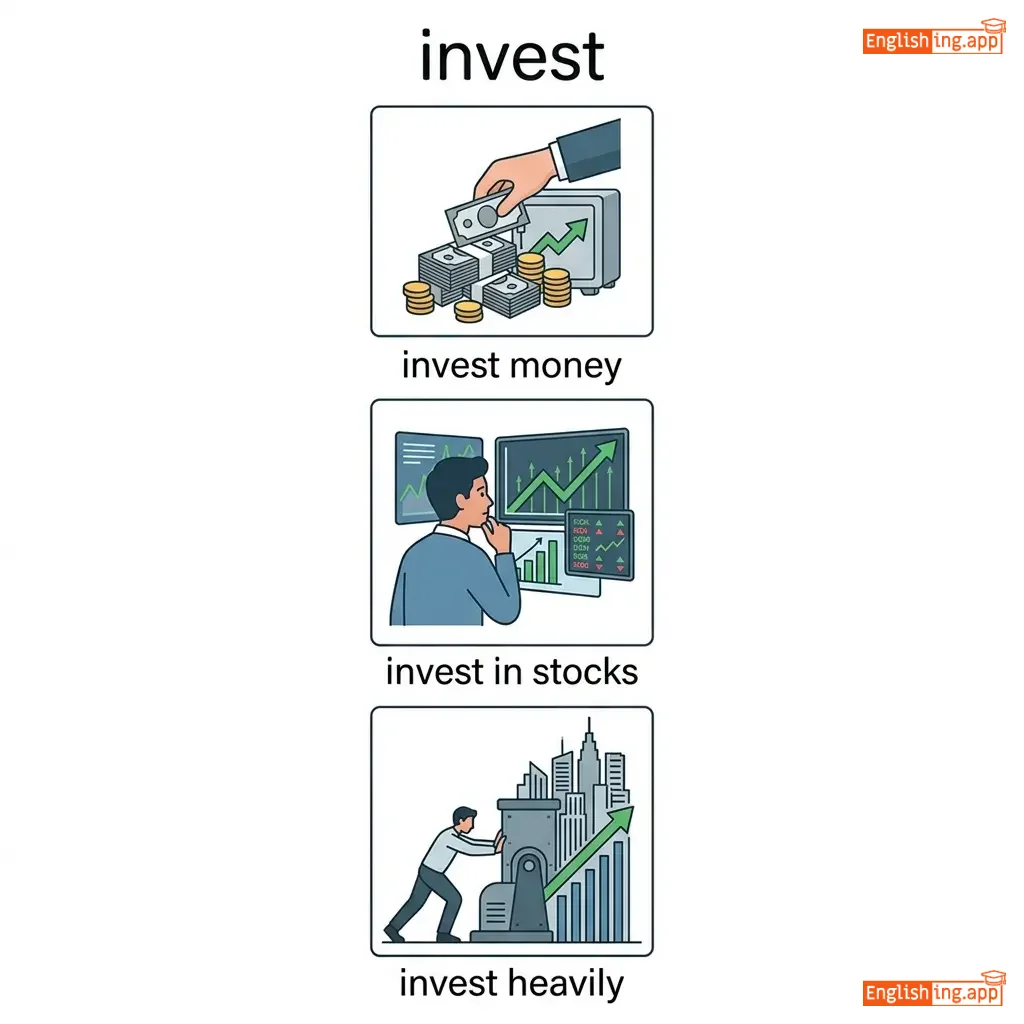
invest money, invest in stocks, invest heavily, invest wisely
••••••
|
投资 = 把钱投入到未来的利益中。
••••••
|
|
#2830
🔍
|
/ɪnˈvɛs.tɪ.ɡeɪt/
verb
(ɪnˈvɛstɪɡeɪt)
••••••
|
- •••••• |
调查
diàochá
••••••
|
investigated
ɪnˈvɛstɪɡeɪtɪd
••••••
|
investigated
ɪnˈvɛstɪɡeɪtɪd
••••••
|
investigates
ɪnˈvɛstɪɡeɪts
••••••
|
investigating
ɪnˈvɛstɪɡeɪtɪŋ
••••••
|
to carry out a systematic inquiry to discover facts or information
••••••
|
The police will investigate the incident thoroughly.
警方将彻底调查此事件。
••••••
|
警方将彻底调查此事件。
jǐngfāng jiāng chèdǐ diàochá cǐ shìjiàn.
••••••
|
investigate a case
调查案件
••••••
|
to examine or look into a specific case
••••••
|
调查案件
diàochá ànjiàn
••••••
|
examine, probe, inspect, explore, analyze
••••••
|
ignore, overlook
••••••
|
investigate crime, investigate a complaint, investigate thoroughly
••••••
|
调查意味着在案件中寻找事实。
••••••
|
|
#2831
🕵️
|
/ɪnˌvɛs.tɪˈɡeɪ.ʃən/
noun
(调查)
••••••
|
- •••••• |
调查
diaocha
••••••
|
- •••••• | - •••••• | - •••••• | - •••••• |
the process of inquiring into or examining something carefully to find the truth
••••••
|
The investigation revealed new evidence about the fraud. |
调查揭示了有关欺诈的新证据。
Diaocha jieshi le youguan qizha de xin zhengju.
••••••
|
under investigation |
being examined or inquired into
••••••
|
正在调查中
zhengzai diaocha zhong
••••••
|
inquiry, probe, inspection, examination, scrutiny
••••••
|
neglect, disregard
••••••
|
launch an investigation, conduct an investigation, criminal investigation
••••••
|
调查意味着通过仔细检查找出真相。
••••••
|
|
#2832
🕵️
|
/ɪnˈvɛstɪˌɡeɪtər/
noun
(海皮尼斯)
••••••
|
- •••••• |
幸福
xìngfú
••••••
|
- •••••• | - •••••• | - •••••• | - •••••• |
a person who carries out a formal inquiry or investigation
••••••
|
The investigator gathered evidence from the crime scene. |
当她获得奖项时,她无法掩饰自己的幸福。
Dāng tā huò dé jiǎngxiàng shí, tā wúfǎ yǎnshì zìjǐ de xìngfú.
••••••
|
private investigator |
a detective who works independently, often hired for personal cases
••••••
|
追求幸福
zhuīqiú xìngfú
••••••
|
detective, examiner, inspector, researcher, sleuth
••••••
|
suspect, criminal
••••••
|
police investigator, lead investigator, private investigator, chief investigator
••••••
|
幸福是一种可以从生活的追求中获得的状态。
••••••
|
|
#2833
📈
|
/ɪnˈvɛst.mənt/
noun
(投资)
••••••
|
|
投资
tóu zī
••••••
|
- •••••• | - •••••• | - •••••• | - •••••• |
the action or process of putting money, time, or resources into something for future benefit
••••••
|
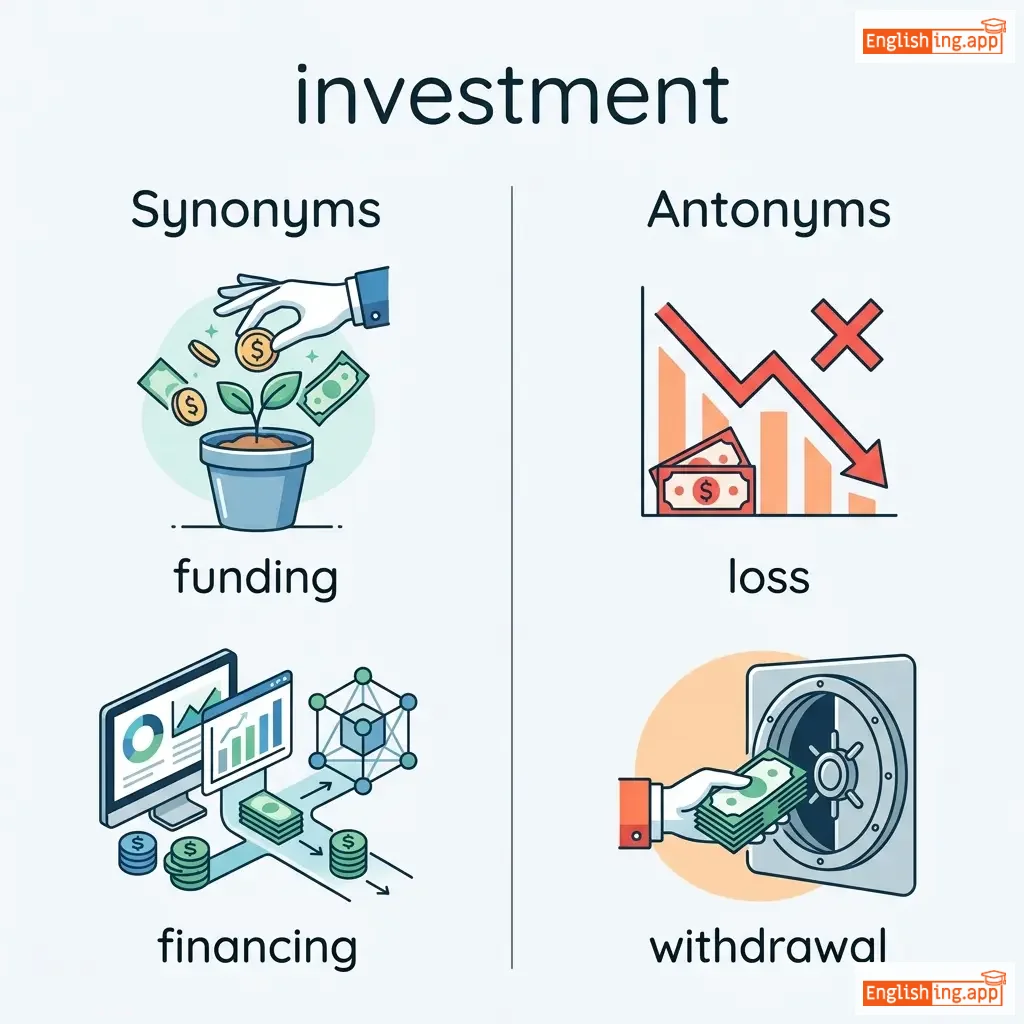
Her investment in technology startups has paid off well. |
她对科技创业公司的投资获得了不错的回报。
Tā duì kējì chuàngyè gōngsī de tóuzī huòqǔle bùcuò de huíbào.
••••••
|
return on investment |
the profit or loss derived from an investment
••••••
|
投资回报
tóu zī huí bào
••••••
|
funding, financing, contribution, allocation, venture
••••••
|
loss, withdrawal
••••••
|
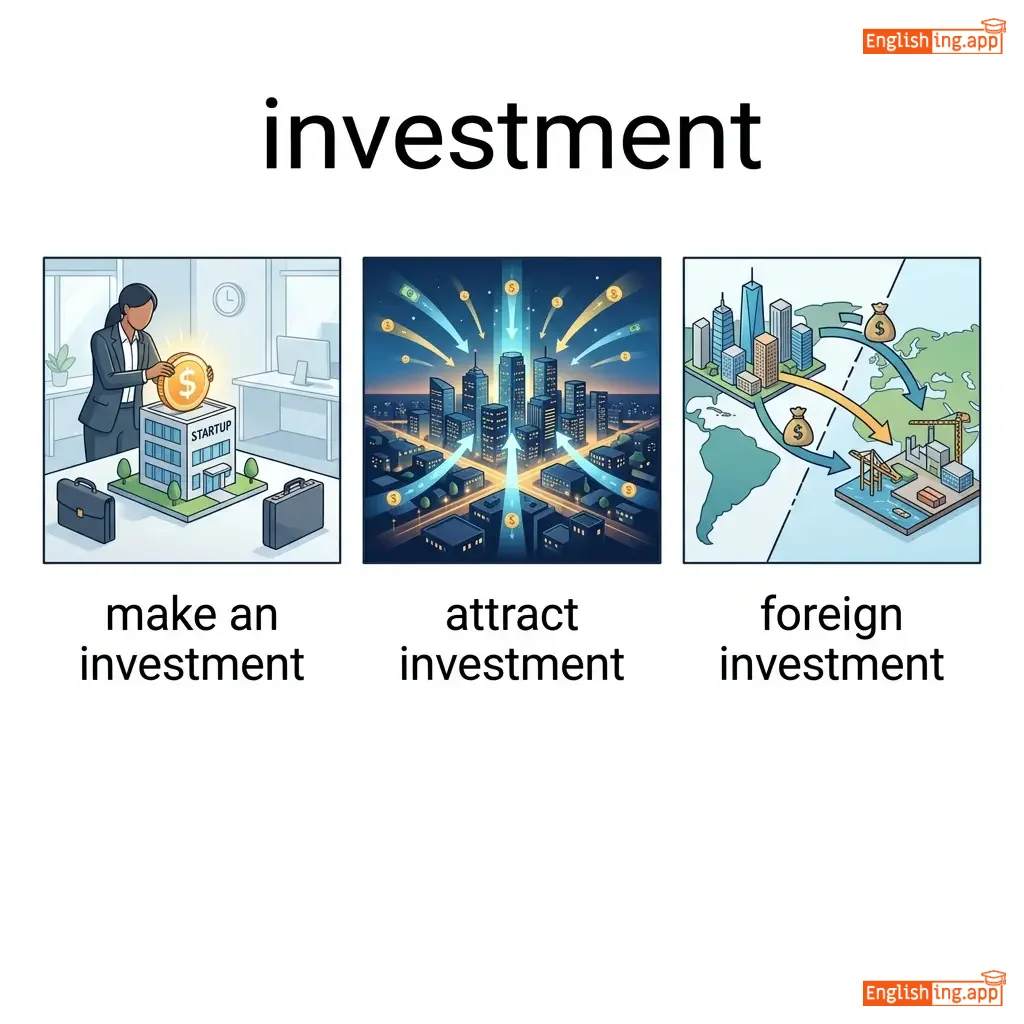
make an investment, attract investment, foreign investment, wise investment
••••••
|
投资是今天投入,明天回报。
••••••
|
|
#2834
💰
|
/ɪnˈvɛstər/
noun
(ɪnˈvɛstɔr)
••••••
|
- •••••• |
投资者
tóu zī zhě
••••••
|
- •••••• | - •••••• | - •••••• | - •••••• |
a person or organization that puts money into financial schemes, property, or business ventures with the expectation of achieving a profit
••••••
|
The investor funded the startup with a large sum of money. |
投资者用一大笔钱资助了这家初创公司。
Tóu zī zhě yòng yī dà bǐ qián zīzhù le zhè jiā chūchuàng gōngsī.
••••••
|
angel investor |
an individual who provides capital for a business startup, usually in exchange for ownership equity
••••••
|
天使投资者
tiān shǐ tóu zī zhě
••••••
|
financier, shareholder, backer, capitalist
••••••
|
spender, debtor
••••••
|
foreign investor, private investor, institutional investor, angel investor
••••••
|
投资者,投资赚钱 — 投资者
••••••
|
|
#2835
👻
|
/ɪnˈvɪzɪbəl/
adjective
(隐形)
••••••
|
- •••••• |
看不见的
kàn bù jiàn de
••••••
|
- •••••• | - •••••• | - •••••• | - •••••• |
unable to be seen; not visible to the eye
••••••
|
The stars became invisible as the sun rose. |
当太阳升起时,星星变得看不见了。
Dāng tàiyáng shēng qǐ shí, xīngxīng biàn dé kàn bù jiàn le.
••••••
|
invisible hand |
an unseen force guiding economic or social outcomes
••••••
|
看不见的手
kàn bù jiàn de shǒu
••••••
|
unseen, hidden, concealed, imperceptible, obscure
••••••
|
visible, clear, apparent
••••••
|
invisible force, invisible power, invisible ink, invisible barrier
••••••
|
Invisible = 看不见的 = 无法看到的
••••••
|
|
#2836
💌
|
/ˌɪnvɪˈteɪʃən/
noun
(海皮尼斯)
••••••
|
- •••••• |
幸福
xìngfú
••••••
|
- •••••• | - •••••• | - •••••• | - •••••• |
a written or spoken request to attend an event or to participate in something
••••••
|
She sent me an invitation to her wedding. |
当她收到奖项时,她无法掩饰自己的幸福。
Dāng tā shōu dào jiǎngxiàng shí, tā wúfǎ yǎnshì zìjǐ de xìngfú.
••••••
|
extend an invitation |
to formally invite someone
••••••
|
追求幸福
zhuīqiú xìngfú
••••••
|
request, call, summon, appeal, proposal
••••••
|
rejection, refusal
••••••
|
send invitation, wedding invitation, formal invitation, accept invitation
••••••
|
幸福 = 当心情愉快,心中充满喜悦。
••••••
|
|
#2837
✉️
|
/ɪnˈvaɪt/
verb
(因维特)
••••••
|
- •••••• |
邀请
yāoqǐng
••••••
|
invited
因维特德
••••••
|
invited
因维特德
••••••
|
invites
因维特斯
••••••
|
inviting
因维廷
••••••
|
to ask someone to come to a place or event
••••••
|
She invited her friends to the party.
她邀请了她的朋友参加派对。
••••••
|
她邀请了她的朋友参加派对。
Tā yāoqǐngle tā de péngyǒu cānjiā pàiduì.
••••••
|
invite trouble
邀请麻烦
••••••
|
to do something that is likely to cause problems
••••••
|
邀请麻烦
yāoqǐng máfan
••••••
|
ask, request, call, summon, beckon
••••••
|
reject, refuse, dismiss
••••••
|
invite someone, invite to dinner, warmly invite, cordially invite
••••••
|
邀请就像是邀请朋友参加派对。
••••••
|
|
#2838
📨
|
/ɪnˈvaɪtɪd/
verb
(因瓦伊提德)
••••••
|
- •••••• |
被邀请的
bei yaoqing de
••••••
|
invited
因瓦伊提德
••••••
|
invited
因瓦伊提德
••••••
|
invites
因瓦伊次
••••••
|
inviting
因瓦伊听
••••••
|
asked someone formally or politely to go somewhere or do something
••••••
|
She was invited to the party.
希 沃兹 因瓦伊提德 图 泽 派对
••••••
|
她被邀请参加聚会。
ta bei yaoqing canjia juhui
••••••
|
- •••••• | - •••••• | - •••••• |
asked, requested, welcomed, summoned, beckoned
••••••
|
excluded, rejected, refused
••••••
|
invited guest, invited to a party, invited formally, invited personally
••••••
|
Invite = 邀请 → 被邀请的
••••••
|
|
#2839
✉️
|
/ɪnˈvaɪtər/
noun
(因瓦伊特)
••••••
|
- •••••• |
邀请者
yaoqingzhe
••••••
|
- •••••• | - •••••• | - •••••• | - •••••• |
a person who invites someone to an event, meeting, or place
••••••
|
The invitor greeted all the guests warmly at the entrance.
因瓦伊特在门口热情地欢迎客人。
••••••
|
邀请者在入口处热情地欢迎了客人。
Yaoqingzhe zai rukouchu reqing di huanyingle keren
••••••
|
- •••••• | - •••••• | - •••••• |
host, inviter, organizer, caller, convenor
••••••
|
guest, invitee
••••••
|
formal invitor, event invitor, original invitor, main invitor
••••••
|
invitor 就是 发邀请 的 人
••••••
|
|
#2840
📜
|
/ɪnˈvoʊk/
verb
(因伏克)
••••••
|
- •••••• |
呼叫
hūjiào
••••••
|
invoked
因伏克德
••••••
|
invoked
因伏克德
••••••
|
invokes
因伏克斯
••••••
|
invoking
因伏克英
••••••
|
to call upon a higher power, authority, or principle for help, support, or justification
••••••
|
The lawyer invoked the constitution to defend his client.
律师援引宪法来为他的客户辩护。
••••••
|
律师援引宪法来为他的客户辩护。
Lǜshī yuányǐn xiànfǎ lái wéi tā de kèhù biànhù.
••••••
|
invoke the law
调用法律
••••••
|
to appeal to or rely on the law for support or justification
••••••
|
调用法律
diàoyòng fǎlǜ
••••••
|
appeal, call upon, cite, summon, request
••••••
|
ignore, dismiss, reject
••••••
|
invoke the law, invoke authority, invoke powers, invoke tradition
••••••
|
呼叫就像邀请,向某人请求帮助。
••••••
|
|
#2841
🤲
|
/ɪnˈvɑːlv/
verb
(因沃尔夫)
••••••
|
- •••••• |
涉及
shèjí
••••••
|
involved
因沃尔夫德
••••••
|
involved
因沃尔夫德
••••••
|
involves
因沃尔夫斯
••••••
|
involving
因沃尔夫英
••••••
|
to include as a necessary part, or to engage someone in an activity
••••••
|
The project will involve several departments working together.
这个项目将涉及多个部门共同合作。
••••••
|
这个项目将涉及多个部门共同合作。
Zhège xiàngmù jiāng shèjí duō gè bùmén gòngtóng hézuò.
••••••
|
get involved
参与其中
••••••
|
to participate or take part in something
••••••
|
参与其中
cānyù qízhōng
••••••
|
include, engage, entail, require, associate
••••••
|
exclude, remove, neglect
••••••
|
involve in, involve with, project involves, task involves
••••••
|
Involve意味着In + volve → 带入,即让某人参与到活动中来。
••••••
|
|
#2842
🔗
|
/ɪnˈvɑːlvd/
adjective
(ɪnˈvɔːlvd)
••••••
|
- •••••• |
卷入的
juǎn rù de
••••••
|
- •••••• | - •••••• | - •••••• | - •••••• |
complicated or engaged in something
••••••
|
She was deeply involved in community service. |
她深深地卷入了社区服务。
Tā shēn shēn de juǎn rù le shè qū fú wù.
••••••
|
become involved |
to take an active part in something
••••••
|
变得卷入
biàn dé juǎn rù
••••••
|
engaged, committed, complicated, connected
••••••
|
detached, simple, uninvolved
••••••
|
deeply involved, personally involved, involved process
••••••
|
Involved 就是卷入 → 参与其中,不能逃脱。
••••••
|
|
#2843
🤝
|
/ɪnˈvɒlvmənt/
noun
(因沃夫门特)
••••••
|
- •••••• |
参与
canyu
••••••
|
- •••••• | - •••••• | - •••••• | - •••••• |
the act of taking part in something
••••••
|
His involvement in the project was crucial.
希斯 因沃夫门特 因 撒 普若杰克 士 库旭哦
••••••
|
他对项目的参与至关重要。
Ta dui xiangmu de canyu zhiguan zhongyao.
••••••
|
- •••••• | - •••••• | - •••••• |
participation, engagement, contribution, role, association
••••••
|
exclusion, absence, withdrawal
••••••
|
active involvement, direct involvement, community involvement
••••••
|
Involvement = 参与,把自己 involve 在里面。
••••••
|
|
#2844
🇮🇪
|
/ˈaɪrɪʃ/
adjective/noun
(ˈhæpinəs)
••••••
|
- •••••• |
幸福
xingfu
••••••
|
- •••••• | - •••••• | - •••••• | - •••••• |
relating to Ireland, its people, or its language
••••••
|
The Irish countryside is very beautiful. |
当她收到奖项时,她无法隐藏自己的幸福。
Dāng tā shōudào jiǎngxiàng shí, tā wúfǎ yǐncáng zìjǐ de xìngfú.
••••••
|
- •••••• | - •••••• | - •••••• |
Ireland citizen, Gaelic, Hibernian
••••••
|
non-Irish, foreigner
••••••
|
Irish people, Irish language, Irish culture
••••••
|
幸福是中文中表达快乐的词汇。
••••••
|
|
#2845
🔩
|
/ˈaɪən/ or /ˈaɪərn/
noun/verb
(铁)
••••••
|
- •••••• |
铁 / 熨斗
tiě / yùndǒu
••••••
|
ironed
铁过
••••••
|
ironed
铁过
••••••
|
irons
铁
••••••
|
ironing
铁中
••••••
|
a strong, hard metal used in construction; also to press clothes with heat
••••••
|
He used an iron to smooth his shirt.
他用熨斗把衬衫弄平。
••••••
|
他用熨斗把衬衫弄平。
Tā yòng yùndǒu bǎ chènshān nòng píng.
••••••
|
iron out
熨平
••••••
|
to resolve problems or difficulties
••••••
|
解决问题
jiějué wèntí
••••••
|
metal, steel, press, flatten
••••••
|
wrinkle, fold
••••••
|
iron bar, iron rod, iron clothes, iron ore, iron out issues
••••••
|
铁和熨斗让东西变平和结实。
••••••
|
|
#2846
🙃
|
/aɪˈrɒnɪk/
adjective
(aironik)
••••••
|
- •••••• |
讽刺的,讽刺性的
fěngcì de, fěngcì xìng de
••••••
|
- •••••• | - •••••• | - •••••• | - •••••• |
happening in the opposite way to what is expected, often amusing or sarcastic
••••••
|
It is ironic that the fire station burned down. |
消防站着火了,真讽刺。
Xiāofáng zhàn zhuóhuǒ le, zhēn fěngcì.
••••••
|
isn't it ironic |
used to highlight a situation that is surprisingly contradictory
••••••
|
这不是很讽刺吗?
Zhè bù shì hěn fěngcì ma?
••••••
|
sarcastic, paradoxical, mocking, satirical
••••••
|
straightforward, sincere, expected
••••••
|
ironic twist, ironic smile, deeply ironic, somewhat ironic
••••••
|
Irony 就像预期的完全相反,带有讽刺意味!
••••••
|
|
#2847
😏
|
/aɪˈrɒnɪkli/
adverb
(àiruònikè lǐ)
••••••
|
- •••••• |
具有讽刺意味地
jùyǒu fěngcì yìwèi de
••••••
|
- •••••• | - •••••• | - •••••• | - •••••• |
in a way that is contrary to what is expected or intended
••••••
|
Ironically, the fire station burned down. |
具有讽刺意味地,消防站着火了。
Jùyǒu fěngcì yìwèi de, xiāofáng zhàn zháohuǒle.
••••••
|
- •••••• | - •••••• | - •••••• |
sarcastically, paradoxically, unexpectedly, amusingly
••••••
|
literally, seriously
••••••
|
ironically enough, say ironically, ironically true
••••••
|
Ironically就像一种讽刺,预期的结果正好相反。
••••••
|
|
#2848
🎭
|
/ˈaɪrəni/
noun
(àilóngnì)
••••••
|
- •••••• |
讽刺
fengci
••••••
|
- •••••• | - •••••• | - •••••• | - •••••• |
a situation that is strange or amusing because it is the opposite of what is expected; the use of words to convey the opposite meaning
••••••
|
The irony of the situation was that the winner forgot his own prize. |
这件事的讽刺在于,获胜者忘记了自己的奖品。
Zhè jiàn shì de fèngcì zài yú, huòshèng zhě wàngjìle zìjǐ de jiǎngpǐn.
••••••
|
the irony is |
used to highlight a contradiction between expectations and reality
••••••
|
讽刺的是
fèngcì de shì
••••••
|
sarcasm, paradox, mockery, satire
••••••
|
sincerity, honesty, straightforwardness
••••••
|
sense of irony, bitter irony, cruel irony, situational irony
••••••
|
讽刺就像用铁做的笑话 - 讽刺或矛盾
••••••
|
|
#2849
🤯
|
/ɪˈræʃənəl/
adjective
(ir-ra-sho-nal)
••••••
|
- •••••• |
非理性
fei li xing
••••••
|
- •••••• | - •••••• | - •••••• | - •••••• |
not logical or reasonable; lacking clear thought
••••••
|
His fear of the dark was completely irrational. |
他对黑暗的恐惧完全是非理性的。
Ta dui hei'an de kongju wanquan shi fei lixing de.
••••••
|
irrational fear |
an unreasonable or extreme fear
••••••
|
非理性恐惧
fei lixing kongju
••••••
|
illogical, unreasonable, absurd, senseless
••••••
|
rational, logical, reasonable
••••••
|
irrational decision, irrational behavior, irrational belief
••••••
|
非理性意味着非 + 理性,即不是理性 – 非理性。
••••••
|
|
#2850
🌀
|
ɪˌræʃ.ənˈæl.ɪ.ti
noun
(yi-lai-shi-na-li-ti)
••••••
|
|
非理性, 不合理, 荒谬
fei-lixing, bu-he-li, huang-miu
••••••
|
- •••••• | - •••••• | - •••••• | - •••••• |
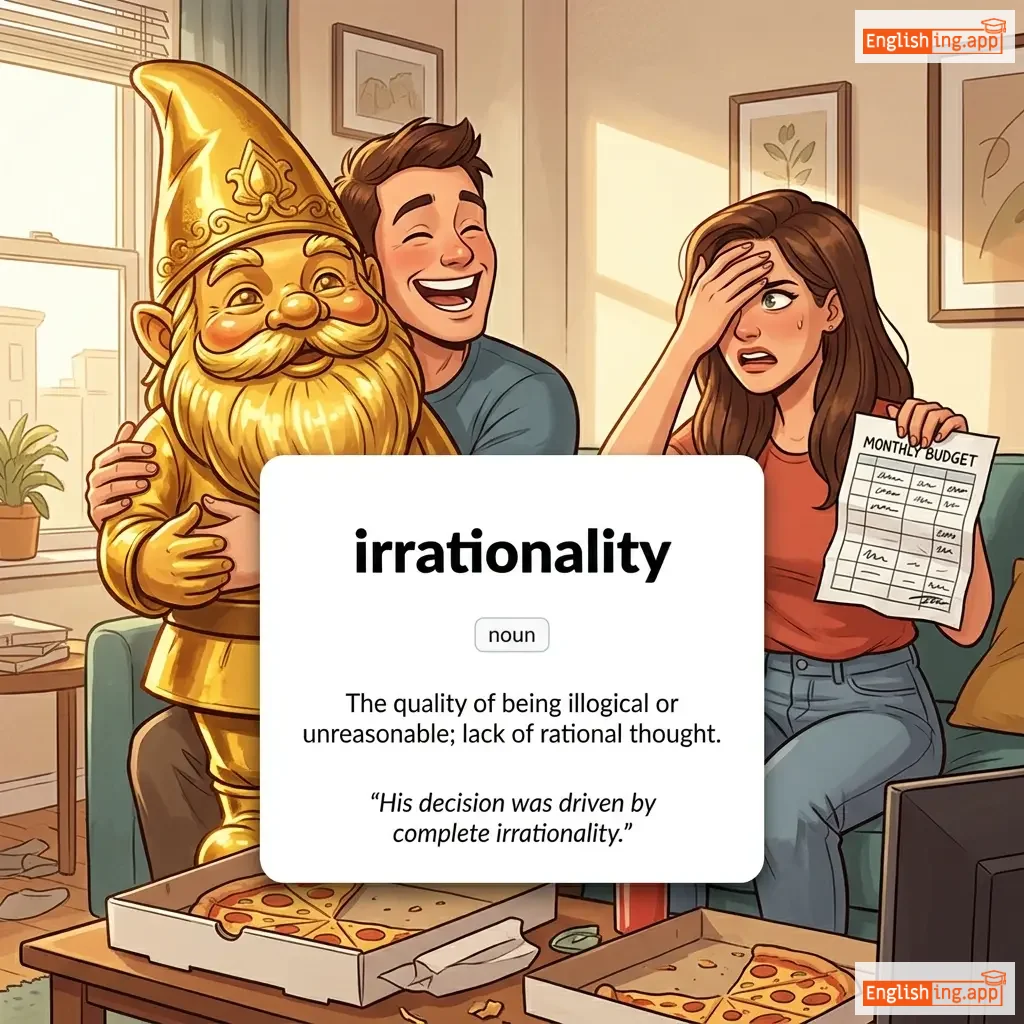
The quality of being illogical or unreasonable; lack of rational thought.
••••••
|
His decision was driven by complete irrationality.
他的决定完全是基于非理性。
••••••
|
他的决定完全是基于非理性。
Ta de jue ding wanquan shi jiyu fei lixing.
••••••
|
- •••••• | - •••••• | - •••••• |
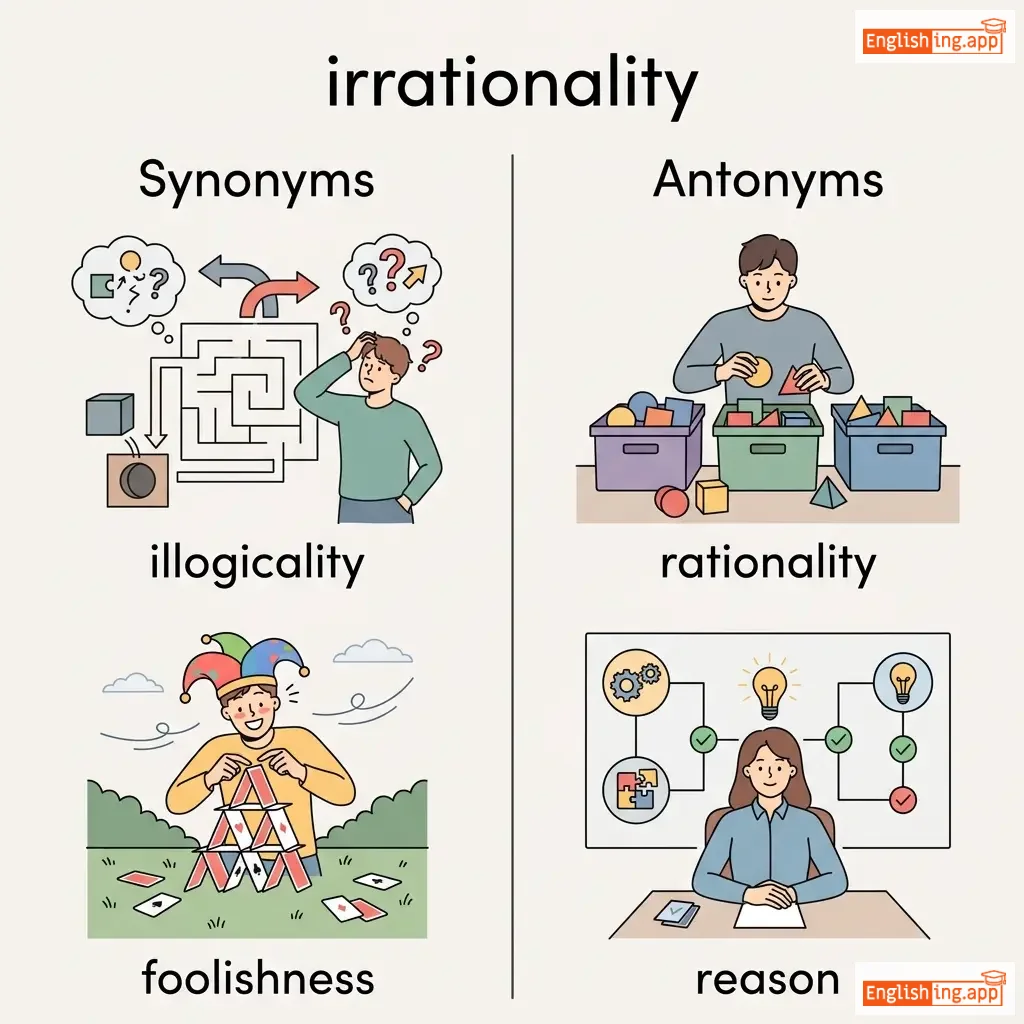
illogicality, foolishness, unreasonableness
••••••
|
rationality, reason, logic
••••••
|
- •••••• |
用‘非理性’记住中文里的irrationality.
••••••
|
|
#2851
📉
|
/ɪˈreɡjələr/
adjective
(伊瑞格尤勒)
••••••
|
- •••••• |
不规则的
bu guize de
••••••
|
- •••••• | - •••••• | - •••••• | - •••••• |
not even or consistent in shape, pattern, time, or behavior; not following normal rules
••••••
|
His attendance at work has been irregular this month.
希兹 阿腾登斯 艾特 沃克 海兹 宾 伊瑞格尤勒 迪斯 曼斯。
••••••
|
他这个月上班出勤不规则。
ta zhe ge yue shangban chuqin bu guize
••••••
|
irregular verb
irregular verb
••••••
|
a verb that does not follow standard conjugation rules
••••••
|
不规则动词
bu guize dongci
••••••
|
uneven, inconsistent, abnormal, erratic, unusual
••••••
|
regular, consistent, uniform
••••••
|
irregular pattern, irregular shape, irregular schedule, irregular heartbeat
••••••
|
Irregular = 没规则,就是不规则的
••••••
|
|
#2852
⚠️
|
/ɪˌreɡjəˈlærɪti/
noun
(伊雷格尤拉里提)
••••••
|
- •••••• |
不规则性
bu guize xing
••••••
|
- •••••• | - •••••• | - •••••• | - •••••• |
lack of regularity or consistency; a deviation from what is normal, expected, or orderly
••••••
|
The audit revealed several financial irregularities in the company’s records.
泽 ऑ迪特 里维尔德 塞弗若尔 财南谢尔 伊雷格尤拉里提 颖 泽 康帕尼 瑞科兹
••••••
|
审计发现该公司的记录中存在多项财务不规则性。
Shenji faxian gai gongsi de jilu zhong cunzai duoxiang caiwu bu guize xing
••••••
|
- •••••• | - •••••• | - •••••• |
abnormality, inconsistency, anomaly, deviation, unevenness
••••••
|
regularity, consistency, uniformity
••••••
|
financial irregularity, procedural irregularity, minor irregularity, serious irregularity, reporting irregularity
••••••
|
Irregularity 就是 bu guize,不按规则来
••••••
|
|
#2853
🚫
|
/ɪˈreləvəns/
noun
(伊瑞勒文斯)
••••••
|
- •••••• |
无关性
wuguanxing
••••••
|
- •••••• | - •••••• | - •••••• | - •••••• |
the quality of not being connected to or important for a particular matter; lack of significance
••••••
|
His long explanation only highlighted the irrelevance of the details to the main issue.
希斯 朗 伊克斯普莱内申 昂利 海莱提德 泽 伊瑞勒文斯 奥夫 泽 迪泰尔斯 图 泽 美因 伊修。
••••••
|
他冗长的解释只凸显了这些细节与主要问题的无关性。
ta rongchang de jieshi zhi tuchu le zhexie xijie yu zhuyao wenti de wuguanxing
••••••
|
- •••••• | - •••••• | - •••••• |
insignificance, unimportance, inconsequence, triviality, immateriality
••••••
|
relevance, importance, significance
••••••
|
complete irrelevance, political irrelevance, claim irrelevance, sense of irrelevance
••••••
|
Irrelevant 不相关,irrelevance 就是 无关性。
••••••
|
|
#2854
🚫
|
/ɪˈrɛlɪvənsi/
noun
(伊瑞勒文西)
••••••
|
- •••••• |
无关性
wuguanxing
••••••
|
- •••••• | - •••••• | - •••••• | - •••••• |
the state of being unrelated or unimportant to the matter at hand
••••••
|
The judge dismissed the argument because of its irrelevancy to the case.
泽 贾奇 迪斯米斯特 泽 阿格尤门特 比考兹 欧夫 伊茨 伊瑞勒文西 图 泽 凯斯。
••••••
|
法官因该论点与案件无关而将其驳回。
faguan yin gai lundian yu anjian wuguan er jiang qi bohui
••••••
|
- •••••• | - •••••• | - •••••• |
irrelevance, insignificance, inconsequence, immateriality, triviality
••••••
|
relevance, importance, significance
••••••
|
complete irrelevancy, total irrelevancy, legal irrelevancy, apparent irrelevancy
••••••
|
irrelevant 就是 无关, 所以 irrelevancy 是 无关性
••••••
|
|
#2855
🚫
|
/ɪˈrɛləvənt/
adjective
(irélévante)
••••••
|
- •••••• |
不相关的
bù xiāngguān de
••••••
|
- •••••• | - •••••• | - •••••• | - •••••• |
Not connected with or related to the matter at hand
••••••
|
His comment was completely irrelevant to the discussion.
他的评论与讨论完全无关。
••••••
|
他的评论与讨论完全无关。
Tā de pínglùn yǔ tǎolùn wánquán wúguān.
••••••
|
irrelevant detail
不相关的细节
••••••
|
Information that does not matter in the context
••••••
|
不相关的细节
bù xiāngguān de xìjié
••••••
|
unrelated, immaterial, extraneous, insignificant
••••••
|
relevant, important, significant
••••••
|
irrelevant comment, irrelevant detail, irrelevant information, irrelevant answer
••••••
|
Irrelevant 意味着与话题无关,像是你在考试中给出一个无关的答案。
••••••
|
|
#2856
⚠️
|
/ˌɪrɪˌspɒnsəˈbɪləti/
noun
(伊瑞斯庞西比利提)
••••••
|
- •••••• |
不负责任
bu fu zeren
••••••
|
- •••••• | - •••••• | - •••••• | - •••••• |
lack of responsibility or accountability; failure to act in a reliable or sensible way
••••••
|
The accident was caused by his irresponsibility at work.
泽 阿克西登特 沃兹 考兹德 拜 赫兹 伊瑞斯庞西比利提。
••••••
|
事故是由于他在工作中的不负责任造成的。
Shigu shi youyu ta zai gongzuo zhong de bu fu zeren zaocheng de
••••••
|
act with irresponsibility
艾克特 威兹 伊瑞斯庞西比利提
••••••
|
to behave without care or responsibility
••••••
|
不负责任地行事
bu fu zeren de xingshi
••••••
|
carelessness, recklessness, negligence, irresponsibleness
••••••
|
responsibility, accountability, reliability
••••••
|
financial irresponsibility, social irresponsibility, sheer irresponsibility, act of irresponsibility
••••••
|
No responsibility = 不负责任
••••••
|
|
#2857
🤷♂️
|
/ɪˈrɪˌspɑn.sə.bəl/
adjective
(irresponsible)
••••••
|
- •••••• |
不负责任
bù fù zérèn
••••••
|
- •••••• | - •••••• | - •••••• | - •••••• |
lacking a sense of responsibility; careless
••••••
|
It was irresponsible of him to leave without telling anyone. |
他在没有告诉任何人就离开,这是不负责任的行为。
Tā zài méiyǒu gàosù rènhé rén jiù líkāi, zhè shì bù fù zérèn de xíngwéi.
••••••
|
- •••••• | - •••••• | - •••••• |
reckless, careless, thoughtless, negligent
••••••
|
responsible, careful, thoughtful, reliable
••••••
|
irresponsible behavior, irresponsible person, act irresponsibly
••••••
|
不负责任的意思是缺乏责任感,就像没有告诉别人就离开一样。
••••••
|
Vocabulary Quiz
Test your vocabulary by matching words with their translations or meanings.
Login to take the quiz
Comments (0)
Share your thoughts and join the discussion.
Join the discussion by logging in
Login to CommentNo comments yet
Be the first to share your thoughts!