


Swipe left or right, or use the buttons. Tap image to zoom.
例句翻译
单词
Lesson 50Lesson 50 - 遮罩切换
|
表情符号
|
单词 | Images | 翻译 | 过去时 | 过去分词 | 第三人称单数 | 动名词 | 含义 | 例句 | 例句翻译 | 示例表达 | 示例表达含义 | 示例表达翻译 | 同义词 | 反义词 | 搭配词 | 助记符 |
|---|---|---|---|---|---|---|---|---|---|---|---|---|---|---|---|---|---|
|
#2374
🙌
|
/heɪl/
verb
(海尔)
••••••
|
- •••••• |
呼叫 / 赞美
hujiao / zanmei
••••••
|
hailed
海尔德
••••••
|
hailed
海尔德
••••••
|
hails
海尔斯
••••••
|
hailing
海灵
••••••
|
To call out to attract attention or to praise enthusiastically.
••••••
|
The athlete was hailed as a hero after the victory.
运动员在获胜后被誉为英雄。
••••••
|
运动员在获胜后被誉为英雄。
Yundongyuan zai huosheng hou bei yuwei wei yingxiong.
••••••
|
hail a taxi
招手停出租车
••••••
|
to signal and stop a taxi to get a ride
••••••
|
招手停出租车
zhaoshou ting chuzuche
••••••
|
greet, call, acclaim, praise, salute
••••••
|
ignore, condemn, dismiss
••••••
|
hail a taxi, hail as a hero, hail the decision, hail enthusiastically
••••••
|
Hail = 用手招或喊出租车
••••••
|
|
#2375
💇
|
/hɛər/
noun
(hɛr)
••••••
|
- •••••• |
头发
tóufa
••••••
|
- •••••• | - •••••• | - •••••• | - •••••• |
the fine threads growing from the skin of humans and animals
••••••
|
She has long, black hair. |
她有一头长黑发。
Tā yǒu yī tóu zhǎng hēi fà.
••••••
|
let your hair down |
to relax and enjoy yourself without worrying
••••••
|
放下头发
fàngxià tóufa
••••••
|
locks, strands, tresses, mane
••••••
|
baldness, bald head
••••••
|
long hair, curly hair, cut hair, hair color
••••••
|
头发 = Hair, 头 (tóu) 形容头发的部分
••••••
|
|
#2376
💇
|
/ˈheəkʌt/
noun
(海尔卡特)
••••••
|
- •••••• |
理发
lifa
••••••
|
- •••••• | - •••••• | - •••••• | - •••••• |
the act or style of cutting hair
••••••
|
I got a haircut before the wedding.
艾 戈特 阿 海尔卡特 比福 德 威丁
••••••
|
我在婚礼前理了发。
wo zai hunli qian li le fa
••••••
|
get a haircut
get a haircut
••••••
|
to have one’s hair cut
••••••
|
理发
lifa
••••••
|
trim, hairstyle, cut, hairdo
••••••
|
growth, neglect
••••••
|
get a haircut, short haircut, new haircut, haircut style
••••••
|
Haircut 就是 理发
••••••
|
|
#2377
💇
|
/ˈheəˌkʌtər/
noun
(海尔卡特)
••••••
|
- •••••• |
理发师
lifashi
••••••
|
- •••••• | - •••••• | - •••••• | - •••••• |
a person whose job is to cut and style hair; barber or hairdresser
••••••
|
The haircutter gave me a neat and stylish haircut.
海尔卡特 给了 我 一个 很 好 的 发型
••••••
|
理发师给我剪了一个好发型。
lifashi gei wo jian le yige hao faxing
••••••
|
- •••••• | - •••••• | - •••••• |
barber, hairdresser, stylist, coiffeur
••••••
|
client, customer
••••••
|
professional haircutter, local haircutter, skilled haircutter
••••••
|
haircutter = 理发师 剪 hair
••••••
|
|
#2378
💇
|
/ˈherˌdrɛsər/
noun
(海尔德瑞瑟)
••••••
|
- •••••• |
理发师
lifashi
••••••
|
- •••••• | - •••••• | - •••••• | - •••••• |
a person whose job is to cut, style, and treat hair
••••••
|
The hairdresser gave me a stylish haircut before the wedding.
泽 海尔德瑞瑟 给 我 一个 时尚 的 理发。
••••••
|
理发师在婚礼前给我做了一个时尚的发型。
Lifashi zai hunli qian gei wo zuole yi ge shishang de faxing
••••••
|
- •••••• | - •••••• | - •••••• |
hairstylist, barber, stylist, hair stylist
••••••
|
client, customer
••••••
|
professional hairdresser, local hairdresser, visit a hairdresser, hairdresser salon
••••••
|
Hair 做造型 → 理发师
••••••
|
|
#2379
½
|
/hæf/
noun, adjective
(哈夫)
••••••
|
- •••••• |
一半
yiban
••••••
|
- •••••• | - •••••• | - •••••• | - •••••• |
one of two equal parts of something
••••••
|
He ate half of the cake. |
他吃了蛋糕的一半。
ta chi le dangao de yi ban.
••••••
|
half-hearted |
without much effort or enthusiasm
••••••
|
心不在焉
xin bu zai yan
••••••
|
portion, part, piece, division
••••••
|
whole, complete
••••••
|
half price, half hour, half life, half way
••••••
|
Half 意思是一半,想象你把蛋糕切成两半,一半 = half
••••••
|
|
#2380
↔️
|
/ˌhæfˈweɪ/
adverb
(hāf wèi)
••••••
|
- •••••• |
半路上
ban lu shang
••••••
|
- •••••• | - •••••• | - •••••• | - •••••• |
at or to a point equal in distance between two points
••••••
|
We met halfway between the two towns. |
我们在两个城市之间的半路上相遇。
Wo men zai liang ge cheng shi zhi jian de ban lu shang xiang yu.
••••••
|
meet halfway |
to compromise or find a middle ground
••••••
|
找到折衷点
zhao dao zhe chong dian
••••••
|
in the middle, midway, partway, center
••••••
|
completely, fully
••••••
|
halfway point, halfway through, halfway house, meet halfway
••••••
|
半路上 = 妥协,走到中间见面!
••••••
|
|
#2381
🏛️
|
/hɔːl/
noun
(hɔl)
••••••
|
- •••••• |
大厅
da ting
••••••
|
- •••••• | - •••••• | - •••••• | - •••••• |
a large room or building for public gatherings, events, or passage
••••••
|
The graduation ceremony was held in the university hall.
毕业典礼在大学的大厅举行。
••••••
|
毕业典礼在大学的大厅举行。
Bi ye dian li zai da xue de da ting ju xing.
••••••
|
hall of fame
名人堂
••••••
|
a group or place honoring distinguished people
••••••
|
名人堂
ming ren tang
••••••
|
auditorium, chamber, corridor, passage, lobby
••••••
|
room, cubicle
••••••
|
lecture hall, concert hall, dining hall, entrance hall
••••••
|
大厅 (da ting) 是一个大空间,像大学大厅一样,适合举办活动。
••••••
|
|
#2382
🛑
|
/hɔːlt/
verb
(哈特)
••••••
|
- •••••• |
停止
tingzhi
••••••
|
halted
哈特德
••••••
|
halted
哈特德
••••••
|
halts
哈特斯
••••••
|
halting
哈廷
••••••
|
to stop or bring to a stop
••••••
|
The train suddenly halted at the station.
火车突然在车站停了下来。
••••••
|
火车突然在车站停了下来。
Huoche tudan zai chezhang tingle xiala.
••••••
|
- •••••• | - •••••• | - •••••• |
stop, cease, terminate, freeze
••••••
|
start, begin, continue
••••••
|
halt operations, halt progress, halt movement
••••••
|
Halt在英文中是停止,中文是停止
••••••
|
|
#2383
🔨
|
/ˈhæmər/
noun, verb
••••••
|
- •••••• | - •••••• |
hammered
••••••
|
hammered
••••••
|
hammers
••••••
|
hammering
••••••
|
a tool with a heavy metal head used for breaking things or driving in nails; to hit something forcefully with a hammer or similar object.
••••••
|
He used a hammer to fix the broken chair. |
- •••••• |
hammer out |
to work out the details of something through discussion and effort
••••••
|
- •••••• |
mallet, pound, strike, beat, smash
••••••
|
caress, stroke
••••••
|
hammer blow, hammer strike, hammer nails, hammer out, hammer away
••••••
|
No •••••• |
|
#2384
🤚
|
/hænd/
noun, verb
••••••
|
- •••••• | - •••••• |
handed
••••••
|
handed
••••••
|
hands
••••••
|
handing
••••••
|
the part of the body at the end of the arm used for holding things
••••••
|
She raised her hand to ask a question. |
- •••••• |
in safe hands |
being looked after by someone competent and reliable
••••••
|
- •••••• |
palm, fist, grip, hold
••••••
|
foot, neglect
••••••
|
shake hands, hand in, hand out, raise hand
••••••
|
No •••••• |
|
#2385
✋
|
/ˈhænd.fʊl/
noun
(hændfʊl)
••••••
|
- •••••• |
一把
yī bǎ
••••••
|
- •••••• | - •••••• | - •••••• | - •••••• |
the amount of something that can be held in one hand; a small number
••••••
|
She took a handful of nuts. |
她拿了一把坚果。
tā nále yī bǎ jiānguǒ.
••••••
|
a handful |
a small number of people or things; someone difficult to manage
••••••
|
少量的人或事物;难以应付的人
shǎo liàng de rén huò shìwù; nán yǐ yìngfù de rén
••••••
|
few, small amount, little, portion
••••••
|
many, plenty
••••••
|
a handful of, only a handful, just a handful
••••••
|
一把在手,容易记住
••••••
|
|
#2386
🪟
|
/ˈhændl̩/
noun, verb
(hændl)
••••••
|
|
把手 / 处理
bǎ shǒu / chǔ lǐ
••••••
|
handled
hændəld
••••••
|
handled
hændəld
••••••
|
handles
hændlz
••••••
|
handling
hændlɪŋ
••••••
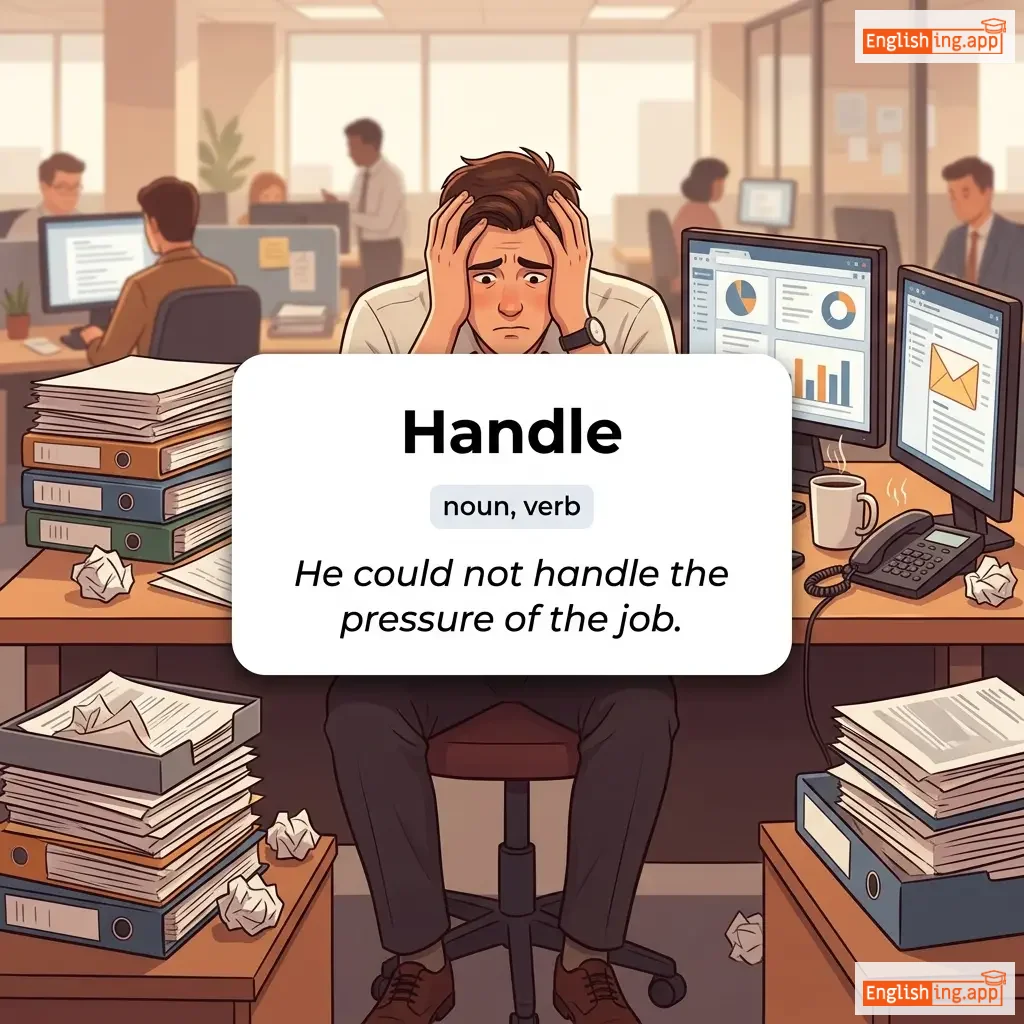
|
the part of an object designed to be held in the hand; to deal with or manage a situation
••••••
|
He could not handle the pressure of the job.
他无法处理工作的压力。
••••••
|
他无法处理工作的压力。
Tā wúfǎ chǔlǐ gōngzuò de yālì.
••••••
|
fly off the handle
发火
••••••
|
to suddenly become very angry
••••••
|
突然大发雷霆
túrán dà fā léitíng
••••••
|
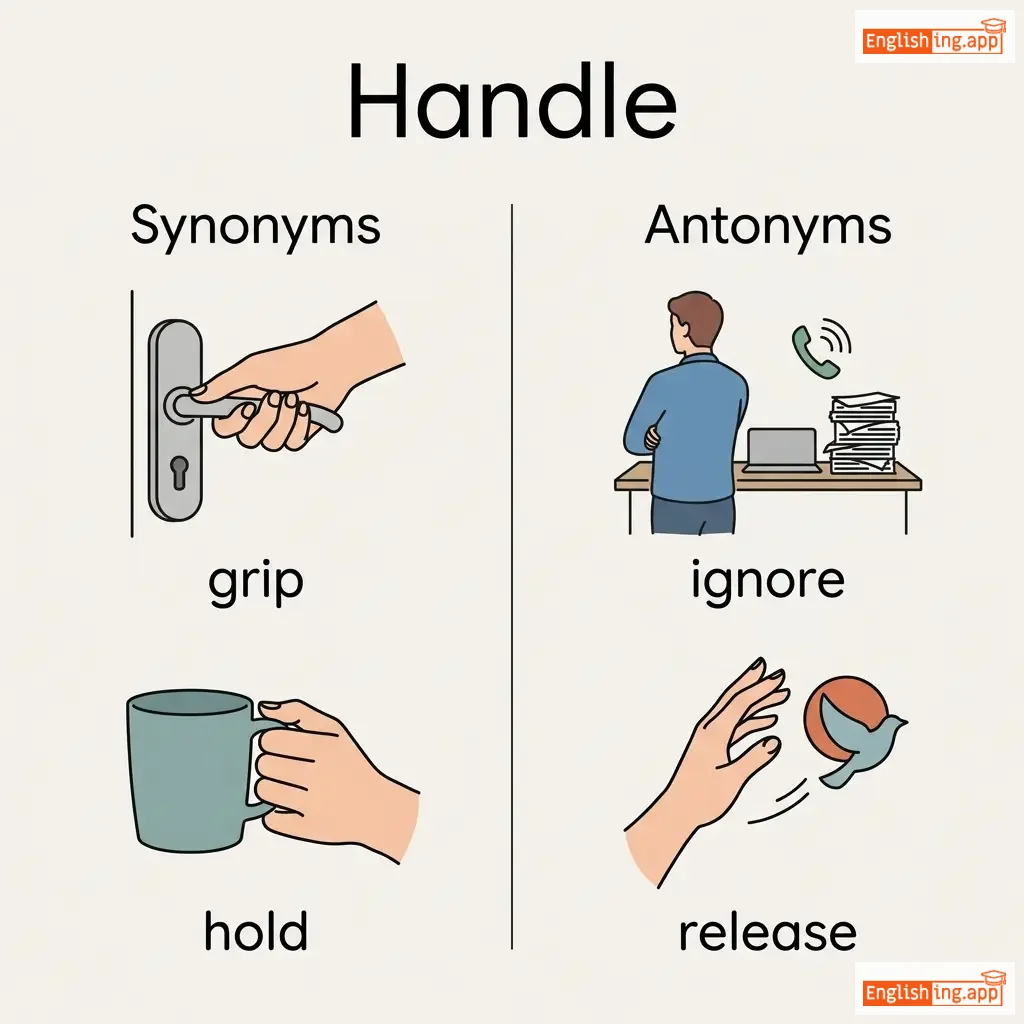
grip, hold, control, manage
••••••
|
ignore, release
••••••
|
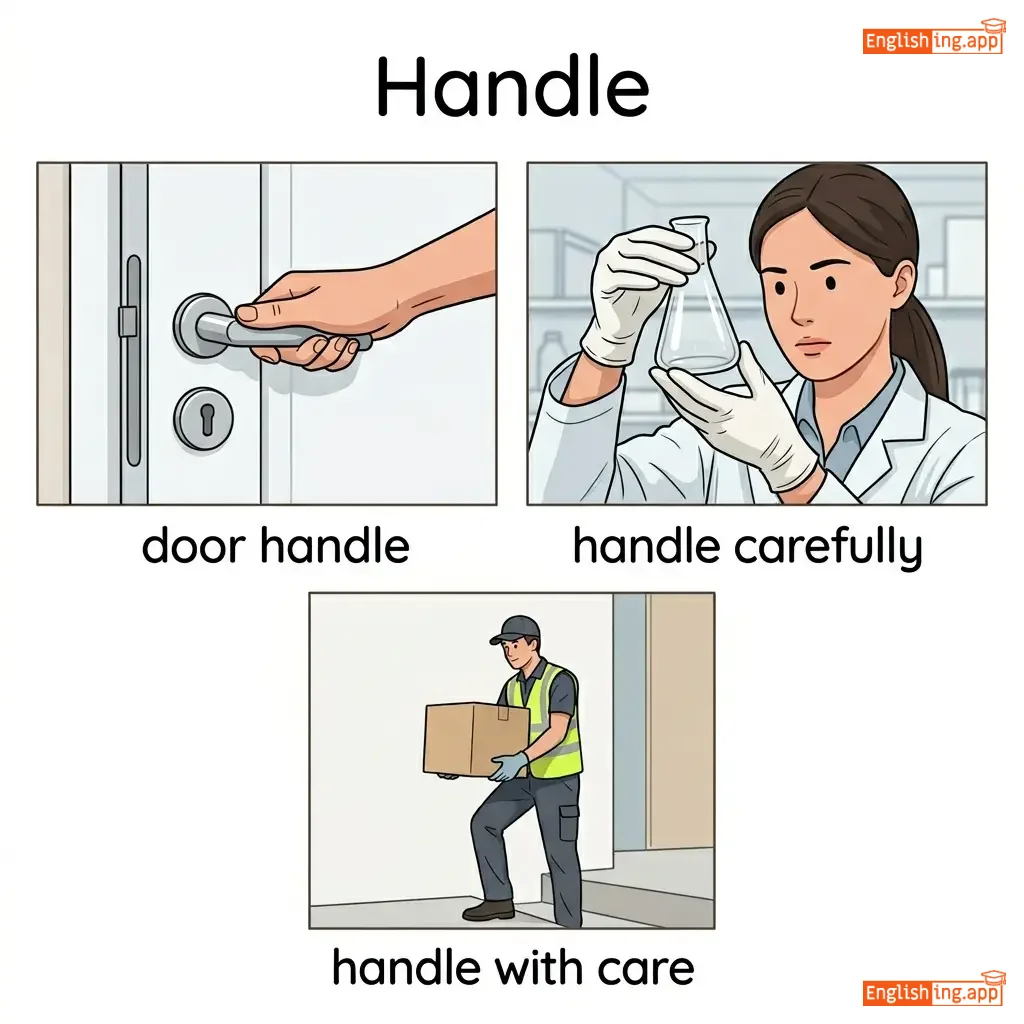
door handle, handle carefully, handle with care
••••••
|
把手 - 想象你需要处理一些很棘手的事情
••••••
|
|
#2387
🤲
|
/ˈhændlɪŋ/
noun
(hǎndélíng)
••••••
|
- •••••• |
处理
chuli
••••••
|
- •••••• | - •••••• | - •••••• | - •••••• |
the act of managing or dealing with something or someone
••••••
|
His handling of the situation was impressive. |
他对情况的处理令人印象深刻。
Tā duì qíngkuàng de chùlǐ lìng rén yìnxiàng shēnkè.
••••••
|
- •••••• | - •••••• | - •••••• |
management, administration, control, supervision
••••••
|
mismanagement, neglect
••••••
|
handling a crisis, handling an issue, handling customers
••••••
|
记住处理当你有效地处理任何情况时。
••••••
|
|
#2388
😎
|
/ˈhæn.səm/
adjective
••••••
|
- •••••• | - •••••• | - •••••• | - •••••• | - •••••• | - •••••• |
attractive in appearance, usually referring to men; also can mean generous or impressive in size.
••••••
|
He looked very handsome in his new suit. |
- •••••• |
handsome reward |
a large or generous reward
••••••
|
- •••••• |
attractive, good-looking, striking, dashing, elegant
••••••
|
ugly, unattractive, plain
••••••
|
handsome man, handsome reward, handsome profit, look handsome
••••••
|
No •••••• |
|
#2389
🛠️
|
/ˈhændi/
adjective
(hāndí)
••••••
|
- •••••• |
易于使用
yi yu shiyong
••••••
|
- •••••• | - •••••• | - •••••• | - •••••• |
convenient to use or easily accessible; skillful with the hands
••••••
|
This pocket knife is very handy when you go camping. |
这把口袋刀在露营时非常有用。
Zhe ba kou dai dao zai lu ying shi feichang youyong.
••••••
|
handy with |
skilled or capable in using something
••••••
|
熟练
shulian
••••••
|
useful, convenient, practical, accessible, skillful
••••••
|
useless, inconvenient, clumsy
••••••
|
come in handy, very handy, handy tool, handy guide
••••••
|
Handy 就像一只方便的手,总是可以帮忙。
••••••
|
|
#2390
🖼️
|
/hæŋ/
verb
••••••
|
|
- •••••• |
hung
••••••
|
hung
••••••
|
hangs
••••••
|
hanging
••••••
|
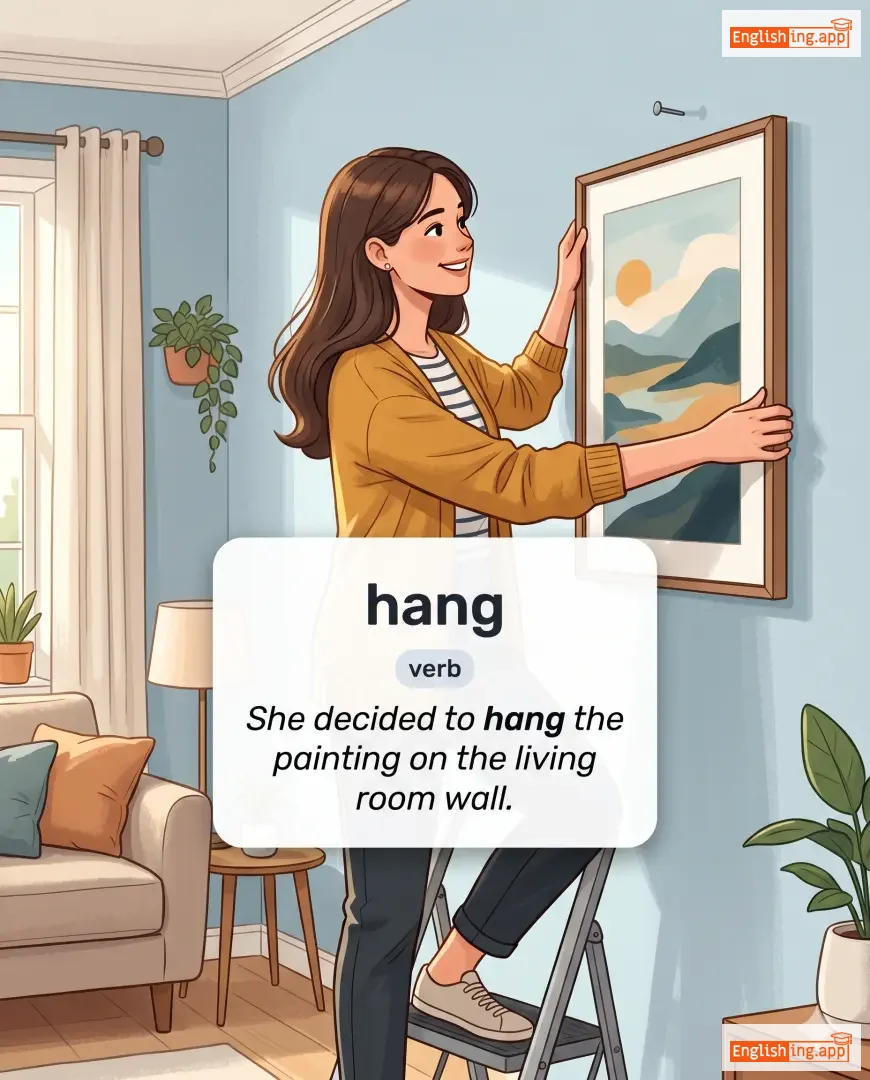
to suspend or attach something from above so that it moves freely or is supported
••••••
|
She decided to hang the painting on the living room wall. |
- •••••• |
hang in there |
used to encourage someone to persevere through a difficult time
••••••
|
- •••••• |
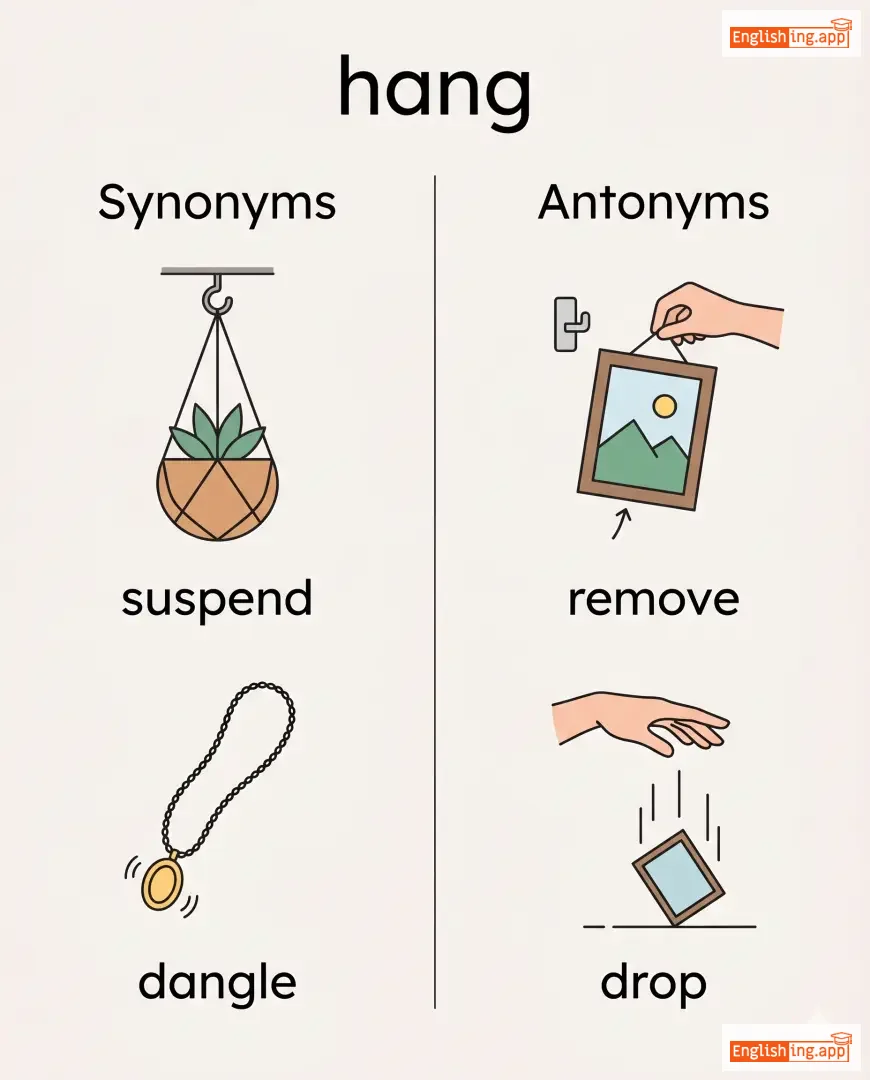
suspend, dangle, attach, display, drape
••••••
|
remove, drop, take down
••••••
|
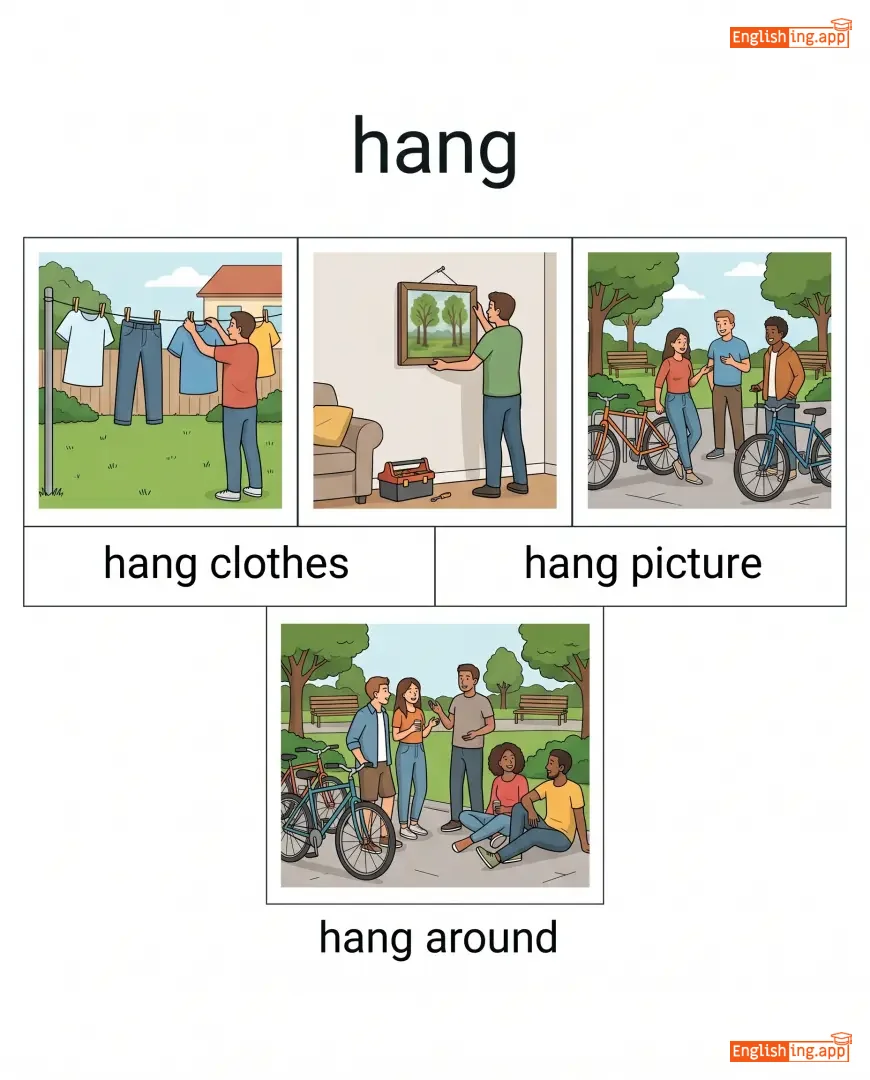
hang clothes, hang picture, hang around, hang up
••••••
|
No •••••• |
|
#2391
👕
|
/ˈhæŋ.ər/
noun
(ˈhæŋɡər)
••••••
|
- •••••• |
衣架
yī jià
••••••
|
- •••••• | - •••••• | - •••••• | - •••••• |
a shaped piece of wood, plastic, or metal with a hook at the top, used to hang up clothes
••••••
|
She hung her dress on a wooden hanger to prevent it from getting wrinkled. |
她把裙子挂在一个木衣架上,以防止它起皱。
Tā bǎ qún zi guà zài yī gè mù yī jià shàng, yǐ fáng zhǐ tā qǐ zhòu.
••••••
|
- •••••• | - •••••• | - •••••• |
clothes hanger, coat hanger, garment hook, clothing rack
••••••
|
floor, bed, chair, drawer
••••••
|
wire hanger, wooden hanger, plastic hanger
••••••
|
No •••••• |
|
#2392
✨
|
/ˈhæpən/
verb
(海皮尼斯)
••••••
|
- •••••• |
发生
fāshēng
••••••
|
happened
海皮尼斯德
••••••
|
happened
海皮尼斯德
••••••
|
happens
海皮尼斯斯
••••••
|
happening
海皮尼斯宁
••••••
|
to take place or occur, usually by chance
••••••
|
Accidents can happen at any time.
事故随时可能发生。
••••••
|
事故随时可能发生。
Shìgù suíshí kěnéng fāshēng.
••••••
|
what happens, happens
发生的,发生了
••••••
|
an expression used to accept events as they occur without worry
••••••
|
发生的,发生了
Fāshēng de, fāshēngle
••••••
|
occur, take place, transpire, arise, ensue
••••••
|
prevent, stop, avoid
••••••
|
happen suddenly, happen accidentally, happen again, happen quickly
••••••
|
HAPPEN意味着一些事情可能会突然发生,就像一个意外事故。
••••••
|
|
#2393
😊
|
/ˈhæpɪli/
adverb
(幸福地)
••••••
|
- •••••• |
幸福地
xìngfú de
••••••
|
- •••••• | - •••••• | - •••••• | - •••••• |
in a happy manner; with pleasure or satisfaction
••••••
|
The children played happily in the garden. |
孩子们在花园里幸福地玩耍。
Háizimen zài huāyuán lǐ xìngfú de wánshuǎ.
••••••
|
- •••••• | - •••••• | - •••••• |
joyfully, cheerfully, gladly, merrily
••••••
|
sadly, unhappily
••••••
|
live happily, happily married, smile happily, happily ever after
••••••
|
Happy + ly意味着以快乐的方式行动 - 就像 😊 孩子们幸福地玩耍。
••••••
|
|
#2394
😊
|
/ˈhæpinəs/
noun
(海皮尼斯)
••••••
|
|
幸福
xìngfú
••••••
|
- •••••• | - •••••• | - •••••• | - •••••• |
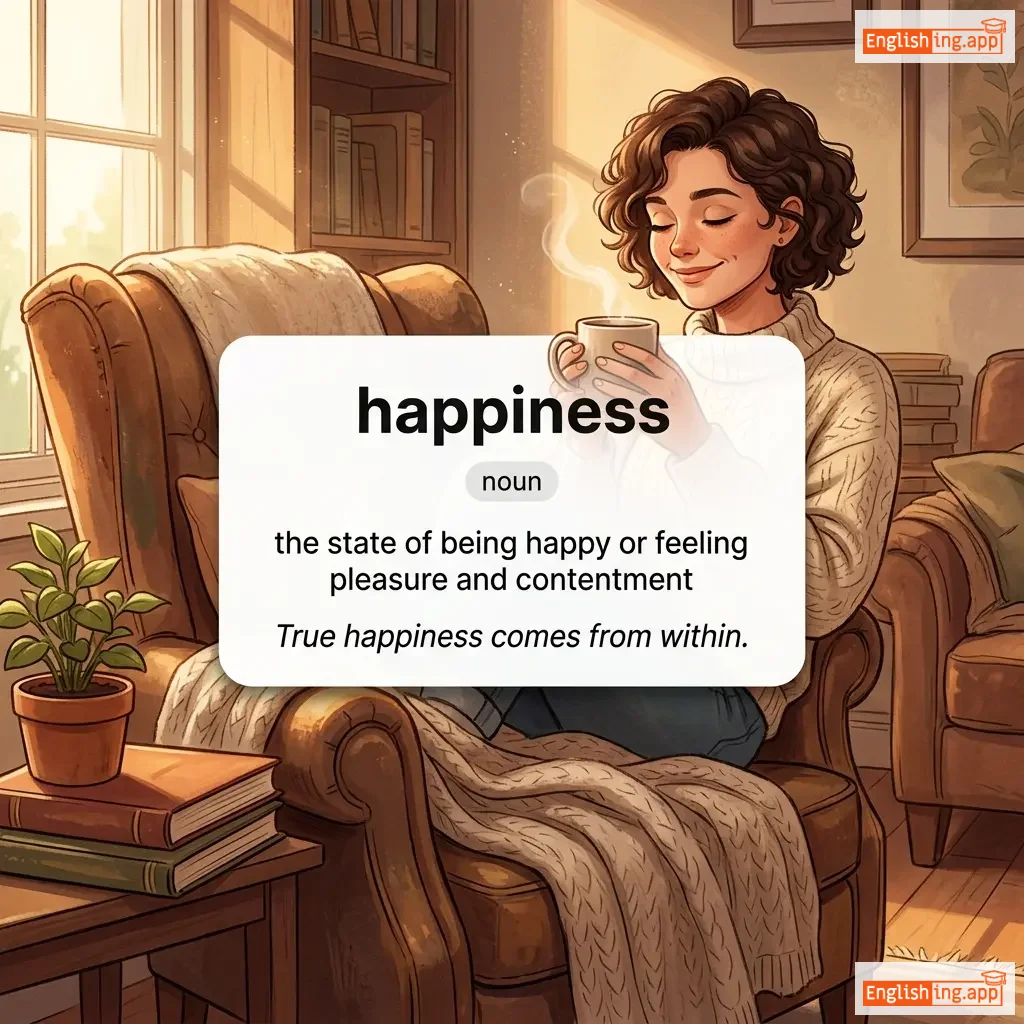
the state of being happy or feeling pleasure and contentment
••••••
|
True happiness comes from within. |
真正的幸福来自内心。
Zhēnzhèng de xìngfú láizì nèixīn.
••••••
|
pursuit of happiness |
the right or effort to seek personal fulfillment or joy
••••••
|
追求幸福
zhuīqiú xìngfú
••••••
|
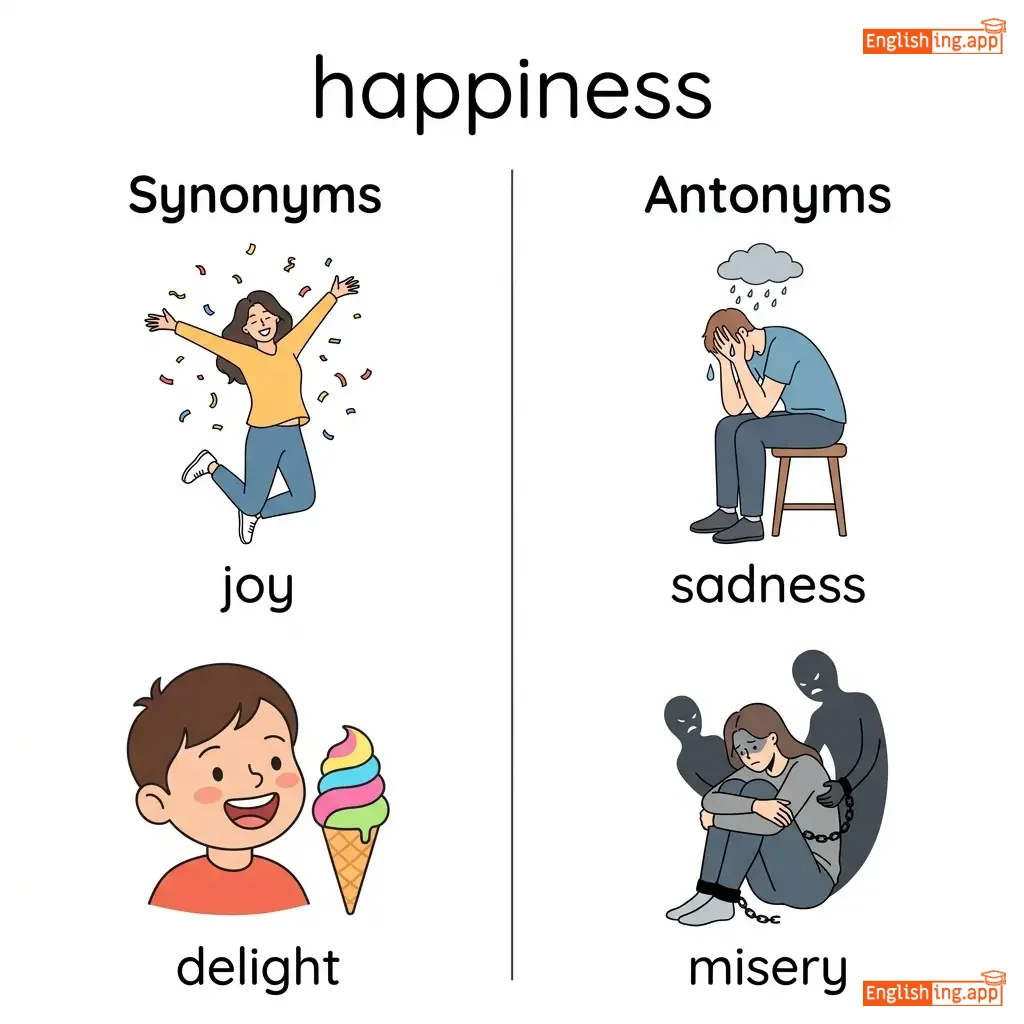
joy, delight, bliss, contentment, pleasure
••••••
|
sadness, misery, unhappiness
••••••
|
true happiness, bring happiness, pursue happiness, happiness and peace
••••••
|
幸福就像是内心的宁静,如同一束阳光照亮一切 ☀️
••••••
|
|
#2395
😀
|
/ˈhæpi/
adjective
(hapi)
••••••
|
- •••••• |
快乐
kuàilè
••••••
|
- •••••• | - •••••• | - •••••• | - •••••• |
feeling or showing pleasure, contentment, or joy
••••••
|
She was very happy to receive the gift. |
她收到礼物时非常高兴。
Tā shōudào lǐwù shí fēicháng gāoxìng.
••••••
|
happy hour |
a period when drinks are sold at reduced prices
••••••
|
快乐时光
kuàilè shíguāng
••••••
|
joyful, cheerful, delighted, pleased, content
••••••
|
sad, unhappy, miserable
••••••
|
feel happy, look happy, happy moment, happy life
••••••
|
Happy = 快乐 😊 - 记住,当我们快乐时,我们说 'I am HAPPY!'
••••••
|
|
#2396
🚫
|
/həˈræsmənt/
noun
(哈雷斯门特)
••••••
|
- •••••• |
骚扰
saorao
••••••
|
- •••••• | - •••••• | - •••••• | - •••••• |
aggressive pressure or intimidation; unwanted and repeated behavior causing discomfort
••••••
|
The company has a strict policy against workplace harassment.
公司对职场骚扰有严格的政策。
••••••
|
公司对职场骚扰有严格的政策。
Gōngsī duì zhíchǎng sāorǎo yǒu yángé de zhèngcè.
••••••
|
sexual harassment
性骚扰
••••••
|
unwanted sexual behavior that causes offense or humiliation
••••••
|
性骚扰
xìng sāorǎo
••••••
|
bullying, abuse, intimidation, persecution, annoyance
••••••
|
support, respect
••••••
|
workplace harassment, verbal harassment, sexual harassment, report harassment
••••••
|
骚扰意味着打扰——骚扰意味着不停地打扰。
••••••
|
|
#2397
⚓
|
/ˈhɑːr.bər/
noun
(哈-伯)
••••••
|
- •••••• |
港口
gangkou
••••••
|
- •••••• | - •••••• | - •••••• | - •••••• |
a place on the coast where vessels may find shelter; a place of safety or refuge
••••••
|
The fishing boats returned safely to the harbour before the storm hit the coastline. |
渔船在风暴袭击海岸之前安全地回到了港口。
Yúchuán zài fēngbào xíjī hǎi'àn zhīqián ānquán de huídào le gǎngkǒu.
••••••
|
- •••••• | - •••••• | - •••••• |
port, haven, marina, dock
••••••
|
open sea, storm, danger, exposure
••••••
|
safe harbour, natural harbour, harbour master
••••••
|
港口是一个安全的避风港,像船只的'避难所'。
••••••
|
|
#2398
💪
|
/hɑːrd/
adjective
(哈德)
••••••
|
- •••••• |
困难
kunnan
••••••
|
- •••••• | - •••••• | - •••••• | - •••••• |
solid, firm, or difficult to do or endure
••••••
|
The exam was very hard for most students. |
对大多数学生来说,考试非常困难。
Dui dashu xuesheng laishuo, kao shi feichang kunnan.
••••••
|
hard nut to crack |
a difficult problem or person to deal with
••••••
|
难啃的坚果
nan ken de jianguo
••••••
|
difficult, tough, rigid, strong, firm
••••••
|
easy, soft, simple
••••••
|
work hard, hard time, hard decision, hard life
••••••
|
Hard表示困难,就像难啃的坚果一样。
••••••
|
|
#2399
😅
|
/ˈhɑːd.li/
adverb
(hādílì)
••••••
|
- •••••• |
几乎不; 几乎没有; barely
jīhū bù; jīhū méiyǒu; barely
••••••
|
- •••••• | - •••••• | - •••••• | - •••••• |
scarcely; barely; almost not at all
••••••
|
I could hardly believe what I was seeing. |
我几乎不敢相信我所看到的。
Wǒ jīhū bùgǎn xiāngxìn wǒ suǒ kàn dào de.
••••••
|
- •••••• | - •••••• | - •••••• |
barely, scarcely, rarely, seldom
••••••
|
easily, completely, fully, certainly
••••••
|
hardly ever, hardly any, hardly believe, hardly possible
••••••
|
Imagine seeing something so surprising, you can hardly believe it!
••••••
|
|
#2400
💻
|
/ˈhɑːrdˌwɛr/
noun
(哈德威尔)
••••••
|
- •••••• |
硬件
yingjiane
••••••
|
- •••••• | - •••••• | - •••••• | - •••••• |
the physical parts of a computer or electronic system, such as the monitor, keyboard, and processor
••••••
|
The company upgraded its computer hardware to improve performance. |
公司升级了计算机硬件以提高性能。
gongsi shengji le jisuanji yingjiane yi tigao xingneng.
••••••
|
hardware store |
a shop that sells tools, equipment, and building materials
••••••
|
硬件商店
yingjiane shangdian
••••••
|
equipment, machinery, device, apparatus, components
••••••
|
software, application, program
••••••
|
computer hardware, hardware components, upgrade hardware, hardware store
••••••
|
硬件是你可以触摸到的东西,比如键盘、显示器等。
••••••
|
|
#2401
🐰
|
/heə(r)/
noun
(hāi ěr)
••••••
|
- •••••• |
野兔
yětù
••••••
|
- •••••• | - •••••• | - •••••• | - •••••• |
a fast-running long-eared mammal that resembles a large rabbit
••••••
|
The hare quickly ran across the field.
这只野兔快速地跑过田野。
••••••
|
这只野兔快速地跑过田野。
Zhè zhī yětù kuàisù de pǎo guò tiányě
••••••
|
- •••••• | - •••••• | - •••••• |
rabbit, bunny
••••••
|
tortoise
••••••
|
wild hare, hare and hounds, march hare
••••••
|
Hare in English sounds like 'hāi ěr', and in Chinese, '野兔' means wild hare
••••••
|
|
#2402
⚠️
|
/hɑːrm/
verb
(哈姆)
••••••
|
|
伤害
shanghai
••••••
|
harmed
哈姆德
••••••
|
harmed
哈姆德
••••••
|
harms
哈姆斯
••••••
|
harming
哈米
••••••
|
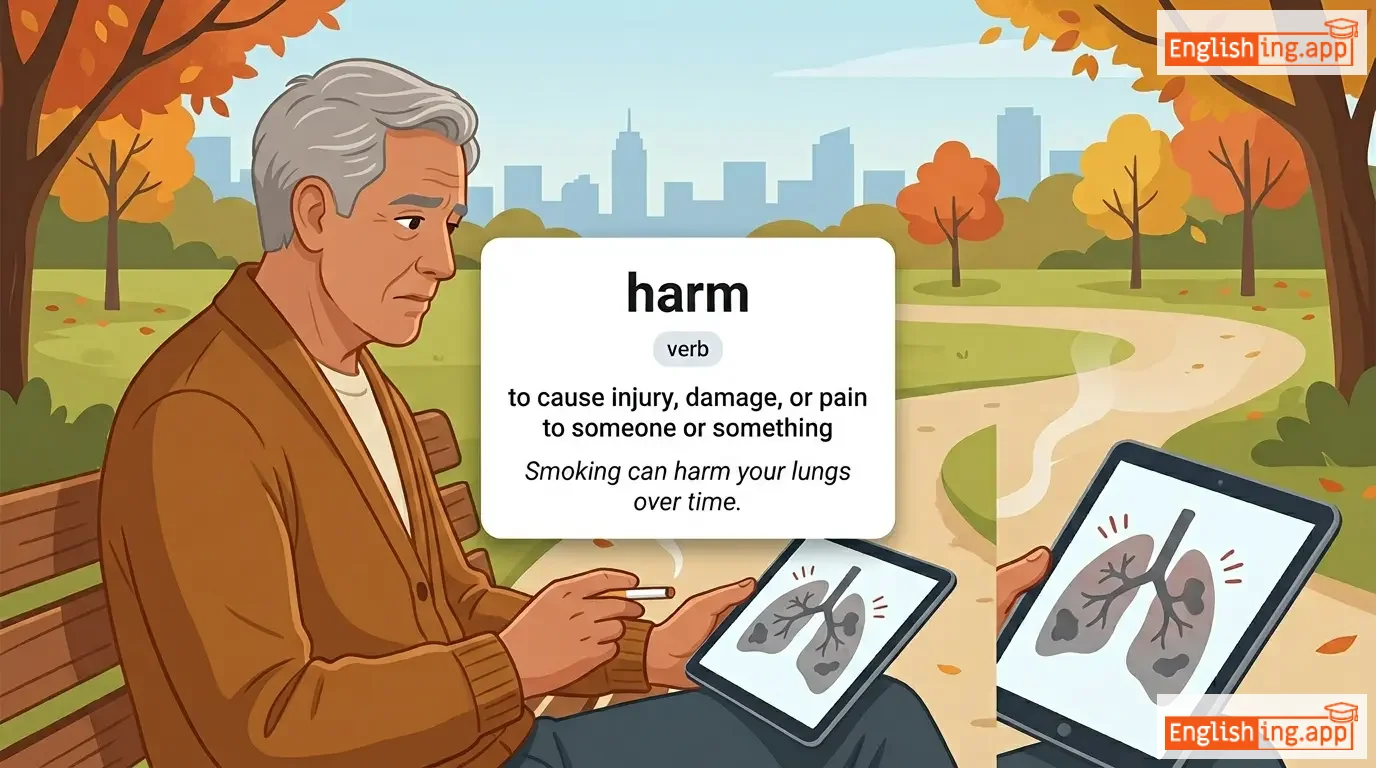
to cause injury, damage, or pain to someone or something
••••••
|
Smoking can harm your lungs over time.
吸烟会随着时间对你的肺部造成伤害。
••••••
|
吸烟会随着时间对你的肺部造成伤害。
Xiyan hui suizhe shijian dui nide feibu zaocheng shanghai.
••••••
|
no harm done
没有造成伤害
••••••
|
used to say that no damage or injury has occurred
••••••
|
没有造成伤害
meiyou zaocheng shanghai
••••••
|
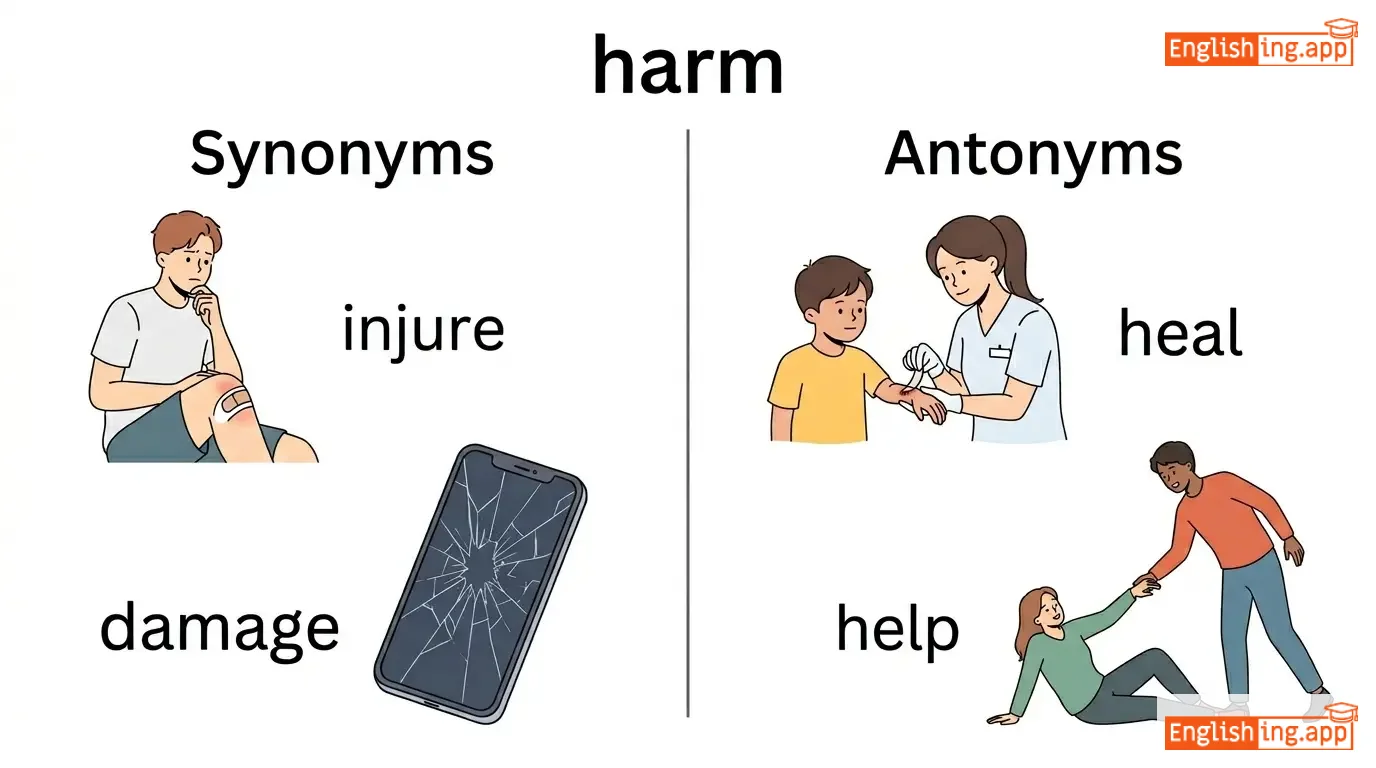
injure, damage, hurt, wound, impair
••••••
|
heal, help, repair
••••••
|
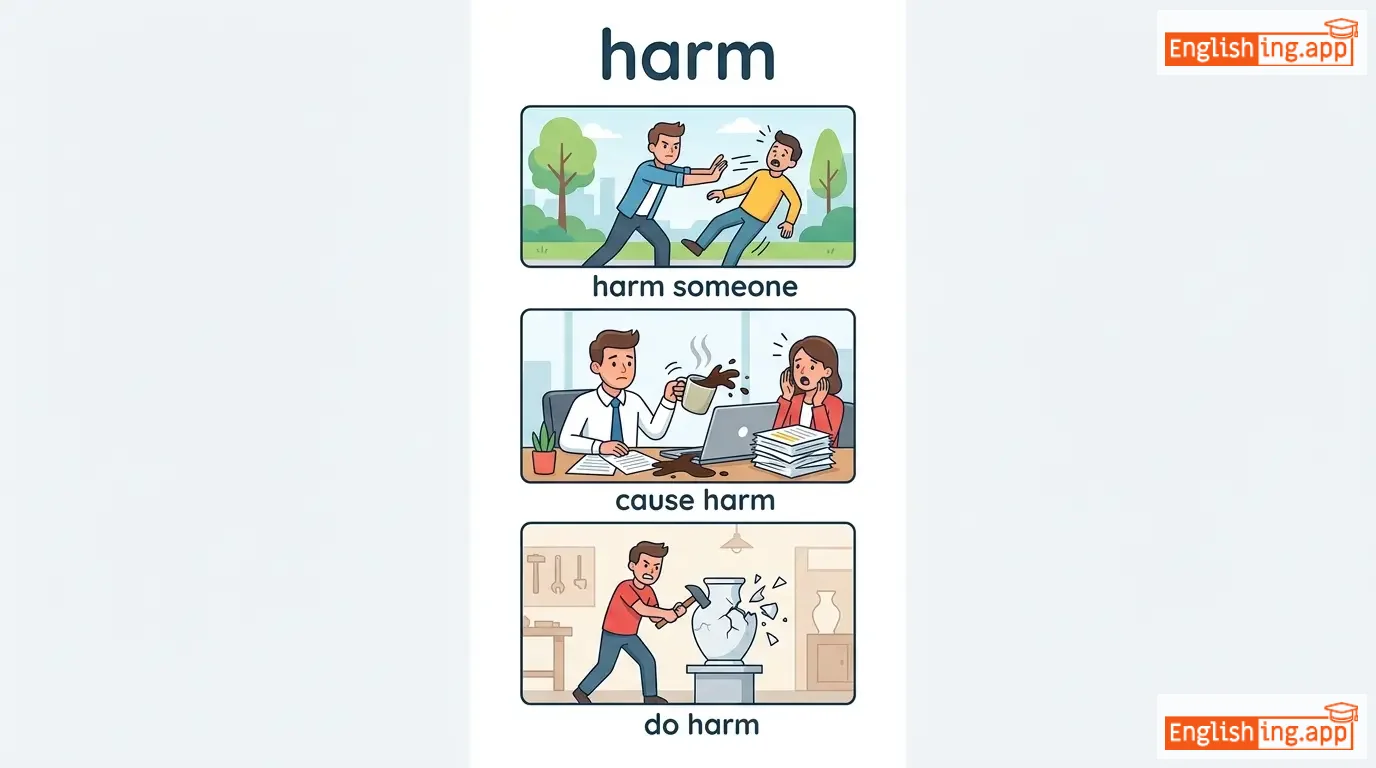
harm someone, cause harm, do harm, physical harm
••••••
|
HARM意味着伤害 — 记住,伤害别人可能也会伤害自己!
••••••
|
|
#2403
☠️
|
/ˈhɑːrmfəl/
adjective
(哈姆富尔)
••••••
|
- •••••• |
有害的
yǒuhài de
••••••
|
- •••••• | - •••••• | - •••••• | - •••••• |
causing or likely to cause harm; damaging
••••••
|
Smoking is harmful to your health. |
吸烟对健康有害。
Xīyān duì jiànkāng yǒuhài.
••••••
|
- •••••• | - •••••• | - •••••• |
damaging, dangerous, detrimental, destructive
••••••
|
harmless, beneficial, helpful, safe
••••••
|
harmful effects, harmful chemicals, harmful substances
••••••
|
有害的 means causing harm, just like 'harmful' in English.
••••••
|
|
#2404
🕊️
|
/ˈhɑːrmləs/
adjective
(哈姆雷斯)
••••••
|
- •••••• |
无害的; 无辜的; 安全的
wúhài de; wúgū de; ānquán de
••••••
|
- •••••• | - •••••• | - •••••• | - •••••• |
not able or likely to cause harm; innocent; safe
••••••
|
The snake looks dangerous but it's actually harmless. |
蛇看起来很危险,但它实际上是无害的。
Shé kàn qǐlái hěn wēixiǎn, dàn tā shíjì shang shì wúhài de.
••••••
|
- •••••• | - •••••• | - •••••• |
safe, innocent, benign, non-toxic
••••••
|
harmful, dangerous, toxic, destructive
••••••
|
harmless fun, harmless joke, harmless bacteria
••••••
|
In Chinese, 'wúhài' sounds like 'no harm' (harmless).
••••••
|
|
#2405
🎶
|
/ˈhɑːrməni/
noun
(哈莫尼)
••••••
|
|
和谐
hexie
••••••
|
- •••••• | - •••••• | - •••••• | - •••••• |
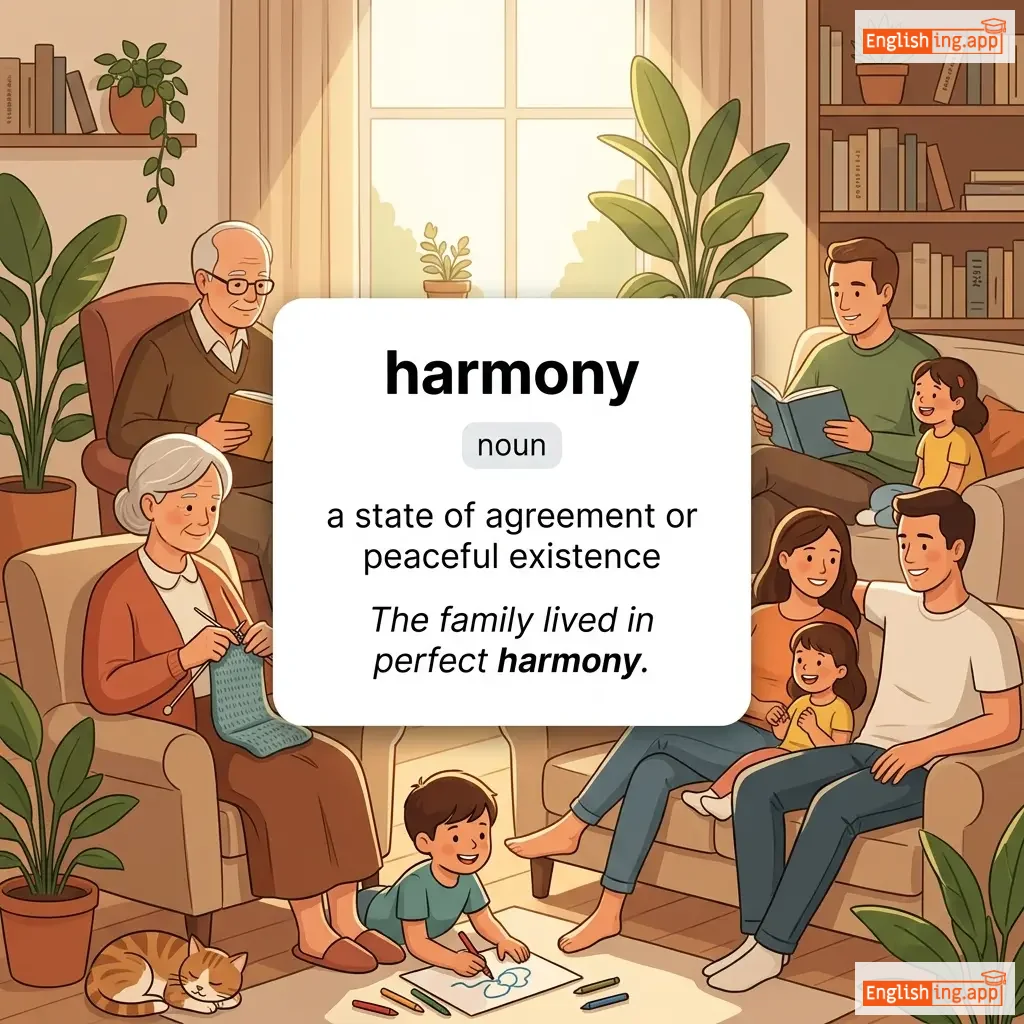
a state of agreement or peaceful existence
••••••
|
The family lived in perfect harmony. |
这个家庭生活在完全和谐中。
Zhège jiātíng shēnghuó zài wánquán héxié zhōng.
••••••
|
in harmony with |
to be in agreement or consistent with
••••••
|
与…和谐
yǔ... héxié
••••••
|
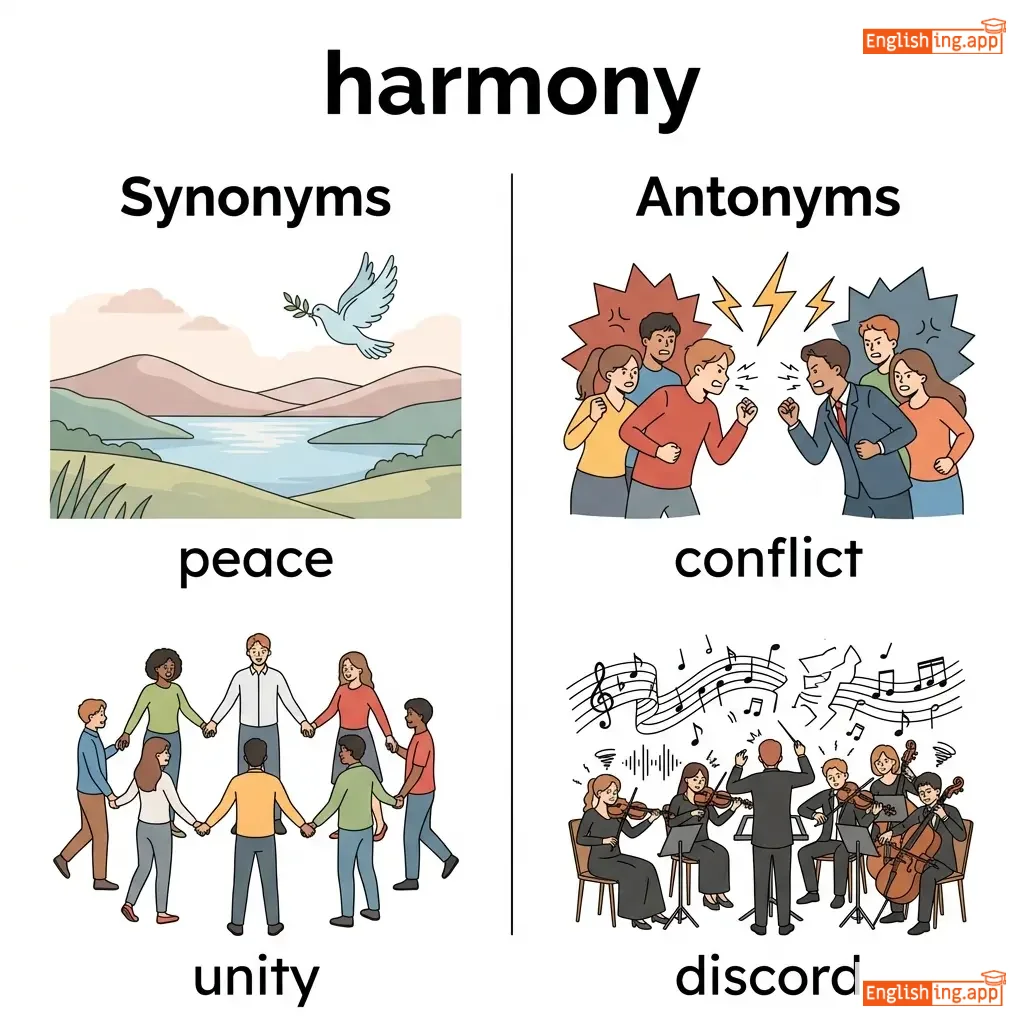
peace, unity, agreement, concord, balance
••••••
|
conflict, discord, chaos
••••••
|
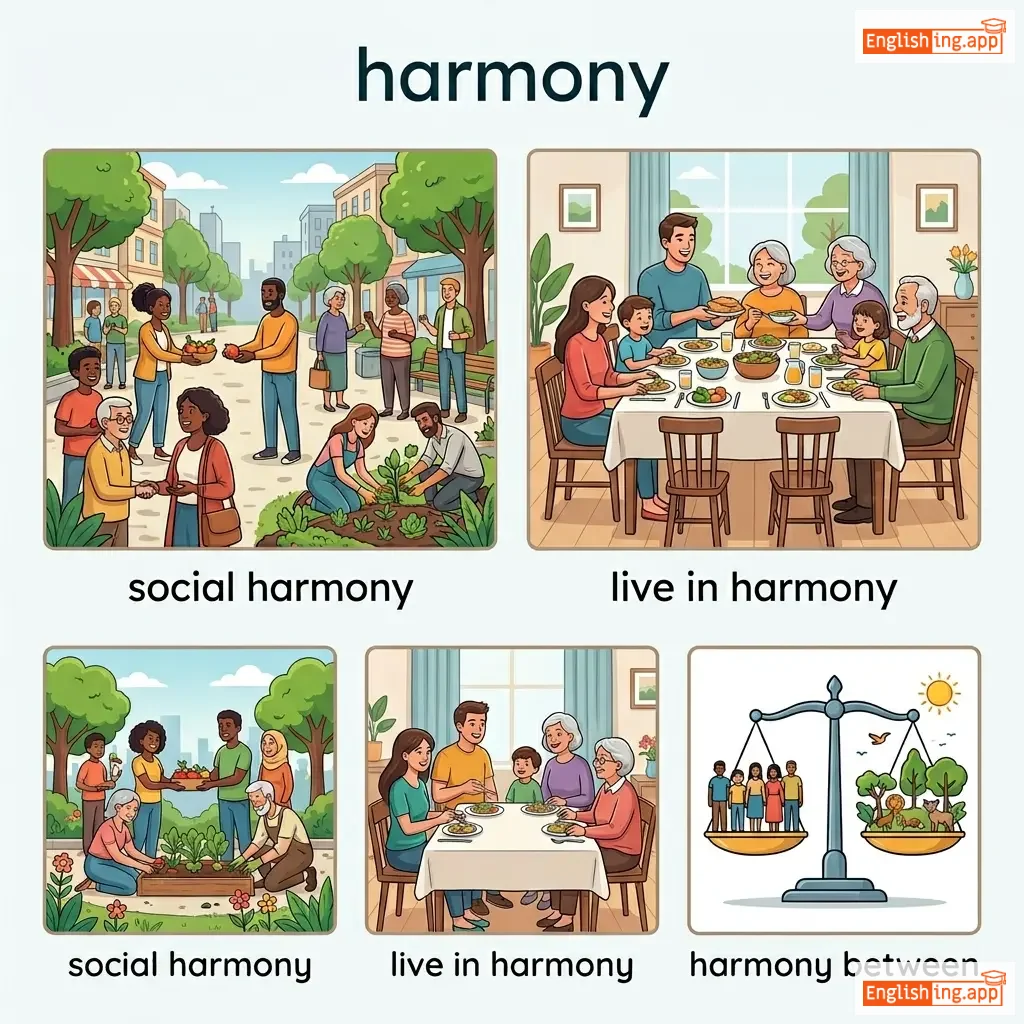
social harmony, live in harmony, harmony between
••••••
|
和谐就像音乐会中的所有乐器,彼此协调发出美妙的声音。
••••••
|
|
#2406
❄️
|
/hɑːrʃ/
adjective
(哈什)
••••••
|
- •••••• |
严厉
yanli
••••••
|
- •••••• | - •••••• | - •••••• | - •••••• |
Unpleasantly rough or severe in sound, taste, conditions, or treatment.
••••••
|
The teacher's harsh tone frightened the students. |
老师严厉的语气吓到了学生。
Laoshi yanli de yuqi xiadao le xuesheng.
••••••
|
harsh reality |
The unpleasant truth of a situation.
••••••
|
严酷的现实
yanku de xianshi
••••••
|
severe, stern, rough, cruel, brutal
••••••
|
gentle, mild, soft
••••••
|
harsh criticism, harsh reality, harsh conditions, harsh treatment
••••••
|
严厉 (yanli) 冬天的严酷像一场暴风雪。
••••••
|
|
#2407
🌾
|
/ˈhɑːrvɪst/
noun
(hɑːrvɪst)
••••••
|
- •••••• |
收获
shōuhuò
••••••
|
- •••••• | - •••••• | - •••••• | - •••••• |
the process or period of gathering crops
••••••
|
Farmers are busy during the rice harvest season. |
农民在稻谷收获季节非常忙碌。
Nóngmín zài dàogǔ shōuhuò jìjié fēicháng mánglù.
••••••
|
reap the harvest |
to enjoy the results of your efforts
••••••
|
享受劳动的成果
xiǎngshòu láodòng de chéngguǒ
••••••
|
crop, yield, gathering, reaping, produce
••••••
|
sowing, planting, loss
••••••
|
harvest season, rice harvest, good harvest, harvest time
••••••
|
收获意味着收集劳动的果实 🌾
••••••
|
|
#2408
👒
|
/hæt/
noun
(hè)
••••••
|
- •••••• |
帽子
màozi
••••••
|
- •••••• | - •••••• | - •••••• | - •••••• |
a shaped covering for the head, often with a brim
••••••
|
He wore a black hat to the party. |
他戴着一顶黑色的帽子去参加聚会。
Tā dàizhe yī dǐng hēisè de màozi qù cānjiā jùhuì.
••••••
|
to wear many hats |
to have many roles or responsibilities
••••••
|
有许多角色或责任
yǒu xǔduō juésè huò zérèn
••••••
|
cap, headgear, helmet, bonnet
••••••
|
barehead
••••••
|
wear a hat, take off hat, straw hat, cowboy hat
••••••
|
Hat 在中文中是帽子,戴在头上。
••••••
|
|
#2409
💔
|
/heɪt/
verb
••••••
|
|
- •••••• |
hated
••••••
|
hated
••••••
|
hates
••••••
|
hating
••••••
|
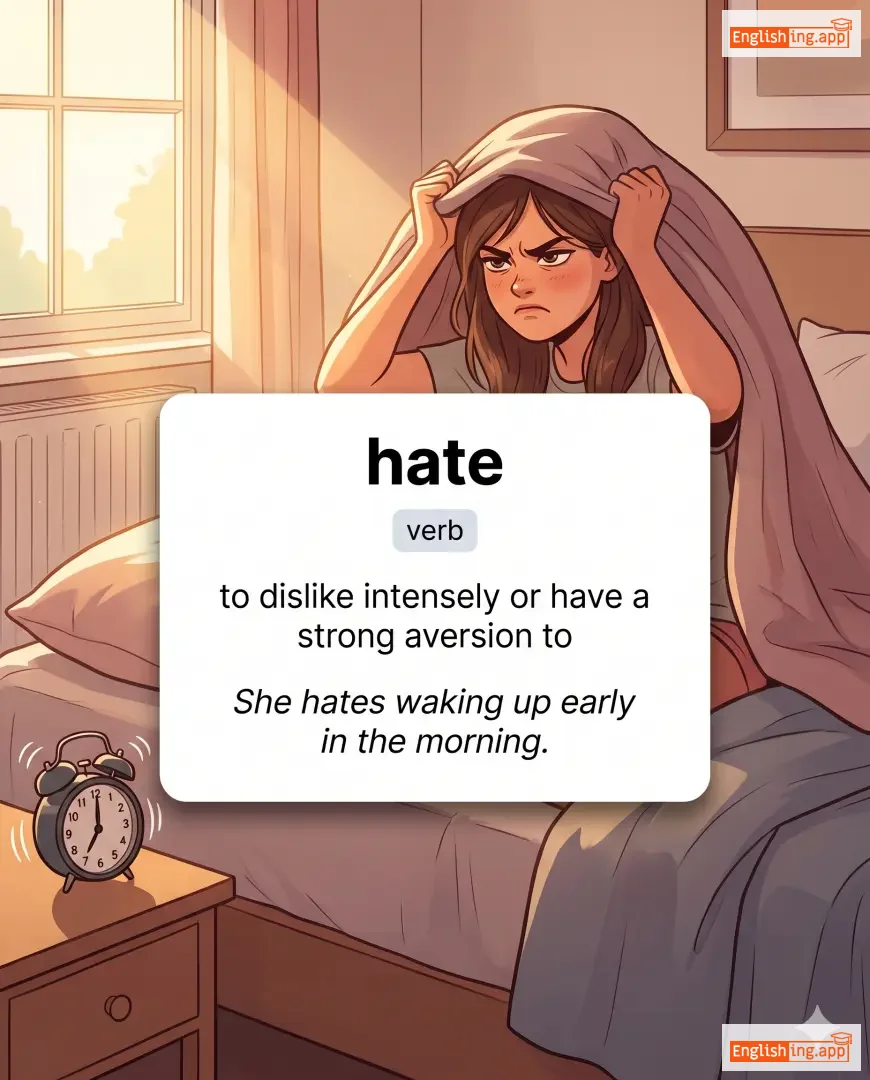
to dislike intensely or have a strong aversion to
••••••
|
She hates waking up early in the morning. |
- •••••• |
love to hate |
something disliked but still talked about often
••••••
|
- •••••• |
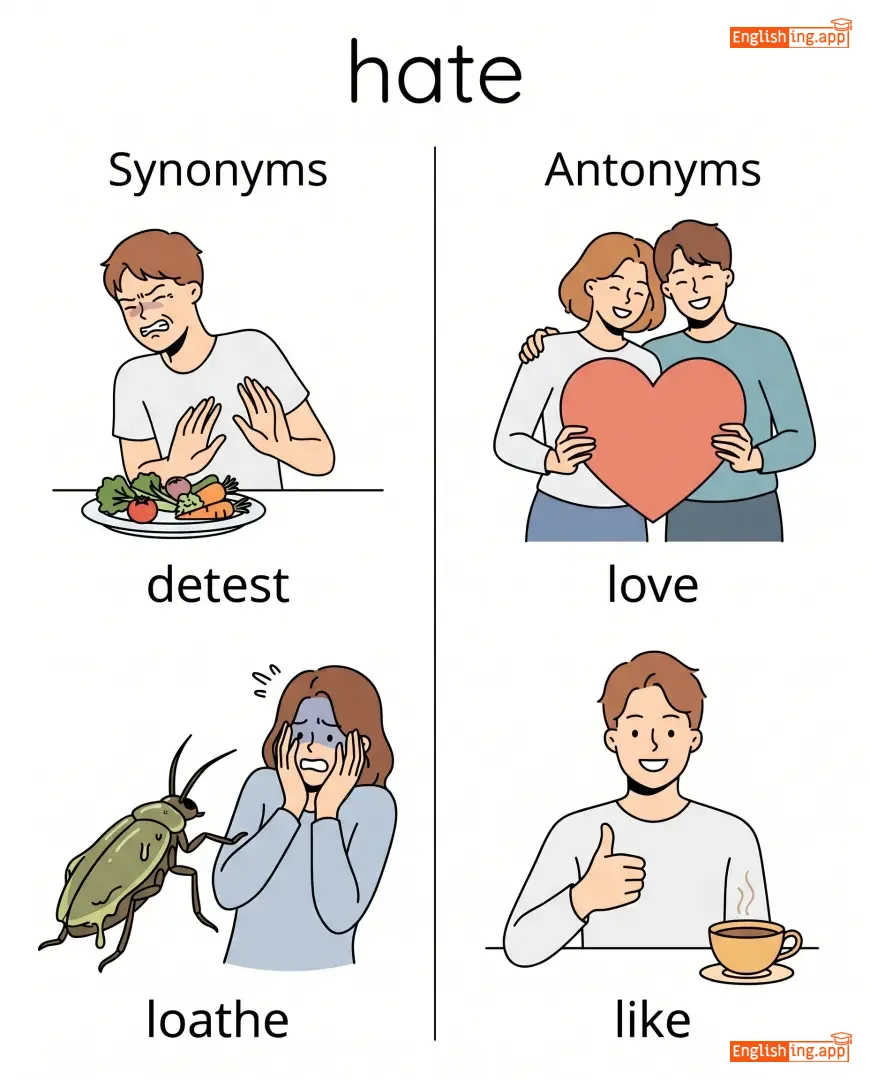
detest, loathe, despise, abhor
••••••
|
love, like, adore
••••••
|
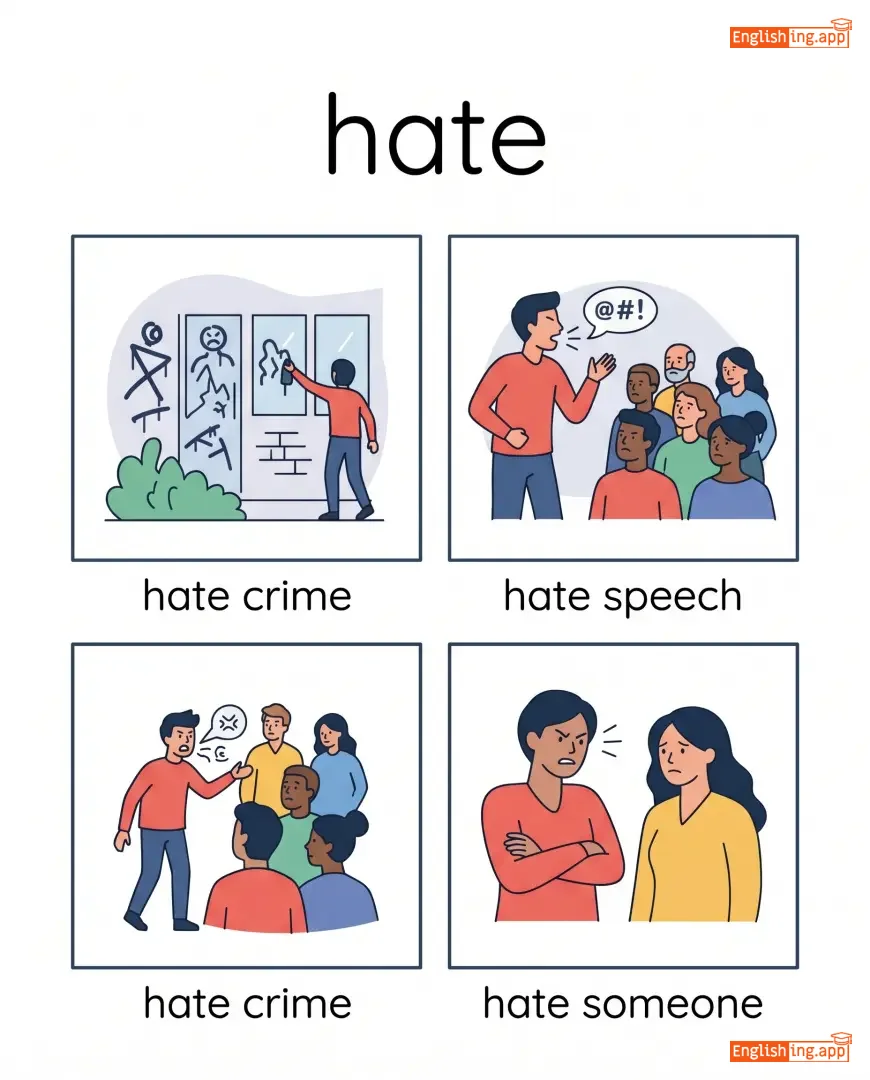
hate crime, hate speech, hate someone
••••••
|
No •••••• |
|
#2410
😡
|
/ˈheɪt.fəl/
adjective
(hèitfú)
••••••
|
- •••••• |
可憎的
kězēng de
••••••
|
- •••••• | - •••••• | - •••••• | - •••••• |
causing or deserving hatred; extremely unpleasant or offensive
••••••
|
His hateful comments hurt everyone's feelings.
他那些充满仇恨的评论伤害了每个人的感情。
••••••
|
他那些充满仇恨的评论伤害了每个人的感情。
Tā nàxiē chōngmǎn chóuhèn de pínglùn shānghài le měi gè rén de gǎnqíng.
••••••
|
- •••••• | - •••••• | - •••••• |
detestable, loathsome, odious, abhorrent
••••••
|
lovable, pleasant, agreeable, likeable
••••••
|
hateful behavior, hateful speech, hateful attitude
••••••
|
可憎的和hateful有相似的意义,都是令人讨厌的
••••••
|
|
#2411
😡
|
/ˈheɪ.trəd/
noun
(hèitè)
••••••
|
- •••••• |
仇恨
chóuhèn
••••••
|
- •••••• | - •••••• | - •••••• | - •••••• |
intense dislike or ill will; a feeling of strong aversion
••••••
|
His hatred for injustice motivated him to become a human rights lawyer. |
他对不公正的仇恨促使他成为了一名人权律师。
Tā duì bù gōngzhèng de chóuhèn cùshǐ tā chéngwéile yī míng rénquán lǜshī.
••••••
|
- •••••• | - •••••• | - •••••• |
loathing, animosity, hostility, resentment
••••••
|
love, affection, admiration, fondness
••••••
|
deep hatred, racial hatred, hatred towards
••••••
|
仇恨 = 强烈的厌恶
••••••
|
|
#2412
👻
|
/hɔːnt/
verb
••••••
|
|
- •••••• |
haunted
••••••
|
haunted
••••••
|
haunts
••••••
|
haunting
••••••
|
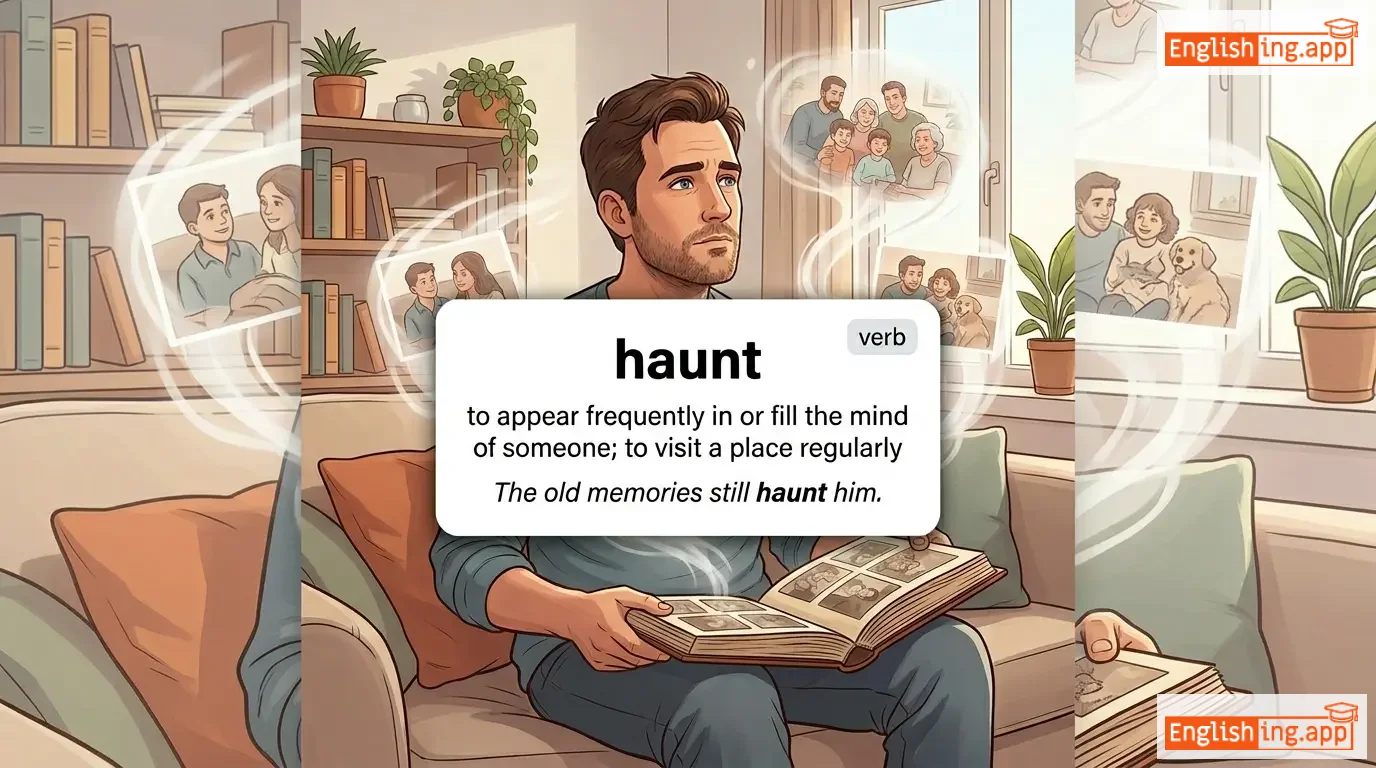
to appear frequently in or fill the mind of someone; to visit a place regularly
••••••
|
The old memories still haunt him. |
- •••••• |
haunt one's dreams |
to repeatedly trouble or disturb someone mentally
••••••
|
- •••••• |
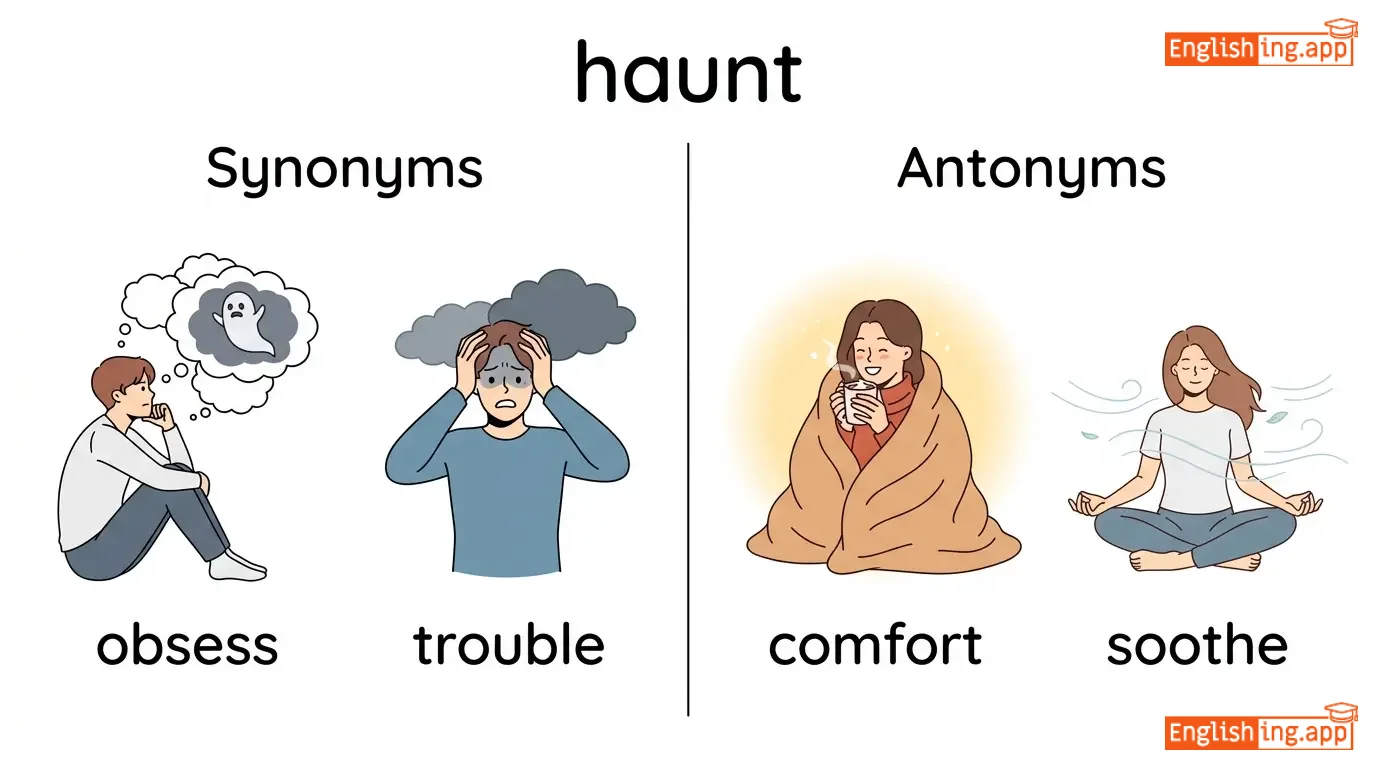
obsess, trouble, torment, visit, linger
••••••
|
comfort, soothe, forget
••••••
|
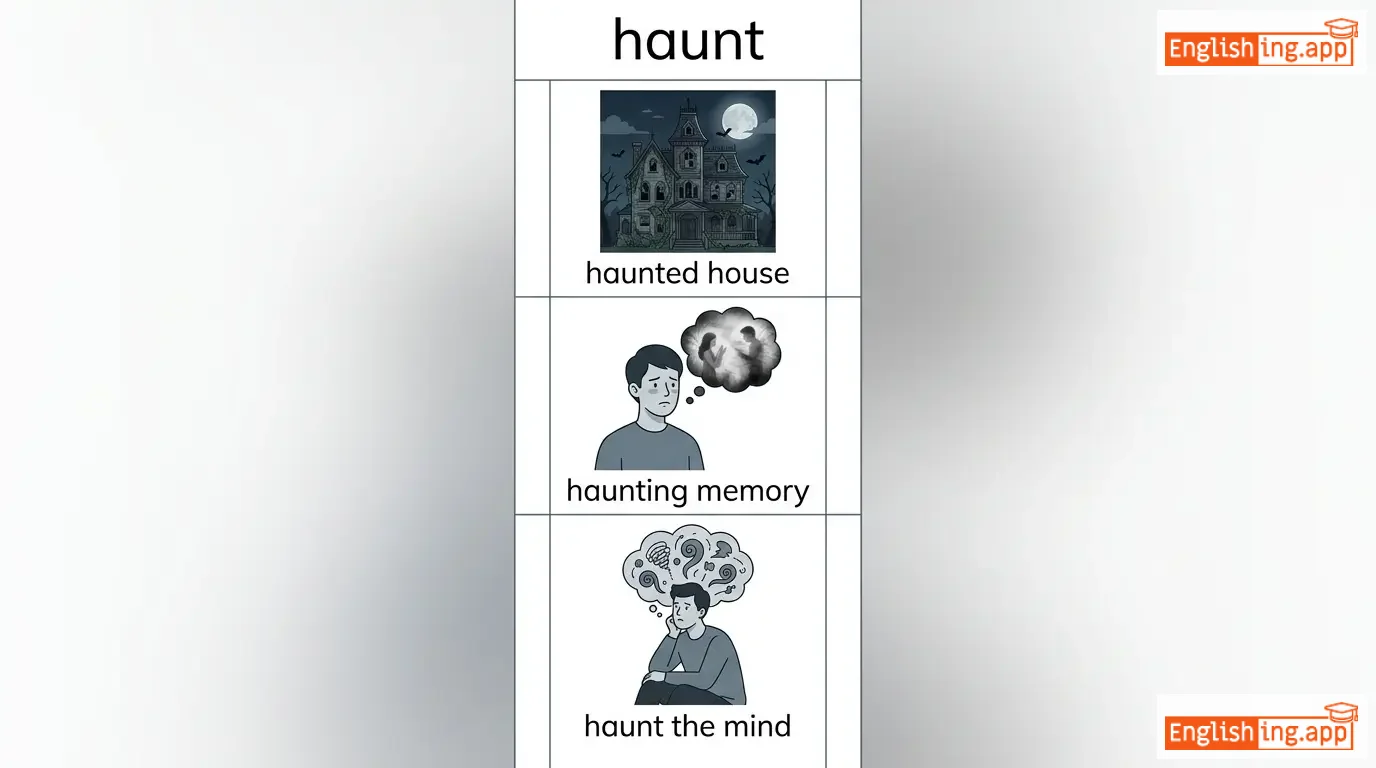
haunted house, haunting memory, haunt the mind, old haunt
••••••
|
No •••••• |
|
#2413
🙌
|
/hæv/
verb
(hǎv)
••••••
|
- •••••• |
拥有
yǒngyǒu
••••••
|
had
hǎd
••••••
|
had
hǎd
••••••
|
has
hǎz
••••••
|
having
hǎv-ing
••••••
|
to possess, own, or hold
••••••
|
They have three children.
他们有三个孩子。
••••••
|
他们有三个孩子。
Tāmen yǒu sān gè háizi.
••••••
|
have a good time
度过愉快时光
••••••
|
to enjoy oneself
••••••
|
度过愉快时光
dùguò yúkuài shíguāng
••••••
|
own, possess, hold, contain
••••••
|
lack, want
••••••
|
have fun, have dinner, have time, have a look
••••••
|
Have表示拥有,如我们说'我有' - I have it!
••••••
|
|
#2414
🐄
|
/heɪ/
noun
(海皮尼斯)
••••••
|
- •••••• |
干草
gāncǎo
••••••
|
- •••••• | - •••••• | - •••••• | - •••••• |
grass that has been cut, dried, and stored for use as animal feed
••••••
|
The cows were eating hay in the barn. |
牛在谷仓里吃干草。
Niú zài gǔcāng lǐ chī gāncǎo.
••••••
|
make hay while the sun shines |
take advantage of a good opportunity while it lasts
••••••
|
趁阳光明媚时做干草
chèn yángguāng míngmèi shí zuò gāncǎo
••••••
|
fodder, straw, dried grass, silage, forage
••••••
|
grain, seed
••••••
|
bale of hay, hay field, haystack, dry hay
••••••
|
HAY意味着干草 🐄 — 记住,‘嘿,牛!’ 它们吃干草!
••••••
|
|
#2415
⚠️
|
/ˈhæzərd/
noun
(哈扎德)
••••••
|
- •••••• |
危险
wei xian
••••••
|
- •••••• | - •••••• | - •••••• | - •••••• |
A danger or risk.
••••••
|
Wet floors are a common hazard in the workplace.
湿滑的地板是工作场所常见的危险。
••••••
|
湿滑的地板是工作场所常见的危险。
Shi hua de diban shi gongzuo changsuo changjian de weixian.
••••••
|
at your own hazard
自担风险
••••••
|
at your own risk or responsibility
••••••
|
自担风险
Zi dan fengxian
••••••
|
danger, risk, threat, peril, menace
••••••
|
safety, security, protection
••••••
|
fire hazard, safety hazard, health hazard, potential hazard
••••••
|
Hazard意味着危险,就像警告标志⚠️一样,表示要小心。
••••••
|
|
#2416
👨
|
/hiː/
pronoun
(hī)
••••••
|
- •••••• |
他 (男性)
ta (nanxing)
••••••
|
- •••••• | - •••••• | - •••••• | - •••••• |
used to refer to a male person or animal already mentioned or easily identified
••••••
|
He is my best friend. |
他是我最好的朋友。
Tā shì wǒ zuì hǎo de péngyǒu.
••••••
|
- •••••• | - •••••• | - •••••• |
the man, that person, him
••••••
|
she, her
••••••
|
he said, he was, he went, he did
••••••
|
He意味着他 (男性),就像HE-ro (英雄)通常是男性。
••••••
|
|
#2417
👤
|
/hɛd/
noun, verb
(头)
••••••
|
- •••••• |
头 / 领导
tou / lingdao
••••••
|
headed
带头
••••••
|
headed
带头
••••••
|
heads
带头
••••••
|
heading
带头
••••••
|
The upper part of the human body or to lead or be in charge of something.
••••••
|
She turned her head to look out the window.
她转动头来向窗外看。
••••••
|
她转动头来向窗外看。
ta zhuandong tou lai xiang chuangwai kan.
••••••
|
head over heels
头过脚跟
••••••
|
completely in love
••••••
|
完全爱上
wanquan aishang
••••••
|
chief, leader, boss, director, skull
••••••
|
follower, subordinate
••••••
|
head of department, head office, head a team, shake your head
••••••
|
头表示头,头过脚跟表示完全爱上。
••••••
|
|
#2418
🤕
|
/ˈhɛdeɪk/
noun
(hɛdeɪk)
••••••
|
- •••••• |
头痛
tóutòng
••••••
|
- •••••• | - •••••• | - •••••• | - •••••• |
a continuous pain in the head; something that causes worry or difficulty
••••••
|
Too much screen time can give you a terrible headache. |
过多的屏幕时间可能会导致你出现严重的头痛。
guòduō de píngmù shíjiān kěnéng huì dǎozhì nǐ chūxiàn yánzhòng de tóutòng.
••••••
|
a real headache |
something that causes a lot of trouble or difficulty
••••••
|
真正的头痛
zhēnzhèng de tóutòng
••••••
|
migraine, pain, nuisance, problem, discomfort
••••••
|
relief, comfort
••••••
|
severe headache, splitting headache, cause a headache, suffer from headache
••••••
|
Head ache 意味着头部的 ache (痛) – 记住头痛!
••••••
|
|
#2419
📰
|
/ˈhɛdˌlaɪn/
noun
(hɛdˈlaɪn)
••••••
|
- •••••• |
头条新闻
tóutiáo xīnwén
••••••
|
- •••••• | - •••••• | - •••••• | - •••••• |
The title of a newspaper article printed in large letters.
••••••
|
The scandal made front-page headlines.
这个丑闻成为了头条新闻。
••••••
|
丑闻成为了头条新闻。
Chǒuwén chéngwéi le tóutiáo xīnwén.
••••••
|
grab the headlines
引起头条新闻
••••••
|
to attract public attention
••••••
|
引起公众关注
yǐnqǐ gōngzhòng guānzhù
••••••
|
title, heading, banner, caption, news
••••••
|
detail, footnote
••••••
|
front-page headline, news headline, headline story, write a headline
••••••
|
头条新闻 = 主流新闻 = 头条新闻
••••••
|
|
#2420
🏢
|
/ˈhɛdˌkwɔːrtərz/
noun
(海皮尼斯)
••••••
|
- •••••• |
总部
zǒngbù
••••••
|
- •••••• | - •••••• | - •••••• | - •••••• |
The main office or center of operations of an organization.
••••••
|
The company’s headquarters is located in New York. |
公司的总部位于纽约。
Gōngsī de zǒngbù wèiyú niǔyuē.
••••••
|
- •••••• | - •••••• | - •••••• |
main office, center, base, hub, command post
••••••
|
branch, outpost
••••••
|
corporate headquarters, police headquarters, company headquarters, military headquarters
••••••
|
Headquarters = head + quarters → 总部,组织的中心办公室。
••••••
|
Vocabulary Quiz
Test your vocabulary by matching words with their translations or meanings.
Login to take the quiz
Comments (0)
Share your thoughts and join the discussion.
Join the discussion by logging in
Login to CommentNo comments yet
Be the first to share your thoughts!