

Swipe left or right, or use the buttons. Tap image to zoom.
例句翻译
单词
Lesson 107Lesson 107 - 遮罩切换
|
表情符号
|
单词 | Images | 翻译 | 过去时 | 过去分词 | 第三人称单数 | 动名词 | 含义 | 例句 | 例句翻译 | 示例表达 | 示例表达含义 | 示例表达翻译 | 同义词 | 反义词 | 搭配词 | 助记符 |
|---|---|---|---|---|---|---|---|---|---|---|---|---|---|---|---|---|---|
|
#5075
🎀
|
/taɪ/
verb
(tái)
••••••
|
|
系
xì
••••••
|
tied
táid
••••••
|
tied
táid
••••••
|
ties
táiz
••••••
|
tying
táing
••••••
|
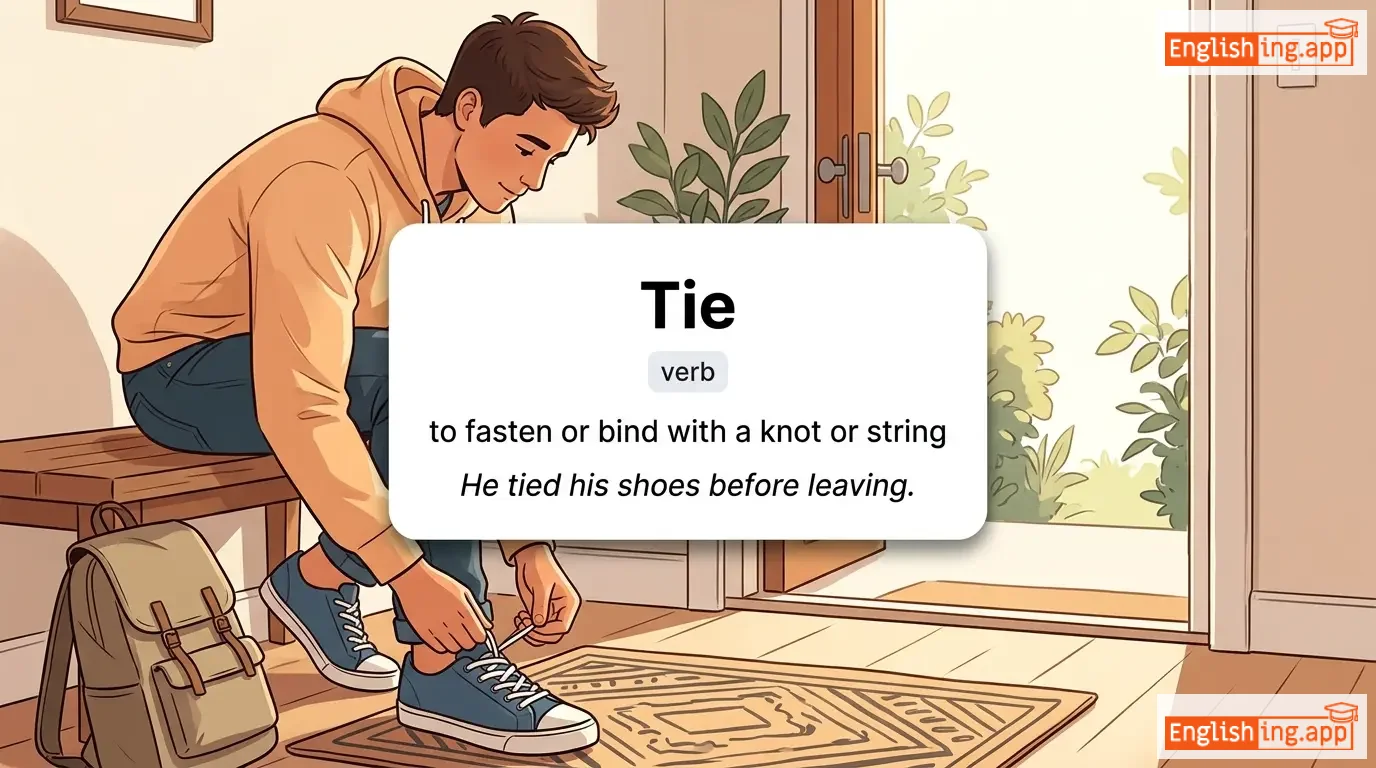
to fasten or bind with a knot or string
••••••
|
He tied his shoes before leaving.
他在离开之前系好了鞋带。
••••••
|
他在离开之前系好了鞋带。
tā zài líkāi zhīqián xì hǎo le xiédài.
••••••
|
tie the knot
打结
••••••
|
to get married
••••••
|
结婚
jiéhūn
••••••
|
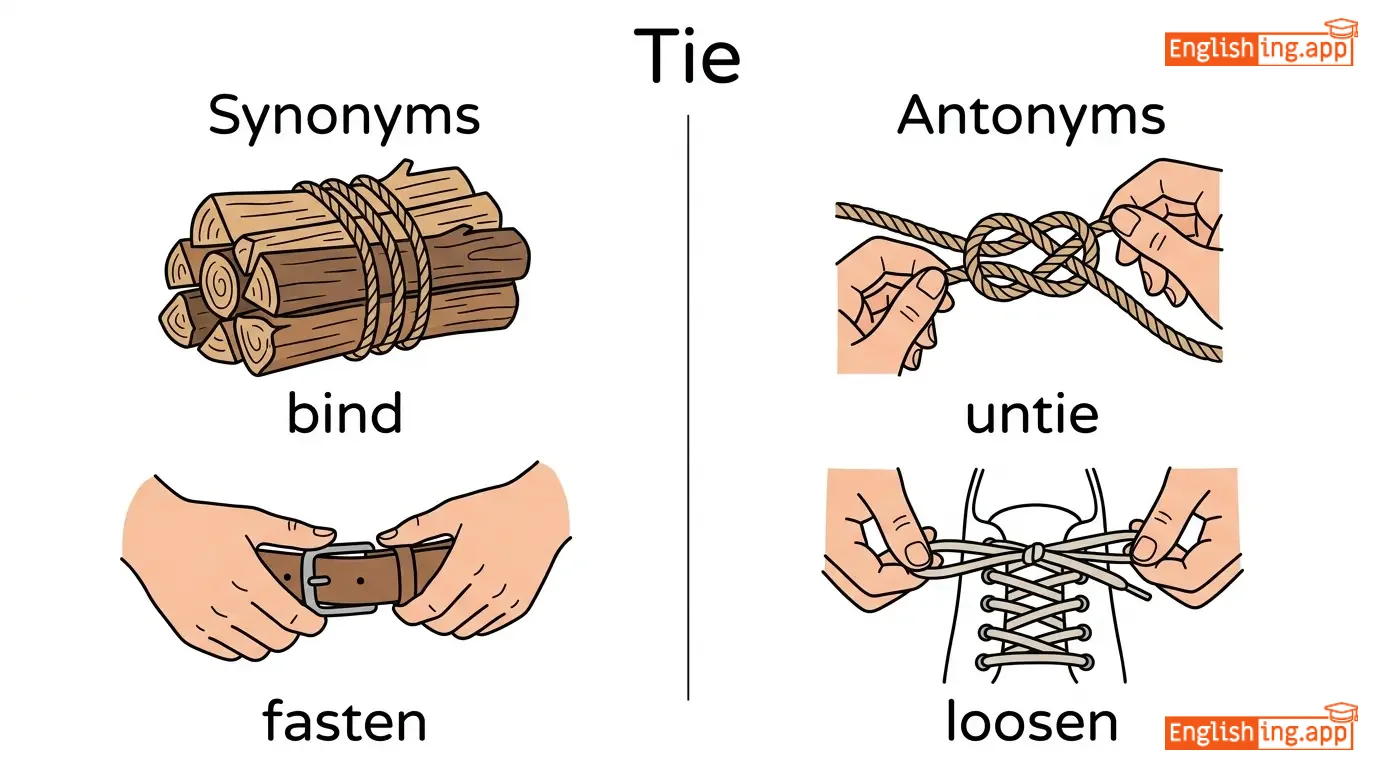
bind, fasten, knot, secure
••••••
|
untie, loosen
••••••
|
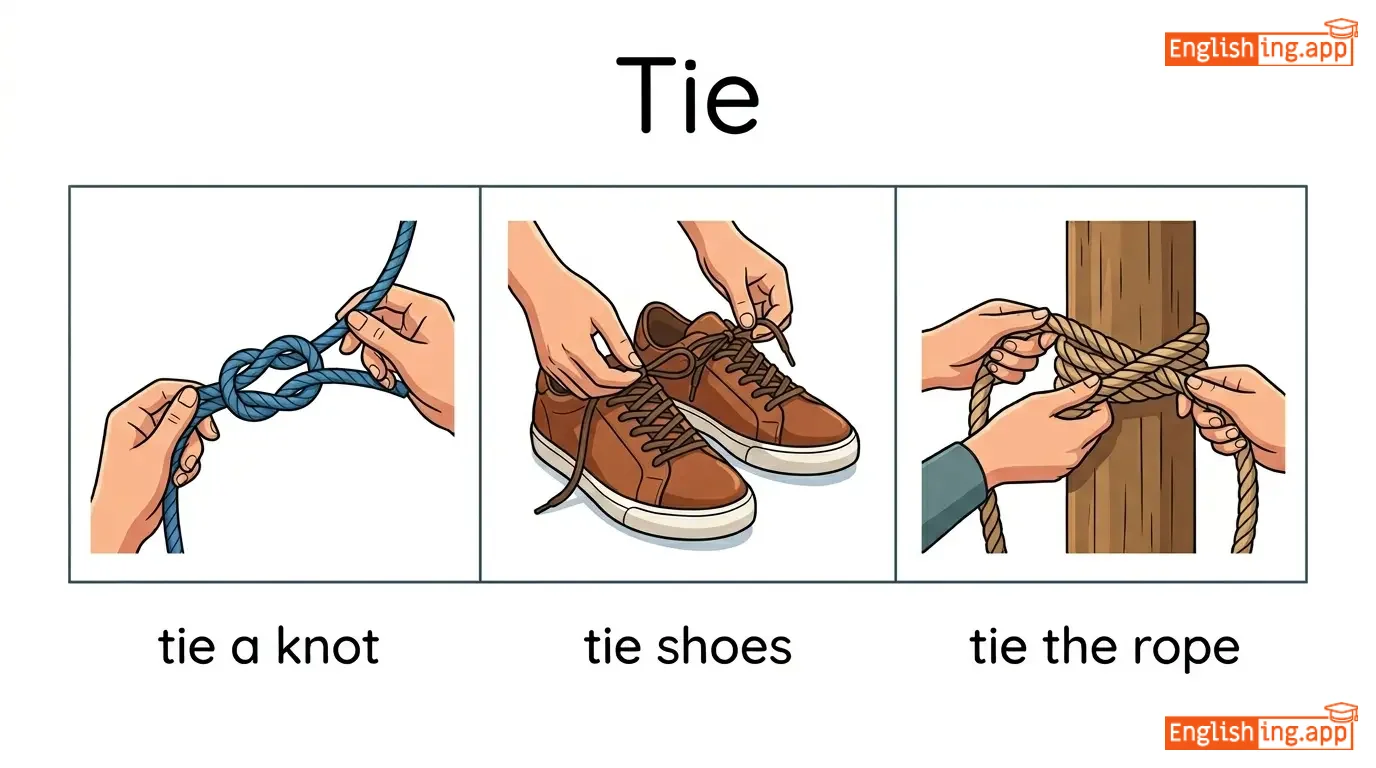
tie a knot, tie shoes, tie the rope
••••••
|
系上结,准备结婚!
••••••
|
|
#5076
🪢
|
/taɪt/
adjective
(taɪt)
••••••
|
- •••••• |
紧的
jǐn de
••••••
|
- •••••• | - •••••• | - •••••• | - •••••• |
firmly held in place, not loose or slack
••••••
|
The knot was too tight to untie. |
结已经太紧,无法解开。
Jié yǐjīng tài jǐn, wúfǎ jiěkāi.
••••••
|
- •••••• | - •••••• | - •••••• |
firm, secure, stiff, taut
••••••
|
loose, slack
••••••
|
tight grip, tight fit, tight knot
••••••
|
紧的 (tight) 绑紧一切!
••••••
|
|
#5077
🔩
|
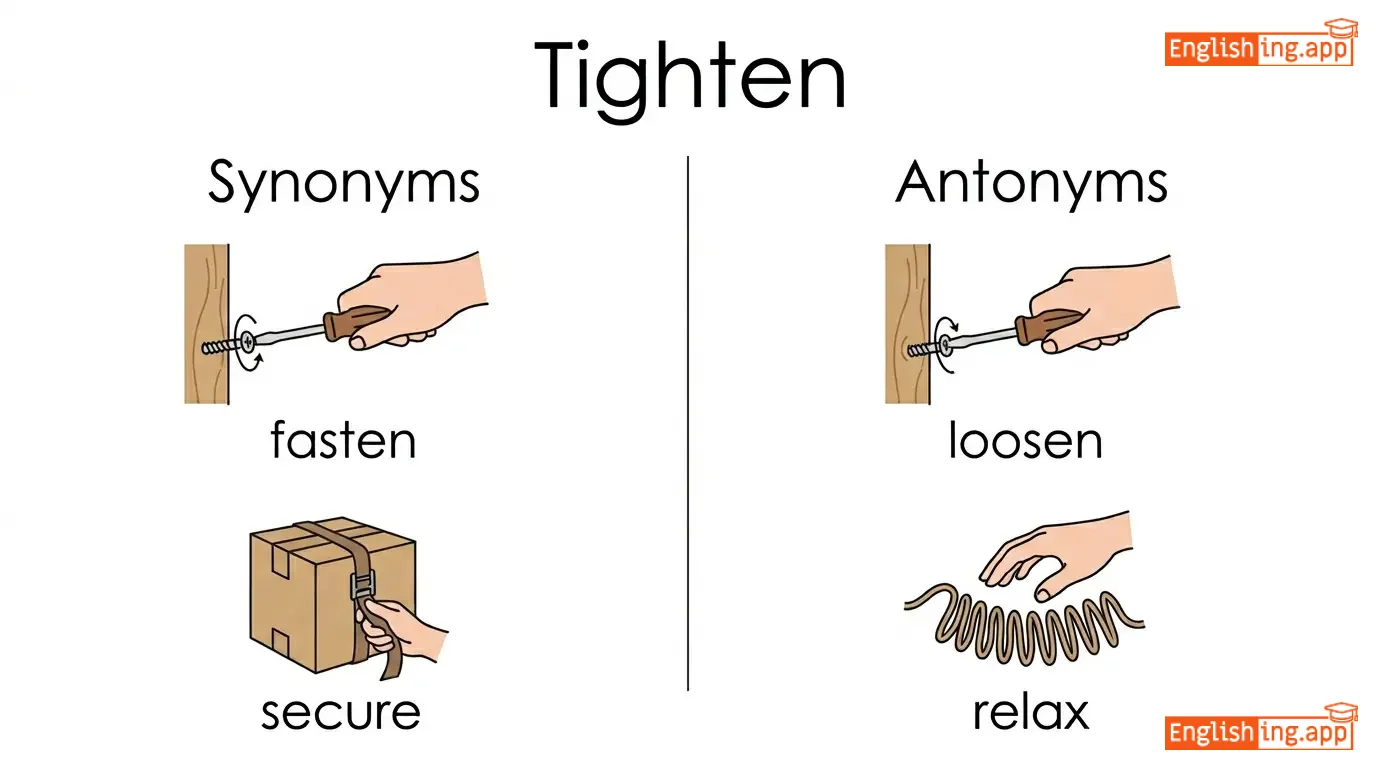
/ˈtaɪtən/
verb
(taiten)
••••••
|
|
紧固
jin gu
••••••
|
tightened
taitend
••••••
|
tightened
taitend
••••••
|
tightens
taitens
••••••
|
tightening
taitening
••••••
|
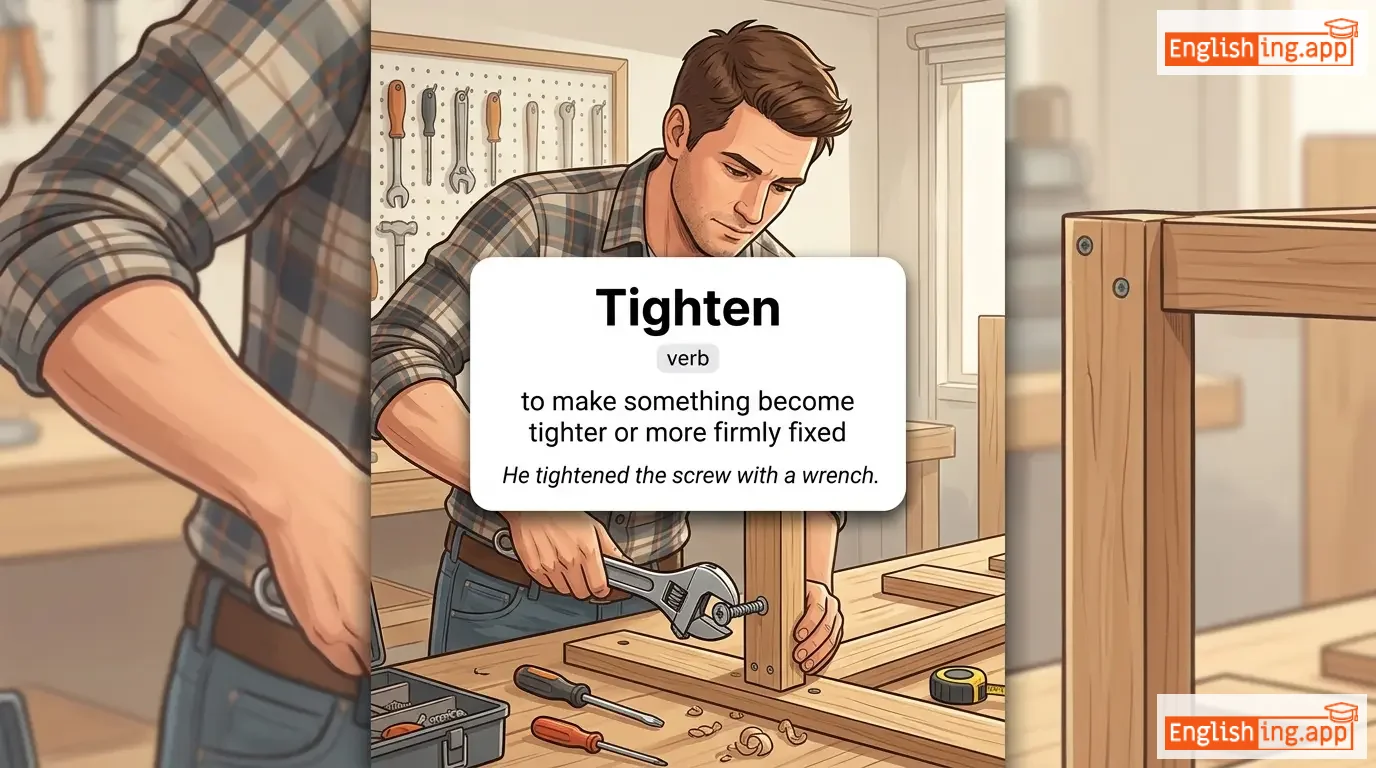
to make something become tighter or more firmly fixed
••••••
|
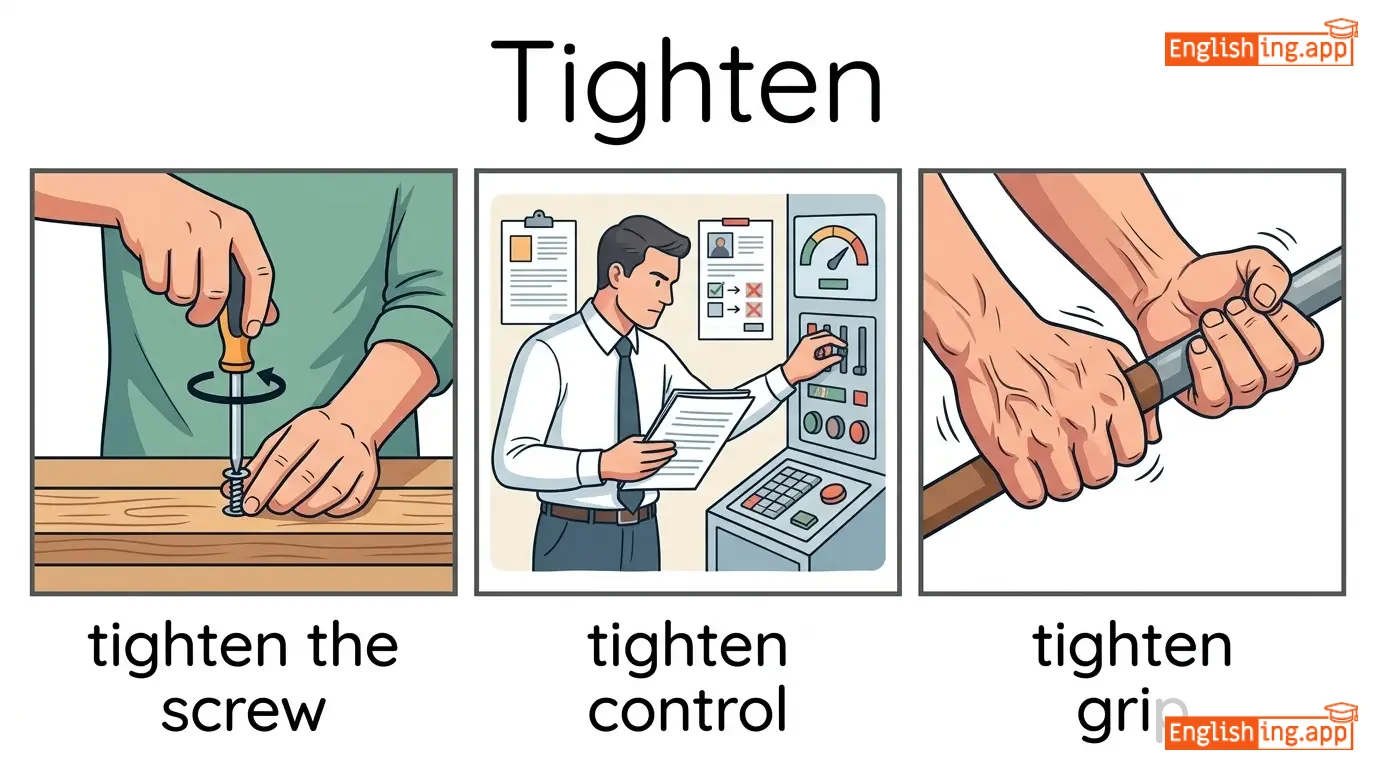
He tightened the screw with a wrench.
他用扳手拧紧了螺丝。
••••••
|
他用扳手拧紧了螺丝。
Ta yong banshou ningjin le luosi.
••••••
|
tighten one's belt
勒紧腰带
••••••
|
to spend less money; to be more economical
••••••
|
勒紧腰带
le jin yaodai
••••••
|
fasten, secure, stiffen, contract, strengthen
••••••
|
loosen, relax, slacken
••••••
|
tighten the screw, tighten control, tighten grip, tighten security
••••••
|
紧固 (tight) 是让它变得更紧 🔩
••••••
|
|
#5078
🤏
|
/ˈtaɪtli/
adverb
(taitli)
••••••
|
- •••••• |
紧紧地;牢牢地
jin jin de; lao lao de
••••••
|
- •••••• | - •••••• | - •••••• | - •••••• |
in a tight manner; firmly; securely
••••••
|
Hold the rope tightly so you don't fall.
紧握绳子,以免掉下来。
••••••
|
紧握绳子,避免跌倒。
Jin wo shengzi, bimian diedao.
••••••
|
- •••••• | - •••••• | - •••••• |
firmly, securely, closely, strongly
••••••
|
loosely, weakly, gently, lightly
••••••
|
hold tightly, grip tightly, packed tightly
••••••
|
紧握绳子,避免跌倒。
••••••
|
|
#5079
⏰
|
/tɪl/
preposition
(提尔)
••••••
|
- •••••• |
直到
zhídào
••••••
|
- •••••• | - •••••• | - •••••• | - •••••• |
up to the time of; until
••••••
|
She waited till midnight for his call.
她等到午夜才接到他的电话。
••••••
|
她等到午夜才接到他的电话。
Tā děng dào wǔyè cái jiē dào tā de diànhuà.
••••••
|
- •••••• | - •••••• | - •••••• |
until, up to, before, pending
••••••
|
after, since
••••••
|
till now, till late, till tomorrow, wait till
••••••
|
Till 意味着'直到' — 等到午夜接电话。
••••••
|
|
#5080
🌲
|
/ˈtɪmbər/
noun
(tīnbó)
••••••
|
- •••••• |
木材
mùcái
••••••
|
- •••••• | - •••••• | - •••••• | - •••••• |
wood prepared for use in building and carpentry
••••••
|
The house was built entirely from local timber. |
房子完全是用当地的木材建造的。
Fángzi wánquán shì yòng dāngdì de mùcái jiànzào de.
••••••
|
shiver me timbers |
an expression of surprise or astonishment
••••••
|
惊讶或吃惊的表达
jīngyà huò chījīng de biǎodá
••••••
|
wood, lumber, logs, planks, beam
••••••
|
metal, concrete
••••••
|
timber industry, timber house, cut timber, timber supply
••••••
|
Timber 意味着木材 🌲 — 记住‘Timber house’ 是木屋的意思。
••••••
|
|
#5081
⏰
|
/taɪm/
noun
(taim)
••••••
|
- •••••• |
时间
shijian
••••••
|
- •••••• | - •••••• | - •••••• | - •••••• |
a measured or measurable period during which an action, process, or condition exists or continues
••••••
|
I don’t have enough time to finish the project. |
我没有足够的时间完成这个项目。
Wo meiyou zugou de shijian wancheng zhege xiangmu.
••••••
|
- •••••• | - •••••• | - •••••• |
moment, duration, period, interval
••••••
|
eternity, infinity
••••••
|
spend time, waste time, save time, take time
••••••
|
SHIJIAN (time) doesn't stop, it keeps moving forward!
••••••
|
|
#5082
⏰
|
/ˈtaɪmli/
adjective
(泰姆利)
••••••
|
- •••••• |
及时的
jishi de
••••••
|
- •••••• | - •••••• | - •••••• | - •••••• |
Done or occurring at a favorable or useful time; opportune.
••••••
|
Her timely advice helped me avoid a big mistake.
她的泰姆利建议帮我避免了一个大错误。
••••••
|
她的及时建议帮我避免了一个大错误。
ta de jishi jianyi bang wo bimian le yi ge da cuowu.
••••••
|
timely intervention
泰姆利干预
••••••
|
An action taken at the right moment to prevent harm or improve a situation
••••••
|
及时干预
jishi ganyu
••••••
|
prompt, punctual, appropriate, suitable, convenient
••••••
|
late, delayed, untimely
••••••
|
timely manner, timely advice, timely response, timely action
••••••
|
Timely means 'on time', in Chinese '及时' (jishi) means just in time.
••••••
|
|
#5083
📅
|
/ˈtaɪm.teɪ.bəl/
noun
(taɪmˈteɪbəl)
••••••
|
- •••••• |
时间表
shíjiānbiǎo
••••••
|
- •••••• | - •••••• | - •••••• | - •••••• |
a schedule showing planned activities or events at particular times
••••••
|
Please check the train timetable for departure times.
请查看火车时刻表以获取出发时间。
••••••
|
请查看火车时刻表以获取出发时间。
Qǐng chákàn huǒchē shíkèbiǎo yǐ huòqǔ chūfā shíjiān.
••••••
|
- •••••• | - •••••• | - •••••• |
schedule, agenda, program, itinerary
••••••
|
spontaneity, improvisation
••••••
|
train timetable, school timetable, bus timetable
••••••
|
时间表帮助你规划你的活动时间!
••••••
|
|
#5084
⏰
|
/ˈtaɪmɪŋ/
noun
(taiming)
••••••
|
- •••••• |
时机
shiji
••••••
|
- •••••• | - •••••• | - •••••• | - •••••• |
the choice, judgment, or control of when something should be done
••••••
|
Good timing is essential in business negotiations. |
在商业谈判中,良好的时机至关重要。
zai shangye tanpan zhong, lianghao de shiji zhiguang zhongyao.
••••••
|
perfect timing |
doing something at exactly the right moment
••••••
|
完美时机
wanmei shiji
••••••
|
scheduling, coordination, planning, arrangement, rhythm
••••••
|
delay, misjudgment
••••••
|
good timing, bad timing, timing issue, timing control
••••••
|
Time + ing = Timing ⏰ — 抓住最佳时机!
••••••
|
|
#5085
🥫
|
/tɪn/
noun
(丁)
••••••
|
- •••••• |
锡
xi
••••••
|
- •••••• | - •••••• | - •••••• | - •••••• |
a metal container; a chemical element (Sn)
••••••
|
She bought a tin of biscuits from the store.
她从商店买了一罐饼干。
••••••
|
她从商店买了一罐饼干。
Ta cong shangdian mai le yi guan binggan.
••••••
|
in a tin
在罐子里
••••••
|
packed or contained in a tin container
••••••
|
在罐子里
zai guanzi li
••••••
|
can, container, box, metal case
••••••
|
plastic container, bag
••••••
|
tin can, tin foil, tin box, tin of cookies
••••••
|
锡 = tin, 联想到罐头。
••••••
|
|
#5086
🐭
|
/ˈtaɪ.ni/
adjective
(tai ni)
••••••
|
- •••••• |
非常小; 微小
fēi cháng xiǎo; wēi xiǎo
••••••
|
- •••••• | - •••••• | - •••••• | - •••••• |
extremely small in size or amount
••••••
|
The baby bird was tiny and helpless.
ðə ˈbeɪbi bɜːrd wəz ˈtaɪni ənd ˈhɛlpləs.
••••••
|
小鸟宝宝非常小并且无助。
xiǎo niǎo bǎobǎo fēicháng xiǎo bìngqiě wúzhù.
••••••
|
- •••••• | - •••••• | - •••••• |
small, miniature, microscopic, minute, little
••••••
|
huge, enormous, gigantic, massive, large
••••••
|
tiny house, tiny amount, tiny details, tiny steps
••••••
|
Tiny in Chinese is '非常小' like a tiny bird!
••••••
|
|
#5087
💡
|
/tɪp/
noun
(提普)
••••••
|
- •••••• |
建议
jianyi
••••••
|
- •••••• | - •••••• | - •••••• | - •••••• |
a small but useful piece of advice
••••••
|
I received a tip on how to improve my presentation. |
我收到了关于如何改进我的演示的建议。
Wo shoudao le guanyu ruhe gaijin wo de yanshi de jianyi.
••••••
|
- •••••• | - •••••• | - •••••• |
hint, suggestion, advice, clue
••••••
|
misguidance
••••••
|
give a tip, follow a tip, valuable tip
••••••
|
Remember the tip of your pen for clear writing!
••••••
|
|
#5088
🚗
|
/taɪər/
noun
(tāi'ěr)
••••••
|
- •••••• |
轮胎
luntai
••••••
|
- •••••• | - •••••• | - •••••• | - •••••• |
a rubber covering around a wheel
••••••
|
The car’s tire burst on the highway.
汽车的轮胎在高速公路上爆裂了。
••••••
|
汽车的轮胎在高速公路上爆裂了。
Qiche de luntai zai gaosu gonglu shang baolie le.
••••••
|
- •••••• | - •••••• | - •••••• |
wheel, rubber, rim
••••••
|
- •••••• |
flat tire, spare tire, tire pressure
••••••
|
轮胎帮助你的车平稳行驶!
••••••
|
|
#5089
😴
|
/taɪəd/
adjective
(泰尔德)
••••••
|
- •••••• |
疲倦
píjuàn
••••••
|
- •••••• | - •••••• | - •••••• | - •••••• |
feeling exhausted; in need of sleep or rest
••••••
|
I am too tired to continue working.
我太累了,不能继续工作。
••••••
|
我太累了,不能继续工作。
Wǒ tài lèi le, bù néng jìxù gōngzuò.
••••••
|
- •••••• | - •••••• | - •••••• |
exhausted, weary, fatigued, drained, worn out
••••••
|
energetic, refreshed, alert, vigorous, rested
••••••
|
tired eyes, tired voice, feel tired, getting tired
••••••
|
疲倦 = 需要恢复精力才能继续工作
••••••
|
|
#5090
😴
|
/ˈtaɪə.səm/
adjective
(taɪərsəm)
••••••
|
- •••••• |
令人疲倦的; 无聊的
lìng rén pílèi de; wúliáo de
••••••
|
- •••••• | - •••••• | - •••••• | - •••••• |
causing weariness or boredom; tedious
••••••
|
The long lecture was tiresome and repetitive. |
长时间的演讲令人疲倦且重复。
cháng shíjiān de yǎnjiǎng lìng rén pílèi qiě chóngfù.
••••••
|
- •••••• | - •••••• | - •••••• |
boring, tedious, wearisome, dull
••••••
|
interesting, exciting, engaging, stimulating
••••••
|
tiresome task, tiresome journey, tiresome work
••••••
|
疲倦和无聊的联系有助于记住这个词。
••••••
|
|
#5091
😫
|
/ˈtaɪərɪŋ/
adjective
(泰林)
••••••
|
- •••••• |
累人的
leiren de
••••••
|
- •••••• | - •••••• | - •••••• | - •••••• |
causing someone to feel exhausted or in need of rest
••••••
|
The long journey was extremely tiring.
长途旅行非常泰林。
••••••
|
长途旅行非常累人。
Changtu luxing feichang leiren
••••••
|
- •••••• | - •••••• | - •••••• |
exhausting, fatiguing, draining, wearying
••••••
|
refreshing, invigorating
••••••
|
tiring day, tiring task, tiring journey
••••••
|
累人的 = tiring; imagine traveling makes you 'lei' (tired)
••••••
|
|
#5092
🧻
|
/ˈtɪʃ.uː/
noun
(tishū)
••••••
|
- •••••• |
纸巾
zhǐjīn
••••••
|
- •••••• | - •••••• | - •••••• | - •••••• |
a piece of soft absorbent paper or fabric
••••••
|
She used a tissue to wipe her nose. |
她用纸巾擦了擦鼻子。
Tā yòng zhǐjīn cāle cā bízi.
••••••
|
- •••••• | - •••••• | - •••••• |
paper, napkin, cloth, handkerchief
••••••
|
none
••••••
|
tissue paper, facial tissue, soft tissue
••••••
|
纸巾擦鼻子 - Tissue for wiping your nose
••••••
|
|
#5093
📖
|
/ˈtaɪ.təl/
noun
(tài té)
••••••
|
- •••••• |
标题; 称号; 荣誉
taitel
••••••
|
- •••••• | - •••••• | - •••••• | - •••••• |
the name of a book, movie, or other work; a word used before someone's name to show rank or status
••••••
|
The title of the book is very interesting. |
这本书的标题非常有趣。
Zhè běn shū de biāotí fēicháng yǒuqù
••••••
|
- •••••• | - •••••• | - •••••• |
heading, name, caption, designation
••••••
|
subtitle, content, body
••••••
|
book title, job title, movie title
••••••
|
就像书的标题一样,称号和荣誉能帮助人们识别身份。
••••••
|
|
#5094
➡️
|
/tuː/
preposition
(tu)
••••••
|
- •••••• |
到
dao
••••••
|
- •••••• | - •••••• | - •••••• | - •••••• |
used for expressing motion or direction
••••••
|
She is going to the market.
她去市场。
••••••
|
她去市场。
Tā qù shìchǎng.
••••••
|
- •••••• | - •••••• | - •••••• |
toward, towards, in the direction of
••••••
|
from
••••••
|
go to, travel to, turn to
••••••
|
To - 你去 (ni qu) - You go
••••••
|
|
#5095
🚬
|
/təˈbækoʊ/
noun
(烟草)
••••••
|
- •••••• |
烟草
yāncǎo
••••••
|
- •••••• | - •••••• | - •••••• | - •••••• |
a plant grown for its leaves, which are used in making cigarettes and cigars
••••••
|
He stopped smoking tobacco after his health scare. |
在健康问题之后,他停止吸烟草。
Zài jiànkāng wèntí zhīhòu, tā tíngzhǐ xī yāncǎo.
••••••
|
- •••••• | - •••••• | - •••••• |
cigarettes, cigars, nicotine
••••••
|
none
••••••
|
tobacco leaves, tobacco smoke, chewing tobacco
••••••
|
烟草 = 烟雾缭绕中烟草的香味
••••••
|
|
#5096
📅
|
/təˈdeɪ/
noun, adverb
(tʊˈdeɪ)
••••••
|
- •••••• |
今天
jin tian
••••••
|
- •••••• | - •••••• | - •••••• | - •••••• |
on this present day
••••••
|
She has a meeting today.
她今天有一个会议。
••••••
|
她今天有一个会议。
Ta jin tian you yi ge hui yi.
••••••
|
here today, gone tomorrow
今天在这里,明天走
••••••
|
something temporary or short-lived
••••••
|
今天在这里,明天走
Jin tian zai zhe li, ming tian zou
••••••
|
now, currently, presently, nowadays
••••••
|
yesterday, tomorrow
••••••
|
today only, happening today, today morning, today evening
••••••
|
今天就是今天,记住今天
••••••
|
|
#5097
🦶
|
/toʊ/
noun
(tóu)
••••••
|
- •••••• |
脚趾
jiao zhi
••••••
|
- •••••• | - •••••• | - •••••• | - •••••• |
any of the five digits at the end of the human foot
••••••
|
He injured his toe while playing football. |
他在踢足球时伤到了脚趾。
Ta zai ti zuqiu shi shang dao le jiao zhi.
••••••
|
- •••••• | - •••••• | - •••••• |
foot, digit, appendage
••••••
|
none
••••••
|
toe injury, big toe, pinky toe
••••••
|
Toe = 脚趾,因足球比赛踢到脚趾。
••••••
|
|
#5098
🤝
|
/təˈɡeðər/
adverb
(together)
••••••
|
- •••••• |
一起
yiqi
••••••
|
- •••••• | - •••••• | - •••••• | - •••••• |
with each other; in unity; at the same time
••••••
|
We should work together to solve this problem.
我们应该一起工作来解决这个问题。
••••••
|
我们应该一起工作来解决这个问题。
Wo men ying gai yi qi gong zuo lai jie jue zhe ge wen ti.
••••••
|
- •••••• | - •••••• | - •••••• |
jointly, collectively, unitedly
••••••
|
separately, apart, alone
••••••
|
work together, come together, live together
••••••
|
Chinese speakers use '一起' for together, 'yiqi' means working together.
••••••
|
|
#5099
🚽
|
/ˈtɔɪlət/
noun
(厕所)
••••••
|
- •••••• |
厕所
cesuo
••••••
|
- •••••• | - •••••• | - •••••• | - •••••• |
a fixture used for the disposal of human waste
••••••
|
The public toilet was clean and well maintained. |
公共厕所干净且维护得很好。
Gonggong cesuo ganjing qie weihu de hen hao.
••••••
|
- •••••• | - •••••• | - •••••• |
lavatory, restroom, bathroom, washroom, loo
••••••
|
kitchen, bedroom
••••••
|
public toilet, flush toilet, toilet paper, toilet seat
••••••
|
厕所 🚽, 记得在中文中也就是‘厕所’!
••••••
|
|
#5100
🤲
|
/ˈtɒlərəns/
noun
(tuōlìránsī)
••••••
|
- •••••• |
宽容
kuanrong
••••••
|
- •••••• | - •••••• | - •••••• | - •••••• |
The ability or willingness to accept or endure differences, behaviors, or opinions without hostility.
••••••
|
Her tolerance for different cultures impressed everyone. |
她对不同文化的宽容给每个人留下了深刻印象。
Ta dui butong wenhua de kuanrong gei meige ren liuxiala shenke yinxiang.
••••••
|
zero tolerance |
A policy of not allowing any violation of rules or standards.
••••••
|
零容忍
ling rongren
••••••
|
acceptance, patience, endurance, open-mindedness, leniency
••••••
|
intolerance, rejection, prejudice
••••••
|
cultural tolerance, religious tolerance, show tolerance, promote tolerance
••••••
|
宽容是接受差异而不带敌意。
••••••
|
|
#5101
😐
|
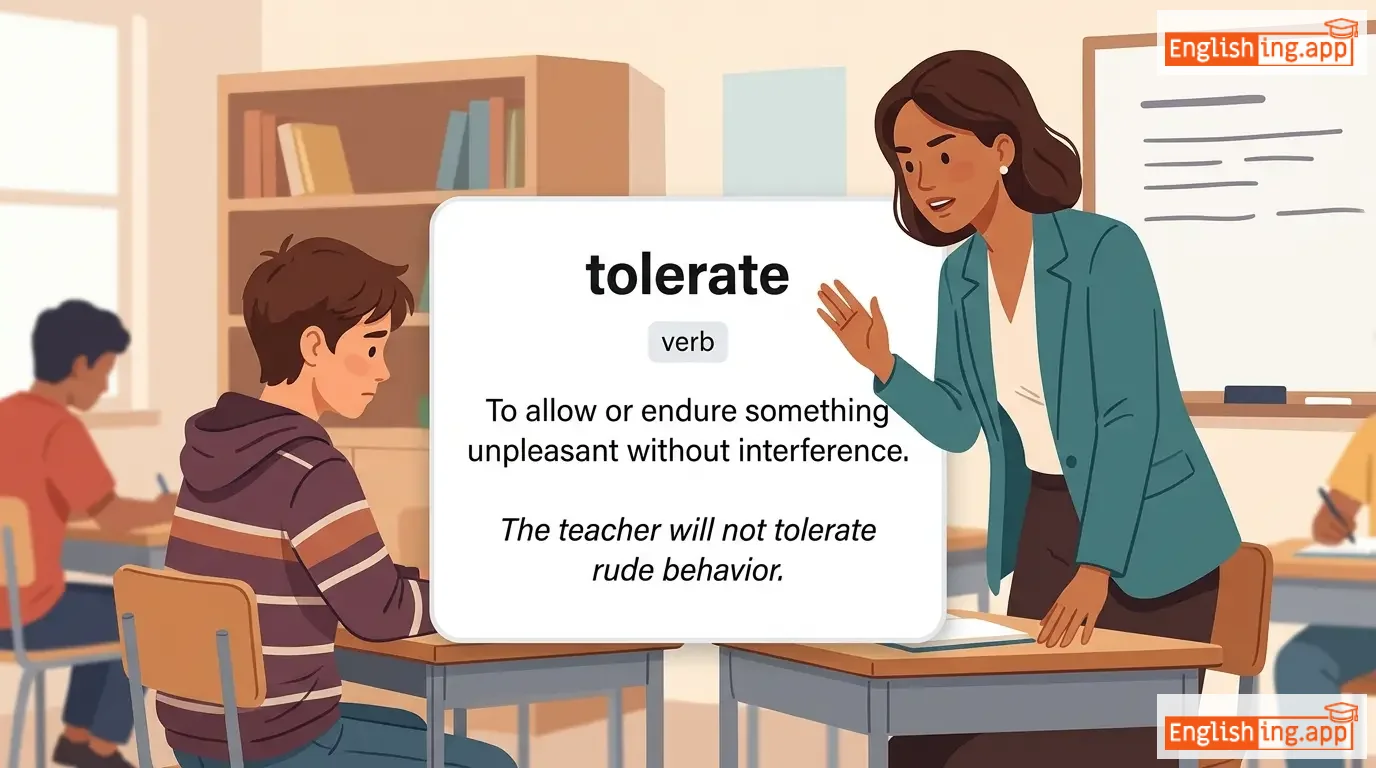
/ˈtɒləreɪt/
verb
(托勒瑞特)
••••••
|
|
容忍
róngrěn
••••••
|
tolerated
托勒瑞特德
••••••
|
tolerated
托勒瑞特德
••••••
|
tolerates
托勒瑞特斯
••••••
|
tolerating
托勒瑞特英
••••••
|
To allow or endure something unpleasant without interference.
••••••
|
The teacher will not tolerate rude behavior.
老师不会容忍粗鲁的行为。
••••••
|
老师不会容忍粗鲁的行为。
lǎoshī bù huì róngrěn cūlǔ de xíngwéi.
••••••
|
tolerate no nonsense
容忍胡说八道
••••••
|
To be strict and not allow foolish or improper behavior.
••••••
|
容忍胡说八道
róngrěn húshuō bādào
••••••
|
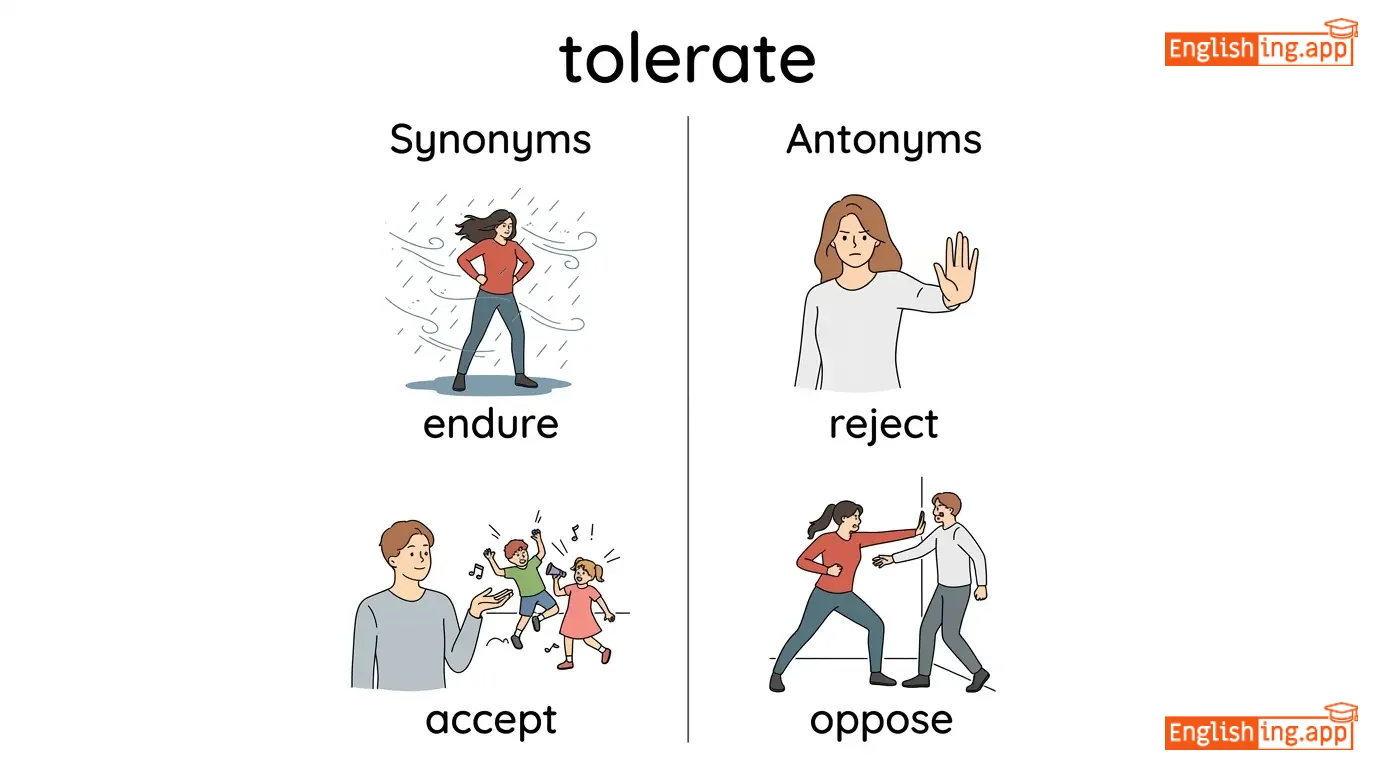
endure, accept, allow, permit, withstand
••••••
|
reject, oppose, forbid
••••••
|
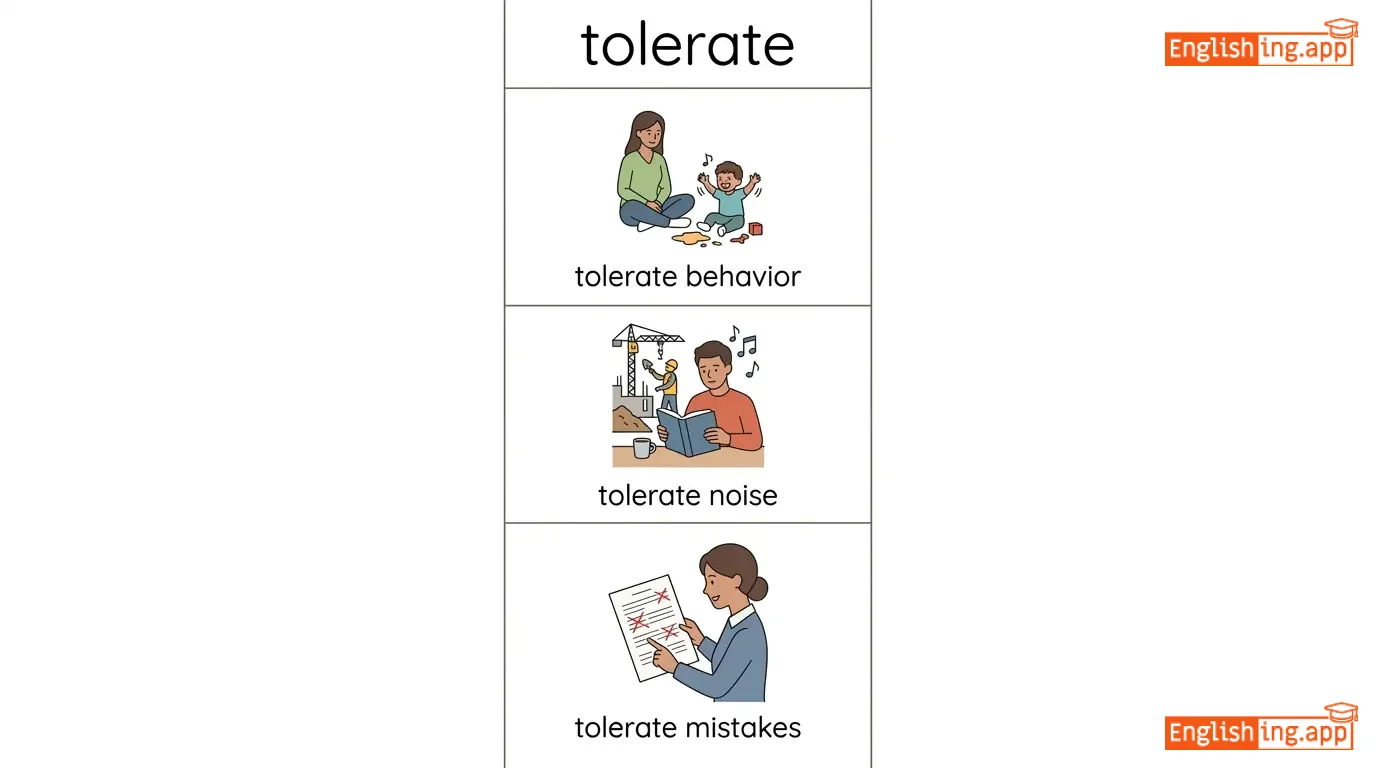
tolerate behavior, tolerate noise, tolerate mistakes, refuse to tolerate
••••••
|
老师容忍粗鲁行为
••••••
|
|
#5102
💰
|
/toʊl/
noun
(收费)
••••••
|
- •••••• |
过路费 / 损失
guòlùfèi / sǔnshī
••••••
|
- •••••• | - •••••• | - •••••• | - •••••• |
A charge payable for using a road or bridge; also the extent of damage or suffering caused by something.
••••••
|
The flood took a heavy toll on the village.
洪水对村庄造成了巨大的损失。
••••••
|
洪水对村庄造成了巨大的损失。
hóngshuǐ duì cūnzhuāng zàochéngle jùdà de sǔnshī.
••••••
|
take a toll
收取费用
••••••
|
To cause harm, damage, or suffering over time.
••••••
|
造成损害
zàochéng sǔnshī
••••••
|
fee, charge, cost, damage, burden
••••••
|
relief, benefit
••••••
|
pay toll, heavy toll, death toll, take a toll
••••••
|
Toll表示如果你不付费,会有损失。 (take a toll)
••••••
|
|
#5103
🍅
|
/təˈmeɪtoʊ/
noun
(tóu mài tòu)
••••••
|
- •••••• |
番茄
fānqié
••••••
|
- •••••• | - •••••• | - •••••• | - •••••• |
a red or yellowish fruit that is typically eaten as a vegetable
••••••
|
I added some tomato to the salad. |
我在沙拉里加了一些番茄。
Wǒ zài shālā lǐ jiāle yīxiē fānqié.
••••••
|
- •••••• | - •••••• | - •••••• |
fruit, vegetable, berry
••••••
|
none
••••••
|
tomato sauce, tomato soup, tomato paste
••••••
|
番茄和'明天'发音相似,所以想象明天吃一个番茄!
••••••
|
|
#5104
📆
|
/təˈmɒroʊ/
adverb
(明天)
••••••
|
- •••••• |
明天
mingtian
••••••
|
- •••••• | - •••••• | - •••••• | - •••••• |
on the day after today; in the future
••••••
|
Tomorrow we will visit the museum. |
明天我们将参观博物馆。
Mingtian women jiang canguan bowuguan.
••••••
|
- •••••• | - •••••• | - •••••• |
next day, following day
••••••
|
today, yesterday
••••••
|
tomorrow morning, by tomorrow, tomorrow's meeting
••••••
|
明天就是今天之后的日子
••••••
|
|
#5105
🛻
|
/tʌn/
noun
(吨)
••••••
|
- •••••• |
吨
dun
••••••
|
- •••••• | - •••••• | - •••••• | - •••••• |
A unit of weight equal to 2,000 pounds (US) or 1,000 kilograms (metric); a large amount of something
••••••
|
The truck carried a ton of apples to the market.
卡车运送了一吨苹果到市场。
••••••
|
卡车运送了一吨苹果到市场。
Kache yun song le yi dun pingguo dao shichang.
••••••
|
a ton of
一吨
••••••
|
a large amount of something
••••••
|
一吨
yi dun
••••••
|
load, heap, mass, bulk, weight
••••••
|
none, little
••••••
|
ton of bricks, ton of work, a ton of money
••••••
|
Think of a '吨' of rice in a Chinese market.
••••••
|
|
#5106
🎶
|
/toʊn/
noun, verb
(音调)
••••••
|
- •••••• |
音调
yīndiào
••••••
|
- •••••• | - •••••• |
tones
音调们
••••••
|
toning
调音
••••••
|
the general character or attitude of a place, piece of writing, situation, etc.
••••••
|
The tone of the letter was very formal.
这封信的音调非常正式。
••••••
|
这封信的音调非常正式。
Zhè fēng xìn de yīndiào fēicháng zhèngshì.
••••••
|
- •••••• | - •••••• | - •••••• |
style, manner, attitude, approach
••••••
|
discord, harshness
••••••
|
tone of voice, tone of conversation, tone of the message
••••••
|
Tone in music is like the tone in your voice!
••••••
|
|
#5107
👅
|
/tʌŋ/
noun
(舌头)
••••••
|
- •••••• |
舌头
shétou
••••••
|
- •••••• | - •••••• | - •••••• | - •••••• |
a fleshy muscular organ in the mouth used for tasting, swallowing, and speaking
••••••
|
She stuck out her tongue playfully. |
她顽皮地伸出了舌头。
Tā wánpí de shēn chūle shétou.
••••••
|
Cat got your tongue? |
used when someone is unexpectedly silent or unable to speak
••••••
|
猫吞了你的舌头吗?
Māo tūnle nǐ de shétou ma?
••••••
|
mouth, speech organ, language
••••••
|
none
••••••
|
tongue tied, tongue twister, tongue of a shoe
••••••
|
舌头在味觉中起着关键作用,猫也常常用它来保持安静。
••••••
|
|
#5108
🌙
|
/təˈnaɪt/
adverb
(托奈特)
••••••
|
- •••••• |
今晚
jin wan
••••••
|
- •••••• | - •••••• | - •••••• | - •••••• |
during the night of today; this evening
••••••
|
Tonight we are going to watch a movie. |
今晚我们要看电影。
Jin wan wo men yao kan dian ying.
••••••
|
- •••••• | - •••••• | - •••••• |
this evening, this night
••••••
|
this morning, last night
••••••
|
tonight's show, see you tonight, tonight only
••••••
|
今晚看电影,度过一个完美的夜晚。
••••••
|
|
#5109
😔
|
/tuː/
adverb
(tū)
••••••
|
- •••••• |
太多
tai duo
••••••
|
- •••••• | - •••••• | - •••••• | - •••••• |
to a higher degree than is desirable, permissible, or possible
••••••
|
She is too tired to continue working. |
她太累了,无法继续工作。
Ta tai lei le, wu fa jixu gongzuo.
••••••
|
too good to be true |
something that seems so perfect that it is hard to believe it is real
••••••
|
好得让人难以置信
hao de rang ren nanyi zhishin
••••••
|
excessively, overly, extremely, very
••••••
|
barely, slightly, moderately
••••••
|
too much, too late, too many, too hard
••••••
|
太多茶让你'太'困 – 太多茶让你'太'累了。
••••••
|
|
#5110
🔧
|
/tuːl/
noun
(tú'ěr)
••••••
|
- •••••• |
工具
gongju
••••••
|
- •••••• | - •••••• | - •••••• | - •••••• |
a device or implement used to carry out a particular function
••••••
|
He used a hammer as a tool to fix the chair. |
他用锤子作为工具来修理椅子。
Ta yong chuizi zuowei gongju lai xiuli yizi.
••••••
|
- •••••• | - •••••• | - •••••• |
instrument, device, gadget, implement
••••••
|
toy, decoration
••••••
|
power tool, hand tool, tool kit, garden tool
••••••
|
Tools help you ‘tool’ your way through problems – 工具帮助你解决问题。
••••••
|
|
#5111
🦷
|
/tuːθ/
noun
(tʊθ)
••••••
|
- •••••• |
牙齿
yáchǐ
••••••
|
- •••••• | - •••••• | - •••••• | - •••••• |
each of the hard, pointed structures in the mouth used for biting and chewing food
••••••
|
He has a toothache and needs to see the dentist. |
他牙疼,需要看牙医。
Tā yáténg, xūyào kàn yáyī.
••••••
|
a tooth for a tooth |
an eye for an eye; retribution
••••••
|
以牙还牙
yǐ yá huán yá
••••••
|
fang, molar, incisor, canine
••••••
|
gum
••••••
|
toothbrush, tooth paste, tooth decay, tooth fairy
••••••
|
牙痛不怕,牙齿痛就怕 – 牙齿 = 痛
••••••
|
|
#5112
🔝
|
/tɒp/
noun
(top)
••••••
|
- •••••• |
顶端
dingduan
••••••
|
- •••••• | - •••••• | - •••••• | - •••••• |
the highest or uppermost point, part, or surface of something
••••••
|
The book is on the top shelf.
书本在顶层书架上。
••••••
|
书本在顶层书架上。
Shuben zai dingceng shujia shang.
••••••
|
top of the world
站在世界之巅
••••••
|
feeling extremely happy or successful
••••••
|
站在世界之巅
Zhan zai shijie zhidian
••••••
|
summit, peak, pinnacle, apex
••••••
|
bottom, base
••••••
|
top priority, top scorer, top rated, top of the list
••••••
|
Top of the world, where happiness reaches – 站在世界之巅,幸福达到的地方。
••••••
|
|
#5113
💬
|
/ˈtɒpɪk/
noun
(话题)
••••••
|
- •••••• |
主题
zhuti
••••••
|
- •••••• | - •••••• | - •••••• | - •••••• |
a subject of conversation, discussion, or writing
••••••
|
The topic of the meeting was company expansion. |
会议的主题是公司扩展。
Huiyi de zhuti shi gongsi kuozhan.
••••••
|
- •••••• | - •••••• | - •••••• |
subject, theme, issue, matter
••••••
|
digression, aside
••••••
|
discussion topic, popular topic, hot topic, main topic
••••••
|
Topics make discussions tick – 话题让讨论更生动。
••••••
|
|
#5114
🔦
|
/tɔːrtʃ/
noun
(托奇)
••••••
|
- •••••• |
手电筒 / 火炬
tuoqi
••••••
|
- •••••• | - •••••• | - •••••• | - •••••• |
a portable electric lamp powered by batteries; a flaming stick used for light
••••••
|
Use the torch to find your way in the dark.
在黑暗中用手电筒来照路。
••••••
|
在黑暗中用手电筒来照路。
zaiheianzhongyongshoudiantonglaizhaolu
••••••
|
- •••••• | - •••••• | - •••••• |
flashlight, lamp, beacon
••••••
|
darkness, blackout
••••••
|
electric torch, pocket torch, torch light, shine the torch
••••••
|
Torch = To Reach Clear Horizons; 黑夜变光明 手电筒在手 火炬在路上
••••••
|
|
#5115
🌪️
|
/tɔːrˈneɪdoʊ/
noun
(龙卷风)
••••••
|
- •••••• |
龙卷风
long juan feng
••••••
|
- •••••• | - •••••• | - •••••• | - •••••• |
a rapidly rotating column of air in contact with the ground and clouds, often destructive
••••••
|
The tornado destroyed several houses in the village. |
龙卷风摧毁了村子里的几座房子
Long juan feng cui huai le cun zi li de ji zuo fang zi
••••••
|
- •••••• | - •••••• | - •••••• |
twister, cyclone, whirlwind, storm
••••••
|
calm, stillness
••••••
|
violent tornado, tornado warning, tornado path, tornado damage
••••••
|
龙卷风像旋风一样带来破坏
••••••
|
|
#5116
🐢
|
/ˈtɔːr.təs/
noun
(托特斯)
••••••
|
- •••••• |
乌龟
wugui
••••••
|
- •••••• | - •••••• | - •••••• | - •••••• |
A slow-moving land reptile with a hard shell.
••••••
|
The tortoise slowly crossed the garden.
托特斯慢慢地穿过花园
••••••
|
乌龟慢慢地穿过花园。
Wugui manman de chuanguo huayuan.
••••••
|
slow as a tortoise
慢得像托特斯
••••••
|
very slow
••••••
|
慢得像乌龟
man de xiang wugui
••••••
|
terrapin, chelonian, testudine, shelled reptile
••••••
|
hare, rabbit
••••••
|
tortoise shell, tortoise race, tortoise pace
••••••
|
想象乌龟 'wugui' 缓慢移动
••••••
|
|
#5117
😣
|
/ˈtɔːtʃər/
noun
(折磨)
••••••
|
- •••••• |
折磨
zhémó
••••••
|
- •••••• | - •••••• | - •••••• | - •••••• |
the action or practice of inflicting severe pain on someone as a punishment or to force them to do something
••••••
|
He was subjected to torture during the interrogation.
他在审问中遭受了折磨。
••••••
|
他在审问中遭受了折磨。
Tā zài shěnwèn zhōng zāoshòule zhémó.
••••••
|
- •••••• | - •••••• | - •••••• |
torment, agony, suffering, pain
••••••
|
comfort, relief
••••••
|
subject to torture, torture methods, inflicted torture
••••••
|
折磨意味着极端的痛苦和惩罚。
••••••
|
|
#5118
🎲
|
/tɔs/
verb
(托斯)
••••••
|
- •••••• |
轻轻投掷
qing qing tou zhi
••••••
|
tossed
托斯德
••••••
|
tossed
托斯德
••••••
|
tosses
托斯斯
••••••
|
tossing
托辛
••••••
|
To throw something lightly or casually; to move or turn suddenly.
••••••
|
He tossed the keys onto the table.
他把钥匙扔到了桌子上。
••••••
|
他把钥匙扔到了桌子上。
Ta ba yaoshi reng dao le zhuozi shang.
••••••
|
toss and turn
辗转反侧
••••••
|
to move around restlessly in bed without being able to sleep
••••••
|
辗转反侧
Zhuan zhuan fan ce
••••••
|
throw, fling, pitch, hurl
••••••
|
catch, hold, retain
••••••
|
toss a coin, toss away, toss out, toss salad
••••••
|
Toss像抛硬币一样在比赛中投掷.
••••••
|
|
#5119
🧮
|
/ˈtoʊ.təl/
adjective, noun, verb
(托塔尔)
••••••
|
- •••••• |
总计
zongji
••••••
|
totaled
托塔尔德
••••••
|
totaled
托塔尔德
••••••
|
totals
托塔尔斯
••••••
|
totaling
托塔林
••••••
|
the whole amount; complete
••••••
|
The total cost was too high.
总成本太高了。
••••••
|
总成本太高了。
Zong chengben tai gao le.
••••••
|
a total loss
完全损失
••••••
|
completely destroyed or ruined
••••••
|
完全损失
wanquan sunshi
••••••
|
whole, complete, sum, entire
••••••
|
partial, incomplete
••••••
|
total cost, total amount, total failure, grand total
••••••
|
Total 意味着完整 – 想想 total 就是总计。
••••••
|
|
#5120
💯
|
/ˈtoʊtəli/
adverb
(tóutè lì)
••••••
|
- •••••• |
完全
wanquan
••••••
|
- •••••• | - •••••• | - •••••• | - •••••• |
completely; entirely; absolutely
••••••
|
I totally agree with your opinion. |
我完全同意你的意见。
Wǒ wánquán tóngyì nǐ de yìjiàn.
••••••
|
- •••••• | - •••••• | - •••••• |
completely, entirely, absolutely
••••••
|
partially, partly, incompletely
••••••
|
totally different, totally wrong, totally agree
••••••
|
完全 = 完美的同意!
••••••
|
|
#5121
👆
|
/tʌtʃ/
verb
(tʌtʃ)
••••••
|
|
触摸
chùmō
••••••
|
touched
tʌtʃd
••••••
|
touched
tʌtʃd
••••••
|
touches
tʌtʃiz
••••••
|
touching
tʌtʃɪŋ
••••••
|
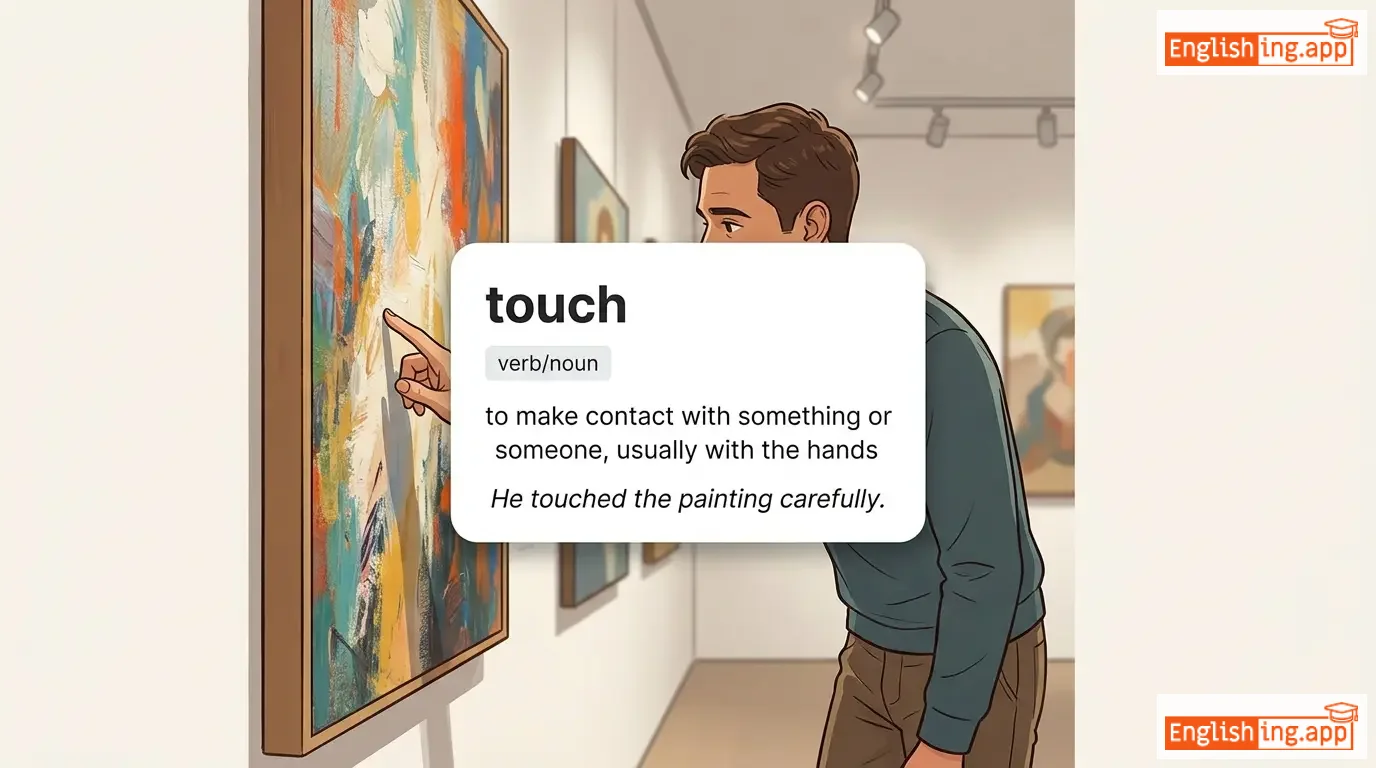
to put your hand or finger on something; to make physical contact
••••••
|
Please don't touch the wet paint.
请不要触摸湿漆。
••••••
|
请不要触摸湿漆。
Qǐng bùyào chùmō shī qī.
••••••
|
- •••••• | - •••••• | - •••••• |
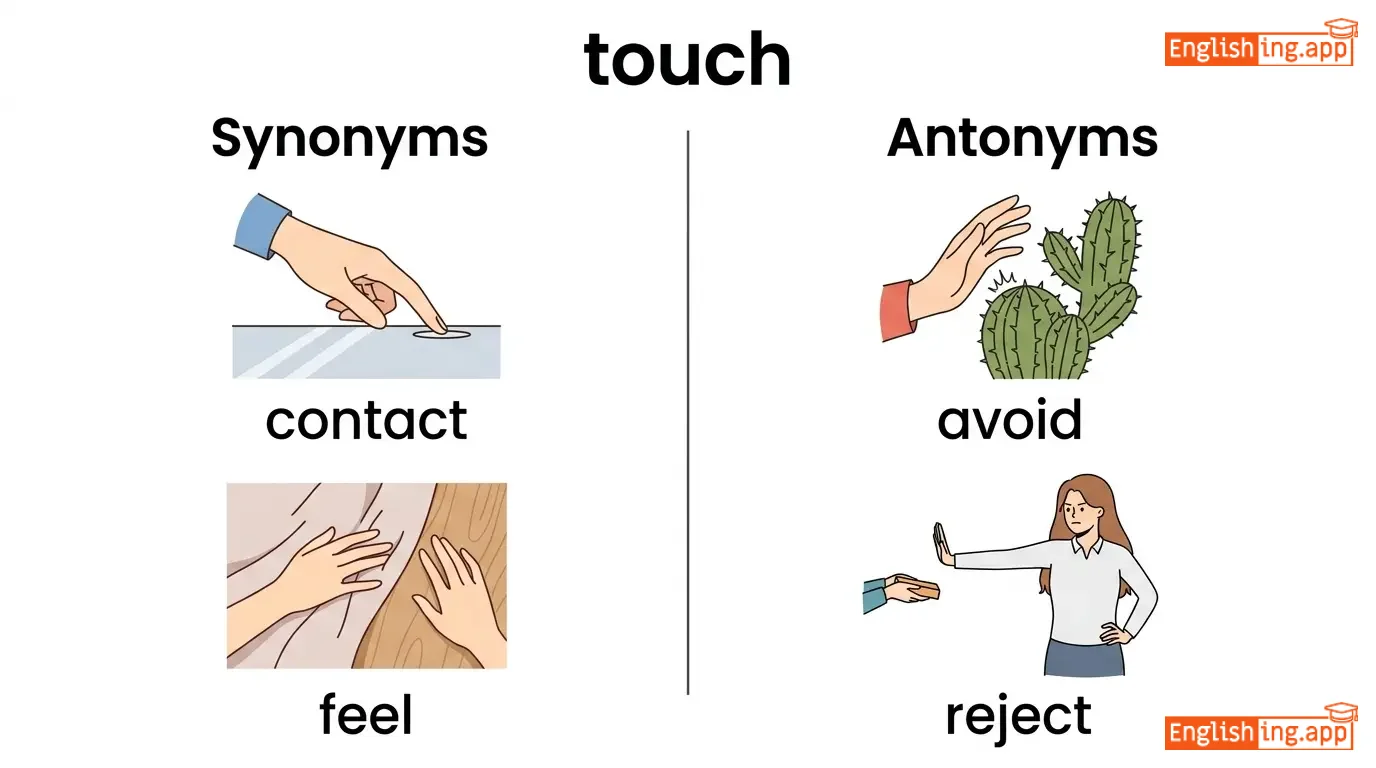
feel, handle, contact, brush
••••••
|
avoid, miss
••••••
|
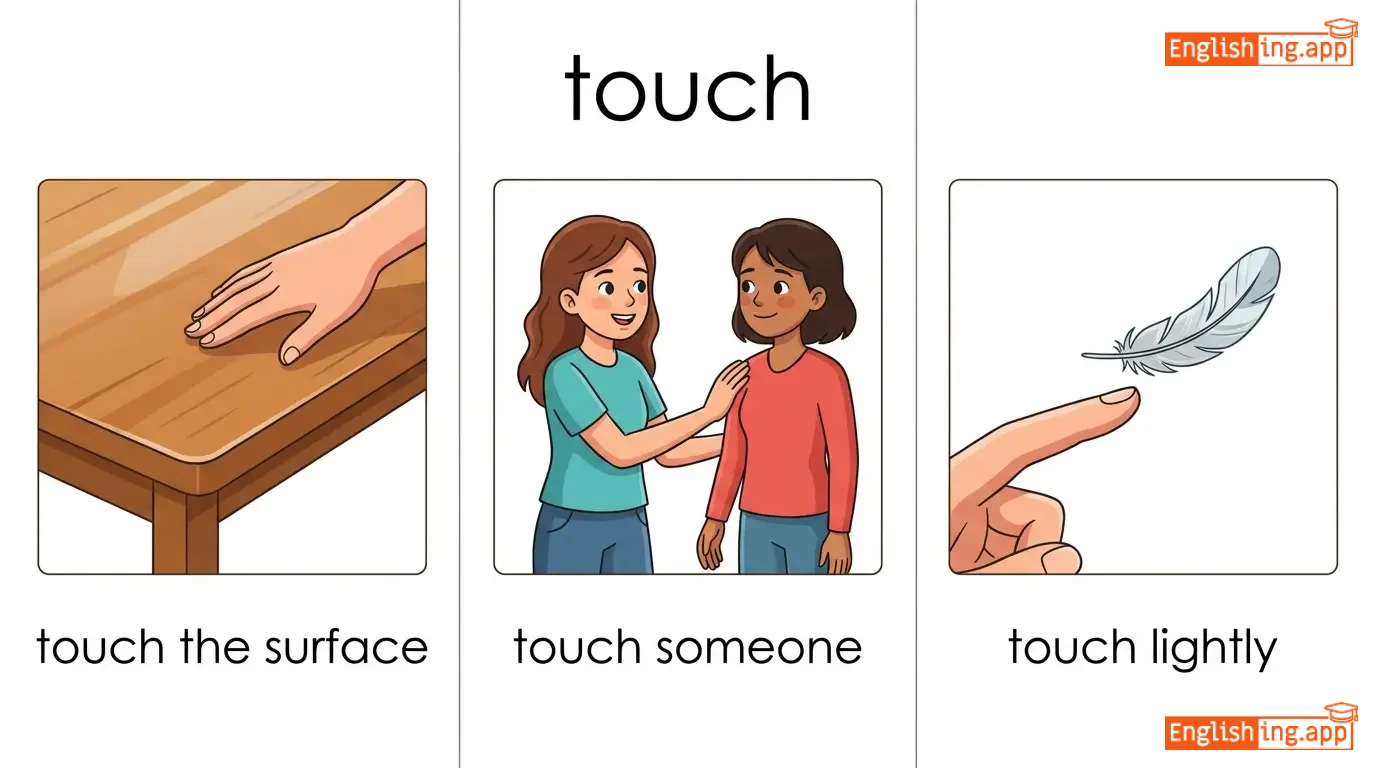
touch screen, touch gently, lose touch, get in touch
••••••
|
Chùmō is the touch that leaves a mark!
••••••
|
|
#5122
💪
|
/tʌf/
adjective
(tafu)
••••••
|
- •••••• |
坚硬
jian ying
••••••
|
- •••••• | - •••••• | - •••••• | - •••••• |
strong, durable, and difficult to break or deal with
••••••
|
He had a tough day at work. |
他在工作中度过了一个艰难的日子。
Ta zai gongzuo zhong duoguo le yi ge jian nan de rizi.
••••••
|
tough luck |
a phrase used to express sympathy for someone's unfortunate situation
••••••
|
运气不好
yun qi bu hao
••••••
|
hard, durable, strong, resilient
••••••
|
soft, weak
••••••
|
tough decision, tough time, tough job
••••••
|
坚硬如石头!
••••••
|
|
#5123
🧳
|
/tʊr/
noun/verb
(旅游)
••••••
|
|
旅游
lvyou
••••••
|
toured
旅游过
••••••
|
toured
旅游过
••••••
|
tours
旅游
••••••
|
touring
旅游中
••••••
|
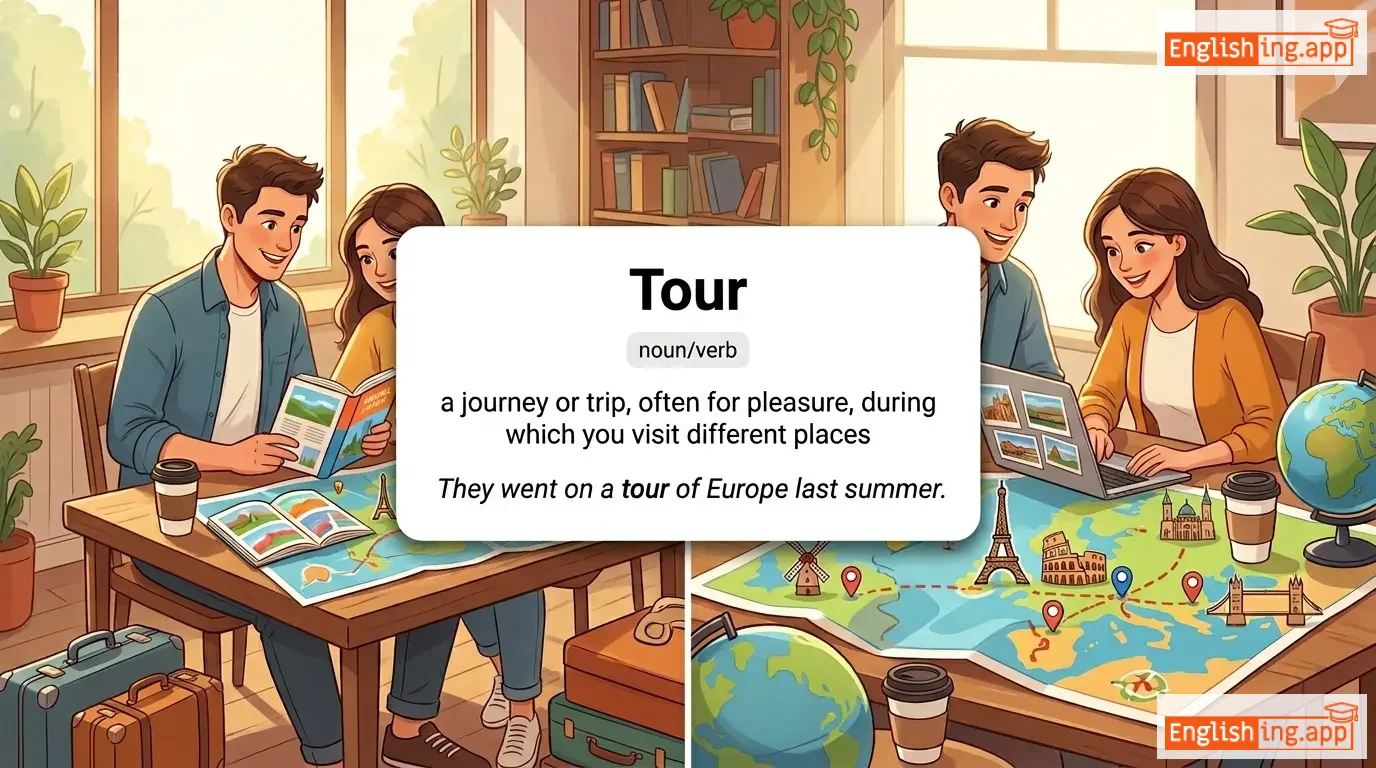
a journey or trip, often for pleasure, during which you visit different places
••••••
|
They went on a tour of Europe last summer.
他们去年夏天去了欧洲旅游。
••••••
|
他们去年夏天去了欧洲旅游。
Tamen qunian xiatian qule Ouzhou lvyou.
••••••
|
grand tour
大旅游
••••••
|
an extended journey through Europe, traditionally taken by wealthy young men in the past
••••••
|
大旅行
da lüxing
••••••
|
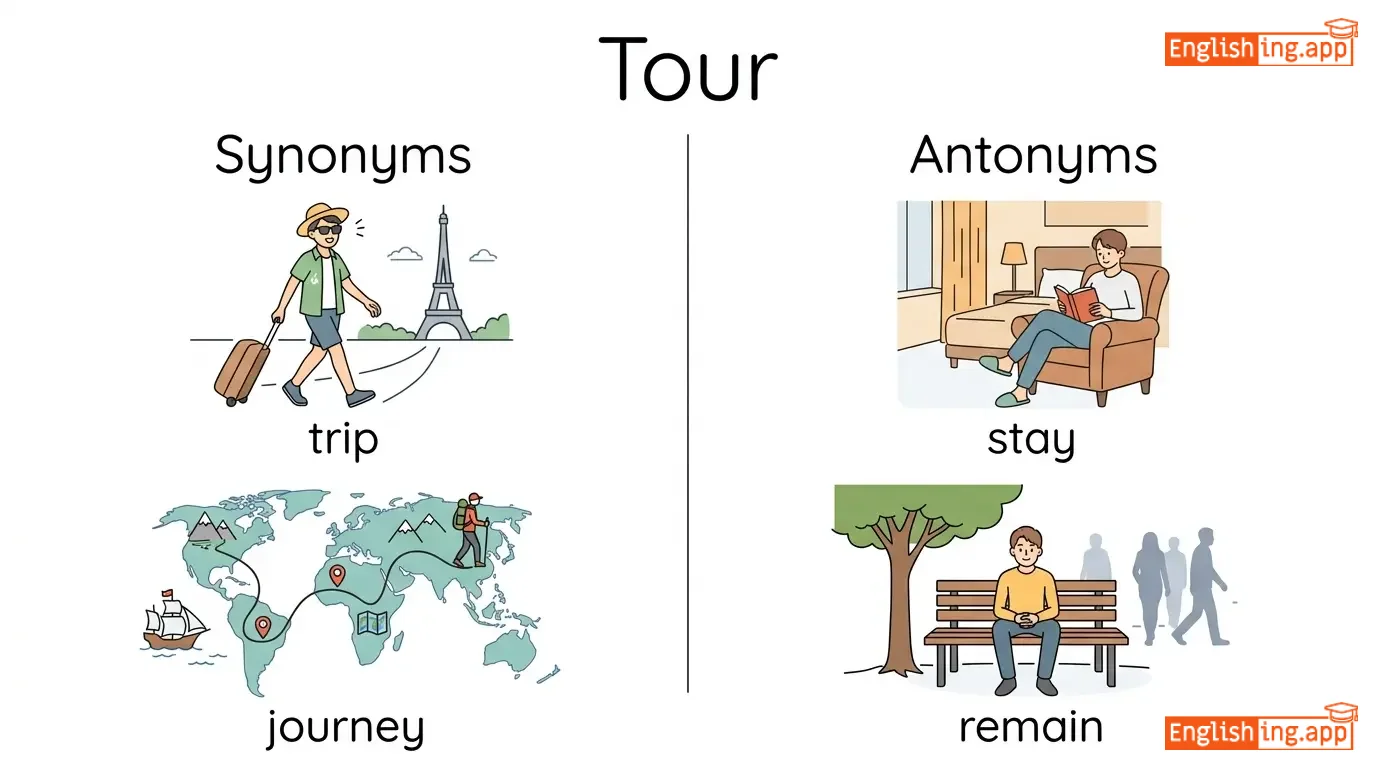
trip, journey, excursion, voyage, travel
••••••
|
stay, remain
••••••
|
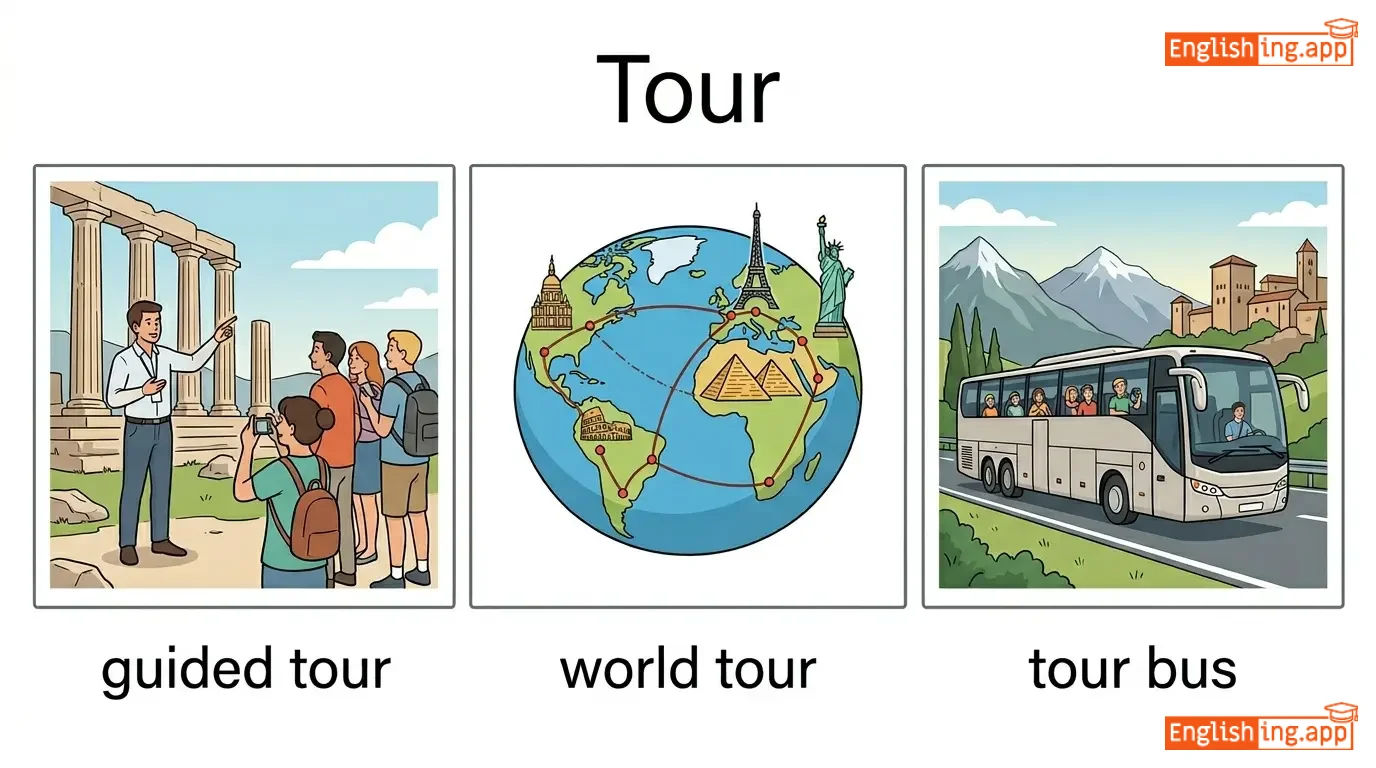
guided tour, world tour, tour bus, tour guide, cultural tour
••••••
|
Tour意味着旅行 — 旅行带你去不同的地方
••••••
|
|
#5124
🏆
|
/ˈtʊənəmənt/
noun
(tóu ěr nà mén tè)
••••••
|
|
锦标赛
jinbiao sai
••••••
|
- •••••• | - •••••• | - •••••• | - •••••• |
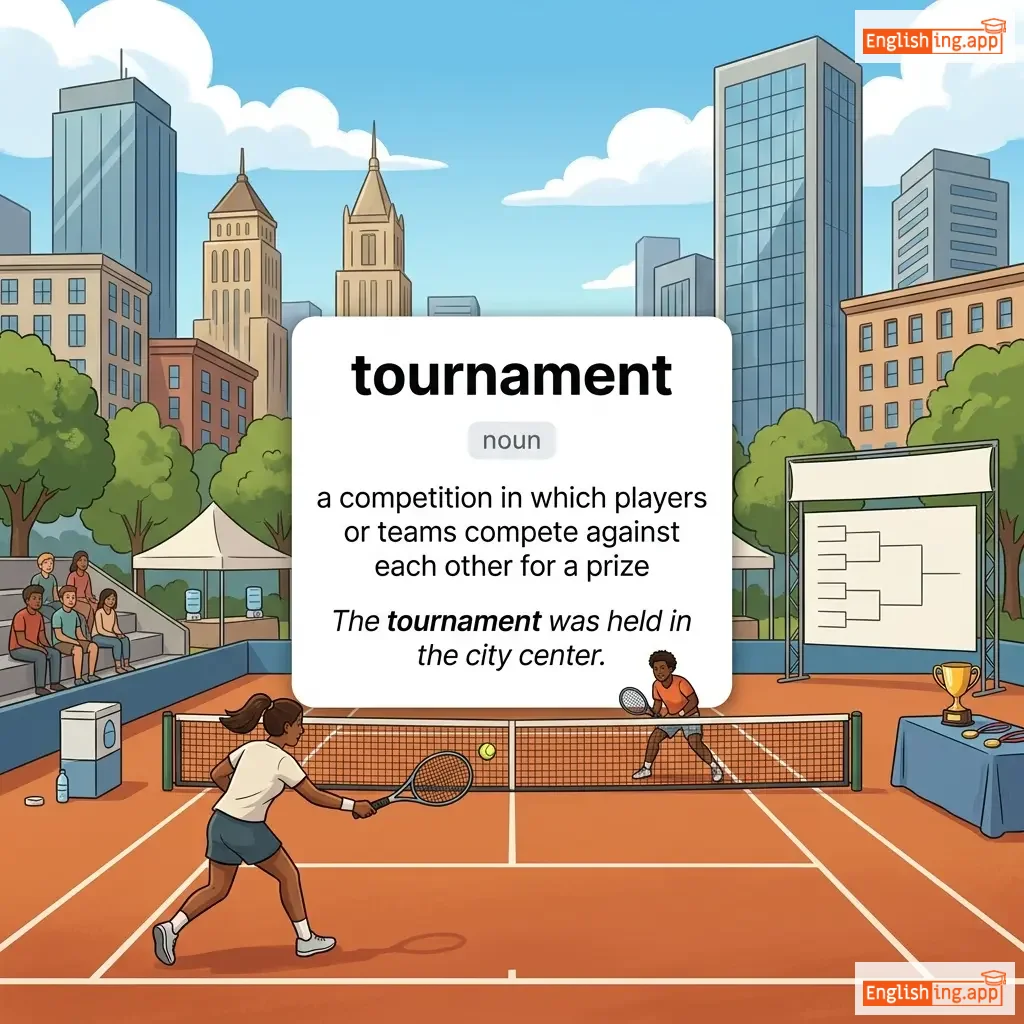
a competition in which players or teams compete against each other for a prize
••••••
|
The tournament was held in the city center. |
比赛在市中心举行。
Bisai zai shi zhongxin juxing.
••••••
|
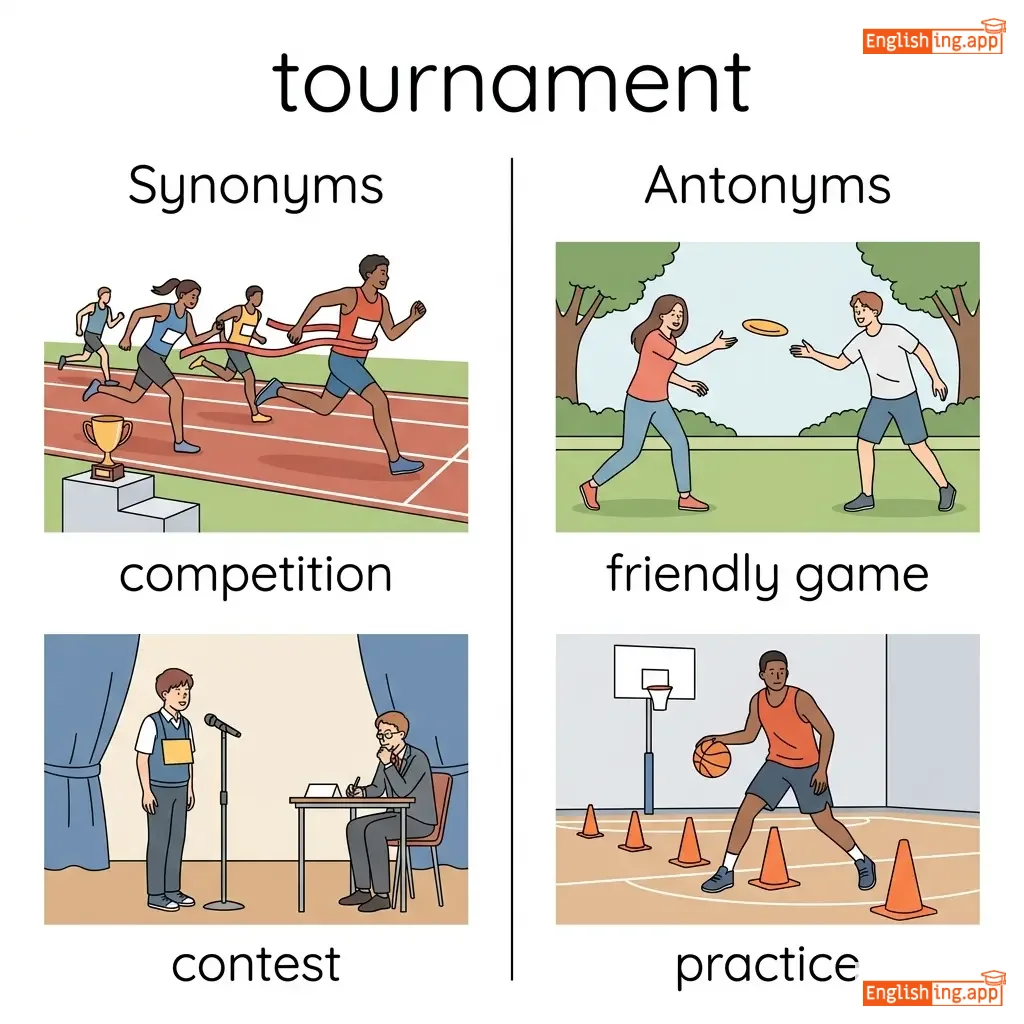
- •••••• | - •••••• | - •••••• |
competition, contest, match, championship
••••••
|
friendly game
••••••
|
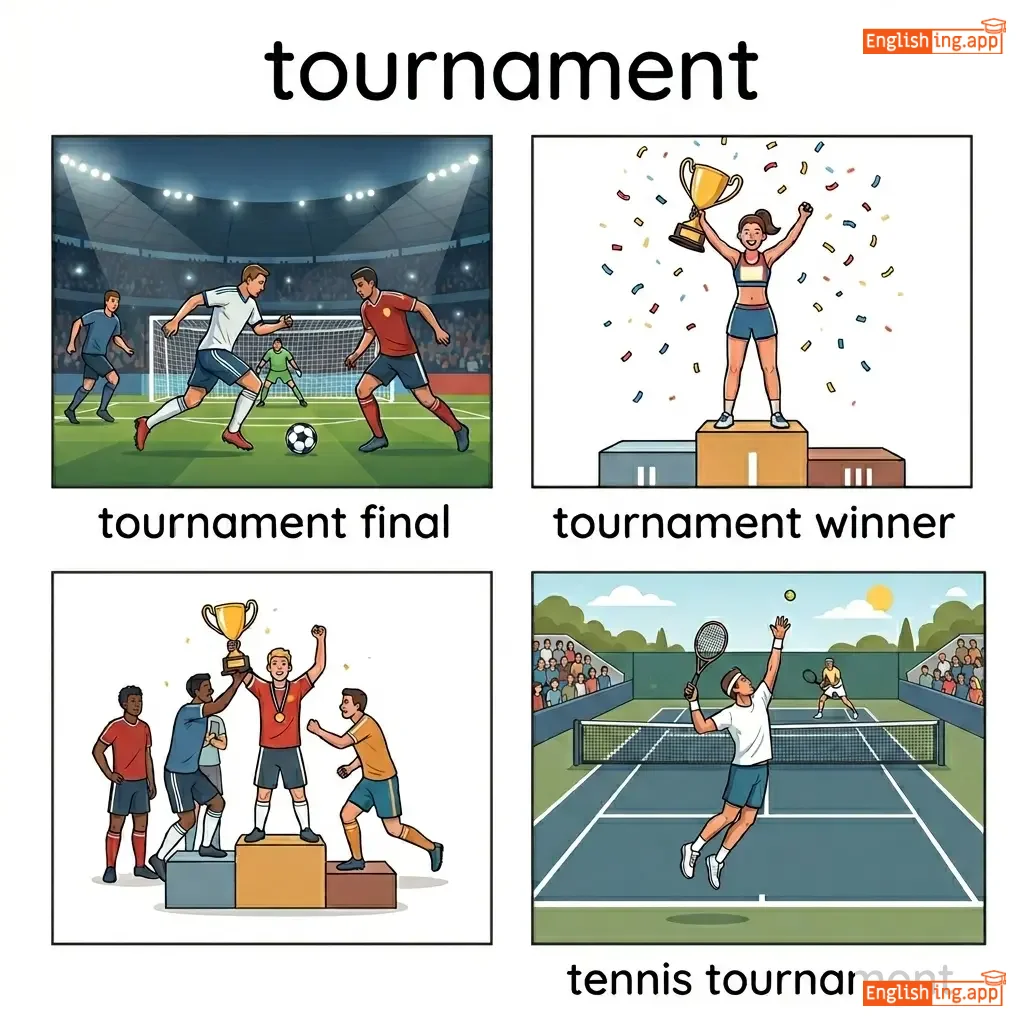
tournament final, tournament winner, tennis tournament
••••••
|
锦标赛是玩家们争夺奖品的激烈竞争!
••••••
|
Vocabulary Quiz
Test your vocabulary by matching words with their translations or meanings.
Login to take the quiz
Comments (0)
Share your thoughts and join the discussion.
Join the discussion by logging in
Login to CommentNo comments yet
Be the first to share your thoughts!