



Swipe left or right, or use the buttons. Tap image to zoom.
例句翻译
单词
Lesson 106Lesson 106 - 遮罩切换
|
表情符号
|
单词 | Images | 翻译 | 过去时 | 过去分词 | 第三人称单数 | 动名词 | 含义 | 例句 | 例句翻译 | 示例表达 | 示例表达含义 | 示例表达翻译 | 同义词 | 反义词 | 搭配词 | 助记符 |
|---|---|---|---|---|---|---|---|---|---|---|---|---|---|---|---|---|---|
|
#5025
💪
|
/ðəmˈsɛlvz/
pronoun
(ðəmˈsɛlvz)
••••••
|
- •••••• |
自己
zìjǐ
••••••
|
- •••••• | - •••••• | - •••••• | - •••••• |
used to emphasize the subject of the sentence or to refer to the subject doing something to itself
••••••
|
They fixed the problem themselves. |
他们自己解决了问题。
Tāmen zìjǐ jiějuéle wèntí.
••••••
|
- •••••• | - •••••• | - •••••• |
themselves alone, personally, independently
••••••
|
none
••••••
|
do it themselves, solve it themselves, they themselves
••••••
|
自己 (zìjǐ) 指代做事情的自主性
••••••
|
|
#5026
⏳
|
/ðɛn/
adverb
(den)
••••••
|
- •••••• |
然后
ránhòu
••••••
|
- •••••• | - •••••• | - •••••• | - •••••• |
at that time; next in order of time or place
••••••
|
We went to the park, and then we had lunch.
我们去了公园,然后吃午餐。
••••••
|
我们去了公园,然后吃午餐。
Wǒmen qùle gōngyuán, ránhòu chī wǔcān.
••••••
|
back then
那时
••••••
|
used to refer to a time in the past
••••••
|
那时
nà shí
••••••
|
afterward, subsequently, later, next
••••••
|
before
••••••
|
then what, then go, then what happened
••••••
|
然后 (then) 来记住过去的时间
••••••
|
|
#5027
📚
|
/θiˈɒlədʒi/
noun
(神学)
••••••
|
- •••••• |
神学
shenxue
••••••
|
- •••••• | - •••••• | - •••••• | - •••••• |
The study of the nature of God and religious beliefs.
••••••
|
She is pursuing a degree in theology at the university. |
她正在大学攻读神学学位。
Ta zhengzai daxue gongdu shenxue xuewei.
••••••
|
- •••••• | - •••••• | - •••••• |
divinity, religious studies, doctrine, belief system
••••••
|
atheism, secularism
••••••
|
theology course, theology degree, theology department, theology student
••••••
|
Theo是上帝,logy是学习,所以神学是上帝的学习。
••••••
|
|
#5028
💡
|
/ˌθiːəˈrɛtɪkl/
adjective
(θɪəˈrɛtɪkəl)
••••••
|
- •••••• |
理论的
lilun de
••••••
|
- •••••• | - •••••• | - •••••• | - •••••• |
Concerned with or based on theory rather than practical application.
••••••
|
The idea remains largely theoretical without real-world evidence. |
这个想法在没有实际证据的情况下,仍然主要是理论性的。
Zhege xiangfa zai meiyou shiji zhengju de qingkuang xia, rengran zhuyao shi lilun xing de.
••••••
|
- •••••• | - •••••• | - •••••• |
abstract, conceptual, hypothetical, speculative
••••••
|
practical, applied
••••••
|
theoretical framework, theoretical knowledge, theoretical approach, purely theoretical
••••••
|
理论的就像脑海中的想法,没有现实证据 — 只是一个灯泡💡。
••••••
|
|
#5029
📖
|
/ˈθiːəri/
noun
(理论)
••••••
|
- •••••• |
理论
lilun
••••••
|
- •••••• | - •••••• | - •••••• | - •••••• |
An explanation of an idea or principle based on facts, reasoning, and evidence.
••••••
|
Einstein's theory of relativity changed the way we understand physics.
爱因斯坦的相对论改变了我们理解物理的方式。
••••••
|
爱因斯坦的相对论改变了我们理解物理的方式。
Ai yin si tan de xiangduilun gaibian le women lijie wuli de fangshi.
••••••
|
in theory
理论上
••••••
|
something that is true according to principles, though it may not work in practice
••••••
|
理论上
lilun shang
••••••
|
hypothesis, concept, idea, principle, doctrine
••••••
|
fact, reality, practice
••••••
|
scientific theory, political theory, in theory, theory of evolution
••••••
|
理论不仅仅是'理论',它是由事实和证据支撑的知识。
••••••
|
|
#5030
🧠
|
/ˈθɛrəpɪst/
noun
(治疗师)
••••••
|
- •••••• |
治疗师
zhìliáo shī
••••••
|
- •••••• | - •••••• | - •••••• | - •••••• |
a person trained to provide treatment or counseling for physical or mental health
••••••
|
The therapist helped him overcome his anxiety.
治疗师帮助他克服了焦虑。
••••••
|
治疗师帮助他克服了焦虑。
Zhìliáo shī bāngzhù tā kèfú le jiāolǜ.
••••••
|
speech therapist
言语治疗师
••••••
|
a specialist who helps people improve their speech
••••••
|
语言治疗师
yǔyán zhìliáo shī
••••••
|
counselor, psychologist, healer, advisor, psychiatrist
••••••
|
patient, client
••••••
|
physical therapist, speech therapist, professional therapist, family therapist
••••••
|
治疗师 — 帮助你治疗身心的专家。
••••••
|
|
#5031
💆♀️
|
/ˈθɛrəpi/
noun
(治疗)
••••••
|
|
治疗
zhiliao
••••••
|
- •••••• | - •••••• | - •••••• | - •••••• |
treatment intended to relieve or heal a disorder
••••••
|
She is receiving therapy for her injury.
她正在接受治疗以治疗她的伤害。
••••••
|
她正在接受治疗以治疗她的伤害。
Tā zhèngzài jiēshòu zhìliáo yǐ zhìliáo tā de shānghài.
••••••
|
- •••••• | - •••••• | - •••••• |
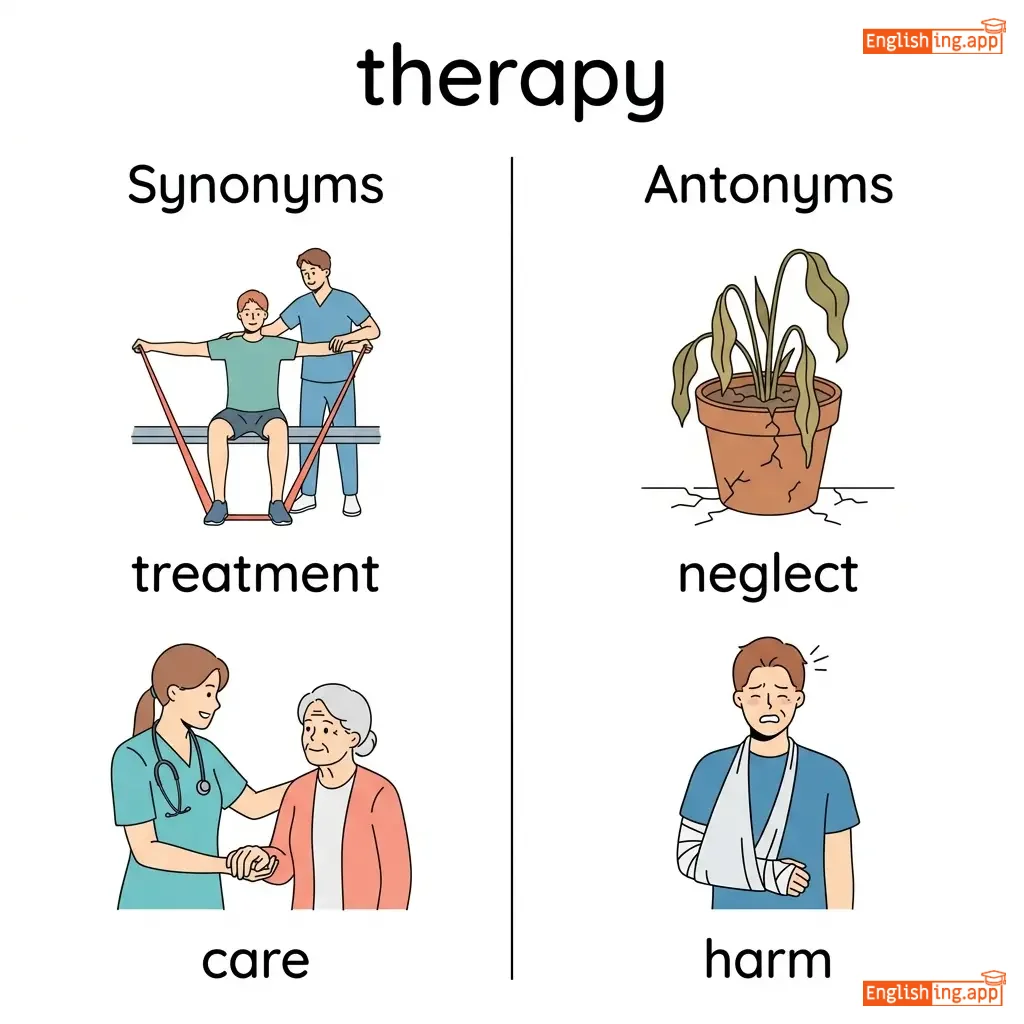
treatment, care, healing, rehabilitation
••••••
|
neglect, harm
••••••
|
physical therapy, therapy session, receive therapy
••••••
|
治疗 (therapy) 帮助恢复身体和心理健康
••••••
|
|
#5032
👉
|
/ðeər/
adverb
(ðeər)
••••••
|
- •••••• |
那里
nàlǐ
••••••
|
- •••••• | - •••••• | - •••••• | - •••••• |
in or at that place; to that place
••••••
|
I will meet you there at 5 PM. |
我将在下午5点在那里见你。
Wǒ jiāng zài xiàwǔ 5 diǎn zài nàlǐ jiàn nǐ.
••••••
|
- •••••• | - •••••• | - •••••• |
over there, in that place, at that location
••••••
|
here, nowhere, everywhere
••••••
|
over there, right there, out there
••••••
|
那里我们下午5点见面。
••••••
|
|
#5033
⏳
|
/ðɛrˈæftər/
adverb
(ðɛrˈæftər)
••••••
|
- •••••• |
从那时起
cong nà shí qǐ
••••••
|
- •••••• | - •••••• | - •••••• | - •••••• |
from that time on
••••••
|
He moved to Canada and thereafter started a new life. |
他搬到了加拿大,之后开始了新生活。
Tā bān dào le jiānádà, zhīhòu kāishǐ le xīn shēnghuó.
••••••
|
- •••••• | - •••••• | - •••••• |
afterward, subsequently, later, following
••••••
|
before, earlier
••••••
|
thereafter began, thereafter continued, thereafter followed
••••••
|
Thereafter- 从那时起 - Think of the time after a significant event.
••••••
|
|
#5034
➡️
|
/ˌðɛərˈbaɪ/
adverb
(德尔拜)
••••••
|
- •••••• |
因此;
yīn cǐ
••••••
|
- •••••• | - •••••• | - •••••• | - •••••• |
as a result of that; by that means
••••••
|
He worked hard and thereby achieved success. |
他努力工作,因此取得了成功。
tā nǔ lì gōng zuò, yīn cǐ qǔ dé le chéng gōng.
••••••
|
- •••••• | - •••••• | - •••••• |
thus, consequently, therefore, hence
••••••
|
nevertheless, however, nonetheless
••••••
|
thereby achieving, thereby creating, thereby ensuring
••••••
|
工作努力,因此成功。
••••••
|
|
#5035
🔗
|
/ˈðɛərˌfɔr/
adverb
(zéiérfó)
••••••
|
- •••••• |
因此
yīncǐ
••••••
|
- •••••• | - •••••• | - •••••• | - •••••• |
for that reason; consequently
••••••
|
It was raining, therefore we stayed inside.
天下雨了,因此我们待在里面。
••••••
|
天下雨了,因此我们待在里面。
tiānxià yǔle, yīncǐ wǒmen dāi zài lǐmiàn.
••••••
|
- •••••• | - •••••• | - •••••• |
thus, hence, consequently, accordingly
••••••
|
nevertheless, however, nonetheless
••••••
|
therefore conclude, therefore decide, therefore recommend
••••••
|
因此,每个行为都有其原因。
••••••
|
|
#5036
👥
|
/ðiːz/
pronoun
(ðiz)
••••••
|
- •••••• |
这些
zhe xie
••••••
|
- •••••• | - •••••• | - •••••• | - •••••• |
used to refer to things or people that are near or present
••••••
|
These are my friends. |
这些是我的朋友。
Zhe xie shi wo de pengyou.
••••••
|
- •••••• | - •••••• | - •••••• |
this, those, such
••••••
|
those
••••••
|
these things, these people, these books
••••••
|
These things are close to me - 这些东西离我很近。
••••••
|
|
#5037
📚
|
/ˈθiːsɪs/
noun
(论文)
••••••
|
- •••••• |
论文
lunwen
••••••
|
- •••••• | - •••••• | - •••••• | - •••••• |
A long piece of writing on a particular subject, usually for a degree at a university.
••••••
|
She spent two years writing her doctoral thesis. |
她花了两年时间写她的博士论文。
Tā huāle liǎng nián shíjiān xiě tā de bóshì lùnwén.
••••••
|
antithesis |
The direct opposite of something; a contrasting idea.
••••••
|
对立面
duìlìmiàn
••••••
|
dissertation, paper, essay, study, research
••••••
|
fact, proof
••••••
|
doctoral thesis, master's thesis, write a thesis, defend a thesis
••••••
|
论文是为了获得大学学位必须写的一本📚大书。
••••••
|
|
#5038
👫
|
/ðeɪ/
pronoun
(ðeɪ)
••••••
|
- •••••• |
他们
tāmen
••••••
|
- •••••• | - •••••• | - •••••• | - •••••• |
used to refer to people or things previously mentioned or easily identified
••••••
|
They are going to the park. |
他们去公园。
Tāmen qù gōngyuán.
••••••
|
- •••••• | - •••••• | - •••••• |
them, those, these
••••••
|
I, we
••••••
|
they are, they have, they will
••••••
|
They are our friends - 他们是我们的朋友。
••••••
|
|
#5039
📚
|
/θɪk/
adjective
(θɪk)
••••••
|
- •••••• |
厚
hou
••••••
|
- •••••• | - •••••• | - •••••• | - •••••• |
having a large distance between two sides; not thin
••••••
|
The book was so thick it took weeks to finish. |
这本书很厚,需要几周才能读完。
Zhe ben shu hen hou, xuyao ji zhou cai neng du wan.
••••••
|
thick and thin |
through good times and bad
••••••
|
厚薄之差
hou bo zhi cha
••••••
|
dense, heavy, wide, bulky
••••••
|
thin, slim, narrow
••••••
|
thick book, thick wall, thick hair, thick fog
••••••
|
Thick意思是厚,就像一本很厚的书
••••••
|
|
#5040
📏
|
/ˈθɪk.nəs/
noun
(希克尼斯)
••••••
|
- •••••• |
厚度
houdù
••••••
|
- •••••• | - •••••• | - •••••• | - •••••• |
The measure of how thick or dense something is
••••••
|
The thickness of the book made it hard to carry.
这本书的厚度使它难以携带。
••••••
|
这本书的厚度使它难以携带。
Zhe ben shu de houdù shi ta nanyi xiedai.
••••••
|
in the thick of
in the thick of
••••••
|
deeply involved in a situation or activity
••••••
|
身处其中
shenchu qizhong
••••••
|
density, width, depth, heft, bulk
••••••
|
thinness, slenderness
••••••
|
layer thickness, thickness gauge, thickness measurement
••••••
|
厚度 (houdù) = thickness, 想象厚厚的书
••••••
|
|
#5041
🦹♂️
|
/θiːf/
noun
(θiːf)
••••••
|
- •••••• |
小偷
xiaotou
••••••
|
- •••••• | - •••••• | - •••••• | - •••••• |
a person who steals things from others
••••••
|
The thief was caught stealing from the jewelry store. |
小偷在珠宝店偷东西时被抓住了。
Xiaotou zai zhubao dian tou dongxi shi bei zhuazhu le.
••••••
|
- •••••• | - •••••• | - •••••• |
robber, burglar, criminal
••••••
|
police, protector, guard
••••••
|
car thief, pickpocket thief, professional thief
••••••
|
小偷(xiaotou)是偷东西的人的意思。
••••••
|
|
#5042
📏
|
/θɪn/
adjective
(θin)
••••••
|
- •••••• |
薄的; 狭窄的
bo de; xia zhai de
••••••
|
- •••••• | - •••••• | - •••••• | - •••••• |
having little thickness; not thick; slender
••••••
|
She wore a thin jacket in the cold weather.
她在寒冷的天气里穿了一件薄外套。
••••••
|
她在寒冷的天气里穿了一件薄外套。
ta zai hanleng de tianqi li chuānle yī jiàn bó wàitào
••••••
|
- •••••• | - •••••• | - •••••• |
slender, slim, narrow, skinny
••••••
|
thick, fat, wide, broad
••••••
|
thin layer, thin ice, thin air, thin line
••••••
|
薄且狭窄——像一片纸。
••••••
|
|
#5043
📦
|
/θɪŋ/
noun
(θɪŋ)
••••••
|
- •••••• |
东西
dongxi
••••••
|
- •••••• | - •••••• | - •••••• | - •••••• |
an object, idea, or matter that is being referred to or dealt with
••••••
|
This is the thing I was looking for. |
这是我在找的东西。
Zhe shi wo zai zhao de dongxi.
••••••
|
- •••••• | - •••••• | - •••••• |
item, object, matter, article
••••••
|
nothing, nonentity
••••••
|
the thing, a thing, important thing, one thing
••••••
|
Think of a 'thing' as a 'dongxi' (东西) you always find in a box.
••••••
|
|
#5044
🤔
|
/θɪŋk/
verb
(think)
••••••
|
|
思考
sikao
••••••
|
thought
thot
••••••
|
thought
thot
••••••
|
thinks
thinkz
••••••
|
thinking
thinking
••••••
|
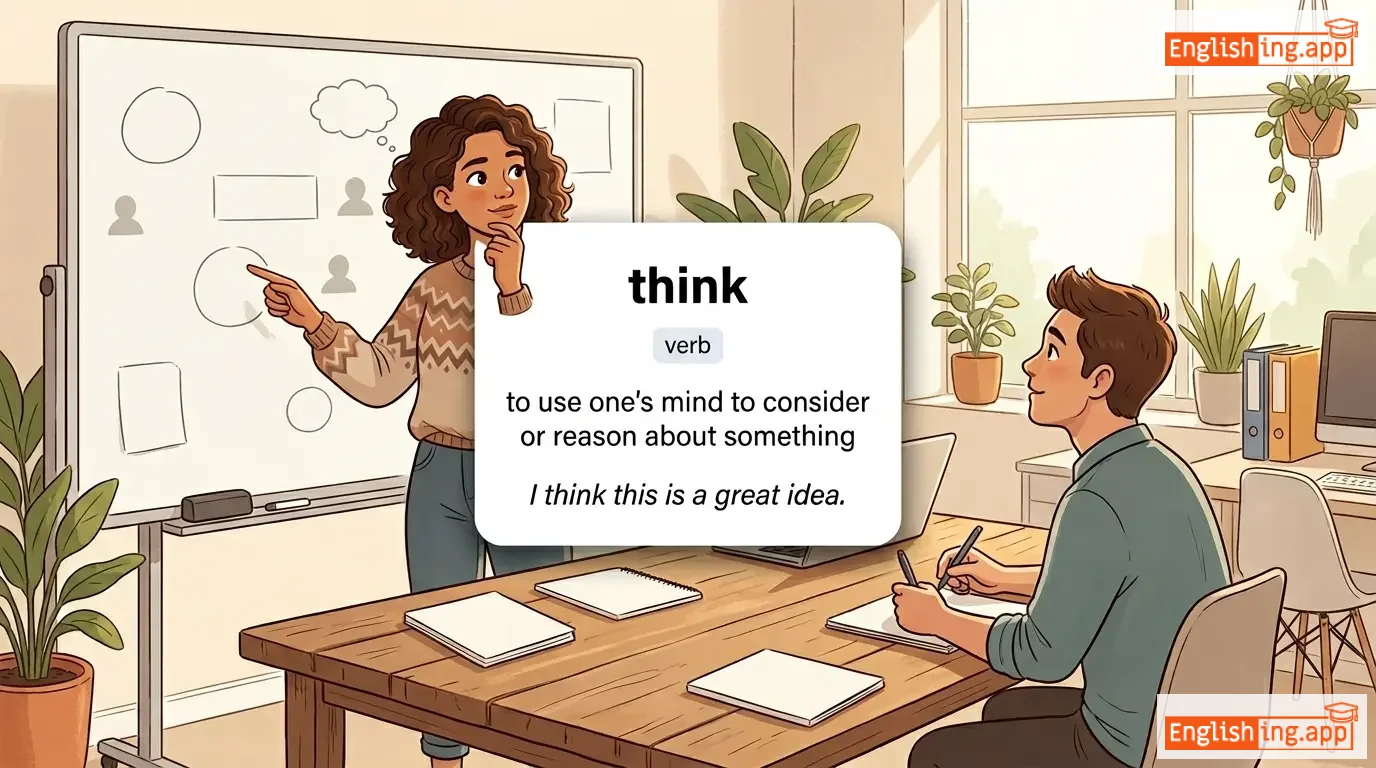
to use one's mind to consider or reason about something
••••••
|
I think this is a great idea.
我觉得这是一个好主意。
••••••
|
我觉得这是一个好主意。
Wǒ juéde zhè shì yīgè hǎo zhǔyì.
••••••
|
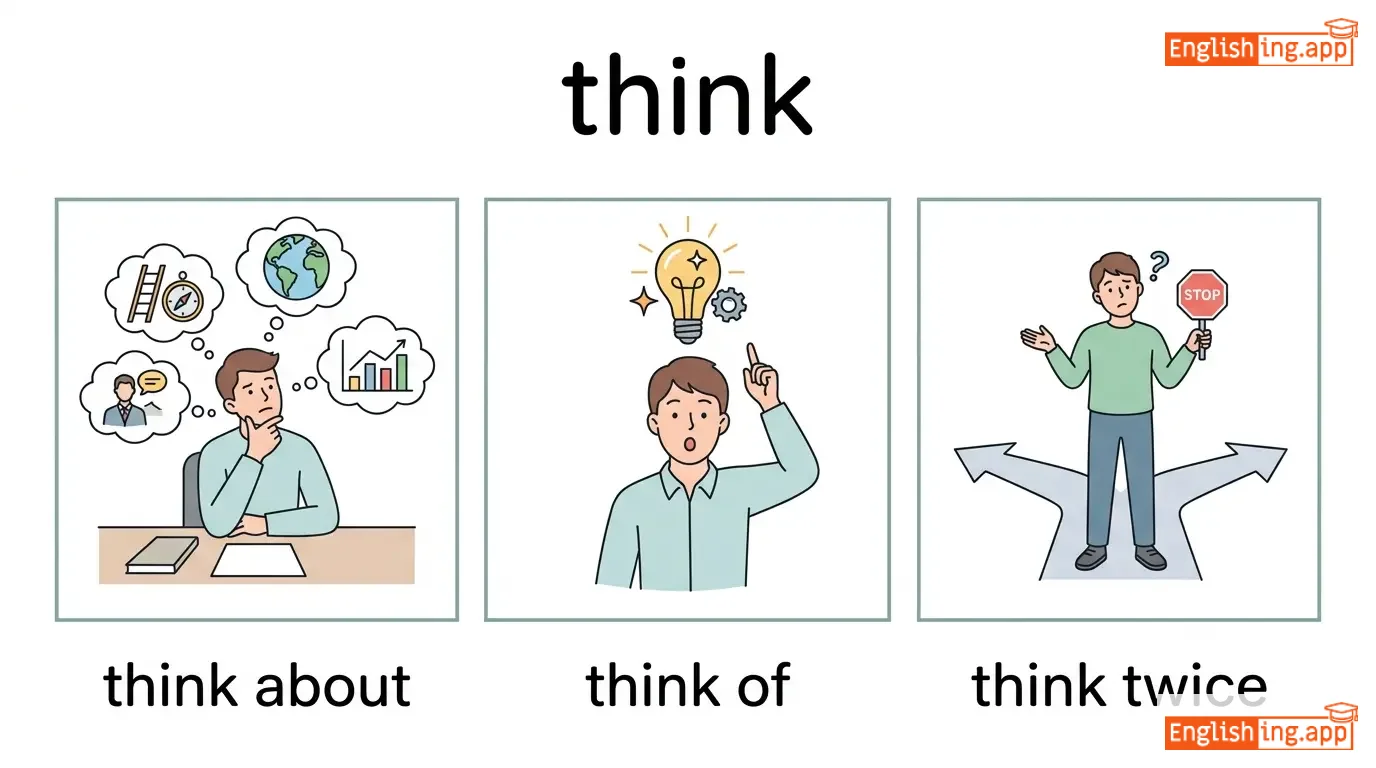
Think twice
再想一想
••••••
|
Consider something carefully before making a decision
••••••
|
再想一想
Zài xiǎng yī xiǎng
••••••
|
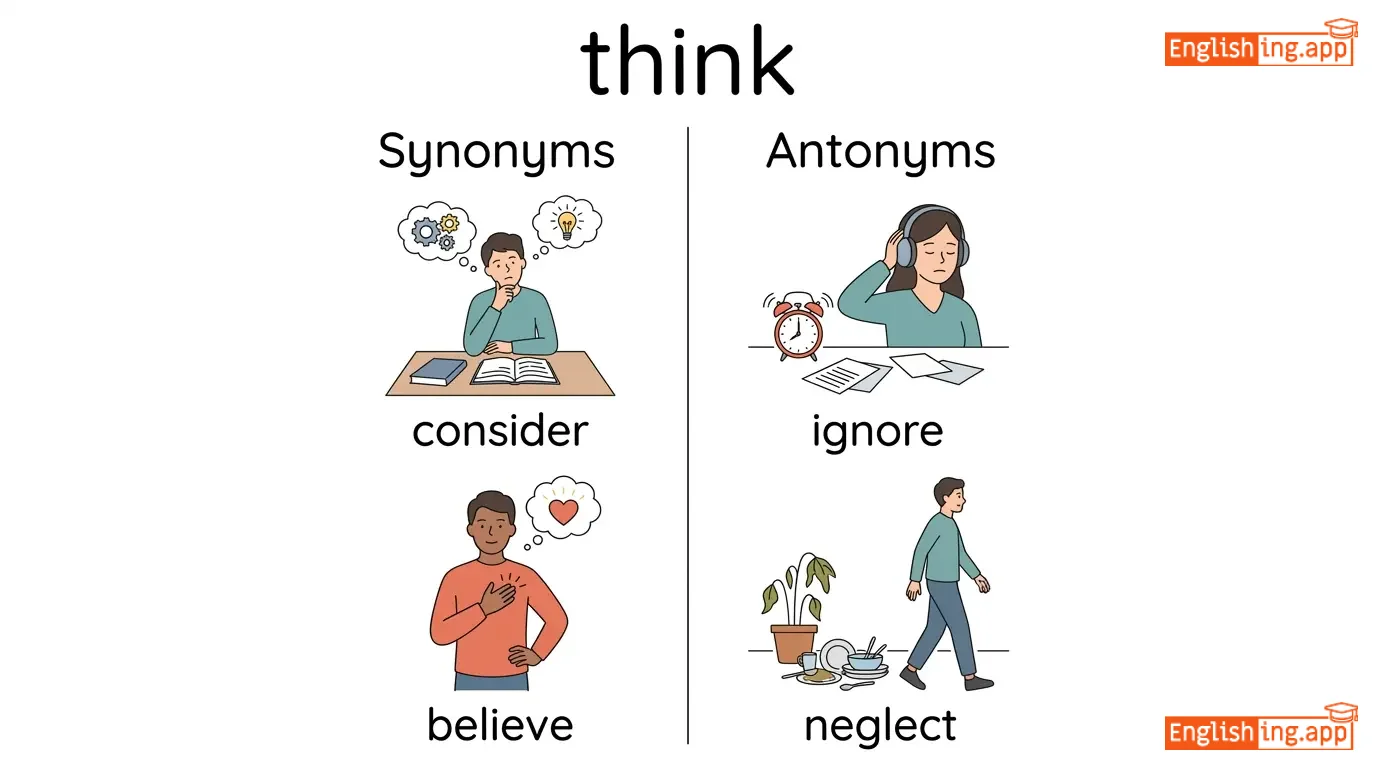
consider, believe, reflect, ponder
••••••
|
ignore, neglect
••••••
|
think about, think of, think twice, think hard
••••••
|
思考就像大脑的健身房,帮助你作出更好的决定。
••••••
|
|
#5045
💭
|
/ˈθɪŋ.kə.bəl/
adjective
(思考布尔)
••••••
|
- •••••• |
可想的
kexiang de
••••••
|
- •••••• | - •••••• | - •••••• | - •••••• |
Capable of being imagined or conceived; possible to consider or believe
••••••
|
It is hard to believe that such an outcome is even thinkable.
很难相信这样的结果甚至是可以想象的。
••••••
|
很难相信这样的结果甚至是可以想象的。
Hen nan xiangxin zheyang de jieguo shenzhi shi keyi xiangxiang de
••••••
|
- •••••• | - •••••• | - •••••• |
conceivable, imaginable, possible, plausible
••••••
|
unimaginable, impossible, inconceivable
••••••
|
barely thinkable, hardly thinkable, easily thinkable
••••••
|
Thinkable = 可以想象 (kexiang de)
••••••
|
|
#5046
💭
|
/ˈθɪŋkɪŋ/
noun
(ˈθɪŋkɪŋ)
••••••
|
- •••••• |
思考
sī kǎo
••••••
|
- •••••• | - •••••• | - •••••• | - •••••• |
the process of considering or reasoning about something
••••••
|
Her thinking was clear and precise. |
她的思考清晰而准确。
Tā de sīkǎo qīngxī ér zhǔnquè.
••••••
|
- •••••• | - •••••• | - •••••• |
thought, contemplation, reflection, reasoning
••••••
|
ignorance, confusion
••••••
|
critical thinking, logical thinking, abstract thinking
••••••
|
'思考' in Chinese is like 'thinking deeply', like contemplating ideas.
••••••
|
|
#5047
3️⃣
|
/θɜrd/
adjective
(θɜrd)
••••••
|
- •••••• |
第三
di san
••••••
|
- •••••• | - •••••• | - •••••• | - •••••• |
constituting number three in a sequence
••••••
|
She finished in third place. |
她得了第三名。
Ta de le di san ming.
••••••
|
- •••••• | - •••••• | - •••••• |
thirdly, tertiary, trinal
••••••
|
first, second
••••••
|
third place, third time, third attempt
••••••
|
想想'第三'名的奖牌(🥉)。
••••••
|
|
#5048
📖
|
/ðɪs/
pronoun
(zhe)
••••••
|
- •••••• |
这个
zhe ge
••••••
|
- •••••• | - •••••• | - •••••• | - •••••• |
used to refer to a person or thing that is close or near in space, time, or thought
••••••
|
This is my favorite book. |
这是我最喜欢的书。
Zhè shì wǒ zuì xǐhuān de shū.
••••••
|
- •••••• | - •••••• | - •••••• |
this one, here, these
••••••
|
that, those
••••••
|
this book, this place, this idea
••••••
|
记住'这个' (zhe ge) 用来指代你很接近的事物。
••••••
|
|
#5049
🔍
|
/ˈθʌroʊ/
adjective
(赛罗)
••••••
|
- •••••• |
彻底的, 详尽的
chedi de, xiangjin de
••••••
|
- •••••• | - •••••• | - •••••• | - •••••• |
complete with regard to every detail; not superficial or partial
••••••
|
The report was thorough and well-researched. |
报告很彻底且做了充分的研究。
baogao hen chedi qie zuo le chongfen de yanjiu.
••••••
|
thorough check |
a detailed and complete examination
••••••
|
彻底检查
chedi jiancha
••••••
|
complete, detailed, exhaustive, comprehensive, meticulous
••••••
|
incomplete, careless, superficial
••••••
|
thorough analysis, thorough research, thorough cleaning, thorough understanding
••••••
|
彻底就是 thorough,意味着详细的检查
••••••
|
|
#5050
✅
|
/ˈθʌrəli/
adverb
(thōrli)
••••••
|
- •••••• |
彻底地; 完全地;
chèdǐ de; wánquán de;
••••••
|
- •••••• | - •••••• | - •••••• | - •••••• |
completely; entirely; in a thorough manner
••••••
|
She thoroughly cleaned the entire house before the guests arrived.
她在客人到来之前彻底打扫了整个房子。
••••••
|
她在客人到来之前彻底打扫了整个房子。
Tā zài kèrén dào lái zhīqián chèdǐ dǎsǎo le zhěnggè fángzi.
••••••
|
- •••••• | - •••••• | - •••••• |
completely, entirely, fully, totally, utterly
••••••
|
partially, incompletely, superficially, hastily
••••••
|
thoroughly cleaned, thoroughly examined, thoroughly enjoyed
••••••
|
彻底清洁,一切清理干净。
••••••
|
|
#5051
👢
|
/ðoʊz/
pronoun
(ðoʊz)
••••••
|
- •••••• |
那些
nàxiē
••••••
|
- •••••• | - •••••• | - •••••• | - •••••• |
used to refer to people or things that are far away or distant in space, time, or thought
••••••
|
Those are the shoes I want. |
那些是我想要的鞋子。
Nàxiē shì wǒ xiǎng yào de xiézi.
••••••
|
- •••••• | - •••••• | - •••••• |
those ones, those people, those things
••••••
|
this, these
••••••
|
those shoes, those days, those people
••••••
|
远离的 '那些' (nàxiē)
••••••
|
|
#5052
🌧️
|
/ðoʊ/
conjunction
(zōu)
••••••
|
- •••••• |
虽然
suīrán
••••••
|
- •••••• | - •••••• | - •••••• | - •••••• |
used to introduce a fact that makes the main statement of the sentence seem surprising or unexpected
••••••
|
Though it was raining, they still went outside. |
虽然在下雨,他们还是出去玩了。
Suīrán zài xiàyǔ, tāmen háishi chūqù wánle.
••••••
|
- •••••• | - •••••• | - •••••• |
although, however, but
••••••
|
because, since
••••••
|
though difficult, though tired, though happy
••••••
|
'虽然' (suīrán) 即使下雨,也要出去
••••••
|
|
#5053
💭
|
/θɔːt/
noun
(思特)
••••••
|
- •••••• |
思维
siwei
••••••
|
- •••••• | - •••••• | - •••••• | - •••••• |
an idea or opinion produced by thinking or considering something
••••••
|
She had a sudden thought about the future. |
她突然有了关于未来的想法。
Tā túrán yǒule guānyú wèilái de xiǎngfǎ.
••••••
|
- •••••• | - •••••• | - •••••• |
idea, notion, belief, concept
••••••
|
ignorance, uncertainty
••••••
|
deep thought, quick thought, passing thought
••••••
|
'思维' (siwei) 突然出现
••••••
|
|
#5054
💭
|
/ˈθɔːtˌproʊvɪkɪŋ/
adjective
(thɔːt-prəʊvɪkɪŋ)
••••••
|
- •••••• |
引人深思
yǐn rén shēn sī
••••••
|
- •••••• | - •••••• | - •••••• | - •••••• |
stimulating careful consideration or thought
••••••
|
The movie was deeply thought-provoking and left a lasting impression. |
这部电影深刻地引人深思,并留下了深远的印象。
Zhè bù diànyǐng shēnkè de yǐn rén shēn sī, bìng liú xiàle shēnyuǎn de yìnxiàng.
••••••
|
- •••••• | - •••••• | - •••••• |
stimulating, insightful, profound, reflective
••••••
|
unthoughtful, shallow
••••••
|
thought-provoking question, thought-provoking film, thought-provoking book
••••••
|
引人深思 - Deep thoughts await you after watching this movie!
••••••
|
|
#5055
💭
|
/ˈθɔːtfəl/
adjective
(suo tofou)
••••••
|
- •••••• |
深思熟虑
shensi shulv
••••••
|
- •••••• | - •••••• | - •••••• | - •••••• |
showing careful consideration or attention
••••••
|
She gave a thoughtful response to every question asked.
她对每个问题都做出了深思熟虑的回答。
••••••
|
她对每个问题都做出了深思熟虑的回答。
Ta dui mei ge wenti dou zuo chule shensi shulv de huida.
••••••
|
- •••••• | - •••••• | - •••••• |
considerate, reflective, kind, caring
••••••
|
thoughtless, inconsiderate
••••••
|
thoughtful gesture, thoughtful comment, thoughtful gift
••••••
|
深思熟虑 - Thoughtful actions show your care and concern!
••••••
|
|
#5056
💯
|
/ˈθaʊzənd/
noun
(ˈθaʊzənd)
••••••
|
- •••••• |
千
qian
••••••
|
- •••••• | - •••••• | - •••••• | - •••••• |
the number equal to 10 hundred or 1,000
••••••
|
There were a thousand people at the concert. |
音乐会有一千人。
Yīnyuè huì yǒu yīqiān rén.
••••••
|
- •••••• | - •••••• | - •••••• |
kilo, grand
••••••
|
one, few
••••••
|
thousand dollars, thousand people, thousand years
••••••
|
千人唱歌 (Qiān rén chànggē)
••••••
|
|
#5057
🧵
|
/θred/
noun
(θrɛd)
••••••
|
- •••••• |
线
xian
••••••
|
- •••••• | - •••••• | - •••••• | - •••••• |
a long, thin strand of cotton, nylon, or other fibers used for sewing
••••••
|
She used a red thread to sew the torn button back on. |
她用红线把破掉的纽扣缝回去。
Ta yong hongxian ba podiao de niukou fenghui qu.
••••••
|
hang by a thread |
to be in a very dangerous or uncertain situation
••••••
|
悬在一根线上
xuan zai yi gen xian shang
••••••
|
fiber, string, filament, yarn, strand
••••••
|
rope, wire
••••••
|
cotton thread, lose the thread, follow the thread, silver thread
••••••
|
Thread在中文里是线 — 就像在社交媒体上讨论的线程一样!
••••••
|
|
#5058
⚠️
|
/θrɛt/
noun
(thret)
••••••
|
- •••••• |
威胁, 危险
wēixié, wēixiǎn
••••••
|
- •••••• | - •••••• | - •••••• | - •••••• |
A statement or action indicating intent to cause harm or danger.
••••••
|
The letter contained a threat against the company.
信中包含了对公司的一种威胁。
••••••
|
信中包含了对公司的一种威胁。
Xìn zhōng bāohánle duì gōngsī de yī zhǒng wēixié.
••••••
|
make a threat
提出威胁
••••••
|
To express an intention to harm or cause problems.
••••••
|
提出威胁
tíchū wēixié
••••••
|
danger, menace, intimidation, warning, risk
••••••
|
safety, protection, assurance
••••••
|
serious threat, direct threat, pose a threat
••••••
|
威胁 = Wēi xié, 像一个电话威胁
••••••
|
|
#5059
⚠️
|
/ˈθretən/
verb
(suìrán)
••••••
|
|
威胁
wēixié
••••••
|
threatened
suìrán de
••••••
|
threatened
suìrán de
••••••
|
threatens
suìrán
••••••
|
threatening
suìrán
••••••
|
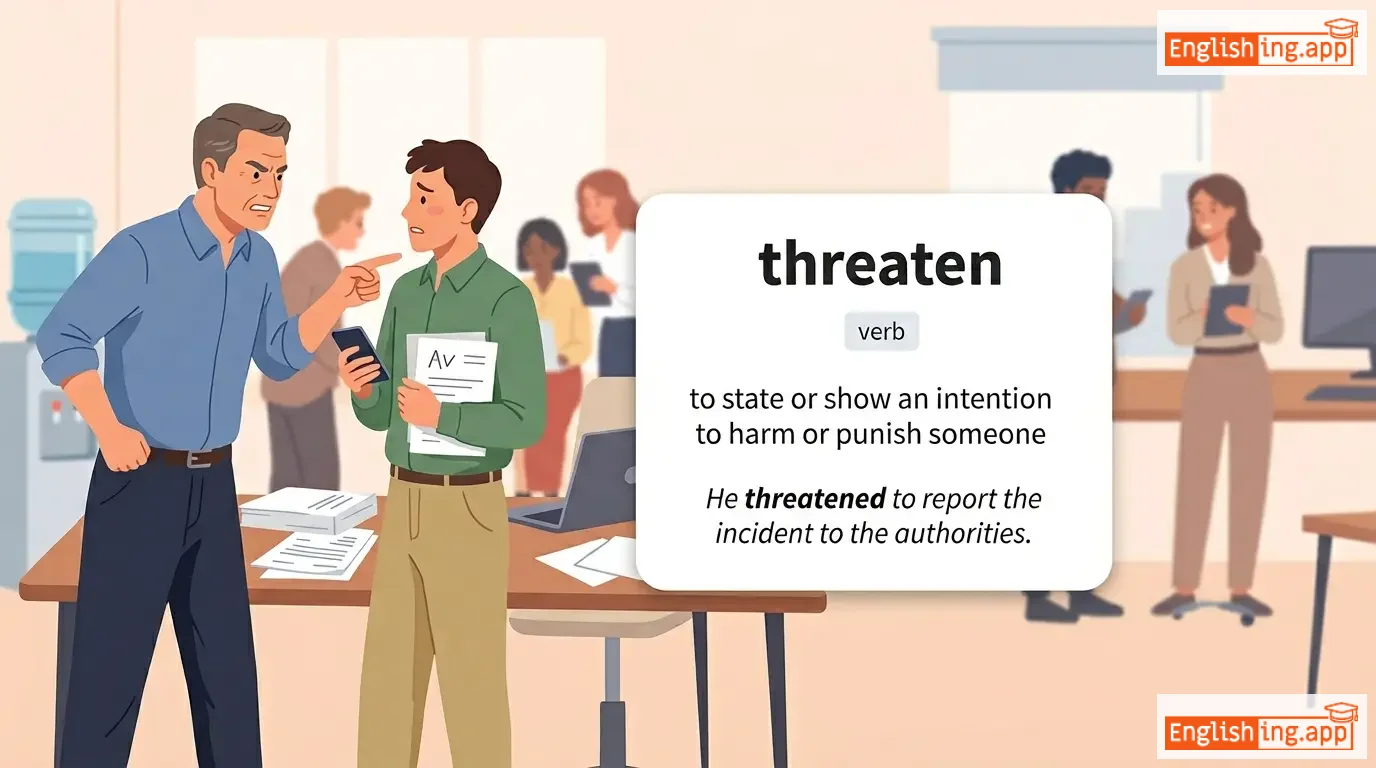
to express an intention to harm or punish someone; to be likely to cause harm
••••••
|
The storm clouds threaten to bring heavy rain tonight.
风暴云威胁今夜带来大雨。
••••••
|
风暴云威胁今夜带来大雨。
Fēngbào yún wēixié jīn yè dà yǔ.
••••••
|
- •••••• | - •••••• | - •••••• |
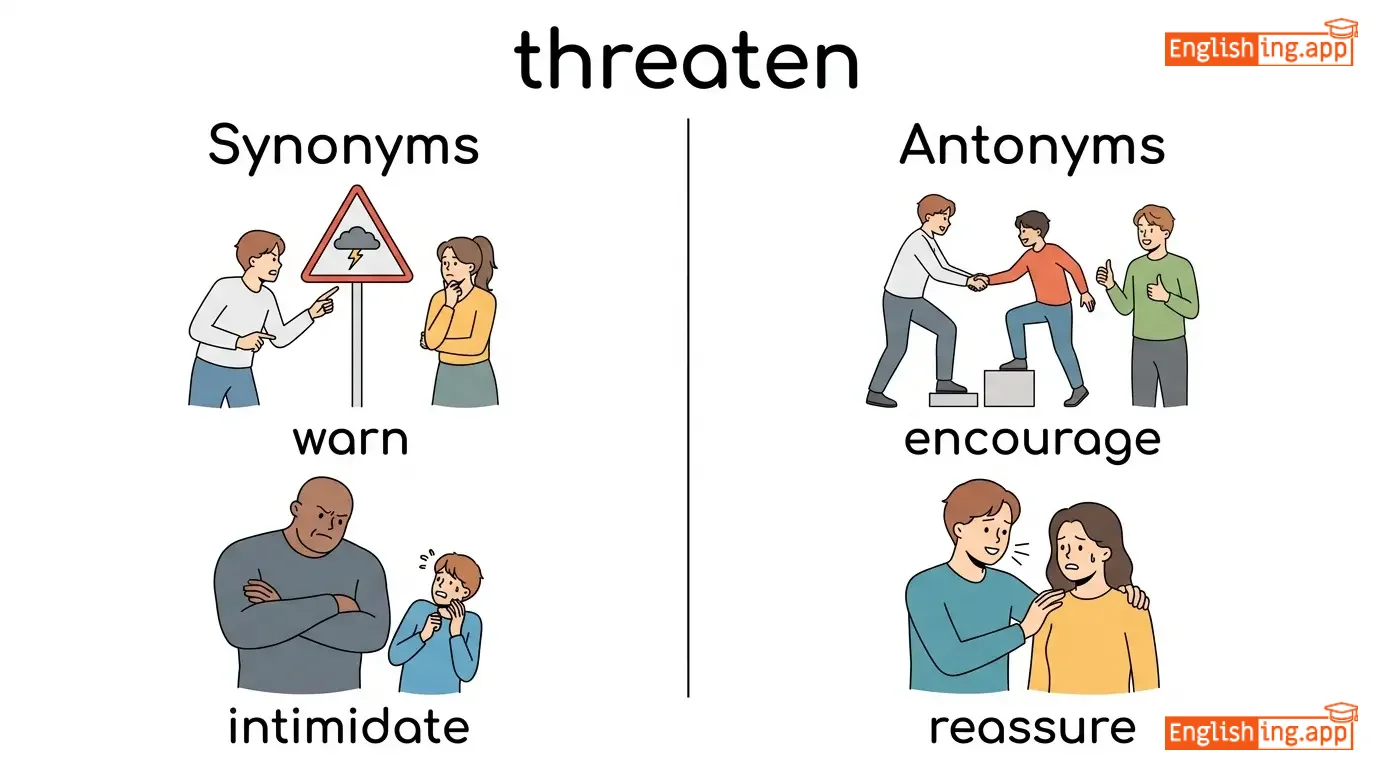
menace, intimidate, warn, endanger
••••••
|
protect, defend, reassure, comfort
••••••
|
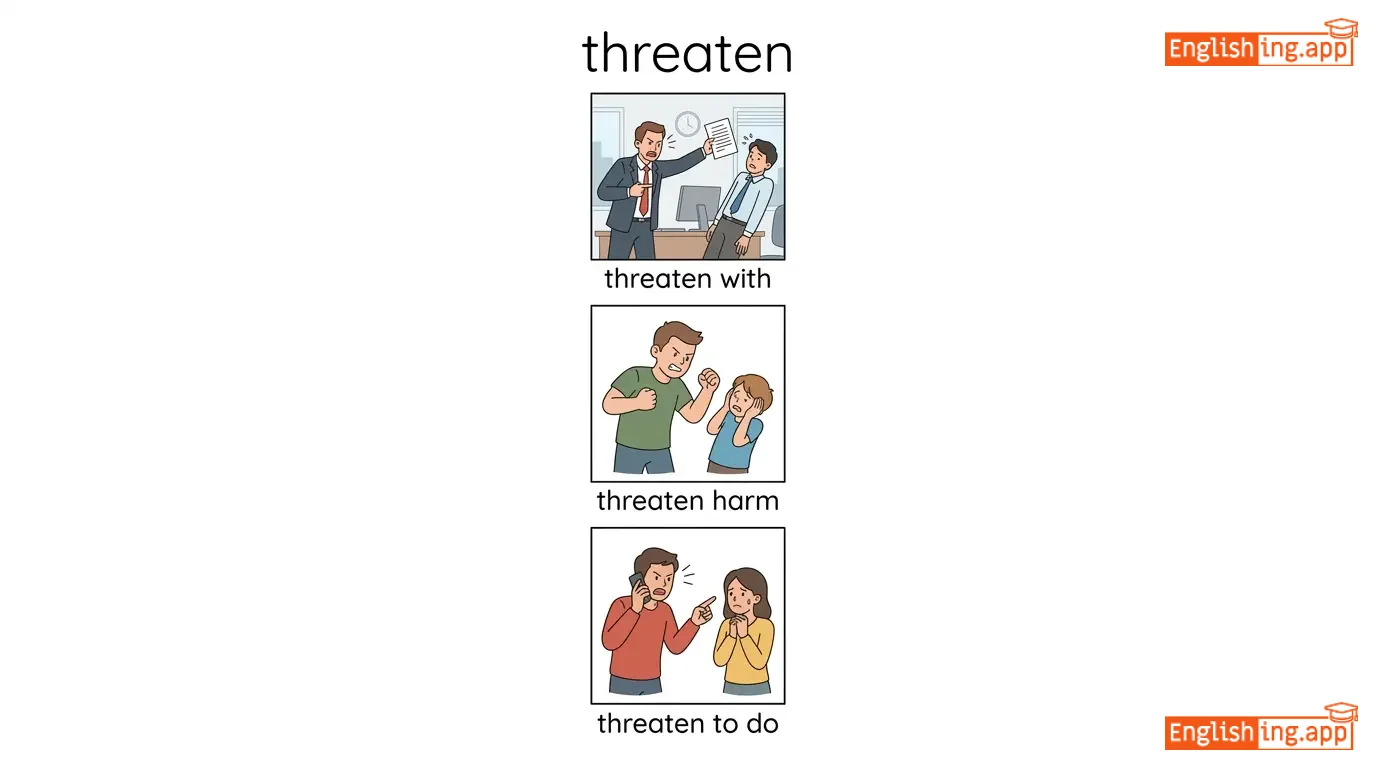
threaten to, threaten with, threaten someone, pose a threat
••••••
|
威胁是威胁,要记住它可能带来风暴的影响
••••••
|
|
#5060
⚡
|
/ˈθret.ən.ɪŋ/
adjective
(瑟雷特宁)
••••••
|
- •••••• |
威胁的; 恐吓的
wēixié de; kǒnghè de
••••••
|
- •••••• | - •••••• | - •••••• | - •••••• |
expressing a threat; menacing; intimidating
••••••
|
The dark clouds looked threatening before the storm. |
暴风雨来临前,黑暗的云看起来威胁重重。
Bàofēngyǔ láilín qián, hēi'àn de yún kàn qǐlái wēixié zhòngzhòng.
••••••
|
- •••••• | - •••••• | - •••••• |
menacing, intimidating, ominous, dangerous
••••••
|
reassuring, comforting, peaceful, safe
••••••
|
threatening behavior, threatening letter, threatening gesture, threatening tone
••••••
|
Chinese '威胁' sounds like 'threatening'.
••••••
|
|
#5061
3️⃣
|
/θriː/
numeral
(sān)
••••••
|
- •••••• |
三
san
••••••
|
- •••••• | - •••••• | - •••••• | - •••••• |
the number equivalent to the sum of two and one
••••••
|
She has three dogs at home. |
她家里有三只狗。
Tā jiālǐ yǒu sān zhī gǒu.
••••••
|
- •••••• | - •••••• | - •••••• |
threefold, triple
••••••
|
none
••••••
|
three times, three people, three years
••••••
|
三是三口之家里的幸运数字
••••••
|
|
#5062
🚪
|
/ˈθreʃ.həʊld/
noun
(阈值)
••••••
|
|
临界点
linjiadian
••••••
|
- •••••• | - •••••• | - •••••• | - •••••• |
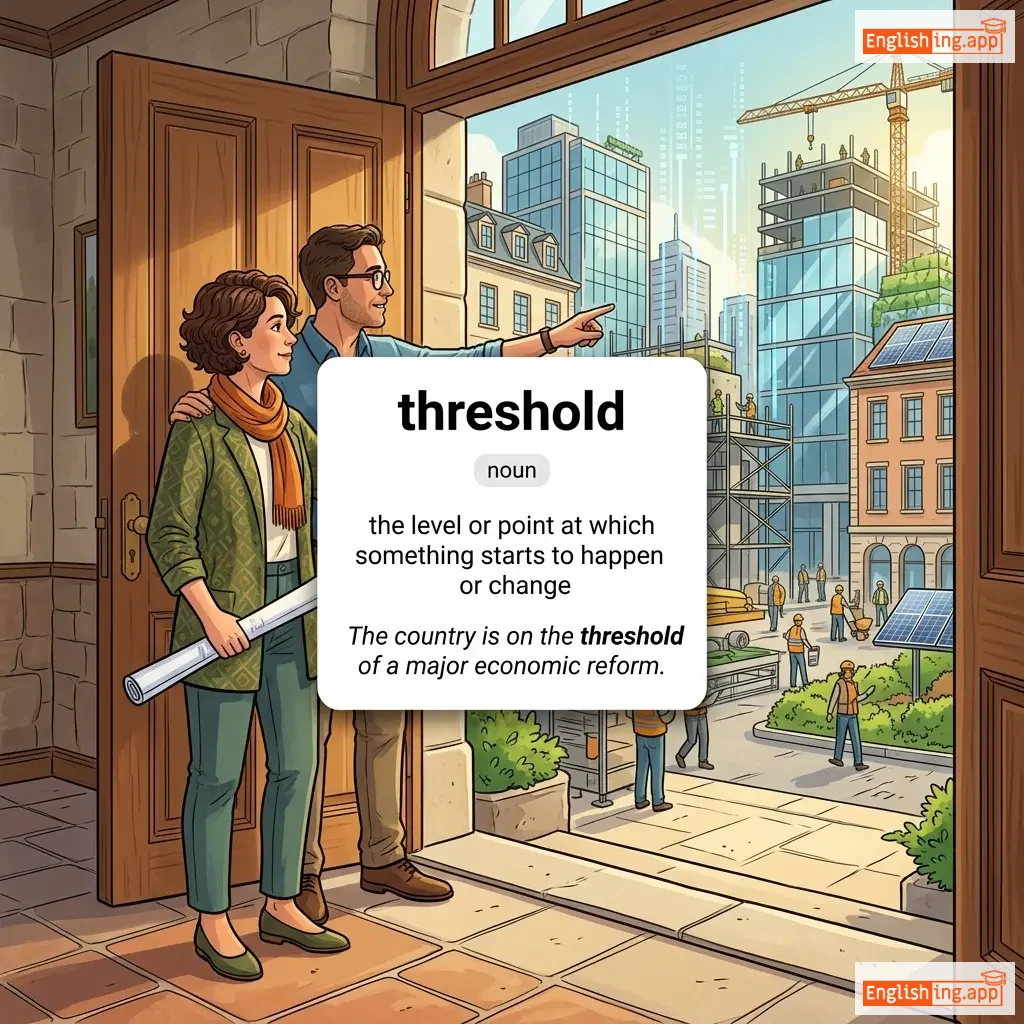
the level or point at which something starts to happen or change
••••••
|
The country is on the threshold of a major economic reform. |
这个国家正处于一次重大的经济改革的临界点。
Zhege guojia zheng chuyu yici zhongda de jingji gaige de linjiadian.
••••••
|
cross the threshold |
to begin a new phase or experience
••••••
|
- •••••• |
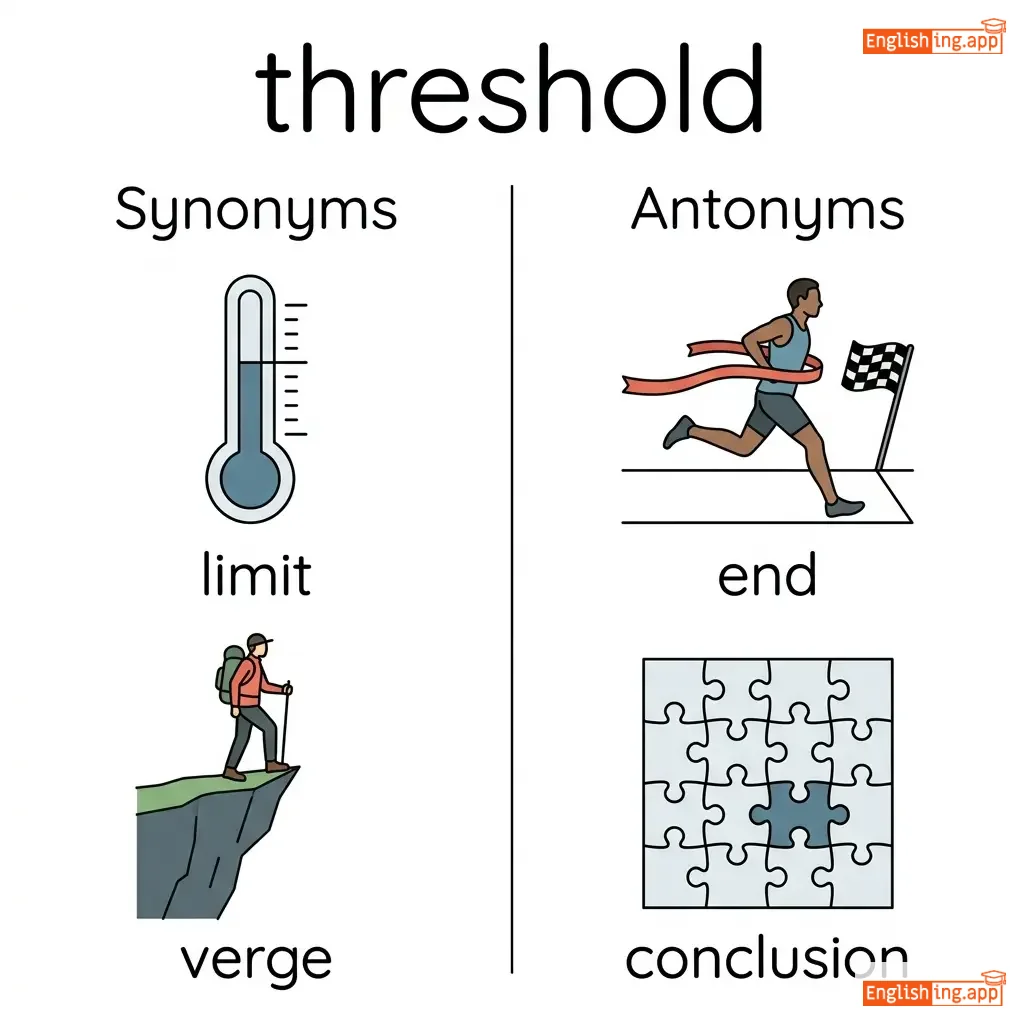
limit, verge, brink, gateway, entry
••••••
|
end, conclusion
••••••
|
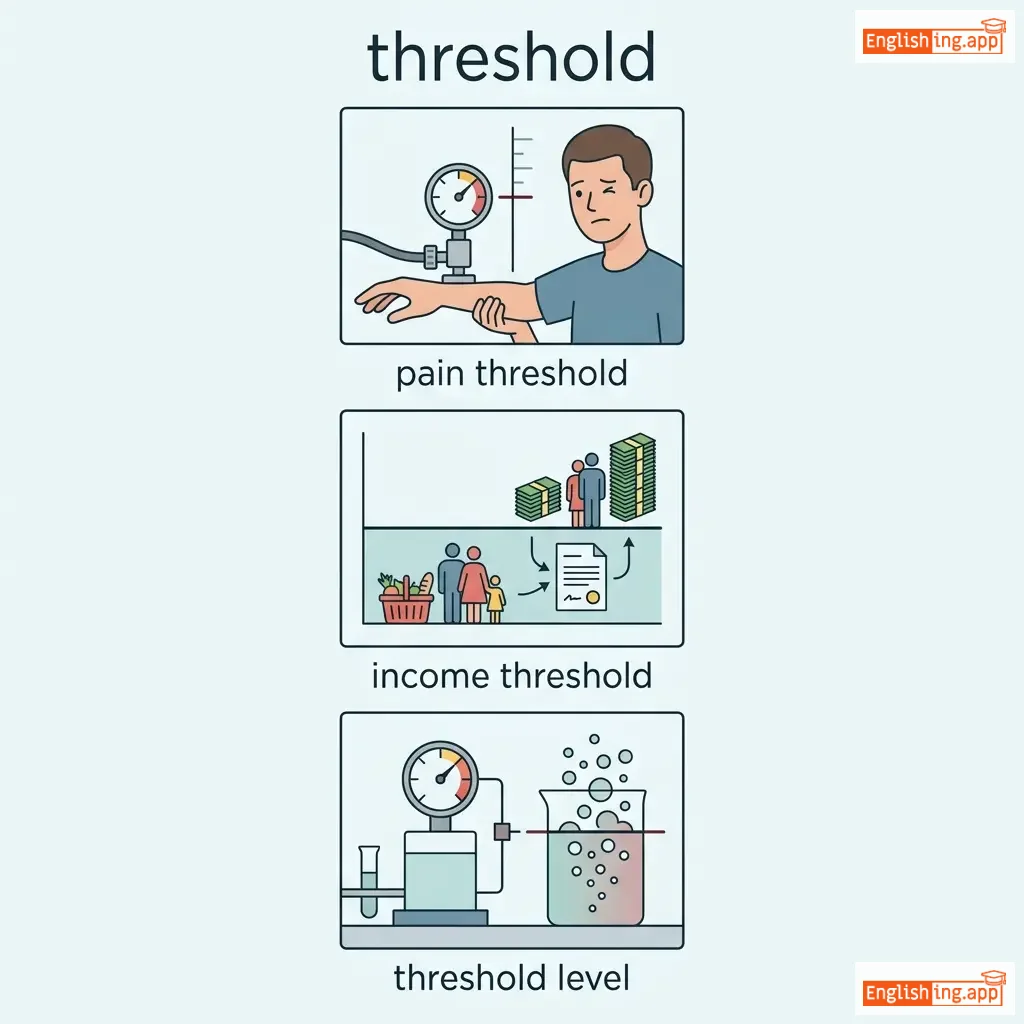
pain threshold, income threshold, threshold level, at the threshold
••••••
|
临界点是开始变革的那一刻。
••••••
|
|
#5063
😄
|
/θrɪld/
adjective
(thrɪld)
••••••
|
- •••••• |
兴奋
xīngfèn
••••••
|
- •••••• | - •••••• | - •••••• | - •••••• |
extremely happy or excited
••••••
|
She was thrilled with the surprise party. |
她对惊喜派对感到兴奋。
Tā duì jīngxǐ pàiduì gǎndào xīngfèn.
••••••
|
- •••••• | - •••••• | - •••••• |
excited, elated, overjoyed, delighted
••••••
|
disappointed, unhappy
••••••
|
thrilled with, thrilled to, thrilled by
••••••
|
'Thrilled' 就是兴奋和快乐的表现!
••••••
|
|
#5064
🌱
|
/θraɪv/
verb
••••••
|
- •••••• | - •••••• |
thrived
••••••
|
thrived
••••••
|
thrives
••••••
|
thriving
••••••
|
to grow, develop, or be successful
••••••
|
Small businesses can thrive with proper support. |
- •••••• |
thrive on |
to enjoy or be energized by something, especially a challenge
••••••
|
- •••••• |
flourish, prosper, succeed, grow, advance
••••••
|
fail, decline, collapse
••••••
|
thrive on challenges, thrive in business, thrive under pressure, thrive in environment
••••••
|
No •••••• |
|
#5065
🗣️
|
/θroʊt/
noun
(θroʊt)
••••••
|
- •••••• |
喉咙
hóulóng
••••••
|
- •••••• | - •••••• | - •••••• | - •••••• |
the front part of the neck, containing the pharynx and larynx
••••••
|
He felt a lump in his throat while speaking. |
他说话时感到喉咙里有个肿块。
Tā shuōhuà shí gǎndào hóulóng lǐ yǒu gè zhǒngkuài.
••••••
|
- •••••• | - •••••• | - •••••• |
neck, gullet
••••••
|
none
••••••
|
sore throat, clear your throat
••••••
|
Throat = hóulóng, 语音与声音的来源。
••••••
|
|
#5066
➡️
|
/θruː/
preposition
(thru)
••••••
|
- •••••• |
通过
tong guo
••••••
|
- •••••• | - •••••• | - •••••• | - •••••• |
moving in one side and out the other side of something
••••••
|
The train passed through the tunnel.
火车通过了隧道。
••••••
|
火车通过了隧道。
Huo che tong guo le sui dao.
••••••
|
- •••••• | - •••••• | - •••••• |
across, past, beyond, into
••••••
|
none
••••••
|
go through, pass through, walk through
••••••
|
Through sounds like crossing a bridge, moving from one side to the other.
••••••
|
|
#5067
🌍
|
/θruːˈaʊt/
preposition
(sīhào-āo)
••••••
|
- •••••• |
贯穿
guan chuan
••••••
|
- •••••• | - •••••• | - •••••• | - •••••• |
in every part of a place or during the whole time of an event
••••••
|
She worked throughout the night. |
她整夜工作。
Ta zheng ye gongzuo.
••••••
|
- •••••• | - •••••• | - •••••• |
all over, everywhere, during, across
••••••
|
none
••••••
|
throughout the day, throughout the country
••••••
|
Throughout = 穿越时间,从不停歇。
••••••
|
|
#5068
🏈
|
/θroʊ/
verb
(thro)
••••••
|
|
投掷
tóu zhì
••••••
|
threw
thru
••••••
|
thrown
thron
••••••
|
throws
throz
••••••
|
throwing
throwing
••••••
|
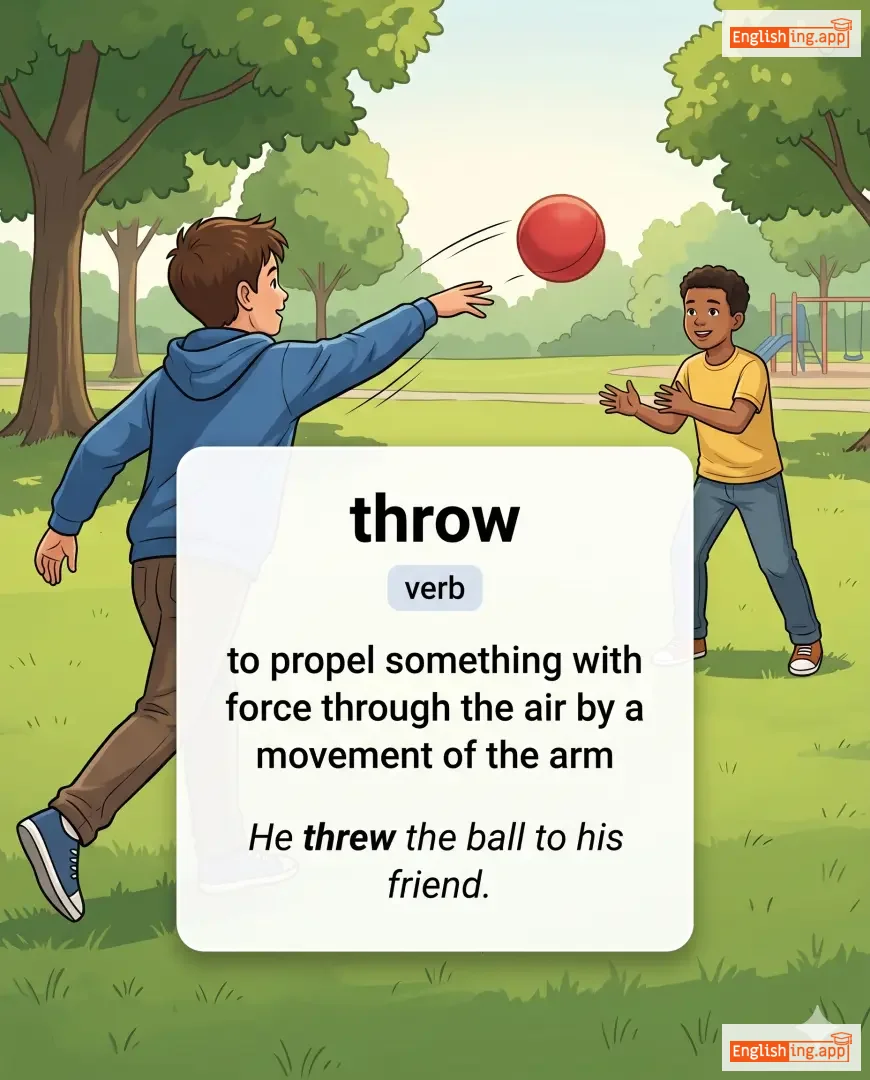
to propel something with force through the air by a movement of the arm
••••••
|
He threw the ball to his friend.
他把球扔给了他的朋友。
••••••
|
他把球扔给了他的朋友。
Tā bǎ qiú rēng gěi le tā de péngyǒu.
••••••
|
throw in the towel
放弃毛巾
••••••
|
to give up or admit defeat
••••••
|
放弃
fàngqì
••••••
|
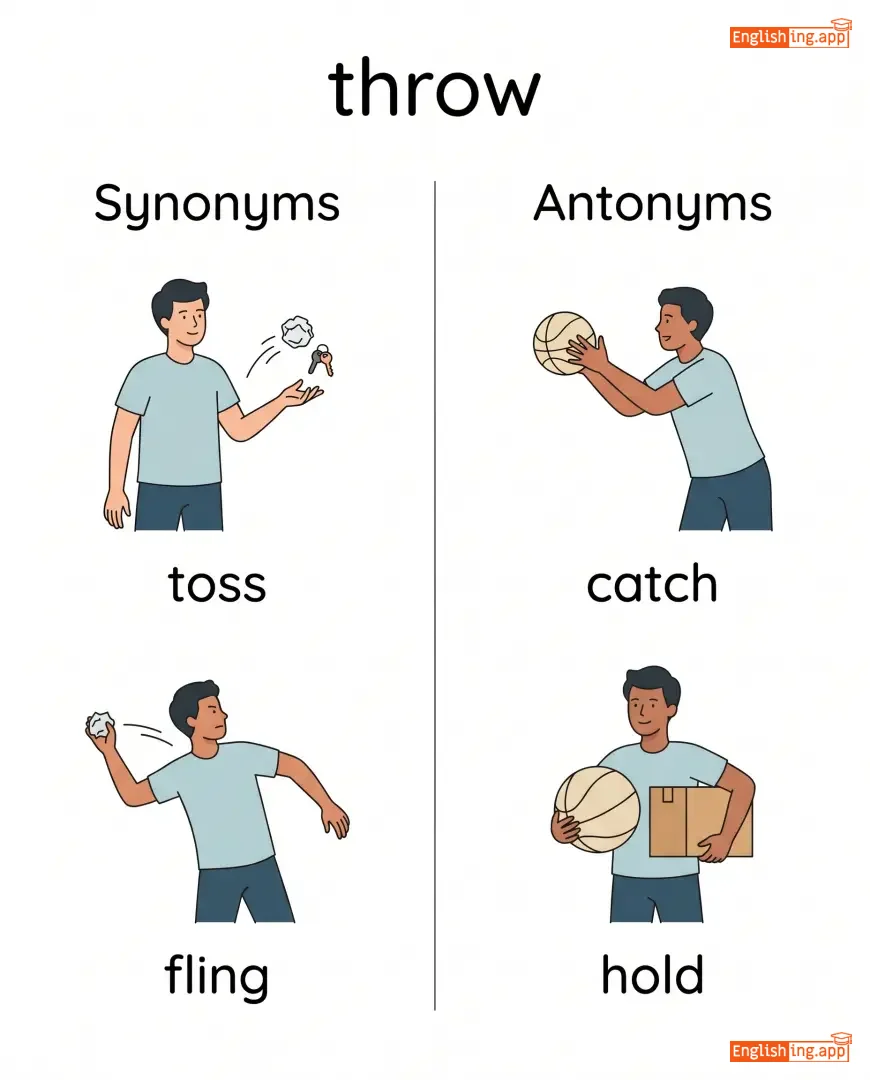
toss, fling, hurl, chuck
••••••
|
catch, hold
••••••
|
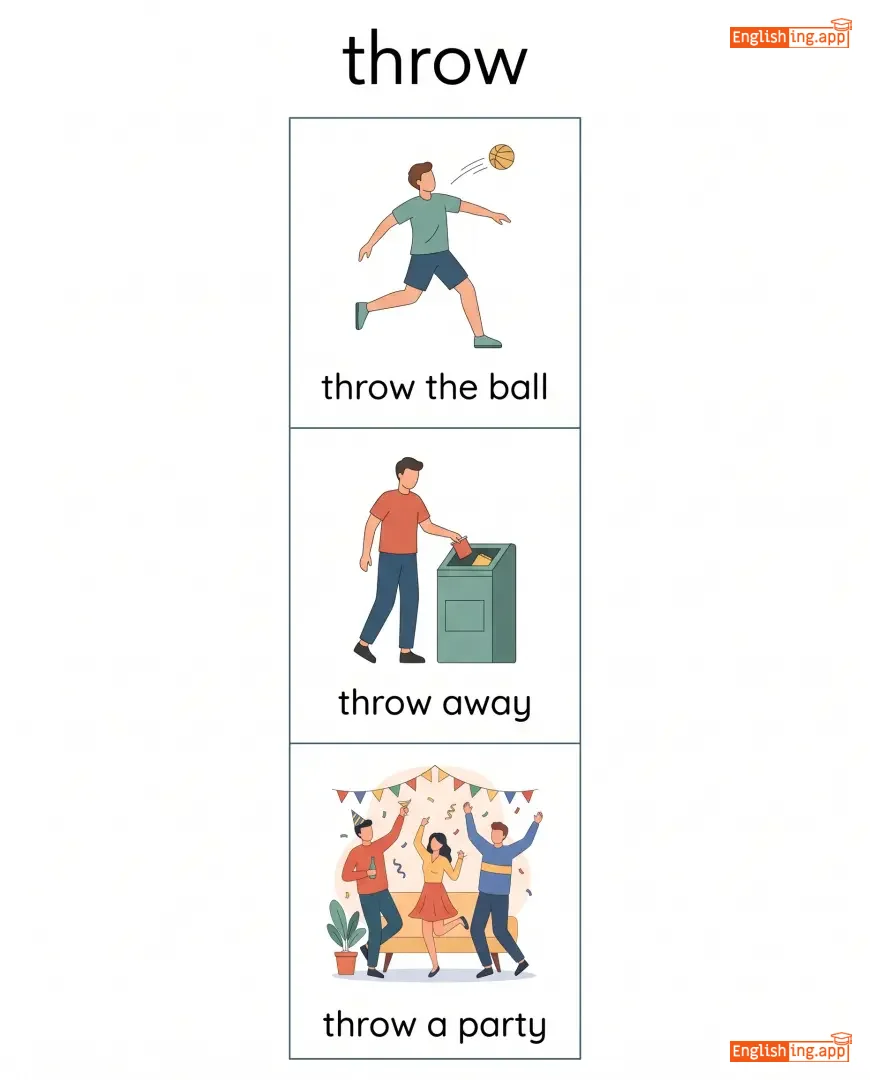
throw the ball, throw away, throw a party
••••••
|
扔球去,做最好的投掷!
••••••
|
|
#5069
👍
|
/θʌm/
noun
(θʌm)
••••••
|
- •••••• |
大拇指
da mǔ zhǐ
••••••
|
- •••••• | - •••••• | - •••••• | - •••••• |
the short, thick finger on the side of the hand, used for gripping and holding things
••••••
|
He gave a thumbs-up to show his approval. |
他竖起大拇指表示赞同。
Tā shù qǐ dà mǔ zhǐ biǎo shì zàn tóng.
••••••
|
rule of thumb |
a general principle or rule based on experience or practice rather than theory
••••••
|
经验法则
jīng yàn fǎ zé
••••••
|
digit, finger, appendage, joint, extremity
••••••
|
toe, palm
••••••
|
thumb up, thumb down, rule of thumb, suck your thumb, raise your thumb
••••••
|
大拇指, 用来指示,别忘了规则 👍
••••••
|
|
#5070
📅
|
/ˈθɜːrzdeɪ/
noun
(萨斯代)
••••••
|
- •••••• |
星期四
xingqi si
••••••
|
- •••••• | - •••••• | - •••••• | - •••••• |
The fifth day of the week, following Wednesday and preceding Friday.
••••••
|
We have a meeting scheduled for Thursday.
我们安排了周四的会议。
••••••
|
我们安排了星期四的会议。
Wo men an pai le xingqi si de huiyi.
••••••
|
- •••••• | - •••••• | - •••••• |
week day, midweek day, workday
••••••
|
weekend, holiday
••••••
|
Thursday morning, Thursday night, every Thursday, next Thursday, last Thursday
••••••
|
Xiǎng 'Si' (four) is Thursday minus one day from weekend.
••••••
|
|
#5071
➡️
|
/ðʌs/
adverb
(ðʌs)
••••••
|
- •••••• |
因此
yin ci
••••••
|
- •••••• | - •••••• | - •••••• | - •••••• |
as a result or consequence of something previously stated
••••••
|
He was late, thus he missed the meeting. |
他迟到了,因此错过了会议。
Ta chi dao le, yin ci cuo guo le hui yi.
••••••
|
- •••••• | - •••••• | - •••••• |
therefore, hence, accordingly, so
••••••
|
however, nevertheless
••••••
|
thus far, thus far as, thus it is
••••••
|
因此,我们都理解了。
••••••
|
|
#5072
🎫
|
/ˈtɪkɪt/
noun
(票)
••••••
|
- •••••• |
票
piào
••••••
|
- •••••• | - •••••• | - •••••• | - •••••• |
a small piece of paper or card that gives the holder a right to access a service or event
••••••
|
He bought a ticket to the concert. |
他买了一个音乐会的票。
Tā mǎi le yī gè yīn yuè huì de piào.
••••••
|
- •••••• | - •••••• | - •••••• |
pass, voucher, stub, coupon
••••••
|
no ticket
••••••
|
buy a ticket, ticket for, concert ticket
••••••
|
票带你进入任何活动!
••••••
|
|
#5073
🌊
|
/taɪd/
noun
(taɪd)
••••••
|
- •••••• |
潮汐
chaoxi
••••••
|
- •••••• | - •••••• | - •••••• | - •••••• |
the regular rise and fall of the sea caused by the moon and sun's gravity; a powerful flow or movement
••••••
|
The fisherman waited for the tide to come in. |
渔夫在等待潮汐的到来。
Yufu zai dengdai chaoxi de daolai.
••••••
|
turn the tide |
to cause a reversal of fortune or change in direction
••••••
|
转变潮流
zhuanbian chaoliu
••••••
|
current, flow, surge, stream, wave
••••••
|
ebb, stillness, stagnation
••••••
|
high tide, low tide, rising tide, ebb tide
••••••
|
潮汐 = 海洋的规律性涨落 - 潮汐随时间往复而来。
••••••
|
|
#5074
🧹
|
/ˈtaɪ.di/
adjective
(taidi)
••••••
|
- •••••• |
整洁; 干净
zhěngjié; gānjìng
••••••
|
- •••••• | - •••••• | - •••••• | - •••••• |
arranged neatly and in order; clean and organized
••••••
|
She keeps her room very tidy and organized. |
她保持房间非常整洁和干净。
Tā bǎochí fángjiān fēicháng zhěngjié hé gānjìng.
••••••
|
- •••••• | - •••••• | - •••••• |
neat, organized, orderly, clean
••••••
|
messy, untidy, disorganized, chaotic
••••••
|
tidy room, tidy up, tidy appearance, keep tidy
••••••
|
Tidy = '田'代表整齐, '地'代表干净 (fields neat and clean).
••••••
|
Vocabulary Quiz
Test your vocabulary by matching words with their translations or meanings.
Login to take the quiz
Comments (0)
Share your thoughts and join the discussion.
Join the discussion by logging in
Login to CommentNo comments yet
Be the first to share your thoughts!