

Обновитесь для доступа ко всему словарю
Получите неограниченный доступ ко всем словам с подпиской Pro
Обновить до ProПеревод
Прошедшее
Причастие прошедшего времени
Третье лицо единственного числа
Герундий
Значение
Пример предложения
Перевод примера предложения
Синонимы
Антонимы
Коллокации
Мнемоника



Swipe left or right, or use the buttons. Tap image to zoom.
Обновитесь для доступа ко всем предложениям
Получите неограниченный доступ ко всем предложениям с подпиской Pro
Обновить до ProПеревод примера предложения
Слово
Lesson 106Lesson 106 - Переключатель маски
|
Эмодзи
|
Слово | Images | Перевод | Прошедшее | Причастие прошедшего времени | Третье лицо единственного числа | Герундий | Значение | Пример предложения | Перевод примера предложения | Пример выражения | Значение примера выражения | Перевод примера выражения | Синонимы | Антонимы | Коллокации | Мнемоника |
|---|---|---|---|---|---|---|---|---|---|---|---|---|---|---|---|---|---|
|
#5025
💪
|
/ðəmˈsɛlvz/
pronoun
(ðəmˈsɛlvz)
••••••
|
- •••••• |
сами
sami
••••••
|
- •••••• | - •••••• | - •••••• | - •••••• |
used to emphasize the subject of the sentence or to refer to the subject doing something to itself
••••••
|
They fixed the problem themselves. |
Они сами решили проблему.
Oni sami reshiliproblemu.
••••••
|
- •••••• | - •••••• | - •••••• |
themselves alone, personally, independently
••••••
|
none
••••••
|
do it themselves, solve it themselves, they themselves
••••••
|
сами (themselves) напоминает, что решение принимается ими
••••••
|
|
#5026
⏳
|
/ðɛn/
adverb
(zhen)
••••••
|
- •••••• |
тогда
togda
••••••
|
- •••••• | - •••••• | - •••••• | - •••••• |
at that time; next in order of time or place
••••••
|
We went to the park, and then we had lunch.
Мы пошли в парк, а затем пообедали.
••••••
|
Мы пошли в парк, а затем пообедали.
My poshli v park, a zatem poobedali.
••••••
|
back then
тогда
••••••
|
used to refer to a time in the past
••••••
|
тогда
togda
••••••
|
afterward, subsequently, later, next
••••••
|
before
••••••
|
then what, then go, then what happened
••••••
|
Тогда (then) для памяти о прошлом времени
••••••
|
|
#5027
📚
|
/θiˈɒlədʒi/
noun
(теология)
••••••
|
- •••••• |
теология
teologiya
••••••
|
- •••••• | - •••••• | - •••••• | - •••••• |
The study of the nature of God and religious beliefs.
••••••
|
She is pursuing a degree in theology at the university. |
Она получает степень в области теологии в университете.
Ona poluchayet stepen' v oblasti teologii v universitete.
••••••
|
- •••••• | - •••••• | - •••••• |
divinity, religious studies, doctrine, belief system
••••••
|
atheism, secularism
••••••
|
theology course, theology degree, theology department, theology student
••••••
|
Theo означает Бог, а logy означает изучение, так что теология - это изучение Бога.
••••••
|
|
#5028
💡
|
/ˌθiːəˈrɛtɪkl/
adjective
(θɪəˈrɛtɪkəl)
••••••
|
- •••••• |
теоретический
teoreticheskiy
••••••
|
- •••••• | - •••••• | - •••••• | - •••••• |
Concerned with or based on theory rather than practical application.
••••••
|
The idea remains largely theoretical without real-world evidence. |
Идея остается в основном теоретической без реальных доказательств.
Ideya ostaetsya v osnovnom teoreticheskoy bez real'nykh dokazatel'stv.
••••••
|
- •••••• | - •••••• | - •••••• |
abstract, conceptual, hypothetical, speculative
••••••
|
practical, applied
••••••
|
theoretical framework, theoretical knowledge, theoretical approach, purely theoretical
••••••
|
Теоретический — это как идея в голове, без реальных доказательств — просто лампочка 💡.
••••••
|
|
#5029
📖
|
/ˈθiːəri/
noun
(теория)
••••••
|
- •••••• |
теория
teoriya
••••••
|
- •••••• | - •••••• | - •••••• | - •••••• |
An explanation of an idea or principle based on facts, reasoning, and evidence.
••••••
|
Einstein's theory of relativity changed the way we understand physics.
Теория относительности Эйнштейна изменила способ понимания физики.
••••••
|
Теория относительности Эйнштейна изменила способ понимания физики.
Teoriya otnositel'nosti Eynshteyna izmenila sposob ponimaniya fiziki.
••••••
|
in theory
теоретически
••••••
|
something that is true according to principles, though it may not work in practice
••••••
|
теоретически
teoreticheski
••••••
|
hypothesis, concept, idea, principle, doctrine
••••••
|
fact, reality, practice
••••••
|
scientific theory, political theory, in theory, theory of evolution
••••••
|
Теория (теория) – это не просто слово, это наша наука, которая обоснована доказательствами.
••••••
|
|
#5030
🧠
|
/ˈθɛrəpɪst/
noun
(терапевт)
••••••
|
- •••••• |
терапевт
terapevt
••••••
|
- •••••• | - •••••• | - •••••• | - •••••• |
a person trained to provide treatment or counseling for physical or mental health
••••••
|
The therapist helped him overcome his anxiety.
Терапевт помог ему преодолеть тревогу.
••••••
|
Терапевт помог ему преодолеть тревогу.
Terapevt pomog emu preodolet' trevogu.
••••••
|
speech therapist
логопед
••••••
|
a specialist who helps people improve their speech
••••••
|
логопед
logoped
••••••
|
counselor, psychologist, healer, advisor, psychiatrist
••••••
|
patient, client
••••••
|
physical therapist, speech therapist, professional therapist, family therapist
••••••
|
Терапевт — человек, который помогает вам с лечением или консультациями.
••••••
|
|
#5031
💆♀️
|
/ˈθɛrəpi/
noun
(терапия)
••••••
|
|
терапия
terapiya
••••••
|
- •••••• | - •••••• | - •••••• | - •••••• |
treatment intended to relieve or heal a disorder
••••••
|
She is receiving therapy for her injury.
Она получает терапию для своей травмы.
••••••
|
Она получает терапию для своей травмы.
Ona poluchayet terapiyu dlya svoey travmy.
••••••
|
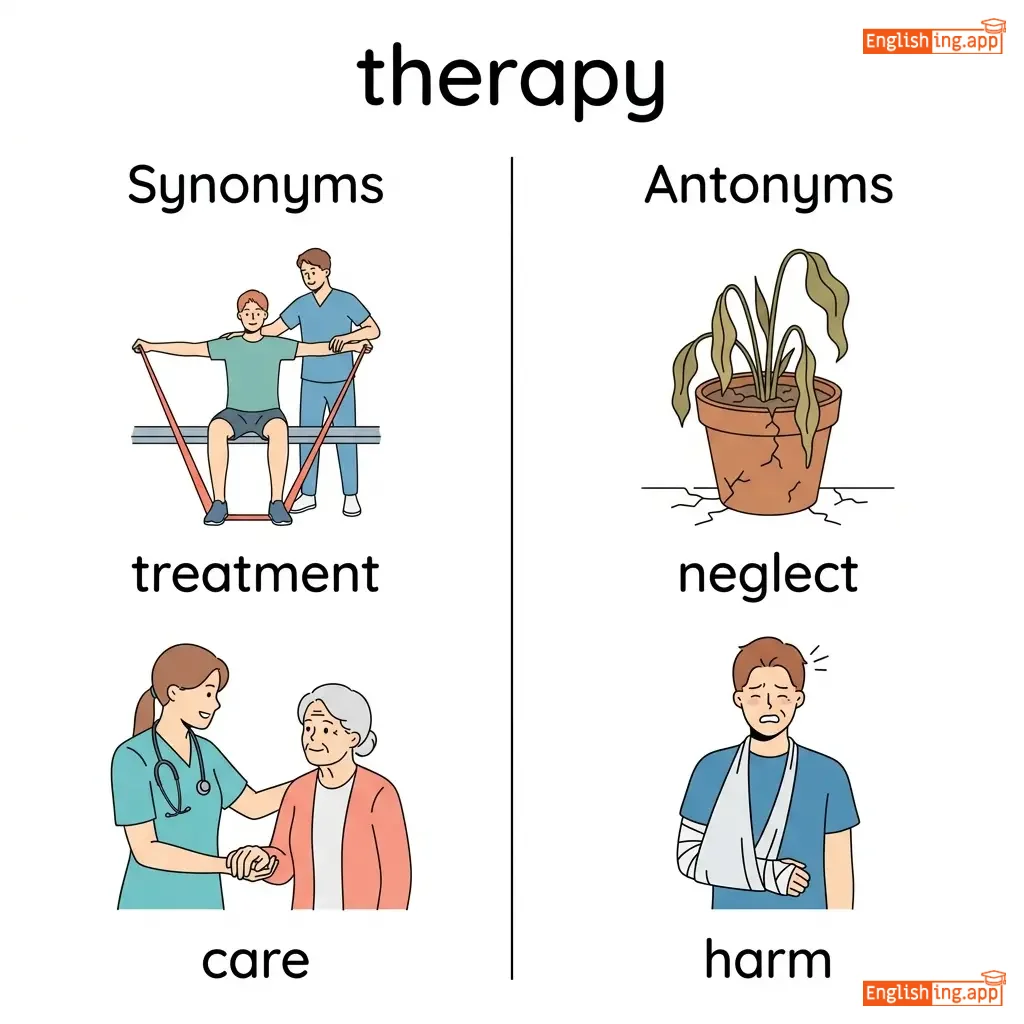
- •••••• | - •••••• | - •••••• |
treatment, care, healing, rehabilitation
••••••
|
neglect, harm
••••••
|
physical therapy, therapy session, receive therapy
••••••
|
Терапия (therapy) помогает восстановить физическое и психическое здоровье
••••••
|
|
#5032
👉
|
/ðeər/
adverb
(ðeər)
••••••
|
- •••••• |
там
tam
••••••
|
- •••••• | - •••••• | - •••••• | - •••••• |
in or at that place; to that place
••••••
|
I will meet you there at 5 PM. |
Я встречу тебя там в 17:00.
Ya vstrechu tebya tam v 17:00.
••••••
|
- •••••• | - •••••• | - •••••• |
over there, in that place, at that location
••••••
|
here, nowhere, everywhere
••••••
|
over there, right there, out there
••••••
|
Там, где мы встретимся в 5 вечера.
••••••
|
|
#5033
⏳
|
/ðɛrˈæftər/
adverb
(деэрæфтэр)
••••••
|
- •••••• |
после этого
posle etogo
••••••
|
- •••••• | - •••••• | - •••••• | - •••••• |
from that time on
••••••
|
He moved to Canada and thereafter started a new life. |
Он переехал в Канаду, и после этого начал новую жизнь.
On pereekhal v Kanadu, i posle etogo nachal novuyu zhizn.
••••••
|
- •••••• | - •••••• | - •••••• |
afterward, subsequently, later, following
••••••
|
before, earlier
••••••
|
thereafter began, thereafter continued, thereafter followed
••••••
|
Thereafter- после этого - Think of the time after a significant event.
••••••
|
|
#5034
➡️
|
/ˌðɛərˈbaɪ/
adverb
(дербай)
••••••
|
- •••••• |
следовательно;
sledovatel'no
••••••
|
- •••••• | - •••••• | - •••••• | - •••••• |
as a result of that; by that means
••••••
|
He worked hard and thereby achieved success. |
Он много работал и следовательно добился успеха.
On mnogo rabotal i sledovatel'no dobilsya uspekha.
••••••
|
- •••••• | - •••••• | - •••••• |
thus, consequently, therefore, hence
••••••
|
nevertheless, however, nonetheless
••••••
|
thereby achieving, thereby creating, thereby ensuring
••••••
|
Трудись и добьешься успеха следовательно.
••••••
|
|
#5035
🔗
|
/ˈðɛərˌfɔr/
adverb
(dɛrˈfɔr)
••••••
|
- •••••• |
поэтому
poetomu
••••••
|
- •••••• | - •••••• | - •••••• | - •••••• |
for that reason; consequently
••••••
|
It was raining, therefore we stayed inside.
Ish byl dozhd, poetomu my ostalis vnutri.
••••••
|
Шел дождь, поэтому мы остались внутри.
Shel dozhd', poetomu my ostalis vnutri.
••••••
|
- •••••• | - •••••• | - •••••• |
thus, hence, consequently, accordingly
••••••
|
nevertheless, however, nonetheless
••••••
|
therefore conclude, therefore decide, therefore recommend
••••••
|
Поэтому важно планировать заранее.
••••••
|
|
#5036
👥
|
/ðiːz/
pronoun
(ðiz)
••••••
|
- •••••• |
эти
eti
••••••
|
- •••••• | - •••••• | - •••••• | - •••••• |
used to refer to things or people that are near or present
••••••
|
These are my friends. |
Это мои друзья.
Eto moi druz'ya.
••••••
|
- •••••• | - •••••• | - •••••• |
this, those, such
••••••
|
those
••••••
|
these things, these people, these books
••••••
|
These things are close to me - Эти вещи близки ко мне.
••••••
|
|
#5037
📚
|
/ˈθiːsɪs/
noun
(тезис)
••••••
|
- •••••• |
тезис
tezis
••••••
|
- •••••• | - •••••• | - •••••• | - •••••• |
A long piece of writing on a particular subject, usually for a degree at a university.
••••••
|
She spent two years writing her doctoral thesis. |
Она потратила два года на написание своей докторской диссертации.
Ona potratila dva goda na napisanie svoey doktorskoy dissertatsii.
••••••
|
antithesis |
The direct opposite of something; a contrasting idea.
••••••
|
антитеза
antiteza
••••••
|
dissertation, paper, essay, study, research
••••••
|
fact, proof
••••••
|
doctoral thesis, master's thesis, write a thesis, defend a thesis
••••••
|
Тезис — это 📚 большая работа для получения диплома.
••••••
|
|
#5038
👫
|
/ðeɪ/
pronoun
(ðeɪ)
••••••
|
- •••••• |
они
oni
••••••
|
- •••••• | - •••••• | - •••••• | - •••••• |
used to refer to people or things previously mentioned or easily identified
••••••
|
They are going to the park. |
Они идут в парк.
Oni idut v park.
••••••
|
- •••••• | - •••••• | - •••••• |
them, those, these
••••••
|
I, we
••••••
|
they are, they have, they will
••••••
|
They are our friends - Они наши друзья.
••••••
|
|
#5039
📚
|
/θɪk/
adjective
(хэппинесс)
••••••
|
- •••••• |
толстый
tolstyy
••••••
|
- •••••• | - •••••• | - •••••• | - •••••• |
having a large distance between two sides; not thin
••••••
|
The book was so thick it took weeks to finish. |
Книга была такой толстой, что на её прочтение ушло несколько недель.
Kniga byla takoy tolstoy, chto na yeye prochtenie ushlo neskol'ko nedel'
••••••
|
thick and thin |
through good times and bad
••••••
|
через толстое и тонкое
cherez tolstoye i tonkoye
••••••
|
dense, heavy, wide, bulky
••••••
|
thin, slim, narrow
••••••
|
thick book, thick wall, thick hair, thick fog
••••••
|
Thick значит толстый, как толстая книга с множеством страниц
••••••
|
|
#5040
📏
|
/ˈθɪk.nəs/
noun
(тикиснесс)
••••••
|
- •••••• |
толщина
tolschina
••••••
|
- •••••• | - •••••• | - •••••• | - •••••• |
The measure of how thick or dense something is
••••••
|
The thickness of the book made it hard to carry.
Толщина книги делала ее трудной для переноски.
••••••
|
Толщина книги делала ее трудной для переноски.
Tolschina knigi delala ee trudnoy dlya perenoski.
••••••
|
in the thick of
ин зе тхик оф
••••••
|
deeply involved in a situation or activity
••••••
|
в гуще событий
v gusche sobytiy
••••••
|
density, width, depth, heft, bulk
••••••
|
thinness, slenderness
••••••
|
layer thickness, thickness gauge, thickness measurement
••••••
|
Толщина = thickness, 'толстый' напоминает thick
••••••
|
|
#5041
🦹♂️
|
/θiːf/
noun
(θiːf)
••••••
|
- •••••• |
вор
vor
••••••
|
- •••••• | - •••••• | - •••••• | - •••••• |
a person who steals things from others
••••••
|
The thief was caught stealing from the jewelry store. |
Вор был пойман при попытке украсть в ювелирном магазине.
Vor byl poyman pri popytke ukrast' v yuvelirnom magazine.
••••••
|
- •••••• | - •••••• | - •••••• |
robber, burglar, criminal
••••••
|
police, protector, guard
••••••
|
car thief, pickpocket thief, professional thief
••••••
|
Вор (vor) - это тот, кто ворует.
••••••
|
|
#5042
📏
|
/θɪn/
adjective
(θin)
••••••
|
- •••••• |
тонкий; узкий
tonkiy; uzkiy
••••••
|
- •••••• | - •••••• | - •••••• | - •••••• |
having little thickness; not thick; slender
••••••
|
She wore a thin jacket in the cold weather.
Она носила тонкую куртку в холодную погоду.
••••••
|
Она носила тонкую куртку в холодную погоду.
ona nosila tonkuyu kurtku v kholodnuyu pogodu
••••••
|
- •••••• | - •••••• | - •••••• |
slender, slim, narrow, skinny
••••••
|
thick, fat, wide, broad
••••••
|
thin layer, thin ice, thin air, thin line
••••••
|
Тонкий и узкий — как карандаш.
••••••
|
|
#5043
📦
|
/θɪŋ/
noun
(θɪŋ)
••••••
|
- •••••• |
вещь
veshch
••••••
|
- •••••• | - •••••• | - •••••• | - •••••• |
an object, idea, or matter that is being referred to or dealt with
••••••
|
This is the thing I was looking for. |
Это вещь, которую я искал.
Eto veshch', kotoruyu ya iskal.
••••••
|
- •••••• | - •••••• | - •••••• |
item, object, matter, article
••••••
|
nothing, nonentity
••••••
|
the thing, a thing, important thing, one thing
••••••
|
Think of a 'thing' as a 'veshch' (вещь) that you always look for.
••••••
|
|
#5044
🤔
|
/θɪŋk/
verb
(think)
••••••
|
|
думать
dumat'
••••••
|
thought
thot
••••••
|
thought
thot
••••••
|
thinks
thinkz
••••••
|
thinking
thinking
••••••
|
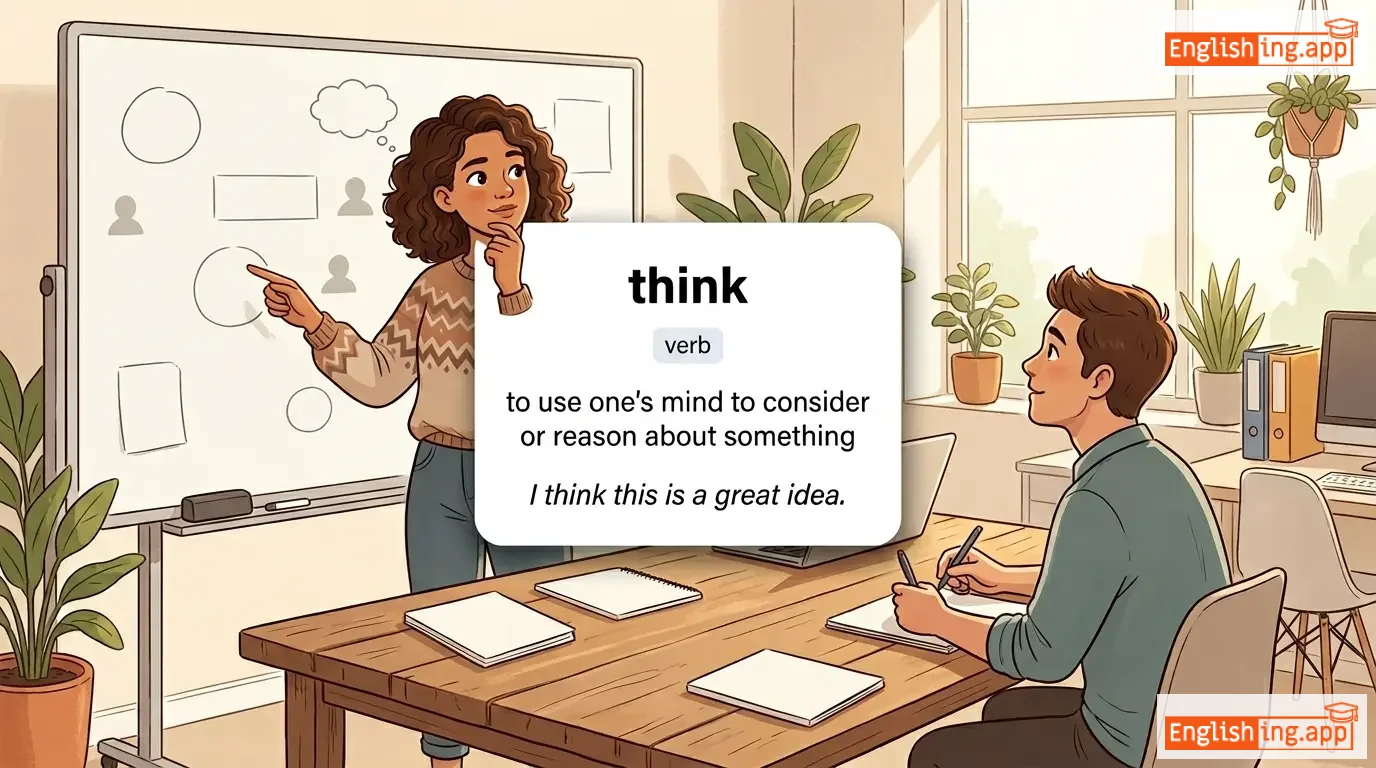
to use one's mind to consider or reason about something
••••••
|
I think this is a great idea.
Я думаю, что это отличная идея.
••••••
|
Я думаю, что это отличная идея.
Ya dumayu, chto eto otlichnaya ideya.
••••••
|
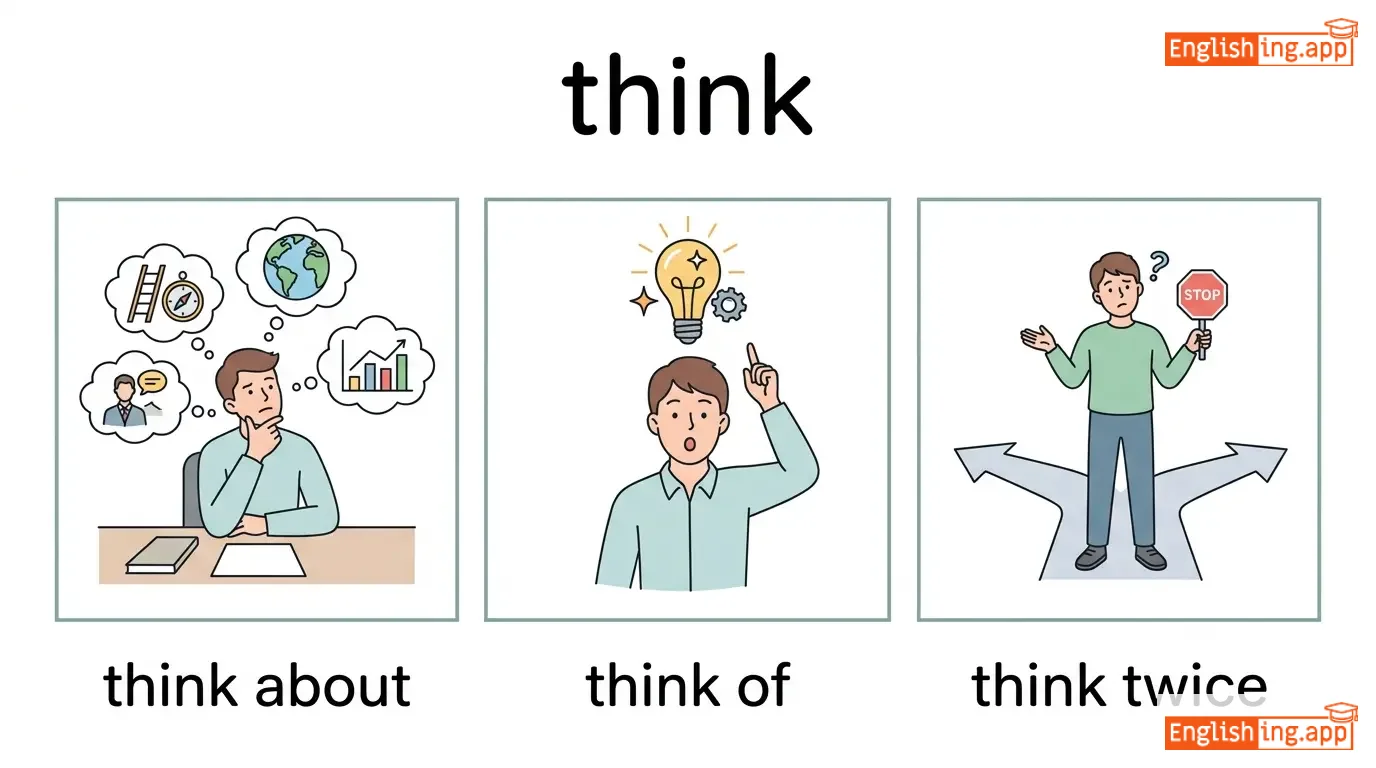
Think twice
Подумай дважды
••••••
|
Consider something carefully before making a decision
••••••
|
Подумай дважды
Podumay dvaжды
••••••
|
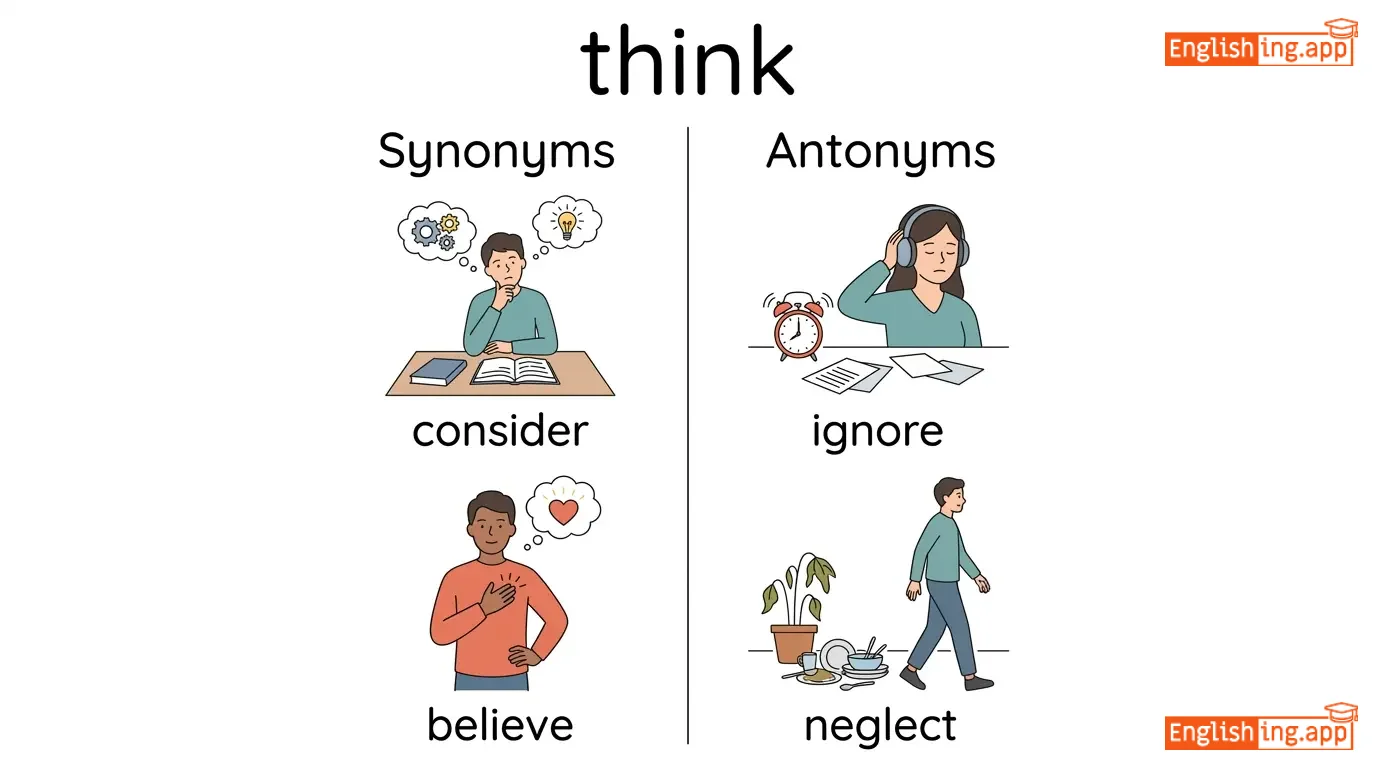
consider, believe, reflect, ponder
••••••
|
ignore, neglect
••••••
|
think about, think of, think twice, think hard
••••••
|
Когда ты думаешь, твой разум работает как шестеренка (🧠).
••••••
|
|
#5045
💭
|
/ˈθɪŋ.kə.bəl/
adjective
(синкэбл)
••••••
|
- •••••• |
мысленный
myslennyy
••••••
|
- •••••• | - •••••• | - •••••• | - •••••• |
Capable of being imagined or conceived; possible to consider or believe
••••••
|
It is hard to believe that such an outcome is even thinkable.
Трудно поверить, что такой результат даже мыслим.
••••••
|
Трудно поверить, что такой результат даже мыслим.
Trudno poverit', chto takoy rezul'tat dazhe myslim
••••••
|
- •••••• | - •••••• | - •••••• |
conceivable, imaginable, possible, plausible
••••••
|
unimaginable, impossible, inconceivable
••••••
|
barely thinkable, hardly thinkable, easily thinkable
••••••
|
Thinkable = мыслимый (myslimyy)
••••••
|
|
#5046
💭
|
/ˈθɪŋkɪŋ/
noun
(ˈθɪŋkɪŋ)
••••••
|
- •••••• |
мышление
myshleniye
••••••
|
- •••••• | - •••••• | - •••••• | - •••••• |
the process of considering or reasoning about something
••••••
|
Her thinking was clear and precise. |
Ее мышление было ясным и точным.
Eyo myshleniye bylo yasnym i tochnym.
••••••
|
- •••••• | - •••••• | - •••••• |
thought, contemplation, reflection, reasoning
••••••
|
ignorance, confusion
••••••
|
critical thinking, logical thinking, abstract thinking
••••••
|
In Russian, 'мышление' means thinking, as if making wise decisions.
••••••
|
|
#5047
3️⃣
|
/θɜrd/
adjective
(θɜrd)
••••••
|
- •••••• |
третий
tretiy
••••••
|
- •••••• | - •••••• | - •••••• | - •••••• |
constituting number three in a sequence
••••••
|
She finished in third place. |
Она заняла третье место.
Ona zanyala tretye mesto.
••••••
|
- •••••• | - •••••• | - •••••• |
thirdly, tertiary, trinal
••••••
|
first, second
••••••
|
third place, third time, third attempt
••••••
|
Помни о 'третьем' месте на соревнованиях (🥉).
••••••
|
|
#5048
📖
|
/ðɪs/
pronoun
(dis)
••••••
|
- •••••• |
это
eto
••••••
|
- •••••• | - •••••• | - •••••• | - •••••• |
used to refer to a person or thing that is close or near in space, time, or thought
••••••
|
This is my favorite book. |
Это моя любимая книга.
Eto moya lyubimaya kniga.
••••••
|
- •••••• | - •••••• | - •••••• |
this one, here, these
••••••
|
that, those
••••••
|
this book, this place, this idea
••••••
|
Это (eto) напоминает тебе что-то близкое по времени или мысли.
••••••
|
|
#5049
🔍
|
/ˈθʌroʊ/
adjective
(тэрро)
••••••
|
- •••••• |
тщательный, подробный
tshchatel'nyy, podrobnnyy
••••••
|
- •••••• | - •••••• | - •••••• | - •••••• |
complete with regard to every detail; not superficial or partial
••••••
|
The report was thorough and well-researched. |
Отчет был тщательным и хорошо исследованным.
Otchet byl tshchatel'nym i khorosho issledovannym.
••••••
|
thorough check |
a detailed and complete examination
••••••
|
тщательная проверка
tshchatelnaya proverka
••••••
|
complete, detailed, exhaustive, comprehensive, meticulous
••••••
|
incomplete, careless, superficial
••••••
|
thorough analysis, thorough research, thorough cleaning, thorough understanding
••••••
|
Тщательный, или thorough, означает все подробно проверенное
••••••
|
|
#5050
✅
|
/ˈθʌrəli/
adverb
(thôrli)
••••••
|
- •••••• |
тщательно; полностью;
tshchatel'no; polnost'yu;
••••••
|
- •••••• | - •••••• | - •••••• | - •••••• |
completely; entirely; in a thorough manner
••••••
|
She thoroughly cleaned the entire house before the guests arrived.
Она тщательно убрала весь дом до прихода гостей.
••••••
|
Она тщательно убрала весь дом до прихода гостей.
Ona tshchatel'no ubrala ves' dom do prikhoda gostey.
••••••
|
- •••••• | - •••••• | - •••••• |
completely, entirely, fully, totally, utterly
••••••
|
partially, incompletely, superficially, hastily
••••••
|
thoroughly cleaned, thoroughly examined, thoroughly enjoyed
••••••
|
Все сделать тщательно.
••••••
|
|
#5051
👢
|
/ðoʊz/
pronoun
(ðoʊz)
••••••
|
- •••••• |
те
te
••••••
|
- •••••• | - •••••• | - •••••• | - •••••• |
used to refer to people or things that are far away or distant in space, time, or thought
••••••
|
Those are the shoes I want. |
Те туфли, которые я хочу.
Te tufli, kotorye ya khochu.
••••••
|
- •••••• | - •••••• | - •••••• |
those ones, those people, those things
••••••
|
this, these
••••••
|
those shoes, those days, those people
••••••
|
далеко, 'те' (te)
••••••
|
|
#5052
🌧️
|
/ðoʊ/
conjunction
(zho)
••••••
|
- •••••• |
хотя
khotya
••••••
|
- •••••• | - •••••• | - •••••• | - •••••• |
used to introduce a fact that makes the main statement of the sentence seem surprising or unexpected
••••••
|
Though it was raining, they still went outside. |
Хотя шёл дождь, они всё равно вышли на улицу.
Khotya shol dozhd', oni vsyo ravno vyshli na ulitsu.
••••••
|
- •••••• | - •••••• | - •••••• |
although, however, but
••••••
|
because, since
••••••
|
though difficult, though tired, though happy
••••••
|
'хотя' (khotya) несмотря на дождь выходить наружу
••••••
|
|
#5053
💭
|
/θɔːt/
noun
(тхот)
••••••
|
- •••••• |
мысль
mysl
••••••
|
- •••••• | - •••••• | - •••••• | - •••••• |
an idea or opinion produced by thinking or considering something
••••••
|
She had a sudden thought about the future. |
У неё возникла внезапная мысль о будущем.
U neyo voznikla vnezapnaya mysl' o budushchem.
••••••
|
- •••••• | - •••••• | - •••••• |
idea, notion, belief, concept
••••••
|
ignorance, uncertainty
••••••
|
deep thought, quick thought, passing thought
••••••
|
'Мысль' (mysl) приходит внезапно
••••••
|
|
#5054
💭
|
/ˈθɔːtˌproʊvɪkɪŋ/
adjective
(thɔːt-prəʊvɪkɪŋ)
••••••
|
- •••••• |
заставляющий задуматься
zastavlyayushchiy zadumatsya
••••••
|
- •••••• | - •••••• | - •••••• | - •••••• |
stimulating careful consideration or thought
••••••
|
The movie was deeply thought-provoking and left a lasting impression. |
Фильм был глубоко заставляющим задуматься и оставил неизгладимое впечатление.
Film byl gluboko zastavlyayushchim zadumatsya i ostavil neizgladimoe vpechatlenie.
••••••
|
- •••••• | - •••••• | - •••••• |
stimulating, insightful, profound, reflective
••••••
|
unthoughtful, shallow
••••••
|
thought-provoking question, thought-provoking film, thought-provoking book
••••••
|
Заставляющий задуматься - The film made me think for hours!
••••••
|
|
#5055
💭
|
/ˈθɔːtfəl/
adjective
(thotful)
••••••
|
- •••••• |
вдумчивый
vdumchivyy
••••••
|
- •••••• | - •••••• | - •••••• | - •••••• |
showing careful consideration or attention
••••••
|
She gave a thoughtful response to every question asked.
Она дала обдуманный ответ на каждый заданный вопрос.
••••••
|
Она дала обдуманный ответ на каждый заданный вопрос.
Ona dala obdumannyy otvet na kazhdy zadan’nyy vopros.
••••••
|
- •••••• | - •••••• | - •••••• |
considerate, reflective, kind, caring
••••••
|
thoughtless, inconsiderate
••••••
|
thoughtful gesture, thoughtful comment, thoughtful gift
••••••
|
Вдумчивый - Thoughtful gestures reveal deep care!
••••••
|
|
#5056
💯
|
/ˈθaʊzənd/
noun
(ˈθaʊzənd)
••••••
|
- •••••• |
тысяча
tysyacha
••••••
|
- •••••• | - •••••• | - •••••• | - •••••• |
the number equal to 10 hundred or 1,000
••••••
|
There were a thousand people at the concert. |
На концерте было тысяча человек.
Na kontserte bylo tysyacha chelovek.
••••••
|
- •••••• | - •••••• | - •••••• |
kilo, grand
••••••
|
one, few
••••••
|
thousand dollars, thousand people, thousand years
••••••
|
Тысяча людей на концерте (Tysyacha lyudey na kontserte)
••••••
|
|
#5057
🧵
|
/θred/
noun
(фрэд)
••••••
|
- •••••• |
нить
nit'
••••••
|
- •••••• | - •••••• | - •••••• | - •••••• |
a long, thin strand of cotton, nylon, or other fibers used for sewing
••••••
|
She used a red thread to sew the torn button back on. |
Она использовала красную нить, чтобы пришить оторванную пуговицу.
Ona ispol'zovala krasnuyu nit', chtoby prishit' otorvannuyu pugovitsu.
••••••
|
hang by a thread |
to be in a very dangerous or uncertain situation
••••••
|
висеть на ниточке
viset' na nitochke
••••••
|
fiber, string, filament, yarn, strand
••••••
|
rope, wire
••••••
|
cotton thread, lose the thread, follow the thread, silver thread
••••••
|
Thread означает нить — как нити разговора в форуме!
••••••
|
|
#5058
⚠️
|
/θrɛt/
noun
(thret)
••••••
|
- •••••• |
угроза, опасность
ugroza, opasnost
••••••
|
- •••••• | - •••••• | - •••••• | - •••••• |
A statement or action indicating intent to cause harm or danger.
••••••
|
The letter contained a threat against the company.
Письмо содержало угрозу против компании.
••••••
|
Письмо содержало угрозу против компании.
Pismo soderzhало ugrozu protiv kompanii.
••••••
|
make a threat
сделать угрозу
••••••
|
To express an intention to harm or cause problems.
••••••
|
сделать угрозу
sdelat' ugrozu
••••••
|
danger, menace, intimidation, warning, risk
••••••
|
safety, protection, assurance
••••••
|
serious threat, direct threat, pose a threat
••••••
|
Ugroza = 'Ugroza na udar'—угроза звонить на телефон.
••••••
|
|
#5059
⚠️
|
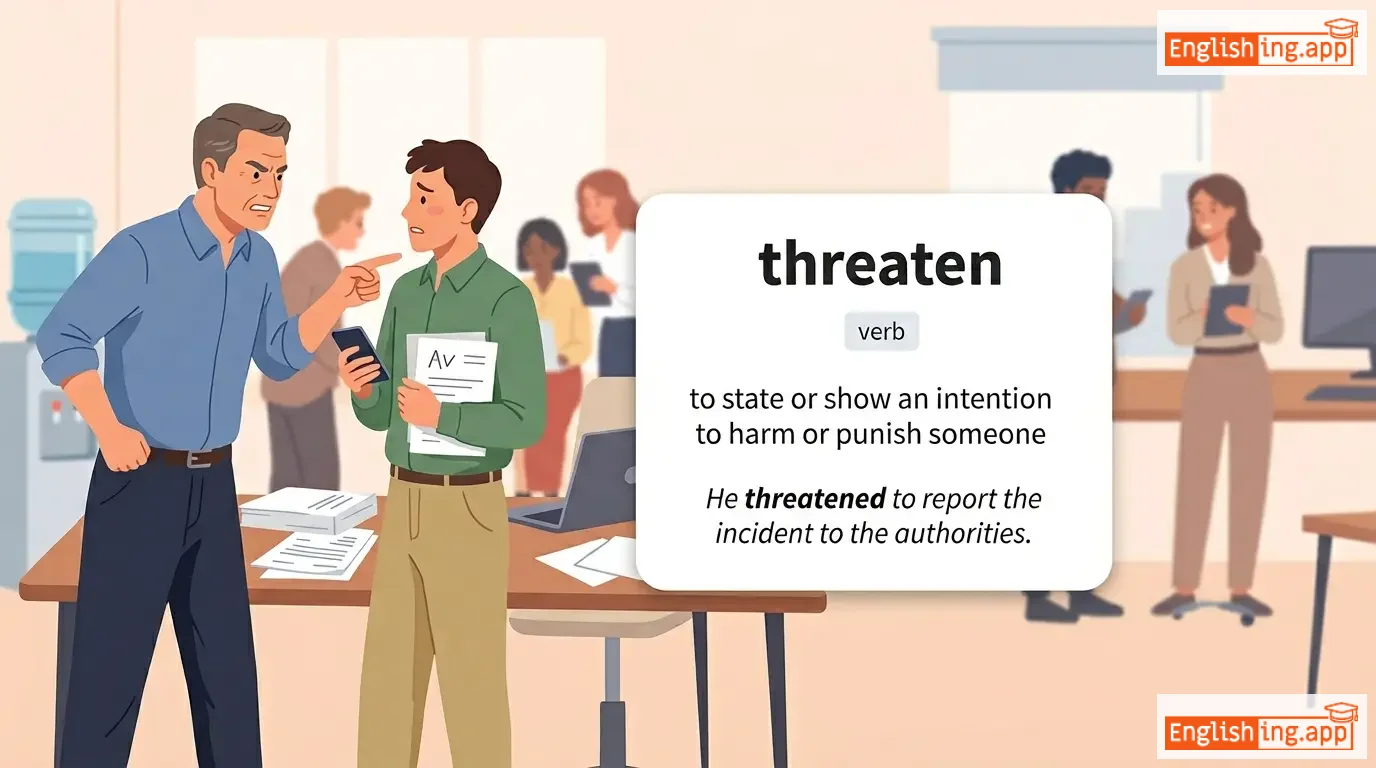
/ˈθretən/
verb
(threten)
••••••
|
|
угрожать
ugrozhat
••••••
|
threatened
thretened
••••••
|
threatened
thretened
••••••
|
threatens
thretens
••••••
|
threatening
thretening
••••••
|
to express an intention to harm or punish someone; to be likely to cause harm
••••••
|
The storm clouds threaten to bring heavy rain tonight.
Гроза угрожает сильным дождем этой ночью.
••••••
|
Гроза угрожает сильным дождем этой ночью.
Groza ugrozhayet sil'nym dozhdyom etoy noch'yu.
••••••
|
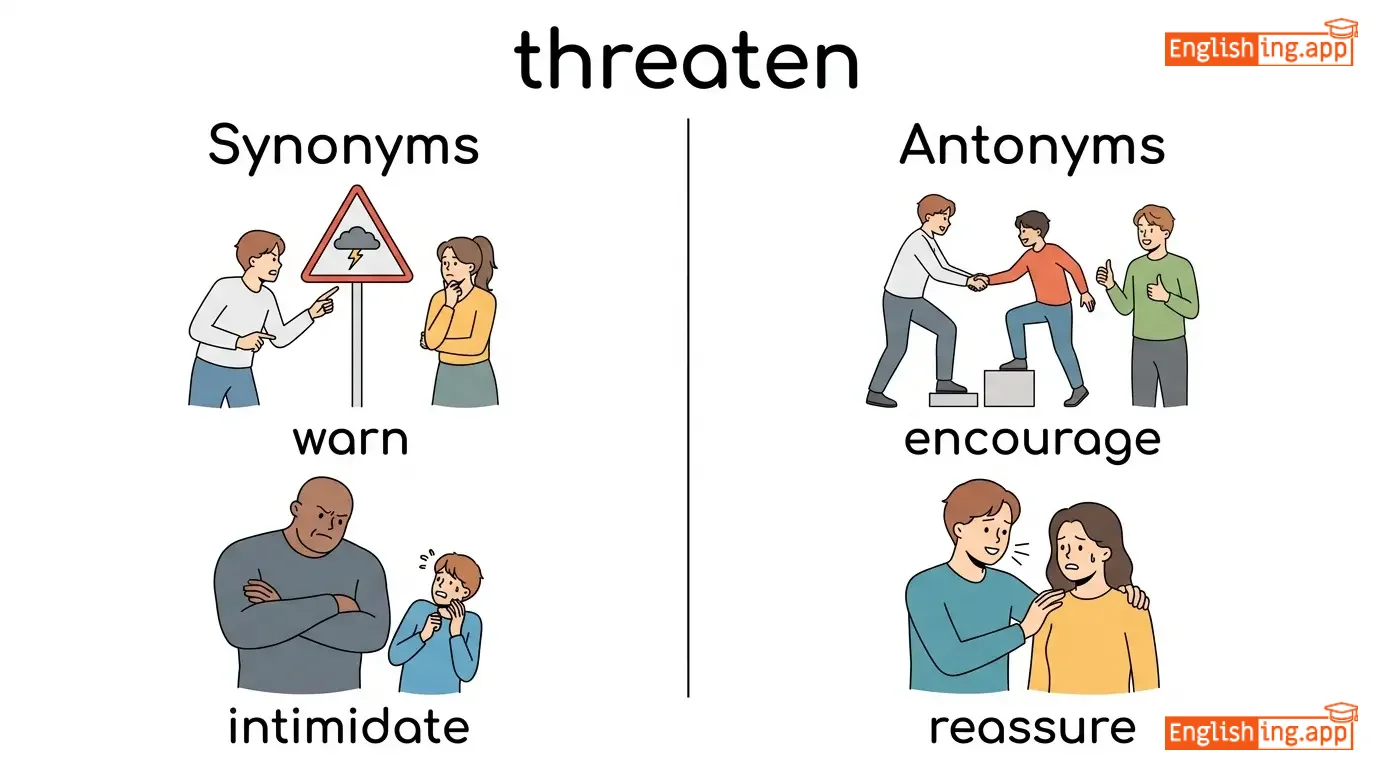
- •••••• | - •••••• | - •••••• |
menace, intimidate, warn, endanger
••••••
|
protect, defend, reassure, comfort
••••••
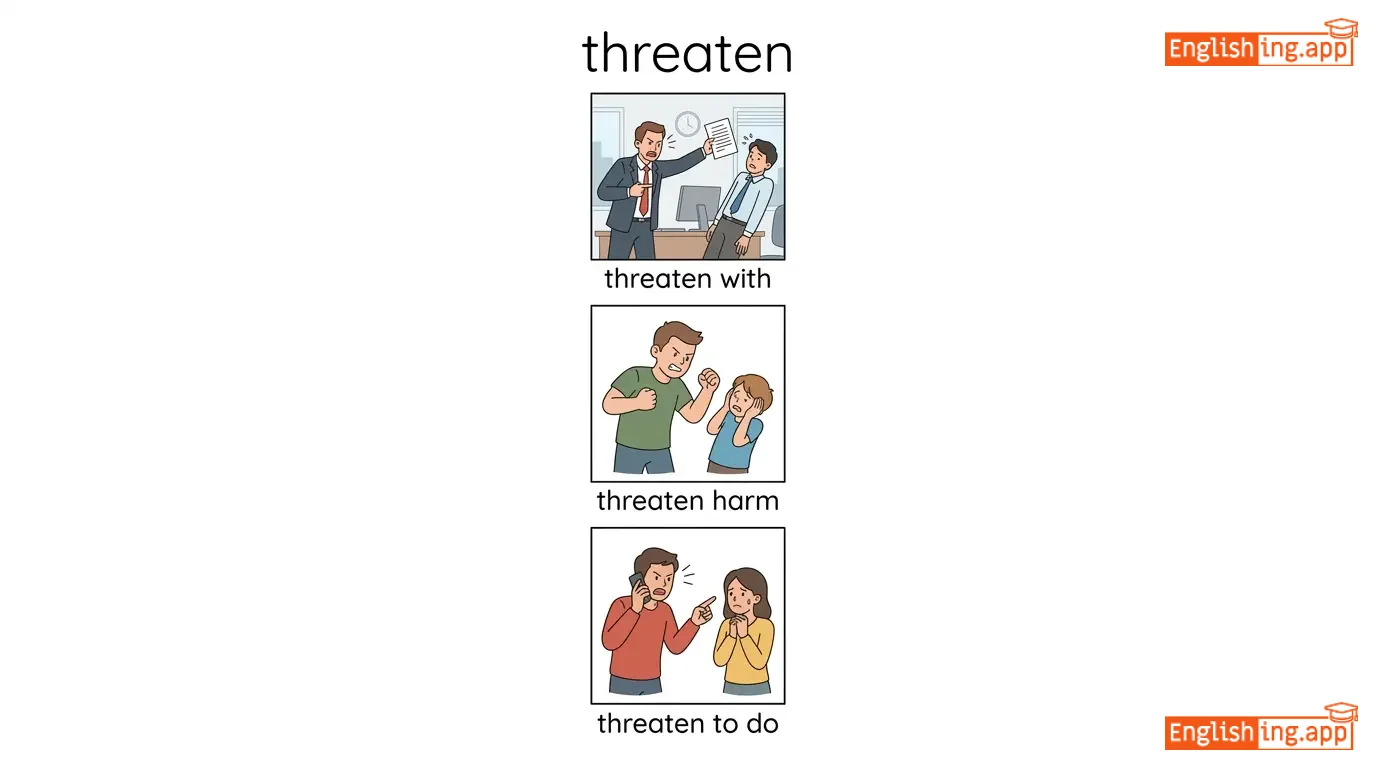
|
threaten to, threaten with, threaten someone, pose a threat
••••••
|
Ugrozhat = угроза, гроза всегда несет угрозу дождя.
••••••
|
|
#5060
⚡
|
/ˈθret.ən.ɪŋ/
adjective
(трэ́тэ́нинг)
••••••
|
- •••••• |
угрожающий; запугивающий
ugrozhayushchiy; zapugivayushchiy
••••••
|
- •••••• | - •••••• | - •••••• | - •••••• |
expressing a threat; menacing; intimidating
••••••
|
The dark clouds looked threatening before the storm. |
Темные облака выглядели угрожающими перед штормом.
Temnye oblakа vyglyadeli ugrozhayushchimi pered shtormom.
••••••
|
- •••••• | - •••••• | - •••••• |
menacing, intimidating, ominous, dangerous
••••••
|
reassuring, comforting, peaceful, safe
••••••
|
threatening behavior, threatening letter, threatening gesture, threatening tone
••••••
|
Russian 'угрожающий' resembles 'threatening'.
••••••
|
|
#5061
3️⃣
|
/θriː/
numeral
(trʲi)
••••••
|
- •••••• |
три
tri
••••••
|
- •••••• | - •••••• | - •••••• | - •••••• |
the number equivalent to the sum of two and one
••••••
|
She has three dogs at home. |
У нее три собаки дома.
U nee tree sobaki doma.
••••••
|
- •••••• | - •••••• | - •••••• |
threefold, triple
••••••
|
none
••••••
|
three times, three people, three years
••••••
|
Три — счастливое число в семье из трёх человек
••••••
|
|
#5062
🚪
|
/ˈθreʃ.həʊld/
noun
(thrɛʃ.həʊld)
••••••
|
|
порог
porog
••••••
|
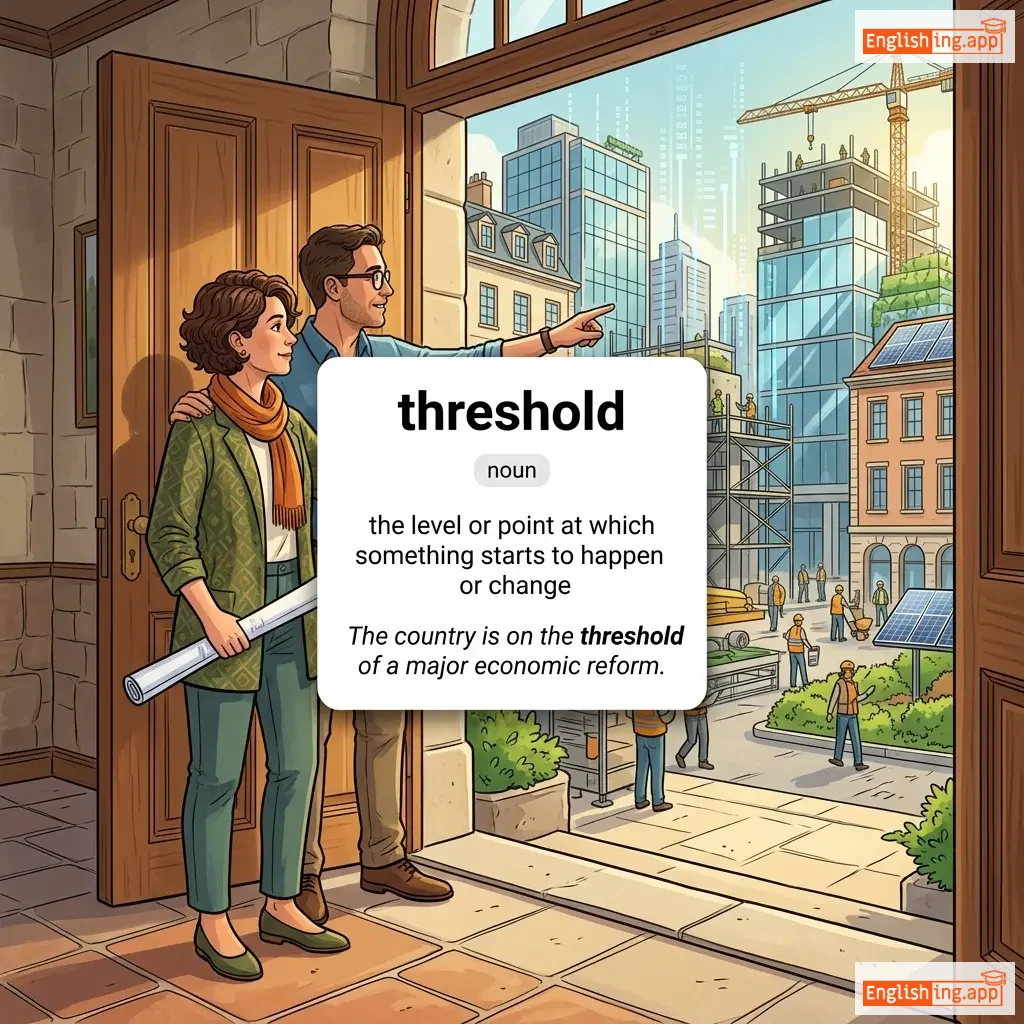
- •••••• | - •••••• | - •••••• | - •••••• |
the level or point at which something starts to happen or change
••••••
|
The country is on the threshold of a major economic reform. |
Страна на пороге крупной экономической реформы.
Strana na poroge krupnoy ekonomicheskoy reformy.
••••••
|
cross the threshold |
to begin a new phase or experience
••••••
|
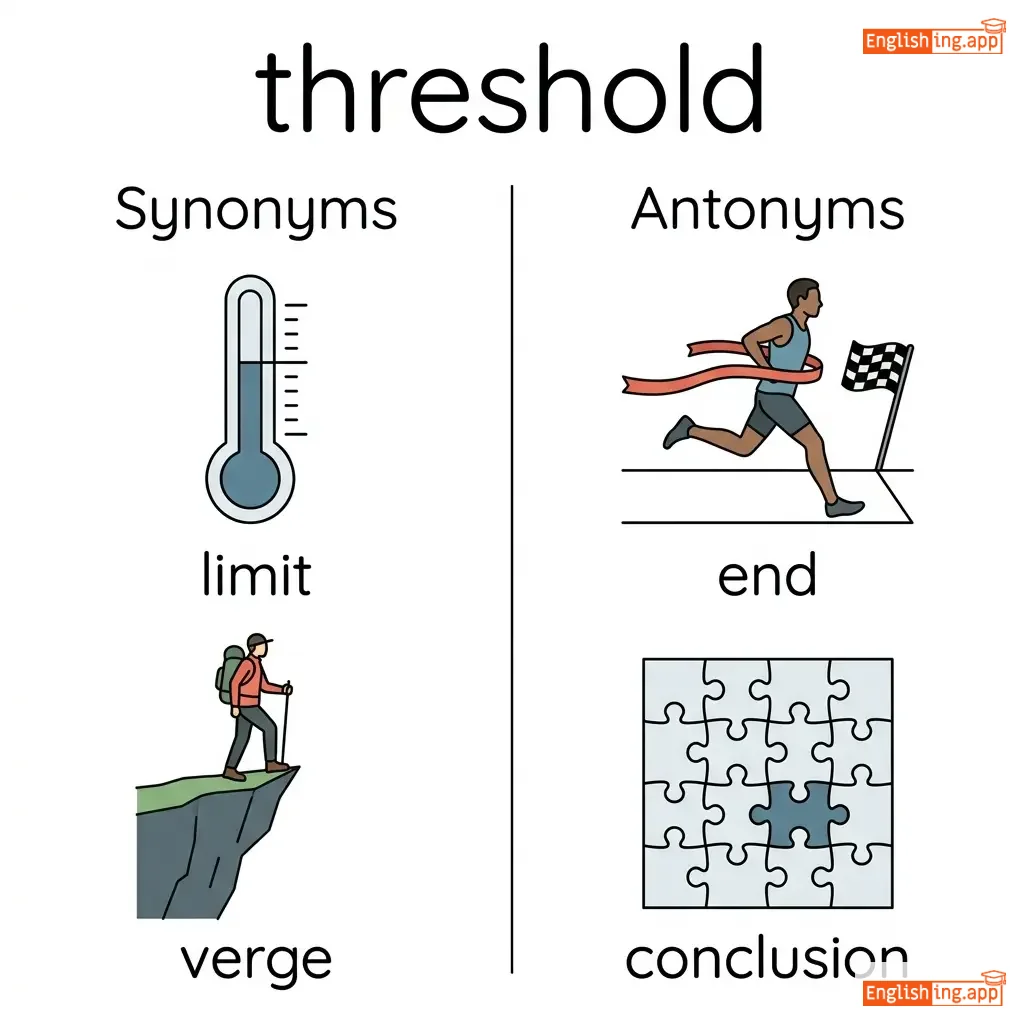
- •••••• |
limit, verge, brink, gateway, entry
••••••
|
end, conclusion
••••••
|
pain threshold, income threshold, threshold level, at the threshold
••••••
|
Порог — это момент начала нового этапа или изменения.
••••••
|
|
#5063
😄
|
/θrɪld/
adjective
(трилд)
••••••
|
- •••••• |
в восторге
v vostorge
••••••
|
- •••••• | - •••••• | - •••••• | - •••••• |
extremely happy or excited
••••••
|
She was thrilled with the surprise party. |
Она была в восторге от сюрприз-вечеринки.
Ona byla v vostorge ot syurpriz-vecherinki.
••••••
|
- •••••• | - •••••• | - •••••• |
excited, elated, overjoyed, delighted
••••••
|
disappointed, unhappy
••••••
|
thrilled with, thrilled to, thrilled by
••••••
|
'Thrilled' это быть 'в восторге' от счастья!
••••••
|
|
#5064
🌱
|
/θraɪv/
verb
••••••
|
- •••••• | - •••••• |
thrived
••••••
|
thrived
••••••
|
thrives
••••••
|
thriving
••••••
|
to grow, develop, or be successful
••••••
|
Small businesses can thrive with proper support. |
- •••••• |
thrive on |
to enjoy or be energized by something, especially a challenge
••••••
|
- •••••• |
flourish, prosper, succeed, grow, advance
••••••
|
fail, decline, collapse
••••••
|
thrive on challenges, thrive in business, thrive under pressure, thrive in environment
••••••
|
No •••••• |
|
#5065
🗣️
|
/θroʊt/
noun
(троут)
••••••
|
- •••••• |
горло
gorlo
••••••
|
- •••••• | - •••••• | - •••••• | - •••••• |
the front part of the neck, containing the pharynx and larynx
••••••
|
He felt a lump in his throat while speaking. |
Он почувствовал комок в горле, когда говорил.
On pochuvstvoval komok v gorle, kogda govoril.
••••••
|
- •••••• | - •••••• | - •••••• |
neck, gullet
••••••
|
none
••••••
|
sore throat, clear your throat
••••••
|
Throat = gorlo, источник звука и голоса.
••••••
|
|
#5066
➡️
|
/θruː/
preposition
(thru)
••••••
|
- •••••• |
через
cherez
••••••
|
- •••••• | - •••••• | - •••••• | - •••••• |
moving in one side and out the other side of something
••••••
|
The train passed through the tunnel.
Поезд прошел через туннель.
••••••
|
Поезд прошел через туннель.
Poezd proshel cherez tunnel.
••••••
|
- •••••• | - •••••• | - •••••• |
across, past, beyond, into
••••••
|
none
••••••
|
go through, pass through, walk through
••••••
|
Through sounds like crossing a bridge, moving from one side to the other.
••••••
|
|
#5067
🌍
|
/θruːˈaʊt/
preposition
(throughaut)
••••••
|
- •••••• |
в течение всего
v techenie vsego
••••••
|
- •••••• | - •••••• | - •••••• | - •••••• |
in every part of a place or during the whole time of an event
••••••
|
She worked throughout the night. |
Она работала всю ночь.
Ona rabotala vsyu noch.
••••••
|
- •••••• | - •••••• | - •••••• |
all over, everywhere, during, across
••••••
|
none
••••••
|
throughout the day, throughout the country
••••••
|
Throughout = сквозь время, без остановки.
••••••
|
|
#5068
🏈
|
/θroʊ/
verb
(thro)
••••••
|
|
бросать
brosat
••••••
|
threw
thru
••••••
|
thrown
thron
••••••
|
throws
throz
••••••
|
throwing
throwing
••••••
|
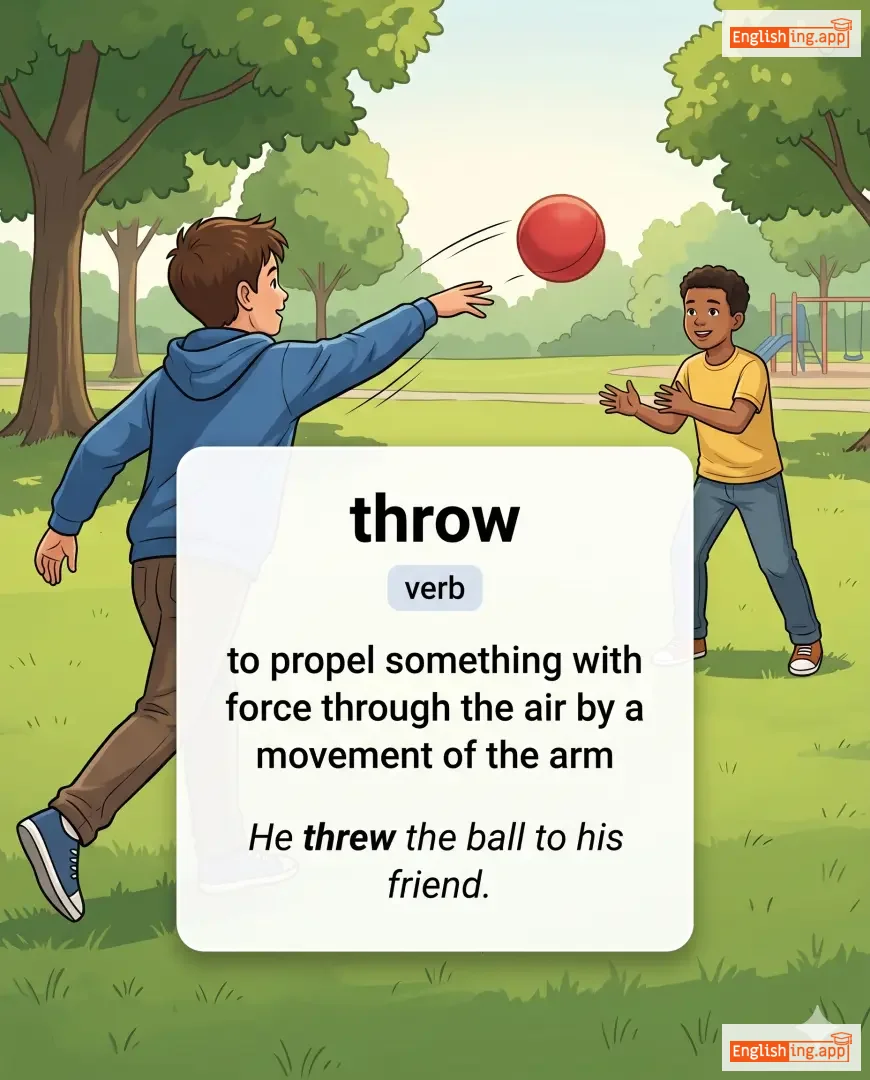
to propel something with force through the air by a movement of the arm
••••••
|
He threw the ball to his friend.
Он бросил мяч своему другу.
••••••
|
Он бросил мяч своему другу.
On brosil myach svoemu drugu.
••••••
|
throw in the towel
бросить полотенце
••••••
|
to give up or admit defeat
••••••
|
сдаться
sdatsya
••••••
|
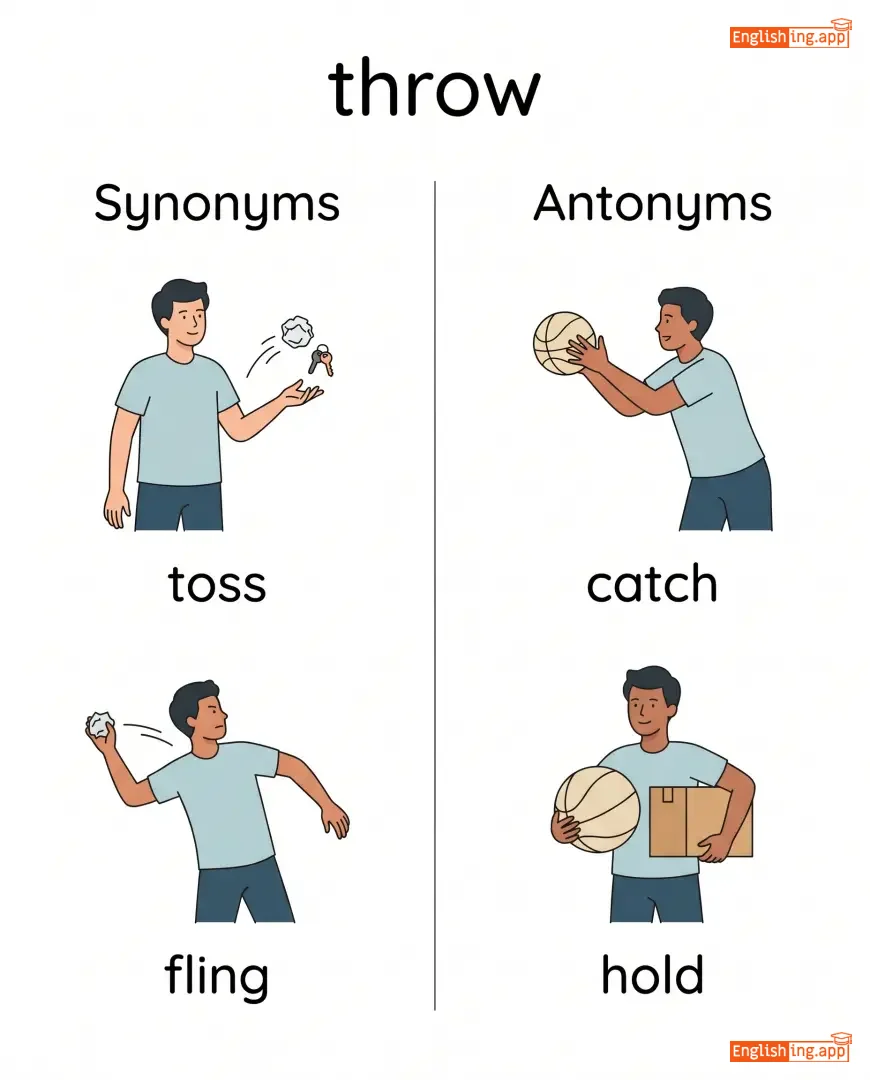
toss, fling, hurl, chuck
••••••
|
catch, hold
••••••
|
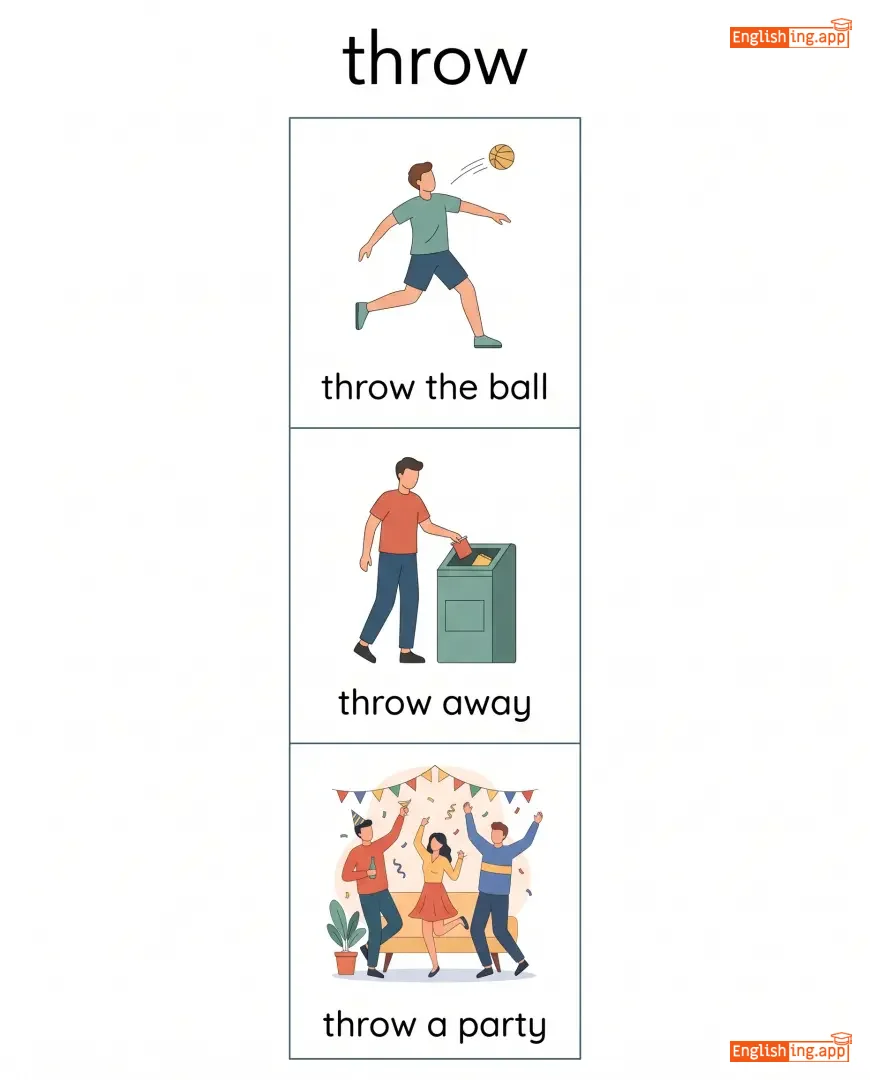
throw the ball, throw away, throw a party
••••••
|
Бросай мяч и делай лучший бросок!
••••••
|
|
#5069
👍
|
/θʌm/
noun
(θʌm)
••••••
|
- •••••• |
большой палец
bolshoy palets
••••••
|
- •••••• | - •••••• | - •••••• | - •••••• |
the short, thick finger on the side of the hand, used for gripping and holding things
••••••
|
He gave a thumbs-up to show his approval. |
Он поднял большой палец, чтобы показать свое одобрение.
On podnyal bol'shoy palets, chtoby pokazat' svoe odobrenie.
••••••
|
rule of thumb |
a general principle or rule based on experience or practice rather than theory
••••••
|
правило большого пальца
pravilnoe bol'shogo pal'tsa
••••••
|
digit, finger, appendage, joint, extremity
••••••
|
toe, palm
••••••
|
thumb up, thumb down, rule of thumb, suck your thumb, raise your thumb
••••••
|
Большой палец, чтобы показать это! 👍
••••••
|
|
#5070
📅
|
/ˈθɜːrzdeɪ/
noun
(тёрсдей)
••••••
|
- •••••• |
четверг
chetverg
••••••
|
- •••••• | - •••••• | - •••••• | - •••••• |
The fifth day of the week, following Wednesday and preceding Friday.
••••••
|
We have a meeting scheduled for Thursday.
У нас встреча запланирована на тёрсдей.
••••••
|
У нас встреча запланирована на четверг.
U nas vstrecha zaplanirovana na chetverg.
••••••
|
- •••••• | - •••••• | - •••••• |
week day, midweek day, workday
••••••
|
weekend, holiday
••••••
|
Thursday morning, Thursday night, every Thursday, next Thursday, last Thursday
••••••
|
Chetverg ends with 'verg', remember it's after Wednesday (Sreda).
••••••
|
|
#5071
➡️
|
/ðʌs/
adverb
(ðʌs)
••••••
|
- •••••• |
так
tak
••••••
|
- •••••• | - •••••• | - •••••• | - •••••• |
as a result or consequence of something previously stated
••••••
|
He was late, thus he missed the meeting. |
Он опоздал, так что пропустил встречу.
On opozdal, tak chto propustil vstrechu.
••••••
|
- •••••• | - •••••• | - •••••• |
therefore, hence, accordingly, so
••••••
|
however, nevertheless
••••••
|
thus far, thus far as, thus it is
••••••
|
Так работает решение.
••••••
|
|
#5072
🎫
|
/ˈtɪkɪt/
noun
(тикет)
••••••
|
- •••••• |
билет
bilet
••••••
|
- •••••• | - •••••• | - •••••• | - •••••• |
a small piece of paper or card that gives the holder a right to access a service or event
••••••
|
He bought a ticket to the concert. |
Он купил билет на концерт.
On kupil bilet na kontsert.
••••••
|
- •••••• | - •••••• | - •••••• |
pass, voucher, stub, coupon
••••••
|
no ticket
••••••
|
buy a ticket, ticket for, concert ticket
••••••
|
Билет дает доступ к любому мероприятию!
••••••
|
|
#5073
🌊
|
/taɪd/
noun
(taɪd)
••••••
|
- •••••• |
прилив и отлив
priliv i otiliv
••••••
|
- •••••• | - •••••• | - •••••• | - •••••• |
the regular rise and fall of the sea caused by the moon and sun's gravity; a powerful flow or movement
••••••
|
The fisherman waited for the tide to come in. |
Рыбак ждал, когда начнется прилив.
Rybak zhdal, kogda nachnyotsya prilev.
••••••
|
turn the tide |
to cause a reversal of fortune or change in direction
••••••
|
изменить ход событий
izmenit' khod sobytiy
••••••
|
current, flow, surge, stream, wave
••••••
|
ebb, stillness, stagnation
••••••
|
high tide, low tide, rising tide, ebb tide
••••••
|
Прилив и отлив = приход и уход океанских волн - прилив приходит и уходит по времени.
••••••
|
|
#5074
🧹
|
/ˈtaɪ.di/
adjective
(taidi)
••••••
|
- •••••• |
аккуратный; чистый
akkuratny; chisty
••••••
|
- •••••• | - •••••• | - •••••• | - •••••• |
arranged neatly and in order; clean and organized
••••••
|
She keeps her room very tidy and organized. |
Она держит свою комнату очень аккуратно и чисто.
Ona derzhit svoyu komnatu ochen' akkuratno i chisto.
••••••
|
- •••••• | - •••••• | - •••••• |
neat, organized, orderly, clean
••••••
|
messy, untidy, disorganized, chaotic
••••••
|
tidy room, tidy up, tidy appearance, keep tidy
••••••
|
Tidy = всегда чисто и аккуратно.
••••••
|
Vocabulary Quiz
Test your vocabulary by matching words with their translations or meanings.
Login to take the quiz
Comments (0)
Share your thoughts and join the discussion.
Join the discussion by logging in
Login to CommentNo comments yet
Be the first to share your thoughts!