

Обновитесь для доступа ко всему словарю
Получите неограниченный доступ ко всем словам с подпиской Pro
Обновить до ProПеревод
Прошедшее
Причастие прошедшего времени
Третье лицо единственного числа
Герундий
Значение
Пример предложения
Перевод примера предложения
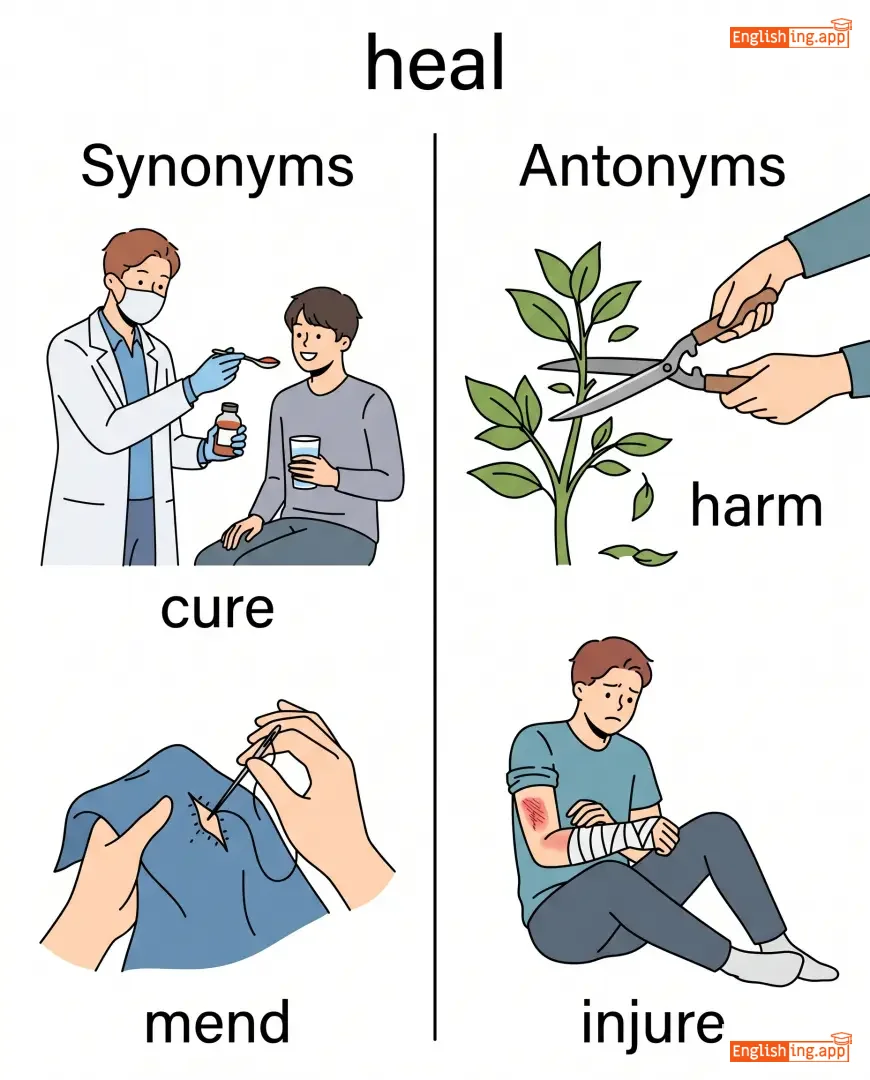
Синонимы
Антонимы
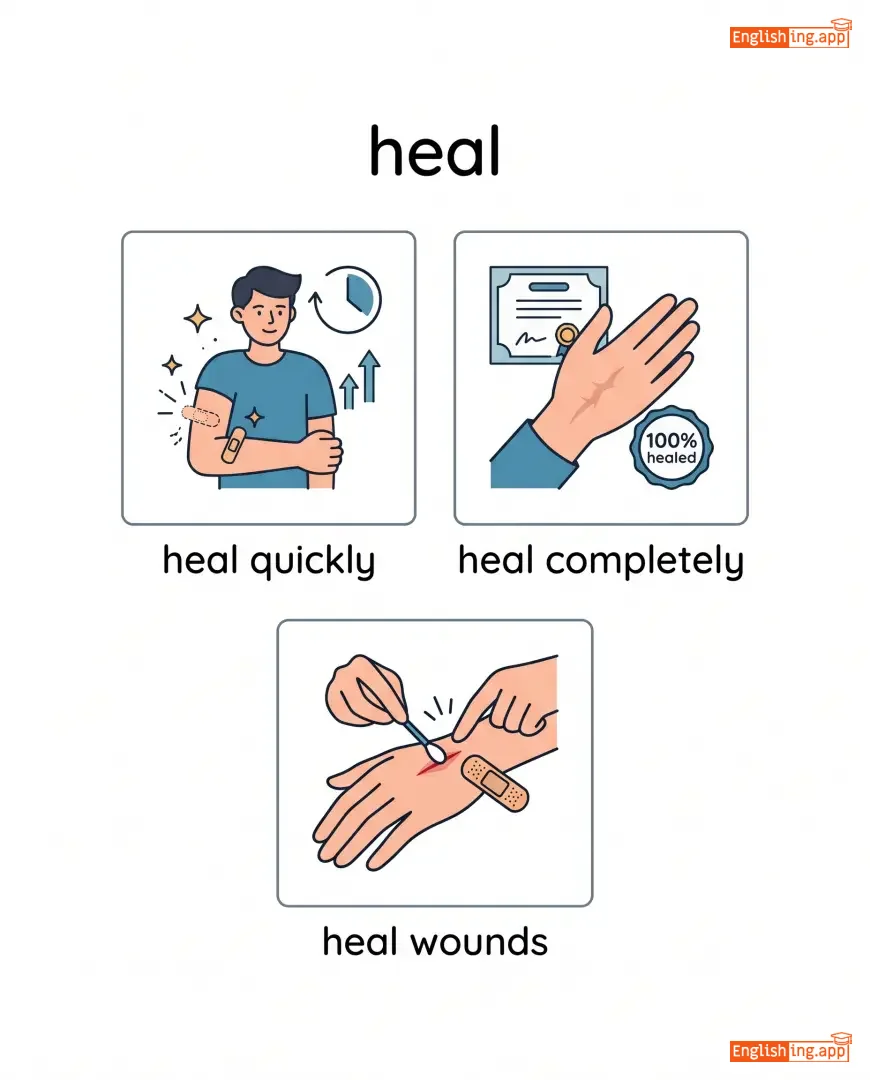
Коллокации
Мнемоника






Swipe left or right, or use the buttons. Tap image to zoom.
Обновитесь для доступа ко всем предложениям
Получите неограниченный доступ ко всем предложениям с подпиской Pro
Обновить до ProПеревод примера предложения
Слово
Lesson 51Lesson 51 - Переключатель маски
|
Эмодзи
|
Слово | Images | Перевод | Прошедшее | Причастие прошедшего времени | Третье лицо единственного числа | Герундий | Значение | Пример предложения | Перевод примера предложения | Пример выражения | Значение примера выражения | Перевод примера выражения | Синонимы | Антонимы | Коллокации | Мнемоника |
|---|---|---|---|---|---|---|---|---|---|---|---|---|---|---|---|---|---|
|
#2421
💊
|
/hiːl/
verb
(hil)
••••••
|
|
излечить
izlechit
••••••
|
healed
hild
••••••
|
healed
hild
••••••
|
heals
hils
••••••
|
healing
hiling
••••••
|
to make or become healthy again after an injury or illness
••••••
|
Time helps to heal both physical and emotional wounds.
Время помогает заживлять как физические, так и эмоциональные раны.
••••••
|
Время помогает заживлять как физические, так и эмоциональные раны.
Vremya pomogaet zazhivlyat' kak fizicheskie, tak i emotsional'nye rany.
••••••
|
heal the wounds
заживлять раны
••••••
|
to repair or improve something damaged or hurt
••••••
|
заживлять раны
zazhivlyat' rany
••••••
|
cure, mend, recover, restore, repair
••••••
|
harm, injure, damage
••••••
|
heal quickly, heal completely, heal wounds, heal process
••••••
|
Если ты повредил ногу, нужно излечиться.
••••••
|
|
#2422
💪
|
/hɛlθ/
noun
(хелс)
••••••
|
- •••••• |
здоровье
zdorovye
••••••
|
- •••••• | - •••••• | - •••••• | - •••••• |
The state of being free from illness or injury.
••••••
|
Exercise is important for good health. |
Физические упражнения важны для хорошего здоровья.
Fizicheskie uprazhneniya vazhny dlya khoroshego zdorov'ya.
••••••
|
in good health |
being healthy
••••••
|
в хорошем здоровье
v khoroshem zdorov'ye
••••••
|
wellness, fitness, condition, wellbeing
••••••
|
illness, sickness, disease
••••••
|
good health, health care, public health, mental health
••••••
|
Health означает здоровье, здоровье - ключ к счастью.
••••••
|
|
#2423
🏥
|
/ˈhɛlθˌkɛər/
noun
(хэлθкэр)
••••••
|
- •••••• |
здравоохранение
zdravookhranenie
••••••
|
- •••••• | - •••••• | - •••••• | - •••••• |
the organized provision of medical care to people
••••••
|
The country invested heavily in healthcare to improve public health. |
Страна вложила значительные средства в здравоохранение для улучшения общественного здоровья.
Strana vlozhila znachitelnye sredstva v zdravookhranenie dlya uluchsheniya obshchestvennogo zdorov'ya.
••••••
|
- •••••• | - •••••• | - •••••• |
medicine, health services, medical care
••••••
|
neglect, indifference
••••••
|
healthcare system, healthcare provider, healthcare services
••••••
|
Здравоохранение спасает жизни.
••••••
|
|
#2424
🍎
|
/ˈhɛlθi/
adjective
(хэппинесс)
••••••
|
|
счастье
schastye
••••••
|
- •••••• | - •••••• | - •••••• | - •••••• |
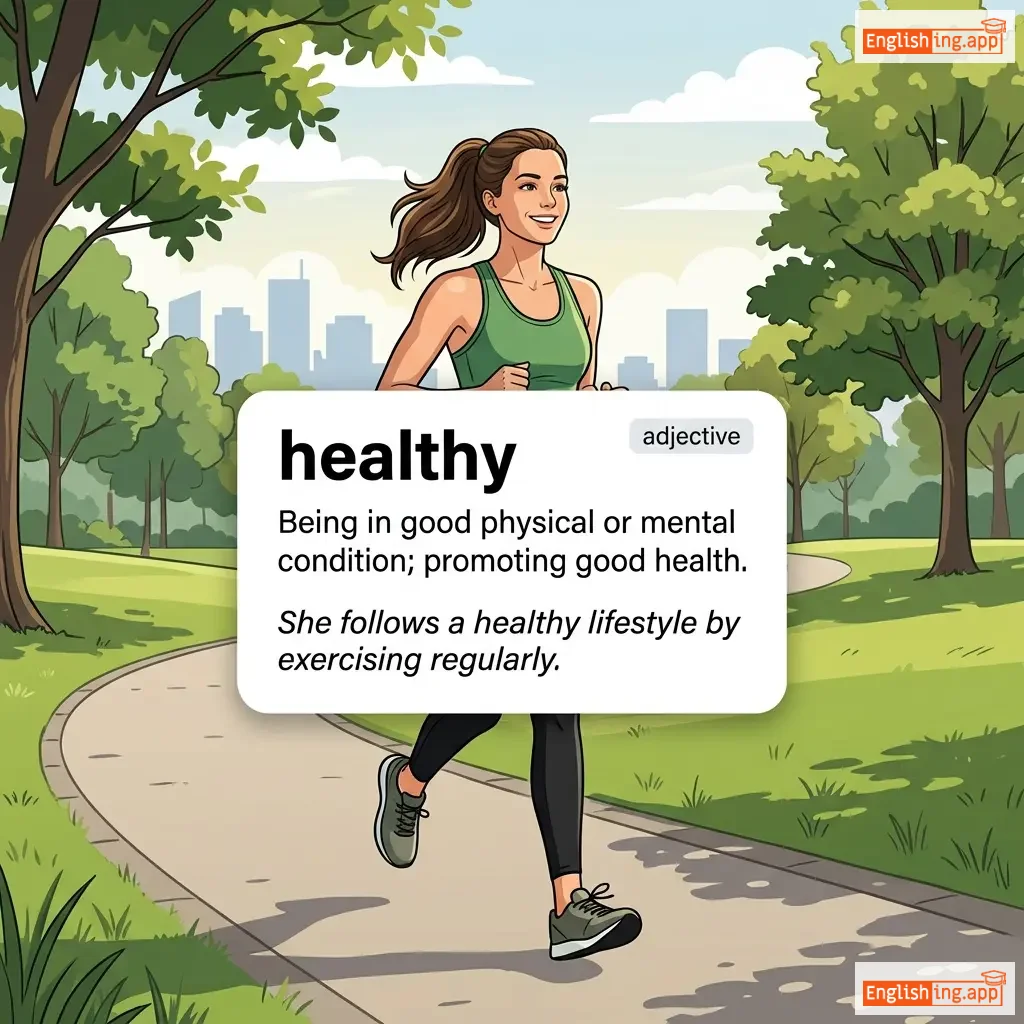
Being in good physical or mental condition; promoting good health.
••••••
|
She follows a healthy lifestyle by exercising regularly.
Она не могла скрыть свое счастье, когда получила награду.
••••••
|
Она не могла скрыть свое счастье, когда получила награду.
Ona ne mogla skryt' svoyo schast'ye, kogda poluchila nagradu.
••••••
|
healthy competition
поиск счастья
••••••
|
A form of competition that is fair and encourages improvement.
••••••
|
поиск счастья
poisk schast'ya
••••••
|
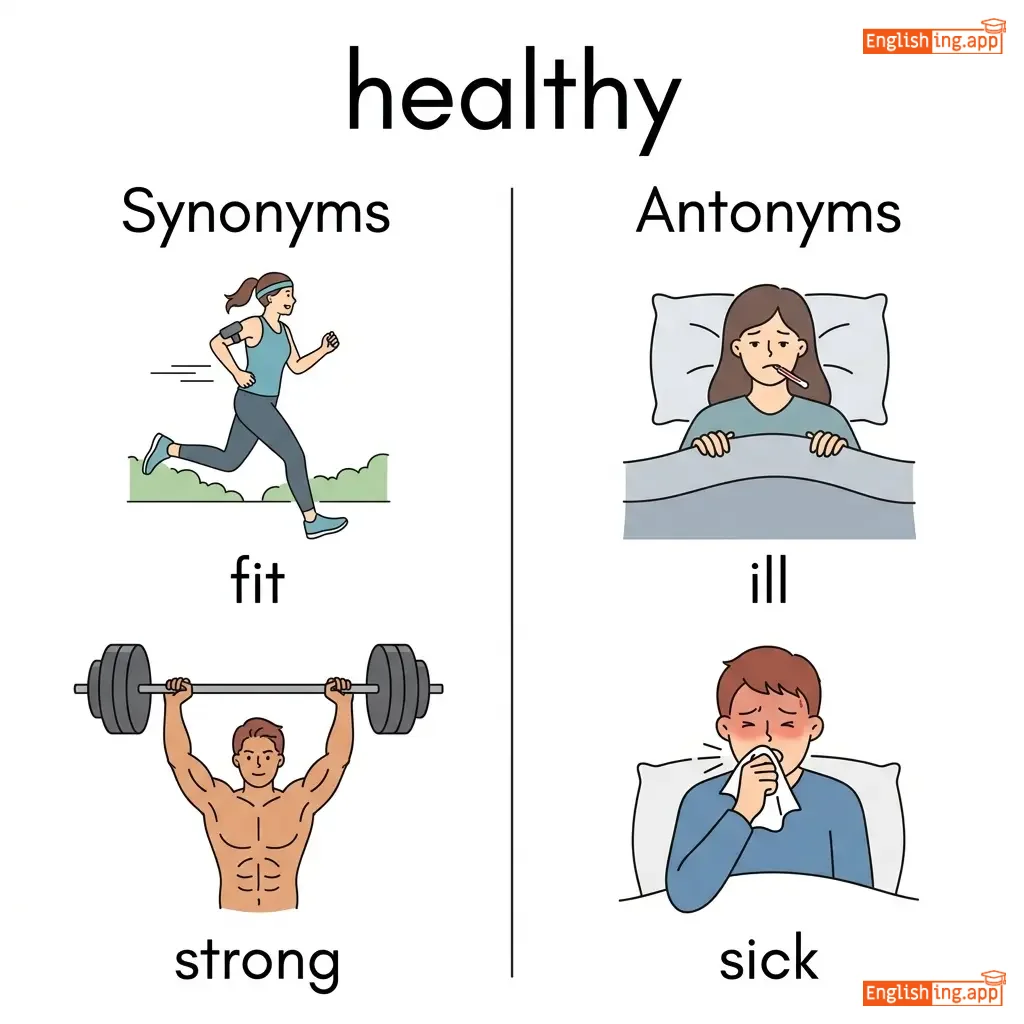
fit, strong, well, robust, sound
••••••
|
ill, sick, weak
••••••
|
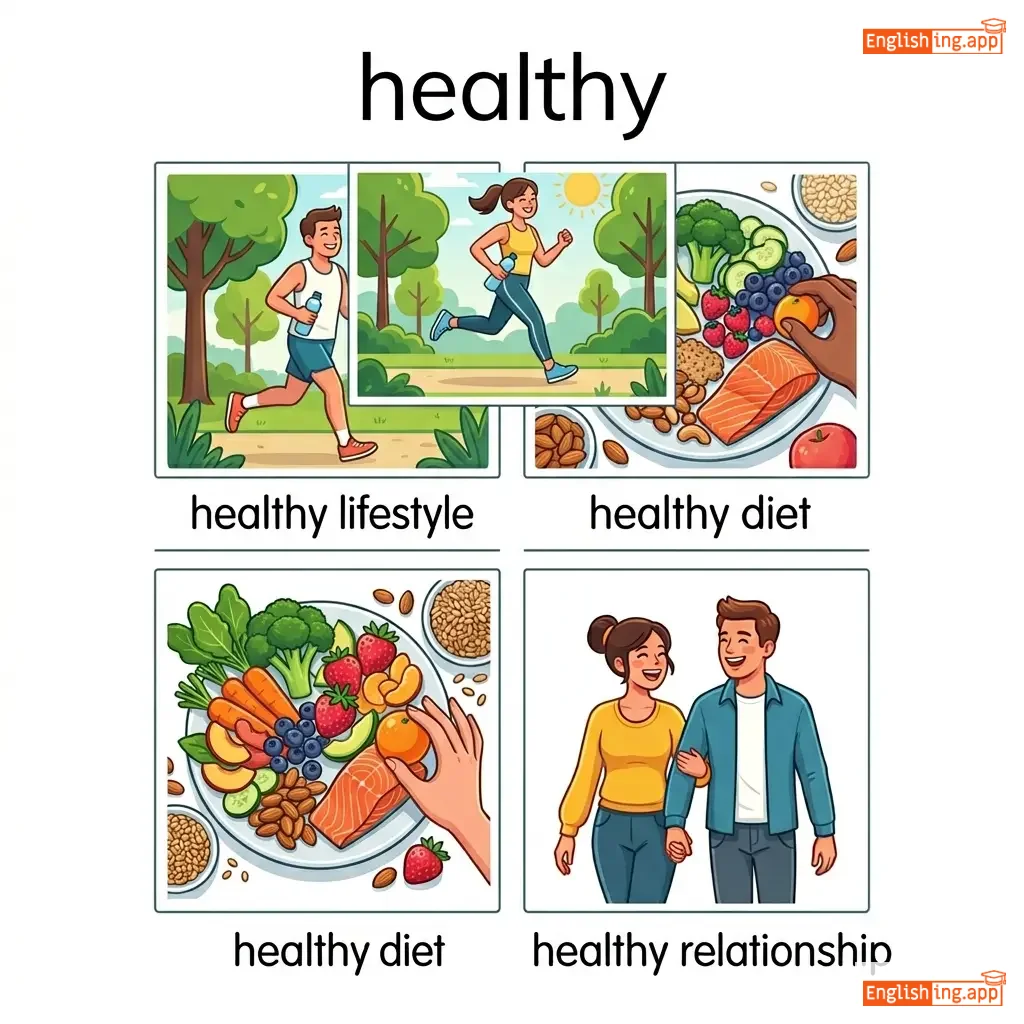
healthy lifestyle, healthy diet, healthy relationship, healthy environment
••••••
|
Счастье = чувство радости и удовлетворения
••••••
|
|
#2425
👂
|
/hɪr/
verb
(khir)
••••••
|
|
слышать
slyshat
••••••
|
heard
khard
••••••
|
heard
khard
••••••
|
hears
khirs
••••••
|
hearing
kheering
••••••
|
To perceive sound with the ear.
••••••
|
I can hear birds singing outside.
Ya mogu uslyshat ptits pesnyu na ulitse.
••••••
|
Я могу слышать птиц, поющих на улице.
Ya mogu slyshat' ptits, poyushchikh na ulitse.
••••••
|
hear from someone
uslyshat ot kogo-to
••••••
|
to receive news or communication from someone
••••••
|
слышать от кого-то
slyshat' ot kogo-to
••••••
|
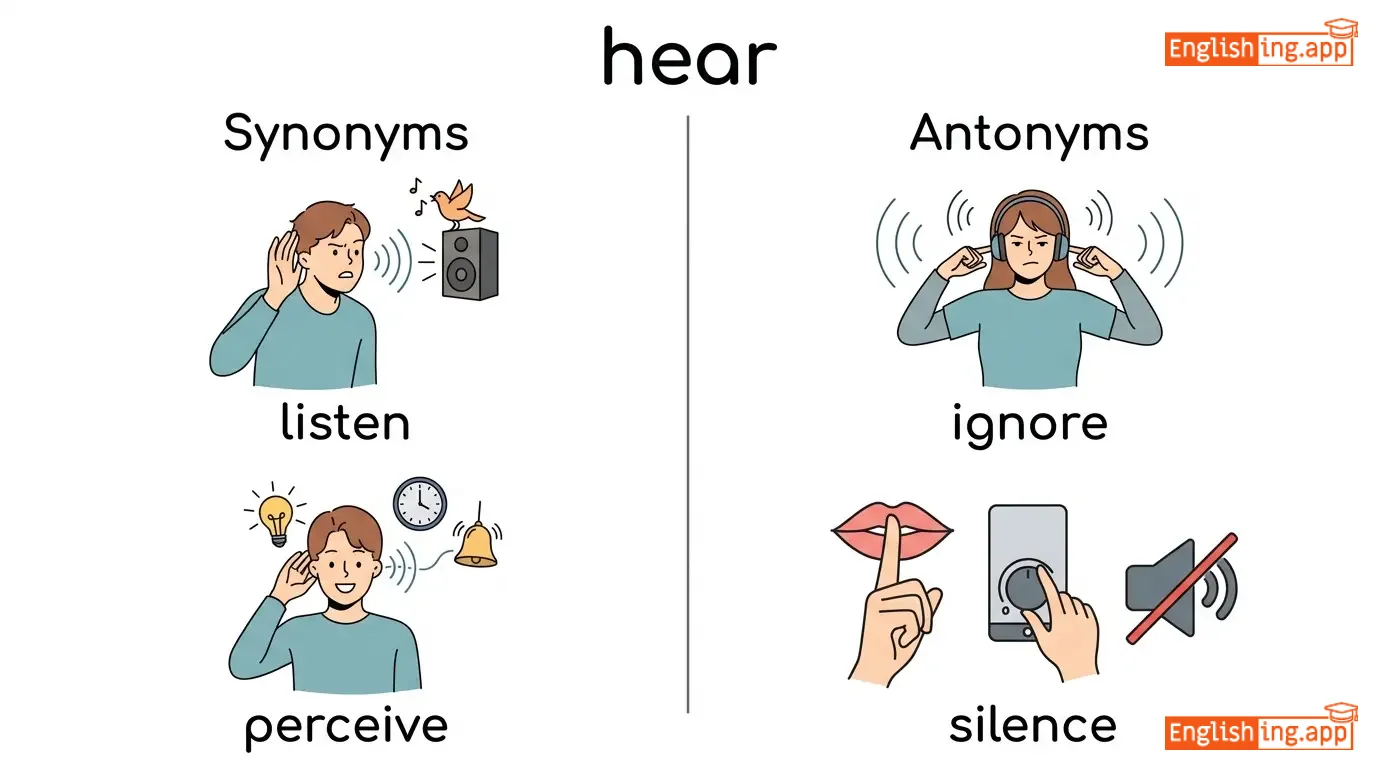
listen, perceive, detect, notice, overhear
••••••
|
ignore, silence
••••••
|
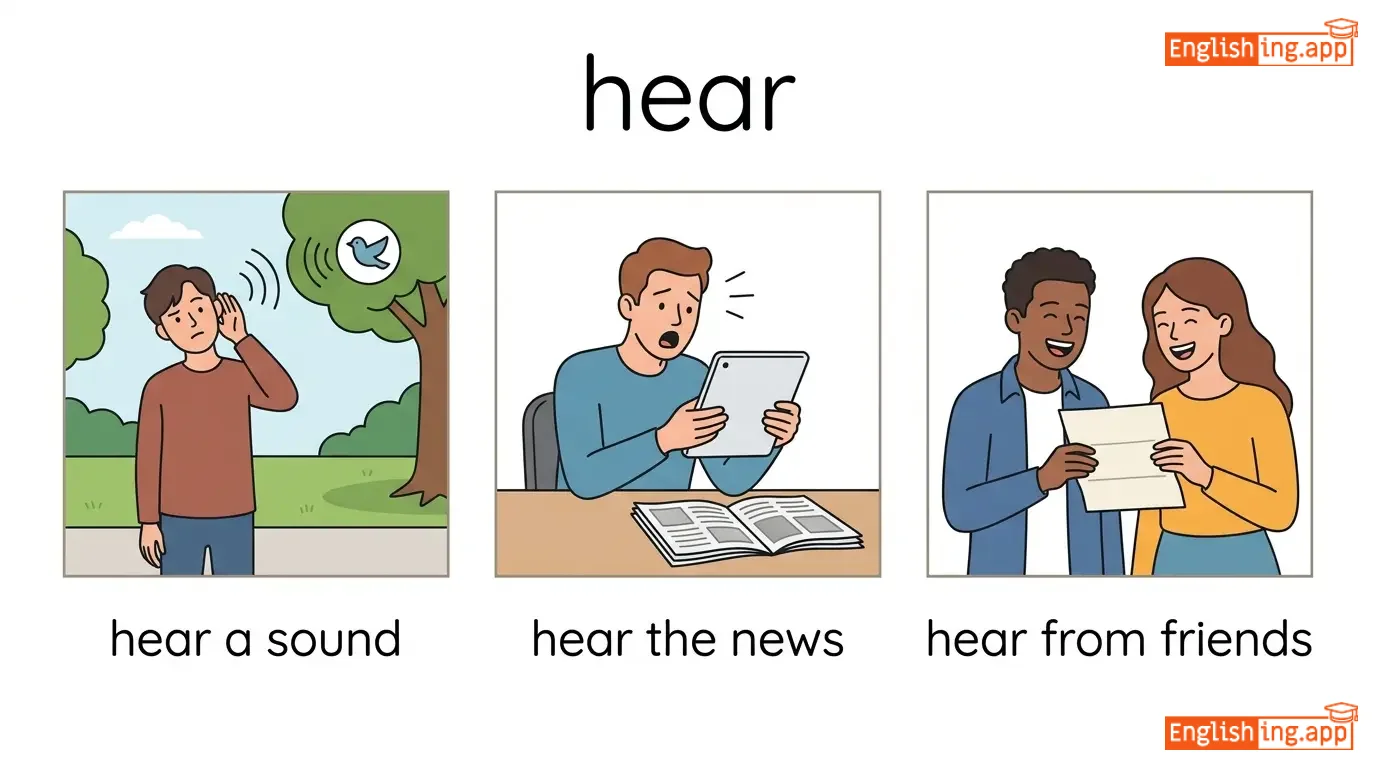
hear a sound, hear the news, hear from friends, hear clearly
••••••
|
Слышать значит воспринимать звук ухом.
••••••
|
|
#2426
👂
|
/ˈhɪərɪŋ/
noun
(хи-рин)
••••••
|
- •••••• |
слушание / слух
slushanie / slukh
••••••
|
- •••••• | - •••••• | - •••••• | - •••••• |
the ability to perceive sounds or an official meeting to listen to arguments or evidence
••••••
|
The judge scheduled a hearing for next week. |
Судья назначил слушание на следующую неделю.
Sudya naznachil slushanie na sleduyushchuyu nedelyu.
••••••
|
hard of hearing |
having partial hearing loss
••••••
|
частичная потеря слуха
chastichnaya poterya slukha
••••••
|
listening, audition, perception, trial, meeting
••••••
|
deafness, silence
••••••
|
court hearing, public hearing, hearing aid, hearing loss
••••••
|
Hearing означает слушание — в суде проходят слушания, а слух осуществляют с помощью ушей 👂
••••••
|
|
#2427
❤️
|
/hɑːrt/
noun
(харт)
••••••
|
- •••••• |
сердце
serdtse
••••••
|
- •••••• | - •••••• | - •••••• | - •••••• |
the organ that pumps blood through the body; also the center of emotions
••••••
|
Her heart was beating fast with excitement.
Ее сердце билось быстро от волнения.
••••••
|
Ее сердце билось быстро от волнения.
Eeyo serdtse bilos' bystro ot volneniya.
••••••
|
at heart
по сердцу
••••••
|
in essence or fundamentally
••••••
|
по сердцу
po serdtsu
••••••
|
core, center, emotion, spirit, soul
••••••
|
mind, brain
••••••
|
heart attack, broken heart, kind heart, follow your heart
••••••
|
Сердце ❤️ означает сердце – любовь и эмоции исходят из сердца
••••••
|
|
#2428
🔥
|
/hiːt/
noun/verb
(хит)
••••••
|
|
жара / тепло
zhara / teplo
••••••
|
heated
хитед
••••••
|
heated
хитед
••••••
|
heats
хитс
••••••
|
heating
хитинг
••••••
|
intensity of hotness; to make something warm or hot
••••••
|
They heated the soup on the stove.
Они разогрели суп на плите.
••••••
|
Они разогрели суп на плите.
Oni razogreli sup na plite.
••••••
|
in the heat of the moment
В жару момента
••••••
|
acting without thinking due to strong emotions
••••••
|
Действовать без размышлений из-за сильных эмоций
Deystvovat' bez razmyshleniy iz-za sil'nykh emotsiy
••••••
|
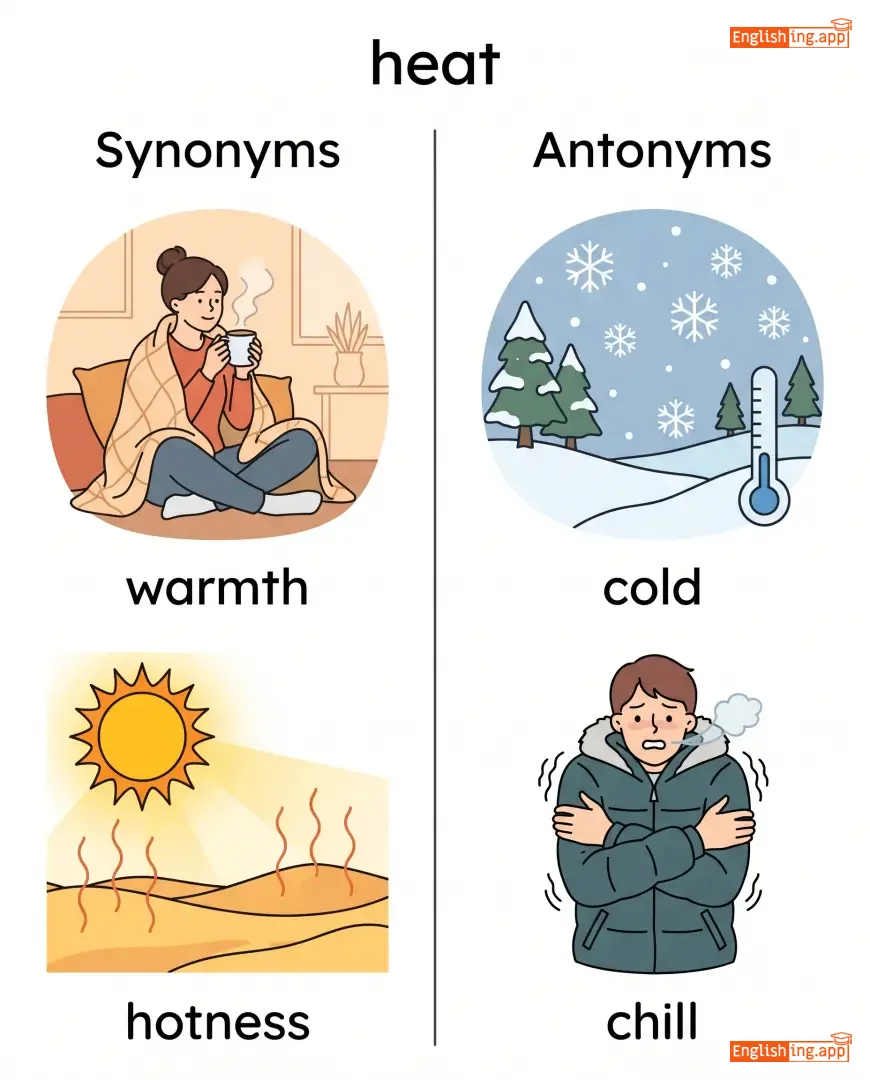
warmth, hotness, fire, passion, energy
••••••
|
cold, chill
••••••
|
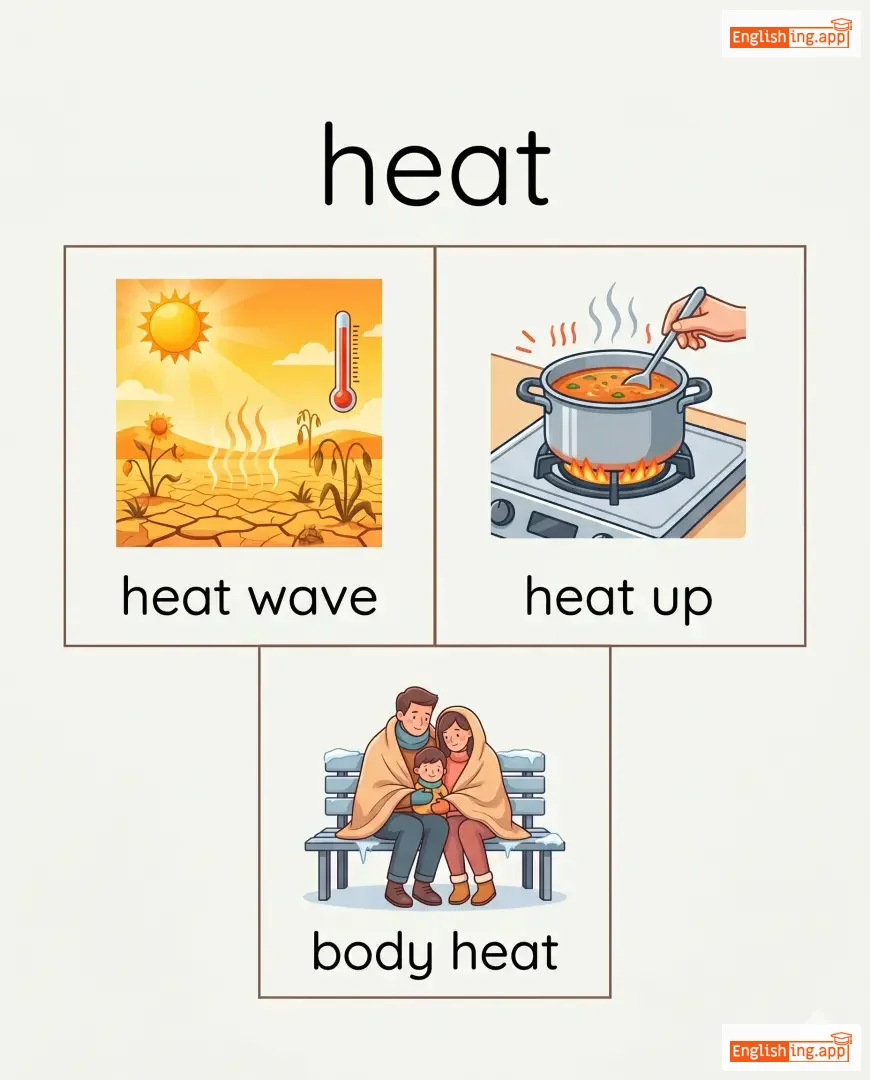
heat wave, heat up, body heat, generate heat
••••••
|
Heat как огненная жара 🔥 – разогревает всё вокруг!
••••••
|
|
#2429
☁️
|
/ˈhɛvən/
noun
(heven)
••••••
|
- •••••• |
небеса
nebesa
••••••
|
- •••••• | - •••••• | - •••••• | - •••••• |
the place believed to be the home of God and the afterlife of the good; a state of extreme happiness
••••••
|
They believe that good people go to heaven after death. |
Они верят, что хорошие люди идут в небеса после смерти.
Oni veryat, chto khoroshie lyudi idut v nebeso posle smerti.
••••••
|
move heaven and earth |
to do everything possible to achieve something
••••••
|
двигать небом и землёй
dvigat' nebom i zemlyoy
••••••
|
paradise, bliss, afterlife, nirvana, delight
••••••
|
hell, misery
••••••
|
go to heaven, heaven on earth, gates of heaven, pray to heaven
••••••
|
Небеса = место счастья 🌠 – когда ты счастлив, ты как в небесах.
••••••
|
|
#2430
⬇️
|
/ˈhev.ɪ.li/
adverb
(хэви-лӣ)
••••••
|
- •••••• |
сильно; интенсивно
sil'no; intensivno
••••••
|
- •••••• | - •••••• | - •••••• | - •••••• |
with great weight; to a great degree; intensely
••••••
|
It rained heavily throughout the night.
ит рэйнд хэви-лӣ тру-аут де найт.
••••••
|
Шел сильный дождь всю ночь.
Shel sil'nyy dozhd' vsyu noch'.
••••••
|
- •••••• | - •••••• | - •••••• |
intensely, severely, greatly, substantially, densely
••••••
|
lightly, gently, slightly, minimally
••••••
|
heavily armed, heavily loaded, heavily populated, heavily dependent
••••••
|
Heavy - это сильно, так что Heavily - это очень сильно.
••••••
|
|
#2431
⚖️
|
/ˈhɛvi/
adjective
(хэви)
••••••
|
- •••••• |
тяжелый
tyazhely
••••••
|
- •••••• | - •••••• | - •••••• | - •••••• |
having great weight; difficult to lift or move
••••••
|
The box was too heavy for her to carry alone. |
Коробка была слишком тяжелой, чтобы она могла поднять ее одна.
Korobka byla slishkom tyazheloy, chtoby ona mogla podnyat' yeye odna.
••••••
|
heavy heart |
a feeling of deep sadness
••••••
|
тяжелое сердце
tyazheloe serdtse
••••••
|
weighty, massive, bulky, hefty, substantial
••••••
|
light, weightless, airy
••••••
|
heavy rain, heavy traffic, heavy bag, heavy burden
••••••
|
Heavy — это тяжелый. Представьте себе тяжелую коробку, которую вы не можете поднять.
••••••
|
|
#2432
🌳
|
/hɛdʒ/
noun, verb
(хэдж)
••••••
|
|
живая изгородь
zhivaya izgorod
••••••
|
hedged
хэджд
••••••
|
hedged
хэджд
••••••
|
hedges
хэджес
••••••
|
hedging
хэджинг
••••••
|
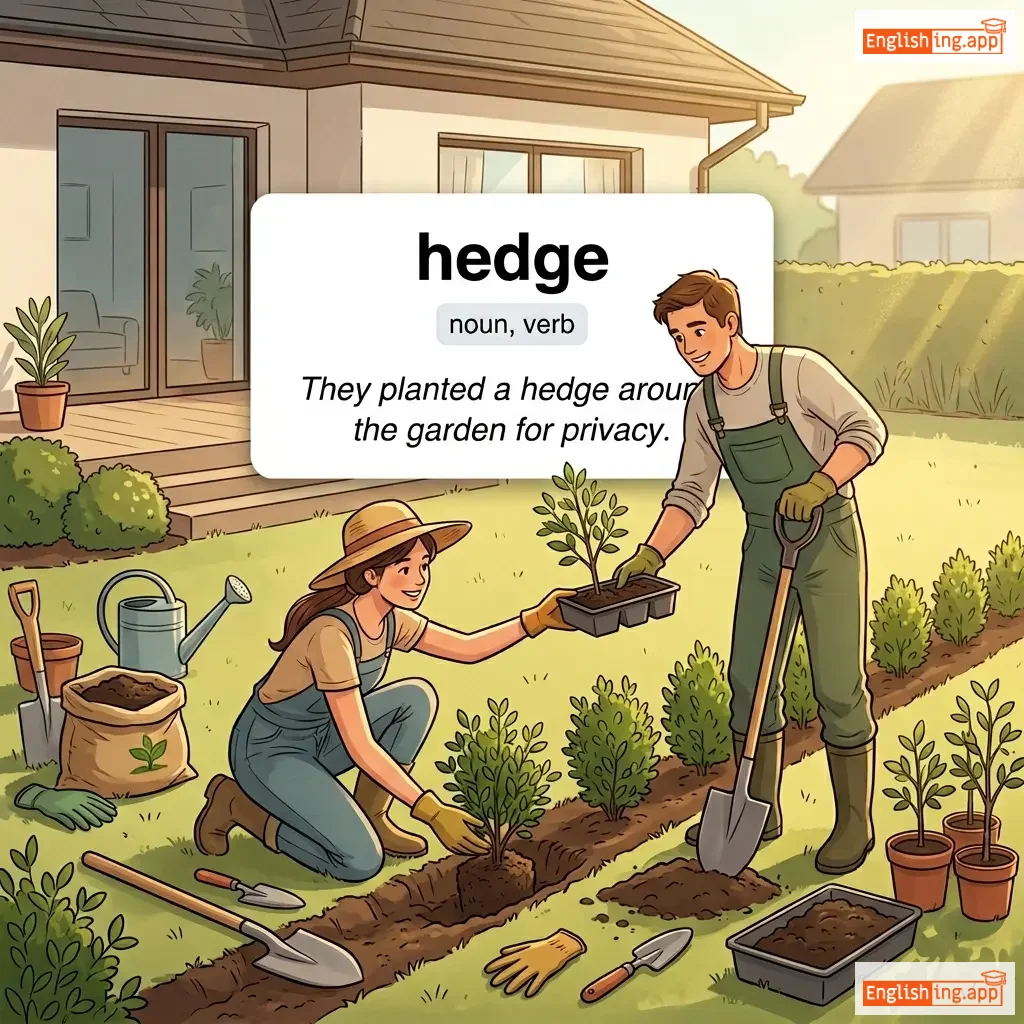
A fence or boundary formed by closely planted shrubs; also, to limit or qualify a statement.
••••••
|
They planted a hedge around the garden for privacy.
Они посадили изгородь вокруг сада для конфиденциальности.
••••••
|
Они посадили изгородь вокруг сада для конфиденциальности.
Oni posadili izgorod' vokrug sada dlya konfidentsial'nosti.
••••••
|
hedge your bets
хеджировать свои ставки
••••••
|
To reduce risk by choosing several options instead of relying on one.
••••••
|
хеджировать свои ставки
khedzhirovat' svoi stavki
••••••
|
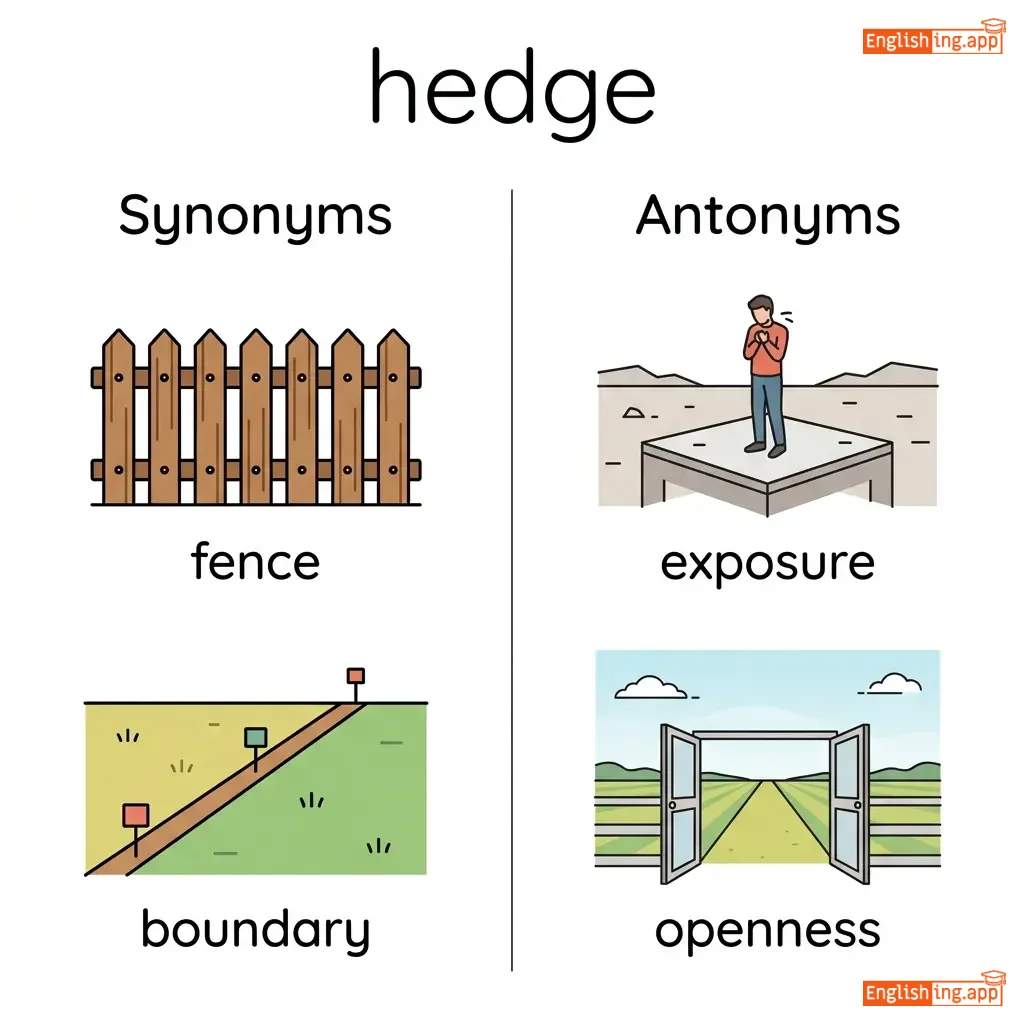
fence, boundary, barrier, safeguard
••••••
|
exposure, openness
••••••
|
hedge fund, hedge your bets, tall hedge, hedge against
••••••
|
Hedge = Хеджируем свои ставки, защищая свои интересы.
••••••
|
|
#2433
👠
|
/hiːl/
noun
(хил)
••••••
|
- •••••• |
пятка
pyatka
••••••
|
- •••••• | - •••••• | - •••••• | - •••••• |
the back part of the human foot below the ankle
••••••
|
Her shoe was rubbing against her heel.
Её туфля терлась о её пятку.
••••••
|
Её туфля терлась о её пятку.
Yeyo tuflya terlas' o yeyo pyatku.
••••••
|
at someone's heels
по пятам за кем-то
••••••
|
closely following someone
••••••
|
следовать по пятам за кем-то
sledovat' po pyatam za kem-to
••••••
|
backfoot, rear, sole, spur
••••••
|
toe, front
••••••
|
high heel, cracked heel, Achilles heel
••••••
|
Пятка — это задняя часть стопы, помни, высокие каблуки делают пятки высокими.
••••••
|
|
#2434
📏
|
/haɪt/
noun
(хаит)
••••••
|
- •••••• |
высота
vysota
••••••
|
- •••••• | - •••••• | - •••••• | - •••••• |
the measurement of someone or something from base to top
••••••
|
The height of the tower impressed the visitors. |
Высота башни впечатлила посетителей.
Vysota bashni vpechatlila posetiteley.
••••••
|
at the height of |
at the most intense point of something
••••••
|
на пике
na pike
••••••
|
altitude, elevation, tallness, stature
••••••
|
depth, low
••••••
|
average height, great height, height measurement
••••••
|
Height означает высота — представьте себе самую высокую точку.
••••••
|
|
#2435
🔺
|
/ˈhaɪtən/
verb
(хайтэн)
••••••
|
- •••••• |
повышать
povyshat'
••••••
|
heightened
хайтэнд
••••••
|
heightened
хайтэнд
••••••
|
heightens
хайтэнс
••••••
|
heightening
хайтэнинг
••••••
|
to make or become greater in intensity or degree
••••••
|
The announcement served to heighten the excitement in the room.
ðи æн'аунсмэнт сёрвд ту хайтэн ðи экс'айтмэнт ин ðэ рум.
••••••
|
Объявление помогло повысить волнение в комнате.
Ob'yavlenie pomoglo povysit' volnenie v komnate.
••••••
|
- •••••• | - •••••• | - •••••• |
increase, intensify, amplify, escalate
••••••
|
diminish, reduce
••••••
|
heighten the tension, heighten awareness, heighten security
••••••
|
Heighten похоже на 'повышать' — усиливать что-то.
••••••
|
|
#2436
🚁
|
/ˈhɛlɪˌkɒptər/
noun
(хеликоптер)
••••••
|
- •••••• |
вертолет
vertolyot
••••••
|
- •••••• | - •••••• | - •••••• | - •••••• |
an aircraft with rotating blades that can take off and land vertically
••••••
|
The helicopter landed safely on the hospital roof. |
Вертолет приземлился безопасно на крыше больницы.
Vertolyot prizemlilsya bezopasno na kryshe bol'nitsy.
••••••
|
helicopter parenting |
a style of parenting where parents are overly focused on their children
••••••
|
вертолетное родительство
vertolyotnoe roditel'stvo
••••••
|
chopper, rotorcraft, whirlybird
••••••
|
airplane, glider
••••••
|
helicopter ride, helicopter landing, helicopter rescue
••••••
|
Вертолет 🚁 помните, что ‘верт’ означает вращение, а ‘олет’ означает полет.
••••••
|
|
#2437
🔥
|
/hɛl/
noun
(хэл)
••••••
|
- •••••• |
ад
ad
••••••
|
- •••••• | - •••••• | - •••••• | - •••••• |
a place or state of great suffering and torment, often in religious belief
••••••
|
He feared that his sins would send him to hell. |
Он боялся, что его грехи отправят его в ад.
On boyalsya, chto ego grekhi otpravyat ego v ad.
••••••
|
raise hell |
to cause trouble or a noisy disturbance
••••••
|
поднять шум
podnyat' shuum
••••••
|
inferno, torment, misery, damnation
••••••
|
heaven, paradise
••••••
|
living hell, go to hell, raise hell
••••••
|
Ад — это место страданий 🔥— вспомни, что «ад» означает мучения.
••••••
|
|
#2438
👋
|
/həˈloʊ/
interjection
(хэ-ло)
••••••
|
- •••••• |
привет
privet
••••••
|
- •••••• | - •••••• | - •••••• | - •••••• |
a greeting or expression used when meeting someone or starting a conversation
••••••
|
She answered the phone with a cheerful hello.
Она ответила на звонок с радостным 'привет'.
••••••
|
Она ответила на звонок с радостным 'привет'.
Ona otvetila na zvonok s radostnym 'privet'.
••••••
|
say hello to
сказать привет
••••••
|
to greet someone
••••••
|
сказать привет
skazat' privet
••••••
|
hi, greetings, hey, howdy, welcome
••••••
|
goodbye, farewell
••••••
|
say hello, hello there, big hello, hello everyone
••••••
|
В русском мы говорим 'привет', как в английском 'hello'.
••••••
|
|
#2439
⛑️
|
/ˈhel.mət/
noun
(хелмет)
••••••
|
- •••••• |
шлем
shlem
••••••
|
- •••••• | - •••••• | - •••••• | - •••••• |
a hard or padded protective hat worn by motorcyclists, construction workers, or soldiers
••••••
|
The cyclist always wore a bright yellow helmet for safety and visibility while riding.
Велосипедист всегда носил ярко-желтый шлем для безопасности и видимости во время езды.
••••••
|
Велосипедист всегда носил ярко-желтый шлем для безопасности и видимости во время езды.
Velosipedist vsegda nosil yarko-zheltyy shlem dlya bezopasnosti i vidimosti vo vremya ezdy.
••••••
|
- •••••• | - •••••• | - •••••• |
hard hat, protective headgear, safety helmet, crash helmet
••••••
|
bare head, unprotected head, soft hat, cap
••••••
|
safety helmet, bicycle helmet, motorcycle helmet
••••••
|
Шлем = Защитный шлем на голове для безопасности.
••••••
|
|
#2440
🤲
|
/hɛlp/
verb
(хэлп)
••••••
|
|
помогать
pomogat'
••••••
|
helped
хэлпд
••••••
|
helped
хэлпд
••••••
|
helps
хэлпс
••••••
|
helping
хэлпинг
••••••
|
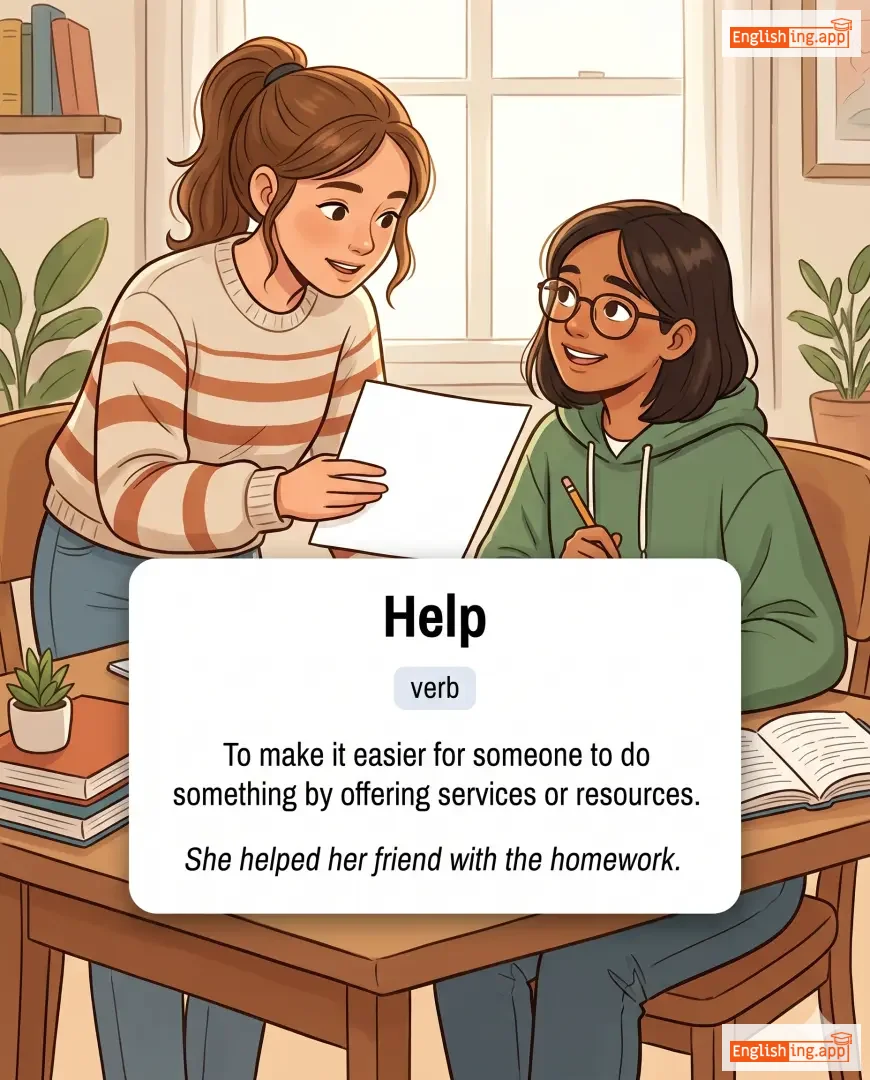
To make it easier for someone to do something by offering services or resources.
••••••
|
She helped her friend with the homework.
Она помогла своей подруге с домашним заданием.
••••••
|
Она помогла своей подруге с домашним заданием.
Ona pomogla svoey podrugie s domashnim zadanijem.
••••••
|
help yourself
помогите себе
••••••
|
to take something without asking
••••••
|
помогите себе
pomogite sebe
••••••
|
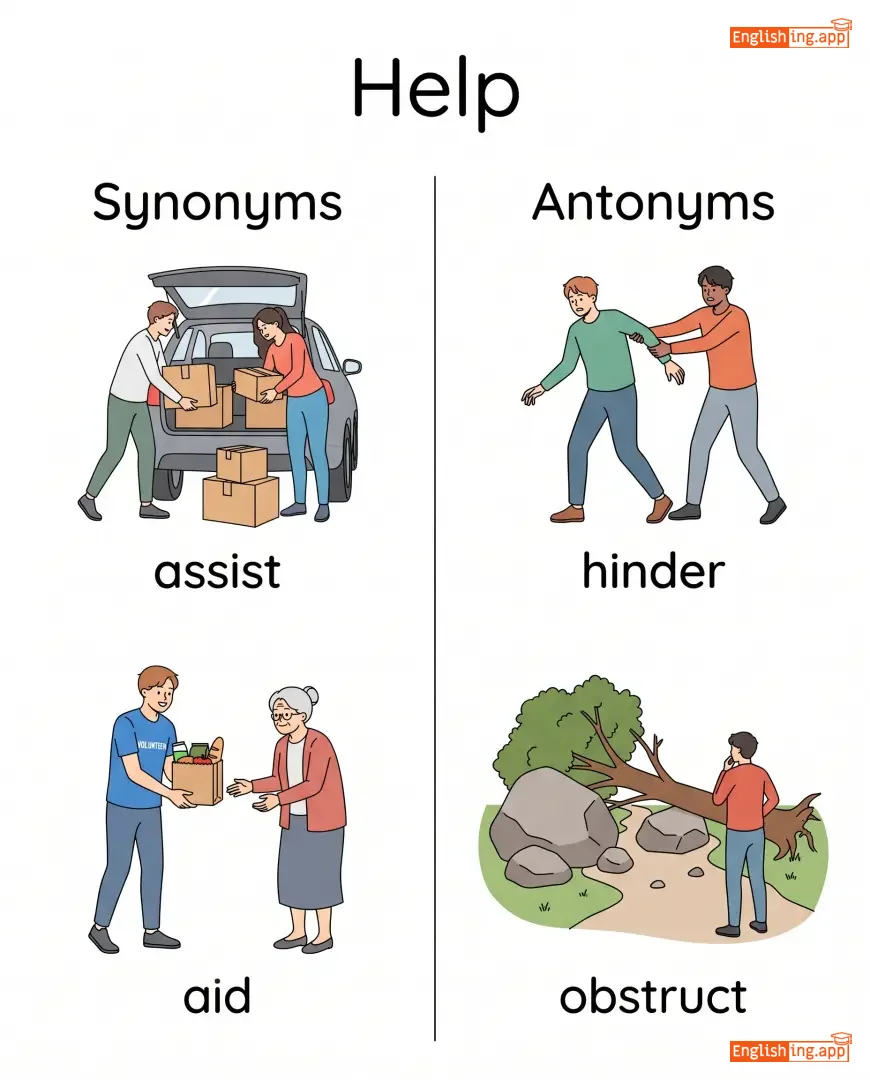
assist, aid, support, facilitate, guide
••••••
|
hinder, obstruct
••••••
|
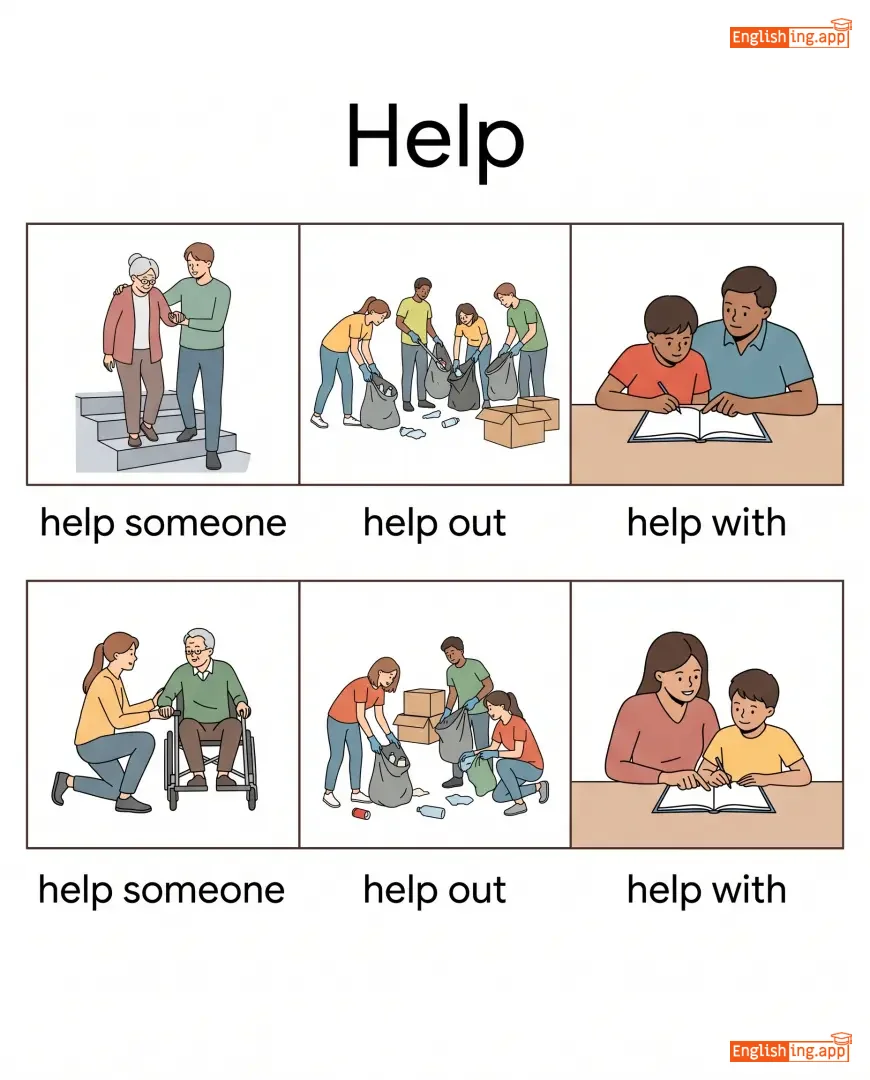
help someone, help out, help with, help to
••••••
|
Help означает помогать, как 'Если не поможешь, не сделаешь домашку!'
••••••
|
|
#2441
🤝
|
/ˈhelp.fəl/
adjective
(хелпфул)
••••••
|
- •••••• |
полезный; выгодный
poleznyy; vygodnyy
••••••
|
- •••••• | - •••••• | - •••••• | - •••••• |
giving or providing assistance; useful; beneficial
••••••
|
She was very helpful in organizing the event.
Она была очень полезной в организации мероприятия.
••••••
|
Она была очень полезной в организации мероприятия.
ona byla ochen' poleznoy v organizatsii meropriyatiya
••••••
|
- •••••• | - •••••• | - •••••• |
useful, beneficial, supportive, accommodating
••••••
|
unhelpful, harmful, obstructive, hindering
••••••
|
helpful advice, helpful person, helpful tip, helpful service
••••••
|
Polesnyy kak pomoshch' v zhilke!
••••••
|
|
#2442
🐔
|
/hɛn/
noun
(хэн)
••••••
|
- •••••• |
курица
kuritsa
••••••
|
- •••••• | - •••••• | - •••••• | - •••••• |
female chicken
••••••
|
The hen laid fresh eggs in the nest. |
Курица снесла свежие яйца в гнезде.
Kuritsa snesla svezhie yaytsa v gnezde.
••••••
|
- •••••• | - •••••• | - •••••• |
female chicken
••••••
|
rooster, cock
••••••
|
hen house, laying hen, mother hen
••••••
|
Курица sounds like 'kuritsa', easy to picture a hen!
••••••
|
|
#2443
➡️
|
/hɛns/
adverb
(хэнс)
••••••
|
- •••••• |
поэтому
poetomu
••••••
|
- •••••• | - •••••• | - •••••• | - •••••• |
for this reason; as a result
••••••
|
She was the best candidate, hence she was chosen for the job.
Она была лучшим кандидатом, поэтому ее выбрали для этой работы.
••••••
|
Она была лучшим кандидатом, поэтому ее выбрали для этой работы.
Ona byla luchshim kandidatom, poetomu yejo vybrali dlya etoy raboty.
••••••
|
hence the reason
поэтому причина
••••••
|
used to introduce the explanation for something
••••••
|
поэтому причина
poetomu prichina
••••••
|
therefore, thus, consequently, accordingly
••••••
|
however, nevertheless
••••••
|
hence why, hence the need, hence the importance
••••••
|
Hence – поэтому, это указывает на результат или причину ➡️
••••••
|
|
#2444
👩
|
/hɜːr/
pronoun
(хёр)
••••••
|
- •••••• |
её
eyo
••••••
|
- •••••• | - •••••• | - •••••• | - •••••• |
used to refer to a female person or animal already mentioned or easily identified
••••••
|
I saw her at the park yesterday. |
Я видел её в парке вчера.
Ya videl yeyo v parke vchera.
••••••
|
give her a hand |
to help her
••••••
|
помочь ей
pomoch' yey
••••••
|
herself, that woman, the girl
••••••
|
him, his
••••••
|
her book, her house, with her, for her
••••••
|
Her означает 'её' (о женщине) - запомни: 'Her house' означает 'её дом'
••••••
|
|
#2445
🌿
|
/hɜːb/ (US) /hɜːb/ or /ɜːb/
noun
(хёрб)
••••••
|
- •••••• |
травы
travy
••••••
|
- •••••• | - •••••• | - •••••• | - •••••• |
a plant used for flavoring food, medicine, or perfume
••••••
|
Basil is a popular herb used in Italian cuisine. |
Базилик - популярная трава, используемая в итальянской кухне.
Bazilik - populyarnaya trava, ispol'zuyemaya v italyanskoy kukhne.
••••••
|
herbal remedy |
a treatment using herbs or plants
••••••
|
травяной препарат
travyanoy preparat
••••••
|
plant, spice, vegetation, grass, leaf
••••••
|
chemical, synthetic drug
••••••
|
fresh herbs, medicinal herbs, herb garden, herb tea
••••••
|
Трава (травы) - лечит нас, как свежий воздух на природе!
••••••
|
|
#2446
📍
|
/hɪr/
adverb
(хир)
••••••
|
- •••••• |
здесь
zdes
••••••
|
- •••••• | - •••••• | - •••••• | - •••••• |
in, at, or to this place
••••••
|
Please come here quickly.
Пожалуйста, приходите сюда быстро.
••••••
|
Пожалуйста, приходите сюда быстро.
Pozhaluysta, prikhodite syuda bystro.
••••••
|
here and there
здесь и там
••••••
|
in various places
••••••
|
здесь и там
zdes i tam
••••••
|
present, nearby, close, around
••••••
|
there, away
••••••
|
come here, right here, here today, stay here
••••••
|
Here это здесь 📍 - По-русски 'здесь' напоминает 'here' по-английски
••••••
|
|
#2447
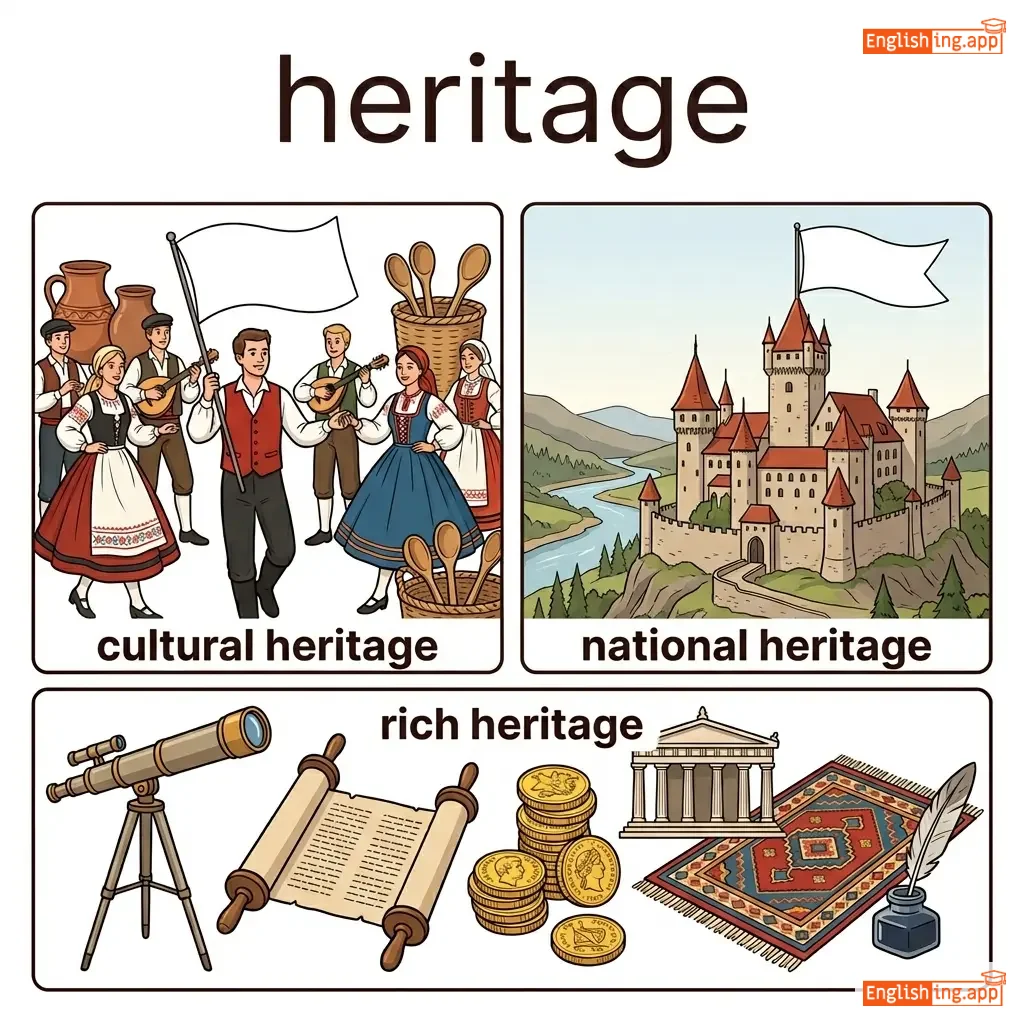
🏰
|
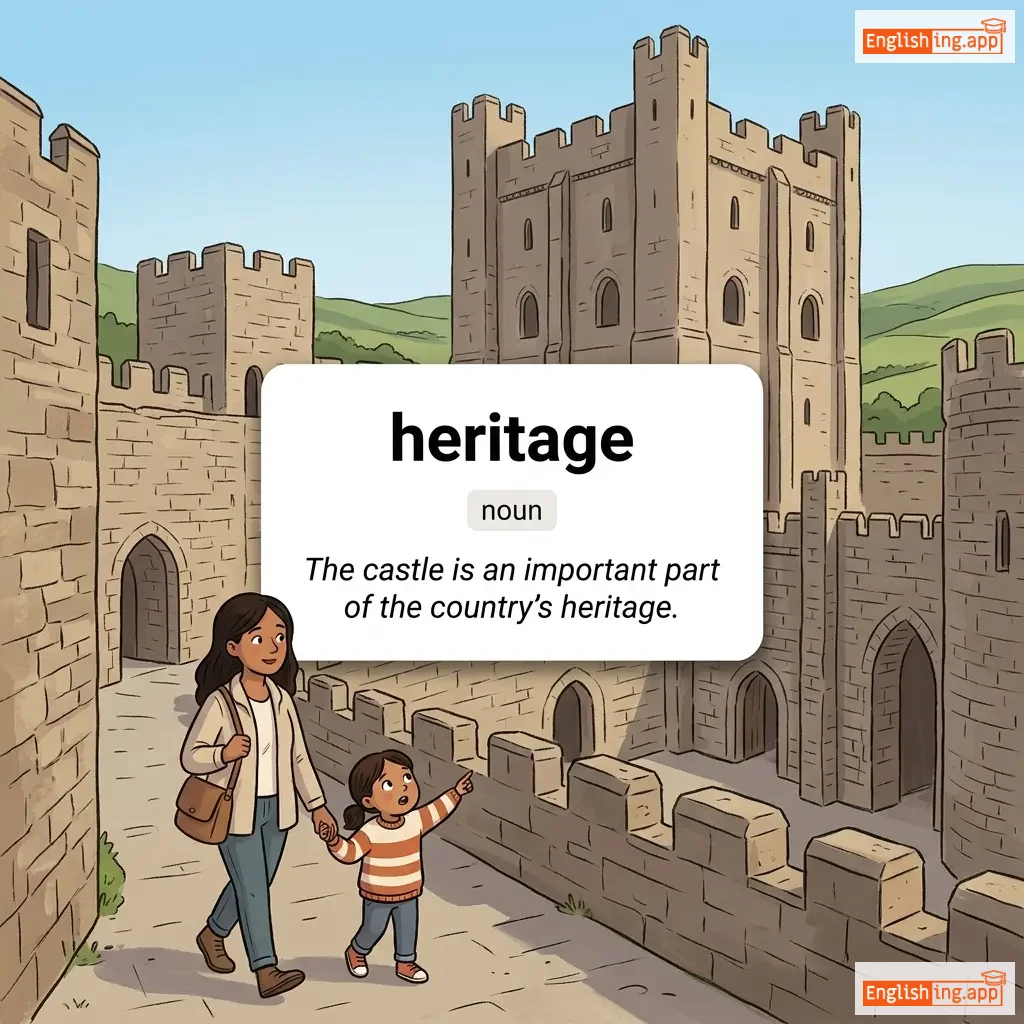
/ˈhɛrɪtɪdʒ/
noun
(хэритидж)
••••••
|
|
наследие
nasledie
••••••
|
- •••••• | - •••••• | - •••••• | - •••••• |
Valued objects and qualities such as historic buildings and cultural traditions passed down from previous generations.
••••••
|
The castle is an important part of the country's heritage. |
Замок — важная часть наследия страны.
Zamok — vazhnaya chast' naslediya strany.
••••••
|
cultural heritage |
The traditions, customs, and artifacts of a community passed down through generations.
••••••
|
культурное наследие
kul'turnoye naslediye
••••••
|
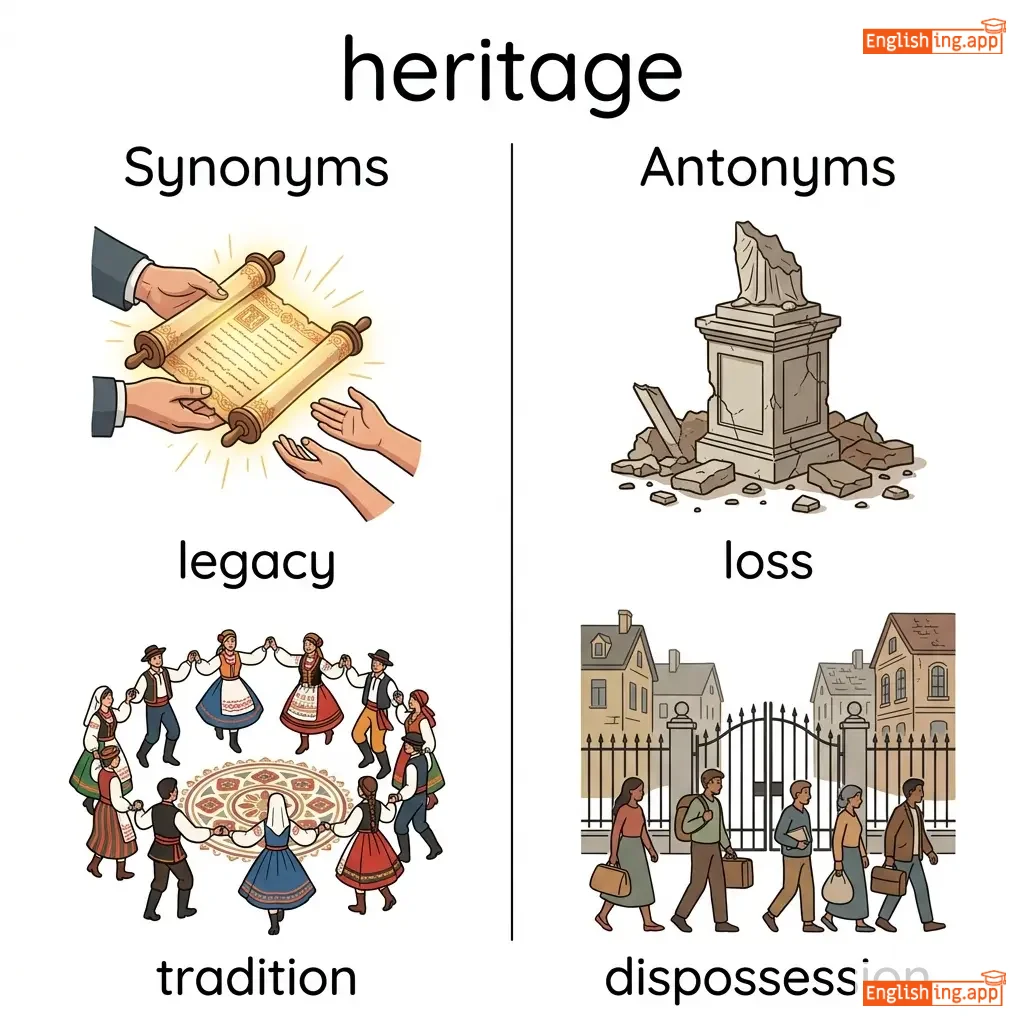
legacy, tradition, inheritance, patrimony, birthright
••••••
|
loss, dispossession
••••••
|
cultural heritage, national heritage, rich heritage, heritage site
••••••
|
Наследие — это то, что передается из поколения в поколение.
••••••
|
|
#2448
🦸
|
/ˈhɪəroʊ/
noun
(герой)
••••••
|
|
герой
geroy
••••••
|
- •••••• | - •••••• | - •••••• | - •••••• |
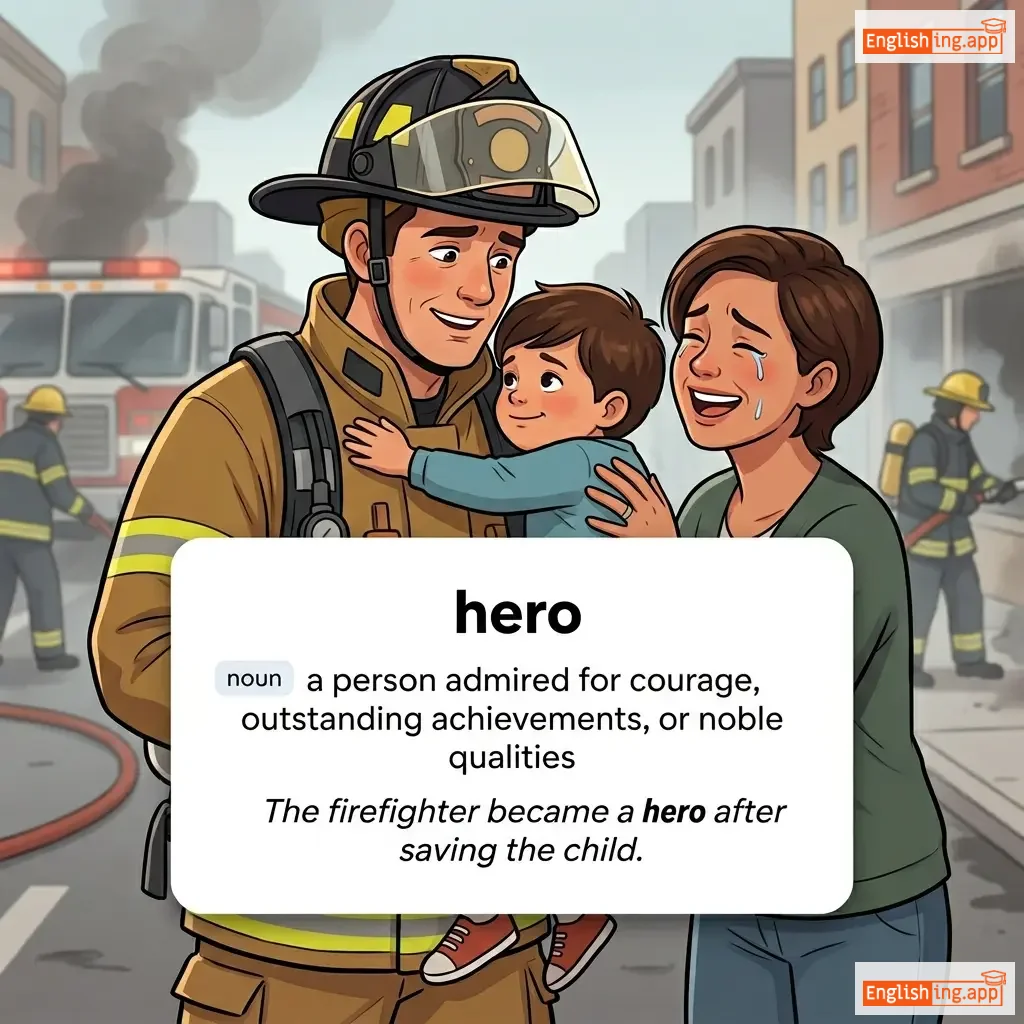
a person admired for courage, outstanding achievements, or noble qualities
••••••
|
The firefighter became a hero after saving the child. |
Пожарный стал героем после того, как спас ребенка.
Pozharnyy stal geroyem posle togo, kak spas rebenka.
••••••
|
unsung hero |
a person who makes a great contribution without recognition
••••••
|
непознанный герой
nepoznannyy geroy
••••••
|
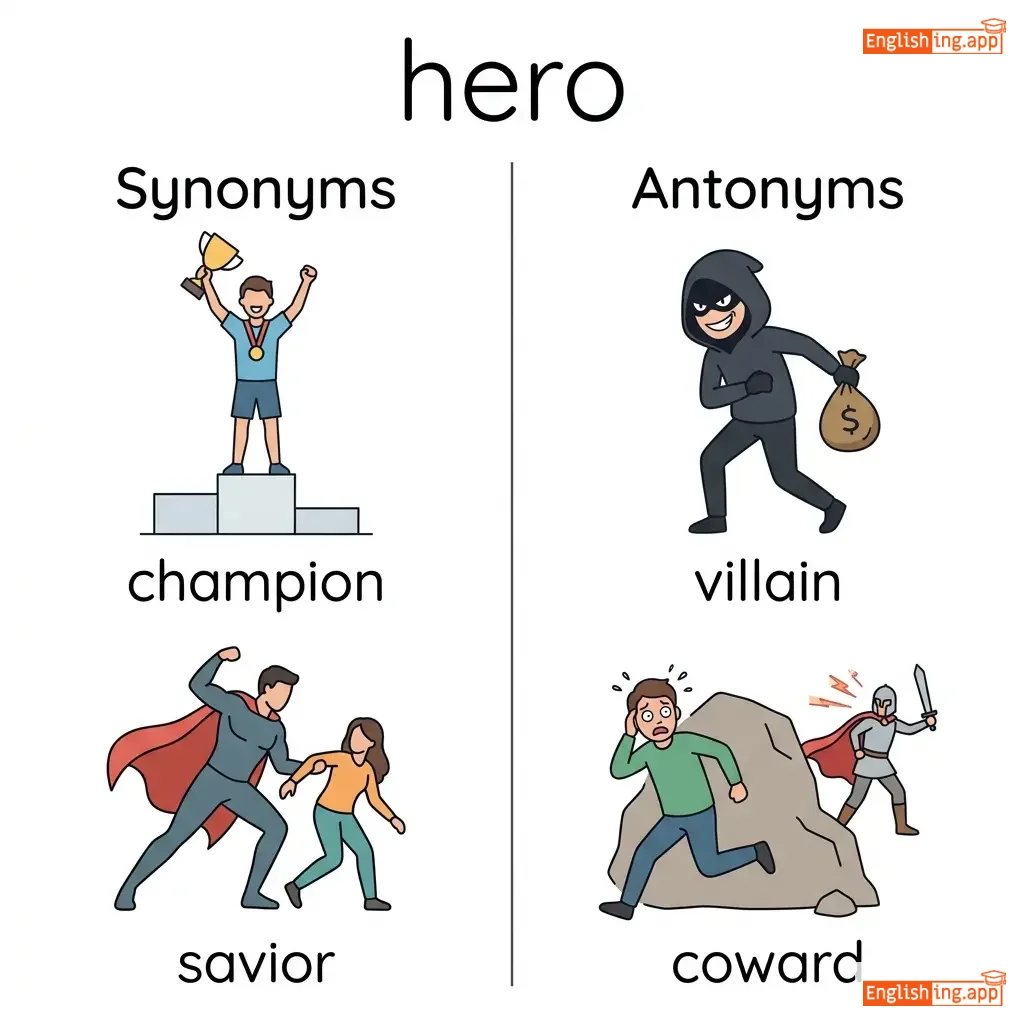
champion, savior, idol, warrior, legend
••••••
|
villain, coward
••••••
|
national hero, war hero, real hero, unsung hero
••••••
|
Герой - это герой 🦸 - На русском 'герой' означает того, кто совершает великие поступки.
••••••
|
|
#2449
🦸
|
/hɪˈroʊɪk/
adjective
(хироик)
••••••
|
- •••••• |
героический
geroicheskiy
••••••
|
- •••••• | - •••••• | - •••••• | - •••••• |
showing great bravery or courage; relating to a hero or heroes
••••••
|
The firefighter made a heroic effort to save the child.
Зэ файэрфайтер мэд э хироик эфэрт ту сэйв зэ чайлд.
••••••
|
Пожарный совершил героическую попытку спасти ребёнка.
pozharnyy sovershil geroicheskuyu popytku spasti rebyonka
••••••
|
heroic effort
хироик эфэрт
••••••
|
a very brave or determined attempt in a difficult situation
••••••
|
героическое усилие
geroicheskoe usilie
••••••
|
brave, courageous, valiant, gallant, fearless
••••••
|
cowardly, timid, fearful
••••••
|
heroic act, heroic effort, heroic deed, heroic sacrifice
••••••
|
Герой → героический = heroic.
••••••
|
|
#2450
👩👜
|
/hɜːrz/
pronoun
(херс)
••••••
|
- •••••• |
её (вещь)
eyo (veshch')
••••••
|
- •••••• | - •••••• | - •••••• | - •••••• |
used to refer to something that belongs to or is associated with a female person previously mentioned or easily identified.
••••••
|
That blue bag is hers. |
Та синяя сумка её.
Ta sinyaya sumka eyo.
••••••
|
- •••••• | - •••••• | - •••••• |
belonging to her, her own, of her, hers alone
••••••
|
his, theirs
••••••
|
hers alone, only hers, completely hers
••••••
|
Hers значит HER’s—её собственная вещь, her + s = hers!
••••••
|
|
#2451
👩
|
/hɜːrˈsɛlf/
pronoun
(хёрсэлф)
••••••
|
- •••••• |
сама
sama
••••••
|
- •••••• | - •••••• | - •••••• | - •••••• |
used to refer to a female person as the object of a verb or preposition when she is the subject
••••••
|
She prepared the meal all by herself.
Она приготовила еду сама.
••••••
|
Она приготовила еду сама.
Ona prigotovila yedu sama.
••••••
|
by herself
сама
••••••
|
alone, without help
••••••
|
сама
sama
••••••
|
on her own, alone, independently, solo, unaided
••••••
|
together, with others
••••••
|
by herself, for herself, to herself, herself alone
••••••
|
Her SELF означает 'сама' — запомни, herself означает сделать что-то самой.
••••••
|
|
#2452
🤔
|
/ˈhezɪteɪt/
verb
(колебаться)
••••••
|
- •••••• |
колебаться
kolebatsya
••••••
|
hesitated
колебался
••••••
|
hesitated
колебался
••••••
|
hesitates
колеблется
••••••
|
hesitating
колеблясь
••••••
|
to pause before saying or doing something because you are uncertain or nervous.
••••••
|
She hesitated before answering the question.
Она колебалась, прежде чем ответить на вопрос.
••••••
|
Она колебалась, прежде чем ответить на вопрос.
Ona kolebalsya, prezhde chem otvetit' na vopros.
••••••
|
without hesitation
без колебаний
••••••
|
immediately or without delay
••••••
|
без колебаний
bez kolebaniy
••••••
|
pause, waver, delay, falter, doubt
••••••
|
decide, proceed, act
••••••
|
hesitate to ask, hesitate to speak, hesitate before, hesitate a moment
••••••
|
Колебаться - остановиться, не колебаться, действуй сразу!
••••••
|
|
#2453
🕵️♂️
|
/ˈhɪdən/
adjective
(khɪdən)
••••••
|
- •••••• |
скрытый
skrytyy
••••••
|
- •••••• | - •••••• | - •••••• | - •••••• |
kept out of sight; concealed.
••••••
|
The treasure was hidden under the old tree. |
Сокровище было скрыто под старым деревом.
Sokrovishe bylo skryto pod starym derevom.
••••••
|
hidden gem |
something that is outstanding but not well known
••••••
|
скрытое сокровище
skrytoye sokrovishche
••••••
|
concealed, secret, invisible, unseen, obscured
••••••
|
visible, exposed, open
••••••
|
hidden meaning, hidden place, hidden agenda, hidden camera
••••••
|
Hidden означает скрытый — hide + en = скрытый!
••••••
|
|
#2454
🙈
|
/haɪd/
verb
(хайд)
••••••
|
|
прятать
pryatat
••••••
|
hid
хид
••••••
|
hidden
хидн
••••••
|
hides
хайдс
••••••
|
hiding
хайдинг
••••••
|
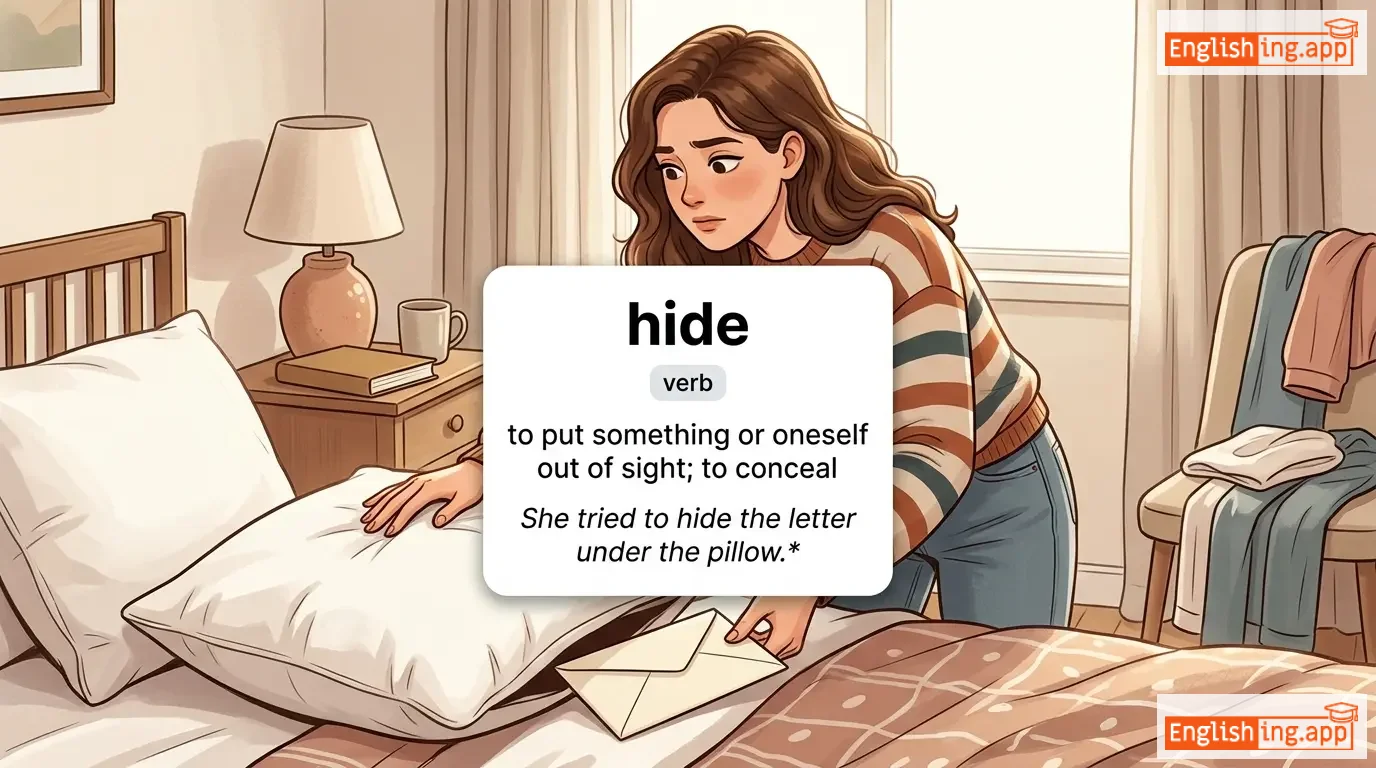
to put something or oneself out of sight; to conceal
••••••
|
She tried to hide the letter under the pillow.
она пыталась спрятать письмо под подушкой
••••••
|
она пыталась спрятать письмо под подушкой.
ona pytalas' spryat'at' pis'mo pod podushkoy
••••••
|
hide and seek
прятки
••••••
|
a children's game where one hides and others seek
••••••
|
прятки
pryatki
••••••
|
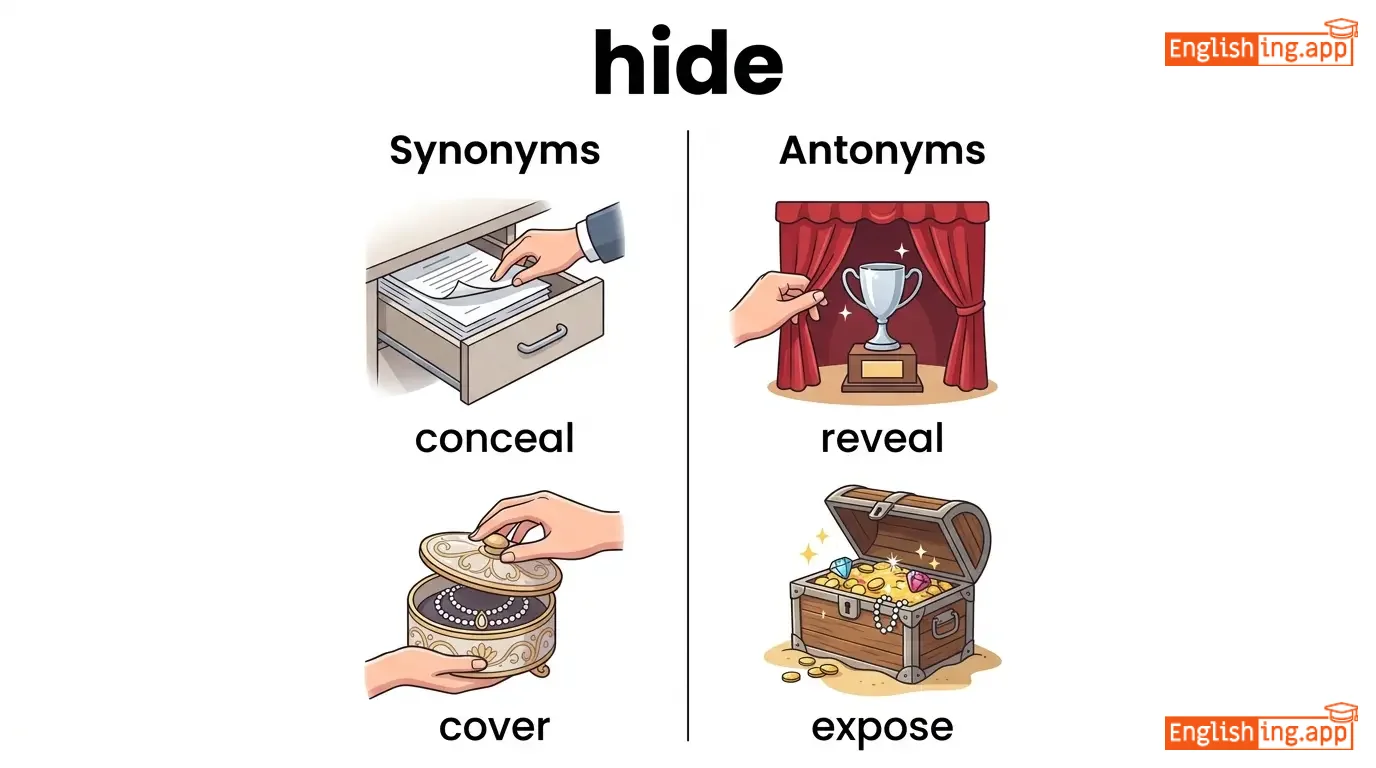
conceal, cover, disguise, veil, secrete
••••••
|
reveal, expose, uncover
••••••
|
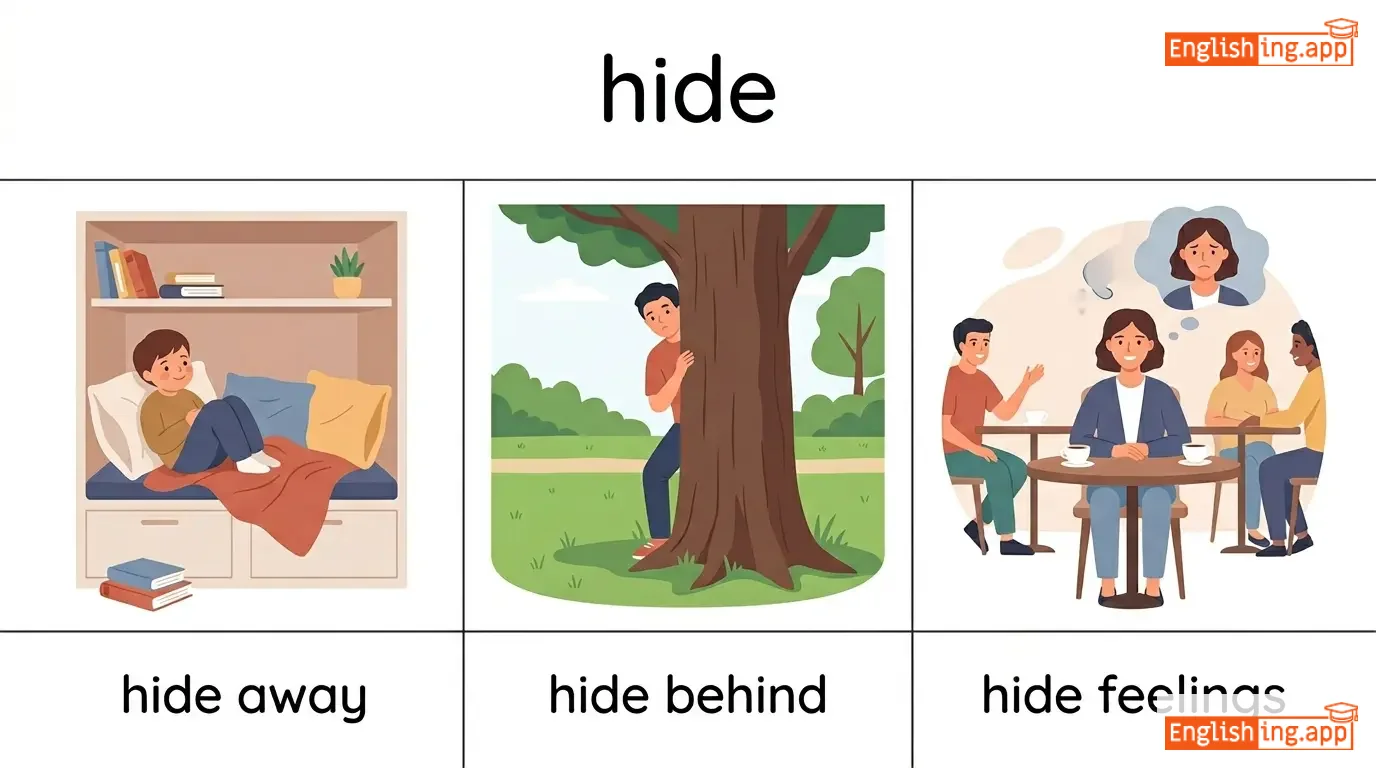
hide away, hide behind, hide feelings, hide from
••••••
|
Hide означает прятать, как 🦊 лиса прячется в норе
••••••
|
|
#2455
🏛️
|
/ˈhaɪəˌrɑːrki/
noun
(ˈhaɪəˌrɑːrki)
••••••
|
- •••••• |
иерархия
ierarhiya
••••••
|
- •••••• | - •••••• | - •••••• | - •••••• |
A system in which people or things are arranged in levels of importance or authority.
••••••
|
The corporate hierarchy determines who makes the final decision. |
Корпоративная иерархия определяет, кто принимает окончательное решение.
Korparativnaya ierarhiya opredelyayet, kto prinyet okonchatelnoe reshenie.
••••••
|
social hierarchy |
The ranking of individuals in society based on status, power, or wealth.
••••••
|
социальная иерархия
sotsial'naya ierarhiya
••••••
|
ranking, order, system, structure, chain of command
••••••
|
equality, parity
••••••
|
corporate hierarchy, political hierarchy, social hierarchy, strict hierarchy
••••••
|
Иерархия как лестница вверх по значимости.
••••••
|
|
#2456
⬆️
|
/haɪ/
adjective
(hai)
••••••
|
- •••••• |
высокий
vysokiy
••••••
|
- •••••• | - •••••• | - •••••• | - •••••• |
At or to a great height; greater than normal in amount, degree, or intensity.
••••••
|
The mountain peak is very high.
вершина горы очень высокая.
••••••
|
Вершина горы очень высокая.
Vershina gory ochen' vysokaya.
••••••
|
high and mighty
высокий и гордый
••••••
|
acting proud and arrogant
••••••
|
гордый
gordyy
••••••
|
tall, elevated, lofty, towering, intense
••••••
|
low, small
••••••
|
high mountain, high speed, high hopes, high price
••••••
|
High значит высокий ⬆️, как High building = высокое здание.
••••••
|
|
#2457
🌟
|
/ˈhaɪˌprəʊfaɪl/
adjective
(haï-prō-fail)
••••••
|
- •••••• |
высокий профиль
vysokiy profil
••••••
|
- •••••• | - •••••• | - •••••• | - •••••• |
having a lot of attention or public notice
••••••
|
The CEO attended a high-profile conference in New York.
Генеральный директор посетил высокопрофильную конференцию в Нью-Йорке.
••••••
|
Генеральный директор посетил высокопрофильную конференцию в Нью-Йорке.
General'nyy direktor posetil vysokoprofil'nuyu konferentsiyu v N'yu-Yorke.
••••••
|
- •••••• | - •••••• | - •••••• |
prominent, important, well-known, notable
••••••
|
low-profile, unnoticed, obscure
••••••
|
high-profile event, high-profile person, high-profile position
••••••
|
High-profile = высокий профиль = большая известность, много внимания!
••••••
|
|
#2458
🖍️
|
/ˈhaɪˌlaɪt/
verb
(hajlait)
••••••
|
- •••••• |
выделить
vydelit'
••••••
|
highlighted
hajlajtid
••••••
|
highlighted
hajlajtid
••••••
|
highlights
hajlajts
••••••
|
highlighting
hajlajting
••••••
|
to emphasize or make something stand out
••••••
|
The teacher highlighted the most important points in the text.
Учитель выделил самые важные моменты в тексте.
••••••
|
Учитель выделил самые важные моменты в тексте.
Uchitel' vydelil samye vazhnye momenty v tekste.
••••••
|
highlight reel
лучшие моменты
••••••
|
a collection of the best or most memorable parts
••••••
|
лучшие моменты
luchshiye momenty
••••••
|
emphasize, stress, underline, showcase, feature
••••••
|
ignore, overlook, hide
••••••
|
highlight the issue, highlight a point, highlight text, highlight importance
••••••
|
Выделить — это как осветить важное, чтобы оно было замечено.
••••••
|
|
#2459
🌟
|
/ˈhaɪli/
adverb
(хаили)
••••••
|
- •••••• |
высоко
vysoko
••••••
|
- •••••• | - •••••• | - •••••• | - •••••• |
to a great degree; very
••••••
|
She is highly respected in her field. |
Она высоко уважает в своей области.
Ona vysoko uzhajet v svoey oblasti.
••••••
|
think highly of |
to admire or have a good opinion of someone
••••••
|
высоко думать о
vysoko dumat' o
••••••
|
greatly, very, extremely, exceedingly, intensely
••••••
|
slightly, poorly, inadequately
••••••
|
highly skilled, highly effective, highly unlikely, highly respected
••••••
|
Highly означает высоко — очень.
••••••
|
|
#2460
🛣️
|
/ˈhaɪ.weɪ/
noun
(haivay)
••••••
|
- •••••• |
шоссе
shosse
••••••
|
- •••••• | - •••••• | - •••••• | - •••••• |
A main road, especially one connecting major towns or cities.
••••••
|
The highway was blocked due to an accident. |
Шоссе было заблокировано из-за аварии.
Shosse bylo zablokirovano iz-za avarii.
••••••
|
hit the highway |
to begin a journey, usually by car
••••••
|
отправиться в путь
otpravit'sya v put'
••••••
|
expressway, freeway, motorway, road, route
••••••
|
alley, lane
••••••
|
highway patrol, highway traffic, highway system, on the highway
••••••
|
Highway означает 'High speed way' - шоссе означает дорогу для быстрого движения.
••••••
|
|
#2461
😂
|
/hɪˈlɛəriəs/
adjective
(хилериас)
••••••
|
- •••••• |
крайне смешной
kraine smeshnoi
••••••
|
- •••••• | - •••••• | - •••••• | - •••••• |
Extremely funny or amusing.
••••••
|
The comedian told a hilarious story that had everyone laughing. |
Комик рассказал крайне смешную историю, которая заставила всех смеяться.
Komik rasskazal kraine smeshnuyu istoriu, kotoraya zastavila vsekh smeyatsya.
••••••
|
- •••••• | - •••••• | - •••••• |
funny, amusing, comical, entertaining, laughable
••••••
|
serious, sad, boring
••••••
|
hilarious joke, hilarious story, hilarious moment, absolutely hilarious
••••••
|
Hilarious = kraynie (крайние) + smeshnoi → крайне смешной
••••••
|
|
#2462
⛰️
|
/hɪl/
noun
(хил)
••••••
|
- •••••• |
холм
kholm
••••••
|
- •••••• | - •••••• | - •••••• | - •••••• |
A naturally raised area of land, smaller than a mountain.
••••••
|
We climbed the hill to see the sunset. |
Мы поднялись на холм, чтобы увидеть закат.
My podnyalis' na kholm, chtoby uvidet' zakat.
••••••
|
make a mountain out of a molehill |
to exaggerate a small problem into something much bigger
••••••
|
делать из мухи слона
delat' iz mukhi slona
••••••
|
mound, knoll, ridge, slope, rise
••••••
|
valley, plain
••••••
|
hill station, top of the hill, climb a hill, rolling hills
••••••
|
Hill — это холм, маленький, как холм, а не гора.
••••••
|
|
#2463
⛰️
|
/ˈhɪli/
adjective
(хилли)
••••••
|
- •••••• |
холмистый
kholmisty
••••••
|
- •••••• | - •••••• | - •••••• | - •••••• |
having many hills; characterized by hills or slopes
••••••
|
The village is located in a beautiful hilly region.
Зэ виллидж из лоукейтед ин э бьютифул хилли риджен.
••••••
|
Деревня расположена в красивом холмистом районе.
Derevnya raspolozhena v krasivom kholmistom rayone
••••••
|
- •••••• | - •••••• | - •••••• |
mountainous, rolling, uneven, rugged, undulating
••••••
|
flat, level, plain
••••••
|
hilly terrain, hilly area, hilly region, hilly landscape
••••••
|
Hilly = холмы → холмистый.
••••••
|
|
#2464
👨
|
/hɪm/
pronoun
(хим)
••••••
|
- •••••• |
его
ego
••••••
|
- •••••• | - •••••• | - •••••• | - •••••• |
Used to refer to a male person or animal already mentioned.
••••••
|
I saw him at the park yesterday. |
Я видел его в парке вчера.
Ya videl ego v parke vchera.
••••••
|
- •••••• | - •••••• | - •••••• |
that man, that boy, male person, he
••••••
|
her, she
••••••
|
with him, for him, about him, help him
••••••
|
Him означает 'его' – помните, что He в объектной форме это Him.
••••••
|
|
#2465
🙋♂️
|
/hɪmˈself/
pronoun
(химселф)
••••••
|
- •••••• |
сам
sam
••••••
|
- •••••• | - •••••• | - •••••• | - •••••• |
Used to emphasize that a male person does something by his own effort.
••••••
|
He fixed the car himself. |
Он отремонтировал машину сам.
On otremontiroval mashinu sam.
••••••
|
by himself |
alone, without help
••••••
|
сам
sam
••••••
|
alone, personally, individually, on his own
••••••
|
together, with others
••••••
|
by himself, for himself, himself alone
••••••
|
Himself значит 'He сам self' – запомни, что 'self' означает самого себя.
••••••
|
|
#2466
💡
|
/hɪnt/
noun/verb
(хинт)
••••••
|
- •••••• |
подсказка
podskazka
••••••
|
hinted
хинтед
••••••
|
hinted
хинтед
••••••
|
hints
хинтс
••••••
|
hinting
хинтинг
••••••
|
a small piece of advice or suggestion; to suggest something indirectly
••••••
|
She gave me a hint about the surprise party.
Она дала мне подсказку о сюрпризной вечеринке.
••••••
|
Она дала мне подсказку о сюрпризной вечеринке.
Ona dala mne podskazku o syurpriznoy vecherinke.
••••••
|
drop a hint
дать подсказку
••••••
|
to give a subtle suggestion
••••••
|
дать подсказку
dat' podskazku
••••••
|
suggestion, clue, indication, tip, advice
••••••
|
statement, declaration
••••••
|
subtle hint, useful hint, drop a hint, take the hint
••••••
|
Hint по-русски — это подсказка, как в игре на подсказки
••••••
|
|
#2467
🦴
|
/hɪp/
noun
(хип)
••••••
|
- •••••• |
бедро
bedro
••••••
|
- •••••• | - •••••• | - •••••• | - •••••• |
The part of the body on either side of the pelvis, or informal: trendy and fashionable.
••••••
|
She put her hands on her hips. |
Она положила руки на бедра.
Ona polozhila ruki na bedra.
••••••
|
joined at the hip |
very close, inseparable
••••••
|
связаны как бедра
svyazany kak bedra
••••••
|
pelvis, waist, trendy, fashionable
••••••
|
old-fashioned, outdated
••••••
|
hip pain, hip joint, hands on hips, hip hop
••••••
|
Бедро – бедро, в хип-хопе двигаются бедра.
••••••
|
|
#2468
👔
|
/ˈhaɪə(r)/
verb
(khayyer)
••••••
|
|
нанимать
nanimat
••••••
|
hired
khayyer-d
••••••
|
hired
khayyer-d
••••••
|
hires
khayyer-s
••••••
|
hiring
khayye-ring
••••••
|
to employ someone for a job or task
••••••
|
The company decided to hire more staff this year.
Компания решила нанять больше сотрудников в этом году.
••••••
|
Компания решила нанять больше сотрудников в этом году.
Kampaniya reshila nanyat bol'she sotrudnikov v etom godu.
••••••
|
hire and fire
нанять и уволить
••••••
|
to employ and dismiss workers frequently
••••••
|
нанять и уволить
nanyat i uvolit'
••••••
|
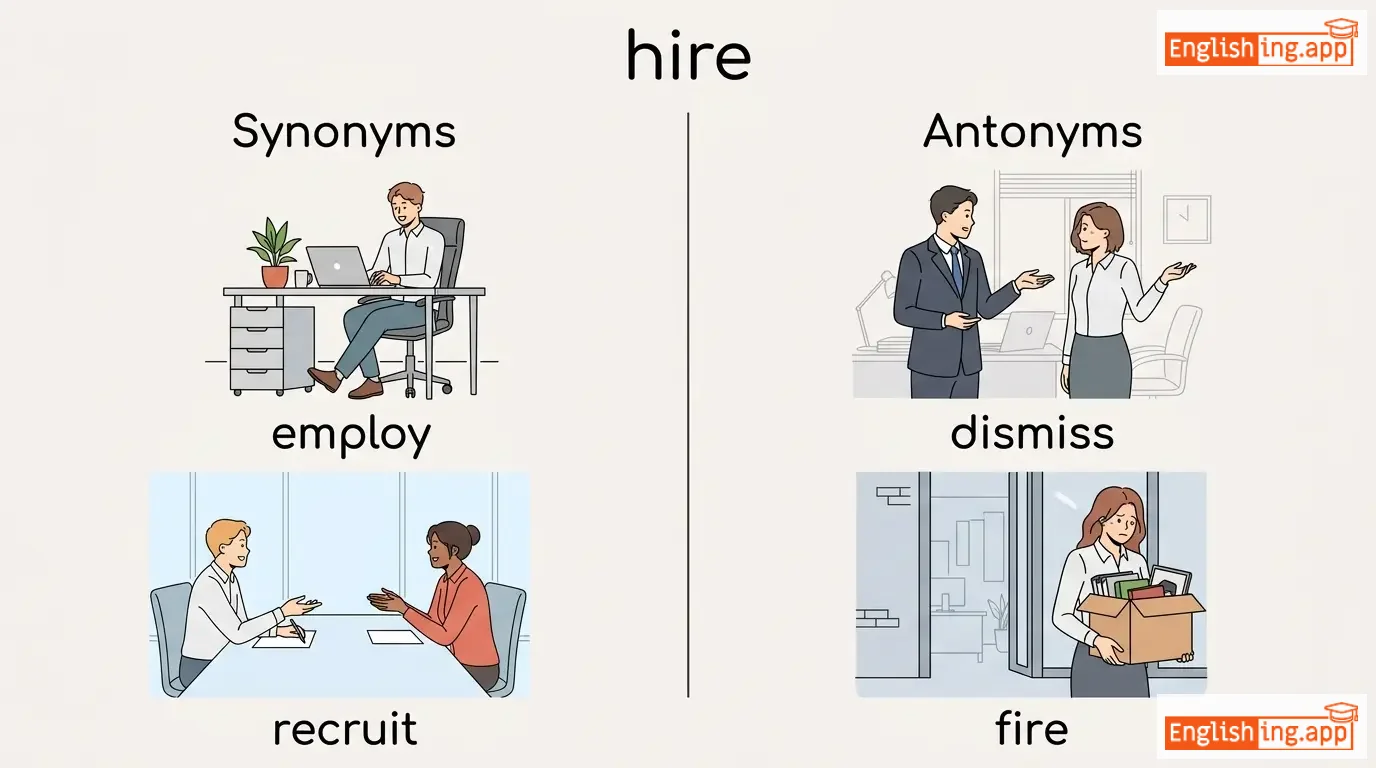
employ, recruit, appoint, engage, contract
••••••
|
dismiss, fire, discharge
••••••
|
hire staff, hire employees, hire a car, hire services
••••••
|
Нанимать - это как находить идеальных кандидатов для работы.
••••••
|
Vocabulary Quiz
Test your vocabulary by matching words with their translations or meanings.
Login to take the quiz
Comments (0)
Share your thoughts and join the discussion.
Join the discussion by logging in
Login to CommentNo comments yet
Be the first to share your thoughts!