Получите неограниченный доступ ко всем словам с подпиской Pro
Обновить до ProПолучите неограниченный доступ ко всем предложениям с подпиской Pro
Обновить до Pro|
Эмодзи
|
Слово | Images | Перевод | Прошедшее | Причастие прошедшего времени | Третье лицо единственного числа | Герундий | Значение | Пример предложения | Перевод примера предложения | Пример выражения | Значение примера выражения | Перевод примера выражения | Синонимы | Антонимы | Коллокации | Мнемоника |
|---|---|---|---|---|---|---|---|---|---|---|---|---|---|---|---|---|---|
|
💊
••••••
|
/hiːl/
verb
(hil)
••••••
|

|
излечить
izlechit
••••••
|
healed
hild
••••••
|
healed
hild
••••••
|
heals
hils
••••••
|
healing
hiling
••••••
|
to make or become healthy again after an injury or illness
••••••
|
Time helps to heal both physical and emotional wounds.
Время помогает заживлять как физические, так и эмоциональные раны.
••••••
|
Время помогает заживлять как физические, так и эмоциональные раны.
Vremya pomogaet zazhivlyat' kak fizicheskie, tak i emotsional'nye rany.
••••••
|
heal the wounds
заживлять раны
••••••
|
to repair or improve something damaged or hurt
••••••
|
заживлять раны
zazhivlyat' rany
••••••
|
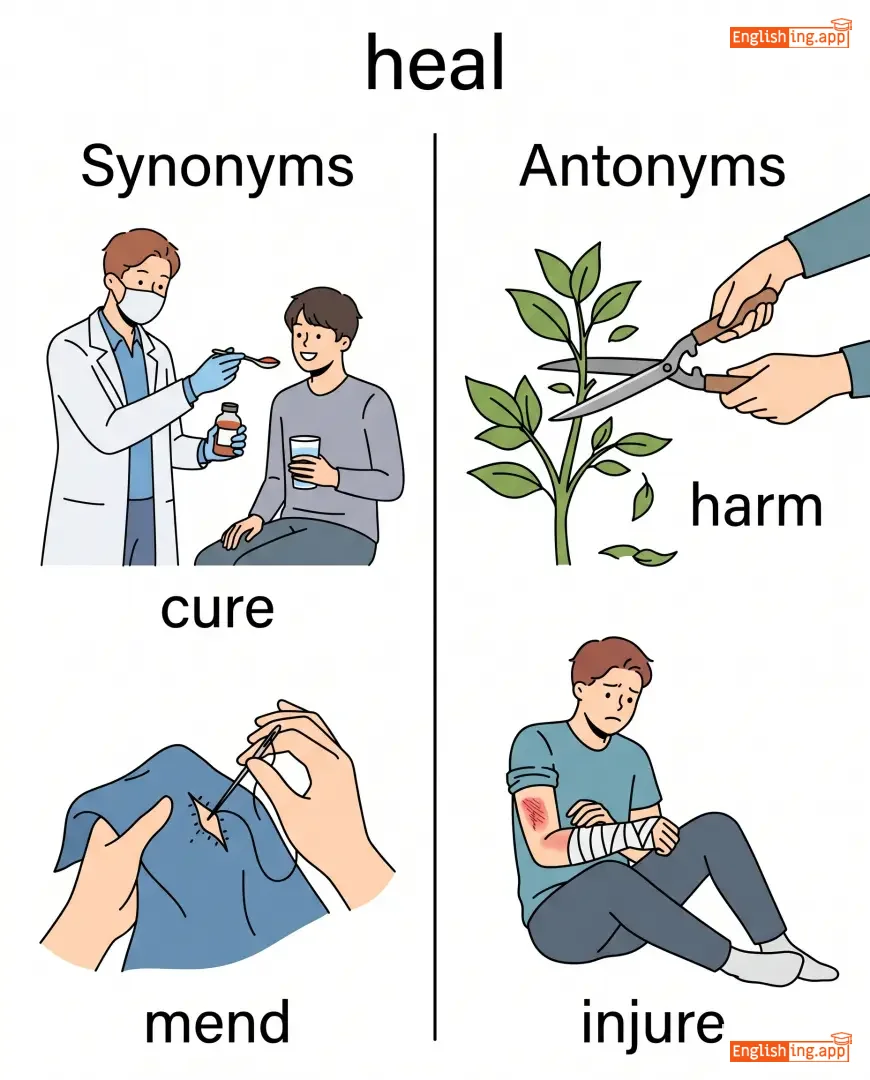
cure, mend, recover, restore, repair
••••••
|
harm, injure, damage
••••••
|
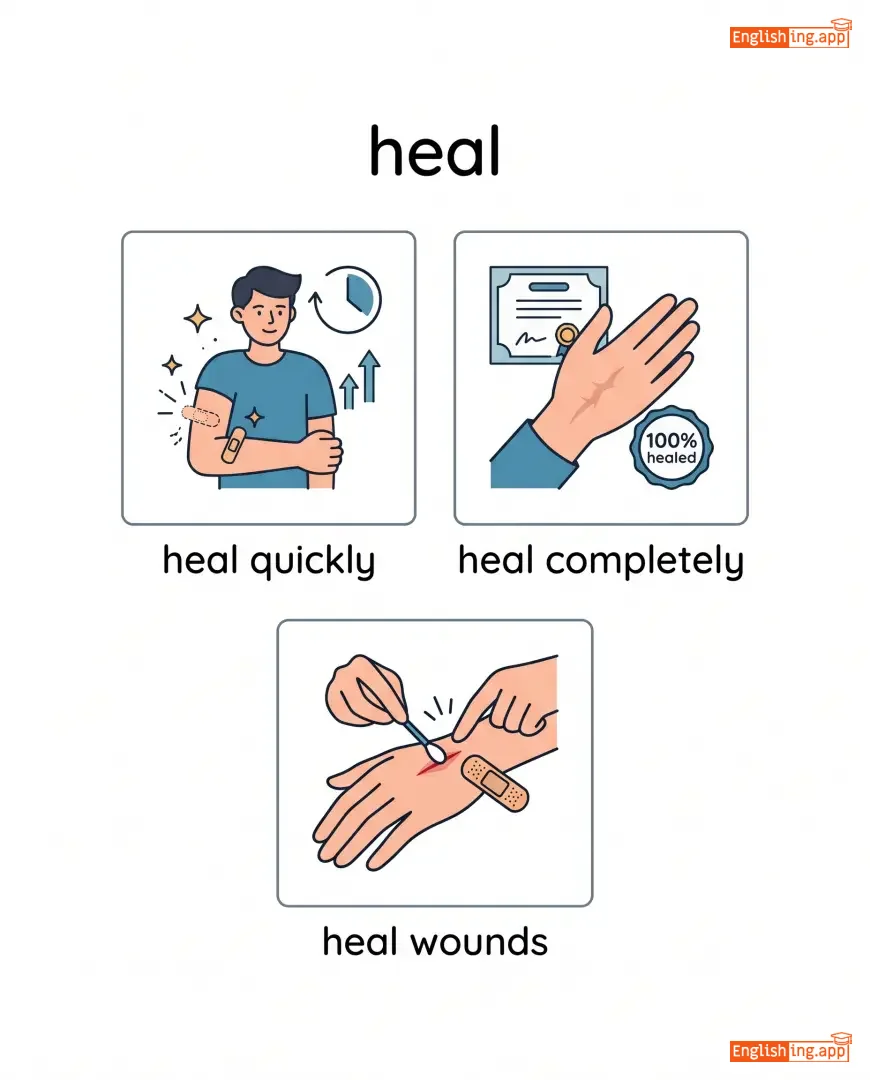
heal quickly, heal completely, heal wounds, heal process
••••••
|
Если ты повредил ногу, нужно излечиться.
••••••
|
|
💪
••••••
|
/hɛlθ/
noun
(хелс)
••••••
|
- •••••• |
здоровье
zdorovye
••••••
|
- •••••• | - •••••• | - •••••• | - •••••• |
The state of being free from illness or injury.
••••••
|
Exercise is important for good health. |
Физические упражнения важны для хорошего здоровья.
Fizicheskie uprazhneniya vazhny dlya khoroshego zdorov'ya.
••••••
|
in good health |
being healthy
••••••
|
в хорошем здоровье
v khoroshem zdorov'ye
••••••
|
wellness, fitness, condition, wellbeing
••••••
|
illness, sickness, disease
••••••
|
good health, health care, public health, mental health
••••••
|
Health означает здоровье, здоровье - ключ к счастью.
••••••
|
|
🏥
••••••
|
/ˈhɛlθˌkɛər/
noun
(хэлθкэр)
••••••
|
- •••••• |
здравоохранение
zdravookhranenie
••••••
|
- •••••• | - •••••• | - •••••• | - •••••• |
the organized provision of medical care to people
••••••
|
The country invested heavily in healthcare to improve public health. |
Страна вложила значительные средства в здравоохранение для улучшения общественного здоровья.
Strana vlozhila znachitelnye sredstva v zdravookhranenie dlya uluchsheniya obshchestvennogo zdorov'ya.
••••••
|
- •••••• | - •••••• | - •••••• |
medicine, health services, medical care
••••••
|
neglect, indifference
••••••
|
healthcare system, healthcare provider, healthcare services
••••••
|
Здравоохранение спасает жизни.
••••••
|
|
🍎
••••••
|
/ˈhɛlθi/
adjective
(хэппинесс)
••••••
|
|
счастье
schastye
••••••
|
- •••••• | - •••••• | - •••••• | - •••••• |
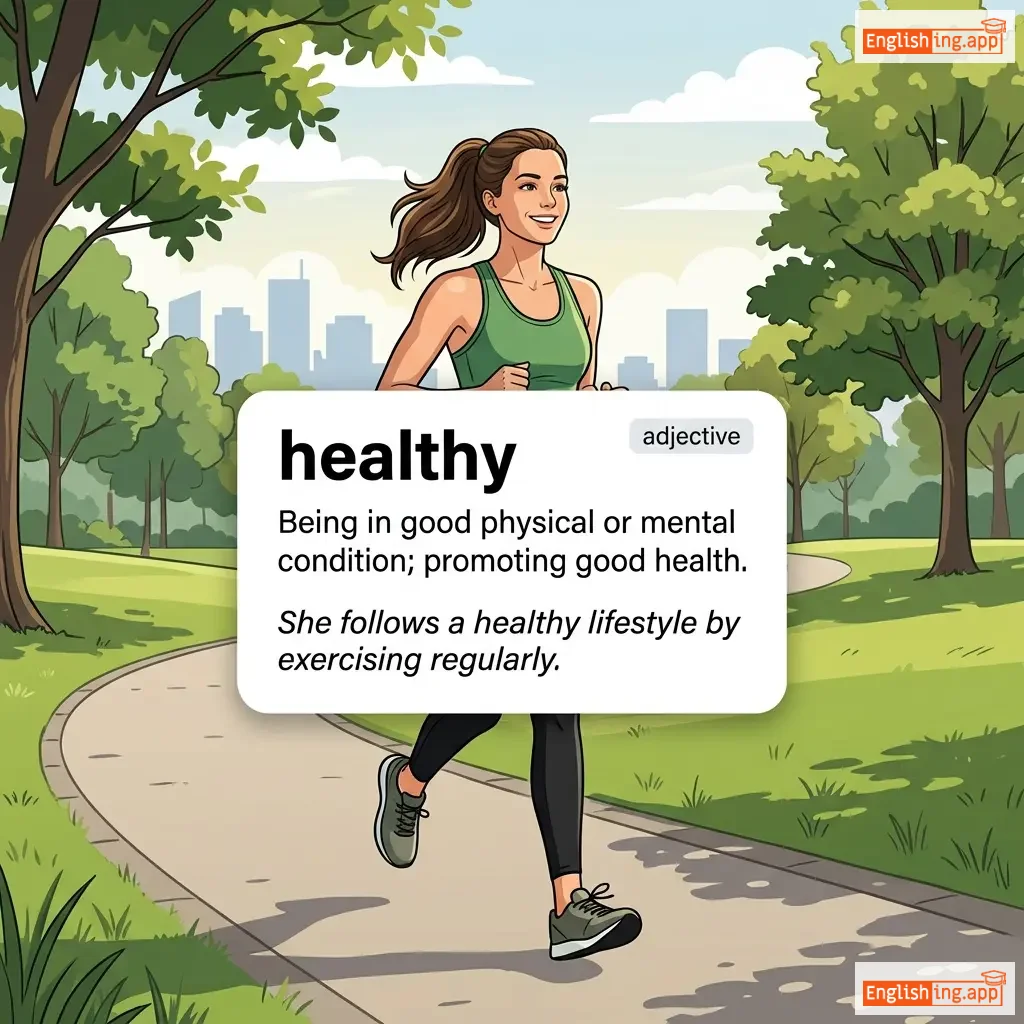
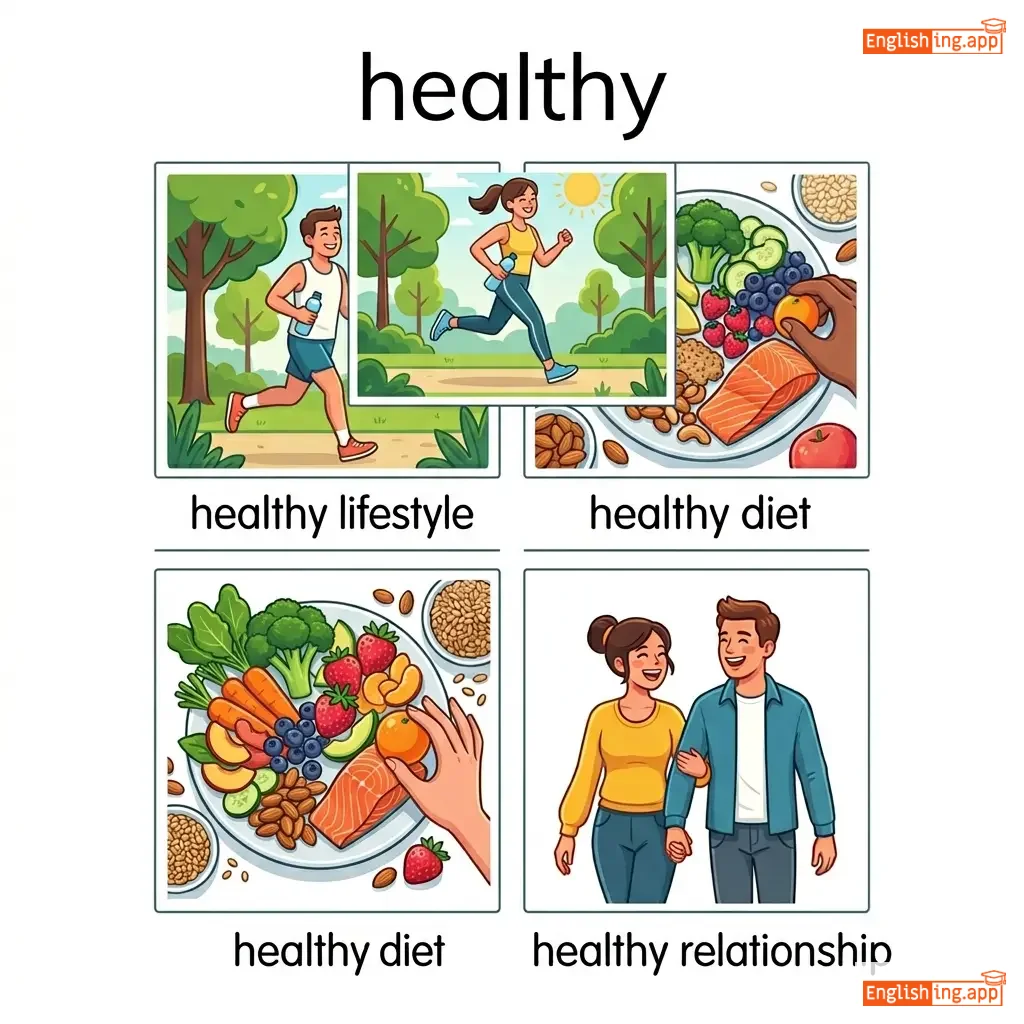
Being in good physical or mental condition; promoting good health.
••••••
|
She follows a healthy lifestyle by exercising regularly.
Она не могла скрыть свое счастье, когда получила награду.
••••••
|
Она не могла скрыть свое счастье, когда получила награду.
Ona ne mogla skryt' svoyo schast'ye, kogda poluchila nagradu.
••••••
|
healthy competition
поиск счастья
••••••
|
A form of competition that is fair and encourages improvement.
••••••
|
поиск счастья
poisk schast'ya
••••••
|
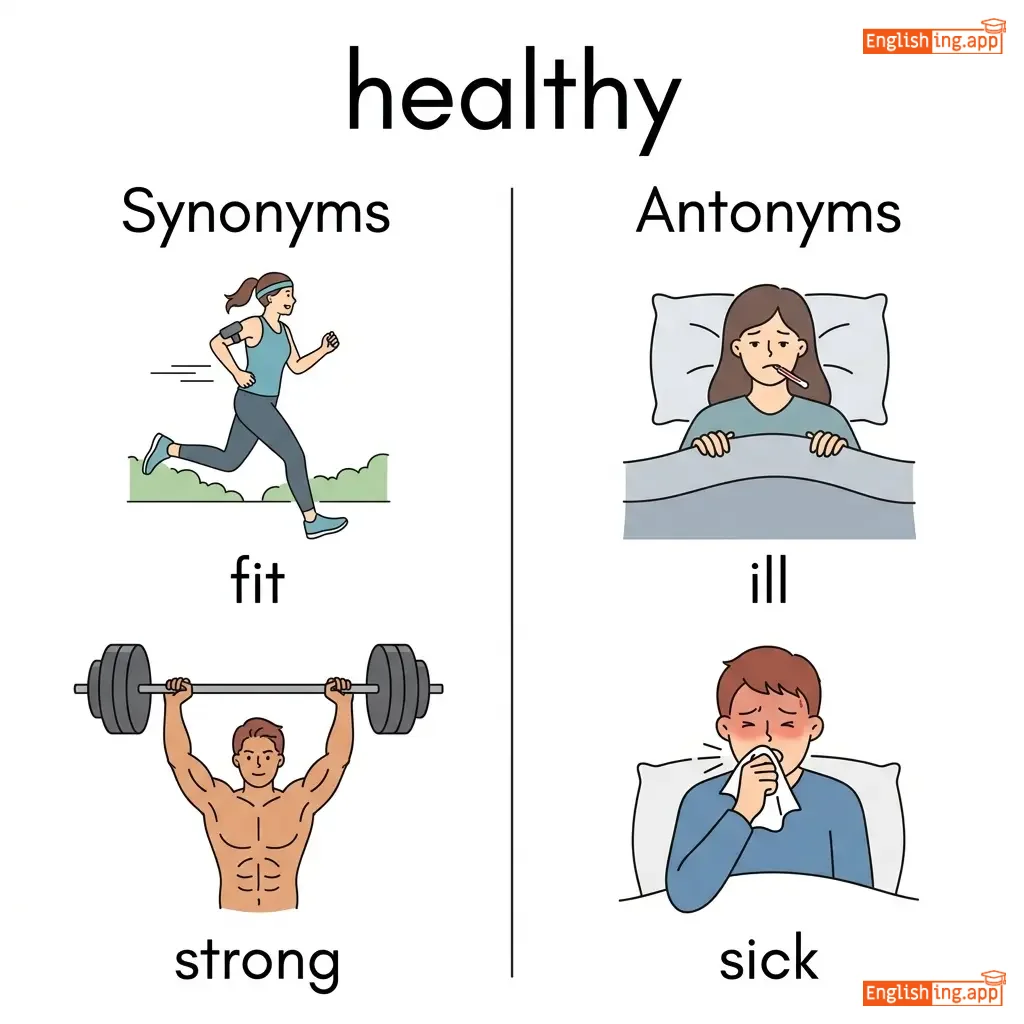
fit, strong, well, robust, sound
••••••
|
ill, sick, weak
••••••
|
healthy lifestyle, healthy diet, healthy relationship, healthy environment
••••••
|
Счастье = чувство радости и удовлетворения
••••••
|
|
👂
••••••
|
/hɪr/
verb
(khir)
••••••
|
|
слышать
slyshat
••••••
|
heard
khard
••••••
|
heard
khard
••••••
|
hears
khirs
••••••
|
hearing
kheering
••••••
|
To perceive sound with the ear.
••••••
|
I can hear birds singing outside.
Ya mogu uslyshat ptits pesnyu na ulitse.
••••••
|
Я могу слышать птиц, поющих на улице.
Ya mogu slyshat' ptits, poyushchikh na ulitse.
••••••
|
hear from someone
uslyshat ot kogo-to
••••••
|
to receive news or communication from someone
••••••
|
слышать от кого-то
slyshat' ot kogo-to
••••••
|
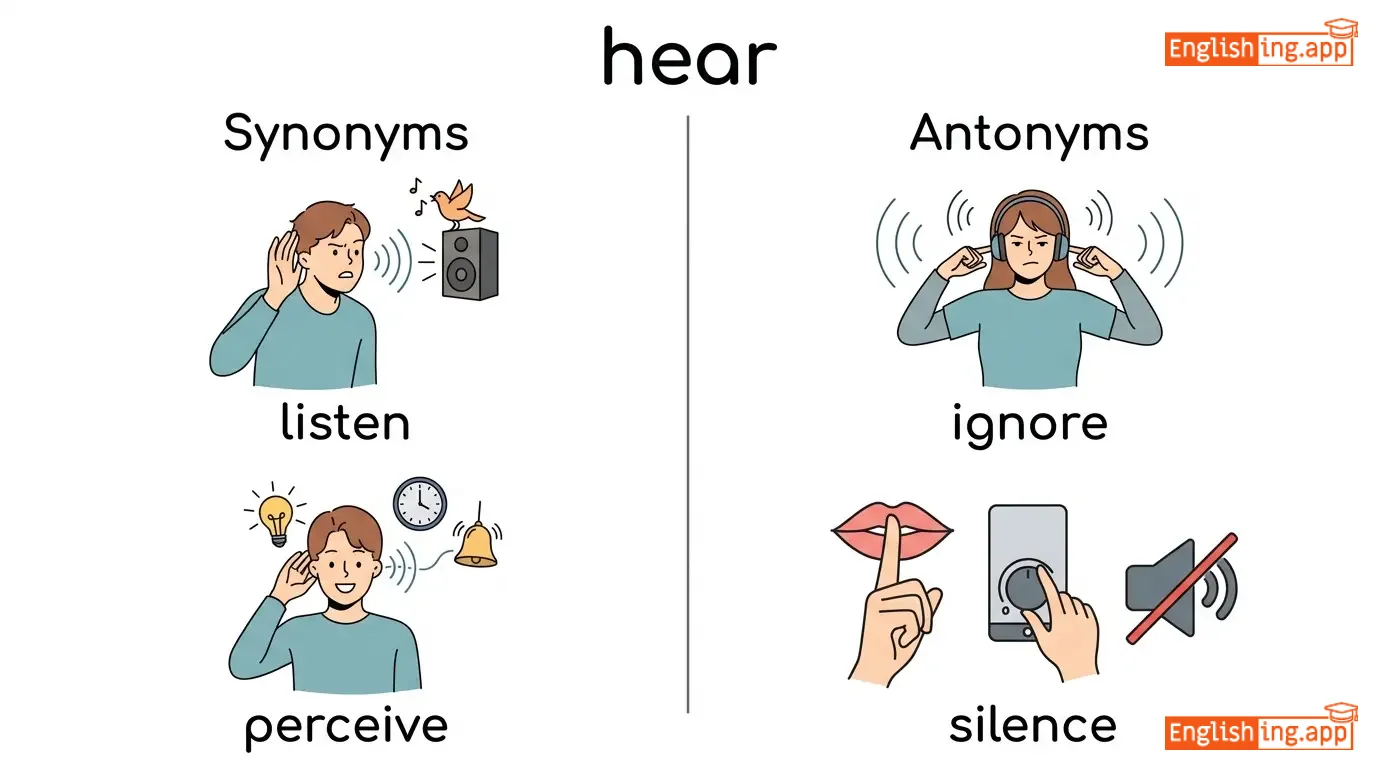
listen, perceive, detect, notice, overhear
••••••
|
ignore, silence
••••••
|
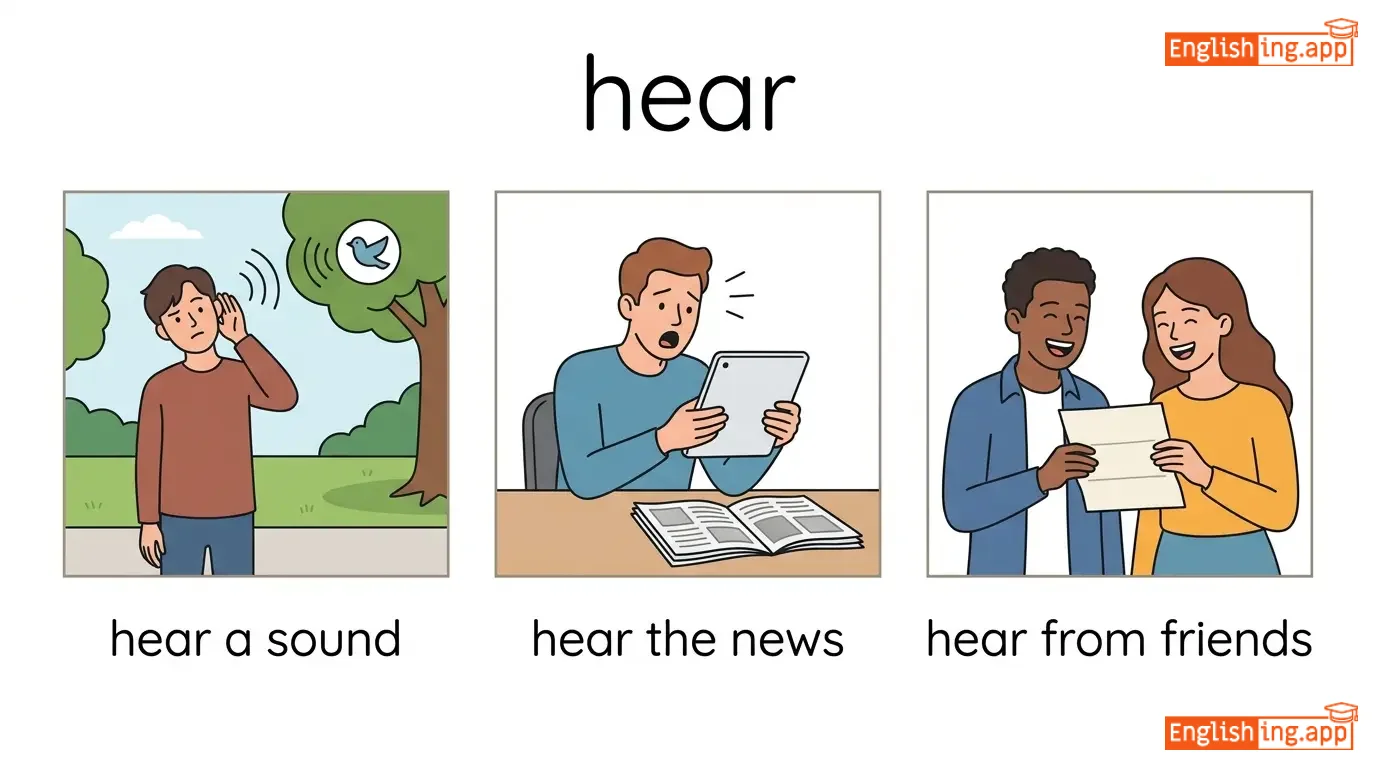
hear a sound, hear the news, hear from friends, hear clearly
••••••
|
Слышать значит воспринимать звук ухом.
••••••
|
|
👂
••••••
|
/ˈhɪərɪŋ/
noun
(хи-рин)
••••••
|
- •••••• |
слушание / слух
slushanie / slukh
••••••
|
- •••••• | - •••••• | - •••••• | - •••••• |
the ability to perceive sounds or an official meeting to listen to arguments or evidence
••••••
|
The judge scheduled a hearing for next week. |
Судья назначил слушание на следующую неделю.
Sudya naznachil slushanie na sleduyushchuyu nedelyu.
••••••
|
hard of hearing |
having partial hearing loss
••••••
|
частичная потеря слуха
chastichnaya poterya slukha
••••••
|
listening, audition, perception, trial, meeting
••••••
|
deafness, silence
••••••
|
court hearing, public hearing, hearing aid, hearing loss
••••••
|
Hearing означает слушание — в суде проходят слушания, а слух осуществляют с помощью ушей 👂
••••••
|
|
❤️
••••••
|
/hɑːrt/
noun
(харт)
••••••
|
- •••••• |
сердце
serdtse
••••••
|
- •••••• | - •••••• | - •••••• | - •••••• |
the organ that pumps blood through the body; also the center of emotions
••••••
|
Her heart was beating fast with excitement.
Ее сердце билось быстро от волнения.
••••••
|
Ее сердце билось быстро от волнения.
Eeyo serdtse bilos' bystro ot volneniya.
••••••
|
at heart
по сердцу
••••••
|
in essence or fundamentally
••••••
|
по сердцу
po serdtsu
••••••
|
core, center, emotion, spirit, soul
••••••
|
mind, brain
••••••
|
heart attack, broken heart, kind heart, follow your heart
••••••
|
Сердце ❤️ означает сердце – любовь и эмоции исходят из сердца
••••••
|
|
🔥
••••••
|
/hiːt/
noun/verb
(хит)
••••••
|

|
жара / тепло
zhara / teplo
••••••
|
heated
хитед
••••••
|
heated
хитед
••••••
|
heats
хитс
••••••
|
heating
хитинг
••••••
|
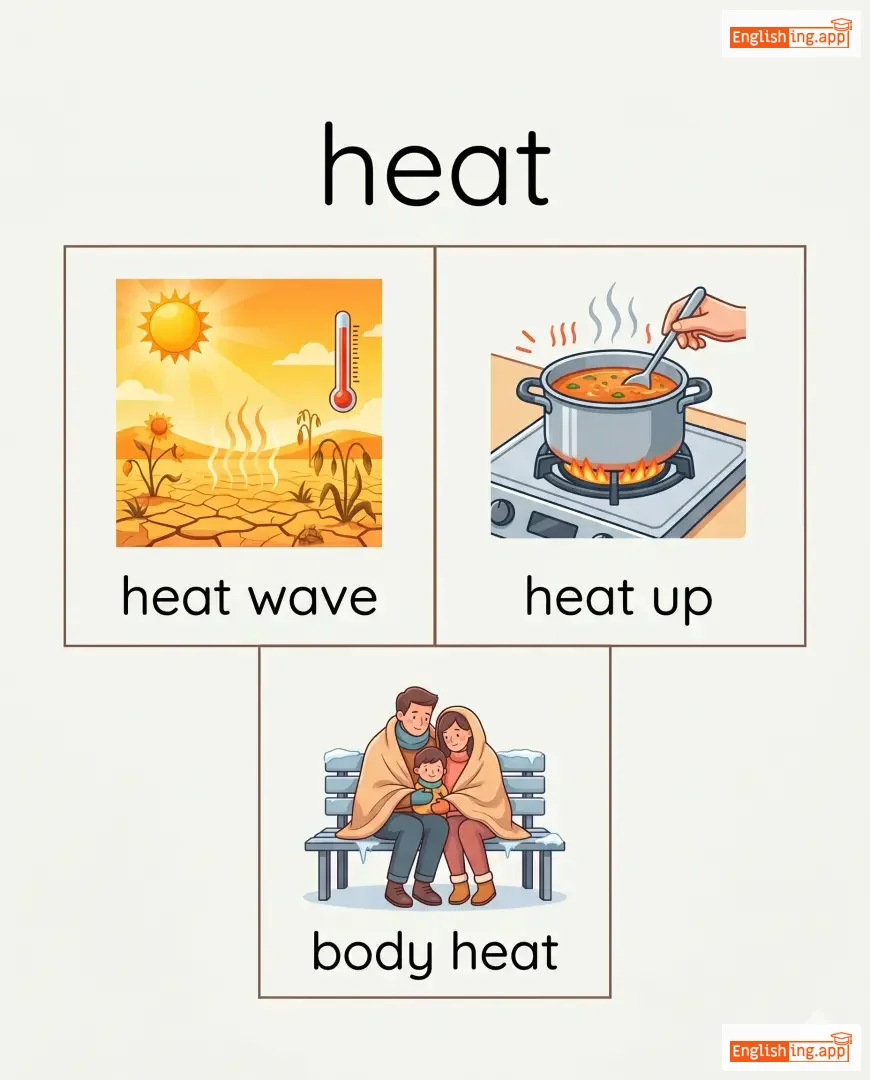
intensity of hotness; to make something warm or hot
••••••
|
They heated the soup on the stove.
Они разогрели суп на плите.
••••••
|
Они разогрели суп на плите.
Oni razogreli sup na plite.
••••••
|
in the heat of the moment
В жару момента
••••••
|
acting without thinking due to strong emotions
••••••
|
Действовать без размышлений из-за сильных эмоций
Deystvovat' bez razmyshleniy iz-za sil'nykh emotsiy
••••••
|
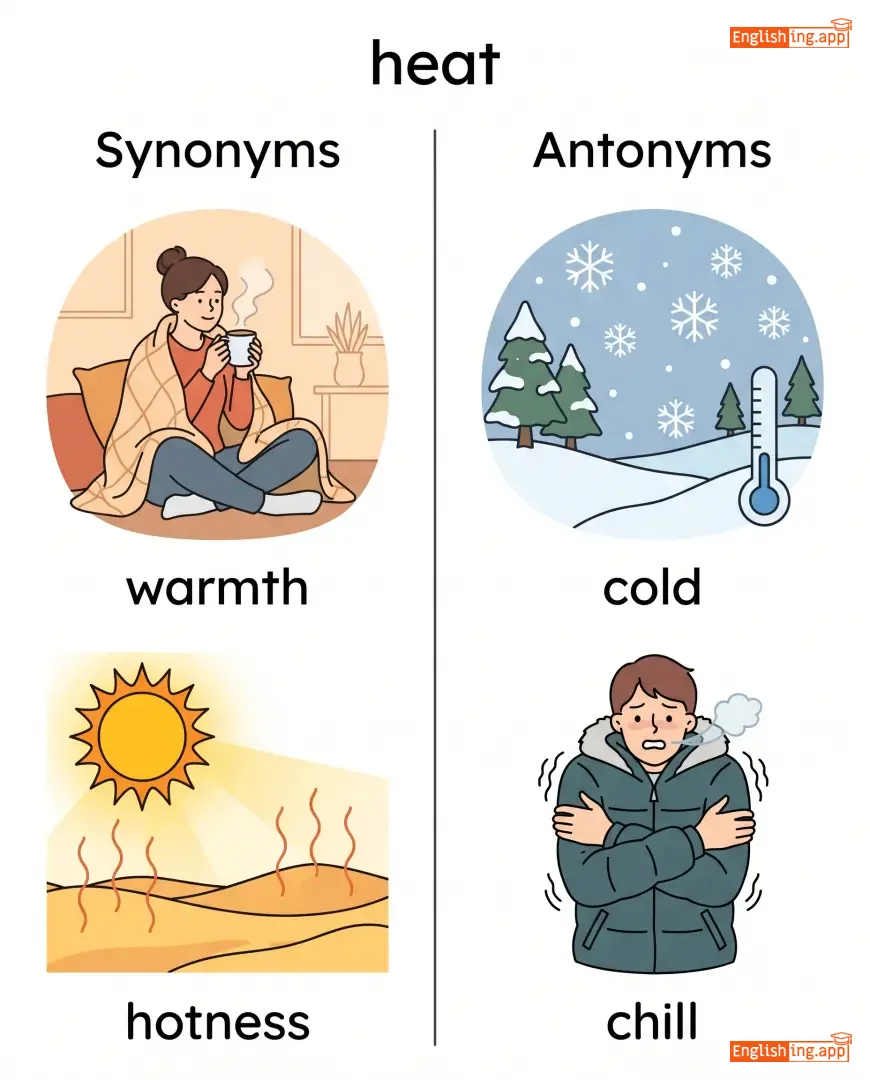
warmth, hotness, fire, passion, energy
••••••
|
cold, chill
••••••
|
heat wave, heat up, body heat, generate heat
••••••
|
Heat как огненная жара 🔥 – разогревает всё вокруг!
••••••
|
|
☁️
••••••
|
/ˈhɛvən/
noun
(heven)
••••••
|
- •••••• |
небеса
nebesa
••••••
|
- •••••• | - •••••• | - •••••• | - •••••• |
the place believed to be the home of God and the afterlife of the good; a state of extreme happiness
••••••
|
They believe that good people go to heaven after death. |
Они верят, что хорошие люди идут в небеса после смерти.
Oni veryat, chto khoroshie lyudi idut v nebeso posle smerti.
••••••
|
move heaven and earth |
to do everything possible to achieve something
••••••
|
двигать небом и землёй
dvigat' nebom i zemlyoy
••••••
|
paradise, bliss, afterlife, nirvana, delight
••••••
|
hell, misery
••••••
|
go to heaven, heaven on earth, gates of heaven, pray to heaven
••••••
|
Небеса = место счастья 🌠 – когда ты счастлив, ты как в небесах.
••••••
|
|
⬇️
••••••
|
/ˈhev.ɪ.li/
adverb
(хэви-лӣ)
••••••
|
- •••••• |
сильно; интенсивно
sil'no; intensivno
••••••
|
- •••••• | - •••••• | - •••••• | - •••••• |
with great weight; to a great degree; intensely
••••••
|
It rained heavily throughout the night.
ит рэйнд хэви-лӣ тру-аут де найт.
••••••
|
Шел сильный дождь всю ночь.
Shel sil'nyy dozhd' vsyu noch'.
••••••
|
- •••••• | - •••••• | - •••••• |
intensely, severely, greatly, substantially, densely
••••••
|
lightly, gently, slightly, minimally
••••••
|
heavily armed, heavily loaded, heavily populated, heavily dependent
••••••
|
Heavy - это сильно, так что Heavily - это очень сильно.
••••••
|
|
⚖️
••••••
|
/ˈhɛvi/
adjective
(хэви)
••••••
|
- •••••• |
тяжелый
tyazhely
••••••
|
- •••••• | - •••••• | - •••••• | - •••••• |
having great weight; difficult to lift or move
••••••
|
The box was too heavy for her to carry alone. |
Коробка была слишком тяжелой, чтобы она могла поднять ее одна.
Korobka byla slishkom tyazheloy, chtoby ona mogla podnyat' yeye odna.
••••••
|
heavy heart |
a feeling of deep sadness
••••••
|
тяжелое сердце
tyazheloe serdtse
••••••
|
weighty, massive, bulky, hefty, substantial
••••••
|
light, weightless, airy
••••••
|
heavy rain, heavy traffic, heavy bag, heavy burden
••••••
|
Heavy — это тяжелый. Представьте себе тяжелую коробку, которую вы не можете поднять.
••••••
|
|
🌳
••••••
|
/hɛdʒ/
noun, verb
(хэдж)
••••••
|

|
живая изгородь
zhivaya izgorod
••••••
|
hedged
хэджд
••••••
|
hedged
хэджд
••••••
|
hedges
хэджес
••••••
|
hedging
хэджинг
••••••
|
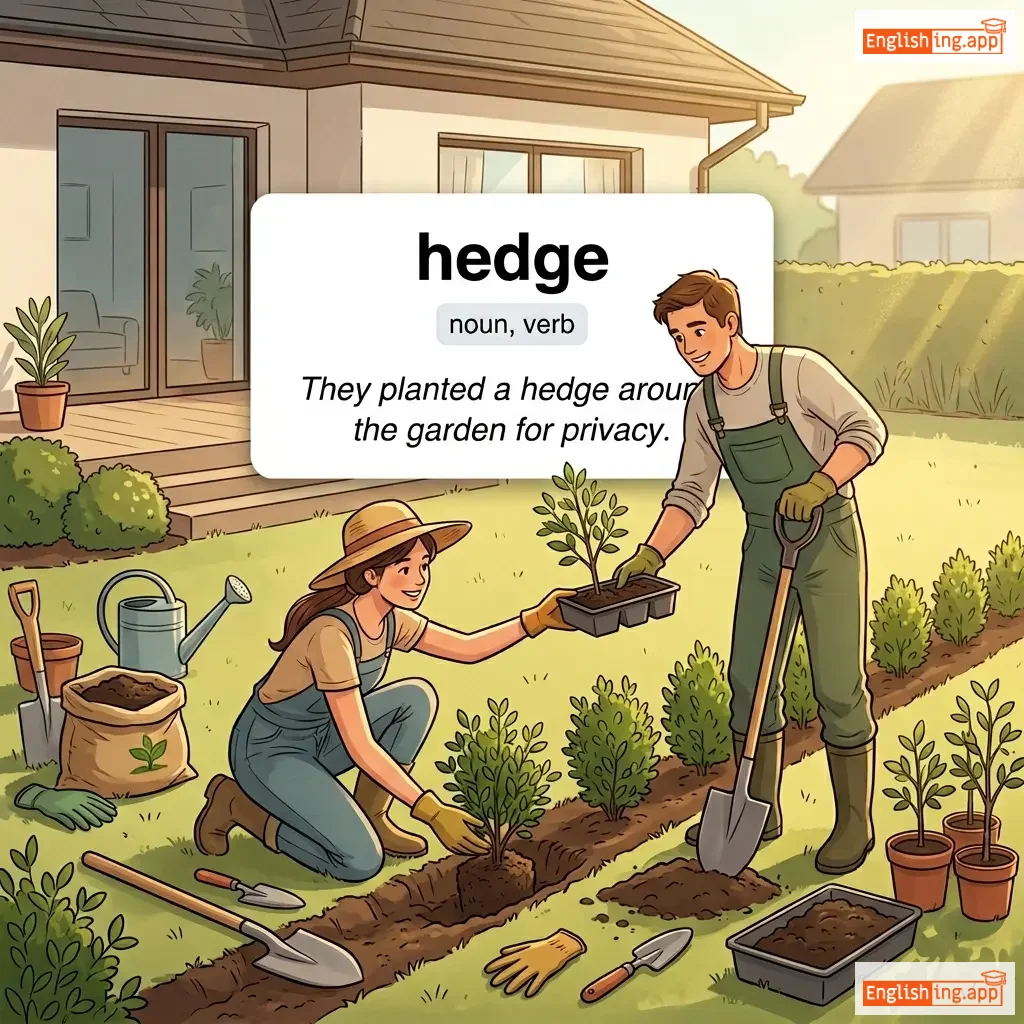
A fence or boundary formed by closely planted shrubs; also, to limit or qualify a statement.
••••••
|
They planted a hedge around the garden for privacy.
Они посадили изгородь вокруг сада для конфиденциальности.
••••••
|
Они посадили изгородь вокруг сада для конфиденциальности.
Oni posadili izgorod' vokrug sada dlya konfidentsial'nosti.
••••••
|
hedge your bets
хеджировать свои ставки
••••••
|
To reduce risk by choosing several options instead of relying on one.
••••••
|
хеджировать свои ставки
khedzhirovat' svoi stavki
••••••
|
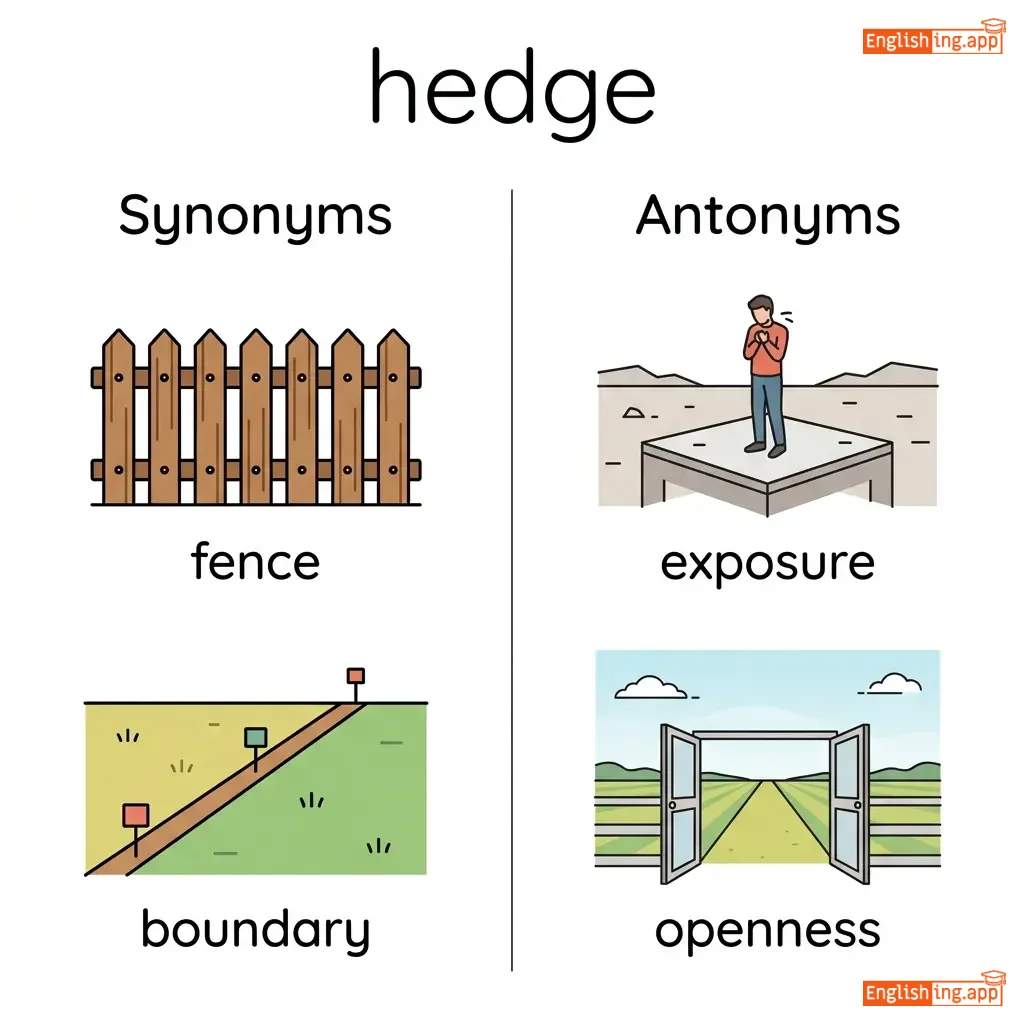
fence, boundary, barrier, safeguard
••••••
|
exposure, openness
••••••
|
hedge fund, hedge your bets, tall hedge, hedge against
••••••
|
Hedge = Хеджируем свои ставки, защищая свои интересы.
••••••
|
|
👠
••••••
|
/hiːl/
noun
(хил)
••••••
|
- •••••• |
пятка
pyatka
••••••
|
- •••••• | - •••••• | - •••••• | - •••••• |
the back part of the human foot below the ankle
••••••
|
Her shoe was rubbing against her heel.
Её туфля терлась о её пятку.
••••••
|
Её туфля терлась о её пятку.
Yeyo tuflya terlas' o yeyo pyatku.
••••••
|
at someone's heels
по пятам за кем-то
••••••
|
closely following someone
••••••
|
следовать по пятам за кем-то
sledovat' po pyatam za kem-to
••••••
|
backfoot, rear, sole, spur
••••••
|
toe, front
••••••
|
high heel, cracked heel, Achilles heel
••••••
|
Пятка — это задняя часть стопы, помни, высокие каблуки делают пятки высокими.
••••••
|
|
📏
••••••
|
/haɪt/
noun
(хаит)
••••••
|
- •••••• |
высота
vysota
••••••
|
- •••••• | - •••••• | - •••••• | - •••••• |
the measurement of someone or something from base to top
••••••
|
The height of the tower impressed the visitors. |
Высота башни впечатлила посетителей.
Vysota bashni vpechatlila posetiteley.
••••••
|
at the height of |
at the most intense point of something
••••••
|
на пике
na pike
••••••
|
altitude, elevation, tallness, stature
••••••
|
depth, low
••••••
|
average height, great height, height measurement
••••••
|
Height означает высота — представьте себе самую высокую точку.
••••••
|
|
🔺
••••••
|
/ˈhaɪtən/
verb
(хайтэн)
••••••
|
- •••••• |
повышать
povyshat'
••••••
|
heightened
хайтэнд
••••••
|
heightened
хайтэнд
••••••
|
heightens
хайтэнс
••••••
|
heightening
хайтэнинг
••••••
|
to make or become greater in intensity or degree
••••••
|
The announcement served to heighten the excitement in the room.
ðи æн'аунсмэнт сёрвд ту хайтэн ðи экс'айтмэнт ин ðэ рум.
••••••
|
Объявление помогло повысить волнение в комнате.
Ob'yavlenie pomoglo povysit' volnenie v komnate.
••••••
|
- •••••• | - •••••• | - •••••• |
increase, intensify, amplify, escalate
••••••
|
diminish, reduce
••••••
|
heighten the tension, heighten awareness, heighten security
••••••
|
Heighten похоже на 'повышать' — усиливать что-то.
••••••
|
|
🚁
••••••
|
/ˈhɛlɪˌkɒptər/
noun
(хеликоптер)
••••••
|
- •••••• |
вертолет
vertolyot
••••••
|
- •••••• | - •••••• | - •••••• | - •••••• |
an aircraft with rotating blades that can take off and land vertically
••••••
|
The helicopter landed safely on the hospital roof. |
Вертолет приземлился безопасно на крыше больницы.
Vertolyot prizemlilsya bezopasno na kryshe bol'nitsy.
••••••
|
helicopter parenting |
a style of parenting where parents are overly focused on their children
••••••
|
вертолетное родительство
vertolyotnoe roditel'stvo
••••••
|
chopper, rotorcraft, whirlybird
••••••
|
airplane, glider
••••••
|
helicopter ride, helicopter landing, helicopter rescue
••••••
|
Вертолет 🚁 помните, что ‘верт’ означает вращение, а ‘олет’ означает полет.
••••••
|
|
🔥
••••••
|
/hɛl/
noun
(хэл)
••••••
|
- •••••• |
ад
ad
••••••
|
- •••••• | - •••••• | - •••••• | - •••••• |
a place or state of great suffering and torment, often in religious belief
••••••
|
He feared that his sins would send him to hell. |
Он боялся, что его грехи отправят его в ад.
On boyalsya, chto ego grekhi otpravyat ego v ad.
••••••
|
raise hell |
to cause trouble or a noisy disturbance
••••••
|
поднять шум
podnyat' shuum
••••••
|
inferno, torment, misery, damnation
••••••
|
heaven, paradise
••••••
|
living hell, go to hell, raise hell
••••••
|
Ад — это место страданий 🔥— вспомни, что «ад» означает мучения.
••••••
|
|
👋
••••••
|
/həˈloʊ/
interjection
(хэ-ло)
••••••
|
- •••••• |
привет
privet
••••••
|
- •••••• | - •••••• | - •••••• | - •••••• |
a greeting or expression used when meeting someone or starting a conversation
••••••
|
She answered the phone with a cheerful hello.
Она ответила на звонок с радостным 'привет'.
••••••
|
Она ответила на звонок с радостным 'привет'.
Ona otvetila na zvonok s radostnym 'privet'.
••••••
|
say hello to
сказать привет
••••••
|
to greet someone
••••••
|
сказать привет
skazat' privet
••••••
|
hi, greetings, hey, howdy, welcome
••••••
|
goodbye, farewell
••••••
|
say hello, hello there, big hello, hello everyone
••••••
|
В русском мы говорим 'привет', как в английском 'hello'.
••••••
|
|
⛑️
••••••
|
/ˈhel.mət/
noun
(хелмет)
••••••
|
- •••••• |
шлем
shlem
••••••
|
- •••••• | - •••••• | - •••••• | - •••••• |
a hard or padded protective hat worn by motorcyclists, construction workers, or soldiers
••••••
|
The cyclist always wore a bright yellow helmet for safety and visibility while riding.
Велосипедист всегда носил ярко-желтый шлем для безопасности и видимости во время езды.
••••••
|
Велосипедист всегда носил ярко-желтый шлем для безопасности и видимости во время езды.
Velosipedist vsegda nosil yarko-zheltyy shlem dlya bezopasnosti i vidimosti vo vremya ezdy.
••••••
|
- •••••• | - •••••• | - •••••• |
hard hat, protective headgear, safety helmet, crash helmet
••••••
|
bare head, unprotected head, soft hat, cap
••••••
|
safety helmet, bicycle helmet, motorcycle helmet
••••••
|
Шлем = Защитный шлем на голове для безопасности.
••••••
|
|
🤲
••••••
|
/hɛlp/
verb
(хэлп)
••••••
|
|
помогать
pomogat'
••••••
|
helped
хэлпд
••••••
|
helped
хэлпд
••••••
|
helps
хэлпс
••••••
|
helping
хэлпинг
••••••
|
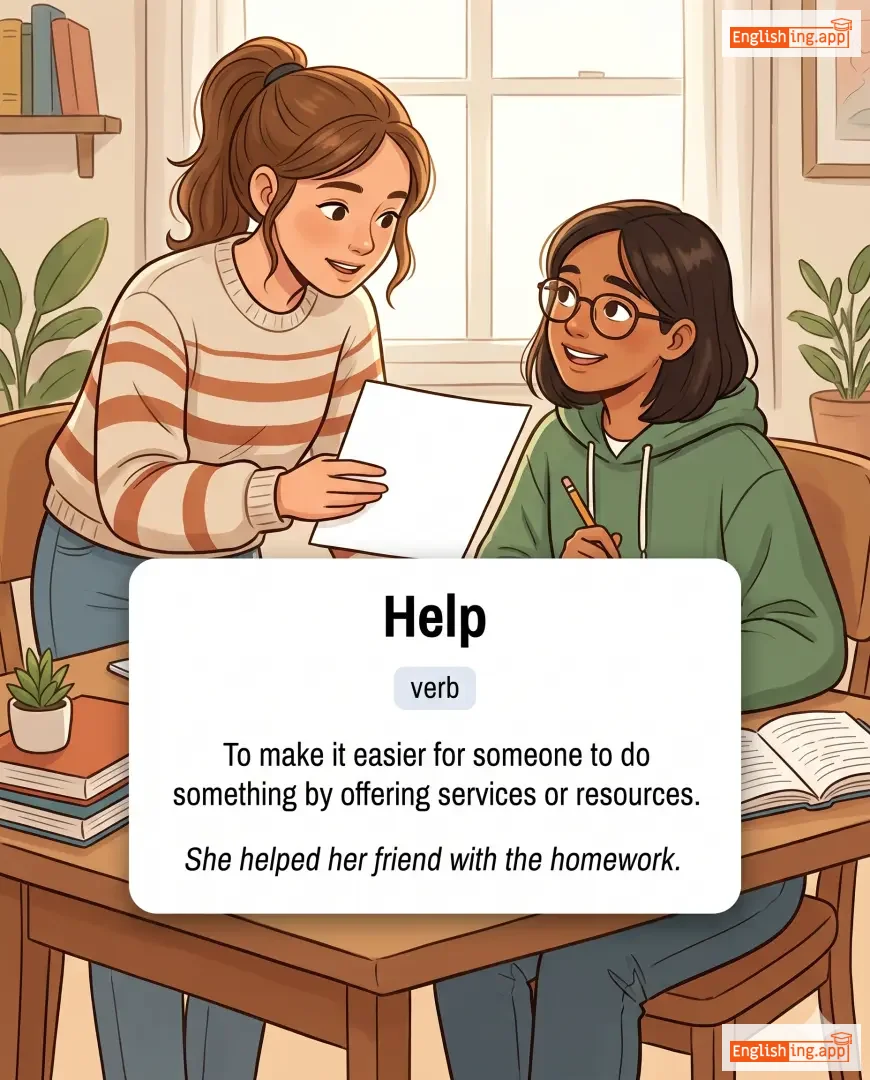
To make it easier for someone to do something by offering services or resources.
••••••
|
She helped her friend with the homework.
Она помогла своей подруге с домашним заданием.
••••••
|
Она помогла своей подруге с домашним заданием.
Ona pomogla svoey podrugie s domashnim zadanijem.
••••••
|
help yourself
помогите себе
••••••
|
to take something without asking
••••••
|
помогите себе
pomogite sebe
••••••
|
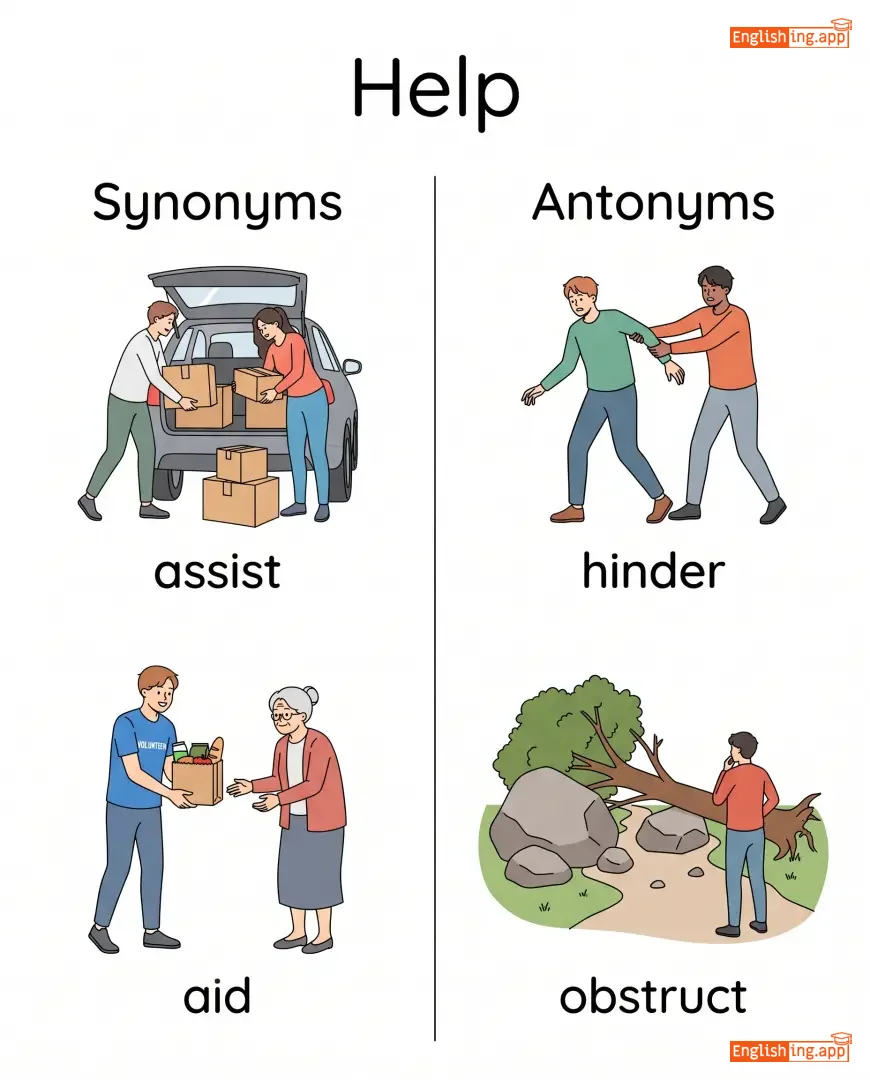
assist, aid, support, facilitate, guide
••••••
|
hinder, obstruct
••••••
|
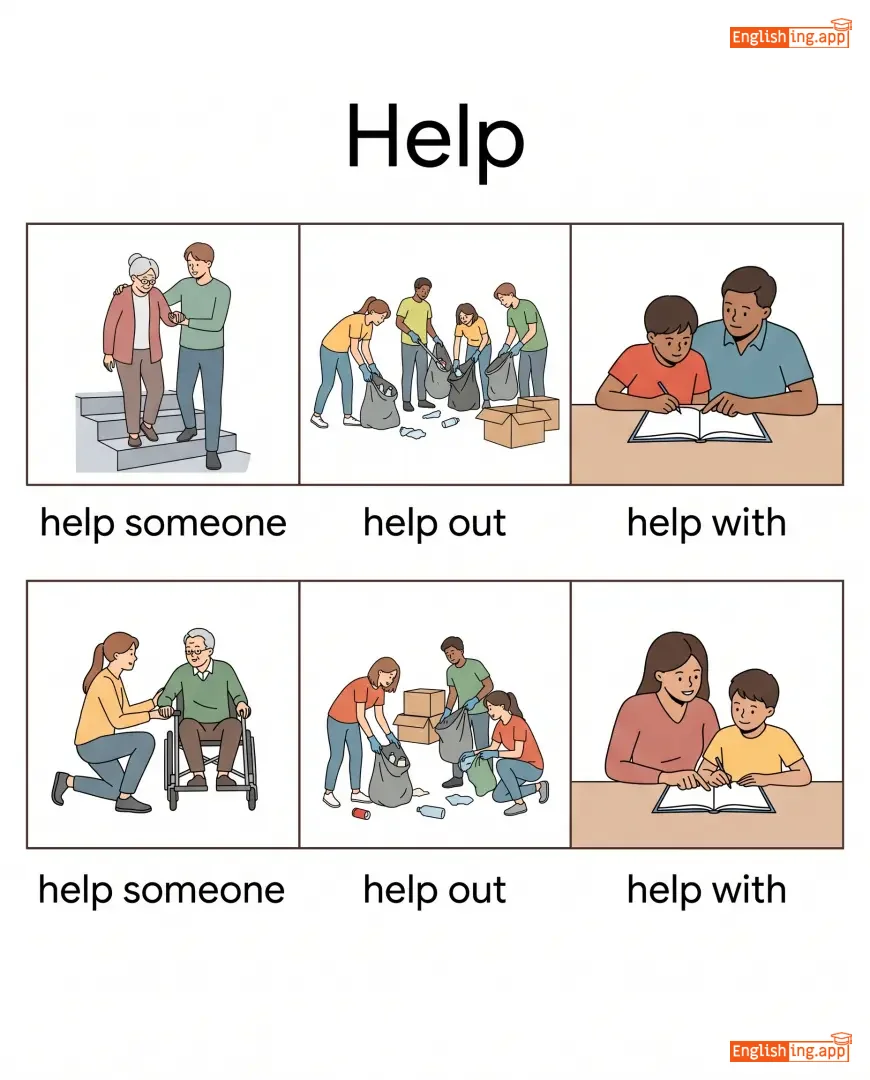
help someone, help out, help with, help to
••••••
|
Help означает помогать, как 'Если не поможешь, не сделаешь домашку!'
••••••
|
|
🤝
••••••
|
/ˈhelp.fəl/
adjective
(хелпфул)
••••••
|
- •••••• |
полезный; выгодный
poleznyy; vygodnyy
••••••
|
- •••••• | - •••••• | - •••••• | - •••••• |
giving or providing assistance; useful; beneficial
••••••
|
She was very helpful in organizing the event.
Она была очень полезной в организации мероприятия.
••••••
|
Она была очень полезной в организации мероприятия.
ona byla ochen' poleznoy v organizatsii meropriyatiya
••••••
|
- •••••• | - •••••• | - •••••• |
useful, beneficial, supportive, accommodating
••••••
|
unhelpful, harmful, obstructive, hindering
••••••
|
helpful advice, helpful person, helpful tip, helpful service
••••••
|
Polesnyy kak pomoshch' v zhilke!
••••••
|
|
🐔
••••••
|
/hɛn/
noun
(хэн)
••••••
|
- •••••• |
курица
kuritsa
••••••
|
- •••••• | - •••••• | - •••••• | - •••••• |
female chicken
••••••
|
The hen laid fresh eggs in the nest. |
Курица снесла свежие яйца в гнезде.
Kuritsa snesla svezhie yaytsa v gnezde.
••••••
|
- •••••• | - •••••• | - •••••• |
female chicken
••••••
|
rooster, cock
••••••
|
hen house, laying hen, mother hen
••••••
|
Курица sounds like 'kuritsa', easy to picture a hen!
••••••
|
|
➡️
••••••
|
/hɛns/
adverb
(хэнс)
••••••
|
- •••••• |
поэтому
poetomu
••••••
|
- •••••• | - •••••• | - •••••• | - •••••• |
for this reason; as a result
••••••
|
She was the best candidate, hence she was chosen for the job.
Она была лучшим кандидатом, поэтому ее выбрали для этой работы.
••••••
|
Она была лучшим кандидатом, поэтому ее выбрали для этой работы.
Ona byla luchshim kandidatom, poetomu yejo vybrali dlya etoy raboty.
••••••
|
hence the reason
поэтому причина
••••••
|
used to introduce the explanation for something
••••••
|
поэтому причина
poetomu prichina
••••••
|
therefore, thus, consequently, accordingly
••••••
|
however, nevertheless
••••••
|
hence why, hence the need, hence the importance
••••••
|
Hence – поэтому, это указывает на результат или причину ➡️
••••••
|
|
👩
••••••
|
/hɜːr/
pronoun
(хёр)
••••••
|
- •••••• |
её
eyo
••••••
|
- •••••• | - •••••• | - •••••• | - •••••• |
used to refer to a female person or animal already mentioned or easily identified
••••••
|
I saw her at the park yesterday. |
Я видел её в парке вчера.
Ya videl yeyo v parke vchera.
••••••
|
give her a hand |
to help her
••••••
|
помочь ей
pomoch' yey
••••••
|
herself, that woman, the girl
••••••
|
him, his
••••••
|
her book, her house, with her, for her
••••••
|
Her означает 'её' (о женщине) - запомни: 'Her house' означает 'её дом'
••••••
|
|
🌿
••••••
|
/hɜːb/ (US) /hɜːb/ or /ɜːb/
noun
(хёрб)
••••••
|
- •••••• |
травы
travy
••••••
|
- •••••• | - •••••• | - •••••• | - •••••• |
a plant used for flavoring food, medicine, or perfume
••••••
|
Basil is a popular herb used in Italian cuisine. |
Базилик - популярная трава, используемая в итальянской кухне.
Bazilik - populyarnaya trava, ispol'zuyemaya v italyanskoy kukhne.
••••••
|
herbal remedy |
a treatment using herbs or plants
••••••
|
травяной препарат
travyanoy preparat
••••••
|
plant, spice, vegetation, grass, leaf
••••••
|
chemical, synthetic drug
••••••
|
fresh herbs, medicinal herbs, herb garden, herb tea
••••••
|
Трава (травы) - лечит нас, как свежий воздух на природе!
••••••
|
|
📍
••••••
|
/hɪr/
adverb
(хир)
••••••
|
- •••••• |
здесь
zdes
••••••
|
- •••••• | - •••••• | - •••••• | - •••••• |
in, at, or to this place
••••••
|
Please come here quickly.
Пожалуйста, приходите сюда быстро.
••••••
|
Пожалуйста, приходите сюда быстро.
Pozhaluysta, prikhodite syuda bystro.
••••••
|
here and there
здесь и там
••••••
|
in various places
••••••
|
здесь и там
zdes i tam
••••••
|
present, nearby, close, around
••••••
|
there, away
••••••
|
come here, right here, here today, stay here
••••••
|
Here это здесь 📍 - По-русски 'здесь' напоминает 'here' по-английски
••••••
|
|
🏰
••••••
|
/ˈhɛrɪtɪdʒ/
noun
(хэритидж)
••••••
|
|
наследие
nasledie
••••••
|
- •••••• | - •••••• | - •••••• | - •••••• |
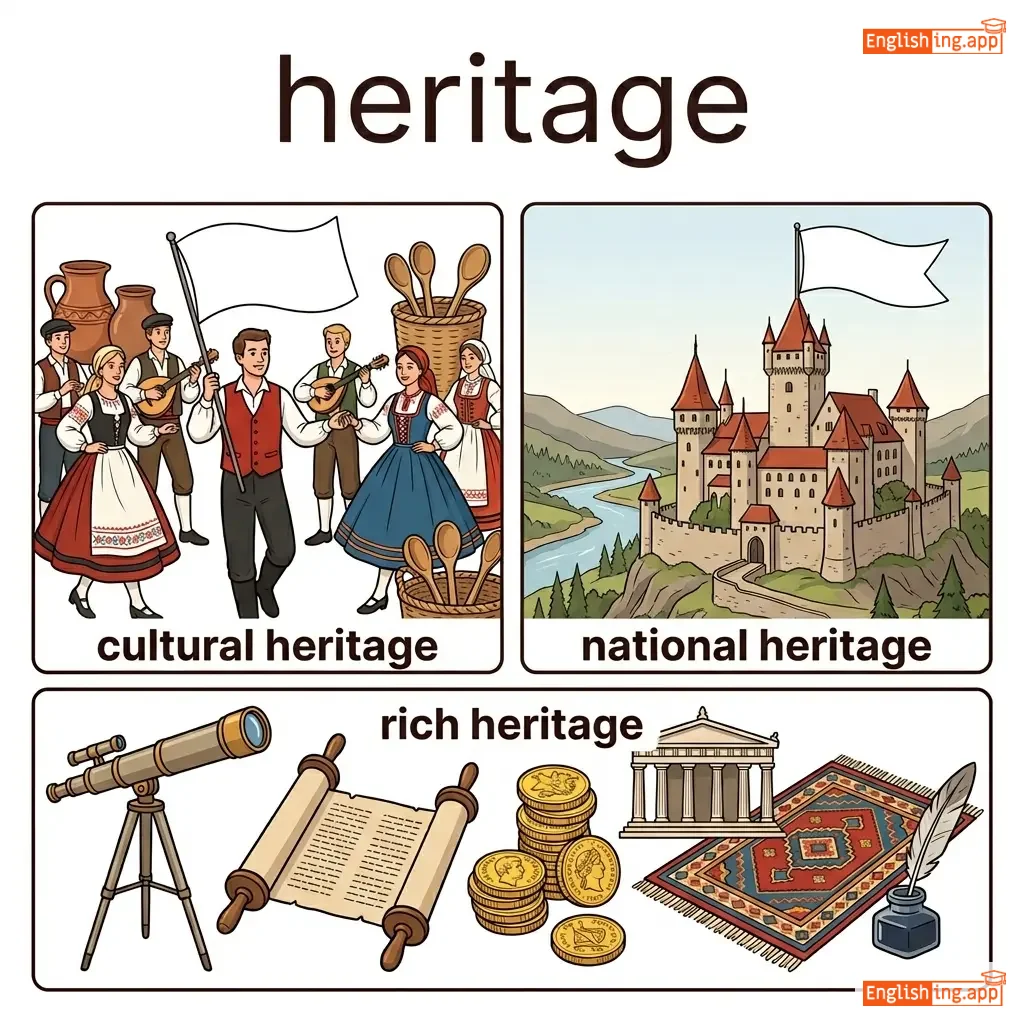
Valued objects and qualities such as historic buildings and cultural traditions passed down from previous generations.
••••••
|
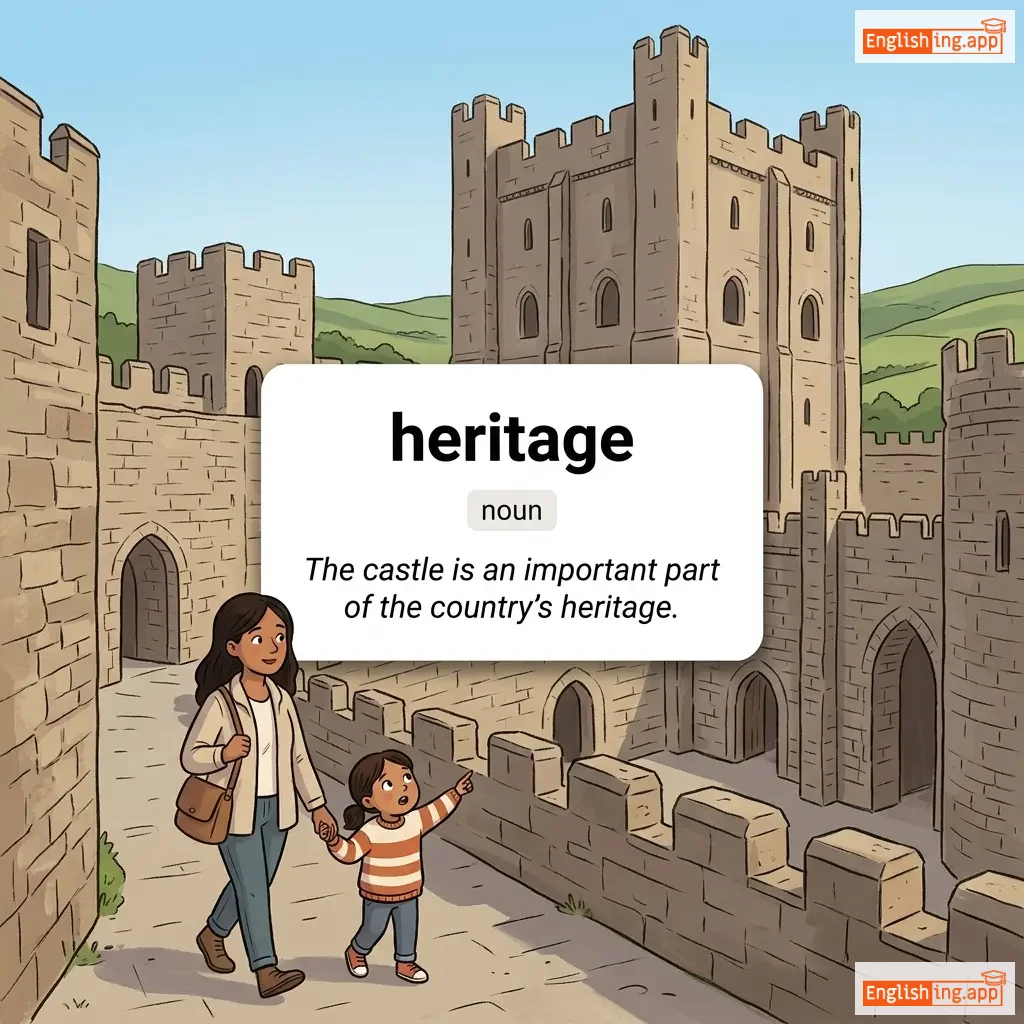
The castle is an important part of the country's heritage. |
Замок — важная часть наследия страны.
Zamok — vazhnaya chast' naslediya strany.
••••••
|
cultural heritage |
The traditions, customs, and artifacts of a community passed down through generations.
••••••
|
культурное наследие
kul'turnoye naslediye
••••••
|
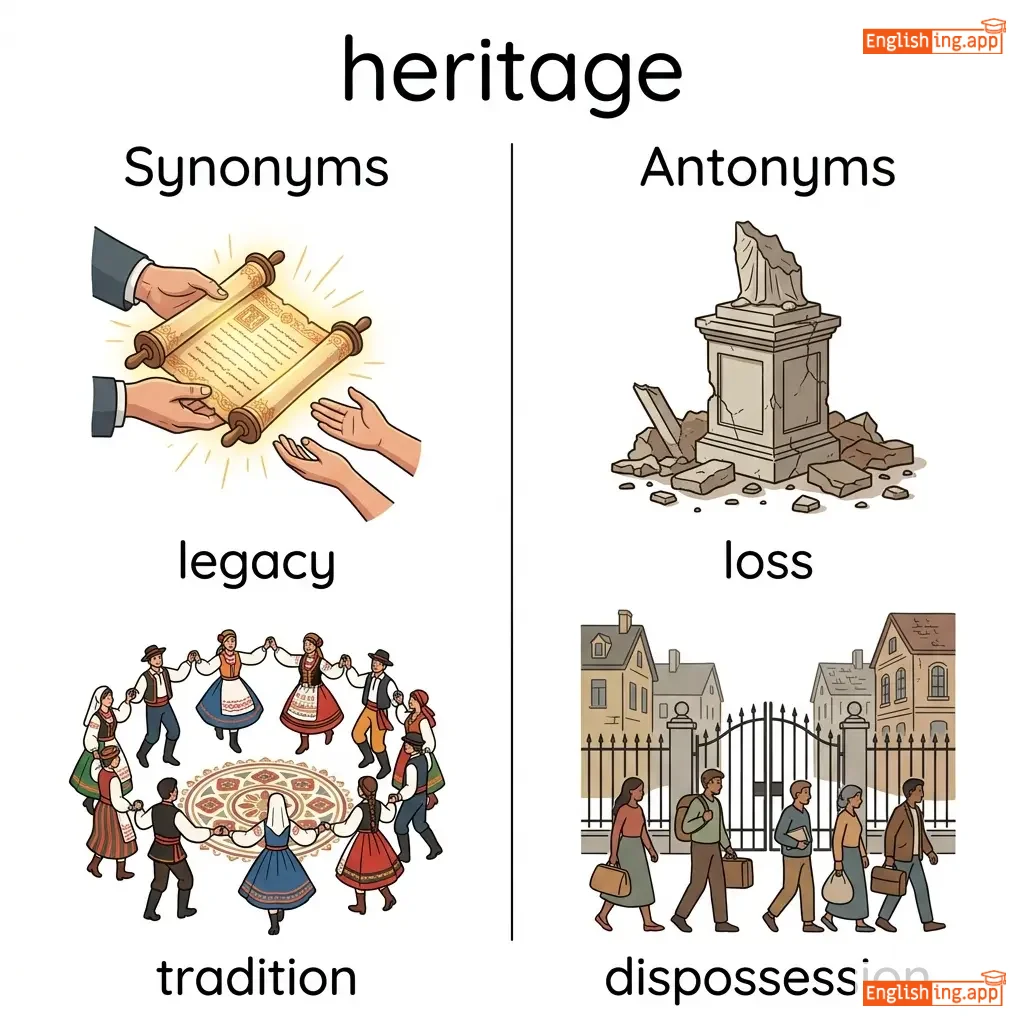
legacy, tradition, inheritance, patrimony, birthright
••••••
|
loss, dispossession
••••••
|
cultural heritage, national heritage, rich heritage, heritage site
••••••
|
Наследие — это то, что передается из поколения в поколение.
••••••
|
|
🦸
••••••
|
/ˈhɪəroʊ/
noun
(герой)
••••••
|

|
герой
geroy
••••••
|
- •••••• | - •••••• | - •••••• | - •••••• |
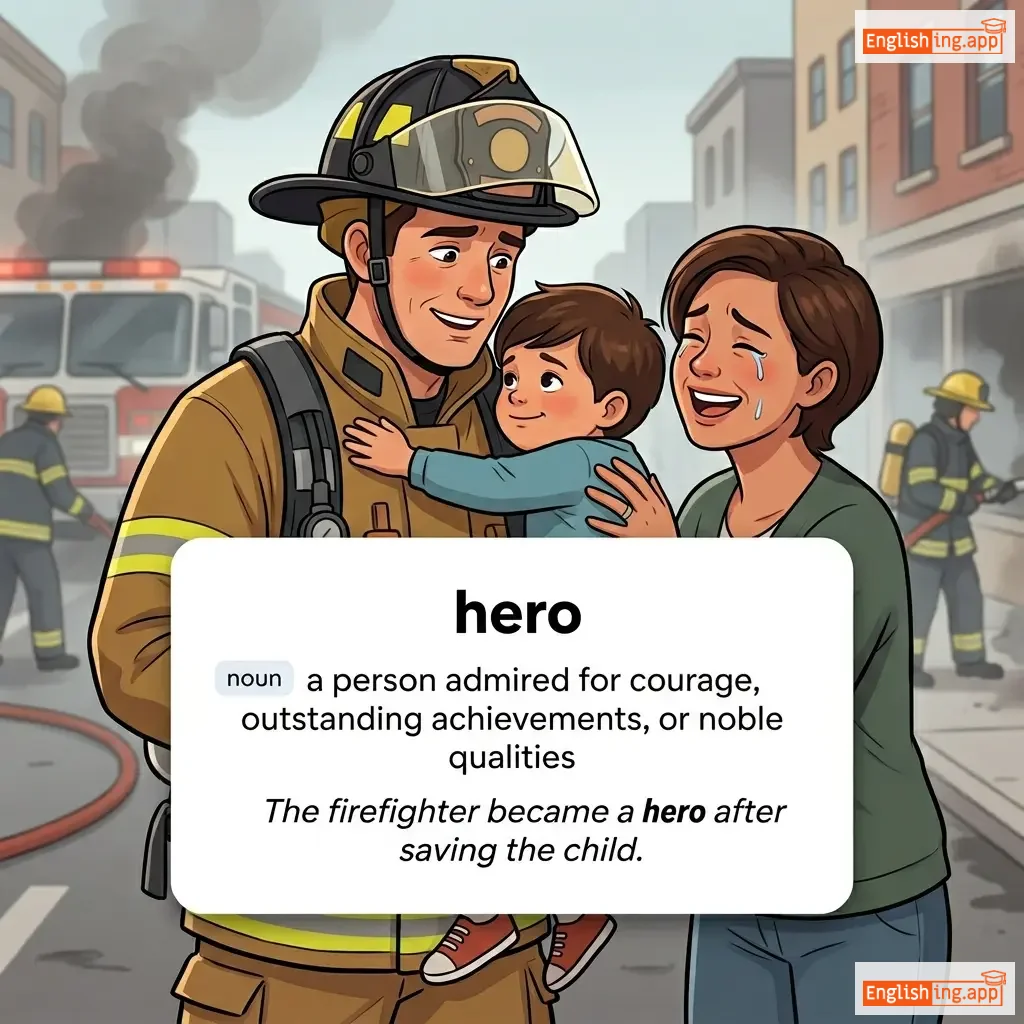
a person admired for courage, outstanding achievements, or noble qualities
••••••
|
The firefighter became a hero after saving the child. |
Пожарный стал героем после того, как спас ребенка.
Pozharnyy stal geroyem posle togo, kak spas rebenka.
••••••
|
unsung hero |
a person who makes a great contribution without recognition
••••••
|
непознанный герой
nepoznannyy geroy
••••••
|
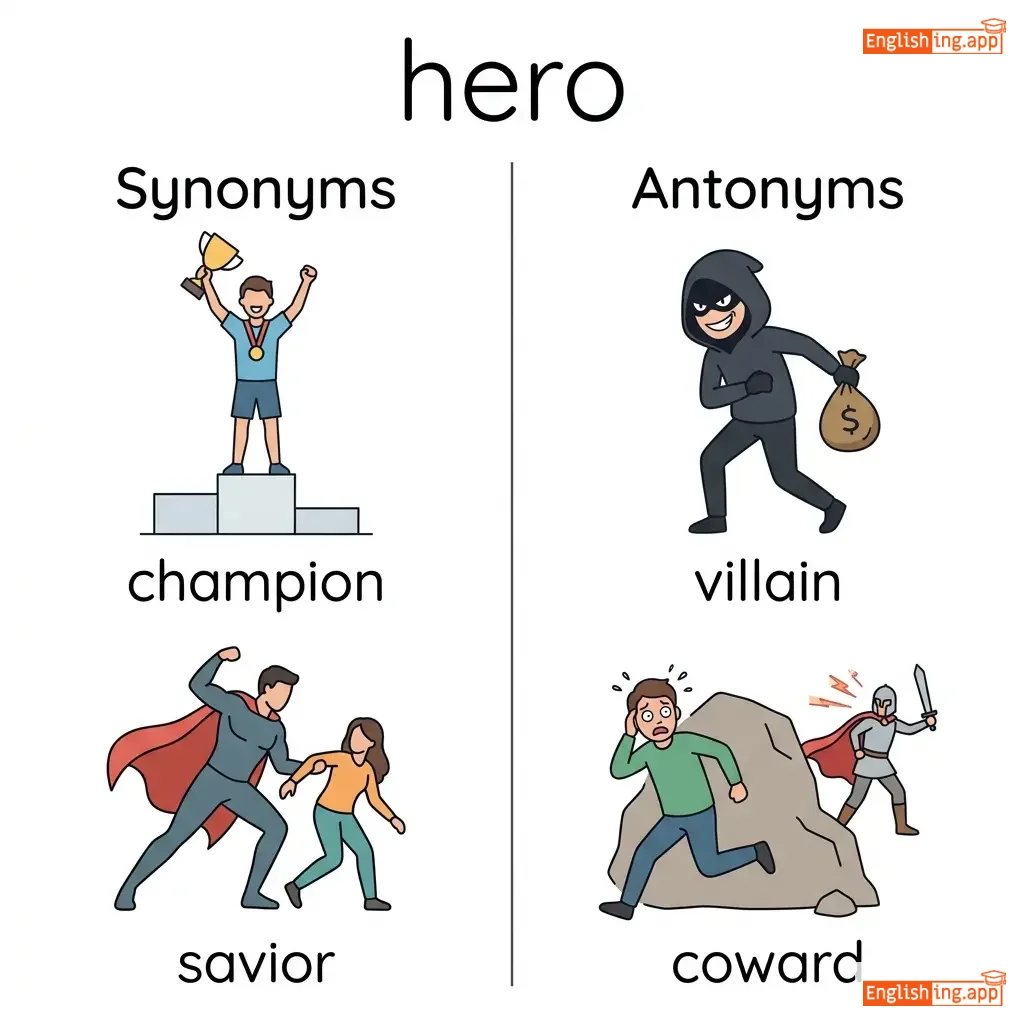
champion, savior, idol, warrior, legend
••••••
|
villain, coward
••••••
|
national hero, war hero, real hero, unsung hero
••••••
|
Герой - это герой 🦸 - На русском 'герой' означает того, кто совершает великие поступки.
••••••
|
|
🦸
••••••
|
/hɪˈroʊɪk/
adjective
(хироик)
••••••
|
- •••••• |
героический
geroicheskiy
••••••
|
- •••••• | - •••••• | - •••••• | - •••••• |
showing great bravery or courage; relating to a hero or heroes
••••••
|
The firefighter made a heroic effort to save the child.
Зэ файэрфайтер мэд э хироик эфэрт ту сэйв зэ чайлд.
••••••
|
Пожарный совершил героическую попытку спасти ребёнка.
pozharnyy sovershil geroicheskuyu popytku spasti rebyonka
••••••
|
heroic effort
хироик эфэрт
••••••
|
a very brave or determined attempt in a difficult situation
••••••
|
героическое усилие
geroicheskoe usilie
••••••
|
brave, courageous, valiant, gallant, fearless
••••••
|
cowardly, timid, fearful
••••••
|
heroic act, heroic effort, heroic deed, heroic sacrifice
••••••
|
Герой → героический = heroic.
••••••
|
|
👩👜
••••••
|
/hɜːrz/
pronoun
(херс)
••••••
|
- •••••• |
её (вещь)
eyo (veshch')
••••••
|
- •••••• | - •••••• | - •••••• | - •••••• |
used to refer to something that belongs to or is associated with a female person previously mentioned or easily identified.
••••••
|
That blue bag is hers. |
Та синяя сумка её.
Ta sinyaya sumka eyo.
••••••
|
- •••••• | - •••••• | - •••••• |
belonging to her, her own, of her, hers alone
••••••
|
his, theirs
••••••
|
hers alone, only hers, completely hers
••••••
|
Hers значит HER’s—её собственная вещь, her + s = hers!
••••••
|
|
👩
••••••
|
/hɜːrˈsɛlf/
pronoun
(хёрсэлф)
••••••
|
- •••••• |
сама
sama
••••••
|
- •••••• | - •••••• | - •••••• | - •••••• |
used to refer to a female person as the object of a verb or preposition when she is the subject
••••••
|
She prepared the meal all by herself.
Она приготовила еду сама.
••••••
|
Она приготовила еду сама.
Ona prigotovila yedu sama.
••••••
|
by herself
сама
••••••
|
alone, without help
••••••
|
сама
sama
••••••
|
on her own, alone, independently, solo, unaided
••••••
|
together, with others
••••••
|
by herself, for herself, to herself, herself alone
••••••
|
Her SELF означает 'сама' — запомни, herself означает сделать что-то самой.
••••••
|
|
🤔
••••••
|
/ˈhezɪteɪt/
verb
(колебаться)
••••••
|
- •••••• |
колебаться
kolebatsya
••••••
|
hesitated
колебался
••••••
|
hesitated
колебался
••••••
|
hesitates
колеблется
••••••
|
hesitating
колеблясь
••••••
|
to pause before saying or doing something because you are uncertain or nervous.
••••••
|
She hesitated before answering the question.
Она колебалась, прежде чем ответить на вопрос.
••••••
|
Она колебалась, прежде чем ответить на вопрос.
Ona kolebalsya, prezhde chem otvetit' na vopros.
••••••
|
without hesitation
без колебаний
••••••
|
immediately or without delay
••••••
|
без колебаний
bez kolebaniy
••••••
|
pause, waver, delay, falter, doubt
••••••
|
decide, proceed, act
••••••
|
hesitate to ask, hesitate to speak, hesitate before, hesitate a moment
••••••
|
Колебаться - остановиться, не колебаться, действуй сразу!
••••••
|
|
🕵️♂️
••••••
|
/ˈhɪdən/
adjective
(khɪdən)
••••••
|
- •••••• |
скрытый
skrytyy
••••••
|
- •••••• | - •••••• | - •••••• | - •••••• |
kept out of sight; concealed.
••••••
|
The treasure was hidden under the old tree. |
Сокровище было скрыто под старым деревом.
Sokrovishe bylo skryto pod starym derevom.
••••••
|
hidden gem |
something that is outstanding but not well known
••••••
|
скрытое сокровище
skrytoye sokrovishche
••••••
|
concealed, secret, invisible, unseen, obscured
••••••
|
visible, exposed, open
••••••
|
hidden meaning, hidden place, hidden agenda, hidden camera
••••••
|
Hidden означает скрытый — hide + en = скрытый!
••••••
|
|
🙈
••••••
|
/haɪd/
verb
(хайд)
••••••
|
|
прятать
pryatat
••••••
|
hid
хид
••••••
|
hidden
хидн
••••••
|
hides
хайдс
••••••
|
hiding
хайдинг
••••••
|
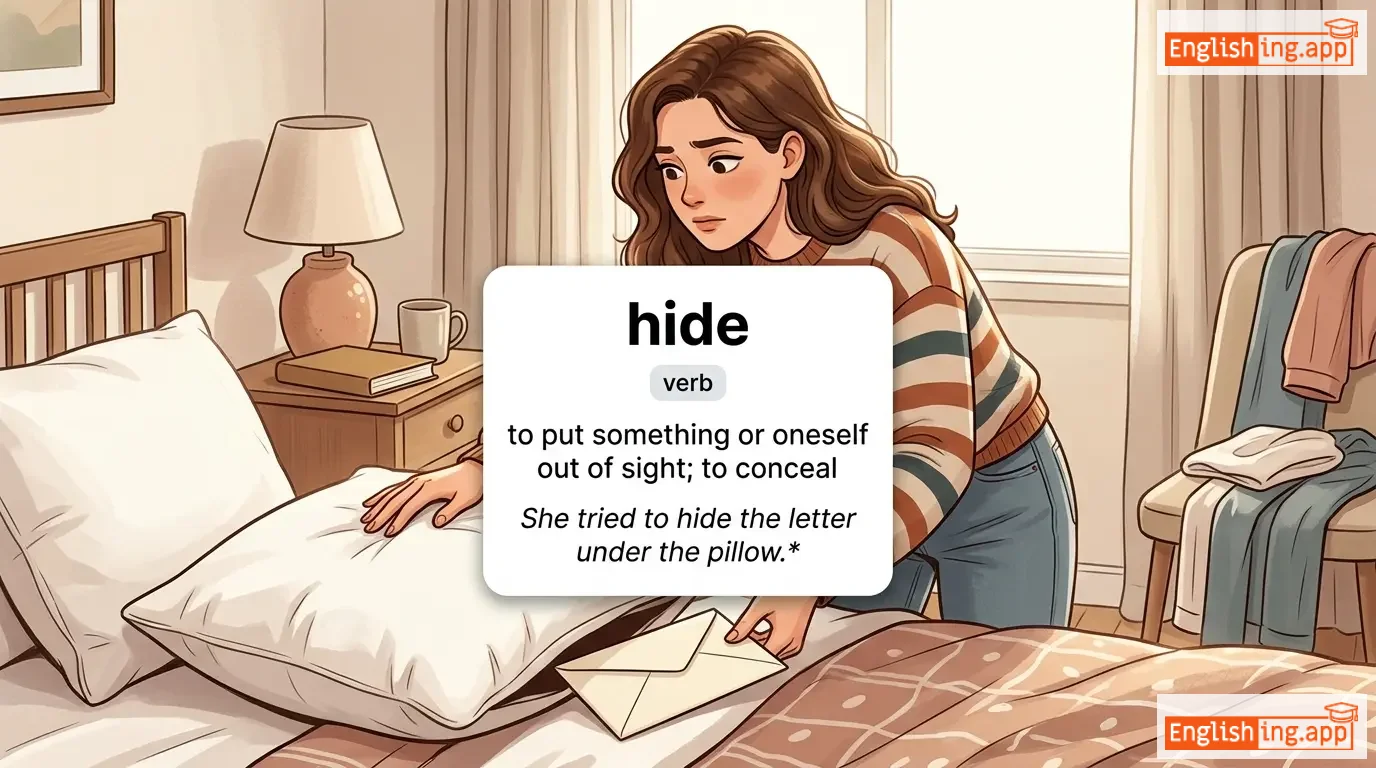
to put something or oneself out of sight; to conceal
••••••
|
She tried to hide the letter under the pillow.
она пыталась спрятать письмо под подушкой
••••••
|
она пыталась спрятать письмо под подушкой.
ona pytalas' spryat'at' pis'mo pod podushkoy
••••••
|
hide and seek
прятки
••••••
|
a children's game where one hides and others seek
••••••
|
прятки
pryatki
••••••
|
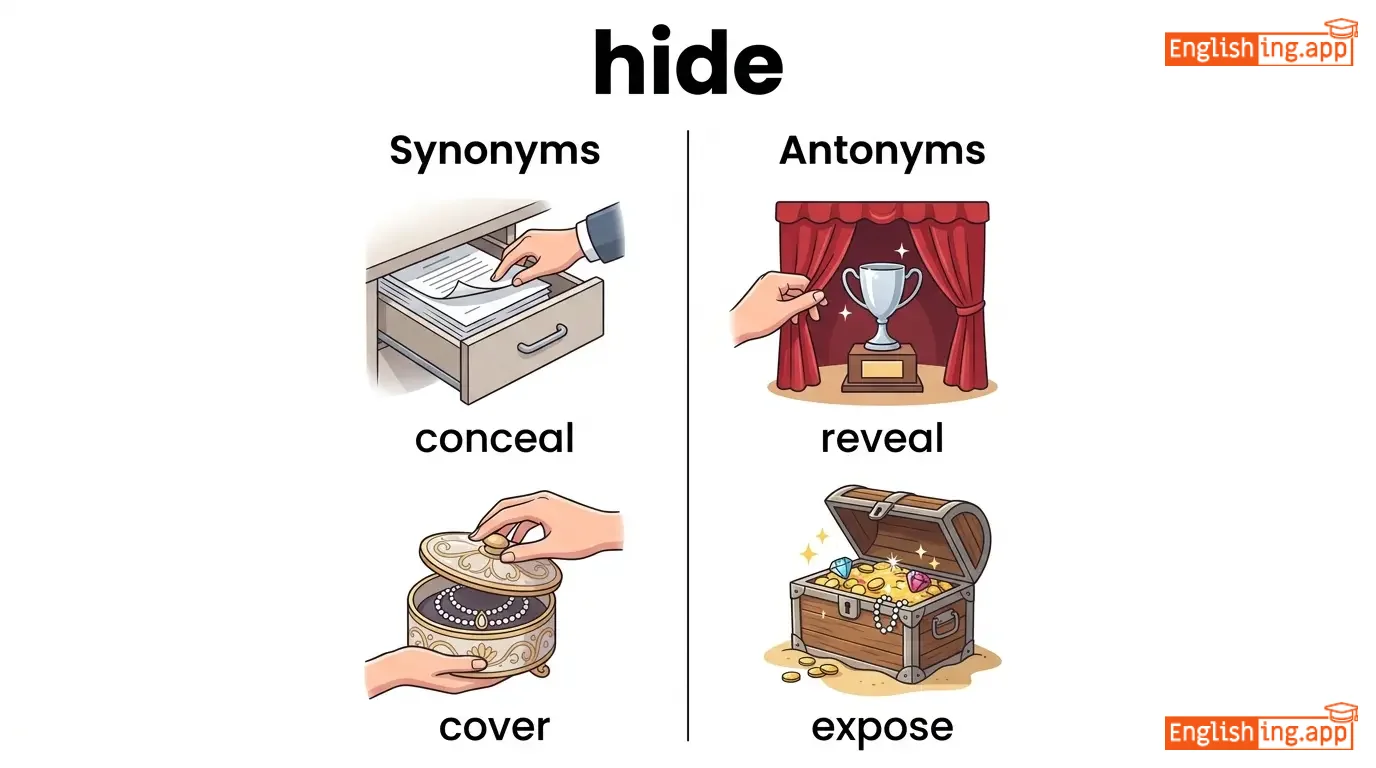
conceal, cover, disguise, veil, secrete
••••••
|
reveal, expose, uncover
••••••
|
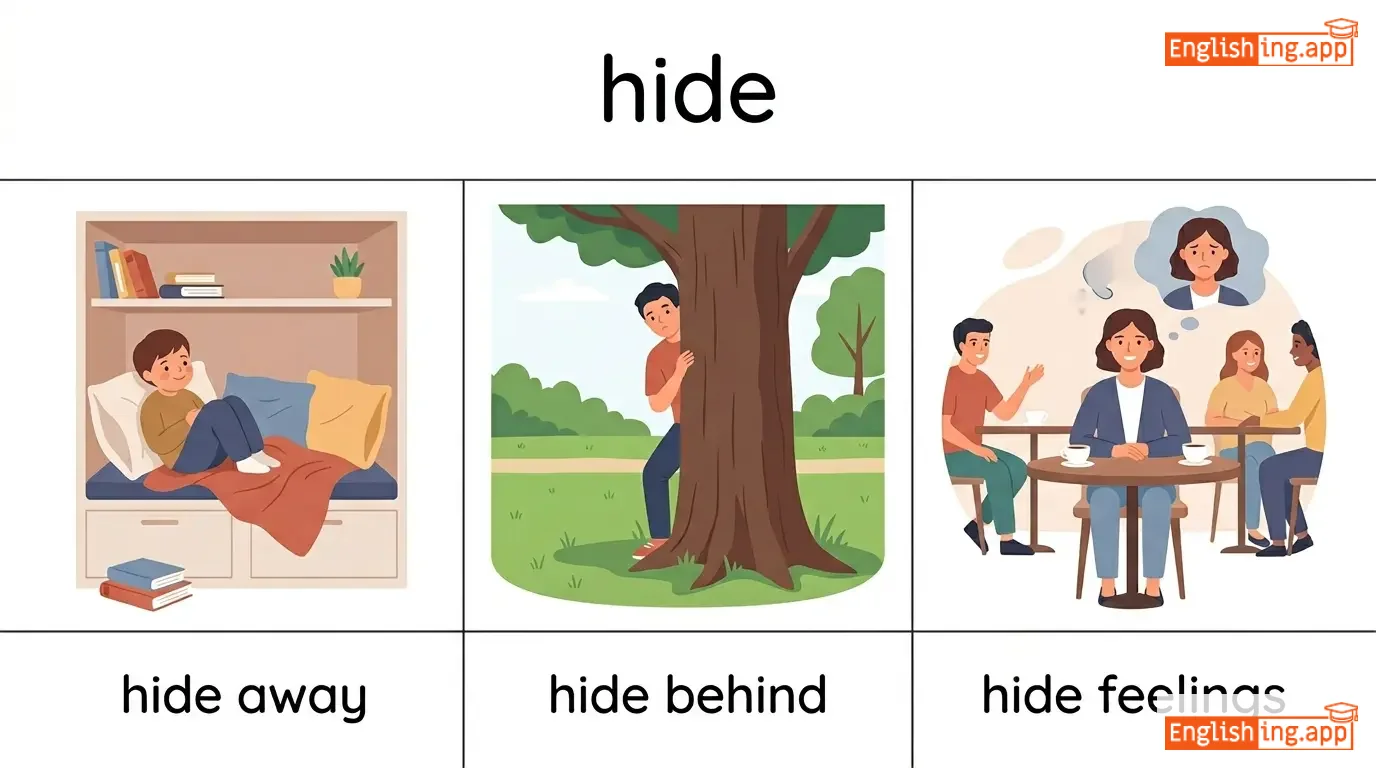
hide away, hide behind, hide feelings, hide from
••••••
|
Hide означает прятать, как 🦊 лиса прячется в норе
••••••
|
|
🏛️
••••••
|
/ˈhaɪəˌrɑːrki/
noun
(ˈhaɪəˌrɑːrki)
••••••
|
- •••••• |
иерархия
ierarhiya
••••••
|
- •••••• | - •••••• | - •••••• | - •••••• |
A system in which people or things are arranged in levels of importance or authority.
••••••
|
The corporate hierarchy determines who makes the final decision. |
Корпоративная иерархия определяет, кто принимает окончательное решение.
Korparativnaya ierarhiya opredelyayet, kto prinyet okonchatelnoe reshenie.
••••••
|
social hierarchy |
The ranking of individuals in society based on status, power, or wealth.
••••••
|
социальная иерархия
sotsial'naya ierarhiya
••••••
|
ranking, order, system, structure, chain of command
••••••
|
equality, parity
••••••
|
corporate hierarchy, political hierarchy, social hierarchy, strict hierarchy
••••••
|
Иерархия как лестница вверх по значимости.
••••••
|
|
⬆️
••••••
|
/haɪ/
adjective
(hai)
••••••
|
- •••••• |
высокий
vysokiy
••••••
|
- •••••• | - •••••• | - •••••• | - •••••• |
At or to a great height; greater than normal in amount, degree, or intensity.
••••••
|
The mountain peak is very high.
вершина горы очень высокая.
••••••
|
Вершина горы очень высокая.
Vershina gory ochen' vysokaya.
••••••
|
high and mighty
высокий и гордый
••••••
|
acting proud and arrogant
••••••
|
гордый
gordyy
••••••
|
tall, elevated, lofty, towering, intense
••••••
|
low, small
••••••
|
high mountain, high speed, high hopes, high price
••••••
|
High значит высокий ⬆️, как High building = высокое здание.
••••••
|
|
🌟
••••••
|
/ˈhaɪˌprəʊfaɪl/
adjective
(haï-prō-fail)
••••••
|
- •••••• |
высокий профиль
vysokiy profil
••••••
|
- •••••• | - •••••• | - •••••• | - •••••• |
having a lot of attention or public notice
••••••
|
The CEO attended a high-profile conference in New York.
Генеральный директор посетил высокопрофильную конференцию в Нью-Йорке.
••••••
|
Генеральный директор посетил высокопрофильную конференцию в Нью-Йорке.
General'nyy direktor posetil vysokoprofil'nuyu konferentsiyu v N'yu-Yorke.
••••••
|
- •••••• | - •••••• | - •••••• |
prominent, important, well-known, notable
••••••
|
low-profile, unnoticed, obscure
••••••
|
high-profile event, high-profile person, high-profile position
••••••
|
High-profile = высокий профиль = большая известность, много внимания!
••••••
|
|
🖍️
••••••
|
/ˈhaɪˌlaɪt/
verb
(hajlait)
••••••
|
- •••••• |
выделить
vydelit'
••••••
|
highlighted
hajlajtid
••••••
|
highlighted
hajlajtid
••••••
|
highlights
hajlajts
••••••
|
highlighting
hajlajting
••••••
|
to emphasize or make something stand out
••••••
|
The teacher highlighted the most important points in the text.
Учитель выделил самые важные моменты в тексте.
••••••
|
Учитель выделил самые важные моменты в тексте.
Uchitel' vydelil samye vazhnye momenty v tekste.
••••••
|
highlight reel
лучшие моменты
••••••
|
a collection of the best or most memorable parts
••••••
|
лучшие моменты
luchshiye momenty
••••••
|
emphasize, stress, underline, showcase, feature
••••••
|
ignore, overlook, hide
••••••
|
highlight the issue, highlight a point, highlight text, highlight importance
••••••
|
Выделить — это как осветить важное, чтобы оно было замечено.
••••••
|
|
🌟
••••••
|
/ˈhaɪli/
adverb
(хаили)
••••••
|
- •••••• |
высоко
vysoko
••••••
|
- •••••• | - •••••• | - •••••• | - •••••• |
to a great degree; very
••••••
|
She is highly respected in her field. |
Она высоко уважает в своей области.
Ona vysoko uzhajet v svoey oblasti.
••••••
|
think highly of |
to admire or have a good opinion of someone
••••••
|
высоко думать о
vysoko dumat' o
••••••
|
greatly, very, extremely, exceedingly, intensely
••••••
|
slightly, poorly, inadequately
••••••
|
highly skilled, highly effective, highly unlikely, highly respected
••••••
|
Highly означает высоко — очень.
••••••
|
|
🛣️
••••••
|
/ˈhaɪ.weɪ/
noun
(haivay)
••••••
|
- •••••• |
шоссе
shosse
••••••
|
- •••••• | - •••••• | - •••••• | - •••••• |
A main road, especially one connecting major towns or cities.
••••••
|
The highway was blocked due to an accident. |
Шоссе было заблокировано из-за аварии.
Shosse bylo zablokirovano iz-za avarii.
••••••
|
hit the highway |
to begin a journey, usually by car
••••••
|
отправиться в путь
otpravit'sya v put'
••••••
|
expressway, freeway, motorway, road, route
••••••
|
alley, lane
••••••
|
highway patrol, highway traffic, highway system, on the highway
••••••
|
Highway означает 'High speed way' - шоссе означает дорогу для быстрого движения.
••••••
|
|
😂
••••••
|
/hɪˈlɛəriəs/
adjective
(хилериас)
••••••
|
- •••••• |
крайне смешной
kraine smeshnoi
••••••
|
- •••••• | - •••••• | - •••••• | - •••••• |
Extremely funny or amusing.
••••••
|
The comedian told a hilarious story that had everyone laughing. |
Комик рассказал крайне смешную историю, которая заставила всех смеяться.
Komik rasskazal kraine smeshnuyu istoriu, kotoraya zastavila vsekh smeyatsya.
••••••
|
- •••••• | - •••••• | - •••••• |
funny, amusing, comical, entertaining, laughable
••••••
|
serious, sad, boring
••••••
|
hilarious joke, hilarious story, hilarious moment, absolutely hilarious
••••••
|
Hilarious = kraynie (крайние) + smeshnoi → крайне смешной
••••••
|
|
⛰️
••••••
|
/hɪl/
noun
(хил)
••••••
|
- •••••• |
холм
kholm
••••••
|
- •••••• | - •••••• | - •••••• | - •••••• |
A naturally raised area of land, smaller than a mountain.
••••••
|
We climbed the hill to see the sunset. |
Мы поднялись на холм, чтобы увидеть закат.
My podnyalis' na kholm, chtoby uvidet' zakat.
••••••
|
make a mountain out of a molehill |
to exaggerate a small problem into something much bigger
••••••
|
делать из мухи слона
delat' iz mukhi slona
••••••
|
mound, knoll, ridge, slope, rise
••••••
|
valley, plain
••••••
|
hill station, top of the hill, climb a hill, rolling hills
••••••
|
Hill — это холм, маленький, как холм, а не гора.
••••••
|
|
⛰️
••••••
|
/ˈhɪli/
adjective
(хилли)
••••••
|
- •••••• |
холмистый
kholmisty
••••••
|
- •••••• | - •••••• | - •••••• | - •••••• |
having many hills; characterized by hills or slopes
••••••
|
The village is located in a beautiful hilly region.
Зэ виллидж из лоукейтед ин э бьютифул хилли риджен.
••••••
|
Деревня расположена в красивом холмистом районе.
Derevnya raspolozhena v krasivom kholmistom rayone
••••••
|
- •••••• | - •••••• | - •••••• |
mountainous, rolling, uneven, rugged, undulating
••••••
|
flat, level, plain
••••••
|
hilly terrain, hilly area, hilly region, hilly landscape
••••••
|
Hilly = холмы → холмистый.
••••••
|
|
👨
••••••
|
/hɪm/
pronoun
(хим)
••••••
|
- •••••• |
его
ego
••••••
|
- •••••• | - •••••• | - •••••• | - •••••• |
Used to refer to a male person or animal already mentioned.
••••••
|
I saw him at the park yesterday. |
Я видел его в парке вчера.
Ya videl ego v parke vchera.
••••••
|
- •••••• | - •••••• | - •••••• |
that man, that boy, male person, he
••••••
|
her, she
••••••
|
with him, for him, about him, help him
••••••
|
Him означает 'его' – помните, что He в объектной форме это Him.
••••••
|
|
🙋♂️
••••••
|
/hɪmˈself/
pronoun
(химселф)
••••••
|
- •••••• |
сам
sam
••••••
|
- •••••• | - •••••• | - •••••• | - •••••• |
Used to emphasize that a male person does something by his own effort.
••••••
|
He fixed the car himself. |
Он отремонтировал машину сам.
On otremontiroval mashinu sam.
••••••
|
by himself |
alone, without help
••••••
|
сам
sam
••••••
|
alone, personally, individually, on his own
••••••
|
together, with others
••••••
|
by himself, for himself, himself alone
••••••
|
Himself значит 'He сам self' – запомни, что 'self' означает самого себя.
••••••
|
|
💡
••••••
|
/hɪnt/
noun/verb
(хинт)
••••••
|
- •••••• |
подсказка
podskazka
••••••
|
hinted
хинтед
••••••
|
hinted
хинтед
••••••
|
hints
хинтс
••••••
|
hinting
хинтинг
••••••
|
a small piece of advice or suggestion; to suggest something indirectly
••••••
|
She gave me a hint about the surprise party.
Она дала мне подсказку о сюрпризной вечеринке.
••••••
|
Она дала мне подсказку о сюрпризной вечеринке.
Ona dala mne podskazku o syurpriznoy vecherinke.
••••••
|
drop a hint
дать подсказку
••••••
|
to give a subtle suggestion
••••••
|
дать подсказку
dat' podskazku
••••••
|
suggestion, clue, indication, tip, advice
••••••
|
statement, declaration
••••••
|
subtle hint, useful hint, drop a hint, take the hint
••••••
|
Hint по-русски — это подсказка, как в игре на подсказки
••••••
|
|
🦴
••••••
|
/hɪp/
noun
(хип)
••••••
|
- •••••• |
бедро
bedro
••••••
|
- •••••• | - •••••• | - •••••• | - •••••• |
The part of the body on either side of the pelvis, or informal: trendy and fashionable.
••••••
|
She put her hands on her hips. |
Она положила руки на бедра.
Ona polozhila ruki na bedra.
••••••
|
joined at the hip |
very close, inseparable
••••••
|
связаны как бедра
svyazany kak bedra
••••••
|
pelvis, waist, trendy, fashionable
••••••
|
old-fashioned, outdated
••••••
|
hip pain, hip joint, hands on hips, hip hop
••••••
|
Бедро – бедро, в хип-хопе двигаются бедра.
••••••
|
|
👔
••••••
|
/ˈhaɪə(r)/
verb
(khayyer)
••••••
|


|
нанимать
nanimat
••••••
|
hired
khayyer-d
••••••
|
hired
khayyer-d
••••••
|
hires
khayyer-s
••••••
|
hiring
khayye-ring
••••••
|
to employ someone for a job or task
••••••
|
The company decided to hire more staff this year.
Компания решила нанять больше сотрудников в этом году.
••••••
|
Компания решила нанять больше сотрудников в этом году.
Kampaniya reshila nanyat bol'she sotrudnikov v etom godu.
••••••
|
hire and fire
нанять и уволить
••••••
|
to employ and dismiss workers frequently
••••••
|
нанять и уволить
nanyat i uvolit'
••••••
|
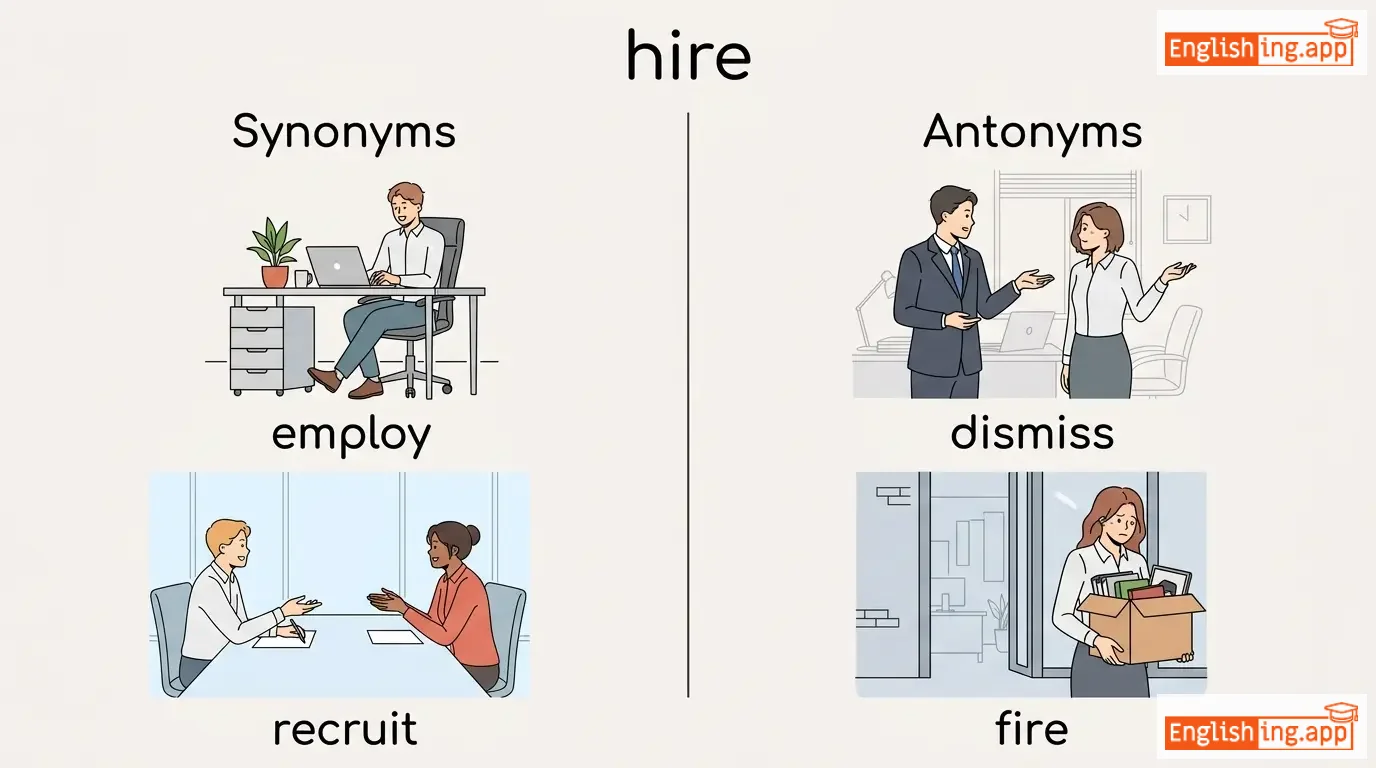
employ, recruit, appoint, engage, contract
••••••
|
dismiss, fire, discharge
••••••
|
hire staff, hire employees, hire a car, hire services
••••••
|
Нанимать - это как находить идеальных кандидатов для работы.
••••••
|

