|
絵文字
|
単語 | Images | 翻訳 | 過去 | 過去分詞 | 三人称単数 | 動名詞 | 意味 | 例文 | 例文の翻訳 | 表現例 | 表現例の意味 | 表現例の翻訳 | 同義語 | 対義語 | コロケーション | ニーモニック |
|---|---|---|---|---|---|---|---|---|---|---|---|---|---|---|---|---|---|
|
💊
••••••
|
/hiːl/
verb
(ヒール)
••••••
|

|
癒す
iyasu
••••••
|
healed
ヒールド
••••••
|
healed
ヒールド
••••••
|
heals
ヒールス
••••••
|
healing
ヒーリング
••••••
|
to make or become healthy again after an injury or illness
••••••
|
Time helps to heal both physical and emotional wounds.
時間は身体的および感情的な傷を癒すのに役立ちます。
••••••
|
時間は身体的および感情的な傷を癒すのに役立ちます。
Jikan wa shintai-teki oyobi kanjō-teki na kizu o iyasu no ni yakudachimasu.
••••••
|
heal the wounds
傷を癒す
••••••
|
to repair or improve something damaged or hurt
••••••
|
傷を癒す
kizu o iyasu
••••••
|
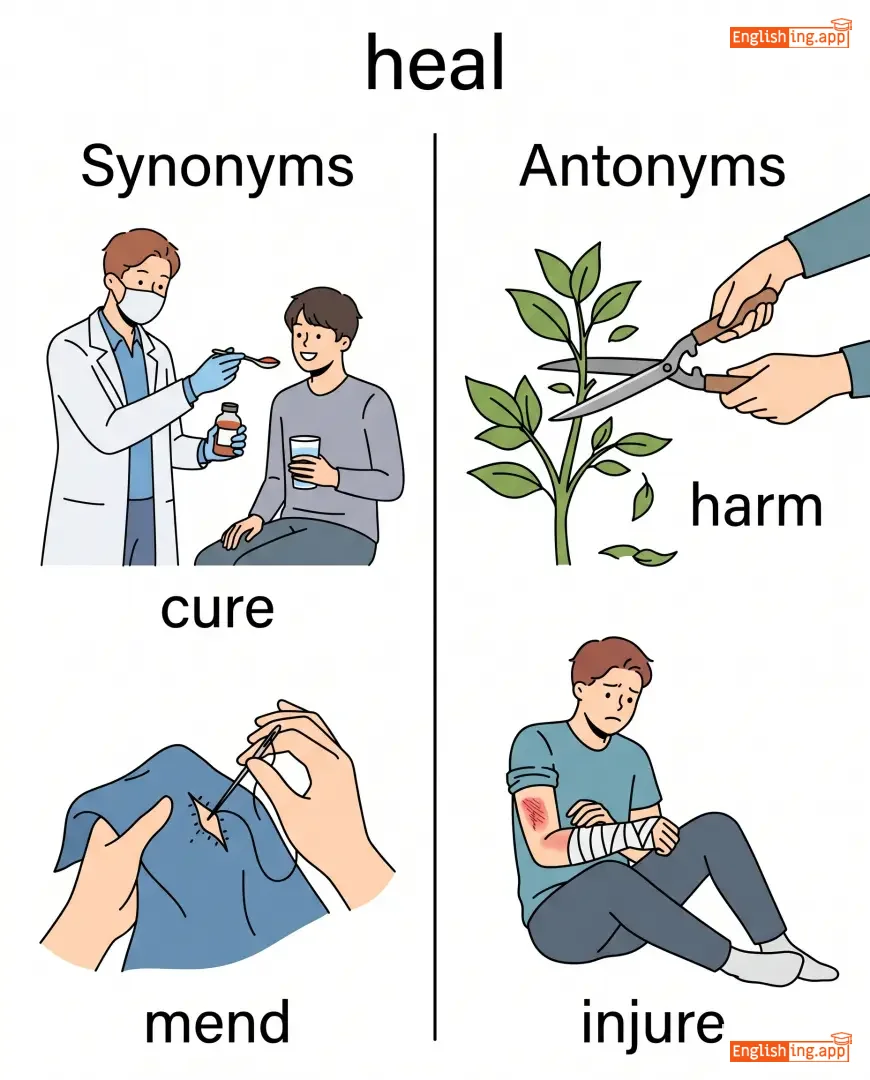
cure, mend, recover, restore, repair
••••••
|
harm, injure, damage
••••••
|
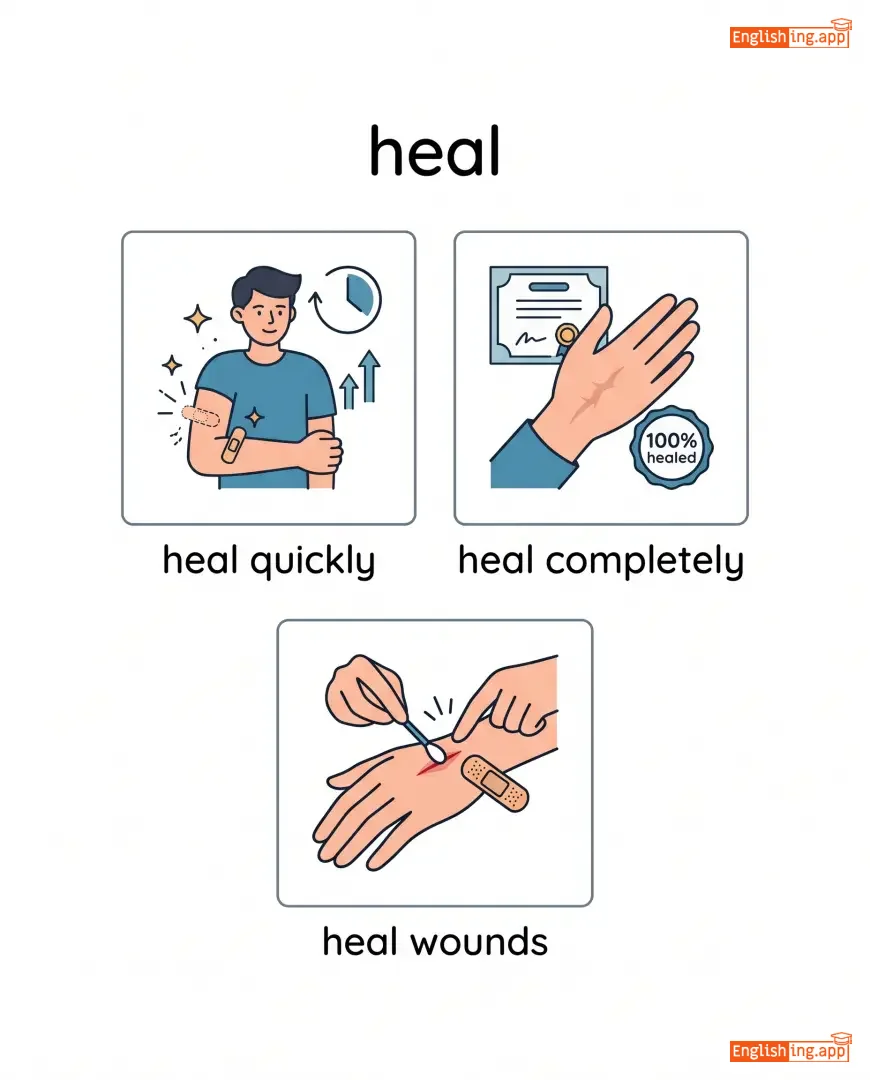
heal quickly, heal completely, heal wounds, heal process
••••••
|
足をけがしたら、癒す必要があります。
••••••
|
|
💪
••••••
|
/hɛlθ/
noun
(ヘルス)
••••••
|
- •••••• |
健康
kenkō
••••••
|
- •••••• | - •••••• | - •••••• | - •••••• |
The state of being free from illness or injury.
••••••
|
Exercise is important for good health. |
運動は良い健康のために重要です。
Undō wa yoi kenkō no tame ni jūyōdesu.
••••••
|
in good health |
being healthy
••••••
|
健康であること
kenkō de aru koto
••••••
|
wellness, fitness, condition, wellbeing
••••••
|
illness, sickness, disease
••••••
|
good health, health care, public health, mental health
••••••
|
Healthは健康、健康は幸福の源です。
••••••
|
|
🏥
••••••
|
/ˈhɛlθˌkɛər/
noun
(ヘルスケア)
••••••
|
- •••••• |
医療ケア
iryō kea
••••••
|
- •••••• | - •••••• | - •••••• | - •••••• |
the organized provision of medical care to people
••••••
|
The country invested heavily in healthcare to improve public health. |
その国は公共の健康を改善するために医療ケアに大きな投資をしました。
Sono kuni wa kōkyō no kenko o kaizen suru tame ni iryō kea ni ōkina tōshi o shimashita.
••••••
|
- •••••• | - •••••• | - •••••• |
medicine, health services, medical care
••••••
|
neglect, indifference
••••••
|
healthcare system, healthcare provider, healthcare services
••••••
|
医療ケア、命を救うケアです。
••••••
|
|
🍎
••••••
|
/ˈhɛlθi/
adjective
(ハピネス)
••••••
|
|
幸せ
shiawase
••••••
|
- •••••• | - •••••• | - •••••• | - •••••• |
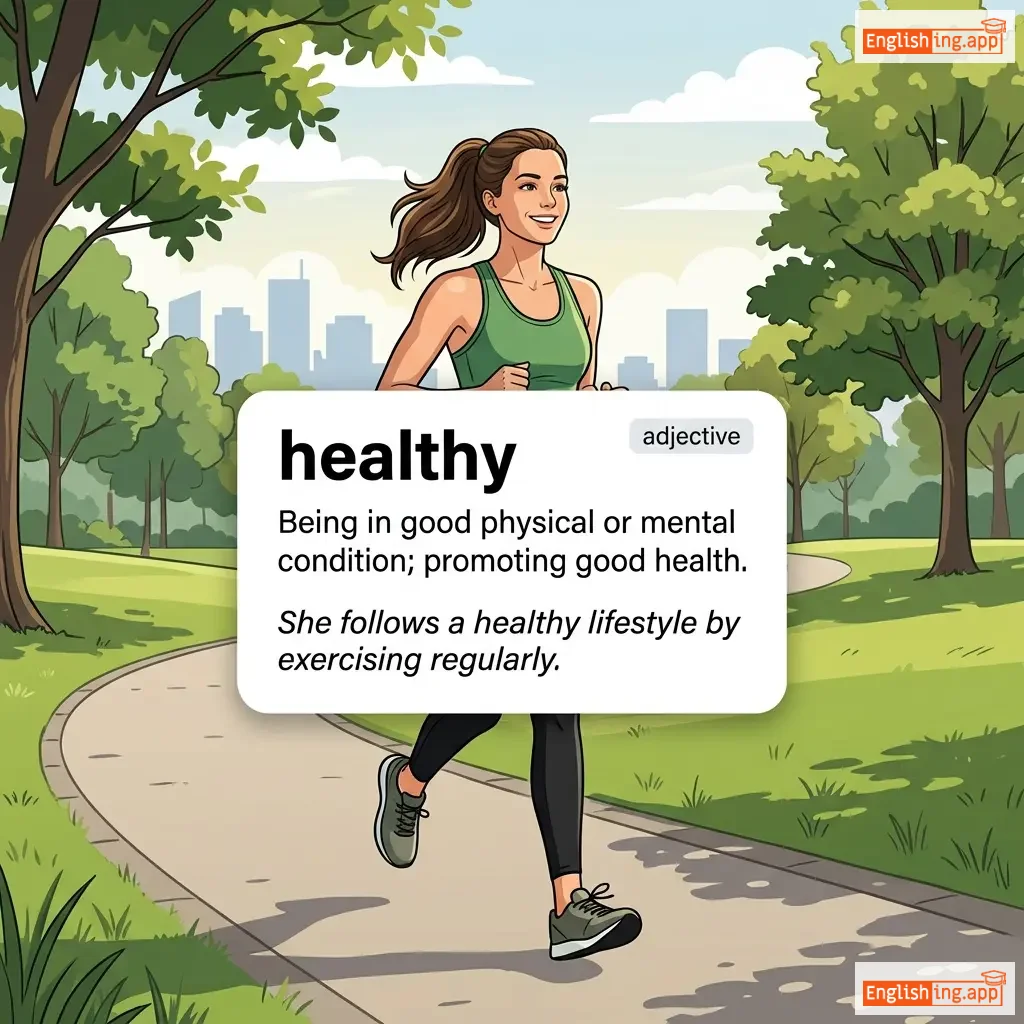
Being in good physical or mental condition; promoting good health.
••••••
|
She follows a healthy lifestyle by exercising regularly.
彼女は賞を受け取ったとき、幸せを隠すことができませんでした。
••••••
|
彼女は賞を受け取ったとき、幸せを隠すことができませんでした。
Kanojo wa shō o uketotta toki, shiawase o kakusu koto ga dekimasen deshita.
••••••
|
healthy competition
幸せの追求
••••••
|
A form of competition that is fair and encourages improvement.
••••••
|
幸せの追求
shiawase no tsuikyū
••••••
|
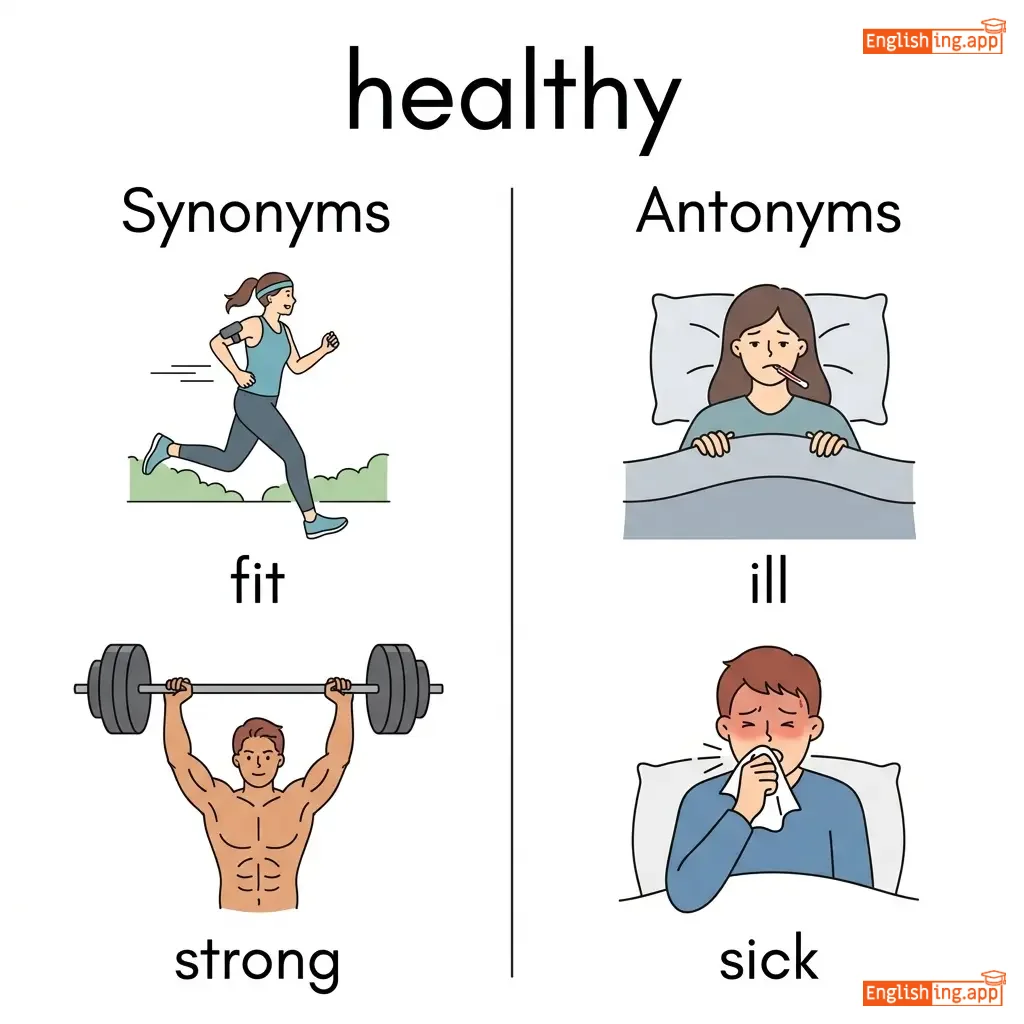
fit, strong, well, robust, sound
••••••
|
ill, sick, weak
••••••
|
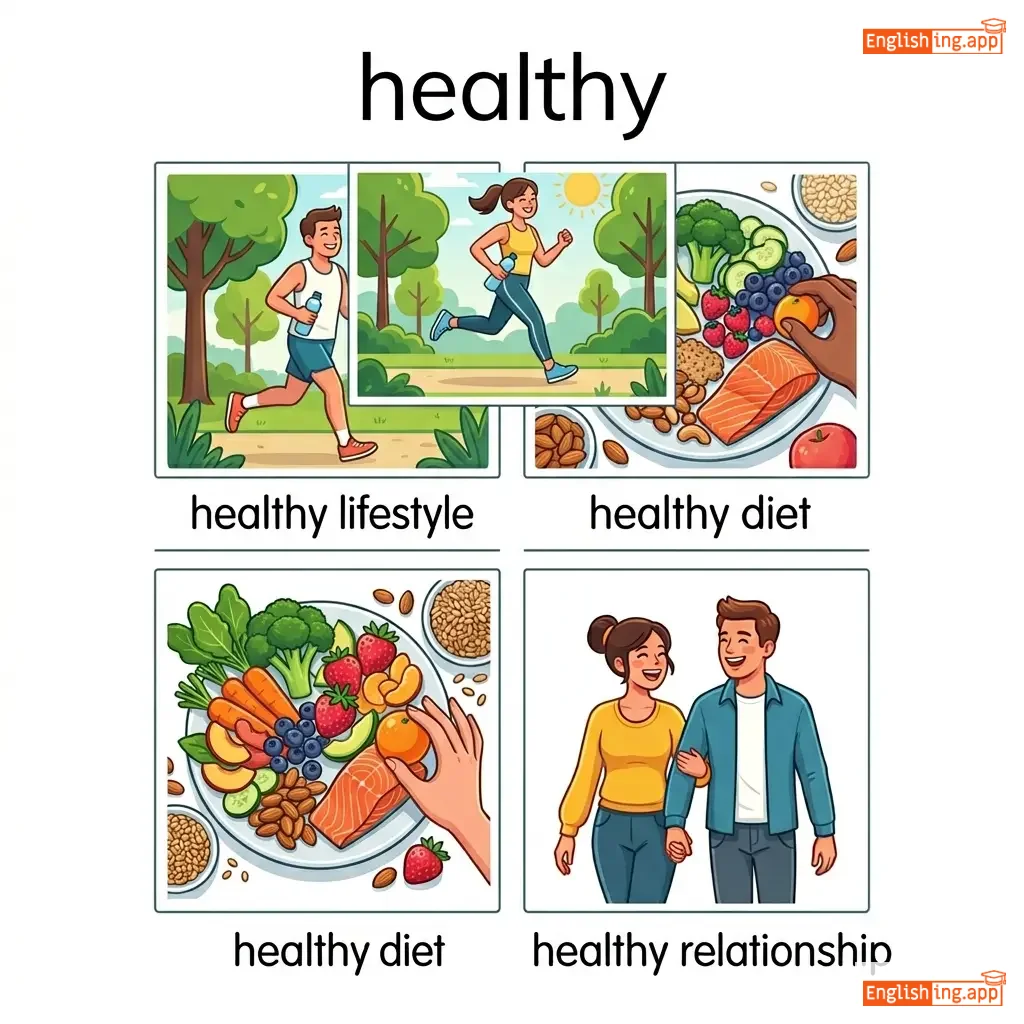
healthy lifestyle, healthy diet, healthy relationship, healthy environment
••••••
|
幸せ = 喜びや満足を感じること
••••••
|
|
👂
••••••
|
/hɪr/
verb
(hiā)
••••••
|
|
聞く
kiku
••••••
|
heard
hādo
••••••
|
heard
hādo
••••••
|
hears
hiāzu
••••••
|
hearing
hīringu
••••••
|
To perceive sound with the ear.
••••••
|
I can hear birds singing outside.
私は外で鳥が歌っているのを聞くことができます。
••••••
|
私は外で鳥が歌っているのを聞くことができます。
Watashi wa soto de tori ga utatte iru no o kiku koto ga dekimasu.
••••••
|
hear from someone
誰かから聞く
••••••
|
to receive news or communication from someone
••••••
|
誰かから聞く
Dareka kara kiku
••••••
|
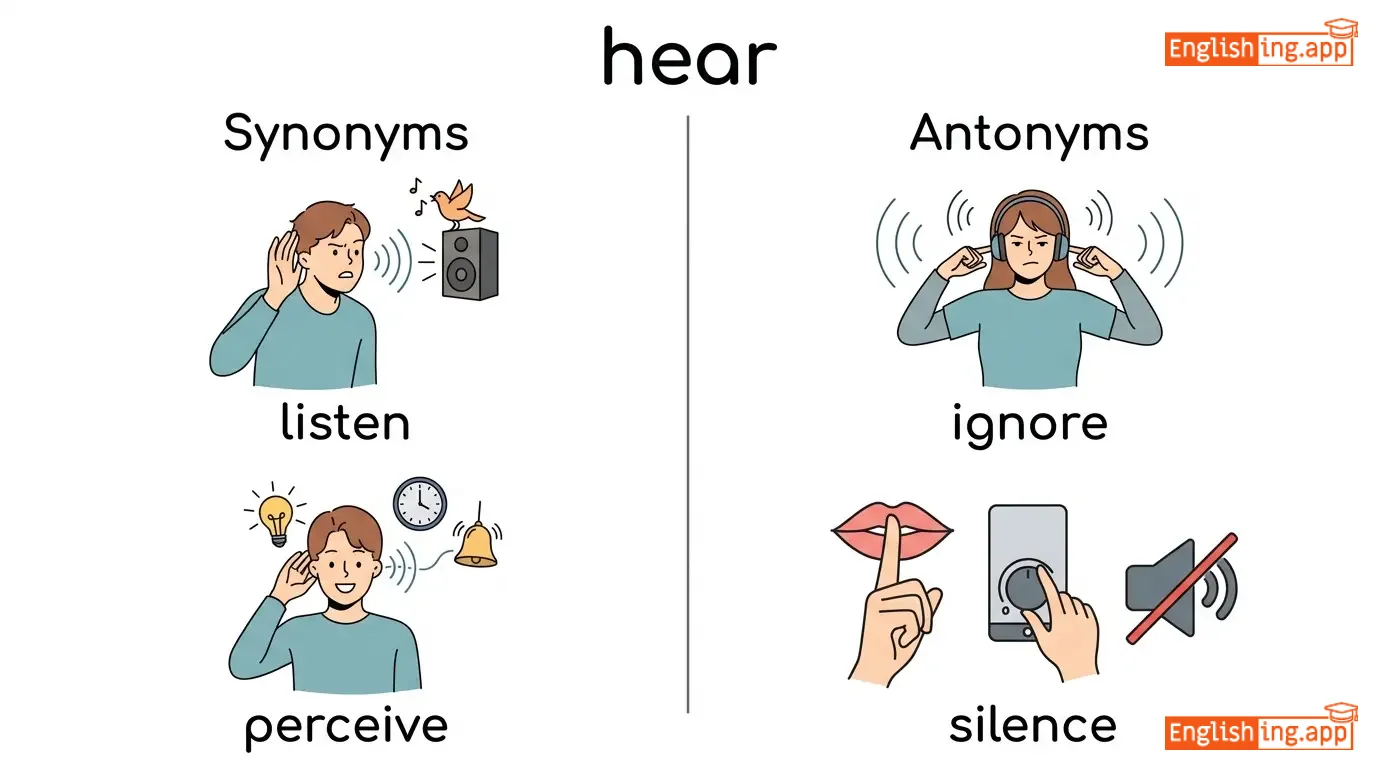
listen, perceive, detect, notice, overhear
••••••
|
ignore, silence
••••••
|
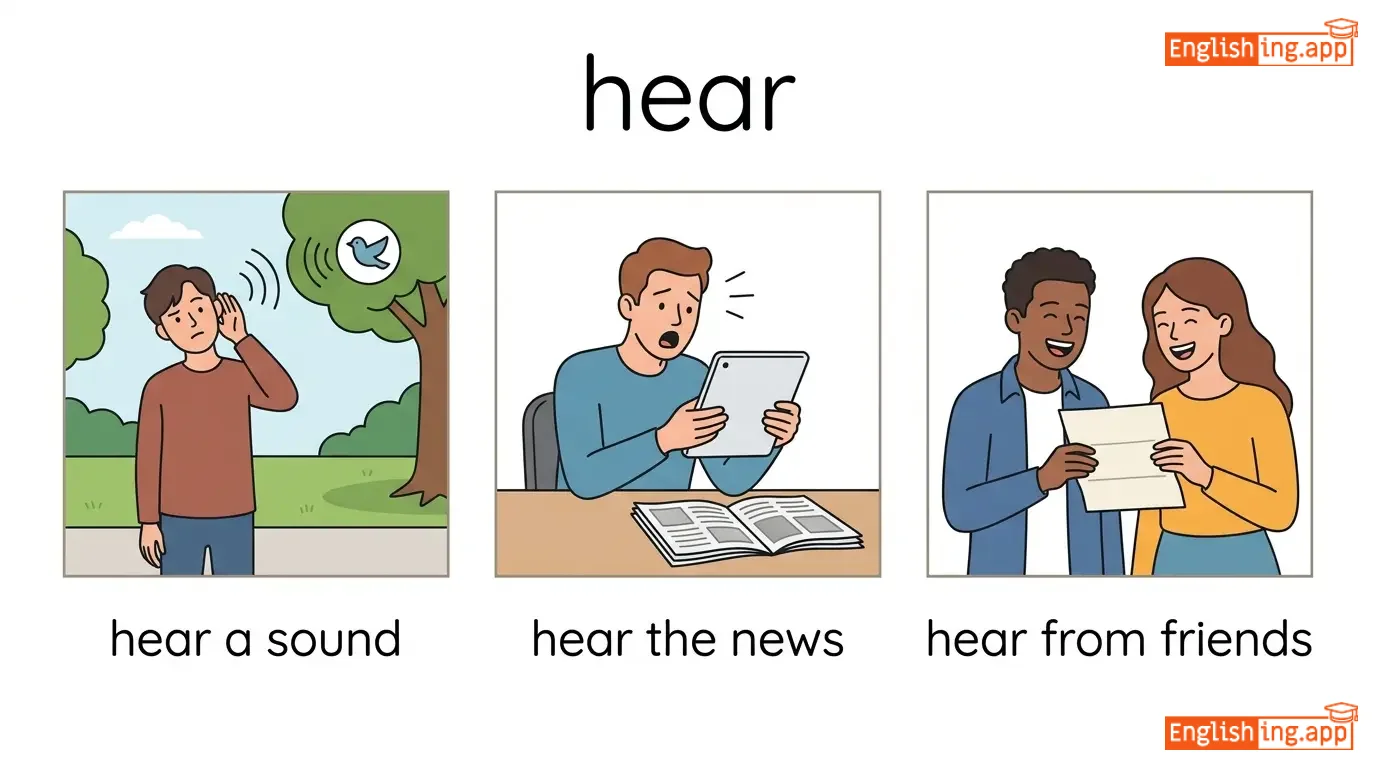
hear a sound, hear the news, hear from friends, hear clearly
••••••
|
聞くは耳で音を感じ取ること。
••••••
|
|
👂
••••••
|
/ˈhɪərɪŋ/
noun
(ヒアリング)
••••••
|
- •••••• |
ヒアリング / 聴覚
hīringu / chōkaku
••••••
|
- •••••• | - •••••• | - •••••• | - •••••• |
the ability to perceive sounds or an official meeting to listen to arguments or evidence
••••••
|
The judge scheduled a hearing for next week. |
裁判官は来週のヒアリングを予定しています。
Saibankan wa raishū no hīringu o yotei shiteimasu.
••••••
|
hard of hearing |
having partial hearing loss
••••••
|
部分的な聴力低下
bubun-teki na chōryoku teika
••••••
|
listening, audition, perception, trial, meeting
••••••
|
deafness, silence
••••••
|
court hearing, public hearing, hearing aid, hearing loss
••••••
|
Hearing はヒアリングの意味 – 裁判所でヒアリングを行い、耳で聴くことができます 👂
••••••
|
|
❤️
••••••
|
/hɑːrt/
noun
(ハート)
••••••
|
- •••••• |
心臓
shinzou
••••••
|
- •••••• | - •••••• | - •••••• | - •••••• |
the organ that pumps blood through the body; also the center of emotions
••••••
|
Her heart was beating fast with excitement.
彼女の心臓は興奮で速く鼓動していた。
••••••
|
彼女の心臓は興奮で速く鼓動していた。
Kanojo no shinzou wa koufun de hayaku kodou shiteita.
••••••
|
at heart
心から
••••••
|
in essence or fundamentally
••••••
|
心から
kokoro kara
••••••
|
core, center, emotion, spirit, soul
••••••
|
mind, brain
••••••
|
heart attack, broken heart, kind heart, follow your heart
••••••
|
心臓 ❤️ つまり心臓 – 愛と感情は心臓から生まれる
••••••
|
|
🔥
••••••
|
/hiːt/
noun/verb
(ヒート)
••••••
|
|
熱 / 暖める
netsu / atatameru
••••••
|
heated
ヒーテッド
••••••
|
heated
ヒーテッド
••••••
|
heats
ヒーツ
••••••
|
heating
ヒーティング
••••••
|
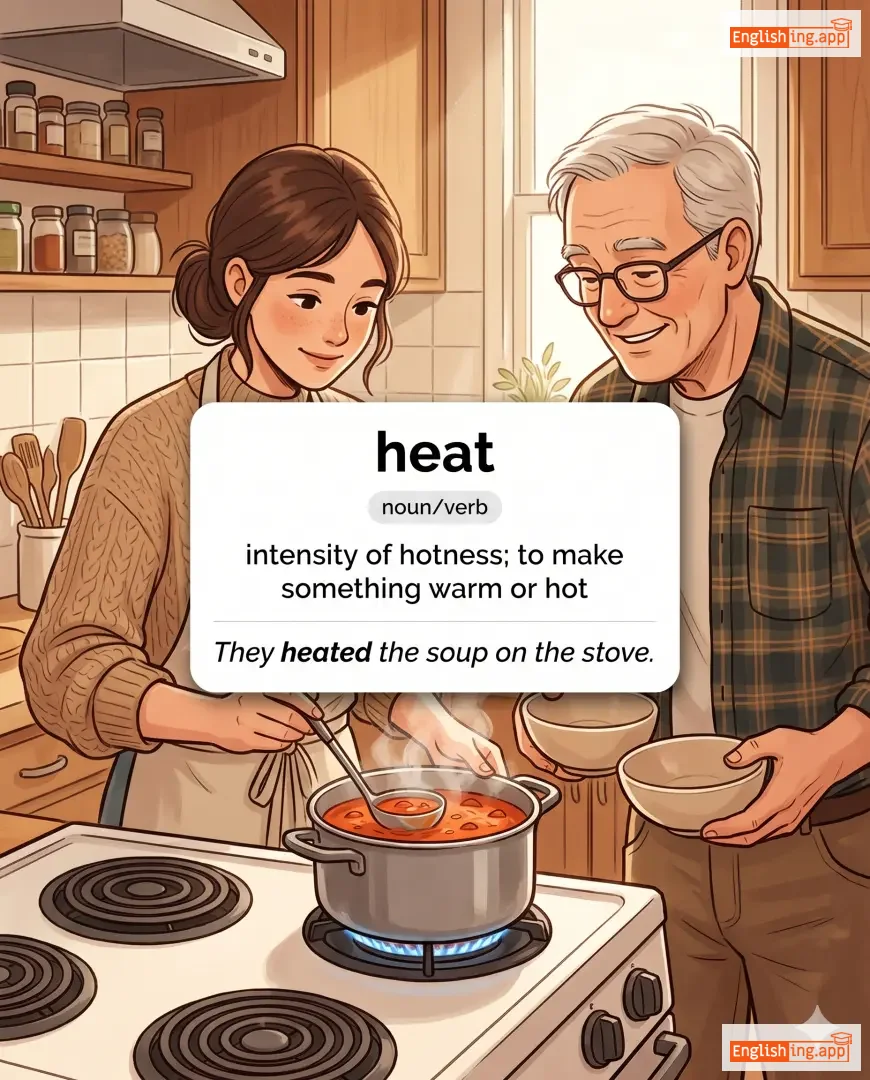
intensity of hotness; to make something warm or hot
••••••
|
They heated the soup on the stove.
彼らはストーブでスープを温めた。
••••••
|
彼らはストーブでスープを温めた。
Karera wa sutōbu de sūpu o atatameta.
••••••
|
in the heat of the moment
その瞬間の熱気の中で
••••••
|
acting without thinking due to strong emotions
••••••
|
強い感情で思考せずに行動する
Tsuyoi kanjō de shikō sezu ni kōdō suru
••••••
|
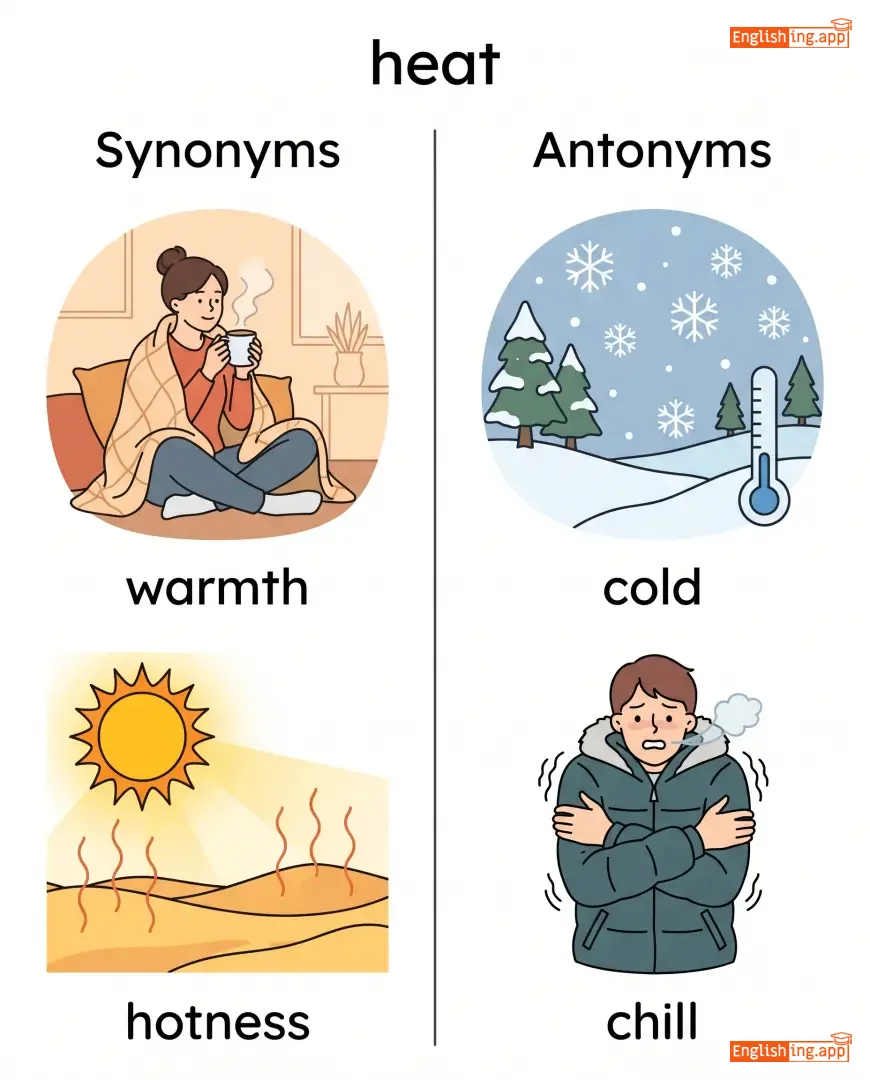
warmth, hotness, fire, passion, energy
••••••
|
cold, chill
••••••
|
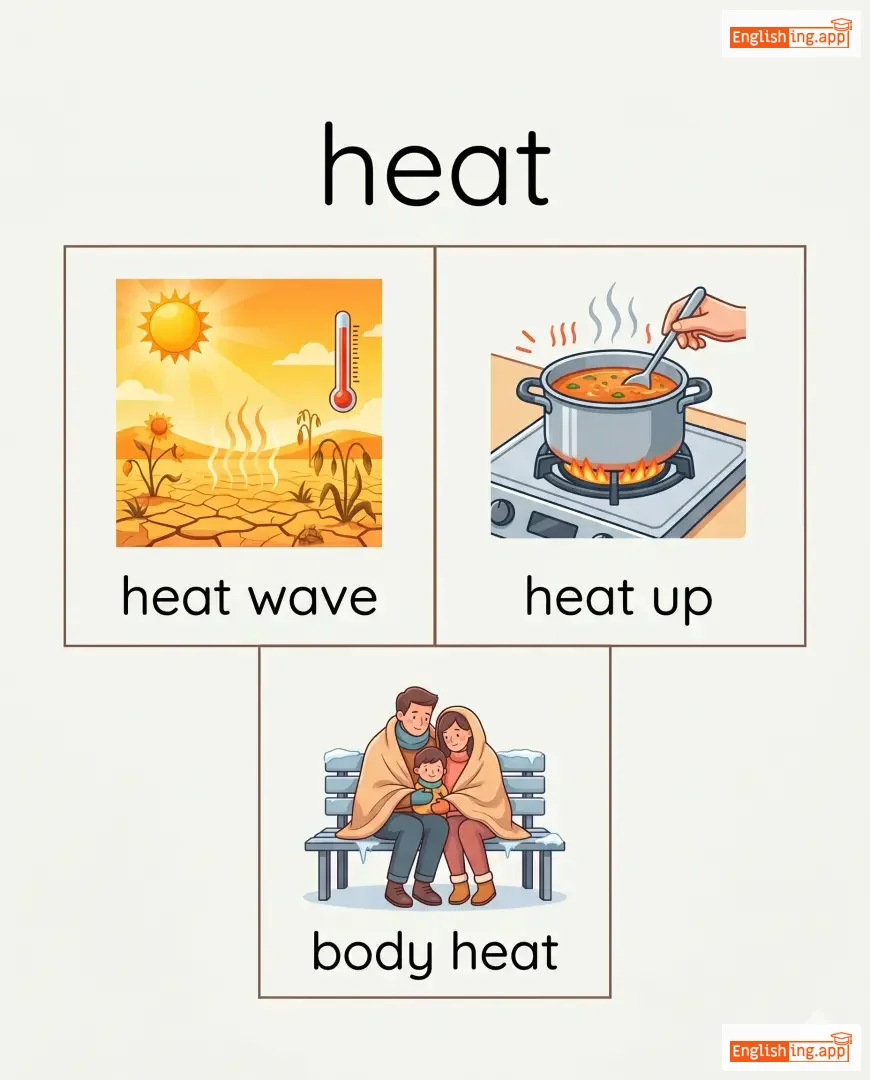
heat wave, heat up, body heat, generate heat
••••••
|
Heatは熱い🔥 – それはすべてを温める
••••••
|
|
☁️
••••••
|
/ˈhɛvən/
noun
(ヘヴン)
••••••
|
- •••••• |
天国
tengoku
••••••
|
- •••••• | - •••••• | - •••••• | - •••••• |
the place believed to be the home of God and the afterlife of the good; a state of extreme happiness
••••••
|
They believe that good people go to heaven after death. |
彼らは良い人々が死後天国に行くと信じている。
Karera wa yoi hitobito ga shigo tengoku ni iku to shinjite iru.
••••••
|
move heaven and earth |
to do everything possible to achieve something
••••••
|
天と地を動かす
ten to chi o ugokasu
••••••
|
paradise, bliss, afterlife, nirvana, delight
••••••
|
hell, misery
••••••
|
go to heaven, heaven on earth, gates of heaven, pray to heaven
••••••
|
天国 = 幸せな場所 ☁️ – 幸せなら、まるで天国にいるみたいな気分!
••••••
|
|
⬇️
••••••
|
/ˈhev.ɪ.li/
adverb
(ヘヴィリー)
••••••
|
- •••••• |
激しく; 強く
hageshiku; tsuyoku
••••••
|
- •••••• | - •••••• | - •••••• | - •••••• |
with great weight; to a great degree; intensely
••••••
|
It rained heavily throughout the night.
イット・レインド・ヘヴィリー・スルーアウト・ザ・ナイト。
••••••
|
夜通し激しく雨が降った。
yo-dō-shi hageshiku ame ga futta.
••••••
|
- •••••• | - •••••• | - •••••• |
intensely, severely, greatly, substantially, densely
••••••
|
lightly, gently, slightly, minimally
••••••
|
heavily armed, heavily loaded, heavily populated, heavily dependent
••••••
|
Heavyは重いので、Heavilyはとても重いです。
••••••
|
|
⚖️
••••••
|
/ˈhɛvi/
adjective
(ヘヴィ)
••••••
|
- •••••• |
重い
omoi
••••••
|
- •••••• | - •••••• | - •••••• | - •••••• |
having great weight; difficult to lift or move
••••••
|
The box was too heavy for her to carry alone. |
その箱は彼女が一人で運ぶには重すぎました。
Sono hako wa kanojo ga hitori de hakobu ni wa omosugimashita.
••••••
|
heavy heart |
a feeling of deep sadness
••••••
|
重い心
omoi kokoro
••••••
|
weighty, massive, bulky, hefty, substantial
••••••
|
light, weightless, airy
••••••
|
heavy rain, heavy traffic, heavy bag, heavy burden
••••••
|
Heavy とは重いです — 重すぎて持ち上げられない箱を想像してみてください。
••••••
|
|
🌳
••••••
|
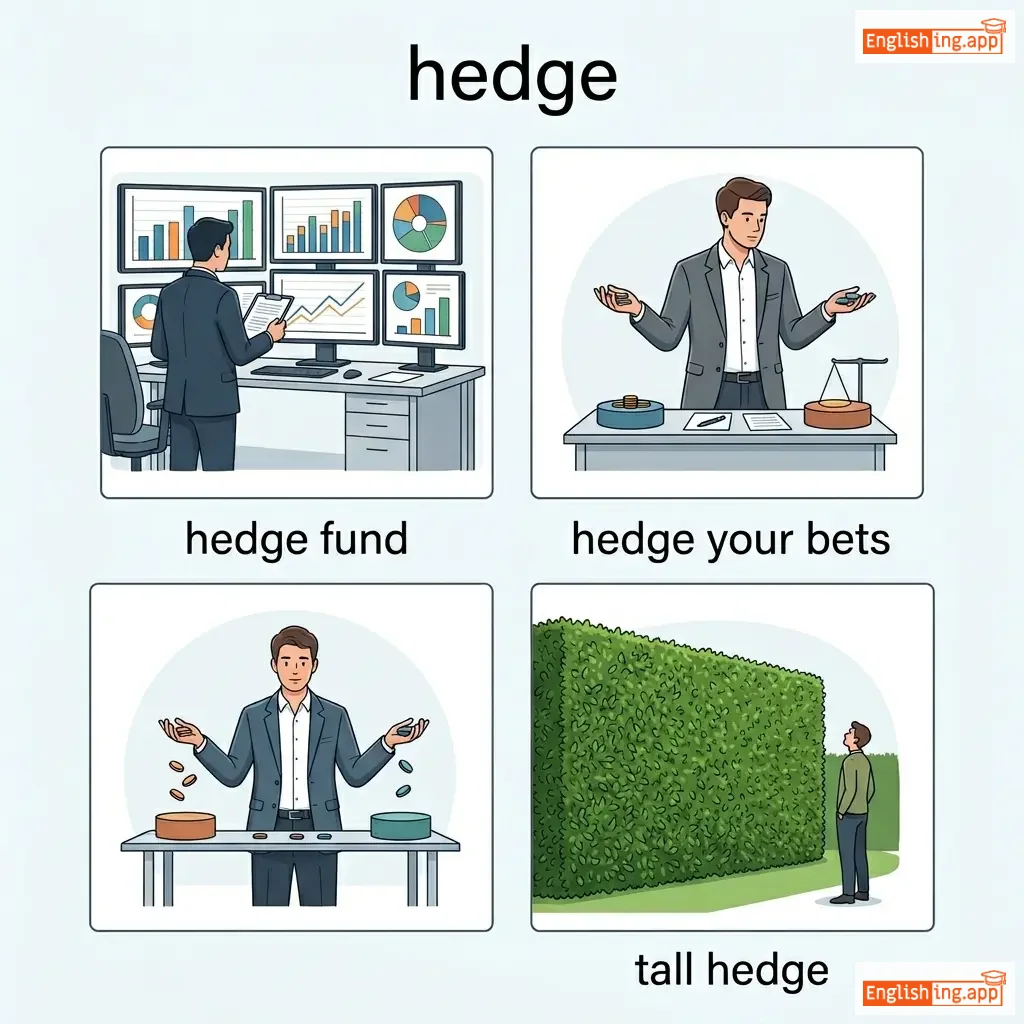
/hɛdʒ/
noun, verb
(ヘッジ)
••••••
|
|
生け垣
ikegaki
••••••
|
hedged
ヘッジド
••••••
|
hedged
ヘッジド
••••••
|
hedges
ヘッジズ
••••••
|
hedging
ヘッジング
••••••
|
A fence or boundary formed by closely planted shrubs; also, to limit or qualify a statement.
••••••
|
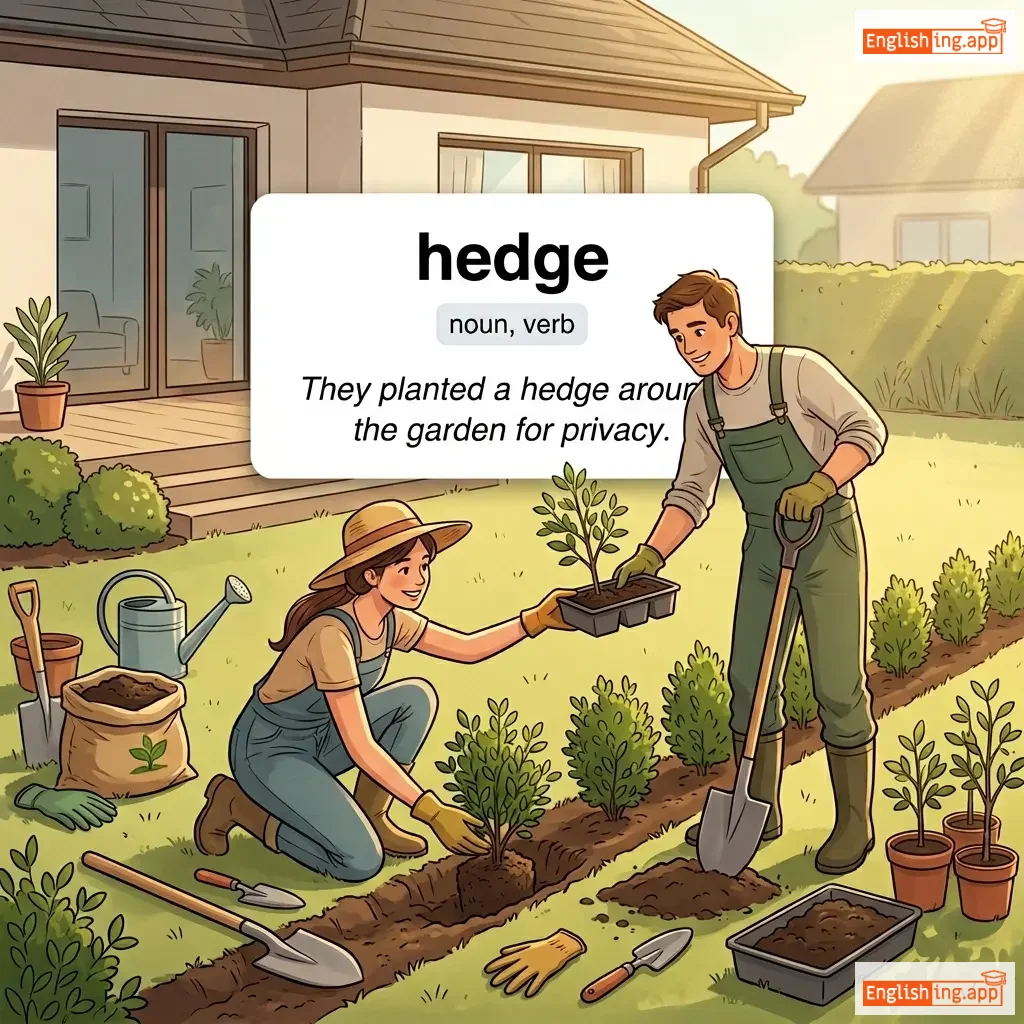
They planted a hedge around the garden for privacy.
プライバシーのために庭の周りに生け垣を植えました。
••••••
|
プライバシーのために庭の周りに生け垣を植えました。
Puraibashī no tame ni niwa no mawari ni ikegaki wo uemashita.
••••••
|
hedge your bets
賭けを分ける
••••••
|
To reduce risk by choosing several options instead of relying on one.
••••••
|
賭けを分ける
kake wo wakeru
••••••
|
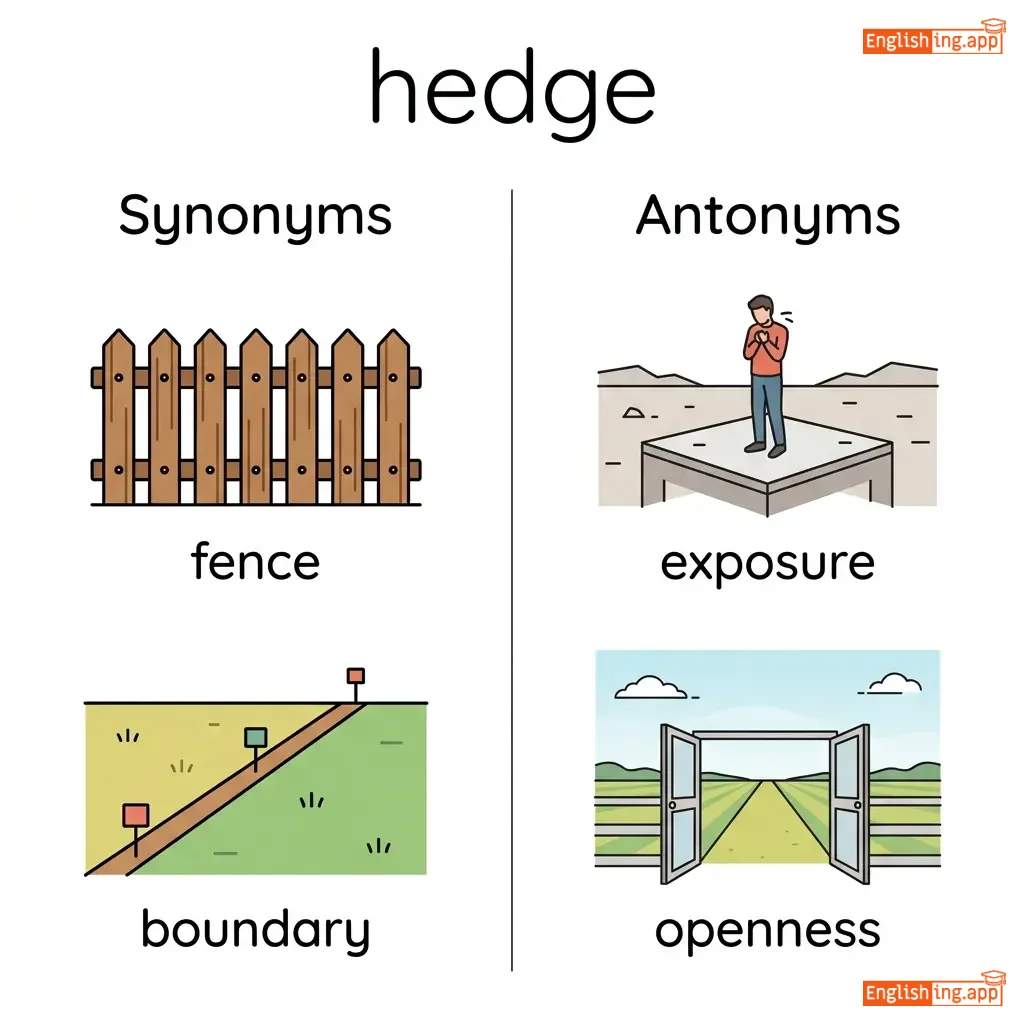
fence, boundary, barrier, safeguard
••••••
|
exposure, openness
••••••
|
hedge fund, hedge your bets, tall hedge, hedge against
••••••
|
Hedge = あなたのプライバシーを守るために生け垣を作る
••••••
|
|
👠
••••••
|
/hiːl/
noun
(ヒール)
••••••
|
- •••••• |
かかと
kakato
••••••
|
- •••••• | - •••••• | - •••••• | - •••••• |
the back part of the human foot below the ankle
••••••
|
Her shoe was rubbing against her heel.
彼女の靴は彼女のかかとにこすれていた。
••••••
|
彼女の靴は彼女のかかとにこすれていた。
Kanojo no kutsu wa kanojo no kakato ni kosurete ita.
••••••
|
at someone's heels
誰かのかかとを追う
••••••
|
closely following someone
••••••
|
誰かのかかとを追いかける
Dareka no kakato o oikakeru
••••••
|
backfoot, rear, sole, spur
••••••
|
toe, front
••••••
|
high heel, cracked heel, Achilles heel
••••••
|
かかと — 足の後ろの部分です。高いヒールはかかとを高くします。
••••••
|
|
📏
••••••
|
/haɪt/
noun
(ハイト)
••••••
|
- •••••• |
高さ
takasa
••••••
|
- •••••• | - •••••• | - •••••• | - •••••• |
the measurement of someone or something from base to top
••••••
|
The height of the tower impressed the visitors. |
塔の高さは訪問者を感動させました。
Tou no takasa wa houmonsha wo kandou sasemashita.
••••••
|
at the height of |
at the most intense point of something
••••••
|
頂点で
chouten de
••••••
|
altitude, elevation, tallness, stature
••••••
|
depth, low
••••••
|
average height, great height, height measurement
••••••
|
Heightは高さを意味します — 高い位置を想像してみてください。
••••••
|
|
🔺
••••••
|
/ˈhaɪtən/
verb
(ハイテン)
••••••
|
- •••••• |
高める
takameru
••••••
|
heightened
ハイテンド
••••••
|
heightened
ハイテンド
••••••
|
heightens
ハイテンズ
••••••
|
heightening
ハイテニング
••••••
|
to make or become greater in intensity or degree
••••••
|
The announcement served to heighten the excitement in the room.
ジ アナウンスメント サーヴド トゥ ハイトゥン ザ エクサイトメント イン ザ ルーム。
••••••
|
その発表は部屋の興奮を高めるために役立ちました。
Sono happyō wa heya no kōfun o takameru tame ni yakudachimashita.
••••••
|
- •••••• | - •••••• | - •••••• |
increase, intensify, amplify, escalate
••••••
|
diminish, reduce
••••••
|
heighten the tension, heighten awareness, heighten security
••••••
|
Heightenは日本語の'高める'と似ていて、何かを強めることです。
••••••
|
|
🚁
••••••
|
/ˈhɛlɪˌkɒptər/
noun
(ヘリコプター)
••••••
|
- •••••• |
ヘリコプター
herikoputā
••••••
|
- •••••• | - •••••• | - •••••• | - •••••• |
an aircraft with rotating blades that can take off and land vertically
••••••
|
The helicopter landed safely on the hospital roof. |
ヘリコプターは病院の屋上に安全に着陸しました。
Herikoputā wa byōin no okujō ni anzen ni chakuriku shimashita.
••••••
|
helicopter parenting |
a style of parenting where parents are overly focused on their children
••••••
|
ヘリコプターペアレンティング
Herikoputā pērentingu
••••••
|
chopper, rotorcraft, whirlybird
••••••
|
airplane, glider
••••••
|
helicopter ride, helicopter landing, helicopter rescue
••••••
|
ヘリコプター 🚁 ‘ヘリ’ は空を意味し、‘コプター’ は回転するブレードを意味します。
••••••
|
|
🔥
••••••
|
/hɛl/
noun
(ヘル)
••••••
|
- •••••• |
地獄
jigoku
••••••
|
- •••••• | - •••••• | - •••••• | - •••••• |
a place or state of great suffering and torment, often in religious belief
••••••
|
He feared that his sins would send him to hell. |
彼は自分の罪が彼を地獄に送るのではないかと恐れていました。
Kare wa jibun no tsumi ga kare o jigoku ni okuru no de wa nai ka to osorete imashita.
••••••
|
raise hell |
to cause trouble or a noisy disturbance
••••••
|
騒ぎを起こす
sawagi o okosu
••••••
|
inferno, torment, misery, damnation
••••••
|
heaven, paradise
••••••
|
living hell, go to hell, raise hell
••••••
|
地獄は苦しみの場所 🔥—「地獄」を思い出してください、痛みと苦しみがいっぱいの場所です。
••••••
|
|
👋
••••••
|
/həˈloʊ/
interjection
(ハロー)
••••••
|
- •••••• |
ハロー
harō
••••••
|
- •••••• | - •••••• | - •••••• | - •••••• |
a greeting or expression used when meeting someone or starting a conversation
••••••
|
She answered the phone with a cheerful hello.
彼女は電話を取って、元気にハローと言った。
••••••
|
彼女は電話を取って、元気にハローと言った。
Kanojo wa denwa o totte, genki ni harō to itta.
••••••
|
say hello to
誰かにハローを言う
••••••
|
to greet someone
••••••
|
誰かにハローを言う
dareka ni harō o iu
••••••
|
hi, greetings, hey, howdy, welcome
••••••
|
goodbye, farewell
••••••
|
say hello, hello there, big hello, hello everyone
••••••
|
日本語では'ハロー'と言います、英語の'hello'と同じように。
••••••
|
|
⛑️
••••••
|
/ˈhel.mət/
noun
(ハピネス)
••••••
|
- •••••• |
ヘルメット
herumetto
••••••
|
- •••••• | - •••••• | - •••••• | - •••••• |
a hard or padded protective hat worn by motorcyclists, construction workers, or soldiers
••••••
|
The cyclist always wore a bright yellow helmet for safety and visibility while riding.
サイクリストは常に安全性と視認性のために明るい黄色いヘルメットを着用していました。
••••••
|
サイクリストは常に安全性と視認性のために明るい黄色いヘルメットを着用していました。
Saikurisuto wa jōni anzen-sei to shin-in-sei no tame ni akarui kiiroi herumetto o chakuyō shite imashita.
••••••
|
- •••••• | - •••••• | - •••••• |
hard hat, protective headgear, safety helmet, crash helmet
••••••
|
bare head, unprotected head, soft hat, cap
••••••
|
safety helmet, bicycle helmet, motorcycle helmet
••••••
|
ヘルメット = サイクリングの際、頭を守るためのヘルメット
••••••
|
|
🤲
••••••
|
/hɛlp/
verb
(ハピネス)
••••••
|
|
手伝う
tetsudau
••••••
|
helped
ヘルプド
••••••
|
helped
ヘルプド
••••••
|
helps
ヘルプス
••••••
|
helping
ヘルピング
••••••
|
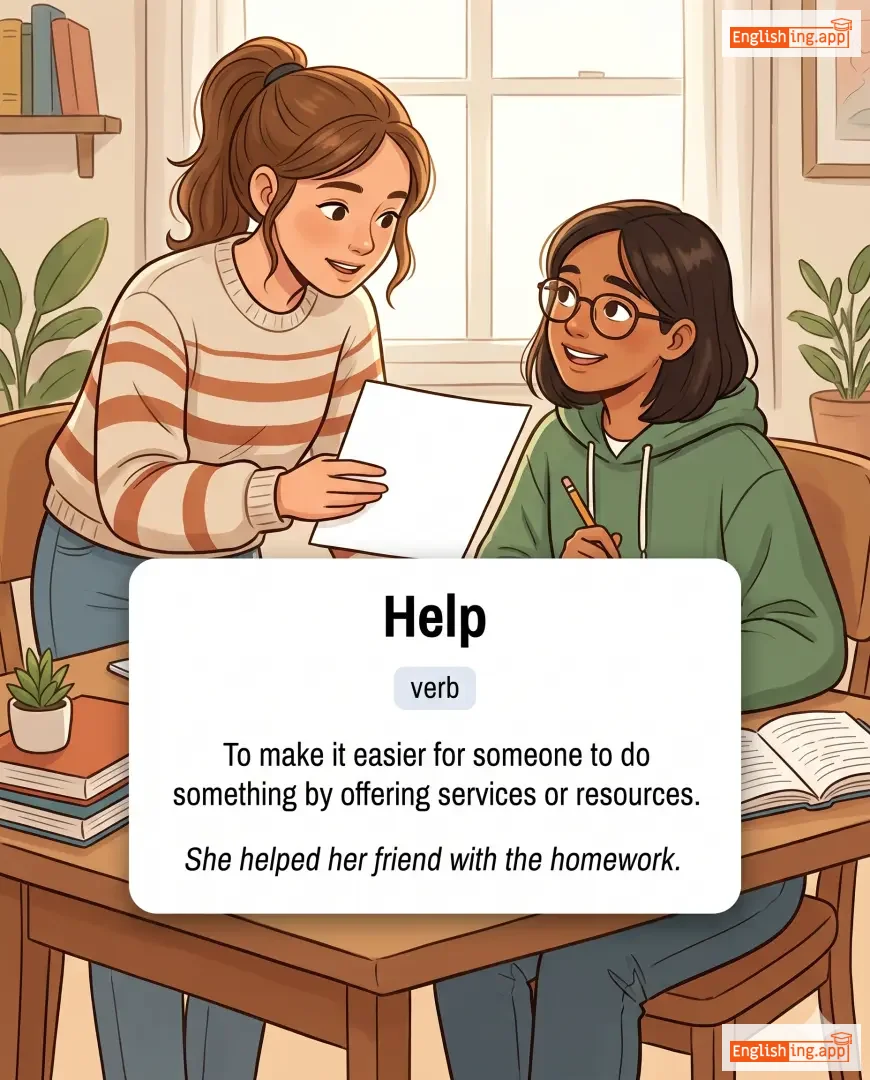
To make it easier for someone to do something by offering services or resources.
••••••
|
She helped her friend with the homework.
彼女は宿題を手伝った。
••••••
|
彼女は宿題を手伝った。
Kanojo wa shukudai o tetsudatta.
••••••
|
help yourself
自分で手伝う
••••••
|
to take something without asking
••••••
|
自分で手伝う
Jibun de tetsudau
••••••
|
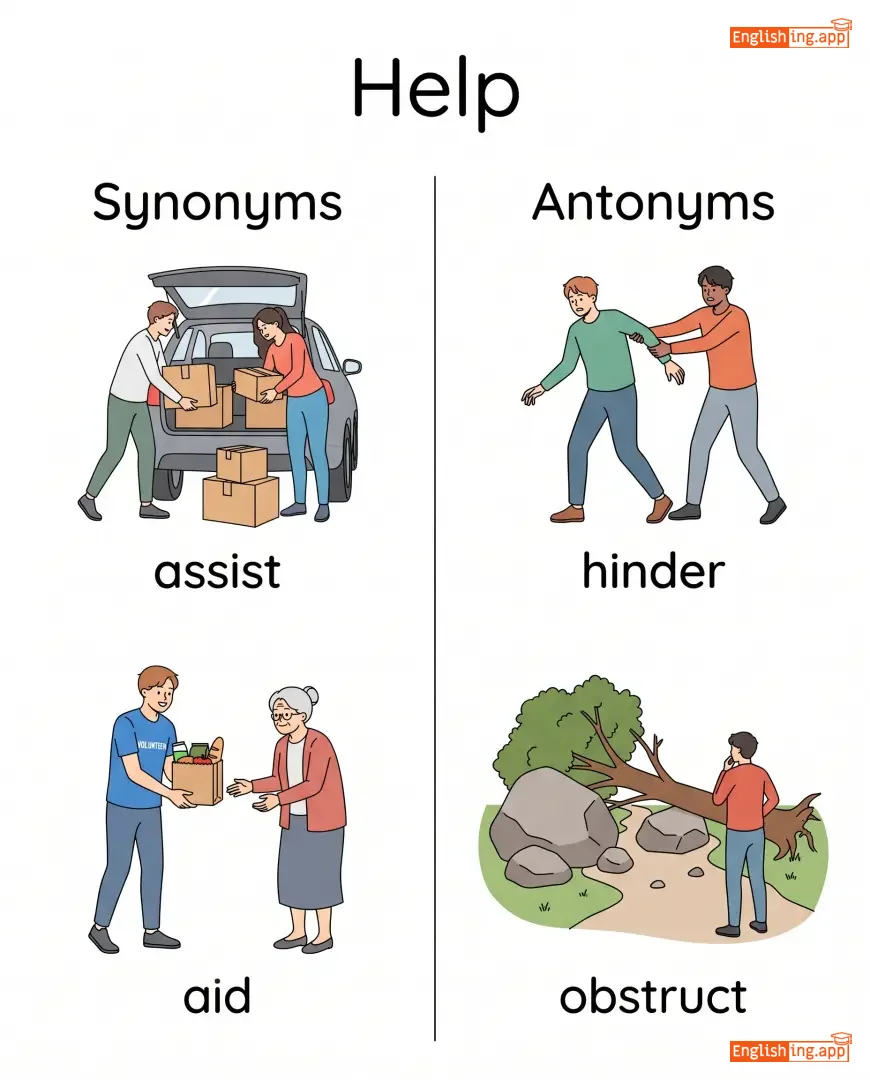
assist, aid, support, facilitate, guide
••••••
|
hinder, obstruct
••••••
|
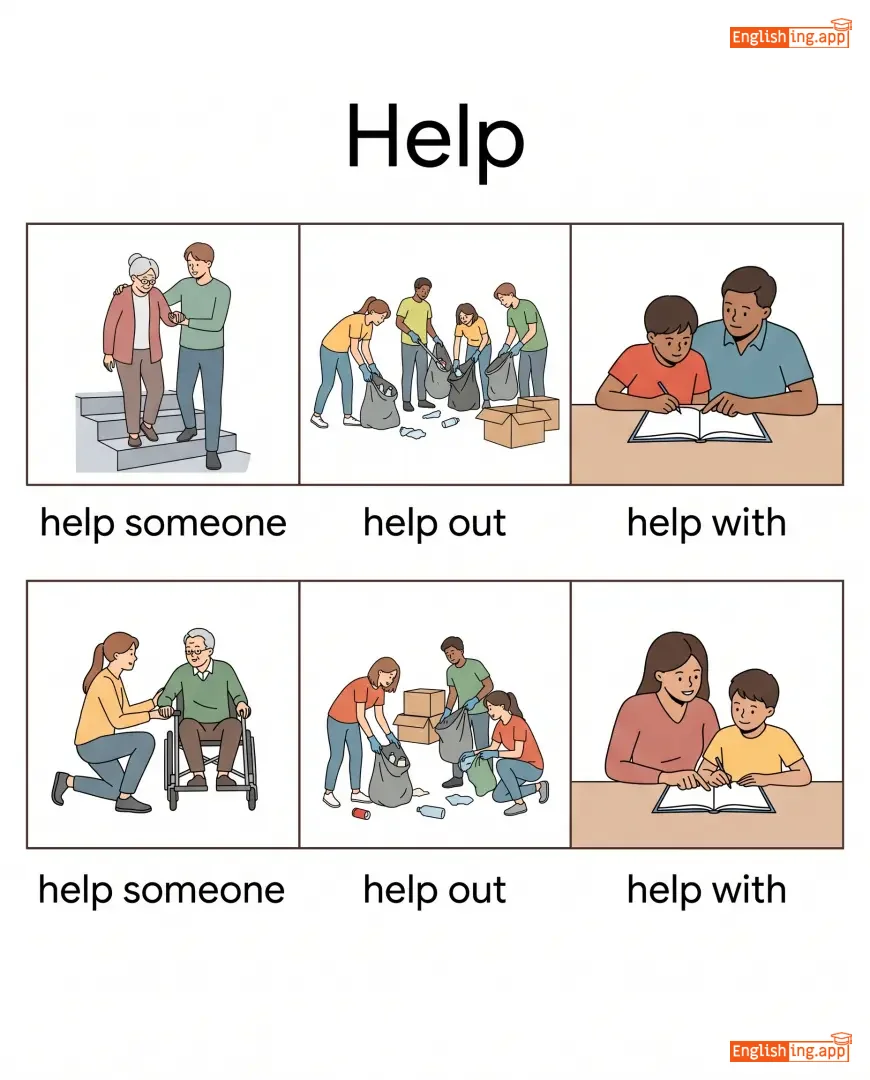
help someone, help out, help with, help to
••••••
|
Helpは手伝うという意味で、'手伝わないと宿題終わらないよ!'
••••••
|
|
🤝
••••••
|
/ˈhelp.fəl/
adjective
(ハピネス)
••••••
|
- •••••• |
役立つ; 有益な
yakudatsu; yuueki na
••••••
|
- •••••• | - •••••• | - •••••• | - •••••• |
giving or providing assistance; useful; beneficial
••••••
|
She was very helpful in organizing the event.
彼女はイベントの準備に非常に役立ちました。
••••••
|
彼女はイベントの準備に非常に役立ちました。
kanojo wa ibento no junbi ni hijō ni yakudachimashita
••••••
|
- •••••• | - •••••• | - •••••• |
useful, beneficial, supportive, accommodating
••••••
|
unhelpful, harmful, obstructive, hindering
••••••
|
helpful advice, helpful person, helpful tip, helpful service
••••••
|
Yakudatsu na to dōni ikimasu!
••••••
|
|
🐔
••••••
|
/hɛn/
noun
(ヘン)
••••••
|
- •••••• |
雌鶏
mesu niwatori
••••••
|
- •••••• | - •••••• | - •••••• | - •••••• |
female chicken
••••••
|
The hen laid fresh eggs in the nest. |
雌鶏は巣に新鮮な卵を産んだ。
Mesu niwatori wa su ni shinsen na tamago o unda.
••••••
|
- •••••• | - •••••• | - •••••• |
female chicken
••••••
|
rooster, cock
••••••
|
hen house, laying hen, mother hen
••••••
|
Mesu niwatori sounds like 'messy' - imagine a messy hen!
••••••
|
|
➡️
••••••
|
/hɛns/
adverb
(ヘンス)
••••••
|
- •••••• |
それゆえ
soreyue
••••••
|
- •••••• | - •••••• | - •••••• | - •••••• |
for this reason; as a result
••••••
|
She was the best candidate, hence she was chosen for the job.
彼女は最良の候補者であったため、仕事のために選ばれました。
••••••
|
彼女は最良の候補者であったため、仕事のために選ばれました。
Kanojo wa sairyō no kōhosha de atta tame, shigoto no tame ni erabaremashita.
••••••
|
hence the reason
そのための理由
••••••
|
used to introduce the explanation for something
••••••
|
そのための理由
sono tame no riyū
••••••
|
therefore, thus, consequently, accordingly
••••••
|
however, nevertheless
••••••
|
hence why, hence the need, hence the importance
••••••
|
Hence – それゆえ、結果または理由を示す ➡️
••••••
|
|
👩
••••••
|
/hɜːr/
pronoun
(ハー)
••••••
|
- •••••• |
彼女
kanojo
••••••
|
- •••••• | - •••••• | - •••••• | - •••••• |
used to refer to a female person or animal already mentioned or easily identified
••••••
|
I saw her at the park yesterday. |
昨日公園で彼女を見ました。
Kinō kōen de kanojo o mimashita.
••••••
|
give her a hand |
to help her
••••••
|
彼女に手を貸す
kanojo ni te o kasu
••••••
|
herself, that woman, the girl
••••••
|
him, his
••••••
|
her book, her house, with her, for her
••••••
|
Her は '彼女' を意味します(女性に関して)- 覚えておいてください:'Her house' は '彼女の家' を意味します
••••••
|
|
🌿
••••••
|
/hɜːb/ (US) /hɜːb/ or /ɜːb/
noun
(ハーブ)
••••••
|
- •••••• |
ハーブ
haabu
••••••
|
- •••••• | - •••••• | - •••••• | - •••••• |
a plant used for flavoring food, medicine, or perfume
••••••
|
Basil is a popular herb used in Italian cuisine. |
バジルはイタリア料理で人気のあるハーブです。
Bajiru wa Itaria ryouri de ninki no aru haabu desu.
••••••
|
herbal remedy |
a treatment using herbs or plants
••••••
|
ハーブ療法
haabu ryōhō
••••••
|
plant, spice, vegetation, grass, leaf
••••••
|
chemical, synthetic drug
••••••
|
fresh herbs, medicinal herbs, herb garden, herb tea
••••••
|
ハーブ(haabu) - 自然の力で癒す植物!
••••••
|
|
📍
••••••
|
/hɪr/
adverb
(ヒア)
••••••
|
- •••••• |
ここ
koko
••••••
|
- •••••• | - •••••• | - •••••• | - •••••• |
in, at, or to this place
••••••
|
Please come here quickly.
ここに早く来てください。
••••••
|
ここに早く来てください。
Koko ni hayaku kite kudasai.
••••••
|
here and there
ここやあそこ
••••••
|
in various places
••••••
|
ここやあそこ
Koko ya asoko
••••••
|
present, nearby, close, around
••••••
|
there, away
••••••
|
come here, right here, here today, stay here
••••••
|
Hereは日本語でここ 📍 - 'ここ'といえば、'here'を思い出します
••••••
|
|
🏰
••••••
|
/ˈhɛrɪtɪdʒ/
noun
(ハピネス)
••••••
|
|
遺産
isan
••••••
|
- •••••• | - •••••• | - •••••• | - •••••• |
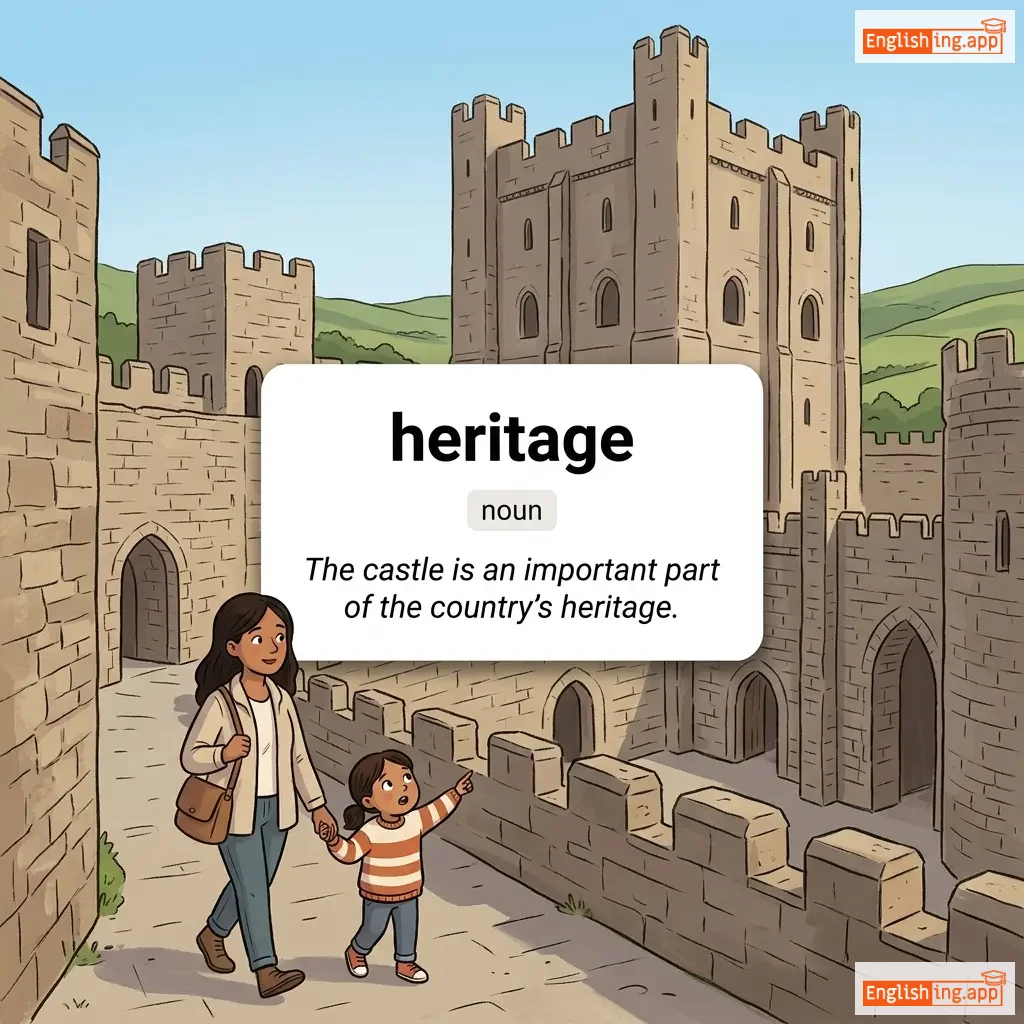
Valued objects and qualities such as historic buildings and cultural traditions passed down from previous generations.
••••••
|
The castle is an important part of the country's heritage. |
城はその国の遺産の重要な部分です。
Shiro wa sono kuni no isan no jūyō na bubun desu.
••••••
|
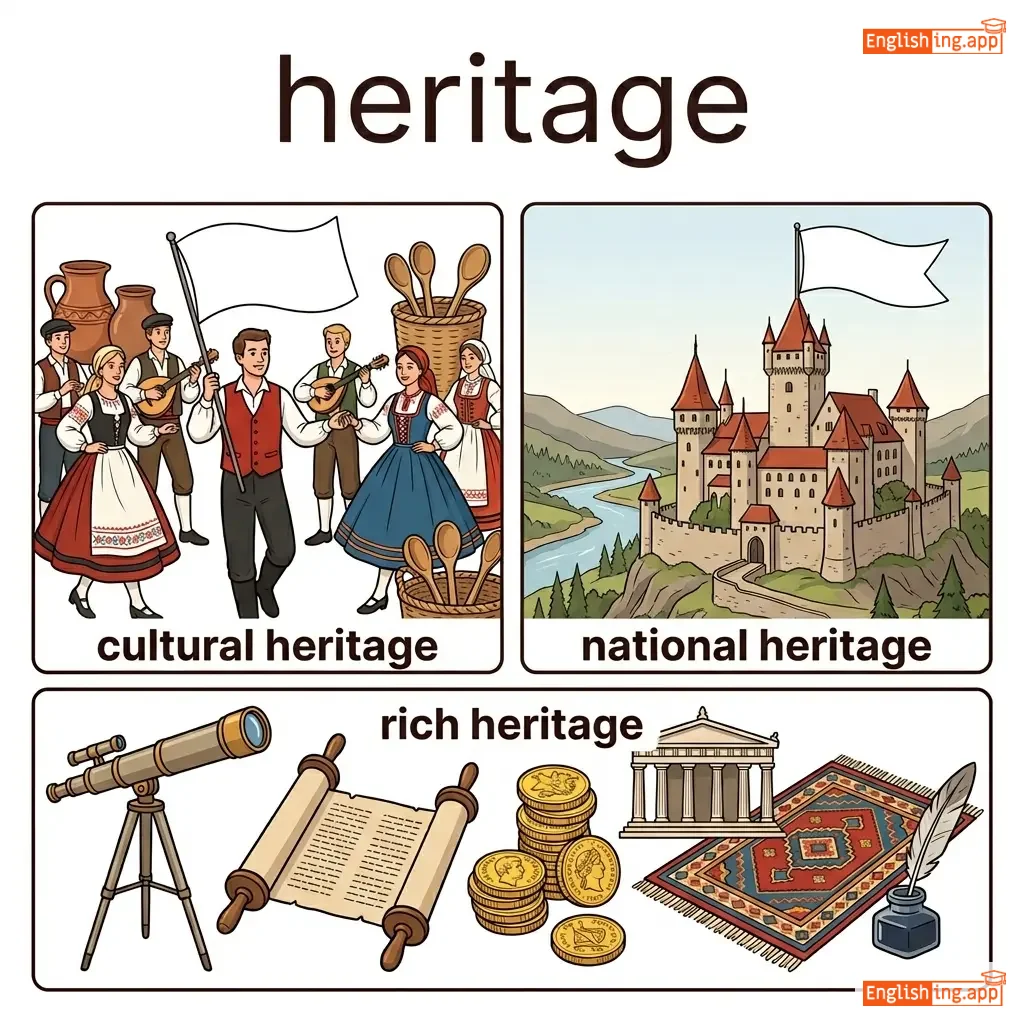
cultural heritage |
The traditions, customs, and artifacts of a community passed down through generations.
••••••
|
文化遺産
bunka isan
••••••
|
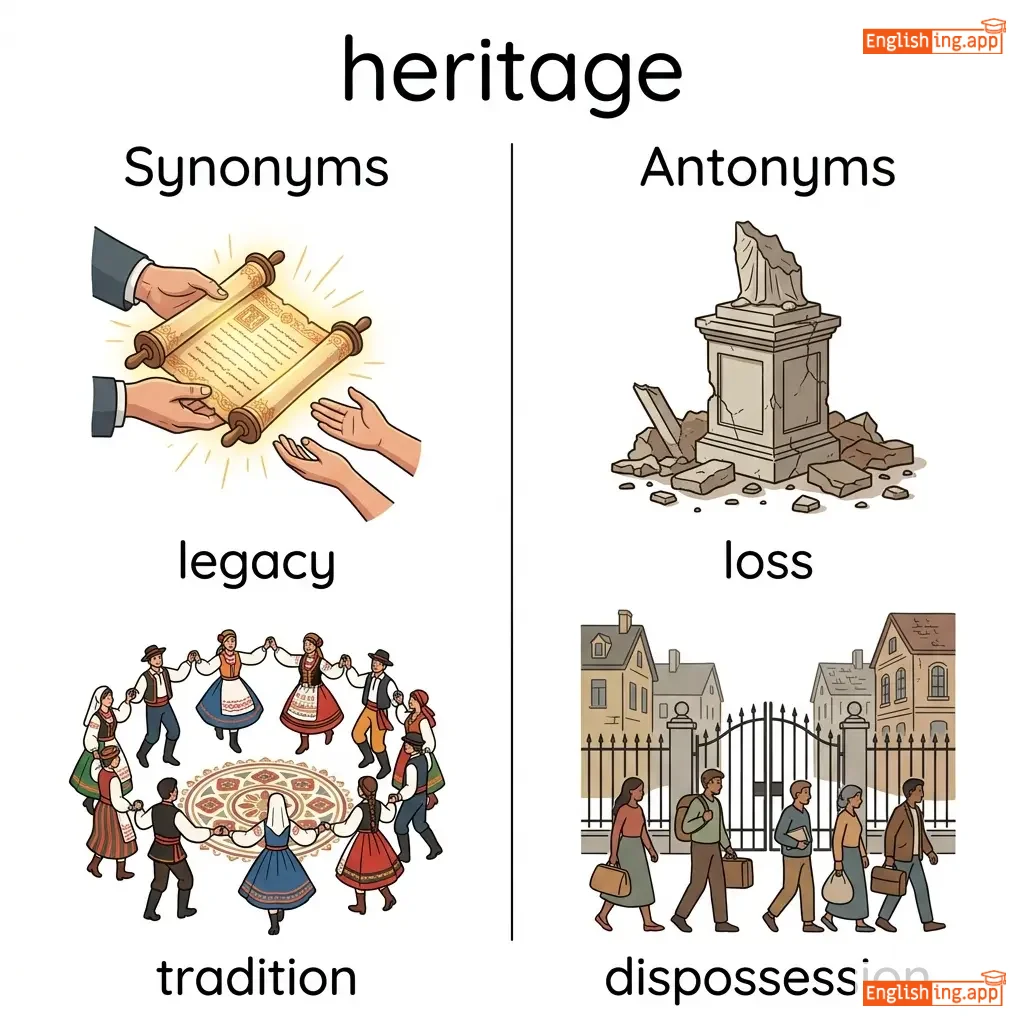
legacy, tradition, inheritance, patrimony, birthright
••••••
|
loss, dispossession
••••••
|
cultural heritage, national heritage, rich heritage, heritage site
••••••
|
遺産は世代を越えて受け継がれます。
••••••
|
|
🦸
••••••
|
/ˈhɪəroʊ/
noun
(ヒーロー)
••••••
|
|
ヒーロー
hīrō
••••••
|
- •••••• | - •••••• | - •••••• | - •••••• |
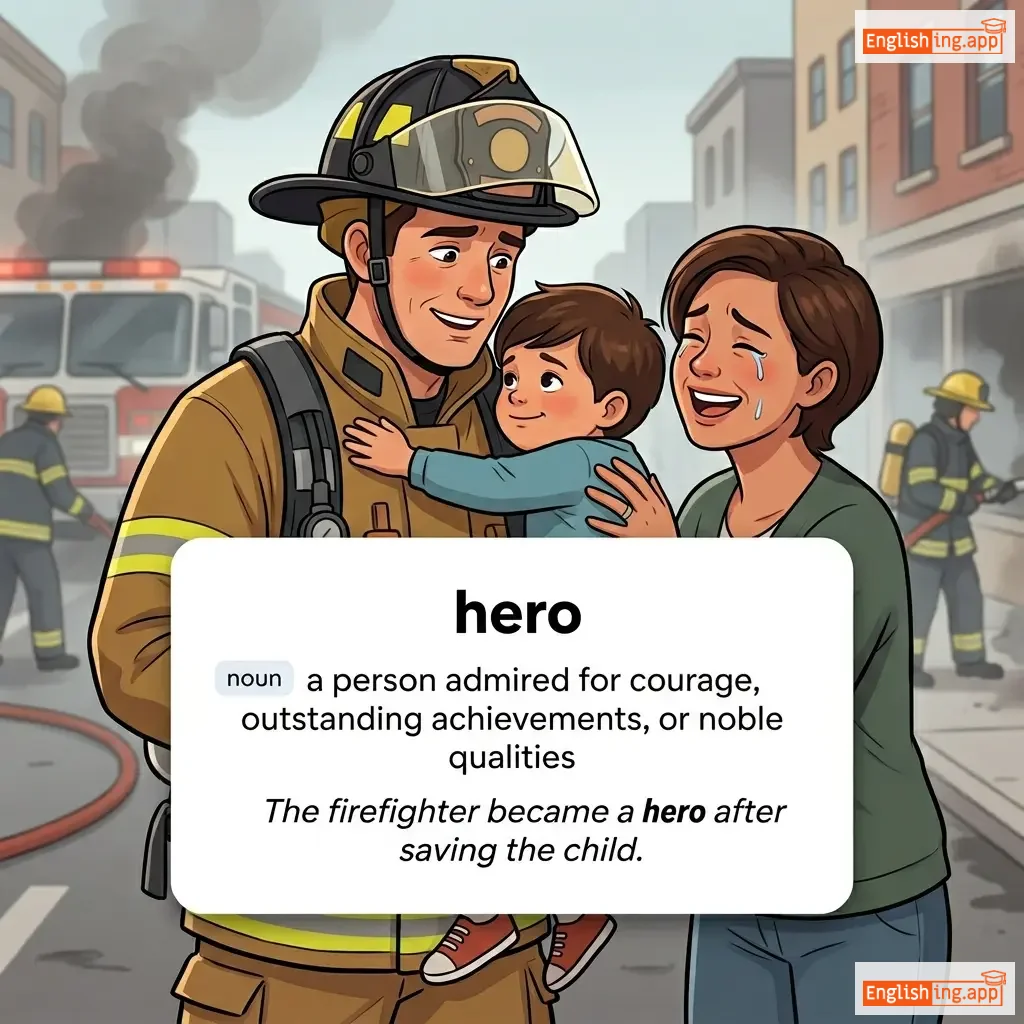
a person admired for courage, outstanding achievements, or noble qualities
••••••
|
The firefighter became a hero after saving the child. |
消防士は子供を救った後、ヒーローになった。
Shōbōshi wa kodomo o sukutta ato, hīrō ni natta.
••••••
|
unsung hero |
a person who makes a great contribution without recognition
••••••
|
無名のヒーロー
mumei no hīrō
••••••
|
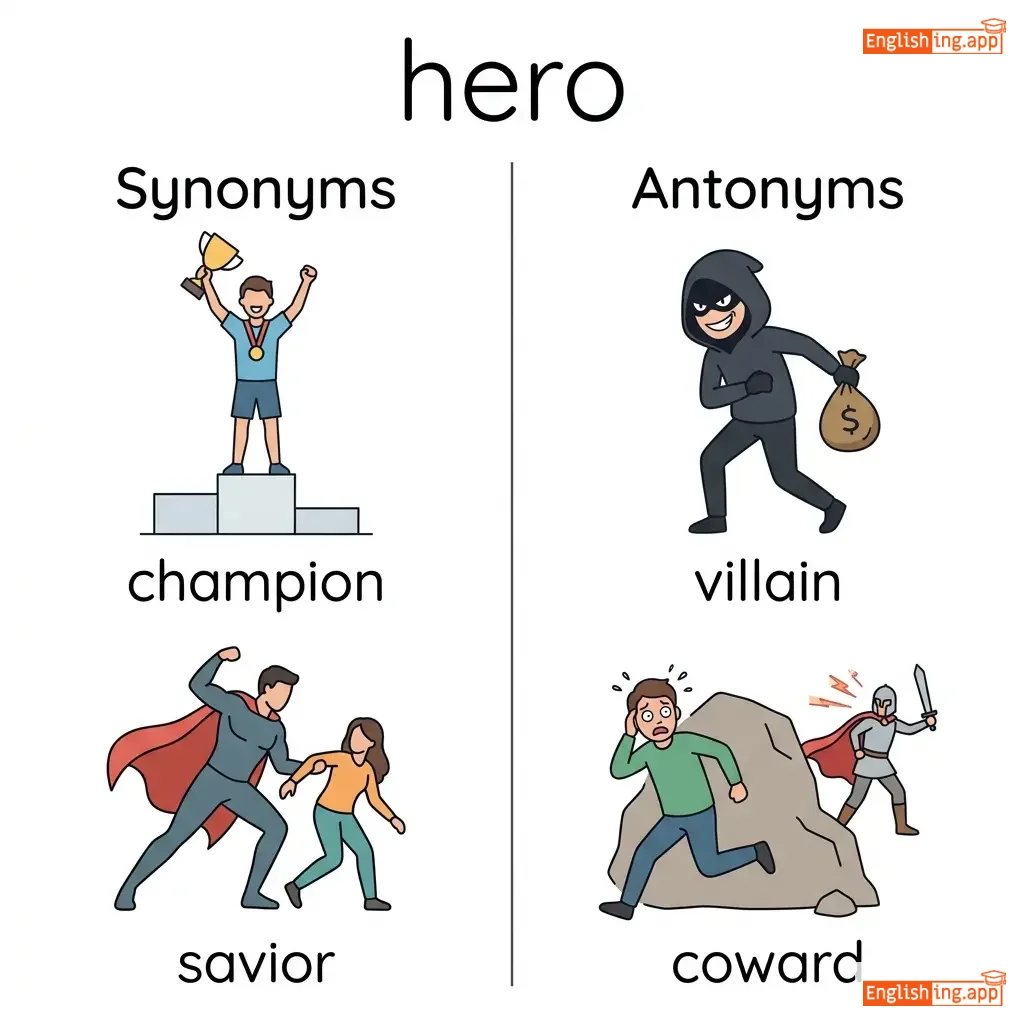
champion, savior, idol, warrior, legend
••••••
|
villain, coward
••••••
|
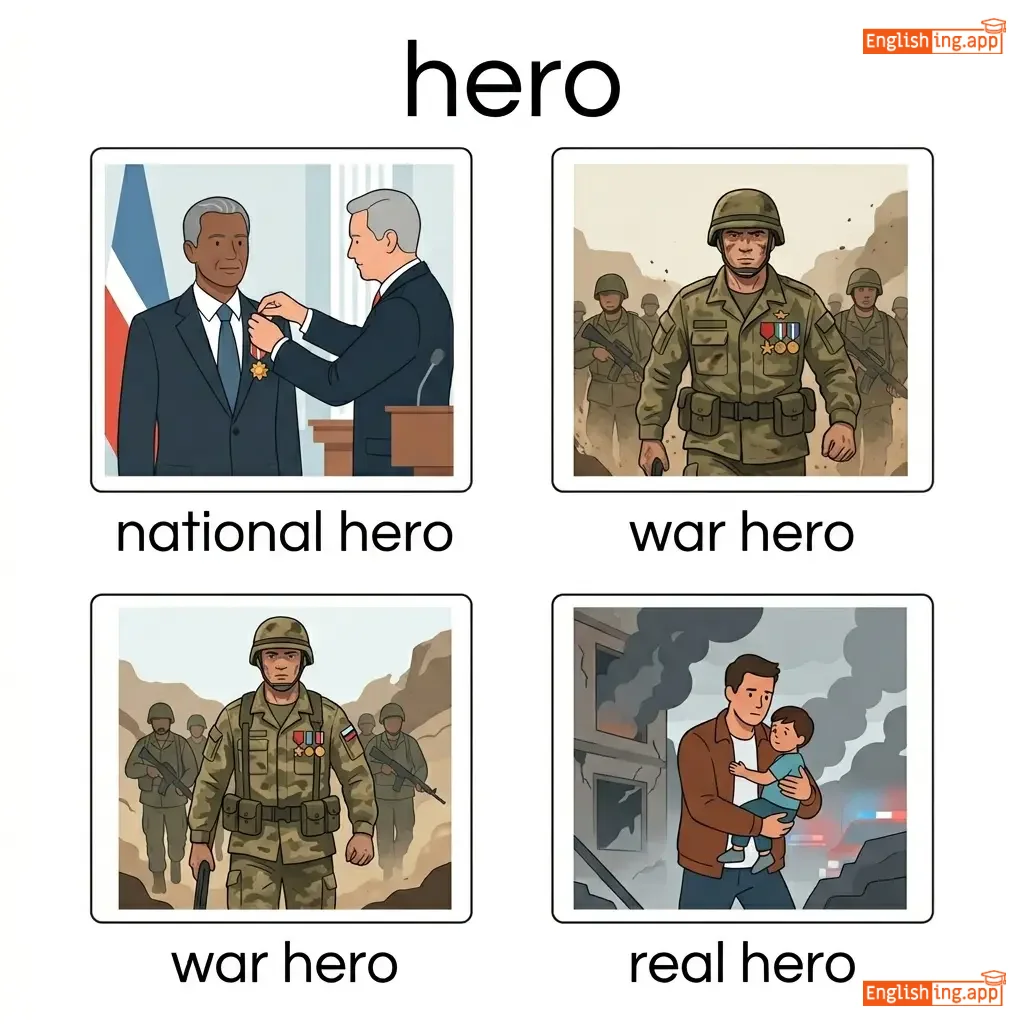
national hero, war hero, real hero, unsung hero
••••••
|
ヒーローとはヒーロー 🦸 - 日本語ではヒーローは素晴らしいことをした人です。
••••••
|
|
🦸
••••••
|
/hɪˈroʊɪk/
adjective
(ヒロイック)
••••••
|
- •••••• |
英雄的な
eiyuuteki na
••••••
|
- •••••• | - •••••• | - •••••• | - •••••• |
showing great bravery or courage; relating to a hero or heroes
••••••
|
The firefighter made a heroic effort to save the child.
ザ ファイアファイター メイド ア ヒロイック エフォート トゥ セーブ ザ チャイルド。
••••••
|
消防士は子どもを救うために英雄的な努力をした。
shouboushi wa kodomo o sukuu tame ni eiyuuteki na doryoku o shita
••••••
|
heroic effort
ヒロイック エフォート
••••••
|
a very brave or determined attempt in a difficult situation
••••••
|
英雄的な努力
eiyuuteki na doryoku
••••••
|
brave, courageous, valiant, gallant, fearless
••••••
|
cowardly, timid, fearful
••••••
|
heroic act, heroic effort, heroic deed, heroic sacrifice
••••••
|
ヒーロー(hero) → 英雄的な(heroic)。
••••••
|
|
👩👜
••••••
|
/hɜːrz/
pronoun
(ハーズ)
••••••
|
- •••••• |
彼女の(女性の)物
kanojo no (josei no) mono
••••••
|
- •••••• | - •••••• | - •••••• | - •••••• |
used to refer to something that belongs to or is associated with a female person previously mentioned or easily identified.
••••••
|
That blue bag is hers. |
その青いバッグは彼女のものです。
Sono aoi baggu wa kanojo no mono desu.
••••••
|
- •••••• | - •••••• | - •••••• |
belonging to her, her own, of her, hers alone
••••••
|
his, theirs
••••••
|
hers alone, only hers, completely hers
••••••
|
HersはHER’s—彼女の物、her + s = hers!
••••••
|
|
👩
••••••
|
/hɜːrˈsɛlf/
pronoun
(ハーセルフ)
••••••
|
- •••••• |
自分自身
jibun jishin
••••••
|
- •••••• | - •••••• | - •••••• | - •••••• |
used to refer to a female person as the object of a verb or preposition when she is the subject
••••••
|
She prepared the meal all by herself.
彼女は一人で食事を作った。
••••••
|
彼女は一人で食事を作った。
Kanojo wa hitori de shokuji o tsukutta.
••••••
|
by herself
一人で
••••••
|
alone, without help
••••••
|
一人で
hitori de
••••••
|
on her own, alone, independently, solo, unaided
••••••
|
together, with others
••••••
|
by herself, for herself, to herself, herself alone
••••••
|
Her SELF は '自分自身' という意味です — 思い出して、herself は自分で何かをすることを意味します。
••••••
|
|
🤔
••••••
|
/ˈhezɪteɪt/
verb
(ためらう)
••••••
|
- •••••• |
ためらう
tamerau
••••••
|
hesitated
ためらった
••••••
|
hesitated
ためらった
••••••
|
hesitates
ためらう
••••••
|
hesitating
ためらっている
••••••
|
to pause before saying or doing something because you are uncertain or nervous.
••••••
|
She hesitated before answering the question.
彼女は質問に答える前にためらった。
••••••
|
彼女は質問に答える前にためらった。
Kanojo wa shitsumon ni kotaeru mae ni tameratta.
••••••
|
without hesitation
ためらわずに
••••••
|
immediately or without delay
••••••
|
ためらわずに
tamerawazu ni
••••••
|
pause, waver, delay, falter, doubt
••••••
|
decide, proceed, act
••••••
|
hesitate to ask, hesitate to speak, hesitate before, hesitate a moment
••••••
|
ためらう - ためらうな!すぐに行動しよう!
••••••
|
|
🕵️♂️
••••••
|
/ˈhɪdən/
adjective
(hiden)
••••••
|
- •••••• |
隠された
kakusareta
••••••
|
- •••••• | - •••••• | - •••••• | - •••••• |
kept out of sight; concealed.
••••••
|
The treasure was hidden under the old tree. |
宝物は古い木の下に隠されていた。
Takaramono wa furui ki no shita ni kakusarete ita.
••••••
|
hidden gem |
something that is outstanding but not well known
••••••
|
隠れた宝石
kakureta houseki
••••••
|
concealed, secret, invisible, unseen, obscured
••••••
|
visible, exposed, open
••••••
|
hidden meaning, hidden place, hidden agenda, hidden camera
••••••
|
Hidden は隠されたこと — hide + en = 隠された!
••••••
|
|
🙈
••••••
|
/haɪd/
verb
(ハイド)
••••••
|

|
隠す
kakusu
••••••
|
hid
ヒッド
••••••
|
hidden
ヒデン
••••••
|
hides
ハイダーズ
••••••
|
hiding
ハイディング
••••••
|
to put something or oneself out of sight; to conceal
••••••
|
She tried to hide the letter under the pillow.
彼女は枕の下に手紙を隠そうとした。
••••••
|
彼女は枕の下に手紙を隠そうとした。
Kanojo wa makura no shita ni tegami o kakusou to shita.
••••••
|
hide and seek
かくれんぼ
••••••
|
a children's game where one hides and others seek
••••••
|
かくれんぼ
kakurenbo
••••••
|
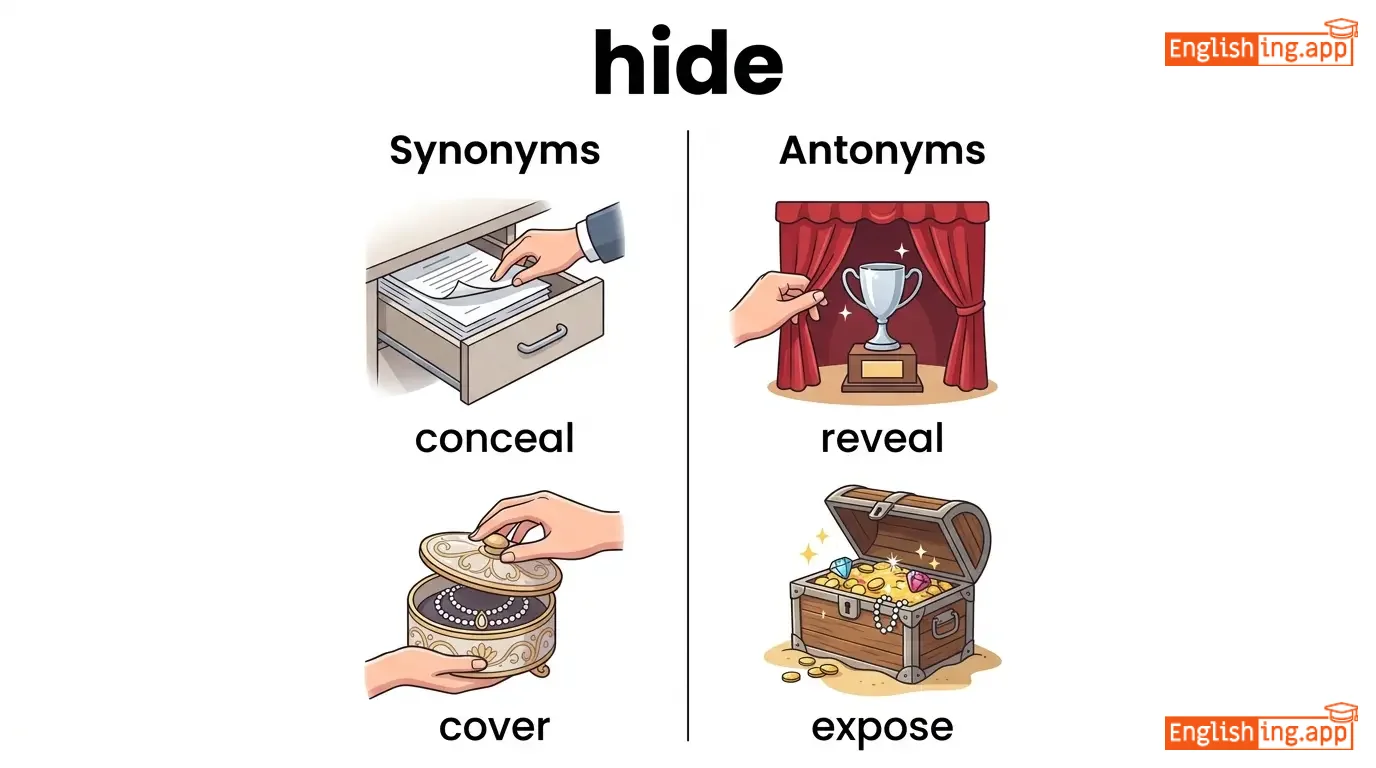
conceal, cover, disguise, veil, secrete
••••••
|
reveal, expose, uncover
••••••
|
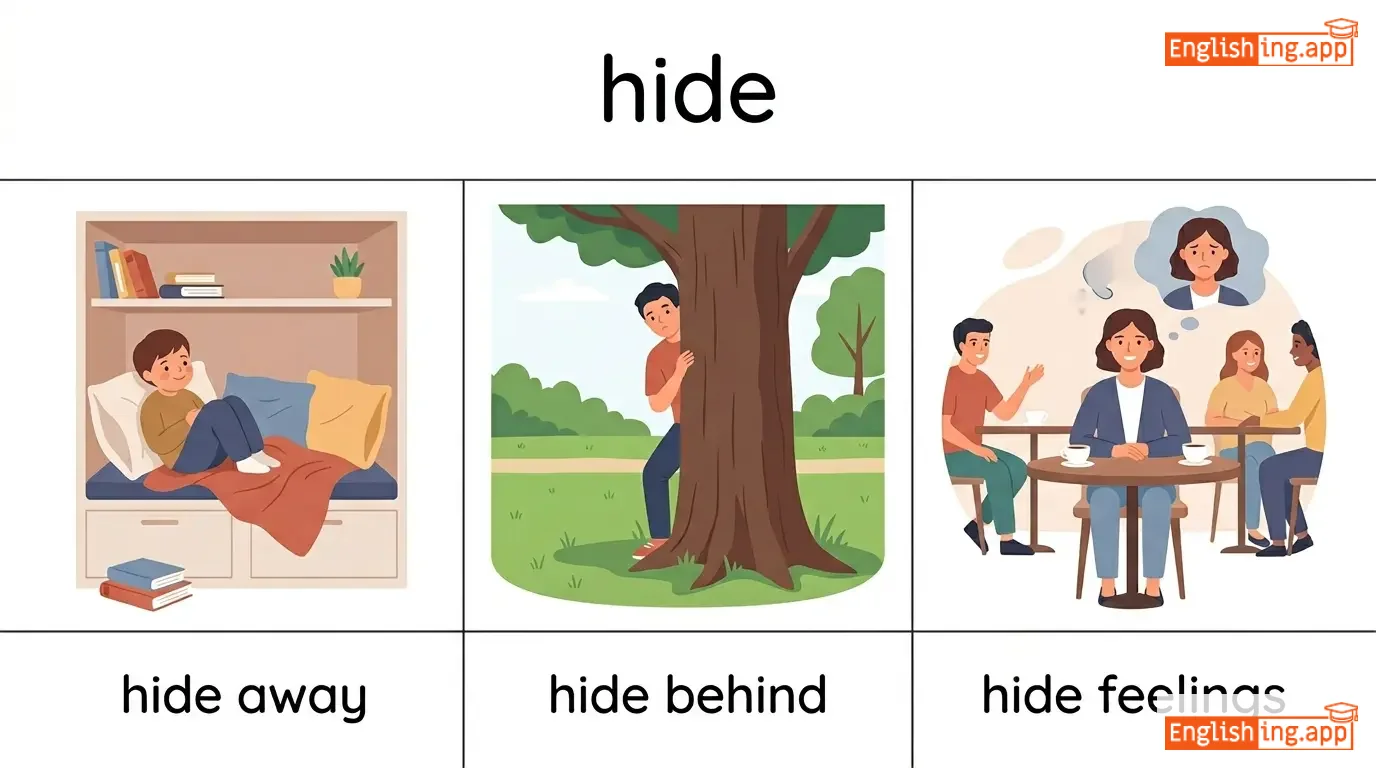
hide away, hide behind, hide feelings, hide from
••••••
|
Hide は隠す、まるで 🦊 キツネが巣に隠れるように
••••••
|
|
🏛️
••••••
|
/ˈhaɪəˌrɑːrki/
noun
(ハイアラーキー)
••••••
|
- •••••• |
階層
kaisou
••••••
|
- •••••• | - •••••• | - •••••• | - •••••• |
A system in which people or things are arranged in levels of importance or authority.
••••••
|
The corporate hierarchy determines who makes the final decision. |
企業の階層は、最終決定を誰が行うかを決定します。
Kigyou no kaisou wa, saishuu kettei wo dare ga okonau ka wo kettei shimasu.
••••••
|
social hierarchy |
The ranking of individuals in society based on status, power, or wealth.
••••••
|
社会階層
shakai kaisou
••••••
|
ranking, order, system, structure, chain of command
••••••
|
equality, parity
••••••
|
corporate hierarchy, political hierarchy, social hierarchy, strict hierarchy
••••••
|
階層は、上へ行くほど重要性が増すピラミッドのようなものです。
••••••
|
|
⬆️
••••••
|
/haɪ/
adjective
(ハイ)
••••••
|
- •••••• |
高い
takai
••••••
|
- •••••• | - •••••• | - •••••• | - •••••• |
At or to a great height; greater than normal in amount, degree, or intensity.
••••••
|
The mountain peak is very high.
山の頂上はとても高いです。
••••••
|
山の頂上はとても高いです。
Yama no chōjō wa totemo takai desu.
••••••
|
high and mighty
高慢で威張っている
••••••
|
acting proud and arrogant
••••••
|
傲慢
ōman
••••••
|
tall, elevated, lofty, towering, intense
••••••
|
low, small
••••••
|
high mountain, high speed, high hopes, high price
••••••
|
High は高い ⬆️、例えば High building = 高いビル。
••••••
|
|
🌟
••••••
|
/ˈhaɪˌprəʊfaɪl/
adjective
(ハイプロファイル)
••••••
|
- •••••• |
注目の的
chumoku no mato
••••••
|
- •••••• | - •••••• | - •••••• | - •••••• |
having a lot of attention or public notice
••••••
|
The CEO attended a high-profile conference in New York.
CEOはニューヨークでのハイプロファイルな会議に参加しました。
••••••
|
CEOはニューヨークでのハイプロファイルな会議に参加しました。
CEO wa Nyū Yōku de no haipuorafairu na kaigi ni sanka shimashita.
••••••
|
- •••••• | - •••••• | - •••••• |
prominent, important, well-known, notable
••••••
|
low-profile, unnoticed, obscure
••••••
|
high-profile event, high-profile person, high-profile position
••••••
|
High-profile = 注目の的 = 大きな関心、大きな注目!
••••••
|
|
🖍️
••••••
|
/ˈhaɪˌlaɪt/
verb
(ハイライト)
••••••
|
- •••••• |
強調する
kyouchou suru
••••••
|
highlighted
ハイライトされた
••••••
|
highlighted
ハイライトされた
••••••
|
highlights
ハイライトする
••••••
|
highlighting
ハイライトすること
••••••
|
to emphasize or make something stand out
••••••
|
The teacher highlighted the most important points in the text.
先生はテキストで最も重要な点をハイライトしました。
••••••
|
先生はテキストで最も重要な点をハイライトしました。
Sensei wa tekisuto de mottomo juuyou na ten wo hairaito shimashita.
••••••
|
highlight reel
ハイライト集
••••••
|
a collection of the best or most memorable parts
••••••
|
ハイライト集
hairaito shuu
••••••
|
emphasize, stress, underline, showcase, feature
••••••
|
ignore, overlook, hide
••••••
|
highlight the issue, highlight a point, highlight text, highlight importance
••••••
|
強調することは、重要な部分を明るく照らすことのようなものです。
••••••
|
|
🌟
••••••
|
/ˈhaɪli/
adverb
(ハイリー)
••••••
|
- •••••• |
非常に
hijō ni
••••••
|
- •••••• | - •••••• | - •••••• | - •••••• |
to a great degree; very
••••••
|
She is highly respected in her field. |
彼女は自分の分野で非常に尊敬されています。
Kanojo wa jibun no bun'ya de hijō ni sonkei sareteimasu.
••••••
|
think highly of |
to admire or have a good opinion of someone
••••••
|
高く評価する
takaku hyōka suru
••••••
|
greatly, very, extremely, exceedingly, intensely
••••••
|
slightly, poorly, inadequately
••••••
|
highly skilled, highly effective, highly unlikely, highly respected
••••••
|
Highly は非常に — とてもまたは極端に。
••••••
|
|
🛣️
••••••
|
/ˈhaɪ.weɪ/
noun
(haivei)
••••••
|
- •••••• |
高速道路
kousokudouro
••••••
|
- •••••• | - •••••• | - •••••• | - •••••• |
A main road, especially one connecting major towns or cities.
••••••
|
The highway was blocked due to an accident. |
事故のため高速道路は封鎖されていました。
Jiko no tame kousokudouro wa fūsa sareteimashita.
••••••
|
hit the highway |
to begin a journey, usually by car
••••••
|
道を進む
michi o susumu
••••••
|
expressway, freeway, motorway, road, route
••••••
|
alley, lane
••••••
|
highway patrol, highway traffic, highway system, on the highway
••••••
|
Highway は 'High speed way' の意味です - 高速道路は高速移動の道です。
••••••
|
|
😂
••••••
|
/hɪˈlɛəriəs/
adjective
(ヒラリアス)
••••••
|
- •••••• |
非常に面白い
hijou ni omoshiroi
••••••
|
- •••••• | - •••••• | - •••••• | - •••••• |
Extremely funny or amusing.
••••••
|
The comedian told a hilarious story that had everyone laughing. |
コメディアンは、みんなが笑ってしまうような非常に面白い話をしました。
Komedian wa, minna ga waratte shimau you na hijou ni omoshiroi hanashi wo shimashita.
••••••
|
- •••••• | - •••••• | - •••••• |
funny, amusing, comical, entertaining, laughable
••••••
|
serious, sad, boring
••••••
|
hilarious joke, hilarious story, hilarious moment, absolutely hilarious
••••••
|
Hilarious = 非常に (hijou ni) + 面白い (omoshiroi) → 非常に面白い
••••••
|
|
⛰️
••••••
|
/hɪl/
noun
(ヒル)
••••••
|
- •••••• |
丘
oka
••••••
|
- •••••• | - •••••• | - •••••• | - •••••• |
A naturally raised area of land, smaller than a mountain.
••••••
|
We climbed the hill to see the sunset. |
私たちは日没を見るために丘を登りました。
Watashitachi wa nichibotsu o miru tame ni oka o noborimashita.
••••••
|
make a mountain out of a molehill |
to exaggerate a small problem into something much bigger
••••••
|
小さな問題を大きな問題にする
Chisana mondai o ookina mondai ni suru
••••••
|
mound, knoll, ridge, slope, rise
••••••
|
valley, plain
••••••
|
hill station, top of the hill, climb a hill, rolling hills
••••••
|
Hill は丘 – 小さい山ではない、でも高い丘!
••••••
|
|
⛰️
••••••
|
/ˈhɪli/
adjective
(ヒリー)
••••••
|
- •••••• |
丘陵の多い
kyuryo no ooi
••••••
|
- •••••• | - •••••• | - •••••• | - •••••• |
having many hills; characterized by hills or slopes
••••••
|
The village is located in a beautiful hilly region.
ザ ヴィレッジ イズ ロケイテッド イン ア ビューティフル ヒリー リージョン。
••••••
|
その村は美しい丘陵の多い地域にあります。
Sono mura wa utsukushii kyuryo no ooi chiiki ni arimasu
••••••
|
- •••••• | - •••••• | - •••••• |
mountainous, rolling, uneven, rugged, undulating
••••••
|
flat, level, plain
••••••
|
hilly terrain, hilly area, hilly region, hilly landscape
••••••
|
Hilly = hill が多い → 丘陵の多い。
••••••
|
|
👨
••••••
|
/hɪm/
pronoun
(ハピネス)
••••••
|
- •••••• |
彼を
kare o
••••••
|
- •••••• | - •••••• | - •••••• | - •••••• |
Used to refer to a male person or animal already mentioned.
••••••
|
I saw him at the park yesterday. |
昨日公園で彼を見かけました。
Kinō kōen de kare o mikakemashita.
••••••
|
- •••••• | - •••••• | - •••••• |
that man, that boy, male person, he
••••••
|
her, she
••••••
|
with him, for him, about him, help him
••••••
|
Him は '彼を' を意味します – He の目的格が Him であることを覚えておいてください。
••••••
|
|
🙋♂️
••••••
|
/hɪmˈself/
pronoun
(ヒムセルフ)
••••••
|
- •••••• |
自分自身
jibun jishin
••••••
|
- •••••• | - •••••• | - •••••• | - •••••• |
Used to emphasize that a male person does something by his own effort.
••••••
|
He fixed the car himself. |
彼は自分自身で車を修理しました。
Kare wa jibun jishin de kuruma o shūri shimashita.
••••••
|
by himself |
alone, without help
••••••
|
自分で
jibun de
••••••
|
alone, personally, individually, on his own
••••••
|
together, with others
••••••
|
by himself, for himself, himself alone
••••••
|
Himself は 'He 自分自身 self' です – 'self' は自分を意味します。
••••••
|
|
💡
••••••
|
/hɪnt/
noun/verb
(ヒント)
••••••
|
- •••••• |
ヒント
hinto
••••••
|
hinted
ヒンテッド
••••••
|
hinted
ヒンテッド
••••••
|
hints
ヒンツ
••••••
|
hinting
ヒンティング
••••••
|
a small piece of advice or suggestion; to suggest something indirectly
••••••
|
She gave me a hint about the surprise party.
彼女はサプライズパーティーについてヒントをくれた。
••••••
|
彼女はサプライズパーティーについてヒントをくれた。
Kanojo wa sapuraizu pātī ni tsuite hinto o kureta.
••••••
|
drop a hint
ヒントを出す
••••••
|
to give a subtle suggestion
••••••
|
ヒントを出す
hinto o dasu
••••••
|
suggestion, clue, indication, tip, advice
••••••
|
statement, declaration
••••••
|
subtle hint, useful hint, drop a hint, take the hint
••••••
|
Hint は日本語でもヒント、ゲームでヒントをもらうみたい
••••••
|
|
🦴
••••••
|
/hɪp/
noun
(ヒップ)
••••••
|
- •••••• |
腰部
yōbu
••••••
|
- •••••• | - •••••• | - •••••• | - •••••• |
The part of the body on either side of the pelvis, or informal: trendy and fashionable.
••••••
|
She put her hands on her hips. |
彼女は手を腰に置きました。
kanojo wa te o yōbu ni okimashita.
••••••
|
joined at the hip |
very close, inseparable
••••••
|
腰がつながっている
koshi ga tsunagatte iru
••••••
|
pelvis, waist, trendy, fashionable
••••••
|
old-fashioned, outdated
••••••
|
hip pain, hip joint, hands on hips, hip hop
••••••
|
腰部 – ヒップホップで腰を動かすから。
••••••
|
|
👔
••••••
|
/ˈhaɪə(r)/
verb
(ハイヤー)
••••••
|


|
雇う
katsu
••••••
|
hired
ハイヤード
••••••
|
hired
ハイヤード
••••••
|
hires
ハイヤーズ
••••••
|
hiring
ハイヤリング
••••••
|
to employ someone for a job or task
••••••
|
The company decided to hire more staff this year.
その会社は今年、より多くのスタッフを雇うことを決定しました。
••••••
|
その会社は今年、より多くのスタッフを雇うことを決定しました。
Sono kaisha wa kotoshi, yori ōku no sutaffu o yatō koto o kettei shimashita.
••••••
|
hire and fire
雇って解雇する
••••••
|
to employ and dismiss workers frequently
••••••
|
雇って解雇する
yatte kaiko suru
••••••
|
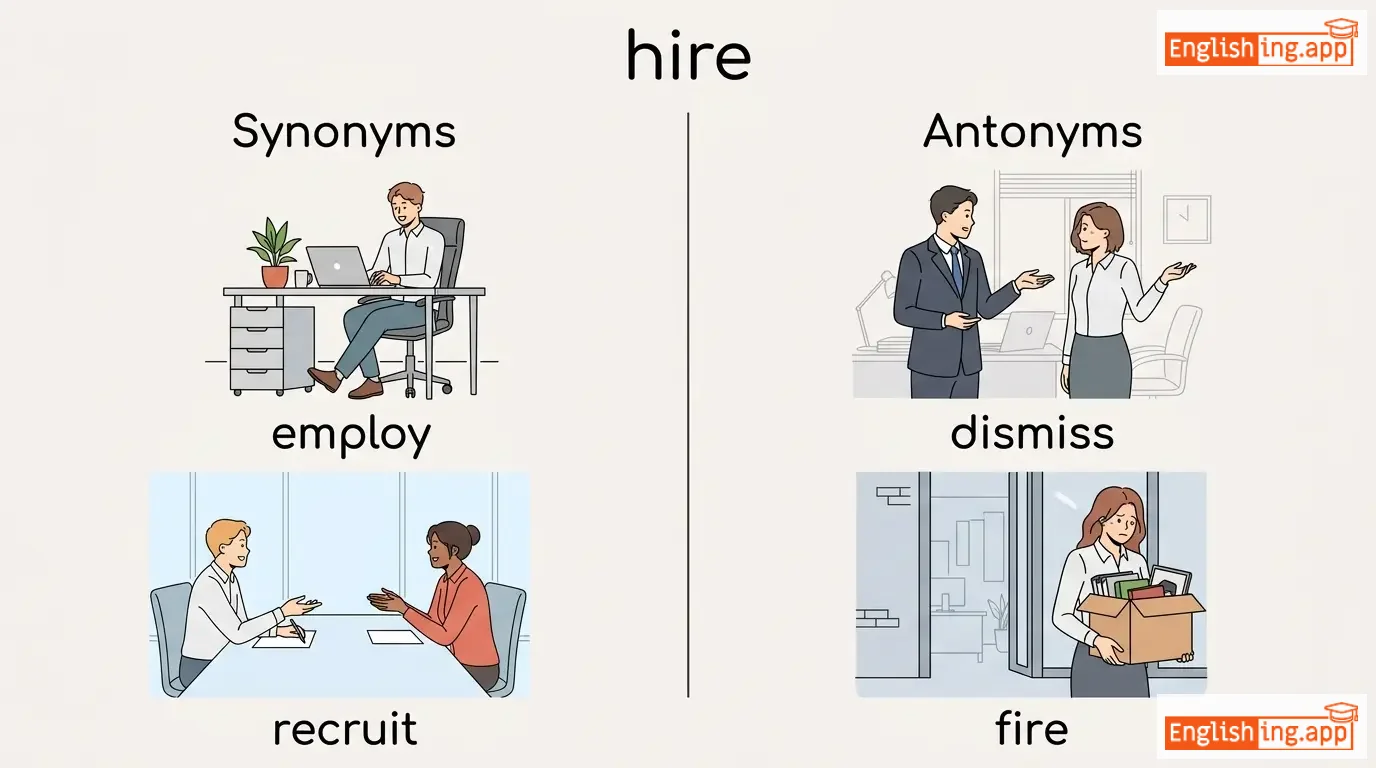
employ, recruit, appoint, engage, contract
••••••
|
dismiss, fire, discharge
••••••
|
hire staff, hire employees, hire a car, hire services
••••••
|
雇うは新しい人材をチームに迎えるようなものです。
••••••
|

