🏰heritage (ハピネス)

noun
/ˈhɛrɪtɪdʒ/
遺産 (isan)

意味

Valued objects and qualities such as historic buildings and cultural traditions passed down from previous generations.
features belonging to the culture of a particular society that are passed down from previous generations
Property that is or may be inherited; something transmitted by or acquired from a predecessor; cultural traditions and practices that are passed down.
意味の翻訳
歴史的な建物や文化的な伝統など、世代から世代へと受け継がれる価値のある物や特性。
Rekishi-teki na tatemono ya bunka-teki na dentō nado, sedai kara sedai e to uke tsugareru kachi no aru mono ya tokusei.

例文

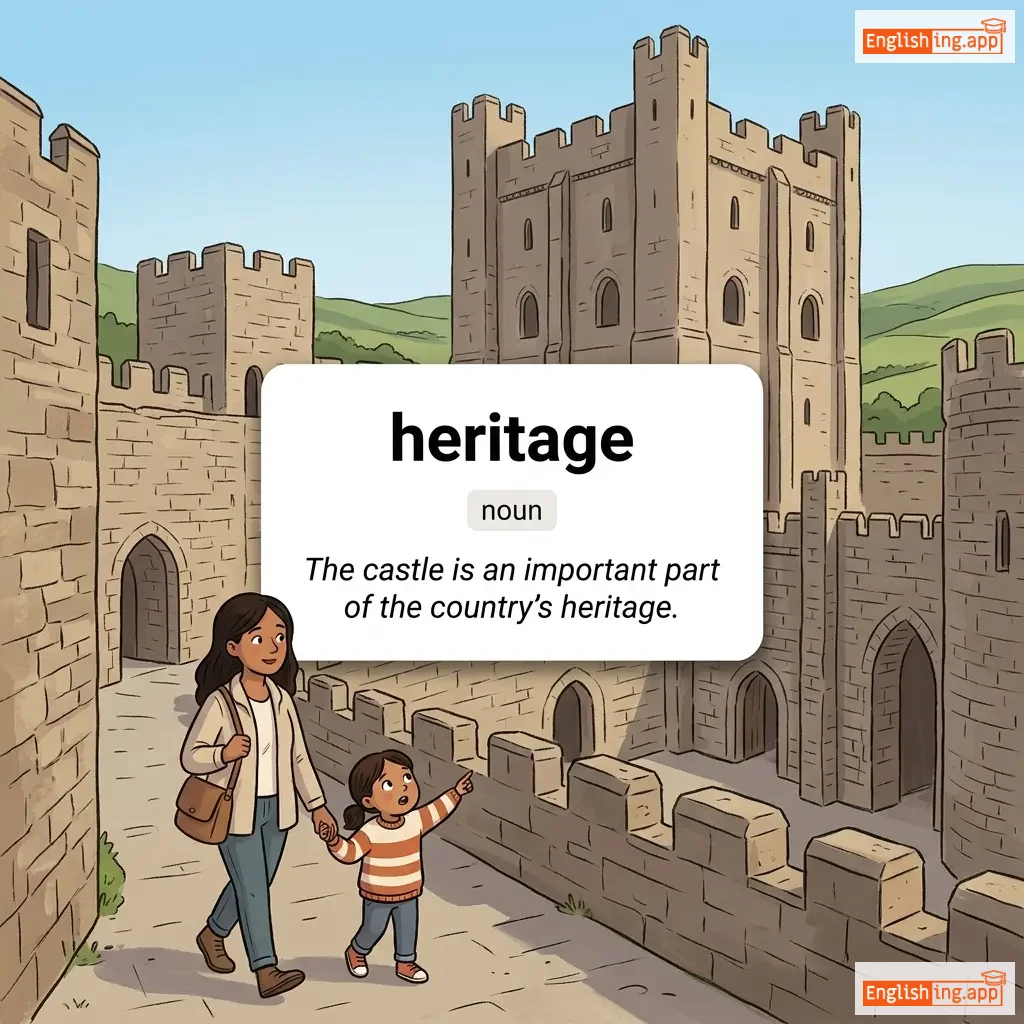
The castle is an important part of the country's heritage.

城はその国の遺産の重要な部分です。
Shiro wa sono kuni no isan no jūyō na bubun desu.

The ancient castle is an important part of the country's cultural heritage and attracts many tourists.

古代の城はその国の文化遺産の重要な部分であり、多くの観光客を魅了しています。
Kodai no shiro wa sono kuni no bunka isan no juuyou na bubun de ari, ooku no kankoukyaku o miryō shiteimasu.

Bangladesh has a rich cultural heritage.

バングラデシュには豊かな文化遺産があります。
Banguradeshuni wa yutakana bunka isan ga arimasu.

表現例

cultural heritage
文化遺産
bunka isan

同義語

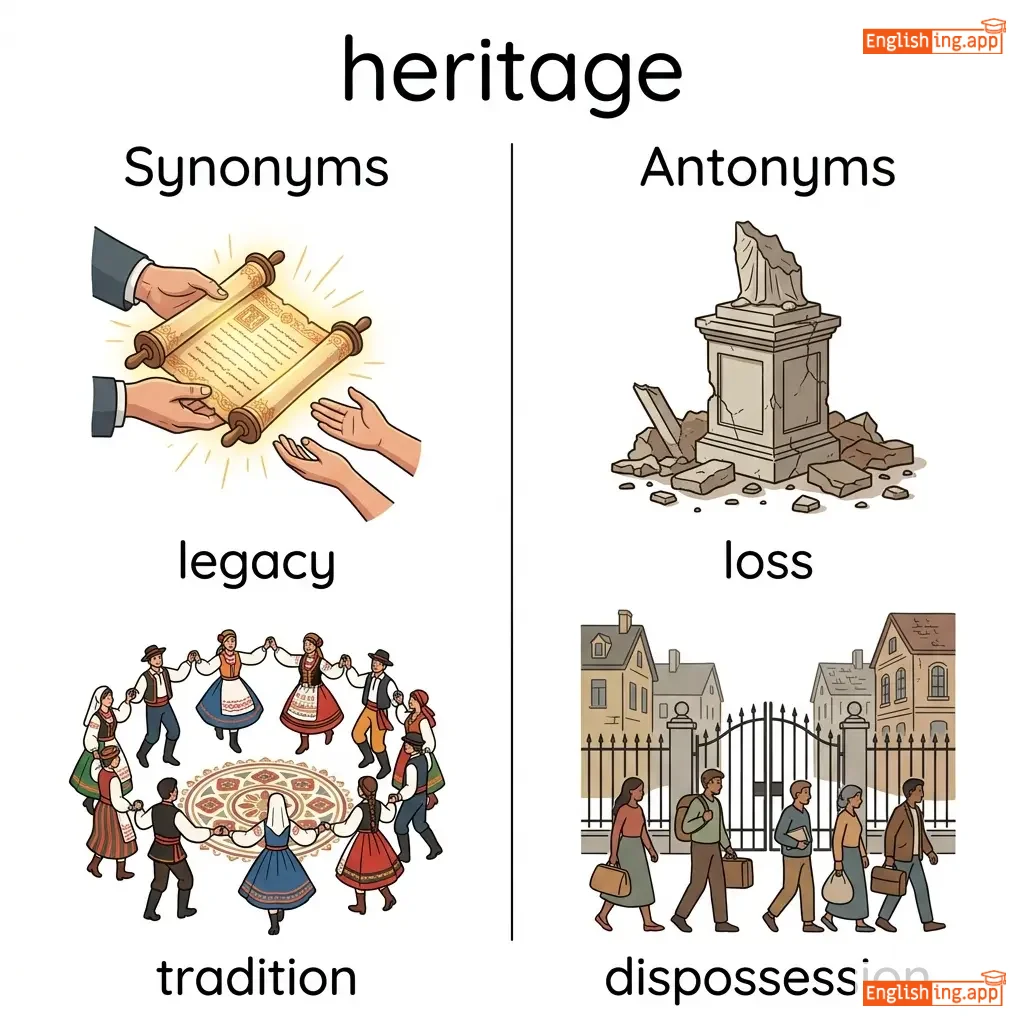
legacy, tradition, inheritance, patrimony, birthright, culture, Legacy, Tradition, Ancestry
エントリー 1
legacy, tradition, inheritance, patrimony, birthright
エントリー 2
tradition, legacy, inheritance, culture
エントリー 3
Legacy, Tradition, Ancestry

対義語

loss, dispossession, innovation, modernity, novelty, break from tradition, Disregard, Loss, Neglect
エントリー 1
loss, dispossession
エントリー 2
innovation, modernity, novelty, break from tradition
エントリー 3
Disregard, Loss, Neglect

コロケーション

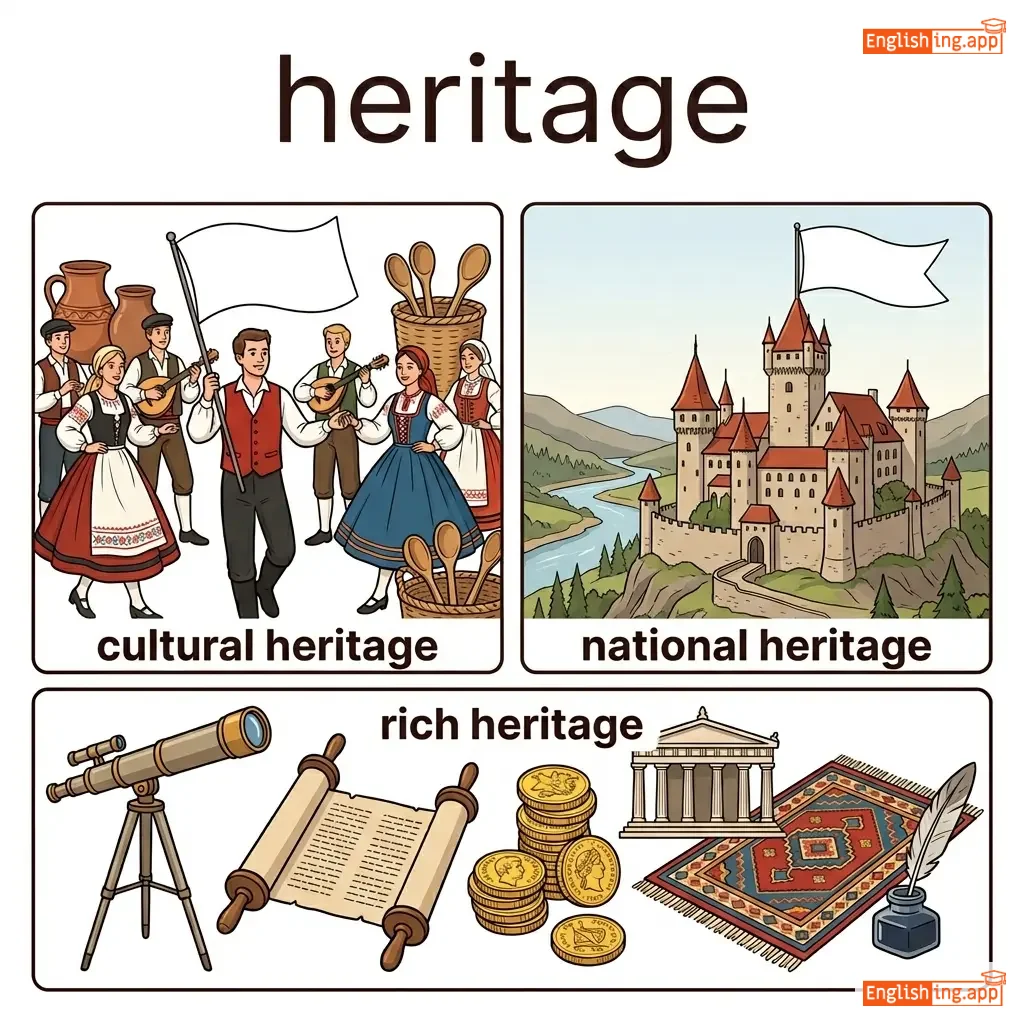
cultural heritage, national heritage, rich heritage, heritage site, world heritage
エントリー 1
cultural heritage, national heritage, rich heritage, heritage site
エントリー 2
cultural heritage, world heritage, heritage site

その他の例文

Is this place a UNESCO World Heritage Site?

この場所はユネスコの世界遺産ですか?
Kono basho wa Yunesuko no Sekai Isan desu ka?

The old building is treated as a heritage site.

その古い建物は遺産として扱われています。
Sono furui tatemono wa isan toshite atsukawarete imasu.

A woman cooks a traditional dish for a cultural festival that her community celebrates every year following a recipe passed down from her great-grandmother using spices and ingredients she finds at a specialty store and the kitchen fills with a rich, warm aroma that brings back childhood memories of family gatherings and she shares the food with her neighbors and friends who compliment the authentic flavor and ask for the recipe making her feel deeply connected to her heritage and traditions.

専門店で見つけたスパイスと食材を使い、曾祖母から受け継がれたレシピに従って、女性が、彼女のコミュニティが毎年祝う文化祭のために伝統料理を作り、キッチンは豊かで温かい香りで満たされ、家族の集まりの子供の頃の思い出が蘇り、彼女はその料理を近所の人や友人と分かち合い、彼らはその本物の味を褒めてレシピを尋ね、彼女は自分の伝統や文化との深いつながりを感じる。
Senmonten de mitsuketa supaisu to shokuzai wo tsukai, sousobo kara uketsugareta reshipi ni shitagatte, josei ga, kanojo no komyuniti ga mainen iwau bunkasai no tame ni dentou ryouri wo tsukuri, kicchin wa yutaka de atatakai kaori de mitasare, kazoku no atsumari no kodomo no koro no omoide ga yomigaeri, kanojo wa sono ryouri wo kinjo no hito ya yuujin to wakachiai, karera wa sono honmono no aji wo homete reshipi wo tazune, kanojo wa jibun no dentou ya bunka to no fukai tsunagari wo kanjiru

関連語彙

A person who believes that God exists as one entity rather than as a Trinity; a member of a religiou...
absence of law and order; a state where laws do not exist or are not enforced
a mass of tiny water droplets suspended in the atmosphere; gas formed from a liquid
A machine designed to convert energy into mechanical power.
The variety of life in the world or in a particular habitat or ecosystem.
A settled way of thinking or feeling about someone or something, often reflected in behavior.

さらに探索