

Обновитесь для доступа ко всему словарю
Получите неограниченный доступ ко всем словам с подпиской Pro
Обновить до ProПеревод
Прошедшее
Причастие прошедшего времени
Третье лицо единственного числа
Герундий
Значение
Пример предложения
Перевод примера предложения
Синонимы
Антонимы
Коллокации
Мнемоника




Swipe left or right, or use the buttons. Tap image to zoom.
Обновитесь для доступа ко всем предложениям
Получите неограниченный доступ ко всем предложениям с подпиской Pro
Обновить до ProПеревод примера предложения
Слово
Lesson 104Lesson 104 - Переключатель маски
|
Эмодзи
|
Слово | Images | Перевод | Прошедшее | Причастие прошедшего времени | Третье лицо единственного числа | Герундий | Значение | Пример предложения | Перевод примера предложения | Пример выражения | Значение примера выражения | Перевод примера выражения | Синонимы | Антонимы | Коллокации | Мнемоника |
|---|---|---|---|---|---|---|---|---|---|---|---|---|---|---|---|---|---|
|
#4925
🔄
|
/swɪtʃ/
verb
(svich)
••••••
|
|
переключить
perekljuchit'
••••••
|
switched
svičd
••••••
|
switched
svičd
••••••
|
switches
svičez
••••••
|
switching
svičing
••••••
|
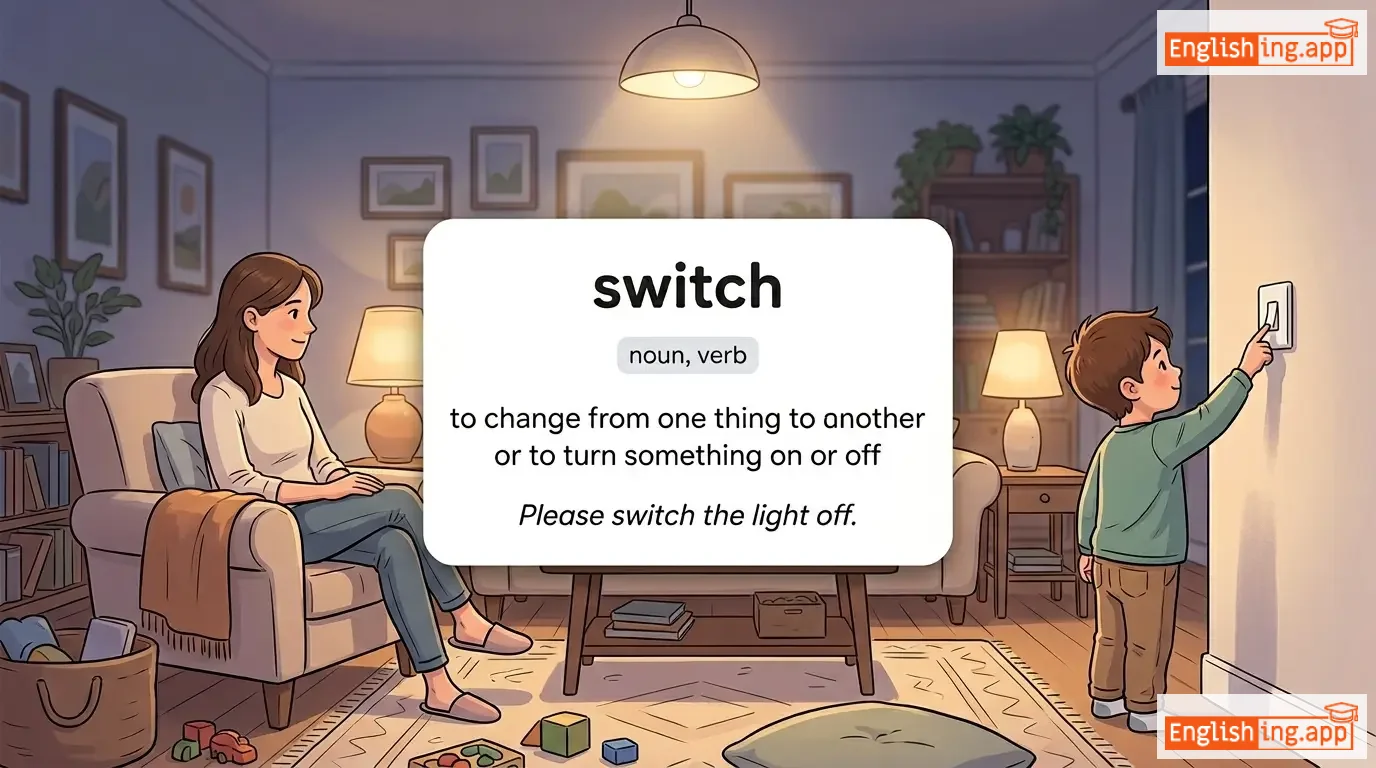
to change from one thing to another; to exchange or replace
••••••
|
I switched from coffee to tea.
Ja pereshël ot kofe k chayu.
••••••
|
Я переключился с кофе на чай.
Ya perekhodzil s kofe na chay.
••••••
|
- •••••• | - •••••• | - •••••• |
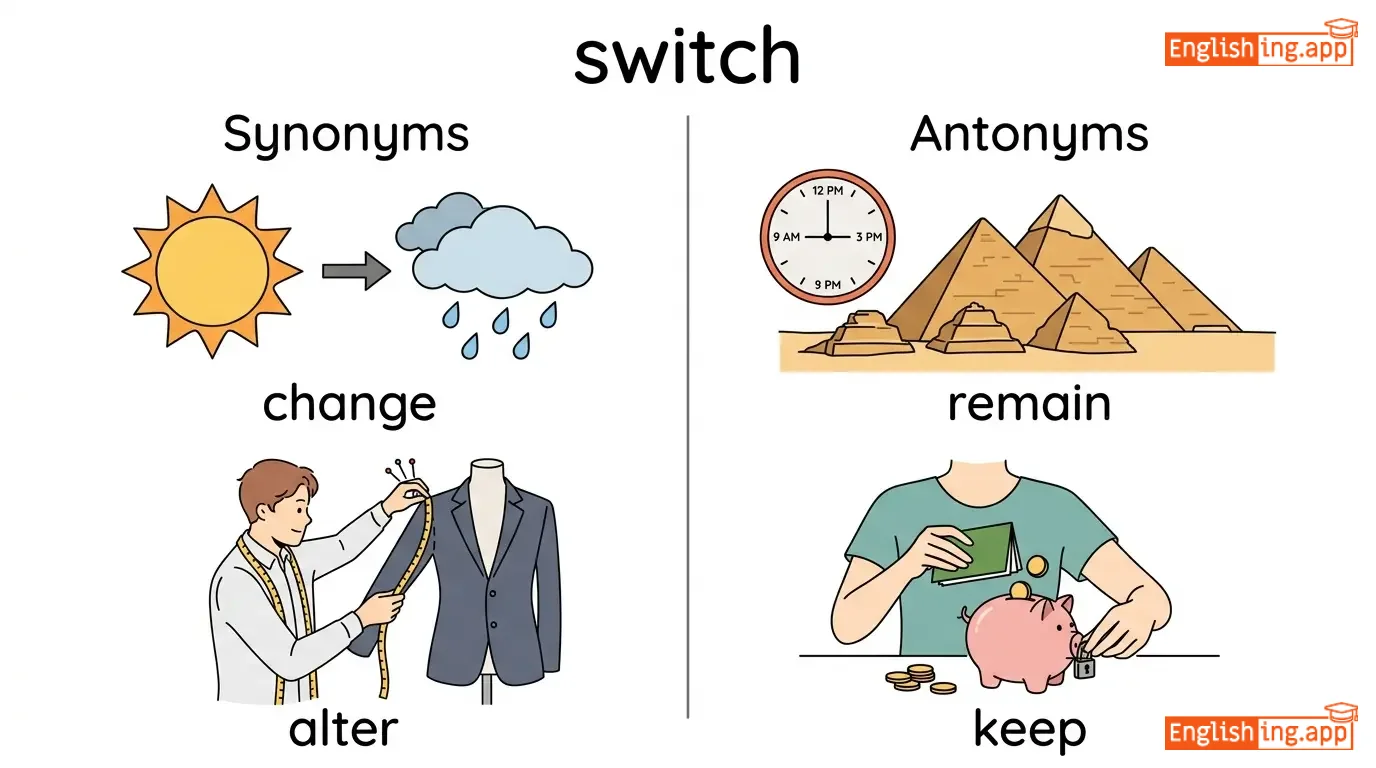
change, swap, exchange, shift
••••••
|
keep, maintain, stick
••••••
|
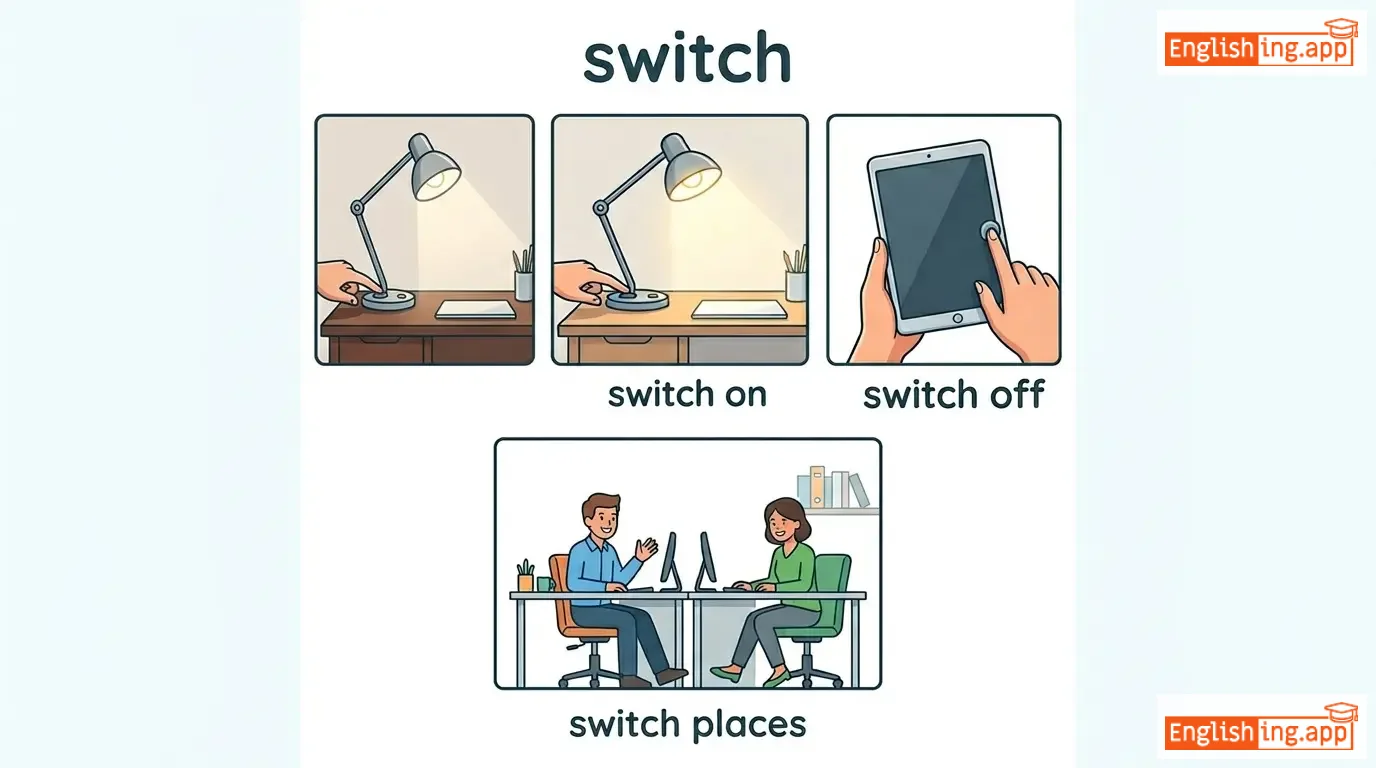
switch off, switch on, switch channels, switch jobs, switch sides
••••••
|
Переключи свой режим для изменений!
••••••
|
|
#4926
⚔️
|
/sɔːrd/
noun
(сворд)
••••••
|
- •••••• |
меч
mech
••••••
|
- •••••• | - •••••• | - •••••• | - •••••• |
a weapon with a long metal blade used for fighting
••••••
|
The knight drew his sword to defend the castle. |
Рыцарь вытащил свой меч, чтобы защитить замок.
Ritsar' vytashchil svoi mech, chtoby zashchitit' zamok.
••••••
|
cross swords |
to argue or fight with someone
••••••
|
скрещивать мечи
skreshchivat' mechi
••••••
|
blade, dagger, saber, weapon, cutlass
••••••
|
shield, peace
••••••
|
draw a sword, sharp sword, sword fight, sword blade
••••••
|
SWOrd = меч, бой с мечом!
••••••
|
|
#4927
🔣
|
/ˈsɪmbəl/
noun
(символ)
••••••
|
- •••••• |
символ
simvol
••••••
|
- •••••• | - •••••• | - •••••• | - •••••• |
a mark or character used as a conventional representation of an object, function, or process
••••••
|
The dove is a symbol of peace.
Голубь - это символ мира.
••••••
|
Голубь - это символ мира.
Golub' - eto simvol mira.
••••••
|
- •••••• | - •••••• | - •••••• |
sign, emblem, token, representation
••••••
|
reality, substance, literalness
••••••
|
symbol of peace, religious symbol, mathematical symbol, status symbol
••••••
|
Символ мира в виде голубя
••••••
|
|
#4928
🕊️
|
/sɪmˈbɒlɪk/
adjective
(символический)
••••••
|
- •••••• |
символический
simvolicheskiy
••••••
|
- •••••• | - •••••• | - •••••• | - •••••• |
serving as a symbol or representing something else
••••••
|
The dove is symbolic of peace and freedom.
Голубь символизирует мир и свободу.
••••••
|
Голубь символизирует мир и свободу.
Golub' simvoliziruet mir i svobodu.
••••••
|
symbolic gesture
символический жест
••••••
|
an action meant to show support or respect rather than to have practical effect
••••••
|
символический жест
simvolicheskiy zhest
••••••
|
representative, figurative, emblematic, metaphorical, indicative
••••••
|
literal, realistic, actual
••••••
|
symbolic meaning, symbolic gesture, symbolic act, symbolic representation
••••••
|
SYMBOL означает символ — так что символический означает в форме символа.
••••••
|
|
#4929
💙
|
/ˌsɪmpəˈθɛtɪk/
adjective
(симпатичный)
••••••
|
- •••••• |
симпатичный
simpatichnyy
••••••
|
- •••••• | - •••••• | - •••••• | - •••••• |
showing understanding or compassion for someone’s feelings or situation
••••••
|
She was very sympathetic when he lost his job.
Она была очень симпатичной, когда он потерял свою работу.
••••••
|
Она была очень симпатичной, когда он потерял свою работу.
Ona byla ochen' simpatichnoy, kogda on poteryal svoyu rabotu.
••••••
|
sympathetic ear
симпатичное ухо
••••••
|
a person who listens with kindness and understanding
••••••
|
симпатичное ухо
simpatichnoe ukho
••••••
|
compassionate, caring, kind, supportive, understanding
••••••
|
indifferent, unfeeling, unsympathetic
••••••
|
sympathetic attitude, sympathetic ear, sympathetic response, sympathetic character
••••••
|
Sympathy + pathetic = сочувствие к другим
••••••
|
|
#4930
💐
|
/ˈsɪmpəθi/
noun
(симпатия)
••••••
|
- •••••• |
симпатия
simpatiya
••••••
|
- •••••• | - •••••• | - •••••• | - •••••• |
feelings of pity and compassion for someone else's suffering
••••••
|
She expressed her sympathy for the grieving family.
Она выразила свои соболезнования семье, переживающей утрату.
••••••
|
Она выразила свои соболезнования семье, переживающей утрату.
Ona vyrazilasvoi soboleznovaniya sem'e, perezhivayushchey utratu.
••••••
|
deep sympathy
глубокая симпатия
••••••
|
strong feelings of compassion
••••••
|
глубокая симпатия
glubokaya simpatiya
••••••
|
compassion, pity, condolence, understanding
••••••
|
indifference, apathy
••••••
|
express sympathy, offer sympathy, deep sympathy, sympathy card
••••••
|
Sympathy = Sim + Pathiya → Sim разбитое сердце = симпатия
••••••
|
|
#4931
🤒
|
/ˈsɪmptəm/
noun
(симптом)
••••••
|
- •••••• |
симптом
simptom
••••••
|
- •••••• | - •••••• | - •••••• | - •••••• |
a sign or indication of something, especially of an illness
••••••
|
Fever is a common symptom of the flu. |
Лихорадка — это обычный симптом гриппа.
Likhoreadka – eto obychnyy simptom grippa.
••••••
|
- •••••• | - •••••• | - •••••• |
sign, indication, manifestation, mark
••••••
|
health, wellness
••••••
|
symptom of illness, common symptom, early symptom
••••••
|
Symptom like fever: You feel sick (болен) when you're ill!
••••••
|
|
#4932
🧬
|
/ˈsɪnˌdroʊm/
noun
(синдром)
••••••
|
- •••••• |
синдром
sindrom
••••••
|
- •••••• | - •••••• | - •••••• | - •••••• |
a group of symptoms that occur together and characterize a condition or disease
••••••
|
Down syndrome affects a person's physical and mental development. |
Синдром Дауна влияет на физическое и умственное развитие человека.
Sindrom Dauna vliyayet na fizicheskoe i umstvennoe razvitie cheloveka.
••••••
|
- •••••• | - •••••• | - •••••• |
disorder, condition, ailment, illness, disease
••••••
|
health, wellness
••••••
|
Down syndrome, chronic syndrome, severe syndrome, rare syndrome
••••••
|
SYN = вместе, DROME = ходить — много симптомов идут вместе = синдром!
••••••
|
|
#4933
⚗️
|
/ˈsɪnθəsɪs/
noun
••••••
|
|
- •••••• | - •••••• | - •••••• | - •••••• | - •••••• |
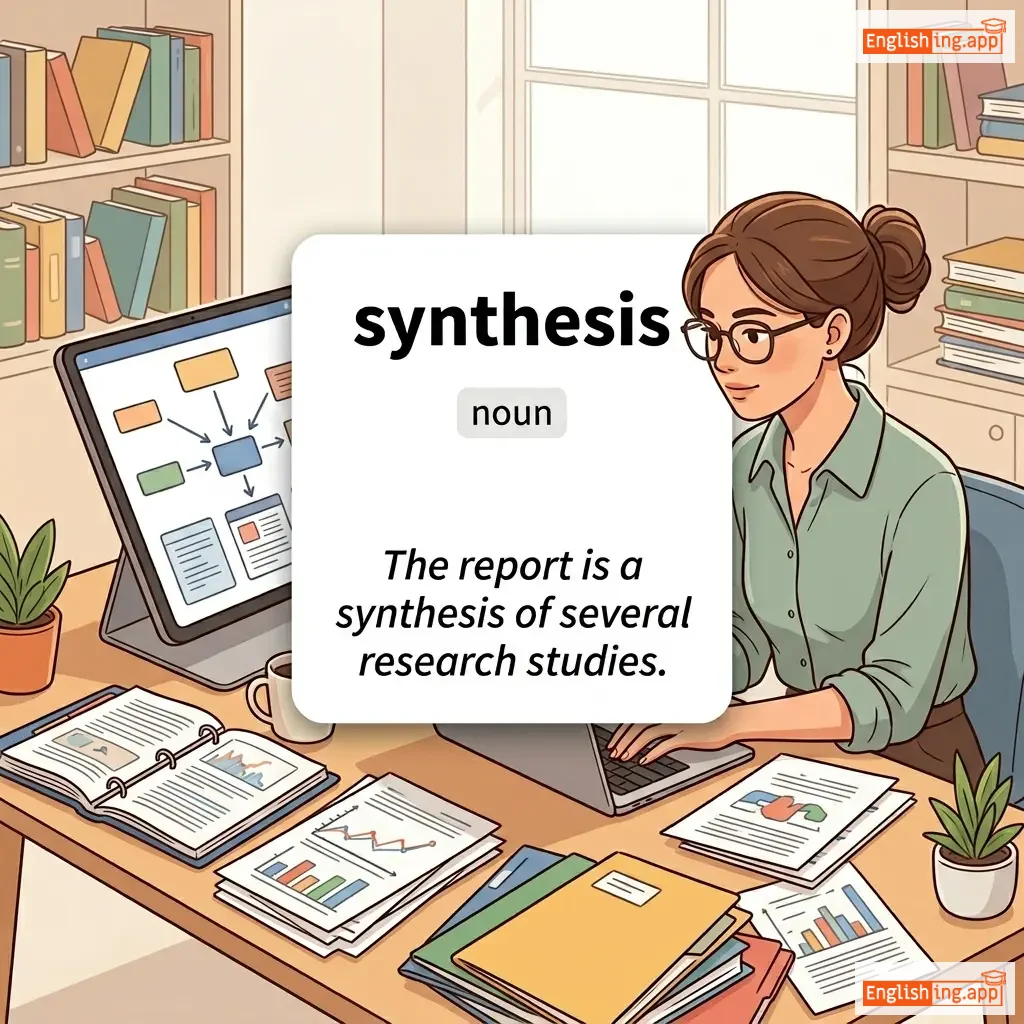
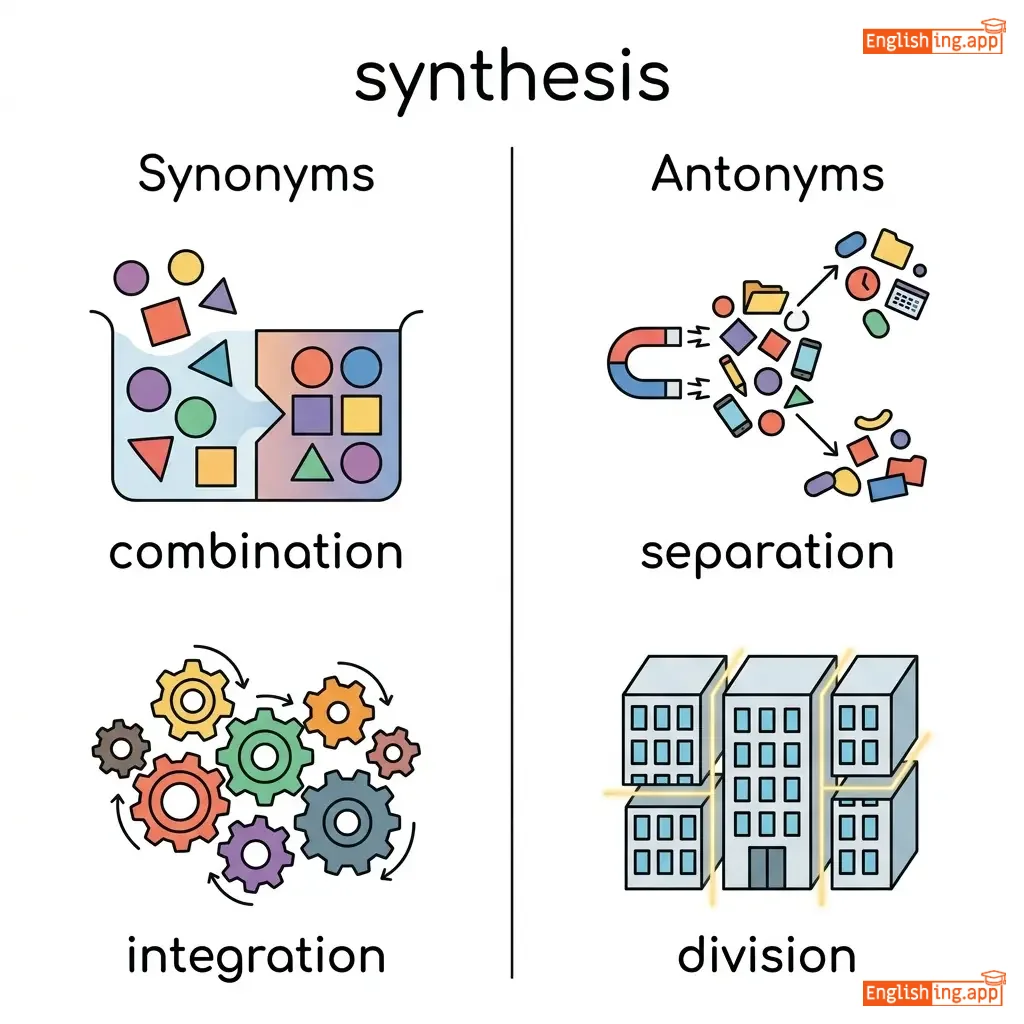
The combination of different ideas, elements, or substances into a coherent whole.
••••••
|
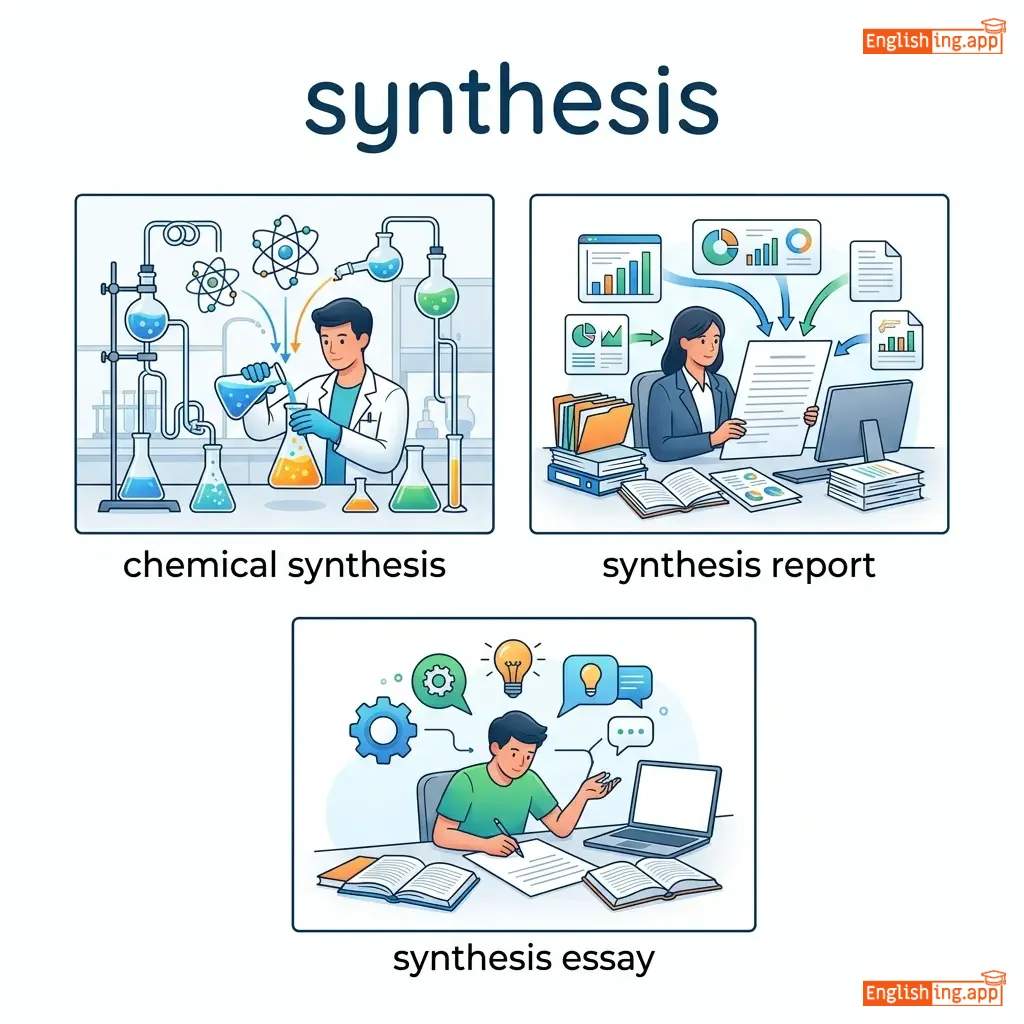
The report is a synthesis of several research studies. |
- •••••• |
thesis-antithesis-synthesis |
A philosophical framework where opposing ideas resolve into a new understanding.
••••••
|
- •••••• |
combination, integration, fusion, amalgamation, unification
••••••
|
separation, division, analysis
••••••
|
chemical synthesis, synthesis report, synthesis essay, data synthesis
••••••
|
No •••••• |
|
#4934
🖥️
|
/ˈsɪstəm/
noun
(систем)
••••••
|
- •••••• |
система
sistema
••••••
|
- •••••• | - •••••• | - •••••• | - •••••• |
a set of connected parts forming a complex whole; an organized method
••••••
|
The education system needs major reforms. |
Образовательная система нуждается в серьезных реформах.
Obrazovatel'naya sistema nuzhdaetsya v seryoznykh reformakh.
••••••
|
systematic approach |
an organized and methodical way
••••••
|
систематический подход
sistematicheskiy podkhod
••••••
|
structure, organization, framework, network
••••••
|
disorder, chaos
••••••
|
education system, computer system, political system, solar system
••••••
|
Система = система, как 'Солнечная система', система планет
••••••
|
|
#4935
📊
|
/ˌsɪstəˈmætɪk/
adjective
(sistematik)
••••••
|
- •••••• |
систематический
sistematicheskiy
••••••
|
- •••••• | - •••••• | - •••••• | - •••••• |
Done or acting according to a fixed plan or system; methodical.
••••••
|
The company took a systematic approach to solving the issue. |
Компания использовала систематический подход для решения проблемы.
Kompaniya ispol'zovala sistematicheskiy podkhod dlya resheniya problemy.
••••••
|
systematic error |
An error that consistently occurs in the same direction due to flaws in a system.
••••••
|
систематическая ошибка
sistematicheskaya oshibka
••••••
|
methodical, organized, structured, logical, disciplined
••••••
|
random, chaotic, disorganized
••••••
|
systematic review, systematic study, systematic approach, systematic plan
••••••
|
Систематически означает делать все по системе.
••••••
|
|
#4936
🍽️
|
/ˈteɪbəl/
noun
(тэ́йбл)
••••••
|
- •••••• |
стол
stol
••••••
|
- •••••• | - •••••• | - •••••• | - •••••• |
A piece of furniture with a flat top and legs, used for working at or placing items on.
••••••
|
They placed the documents on the table. |
Они положили документы на стол.
Oni polozhili dokumenty na stol.
••••••
|
turn the tables |
To reverse a situation and gain an advantage over someone.
••••••
|
перевернуть ситуацию
perevernut' situatsiyu
••••••
|
desk, counter, bench, surface
••••••
|
floor, ground
••••••
|
dining table, coffee table, round table, table manners
••••••
|
Положи всё на стол (stol) и 'переверни ситуацию' – измени ход событий.
••••••
|
|
#4937
🥄
|
/ˈteɪbəlˌspun/
noun
(столовая ложка)
••••••
|
- •••••• |
столовая ложка
stolovaya lozhka
••••••
|
- •••••• | - •••••• | - •••••• | - •••••• |
a spoon used for serving or eating food, typically holding about 15 milliliters
••••••
|
She stirred the soup with a tablespoon.
Она размешала суп столовой ложкой.
••••••
|
Она размешала суп столовой ложкой.
Ona razmeshala sup stolovoy lozhkoy.
••••••
|
- •••••• | - •••••• | - •••••• |
soup spoon, serving spoon
••••••
|
teaspoon, fork
••••••
|
tablespoon of sugar, tablespoon of salt, a full tablespoon
••••••
|
Ложка для еды (lozhka dlya yedy) - Imagine stirring the soup with a spoon.
••••••
|
|
#4938
💊
|
/ˈtæblət/
noun
(таблит)
••••••
|
- •••••• |
планшет; таблетка
tablit
••••••
|
- •••••• | - •••••• | - •••••• | - •••••• |
a small flat computer or a small solid dose of medicine
••••••
|
She took a tablet to relieve her headache.
ши тук а таблит ту релиив хер хэдэйк.
••••••
|
Она приняла таблетку, чтобы снять головную боль.
Ona prinyala tabletku chtoby snyat golovnuyu bol.
••••••
|
- •••••• | - •••••• | - •••••• |
pill, pad, slate, device
••••••
|
capsule, injection
••••••
|
take a tablet, tablet device, tablet computer, tablet form
••••••
|
таблит = tab + lit, таблит запоминай: tab для планшета и lit для таблетки
••••••
|
|
#4939
⚡
|
/ˈtæk.əl/
verb, noun
••••••
|
- •••••• | - •••••• |
tackled
••••••
|
tackled
••••••
|
tackles
••••••
|
tackling
••••••
|
to try to deal with or solve a difficult problem; to physically stop someone in sports by knocking them down
••••••
|
The coach taught the players how to tackle properly. |
- •••••• |
tackle a problem |
to deal with or try to solve a problem
••••••
|
- •••••• |
confront, address, handle, seize, wrestle
••••••
|
avoid, ignore, neglect
••••••
|
tackle a challenge, tackle crime, tackle poverty, tackle an issue
••••••
|
No •••••• |
|
#4940
🎯
|
/ˈtæk.tɪk/
noun
(тактика)
••••••
|
- •••••• |
тактика; стратегия
taktika; strategiia
••••••
|
- •••••• | - •••••• | - •••••• | - •••••• |
a plan or method for achieving something; a strategy used to accomplish a goal
••••••
|
The coach used a new tactic to win the game. |
Тренер использовал новую тактику, чтобы выиграть игру.
Trener ispol'zoval novuyu taktiku, chtoby viigrat' igru.
••••••
|
- •••••• | - •••••• | - •••••• |
strategy, approach, method, plan, technique
••••••
|
improvisation, spontaneity
••••••
|
military tactic, defensive tactic, clever tactic, winning tactic
••••••
|
Команде нужна тактика, чтобы выиграть игру.
••••••
|
|
#4941
🎯
|
/ˈtæktɪkəl/
adjective
(тактический)
••••••
|
- •••••• |
связанный с тактикой
svyazannyy s taktika
••••••
|
- •••••• | - •••••• | - •••••• | - •••••• |
relating to or involving tactics or strategy
••••••
|
The team had a tactical plan for the final match. |
У команды был тактический план на последний матч.
U komandy byl takticheskiy plan na posledniy match.
••••••
|
- •••••• | - •••••• | - •••••• |
strategic, planned, calculated, methodical
••••••
|
spontaneous, unplanned
••••••
|
tactical approach, tactical advantage, tactical strategy
••••••
|
Tactical - как ‘тактика’ – нужно быть тактичным, чтобы разработать лучшую стратегию.
••••••
|
|
#4942
🏷️
|
/tæɡ/
noun, verb
••••••
|
- •••••• | - •••••• |
tagged
••••••
|
tagged
••••••
|
tags
••••••
|
tagging
••••••
|
a label attached to something for identification or information; or to attach such a label
••••••
|
She tagged her luggage before boarding the plane. |
- •••••• |
tag along |
to go somewhere with someone, often without being invited
••••••
|
- •••••• |
label, marker, ticket, sticker, mark
••••••
|
remove, detach
••••••
|
price tag, luggage tag, tag along, tag a photo
••••••
|
No •••••• |
|
#4943
🐕
|
/teɪl/
noun
(teyl)
••••••
|
- •••••• |
хвост
khvost
••••••
|
- •••••• | - •••••• | - •••••• | - •••••• |
the rear part of an animal that extends from the back or bottom
••••••
|
The dog wagged its tail happily when it saw its owner. |
Собака радостно махала хвостом, когда увидела своего хозяина.
Sobaka radostno makhala khvostom, kogda uvidela svoego khozyaina.
••••••
|
- •••••• | - •••••• | - •••••• |
rear, end, appendage
••••••
|
head, front
••••••
|
dog tail, long tail, wagging tail, tail feathers
••••••
|
Khvost = tail in Russian, and both wag happily!
••••••
|
|
#4944
🚌
|
/teɪk/
verb
(teik)
••••••
|
|
взять
vzyat
••••••
|
took
tuk
••••••
|
taken
teiken
••••••
|
takes
teiks
••••••
|
taking
teiking
••••••
|
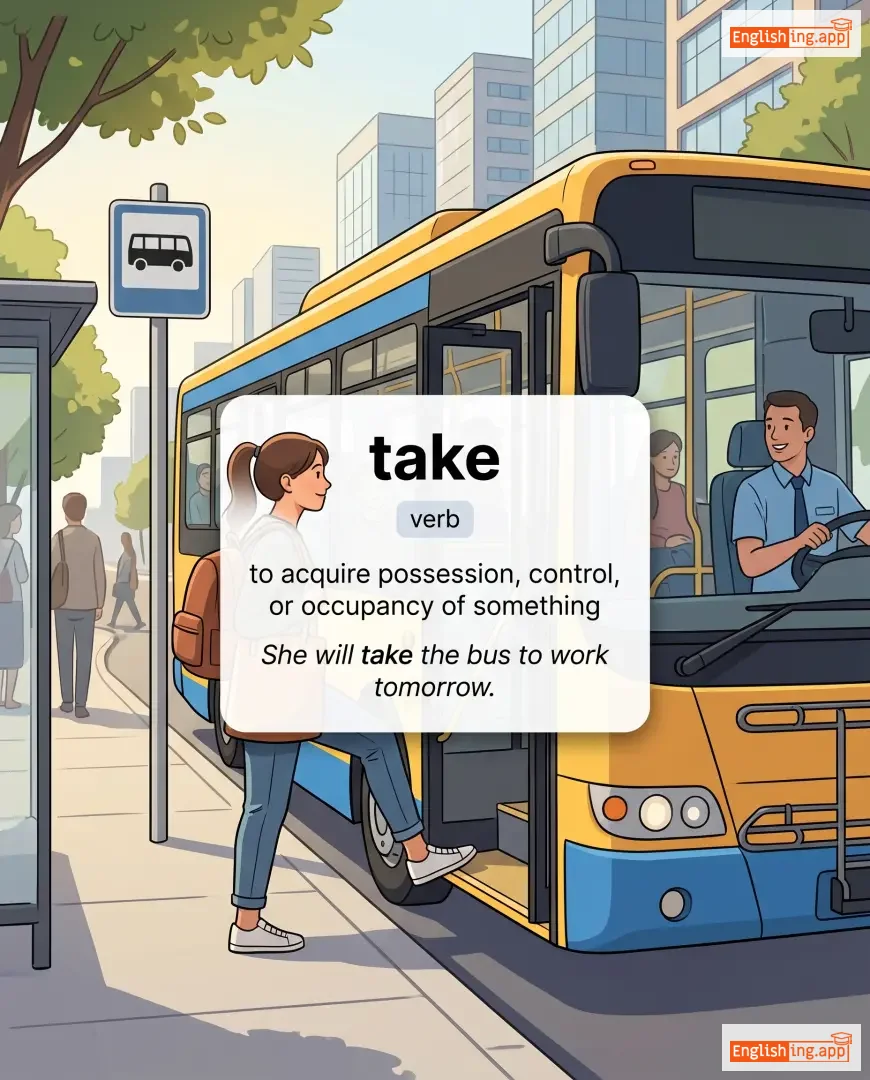
to acquire possession, control, or occupancy of something
••••••
|
She will take the bus to work tomorrow.
Она возьмет автобус на работу завтра.
••••••
|
Она возьмет автобус на работу завтра.
Ona voz'met avtobus na rabotu zavtra.
••••••
|
take advantage of
воспользоваться
••••••
|
to exploit or make good use of an opportunity
••••••
|
воспользоваться
vospol'zovatsya
••••••
|
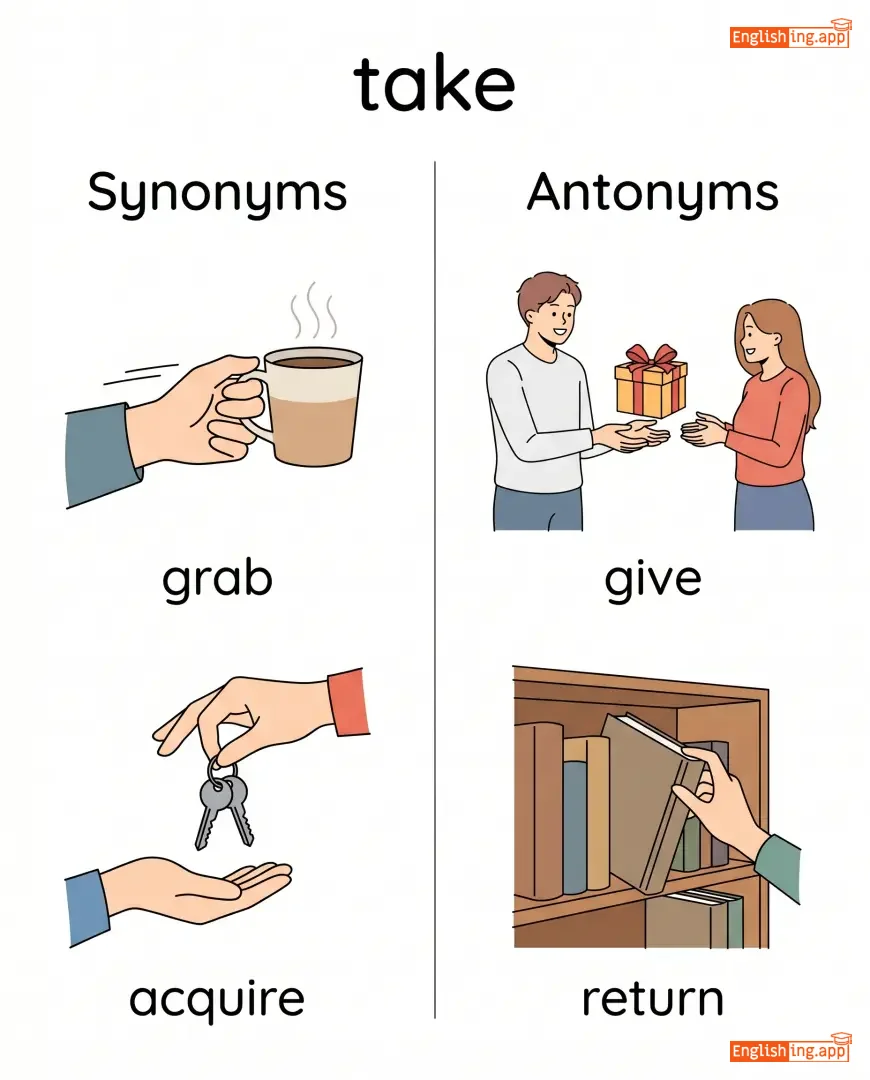
grab, acquire, seize, accept
••••••
|
give, return, release
••••••
|
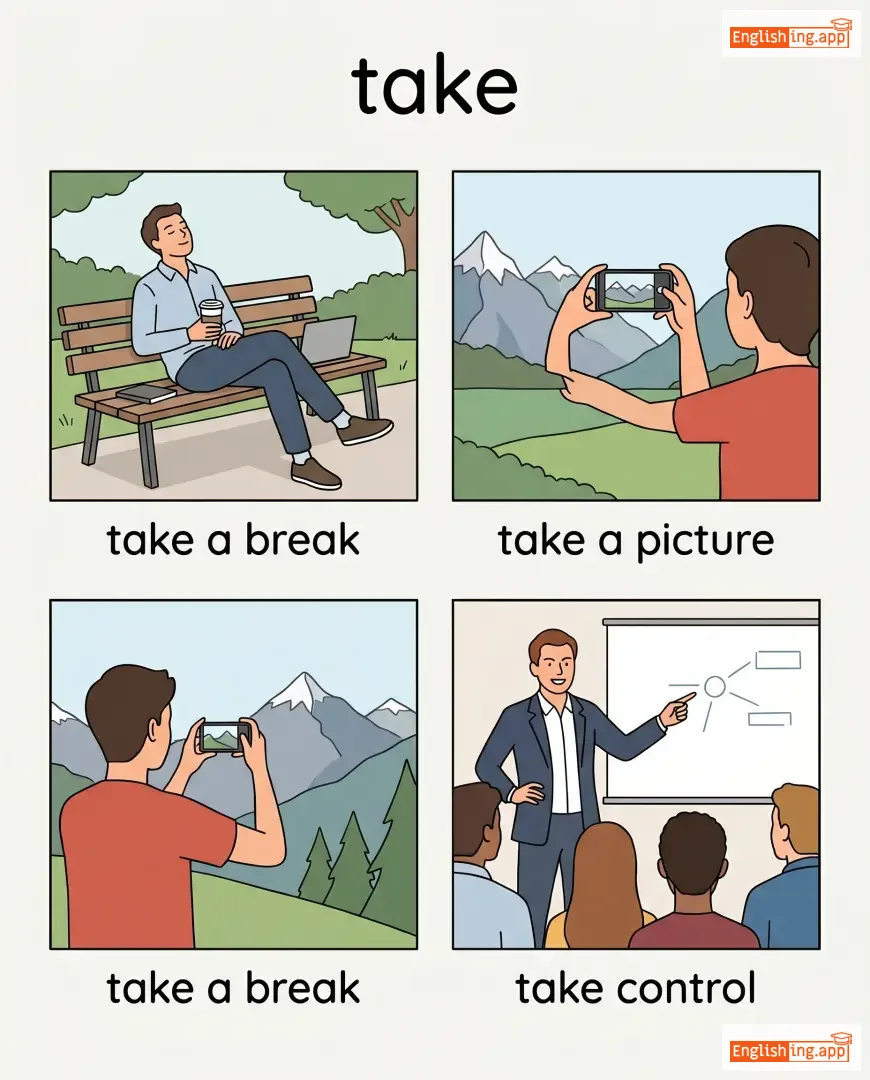
take a break, take a picture, take control
••••••
|
Если ты возьмешь (take), то получишь - If you take it, you will have it.
••••••
|
|
#4945
🛫
|
/teɪk ɒf/
verb
(тейк оф)
••••••
|
- •••••• |
снимать; взлетать
snimat; vzletat
••••••
|
took off
тук оф
••••••
|
taken off
тейкен оф
••••••
|
takes off
тейкс оф
••••••
|
taking off
тейкинг оф
••••••
|
to remove something; to leave the ground and begin flying (airplane); to suddenly become successful or popular
••••••
|
The airplane will take off in ten minutes.
Самолет взлетит через десять минут.
••••••
|
Самолет взлетит через десять минут.
Samolyot vzletit cherez desyat minut.
••••••
|
take off like a rocket
взлететь как ракета
••••••
|
to suddenly become very successful or popular
••••••
|
внезапно стать успешным
vnezapno stat uspeshnym
••••••
|
depart, leave, lift off, remove, ascend
••••••
|
land, arrive, stay
••••••
|
take off clothes, take off rapidly, take off plane, take off career
••••••
|
Take off = взлетать, как самолет поднимается в небо!
••••••
|
|
#4946
📖
|
/teɪl/
noun
(тэйл)
••••••
|
- •••••• |
рассказ
rasskaz
••••••
|
- •••••• | - •••••• | - •••••• | - •••••• |
a narrative of imaginary events, especially one that is presented as true
••••••
|
The old man told a tale of his adventures. |
Старик рассказал рассказ о своих приключениях.
Starik rasskazal rasskaz o svoikh priklyucheniyakh.
••••••
|
tall tale |
an exaggerated story, often one that is not true
••••••
|
преувеличенная история
preuvelichennaya istoriya
••••••
|
story, narrative, legend, fable
••••••
|
fact, truth
••••••
|
fairy tale, tall tale, bedtime tale
••••••
|
рассказ (rasskaz) сказан из воображения - A tale told from imagination
••••••
|
|
#4947
🎨
|
/ˈtælənt/
noun
(тэ-лэнт)
••••••
|
- •••••• |
талант
talant
••••••
|
- •••••• | - •••••• | - •••••• | - •••••• |
natural aptitude or skill
••••••
|
She has a great talent for painting.
У неё есть большой талант к живописи.
••••••
|
У неё есть большой талант к живописи.
U nee yest' bol'shoy talant k zhivopisi.
••••••
|
- •••••• | - •••••• | - •••••• |
ability, skill, gift, knack, expertise
••••••
|
incompetence, ineptitude, inability
••••••
|
natural talent, artistic talent, hidden talent, raw talent
••••••
|
Talented artists create TALENTS, like painting!
••••••
|
|
#4948
⭐
|
/ˈtæl.ən.tɪd/
adjective
(тэл.эн.тэд)
••••••
|
- •••••• |
талантливый/талантливая
talantlivyj/talantlivaya
••••••
|
- •••••• | - •••••• | - •••••• | - •••••• |
having a natural ability or skill in a particular area
••••••
|
She is a talented musician who plays multiple instruments.
Она талантливый музыкант, который играет на нескольких инструментах.
••••••
|
Она талантливый музыкант, который играет на нескольких инструментах.
Ona talantlivyj muzykant, kotoryj igrajet na neskol'kikh instrumentakh.
••••••
|
- •••••• | - •••••• | - •••••• |
gifted, skilled, accomplished, capable
••••••
|
untalented, inept, incompetent, unskilled
••••••
|
talented artist, talented performer, talented individual
••••••
|
‘Талант’ (talant) и ‘талантливый’ (talantlivyj) означают, что кто-то обладает природным талантом.
••••••
|
|
#4949
💬
|
/tɔːk/
verb
(ток)
••••••
|
|
говорить
govorit
••••••
|
talked
токд
••••••
|
talked
токд
••••••
|
talks
токс
••••••
|
talking
токинг
••••••
|
to speak; to communicate by speaking; to discuss
••••••
|
Let's talk about your future plans.
летс ток абаут ёр фьючер планс.
••••••
|
Давайте поговорим о ваших планах на будущее.
Davayte pogovorim o vashikh planakh na budushchee
••••••
|
- •••••• | - •••••• | - •••••• |
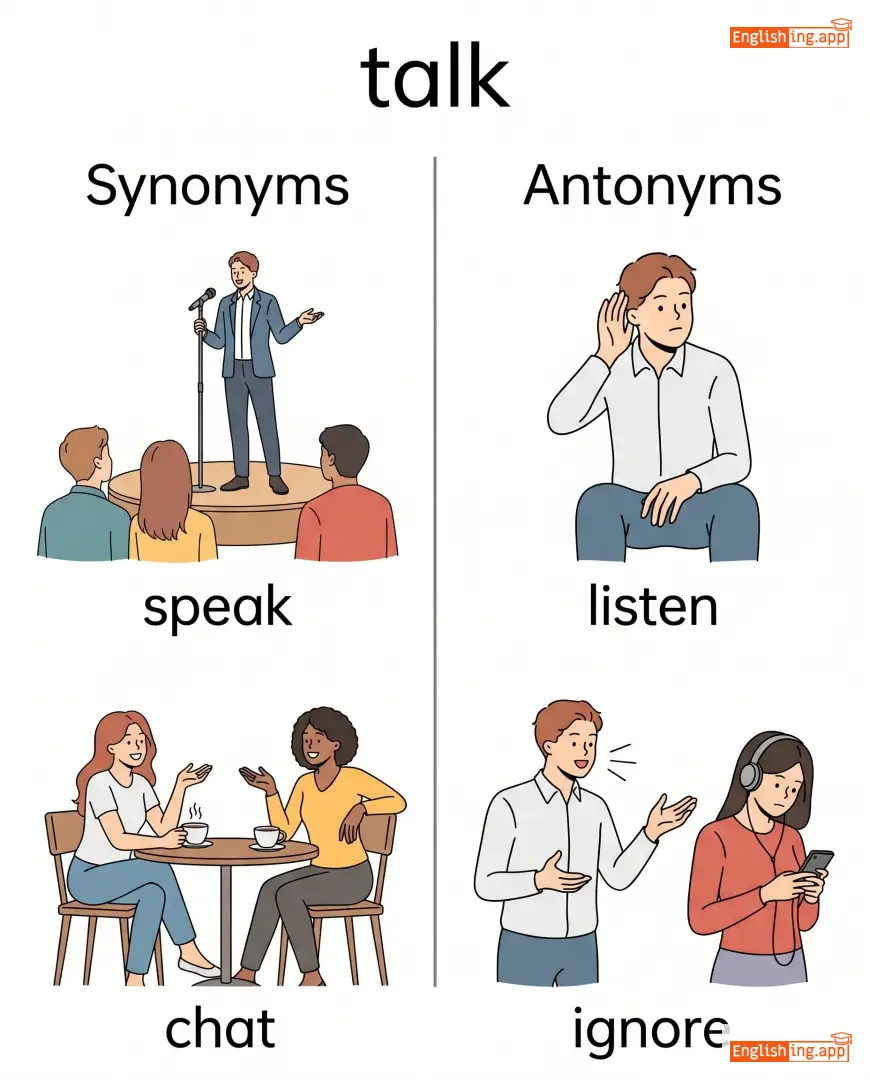
speak, communicate, converse, discuss
••••••
|
listen, be silent, stay quiet
••••••
|
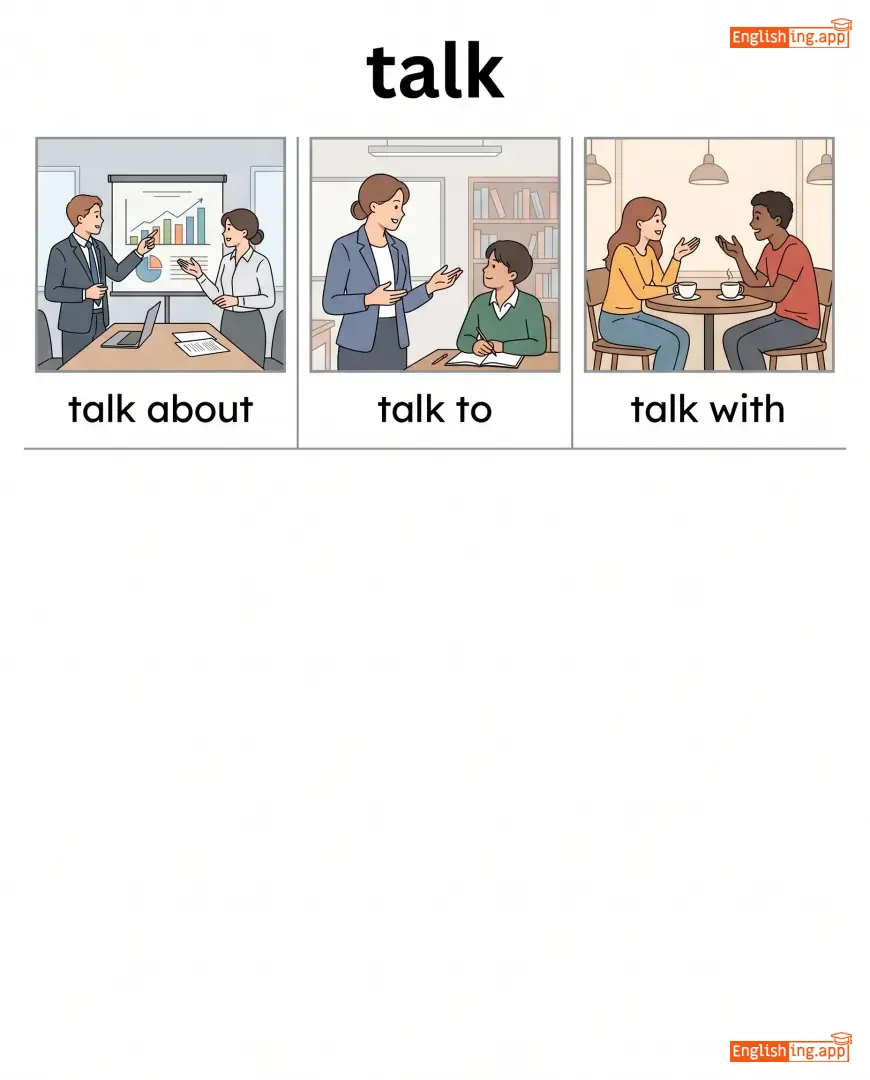
talk about, talk to, talk over, small talk, talk shop
••••••
|
No •••••• |
|
#4950
🗣️
|
/ˈtɔː.kə.tɪv/
adjective
(ток-атив)
••••••
|
- •••••• |
болтливый
boltlivyy
••••••
|
- •••••• | - •••••• | - •••••• | - •••••• |
fond of talking; speaking freely and at length
••••••
|
My talkative neighbor loves to chat about everything. |
Мой болтливый сосед любит обсуждать всё на свете.
Moy boltlivyy sosed lyubit obshchatsya vse na svete.
••••••
|
- •••••• | - •••••• | - •••••• |
chatty, verbose, loquacious, garrulous
••••••
|
quiet, silent, reserved, taciturn
••••••
|
talkative person, talkative mood, talkative nature
••••••
|
Болтливый — от слова 'болтать', что означает говорить много.
••••••
|
|
#4951
📏
|
/tɔːl/
adjective
(тол)
••••••
|
- •••••• |
высокий
vysokiy
••••••
|
- •••••• | - •••••• | - •••••• | - •••••• |
having a greater than average height
••••••
|
He is the tallest player on the team. |
Он самый высокий игрок в команде.
On samyy vysokiy igrok v komande.
••••••
|
tall order |
a difficult or challenging task
••••••
|
трудная задача
trudnaya zadacha
••••••
|
high, lofty, towering, elevated
••••••
|
short, small, low
••••••
|
tall building, tall person, tall story, tall tree
••••••
|
Tall значит высокий, как башня.
••••••
|
|
#4952
🚙
|
/tæŋk/
noun
••••••
|
- •••••• | - •••••• | - •••••• | - •••••• | - •••••• | - •••••• |
a large, heavy military vehicle that moves on tracks and is armed with weapons
••••••
|
The army sent tanks to the front lines. |
- •••••• | - •••••• | - •••••• | - •••••• |
armored vehicle, combat vehicle, war machine
••••••
|
car, bicycle
••••••
|
military tank, battle tank, army tank
••••••
|
No •••••• |
|
#4953
🔨
|
/tæp/
verb
(тап)
••••••
|
- •••••• |
постучать
postuchat
••••••
|
tapped
таппед
••••••
|
tapped
таппед
••••••
|
taps
тапс
••••••
|
tapping
таппинг
••••••
|
to strike something lightly, usually with a quick, sharp sound
••••••
|
He tapped on the door to get her attention.
Он постучал в дверь, чтобы привлечь её внимание.
••••••
|
Он постучал в дверь, чтобы привлечь её внимание.
On postuchal v dver', chtoby privlech' yeye vnimanie.
••••••
|
- •••••• | - •••••• | - •••••• |
knock, hit, strike, pat
••••••
|
slam, pound
••••••
|
tap on, tap the table, tap gently
••••••
|
Постучать в дверь: постучи, чтобы привлечь внимание!
••••••
|
|
#4954
📼
|
/teɪp/
noun
(teyp)
••••••
|
- •••••• |
скотч
skotch
••••••
|
- •••••• | - •••••• | - •••••• | - •••••• |
a long, narrow strip of material, often sticky on one side, used for fastening or sticking things together
••••••
|
I need some tape to seal this box. |
Мне нужно немного скотча, чтобы запечатать эту коробку.
Mne nuzhno nemnogo skotcha, chtoby zapechatat' etu korobku.
••••••
|
- •••••• | - •••••• | - •••••• |
adhesive, sticky tape, masking tape, sellotape
••••••
|
scissors, unstick
••••••
|
scotch tape, masking tape, duct tape, adhesive tape
••••••
|
Tape it up to seal it tight!
••••••
|
|
#4955
📝
|
/tɑːsk/
noun
(тæск)
••••••
|
- •••••• |
задача
zadacha
••••••
|
- •••••• | - •••••• | - •••••• | - •••••• |
a piece of work or duty to be done
••••••
|
He completed the task before the deadline.
Он завершил задачу до срока.
••••••
|
Он завершил задачу до срока.
On zavershil zadachu do sroka.
••••••
|
- •••••• | - •••••• | - •••••• |
job, duty, assignment, chore
••••••
|
neglect, inactivity
••••••
|
complete a task, task manager, important task
••••••
|
TASK - Представьте список маленьких 'задач', которые вы должны выполнить в день.
••••••
|
|
#4956
👅
|
/teɪst/
verb
(тэст)
••••••
|
|
пробовать
probovat
••••••
|
tasted
тэстед
••••••
|
tasted
тэстед
••••••
|
tastes
тэстс
••••••
|
tasting
тэстинг
••••••
|
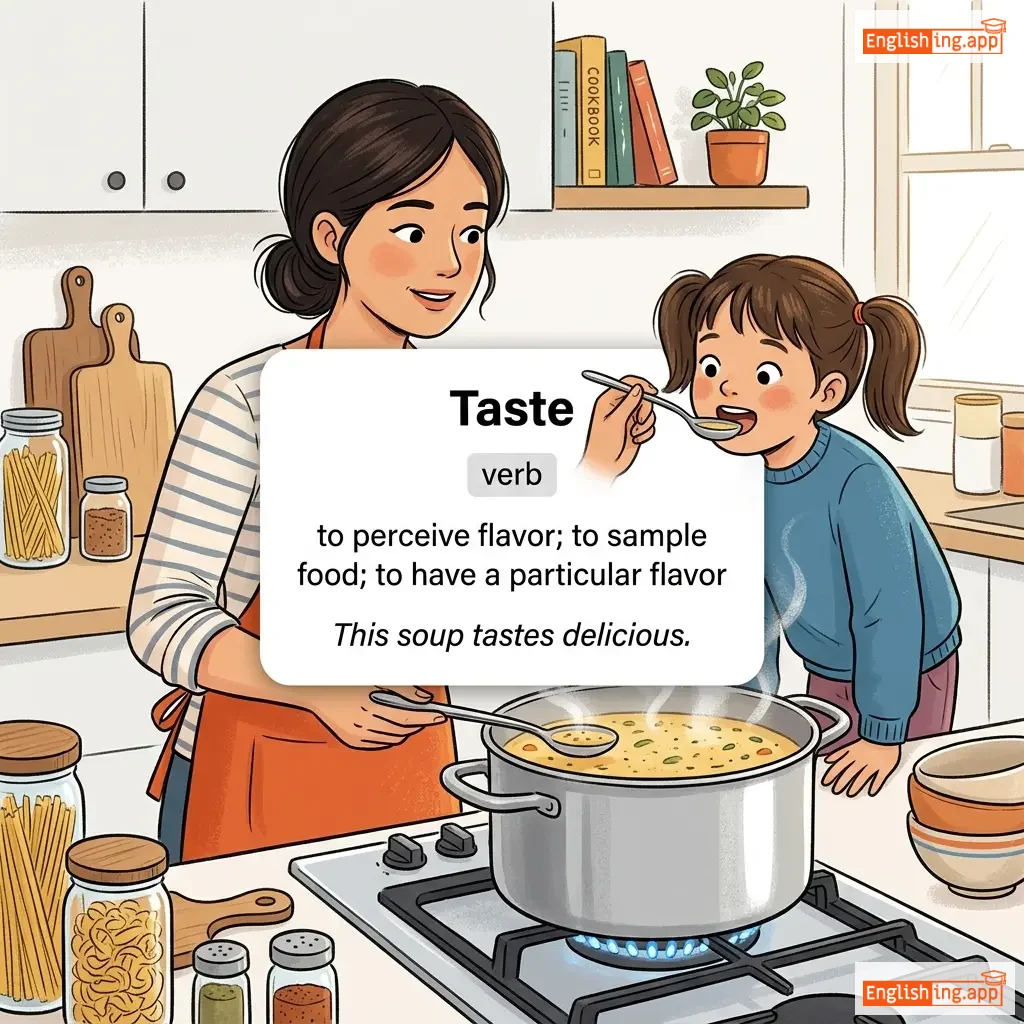
to perceive flavor; to sample food; to have a particular flavor
••••••
|
This soup tastes delicious.
Этот суп вкусный.
••••••
|
Этот суп вкусный.
Eto sup vkusnyy
••••••
|
- •••••• | - •••••• | - •••••• |
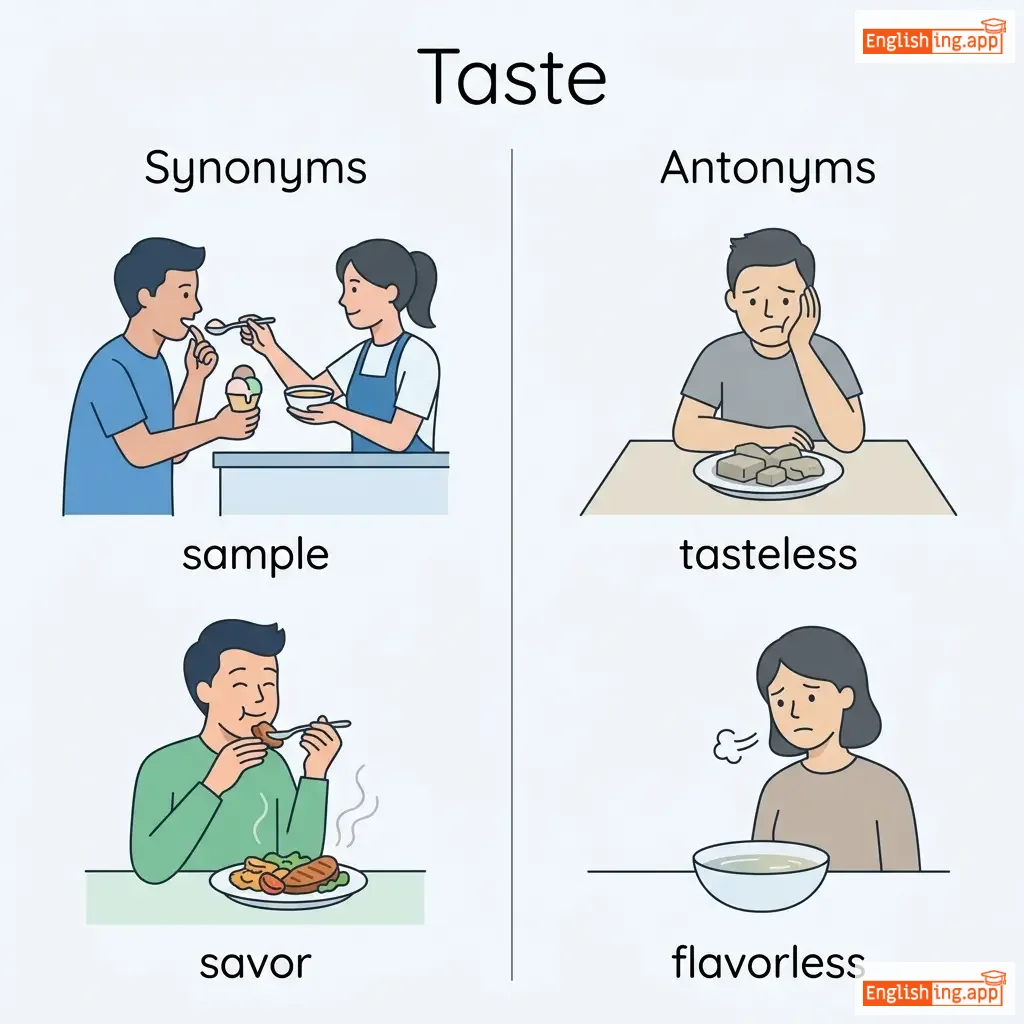
sample, savor, flavor, try
••••••
|
tasteless, flavorless
••••••
|
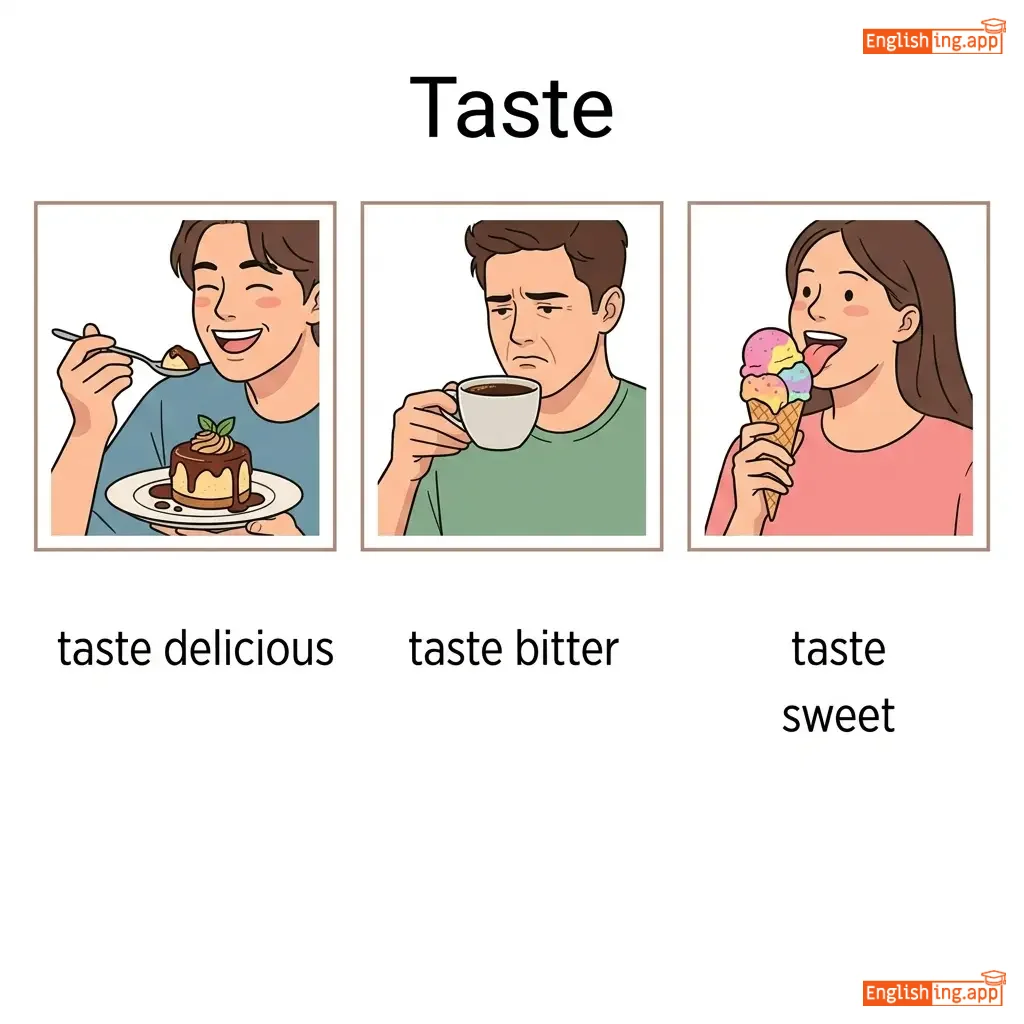
taste delicious, taste bitter, taste sweet, taste good, taste fresh
••••••
|
In Russian, 'probovat' means to taste, just 'probovat' your food!
••••••
|
|
#4957
💸
|
/tæks/
noun
(tæks)
••••••
|
- •••••• |
налог
nalog
••••••
|
- •••••• | - •••••• | - •••••• | - •••••• |
a compulsory contribution to state revenue, typically levied on income or sales
••••••
|
The government increased the tax rate on luxury goods. |
Правительство увеличило налоговую ставку на предметы роскоши.
Pravitel'stvo uvelichilo nalogovuyu stavku na predmesty roskoshi.
••••••
|
- •••••• | - •••••• | - •••••• |
levy, duty, tariff
••••••
|
exemption, relief
••••••
|
pay taxes, tax return, tax rate
••••••
|
TAX - 'налог' - то, что вы обязаны платить государству.
••••••
|
|
#4958
🚕
|
/ˈtæksi/
noun
(такси)
••••••
|
- •••••• |
такси
taksi
••••••
|
- •••••• | - •••••• | - •••••• | - •••••• |
A car licensed to transport passengers in exchange for payment of a fare.
••••••
|
We hailed a taxi to get to the airport.
Мы вызвали такси, чтобы доехать до аэропорта.
••••••
|
Мы вызвали такси, чтобы доехать до аэропорта.
My vyzvali taksi, chtoby doyekhat do aeroporta.
••••••
|
- •••••• | - •••••• | - •••••• |
cab, taxicab, hack, ride
••••••
|
bus, train
••••••
|
call a taxi, taxi driver, taxi fare, taxi rank
••••••
|
Такси = быстрая дорога до цели
••••••
|
|
#4959
👨💼
|
/ˈtæksˌpeɪər/
noun
(тæксˌпеɪэр)
••••••
|
- •••••• |
налогоплательщик
nalogoplatel'shchik
••••••
|
- •••••• | - •••••• | - •••••• | - •••••• |
a person who pays tax to the government
••••••
|
The taxpayers' money is used to fund public services.
Деньги налогоплательщиков используются для финансирования общественных услуг.
••••••
|
Деньги налогоплательщиков используются для финансирования общественных услуг.
Dengi nalogoplatel'shchikov ispol'zuyutsya dlya finansirovaniya obshchestvennykh uslug.
••••••
|
- •••••• | - •••••• | - •••••• |
contributor, payer, revenue source
••••••
|
tax evader, non-payer
••••••
|
paying taxpayers, responsible taxpayers
••••••
|
TAXPAYER - Человек, который платит налоги, это 'налогоплательщик'.
••••••
|
|
#4960
🍵
|
/tiː/
noun
(ти)
••••••
|
- •••••• |
чай
chai
••••••
|
- •••••• | - •••••• | - •••••• | - •••••• |
a hot drink made by pouring boiling water onto dried leaves
••••••
|
We drink tea every morning at breakfast. |
Мы пьем чай каждое утро за завтраком.
my p'yem chay kazhdoye utro za zavtrakom
••••••
|
- •••••• | - •••••• | - •••••• |
chai, beverage
••••••
|
coffee
••••••
|
hot tea, green tea, black tea, cup of tea
••••••
|
Чай - это напиток для бодрости, который помогает с утра.
••••••
|
|
#4961
👩🏫
|
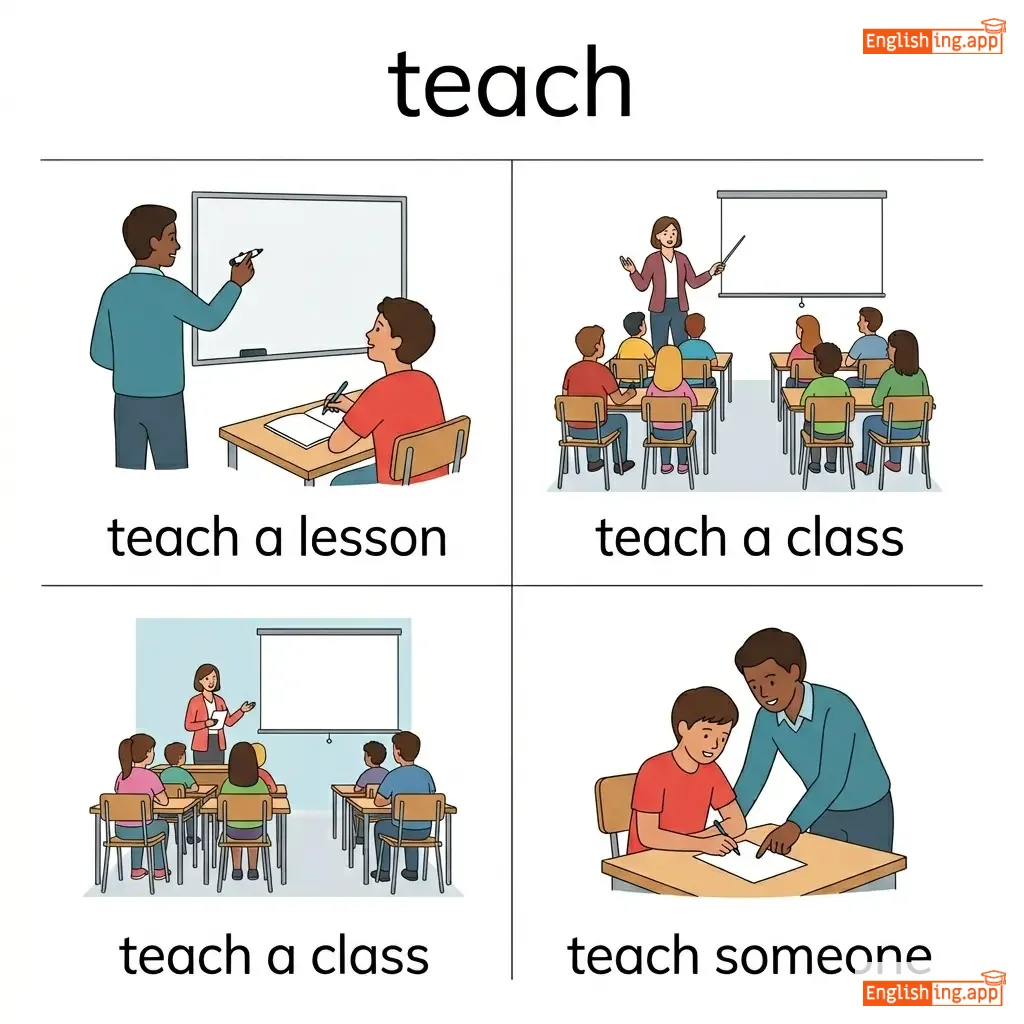
/tiːtʃ/
verb
(tich)
••••••
|
|
учить
uchit
••••••
|
taught
tot
••••••
|
taught
tot
••••••
|
teaches
tiches
••••••
|
teaching
tiching
••••••
|
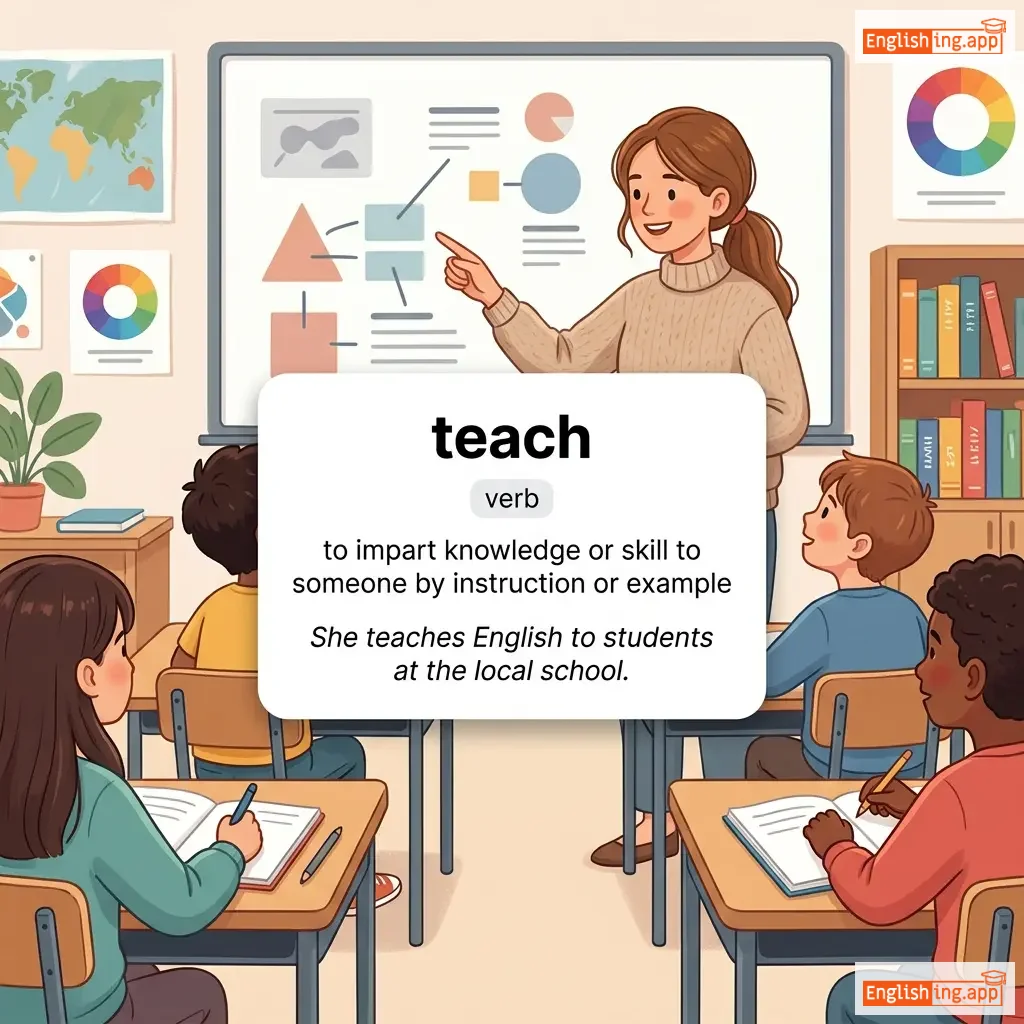
to give knowledge or instruction to someone; to show how to do something
••••••
|
She teaches English at the local school.
она преподает английский в местной школе.
••••••
|
Она преподает английский в местной школе.
Ona prepodayet angliyskiy v mestnoy shkole.
••••••
|
- •••••• | - •••••• | - •••••• |
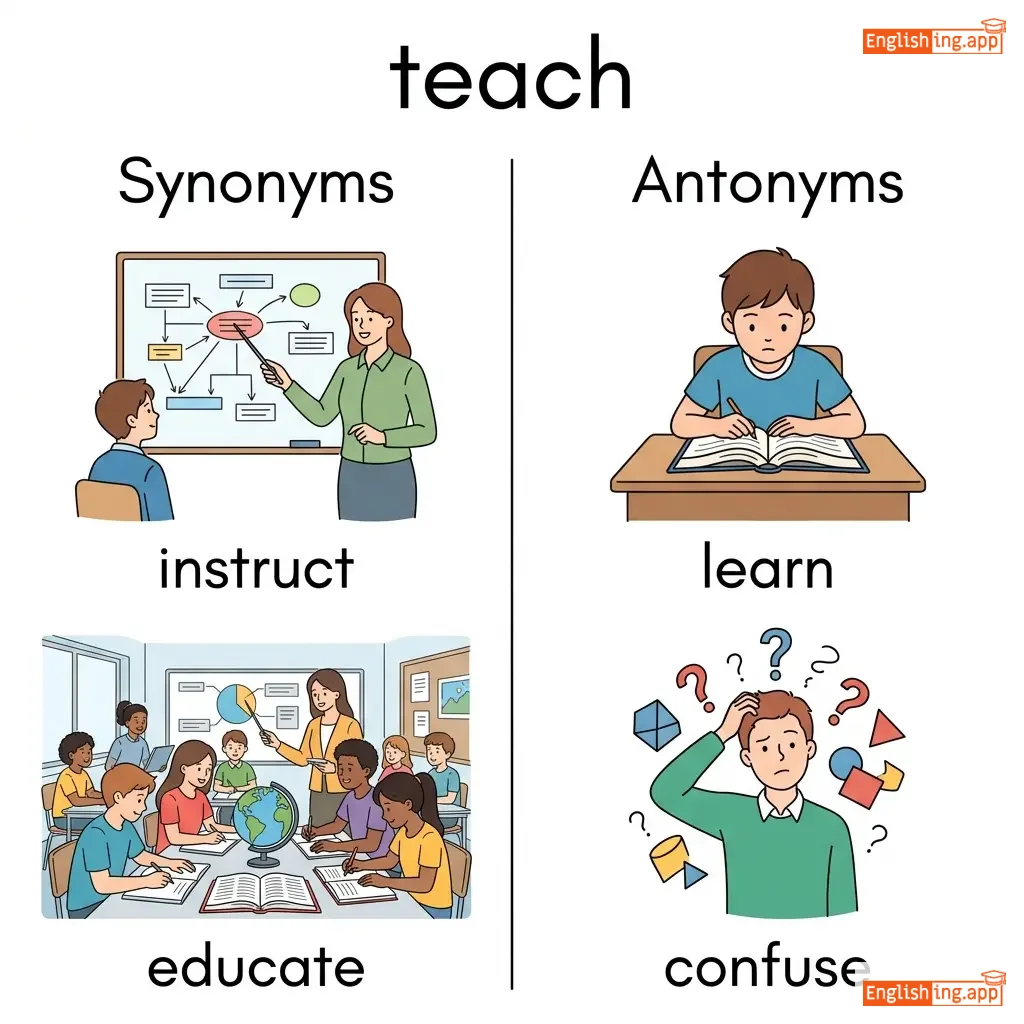
instruct, educate, train, coach
••••••
|
learn, study
••••••
|
teach lessons, teach students, teach skills, teach children, teach courses, teach methods
••••••
|
tich (teach) = учить (uchit), как в классе
••••••
|
|
#4962
👩🏫
|
/ˈtiː.tʃər/
noun
(tichyer)
••••••
|
- •••••• |
учитель
uchitel
••••••
|
- •••••• | - •••••• | - •••••• | - •••••• |
a person who teaches students in a school or other educational institution
••••••
|
The teacher explained the math problem clearly to the students.
Учитель ясно объяснил задачу по математике студентам.
••••••
|
Учитель ясно объяснил задачу по математике студентам.
Uchitel yasno obyasnil zadachu po matematike studentam.
••••••
|
- •••••• | - •••••• | - •••••• |
educator, instructor, tutor, professor
••••••
|
student, pupil, learner
••••••
|
school teacher, math teacher, good teacher, experienced teacher
••••••
|
Учитель - это тот, кто учит других важным жизненным знаниям.
••••••
|
|
#4963
👩🏫
|
/ˈtiːtʃɪŋ/
noun
(tiching)
••••••
|
- •••••• |
преподавание
prepodavanie
••••••
|
- •••••• | - •••••• | - •••••• | - •••••• |
the profession or practice of teaching
••••••
|
Teaching is a noble profession.
Преподавание - благородная профессия.
••••••
|
Преподавание - благородная профессия.
Prepodavanie - blagorodnaya professiya.
••••••
|
- •••••• | - •••••• | - •••••• |
education, instruction, tutoring, coaching
••••••
|
learning, ignorance
••••••
|
teaching method, teaching style, teaching profession, teaching material
••••••
|
Teaching opens doors to endless possibilities!
••••••
|
|
#4964
👥
|
/tiːm/
noun
(тим)
••••••
|
- •••••• |
команда
komanda
••••••
|
- •••••• | - •••••• | - •••••• | - •••••• |
a group of people working together towards a common goal
••••••
|
Our team won the match after a great effort. |
Наша команда выиграла матч после больших усилий.
Nasha komanda viygrala match posle bol'shikh usiliy.
••••••
|
- •••••• | - •••••• | - •••••• |
group, squad, crew, unit
••••••
|
individual, opponent
••••••
|
work in a team, team effort, football team, team leader
••••••
|
TEAM – Вместе Мы Достигаем Больше!
••••••
|
|
#4965
🤝
|
/ˈtiːmmeɪt/
noun
(тиммейт)
••••••
|
- •••••• |
товарищ по команде
tovarishtch po komande
••••••
|
- •••••• | - •••••• | - •••••• | - •••••• |
a member of the same team
••••••
|
He congratulated his teammate after scoring the goal.
Он поздравил своего товарища по команде после того, как забил гол.
••••••
|
Он поздравил своего товарища по команде после того, как забил гол.
On pozdravil svoego tovarishcha po komande posle togo, kak zabil gol.
••••••
|
- •••••• | - •••••• | - •••••• |
colleague, partner, associate, collaborator, companion
••••••
|
opponent, rival
••••••
|
team member, loyal teammate, supportive teammate, sports teammate
••••••
|
Товарищ по команде — это твой teammate на поле!
••••••
|
|
#4966
💧
|
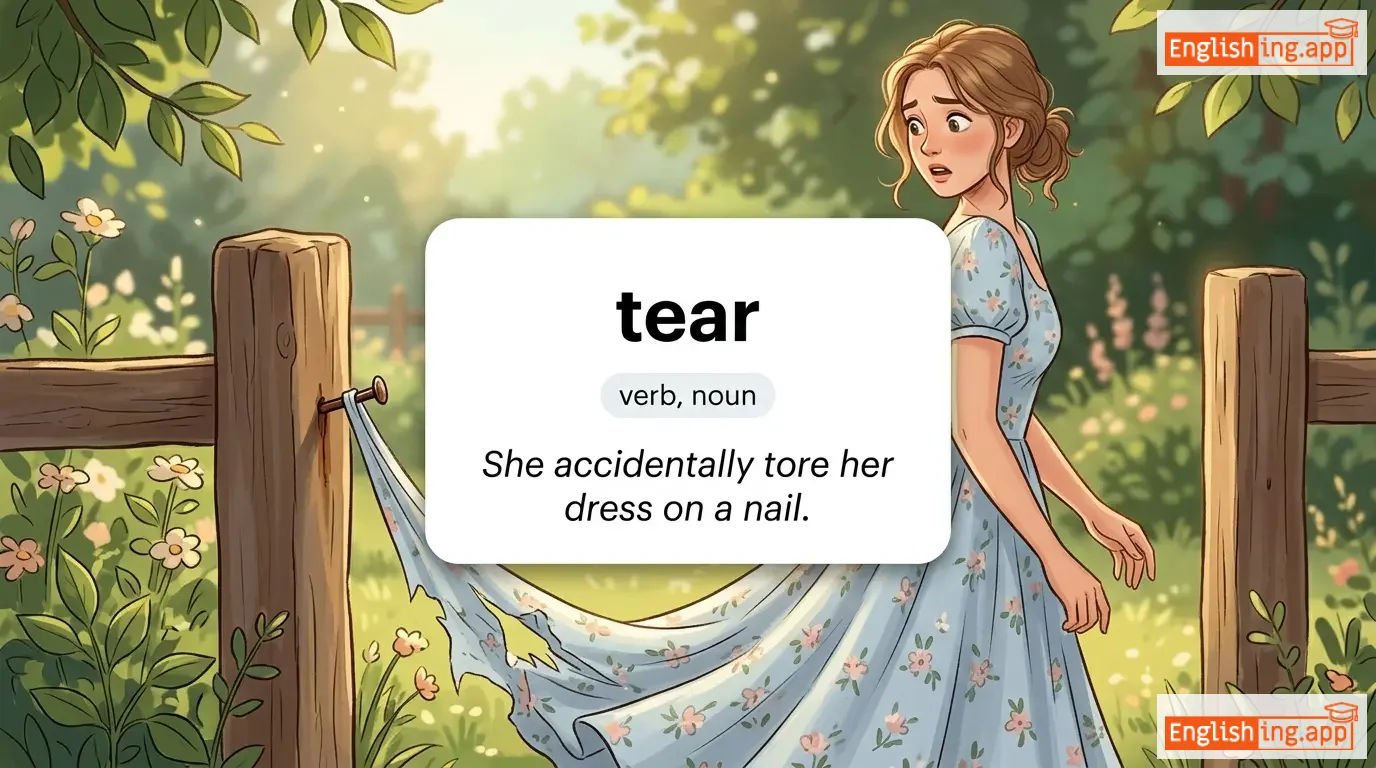
/tɪər/ (noun: liquid) /tɛər/ (verb: rip)
verb, noun
••••••
|
|
- •••••• |
tore
••••••
|
torn
••••••
|
tears
••••••
|
tearing
••••••
|
As a verb: to pull apart or rip something. As a noun: a drop of clear salty liquid produced by glands in your eyes.
••••••
|
She accidentally tore her dress on a nail. |
- •••••• |
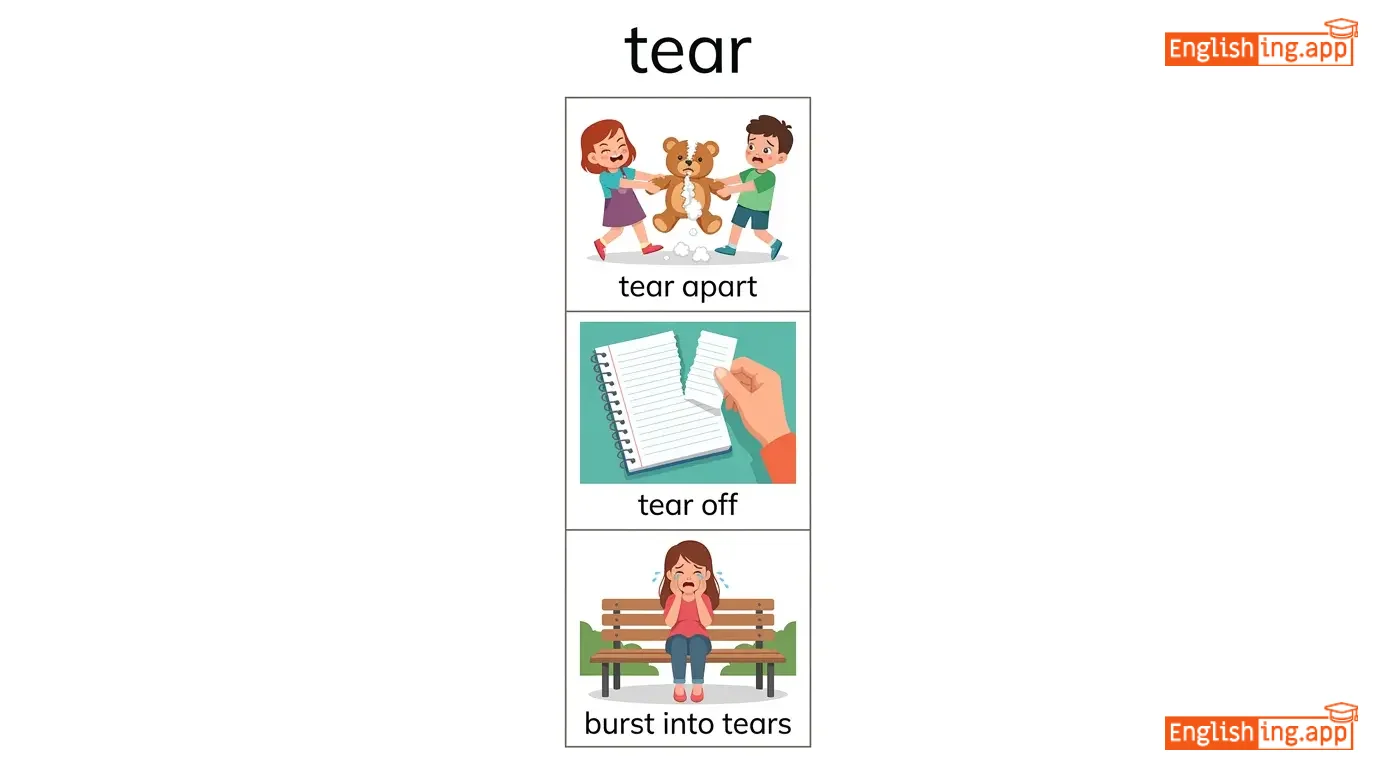
tear apart |
To destroy, separate, or damage severely.
••••••
|
- •••••• |
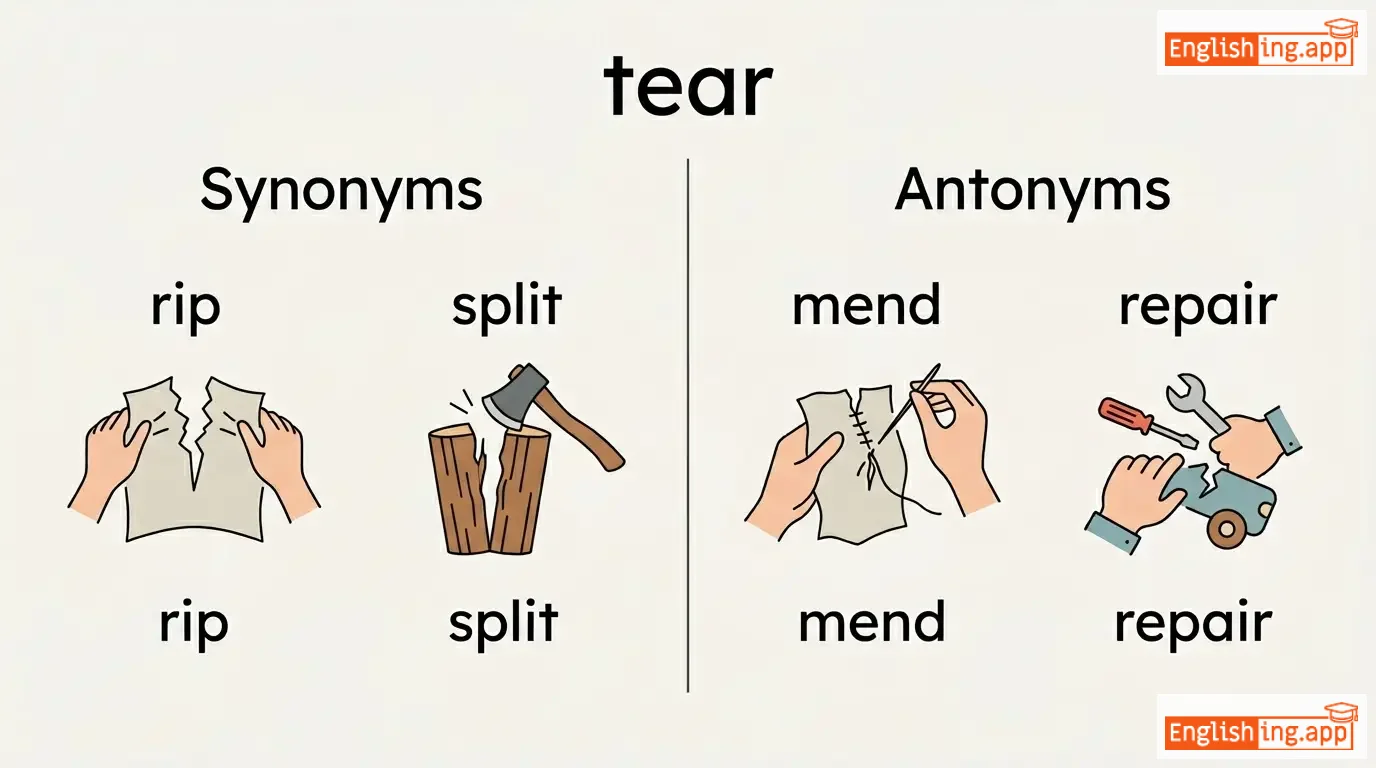
rip, split, shred, rend, pull
••••••
|
mend, repair
••••••
|
tear apart, tear off, burst into tears, tear down
••••••
|
No •••••• |
|
#4967
🥄
|
/ˈtiːspuːn/
noun
(хэппинесс)
••••••
|
- •••••• |
счастье
schast'ye
••••••
|
- •••••• | - •••••• | - •••••• | - •••••• |
a small spoon used for stirring drinks or eating soft foods, or for measuring small amounts of ingredients.
••••••
|
Add a teaspoon of sugar to the tea. |
Она не могла скрыть своего счастья, когда получила награду.
Ona ne mogla skryt' svoego schast'ya, kogda poluchila nagradu.
••••••
|
- •••••• | - •••••• | - •••••• |
spoon, small spoon, measure spoon
••••••
|
- •••••• |
teaspoon of sugar, teaspoon measure, teaspoon full
••••••
|
happiness переводится как 'счастье' по-русски.
••••••
|
|
#4968
⚙️
|
/ˈteknɪkəl/
adjective
(технический)
••••••
|
- •••••• |
технический; специализированный;
tekhničeskij; specializirovannyj
••••••
|
- •••••• | - •••••• | - •••••• | - •••••• |
relating to or involving special skills or knowledge; requiring specialized training
••••••
|
The manual contains technical instructions for operating the machine.
Руководство содержит технические инструкции по эксплуатации машины.
••••••
|
Руководство содержит технические инструкции по эксплуатации машины.
Rukovodstvo soderzhit tekhnicheskie instruktsii po eksployatatsii mashiny.
••••••
|
- •••••• | - •••••• | - •••••• |
specialized, scientific, technological, professional
••••••
|
simple, basic, general, non-technical
••••••
|
technical skills, technical problem, technical support, technical knowledge
••••••
|
Технический связан с особыми знаниями и навыками.
••••••
|
|
#4969
🧘
|
/tɛkˈniːk/
noun
(тɛкˈниːк)
••••••
|
- •••••• |
техника
tekhnika
••••••
|
- •••••• | - •••••• | - •••••• | - •••••• |
A particular way of carrying out a task, especially with skill.
••••••
|
She learned a new breathing technique in yoga class. |
Она изучила новую технику дыхания на занятиях йогой.
Ona izuchila novuyu tekhniku dykhaniya na zanyatiyakh yogoy.
••••••
|
by technique |
Done using a specific method or skill.
••••••
|
по технике
po tekhnike
••••••
|
method, procedure, style, craft, skill
••••••
|
incompetence, inability
••••••
|
teaching technique, special technique, breathing technique, painting technique
••••••
|
Техника - это метод, техника помогает сделать проще.
••••••
|
|
#4970
💻
|
/ˌteknəˈlɒdʒɪkəl/
adjective
••••••
|
|
- •••••• | - •••••• | - •••••• | - •••••• | - •••••• |
relating to or involving technology or technical processes
••••••
|
The company is investing heavily in technological innovation. |
- •••••• |
technological advancement |
progress or improvement in technology over time
••••••
|
- •••••• |
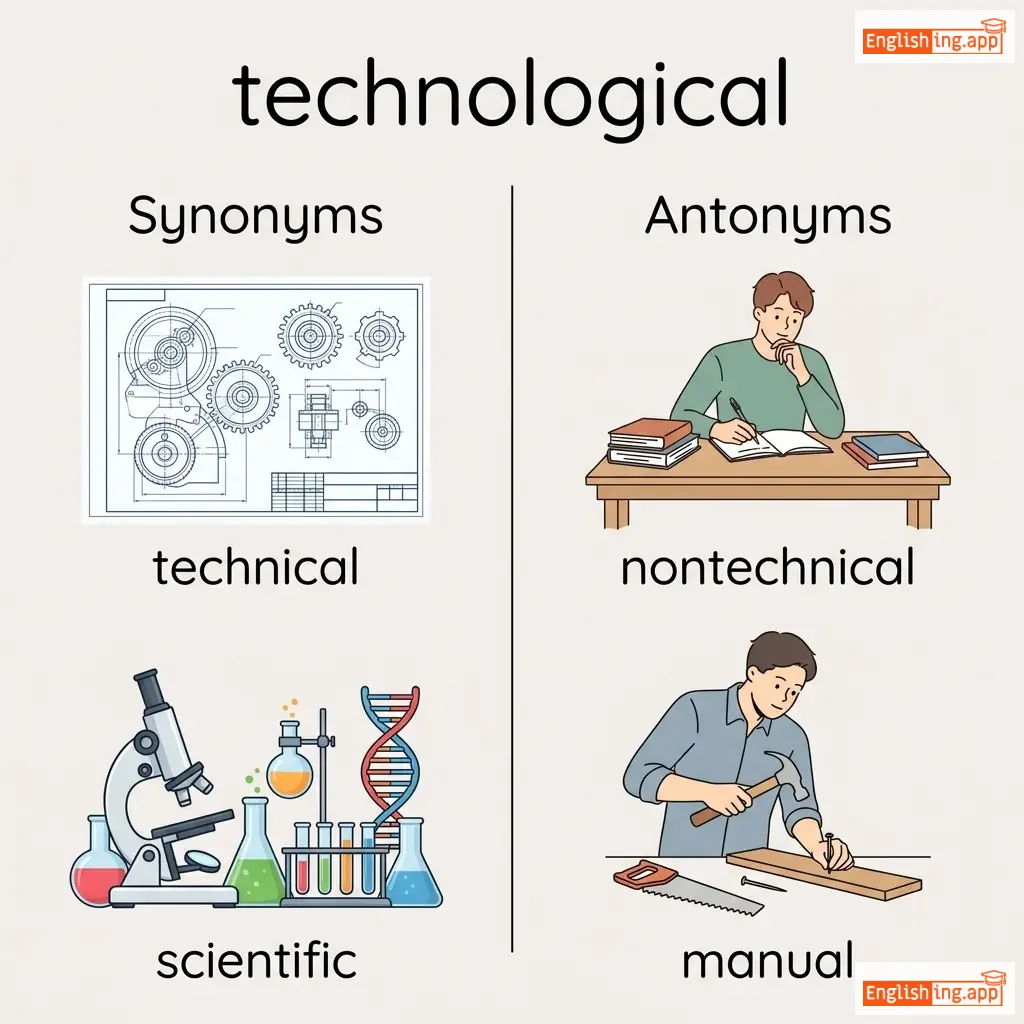
technical, scientific, industrial, mechanical, digital
••••••
|
nontechnical, manual
••••••
|
technological development, technological innovation, technological change, technological progress
••••••
|
No •••••• |
|
#4971
💻
|
/tɛkˈnɒlədʒi/
noun
(tehnologiya)
••••••
|
|
технология
tekhnologiya
••••••
|
- •••••• | - •••••• | - •••••• | - •••••• |
the application of scientific knowledge for practical purposes, especially in industry
••••••
|
Modern technology has revolutionized communication. |
Современные технологии произвели революцию в коммуникациях.
Sovremennye tekhnologii prozveli revolyutsiyu v kommunikatsiyakh.
••••••
|
cutting-edge technology |
the most advanced and innovative technology available
••••••
|
передовые технологии
peredovye tekhnologii
••••••
|
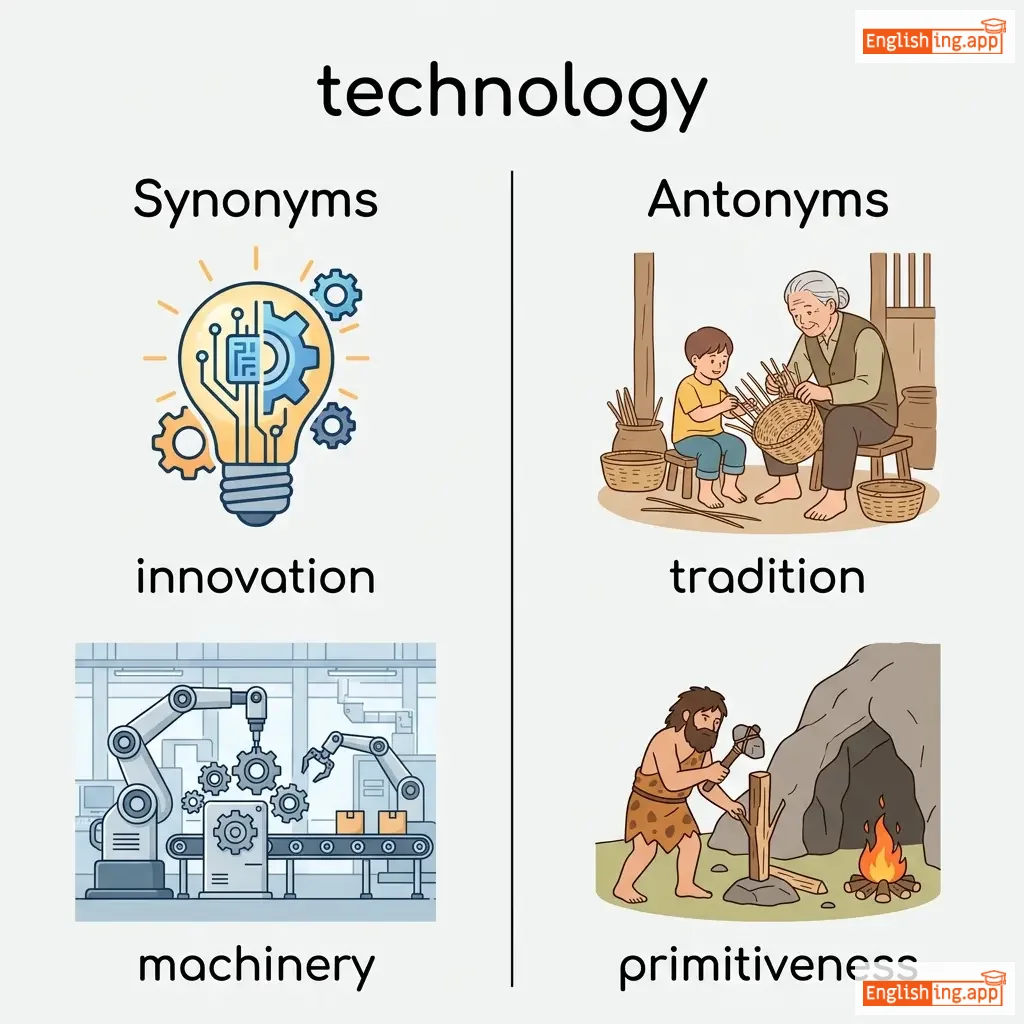
innovation, machinery, engineering, science, technique
••••••
|
tradition, primitiveness, simplicity
••••••
|
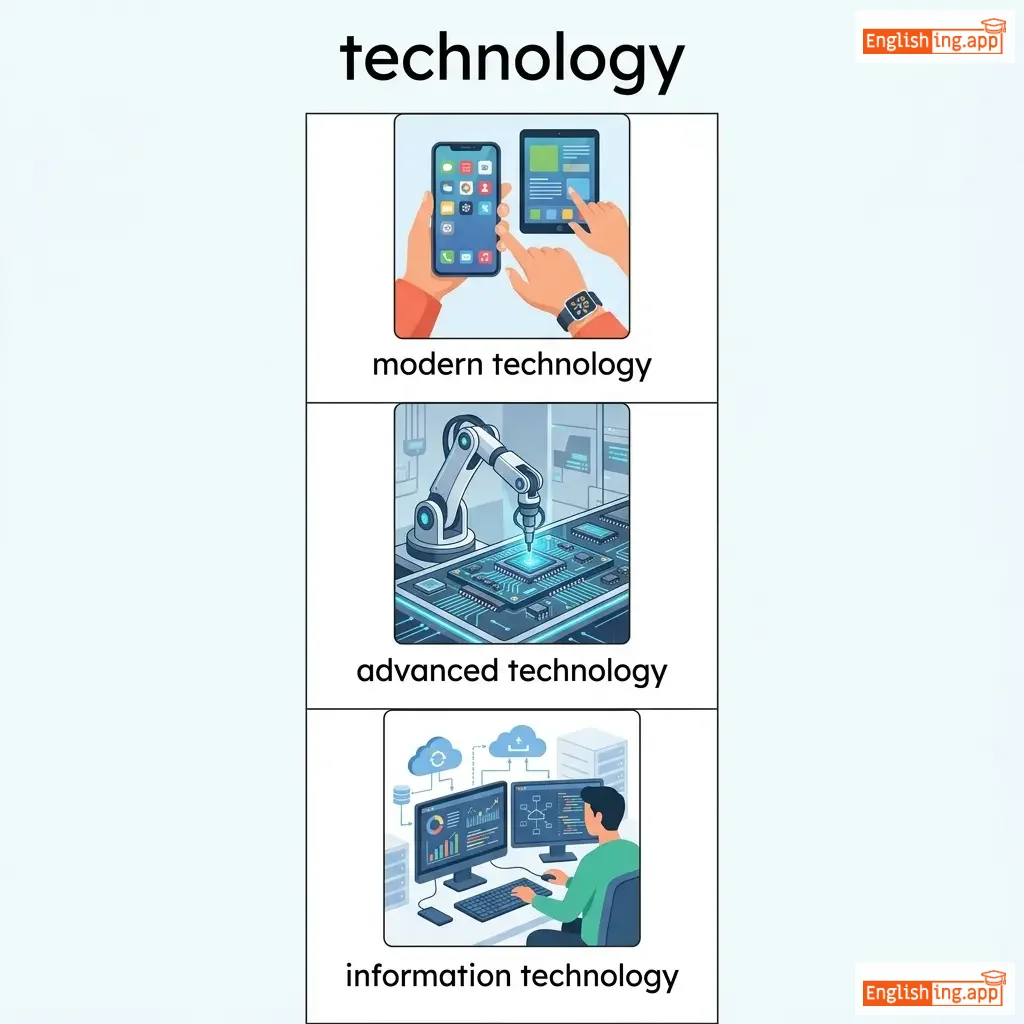
modern technology, advanced technology, information technology, use of technology
••••••
|
Tech (технология) + Знание = Технология
••••••
|
|
#4972
🧑🦱
|
/tiːn/
noun
(тинейджер)
••••••
|
- •••••• |
подросток
podrostok
••••••
|
- •••••• | - •••••• | - •••••• | - •••••• |
a person aged between 13 and 19 years.
••••••
|
He's a teenager who loves sports.
Он подросток, который любит спорт.
••••••
|
Он подросток, который любит спорт.
On podrostok, kotoryj lyubit sport.
••••••
|
- •••••• | - •••••• | - •••••• |
adolescent, young person, minor
••••••
|
adult, senior, elder
••••••
|
teen years, teen life, teenage
••••••
|
Teen is the age when you are 'teen' years old!
••••••
|
|
#4973
👦
|
/ˈtiːneɪdʒər/
noun
(тине́йджер)
••••••
|
- •••••• |
подросток
podrostok
••••••
|
- •••••• | - •••••• | - •••••• | - •••••• |
a person aged between 13 and 19 years.
••••••
|
Teenagers often enjoy hanging out with friends.
Подростки часто любят проводить время с друзьями.
••••••
|
Подростки часто любят проводить время с друзьями.
Podrostki chasto lyubyat provodit vremya s druz'yami.
••••••
|
- •••••• | - •••••• | - •••••• |
adolescent, youth, young person
••••••
|
adult, senior, elder
••••••
|
teenager life, teenage dreams, teenager problems
••••••
|
Teenager is just 'Teen' plus 'ager' – a person of that age!
••••••
|
|
#4974
📞
|
/ˈtɛlɪfəʊn/
noun
(телефон)
••••••
|
- •••••• |
телефон
telefon
••••••
|
- •••••• | - •••••• | - •••••• | - •••••• |
a system for transmitting voices over a distance using wire or radio, typically for communication.
••••••
|
I need to make a telephone call to my friend.
Мне нужно сделать телефонный звонок другу.
••••••
|
Мне нужно сделать телефонный звонок другу.
Mne nuzhno sdelat' telefonnyy zvonok drugu.
••••••
|
- •••••• | - •••••• | - •••••• |
phone, handset, mobile, communication device
••••••
|
- •••••• |
telephone call, telephone line, make a telephone call
••••••
|
Telephone is the device you use for a 'tele' call!
••••••
|
Vocabulary Quiz
Test your vocabulary by matching words with their translations or meanings.
Login to take the quiz
Comments (0)
Share your thoughts and join the discussion.
Join the discussion by logging in
Login to CommentNo comments yet
Be the first to share your thoughts!