

Обновитесь для доступа ко всему словарю
Получите неограниченный доступ ко всем словам с подпиской Pro
Обновить до ProПеревод
Прошедшее
Причастие прошедшего времени
Третье лицо единственного числа
Герундий
Значение
Пример предложения
Перевод примера предложения
Синонимы
Антонимы
Коллокации
Мнемоника





Swipe left or right, or use the buttons. Tap image to zoom.
Обновитесь для доступа ко всем предложениям
Получите неограниченный доступ ко всем предложениям с подпиской Pro
Обновить до ProПеревод примера предложения
Слово
Lesson 100Lesson 100 - Переключатель маски
|
Эмодзи
|
Слово | Images | Перевод | Прошедшее | Причастие прошедшего времени | Третье лицо единственного числа | Герундий | Значение | Пример предложения | Перевод примера предложения | Пример выражения | Значение примера выражения | Перевод примера выражения | Синонимы | Антонимы | Коллокации | Мнемоника |
|---|---|---|---|---|---|---|---|---|---|---|---|---|---|---|---|---|---|
|
#4729
👥
|
/skwɒd/
noun
(skvad)
••••••
|
|
команда
komanda
••••••
|
- •••••• | - •••••• | - •••••• | - •••••• |
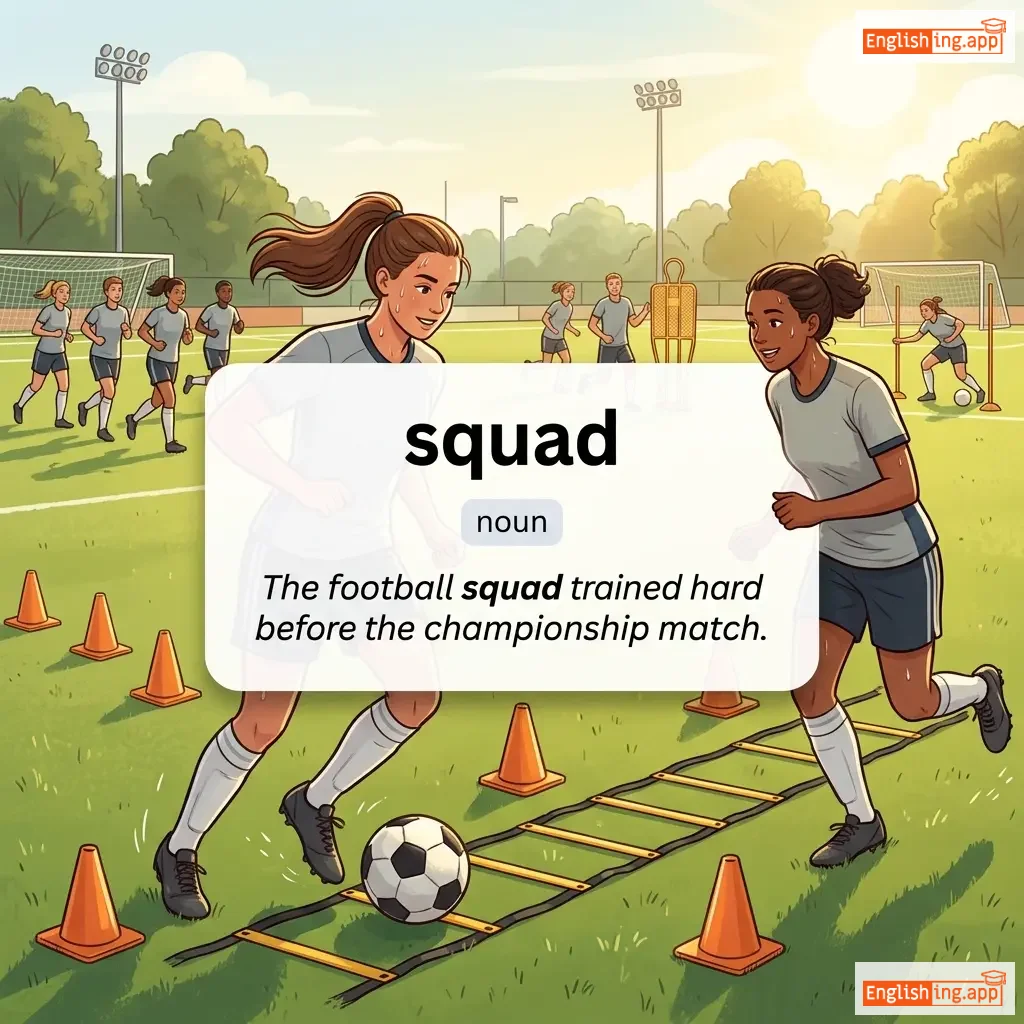
a small group of people organized for a specific purpose or task, often in the military or sports
••••••
|
The football squad trained hard before the championship match. |
Футбольная команда тренировалась усердно перед матчем чемпионата.
Futbol'naya komanda trenirovalas' usyerdno pered matchem chempionata.
••••••
|
squad goals |
an ideal or admirable group of friends or team that others aspire to be like
••••••
|
цели команды
tseli komandy
••••••
|
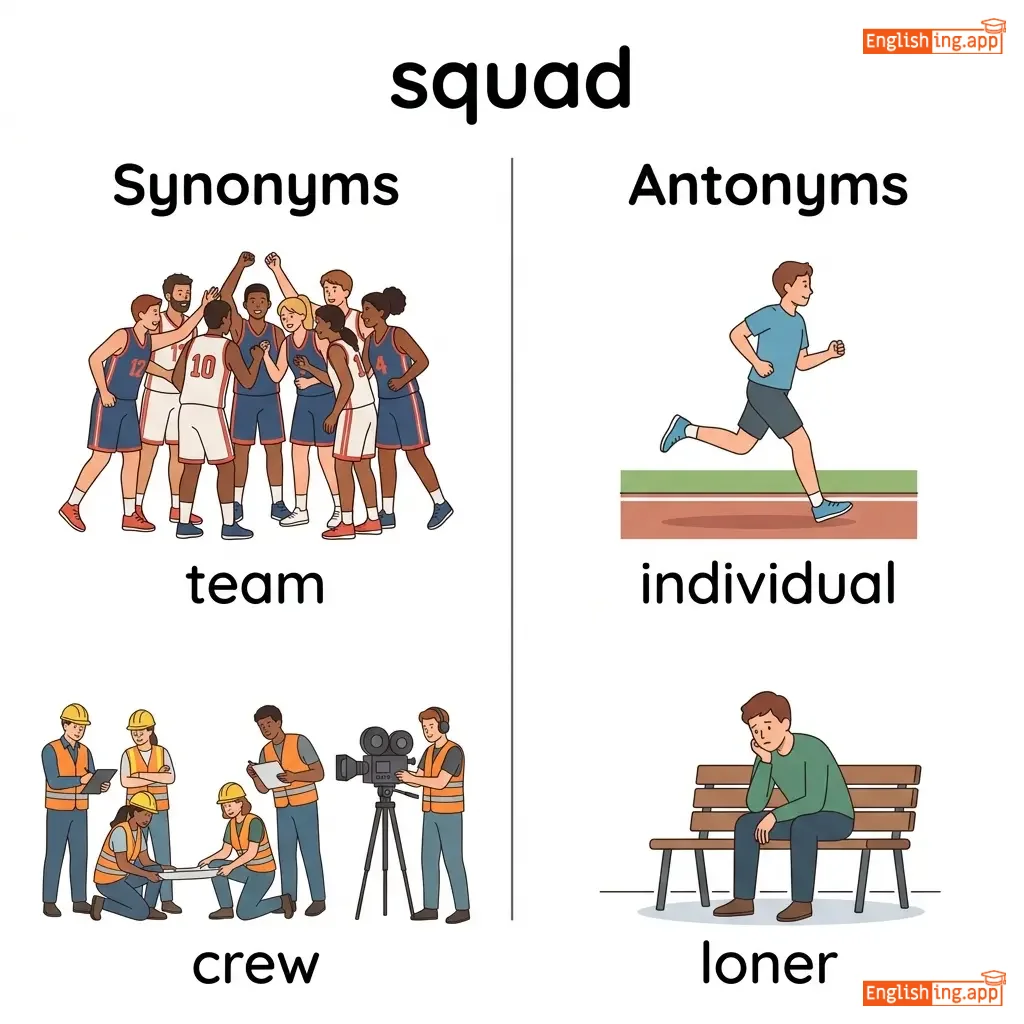
team, crew, group, unit, party
••••••
|
individual, loner
••••••
|
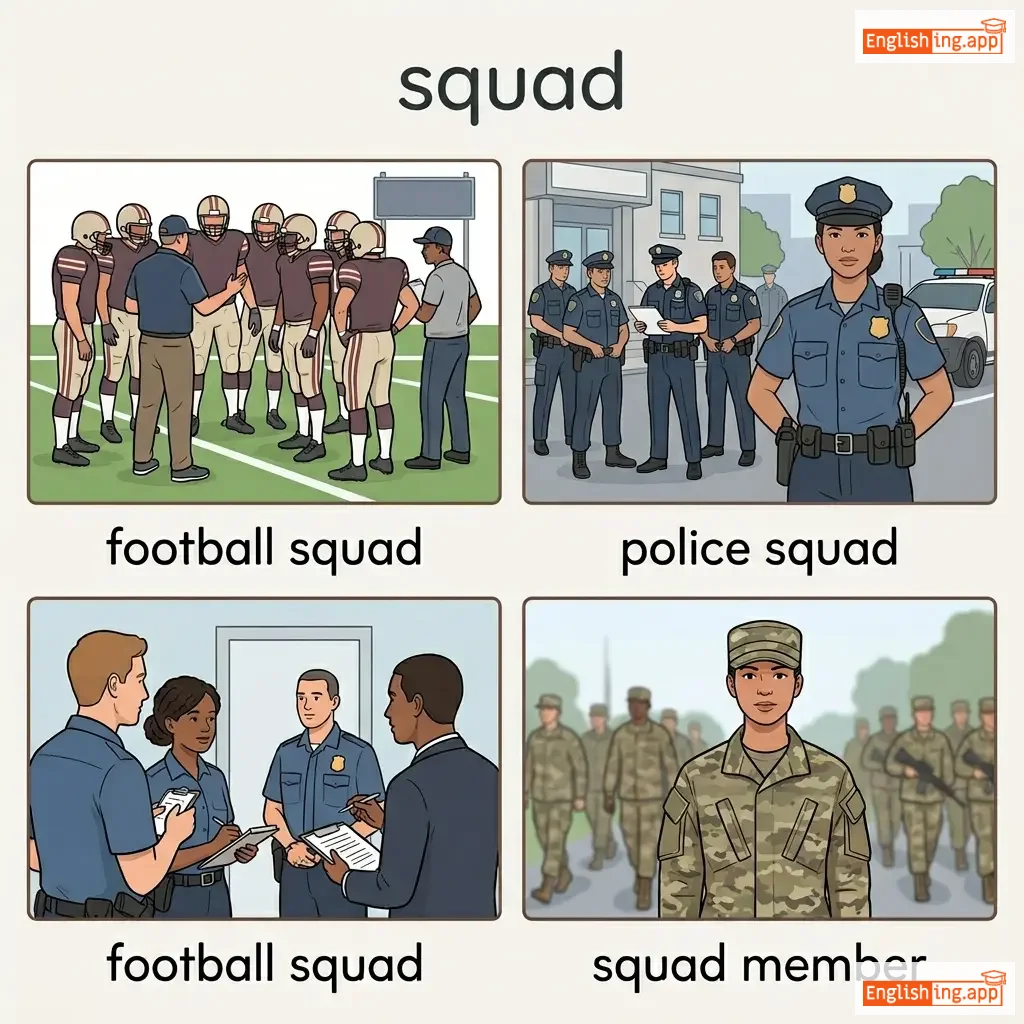
football squad, police squad, squad member, training squad
••••••
|
Команда = группа, работающая вместе, как футбольная команда.
••••••
|
|
#4730
🔲
|
/skwɛə(r)/
noun
(skwɛr)
••••••
|
- •••••• |
квадрат
kvadrat
••••••
|
- •••••• | - •••••• | - •••••• | - •••••• |
a shape with four equal straight sides and four right angles
••••••
|
The table has a square shape. |
Стол имеет квадратную форму.
Stol imeyet kvadratnuyu formu.
••••••
|
- •••••• | - •••••• | - •••••• |
rectangle, quadrilateral
••••••
|
circle, triangle
••••••
|
square shape, square table, square room
••••••
|
Square = четыре одинаковые стороны, как уголки комнаты!
••••••
|
|
#4731
🤏
|
/skwiːz/
verb
(сквиз)
••••••
|
- •••••• |
сжимать
szhimat
••••••
|
squeezed
сквизд
••••••
|
squeezed
сквизд
••••••
|
squeezes
сквизес
••••••
|
squeezing
сквизинг
••••••
|
to press something firmly, especially from all sides in order to extract or compress it
••••••
|
She squeezed the toothpaste to get the last bit.
Она сжала тюбик с зубной пастой, чтобы извлечь последнюю часть.
••••••
|
Она сжала тюбик с зубной пастой, чтобы извлечь последнюю часть.
Ona szhala tyubik s zubnoy pastoy, chtoby izvlech' poslednyuyu chast'.
••••••
|
- •••••• | - •••••• | - •••••• |
press, compress, crush, squish
••••••
|
release, loosen, uncompress
••••••
|
squeeze the juice, squeeze in, squeeze the life out of
••••••
|
Сжать тюбик, чтобы выжать последнюю каплю пасты - Squeeze the last bit of toothpaste!
••••••
|
|
#4732
🔪
|
/stæb/
verb, noun
(стэб)
••••••
|
- •••••• |
порезать ножом
porezat' nozhom
••••••
|
stabbed
стэбд
••••••
|
stabbed
стэбд
••••••
|
stabs
стэбс
••••••
|
stabbing
стэббинг
••••••
|
to pierce or wound with a pointed weapon or object
••••••
|
He was stabbed in the back during the altercation.
Его подкололи в спину во время ссоры.
••••••
|
Его подкололи в спину во время ссоры.
Ego podkololi v spinu vo vremya ssory.
••••••
|
- •••••• | - •••••• | - •••••• |
pierce, wound, jab, cut
••••••
|
heal, fix
••••••
|
stab wound, stabbed in the back, stabbed with a knife
••••••
|
Порезать ножом – это как ты делаешь ножом, помни!
••••••
|
|
#4733
⚖️
|
/stəˈbɪl.ə.ti/
noun
(стабильность)
••••••
|
- •••••• |
стабильность
stabil'nost'
••••••
|
- •••••• | - •••••• | - •••••• | - •••••• |
the state of being stable; firmness; steadiness
••••••
|
Political stability is essential for economic growth.
Политическая стабильность необходима для экономического роста.
••••••
|
Политическая стабильность необходима для экономического роста.
Politicheskaya stabil'nost' neobkhodima dlya ekonomicheskogo rosta.
••••••
|
- •••••• | - •••••• | - •••••• |
steadiness, firmness, balance, security
••••••
|
instability, unsteadiness, volatility
••••••
|
financial stability, political stability, emotional stability, job stability
••••••
|
Стабильность как фундамент успеха в экономике.
••••••
|
|
#4734
⚖️
|
/ˈsteɪ.bə.laɪz/
verb
(стабилизировать)
••••••
|
- •••••• |
стабилизировать
stabilizirovat'
••••••
|
stabilized
стабилизировал
••••••
|
stabilized
стабилизировано
••••••
|
stabilizes
стабилизирует
••••••
|
stabilizing
стабилизируя
••••••
|
to make something steady, secure, or unlikely to change suddenly
••••••
|
The government took measures to stabilize the economy.
Правительство приняло меры для стабилизации экономики.
••••••
|
Правительство приняло меры для стабилизации экономики.
Pravitel'stvo prinyalo mery dlya stabilizatsii ekonomiki.
••••••
|
stabilize the situation
стабилизировать ситуацию
••••••
|
to bring a situation under control or make it steady
••••••
|
стабилизировать ситуацию
stabilizirovat' situatsiyu
••••••
|
steady, secure, balance, fix, support
••••••
|
destabilize, weaken, disrupt
••••••
|
stabilize economy, stabilize situation, stabilize prices, stabilize market
••••••
|
Stable + eyes → глаза (eyes) делают все стабильным
••••••
|
|
#4735
🏠
|
/ˈsteɪ.bəl/
adjective
(стейбл)
••••••
|
|
стабильный / конюшня
stabil'nyy / konyushnya
••••••
|
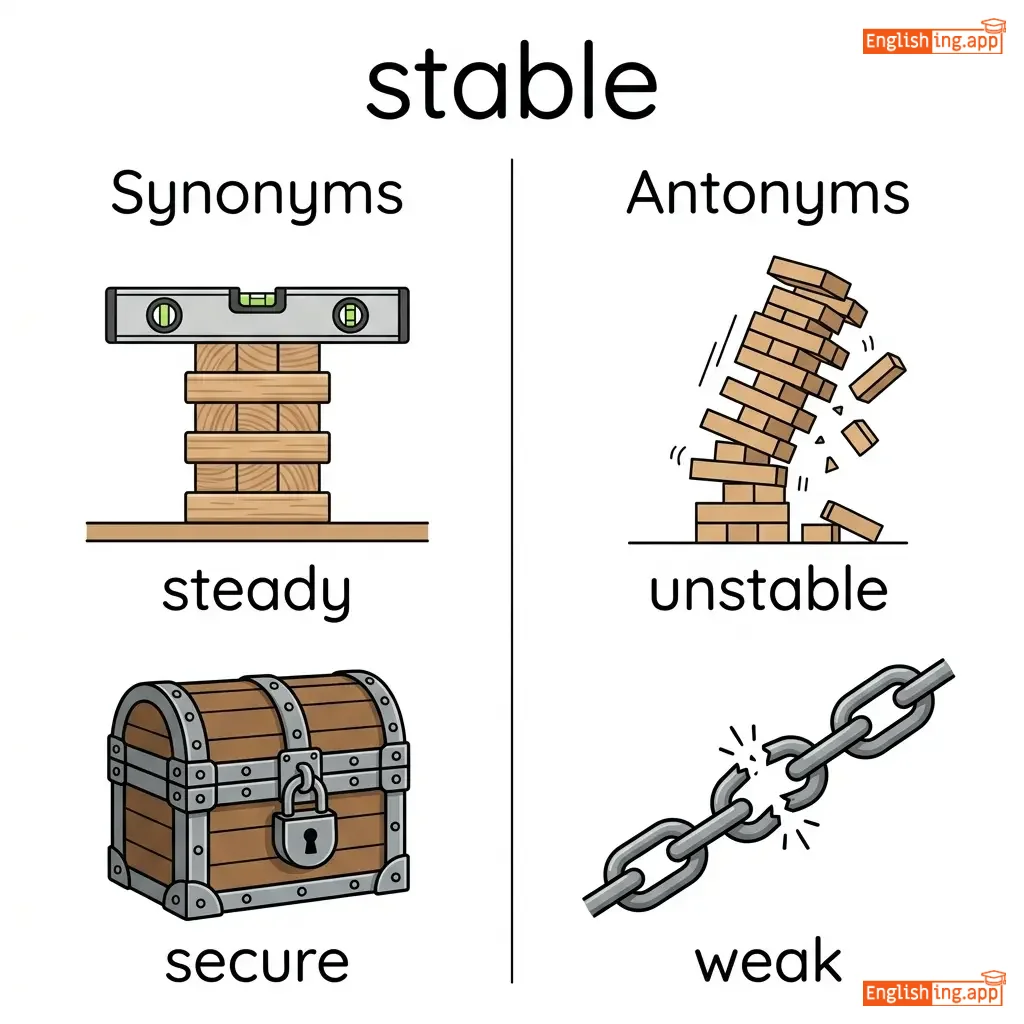
- •••••• | - •••••• | - •••••• | - •••••• |
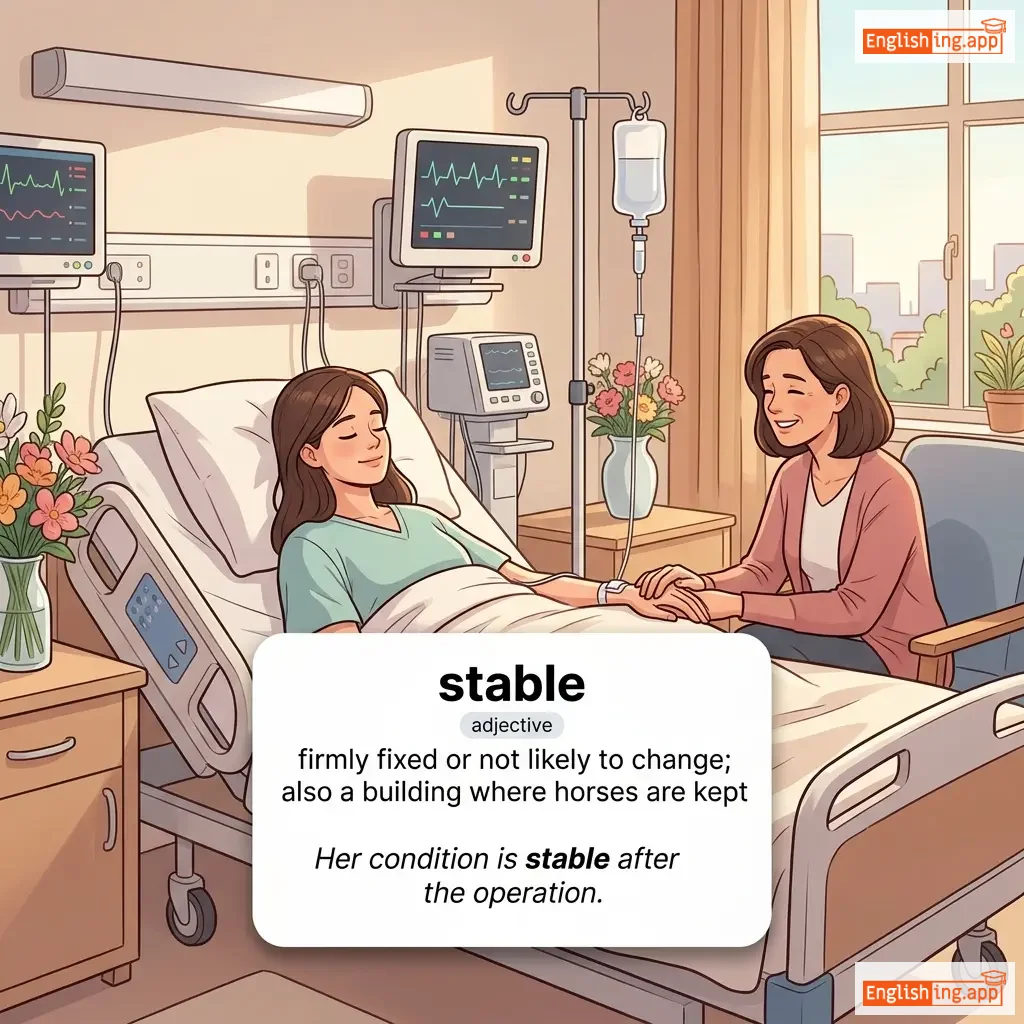
firmly fixed or not likely to change; also a building where horses are kept
••••••
|
Her condition is stable after the operation. |
Ее состояние стабильно после операции.
Eyo sostoyanie stabil'no posle operatsii.
••••••
|
stable condition |
a state of being steady and not worsening
••••••
|
стабильное состояние
stabil'noye sostoyaniye
••••••
|
steady, secure, firm, constant, balanced
••••••
|
unstable, weak, shaky
••••••
|
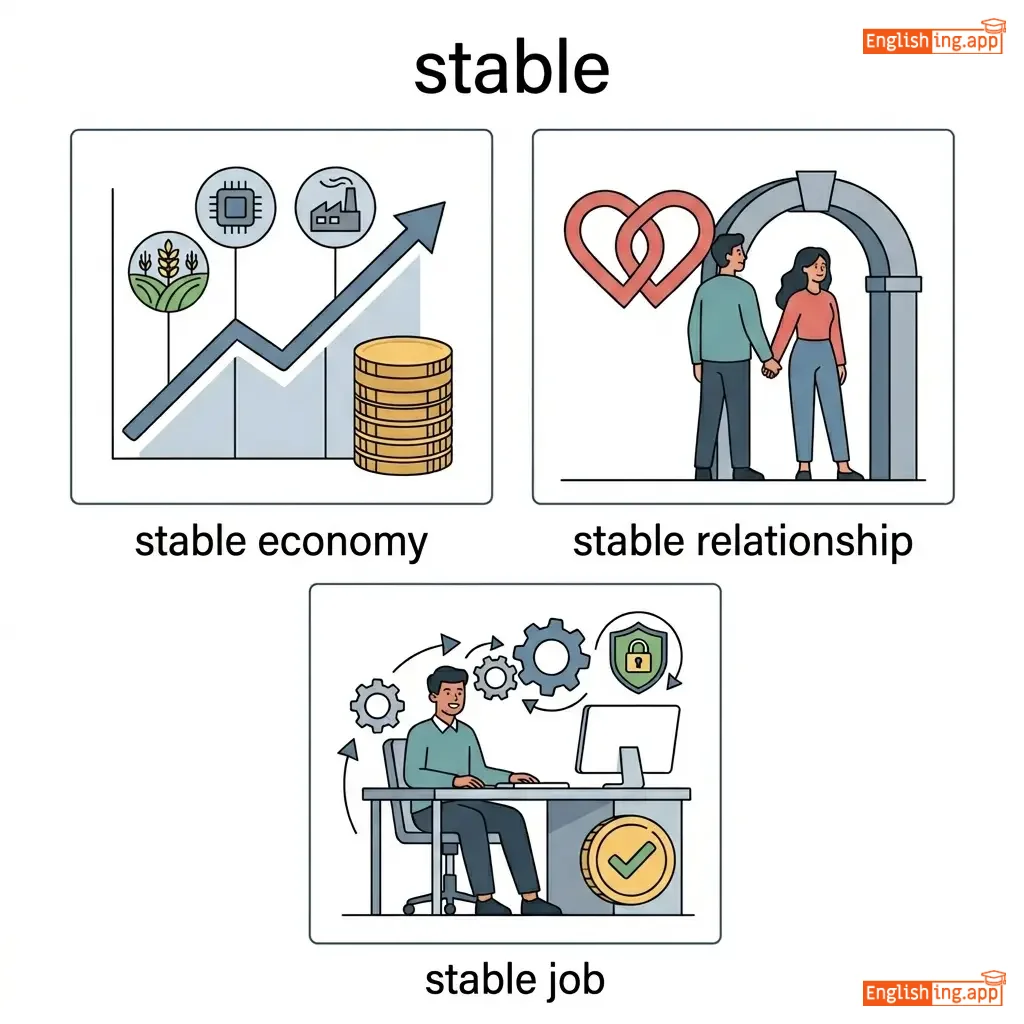
stable economy, stable relationship, stable job, stable environment
••••••
|
Stable значит стабильный, как конюшня, где лошади стабильно находятся.
••••••
|
|
#4736
👩💼
|
/stæf/
noun
(ст staff)
••••••
|
- •••••• |
персонал
personal
••••••
|
- •••••• | - •••••• | - •••••• | - •••••• |
a group of employees working together in an organization
••••••
|
The staff at the hospital are very helpful. |
Персонал в больнице очень полезен.
Personal v bol'nitse ochen' polezen.
••••••
|
- •••••• | - •••••• | - •••••• |
employees, team, workforce, personnel
••••••
|
employer, boss
••••••
|
staff members, staff meeting, hospital staff
••••••
|
Staff означает работников организации - Staff means the workers of an organization!
••••••
|
|
#4737
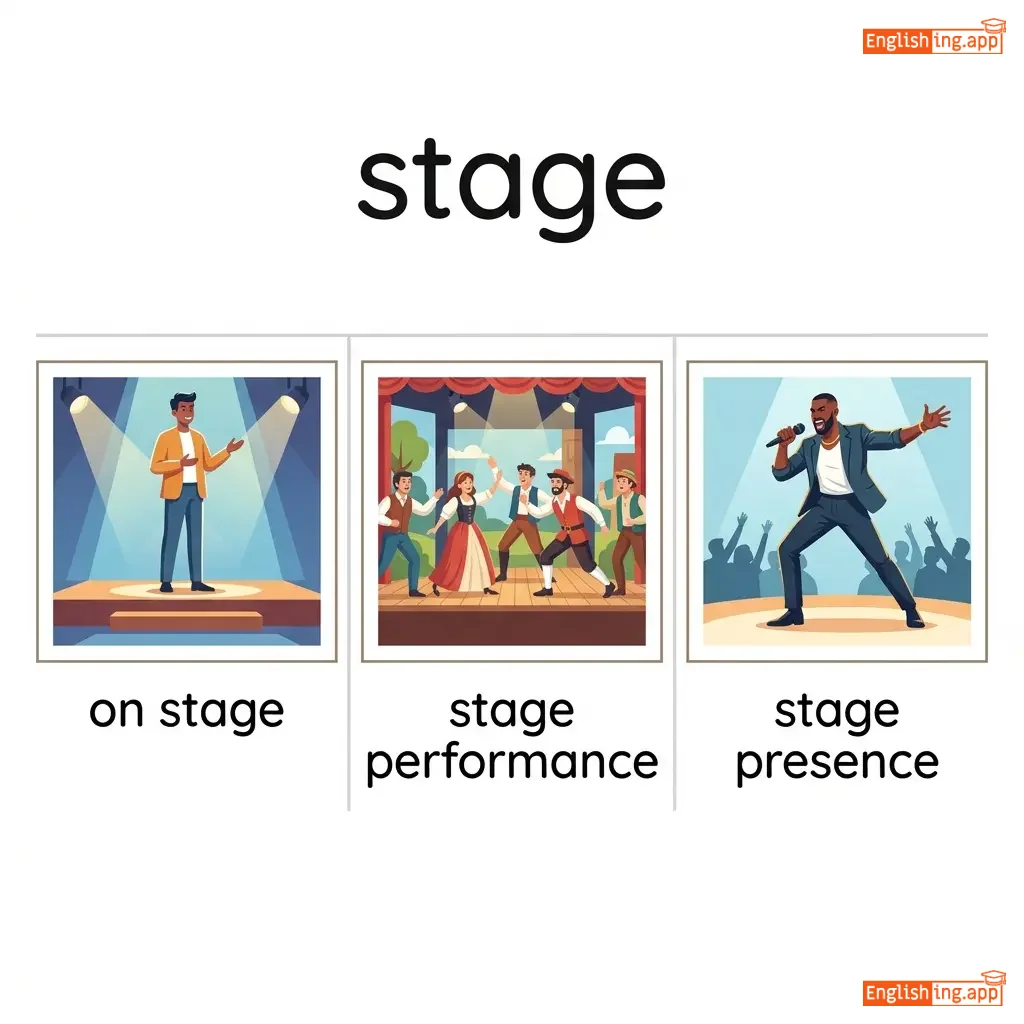
🎭
|
/steɪdʒ/
noun
(стейдж)
••••••
|
|
сцена
stsena
••••••
|
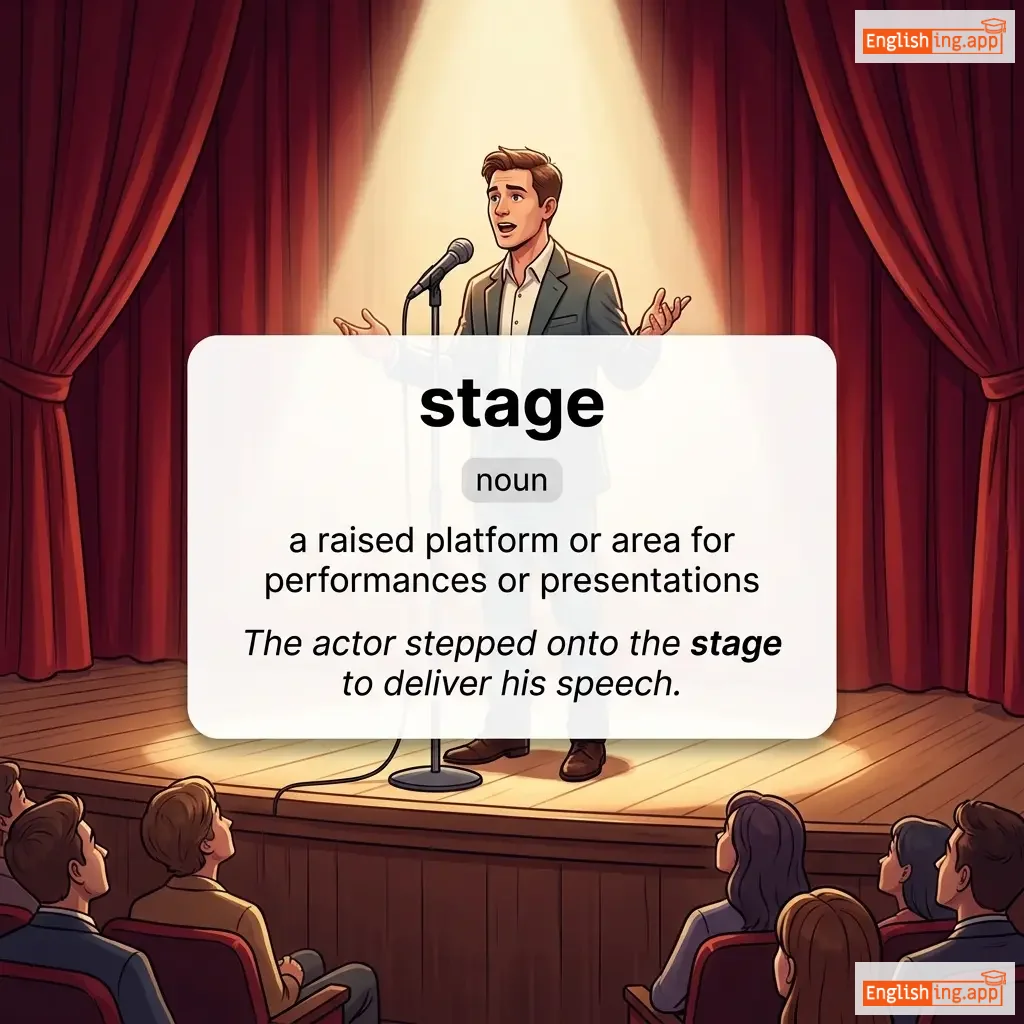
- •••••• | - •••••• | - •••••• | - •••••• |
a raised platform or area for performances or presentations
••••••
|
The actor stepped onto the stage to deliver his speech. |
Актер поднялся на сцену, чтобы произнести свою речь.
Aktor podnyalsya na stsenu, chtoby proyiznesti svoyu rech'.
••••••
|
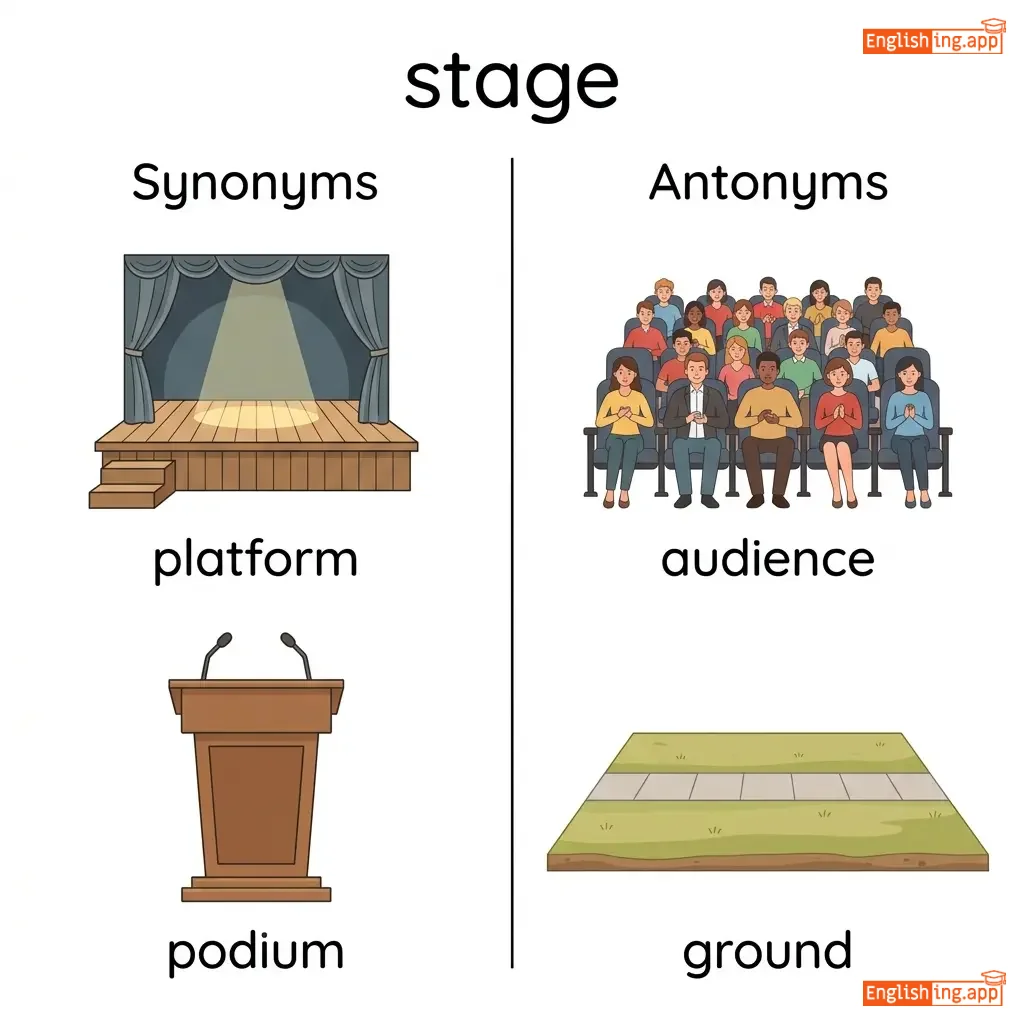
- •••••• | - •••••• | - •••••• |
platform, podium, stage area
••••••
|
audience, ground
••••••
|
on stage, stage performance, stage presence
••••••
|
Сцена - это место для выступлений, сцена для представлений!
••••••
|
|
#4738
🪜
|
/stɛə/
noun
(стэр)
••••••
|
- •••••• |
лестница
lestnitsa
••••••
|
- •••••• | - •••••• | - •••••• | - •••••• |
a step or set of steps leading from one level to another
••••••
|
He tripped on the stair and fell down. |
Он споткнулся на лестнице и упал.
On spotknulsya na lestnitse i upal.
••••••
|
- •••••• | - •••••• | - •••••• |
step, staircase, flight of stairs
••••••
|
elevator, lift
••••••
|
climb the stairs, fall down the stairs
••••••
|
Лестница, по которой мы поднимаемся или спускаемся – Stair means lestnitsa!
••••••
|
|
#4739
📈
|
/steɪk/
noun, verb
(stejk)
••••••
|
- •••••• |
доля, риск
dolya, risk
••••••
|
staked
stejkt
••••••
|
staked
stejkt
••••••
|
stakes
stejks
••••••
|
staking
stejking
••••••
|
A share or interest in a business or venture; to risk or support something of value.
••••••
|
He has a major stake in the new company.
У него есть большая доля в новой компании.
••••••
|
У него есть большая доля в новой компании.
U nego yest' bol'shaya dolya v novoy kompanii.
••••••
|
at stake
на кону
••••••
|
at risk; in danger of being lost
••••••
|
на кону
na konu
••••••
|
share, investment, risk, interest, bet
••••••
|
security, certainty, safety
••••••
|
stake in, at stake, high stakes, stake money
••••••
|
Когда ставишь, все на кону.
••••••
|
|
#4740
🛑
|
/stɔːl/
verb, noun
(stol)
••••••
|
- •••••• |
остановить, киоск
ostanovit', kioskh
••••••
|
stalled
stold
••••••
|
stalled
stold
••••••
|
stalls
stols
••••••
|
stalling
stoling
••••••
|
to stop or cause to stop temporarily; a small shop or stand
••••••
|
The car stalled on the way to the office.
Машина остановилась по пути в офис.
••••••
|
Машина остановилась по пути в офис.
Mashina ostanovilas' po puti v ofis.
••••••
|
- •••••• | - •••••• | - •••••• |
delay, stop, halt, linger
••••••
|
move, proceed
••••••
|
stall a car, market stall, food stall, engine stalled
••••••
|
Stall означает остановить или маленький рынок!
••••••
|
|
#4741
📮
|
/stæmp/
verb
••••••
|
- •••••• | - •••••• |
stamped
••••••
|
stamped
••••••
|
stamps
••••••
|
stamping
••••••
|
To bring down (one's foot) heavily on the ground; to imprint a mark or seal.
••••••
|
She stamped her foot in frustration. |
- •••••• |
stamp out |
To put an end to something harmful or undesirable.
••••••
|
- •••••• |
imprint, seal, stomp, crush
••••••
|
erase, remove
••••••
|
stamp out, stamp duty, stamp collector, stamp approval
••••••
|
No •••••• |
|
#4742
🧍
|
/stæns/
noun
(стэнс)
••••••
|
- •••••• |
позиция
pozitsiya
••••••
|
- •••••• | - •••••• | - •••••• | - •••••• |
a person's attitude, opinion, or position on an issue
••••••
|
The company took a strong stance on environmental protection. |
Компания заняла твердую позицию по защите окружающей среды.
Kompaniya zanyala tverdoyu pozitsiyu po zashchite okruzhayushchey sredy.
••••••
|
take a stance |
to adopt a definite position or opinion on a subject
••••••
|
занять позицию
zanyat pozitsiyu
••••••
|
position, viewpoint, attitude, perspective, opinion
••••••
|
neutrality, indecision
••••••
|
firm stance, political stance, defensive stance, moral stance
••••••
|
Stance означает позиция, займись своей позицией прямо сейчас!
••••••
|
|
#4743
🧍
|
/stænd/
verb
(стоять)
••••••
|
|
стоять
stoyat
••••••
|
stood
стоял
••••••
|
stood
стоял
••••••
|
stands
стоит
••••••
|
standing
стоять
••••••
|
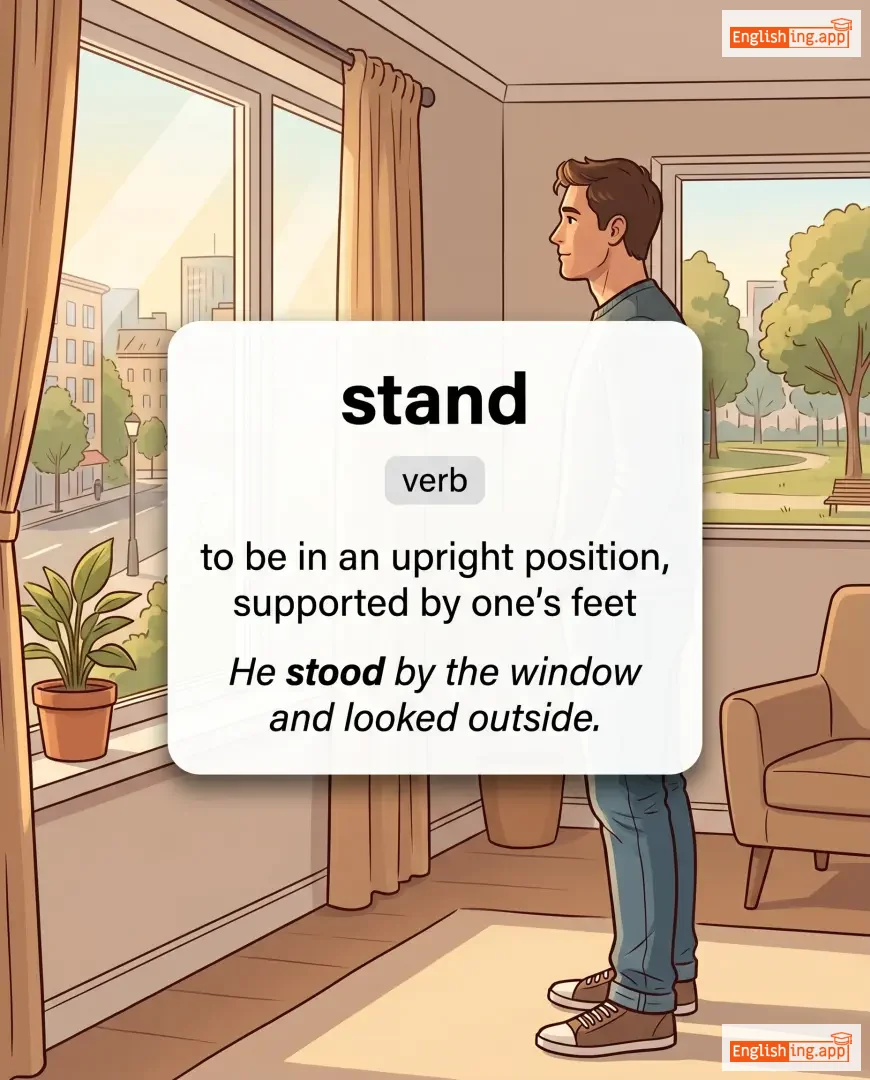
to be in an upright position; to tolerate or endure
••••••
|
Please stand up when the teacher enters.
Пожалуйста, встаньте, когда учитель войдёт.
••••••
|
Пожалуйста, встаньте, когда учитель войдёт.
Pozhaluysta, vstante, kogda uchitel' voyodyot.
••••••
|
- •••••• | - •••••• | - •••••• |
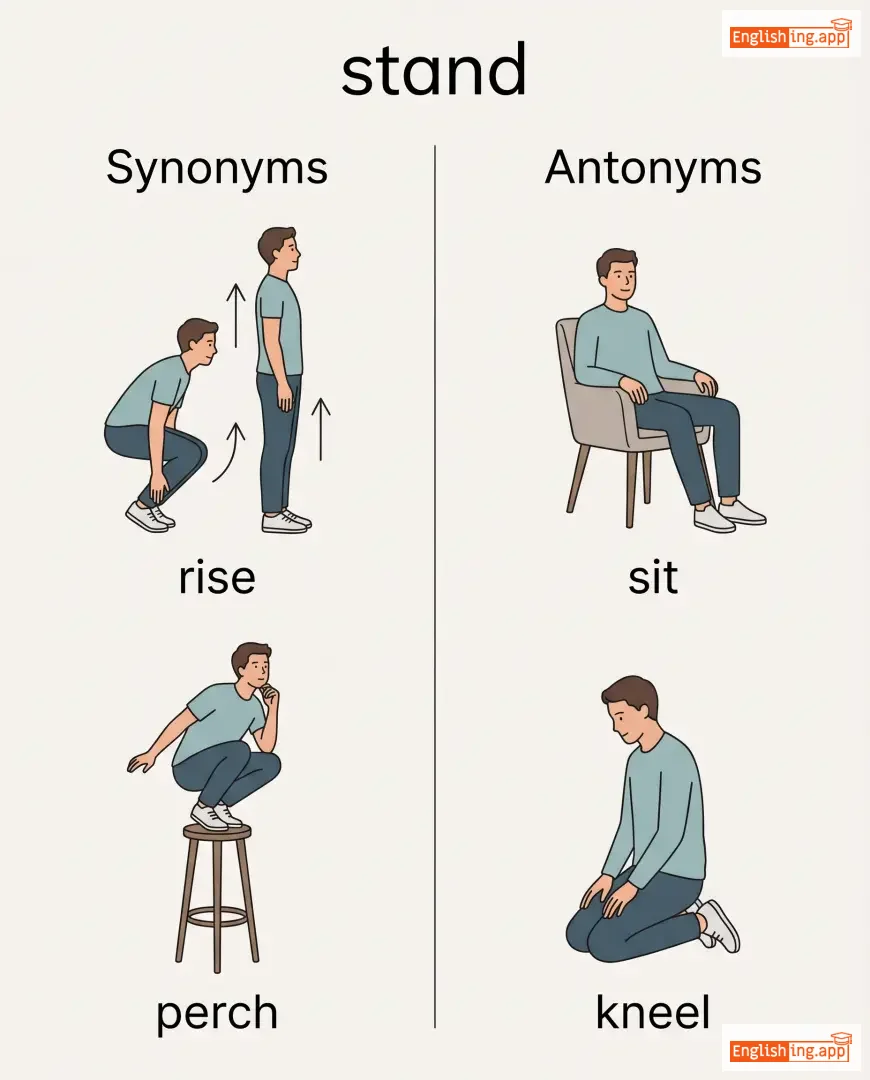
rise, upright, endure, tolerate
••••••
|
sit, lie, fall, collapse
••••••
|
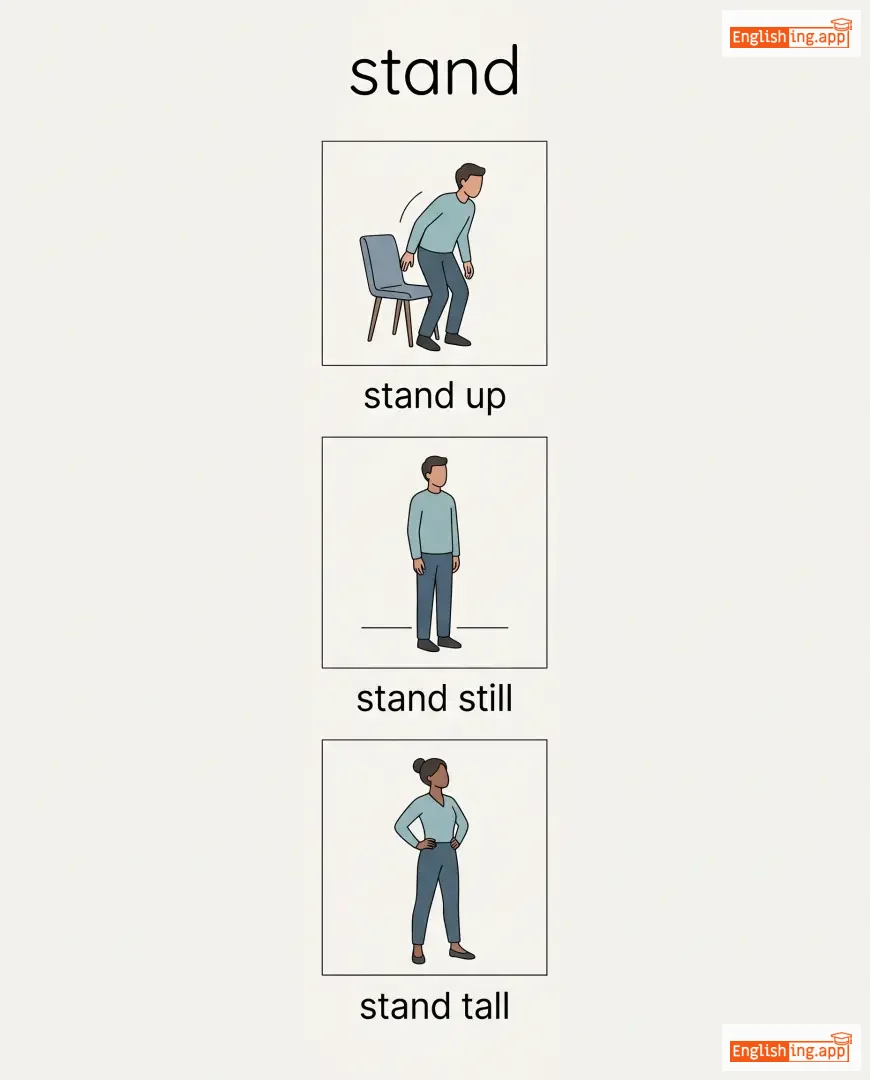
stand up, stand still, stand by, stand for, take a stand
••••••
|
Как солдат на посту, всегда стоя.
••••••
|
|
#4744
📏
|
/ˈstændərd/
noun
(стандарт)
••••••
|
- •••••• |
стандарт
standart
••••••
|
- •••••• | - •••••• | - •••••• | - •••••• |
a level of quality or achievement, or a measure of comparison
••••••
|
This car meets all the safety standards.
Этот автомобиль соответствует всем стандартам безопасности.
••••••
|
Этот автомобиль соответствует всем стандартам безопасности.
Etot avtomobil sootvetstvuet vsem standartam bezopasnosti.
••••••
|
- •••••• | - •••••• | - •••••• |
norm, criterion, benchmark, measure
••••••
|
exception, anomaly
••••••
|
high standard, industry standard, minimum standard
••••••
|
Standart = станд арт: imagine a stand держит art, чтобы качество было на высоте
••••••
|
|
#4745
🧍
|
/ˈstændɪŋ/
noun/adjective
(стэндинг)
••••••
|
- •••••• |
положение / репутация
polozhenie / reputatsiya
••••••
|
- •••••• | - •••••• | - •••••• | - •••••• |
status, reputation, or position; also the act of being upright on the feet
••••••
|
He has high standing in the community for his charity work. |
У него высокий статус в обществе за его благотворительную работу.
U nego vysokiy status v obshchestve za ego blagotvoritel'nuyu rabotu.
••••••
|
of good standing |
having a good reputation or status
••••••
|
с хорошей репутацией
s khoroshey reputatsiey
••••••
|
status, reputation, position, rank, stature
••••••
|
disrepute, dishonor, disgrace
••••••
|
social standing, legal standing, good standing, standing order
••••••
|
Standing означает стоять, а также быть в хорошем положении или иметь репутацию.
••••••
|
|
#4746
⭐
|
/stɑːr/
noun
(стар)
••••••
|
|
звезда
zvezda
••••••
|
- •••••• | - •••••• | - •••••• | - •••••• |
a luminous point in the night sky, a famous person
••••••
|
The movie star smiled for the cameras. |
Кинозвезда улыбнулась для камер.
Kinozvezda ulybnulas' dlya kamer.
••••••
|
a shooting star |
a meteor that appears to move rapidly across the sky
••••••
|
падающая звезда
padayushchaya zvezda
••••••
|
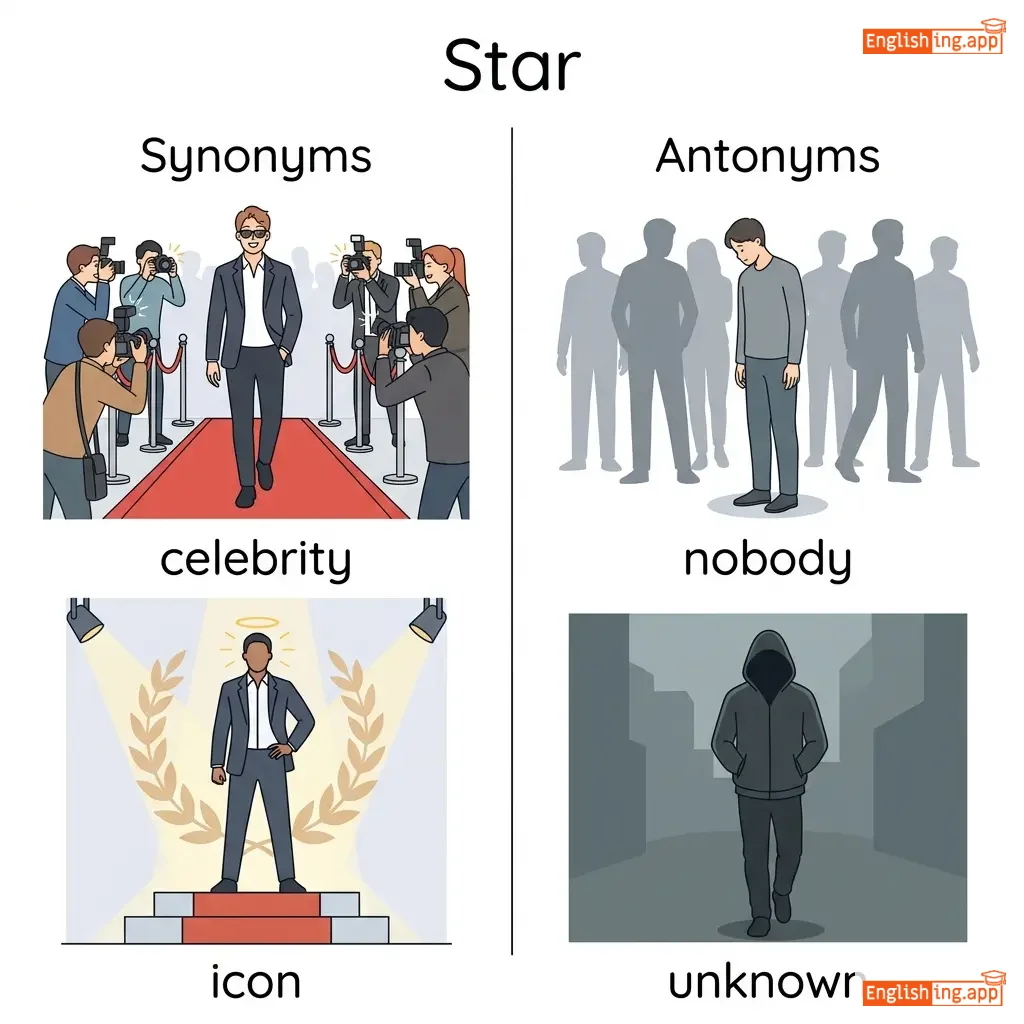
celebrity, icon, luminary, celebrity
••••••
|
nobody, unknown
••••••
|
movie star, film star, shooting star
••••••
|
Звезды сверкают на небе, как кинозвезды на экране!
••••••
|
|
#4747
⚫
|
/stɑːrk/
adjective
(старк)
••••••
|
- •••••• |
сильный, резкий
sil'nyy, rezkiy
••••••
|
- •••••• | - •••••• | - •••••• | - •••••• |
Severe, sharp, or clearly defined; plain and without any decoration.
••••••
|
The stark contrast between poverty and wealth was evident in the city.
Явное различие между бедностью и богатством было очевидно в городе.
••••••
|
Явное различие между бедностью и богатством было очевидно в городе.
Yavnoe razlichie mezhdu bednost'yu i bogatstvom bylo ochevidno v gorode.
••••••
|
stark reality
жестокая реальность
••••••
|
The harsh or unpleasant truth.
••••••
|
жестокая реальность
zhestokaya real'nost'
••••••
|
severe, harsh, bleak, plain, absolute
••••••
|
soft, mild, decorated
••••••
|
stark contrast, stark difference, stark reality, stark warning
••••••
|
Stark напоминает сильный контраст между черным и белым.
••••••
|
|
#4748
🚀
|
/stɑːrt/
verb
(старт)
••••••
|
|
начать
nachat
••••••
|
started
стартед
••••••
|
started
стартед
••••••
|
starts
старц
••••••
|
starting
стартиг
••••••
|
To begin doing something; to commence.
••••••
|
They will start the meeting at 10 a.m.
Они начнут собрание в 10 утра.
••••••
|
Они начнут собрание в 10 утра.
Oni nachnut sobranie v 10 utra.
••••••
|
start from scratch
начать с нуля
••••••
|
To begin again from nothing.
••••••
|
Начать с нуля
Nachat' s nulya
••••••
|
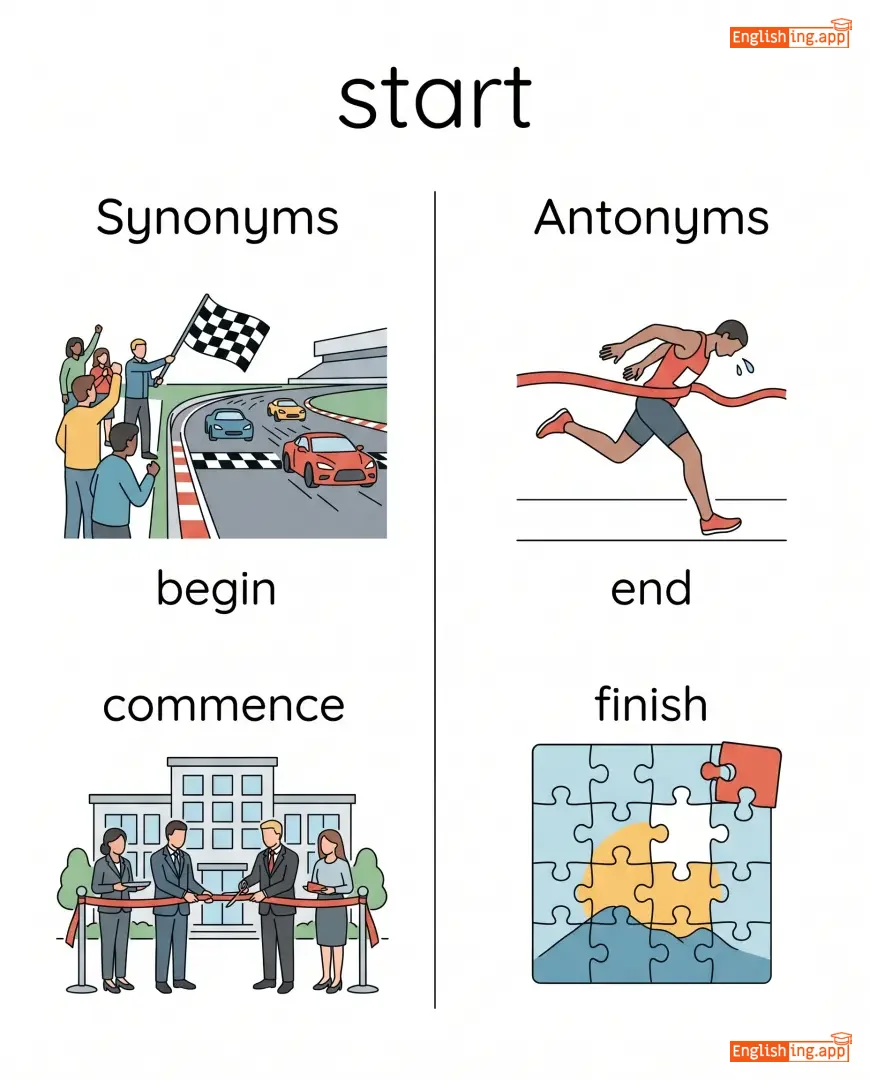
begin, commence, initiate, launch, open
••••••
|
end, finish, stop
••••••
|
start a business, start a meeting, start working, start again
••••••
|
Нажмите кнопку 'START', чтобы начать.
••••••
|
|
#4749
🏛️
|
/steɪt/
noun
(стэйт)
••••••
|
|
состояние
sostoyanie
••••••
|
- •••••• | - •••••• | - •••••• | - •••••• |
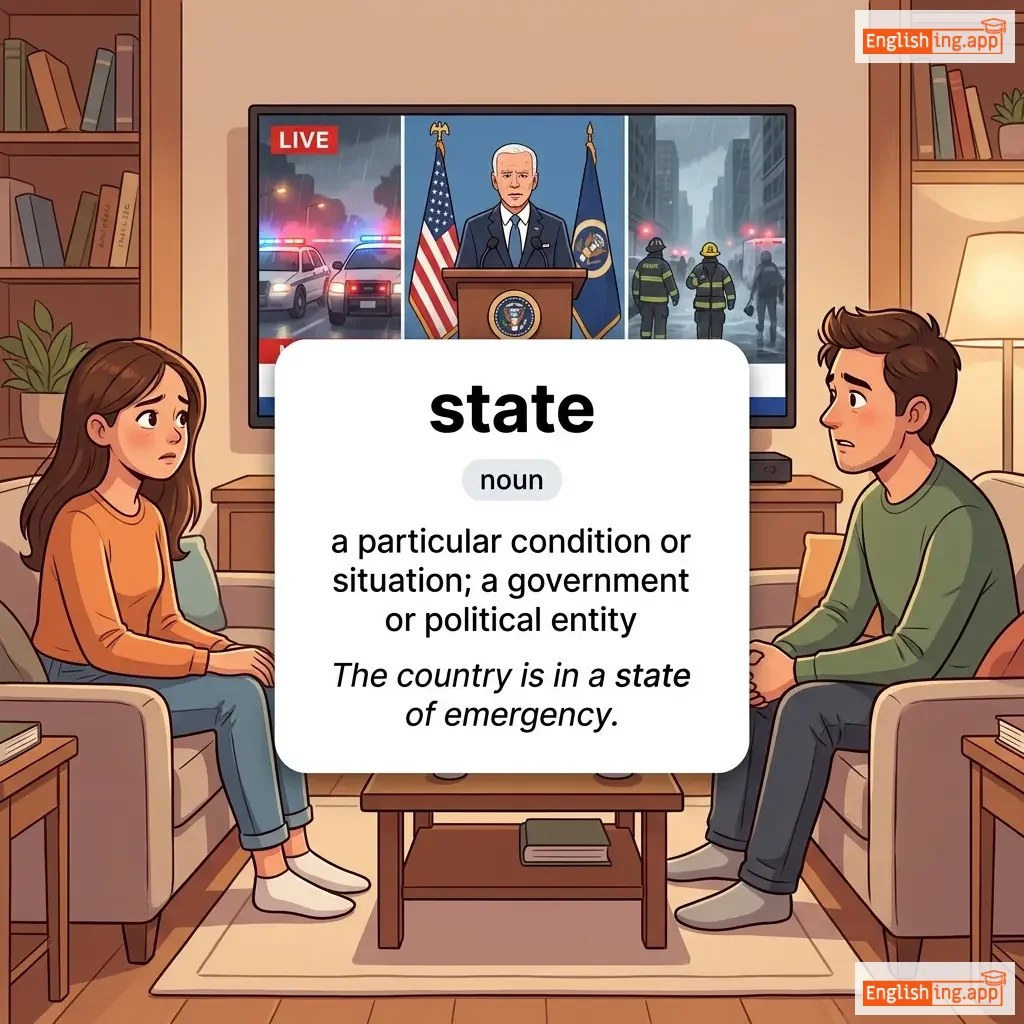
a particular condition or situation; a government or political entity
••••••
|
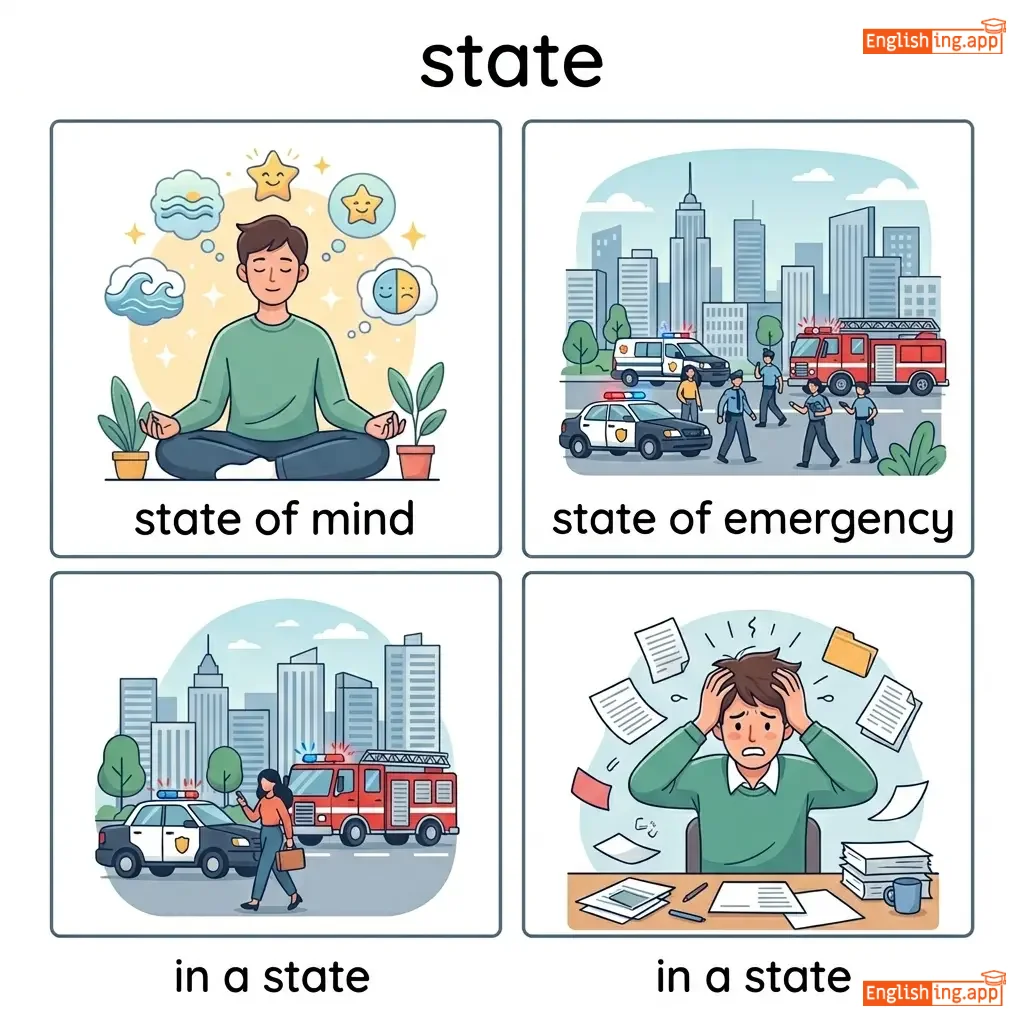
The country is in a state of emergency. |
Страна находится в состоянии чрезвычайного положения.
Strana nakhoditsya v sostoyanii chrezvychaynogo polozheniya.
••••••
|
- •••••• | - •••••• | - •••••• |
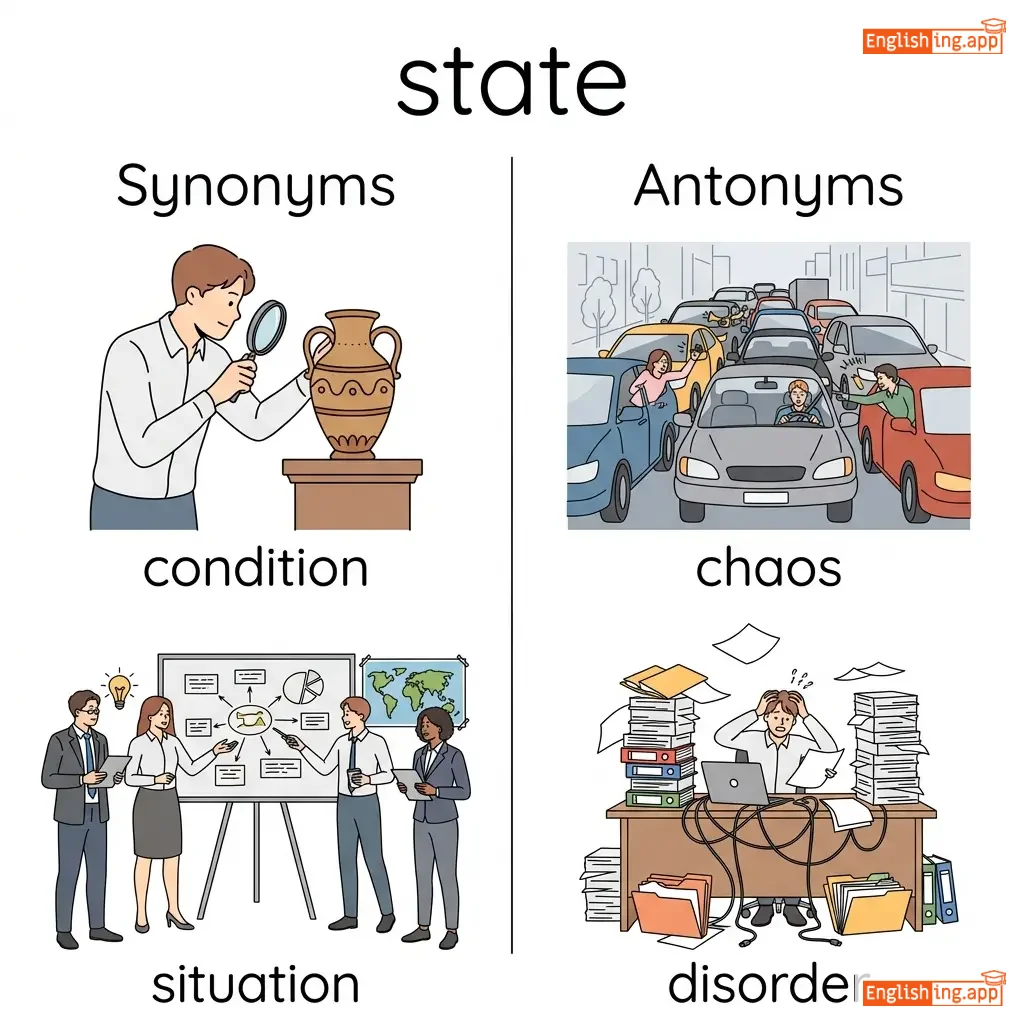
condition, situation, phase, territory
••••••
|
chaos, disorder
••••••
|
state of mind, state of emergency, in a state
••••••
|
State means a country or condition - like the 'state' of emergency!
••••••
|
|
#4750
📄
|
/ˈsteɪt.mənt/
noun
(steytmənt)
••••••
|
- •••••• |
заявление
zayavleniye
••••••
|
- •••••• | - •••••• | - •••••• | - •••••• |
a definite or clear expression of something in speech or writing; an official account of facts
••••••
|
The CEO issued a statement about the company's future plans. |
Генеральный директор сделал заявление о будущих планах компании.
General'nyy direktor sdelal zayavleniye o budushchikh planakh kompanii.
••••••
|
- •••••• | - •••••• | - •••••• |
declaration, announcement, report, account
••••••
|
silence, concealment
••••••
|
official statement, press statement, financial statement, witness statement
••••••
|
Заявление = statement, генеральный директор сделал заявление.
••••••
|
|
#4751
🚉
|
/ˈsteɪʃən/
noun
(стейшн)
••••••
|
|
станция
steyshun
••••••
|
- •••••• | - •••••• | - •••••• | - •••••• |
a place where a particular service is provided, especially for transportation
••••••
|
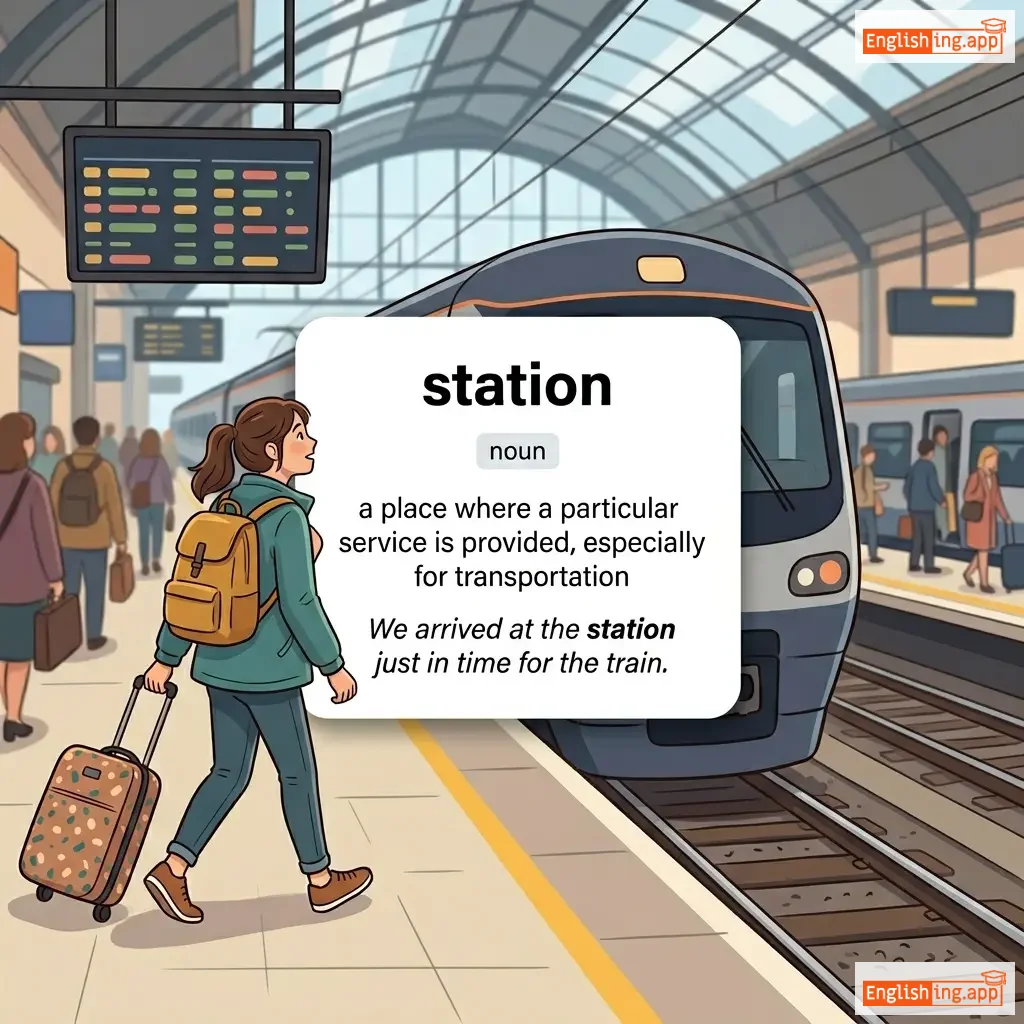
We arrived at the station just in time for the train.
Мы прибыли на станцию как раз к поезду.
••••••
|
Мы прибыли на станцию как раз к поезду.
My pribyli na stantsiyu kak raz k poezdu.
••••••
|
- •••••• | - •••••• | - •••••• |
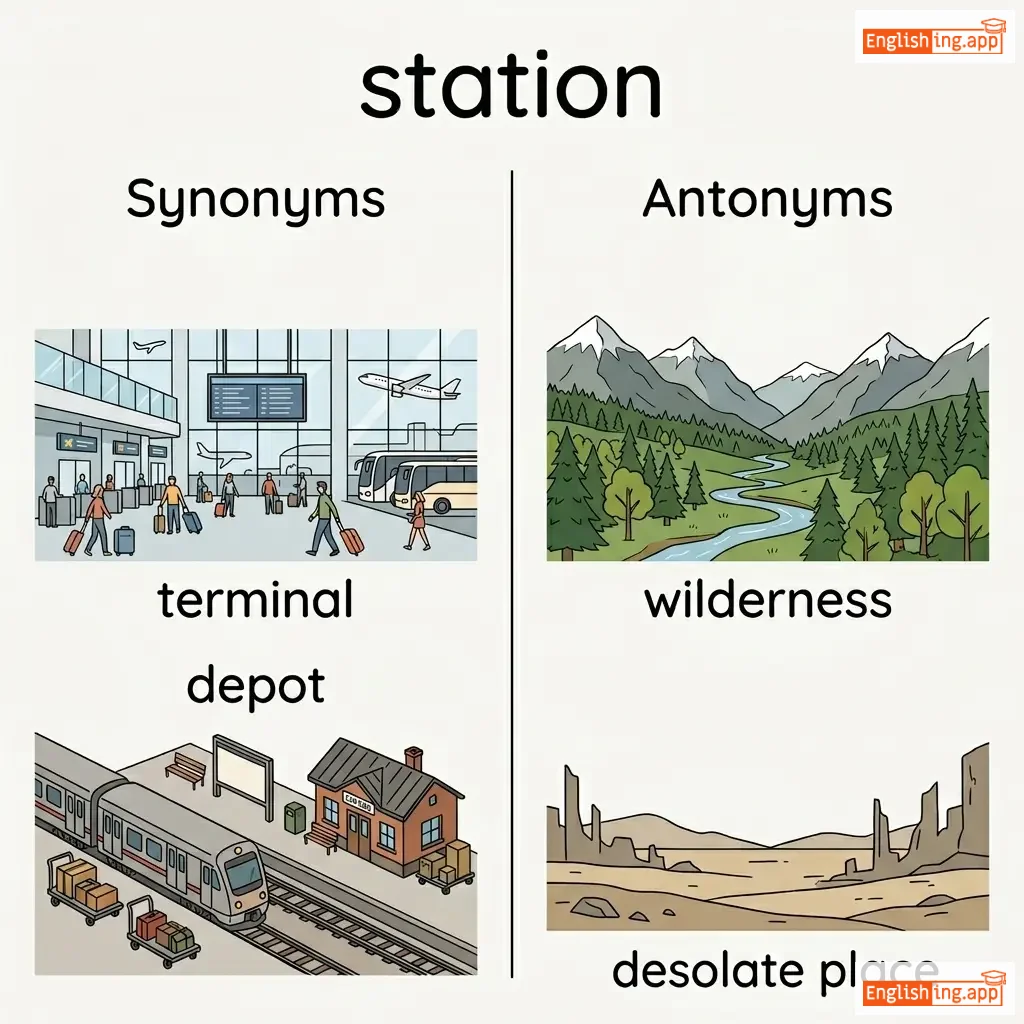
terminal, depot, stop, hub
••••••
|
wilderness, desolate place
••••••
|
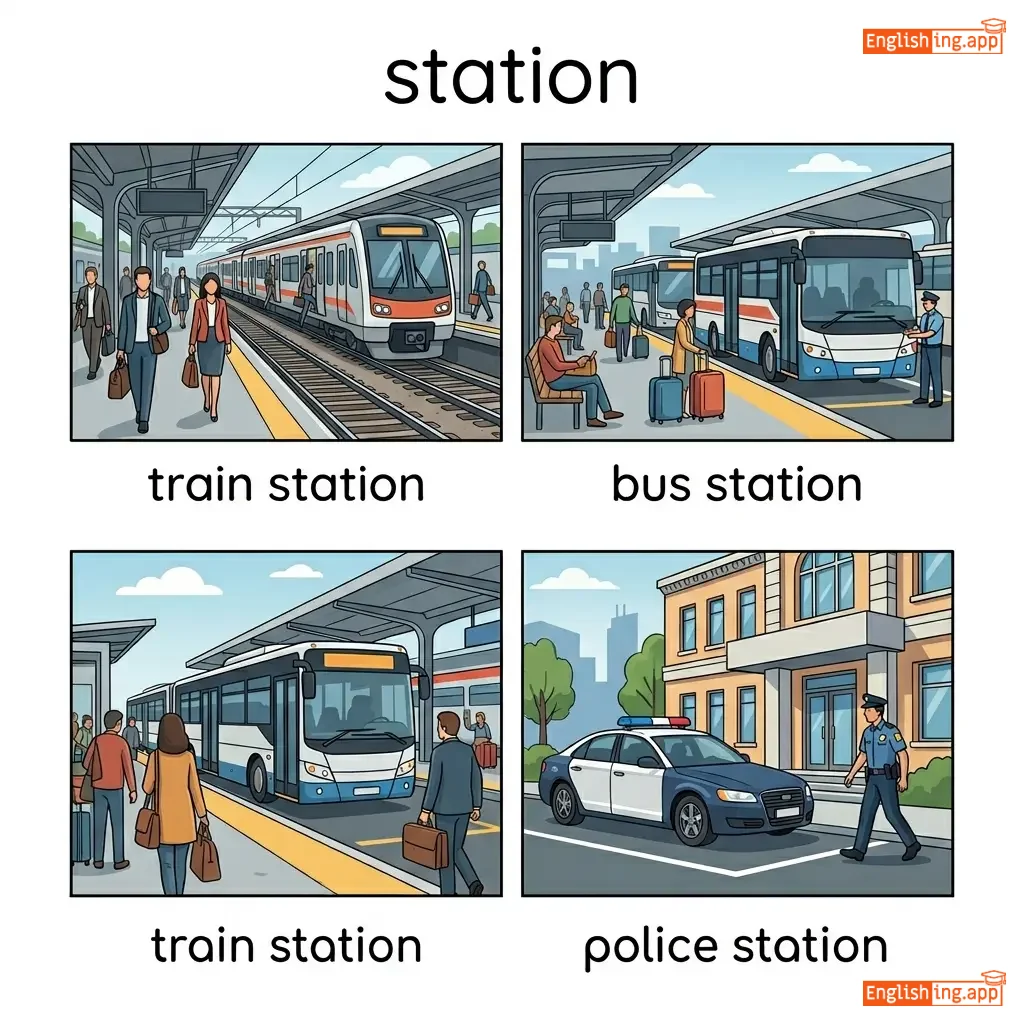
train station, bus station, police station, gas station
••••••
|
Stan на станции: imagine Stan on a станция waving a big sign Station to remember станция
••••••
|
|
#4752
📊
|
/stəˈtɪstɪkəl/
adjective
(статистический)
••••••
|
- •••••• |
статистический
statisticheskiy
••••••
|
- •••••• | - •••••• | - •••••• | - •••••• |
relating to the use or analysis of numerical data
••••••
|
The report provides statistical data about population growth. |
Отчет предоставляет статистические данные о росте населения.
Otchet predostavlyaet statisticheskie dannye o roste naseleniya.
••••••
|
- •••••• | - •••••• | - •••••• |
numerical, analytical, quantitative, data-based
••••••
|
qualitative, subjective
••••••
|
statistical analysis, statistical data, statistical method, statistical model
••••••
|
Статистика - это числа, так что statistical касается их анализа 📊
••••••
|
|
#4753
📊
|
/stəˈtɪstɪks/
noun
(статистика)
••••••
|
- •••••• |
статистика
statistika
••••••
|
- •••••• | - •••••• | - •••••• | - •••••• |
the practice or science of collecting and analyzing numerical data
••••••
|
The statistics showed an increase in the number of users last year.
Статистика показала увеличение числа пользователей в прошлом году.
••••••
|
Статистика показала увеличение числа пользователей в прошлом году.
Statistika pokazala uvelichenie chisla pol'zovateley v proshlom godu.
••••••
|
- •••••• | - •••••• | - •••••• |
data, figures, analytics, metrics
••••••
|
anecdote, singular, outlier
••••••
|
statistical analysis, statistical data, statistical model, collection of statistics
••••••
|
Статистика помогает понять, как данные влияют на решения.
••••••
|
|
#4754
🗽
|
/ˈstætʃuː/
noun
(статуя)
••••••
|
- •••••• |
статуя
statya
••••••
|
- •••••• | - •••••• | - •••••• | - •••••• |
a carved or cast figure of a person or animal, especially one that is life-size or larger
••••••
|
They built a statue of the national hero in the city square. |
Они построили статую национального героя на городской площади.
Oni postroili statuyu natsional'nogo geroya na gorodskoj ploshchadi.
••••••
|
as still as a statue |
completely motionless
••••••
|
неподвижный как статуя
nepodvizhnyj kak statuya
••••••
|
sculpture, figure, effigy, monument, idol
••••••
|
none, living being
••••••
|
statue of liberty, bronze statue, marble statue, giant statue
••••••
|
Statue means statue of liberty 🗽 — Статуя всегда неподвижна!
••••••
|
|
#4755
🔝
|
/ˈsteɪtəs/
noun
(статус)
••••••
|
- •••••• |
статус
status
••••••
|
- •••••• | - •••••• | - •••••• | - •••••• |
the social or professional position or condition of someone or something
••••••
|
His social status improved after the promotion. |
Его социальный статус улучшился после повышения.
Yego sotsial'nyy status uluchshilsya posle povysheniya.
••••••
|
- •••••• | - •••••• | - •••••• |
rank, position, standing, condition
••••••
|
low status, insignificance
••••••
|
high status, social status, professional status
••••••
|
Статус - это твое место в обществе
••••••
|
|
#4756
🏠
|
/steɪ/
verb
(stey)
••••••
|
|
оставаться
ostavatsya
••••••
|
stayed
stayed
••••••
|
stayed
stayed
••••••
|
stays
steyts
••••••
|
staying
steying
••••••
|
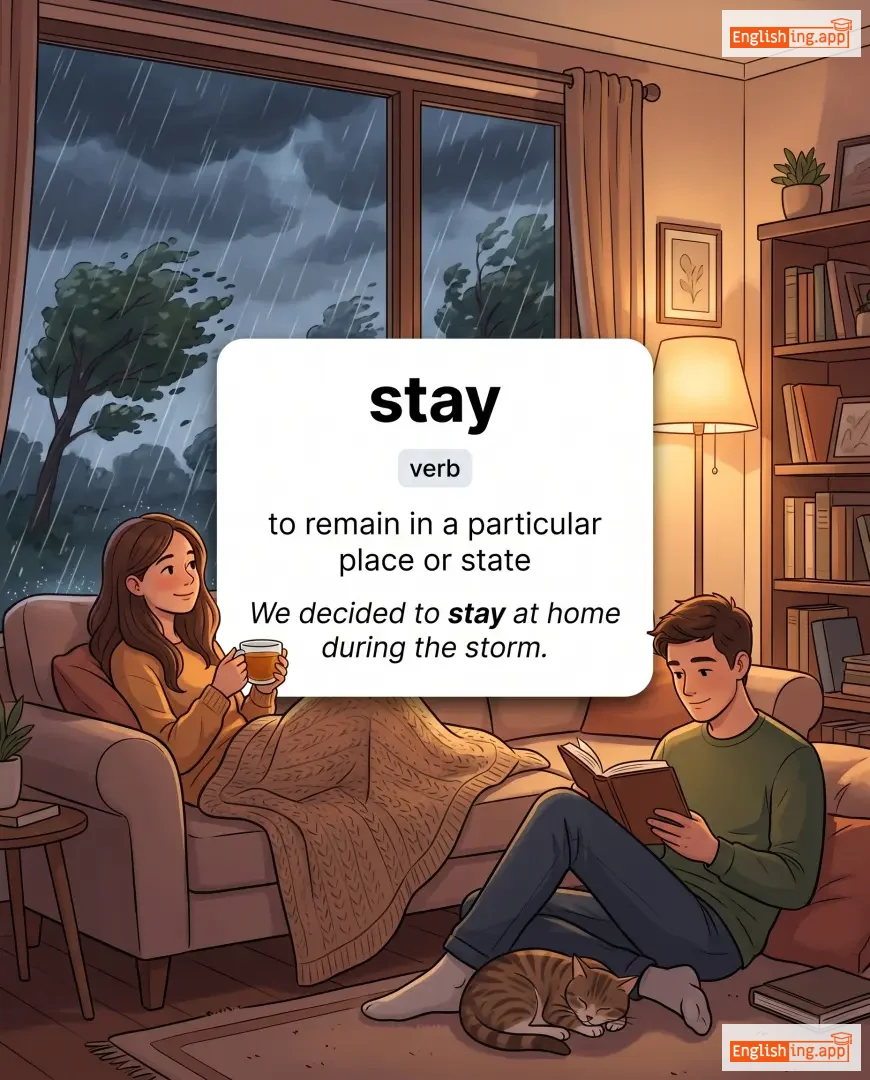
to remain in the same place; to continue being
••••••
|
Please stay here until I return.
Пожалуйста, оставайтесь здесь, пока я не вернусь.
••••••
|
Пожалуйста, оставайтесь здесь, пока я не вернусь.
Pozhaluysta, ostavaytes' zdes', poka ya ne vernus'.
••••••
|
- •••••• | - •••••• | - •••••• |
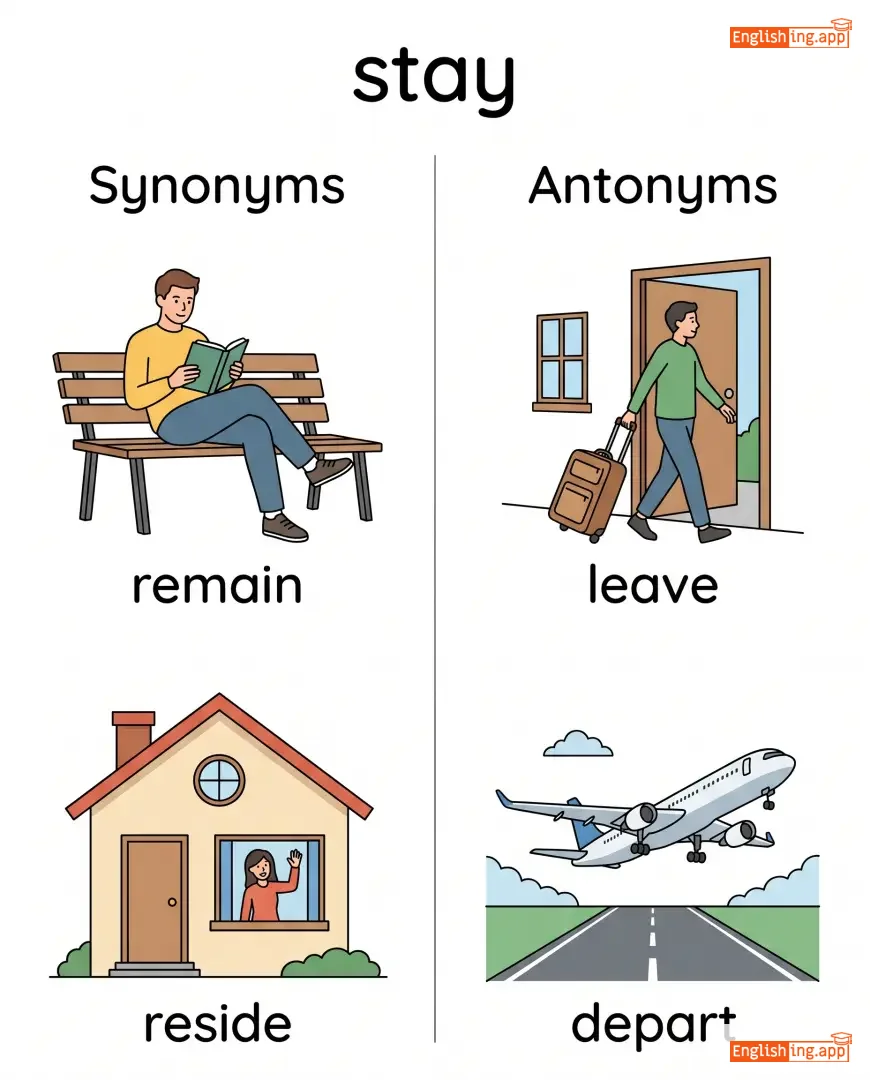
remain, continue, wait, linger
••••••
|
leave, go, depart, move
••••••
|
stay home, stay calm, stay away, stay up, stay put
••••••
|
Stay like 'ostavatsya' in Russian, just stay there!
••••••
|
|
#4757
📈
|
/ˈstɛdɪli/
adverb
(стэ-ди-ли)
••••••
|
- •••••• |
постоянно
postoyanno
••••••
|
- •••••• | - •••••• | - •••••• | - •••••• |
in a regular and continuous way; without stopping or changing
••••••
|
The company's profits have been increasing steadily. |
Прибыль компании постоянно растет.
Pribyl' kompanii postoyanno rastet.
••••••
|
- •••••• | - •••••• | - •••••• |
consistently, gradually, continuously, regularly
••••••
|
suddenly, irregularly, inconsistently
••••••
|
grow steadily, increase steadily, rise steadily, work steadily
••••••
|
Steady означает постоянный — поэтому steadily означает постоянно 📈
••••••
|
|
#4758
⚖️
|
/ˈstɛdi/
adjective
(стейди)
••••••
|
- •••••• |
стабильный
stabil'nyj
••••••
|
- •••••• | - •••••• | - •••••• | - •••••• |
firm, stable, and not likely to change suddenly
••••••
|
He kept his hand steady while painting the picture.
Он держал свою руку стабильно, рисуя картину.
••••••
|
Он держал свою руку стабильно, рисуя картину.
On derzhal svoyu ruku stabil'no, risuya kartinu.
••••••
|
steady as a rock
стабильный как скала
••••••
|
extremely stable and reliable
••••••
|
стабильный как скала
stabil'nyj kak skala
••••••
|
stable, firm, constant, fixed, reliable
••••••
|
unstable, unsteady, shaky
••••••
|
steady job, steady growth, steady hand, steady pace
••••••
|
steady означает стабильный → стабильная рука, стабильная картина
••••••
|
|
#4759
🕵️♂️
|
/stiːl/
verb
(stil)
••••••
|
|
красть
krast
••••••
|
stole
stol
••••••
|
stolen
stolen
••••••
|
steals
stielts
••••••
|
stealing
stieling
••••••
|
to take something without permission or right
••••••
|
He tried to steal my wallet while I wasn't looking.
он пытался украсть мой кошелек, пока я не смотрел.
••••••
|
Он пытался украсть мой кошелек, когда я не смотрел.
On pytalsya ukrast' moy koshelek, kogda ya ne smotrel.
••••••
|
steal someone's heart
украсть чье-то сердце
••••••
|
to charm or captivate someone
••••••
|
украсть чье-то сердце
ukrast' ch'ye-to serdtse
••••••
|
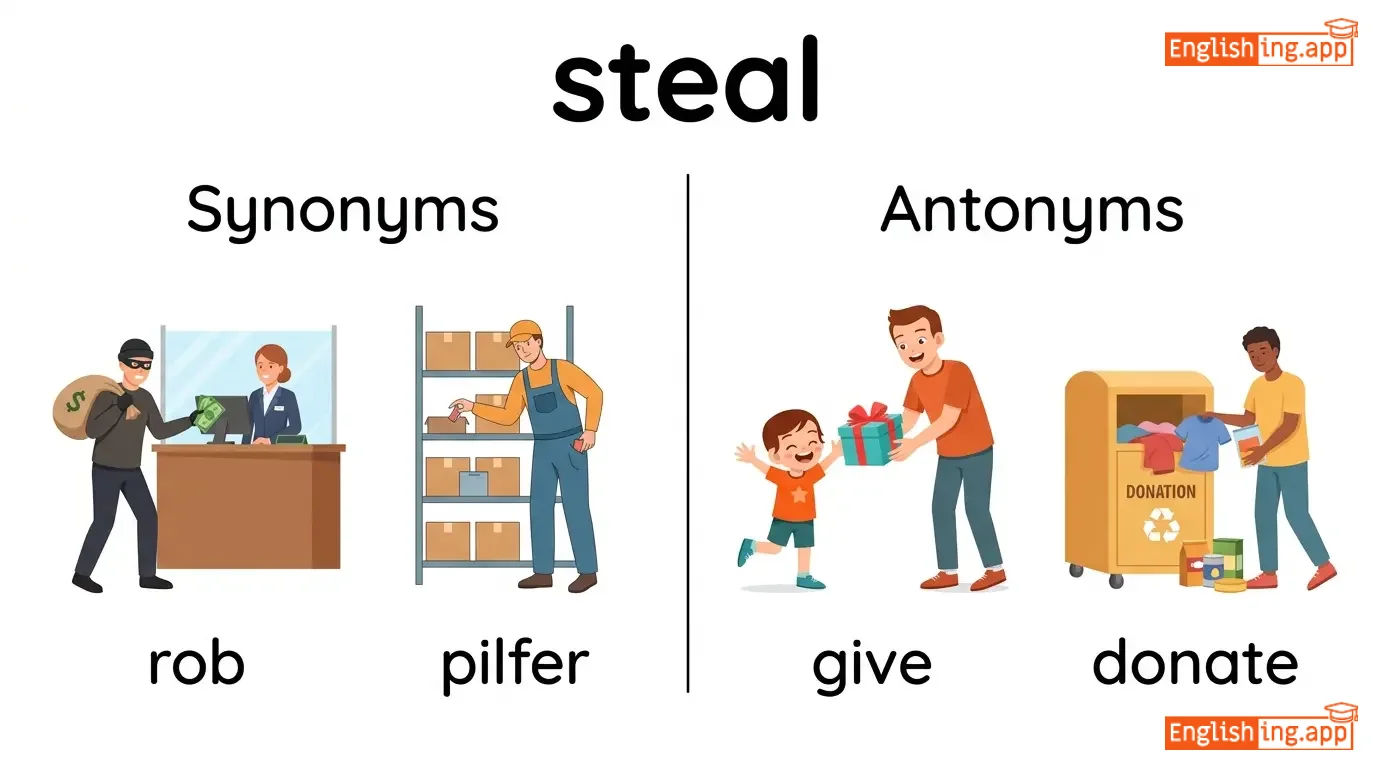
rob, pilfer, loot, snatch
••••••
|
give, donate, return
••••••
|
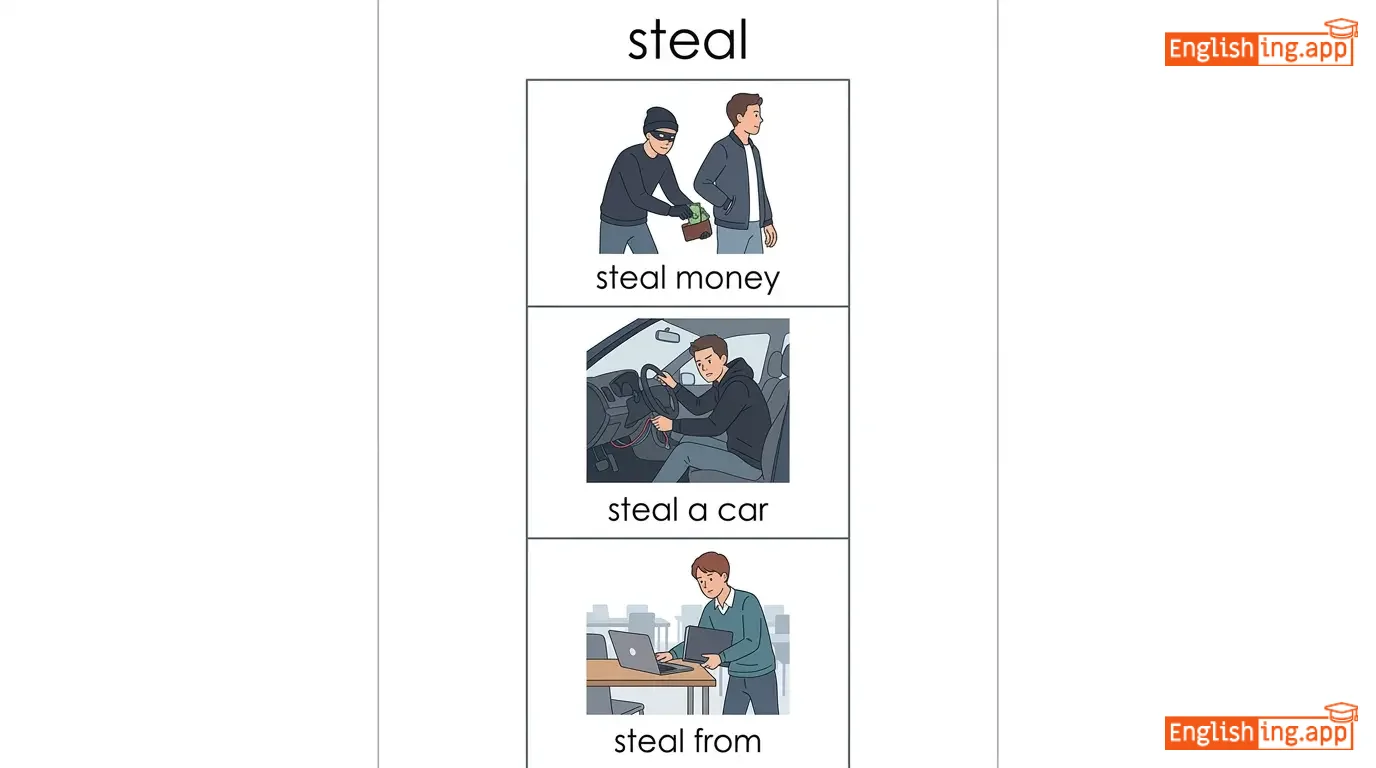
steal money, steal a car, steal from, steal away
••••••
|
Красть что-то - украсть сердце
••••••
|
|
#4760
💨
|
/stiːm/
noun, verb
(стим)
••••••
|
- •••••• |
пар
par
••••••
|
steamed
стимд
••••••
|
steamed
стимд
••••••
|
steams
стимс
••••••
|
steaming
стиминг
••••••
|
the vapor into which water is converted when heated; to emit or treat with steam
••••••
|
The kettle was steaming on the stove.
Чайник парил на плите.
••••••
|
Чайник парил на плите.
Chaynik paril na plite.
••••••
|
let off steam
выпускать пар
••••••
|
to release pent-up energy or emotions
••••••
|
выпускать накопленную энергию или эмоции
vypuskать nakoplennuyu energiyu ili emotsii
••••••
|
vapor, mist, fume, moisture, fog
••••••
|
ice, freeze
••••••
|
steam engine, steam room, steam bath, hot steam
••••••
|
Пар чая – это и тепло, и отдых.
••••••
|
|
#4761
🏗️
|
/stiːl/
noun
(русское произношение steel)
••••••
|
|
сталь
stal
••••••
|
- •••••• | - •••••• | - •••••• | - •••••• |
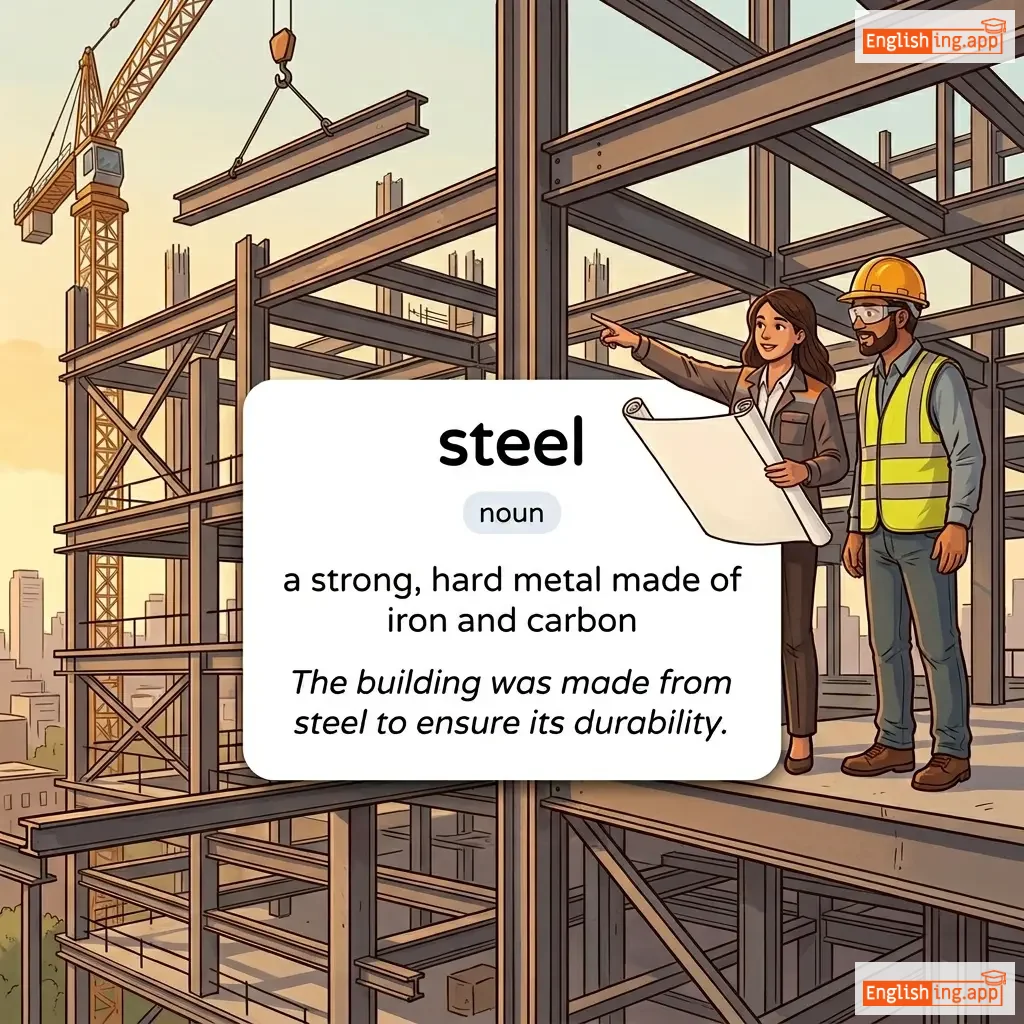
a strong, hard metal made of iron and carbon
••••••
|
The building was made from steel to ensure its durability. |
Здание было построено из стали, чтобы обеспечить его долговечность.
Zdanie bylo postroeno iz stali, chtoby obespechit' yego dolgovечnost'.
••••••
|
- •••••• | - •••••• | - •••••• |
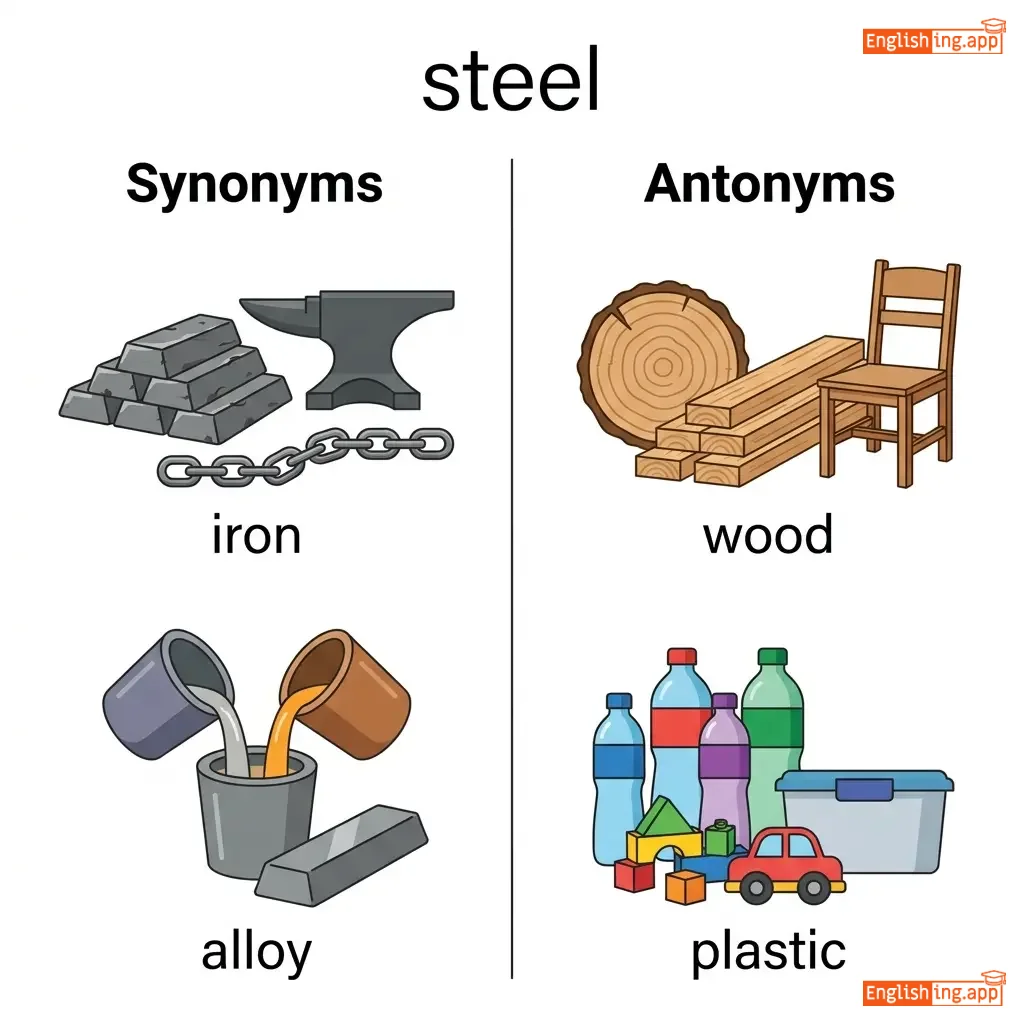
iron, alloy, metal
••••••
|
wood, plastic
••••••
|
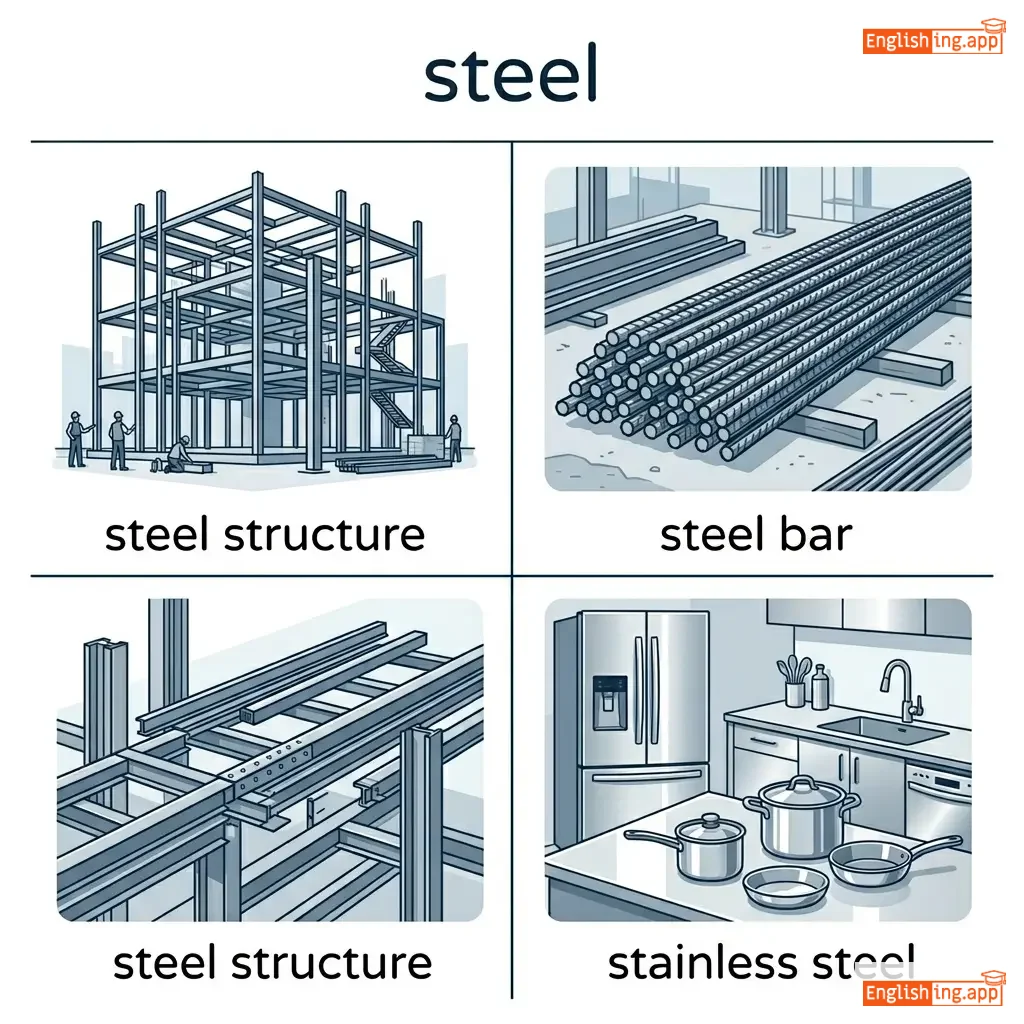
steel structure, steel bar, stainless steel, steel frame
••••••
|
Сталь прочна, как стены - Сталь = Прочная
••••••
|
|
#4762
⛰️
|
/stiːp/
adjective
(стип)
••••••
|
- •••••• |
крутой, чрезмерный
krutoy, chrezmernıy
••••••
|
- •••••• | - •••••• | - •••••• | - •••••• |
Having a sharp inclination or high slope; also can mean excessive (as in price).
••••••
|
The hikers climbed a steep mountain trail. |
Туристы поднялись по крутой горной тропе.
Turisty podnyalis' po krutoy gornoy trope.
••••••
|
a steep price |
Very high or excessive cost.
••••••
|
чрезмерная цена
chrezmernaya tsena
••••••
|
sharp, precipitous, abrupt, high, costly
••••••
|
gentle, flat, moderate
••••••
|
steep hill, steep slope, steep climb, steep price
••••••
|
Steep означает steep hill = крутой склон, а steep price = чрезмерная цена.
••••••
|
|
#4763
🛞
|
/stɪə(r)/
verb
(стир)
••••••
|
- •••••• |
управлять
upravlyat
••••••
|
steered
стирд
••••••
|
steered
стирд
••••••
|
steers
стирс
••••••
|
steering
стиринг
••••••
|
to guide or control the movement of a vehicle, vessel, or person
••••••
|
He steered the car carefully through the narrow street.
Он аккуратно вел машину по узкой улице.
••••••
|
Он аккуратно вел машину по узкой улице.
On akkuratno vel mashinu po uzkoy ulitse.
••••••
|
steer clear of
избегать ясно
••••••
|
to avoid someone or something
••••••
|
ясно избегать
yasno izbegat
••••••
|
guide, direct, navigate, control, pilot
••••••
|
neglect, ignore
••••••
|
steer the ship, steer the conversation, steer direction
••••••
|
Управлять, как рулить — если ты управляешь, ты показываешь путь 🚗
••••••
|
|
#4764
🌱
|
/stɛm/
noun, verb
(стем)
••••••
|
- •••••• |
стебель / остановить
stebel / ostanovit
••••••
|
stemmed
стеммед
••••••
|
stemmed
стеммед
••••••
|
stems
стемс
••••••
|
stemming
стемминг
••••••
|
Noun: The main stalk of a plant. Verb: To stop or restrict the flow or development of something.
••••••
|
The gardener cut the stem of the rose; New policies aim to stem the flow of pollution.
Садовник срезал стебель розы; Новые политики направлены на то, чтобы остановить поток загрязнения.
••••••
|
Садовник срезал стебель розы; Новые политики направлены на то, чтобы остановить поток загрязнения.
Sadovnik srezal stebel' rozy; Novye politiki napravleny na to, chtoby ostanovit' potok zagrjazneniya.
••••••
|
stem the tide
остановить поток
••••••
|
To stop or reduce something from increasing or spreading.
••••••
|
остановить поток
ostanovit' potok
••••••
|
stalk, trunk, branch, stop, halt
••••••
|
root, allow, encourage
••••••
|
stem of a flower, stem cells, stem from, stem the tide
••••••
|
Stem означает стебель 🌱 и также означает остановить, т.е. остановить поток.
••••••
|
|
#4765
👣
|
/stɛp/
noun
••••••
|
- •••••• | - •••••• | - •••••• | - •••••• | - •••••• | - •••••• |
a movement made by lifting one foot and putting it down in a new position
••••••
|
She took a step towards the door. |
- •••••• |
take a step forward |
to make progress or move ahead
••••••
|
- •••••• |
stride, pace, move, footstep
••••••
|
halt, stop
••••••
|
step forward, step down, take a step, step by step
••••••
|
No •••••• |
|
#4766
🧠
|
/ˈstɛriəˌtaɪp/
noun
(стереотип)
••••••
|
- •••••• |
стереотип
stereotip
••••••
|
- •••••• | - •••••• | - •••••• | - •••••• |
A widely held but oversimplified and fixed idea of a particular type of person or thing.
••••••
|
It is a stereotype that all gamers are antisocial. |
Это стереотип, что все геймеры асоциальны.
Eto stereotip, chto vse geimery asotsial'ny.
••••••
|
- •••••• | - •••••• | - •••••• |
cliché, generalization, label, prejudice, bias
••••••
|
individuality, uniqueness
••••••
|
cultural stereotype, gender stereotype, break stereotypes
••••••
|
Стереотип, как стерео, всегда повторяющее одно и то же.
••••••
|
|
#4767
🖊️
|
/stɪk/
verb
(stik)
••••••
|
- •••••• |
приклеивать
prikleivat
••••••
|
stuck
stak
••••••
|
stuck
stak
••••••
|
sticks
stiks
••••••
|
sticking
stiking
••••••
|
to adhere or attach something to a surface
••••••
|
The glue will stick to the paper.
Клей приклеится к бумаге.
••••••
|
Клей приклеится к бумаге.
Kley prikleyitsya k bumage.
••••••
|
stick to the plan
придерживаться плана
••••••
|
to follow the plan without changing course
••••••
|
придерживаться плана
priderzhivatsya plana
••••••
|
adhere, cling, fasten, bond
••••••
|
detach, remove
••••••
|
stick to, stick with, stick out, stick together
••••••
|
Как клей приклеивается, так и план должен оставаться неизменным.
••••••
|
|
#4768
🟫
|
/ˈstɪki/
adjective
(стики)
••••••
|
- •••••• |
липкий
lipkiy
••••••
|
- •••••• | - •••••• | - •••••• | - •••••• |
having the quality of adhering or clinging; difficult to remove or deal with
••••••
|
The candy is too sticky to eat with your hands.
Конфета слишком липкая, чтобы есть руками.
••••••
|
Конфета слишком липкая, чтобы есть руками.
Konfeta slishkom lipkaya, chtoby yest' rukami.
••••••
|
stick to your guns
придерживаться своих убеждений
••••••
|
to remain firm in your beliefs or decisions
••••••
|
придерживаться своих убеждений
priderzhivat'sya svoikh ubezhdeniy
••••••
|
tacky, adhesive, clingy, gooey
••••••
|
slippery, smooth
••••••
|
sticky note, sticky situation, sticky surface, sticky fingers
••••••
|
Липкий chocolate sticks to your fingers like Russian honey.
••••••
|
|
#4769
🪵
|
/stɪf/
adjective
(стиф)
••••••
|
- •••••• |
жесткий
zhestkiy
••••••
|
- •••••• | - •••••• | - •••••• | - •••••• |
rigid, difficult to bend or move
••••••
|
After the long run, his legs felt very stiff. |
После долгого забега его ноги ощущались очень жесткими.
Posle dolgogo zabeha ego nogi oshchushchalis' ochen' zhestkimi.
••••••
|
stiff competition |
strong or difficult competition
••••••
|
жесткая конкуренция
zhestkaya konkurenciya
••••••
|
rigid, firm, inflexible, hard, tense
••••••
|
flexible, loose, relaxed
••••••
|
stiff neck, stiff muscles, stiff resistance, stiff competition
••••••
|
Стиф означает жесткий – как палка, которую трудно согнуть
••••••
|
|
#4770
🕊️
|
/stɪl/
adjective
(стил)
••••••
|
- •••••• |
тихий
tikhiy
••••••
|
- •••••• | - •••••• | - •••••• | - •••••• |
not moving or making a sound
••••••
|
The water was still, reflecting the sky. |
Вода была тихой, отражая небо.
Voda byla tikhoi, otrazhaya nebo.
••••••
|
still waters run deep |
quiet or calm people often have deep thoughts or feelings
••••••
|
тихие воды глубоки
tikhie vody gluboki
••••••
|
motionless, calm, quiet, serene
••••••
|
moving, noisy, restless
••••••
|
still life, still water, still moment, still image
••••••
|
Когда вода неподвижна, её глубина невидима. Тихо размышляйте.
••••••
|
|
#4771
💡
|
/ˈstɪmjʊˌleɪt/
verb
(стимулировать)
••••••
|
|
стимулировать, побуждать
stimulirovat', pobuzhdat'
••••••
|
stimulated
стимулировал
••••••
|
stimulated
стимулировал
••••••
|
stimulates
стимулирует
••••••
|
stimulating
стимулируя
••••••
|
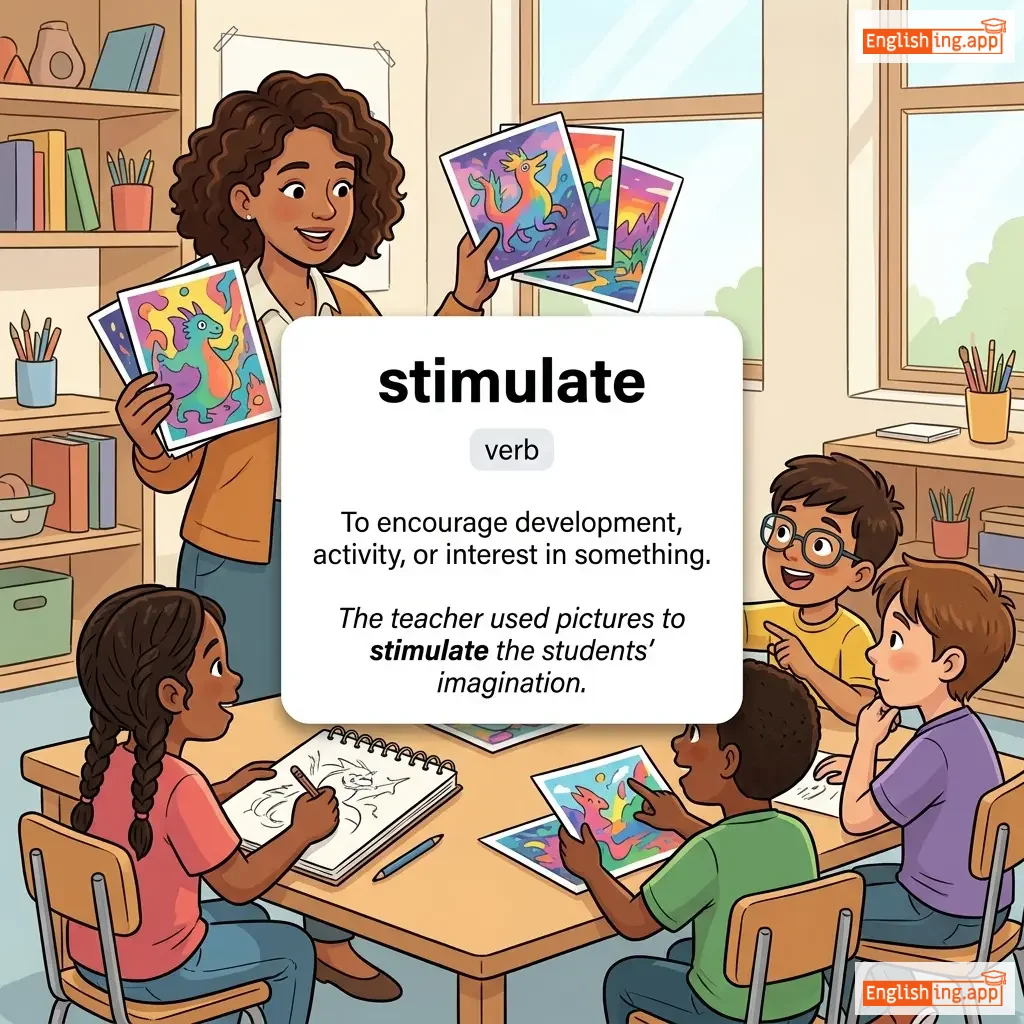
To encourage development, activity, or interest in something.
••••••
|
The teacher used pictures to stimulate the students' imagination.
Учитель использовал картинки, чтобы стимулировать воображение студентов.
••••••
|
Учитель использовал картинки, чтобы стимулировать воображение студентов.
Uchitel' ispol'zoval kartinki, chtoby stimulirovat' voobrazhenie studentov.
••••••
|
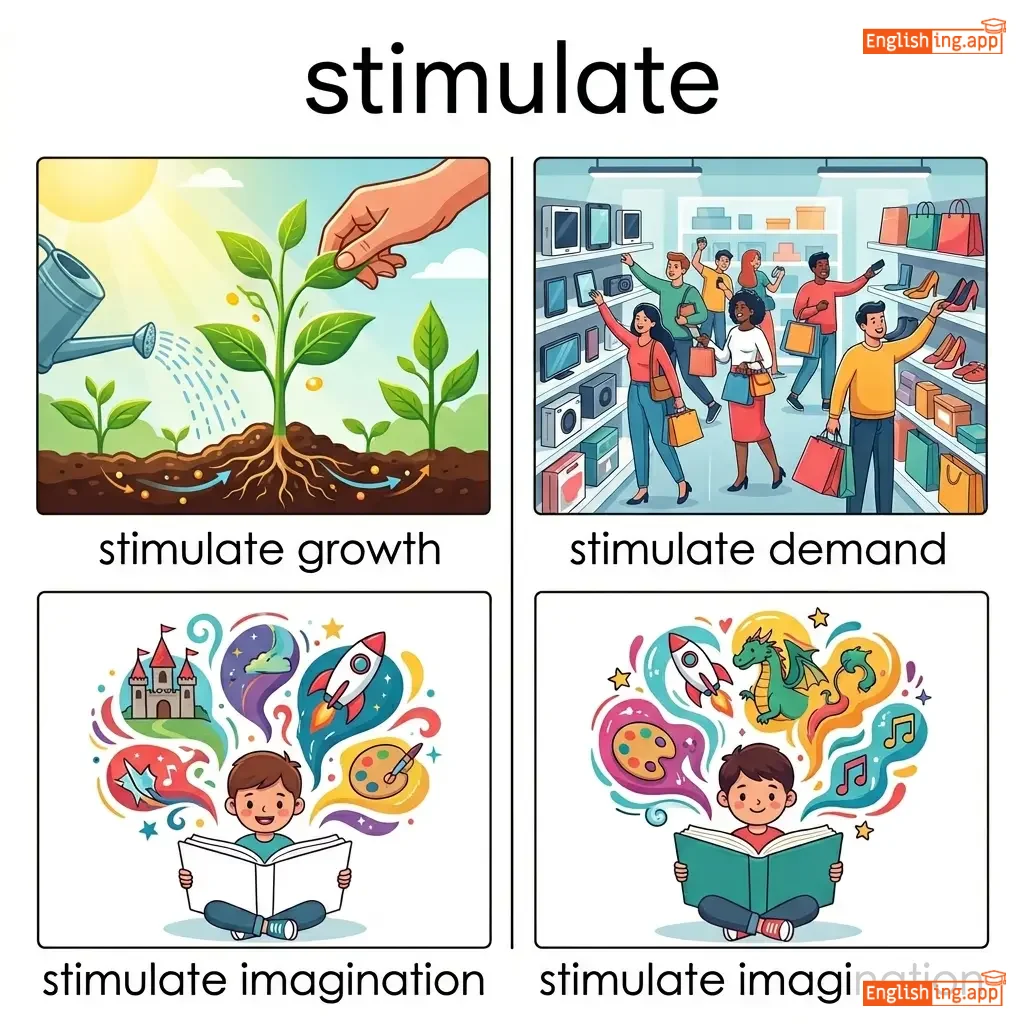
stimulate growth
стимулировать рост
••••••
|
to encourage development or increase
••••••
|
стимулировать рост
stimulirovat' rost
••••••
|
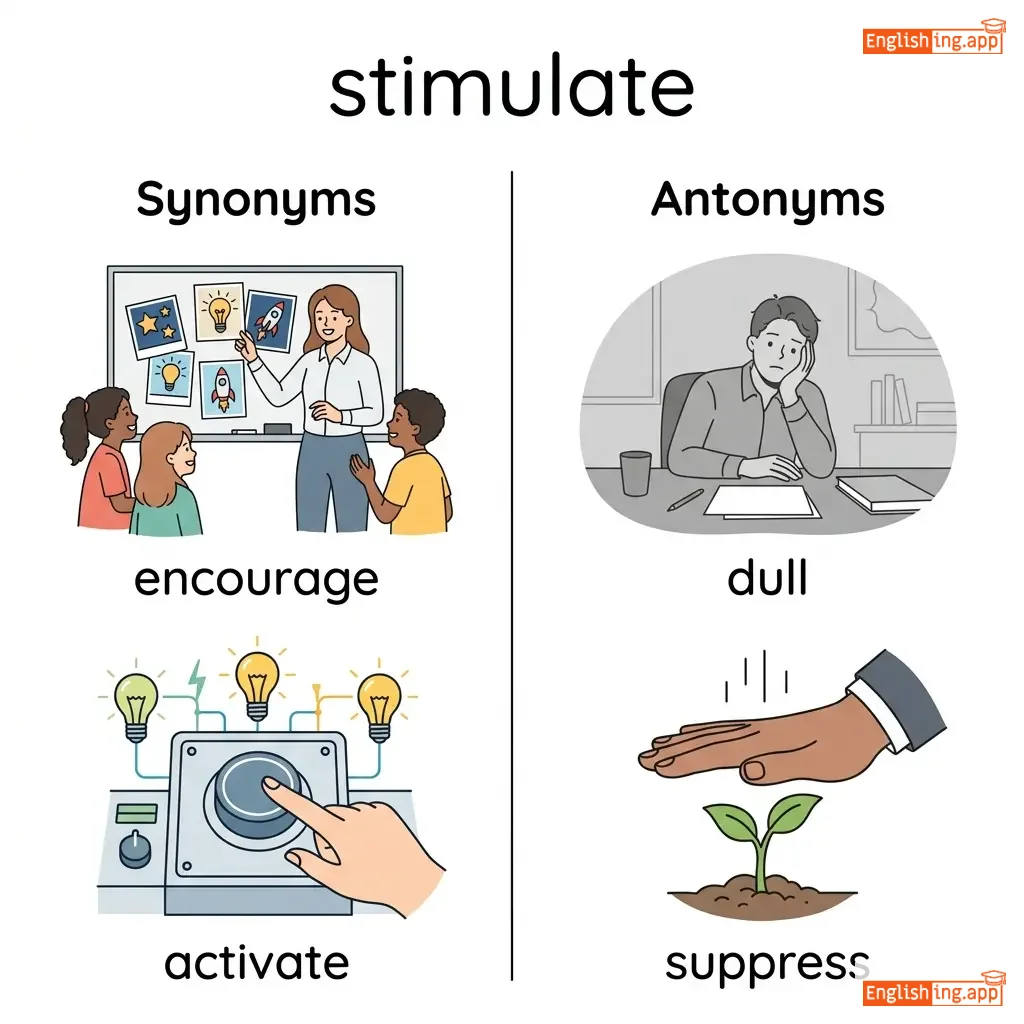
encourage, activate, motivate, inspire, excite
••••••
|
dull, suppress, discourage
••••••
|
stimulate growth, stimulate demand, stimulate imagination, stimulate interest
••••••
|
Stimulate → Стимулировать (как толчок к росту).
••••••
|
|
#4772
🚀
|
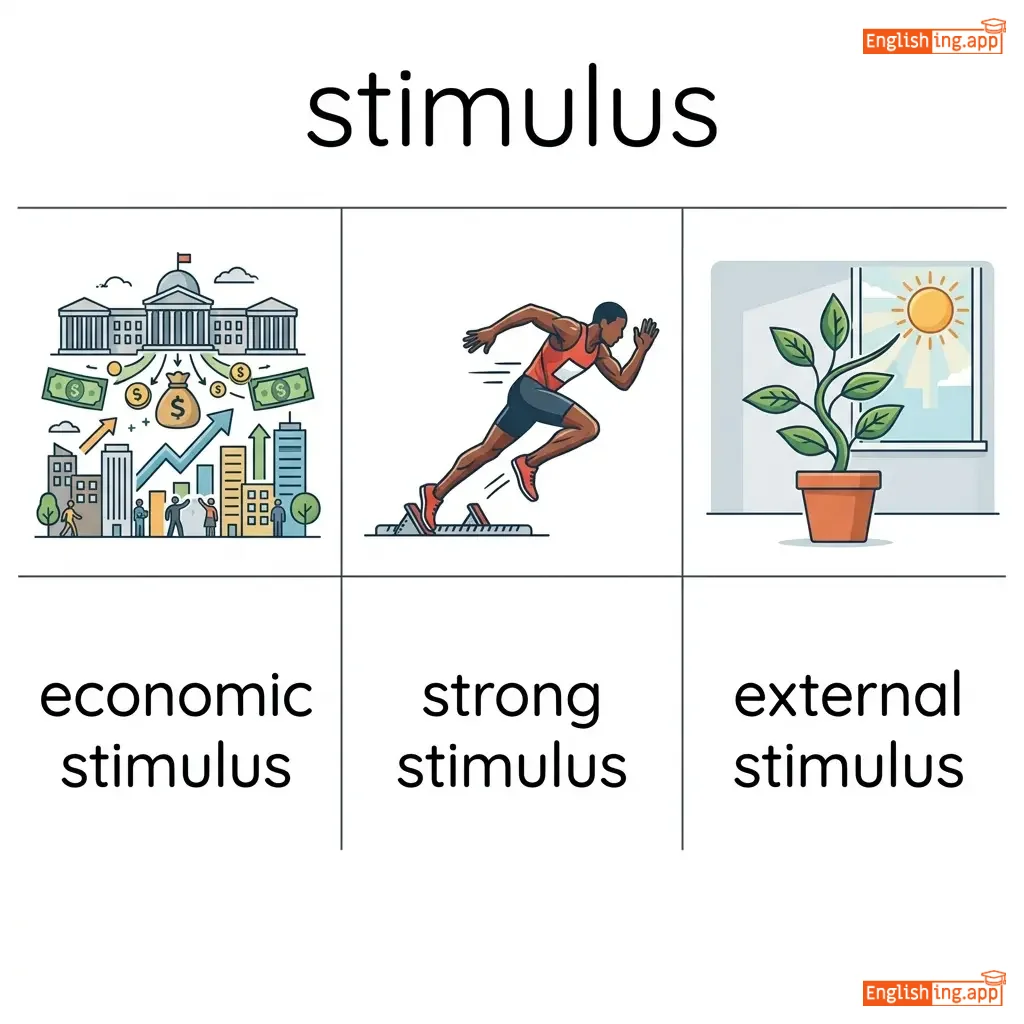
/ˈstɪmjʊləs/
noun
(стимулус)
••••••
|
|
что-то, вызывающее реакцию, стимул
chto-to, vyzyvayushchee reaktsiyu, stimul
••••••
|
- •••••• | - •••••• | - •••••• | - •••••• |
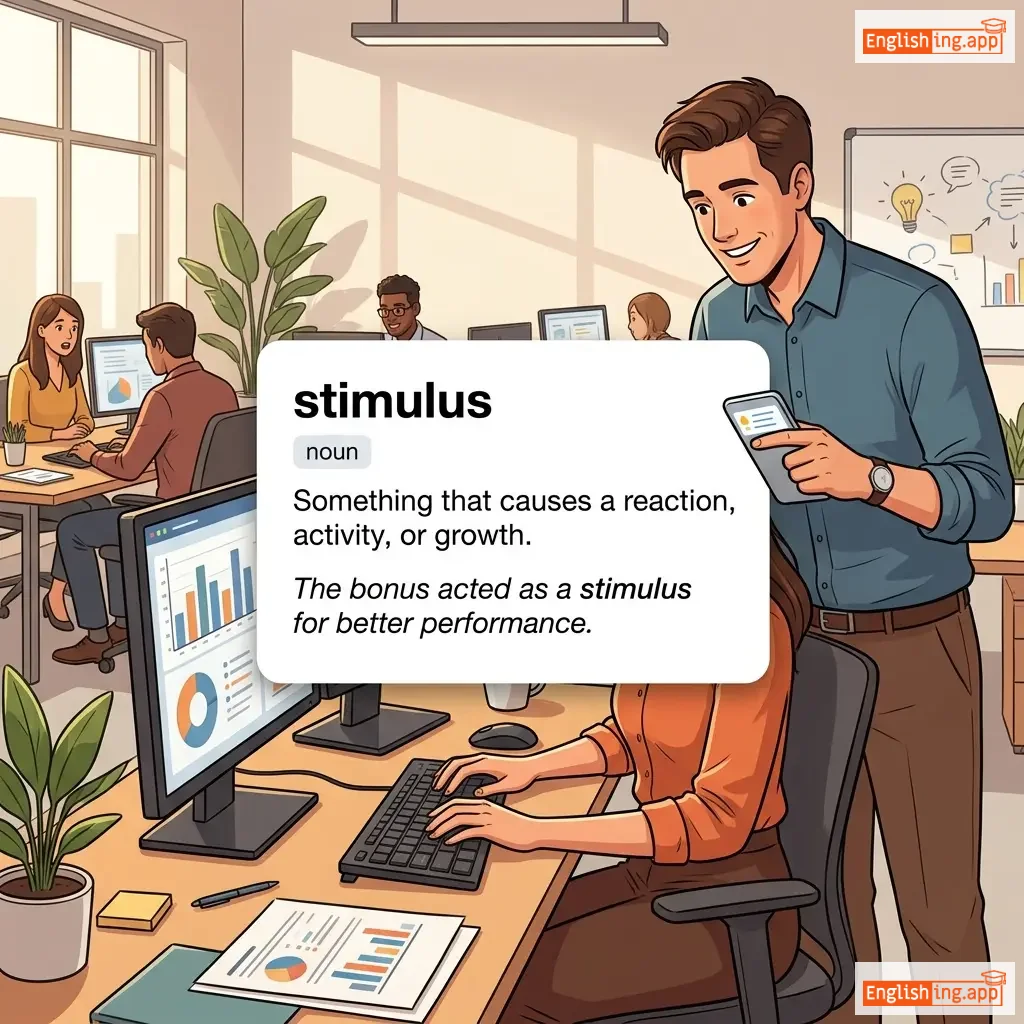
Something that causes a reaction, activity, or growth.
••••••
|
The bonus acted as a stimulus for better performance. |
Бонус стал стимулом для лучшей производительности.
Bonus stal stimulom dlya luchshey proizvoditel'nosti.
••••••
|
economic stimulus |
government actions to encourage economic growth
••••••
|
экономический стимул
ekonomicheskiy stimul
••••••
|
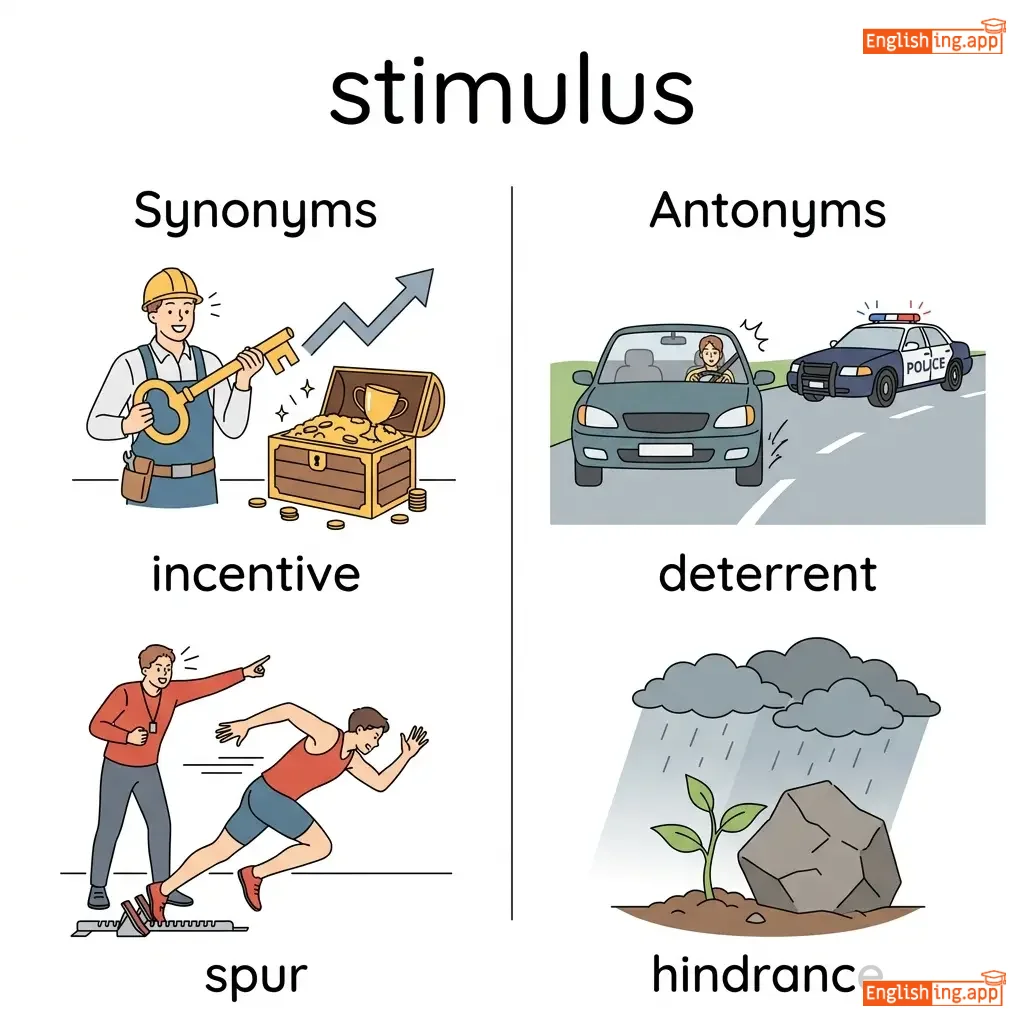
incentive, spur, motivation, encouragement, trigger
••••••
|
deterrent, hindrance
••••••
|
economic stimulus, strong stimulus, external stimulus, direct stimulus
••••••
|
Stimulus = Стимул 🚀 → помни, бонус это стимул, который мотивирует
••••••
|
|
#4773
🐝
|
/stɪŋ/
verb
(стинг)
••••••
|
|
ужалить
uzhalit
••••••
|
stung
станг
••••••
|
stung
станг
••••••
|
stings
стингз
••••••
|
stinging
стингинг
••••••
|
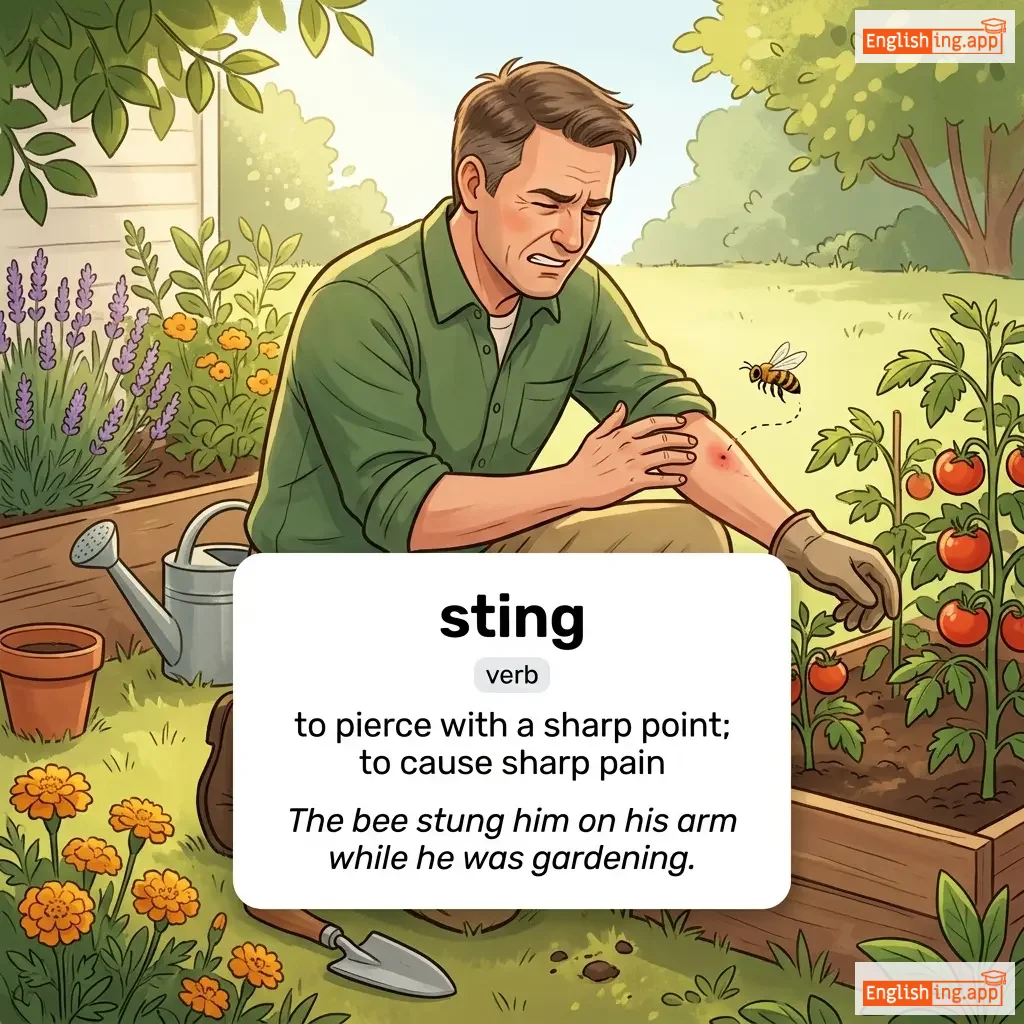
to pierce with a sharp point; to cause sharp pain
••••••
|
The bee stung him on his arm while he was gardening.
ðə би станг хи́м он хиз арм уайл хи уэз ˈгɑрдени́нɡ.
••••••
|
Пчела ужалила его в руку, пока он занимался садоводством.
Pchela uzhalila ego v ruku, poka on zanimalsya sadovodstvom
••••••
|
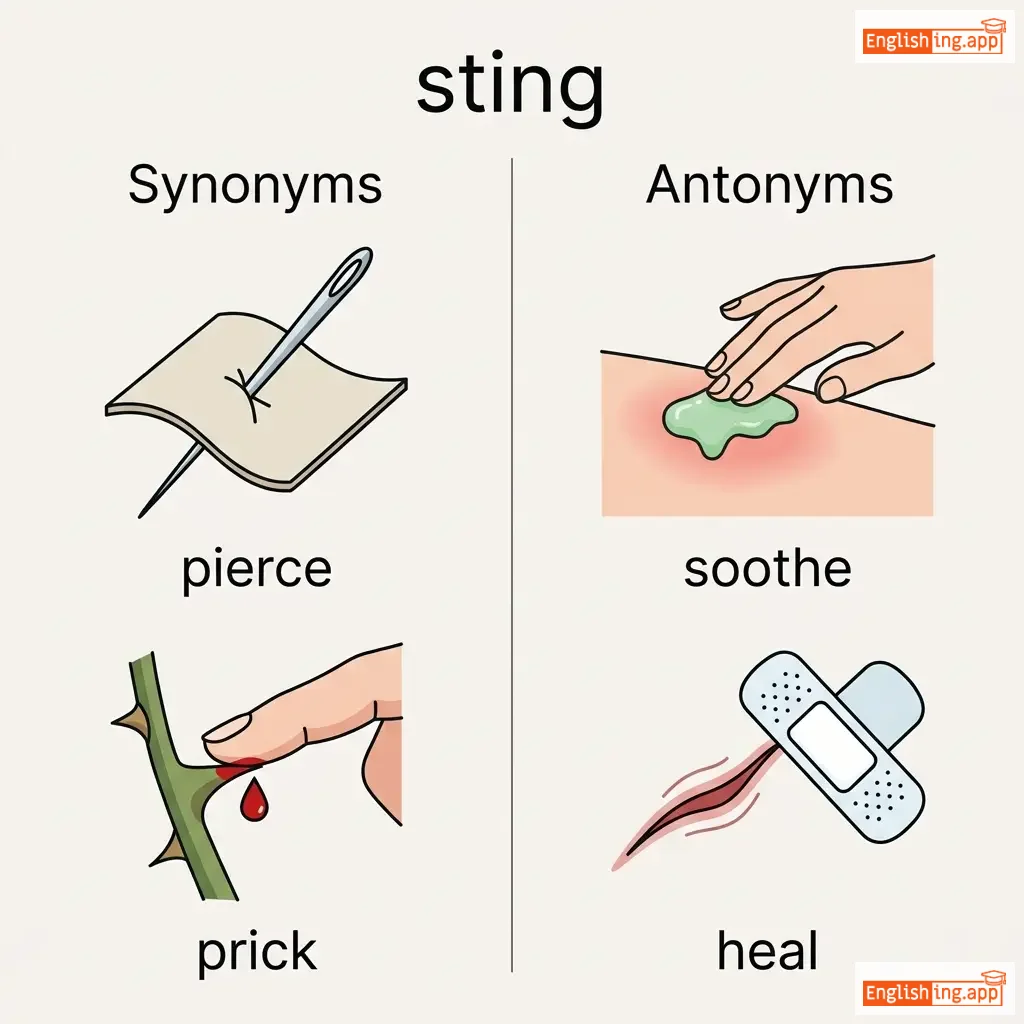
- •••••• | - •••••• | - •••••• |
pierce, prick, bite, hurt
••••••
|
soothe, heal, comfort, relieve
••••••
|
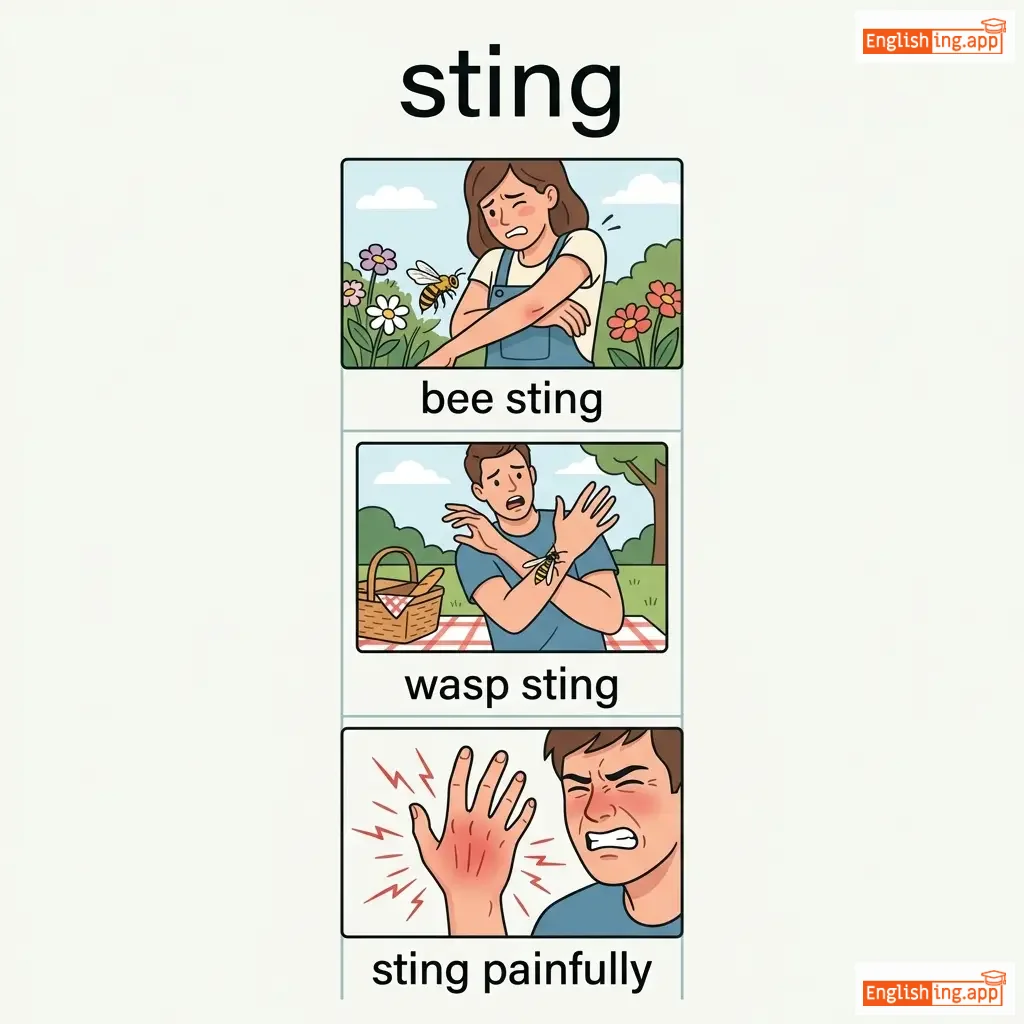
bee sting, wasp sting, sting painfully, sting sharply, nettle sting
••••••
|
Представь себе пчелу, которая жалит тебя
••••••
|
|
#4774
🍲
|
/stɜːr/
verb
(стир)
••••••
|
|
перемешивать
peremeshivat
••••••
|
stirred
стёрд
••••••
|
stirred
стёрд
••••••
|
stirs
стирс
••••••
|
stirring
стиринг
••••••
|
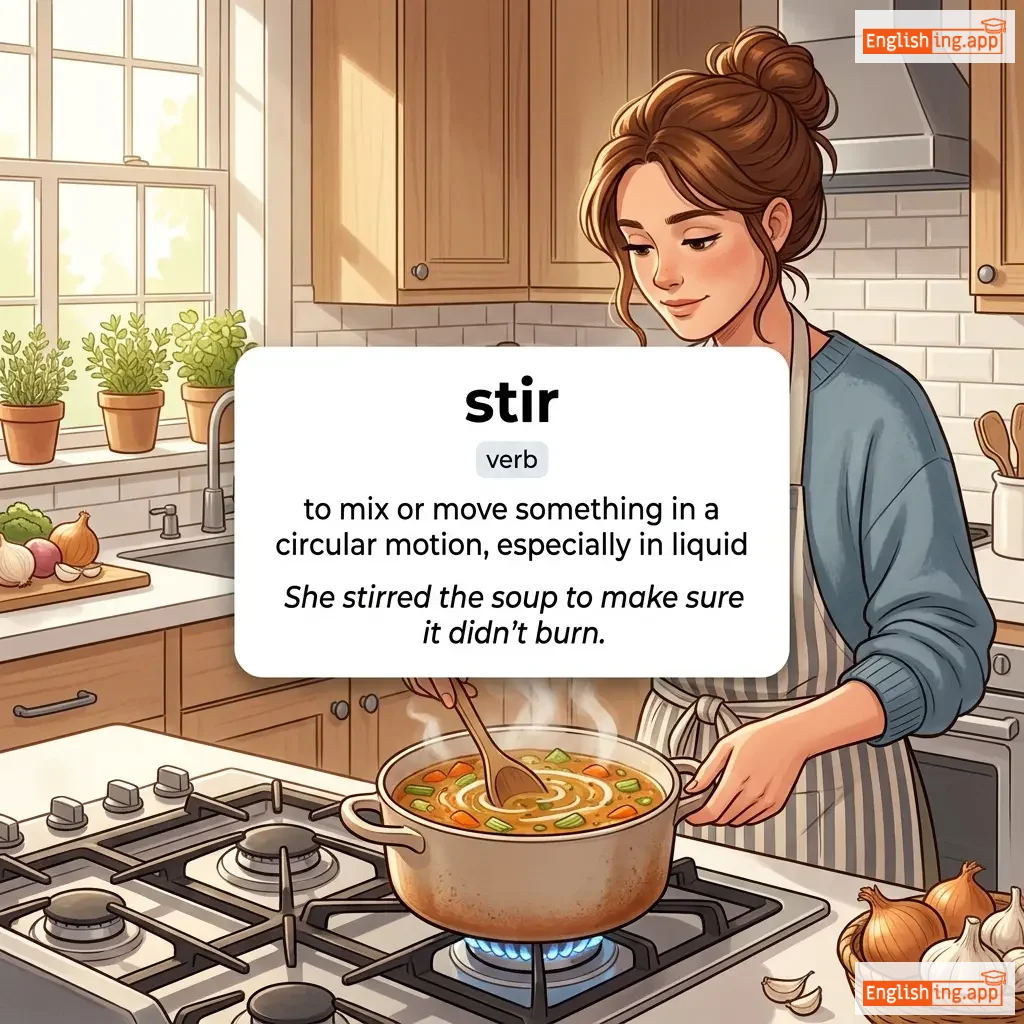
to mix or move something in a circular motion, especially in liquid
••••••
|
She stirred the soup to make sure it didn't burn.
Она помешала суп, чтобы убедиться, что он не сгорит.
••••••
|
Она перемешала суп, чтобы убедиться, что он не сгорит.
Ona peremeshala sup, chtoby ubeditsya, chto on ne sgorit.
••••••
|
- •••••• | - •••••• | - •••••• |
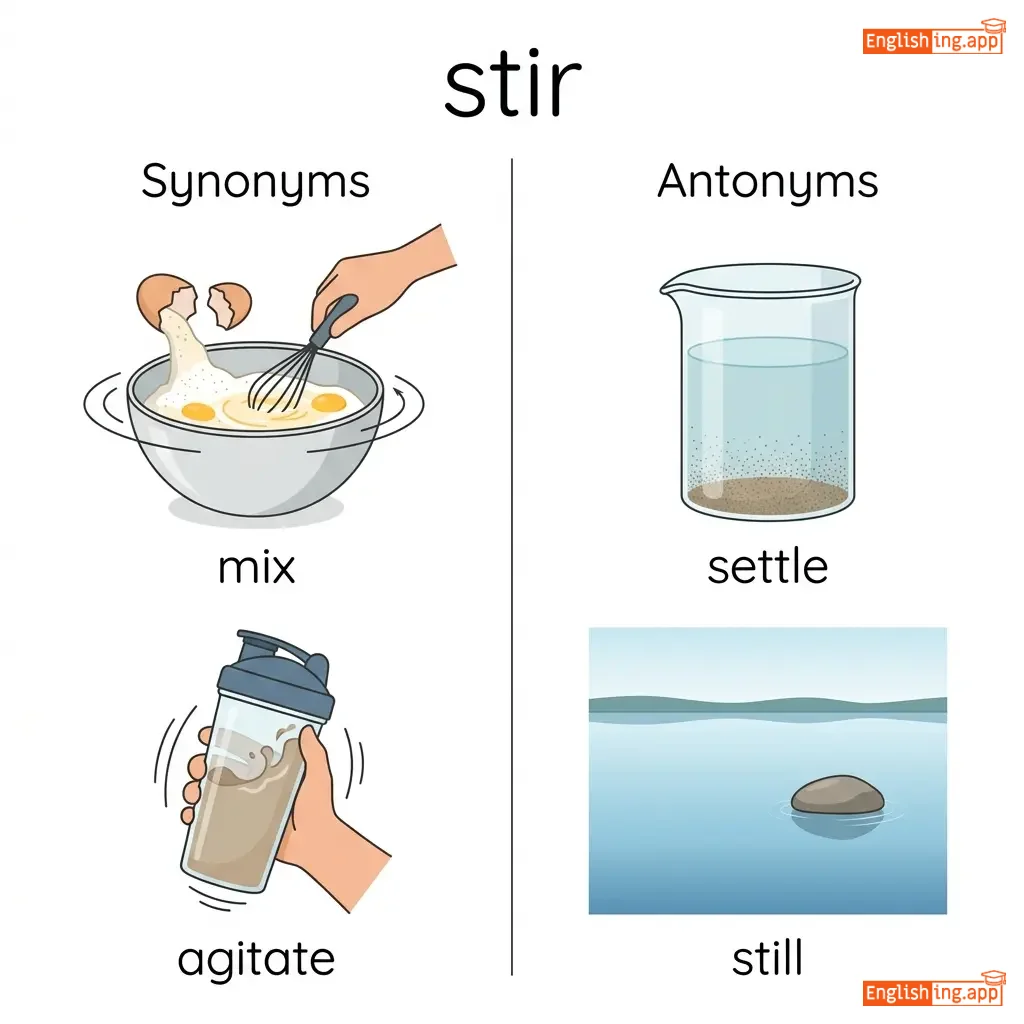
mix, agitate, shake, blend
••••••
|
settle, still, calm
••••••
|
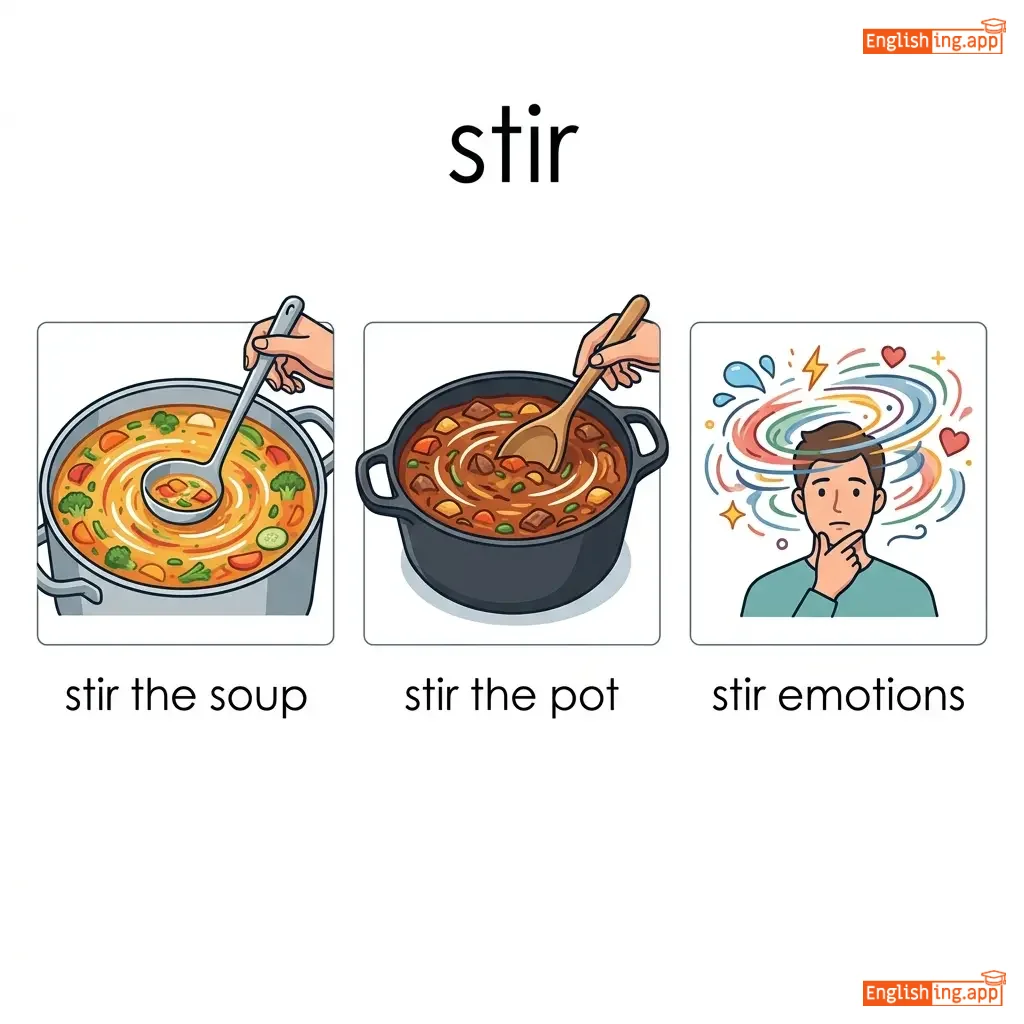
stir the soup, stir the pot, stir emotions
••••••
|
Когда ты перемешиваешь, это как 'Stir' (Перемешивать) - Stir to mix.
••••••
|
Vocabulary Quiz
Test your vocabulary by matching words with their translations or meanings.
Login to take the quiz
Comments (0)
Share your thoughts and join the discussion.
Join the discussion by logging in
Login to CommentNo comments yet
Be the first to share your thoughts!