

Обновитесь для доступа ко всему словарю
Получите неограниченный доступ ко всем словам с подпиской Pro
Обновить до ProПеревод
Прошедшее
Причастие прошедшего времени
Третье лицо единственного числа
Герундий
Значение
Пример предложения
Перевод примера предложения
Синонимы
Антонимы
Коллокации
Мнемоника












Swipe left or right, or use the buttons. Tap image to zoom.
Обновитесь для доступа ко всем предложениям
Получите неограниченный доступ ко всем предложениям с подпиской Pro
Обновить до ProПеревод примера предложения
Слово
Lesson 36Lesson 36 - Переключатель маски
|
Эмодзи
|
Слово | Images | Перевод | Прошедшее | Причастие прошедшего времени | Третье лицо единственного числа | Герундий | Значение | Пример предложения | Перевод примера предложения | Пример выражения | Значение примера выражения | Перевод примера выражения | Синонимы | Антонимы | Коллокации | Мнемоника |
|---|---|---|---|---|---|---|---|---|---|---|---|---|---|---|---|---|---|
|
#1698
⏳
|
/djʊˈreɪʃən/
noun
(дьюˈрейшн)
••••••
|
- •••••• |
продолжительность
prodolzhitel'nost'
••••••
|
- •••••• | - •••••• | - •••••• | - •••••• |
the length of time that something continues
••••••
|
The meeting lasted for the duration of two hours. |
Совещание длилось два часа.
Soveshchaniye dlilos' dva chasa.
••••••
|
for the duration |
for the whole time that something lasts
••••••
|
в течение всей продолжительности
v techeniye vsey prodolzhitel'nosti
••••••
|
length, span, period, term, extent
••••••
|
end, termination, conclusion
••••••
|
short duration, long duration, duration of action
••••••
|
Продолжительность - это сколько времени что-то длится, как продолжительность фильма.
••••••
|
|
#1699
⏳
|
/ˈdjʊərɪŋ/
preposition
(dyuring)
••••••
|
- •••••• |
во время
vo vremya
••••••
|
- •••••• | - •••••• | - •••••• | - •••••• |
throughout the course of a period of time
••••••
|
I fell asleep during the movie. |
Я заснул во время фильма.
Ya zasnul vo vremya fil'ma.
••••••
|
- •••••• | - •••••• | - •••••• |
throughout, amid, in, over
••••••
|
before, after, beyond
••••••
|
during the day, during the night, during the meeting, during the war
••••••
|
Во время означает 'в течение времени' (что-то происходит).
••••••
|
|
#1700
🌫️
|
/dʌst/
noun, verb
(даст)
••••••
|
|
пыль
pyl'
••••••
|
dusted
дастед
••••••
|
dusted
дастед
••••••
|
dusts
дастс
••••••
|
dusting
дастинг
••••••
|
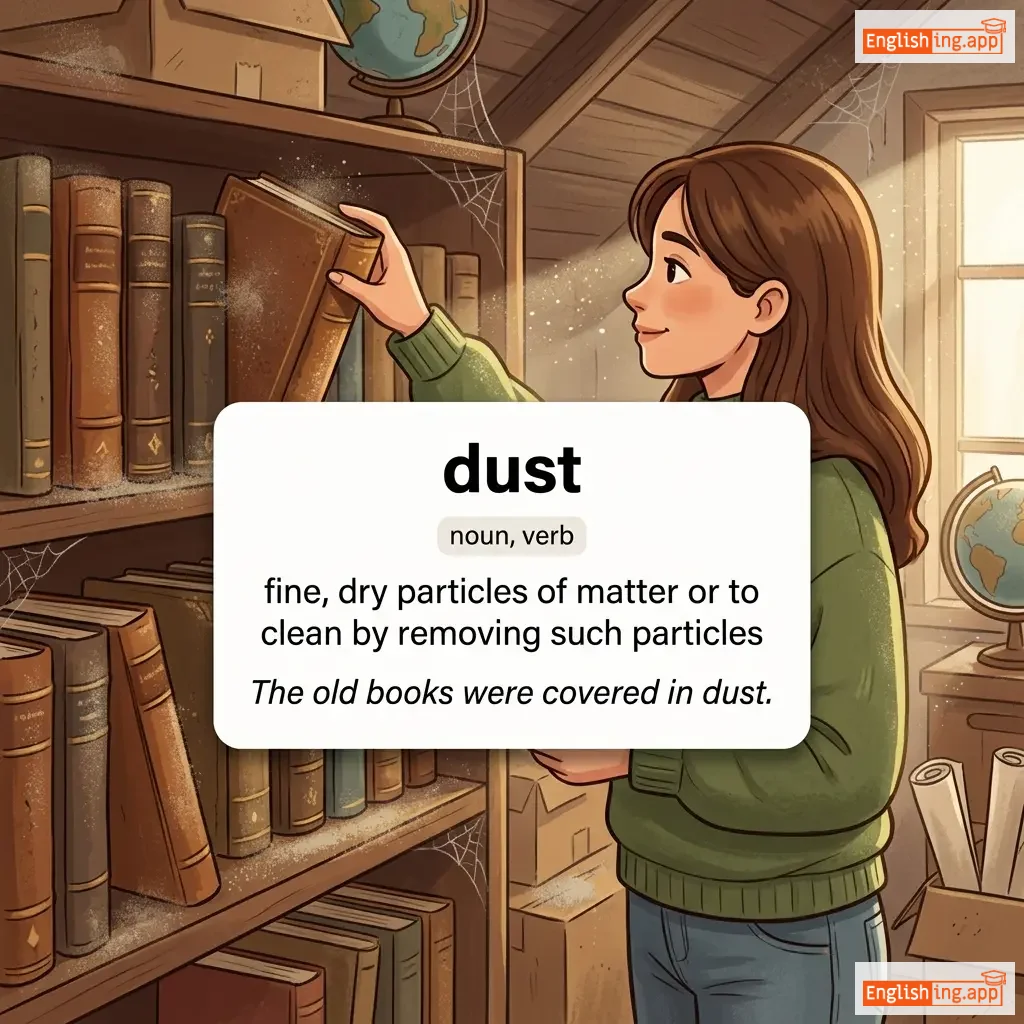
fine, dry particles of matter or to clean by removing such particles
••••••
|
The old books were covered in dust.
Старые книги были покрыты пылью.
••••••
|
Старые книги были покрыты пылью.
Starye knigi byli pokryty pyl'yu.
••••••
|
bite the dust
покачать прах
••••••
|
to fail or be defeated
••••••
|
потерпеть неудачу или быть побежденным
poterpet' neudachu ili byt' pobezhdyonnym
••••••
|
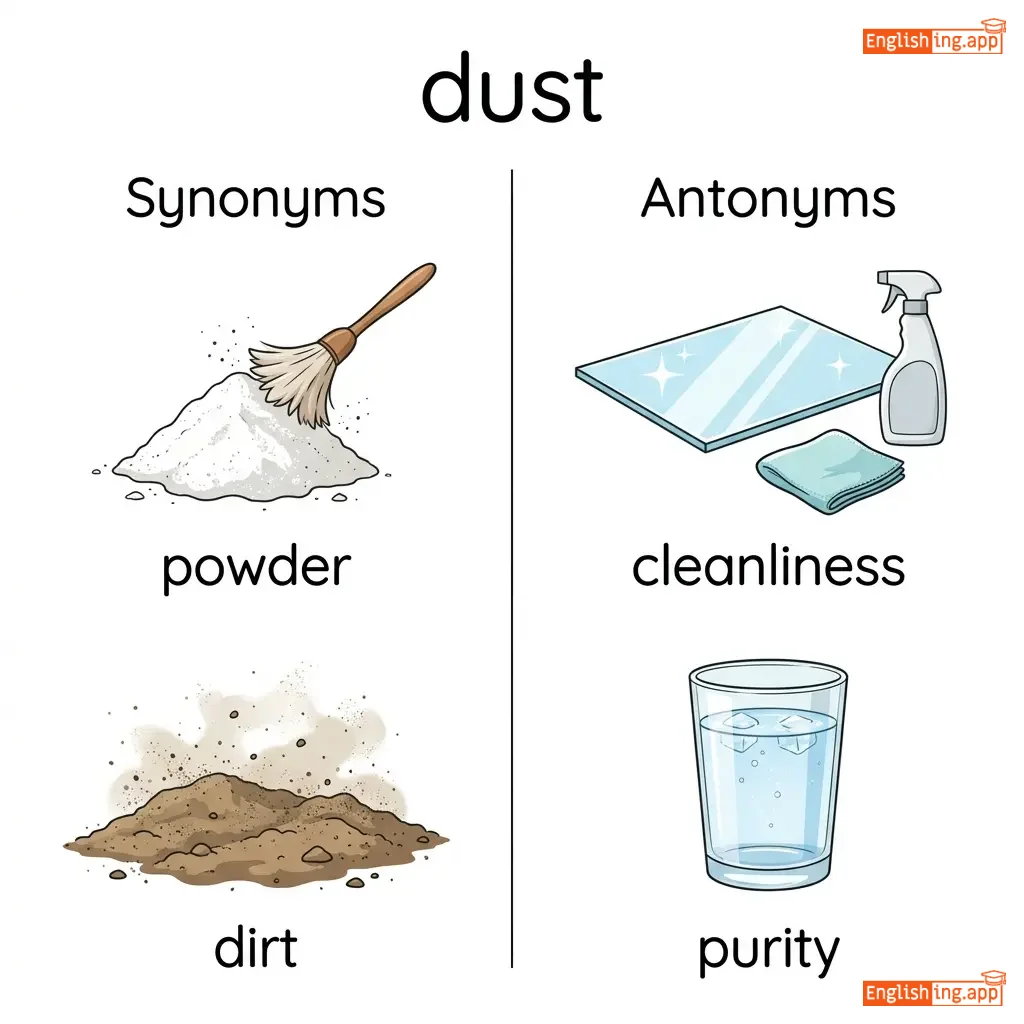
powder, dirt, particles, debris
••••••
|
cleanliness, purity
••••••
|
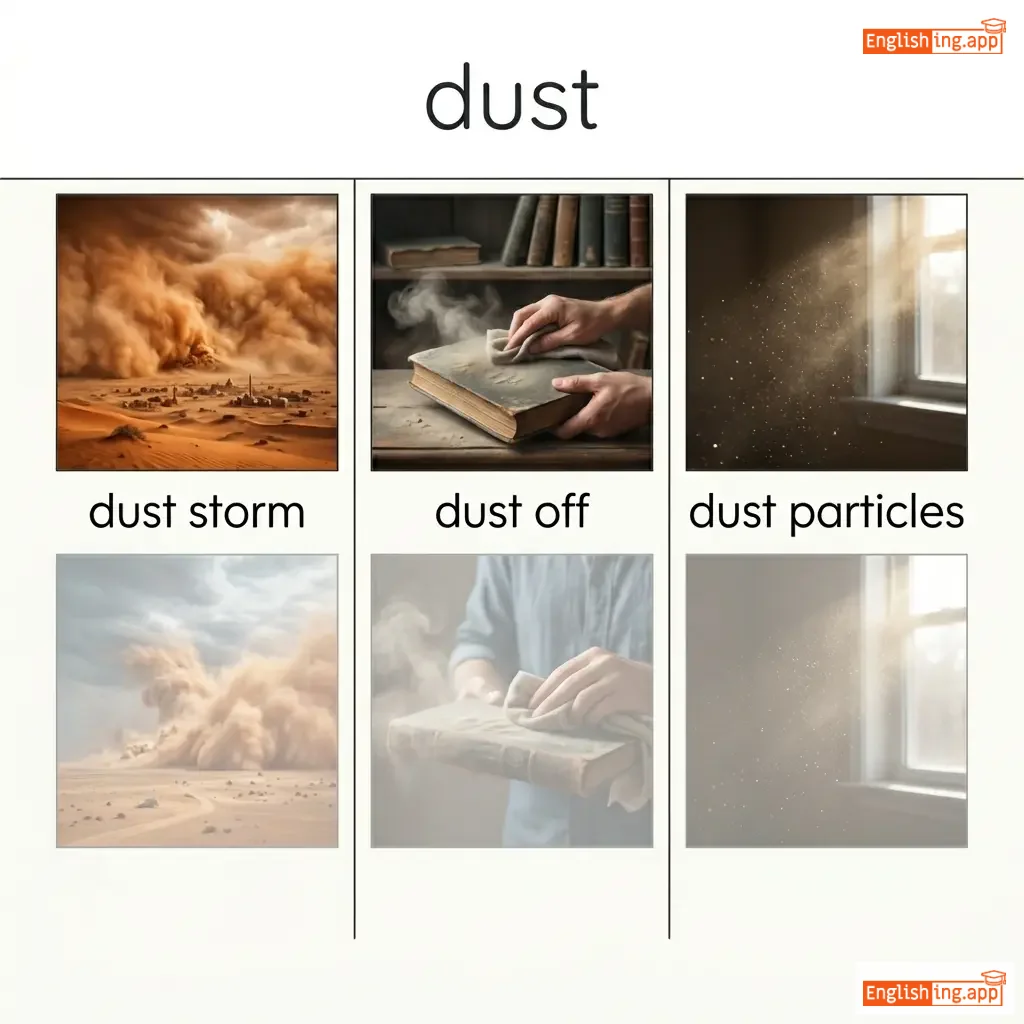
dust storm, dust off, dust particles, dust cloud
••••••
|
Dust означает пыль. Запомни: 'Dust off' — это как сметать пыль.
••••••
|
|
#1701
🌫️
|
/ˈdʌsti/
adjective
(дасти)
••••••
|
- •••••• |
пыльный
pylnyy
••••••
|
- •••••• | - •••••• | - •••••• | - •••••• |
covered with or full of dust; dry and dull from lack of moisture or use
••••••
|
The old bookshelf was dusty after years of neglect.
Зе олд букшелф воз дасти афтер йирз ов неглект.
••••••
|
Старая книжная полка была пыльной после многих лет запустения.
staraya knizhnaya polka byla pylnoy posle mnogikh let zapusteniya
••••••
|
dusty old
дасти олд
••••••
|
something outdated, old-fashioned, or long unused
••••••
|
пыльный старый
pylnyy staryy
••••••
|
powdery, grimy, dirty, soiled
••••••
|
clean, spotless, fresh
••••••
|
dusty road, dusty shelf, dusty air, dusty clothes
••••••
|
Пыль → пыльный → dusty
••••••
|
|
#1702
🙏
|
/ˈdjuːtɪfəl/
adjective
(дьютіфул)
••••••
|
- •••••• |
добросовестный
dobrosovestny
••••••
|
- •••••• | - •••••• | - •••••• | - •••••• |
Willingly obedient and responsible in performing one's duty.
••••••
|
She is a dutiful daughter who always takes care of her parents.
Она добросовестная дочь, которая всегда заботится о своих родителях.
••••••
|
Она добросовестная дочь, которая всегда заботится о своих родителях.
Ona dobrosovestnaya doch', kotoraya vsegda zabotitsya o svoikh rodityalykh.
••••••
|
dutiful son
добросовестный сын
••••••
|
A son who is obedient and fulfills responsibilities to family.
••••••
|
добросовестный сын
dobrosovestnyy syn
••••••
|
obedient, loyal, devoted, compliant, faithful
••••••
|
neglectful, disobedient, rebellious
••••••
|
dutiful daughter, dutiful son, dutiful servant, dutifully follow
••••••
|
Duty + ful → добросовестный человек = добросовестный
••••••
|
|
#1703
🛡️
|
/ˈdjuːti/
noun
(дьюти)
••••••
|
- •••••• |
обязанность
obyazannost'
••••••
|
- •••••• | - •••••• | - •••••• | - •••••• |
a moral or legal obligation; a responsibility
••••••
|
It is our duty to protect the environment. |
Наш долг защищать окружающую среду.
Nash dolg zashchishchat' okruzhayushchuyu sredu.
••••••
|
call of duty |
a responsibility that must be carried out
••••••
|
призыв к обязанности
prizyv k obyazannosti
••••••
|
responsibility, obligation, task, assignment, commitment
••••••
|
freedom, choice, exemption
••••••
|
duty free, official duty, moral duty, line of duty
••••••
|
Duty переводится как 'обязанность', как солдат, который исполняет свой долг.
••••••
|
|
#1704
🎨
|
/daɪ/
verb
(daï)
••••••
|
|
красить
krasit
••••••
|
dyed
daid
••••••
|
dyed
daid
••••••
|
dyes
daïs
••••••
|
dyeing
daïing
••••••
|
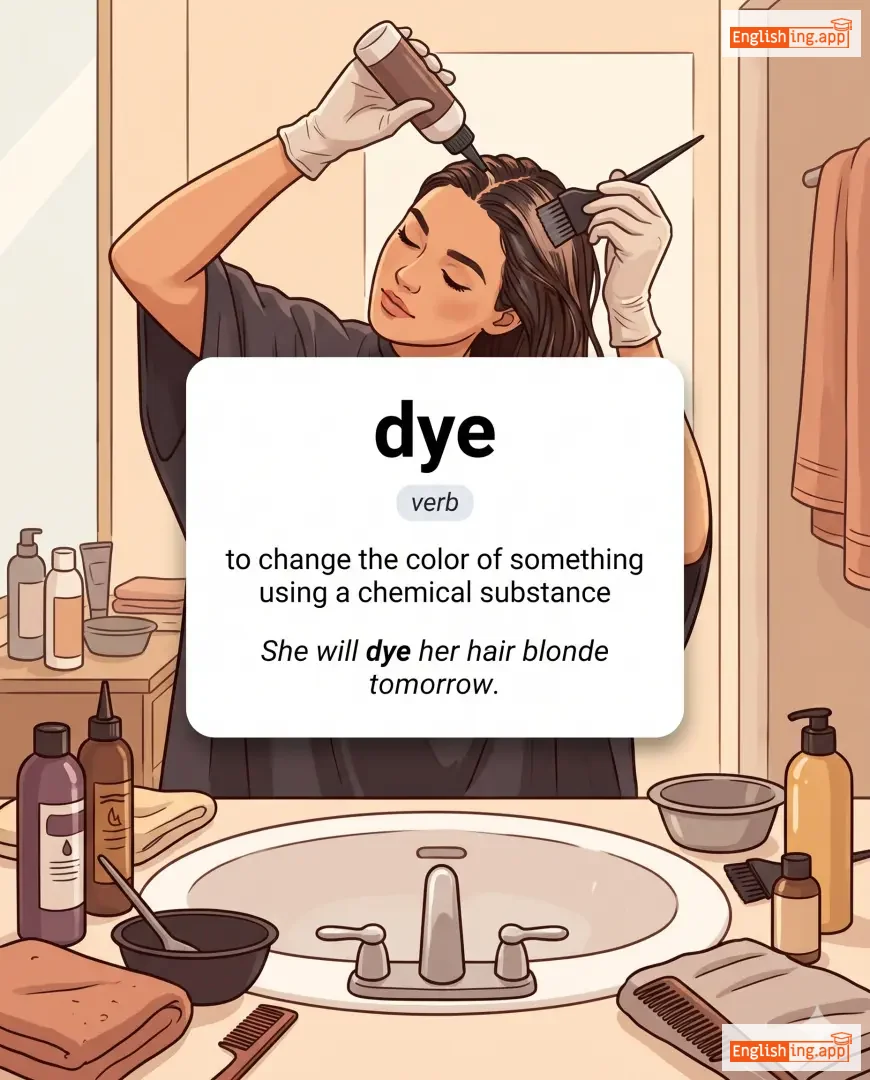
to change the color of something using a chemical substance
••••••
|
She will dye her hair blonde tomorrow.
Она покрасит свои волосы в блонд завтра.
••••••
|
Она покрасит свои волосы в блонд завтра.
Ona pokrasit svoi volosy v blond zavtra
••••••
|
- •••••• | - •••••• | - •••••• |
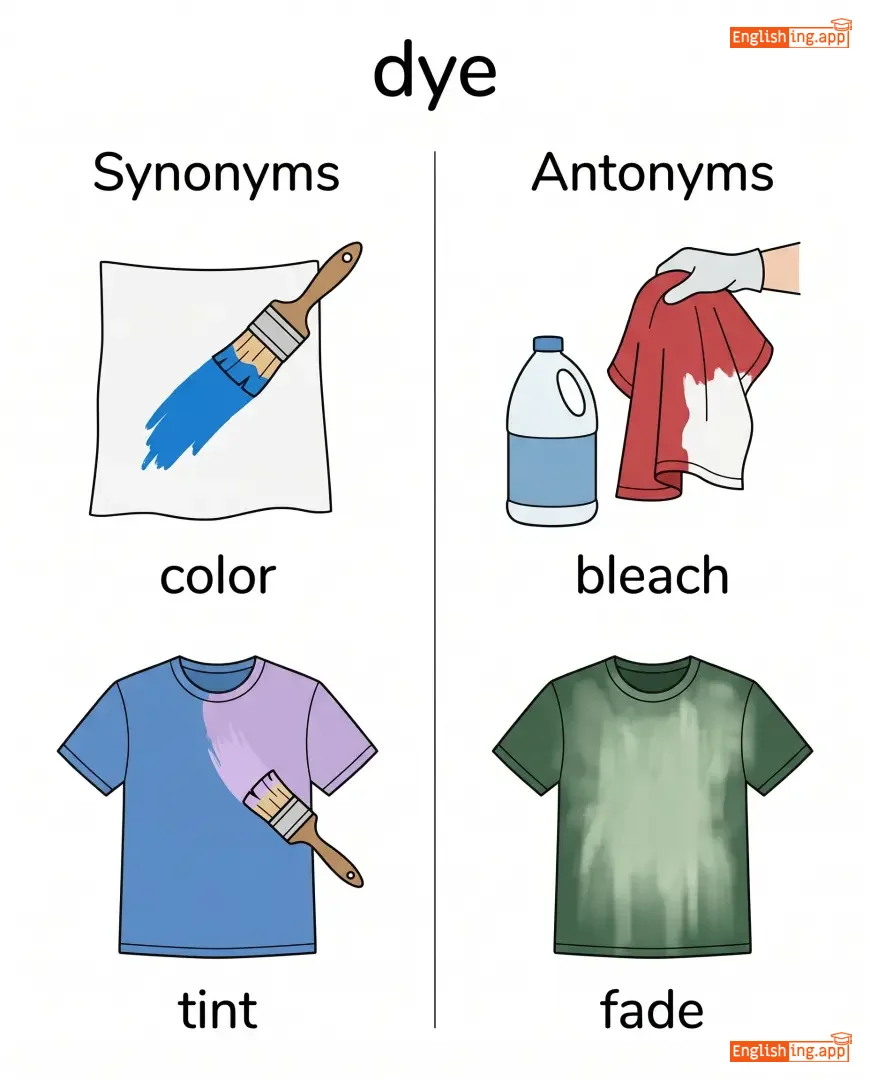
color, tint, stain, pigment
••••••
|
bleach, fade, whiten
••••••
|
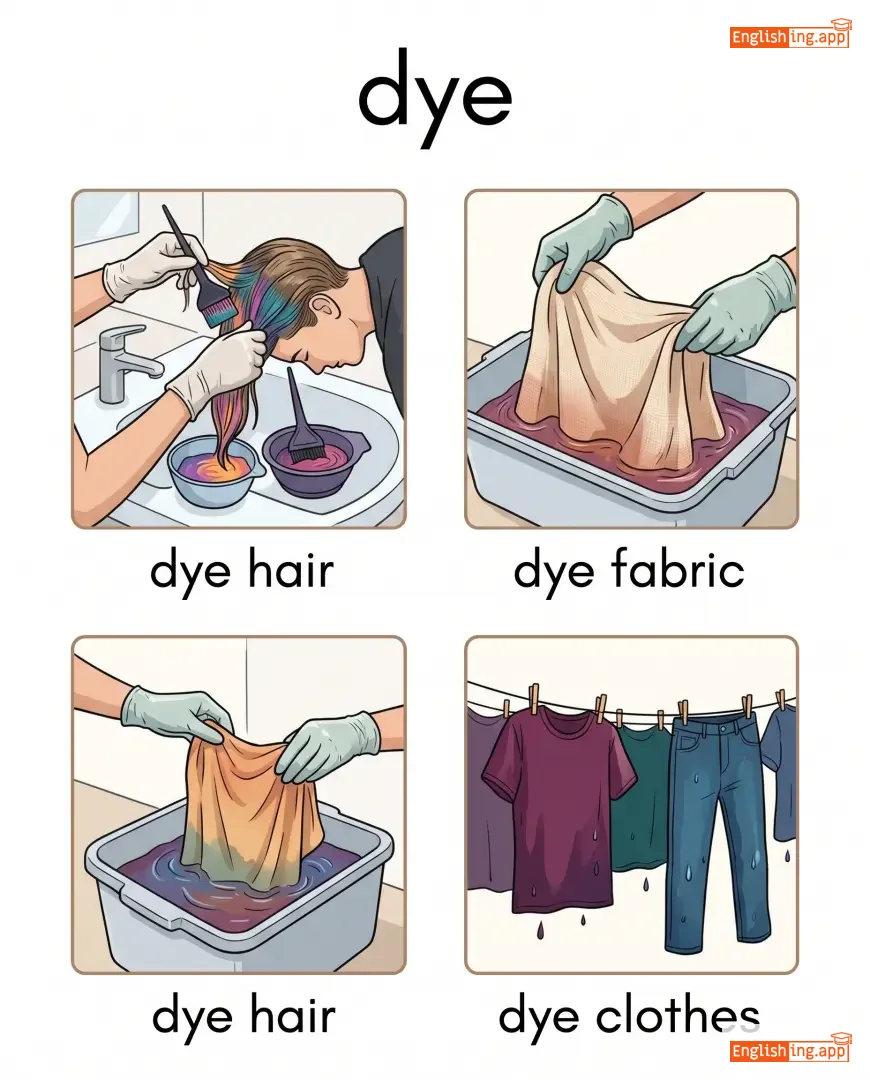
dye hair, dye fabric, dye clothes, dye permanently, dye naturally
••••••
|
Красить - это менять цвет волос или ткани с помощью краски
••••••
|
|
#1705
⚡
|
/daɪˈnæmɪk/
adjective
(дайнэмɪк)
••••••
|
|
динамичный
dinamichny
••••••
|
- •••••• | - •••••• | - •••••• | - •••••• |
Characterized by constant change, activity, or progress; energetic and forceful.
••••••
|
She is a dynamic leader who inspires her team. |
Она динамичный лидер, который вдохновляет свою команду.
Ona dinamichnyy lider, kotoryy vdokhnovlyaet svoyu komandu.
••••••
|
dynamic duo |
Two people who work together very effectively.
••••••
|
динамичный дуэт
dinamichnyy duet
••••••
|
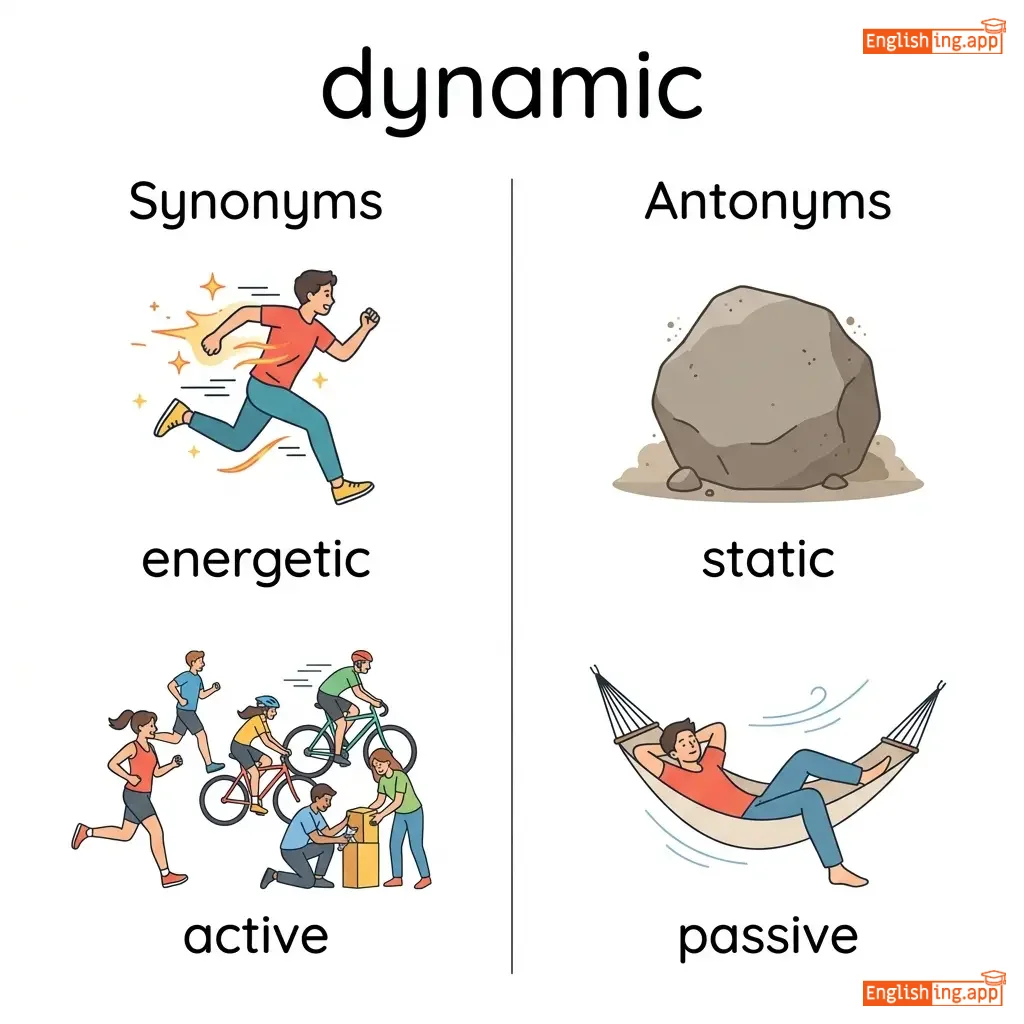
energetic, active, powerful, forceful, lively
••••••
|
static, passive, inactive
••••••
|
dynamic leader, dynamic personality, dynamic growth, dynamic process
••••••
|
Динамичный → как динамо, сильный и динамичный
••••••
|
|
#1706
🔢
|
/iːtʃ/
determiner/pronoun
(ич)
••••••
|
- •••••• |
каждый
kazhdy
••••••
|
- •••••• | - •••••• | - •••••• | - •••••• |
every one of two or more people or things considered separately
••••••
|
Each student received a certificate. |
Каждый студент получил сертификат.
Kazhdyy student poluchil sertifikat.
••••••
|
each and every |
used for emphasis, meaning all without exception
••••••
|
каждый и каждый
kazhdy i kazhdy
••••••
|
every, all, individual, every single
••••••
|
none, zero
••••••
|
each day, each person, each time, each other
••••••
|
Каждый (Each) — каждый, значит каждый — представьте, что хотите запомнить все.
••••••
|
|
#1707
🤩
|
/ˈiːɡər/
adjective
(игар)
••••••
|
- •••••• |
жаждущий / стремящийся
zhazhdushchiy / stremyashchiesya
••••••
|
- •••••• | - •••••• | - •••••• | - •••••• |
very excited and interested; keen to do something
••••••
|
The children were eager to open their gifts. |
Дети были стремящимися открыть свои подарки.
Deti byli stremyashchimisya otkryt' svoi podarki.
••••••
|
eager beaver |
a person who is extremely enthusiastic and hard-working
••••••
|
стремящийся человек
stremyashchiesya chelovek
••••••
|
keen, enthusiastic, excited, avid
••••••
|
reluctant, indifferent
••••••
|
eager to learn, eager for success, eager anticipation, eager smile
••••••
|
Eager = стремящийся 🤩— дети eager, чтобы открыть подарки.
••••••
|
|
#1708
😍
|
/ˈiːɡərli/
adverb
(игерли)
••••••
|
- •••••• |
с нетерпением; с большим желанием
s neterpeniem; s bolshim zhelaniem
••••••
|
- •••••• | - •••••• | - •••••• | - •••••• |
with keen interest or enthusiasm; with great desire
••••••
|
The children eagerly waited for the holiday to begin. |
Дети с нетерпением ждали, когда начнется отпуск.
Deti s neterpeniem zh-dali, kogda nachnyotsya otpusk
••••••
|
- •••••• | - •••••• | - •••••• |
enthusiastically, keenly, anxiously
••••••
|
reluctantly, unwillingly, halfheartedly
••••••
|
eagerly await, eagerly anticipate, eagerly accept
••••••
|
Играть с нетерпением, чтобы выполнить свою задачу.
••••••
|
|
#1709
👂
|
/ɪə(r)/
noun
(иар)
••••••
|
- •••••• |
ухо
ukho
••••••
|
- •••••• | - •••••• | - •••••• | - •••••• |
the organ of hearing and balance in humans and other animals
••••••
|
She whispered something in his ear. |
Она шептала ему что-то на ухо.
Ona sheptala yemu chto-to na ukho.
••••••
|
lend an ear |
to listen carefully and sympathetically
••••••
|
прислушиваться
prislushivatsya
••••••
|
hearing organ, auricle, lobe, auditory organ
••••••
|
deafness, silence
••••••
|
ear pain, sharp ear, ear infection, whisper in ear
••••••
|
Ear означает ухо — когда ты носишь наушники в ушах, ты лучше слышишь.
••••••
|
|
#1710
🐦
|
/ˈɜːrli/
adjective/adverb
(эрли)
••••••
|
- •••••• |
рано
rano
••••••
|
- •••••• | - •••••• | - •••••• | - •••••• |
before the usual or expected time
••••••
|
She arrived early to the meeting.
Она пришла рано на встречу.
••••••
|
Она пришла рано на встречу.
Ona prishla rano na vstrechu.
••••••
|
early bird
ранняя птица
••••••
|
someone who wakes up or arrives early
••••••
|
человек, встающий рано
chelovek, vstayushchiy rano
••••••
|
premature, initial, prompt, ahead
••••••
|
late, delayed
••••••
|
early morning, early stage, early development, arrive early
••••••
|
Early bird 🐦 встает рано— Early значит рано.
••••••
|
|
#1711
💵
|
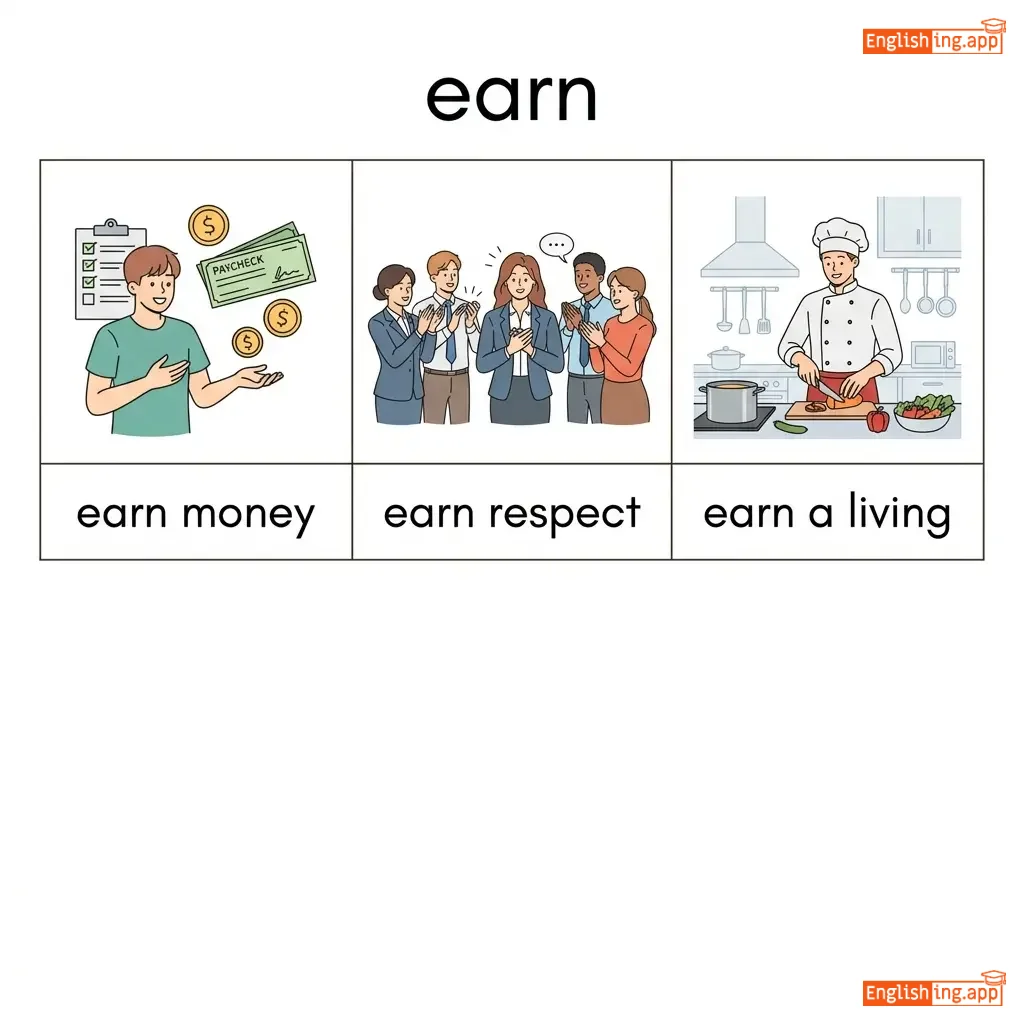
/ɜːrn/
verb
(ern)
••••••
|
|
заработать
zarabotat
••••••
|
earned
ern-d
••••••
|
earned
ern-d
••••••
|
earns
ern-s
••••••
|
earning
ern-ing
••••••
|
To receive money or reward in return for work or service.
••••••
|
She worked hard to earn enough money for college.
Она усердно работала, чтобы заработать достаточно денег на колледж.
••••••
|
Она усердно работала, чтобы заработать достаточно денег на колледж.
Ona usyerdno rabotala, chtoby zarabotat' dostatochno deneg na kolledzh.
••••••
|
earn a living
заработать на жизнь
••••••
|
To make enough money to support oneself financially.
••••••
|
заработать на жизнь
zarabotat' na zhizn'
••••••
|
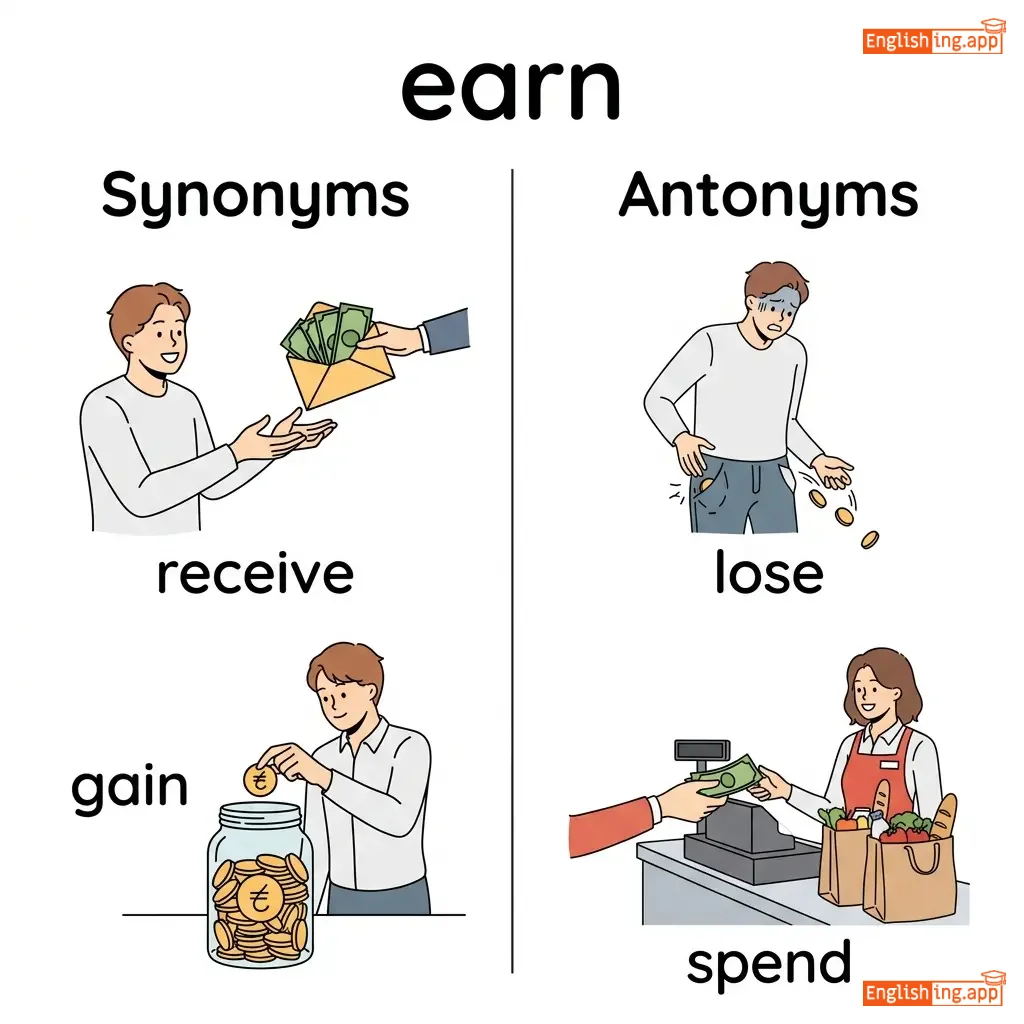
receive, gain, obtain, secure, acquire
••••••
|
lose, spend, forfeit
••••••
|
earn money, earn respect, earn a living, earn interest
••••••
|
Earn означает 'заработать' - труд дает деньги, заработай!
••••••
|
|
#1712
💰
|
/ˈɜːrnər/
noun
(ернер)
••••••
|
- •••••• |
зарабатывающий
zarabatyvayushchiy
••••••
|
- •••••• | - •••••• | - •••••• | - •••••• |
A person who earns money through work or business
••••••
|
She is the primary earner in her family.
Она главный ернер в своей семье.
••••••
|
Она главный зарабатывающий в своей семье.
Ona glavnyy zarabatyvayushchiy v svoey sem'ye.
••••••
|
- •••••• | - •••••• | - •••••• |
income generator, wage earner, breadwinner, salaryman
••••••
|
spender, unemployed
••••••
|
high earner, top earner, regular earner, monthly earner
••••••
|
Remember 'ернер' as a 'zarabatyvayushchiy' making money.
••••••
|
|
#1713
💰
|
/ˈɜːnɪŋz/
noun
(эрнингс)
••••••
|
- •••••• |
доход
dokhod
••••••
|
- •••••• | - •••••• | - •••••• | - •••••• |
money obtained in return for labor or services
••••••
|
Her monthly earnings are enough to support her family. |
Её ежемесячный доход достаточно, чтобы поддержать её семью.
Eyo yezhemesyachnyy dokhod dostatochno, chtoby podderzhat' yeyo sem'yu.
••••••
|
net earnings |
the total profit after deducting expenses
••••••
|
чистый доход
chistyy dokhod
••••••
|
income, wages, salary, profit, revenue
••••••
|
loss, debt
••••••
|
monthly earnings, total earnings, net earnings, gross earnings
••••••
|
Earnings означает доход — доход от заработка.
••••••
|
|
#1714
🌍
|
/ɜːrθ/
noun
(эрт)
••••••
|
- •••••• |
Земля
Zemlya
••••••
|
- •••••• | - •••••• | - •••••• | - •••••• |
the planet we live on; soil or ground
••••••
|
The astronauts looked back at the Earth from space. |
Астронавты посмотрели на Землю из космоса.
Astronavty posmotreli na Zemlyu iz kosmosa.
••••••
|
down to earth |
practical, realistic, and sensible
••••••
|
практичный
praktichnyy
••••••
|
world, globe, planet, ground, soil
••••••
|
sky, heaven
••••••
|
planet Earth, Earth surface, Earth orbit, Earth science
••••••
|
Earth означает Земля 🌍, на русском 'Земля' тоже наш дом.
••••••
|
|
#1715
🌋
|
/ˈɜːrθ.kweɪk/
noun
(ɛrθ.kweɪk)
••••••
|
|
землетрясение
zemletryasenie
••••••
|
- •••••• | - •••••• | - •••••• | - •••••• |
a sudden shaking of the ground caused by movements within the Earth's crust or volcanic action
••••••
|
A strong earthquake hit the city last night. |
Сильное землетрясение потрясло город прошлой ночью.
Sil'noe zemletryasenie potryaslo gorod proshloy noch'yu.
••••••
|
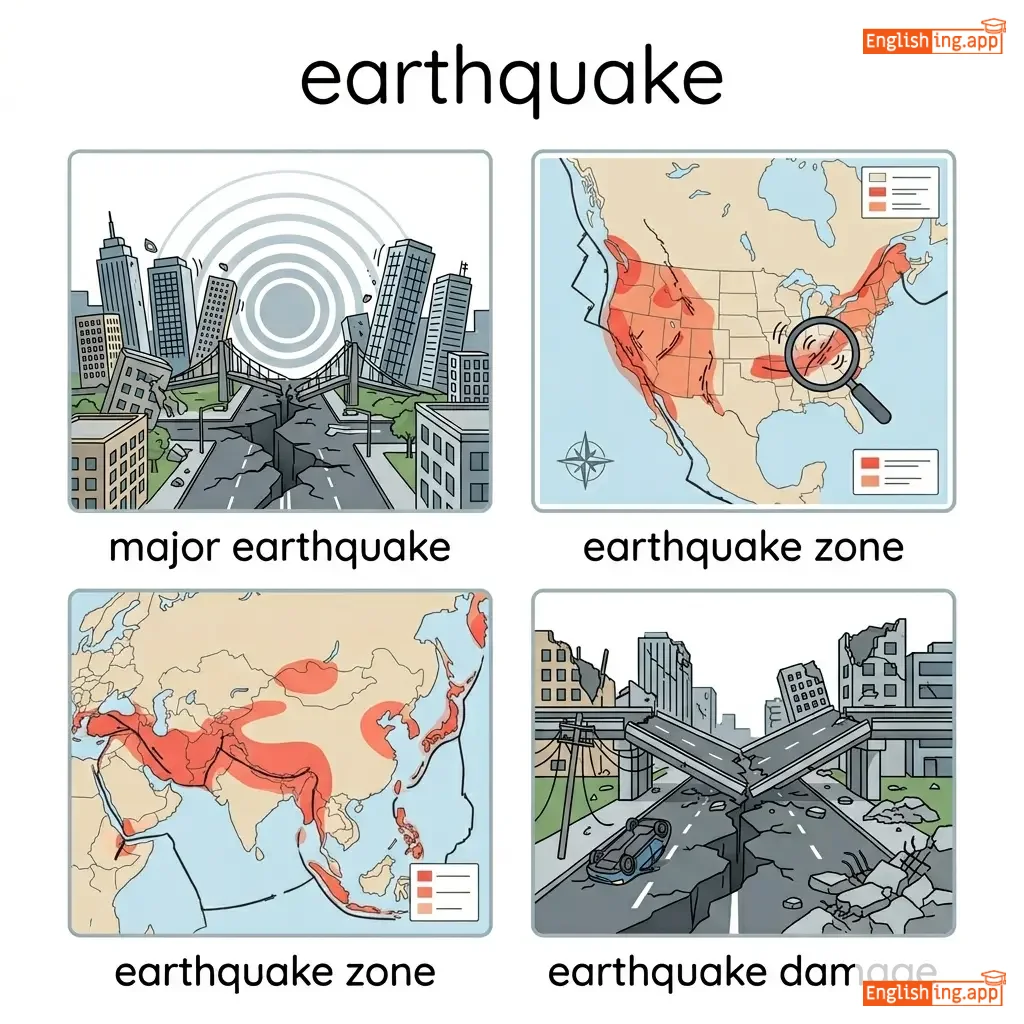
earthquake zone |
an area prone to frequent earthquakes
••••••
|
зона землетрясений
zona zemletryaseniy
••••••
|
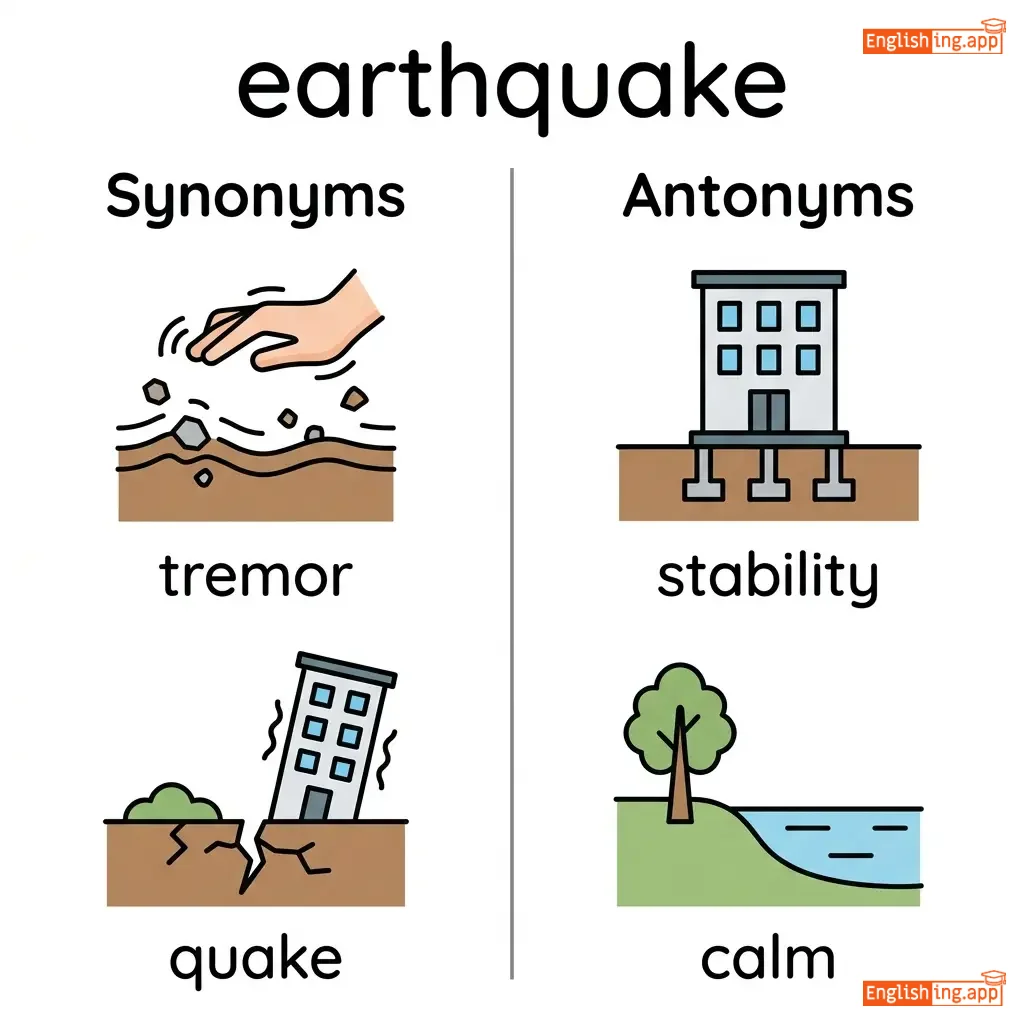
tremor, quake, shock, seismic event
••••••
|
stability, calm
••••••
|
major earthquake, earthquake zone, earthquake damage, earthquake victims
••••••
|
Землетрясение - Земля трясется, поэтому землетрясение.
••••••
|
|
#1716
😌
|
/iːz/
noun/verb
(из)
••••••
|
- •••••• |
легкость
legkost
••••••
|
eased
изд
••••••
|
eased
изд
••••••
|
eases
изес
••••••
|
easing
изинг
••••••
|
absence of difficulty or effort; to make something less serious or severe
••••••
|
Meditation helps ease stress.
Медитация помогает уменьшить стресс.
••••••
|
Медитация помогает уменьшить стресс.
Meditatsiya pomogaet umenshit' stress.
••••••
|
at ease
с удобством
••••••
|
free from worry or anxiety
••••••
|
с удобством
s udobstvom
••••••
|
comfort, relief, rest, simplicity
••••••
|
difficulty, hardship, discomfort
••••••
|
with ease, ease the pain, ease restrictions, ease pressure
••••••
|
Ease означает легкость — если ты сделаешь что-то легко, оно станет легким.
••••••
|
|
#1717
👌
|
/ˈiːzəli/
adverb
(izili)
••••••
|
- •••••• |
легко
legko
••••••
|
- •••••• | - •••••• | - •••••• | - •••••• |
without difficulty or effort
••••••
|
He solved the problem easily.
Он решил проблему легко.
••••••
|
Он решил проблему легко.
On reshil problemu legko.
••••••
|
take it easy
делать это с легкостью
••••••
|
to relax and not worry
••••••
|
делать это с легкостью
delat' eto s legkost'yu
••••••
|
effortlessly, readily, smoothly, simply
••••••
|
hardly, with difficulty, painfully
••••••
|
easily accessible, easily understood, easily broken, easily available
••••••
|
Easily означает легко, как решить задачу без усилий.
••••••
|
|
#1718
🌅
|
/iːst/
noun
(ист)
••••••
|
- •••••• |
восток
vostok
••••••
|
- •••••• | - •••••• | - •••••• | - •••••• |
The direction from which the sun rises; one of the four cardinal points.
••••••
|
The sun rises in the east. |
Солнце восходит на востоке.
Solntse voskhodit na vostoke.
••••••
|
East meets West |
A phrase describing the meeting of Eastern and Western cultures.
••••••
|
Восток встречается с западом
Vostok vstrechayetsya s zapadom
••••••
|
orient, sunrise, direction, right-hand side
••••••
|
west, sunset
••••••
|
east side, east wind, east coast, east direction
••••••
|
Восток = где восходит солнце 🌅
••••••
|
|
#1719
🌅
|
/ˈiː.stərn/
adjective
(istérn)
••••••
|
- •••••• |
восточный
vostochnyy
••••••
|
- •••••• | - •••••• | - •••••• | - •••••• |
relating to or situated in the east; from or characteristic of the eastern part of the world
••••••
|
She studied Eastern philosophy at the university.
Она изучала восточную философию в университете.
••••••
|
Она изучала восточную философию в университете.
Ona izuchala vostochnuyu filosofiyu v universitete.
••••••
|
- •••••• | - •••••• | - •••••• |
oriental, Asian, eastward, dawn-side
••••••
|
western, occidental, westward, sunset-side
••••••
|
Eastern culture, Eastern medicine, Eastern philosophy
••••••
|
Восток — это 'восточный' (vostochnyy), например, восточная философия.
••••••
|
|
#1720
😊
|
/ˈiːzi/
adjective
(изи)
••••••
|
- •••••• |
легкий
legkiy
••••••
|
- •••••• | - •••••• | - •••••• | - •••••• |
not difficult; requiring little effort
••••••
|
The exam was surprisingly easy. |
Экзамен был удивительно легким.
Ekzamen byl udivitel'no legkim.
••••••
|
take it easy |
to relax and not worry
••••••
|
не напрягайся
ne napryagaysya
••••••
|
simple, effortless, straightforward, uncomplicated
••••••
|
difficult, hard
••••••
|
easy task, easy way, easy solution, easy money
••••••
|
Easy означает легкий 😊, по-русски 'легкая работа' означает работу без усилий.
••••••
|
|
#1721
🍽️
|
/iːt/
verb
(it)
••••••
|
|
есть
yest
••••••
|
ate
et
••••••
|
eaten
iten
••••••
|
eats
its
••••••
|
eating
iting
••••••
|
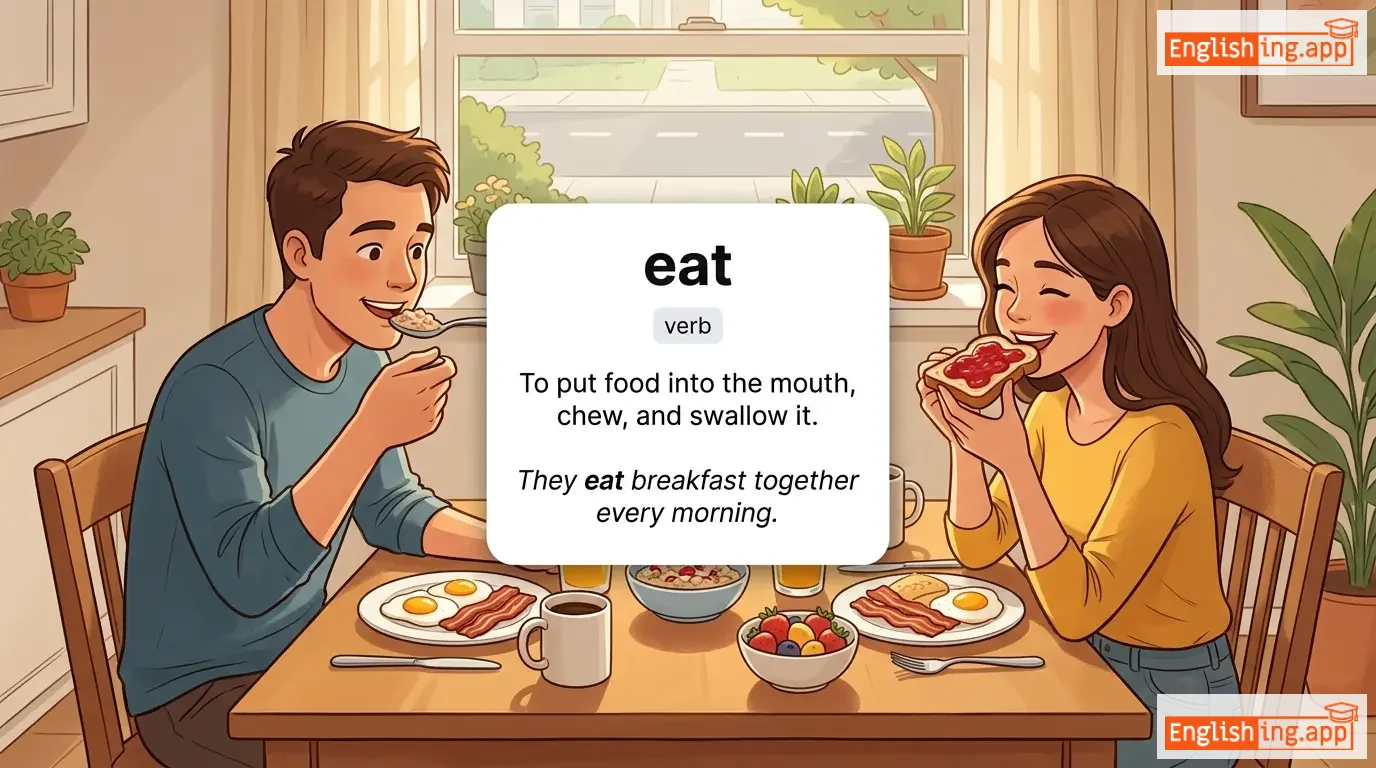
To put food into the mouth, chew, and swallow it.
••••••
|
They eat breakfast together every morning.
Они завтракают вместе каждое утро.
••••••
|
Они завтракают вместе каждое утро.
Oni zavtrakuyut vmeste kazhdoe utro.
••••••
|
eat like a horse
есть как лошадь
••••••
|
To eat a lot of food.
••••••
|
есть как лошадь
yest kak loshad'
••••••
|
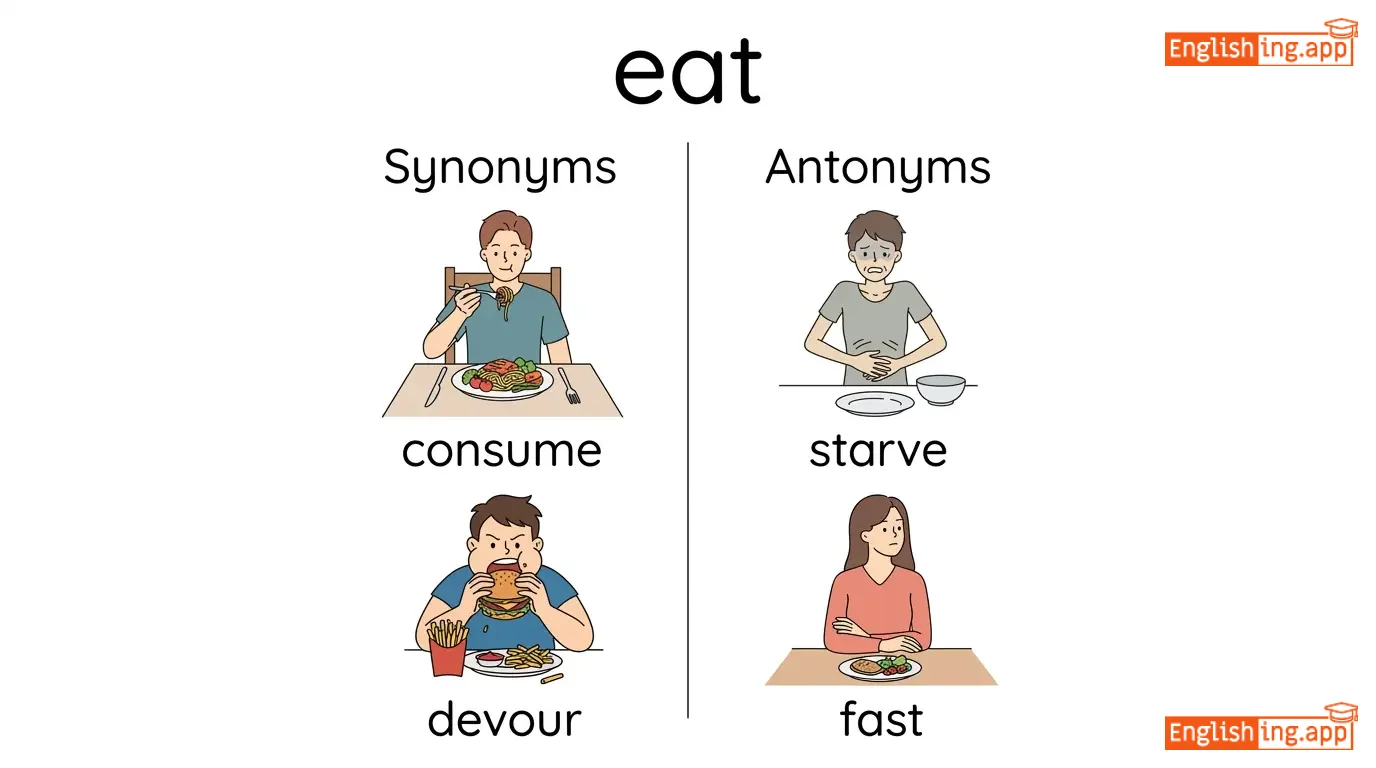
consume, devour, chew, swallow, dine
••••••
|
starve, fast
••••••
|
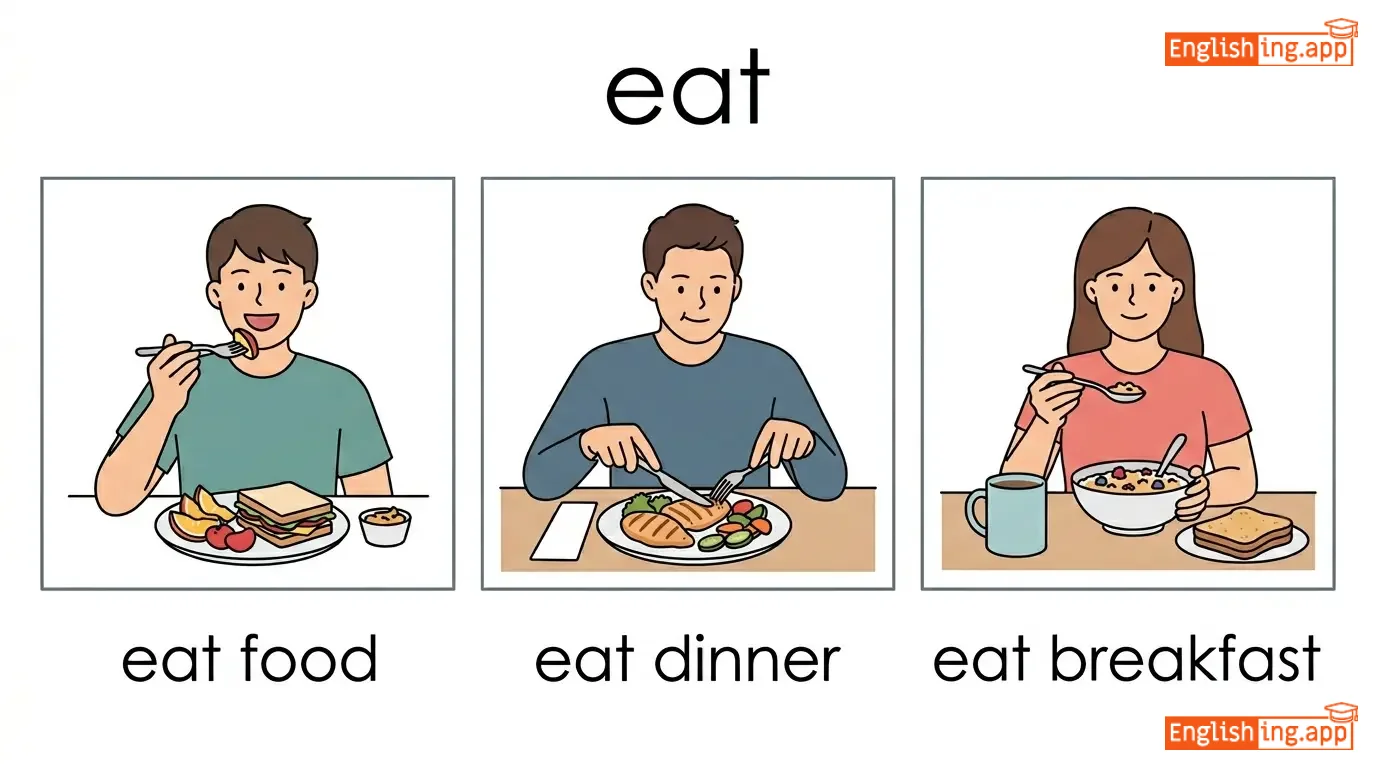
eat food, eat dinner, eat breakfast, eat together
••••••
|
Eat значит есть - чтобы не быть как лошадь с полным животом.
••••••
|
|
#1722
🔊
|
/ˈɛkəʊ/
noun, verb
(хэппинесс)
••••••
|
- •••••• |
счастье
schast'ye
••••••
|
echoed
••••••
|
echoed
••••••
|
echoes
••••••
|
echoing
••••••
|
a sound that is reflected off a surface and heard again; to repeat or reflect a sound or idea.
••••••
|
Her laughter echoed through the empty hall. |
Она не смогла скрыть своего счастья, когда получила награду.
Ona ne smogla skryt' svoego schast'ya, kogda poluchila nagradu.
••••••
|
echo chamber |
an environment where people only encounter information or opinions that reflect and reinforce their own.
••••••
|
поиск счастья
poisk schast'ya
••••••
|
resound, reverberate, repeat, reflect, resonate
••••••
|
silence, quiet, mute
••••••
|
echo sound, echo chamber, echo through, faint echo, echo of laughter
••••••
|
Счастье — это то, что мы ищем, чтобы наполнить наши сердца!
••••••
|
|
#1723
🌱
|
/ˌiːkəˈlɒdʒɪkəl/
adjective
(экологический)
••••••
|
|
экологический
ekologicheskiy
••••••
|
- •••••• | - •••••• | - •••••• | - •••••• |
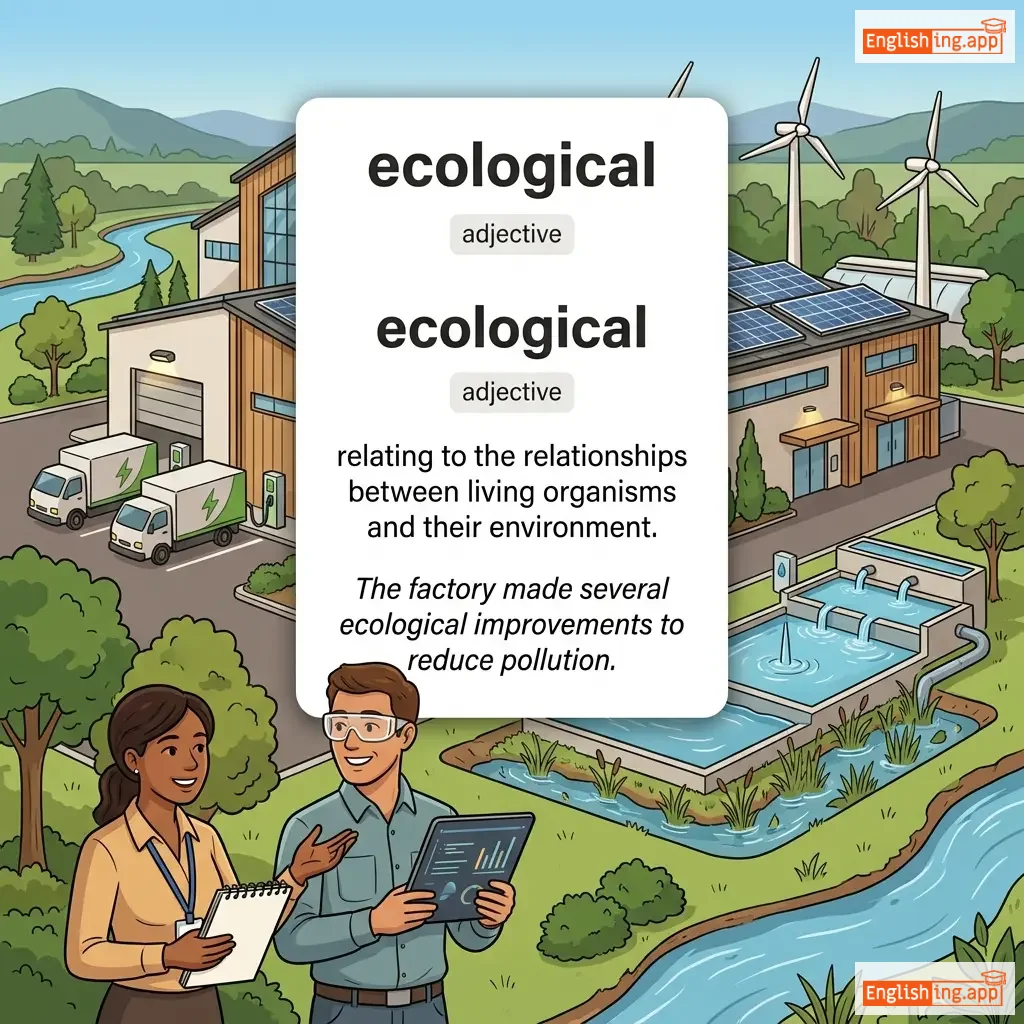
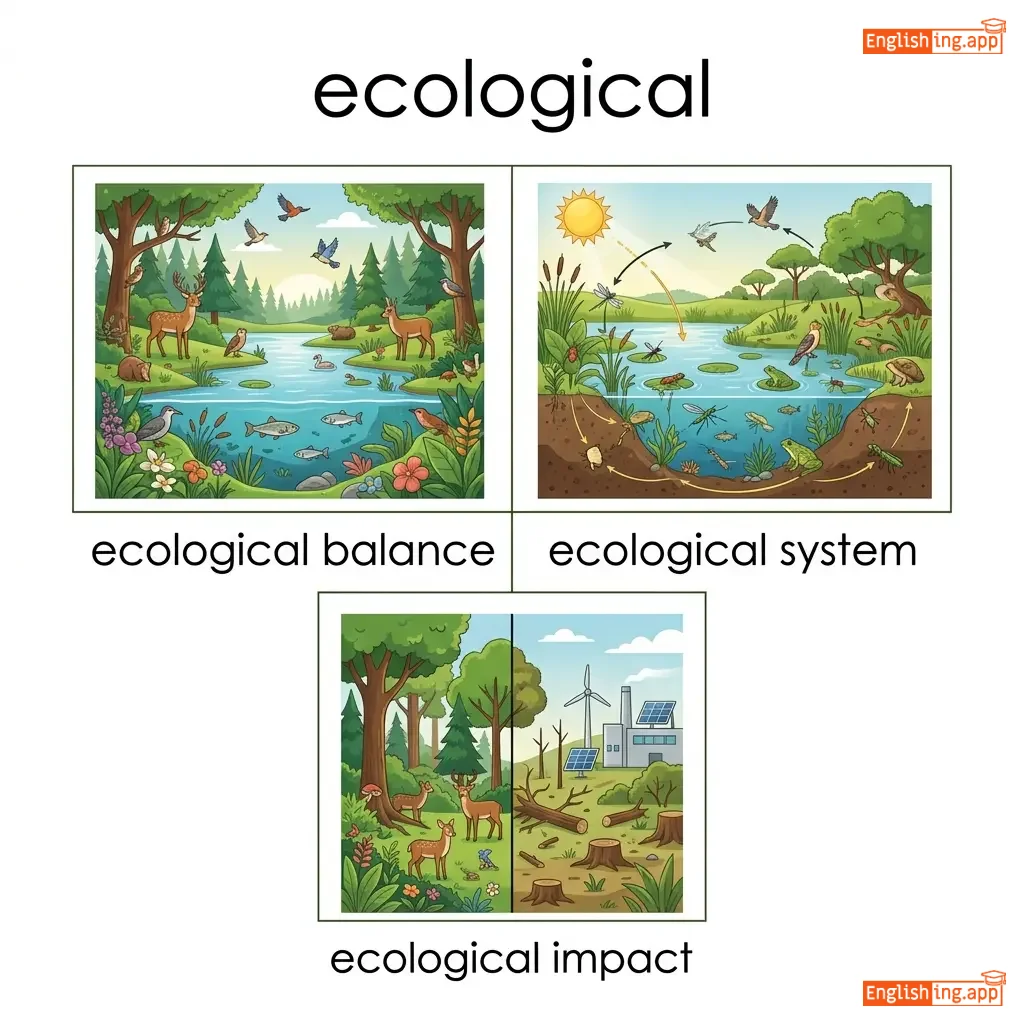
relating to the relationships between living organisms and their environment.
••••••
|
The factory made several ecological improvements to reduce pollution. |
Фабрика сделала несколько экологических улучшений, чтобы снизить загрязнение.
Fabrika sdelala neskol'ko ekologicheskikh uluchsheniy, chtoby snizit' zagryaznenie.
••••••
|
- •••••• | - •••••• | - •••••• |
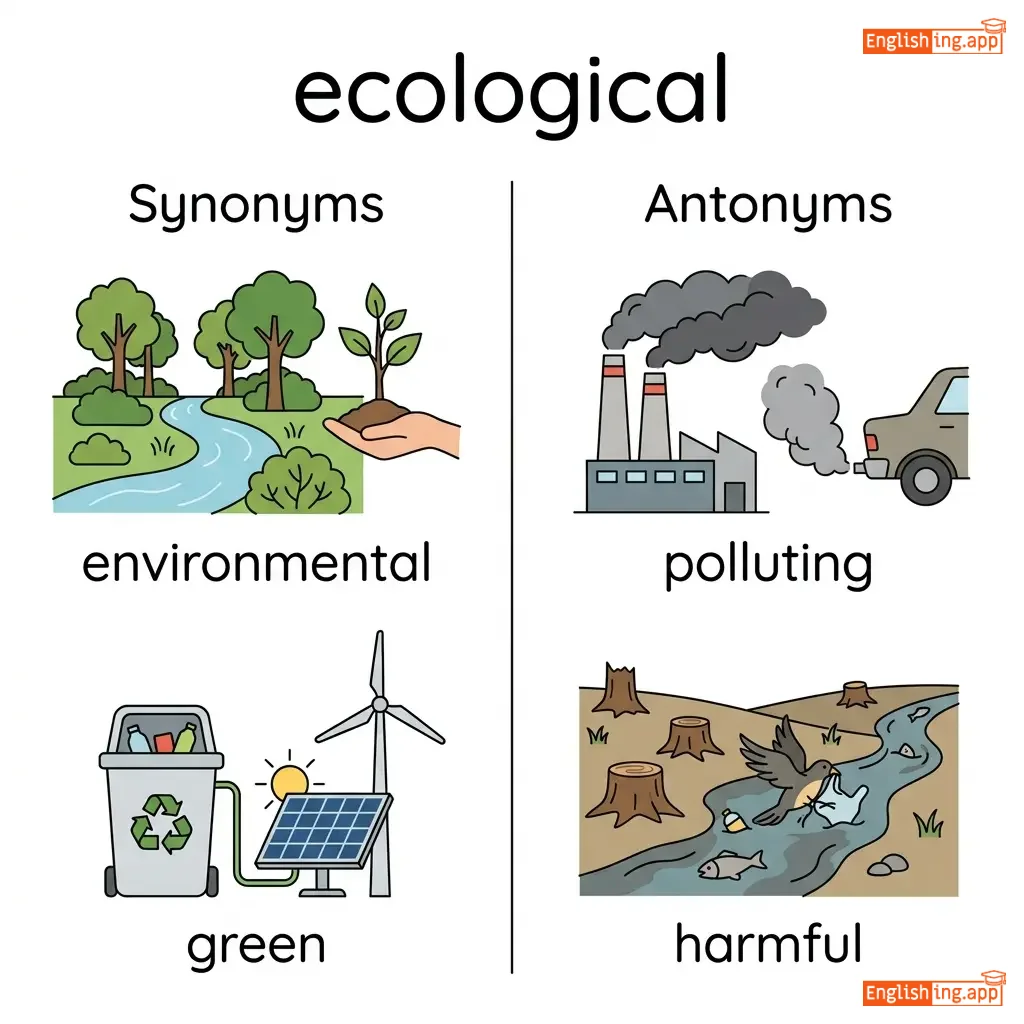
environmental, green, biological, natural, sustainable
••••••
|
polluting, harmful, artificial
••••••
|
ecological balance, ecological system, ecological impact, ecological disaster
••••••
|
Eco означает окружающая среда, поэтому экологический означает связанный с окружающей средой.
••••••
|
|
#1724
💰
|
/ˌiːkəˈnɒmɪk/
adjective
(экономический)
••••••
|
|
экономический
ekonomicheskiy
••••••
|
- •••••• | - •••••• | - •••••• | - •••••• |
relating to the economy, trade, or money
••••••
|
The country is facing an economic crisis. |
Страна сталкивается с экономическим кризисом.
Strana stalkivayetsya s ekonomicheskim krizisom.
••••••
|
economic growth |
increase in a country's production and wealth
••••••
|
экономический рост
ekonomicheskiy rost
••••••
|
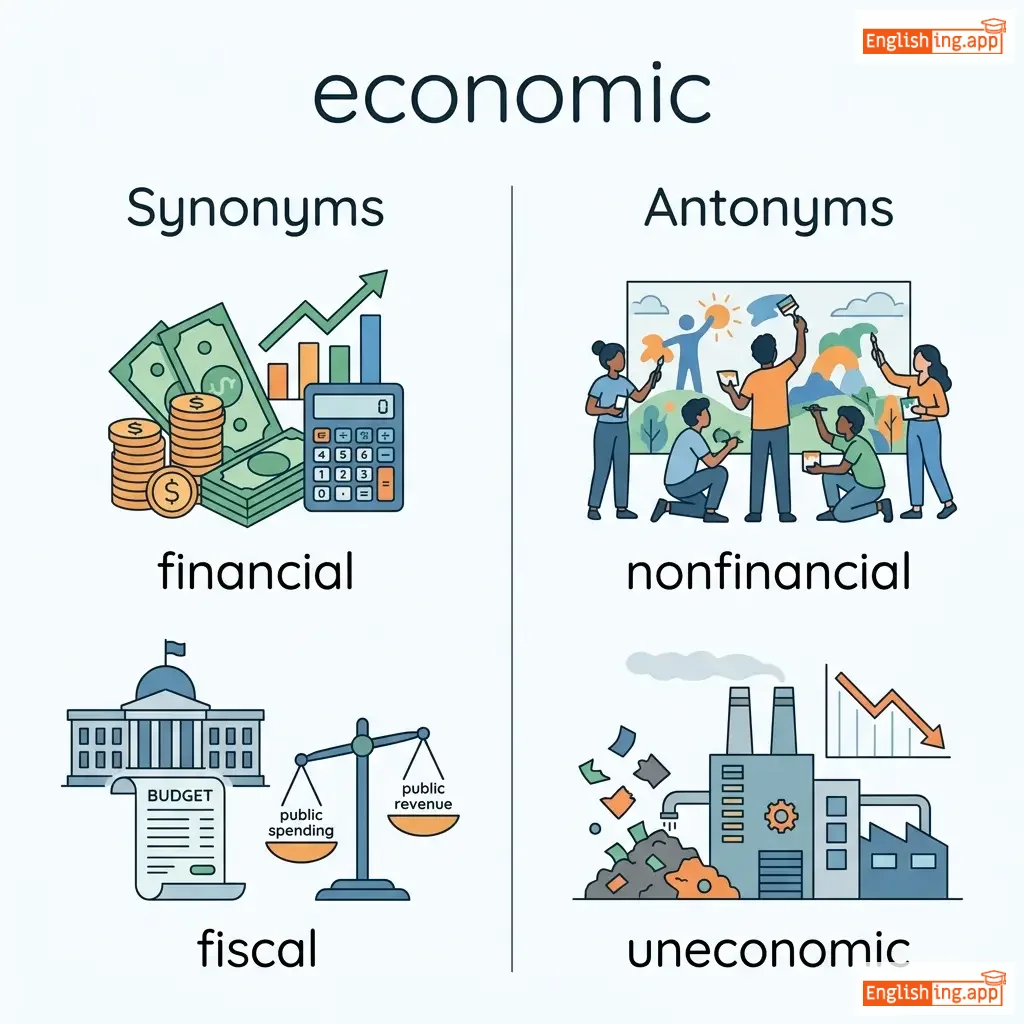
financial, fiscal, commercial, monetary
••••••
|
nonfinancial, uneconomic
••••••
|
economic policy, economic growth, economic development, economic crisis
••••••
|
Economic = экономический 💰, 'эко' для экономики и 'номический' для роста.
••••••
|
|
#1725
💰
|
/ˌiːkəˈnɒmɪkl/
adjective
(экономичный)
••••••
|
- •••••• |
экономный
ekonomnyy
••••••
|
- •••••• | - •••••• | - •••••• | - •••••• |
Careful in the use of resources; providing good value or efficiency.
••••••
|
Driving a hybrid car is economical in the long run. |
Вождение гибридного автомобиля экономично в долгосрочной перспективе.
Vozhdenie gibridnogo avtobileya ekonomichno v dolgosrochnoy perspektive.
••••••
|
economical with the truth |
A polite way of saying someone is not telling the whole truth.
••••••
|
экономно с правдой
ekonomno s pravdoy
••••••
|
thrifty, frugal, efficient, cost-effective, prudent
••••••
|
wasteful, extravagant, lavish
••••••
|
economical choice, economical use, economical car, economical lifestyle
••••••
|
Экономичный = Экономика + 'ный' (сохранение), значит экономный.
••••••
|
|
#1726
📊
|
/ˌiːkəˈnɒmɪks/ or /ˌɛkəˈnɒmɪks/
noun
(экономикс)
••••••
|
- •••••• |
экономика
ekonomika
••••••
|
- •••••• | - •••••• | - •••••• | - •••••• |
The study of production, consumption, and transfer of wealth.
••••••
|
He is studying economics at university. |
Он изучает экономику в университете.
On izuchayet ekonomiku v universitete.
••••••
|
economics of scale |
Cost advantages gained when production increases.
••••••
|
экономия на масштабе
ekonomiya na masshtabe
••••••
|
finance, commerce, business, trade
••••••
|
non-financial, uncommercial
••••••
|
study economics, economics course, economics department, economics theory
••••••
|
Economics это экономика - 'эко' (окружающая среда) и 'номика' (наука).
••••••
|
|
#1727
👨🏫
|
/ɪˈkɒnəmɪst/
noun
(экономист)
••••••
|
- •••••• |
экономист
ekonomist
••••••
|
- •••••• | - •••••• | - •••••• | - •••••• |
A person who studies or is an expert in economics.
••••••
|
The economist predicted a rise in inflation. |
Экономист предсказал рост инфляции.
Ekonomist predskazal rost inflatsii.
••••••
|
- •••••• | - •••••• | - •••••• |
analyst, financial expert, researcher, academic
••••••
|
layman, non-specialist
••••••
|
famous economist, government economist, professional economist, research economist
••••••
|
Economist - это экономист, тот, кто понимает деньги и экономику.
••••••
|
|
#1728
💹
|
/ɪˈkɒnəmi/
noun
(экономия)
••••••
|
|
экономика
ekonomika
••••••
|
- •••••• | - •••••• | - •••••• | - •••••• |
The system of production, distribution, and consumption of goods and services in a society.
••••••
|
The global economy has been affected by rising inflation. |
Мировая экономика пострадала от растущей инфляции.
Mirovaya ekonomika postradala ot rastushchey inflatsii.
••••••
|
boost the economy |
to improve the economic condition of a country or region
••••••
|
стимулировать экономику
stimulirovat' ekonomiku
••••••
|
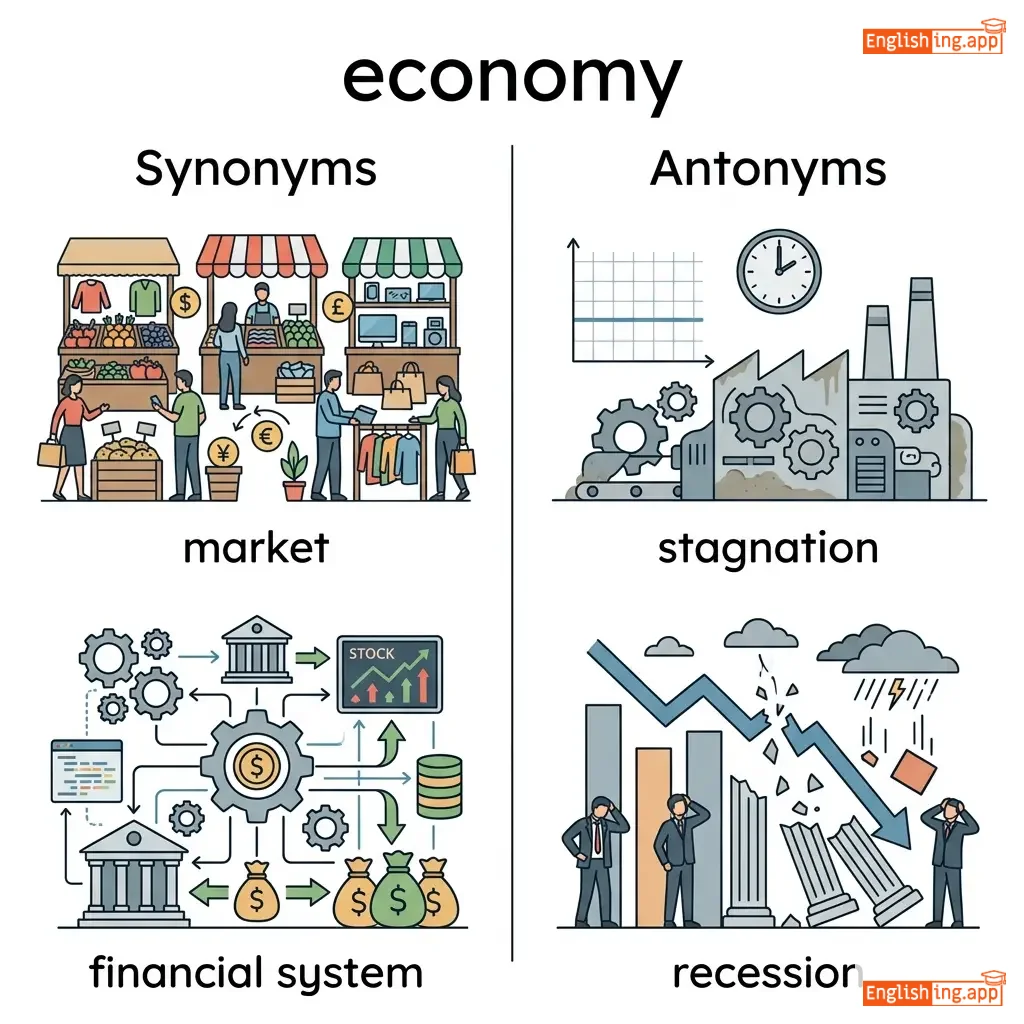
market, financial system, commerce, trade, industry
••••••
|
stagnation, recession, collapse
••••••
|
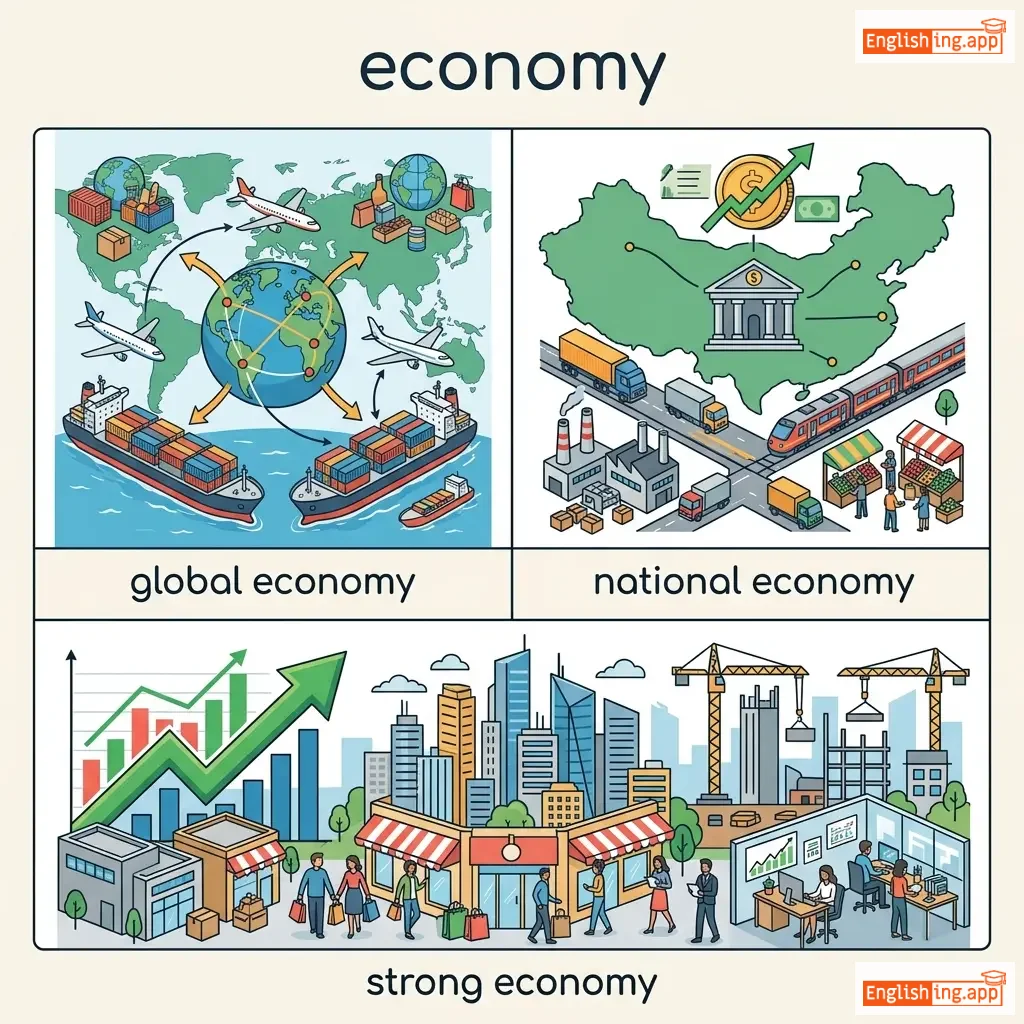
global economy, national economy, strong economy, economy growth, economy policy
••••••
|
Экономика = экономика, где всё вращается вокруг денег (экономика).
••••••
|
|
#1729
🔪
|
/ɛdʒ/
noun
(эдж)
••••••
|
- •••••• |
край / лезвие
kraj / lezvie
••••••
|
- •••••• | - •••••• | - •••••• | - •••••• |
the border or outermost part of something; a sharp side of a blade or tool
••••••
|
He stood on the edge of the cliff. |
Он стоял на краю утеса.
On stoyal na krayu utesa.
••••••
|
on edge |
to be nervous or anxious
••••••
|
нервничать / переживать
nervnichat' / perezhivat'
••••••
|
border, margin, rim, brink, boundary
••••••
|
center, middle, core
••••••
|
sharp edge, cliff edge, edge of the table, cutting edge
••••••
|
Лезвие ножа у края – опасно!
••••••
|
|
#1730
✏️
|
/ˈɛdɪt/
verb
(эдит)
••••••
|
|
редактировать
redaktirovat'
••••••
|
edited
••••••
|
edited
••••••
|
edits
••••••
|
editing
••••••
|
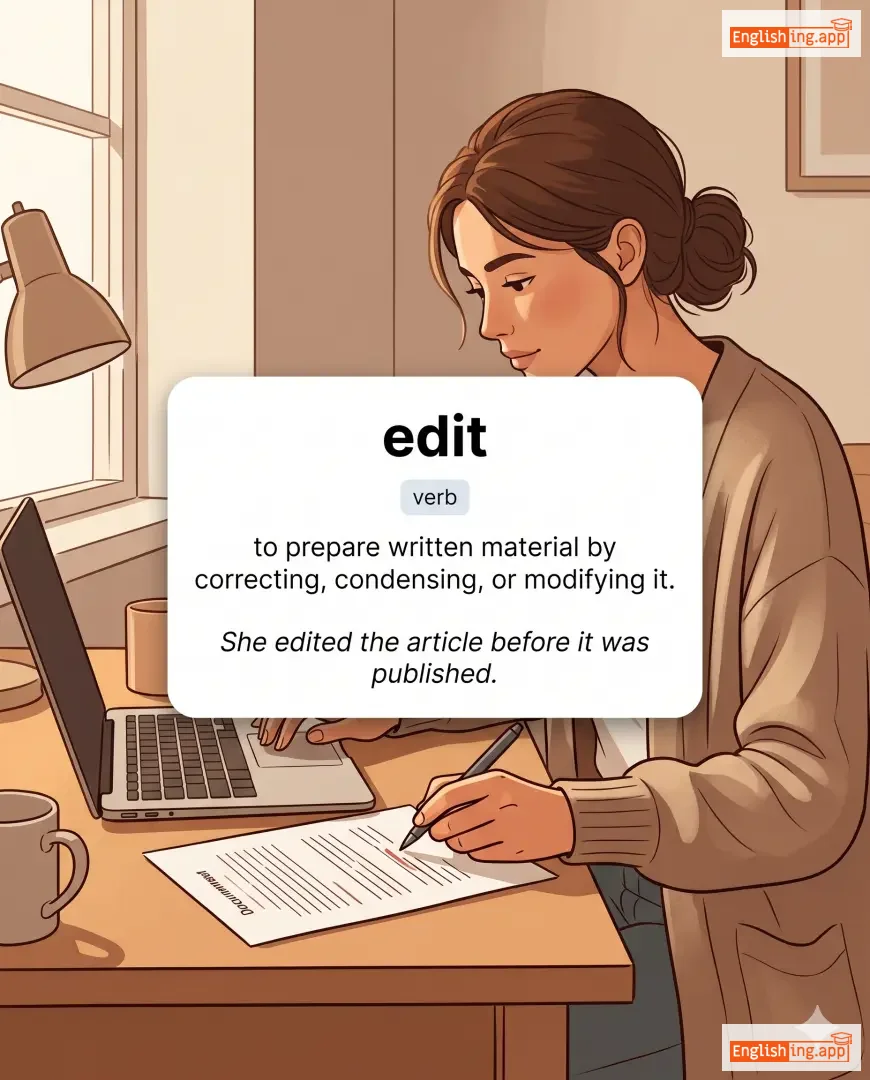
to prepare written material by correcting, condensing, or modifying it.
••••••
|
She edited the article before it was published. |
Она отредактировала статью перед тем, как она была опубликована.
Ona otredaktirovala stat'yu pered tem, kak ona byla opublikovana.
••••••
|
editor's cut |
a version of a film or video edited by its editor rather than the director.
••••••
|
версия редактора
versiya redaktora
••••••
|
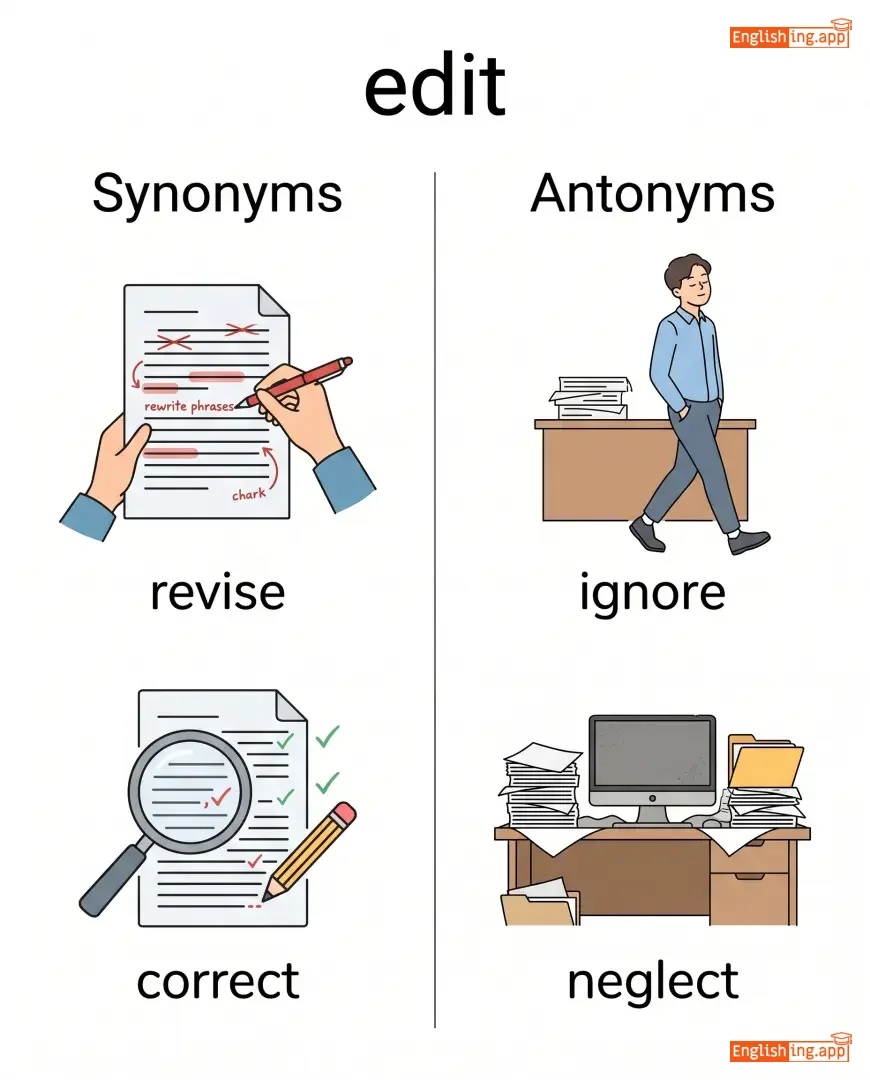
revise, correct, modify, proofread, alter
••••••
|
ignore, neglect, keep unchanged
••••••
|
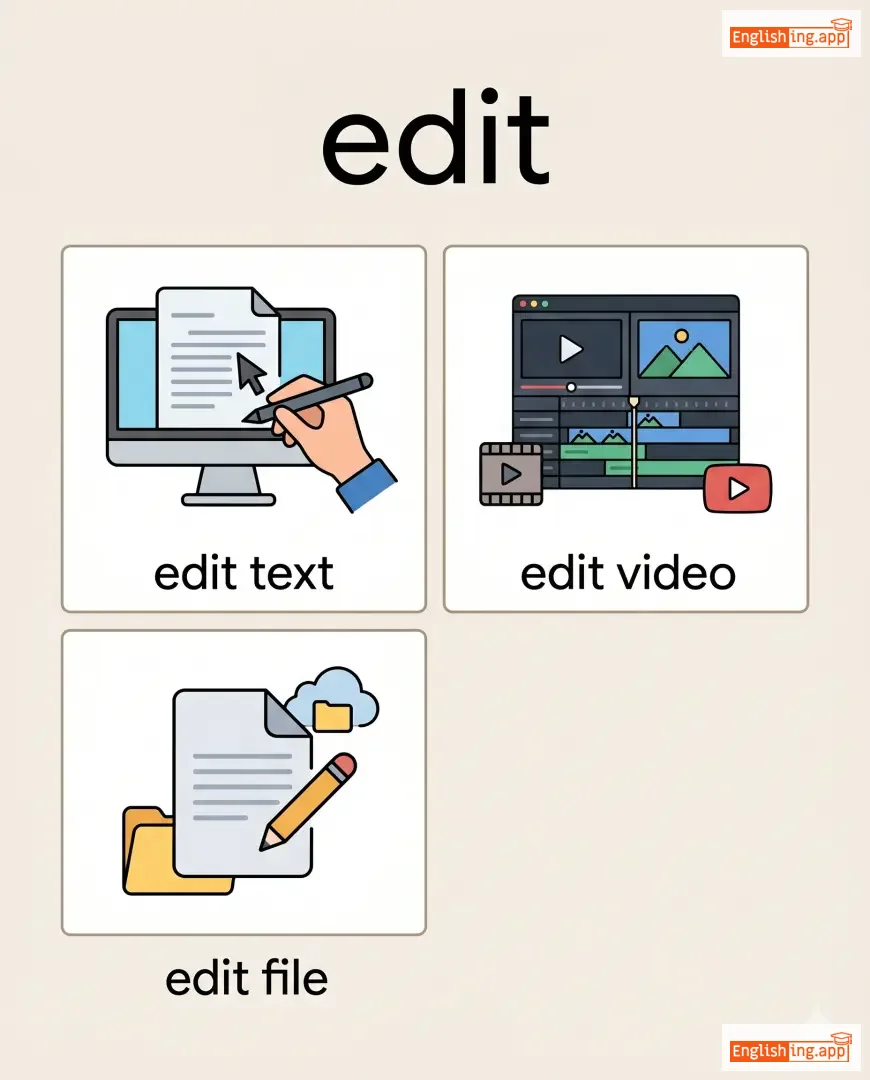
edit text, edit video, edit file, edit content, edit message
••••••
|
Редактировать – значит улучшить, как 'Отредактируй и сделай лучше!' ✏️
••••••
|
|
#1731
📚
|
/ɪˈdɪʃən/
noun
(эдитишн)
••••••
|
- •••••• |
издание
izdanie
••••••
|
- •••••• | - •••••• | - •••••• | - •••••• |
a particular version or printing of a book, newspaper, or other publication
••••••
|
The latest edition of the magazine sold out quickly. |
Последнее издание журнала быстро распродалось.
Poslednee izdanie zhurnala bystro rasprodalos'.
••••••
|
- •••••• | - •••••• | - •••••• |
version, issue, release, publication
••••••
|
original, draft
••••••
|
latest edition, special edition, first edition, new edition
••••••
|
Эдит - издание по-русски. Новое издание - новая версия.
••••••
|
|
#1732
🖊️
|
/ˈɛdɪtər/
noun
(эдитор)
••••••
|
- •••••• |
редактор
redaktor
••••••
|
- •••••• | - •••••• | - •••••• | - •••••• |
a person responsible for the final content of a newspaper, magazine, or book
••••••
|
The editor approved the article before publication.
Редактор одобрил статью до публикации.
••••••
|
Редактор одобрил статью до публикации.
Redaktor odobril stat'yu do publikatsii.
••••••
|
editor-in-chief
главный редактор
••••••
|
the main editor in charge of a publication
••••••
|
главный редактор
glavnyy redaktor
••••••
|
publisher, reviser, proofreader, compiler
••••••
|
writer, author
••••••
|
newspaper editor, chief editor, film editor, editor’s note
••••••
|
Редактор проверяет содержание перед публикацией.
••••••
|
|
#1733
📰
|
/ˌɛdɪˈtɔːriəl/
noun
(эдиториал)
••••••
|
- •••••• |
редакционная статья
redaktsionnaya stat'ya
••••••
|
- •••••• | - •••••• | - •••••• | - •••••• |
A newspaper article expressing the opinion of the editor or publisher.
••••••
|
The newspaper published an editorial criticizing government policy. |
Газета опубликовала редакционную статью, критикующую политику правительства.
Gazeta opublikovala redaktsionnuyu stat'yu, kritikuushchuyu politiku pravitel'stva.
••••••
|
- •••••• | - •••••• | - •••••• |
opinion piece, commentary, article, column
••••••
|
report, fact, news
••••••
|
editorial board, editorial policy, write an editorial
••••••
|
Editorial в русском это редакционная статья 📰
••••••
|
|
#1734
🎓
|
/ˈɛdjʊˌkeɪt/
verb
(образовывать)
••••••
|
- •••••• |
обучать
obuchat
••••••
|
educated
образовал
••••••
|
educated
образованный
••••••
|
educates
образует
••••••
|
educating
образуя
••••••
|
to give knowledge, skills, or training to someone; to teach
••••••
|
Parents should educate their children about healthy habits.
Родители должны обучать своих детей здоровым привычкам.
••••••
|
Родители должны обучать своих детей здоровым привычкам.
Roditeli dolzhny obuchat' svoikh detey zdorovym privychkam.
••••••
|
self-educated
самообразованный
••••••
|
having educated oneself without formal schooling
••••••
|
самообразованный
samoobrazovannyy
••••••
|
teach, instruct, train, enlighten, coach
••••••
|
ignore, neglect
••••••
|
educate children, educate people, educate yourself, educate about
••••••
|
Обучать значит учить - 'Обучать' напоминает 'образование' в русском языке.
••••••
|
|
#1735
🎓
|
/ˈɛd.jʊ.keɪ.tɪd/
adjective
(эдюкейтед)
••••••
|
- •••••• |
образованный
obrazovannyy
••••••
|
- •••••• | - •••••• | - •••••• | - •••••• |
Having received a good level of formal schooling or training; knowledgeable
••••••
|
She is an educated woman who values lifelong learning.
Она образованная женщина, которая ценит обучение на протяжении всей жизни.
••••••
|
Она образованная женщина, которая ценит обучение на протяжении всей жизни.
Ona obrazovannaya zhenshchina, kotoraya tsenit obuchenie na protyazhenii vsej zhizni.
••••••
|
- •••••• | - •••••• | - •••••• |
learned, knowledgeable, literate, informed, trained
••••••
|
ignorant, uneducated, illiterate
••••••
|
educated guess, highly educated, well-educated, formally educated
••••••
|
No •••••• |
|
#1736
🏫
|
/ˌɛdʒʊˈkeɪʃən/
noun
(эдюкейшн)
••••••
|
|
образование
obrazovanie
••••••
|
- •••••• | - •••••• | - •••••• | - •••••• |
the process of receiving or giving systematic instruction, especially at a school or university
••••••
|
Education is the key to success. |
Образование - это ключ к успеху.
Obrazovanie - eto klyuch k uspekhu.
••••••
|
higher education |
education beyond the secondary level, usually at college or university
••••••
|
высшее образование
vysshee obrazovanie
••••••
|
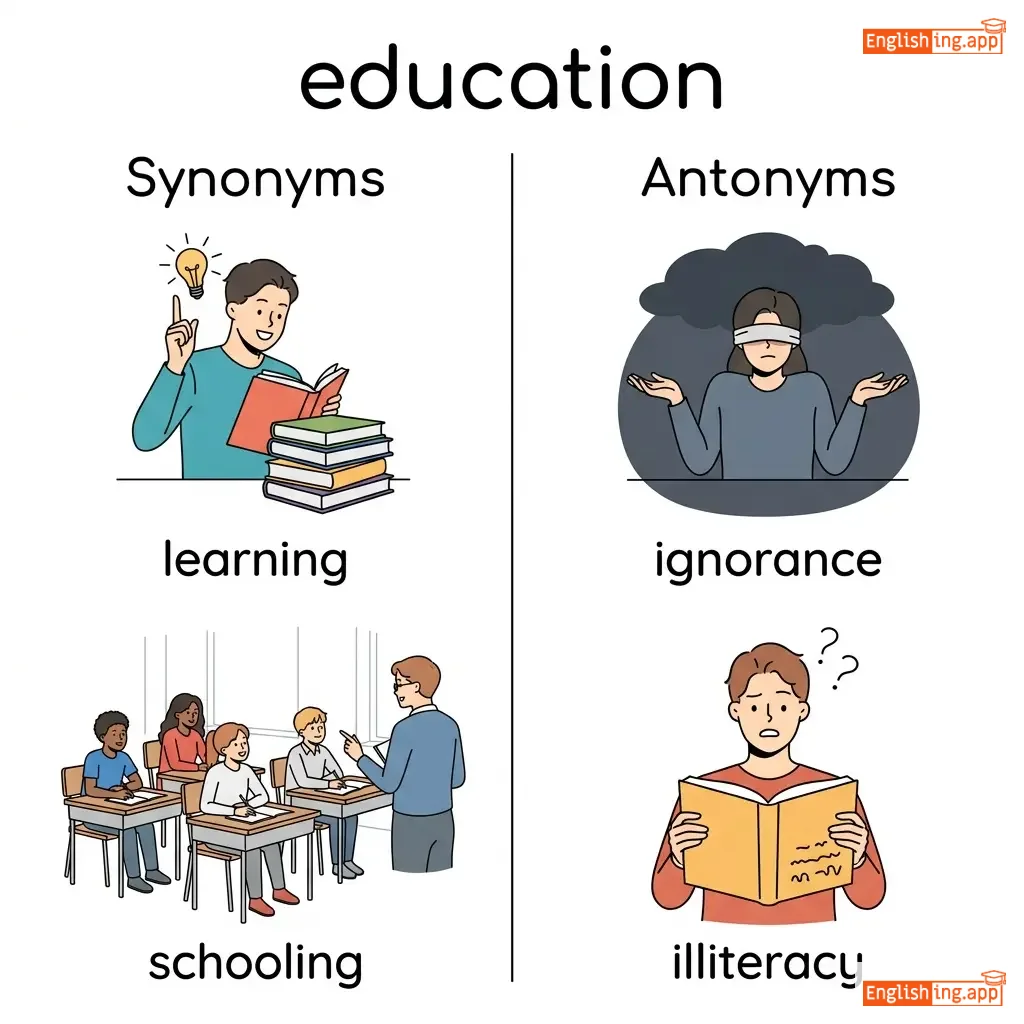
learning, schooling, instruction, teaching, training
••••••
|
ignorance, illiteracy
••••••
|
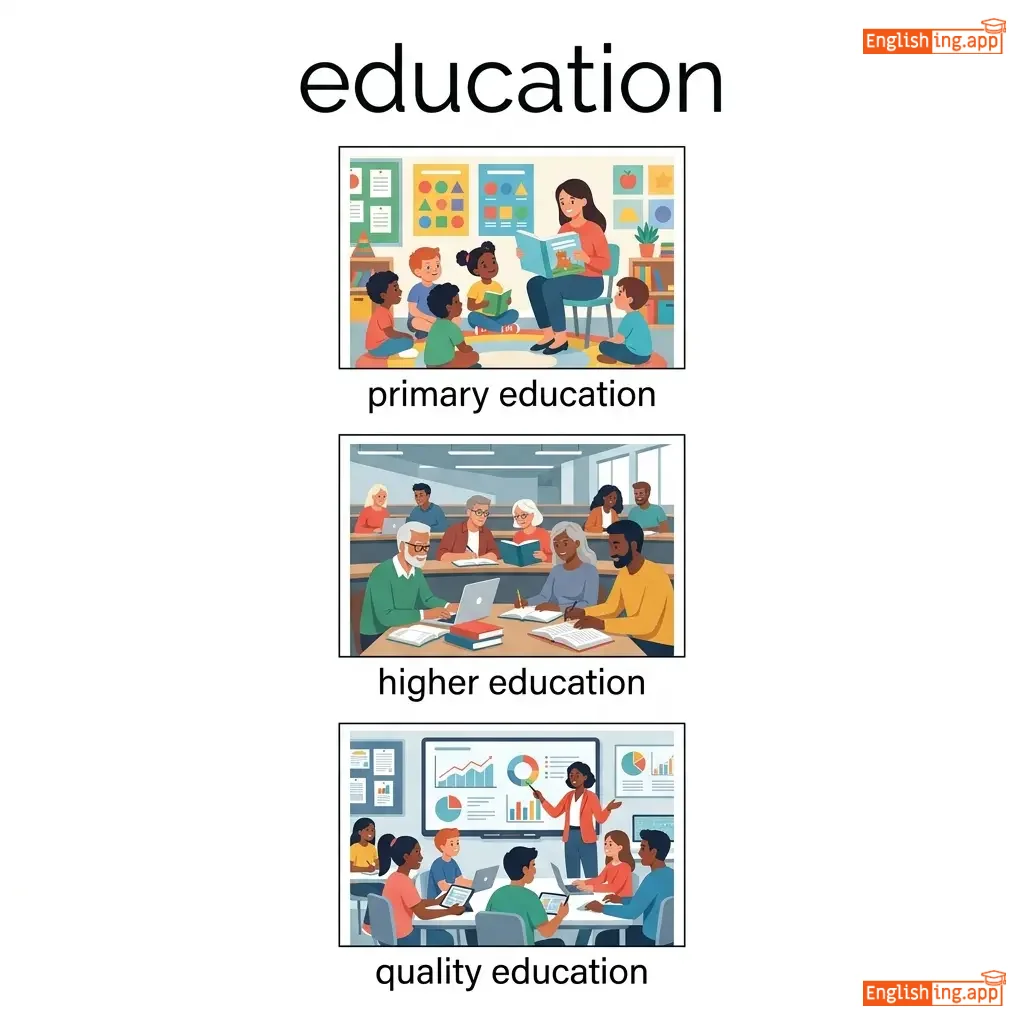
primary education, higher education, quality education, access to education
••••••
|
Education - это образование - Edu + Nation = Нация растет с образованием.
••••••
|
|
#1737
📚
|
/ˌɛdʒuˈkeɪʃənəl/
adjective
(едюкейшнэл)
••••••
|
|
образовательный
obrazovatel'nyy
••••••
|
- •••••• | - •••••• | - •••••• | - •••••• |
relating to the process of education; providing knowledge or information
••••••
|
The documentary was both entertaining and educational.
Документальный фильм был как развлекательным, так и образовательным.
••••••
|
Документальный фильм был как развлекательным, так и образовательным.
Dokumental'nyy film byl kak razvlekatel'nym, tak i obrazovatel'nym.
••••••
|
- •••••• | - •••••• | - •••••• |
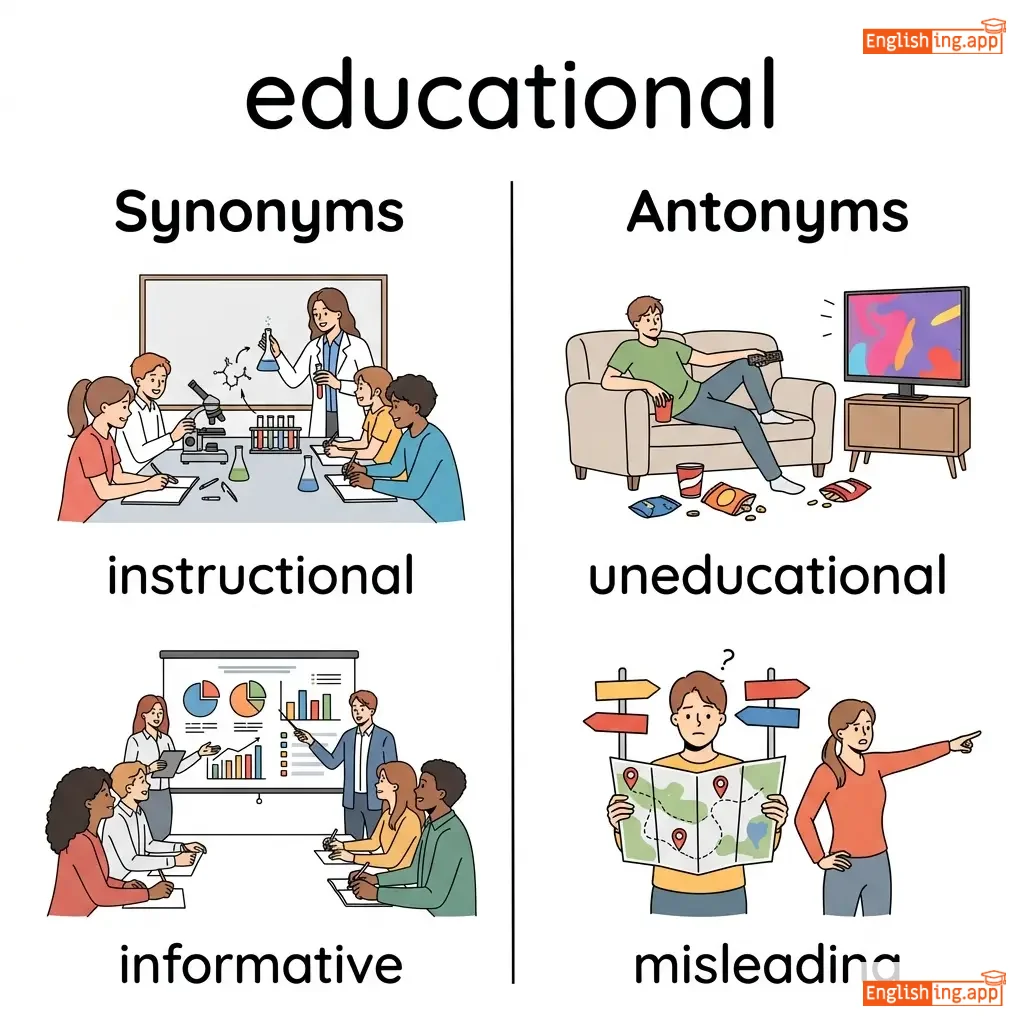
instructional, informative, enlightening, didactic, academic
••••••
|
uneducational, misleading, uninformative
••••••
|
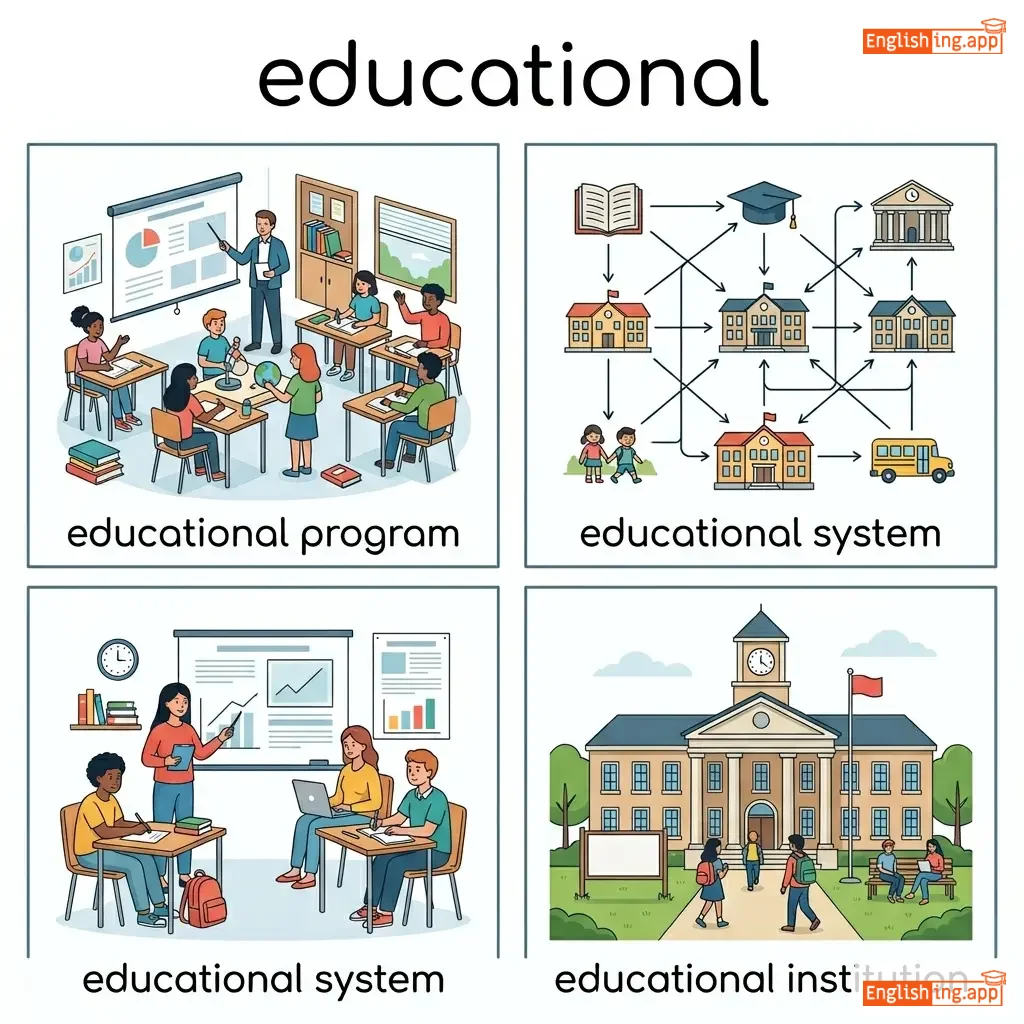
educational program, educational system, educational institution, educational material
••••••
|
Educational означает связанный с обучением, как книги и материалы для учебы в школе.
••••••
|
|
#1738
👩🏫
|
/ˈɛdʒuˌkeɪtər/
noun
(эдукатор)
••••••
|
- •••••• |
педагог
pedagog
••••••
|
- •••••• | - •••••• | - •••••• | - •••••• |
a person who provides education; a teacher or instructor
••••••
|
She is a dedicated educator who inspires her students every day. |
Она преданная педагог, которая вдохновляет своих учеников каждый день.
Ona predannaya pedagog, kotorya vdokhnovlyayet svoikh uchenikov kazhdyj den'.
••••••
|
- •••••• | - •••••• | - •••••• |
teacher, instructor, mentor, trainer, tutor
••••••
|
student, pupil
••••••
|
professional educator, experienced educator, educator training, role of educator
••••••
|
Educator означает учитель 👩🏫, для образования нужен педагог.
••••••
|
|
#1739
✨
|
/ɪˈfɛkt/
noun
(и́фект)
••••••
|
- •••••• |
эффект
effekt
••••••
|
- •••••• | - •••••• | - •••••• | - •••••• |
a change that results from a particular action or cause
••••••
|
The new law had a positive effect on public safety. |
Новый закон оказал положительный эффект на общественную безопасность.
Novyy zakon okazal polozhitel'nyy effekt na obshchestvennuyu bezopasnost'.
••••••
|
take effect |
to begin to apply or produce results
••••••
|
вступить в силу
vstupit' v silu
••••••
|
result, outcome, consequence, impact, influence
••••••
|
cause, source, origin
••••••
|
positive effect, negative effect, cause and effect, special effect
••••••
|
Effekt на русском означает влияние, запомни через слово «эффект».
••••••
|
|
#1740
✅
|
/ɪˈfɛktɪv/
adjective
(efektiv)
••••••
|
|
эффективный
effektivnyy
••••••
|
- •••••• | - •••••• | - •••••• | - •••••• |
producing the intended or desired result
••••••
|
This medicine is very effective against headaches. |
Это лекарство очень эффективно против головной боли.
Eto lekarstvo ochen' effektivno protiv golovnoj boli.
••••••
|
effective immediately |
starting from now
••••••
|
эффективно немедленно
effektivno nemedlenno
••••••
|
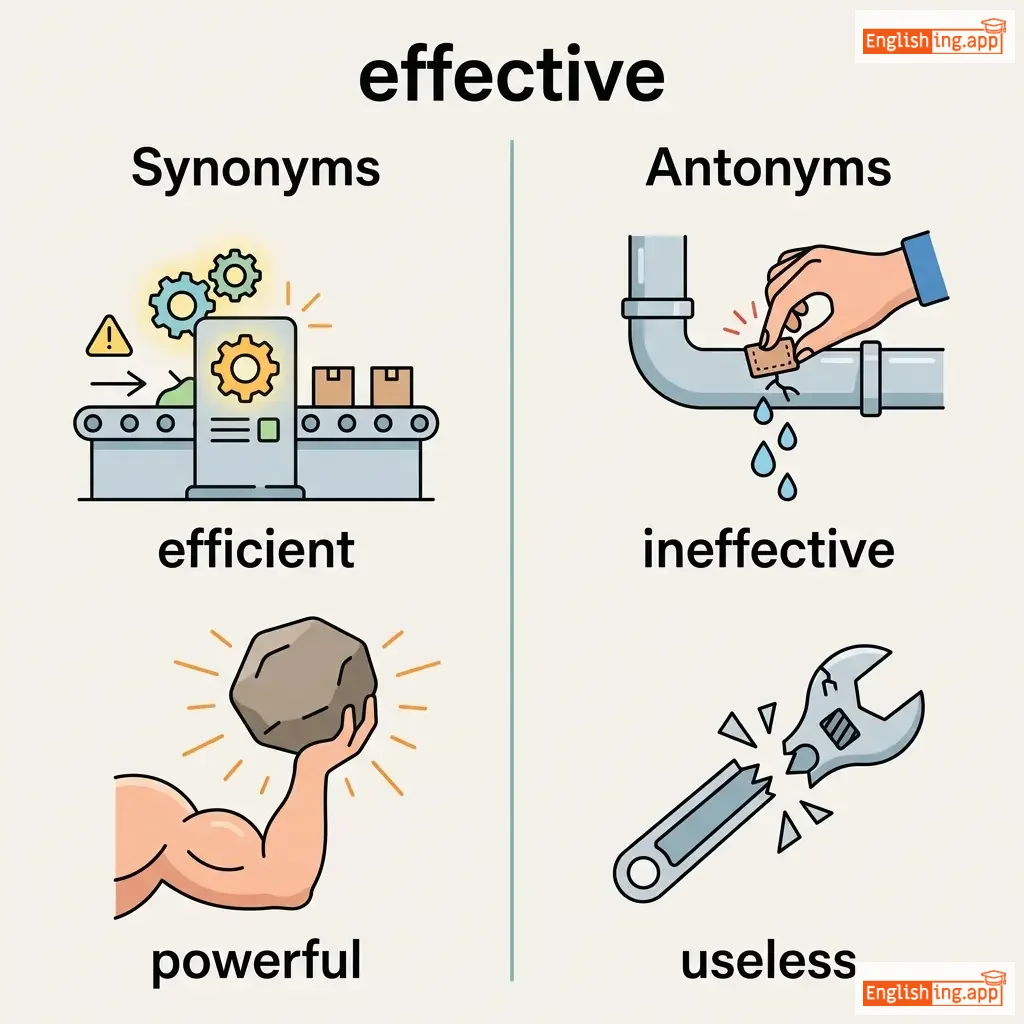
efficient, powerful, useful, successful, strong
••••••
|
ineffective, useless, weak
••••••
|
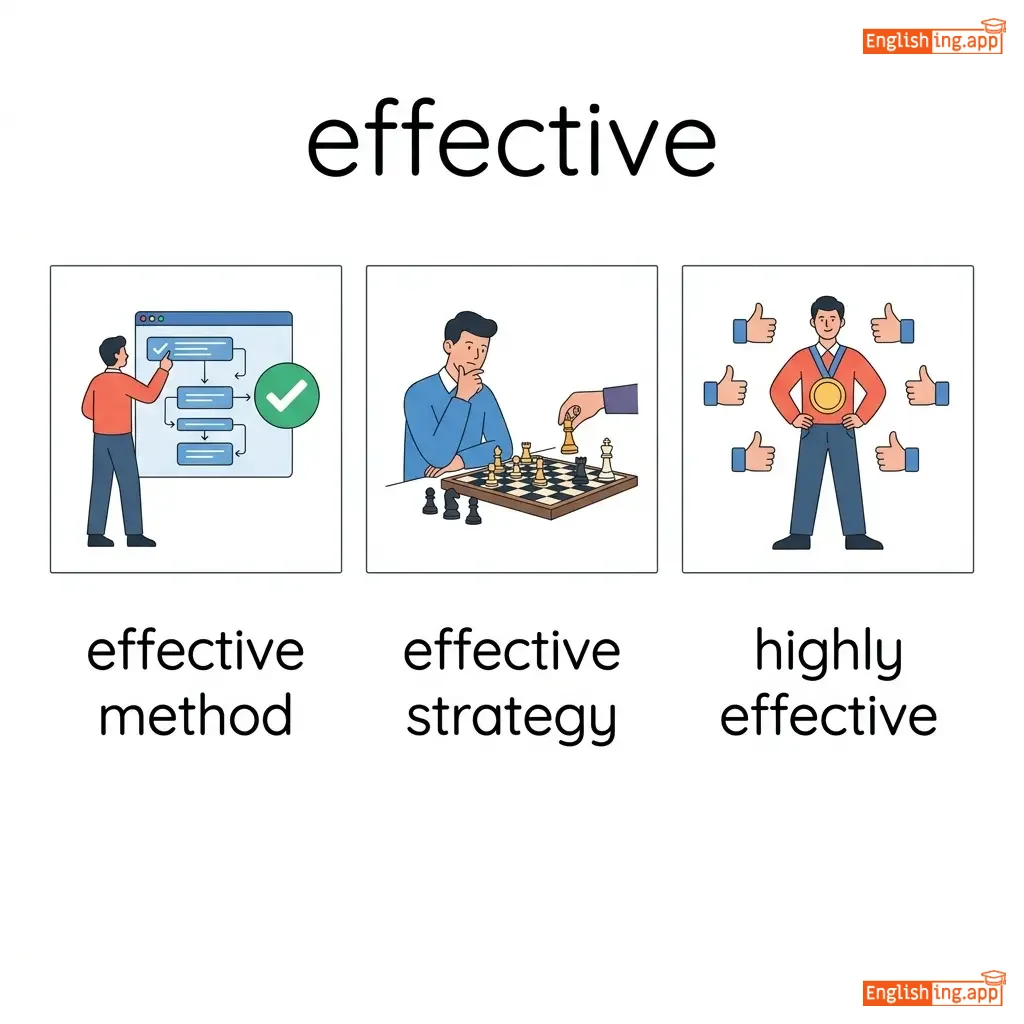
effective method, effective strategy, highly effective, effective communication
••••••
|
Эффективный значит работающий - эффективное лекарство снимает головную боль.
••••••
|
|
#1741
✅
|
/ɪˈfɛktɪvli/
adverb
(efektivli)
••••••
|
- •••••• |
эффективно
effektivno
••••••
|
- •••••• | - •••••• | - •••••• | - •••••• |
in a way that produces the desired result; efficiently and successfully
••••••
|
The team worked together effectively to finish the project on time. |
Команда эффективно работала вместе, чтобы закончить проект вовремя.
Komanda effektivno rabotala vmeste, chtoby zakonchit proyekt vovremya.
••••••
|
- •••••• | - •••••• | - •••••• |
efficiently, successfully, productively, powerfully
••••••
|
ineffectively, poorly, weakly
••••••
|
work effectively, communicate effectively, manage effectively, use effectively
••••••
|
Effective означает успешный, а effectively означает ✅ работать успешно.
••••••
|
|
#1742
🎯
|
/ɪˈfɛktɪvnəs/
noun
(efektivnes)
••••••
|
- •••••• |
эффективность
effektivnost
••••••
|
- •••••• | - •••••• | - •••••• | - •••••• |
the degree to which something is successful in producing a desired result.
••••••
|
The effectiveness of the new policy is still being evaluated.
Эффективность новой политики все еще оценивается.
••••••
|
Эффективность новой политики все еще оценивается.
Effektivnost' novoy politiki vse eshche otsenivaetsya.
••••••
|
measure effectiveness
измерить эффективность
••••••
|
to assess how well something achieves its goals.
••••••
|
измерить эффективность
izmerit' effektivnost'
••••••
|
efficiency, success, productivity, power, capability
••••••
|
ineffectiveness, failure, weakness
••••••
|
test effectiveness, improve effectiveness, measure effectiveness, evaluate effectiveness
••••••
|
Effective означает работающий, а effectiveness означает насколько эффективно!
••••••
|
|
#1743
⚙️
|
/ɪˈfɪʃ.ən.si/
noun
(эффективность)
••••••
|
|
эффективность
effektivnost
••••••
|
- •••••• | - •••••• | - •••••• | - •••••• |
the ability to accomplish something with the least waste of time and effort
••••••
|
The new system improved the efficiency of the entire production process.
Новая система улучшила эффективность всего производственного процесса.
••••••
|
Новая система улучшила эффективность всего производственного процесса.
Novaya sistema uluchshila effektivnost' vsego proizvodstvennogo protsessa.
••••••
|
- •••••• | - •••••• | - •••••• |
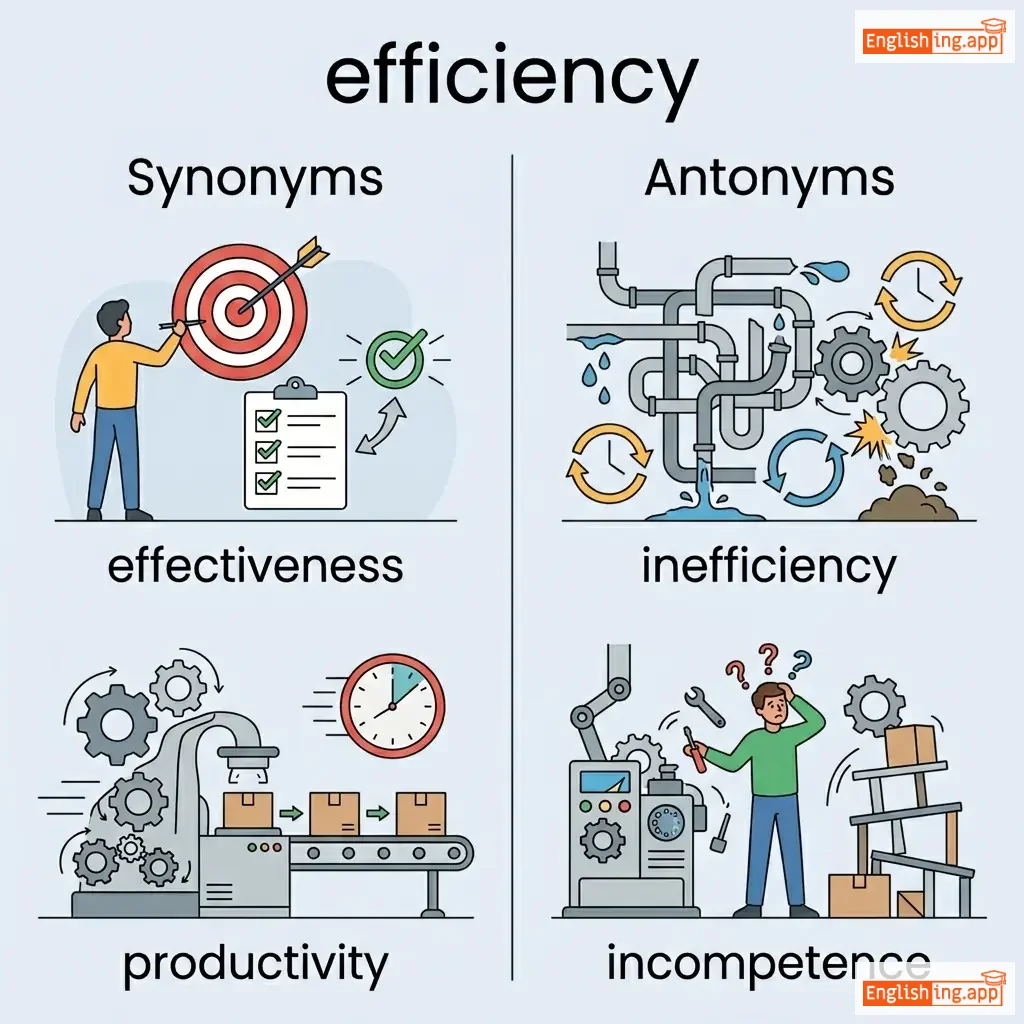
effectiveness, competence, productivity, capability
••••••
|
inefficiency, incompetence, waste, slowness
••••••
|
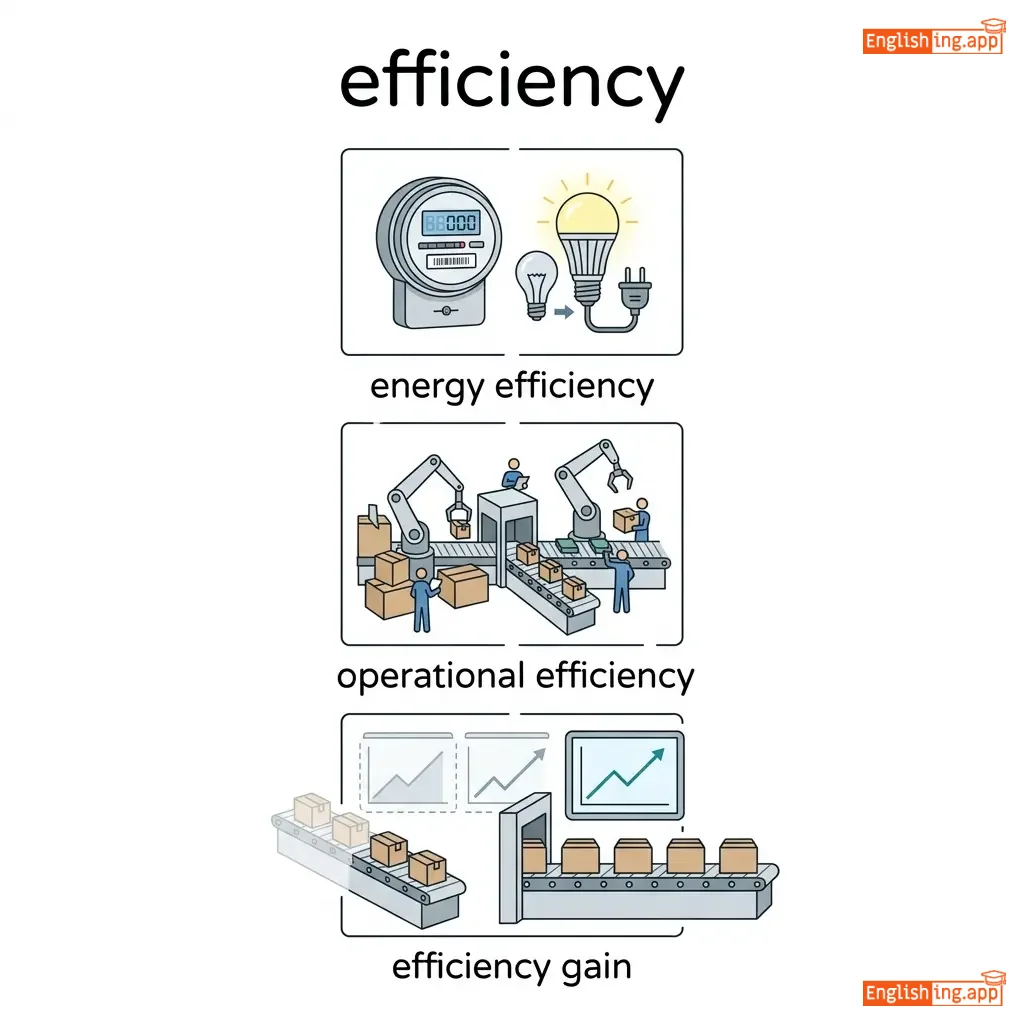
energy efficiency, improve efficiency, high efficiency
••••••
|
Эффективность помогает выполнять задачи быстрее и с меньшими усилиями.
••••••
|
|
#1744
⚡
|
/ɪˈfɪʃ.ənt/
adjective
(efishiyent)
••••••
|
|
эффективный; компетентный; продуктивный
effektivny
••••••
|
- •••••• | - •••••• | - •••••• | - •••••• |
working well without waste; competent; productive
••••••
|
She is very efficient at managing her time.
Она очень эффективна в управлении своим временем.
••••••
|
Она очень эффективна в управлении своим временем.
Ona ochen' effektivena v upravlenii svoim vremyaniem.
••••••
|
- •••••• | - •••••• | - •••••• |
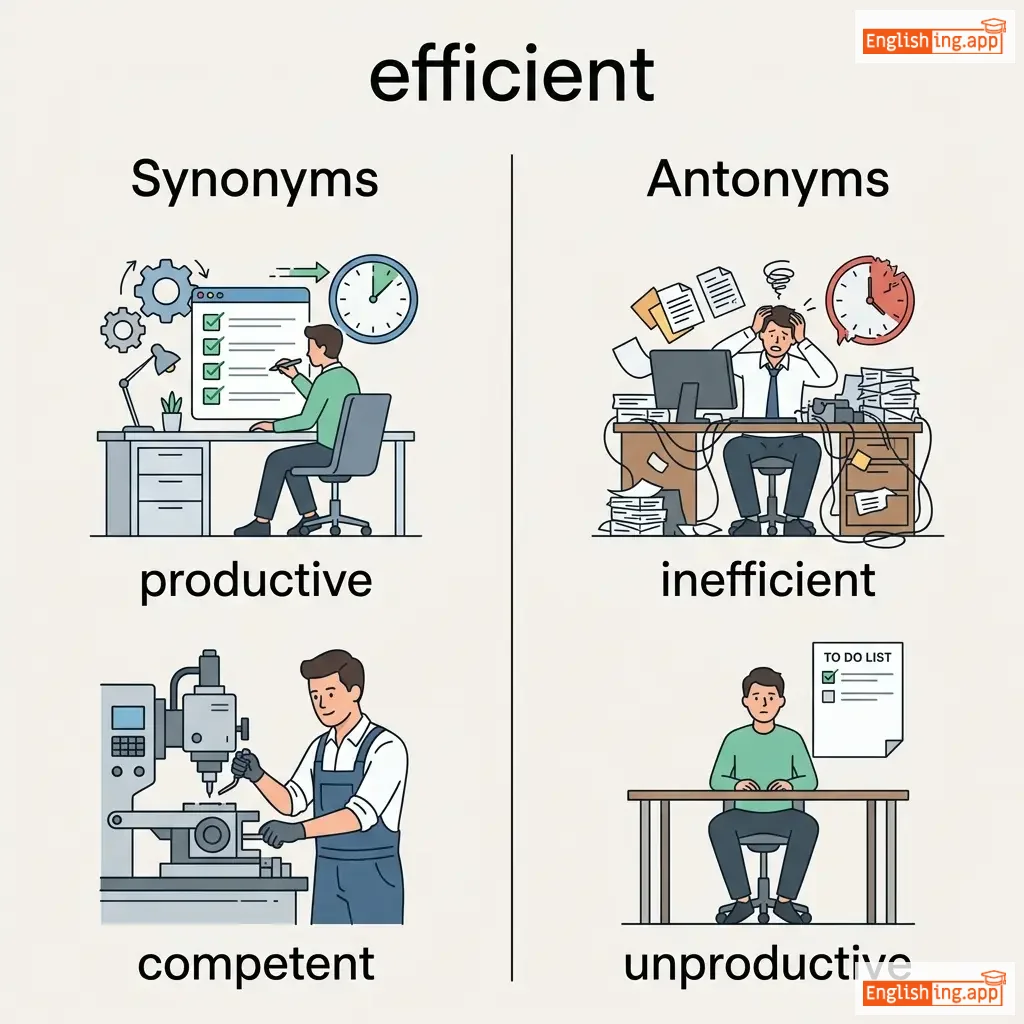
competent, capable, skilled
••••••
|
inefficient, incompetent, wasteful
••••••
|
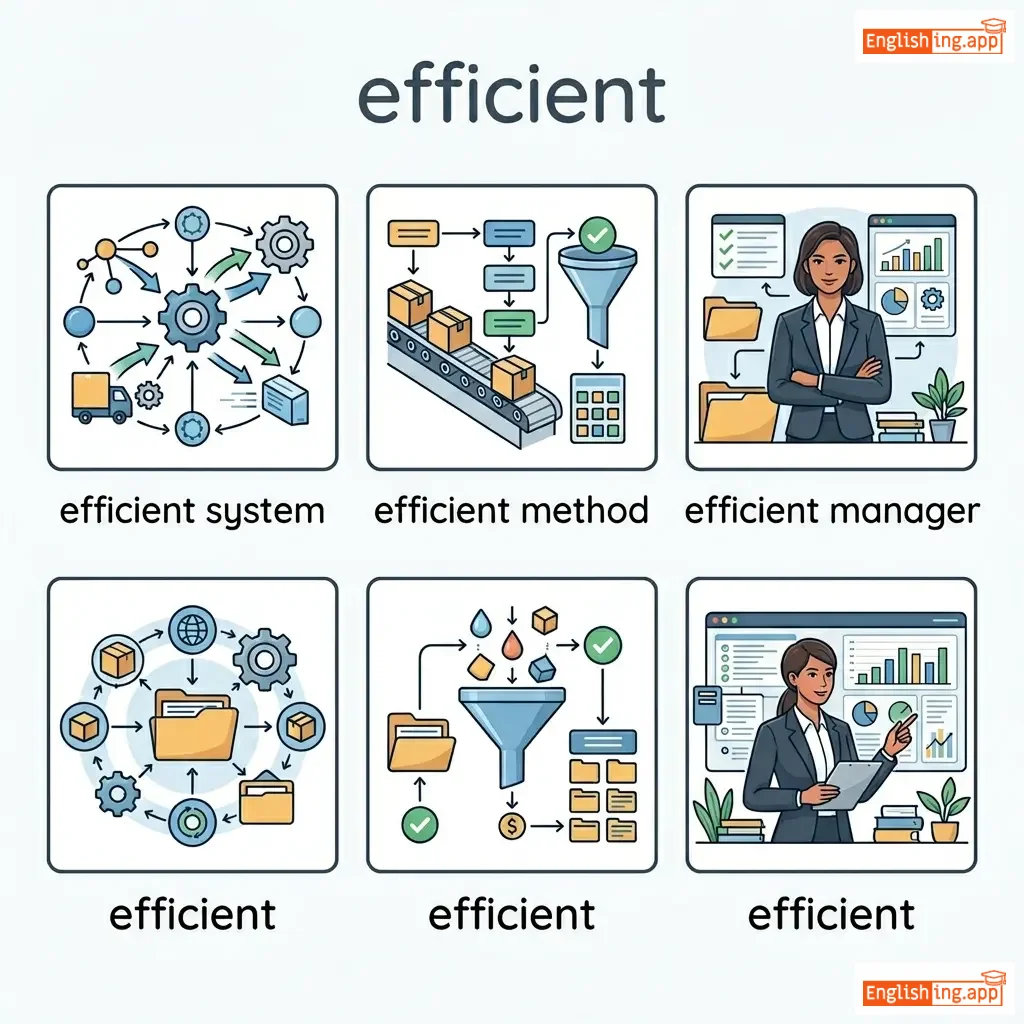
efficient system, efficient worker, efficient use
••••••
|
Being efficient means working 'effektivno' in Russian.
••••••
|
|
#1745
⚡
|
/ɪˈfɪʃəntli/
adverb
(эфишентли)
••••••
|
- •••••• |
эффективно
effektivno
••••••
|
- •••••• | - •••••• | - •••••• | - •••••• |
in a way that achieves maximum productivity with minimum wasted effort or expense
••••••
|
She managed to complete the task efficiently within the deadline. |
Она смогла эффективно выполнить задачу в срок.
Ona smogla effektivno vypolnit' zadachu v srok.
••••••
|
- •••••• | - •••••• | - •••••• |
effectively, productively, competently, resourcefully
••••••
|
inefficiently, ineffectively
••••••
|
work efficiently, run efficiently, manage efficiently
••••••
|
Efficient work saves energy—just like a smoothly running engine!
••••••
|
|
#1746
💪
|
/ˈɛfərt/
noun
(эфорт)
••••••
|
- •••••• |
усилие
usilie
••••••
|
- •••••• | - •••••• | - •••••• | - •••••• |
the use of physical or mental energy to do something; attempt
••••••
|
He made a great effort to improve his English skills. |
Он приложил большое усилие, чтобы улучшить свои навыки английского.
On prilozhil bol'shoye usiliye, chtoby uluchshit' svoi navyki angliyskogo.
••••••
|
make an effort |
to try hard to achieve something
••••••
|
прикладывать усилие
prikladyvat' usilie
••••••
|
attempt, endeavor, exertion, struggle, work
••••••
|
inaction, laziness, neglect
••••••
|
make an effort, huge effort, joint effort, physical effort
••••••
|
Effort привносит успех, усилие (usilie) без этого не бывает.
••••••
|
|
#1747
🥚
|
/ɛɡ/
noun
(эг)
••••••
|
- •••••• |
яйцо
yaytso
••••••
|
- •••••• | - •••••• | - •••••• | - •••••• |
an oval or round object laid by a female bird, often eaten as food
••••••
|
She had a boiled egg for breakfast. |
Она съела вареное яйцо на завтрак.
Ona syela varenoye yaytso na zavtrak.
••••••
|
put all your eggs in one basket |
to risk everything on a single plan or opportunity
••••••
|
не клади все яйца в одну корзину
ne kladi vse yaytsa v odnu korzinu
••••••
|
ovum, embryo, yolk, shell
••••••
|
sperm, chick
••••••
|
boiled egg, fried egg, egg yolk, egg shell
••••••
|
Egg 🥚 означает яйцо, запомни 'яйцо на завтрак'.
••••••
|
Vocabulary Quiz
Test your vocabulary by matching words with their translations or meanings.
Login to take the quiz
Comments (0)
Share your thoughts and join the discussion.
Join the discussion by logging in
Login to CommentNo comments yet
Be the first to share your thoughts!