

Обновитесь для доступа ко всему словарю
Получите неограниченный доступ ко всем словам с подпиской Pro
Обновить до ProПеревод
Прошедшее
Причастие прошедшего времени
Третье лицо единственного числа
Герундий
Значение
Пример предложения
Перевод примера предложения
Синонимы
Антонимы
Коллокации
Мнемоника








Swipe left or right, or use the buttons. Tap image to zoom.
Обновитесь для доступа ко всем предложениям
Получите неограниченный доступ ко всем предложениям с подпиской Pro
Обновить до ProПеревод примера предложения
Слово
Lesson 103Lesson 103 - Переключатель маски
|
Эмодзи
|
Слово | Images | Перевод | Прошедшее | Причастие прошедшего времени | Третье лицо единственного числа | Герундий | Значение | Пример предложения | Перевод примера предложения | Пример выражения | Значение примера выражения | Перевод примера выражения | Синонимы | Антонимы | Коллокации | Мнемоника |
|---|---|---|---|---|---|---|---|---|---|---|---|---|---|---|---|---|---|
|
#4875
🛒
|
/ˈsuː.pəˌmɑː.kɪt/
noun
(супермаркет)
••••••
|
- •••••• |
супермаркет
supermarket
••••••
|
- •••••• | - •••••• | - •••••• | - •••••• |
a large self-service store selling food and household goods
••••••
|
She went to the supermarket to buy groceries. |
Она пошла в супермаркет, чтобы купить продукты.
Ona poshla v supermarket, chtoby kupit' produkty.
••••••
|
- •••••• | - •••••• | - •••••• |
grocery store, mart, store, food market, hypermarket
••••••
|
small shop, kiosk
••••••
|
big supermarket, local supermarket, supermarket chain, supermarket shopping, supermarket employee
••••••
|
Супермаркет — место, где всё можно купить в одном месте 🛒
••••••
|
|
#4876
👀
|
/ˈsuːpərvaɪz/
verb
(supervaiz)
••••••
|
|
контролировать
kontrolirovat
••••••
|
supervised
supervaisd
••••••
|
supervised
supervaisd
••••••
|
supervises
supervaizet
••••••
|
supervising
supervaizend
••••••
|
to watch and direct a person or activity to ensure things are done correctly
••••••
|
The teacher supervises students during the exam.
Учитель контролирует студентов во время экзамена.
••••••
|
Учитель контролирует студентов во время экзамена.
Uchitel' kontrolirovyayet studentov vo vremya ekzamina.
••••••
|
- •••••• | - •••••• | - •••••• |
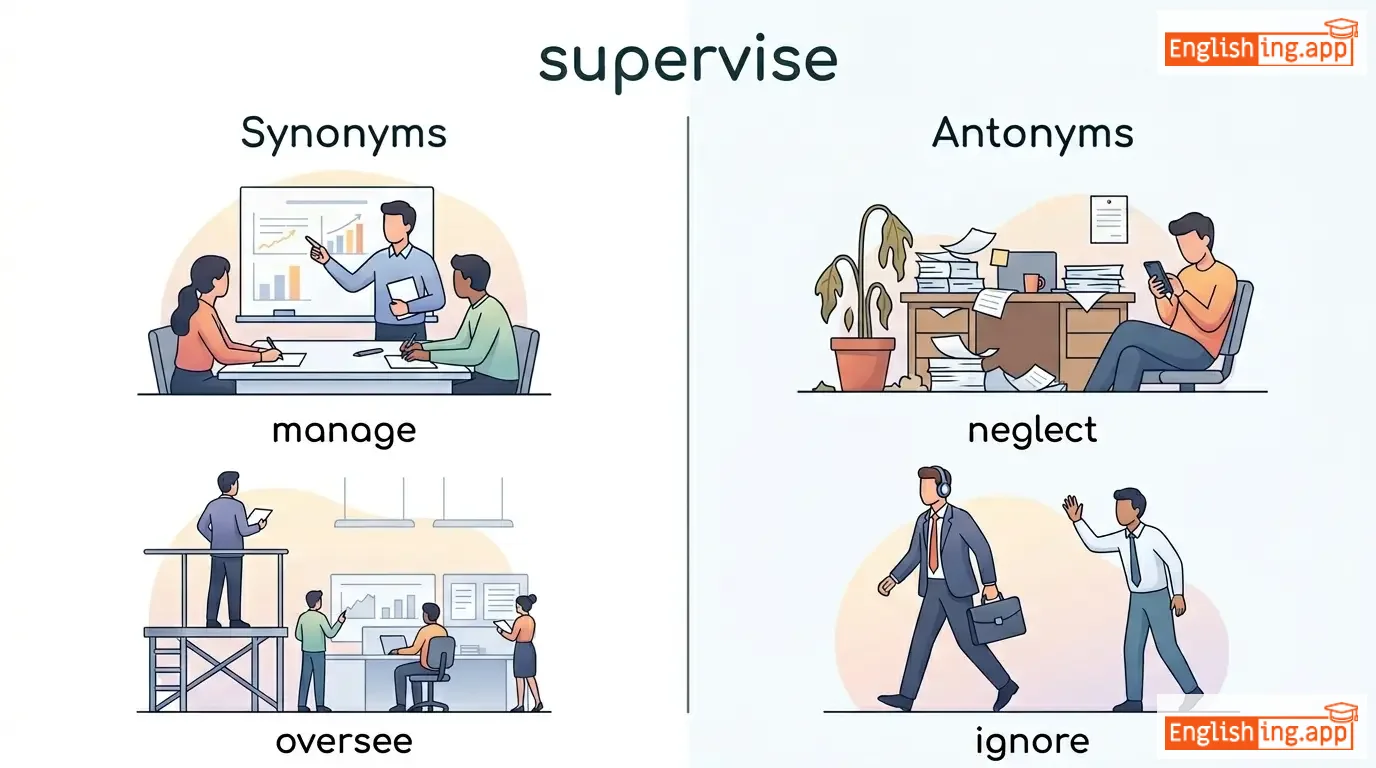
oversee, monitor, manage, direct
••••••
|
neglect, ignore, abandon
••••••
|
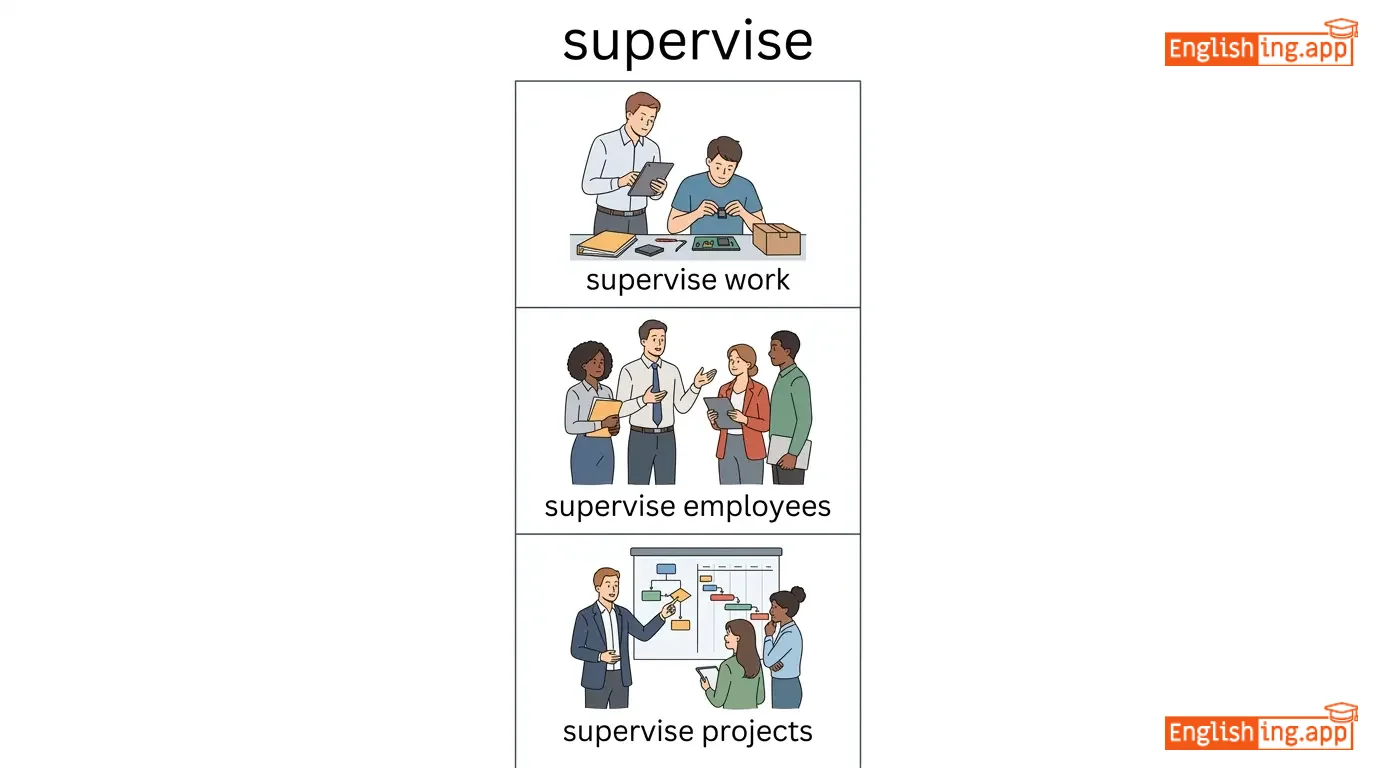
supervise closely, supervise work, supervise students, under supervision
••••••
|
Контролируйте как супергерой!
••••••
|
|
#4877
👀
|
/ˌsuːpərˈvɪʒən/
noun
(супервижн)
••••••
|
- •••••• |
надзор
nadzor
••••••
|
- •••••• | - •••••• | - •••••• | - •••••• |
the action or process of overseeing or managing something or someone
••••••
|
The project was completed under the supervision of an experienced manager. |
Проект был завершен под наблюдением опытного менеджера.
Proyekt byl zavershen pod nablyudeniye opytnogo menedzhera.
••••••
|
- •••••• | - •••••• | - •••••• |
oversight, management, control, direction
••••••
|
neglect, mismanagement
••••••
|
under supervision, supervision of staff, strict supervision
••••••
|
Supervision is like 'super watch' – always keeping an eye on things!
••••••
|
|
#4878
🧑💼
|
/ˈsuːpəvaɪzə(r)/
noun
(супервайзер)
••••••
|
- •••••• |
руководитель
rukovoditel
••••••
|
- •••••• | - •••••• | - •••••• | - •••••• |
a person who manages or directs the work of others
••••••
|
The supervisor checked the progress of each employee. |
Супервайзер проверил прогресс каждого сотрудника.
Supervayzer proveril progress kazhdogo sotrudnika.
••••••
|
under the supervision of |
being directed or controlled by someone in charge
••••••
|
под наблюдением
pod nablyudeniem
••••••
|
manager, overseer, inspector, director, controller
••••••
|
subordinate, worker, employee
••••••
|
project supervisor, factory supervisor, direct supervisor, under the supervision
••••••
|
Супервайзер (supervisor) как руководитель, который 'супер' контролирует работу.
••••••
|
|
#4879
🍽️
|
/ˈsʌp.ər/
noun
(sáper)
••••••
|
- •••••• |
ужин
uzhin
••••••
|
- •••••• | - •••••• | - •••••• | - •••••• |
an evening meal, typically a light or informal one
••••••
|
We usually have supper around seven o'clock.
Mi obychno yedim saper okolo semi chasov.
••••••
|
Мы обычно едим ужин около семи часов.
My obychno yedim uzhin okolo semi chasov.
••••••
|
- •••••• | - •••••• | - •••••• |
dinner, evening meal
••••••
|
breakfast, lunch
••••••
|
have supper, light supper, family supper, supper time
••••••
|
Ужин с друзьями – это время для отдыха!
••••••
|
|
#4880
💊
|
/ˈsʌplɪmənt/
noun/verb
(суплемент)
••••••
|
- •••••• |
добавка
dobavka
••••••
|
supplemented
добавлен
••••••
|
supplemented
добавлен
••••••
|
supplements
добавляет
••••••
|
supplementing
добавляя
••••••
|
Something added to complete or enhance; to add extra to make up for a deficiency.
••••••
|
She takes vitamin supplements to improve her health.
Она принимает витаминные добавки для улучшения своего здоровья.
••••••
|
Она принимает витаминные добавки для улучшения своего здоровья.
Ona prinimayet vitaminnyye dobavki dlya uluchsheniya svoego zdorov'ya.
••••••
|
dietary supplement
диетическая добавка
••••••
|
A product taken to add nutritional value to the diet.
••••••
|
диетическая добавка
diyeticheskaya dobavka
••••••
|
addition, extra, complement, enhancement, augmentation
••••••
|
reduction, subtraction, deficiency
••••••
|
vitamin supplement, dietary supplement, supplement income, supplement plan
••••••
|
Supplement means supply + cement → добавка для улучшения здоровья.
••••••
|
|
#4881
📦
|
/səˈplaɪə(r)/
noun
(sʊˈplʲaɪə)
••••••
|
- •••••• |
поставщик
postavshchik
••••••
|
- •••••• | - •••••• | - •••••• | - •••••• |
a person or company that provides goods or services
••••••
|
The supplier delivered the products on time.
Поставщик доставил продукцию вовремя.
••••••
|
Поставщик доставил продукцию вовремя.
Postavshchik dostavil produktsiyu vovremya.
••••••
|
regular supplier
регулярный поставщик
••••••
|
a company that provides goods or services regularly
••••••
|
регулярный поставщик
regulyarnyy postavshchik
••••••
|
vendor, provider, dealer, distributor, seller
••••••
|
buyer, customer, client
••••••
|
main supplier, local supplier, supplier contract, supplier agreement
••••••
|
Поставщик – поставляет товары и услуги.
••••••
|
|
#4882
📦
|
/səˈplaɪ/
noun
••••••
|
|
- •••••• | - •••••• | - •••••• | - •••••• | - •••••• |
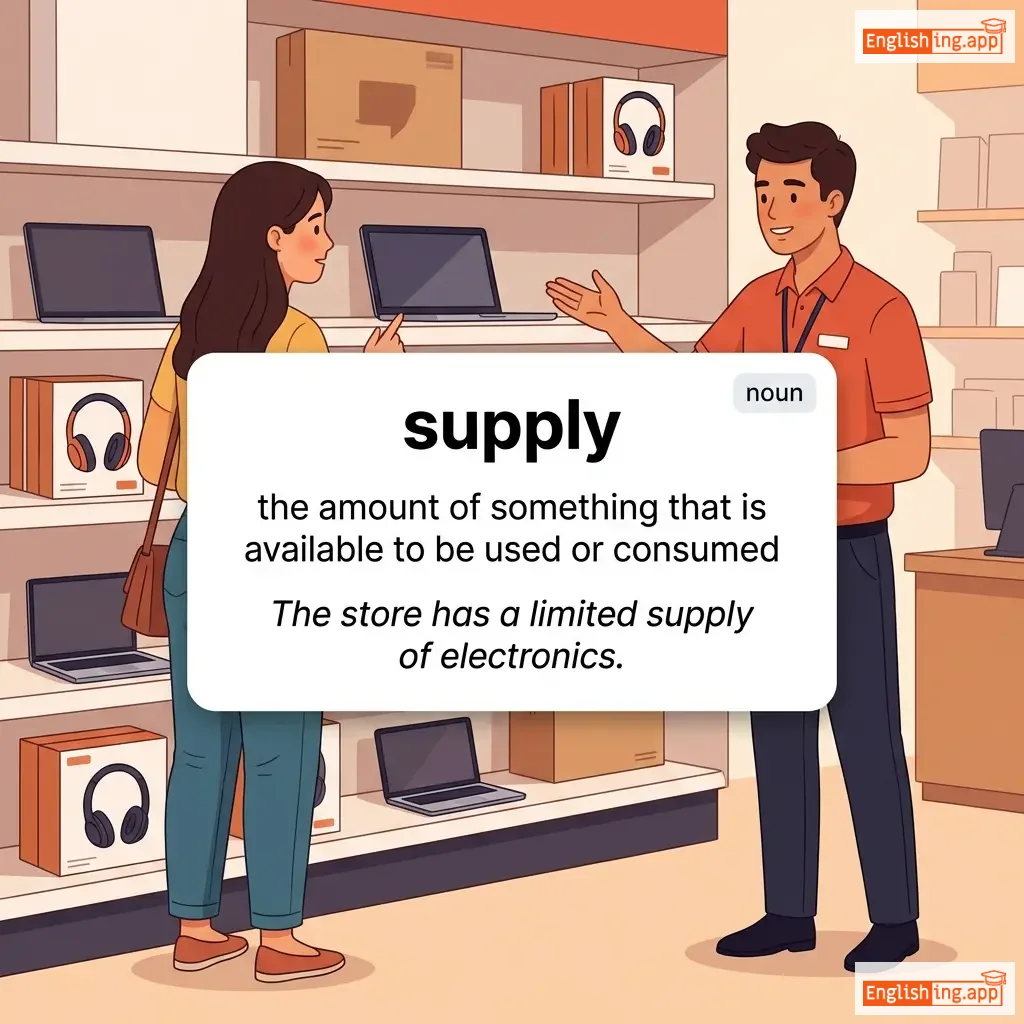
the amount of something that is available to be used or consumed
••••••
|
The store has a limited supply of electronics. |
- •••••• | - •••••• | - •••••• | - •••••• |
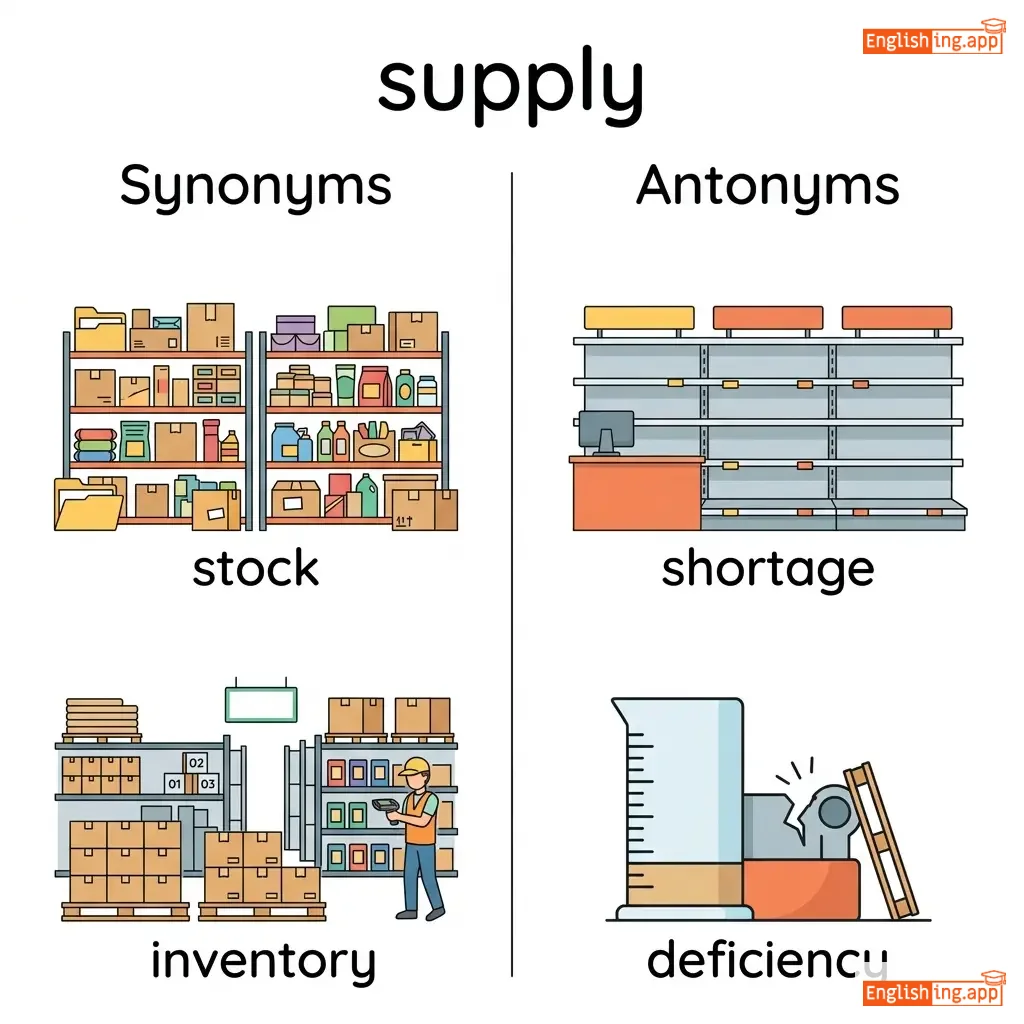
stock, inventory, provision, reserve
••••••
|
shortage, deficiency
••••••
|
supply chain, supply and demand, supply of goods, supply shortage
••••••
|
No •••••• |
|
#4883
🤝
|
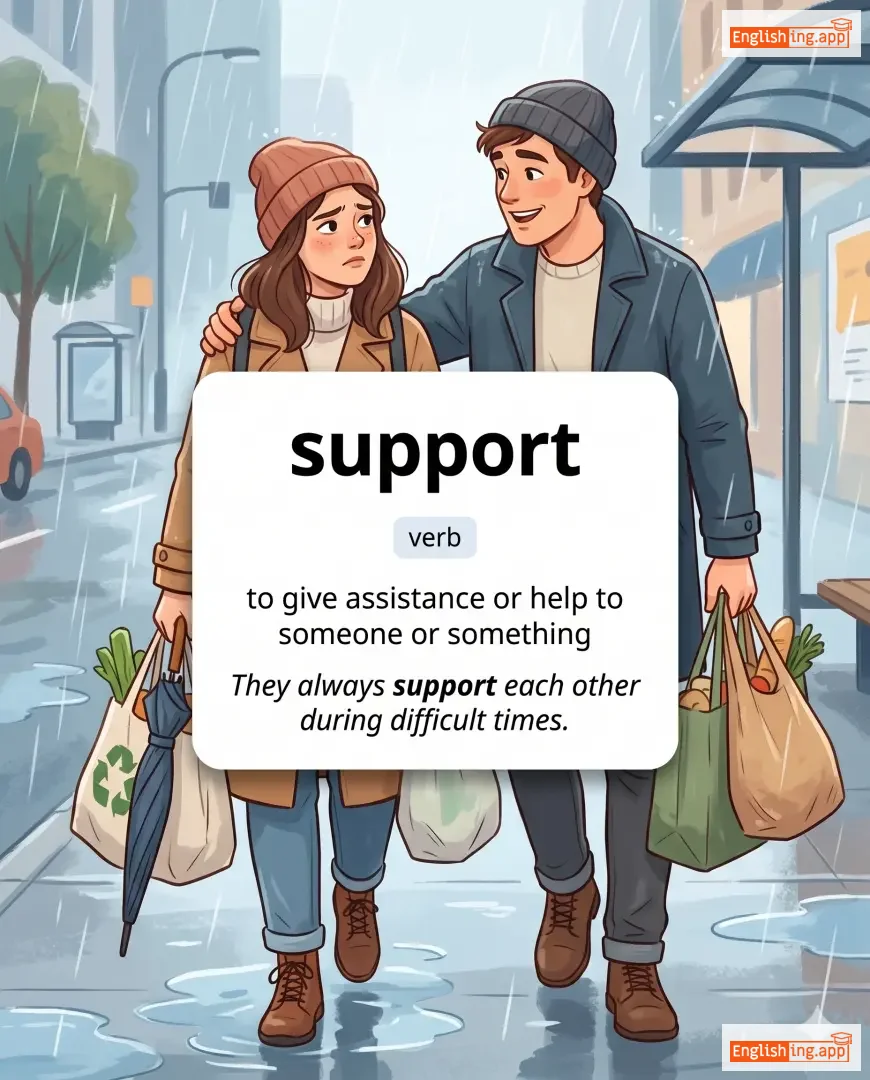
/səˈpɔːrt/
verb
(səˈpɔːrt)
••••••
|
|
поддерживать
podderzhivat'
••••••
|
supported
səˈpɔːrtəd
••••••
|
supported
səˈpɔːrtəd
••••••
|
supports
səˈpɔːrts
••••••
|
supporting
səˈpɔːrtɪŋ
••••••
|
to help or assist someone; to hold up or bear the weight of something
••••••
|
The family will support their son through his studies.
Семья поддержит своего сына в учебе.
••••••
|
Семья поддержит своего сына в учебе.
Sem'ya podderzhit svoego syna v uchebe.
••••••
|
- •••••• | - •••••• | - •••••• |
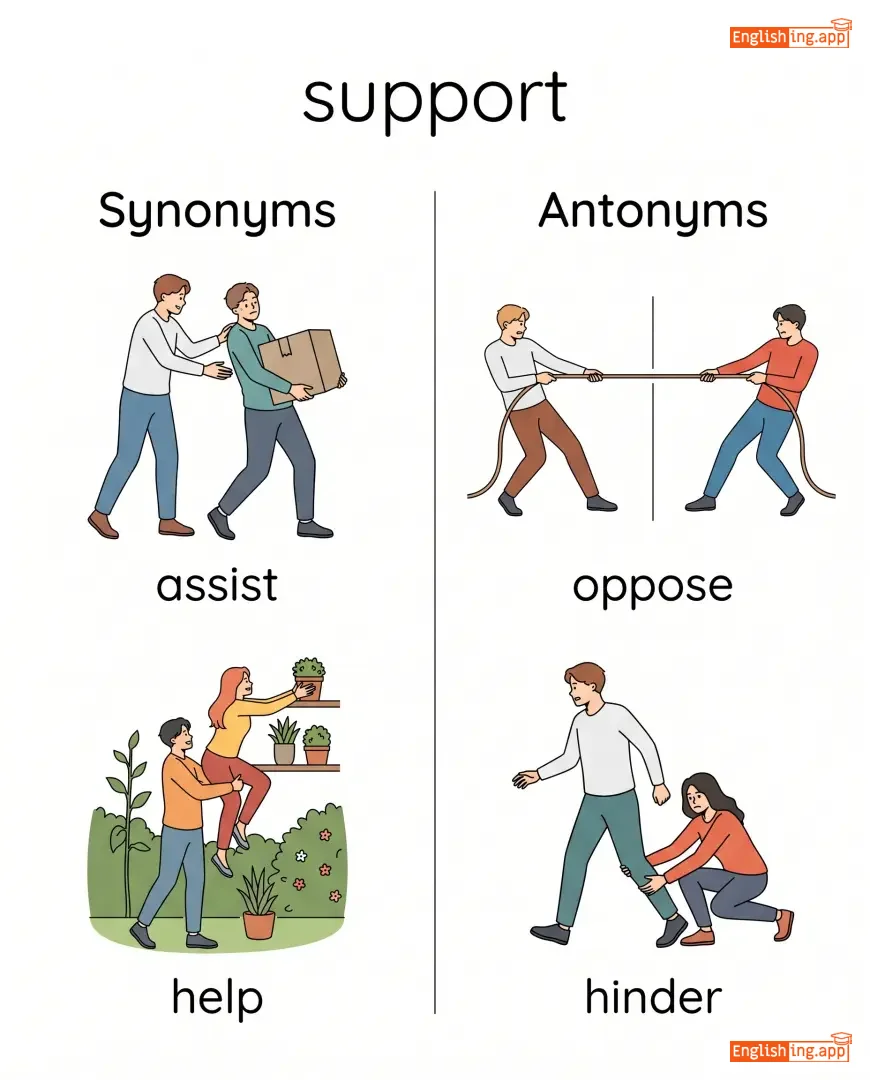
help, assist, aid, back
••••••
|
oppose, hinder, obstruct, abandon
••••••
|
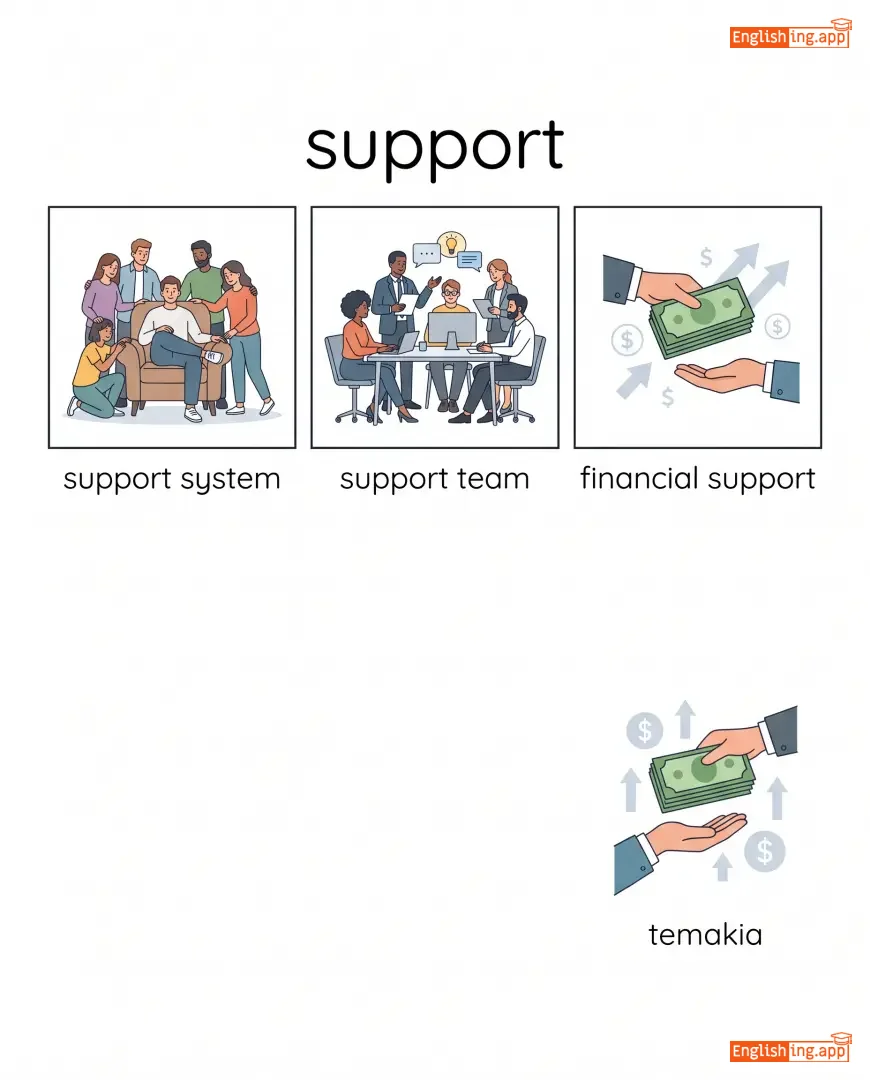
support fully, support decision, support family, financial support
••••••
|
Поддержка — это помощь и поддержание.
••••••
|
|
#4884
💪
|
/səˈpɔːtər/
noun
(сапортер)
••••••
|
- •••••• |
сторонник
storonnik
••••••
|
- •••••• | - •••••• | - •••••• | - •••••• |
a person who supports someone or something
••••••
|
She is a strong supporter of the local animal shelter.
Она является сильным сторонником местного приюта для животных.
••••••
|
Она является сильным сторонником местного приюта для животных.
Ona yavyayetsya sil'nym storonnikom mestnogo priyuta dlya zhivotnykh.
••••••
|
- •••••• | - •••••• | - •••••• |
advocate, backer, champion, fan
••••••
|
opponent, adversary, critic
••••••
|
supporter of, strong supporter, loyal supporter, passionate supporter
••••••
|
Сторонник - это тот, кто поддерживает, как поддержка местного приюта для животных.
••••••
|
|
#4885
🤗
|
/səˈpɔːtɪv/
adjective
(su-por-tiv)
••••••
|
- •••••• |
поддерживающий
podderzhivayushchiy
••••••
|
- •••••• | - •••••• | - •••••• | - •••••• |
providing encouragement or emotional help to someone
••••••
|
She was very supportive during my difficult times. |
Она была очень поддерживающей в мои трудные времена.
Ona byla ochen' podderzhivayushchей v moi trudnye vremena.
••••••
|
supportive role |
a role that helps or assists others rather than leading
••••••
|
поддерживающая роль
podderzhivayushchaya rol'
••••••
|
helpful, encouraging, caring, understanding, kind
••••••
|
unsupportive, discouraging, neglectful
••••••
|
supportive friend, supportive family, supportive environment, supportive attitude
••••••
|
Тот, кто поддерживает, всегда supportive 🫶
••••••
|
|
#4886
🤔
|
/səˈpəʊz/
verb
(сэпоуз)
••••••
|
- •••••• |
предполагать
predpolagat'
••••••
|
supposed
сэпоузд
••••••
|
supposed
сэпоузд
••••••
|
supposes
сэпоузес
••••••
|
supposing
сэпоузинг
••••••
|
to assume or believe something is true without proof
••••••
|
I suppose she will be here soon.
Я предполагаю, что она скоро будет здесь.
••••••
|
Я предполагаю, что она скоро будет здесь.
Ya predpolagayoo, chto ona skoro budet zdes'.
••••••
|
suppose so
предполагаю, что да
••••••
|
used to express agreement with a suggestion or opinion
••••••
|
предполагаю, что да
predpolagayoo, chto da
••••••
|
assume, believe, guess, think
••••••
|
doubt, question, deny
••••••
|
suppose to, I suppose, suppose that, suppose so
••••••
|
Предположи и поверь, как будто ты уверен в этом.
••••••
|
|
#4887
❓
|
/səˈpəʊzd/
adjective
(сəˈпозəd)
••••••
|
- •••••• |
предположительный
predpolozhitel'nyy
••••••
|
- •••••• | - •••••• | - •••••• | - •••••• |
generally believed or assumed, but not necessarily true
••••••
|
This is the supposed solution to the problem. |
Это предполагаемое решение проблемы.
Eto predpolozhitel'noe reshenie problemy.
••••••
|
- •••••• | - •••••• | - •••••• |
assumed, alleged, presumed, supposed
••••••
|
real, certain, verified
••••••
|
supposed to, supposed solution, supposed reason
••••••
|
Предположительный (supposed) - это то, что принято считать верным, но без гарантий.
••••••
|
|
#4888
🤔
|
/səˈpəʊzɪdli/
adverb
(səˈpəʊzɪdli)
••••••
|
- •••••• |
якобы
yakoby
••••••
|
- •••••• | - •••••• | - •••••• | - •••••• |
used to show that something is believed or claimed to be true, though it may not be
••••••
|
He is supposedly the best player on the team. |
Якобы он лучший игрок в команде.
Yakoby on luchshiy igrok v komande.
••••••
|
supposedly true |
believed to be true but not certain
••••••
|
якобы верно
yakoby verno
••••••
|
allegedly, reportedly, apparently, ostensibly
••••••
|
certainly, surely, definitely
••••••
|
supposedly true, supposedly innocent, supposedly safe, supposedly related
••••••
|
Якобы, но не точно — якобы!
••••••
|
|
#4889
🚫
|
/səˈprɛs/
verb
(супресс)
••••••
|
|
подавить
podavit'
••••••
|
suppressed
супрессед
••••••
|
suppressed
супрессед
••••••
|
suppresses
супрессес
••••••
|
suppressing
супрессинг
••••••
|
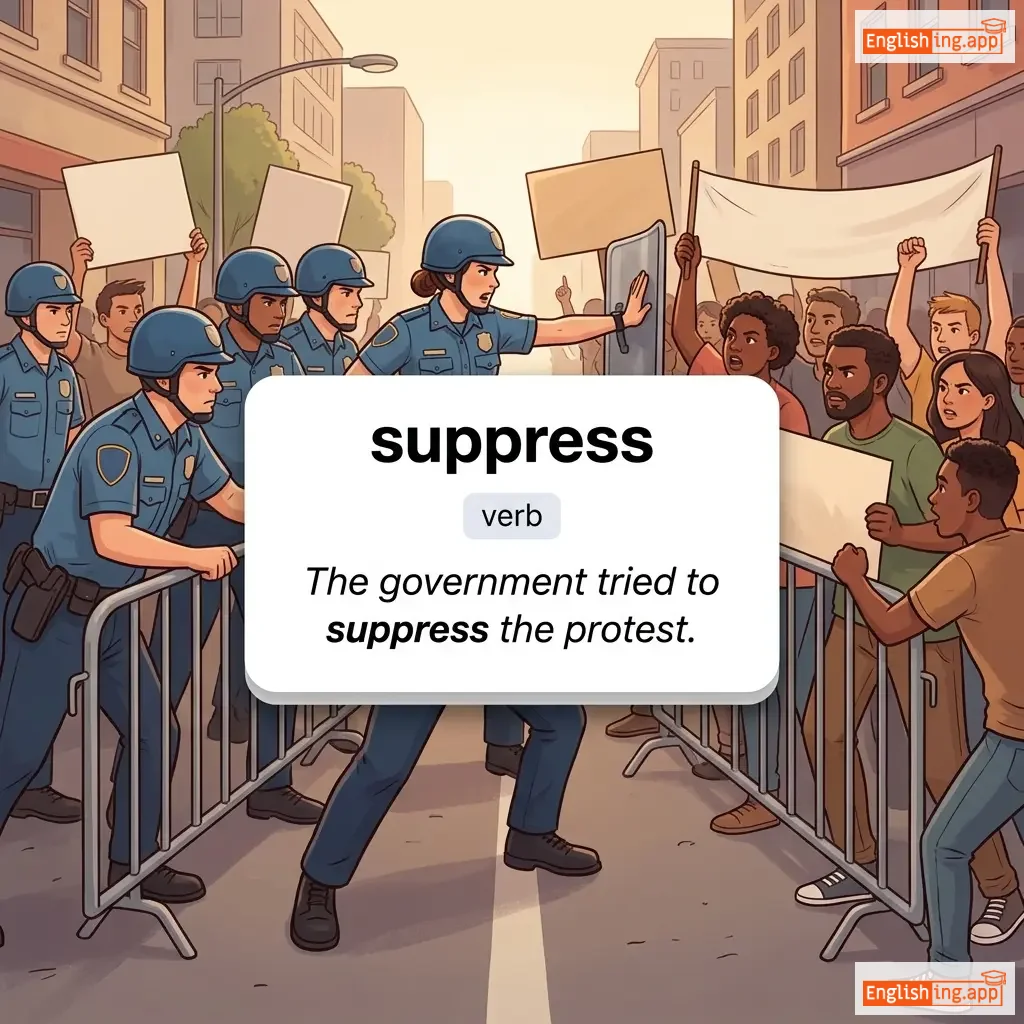
to forcibly put an end to something; to restrain or hold back an action, feeling, or development
••••••
|
The government tried to suppress the protest.
Правительство пыталось подавить протест.
••••••
|
Правительство пыталось подавить протест.
Pravitel'stvo pytalos' podavit' protest.
••••••
|
suppress a smile
подавить улыбку
••••••
|
to try not to show amusement
••••••
|
подавить улыбку
podavit' ulybku
••••••
|
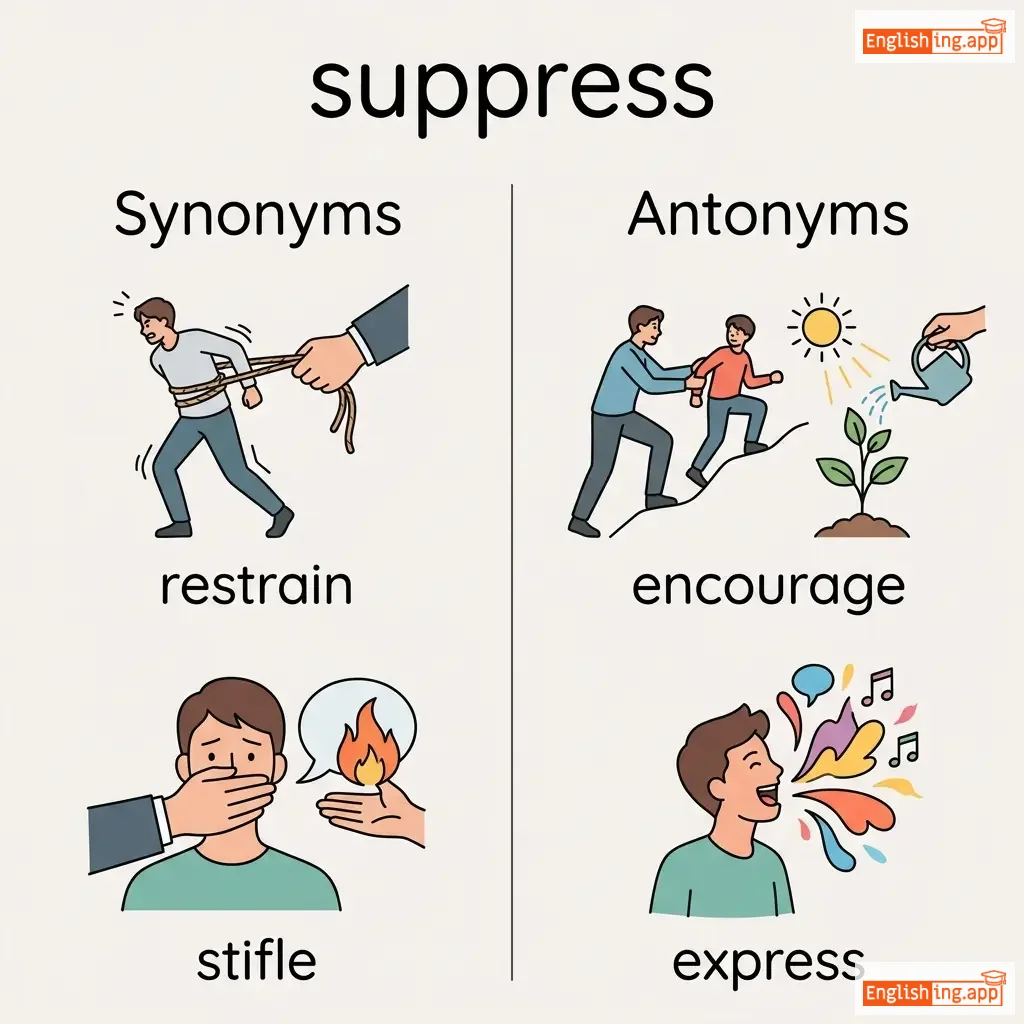
restrain, stifle, subdue, curb, repress
••••••
|
encourage, express, release
••••••
|
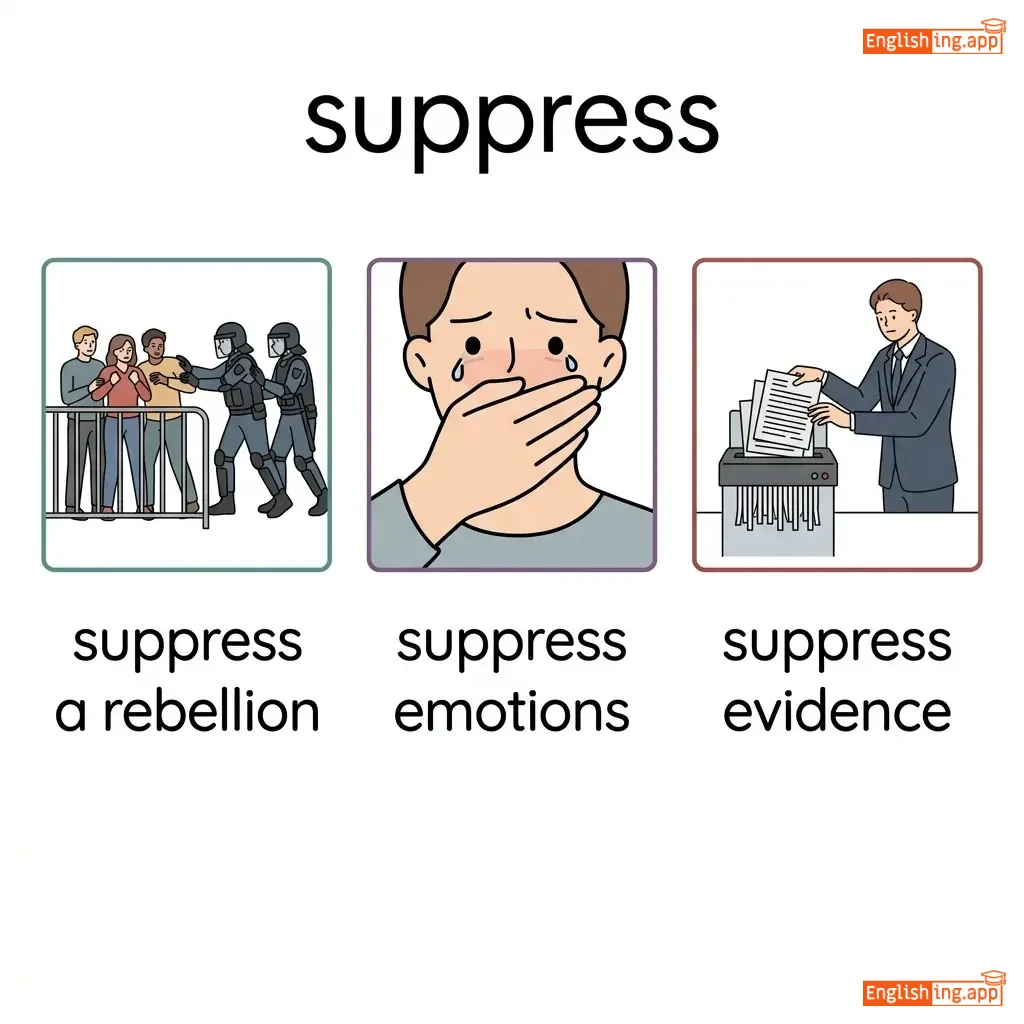
suppress a rebellion, suppress emotions, suppress evidence, suppress a smile
••••••
|
SUPPRESS означает подавить, как когда нужно подавить улыбку - подавить эту улыбку!
••••••
|
|
#4890
👑
|
/suːˈpriːm/
adjective
(суприм)
••••••
|
- •••••• |
высший
vysshiy
••••••
|
- •••••• | - •••••• | - •••••• | - •••••• |
highest in rank, authority, or quality; greatest; most important
••••••
|
The Supreme Court made the final decision. |
Верховный суд принял окончательное решение.
Verkhovnyy sud prinyal okonchatel'noye resheniye
••••••
|
- •••••• | - •••••• | - •••••• |
highest, ultimate, paramount, top
••••••
|
lowest, inferior, subordinate, minor
••••••
|
supreme court, supreme authority, supreme power
••••••
|
No •••••• |
|
#4891
🩺
|
/ˈsɜːdʒən/
noun
(сёрджен)
••••••
|
- •••••• |
хирург
khirurg
••••••
|
- •••••• | - •••••• | - •••••• | - •••••• |
a doctor who performs medical operations
••••••
|
The surgeon performed a complex heart operation. |
Хирург выполнил сложную операцию на сердце.
Khirurg vypolnil slozhnuyu operaciyu na serdtse.
••••••
|
chief surgeon |
the head doctor in charge of surgical operations
••••••
|
главный хирург
glavnyj khirurg
••••••
|
doctor, physician, medical practitioner, specialist
••••••
|
patient, layman
••••••
|
heart surgeon, brain surgeon, plastic surgeon, chief surgeon
••••••
|
Хирург — тот, кто делает операции — Хирург
••••••
|
|
#4892
🩺
|
/ˈsɜːdʒəri/
noun
••••••
|
|
- •••••• | - •••••• | - •••••• | - •••••• | - •••••• |
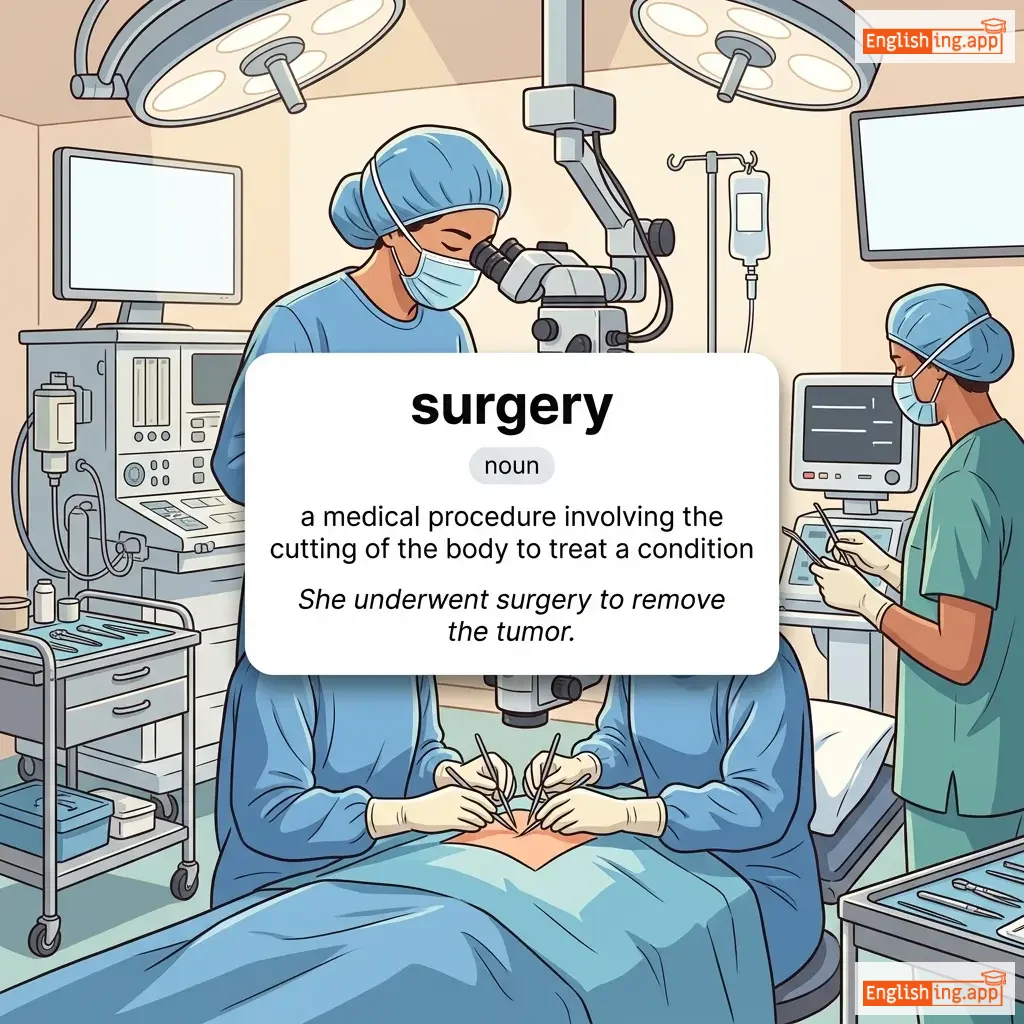
a medical procedure involving the cutting of the body to treat a condition
••••••
|
She underwent surgery to remove the tumor. |
- •••••• | - •••••• | - •••••• | - •••••• |
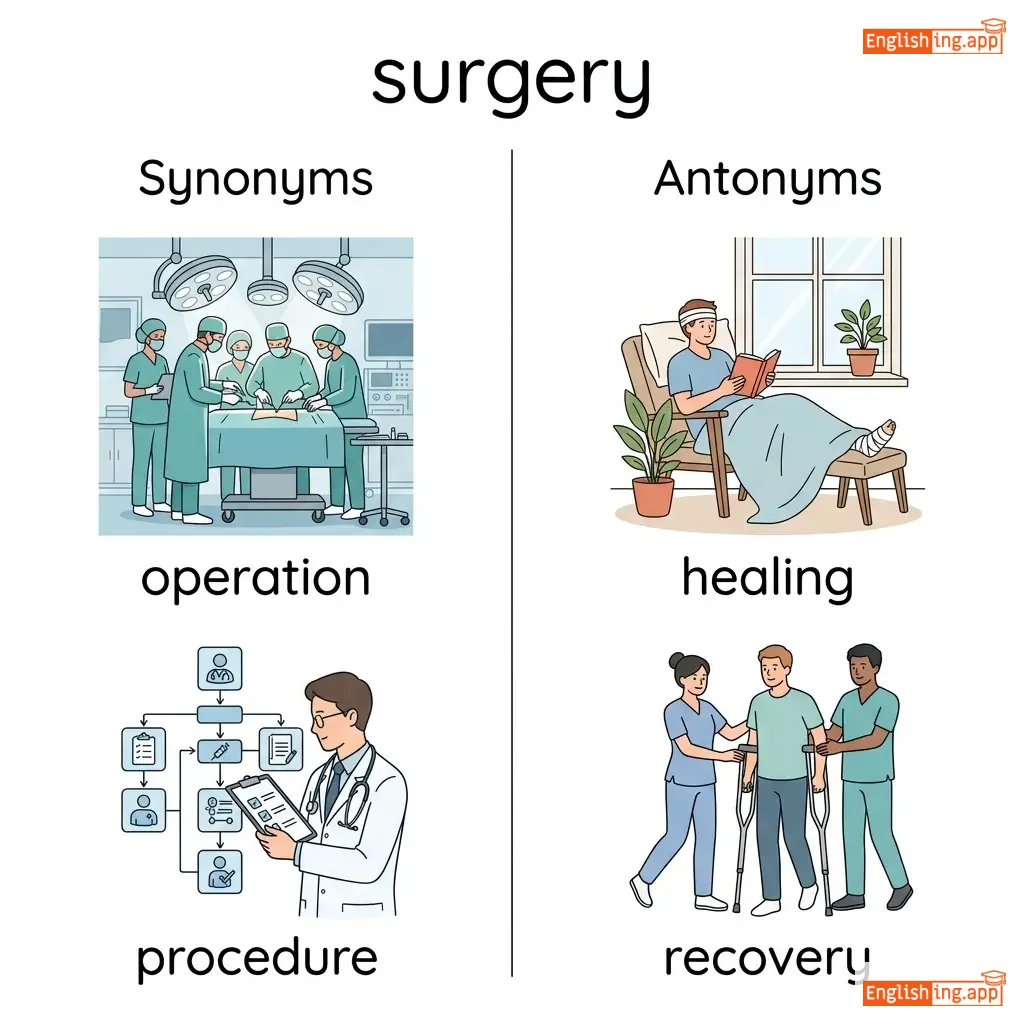
operation, procedure, treatment
••••••
|
healing, recovery
••••••
|
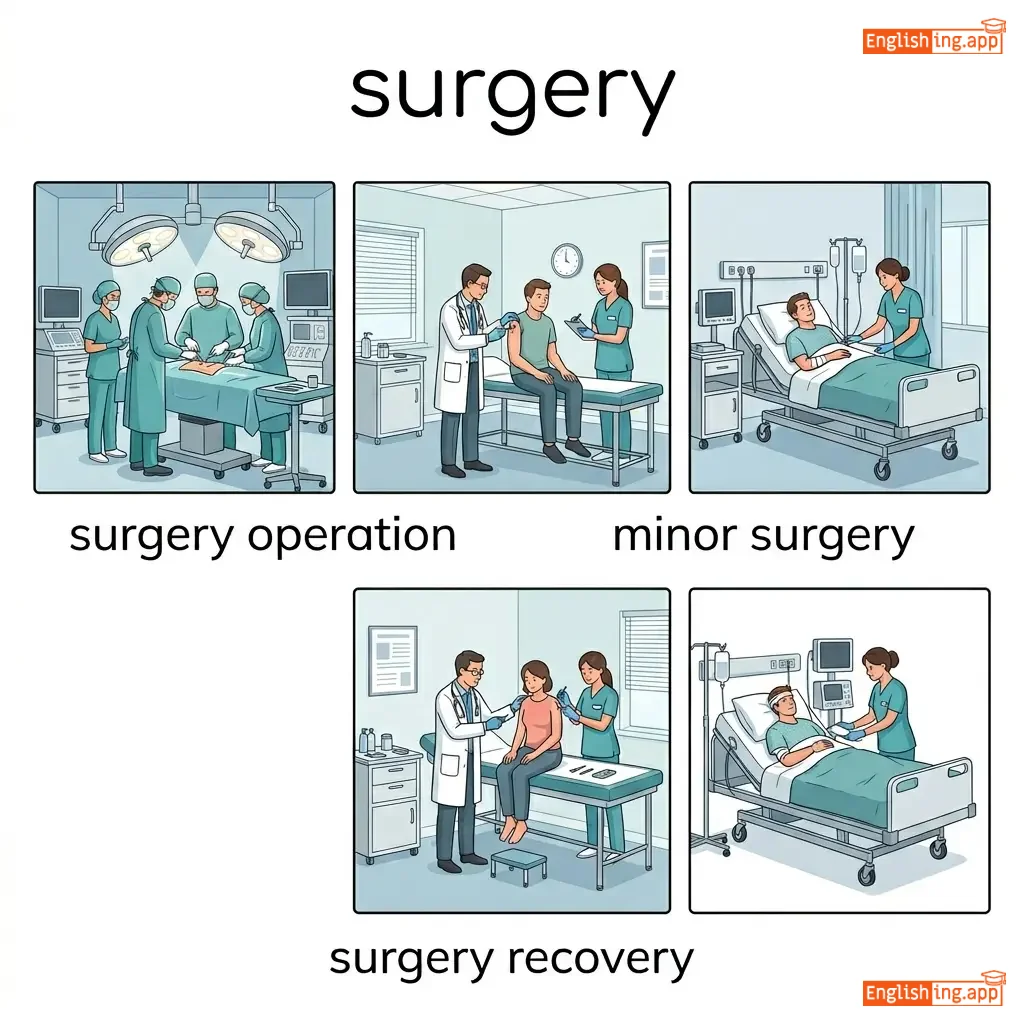
surgery operation, minor surgery, surgery recovery
••••••
|
No •••••• |
|
#4893
🩺
|
/ˈsɜːdʒɪkəl/
adjective
(сёрджикал)
••••••
|
- •••••• |
связанный с хирургией
svyazannyy s khirurgiyey
••••••
|
- •••••• | - •••••• | - •••••• | - •••••• |
relating to or involving surgery
••••••
|
She underwent surgical treatment to repair the damage. |
Она прошла хирургическое лечение для восстановления повреждений.
Ona proshla khirurgicheskoye lecheniye dlya vosstanovleniya povrezhdeniy.
••••••
|
- •••••• | - •••••• | - •••••• |
medical, operative, therapeutic, healing
••••••
|
non-surgical, conservative
••••••
|
surgical procedure, surgical operation, surgical team
••••••
|
Surgical похоже на ‘surge’ – мощная волна медицинской помощи!
••••••
|
|
#4894
📈
|
/ˈsɜːr.plʌs/
noun
(сёрплэс)
••••••
|
- •••••• |
излишек
izlishek
••••••
|
- •••••• | - •••••• | - •••••• | - •••••• |
An amount that is more than what is needed.
••••••
|
The country has a surplus of food this year. |
В этом году в стране излишек продуктов питания.
V etom godu v strane izlishek produktov pitaniya.
••••••
|
trade surplus |
The amount by which a country's exports exceed its imports.
••••••
|
торговый излишек
torgovy izlishek
••••••
|
excess, extra, oversupply, remainder, overflow
••••••
|
shortage, deficit, lack
••••••
|
budget surplus, surplus goods, surplus food, surplus production
••••••
|
Излишек = больше, чем нужно
••••••
|
|
#4895
🎉
|
/səˈpraɪz/
noun
(сюрприз)
••••••
|
- •••••• |
сюрприз
syurpriz
••••••
|
- •••••• | - •••••• | - •••••• | - •••••• |
a sudden and unexpected event or situation
••••••
|
His arrival was a pleasant surprise. |
Его приезд был приятным сюрпризом.
Yego priezd byl priyatnym syurprizom.
••••••
|
a pleasant surprise |
an unexpected but happy event
••••••
|
приятный сюрприз
priyatnyy syurpriz
••••••
|
shock, astonishment, amazement, wonder
••••••
|
expectation, predictability
••••••
|
pleasant surprise, unexpected surprise, big surprise
••••••
|
SURprise = SURroundings change suddenly!
••••••
|
|
#4896
😲
|
/sər'praɪzd/
adjective
(сэр'прайзд)
••••••
|
- •••••• |
удивлённый
udivljonnyj
••••••
|
- •••••• | - •••••• | - •••••• | - •••••• |
feeling or showing surprise; astonished
••••••
|
I was surprised to see my old friend at the market.
Я был удивлён, увидев моего старого друга на рынке.
••••••
|
Я был удивлён, увидев моего старого друга на рынке.
Ya byl udivljonnyj, uvidjev moego starogo druga na rynke.
••••••
|
- •••••• | - •••••• | - •••••• |
astonished, amazed, shocked, startled
••••••
|
unsurprised, expectant, prepared, anticipated
••••••
|
pleasantly surprised, quite surprised, genuinely surprised
••••••
|
Удивлённый, как если бы вы нашли спрятанный клад.
••••••
|
|
#4897
😯
|
/sər'praɪz.ɪŋ/
adjective
(sürpraizing)
••••••
|
- •••••• |
удивительный; поразительный
udivitel'nyy; porazitel'nyy
••••••
|
- •••••• | - •••••• | - •••••• | - •••••• |
causing surprise; unexpected; remarkable
••••••
|
It's surprising how quickly children learn new languages. |
Это удивительно, как быстро дети учат новые языки.
Eto udivitel'no, kak bystro deti uchat novye yazyki.
••••••
|
- •••••• | - •••••• | - •••••• |
astonishing, amazing, unexpected, remarkable
••••••
|
predictable, expected, ordinary, unsurprising
••••••
|
surprising news, surprising result, not surprising
••••••
|
Как удивительно (udivitel'nyy) быстро все происходило.
••••••
|
|
#4898
😲
|
/səˈpraɪzɪŋli/
adverb
(surpraizingli)
••••••
|
- •••••• |
удивительным образом
udivitel'nym obrazom
••••••
|
- •••••• | - •••••• | - •••••• | - •••••• |
in a way that causes surprise or amazement
••••••
|
Surprisingly, she finished the entire project in just one day.
Удивительно, она закончила весь проект всего за один день.
••••••
|
Удивительно, она закончила весь проект всего за один день.
Udivitel'no, ona zakonchila ves' proyekt vsego za odin den'.
••••••
|
- •••••• | - •••••• | - •••••• |
unexpectedly, shockingly, amazingly, astoundingly
••••••
|
predictably, expectedly
••••••
|
surprisingly fast, surprisingly well, surprisingly easy
••••••
|
Вау! Это невероятно быстро – удивительным образом!
••••••
|
|
#4899
🏳️
|
/səˈrɛndər/
verb
(сэрендер)
••••••
|
- •••••• |
сдаваться
sdavatsya
••••••
|
surrendered
сэрендеред
••••••
|
surrendered
сэрендеред
••••••
|
surrenders
сэрендерс
••••••
|
surrendering
сэрендеринг
••••••
|
to give up or yield to an opponent or authority
••••••
|
The army finally surrendered after weeks of fighting.
Армия наконец сдалась после недель боевых действий.
••••••
|
Армия в конце концов сдалась после недель боевых действий.
Armiya v kontse kontsov sdalas posle nedeley boevykh deystviy.
••••••
|
surrender to fate
сдаться судьбе
••••••
|
to accept something that cannot be changed
••••••
|
сдаться судьбе
sdatsya sudbe
••••••
|
yield, give up, submit, capitulate
••••••
|
resist, fight, defend
••••••
|
surrender to authority, unconditional surrender, surrender peacefully
••••••
|
Сдаться означает капитулировать—🏳️ поднятие белого флага — это сдаться.
••••••
|
|
#4900
⭕
|
/səˈraʊnd/
verb
(сэраʊнд)
••••••
|
- •••••• |
окружать
okruzhat'
••••••
|
surrounded
сэраʊндид
••••••
|
surrounded
сэраʊндид
••••••
|
surrounds
сэраʊндз
••••••
|
surrounding
сэраʊндинг
••••••
|
To be all around someone or something.
••••••
|
Mountains surround the small village.
Горы окружают маленькую деревню.
••••••
|
Горы окружают маленькую деревню.
Gory okruzhayut malen'kuyu derevnyu.
••••••
|
surround yourself with
окружи себя
••••••
|
To choose to associate with certain people or things.
••••••
|
окружи себя
okruzhi sebya
••••••
|
enclose, encircle, encompass, besiege
••••••
|
free, release, exclude
••••••
|
surround with, surround yourself, completely surround
••••••
|
Окружать — круг, который вас окружает.
••••••
|
|
#4901
🌄
|
/səˈraʊndɪŋ/
adjective
(сэраундинг)
••••••
|
- •••••• |
окружающий
okruzhayushchiy
••••••
|
- •••••• | - •••••• | - •••••• | - •••••• |
located all around a particular place or thing; nearby
••••••
|
The surrounding hills were covered in mist.
Окружающие холмы были покрыты туманом.
••••••
|
Окружающие холмы были покрыты туманом.
Okruzhayushchie kholmy byli pokryty tumanom.
••••••
|
- •••••• | - •••••• | - •••••• |
nearby, adjacent, neighboring, close, around
••••••
|
distant, remote, far
••••••
|
surrounding area, surrounding environment, surrounding region, surrounding countryside
••••••
|
Surrounding означает быть вокруг, как в "окружающая территория".
••••••
|
|
#4902
👀
|
/sɜːˈveɪləns/
noun
(сёрвейлэнс)
••••••
|
|
наблюдение
nablyudenie
••••••
|
- •••••• | - •••••• | - •••••• | - •••••• |
close observation, especially of a suspected spy or criminal
••••••
|
The police kept the suspect under surveillance for weeks. |
Полиция вела наблюдение за подозреваемым несколько недель.
Politsiya vela nablyudenie za podozrevaemym neskol'ko nedeley.
••••••
|
- •••••• | - •••••• | - •••••• |
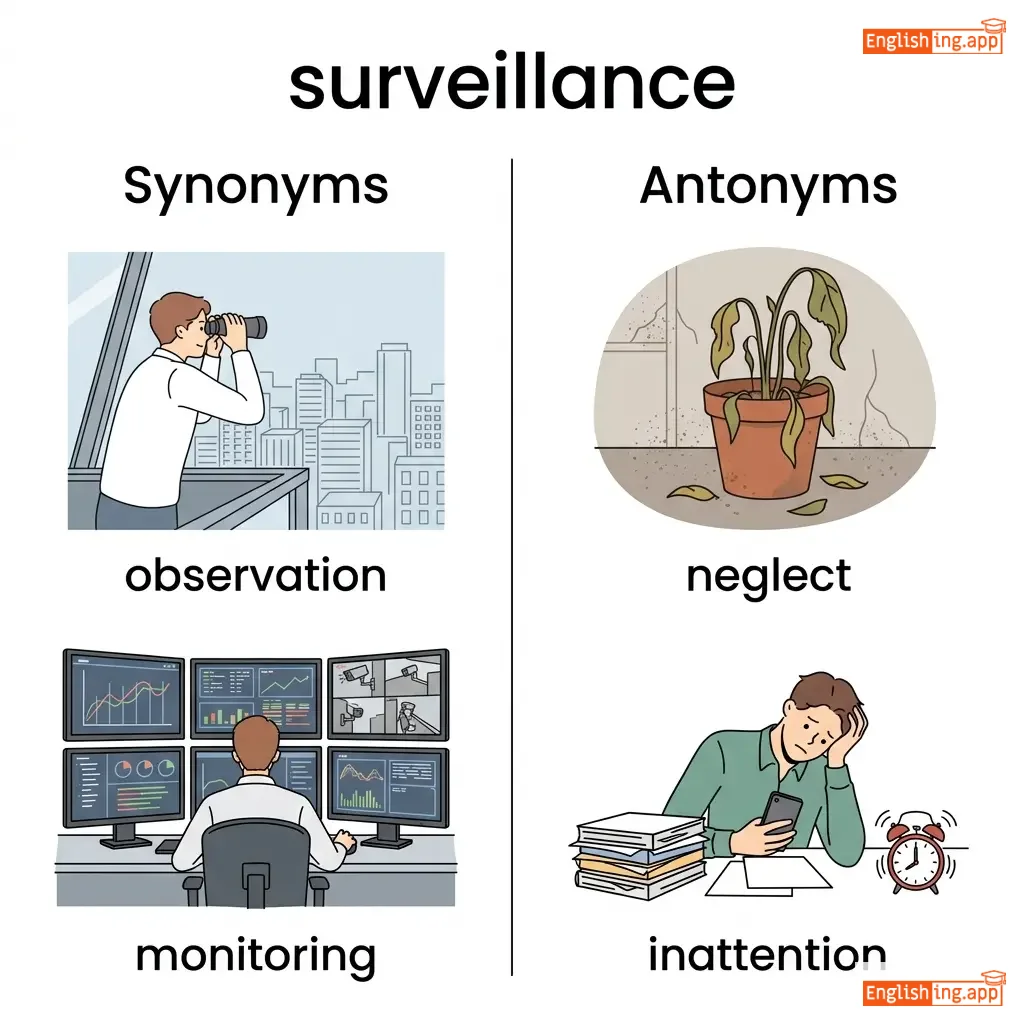
observation, monitoring, watching, scrutiny
••••••
|
neglect, ignorance, inattention
••••••
|
under surveillance, surveillance camera, surveillance system, police surveillance
••••••
|
Наблюдение = Никакой злодей не ускользнет от нас.
••••••
|
|
#4903
🦸
|
/səˈvaɪvl/
noun
(сурвайвал)
••••••
|
- •••••• |
выживание
vyzhivanie
••••••
|
- •••••• | - •••••• | - •••••• | - •••••• |
the state of continuing to live or exist, typically in difficult conditions
••••••
|
Survival in the wild can be a challenging experience.
Выживание в дикой природе может быть сложным испытанием.
••••••
|
Выживание в дикой природе может быть сложным испытанием.
Vyzhivanie v dikoy prirode mozhet byt' slozhnym ispytaniem.
••••••
|
- •••••• | - •••••• | - •••••• |
existence, endurance, staying alive
••••••
|
death, extinction
••••••
|
survival skills, survival mode, struggle for survival
••••••
|
Выживание в дикой природе - Преодоление трудных условий для жизни
••••••
|
|
#4904
🌱
|
/sərˈvaɪv/
verb
(suerveiv)
••••••
|
|
выжить
vyzhit
••••••
|
survived
suerveivd
••••••
|
survived
suerveivd
••••••
|
survives
suerveivs
••••••
|
surviving
suerveiving
••••••
|
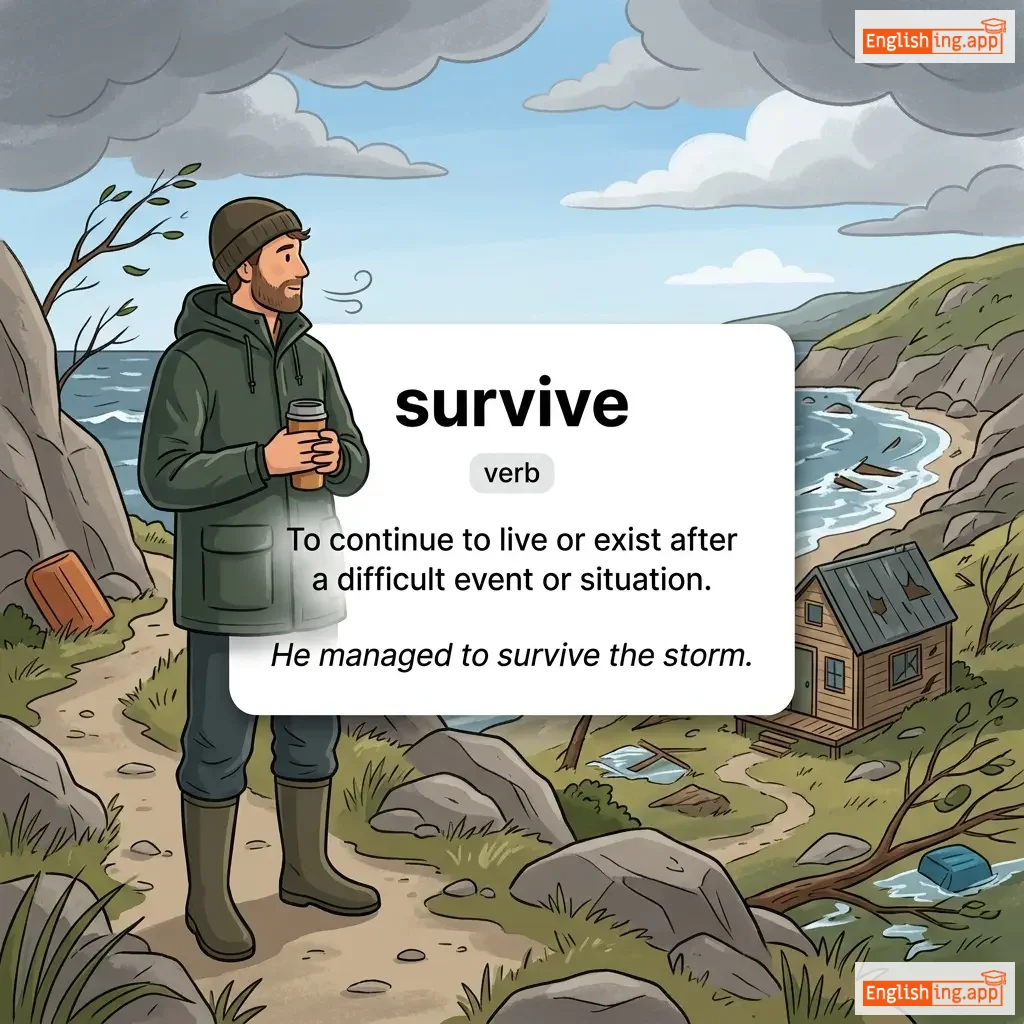
To continue to live or exist after a difficult event or situation.
••••••
|
He managed to survive the storm.
Он смог выжить во время шторма.
••••••
|
Он смог выжить во время шторма.
On smog vyzhit' vo vremya shtorma.
••••••
|
survival of the fittest
выживание сильнейших
••••••
|
The idea that only the strongest individuals succeed or endure.
••••••
|
выживание сильнейших
vyzhivanie silneyshikh
••••••
|
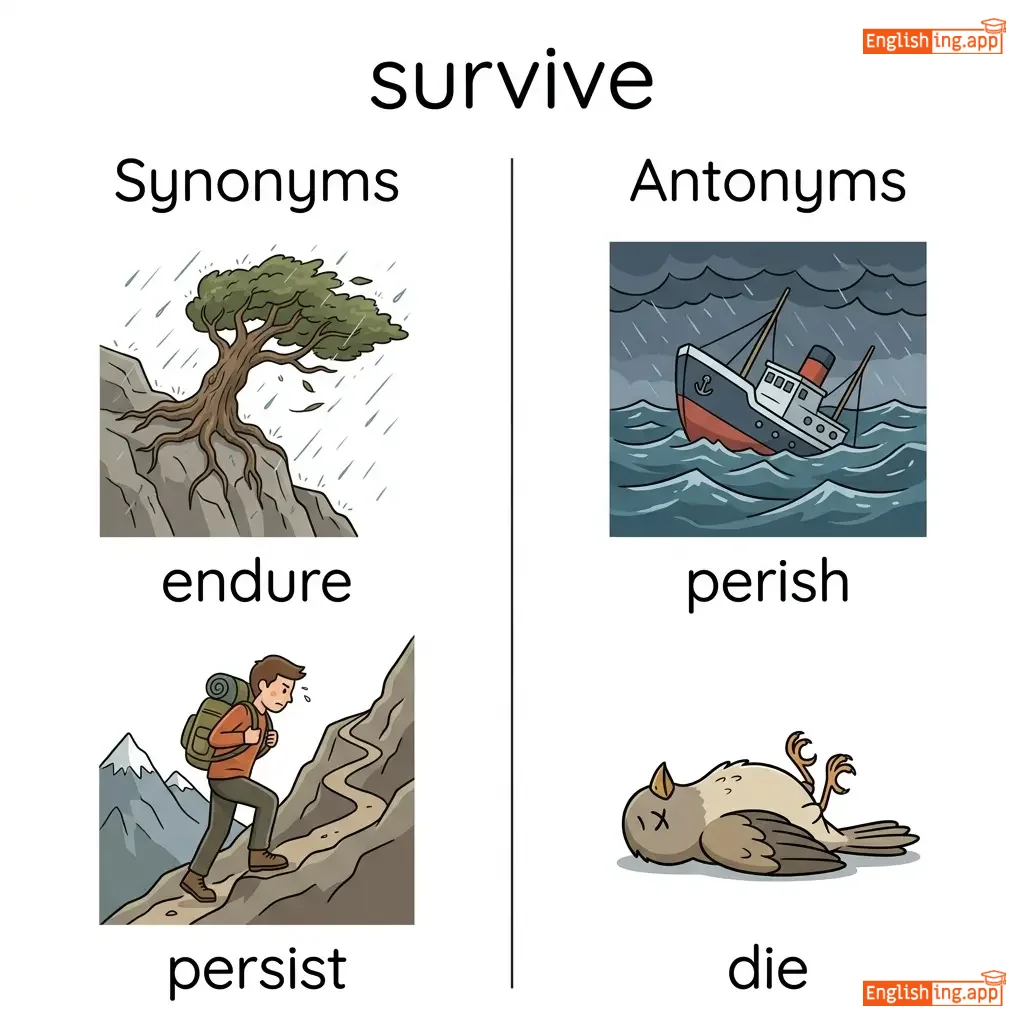
endure, persist, outlive, remain, withstand
••••••
|
perish, die, succumb
••••••
|
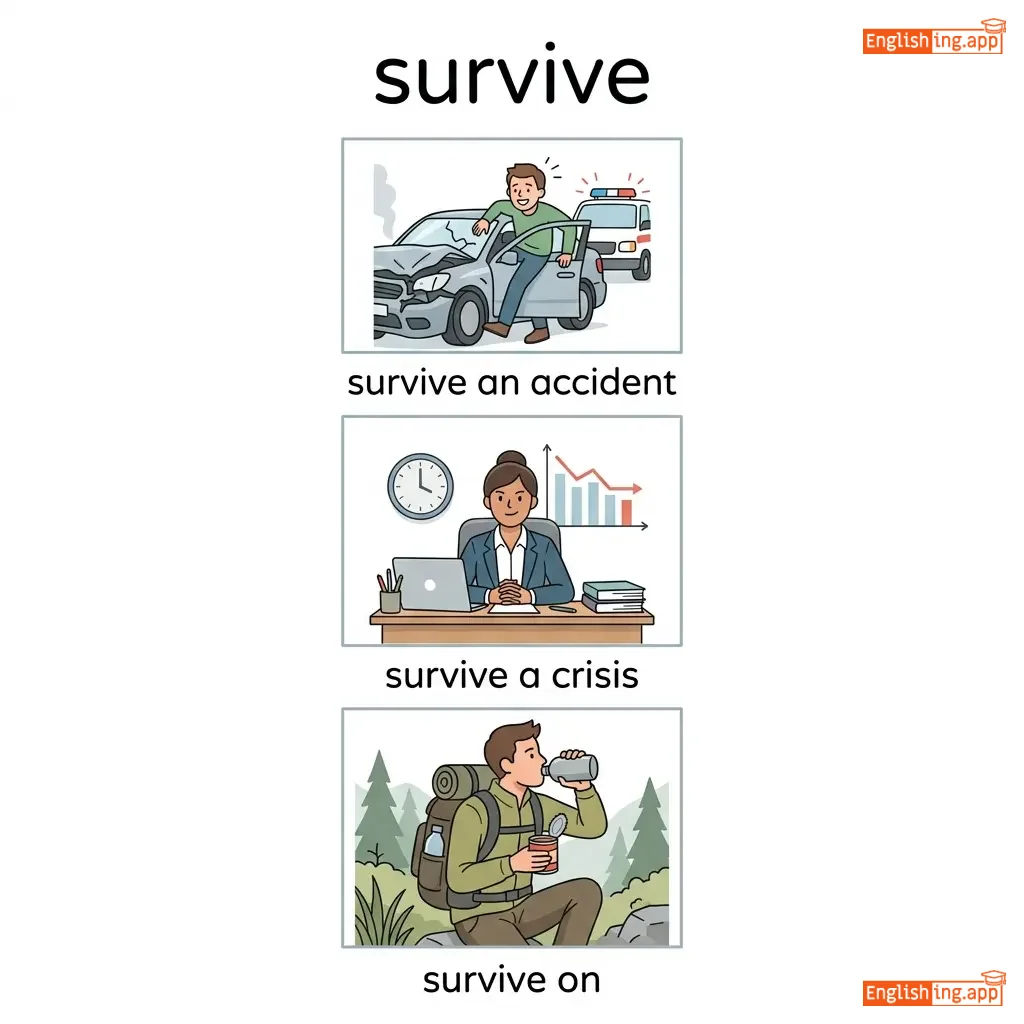
survive an accident, survive a crisis, survive on, survive against odds
••••••
|
Survive - это значит выжить после шторма = выжить
••••••
|
|
#4905
💪
|
/sərˈvaɪvər/
noun
(выживший)
••••••
|
- •••••• |
человек, который выжил, особенно человек, оставшийся в живых после события, в котором другие погибли
chelovek, kotoryj vyzhil, osobenno chelovek, ostavshijsya v zhivykh posle sobytija, v kotorom drugie pogibli
••••••
|
- •••••• | - •••••• | - •••••• | - •••••• |
a person who survives, especially a person remaining alive after an event in which others have died
••••••
|
She is a cancer survivor who now helps other patients. |
Она выжившая от рака, которая теперь помогает другим пациентам.
Ona vyzhivshaya ot raka, kotorya teper' pomogaet drugim patsientam.
••••••
|
- •••••• | - •••••• | - •••••• |
victor, overcomer, endurer, fighter
••••••
|
victim, casualty, fatality
••••••
|
cancer survivor, disaster survivor, sole survivor, survivor guilt
••••••
|
Выжившие — это те, кто остался живым после беды.
••••••
|
|
#4906
🕵️
|
/səˈspɛkt/ (noun, adj) | /səˈspɛkt/ (verb)
verb, noun, adjective
(саспект)
••••••
|
|
подозревать
podozrevat
••••••
|
suspected
саспектед
••••••
|
suspected
саспектед
••••••
|
suspects
саспектс
••••••
|
suspecting
саспектинг
••••••
|
To believe something to be true, likely, or guilty without certain proof.
••••••
|
The police suspect him of stealing the car.
полиция подозревает его в краже машины.
••••••
|
Полиция подозревает его в краже машины.
Politsiya podozrevaet ego v krazhe mashiny.
••••••
|
usual suspect
обычный подозреваемый
••••••
|
a person frequently suspected of wrongdoing
••••••
|
обычный подозреваемый
obychny podozrevaemyy
••••••
|
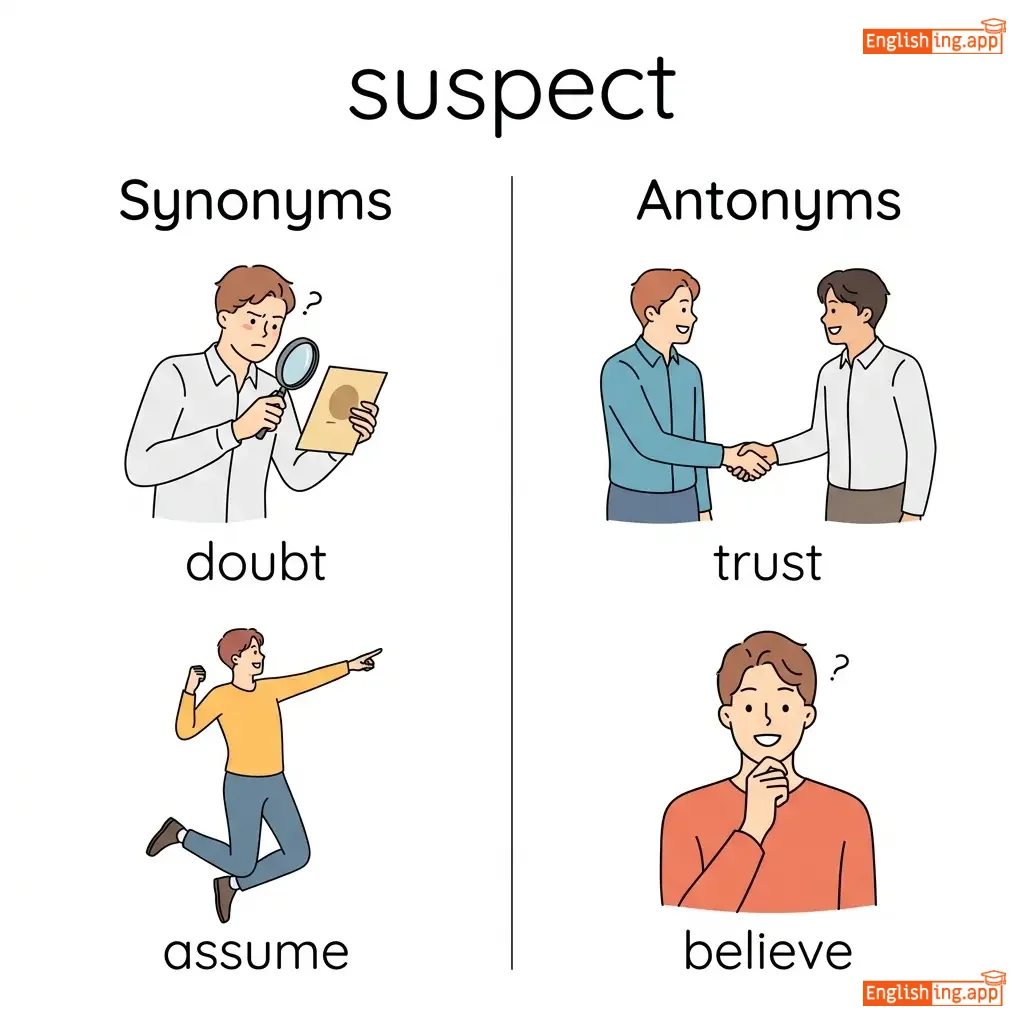
doubt, assume, suppose, accuse
••••••
|
trust, believe, absolve
••••••
|
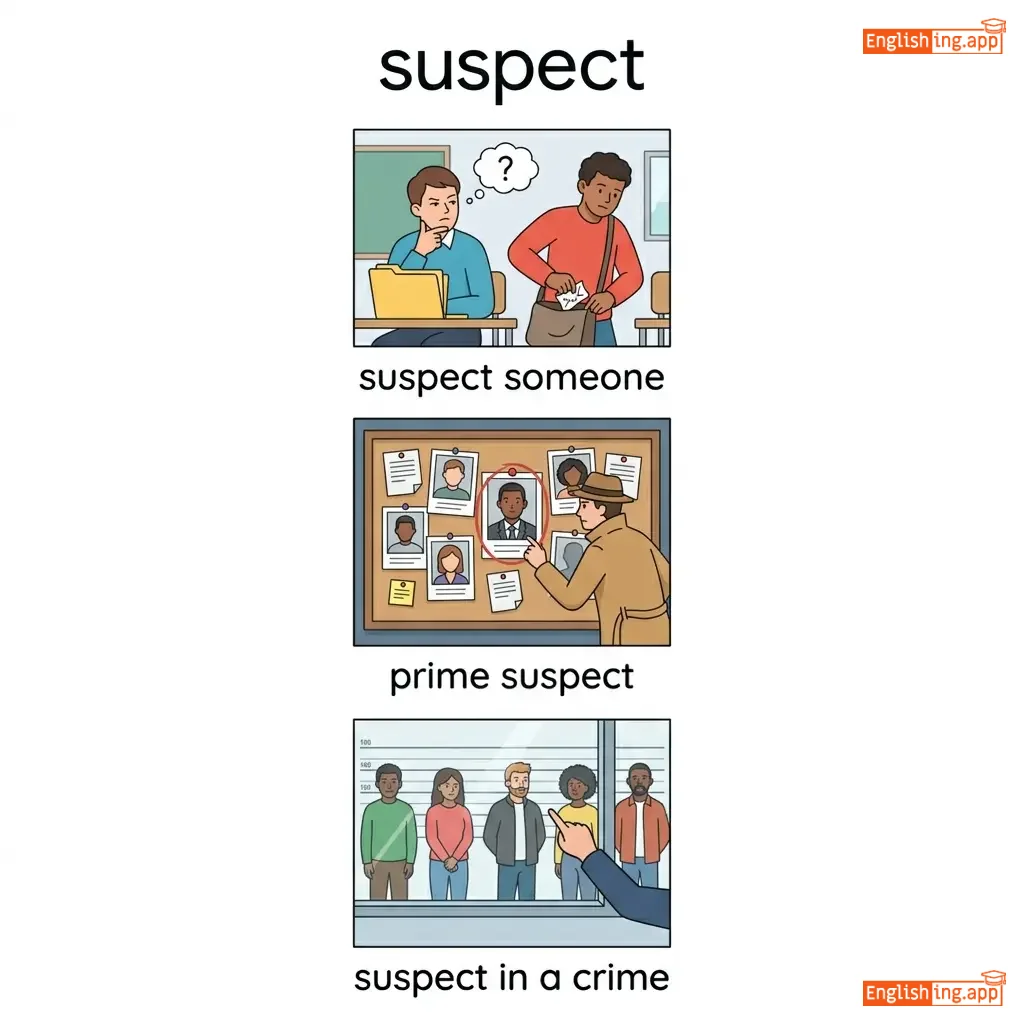
suspect someone, prime suspect, suspect in a crime
••••••
|
No •••••• |
|
#4907
⏸️
|
/səˈspɛnd/
verb
(саспенд)
••••••
|
- •••••• |
приостановить
priestanovit
••••••
|
suspended
саспендед
••••••
|
suspended
саспендед
••••••
|
suspends
саспендс
••••••
|
suspending
саспендинг
••••••
|
To temporarily stop something from being active or valid.
••••••
|
The company decided to suspend his membership.
Компания решила приостановить его членство.
••••••
|
Компания решила приостановить его членство.
Kompaniya reshila priostanovit' ego chlenstvo.
••••••
|
suspend disbelief
приостановить недоверие
••••••
|
to willingly accept something unrealistic for the sake of enjoyment
••••••
|
приостановить недоверие
priostanovit' nedeverie
••••••
|
halt, delay, interrupt, pause
••••••
|
continue, resume, proceed
••••••
|
suspend activities, suspend operations, suspend from work
••••••
|
Приостановить — это как пауза — остановить на время.
••••••
|
|
#4908
⏸️
|
/səˈspɛnʃən/
noun
(suspenʃən)
••••••
|
- •••••• |
приостановка
pristojanovka
••••••
|
- •••••• | - •••••• | - •••••• | - •••••• |
The act of temporarily stopping something; also refers to a system in vehicles that absorbs shock.
••••••
|
The player received a three-game suspension for misconduct. |
Игрок получил трехматчевую приостановку за плохое поведение.
Igrok poluchil tryokhmatchevuyu priyostanovku za plokhoye povedeniye.
••••••
|
- •••••• | - •••••• | - •••••• |
pause, stoppage, interruption, postponement, delay
••••••
|
continuation, resumption, progress
••••••
|
suspension bridge, school suspension, temporary suspension, suspension system
••••••
|
Приостановка—если ты плохо себя ведешь, тебе дается приостановка.
••••••
|
|
#4909
🤨
|
/səˈspɪʃən/
noun
(susˈpɪʃən)
••••••
|
- •••••• |
подозрение
podozreniye
••••••
|
- •••••• | - •••••• | - •••••• | - •••••• |
a feeling or belief that someone has done something wrong or illegal
••••••
|
He was arrested on suspicion of theft. |
Он был арестован по подозрению в краже.
On byl arestovan po podozreniyu v krazhe.
••••••
|
arouse suspicion |
to make people think that something wrong or illegal may have happened
••••••
|
вызывать подозрение
vyzyvat' podozreniye
••••••
|
doubt, mistrust, distrust, skepticism, uncertainty
••••••
|
trust, confidence, belief
••••••
|
raise suspicion, under suspicion, deep suspicion, suspicion of
••••••
|
Suspicion по-русски это подозрение — Подозревай, и будет suspicion.
••••••
|
|
#4910
🕵️
|
/səˈspɪʃəs/
adjective
(саспи́шас)
••••••
|
- •••••• |
подозрительный
podozritel'nyy
••••••
|
- •••••• | - •••••• | - •••••• | - •••••• |
Feeling doubt or distrust about someone or something.
••••••
|
She gave me a suspicious look when I entered late. |
Она бросила на меня подозрительный взгляд, когда я вошел поздно.
Ona brosila na menya podozritel'nyy vzglyad, kogda ya voshel pozdno.
••••••
|
under suspicious circumstances |
In a way that causes doubt or mistrust.
••••••
|
при подозрительных обстоятельствах
pri podozritel'nykh obstoyatel'stvakh
••••••
|
distrustful, doubtful, wary, skeptical, uneasy
••••••
|
trusting, certain, confident
••••••
|
suspicious activity, suspicious behavior, suspicious look, suspicious mind
••••••
|
Подозрительный — это подозрение, когда что-то не так, стоит насторожиться.
••••••
|
|
#4911
🌱
|
/səˈsteɪn/
verb
(сустейн)
••••••
|
- •••••• |
поддерживать
podderzhivat
••••••
|
sustained
сустейнд
••••••
|
sustained
сустейнд
••••••
|
sustains
сустейнс
••••••
|
sustaining
сустейнинг
••••••
|
To support, maintain, or keep something going over time.
••••••
|
The team worked hard to sustain their success.
Команда усердно работала, чтобы поддерживать их успех.
••••••
|
Команда усердно работала, чтобы поддерживать их успех.
Komanda usyerodno rabotala, chtoby podderzhivat ykh usyekh.
••••••
|
sustain a loss
претерпеть убытки
••••••
|
To suffer or experience a loss.
••••••
|
понести убытки
ponesti ubytki
••••••
|
maintain, uphold, continue, support, endure
••••••
|
abandon, quit, discontinue
••••••
|
sustain growth, sustain life, sustain damage, sustain interest
••••••
|
Sustain означает 'поддерживать' - вспомни про поддержку с командой.
••••••
|
|
#4912
🌱
|
/səˈsteɪnəbəl/
adjective
(сустейнебл)
••••••
|
|
устойчивый
ustoychivyy
••••••
|
- •••••• | - •••••• | - •••••• | - •••••• |
able to continue over a long period without causing harm to the environment or using up resources
••••••
|
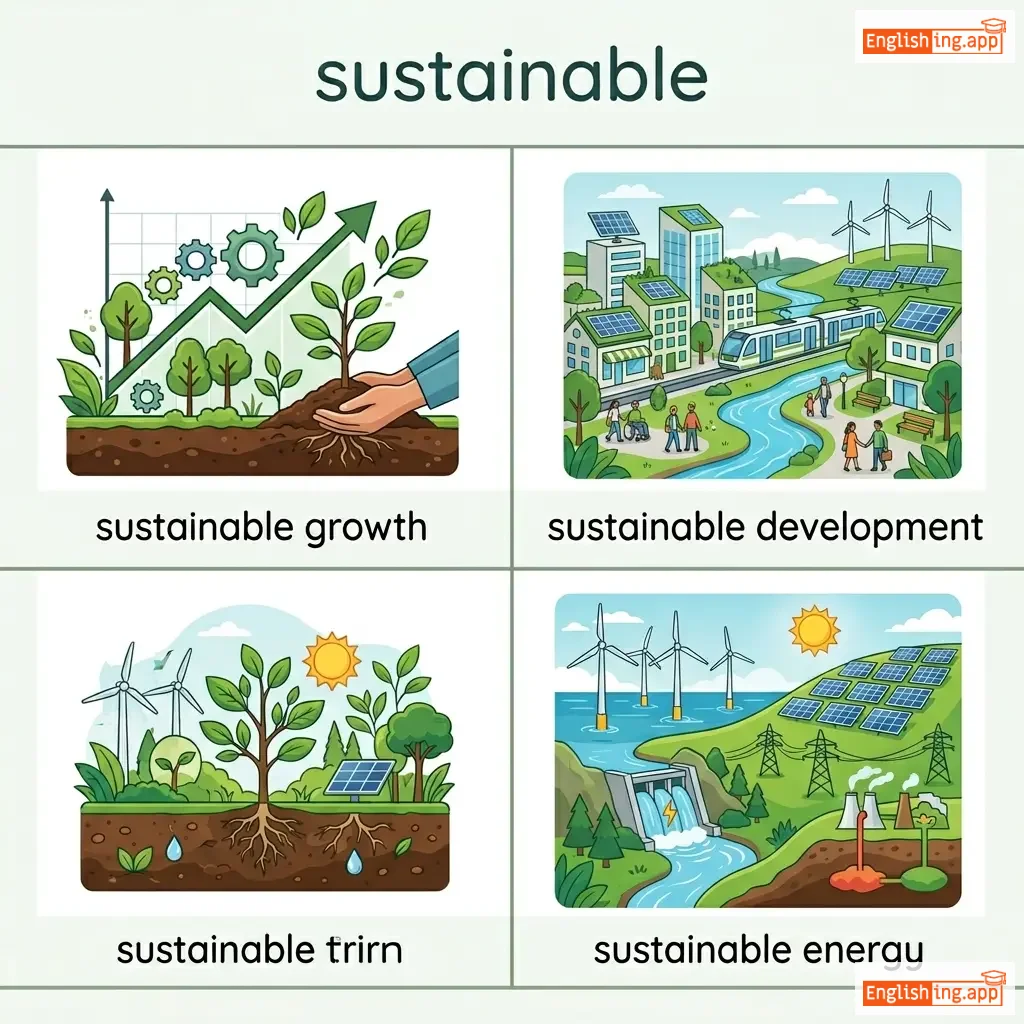
We must adopt sustainable energy practices.
Мы должны принять устойчивые энергетические практики.
••••••
|
Мы должны принять устойчивые энергетические практики.
My dolzhny prinyat' ustoychivye energeticheskie praktiki.
••••••
|
sustainable development
устойчивое развитие
••••••
|
development that meets present needs without compromising future generations’ ability to meet theirs
••••••
|
устойчивое развитие
ustoychivoe razvitie
••••••
|
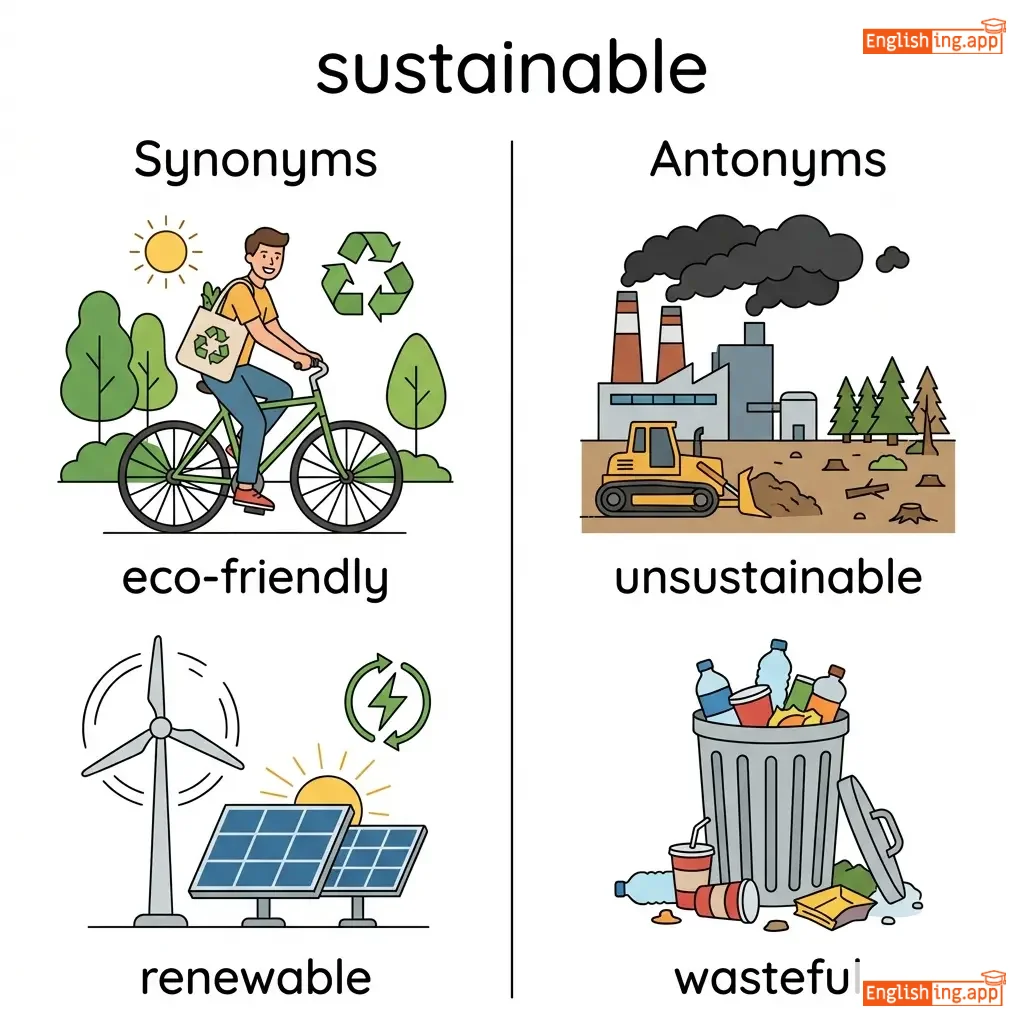
eco-friendly, renewable, viable, maintainable, green
••••••
|
unsustainable, wasteful, destructive
••••••
|
sustainable growth, sustainable development, sustainable energy, sustainable future
••••••
|
Sustain означает поддерживать — sustainable означает то, что можно поддерживать устойчиво.
••••••
|
|
#4913
🫗
|
/ˈswɒloʊ/
verb
(свалло)
••••••
|
- •••••• |
глотать
glotat
••••••
|
swallowed
свалод
••••••
|
swallowed
свалод
••••••
|
swallows
свалоз
••••••
|
swallowing
свалоиг
••••••
|
to make food or drink go down your throat into your stomach
••••••
|
He swallowed the pill with a glass of water.
Он проглотил таблетку с бокалом воды.
••••••
|
Он проглотил таблетку с бокалом воды.
On proglotil tabletku s bokalom vody.
••••••
|
swallow one's pride
проглотить гордость
••••••
|
to do something that is humiliating or embarrassing but necessary
••••••
|
проглотить гордость
proglotit' gordost'
••••••
|
gulp, ingest, consume, devour, absorb
••••••
|
spit, vomit, reject
••••••
|
swallow food, swallow hard, swallow a pill, swallow the truth
••••••
|
Swallow означает глотать — как птица глотает насекомых!
••••••
|
|
#4914
🗣️
|
/swɛər/
verb
(свээр)
••••••
|
|
клясться
klyatsya
••••••
|
swore
свор
••••••
|
sworn
сворн
••••••
|
swears
свэрз
••••••
|
swearing
свэринг
••••••
|
To make a solemn statement or promise; to use offensive language.
••••••
|
He swore to tell the truth in court.
хи свор ту тэл зэ труθ ин корт
••••••
|
Он поклялся говорить правду в суде.
On poklyalsya govorit' pravdu v sude.
••••••
|
swear by
свэр бай
••••••
|
To have great confidence in something.
••••••
|
клясться чем-то
klyatsya chem-to
••••••
|
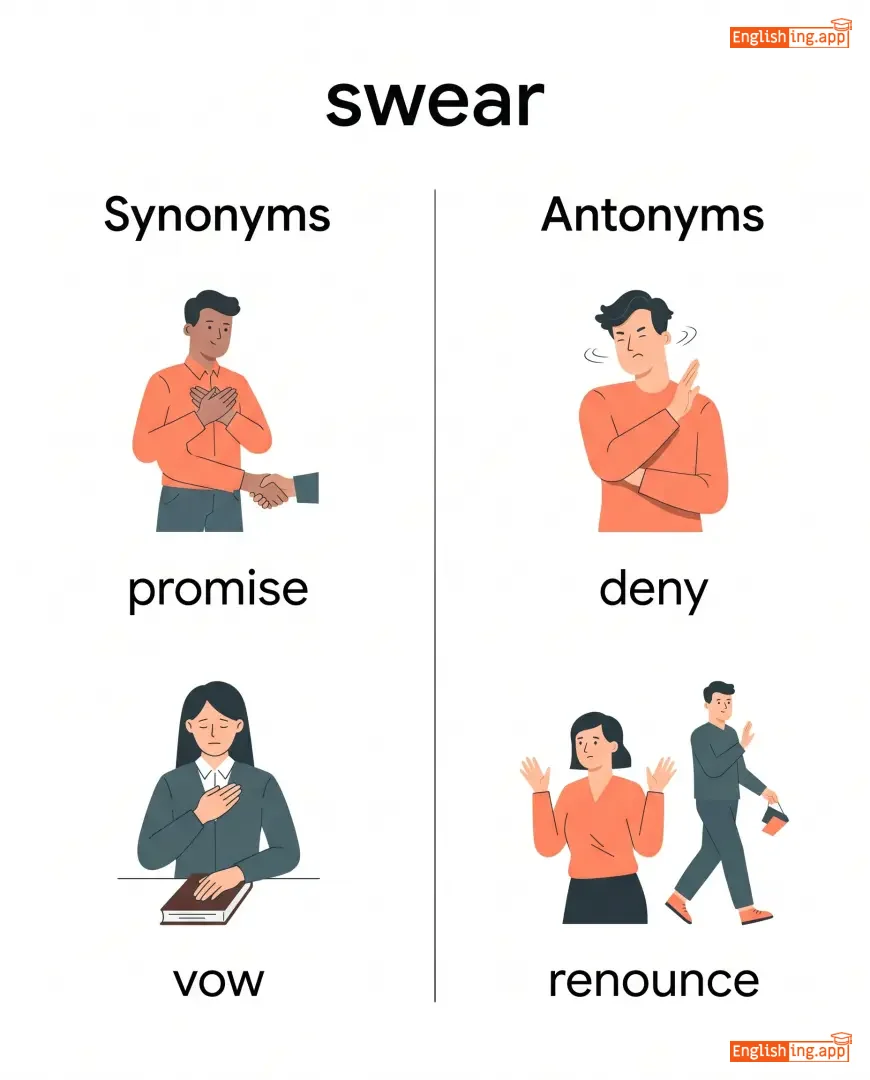
promise, vow, curse, pledge, affirm
••••••
|
deny, renounce, retract
••••••
|
swear an oath, swear allegiance, swear in, swear by
••••••
|
Swear означает клясться – На суде поклялся сказать правду.
••••••
|
|
#4915
💦
|
/swɛt/
verb
(свит)
••••••
|
- •••••• |
потеть
potet'
••••••
|
sweated
свитед
••••••
|
sweated
свитед
••••••
|
sweats
свитс
••••••
|
sweating
свитинг
••••••
|
to produce liquid from your skin when you are hot or nervous
••••••
|
He was sweating after running for an hour.
Он потел после часа бега.
••••••
|
Он потел после часа бега.
On potel posle chasa bega.
••••••
|
break a sweat
потеть
••••••
|
to begin to perspire, usually from physical effort
••••••
|
потеть
potet'
••••••
|
perspire, exude, drip, toil, labor
••••••
|
rest, relax, cool
••••••
|
heavy sweat, cold sweat, sweat profusely, make someone sweat
••••••
|
потеть означает sweat!
••••••
|
|
#4916
🧶
|
/ˈswɛtər/
noun
••••••
|
- •••••• | - •••••• | - •••••• | - •••••• | - •••••• | - •••••• |
a warm knitted piece of clothing worn on the upper body
••••••
|
She wore a red sweater to keep warm in the cold weather. |
- •••••• | - •••••• | - •••••• | - •••••• |
jumper, pullover, cardigan, hoodie, sweatshirt
••••••
|
shirt, blouse, jacket
••••••
|
wool sweater, knitted sweater, wear a sweater, red sweater
••••••
|
No •••••• |
|
#4917
👕
|
/ˈswɛtʃɜːrt/
noun
(свэтшёрт)
••••••
|
- •••••• |
свитшот
svitshot
••••••
|
- •••••• | - •••••• | - •••••• | - •••••• |
A casual, long-sleeved pullover garment, typically made of cotton or fleece, worn for warmth or comfort.
••••••
|
He wore a grey sweatshirt while jogging in the park.
Он носил серый свэтшёрт во время пробежки в парке.
••••••
|
Он носил серый свэтшёрт во время пробежки в парке.
On nosil seryy svetshyort vo vremya probezhki v parke.
••••••
|
- •••••• | - •••••• | - •••••• |
jumper, pullover, hoodie, fleece
••••••
|
tank top, T-shirt
••••••
|
cotton sweatshirt, grey sweatshirt, sports sweatshirt, oversized sweatshirt
••••••
|
Свитшот держит тепло, даже когда sweat
••••••
|
|
#4918
🧹
|
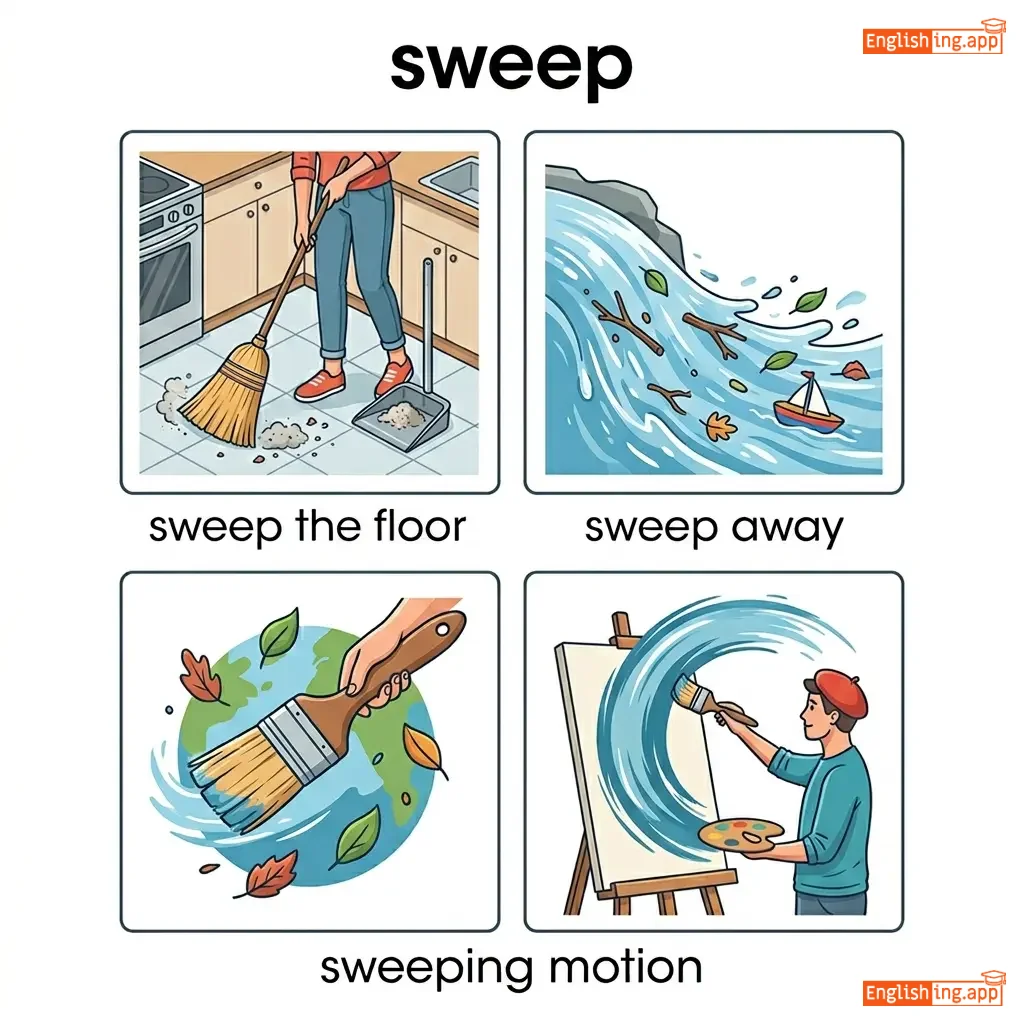
/swiːp/
verb
(свип)
••••••
|
|
подметать
podmetat
••••••
|
swept
свепт
••••••
|
swept
свепт
••••••
|
sweeps
свипс
••••••
|
sweeping
свипинг
••••••
|
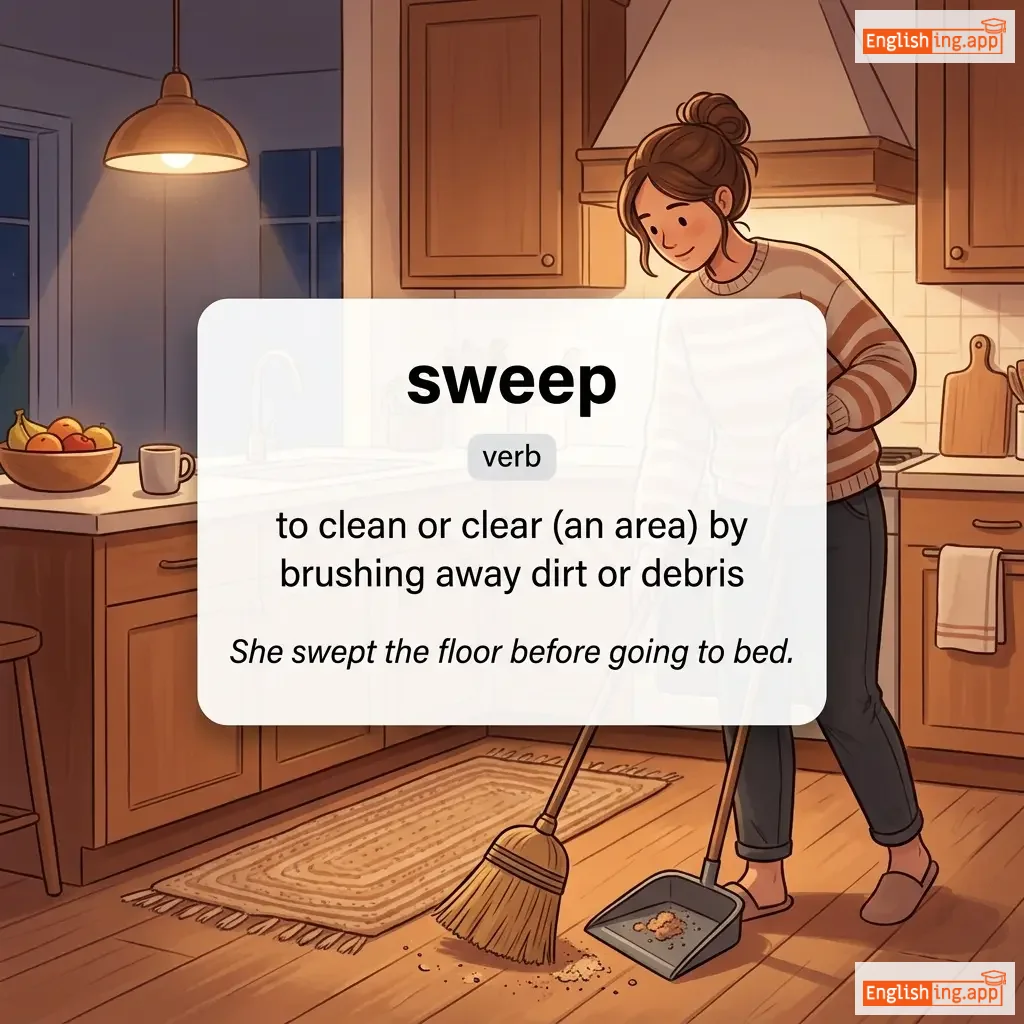
to clean by brushing; to move quickly and smoothly
••••••
|
She sweeps the floor every morning.
ши свипс зэ флор эври морнинг
••••••
|
Она подметает пол каждое утро.
Ona podmetaet pol kazhdoe utro
••••••
|
- •••••• | - •••••• | - •••••• |
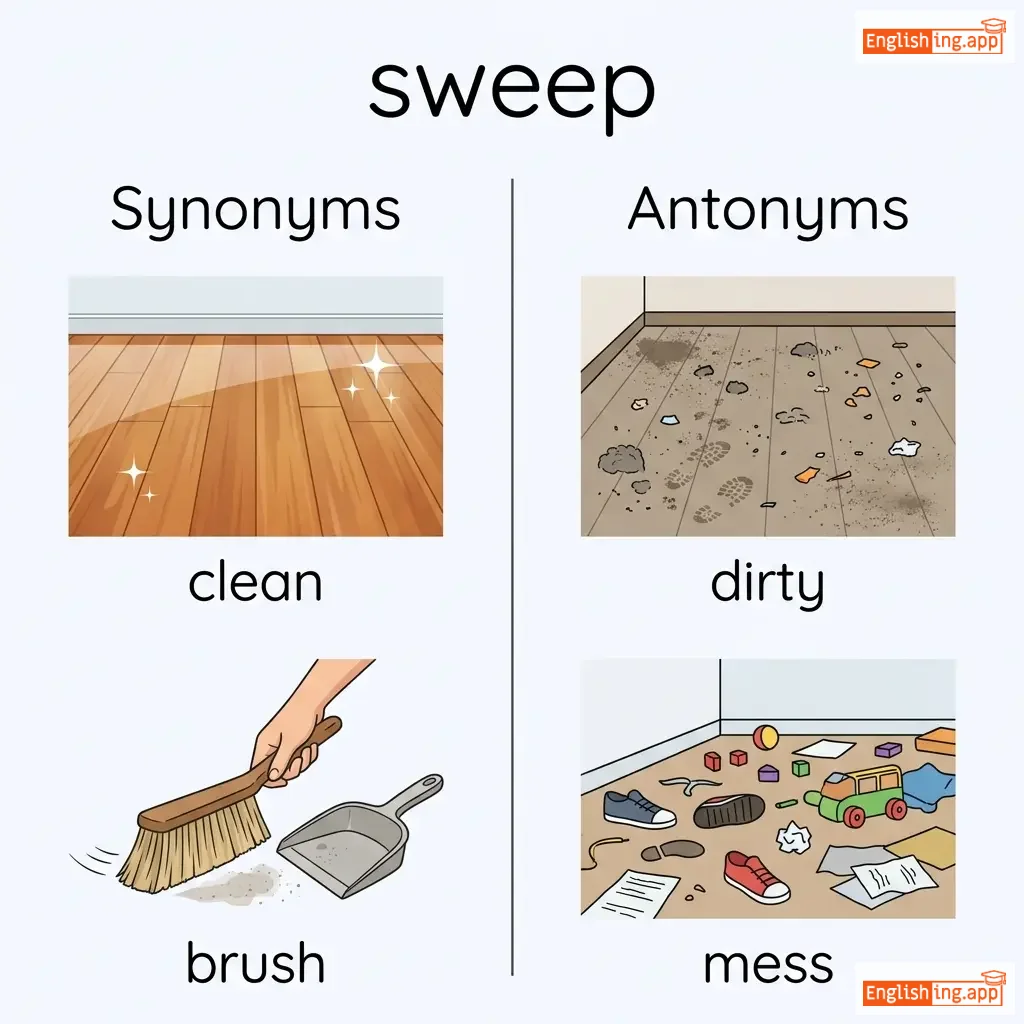
brush, clean, move quickly, glide
••••••
|
dirty, mess up
••••••
|
sweep away, sweep clean, sweep up, sweep aside, sweep through, sweep under
••••••
|
‘Sweep’ is like ‘podmetat’ — both mean to brush the floor clean.
••••••
|
|
#4919
🍯
|
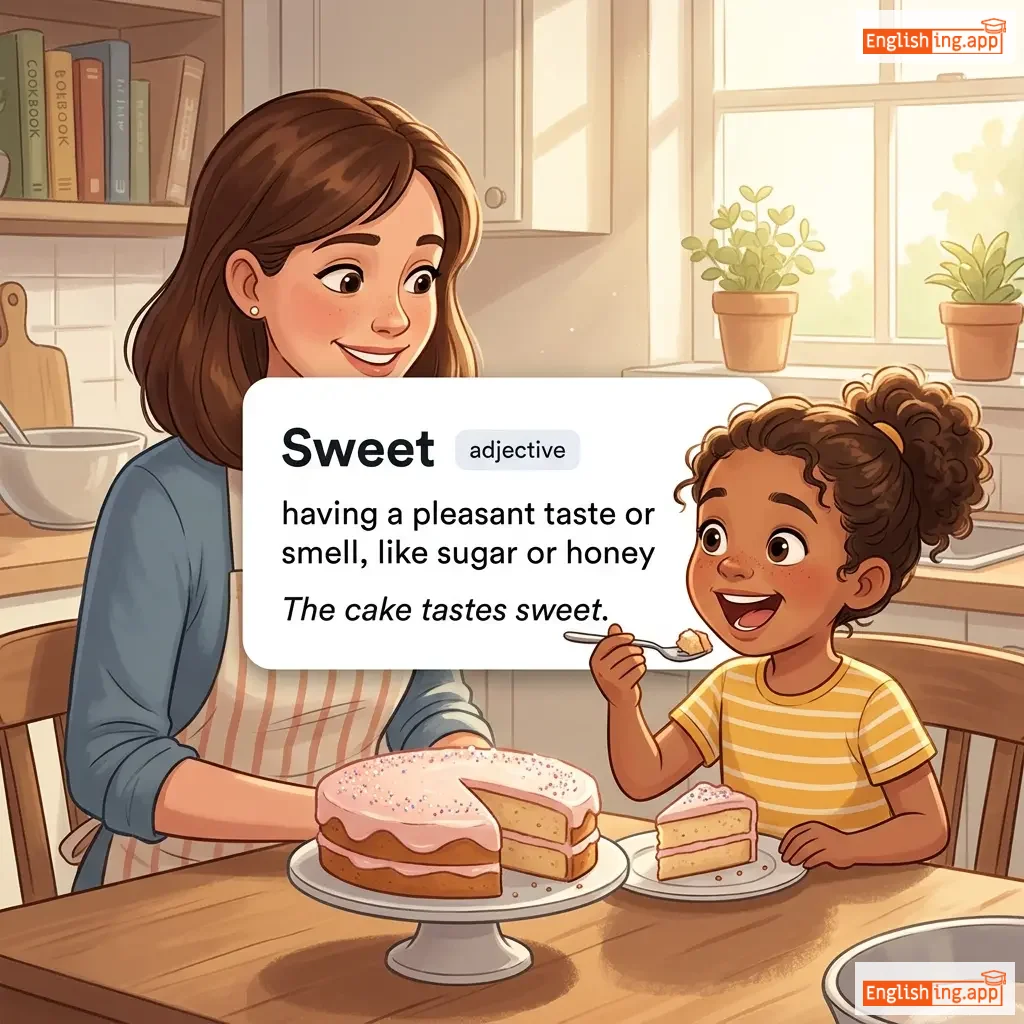
/swiːt/
adjective
(svit)
••••••
|
|
сладкий; добрый; приятный
sladkiy, dobryy, priyatnyy
••••••
|
- •••••• | - •••••• | - •••••• | - •••••• |
having a pleasant taste; kind and gentle; pleasing
••••••
|
She has a sweet voice that everyone loves to hear.
Shi hæz a svit vois det evriwæn løvs tu hier.
••••••
|
У нее сладкий голос, который всем нравится слушать.
U nee sladkiy golos, kotoryy vsem nravitsya slushat'.
••••••
|
- •••••• | - •••••• | - •••••• |
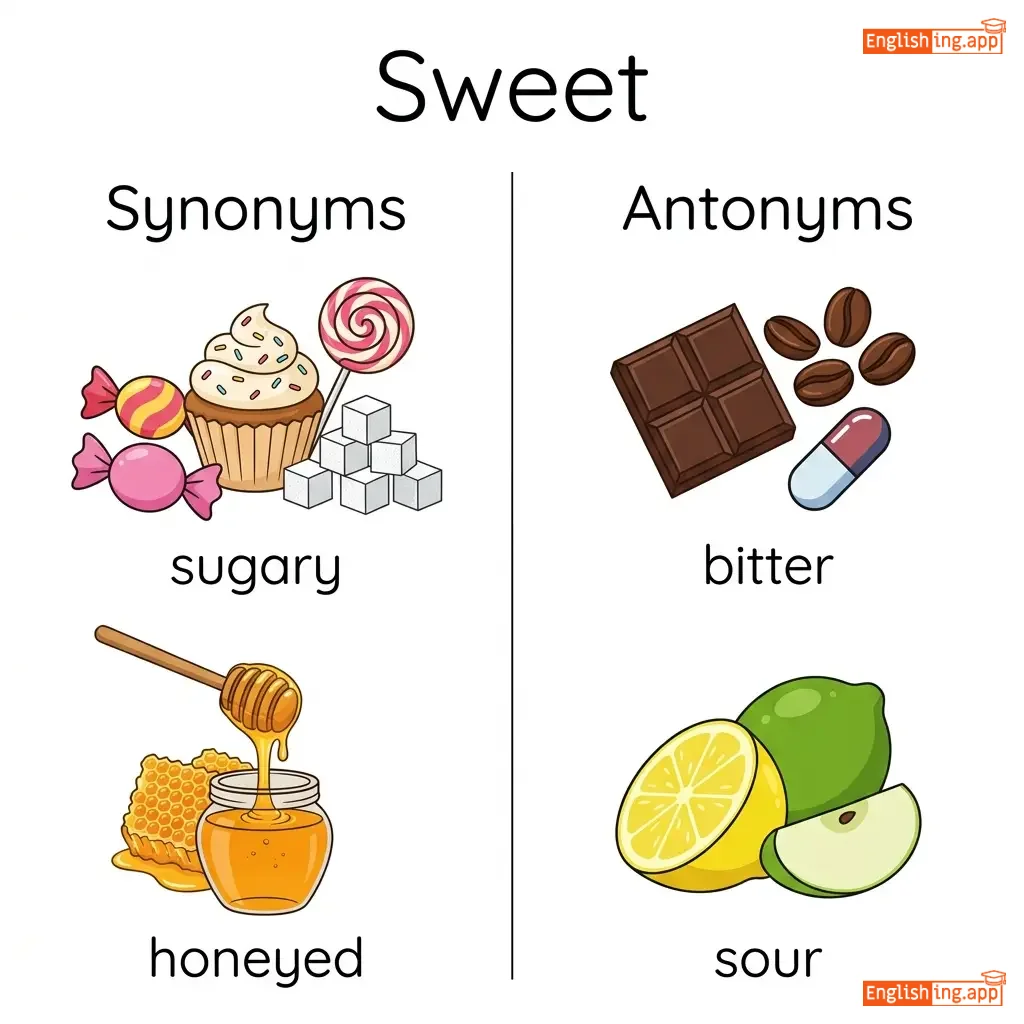
pleasant, lovely, kind, gentle, sugary
••••••
|
bitter, sour, harsh, unpleasant, rude
••••••
|
sweet taste, sweet smell, sweet dreams, sweet person
••••••
|
Sweet is like сладкий, and сладкий means sweet!
••••••
|
|
#4920
💨
|
/swɛl/
verb
(свел)
••••••
|
- •••••• |
опухать
opukhat
••••••
|
swelled
свелд
••••••
|
swelled
свелд
••••••
|
swells
свелс
••••••
|
swelling
свеллинг
••••••
|
to increase in size or volume, often due to internal pressure or emotional intensity
••••••
|
Her ankle began to swell after the injury.
Её лодыжка начала опухать после травмы.
••••••
|
Её лодыжка начала опухать после травмы.
Yeyo lodyzhka nachala opukhatsya posle travmy.
••••••
|
swell with pride
раздуваться от гордости
••••••
|
to feel very proud
••••••
|
раздуваться от гордости
razzdovatsya ot gordosti
••••••
|
expand, enlarge, grow, bulge, inflate
••••••
|
shrink, contract
••••••
|
swell up, swell with pride, swell in number
••••••
|
SWEater опухший, поэтому опухать это swell
••••••
|
|
#4921
🏊
|
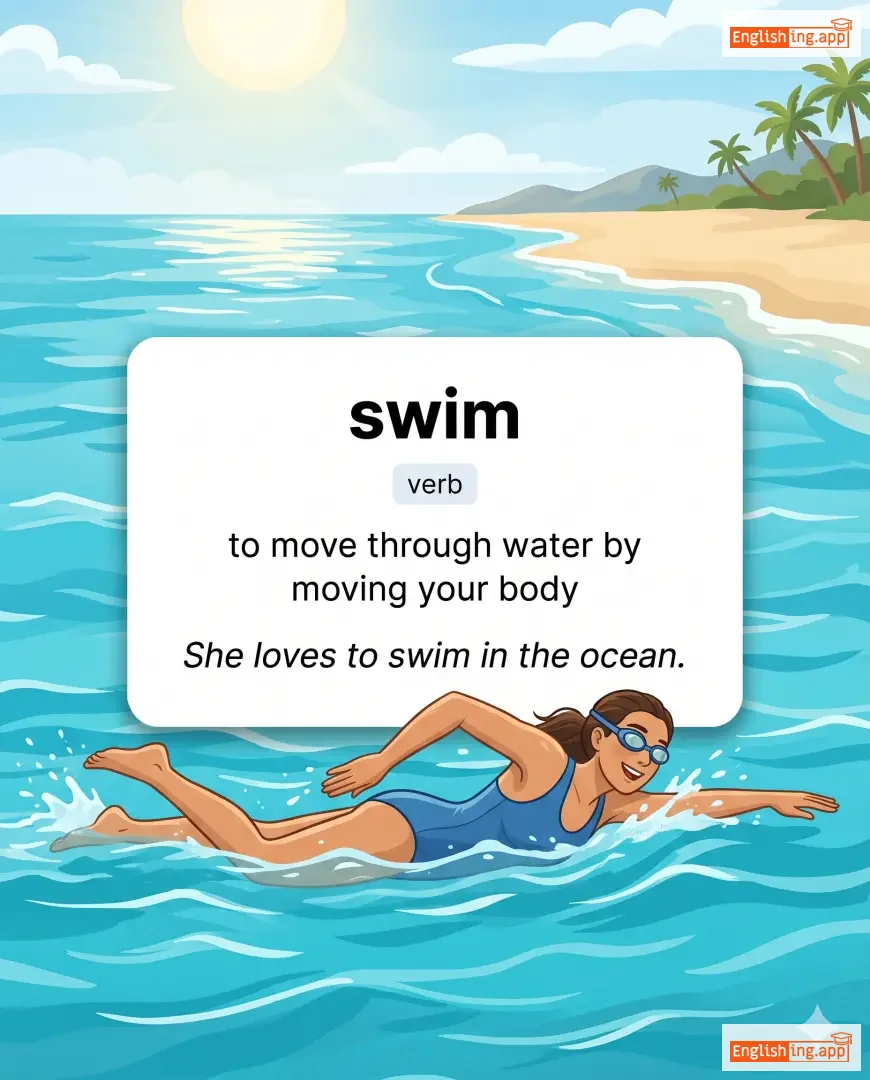
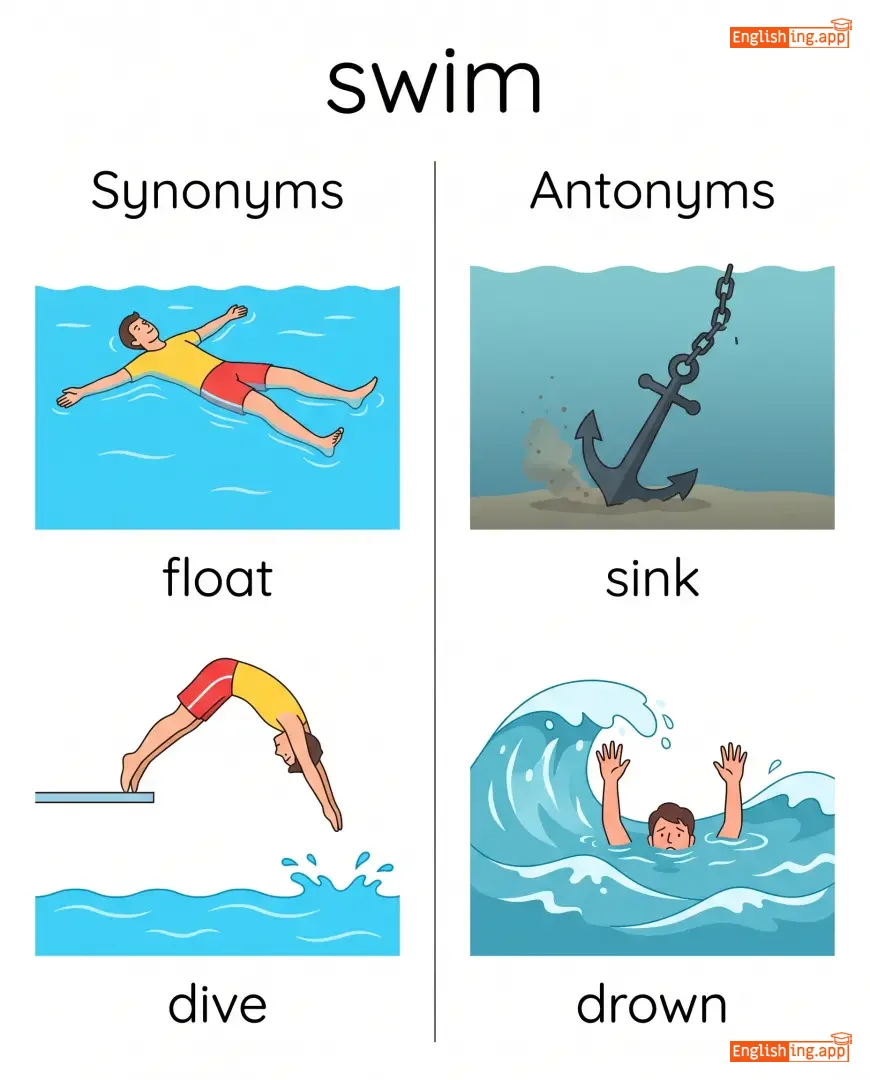
/swɪm/
verb
(suim)
••••••
|
|
плавать
plavat
••••••
|
swam
swam
••••••
|
swum
swum
••••••
|
swims
swims
••••••
|
swimming
swimming
••••••
|
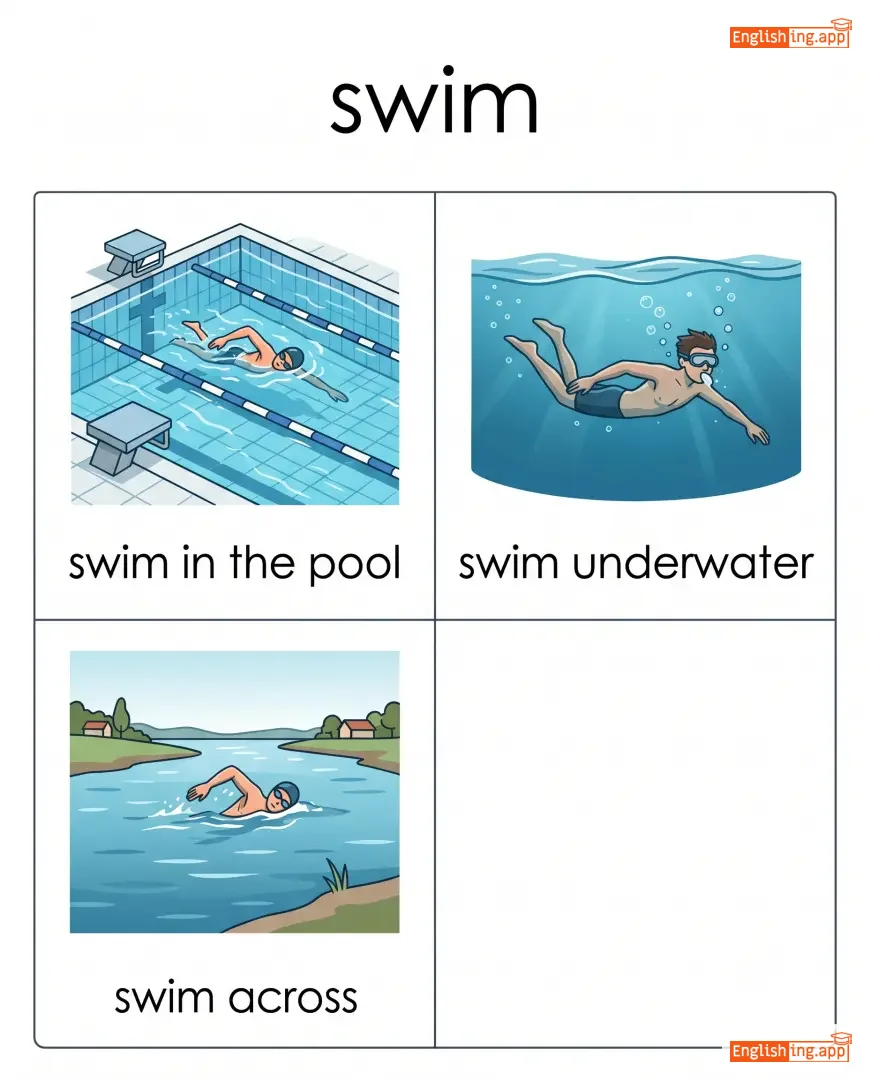
to move through water using body movements
••••••
|
I love to swim in the ocean during summer.
Мне нравится плавать в океане летом.
••••••
|
Мне нравится плавать в океане летом.
Mne nravitsya plavat' v okeane letom.
••••••
|
- •••••• | - •••••• | - •••••• |
float, paddle, dive, stroke
••••••
|
sink, drown, walk
••••••
|
swim laps, swim stroke, swim fast, swim upstream
••••••
|
Плавать: как рыба в воде, двигаясь легко.
••••••
|
|
#4922
🏊
|
/ˈswɪmɪŋ/
noun
(свимминг)
••••••
|
- •••••• |
плавание
plavanie
••••••
|
- •••••• | - •••••• | - •••••• |
swimming
свимминг
••••••
|
the activity or sport of moving through water using the limbs
••••••
|
Swimming is a great way to stay fit and healthy.
Плавание — отличный способ оставаться в форме и здоровым.
••••••
|
Плавание — отличный способ оставаться в форме и здоровым.
Plavanie — otlichnyj sposob ostavat'sya v forme i zdorovym.
••••••
|
in the same boat
в одной лодке
••••••
|
to be in the same situation as others
••••••
|
в одной лодке
v odnoj lodke
••••••
|
diving, floating, bathing, aquatic exercise, water sport
••••••
|
sinking, drowning
••••••
|
go swimming, swimming pool, swimming lessons, swimming competition
••••••
|
Плавание — это способ быть в форме и оставаться здоровым!
••••••
|
|
#4923
⛓️
|
/swɪŋ/
verb
(свинг)
••••••
|
|
качаться
kachatsya
••••••
|
swung
сванг
••••••
|
swung
сванг
••••••
|
swings
свингс
••••••
|
swinging
свингинг
••••••
|
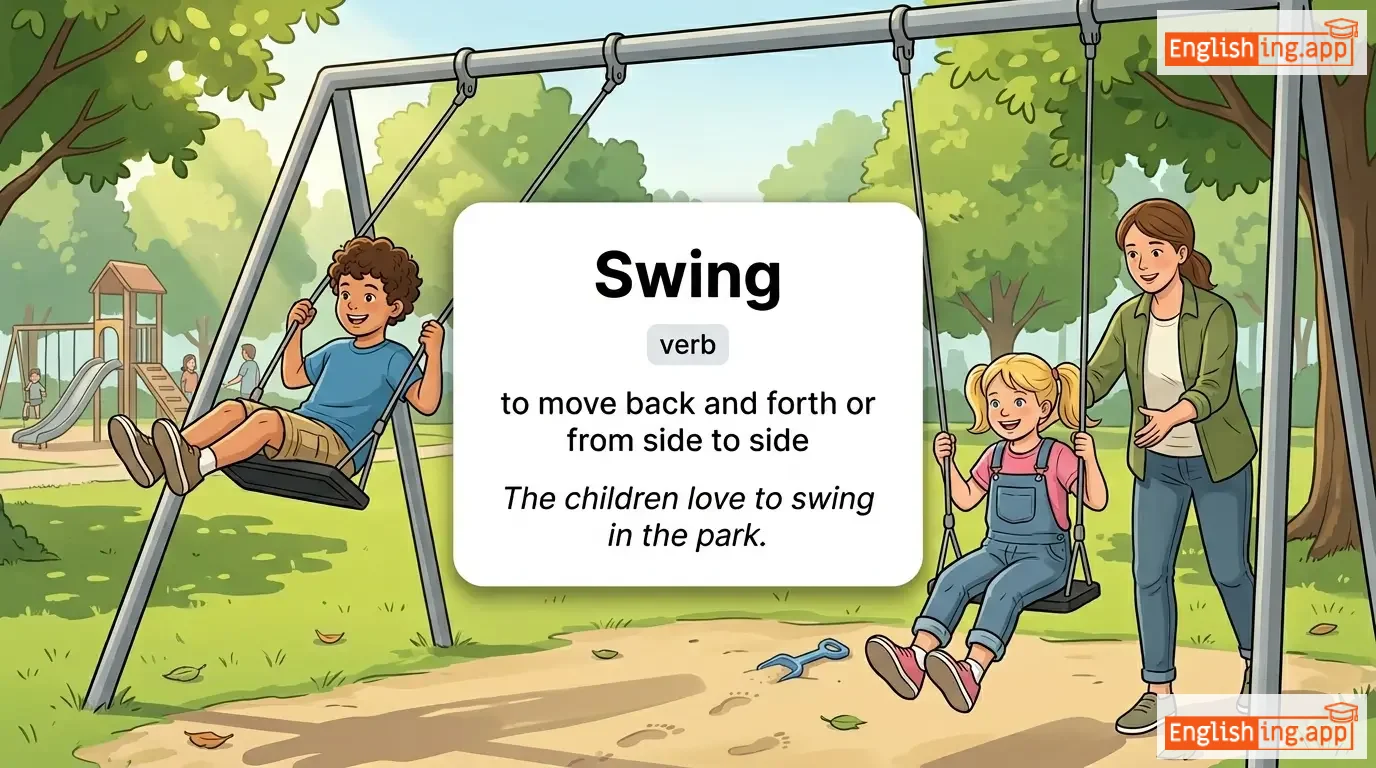
to move back and forth or from side to side
••••••
|
The children love to swing in the park.
Дети любят качаться в парке.
••••••
|
Дети любят качаться в парке.
Deti lyubyat kachatsya v parke.
••••••
|
swing into action
быстро перейти в действие
••••••
|
to start doing something quickly and effectively
••••••
|
быстро начать действовать
bystro nachat' deystvovat'
••••••
|
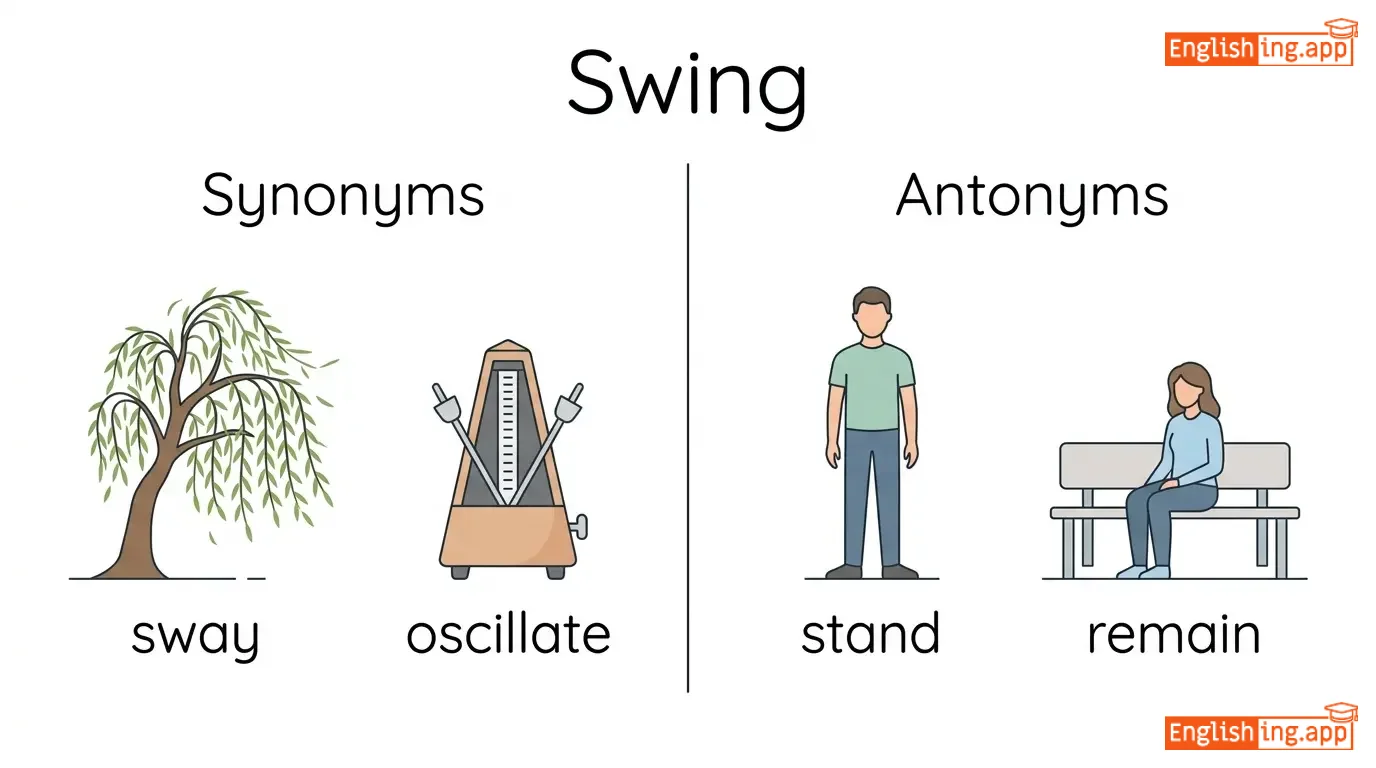
sway, oscillate, rotate, wave
••••••
|
stand, remain, stay
••••••
|
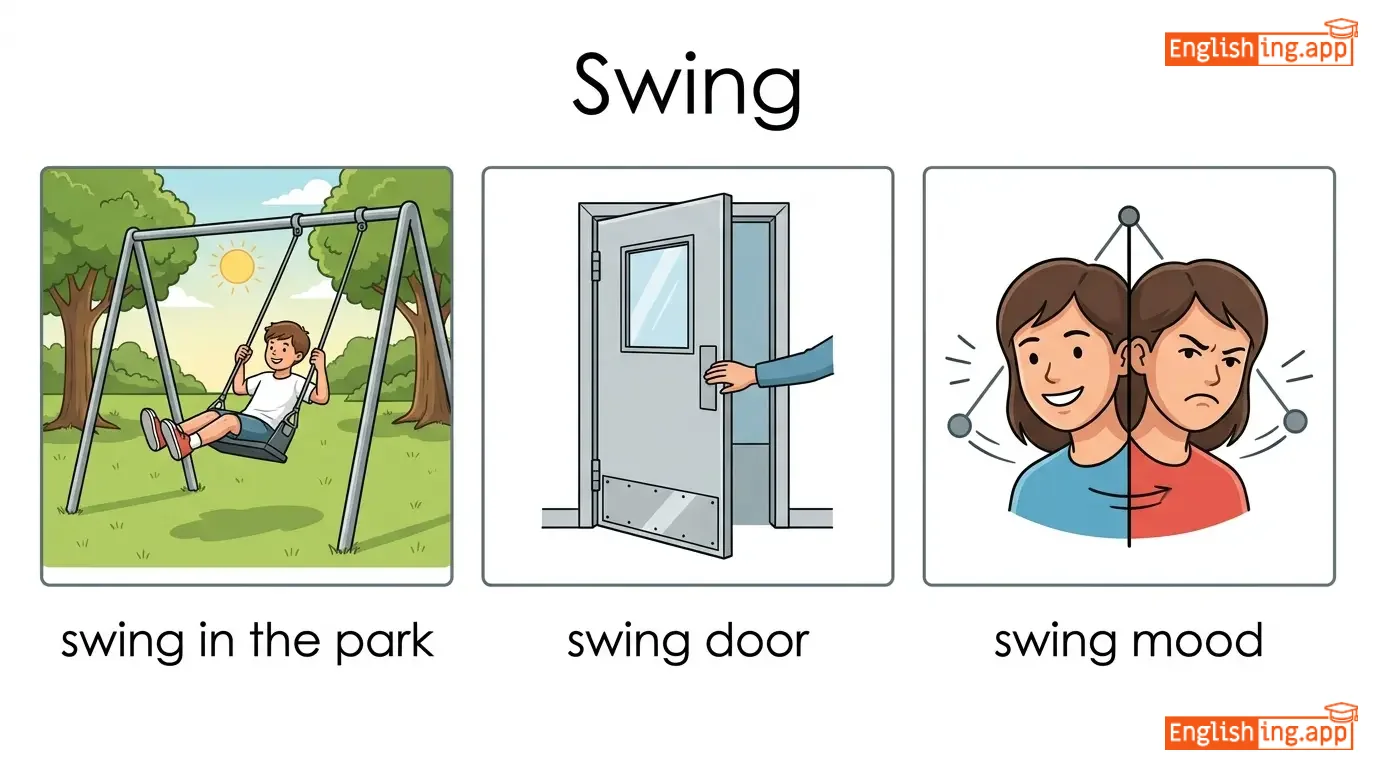
swing in the park, swing door, swing mood, swing votes
••••••
|
Swing как качание на качелях
••••••
|
|
#4924
🤕
|
/ˈswoʊlən/
adjective
(сволен)
••••••
|
- •••••• |
опухший
opuhshiy
••••••
|
- •••••• | - •••••• | - •••••• | - •••••• |
Enlarged or puffed up, usually due to injury, inflammation, or fluid accumulation
••••••
|
Her ankle was swollen after she twisted it during the hike.
Ее лодыжка была опухшей после того, как она подвернула ее во время похода.
••••••
|
Ее лодыжка была опухшей после того, как она подвернула ее во время похода.
Eye lodyzhka byla opukhshey posle togo, kak ona podvernula eye vo vremya pokhoda.
••••••
|
swollen with pride
раздутая от гордости
••••••
|
Feeling extremely proud
••••••
|
раздутая от гордости
razdutaya ot gordosti
••••••
|
inflated, puffed, bloated, engorged, distended
••••••
|
shrunken, deflated, reduced
••••••
|
swollen ankle, swollen eye, swollen river, swollen cheek, swollen glands
••••••
|
Опухший ankle = swollen
••••••
|
Vocabulary Quiz
Test your vocabulary by matching words with their translations or meanings.
Login to take the quiz
Comments (0)
Share your thoughts and join the discussion.
Join the discussion by logging in
Login to CommentNo comments yet
Be the first to share your thoughts!