

Обновитесь для доступа ко всему словарю
Получите неограниченный доступ ко всем словам с подпиской Pro
Обновить до ProПеревод
Прошедшее
Причастие прошедшего времени
Третье лицо единственного числа
Герундий
Значение
Пример предложения
Перевод примера предложения
Синонимы
Антонимы
Коллокации
Мнемоника



Swipe left or right, or use the buttons. Tap image to zoom.
Обновитесь для доступа ко всем предложениям
Получите неограниченный доступ ко всем предложениям с подпиской Pro
Обновить до ProПеревод примера предложения
Слово
Lesson 16Lesson 16 - Переключатель маски
|
Эмодзи
|
Слово | Images | Перевод | Прошедшее | Причастие прошедшего времени | Третье лицо единственного числа | Герундий | Значение | Пример предложения | Перевод примера предложения | Пример выражения | Значение примера выражения | Перевод примера выражения | Синонимы | Антонимы | Коллокации | Мнемоника |
|---|---|---|---|---|---|---|---|---|---|---|---|---|---|---|---|---|---|
|
#722
✏️
|
/ˈbɑːroʊ/
verb
(боро)
••••••
|
|
одолжить
odolozhit'
••••••
|
borrowed
бород
••••••
|
borrowed
бород
••••••
|
borrows
борос
••••••
|
borrowing
бороинг
••••••
|
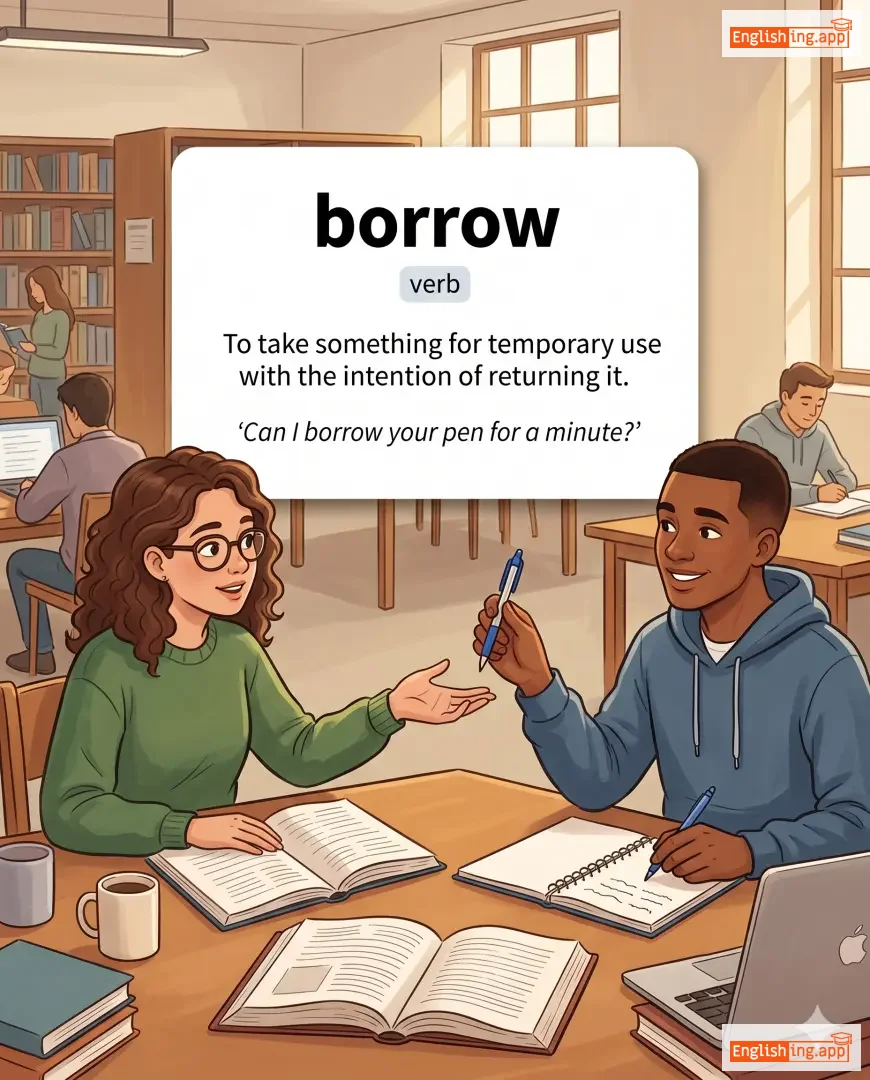
To take something for temporary use with the intention of returning it.
••••••
|
Can I borrow your pen for a minute?
Могу ли я одолжить твою ручку на минуту?
••••••
|
Могу ли я одолжить твою ручку на минуту?
Mogu li ya odolzhit' tvoyu ruchku na minutu?
••••••
|
borrow time
брать время в долг
••••••
|
To extend a situation temporarily, often delaying an inevitable outcome.
••••••
|
брать время в долг
brat' vremya v dolg
••••••
|
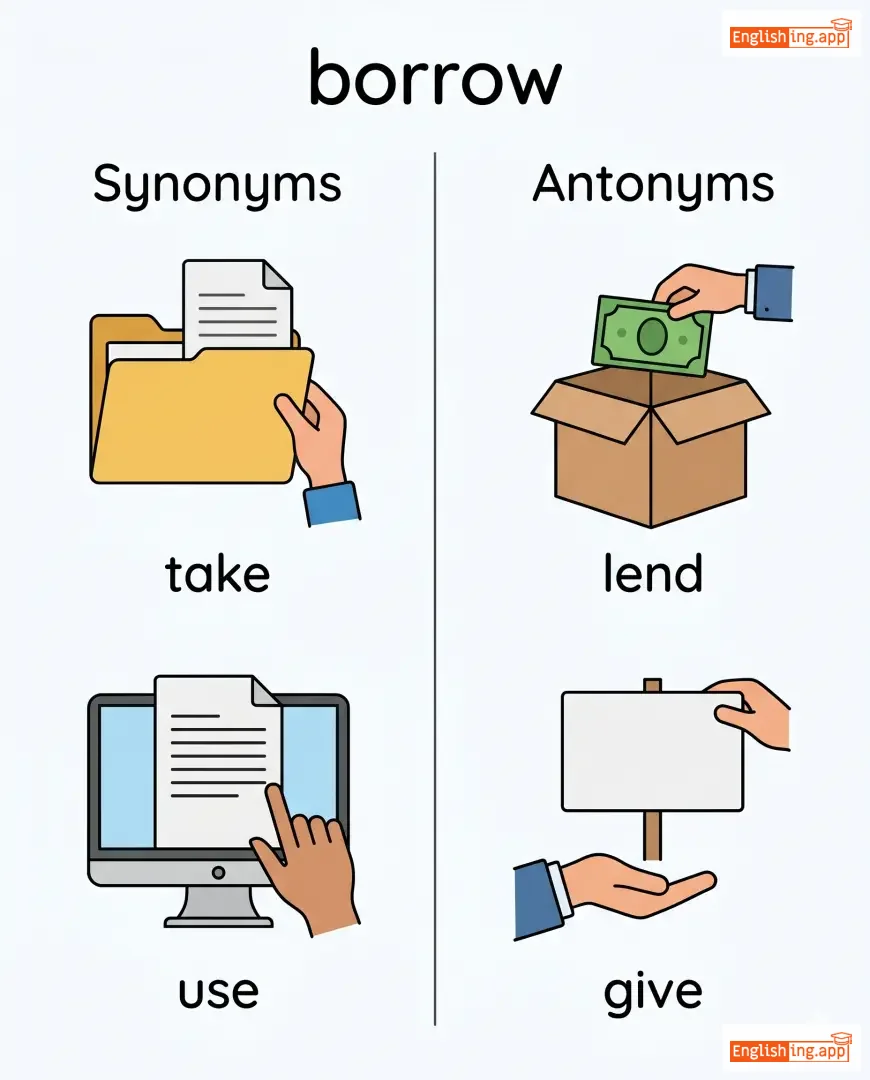
take, use, obtain, acquire
••••••
|
lend, give, return
••••••
|
borrow money, borrow a book, borrow ideas, borrow from
••••••
|
Одолжить, но вернуть! ✏️
••••••
|
|
#723
👨💼
|
/bɒs/
noun
(бос)
••••••
|
- •••••• |
босс
boss
••••••
|
- •••••• | - •••••• | - •••••• | - •••••• |
a person who is in charge of a worker, group, or organization
••••••
|
Her boss gave her a new project to complete. |
Её босс дал ей новый проект для выполнения.
Yeyo boss dal yey novyy proyekt dlya vypolneniya.
••••••
|
like a boss |
to do something with confidence and authority
••••••
|
как босс
kak boss
••••••
|
manager, supervisor, chief, head, leader
••••••
|
employee, worker, subordinate
••••••
|
boss at work, strict boss, talk to the boss, boss of the company
••••••
|
Босс всегда в центре внимания, принимая уверенные решения.
••••••
|
|
#724
✌️
|
/boʊθ/
determiner/pronoun
(боус)
••••••
|
- •••••• |
оба
oba
••••••
|
- •••••• | - •••••• | - •••••• | - •••••• |
referring to two people or things together
••••••
|
Both of the children were excited about the trip. |
Оба ребенка были взволнованы поездкой.
Oba rebenka byli vzvolnovany poyezdkoy.
••••••
|
both sides of the coin |
two different aspects of the same situation
••••••
|
обе стороны монеты
obe storony monety
••••••
|
two, pair, duo, couple
••••••
|
neither, none
••••••
|
both ways, both of them, both sides, both hands
••••••
|
Both означает оба, как две руки.
••••••
|
|
#725
😒
|
/ˈbɒðər/
verb
(бодер)
••••••
|
- •••••• |
беспокоить
bespokoit
••••••
|
bothered
бодерд
••••••
|
bothered
бодерд
••••••
|
bothers
бодерс
••••••
|
bothering
бодеринг
••••••
|
to annoy, worry, or cause trouble to someone
••••••
|
I don't want to bother you while you're working.
Я не хочу беспокоить тебя, пока ты работаешь.
••••••
|
Я не хочу беспокоить тебя, пока ты работаешь.
Ya ne khochu bespokoit tebya, poka ty rabotaesh.
••••••
|
can't be bothered
мне не составит труда
••••••
|
too lazy or unwilling to do something
••••••
|
мне не составит труда
mne ne sostavit truda
••••••
|
annoy, disturb, irritate, trouble, pester
••••••
|
please, soothe, comfort
••••••
|
bother someone, bother to ask, hardly bother, never bother
••••••
|
Bother означает беспокоить, как если бы кто-то постоянно беспокоил тебя, пока ты работаешь.
••••••
|
|
#726
🍾
|
/ˈbɒt.əl/
noun
(бottle)
••••••
|
- •••••• |
бутылка
butylka
••••••
|
- •••••• | - •••••• | - •••••• | - •••••• |
a container, typically made of glass or plastic, with a narrow neck used to hold liquids
••••••
|
He poured water into the bottle. |
Он налил воду в бутылку.
On nalil vodu v butylku.
••••••
|
bottle up |
to keep emotions hidden instead of expressing them
••••••
|
держать в себе
derzhat' v sebe
••••••
|
flask, container, jar, vessel
••••••
|
open container, bowl
••••••
|
water bottle, glass bottle, plastic bottle, bottle of wine
••••••
|
Бутылка значит бутылка, чтобы держать воду в бутылке.
••••••
|
|
#727
🔻
|
/ˈbɒtəm/
noun, adjective
(ботом)
••••••
|
- •••••• |
дно
dno
••••••
|
- •••••• | - •••••• | - •••••• | - •••••• |
The lowest part of something.
••••••
|
The keys fell to the bottom of the bag. |
Ключи упали на дно сумки.
Klyuchi upali na dno sumki.
••••••
|
hit rock bottom |
to reach the lowest possible point
••••••
|
достигнуть дна
dostignut' dna
••••••
|
base, underside, foot, foundation
••••••
|
top, peak, summit
••••••
|
bottom line, at the bottom, ocean bottom, bottom of the page
••••••
|
Запомни 'bottom' как 'дно', как дно ямы.
••••••
|
|
#728
🏀
|
/baʊns/
verb
(bauns)
••••••
|
- •••••• |
отскакивать
otskakivat
••••••
|
bounced
baunst
••••••
|
bounced
baunst
••••••
|
bounces
bauntses
••••••
|
bouncing
baunsing
••••••
|
to spring back after hitting something; to rebound.
••••••
|
The ball bounced off the wall and hit the window.
mяч отскочил от стены и ударил окно.
••••••
|
Мяч отскочил от стены и ударил окно.
Myach otskochiv ot steny i udaril okno.
••••••
|
bounce back
отскочить
••••••
|
to recover quickly from difficulties
••••••
|
быстро восстанавливаться
bystro vosstanavlivat'sya
••••••
|
rebound, spring, ricochet, leap, jump
••••••
|
fall, drop, sink
••••••
|
bounce off, bounce back, bounce a ball, bounce ideas
••••••
|
Bounce означает отскакивать, как мяч отскакивает от стены.
••••••
|
|
#729
🔗
|
/baʊnd/
verb, noun, adjective
(баунд)
••••••
|
- •••••• |
ограниченный / привязанный
ogranichennyi / privyazannyi
••••••
|
bounded
баундед
••••••
|
bounded
баундед
••••••
|
bounds
баундс
••••••
|
bounding
баундинг
••••••
|
To move with large strides or jumps; also refers to being tied, limited, or certain.
••••••
|
The dog bounded across the field with joy.
ðə дɔg баундед экросс ðə филд wɪð ʤɔɪ.
••••••
|
Собака прыгала по полю с радостью.
Sobaka prygala po polyu s radost'yu.
••••••
|
out of bounds
аут оф баундс
••••••
|
Beyond the permitted limits.
••••••
|
за пределами
za predelami
••••••
|
leap, jump, restrict, limit, tie
••••••
|
free, release, unlimited
••••••
|
bounded area, out of bounds, bound to happen, legally bound
••••••
|
Bound означает привязанный, как Ball Bound, мяч вышел за пределы.
••••••
|
|
#730
🛑
|
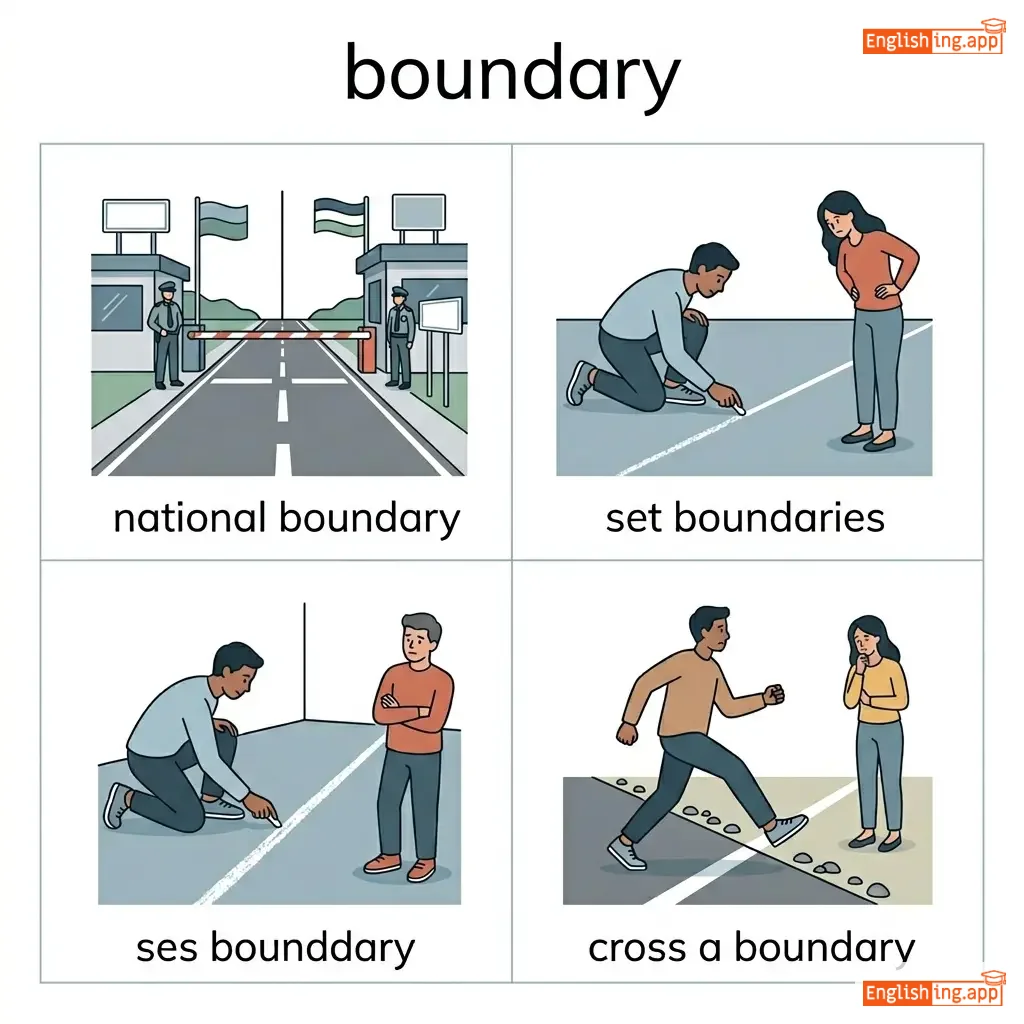
/ˈbaʊn.dri/
noun
(baundri)
••••••
|
|
граница
granitsa
••••••
|
- •••••• | - •••••• | - •••••• | - •••••• |
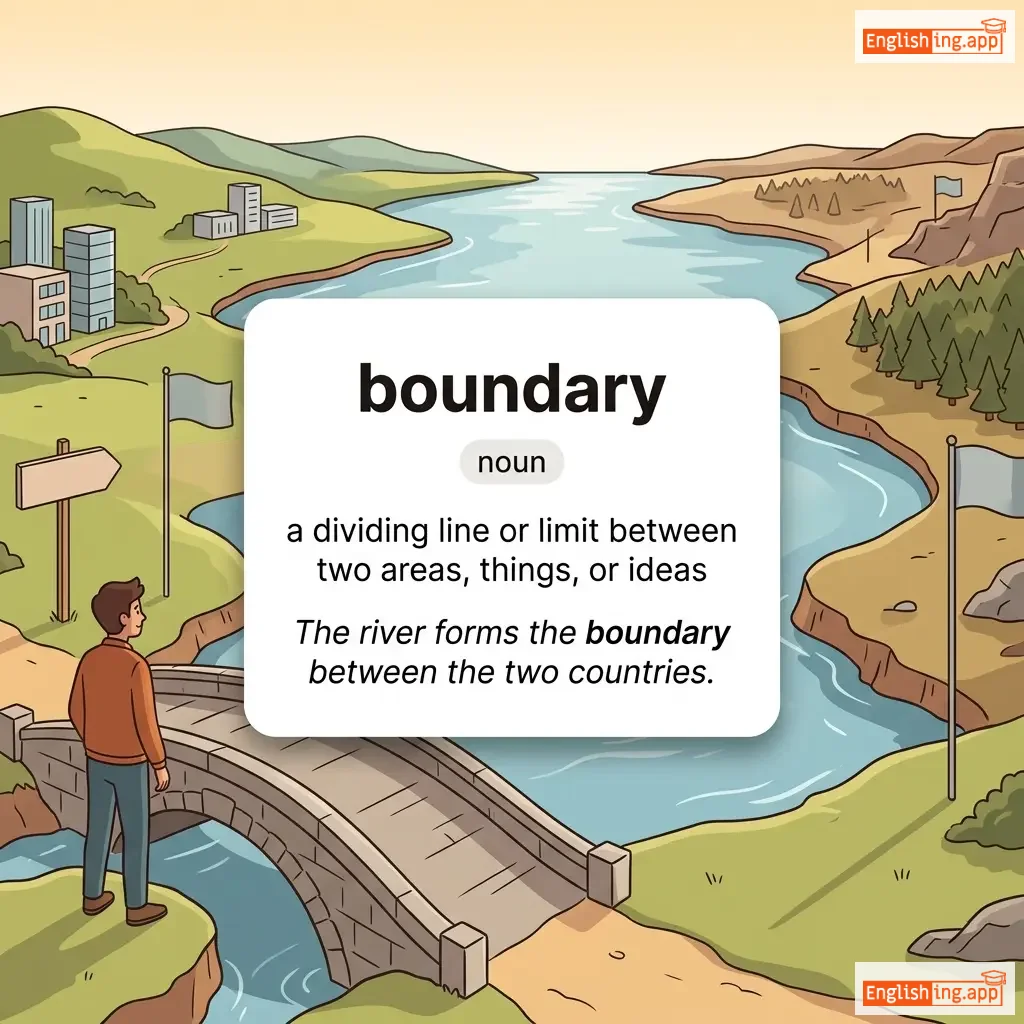
a dividing line or limit between two areas, things, or ideas
••••••
|
The river forms the boundary between the two countries. |
Река образует границу между двумя странами.
Reka obrazuet granitsu mezhdu dvumya stranami.
••••••
|
cross the boundary |
to go beyond accepted limits
••••••
|
перейти границу
pereyti granitsu
••••••
|
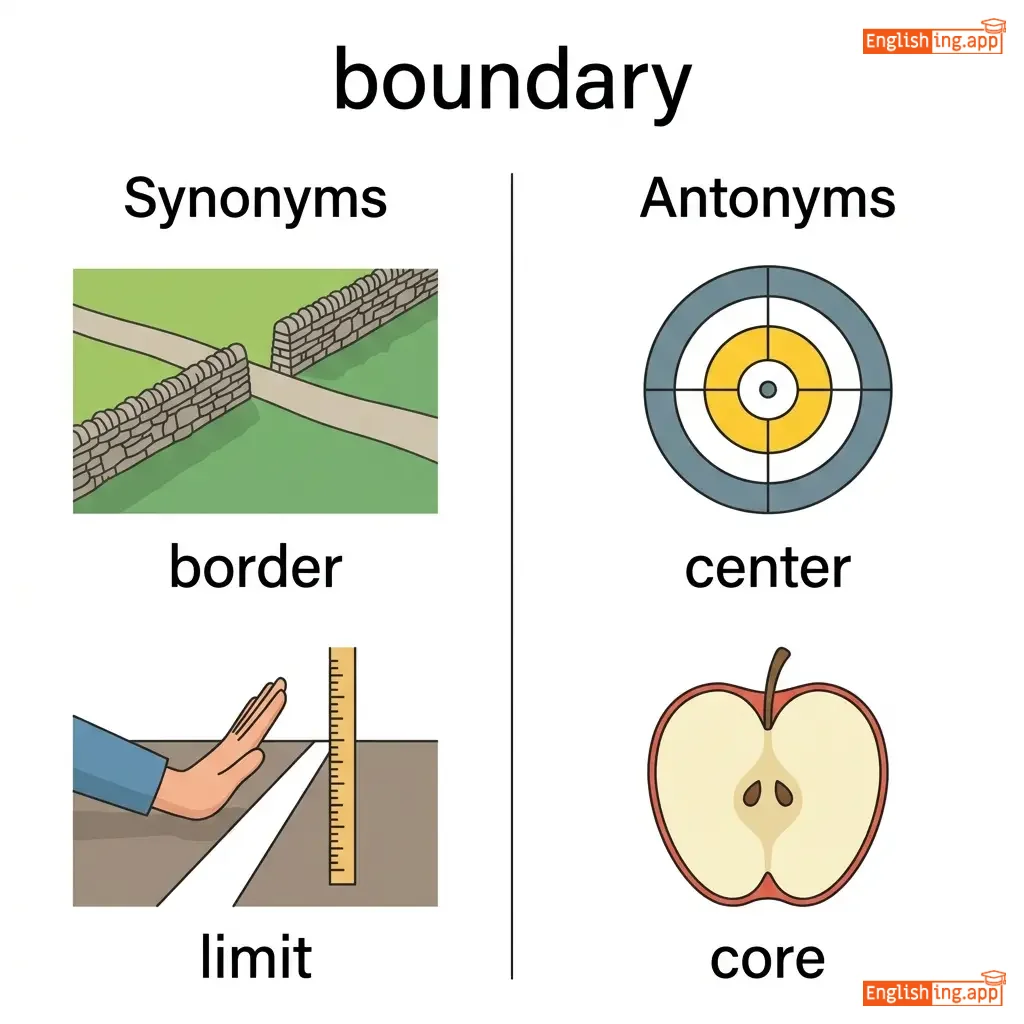
border, limit, edge, frontier
••••••
|
center, core, interior
••••••
|
national boundary, set boundaries, cross a boundary, boundary line
••••••
|
Boundary означает границу, как в футболе, где граница — это линия ворот.
••••••
|
|
#731
🙇
|
/baʊ/ (verb), /boʊ/ (noun)
verb
(bau)
••••••
|
- •••••• |
поклониться
poklonit'sya
••••••
|
bowed
baud
••••••
|
bowed
baud
••••••
|
bows
baus
••••••
|
bowing
bauing
••••••
|
to bend the upper part of the body forward as a sign of respect or greeting.
••••••
|
The performer bowed deeply after the show.
Исполнитель поклонился глубоко после шоу.
••••••
|
Исполнитель поклонился глубоко после шоу.
Ispolnitel' poklonilsya gluboko posle shou.
••••••
|
bow down
поклониться
••••••
|
to show deep respect or submission
••••••
|
поклониться глубоко
poklonit'sya gluboko
••••••
|
bend, incline, stoop, kneel, nod
••••••
|
stand, rise, resist
••••••
|
bow deeply, bow politely, bow down, bow before
••••••
|
Поклониться – это знак уважения или приветствия.
••••••
|
|
#732
🥣
|
/boʊl/
noun
(boul)
••••••
|
- •••••• |
миска
miska
••••••
|
- •••••• | - •••••• | - •••••• | - •••••• |
a round, deep dish used for holding food or liquids
••••••
|
She poured the soup into a large bowl. |
Она наливала суп в большую миску.
Ona nalivala sup v bol'shuyu miskу.
••••••
|
bowl over |
to surprise or impress someone greatly
••••••
|
поразить
porazit'
••••••
|
dish, vessel, container, basin
••••••
|
plate, flat surface
••••••
|
salad bowl, mixing bowl, cereal bowl, soup bowl
••••••
|
Bowl значит миска, представьте, как мяч падает в глубокую миску.
••••••
|
|
#733
📦
|
/bɑːks/
noun
(boks)
••••••
|
- •••••• |
коробка
korobka
••••••
|
- •••••• | - •••••• | - •••••• | - •••••• |
a container with flat sides, typically square or rectangular, used for storing things
••••••
|
He packed his clothes in a cardboard box.
Он упаковал свою одежду в картонную коробку.
••••••
|
Он упаковал свою одежду в картонную коробку.
On upakovav svoyu odezhdu v kartonnuyu korobku.
••••••
|
think outside the box
думать вне коробки
••••••
|
to think creatively and differently
••••••
|
думать вне коробки
dumat' vne korobki
••••••
|
container, case, carton, package, chest
••••••
|
openness, unboxed
••••••
|
gift box, wooden box, cardboard box, jewelry box
••••••
|
Коробка означает коробка, представьте, что вы кладете 'Книги' в коробку.
••••••
|
|
#734
🥊
|
/ˈbɒksər/
noun
(боксёр)
••••••
|
- •••••• |
боксёр; боксёрские трусы; порода собаки
boksyor; boksyorskie trusy; poroda sobaki
••••••
|
- •••••• | - •••••• | - •••••• | - •••••• |
a person who fights in the sport of boxing; a type of short loose-fitting underwear; a breed of medium-to-large dog
••••••
|
The boxer trained hard every morning before the championship match.
Зэ боксёр трэйнд хард эври морнинг бифор зэ чемпионшип мэтч.
••••••
|
Боксёр усердно тренировался каждое утро перед чемпионатом.
Boksyor userdno trenirovalsya kazhdoe utro pered chempionatom
••••••
|
boxer shorts
боксер шортс
••••••
|
loose-fitting men's underwear
••••••
|
боксёрские трусы
boksyorskie trusy
••••••
|
fighter, pugilist, contender, athlete
••••••
|
pacifist, noncombatant
••••••
|
professional boxer, heavyweight boxer, trained boxer, champion boxer
••••••
|
BOX + ёр = боксёр
••••••
|
|
#735
🥊
|
/ˈbɒksɪŋ/
noun; gerund
(боксинг)
••••••
|
- •••••• |
бокс
boks
••••••
|
- •••••• | - •••••• | - •••••• |
boxing
боксинг
••••••
|
the sport of fighting with fists using padded gloves; the act of putting something into a box
••••••
|
He has been training hard for a professional boxing match.
Он усердно тренируется к боксерскому поединку.
••••••
|
Он усердно тренируется к боксерскому поединку.
on userdno treniruetsya k boksyorskomu poedinku
••••••
|
boxing match
боксерский матч
••••••
|
an organized fight between two boxers
••••••
|
боксерский матч
bokserskii match
••••••
|
prizefighting, pugilism, fighting, sparring
••••••
|
peace, nonviolence
••••••
|
boxing match, boxing ring, boxing gloves, professional boxing
••••••
|
Boxing звучит как бокс — это и есть бокс
••••••
|
|
#736
👦
|
/bɔɪ/
noun
(boi)
••••••
|
- •••••• |
мальчик
malchik
••••••
|
- •••••• | - •••••• | - •••••• | - •••••• |
a male child or young male person
••••••
|
The boy ran across the playground. |
Мальчик бегал по игровой площадке.
Malchik begal po igrovoy ploshchadke.
••••••
|
boys will be boys |
a phrase implying that boys or men often behave in certain stereotypical ways
••••••
|
мальчики всегда будут мальчиками
malchiki vsegda budut malchikami
••••••
|
lad, youngster, child, son, male
••••••
|
girl, female, woman
••••••
|
little boy, young boy, school boy, boy scout
••••••
|
Boy означает мальчик, как 'Boy' и 'Brat' оба означают парня.
••••••
|
|
#737
🚫
|
/ˈbɔɪkɒt/
verb
(бойкот)
••••••
|
|
бойкотировать
boikotirovat
••••••
|
boycotted
бойкотировал
••••••
|
boycotted
бойкотировал
••••••
|
boycotts
бойкотирует
••••••
|
boycotting
бойкотируя
••••••
|
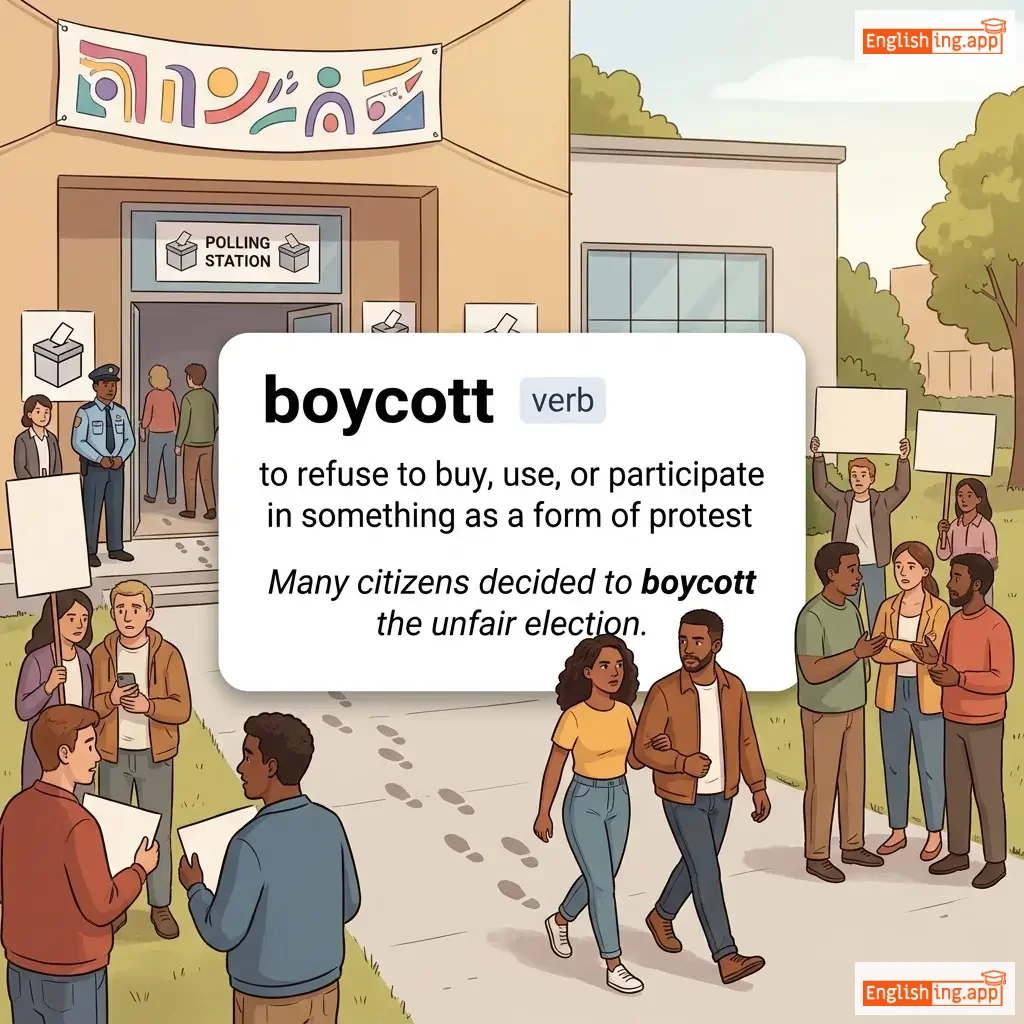
to refuse to buy, use, or participate in something as a form of protest
••••••
|
Many citizens decided to boycott the unfair election.
Многие граждане решили бойкотировать несправедливые выборы.
••••••
|
Многие граждане решили бойкотировать несправедливые выборы.
Mnogie grazhdane reshilí boykotirovat' nespravedlivye vyibory.
••••••
|
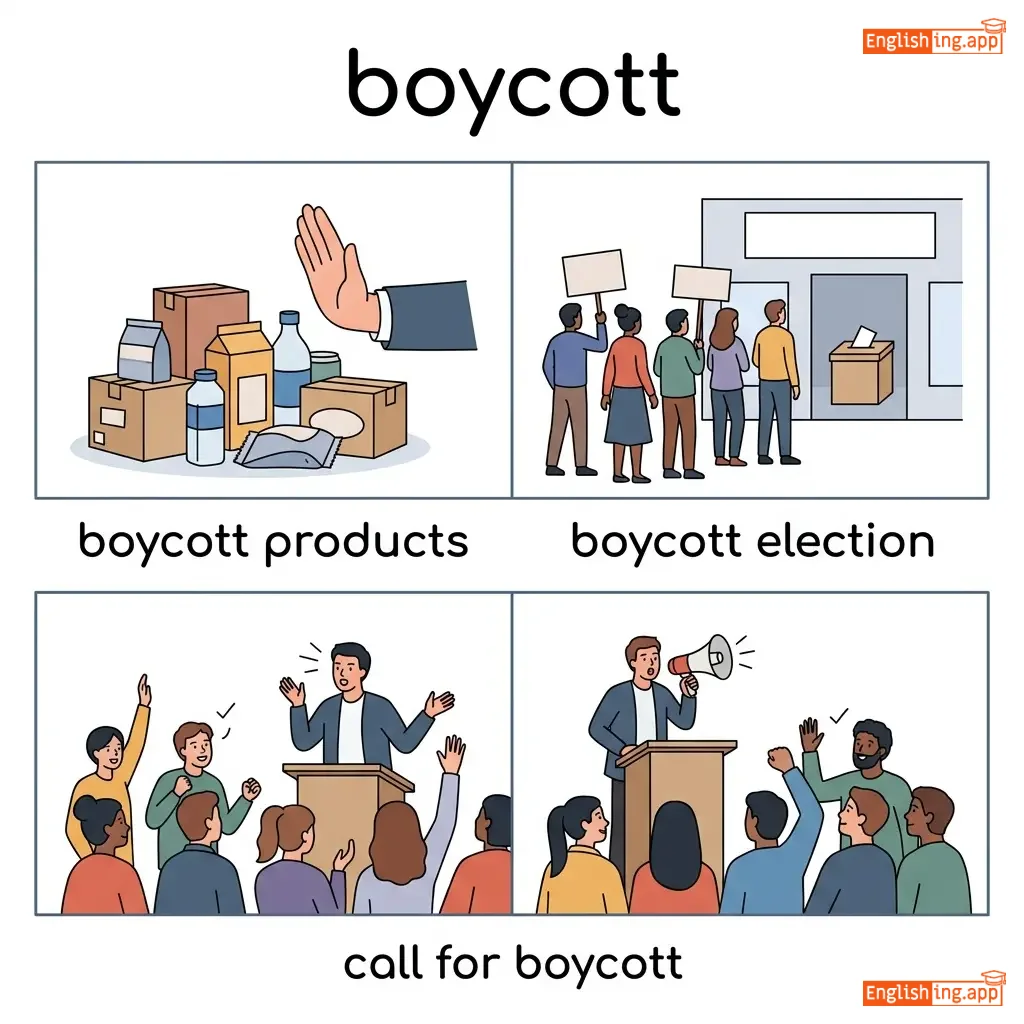
call for a boycott
призыв к бойкоту
••••••
|
an appeal to stop buying or using something in protest
••••••
|
призыв к бойкоту
prizyv k boykotu
••••••
|
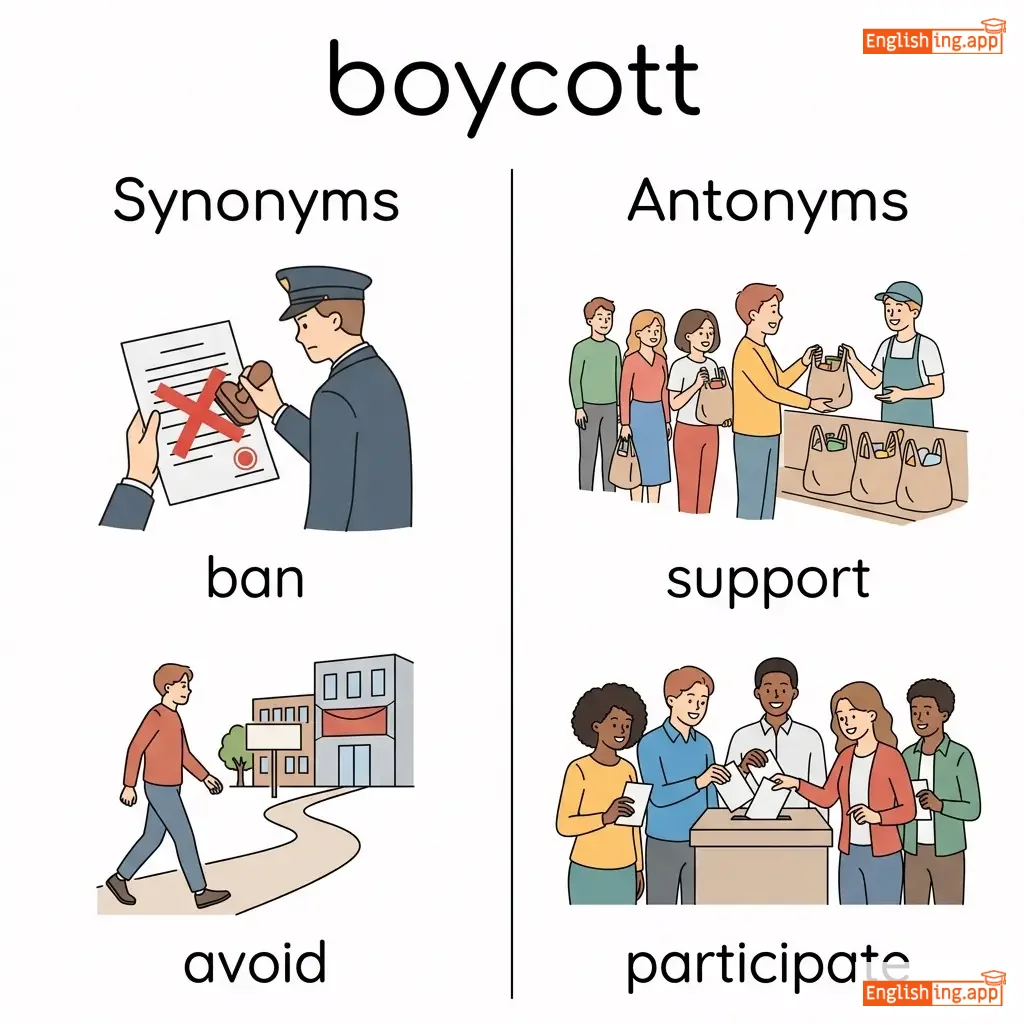
ban, avoid, refuse, shun, embargo
••••••
|
support, participate, endorse
••••••
|
boycott products, boycott election, call for boycott
••••••
|
Boycott = Boy + kot = Призыв не покупать что-либо
••••••
|
|
#738
👨❤️👩
|
/ˈbɔɪˌfrɛnd/
noun
(бойфренд)
••••••
|
- •••••• |
бойфренд
bojfrend
••••••
|
- •••••• | - •••••• | - •••••• | - •••••• |
a man or boy that someone is having a romantic or close relationship with
••••••
|
She introduced her boyfriend to her parents.
Она познакомила своего бойфренда со своими родителями.
••••••
|
Она познакомила своего бойфренда со своими родителями.
Ona poznakomila svoego bojfrenda so svoimi roditelyami.
••••••
|
- •••••• | - •••••• | - •••••• |
partner, companion, lover, date
••••••
|
girlfriend, enemy
••••••
|
new boyfriend, old boyfriend, serious boyfriend, high school boyfriend
••••••
|
Бойфренд = boy + friend: Представь мальчика-друга, который стал твоим романтическим партнером; бойфренд — это как 'boy' встречает 'friend' и начинается история любви.
••••••
|
|
#739
👙
|
/brɑː/
noun
(бра)
••••••
|
- •••••• |
бюстгальтер
byustgalter
••••••
|
- •••••• | - •••••• | - •••••• | - •••••• |
a woman's undergarment worn to support and cover the breasts
••••••
|
She bought a comfortable bra for everyday wear.
Ши бот э камфортабл бра фор эвридей веа.
••••••
|
Она купила удобный бюстгальтер для повседневной носки.
ona kupila udobnyi byustgalter dlya povsednevnoi noski
••••••
|
- •••••• | - •••••• | - •••••• |
brassiere, undergarment, bust support, lingerie piece
••••••
|
shirt, outerwear
••••••
|
sports bra, lace bra, padded bra, strapless bra
••••••
|
Bra = бюстгальтер—оба поддерживают грудь.
••••••
|
|
#740
🦾
|
/breɪs/
noun; verb
(брейс)
••••••
|
- •••••• |
скоба; готовиться
skoba; gotovitsya
••••••
|
braced
брейст
••••••
|
braced
брейст
••••••
|
braces
брейсиз
••••••
|
bracing
брейсинг
••••••
|
a device that supports or strengthens something; to prepare mentally or physically for something difficult
••••••
|
She braced herself for the strong wind.
ши брейст херселф фор зе стронг винд
••••••
|
Она подготовилась к сильному ветру.
ona podgotovilas k silnomu vetru
••••••
|
brace yourself
брейс йорселф
••••••
|
prepare for something difficult or surprising
••••••
|
готовься
gotovsia
••••••
|
support, reinforce, prepare, steady, fortify
••••••
|
weaken, relax, loosen
••••••
|
brace yourself, knee brace, brace for impact, dental brace
••••••
|
Brace — будь готов, как перед бурей.
••••••
|
|
#741
😏
|
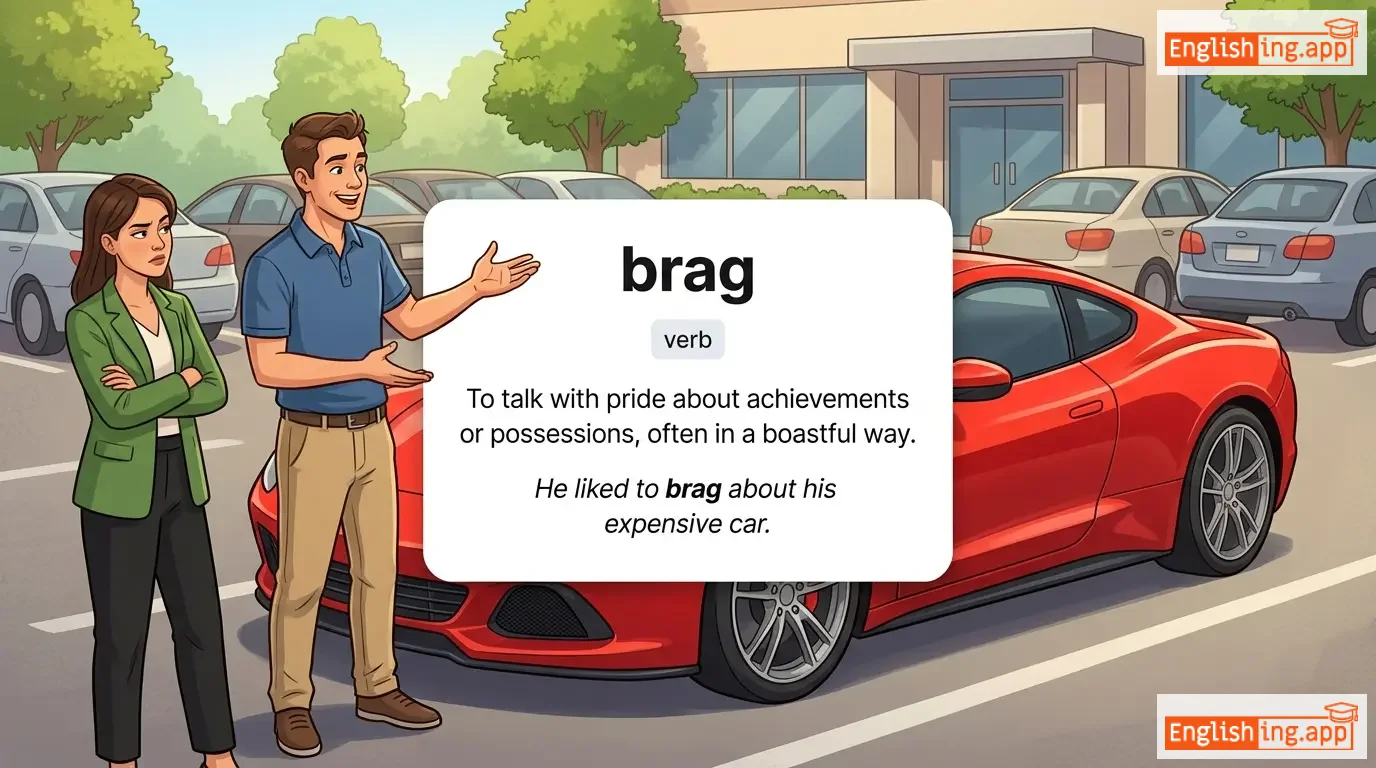
/bræɡ/
verb
(брэɡ)
••••••
|
|
хвастаться
khvastat'sya
••••••
|
bragged
брэгд
••••••
|
bragged
брэгд
••••••
|
brags
брэгз
••••••
|
bragging
брэгɪнг
••••••
|
To talk with pride about achievements or possessions, often in a boastful way.
••••••
|
He liked to brag about his expensive car.
Ему нравилось хвастаться своей дорогой машиной.
••••••
|
Ему нравилось хвастаться своей дорогой машиной.
Emu nravilos' khvastat'sya svoey dorogoy mashinoy.
••••••
|
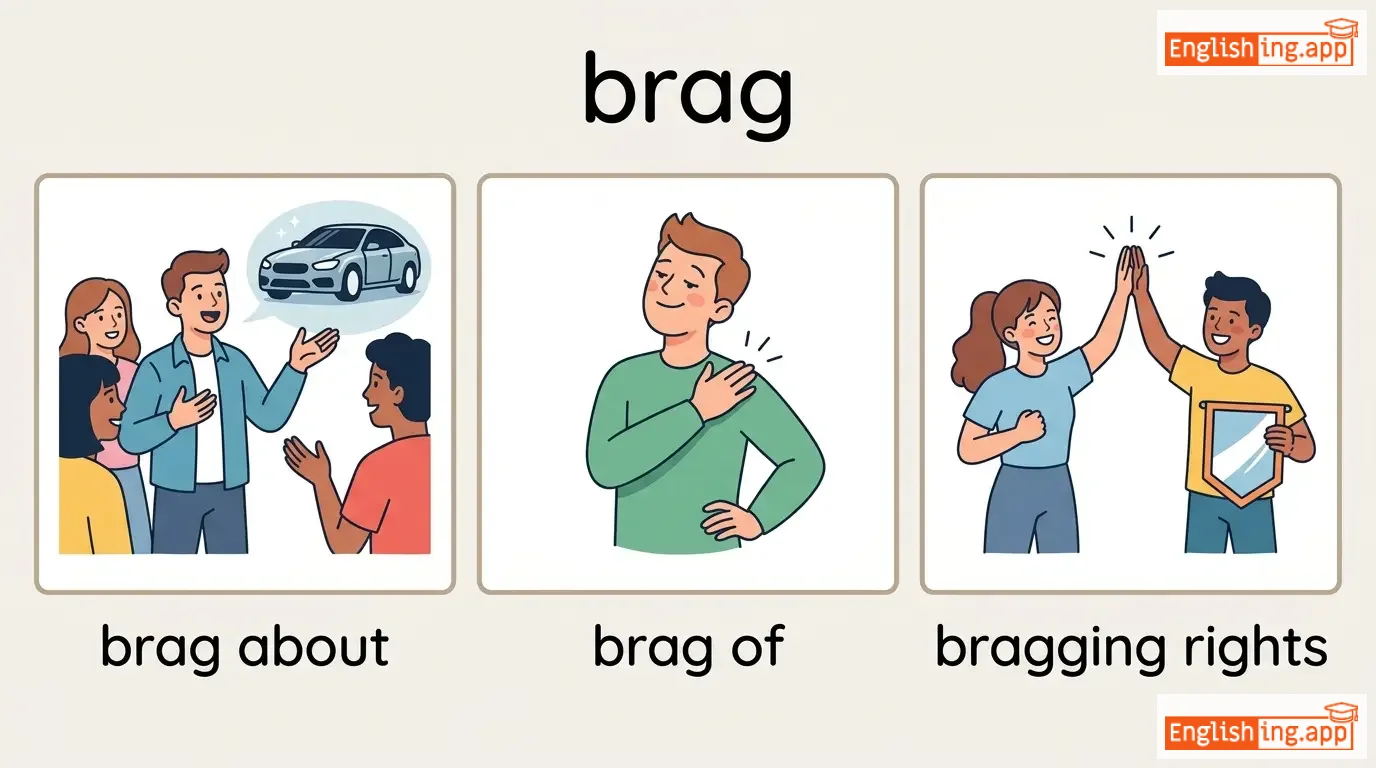
bragging rights
права на хвастовство
••••••
|
The right to boast about something special one has achieved.
••••••
|
права на хвастовство
prava na khvastovstvo
••••••
|
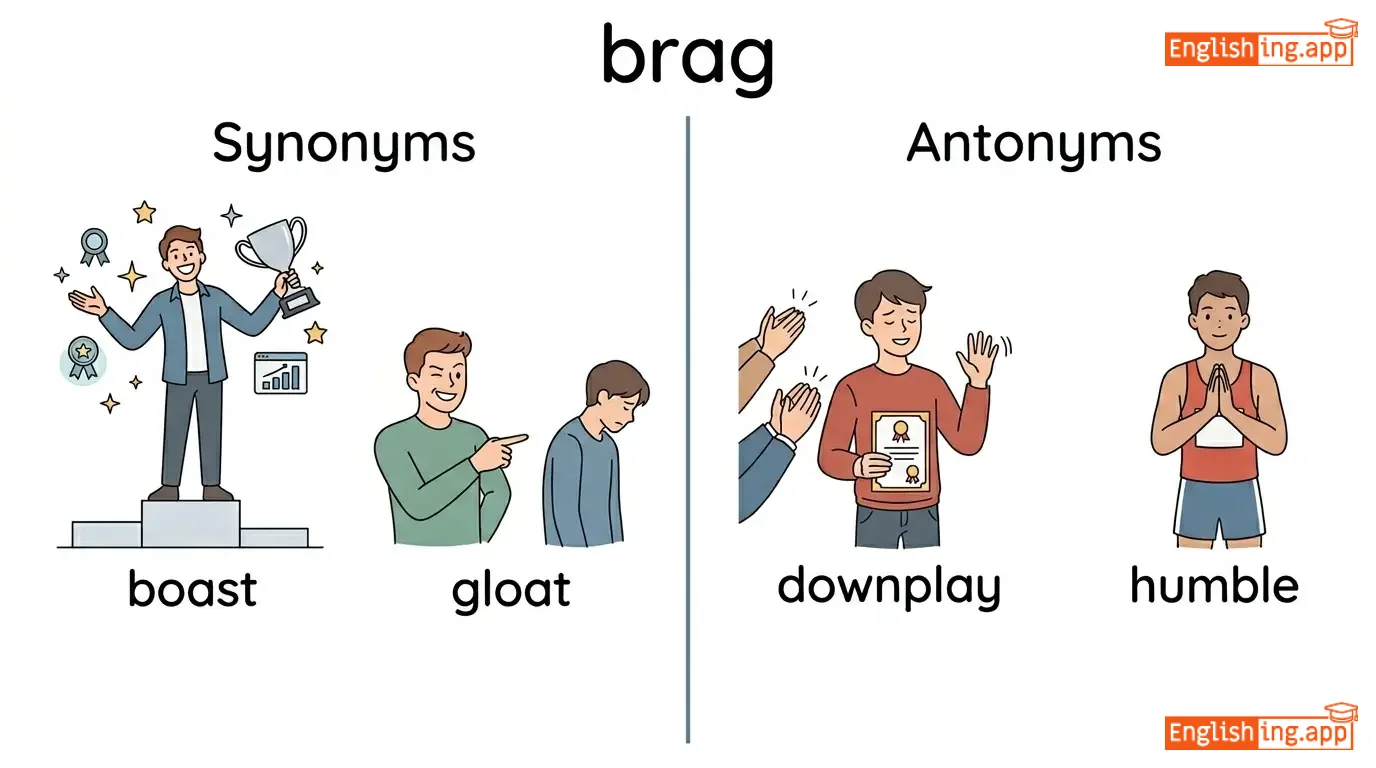
boast, gloat, show off, flaunt
••••••
|
downplay, humble
••••••
|
brag about, brag of, bragging rights
••••••
|
Brag означает хвастаться, когда хочется показать, что ты особенный.
••••••
|
|
#742
🧠
|
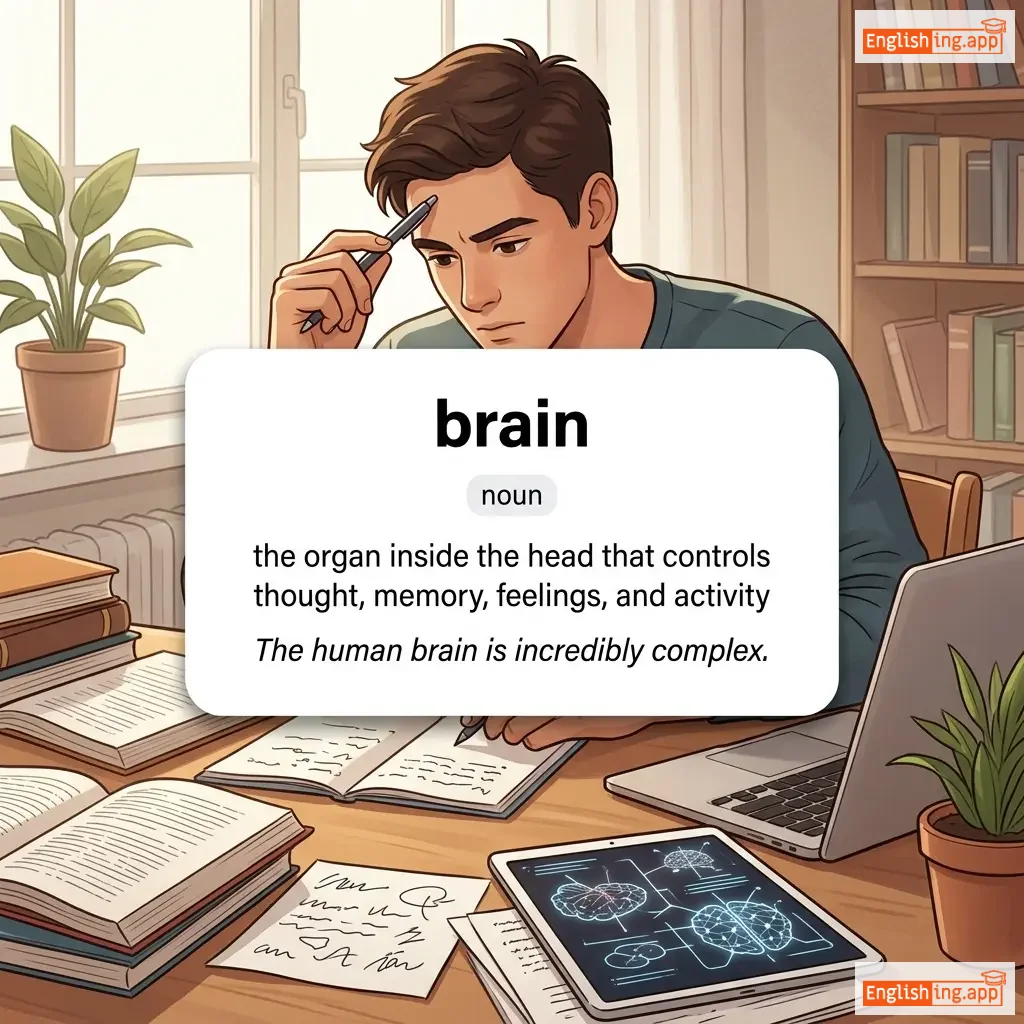
/breɪn/
noun
(бɾеɪн)
••••••
|
|
мозг
mozg
••••••
|
- •••••• | - •••••• | - •••••• | - •••••• |
the organ inside the head that controls thought, memory, feelings, and activity
••••••
|
The human brain is incredibly complex. |
Человеческий мозг невероятно сложен.
Chelovecheskij mozg neveroyatno slozhen.
••••••
|
rack your brain |
to think very hard about something
••••••
|
ломать голову
lomat' golovu
••••••
|
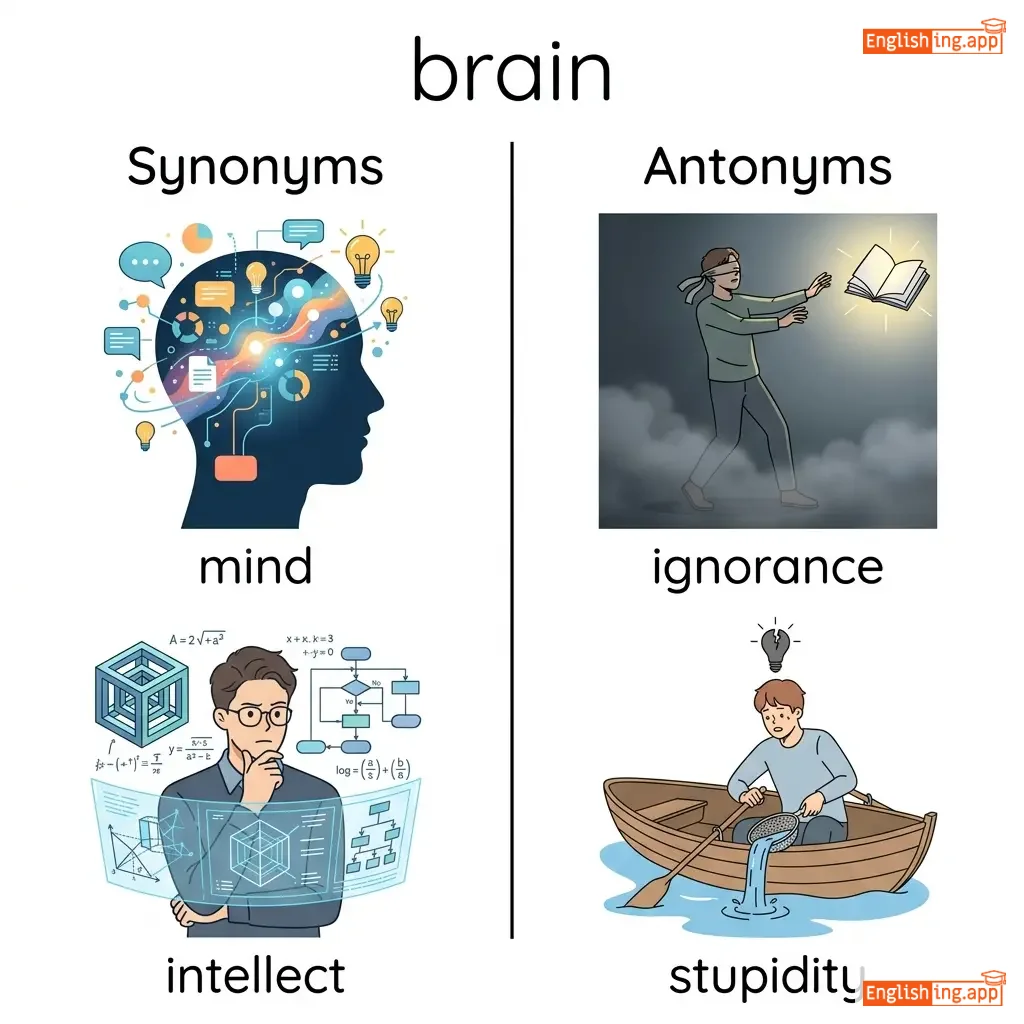
mind, intellect, intelligence, head
••••••
|
ignorance, stupidity
••••••
|
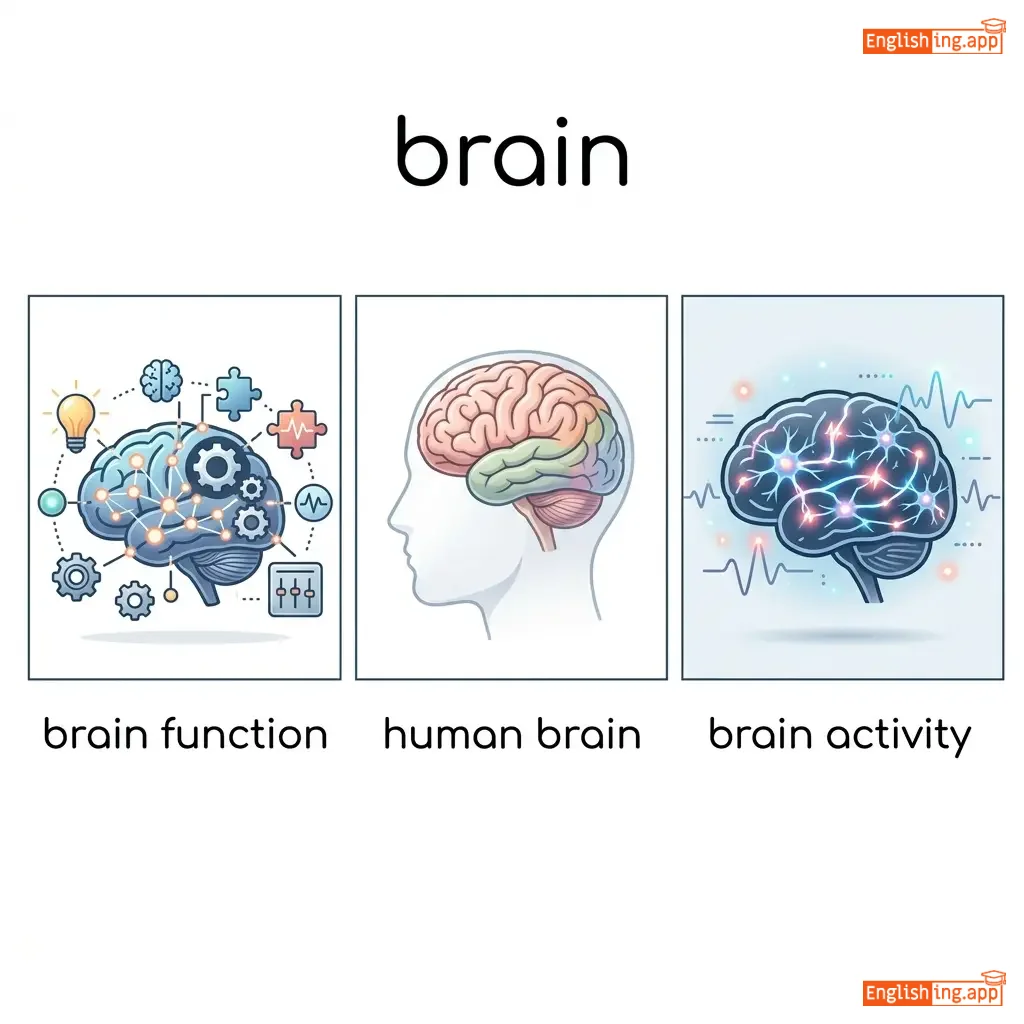
brain function, human brain, brain activity, brain power
••••••
|
Мозг, как ‘мозговой шторм’ - думай глубже!
••••••
|
|
#743
🧠
|
/ˈbreɪnˌwɒʃ/
verb, noun
(брейнвош)
••••••
|
- •••••• |
промывать мозги
promyvat mozgi
••••••
|
brainwashed
брейнвошт
••••••
|
brainwashed
брейнвошт
••••••
|
brainwashes
брейнвошит
••••••
|
brainwashing
брейнвошинг
••••••
|
to manipulate someone into adopting certain beliefs by repeated pressure or propaganda; the act or process of such manipulation
••••••
|
The group tried to brainwash new members with constant propaganda.
Группа пыталась брейнвошить новых участников.
••••••
|
Группа пыталась промывать мозги новым участникам.
Gruppa pytalas promyvat mozgi novym uchastnikam
••••••
|
brainwash someone
брейнвошить кого-то
••••••
|
to strongly influence someone to accept certain ideas without questioning
••••••
|
промывать мозги
promyvat mozgi
••••••
|
indoctrinate, manipulate, condition, program, influence
••••••
|
educate, enlighten, inform
••••••
|
brainwash people, political brainwashing, systematic brainwashing, attempt to brainwash
••••••
|
Wash brain = промывать мозги
••••••
|
|
#744
🌿
|
/bræntʃ/
noun, verb
(branch)
••••••
|
- •••••• |
ветка
vetka
••••••
|
branched
branchd
••••••
|
branched
branchd
••••••
|
branches
branches
••••••
|
branching
branching
••••••
|
A part of a tree that grows out from the trunk; a division of an organization or subject.
••••••
|
The company opened a new branch in Dhaka.
Компания открыла новый филиал в Дакке.
••••••
|
Компания открыла новый филиал в Дакке.
Kompaniya otkryla novyy filial v Dakke.
••••••
|
branch out
расширяться
••••••
|
to expand into new areas or activities
••••••
|
расширяться
rasshiryat'sya
••••••
|
limb, division, department, subdivision
••••••
|
root, trunk
••••••
|
tree branch, bank branch, branch office, branch out
••••••
|
Ветка дерева, филиал компании.
••••••
|
|
#745
🏷️
|
/brænd/
noun
(брэнд)
••••••
|
- •••••• |
бренд
brend
••••••
|
- •••••• | - •••••• | - •••••• | - •••••• |
a type of product manufactured by a company under a particular name
••••••
|
Nike is a popular brand of sportswear. |
Nike - популярный бренд спортивной одежды.
Nike - populyarnyy brend sportivnoy odezhdy.
••••••
|
brand new |
completely new, unused
••••••
|
совершенно новый
sovershenno novyy
••••••
|
label, trademark, logo, mark
••••••
|
generic, unbranded
••••••
|
brand name, popular brand, brand image, build a brand
••••••
|
Бренд - это как имя; каждая компания имеет свой бренд, например, Nike.
••••••
|
|
#746
🦁
|
/breɪv/
adjective
(брейв)
••••••
|
- •••••• |
смелый
smelyj
••••••
|
- •••••• | - •••••• | - •••••• | - •••••• |
showing courage in the face of danger or difficulty
••••••
|
The brave firefighter rushed into the burning building. |
Смелый пожарный бросился в горящее здание.
Smelyj pozharnyj brosilsya v goryashchee zdanie.
••••••
|
put on a brave face |
to pretend to be confident and cheerful despite difficulties
••••••
|
сделать смелое лицо
sdelat' smeloe litso
••••••
|
courageous, valiant, fearless, heroic, bold
••••••
|
cowardly, fearful, timid
••••••
|
brave man, brave soldier, brave attempt, brave enough
••••••
|
Brave означает 'смелый', как лев – сильный и без страха.
••••••
|
|
#747
🦁
|
/ˈbreɪ.vər.i/
noun
(брэвери)
••••••
|
|
храбрость
khrabrost
••••••
|
- •••••• | - •••••• | - •••••• | - •••••• |
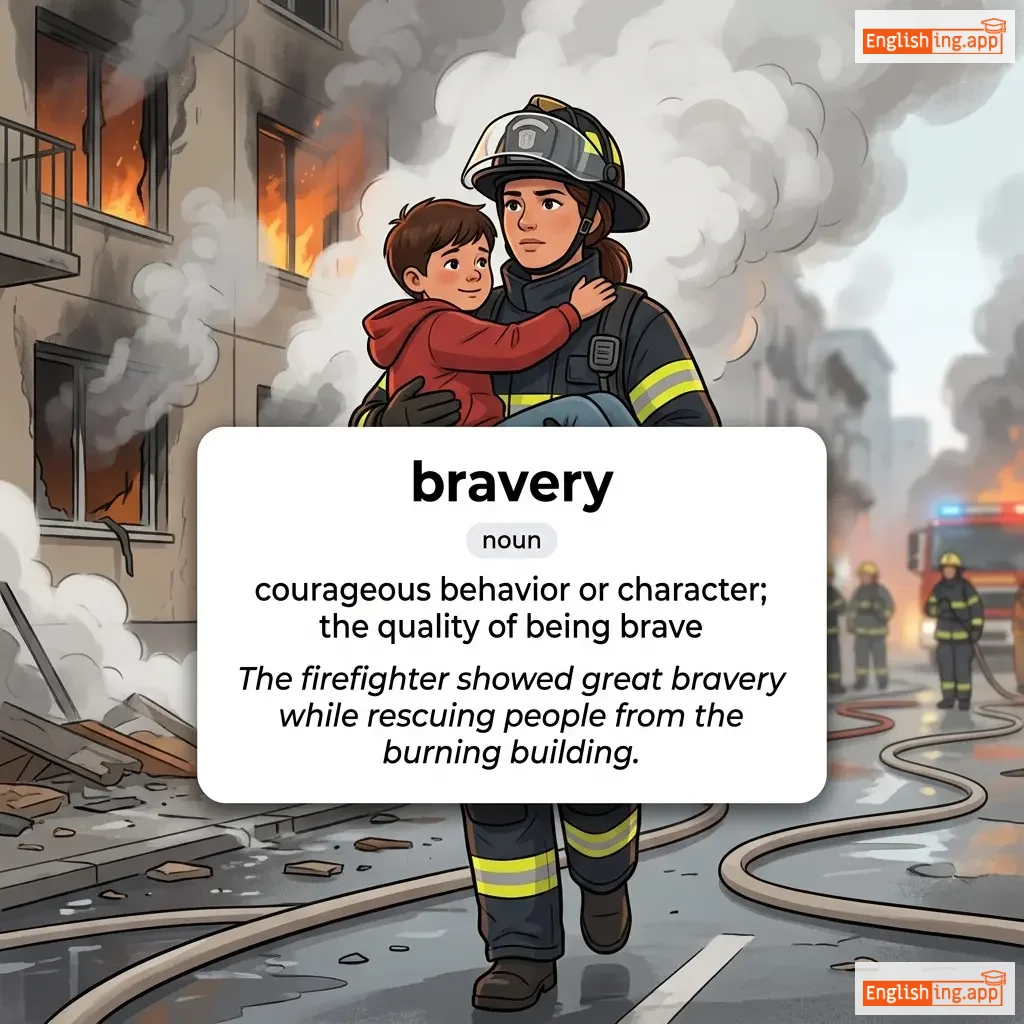
courageous behavior or character; the quality of being brave
••••••
|
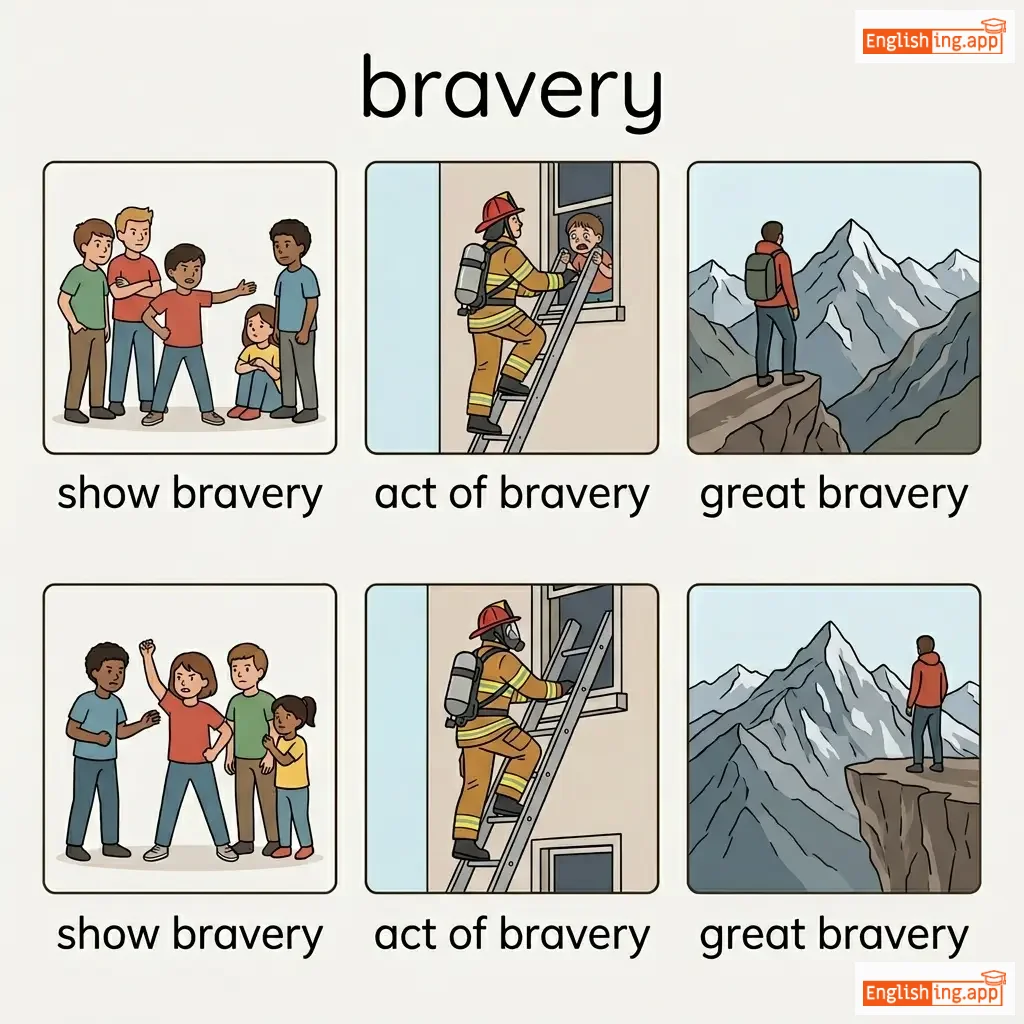
The firefighter showed great bravery while rescuing people from the burning building. |
Пожарный проявил большую храбрость, спасая людей из горящего здания.
Pozharnyi proyavil bol'shuyu khrabrost', spasaya lyudey iz goryashchego zdaniya.
••••••
|
- •••••• | - •••••• | - •••••• |
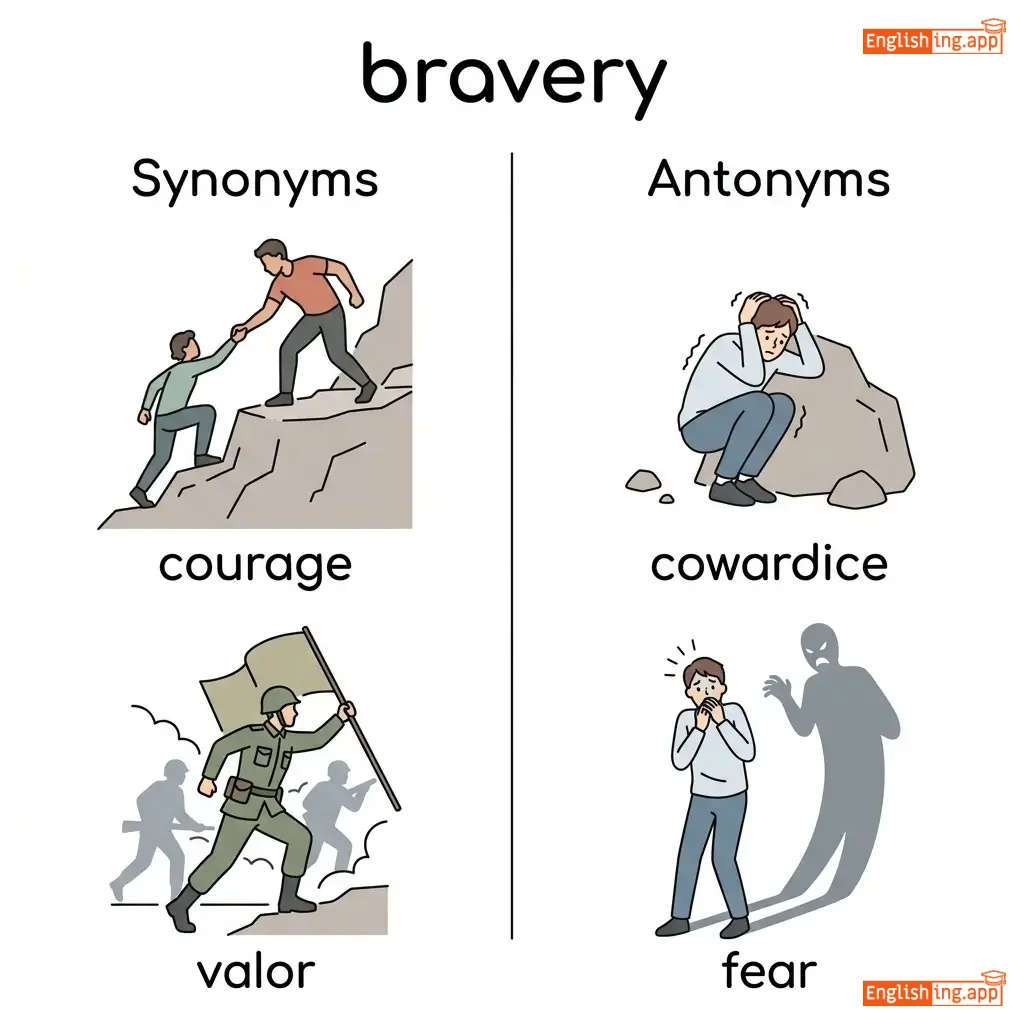
courage, valor, heroism, gallantry
••••••
|
cowardice, fear, timidity
••••••
|
show bravery, act of bravery, great bravery
••••••
|
Bravery is about acting in the face of danger.
••••••
|
|
#748
🐴
|
/breɪ/
verb
(брей)
••••••
|
- •••••• |
ржание
rzhaniye
••••••
|
brayed
брэид
••••••
|
brayed
брэид
••••••
|
brays
брейс
••••••
|
braying
бреинг
••••••
|
To make a loud, harsh sound like a donkey.
••••••
|
The donkey began to bray loudly in the field.
Осёл начал громко брести на поле.
••••••
|
Осёл начал громко ржать на поле.
Os'yol nachal gromko rzhat' na pole.
••••••
|
bray like a donkey
брести как осёл
••••••
|
To speak or laugh in a loud, harsh, and unpleasant way.
••••••
|
Ржать как осёл
Rzhat' kak os'yol
••••••
|
heehaw, bawl, cry, yell
••••••
|
whisper, murmur
••••••
|
bray loudly, donkey bray, braying sound
••••••
|
Когда осёл ржёт, это напоминает 'ржание' 🐴
••••••
|
|
#749
🚨
|
/briːtʃ/
noun, verb
(бриш)
••••••
|
|
нарушение
narushenie
••••••
|
breached
бришд
••••••
|
breached
бришд
••••••
|
breaches
бришес
••••••
|
breaching
бришинг
••••••
|
An act of breaking or failing to observe a law, agreement, or code of conduct; to break through.
••••••
|
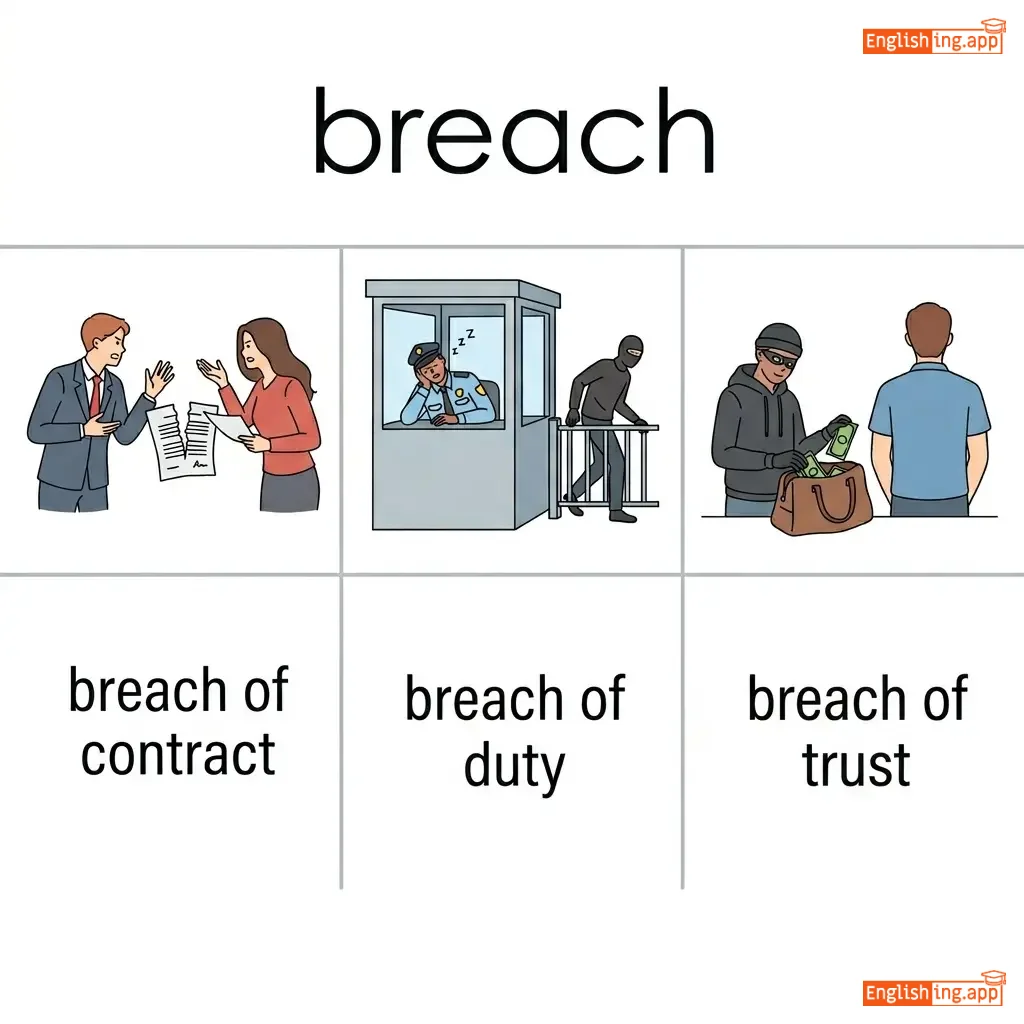
The company was fined for a breach of contract.
Компания была оштрафована за нарушение контракта.
••••••
|
Компания была оштрафована за нарушение контракта.
Kompaniya byla oshtrafovana za narushenie kontrakta.
••••••
|
breach of trust
нарушение доверия
••••••
|
A violation of confidence or duty.
••••••
|
нарушение доверия
narushenie doveriya
••••••
|
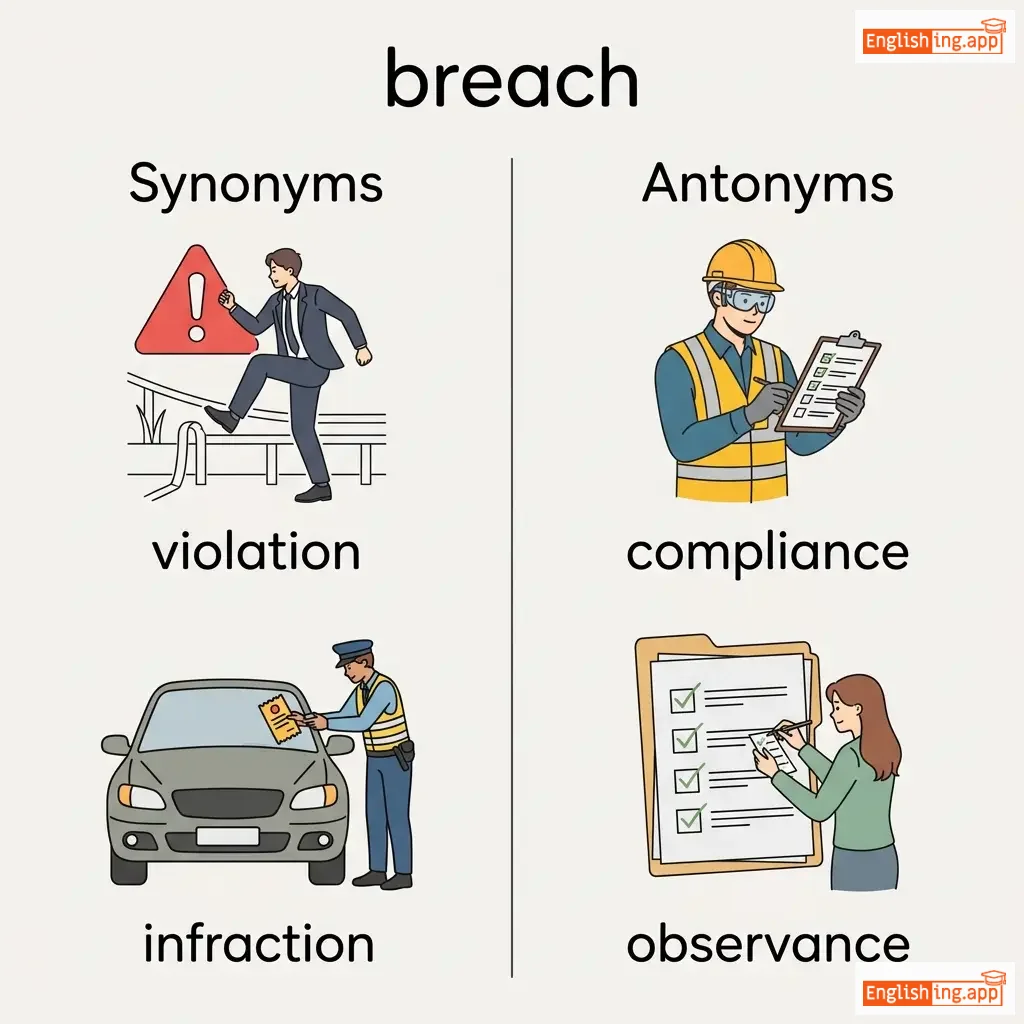
violation, infraction, contravention, infringement, rupture
••••••
|
compliance, observance, respect
••••••
|
breach of contract, breach of duty, breach of trust, security breach
••••••
|
Breach — это нарушение. Нарушение контракта или доверия.
••••••
|
|
#750
🍞
|
/brɛd/
noun
(брэд)
••••••
|
- •••••• |
хлеб
khleb
••••••
|
- •••••• | - •••••• | - •••••• | - •••••• |
A type of food made from flour, water, and yeast, mixed and baked.
••••••
|
She bought a loaf of bread from the bakery.
Она купила буханку хлеба в пекарне.
••••••
|
Она купила буханку хлеба в пекарне.
Ona kupila bukhanku khleba v pekarne.
••••••
|
break bread
делить хлеб
••••••
|
to share a meal with someone, often signifying friendship
••••••
|
делить хлеб
delit khleb
••••••
|
loaf, bun, roll, baguette, toast
••••••
|
meat, rice
••••••
|
slice of bread, loaf of bread, white bread, brown bread
••••••
|
Picture a loaf shouting 'khleb bread!' - khleb is хлеб, bread in Russian.
••••••
|
|
#751
📏
|
/brɛdθ/
noun
(bredth)
••••••
|
- •••••• |
ширина
shirina
••••••
|
- •••••• | - •••••• | - •••••• | - •••••• |
The distance or measurement from side to side; width; a wide range.
••••••
|
The breadth of his knowledge impressed everyone. |
Ширина его знаний впечатлила всех.
Shirina ego znaniy vpechatlila vsekh.
••••••
|
- •••••• | - •••••• | - •••••• |
width, span, range, scope, extent
••••••
|
narrowness, limitation
••••••
|
breadth of knowledge, breadth of experience, breadth of vision
••••••
|
Хлеб (Bread) широкий—Breadth означает ширина.
••••••
|
|
#752
💔
|
/breɪk/
verb, noun
(бɾеɪк)
••••••
|
|
ломать / пауза
lomat' / pauza
••••••
|
broke
броʊк
••••••
|
broken
броʊкэн
••••••
|
breaks
бɾеɪкс
••••••
|
breaking
бɾеɪкинɡ
••••••
|
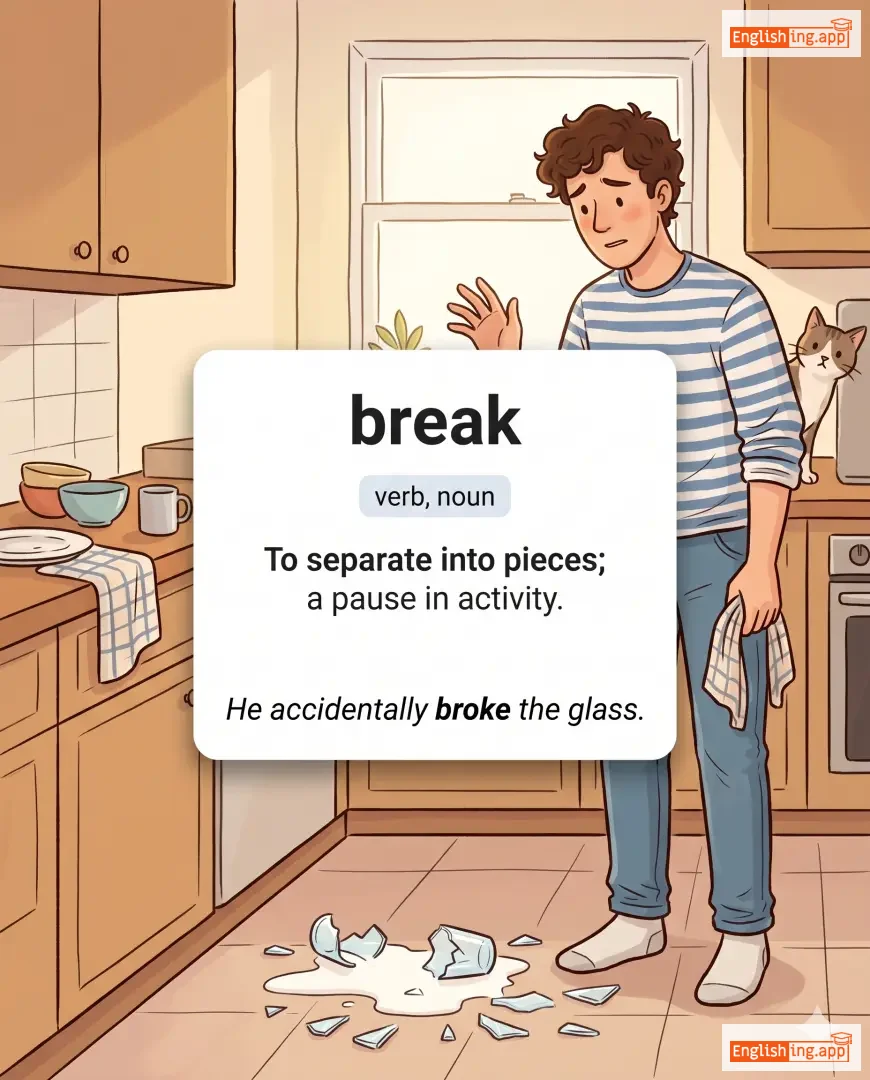
To separate into pieces; a pause in activity.
••••••
|
He accidentally broke the glass.
хи аксидентали броʊк зэ глэс
••••••
|
Он случайно разбил стакан.
On sluchayno razbil stakan.
••••••
|
take a break
тэйк э брэйк
••••••
|
to rest for a short time
••••••
|
сделать перерыв
sdelat' pereryv
••••••
|
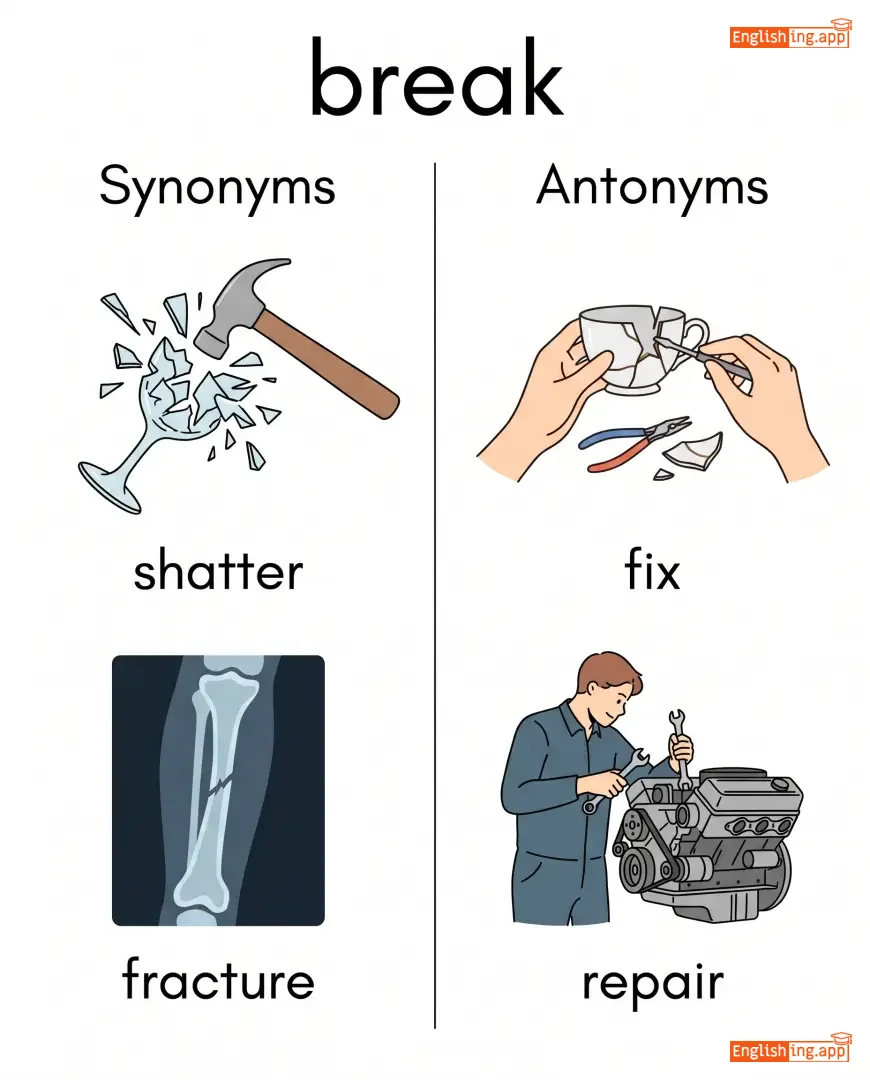
shatter, fracture, smash, pause, recess
••••••
|
fix, repair, continue
••••••
|
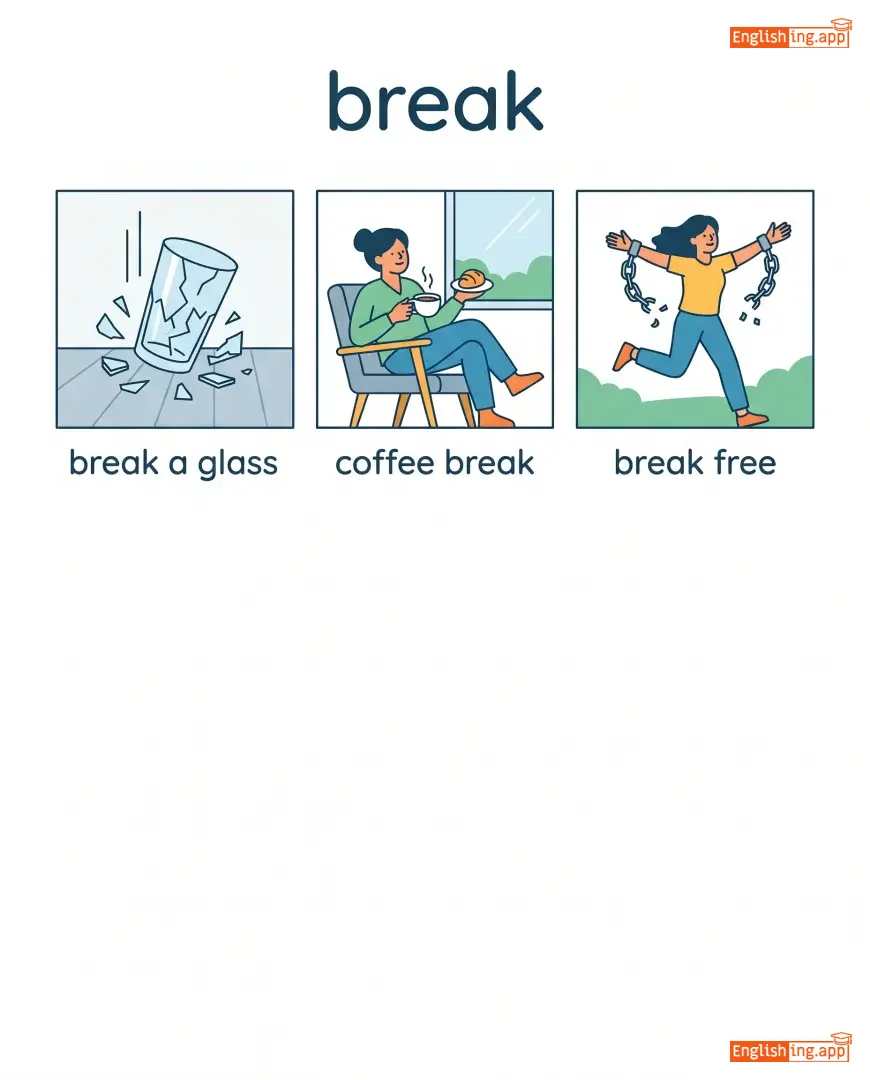
break a glass, coffee break, break free, break the law
••••••
|
Break значит ломать, и Break значит перерыв.
••••••
|
|
#753
🔧
|
/ˈbrɛkdaʊn/
noun
(ˈbrɛkdaʊn)
••••••
|
- •••••• |
поломка
polomka
••••••
|
- •••••• | - •••••• | - •••••• | - •••••• |
a failure or collapse of a system or machinery
••••••
|
The car had a breakdown on the highway. |
У машины произошла поломка на шоссе.
U mashiny proizoshla polomka na shosse.
••••••
|
- •••••• | - •••••• | - •••••• |
failure, malfunction, collapse, crash
••••••
|
repair, recovery
••••••
|
engine breakdown, car breakdown, system breakdown, total breakdown
••••••
|
Поломка — это 'breakdown' по-русски, вспомни поломку машины.
••••••
|
|
#754
🥞
|
/ˈbrɛkfəst/
noun
(брекфаст)
••••••
|
- •••••• |
завтрак
zavtrak
••••••
|
- •••••• | - •••••• | - •••••• | - •••••• |
The first meal of the day, usually eaten in the morning.
••••••
|
We had eggs and toast for breakfast.
На завтрак у нас были яйца и тосты.
••••••
|
На завтрак у нас были яйца и тосты.
Na zavtrak u nas byli yaytsa i tosty.
••••••
|
have breakfast
завтракать
••••••
|
to eat the first meal of the day
••••••
|
завтракать
zavtrakat
••••••
|
morning meal, brunch, repast, first meal
••••••
|
dinner, supper
••••••
|
healthy breakfast, big breakfast, skip breakfast, have breakfast
••••••
|
Zavtrak mnemonic: za + vtrak = for + track, remember that breakfast kicks off the day
••••••
|
|
#755
💡
|
/ˈbrɛkθruː/
noun
••••••
|
|
- •••••• | - •••••• | - •••••• | - •••••• | - •••••• |
a significant or sudden advance or discovery
••••••
|
The scientist made a breakthrough in cancer research. |
- •••••• | - •••••• | - •••••• | - •••••• |
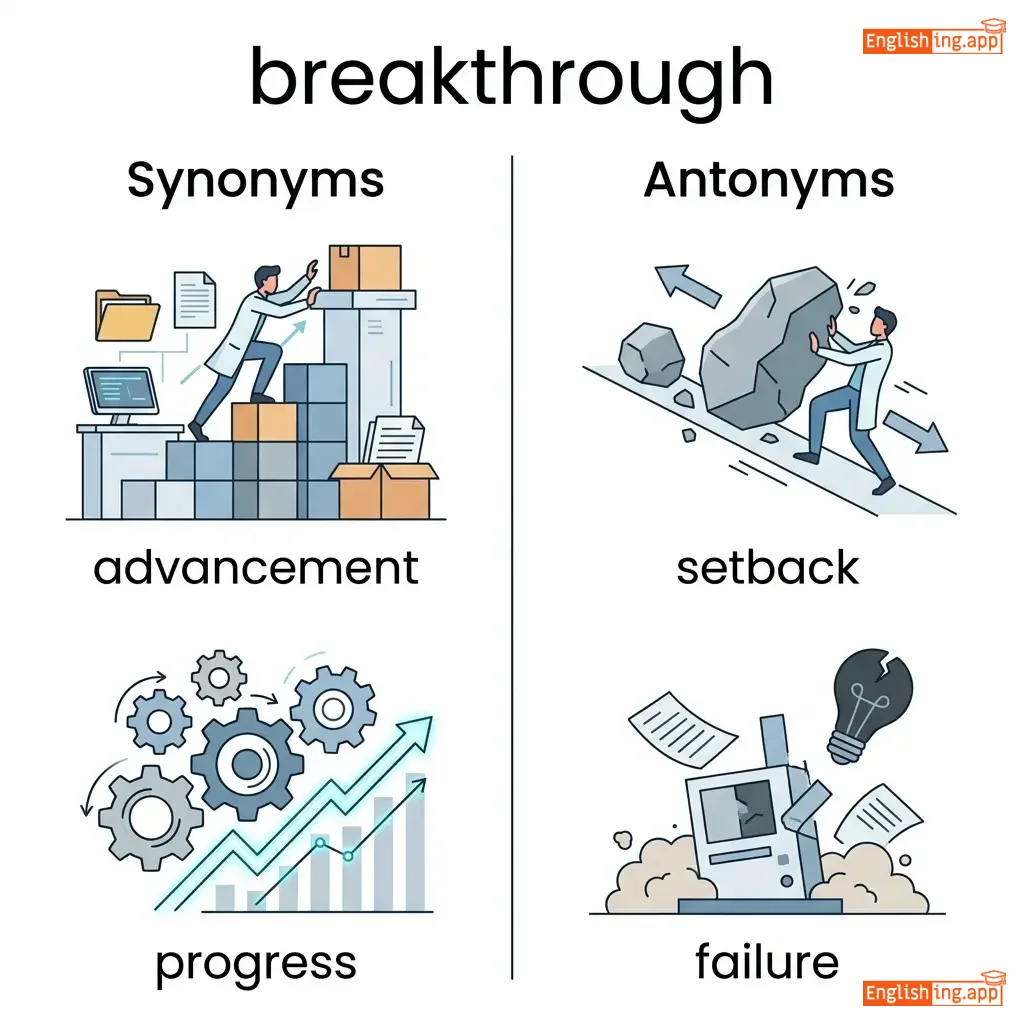
advancement, progress, discovery, innovation
••••••
|
setback, failure
••••••
|
scientific breakthrough, medical breakthrough, technological breakthrough
••••••
|
No •••••• |
|
#756
👩🍼
|
/brɛst/
noun
(брест)
••••••
|
- •••••• |
грудь
grud
••••••
|
- •••••• | - •••••• | - •••••• | - •••••• |
Either of the two soft, rounded parts on a woman’s chest that produce milk after childbirth.
••••••
|
The baby was fed from his mother's breast. |
Ребенок был накормлен грудью своей матери.
Rebyonok byl nakormlen grudy svoey materi.
••••••
|
make a clean breast of |
to confess or admit something openly
••••••
|
открыто признаться
otkryto priznat'sya
••••••
|
bosom, chest, bust, mammary
••••••
|
back, spine
••••••
|
breast cancer, breast milk, chicken breast, breast surgery
••••••
|
Breast означает грудь, мать кормит ребенка грудью.
••••••
|
|
#757
💨
|
/brɛθ/
noun
(брэθ)
••••••
|
- •••••• |
дыхание
dykhanie
••••••
|
- •••••• | - •••••• | - •••••• | - •••••• |
The air taken into or expelled from the lungs during breathing.
••••••
|
He took a deep breath before speaking. |
Он сделал глубокий вдох перед тем, как заговорить.
On sdelal glubokiy vdokh pered tem, kak zagovorit'.
••••••
|
catch one's breath |
to rest or pause to recover normal breathing
••••••
|
поймать дыхание
poymat' dykhaniye
••••••
|
inhalation, exhalation, respiration, gasp
••••••
|
suffocation, choking
••••••
|
deep breath, hold breath, last breath, fresh breath
••••••
|
Breath означает дыхание, без дыхания нет жизни.
••••••
|
|
#758
😮💨
|
/briːð/
verb
(briid)
••••••
|
- •••••• |
дышать
dyshat'
••••••
|
breathed
briift
••••••
|
breathed
briift
••••••
|
breathes
briis
••••••
|
breathing
briiding
••••••
|
To take air into the lungs and send it out again.
••••••
|
It was hard to breathe in the smoky room.
Bylo trudno dykhat' v dymnom pomeshchenii.
••••••
|
Было трудно дышать в дымном помещении.
Bylo trudno dyshat' v dymnom pomeshchenii.
••••••
|
breathe easy
dykhat' legko
••••••
|
to relax after a period of stress
••••••
|
расслабиться
rasslabil'sya
••••••
|
inhale, exhale, respire, gasp
••••••
|
suffocate, choke
••••••
|
breathe deeply, breathe easily, hardly breathe, breathe fire
••••••
|
Дышать - это вдыхать воздух, дышать легко - это расслабляться.
••••••
|
|
#759
🌬️
|
/ˈbriːðɪŋ/
noun
(хэппинесс)
••••••
|
- •••••• |
счастье
schastye
••••••
|
- •••••• | - •••••• | - •••••• | - •••••• |
the process of taking air into and expelling it from the lungs.
••••••
|
Deep breathing can help you relax. |
Она не могла скрыть своего счастья, когда получила награду.
Ona ne mogla skryt' svoego schast'ya, kogda poluchila nagradu.
••••••
|
take a deep breath |
to inhale deeply to calm oneself
••••••
|
поиск счастья
poisk schast'ya
••••••
|
respiration, inhalation, exhalation, ventilation, gasp
••••••
|
suffocation, choking
••••••
|
deep breathing, breathing exercise, heavy breathing, shallow breathing
••••••
|
Счастье = 'счаст' + 'ье' — все ищут счастье!
••••••
|
|
#760
🐎
|
/briːd/
verb, noun
(briid)
••••••
|
|
разводить, порода
razvodit, poroda
••••••
|
bred
bred
••••••
|
bred
bred
••••••
|
breeds
briidz
••••••
|
breeding
briiding
••••••
|
To cause an animal to reproduce; to raise or train; a type or variety of animal or plant.
••••••
|
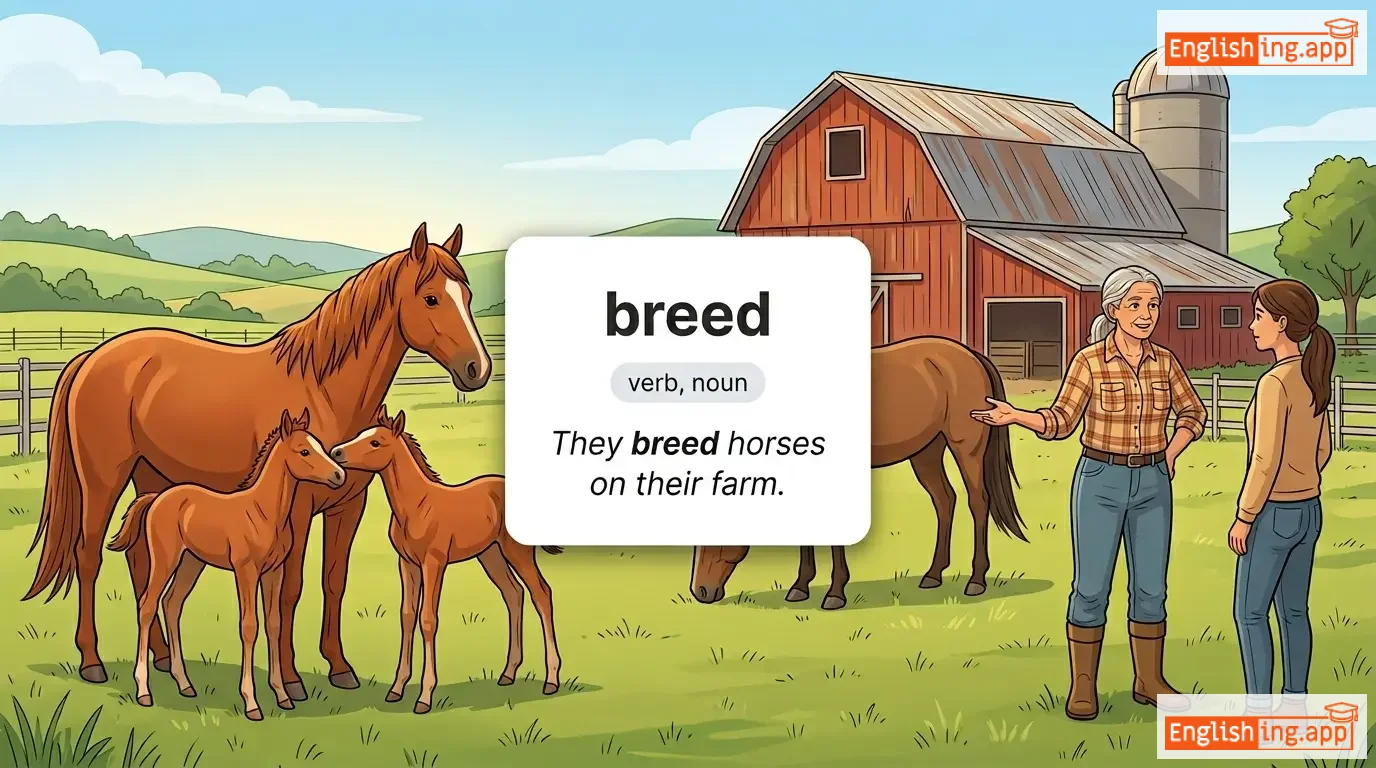
They breed horses on their farm.
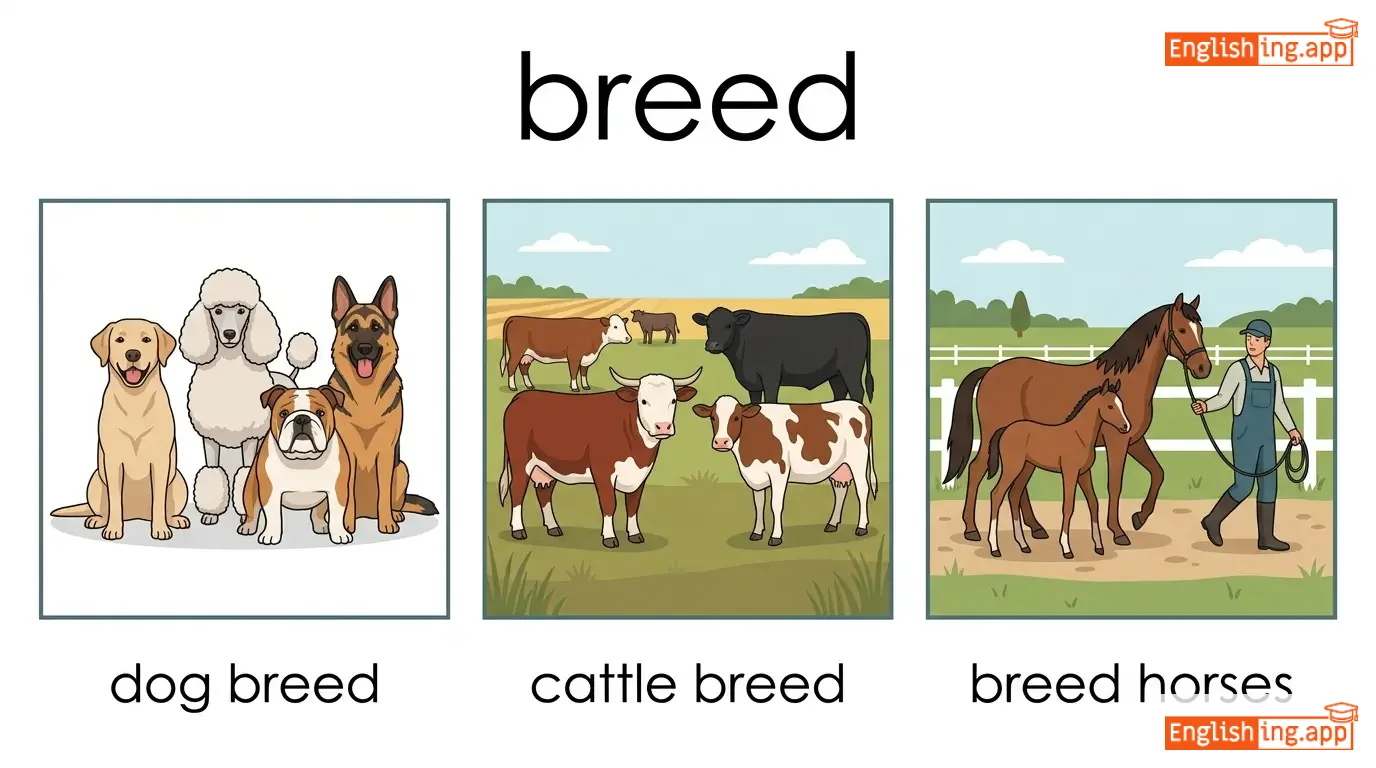
Они разводят лошадей на своей ферме.
••••••
|
Они разводят лошадей на своей ферме.
Oni razvodjat loshadej na svojej ferme.
••••••
|
born and bred
рожденный и воспитанный
••••••
|
Used to indicate someone's native origin and upbringing.
••••••
|
рожденный и воспитанный
rozhdennyj i vospitannyj
••••••
|
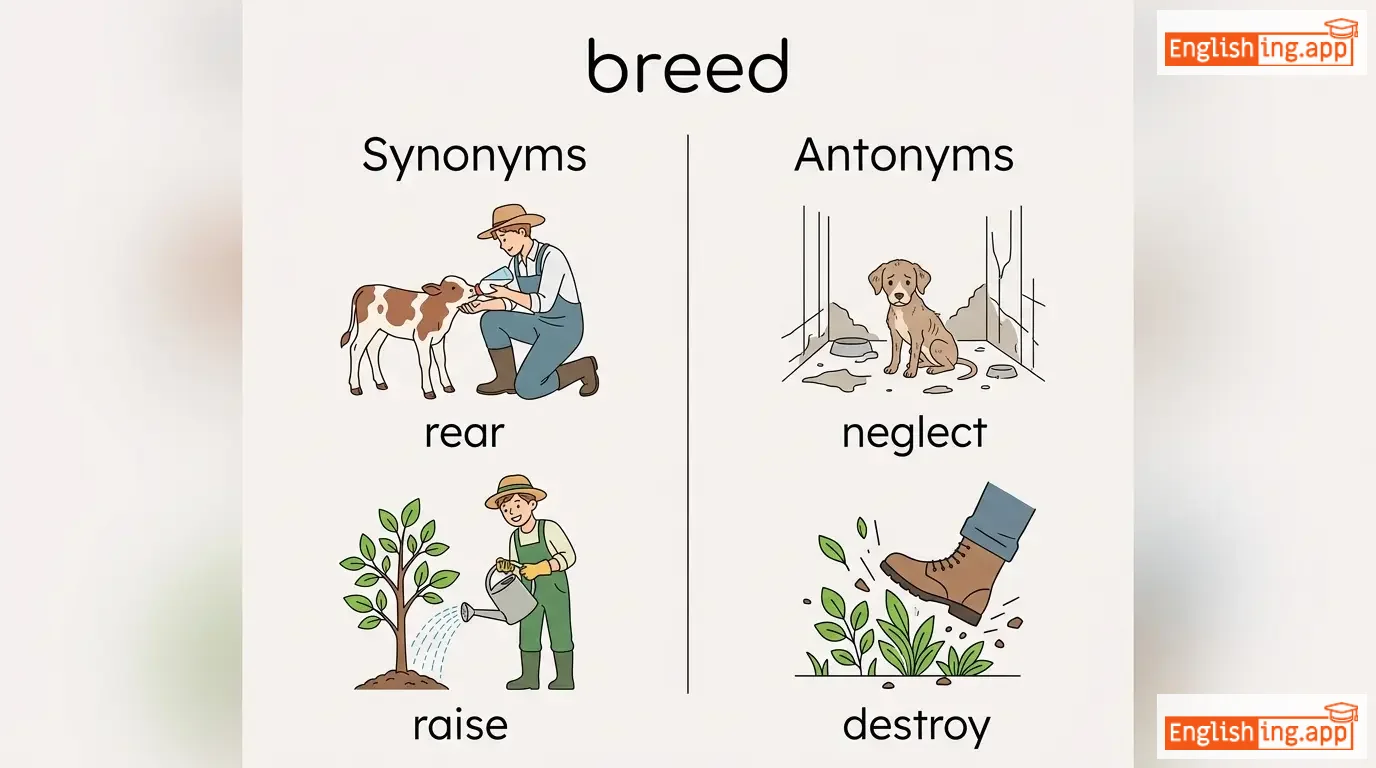
rear, raise, cultivate, reproduce, nurture
••••••
|
neglect, destroy, kill
••••••
|
dog breed, cattle breed, breed horses, breed success
••••••
|
Breed означает порода—порода собак; Breed также означает рожденный и воспитанный.
••••••
|
|
#761
💵
|
/braɪb/
verb
••••••
|
- •••••• | - •••••• |
bribed
••••••
|
bribed
••••••
|
bribes
••••••
|
bribing
••••••
|
To persuade someone to act in one's favor, typically illegally, by offering money or gifts.
••••••
|
The official was caught trying to bribe the inspector. |
- •••••• |
accept a bribe |
To take money or gifts illegally to do a favor.
••••••
|
- •••••• |
corrupt, induce, influence, buy off
••••••
|
refuse, reject, honesty
••••••
|
take a bribe, offer a bribe, give a bribe, accept a bribe
••••••
|
No •••••• |
|
#762
🧱
|
/brɪk/
noun
(brik)
••••••
|
- •••••• |
кирпич
kirpich
••••••
|
- •••••• | - •••••• | - •••••• | - •••••• |
A rectangular block of clay or similar material used in building walls and other structures.
••••••
|
The workers laid brick after brick to build the wall. |
Рабочие укладывали кирпич за кирпичом, чтобы построить стену.
Rabochie ukladyvali kirpich za kirpichom, chtoby postroit' stenu.
••••••
|
thick as a brick |
Used to describe someone who is very stupid or slow to understand.
••••••
|
тупой как кирпич
tupoy kak kirpich
••••••
|
block, stone, tile, slab, cube
••••••
|
void, gap
••••••
|
brick wall, brick house, brick building, red brick, brick by brick
••••••
|
Кирпич = Кирпич 🧱 - Кирпич используется для строительства стен.
••••••
|
|
#763
🌉
|
/brɪdʒ/
noun
(бридж)
••••••
|
- •••••• |
мост
most
••••••
|
- •••••• | - •••••• | - •••••• | - •••••• |
A structure built to span a physical obstacle, such as a river or road, for the purpose of providing passage.
••••••
|
The bridge connects the two cities across the river. |
Мост соединяет два города через реку.
Most soyedinyayet dva goroda cherez reku.
••••••
|
burn one's bridges |
To eliminate all possibilities of retreat; to commit oneself completely.
••••••
|
сжигать мосты
szhigat' mosty
••••••
|
overpass, viaduct, crossing, span, walkway
••••••
|
barrier, obstacle
••••••
|
cross a bridge, build a bridge, bridge over, suspension bridge, stone bridge
••••••
|
Bridge значит мост 🌉 - мост соединяет два берега.
••••••
|
|
#764
📝
|
/briːf/
adjective, noun, verb
(breef)
••••••
|
- •••••• |
краткий
kratkiy
••••••
|
briefed
brifd
••••••
|
briefed
brifd
••••••
|
briefs
brifz
••••••
|
briefing
breefing
••••••
|
Short in duration; a summary of information.
••••••
|
The manager briefed the team before the meeting.
Менеджер дал краткое изложение команде перед встречей.
••••••
|
Менеджер дал краткое изложение команде перед встречей.
Menedzher dal kratkoe izlozhenie komande pered vstrechey.
••••••
|
in brief
кратко
••••••
|
in short; concisely
••••••
|
кратко
kratko
••••••
|
short, concise, summary, outline
••••••
|
long, detailed
••••••
|
brief meeting, legal brief, security briefing, brief moment
••••••
|
Brief = краткий — краткое изложение.
••••••
|
|
#765
⏱️
|
/ˈbriːf.li/
adverb
(brifli)
••••••
|
- •••••• |
кратко
kratko
••••••
|
- •••••• | - •••••• | - •••••• | - •••••• |
in a short and clear way; for a short time
••••••
|
Please explain the problem briefly.
Пожалуйста, объясните проблему кратко.
••••••
|
Пожалуйста, объясните проблему кратко.
Pozhaluysta, obyasnite problemu kratko.
••••••
|
- •••••• | - •••••• | - •••••• |
shortly, concisely, quickly
••••••
|
lengthily, extensively, elaborately
••••••
|
briefly explain, briefly discuss, briefly mention
••••••
|
Свяжите слово 'кратко' с английским 'briefly', оба означают кратко и ясно.
••••••
|
|
#766
☀️
|
/braɪt/
adjective
(brait)
••••••
|
- •••••• |
яркий
yarkiy
••••••
|
- •••••• | - •••••• | - •••••• | - •••••• |
Giving out or reflecting a lot of light; intelligent or cheerful.
••••••
|
The bright sun lit up the entire valley. |
Яркое солнце осветило всю долину.
Yarkoye solntse osvetilo vsyu dolinu.
••••••
|
look on the bright side |
To find positive aspects in a bad situation.
••••••
|
смотри на светлую сторону
smotri na svetluyu storonu
••••••
|
shiny, luminous, radiant, smart, cheerful
••••••
|
dark, dull, gloomy
••••••
|
bright light, bright color, bright future, bright idea
••••••
|
Bright означает яркий ☀️ - Bright future означает яркое будущее.
••••••
|
Vocabulary Quiz
Test your vocabulary by matching words with their translations or meanings.
Login to take the quiz
Comments (0)
Share your thoughts and join the discussion.
Join the discussion by logging in
Login to CommentNo comments yet
Be the first to share your thoughts!