

翻訳
過去
過去分詞
三人称単数
動名詞
意味
例文
例文の翻訳
同義語
対義語
コロケーション
ニーモニック


Swipe left or right, or use the buttons. Tap image to zoom.
例文の翻訳
単語
Lesson 16Lesson 16 - マスクトグル
|
絵文字
|
単語 | Images | 翻訳 | 過去 | 過去分詞 | 三人称単数 | 動名詞 | 意味 | 例文 | 例文の翻訳 | 表現例 | 表現例の意味 | 表現例の翻訳 | 同義語 | 対義語 | コロケーション | ニーモニック |
|---|---|---|---|---|---|---|---|---|---|---|---|---|---|---|---|---|---|
|
#722
✏️
|
/ˈbɑːroʊ/
verb
(ボロ)
••••••
|
|
借りる
kariru
••••••
|
borrowed
ボロッド
••••••
|
borrowed
ボロッド
••••••
|
borrows
ボロス
••••••
|
borrowing
ボロイング
••••••
|
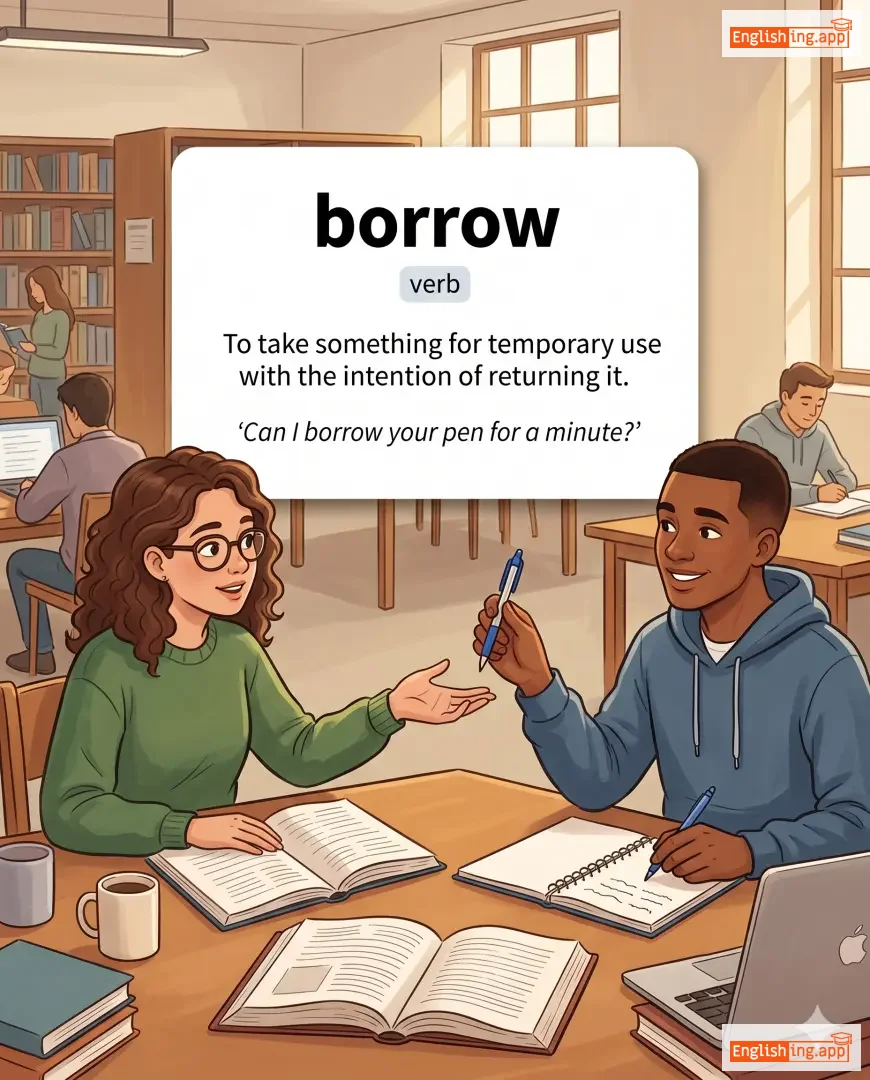
To take something for temporary use with the intention of returning it.
••••••
|
Can I borrow your pen for a minute?
一分間、あなたのペンを借りてもいいですか?
••••••
|
一分間、あなたのペンを借りてもいいですか?
Ippunkan, anata no pen o karitemo ii desu ka?
••••••
|
borrow time
時間を借りる
••••••
|
To extend a situation temporarily, often delaying an inevitable outcome.
••••••
|
時間を借りる
Jikan o kariru
••••••
|
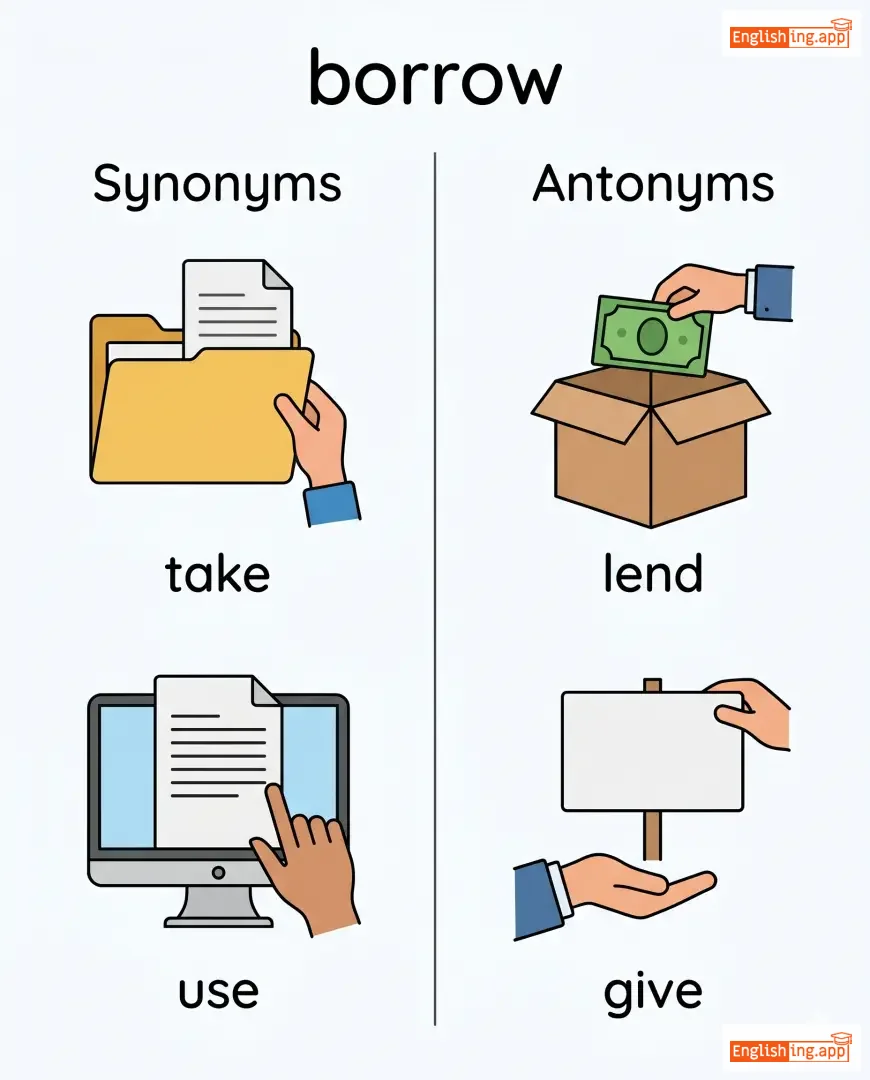
take, use, obtain, acquire
••••••
|
lend, give, return
••••••
|
borrow money, borrow a book, borrow ideas, borrow from
••••••
|
借りること、でも返すこと!✏️
••••••
|
|
#723
👨💼
|
/bɒs/
noun
(ボス)
••••••
|
- •••••• |
ボス
bosu
••••••
|
- •••••• | - •••••• | - •••••• | - •••••• |
a person who is in charge of a worker, group, or organization
••••••
|
Her boss gave her a new project to complete. |
彼女のボスは彼女に新しいプロジェクトを任せた。
Kanojo no bosu wa kanojo ni atarashī purojekuto o makaseta.
••••••
|
like a boss |
to do something with confidence and authority
••••••
|
ボスのように
bosu no yō ni
••••••
|
manager, supervisor, chief, head, leader
••••••
|
employee, worker, subordinate
••••••
|
boss at work, strict boss, talk to the boss, boss of the company
••••••
|
ボスは常に決断力と自信を持ってチームを引っ張る人物です。
••••••
|
|
#724
✌️
|
/boʊθ/
determiner/pronoun
(ボウス)
••••••
|
- •••••• |
両方
ryouhou
••••••
|
- •••••• | - •••••• | - •••••• | - •••••• |
referring to two people or things together
••••••
|
Both of the children were excited about the trip. |
旅行について両方の子供たちは興奮していました。
Ryokou ni tsuite ryouhou no kodomotachi wa koufun shiteimashita.
••••••
|
both sides of the coin |
two different aspects of the same situation
••••••
|
コインの両面
Koin no ryoumen
••••••
|
two, pair, duo, couple
••••••
|
neither, none
••••••
|
both ways, both of them, both sides, both hands
••••••
|
Bothは両方を意味し、両手のように考えることができます。
••••••
|
|
#725
😒
|
/ˈbɒðər/
verb
(ボザー)
••••••
|
- •••••• |
邪魔する
jama suru
••••••
|
bothered
ボダード
••••••
|
bothered
ボダード
••••••
|
bothers
ボザーズ
••••••
|
bothering
ボザーリング
••••••
|
to annoy, worry, or cause trouble to someone
••••••
|
I don't want to bother you while you're working.
あなたが働いているときに邪魔をしたくありません。
••••••
|
あなたが働いているときに邪魔をしたくありません。
Anata ga hataraite iru toki ni jama o shitakunai desu.
••••••
|
can't be bothered
気にしません
••••••
|
too lazy or unwilling to do something
••••••
|
気にしません
Ki ni shimasen
••••••
|
annoy, disturb, irritate, trouble, pester
••••••
|
please, soothe, comfort
••••••
|
bother someone, bother to ask, hardly bother, never bother
••••••
|
Botherは邪魔するという意味です。例えば、誰かがあなたを邪魔し続けるような状況です。
••••••
|
|
#726
🍾
|
/ˈbɒt.əl/
noun
(ボトル)
••••••
|
- •••••• |
ボトル
botoru
••••••
|
- •••••• | - •••••• | - •••••• | - •••••• |
a container, typically made of glass or plastic, with a narrow neck used to hold liquids
••••••
|
He poured water into the bottle. |
彼はボトルに水を注いだ。
Kare wa botoru ni mizu o sosogida.
••••••
|
bottle up |
to keep emotions hidden instead of expressing them
••••••
|
感情を抑える
kanjō o osaeru
••••••
|
flask, container, jar, vessel
••••••
|
open container, bowl
••••••
|
water bottle, glass bottle, plastic bottle, bottle of wine
••••••
|
ボトル、ボトルに水を入れる。
••••••
|
|
#727
🔻
|
/ˈbɒtəm/
noun, adjective
(ボトム)
••••••
|
- •••••• |
底
soko
••••••
|
- •••••• | - •••••• | - •••••• | - •••••• |
The lowest part of something.
••••••
|
The keys fell to the bottom of the bag. |
鍵はバッグの底に落ちました。
Kagi wa baggu no soko ni ochimashita.
••••••
|
hit rock bottom |
to reach the lowest possible point
••••••
|
底を打つ
soko o utsu
••••••
|
base, underside, foot, foundation
••••••
|
top, peak, summit
••••••
|
bottom line, at the bottom, ocean bottom, bottom of the page
••••••
|
‘Bottom’ は '底' の意味、覚えやすいように「Bot(底)」です。
••••••
|
|
#728
🏀
|
/baʊns/
verb
(baunsu)
••••••
|
- •••••• |
跳ね返る
hane kaeru
••••••
|
bounced
baunsudo
••••••
|
bounced
baunsudo
••••••
|
bounces
baunsesu
••••••
|
bouncing
baunsingu
••••••
|
to spring back after hitting something; to rebound.
••••••
|
The ball bounced off the wall and hit the window.
ボールは壁にバウンドして、窓に当たりました。
••••••
|
ボールは壁に当たって跳ね返り、窓に当たりました。
Bōru wa kabe ni atatte hane kaeri, mado ni atarimashita.
••••••
|
bounce back
バウンスバック
••••••
|
to recover quickly from difficulties
••••••
|
素早く回復する
subayaku kaifuku suru
••••••
|
rebound, spring, ricochet, leap, jump
••••••
|
fall, drop, sink
••••••
|
bounce off, bounce back, bounce a ball, bounce ideas
••••••
|
Bounceは跳ね返る、ボールが壁に当たって跳ね返るように。
••••••
|
|
#729
🔗
|
/baʊnd/
verb, noun, adjective
(バウンド)
••••••
|
- •••••• |
制限された / 縛られた
seigen sareta / shibarareta
••••••
|
bounded
バウンドゥド
••••••
|
bounded
バウンドゥド
••••••
|
bounds
バウンズ
••••••
|
bounding
バウンディング
••••••
|
To move with large strides or jumps; also refers to being tied, limited, or certain.
••••••
|
The dog bounded across the field with joy.
ザ・ドッグ・バウンドゥド・アクロス・ザ・フィールド・ウィズ・ジョイ。
••••••
|
犬は喜んでフィールドを跳ねました。
Inu wa yorokonde fiirudo o hanemashita.
••••••
|
out of bounds
アウト・オブ・バウンズ
••••••
|
Beyond the permitted limits.
••••••
|
境界線を越えて
kyoukaisen o koete
••••••
|
leap, jump, restrict, limit, tie
••••••
|
free, release, unlimited
••••••
|
bounded area, out of bounds, bound to happen, legally bound
••••••
|
Boundは縛られた、Ball Boundはボールが境界線を越えたことを意味します。
••••••
|
|
#730
🛑
|
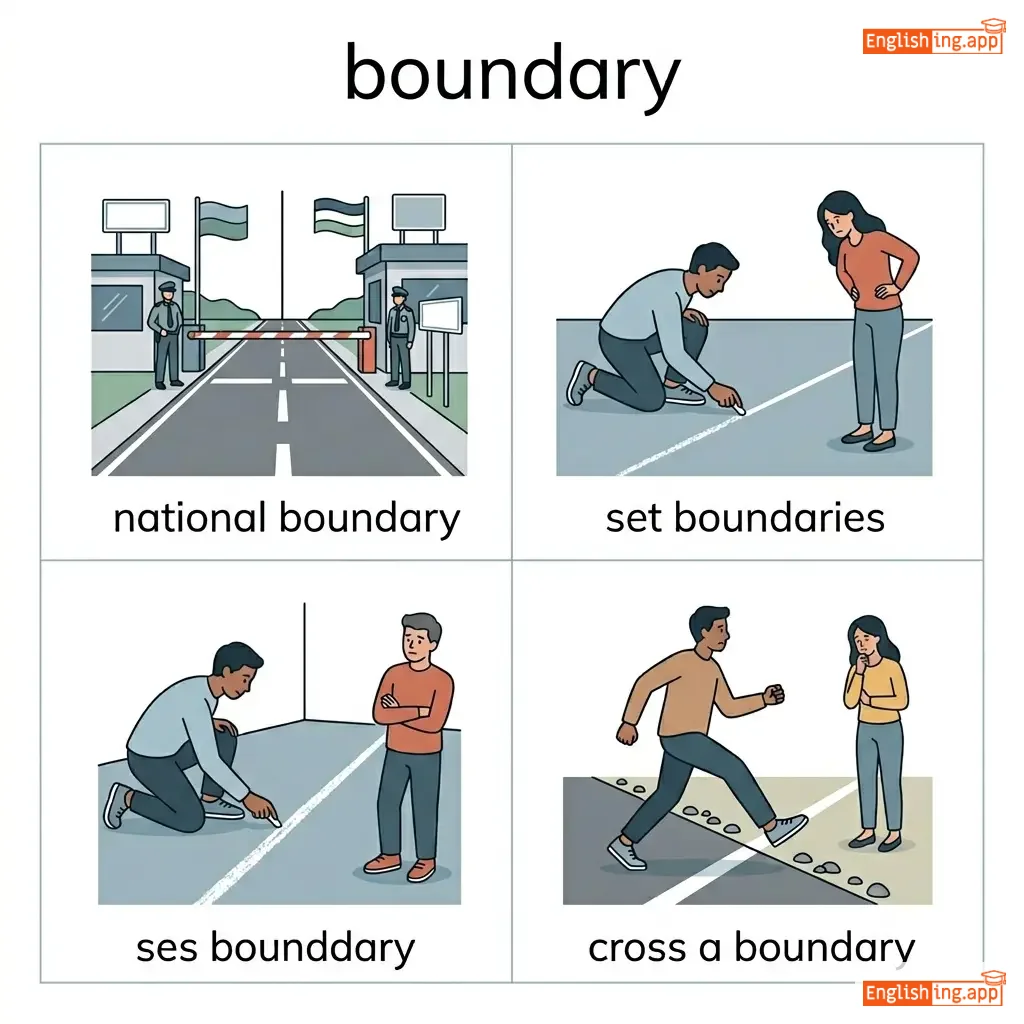
/ˈbaʊn.dri/
noun
(バウンダリー)
••••••
|
|
境界
kyoukai
••••••
|
- •••••• | - •••••• | - •••••• | - •••••• |
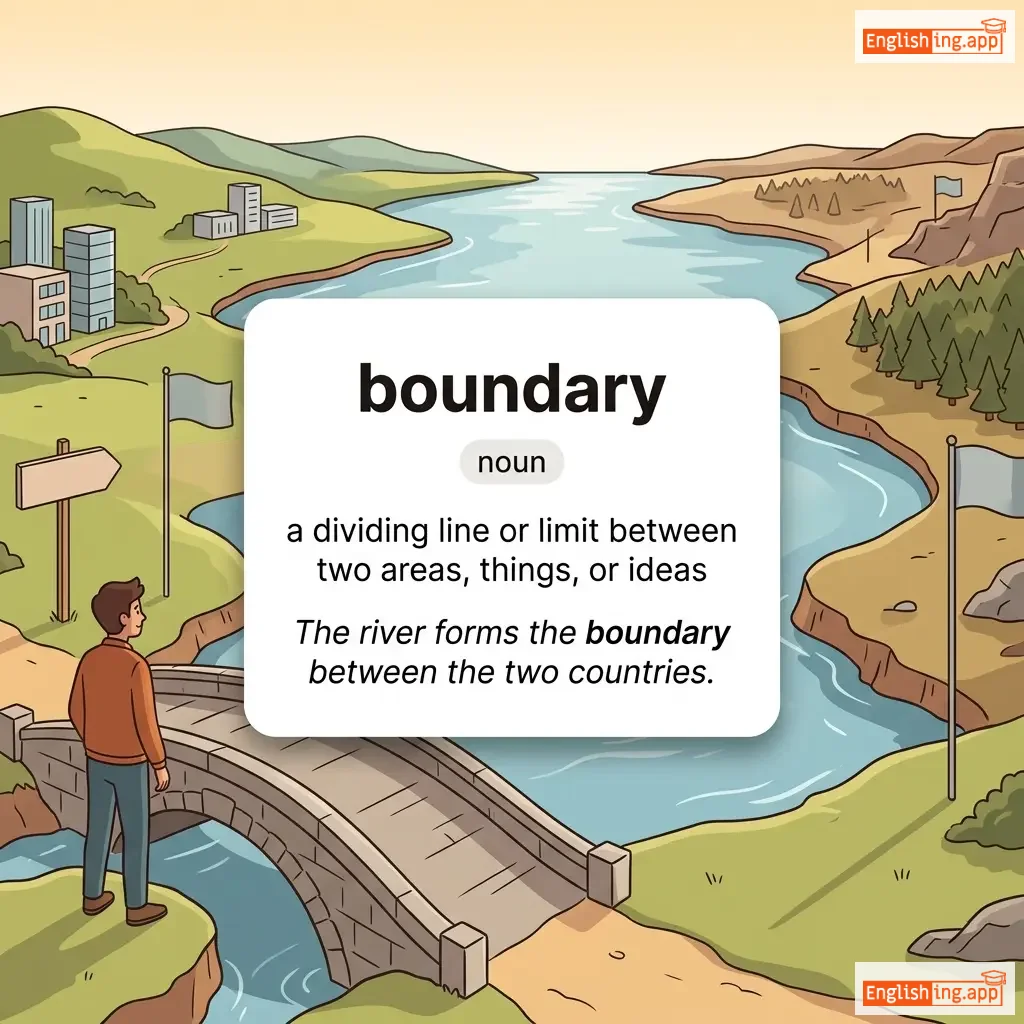
a dividing line or limit between two areas, things, or ideas
••••••
|
The river forms the boundary between the two countries. |
その川は二つの国の境界を形成しています。
Sono kawa wa futatsu no kuni no kyoukai o keisei shiteimasu.
••••••
|
cross the boundary |
to go beyond accepted limits
••••••
|
境界を越える
kyoukai o koeru
••••••
|
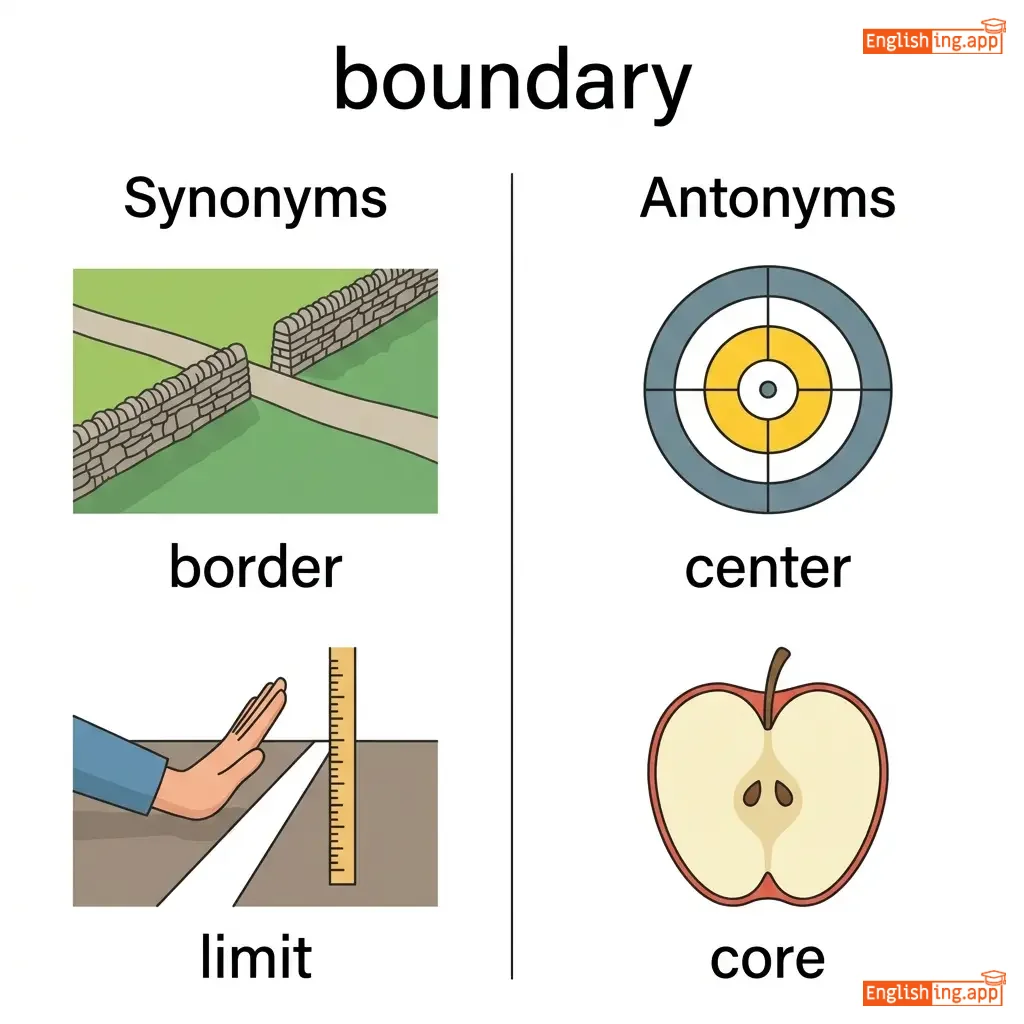
border, limit, edge, frontier
••••••
|
center, core, interior
••••••
|
national boundary, set boundaries, cross a boundary, boundary line
••••••
|
Boundaryは境界を意味します。サッカーでは境界はゴールラインです。
••••••
|
|
#731
🙇
|
/baʊ/ (verb), /boʊ/ (noun)
verb
(バウ)
••••••
|
- •••••• |
お辞儀
ojigi
••••••
|
bowed
バウド
••••••
|
bowed
バウド
••••••
|
bows
バウズ
••••••
|
bowing
バウイング
••••••
|
to bend the upper part of the body forward as a sign of respect or greeting.
••••••
|
The performer bowed deeply after the show.
パフォーマーはショーの後に深くお辞儀をしました。
••••••
|
パフォーマーはショーの後に深くお辞儀をしました。
Pafōmā wa shō no ato ni fukaku ojigi o shimashita.
••••••
|
bow down
お辞儀をする
••••••
|
to show deep respect or submission
••••••
|
深くお辞儀をする
fukaku ojigi o suru
••••••
|
bend, incline, stoop, kneel, nod
••••••
|
stand, rise, resist
••••••
|
bow deeply, bow politely, bow down, bow before
••••••
|
お辞儀をすると敬意や挨拶を示します。
••••••
|
|
#732
🥣
|
/boʊl/
noun
(ボウル)
••••••
|
- •••••• |
ボウル
booru
••••••
|
- •••••• | - •••••• | - •••••• | - •••••• |
a round, deep dish used for holding food or liquids
••••••
|
She poured the soup into a large bowl. |
彼女はスープを大きなボウルに注ぎました。
Kanojo wa suupu o ookina booru ni sosogimashita.
••••••
|
bowl over |
to surprise or impress someone greatly
••••••
|
驚かせる
odorokaseru
••••••
|
dish, vessel, container, basin
••••••
|
plate, flat surface
••••••
|
salad bowl, mixing bowl, cereal bowl, soup bowl
••••••
|
Bowlはボウル、ボールが深いボウルに落ちることを想像してみてください。
••••••
|
|
#733
📦
|
/bɑːks/
noun
(ボックス)
••••••
|
- •••••• |
箱
hako
••••••
|
- •••••• | - •••••• | - •••••• | - •••••• |
a container with flat sides, typically square or rectangular, used for storing things
••••••
|
He packed his clothes in a cardboard box.
彼は服を段ボール箱に詰めました。
••••••
|
彼は服を段ボール箱に詰めました。
Kare wa fuku o danbōru hako ni tsumemashita.
••••••
|
think outside the box
箱の外で考える
••••••
|
to think creatively and differently
••••••
|
箱の外で考える
Hako no soto de kangaeru
••••••
|
container, case, carton, package, chest
••••••
|
openness, unboxed
••••••
|
gift box, wooden box, cardboard box, jewelry box
••••••
|
箱は箱を意味します。 '本' を箱に入れることを想像してください。
••••••
|
|
#734
🥊
|
/ˈbɒksər/
noun
(ボクサー)
••••••
|
- •••••• |
ボクサー; ボクサーパンツ; ボクサー犬
bokusa; bokusa pantsu; bokusa inu
••••••
|
- •••••• | - •••••• | - •••••• | - •••••• |
a person who fights in the sport of boxing; a type of short loose-fitting underwear; a breed of medium-to-large dog
••••••
|
The boxer trained hard every morning before the championship match.
ボクサーはチャンピオンシップの前に毎朝厳しく練習した。
••••••
|
そのボクサーはチャンピオンシップの前に毎朝厳しく練習した。
sono bokusa wa chanpionshippu no mae ni mai asa kibishiku renshuu shita
••••••
|
boxer shorts
ボクサーパンツ
••••••
|
loose-fitting men's underwear
••••••
|
ボクサーパンツ
bokusa pantsu
••••••
|
fighter, pugilist, contender, athlete
••••••
|
pacifist, noncombatant
••••••
|
professional boxer, heavyweight boxer, trained boxer, champion boxer
••••••
|
BOX → ボクサー
••••••
|
|
#735
🥊
|
/ˈbɒksɪŋ/
noun; gerund
(ボクシング)
••••••
|
- •••••• |
ボクシング
bokushingu
••••••
|
- •••••• | - •••••• | - •••••• |
boxing
ボクシング
••••••
|
the sport of fighting with fists using padded gloves; the act of putting something into a box
••••••
|
He has been training hard for a professional boxing match.
彼はプロのボクシングの試合に向けて厳しく練習している。
••••••
|
彼はプロのボクシングの試合に向けて厳しく練習している。
kare wa puro no bokushingu no shiai ni mukete kibishiku renshuu shite iru
••••••
|
boxing match
ボクシングマッチ
••••••
|
an organized fight between two boxers
••••••
|
ボクシングマッチ
bokushingu matchi
••••••
|
prizefighting, pugilism, fighting, sparring
••••••
|
peace, nonviolence
••••••
|
boxing match, boxing ring, boxing gloves, professional boxing
••••••
|
ボクシングは英語 boxing、そのまま覚える
••••••
|
|
#736
👦
|
/bɔɪ/
noun
(ボーイ)
••••••
|
- •••••• |
男の子
otokonoko
••••••
|
- •••••• | - •••••• | - •••••• | - •••••• |
a male child or young male person
••••••
|
The boy ran across the playground. |
その男の子は遊び場を走り回った。
Sono otokonoko wa asobiba o hashirimatta.
••••••
|
boys will be boys |
a phrase implying that boys or men often behave in certain stereotypical ways
••••••
|
男の子は男の子であり続ける
Otokonoko wa otokonoko de aritsudzukeru
••••••
|
lad, youngster, child, son, male
••••••
|
girl, female, woman
••••••
|
little boy, young boy, school boy, boy scout
••••••
|
Boyは男の子を意味し、'Boy'と'Baka'は両方とも男性を示します。
••••••
|
|
#737
🚫
|
/ˈbɔɪkɒt/
verb
(ボイコット)
••••••
|
|
ボイコットする
boikotto suru
••••••
|
boycotted
ボイコットした
••••••
|
boycotted
ボイコットした
••••••
|
boycotts
ボイコットする
••••••
|
boycotting
ボイコットしている
••••••
|
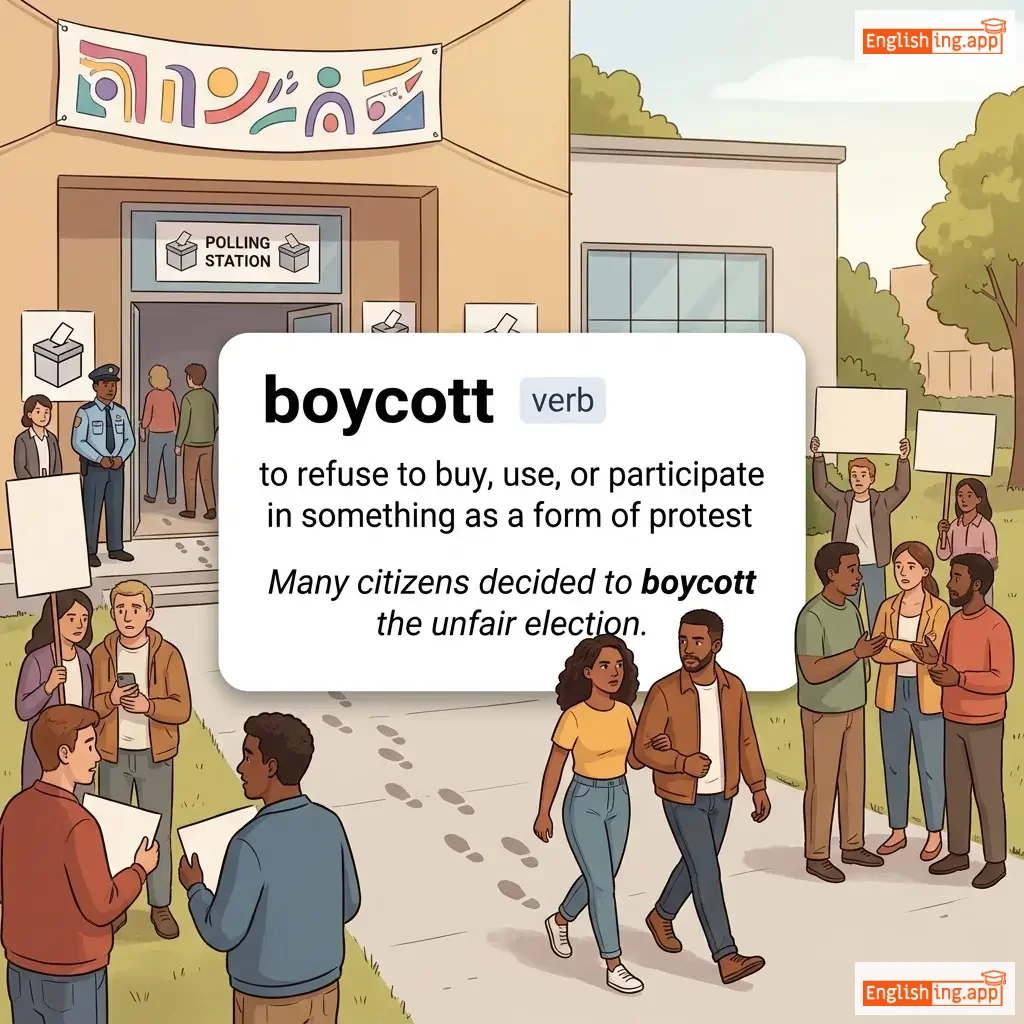
to refuse to buy, use, or participate in something as a form of protest
••••••
|
Many citizens decided to boycott the unfair election.
多くの市民が不公正な選挙をボイコットすることを決定しました。
••••••
|
多くの市民が不公正な選挙をボイコットすることを決定しました。
ooku no shimin ga fukousei na senkyo o boikotto suru koto o kettei shimashita.
••••••
|
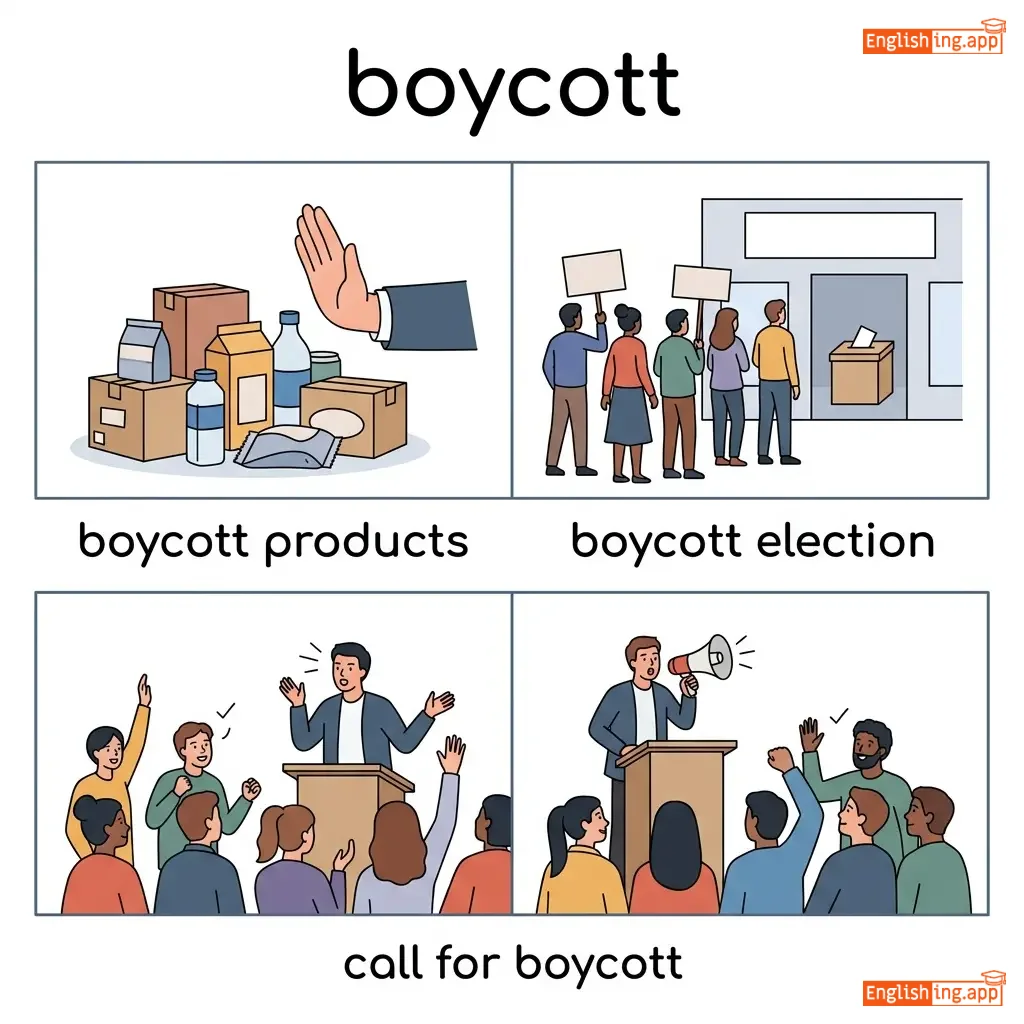
call for a boycott
ボイコットを呼びかける
••••••
|
an appeal to stop buying or using something in protest
••••••
|
ボイコットを呼びかける
boikotto o yobikakeru
••••••
|
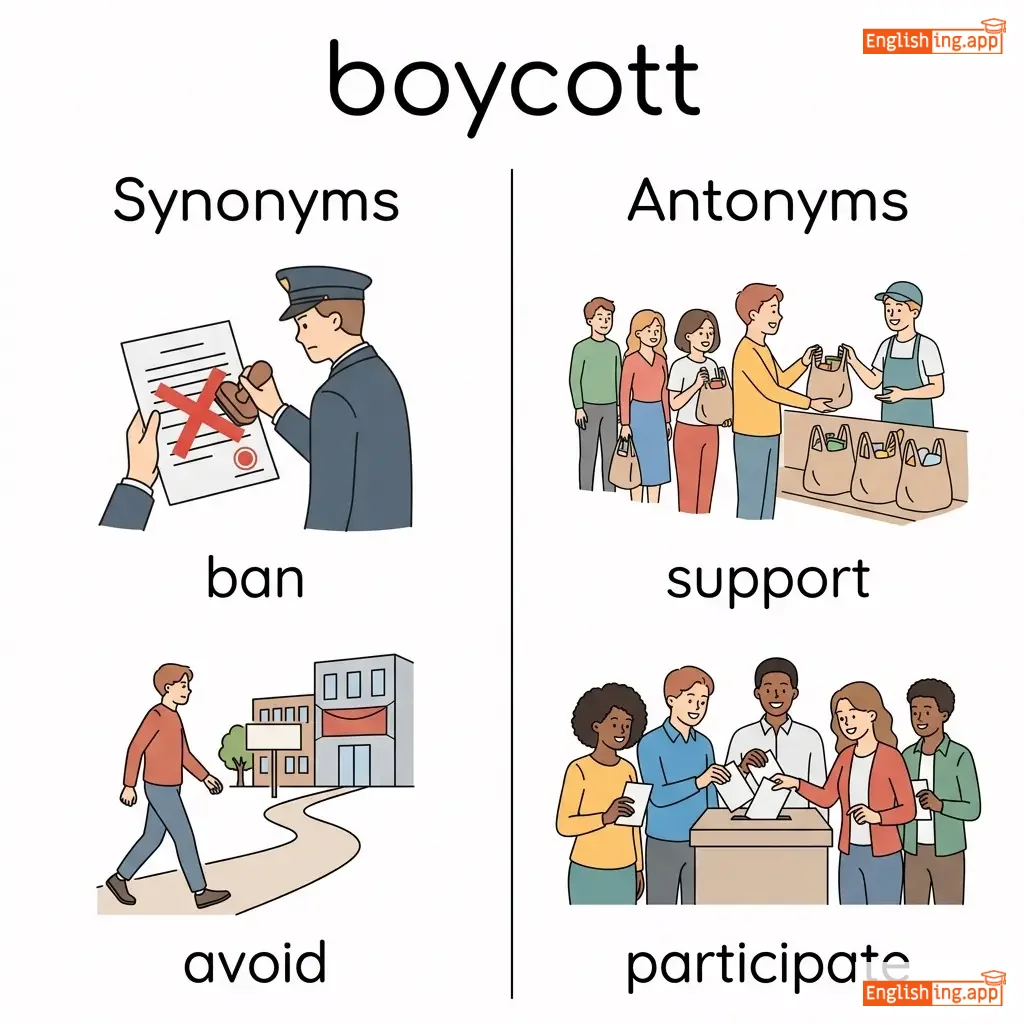
ban, avoid, refuse, shun, embargo
••••••
|
support, participate, endorse
••••••
|
boycott products, boycott election, call for boycott
••••••
|
Boycott = Boy + cut = 物を使わないように呼びかける
••••••
|
|
#738
👨❤️👩
|
/ˈbɔɪˌfrɛnd/
noun
••••••
|
- •••••• | - •••••• | - •••••• | - •••••• | - •••••• | - •••••• |
a man or boy that someone is having a romantic or close relationship with
••••••
|
She introduced her boyfriend to her parents. |
- •••••• | - •••••• | - •••••• | - •••••• |
partner, companion, lover, date
••••••
|
girlfriend, enemy
••••••
|
new boyfriend, old boyfriend, serious boyfriend, high school boyfriend
••••••
|
No •••••• |
|
#739
👙
|
/brɑː/
noun
(ブラ)
••••••
|
- •••••• |
ブラジャー
burajaa
••••••
|
- •••••• | - •••••• | - •••••• | - •••••• |
a woman's undergarment worn to support and cover the breasts
••••••
|
She bought a comfortable bra for everyday wear.
シー ボット ア コンフォータブル ブラ フォー エブリデイ ウェア。
••••••
|
彼女は普段使いのために快適なブラジャーを買った。
kanojo wa fudanzukai no tame ni kaiteki na burajaa o katta
••••••
|
- •••••• | - •••••• | - •••••• |
brassiere, undergarment, bust support, lingerie piece
••••••
|
shirt, outerwear
••••••
|
sports bra, lace bra, padded bra, strapless bra
••••••
|
Bra は ブラジャー、胸を support する下着。
••••••
|
|
#740
🦾
|
/breɪs/
noun; verb
(ブレイス)
••••••
|
- •••••• |
装具;備える
sogu; sonaeru
••••••
|
braced
ブレイスト
••••••
|
braced
ブレイスト
••••••
|
braces
ブレイセズ
••••••
|
bracing
ブレイシング
••••••
|
a device that supports or strengthens something; to prepare mentally or physically for something difficult
••••••
|
She braced herself for the strong wind.
シー ブレイスト ハーセルフ フォー ザ ストロング ウィンド
••••••
|
彼女は強い風に備えた。
kanojo wa tsuyoi kaze ni sonaeta
••••••
|
brace yourself
ブレイス ユアセルフ
••••••
|
prepare for something difficult or surprising
••••••
|
覚悟して
kakugo shite
••••••
|
support, reinforce, prepare, steady, fortify
••••••
|
weaken, relax, loosen
••••••
|
brace yourself, knee brace, brace for impact, dental brace
••••••
|
Brace=備える、心を固める。
••••••
|
|
#741
😏
|
/bræɡ/
verb
••••••
|
|
- •••••• |
bragged
••••••
|
bragged
••••••
|
brags
••••••
|
bragging
••••••
|
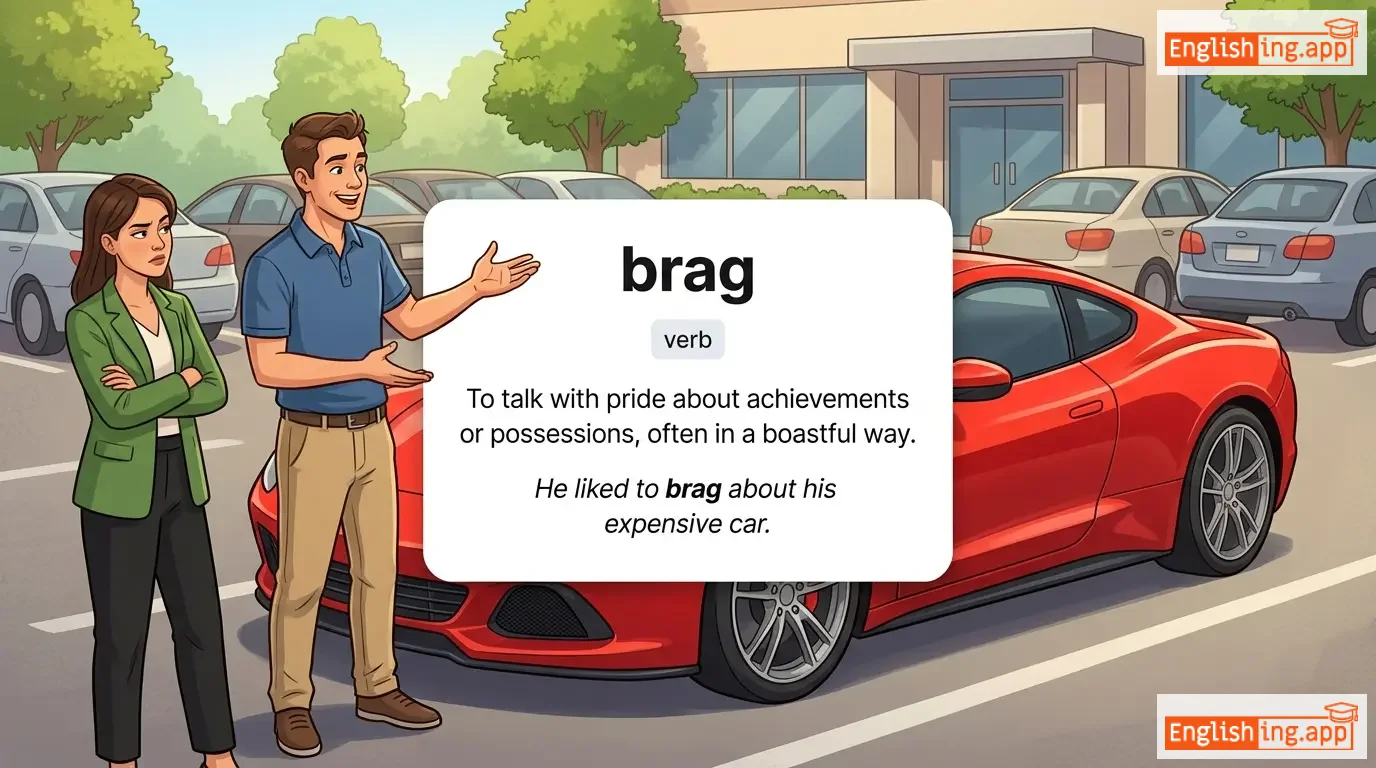
To talk with pride about achievements or possessions, often in a boastful way.
••••••
|
He liked to brag about his expensive car. |
- •••••• |
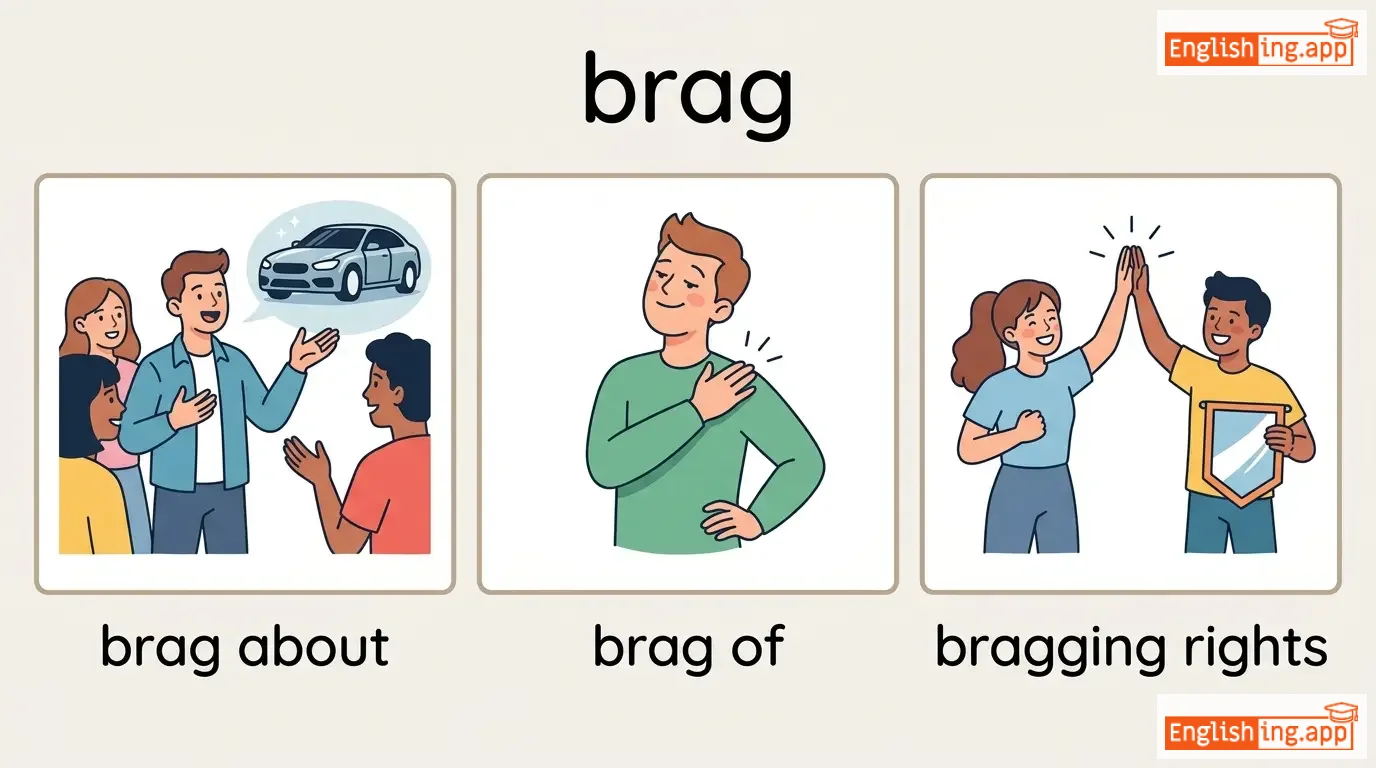
bragging rights |
The right to boast about something special one has achieved.
••••••
|
- •••••• |
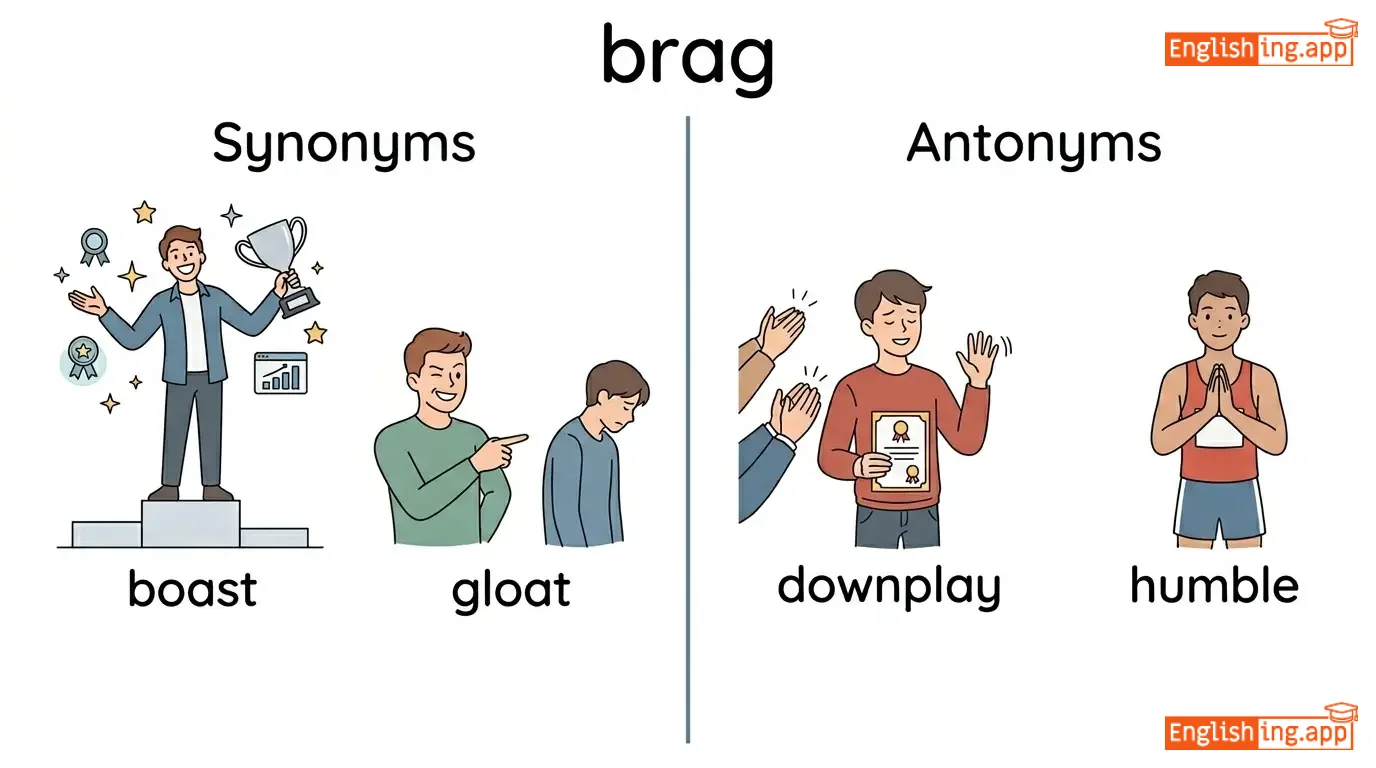
boast, gloat, show off, flaunt
••••••
|
downplay, humble
••••••
|
brag about, brag of, bragging rights
••••••
|
No •••••• |
|
#742
🧠
|
/breɪn/
noun
(ブレイン)
••••••
|
|
脳
nō
••••••
|
- •••••• | - •••••• | - •••••• | - •••••• |
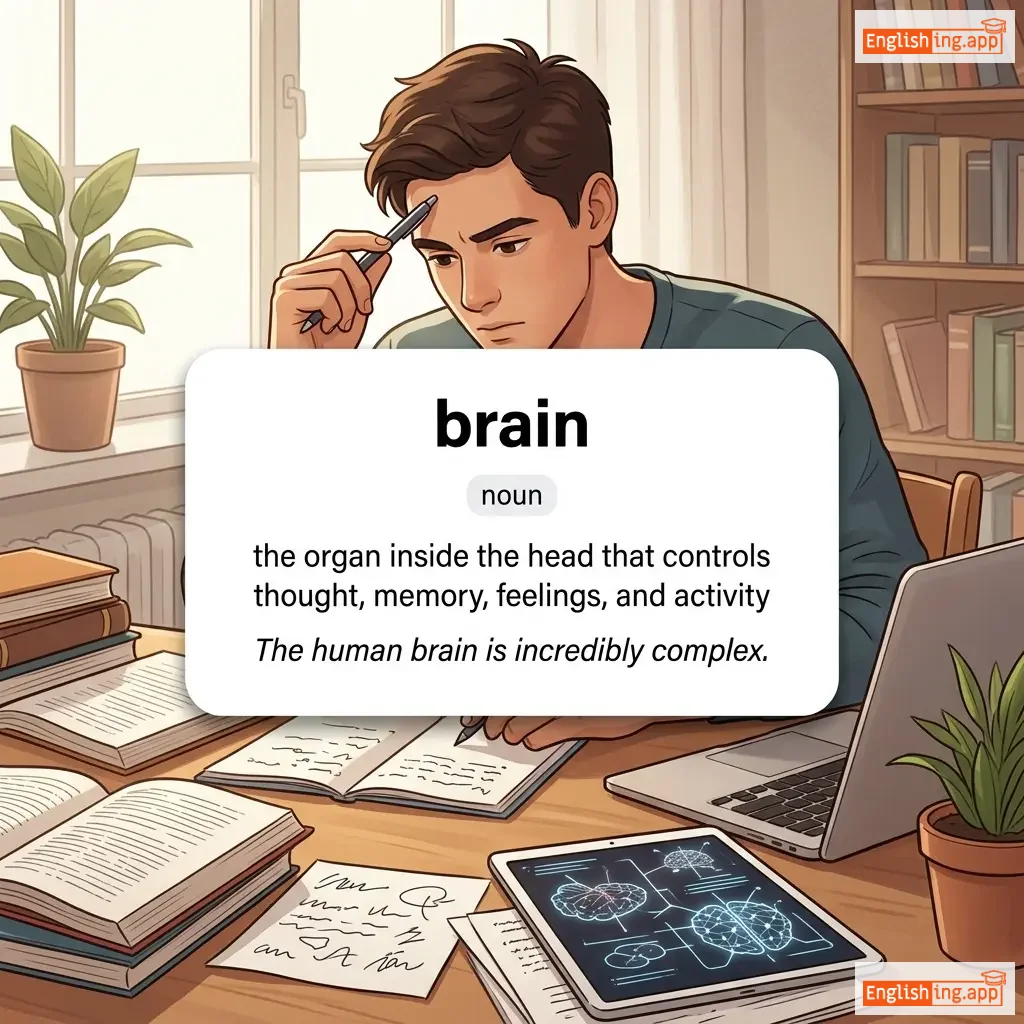
the organ inside the head that controls thought, memory, feelings, and activity
••••••
|
The human brain is incredibly complex. |
人間の脳は非常に複雑です。
ningen no nō wa hijō ni fukuzatsu desu.
••••••
|
rack your brain |
to think very hard about something
••••••
|
頭をひねる
atama o hineru
••••••
|
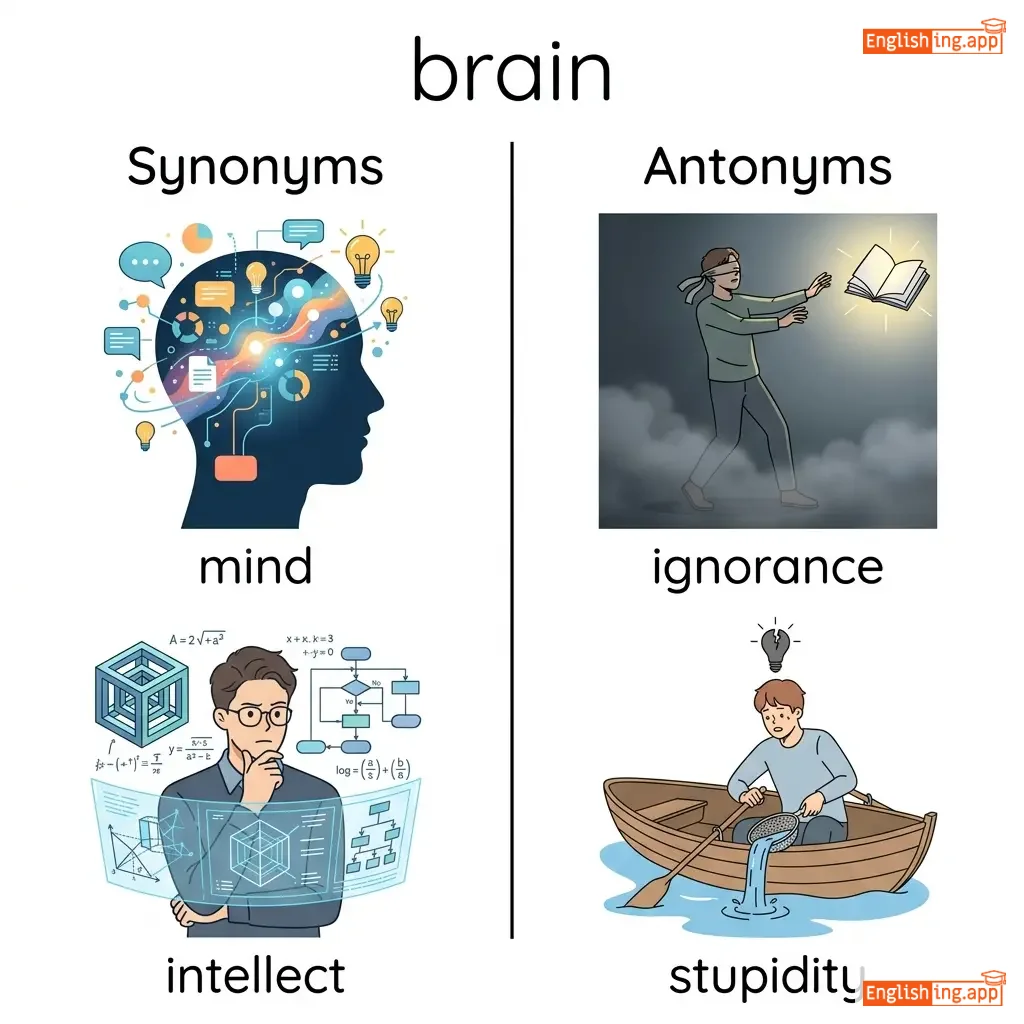
mind, intellect, intelligence, head
••••••
|
ignorance, stupidity
••••••
|
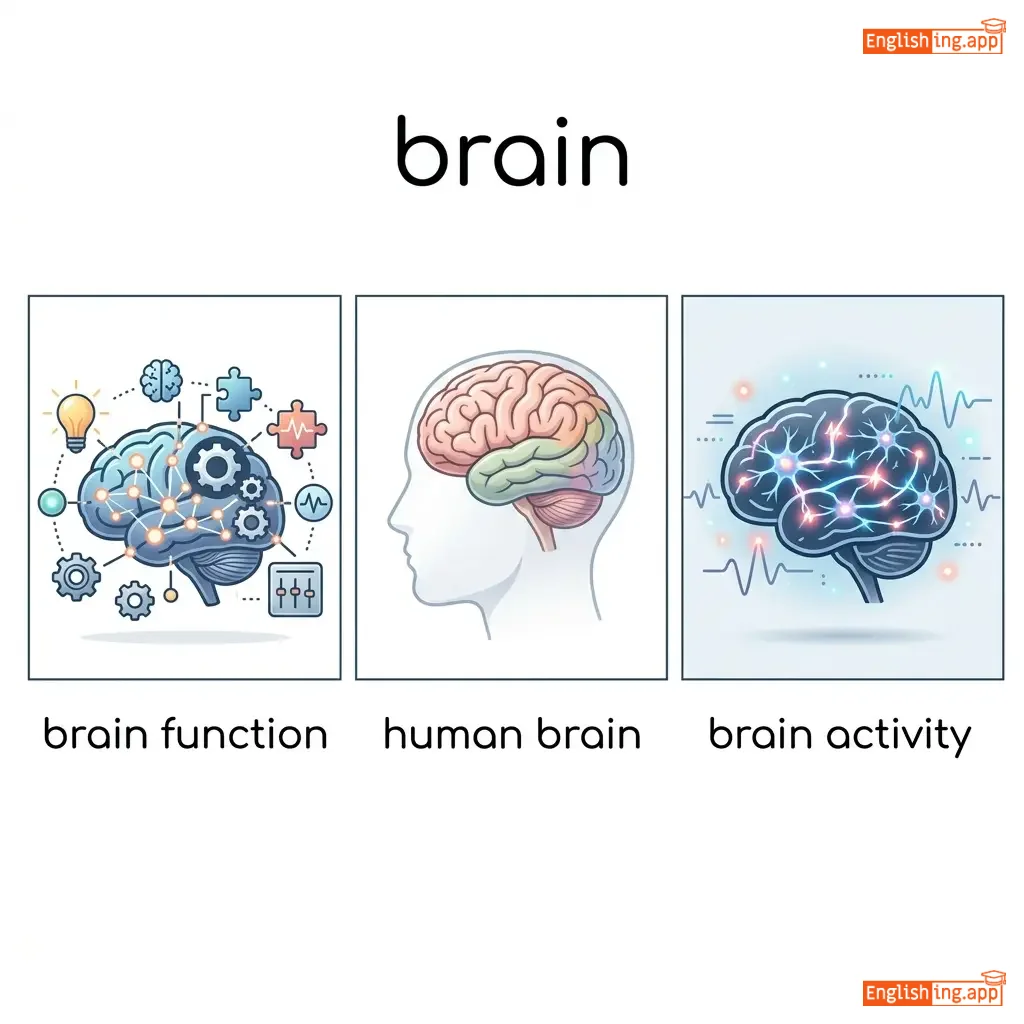
brain function, human brain, brain activity, brain power
••••••
|
脳の中で‘脳ストーム’を起こしてみよう!
••••••
|
|
#743
🧠
|
/ˈbreɪnˌwɒʃ/
verb, noun
(ブレインウォッシュ)
••••••
|
- •••••• |
洗脳する
senno suru
••••••
|
brainwashed
ブレインウォッシュド
••••••
|
brainwashed
ブレインウォッシュド
••••••
|
brainwashes
ブレインウォッシズ
••••••
|
brainwashing
ブレインウォッシング
••••••
|
to manipulate someone into adopting certain beliefs by repeated pressure or propaganda; the act or process of such manipulation
••••••
|
The group tried to brainwash new members with constant propaganda.
その団体は新しいメンバーをブレインウォッシュしようとした。
••••••
|
その団体は新しいメンバーを洗脳しようとした。
sono dantai wa atarashii menbaa o senno shiyou to shita
••••••
|
brainwash someone
誰かを洗脳する
••••••
|
to strongly influence someone to accept certain ideas without questioning
••••••
|
洗脳する
senno suru
••••••
|
indoctrinate, manipulate, condition, program, influence
••••••
|
educate, enlighten, inform
••••••
|
brainwash people, political brainwashing, systematic brainwashing, attempt to brainwash
••••••
|
洗脳 = 洗う脳 = brainwash
••••••
|
|
#744
🌿
|
/bræntʃ/
noun, verb
(ブランチ)
••••••
|
- •••••• |
支店
shiten
••••••
|
branched
ブランチド
••••••
|
branched
ブランチド
••••••
|
branches
ブランチズ
••••••
|
branching
ブランチング
••••••
|
A part of a tree that grows out from the trunk; a division of an organization or subject.
••••••
|
The company opened a new branch in Dhaka.
会社はダッカに新しい支店を開設しました。
••••••
|
会社はダッカに新しい支店を開設しました。
Kaisha wa Dakkā ni atarashī shiten o kaisetsu shimashita.
••••••
|
branch out
拡張する
••••••
|
to expand into new areas or activities
••••••
|
拡張する
kakuchō suru
••••••
|
limb, division, department, subdivision
••••••
|
root, trunk
••••••
|
tree branch, bank branch, branch office, branch out
••••••
|
木の枝、会社の支店。
••••••
|
|
#745
🏷️
|
/brænd/
noun
(ブランド)
••••••
|
- •••••• |
ブランド
burando
••••••
|
- •••••• | - •••••• | - •••••• | - •••••• |
a type of product manufactured by a company under a particular name
••••••
|
Nike is a popular brand of sportswear. |
ナイキは人気のあるスポーツウェアブランドです。
Naiki wa ninki no aru supōtsuwear burando desu.
••••••
|
brand new |
completely new, unused
••••••
|
まったく新しい
mattaku atarashī
••••••
|
label, trademark, logo, mark
••••••
|
generic, unbranded
••••••
|
brand name, popular brand, brand image, build a brand
••••••
|
ブランドは名前に基づいています。たとえば、Nike のブランド名。
••••••
|
|
#746
🦁
|
/breɪv/
adjective
(ブレイブ)
••••••
|
- •••••• |
勇敢な
yūkan na
••••••
|
- •••••• | - •••••• | - •••••• | - •••••• |
showing courage in the face of danger or difficulty
••••••
|
The brave firefighter rushed into the burning building. |
勇敢な消防士が燃える建物に飛び込んだ。
Yūkan na shōbōshi ga moeru tatemono ni tobikonda.
••••••
|
put on a brave face |
to pretend to be confident and cheerful despite difficulties
••••••
|
勇敢な顔をする
Yūkan na kao o suru
••••••
|
courageous, valiant, fearless, heroic, bold
••••••
|
cowardly, fearful, timid
••••••
|
brave man, brave soldier, brave attempt, brave enough
••••••
|
Braveは '勇敢な' という意味で、ライオンのように強くて怖くない。
••••••
|
|
#747
🦁
|
/ˈbreɪ.vər.i/
noun
(ブレイヴェリー)
••••••
|
|
勇気
yūki
••••••
|
- •••••• | - •••••• | - •••••• | - •••••• |
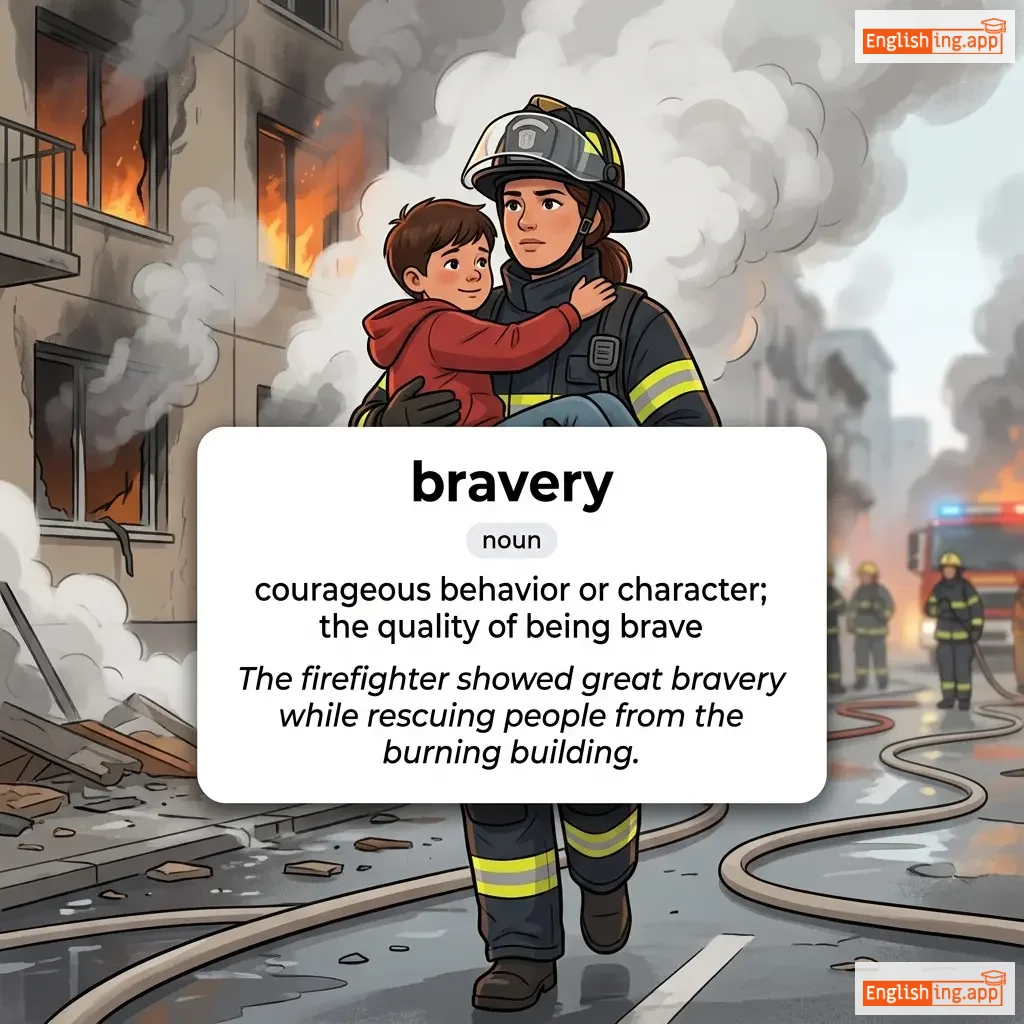
courageous behavior or character; the quality of being brave
••••••
|
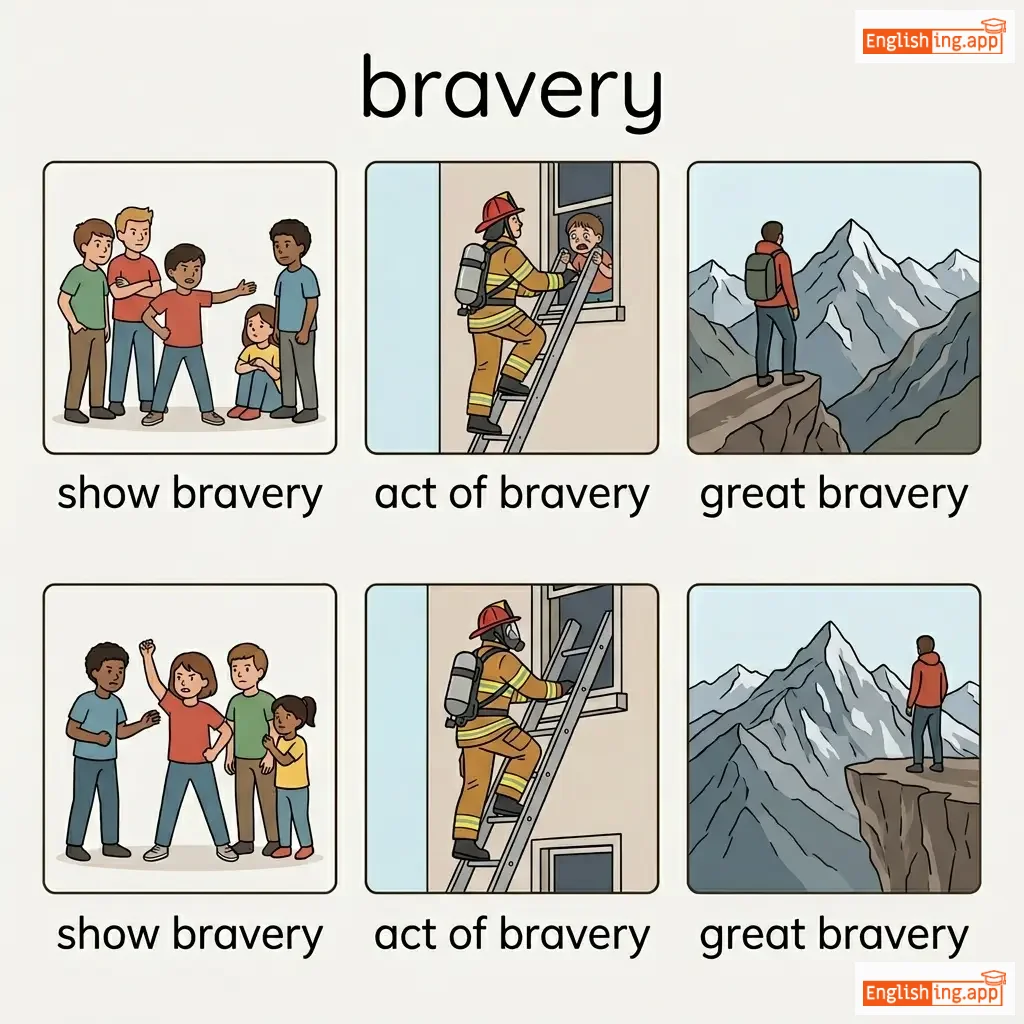
The firefighter showed great bravery while rescuing people from the burning building. |
消防士は燃えている建物から人々を救出する際に大きな勇気を示しました。
Shōbōshi wa moete iru tatemono kara hitobito o kyūshutsu suru sai ni ōkina yūki o shimeshimasita.
••••••
|
- •••••• | - •••••• | - •••••• |
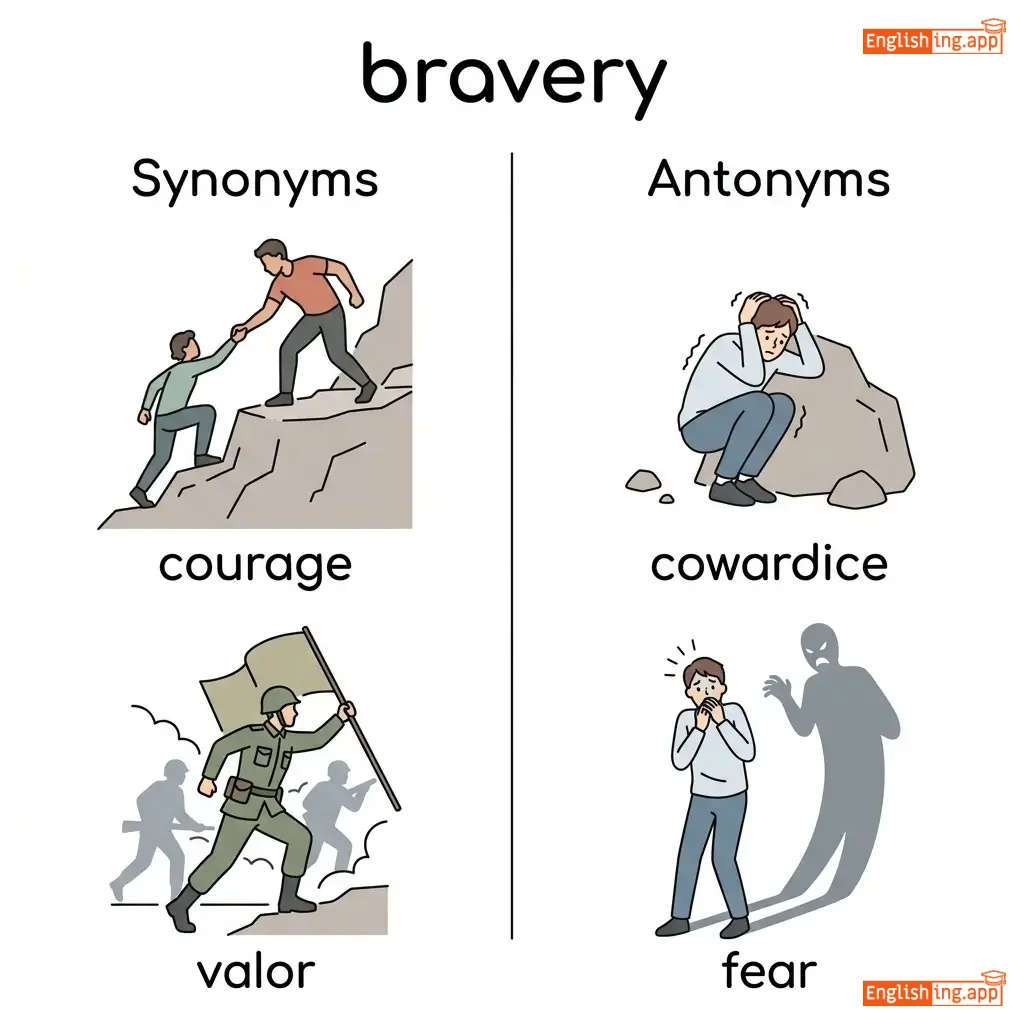
courage, valor, heroism, gallantry
••••••
|
cowardice, fear, timidity
••••••
|
show bravery, act of bravery, great bravery
••••••
|
Bravery is about showing courage under extreme situations, like a firefighter.
••••••
|
|
#748
🐴
|
/breɪ/
verb
(ブレイ)
••••••
|
- •••••• |
鳴き声
nakigoe
••••••
|
brayed
ブレイド
••••••
|
brayed
ブレイド
••••••
|
brays
ブレイズ
••••••
|
braying
ブレイング
••••••
|
To make a loud, harsh sound like a donkey.
••••••
|
The donkey began to bray loudly in the field.
ロバは畑で大声で鳴き始めました。
••••••
|
ロバは畑で大声で鳴き始めました。
Roba wa hatake de ōgoe de nakihajimemashita.
••••••
|
bray like a donkey
ロバのように鳴く
••••••
|
To speak or laugh in a loud, harsh, and unpleasant way.
••••••
|
ロバのように鳴く
Roba no yō ni naku
••••••
|
heehaw, bawl, cry, yell
••••••
|
whisper, murmur
••••••
|
bray loudly, donkey bray, braying sound
••••••
|
ロバが鳴くとき、'鳴き声' を覚えましょう 🐴
••••••
|
|
#749
🚨
|
/briːtʃ/
noun, verb
(ブリーチ)
••••••
|
|
違反
ihan
••••••
|
breached
ブリーチド
••••••
|
breached
ブリーチド
••••••
|
breaches
ブリーチェス
••••••
|
breaching
ブリーチング
••••••
|
An act of breaking or failing to observe a law, agreement, or code of conduct; to break through.
••••••
|
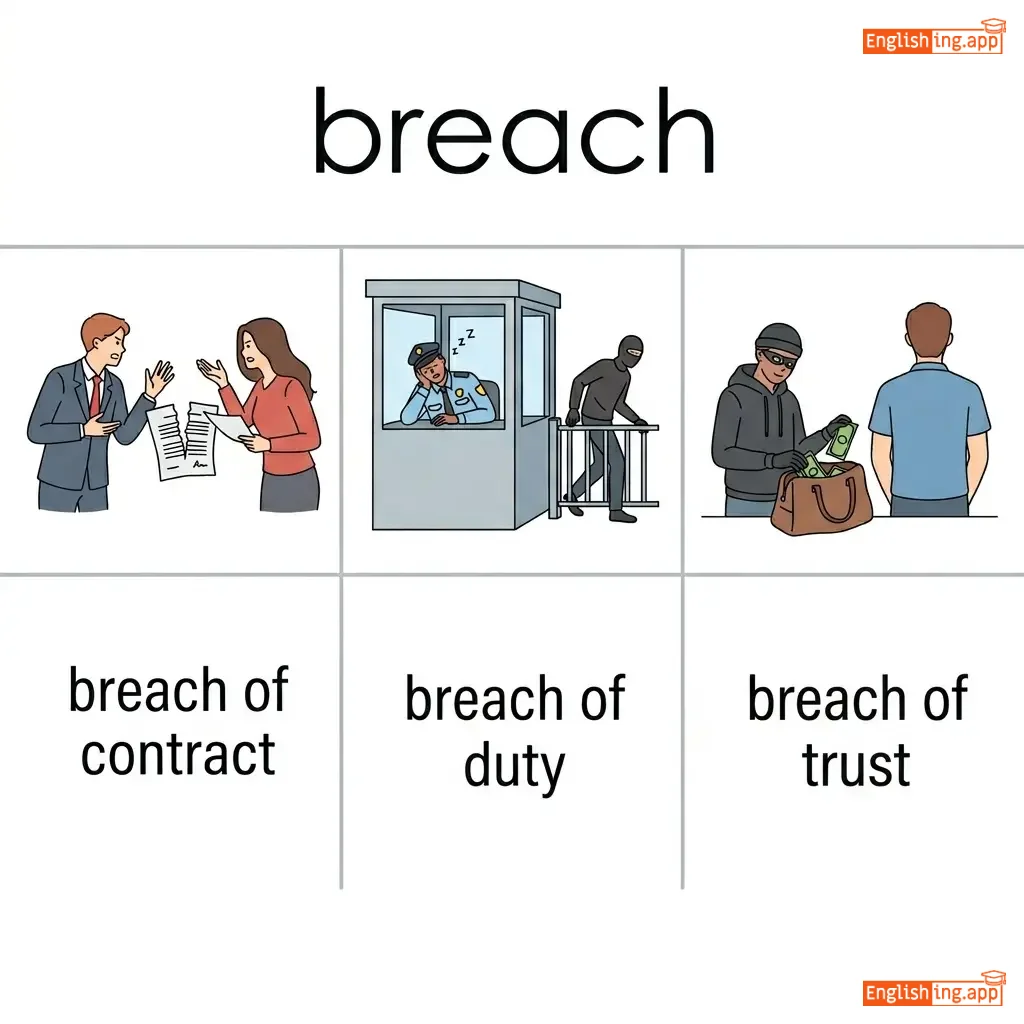
The company was fined for a breach of contract.
その会社は契約違反で罰金を科せられました。
••••••
|
その会社は契約違反で罰金を科せられました。
Sono kaisha wa keiyaku ihan de bakkin wo kaseraremashita.
••••••
|
breach of trust
信頼の違反
••••••
|
A violation of confidence or duty.
••••••
|
信頼の違反
shinrai no ihan
••••••
|
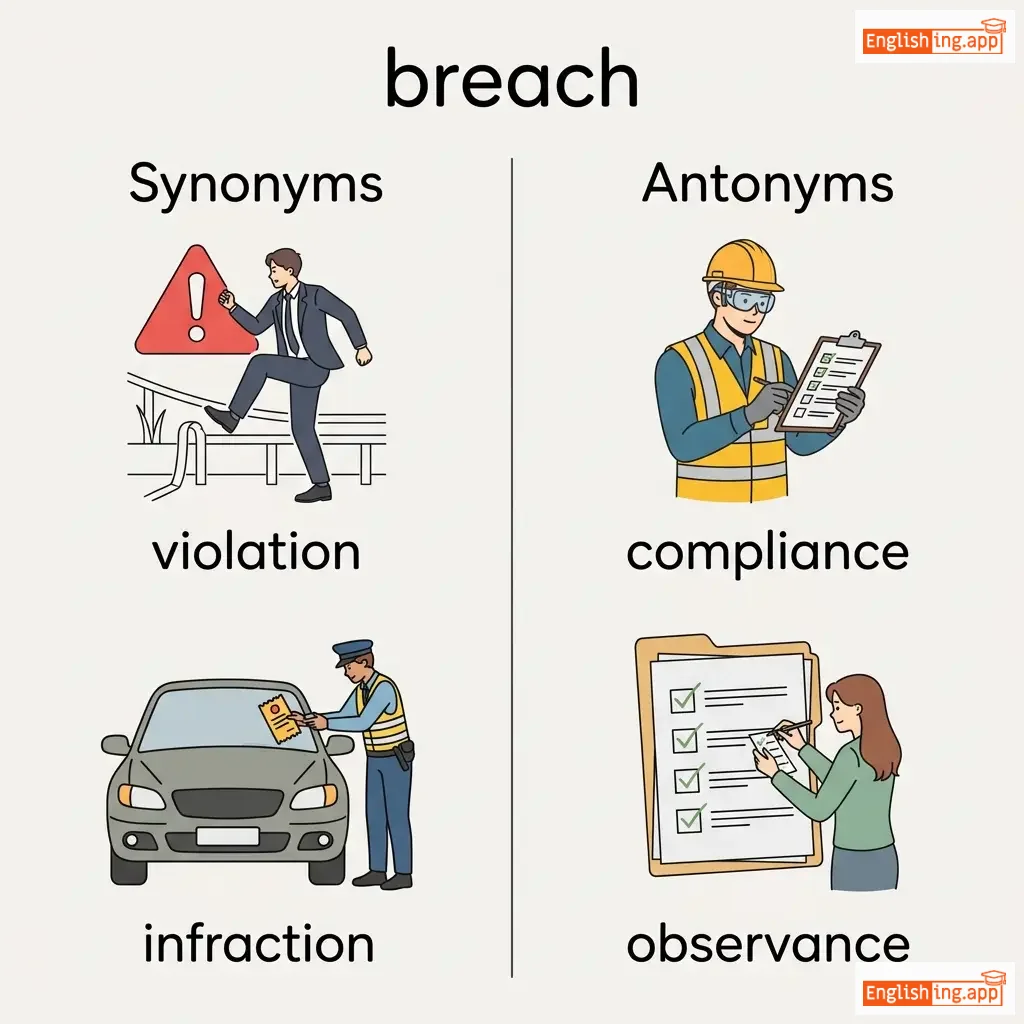
violation, infraction, contravention, infringement, rupture
••••••
|
compliance, observance, respect
••••••
|
breach of contract, breach of duty, breach of trust, security breach
••••••
|
Breach は違反を意味します — 契約や信頼の違反です。
••••••
|
|
#750
🍞
|
/brɛd/
noun
••••••
|
- •••••• | - •••••• | - •••••• | - •••••• | - •••••• | - •••••• |
A type of food made from flour, water, and yeast, mixed and baked.
••••••
|
She bought a loaf of bread from the bakery. |
- •••••• |
break bread |
to share a meal with someone, often signifying friendship
••••••
|
- •••••• |
loaf, bun, roll, baguette, toast
••••••
|
meat, rice
••••••
|
slice of bread, loaf of bread, white bread, brown bread
••••••
|
No •••••• |
|
#751
📏
|
/brɛdθ/
noun
(bureddo)
••••••
|
- •••••• |
幅
fuku
••••••
|
- •••••• | - •••••• | - •••••• | - •••••• |
The distance or measurement from side to side; width; a wide range.
••••••
|
The breadth of his knowledge impressed everyone. |
彼の知識の幅は皆に感銘を与えました。
Kare no chishiki no fuku wa mina ni kanmei o ataemashita.
••••••
|
- •••••• | - •••••• | - •••••• |
width, span, range, scope, extent
••••••
|
narrowness, limitation
••••••
|
breadth of knowledge, breadth of experience, breadth of vision
••••••
|
パン(Bread)は幅が広い—Breadthは幅を意味します。
••••••
|
|
#752
💔
|
/breɪk/
verb, noun
(ブレイク)
••••••
|
|
壊す / 休憩
kowasu / kyūkei
••••••
|
broke
ブローク
••••••
|
broken
ブロークン
••••••
|
breaks
ブレイクス
••••••
|
breaking
ブレイキング
••••••
|
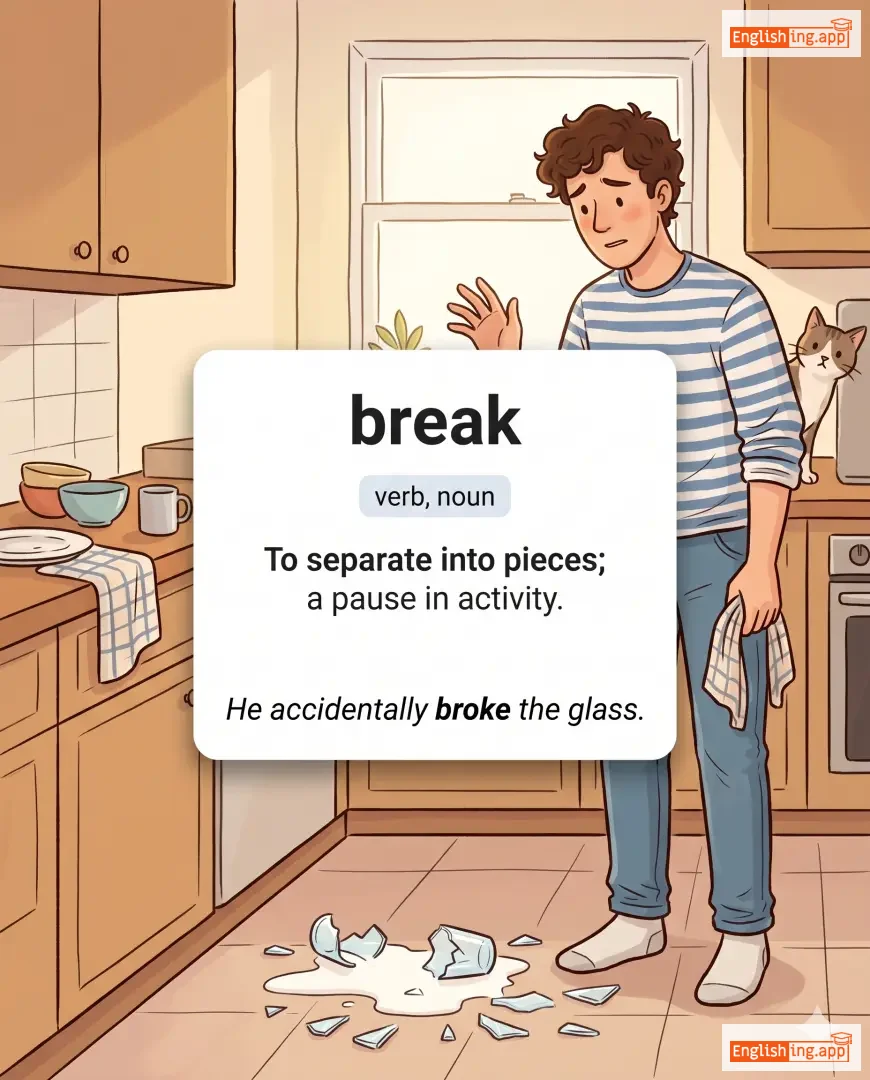
To separate into pieces; a pause in activity.
••••••
|
He accidentally broke the glass.
ヒー アクシデンタリー ブローク ザ グラス。
••••••
|
彼はうっかりガラスを割ってしまった。
Kare wa ukkari garasu o watte shimatta.
••••••
|
take a break
テイク ア ブレイク
••••••
|
to rest for a short time
••••••
|
休憩を取る
kyūkei o toru
••••••
|
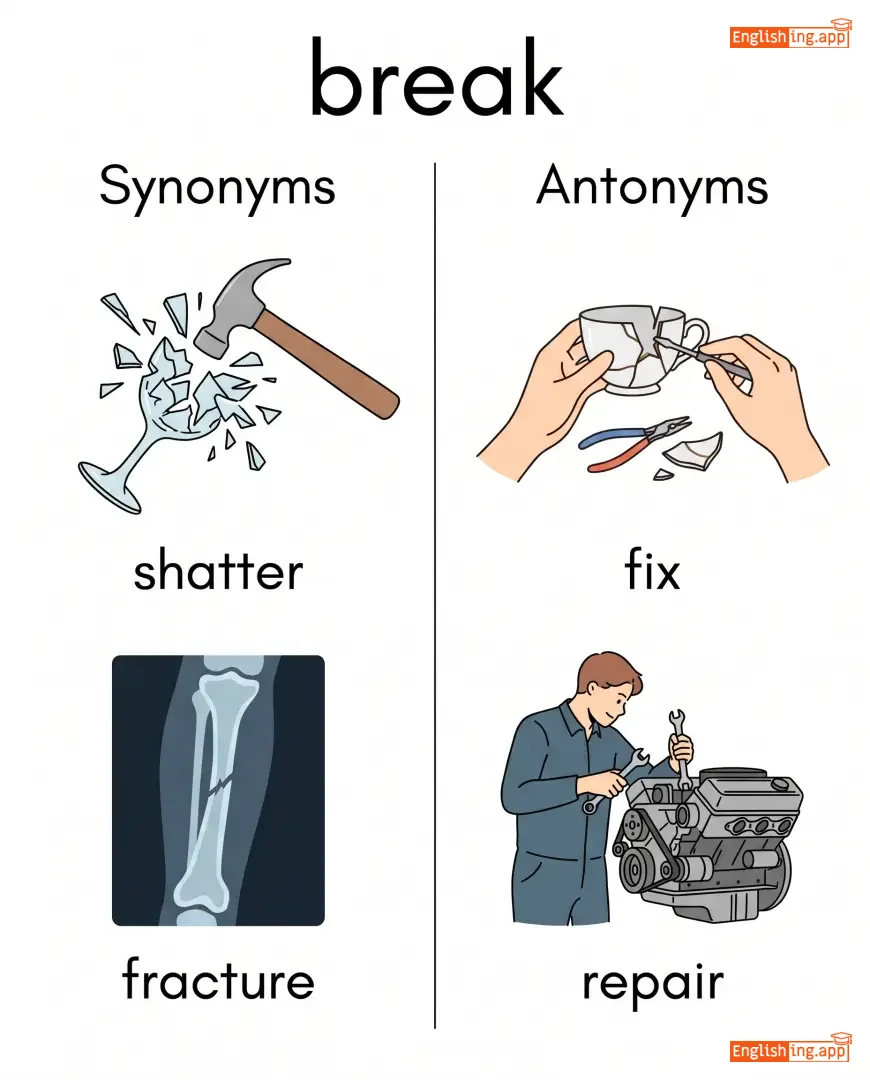
shatter, fracture, smash, pause, recess
••••••
|
fix, repair, continue
••••••
|
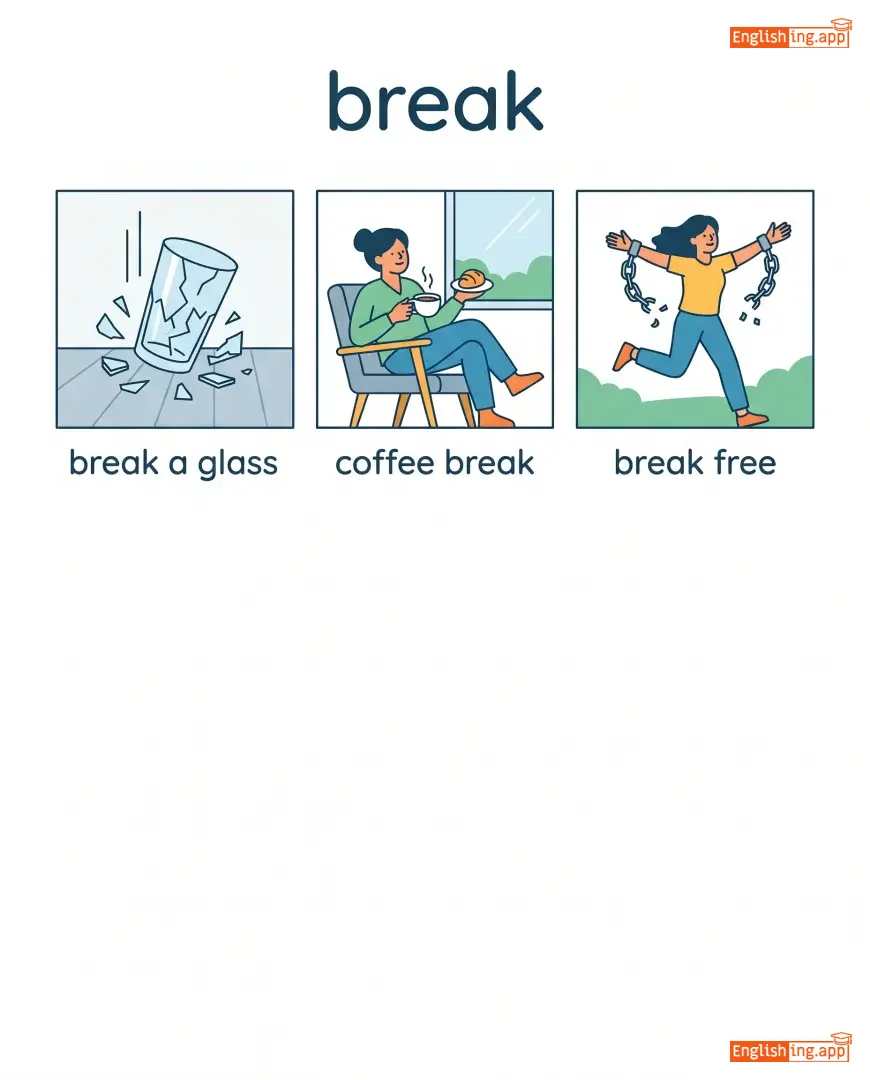
break a glass, coffee break, break free, break the law
••••••
|
Breakは壊す、またBreakは休憩。
••••••
|
|
#753
🔧
|
/ˈbrɛkdaʊn/
noun
(ブレイクダウン)
••••••
|
- •••••• |
故障
koshou
••••••
|
- •••••• | - •••••• | - •••••• | - •••••• |
a failure or collapse of a system or machinery
••••••
|
The car had a breakdown on the highway. |
車は高速道路で故障しました。
Kuruma wa kousokudouro de koshou shimashita.
••••••
|
- •••••• | - •••••• | - •••••• |
failure, malfunction, collapse, crash
••••••
|
repair, recovery
••••••
|
engine breakdown, car breakdown, system breakdown, total breakdown
••••••
|
故障は'breakdown'の意味、車の故障を思い出してください。
••••••
|
|
#754
🥞
|
/ˈbrɛkfəst/
noun
••••••
|
- •••••• | - •••••• | - •••••• | - •••••• | - •••••• | - •••••• |
The first meal of the day, usually eaten in the morning.
••••••
|
We had eggs and toast for breakfast. |
- •••••• |
have breakfast |
to eat the first meal of the day
••••••
|
- •••••• |
morning meal, brunch, repast, first meal
••••••
|
dinner, supper
••••••
|
healthy breakfast, big breakfast, skip breakfast, have breakfast
••••••
|
No •••••• |
|
#755
💡
|
/ˈbrɛkθruː/
noun
••••••
|
|
- •••••• | - •••••• | - •••••• | - •••••• | - •••••• |
a significant or sudden advance or discovery
••••••
|
The scientist made a breakthrough in cancer research. |
- •••••• | - •••••• | - •••••• | - •••••• |
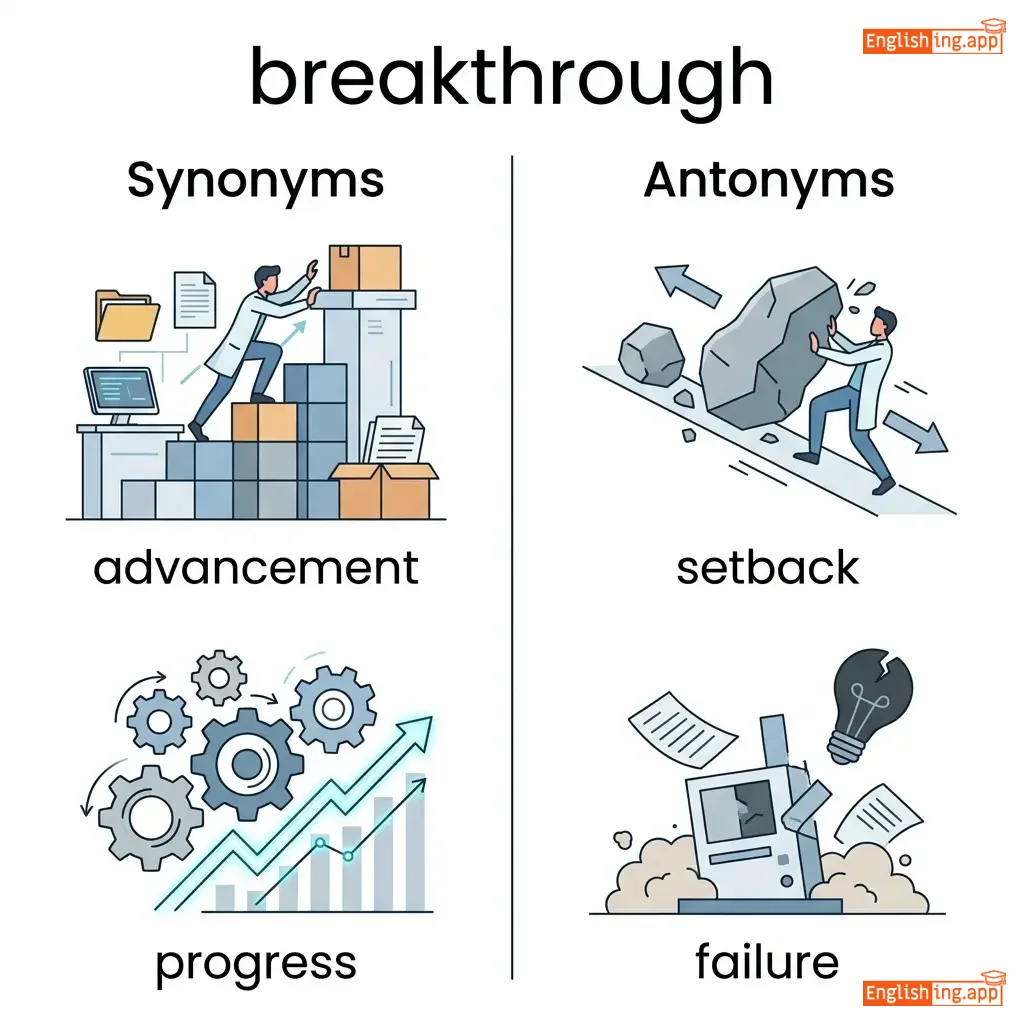
advancement, progress, discovery, innovation
••••••
|
setback, failure
••••••
|
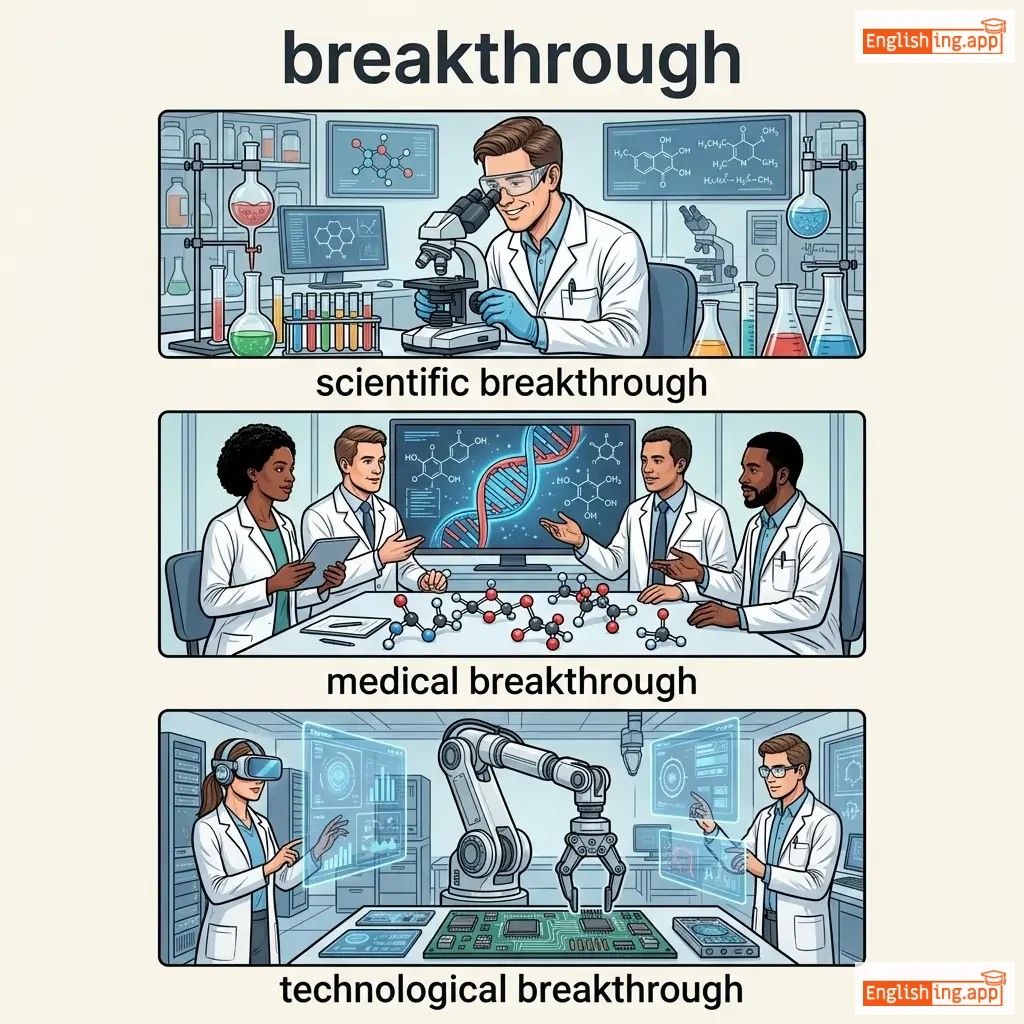
scientific breakthrough, medical breakthrough, technological breakthrough
••••••
|
No •••••• |
|
#756
👩🍼
|
/brɛst/
noun
(ブレスト)
••••••
|
- •••••• |
胸部
kyoubu
••••••
|
- •••••• | - •••••• | - •••••• | - •••••• |
Either of the two soft, rounded parts on a woman’s chest that produce milk after childbirth.
••••••
|
The baby was fed from his mother's breast. |
赤ちゃんは母親の胸部から授乳されました。
Akachan wa hahaoya no kyōbu kara junyū saremashita.
••••••
|
make a clean breast of |
to confess or admit something openly
••••••
|
白状する
hakujō suru
••••••
|
bosom, chest, bust, mammary
••••••
|
back, spine
••••••
|
breast cancer, breast milk, chicken breast, breast surgery
••••••
|
Breastは胸部を意味し、母親は赤ちゃんに胸部から授乳します。
••••••
|
|
#757
💨
|
/brɛθ/
noun
(ブレス)
••••••
|
- •••••• |
呼吸
kokyū
••••••
|
- •••••• | - •••••• | - •••••• | - •••••• |
The air taken into or expelled from the lungs during breathing.
••••••
|
He took a deep breath before speaking. |
彼は話す前に深く息を吸いました。
Kare wa hanasu mae ni fukaku iki o suimashita.
••••••
|
catch one's breath |
to rest or pause to recover normal breathing
••••••
|
息を呑む
iki o nomu
••••••
|
inhalation, exhalation, respiration, gasp
••••••
|
suffocation, choking
••••••
|
deep breath, hold breath, last breath, fresh breath
••••••
|
Breath は呼吸、呼吸がないと死ぬ。
••••••
|
|
#758
😮💨
|
/briːð/
verb
(ブリーズ)
••••••
|
- •••••• |
呼吸
kokyuu
••••••
|
breathed
ブリフト
••••••
|
breathed
ブリフト
••••••
|
breathes
ブリーズ
••••••
|
breathing
ブリージング
••••••
|
To take air into the lungs and send it out again.
••••••
|
It was hard to breathe in the smoky room.
煙の部屋で呼吸するのは難しかった。
••••••
|
煙の部屋で呼吸するのは難しかった。
Kemuri no heya de kokyuu suru no wa muzukashikatta.
••••••
|
breathe easy
息をつく
••••••
|
to relax after a period of stress
••••••
|
リラックスする
rirakkusu suru
••••••
|
inhale, exhale, respire, gasp
••••••
|
suffocate, choke
••••••
|
breathe deeply, breathe easily, hardly breathe, breathe fire
••••••
|
呼吸は空気を吸うこと、息をつくはリラックスすること。
••••••
|
|
#759
🌬️
|
/ˈbriːðɪŋ/
noun
(ハピネス)
••••••
|
- •••••• |
幸せ
shiawase
••••••
|
- •••••• | - •••••• | - •••••• | - •••••• |
the process of taking air into and expelling it from the lungs.
••••••
|
Deep breathing can help you relax. |
彼女は賞を受け取ったとき、幸せを隠せませんでした。
Kanojo wa shō o uketotta toki, shiawase o kakusemasen deshita.
••••••
|
take a deep breath |
to inhale deeply to calm oneself
••••••
|
幸せを追求する
shiawase o tsuikyū suru
••••••
|
respiration, inhalation, exhalation, ventilation, gasp
••••••
|
suffocation, choking
••••••
|
deep breathing, breathing exercise, heavy breathing, shallow breathing
••••••
|
幸せ = '幸' + 'せ' — 幸せは毎日の積み重ね!
••••••
|
|
#760
🐎
|
/briːd/
verb, noun
(buriido)
••••••
|
|
繁殖する、品種
hanshoku suru, hinshu
••••••
|
bred
bred
••••••
|
bred
bred
••••••
|
breeds
buriidzu
••••••
|
breeding
buriidingu
••••••
|
To cause an animal to reproduce; to raise or train; a type or variety of animal or plant.
••••••
|
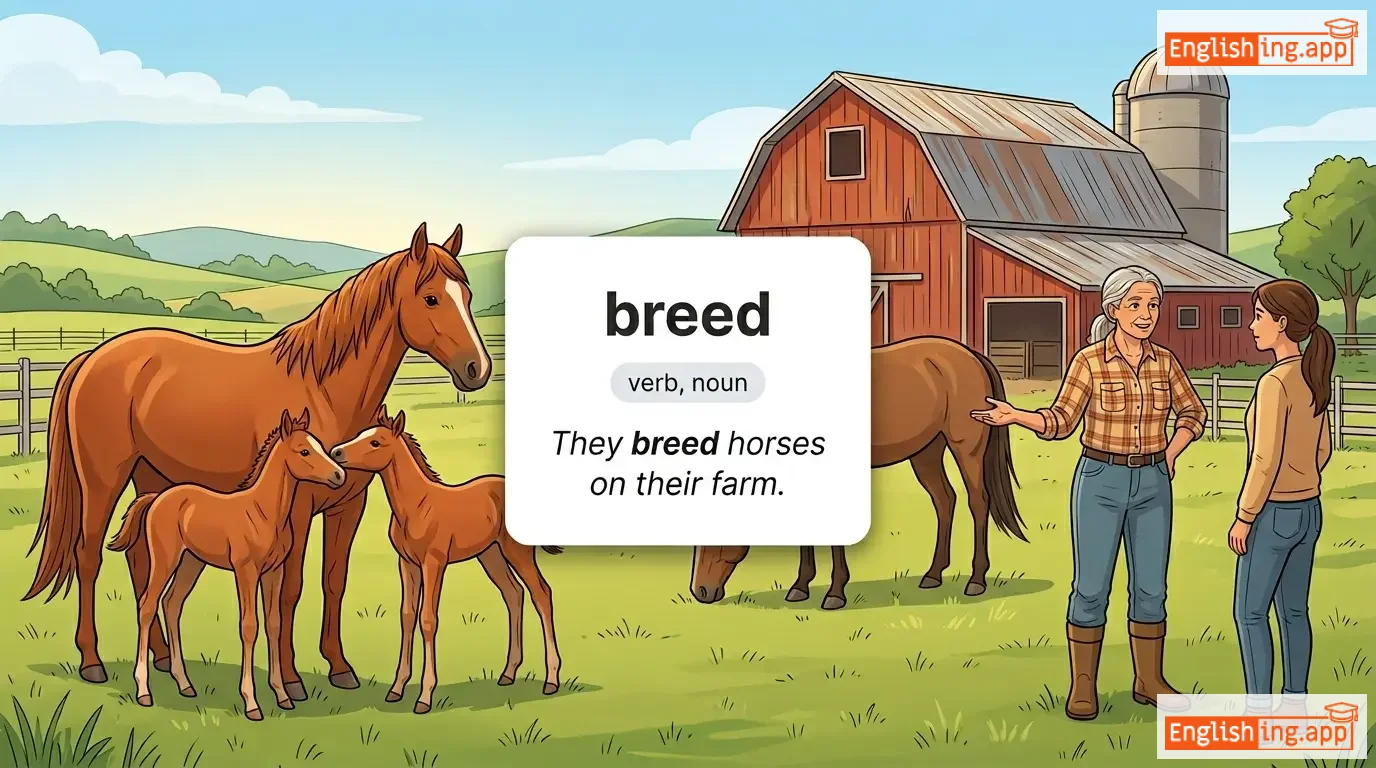
They breed horses on their farm.
彼らは農場で馬を育てています。
••••••
|
彼らは農場で馬を育てています。
Karera wa nōjō de uma o sodateています。
••••••
|
born and bred
生まれ育った
••••••
|
Used to indicate someone's native origin and upbringing.
••••••
|
生まれ育った
umare sodatta
••••••
|
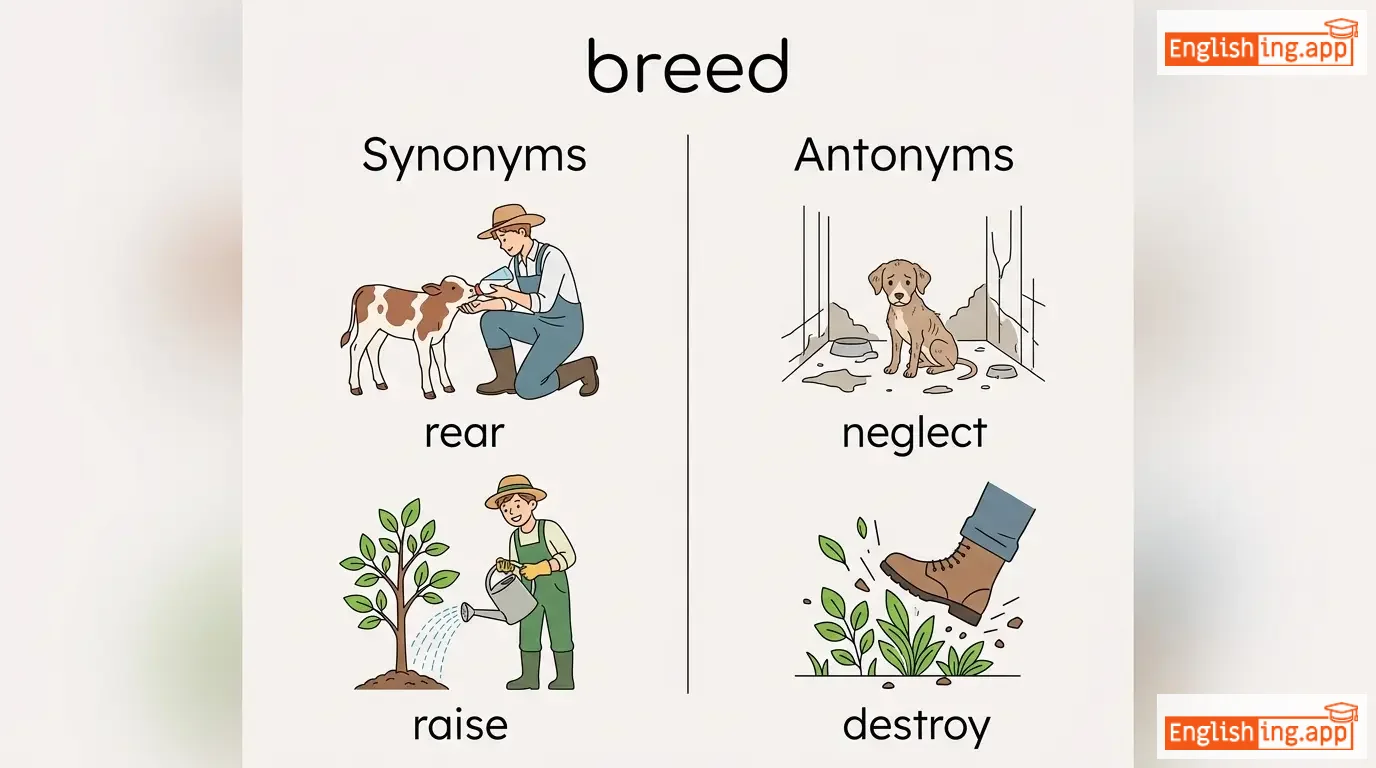
rear, raise, cultivate, reproduce, nurture
••••••
|
neglect, destroy, kill
••••••
|
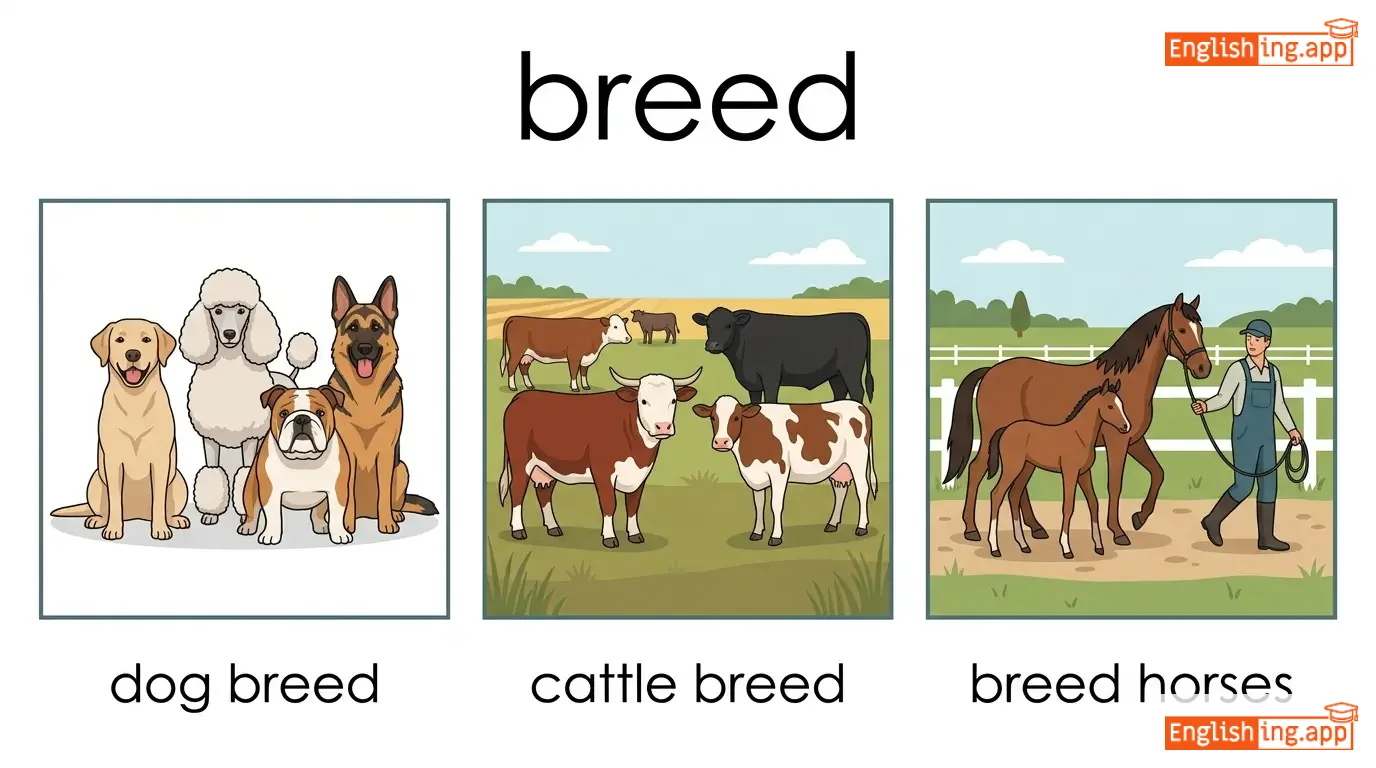
dog breed, cattle breed, breed horses, breed success
••••••
|
Breed は品種を意味します—犬の品種; Breed は生まれ育った意味もあります。
••••••
|
|
#761
💵
|
/braɪb/
verb
••••••
|
- •••••• | - •••••• |
bribed
••••••
|
bribed
••••••
|
bribes
••••••
|
bribing
••••••
|
To persuade someone to act in one's favor, typically illegally, by offering money or gifts.
••••••
|
The official was caught trying to bribe the inspector. |
- •••••• |
accept a bribe |
To take money or gifts illegally to do a favor.
••••••
|
- •••••• |
corrupt, induce, influence, buy off
••••••
|
refuse, reject, honesty
••••••
|
take a bribe, offer a bribe, give a bribe, accept a bribe
••••••
|
No •••••• |
|
#762
🧱
|
/brɪk/
noun
(ブリック)
••••••
|
- •••••• |
レンガ
renga
••••••
|
- •••••• | - •••••• | - •••••• | - •••••• |
A rectangular block of clay or similar material used in building walls and other structures.
••••••
|
The workers laid brick after brick to build the wall. |
作業員たちは壁を作るためにレンガを一つ一つ積み上げていった。
Sagyouin-tachi wa kabe o tsukuru tame ni renga o hitotsu hitotsu tsumiagete itta.
••••••
|
thick as a brick |
Used to describe someone who is very stupid or slow to understand.
••••••
|
レンガのように鈍い
renga no yō ni nibui
••••••
|
block, stone, tile, slab, cube
••••••
|
void, gap
••••••
|
brick wall, brick house, brick building, red brick, brick by brick
••••••
|
レンガ = レンガ 🧱 - レンガで壁が作られる。
••••••
|
|
#763
🌉
|
/brɪdʒ/
noun
(ブリッジ)
••••••
|
- •••••• |
橋
hashi
••••••
|
- •••••• | - •••••• | - •••••• | - •••••• |
A structure built to span a physical obstacle, such as a river or road, for the purpose of providing passage.
••••••
|
The bridge connects the two cities across the river. |
橋は川を越えて二つの都市を繋げています。
Hashi wa kawa o koete futatsu no toshi o tsunageteimasu.
••••••
|
burn one's bridges |
To eliminate all possibilities of retreat; to commit oneself completely.
••••••
|
橋を燃やす
Hashi o moyasu
••••••
|
overpass, viaduct, crossing, span, walkway
••••••
|
barrier, obstacle
••••••
|
cross a bridge, build a bridge, bridge over, suspension bridge, stone bridge
••••••
|
Bridge は橋 🌉 - 橋を使って川を渡ることができます。
••••••
|
|
#764
📝
|
/briːf/
adjective, noun, verb
(buri-fu)
••••••
|
- •••••• |
簡潔な
kanketsu na
••••••
|
briefed
buri-fudo
••••••
|
briefed
buri-fudo
••••••
|
briefs
buri-fusu
••••••
|
briefing
buri-fingu
••••••
|
Short in duration; a summary of information.
••••••
|
The manager briefed the team before the meeting.
マネージャーは会議の前にチームにブリーフィングを行いました。
••••••
|
マネージャーは会議の前にチームに簡潔な説明を行いました。
Mane-ja wa kaigi no mae ni chi-mu ni kanketsu na setsumei o okonai mashita.
••••••
|
in brief
簡潔に
••••••
|
in short; concisely
••••••
|
簡潔に
kanketsu ni
••••••
|
short, concise, summary, outline
••••••
|
long, detailed
••••••
|
brief meeting, legal brief, security briefing, brief moment
••••••
|
Brief = 簡潔な会話、簡潔な説明。
••••••
|
|
#765
⏱️
|
/ˈbriːf.li/
adverb
(ブリーフリー)
••••••
|
- •••••• |
簡潔に
kanketsu ni
••••••
|
- •••••• | - •••••• | - •••••• | - •••••• |
in a short and clear way; for a short time
••••••
|
Please explain the problem briefly.
問題を簡潔に説明してください。
••••••
|
問題を簡潔に説明してください。
Mondai wo kanketsu ni setsumei shite kudasai.
••••••
|
- •••••• | - •••••• | - •••••• |
shortly, concisely, quickly
••••••
|
lengthily, extensively, elaborately
••••••
|
briefly explain, briefly discuss, briefly mention
••••••
|
日本語の '簡潔に' と英語の 'briefly' を関連付けて覚えましょう。
••••••
|
|
#766
☀️
|
/braɪt/
adjective
(ブライト)
••••••
|
- •••••• |
明るい
akarui
••••••
|
- •••••• | - •••••• | - •••••• | - •••••• |
Giving out or reflecting a lot of light; intelligent or cheerful.
••••••
|
The bright sun lit up the entire valley. |
明るい太陽が谷全体を照らしました。
Akarui taiyou ga tani zentai o terashimashita.
••••••
|
look on the bright side |
To find positive aspects in a bad situation.
••••••
|
明るい面を見て
Akarui men o mite
••••••
|
shiny, luminous, radiant, smart, cheerful
••••••
|
dark, dull, gloomy
••••••
|
bright light, bright color, bright future, bright idea
••••••
|
Brightは明るい☀️ - Bright futureは明るい未来を意味します。
••••••
|
Vocabulary Quiz
Test your vocabulary by matching words with their translations or meanings.
Login to take the quiz
Comments (0)
Share your thoughts and join the discussion.
Join the discussion by logging in
Login to CommentNo comments yet
Be the first to share your thoughts!