

翻訳
過去
過去分詞
三人称単数
動名詞
意味
例文
例文の翻訳
同義語
対義語
コロケーション
ニーモニック
Swipe left or right, or use the buttons. Tap image to zoom.
例文の翻訳
単語
Lesson 110Lesson 110 - マスクトグル
|
絵文字
|
単語 | Images | 翻訳 | 過去 | 過去分詞 | 三人称単数 | 動名詞 | 意味 | 例文 | 例文の翻訳 | 表現例 | 表現例の意味 | 表現例の翻訳 | 同義語 | 対義語 | コロケーション | ニーモニック |
|---|---|---|---|---|---|---|---|---|---|---|---|---|---|---|---|---|---|
|
#5225
🙂
|
/ˌʌnəˈfɛktɪd/
adjective
(アンアフェクテッド)
••••••
|
- •••••• |
無影響な, 自然な
mu eikyō na, shizen na
••••••
|
- •••••• | - •••••• | - •••••• | - •••••• |
Not influenced or touched by something; genuine and natural.
••••••
|
He remained unaffected by the criticism and kept working hard.
彼は批判に動じることなく、懸命に働き続けました。
••••••
|
彼は批判に動じることなく、懸命に働き続けました。
Kare wa hihan ni dōjiru koto naku, kenmei ni hataraki tsudzukemashita.
••••••
|
- •••••• | - •••••• | - •••••• |
untouched, unchanged, genuine, natural, sincere
••••••
|
affected, influenced, artificial
••••••
|
remain unaffected, seem unaffected, unaffected style
••••••
|
Affectは影響を意味し、unaffectedは無影響な=静か🙂
••••••
|
|
#5226
🦁
|
/ʌnəˈfreɪd/
adjective
(アンアフレイド)
••••••
|
- •••••• |
恐れない
osorenai
••••••
|
- •••••• | - •••••• | - •••••• | - •••••• |
Not feeling fear; brave or courageous
••••••
|
She walked into the dark room, unafraid of what might be inside.
彼女は暗い部屋に入った、アンアフレイド 内側に何があるか恐れないで。
••••••
|
彼女は暗い部屋に入り、恐れないで何があるかを見た。
Kanojo wa kurai heya ni hairi, osorenai de nani ga aru ka o mita.
••••••
|
- •••••• | - •••••• | - •••••• |
fearless, brave, courageous, bold
••••••
|
afraid, fearful, timid
••••••
|
unafraid of, unafraid to speak, unafraid to act
••••••
|
恐れない = unafraid like a brave samurai
••••••
|
|
#5227
😠
|
/ʌnəˈpiːzd/
adjective
(アンアピースド)
••••••
|
- •••••• |
満足していない
manzoku shite inai
••••••
|
- •••••• | - •••••• | - •••••• | - •••••• |
Not satisfied or calmed; still feeling discontent or anger
••••••
|
Despite the apology, she remained unappeased.
謝罪にもかかわらず、彼女はアンアピースドのままだった。
••••••
|
謝罪にもかかわらず、彼女は満足していなかった。
Shazai ni mo kakawarazu, kanojo wa manzoku shite inakatta
••••••
|
- •••••• | - •••••• | - •••••• |
dissatisfied, discontented, unsettled, frustrated
••••••
|
satisfied, appeased, content
••••••
|
remain unappeased, feel unappeased, leave unappeased
••••••
|
Un + appeased = 満足していない, 覚えて 'Un' = ない
••••••
|
|
#5228
🗡️
|
/ʌnˈɑːrm/
verb
(アンアーム)
••••••
|
- •••••• |
武装解除する
busou kaijo suru
••••••
|
unarmed
アンアームド
••••••
|
unarmed
アンアームド
••••••
|
unarms
アンアームズ
••••••
|
unarming
アンアーミング
••••••
|
to remove weapons from someone or to deprive of means of attack or defense
••••••
|
The soldiers were ordered to unarm the prisoners.
兵士たちは囚人の武装を解除するよう命じられた。
••••••
|
兵士たちは囚人の武装を解除するよう命じられた。
Heishitachi wa shuujin no busou o kaijo suru you meijirareta
••••••
|
- •••••• | - •••••• | - •••••• |
disarm, demilitarize, strip, neutralize
••••••
|
arm, equip, weaponize
••••••
|
unarm a soldier, unarm a suspect, unarm completely
••••••
|
JA: 兵士たちはアンアームして busou kaijo suru
••••••
|
|
#5229
🛡️
|
/ʌnˈɑːrmd/
adjective
(アンアームド)
••••••
|
- •••••• |
非武装
hibuso
••••••
|
- •••••• | - •••••• | - •••••• | - •••••• |
Not equipped with or carrying weapons
••••••
|
The police found the suspect unarmed during the search.
警察は捜索中に容疑者が武装していないことを発見した。
••••••
|
警察は捜索中に容疑者が武装していないことを発見した。
Keisatsu wa sousaku-chuu ni yougisha ga busou shiteinai koto wo hakken shita.
••••••
|
- •••••• | - •••••• | - •••••• |
defenseless, weaponless, powerless, vulnerable
••••••
|
armed, equipped
••••••
|
unarmed civilian, unarmed combat, unarmed protester
••••••
|
非武装 = unarmed; '非' = not, '武装' = armed
••••••
|
|
#5230
🚫
|
/ˌʌnəˈteɪnəbl/
adjective
(アンアテイナブル)
••••••
|
- •••••• |
達成不可能な
tassei fukanou na
••••••
|
- •••••• | - •••••• | - •••••• | - •••••• |
impossible to achieve, reach, or accomplish
••••••
|
For many, becoming a professional athlete remains an unattainable dream.
多くの人にとって、プロのアスリートになることは依然として達成不可能な夢です。
••••••
|
多くの人にとって、プロのアスリートになることは依然として達成不可能な夢です。
Ooku no hito ni totte, puro no asuriito ni naru koto wa izen toshite tassei fukanou na yume desu.
••••••
|
- •••••• | - •••••• | - •••••• |
impossible, unreachable, insurmountable, hopeless
••••••
|
achievable, attainable, possible
••••••
|
unattainable goal, unattainable dream, unattainable standard
••••••
|
Think 'tassei fukanou' = task see? Impossible!
••••••
|
|
#5231
⛔
|
/ˌʌnəˌveɪləˈbɪləti/
noun
(アンアベイラビリティ)
••••••
|
- •••••• |
利用不可
riyou fuka
••••••
|
- •••••• | - •••••• | - •••••• | - •••••• |
The state of being not available or not accessible.
••••••
|
The unavailability of the manager caused a delay in the project.
マネージャーの不在がプロジェクトの遅延を引き起こした。
••••••
|
マネージャーの不在がプロジェクトの遅延を引き起こした。
Mane-ja- no fuzai ga purojekuto no chien o hikiokoshita
••••••
|
- •••••• | - •••••• | - •••••• |
inaccessibility, absence, nonexistence, shortage
••••••
|
availability, presence
••••••
|
unavailability of resources, temporary unavailability, unavailability of data
••••••
|
Manager absent = 利用不可
••••••
|
|
#5232
🚫
|
/ˌʌnəˈveɪləbəl/
adjective
(アンアベイラブル)
••••••
|
- •••••• |
利用できない
riyō dekinai
••••••
|
- •••••• | - •••••• | - •••••• | - •••••• |
Not able to be obtained, reached, or used; not present or accessible.
••••••
|
The manager was unavailable to take calls during the meeting.
マネージャーは会議中にアンアベイラブルで、電話に出られませんでした。
••••••
|
マネージャーは会議中に電話に出られませんでした。
Manejā wa kaigichuu ni denwa ni deraremasen deshita.
••••••
|
- •••••• | - •••••• | - •••••• |
inaccessible, unattainable, unreachable, out of reach
••••••
|
available, accessible, reachable
••••••
|
unavailable resources, unavailable for comment, temporarily unavailable
••••••
|
Riyō dekinai = literally 'cannot be used'.
••••••
|
|
#5233
⚠️
|
/ˌʌnəˈvɔɪdəbl/
adjective
(アンアヴォイダブル)
••••••
|
- •••••• |
避けられない
sakerarenai
••••••
|
- •••••• | - •••••• | - •••••• | - •••••• |
Impossible to avoid or prevent.
••••••
|
Delays were unavoidable due to heavy rain. |
大雨のため、遅れは避けられないものでした。
ōame no tame, okure wa sakerarenai mono deshita.
••••••
|
an unavoidable truth |
A fact that cannot be ignored or denied.
••••••
|
避けられない真実
sakerarenai shinjitsu
••••••
|
inevitable, certain, inescapable, bound to happen
••••••
|
avoidable, preventable
••••••
|
unavoidable delay, unavoidable accident, unavoidable situation
••••••
|
避けられないはunavoidableと同じように、避けられないことを意味します。
••••••
|
|
#5234
🤷♂️
|
/ˌʌnəˈweər/
adjective
(アナウェア)
••••••
|
- •••••• |
無自覚; 知らない; 気づかない
muzikaku; shiranai; kidzukanai
••••••
|
- •••••• | - •••••• | - •••••• | - •••••• |
not knowing or realizing; having no knowledge of something
••••••
|
She was completely unaware of the danger.
彼女はその危険に完全に気づいていなかった。
••••••
|
彼女はその危険に完全に気づいていなかった。
Kanojo wa sono kiken ni kanzen ni kidzuite inakatta.
••••••
|
- •••••• | - •••••• | - •••••• |
ignorant, oblivious, unconscious, clueless
••••••
|
aware, conscious, informed, alert
••••••
|
completely unaware, totally unaware, seemingly unaware
••••••
|
もし無自覚なら、周りの危険にも気づかない。だから、'aware' になれ!
••••••
|
|
#5235
😱
|
/ˌʌnbɪˈliːvəbəl/
adjective
(アンビリーバブル)
••••••
|
- •••••• |
信じられない
shinjirarenai
••••••
|
- •••••• | - •••••• | - •••••• | - •••••• |
impossible to believe; extremely surprising or remarkable
••••••
|
The magician's performance was absolutely unbelievable.
魔法使いのパフォーマンスは絶対にアンビリーバブルでした。
••••••
|
魔法使いのパフォーマンスは絶対に信じられなかった。
Mahoutsukai no pafōmansu wa zettai ni shinjirarenakatta.
••••••
|
- •••••• | - •••••• | - •••••• |
incredible, amazing, astonishing, extraordinary
••••••
|
believable, credible, ordinary, normal
••••••
|
unbelievable story, unbelievable luck, absolutely unbelievable
••••••
|
マジシャンがする信じられないこと!
••••••
|
|
#5236
🤨
|
/ˌʌnbɪˈliːvɪŋ/
adjective
(アンビリービング)
••••••
|
- •••••• |
信じない
shinjinaide
••••••
|
- •••••• | - •••••• | - •••••• | - •••••• |
Not willing or able to believe; skeptical or doubtful
••••••
|
She gave him an unbelieving look when he claimed to have met a celebrity.
彼が有名人に会ったと主張したとき、彼女は彼にアンビリービングな目を向けた。
••••••
|
彼が有名人に会ったと主張したとき、彼女は彼に信じない目を向けた。
Kare ga yuumeijin ni atta to shucho shita toki, kanojo wa kare ni shinjinaide me wo muketa.
••••••
|
- •••••• | - •••••• | - •••••• |
skeptical, doubtful, incredulous, mistrustful, suspicious
••••••
|
believing, trusting, credulous
••••••
|
unbelieving look, unbelieving gaze, unbelieving expression, remain unbelieving, sound unbelieving
••••••
|
shinjinaide = unbelieving, think 'shin' for believe + 'jinaide' not
••••••
|
|
#5237
🤔
|
/ʌnˈsɜːtən/
adjective
(アンセートン)
••••••
|
- •••••• |
不確実
fukakujitsu
••••••
|
- •••••• | - •••••• | - •••••• | - •••••• |
not sure or confident about something; not clearly known or decided
••••••
|
She felt uncertain about her future after graduation. |
卒業後、彼女は自分の未来について不確実に感じていた。
sotsugyōgo, kanojo wa jibun no mirai ni tsuite fukakujitsu ni kanjite ita.
••••••
|
in uncertain terms |
without being clear or definite
••••••
|
不確実な言葉で
fukakujitsu na kotoba de
••••••
|
unsure, doubtful, hesitant, indecisive, ambiguous
••••••
|
certain, confident, sure
••••••
|
uncertain future, uncertain times, uncertain outcome, feel uncertain
••••••
|
UN + certain (確実でない) = 不確実; 'uncertain は不確実な未来を意味する'を覚えておいて
••••••
|
|
#5238
🤔
|
/ʌnˈsɜːrtənli/
adverb
(アンサーテンリー)
••••••
|
- •••••• |
不確かに
futashika ni
••••••
|
- •••••• | - •••••• | - •••••• | - •••••• |
in a way that shows doubt or lack of certainty
••••••
|
She glanced uncertainly at the complicated instructions.
彼女は複雑な指示を不確かに見つめた。
••••••
|
彼女は複雑な指示を不確かに見つめた。
Kanojo wa fukuzatsu na shiji o futashika ni mitsumeta.
••••••
|
- •••••• | - •••••• | - •••••• |
hesitantly, doubtfully, tentatively, indecisively
••••••
|
confidently, decisively
••••••
|
look uncertainly, speak uncertainly, move uncertainly
••••••
|
不確かに見る = uncertainly
••••••
|
|
#5239
❓
|
/ʌnˈsɜːrtənti/
noun
(アンセレテンティ)
••••••
|
- •••••• |
不確実性; 疑念または確信の欠如
fukakujitsusei; ginen mata wa kakushin no ketsujo
••••••
|
- •••••• | - •••••• | - •••••• | - •••••• |
the state of being uncertain; doubt or lack of sureness
••••••
|
The uncertainty about the weather delayed our trip.
天気についての不確実性が私たちの旅行を遅らせた。
••••••
|
天気についての不確実性が私たちの旅行を遅らせた。
tenki ni tsuite no fukakujitsusei ga watashitachi no ryokou o okuraseta.
••••••
|
- •••••• | - •••••• | - •••••• |
doubt, ambiguity, confusion, hesitation
••••••
|
certainty, confidence, assurance, clarity
••••••
|
economic uncertainty, create uncertainty, reduce uncertainty
••••••
|
不確実性、天気みたいに変わりやすい!
••••••
|
|
#5240
🔒
|
/ʌnˈtʃeɪndʒəbəl/
adjective
(アンチェンジアブル)
••••••
|
- •••••• |
変更不可能な; 固定された;
henkou fukanou na; kotei sareta;
••••••
|
- •••••• | - •••••• | - •••••• | - •••••• |
not able to be changed or altered; fixed and permanent
••••••
|
The laws of physics are unchangeable principles that govern the universe. |
物理法則は変更不可能な原則であり、宇宙を支配しています。
butsurihōsoku wa henkou fukanou na gensoku de ari, uchū o shihai shiteimasu.
••••••
|
- •••••• | - •••••• | - •••••• |
immutable, fixed, permanent, constant, invariable
••••••
|
changeable, variable, mutable, flexible, alterable
••••••
|
unchangeable fact, unchangeable law, unchangeable truth, unchangeable nature
••••••
|
不変の法則は、まるで固定された山のようです。
••••••
|
|
#5241
🕰️
|
/ʌnˈtʃeɪndʒɪŋ/
adjective
(アンチェンジング)
••••••
|
- •••••• |
変わらない
kawaranai
••••••
|
- •••••• | - •••••• | - •••••• | - •••••• |
remaining the same over time; not changing
••••••
|
Her love for her family was unchanging throughout the years.
彼女の家族への愛は何年にもわたって変わらなかった。
••••••
|
彼女の家族への愛は何年にもわたって変わらなかった。
Kanojo no kazoku e no ai wa nannen ni mo watatte kawaranakatta.
••••••
|
- •••••• | - •••••• | - •••••• |
constant, stable, immutable, permanent, fixed
••••••
|
changing, variable, shifting
••••••
|
unchanging nature, unchanging belief, unchanging rules, unchanging attitude
••••••
|
Kawaranai = unchanging, 愛は変わらない
••••••
|
|
#5242
❓
|
/ʌnˈklɪər/
adjective
(アン クリア)
••••••
|
- •••••• |
不明確
fumeikaku
••••••
|
- •••••• | - •••••• | - •••••• | - •••••• |
not easy to understand; vague or ambiguous
••••••
|
The instructions were unclear, so I asked for clarification.
指示がアン クリアだったので、私は説明を求めました。
••••••
|
指示が不明確だったので、私は説明を求めました。
Shiji ga fumeikaku datta node, watashi wa setsumei o motomemashita
••••••
|
- •••••• | - •••••• | - •••••• |
vague, ambiguous, confusing, obscure
••••••
|
clear, obvious, understandable
••••••
|
unclear instructions, unclear message, unclear situation, unclear meaning
••••••
|
Fumeikaku = unclear, literally 'not clear' in Japanese
••••••
|
|
#5243
🧥
|
/ʌnˈkloʊð/
verb
(アンクロウズ)
••••••
|
- •••••• |
服を脱がせる; 衣服を取り除く
fuku o nugaseru; ifuku o torinozoku
••••••
|
unclothed
アンクロウズド
••••••
|
unclothed
アンクロウズド
••••••
|
unclothes
アンクロウズズ
••••••
|
unclothing
アンクロウズイング
••••••
|
to remove clothing from someone or something
••••••
|
The nurse helped unclothe the patient for the examination.
看護師は検査のために患者のアンクロウズを手伝った。
••••••
|
看護師は検査のために患者の服を脱がせる手伝いをした。
Kangoshi wa kensa no tame ni kanja no fuku o nugaseru tetsudai o shita
••••••
|
- •••••• | - •••••• | - •••••• |
strip, disrobe, undress, divest, denude
••••••
|
clothe, dress, attire
••••••
|
unclothe completely, unclothe carefully, unclothe oneself
••••••
|
アンクロウズ = unclothe = 服を脱がせる in Japanese
••••••
|
|
#5244
🧥
|
/ʌnˈkloʊðɪŋ/
noun
(アンクロージング)
••••••
|
- •••••• |
服を脱ぐこと
fuku o nugu koto
••••••
|
- •••••• | - •••••• | - •••••• | - •••••• |
the act or process of removing clothing
••••••
|
The child quickly ran inside for unclothing after playing in the mud.
子供は泥遊びの後、アンクロージングのためにすぐに家の中に走った。
••••••
|
子供は泥遊びの後、服を脱ぐことのためにすぐに家の中に走った。
kodomo wa doroyubi no ato, fuku o nugu koto no tame ni sugu ni ie no naka ni hashitta
••••••
|
- •••••• | - •••••• | - •••••• |
undressing, disrobing, stripping, denudation
••••••
|
dressing, clothing
••••••
|
unclothing ceremony, unclothing process, rapid unclothing
••••••
|
Associate 'fuku o nugu koto' with unclothing in Japanese.
••••••
|
|
#5245
😣
|
/ʌnˈkʌmfətəbl/
adjective
(アンカムフォータブル)
••••••
|
- •••••• |
不快
fukai
••••••
|
- •••••• | - •••••• | - •••••• | - •••••• |
causing or feeling physical or emotional discomfort
••••••
|
He felt uncomfortable during the long meeting. |
長い会議の間、彼は不快に感じました。
Nagai kaigi no aida, kare wa fukai ni kanjimashita.
••••••
|
make someone uncomfortable |
to cause someone to feel uneasy or awkward
••••••
|
誰かを不快にさせる
dareka o fukai ni saseru
••••••
|
uneasy, awkward, embarrassed, uneasy, distressed
••••••
|
comfortable, relaxed, pleasant
••••••
|
feel uncomfortable, uncomfortable situation, uncomfortable silence, make uncomfortable
••••••
|
UN + 快 = 不快、覚えておいて、不快は不安や気まずさを意味します。
••••••
|
|
#5246
✨
|
/ʌnˈkɒmən/
adjective
(アンコモン)
••••••
|
- •••••• |
珍しい
mezurashii
••••••
|
- •••••• | - •••••• | - •••••• | - •••••• |
rare, unusual, or remarkable
••••••
|
It is uncommon to see snow in this region. |
この地域で雪を見るのは珍しい。
Kono chiiki de yuki o miru no wa mezurashii.
••••••
|
- •••••• | - •••••• | - •••••• |
rare, unusual, extraordinary, unique, exceptional
••••••
|
common, usual, ordinary
••••••
|
uncommon event, uncommon disease, uncommon talent, uncommon strength
••••••
|
Uncommon = UN + 普通じゃない → 珍しい
••••••
|
|
#5247
💤
|
/ʌnˈkɒnʃəs/
adjective
(アンコンシャス)
••••••
|
- •••••• |
無意識
muishiki
••••••
|
- •••••• | - •••••• | - •••••• | - •••••• |
not awake and aware of surroundings
••••••
|
He was knocked unconscious by the fall. |
彼は転倒して無意識になった。
Kare wa tentō shite muishiki ni natta.
••••••
|
unconscious mind |
the part of the mind not within conscious awareness
••••••
|
無意識の心
muishiki no kokoro
••••••
|
senseless, insensible, comatose, unaware, unresponsive
••••••
|
conscious, aware, alert
••••••
|
knocked unconscious, unconscious state, unconscious bias, unconscious decision
••••••
|
Un + conscious = 無意識 → 無意識
••••••
|
|
#5248
😴
|
/ʌnˈkɒnʃəsli/
adverb
(アンコンシャスリ)
••••••
|
- •••••• |
無意識に
muishiki ni
••••••
|
- •••••• | - •••••• | - •••••• | - •••••• |
without being aware of one's actions or surroundings
••••••
|
She unconsciously tapped her foot to the rhythm of the music.
彼女は無意識に音楽のリズムに合わせて足をトントンしていた。
••••••
|
彼女は無意識に音楽のリズムに合わせて足をトントンしていた。
kanojo wa muishiki ni ongaku no rizumu ni awasete ashi wo tonton shite ita
••••••
|
- •••••• | - •••••• | - •••••• |
involuntarily, automatically, instinctively, reflexively
••••••
|
consciously, deliberately, intentionally
••••••
|
unconsciously aware, unconsciously mimic, unconsciously react
••••••
|
Muishiki = unconscious, tapping foot without thinking
••••••
|
|
#5249
😵
|
/ʌnˈkɒnʃəsnəs/
noun
(アンコンシャスネス)
••••••
|
- •••••• |
無意識
muishiki
••••••
|
- •••••• | - •••••• | - •••••• | - •••••• |
the state of being unaware of and unable to respond to one's surroundings
••••••
|
After the accident, he was in a state of unconsciousness for several hours.
事故の後、彼は数時間意識を失っていた。
••••••
|
事故の後、彼は数時間意識を失っていた。
Jiko no ato, kare wa suujikan ishiki o ushinatte ita.
••••••
|
- •••••• | - •••••• | - •••••• |
insensibility, stupor, fainting, coma, oblivion
••••••
|
consciousness, awareness
••••••
|
fall into unconsciousness, regain unconsciousness, state of unconsciousness
••••••
|
Muishiki = 'mu' (no) + 'ishiki' (consciousness) = unconsciousness
••••••
|
|
#5250
⚖️
|
/ˌʌnkɒnstɪˈtuːʃənəl/
adjective
(アンコンスティチューショナル)
••••••
|
- •••••• |
違憲の
iken no
••••••
|
- •••••• | - •••••• | - •••••• | - •••••• |
not in accordance with a political constitution; violating constitutional principles
••••••
|
The court declared the new law unconstitutional. |
裁判所は新しい法律が違憲であると宣言しました。
saibansho wa atarashī hōritsu ga iken de aru to sengen shimashita
••••••
|
- •••••• | - •••••• | - •••••• |
illegal, unlawful, invalid, illegitimate
••••••
|
constitutional, legal, lawful, legitimate
••••••
|
unconstitutional law, unconstitutional act, declare unconstitutional
••••••
|
No •••••• |
|
#5251
🔥
|
/ˌʌnkənˈtroʊld/
adjective
(アンコントロールド)
••••••
|
- •••••• |
制御不能な
seigyo funou na
••••••
|
- •••••• | - •••••• | - •••••• | - •••••• |
not restrained or managed; lacking control
••••••
|
The wildfire spread in an uncontrolled manner, causing widespread damage.
山火事は uncontrolled 方法で広がり、広範囲に被害をもたらした。
••••••
|
山火事は制御不能な方法で広がり、広範囲に被害をもたらした。
Yamakaji wa seigyo funou na houhou de hirogari, kouhan'i ni higai o motarashita
••••••
|
- •••••• | - •••••• | - •••••• |
unrestrained, unmanaged, rampant, unchecked
••••••
|
controlled, restrained, regulated
••••••
|
uncontrolled growth, uncontrolled emotion, uncontrolled fire
••••••
|
Think 'seigyo funou' as 'control fun? No way!'
••••••
|
|
#5252
🌀
|
/ˌʌnkənˈvɛnʃənl/
adjective
(アンコンベンショナル)
••••••
|
- •••••• |
型破りの
katayaburi no
••••••
|
- •••••• | - •••••• | - •••••• | - •••••• |
not based on or conforming to what is generally done or believed
••••••
|
Her unconventional approach to teaching inspired her students to think creatively.
彼女のアンコンベンショナルな教育アプローチは、生徒たちに創造的に考えるよう促しました。
••••••
|
彼女の型破りの教育アプローチは、生徒たちに創造的に考えるよう促しました。
kanojo no katayaburi no kyouiku apurochi wa, seitotachi ni souzouteki ni kangaeru you unagashimashita
••••••
|
- •••••• | - •••••• | - •••••• |
nontraditional, unorthodox, unusual, innovative, different
••••••
|
conventional, traditional, orthodox
••••••
|
unconventional methods, unconventional ideas, unconventional lifestyle, unconventional wisdom
••••••
|
Un + conventional = kata yaburi
••••••
|
|
#5253
🎨
|
/ˌʌnkənˈvɛnʃənəli/
adverb
(アンコンベンショナリー)
••••••
|
- •••••• |
型破りに
kata yaburi ni
••••••
|
- •••••• | - •••••• | - •••••• | - •••••• |
in a way that is not based on or conforming to accepted standards or norms
••••••
|
She dresses unconventionally, mixing bold colors and patterns that surprise everyone.
彼女はアンコンベンショナリーな服装をしており、大胆な色と柄を組み合わせて皆を驚かせる。
••••••
|
彼女は型破りに服装をしており、大胆な色と柄を組み合わせて皆を驚かせる。
Kanojo wa kata yaburi ni fukusou o shite ori, daitan na iro to gara o kumiawasete mina o odorokaseru.
••••••
|
- •••••• | - •••••• | - •••••• |
unorthodoxly, unusually, oddly, differently, eccentrically
••••••
|
traditionally, conventionally, normally
••••••
|
behave unconventionally, think unconventionally, act unconventionally
••••••
|
Unconventionally = 型破りに = kono kata de nai houhou
••••••
|
|
#5254
🙅
|
/ˌʌn.kəʊˈɒp.ər.ə.tɪv/
adjective
(アンコオペラティブ)
••••••
|
- •••••• |
非協力的な
hikyouryokuteki na
••••••
|
- •••••• | - •••••• | - •••••• | - •••••• |
not willing to help or work with others; unhelpful
••••••
|
The witness was uncooperative and refused to answer questions.
証人は非協力的で、質問に答えることを拒否した。
••••••
|
証人は非協力的で、質問に答えることを拒否した。
Shounin wa hikyouryokuteki de, shitsumon ni kotaeru koto wo kyohi shita.
••••••
|
- •••••• | - •••••• | - •••••• |
obstinate, unhelpful, resistant, defiant, unwilling
••••••
|
cooperative, helpful, compliant
••••••
|
uncooperative behavior, uncooperative attitude, uncooperative witness
••••••
|
Picture a 'hikyouryokuteki na' person refusing to help.
••••••
|
|
#5255
🤹♂️
|
/ˌʌnˈkɔːrdɪneɪtɪd/
adjective
(アンコオーディネイテッド)
••••••
|
- •••••• |
不器用; 協調性のない
bukiyou; kyouchousei no nai
••••••
|
- •••••• | - •••••• | - •••••• | - •••••• |
lacking coordination, not well-organized or clumsy in movement
••••••
|
His movements were uncoordinated, making him prone to accidents.
彼の動きは不器用で、事故を起こしやすかった。
••••••
|
彼の動きは不器用で、事故を起こしやすかった。
kare no ugoki wa bukiyou de, jiko o okoshi yasukatta.
••••••
|
- •••••• | - •••••• | - •••••• |
clumsy, awkward, disorganized, maladroit
••••••
|
coordinated, graceful, organized
••••••
|
uncoordinated effort, uncoordinated movement, uncoordinated response
••••••
|
Un + coordinated = 不器用
••••••
|
|
#5256
🍷
|
/ʌnˈkɔrk/
verb
(アンコーク)
••••••
|
- •••••• |
コルクを抜く
koruku o nuku
••••••
|
uncorked
アンコークド
••••••
|
uncorked
アンコークド
••••••
|
uncorks
アンコークス
••••••
|
uncorking
アンコーキング
••••••
|
To remove the cork from a bottle; to open a bottle, especially of wine
••••••
|
He uncorked the wine and poured a glass for everyone.
He アンコークed the wine and poured a glass for everyone.
••••••
|
彼はワインのコルクを抜き、皆にグラスを注いだ。
Kare wa wain no koruku o nuki, mina ni gurasu o soida.
••••••
|
uncork one's emotions
アンコーク one's emotions
••••••
|
to express emotions freely
••••••
|
感情を表す
kanjo o arawasu
••••••
|
open, untwist, loosen, decork, pop
••••••
|
seal, cork, close
••••••
|
uncork a bottle, uncork champagne, uncork wine, uncork emotions
••••••
|
Think 'uncork' = 'コルクを抜く' when opening a bottle in Japanese.
••••••
|
|
#5257
🩲
|
/ˈʌndərkləʊðz/
noun
(アンダークロウズ)
••••••
|
- •••••• |
下着
shitagi
••••••
|
- •••••• | - •••••• | - •••••• | - •••••• |
Clothing worn beneath outer clothes, such as underwear or lingerie
••••••
|
He folded his underclothes neatly before packing them.
彼は下着を丁寧にたたんでから詰めた。
••••••
|
彼は下着を丁寧にたたんでから詰めた。
Kare wa shitagi o teinei ni tatande kara tsumeta
••••••
|
- •••••• | - •••••• | - •••••• |
underwear, lingerie, intimates, undergarments
••••••
|
outerwear, overclothes
••••••
|
wash underclothes, fold underclothes, pack underclothes
••••••
|
下着 under your clothes = underclothes
••••••
|
|
#5258
💣
|
/ˌʌndərˈmaɪn/
verb
(アンダーマイン)
••••••
|
- •••••• |
弱める
yowameru
••••••
|
undermined
アンダーマインド
••••••
|
undermined
アンダーマインド
••••••
|
undermines
アンダーマインズ
••••••
|
undermining
アンダーマイニング
••••••
|
to gradually weaken or damage something or someone
••••••
|
Constant criticism can undermine a child's confidence.
コンスタント クリティシズム キャン アンダーマイン ア チャイルドズ コンフィデンス。
••••••
|
継続的な批判は子どもの自信を弱める可能性があります。
keizokuteki na hihan wa kodomo no jishin o yowameru kanosei ga arimasu
••••••
|
undermine authority
アンダーマイン オーソリティ
••••••
|
to weaken someone's power or control
••••••
|
権威を損なう
keni o sonau
••••••
|
weaken, damage, erode, sabotage, impair
••••••
|
strengthen, support, reinforce
••••••
|
undermine confidence, undermine authority, undermine trust
••••••
|
Under + mine → アンダー(下)から掘るイメージ。下から掘ると基盤が弱まる = 弱める (yowameru)
••••••
|
|
#5259
⬇️
|
/ˌʌndərˈniːθ/
preposition, adverb, adjective
(アンダーニース)
••••••
|
- •••••• |
下に、下側に
shita ni, shita gawa ni
••••••
|
- •••••• | - •••••• | - •••••• | - •••••• |
Located directly below or beneath something
••••••
|
The keys were hidden underneath the pile of papers.
鍵は紙の山のunderneathに隠されていました。
••••••
|
鍵は紙の山の下に隠されていました。
Kagi wa kami no yama no shita ni kakusarete imashita
••••••
|
underneath it all
underneath it all
••••••
|
fundamentally; beneath the surface
••••••
|
根本的に; 表面の下で
konponteki ni; hyomen no shita de
••••••
|
below, beneath, under, lower
••••••
|
above, over
••••••
|
underneath the table, underneath the surface, underneath the bed
••••••
|
Think '下に' = underneath in Japanese
••••••
|
|
#5260
🛠️
|
/ˌʌndərˈteɪk/
verb
(アンダーテイク)
••••••
|
|
引き受ける
hikiukeru
••••••
|
undertook
アンダートゥーク
••••••
|
undertaken
アンダーテイケン
••••••
|
undertakes
アンダーテイクス
••••••
|
undertaking
アンダーテイキング
••••••
|
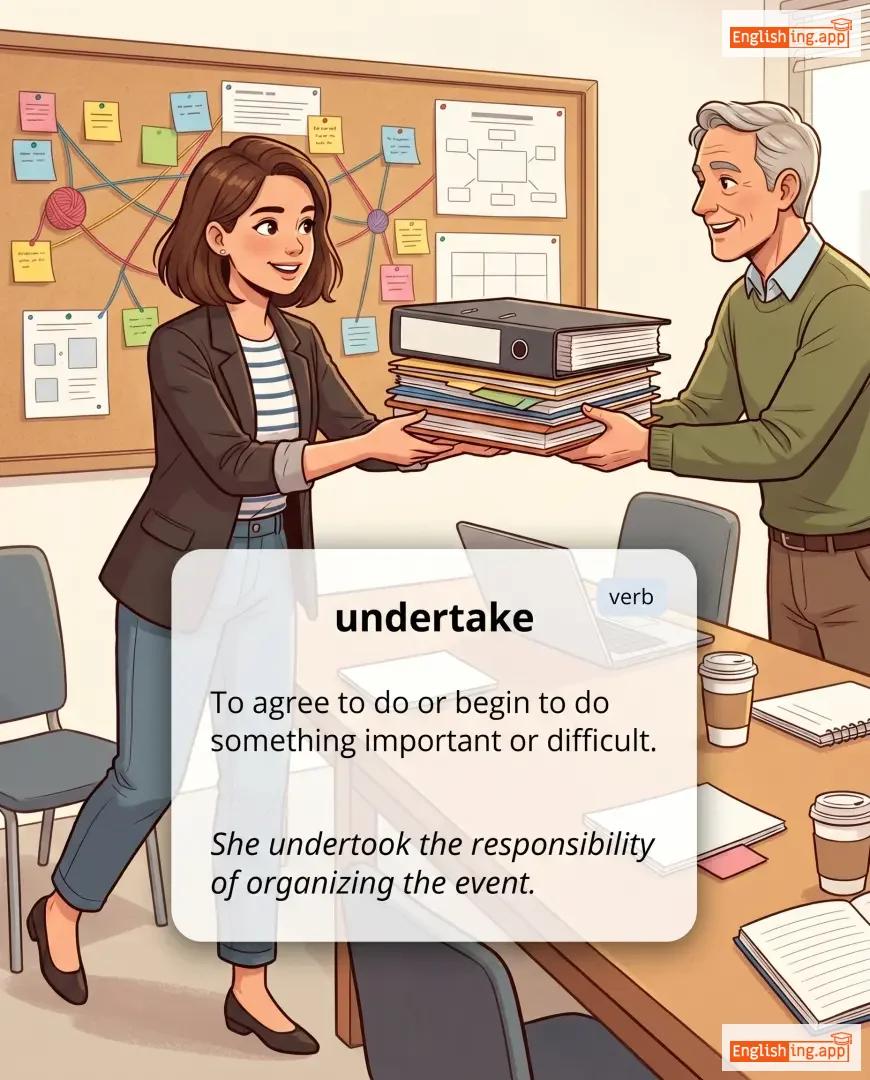
To agree to do or begin to do something important or difficult.
••••••
|
She undertook the responsibility of organizing the event.
彼女はイベントの組織の責任を引き受けた。
••••••
|
彼女はイベントの組織の責任を引き受けた。
Kanojo wa ibento no soshiki no sekinin o hikiuketa.
••••••
|
undertake a mission
アンダーテイク ア ミッション
••••••
|
to take responsibility for an important task
••••••
|
ミッションを引き受ける
Misshon o hikiukeru
••••••
|
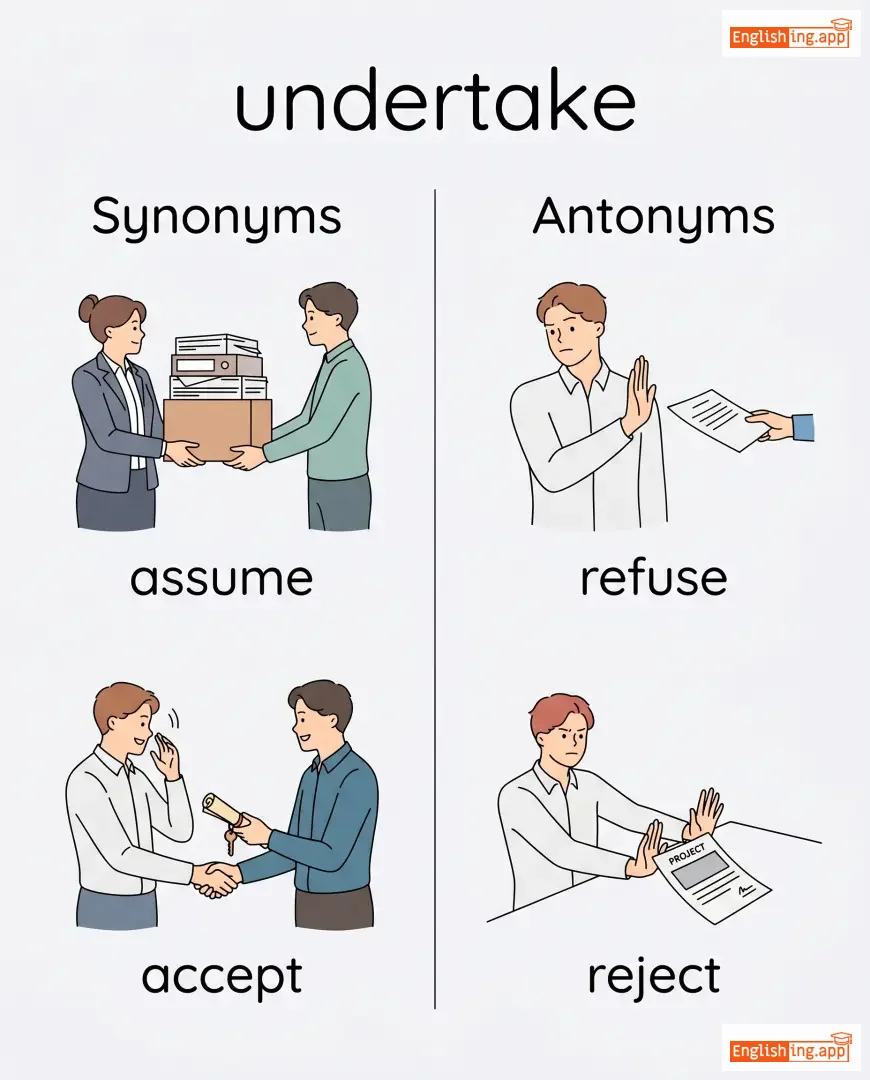
assume, accept, commit, embark
••••••
|
refuse, reject
••••••
|
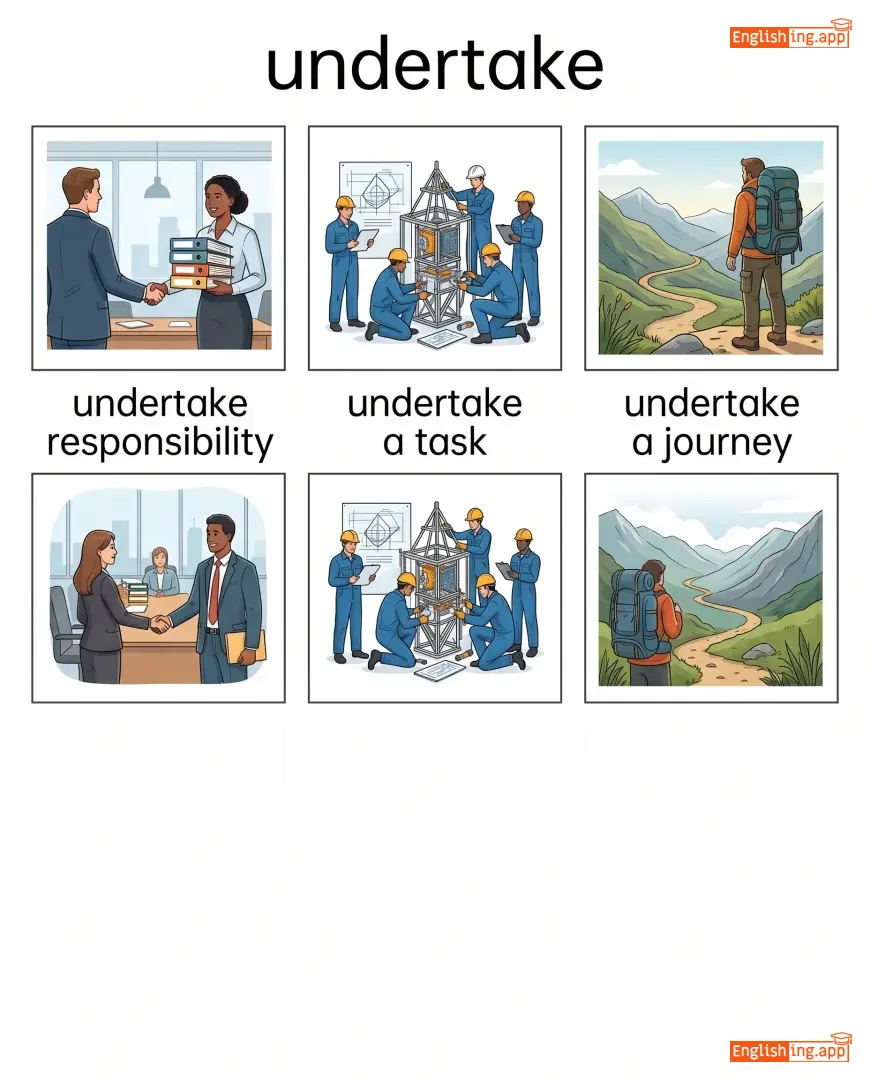
undertake responsibility, undertake a task, undertake a journey
••••••
|
Undertake は引き受ける = 重要な任務を引き受ける
••••••
|
|
#5261
🩲
|
/ˈʌndərweər/
noun
(アンダーウェア)
••••••
|
- •••••• |
下着
shitagi
••••••
|
- •••••• | - •••••• | - •••••• | - •••••• |
Clothing worn beneath outer clothes, typically next to the skin.
••••••
|
He bought new underwear for the trip.
彼は旅行のために新しい下着を買った。
••••••
|
彼は旅行のために新しい下着を買った。
Kare wa ryoko no tame ni atarashii shitagi o katta.
••••••
|
- •••••• | - •••••• | - •••••• |
undergarments, briefs, panties, boxers, lingerie
••••••
|
outerwear, overclothes
••••••
|
change underwear, wear underwear, cotton underwear
••••••
|
下 = below, 着 = clothing.
••••••
|
|
#5262
❌
|
/ˌʌnɪmˈplɔɪəbəl/
adjective
(アンエンプロイヤブル)
••••••
|
- •••••• |
雇用不適格
koyou futekikaku
••••••
|
- •••••• | - •••••• | - •••••• | - •••••• |
Not able to be employed; lacking the skills or qualities necessary for employment
••••••
|
Due to his criminal record, he was considered unemployable in most companies.
彼の犯罪歴のため、ほとんどの会社でアンエンプロイヤブルと見なされた。
••••••
|
彼の犯罪歴のため、ほとんどの会社で雇用不適格と見なされた。
kare no hanzai-reki no tame, hotondo no kaisha de koyou futekikaku to minasa reta
••••••
|
- •••••• | - •••••• | - •••••• |
unhirable, unfit for work, ineligible, unskilled, unsuitable
••••••
|
employable, hireable, qualified
••••••
|
completely unemployable, considered unemployable, unemployable person
••••••
|
'unemployable' を覚える: '雇用不適格', 'un' + 'employable'
••••••
|
|
#5263
💼❌
|
/ʌnɪmˈplɔɪd/
adjective
(アンエンプラウイド)
••••••
|
- •••••• |
失業中
shitsugyōchū
••••••
|
- •••••• | - •••••• | - •••••• | - •••••• |
without a job; not having paid work
••••••
|
He has been unemployed for six months now.
彼はすでに6ヶ月間失業しています。
••••••
|
彼はすでに6ヶ月間失業しています。
Kare wa sude ni 6 kagetsu-kan shitsugyō shiteimasu.
••••••
|
- •••••• | - •••••• | - •••••• |
jobless, out of work, idle, without employment
••••••
|
employed, working, hired, occupied
••••••
|
unemployed workers, long-term unemployed, unemployed rate
••••••
|
失業中は仕事を探していると考えましょう。
••••••
|
|
#5264
📉
|
/ˌʌnɪmˈplɔɪmənt/
noun
(アンインプラオイメント)
••••••
|
- •••••• |
失業
shitsugyou
••••••
|
- •••••• | - •••••• | - •••••• | - •••••• |
the state of not having a paid job despite being able and willing to work
••••••
|
High unemployment is a major issue in the country. |
高い失業率は、国の大きな問題です。
Takai shitsugyou ritsu wa, kuni no ookina mondai desu.
••••••
|
unemployment rate |
the percentage of the labor force that is jobless
••••••
|
失業率
shitsugyou ritsu
••••••
|
joblessness, redundancy, idleness, inactivity, layoff
••••••
|
employment, work, occupation
••••••
|
high unemployment, youth unemployment, unemployment benefits, unemployment crisis
••••••
|
Un + Employment は仕事なし — 失業は仕事がないことを意味します 📉
••••••
|
|
#5265
⚖️
|
/ʌnˈfɛər/
adjective
(アンフェア)
••••••
|
- •••••• |
不公平
fukouhei
••••••
|
- •••••• | - •••••• | - •••••• | - •••••• |
not based on or behaving according to the principles of equality or justice
••••••
|
It’s unfair to blame her for the team’s failure. |
チームの失敗を彼女のせいにするのは不公平です。
Chiimu no shippai wo kanojo no sei ni suru no wa fukouhei desu.
••••••
|
unfair advantage |
a situation where someone has an undeserved benefit
••••••
|
不公平な利点
fukouhei na riten
••••••
|
biased, unjust, partial, unequal, prejudiced
••••••
|
fair, just, equal
••••••
|
unfair treatment, unfair decision, unfair advantage, unfair competition
••••••
|
不公平 = 不 + 公平 (公平じゃない)
••••••
|
|
#5266
⚖️
|
/ʌnˈfɛərli/
adverb
(アンフェアリー)
••••••
|
- •••••• |
不公平に
fukouhei ni
••••••
|
- •••••• | - •••••• | - •••••• | - •••••• |
In a manner that is not just, reasonable, or impartial
••••••
|
He was treated unfairly by the committee.
彼は委員会によって不公平に扱われた。
••••••
|
彼は委員会によって不公平に扱われた。
Kare wa iinkai ni yotte fukouhei ni atsukawareta.
••••••
|
- •••••• | - •••••• | - •••••• |
unjustly, inequitably, wrongly, discriminatorily
••••••
|
fairly, justly, impartially
••••••
|
unfairly treated, unfairly dismissed, unfairly accused
••••••
|
'不公平' (unfair) + 'に' (adverbial) = unfairly
••••••
|
|
#5267
💔
|
/ʌnˈfeɪθ.fəl/
adjective
(アンフェイスフル)
••••••
|
- •••••• |
不忠実
fuchūjitsu
••••••
|
- •••••• | - •••••• | - •••••• | - •••••• |
not loyal or true to a spouse, partner, or commitment
••••••
|
He was unfaithful to his wife for many years. |
彼は何年も妻に不忠実でした。
Kare wa nannen mo tsuma ni fuchūjitsu deshita.
••••••
|
- •••••• | - •••••• | - •••••• |
disloyal, treacherous, dishonest, cheating
••••••
|
faithful, loyal, devoted, trustworthy
••••••
|
unfaithful husband, unfaithful wife, unfaithful partner
••••••
|
不忠実 (fuchūjitsu) means unfaithful, perfect for remembering 'unfaithful'.
••••••
|
|
#5268
💔
|
/ʌnˈfeɪθfʊlnəs/
noun
(アンフェイスフルネス)
••••••
|
- •••••• |
不貞
futei
••••••
|
- •••••• | - •••••• | - •••••• | - •••••• |
the quality of being disloyal or not faithful; breach of trust or fidelity
••••••
|
His unfaithfulness led to the end of their marriage.
彼のアンフェイスフルネスは結婚の終わりをもたらした。
••••••
|
彼の不貞は結婚の終わりをもたらした。
Kare no futei wa kekkon no owari o motarashita.
••••••
|
- •••••• | - •••••• | - •••••• |
disloyalty, infidelity, treachery, betrayal
••••••
|
faithfulness, loyalty, fidelity
••••••
|
unfaithfulness in marriage, act of unfaithfulness, unfaithfulness detected, unfaithfulness revealed
••••••
|
Futei sounds like 'foo-tei' = unfaithful in Japanese.
••••••
|
|
#5269
❓
|
/ʌnfəˈmɪl.jər/
adjective
(アンファミリア)
••••••
|
- •••••• |
不明な; 見知らぬ
fumei na; mishiranu
••••••
|
- •••••• | - •••••• | - •••••• | - •••••• |
not known or recognized; strange
••••••
|
The city was unfamiliar to me since I had never been there before. |
その都市は私にとって見知らぬ場所でした。なぜなら、私はそこに行ったことがなかったからです。
Sono toshi wa watashi ni totte mishiranu basho deshita. Nazenara, watashi wa soko ni itta koto ga nakatta kara desu.
••••••
|
- •••••• | - •••••• | - •••••• |
unknown, strange, foreign, unrecognized
••••••
|
familiar, known, recognized, acquainted
••••••
|
unfamiliar territory, unfamiliar face, unfamiliar surroundings
••••••
|
Unfamiliar = 不明な, 見知らぬ場所や人々のようなものです。
••••••
|
|
#5270
❌
|
/ʌnˈfɪt/
adjective
(アンフィット)
••••••
|
- •••••• |
不適格; 不適当;
futekikaku; futekitou
••••••
|
- •••••• | - •••••• | - •••••• | - •••••• |
not in good physical condition; unsuitable or inappropriate
••••••
|
He was declared unfit for military service due to his poor health.
彼は健康状態が悪いため、軍務には不適格と宣告されました。
••••••
|
彼は健康状態が悪いため、軍務には不適格と宣告されました。
Kare wa kenko joutai ga warui tame, gunmu ni wa futekikaku to senkoku saremashita.
••••••
|
- •••••• | - •••••• | - •••••• |
unsuitable, inappropriate, inadequate, incapable
••••••
|
fit, suitable, appropriate, capable
••••••
|
unfit for duty, unfit to drive, physically unfit
••••••
|
Unfitは'アン'と'フィット'が分かれて、不適格を意味する日本語に繋がる。
••••••
|
|
#5271
📜
|
/ʌnˈfəʊld/
verb
(アンフォールド)
••••••
|
- •••••• |
広げるまたは開く
hirogeru matawa hiraku
••••••
|
unfolded
アンフォールデッド
••••••
|
unfolded
アンフォールデッド
••••••
|
unfolds
アンフォールズ
••••••
|
unfolding
アンフォールディング
••••••
|
to open or spread out something that was folded; to gradually reveal or develop
••••••
|
She unfolded the letter carefully.
彼女は手紙を慎重に広げました。
••••••
|
彼女は手紙を慎重に広げました。
Kanojo wa tegami o shinchou ni hirogemashita.
••••••
|
as the story unfolds
物語が展開するように
••••••
|
as events become known over time
••••••
|
物語が展開するように
Monogatari ga tenkai suru you ni
••••••
|
open, expand, develop, reveal, evolve
••••••
|
fold, close, conceal
••••••
|
unfold story, unfold plan, unfold events, unfold wings
••••••
|
Unfold と広げるは似ている — 物語が展開していく 📜
••••••
|
|
#5272
😔
|
/ʌnˈfɔːrtʃənət/
adjective
(アンフォーチュネイト)
••••••
|
- •••••• |
不運
fuun
••••••
|
- •••••• | - •••••• | - •••••• | - •••••• |
Having or marked by bad luck; unlucky.
••••••
|
It was unfortunate that the meeting was canceled at the last minute.
会議が最後の瞬間にキャンセルされたのは不運でした。
••••••
|
会議が最後の瞬間にキャンセルされたのは不運でした。
Kaigi ga saigo no shunkan ni kyanseru sareta no wa fuan deshita.
••••••
|
unfortunate incident
不運な出来事
••••••
|
An unlucky or regrettable event
••••••
|
不運な出来事
Fuun na dekigoto
••••••
|
unlucky, regrettable, unlucky, adverse, unlucky
••••••
|
fortunate, lucky, favorable
••••••
|
unfortunate accident, unfortunate situation, unfortunate event, unfortunate circumstances
••••••
|
UN+FORTUNE = 幸運がない = 不運
••••••
|
|
#5273
😔
|
/ʌnˈfɔːrtʃənətli/
adverb
(アンフォーチュンリー)
••••••
|
- •••••• |
残念ながら
unfortunately
••••••
|
- •••••• | - •••••• | - •••••• | - •••••• |
used to express regret or disappointment about something
••••••
|
Unfortunately, the weather was bad for our picnic.
残念ながら、私たちのピクニックには天気が悪かった。
••••••
|
残念ながら、私たちのピクニックには天気が悪かった。
Zannen nagara watashitachi no pikunikku ni wa tenki ga warukatta
••••••
|
- •••••• | - •••••• | - •••••• |
sadly, regrettably, unluckily, unhappily
••••••
|
fortunately, luckily, happily
••••••
|
unfortunately true, unfortunately common, unfortunately necessary
••••••
|
アンフォーチュンリー = unlucky fortune, so when luck runs out you say 残念ながら
••••••
|
|
#5274
😒
|
/ʌnˈfrɛndli/
adjective
(アンフレンドリー)
••••••
|
- •••••• |
不親切な
fushinsetsu na
••••••
|
- •••••• | - •••••• | - •••••• | - •••••• |
not kind or welcoming; hostile or cold in behavior or attitude
••••••
|
The shop owner seemed unfriendly to new customers.
ザ ショップ オーナー シームド アンフレンドリー トゥ ニュー カスタマーズ。
••••••
|
店のオーナーは新しい客に不親切なようだった。
Mise no oonaa wa atarashii kyaku ni fushinsetsu na you datta
••••••
|
- •••••• | - •••••• | - •••••• |
hostile, cold, rude, unwelcoming, aloof
••••••
|
friendly, warm, welcoming
••••••
|
unfriendly attitude, unfriendly behavior, unfriendly tone, unfriendly environment
••••••
|
フレンドじゃない=アンフレンドリー
••••••
|
Vocabulary Quiz
Test your vocabulary by matching words with their translations or meanings.
Login to take the quiz
Comments (0)
Share your thoughts and join the discussion.
Join the discussion by logging in
Login to CommentNo comments yet
Be the first to share your thoughts!