

翻訳
過去
過去分詞
三人称単数
動名詞
意味
例文
例文の翻訳
同義語
対義語
コロケーション
ニーモニック

Swipe left or right, or use the buttons. Tap image to zoom.
例文の翻訳
単語
Lesson 67Lesson 67 - マスクトグル
|
絵文字
|
単語 | Images | 翻訳 | 過去 | 過去分詞 | 三人称単数 | 動名詞 | 意味 | 例文 | 例文の翻訳 | 表現例 | 表現例の意味 | 表現例の翻訳 | 同義語 | 対義語 | コロケーション | ニーモニック |
|---|---|---|---|---|---|---|---|---|---|---|---|---|---|---|---|---|---|
|
#3185
💍
|
/ˈmærɪdʒ/
noun
(ˈhæpinəs)
••••••
|
- •••••• |
幸せ
shiawase
••••••
|
- •••••• | - •••••• | - •••••• | - •••••• |
The legally or formally recognized union of two people as partners in a personal relationship.
••••••
|
Their marriage lasted for over thirty years. |
彼女は賞を受け取ったとき、自分の幸せを隠せなかった。
Kanojo wa shō o uketotta toki, jibun no shiawase o kakusenakatta.
••••••
|
marriage of convenience |
A marriage for practical reasons rather than love.
••••••
|
幸せの追求
shiawase no tsuikyū
••••••
|
wedding, union, matrimony, partnership, alliance
••••••
|
divorce, separation
••••••
|
happy marriage, arranged marriage, successful marriage, marriage ceremony, marriage contract
••••••
|
幸せ = 心が温まる瞬間
••••••
|
|
#3186
👩❤️👨
|
/ˈmærid/
adjective
(ハピネス)
••••••
|
- •••••• |
幸福
kōfuku
••••••
|
- •••••• | - •••••• | - •••••• | - •••••• |
Having a spouse; joined in marriage.
••••••
|
She is happily married with two children. |
彼女は賞を受け取ったとき、自分の幸福を隠せなかった。
Kanojo wa shō o uketotta toki, jibun no kōfuku o kakusenakatta.
••••••
|
newly married |
Recently entered into marriage.
••••••
|
幸福の追求
Kōfuku no tsuikyū
••••••
|
wedded, espoused, united, partnered
••••••
|
single, divorced
••••••
|
married couple, happily married, married life, married man, married woman
••••••
|
幸福とは幸せを感じること - 幸福な生活。
••••••
|
|
#3187
💒
|
/ˈmæri/
verb
••••••
|
|
結婚する
kekkon suru
••••••
|
married
••••••
|
married
••••••
|
marries
••••••
|
marrying
••••••
|
To join in marriage; to take someone as a spouse.
••••••
|
They plan to marry next spring. |
彼らは来年の春に結婚する予定です。
Karera wa rainen no haru ni kekkon suru yotei desu.
••••••
|
marry into |
To become part of a family or social group through marriage.
••••••
|
家族に結婚する
kazoku ni kekkon suru
••••••
|
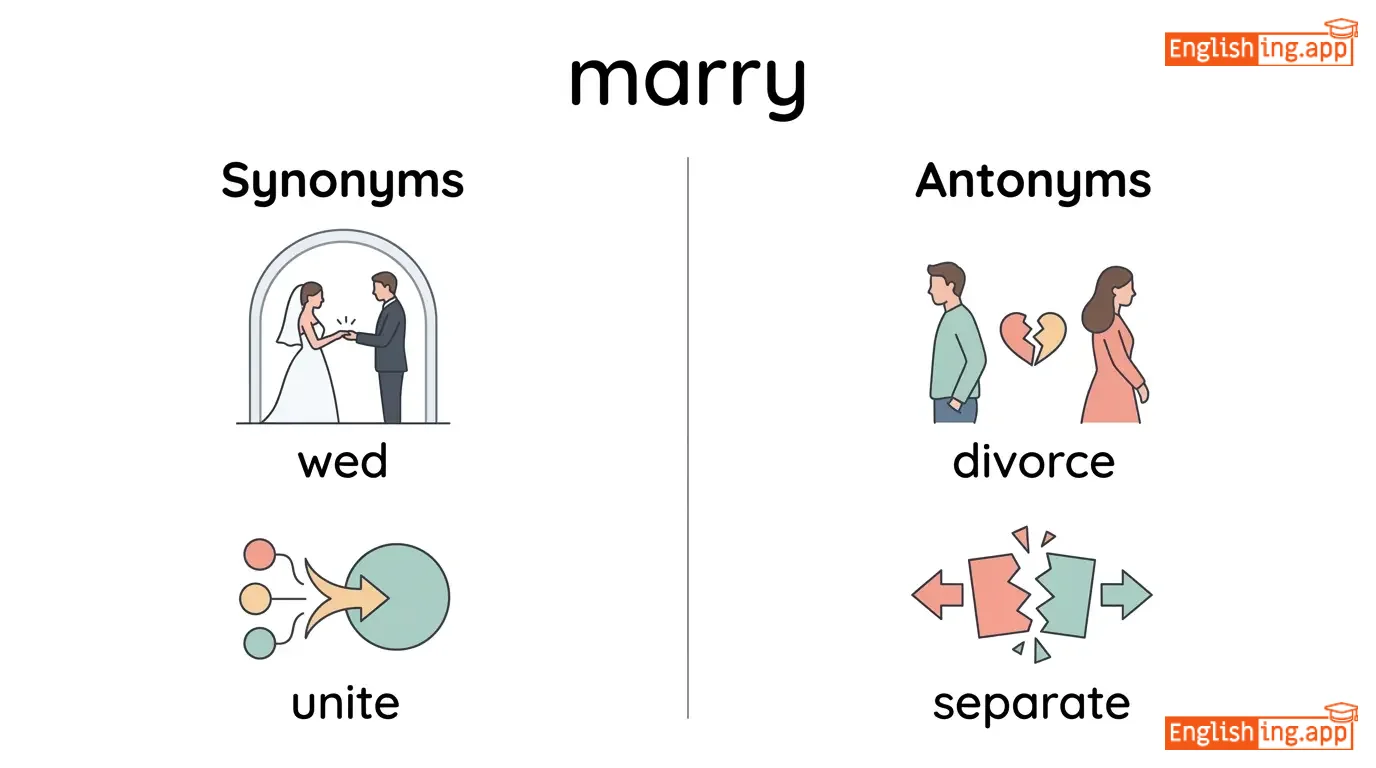
wed, unite, espouse, join
••••••
|
divorce, separate
••••••
|
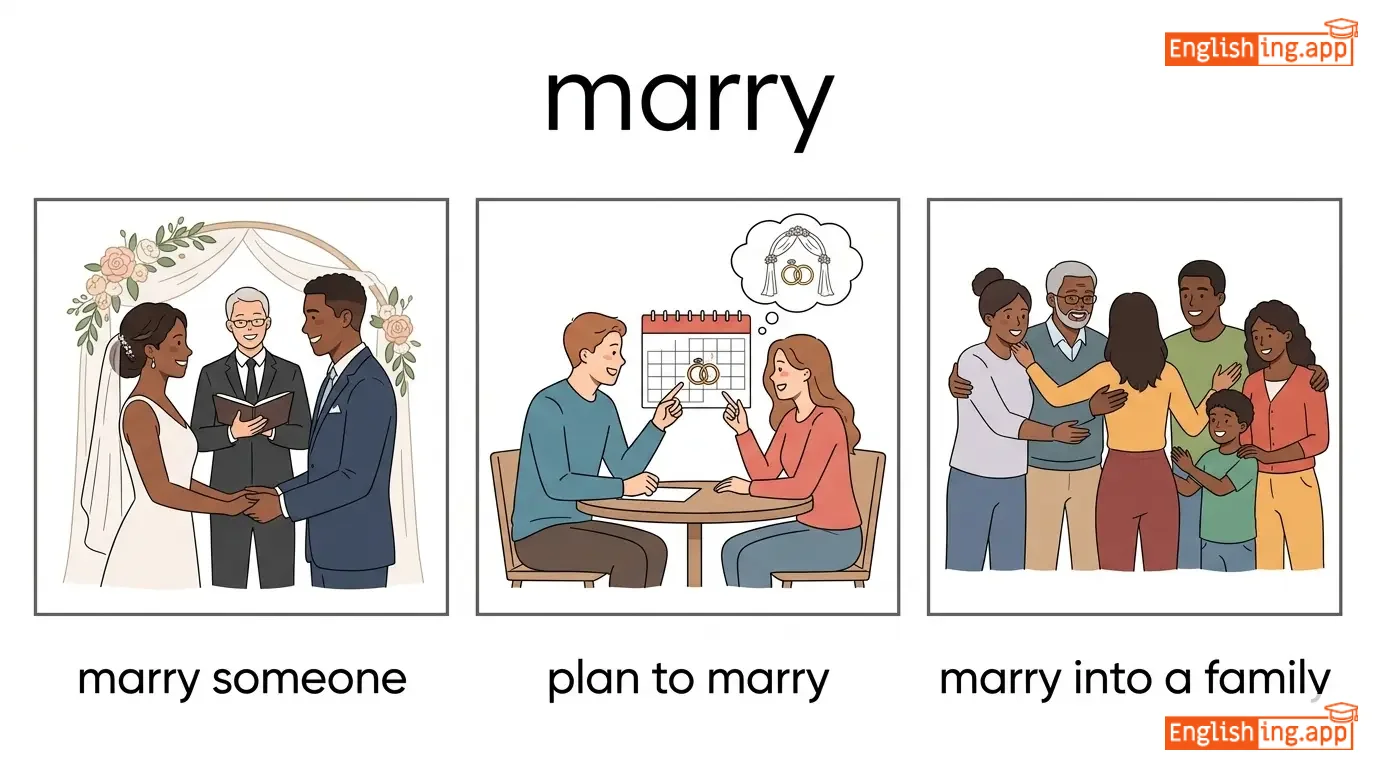
marry someone, plan to marry, marry into a family, decide to marry
••••••
|
Marry は結婚すること
••••••
|
|
#3188
⚔️
|
/ˈmɑːrʃəl/
adjective
(マーシャル)
••••••
|
- •••••• |
軍事的な
gunjiteki na
••••••
|
- •••••• | - •••••• | - •••••• | - •••••• |
Related to war, soldiers, or military life.
••••••
|
The country imposed martial law during the crisis. |
その国は危機の間に戒厳令を施行した。
Sono kuni wa kiki no aida ni kaigenrei o shikō shita.
••••••
|
martial law |
Military control of an area, usually during emergencies.
••••••
|
戒厳令
kaigenrei
••••••
|
military, warlike, soldierly, combative
••••••
|
civil, peaceful
••••••
|
martial law, martial arts, martial spirit, martial training
••••••
|
Martialは '戒厳令' を意味します—軍が支配する時です。
••••••
|
|
#3189
✝️
|
/ˈmɑːrtər/
noun
(マルティア)
••••••
|
- •••••• |
殉教者
junkyousha
••••••
|
- •••••• | - •••••• | - •••••• | - •••••• |
A person who suffers or dies for their beliefs or cause.
••••••
|
He was hailed as a martyr for defending his faith. |
彼は信念を守るために殉教者として称賛された。
Kare wa shinnen o mamoru tame ni junkyousha toshite shousan sareta.
••••••
|
play the martyr |
To exaggerate suffering or sacrifice to gain sympathy.
••••••
|
殉教者のふりをする
junkyousha no furi o suru
••••••
|
sufferer, victim, saint, hero
••••••
|
survivor, betrayer
••••••
|
martyr for faith, martyr to cause, play the martyr
••••••
|
Martyr は信念のために自らを犠牲にする、まさに殉教者だ。
••••••
|
|
#3190
🎭
|
/mæsk/
noun
(マスク)
••••••
|
- •••••• |
仮面
kamen
••••••
|
- •••••• | - •••••• | - •••••• | - •••••• |
A covering for the face to protect, disguise, or entertain.
••••••
|
He wore a mask at the costume party. |
彼は仮装パーティーで仮面をかぶっていた。
Kare wa kasō pātii de kamen o kabutte ita.
••••••
|
wear many masks |
To play different roles or hide one's true self.
••••••
|
多くの仮面をかぶる
Ōku no kamen o kaburu
••••••
|
covering, disguise, veil, shield, facade
••••••
|
exposure, reveal
••••••
|
face mask, protective mask, surgical mask, wear a mask
••••••
|
仮面、顔を隠すための道具。
••••••
|
|
#3191
🌐
|
/mæs/
noun
(マス)
••••••
|
- •••••• |
質量
shitsuryou
••••••
|
- •••••• | - •••••• | - •••••• | - •••••• |
a large body of matter with no specific shape; a large number of people or things
••••••
|
A huge mass of people gathered in the square.
広場に大勢の人々が集まりました。
••••••
|
広場に大勢の人々が集まりました。
Hiroba ni oozei no hitobito ga atsumarimashita.
••••••
|
critical mass
臨界質量
••••••
|
the minimum size or amount needed for something to start or be effective
••••••
|
臨界質量
rinkai shitsuryou
••••••
|
bulk, crowd, heap, volume, multitude
••••••
|
fragment, part, individual
••••••
|
mass production, mass movement, mass media, mass destruction
••••••
|
Massとは多くの人々が集まること、まるで'質量'のようです。
••••••
|
|
#3192
⚔️
|
/ˈmæsəkər/
verb
(マサカー)
••••••
|
|
虐殺
gyakusatsu
••••••
|
massacred
マサカード
••••••
|
massacred
マサカード
••••••
|
massacres
マサカーズ
••••••
|
massacring
マサカーリング
••••••
|
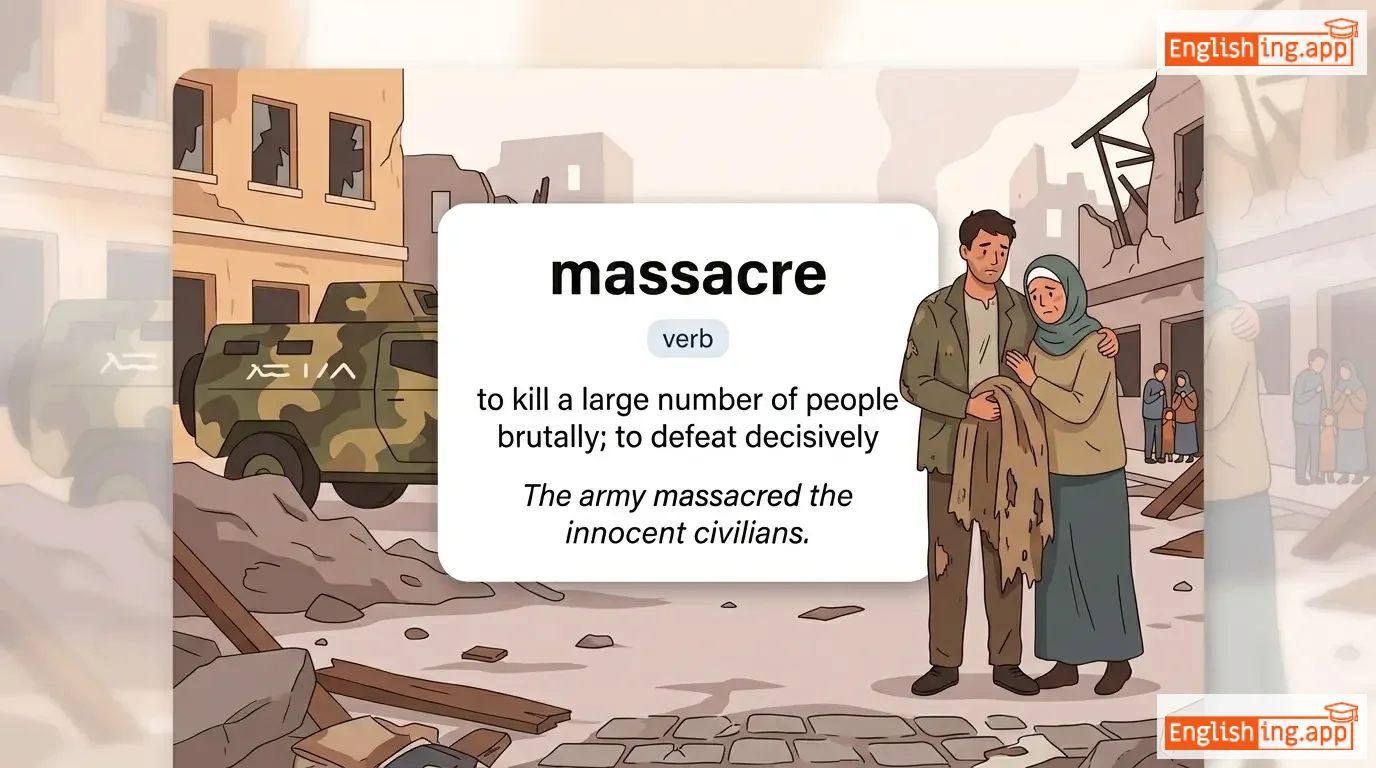
to kill a large number of people brutally; to defeat decisively
••••••
|
The army massacred the innocent civilians.
軍隊は無実の市民を虐殺した。
••••••
|
軍隊は無実の市民を虐殺した。
Guntai wa mujitsu no shimin o gyakusatsu shita.
••••••
|
- •••••• | - •••••• | - •••••• |
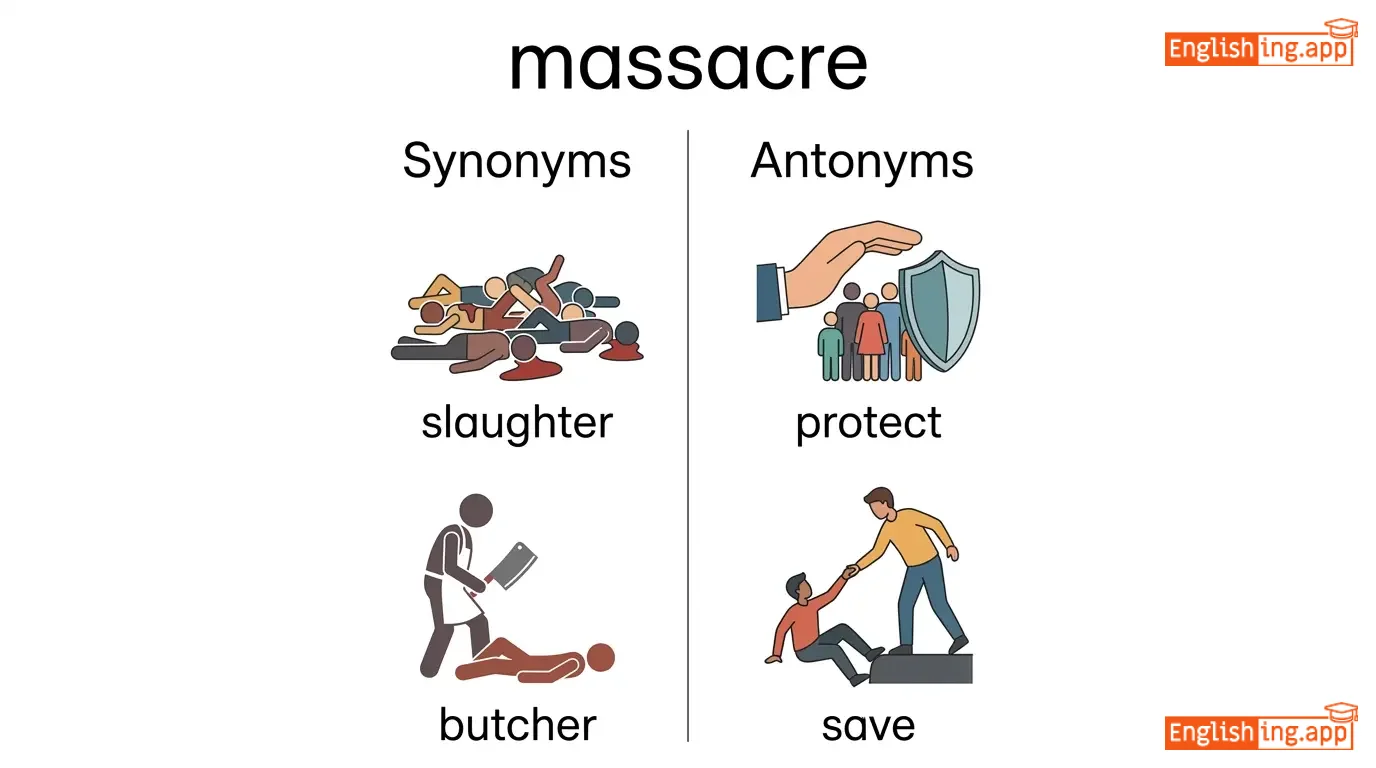
slaughter, butcher, kill, annihilate
••••••
|
protect, save, preserve, spare
••••••
|
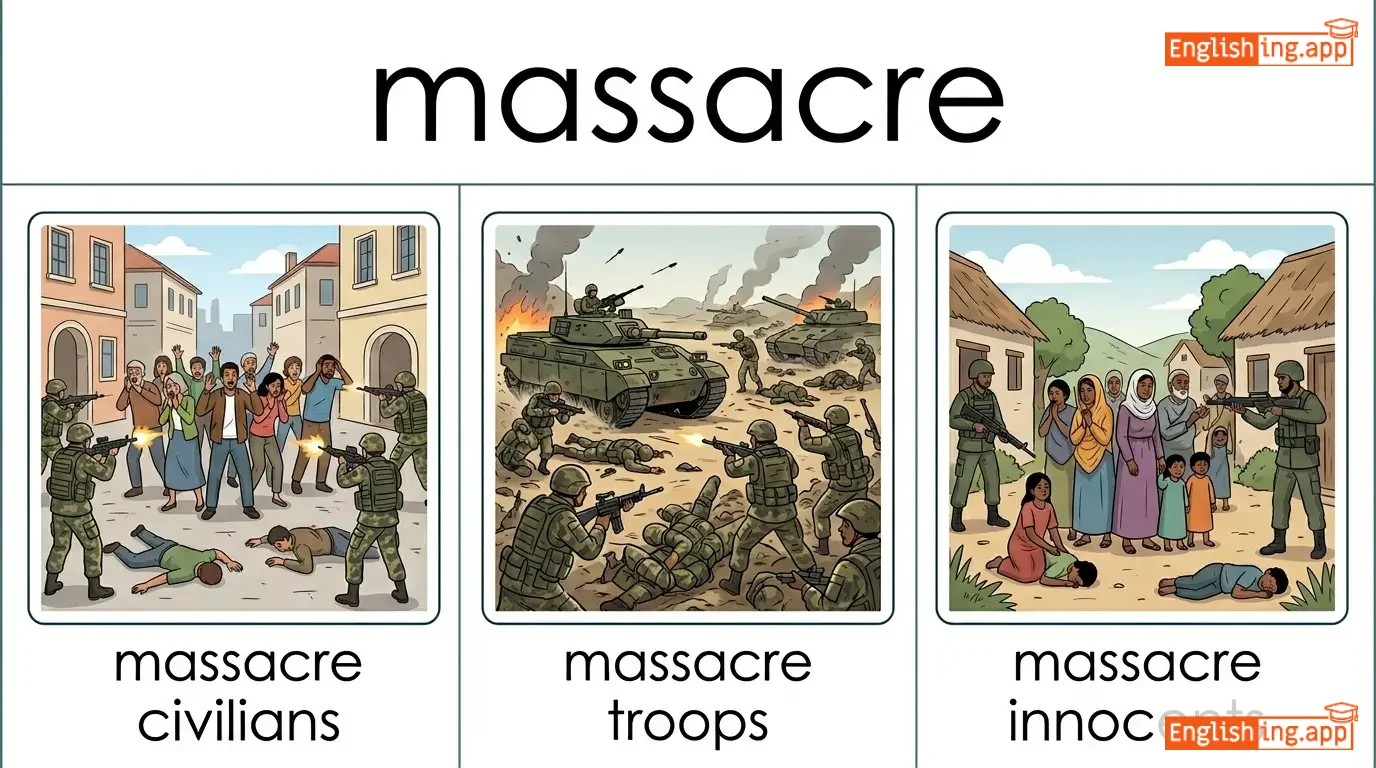
massacre civilians, massacre troops, massacre innocents, brutal massacre, mass massacre
••••••
|
No •••••• |
|
#3193
💆
|
/məˈsɑːʒ/
verb
(マッサージ)
••••••
|
- •••••• |
マッサージする
massaji suru
••••••
|
massaged
マッサージド
••••••
|
massaged
マッサージド
••••••
|
massages
マッサージズ
••••••
|
massaging
マッサージング
••••••
|
to rub and press muscles to relieve pain or tension; to manipulate information
••••••
|
The therapist will massage your back to reduce muscle tension.
セラピストは筋肉の緊張を和らげるために背中をマッサージします。
••••••
|
セラピストは筋肉の緊張を和らげるために背中をマッサージします。
Serapisuto wa kinniku no kinchou o yawarageru tame ni senaka o massaji shimasu.
••••••
|
- •••••• | - •••••• | - •••••• |
rub, knead, manipulate, work
••••••
|
ignore, neglect, avoid, abandon
••••••
|
massage gently, massage thoroughly, massage muscles, give a massage
••••••
|
No •••••• |
|
#3194
🗿
|
/ˈmæsɪv/
adjective
(マシブ)
••••••
|
- •••••• |
巨大な
kyodaina
••••••
|
- •••••• | - •••••• | - •••••• | - •••••• |
extremely large, heavy, or solid in size or degree
••••••
|
The company made a massive investment in renewable energy.
その会社は再生可能エネルギーに巨額の投資をしました。
••••••
|
その会社は再生可能エネルギーに巨額の投資をしました。
Sono kaisha wa saiseikanō enerugī ni kyogaku no tōshi o shimashita.
••••••
|
a massive hit
巨大な成功
••••••
|
something extremely successful or popular
••••••
|
巨大な成功
kyodaina seikō
••••••
|
huge, enormous, gigantic, colossal, immense
••••••
|
tiny, small, minor
••••••
|
massive scale, massive effort, massive increase, massive attack
••••••
|
Massiveは巨大な意味、Massのように巨大!
••••••
|
|
#3195
🎓
|
/ˈmɑːstər/
noun, verb
••••••
|
- •••••• | - •••••• |
mastered
••••••
|
mastered
••••••
|
masters
••••••
|
mastering
••••••
|
A person with great skill or control in a subject or activity; to gain full command over something.
••••••
|
She mastered the art of cooking Italian dishes. |
- •••••• |
jack of all trades, master of none |
Someone who can do many things but is not an expert in any of them.
••••••
|
- •••••• |
expert, specialist, teacher, guru, controller
••••••
|
novice, beginner, student
••••••
|
master plan, master key, master skill, master class
••••••
|
No •••••• |
|
#3196
🧘
|
/mæt/
noun
(マット)
••••••
|
- •••••• |
マット
matto
••••••
|
- •••••• | - •••••• | - •••••• | - •••••• |
a piece of fabric material placed on a floor or surface for wiping feet or protection
••••••
|
She placed a new mat at the entrance of the house.
彼女は家の入り口に新しいマットを置きました。
••••••
|
彼女は家の入り口に新しいマットを置きました。
Kanojo wa ie no iriguchi ni atarashī matto o okimashita.
••••••
|
doormat
ドアマット
••••••
|
a person who is easily taken advantage of
••••••
|
踏みにじられる人
fumi nijiraru hito
••••••
|
rug, carpet, covering, pad
••••••
|
bare floor, uncovered
••••••
|
welcome mat, yoga mat, floor mat, door mat
••••••
|
Matはマットを意味します - ドアマットで足を拭いて入ります
••••••
|
|
#3197
⚽
|
/mætʃ/
noun, verb
(マッチ)
••••••
|
|
試合 / コンペティション
shiai / konpetishon
••••••
|
matched
マッチド
••••••
|
matched
マッチド
••••••
|
matches
マッチェス
••••••
|
matching
マッチング
••••••
|
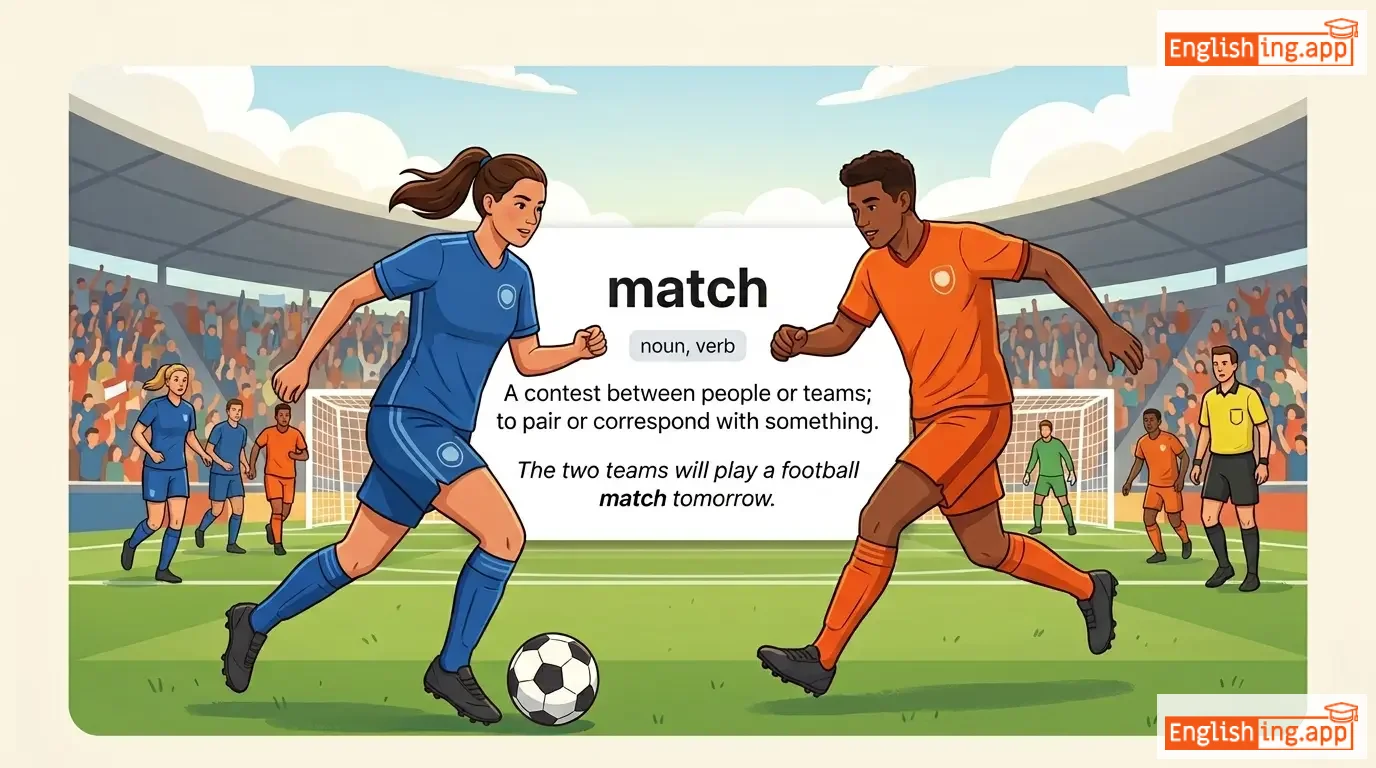
A contest between people or teams; to pair or correspond with something.
••••••
|
The two teams will play a football match tomorrow.
2つのチームが明日サッカーマッチを行います。
••••••
|
2つのチームが明日サッカーマッチを行います。
Futatsu no chīmu ga ashita sakkā matchi o okonai masu.
••••••
|
perfect match
完璧な組み合わせ
••••••
|
Two people or things that go very well together.
••••••
|
完璧なペア
kanpeki na pea
••••••
|
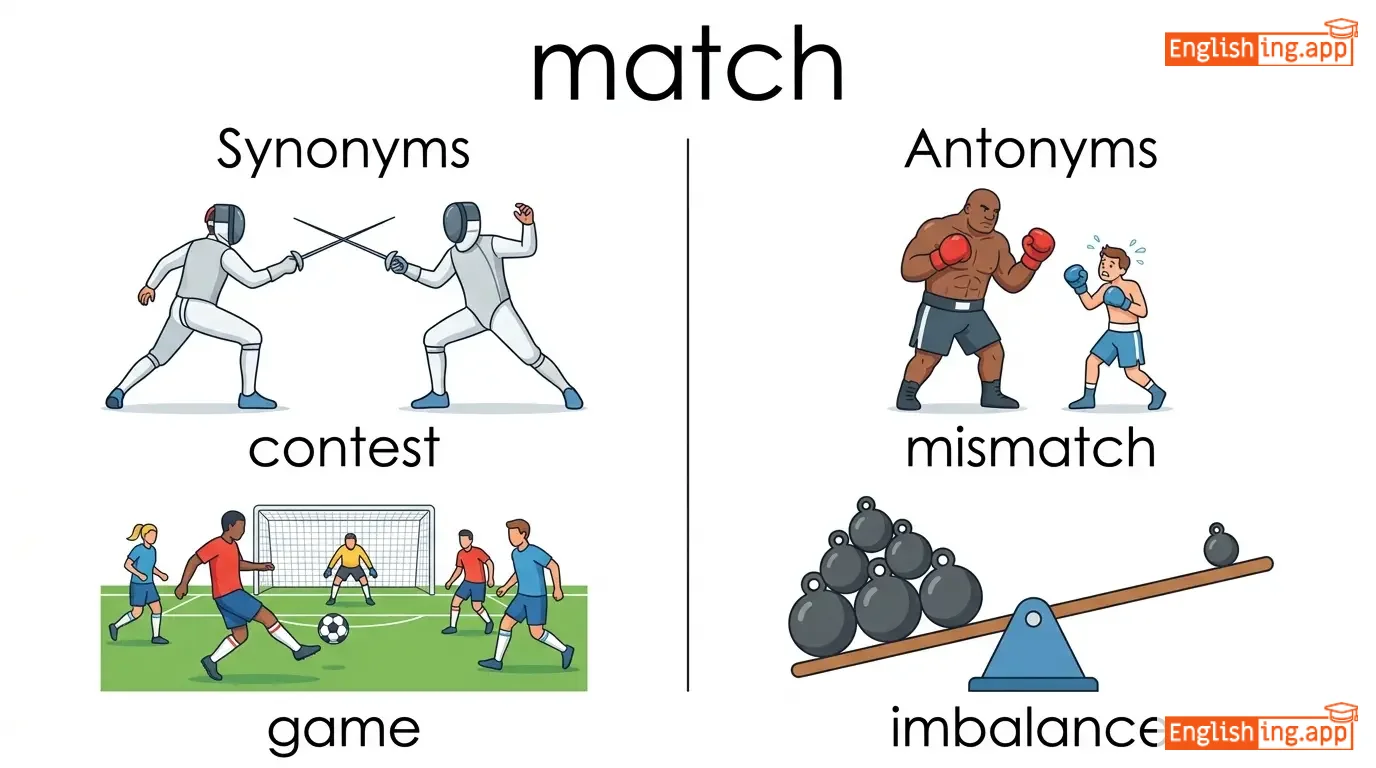
contest, game, pair, partner, counterpart
••••••
|
mismatch, imbalance
••••••
|
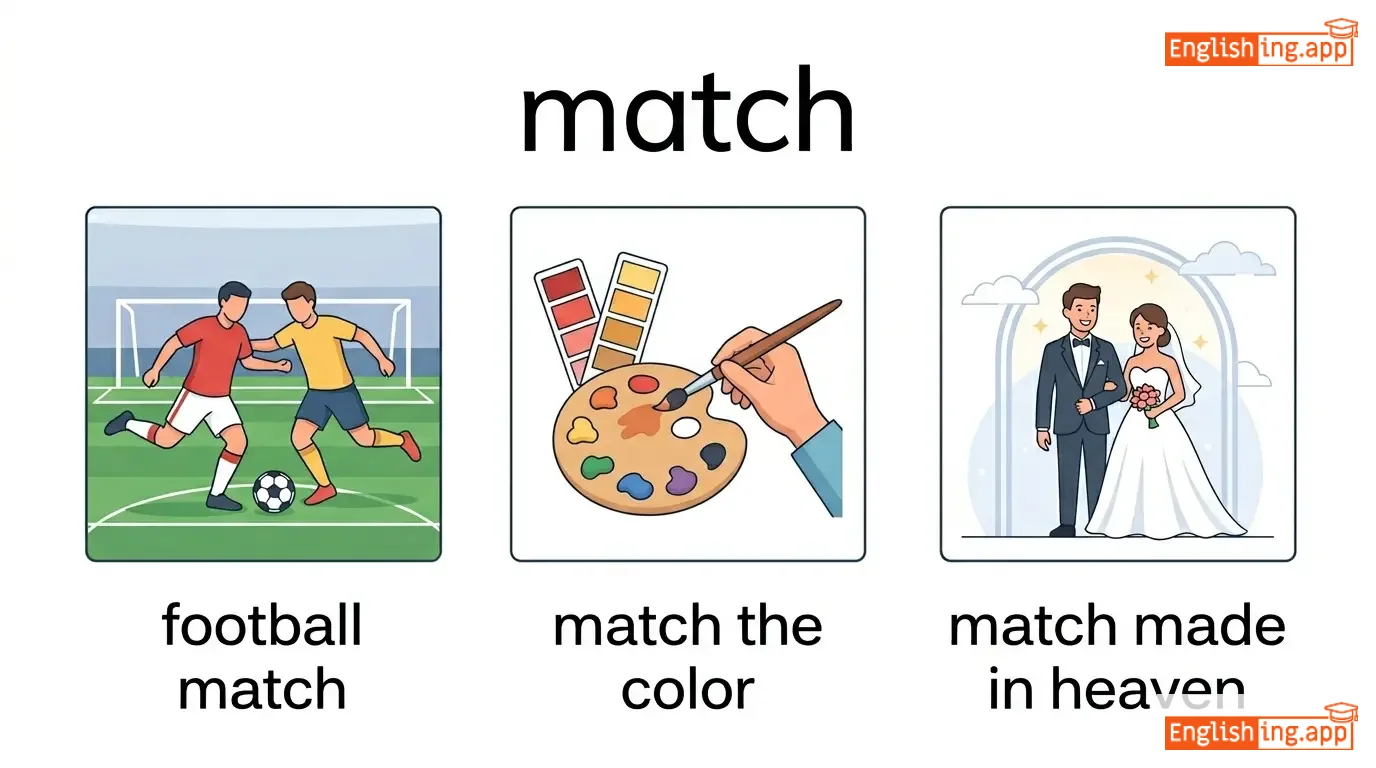
football match, match the color, match made in heaven
••••••
|
サッカーのMATCHは競争です。MATCHは競争を意味します。
••••••
|
|
#3198
👫
|
/meɪt/
noun
(メイト)
••••••
|
- •••••• |
友達, 相棒
tomodachi, aibou
••••••
|
- •••••• | - •••••• | - •••••• | - •••••• |
a friend or companion; a partner in marriage or reproduction
••••••
|
He went fishing with his old school mate. |
彼は古い学校の友達と釣りに行きました。
Kare wa furui gakkou no tomodachi to tsuri ni ikimashita.
••••••
|
best mate |
a very close friend
••••••
|
親友
shinyuu
••••••
|
friend, companion, partner, buddy, ally
••••••
|
enemy, foe, rival
••••••
|
close mate, class mate, team mate, life mate
••••••
|
Mateは友達を意味します — 'mate'は友達として考えてみてください。
••••••
|
|
#3199
🧱
|
/məˈtɪəriəl/
noun, adjective
(マテリアル)
••••••
|
- •••••• |
素材
sozai
••••••
|
- •••••• | - •••••• | - •••••• | - •••••• |
The substance or matter from which something is made; relating to physical things rather than ideas or emotions.
••••••
|
The builder brought all the necessary material for the construction. |
建設業者は建設に必要なすべての素材を持ってきました。
Kensetsugyosha wa kensetsu ni hitsuyou na subete no sozai o motte kimashita.
••••••
|
material evidence |
Physical proof that can be used in a legal case or argument.
••••••
|
物的証拠
butteki shouko
••••••
|
substance, fabric, stuff, matter, resource
••••••
|
immaterial, abstract, spiritual
••••••
|
raw material, building material, study material, material wealth
••••••
|
素材は何かを現実にするために必要です。
••••••
|
|
#3200
✨
|
/məˈtɪərɪəlaɪz/
verb
(マテリアライズ)
••••••
|
- •••••• |
実現する
jitsugen suru
••••••
|
materialized
マテリアライズド
••••••
|
materialized
マテリアライズド
••••••
|
materializes
マテリアライズズ
••••••
|
materializing
マテリアライズイング
••••••
|
To become real or actual; to appear suddenly or in a physical form.
••••••
|
The opportunity he had been waiting for finally materialized.
彼が待っていたチャンスはついに実現しました。
••••••
|
彼が待っていたチャンスはついに実現しました。
Kare ga matteita chansu wa tsuini jitsugen shimashita.
••••••
|
fail to materialize
実現しなかった
••••••
|
When something expected does not happen or become real.
••••••
|
実現しなかった
jitsugen shinakatta
••••••
|
appear, emerge, occur, happen, realize
••••••
|
vanish, disappear
••••••
|
plans materialize, dreams materialize, suddenly materialize
••••••
|
実現することは魔法のようなものです、すべてが突然現実になる ✨.
••••••
|
|
#3201
➗
|
/mæθ/
noun
(マス)
••••••
|
- •••••• |
数学
sugaku
••••••
|
- •••••• | - •••••• | - •••••• | - •••••• |
The study of numbers, quantities, and shapes, also called mathematics.
••••••
|
She is very good at math. |
彼女は数学が得意です。
Kanojo wa sugaku ga tokui desu.
••••••
|
do the math |
Figure something out logically or by calculation.
••••••
|
計算する
Keisan suru
••••••
|
mathematics, arithmetic, calculus, algebra
••••••
|
nonsense, guesswork
••••••
|
math problem, math test, math skills, math homework
••••••
|
Mathは数学を意味します – 数学が得意な人はテストで良い点を取る。
••••••
|
|
#3202
🧮
|
/ˌmæθəˈmætɪkəl/
adjective
(マセマティカル)
••••••
|
- •••••• |
数学的
sūgakuteki
••••••
|
- •••••• | - •••••• | - •••••• | - •••••• |
relating to mathematics or the use of mathematics
••••••
|
The mathematical equation was difficult to solve.
その数学的な方程式は解くのが難しかった。
••••••
|
その数学的な方程式は解くのが難しかった。
Sono sūgakuteki na hōteishiki wa toku no ga muzukashikatta.
••••••
|
- •••••• | - •••••• | - •••••• |
numerical, quantitative, algebraic, geometric
••••••
|
non-mathematical, illogical
••••••
|
mathematical problem, mathematical analysis, mathematical model
••••••
|
数学 (数学) + 論理的 (論理的) = 数学論理的関係
••••••
|
|
#3203
📐
|
/ˌmæθəˈmætɪkli/
adverb
(マスマティカリー)
••••••
|
- •••••• |
数学的に
suugakuteki ni
••••••
|
- •••••• | - •••••• | - •••••• | - •••••• |
in a way that relates to mathematics; using numbers, formulas, or logical calculation
••••••
|
The problem can be solved mathematically rather than by guesswork.
ザ プロブレム キャン ビー ソルブド マスマティカリー。
••••••
|
その問題は推測ではなく数学的に解決できる。
sono mondai wa suisoku dewa naku suugakuteki ni kaiketsu dekiru
••••••
|
- •••••• | - •••••• | - •••••• |
numerically, analytically, logically, quantitatively
••••••
|
intuitively, approximately
••••••
|
mathematically correct, mathematically proven, mathematically speaking, mathematically precise
••••••
|
数学 suugaku → 数学的に
••••••
|
|
#3204
🔢
|
/ˌmæθəˈmætɪks/
noun
(マスマティクス)
••••••
|
- •••••• |
数学
sugaku
••••••
|
- •••••• | - •••••• | - •••••• | - •••••• |
the abstract science of number, quantity, and space; the study of numbers and their operations
••••••
|
Mathematics helps us understand patterns in nature and the universe. |
数学は私たちが自然界や宇宙のパターンを理解するのに役立ちます。
Sugaku wa watashitachi ga shizenkai ya uchuu no pataan wo rikai suru no ni yakudachimasu.
••••••
|
- •••••• | - •••••• | - •••••• |
math, arithmetic, geometry, algebra, calculus
••••••
|
n/a, none
••••••
|
study mathematics, mathematics teacher, pure mathematics, applied mathematics
••••••
|
数学は宇宙を解明するカギです!
••••••
|
|
#3205
📌
|
/ˈmætər/
noun, verb
(マター)
••••••
|
- •••••• |
問題 / 重要
mondai / jūyō
••••••
|
mattered
マタード
••••••
|
mattered
マタード
••••••
|
matters
マターズ
••••••
|
mattering
マタリング
••••••
|
A subject or situation under consideration; to be important.
••••••
|
It doesn’t matter what others think.
他人がどう思うかは関係ない。
••••••
|
他人がどう思うかは関係ない。
Tanin ga dō omou ka wa kankei nai.
••••••
|
a matter of time
時間の問題
••••••
|
Something that will definitely happen sooner or later.
••••••
|
時間の問題
Jikan no mondai
••••••
|
issue, subject, affair, significance, importance
••••••
|
triviality, insignificance
••••••
|
serious matter, personal matter, matter of time
••••••
|
Matterは日本語で'問題'。問題が重要なら、解決する必要がある。
••••••
|
|
#3206
🌳
|
/məˈtjʊr/
adjective
(マチュア)
••••••
|
- •••••• |
成熟した
seijukushita
••••••
|
- •••••• | - •••••• | - •••••• | - •••••• |
fully developed or grown, especially emotionally or intellectually
••••••
|
She has become a mature and confident leader. |
彼女は成熟した自信に満ちたリーダーになった。
Kanojo wa seijukushita jishin ni michita rīdā ni natta.
••••••
|
- •••••• | - •••••• | - •••••• |
grown, developed, experienced, wise
••••••
|
immature, inexperienced
••••••
|
mature decision, mature outlook, mature personality
••••••
|
Mature (成熟した) = 成熟した木のよう (like a mature tree)
••••••
|
|
#3207
📈
|
/ˈmæk.sɪ.maɪz/
verb
(マキシマイズ)
••••••
|
- •••••• |
最大化する
saidakka suru
••••••
|
maximized
マキシマイズド
••••••
|
maximized
マキシマイズド
••••••
|
maximizes
マキシマイズィズ
••••••
|
maximizing
マキシマイジング
••••••
|
to increase something as much as possible
••••••
|
The company aims to maximize its profits this year.
会社は今年、利益を最大化することを目指しています。
••••••
|
会社は今年、利益を最大化することを目指しています。
Kaisha wa kotoshi, rieki o saidakka suru koto o mezashiteimasu.
••••••
|
- •••••• | - •••••• | - •••••• |
increase, boost, enhance, amplify
••••••
|
minimize, reduce
••••••
|
maximize profits, maximize efforts, maximize potential
••••••
|
Max (最大) + Size (サイズ) = できる限り大きくする
••••••
|
|
#3208
⬆️
|
/ˈmæksɪməm/
noun/adjective
(マキシマム)
••••••
|
- •••••• |
最大
saidai
••••••
|
- •••••• | - •••••• | - •••••• | - •••••• |
the greatest or highest amount, value, or degree possible
••••••
|
She scored the maximum marks in the exam. |
彼女は試験で最大の点数を取った。
Kanojo wa shiken de saidai no tensuu o totta.
••••••
|
to the maximum |
to the greatest possible extent
••••••
|
最大限に
saidaigen ni
••••••
|
utmost, highest, peak, greatest, limit
••••••
|
minimum, least, lowest
••••••
|
maximum effort, maximum speed, maximum limit, maximum capacity
••••••
|
Maximumは最大レベルを意味します→最大の度合い。
••••••
|
|
#3209
🌸
|
/meɪ/
modal verb, noun
(メイ)
••••••
|
- •••••• |
かもしれない / 五月
kamoshirenai / gogatsu
••••••
|
- •••••• | - •••••• | - •••••• | - •••••• |
Used to express possibility, permission, or uncertainty; also the name of the fifth month of the year.
••••••
|
You may leave early if you finish your work. |
もし仕事が終わったら、早く帰ってもいいですよ。
Moshi shigoto ga owattara, hayaku kaette mo ii desu yo.
••••••
|
come what may |
No matter what happens.
••••••
|
どうなっても
dounattemo
••••••
|
might, perhaps, can, possibility
••••••
|
cannot, must not
••••••
|
may occur, may happen, may I, month of May
••••••
|
五月、何でも起こりうる!
••••••
|
|
#3210
🤔
|
/ˈmeɪbi/
adverb
(メイビー)
••••••
|
- •••••• |
たぶん
tabun
••••••
|
- •••••• | - •••••• | - •••••• | - •••••• |
used to express possibility or uncertainty
••••••
|
Maybe we will go to the park tomorrow. |
たぶん明日公園に行くでしょう。
Tabun ashita kōen ni iku deshō.
••••••
|
just maybe |
indicating a slight possibility
••••••
|
ただたぶん
tada tabun
••••••
|
perhaps, possibly, might, could be
••••••
|
certainly, surely, definitely
••••••
|
maybe later, maybe someday, maybe not, maybe tomorrow
••••••
|
Maybeは「maybe はい、maybe いいえ」→たぶんはい、たぶんいいえ。
••••••
|
|
#3211
🏛️
|
/ˈmeɪər/
noun
(メイヤー)
••••••
|
- •••••• |
市長
shichō
••••••
|
- •••••• | - •••••• | - •••••• | - •••••• |
The elected head of a city, town, or municipality.
••••••
|
The mayor announced a new policy to improve public transport. |
市長は公共交通機関を改善するために新しい政策を発表しました。
Shichō wa kōkyō kōtsū kikan o kaizen suru tame ni atarashī seisaku o happyō shimashita.
••••••
|
- •••••• | - •••••• | - •••••• |
city leader, governor, official, magistrate, chief
••••••
|
citizen, resident, subordinate
••••••
|
mayor of the city, mayoral election, city mayor, mayor's office
••••••
|
市長は街のリーダー、‘偉大なリーダー’のようなものです。
••••••
|
|
#3212
🙋
|
/miː/
pronoun
(ミ)
••••••
|
- •••••• |
私
watashi
••••••
|
- •••••• | - •••••• | - •••••• | - •••••• |
Used by a speaker to refer to themselves as the object of a verb or preposition.
••••••
|
She gave me a beautiful gift.
シー ギヴ ミ ア ビューティフル ギフト。
••••••
|
彼女は私に美しいプレゼントをくれました。
Kanojo wa watashi ni utsukushī purezento o kuremashita.
••••••
|
me time
ミ タイム
••••••
|
time spent relaxing alone and focusing on oneself
••••••
|
私の時間
watashi no jikan
••••••
|
myself, I, self
••••••
|
you, he, she
••••••
|
for me, to me, with me, about me
••••••
|
Me = 私 (watashi) → 彼女は *私* にプレゼントをくれました。
••••••
|
|
#3213
🍽️
|
/miːl/
noun
(ハピネス)
••••••
|
- •••••• |
幸せ
shiawase
••••••
|
- •••••• | - •••••• | - •••••• | - •••••• |
An occasion when food is eaten, or the food that is eaten on such an occasion.
••••••
|
We had a delicious meal at the restaurant. |
彼女は賞を受け取ったとき、幸せを隠すことができませんでした。
Kanojo wa shou o uketotta toki, shiawase o kakusu koto ga dekimasen deshita.
••••••
|
square meal |
a substantial, satisfying, and balanced meal
••••••
|
幸せを追求する
Shiawase o tsuikyuu suru
••••••
|
dish, feast, food, banquet, repast
••••••
|
fast, hunger, starvation
••••••
|
have a meal, cook a meal, family meal, main meal
••••••
|
幸せ = 幸せ = 笑顔で幸せを探し続ける。
••••••
|
|
#3214
👉
|
/miːn/
verb, adjective
••••••
|
|
- •••••• |
meant
••••••
|
meant
••••••
|
means
••••••
|
meaning
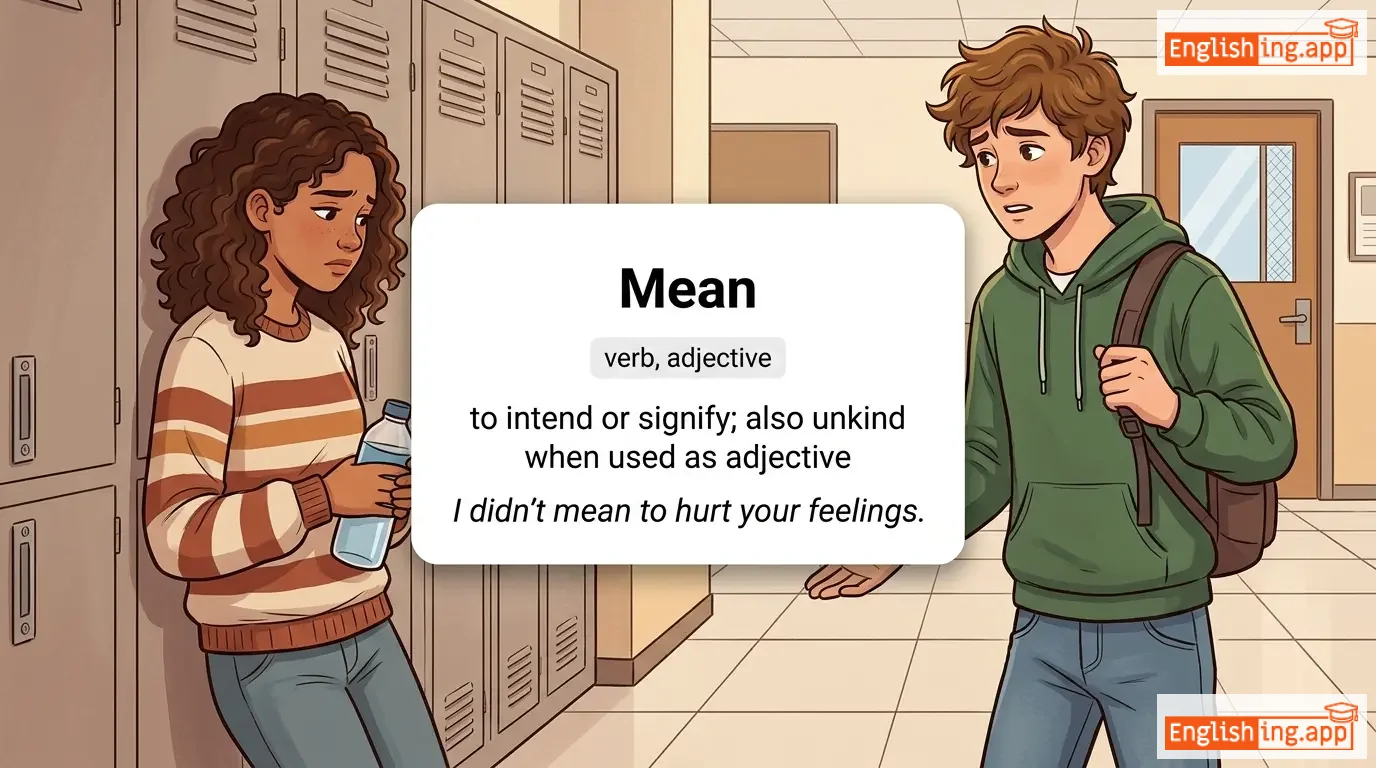
••••••
|
to intend or signify; also unkind when used as adjective
••••••
|
I didn’t mean to hurt your feelings. |
- •••••• |
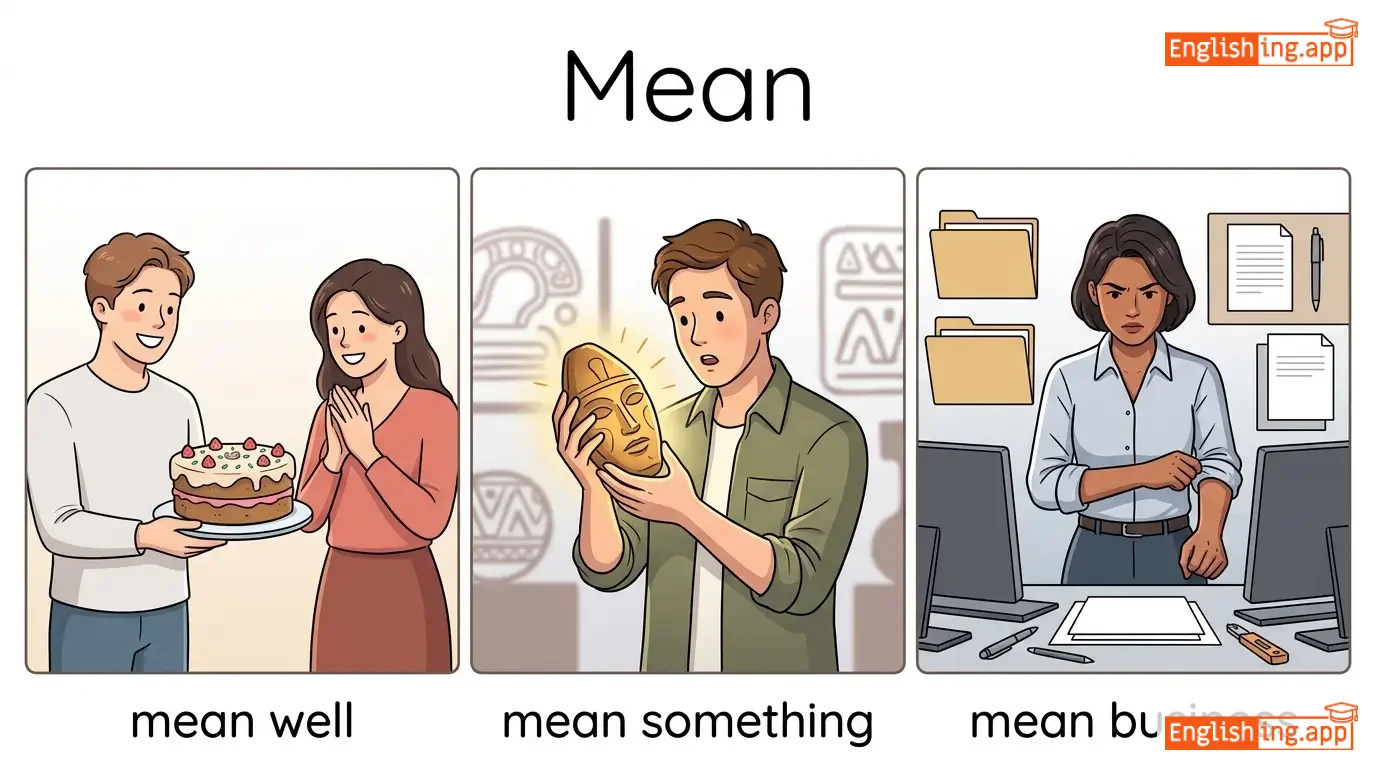
mean business |
to be serious about something
••••••
|
- •••••• |
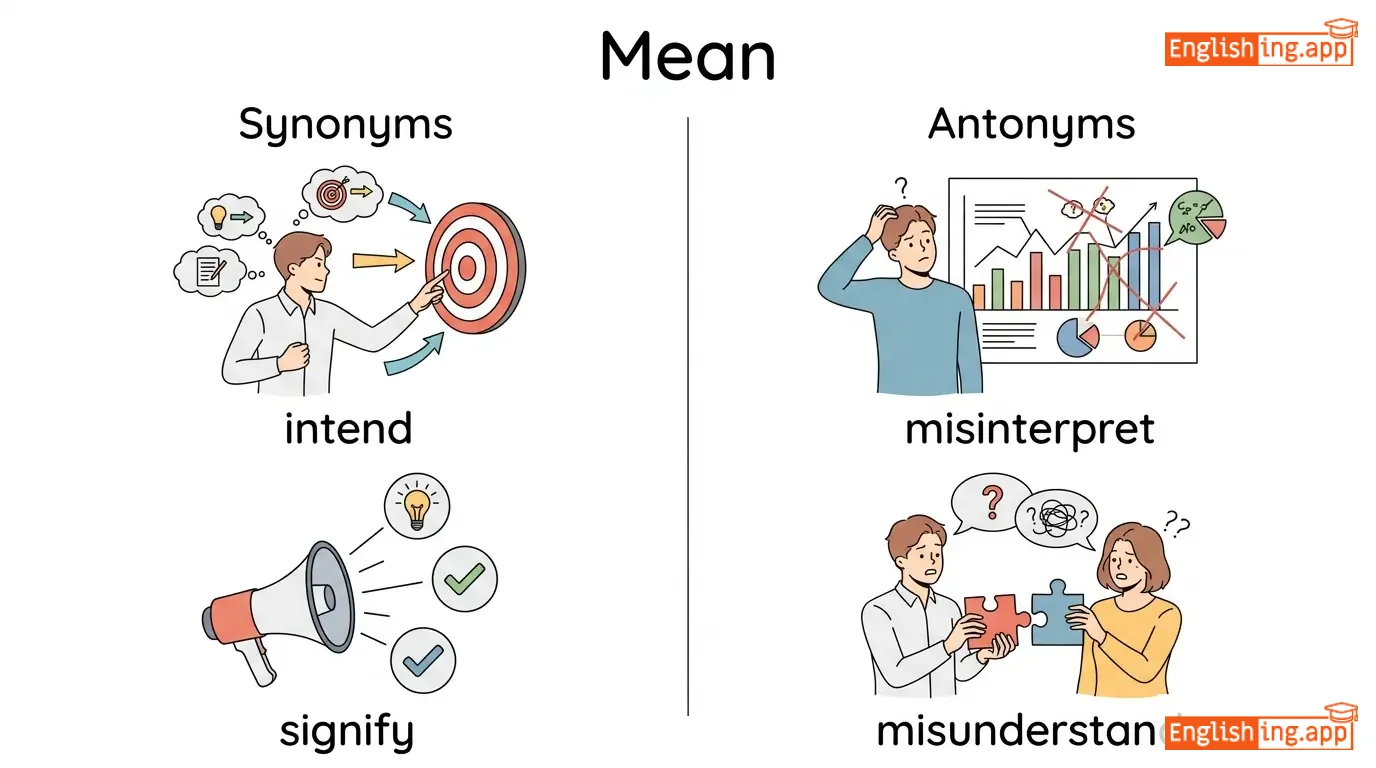
intend, signify, denote, imply
••••••
|
misinterpret, misunderstand
••••••
|
mean well, mean something, mean business, really mean
••••••
|
No •••••• |
|
#3215
❓
|
/ˈmiːnɪŋ/
noun
(ミーニング)
••••••
|
- •••••• |
意味
imi
••••••
|
- •••••• | - •••••• | - •••••• | - •••••• |
The definition, purpose, or significance of something.
••••••
|
The meaning of the word is explained in the dictionary. |
その単語の意味は辞書で説明されています。
Sono tango no imi wa jisho de setsumei sareteimasu.
••••••
|
hidden meaning |
a deeper or secret interpretation of something
••••••
|
隠された意味
kakusareta imi
••••••
|
sense, significance, purpose, definition, interpretation
••••••
|
nonsense, insignificance, absurdity
••••••
|
true meaning, literal meaning, meaning of life, meaning behind
••••••
|
意味は '意味' を意味します → 辞書で意味を見つけることができます。
••••••
|
|
#3216
💡
|
/ˈmiːnɪŋfəl/
adjective
(ミーニングフル)
••••••
|
- •••••• |
意味のある
imi no aru
••••••
|
- •••••• | - •••••• | - •••••• | - •••••• |
having purpose, value, or significance
••••••
|
He gave a meaningful smile before leaving the room. |
彼は部屋を出る前に意味のある笑顔を見せた。
Kare wa heya o deru mae ni imi no aru egao o miseta.
••••••
|
make a meaningful contribution |
to add something valuable or significant to a situation
••••••
|
意味のある貢献をする
imi no aru kōken o suru
••••••
|
significant, purposeful, valuable, expressive, important
••••••
|
meaningless, trivial, empty
••••••
|
meaningful conversation, meaningful relationship, meaningful impact, meaningful work
••••••
|
意味のある、星のように輝いて人生に価値を与えるものです。
••••••
|
|
#3217
🤷
|
/ˈmiː.nɪŋ.ləs/
adjective
(míningurēsu)
••••••
|
- •••••• |
無意味; 目的がない; 意味がない
muimi; mokuteki ga nai; imi ga nai
••••••
|
- •••••• | - •••••• | - •••••• | - •••••• |
without purpose; having no significance; pointless
••••••
|
The data became meaningless without proper context.
データは適切なコンテキストがなければ意味がありません。
••••••
|
データは適切なコンテキストがなければ意味がありません。
Dēta wa tekisetsu na kontesuto ga nakereba imi ga arimasen.
••••••
|
- •••••• | - •••••• | - •••••• |
pointless, senseless, insignificant, worthless
••••••
|
meaningful, significant, important
••••••
|
meaningless words, meaningless gesture, meaningless data
••••••
|
無意味は目的のない旅のようなものです。
••••••
|
|
#3218
⏳
|
/ˈmiːnˌtaɪm/
noun/adverb
(ミーンタイム)
••••••
|
- •••••• |
その間
sono aida
••••••
|
- •••••• | - •••••• | - •••••• | - •••••• |
the period of time between two events; meanwhile
••••••
|
The train will be late, so in the meantime let's have some tea. |
電車は遅れますので、その間お茶でも飲みましょう。
Densha wa okuremasu node, sono aida ocha demo nomimashou.
••••••
|
in the meantime |
during the time between events
••••••
|
その間
sono aida
••••••
|
meanwhile, interim, interval, intermission
••••••
|
afterward, later
••••••
|
in the meantime, meantime period, meantime activities
••••••
|
Meantime は '間の時間' → その間。
••••••
|
|
#3219
⌚
|
/ˈmiːn.waɪl/
adverb
(mīn wairu)
••••••
|
- •••••• |
その間
sono aida
••••••
|
- •••••• | - •••••• | - •••••• | - •••••• |
at the same time; during the same period
••••••
|
She was cooking dinner, meanwhile he was setting the table.
彼女は夕食を作っていた、その間、彼はテーブルを整えていた。
••••••
|
彼女は夕食を作っていた、その間、彼はテーブルを整えていた。
Kanojo wa yūshoku o tsukutte ita, sono aida, kare wa tēburu o totonoete ita.
••••••
|
- •••••• | - •••••• | - •••••• |
meantime, at the same time, simultaneously
••••••
|
later, afterwards, subsequently
••••••
|
meanwhile back, meanwhile elsewhere
••••••
|
In Japanese, 'その間' means 'meanwhile', reflecting events occurring in the same period.
••••••
|
|
#3220
📏
|
/ˈmɛʒər/
noun/verb
(メジャー)
••••••
|
|
測定 / 測定基準
sokutei / sokutei kijun
••••••
|
measured
メジャード
••••••
|
measured
メジャード
••••••
|
measures
メジャーズ
••••••
|
measuring
メジャリング
••••••
|
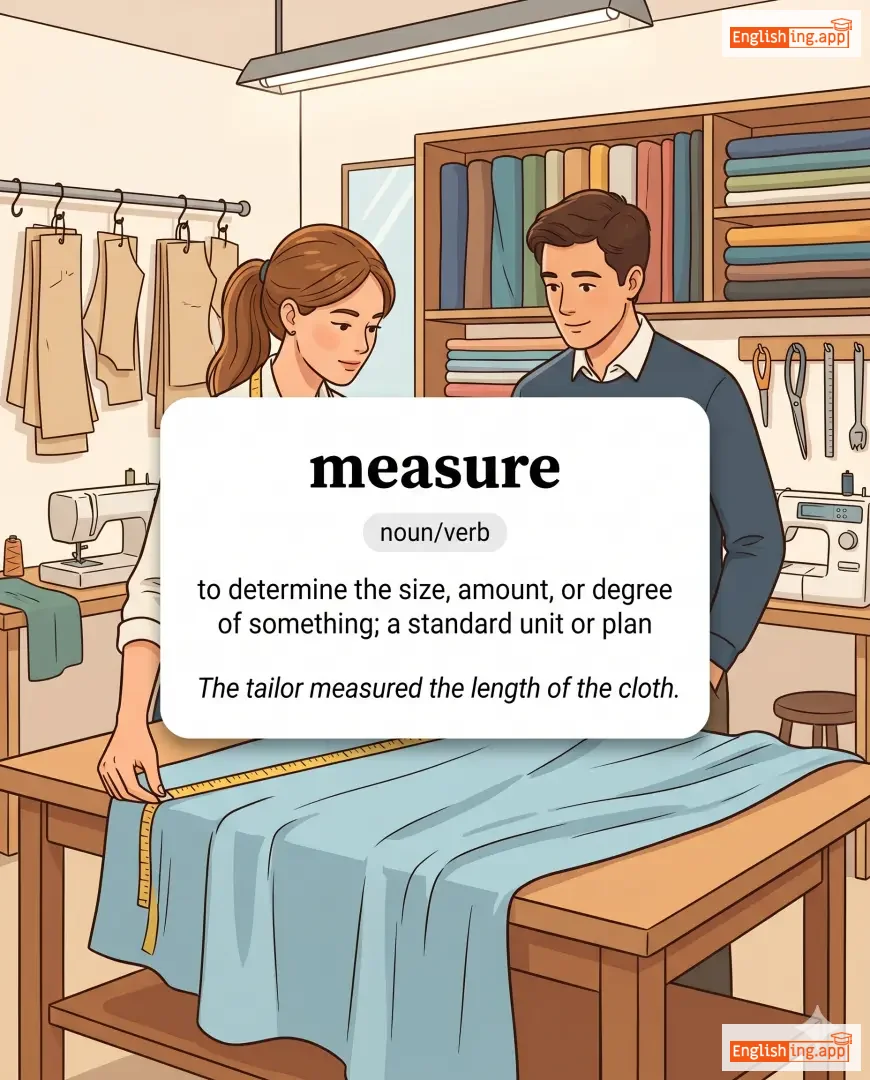
to determine the size, amount, or degree of something; a standard unit or plan
••••••
|
The tailor measured the length of the cloth.
仕立て屋は布の長さを測りました。
••••••
|
仕立て屋は布の長さを測りました。
Shitateya wa nuno no nagasa wo hakarimashita.
••••••
|
beyond measure
限度を超えて
••••••
|
to an extreme degree
••••••
|
限度を超えて
gendou wo koete
••••••
|
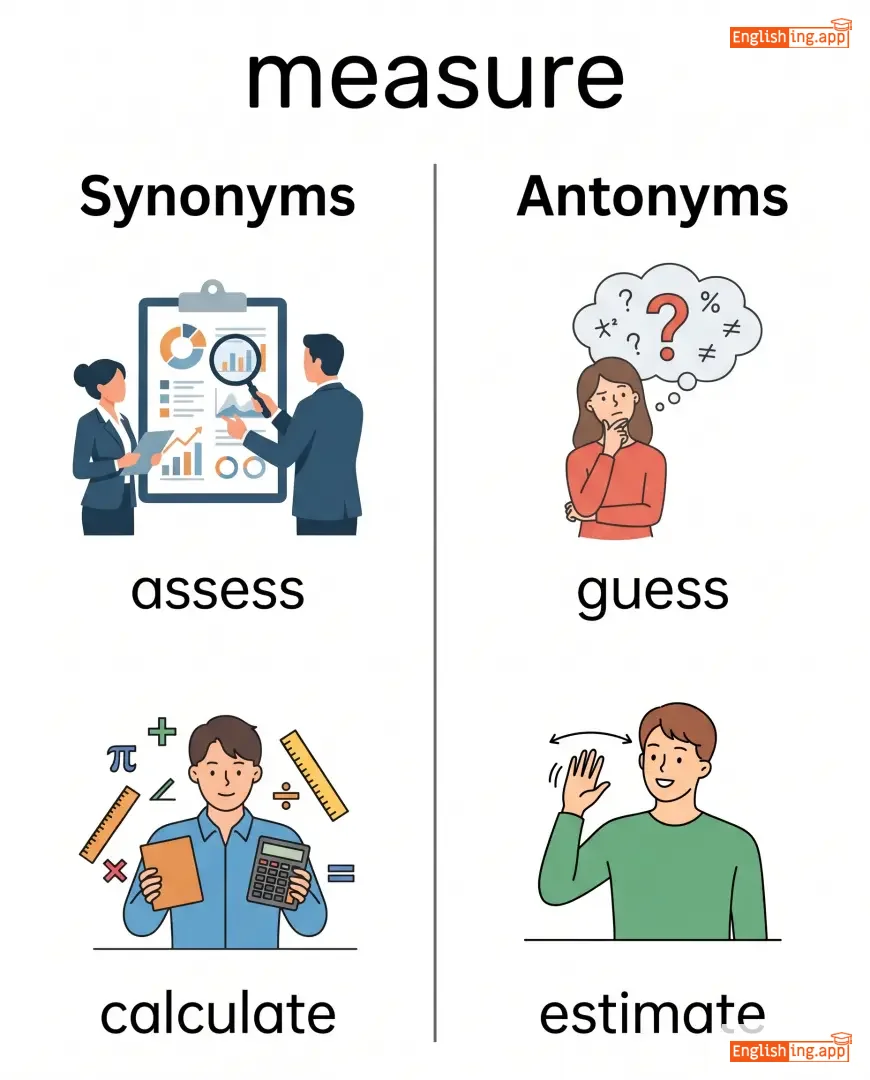
assess, calculate, evaluate, gauge, standard
••••••
|
guess, estimate, ignore
••••••
|
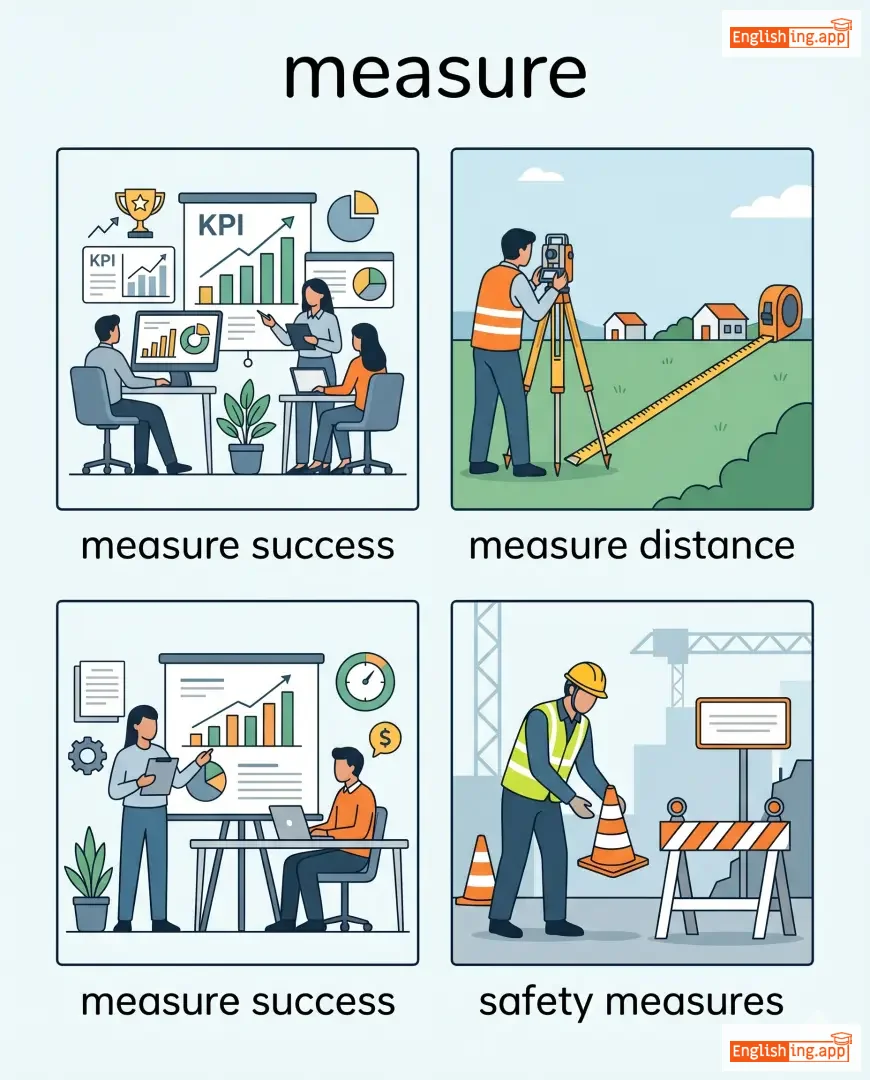
measure success, measure distance, safety measures, take measures
••••••
|
Measureは測定を意味します → '測定で測る' と覚えやすい。
••••••
|
|
#3221
📏
|
/ˈmeʒərmənt/
noun
(メジャーメント)
••••••
|
- •••••• |
測定
sokutei
••••••
|
- •••••• | - •••••• | - •••••• | - •••••• |
the size, length, or amount of something, as determined by measuring
••••••
|
The tailor took my waist measurement before stitching the suit. |
仕立て屋はスーツを縫う前に私のウエストの測定を取りました。
Shitateya wa suutsu o nuu mae ni watashi no uesuto no sokutei o torimashita.
••••••
|
take measurements |
to measure the size, length, or amount of something
••••••
|
測定を行う
sokutei o okonau
••••••
|
dimension, size, extent, magnitude, evaluation
••••••
|
guess, estimate
••••••
|
accurate measurement, take measurement, standard measurement, body measurement
••••••
|
Measurementは📏測定を意味します。学校で先生が言っていたように『予測せずに、測定しよう!』
••••••
|
|
#3222
🥩
|
/miːt/
noun
(ミート)
••••••
|
- •••••• |
肉
niku
••••••
|
- •••••• | - •••••• | - •••••• | - •••••• |
the flesh of animals used as food
••••••
|
She bought fresh meat from the market.
彼女は市場で新鮮な肉を買いました。
••••••
|
彼女は市場で新鮮な肉を買いました。
Kanojo wa ichiba de shinsen na niku o kaimashita.
••••••
|
the meat of the matter
問題の本質
••••••
|
the most important or basic part of something
••••••
|
問題の本質
mondai no honshitsu
••••••
|
flesh, beef, chicken, lamb, pork
••••••
|
vegetable, fruit
••••••
|
red meat, fresh meat, cooked meat, meat dish
••••••
|
肉は日本語でMEAT - 肉を食べて力をつけよう!
••••••
|
|
#3223
🔧
|
/məˈkænɪk/
noun
(メカニック)
••••••
|
- •••••• |
メカニック
mekanikku
••••••
|
- •••••• | - •••••• | - •••••• | - •••••• |
a person who repairs and maintains machines or vehicles
••••••
|
The mechanic fixed the engine in less than an hour.
そのメカニックは1時間以内にエンジンを修理しました。
••••••
|
そのメカニックは1時間以内にエンジンを修理しました。
Sono mekanikku wa 1 jikan inai ni enjin wo shuuri shimashita.
••••••
|
grease monkey
グリースモンキー
••••••
|
a slang term for a car mechanic
••••••
|
自動車修理工を指すスラング
Jidousha shuuri kou wo sasu surangu
••••••
|
technician, repairman, engineer, fitter, machinist
••••••
|
driver, operator
••••••
|
car mechanic, skilled mechanic, aircraft mechanic, auto mechanic
••••••
|
メカニックは機械の修理の専門家だよ 🔧
••••••
|
|
#3224
⚙️
|
/məˈkænɪkəl/
adjective
(ˈhæpinəs)
••••••
|
- •••••• |
幸せ
shiawase
••••••
|
- •••••• | - •••••• | - •••••• | - •••••• |
relating to machines or the way they work
••••••
|
She has a good understanding of mechanical systems. |
彼女は賞を受け取ったとき、自分の幸せを隠すことができませんでした。
Kanojo wa shō o uketotta toki, jibun no shiawase o kakusu koto ga dekimasen deshita.
••••••
|
mechanical mind |
a person who easily understands and works with machines
••••••
|
幸せを追求する
shiawase o tsuikyū suru
••••••
|
automated, machine-driven, technical, robotic, motorized
••••••
|
manual, emotional, natural
••••••
|
mechanical system, mechanical engineer, mechanical failure, mechanical process
••••••
|
幸せは光のように人生を照らす。
••••••
|
|
#3225
⚙️
|
/ˈmɛkəˌnɪzəm/
noun
(メカニズム)
••••••
|
- •••••• |
機構
kikou
••••••
|
- •••••• | - •••••• | - •••••• | - •••••• |
A system of parts working together in a machine; a process or technique for achieving something.
••••••
|
The mechanism of the clock stopped working after years of use. |
時計の機構は長年の使用後に動作を停止した。
Tokei no kikou wa naganen no shiyou go ni dousa o teishi shita.
••••••
|
defense mechanism |
An unconscious process used to protect oneself from anxiety or stress.
••••••
|
防御機構
bougyo kikou
••••••
|
system, apparatus, device, structure, process
••••••
|
disorder, chaos, randomness
••••••
|
defense mechanism, coping mechanism, mechanical mechanism, complex mechanism
••••••
|
メカニズム = 機械の部品が一緒に働く仕組み。歯車のように動く!
••••••
|
|
#3226
🥇
|
/ˈmɛdəl/
noun
(メダル)
••••••
|
- •••••• |
メダル
medaru
••••••
|
- •••••• | - •••••• | - •••••• | - •••••• |
a piece of metal given as an award for achievement
••••••
|
She won a gold medal in the 100-meter race. |
彼女は100メートル競走で金メダルを獲得しました。
Kanojo wa 100 mētoru kyōsō de kin medaru o kakutoku shimashita.
••••••
|
medal of honor |
a high award for bravery or service
••••••
|
名誉メダル
meiyo medaru
••••••
|
award, trophy, prize, badge, honor
••••••
|
penalty, disqualification
••••••
|
gold medal, silver medal, bronze medal, win a medal, award a medal
••••••
|
メダルは‘金属’ — 勝者への栄誉を示す賞です 🥇
••••••
|
|
#3227
📰
|
/ˈmiːdiə/
noun
(メディア)
••••••
|
- •••••• |
メディア
media
••••••
|
- •••••• | - •••••• | - •••••• | - •••••• |
the main means of mass communication such as newspapers, television, radio, and the internet
••••••
|
The story quickly spread across the media. |
その話はメディアを通じてすぐに広まりました。
Sono hanashi wa media o tōjite sugu ni hiromarimashita.
••••••
|
social media |
online platforms used for communication and content sharing
••••••
|
ソーシャルメディア
Sōsharumedia
••••••
|
press, news, journalism, broadcasting, communication
••••••
|
silence, secrecy
••••••
|
mass media, social media, media coverage, media attention
••••••
|
メディアは情報を広めるための手段です。
••••••
|
|
#3228
🏥
|
/ˈmedɪkəl/
adjective
(メディカル)
••••••
|
|
医療的
iryōteki
••••••
|
- •••••• | - •••••• | - •••••• | - •••••• |
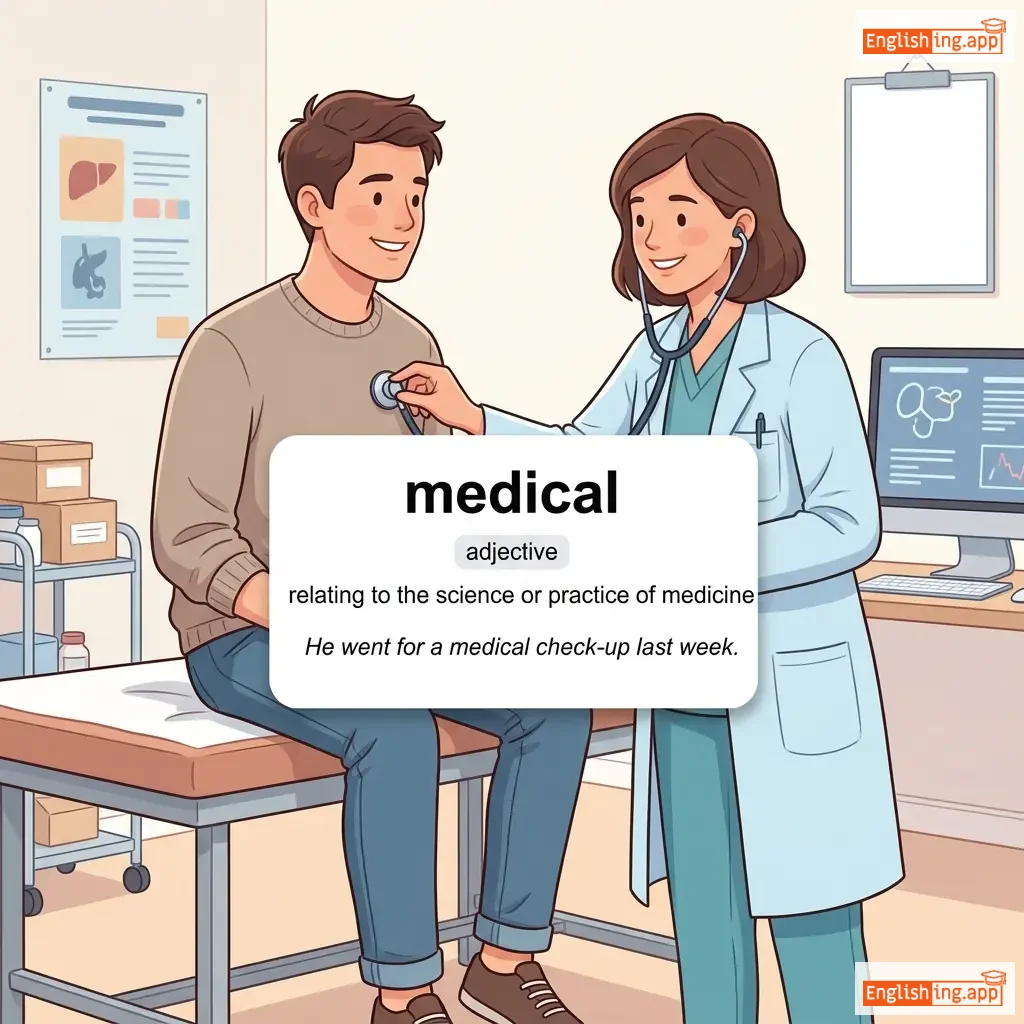
relating to the science or practice of medicine
••••••
|
He went for a medical check-up last week. |
彼は先週、医療検査を受けに行きました。
Kare wa senshū, iryō kensa o uke ni ikimashita.
••••••
|
medical condition |
a disease or health issue someone has
••••••
|
医療状態
iryō jōtai
••••••
|
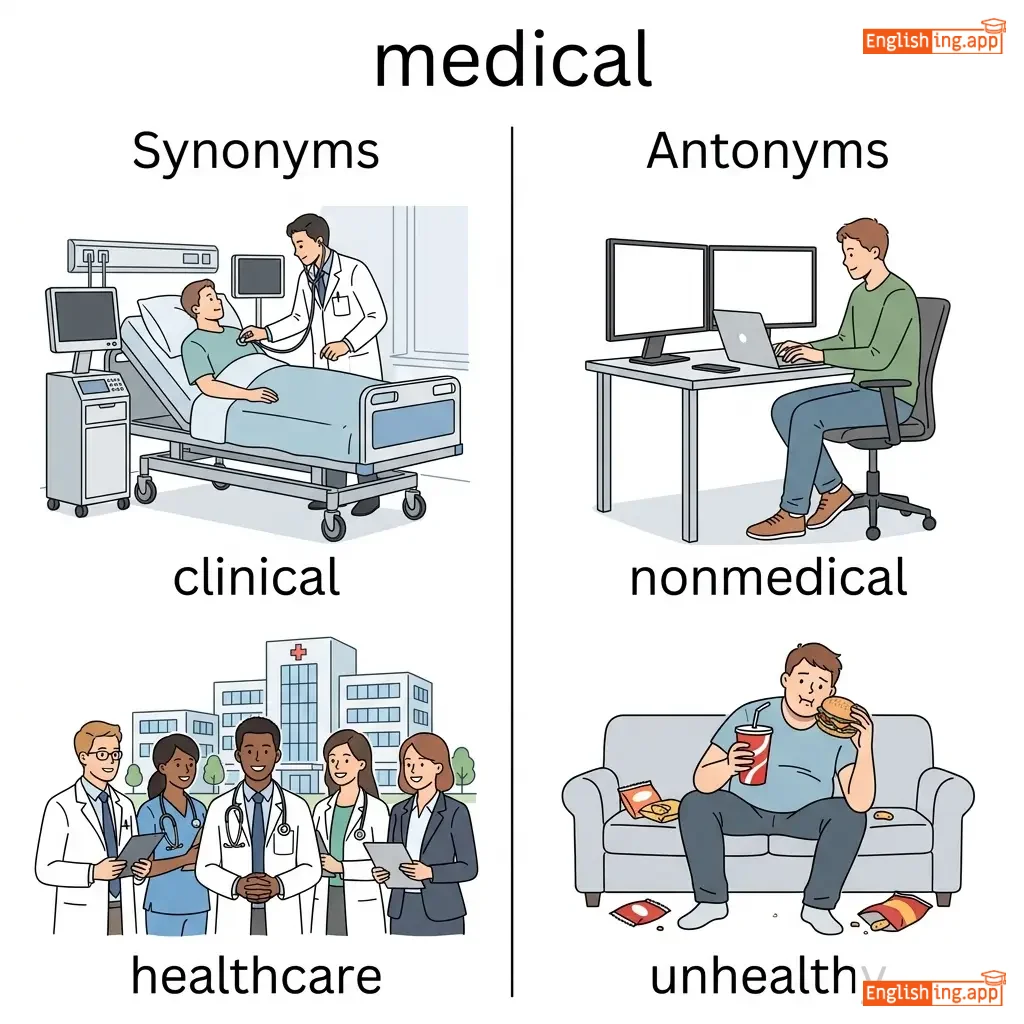
clinical, healthcare, therapeutic, medicinal
••••••
|
nonmedical, unhealthy
••••••
|
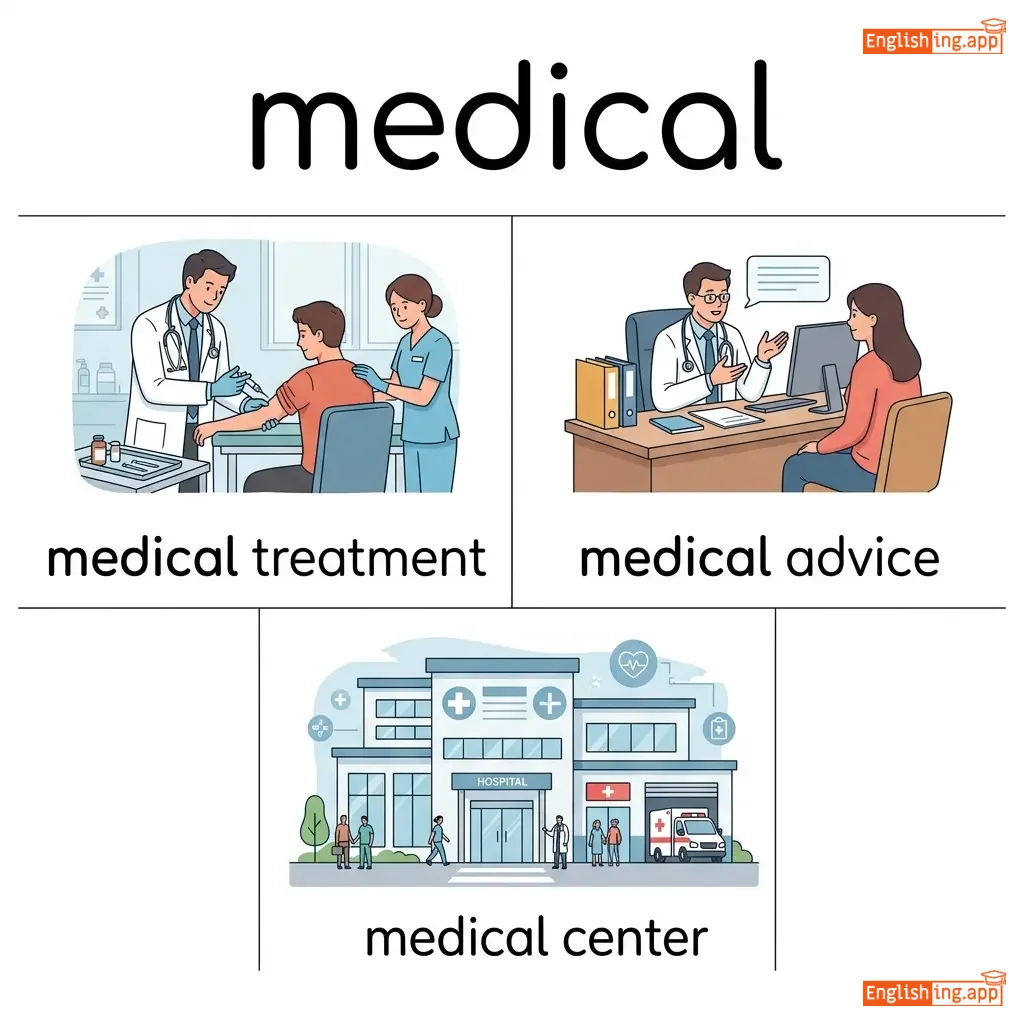
medical treatment, medical advice, medical center, medical research
••••••
|
Medicalは医療と関係している、まるで病院で医療検査を受けるようなものです。
••••••
|
|
#3229
💊
|
/ˈmedɪkeɪt/
verb
(メディケート)
••••••
|
|
薬を与える
kusuri o ataeru
••••••
|
medicated
メディケーテッド
••••••
|
medicated
メディケーテッド
••••••
|
medicates
メディケーツ
••••••
|
medicating
メディケーティング
••••••
|
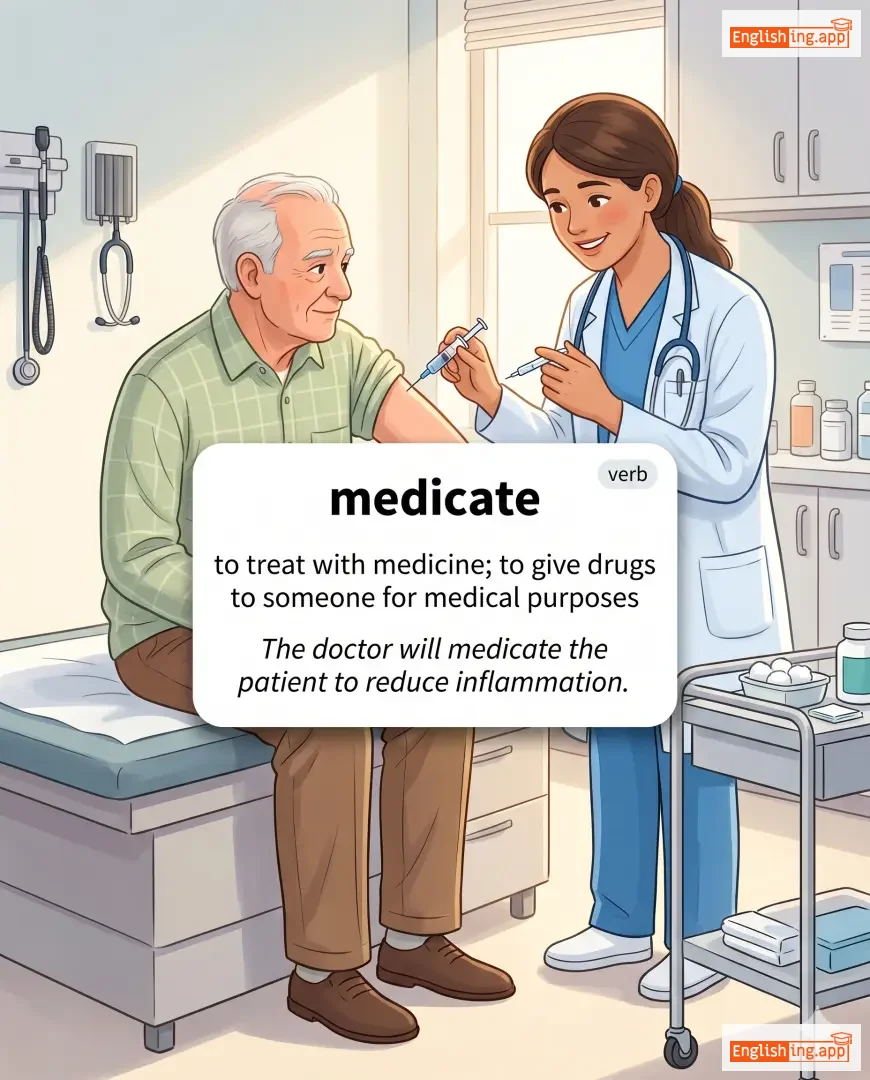
to treat with medicine; to give drugs to someone for medical purposes
••••••
|
The doctor will medicate the patient to reduce inflammation.
医師は患者に炎症を減らすために薬を処方します。
••••••
|
医師は患者に炎症を減らすために薬を処方します。
Ishi wa kanja ni ensyō o herasu tame ni kusuri o shohō shimasu.
••••••
|
- •••••• | - •••••• | - •••••• |
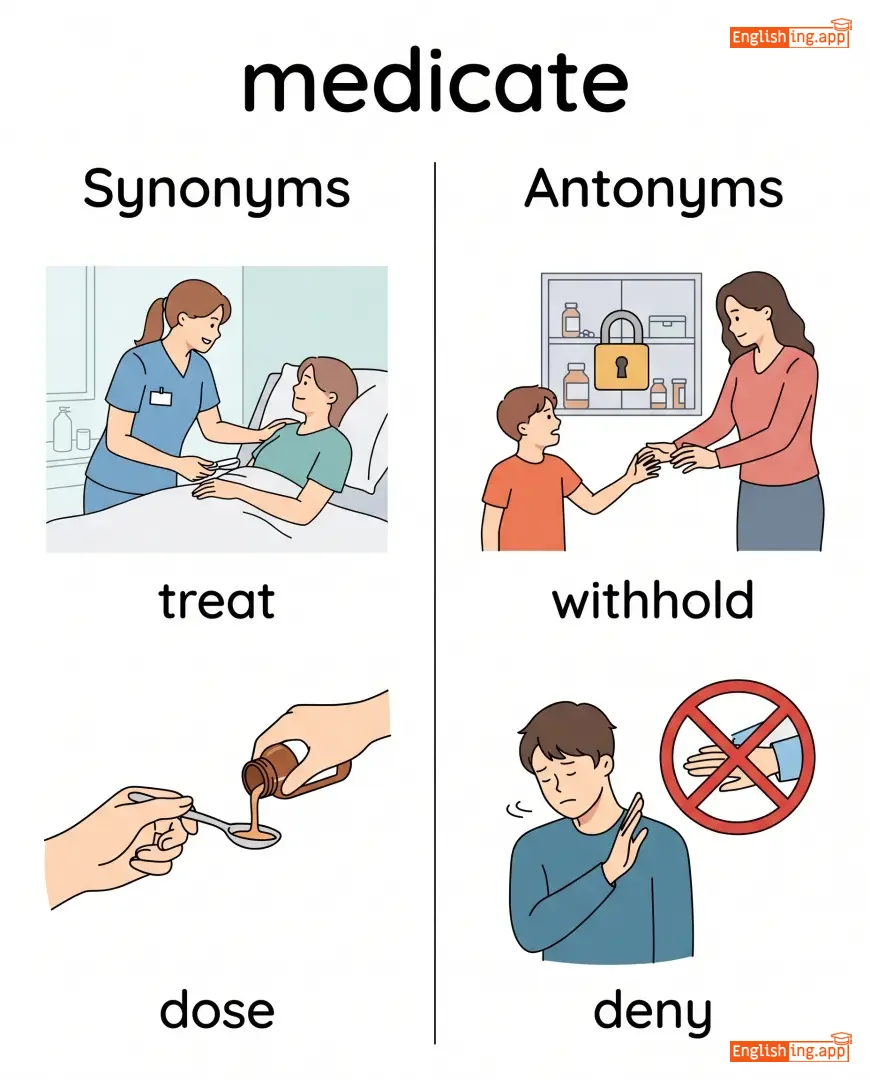
treat, dose, prescribe, administer
••••••
|
withhold, deny, refuse, neglect
••••••
|
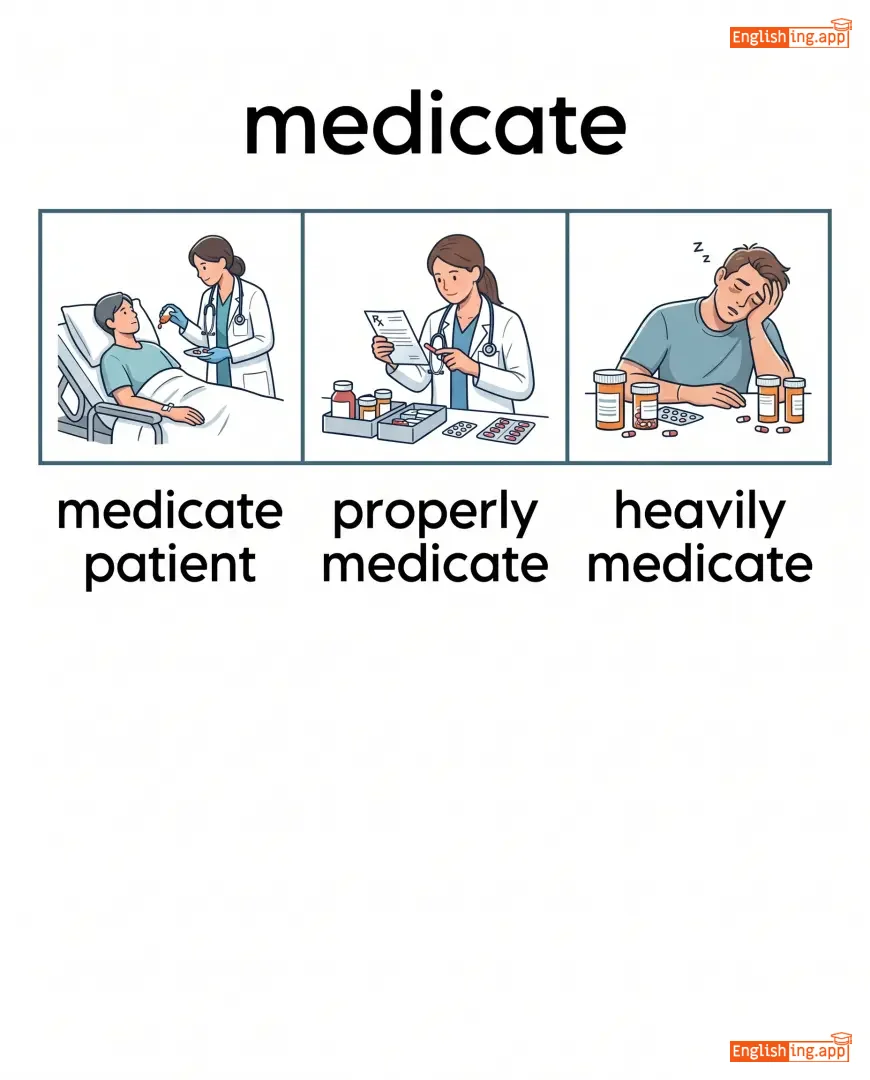
medicate patient, properly medicate, heavily medicate, daily medicate
••••••
|
薬を与え、炎症を減らします。
••••••
|
|
#3230
💊
|
/ˌmedɪˈkeɪʃən/
noun
(メディケーション)
••••••
|
- •••••• |
薬
kusuri
••••••
|
- •••••• | - •••••• | - •••••• | - •••••• |
a drug or other form of medicine used to treat or prevent disease
••••••
|
The doctor prescribed medication for his headache. |
医者は彼の頭痛のために薬を処方した。
Isha wa kare no zutsuu no tame ni kusuri wo shohou shita.
••••••
|
take medication |
to consume prescribed medicine
••••••
|
薬を飲む
kusuri wo nomu
••••••
|
medicine, drug, remedy, prescription
••••••
|
disease, illness
••••••
|
take medication, prescribe medication, over-the-counter medication, pain medication
••••••
|
Medicationsは薬と同じ、'Med'で薬を思い出そう!
••••••
|
Vocabulary Quiz
Test your vocabulary by matching words with their translations or meanings.
Login to take the quiz
Comments (0)
Share your thoughts and join the discussion.
Join the discussion by logging in
Login to CommentNo comments yet
Be the first to share your thoughts!